Modernized edition · Full text · Free PDF/EPUB
Reply to Sadoleto and Short Treatises in Modern English
Want the file? The PDF/EPUB is free with an account.
Summary
- Author
- John Calvin (1509 to 1564 AD), French reformer and pastor at Geneva
- Written
- 1539 to 1544 AD: Sadoleto's letter March 18, 1539; Calvin's reply September 1, 1539; the address to the Diet of Speyer 1544
- Source edition
- Tracts Relating to the Reformation, Volume 1, in Henry Beveridge's translation (Calvin Translation Society, Edinburgh, 1844), in modern English
- Type
- Open letters and treatises of Reformation controversy
- Length
- 77,000 words · 5 hours
What is Reply to Sadoleto and Short Treatises about?
Reply to Sadoleto and Short Treatises collects John Calvin's defense of the Reformation from 1539 to 1544: Cardinal Sadoleto's letter urging Geneva back to Rome, Calvin's reply, his address to Charles V on the necessity of reforming the church, and his treatise exposing the relics of Europe. Throughout, Calvin tests church and worship by the Word of God.
Read the full summary (8 points, key themes)Show less
How the argument unfolds
- 01
Sadoleto's letter. The cardinal praises eternal salvation, folds love into saving faith, and asks whether fifteen centuries of the Church are not safer than twenty-five years of innovation.
- 02
Calvin on his motives. Calvin defends his call to Geneva and shows that the reformers gave up power and wealth rather than seeking them.
- 03
The church and the Word. A church defined by the Spirit without the Word has no sure test of doctrine, and the ancient church sides with the reform.
- 04
The disputed doctrines. Justification, satisfactions, the Supper, confession, the saints, purgatory and the authority of pastors are answered in turn, followed by two imagined defenses before God.
- 05
The evils requiring remedy. Before Charles V at Speyer, Calvin shows how worship, the doctrine of salvation, the sacraments and church government had been corrupted.
- 06
The remedies applied. He explains what the reformed churches changed in worship, prayer, justification, sacraments, ministry and human traditions.
- 07
Schism, Rome and the council. The reformers chose Christ over the church's rulers, and reform cannot wait on a council that will never meet.
- 08
A Treatise on Relics. Relics of Christ, Mary, John the Baptist, the apostles and the saints are shown multiplied past belief.
Key themes
- Scripture above every authority. Fathers and councils are honored, but only “insofar as they agree with the standard of the Word.”
- Faith and holiness joined. Christ justifies and sanctifies together, so free justification never leaves the believer idle.
- Worship of the heart. People will bear any ceremony rather than give God their hearts, which is why spiritual worship meets such resistance.
- Unity in true doctrine. Unity means agreement in pure doctrine under Christ alone, not agreement in any doctrine.
- Reform as God's work. The restoration of the church depends on God, like the raising of the dead, not on favorable times.
Reader questions (9)Hide the questions
Questions about Reply to Sadoleto and Short Treatises
Is there a modern English version of Reply to Sadoleto and Short Treatises?
Yes. This is Reply to Sadoleto and Short Treatises by John Calvin in modern English. The language is modernized and the author's order and argument are kept. The full modernized text is free to read on this page.
Can I read Reply to Sadoleto and Short Treatises online for free?
Yes. The complete text of this modern English edition is on this page, with no sign-up or paywall.
Is there a free PDF of Reply to Sadoleto and Short Treatises?
Yes. The PDF and EPUB of this edition are free with an Updated Works account. Sign in with Google or an email link; no card is needed.
What is Reply to Sadoleto and Short Treatises by John Calvin about?
It gathers Calvin's chief public defenses of the Reformation from 1539 to 1544: his answer to a cardinal's appeal to Geneva, his case before the Emperor and princes that reform was necessary and urgent, and his exposure of the trade in relics.
Who was Sadoleto, and why did he write to Geneva?
Jacopo Sadoleto was bishop of Carpentras and a newly made cardinal. After Calvin and Farel had left Geneva, he wrote to its magistrates and citizens to win them back to Rome. His letter is printed in full first.
Why did Calvin answer if he no longer served in Geneva?
He says God bound him to that church for good, and the letter attacked a ministry he had shared with Farel and Viret, so silence would have been betrayal.
Does Calvin admit faults in the reformed churches?
Yes. He grants that their discipline is still lacking, that some who profess the gospel live loosely, and that church revenues have not always been rightly applied.
Why would Calvin not wait for a general council?
He argues that the pope would block a free council or pack it, and that the early church settled controversies in provincial synods, as the African bishops did against the Donatists and Pelagians.
What is A Treatise on Relics?
A short admonition proposing an inventory of the relics shown in Italy, France, Germany and Spain. Comparing city with city, Calvin shows the same nail, head or finger displayed in many places, and argues that relics lead to idolatry.
Reply to Sadoleto and Short Treatises in Modern English · Full text
Cardinal Sadoleto’s Letter to the Senate and People of Geneva
Jacopo Sadoleto, Bishop of the Holy Roman Church at Carpentras, Cardinal, and Presbyter of the Order of Saint Calixtus, to his dearly beloved brothers, the Magistrates, Senate, and Citizens of Geneva.
Very dear brothers in Christ, peace to you and with us, that is, with the Catholic Church, the mother of us all, both you and us. May you have love and harmony from God the Father Almighty, and from his only Son Jesus Christ our Lord, together with the Holy Spirit, perfect Unity in Trinity. To him be praise and dominion forever and ever. Amen.
Affection for Geneva and Reasons for Writing
I assume, very dear brothers, that some of you know I am now living at Carpentras. I came here from Nice, where I had accompanied the Supreme Pontiff from Rome to mediate between the kings. I love this Church and city, which God has been pleased to make my spiritual bride and homeland. I embrace my people here with truly fatherly affection and hate to be parted from them. The honor of the cardinalship came to me unexpectedly and without my knowledge. Even if it requires me to return to Rome (as it surely will) to serve in the calling God has given me, it will never draw my thoughts or my love away from a people seated forever in my inmost heart.
While staying at Carpentras, I have heard daily reports about you. Some stirred my grief, while others gave me hope and kept me from despair. You and I once stood united in true religion toward God. I hoped that, with the same God looking more kindly upon us, we might return to that same warm harmony. So it seemed good to the Holy Spirit and to me to write to you. Scripture speaks that way, and surely whatever is done with an upright, pious mind toward God comes wholly from the Holy Spirit. I wanted to express in a letter the care and concern I feel for you.
Dearest brothers, my affection and goodwill toward you are nothing new. Almost twenty-three years ago, by God’s will, I became Bishop of Carpentras. Frequent dealings between your people and mine taught me much about you and your customs, even from a distance. Even then I began to love your noble city, the order of your republic, and the worth of its citizens. Above all, I admired that quality praised and experienced by everyone: your hospitality to strangers and foreigners. Closeness often breeds affection. Just as adjoining houses in a city bring neighbors together, neighboring provinces foster regard among those who live near one another.
Before now, you never gained any benefit from my affection, nor received any sign of it. You never needed my help, which I would gladly have given, and no occasion arose between us. Now, however, not only has an occasion arrived, but necessity compels me to show how I feel toward you. I must do so if I am to stay faithful to Almighty God and show Christian love to my neighbor.
Word reached my ears that certain crafty men, enemies of Christian unity and peace, had come into your city, just as they had earlier done in several towns and villages of the brave Swiss. They sowed the wicked seeds of discord. They turned Christ’s faithful people aside from the path of their fathers and ancestors, and away from the unbroken convictions of the Catholic Church. They filled every corner with strife and sedition. That is always the chosen method of men who hunt for new power and new honors by attacking the authority of the Church.
I declare before Almighty God, who is always present and sees my inmost thoughts, that I was deeply grieved and moved with a twofold pity. On one side, I seemed to hear the groans of the Church, our mother, weeping and mourning because she had been robbed at once of so many dear children. On the other side, dearest brothers, I worried over your own losses and dangers. I knew well that men who overturn ancient, well-established order bring deadly harm to human souls, which is still the greatest evil of all. They also bring ruin to private and public affairs. You have learned that for yourselves, taught by events.
What then? My love for you and my devotion to God compel me, as a brother speaking to brothers and a friend to friends, to open my heart freely before you. Show me now the same kindness you have always been known for: receive and read my letter without resentment. Listen with an open mind to what I write. Even if you do not accept my advice, I hope you will at least approve of my intention. My purpose is pure and sincere. Above all else, I desire your salvation, and you will see that I seek your good, not my own.
I will not begin, however, with subtle, tangled debates. Saint Paul calls those “philosophy” and warns believers in Christ not to be deceived by them. Through such tactics those men misled you. They boasted among the unwary of hidden interpretations of Scripture, dressing up their fraud and malice under the noble, yet false and misplaced, names of learning and wisdom. Instead, I will set before you truths that are bright and clear. They hold no hiding place for error and no twist of deceit or fallacy. Truth is always like that. It shines in the darkness, lies open to everyone, and is easily grasped by learned and unlearned alike.
In Christian doctrine especially, truth rests not on syllogisms or verbal quibbles, but on humility, reverence, and obedience toward God. For the word of God is living and powerful, sharper than any two-edged sword, piercing even to the division of soul and spirit, to the inmost parts of the joints and marrow. It does not trap souls with baffling arguments. Instead, by stirring a heavenly affection in the heart, it makes itself plain and open to our minds. Understanding it depends less on human reason than on God, who calls us to himself and works within us. To him, the Father of all true understanding, I humbly pray. In his goodness, may he help me as I speak and help you as you listen, uniting us to himself again in one heart and one mind.
The Supreme Value of Eternal Salvation
Let us begin with what fits best. I assume, dearest brothers, that you, I, and everyone else who has placed faith and hope in Christ have done so for one single reason: to gain salvation for our souls. This is not a mortal salvation that soon perishes. It is an enduring, immortal salvation that can truly be attained only in heaven, never on earth. Our task, therefore, falls into two parts. First, we lay the foundation of faith; then we must labor here so that we may rest there. We must sow seed on earth now so that we may reap in heaven later. Whatever works or pursuits occupy us here, we hope to receive fitting fruits from our labors in the life to come.
The way of Christ is steep, and living in harmony with his laws and commands is very hard. We must pull our minds away from the stain of earthly pleasures and fix them on one goal: look past the present goods in our hands, and reach for future goods we cannot yet see. Still, each person’s soul and salvation are worth so much that we must refuse nothing, however harsh, and endure everything, however exhausting. Keeping this single hope before us, we press on through many struggles and anxieties. With God’s mercy and kindness always going ahead of our efforts, we may at last reach that secure, lasting salvation.
Because of this hope, the world once welcomed Christ, the herald of the true God, with universal agreement and eagerness. For this reason we adore and worship him, truly confessing him as God and the Son of the true God. Human minds were once dead to Almighty God, in whom alone is life. After living briefly for the deceptive, fading pleasures of this world, they faced utter ruin in every part of their nature. Christ alone, ever since the world began, awakened them from that deadliest kind of death. Choosing to become our salvation, deliverance, and truth himself, he submitted to death in the flesh and soon rose to a life no longer mortal. By his own example, he showed us a path far different from our old habits. He taught us to die to this world and the flesh, to live from then on to God, and to place in him our hope of living well and happily forever.
This is our true resurrection from the dead. It is a resurrection truly worthy of Almighty God’s glory and majesty. Through it, not just one or two people, but the entire human race, is brought back from a grim, fatal death of the soul to the soul’s true heavenly life. Paul had this resurrection in mind when he saw in it the supreme proof of Christ’s divinity. He says, “I was separated unto the gospel of God, which he had promised by the Prophets in the Holy Scriptures concerning his Son, begotten, indeed, of the seed of David according to the flesh, but determined and declared to be the Son of God in power by the Spirit of holiness.” That means spiritual power, which is God’s own proper power, because God performs miracles not by body, but by spirit. Commanding the winds, restoring sight to the blind with a word, and raising the dead were acts of spiritual, divine power, not bodily strength.
Christ was declared the Son of God by this spiritual power, which alone is divine. He was also declared so, as Paul adds, by the resurrection from the dead. That refers not so much to raising Lazarus, the widow’s son, or the synagogue ruler’s daughter, though those too were works of God. It refers rather to freeing Mary Magdalene from seven demons, calling Matthew from the tax booth, and lifting many out of an earthly, perishing life. In short, he raised the whole human race out of sin, the death of sin, and this world’s darkness, so they might hope for light and a heavenly bond. He lifted human minds sunk in the mud of earth and raised them up to heaven.
This greatest gift of Jesus Christ, and chief proof of his divinity, was ordained by God in sending the Son. The Son himself undertook it and gave it to us in due time, so that through Christ alone, aided by every divine and human counsel, help, and virtue, we might present our souls safely to God. Consider how noble the human soul is, how extraordinary its price, how vast its worth. To keep it from being lost and win it for both God and ourselves, the laws of nature were completely overturned and the order of things reversed. God came down to earth to become man, and man was raised to heaven to become a god.
All of us, then, believe in Christ to find salvation for our souls, which means life for ourselves. Nothing can be desired more earnestly; no blessing is closer, deeper, or more intimate. Each person treasures salvation in proportion to his love for himself. If salvation is neglected and thrown away, what prize of equal worth could ever be gained? “What will a man give in exchange for his soul?” asks the Lord. “Or what will it profit a man should he gain the whole world, and lose his own soul?” We must make every effort to guard this possession, our soul, so vast and precious to us all. Every other blessing is external and separate from us, but a saved soul is not merely ours. We ourselves truly are that very good. Whoever loses it has no other good left to enjoy, because the very person meant to enjoy it has already lost himself.
Faith, Love, and Obedience to the Church
Furthermore, we obtain this blessing of full, everlasting salvation by faith alone in God and in Jesus Christ. When I say “by faith alone,” I do not mean what those inventors of novelties mean. They mean a bare belief and confidence in God that shuts out love and the other duties of a Christian mind. They simply persuade themselves that in Christ’s cross and blood all their faults are pardoned. Such trust is indeed necessary and gives us our first access to God, yet it is not enough. We must also bring a mind full of devotion toward Almighty God and eager to do whatever pleases him. That is where the power of the Holy Spirit especially dwells. Even when this mind does not always issue in outward deeds, it stands inwardly ready for good works and eager to obey God in everything. This within us is the true habit of divine righteousness.
What else does the word “righteousness” mean, if it takes no account of good works? Scripture says that “God sent his Son to prepare a people acceptable to himself, zealous of good works.” Elsewhere it speaks of our being built up in Christ for good works. Christ was sent so that through him we might please God by doing good and be built up in him for good works. Surely, then, our faith in God through Jesus Christ does not merely tell us to trust Christ. It commands us to trust him while doing good or resolving to do good in him.
Faith is a rich, comprehensive word. It includes not only belief and confidence, but also the hope and desire to obey God. Above all, it includes love, the queen and leader of all virtues, so clearly shown to us in Christ. In that love the Holy Spirit uniquely dwells, or rather, he himself is love, since God is love. Without the Holy Spirit, and therefore without love, nothing we do is pleasing or acceptable to God. So when we say we can be saved by faith alone in God and Jesus Christ, we hold that love is essentially contained inside this very faith as the chief and primary cause of our salvation.
Let us leave off debate, however, and return to our thread. I have shown you, dearest brothers, or tried to show you (for my words fall short of so great a subject), how vital it is to secure our soul and its salvation. Our soul is our entire self. It is properly our only true good, while every other good lies outside us and cannot be enjoyed if we lose what is truly ours. To guard the welfare of their souls, glorious martyrs of Christ in former ages gladly laid down this mortal life. Holy teachers toiled and kept watch day and night to guide us onto the right path and keep us there. The whole Church once endured terrible wrongs and disasters from wicked tyrants and rulers.
Almighty God allowed all these things, and those brave worshipers of Christ took them on, endured them, and fought through them. He allowed this so that through every kind of test and trial the Church might be beaten, as it were, by many hammers, purified in fierce fire, heated, melted, forged together, and shaped by the immense labors of the saints. In this way, she was meant to win by her faithfulness the highest favor with God and the greatest authority among men. This Church has given us new birth to God in Christ, nourished and strengthened us, taught us what to think, what to believe, and where to place our hope, and shown us the road toward heaven.
We walk in this shared faith of the Church and keep her laws and rules. At times, overcome by weakness and instability, we fall into sin. If only this happened rarely, and not so often! Even then, we rise again in the same faith of the Church. Whatever remedies, penances, and acts of satisfaction she tells us will wash away our sin and restore us (always by God’s grace and mercy) to our former soundness, we turn to and use. In doing so, we trust to find mercy and pardon with God.
We do not claim anything for ourselves beyond the judgment and authority of the Church. We do not convince ourselves that we are wiser than we ought to be. We do not parade our pride by despising the Church’s decrees, nor put on a public show of towering intellect, cleverness, or brand-new wisdom. Rather (and I speak of true, honest Christians), we walk in humility and obedience. What has been handed down to us and settled by our ancestors, men of the greatest wisdom and holiness, we receive in full faith as truly taught and commanded by the Holy Spirit.
We know for certain how much power, importance, and weight humility carries with God. Humility is a uniquely Christian virtue. Christ our Lord constantly highlighted it in his warnings, commands, deeds, and miracles, declaring that the kingdom of heaven belongs to little ones alone, that is, the humble. It makes no difference whether we are tall or short in body. It makes all the difference whether we have a humble or a proud mind. The very pride that cast angels down from heaven blocks human beings on their road toward heaven. To that very place from which an angel, a heavenly creature, was driven out for pride, a human being, an earthly creature, is lifted up for humility. Clearly, humility is both the chief aid to our eternal salvation and the main support of that sweet, blessed hope by which we press heavenward.
The Peril of False Worship and the Choice Between Two Roads
Since all this is true, dearest brothers, think carefully. Our salvation, true life, eternal happiness, and indeed our very selves must be dear to us above everything else. If we lose ourselves, we will never again own anything truly ours to delight or belong to us. No heavier loss, no deadlier evil, no more terrible disaster can strike us than the ruin of our souls. With what zeal, then, with what care and anxious watchfulness, ought we to guard against exposing our life and salvation to so great a danger?
You will surely grant that nothing more destructive or terrifying can happen to anyone than losing his soul. I assume you will also grant that no danger deserves greater zeal and diligence to avoid. When an evil is the worst of all evils, the risk of it must be feared above every other risk. The greater the evil, the deeper our fear must be when we stand near it. People who shudder at falling into the sea will not even walk near a sheer cliff hanging over the water. In the same way, those who tremble before God’s dreadful condemnation flee above all from the danger lying closest to eternal misery.
I am not claiming here that anyone avoids sin, or that we are ever free from danger in this life. Clearly we are not. We all go astray, stumble, and fall, some more often and some less, depending on the self-control each possesses from himself and from God. Yet other sins, especially those committed out of weakness rather than settled intent, find an easy road back to Almighty God’s mercy. That horrible, dreadful sin by which corrupt worship is offered to God, who must be worshiped most purely, and false ideas are held about him, the supreme and only Truth, is altogether different. It not only puts us in immediate peril of eternal death, but also leaves us almost without the hope or will to turn aside and escape.
In our other sins, which are like the rough waves of life, our ship’s anchor still holds fast to keep us off the rocks and out of shipwreck. From time to time we turn our thoughts back to God. Stung with remorse for sin, with quiet groans and confession of our wrongdoing, we beg for his mercy. Full of goodness and tenderness, he is immediately ready to forgive. Like an affectionate parent, he listens with a softened heart to his children’s prayer. In this deep, terrible sin of perverse, false religion, however, we leave ourselves neither God nor anchor. Therefore, dearest brothers, if we wish to be safe, this is the danger we must avoid with utmost care.
Someone may object that opinions vary widely on what makes religion corrupt or genuine. Especially today, people disagree, one interpreting this way and another that. So it might seem enough for a sincere person simply to adopt the belief first presented to him and submit his judgment to people more skilled and learned than himself. I admit, dearest brothers, that simple people and those slower in understanding talk this way. Those who twist them and turn them off the right path bear the greater sin. Still, such reasoning does not fit wise and careful people.
Let me grant for a moment, however, that these questions are uncertain for everyone, learned and unlearned alike. In truth that is far from the case, since the Catholic Church has a sure rule for telling truth from falsehood. Even if we treat them as doubtful, look at what hangs in the balance. Our salvation is on the line. We value our souls, our very selves, above everything. Not our wealth, health, body, or mortal life are at stake, though brave people have often given up all of those steadfastly for Christ and their souls. The decision before us is whether we will live forever in utter misery or in supreme blessedness. Even treating the matter as doubtful (though it is not), we must look around, think deeply, and weigh where to stand. We must choose the side with the least fear and danger, and the greatest hope and safety.
No one, I think, will deny this much: in a doubtful matter, especially one involving our whole life and salvation, we should follow reason rather than blind, reckless chance. Let us examine, then, which side and which party carries the greater risk of drifting farther from God and closer to endless ruin. I will lay this out as though I saw you still weighing your choice, not yet certain whose wishes to follow or whose counsel to trust.
Here is the question in dispute. Which path is safer for your salvation and more pleasing to God? Should you believe and follow what the Catholic Church across the whole world has approved with universal consent for over fifteen hundred years (or, if we demand clear written records, for over thirteen hundred years)? Or should you follow innovations introduced within the past twenty-five years by crafty men, or men who think themselves sharp, who are certainly not themselves the Catholic Church?
To define it briefly, the Catholic Church is the body that in every age as well as today, in every region of the world, stands united in Christ and guided always and everywhere by the one Spirit of Christ. No division can exist inside this Church, because all its parts are joined together and breathe as one. When strife and division break out, the great body of the Church remains unchanged, while an abscess forms. Corrupted flesh is torn away, cut off from the spirit that animates the body, and no longer belongs in substance to the Church.
I will not descend into individual disputes here or tire your ears with a flood of arguments. I will say nothing about the Eucharist, in which we worship the truest body of Christ. Those men scarcely understand what kind of reasoning fits each field of study. Borrowing misplaced arguments from logic and empty philosophy, they try to trap the Lord of the universe, and his free, infinite, divine spiritual power, inside the narrow walls of a physical body.
Nor will I speak of confessing sins to a priest. Confession embodies the strongest foundation of our safety, true Christian humility, which Scripture has shown and the Church has established and commanded. These men have worked with slander to dodge that humility and arrogantly throw it away.
Nor will I say anything about the prayers of the saints to God for us, or our prayers for the dead, though I would gladly know what these men are really aiming at when they mock them. Could they possibly think the soul dies along with the body? They certainly hint at it. They show it even more openly when they try to grab a freedom cut loose from all church laws, a license for their lusts.
If the soul is mortal, “Let us eat and drink,” says the Apostle, “for tomorrow we die.” If it is immortal, as it surely is, how could bodily death create so sudden and total a break? Why would the souls of the dead lose all bond and fellowship with the living, forgetting every tie to us and our common human community? That makes even less sense when we remember love, the chief gift of the Holy Spirit to a Christian soul. Always kind, always fruitful, never idle in the one who possesses it, love must remain alive and active in both worlds.
Let us leave those controversies for their own time and return to our main question. Which of the two courses serves our welfare better, is better in itself, and is more likely to win Almighty God’s favor? Should we agree with the whole Church and faithfully observe her decrees, laws, and sacraments, or side with men who pursue division and novelty?
Two Pleas Before the Judgment Seat of God
Here is the spot, dearest brothers, the highway where the road forks in two directions. One leads to life, the other to everlasting death. On this choice hang every person’s salvation and the promise of the life to come. Will our destiny be eternal joy or endless misery?
What shall we say, then? Let us picture two men, one from each group, one from each road. Let both stand before the awesome tribunal of the Sovereign Judge, where their cases will be weighed to see whether a sentence of condemnation or salvation is just. They will be asked whether they were Christians. Both will say yes. Whether they truly believed in Christ. Both will again answer yes. Then they will be questioned on what they believed and how they believed, since the inquiry into right faith comes before the inquiry into life and conduct. When a confession of right faith is demanded, the one raised in the embrace and discipline of the Catholic Church will speak like this:
“My parents taught me, just as they learned from their fathers and forefathers, to obey the Catholic Church in all things. They taught me to revere and keep its laws, warnings, and decrees as if you yourself, Lord, had issued them. I saw that nearly everyone who bore the Christian name in our day and before us, following your banner far and wide across the world, held this same conviction. All of them honored this Church as the mother of their faith, treating any break from its rules and order as a kind of sacrilege. So I strove to win your approval through the same faith the Catholic Church guards and teaches.
“Then new men arrived with Scripture constantly on their lips and in their hands. They tried to stir up novelties, tear down what was ancient, argue against the Church, and wrench away our obedience to it. Even so, I wanted to hold fast to what my parents had handed down to me, kept from antiquity by the agreement of the holiest and most learned Fathers. The actual conduct of many bishops and clergy was certainly enough to stir my anger, yet I did not abandon my faith over it. I reasoned that my duty was to obey their teachings, which were holy, just as you, God, commanded in your Gospel, while you alone must judge their lives and deeds. Stained as I was by many sins written plainly on my forehead before your eyes, I could not be a fit judge of others. For those sins I now stand before your judgment seat, pleading not for strict justice, Lord, but for your mercy and readiness to forgive.”
That is how the first man will plead his case.
Then the second man will be summoned and will appear. He will be told to speak. Suppose him to be one of those who are, or have been, the authors of division. He will open his speech like this:
“Almighty God, I saw the conduct of the clergy corrupt almost everywhere, yet saw priests universally honored out of respect for religion. Their wealth offended me. What I considered righteous anger flared in my mind and turned me against them. After devoting so many years to literature and theology, I found myself left without the standing in the Church my labors deserved, while unworthy men rose to honors and priestly offices. So I threw myself into attacking men whom I thought utterly displeasing to you. Because I could not tear down their power without first trampling on the laws of the Church, I persuaded much of the public to despise church rights long confirmed and held sacred.
“If those decrees came from General Councils, I declared we need not bow to Councils. If they came from ancient Fathers and Doctors, I dismissed the old Fathers as unskilled and lacking sound judgment. If they came from Roman Pontiffs, I claimed they had built a tyranny and falsely taken the title of vicars of Christ. By every means, I urged all of us, your worshipers, to throw off the tyrannical yoke of the Church. I mocked a Church that sometimes forbids certain foods, observes holy days, requires confession to priests, orders vows to be kept, and binds with chains of slavery men whom you, Christ, set free.
“I taught that we should rely on faith alone, and not also on good works (which the Church especially praises and preaches), to obtain righteousness and salvation. Since you had already paid our penalty and wiped away every fault and crime by your sacred blood, I argued that by trusting our faith in you we could live afterward with greater freedom to do whatever we pleased. I searched the Scriptures more cleverly than those ancients did, especially whenever I hunted for something to twist against them. Through my reputation for learning and genius, I won fame and standing among the people. Though I could not topple the Church’s entire authority, I became the author of great revolts and schisms within it.”
So he will speak, and speak truthfully, for no one can lie before that heavenly Judge. Even so, he still kept back much about his ambition, greed, craving for applause, and hidden fraud and malice. He knows all of it well, and it will appear written right on his forehead. Now I ask you, my Genevan brothers, whom I long to see united with me in Christ and in Christ’s Church: what verdict do you think will be passed on these two men, and on their companions and followers?
Is it not certain that the man who followed the Catholic Church will be cleared of any error on this point? First, the Church does not err, and cannot err, since the Holy Spirit continually guides her public, universal decrees and Councils. Second, even if she did err or could have erred (though it is ungodly to say or believe so), no such error would be held against a sincere, humble believer who followed the faith and authority of his ancestors.
Look at the other man, however. He trusts only his own head. Among all the ancient Fathers, and even among general assemblies of all the bishops, he finds no one worthy of honor, no one to whom he will yield and submit. Claiming everything for himself, quicker to slander than to teach, he revolts from the universal Church. To what safe harbor can he look? In what fortress does he trust? Who will plead for him before God, so that he has no reason to dread being cast into outer darkness, where there will be weeping and gnashing of teeth? There he will mourn his misery forever and gnash his teeth against himself because he threw away the chance to avoid that ruin when he could have chosen otherwise. Anyone can see what grim companions grief and rage make to spend one’s life with, especially when that fatal loss never ends and weeping and fury never stop.
The Sin of Schism and an Appeal to Return
Even if everything else could somehow be tolerated and overlooked, how could this ever be endured? For this, I think, there can be no room for mercy or pardon with God: they tried to tear the bride of Christ to pieces. That seamless garment of the Lord, which pagan soldiers refused to divide, they tried not only to divide, but to rip apart. Look how many sects have already torn the Church since these men began. These sects disagree both with them and with one another, a glaring proof of falsehood, as every sound teaching confirms. Truth is always one, while falsehood takes many shapes; what is straight is simple, while what is crooked twists in many directions. Can anyone who confesses Christ, and whose heart and mind the Holy Spirit has enlightened, fail to see that such shredding of the holy Church is Satan’s own work, not God’s?
What does God ask of us? What does Christ command? That we all be one in him. Why was that matchless, supreme gift of love sent down from heaven, divinely planted in the Christian people alone and not in other nations? Was it not so that we might all confess the Lord with one heart and one mouth? Do those men imagine that the Christian religion is anything other than peace with God and harmony with our neighbor?
Listen to what the Lord himself says in John when he prays to his Father for his disciples: “Holy Father, keep in thy name those whom thou hast given me, that they may be one as we are: I ask not for them only, but for those also who are to believe in me through their word; that they all may be one; as thou, Father, art in me, and I in thee, that they too may be one in us: that the world may believe that thou hast sent me. And the glory which thou gavest me I have given them; that they may be one, as we also are one: I in them, and thou in me, that they may be perfected into one.”
You see, dearest brothers, in the clear light of the gospel, what it truly means to be a Christian. Our faith toward God, and all God’s glory, both his with us and ours with him, rests solely in this unity. This is the one thing Christ asks of the Father for us. He knows that his labors, his sufferings, the frail human body he took on, his cross, and his death will bear fruit if only we are one among ourselves and one in him. That unity serves both God’s glory (his first desire) and our salvation (for which he was about to die). For this the Catholic Church always labors and strives: our harmony and unity in the same Spirit. Even when distance or time keeps believers from meeting as one physical assembly, they are still nourished and governed by one Spirit, who is always and everywhere the same.
Those who try to break unity, bring in conflicting spirits, shatter agreement, and banish harmony from the Christian religion are open enemies of this Catholic Church and of the Holy Spirit. They pursue that goal with a zeal, scheming, and cunning that no words can fully describe. I will not pray against them that the Lord destroy all deceitful lips and high-sounding tongues, nor that he add sin upon their sin. Instead, I earnestly plead with the Lord my God, as I do right now, to convert them and bring them back to a sound mind.
Now I beg and urge you, my Genevan brothers, since the mists of error have cleared from your eyes and the light shines before you: lift your eyes toward heaven, which God has set before you as your everlasting home. Return to harmony with us, render faithful honor to the Church, our mother, and worship God with us in one spirit. Even if our conduct sometimes displeases you, or if the fault of some has dimmed the Church’s splendor, which ought to remain spotless forever, do not let that sway your minds or push you into an opposing faction. You may dislike our persons (if the gospel allows it), yet you must not hate our faith and doctrine, for it is written, “What they say do.” And right now we say nothing more than how eagerly we desire your salvation.
Receive this kindly, my dearest Genevans, and listen favorably to one who longs for your welfare. You will never regret regaining your former favor with God and praise among men. For my part, as my goodwill toward you prompts me, I will pray constantly to God for you. I am unworthy because of my own flaws, yet perhaps love will make me worthy. Beyond that, small as my power may be, if I have any talent, skill, influence, or energy, I place all of it at the service of you and your city. I will count it a great favor if you gain any fruit or benefit from my labor and help in human or divine matters.
It only remains for me to ask that you welcome the messenger who brings this letter with the courtesy and kindness required by your own humanity, the law of nations, and above all Christian gentleness. That will bring honor to you and deep pleasure to me. May God guide and mercifully protect you, my dearest brothers.
Carpentras, March 18, 1539.
John Calvin’s Reply to Cardinal Sadoleto
John Calvin to Cardinal Jacopo Sadoleto: Greetings.
Why Duty Compels This Reply
Our age has produced many learned men, and your fine scholarship and distinguished eloquence have rightly placed you among the few whom every lover of the liberal arts admires. I bring your name before the learned world and address this challenge to you with great reluctance. I would never have done so had pressing necessity not dragged me into this arena. I know how blameworthy it is to attack eagerly a man who has served literature so well. I also know how hateful I would seem to scholars if they saw me driven merely by passion, without just cause, turning my pen against someone they rightly love and honor for his gifts. Once I explain my task, however, I trust I will be cleared of all blame. Everyone will agree I could not walk away from this cause without shamefully deserting my duty.
You recently sent a letter to the Senate and people of Geneva. In it, you tested whether, after once throwing off the Roman Pontiff’s yoke, they would let it be placed back on their necks. Since offending the people whose favor you needed would hurt your case, you played the skilled advocate. You tried to soften them with lavish flattery to win them over. Every scrap of abuse and bitterness you aimed instead at the men whose efforts brought about the break from that tyranny. Here, heaven help you, you charge ahead at full sail against those who, under the pretext of the gospel, supposedly used wicked schemes to drive the city into what you mourn as the ruin of religion and the church.
I openly admit, Sadoleto, that I am one of those whom you attack and brand with such hostility. True religion was already established and the church’s structure reformed before I was called to Geneva. Yet I not only endorsed what Viret and Farel had done, I worked with all my strength to preserve and strengthen it. I cannot separate my case from theirs. Had you attacked me only as a private person, I could easily have forgiven you out of respect for your learning and in honor of letters. When I see my ministry, which rests on a genuine call from God, stabbed through my own side, staying silent and looking away would be treason, not patience.
In that church I held first the office of teacher, and then of pastor. I claim in my own right that I had a lawful call to take up both offices. There is no need to recount at length how faithfully and conscientiously I carried them out. I will not boast of clarity, scholarship, wisdom, talent, or even hard work. Yet I can appeal in good conscience to Christ my Judge and all his angels that I labored in the Lord’s work with fitting sincerity, and all good people give clear testimony for me. Once the case is heard, this ministry will prove to be from God. Who would not brand my silence as betrayal if I quietly let you tear it apart and slander it? Everyone can now see that the strongest bonds of duty, bonds I cannot escape, compel me to answer your charges unless I wish to betray a cause the Lord entrusted to me.
Even though I am currently relieved of the pastoral charge of the Church of Geneva, that must never stop me from embracing it with fatherly love. When God placed it in my care, he bound me to stay faithful to it forever. Now I see the worst traps set for that church, whose safety the Lord made my highest concern, and grave danger closing in unless it is stopped. Who would advise me to sit silent and unconcerned waiting for the outcome? How heartless it would be to close one’s eyes in idleness and waver while someone whose life you are bound to guard faces destruction!
No further defense on this point is needed, since you yourself remove every objection. Being a neighbor, and not even a very close one, carried enough weight with you that, while professing love for Geneva, you did not hesitate to attack me and my reputation bitterly. Common humanity surely grants me the same right. Seeking the public good of a city bound to me by a far stronger tie than geography, I have every right to oppose your advice and efforts, which clearly lead to its ruin. Even leaving the Genevan church aside (though I can no more cast off that care than the care of my own soul), suppose I felt no zeal for it at all. Even then, my ministry comes from Christ, and I am bound to defend it with my blood if necessary. When it is falsely slandered, how could I lawfully pretend not to see?
Impartial readers, and you yourself, Sadoleto, can therefore see how many solid reasons force me into this contest, if a simple, levelheaded defense of my innocence against your slanders deserves the name of contest. I say my innocence, though I cannot defend myself without including my colleagues. All our work in that ministry was so closely united that whatever has been thrown at them I willingly take upon myself.
As for my attitude toward you in this task, I will prove it by how I conduct myself. Everyone will see that I not only hold a huge advantage over you in the justice of my cause, in honest integrity, heartfelt sincerity, and plain speech, but also surpass you in gentleness and restraint. Some things I say will no doubt sting, and perhaps cut like daggers to your mind. Still, I will keep two boundaries. First, I will let no harsher word escape me than either the injustice of your prior attacks or the demands of the case force out. Second, I will allow no harshness that crosses into rage or passion, or looks like petty spite and offends fair-minded readers.
First, if you were dealing with almost anyone else, he would begin with the very attack I have decided to skip altogether. Without much trouble, he would dissect your motive in writing until everyone saw your real goal is anything but what you claim. Apart from the strong reputation for candor you built in the past, your letter looks fairly suspicious. A stranger who never had any contact with Geneva suddenly declares immense affection for them, without a single earlier sign of it. Steeped almost from boyhood in Roman tactics, learned in the Court of Rome, that forge of every scheme and trick, you were also raised in the very lap of Clement and newly appointed a cardinal. Those facts alone would make most people view you with suspicion here. As for the smooth hints by which you hoped to slip into ordinary people’s minds, anyone not completely dull could refute them effortlessly.
Even though many might believe such charges, I refuse to pin them on you. They seem unworthy of a man refined by every branch of liberal learning. Entering this debate, I will therefore grant that you wrote to Geneva with the purest motive, fitting your scholarship, wisdom, and dignity. I will assume you advised them in good faith toward the course you believed best for their welfare and safety. Whatever your motive was (for I refuse to accuse you of anything ugly here), you use the bitterest, most insulting words at your command to twist and destroy what the Lord delivered through our hands. That forces me, whether I like it or not, to oppose you openly. Pastors truly build up the church only when they both guide teachable souls gently to Christ as by the hand and stand armed to repel the schemes of anyone trying to block God’s work.
Answering the Charge of Ambition and Greed
Although your letter winds through many turns, its whole drift is plain: to pull Geneva back under the Roman Pontiff’s power, or what you call the faith and obedience of the church. Because the situation required softening their feelings first, you open with a long speech praising the priceless worth of eternal life. Next you move closer to the mark. You argue that nothing is deadlier to souls than perverse worship of God, that the surest rule for proper worship is whatever the church prescribes, and that no salvation remains for anyone who breaks the church’s unity without repenting.
From there you claim that leaving your fellowship is blatant rebellion against the church, and that the gospel Geneva received from us is nothing but a huge hodgepodge of ungodly doctrines. On that basis you warn them what divine judgment awaits if they ignore you. Because destroying our credibility mattered hugely to your case, you work hard to poison their minds with dark suspicions about the zeal they watched us show for their salvation. So you slyly claim we had no goal other than feeding our greed and ambition. Your tactic was to blacken our name so readers, prejudiced with hatred, would refuse to trust us. Before moving on to anything else, I will answer that charge briefly.
I dislike talking about myself, yet since you leave me no choice to stay silent, I will say what modesty allows. Had I wanted to serve my own self-interest, I never would have left your side. I will not boast that the road to advancement lay wide open for me there. I never wanted it and could never bring myself to chase it, though I know quite a few men of my own age who have climbed to prominence, some whom I could have matched and others outpaced. I will say only this: it would not have been hard for me to reach the peak of my own desires, scholarly leisure along with an independent, honorable position. No one short of shameless audacity, then, will accuse me of leaving the pope’s kingdom to hunt for personal gain that was not already within my reach there.
And who dares level that charge against Farel? If he had ever needed to live by his own work, he had already achieved enough in scholarship to keep himself far from want. Besides, he came from too distinguished a family to need outside support. Since you pointed directly at us, as it were with your finger, it seemed right to answer in our own names.
You also scatter indirect slurs against everyone united with us today in defending this same cause. Let me tell you plainly: you cannot name a single one for whom I cannot give an even stronger defense than for Farel and myself. Some of our Reformers you know by reputation. On their account I appeal to your own conscience. Do you really think hunger drove them away from you and pushed them in desperation toward reform to improve their fortunes? Without running through a long list, I state this flatly: among those who first took up this cause, there was not one who could not have enjoyed a good enough station and income on your side to keep him from ever needing to look elsewhere for a living.
Now come and inspect with me what honors and powers we have supposedly won. All our listeners will bear witness that we never coveted or chased any wealth or rank beyond what fell to us. In all our words and deeds, they saw not a trace of the ambition you pin on us. On the contrary, they saw clear proof that we hated it with our whole heart. You can hardly expect one casual slur from you to hypnotize them into believing an empty slander over the many solid proofs right before their eyes.
Let us appeal to deeds rather than words. Bishops and priests, hiding behind clerical immunity, had seized the power of the sword and other branches of civil authority from the magistrates. Did we not hand all of those back to the civil magistrates? Did we not detest every stolen tool of their tyranny and ambition and fight to abolish them? If we hoped to climb to power, why did we not stay cleverly silent so those powers would pass smoothly to us along with the leadership of the church? Why did we strain every nerve to overthrow that entire dominion, or rather butchery, that they exercised over souls without a scrap of warrant from God’s Word? Did we not realize that every bit of power we tore down was lost to ourselves as well?
As for church revenues, those whirlpools still swallow up most of them. If there was any prospect that they would one day be stripped of them (as in the end they surely must be), why did we not rig a way to funnel that money to ourselves? Instead, we publicly branded as a thief any bishop who took more from church revenues than he needed for a plain, modest living. We protested that the church drank deadly poison so long as pastors were weighed down with luxury that would finally sink them. We insisted it was harmful for such revenues to fall into their hands at all.
Finally, we advised that ministers receive only enough for the frugal life fitting their office, with nothing left over for luxury, and that the rest be distributed according to the ancient church’s practice. We urged that trustworthy men be elected to manage those funds and report every year to both the church and the civil magistrates. Was that a plot to grab church wealth for ourselves, or was it voluntarily shaking ourselves free of it? To be sure, all of this proves not what we are, but what we wished to be.
These facts are so widely and plainly known that not one detail can be denied. How, then, can you keep a straight face while accusing us of chasing extraordinary wealth and power, right in front of the very people who know all of this firsthand? We are not surprised by the outrageous lies men of your order spread about us among their own followers, where nobody is present to challenge or refute them. Trying to sell the opposite story to eyewitnesses of everything I just described, however, shows poor judgment. It seriously damages Sadoleto’s reputation for learning, wisdom, and dignity. If you judge our motives by the outcome, our sole aim was that Christ’s kingdom might advance through our poverty and lowliness. That is how far we were from misusing his sacred name to feed ambition.
I pass over in silence many other insults you thunder against us “open-mouthed,” as the saying goes. You call us crafty men, enemies of Christian unity and peace, overturners of ancient order, seditious troublemakers, deadly to souls, and destructive to private and public society. If you wanted to avoid a rebuke, you should not have accused us of having a high-sounding tongue to stir up prejudice, or else you should have kept your own high-sounding rhetoric tighter on the leash. I will not linger over each insult. Only consider how unbecoming, even ungenerous, it is to pile up long speeches accusing innocent men of faults that a single word instantly disproves. Yet injuring mere men is a small matter compared to the outrageous insults you hurl at Christ and his word once you reach the heart of the issue.
When the Genevans, taught by our preaching, escaped the abyss of error in which they had been sunk and turned to the purer teaching of the gospel, you call it defection from the truth of God. When they threw off the Roman Pontiff’s tyranny to establish a better form of the church among themselves, you call it a desertion from the church. Come, then, and let us examine both points in order.
God’s Glory Above Self-Interest
Your opening preface, praising the excellence of eternal blessedness, takes up roughly a third of your letter. I need not spend long answering it. Praising the future eternal life certainly deserves to ring in our ears day and night, stay fresh in our memory, and fill our constant meditation. Still, I do not know why you stretched out your speech on it here, unless you wanted to recommend yourself by displaying some religious feeling. Perhaps you wished to clear away doubts about yourself and prove that the life of glory seriously occupies your thoughts. Or perhaps you thought your readers needed a long pep talk to wake them up. I will not try to guess your motives.
Either way, it is not very sound theology to lock a person’s thoughts so tightly onto himself, without setting before him, as the prime motive of his existence, zeal to display the glory of God. We are born first of all for God, not for ourselves. Just as all things flowed from him and exist in him, so, as Paul says, they must all be directed back to him (Romans 11:36). I gladly grant that the Lord, to make the glory of his name more appealing to us, has woven zeal for advancing it tightly together with our own salvation. Yet he has taught that this zeal must rise above every thought and care for our own profit. Even basic fairness teaches that God does not receive what is rightfully his unless he is preferred above everything else. Surely, then, a Christian must climb higher than merely seeking and securing his own soul’s salvation.
No one with genuine piety, I am convinced, will read that long, labored plea for heavenly life without finding it flat and hollow. It keeps a person absorbed entirely in himself and never once stirs him to hallow the name of God. Once that sanctifying of God’s name holds first place, however, I readily agree with you: we should set no other goal in life than pressing toward that high calling. God has placed it before us as the constant aim of all our thoughts, words, and actions. Indeed, human beings stand above the lower animals in nothing else except spiritual communion with God in the hope of a blessed eternity. As a rule, our whole aim in preaching is to rouse people to meditate on that hope and reach for it.
I also have no trouble agreeing with you that nothing threatens our salvation more than perverse, corrupt worship of God. Look at the very first lessons we teach those whom we seek to win as disciples of Christ. Never invent a new worship of God at random according to your own whim. Know instead that the only lawful worship is what God himself approved from the beginning. We uphold what Scripture declared, that obedience is better than any sacrifice (1 Samuel 15:22). In short, we train people by every means to be satisfied with the single rule of worship received from God’s own mouth, and to say farewell to all invented worship.
The True Nature of the Church: Spirit and Word
Therefore, Sadoleto, by making that free concession, you laid the very foundation of my defense. Once you admit that turning divine truth into a lie through false beliefs brings dreadful ruin to the soul, only one question remains: which of the two sides preserves the sole legitimate worship of God? To claim it for your side, you assume that the surest rule of worship is whatever the church prescribes. You even argue this as though we opposed you on it, treating it like a disputed question. Since I see you working hard for nothing, Sadoleto, I will spare you all the trouble on this point.
You are completely mistaken if you think we want to pull people away from the way of worshiping God that the Catholic Church has always practiced. You are either confused about the term church, or else you knowingly and deliberately twist its meaning. I will show the second in a moment, though you may also suffer from some genuine confusion.
First, in defining the church, you leave out the very thing that would have helped you most to understand it rightly. You describe it as the body that in every age as well as today, in every region of the earth, united and agreeing in Christ, has been guided always and everywhere by the one Spirit of Christ. What happened to the Word of the Lord? That is the clearest of all marks, the very sign the Lord himself points to again and again when identifying the church! He knew how dangerous it would be to boast of the Spirit without the Word. So he declared that the church is indeed governed by the Holy Spirit, yet to keep that governance from becoming vague and unstable, he bound it to the Word.
That is why Christ declares that those who belong to God hear the Word of God. His sheep are those who recognize his voice as their Shepherd’s and treat any other voice as a stranger’s (John 10:27). That is why the Spirit, through Paul’s mouth, declares that the church is built on the foundation of the apostles and prophets (Ephesians 2:20). Paul also says the church is made holy to the Lord by the washing of water with the word of life. Peter states the same truth even more clearly, teaching that people are born again to God through that imperishable seed (1 Peter 1:23). In short, why is the preaching of the gospel so often called the kingdom of God, except because it is the scepter by which the heavenly King rules his people?
You find this not only in the writings of the apostles. Whenever the prophets foretell the renewal of the church or its spread across the whole world, they always give first place to the Word. They say that living waters will flow out from Jerusalem and, splitting into four rivers, flood the whole earth (Zechariah 14:8). They themselves explain what those living waters are: “That the law will come forth from Zion, and the word of the Lord from Jerusalem” (Isaiah 2:3). Chrysostom rightly warns us, then, to reject everyone who uses the claim of the Spirit to pull us away from the simple teaching of the gospel. The Spirit was promised not to reveal some new doctrine, but to stamp the truth of the gospel onto our minds.
We see in our own day how badly that warning is needed. Two opposing movements attack us right now, movements that look poles apart on the surface. On the outside, what likeness is there between the pope and the Anabaptists? Yet Satan never disguises himself so cleverly that he does not somehow give himself away, and the main weapon both use against us is identical. Whenever they boast wildly about the Spirit, their real drift is to sink and bury the Word of God so they can clear space for their own falsehoods.
And you, Sadoleto, stumbling right on the doorstep, have paid the price for the insult you offered the Holy Spirit when you tore him away from the Word. You had to picture seekers of God’s way standing at a crossroads with no reliable signpost. They are left wavering over whether it is safer to follow the church’s authority or listen to those you call inventors of new doctrines. Yet the Spirit goes ahead of the church to enlighten her in understanding the Word, while the Word itself serves as a Lydian touchstone by which she tests every doctrine. Had you known that, or not tried to hide it, would you ever have fled to that tangled, thorny dilemma? Learn from your own mistake, then: boasting of the Spirit without the Word is just as unreasonable as waving the Word around without the Spirit.
Now, if you can bear to accept a truer definition of the church than your own, say from now on that it is the fellowship of all the saints. Spread across the whole world and existing in every age, yet bound together by the one doctrine and the one Spirit of Christ, this fellowship cherishes and keeps unity of faith and brotherly harmony. With this church we deny having any disagreement at all. On the contrary, just as we revere her as our mother, so we long to remain in her embrace.
Who Truly Agrees with Christian Antiquity
Here, however, you bring a charge against us. You claim that everything approved for fifteen hundred years or more by the uniform consent of believers has been ripped up and destroyed by our headstrong recklessness. I will not ask you here to treat us with truth and candor, though even a philosopher, let alone a Christian, should offer that freely. I only ask you not to stoop to cheap slander, which, even if we stay silent, must gravely harm your standing with serious, honest people.
You know, Sadoleto (and if you dare deny it, I will make it plain to everyone that you knew and slyly tried to hide the truth), that our agreement with antiquity is far closer than yours. Everything we have attempted is simply to restore that ancient form of the church. First stained and twisted by uneducated men of poor character, it was later wickedly mangled and nearly wiped out by the Roman Pontiff and his faction.
I will not press you so closely as to call you back to the form that the apostles instituted (though in it we have the only model of a true church, and whoever departs from it in the smallest degree is in error). Still, to indulge you that far, set before your eyes that ancient form of the church. Look at how it existed in the age of Chrysostom and Basil among the Greeks, and of Cyprian, Ambrose, and Augustine among the Latins, as their own writings prove. Once you have done that, look at the ruins of that church surviving among yourselves today. Surely the gap will look as wide as the one the prophets describe between two eras of Israel. On one side stands the glorious church that flourished under David and Solomon. On the other stands the church that, under Zedekiah and Jehoiakim, sank into every kind of superstition and ruined the purity of divine worship. Will you call a man an enemy of antiquity when, burning with zeal for ancient piety and holiness and dissatisfied with a corrupt and depraved church, he tries to mend its condition and restore its original splendor?
The safety of the church rests on three things: doctrine, discipline, and the sacraments. To these a fourth is added, namely ceremonies, which train the people in duties of piety. To be as generous as possible to the honor of your church, by which of these would you have us judge her? The truth of prophetic and evangelical doctrine, the church’s proper foundation, has not only largely perished among you, but is violently driven away with fire and sword. Will you force upon me as the church a body that furiously persecutes everything our religion sanctions? It attacks what God’s oracles delivered, what the holy fathers wrote, and what ancient councils approved.
Where, please tell me, can anyone find among you a single trace of that true and holy discipline the ancient bishops exercised? Have you not scorned all their institutions? Have you not trampled all the canons underfoot? As for your wicked profanation of the sacraments, I cannot even think of it without the utmost horror. Of ceremonies, indeed, you have more than enough. Yet most of them are so childish in meaning, and so tainted by countless superstitions, that they do nothing to preserve the church. You know very well that I am not exaggerating any of this out of a fault-finding spirit. These evils stand out so plainly that anyone with eyes to see can point straight at them. Now, if you please, test us by the same standard. You will surely fall far short of proving the charges you have brought against us.
In the sacraments, we have tried to do only one thing. We sought to restore the original purity from which they had fallen, so they might recover their true dignity. We have indeed abolished most ceremonies, but necessity forced our hand. Partly their sheer number had turned them into a kind of Judaism. Partly they had filled the people’s minds with superstition. They could not stay without inflicting the gravest harm on the very piety they were meant to serve. Even so, we kept the ceremonies that seemed sufficient for our times.
We do not deny that our discipline falls short of what the ancient church practiced. Yet how can you fairly accuse us of subverting discipline? You yourselves have completely abolished it, and you have fought us at every step as we tried to restore it to its rightful place. As for our doctrine, we do not hesitate to appeal to the ancient church. You have touched on several points by way of example, thinking you had some ground to accuse us. I will briefly show how unfairly and falsely you claim we invented these doctrines against the judgment of the church.
Before turning to those particulars, however, I have already warned you, and I urge you to weigh this again and again. What possible reason do you have to fault our people for studying to explain the Scriptures? You know full well how much light their study has shed on the Word of God. On this point, even envy itself is ashamed to rob them of all praise. You are just as dishonest when you claim we seduced the people with thorny, subtle questions, luring them with the philosophy Paul warns Christians to avoid.
What? Do you remember what kind of age it was when our Reformers appeared? Do you recall what sort of doctrine ministerial candidates learned in the schools? You yourself know it was pure sophistry. It was sophistry so twisted, tangled, tortuous, and bewildering that scholastic theology might well be called a kind of secret magic. The thicker the fog a man wrapped around a subject, the greater his fame for sharpness and learning. The more he baffled himself and others with absurd riddles, the higher his praise. When men forged in that workshop wanted to bring the fruit of their learning to the people, how skillfully, I ask you, did they build up the church?
Without going over every detail, what sermons in Europe back then showed the simplicity Paul wants Christian people to dwell on? In fact, was there a single sermon from which old women could not carry home more foolish fancies than they could dream up by their own fireside in a month? Sermons were usually split into two parts. The first half went to foggy questions from the schools meant to dazzle the uneducated crowd. The second half served up sweet stories, or fairly amusing speculations, to keep the listeners awake. Only a few lines from the Word of God were tossed in, hoping their majesty would lend credit to such trivialities.
Yet the moment our Reformers raised the standard, all those absurdities vanished from among us in an instant. Your own preachers partly benefited from our books and partly bowed to shame and public complaint. They adjusted to our example, though they still breathe out the old absurdity at full blast. Anyone who compares our teaching method with the old one, or with what still prevails among you, will see you have done us no small injustice. Indeed, if you had continued your quotation from Paul just a little further, any schoolboy would have seen at once that your charge lands squarely on yourselves. Paul defines “vain philosophy” (Colossians 2:8) as what preys upon pious souls through human regulations and the elementary principles of this world. By those very things, you have ruined the church.
Even you yourself acquit us afterward by your own testimony. Among all the doctrines of ours that you chose to attack, you do not name a single one whose knowledge is not essential for building up the church.
First, you touch on justification by faith, the chief and sharpest point of controversy between us. Is this a tangled, useless question? Wherever knowledge of it is removed, the glory of Christ is extinguished. Religion is abolished, the church is destroyed, and the hope of salvation is completely overthrown. Yet we maintain that you have wickedly erased this vital doctrine from human memory. Our books are packed with convincing proofs of this fact. The gross ignorance of it still persisting in all your churches proves our complaint is anything but groundless. You, however, maliciously stir up prejudice against us. You claim that because we credit everything to faith, we leave no room for works.
I will not enter now into a full discussion, which would take a large volume. If you were to look into the Catechism I prepared for the Genevans when I served as their pastor, three words would silence you. Here, however, I will briefly explain how we speak on this subject.
First, we tell a person to examine himself, not superficially or casually, but by summoning his conscience before God’s judgment seat. Once thoroughly convinced of his sin, he must weigh the strictness of the sentence pronounced against all sinners. Stunned and horrified by his misery, he is laid low and humbled before God. Casting aside all self-confidence, he groans as one abandoned to final ruin. Then we point out that his only haven of safety lies in the mercy of God revealed in Christ, in whom every part of our salvation is complete.
Because all humanity stands before God as lost sinners, we hold that Christ is our only righteousness. By his obedience, he has wiped away our transgressions. By his sacrifice, he has appeased divine anger. By his blood, he has washed away our stains. By his cross, he has borne our curse. By his death, he has made satisfaction for us. In this way, we maintain, a person is reconciled in Christ to God the Father, by no merit of his own and by no value of works, but by free mercy. When we embrace Christ by faith and enter, so to speak, into communion with him, we call this, in Scripture’s own terms, the righteousness of faith.
What is there here, Sadoleto, for you to snap or carp at? Is it that we leave no room for works? Certainly we deny that works are worth a single straw in justifying a person. Scripture cries aloud everywhere that all are lost, and every person’s conscience bitterly accuses him. That same Scripture teaches that no hope remains except in God’s sheer goodness, by which sin is pardoned and righteousness is credited to us. It declares that both are entirely free. Finally, it concludes that a person is justified without works (Romans 4:7).
But what idea, you ask, does the very word righteousness suggest if no regard is paid to good works? Attend to the true meaning of the word justifying in Scripture, I answer, and you will have no difficulty. It does not refer to a person’s own righteousness. It refers to God’s mercy, which, contrary to what the sinner deserves, accepts a righteousness on his behalf by not counting his unrighteousness against him. Our righteousness, I say, is the one Paul describes (2 Corinthians 5:19): that God has reconciled us to himself in Jesus Christ.
The manner of it is added immediately: by not counting sin against us. Paul shows that we share in this blessing by faith alone when he says the ministry of reconciliation is contained in the gospel. You object that faith is a broad term with a wider meaning. I answer that whenever Paul attributes justifying power to faith, he limits it to the free promise of divine favor. He keeps it far removed from any regard for works. Hence his familiar conclusion: if by faith, then not by works. On the other hand, if by works, then not by faith.
Yet, you claim, Christ is wronged if good works are set aside under the pretext of his grace, since he came to prepare a people acceptable to God and zealous for good works. You add that many similar passages prove Christ came so that we, by doing good works, might through him be accepted by God. Our opponents always carry this slander on their lips: that by commending free righteousness, we strip the Christian life of any desire to do good. It is too flimsy to trouble us much. We deny that good works play any part in justification, yet we claim full authority for them in the lives of the righteous.
Think about it. Whoever has obtained justification possesses Christ, and Christ is never present where his Spirit is absent. Clearly, then, free righteousness is bound to regeneration. If you want to grasp how inseparable faith and works are, look to Christ. As the apostle teaches (1 Corinthians 1:30), he has been given to us for justification and for sanctification. Wherever that free righteousness of faith is found, Christ is there as well. Where Christ is, there too is the Spirit of holiness, who renews the soul to newness of life. Conversely, where zeal for integrity and holiness is not alive and active, neither Christ’s Spirit nor Christ himself is present. And wherever Christ is absent, there is no righteousness and indeed no faith. Faith cannot lay hold of Christ for righteousness without the Spirit of sanctification.
On our view, Christ renews to a blessed life everyone he justifies. He rescues them from the dominion of sin and hands them over to the dominion of righteousness. He transforms them into the image of God and trains them by his Spirit to obey his will. Clearly, then, there is no reason to complain that our doctrine leaves lust with loose reins. The passages you cite do not conflict with our teaching at all. Yet if you twist them to attack free justification, look how poorly you argue. Paul says elsewhere (Ephesians 1:4) that we were chosen in Christ before the creation of the world to be holy and blameless in God’s sight through love. Who would dare conclude from this that election is not free, or that our love is its cause? On the contrary, the goal of free justification, just like that of free election, is that we live pure, unstained lives before God. Paul’s words stand true (1 Thessalonians 4:7): we have not been called to impurity, but to holiness.
At the same time, we steadily maintain that a person is justified freely once for all, without any merit of works. Even more, human salvation perpetually depends on this free justification. Nor can any human work be accepted by God unless he freely approves it. That is why I was astonished to read your claim that love is the first and chief cause of our salvation. Oh, Sadoleto, who could ever have expected such a statement from you? Even the blind in their darkness feel God’s mercy too surely to claim their own love as the first cause of salvation. Anyone with even a single spark of divine light senses that salvation consists in nothing else than being adopted by God. Eternal salvation is the inheritance of our heavenly Father, prepared solely for his children. Who can assign any cause to our adoption other than the one Scripture consistently declares? We did not first love him, but were freely received by him into favor and affection.
Your ignorance of this doctrine leads you straight into teaching that sins are atoned for by penances and satisfactions. Where, then, is that one atoning sacrifice? If we depart from it, Scripture testifies, no more sacrifice for sin remains. Search through all the divine oracles we possess. If Christ’s blood alone is consistently held up as winning satisfaction, reconciliation, and cleansing, how dare you hand so great an honor over to your own works?
Nor do you have any right to pin this blasphemy on the church of God. I admit that the ancient church had its satisfactions. Yet they were never ways for sinners to atone to God and buy themselves free from guilt. Rather, they proved that a sinner’s professed repentance was genuine, and wiped away the memory of the scandal his sin had caused. Indeed, satisfactions were never routinely assigned to everyone. They were reserved only for those who had fallen into some grave wickedness.
On the Eucharist, you accuse us of trying to confine the Lord of the universe within the cramped borders of a physical body, along with his divine, spiritual power, which is completely free and infinite. When, please tell me, will your slander end? We have always testified plainly that not only Christ’s divine power, but his very essence, extends everywhere without limit. Yet you still scold us for shutting it up inside physical nature! And why? Simply because we refuse to join you in chaining his body down to earthly elements.
If you had any regard for honesty, you surely know the vast difference between two things. Removing the local presence of Christ’s body from the bread is one thing. Confining his spiritual power within bodily limits is quite another. Nor should you call our doctrine a novelty, since the church has always held it as an established truth. This topic alone would fill a volume. To spare us both such an exhausting debate, you would do better simply to read Augustine’s Letter to Dardanus. There you will see how one and the same Christ more than fills heaven and earth with the vastness of his divinity, yet is not spread everywhere in respect to his humanity.
We openly proclaim the communion of flesh and blood offered to believers in the Supper. We show plainly that his flesh is truly food and his blood truly drink. Far from settling for an empty notion of the mind, the soul enjoys them in actual truth. We never shut out from the Supper, or cloak in darkness, that presence of Christ by which we are grafted into him. We simply insist on three things: there must be no local confinement, Christ’s glorious body must not be dragged down into earthly elements, and there must be no fiction of turning bread into Christ and then worshiping it as Christ.
We explain the dignity and purpose of this solemn rite in the loftiest terms we can command, and we declare the immense benefits we draw from it. Almost all of this you neglect. You skip past the divine generosity bestowed on us here. You skip past the proper use of so great a gift, the very themes you ought to dwell on most. You think it enough for the people to stare mindlessly at the visible sign without understanding the spiritual mystery. We condemn your crude dogma of transubstantiation. We call that mindless adoration perverse and impious, because it traps human minds among the elements and keeps them from rising to Christ. In doing so, we act in full agreement with the ancient church. In vain do you try to hide beneath her shadow the vile superstitions to which you are addicted here.
As for auricular confession, we have rejected that law of Innocent commanding every person once a year to review all his sins before a priest. Listing every reason that moved us to abolish it would be tedious. Yet its wickedness is obvious from one fact alone. Devout consciences that once seethed with endless anxiety have at last, once freed from that cruel torment, begun to rest with confidence in divine favor. That says nothing of the countless disasters it brought upon the church, which give us every reason to detest it. For now, take this as our answer: it was neither commanded by Christ nor practiced by the ancient church. We have wrested from the sophists’ hands every passage of Scripture they twisted to prop it up. The standard church histories prove it did not exist in earlier centuries, and the fathers’ testimonies confirm the same point.
It is sheer deception, then, to claim that the humility displayed in it was commanded and instituted by Christ and the church. Though it puts on a certain show of humility, God does not commend every form of self-abasement that borrows humility’s name. Accordingly, Paul teaches (Colossians 2:18) that only the humility shaped by the Word of God is genuine.
In defending the intercession of the saints, if you mean only that they continually pray for the completion of Christ’s kingdom, on which all believers’ salvation depends, not one of us questions it. You wasted your effort, then, laboring this point so hard. No doubt you simply could not pass up the chance to repeat the false charge that we think the soul perishes with the body. We leave that philosophy to your popes and College of Cardinals. They cultivated it faithfully for many years and still cultivate it today.
Your next remark fits them just as well: living in luxury without a single thought for the life to come, while mocking miserable wretches like us for working so earnestly for Christ’s kingdom. On the intercession of the saints, however, we insist on a point you unsurprisingly skip over. Countless superstitions had to be cut away here. They had grown so wild that Christ’s intercession was utterly erased from people’s minds. Saints were invoked as gods, and God’s unique offices were parceled out among them. People paid them a worship indistinguishable from the ancient idolatry we all rightly abhor.
As for purgatory, we know the ancient churches made brief mention of the dead in their prayers. Yet they did so rarely, soberly, and in just a few words. Clearly they meant nothing more than a passing expression of affection toward the departed. The architects who built your purgatory were not yet born. They came along later, widening it so broadly and raising it so high that it now serves as the chief pillar of your kingdom. You yourself know what a hydra of errors crawled out of it. You know what tricks superstition invented on its own to amuse itself. You know how many frauds greed cooked up here to fleece people of every rank. You know what terrible damage it has done to piety. Leaving aside how deeply true worship has decayed as a result, the worst outcome was this. Everyone raced without any command from God to help the dead, while completely neglecting the mutual duties of love God so strongly commands.
I will not allow you, Sadoleto, to stamp the church’s name on such abominations. Doing so slanders her against all law and justice, while turning the uninformed against us as though we were waging war against the church. We admit that in ancient times some seeds of superstition were sown, taking away somewhat from the gospel’s purity. Still, you know very well it was not so long ago that these monsters of impiety we fight were born, or at least grew to their present size. In fact, as we attack, tear down, and destroy your kingdom, we are armed not only with the power of the divine Word, but with the support of the holy fathers as well.
To strip you completely of the church’s authority, which you keep thrusting at us like the shield of Ajax, I will give several more examples showing how far you stand from that holy antiquity.
We accuse you of overthrowing the ministry, leaving only an empty title without the reality. When it comes to feeding the people, even children can see that your bishops and presbyters are mute statues. People of every rank know from bitter experience that they are active only in robbing and devouring. We are outraged that in place of the sacred Supper you substituted a sacrifice that empties Christ’s death of its saving power. We cry out against the detestable trade in Masses. We protest that half of the Lord’s Supper has been stolen from Christian people.
We denounce the accursed worship of images. We show that countless profane ideas have corrupted the sacraments. We point out how indulgences crept in to the terrible dishonor of Christ’s cross. We grieve that human traditions have crushed and destroyed Christian liberty. From these and similar plagues we have taken care to cleanse the churches the Lord entrusted to us. Scold us if you can for injuring the Catholic Church by daring to break her sacred rules! The truth is now far too obvious for you to gain anything by denying it. On every single one of these points, the ancient church stands squarely on our side and opposes you no less than we do.
Here, however, we run into your excuse. Trying to smooth things over, you argue that even if your morals are disorderly, that gives us no right to cause a schism in the holy church. Admittedly, ordinary people can hardly help being deeply alienated from you. Men of your order openly display cruelty, greed, excess, arrogance, insolence, lust, and every sort of wickedness. Yet none of those things would have driven us to take the step we took under a far heavier necessity. That necessity was this: the light of divine truth had been put out, the Word of God buried, the saving power of Christ forgotten in deep darkness, and the pastoral office overturned. Meanwhile, impiety roamed so freely that scarcely a doctrine remained pure, scarcely a ceremony remained free from error, and not even the smallest part of divine worship escaped the stain of superstition.
Do those who fight against such evils declare war on the church, or do they rush to her aid in her hour of direst distress? Yet you want credit for obedience and humility because, out of reverence for the church, you refused to lift a hand to remove these abominations! What business has a Christian with deceitful obedience that tramples recklessly on God’s Word while bowing to human vanity? What business has he with stubborn, insolent humility that despises God’s majesty while gazing in awe only at men?
Enough of empty names for virtue used merely as cloaks for vice. Let us show the real thing in its true colors. Let ours be the humility that starts with the lowest, honors each person in his place, and gives the highest respect to the church, always under Christ her head. Let ours be the obedience that inclines us to listen to our elders and leaders, yet tests every command by the Word of God. In short, let ours be the church whose highest care is to revere God’s Word with humble devotion and submit to its authority.
Yet what arrogance, you will say, to boast that the church belongs to you alone and deny it to the rest of the world! Sadoleto, we do not deny that the congregations over which you preside are churches of Christ. What we maintain is that the Roman Pontiff, along with his whole herd of false bishops who seized the pastor’s office, are ravenous wolves. Their sole effort has been to scatter and trample Christ’s kingdom, filling it with ruin and devastation. Nor are we the first to raise this complaint. With what passion does Bernard thunder against Eugenius and all the bishops of his own day! Yet how much more bearable was the church’s condition then than now?
Wickedness has now reached its peak. Those hollow prelates, on whom you think the church stands or falls, have cruelly torn, mangled, and dragged her to the edge of ruin. Today they can bear neither their vices nor the cure for them. The church would have been utterly destroyed had not God, in his singular goodness, intervened. Wherever the Roman Pontiff’s tyranny holds sway, you can barely spot enough scattered, tattered traces to tell that churches lie half-buried there. Nor should this seem strange to you. Paul tells you (2 Thessalonians 2:4) that Antichrist would take his seat nowhere else than right in the midst of God’s sanctuary. Should not that single warning put us on guard against tricks and schemes practiced in the name of the church?
Still, you reply, whatever kind of men they may be, it is written, “What they tell you, do.” Certainly, if they sit in Moses’ seat. When, however, from the seat of truth they intoxicate the people with folly, it is written, “Beware of the leaven of the Pharisees” (Matthew 16:6). We have no desire, Sadoleto, to rob the church of any right God’s goodness granted her and strictly protected with many warnings. Pastors are not sent out by him to govern the church with lawless, unrestrained authority. They are bound to a definite rule of duty they may not cross. And the church is commanded (1 Thessalonians 5:21; 1 John 4:1) to see that those set over her on these terms faithfully match their calling.
Yet you insist we must either treat Christ’s testimony lightly or count it impious to touch even slightly the authority of men he clothed with such glorious titles! No, it is you who are mistaken. You think the Lord set tyrants over his people to rule them however they please when he granted such authority to those he sent to preach the gospel. Your mistake lies right here: you overlook that their power was bounded by clear limits before it was ever placed in their hands. We freely admit, then, that church pastors must be heard just like Christ himself, provided they actually carry out the office entrusted to them.
That office, we insist, is not to presumptuously invent whatever their own whims rashly devise. It is to deliver faithfully and reverently the oracles they received from the Lord’s own mouth. Christ kept the reverence owed to the apostles within these very boundaries. Peter himself (1 Peter 4:11) neither claims for himself nor permits to others anything more than this: whenever they speak among believers, they must speak as from the mouth of the Lord. Paul rightly magnifies (2 Corinthians 13:10) the spiritual authority entrusted to him, yet with a clear condition. It was to serve only for building up. It was to carry no hint of domination, and was never to be used to lord it over faith.
Let your pontiff boast all he wants, then, about succeeding Peter. Even if he could prove his claim, he would establish nothing more than this: Christian people owe him obedience only as long as he remains faithful to Christ and never departs from the purity of the gospel. When the church of believers tests you by the standard defining all your power, she forces you into no other order than the one the Lord chose for you. I mean the order the Lord himself instituted among believers: a prophet serving as teacher must be judged by the congregation (1 Corinthians 14:29). Anyone who exempts himself from that must first cross his own name off the list of prophets.
Here a vast field opens before me to expose your ignorance. In religious controversies, all you leave to believers is to shut their eyes and submit blindly to their teachers. Yet every soul that does not depend on God alone is enslaved to Satan. How miserable, then, must those people be who are trained in such basic errors of faith? I see from this, Sadoleto, that you hold far too lazy a theology, as nearly always happens with people who have never known serious struggles of conscience. Otherwise you would never place a Christian on ground so slippery, indeed so steep, that the slightest push can knock him over in an instant.
Give me not just some uneducated townsman, but the simplest unlettered peasant. If he is to belong to God’s flock, he must be ready for the warfare God has appointed for all the godly. An armed enemy stands close at hand, eager to strike. He is a foe of supreme skill whom no mortal strength can match. With what armor must that poor man be shielded, and with what weapons equipped, if he is not to be cut down on the spot? Paul tells us (Ephesians 6:17) that the only sword with which he can fight is the Word of the Lord. Stripped of God’s Word, a soul is handed over unarmed to the devil for destruction.
Will not the enemy’s very first scheme, then, be to wrench that sword out of Christ’s soldier’s hand? And how does he wrench it away, except by making him doubt whether he leans on the Word of the Lord or merely the word of man? What will you do for this distressed soul? Will you tell him to look around for learned men to lean on and find rest? The enemy will not allow him even a moment to catch his breath in that refuge. Once Satan drives him to lean on men, he will hammer him with blow after blow until he hurls him over the cliff. Thus the believer must either fall easily or forsake human props and look directly to God.
So true it is that Christian faith must not rest on human testimony. It must not be propped up by uncertain opinion or lean on human authority. It must be engraved on our hearts by the finger of the living God, so that no disguise of error can ever blot it out. A person knows nothing of Christ, then, if he does not grasp this basic truth. God alone enlightens our minds to perceive his truth, seals it on our hearts by his Spirit, and confirms our conscience with his sure witness. This is, if I may put it that way, the full and solid assurance Paul commends. Leaving no room for doubt, it refuses to waver among human arguments over which side to join. It stands firm even if the whole world opposes it.
From this springs the power of judgment we ascribe to the church and wish to preserve intact. No matter how wildly the world shifts and clashes with competing opinions, the faithful soul is never left without a straight path to salvation. I am not dreaming, however, of an insight of faith that never errs in sorting truth from falsehood and is never deceived. Nor am I picturing an arrogance that looks down from a height on the whole human race, waits for no one’s judgment, and makes no distinction between learned and unlearned. On the contrary, I admit that devout, truly godly minds do not always grasp all the mysteries of God. Sometimes they are blind even in the plainest matters. No doubt the Lord arranges it this way to train them in modesty and humility.
I also admit that they hold deep respect for all good people, to say nothing of the church. They do not lightly let themselves be separated from anyone in whom they see a true knowledge of Christ. Sometimes they prefer to withhold judgment rather than rush into disagreement on slight grounds. All I maintain is this: as long as they hold fast to the Word of the Lord, they are never trapped and led off to destruction. Their conviction of the truth of God’s Word is so clear and certain that neither men nor angels can overthrow it.
Away, then, with that empty simplicity you say suits the uneducated and illiterate, looking up and bowing at the nod of more learned men! Any religious conviction, however stubborn, has no right to the name of faith if it rests anywhere other than in God. Still less could anyone call it faith when it is only some vague, wavering opinion. Not only can the devil’s tricks easily tear it away, but it shifts on its own with the mood of the times. Its only foreseeable end is to vanish away altogether.
Next, you claim that our sole motive in shaking off this tyrannical yoke was to free ourselves for unbridled immorality after throwing aside, heaven help us, every thought of the life to come! Let people judge that claim by comparing our conduct with yours. We certainly have plenty of faults, and we sin and stumble far too often. Even so, while truth would let me boast how far we surpass you in every respect, modesty forbids me. Unless, perhaps, you want to make an exception for Rome! That famous shrine of holiness has snapped every cord of pure discipline, trampled all honor underfoot, and overflowed with every form of wickedness scarcely matched in history. Of course, we had to risk our necks in so many perils and dangers just so we would not be kept under too strict a restraint after Rome’s example!
Yet we have not the slightest objection to putting the discipline of the ancient canons into force today and observing it carefully and faithfully. Indeed, we have always protested that nothing did more to drag the church into her miserable state than being weakened by luxury and indulgence. To hold together well, the body of the church must be bound by discipline as by sinews. On your side, however, where is discipline either practiced or even desired? Where are those ancient canons that once bridled bishops and presbyters and held them to their duty?
How are your bishops chosen? After what testing? What examination? What care? What caution? How are they installed in office? With what order? What solemnity? They simply swear an official oath to carry out the pastoral office, apparently for no other purpose than to add perjury to the rest of their sins. Because they seize church offices as though stepping into lawless power, they think themselves free to do whatever they please. As a result, you will apparently find more justice, orderly rule, and respect for law among pirates and robbers than throughout your entire order.
Toward the end of your letter, however, you bring a speaker onstage to plead our case, summoning us as defendants before God’s judgment seat. I have no hesitation in calling on you to meet me there. So sure are we of the truth of our doctrine that it feels no dread of the heavenly Judge, from whom we have no doubt it came. Yet it wastes no time on the trivialities you amused yourself with, which were deeply out of place. What could be more unfitting than stepping into God’s presence only to invent foolish nonsense and craft an absurd defense for us guaranteed to collapse on the spot? Whenever that day comes to mind, the impression it makes on devout hearts is far too solemn to leave them in the mood to play games.
Setting trivialities aside, then, let us think seriously of that day, watching for it with alert minds. Let us remember that while believers long for it, the ungodly, the profane, and those who despise God have every reason to tremble at it. Let us turn our ears to the blast of that trumpet which even the ashes of the dead will hear in their tombs. Let us fix our thoughts on that Judge. By the sheer brightness of his face, he will expose everything lurking in darkness. He will lay bare every secret of the human heart and crush all the wicked by the mere breath of his mouth. Think now what serious answer you will give for yourself and your party. Supported by God’s truth, our cause will not lack a full defense. I am not speaking of our persons, whose safety lies not in self-defense, but in humble confession and an earnest plea for mercy. As far as our ministry goes, however, not one of us will fail to speak like this:
“O Lord, I truly felt how hard and painful it was to endure the hateful accusations that hounded me on earth. Yet with the same confidence I had when I appealed to your judgment seat back then, I now stand before you. I know that in your judgment truth always reigns. That very truth first gave me assurance and courage to begin, and its help enabled me to accomplish whatever I achieved in your church.
“They accused me of two of the worst crimes: heresy and schism. The heresy was that I dared to protest against doctrines they had accepted. What else could I have done? I heard from your own mouth that no other light of truth could guide our souls into the way of life except the light kindled by your Word. I heard that whatever human minds invent on their own about your majesty, the worship of your deity, and the mysteries of your religion is sheer emptiness. I heard that bringing doctrines hatched in the human brain into the church in place of your Word is sacrilegious presumption.
“Yet when I turned my eyes toward men, I saw very different principles ruling everywhere. Those regarded as leaders of the faith neither understood your Word nor cared much about it. They only tossed unhappy people back and forth with strange doctrines and deceived them with all sorts of foolishness. Among the people themselves, the highest respect shown to your Word was to revere it from a distance as something untouchable and stay completely away from studying it. Because of this laziness in the pastors and numbness in the people, every corner was packed with deadly errors, falsehoods, and superstition. They called you the only God, it is true, yet all the while they handed over to others the glory you claimed for your majesty alone. They imagined and set up for themselves as many gods as they had saints they chose to worship.
“Your Christ was indeed worshiped as God and kept the title of Savior, yet where he ought to have been honored, he was left almost without honor. Stripped of his own saving power, he slipped unnoticed into the crowd of saints, like one of the lowest among them. No one gave proper thought to that one sacrifice he offered on the cross by which he reconciled us to you. No one even dreamed of considering his eternal priesthood and the intercession resting upon it. No one trusted in his righteousness alone. That confident hope of salvation which your Word both commands and grounds had nearly vanished. Worse still, it passed for settled truth that holding a sure, steady hope of salvation by trusting in your goodness and your Son’s righteousness was foolish arrogance, or as they called it, presumption. Many profane ideas tore up by the roots the first principles of the doctrine you gave us in your Word. The true meaning of baptism and the Lord’s Supper was likewise corrupted by countless falsehoods.
“Everyone insulted your mercy by placing their trust in good works. Through good works they tried to earn your favor, win justification, pay for their sins, and make satisfaction to you. Each of these wipes out and voids the power of Christ’s cross. Yet for all that, they still had no idea what good works actually were. Just as if your law had never taught them righteousness at all, they invented countless useless trivialities to buy your favor. They prided themselves so much on these inventions that, by comparison, they practically despised the standard of true righteousness your law commends. Human desires had seized such control that they undermined, if not the belief in your commands, at least their authority.
“So that I might see these evils clearly, you, O Lord, shone upon me with the brightness of your Spirit. So that I might grasp how impious and poisonous they were, you held the torch of your Word before me. So that I might hate them as they deserved, you stirred my soul. Yet in giving an account of my teaching, you see, as my own conscience testifies, that I never meant to step outside the boundaries fixed by all your servants. Whatever I was convinced I had learned from your mouth, I sought to hand on faithfully to the church.
“Surely my chief aim and most earnest labor was that the glory of your goodness and justice might shine out clearly once the mists hiding it were scattered. I longed for the power and blessings of your Christ to be displayed in full, with every distortion wiped away. I counted it impious to leave in shadow truths we were born to ponder and meditate on. Nor did I think that truths too grand for any language to capture should be twisted or spoken falsely. I did not hesitate to dwell at length on the themes on which my hearers’ salvation depended. For the oracle that declares (John 17:3), ‘This is eternal life, to know thee the only true God, and Jesus Christ, whom thou hast sent,’ could never deceive.
“As for the charge of abandoning the church, which they constantly hurled at me, my conscience accuses me of nothing. Unless, of course, we are to call a man a deserter when he sees soldiers routed, scattered, and leaving their ranks, and lifts up the commander’s standard to rally them back to their posts. That is exactly how all your servants were dispersed, O Lord. They could no longer even hear the command. They had almost forgotten their leader, their service, and their military oath. To gather them back from their dispersion, I raised no foreign flag. I lifted up that noble banner belonging to you, whom we must follow if we wish to be counted among your people.
“Then I was attacked by the very men who should have kept others in rank yet had led them astray. When I resolved not to give up, they met me with violence. Heavy tumults broke out, the struggle blazed up, and it ended in division. It belongs to you, O Lord, to decide where the blame lies. Both in word and in deed, I always testified how eager I was for unity. Mine, however, was a unity of the church that must begin with you and end in you. Whenever you commended peace and harmony to us, you showed at the same time that you alone are the bond preserving it. Yet to stay at peace with those who boasted of being heads of the church and pillars of faith, I would have had to buy it by denying your truth. I judged that anything should be endured rather than stooping to such a wicked bargain. Your Anointed himself declared that though heaven and earth should pass away, your word must endure forever (Matthew 24:35).
“Nor did I think I was breaking with your church by opposing those leaders. You had already warned me, both through your Son and through the apostles, that their seats would be occupied by men to whom I must never yield. Christ foretold, not about outsiders, but about men posing as pastors, that they would be ravenous wolves and false prophets. At the same time, he warned us to beware of them. Where Christ commanded me to beware, was I supposed to lend a hand? The apostles likewise declared that the church would have no deadlier enemies than those from within who hide behind the title of pastor (Matthew 7:15; Acts 20:29; 2 Peter 2:1; 1 John 2:18). Why should I have hesitated to separate from men they warned me to treat as enemies?
“I had before my eyes the example of your prophets. They fought the very same battle against the priests and prophets of their day, even though those men were undeniably the rulers of the church in Israel. Yet your prophets are not branded as schismatics simply because, when they sought to revive decaying religion, they refused to back down under fierce opposition. They still remained within the unity of the church. They stayed true even when wicked priests condemned them to ruin and judged them unworthy of a place among human beings, let alone saints.
“Strengthened by their example, I also stood firm. Denounced as a deserter of the church and threatened on every side, I was never frightened off. I never became less bold and resolute in opposing men who, under the guise of pastors, laid waste to your church with worse than impious tyranny. My conscience knew how fiercely I burned with zeal for your church’s unity, provided your truth was the bond of harmony. Since I did not stir up the upheavals that followed, there is no reason to lay them at my door.
“You know, O Lord, and the facts themselves have testified before men, that I asked for only one thing. I asked that every dispute be settled by your Word, so both sides might unite with one mind to build your kingdom. I did not even shrink from restoring peace to the church at the cost of my own head, if I were proved to have stirred up needless trouble. Yet what did our opponents do? Did they not rush straight like madmen to fire, sword, and gallows? Did they not decide that their only safety lay in weapons and cruelty? Did they not incite every rank to the same fury? Did they not spurn every path to peace? That is why a dispute that might once have been settled peacefully blazed into such a conflict. Yet however divided human opinions were amid all that confusion, I am free from all fear now. We stand before your judgment seat, where fairness joined with truth cannot fail to decide in favor of innocence.”
That, Sadoleto, is our defense. It is not the made-up one you invented to make our case look worse. Good people recognize its complete truth even now, and it will be revealed to every creature on that day.
Nor will those who embraced our cause through our preaching be at a loss for what to say for themselves. Every one of them will be ready with this defense:
“O Lord, having been raised that way from boyhood, I always professed the Christian faith. At first, however, I had no other reason for my faith than the custom prevailing everywhere at the time. Your Word, which should have shone like a lamp on all your people, was taken away, or at least withheld from us. To keep anyone from longing for brighter light, everyone was taught that studying this hidden heavenly wisdom was best left to a few whom the rest could consult like oracles. The highest knowledge fit for ordinary minds, we were told, was to submit ourselves in obedience to the church.
“Even the basics I was taught failed me on every front. They could neither train me properly in the true worship of your deity, nor open a path to a sure hope of salvation, nor prepare me rightly for the duties of the Christian life. I learned, indeed, to worship you alone as my God. Yet because the true way of worshiping was completely unknown to me, I stumbled at the very threshold. I believed, as I had been taught, that I was redeemed by your Son’s death from the sentence of eternal death. Yet the redemption I pictured was one whose power could never reach me. I expected a future resurrection, yet I dreaded the very thought of it as something terrifying.
“This dread did not simply rule over me in private. It flowed straight from the doctrine Christian teachers uniformly delivered to the people. They preached about your mercy toward humanity, yes, but restricted it to those who proved themselves worthy of it. They placed that worthiness in the righteousness of works, so that only the person who reconciled himself to you by works was welcomed into your favor. Still, they did not hide the fact that we are miserable sinners who often stumble through the weakness of the flesh. Your mercy, therefore, had to be the common refuge of salvation for all. Yet the way they pointed out to obtain that mercy was by making satisfaction to you for our offenses.
“The satisfaction they required came in steps. First, we had to confess all our sins to a priest and humbly ask for pardon and absolution. Second, we had to blot out our bad deeds from your memory by good ones. Finally, to fill up whatever still fell short, we had to add sacrifices and solemn atonements. Because you were portrayed as a stern judge and strict avenger of sin, they showed how terrifying your presence must be. So they told us to run first to the saints, hoping that through their intercession you might be appeased and made favorable to us.
“Yet even after I had done all these things, though I had brief spells of relief, I remained far from true peace of conscience. Whenever I looked inside myself or lifted my thoughts to you, sheer terror gripped me. No atonements or satisfactions could heal that terror. The more closely I examined myself, the sharper the stings that pierced my conscience. My only comfort left was to fool myself by trying to forget. Still, since nothing better appeared, I kept walking the same path I had started.
“Then suddenly a very different kind of teaching arose. It did not lead us away from the Christian profession. Instead, it brought it back to its source, clearing away the dross, so to speak, and restoring it to its original purity. Offended by its novelty, I gave it a reluctant ear. At first, I admit, I fought it hard and passionately. People naturally cling with such stubbornness or pride to a path once chosen. Only with the greatest struggle could I bring myself to admit I had spent my whole life in ignorance and error. One thing above all turned me against those new teachers: reverence for the church.
“Once I opened my ears, however, and let myself be taught, I realized this fear of taking away from the church’s majesty was groundless. They reminded me how vast a difference lies between breaking away from the church in schism and striving to correct the faults contaminating the church herself. They spoke nobly of the church and showed the deepest desire to foster unity. To prove they were not playing word games with the term church, they showed it was nothing new for antichrists to preside there in place of pastors. They gave plenty of examples showing they aimed solely at building up the church. In that respect, they stood in the same position as many of Christ’s servants whom we ourselves include in the list of saints.
“When they spoke more sharply against the Roman Pontiff, revered as the vicar of Christ, the successor of Peter, and the head of the church, they justified themselves this way. Such titles, they said, are empty scarecrows. Devout people should not let their eyes be so dazzled by them that they dare not look closely and test the reality. It was while the world lay sunk in ignorance and laziness, as if fast asleep, that the pope climbed to such heights. He was certainly neither appointed head of the church by God’s Word nor installed by a lawful act of the church. He elected himself on his own authority. Moreover, the tyranny he unleashed against God’s people could not be tolerated if we wanted Christ’s kingdom to remain safe among us.
“Nor did they lack powerful arguments to back up every point. First, they cleanly dismantled everything commonly cited to prove the supremacy of the pope. Once they stripped away all those props, they used the Word of God to topple him from his lofty throne. Overall, they made it clear and unmistakable to learned and unlearned alike that the true order of the church had perished. The keys summing up church discipline had been twisted badly for the worse. Christian liberty had fallen. In short, Christ’s kingdom had been laid flat when this supremacy was erected.
“Moreover, to awaken my conscience, they told me I could not safely turn a blind eye to these matters as though they did not concern me. Far from excusing willful error, you do not let even the person misled by simple ignorance err without consequence. They proved this from your Son’s own testimony (Matthew 15:14): ‘If the blind lead the blind, both shall fall into the ditch.’
“With my mind now ready to pay serious attention, I finally saw, as if daylight had broken in on me, what a sty of error I had been wallowing in. I saw how much filth and impurity I had picked up there. Deeply alarmed by the misery I had fallen into, and far more by the eternal death looming before me, I made it my first duty to turn to your way. I condemned my past life with groans and tears. And now, O Lord, what is left for a wretch like me? Instead of making excuses, I can only plead earnestly with you not to judge as it deserves that terrible abandonment of your Word from which, in your wonderful goodness, you have at last delivered me.”
Now, Sadoleto, if you please, compare this defense with the one you placed in the mouth of your common man. It would be strange if you hesitated for a second over which of the two to prefer. That man’s safety hangs by a thread when his entire defense rests on sticking faithfully to the religion handed down by his ancestors. On that basis, Jews, Turks, and Saracens would all escape the judgment of God. Away, then, with this empty quibbling before a judgment seat that will be set up not to endorse human authority, but to convict all humanity of vanity and falsehood and vindicate God’s truth alone.
If I felt like trading trifles with you, what portrait could I paint? I will not even speak of a pope, a cardinal, or any reverend prelate of your faction. You know very well what colors almost any of them could be painted in without straining anyone’s imagination. Take even the finest of your theologians! To condemn him, there would certainly be no need to bring up shaky guesses or invent false charges. He would sink under the weight of accusations that are unmistakably just. Still, so that I do not seem to copy the very tactic I fault in you, I refuse to argue that way.
I will only urge these men to look honestly at themselves for once. Let them ask how faithfully they feed the Christian people, who can live on no other food than the Word of their God. They now play their part to loud applause and mostly favorable cheers, yet let them not flatter themselves too much. Let them remember they have not reached the final act yet. At that close, they will surely find no theater where they can peddle their smoke safely and trap gullible minds with their tricks.
Instead, they will stand or fall by the verdict of God himself. His judgment will not bend to popular applause, but will follow his own unbending justice. He will not merely examine each person’s deeds, but will test the hidden sincerity or wickedness of every heart. I dare not pass sentence on every single one of them without exception. Yet how many of them feel in their own consciences that in fighting against us they are hiring out their services to men rather than giving them to God?
Throughout your letter you treat us without mercy, yet toward the end you open your mouth wide and pour out all the venom of your bitterness on us. Your insults do not hurt us at all, and they have already been partly answered. Still, I must ask: whatever put it into your head to accuse us of greed? Do you think our Reformers were so dim-witted that they could not see from the very start they were choosing a path completely opposed to profit and wealth? When they accused you of greed, did they not realize they were binding themselves to moderation and frugality, unless they wanted to make themselves a laughingstock even to children? When they argued that the cure for such greed was to relieve pastors of excessive wealth so they would be freer to care for the church, did they not voluntarily close off their own road to riches? What wealth remained for them to chase after?
What! Would not the quickest route to riches and honors have been to strike a deal with you right at the start on the terms you offered? How much would your pontiff have paid many of them back then for their silence? How much would he pay for it even today? If greed moved them even slightly, why would they cut off every hope of improving their fortune? Why would they choose lasting hardship instead of getting rich effortlessly in the blink of an eye?
Oh, of course, ambition holds them back! I fail to see what basis you had for that insinuation either. Those who first took up this cause could expect nothing but the scorn of the whole world. Those who joined it afterward knowingly and willingly exposed themselves to endless insults and abuse from every quarter. And where is this fraud and secret malice you speak of? Not a shadow of suspicion for such things clings to us. Talk about them in your sacred Consistory instead, where they operate every single day.
As I hurry toward a close, I must pass over your slander that we rely entirely on our own judgment and find not a single person in the whole church worthy of respect. I have already proved thoroughly that this is a slander. We hold that the Word of God alone stands above our judgment, and that fathers and councils carry authority only insofar as they agree with the standard of the Word. Even so, we still give councils and fathers the rank and honor it is right for them to hold under Christ.
The heaviest charge of all, however, is that we have tried to tear apart the bride of Christ. If that were true, both you and the whole world might rightly view us as reckless criminals. Yet I will never admit that charge unless you can prove that the bride of Christ is torn apart by men like these: men who long to present her as a pure virgin to Christ, and burn with holy zeal to keep her spotless for him. Men who see her defiled by vile seducers and call her back to marital faithfulness. Men who fearlessly make war on every adulterer they catch setting traps for her purity.
What else have we done? Had your party, calling itself a church, not assaulted and violated her purity with strange doctrines? Had she not been violently prostituted by your countless superstitions? Had she not been defiled by that lowest form of adultery, the worship of images? And just because we refused to let you insult the sacred marriage chamber of Christ, we are accused of mangling his bride! I tell you plainly that the mangling you falsely blame on us is openly on display among yourselves. It is a mangling not only of the church, but of Christ himself, who stands there miserably torn to pieces. How can the church cling to her husband when she does not even keep him intact? Where is Christ kept intact when the glory of his righteousness, holiness, and wisdom is handed away to others?
Yet apparently, before we sparked this conflict, everything enjoyed calm and perfect peace! True enough! Among pastors and ordinary people alike, stupor and laziness had ensured there were almost no controversies over religion. In the schools, meanwhile, how noisily the sophists brawled! You cannot claim credit for a peaceful kingdom when peace existed only because Christ was silent. I admit that when the gospel was revived, fierce disputes broke out where all had seemed quiet before.
Yet it is unfair to blame our Reformers. Throughout their entire effort, they wanted nothing more than for true religion to be revived and for the churches, scattered and divided by discord, to be gathered into genuine unity. Without even going back to older negotiations, what sacrifices did they refuse to make recently simply to win peace for the churches? Yet your opposition ruins all their efforts. They want peace so that Christ’s kingdom may flourish alongside it, while you believe everything gained for Christ is lost to you. No wonder you fight back so fiercely. You even have tricks by which you can tear down in a single day what they build for Christ’s glory over many months.
I will not bury you under words, because one sentence makes the whole matter clear. Our Reformers offered to give an account of their doctrine, and if defeated in argument, they do not refuse to submit. Whose fault is it, then, that the church does not enjoy perfect peace and the light of truth? Go ahead now and brand us as troublemakers for not letting the church sit in peace!
Finally, you would not leave out anything that might bias people against our cause. So you point to the many sects that have sprung up over the past few years and, with your usual fairness, lay the blame on us. Look how fair, or even plausible, that is! If we deserve hatred on that account, then the Christian name itself must have deserved it from unbelievers in ancient times. Either stop harassing us over this, then, or declare openly that the Christian religion, which stirs up so many upheavals in the world, should be wiped from human memory! It should not harm our cause in the least that Satan has tried every trick to block the work of Christ. A far better question to ask is which side has courageously stood up against all the sects that have appeared. Plainly, while you lay idle and fast asleep, we alone bore the entire brunt.
May the Lord grant, Sadoleto, that you and your whole party may at last see where the only true bond of church unity lies. It exists when Christ the Lord, who has reconciled us to God the Father, gathers us out of our present scattering into the fellowship of his body. Then, through his one Word and Spirit, we may be joined together with one heart and one soul.
Strasbourg, September 1, 1539.
The Necessity of Reforming the Church
To the Most Invincible Emperor Charles V, and the Most Illustrious Princes and Other Orders now holding a Diet of the Empire at Speyer: A Humble Exhortation Seriously to Undertake the Task of Restoring the Church, Presented in the Name of All Those Who Wish Christ to Reign.
Opening Address to Emperor Charles V
August Emperor, you have summoned this Diet so that, together with the Most Illustrious Princes and other Orders of the Empire, you may at last deliberate and decide on the means of improving the present condition of the church. We all see that her condition is deeply miserable and nearly desperate. Now, while you sit in this council, I humbly beg and appeal first to Your Imperial Majesty, and also to you, Most Illustrious Princes and distinguished personages. Do not refuse to read and carefully weigh what I lay before you. The scale and gravity of this cause should awaken your eagerness to listen. I will set the matter so plainly before your eyes that you will have no difficulty deciding what course to take.
Whoever I may be, I stand here to plead in defense of both sound doctrine and the church. In that role, I may fairly expect that you will grant me a hearing until it becomes clear whether I falsely claim this office or faithfully fulfill its duties and prove what I profess. I feel that I am far from equal to so great a task. Yet I have no fear that, once you understand the nature of my calling, you will accuse me of folly or presumption for venturing to appear before you.
Two considerations ordinarily commend a person’s conduct, or at least justify it. When something is done honestly and out of godly zeal, we judge it worthy of praise. When it is done under the pressure of public necessity, we at least consider it excusable. Because both apply here, I trust your fairness will readily approve my purpose. Where could I exert myself more honorably or to better effect? What could be more urgent at this hour than doing all within my power to aid the church of Christ? Her claims may never lawfully be refused, and today she lies in grievous distress and extreme danger.
There is no need, however, for a long preface about myself. Receive what I say as if it were spoken by the united voice of all who have already labored to restore the church, or who long to see her restored to true order. Among them are several princes of no humble rank and many distinguished communities. I speak for them all, though as a single individual, so that it is really they who speak through me at once and with one mouth. Add to them the countless multitude of godly believers scattered across every region of Christendom who unanimously join me in this plea. Regard this, in short, as the common address of all who grieve so deeply over the present corruption of the church that they can bear it no longer and are resolved not to rest until they see amendment. I know the hateful labels branded upon us. Yet whatever name others choose to call us, hear our cause first, and once you have heard it, judge what place we deserve to hold.
First, then, the question is not whether the church suffers from many grievous diseases. Every moderate judge admits that she does. The real question is whether those diseases allow any further delay in treatment, and whether it is either useful or fitting to wait for slow remedies. We are accused of rash and ungodly innovation simply for daring to propose any change to the former state of the church. What? Even if it was neither done without cause nor done poorly? I hear there are people who do not hesitate to condemn us even in that case. They think we were right to desire reform, yet wrong to attempt it. All I ask from such critics for now is that they suspend judgment briefly until I prove from the facts that we were not prematurely hasty, did nothing rashly, attempted nothing outside our duty, and, in short, did nothing until compelled by the highest necessity. To prove this, we must examine the matters in dispute.
We maintain that at the beginning, God raised up Luther and others who held out a torch to light our way to salvation and whose ministry founded and built up our churches. At that time, the core doctrines containing the truth of our religion, the pure and rightful worship of God, and human salvation had largely fallen out of use. We maintain that the use of the sacraments was corrupted and polluted in many ways. We also maintain that the government of the church had been turned into a foul and unbearable tyranny. Perhaps these claims will not carry enough weight with some readers until they are explained more fully. I will therefore unfold them, not as completely as the subject deserves, but as well as my ability allows.
I do not intend here to review and debate all our controversies. That would require a long treatise, and this is not the place for it. My sole aim is to show how just and necessary the causes were that forced us into the changes for which we are blamed. To accomplish this, I must take up three points together:
1. I must briefly list the evils that compelled us to seek remedies.
2. I must show that the specific remedies our Reformers applied were fitting and healing.
3. I must make plain that we were no longer free to delay putting our hand to the work, because the crisis demanded immediate repair.
I will deal with the first point briefly, since I bring it up mainly to clear the way for the other two. I will spend more time clearing away the heavy charge of sacrilegious audacity and sedition, which rests on the claim that we improperly and with reckless haste seized an office that did not belong to us.
The Evils Requiring Remedy
If we ask what chiefly gives the Christian religion its standing among us and preserves its truth, we will find two pillars. They not only hold first place, but encompass every other part and thus the whole substance of Christianity. They are, first, a knowledge of how God is rightly worshiped, and second, a knowledge of the source from which salvation is obtained. When these two are kept out of view, we may boast in the name of Christians, yet our profession is hollow and empty. After these come the sacraments and the government of the church. Because they were instituted to preserve those two branches of doctrine, they must never be used for any other purpose. Indeed, the only way to tell whether they are administered purely and in proper form is to bring them to this test.
To offer a clearer and more familiar comparison, church rule, the pastoral office, and all other matters of order resemble the body. The doctrine that governs the rightful worship of God and shows human consciences where to rest their hope of salvation is the soul. It animates the body, makes it living and active, and keeps it from becoming a dead and useless carcass. Up to this point, there is no dispute among godly people or among anyone of sound and sober mind.
The Corruption of Divine Worship
Let us now see what is meant by the rightful worship of God. Its chief foundation is acknowledging him to be what he truly is: the sole source of all virtue, justice, holiness, wisdom, truth, power, goodness, mercy, life, and salvation. In keeping with this, we must ascribe and render to him the glory of everything good, seek all things in him alone, and turn to him alone in every need. From this flows prayer, and from this flow praise and thanksgiving, which bear witness to the glory we attribute to him. This is the genuine sanctifying of his name that he requires of us above all else.
Joined to this is adoration, through which we show him the reverence due to his greatness and excellence. Ceremonies serve this adoration as aids and instruments, so that in the act of divine worship the body may be engaged alongside the soul. Next comes self-denial, when we renounce the world and the flesh, are transformed by the renewing of our mind, and cease living for ourselves so that we may submit to be ruled and moved by him. Through this humbling of ourselves, we are trained in obedience and devotion to his will, so that his fear reigns in our hearts and governs every action of our lives.
Both the Holy Spirit throughout Scripture and the plain instinct of godliness before any debate teach that true, sincere worship consists in these things. This alone is the worship God approves and delights in. From the beginning, there was never any other way of worshiping God. The only difference is that this spiritual truth, which stands before us plain and unveiled, was wrapped in figures under the former covenant. That is what our Savior meant when he said, “The hour cometh, and now is, when the true worshipers shall worship the Father in spirit and in truth” (John 4:23). By those words he did not mean that the fathers failed to worship God spiritually. He was only pointing out a change in outward form: while they had the spirit shadowed forth through many symbols, we have it in simplicity. It has always been an undisputed truth that God, who is Spirit, must be worshiped in spirit and in truth.
Moreover, the rule that separates pure worship from corrupted worship applies universally. We must not adopt whatever device seems fitting to us, but look to the commands of him who alone has the right to prescribe. If we want him to approve our worship, we must carefully keep this rule, which he everywhere enforces with the utmost strictness. The Lord condemns and forbids all invented worship and demands obedience to his own voice alone for two reasons. First, refusing to follow our own desires and depending wholly on his sovereignty strongly upholds his authority. Second, our folly is so great that whenever we are left to ourselves, all we can do is go astray. Once we turn off the right path, there is no end to our wandering until we are buried beneath a pile of superstitions.
Rightly, therefore, the Lord asserts his full right of dominion by strictly commanding what he wants us to do and immediately rejecting every human invention that departs from his command. Rightly, too, he sets clear boundaries for us in explicit terms, so that we will not provoke his anger by fabricating perverse ways of worshiping him.
I know how hard it is to persuade the world that God disapproves of every mode of worship not explicitly authorized by his Word. The opposite conviction clings to people as though lodged in their very bones and marrow: they believe that whatever they do carries its own justification as long as it shows some kind of zeal for God’s honor. Yet God not only counts as worthless, but openly detests, anything we undertake out of zeal for his worship when it conflicts with his command. What, then, do we gain by going the opposite way? God’s words are clear and unmistakable: “Obedience is better than sacrifice” (1 Samuel 15:22), and “In vain do they worship me, teaching for doctrines the commandments of men” (Matthew 15:9). Every addition to his Word, especially in this matter, is a lie. Mere “will worship” is vanity. That is the verdict, and once the Judge has spoken, the time for debate is over.
Will Your Imperial Majesty now look closely, and will you, Most Illustrious Princes, grant me your attention? I will show how utterly at odds with this standard are all the practices in which Christian worship is now made to consist. In words, people concede to God the glory of everything good. In reality, they rob him of half or more than half of it by dividing his attributes among the saints. Let our opponents twist and evade as they please, and slander us for exaggerating what they call minor errors. I will simply state the fact everyone can see. Divine offices are parceled out among the saints as if they had been appointed colleagues to the Supreme God. In countless cases, they are made to do his work while he is pushed out of sight.
What I am protesting is the very thing everyone admits in a common proverb. What else does it mean to say, “the Lord cannot be recognized because of all the apostles,” except that the saints are exalted so high that the dignity of Christ is sunk, or at least hidden from view? The result of this perversity is that humanity forsakes the fountain of living waters and learns, as Jeremiah says, to dig “cisterns, broken cisterns, that can hold no water” (Jeremiah 2:13). Where do people actually seek salvation and every other good? Is it in God alone? The whole course of their lives openly proclaims the opposite. They claim, indeed, to seek salvation and every good thing in him, yet it is sheer pretense when they are seeking them elsewhere.
We have clear proof of this in the corruptions that first tainted prayer and eventually distorted and nearly extinguished it. As we have noted, prayer tests whether worshipers give God his rightful glory. It likewise reveals whether they rob him of his glory and hand it over to creatures. Genuine prayer requires far more than mere pleading. The person praying must feel certain that God is the only one to whom he should flee, both because God alone can rescue him in his need and because God has pledged to do so. Yet no one can hold that conviction without attending to both the command by which God calls us to himself and the promise to hear our prayers joined to that command.
That command was ignored when the majority of people called on angels and dead men side by side with God. Even the wiser sort, if they did not invoke them instead of God, still treated them as mediators through whose intercession God granted requests. What became of the promise that rests wholly on the intercession of Christ? Bypassing Christ, the one Mediator, each person turned to whichever patron caught his fancy. If Christ was given any place at all, he went unnoticed, like an ordinary face in a crowd.
Furthermore, although nothing clashes more with the nature of true prayer than doubt and distrust, these grew so dominant that they were almost treated as necessary for praying rightly. Why did this happen? Simply because the world no longer understood the force of God’s invitations to pray. It forgot his pledge to grant whatever we ask in reliance on his command and promise, and his presentation of Christ as the Advocate in whose name our prayers are heard. Look also at the public prayers commonly used in churches. You will find them stained with countless impurities. From them alone we can judge how badly this part of divine worship was corrupted. Nor was there any less corruption in expressions of thanksgiving. The public hymns prove it, praising the saints for every blessing as though they were God’s partners.
What shall I say next about adoration? Do people not give images and statues the exact same reverence they give to God? It is a mistake to think there is any difference between this madness and that of the pagans. God forbids us not only to worship images, but also to treat them as the dwelling place of his divinity and worship him as residing inside them. The exact excuses used today by the defenders of this abomination were used long ago by pagans to disguise their ungodliness. Besides, no one can deny that saints, and even their bones, garments, shoes, and statues, are worshiped in the very place of God.
Some subtle debater will object that there are different kinds of adoration. They will say that the honor of dulia, as they call it, is given to saints, their images, and their bones, while latria is reserved for God alone. The only exception, they add, is hyperdulia, a category invented as the craze grew to elevate the blessed Virgin above the rest. As if those hairsplitting distinctions were ever known or present in the minds of people bowing down before statues! Meanwhile, the world is filled with an idolatry no less gross, and if I may put it so, no less tangible, than the ancient idolatry of the Egyptians that all the prophets everywhere fiercely condemned.
I am only glancing at each of these corruptions here, because I will expose their full ugliness later. I turn now to ceremonies. Although they ought to be dignified witnesses to divine worship, they have become a sheer mockery of God. A new Judaism, replacing the one God clearly abolished, has been built up again out of countless childish extravagances gathered from every quarter. Mixed into these are ungodly rites, partly borrowed from pagans and better suited to a stage show than to the dignity of our religion. The first evil here is that a vast number of ceremonies God abolished once for all by his own authority have been revived. The second is that while ceremonies should be living exercises of godliness, people are pointlessly busy with piles of frivolous and useless ones. By far the deadliest evil of all, however, comes afterward. Having mocked God with ceremonies of one kind or another, people think they have done their duty admirably, as if those rites contained the whole essence of godliness and worship.
As for self-denial, on which renewal to a new life depends, the whole doctrine was either wiped from human memory or half buried, so that few knew it and even they knew it dimly. Yet the spiritual sacrifice the Lord especially commends is putting the old self to death and being transformed into a new person. Preachers may stammer out a few words on the subject, but it is plain they have no grasp of the reality from the very fact that they fiercely resist our efforts to restore this part of worship. Whenever they speak on repentance, they glance almost scornfully past the essentials and dwell wholly on outward bodily exercises, which Paul assures us have very limited value (Colossians 2:23; 1 Timothy 4:8). What makes this perversity even more unbearable is the deadly error into which ordinary people fall. Chasing the shadow instead of the substance, they overlook true repentance and devote all their energy to fasts, vigils, and other practices Paul calls “beggarly elements” of the world.
Since we have already established that the Word of God is the touchstone distinguishing true worship from false and corrupted worship, we can readily conclude that the whole form of worship generally practiced today is nothing but sheer corruption. People pay no attention to what God has commanded or approved so that they might serve him rightly. Instead, they claim the right to invent modes of worship and then force them on him as a substitute for obedience. If I seem to exaggerate, examine every act by which the majority suppose they worship God. I can scarcely exempt a tenth part from being the random invention of their own minds.
What more needs to be said? God rejects, condemns, and detests all invented worship, using his Word as a bridle to keep us in unqualified obedience. When we throw off that yoke, wander after our own fictions, and offer him a worship crafted by human presumption, it may delight us deeply, yet in his sight it is worthless trifling, indeed filth and pollution. Defenders of human traditions paint them in bright, flashy colors, and Paul certainly admits they carry a show of wisdom. Because God values obedience above all sacrifices, however, the fact that a mode of worship lacks his command should be reason enough to reject it.
The Perversion of Justification and Salvation
We come now to what we set down as the second principal branch of Christian doctrine: knowing the source from which salvation is obtained. The knowledge of our salvation unfolds in three stages.
First, we must begin with a deep sense of our personal wretchedness, which fills us with despair as though we were spiritually dead. This happens when our original, inherited depravity is set before us as the root of all evil. That depravity breeds unbelief, rebellion against God, pride, greed, lust, and every sort of evil desire. It turns us away from all righteousness and justice and holds us captive under the yoke of sin.
In addition, when each person’s own sins are exposed, he is confounded by his own disgrace. He is forced to become dissatisfied with himself and driven to count himself and everything of his own as less than nothing. Meanwhile, summoned before the judgment bar of God, his conscience feels the curse resting on it, senses the warning of eternal death, and learns to tremble at divine wrath. This is the first stage on the road to salvation. Overwhelmed and laid low, the sinner despairs of all human help, yet neither hardens himself against God’s justice nor sinks into numb indifference. Trembling and anxious, he groans in agony and longs for rescue.
From there he must rise to the second stage. He does so when, revived by the knowledge of Christ, he begins to breathe again. For someone humbled in this way, no other course remains but to turn to Christ so that through Christ’s mediation he may be rescued from misery. Yet the only person who truly seeks salvation in Christ is the one who understands the full extent of Christ’s power. He acknowledges Christ as the sole Priest who reconciles us to the Father, and Christ’s death as the sole sacrifice that atones for sin, satisfies divine justice, and secures a true and perfect righteousness. In short, he does not divide the work between himself and Christ, but acknowledges that he is justified before God purely by free favor.
From this stage he must rise to the third. Instructed in the grace of Christ and in the fruits of his death and resurrection, he rests in Christ with firm, solid confidence, assured that Christ belongs so completely to him that in Christ he possesses righteousness and life.
Now see how tragically this doctrine has been twisted. On original sin, the scholastic theologians have raised tangled questions and done everything they could to explain away this fatal disease. In their discussions, they reduce it to little more than excessive bodily appetite and lust. They say not a word about that blindness and emptiness of mind from which unbelief and superstition spring, nor about the inward depravity of the soul, pride, ambition, stubbornness, and other hidden roots of evil. Sermons are no sounder. Look too at the doctrine of free will preached before Luther and the other Reformers appeared. What could it do except inflate people with an arrogant estimate of their own virtue? It puffed them up with vanity and left no room for the grace and help of the Holy Spirit.
Why dwell on that, however, when no issue is more fiercely contested, and none draws more stubborn opposition from our adversaries, than justification: whether we obtain it by faith or by works? Under no circumstances will they let us give Christ the honor of being called our righteousness unless their own works come in for a share of the credit. The dispute is not whether godly people ought to do good works, or whether God accepts and rewards them. Rather, the question is whether good works reconcile us to God by their own worth, or earn eternal life as their price. It is whether they pay compensation to God’s justice to remove guilt, and whether we should rely on them as a foundation for salvation.
We condemn the error that instructs people to look more to their own works than to Christ as the way to win God’s favor. They treat works as the means of earning his grace, obtaining the inheritance of eternal life, and becoming righteous in his sight. First, they pride themselves on the merit of works as if they had put God in their debt. What is such pride except a deadly intoxication of the soul? Instead of Christ, they worship themselves and dream of possessing life while submerged in the deep abyss of death.
Someone may say I am exaggerating here. Yet no one can deny what the standard teaching of the schools and churches actually is. They teach that we must merit God’s favor by works and earn eternal life by works. They claim that any hope of salvation not propped up by good works is rash and presumptuous. They insist we are reconciled to God by the satisfaction of good works rather than by the free forgiveness of sins. They maintain that good works merit eternal salvation under the terms of the law, not because they are freely counted as righteousness through Christ’s merits. And they teach that whenever people lose God’s grace, they are reconciled to him not by free pardon, but by what they call works of satisfaction, supplemented by the merits of Christ and the martyrs, provided the sinner first deserves that help. It is undeniable that before Luther became known to the world, everyone was bewitched by these ungodly dogmas. Even today, our opponents attack no part of our teaching with greater zeal and stubbornness.
Finally, there was another deadly error that not only gripped human minds, but was treated as a core article of faith it was sinful to question. They claimed that believers must remain in perpetual suspense and uncertainty about their share in God’s favor. By this suggestion of the devil, the power of faith was completely snuffed out, the benefits Christ purchased were destroyed, and human salvation was overthrown. As Paul declares, the only genuine Christian faith is the faith that fills our hearts with confidence and emboldens us to stand in God’s presence (Romans 5:2). On no other basis could his teaching in another passage hold true, that “we have received the Spirit of adoption, whereby we cry, Abba, Father” (Romans 8:15).
What effect does the hesitation our opponents demand from their followers have, except to destroy all confidence in God’s promises? Paul argues, “If they which are of the law be heirs, faith is made void, and the promise made of none effect” (Romans 4:14). Why so? Because the law keeps a person in doubt and never allows him to hold a sure, firm confidence. Our opponents, however, imagine a faith that shuts a person out from the very confidence Paul requires and throws him back on guesswork, tossed about like a reed shaken by the wind. Nor is it surprising that once they built their hope of salvation on the merit of works, they plunged into all this absurdity. Standing on such a cliff, they could not avoid that fall. What can anyone find in his own works except fuel for doubt and, in the end, despair? Thus we see how one error led straight into another.
Here, mighty Emperor and Most Illustrious Princes, you must recall what I said earlier: the safety of the church depends on this doctrine just as human life depends on the soul. If the purity of this doctrine is damaged in any degree, the church suffers a mortal wound. Therefore, once I have shown that it was largely extinguished, I have shown that the church was brought to the very brink of ruin. So far I have only touched on this in passing; I will unfold it more fully shortly.
The Corruption of the Sacraments
I come now to the things I compared to the body: church government and the administration of the sacraments. Once sound doctrine is overthrown, their power and usefulness vanish, even if their outward form were spotless. What, then, if there was no soundness in them either outwardly or inwardly? It is not hard to prove that this was the case.
First, regarding the sacraments, humanly invented ceremonies were placed on the same level as the sacred signs instituted by Christ. Seven sacraments were accepted without distinction, even though Christ appointed only two and the others rest merely on human authority. Yet God’s grace was claimed to be attached to those human inventions just as if Christ himself were present in them. Worse still, the two sacraments Christ actually instituted were horribly corrupted. Baptism was so buried under needless additions that scarcely a trace of pure, genuine baptism could be seen. The Holy Supper was not only tainted by foreign observances, but its entire form was completely altered.
What Christ commanded us to do, and in what order, is perfectly plain. Yet in contempt of his command, a theatrical performance was staged and put in place of the Supper. What likeness is there between the Mass and the true Supper of our Lord? Christ’s command calls believers to share together in the sacred symbols of his body and blood, yet what takes place at Mass would be more accurately called excommunion. The priest separates himself from the rest of the congregation and eats alone what ought to have been brought into the midst and shared. Then, acting like a successor to Aaron, he pretends to offer a sacrifice to atone for the sins of the people. Where does Christ ever once mention sacrifice? He tells us to take, eat, and drink. Who gives human beings the right to turn taking into offering? The only result of that change is making Christ’s permanent, unbreakable command bow to human inventions.
That is already a grave evil. Still worse is the superstition that applies this performance to both the living and the dead as a means of securing grace. In this way, the power of Christ’s death has been transferred to an empty stage show, and the honor of his eternal priesthood has been torn from him and handed to human beings. Whenever the people are invited to communion at all, they are given only half of it. Why should that be? Christ holds out the cup to all and commands all to drink from it. In direct defiance of him, men forbid the congregation of believers to touch the cup. Thus the signs joined by an unbreakable bond through Christ’s authority are ripped apart by human whim.
Besides, the consecration of both baptism and the Mass differs in no way from magical spells. With breathings, whisperings, and unintelligible sounds, they imagine they are working sacred mysteries. As if Christ wanted his word mumbled over in religious rites rather than spoken in a clear voice! There is nothing obscure in the words by which the gospel explains the power, nature, and purpose of baptism. And at the Supper, Christ does not mutter over the bread. He addresses the apostles in clear terms as he announces the promise and adds the command, “This do in remembrance of me.” Instead of this public remembrance, they whisper secret exorcisms better suited, as I have said, to sorcery than to sacraments.
Our first complaint here is that the people are entertained with showy rituals while not a word is spoken about their meaning and truth. Sacraments serve no purpose unless the reality visibly represented by the sign is explained according to the Word of God. When the people are shown nothing but empty figures to feed their eyes, and hear no teaching to point them to the true goal, they look no further than the outward act. From this sprang that deadly superstition by which people cling to the sign instead of the reality signified, as if the sacraments by themselves were enough for salvation, with no concern for faith, repentance, or even Christ himself. Not only among the uneducated crowd, but in the theological schools as well, the ungodly dogma prevailed everywhere that the sacraments work automatically by themselves unless blocked by mortal sin. As if the sacraments had been given for any other purpose than to lead us by the hand to Christ!
On top of all this, they consecrate the bread with a perverse incantation rather than a godly rite. Then they lock it in a little box and occasionally parade it in solemn procession so that it may be worshiped and prayed to in place of Christ. Accordingly, whenever danger threatens, people run to that bread as their sole protection. They use it as a charm against every misfortune, and present it as the surest atonement when begging God’s pardon. As if Christ, when he gave us his body in the sacrament, intended it to be degraded to every kind of absurdity!
What is the sum of his promise? Simply that whenever we receive the sacrament, we share in his body and blood: “Take,” he says, “eat and drink; this is my body, this is my blood. This do in remembrance of me.” Do we not see that the promise is enclosed on every side by boundaries we must stay within if we hope to receive what it offers? Those people deceive themselves, therefore, who imagine that apart from the rightful use of the sacrament they hold anything more than ordinary, unconsecrated bread.
There is also a profanation common to all these religious rites: they have been turned into a shameful business, as if they were instituted solely to turn a profit. Nor is this trade carried on secretly or bashfully. It is conducted openly, as in a public marketplace. Every district knows the going rate for a Mass. Other rites likewise carry fixed prices. In short, anyone who looks carefully must see that churches have become ordinary shops, where not a single sacred rite is withheld from sale.
The Corruption of Church Government
If I tried to list every fault in church government in detail, I would never finish. I will therefore point only to the most blatant abuses, which cannot be hidden.
First, the pastoral office itself, as Christ instituted it, has long fallen into disuse. Christ’s purpose in appointing bishops and pastors, or whatever title they bear, was certainly what Paul states: to build up the church with sound doctrine. By that standard, no one is a true pastor of the church who does not carry out the work of teaching. Yet today, almost all who hold the title of pastor have handed that task off to others. Scarcely one bishop in a hundred can be found who ever climbs into a pulpit to teach. And small wonder, since bishoprics have degenerated into secular principalities. Lower clergy either suppose they fulfill their office by trivial rituals completely foreign to Christ’s command, or else follow the bishops’ example and dump even that duty onto someone else’s shoulders. Leasing out priestly offices has become just as common as leasing out farms.
What more is there to say? The spiritual government Christ commended has vanished completely. In its place stands a new, mongrel system of rule that, whatever name it goes by, resembles Christ’s order no more than the world resembles the kingdom of Christ. If someone objects that the negligence of individuals should not be blamed on the office itself, I answer two things. First, the abuse is so widespread that it has become the standing rule. Second, even if every bishop and every presbyter under them stayed at his post and carried out everything currently counted as professional duty, they would still never fulfill Christ’s true institution. They would chant or mumble in church, parade around in theatrical vestments, and perform endless ceremonies, yet they would seldom, if ever, teach. By Christ’s command, however, no one can claim the office of bishop or pastor who does not feed his flock with the Word of the Lord.
Next, those who govern the church ought to surpass others and shine through the example of a holier life. How well do today’s officeholders measure up to that calling? At a time when the world’s corruption is at its peak, no class of people is more given over to every kind of wickedness. I wish they would refute my words by their innocence; how gladly I would retract them on the spot! Instead, their depravity stands exposed before everyone’s eyes: their bottomless greed and extortion, their unbearable pride and cruelty. Loud, indecent revelry and dancing, frenzied gambling, and banquets overflowing with excess are everyday scenes in their households, while they boast of their lavish luxuries as though they were noble virtues.
Passing over other matters in silence, what filth lies beneath that celibacy they treat as a badge of honor! I am ashamed to uncover disgraceful practices I would gladly pass over if silence could cure them. I will not even speak of what happens behind closed doors; the corruption visible in broad daylight is more than enough. Tell me, how many priests are free from immorality? Indeed, how many of their houses are notorious for daily lewdness? How many honorable families do they defile with their roving lusts? For my part, I take no pleasure in exposing their vices, and it is not my purpose to do so. Still, it matters to note the vast gulf between the conduct of today’s priesthood and the life true ministers of Christ and his church are bound to lead.
Another vital part of church government is the proper, orderly election and ordination of those who are to lead. The Word of God provides the standard by which every such appointment must be tested, and many decrees of ancient councils carefully and wisely regulate everything belonging to rightful election. Let our opponents produce even a single instance of a canonical election, and I will concede victory to them. We know the kind of examination the Holy Spirit requires a pastor to undergo through Paul in the letters to Timothy and Titus, as well as what the ancient rules of the church fathers enjoin. Today, when bishops are appointed, is there the slightest sign of anything like that? Indeed, how few of those promoted to the office possess even a small measure of the qualities without which no one can be a fit minister of the church?
We know the order the apostles followed in ordaining ministers, the order the early church preserved after them, and the order the ancient canons require. If I merely complained that this order is now despised and cast aside, would the complaint not be just? What, then, when I add that everything honorable is trampled underfoot and promotions are won by the most shameful and corrupt means? The fact is notorious everywhere. Church offices are bought for a set price, seized by force, secured through wicked deeds, or earned by groveling flattery. At times they are even the payoff for procuring and similar sordid favors. In short, more shameless bargains occur here than ever happen in acquiring worldly estates.
If only church rulers, in corrupting church government, sinned only against themselves, or at least harmed others only by their bad example! The most crying evil of all is that they exercise a brutal tyranny, and a tyranny over souls. What is the boasted power of the church today except a lawless, unrestrained, unlimited domination over souls, reducing them to the most wretched slavery?
Christ gave the apostles an authority like the one God gave the prophets, an authority with exact limits: to act as his ambassadors to humanity. The unbreakable rule of an embassy is that the envoy must faithfully and scrupulously stick to his instructions. The apostolic commission states this explicitly: “Go and teach all nations whatsoever things I have delivered unto you.” Likewise, they are told to “preach,” not whatever they please, but the “gospel.” If anyone asks what authority their successors received, Peter defines it clearly when he commands all who speak in the church to speak “the oracles” of God.
Today, however, those who wish to be regarded as rulers of the church claim a license to say whatever they please and demand immediate, unquestioning obedience the moment they speak. They will claim this is slander, insisting that they only assert the right to confirm by their authority what the Holy Spirit has revealed. Accordingly, they argue that they do not bind believers’ consciences to their own whims or inventions, but only to the oracles of the Spirit revealed to them, which they certify and proclaim to others.
What a clever pretext! Nobody doubts that whatever the Holy Spirit delivers through their hands deserves unhesitating obedience. Yet they go on to claim that they cannot possibly utter anything except the genuine oracles of the Holy Spirit because he guides them. They insist that all their rulings must be true because they sit in chairs of truth. Is that not simply making their own whim the measure of their power? If every decree they issue, without exception, must be accepted as an oracle from God, their power knows no bounds. What tyrant ever abused his subjects’ patience so outrageously as to demand that every proclamation he made be received as a message from heaven? Tyrants certainly demand obedience to their edicts, whatever those edicts may be. These men demand far more: we must believe the Holy Spirit is speaking whenever they force their own dreams upon us.
We can see, then, how harsh and unjust the bondage is in which, armed with this power, they have enslaved the souls of believers. Laws have been heaped on top of laws to trap consciences. They did not confine these laws to matters of outward order, but extended them to the inward, spiritual governance of the soul. They never stopped until the rules grew into a massive tangle resembling a labyrinth. Some of them actually seem designed to torment and torture consciences, while compliance is enforced as strictly as if they contained the whole essence of godliness. Indeed, breaking God’s commands either draws no inquiry at all or earns a light penance, whereas violating human decrees demands the heaviest atonement.
While the church groans under this tyrannical yoke, anyone who dares speak a word against it is instantly condemned as a heretic. To voice our grief at all has become a capital crime. To protect this unbearable domination, they issue bloody edicts forbidding the people to read and understand Scripture, and thunder condemnations at anyone who raises a question about their authority. This harshness grows worse day by day, until scarcely any inquiry on the subject of religion is permitted at all.
Divine truth lay buried beneath this vast, dense cloud of darkness. Religion was defiled by countless ungodly superstitions, and God’s worship was corrupted and his glory laid low by shocking blasphemies. Through a host of perverse opinions, the benefit of redemption was nullified, and people, drunk on a fatal trust in works, sought salvation everywhere except in Christ. The administration of the sacraments was partly maimed and torn apart, partly adulterated with countless inventions, and partly profaned by mercenary buying and selling.
Church government had collapsed into sheer confusion and ruin. Meanwhile, those sitting in the seat of pastors first inflicted mortal harm on the church through their dissolute lives. Then they wielded a cruel, poisonous tyranny over souls, leading people through every kind of error like sheep to the slaughter. At that very hour Luther arose, and others after him. With united counsel, they sought ways and means to cleanse religion from all these defilements, restore the doctrine of godliness to its integrity, and lift the church out of her ruinous state into something at least tolerable. We are still pursuing that same course today.
The Remedies Applied
I come now, as I promised, to examine the remedies we have used to correct these evils. I do not intend here to describe the manner in which we proceeded, since we will address that later. My goal now is simply to show that we have had no other aim in view than to bring some relief to the deeply miserable condition of the church.
Our teaching has been attacked, and still is every day, with vicious slanders. Some shout against it in their sermons; others attack and defame it in their writings. Both scrape together anything they hope will discredit it among the uninformed. Yet the Confession of Faith we presented to Your Imperial Majesty stands open before the world, clearly proving how undeservedly we are hounded by so many hateful accusations. We have always been ready in the past, just as we are today, to give an account of our doctrine. In short, no teaching is preached in our churches except what we openly profess. Every disputed point is clearly and honestly explained in our Confession, and our writers have thoroughly examined and carefully expounded every aspect of it. Fair-minded judges must therefore see how far we are from any kind of ungodliness.
One thing at least must be obvious to friend and foe alike: our Reformers have done the church no small service. They roused the world as if from the deep darkness of ignorance to read the Scriptures, worked diligently to make them better understood, and shed welcome light on key doctrines of the highest practical value. In sermons before, little was heard except old wives’ tales and equally silly fabrications. The schools echoed with noisy, quarreling debates, while Scripture was rarely mentioned. Those who governed the church cared only about protecting their revenue and happily allowed whatever filled their coffers. Even the most prejudiced critics, however fiercely they slander our doctrine in other respects, admit that our people have corrected these abuses to some degree.
Even so, I am willing that all the good the church has gained from our labors count for nothing in excusing us if we have harmed her in any other way. Let our entire doctrine, our manner of administering the sacraments, and our method of governing the church be put under examination. In none of these three areas will it be found that we changed the ancient order without striving to restore it to the exact standard of the Word of God.
Restoring the Pure Worship of God
Let us return to the division we used earlier. All our doctrinal controversies concern either the rightful worship of God or the ground of salvation. On the first point, we certainly do not urge people to worship God in a cold or careless way. While we show how he is to be worshiped, we never lose sight of the goal or omit anything essential to it. We proclaim the glory of God in far loftier terms than were heard before, and we work earnestly to make the attributes in which his glory shines ever better known.
We praise his blessings toward us as eloquently as we can, calling on others to revere his majesty, give rightful honor to his greatness, feel true gratitude for his mercies, and join together in declaring his praise. In this way, a solid confidence is planted in their hearts that naturally gives birth to prayer. At the same time, each person is trained in genuine self-denial, bringing his will into obedience to God and saying farewell to his own desires. In short, because God requires us to worship him spiritually, we eagerly urge people to offer all the spiritual sacrifices he commends.
Even our enemies cannot deny how tirelessly we exhort people to look for every desired good from God alone. We call them to trust his power, rest in his goodness, rely on his truth, and turn to him with the whole heart. We urge them to lean on him with full hope, run to him in every need, credit him at every moment for every blessing we enjoy, and express that gratitude in open praise. So that no one is discouraged by fear of being turned away, we proclaim that a full fountain of blessings has been opened for us in Christ, from which we may draw for every need.
Our writings and sermons bear witness to how often and earnestly we urge true repentance. We call on people to renounce their own reason, their fleshly desires, and themselves altogether, so that they may submit to God alone and live no longer for themselves, but for him. Nor do we neglect the outward duties and works of love that follow such renewal. This is the sure, unerring form of worship that we know God approves, because his Word prescribes it. These are the only sacrifices of the Christian church that carry his sanction.
In our churches, therefore, God alone is worshiped with sincere devotion free from superstition. His goodness, wisdom, power, truth, and other perfections are preached more fully than anywhere else. He is called upon in true faith in the name of Christ, his mercies are celebrated with heart and tongue, and people are steadily urged toward simple, sincere obedience. In short, nothing is heard except what promotes the sanctifying of his name. What reason, then, do people who call themselves Christians have to hate us so bitterly?
First, loving darkness rather than light, they cannot stand the sharpness with which we dutifully rebuke the gross idolatry seen everywhere in the world. God is worshiped in images, invented worship is set up in his name, prayers are offered to statues of saints, and divine honors are paid to dead people’s bones. Against these and similar abominations, we protest and paint them in their true colors. For this reason, those who hate our teaching rail against us and portray us as heretics who dared to abolish the worship of God long approved by the church. We will speak shortly about this name of “church,” which they constantly hold up in front of themselves like a shield. Meanwhile, when these blatant corruptions stand in plain sight, how perverse it is not only to defend them, but to cover up their ugliness by brazenly pretending they belong to the true worship of God!
Both sides admit that idolatry is a detestable crime in the sight of God. Yet the moment we attack the worship of images, our opponents jump to the other side and defend the very crime they just joined us in condemning. Even more absurdly, after agreeing with us on the term in Greek, they start fighting the instant it is translated into Latin. They fiercely defend the worship of images while claiming to condemn idolatry. Clever men deny that the honor they give to images is worship at all, as if anyone comparing it with ancient idolatry could see any difference! Ancient idolaters also claimed they were worshiping the heavenly gods through bodily figures that represented them. What else do our opponents claim?
Does God accept such excuses? Did the prophets stop rebuking the madness of the Egyptians when they pulled subtle distinctions out of their secret theology to hide behind? What was the bronze serpent the Israelites worshiped, except something they honored as a symbol of God? “The Gentiles,” says Ambrose in his commentary on Psalm 118, “worship wood, because they think it an image of God, whereas the invisible image of God is not in what is seen, but especially in what is not seen.” And what happens today? Do people not bow down before images as if God were present inside them? If they did not believe God’s power and grace were tied to paintings and statues, would they run to them whenever they want to pray?
I have not even mentioned the grosser superstitions yet, though they are not limited to the uneducated, since they carry public approval. People deck out their idols with flowers and garlands, robes, vests, sashes, purses, and trinkets of every kind. They light candles and burn incense before them, and carry them on their shoulders in solemn procession. When they pray to the statue of Christopher or Barbara, they mumble the Lord’s Prayer and the angel’s salutation. The finer or dingier an image is, the higher its supposed excellence is rated.
On top of that comes fresh promotion from fabricated miracles. Some statues are claimed to have spoken. Others supposedly put out a church fire by trampling on it, moved on their own to a new home, or dropped straight from heaven. While the whole world swarms with these notorious delusions, we have brought the worship of the one God back to the rule of his Word. Blameless in this matter, we have cleansed our churches not only of idolatry, but of superstition as well. Yet we are accused of violating the worship of God simply because we discarded image worship: what we call idolatry, and our opponents insist on calling idolodulia.
Besides the clear testimonies found throughout Scripture, we also have the backing of the ancient church. Every writer of a purer age describes the pagan misuse of images in terms that match exactly what we see in the world today. Their observations apply just as much to our own age as to the people they criticized back then.
As for the charge brought against us for removing images as well as the bones and relics of saints, it is easily answered. None of those objects deserves greater regard than the bronze serpent, and our reasons for removing them were no less valid than Hezekiah’s reasons for smashing it. The madness for idols that now grips human minds certainly cannot be cured without physically removing the source of the infatuation.
We have seen far too much proof of the absolute truth of Saint Augustine’s observation in Letter 49: “No one prays or worships while looking at an image without being impressed with the idea that it is listening to him.” Likewise, in his commentary on Psalm 115:4, he writes, “Images, because they have a mouth, eyes, ears, and feet, are more effective at misleading an unhappy soul than at correcting it, because they neither speak, nor see, nor hear, nor walk.” He adds, “The effect practically forced by the outward shape is that the soul, living in a body, thinks a body it sees so much like its own must have similar powers of perception.”
As for relics, it is almost unbelievable how brazenly the world has been cheated. I can name three relics of our Savior’s circumcision, as well as fourteen nails displayed for the three that fastened him to the cross. There are three robes for the seamless one for which the soldiers cast lots, and two inscriptions placed above the cross. They also exhibit three spears that pierced our Savior’s side, and about five sets of linen cloths that wrapped his body in the tomb. Beyond that, they display every item used at the institution of the Lord’s Supper, along with an endless list of similar frauds. There is no famous saint who does not have two or three bodies in existence. I can name the place where a piece of pumice stone was long venerated as the skull of Peter. Decency forbids me to mention fouler displays. We are therefore blamed unfairly for striving to cleanse the church of God from such pollutions.
Next, on the worship of God, our opponents accuse us of worshiping him too simply because we leave out empty, childish observances that only breed hypocrisy. The facts themselves prove we have taken nothing away from the spiritual worship of God. On the contrary, when it had largely fallen into disuse, we restored it to its rightful place. Let us examine whether their offense at us is justified.
On doctrine, I maintain that we stand shoulder to shoulder with the prophets. Next to idolatry, there is nothing for which they rebuke the people more sharply than falsely imagining that God’s worship consists in outward show. What is the sum of their message? God does not dwell in ceremonies and sets no value on them taken by themselves. He looks to the faith and truth of the heart. The sole reason he commanded ceremonies and approves them is so they may serve as pure exercises of faith, prayer, and praise. The writings of all the prophets are filled with testimonies to this effect, and as I noted, they labored for nothing harder.
No one can deny without sheer effrontery that when our Reformers appeared, the world was struck with this blindness more heavily than ever. It was therefore absolutely necessary to press people with those prophetic rebukes and pull them away, as if by force, from that infatuation. Only then would they stop imagining God is satisfied with bare ceremonies the way children are amused by shows. There was an equal need to press the doctrine of the spiritual worship of God, a doctrine that had nearly vanished from human minds. Our writings and sermons clearly prove that we have carried out both tasks faithfully in the past and continue to do so today.
In attacking ceremonies themselves and abolishing a large part of them, we confess that there is some difference between us and the prophets. They rebuked their countrymen for confining the worship of God to outward ceremonies, yet still ceremonies that God himself had instituted. We complain that the same honor is paid to trifles of human invention. While condemning superstition, the prophets left untouched a multitude of ceremonies that God had commanded. Those rites were useful and fitting for an age of childhood instruction. Our task, by contrast, has been to correct numerous rites that either crept in through neglect or were turned to abuse. Worse still, they did not fit our time at all.
If we do not want to throw everything into confusion, we must never lose sight of the difference between the old and new covenants. Ceremonies whose observance was useful under the law are now not merely unnecessary, but harmful and absurd. When Christ was absent and not yet revealed, those ceremonies pointed forward to him and nourished the hope of his coming in believers’ hearts. Now that his glory stands visibly before us, they only obscure it. Look at what God himself has done. The very ceremonies he commanded for a season, he has now abolished forever. Paul explains why. First, now that the substance has appeared in Christ, the shadows have naturally been withdrawn. Second, God is now pleased to instruct his church in a different manner (Galatians 4:5; Colossians 2:4, 14, 17).
God has freed his church from the bondage he himself once imposed. Could anything, then, be more perverse than for people to impose a new bondage in place of the old? God has prescribed a definite order of worship. How presumptuous it is to set up another order that contradicts it and that he openly rejects! Worst of all, although God has so often and so strictly forbidden all humanly invented forms of worship, the only worship offered to him consisted of human inventions.
What grounds, then, do our enemies have for shouting that we have thrown religion to the winds? First, we have not laid a finger on anything that Christ himself has not dismissed as worthless. He explicitly declares that it is vain to worship God with human traditions. That might perhaps have been more bearable if people merely wasted their effort on useless worship. Yet as I have already noted, God repeatedly forbids any new form of worship unsanctioned by his Word. He declares that the presumption of inventing such worship deeply offends him, and he threatens it with severe punishment. Clearly, then, the reformation we introduced was driven by urgent necessity.
I know well how hard it is to persuade the world that God rejects, and even detests, everything in his worship invented by human reason. Several causes feed this delusion. “Everyone thinks highly of his own,” as the old proverb says. We naturally take delight in the offspring of our own minds. Besides, as Paul acknowledges, this invented worship often wears a convincing appearance of wisdom. It usually carries an outward splendor that pleases the eye. Because of that, it appeals far more to our fallen nature than the only worship God requires and approves, though it is less showy.
Nothing blinds people’s understanding and warps their judgment here more than hypocrisy. True worshipers must give God their heart and mind, yet people always want to invent a completely different way of serving him. Their aim is to offer him certain bodily performances while keeping their minds to themselves. They even imagine that by pressing outward pomp upon him, they can cleverly dodge the duty of giving themselves. That is why they submit to countless rituals that exhaust them endlessly and without measure. They choose to wander in a perpetual labyrinth rather than simply worship God in spirit and in truth.
It is pure slander, then, for our enemies to accuse us of attracting people through ease and self-indulgence. Given a choice, a worldly person would do almost anything rather than agree to worship God as our teaching requires. The words faith and repentance are easy to speak, yet the realities are the hardest things in the world to practice. Anyone who places the worship of God in faith and repentance does not loosen the reins of discipline. On the contrary, he forces people toward the very path they fear most.
Plain facts prove this beyond dispute. People will gladly bind themselves under strict laws, take on exhausting rituals, and carry a harsh, heavy yoke. In short, there is no burden they will not endure, as long as nothing is demanded of the heart. This shows that the human mind resists nothing more fiercely than the spiritual truth we constantly preach. It clings to nothing more eagerly than the dazzling spectacle our opponents prize so highly.
God’s very majesty compels us at least this far: we cannot walk away from his service altogether. Because we cannot escape the duty of worshiping him, our only recourse is to look for indirect substitutes so that we will not have to come directly into his presence. Through outward ceremonies, like convincing masks, we hide the inward corruption of our hearts. To avoid giving our hearts to him, we set up bodily rituals like a dividing wall. The world refuses with all its might to be driven from such refuges. That is why people raise such an outcry against us. We have dragged them into the open light of day, out of the hiding places where they complacently played games with God.
In prayer, we have corrected three abuses. First, we have rejected the intercession of saints and brought people back to Christ. Now they learn both to call on the Father in his name and to trust in him as Mediator. Second, we have taught them to pray with firm, solid confidence. Third, we have taught them to pray with understanding, instead of muttering confused words in an unknown language as before. For this, we face bitter attacks. Critics accuse us of insulting the saints and robbing believers of a priceless privilege. We deny both charges. It does no wrong to the saints to refuse to assign Christ’s office to them. We strip them of no honor except what human error rashly and improperly gave them.
I will mention nothing that cannot be seen in plain sight. First, when people prepare to pray, they picture God as far away. They assume they cannot approach him without the help of some patron. Nor is this false notion limited to the ignorant and unlearned; even those who claim to be guides of the blind share it. Then, looking for patrons, everyone follows his own preference. One chooses Mary, another Michael, another Peter. Christ is rarely honored with a place on the list. Indeed, scarcely one person in a hundred would not be startled, as if by some strange novelty, to hear Christ named as an intercessor. So they bypass Christ and rely instead on the patronage of saints.
From there, superstition creeps farther and farther until people call on the saints indiscriminately, just as they call on God. I admit that when they try to speak more carefully, they say they only ask the saints to help them before God with their prayers. Far more often, however, they blur that distinction. Depending on the impulse of the moment, they call now on God and now on the saints.
Worse still, each saint is assigned a special department. One sends rain, another fair weather; one heals fever, another rescues from shipwreck. Passing over these profane pagan delusions that flourish everywhere in the churches, one single impiety says it all. Summoning intercessors from every direction, the vast majority of people neglect Christ, the only Mediator God has appointed. They place less trust in divine protection than in the patronage of saints.
Even our fairer-minded critics accuse us of going too far by removing all mention of dead saints from our prayers. Let them tell me, however, where the sin lies in faithfully following the rule laid down by Christ, our Supreme Teacher, and by the prophets and apostles. Where is the fault in omitting nothing that the Holy Spirit has taught in Scripture, or that God’s servants practiced from the beginning of the world down to the days of the apostles?
The Holy Spirit prescribes scarcely any subject more carefully than the right way to pray. Yet not a single syllable teaches us to turn to dead saints for help. Many prayers of believers have been preserved for us, and not one contains a single example of that practice. At times, it is true, the Israelites begged God to remember Abraham, Isaac, Jacob, and David. By those words, however, they meant only that God should remember the covenant he had made with them and bless their descendants according to his promise.
Those holy patriarchs had received the covenant of grace, which was eventually to be confirmed in Christ, in their own name and for their offspring. When faithful Israelites mentioned the patriarchs, they were not seeking intercession from the dead. They were simply appealing to the promise entrusted to those patriarchs until it should be fully confirmed in Christ’s hand. How foolish and reckless it is, then, to abandon the pattern of prayer the Lord himself commended! With neither command nor example, people have introduced the intercession of saints into prayer.
To sum up this point briefly, I take my stand on Paul’s declaration that no prayer is genuine unless it springs from faith, and that faith comes from the Word of God (Romans 10:14). If I am not mistaken, Paul clearly implies here that the Word of God is the only sure foundation for prayer. Elsewhere he teaches that every action of our lives should proceed from faith, that is, from a settled conviction of conscience. Here he shows that such conviction is needed in prayer even more than in any other activity. Even more decisively, he declares that prayer depends on the Word of God. It is as if he forbade anyone to open his mouth until God himself puts words into it.
This is our wall of brass, which all the powers of hell will try in vain to break down. We have a clear command to call upon God alone. We have one Mediator appointed, whose intercession must uphold our prayers. We also have a promise added that whatever we ask in Christ’s name, we will receive. People must therefore forgive us if we follow the certain truth of God rather than their flimsy inventions.
Anyone who introduces the intercession of the dead into prayer, hoping to obtain requests more easily, must prove one of two things. Either God’s Word teaches this practice, or people have license to pray however they please. On the first point, they plainly lack both Scripture’s authority and any approved biblical example. On the second, Paul declares that no one can call on God except those whom his Word has taught to pray.
This same truth sustains the confidence that ought to fill devout minds whenever they pray. Worldly people petition God while remaining uncertain of the outcome. They neither rest on his promise nor grasp what it means to have a Mediator through whom they will certainly obtain what they ask. Yet God commands us to come free from doubt (Matthew 21:22). Prayer that rises from true faith finds favor with God, whereas prayer shadowed by distrust drives him away from us. That is the true mark separating genuine Christian prayer from the aimless, profane prayers of pagans. Indeed, where faith is absent, prayer stops being worship of God.
James speaks to this point when he says, “If any man lack wisdom, let him ask of God; but let him ask in faith, doubting nothing. For he that doubteth is like a wave of the sea, driven with the winds, and tossed” (James 1:6). It is no surprise that someone who has no share in Christ, the true Mediator, tosses back and forth in uncertainty and distrust. As Paul declares, it is through Christ alone that we have boldness and confident access to the Father. We have therefore taught people, once brought to Christ, to stop doubting and wavering in prayer as they used to do. Instead, we teach them to rest securely on the Word of the Lord. Once that word penetrates the soul, it drives away every trace of doubt opposed to faith.
I still need to address the third error in prayer that I said we corrected. People generally used to pray in an unknown language, so we have taught them to pray with understanding. Under our teaching, every person knows what he is asking of God in private prayer. Public prayers in our churches are likewise shaped so that everyone can understand them. Natural reason itself would dictate this even if God had given no command on the subject. The very purpose of prayer is to make God the conscious witness of our needs and, so to speak, to pour out our hearts before him. Nothing clashes more sharply with that purpose than moving the tongue without thought or understanding.
Yet absurdity had reached such a pitch that praying in the common language was treated almost as an offense against religion. I can name an archbishop who threatened imprisonment and harsh penances against anyone who recited the Lord’s Prayer aloud in any language other than Latin. The general view was that it did not matter what language a person used at home, as long as he had what was called a final intention directed toward prayer. In churches, however, people claimed the dignity of the service demanded that prayers be spoken only in Latin.
As I noted just now, there is something monstrous in this insistence on speaking to God in meaningless sounds that roll off the tongue without comprehension. Even if God had never expressed his displeasure, nature itself rejects it without needing a teacher. Besides, the whole drift of Scripture makes clear how deeply God detests such an invention. As for public prayers in the church, Paul’s words are unmistakable: the uninstructed cannot say Amen if the blessing is spoken in an unknown language.
That makes it all the stranger that the very people who first introduced this perverse custom eventually had the nerve to defend it as noble. What Paul calls utterly absurd, they claimed actually enhanced the majesty of prayer. Our opponents may mock us if they like because in our churches everyone prays together in the common language and men and women alike sing the Psalms. We do not care, as long as the Holy Spirit bears witness to us from heaven while rejecting the confused, meaningless sounds uttered elsewhere.
Restoring Justification and Salvation
The second main branch of doctrine concerns the ground of salvation and the way to obtain it. It raises many questions. We tell a person to look for righteousness and life outside himself, that is, in Christ alone, because he has nothing in himself except sin and death. As soon as we say this, a dispute breaks out over the freedom and power of the will. If a human being has any native ability to serve God, then he does not receive salvation wholly by Christ’s grace. Instead, he partly provides it for himself. On the other hand, if all of salvation belongs to Christ’s grace, then a person has nothing left of his own. He has no native strength by which to help procure salvation.
Although our opponents admit that the Holy Spirit assists a person in every good deed, they still claim a share of the work for human effort. They do this because they fail to see how deep a wound the fall of our first parents inflicted on human nature. They agree with us, no doubt, in confessing original sin. Yet they immediately tone down its effects, claiming that human powers are only weakened rather than thoroughly corrupted.
In their view, original corruption leaves people too weak to act rightly on their own. Once aided by God’s grace, however, they supposedly have something of their own from within themselves that they can contribute. We, by contrast, do not deny that people act willingly and freely when guided by the Holy Spirit. Still, we insist that human nature is so thoroughly saturated with depravity that, left to himself, a person has no ability whatsoever to do good.
Here, then, is the exact point of our disagreement with those who oppose our teaching. They neither humble human pride deeply enough nor value the blessing of new birth as it deserves. We lay human pride flat on the ground. In doing so, we help people feel their utter helplessness regarding spiritual righteousness and learn to seek it not partly, but wholly, from God. To unfair judges we may perhaps seem to push this too far. Yet our teaching contains nothing absurd and nothing out of step with Scripture or the broad agreement of the ancient church. In fact, we can easily confirm our doctrine word for word from Augustine’s own mouth. That is why several fairer-minded critics who otherwise oppose our cause do not dare contradict us on this point.
As I have already remarked, we differ from others in this alone. By convincing people of their poverty and helplessness, we train them more effectively in true humility. We lead them to abandon all self-confidence and cast themselves wholly on God. In the same way, we train them more effectively in gratitude, teaching them to credit every good thing they possess, as they truly ought, to God’s kindness.
Our opponents do the opposite. They intoxicate people with a distorted opinion of their own virtue and speed their ruin. They puff them up with ungodly arrogance against God, leading them to give him no more credit for their justification than they give themselves. To these two errors they add a third. Whenever they discuss the corruption of human nature, they usually stop at obvious bodily desires without probing deeper, deadlier spiritual diseases. As a result, those trained in their school easily excuse themselves for the vilest sins, treating them as no sins at all as long as they stay hidden.
The next question concerns the value and merit of good works. We give good works their proper praise, and we do not deny that God holds a reward in store for them. Yet we raise three objections, and the entire remaining debate over salvation turns on them.
First, we maintain that regardless of what a person’s works may look like, he is counted righteous before God solely on the ground of free mercy. Without any regard to works, God freely adopts him in Christ by crediting Christ’s righteousness to him as if it were his own. This is what we call the righteousness of faith. A person, stripped and emptied of all trust in works, becomes convinced that the sole ground of his acceptance with God is a righteousness he lacks in himself and receives from Christ.
The mistake the world always makes, for this error has reigned in almost every age, is imagining that however flawed a person may be, he still earns God’s favor to some degree by his works. Scripture, however, declares, “Cursed is every one that continueth not in all things that are written in the book of the law to do them.” Every person judged by works must necessarily fall under that curse. None escape except those who completely renounce all confidence in works and put on Christ. Only in him are they justified by God’s free acceptance.
The ground of our justification, then, is that God reconciles us to himself not out of regard for our works, but out of regard for Christ alone. By free adoption, he makes us his own children instead of children of wrath. As long as God looks at our works, he sees no reason to love us. Our sins must therefore be buried, and Christ’s obedience must be credited to us, since it is the only obedience that can withstand his scrutiny. Through his merits alone, we are adopted as righteous.
This is the plain, consistent teaching of Scripture. It is “witnessed,” as Paul says, “by the law and the prophets” (Romans 3:21), and explained so clearly by the gospel that no clearer standard could be wished for. Paul sets the righteousness of the law over against the righteousness of the gospel, grounding the one in works and the other in the grace of Christ (Romans 10:5 and following). He does not split righteousness down the middle, giving half to works and half to Christ. He credits Christ entirely for our being counted righteous in God’s sight.
Two issues arise here: first, whether the glory of our salvation should be divided between ourselves and God, and second, whether our conscience can safely place any trust in works before God. On the first issue, Paul’s verdict is clear: let every mouth “be stopped, and the whole world become guilty before God.” Again, “All have sinned, and come short of the glory of God; being justified freely by his grace, through the redemption that is in Christ Jesus.” God did this “to declare his righteousness, that he might be just, and the justifier of him which believeth in Jesus” (Romans 3:19 and following). We simply follow this definition. Our opponents, however, insist that a person is not justified by God’s grace in any sense that fails to reserve part of the praise for his own works.
On the second issue, Paul argues like this: “If they which are of the law be heirs, faith is made void, and the promise made of none effect.” From this he concludes that “it is of faith,” “to the end the promise might be sure to all the seed” (Romans 4:14, 16). Again, he writes, “Being justified by faith, we have peace with God” (Romans 5:1), so that we no longer dread his presence. Paul also signals what everyone knows from personal experience. Our consciences can only stay in constant anxiety and turmoil as long as we look to works for safety. We enjoy calm, untroubled peace only when we flee to Christ as the sole harbor of sure confidence. We add nothing to Paul’s teaching. Yet the restless doubt of conscience that Paul treats as absurd is elevated by our opponents into one of the first principles of their faith.
Our second objection concerns the forgiveness of sins. Our opponents cannot deny that people stumble throughout their whole lives and often fall outright. Willingly or not, they are forced to admit that everyone needs pardon to make up for a lack of righteousness. Yet they invent imaginary satisfactions by which sinners supposedly buy back God’s favor. First in this list they place contrition, followed by what they call works of supererogation and penances that God lays on sinners. Still realizing that these payments fall far short of what justice requires, they bring in a new kind of satisfaction from another source: the power of the keys. By those keys, they say, the treasury of the church is unlocked, and whatever we lack is supplied from the merits of Christ and the saints.
We, on the contrary, maintain that human sins are forgiven freely. We recognize no other satisfaction than the one Christ accomplished when he atoned for our sins by the sacrifice of his death. We therefore preach that Christ’s purchase alone reconciles us to God. No human payments count toward it, because our heavenly Father is satisfied with Christ’s sole atonement and demands none from us.
Scripture gives us unmistakable proof for this teaching. Indeed, it should be called not our doctrine, but the doctrine of the universal church. The only way to regain God’s favor that the apostle sets before us is this: “He hath made him to be sin for us who knew no sin, that we might be made the righteousness of God in him” (2 Corinthians 5:21). In another passage, speaking of the forgiveness of sins, he declares that through it righteousness without works is credited to us (Romans 4:6-7). We therefore insist, forcefully yet truthfully, that their notion of earning reconciliation with God through satisfactions and buying off the penalties owed to his justice is abominable blasphemy. It destroys Isaiah’s teaching about Christ, that “the chastisement of our peace was upon him” (Isaiah 53:5).
We reject the absurd fiction of works of supererogation for many reasons, though two carry more than enough weight. First, it is intolerable to imagine that any human being can render to God more than he owes. Second, by supererogation they usually mean voluntary acts of worship invented by their own minds and forced upon God. Such acts are wasted toil. They have no claim whatsoever to serve as atonements that turn away divine wrath.
Furthermore, we have refused to tolerate, and ought never to tolerate, the mixing of Christ’s blood with the blood of martyrs. Out of them, our opponents form a jumbled pool of merits or satisfactions to buy off sin’s penalties. As Augustine says (Tractates on John 84), “No martyr’s blood has been shed for the remission of sins. This was the work of Christ alone, and in this work he has bestowed not a thing which we should imitate, but one we should gratefully receive.” Leo agrees with Augustine admirably when he writes (Letters 81 and 97), “Though precious in the sight of God has been the death of his many saints, yet no innocent man’s slaughter was the propitiation of the world; the just received crowns, did not give them, and the constancy of the faithful has furnished examples of patience, not gifts of righteousness.”
Our third and final objection concerns the reward of good works. We maintain that this reward depends not on the works’ own worth or merit, but solely on God’s sheer kindness. Our opponents admit that there is no proportion between the merit of a work and its reward. Yet they miss what matters most: believers’ good works are never pure enough to please God without pardon. They fail to notice that our works are always stained with spots and blemishes, because they never flow from that pure and perfect love of God demanded by the law.
Our teaching, therefore, is that believers’ good works always lack the spotless purity needed to endure God’s inspection. In fact, when tested by the strict standard of justice, they are to some degree impure. Once God has graciously adopted believers, however, he not only accepts and loves their persons, but also accepts their works and stoops to honor them with a reward. In a word, what we said of the believer holds true of his works. They are justified not by their own worth, but by Christ’s merits alone, since the flaws that would otherwise displease God are covered by Christ’s sacrifice.
This truth carries immense practical value. It keeps believers in the fear of God, so they never claim for their own works what flows from his fatherly kindness. At the same time, it gives them the deepest comfort. When they see the flaws and impurity in their deeds, it saves them from despair by reminding them that God in his fatherly mercy gladly pardons those flaws.
Restoring the Sacraments
Having covered the two main divisions of doctrine, we come now to the sacraments. Here too we have made no change that we cannot defend with solid, proven authority. Whereas seven sacraments were commonly supposed to have been instituted by Christ, we have set aside five of them and shown them to be humanly devised ceremonies. Marriage is the one exception. We acknowledge that God himself commanded it, though not to make it a sacrament.
Nor is this an argument over nothing. We must separate humanly added rites, even ones neither wicked nor useless in themselves, from the signs that Christ with his own lips entrusted to us. Christ appointed those signs as pledges of spiritual gifts. Because those gifts are not within human power, humans have no right to authorize pledges of them. It is certainly no trivial matter to seal God’s sacred favor on our hearts, to offer Christ, and to present a visible portrayal of the blessings we enjoy in him. Since that is the office of the sacraments, failing to distinguish them from humanly invented rites mixes heaven with earth. A twofold error had taken root here. By failing to distinguish divine things from human ones, people seriously undermined the sacred Word of God, on which the entire power of the sacraments depends. At the same time, they falsely claimed Christ as the author of rites that had only human origins.
In baptism as well, we have removed many additions that were partly useless and partly harmful because of their superstitious drift. We know the form of baptism the apostles received from Christ, practiced throughout their lives, and passed down to later generations. Yet the simplicity approved by Christ’s authority and apostolic practice did not satisfy later ages. I am not debating here whether those who later added chrism, salt, spittle, and candles had good intentions. I only state what everyone knows: superstition and folly grew so strong that people valued those additions more than genuine baptism itself.
We have also worked to root out that backward trust that stopped short at the outward act and paid no attention to Christ at all. Both in the universities and in sermons, teachers praised the power of the signs so extravagantly that instead of pointing people to Christ, they taught them to trust in the visible elements. Finally, we have restored to our churches the ancient practice of explaining the doctrine of each sacrament when it is administered. We faithfully and carefully unfold both its benefits and its proper use. On this point, even our opponents can find nothing to criticize.
Nothing is more foreign to the nature of a sacrament than setting an empty spectacle before the people without explaining the mystery. Gratian quotes a well-known saying of Augustine: “If the word is lacking, the water is nothing but an element.” Augustine immediately explains what he means by word when he adds, “That is, the word of faith which we preach.” Our opponents should not treat it as some novelty when we reject the mere display of a mystery. That practice creates a sacrilegious divorce that turns Christ’s own order upside down. Another flaw in the way sacraments are commonly administered elsewhere is that what they treat as a sacred act goes completely uncomprehended, just like magical incantations.
As I have already noted, the other sacrament of the Christian church, the Holy Supper of our Lord, was not merely corrupted but nearly abolished. That made it all the more urgent for us to labor to restore its purity. First, we had to root out of people’s minds the ungodly fiction of a sacrifice, which bred countless absurdities. Not only had a rite of oblation been introduced against Christ’s express institution, but a deadly notion had been attached to it: that this offering atoned for sin. In this way, the dignity of the priesthood, which belonged exclusively to Christ, was handed over to mortal men. The power of his death was transferred to their ritual act. From there it even came to be applied on behalf of both the living and the dead.
We have therefore abolished that fictitious sacrifice and restored communion, which had largely fallen out of use. As long as people came to the Lord’s Table once a year, they thought that was enough for the rest of the year. They simply sat as spectators of what the priest performed, supposedly administering the Lord’s Supper though not a trace of a supper remained. What are the Lord’s own words? “Take,” he says, “and distribute among yourselves.” In the Mass, however, instead of taking, there is a pretense of offering, with no distribution and not even an invitation. Like a limb severed from the rest of the body, the priest prepares it for himself alone. How vast is the gulf between the two!
We have also restored the cup to the people. Our Lord not only permitted it to them, he entrusted it to them, and it could only have been taken away at Satan’s prompting. We have discarded many ceremonies as well. Some had multiplied beyond all measure, others smelled too much of Judaism, and still others, invented by ignorant people, clashed with the solemnity of so great a mystery. Even if those ceremonies carried no other harm than having crept in through neglect, was it not reason enough to abolish them when we saw ordinary people staring at them in mindless amazement?
An even stronger necessity drove us to condemn the fiction of transubstantiation along with the custom of reserving and parading the bread. First, it flatly contradicts Christ’s plain words. Second, it violates the very nature of a sacrament. There is no sacrament where there is no visible sign corresponding to the spiritual reality it represents. Speaking of the Supper, Paul’s words are clear: “We being many are one bread, and one body: for we are all partakers of that one bread” (1 Corinthians 10:17).
What likeness or parallel remains in the Supper to correspond to our Lord’s body and blood if we neither eat bread nor drink wine, but only some empty phantom that tricks the eye? Worse yet, a still darker superstition always clings to this fiction. People fasten upon that bread as if it were God and worship it as God, just as we have seen them do. Although the sacrament was meant to lift devout minds to heaven, the sacred signs of the Supper were twisted to the exact opposite end. Content to gaze at them and worship them, people never once gave a thought to Christ.
Parading the bread in solemn procession, or setting it up on a high place to be adored, are corruptions completely at odds with Christ’s institution. In the Supper, the Lord sets his body and blood before us so that we may eat and drink. Accordingly, he first gives the command, telling us to take, eat, and drink. Next, he attaches the promise, testifying that what we eat is his body and what we drink is his blood.
Those who either lock the bread away or carry it about to be worshiped separate the promise from the command. In other words, they tear apart an unbreakable bond. They imagine they hold Christ’s body, when in truth they hold nothing but an idol of their own making. Christ’s promise offers his own body and blood under the signs of bread and wine. That promise belongs solely to those who receive them from his hand to celebrate the mystery in the way he commands. Those who on their own authority twist them to another use have no share in the promise. Nothing remains for them except their own fantasy.
Finally, we have revived the practice of explaining the doctrine and unfolding the mystery to the people. Formerly, the priest not only spoke in a foreign language, he whispered the words by which he claimed to consecrate the bread and wine. Our critics have nothing to fault here unless they fault us for simply obeying Christ’s command. He did not command the bread to become his body through a silent incantation. Instead, he declared clearly aloud to his apostles that he was giving them his body.
Just as in baptism, so in the Lord’s Supper, we faithfully and carefully explain to the people its purpose, power, benefits, and proper use. First, we urge everyone to come with faith, so that through faith they may inwardly grasp what is visibly portrayed: the spiritual food that alone nourishes their souls to eternal life. We hold that in this ordinance the Lord does not promise or symbolize anything by signs that he does not genuinely bestow. We therefore preach that Christ’s body and blood are both offered to us by the Lord in the Supper and received by us.
We never teach that the bread and wine are signs without immediately adding that a real truth is joined to them, the very truth they represent. We speak openly about the rich fruit that flows to us from this meal and the noble pledge of life and salvation that our consciences receive in it. No fair-minded observer will deny that among us this solemn ordinance is explained far more clearly, and its dignity honored far more fully, than anywhere else.
Restoring Church Government
In church government as well, we differ from others in nothing for which we cannot give a solid reason. We have restored the pastoral office according to both the apostolic rule and the practice of the early church, insisting that everyone who governs in the church must also teach. We hold that no one should remain in office unless he diligently carries out its duties. In choosing ministers, we have urged greater care and reverence, and we have worked to practice this ourselves.
Everyone knows the sort of examination bishops conduct through their suffragans or vicars. We could guess its quality simply from the fruit it bears. There is no need to point out how many lazy, worthless men they promote everywhere to the honor of the priesthood. Among us, even if a few ministers lack deep learning, no one is admitted who is not at least reasonably able to teach. That all are not more accomplished should be blamed on the hardships of our times rather than on us. Still, this is and always will be our rightful boast: compared with others, the ministers of our churches cannot be accused of having been carelessly chosen. Yet even more than our superiority in testing and choosing ministers, we excel in this: no one holds pastoral office among us without performing its duties. Consequently, not a single one of our churches goes without the regular preaching of the Word.
Our opponents would be ashamed to deny these obvious facts. What could they possibly gain by denying something so plain? Instead, they pick a quarrel with us on two fronts: first, over the right and authority to ordain, and second, over the ceremony of ordination. They cite ancient canons that assign oversight of this matter to bishops and clergy. They claim an unbroken succession handing this right down to them from the apostles themselves, and they deny it can lawfully pass to anyone else.
I only wish they had kept a valid claim to this boasted possession by their conduct. Yet consider three things: first, how bishops have climbed to this office over the past several centuries; next, how they behave once in it; and finally, what kind of men they ordain and place over churches. Anyone who examines these three points will see that the succession they boast of broke long ago.
The ancient canons require every candidate for the office of bishop or presbyter to undergo a strict examination of both life and doctrine. Clear evidence of this survives in the acts of the fourth African Council. Moreover, the magistrates and the people held the discretionary power to approve or reject the candidate nominated by the clergy, so that no one could be forced upon an unwilling or nonconsenting congregation.
“Let him who is to preside over all,” says Leo (Letter 90), “be elected by all; for he who is appointed while unknown and unexamined must of necessity be violently intruded.” Again (Letter 87), he writes, “Let regard be had to the attestation of the honorable, the subscription of the clergy, and the consent of the magistracy and people. Reason permits no other mode of procedure.” Cyprian argues for the exact same principle, even more forcefully. He affirms on divine authority that a minister should be chosen in the presence of the people and before everyone’s eyes, so that all may testify to his fitness and worthiness. This rule remained in force as long as the church’s condition stayed tolerable. Gregory’s letters are full of passages showing it was carefully observed in his day.
Just as the Holy Spirit in Scripture requires every bishop to teach, the ancient church would have considered it monstrous to nominate a bishop who did not prove himself a pastor by teaching. No one was admitted to office on any other terms. The same rule applied to presbyters, each assigned to a specific parish. That is why ancient decrees declared, “Let them not involve themselves in secular affairs, let them not make distant excursions from their churches, let them not be long absent.”
Synodal decrees further required all the bishops of the province to gather for a bishop’s ordination, or at least three if a full gathering proved impractical. The goal was to prevent anyone from forcing his way in through uproar, creeping in by stealth, or scheming his way in through underhanded tricks. When ordaining a presbyter, each bishop included a council of his own presbyters. These facts could be told more fully and documented more closely in a dedicated treatise. I mention them here only in passing, because they make it easy to judge how much weight deserves to be given to this smoke of succession with which our bishops try to blind us.
They claim that Christ left the apostles, as an exclusive inheritance, the sole right to appoint whomever they pleased over the churches. They complain that by exercising ministry without their approval, we have recklessly and sacrilegiously invaded their territory. How do they prove their claim? Because they have succeeded the apostles in an unbroken chain. Is that enough, however, when everything else has changed? It would be absurd to say so, yet they say it anyway.
In their elections, they pay no attention to either character or doctrine. They have stripped the people of the right to vote. Worse, shutting out the rest of the clergy, the high officials have pulled all power into their own hands. The Roman Pontiff in turn has wrested it from provincial bishops to claim it for himself alone. Once installed, as if they had been appointed to secular lordship, episcopal duty is the last thing on their minds. In short, they seem to have entered into a conspiracy to bear no resemblance whatever to either the apostles or the holy fathers of the church. They merely wrap themselves in the pretense of unbroken descent from them. They act as if Christ had passed a law that church leaders must be recognized as standing in the apostles’ place no matter how they behave, or as if the office were a hereditary estate passing automatically to worthy and unworthy alike.
Furthermore, as the old saying goes about the Milesians, they have taken care never to let a single worthy man into their ranks. If one slips in by mistake, they refuse to let him stay. I speak of the general rule, for I do not deny that a few good men exist among them, though they either stay silent out of fear or go unheard. Think about the men we are dealing with. They persecute Christ’s doctrine with fire and sword, allow no one to speak honestly about Christ without punishment, and block the path of truth in every way they can. They fiercely fight our efforts to lift the church from the ruin they brought upon her. They view with suspicion everyone who cares deeply and devoutly for the church’s welfare, either keeping such men out of ministry or driving them out once admitted. Are we really supposed to expect men like that to install faithful ministers with their own hands to teach the people pure religion?
Gregory’s saying has passed into a common proverb: “those who abuse privilege deserve to lose privilege.” Either these bishops must become completely different men, choose a different sort of people to govern the church, and adopt a different method of election, or they must stop complaining that they have been unfairly and wrongfully stripped of what rightfully belonged to them. Let me put it even more plainly. They must obtain their bishoprics by different means than they used, and they must ordain others in a different manner. If they want to be recognized as bishops, they must fulfill their duty by feeding the flock. If they wish to keep the power of nominating and ordaining, let them restore that fair, serious examination of life and doctrine that has lain dead among them for centuries.
One single reason, however, should count as good as a thousand. Any man whose conduct proves him an enemy of sound doctrine has forfeited all right to authority in the church, whatever title he may boast. We know what the ancient councils decreed about heretics and what authority they left them. They explicitly forbid anyone to seek ordination from them. No one, then, can claim the right to ordain if he does not preserve the unity of the church through purity of doctrine.
Now we maintain that the men who preside over churches today under the title of bishops are not faithful ministers and guardians of sound doctrine, but its fiercest enemies. We maintain that their sole aim is to drive out Christ and the truth of his gospel while upholding idolatry and impiety, the deadliest and most destructive errors. We maintain that they do not merely oppose the true doctrine of godliness in words, but rage against everyone who tries to rescue it from obscurity. Against every obstacle they throw in our path, we work steadily on behalf of the church. Yet for doing so, they protest as if we were making an unlawful raid into their domain!
As for the form or ceremony of ordination, what a grand matter they pick to harass us over! Because we do not anoint priests’ hands, blow in their faces, or dress them in white robes and similar garments, they claim our ordination is invalid. Yet the only ceremony we read of in ancient times is the laying on of hands. Those other rituals are late inventions with nothing to commend them except the obsessive scrupulousness with which they are now kept. What does that prove? In matters this weighty, we need higher than human authority. Whenever the needs of the times call for it, we are free to alter rites invented by people without divine command. Rituals of even later origin deserve still less regard.
They place a chalice and paten into the hands of the men they ordain as priests. Why? To commission them for sacrificing. By what command? Christ never gave that office to the apostles, nor did he ever intend their successors to take it up. It is absurd, then, to attack us over the ceremony of ordination, in which we agree completely with Christ’s rule, apostolic practice, and the custom of the ancient church. Their ceremony, by contrast, which they blame us for omitting, cannot be defended by God’s Word, sound reason, or even a show of antiquity.
Turning to church governance and regulations, we gladly adopt any rules that do not trap consciences and that help preserve good order. Those, however, that were tyrannically imposed to keep consciences in bondage, or that served superstition rather than spiritual growth, we were forced to abolish. Our enemies bring two charges against us here. First, they accuse us of nitpicking and reckless haste. Second, they claim we are chasing worldly self-indulgence, throwing off the yoke of discipline so we can live however we please.
As I have already stated, we have no objection to reverently keeping whatever rules ensure that everything is done decently and in order. At the same time, for every single regulation we have abolished, we are ready to show why we had to do so. Certainly no one can find it hard to prove that the church was groaning under a crushing load of human traditions, and that for her own good that load had to be lightened.
Augustine’s complaint is famous. He lamented it as the tragedy of his age that the church, which God in his mercy meant to be free, was already so weighed down that the condition of the Jews was more bearable (Letter 2 to Januarius). Since Augustine’s time, the number of those regulations has probably grown nearly tenfold. The harshness with which they are enforced has grown even more. What if that holy man were to rise today and see the countless laws under which wretched consciences groan in misery? What if he also saw the severity with which compliance is demanded?
Our critics will perhaps object that we could have lamented what troubled us, as Augustine did, without laying a hand to correct it. That objection is easily answered. The deadly error of believing that human laws were binding as religious necessities had to be corrected. As I said, we do not deny that laws passed for outward order should be carefully obeyed. When it comes to governing the conscience, however, we hold that God alone is the lawgiver. Let that authority be reserved to him alone, just as he claims it for himself in many passages of Scripture.
Two precious realities were being overturned here. The first was God’s honor, from which it is ungodly to take away even the smallest part. The second was true liberty of conscience, which Paul firmly insists must never be subjected to human wills. It was our duty to free believers’ consciences from the unjust bondage holding them captive. Accordingly, we have taught that consciences stand free and unbound by human laws, and that this freedom, bought by Christ’s blood, must not be violated. If anyone thinks we are to blame for this, he must lay the exact same blame on Christ and his apostles.
I will not list every other evil that forced us to stand against human traditions. I will mention only two, confident that once I state them, every fair-minded reader will be satisfied. First, because some of those traditions demanded what no one could possibly perform, their only effect was to drive people into hypocrisy or plunge them into despair. Second, all of them reproduced the very sin our Savior rebuked in the Pharisees: they made the commandments of God void.
I will offer concrete examples to make this even clearer. Three things in particular offend our opponents. First, we have allowed people to eat meat on any day. Second, we have permitted ministers to marry. Third, we have rejected secret confession whispered into a priest’s ear.
Let our opponents answer honestly. Is a person who tastes meat on Friday not punished more harshly than someone who spends the whole year in constant immorality? Is it not treated as a far graver crime for a priest to marry than to be caught a hundred times in adultery? Do they not pardon a person who has trampled on many of God’s commands more easily than someone who missed confessing his sins once a year into a priest’s ear? I ask you: is it not monstrous that breaking the holy law of God should look like a minor, easily pardoned fault, while breaking human decrees is judged an unforgivable crime?
This is not without precedent, I admit. As I have already noted, the exact wickedness our Savior charged against the Pharisees was this: “Thus have ye made the commandment of God of none effect through your tradition” (Matthew 15:6). Paul likewise describes the arrogance of Antichrist in these words: “That he, as God, sitteth in the temple of God, showing himself that he is God” (2 Thessalonians 2:4). What becomes of God’s matchless majesty once a mortal man is lifted so high that his laws override God’s eternal decrees? I pass over the fact that an apostle calls forbidding foods and marriage a teaching of demons (1 Timothy 4:1-3). That is bad enough on its own, yet the crowning impiety is setting man above God. If our opponents deny the truth of what I say, I appeal to the plain facts.
What, then, are those two laws of celibacy and private confession to a priest except ruthless murderers of souls? Because all ministers in their churches vow lifelong chastity, the very terms of their vow make it forever unlawful for them to marry. What if a man has not received the gift of self-control? “There must be no exception here,” comes the answer. Yet experience shows how much better it would have been never to lay this yoke on priests than to lock them inside a furnace of lust to burn with a perpetual flame.
Our opponents recite the praises of virginity and list the advantages of celibacy to argue that priests were not rashly forbidden to marry. They even speak of it as proper and honorable. Yet will all those arguments prove it is lawful to chain consciences that Christ left free and unbound? He secured their freedom by his own authority and at the price of his own blood. Paul does not dare bind them (1 Corinthians 7:35). Where, then, did they get this new license?
Even if virginity is praised to the skies, what does that have to do with priestly celibacy, whose filth pollutes the very air? If priests practiced in deeds the chastity they profess in words, I might perhaps let them call it fitting. Everyone knows, however, that banning marriage merely gives priests license for gross sin. How dare they even speak the word propriety? As for those whose disgrace is not publicly notorious, I will not linger to argue with them here. I leave them to God’s judgment seat, where they can boast of their chastity.
Some will reply that this law is imposed only on those who take the vow voluntarily. What harsher compulsion could anyone imagine than the pressure forcing them to vow? The condition announced to everyone is clear: no man may enter the priesthood unless he first binds himself by vow to lifelong celibacy. Once he has vowed, he must be forced, even against his will, to keep what he undertook, with no excuse ever heard to the contrary. Yet they still claim that a celibacy extracted like that is voluntary!
Rhetoricians may be welcome to list the drawbacks of marriage and the perks of celibacy in their schools to polish their speaking style. Nothing they can say, however, will ever justify leading wretched consciences into a deadly snare where they writhe endlessly until they are strangled. The most absurd part is that even amid all this shameful depravity, hypocrisy finds room to thrive. No matter how they live, they think themselves better than everyone else for the simple reason that they have no wives.
The exact same thing holds true for confession. Our opponents list all the benefits they claim flow from it. We, on the other hand, are just as ready to point out many real dangers that deserve to be feared, along with countless severe evils that have actually poured out of it. Both sides can trade arguments like those. Yet Christ’s unchanging rule, which cannot be bent one way or the other and cannot be challenged without ungodliness, stands firm: the conscience must never be brought into bondage.
Besides, the law our opponents insist on can only torture souls and ultimately destroy them. It requires every individual to confess all his sins once a year to his own priest, leaving no hope of pardon if he fails to do so. Those who have tried it seriously, in the true fear of God, have discovered through experience that it is impossible to confess even a hundredth part of our sins. With no way out, they were driven to despair.
Those, on the other hand, who wanted to settle with God more carelessly found this confession a perfect cloak for hypocrisy. They imagined they walked away acquitted before God’s bar the moment they had unloaded their sins into a priest’s ear. Because getting rid of the guilt was so quick and easy, they grew bolder to sin more freely. Convinced in their minds that they had satisfied what the law required, they assumed that whatever list they recited covered all their sins, even when in reality it did not include a thousandth part. See, then, on what ground our opponents loudly accuse us of destroying church discipline: simply because we have worked to rescue miserable consciences perishing under the weight of a cruel tyranny, and to drag hypocrites out of their hiding places into open day, so that they might examine themselves more closely and begin to gain a clearer sense of the divine justice they had formerly evaded.
Someone may object that however numerous the abuses were, and however much they deserved correction, those laws were otherwise sacred and useful. Consecrated by long antiquity, they say, such laws should not have been abolished all at once and completely.
Regarding the eating of meat, my simple answer is that our doctrine agrees with the ancient church. In that church, as we know, believers were free to eat meat at all times or to abstain from it.
I admit that the prohibition of clerical marriage is ancient. So too is the vow of perpetual continence taken by nuns and monks. Yet if our opponents concede that the declared will of God outweighs human custom, why do they quarrel with us over antiquity? They know perfectly well that God’s will stands with us and clearly supports our view.
The teaching is plain: “Marriage is honorable in all” (Hebrews 13:4). Paul expressly speaks of bishops as husbands (1 Timothy 3:2; Titus 1:6). As a general rule, he commands marriage for all whose temperament requires it. He even classifies the forbidding of marriage among the “doctrines of devils” (1 Timothy 4:3). What use is it to pit human custom against the clear declarations of the Holy Spirit, unless men are to be preferred above God?
Notice also how unfair our critics are when they cite the ancient church against us on this point. Is there any antiquity in the church earlier or of higher authority than the days of the apostles? Yet our opponents will not deny that in apostolic times marriage was permitted to all ministers and practiced by them. If the apostles believed that priests should be barred from marrying, why did they deprive the church of so great a blessing?
Even after the apostles, about two hundred and fifty years passed before the Council of Nicaea. There, as Sozomen relates, the proposal to impose celibacy on ministers was raised. Through the intervention of Paphnutius, however, the whole measure was dropped. Though a bachelor himself, he declared that a law of celibacy must not be tolerated, and the entire council readily agreed. Only as superstition gradually increased was the law that had been rejected there finally enacted.
Among the canons called Apostolic, both for their antiquity and because their author is uncertain, one forbids clergy from marrying after entering office, except singers and readers. Yet an earlier canon prohibits priests and deacons from putting away their wives under the pretext of religion. Likewise, the fourth canon of the Council of Gangra pronounces an anathema against anyone who drew a distinction between married and unmarried clergy so as to stay away when a married priest officiated. Clearly, those times still showed far more fairness than a later age displayed.
I did not intend, however, to discuss this subject fully here. I only wanted to point out in passing that the early and purer church is not nearly so opposed to us as our enemies pretend. Even if we granted that it were, why do they attack us so fiercely? They act as if we were mixing sacred and profane things. They speak as if we could not easily turn the charge back on them and show that we align far better with the ancient church than they do.
We allow marriage, which the ancients denied to priests. What do our opponents say about the sexual immorality that prevails everywhere among them? They will deny that they approve of it. Yet if they truly wished to obey the ancient canons, they ought to punish it far more severely. The Council of Neocaesarea punished a presbyter who married with deposition from office. It punished one guilty of adultery or fornication far more severely, adding excommunication to deposition. Today, a priest’s marriage is treated as a capital crime, while for a hundred acts of whoredom he is fined a small sum of money. Surely, if the men who first passed the law of celibacy were alive today and taught by present experience, they would be the first to repeal it. Still, as I have already said, it is the height of injustice to condemn us on human authority when we are openly acquitted by the voice of God.
Regarding confession, we have an even briefer and readier defense. Our opponents cannot show that mandatory confession was imposed before Innocent III. For twelve hundred years, this tyranny for which they fight so fiercely was unknown to the Christian world. They appeal to a decree of the Lateran Council. True, yet it is cut from the same cloth as many other decrees of that era. Anyone with even a modest knowledge of history knows the equal ignorance and cruelty of those times. This confirms the common observation that the most ignorant rulers are always the most domineering.
All devout souls will bear witness to the tangled maze trapping those who think themselves bound by that law. To this cruel torture of consciences has been added the blasphemous presumption of making confession essential to forgiveness. They claim that no one obtains pardon from God without being resolved to confess to a priest. What is this, I ask, but men dictating on their own authority how a sinner is reconciled to God? God offers pardon freely. Yet they withhold it until a condition of their own invention has been fulfilled.
On the other hand, the common people fell under a deeply destructive superstition. They imagined that once they unloaded their sins into the ear of a priest, they were completely freed from guilt. Many abused this belief to indulge in sin more freely. Even those who feared God paid greater regard to the priest than to Christ. As for the public and solemn acknowledgment of sin that Cyprian speaks of, penitents were anciently required to make it when being reconciled to the church. No sane person fails to commend and gladly adopt that practice, provided it is not stretched beyond its original purpose.
In short, we have no quarrel with the ancient church on this point. We only wish, as we ought, to lift a recent tyranny from the necks of believers. Furthermore, when someone visits a minister in private for comfort and counsel and confides the source of his distress, we have no objection at all. It must simply be done freely, not under compulsion. Let every person be left free to do what he finds helpful for himself in this matter. Let no one’s conscience be shackled by rigid human laws.
I hope Your Imperial Majesty and you, Most Illustrious Princes, will be satisfied with this defense. It is certainly just.
The Charge of Disturbing the Church and the Weight of the Issues
We complain justly that the doctrine of truth was corrupted and the whole body of Christianity stained with countless blemishes. Yet our critics still deny that this was sufficient reason to disturb the church so deeply and, in a sense, convulse the entire world.
We are not so dull as to miss how desirable it is to avoid public turmoil. Nor are we so callous as not to grieve, and even shudder in our inmost souls, at the troubled state of the church today. Yet with what fairness is the blame for these commotions pinned on us? We did not stir them up in the slightest. Indeed, with what effrontery is the crime of disturbing the church laid at our door by the very men who are plainly the authors of all these disturbances? This is simply the case of the wolves complaining about the lambs.
When Luther first appeared, he touched with a gentle hand only a few of the grossest abuses, which had already grown intolerable. He acted with a modesty that showed he wished to see them corrected rather than insisting on correcting them himself. The opposing party immediately sounded the call to arms. As the conflict grew hotter and hotter, our enemies decided that the best and shortest course was to crush the truth by cruelty and violence. Our people invited them to friendly discussion and sought to settle the disputes through calm argument. In reply, they were met with fierce persecution and bloody edicts, until matters were driven to their present miserable state.
Nor is this slander against us without precedent. Wicked Ahab once leveled the very same accusation against Elijah, calling him the troubler of Israel. The holy prophet acquitted us by his answer: “I,” he says, “have not troubled Israel, but thou and thy father’s house, in that ye have forsaken the commandments of the Lord, and thou hast followed Baalim” (1 Kings 18:17-18). It is unfair, then, to heap hatred on us for the fierce religious struggle now raging across Christendom. To do so, people would have to condemn Elijah first, since we share the same defense.
Elijah’s sole defense was that he had fought only to vindicate the glory and restore the pure worship of God. He turned the charge of stirring up strife back on those who provoked turmoil to resist the truth. What have we done until now, and what are we doing today? We strive only that the one God may be worshiped among us and that his simple truth may reign in the church. If our adversaries deny this, let them at least convict us of ungodly doctrine before faulting us for dissenting from others.
For what else were we to do? The only terms on which we could purchase peace were to betray the truth of God by silence. In fact, silence alone would not even have been enough. We would also have had to give tacit approval to ungodly doctrine, open blasphemies against God, and the most degrading superstitions. What less could we possibly do than testify with a clear voice that we had no fellowship with impiety? We have simply tried to do our duty. That matters have blazed into such bitter strife is an evil whose blame rests on those who chose to throw heaven and earth into chaos rather than make room for godly and sound doctrine. Their sole aim was to cling by any means to the tyranny they had usurped.
It should be more than enough for our defense that God’s sacred truth stands on our side. It is for that truth that we endure so many struggles. Our adversaries, in fighting us, wage war not so much against us as against God himself. We did not enter this heated conflict of our own choosing. Their reckless fury dragged us into it against our expectation. Whatever the outcome may have been, there is no reason to load us with hatred. Just as we cannot control events, neither can we prevent them.
The wicked have used an ancient tactic in every age. They seize on the preaching of the gospel as a pretext for stirring up turmoil, and then slander the gospel as the cause of dissension. Yet they wickedly and eagerly pursue dissension even when no pretext exists. In the early church, the prophecy had to be fulfilled that Christ would be to his own countrymen a stone of stumbling and a rock of offense. It should not surprise us if the same proves true in our own time. It may seem strange that the builders reject the stone belonging in the chief place of the foundation. Since this happened at the very beginning with Christ, however, let us not be surprised that it remains common today.
Here I entreat Your Imperial Majesty and you, Most Illustrious Princes. This painful rending of the church and the countless evils born of dissension will often come to your mind or be pressed on you by others. Whenever that happens, remember this as well: Christ has been set up as a sign to be spoken against. Wherever his gospel is preached, it immediately provokes the rage and resistance of the wicked. From that conflict, a collision must inevitably follow. Thus the constant lot of the gospel from its very beginning has been, and always will be until the end, to be preached amid great contention.
Wise men will ask where the evil truly comes from. Whoever does so will readily clear us of all blame. We were bound to bear witness to the truth, as we have done. Woe to the world if it chooses to challenge Christ to battle rather than embrace the peace he offers. Anyone who refuses to be corrected will certainly be crushed by him.
Here, however, another objection is raised. Not all corruptions in the church, they say, should be treated with such harsh remedies. They should not be cut to the quick, nor should medicine even be applied to all of them. Some should be handled gently, and others endured if they cannot be removed without difficulty. I answer that we are not so ignorant of ordinary life as to forget this truth. The church has always been, and always will be, subject to certain flaws that godly people must disapprove of yet bear with rather than turn into occasions for bitter strife.
Our adversaries are unjust, however, when they accuse us of being overly harsh and rigid. They act as if we had thrown the church into turmoil over small and trivial mistakes. To all their other misrepresentations they add this one: they use every trick at their disposal to minimize the importance of the issues in dispute. Their aim is to make it appear that we were driven by a love of quarreling rather than drawn into conflict by a just cause. They do this not out of ignorance, but by calculated design, knowing nothing is more hateful than the reckless haste they pin on us. Yet in doing so they expose their own impiety by speaking so dismissively about matters of supreme importance.
Consider what we are protesting. We protest that the worship of God was profaned, that his honor was thoroughly undermined, and that the doctrine of salvation was entangled in destructive errors. We protest that the power of Christ’s death was suppressed and that all sacred things were sacrilegiously polluted. Is it really true that for protesting these things we should be mocked and accused of folly for disturbing ourselves and the whole world over petty questions?
Since a passing glance at these matters is not enough, I must now explain to you more carefully the dignity and weight of the issues in dispute. I want to make it clear not only that they could not be brushed aside, but that we could not overlook them without incurring the deepest guilt. To do so would make us guilty of impious treachery toward God. This is the third of the three points I proposed to treat at the outset.
First, then, I want to know how our opponents can brazenly call themselves Christians when they accuse us of rashly troubling the church over matters of no consequence. If they valued our religion even as much as the ancient idolaters valued their superstitions, they would not speak so contemptuously of zeal to preserve it. Like those idolaters, they would place it ahead of every other care and pursuit. When pagans spoke of fighting for their altars and hearths, they appealed to what they believed was the noblest and strongest cause on earth. Our opponents, by contrast, treat a struggle waged for the glory of God and the salvation of souls as almost unnecessary.
It is not true, as they claim, that we are fighting over an empty shadow. The entire substance of the Christian religion is at stake. Even if nothing else were involved, consider the eternal and inviolable truth of God. He bore witness to it through so many glorious testimonies. So many holy prophets and martyrs died to confirm it. The Son of God himself proclaimed and attested it, and at last sealed it with his own blood. Is that truth of so little worth that we should stand by in silence while it is trampled underfoot?
Let me come down to particulars. We know how detestable idolatry is in the sight of God. History is full of accounts of the terrible judgments he brought upon it, both in Israel and in other nations. From his own mouth we hear the same vengeance pronounced against every age. He speaks to us when he swears by his holy name that he will not allow his glory to be given to idols. He speaks to us when he declares that he is a jealous God, punishing all sins to the third and fourth generation, and this sin above all others.
This is the sin for which Moses, otherwise so meek in spirit, was inflamed by the Spirit of God. He commanded the Levites “to go in and out from gate to gate throughout the camp, and slay every man his brother, and every man his companion, and every man his neighbor” (Exodus 32:27). This is the sin for which God so often struck his chosen people with sword, plague, famine, and every kind of disaster.
Above all, this is the sin for which the kingdoms of Israel and then Judah were laid waste. For this sin the holy city of Jerusalem was destroyed, and the temple of God, the only true temple then standing in the world, was reduced to ruins. God had chosen this people out of all the nations of the earth to be uniquely his own. He entered into covenant with them so that they alone might bear his banner and live under his rule and protection. From them Christ himself was to come. Yet for idolatry they were handed over to every calamity, stripped of all honor, driven into exile, and brought to the edge of ruin.
It would take too long to recount all the details here. Scarcely a page in the prophets fails to proclaim aloud that nothing provokes divine anger more than idolatry. What then? When we saw idolatry parading openly everywhere, were we supposed to look the other way? To do so would simply have been to rock the world in its sleep of death so that it would never wake up.
Be pleased, Most Invincible Caesar and Most Illustrious Princes, to recall the many corruptions by which, as I have already shown, the worship of God was polluted. You will surely see that impiety had broken out like a flood, completely submerging true religion. Divine honors were paid to images, and prayers were offered to them everywhere under the pretense that the power and deity of God dwelt in them. Dead saints were worshiped in the exact same way that the Israelites of old worshiped the Baals. Through Satan’s craft, countless other devices were invented to tear the glory of God to shreds.
The Lord cries out that he burns with jealousy whenever an idol is set up. Paul shows by his own example that God’s servants must be zealous in defending his glory (Acts 17:16). No ordinary zeal for the house of God ought to fill and consume the hearts of believers. When the divine glory was polluted, or rather lacerated, in so many ways, would it not have been treachery to wink at it or keep silent? A dog, seeing violence offered to its master, barks at once. Could we look on in silence while the sacred name of God was so blasphemously dishonored? In that case, how could we ever say, “The reproaches of them that reproached thee are fallen upon me” (Psalm 69:9)?
How could we, without sin, allow the mockery that worships God with nothing but outward gestures and absurd human inventions to go unrebuked? We know how deeply God hates hypocrisy, yet in the counterfeit worship practiced everywhere, hypocrisy reigned supreme. We hear the sharp language with which the prophets denounce every form of worship fabricated by human presumption. Yet “a good intention,” meaning a reckless license to invent whatever people pleased, was praised as the height of devotion. Throughout the whole established system of worship, scarcely a single observance rested on the authority of the Word of God.
In this matter we must not rely on our own judgment or on the opinions of other men. We must listen to the voice of God. We must hear how he regards the profanation of worship that occurs when people leap past the bounds of his Word and run wild in their own inventions. When God punished the Israelites with blindness after they had lost the godly and holy discipline of the church, he gave two reasons: the spread of hypocrisy and self-devised worship, meaning worship contrived by human will.
“Forasmuch,” he says, “as the people draw near me with their mouth, and with their lips do honor me, but have removed their heart far from me, and their fear toward me is taught by the precept of men; therefore I will proceed to do a marvelous work among this people, even a marvelous work and a wonder: for the wisdom of their wise men shall perish, and the understanding of their prudent men shall be hid” (Isaiah 29:13-14). When God roused us to act, an equal or worse perversity ruled openly across the church. While God was thundering from heaven, were we to sit quietly by?
Perhaps our opponents think it a minor error that public prayers were recited in an unknown tongue, in open defiance of God’s clear prohibition. Yet since God was plainly mocked by such a practice, they cannot deny that we had every reason to protest. What shall I say, moreover, of the blasphemies that echoed in public hymns, which no devout person can hear without the deepest horror? Everyone knows the titles they heaped on Mary, calling her the gate of heaven, hope, life, and salvation. Their madness went so far that they even granted her authority to command Christ. In many churches this detestable and impious verse is still sung: “Ask the Father; command the Son.”
With no greater restraint they praise various saints, including saints of their own making whom they placed in the catalog of saints on their own judgment. Among the many praises they sing to Claude, they call him “the light of the blind,” “the guide of the erring,” and “the life and resurrection of the dead.” Their daily forms of prayer are stuffed with similar blasphemies. The Lord pronounces the harshest threats against those who mixed his name with the Baals in oaths or prayers. What vengeance, then, hangs over our heads when we not only mix him with saints as minor gods, but brazenly strip Christ of his unique titles and bestow them on mere creatures? Were we supposed to stay silent here too, and by treacherous silence call down his heavy judgments on ourselves?
I will say nothing of the fact that no one prayed, and indeed no one could pray, to God with firm faith and in true earnest. Because Christ was, in a sense, buried out of sight, people lived in constant doubt. They could never be sure whether God felt a Father’s kindness toward them, whether he was willing to help them, or whether he cared for their salvation. Was it a trivial or tolerable error when Christ’s eternal priesthood was treated as open plunder and handed out indiscriminately to any saint in the calendar?
Let us remember that by his death Christ won for himself the honor of being our eternal Advocate and Peacemaker. He presents both our prayers and our persons to the Father, secures supplies of grace for us, and gives us confidence that we will receive what we ask. Just as he alone died for us and redeemed us by his death, so he admits no partner in this honor. What fouler blasphemy could exist than the claim constantly on our opponents’ lips? They say that Christ is indeed the only mediator of redemption, while all the saints are mediators of intercession. Does this not strip Christ of his glory, as if after serving as priest once in his death he resigned the office forever to the saints? Should we stay silent when Christ’s unique dignity, bought at such a price, is wrenched from him with outrageous insult and parceled out among the saints like lawful plunder?
They claim, it seems, that when they speak this way they do not deny that Christ still intercedes for us now. We are simply to understand that he does so alongside the saints, just like any other name on the list. What a grand honor Christ must have purchased by his blood, if all he gained was to be made the colleague of Hugo, Lubin, or some of the lowest dregs of sainthood conferred by the Roman Pontiff at his pleasure!
The question is not whether the saints even pray. We are better off not inquiring into that, since Scripture says nothing about it. The real question is whether we have any right to bypass Christ, neglect him, or abandon him outright in search of the patronage of saints. To put it even more plainly: is Christ the one priest who opens a refuge for us in heaven, leads us there by the hand, and by his intercession moves the Father to hear our prayers? Should we cast ourselves wholly on his advocacy and pray in his name, or does he merely share this office in common with the saints?
I have shown earlier that Christ was largely robbed not only of the honor of his priesthood, but also of the gratitude owed for his benefits. True, he is called a Redeemer, yet in such a way that people are also said to redeem themselves from the bondage of sin and death by their own free will. True, he is called righteousness and salvation, yet in such a way that people still earn salvation for themselves by the merit of their works. The schoolmen are not ashamed to whittle down this priceless gift, which no eloquence of men or angels can adequately praise. They tell us that Christ bestows only the first merit, meaning, as they explain it, the initial occasion for meriting. Once we receive this help, they say, we earn eternal life by our own works.
True, they confess that we are washed from our sins by the blood of Christ, yet in such a way that each individual scrubs himself clean through washings sought elsewhere. True, Christ’s death is called a sacrifice, yet in such a way that sins are atoned for by the daily sacrifices of men. True, Christ is said to have reconciled us to the Father, yet with the reservation that people buy off the punishments owed to God’s justice through their own satisfactions. When supplementary help is sought from the power of the keys, no more honor is given to Christ than to Cyprian or Cyricius. In filling the treasury of the church, the merits of Christ and the merits of the martyrs are dumped together in one heap.
In all these teachings, do we not find as many detestable blasphemies as words, blasphemies that tear the glory of Christ to tatters? Stripped of much of his honor, he keeps the title while lacking the power. No doubt we could have kept quiet here too. We saw the Son, on whom the Father has bestowed all authority, power, and glory, and in whom alone he commands us to boast, lumped together with his servants so that he scarcely held any preeminence above them.
We saw his benefits sunk in oblivion and his power undone by human ingratitude. We saw the price of his blood treated as worthless and the fruits of his death nearly wiped out. In short, we saw him so disfigured by false and profane ideas that he resembled an empty phantom more than himself. Was it our duty to bear all this calmly and silently? O accursed patience, if we can be so lightly moved when God’s honor is undermined, or rather trampled down, that we simply wink and walk on! O wasted benefits of Christ, if we allow their very memory to be blotted out by impious blasphemies!
I return now to the second branch of Christian doctrine. Who can deny that people are gripped by a kind of madness when they suppose they can obtain eternal life by the merit of their works? I grant that they link God’s grace with their works. Yet because they make their confidence of acceptance rest on their own worthiness, the true foundation of their trust and boasting clearly lies in their works. The worn-out, favorite teaching of the schools, deeply fixed in nearly every mind, is that God loves each person in exact proportion to what he deserves. Holding this view, souls are lifted by a devil-inspired confidence to a dizzy height, only to be hurled down as from a sheer cliff into the gulf of despair.
Furthermore, when they claim to merit God’s favor, it is not merely through genuine obedience, but through trivial observances of no value. First place among meritorious works goes to mumbling strings of little prayers and setting up altars adorned with statues or pictures. It goes to haunting churches, running back and forth from one shrine to another, hearing many Masses, and buying others. It goes to wearing out the body with obscure abstinences that have nothing in common with Christian fasting, and above all to scrupulously keeping human traditions.
In the matter of satisfactions, is it not an even deeper madness that drives them, like pagans, to hunt for atonements by which to reconcile themselves to God? After all these efforts, after long and exhausting labor, what did they gain? Doing everything with a doubting, trembling conscience, they remained locked in that terrible anxiety, or rather dire torment, which I described earlier, because they were explicitly taught to remain uncertain whether their persons and works might not be hateful to God. Once confidence was destroyed in this way, the inevitable result, as Paul declares, was that the promise of the eternal inheritance was made void. In such conditions, what became of the salvation of souls? When there was such urgent need to speak, staying silent would have made us ungrateful and treacherous toward God. It would also have made us cruel toward our fellow men, whom we saw facing eternal ruin unless they were led back to the right path.
If a dog saw an injury done to its master equal to the insult offered to God in the sacraments, it would bark at once. It would risk its own life rather than silently watch its master abused. Should we show less devotion to God than a dumb animal shows to a man? I will say nothing of how ceremonies resting on mere human authority have been placed on the same level as the sacraments instituted by Christ and commended by his divine authority, though even that deserves the sharpest rebuke. Yet when the sacraments themselves were corrupted by so many superstitions and dishonored by so many false opinions, as we have already noted, all for sordid and greedy gain, were we supposed to play along, put up with it, or pretend not to notice?
With a whip, Christ drove the moneychangers out of the temple, overturned their tables, and scattered their merchandise. I grant that not everyone has the right to take a whip into his own hand. Still, everyone who claims to belong to Christ must burn with the same zeal that moved Christ when he vindicated his Father’s glory. At the very least, it is our duty to condemn in a free, firm, and resolute voice the profanation of the temple that provoked his strong displeasure. Who does not know that sacraments have long been sold in churches as openly as goods displayed in a public marketplace? Other ceremonies also carry a fixed price, while for some a bargain is struck only after long haggling.
The abuses displayed in the Lord’s Supper are glaring and far more heinous than in any other rite. Tell me, then, with what conscience could we have tolerated profanations so numerous and so blasphemous? Even now I lack words strong enough to describe them. With what justice, then, are we accused of excessive vehemence in denouncing them? I earnestly appeal to Your Imperial Majesty and to you, Most Illustrious Princes, by the sacred body of Christ that hung as a sacrifice for us, and by the holy blood he shed to wash us clean. Consider seriously how great a mystery it is in which that body is set before us for food and that blood for drink. Consider how carefully and reverently it ought to be kept undefiled.
What ingratitude it would be for anyone to watch in silence while this heavenly mystery, entrusted to us by Christ like a priceless jewel, is trampled underfoot by swine. Yet we see it not merely trampled, but defiled with every kind of filth. What an insult was offered when the power of Christ’s death was shifted to a human stage play! Some petty priest stepped forward as though he were Christ’s successor and set himself up as a mediator between God and man. Having nullified the efficacy of the one true sacrifice, they offered a thousand atoning sacrifices daily in a single city. They sacrificed Christ a thousand times a day, as if he had not done enough by dying once for us.
By heaping all these insults on Christ, they twisted the true nature of the Holy Supper, for every one of these abuses is wrapped up in that single notion of sacrifice. I am well aware of the excuses our opponents now use to cover up their absurdities. Up until our own age, they shamelessly practiced every abomination I have described. Now that they have been exposed, they burrow into new hiding places, though they still cannot conceal their disgrace. They taught that the Mass was a sacrifice by which the sins not only of the living but also of the dead were expiated. What do they gain now by quibbling, except to expose their own shamelessness?
How deeply the sacrament is polluted as well when a magic spell is worked over the bread through puffs and whispers, instead of the open preaching of the Word that forms its true consecration! How deeply it is polluted when, instead of being distributed among the congregation of believers, it is eaten alone by one man or locked away for another use! Even when some sort of distribution is made, the people are robbed of half the sacrament, namely the cup, in open defiance of our Lord’s clear command. What madness to imagine that through their ritual exercises the substance of bread is transformed into Christ! How shameful to see a trade in Masses carried on as brazenly as a trade in shoes! For if it is true, as they claim, that what they sell is the merit of Christ’s death, the insult they offer to Christ is no less gross than spitting in his face.
Be pleased, Most Invincible Emperor and Most Illustrious Princes, to recall the disaster that struck the Corinthians long ago. It came upon them for a single abuse of this sacrament, and one that at first glance did not seem nearly so heinous. Each person brought his own supper from home, not to share in a common meal, but so that the rich feasted lavishly while the poor went hungry. For this offense the Lord struck them with a severe and deadly plague. That is Paul’s account, and he tells us to recognize it as a fatherly rod by which the Lord called them to repentance.
Draw the conclusion, then, about what we must expect today. We have not strayed by some tiny detail from Christ’s genuine institution. We have wandered an immeasurable distance from it. We have not marred its purity in a single point. We have defaced it in countless shocking ways. We have not merely obstructed its proper purpose by one abuse. We have perverted its entire administration.
Nor can anyone doubt that God has already been avenging this impiety for some time. For many years running, the world has been battered by varied troubles and calamities, until it has nearly reached the extremity of misery. We stand bewildered by our disasters, or invent other explanations for why God afflicts us so heavily. Yet reflect on how slight the Corinthians’ offense against the sacred Supper was compared with all the pollutions staining it among us today. It is astonishing not to see that the God who punished them so severely is justly far more provoked against us.
If I tried to trace every scandalous corruption in church government, I would step into an endless forest. For many reasons I decline to speak here of the private lives of priests. Yet there are three intolerable evils that every person can weigh for himself.
1. Disregarding the nature of a holy calling, church offices are acquired everywhere by violence, simony, or other dishonest and ungodly schemes.
2. As for carrying out their duties, the rulers of the church are more like empty shadows or lifeless statues than true ministers.
3. Instead of guiding consciences according to the Word of God, they crush them under a wicked tyranny and chain them with a host of ungodly laws.
Is it not true that foul disorder reigns in the appointment of bishops and presbyters, not only in contempt of divine and human laws, but without a shred of shame? Caprice takes the place of justice, and simony is rarely absent. Yet the reform of these abuses is put off to some future age as if they scarcely mattered. What has become of the duty of teaching, the defining mark of the ministry? As for true liberty of conscience, we know how many battles Paul fought and how fiercely he contended to defend it. Every fair-minded observer must recognize that we have far greater reason to contend for it today.
Consider how extreme the corruption of sound doctrine had become, how heinous the pollution of the sacraments, and how wretched the state of the church. Those who claim we should not have reacted so strongly would have settled for nothing less than a treacherous tolerance. Through such tolerance we would have betrayed the worship of God, the glory of Christ, the salvation of souls, the entire administration of the sacraments, and the government of the church.
There is an attractive sound to the word moderation, and tolerance has a pleasant appearance that seems worthy of praise. Yet there is a rule we must uphold at every risk. We must never sit patiently while God’s sacred name is attacked with impious blasphemy and his eternal truth suppressed by the devil’s lies. We must never endure it while Christ is insulted, his holy mysteries polluted, wretched souls cruelly murdered, and the church left writhing at the point of death from a mortal wound. That would not be meekness. It would be indifference toward the very things to which everything else must yield.
The Fruits of Reform, Church Discipline, and Church Wealth
I trust I have now clearly shown, as I set out to do, that in correcting the church’s corruptions we have been no more urgent than the crisis demanded. Even our critics realize this, and so they fall back on another charge. They claim that all we have achieved by our intervention is to fill a once peaceful Christian world with civil discord. Far from seeing improvement, they say, things have gone from bad to worse. Few who embraced our doctrine have become better people, they allege, and some have been emboldened, if not to greater, at least to more shameless immorality.
They object further that our churches have no discipline, no laws of abstinence, and no exercises of humility. People, they say, freed from every yoke, run riot in vice without fear of punishment. Finally, they try to saddle us with the disgrace of seizing church property. They charge that our princes rushed upon it like lawful plunder, violently and shamefully looting the church. Thus, they claim, the church’s patrimony is now held indiscriminately by men who grabbed it amid the uproar without law or legitimate title.
For my part, I do not deny that while impiety reigned, we disturbed its kingdom. Yet suppose everyone had done their duty when the light of sound and godly doctrine dawned on the world, lending their ready and willing support. In that case, there would be no less peace and quiet in all the churches today, with Christ’s kingdom flourishing, than in the days when Antichrist ruled as a tyrant. Let those who visibly block the advance of truth stop waging war against Christ, and perfect harmony will follow immediately. Otherwise, let them stop blaming us for the divisions they themselves stir up.
It is surely outrageous when they refuse every offer of peace unless Antichrist is allowed to put godly doctrine to flight, lock Christ back in the tomb, and enslave the church once more. It is outrageous that they not only boast of their own innocence, but heap insults on us. Meanwhile we, who desire nothing but unity and whose sole bond of union is the eternal truth of God, are forced to bear all the blame and hatred as though we were the authors of strife.
Regarding the claim that our teaching has produced no fruit, I know well that worldly cynics mock us. They say that by probing incurable sores we only widen the ulcer. In their view, the church’s desperate state makes every remedy futile, since there is no hope of a cure. They conclude it is best not to disturb a deeply rooted evil. Men who speak this way do not understand that the restoration of the church is the work of God. It no more depends on human hopes and calculations than the resurrection of the dead or any other miracle of that kind.
Here, then, we must not wait for favorable conditions from the goodwill of men or the temper of the times. We must press forward right through the midst of despair. It is our Master’s will that his gospel be preached. Let us obey his command and follow wherever he calls. What the outcome will be is not ours to pry into. Our sole duty is to desire what is best and pray earnestly to the Lord for it. We must strive with all zeal, care, and diligence to bring about the hoped-for result, while submitting patiently to whatever outcome he appoints.
The accusation that we have failed to achieve all the good we wished and longed for is therefore baseless. God commands us to plant and water, and we have done so. He alone gives the growth. What if he chooses not to grant it according to our wishes? Once it is clear that we have faithfully done our part, let our adversaries demand nothing more from us. If the outcome disappoints them, let them argue with God.
Yet the pretense that no good has come from our doctrine is completely false. I say nothing of the removal of outward idolatry and of countless superstitions and errors, though that is no small thing. Look at how many truly godly people feel deeply indebted to us. They have finally learned to worship God with a pure heart and call on him with a peaceful conscience. Freed from endless torment and filled with genuine delight in Christ, they are able at last to trust in him. Is there no fruit in that?
If people demand visible proofs that every eye can see, things have not gone so poorly with us that we cannot point to many reasons for rejoicing. How many who once lived vicious lives have been so transformed that they seem made into new men? How many whose past conduct was already above reproach, and who were held in the highest esteem, have grown even further rather than slipping back? By their very lives they testify that our ministry has been neither barren nor unfruitful. Our enemies can certainly slander and tear at us, especially among the uninformed. Yet they can never strip us of this fact: greater innocence, integrity, and genuine holiness are found among those who have embraced our doctrine than among all the people on their side who are regarded as models of excellence.
Admittedly, there are some, and we confess their number is far too large, who twist the gospel by giving free rein to their passions. That is certainly nothing new. Even if it were, how can we be blamed for it? Everyone agrees that the gospel is the only rule of a good and holy life. Yet not all submit to its rule, and some even sin more brazenly as if released from restraint. In this we see the truth of Simeon’s words, that Christ “is set up, that the thoughts of many hearts may be revealed” (Luke 2:35). If God sees fit to kindle the light of the gospel so that the hidden wickedness of evil men may be exposed, turning that fact into a charge against the ministers of the gospel and their preaching is the height of malice and shamelessness.
Indeed, I do our opponents no wrong when I turn right back on them the very charge they try to build against us. Where do the despisers of God learn such brazen immorality? They learn it by imagining amid the chaos of conflict that they have license to do whatever they please. Let our enemies recognize their own crime in this: by obstructing the course of truth, they embolden the wicked with hopes of escaping punishment.
To the abusive charge that we lack discipline and laws to keep the people under proper restraint, we have a twofold answer. If I claimed that discipline is adequately established among us, I would be refuted by the daily sermons in which our own teachers lament that it still lies neglected. Yet while I do not deny that we lack the blessing of thorough discipline, we must still ask who is responsible. Who has kept us from enjoying it up to now, and still keeps us from it, so that the blame falls where it belongs?
Let our enemies deny, if they can, that they use every scheme not only to hinder our efforts to form and organize our churches, but to defeat and tear down whatever we begin. We labor diligently to build up the church. While we are absorbed in the work, however, they constantly launch hostile attacks to disrupt our efforts, leaving us no breathing space to set the church’s internal affairs in order. Afterward they scold us for the disrepair they themselves have caused. What sort of honesty is it to harass us nonstop and then blame us because that harassment leaves us no peace to order every department of the church? God is witness to our grief, and men are witness to our laments, over how far we still fall short of perfection.
They add that we have discarded certain practices belonging to discipline. True, we have. Yet we had to act like builders restoring a collapsed structure. They pull out and gather the scattered pieces lying in heaps of rubble so they can fit each stone back into its proper place. Whatever remnants of ancient discipline survived were deeply buried and tangled in a mass of ruins. They had so lost their original shape that no use could be made of them until they were sorted out from the wreckage.
I wish, at any rate, that our opponents would spur us on by their own example. But how could they? Do they themselves possess the discipline they loudly accuse us of lacking? Would it not be better for them to join us in confessing their fault before God than to reproach us with a charge that bounces straight back onto their own heads?
Discipline has two parts: one concerning the clergy, and the other concerning the people. First, I want to know how strictly they hold their clergy to upright and chaste conduct. I am not demanding the higher, refined holiness required of clergy by the ancient canons. I know well how they laugh quietly to themselves whenever anyone digs up from oblivion laws that have been dead for centuries. All I ask of their clergy is basic decency. Even if they are not known for purity of life, let them at least not be notorious for vice.
Whenever someone worms his way into the priesthood through bribes, favoritism, shameful flattery, or forged credentials, the canons brand it as simony and order it punished as such. How many today enter the priesthood by any other route? Still, as I said, let us set aside that strict severity. Even if no law existed on the subject, how disgraceful is it that bishops’ houses have become workshops of open, shameless simony?
What shall I say of the Roman See? There priestly offices are routinely auctioned to the highest bidder, or handed out as wages for pimping, sorcery, and even fouler crimes. If common sense still carries any weight among us, must it not seem monstrous to make twelve-year-old boys into archbishops? When Christ was struck in the face, was he insulted more than by this? Can there be a greater mockery of God and man than setting a child to rule a Christian people and seating him in the chair of a father and pastor?
The canons command bishops and presbyters to remain watchful at their posts and never stay away long from their churches. Yet suppose no such rule existed. Everyone can see that the Christian name is made a laughingstock even to the Turks when the title of pastor of a church is given to a man who never visits it once in his entire life. Constant residence in the parish where a man has been appointed pastor has long since become a rarity. Bishops and abbots either hold courts of their own or live permanently at the courts of princes, each choosing the place that best suits his taste for luxury. As for those who prefer to stay in their own nests, they are truly said to reside in their benefices, because they sit there like lazy bellies who know nothing less than their duty.
The ancient canons forbade giving two churches to a single man. Very well, let us act as if that prohibition never existed. Even then, what excuse can cover the absurdity of bestowing five or more benefices on one man? How can they defend letting a single person, sometimes a mere boy, hold three bishoprics so far apart that he could barely make the circuit of them in a year if he did nothing else?
The canons require that before priests are promoted, a thorough and careful examination be made of their character and doctrine. Let us concede to our times that they cannot be bound by so strict a rule. Yet we see ignorant men, utterly devoid of both learning and judgment, inducted without discrimination. People pay closer attention to a man’s past record when hiring a mule-driver than when choosing a priest. This is neither fiction nor exaggeration. True, they go through the motions like actors on a stage to put on a show of ancient practice. The bishops or their suffragans ask whether the candidates they have decided to ordain are worthy, and someone on hand replies that they are worthy. There is no need to search far for a witness or bribe him for his testimony. The response is a mere formality. Every attendant, barber, and doorkeeper knows it by heart.
After ordination, the ancient canons require that even the slightest suspicion of immorality in the clergy be corrected, and proven guilt punished with deposition and excommunication. Let us relax something of that ancient rigor. Still, what can be said for tolerating daily immorality so freely that it looks almost like an established right? The canons forbid clergy on any account to indulge in hunting, gambling, carousing, or dancing. They even expel from ministry anyone stained by any form of public disgrace.
Likewise, the canons deal sternly with those who entangle themselves in secular business, take on civil offices that distract them from ministry, or fail to attend diligently to their duties. They order all such men to be sharply rebuked and, if they do not repent, deposed. People will object that our age cannot bear such stern remedies that cut every vice to the quick. So be it. I am not asking them for that level of purity. Yet who can excuse them when unbridled immorality reigns among the clergy, an immorality so rampant that they corrupt an already deeply corrupt world more than any other class?
As for the discipline exercised over the common people, here is how matters stand. As long as clerical dominance remains untouched and nothing reduces their tribute or plunder, almost anything else goes unpunished or is carelessly overlooked. We see every form of wickedness spreading across public morals. To prove this, I will call no other witnesses than Your Imperial Majesty and you, Most Illustrious Princes. I admit this decay stems from many causes. Among them all, however, the chief cause is that the priests, through indulgence or neglect, have let the wicked give free rein to their lusts.
How do they act right now? What care do they take to root out vices, or at least restrain them? Where are their warnings? Where are their rebukes? Passing over other points, what use do they make of excommunication, the strongest sinew of church discipline? True, under the name of excommunication they wield a tyrannical thunderbolt that they hurl at those they brand as defiant. Yet what defiance do they punish? Only that of people summoned to their courts over money matters who either fail to appear or are too poor to meet their demands. Thus they twist the most healing remedy for correcting the guilty into a tool for harassing the poor and the innocent.
They also maintain the absurd custom of sometimes striking hidden crimes with an anathema, such as when a theft occurs and the thief is unknown. This practice is completely at odds with Christ’s institution. Meanwhile, when countless disgraceful offenses happen openly before everyone’s eyes, excommunication stays fast asleep.
And yet the very people among whom all these disorders flourish have the nerve to scold us for a lack of order! Certainly, if we are equally guilty, accusing them gains us nothing. My aim in all I have said so far has not been to dodge their accusation by trading insults, but to expose the real worth of the discipline they accuse us of overthrowing. If anyone cares to compare the two, we are confident that our disorder, such as it is, will prove at least somewhat more orderly than the kind of order they boast of. In speaking this way, I have no desire to gloss over or excuse our own failings. I know how greatly we need to improve. Undoubtedly, if God calls us to account, it will be hard to offer an excuse. When called to answer our enemies, however, we have a better cause and an easier victory than we would even wish.
With the same shamelessness they cry out that we have seized the wealth of the church and diverted it to secular uses. If I claimed we have not sinned in this matter, I would be lying. Changes of such magnitude rarely occur without bringing abuses along with them. Wherever wrong has been done in this regard, I do not excuse it. Yet how dare our adversaries bring this charge against us? They say it is sacrilege to divert church wealth to secular purposes. I grant it. They add that we do so. I reply that we have not the slightest objection to answering for ourselves, provided they come prepared to plead their own case in turn. We will address our own conduct shortly. Meanwhile, let us examine theirs.
Of bishops I say nothing except what everyone can see. They rival princes in the splendor of their dress, the luxuries of their tables, the size of their households, the grandeur of their palaces, and every other form of extravagance. Worse still, they waste and squander church revenues on far more shameful expenses. I say nothing of field sports, gambling, or the other amusements that swallow no small share of their incomes. Surely, however, taking from the church to spend on pimps and prostitutes is going too far. How absurd it is not merely to pride themselves on pomp and display, but to push them to the wildest excess.
There was a time when poverty in priests was considered glorious, as it was at the Council of Aquileia. On another occasion it was decreed that a bishop should live near his church in a humble house, with a simple table and plain furnishings (Fourth Council of Carthage, Chapter 4, Canon 14). Yet without going back to that ancient rigor, even after many abuses had crept in alongside growing wealth, the old rule was reaffirmed. It divided church revenues into four parts: one for the bishop for hospitality and helping those in need, a second for the clergy, a third for the poor, and a fourth for repairing church buildings. Gregory testifies that this rule was still fully observed even in his own day.
Even if there were no laws on the subject, and at one time there were none because that rule like others was made necessary by declining morals, no one will deny the truth of Jerome’s words in his letter to Nepotian. He says it is the glory of a bishop to provide for the needs of the poor, and the disgrace of all priests to crave private wealth. Some may think another command he gives in the same passage too strict, namely that an open table should be kept for the poor and for strangers. Yet it rests on the very same foundation.
The closer abbots come to bishops in the size of their revenues, the more they resemble them. Canons and parish priests, not getting enough from a single parish to fund their gluttony, luxury, and pomp, soon found a convenient shortcut to solve the problem. Nothing stops a man who can swallow far more in a month than he draws in a year from holding four or five benefices at once. Nobody gives a thought to the pastoral burden. Ready vicars are always waiting to stoop and shoulder the work, provided they are allowed to gobble up some small slice of the income.
Few are found who will settle for a single bishopric or a single abbey. Jerome calls those clergy sacrilegious who live at the public expense of the church when they can live on their own family inheritance (Canon Law, Cause 1, Question 2). What, then, must we think of men who swallow three bishoprics at once, amounting to fifty or a hundred comfortable inheritances? Still, they might complain of being unfairly slandered for the fault of a few. What, then, are we to think of those who not only live in luxury on the church’s public revenues, but misuse them to pay the wages of pimps and prostitutes? I speak only of what is notorious.
Suppose we ask not the whole clerical order, but just the few who actually reside in their benefices, by what right they receive even a modest stipend. They cannot answer even that question. What duties do they perform in return? In ancient times under the law, those who served at the altar lived by the altar. In the same way, “even so hath the Lord ordained, that they which preach the gospel should live of the gospel” (1 Corinthians 9:14). Those are Paul’s words. Let them show us that they are ministers of the gospel, and I will gladly grant their right to a stipend. The ox that treads out the grain must not be muzzled. Yet is it not completely contrary to reason for the plowing oxen to starve while the lazy donkeys are fed?
They will claim, however, that they serve at the altar. I answer that priests under the law earned their support by ministering at an altar. Yet as Paul declares, the case under the New Testament is different. And what are these altar services for which they claim support is owed? Really, they mean performing their Masses and chanting in churches. In other words, they partly labor to no purpose and partly commit sacrilege, provoking the anger of God. Look at what they are being fed at public expense to do!
Some people accuse our princes of unpardonable sacrilege. They charge that our rulers violently and unjustly seized the patrimony of the church, which had been consecrated to God, and are now squandering it on profane uses.
I have already said that I have no wish to defend everything done among us. Rather, I openly express my dissatisfaction that greater care is not taken to apply church revenues strictly to their intended purposes. I lament this along with all good people. Yet the only question before us now is whether our princes committed sacrilege when they took over revenues rescued from the hands of priests and monks. Is it profanation to put those funds to some use other than stuffing such lazy bellies? Our adversaries are pleading their own cause here, not the cause of Christ and his church.
Without question, severe judgments are pronounced against those who rob the church and carry off what belongs to her. Yet the reason is always stated alongside the judgment. They defraud true ministers of their support. By starving the poor to death, they become guilty of their blood. What does any of this have to do with our opponents? Who among their whole crowd can make the claim Ambrose once made? He declared that whatever he owned was the income of the needy, and again, that everything a bishop possesses belongs to the poor (Ambrose, Letters, Book 5, Letters 31 and 33). How few of them fail to abuse what they hold as freely as if it had been given to squander at will? It is pointless for them to protest over losing what they held without right and wasted with the greatest wickedness.
It was not only lawful for our princes to take these revenues away; it was necessary. They saw the church completely devoid of true ministers, while the funds meant for their support were devoured by lazy, idle men. Were they not to step in? They saw the patrimony of Christ and the poor either swallowed by a few or recklessly wasted on extravagant luxuries. Should they have done nothing? Worse still, they saw stubborn enemies of the truth sitting like a dead weight on the church’s property, using it to attack Christ, suppress sound doctrine, and persecute his ministers. Was it not right to wrench it from their hands at once? At the very least, those enemies should not be armed and funded by the church’s own resources to torment the church.
The Holy Spirit commends King Joash for acting in a similar case. Seeing that the sacred offerings were being improperly consumed by the priests, he appointed an officer to hold them accountable (2 Chronicles 24:14). Yet those were priests to whom God himself had entrusted the regular administration. What, then, should be done with men who hold no lawful ministry at all? They do not merely neglect the repair of the temple, as those priests did. They strain every nerve and resource to tear down the church.
Someone will ask how the reclaimed revenues are managed. Certainly not in a way completely free from blame, yet still far better and holier than our enemies managed them. At least true ministers are supported from these funds, pastors who feed their flocks with the doctrine of salvation. Formerly, churches left completely without pastors were still burdened with paying those revenues. Wherever schools or hospitals for the poor existed, they remain. In some cases their funding has increased, and in none has it been reduced. In many places, hospitals have been founded in place of monasteries where none existed before. Elsewhere, new schools have been built. There teachers receive regular salaries, and young people are trained in the hope of serving the church in the future.
In short, churches now share many common benefits from revenues that once only stuffed monks and priests. A sizable portion also goes toward extraordinary expenses, and those certainly deserve to be counted. Obviously, much more is spent when affairs are in disorder than would be needed if proper arrangements were settled among the churches. Still, nothing could be more unjust than denying our princes and magistrates the right to spend funds this way. They do not spend them for private gain, but to meet the public needs of the church. Besides, our adversaries forget to deduct their own plundering and unjust exactions. Communities used to be fleeced to pay for sacrifices, burdens from which they are now freed.
Yet one fact makes this entire debate largely unnecessary. More than three years ago, our princes declared themselves ready to restore these revenues. They asked only that the same rule be enforced against those who hold a far larger share for a less honorable cause and administer it with far greater corruption. Our princes therefore stand bound to Your Imperial Majesty by their own pledge. The document is already before the public, so this issue should present no obstacle to doctrinal unity.
The Charge of Schism and the Primacy of Rome
The last and principal charge against us is that we have caused a schism in the church. Here our opponents boldly claim that breaking the unity of the church is never lawful. The books of our own writers already show how unjustly they accuse us. For now, however, let them take this brief reply: we neither dissent from the church nor stand estranged from her fellowship.
Yet our adversaries routinely use this impressive-sounding name of “church” to throw dust in the eyes even of devout, upright people. I therefore urge Your Imperial Majesty and you, Most Illustrious Princes, to do two things. First, lay aside all prejudice so that you can give our defense an impartial hearing. Second, do not be instantly alarmed at hearing the name of the church. Remember instead that the prophets and apostles faced the same struggle with the pretended church of their day. It is the exact struggle you see us waging today against the Roman Pontiff and his whole following.
At God’s command, the prophets and apostles spoke out freely against idolatry, superstition, and the profanation of the temple and its sacred rites. They denounced the carelessness and sluggishness of the priests, along with widespread greed, cruelty, and immorality. Every time, they met the exact objection always on our opponents’ lips: by dissenting from the common consensus, they were breaking the unity of the church. Yet at that time, the regular government of the church truly belonged to the priests. They had not presumptuously seized it; God had conferred it on them by his law. Listing every example would take too long, so let us look at a single case, that of Jeremiah.
Jeremiah had to confront the entire college of priests. Here are the weapons they used against him: “Come, and let us devise devices against Jeremiah; for the law shall not perish from the priest, nor counsel from the wise, nor the word from the prophet” (Jeremiah 18:18). They had a high priest among them whose verdict it was a capital crime to reject. They also had the backing of the whole priestly order to which God himself had committed the governance of the Jewish church. If anyone who opposes ordinary authority on the sole basis of divine truth breaks the church’s unity, then the prophet must be a schismatic. Completely undeterred by such threats, he steadily persisted in warring against the ungodliness of the priests.
We are ready to prove that the eternal truth of God, preached by the prophets and apostles, stands on our side. Anyone can easily see it. Yet all our opponents do is pound us with this battering ram: “Nothing can excuse withdrawal from the church.” We flatly deny that we have withdrawn from the church. What, then, do they press against us? Nothing more than the claim that the regular government of the church belongs to them.
How much stronger was the right of Jeremiah’s enemies to use that argument! They, at least, still possessed a lawful priesthood instituted by God, so their calling was beyond question. Those who bear the title of prelates today cannot prove their calling by any law, human or divine. Even if we put both groups on equal footing, our point still stands. Unless our opponents first convict the holy prophet of schism, they prove nothing against us by waving that specious title of “church.”
I have cited one prophet as an example, yet all the others testify that they fought the same battle. Wicked priests tried to crush them by twisting the name of the church. And how did the apostles act? In declaring themselves servants of Christ, did they not have to declare war on the synagogue, even though the office and dignity of the priesthood had not yet vanished? Someone may object that although the prophets and apostles disagreed with wicked priests in doctrine, they still shared communion with them in sacrifices and prayers. I grant that they did, as long as they were not forced into idolatry. Yet which of the prophets do we ever read of sacrificing at Bethel? Which of the faithful, do we suppose, shared in defiled sacrifices when Antiochus polluted the temple and brought profane rites into it?
On the whole, we conclude that God’s servants never let this empty title of “church” stop them when it was used to prop up ungodliness. Simply tossing out the name of the church is not enough. We must use judgment to determine which body is the true church and what the nature of its unity really is.
First of all, we must never separate the church from Christ, its head. When I say Christ, I include the doctrine of his gospel, which he sealed with his blood. If our adversaries want to convince us that they are the true church, they must first prove that God’s true doctrine lives among them. That is the meaning of what we so often repeat. The consistent marks of a well-ordered church are the preaching of sound doctrine and the pure administration of the sacraments. Paul declares (Ephesians 2:20) that the church is “built upon the foundation of the apostles and prophets.” Any church not resting on that foundation must immediately collapse.
I turn now to our opponents. They boast in lofty terms that Christ is on their side. The moment they display him in their word, we will believe it, and not a moment sooner. They insist just as loudly on the name of the church. Yet where, we ask, is the doctrine Paul declares to be the church’s only foundation? Surely Your Imperial Majesty now sees the vast difference between confronting us with the reality of the church and merely attacking us with its name.
We are just as ready as they are to confess that anyone who abandons the church, the common mother of the faithful and the “pillar and ground of the truth,” rebels against Christ as well. Yet we mean a church that from incorruptible seed brings forth children for immortality. Once they are born, it nourishes them with spiritual food, that seed and food being the Word of God. Through its ministry, it preserves whole the truth God entrusted to its care.
This mark is neither doubtful nor deceptive. It is the very mark God himself stamped upon his church so that she might be recognized by it. Do we seem unfair in asking to see this mark? Wherever it is absent, no trace of a true church appears. If only the bare name is offered, we need only quote the well-known words of Jeremiah: “Trust ye not in lying words, saying, The temple of the Lord, The temple of the Lord, The temple of the Lord, are these” (Jeremiah 7:4). “Is this house, which is called by my name, become a den of robbers in your eyes?” (Jeremiah 7:11).
In the same way, we hold sacred the unity of the church as Paul describes it. We pronounce a curse on anyone who violates it in any way. The basis from which Paul derives unity is that there is “one Lord, one faith, one baptism, one God and Father of all,” who has called us into one hope (Ephesians 4:4-6). As Paul commands here, we are one body and one spirit if we cling to God alone. That means being bound to one another by the bond of faith. We should also remember what Scripture says elsewhere, that “faith cometh by the word of God.” Let this remain settled: a holy unity exists among us when, agreeing in pure doctrine, we are united in Christ alone. After all, if agreement in just any kind of doctrine were enough, how could the church of God ever be distinguished from the godless factions of the wicked?
That is why the apostle adds shortly afterward that the ministry was appointed “for the edifying of the body of Christ: Till we all come in the unity of the faith, and of the knowledge of the Son of God: That we be no more children tossed to and fro, and carried about with every wind of doctrine, but speaking the truth in love, may grow up into him in all things, which is the Head, even Christ” (Ephesians 4:12-15). Could he possibly sum up the church’s unity in holy agreement on true doctrine more plainly? He calls us back to Christ, to faith rooted in the knowledge of him, and to obedience to the truth.
No lengthy proof of this is needed by anyone who knows what the church is. It is the sheepfold where Christ alone is the Shepherd. There only his voice is heard and distinguished from the voice of strangers. Paul confirms this in his prayer for the Romans: “The God of patience and consolation grant you to be like minded one toward another, according to Christ Jesus; that ye may with one mind and one mouth glorify God, even the Father of our Lord Jesus Christ” (Romans 15:5-6).
Let our opponents first draw near to Christ. Then let them convict us of schism for daring to differ from them in doctrine. I have already shown that Christ has been banished from their company and the doctrine of his gospel wiped out. Their charge against us therefore boils down to this: we choose Christ over them. Who, tell me, will believe that people who refuse to leave Christ and his truth for the power of mere men are schismatics and deserters from the church’s fellowship?
I readily admit that respect is due to priests and that despising ordinary authority carries great danger. If our opponents simply argued that we must not resist ordinary authority on our own private whim, we would gladly agree. We are not so crude as to miss the chaos that erupts when rulers’ authority goes unrespected. Let pastors receive their proper honor. Yet that honor must never diminish the supreme authority of Christ, to whom pastors and everyone else must submit.
God declares through Malachi that he entrusted the governance of the Israelite church to the priests on one condition. They had to keep the covenant made with them, namely, that their “lips should keep knowledge” and explain the law to the people (Malachi 2:7). When the priests completely broke that condition, God declared that their treachery annulled and voided the covenant. Pastors deceive themselves if they imagine they hold church authority on any terms other than serving as ministers and witnesses of God’s truth. Today they fiercely wage war against God’s truth, defying both the law and the very nature of their office. As long as they do, let them stop claiming a power God never granted to priests in the past or to bishops today on any other terms.
Our opponents restrict church fellowship to a system of rule they invented for themselves. They therefore think pointing to our separation from the Roman See settles the victory in their favor. Answering this boasted primacy of the Roman See is not difficult. I will not enter that full debate here, both because it would take too much time and because our writers have already covered it thoroughly. I only ask Your Imperial Majesty and Most Illustrious Princes to hear Cyprian. He offers a far better way to recognize true church fellowship than tying it to the Roman Pontiff alone, as our opponents do. In On the Unity of the Church, Cyprian locates the sole source of church harmony in the episcopal authority of Christ. Each bishop, he says, holds that authority in full to the extent it has been shared with him. He then writes:
There is one church, which, by the increase of its fruitfulness, spreads into a multitude, just as there are many rays of the sun, but only one light; many branches in a tree, but one trunk, upheld by its tenacious root; and when many streams flow from one fountain, though from the abundance of the supply there seems a division into parts, still in regard to the origin unity is preserved. Separate a ray from the body of the sun, the unity of the light is not divided. Break a branch from a tree, that which is broken cannot germinate. Cut off a stream from the fountain, and it dries up. So also the church of God, bathed in light, sends its beams over the whole world. Still it is one light which is everywhere diffused. The unity of the body is not violated.
Heresies and schisms arise, then, when people fail to return to the source of truth. They arise when the head is ignored and the teaching of the heavenly Master is abandoned. Let our opponents show us a hierarchy in which bishops stand out without refusing submission to Christ. Let them show us bishops who depend on him as the only head, act solely with reference to him, and cultivate brotherly fellowship bound together by no tie other than his truth. Then I will admit that no curse is too strong for anyone who fails to honor them and give them full obedience.
Is there anything like that in the counterfeit mask of hierarchy they pride themselves on? The Roman Pontiff alone holds sway as Christ’s vicar. He dominates without law and without limit, like a tyrant, indeed with more shameless arrogance than any tyrant. The rest of the body is shaped far more by his standard than by Christ’s. The light Cyprian spoke of has been snuffed out. The overflowing fountain has been cut off. In short, all they display is the towering height of a tree severed from its root.
I know our adversaries have good reason to fight so desperately for the primacy of the Roman See. They sense that both they and everything they own depend on it. Your responsibility, Most Invincible Emperor and Most Illustrious Princes, is to stay on guard. Do not let them fool you with hollow pretenses, as they routinely fool the unwary.
First, even they themselves are forced to admit that this boasted supremacy rests on no divine authority, only on human will. At least, when we prove this fact, even if they do not openly agree, they look too embarrassed to claim the opposite. There was a time when they brazenly twisted certain passages of Scripture to prop up this obvious falsehood. Yet the moment we met them at close quarters, it proved easy to snatch from their hands the wooden laths they had made to look like swords from a distance. Abandoned by the Word of God, they run for shelter to antiquity. Here too we dislodge them with little trouble. The writings of the holy fathers, the acts of councils, and all history make the truth plain. This peak of power, held by the Roman Pontiff for roughly four hundred years, was climbed gradually. Or rather, it was crept into by craft or seized by force.
Still, let us overlook all that. Let them assume that primacy was divinely conferred on the Roman See and confirmed by the unanimous consent of the ancient church. Even then, this primacy stands only if Rome actually has both a true church and a true bishop. The honor of the seat cannot survive after the seat itself has ceased to exist. I ask, then, in what way does the Roman Pontiff carry out the duty of a bishop so as to require us to recognize him as one?
Augustine left us a famous saying: “Bishopric is the name of an office, and not a mere title of honor.” Ancient synods define a bishop’s duties clearly. He must feed the people by preaching the Word, administer the sacraments, and restrain clergy and people through holy discipline. To avoid distraction from these tasks, he must also step back from ordinary worldly affairs. In all these duties, presbyters are meant to serve as the bishop’s helpers. Which of these tasks do the pope and his cardinals even pretend to perform? Let them explain on what grounds they claim to be legitimate pastors. They will not touch a single part of the job with their little finger, not even for show.
Let us grant even more. Suppose a man can still be a bishop while neglecting every part of his duty. Suppose a church remains a church while stripped of both the ministry of the Word and the pure administration of the sacraments. Even then, how will they answer when we add that these things are not merely missing, but that everything in place is their exact opposite? For several centuries, that see has been overrun by ungodly superstitions, blatant idolatry, and twisted doctrines. Meanwhile, the great truths at the heart of the Christian religion have been suppressed. By prostituting the sacraments for shameful profit and committing other abominations, they have exposed Christ to extreme mockery. In a sense, he has been crucified all over again.
Can she be the mother of all churches when she retains not merely no likeness, not even a single feature, of the true church? She has snapped apart every bond of holy communion meant to unite believers. The Roman Pontiff now fights the reviving doctrines of the gospel as if his own head were on the block. Does he not prove by that very fact that his see cannot be safe unless he drives the kingdom of Christ to flight?
Your Imperial Majesty sees how wide a field of discussion opens before me here. Yet to sum up this point in a few words: I deny that a see is apostolic where nothing appears but shocking apostasy. I deny that he is the vicar of Christ who, by furiously persecuting the gospel, proves by his actions that he is Antichrist. I deny that he is the successor of Peter who does everything in his power to tear down every structure Peter built. And I deny that he is the head of the church who by his tyranny tears and dismembers the church after cutting her off from Christ, her true and only head.
Let these denials be answered by those so bent on chaining the church’s hierarchy to the Roman See. They do not hesitate to place the sure and tested doctrines of the gospel under the pope’s authority. Yes, I say, let them answer. Only do you, Most Invincible Emperor and Most Illustrious Princes, weigh whether my demand for an answer is fair or unfair.
Why Reform Cannot Wait for a General Council
From everything already said, you can easily see how little weight belongs to our adversaries’ slander. They accuse us of ungodly presumption and unforgivable boldness for trying to cleanse the church of corrupt doctrine and ceremonies without waiting for the Roman Pontiff’s nod. They say we have done what private individuals have no right to do. Yet what hope of reforming the church could anyone place in the man to whom we were told to defer? Anyone who looks at how Luther and the other Reformers acted at the start, and how they proceeded afterward, will see no need to ask us for a defense.
While matters were still intact, Luther himself humbly pleaded with the pontiff to heal the church’s grievous disorders. Did his plea succeed? As the evils grew worse, sheer necessity should have spurred the pope to act without delay, even if Luther had stayed silent. The whole Christian world openly demanded this of him, and he held in his own hands the power to satisfy everyone’s godly desires. Did he do it? Now he talks about obstacles. Yet trace the facts to their root, and you will find that all along he has been the only obstacle, both to himself and to everyone else.
Why linger on these lesser arguments? One fact alone carries unmistakable clarity and weight. From the very beginning right up to today, he gives us no hope of reaching terms with him until we bury Christ again. He wants us to return to every old impiety so he can establish them on an even firmer footing than before. This is unmistakably why our opponents still insist so fiercely that we had no right to touch the church’s renewal. It is not because renewal was unnecessary; even they lack the reckless shamelessness to deny that. It is because they want both the survival and the ruin of the church to hang entirely on the Roman Pontiff’s nod and whim.
Let us now consider the only remedy offered by those who think it ungodly to lift a finger, no matter how severe the evils crushing the church. They put us off with talk of a universal council. What? If the majority stubbornly rushes to its own ruin, must we perish alongside them when we have the means to protect our own safety? They tell us it is unlawful to break the unity of the church. Unity is broken, they claim, whenever one party settles an article of faith on its own without consulting the rest. They then dwell on the disasters this could bring. Nothing awaits us, they warn, but terrible devastation and utter chaos if each nation and people adopts its own distinct form of faith.
Such arguments would be fair and well-suited to the occasion if one branch of the church voluntarily broke away from the others out of contempt for unity. Yet that is not the issue in dispute. I truly wish every monarch and state in Christendom could unite in a holy alliance and resolve on a joint reform of our current evils. Yet we see that some are hostile to reform. Others are tangled in war or absorbed in other concerns and cannot attend to the matter. How long, then, must we put off caring for ourselves while waiting on others?
Let me state the root of all our troubles more plainly. If the Roman Pontiff can stop it, he will never allow all the churches to gather. I do not even mean for honest deliberation, but for any council at all. Whenever he is asked, he pours out abundant promises, as long as he sees every road blocked and every path of access cut off. Meanwhile, he keeps ready obstructions in hand to toss in from time to time so he never lacks excuses for stalling. With very few exceptions, all the cardinals, bishops, and abbots stand with him in this. Their only concern is keeping hold of their usurped tyranny. Whether the church thrives or perishes does not trouble them in the least.
I am not afraid, Most Invincible Caesar and Most Illustrious Princes, that my words will sound unbelievable or prove hard to verify. Rather, I appeal to the consciences of you all. Have I stated a single thing that your own experience does not confirm?
Meanwhile, the church stands in mortal danger. Countless souls, unsure which way to turn, are miserably bewildered. Many are overtaken by death and perish unless the Lord saves them by a miracle. Competing sects spring up. Many whose godlessness once stayed hidden now use the current divisions as license to believe nothing at all. Many minds not otherwise ill-disposed begin to lose their sense of religion. No discipline exists to curb these evils. Among those of us who glory in the name of Christ alone and share the same baptism, there is no more agreement than if we professed completely different religions. Worst of all, the collapse of the entire church is close at hand, almost right before our eyes. Once it happens, searching for remedies will be futile.
No speed can be too swift when rescuing the church from such distress and extreme peril. What, then, are those people doing who put us off to a general council that shows no sign of meeting? They are insulting both God and humanity. Germany must therefore accept this verdict. Either they choose to sit back quietly and watch the church of God vanish from their land while holding the means to heal her wounds, or they must throw themselves into the work at once. Even if they choose the second course immediately, they can never act fast enough to escape fair blame for not doing so sooner. As for anyone who uses the excuse of a general council to stall, their only goal is clearly to buy time with that trick. They deserve no more hearing than if they openly admitted with their mouths what they prove by their deeds. They are ready to buy their own private profit at the cost of the church’s destruction.
Yet critics say it would be unprecedented for the Germans to undertake this reformation on their own. Never in history, they claim, when a religious controversy arose, has a single province presumed to investigate and decide it. What is this I hear? Do they imagine their bare assertion will make the world believe something the history of every age refutes? Whenever a new heresy surfaced or a dispute shook the church, was it not standard practice to summon a provincial synod at once to end the trouble? Nobody turned to a general council until that closer remedy had been tried. Before bishops from across the Christian world met at Nicaea to refute Arius, several synods had already convened in the East for that very purpose. For the sake of brevity I skip other examples. Still, the very step our enemies recoil from as unheard-of is proved by ancient records to have been ordinary practice. Enough, then, with this false pretense of novelty.
Had this superstitious notion gripped the African bishops, they would have acted too late against the Donatists and Pelagians. The Donatists had already won a large part of Africa to their faction, and scarcely a region escaped the infection. It was a controversy of the highest stakes, touching both the unity of the church and the proper administration of baptism. By the newfound wisdom of our opponents, the orthodox bishops should have referred the matter to a general council so as not to separate themselves from the rest of the church. Is that what they did? On the contrary, knowing that no time can be lost when putting out an active fire, they pressed hard on the Donatists’ heels. Now they summoned them to a synod; now they engaged them at close quarters in debate.
Let our enemies condemn Augustine and the other holy men of that era for wickedly breaking from the church. Under imperial authority, without calling a general council, they compelled the Donatists to debate them. They did not hesitate to settle a deeply difficult and dangerous controversy in a provincial synod. Pelagius also showed his horns there, and a synod was called at once to check his boldness. After briefly faking repentance, he returned to his vomit. Carrying the brand fixed on his impiety in Africa, he headed to Rome, where he met with considerable favor.
What course did the godly bishops take? Did they plead that they were only one branch of the church and had to wait for a general council to bring relief? Not at all. They met at the very first opportunity and repeatedly condemned the ungodly teaching that had already infected so many. They freely decided and defined what must be held on original sin and regenerating grace. Afterward, it is true, they sent a copy of their proceedings to Rome. They did so partly to crush the heretics’ defiance more effectively through shared authority and agreement, and partly to warn others of a danger everyone needed to guard against.
The flatterers of the Roman Pontiff spin the story differently. They claim the bishops suspended judgment until Innocent I, who then presided over the church at Rome, ratified their acts. Yet the holy fathers’ own words thoroughly refute that shameless claim. They neither ask Innocent to advise them on what to do, nor refer the case to him for decision, nor wait for his nod and authority. Instead, they report that they have already examined the case and passed sentence, condemning both the man and his doctrine. They wrote so that Innocent too might follow their example if he did not want to fail in his duty. All of this happened when the churches still agreed with one another in sound doctrine. Today, when everything threatens collapse unless quickly repaired, why should we wait for the consent of men who leave no stone unturned to keep God’s exiled truth from shining again?
In his own day, Ambrose clashed with Auxentius over the foundational article of our faith, the divinity of Christ. The emperor favored Auxentius’s view. Yet Ambrose did not appeal to a general council on the ground that settling so weighty a matter any other way was unlawful. He simply demanded that, as a question of faith, it be debated in the church in the presence of the people.
And what purpose did provincial synods serve, which were once held regularly twice a year, if not so bishops could consult together on emerging crises? Canon 19 of the Council of Chalcedon makes this clear. An ancient decree requires the bishops of each province to meet twice a year. The Council of Chalcedon states the reason: so that any errors that have surfaced may be corrected. Our opponents, flying in the face of what everyone knows, deny that anyone may touch a corruption of doctrine or morals until it is brought before a general council.
In fact, that was the exact dodge used by the Arians Palladius and Secundinianus to reject the Council of Aquileia. They claimed it was not full and general because all the Eastern bishops were absent and few even from the West had attended. Indeed, scarcely half the Italian bishops had gathered. The bishop of Rome had neither come in person nor sent a single presbyter to represent him. To all these objections, Ambrose replied that it was nothing unusual for Western bishops to hold a synod, since Eastern bishops routinely did the same. The godly emperors who summoned the council had acted wisely by leaving everyone free to attend without forcing anyone. All who saw fit had come, and no one was barred. Though the heretics kept pressing their nitpicking objections, the holy fathers did not abandon their work. Surely, with such precedents before you, Your Imperial Majesty cannot be barred from using the means within your reach to restore the body of the empire to sacred harmony.
As I have noted, our enemies who preach delay do not intend to care for the church’s welfare anytime soon. They simply want to stall. They know that if they can push us off to a general council, the truce will last long enough for them. Still, let us suppose no obstacle blocks an immediate general council. Let us even suppose it has been summoned in earnest, the opening day has arrived, and every preparation is complete.
The Roman Pontiff will naturally preside. If he refuses to come, he will send one of his cardinals as legate in his place, certainly choosing the man he trusts most to guard his interests. The remaining cardinals will take their seats, followed by the bishops and abbots. The lower benches will be filled by ordinary delegates, most of them chosen for their willingness to bow to those above them. A few honest men will no doubt sit among them. Yet they will be looked down on for their tiny numbers and kept silent by fear or despair of doing any good. If one of them happens to try speaking, he will be shouted down at once by noise and uproar. Meanwhile, the vast majority will be ready to endure anything rather than allow the church to be restored to a better state.
I say nothing here about doctrine. If only they could come to the table with an honest and teachable spirit! Yet it is as certain as certainty itself that every single one of them will come with one fixed resolve. They will refuse to listen to anything said, or to any supporting arguments, no matter how strong. They will not merely plug their ears with stubbornness and obstinacy to avoid obeying the truth. They will arm themselves with savagery to fight it.
Why? Is it believable that men who refuse to let a single word of sound doctrine enter their ears will suddenly drop their hostility once reform becomes a live issue? Can we hope that men who constantly scheme to keep Christ’s fallen kingdom from rising again will lend a hand to rebuild and advance it? Will men who right now rage against the truth with fire and sword, doing everything they can to sharpen and inflame the cruelty of others, suddenly turn gentle and humane?
Even if there were nothing else to weigh, I leave this question to your judgment, Most Invincible Emperor, and to yours, Most Illustrious Princes. Does restoring the church to true order and reforming its deep corruption by the strict standard of the gospel serve the private interest of the Roman Pontiff and his whole faction? Sure experience has already taught you how readily they forget their own advantage and throw themselves heart and soul into the common good!
Sire, will you leave the church in their hands so they may decide her reformation at their own will, or rather their own whim? Will you sit waiting for their nod, determined never to act for the church until they agree? If they know that is your resolve, they will wriggle free easily: they will simply decree that everything must stay as it is. Suppose shame, or the authority of Your Majesty and the other princes, pressures them into putting on some show of moderation and giving up a tiny sliver of power. Will they ever willingly lower themselves to be brought back under proper order so that Christ’s kingdom may rise? If not, what does entrusting the church’s reformation to them accomplish except handing the sheep over to the wolves? If no other choice existed, it would be better to give up the church as beyond cure than to place her in the hands of such physicians.
Certainly, those who bear the name and hold the office of pastors should have been the very first to rush to her aid. I grant that they should have stepped forward as leaders and enlisted the princes as partners and helpers in this holy work. Yet what if they refuse to do it themselves? What if they refuse to let others do it? What if they leave no stone unturned to block it? Must we still defer to them? Must no one stir until they give the signal? Must we keep bowing to that pompous maxim of theirs, “Nothing must be attempted until the pope has approved”?
Be assured, Your Majesty, and take this firmly to heart, Most Illustrious Princes and distinguished leaders. The church has not only been betrayed, abandoned, and stripped bare by her pastors. She is tormented, crushed by disaster, and marked for ruin, and she now throws herself on your protection. Better yet, see it this way: God has now given you the chance to offer clear and unmistakable proof of your faithfulness to him.
Nothing should matter more deeply to every person, and nothing calls for greater zeal before God, than keeping the glory of his name unstained. We must strive to advance his kingdom and see pure doctrine, the only guide to true worship, flourish in full vigor. How much more, then, does it belong to princes to make these things their care? They must plan them, begin them, and carry them through to completion. After all, God has honored princes by sharing his own title with them, so that on earth they may serve as the guardians and defenders of his glory.
I urge you, do not listen to ungodly men. Some flatter you with deceptive advice so that the church receives no relief from your hand. Others belittle this cause, though it is the greatest of all causes, to make you sluggish in taking it up. Still others push you toward violent measures. Up to now, Most Invincible Emperor, they have wasted their labor trying to fire you with rage and, in a sense, strap you into armor. You will certainly hand down to future generations high praise for both gentleness and wisdom. You have never once let yourself be pushed off your moderate course by the reckless counsel pressed upon you so often and so urgently. Guard that honor always so our enemies’ relentless pressure can never strip it from you.
Augustine admits that discipline is bad when it terrifies heretics without teaching them. Heretics recklessly disturb the church without just cause, yet even they deserve mildness so that instruction always precedes punishment. How much more fitting, then, is humanity in our case? We call God and humanity to witness that we seek nothing except a sincere, mutual agreement on the pure doctrine of God.
You yourself, Sire, are the best witness that the Roman Pontiff and his followers breathe nothing but blood and slaughter. Had you given in to their fury, Germany would long ago have been drenched in its own blood. You too, Most Illustrious Princes, know this well. Could the Spirit of God possibly drive them headlong into such cruelty? No, this is simply how unchecked license works. After roaming free for so long, the instant it feels the bit, it erupts into rage.
As for any others who want to see us crushed by violence and arms, whether stirred up by others’ words or driven from within by reckless zeal, they hate a cause they do not know. We experience today the exact injustice Tertullian complained of in his Apology when the church first began. We are condemned solely out of prejudice against our name, without any investigation of our case. All we ask now is that our cause be properly examined and at last judged by truth and fairness, rather than by false preconceived opinions.
Sire, it is indeed a noble proof of both humanity and rare wisdom that you have resisted our enemies’ pressure to rush you into unjust harshness. The next best step is refusing to yield to destructive advisers. Using plausible excuses for delay, they have long stalled this holy work of reforming the church. Worse still, they are trying to block it completely.
Perhaps one last difficulty keeps you from beginning the task. Many people who are otherwise well-disposed hold back from this holy work simply because they despair of success before even trying. Here two truths deserve reflection. First, the task is not as hard as it looks. Second, no matter how hard it may be, nothing in it should discourage you once you remember that this is God’s cause. Since he governs it, our hopes may be surpassed and our doubts proved wrong.
Explaining the first point is not my present goal; a better occasion will arise once the work is seriously taken in hand. I will say only that carrying it out will prove faster and less difficult than people generally imagine, provided there is courage enough to begin. Still, as an old proverb reminds us, nothing truly great comes without hard, demanding struggle. Can we be surprised that in the greatest and noblest of all causes we must fight our way through many obstacles?
I have already observed that if we want to avoid deeply offending God, our minds must take a higher view. We measure God’s power by the limit of our own strength whenever we expect no more for the church’s restoration than current appearances promise. However slim the hope of success may look, God commands us to take courage and cast away every trace of fear. He calls us to brace ourselves eagerly for the work. Let us honor him at least this far. Trusting in his almighty power, let us not refuse to test what success he may be pleased to grant.
In the present state of the empire, Your Imperial Majesty and you, Most Illustrious Princes, are understandably caught up in many cares. Pulled in every direction by a flood of business, you are tossed about as if in a storm. Yet stay always convinced that among all your responsibilities, this work unmistakably holds first place.
I feel what strength, earnestness, urgency, and fire this subject demands. I know well that some will be surprised to find me so restrained on a theme so noble and grand. Yet what could I do? I bend beneath its weight and greatness. I see no better course than to lay the matter before you plainly, without verbal ornament, so that you may reflect on it and examine it closely.
First, call to mind the church’s dreadful miseries, which could move even hearts of iron to pity. Picture right before your eyes her wretched, battered state and the heartbreaking ruin visible everywhere. How long, tell me, will you let the bride of Christ, the mother of you all, lie beaten down and afflicted like this? She is begging for your protection, and the means to rescue her lie right in your hands.
Next, consider how much worse the looming disasters are. Final ruin cannot be far away unless you intervene with all possible speed. Christ will certainly preserve his church miraculously in whatever way seems good to him, beyond all human expectation. Yet I tell you this: a little more delay on your part will mean that in Germany we will not keep even the outward form of a church. Look around and see how many warning signs point to the ruin you are duty-bound to prevent, announcing that it is already at the door. These realities speak loudly enough even if I stayed silent.
Yet these signs should not only move us by what they currently show; they should also warn us of coming judgment. Divine worship has been corrupted by so many false ideas and twisted by so many ungodly, foul superstitions. God’s sacred majesty is mocked with shocking insults, his holy name is profaned, and his glory is all but trampled underfoot. Worse still, while the whole Christian world is openly defiled with idolatry, people worship their own inventions in place of him. A thousand superstitions hold sway, every one of them an open insult to God. The power of Christ has been nearly erased from human minds. The hope of salvation has been shifted from him onto empty, trivial, worthless ceremonies. Meanwhile, the sacraments suffer a pollution no less hateful. Baptism is disfigured by countless human additions. The Holy Supper is degraded to every kind of disgrace. Religion as a whole has degenerated into something unrecognizable.
If we stay careless about fixing these evils, God will certainly not forget himself. He declares that he will not allow his honor to be dimmed in any way; how could he fail to intervene when it is cast down and shattered? He threatens destruction on every nation where prophecy fails; how could he let our brazen, stubborn contempt for the prophecies go unpunished? He punished the Corinthians severely for a far smaller stain on his Supper; how could he spare us when we dare to pollute it with so many unspeakable blasphemies? Through the mouths of all his prophets, he testifies and warns that he stands armed with vengeance against idolatry; how could he leave so many monstrous idolatries untouched among us?
Surely he does not leave them untouched. We can already see him pursuing and pressing us with sword in hand. The Turkish war now fills everyone’s mind with alarm, and rightly so. Councils meet to prepare our defense, which is wise and necessary. Everyone cries out that extraordinary speed is needed. I agree there cannot be too much speed, provided one priority is kept first. The deliberation over how to restore the church to her proper state must be neither neglected nor delayed. More than enough delays have already stood in the way. The fuel feeding the Turkish war lies within us, trapped inside our own vitals. It must be removed first if we ever hope to drive back the war itself.
From now on, therefore, you will hear that croaking refrain: “The work of reforming the church must wait for now; there will be plenty of time to handle it after other business is settled.” Whenever you hear it, remember what is truly at stake, Most Invincible Emperor and Most Illustrious Princes. You are deciding whether to leave your descendants some empire or none at all. Yet why even speak of descendants? Right now, before your very eyes, the empire is already half-bent and tottering toward its final collapse.
As for us, whatever the outcome may be, we will always be sustained in God’s sight by one clear knowledge. We wanted both to advance his glory and to serve his church. We labored faithfully toward that goal, and in short, we did everything we could. Our conscience bears witness that in all our prayers and efforts we have had no other aim, and we have worked to prove this by clear evidence. While we rest assured that we care for and carry out the Lord’s work, we are equally confident that he will never fail either himself or his cause.
No matter how things turn out, we will never regret having begun and come this far. The Holy Spirit stands as a faithful and unerring witness to our teaching. We know, I say, that what we preach is the eternal truth of God. We certainly want our ministry to bring blessing to the world, as we ought, yet granting that effect belongs to God, not to us. Perhaps, to punish the ingratitude and stubbornness of those we long to help, our hopes must come to nothing and everything must grow worse. If so, I will say what befits a Christian, and what everyone loyal to this holy calling will affirm: we will die, yet even in death we shall be conquerors. We will conquer not only because through death we will have a sure passage to a better life, but because we know that our blood will be like seed to spread the divine truth that people now despise.
A Treatise on Relics
An Admonition Showing How Advantageous It Would Be for Christendom to Compile an Inventory of the Bodies and Relics of the Saints in Italy, France, Germany, Spain, and Other Countries
Introduction
In his book On the Labor of Monks, Augustine complains about certain traveling impostors who even in his day carried on a vile and sordid trade, hauling the relics of martyrs from place to place. He adds the telling words, “If, indeed, they are relics of martyrs.” With that remark, he hints at how common these abuses and frauds already were in his own time. Ignorant people were routinely deceived into believing that random bones gathered here and there belonged to saints.
Because this fraud is so ancient, it has unquestionably grown enormously over the long centuries since Augustine wrote. The world has become strangely corrupted and has never stopped growing worse, until it has reached the extreme condition we see today. Yet the first abuse, the real starting point of the evil, was this. When people ought to have sought Christ in his Word, his sacraments, and his spiritual grace, the world followed its usual habit and clung instead to his garments, robes, and swaddling clothes. Overlooking the main thing, people chased after mere accessories.
They followed the same path with the apostles, martyrs, and other saints. Their real duty was to meditate diligently on the lives of those believers and imitate their faith. Instead, people made it their whole business to gaze at their bones, shirts, belts, caps, and similar trifles, storing them up as though they were priceless treasures.
I know well that all this wears a mask of pious zeal. People claim they keep the relics of Christ out of reverence for him, so that the memory of him may take a firmer hold on their minds. They make the same argument for the saints. Yet we should pay close attention to what Paul says (Colossians 2:23). Every form of worship invented by human beings rests on nothing surer than human opinion. Whatever appearance of wisdom it may put on, it is mere vanity and folly.
Besides, we must weigh any supposed benefit against the real danger. When we do, we quickly discover that owning such relics is of little use, or rather completely superfluous and frivolous. On the other hand, it is extremely difficult, even impossible, for people to handle them without sliding into idolatry. They cannot look at relics or touch them without venerating them. Because that veneration knows no limits, the honor due to Christ alone is immediately transferred to the objects themselves. In short, a craving for relics is never free from superstition. Worse still, it is the mother of idolatry, and the two almost always go hand in hand.
Everyone agrees without dispute that God hid the body of Moses from human sight so that the Jewish nation would not fall into the sin of worshiping it (Deuteronomy 34:6). What God did in that one case applies to every case, since the same reason holds for all. Leaving the saints aside, let us consider what Paul says about Christ himself. He declares that after Christ’s resurrection, he knew him no longer according to the flesh (2 Corinthians 5:16). By those words, Paul teaches that everything merely earthly belonging to Christ should be forgotten and set aside, so that we may devote our whole effort to seeking and possessing him in spirit.
When people boast about owning some physical memorial of Christ or his saints, what are they doing except inventing an empty excuse to cover a foolish desire that has no basis in reason? Even if there seemed to be some reasonable case for it, it plainly contradicts the mind of the Holy Spirit as spoken through Paul. What more do we need?
There is really no need for a long debate over whether keeping relics merely as keepsakes, without worshiping them, might be acceptable. As we have already noted, experience proves that the two are never kept apart. Ambrose speaks of Helena, the mother of Constantine, who spent great effort and money to obtain the cross of our Lord. He remarks that she did not worship the wood, but only the Lord who had hung upon it. Yet it is exceedingly rare for anyone devoted to relics to escape being tainted by at least some degree of superstition.
I grant that people do not burst into open idolatry at the very start. Rather, they slip gradually from one error to the next along a downward slope, until at last they plunge headlong. People who call themselves Christians have actually gone so far as to display the madness of idolatry to a degree equal to the ancient pagans. They have fallen prostrate and knelt before relics as before God. They have lit torches and candles as in solemn worship, put their trust in these objects, and fled to them as if they held divine power and grace. If idolatry means transferring the honor of God to something else, can anyone deny that this is idolatry?
Nor is it any excuse to blame this on the excessive zeal of crude, ignorant men or old women. The madness reaches far wider than that. It has spread everywhere and received the approval of the very leaders who hold the reins of government in the church. Indeed, the bones of the dead and every other kind of relic have been set above the principal altars in the highest place of honor, to be adored with greater reverence. Look how what began as a foolish curiosity to collect and treasure relics has degenerated into an abomination. People have not only turned away from God to cling to vain and perishing things, but have even committed shocking sacrilege by worshiping senseless objects instead of him who lives and is blessed forever.
Since one evil leads to another, a second disaster soon followed. Countless vile objects, completely devoid of sense or dignity, were accepted as relics of Christ and the saints. The world grew so blind that no matter what name was attached to these worthless trinkets, people accepted them on the spot as genuine, without examination or discernment. They thought nothing of embracing whatever donkey’s or dog’s bones some charlatan chose to pass off as the bones of martyrs.
As we will show later, the same thing happened in many other cases, and I do not doubt it came as a just punishment from God. When the world burned with a frantic craving for relics so it could twist them into superstition, it was only to be expected that God would allow lie to pile upon lie. That is how he avenges insults offered to his name when the glory belonging to him alone is handed over to creatures. The real reason so many counterfeit relics exist is simple: because people delighted in lies, God let them fall into a double deception.
The duty of Christians was to leave the bodies of the saints in their graves, in obedience to the universal sentence declaring that man is dust and to dust will return (Genesis 3:19). They were not meant to dig them up in lavish splendor, as if staging a premature resurrection. Yet this duty was completely ignored. Against God’s own decree, the bodies of the faithful were exhumed and paraded in pomp, when they should have rested in the grave as in a bed until the last day. People sought them out, trusted in them, and worshiped them, lavishing every mark of reverence upon them.
What came of it? Seeing this infatuation, the devil was not content to deceive people in just one way. He added the further fraud of slapping the labels of relics onto completely profane objects. Meanwhile, God in righteous judgment stripped people of all thought and discernment, so that without checking whether a thing was black or white, they swallowed indiscriminately whatever was handed to them.
My aim right now is not to expose the full abomination of abusing the relics of Christ and the saints as it has been practiced for ages and continues today across most of Christendom. That subject would require a whole book of its own. Instead, it is obvious that the vast majority of relics on display are fakes, cooked up by deceivers who have brazenly cheated the humblest of the people. I therefore decided to point out a few examples that may give sensible readers food for thought.
Often, when we are blinded by prejudice or habit, we accept things rashly without pausing to examine them and form a sound judgment. Our own carelessness deceives us. Once we are put on guard and begin paying attention, we wonder how we could ever have been so gullible as to believe something with no shred of truth to it. That is precisely what has happened here. Caught completely off guard and predisposed by false teaching, people hear someone announce, “Here is the body of such a saint, here are his shoes, here are his sandals,” and immediately convince themselves it must be true. Once I point out frauds that no one can deny, anyone with even a little common sense will open his eyes and begin thinking about things that had never crossed his mind before.
In this brief treatise, I cannot accomplish everything I would ideally like to do. That would require gathering catalogs from every region to see what relics each place claims to possess, and then comparing them side by side. Such a comparison would make it plain that every apostle has more than four bodies, and every saint two or three. The same absurdity would appear in every other category. In short, once the whole pile was laid out together, no one could fail to be amazed at how ridiculously the whole world had been hoodwinked.
Here is how I thought through the matter myself. Scarcely a Catholic church is so small that it does not hold an endless pile of bones and similar trifles. Imagine what we would see if we heaped together the entire collection from three or four thousand dioceses, twenty or thirty thousand abbeys, forty thousand monasteries, and all the parishes and chapels besides! Even better would be to inspect the objects themselves rather than just listing their names, for they are not all known by name.
In this very city, people claimed to have an arm of St. Anthony. As long as it stayed shut in its case, everyone kissed and worshiped it. When it was finally brought out into the light, it turned out to be an unmentionable part of a stag. On a certain high altar lay part of the brain of St. Peter. While it stayed inside its reliquary, no one dared doubt it, for questioning the label would have been treated as blasphemy. Yet when the box was opened and examined closely, it turned out to be a lump of pumice stone.
I could supply many similar examples, but these are enough to show what rubbish would come to light if all the relics across Europe were carefully inspected with prudence and discernment. Out of superstition, some people shut their eyes when relics are displayed, and so seeing, they do not see. They dare not look closely enough to find out what is actually in front of them. Many who boast that they have seen the entire body of St. Claude or some other saint never once dared lift their eyes to see what was really there. Anyone free to inspect it privately, and bold enough to do so, would tell a very different story. The same is true of the head of Mary Magdalene shown at Marseilles, with a dab of pitch or wax stuck near the eye. People treasure it like some idol fallen from heaven, yet a simple inspection would expose the trick at once.
It would be well worth having reliable records of all the absurd items revered as relics in various regions, or at least a systematic catalog showing how many of them are fakes. Since that is out of reach, I wish I could at least obtain an inventory from ten or twelve cities, such as Paris, Toulouse, Reims, and Poitiers. Those cities alone would reveal strange beehives of superstition, or rather very elaborate factories of fraud.
Often I have wished I could compile such an inventory myself. That task is too vast for me, so I decided simply to offer this short warning. My goal is to rouse drowsy minds and make them ask what the whole pile must look like when so much deception turns up in just a tiny sample. Consider this: if so many frauds appear in the few relic chests I am about to name, which make up less than a thousandth part of all those on display, what must we think of the rest? Moreover, if the very relics prized as the most genuine prove to be counterfeit, what should we think of the doubtful ones?
I only wish Christian princes would pay some attention to this. It is part of their duty not to let their poor subjects be misled by false doctrine and blatantly duped into believing, as the proverb puts it, that “bladders are lanterns.” Rulers will have to answer to God for looking the other way when they see these abuses right in front of them. They will be made to feel what a grave offense it is to let God be mocked when they had the power to stop it.
In any case, I hope this little book will serve everyone well, prompting each reader in his own station to consider what the title of this treatise suggests. If all the relics of Christendom were laid out in order, one truth would stand beyond doubt. Everyone has been blind, thick darkness has covered the earth, and the grossest folly has been put on universal display.
Relics of Christ
Let us begin, then, with Christ. Because no one could get hold of his natural body (though some have found an easy trick for manufacturing miraculous bodies for him in whatever numbers and as often as they please), they have gathered six hundred trifles to make up for its absence. Still, they have not let Christ’s body escape completely, for they claim to have kept parts of it.
Besides his teeth and hair, the monks of Charroux claim to hold his foreskin, the piece of skin cut off at his circumcision. How, we may ask, did this bit of skin ever come into their hands? Luke tells us that the Lord was circumcised, but nowhere does Scripture say the skin was saved as a relic. All ancient histories are completely silent about it. For five hundred years the subject was never once mentioned in the Christian church. Where was it hiding all that time, and how did it suddenly burst into view? More to the point, how did it travel all the way to Charroux?
As proof that it is genuine, they claim a few drops of blood fell from it. Saying so is easy, but they ought to prove it. The whole claim is plainly absurd. Yet even if we granted that the skin was preserved and might exist somewhere, what are we to say about the second foreskin shown at Rome, in the church of St. John Lateran? Since it is certain there was only one, it cannot possibly be at both Rome and Charroux. The lie exposes itself.
Next comes Christ’s blood, which has sparked heated disputes. Many have insisted that no blood of Christ remains on earth except what is miraculous. Yet his natural blood is put on display in more than a hundred places. In some places, such as La Rochelle in Aunis, they show a few drops that Nicodemus supposedly caught in his handkerchief. In others, such as Mantua, they exhibit full vials of it. At Billom in Auvergne, it appears in a crystal vase as a liquid, while in a nearby village and several other places it is shown clotted. Elsewhere, as in the church of St. Eustathius at Rome, it is poured out in full goblets.
Pure blood was not enough for them, either. They also had to have blood mingled with water, just as it flowed from our Savior’s side when pierced on the cross. That particular item is kept at Rome, in the church of St. John Lateran. I leave every reader to judge what certainty anyone can place in such claims. Is it not a blatant lie to claim that Christ’s blood was discovered seven or eight hundred years after his death? Worse still, they claim it turned up in quantities large enough to supply the whole world, without a single mention in the ancient church.
Next come objects that touched our Lord’s body, or at least items that could be gathered up and turned into relics to keep his memory alive in the absence of his body. First, at Rome, in the church of St. Mary Major, they display the manger in which he was laid at his birth. In the church of St. Paul, they exhibit the linen in which he was swaddled, though a portion of it is also claimed by the church of St. Salvator in Spain. That Spanish church likewise displays his cradle, along with the shirt his mother Mary put on him. Also at Rome, in the church of St. James, stands the altar on which he was supposedly placed when presented in the temple. They act as if the Jews back then built multiple altars wherever they pleased, just as under the papacy. Here the lie does not even bother wearing a disguise.
These are the alleged relics from our Savior’s infancy. Surely we do not need a solemn debate over how such objects were discovered so many centuries after Christ’s death. No one is dull enough not to see that the entire business is sheer madness. The Gospels breathe not a word about any of these things, nor were they ever heard of in the days of the apostles. About fifty years after Christ’s death, Jerusalem was sacked and leveled. Since then, many ancient church teachers have written about the relics known in their own times, especially the cross and nails that Helena found. Yet about these petty trinkets they say nothing at all.
Indeed, as his own writings show, not a single one of these objects existed at Rome even in the days of Gregory. After Gregory’s death, Rome was captured, plundered, and nearly destroyed again and again. Weigh those facts honestly, and what else can anyone say except that every one of these relics was fabricated to fool ignorant people? In fact, the champions of false religion, priests and monks alike, admit as much, calling them “pious frauds,” as if lies were a good way to stir up devotion in the people.
A second class of relics comes from the years between our Savior’s childhood and his death. Among these is the pillar Christ supposedly leaned against while disputing in the temple, together with eleven similar pillars said to belong to Solomon’s Temple. Who revealed to them that Christ leaned on a pillar during that discussion? The Evangelist says nothing of the kind in his account. Nor is it likely that the teachers’ seat was yielded to him when, as the narrative makes clear, he held no public standing or office there. Even if he had leaned on a pillar, how could anyone know this was the one? And where on earth did they find twelve pillars from Solomon’s Temple?
Then they display the waterpots in which our Savior turned water into wine at the wedding in Cana of Galilee. I would love to know who guarded them all those centuries and then generously handed them out as gifts. We must always remember that these items never appeared until eight hundred or a thousand years after the miracle took place. I do not know all the cities that display them, though I know they have them at Ravenna, Pisa, Cluny, Angers, and the church of St. Salvator in Spain.
Even setting history aside, one look at the jars proves the fraud. Some hold roughly a gallon, give or take, while others could hold about seventy gallons. Let them reconcile that discrepancy if they can, and then I will gladly let them keep their waterpots without argument.
Not content with the jars, they saw fit to keep the wine too. At Orleans, they claim to own some of that very wine, saying it belonged to the Architriclinus, the master of the feast. Ordinary people think Architriclinus was the bridegroom’s personal name, and the clergy leave them in their ignorance. Once a year, they give those who bring an offering the tiniest taste on the tip of the tongue, telling them they are drinking the wine our Lord made at the feast. Remarkably, the supply never runs dry; the cup simply needs topping off now and then.
I do not know the size of Christ’s shoes, which are supposedly kept at Rome in the place called the Holy of Holies, nor whether he wore them as a boy or as a grown man. It makes no difference. What I have already said is more than enough to show how shameless it is to pass off as Christ’s own shoes something the apostles themselves never heard of.
Now let us turn to the relics of the Last Supper, which Christ celebrated with his apostles. The table is at Rome in the church of St. John Lateran, some of the bread is at St. Salvator in Spain, and the knife used to carve the Passover lamb is at Trier. Notice that Christ observed the Supper in a borrowed room and naturally left the table behind when he walked out. Nowhere do we read that the apostles carried it off. A few decades later, as we have already noted, Jerusalem was destroyed. What shred of likelihood is there that this table was dug up seven or eight hundred years afterward? Besides, tables in that era looked nothing like ours today, because people did not sit at meals; they reclined, as the Gospel plainly shows. Here again is an obvious lie.
What else? At the church of St. Mary Insulan near Lyon, they exhibit the cup that held the sacrament of Christ’s blood which he gave the apostles to drink. Yet the same cup is also displayed in the Vivarais, in a monastery of Augustinians. Which one are we supposed to believe? The case of the dish that held the Passover lamb is even worse, for it is shown at Rome, at Genoa, and at Arles. Perhaps dining habits back then were the opposite of ours. Today we put several dishes on one platter. If these holy relics are to be believed, people back then must have used several platters for a single dish. Could a lie be exposed more plainly?
The same farce repeats itself with the linen towel our Savior used to dry the apostles’ feet after washing them. One is kept at Rome in St. John Lateran, and another at Aachen in Germany, in the church of St. Cornelius, complete with the footprint of Judas on it. One or the other has to be fake. What should our verdict be? Let us leave them to fight it out among themselves until one of them makes a halfway plausible case. In the meantime, let us count it a blatant fraud to claim that a towel our Savior left behind in the house where he ate the Supper somehow flew off to Italy or Germany five or six hundred years after the fall of Jerusalem.
I almost forgot the bread with which Christ miraculously fed the five thousand in the wilderness. A piece of it is shown at Rome in Santa Maria Nuova, and a smaller piece at St. Salvator in Spain. Scripture records that a jar of manna was preserved as a memorial of the great miracle by which God fed Israel in the desert. Yet even though five loaves are claimed as relics, no Evangelist reports that any piece of them was saved for that purpose, nor does any ancient history or church father ever mention it. We can safely conclude that the bread on display today came from a much fresher batch.
We must reach the same verdict about the branch exhibited at St. Salvator in Spain. They claim it is the branch Christ carried when he entered Jerusalem on the feast of Passover, or as they call it, “Flowery Easter.” Yet the Gospel never says Christ carried a branch at all, so the entire tale is pure invention. The same category fits another relic displayed in the same church: the soil on which our Savior’s feet rested when he raised Lazarus. Who, pray tell, marked that spot so carefully that after the devastation of Judea, which altered the entire landscape, anyone could still point out the exact patch of dirt?
Now we reach the foremost relics of our Lord, those tied to his suffering and death. First, let us examine the cross on which he was hung. I know people treat it as settled fact that Helena, mother of Emperor Constantine, discovered it. I am also aware of what ancient teachers wrote to prove it was genuinely the cross on which our Savior was crucified. Give them all due credit, even though it was idle curiosity or misguided religious zeal that drove Helena to search for it in the first place. Even granting that her search deserves every praise, and that the Lord himself miraculously confirmed it was truly his cross after she found it, let us see how the matter stands in our own day.
They claim that the cross Helena found is still at Jerusalem, and nobody challenges this. Yet that directly contradicts church history. According to the ancient record, Helena sent part of it to her son the emperor, who mounted it on a porphyry column in Constantinople. She sealed the rest in a silver chest and entrusted it to the Bishop of Jerusalem for safekeeping. Either we must accuse church history of lying, or the stories told today about the true cross are completely empty and worthless.
Consider also how many splinters of that cross are scattered across the entire world. Merely listing the ones in my own catalog would fill a hefty book. There is no town, however tiny, without some scrap of it, not only in the main cathedral of the district but in ordinary parish churches too. There is no abbey so poor that it lacks a sample. In some places larger pieces are shown, as in the Holy Chapel in Paris, at Poitiers, and at Rome, where a fair-sized crucifix is said to have been carved entirely out of it. Put plainly, if all the pieces claimed across the world were piled together, they would make a full shipload. Yet the Gospel testifies that a single man was able to carry it.
What sheer effrontery, then, to flood the earth with fragments that three hundred men could barely haul! Still, they have come up with an excuse: no matter how much wood you slice off, it never grows any smaller. That trick is too foolish and absurd for even the superstitious to miss. I leave everyone to judge what certainty anyone can have about all the scraps of wood worshiped in countless places as the true cross.
I will skip the tales of how certain fragments supposedly arrived, with some claiming angels delivered them and others insisting they dropped straight from heaven. The people of Poitiers say their piece was stolen by a maidservant of Helena, who fled with it and brought it to their region during her wanderings. They even add the detail that she was lame. What impressive grounds for pushing wretched crowds into idolatry! Not satisfied with tricking the uneducated by displaying a chunk of ordinary wood as the cross of Christ, they have declared it worthy of full adoration. That teaching is thoroughly devilish, and Ambrose explicitly condemns it as pagan superstition.
Right after the cross comes the title Pilate ordered fastened to it, bearing the words, “Jesus of Nazareth, King of the Jews” (John 19:19). Here again, we need to know when, where, and how it was found. Someone will answer that Socrates the church historian mentions it. I grant that. Yet he says nothing about what became of it, so his testimony carries no weight here. Moreover, since that notice was written in haste on the spur of the moment right when our Savior was being crucified, it is ridiculous to imagine it was some finely crafted plaque built to last for display. Even if only one were exhibited, it would rightly be dismissed as fake. When the people of Toulouse claim to have it, and Rome contradicts them by showing it in the church of Santa Croce, they convict each other of lying. Let them argue it out as long as they like; once the facts are examined, both will be exposed as frauds.
An even bigger dispute surrounds the nails. I will list the ones I have heard of. From them even a small child can see how thoroughly the devil has deluded mankind, stripping people of reason and sense so they cannot exercise the slightest discernment. If ancient writers, especially the church historian Theodoret, are right, Helena had one nail fitted into her son’s helmet and the other two forged into his horse’s bridle. Yet Ambrose does not fully agree. He says one was set in Constantine’s crown, a second was forged into a horse’s bit, and Helena kept the third for herself. Notice that even twelve hundred years ago, writers already disagreed over what happened to the nails. What certainty, then, can we possibly have today?
The people of Milan boast that they have the nail fitted to the bridle, while the people of Carpentras step in and claim it for themselves. Yet Ambrose never says it was merely attached to a bit. He says it was forged into a bit, which cannot be squared with either Milan’s claim or Carpentras’s. On top of that, Rome has two nails, one in the church of St. Helena and another in Santa Croce. There is one at Siena, another at Venice, and two in Germany, one at Cologne in the church of the Three Maries and one at Trier.
In France, there is one in the Holy Chapel in Paris, another with the Carmelites, and another at the church of St. Denis in the Île-de-France. Bourges has one, the Abbey of Ciseaux has one, and Draguignan has one too. That makes fourteen nails in all! Every single site is completely confident in the strength of its own proof. One thing I will readily grant: every claim is just as good as the next. Nothing could be simpler, then, than passing the same verdict on the whole lot and declaring every one of them, despite all their boasting, to be counterfeit. There is no other way to untangle the mess.
Next in line is the soldier’s spear. There should be only one, yet perhaps after passing through some alchemist’s furnace it has multiplied. Four have already come to light, not counting others in places whose names I do not know. One is at Rome, another in the Holy Chapel in Paris, a third in Saintonge at the monastery of Ciseaux, and a fourth at Selve near Bordeaux. Which of these four should we pick as the genuine one? The simplest course is to cast them all adrift and leave them where they are. Even granting that one genuine spear existed, I would love to know where it was found. Because no ancient history or writing mentions it, it must be a modern fabrication.
As for the crown of thorns, its twigs must have been planted so they could sprout and grow again. Otherwise I cannot imagine how it ever reached such enormous size. To begin with, a third of it is at Paris in the Holy Chapel. Rome has three thorns in Santa Croce and another portion in St. Eustathius. Siena has some, though I do not know how many. Vincennes has one, Bourges has five, St. John’s in Besançon has three, and Königsberg has three. St. Salvator in Spain has several, though I do not know the count. Compostela has two in the church of Santiago, and the Vivarais has three. Single thorns are also kept at Toulouse, Mâcon, Charroux in Poitou, St. Clair, Sanflor, St. Maximin in Provence, the monastery of Selles, and St. Martin’s at Noyon. With a careful search, that count could easily be quadrupled.
Clearly there is blatant fraud here. How could anyone possibly sift out the truth? Furthermore, remember that the ancient church never knew what became of that crown. It is easy to conclude, therefore, that the very first twig of the crown displayed today sprouted centuries after our Savior’s death.
Next comes the purple robe that Pilate threw over Christ in mockery because he had called himself a king. That was an expensive garment, not something tossed aside carelessly. Nor is it likely that once the mockery ended, Pilate or his servants threw it away. I would love to know which merchant bought it from Pilate to save as a relic. To lend their story a touch of realism, they point to a few drops of blood on it, as if the thugs who draped it over Christ’s shoulders to mock him later decided to ruin it. I do not know whether another robe of the same name is shown elsewhere.
The seamless coat, woven in one piece from top to bottom, seemed even better suited to stir up the devotion of simple folk, so it has spawned quite a few copies. One is displayed at Argenteuil, a village just outside Paris, and another at Trier. Yet if the papal bull kept at St. Salvator in Spain tells the truth, Christians in their reckless zeal sinned worse than the wicked soldiers. Those soldiers refused to tear it up, whereas Christians did not hesitate to rip it into pieces so they could worship it. Meanwhile, what will the Turk say, who mocks this madness and claims he has the coat himself? There is no need to go to court with the Turks over it, since the Christians already have their hands full fighting each other.
In the meantime, we have every reason to disbelieve all of them, for fairness forbids favoring one party before hearing the whole case. Better yet, if they want anyone to believe them, they must first square their story with the Evangelists. Here are the facts: the garment for which the soldiers cast lots was an inner tunic, which the Greeks call a chiton. Let people examine the shape of the garment displayed at Argenteuil or at Trier. They will see that the one at Argenteuil looks like the vestment worn at Mass, which they call a chasuble. Even if they gouged out people’s eyes, a blind person could detect the fraud simply by feeling it with his hands.
To close this point, let me ask a simple question. Scripture tells us that the soldiers divided our Savior’s clothing among themselves, and they certainly did so for their own profit. Will these relic keepers kindly tell us which Christian bought the tunic and other garments from those soldiers, the very items now shown at St. Eustathius in Rome and elsewhere? How did the Evangelists manage to leave out that detail? It makes no sense for them to report that the soldiers divided the garments while forgetting to tell us who bought them back from the soldiers to preserve them as relics. And why were all the ancient writers so unkind as never to breathe a single word about it? If they want to answer these questions, they had better wait for a day when people have lost all sense, intelligence, and judgment.
They did not stop at the robe, either. They also saw fit to produce the dice used to cast lots. One is at Trier, another at St. Salvator in Spain. Here they truly put their childish ignorance on display. The lots the Evangelists refer to were drawn from a hat or urn, just as today when a king is chosen by ballot, or in the common game called Biancha. Everyone knows how lots are drawn when dividing land or an inheritance. Yet these fools imagined that a “lot” meant one of our modern gaming dice, even though that kind of die did not even exist then, at least not in our present form. Instead of the dots on our dice, ancient dice bore figures such as Venus or a dog, each known by its own name. Let them go right ahead and kiss their relics on the word of men so stupid and so laughable in their lies.
Now we must examine the burial cloth, where they have exposed their shamelessness and stupidity even more openly. First, there is Veronica’s veil shown at St. Peter’s, plus the robe the Virgin Mary supposedly wrapped around our Savior (displayed at both St. John Lateran and the Augustinian monastery at Carcassonne). In addition, they claim to have the burial napkin that wrapped our Savior’s head in the tomb. This too is displayed at St. John Lateran.
At least six more cities boast of owning this very same cloth: Nice (which got theirs from Cambrai), Aachen in Germany, Maastricht, Besançon, Vindon in Limoges, and a town in Lorraine on the border of Alsace. On top of that, smaller scraps of it are scattered here and there, as at St. Salvator in Spain and an Augustinian monastery in the Vivarais. I will not even mention the complete shroud kept in a Roman convent, which the pope himself expressly forbade them to display.
Must people not be completely out of their minds to travel so far, at great expense and trouble, just to gawk at a scrap of cloth? They cannot have the slightest certainty about it; indeed, they must inevitably feel doubts. Anyone who believes the genuine cloth rests in one city automatically accuses every other city claiming it of fraud. Whoever believes the piece from Cambrai is authentic condemns Besançon, Aachen, Vindon, Maastricht, and Rome as liars and scoundrels. In effect, he charges them with driving people into idolatry by passing off a scrap of common linen as the shroud that wrapped our Savior in the grave.
Now let us hear the testimony of the Gospel itself. It would be a small matter that these cities merely convict one another of lying if the Holy Spirit did not stand against them and condemn every last one of them. First, how strange it is that the Evangelists never once mention Veronica, who supposedly wiped our Savior’s face with a cloth, even though they mention all the women who followed him to the cross. If our Savior’s face had been miraculously stamped onto a handkerchief, that would have been a striking miracle well worth recording.
By contrast, the mere fact that some women walked behind him to the cross, with no miracle involved, seems far less remarkable. How could the Evangelists record minor details while staying completely silent about the greatest event of all? If such a miracle had really happened, we would have to charge the Holy Spirit with forgetfulness or carelessness for leaving out what mattered most. So much for their Veronica! Anyone can see how blatantly fake everything is that they want us to swallow.
I ask the same question about the linen cloths that wrapped our Savior’s body. The Evangelists carefully report every miracle that occurred at Christ’s death and omit nothing relevant to the account. How could this astonishing miracle have slipped right past them, so that they never say a word about the full image of our Lord’s body stamped onto his grave clothes? Surely that was just as worthy of mention as the other miracles. John writes that Peter entered the tomb and saw the linen cloths lying by themselves (John 20:6-7), yet he says nothing about any miraculous imprint. No one can seriously think he would have suppressed such an extraordinary miracle if it had actually taken place.
Another problem arises right away. Nowhere do the Evangelists say that the disciples or the holy women carried the burial linens out of the tomb. Even without stating it explicitly, their account suggests they left them right there. Remember too that Roman soldiers guarded the tomb, so the linens remained in their custody. Is it remotely believable that those guards handed them over to some pious believer to be kept as relics, especially after the Pharisees bribed them to lie and claim the disciples had secretly stolen the body?
It is hardly necessary to add that a single glance at the image on display exposes the fraud. It is unmistakably painted by a human hand. I can never stop marveling at how dim-witted the forgers were not to use more skill in faking it. Even more astonishing is how gullible others were to let themselves be blindfolded so they could not see through something so transparent. Indeed, they seem to keep painters on standby. When one cloth happened to burn up, another was produced on the spot. Naturally they swore it was the very same one shown before, yet the paint looked so fresh that nobody could have missed the trick unless he had no eyes at all.
To settle the matter in one stroke, an unanswerable argument proves their shamelessness beyond doubt. In every place that claims to have the burial shroud, they display a huge sheet of linen covering the entire body, head included, bearing the figure of a whole man from head to toe. Yet the Evangelist John explicitly tells us that Christ was buried “as is the manner of the Jews to bury” (John 19:40). We know exactly what that custom was, both from the Jews who still observe it and from their writings describing ancient practice. They wrapped the body by itself up to the shoulders, and then bound the head separately with a napkin tied by the four corners into a knot.
That is precisely what John describes when he says Peter saw the linen cloths in which the body had been wrapped lying in one place, and the napkin that had been around his head lying in another (John 20:6-7). The word “napkin” can mean a handkerchief for wiping the face, or a head-cloth, but never a huge linen sheet wrapping an entire corpse. I have used their own term here only because they misuse it that way. Put simply, either the Evangelist John told a lie, or every single one of these churches is caught red-handed in a brazen fraud against the unlearned.
I would never finish if I went item by item through all the absurd trinkets they have dragged into this business. At Rome, in St. John Lateran, they show the reed placed in our Savior’s hand as a mock scepter when he was ridiculed and scourged at Pilate’s judgment seat. In the same city, at Santa Croce, they display the sponge soaked in vinegar mixed with gall that was offered to him on the cross. How, I ask, were those items recovered? They were in the hands of his enemies. Did those wicked men kindly pass them to the apostles to preserve as relics, or did they lock them in a vault themselves for future generations? What blasphemy to use the name of Christ as a cover for such driveling fables!
The same applies to the silver coins Judas received for betraying his Master. The Evangelist records that Judas himself returned the money in the synagogue of the Pharisees, and that it was afterward used to buy a field for burying strangers. Who retrieved those coins from the seller of the field? Claiming the disciples did it would be absurd. They need a better story. If they say someone tracked the coins down much later, the claim becomes even less believable, since by then those silver pieces would have passed through countless hands and mingled with ordinary money. They would have to prove the landowner sold his field specifically to collect those coins as relics, or to resell them to believers. Needless to say, ancient church history mentions not a word of this.
A similar fable surrounds the steps of Pilate’s judgment seat, displayed at Rome in St. John Lateran, complete with holes where drops of blood supposedly fell from our Savior’s body. Likewise, the church of St. Praxed displays the pillar to which he was tied while being scourged. Santa Croce goes even further, showing three more pillars around which he was allegedly led on his way to die. How they ever dreamed up all these pillars is beyond me.
One thing is certain: they invented them out of thin air, because the entire Gospel narrative does not mention a single one. We read that Christ was scourged, of course, but that he was tied to a pillar is pure fiction. Clearly these impostors have done nothing but stack up a towering heap of lies. They have pushed their audacity so far that they did not even blush to turn the tail of the donkey our Savior rode into a relic, which is exhibited at Genoa! What shocks me is not so much their shamelessness as the mindless stupidity of people who piously swallow such nonsense.
Perhaps someone will object here that it seems unlikely these relics would be paraded with such pomp if their keepers could not explain where they came from and who handed them down. My answer takes one breath: nothing remotely plausible backs up these transparent lies. They may hide all they want behind the names of Constantine, King Louis, or various popes, yet none of that helps them one bit. How does it prove that fourteen nails fastened our Savior to the cross, or that a whole hedge was woven into his crown of thorns? How does it prove that his spear’s tip sprouted three more points, or that his robe multiplied into three and transformed into a Mass vestment it never resembled? Nor can it prove that one burial napkin hatched as many napkins as a hen hatches chicks, or that our Savior was buried in a way that directly contradicts the Evangelists.
If I hold up a lump of lead and announce, “This gold was given to me by such and such a prince,” people would rightly think I had lost my mind. Whatever I claim, my words will not alter the color or substance of the lead to turn it into gold. In the same way, someone may say, “Look what Godfrey of Bouillon sent home after conquering Judea.” When the story plainly insults common sense, should we swallow the tale without opening our eyes to what sits right in front of us?
To see how little trust their proof deserves, notice that the chief and supposedly most authentic relics at Rome are said to have been brought there by Titus and Vespasian. That tale is no smarter than claiming the Grand Turk marched to Jerusalem to fetch the cross of Christ back to Constantinople. Before becoming emperor, Vespasian subdued and devastated part of Judea. Later, after taking the throne, his son Titus, whom he left in command, captured Jerusalem. Both men were pagans who cared no more for Christ than if he had never been born.
That gives us a fair measure for judging their claims about Godfrey of Bouillon or King Louis. They lied just as brazenly about them as they did about Vespasian. Besides, consider what sort of judgment was shown by the king they call St. Louis, and others like him. No doubt they had a show of religion and a zeal of sorts for spreading the Christian name. Yet if someone had held out goat droppings and called them the Virgin Mary’s rosary beads, they would have worshiped them on the spot without asking a single question. They would even have chartered ships to haul them home to be enshrined and honored. There is no denying that they squandered their wealth, their strength, and a huge share of their royal revenues bringing back heaps of worthless trinkets. Those toys so bewitched people’s minds that they prized them like precious jewels.
To make this point even clearer, notice that across Greece, Asia Minor, Mauritania, and all the lands called the Indies, the very same ancient relics our idolaters imagine they hold here are exhibited with equal confidence. How are we supposed to decide between the two sides? Our people claim the relics were carried off from the East. The Christians living there insist they still have them and laugh at our foolish boasts. How can the dispute be settled without an investigation that cannot and never will happen? The only sensible remedy is to reject both sides and leave the matter as it stands.
The final class of Christ’s relics concerns events after his resurrection, such as the piece of broiled fish Peter offered him when he appeared by the seashore. It must have been wonderfully well salted to keep fresh through so many centuries! Jokes aside, can anyone seriously believe the apostles turned their dinner into relics? Whoever cannot see that this is an open mockery of God is not worth arguing with any further.
Then we have the miraculous blood that supposedly flowed from numerous communion hosts at Mass, as in Paris at the church of St. John Arenarius, at Saint-Jean-d’Angély, at Dijon, and in many other places. To top off the heap, they have added the wicked knife with which a Jew supposedly stabbed the host in Paris. Parisians venerate that knife even more than the host itself. Doctor a Quercu held the parish charge of St. John Arenarius. When he saw donations to his host drying up because offerings were flowing to the knife instead, he burst out in indignation. He declared that the people were worse than the Jews, since they were worshiping the very weapon used to stab the sacred body of Christ. I mention this story because his rebuke applies equally to the spear, the nails, and the crown of thorns. By Master a Quercu’s own logic, everyone who worships them is more wicked than the Jews who crucified Christ.
In the same vein, they display footprints of Christ at spots where he supposedly appeared to various people after his ascension. One is at Rome in the church of St. Lawrence, marking where he allegedly appeared to Peter and foretold his martyrdom at Rome. Another footprint is shown at Poitiers in the church of St. Radegund, another at Soissons, and another at Arles. I do not deny that Christ could have left his footprint in stone; I simply deny the claim that he actually did so. Without solid proof, the whole story deserves to be dismissed as a fable. Yet the crowning specimen of this class is the imprint of his hips, shown at Reims on a stone behind the altar. They claim he left it there when our Savior turned stonemason to help build the vestibule of that church. The blasphemy is so disgusting that I am almost ashamed to mention it.
Next, let us turn to what they claim about images. I do not mean ordinary paintings and statues made by artists and sculptors (their number is endless), but those claiming special reverence as singular, precious objects in the class of relics. These fall into two groups.
The first consists of images said to have been miraculously created. One is shown at Rome in the portico of St. Mary, another in St. John Lateran, and another is a portrait of our Lord supposedly made when he was twelve years old. At Lucca, there is another called “The Holy Countenance,” which they say angels painted. These absurdities are so silly that dwelling on them would be a sheer waste of time. Mentioning them in passing is enough, since everyone knows painting is not the job of angels, and our Lord chose very different means than lifeless pictures to make himself known and imprint himself on our memory.
In his Ecclesiastical History, Eusebius mentions a story that our Savior sent a lifelike portrait of himself to King Abgarus. That at least has a slightly better pedigree than some yarn from the Chronicles of Milan. Even if it were true, however, how did Rome get it from King Abgarus? They claim it is at Rome now, yet Eusebius never says it even existed in his own day; he reports it purely by hearsay as something from long before. Are we really to believe that six or seven hundred years later it suddenly popped up, packed its bags, left Persia, and traveled all the way to Rome?
Pictures of the cross have been fabricated just like portraits of our Savior. Brescia claims to possess the very cross that appeared to Constantine. I will not argue with them; I will simply refer them to the people of Cortona, who insist just as firmly that they own it. Let them take each other to court, and whoever wins the suit can come forward for his answer. In truth, the answer that exposes them all as fools is easy enough: when ancient writers say a cross appeared to Constantine, they do not mean a physical piece of wood, but the visual form of a cross displayed to him in the sky. Even granting the event itself, these relic keepers have blundered stupidly, erecting a fraud without the slightest shadow of a foundation.
The second group of relic images consists of those honored for special feats they supposedly performed. Here belong crucifixes on which a beard actually grows, such as one at Burgos in Spain, another at St. Salvator, and another at Aurengia. Spending time proving what folly, or rather brutish stupidity, it is to believe such a thing would make me look ridiculous. The claim is so self-evidently absurd that it needs no refutation, yet the poor populace is so dulled that most of them believe it as firmly as the Gospel.
In the same group I place the speaking crucifixes, of which there is a huge crowd. One example will do: the crucifix at St. Denis in France. They claim it spoke aloud to testify when the church was dedicated. I will leave others to decide whether the occasion called for such a speech. I have just one simple question: how could a crucifix even be inside the church at that moment when, by standard custom at dedications, every image is removed from the building? Did it sneak away and hide in a corner so it would not be carried out with the rest? We see how easy they think it is to fool the world. They do not care how blatantly they contradict themselves, believing it is enough to belch out lies with wide-open mouths and ignore every possible objection.
Finally, we even have tears of Christ: one at Vindon, another at Trier in the church of St. Maximin, another at Orleans in the church of St. Peter Puellare, and many more I do not know of. Some are said to be natural tears, like the one at St. Maximin, which their chronicle claims our Lord shed while washing the disciples’ feet. Others are miraculous, as if wooden crucifixes had enough feeling to weep. Still, we must forgive them this one slip: they felt ashamed that their statues could do less than pagan ones. Since ancient pagans claimed their idols sometimes wept, Christian crucifixes had to enjoy the same privilege and stand on equal footing!
Relics of the Virgin Mary
Turning to the Virgin Mary, because they teach that her body is no longer on earth, they cannot very well pretend to own her bones. Were it otherwise, I can easily believe they would have built her a body big enough to fill a thousand coffins. What they lack in bones, they have tried to make up with hair and milk.
Strands of her hair are displayed at Rome in Santa Maria sopra Minerva, at St. Salvator in Spain, at Mâcon, Cluny, Nocera, Sanflor, St. James’s, and many other places. As for her milk, listing every place that shows it is impossible. The catalog would never end, for there is scarcely a town so tiny, or a monastery or convent so obscure, that does not possess some, whether a little or a lot. Not that they would have been embarrassed to display it by the barrel, mind you. Rather, they figured the lie would look more believable in small portions, just enough to fill a little jar or vial that can be kept safely out of reach of close inspection. Yet even if the most holy Virgin’s breasts had yielded more milk than a cow, or if she had nursed nonstop her entire life, she could scarcely have produced the sheer volume now on display.
Once again, I would love to know who gathered up all that milk so carefully to preserve it down to our own day. Nowhere do we read of anyone curious enough to attempt such a thing. We read that the shepherds worshiped Christ and that the Magi brought him gifts, yet nowhere do we read that Mary gave them milk in return. Luke records Simeon’s prophecy to the Virgin, but he never says Simeon asked her for a sample of her milk. Anyone who merely glances at the story needs no argument to see that this wild dream lacks all reason and probability. I am only surprised it never occurred to them to trim her fingernails and collect other scraps like that when nothing else of her body was available. Perhaps they simply could not remember everything.
The rest of the Virgin’s relics consist of her wardrobe and personal belongings. First, there is a shirt at Chartres, a very famous object of idolatry, and another at Aachen in Germany. There is no point asking where they found them, since the apostles and early believers were certainly not foolish enough to busy themselves with such trifles. Simply look at the garment’s design, and I will surrender on the spot if the fraud is not obvious to the naked eye. At Aachen, they parade the shirt in solemn procession hoisted on a pole, and it is as long as a white surplice! Even if the Virgin had belonged to a race of giants, I doubt she would have worn a shirt that long.
To make the show even grander, they exhibit St. Joseph’s shoes right alongside it, and those shoes would fit only a small boy or a dwarf. As the old proverb says, “A liar should have a good memory.” They paid very little heed to that proverb here, for their memory proved so short that they forgot to match the size of the husband’s shoes to his wife’s shirt. Let them keep running around, kissing with utmost devotion relics that do not carry the faintest trace of authenticity!
I know of only two of her gowns: one at Trier in the church of St. Maximin, and another at Lisia in Italy. I would love to examine them, to see what kind of woven fabric they are made of and whether it matches what Jews actually wove in that era. I would also like to lay the two gowns side by side to see if they resemble each other at all.
At Bonne they show a scarf. Should someone ask if I think it is fake, I give the exact same answer I give about her two belts (one at Prague and the other at Santiago of Montserrat), as well as the slipper at St. James’s and the shoe at Sanflor. Even if there were no other objection, anyone not sunk in total ignorance knows that early Christians never saved shoes and sandals to make relics. Moreover, for five hundred years after the Virgin’s death, not one of these items was ever heard of. Why waste more words as if the matter were even slightly in doubt?
Worse still, they have actually slandered the most holy Virgin by portraying her as overly fussy about decking herself out and styling her hair. They exhibit two combs that supposedly belonged to her, one at St. Martin’s in Rome and the other at St. John’s in Besançon, and probably many more elsewhere. If that is not holding the holy Virgin up to ridicule, I do not know what ridicule is.
Nor have they forgotten her wedding ring, which is on display at Perugia. Because it is customary in our day for a bridegroom to give his bride a ring at marriage, they simply assumed without checking that the same custom existed back then. For this purpose they picked out a gorgeous, expensive ring, giving no thought to the deep poverty in which the Virgin lived. Pieces of her wardrobe are also shown at Rome in St. John Lateran, St. Barbara, and Santa Maria sopra Minerva, as well as at Blois and at St. Salvator in Spain. At least they boast of having scraps of them there, and I have heard other cities named that slip my mind right now. One look at the cloth’s texture would expose the fraud. They seem to imagine it was just as easy for the Virgin to dress up in finery as it is for them to keep decking out their own statues in fresh outfits.
Next come portraits of the Virgin, not ordinary paintings, but those celebrated for some extraordinary pedigree. First, they circulate a forgery in Luke’s name, claiming he painted four portraits of the Virgin that are now at Rome. One hangs above the altar in St. Mary the Immaculate, supposedly placed there in her honor alongside the betrothal ring Joseph gave her. Another is shown at Santa Maria Nuova in Rome, allegedly painted by Luke at Troas and carried to Rome by an angel. A third, shaped like a cross, is in the church of St. Mary of Aracoeli. At St. Augustine’s, however, they claim the greatest prize of all: if you believe them, it is a portrait Luke carried with him everywhere and even asked to have placed in his coffin when he died.
What blasphemy, I ask, to turn a holy Evangelist of God into a wicked idolater! What shred of evidence do they have that Luke was ever a painter? Paul calls him a physician (Colossians 4:14), yet on what grounds they make him an artist I have no idea. Even if he had practiced painting, he would no more have painted the Virgin than he would have painted Jupiter, Venus, or any other pagan idol. Early Christians did not use religious images; that practice crept in only much later, after superstition had corrupted the church.
Still, every corner of the globe is packed with paintings attributed to Luke, such as the one at Cambrai and many others. And how is she painted? In the flashy colors you might expect in a portrait of a loose woman! God has blinded these people so completely that they show no more sense here than dumb beasts. Yet it hardly surprises me that they foisted portraits of the Virgin onto Luke, since they pulled the exact same trick in the name of Jeremiah. Proof of their brazenness on that score can be seen at Puteus, a town in Auvergne. Surely it is high time for poor deluded people to open their eyes and see through a fraud this obvious.
I will pass over Joseph in silence, even though some claim his shoes at Trier in the monastery of St. Simeon, others claim his sandals, and still others claim his bones. The examples already given expose the absurdity well enough.
I must, however, include the archangel Michael and his attendance on the Virgin Mary. Readers may think I am joking when I speak of the relics of an angel! Stage actors and comedians have laughed at this, yet monkish and priestly impostors have not stopped deceiving the public in dead earnest. The citizens of Carcassonne boast of holding his relics, and so do the people of Tours in the church of St. Julian. At the great church of St. Michael, thronged by crowds of pilgrims, they show off his dagger, which looks very much like a toy boys play with. They also exhibit his shield, which matches the dagger nicely, looking just like the brass medallions strapped onto a horse’s harness.
Surely no man or old woman is dull enough to miss how laughable this is. Because these lies wear the veil of religion, however, people fail to see the wickedness of mocking God and his angels. Someone may object that Scripture explicitly says Michael fought with the devil (Revelation 12:7). True, yet defeating the devil calls for a stronger, sharper sword than that toy! Are people really so dim-witted as to think the war angels and believers wage against demons is physical, fought with daggers and steel blades? It is just as I said earlier. By their own brutish folly, people have richly deserved to be fooled, racing off in every direction to collect idols and images to worship instead of giving honor to the living God.
Relics of John the Baptist
Moving forward in order, we must now examine the case of John the Baptist. According to the Gospel, which is the truth of God, his disciples buried him after he was beheaded. Theodoret reports that his tomb at Sebastia, a town in Syria, was later broken open by pagans, who burned the body and scattered the ashes to the wind. Eusebius adds that some residents of Jerusalem came secretly, rescued a small remnant, and carried it to Antioch, where Athanasius later sealed it inside a wall. Sozomen writes that Emperor Theodosius transferred the head to Constantinople. Ancient history agrees, therefore, that the whole body was burned except for the head, and that all the bones and ashes were scattered, apart from one small portion rescued by some hermits from Jerusalem.
Now let us see how much of him is supposedly still around today. The people of Amiens claim to have the front of his skull, and sure enough, the skull they display bears a wound they say Herodias made with a knife. The inhabitants of Saint-Jean-d’Angély contradict them and display the exact same part. Meanwhile, the rest of the head, from the forehead back to the neck, used to be in Rhodes and is now in Malta; at least the Templars claimed the Turks gave it back to them. The back of the head is at Nevers, and the brain is at Novium Rantroviensis.
Even so, part of the head is also in the church of St. John Morienus. His jaws are at Besançon in the church of St. John the Great. Another chunk is in Paris at St. John Lateran, and the tip of his ear is at Sanflor in Auvergne, while his forehead and hair are at St. Salvator in Spain. At Noyon, another piece is regularly exhibited with great ceremony, and Lucca holds some unspecified fragment as well.
Does all of that sound true? Just go to Rome, and you will be told that John’s entire head sits intact in the monastery of St. Sylvester! Poets tell a myth of an ancient Spanish king named Geryon who had three heads. If our relic makers could say the same thing about John the Baptist, it would do wonders for their lies. Since there is no room for that fable here, what excuse will they invent? I will not even press them to explain how his head got chopped into so many tiny bits to be shipped all over Europe, or how they smuggled it out of Constantinople. I simply state the plain choice: either John was a freak of nature, or these people are shameless liars for putting so many pieces of his head on display.
Nor is that the worst of it. The people of Siena claim to have his arm, an assertion flatly contradicted by all ancient history, as we just saw. Still, the fraud is tolerated and even applauded, because in the kingdom of Antichrist nothing counts as wicked so long as it feeds the superstition of the crowd.
They have also dreamed up another fable: when John’s body was burned, the finger with which he pointed out Christ to his two disciples stayed completely intact and unharmed by the fire. Not only does this clash with ancient history, it refutes itself on the spot. Both Eusebius and Theodoret report that when the Gentiles seized the body, it burned right down to the bones. If anything so miraculous had happened to his finger, they would never have left it out, for they are usually only too eager to report small wonders.
Still, suppose for a moment the story were true. Let us see where this one finger turns up. There is one at Besançon in the church of St. John the Great, another at Toulouse, another at Lyon, another at Bourges, another at Florence, and another at the church of Fortuitus near Mâcon. All I ask of my readers is not to harden themselves against proof this bright and plain, nor shut their eyes in broad daylight and let themselves be led around as if in the dark.
If street jugglers tried to trick our eyes into seeing six fingers on one hand, we would still stay sharp and try to spot the sleight of hand. Here, there is not even the skill of a clever trick. The entire question boils down to this: are we to believe that the exact same finger of John is in Florence and in five other cities like Lyon and Bourges at once? Put even more simply, should we believe that six fingers add up to one finger, or that one finger makes six? I have listed only the sites known to me, yet I have no doubt that further digging would turn up just as many more, and enough skull fragments to build the head of an ox.
So that nothing gets left out, they even claim to own his ashes, some at Genoa and more at Rome in St. John Lateran. Ancient history says those ashes were scattered to the winds. How does that square with these claims, especially the one in Genoa?
That leaves the personal items tied to his body, such as his shoe kept at Paris in the Carthusian monastery. It was stolen twelve or fifteen years ago, yet another immediately popped up in its place. Clearly, as long as shoemakers stay in business, there will never be a shortage of such relics. At St. John Lateran in Rome, they claim to hold his hair shirt, though Scripture never mentions one; it says only that he wore clothing of camel’s hair, which they conveniently transformed into a hair shirt. In the same church they also display the altar where he supposedly said his prayers in the wilderness, as if people back then built altars everywhere on every occasion. It is a wonder they do not have him saying Mass too!
At Avignon they show the sword that cut off his head, and at Aachen in Germany, the linen cloth laid beneath him at his execution. I would love to know how the executioner suddenly became so polite and thoughtful as to spread a carpet on the dungeon floor before putting the Baptist to a shameful death! I would also like to know how these items fell into Christian hands. Is it likely that the executioner, whether a royal officer or a common soldier, donated the cloth and his sword so they could be enshrined as relics? For men trying to build such a thorough collection, they slipped up badly. They forgot the knife Herodias supposedly used to stab him in the eye, along with all the blood he must have shed, and his tomb as well. Perhaps the oversight is mine, though, and those celebrated treasures are already on display in towns I have never heard of.
Relics of the Apostles
Now let the apostles step forward in order. Because their sheer number could breed confusion, it will be clearest to take Peter and Paul by themselves first, and then handle the rest together.
Their bodies lie at Rome, half at St. Peter’s and half at St. Paul’s. According to tradition, Sylvester actually weighed the bones on scales to ensure an exact fifty-fifty split. Both of their heads rest in St. John Lateran, though that same church also displays one of Peter’s teeth separately on its own. None of that stops them from turning up elsewhere too, such as at Poitiers, where they exhibit Peter’s cheekbone and beard. Trier holds many bones of both men, and Argenton in Berry displays Paul’s shoulder. Really, the list has no end. Wherever churches are dedicated to them, their relics abound. If anyone asks what sort of relics they really are, just recall what St. Peter’s brain turned out to be, the one that sat on the high altar of this very city. Just as that turned out to be a pumice stone, close inspection would reveal that many of the bones attributed to these apostles came from horses or dogs.
Next come their personal belongings. St. Salvator in Spain holds one of Peter’s shoes, though I cannot say what shape or material it is. Most likely it resembles the shoes kept at Poitiers, which are made of polished leather trimmed with gold. Look how lavishly they have dressed him up after death to make up for the poverty he lived in! Because modern bishops parade around in such grand papal splendor, it would look beneath the dignity of the apostles if they did not assign them finery to match. Painters can splash whatever colors they like onto a canvas, decking figures out from head to toe and labeling them Peter or Paul or anyone else. Yet everyone knows what kind of clothes the apostles actually wore in this world, and it was no better than what poor people ordinarily wear.
At Rome they also display the episcopal throne in which Peter sat, along with the priestly vestment he supposedly wore to say Mass. As if bishops in those days sat on thrones! Their calling was to teach, comfort, and exhort in public and private, and to set an example for the flock, not to perch on display to be adored like today’s prelates. As for the Mass vestment, dressing up in costume like stage actors had not yet been invented, for theatrical plays were not performed in church back then as they are today. Before proving Peter wore a Mass robe, they first have to prove that when he worshiped God he acted out a stage part like papal priests.
Of course, having already assigned him an altar, giving him a Mass robe was the natural next step, though neither claim has a shred of plausibility. Everyone knows what sort of “Mass” was celebrated back then: the apostles simply observed the Lord’s Supper, which required no altar at all. That monstrosity called the Mass was completely unknown and remained unknown for a long time afterward. Clearly, when these fabricators invented their relics, they never imagined anyone would challenge them, so shamelessly and wildly have they lied. They cannot even agree among themselves about that altar: Rome claims to have it, while the people of Pisa display it in their seaside suburb.
So as not to miss a single chance for profit, they have not forgotten the sword that sliced off Malchus’s ear, as though that were some noble trophy worthy of being kept as a relic. I almost forgot Peter’s walking staff, shown in Paris at the church of St. Stephen à Pierre, which enjoys as high a reputation as the altar and Mass robe, and for just as good a reason. A walking staff is at least slightly more believable, since he likely carried one on his travels, yet they ruin even that by fighting over it: both Cologne and Trier claim to own it too. By calling each other liars, they give us every reason to disbelieve them all.
I will say nothing of the chain that bound Peter, shown at Rome in the church named after it, nor of the pillar on which Paul was supposedly beheaded, displayed in the church of St. Anastasius. I simply leave readers to reflect on how anyone obtained that chain to turn it into a relic, and whether executions in that era were ever carried out on pillars.
Now let us review the remaining apostles together and deal with them briefly. First, let us list where their complete bodies supposedly rest. Putting the claims side by side will show immediately how much credibility they deserve. Everyone knows that Toulouse claims to possess six entire apostolic bodies: James the Greater, Andrew, James the Less, Philip, Simon, and Jude. The body of Matthias is at Padua, Matthew’s at Salerno, Thomas’s at Ortona, and Bartholomew’s at Naples or somewhere nearby.
Now watch how many of them turn out to have two or three bodies. Andrew has a second body at Amalfi. Philip and James the Less each have a second body at the church of the Holy Apostles in Rome. Simon and Jude likewise have second bodies at St. Peter’s. Bartholomew has a second body in the church dedicated to him at Rome. That already makes six apostles with two bodies each, and for good measure Bartholomew’s skin is on display at Pisa! Matthias beats them all, however: he has a second body at Rome in St. Mary Major, and a third at Trier, plus an extra head and an extra arm exhibited separately on their own.
On top of that, scattered pieces of Andrew exist in enough places to assemble half a body more. His head is at Rome in St. Peter’s, a shoulder in the church of Grisgon, and a rib in St. Eustathius. An arm lies in the church of the Holy Spirit, another piece in St. Blaise, and a foot at Aix. Fit them all together properly, and you have half a man. Meanwhile, besides leaving his skin at Pisa, Bartholomew left one of his heads at Trier along with another piece I cannot name, a finger at Frene, and still more relics at St. Barbara in Rome. He is not merely well supplied; he has spare parts to give away.
The others are not quite so richly endowed, yet each still has extras to spare. Philip has a foot at Rome in the church of the Holy Apostles, plus miscellaneous relics at St. Barbara and at Trier. In those last two churches James keeps him company, while James also has a hand at St. Peter’s, an arm at Grisgon, and another arm at the Holy Apostles. Matthew and Thomas were left poorer than the rest. Matthew has only one body, plus a few bones at Trier, an arm at Rome in St. Marcellus, and a head in St. Nicholas, unless some others have slipped past me. That is very likely, for how can anyone avoid losing his way in such a maze?
Because their own legends claim that the body of John the Evangelist vanished the moment it was laid in the ground, they could not very well manufacture his bones. Instead, they tried to make up for it by grabbing every object linked to him. First came the cup from which he supposedly drank poison after Emperor Domitian condemned him. Because two cities claim it, we must either swallow everything the alchemists say about multiplying matter or admit these people are playing a hoax on the world. One cup is at Boulogne, and another is at Rome in St. John Lateran.
Next they got hold of his tunic, the chain that bound him when he was brought from Ephesus, and even the prayer chapel he used while in prison. I would love to know whether he hired carpenters to build himself a chapel in jail, and what cozy friendship between Christians and his jailers let them walk off with his chain to make it a relic. This nonsense is too silly even to entertain children. Yet the strangest relics of all are the twelve apostolic combs displayed in the church of St. Mary Insulan near Lyon. I suspect they were first put out as combs belonging to the twelve peers of France, and later got promoted to apostolic rank!
Relics of Martyrs and Saints
We must move briskly through the rest, or we will never escape this jungle. I will mention only a few alleged relics of saints from our Savior’s own lifetime, followed by a handful of ancient martyrs and later saints. That will give readers more than enough to judge the whole collection.
Anne, mother of the Virgin Mary, has one body at Apt in Provence and another at St. Mary Insulan in Lyon. She also has one hand at Trier, another at Turin, and a third in a town in Thuringia named after her. I will not even count the fragments scattered in more than a hundred places. I remember kissing one of them myself long ago at Ursicampus, a monastery near Noyon where it is held in great awe. Finally, another of her arms is at St. Paul’s in Rome. Let someone show a scrap of certainty here if he can!
Next come Lazarus and his sister Mary Magdalene. So far as I know, Lazarus has only three bodies: one at Marseilles, another at Autun, and a third at Avallon. Those towns fought a bitter lawsuit over him, yet after both sides burned through huge sums of money, they left the question right where it started, each clinging to its own claim.
Since Mary Magdalene was a woman, they felt obliged to keep her inferior to her brother, so she gets only two bodies. One is at Vézelay near Auxerre, and the more famous one is at St. Maximin, a town in Provence. There her head also rests separately. Alongside it lies what is called the “Do Not Touch Me,” a bit of wax said to mark a blow our Savior gave her in anger when she tried to touch him.
I need not mention the relics of her bones and hair scattered worldwide. Anyone wanting to check the truth of all this should simply ask whether Lazarus and his sisters Martha and Mary Magdalene ever traveled to France to preach the gospel at all. Anyone who reads ancient history with open eyes will see that this is the dumbest of all fables, lacking the faintest trace of plausibility. Yet the relics of Lazarus and Mary are among the best authenticated of any! Even setting that aside, was it not bad enough to turn one body into an idol, without following the common saying and making three devils out of one?
In the same spirit, they have elevated to their list of deities the soldier who pierced our Lord’s side on the cross, calling him Longinus. That is a childish blunder. The word in Greek simply means “spearman,” yet they grabbed it and turned it into a man’s personal name. Once they had named him, they gave him two bodies, one at Mantua and the other at St. Mary Insulan in Lyon.
They did the same thing with the Magi who came to worship Christ after his birth. First, they fixed their number at three, even though the Gospel never says how many there were. Some ancient writers, such as the author of an unfinished commentary on Matthew sometimes attributed to Chrysostom, even claim there were fourteen. The Evangelist calls them Magi, meaning wise men or philosophers, yet relic makers crowned them kings without any kingdoms or subjects. Finally, they handed them names: Balthazar, Melchior, and Gaspar.
If we may interrupt their fairy tale for a moment, it is completely certain that these wise men returned to the East. Scripture explicitly states so, and there is not the slightest reason to think they died anywhere else. Who went back afterward to haul their bodies out of the East? Who knew them well enough to identify their bones for the relic trade? Still, I will stop there; arguing against such nonsense is a waste of breath. I will simply let Cologne and Milan settle in court which of them owns the bodies. Both claim them, and both cannot be right. Once they finish their lawsuit, we can see what comes next.
Among the ancient martyrs, Dionysius is especially famous, since people regard him as a disciple of the apostles and the first evangelist of France. Relics of him are preserved everywhere, while his entire body lies in only two places: St. Denis and Ratisbon. Because the French claimed him exclusively, the citizens of Ratisbon sued them at Rome about a hundred years ago. A formal verdict awarded the body to Ratisbon in the presence of the French legate himself, backed up by a very handsome papal bull. Yet if you walk into St. Denis near Paris and deny that his body is there, they will stone you. At the same time, if you deny that it is at Ratisbon, you will be branded a heretic for rebelling against the Apostolic See. The safest course is not to meddle in their quarrel. Let them scratch each other’s eyes out if they like; all they will ever prove is that the whole thing is a lie.
As for Stephen, they have carved him up thoroughly. His complete body lies in Rome in the church named after him, yet his head is at Arles and his bones are scattered across more than two hundred sites. As if to applaud his murderers, they have even consecrated the stones used to kill him. Should anyone ask how those stones were identified, where they were found, and who rescued them, my quick answer is that it is a silly question. Finding stones is never hard wherever rocks lie on the ground, and shipping costs are low, as at Florence, at Arles in the Augustinian monastery, and at Vigeon in Aquitaine. Anyone willing to shut his eyes and switch off his brain can believe those are the real stones that killed Stephen; anyone paying the slightest attention will burst out laughing.
In fact, within the last fourteen years, the Carmelites of Poitiers kept one such stone and assigned it the job of helping women in labor and easing their pains. The Dominicans, from whom a stone prized like a pearl for that very same trade had been stolen, picked a fierce fight with them and screamed fraud. The Carmelites fought back stoutly, however, and carried the day.
I almost decided to skip the Holy Innocents altogether. Even though I could round up an entire army of them, defenders could always reply that Scripture never states their exact number, so the crowd does not contradict history. I will say nothing about their head count, then. I will simply note that there is hardly a corner of the world where some of them are not claimed to lie. Still, I would like to ask how anyone located their graves after so many centuries, especially since nobody looked on them as saints until Herod slaughtered them. And when were they shipped to Europe? The only possible answer is five or six hundred years after their deaths. Even the simplest, least educated person can judge what comes of swallowing such wild dreams. Even if those children’s graves had somehow been found, how could so many of their bodies have been imported into France, Germany, and Italy and parceled out among towns so far apart? I consider this fraud settled beyond dispute.
Since Lawrence stands on the roll of ancient martyrs, let us give him his turn. I do not know that his whole body is claimed in more than one place, namely Rome, in the church bearing his name. Yet there is also a separate vase holding his ashes, plus two jugs, one filled with his blood and the other with his fat. On top of that, an arm and some bones rest in the church of Palisperna, and other relics in the church of St. Sylvester. If all the bones claimed in France alone were gathered together, I have no doubt they would make up two entire bodies.
They also exhibit the gridiron on which he was roasted, while Palisperna boasts a chunk of it too. I might forgive them the gridiron, yet there are other famous relics I cannot pass over in silence: the coals displayed at St. Eustathius, and the towel with which an angel supposedly wiped his body. Since these men idled away their hours cooking up fairy tales to fool the public, let anyone reading this treatise pause, think for himself, and guard against being tricked in the future.
From the same workshop comes his dalmatic, displayed at Rome in the church of St. Barbara. Having heard that Lawrence was a deacon, they pictured him decked out in the kind of costume that transforms papal deacons when they act out their role in the Mass. Yet the office of deacon in the ancient church was nothing like what exists under the papacy today. Early deacons were chosen to care for the poor and distribute alms, not to act like stage players, so they had no use at all for dalmatics or theatrical costumes.
Alongside Lawrence let us place Gervasius and Protasius, whose tomb stood at Milan in Ambrose’s day, as Ambrose himself, Jerome, Augustine, and many others testify. Naturally, Milan still claims their bodies today. Nevertheless, their bodies also turn up at Brissac in Germany and at Besançon in St. Peter’s, not to mention endless fragments scattered in churches worldwide. Either each man possessed at least three or four bodies, or we must throw out the bones falsely passing under their names.
By appointing Sebastian the patron saint for curing the plague, they aimed to boost his popularity and draw eager crowds. The result is that his single body has multiplied into four: one at Rome in St. Lawrence, a second at Soissons, a third at Pilignum in Brittany, and a fourth near his birthplace of Narbonne. He also has two heads, one at St. Peter’s in Rome and another with the Dominicans at Toulouse. Both skulls must be empty, however, if we believe the Franciscans of Angers, who claim to hold his brain! Those Toulouse Dominicans also have one of his arms. Another arm is at St. Saturninus in Toulouse, another at Casede in Auvergne, and another at Brissac in Germany, besides tiny scraps in various churches.
Weigh all that together, and let anyone guess where Sebastian’s real body actually lies. Not satisfied with body parts, they have also made relics of the arrows that pierced him. One is shown at Lambesc in Provence, another at Poitiers, and others are scattered far and wide. Everything proves they assumed no one would ever call them to account for their lies.
The same multiplication happened with St. Anthony. By painting him as hot-tempered and vindictive, striking with fiery disease anyone who offends him, they turned him into an object of terror. Out of that dread grew a superstitious hunger to own his body as a shield against harm. Consequently, the city of Arles fought a long, bitter lawsuit against the monks of St. Anthony at Vienne. It ended the way such disputes usually do: the whole affair stayed shrouded in fog. Had any real proof come out and exposed the truth, neither side would have liked the result. To those two bodies they have added a knee held by the Augustinians in the Vivarais, plus assorted limbs at Bourges, Mâcon, Dijon, Châlons, Ovron, and Besançon. Countless other pieces are hawked across the countryside by traveling con men. Look what a reputation for causing mischief will do! Without that, the good saint would still be resting quietly in his grave, or at least tucked safely away in some quiet corner.
I almost skipped St. Petronilla, Peter’s daughter. Her entire body lies in the church dedicated to her father, with separate remains at St. Barbara. Even so, another whole body belongs to the Dominicans of La Maine, where it enjoys huge fame for supposedly curing fevers.
Because several saints bore the name Susanna, I cannot be sure whether they gave two bodies to the same one. One Susanna’s body is at Rome in the church named after her, and another is at Toulouse. Helena fared less generously: Venice holds her body, and apart from an extra head at Cologne in the church of Grisgon, she gained no spare parts.
St. Ursula easily outdoes her. First, her body lies at Saint-Jean-d’Angély. Then she has a head at Cologne, plus pieces of another head with the Dominicans of La Maine, the Dominicans of Tours, and at Bergers. As for her companions, whom they call the Eleven Thousand Virgins, whatever one thinks of the story, inventing such a huge crowd certainly gave them room to lie with greater freedom. Beyond the bones piled at Cologne, enough to fill a hundred wagons, scarcely a city in Europe lacks some of them decorating one or more of its churches.
If I tried to survey the common crowd of saints, I would wander into a forest with no way out. Offering a few samples will be enough to let readers judge the rest. Two churches in Poitou are fighting over the body of St. Hilary: the cathedral dedicated to him and the monks of Selle. The dispute is currently awaiting an official inspection. In the meantime, idolaters are stuck worshiping two bodies as the same man, while true believers feel no anxiety about where his bones lie and gladly let them rest wherever they are.
The body of St. Honoratus is at Arles, and also on the island of Lérins near Antibes. Aegidius has one body at Toulouse and another in a town in Aquitaine named after him. St. William lies in a monastery in Aquitaine called St. William in the Desert, and also in a town in Holstein called Eerichum. There his head rests separately as well, even though he has yet another head with the Williamites in a suburb of Tours. What shall I say of Symphorianus, whose body and bones turn up in so many places? Or of Lupus, who is at Auxerre, Siena, Lyon, and supposedly Geneva too? Or of Ferreolus, whose whole body lies at Uzès in Aquitaine and also at Brioude in Auvergne?
If they wanted to keep from exposing their own lies so blatantly, they should at least have cut a deal, just as the monks of Trier did with the people of Liège over St. Lambert’s head. They settled the dispute over pilgrim offerings for a fixed sum of money. The condition was that Trier would not display its relic publicly, so that people would not grow suspicious seeing both relics in two towns so close together. Just as I noted at the start, these fabricators never dreamed anyone would ever come along bold enough to open his mouth and expose their shamelessness.
Someone may ask how these relic makers managed to overlook so many famous items from the Old Testament. After all, they tossed reason aside, piled up whatever popped into their heads, and conjured relics out of thin air whenever they pleased. I can give only one answer: they did not think it worth the trouble, because Old Testament relics promised little profit.
Still, they did not ignore them entirely. At Rome, in Santa Maria sopra Minerva, they claim to hold the bones of Abraham, Isaac, and Jacob. At St. John Lateran, they boast of owning the Ark of the Covenant with Aaron’s rod inside it. Yet that exact same rod is also at Paris in the Holy Chapel, and a piece of it is at St. Salvator in Spain. I will not even count the citizens of Bordeaux, who insist that St. Martial’s staff, displayed in the church of St. Severinus, is the very same rod of Aaron. They seem to have tried to outdo God with a new miracle: whereas by his power he turned one rod into a serpent, they have turned one rod into three! Most likely they keep plenty of other trinkets like these, yet mentioning this much is enough to prove they are just as honest here as everywhere else.
Conclusion
Now I ask my readers to remember what I stated at the beginning: I have no agents on hand to inspect the relic shrines of all the lands I have mentioned. Do not take what I have listed as a complete inventory of everything that might be uncovered. I have named only about six German cities, three in Spain, fifteen in Italy, and thirty or forty in France, and I do not even know all the relics housed inside those. Let everyone pause and imagine what a staggering jumble we would see if all the relics across the entire world, or even across the regions we know and live in, were set down in order.
Notice one crucial fact in particular: all the relics of Christ and the apostles exhibited in Europe are also displayed in Greece, Asia, and other lands where Christian churches exist. Now tell me: when Eastern Christians insist that every single item we claim to possess is still right there with them, how can we settle the dispute? What if we answer that this body was brought west by merchants, that one by monks, and another by a bishop? What if we say that part of the crown of thorns was gifted by the Emperor of Constantinople to the King of France, that another item was captured in war, and so on down the list? They will simply laugh and shake their heads. How do we judge the case? In doubtful matters we must weigh probability, and on that score they will always beat us, because the evidence on their side is far more plausible than anything we can produce on ours. Defenders of relics have a very tough knot to untie.
To bring this to a close, I urge my readers, in the name of God, to pay heed to the truth while it lies right before their eyes, and to recognize the marvelous providence of God. He has seen to it that those who set out to deceive the humblest of the people grew so blind that they never even bothered to cloak their lies. Like the Midianites stumbling blindfolded in the night (Judges 7:22), they have fallen to slaughtering one another. Watching them fight among themselves and accuse each other of lying, anyone not stubbornly set against the truth will lose all desire to kiss these relics. That holds true even if he does not yet grasp that worshiping any relic, genuine or fake, is detestable idolatry. Once he sees how glaringly false they are, whatever awe they once inspired will vanish, and he will lose all taste for them.
The best outcome, of course, as I said at the start, would be to abolish this pagan custom altogether among all who bear the name of Christ, whether the relics belong to Christ or to the saints. Because they inevitably turn into idols, the pollution and defilement they bring must never be tolerated in the church. We have already proven this by both reason and Scripture.
If anyone still feels unconvinced, let him look to the example of the ancient fathers and follow their practice. Countless patriarchs, prophets, kings, and other faithful worshipers lived under the Old Testament. God appointed far more outward ceremonies for them than are fitting for us today. Even their burials involved more solemnity than ours, because through outward signs they pointed forward to the resurrection, which had not yet been revealed to them as clearly as it is to us.
Yet do we ever read that they dug up the saints from their graves to turn them into puppets for children? Was Abraham, the father of all believers, ever paraded around in pomp, or Sarah, a princess in the church of God, lifted out of her tomb? Were they not left to rest in peace alongside all the other saints? And was not the body of Moses hidden by God’s express command so that no one could ever find it (Deuteronomy 34:6)? Did not Satan, as Jude tells us, contend with the angels for that very body (Jude 1:9)? Notice the contrast: the Lord removed it from human sight, while the devil tried to bring it back. Everyone admits God hid it so it would not become a snare of idolatry to the Jewish people, and the devil wanted it exposed for that very purpose. Someone may object that the Jews were prone to superstition. And what, pray tell, are we? Do Christians not show even greater perversity on this point than the Jews ever did?
What do we find in the practice of the ancient church? True, believers always worked hard to rescue martyrs’ bodies from wild beasts and scavenging birds to give them an honorable burial. They did so for John the Baptist and for Stephen. Yet they did it to lay them in the earth to rest until the resurrection, never to haul them out in public view so crowds could fall prostrate before them. That wretched pomp of enshrining relics never entered the church until everything had been turned upside down and profaned, partly through the stupidity or greed of bishops and pastors, and partly because others lacked the strength to resist a practice already taking hold. Even the people themselves invited deception, turning their hearts toward empty trifles instead of the pure worship of God.
If we want a genuine reformation of this corrupt custom, we must start at the foundation and uproot a practice that began improperly and against all reason. Yet if someone cannot take that whole step into clear understanding all at once, let him at least move forward gradually. First, let him open his eyes and use his own judgment on whatever relics are placed before him. Anyone willing to try will not find it hard. Amid so many blatant lies like the ones I have exposed, where can anyone find relics whose genuineness comes anywhere close to certainty? Indeed, at the very moment this little book was going through the press, I learned of a third foreskin I had not even mentioned, which is shown at Hildesheim!
The number of similar absurdities is truly endless, and a thorough search would turn up more than anyone could count. Let every person stay on guard, then, and refuse to be led around like a mindless beast, as if he had no ability to see a safe path ahead.
I remember when I was a boy how they used to dress up the statues in our parish. When the feast of St. Stephen approached, they draped garlands and necklaces over every figure alike, decorating the murderers who stoned Stephen in the exact same way they decorated Stephen himself. Seeing the murderers all decked out, the old women assumed they were Stephen’s companions, so every single one of them got his own candle! They even paid the same honor to the devil who fought with Michael, and so on down the line.
Everything in this relic trade is jumbled and tangled together in the exact same way. It is impossible to venerate the bones of any martyr without running the risk of worshiping the bones of some thief or robber, or even a dog, a horse, or a donkey. Nor can anyone venerate the Virgin Mary’s ring, comb, or belt without risking venerating some piece of a prostitute’s clothing. Let everyone who is willing guard against that danger. From now on, no one will be able to excuse himself by pleading ignorance.
Finis
Keep this book
Free PDF/EPUB
It stays free to read here. Choose how you would like to take it with you.
One free account opens 500+ books and saves your place on every device. Google sign-in or an email link. No card.
Theme
Typeface
Size
Save your place
A free account remembers where you stopped, on your phone or at your desk, and adds the PDF/EPUB to your library.
Create a free accountAlready have one? Log in
Readers like you keep these books free
Every edition takes real work to modernize and record. One gift funds the next classic, with no subscription.
Supporters receive
All 153 audiobooks, now and future
The whole ebook library as one download
Support the work Copied words
Take the whole book with you
Your passage is on your clipboard. If you want the full text to quote, print or read offline, the PDF/EPUB is free with an account.
Get the free PDF/EPUBGoogle sign-in or an email link. No card.

You are reading Reply to Sadoleto and Short Treatises, free
Readers like you keep these books free
Every edition takes real work to modernize and record. One gift funds the next classic. No subscription.
- All 153 audiobooks, now and future
- The whole ebook library as one download
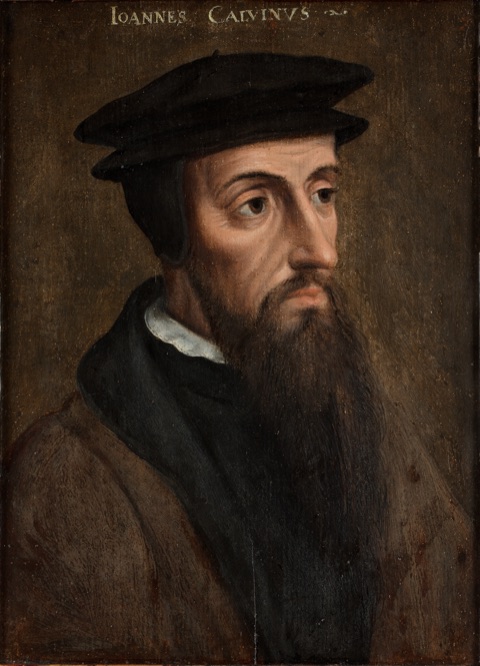
About the author
John Calvin
John Calvin (1509 to 1564 AD) was born at Noyon in Picardy, France, and studied arts at the University of Paris and law at Orléans and Bourges. He broke with the Roman Church around 1534 and left France, and in 1536 published the first edition of his Institutes of the Christian Religion. That year William Farel persuaded him to stay in Geneva and help organize the Reformation there, but both were expelled in 1538. Calvin spent the next three years in Strasbourg, where he pastored a French refugee congregation and dated his reply to Sadoleto in 1539, and he married Idelette de Bure in 1540. He returned to Geneva in 1541, gave its church the Ecclesiastical Ordinances, preached and lectured constantly, and died there in 1564.