Written in 1517 AD and dedicated to two friends rather than a prince, the Discourses on Livy is Niccolò Machiavelli's great study of republics. Book 1 examines Rome's institutions and the liberty they protected; Book 2, how Rome expanded and made war; Book 3, the citizens and commanders whose actions preserved or renewed the state. Every chapter of all three books, both prefaces and the dedication, in modern English.
The first 3 chapters are on this page, no sign-up. The full text and PDF/EPUB come with a free account, no card.
You’re on the list — we’ll email you if this goes to print.
Included with your free account
This book, and 300+ more, free to read
A free account opens the whole library to read online, on your phone or at your desk. Open a book on one device and it is waiting at the same page on the next. The PDF and EPUB of every book are yours to keep, and audiobooks play in the same app.
300+ modernized editionsNot samples. The whole work, free.
Your place, on every devicePhone, tablet or desktop, same page.
132 audiobooksOne at a time, or all of them with a supporter gift.
1517 AD · dedicated to Zanobi Buondelmonti and Cosimo Rucellai
Full title
Discourses on the First Decade of Titus Livius
Source edition
Ninian Hill Thomson's English translation, 1883
Type
Political treatise and commentary on Roman history
Structure
Dedication, Book 1 (preface, 60 chapters), Book 2 (preface, 33 chapters), Book 3 (49 chapters)
Length
About 117,000 words
"Discourses on Livy" is Niccolò Machiavelli's study of the Roman Republic, written in 1517 AD as a commentary on Livy's history of Rome. Book 1 examines Rome's institutions and liberty, Book 2 its expansion and wars, and Book 3 the actions of individual citizens and commanders, with lessons drawn for Florence and the states of his own day.
“admired rather than followed.”
From this edition
How the argument unfolds
01
The dedication and preface. Machiavelli dedicates the work to two friends rather than a prince, and complains that his age reveres ancient statues but not ancient statecraft: "we find no prince, republic, commander, or citizen who turns to the example of the ancients."
02
Mixed government and the tribunes (Book 1, Chapters 1 to 8). Every simple form of government decays, so lawgivers mix monarchy, aristocracy and democracy. Rome reached that mixture through the struggles of nobles and commons, which produced the tribunes and "all laws favorable to freedom."
03
Founders and religion (Chapters 9 to 15). A state must be ordered by one man. Numa's religion held Rome together, while "the Church keeps our country divided."
04
Liberty, corruption and the people (Chapters 16 to 60). How free states fall to corruption, how dictators and the decemvirs gained power, and why "the voice of the people has been compared to the voice of God."
05
Expansion and war (Book 2). Rome grew through valor and institutions rather than fortune. Machiavelli warns against borrowed armies and fortresses, and holds that "good soldiers, rather than gold, are the sinews of war."
06
Citizens, commanders and renewal (Book 3). States must be brought back to their beginnings. Then come conspiracies, severity and gentleness in command, and the rule that a country's safety outweighs every other consideration.
Key themes
Liberty through conflict. The tumults that critics blamed on Rome were the source of its freedom, producing laws and institutions that protected public liberty.
Religion as a civic foundation. "There is no surer sign of a country’s decline than contempt for divine worship." Rulers must keep the foundations of their faith uncorrupted.
Arms of one's own. A state that cannot defend itself with its own soldiers is at the mercy of others, whatever its treasure or fortifications.
Return to first principles. Every republic, kingdom and religious sect decays unless something restores the excellence it had at its beginning.
Book 1, Preface: Learning from Antiquity
Humanity’s jealous disposition, always more inclined to blame than to praise the work of others, has continually made the pursuit of new methods and systems as dangerous as the search for unknown lands and seas. Nevertheless, nature has given me the desire to undertake fearlessly whatever I believe may benefit everyone. Prompted by that desire, I set out on a path no one has yet traveled. Though it may bring me trouble and exhaustion, it may also earn me thanks from those who judge my efforts in a friendly spirit.
My limited understanding, slight experience of current affairs, and imperfect knowledge of ancient events make these efforts defective and of little use. Yet they may at least open the way for someone with greater abilities and sounder reasoning and judgment to carry out my design. In that case, even if I earn no credit, I should at least incur no blame.
I see antiquity held in such reverence that, to give just one example, a mere fragment of an ancient statue often commands a high price. The buyer wants to keep it nearby to adorn his house, or to have it copied by those who delight in this art. These artists, in turn, use all their skill to imitate it in their various works. Yet history shows us noble achievements on behalf of ancient monarchies and republics by kings, commanders, citizens, lawgivers, and others who labored for their country’s good. I find these achievements admired rather than followed. Indeed, everyone has so completely abandoned them that no trace of that ancient excellence remains among us. I cannot help wondering at this inconsistency and grieving over it, especially since I see that people always turn to the decisions and remedies of the ancients in civil disputes between citizens and in the bodily illnesses that afflict them.
Civil law is nothing more than the opinions of ancient legal scholars, arranged into a system that teaches the legal scholars of our own time how to decide cases. Medicine likewise consists simply of the recorded experience of ancient physicians, on which modern physicians base their practice. Yet when it comes to giving laws to a commonwealth, preserving states and governing kingdoms, organizing armies and conducting wars, dealing with subject nations, and extending a state’s dominions, we find no prince, republic, commander, or citizen who turns to the example of the ancients.
I believe this owes less to the weakness that present methods of education have brought upon the world, or to the damage that widespread apathy has done in many provinces and cities of Christendom, than to a failure to understand history properly. This failure leaves people unable to draw out its true meaning or savor its flavor as they read. As a result, the great majority of those who read history enjoy following the variety of events it presents without thinking of imitating them. They judge such imitation not merely difficult but impossible, as though the heavens, the sun, the elements, and humanity itself were no longer what they once were in their movement, order, and power.
Wishing to free people from this error, I have decided to record, concerning all the books of Livy that have escaped the malice of Time, whatever seems essential to a proper understanding of ancient and modern affairs. Those who read my observations may thus gain the benefit for which knowledge of history should be sought. Although the task is difficult, I hope, with the help of those at whose urging I took up this burden, to carry it far enough that another will have little distance left to travel to bring it to its destination.
Book 1, Chapter 1: The Origins of Cities and Rome
No one who reads how the city of Rome began, who its founders were, and what institutions and laws it had will wonder that it maintained so much excellence for so many centuries, or that it later became so great an empire.
First, concerning its origins, I say that all cities have been founded either by people native to the country where they stand or by outsiders. Cities arise in the first way when a country’s inhabitants find they cannot live safely while scattered among many small communities. Whether because of its location or its small population, each community is unable to withstand an enemy’s attack alone. When enemies approach, there is no time to unite for defense without abandoning many strongholds and thus becoming easy prey for the invader. To escape these dangers, either on their own initiative or at the urging of someone with greater authority among them, they confine their settlements to certain places where they think it will be more convenient to live and easier to defend themselves.
Among the many cities that began this way were Athens and Venice. For reasons like those just mentioned, a scattered population built Athens under the direction of Theseus. Venice began when numerous refugees took shelter on small islands in a corner of the Adriatic Sea. They were fleeing the wars that, as the Roman Empire declined, were renewed daily in Italy by the arrival of fresh hordes of barbarians. Without any recognized leader to direct them, they agreed to live together under the laws they thought best suited to preserve their community. Their location secured a prolonged peace. The narrow sea protected them, and the tribes then ravaging Italy had no ships with which to attack them. They were therefore able to rise from very small beginnings to the greatness they now enjoy.
In the second case, when outsiders found a city, the settlers are either completely independent or under the control of others. The latter occurs when a prince or republic sends out colonies to relieve a country of excess population, or to defend newly acquired territories that it wants to secure at little expense. The Romans established many cities of this kind throughout their dominions. A prince may also found such a city simply to increase his fame, without intending to live there himself, as Alexander the Great built Alexandria. Since cities of this kind did not begin in freedom, they seldom advance far enough to rank among the chief cities of kingdoms.
Florence belongs to the class of cities that were not independent from the beginning. We may attribute its origin to Sulla’s soldiers or, as some have conjectured, to the mountain people of Fiesole. Encouraged by the long peace that prevailed throughout the world during the reign of Octavianus, these people came down to settle on the plain beside the Arno. In either case, Florence was founded under Rome’s authority and could initially advance only as far as the ruling state allowed.
Cities may be said to have an independent origin when a people, either on their own or under a prince, are forced by famine, plague, or war to leave their native land and seek a new home. Settlers of this kind either establish themselves in existing cities in the countries they occupy, as Moses did, or build new ones, as Aeneas did. In this last case, the founder’s abilities and the new city’s good fortune are most clearly seen. That good fortune will be more or less remarkable according to the greater or lesser ability of the person who founds it.
A founder’s ability is revealed in two ways: in his choice of a site and in the laws he frames. Since people act either from necessity or by choice, and their merit may seem greater where their freedom to choose is more restricted, we must consider whether it might be best to choose a barren district for a new city. Its inhabitants would then be forced to work hard and would be less corrupted by ease. They might live in closer unity, finding less cause for division in the poverty of their land. This was the case in Ragusa and many other cities built in similar places.
Such a choice would certainly be the wisest and most advantageous if people could be content to enjoy what is their own without seeking to rule over others. But because they must be strong to be safe, they are compelled to avoid these barren districts and settle in more fertile regions. There, the land’s fruitfulness allows them to grow in numbers, so that they can defend themselves against anyone who attacks them and overthrow anyone who resists their power.
As for the sluggishness such a location might breed, care must be taken to enforce through laws the hardships the site does not impose. The example of those wise nations must be followed that inhabited exceptionally fertile and delightful countries, likely to produce a listless and effeminate people unfit for any manly exercise. To prevent the harm caused by the pleasant and relaxing influence of their soil and climate, these nations subjected everyone who was to serve as a soldier to the severest training. As a result, they produced better soldiers than countries that were naturally rugged and barren.
Such was the ancient kingdom of the Egyptians. Although their land was the most bountiful of all, the rigorous training its laws enforced produced exceptionally brave soldiers. Had their names not been lost in antiquity, they might be thought to deserve greater praise than Alexander the Great and many others whose memory remains fresh in people’s minds. Even in recent times, anyone who considered the kingdom of the Sultan and the military order of the Mamelukes before Selim the Great Turk destroyed them must have seen how carefully they trained their soldiers in every kind of military exercise. This showed how greatly they feared the idleness to which their pleasant soil and climate might have inclined them, unless strict laws counteracted it. I say, then, that founding a city in a fertile region is a prudent choice when legal restraints properly balance the effects of that fertility.
When Alexander the Great considered adding to his fame by founding a city, the architect Dinocrates came and showed him how he could build it on Mount Athos. The mountain offered a strong position and could be shaped so that the city built there would resemble a human figure. This would be strange and striking, and worthy of so great a monarch. But when Alexander asked how the inhabitants would support themselves, Dinocrates answered that he had not thought of that. Alexander laughed, left Mount Athos as it stood, and built Alexandria, where the fertile soil and the nearness of the Nile and the sea could attract many people to settle.
Anyone investigating Rome’s origins will therefore count it among the cities founded by outsiders if he attributes its beginning to Aeneas, or among those founded by natives if he attributes it to Romulus. But whichever class we place it in, we will see that it began in freedom, without subjection to another state. We will also see, as I shall discuss later, how strict a discipline the laws established by Romulus, Numa, and its other founders imposed on it. For many centuries, neither the fertility of its land, its nearness to the sea, the number of its victories, nor the extent of its dominion could corrupt it. On the contrary, the discipline of its laws kept it full of virtues unmatched in any other commonwealth.
Rome’s achievements, celebrated by Livy, were accomplished at home or abroad through public or private wisdom. I shall begin by discussing those domestic actions taken in accordance with the public will that seem most worthy of attention, and by examining their consequences. The whole of this first book, or first part of my Discourses, will be devoted to that purpose.
Book 1, Chapter 2: Rome’s Mixed Government
I will leave aside all discussion of cities that were initially dependent on others. I will speak only of those that, from their earliest beginnings, were entirely free of foreign control and governed themselves as they pleased, whether as republics or principalities.
Just as these cities had different origins, they also had different laws and institutions. Some received their laws from a single lawgiver, all at once, either at their foundation or soon afterward, as the Spartans received theirs from Lycurgus. Others received them at different times, as needs arose or circumstances dictated, as happened in Rome. A republic may indeed be called fortunate if it has a founder wise enough to provide laws under which it can live securely without needing to amend them. Sparta, for example, preserved its laws for eight hundred years without deterioration or any dangerous disturbance.
By contrast, a state suffers some misfortune if, instead of entrusting itself once and for all to a single wise lawgiver, it must reshape its own institutions. By far the most unfortunate of these states is the one furthest removed from a sound system of government. By this I mean that its institutions lie entirely outside any path that might lead it to a true and perfect outcome. A state in this position can scarcely ever put itself right, whatever opportunities arise. But a state with imperfect institutions may eventually reach perfection if it has made a good beginning that allows for improvement.
It is certain, however, that such states can never be reformed without great risk. As a rule, people will accept no new law changing their state’s institutions unless the need for that change has been demonstrated. Since this need cannot arise without danger, the state may easily be overthrown before the new order is established. The republic of Florence provides an example: it was reformed in 1502 because of the affair of Arezzo, but ruined in 1512 because of the affair of Prato.
To discuss the nature of Rome’s government and establish what chance circumstances brought it to perfection, I begin with what many writers on government have said before: there are three forms, known as monarchy, aristocracy, and democracy. Those who establish a state’s institutions choose one of these three according to their purpose.
Other writers, whom many have considered wiser, maintain that there are six forms of government altogether. Three are thoroughly bad; the other three are good in themselves, but so easily corrupted that they too can become harmful. The good forms are the three just named. The bad forms are three others that grow out of them, each so closely resembling its counterpart that the transition from one to the other can pass unnoticed. Monarchy readily becomes tyranny, aristocracy becomes oligarchy, and democracy tends to degenerate into anarchy. Thus, if a state’s founder establishes any one of the three good forms, he establishes it for only a short time. No precaution he takes can prevent it from slipping into its opposite, because in each case the virtue so closely resembles the vice.
These different forms of government arise among people by chance. At the beginning of the world, its inhabitants were few and for a time lived scattered like beasts. Later, as their numbers grew, they gathered into communities. To protect themselves better, they began to look for the strongest and most courageous among them, whom they made their leader and obeyed.
Next came an understanding of what is honorable and good, as opposed to what is bad and shameful. People observed that when someone wronged his benefactor, everyone hated the offender and sympathized with the injured person. They saw that the ungrateful were blamed and the grateful honored. Reflecting that the wrongs done to others might also be done to them, they sought protection by making laws and setting punishments for anyone who broke them. In this way, the recognition of justice developed. Afterward, when choosing rulers, people no longer looked for the strongest man, but for the wisest and most just.
Soon, however, sovereignty became hereditary rather than elective. Hereditary rulers began to fall away from the example of their ancestors. Abandoning worthy conduct, they came to believe that princes had nothing to do but surpass everyone else in lavish display, sexual indulgence, and every other source of pleasure. The prince thus came to be hated and consequently afraid. From fear he turned to harming others, and tyranny soon arose.
Movements to overthrow the prince followed at once, along with plots and conspiracies against him. These were undertaken by men distinguished by birth, courage, wealth, and standing, who could not tolerate the tyrant’s shameful life, rather than by the weak or those afraid for their own safety. Following these powerful men, the multitude took up arms against the prince. Once he was removed, they obeyed the others as their liberators.
These liberators, hating the very name of sole ruler, formed a government among themselves. At first, while the memory of tyranny remained fresh, they observed the laws they had made. Putting the common welfare before personal advantage, they managed both public and private affairs with the greatest care and zeal. Later, however, the government passed to their descendants. Never having been schooled by adversity, these knew nothing of fortune’s reversals. Unwilling to remain content with equality under the laws, they gave themselves over to greed, ambition, and lust. Disregarding civil rights, they turned government by the best into government by the few, and very soon met the same fate as the tyrant.
For the multitude, loathing its rulers, supported anyone who dared to attack them, by whatever means. Soon one man arose who overthrew them with the people’s help. But the people still vividly remembered the tyrant and the wrongs they had suffered at his hands, and had no wish to restore monarchy. They therefore turned to popular government, establishing it on a basis that left no place for either king or nobles.
Since every government inspires respect at first, this one also lasted for a time. But it did not last long, seldom surviving the generation that had established it. Liberty suddenly turned into license. Neither personal merit nor public authority commanded respect; everyone lived as he pleased, and a thousand wrongs were committed every day. Then, whether driven by necessity or prompted by some wiser man among them, the people returned to monarchy to escape anarchy. From there, step by step, in the manner and for the reasons already given, they came around once more to license.
This is the cycle within which all states are and have been governed. Yet the same forms of government rarely recur in the same state, because hardly any state has enough vitality to pass through such a cycle more than once and still hold together. In some period of disaster, when a state must always lack wise counsel and strength, it can be expected to fall under the control of a neighboring, better-governed state. If that did not happen, however, it might continue indefinitely to pass from one form of government to another.
I say, then, that all six forms of government are harmful: the three good forms because they last so briefly, and the three bad forms because of their inherent badness. Wise lawgivers, recognizing these defects, have avoided each of these forms on its own. Instead, they have chosen a form that combines the qualities of the first three, judging it more stable and lasting than any one of them separately. For when monarchy, aristocracy, and democracy exist together in the same city, each checks the others.
Among those who have earned particular praise for devising such a constitution was Lycurgus. He framed Sparta’s laws so that kings, nobles, and common people each had their proper functions. In this way he established a government that lasted for more than eight hundred years, bringing him great glory and his country peace and tranquility.
The opposite happened with Solon. Through the form he gave Athens’s institutions, he created a purely democratic government. It lasted so briefly that he himself lived to see the beginning of the despotism of Pisistratus. Forty years later, the heirs of Pisistratus were driven out and Athens regained its freedom. Yet because the city returned to the same form of government Solon had established, it could maintain it for only another hundred years. Many laws were passed to preserve it by restraining the ambition of the powerful and the turbulence of the people, neither of which Solon had guarded against. Still, because neither the monarchical nor the aristocratic element had a place in its constitution, Athens had only a short life compared with Sparta.
Let us now turn to Rome. It had no Lycurgus to give it, from the beginning, a constitution that would long preserve its freedom. Yet through a series of accidents arising from struggles between the common people and the senate, it obtained by chance what its founders had failed to provide through foresight. If fortune did not bestow its first favors on Rome, it bestowed its second. For although the city’s original institutions were defective, they did not lie outside the true path that could bring them to perfection.
Romulus and the other kings made many good laws that were compatible with freedom. But because they sought to found a kingdom rather than a republic, much was found lacking when the city became free. These deficiencies had to be supplied in the interest of liberty, since the kings had not supplied them. Although Rome’s kings lost their sovereignty in the manner and for the reasons described above, those who expelled them immediately created two consuls to take their place. In this way they preserved royal authority in Rome while banishing the royal name. With both senate and consuls included in the republic, it possessed two of the three elements already listed: the monarchical and the aristocratic.
It remained only to give the popular element its place. When the Roman nobles grew insolent, for reasons I will discuss later, the common people rose against them. To avoid losing all their power, the nobles were forced to concede a share to the people. With the share that remained, the senate and consuls retained enough authority to preserve their own place in the republic. This led to the creation of the tribunes of the people. Their creation greatly increased the state’s stability, since each of the three forms of government now had its proper influence.
Rome was so fortunate that, although its government passed from kings to nobles and from nobles to the people by the steps and for the reasons described above, royal authority was not wholly sacrificed to strengthen the nobles, nor were the nobles stripped of their authority to give it to the common people. Instead, all three elements blended into a perfect state. As the next two chapters will fully show, this perfection was reached through the dissensions between the common people and the senate.
Questions
What is "Discourses on Livy" about?+
It is Machiavelli's analysis of the Roman Republic through Livy's history: how Rome's mixed government kept it free, how it expanded and fought, and how individual citizens and commanders preserved or endangered the state.
Who wrote "Discourses on Livy" and when?+
Niccolò Machiavelli wrote it in 1517 AD, after the Medici had removed him from office in Florence. It was first printed in 1531 AD, four years after his death.
How is it different from "The Prince"?+
The Prince addresses a single ruler. The Discourses studies republics, and argues that "a people is more prudent, more steadfast, and better able to judge than a prince."
What does Machiavelli say about the Church?+
In Book 1, Chapter 12, he argues that the bad example of the Roman Court has made Italians irreligious, and that the Church has kept Italy from uniting under a single ruler.
Is there a free PDF or full text of "Discourses on Livy" in English?+
Yes. The complete text in modern English is free on this page as a PDF and EPUB, with the dedication, both prefaces and all 142 chapters of the three books.
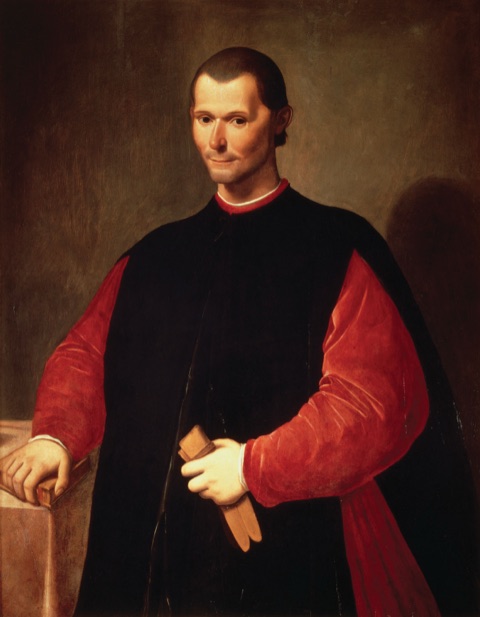
Niccolò Machiavelli (1469 to 1527 AD) was a Florentine diplomat and political theorist. In 1498 he was appointed Second Chancellor of the Florentine Republic and secretary to the Ten of War, and over the next fourteen years he carried out missions to Louis XII of France, the Emperor Maximilian and the papacy, observed Cesare Borgia in the Romagna, and organized a citizen militia for Florence. When the Republic fell and the Medici returned in 1512, he was dismissed from office, and in 1513 he was imprisoned and tortured on suspicion of conspiracy. Shut out of public life, he withdrew to his farm at Sant'Andrea in Percussina and wrote The Prince and the Discourses on Livy, followed by The Art of War, the comedy Mandragola and the Florentine Histories. He died in Florence in 1527.