Bernard of Clairvaux
Cistercian abbot of Clairvaux whose On Loving God and Sermons on the Song of Songs set the pattern for Western writing on the soul's love for God.
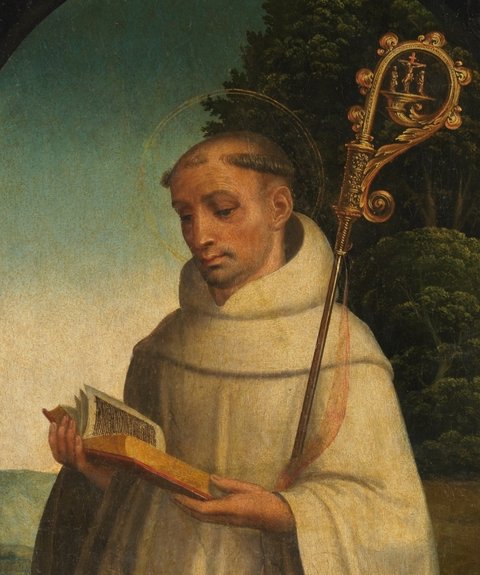
1090–1153
Biography
Bernard of Clairvaux (1090 to 1153) was a Cistercian monk, abbot, and preacher whose writing on the love of God and on the Song of Songs shaped Western devotional literature, and whose interventions in the politics of the Church made him one of the most consulted men in twelfth century Europe.
He was born in 1090 at Fontaines, near Dijon in Burgundy, the third son of a knight named Tescelin and of Aleth of Montbard. His mother died while he was still young, and in 1113, at about twenty three, he entered the new and severe monastery of Citeaux under its English abbot Stephen Harding. He did not go alone: he brought with him a company of about thirty relations and friends, including several of his own brothers and an uncle. Citeaux had been founded in 1098 as a return to a strict reading of the Rule of Saint Benedict, and it had been struggling for recruits until Bernard arrived.
In 1115 Stephen Harding sent him with twelve monks to found a daughter house in a valley in Champagne, in the diocese of Langres. The place was named Clairvaux, and Bernard governed it as abbot for the remaining thirty eight years of his life. Clairvaux itself sent out colonies of monks in turn, and the Cistercian order grew during his lifetime from a handful of houses to several hundred across Europe, a large share of them founded from Clairvaux or from its daughters.
He wrote continuously. On Loving God, addressed to Haimeric, the chancellor of the Roman church, sets out the question of why God is to be loved and by what measure, and traces four degrees by which a person moves from loving self for self's sake to loving God for God's sake. On Grace and Free Choice defends divine grace without denying that the will consents. On Consideration was written for Pope Eugene III, a former monk of Clairvaux, and warns him about what the business of the papal court can do to a man's soul. His Sermons on the Song of Songs, begun in 1135 and left unfinished at his death after eighty six sermons, read the biblical love poem as the story of the soul's union with the Word.
His public life pulled him away from the cloister repeatedly. He took the side of Innocent II in the disputed papal election of 1130 and spent years traveling to win rulers and bishops to that side. He opposed the theological method of Peter Abelard and pressed the case against him at the Council of Sens, which met in 1140 or 1141. He drew up a defense of the Knights Templar, In Praise of the New Knighthood, after the Council of Troyes in 1129. At the request of Eugene III he preached the Second Crusade at Vezelay in 1146 and afterwards in the Rhineland; the expedition failed badly, and Bernard wrote in his own defense about it in the first book of On Consideration.
He died at Clairvaux on August 20, 1153, and was canonized in 1174 by Alexander III. In 1830 Pius VIII declared him a Doctor of the Church.
Life & Career
Why Bernard Matters
Bernard wrote at the point where monastic theology and the new scholastic method were separating, and he argued for the older way. His subject was not the analysis of doctrine into propositions but the movement of the affections toward God, and he treated that movement with the precision other men brought to logic. On Loving God asks two questions, why God should be loved and how much, and answers the second by saying that the measure of loving God is to love him without measure. From there he sets out four degrees: a person begins by loving himself for his own sake, comes to love God for his own benefit, then loves God for God's sake, and at last, rarely and briefly in this life, loves even himself only for God's sake. The scheme gave later writers a vocabulary for describing spiritual growth as an ordering of love rather than an accumulation of merit.
The Sermons on the Song of Songs did something similar for the reading of Scripture. Bernard took the marriage imagery of the Song as a description of the soul's relation to the Word of God, and worked it out over eighty six sermons that never reach the third chapter of the biblical book. The result was a body of language about union with Christ, about the alternation of consolation and absence, and about self knowledge as the beginning of the knowledge of God, that later writers in very different traditions kept using.
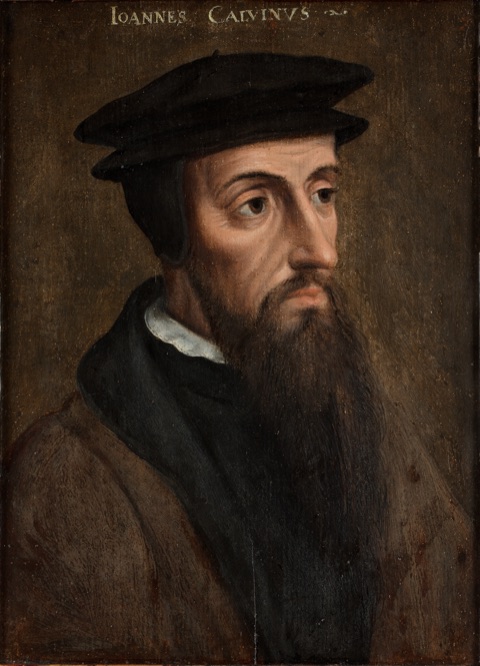
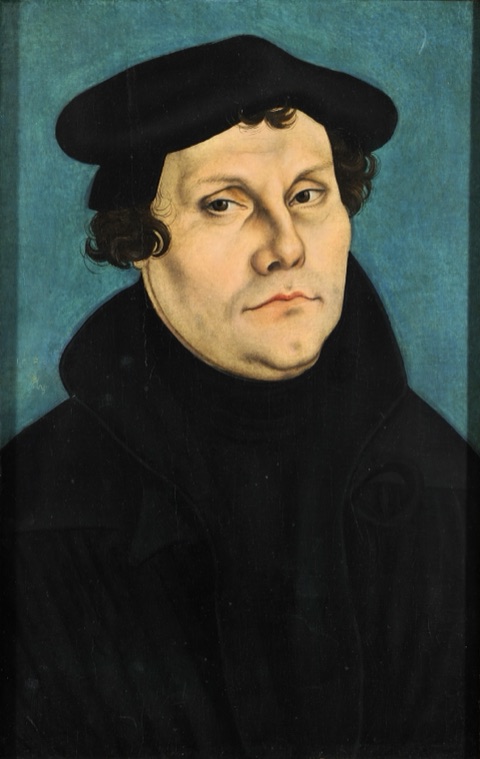
His influence carried past the Reformation, which is unusual for a twelfth century abbot. Luther called him the best of the medieval preachers, and Calvin quotes him more often in the Institutes than any other medieval writer, chiefly on grace, on the unreliability of the sinner's own merits, and on resting the conscience on Christ rather than on the self. Reformed and Puritan authors after them cited him with the same freedom. What they took was not his ecclesiology but his account of what happens inside a person who is being drawn to God.
His practical activity shaped the twelfth century in ways his books do not record. The Cistercian expansion he led changed the map of European monasticism and, through Cistercian agriculture, of European land use. His support settled a contested papal election. His preaching launched a crusade that failed and that he had to answer for afterward.