William Bridge
English Congregationalist minister and one of the Five Dissenting Brethren who pressed for independent church government at the Westminster Assembly. He is best known for A Lifting Up for the Downcast, a series of sermons on spiritual discouragement drawn from Psalm 42.
1600–1670
Biography
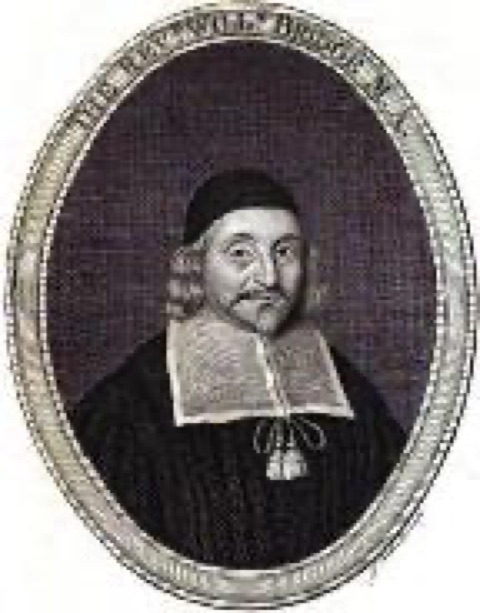
William Bridge (1600 to 1670) was an English Congregationalist minister, a member of the Westminster Assembly, and one of the five authors who defended independent church government against the Presbyterian majority. His career carried him from a Cambridge fellowship into exile in the Netherlands, back to a gathered church in Great Yarmouth, and finally out of the established church altogether when he was ejected in 1662.
Bridge was educated at Emmanuel College, Cambridge, the college most closely associated with the Puritan movement, where he took his degrees and was elected a fellow. He entered the ministry and preached in Essex before settling in the city of Norwich, holding a living there through the 1630s. His refusal to conform to the ceremonial requirements enforced under William Laud brought him into conflict with Matthew Wren, the bishop of Norwich, who pressed uniformity across the diocese.
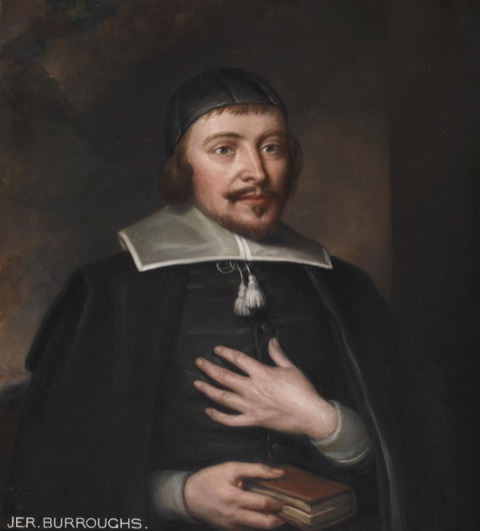
In 1637 Wren suspended and then excommunicated Bridge for nonconformity, and Bridge left England for the Netherlands. He settled at Rotterdam, where he joined the English congregation and served alongside Jeremiah Burroughs, another exiled minister who shared his convictions about how churches should be ordered. The Rotterdam years shaped Bridge's commitment to a congregational model in which each gathered church governed its own affairs rather than answering to bishops or to a national presbytery.
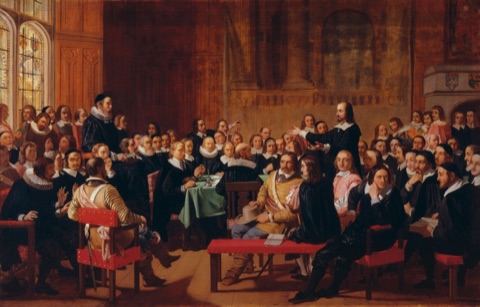
When the Long Parliament met and Wren's measures were overturned, Bridge returned to England around 1642. He settled at Great Yarmouth as town preacher and gathered a Congregational church there in 1643. That same year he was named to the Westminster Assembly, the body summoned by Parliament to reform the worship, doctrine, and government of the Church of England.
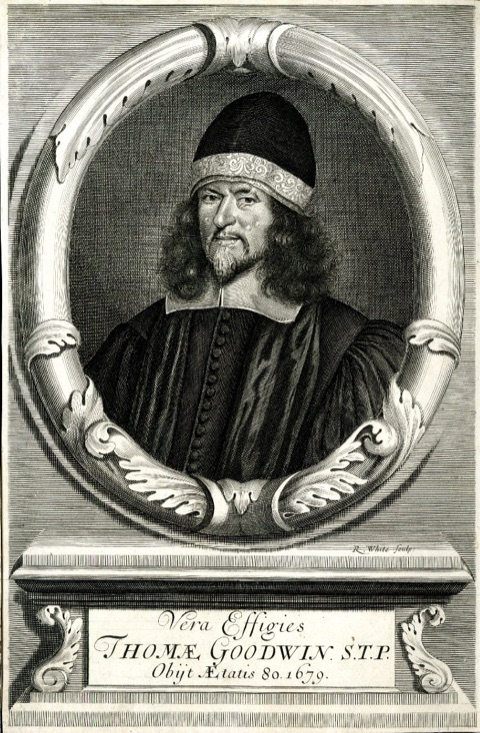
Within the Assembly Bridge became one of the Five Dissenting Brethren, together with Thomas Goodwin, Jeremiah Burroughs, Philip Nye, and Sidrach Simpson. In 1644 the five published An Apologeticall Narration, a printed appeal that laid their case for congregational independence before Parliament and the public rather than accepting the Presbyterian settlement the Assembly was moving toward. The pamphlet made the Independent position a matter of open national debate.
Bridge continued to preach and publish through the following decades. His best-known work, A Lifting Up for the Downcast, gathered sermons on Psalm 42:11 addressed to believers troubled by doubt, affliction, and spiritual discouragement. When the Act of Uniformity took effect in 1662, Bridge was ejected from his ministry along with roughly two thousand other clergy. He continued to preach privately, spending his later years near London, and died in 1670.
Life & Career
Why Bridge Matters
Bridge belongs to the small group of ministers who kept Congregationalism a live option while the shape of English religion was being decided. At the Westminster Assembly the weight of opinion favored a Presbyterian national church, and it was the Five Dissenting Brethren who argued that the local gathered congregation, not a hierarchy of synods, was the proper unit of church government. His name on An Apologeticall Narration places him at the origin of the organized Independent, or Congregational, tradition in England.
His exile and his ejection frame the cost of that position. Silenced by Bishop Wren in 1637 and driven abroad, then ejected under the Act of Uniformity in 1662, Bridge spent much of his life outside the established church. That experience connects him to the wider body of Nonconformist ministers whose refusal to conform produced the dissenting churches of the later seventeenth century.
As a preacher, Bridge is remembered less for controversy than for pastoral writing on discouragement. A Lifting Up for the Downcast treats spiritual depression, doubt, and the sense of God's absence as conditions to be diagnosed and answered from Scripture, and the book kept his name in circulation long after the political battles of the 1640s had faded. It has been reprinted for readers concerned with the inner life of faith rather than with questions of church polity.
Through both his polity and his preaching, Bridge influenced the separatist and nonconformist streams that carried Congregationalism into the following century and across the Atlantic, where the gathered-church model he defended had already taken root in New England.