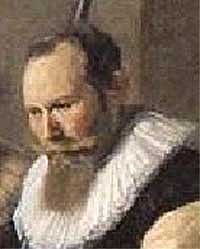
Thomas Vincent
English Puritan minister who wrote the most widely used exposition of the Westminster Shorter Catechism and stayed in London through the Great Plague of 1665 to minister to the dying. His eyewitness book on the Plague and the Great Fire, "God's Terrible Voice in the City," is one of the fullest firsthand accounts of both disasters.
Biography
Thomas Vincent (1634 to 1678) was an English Puritan minister in London who was ejected from the Church of England under the Act of Uniformity in 1662, remained in the city to serve the dying during the Great Plague of 1665, and wrote the most widely used exposition of the Westminster Shorter Catechism. He was born in Hertfordshire in 1634 and educated at Felsted School in Essex under the master Martin Holbeach, who trained a generation of Puritan and parliamentary sons.
From Felsted, Vincent went to Christ Church, Oxford, where John Owen was dean of the college and vice-chancellor of the university. Vincent took his degree and around 1657 became minister of the parish of St Mary Magdalen, Milk Street, in the heart of London. He was in his early twenties, and his brief conforming ministry ended within five years.
In 1662 the Act of Uniformity required every clergyman to give unqualified assent to the revised Book of Common Prayer and episcopal ordination. Vincent refused, and on the day known as the Great Ejection he was one of roughly two thousand ministers who lost their livings rather than conform. He did not leave London or abandon preaching. He continued to preach privately and illegally under the penal laws directed against nonconformists, and he later ran a nonconformist academy that trained students barred from the universities.
When bubonic plague swept London in 1665, killing tens of thousands over the summer and autumn, most of the beneficed parish clergy fled the city. Vincent stayed. He preached in the emptied pulpits of ministers who had left, visited the sick, and buried the dead through the worst months of the outbreak. The following year, in September 1666, the Great Fire destroyed much of the old walled city, including the parish where he had once served. Vincent recorded both catastrophes in "God's Terrible Voice in the City," published in 1667, which reads the Plague and the Fire as divine judgments and preserves detailed firsthand observation of the streets, the burials, and the flames.
Vincent's most influential book was his exposition of the Westminster Shorter Catechism, published in the early 1670s and known in our catalog as "The Shorter Catechism Explained from Scripture." Working question by question through the catechism drawn up by the Westminster Assembly, he set out each answer, broke it into its parts, and supported every point with cited Scripture. The book carried commendations from a roster of leading Puritan ministers, including John Owen, Thomas Watson, Thomas Brooks, and Joseph Caryl, and it became a standard household and pastoral tool for teaching the catechism.
His other works turn on the same practical concerns. "Christ's Certain and Sudden Appearance to Judgment" pressed the reality of the final judgment on his readers, and "The True Christian's Love to the Unseen Christ" examined the believer's affection for a Savior not seen with the eyes. Vincent died in London in 1678 at the age of forty-four. His brother Nathaniel Vincent was likewise an ejected nonconformist minister who suffered imprisonment under the same penal laws.
Life & Career
Why Vincent Matters
Vincent's largest mark was catechetical. The Westminster Shorter Catechism, produced by the Westminster Assembly in the 1640s, became a central teaching document of English-speaking Reformed Christianity, but its compressed answers needed explanation. Vincent's line-by-line exposition, backed at every point by cited Scripture, gave families, schools, and ministers a ready instrument for that work. Its endorsement by Owen, Watson, Brooks, and Caryl signaled that leading nonconformist ministers of the day regarded it as the standard aid, and it remained in print and in use as such.
His plague ministry gave the Puritan pastoral ideal a concrete test. The care of souls under the penal laws was already costly for an ejected minister; staying in a plague-stricken city, preaching in abandoned pulpits and burying the dead, put that vocation under maximum pressure. Vincent's decision, made while most beneficed clergy withdrew, became one of the clearest instances of nonconformist ministers filling the vacuum left in London during the crisis of 1665.
As a writer, Vincent left an unusual double record. "God's Terrible Voice in the City" is at once a sermon on divine judgment and a piece of eyewitness reporting on the two disasters that reshaped London in 1665 and 1666, and it is read today both by students of Puritan preaching and by historians of the Plague and the Fire. His shorter devotional treatises on the final judgment and on love for the unseen Christ kept his name in later reprints among readers of experimental Puritan divinity.