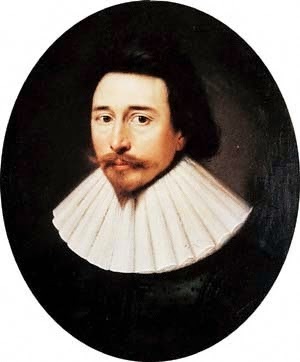
Stephanus Junius Brutus
The pseudonymous author of the Vindiciae Contra Tyrannos (1579), the classic Huguenot defense of lawful resistance to tyrants, usually attributed to Philippe Duplessis-Mornay or Hubert Languet.
Biography
Stephanus Junius Brutus is the pseudonym under which the Vindiciae Contra Tyrannos, the most famous Huguenot treatise on resisting tyrants, was published in 1579 AD. The name was chosen with care. Lucius Junius Brutus drove the last king, Tarquin the Proud, out of Rome and founded the Republic; Marcus Junius Brutus, his descendant by tradition, struck down Julius Caesar. To sign a book on tyranny as Brutus was to place it in the line of Rome's tyrant-slayers, and the treatise itself defends Brutus, Cassius and the others who killed Caesar before his power had taken firm root.
The real author has never been settled beyond dispute. The work is usually attributed to Philippe Duplessis-Mornay (1549 to 1623 AD), a Huguenot nobleman from the Vexin, northwest of Paris, who became one of the chief counselors of Henry of Navarre, the leader of the French Protestant cause and later King Henry IV. Mornay was a soldier, diplomat and theologian, so prominent among the French Reformed that he was called the Pope of the Huguenots. He served as governor of Saumur, where he founded a Protestant academy, until Louis XIII removed him in 1621. The other name long attached to the book is Hubert Languet (1518 to 1581 AD), a Burgundian scholar and diplomat, a friend of Philip Melanchthon, who served the Elector of Saxony and later William of Orange, and who is remembered for his friendship with the English poet Philip Sidney. Some scholars see the two men as collaborators, with Mornay as the principal writer.
Both men were in Paris in August 1572 AD, when the St. Bartholomew's Day Massacre began. Thousands of Huguenots were killed in Paris and the provinces, and the massacre forced the French Reformed churches to ask a question their teachers had long approached with caution: what may subjects do when their own king turns against them? François Hotman answered from French constitutional history in Francogallia (1573), and Theodore Beza in The Right of Magistrates (1574). The Vindiciae, published five years later, gave the fullest and most systematic answer, framing it as four Questions argued from Scripture, Roman and canon law, and the history of the kingdoms of Europe.
The book appeared in Latin in 1579 and in French in 1581. Its influence ran far beyond France. Its principle that a ruler is bound by covenant to his people, and forfeits obedience when he breaks it, was echoed in the Dutch revolt against Philip II of Spain. In England it was printed in English during the civil wars of the 1640s and again in 1689, the year of the Revolution settlement, and through the English tradition its arguments passed into the resistance thought of the American colonies.
Life & Career
Why Brutus Matters
The Vindiciae gave Reformed resistance theory its classic form. Earlier writers had argued that lesser magistrates might defend true religion against a persecuting ruler; the Vindiciae built that conviction into a full theory of covenant. At every king's inauguration, it argues, two covenants are made: one between God, the king and the people, by which king and people together bind themselves to keep the Church; and one between the king and the people, by which the king promises to rule justly and the people to obey him while he does. A king who breaks the first rebels against God, his true sovereign. A king who breaks the second is a tyrant, and the people, through the officers of the kingdom and the assembly of the estates, may hold him to account.
Its care over who may resist is as important as its claim that resistance is lawful. The duty belongs to the people as a body, acting through those who represent them, and to the magistrates of towns and provinces within their own jurisdictions. Private persons, unless called by God in an extraordinary way, may not take up the sword against a lawful ruler who becomes a tyrant; they may refuse to sin, support the magistrates who resist, or flee. Only a usurper who seizes power without any title may be resisted by anyone. This structure of covenant, representation and lawful office answered the charge that the Huguenots were rebels, and gave later generations a vocabulary for resisting kings without abandoning the authority of law.
That vocabulary had a long life. Samuel Rutherford's Lex, Rex (1644) argued the same questions for the Scottish Covenanters. The English translation appeared during the civil wars and was reprinted in 1689, and the treatise's account of kings made by the people and bound by contract stands behind later theories of government by consent, from the English Revolution to the American founding.