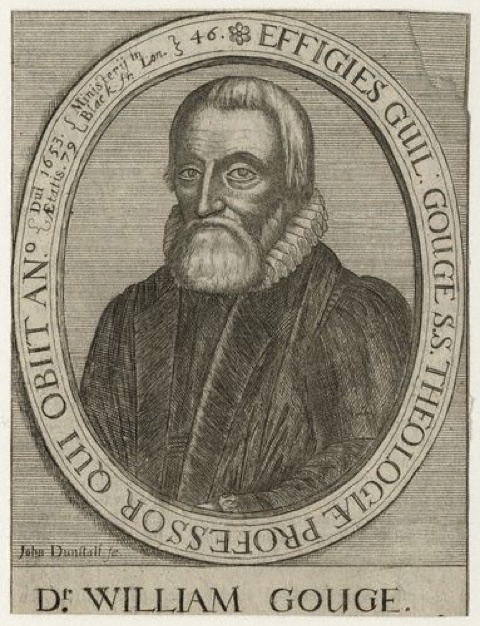
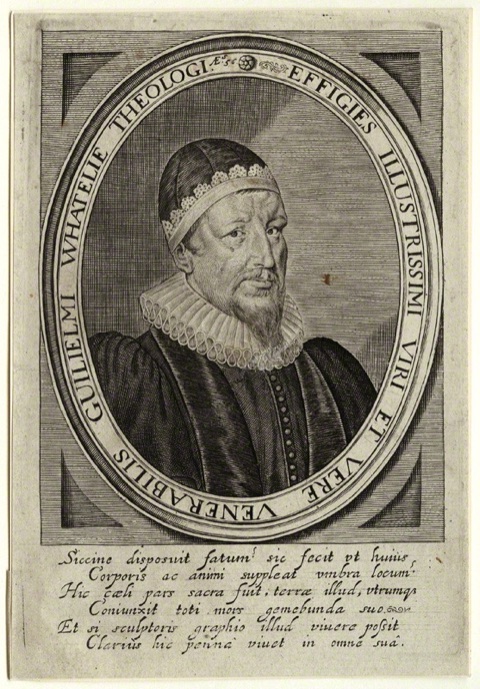
Richard Steele
Puritan minister and author of The Tradesman's Calling (1684), which argued that trade and commerce were a genuine Christian vocation to be pursued with diligence, honesty, and generosity.
Biography
Richard Steele (1629 to 1692) was an English Puritan minister and nonconformist writer whose 1684 treatise The Tradesman's Calling treated commerce and trade as a Christian vocation. He is not to be confused with the later essayist and Spectator co-founder of the same name.
Steele was born in 1629 at Barthomley, in Cheshire, and educated at St John's College, Cambridge. He served as a parish minister through the years of the Commonwealth and the Restoration of the monarchy.
Like roughly two thousand other ministers, Steele lost his living in the Great Ejection of 1662, when the Act of Uniformity required conformity to the newly restored Book of Common Prayer. Afterward he preached privately before eventually settling in London, where he continued to write and minister among nonconformists until his death.
His work was aimed at ordinary Christians living and working in the world rather than at fellow scholars. The Tradesman's Calling addressed the spiritual life of merchants, shopkeepers, and tradesmen, arguing that secular work was a divine calling and that Christians in business had both an opportunity and a duty to honor God through honest dealing, diligence, and generosity. The treatise was unusual among Puritan writings for its close attention to the practical ethics of buying and selling. It was later adapted for an eighteenth-century readership as The Religious Tradesman.
Steele also wrote on the duties of the household and marriage, on the conduct of old age, and on the problem of distraction and wandering thoughts in prayer. He died in 1692 in London.
Life & Career
Why Steele Matters
Steele's contribution lay in the theology of vocation. The Reformers had taught that all lawful work is a calling from God, but Steele applied that principle with unusual specificity to trade and commerce, a sphere that most Puritan writers treated only in passing.
The Tradesman's Calling took up questions that were rarely addressed in print: how to price goods fairly, how to conduct oneself amid competition, how to weigh profit against generosity, and how to keep spiritual discipline under the daily pressures of a shop or counting-house. Steele treated the tradesman's ordinary labor not as a distraction from religion but as one of its proper arenas.
The book is frequently cited in discussions of the Puritan work ethic and the religious valuation of disciplined, methodical labor in a worldly calling.
His writing on family duties, marriage, and old age placed him within the tradition of Puritan practical divinity, alongside contemporaries who produced conduct books for the Christian household. What set Steele apart was his willingness to bring the same detailed moral attention to the marketplace that others reserved for the home.
Modernized Editions by Steele
Updated English Audio
Audio
A Plain Discourse upon Uprightness
Richard Steele
A Remedy for Wandering Thoughts in the Worship of God
Richard Steele

On Old Age
Richard Steele

The Duty of Husbands and Wives Toward Each Other
Richard Steele
 Audio
Audio
The Religious Tradesman
Richard Steele
A Family Built by God
Richard Steele