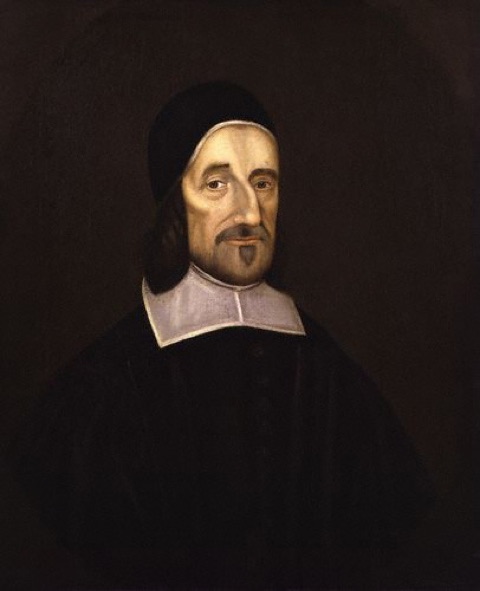
Richard Allestree
Anglican divine, Regius Professor of Divinity and Provost of Eton, conventionally identified as the anonymous author of The Whole Duty of Man, The Ladies' Calling, and The Gentleman's Calling.
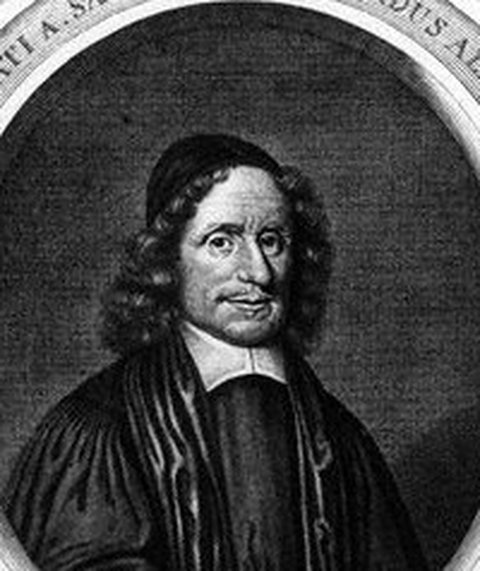
1621–1681
Biography
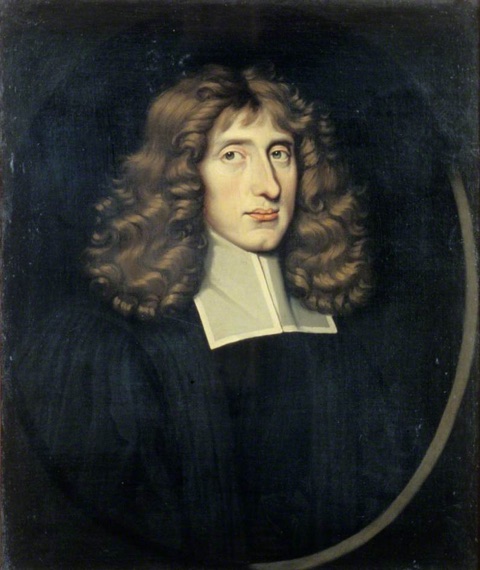
Richard Allestree (1621 to 1681) was an English clergyman, Regius Professor of Divinity at Oxford and Provost of Eton, to whom the most widely circulated English devotional manuals of the later seventeenth century are conventionally assigned.
He was born at Uppington in Shropshire, the son of Robert Allestree, and educated at the free school in Coventry before entering Christ Church, Oxford, in 1636. The Civil War interrupted his academic career. Oxford was the king's headquarters, and Allestree took up arms for the royalist side, serving in the fighting around the city and at Edgehill in 1642. When the parliamentary visitors reformed the university, he was expelled from his studentship at Christ Church in 1648.
In the years that followed he lived as a tutor and chaplain and carried messages between royalists in England and the exiled court of Charles II on the continent. He was arrested at Dover in 1659 on one of these journeys and held for a time. At the Restoration in 1660 the offices came quickly: a canonry of Christ Church, appointment as chaplain in ordinary to the king, the Regius Professorship of Divinity at Oxford in 1663, and in 1665 the provostship of Eton College. He held Eton until his death, rebuilt its library at his own expense, and left it his books. He died on January 28, 1681, and was buried in the chapel at Eton.
The books for which he is remembered were all published without a name on the title page. The Whole Duty of Man appeared in 1658 with a preface by Henry Hammond and became one of the most reprinted English books of the following century and a half, kept in parish churches and given away by the thousand. A series of further volumes followed, each announced only as being by the author of The Whole Duty of Man: The Gentleman's Calling in 1660, The Ladies' Calling in 1673, The Government of the Tongue in 1674, The Art of Contentment in 1675, and The Lively Oracles Given to Us in 1678.
The anonymity was deliberate and it held. Contemporaries and later scholars proposed a long list of candidates for the authorship, among them Lady Dorothy Pakington, Henry Hammond, John Fell, Abraham Woodhead, Obadiah Walker, Richard Sterne, and Humphrey Henchman. Allestree became the conventional attribution largely on the authority of John Fell, his friend, who edited his sermons after his death and prefixed a life of him. The identification is generally accepted and generally hedged: it is the standard attribution rather than a settled fact, and the books are still catalogued in many places under the author of The Whole Duty of Man.
Life & Career
Why Allestree Matters
The books attributed to Allestree occupied a particular place in English religion: they were the practical divinity of the restored Church of England, written for people who would never read a controversial treatise and were not expected to. The Whole Duty of Man divides the Christian life into duty to God, duty to self, and duty to neighbor, and then splits that material into seventeen sections so that a household could read one section a week and cover the whole three times a year. The arrangement is the argument. Religion is presented as an ordered set of obligations that any literate person can learn, practice, and examine himself against.
This was a deliberate alternative to two things at once. Against the Puritan emphasis on the marks of conversion and the inward evidences of grace, these books put a plain account of duty that did not require the reader to interpret his own religious experience. Against the theological quarrels that had helped produce the Civil War, they put a body of moral instruction that both sides could have accepted. Critics from the evangelical side later complained that the result taught morality without the gospel; John Wesley and others said so directly. The books kept selling anyway, and they trained the religious vocabulary of ordinary English readers for well over a century.
The Gentleman's Calling and The Ladies' Calling extended the method to particular stations in life. The first argues that gentle birth, wealth, leisure, and influence are themselves a calling with obligations attached, and that a gentleman who treats them as exemptions has misunderstood his position. The Ladies' Calling takes up the virtues held to belong to women, then works through the conditions of virgin, wife, and widow. Both books are documents of a specific social order and state its assumptions openly, which is part of what makes them useful to read now: they show what the seventeenth century Church of England actually taught people about how to live in the place they found themselves.