Do your words serve your neighbor or injure them? Allestree’s 1674 treatise takes the tongue’s sins one by one, from blasphemy and slander to flattery, boasting, and complaint, and shows how to bring speech under government.
A free account opens the whole library to read online, on your phone or at your desk. Open a book on one device and it is waiting at the same page on the next. The PDF and EPUB of every book are yours to keep, and audiobooks play in the same app.
250+ modernized editionsNot samples. The whole work, free.
Your place, on every devicePhone, tablet or desktop, same page.
131 audiobooksFrom $4.99 each, or all of them with a $50 gift.
The Government of the Tongue is a 1674 AD treatise, published anonymously and traditionally attributed to Richard Allestree, on the sins of speech. It argues that speech was given to glorify God and benefit people, then examines blasphemy, slander, mockery, flattery, boasting, complaint, and dogmatism, and calls readers to govern their words and reform the conversation around them.
How the argument unfolds
01
The purpose of speech. God gave speech so that reasoning souls in bodies could share their minds, and so that we could praise him. From this comes a test: “Everything deserves approval to the extent that it fulfills the purpose of its existence.” Our words are not idle, since “they become records in God’s court.”
02
How speech fell. Corruption began at the mouth: “Original sin first came out through the mouth in speaking before it entered through the mouth in eating.” Allestree runs through Ham, the patriarchs, and Peter’s denial, then divides the tongue’s sins by their target: God, the neighbor, and the speaker.
03
Against God. Atheistic talk is a wish before it is an argument: “no one ever said there was no God without first wishing it.” He adds swearing and the jesting use of Scripture, and asks how any of us would feel if a letter of urgent advice to a friend were turned into doggerel for the crowd.
04
False reports. Damaging a good name comes first among the sins against the neighbor. He separates the inventor of a lie, the person who repeats it knowing it is false, and the one who spreads it without knowing. Repeaters matter most: “if there were fewer distributors, there would be fewer fabricators of defamatory stories.”
05
True reports and private verdicts. Even true reports are detraction unless justice or charity requires them, and then “mercy to the wicked proves cruelty to the innocent.” Otherwise they spring from pride, envy, or the plain love of talking. He also forbids private sentences on others: “Who made me a Judge?”
06
Remedies for detraction. He prescribes honest study of one’s own heart, remembrance of the last judgment, turning backbiting into private correction, starving curiosity, and one short question: “Would I myself wish to be treated this way?”
07
Mockery. Wit sharpens an insult and gives it wings, so it is remembered and spread. “Wit commonly serves as the officer who administers the punishment.” He allows playful teasing among friends under three cautions: keep it gentle, keep it a diversion, and keep it to the company present.
08
Flattery. The tongue’s deadliest wound, because it numbs: “Its balm corrodes.” He finds three ingredients in it, lying, servility, and treachery, and says the cure rests chiefly with the one flattered, who should ask whether he does or does not possess the virtues being praised.
09
Boasting. Boasting turns the tongue on the speaker. “Pride in the heart is the spring that feeds this perpetual stream from the mouth.” It robs God of credit, shuts off learning, and is cured by looking at others’ excellences and at one’s own sins.
10
Complaining. Boasting and complaining share one root, for the proud man despises what he has. Every complaint finally rebounds against providence, and it wearies others too: “Whoever repeats all his grievances to others will soon make himself a grievance to them.” He allows pouring out griefs to a true friend.
11
Dogmatism and obscenity. Overbearing opinion and reckless certainty in reporting facts both come from pride, and the second ruins a speaker’s credit. His cure is modesty, since “a modest report will most readily win their belief.” Obscene speech he dismisses in a few lines.
12
Choose life. Avoiding wrong is not enough: “Unless its activity is directed toward good things, it will occupy itself with bad ones.” He calls readers to speak of God and good, to reform their own tongues first, and then the age. “Death and life are in the power of the tongue,” and he ends: “Therefore choose life.”
Key themes
The tongue as a trust. Speech has two purposes, and every word is measured against them: “glorifying God and benefiting people.”
A neighbor’s good name. Allestree treats reputation as the neighbor’s property, and notes that many are “so careless of his reputation that they furnish themselves with conversation at its expense.”
Pride beneath every fault. Detraction, boasting, complaint, and dogmatism all trace back to the same root: “all detraction contains some mixture of pride.”
Speech used for good. The remedy is positive as well as negative: “all speech that tends toward God’s glory or human good is rightly directed.”
Free audiobook preview
Listen to the first 9 minutes
The Government of the Tongue · Audiobook · 4 hr 30 min
0:00 / 9:18
Enjoying it? The full audiobook runs 4 hr 30 min. Listen in the Updated Works app on any device.
Governing the tongue has always rightly been considered one of the most important parts of governing ourselves. Philosophers and theologians alike affirm this. Solomon, who was both, also gives his support: encouragements to this discipline and praises of it occupy a considerable part of his book of Proverbs. I therefore need say nothing to justify my choice of a subject recommended by authorities so much better than myself.
I only wish it had not acquired an additional relevance through our universal neglect of it. Governing the tongue now seems an entirely outdated art. Although some outlines of it can still be found in books, scarcely any traces remain in practice, where alone it can have real significance. An attempt to revive it is certainly timely. I wish it were half as easy.
Indeed, this skill has never been very easy. It requires the greatest vigilance and caution, and cannot be acquired by careless, frivolous minds. The tongue is so slippery that it easily deceives a sleepy or inattentive guard. Nature seems to have given it some unfortunate advantages in this respect. Its structure makes it readier for movement than any other member of the body. It does not need even the bending of a joint, and the supply of moisture gives it a smoothness that makes movement easier still.
Sadly, we know too well the effect of this easy movement. The tongue often starts without warning us. When children happen upon something that rolls, they can send it moving so fast that wiser people cannot suddenly stop it. In the same way, the childish parts of us, our passions, our imaginations, and all our merely animal faculties, can drive our tongues into disorders that our reason cannot easily correct. Properly managing this unruly member may therefore rightly be considered one of the deepest arts of wisdom and virtue. St. James indicates this: “If any man offend not in word, the same is a perfect man, and able also to bridle the whole body” (Jas 3:2).
A story is told of Pambo, an early Christian, who went to a friend to be taught a Psalm. His friend began with Psalm 39: “I said I will take heed to my ways, that I offend not with my tongue.” On hearing this first verse, Pambo stopped his teacher, saying, “This is enough for me, if I learn it as I ought.” Six months later, when rebuked for not returning, he replied that he had not yet learned his first lesson. Even after nineteen years, he acknowledged that in all that time he had scarcely learned to fulfill that one line. I give this example to encourage people to study, rather than to discourage them. A lesson that takes so long to learn needs to be begun early.
This is especially true in our age. The opposite freedom has become so firmly established that people consider it part of their birthright. They not only let their tongues run loose, but deliberately prompt them to disorder, using the spur where they should use the bridle. Social interaction has consequently become so generally corrupted that many have had reason to wish they had not been made sociable creatures. Someone secluded from company has only the devil and himself to tempt him. Someone who associates with others has almost as many snares as companions.
People exchange vices. As though each did not have enough growing in his own soil, he transplants more from his neighbor’s. What was intended to cultivate and civilize the world has turned it into a wild desert and wilderness.
I admit that this state of affairs offers little encouragement to anyone urging reform. But whatever the prospects, the need is certainly great enough to justify the attempt. The disease is both epidemic and deadly, utterly incompatible with the pure religion that leads to life. We may take St. James’s word for it: “If any man seem to be religious, and bridleth not his tongue, that man’s religion is vain” (Jas 1:26). God knows we have little religion among us. It is a great pity to defeat the little we have, making utterly ineffective what amounts to so little even at its best.
Let the difficulty and necessity of the task persuade us to allow enough time for it. We must not postpone this necessary work until night comes, or imagine that the tongue can atone for a whole lifetime of guilt with a feeble “Lord, have mercy on me” at the last. Even if that were possible, it would be only a broken reed to lean on. No one knows whether he will have the time or grace for even that. Death may surprise him with an oath, a blasphemy, or a disparaging remark in his mouth. It has surprised many that way.
There must certainly be a dying moment. How can anyone guarantee that it will not be the very moment in which he utters such words, using his last breath for them? Surely people cannot think that these incantations, hellish though they are, can make them immune to attack and invulnerable to death’s arrows. Unless they have that expectation, or some other equally ridiculous fallback, it is strange that anything should make them take such a reckless risk.
But I expect an objection: this little, insignificant tract is unequal to the conflict for which it is offered. Besides treating its subjects unskillfully, it entirely omits many matters that belong to the subject, passing over some faults of the tongue in silence. I admit that there is enough apparent justification for this objection. Yet I believe that, if the matter were put to a vote, more people would decide that I had said too much than too little.
Had I expanded the subject to its fullest extent, the volume would have become so frighteningly large that few would have attempted it. By saying much, I would have said nothing at all to those who most need it. People’s stomachs are generally so queasy in these matters that it is unsafe to overload them. Let them try how well they can digest this. If they can turn it into wholesome nourishment, they will be able to supply themselves with the rest. I think I can say with some confidence that anyone who can keep his tongue within the limits prescribed here can restrain its other wanderings without much difficulty.
All I ask of the reader is to come with sincere intentions. Perhaps these few stones and this sling, used in the name of the Lord of Hosts and with an appeal to him, may then prevail against the massive armor of the uncircumcised Philistine. May the God who loves to magnify his power in weakness give them the same success.
Section 1: The Purpose of Speech
At humanity’s first creation, God appointed man as his representative to receive the homage and enjoy the services of all lower beings. He also endowed man with qualities suited to sustaining the dignity of so vast an empire. Yet the very qualities that fitted him to rule made him unable to find satisfaction or contentment among his subjects. The dignity of his nature placed him above the companionship and interaction of mere animals. Amid all the splendor of his royalty, and all the multitude and variety of creatures, he remained solitary.
But God knew the desire for companionship he had implanted in man, and judged this an unsuitable condition: “It is not meet that man should be alone” (Gen 2:18). Throughout the structure of nature, God had implanted such an abhorrence of a vacuum that all creatures would submit to movement contrary to their nature rather than allow a vacuum to form. Likewise, he relieved man’s empty, companionless condition by a miraculous means. He divided him so that he might unite him, making one part of him a companion for the other.
God did not take this care to provide man with a companion merely for exchanges involving the senses. Had that been his only aim, no new creation would have been needed: there were already enough creatures capable of sensation. His purpose was to engage man’s nobler faculty, his reason, in companionship with an equal. He assigned him an intimate companion whose intellect corresponded to his as closely as her outward form did, and whose heart answered his, according to Solomon’s comparison: “As in water face answers face” (Prov 27:19). With her he could share his mind, exchanging all the ideas and feelings of a rational soul.
Although this sympathy between their higher faculties disposed them to the closest union, a cloud of flesh stood in the way and blocked their view of one another. It allowed no communication between them except through an organ equally suited to soul and body. For this purpose, God’s infinite wisdom ordained speech. As a sound produced by shaping the air, speech has its closest affinity with the spirit. But as something uttered by the tongue, it has an immediate connection with the body. It is therefore the instrument best fitted to conduct exchanges between the rational yet invisible powers of human souls clothed in flesh.
We have reason to admire both the excellence of this arrangement and the extent of its benefit. From speech we derive all the advantages of society. Without it, people living closest to one another would mean no more to each other than people on the opposite side of the earth now mean to us. All our arts and sciences for making this life comfortable would have remained a rough chaos of raw materials if speech had not brought them into order by enabling people to compare what they do.
By speech we can tell one another our needs and ask for relief. By speech we exchange advice, rebukes, and consolations, all the assistance that human weakness needs. It gives us the most valuable blessing of human life: friendship. Friendship could no more have been formed among people unable to speak than it can between pictures and statues.
Moreover, we owe to speech, in large measure, even the welfare of our spiritual existence. We owe it all the spoken revelations of God’s will, and the written ones too, since without language there could have been no writing. We must not presume to say how far God might have made himself known to humanity by directly inspiring every individual. Yet we may safely accept the apostle’s inference: “How shall they believe in him whom they have not heard, and how shall they hear without a preacher?” (Rom 10:14).
From all these excellent uses of speech for humanity, we may infer another use in relation to God: praising and magnifying his goodness. We should praise him for all the effects of his generosity, and particularly for giving us language and all its resulting advantages. This is the just inference of the son of Sirach: “The Lord hath given me a tongue, and I will praise him therewith” (Sir 51).
This is the sacrifice God so often calls for through the prophets, “the calves of our lips,” which corresponds to all “the oblations out of the herd.” The apostle also makes it equivalent to offerings from the threshing floor and winepress: “The fruit of our lips, giving thanks to his name” (Heb 13:15). We frequently find the psalmist urging both himself and others to this: “Awake up my glory, I will give thanks unto thee, O Lord, among the people, and I will sing unto thee among the nations” (Ps 57:9-10). And again: “O praise the Lord with me, and let us magnify his name together” (Ps 34:3). Indeed, anyone who examines that excellent storehouse of devotion, the book of Psalms, will find that praises make up a great part of it.
From what has been said, we can identify the great purposes of speech: glorifying God and benefiting people. This gives us an infallible test by which to examine our words. Everything deserves approval to the extent that it fulfills the purpose of its existence. Any part of our speech that fails to agree with speech’s original purposes will therefore fail to carry weight in the sanctuary’s balance.
It deeply concerns us to undertake this examination and bring our words to this touchstone. In our corrupt judgment, we value eloquence more than innocence. We think our words vanish with the breath that utters them. Yet they become records in God’s court, preserved in his archives as witnesses either for or against us. He who is truth itself has told us: “By thy words thou shalt be justified, and by thy words thou shalt be condemned” (Matt 12:37).
Section 2: The Misuse of Speech
Since the original purposes of speaking are so noble and beneficial, we might conclude that no rational creature would be tempted to pervert them. Certainly, no substitute purposes could contribute equally to either his honor or his interests.
Yet experience, that great confounder of speculation, assures us that this is all too possible. In every age it produces facts that refute our assumptions. Sadly, speech is so liable to corruption that Scripture describes it as the source of all our other corruption. Original sin first came out through the mouth in speaking before it entered through the mouth in eating. The first use we find Eve making of language was to enter into negotiations with the tempter, and then to become a tempter to her husband. Immediately after the fall, guilty Adam fashioned his tongue into a frivolous excuse, far less able to cover his sin than the fig leaves were to cover his nakedness.
In the infancy of the first world, the tongue had licked up the venom of the old serpent. Nor could the flood wash it away in the second world. No sooner had that small colony, which was to repopulate the emptied earth, come out of the ark than we encounter Ham informing against his own father. He invited his brothers to that shameful spectacle of their father’s nakedness.
Nor did this infection run only in the blood of the accursed Ham. The holy line was not entirely free from it; even the patriarchs themselves were not exempt. Abraham repeatedly used deception concerning his wife, putting his own integrity at risk to preserve her chastity. Isaac, who inherited his blessing, also inherited his weakness, and repeated the same scene concerning Rebekah. Jacob obtained his father’s blessing by an outright lie.
Simeon and Levi spoke not only falsely but deceitfully, and even hypocritically. They abused both their converts and their religion to accomplish their cruel designs against the Shechemites. Moses, though a man of unequaled meekness, nevertheless “spake unadvisedly with his lips” (Ps 106:33). David uttered a bloody vow against Nabal. He spoke “words smoother than oil” to Uriah, after he had already done him one injury and while planning another.
It would be endless to count all the examples the Old Testament gives of these lapses of the tongue. There are several in the New Testament too. But one is so horrifying that it makes the naming of more unnecessary: St. Peter’s repeated denial of his Lord. Considered apart from his intention, this crime seems worse than Judas’s. That traitor acknowledged his relationship, crying “Master, Master” even while betraying him. Had Judas been judged only by his tongue, he might have passed for the better disciple.
These are sad examples, recorded to stir us to caution, rather than to justify the sin. The elders of Israel drew a prudent inference in Jehu’s case: “Behold two kings stood not before him, how then shall we stand?” (2 Kgs 10). We may well apply it here. If people whose piety was so watchful have been caught in this way, what safety can there be for our reckless inattention? If those who “kept” their “mouths as it were with a bridle” (Ps 39) could not always keep them innocent, into what guilt might our unrestrained, undisciplined tongues rush us?
Tongues that, as the psalmist says, “go through the world” (Ps 73) are very likely, in that boundless wandering, to meet the one who travels the same circuit (Job 2). He may tune them to his own key, twisting and wrenching them from their proper use and making them serve his vilest designs.
Would to God this were only a probable supposition! Sadly, experience makes conjecture unnecessary. We do not merely suppose that it may be so; we actually find that it is. Amid the universal corruption of our faculties, none is more conspicuous than the corruption of speech. Where can we turn to find it in its original integrity? Among the endless words on which we spend our breath, how few agree at all with speech’s original purpose? Indeed, how few do not directly contradict it? To what unholy and uncharitable purposes this useful faculty is turned!
What was meant to serve as the perfume of the tabernacle, sending up the incense of praises and prayers, now breathes out impious vapors to eclipse the Father of light, if that were possible. What should have been a storehouse of relief and refreshment for our brothers and sisters has become an arsenal of every weapon for attacking them: “spears and arrows and sharp swords,” as the psalmist often calls them.
We do not merely fall because our tongues are slippery. We deliberately discipline and train them to do harm. “We bend our tongues as our bows for lies,” as the prophet says (Jer 9). In a word, what God affirmed of the old world’s thoughts applies all too well to our words: they “are evil and that continually” (Gen 6:5). What was intended to serve and assist human society has become its disturber and its plague.
I will not attempt a detailed discussion of every vice of the tongue. Drawing an exact map of that “world of iniquity,” as St. James calls it, exceeds the powers of geography itself. I will draw only its broad outlines and divide it into its principal and most prominent regions, distinguished by their relation to God, our neighbor, and ourselves. In each, I will offer an examination through examples rather than attempt an exact enumeration or survey.
Section 3: Impious Speech About God
I begin with offenses that concern God. This poor, insignificant member, the tongue, has such gigantic insolence, though not gigantic size, that it even makes war on heaven. Every disorderly utterance does this indirectly, since it violates God’s law. But I am speaking here only of words that, as it were, attack his person and fly directly in the face of his almighty power. Among these, we may well place atheistic speech in the highest rank. This bold rebellion strikes not only at his authority but at God himself. Other blasphemies aim at one attribute or another. But this, with a more comprehensive impiety, takes aim at his very existence. As if it scorned those piecemeal offenses, it raises a single monster large enough to devour them all. Atheism outdoes every lesser form of irreverence in daring, just as it defies religion itself.
There was a time when an attack on this would have seemed quite irrelevant in a Christian nation. People would have answered me as the Spartan lady did when asked what punishment there was for adulteresses: “There are no such things here.” Even among the most uncivilized peoples, it could have concerned only a few individuals. No considerable body of people, much less an organized community, had ever excluded belief in a deity. Perhaps it concerns them as little today as ever. Among the various deities and forms of worship of those distant nations, we still have no report of any people who have renounced them all.
Only our own light has so blinded us. God may therefore reproach us as he did Israel: “Hath a nation changed their gods which yet are no gods? but my people have changed their glory for that which doth not profit” (Jer 2:11). This madness is now the exclusive possession, the distinguishing characteristic, of those who should be Christians by their name and upbringing. It is as though the natural maxim, “When things are at their height, they must fall again,” applied here too, and our possession of the most excellent, most elevated religion merely prepared us to have none.
It is deplorable to see how those who profess that there is no God begin to rival all the different religious persuasions in numbers. Atheism seems to be the gulf that finally swallows all our sects. It has suddenly acquired such prestige that it no longer bothers to hide. It declares itself more publicly than most people dare to declare the opposite. It has taken its place in the seat of the scoffer. Since it cannot argue, it resolves to laugh all piety into embarrassment. Having seized the mint, it allows nothing to pass as wit without its stamp. With that stamp, however, no metal is too debased to pass as sound currency. Even the dullest creature need only stoutly disown his Maker to secure a reputation for cleverness.
Once such standards are established, its crowds of converts are no surprise. On one side, it licenses every uncontrolled sensual indulgence and permits people to be as thoroughly beasts as they wish or can manage. On the other, it tells them that this makes them more truly human. Surely a hook with two such baits can be expected to catch many. We see that either attraction alone has force enough. The charms of sensual pleasure are so captivating that even people who believe in another world, and in the severe punishment awaiting their indulgences there, choose those pleasures now with all their dreadful consequences to come. It must therefore be very welcome news to such a person that this later reckoning is only a false alarm. His great desire for that to be true will readily incline him to believe it.
Doubtless, if atheism were traced to its first causes, this would prove the most powerful. Someone who wants no God to control or restrain him finds it so convenient to have none to punish him either that convenience becomes an argument. He would rather deceive his understanding by concluding that there is no future reckoning than put into his pleasures the sting that remembering it must bring. This seems to be the origin and first rise of this impiety. For anyone who sees the whole universe, or even its smallest part, cannot doubt a first and supreme Being until the awareness of his own offenses makes it his interest that there should be none.
Considering the world’s corruption, this does indeed give atheism a fairly secure hold. Yet lately it has twisted its cord and acquired that other string to its bow which we mentioned before. Its bold monopoly on wit and reason compels people, just as the other attraction invited them. We may truly call this the devil’s recruiting force, by which he has filled his troops. People are afraid of being called foolish and irrational for surrendering to a blind belief in what they cannot see. This specter frightens them out of their religion. They resolve that they will be no “fools for Christ’s sake” (1 Cor 4:10).
I dare appeal to the hearts of many in this age: has this not been one of the strongest temptations to embrace that belief? Perhaps they first adopted it only in self-defense, for fear of being thought fools. But that fear soon becomes an ambition to be thought witty. They are not satisfied with abandoning their religion unless they also revile it. Remembering how they themselves were laughed out of it, they try to do the same to others. Indeed, they defend their negative creed so zealously, and are so persistently diligent in teaching it and all the little sophistries and plausible excuses used to defend it, that anyone judging the opposing beliefs by their diligence and believers’ negligence would certainly think the great interests of eternity lay entirely on their side.
Yet I take this as evidence against their confidence in that persuasion, rather than evidence for it. We know that people are most eager for partners in desperate undertakings, rather than secure ones. There is something frightening about an unfamiliar road that makes people unwilling to travel it alone.
The truth is that, although these people talk boldly and instruct their pupils as positively as if they possessed some counter-revelation to refute those of Moses and Christ, their secret thoughts would scarcely reveal the same assurance. I will not say what depraved understanding some particular people have provoked God to abandon them to. But of most, I believe we may affirm that unbelief is seldom so confident as to exclude every fear. Their boldest thesis, “There is no God, no judgment, no hell,” is often met by an inward, trembling hypothesis: “What if there is?”
On this, I dare refer the matter to them themselves. I challenge, not their consciences, which they profess not to have, but their natural honesty, to say whether they have not sometimes felt such chills and shudders within. If they say these are merely remnants of prejudice and upbringing, which their reason soon dispels, let me ask them further: would they not give a considerable sum to be assured beyond all possibility of error that there was no such thing? No sensible person would give a penny to be secured against something his reason told him was impossible. Therefore, if they would give anything, as I dare say they cannot deny to themselves that they would, this clearly demonstrates that they are not as certain as they pretend.
I might here take up the whole dispute and press them on the unreasonableness and dishonesty of embracing a position against which their own hearts inwardly rebel. I might also press them on the imprudence of governing their lives by a proposition that, for all they know, may be false, and that they actually fear is false. If it is false, living by it must inevitably plunge them into endless ruin. But I must remember that my purpose confines me to the tongue’s faults, and I must not pursue this subject beyond those bounds. I shall therefore extend the argument only to my proper subject, atheistic talk. In this, they take as reckless a risk as in any of their other outrageous practices, and perhaps in some respects a worse one.
In the first place, we must consider that if there is a God, he, like human beings, may be provoked by our words as well as our deeds. Secondly, it is possible that words may provoke him more. Our evil deeds may follow a violent impulse of temptation. Some profit or pleasure may carry us away and hurry us into them. At least they may have this mitigating circumstance: we did them to please or benefit ourselves, rather than to spite God. But atheistic words cannot be excused in that way. They are arrows shot directly against heaven and can come from no quiver but malice. For it is certain that no one ever said there was no God without first wishing it.
We know how much worse our injuries to one another become when they are malicious. Surely malice must aggravate them still more when directed against God, whose principal demand is that we give him our hearts. But thirdly, this implies malice of the highest kind. Human spite is usually confined within some bounds. Sometimes it aims at our neighbor’s possessions, sometimes at his reputation, and at most at his life. Here, however, all those attacks are combined and backed by the most monstrous insolence. Only God has the power to annihilate. Yet we, contemptible worms, seek to steal that right, which he alone possesses, and turn it against him. With a power to undo creation, we would unmake the one who made us.
Lastly, this gives us not only the utmost guilt of individual rebels. We also become ringleaders, drawing others into that accursed alliance. For it is only this freedom of speech that has spread atheism. The devil might perhaps have won an individual convert here and there by inward suggestions. But he could never have gained such numbers without using some people as decoys to ensnare others.
Now let the spirited atheist consider for a moment how much these aggravating circumstances amount to. The Athenians were given good advice: they should be very sure Philip was dead before expressing joy at his death, lest they find him alive to avenge that premature triumph. I may give these people the same advice. Let them be very sure there is no God before they presume to defy him in this way, lest they find him finally asserting his existence by their destruction. Certainly nothing less than a demonstration can justify the reasonableness of such daring. When they can produce one, they will have gone so far beyond the understanding of all humanity that they may well claim freedom for their tongues and say, “They are their own, who is Lord over them” (Ps 12).
But until they have done this, they would do well to soberly weigh the risks of that freedom against its gains. The risks are of the most dreadful kind; the gains are of the slightest. At most, they receive empty applause for the wit of an impious joke. Even for that, however, they must encroach on the devil’s rights. He usually supplies the suggestion and may therefore justly claim whatever credit it deserves. Indeed, there is reason to fear that he will finally prove the master wit when, in return for those little loans, he gets their souls as security. If only they would consider in time what miserable mockery it will prove, when, for all they know, it may end in “gnashing of teeth.”
The next impiety of the tongue is swearing. This foolish sin courts damnation with a purely disinterested love, for its own sake, without any of the accompanying attractions other sins possess. Its guilt may justify the sharpest attacks, and its prevalence the most frequent. But better writers have attacked it so often, and it has proved so impervious to every sermon, that for me to attempt the task would be as unnecessary as it is discouraging. Indeed, people take it up so entirely without reason that it is less surprising to find it maintaining itself on that same foundation. It continues in the same defiance of reason in which it began.
All I shall say about it, therefore, is to express my wonder at how it has managed to entwine itself with the previous sin of atheism. By every rule of reasoning, atheism would seem to leave no place for it. Yet no one acknowledges God more in their oaths than those who disown him in their other speech. Such people swear not only to inflate their language and make it sound fuller and more blustering, but even when they most want to be believed. What an absurd form of wickedness this is! Is there a God to swear by, but none to believe in, none to pray to? We call it madness when someone fights a shadow. Surely invoking one is still more so. Why, then, do these people of reason make such solemn appeals, as every oath is, to a mere imaginary phantom?
It might make us think they have some inward belief in a deity which they blurt out when taken off guard. If it does not indicate this, it indicates something worse. It shows how much the appearance of sin appeals to them: they seize upon it without examining whether it agrees with another sin they like better. They are indeed Satan’s wholesale customers. They do not trade and barter one crime for another, but take the whole herd. Though these creatures’ conflicting natures make them liable to gore and maul one another, he maintains his old policy and will not let one devil cast out another.
An alliance must be formed between the most discordant sins. There will be a God, or there will be none, as the opportunity to provoke him requires. Satan thus claims a power that even omnipotence disclaims: the power to reconcile contradictions. He succeeds as far as his own interests require. Although he cannot resolve the contradictions in reason, he achieves his purpose as long as he can unite the sins in people’s practice. Indeed, he gains both the profit and the amusement of fooling these great pretenders to logical reasoning.
A third kind of impious speech is nevertheless founded on the most sacred material. I mean the profane adaptations commonly made of the holy text. Many make it the subject of their faultfinding, and others of their amusement. Some do this from the atheistic principle already discussed. I cannot deny that they are consistent with themselves in doing so. It is simply a necessary tactic for people to discredit testimony they fear may be brought against them. But others not only profess belief in God but acknowledge sacred Scripture as his word, and yet treat it as roughly as the others do.
These, I confess, are puzzles of irreverence. Like Solomon in some depictions, they hang between heaven and hell. They borrow the Christian’s faith and the atheist’s mockery of it, and it is hard to say which they take more seriously. It is scandalous to see the contemptible uses to which those holy oracles are put. A pagan observing them would scarcely suspect that we acknowledged them as the rule of our religion. He could never think they were intended for anything beyond a whetstone to sharpen wit.
One tests his logic against Scripture and objects to its meaning. Another tests his rhetoric and quarrels with its phrasing. A third tests his skill in composition and thinks he could have woven it into a better whole. They never consider that, unless they can disprove its divine origin, all these accusations are simply direct blasphemy. They make God “such a one as themselves” (Ps 50:21) and charge him with defects that are really their own. They lack the learning or diligence to sound the depths of those sacred treasures. They therefore denounce Scripture as poor and insignificant and dispute God’s wisdom to justify their own. This is as if a mole complained that the sun was dark because it lived underground and could not see its splendor.
People are prone to speak ill of things they do not understand, but of nothing more than Scripture. Their ignorance of local customs, turns of language, and various other circumstances makes them incompetent judges, as a recent author has excellently demonstrated. They should therefore either equip themselves better or refrain from criticism. On the whole, however, I think I may challenge anyone of intelligence to produce a writing of that antiquity whose language and character are so suited to every succeeding age. We know that styles and forms of address become obsolete, almost as clothing goes out of fashion. Yet after so long a period, thoughtful people must acknowledge that Scripture speaks to the present age not only aptly, but often gracefully and elegantly. This is strong evidence that it comes from the one who is “The same yesterday today and for ever” (Heb 13:8).
Besides these more serious detractors, there is a lighter, joking kind of profaner. They use Scripture as they use scraps of plays, to furnish their jokes. They clothe all their trivial, irrelevant fancies in its language and degrade it by mixing it with such wretched trifles. They themselves would be ashamed of those trifles if irreverence did not heighten and enliven them. A biblical phrase serves in their conversation as a strong flavor does in food, giving relish to the most tasteless stuff. Without this storehouse, many people’s mockery would run short of supplies. There are people who make a great noise about their wit but would fall very silent if this one subject were barred to them.
Questions
What is The Government of the Tongue about?+
It is a 1674 treatise on the sins of speech and how to restrain them. Allestree begins with the purposes of speech, then examines offenses against God, the neighbor, and the speaker: blasphemy, slander, mockery, flattery, boasting, complaining, and dogmatism, and closes with a call to use speech for good.
How long is The Government of the Tongue?+
It runs about 43,000 words, roughly three hours of reading, in a preface, twelve sections, and a conclusion that can be taken one at a time.
Who wrote The Government of the Tongue?+
It appeared in 1674 AD without a name, as by the author of The Whole Duty of Man. It is traditionally attributed to Richard Allestree (1621 to 1681 AD), Regius Professor of Divinity at Oxford and Provost of Eton. The attribution is the conventional one rather than a settled fact.
Does Allestree think all criticism of others is wrong?+
No. He allows disclosure of a fault when justice or charity requires it, as in protecting others or giving evidence, and he permits open condemnation of a notorious sin, though not of the person. What he forbids is spreading faults out of pride, envy, or idle talk, and passing private sentence on motives.
Is The Government of the Tongue hard to read?+
Not in this edition. It presents the complete text in clear modern English, with section titles updated to help readers follow the argument, and Scripture quotations keep their familiar King James wording.
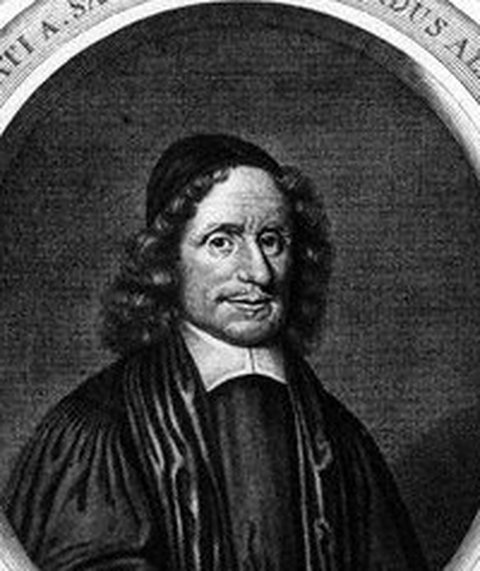
Richard Allestree was an English clergyman who served as Regius Professor of Divinity at Oxford and later as Provost of Eton College. He fought on the royalist side in the Civil War, was expelled from his studentship at Christ Church in 1648, and carried messages between England and the exiled court until the Restoration brought him a royal chaplaincy, the Oxford chair in 1663, and the Eton provostship in 1665. He is generally identified as the author of The Whole Duty of Man, which appeared in 1658, and of the books issued afterward as by its author, among them The Government of the Tongue in 1674. All were published anonymously. He died in 1681.
“Updated Works has been an incredible blessing to my Christian life and ministry… remarkably faithful to the original authors while making these timeless treasures understandable for modern readers.”