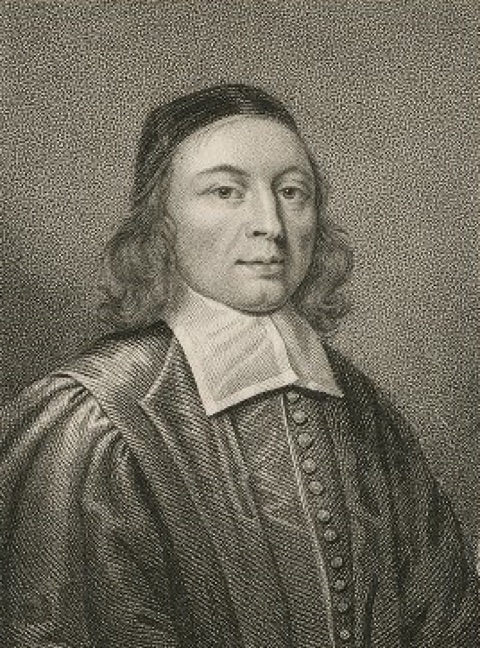
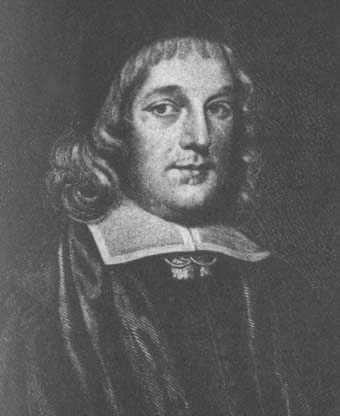
Richard Alleine
An English Puritan minister ejected from the Church of England in 1662, known for practical works of devotion such as Vindiciae Pietatis (A Vindication of Godliness) and The World Conquered.

Biography
Richard Alleine (1611 to 1681) was an English Puritan minister and devotional writer who served as rector of Batcombe in Somerset until his ejection from the Church of England in 1662. His books of practical piety, written for ordinary believers rather than for scholars, circulated widely in the second half of the seventeenth century and kept his name in print long after Nonconformist ministers had been driven out of their parishes.
Alleine was born in 1611 at Ditcheat in Somerset, where his father was a minister, and was educated at Oxford. He entered the ministry in his home county and became rector of Batcombe, a living long associated with the Puritan writer Richard Bernard. From that pulpit he preached the searching, application-heavy sermons typical of the West Country Puritans, and he built a reputation as a pastor concerned less with doctrinal controversy than with the state of his hearers' souls.
The Act of Uniformity of 1662 required every clergyman to conform to the restored Book of Common Prayer and episcopal order. Alleine refused, and like roughly two thousand other ministers in what became known as the Great Ejection, he lost his parish. He did not stop preaching. He continued to gather with congregations privately, settling at Frome in Somerset, and he suffered for his nonconformity during the years when conventicles were prosecuted under the Clarendon Code. He died at Frome in 1681.
His writing kept his ministry alive in print. The best known of his books, Vindiciae Pietatis, or A Vindication of Godliness, appeared in the 1660s and was reprinted repeatedly despite friction with the licensing authorities who controlled the London press. It was followed by works such as Heaven Opened, A Companion for Prayer, and The World Conquered, which treats the believer's struggle against worldliness and the means of gaining the victory. The Alleine name carried further through his daughter Theodosia, who married the younger minister Joseph Alleine and later wrote an account of his life; the two men are often confused because they shared both a surname and the experience of ejection.
Why Alleine Matters
Richard Alleine belongs to the tradition of experimental, practical divinity that defined much of English Puritanism. Rather than systematic theology or polemic, his subject was the inner life of the Christian: self-examination, prayer, the danger of formal or merely outward religion, and the daily work of godliness. Books like Vindiciae Pietatis were written to be read at home and applied directly to conscience, and they belong on the same shelf as the devotional literature of contemporaries such as Richard Baxter and Joseph Alleine.
His refusal to conform in 1662 places him among the ministers whose ejection created English Nonconformity as a lasting movement. By continuing to preach after losing his living, and by publishing works of piety while facing prosecution, Alleine helped sustain a body of Dissenting readers who could no longer hear such preaching in their parish churches. His books did in print what he could no longer do freely from a pulpit.
The reach of that writing outlasted his lifetime. Vindiciae Pietatis went through many editions, and his shorter treatises on prayer and on overcoming the world remained in circulation among later generations of Dissenters and evangelicals who valued the earlier Puritans as guides to the devotional life. It is chiefly as a writer of this practical, heart-searching godliness, rather than as a controversialist or theologian, that Alleine was read.