The Reformed Churches
The churches of the Dutch Reformation and the writers and synod behind their three standards: Guido de Brès's Belgic Confession, the Heidelberg Catechism of Zacharias Ursinus and Caspar Olevianus, and the Canons of the Synod of Dort.
Biography
The Reformed Churches is the name used here for the churches of the Netherlands that adopted the Belgic Confession, the Heidelberg Catechism and the Canons of Dort as their common standard, known as the Three Forms of Unity. The three documents were written over nearly sixty years, in different places and for different purposes, by individual authors and by a synod. What joined them was their adoption by the Dutch Reformed churches, confirmed at the Synod of Dort in 1618 and 1619.
The oldest is the Belgic Confession, written in French in 1561 by Guido de Brès, a Reformed preacher from the southern Low Countries, then ruled by Philip II of Spain. De Brès modeled it on the French Confession of 1559 and wrote it to show the authorities that the persecuted Reformed believers were not rebels but held the faith of Scripture. A copy was sent to Philip II in 1562. De Brès was hanged at Valenciennes in 1567. The Dutch churches adopted his confession at their early synods, including the Synod of Emden in 1571.
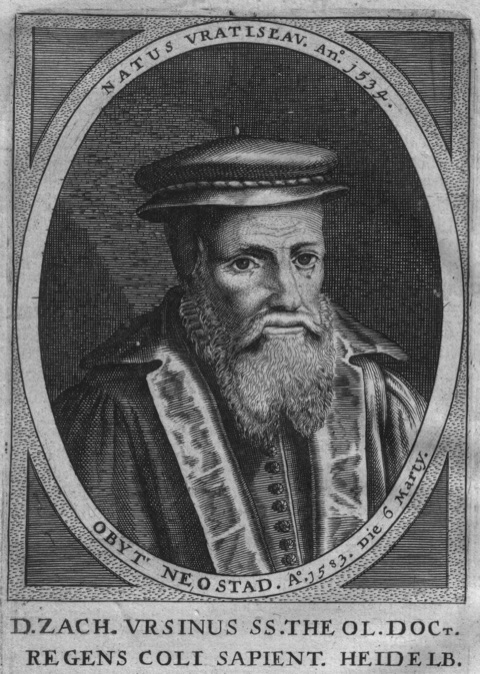
The Heidelberg Catechism came from the Palatinate in Germany. Frederick III, the Elector Palatine, wanted one catechism for the churches and schools of his territory. It was drafted chiefly by Zacharias Ursinus, a young professor at the University of Heidelberg, with Caspar Olevianus, a preacher at Heidelberg, traditionally named as his collaborator, and published in 1563. It was soon translated into Dutch and taken up by the Reformed churches of the Netherlands.
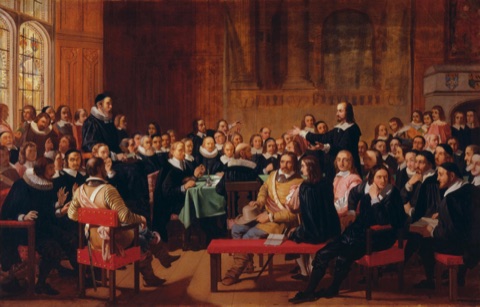
The Canons of Dort came out of a dispute within the Dutch church itself. After the death of Jacobus Arminius in 1609, his followers presented a Remonstrance in 1610 setting out five articles on election, Christ's death, grace and perseverance. The States General called a national synod, which met at Dordrecht from November 1618 to May 1619, with Dutch delegates joined by theologians from Great Britain, the Palatinate, Hesse, Switzerland, Geneva, Bremen and Emden. The Synod answered the five articles in its Canons and also approved the Belgic Confession and the Heidelberg Catechism.
Life & Career
Why Churches Matters
The Three Forms of Unity are the confessional basis of the Continental Reformed churches, as the Westminster Standards are for English-speaking Presbyterians. Ministers, elders and deacons in Dutch Reformed churches, and in the churches that grew from them in North America, South Africa and elsewhere, have long been required to subscribe them. The Heidelberg Catechism was arranged so that it could be preached through over the course of a year, and it became one of the most widely used catechisms of the Reformation.
The three documents also do different work. The Catechism teaches the faith in a warm, personal voice organized around comfort; the Belgic Confession states it publicly, with sharp lines between the true church and the false; and the Canons settle a disputed point with care, pairing each positive statement with the errors it rejects. The Canons are the source of what later came to be called the five points of Calvinism, and they remain the fullest synodical statement of the Reformed doctrine of grace.