P.T. Barnum
American showman who built Barnum's American Museum in New York and, late in life, the traveling circus that became Barnum & Bailey's "The Greatest Show on Earth." He was also a lecturer and writer on business, whose talk "The Art of Money Getting" set out his rules for making and keeping wealth.
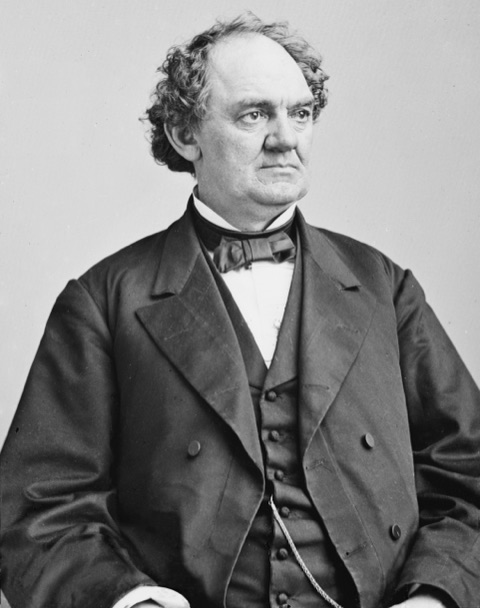
1810 to 1891
Biography
Phineas Taylor Barnum (1810 to 1891) was an American showman, museum proprietor, and circus founder who turned public curiosity into a business and made himself one of the most widely recognized names of the nineteenth century. He was born on July 5, 1810, in Bethel, Connecticut, the son of a tavern keeper and storekeeper. As a young man he clerked in stores, ran a lottery agency, and in 1831 started a weekly newspaper in Danbury, the Herald of Freedom, whose sharp attacks on local figures led to a libel conviction and a jail term.
Barnum's career as a showman began in 1835, when he began exhibiting Joice Heth, an elderly enslaved Black woman whom he advertised as the 161-year-old former nurse of George Washington. The venture drew crowds and taught him the value of aggressive newspaper promotion. In 1841 he bought Scudder's American Museum in New York City and reopened it as Barnum's American Museum, filling it with waxworks, live animals, dioramas, and staged attractions such as the "Feejee Mermaid," a stitched-together specimen he displayed as a genuine creature. The museum became one of the most popular attractions in the country until fire destroyed it in 1865.
His most famous performer was Charles Stratton, a Connecticut boy with dwarfism whom Barnum began presenting in 1842 under the stage name General Tom Thumb. The two toured Europe, where they were received by Queen Victoria, and the tours made Barnum wealthy and internationally known. In 1850 he arranged the American concert tour of the Swedish soprano Jenny Lind, the "Swedish Nightingale," promoting her so heavily before her arrival that her opening performances sold out at extraordinary prices.
Barnum's fortunes were not steady. In the 1850s he backed the Jerome Clock Company, and its collapse left him deeply in debt and forced him to sell property, including his ornate Bridgeport mansion, Iranistan, which itself burned in 1857. He rebuilt his wealth through lecturing and renewed Tom Thumb tours. His writings extended his fame: he published his autobiography, The Life of P. T. Barnum, Written by Himself, in 1855 and revised and expanded it repeatedly in later years, and his popular lecture "The Art of Money Getting" set out plain rules for earning, saving, and avoiding debt.
Barnum also held public office in Connecticut. He was elected to the state legislature in 1865, where he spoke in favor of ratifying the Thirteenth Amendment abolishing slavery, and he served as mayor of Bridgeport beginning in 1875. He was a benefactor of his adopted city and of Tufts College, to which he gave money for a natural history museum.
The circus for which he is now best remembered came late. In 1871, at the age of sixty, Barnum launched a large traveling show of menagerie, museum, and circus acts. In 1881 he merged his operation with that of James A. Bailey, creating Barnum & Bailey, and the following year he bought the enormous elephant Jumbo from the London Zoo, turning the animal into a sensation on both sides of the Atlantic. Barnum died on April 7, 1891, in Bridgeport, Connecticut.
Life & Career
Why Barnum Matters
Barnum's importance lies less in any single attraction than in the methods he pioneered for capturing and holding public attention. He treated advertising as central rather than incidental to a business, flooding newspapers with paid notices, planted stories, and manufactured controversy, and he understood that curiosity, argument, and even skepticism about whether an exhibit was genuine could all be converted into ticket sales. These techniques became foundational to modern publicity and mass entertainment.
He also helped shape the American institution of popular amusement for a broad, paying public. Barnum's American Museum offered a mix of the educational and the sensational at a price ordinary families could afford, and his later circus brought a standardized, large-scale spectacle to towns across the country by rail. The organization he and Bailey built outlived them both and, through a later merger with the Ringling Brothers, remained a fixture of American entertainment into the twenty-first century.
As a writer and lecturer, Barnum promoted a distinctly American gospel of self-made success. His autobiography, repeatedly revised as Struggles and Triumphs, was one of the most widely read memoirs of its era, and "The Art of Money Getting" offered readers concrete maxims on industry, thrift, avoiding debt, and perseverance. Together they placed him in a tradition of practical American advice writing that ran from Benjamin Franklin forward.
His career remains a reference point in discussions of showmanship, marketing, and the relationship between entertainment and deception. Many sayings and stunts have been attributed to him, some inaccurately. His name became shorthand for the public promoter in an age of cheap newspapers and mass audiences.