John Witherspoon
Scottish Presbyterian minister and president of the College of New Jersey at Princeton from 1768 to 1794, the only active clergyman to sign the Declaration of Independence, and teacher of James Madison.
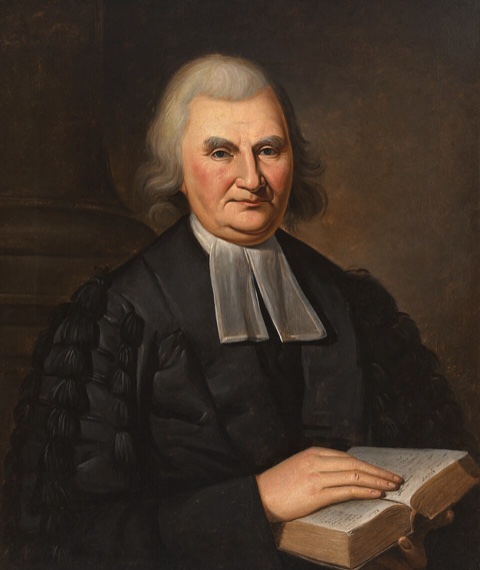
1723–1794
Biography
John Witherspoon was born on 5 February 1723 AD in the parish of Yester in East Lothian, Scotland, the eldest son of James Witherspoon, the parish minister. He attended the grammar school at Haddington and the University of Edinburgh, where he took his degree in 1739 and went on to study divinity. Licensed to preach in 1743, he was ordained minister of Beith in Ayrshire in 1745. During the Jacobite rising he went out with a small body of volunteers, was taken prisoner after the Battle of Falkirk in January 1746, and was held in Doune Castle until the prisoners escaped by a rope of knotted blankets. In 1748 he married Elizabeth Montgomery, and they had ten children, of whom five survived to go with them to America.
Witherspoon became the leading controversial voice of the Evangelical party in the Church of Scotland against the Moderates. His satire Ecclesiastical Characteristics (1753) mocked the Moderates' polished religion, and his Essay on the Connection between the Doctrine of Justification by the Imputed Righteousness of Christ and Holiness of Life (1756) made his name as a theologian. A further attack, A Serious Enquiry into the Nature and Effects of the Stage, followed the Edinburgh staging of John Home's play Douglas. In 1757 he moved to Paisley. A Practical Treatise on Regeneration appeared in 1764.
In 1766 he declined the presidency of the College of New Jersey at Princeton, but he accepted a renewed invitation, pressed by Richard Stockton and Benjamin Rush, and sailed in 1768. He found the college in debt and thinly equipped. He raised money in the colonies and in Scotland, gave books to the library, bought scientific apparatus, brought in the Scottish method of teaching by lecture, and added Hebrew and French. He taught eloquence, history, divinity and moral philosophy himself. The college trained ministers, but under Witherspoon it also trained public men, among them James Madison and Aaron Burr.
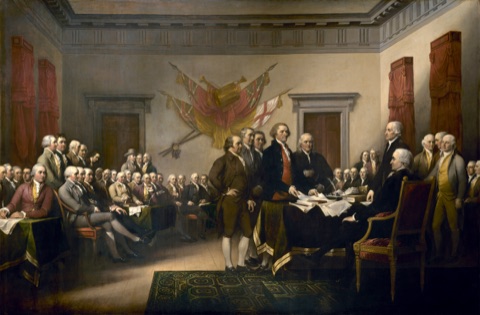
He joined the American cause early, serving on New Jersey's committees of correspondence in 1774 and 1775. His 1776 sermon The Dominion of Providence over the Passions of Men was printed in many editions. Elected to the Continental Congress in June 1776, he argued for independence, answering, according to tradition, that the country was not only ripe for it but in danger of rotting for want of it. He signed the Declaration of Independence, the only active clergyman and the only college president to do so. He remained in Congress into the early 1780s, sat on the Board of War and many other committees, worked on the Articles of Confederation, which he also signed, and opposed reliance on paper money. His son James, a major in the Continental Army, was killed at the Battle of Germantown in 1777.
The war closed the college and badly damaged Nassau Hall, and Witherspoon spent his last years rebuilding it, including an unsuccessful fundraising visit to Britain. He helped organize the Presbyterian Church in the United States of America and acted as convening moderator of its first General Assembly in 1789. He also sat in the New Jersey legislature and supported ratification of the Constitution of the United States.
From 1779 he lived on his farm, Tusculum, just outside Princeton, where he owned enslaved people; two were listed in his estate at his death. He also personally tutored free Black students, among them Bristol Yamma, John Quamine and John Chavis. In 1790 he chaired a New Jersey legislative committee on abolition, which recommended that the state take no action. After the death of his first wife he married Ann Dill, a young widow, in 1791. He was blind for the last years of his life and kept on preaching and lecturing. He died at Tusculum on 15 November 1794 AD and is buried in Princeton Cemetery.
Life & Career
Why Witherspoon Matters
Witherspoon matters first as a Scottish Calvinist theologian. In the Church of Scotland he defended the older Evangelical convictions against the Moderates, and his Essay on Justification holds together the two things his opponents thought he had to choose between: that sinners are justified by the imputed righteousness of Christ alone, and that this doctrine is the true ground of a holy life. His Treatise on Regeneration presses the same point on experience. He carried that piety to America and became one of the first national leaders of American Presbyterianism.
He matters second as the teacher who brought Scottish moral philosophy to American students. His required course at Princeton, later printed as the Lectures on Moral Philosophy after his death, opens by defending the use of reason in ethics against those who think it a threat to faith: if Scripture is true, reason's discoveries cannot contradict it, and reason can meet unbelievers on their own ground. He then identifies the moral sense, discussed by Francis Hutcheson and others, with what Scripture calls conscience, the law the Creator has written on the heart. The lectures still end on revelation, concluding that nothing in moral philosophy is certain or valuable unless it agrees with Scripture.
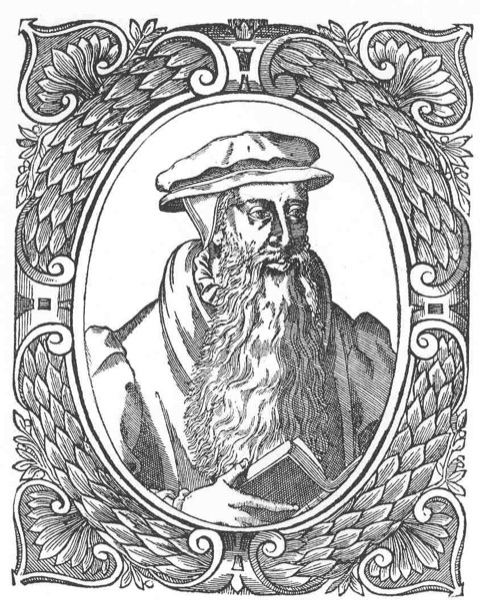
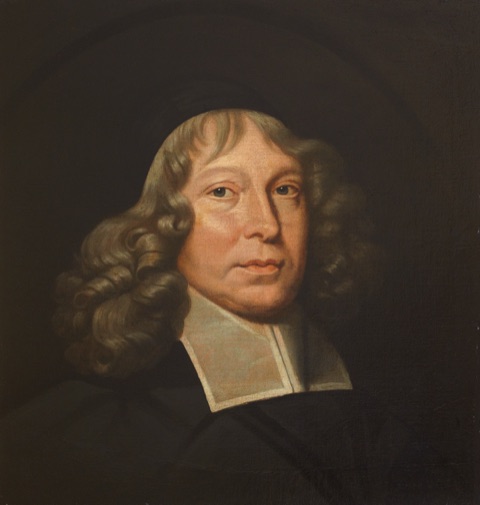
He matters third for what he taught about government, and for those he taught it to. The lectures run from the social contract through marriage, family and property to civil society, war, punishment and contracts. They argue that every good government must be complex, so that one principle checks another, since the virtue of individuals cannot be relied on alone to sustain a state. They also hold that subjects may resist and overthrow supreme power when it is exercised in a plainly tyrannical manner, a position with deep roots in the Scottish Presbyterian tradition of John Knox and Samuel Rutherford. Madison sat under this teaching, and historians have often traced the Constitution's system of checks in part to it.
The lectures also record his view of slavery. He wrote that there are many unlawful ways of making slaves and some lawful ones, doubted that any original ground for servitude could be defended except punishment for crimes, required humane treatment, and held that those who find people already enslaved are not obliged to free them at the cost of their own ruin.