John Ray
English naturalist who gave the species its working definition and whose The Wisdom of God Manifested in the Works of the Creation set the pattern for the English tradition of natural theology.
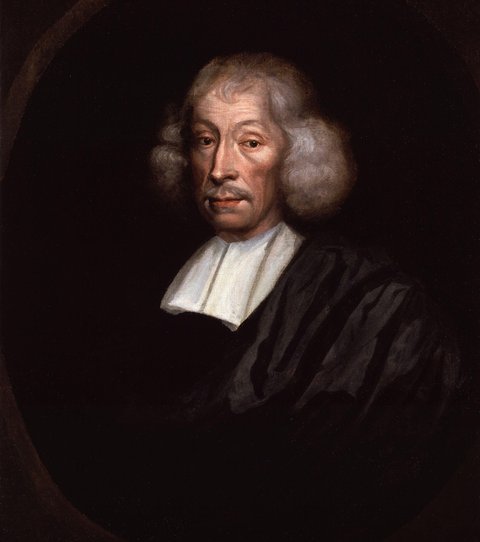
1627–1705
Biography
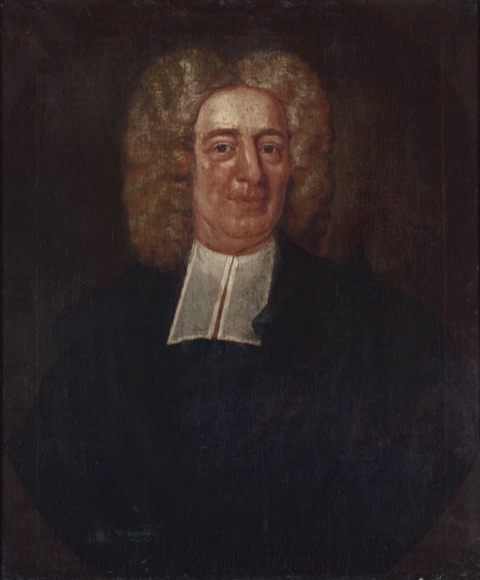
John Ray (1627 to 1705) was an English naturalist who put the description and classification of plants and animals on a systematic footing before Linnaeus, and who wrote the book that made the argument from design a standing subject of English natural theology.
He was born on November 29, 1627, at Black Notley in Essex, the son of the village blacksmith. He went from the grammar school at Braintree to Cambridge in 1644, entering Catharine Hall and moving after about eighteen months to Trinity College, where he took his degree and was elected a fellow in 1649. For the next decade he held a succession of college offices and lectured on Greek, on mathematics, and on humanity. His botanical work began as a private interest pursued on walks around Cambridge, and produced his first book, a catalogue of the plants growing near the town, in 1660. He was ordained in the same year.
In 1662, following the Act of Uniformity, he declined to make the required subscription and resigned his fellowship. He never held another salaried position. What made the rest of his career possible was his friendship with Francis Willughby, a wealthy former pupil who shared his interests. The two agreed to divide the natural world between them, Ray taking plants and Willughby animals. Ray had already made collecting journeys through much of Great Britain, and from the spring of 1663 to the spring of 1666 the two travelled together on the continent. Willughby died in 1672 and left Ray an annuity, together with the unfinished manuscripts that Ray edited and published as the Ornithology in 1676 and the History of Fishes in 1686.
Ray was elected a Fellow of the Royal Society in 1667. He returned in 1679 to Black Notley, where he lived for the rest of his life and produced the bulk of his work. The Methodus plantarum nova of 1682 laid out his system of classification. The three folio volumes of the Historia Plantarum, published between 1686 and 1704, attempted to describe every plant then known, some eighteen thousand species. The Synopsis methodica stirpium Britannicarum of 1690 served as the standard flora of Britain for the better part of a century, and a companion volume on quadrupeds and serpents followed in 1693. He also published collections of English proverbs and of dialect words, which are still used by historians of the language.
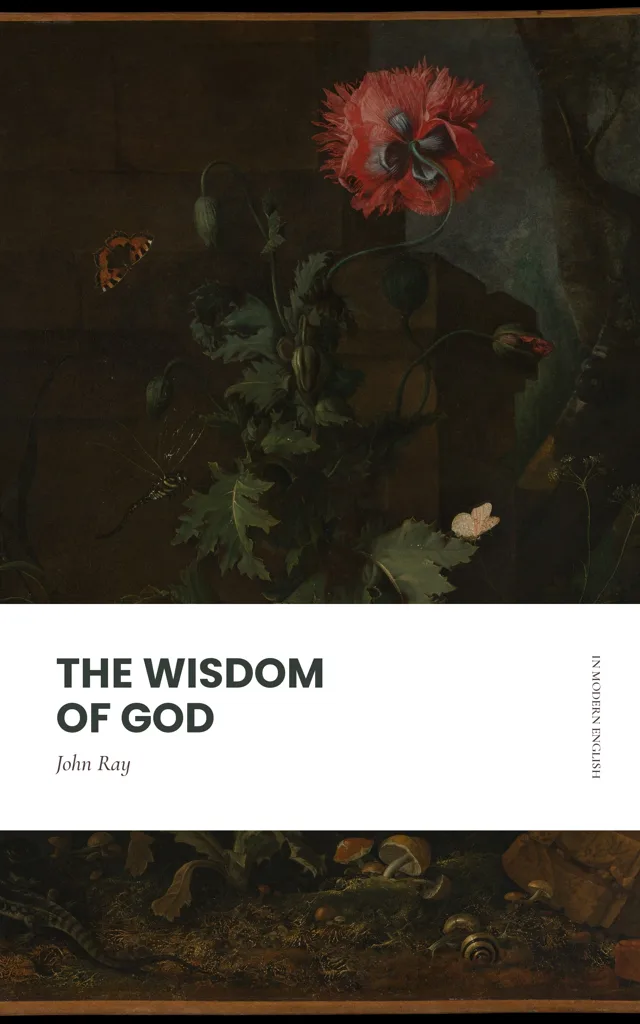
The Wisdom of God Manifested in the Works of the Creation appeared in 1691, expanded from sermons he had preached at Cambridge decades earlier. He followed it in 1692 with Miscellaneous Discourses Concerning the Dissolution and Changes of the World, on the earth's history. He died at Black Notley on January 17, 1705.
Life & Career
Why Ray Matters
Ray matters twice over, once to the history of biology and once to the history of religious argument, and the two are connected in his own mind by a single conviction: that the created world rewards close attention.
As a naturalist he did the work that made classification possible. He was the first to give the species a definition with a test attached, treating it as a group whose members reproduce their own kind from seed, so that variation within a lineage does not create a new species. He separated flowering plants into what are now called monocotyledons and dicotyledons, and he built his classifications from the whole structure of an organism rather than from a single chosen feature. Linnaeus, who superseded Ray's system a generation later, worked on the ground Ray had cleared, and the modern habit of describing organisms carefully and at length before naming them is largely Ray's.
The Wisdom of God Manifested in the Works of the Creation turned that same material toward a different end. Ray argued from the fitness of living structures to their purposes, the eye for seeing, the wing for flight, the seed for propagation, that the world is the product of intelligence rather than of chance, and he supported the argument with the detail of a working naturalist rather than with generalities. The book went through many editions and set the pattern for a whole English genre. William Derham's Physico-Theology followed it directly, and a century later William Paley's Natural Theology used the same method of argument on much the same kind of evidence. Anyone tracing how the design argument came to occupy the place it did in English religious thought, and how it was later contested, begins with Ray.
His position also shows something about the seventeenth century relation of science and religion that is easy to miss. Ray gave up his college fellowship rather than subscribe under the Act of Uniformity, spent his life outside the institutions, and treated the study of insects and grasses as a form of attention owed to God. Natural history, for him, was not a rival to divinity but a branch of it.