Daniel Rogers
Puritan lecturer at Wethersfield, Essex, and author of Matrimonial Honour (1642), a full-length Puritan treatment of courtship, marriage, and the duties of husband and wife.

Biography
Daniel Rogers (1573 to 1652) was an English Puritan minister and writer, for most of his life the lecturer at Wethersfield in Essex, and the author of Matrimonial Honour (1642), a treatise on marriage, and Naaman the Syrian (1642), his longest work.
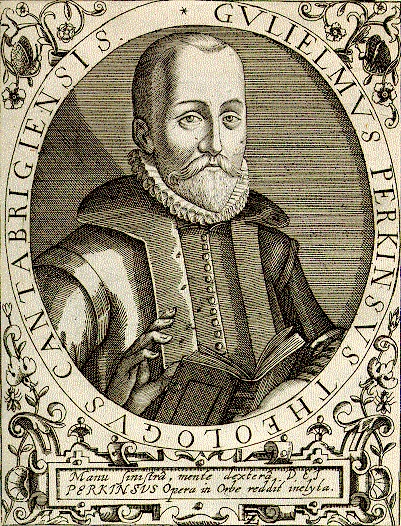
He was born at Wethersfield in 1573, the eldest son of Richard Rogers, the Puritan minister of that parish and author of Seven Treatises. His younger brother Ezekiel Rogers later emigrated to New England. Daniel went up to Christ's College, Cambridge, where William Perkins was among his teachers. He took his B.A. in the academic year 1595 to 1596 and his M.A. in 1599, and held a fellowship at Christ's from 1600 to 1608.
After leaving Cambridge he served as minister at Haversham in Buckinghamshire. When Stephen Marshall, his father's successor at Wethersfield, moved to Finchingfield, Rogers returned to his home parish as lecturer, preaching alongside the vicar, Daniel Weld. He had several personal interviews with William Laud, then Bishop of London, who paid tribute to his scholarship, but after repeated harassment for acts of nonconformity Laud suspended him in 1629. The conforming clergy of north Essex presented a memorial to the bishop on his behalf, and he seems to have left the county for a time before settling again at Wethersfield, where he spent the rest of his life. Several of his books were dedicated to Robert Rich, Earl of Warwick, and his countess, at whose house at Leez Priory he was a frequent guest.
His published works were David's Cost (1619), enlarged from a sermon; A Practical Catechism, which reached a third edition in 1640; A Treatise of the Two Sacraments of the Gospel, in its third edition by 1635; and in 1642 both Matrimonial Honour and Naaman the Syrian, His Disease and Cure, a folio of nearly nine hundred pages on the narrative of 2 Kings 5. In 1649, when the army's Agreement of the People was sent to the Essex ministers, Rogers drew up and was the first to sign the Essex Watchmen's Watchword, a Presbyterian protest against extending toleration to those who refused the Solemn League and Covenant.
He died at Wethersfield on September 16, 1652, and was buried there. He married twice, first Margaret Bishop and then Sarah Edward. One daughter married the Presbyterian minister William Jenkyn; a son, also Daniel, became minister of Haversham.
Life & Career
Why Rogers Matters
Rogers belongs to the second generation of the Essex Puritan ministry. His father Richard Rogers had made Wethersfield a center of practical divinity, the branch of Puritan writing concerned less with disputed doctrine than with how a believer is to live, examine the heart, and order a household. Daniel Rogers carried that program forward, and Matrimonial Honour is its fullest application to marriage from his hand.
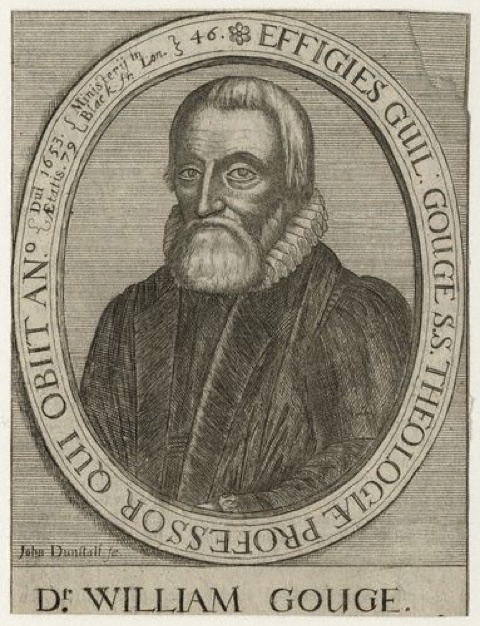
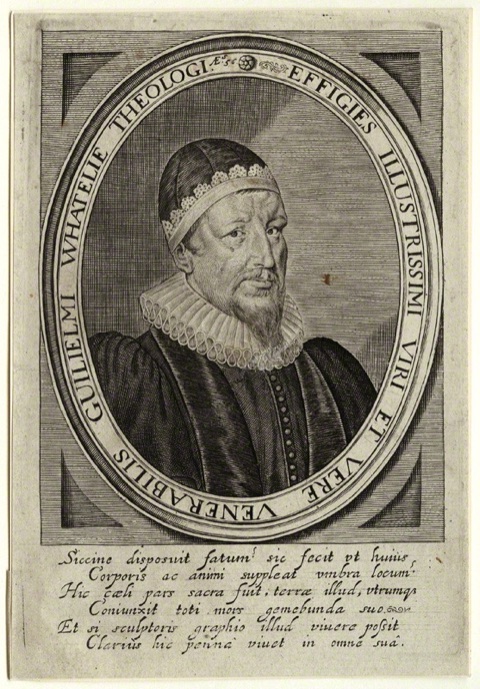
The book treats marriage in three stages: the choice of a partner and the conduct of courtship, the common duties that husband and wife owe each other, and the particular duties of each. Its argument is that marriage is an ordinance of God with its own honor, that this honor is kept by chastity, loyalty, and mutual comfort, and that a godly household is built by the daily practice of those duties rather than by affection alone. In this it sits beside William Gouge's Of Domesticall Duties and William Whately's A Bride-Bush, the other major Puritan treatises on marriage, and Rogers gives particular attention to courtship and to the affections between husband and wife.
Naaman the Syrian shows the other side of his method: a single Old Testament narrative worked through at great length for its doctrine of sin, humbling, and cure. His catechism and his treatise on the two sacraments served the same pastoral end at shorter length.
Rogers was also known among his contemporaries for how scrupulously he examined his own spiritual state, and he was never securely satisfied of his own salvation. His relative Giles Firmin's The Real Christian (1670) was written mainly to counteract that despondency, and his stepbrother John Ward said that he had grace enough for two men but not enough for himself. That tension, between a demanding standard of assurance and a warm account of the comforts of marriage and household religion, runs through his work and through the tradition he represents.