Modernized edition · Full text · Free PDF/EPUB
The Westminster Larger Catechism and the Directory for Public Worship in Modern English
Want the file? The PDF/EPUB is free with an account.
Summary
- Author
- The Westminster Assembly (1643 to 1649), the council of divines summoned by the Long Parliament
- Written
- Directory for Public Worship completed 1645 AD; Larger Catechism finished 1647 AD
- Source edition
- The 1647 Larger Catechism and the 1645 Edinburgh printing of the Directory, both in modern English
- Type
- Reformed catechism and order of public worship
- Length
- 29,000 words · 2 hours
What is The Westminster Larger Catechism and the Directory for Public Worship about?
The Westminster Larger Catechism is the Westminster Assembly's full catechism of 1647. In 196 questions and answers it sets out what Christians are to believe about God, Christ and salvation, and what duty God requires under the Ten Commandments, the means of grace and prayer. This edition adds the Assembly's 1645 Directory for the Public Worship of God.
Read the full summary (9 points, key themes)Show less
How the argument unfolds
- 01
God and the Scriptures (Questions 1 to 11). Man's chief end is to glorify and enjoy God. Scripture teaches what to believe about God and what duty he requires.
- 02
Decrees, creation and the fall (Questions 12 to 29). God foreordains and governs all things and makes a covenant of life with Adam, whose fall brings all his descendants into sin and misery.
- 03
Christ the Mediator (Questions 30 to 56). The covenant of grace is made with Christ, God and man in one person, prophet, priest and king, humbled to death and exalted to judge the world.
- 04
Redemption applied (Questions 57 to 90). The Spirit unites the elect to Christ, who receive justification, adoption and sanctification now and perfect communion with him at the judgment.
- 05
The moral law (Questions 91 to 148). Eight rules for reading the law, then the duties required and sins forbidden under each of the Ten Commandments.
- 06
Sin and the means of grace (Questions 149 to 177). The degrees of sin and the way of escape lead into the Word, baptism, the Lord's Supper, and how the two sacraments agree and differ.
- 07
Prayer (Questions 178 to 196). Prayer is offered to God alone in Christ's name with the Spirit's help, and the Lord's Prayer is expounded from preface to Amen.
- 08
The Directory: ordinary worship. A preface on setting aside the Book of Common Prayer, then the gathering of the congregation, Scripture reading, public prayer and preaching.
- 09
The Directory: ordinances and occasions. Baptism, the Lord's Supper, the Lord's Day, marriage, the sick, burial, fasting, thanksgiving and psalm singing, with an appendix on days and places.
Key themes
- Two covenants. God dealt with Adam in a covenant of works and saves his elect in a covenant of grace, the same in substance under both Testaments.
- The law read in full. Each commandment reaches the heart as well as the deed, forbids every sin of its kind with its occasions, and commands the opposite duty.
- Worship by God's appointment. Only what God has instituted may be used in worship, so the Directory removes set ceremonies, holy days and consecrated places.
- The Spirit and the means of grace. Word, sacraments and prayer work by the Spirit and the blessing of Christ, not by any power in themselves or in the minister.
Reader questions (9)Hide the questions
Questions about The Westminster Larger Catechism and the Directory for Public Worship
Is there a modern English version of The Westminster Larger Catechism and the Directory for Public Worship?
Yes. This is The Westminster Larger Catechism and the Directory for Public Worship by Westminster Assembly in modern English. The language is modernized and the author's order and argument are kept. The full modernized text is free to read on this page.
Can I read The Westminster Larger Catechism and the Directory for Public Worship online for free?
Yes. The complete text of this modern English edition is on this page, with no sign-up or paywall.
Is there a free PDF of The Westminster Larger Catechism and the Directory for Public Worship?
Yes. The PDF and EPUB of this edition are free with an Updated Works account. Sign in with Google or an email link; no card is needed.
What is The Westminster Larger Catechism and the Directory for Public Worship by Westminster Assembly about?
The catechism teaches Reformed doctrine and Christian duty in questions and answers, from the chief end of man to the Lord's Prayer. The Directory sets out how public worship, the sacraments, marriage, burial, fasts and thanksgivings are to be conducted.
When were these documents written?
The Westminster Assembly completed the Directory for Public Worship in 1645, when Parliament adopted it in place of the Book of Common Prayer. It finished the Larger Catechism, together with the Shorter Catechism, in 1647.
How does the Larger Catechism differ from the Shorter Catechism?
Both teach the same doctrine. The Shorter Catechism condenses it for children and new believers, while the Larger Catechism gives fuller answers for preaching and self-examination, especially on the duties and sins under each commandment and on the use of the sacraments.
Why did the Assembly replace the Book of Common Prayer?
The preface says its ceremonies had burdened consciences and excluded faithful ministers, encouraged a ministry content with forms written by others, and pushed preaching aside. It also cites the uniformity in worship promised in the Solemn League and Covenant.
Does the Directory give fixed prayers?
Mostly not. It gives the headings and scope of each prayer and leaves the words to the minister, though it recommends the Lord's Prayer. Fixed words appear only at a few points, such as the baptismal formula, the giving of the bread and cup, and the marriage vows.
What does the catechism teach about assurance of salvation?
Believers who walk in good conscience may be infallibly assured, without extraordinary revelation, that they are in a state of grace. Since assurance is not of the essence of faith, true believers may wait long for it or have it weakened, but the Spirit keeps them from utter despair.
The Westminster Larger Catechism and the Directory for Public Worship in Modern English · Full text
The Westminster Larger Catechism
God and the Scriptures (Questions 1–11)
Question 1. What is the chief and highest end of man?
Answer. Man’s chief and highest end is to glorify God, and fully to enjoy him forever.
Question 2. How does it appear that there is a God?
Answer. The very light of nature in man and the works of God plainly declare that there is a God. Yet his Word and Spirit alone sufficiently and effectually reveal him to people for their salvation.
Question 3. What is the Word of God?
Answer. The Holy Scriptures of the Old and New Testaments are the Word of God, the only rule of faith and obedience.
Question 4. How does it appear that the Scriptures are the Word of God?
Answer. The Scriptures show themselves to be the Word of God by their majesty and purity, and by the harmony of all their parts. They also do so by the aim of the whole, which is to give all glory to God, and by their light and power to convict and convert sinners and to comfort and build up believers for salvation. Still, the Spirit of God bearing witness by and with the Scriptures in the human heart is alone able to persuade it fully that they are the very Word of God.
Question 5. What do the Scriptures principally teach?
Answer. The Scriptures principally teach what man is to believe concerning God, and what duty God requires of man.
Question 6. What do the Scriptures make known about God?
Answer. The Scriptures make known what God is, the persons in the Godhead, his decrees, and the execution of his decrees.
Question 7. What is God?
Answer. God is a Spirit, infinite in and of himself in being, glory, blessedness, and perfection. He is all-sufficient, eternal, unchangeable, incomprehensible, everywhere present, almighty, and knowing all things. He is most wise, most holy, most just, most merciful and gracious, long-suffering, and abundant in goodness and truth.
Question 8. Are there more Gods than one?
Answer. There is only one, the living and true God.
Question 9. How many persons are there in the Godhead?
Answer. There are three persons in the Godhead: the Father, the Son, and the Holy Spirit. These three are one true, eternal God, the same in substance and equal in power and glory, though distinguished by their personal properties.
Question 10. What are the personal properties of the three persons in the Godhead?
Answer. It belongs uniquely to the Father to beget the Son, to the Son to be begotten of the Father, and to the Holy Spirit to proceed from the Father and the Son from all eternity.
Question 11. How does it appear that the Son and the Holy Spirit are God equal with the Father?
Answer. The Scriptures show that the Son and the Holy Spirit are God equal with the Father by ascribing to them names, attributes, works, and worship that belong to God alone.
God’s Decrees, Creation, and Providence (Questions 12–20)
Question 12. What are the decrees of God?
Answer. God’s decrees are the wise, free, and holy acts of the counsel of his will. By them, from all eternity and for his own glory, he has unchangeably foreordained everything that comes to pass in time, especially concerning angels and people.
Question 13. What has God especially decreed concerning angels and people?
Answer. By an eternal and unchangeable decree, out of his pure love and for the praise of his glorious grace to be displayed in due time, God has elected some angels to glory, and in Christ has chosen some people to eternal life along with the means that lead to it. By the same decree, according to his sovereign power and the unsearchable counsel of his own will (by which he extends or withholds favor as he pleases), he has also passed by the rest and foreordained them to dishonor and wrath, to be inflicted for their sin, to the praise of the glory of his justice.
Question 14. How does God execute his decrees?
Answer. God executes his decrees in the works of creation and providence, according to his infallible foreknowledge and the free, unchangeable counsel of his own will.
Question 15. What is the work of creation?
Answer. The work of creation is that work in which God, in the beginning, by the word of his power, made the world and everything in it out of nothing. He did this for himself, within the space of six days, and all very good.
Question 16. How did God create angels?
Answer. God created all the angels as spirits: immortal, holy, excelling in knowledge, and mighty in power. He made them to carry out his commandments and to praise his name, yet subject to change.
Question 17. How did God create man?
Answer. After God had made all other creatures, he created man male and female. He formed the man’s body from the dust of the ground and the woman from the man’s rib, and he endowed them with living, rational, and immortal souls. He made them in his own image, in knowledge, righteousness, and holiness, with the law of God written in their hearts and power to fulfill it. He also gave them dominion over the creatures, yet left them subject to fall.
Question 18. What are God’s works of providence?
Answer. God’s works of providence are his most holy, wise, and powerful preserving and governing of all his creatures, ordering them and all their actions to his own glory.
Question 19. What is God’s providence toward the angels?
Answer. By his providence, God permitted some of the angels willfully and irrecoverably to fall into sin and damnation, limiting and ordering that fall and all their sins to his own glory. He established the rest in holiness and happiness, and he employs all the angels, at his pleasure, in the administrations of his power, mercy, and justice.
Question 20. What was God’s providence toward man in the state in which he was created?
Answer. God’s providence toward man in the state in which he was created was to place him in paradise, appoint him to tend it, and give him freedom to eat of the fruit of the earth. God put the creatures under his dominion, ordained marriage for his help, granted him communion with himself, and instituted the Sabbath. He also entered into a covenant of life with him on condition of personal, perfect, and perpetual obedience, with the tree of life as a pledge. At the same time, God forbade him to eat from the tree of the knowledge of good and evil under penalty of death.
The Fall and the Sinfulness of Humanity (Questions 21–29)
Question 21. Did man remain in the state in which God first created him?
Answer. Left to the freedom of their own will, our first parents were tempted by Satan and broke God’s commandment by eating the forbidden fruit. By that act, they fell from the state of innocence in which they were created.
Question 22. Did all humanity fall in that first transgression?
Answer. Because the covenant was made with Adam as a public representative, not for himself alone but for his descendants, all humanity descending from him by ordinary generation sinned in him and fell with him in that first transgression.
Question 23. Into what state did the fall bring humanity?
Answer. The fall brought humanity into a state of sin and misery.
Question 24. What is sin?
Answer. Sin is any lack of conformity to, or transgression of, any law of God given as a rule to a rational creature.
Question 25. In what does the sinfulness of the state into which humanity fell consist?
Answer. The sinfulness of that fallen state consists in the guilt of Adam’s first sin, the lack of the righteousness in which he was created, and the corruption of his nature. Because of this corruption, humanity is utterly indisposed, disabled, and made opposite to all that is spiritually good, and wholly inclined to all evil, continually. This is commonly called original sin, and from it proceed all actual transgressions.
Question 26. How is original sin passed from our first parents to their descendants?
Answer. Original sin is passed from our first parents to their descendants by natural generation, so that all who descend from them in that way are conceived and born in sin.
Question 27. What misery did the fall bring upon humanity?
Answer. The fall brought upon humanity the loss of communion with God, along with his displeasure and curse. As a result, we are by nature children of wrath, enslaved to Satan, and justly liable to all punishments in this world and in the world to come.
Question 28. What are the punishments of sin in this world?
Answer. The punishments of sin in this world are either inward or outward. Inward punishments include blindness of mind, a depraved mind, strong delusions, hardness of heart, horror of conscience, and degrading passions. Outward punishments include God’s curse upon creation for our sakes, all other evils that befall us in our bodies, reputations, property, relationships, and callings, and death itself.
Question 29. What are the punishments of sin in the world to come?
Answer. The punishments of sin in the world to come are everlasting separation from the comforting presence of God and the most grievous torments in soul and body, without pause, in hellfire forever.
The Covenant of Grace and Christ the Mediator (Questions 30–45)
Question 30. Does God leave all humanity to perish in the state of sin and misery?
Answer. God does not leave all people to perish in the state of sin and misery into which they fell by breaking the first covenant, commonly called the covenant of works. Instead, out of his pure love and mercy, he delivers his elect from it and brings them into a state of salvation by the second covenant, commonly called the covenant of grace.
Question 31. With whom was the covenant of grace made?
Answer. The covenant of grace was made with Christ as the second Adam, and in him with all the elect as his offspring.
Question 32. How is the grace of God shown in the second covenant?
Answer. God’s grace is shown in the second covenant in that he freely provides and offers sinners a Mediator, along with life and salvation through him. He requires faith as the condition that unites them to Christ and gives them a share in him. He also promises and gives his Holy Spirit to all his elect to work that faith and all other saving graces in them. Finally, the Spirit enables them to live in all holy obedience, both as evidence of the truth of their faith and thankfulness to God, and as the way God has appointed for them to reach salvation.
Question 33. Was the covenant of grace always administered in the exact same way?
Answer. The covenant of grace was not always administered in the same way. Its administrations under the Old Testament differed from those under the New.
Question 34. How was the covenant of grace administered under the Old Testament?
Answer. Under the Old Testament, the covenant of grace was administered through promises, prophecies, sacrifices, circumcision, the Passover, and other types and ordinances. All of these foreshadowed Christ who was to come, and for that time they were sufficient to build up the elect in faith in the promised Messiah, through whom they then had full forgiveness of sin and eternal salvation.
Question 35. How is the covenant of grace administered under the New Testament?
Answer. Under the New Testament, when Christ the substance was openly revealed, the same covenant of grace was and still is to be administered through the preaching of the Word and the administration of the sacraments of baptism and the Lord’s Supper. In these, grace and salvation are held out in greater fullness, clarity, and power to all nations.
Question 36. Who is the Mediator of the covenant of grace?
Answer. The only Mediator of the covenant of grace is the Lord Jesus Christ. Being the eternal Son of God, of one substance and equal with the Father, he became man in the fullness of time. Thus he was, and continues to be, God and man in two complete, distinct natures and one person forever.
Question 37. How did Christ, being the Son of God, become man?
Answer. Christ the Son of God became man by taking to himself a true body and a rational soul. He was conceived by the power of the Holy Spirit in the womb of the virgin Mary, of her substance, and born of her, yet without sin.
Question 38. Why was it necessary for the Mediator to be God?
Answer. It was necessary for the Mediator to be God so that he might sustain and keep his human nature from sinking under the infinite wrath of God and the power of death. It also gave worth and power to his sufferings, obedience, and intercession. In addition, his deity enabled him to satisfy God’s justice, obtain his favor, and purchase a treasured people for himself. Through it he gives his Spirit to them, conquers all their enemies, and brings them to everlasting salvation.
Question 39. Why was it necessary for the Mediator to be man?
Answer. It was necessary for the Mediator to be man so that he might uplift our nature, render obedience to the law, suffer and intercede for us in our nature, and sympathize with our weaknesses. It was also necessary so that we might receive adoption as God’s children and have comfort and bold access to the throne of grace.
Question 40. Why was it necessary for the Mediator to be both God and man in one person?
Answer. It was necessary for the Mediator, who was to reconcile God and man, to be both God and man in one person. That way, the distinct works of each nature would be accepted by God for us, and relied on by us, as the works of the whole person.
Question 41. Why was our Mediator called Jesus?
Answer. Our Mediator was called Jesus because he saves his people from their sins.
Question 42. Why was our Mediator called Christ?
Answer. Our Mediator was called Christ because he was anointed with the Holy Spirit beyond measure. He was thus set apart and fully equipped with all authority and ability to carry out the offices of prophet, priest, and king of his church, both in his state of humiliation and in his state of exaltation.
Question 43. How does Christ carry out the office of a prophet?
Answer. Christ carries out the office of a prophet by revealing to the church in all ages, through his Spirit and Word and in various ways of administration, the whole will of God in everything concerning their edification and salvation.
Question 44. How does Christ carry out the office of a priest?
Answer. Christ carries out the office of a priest by offering himself once as a spotless sacrifice to God to make atonement for the sins of his people, and by making continual intercession for them.
Question 45. How does Christ carry out the office of a king?
Answer. Christ carries out the office of a king by calling a people out of the world to himself, and by giving them officers, laws, and church discipline through which he visibly governs them. He bestows saving grace on his elect, rewards their obedience, and corrects them for their sins. He also preserves and supports them under all their temptations and sufferings, restrains and overcomes all their enemies, and powerfully orders all things for his own glory and their good. Finally, he executes vengeance on the rest, who do not know God and do not obey the gospel.
Christ’s Humiliation and Exaltation (Questions 46–56)
Question 46. What was the state of Christ’s humiliation?
Answer. The state of Christ’s humiliation was that low condition in which, for our sakes, he emptied himself of his glory and took on the form of a servant. It spanned his conception and birth, his life, his death, and the time after his death until his resurrection.
Question 47. How did Christ humble himself in his conception and birth?
Answer. Christ humbled himself in his conception and birth because, though he was from all eternity the Son of God in the bosom of the Father, he was pleased in the fullness of time to become the son of man. He was made of a woman of humble condition and born of her under various circumstances of extraordinary lowliness.
Question 48. How did Christ humble himself in his life?
Answer. Christ humbled himself in his life by subjecting himself to the law, which he perfectly fulfilled. He also contended with the scorn of the world, the temptations of Satan, and the weaknesses of his flesh, both those common to human nature and those that specifically accompanied his lowly condition.
Question 49. How did Christ humble himself in his death?
Answer. Christ humbled himself in his death in that he was betrayed by Judas, forsaken by his disciples, scorned and rejected by the world, condemned by Pilate, and tormented by his persecutors. He also battled the terrors of death and the powers of darkness, felt and bore the weight of God’s wrath, and laid down his life as an offering for sin, enduring the painful, shameful, and cursed death of the cross.
Question 50. In what did Christ’s humiliation after his death consist?
Answer. Christ’s humiliation after his death consisted in his being buried and remaining in the state of the dead, under the power of death, until the third day. This has otherwise been expressed in the words, “he descended into hell.”
Question 51. What was the state of Christ’s exaltation?
Answer. The state of Christ’s exaltation includes his resurrection, his ascension, his sitting at the right hand of the Father, and his coming again to judge the world.
Question 52. How was Christ exalted in his resurrection?
Answer. Christ was exalted in his resurrection because he did not undergo decay in death, since it was impossible for death to hold him. On the third day, he rose from the dead by his own power in the very same body in which he suffered, truly united to his soul. That body retained all its essential properties, yet without mortality or other common weaknesses of this life. By rising, he declared himself to be the Son of God, to have satisfied divine justice, to have conquered death and the one who held its power, and to be Lord of the living and the dead. He did all of this as a public representative and head of his church, for their justification, their renewal in grace, their support against enemies, and their assurance of resurrection from the dead at the last day.
Question 53. How was Christ exalted in his ascension?
Answer. After his resurrection, Christ often appeared to his apostles and spent time speaking with them about the things pertaining to the kingdom of God, commissioning them to preach the gospel to all nations. Forty days after his resurrection, in our nature and as our head, triumphing over enemies, he visibly ascended into the highest heavens. He went there to receive gifts for people, to lift our hearts and desires heavenward, and to prepare a place for us where he himself is and will remain until his second coming at the end of the world.
Question 54. How is Christ exalted in his sitting at the right hand of God?
Answer. Christ is exalted in his sitting at the right hand of God because, as God-man, he is raised to the highest favor with God the Father, with all fullness of joy, glory, and power over everything in heaven and on earth. From there he gathers and defends his church, subdues their enemies, equips his ministers and people with gifts and graces, and intercedes for them.
Question 55. How does Christ make intercession?
Answer. Christ makes intercession by appearing continually in our nature before the Father in heaven, presenting the merit of his obedience and sacrifice on earth and declaring his will that it be applied to all believers. He answers all accusations against them and secures for them peace of conscience despite daily failings, bold access to the throne of grace, and acceptance of their persons and service.
Question 56. How will Christ be exalted in his coming again to judge the world?
Answer. Christ will be exalted in his coming again to judge the world because he, who was unjustly judged and condemned by wicked people, will return at the last day in great power and in the full display of his own glory and his Father’s glory. He will come with all his holy angels, with a shout, with the voice of the archangel, and with the trumpet of God, to judge the world in righteousness.
Redemption Applied and the Church (Questions 57–68)
Question 57. What benefits has Christ obtained by his mediation?
Answer. By his mediation, Christ has obtained redemption along with all the other benefits of the covenant of grace.
Question 58. How do we become sharers in the benefits Christ has obtained?
Answer. We become sharers in the benefits Christ has obtained through their application to us, which is especially the work of God the Holy Spirit.
Question 59. Who are made sharers in redemption through Christ?
Answer. Redemption is certainly applied and effectually imparted to all those for whom Christ purchased it. In time, they are enabled by the Holy Spirit to believe in Christ according to the gospel.
Question 60. Can those who have never heard the gospel, and therefore do not know Jesus Christ or believe in him, be saved by living according to the light of nature?
Answer. Those who have never heard the gospel, do not know Jesus Christ, and do not believe in him cannot be saved, no matter how diligently they shape their lives according to the light of nature or the laws of the religion they profess. Nor is there salvation in anyone else, but in Christ alone, who is the Savior only of his body, the church.
Question 61. Are all those saved who hear the gospel and live in the church?
Answer. Not all who hear the gospel and live in the visible church are saved, but only those who are true members of the invisible church.
Question 62. What is the visible church?
Answer. The visible church is a society made up of all those who, in all ages and places of the world, profess the true religion, together with their children.
Question 63. What are the special privileges of the visible church?
Answer. The visible church has the privilege of being under God’s special care and government, and of being protected and preserved in all ages despite the opposition of all enemies. It also enjoys the communion of saints, the ordinary means of salvation, and offers of grace through Christ to all its members in the ministry of the gospel. That ministry testifies that whoever believes in him will be saved and excludes no one who is willing to come to him.
Question 64. What is the invisible church?
Answer. The invisible church is the whole number of the elect who have been, are, or will be gathered into one under Christ the head.
Question 65. What special benefits do the members of the invisible church enjoy through Christ?
Answer. Through Christ, the members of the invisible church enjoy union and communion with him in grace and glory.
Question 66. What is the union that the elect have with Christ?
Answer. The union that the elect have with Christ is the work of God’s grace by which they are spiritually and mystically, yet truly and inseparably, joined to Christ as their head and husband. This takes place in their effectual calling.
Question 67. What is effectual calling?
Answer. Effectual calling is the work of God’s almighty power and grace. Out of his free and special love for his elect, and moved by nothing in them, God invites and draws them to Jesus Christ at his appointed time through his Word and Spirit. He savingly enlightens their minds and renews and powerfully determines their wills. Though dead in sin in themselves, they are thus made willing and able to answer his call freely, and to accept and embrace the grace offered and conveyed in it.
Question 68. Are only the elect effectually called?
Answer. All the elect, and they alone, are effectually called. Others may be, and often are, outwardly called by the ministry of the Word and experience some common operations of the Spirit. Yet because of their willful neglect and contempt of the grace offered to them, they are justly left in their unbelief and never truly come to Jesus Christ.
Benefits of Union with Christ in Grace (Questions 69–81)
Question 69. What is the communion in grace that the members of the invisible church have with Christ?
Answer. The communion in grace that the members of the invisible church have with Christ is their sharing in the power and benefits of his mediation through their justification, adoption, sanctification, and whatever else in this life displays their union with him.
Question 70. What is justification?
Answer. Justification is an act of God’s free grace toward sinners, in which he pardons all their sins and accepts and accounts their persons as righteous in his sight. He does this not for anything worked in them or done by them, but only for the perfect obedience and full satisfaction of Christ, imputed to them by God and received by faith alone.
Question 71. How is justification an act of God’s free grace?
Answer. Although Christ, by his obedience and death, made a proper, real, and full satisfaction to God’s justice on behalf of those who are justified, their justification is still an act of free grace to them. God accepts this satisfaction from a surety, though he might have demanded it from them directly. Moreover, he himself provided this surety, his own only Son, and imputes his righteousness to them. He requires nothing from them for their justification except faith, which is also his gift.
Question 72. What is justifying faith?
Answer. Justifying faith is a saving grace worked in a sinner’s heart by the Spirit and Word of God. By it, the sinner is convinced of his sin and misery, and of the inability of himself and all other creatures to rescue him from his lost condition. He then not only agrees to the truth of the gospel promise, but receives and rests upon Christ and his righteousness offered in it. He does so for the pardon of sin and for being accepted and accounted righteous in God’s sight for salvation.
Question 73. How does faith justify a sinner in the sight of God?
Answer. Faith does not justify a sinner in God’s sight because of the other graces that always accompany it, nor because of the good works that are its fruits. Nor is the grace of faith, or any act of faith, itself credited to him for his justification. Rather, faith justifies only as the instrument by which he receives and applies Christ and his righteousness.
Question 74. What is adoption?
Answer. Adoption is an act of God’s free grace, in and for his only Son Jesus Christ, by which all who are justified are received into the number of God’s children. They have his name placed on them, receive the Spirit of his Son, and come under his fatherly care and providential dealings. They are admitted to all the liberties and privileges of the children of God, made heirs of all the promises, and made fellow heirs with Christ in glory.
Question 75. What is sanctification?
Answer. Sanctification is a work of God’s grace toward those whom God chose before the foundation of the world to be holy. In time, through the powerful work of his Spirit applying Christ’s death and resurrection to them, they are renewed in their whole being after the image of God. The seeds of repentance leading to life and all other saving graces are planted in their hearts. Those graces are then stirred up, increased, and strengthened so that they die more and more to sin and rise to newness of life.
Question 76. What is repentance leading to life?
Answer. Repentance leading to life is a saving grace worked in a sinner’s heart by the Spirit and Word of God. Through it, the sinner comes to see and feel not only the danger, but also the filthiness and hatefulness of his sins. Grasping God’s mercy in Christ toward the penitent, he grieves over and hates his sins so deeply that he turns from all of them to God. He then purposes and strives constantly to walk with God in all the ways of new obedience.
Question 77. How do justification and sanctification differ?
Answer. Although sanctification is inseparably joined with justification, they differ in important ways. In justification, God imputes the righteousness of Christ; in sanctification, his Spirit infuses grace and enables believers to exercise it. In justification, sin is pardoned; in sanctification, sin is subdued. Justification frees all believers equally from God’s avenging wrath, and does so completely in this life so that they never fall into condemnation. Sanctification, by contrast, is neither equal in all believers nor complete in anyone in this life, but grows toward perfection.
Question 78. Where does the imperfection of sanctification in believers come from?
Answer. The imperfection of sanctification in believers arises from the remnants of sin still dwelling in every part of them, and from the constant sinful desires of the flesh warring against the Spirit. Because of this, they are often tripped up by temptations, fall into many sins, and are hindered in all their spiritual service, so that even their best works remain imperfect and defiled in God’s sight.
Question 79. Might true believers, because of their imperfections and the many temptations and sins that overtake them, fall away from the state of grace?
Answer. No. True believers can neither totally nor finally fall away from the state of grace. They are secured by God’s unchangeable love, his decree and covenant to grant them perseverance, their inseparable union with Christ, his continual intercession for them, and the Spirit and seed of God dwelling within them. Thus they are kept by the power of God through faith for salvation.
Question 80. Can true believers be infallibly assured that they are in the state of grace and will persevere in it to salvation?
Answer. Yes. Those who truly believe in Christ and strive to walk in all good conscience before him may be infallibly assured, without extraordinary revelation, that they are in the state of grace and will persevere in it to salvation. They attain this assurance through faith grounded on the truth of God’s promises. They also attain it through the Spirit, who enables them to discern in themselves the graces to which the promises of life are made and bears witness with their spirits that they are God’s children.
Question 81. Are all true believers always assured that they are presently in the state of grace and will be saved?
Answer. Because assurance of grace and salvation is not of the essence of faith, true believers may wait a long time before obtaining it. Even after enjoying it, they may have it weakened and interrupted through various inner disorders, sins, temptations, and seasons of spiritual desertion. Yet they are never left without such a presence and support of God’s Spirit as keeps them from sinking into utter despair.
Communion with Christ in Glory (Questions 82–90)
Question 82. What is the communion in glory that the members of the invisible church have with Christ?
Answer. The communion in glory that the members of the invisible church have with Christ is enjoyed in this life, immediately after death, and finally perfected at the resurrection and the day of judgment.
Question 83. What is the communion in glory with Christ that the members of the invisible church enjoy in this life?
Answer. In this life, the members of the invisible church receive the firstfruits of glory with Christ, because they are members of him as their head and therefore share in the glory he fully possesses. As a down payment of that glory, they enjoy a sense of God’s love, peace of conscience, joy in the Holy Spirit, and hope of glory. By contrast, a sense of God’s avenging wrath, horror of conscience, and a fearful expectation of judgment are for the wicked the beginning of the torments they will endure after death.
Question 84. Will all people die?
Answer. Because death was threatened as the wages of sin, it is appointed for all people to die once, since all have sinned.
Question 85. Since death is the wages of sin, why are the righteous not delivered from death, seeing that all their sins are forgiven in Christ?
Answer. The righteous will be delivered from death itself at the last day, and even in death they are delivered from its sting and curse. Although they still die, it comes from God’s love to free them completely from sin and misery, and to fit them for deeper communion with Christ in glory, upon which they then enter.
Question 86. What communion in glory with Christ do the members of the invisible church enjoy immediately after death?
Answer. Immediately after death, the souls of the members of the invisible church are made perfect in holiness and received into the highest heavens, where they behold the face of God in light and glory. There they await the full redemption of their bodies. Even in death, their bodies remain united to Christ and rest in their graves as in their beds until they are reunited to their souls at the last day. By contrast, the souls of the wicked are cast into hell at death, where they remain in torments and utter darkness. Their bodies are kept in their graves as in prisons until the resurrection and judgment of the great day.
Question 87. What are we to believe concerning the resurrection?
Answer. We are to believe that at the last day there will be a general resurrection of the dead, both of the just and the unjust. Those who are still alive then will be changed in a moment. The very same bodies of the dead that were laid in the grave will be reunited forever to their souls and raised by the power of Christ. By the Spirit of Christ and through the power of his resurrection as their head, the bodies of the just will be raised in power, spiritual, incorruptible, and made like his glorious body. The bodies of the wicked will be raised in dishonor by him as an offended judge.
Question 88. What will immediately follow the resurrection?
Answer. Immediately after the resurrection will come the general and final judgment of angels and people. No one knows its day or hour, so that all may watch and pray and be ever ready for the coming of the Lord.
Question 89. What will be done to the wicked at the day of judgment?
Answer. At the day of judgment, the wicked will be placed on Christ’s left hand. Upon clear evidence and the full conviction of their own consciences, they will hear the fearful yet just sentence of condemnation pronounced against them. They will then be cast out from the favorable presence of God, and from glorious fellowship with Christ, his saints, and all his holy angels, into hell, to be punished with unspeakable torments of both body and soul, with the devil and his angels forever.
Question 90. What will be done to the righteous at the day of judgment?
Answer. At the day of judgment, the righteous will be caught up to Christ in the clouds, placed on his right hand, and openly acknowledged and acquitted. They will join with him in judging reprobate angels and people, and will be received into heaven. There they will be fully and forever freed from all sin and misery, filled with inconceivable joys, and made perfectly holy and happy in both body and soul, in the company of countless saints and holy angels. Above all, they will enjoy the immediate vision and full enjoyment of God the Father, of our Lord Jesus Christ, and of the Holy Spirit for all eternity. This is the complete and perfect communion that the members of the invisible church will enjoy with Christ in glory at the resurrection and the day of judgment.
The Moral Law and the Ten Commandments (Questions 91–100)
Question 91. What is the duty that God requires of man?
Answer. The duty that God requires of man is obedience to his revealed will.
Question 92. What did God first reveal to man as the rule of his obedience?
Answer. The rule of obedience revealed to Adam in the state of innocence, and to all humanity in him, besides the special command not to eat the fruit of the tree of the knowledge of good and evil, was the moral law.
Question 93. What is the moral law?
Answer. The moral law is the declaration of God’s will to humanity, directing and binding everyone to personal, perfect, and perpetual conformity and obedience to it. This obedience reaches the character and disposition of the whole person, soul and body, and the performance of all duties of holiness and righteousness owed to God and man. The law promises life upon fulfilling it and threatens death upon breaking it.
Question 94. Is the moral law of any use to people since the fall?
Answer. Although no one since the fall can attain righteousness and life through the moral law, it still has great use. Some uses are common to all people, while others are specific either to the unregenerate or to the regenerate.
Question 95. Of what use is the moral law to all people?
Answer. The moral law serves all people by informing them of God’s holy nature and will, and of their duty, binding them to live accordingly. It convinces them of their inability to keep it and of the sinful corruption of their nature, hearts, and lives. In this way it humbles them with a sense of their sin and misery, and helps them see more clearly their need for Christ and for the perfection of his obedience.
Question 96. What particular use does the moral law have for unregenerate people?
Answer. For unregenerate people, the moral law serves to awaken their consciences to flee from the wrath to come and to drive them to Christ. Or, if they persist in their state and way of sin, it leaves them without excuse and under its curse.
Question 97. What special use does the moral law have for the regenerate?
Answer. Those who are regenerate and believe in Christ are delivered from the moral law as a covenant of works, so that they are neither justified nor condemned by it. Yet beyond its general uses common to all people, the law has a special use for them: it shows them how deeply they are indebted to Christ for fulfilling it and enduring its curse in their place and for their good. In this way it stirs them to greater thankfulness, and to express that thankfulness by taking greater care to conform their lives to the law as their rule of obedience.
Question 98. Where is the moral law summarized?
Answer. The moral law is summarized in the Ten Commandments, which were delivered by the voice of God on Mount Sinai, written by him on two tablets of stone, and recorded in the twentieth chapter of Exodus. The first four commandments contain our duty to God, and the other six contain our duty to our fellow human beings.
Question 99. What rules should be observed for rightly understanding the Ten Commandments?
Answer. For rightly understanding the Ten Commandments, these eight rules should be observed:
1. The law is perfect and binds everyone to full conformity of the whole person to its righteousness, and to complete obedience forever. It therefore requires the highest perfection in every duty and forbids the least degree of every sin.
2. The law is spiritual, reaching the understanding, will, desires, and all other powers of the soul, as well as our words, deeds, and gestures.
3. One and the same thing, in different respects, is required or forbidden in several commandments.
4. Where a duty is commanded, the opposite sin is forbidden; and where a sin is forbidden, the opposite duty is commanded. Likewise, where a promise is attached, the opposite threat is included; and where a threat is attached, the opposite promise is included.
5. What God forbids is never to be done at any time. What he commands is always our duty, yet not every particular duty is to be performed at every moment.
6. Under one sin or duty, all sins or duties of the same kind are forbidden or commanded, together with all their causes, means, occasions, appearances, and provocations.
7. Whatever is forbidden or commanded to us, we are bound, according to our positions, to strive to see that others avoid or perform it according to the duty of their positions.
8. In whatever is commanded to others, we are bound, according to our positions and callings, to be helpful to them, and to guard against sharing with others in what is forbidden to them.
Question 100. What special parts are we to consider in the Ten Commandments?
Answer. In the Ten Commandments, we are to consider the preface, the substance of the commandments themselves, and the several reasons attached to some of them to enforce them more strongly.
Duty to God and the First Three Commandments (Questions 101–114)
Question 101. What is the preface to the Ten Commandments?
Answer. The preface to the Ten Commandments is contained in these words: “I am the Lord thy God, which have brought thee out of the land of Egypt, out of the house of bondage.” In these words God displays his sovereignty as Jehovah, the eternal, unchangeable, and almighty God, who has his being in and of himself and gives being to all his words and works. He also reveals himself as a God in covenant with all his people, just as with Israel of old: as he brought them out of their bondage in Egypt, so he delivers us from our spiritual slavery. Therefore we are bound to take him as our God alone and to keep all his commandments.
Question 102. What is the sum of the four commandments that contain our duty to God?
Answer. The sum of the four commandments containing our duty to God is to love the Lord our God with all our heart, with all our soul, with all our strength, and with all our mind.
Question 103. Which is the first commandment?
Answer. The first commandment is, “Thou shalt have no other gods before me.”
Question 104. What are the duties required in the first commandment?
Answer. The first commandment requires us to know and acknowledge God as the only true God and our God, and to worship and glorify him accordingly. We do this by thinking of him, meditating on him, remembering him, highly esteeming, honoring, and adoring him, and choosing, loving, desiring, and fearing him. We also do so by believing him, trusting, hoping, delighting, and rejoicing in him, and being zealous for him.
Finally, it requires us to call upon him, to give him all praise and thanks, and to yield full obedience and submission to him with our whole being. We must take care to please him in all things, grieve whenever he is offended in anything, and walk humbly with him.
Question 105. What are the sins forbidden in the first commandment?
Answer. The first commandment forbids atheism, in denying or not having a God, and idolatry, in having or worshiping more gods than one, or any god alongside or instead of the true God. It forbids failing to have and openly acknowledge him as God and our God, as well as omitting or neglecting anything due to him under this commandment. It also forbids ignorance, forgetfulness, misunderstandings, false opinions, unworthy and wicked thoughts of him, bold and prying inquiry into his secrets, all profaneness, and hatred of God.
Further, it forbids self-love, self-seeking, and every other disorderly and excessive attachment of our mind, will, or desires to other things, taking them off God in whole or in part. It forbids foolish gullibility, unbelief, heresy, false belief, distrust, despair, refusal to be corrected, numbness under his judgments, hardness of heart, pride, presumption, worldly complacency, and testing God. It also forbids using unlawful means, putting our trust in lawful means, indulging in sinful worldly delights and joys, showing corrupt, blind, and reckless zeal, and falling into lukewarmness, spiritual deadness, estrangement from God, and apostasy.
Lastly, it forbids praying or giving any religious worship to saints, angels, or any other creatures, as well as all pacts or consultations with the devil and listening to his suggestions. It forbids making human beings the lords of our faith and conscience, slighting and despising God and his commands, and resisting and grieving his Spirit. It also forbids discontent and impatience with his providential dealings, foolishly blaming him for the hardships he sends us, and giving the credit for any good we are, have, or can do to fortune, idols, ourselves, or any other creature.
Question 106. What are we specially taught by the words “before me” in the first commandment?
Answer. The words “before me,” or “before my face,” in the first commandment teach us that God, who sees all things, takes special notice of the sin of having any other god and is deeply displeased with it. This serves as a reason to deter us from that sin and exposes its gravity as a shameless provocation. It also urges us to do everything in his service as in his very sight.
Question 107. Which is the second commandment?
Answer. The second commandment is, “Thou shalt not make unto thee any graven image, or any likeness of anything that is in heaven above, or that is in the earth beneath, or that is in the water under the earth: Thou shalt not bow down thyself to them, nor serve them: for I the Lord thy God am a jealous God, visiting the iniquity of the fathers upon the children unto the third and fourth generation of them that hate me; and showing mercy unto thousands of them that love me, and keep my commandments.”
Question 108. What are the duties required in the second commandment?
Answer. The second commandment requires us to receive, observe, and keep pure and whole all the religious worship and ordinances that God has instituted in his Word. These include especially prayer and thanksgiving in the name of Christ, the reading, preaching, and hearing of the Word, the administration and receiving of the sacraments, church government and discipline, and the ministry and its support. They also include religious fasting, swearing oaths by the name of God, and making vows to him. In addition, this commandment requires us to disapprove, detest, and oppose all false worship, and, according to each person’s position and calling, to remove it along with all monuments of idolatry.
Question 109. What are the sins forbidden in the second commandment?
Answer. The second commandment forbids devising, advising, commanding, using, or in any way approving any religious worship not instituted by God himself, as well as tolerating a false religion. It forbids making any representation of God, or of any or all of the three persons of the Trinity, either inwardly in our minds or outwardly in any image or likeness of any creature whatsoever. It also forbids all worshiping of such an image, or of God in it or through it, as well as making representations of false gods and giving them any worship or service.
In addition, it forbids all superstitious practices, and every corruption of God’s worship by adding to it or taking from it. This holds whether such corruptions are invented and adopted by ourselves or received by tradition from others, even under the claim of antiquity, custom, devotion, good intent, or any other pretense whatsoever. It likewise forbids buying and selling church offices, sacrilege, and all neglect, contempt, hindering, and opposing of the worship and ordinances God has appointed.
Question 110. What are the reasons attached to the second commandment to enforce it more strongly?
Answer. The reasons attached to the second commandment are contained in these words: “For I the Lord thy God am a jealous God, visiting the iniquity of the fathers upon the children unto the third and fourth generation of them that hate me; and showing mercy unto thousands of them that love me, and keep my commandments.” Besides God’s sovereignty over us and ownership of us, these reasons are his fervent zeal for his own worship and his avenging indignation against all false worship as spiritual prostitution. He counts those who break this commandment as people who hate him, threatening to punish them across multiple generations. Conversely, he regards those who keep it as people who love him and keep his commandments, promising mercy to them across many generations.
Question 111. Which is the third commandment?
Answer. The third commandment is, “Thou shalt not take the name of the Lord thy God in vain: for the Lord will not hold him guiltless that taketh his name in vain.”
Question 112. What is required in the third commandment?
Answer. The third commandment requires that God’s name, his titles, attributes, ordinances, the Word, sacraments, prayer, oaths, vows, lots, his works, and everything else by which he makes himself known be used holily and reverently in thought, meditation, speech, and writing. This must be shown through a holy profession of faith and a life that matches it, to the glory of God and the good of ourselves and others.
Question 113. What are the sins forbidden in the third commandment?
Answer. The third commandment forbids failing to use God’s name as required, and abusing it through ignorant, empty, irreverent, profane, superstitious, or wicked mention or use of his titles, attributes, ordinances, or works. This includes blasphemy, perjury, and all sinful curses, oaths, vows, and lots. It also includes breaking lawful oaths and vows, keeping unlawful ones, and murmuring and quarreling against God’s decrees and providences, prying into them, or misapplying them.
Further, it forbids misinterpreting, misapplying, or in any way twisting the Word, or any part of it, for profane jokes, speculative or unprofitable questions, pointless wrangling, or the defense of false doctrines. It forbids abusing the Word, created things, or anything belonging to God’s name for magical charms or sinful desires and practices. It likewise forbids maligning, scorning, reviling, or in any way opposing God’s truth, grace, and ways. Finally, it forbids professing religion hypocritically or for selfish ends, and being ashamed of it or bringing shame upon it by inconsistent, unwise, unfruitful, and offensive conduct, or by backsliding from it.
Question 114. What reasons are attached to the third commandment?
Answer. The reasons attached to the third commandment, in the words “The Lord thy God” and “For the Lord will not hold him guiltless that taketh his name in vain,” are that he is the Lord and our God. Therefore, we must not profane or abuse his name in any way, especially because he will be so far from acquitting and sparing those who break this commandment that he will not let them escape his righteous judgment. This remains true even though many such people escape human censures and punishments.
The Fourth Commandment (Questions 115–121)
Question 115. Which is the fourth commandment?
Answer. The fourth commandment is, “Remember the sabbath day, to keep it holy. Six days shalt thou labor, and do all thy work: but the seventh day is the sabbath of the Lord thy God: in it thou shalt not do any work, thou, nor thy son, nor thy daughter, thy manservant, nor thy maidservant, nor thy cattle, nor thy stranger that is within thy gates: For in six days the Lord made heaven and earth, the sea, and all that in them is, and rested the seventh day: wherefore the Lord blessed the sabbath day, and hallowed it.”
Question 116. What is required in the fourth commandment?
Answer. The fourth commandment requires all people to sanctify, or keep holy to God, the set times he has appointed in his Word. Expressly, this means one whole day in seven. From the beginning of the world until the resurrection of Christ, that day was the seventh day of the week. Ever since then, and continuing to the end of the world, it is the first day of the week. This day is the Christian Sabbath and is called the Lord’s Day in the New Testament.
Question 117. How is the Sabbath, or the Lord’s Day, to be kept holy?
Answer. The Sabbath, or Lord’s Day, is to be kept holy by a holy rest all day. We rest not only from works that are always sinful, but even from worldly work and recreation that are lawful on other days. We should delight in spending the entire day in the public and private exercises of God’s worship, except for the time required by works of necessity and mercy. To that end, we must prepare our hearts ahead of time. With foresight, diligence, and moderation, we should arrange and finish our worldly business in good time so that we are freer and better fitted for the duties of that day.
Question 118. Why is the command to keep the Sabbath directed especially to heads of households and other superiors?
Answer. This command is directed especially to heads of households and other superiors because they are obligated not only to keep the Sabbath themselves, but also to ensure that everyone under their care observes it. In addition, they are often prone to hinder those under them through business of their own.
Question 119. What are the sins forbidden in the fourth commandment?
Answer. The fourth commandment forbids every omission of the duties it requires. It forbids performing those duties carelessly, negligently, or unprofitably, as well as growing weary of them. It also forbids profaning the day through idleness, doing anything sinful in itself, or engaging in needless works, words, and thoughts about our worldly business and recreation.
Question 120. What reasons are attached to the fourth commandment to enforce it more strongly?
Answer. Four reasons are attached to the fourth commandment to enforce it more strongly. First, it appeals to the fairness of the command. God grants us six days out of seven for our own affairs and reserves only one for himself: “Six days shalt thou labor, and do all thy work.” Second, it rests on God’s claim of special ownership over that day: “The seventh day is the sabbath of the Lord thy God.” Third, it points to God’s own example. In six days he made heaven and earth, the sea, and everything in them, and he rested on the seventh day. Fourth, it highlights the blessing God placed on that day. He not only set it apart for his service, but also appointed it as a means of blessing to us as we keep it holy: “Wherefore the Lord blessed the sabbath day, and hallowed it.”
Question 121. Why is the word “Remember” placed at the beginning of the fourth commandment?
Answer. The word “Remember” stands at the beginning of the fourth commandment for two reasons. First, remembering it brings great benefit. It helps us prepare to keep the day, and keeping it helps us keep all the other commandments better. It also maintains a thankful remembrance of the two great blessings of creation and redemption, which together form a brief summary of true religion.
Second, we are very prone to forget this commandment. The light of nature reveals it less clearly, yet it restrains our natural liberty in matters that are lawful at other times. Moreover, the day comes only once in seven days, and many worldly affairs come between. These too often pull our minds away from preparing for the day or keeping it holy. Finally, Satan and his agents work hard to blot out its glory, and even its memory, to usher in all irreligion and ungodliness.
Duty to Our Neighbor and the Fifth Commandment (Questions 122–133)
Question 122. What is the summary of the six commandments that contain our duty to other people?
Answer. The summary of the six commandments containing our duty to other people is to love our neighbor as ourselves, and to do to others what we would have them do to us.
Question 123. Which is the fifth commandment?
Answer. The fifth commandment is, “Honor thy father and thy mother; that thy days may be long upon the land which the Lord thy God giveth thee.”
Question 124. Who is meant by “father and mother” in the fifth commandment?
Answer. By “father and mother” in the fifth commandment are meant not only our biological parents, but also all who are superior to us in age and gifts. Above all, it includes those whom God has appointed over us in positions of authority, whether in family, church, or commonwealth.
Question 125. Why are superiors called “father and mother”?
Answer. Superiors are called “father and mother” for a twofold purpose. First, it teaches them to show love and tenderness like natural parents in all their duties toward their inferiors, according to their various relationships. Second, it moves inferiors to carry out their duties toward their superiors with greater willingness and cheerfulness, as toward their own parents.
Question 126. What is the general scope of the fifth commandment?
Answer. The general scope of the fifth commandment is the faithful performance of the duties we owe one another in our various relationships, whether as inferiors, superiors, or equals.
Question 127. What is the honor that inferiors owe to their superiors?
Answer. The honor that inferiors owe to their superiors includes all proper reverence in heart, word, and behavior, along with prayer and thanksgiving for them. It calls for imitating their virtues and graces, willingly obeying their lawful commands and counsel, and submitting rightly to their corrections. Inferiors must also show loyalty to their persons and authority, defending and supporting them according to their various ranks and offices. Finally, they should bear patiently with their superiors’ weaknesses and cover those weaknesses in love, so that they may be an honor to their superiors and to their rule.
Question 128. What are the sins of inferiors against their superiors?
Answer. The sins of inferiors against their superiors include every neglect of the duties owed to them. They also include envying, despising, and rebelling against superiors’ persons and offices in their lawful counsel, commands, and corrections. Finally, they include cursing, mocking, and all stubborn, scandalous conduct that brings shame and dishonor on superiors and their rule.
Question 129. What is required of superiors toward their inferiors?
Answer. According to the authority they receive from God and the relationship in which they stand, superiors must love, pray for, and bless their inferiors. They are to instruct, counsel, and warn them. They must encourage, commend, and reward those who do well, while discouraging, reproving, and disciplining those who do wrong. Superiors must also protect their inferiors and provide everything necessary for their souls and bodies. Through dignified, wise, holy, and exemplary conduct, they are to bring glory to God, win honor for themselves, and uphold the authority God has entrusted to them.
Question 130. What are the sins of superiors?
Answer. Besides neglecting their required duties, superiors sin by an excessive focus on themselves and their own glory, ease, profit, or pleasure. They sin when they command what is unlawful or beyond their inferiors’ power to perform. They also sin by advising, encouraging, or favoring them in evil, or by dissuading, discouraging, or opposing them in what is good. Superiors sin by punishing unjustly, carelessly exposing or leaving those under them to wrong, temptation, and danger, or provoking them to anger. Finally, they sin whenever they dishonor themselves or weaken their authority through unjust, unwise, overly harsh, or negligent behavior.
Question 131. What are the duties of equals?
Answer. The duties of equals are to respect one another’s dignity and worth, to take the lead in showing honor to one another, and to rejoice in one another’s gifts and advancement as if they were their own.
Question 132. What are the sins of equals?
Answer. Besides neglecting their required duties, equals sin by undervaluing one another’s worth and envying one another’s gifts. They also sin by grieving over one another’s advancement or prosperity, and by grasping for preeminence over one another.
Question 133. What reason is attached to the fifth commandment to enforce it more strongly?
Answer. The reason attached to the fifth commandment is stated in the words, “That thy days may be long upon the land which the Lord thy God giveth thee.” It is an explicit promise of long life and prosperity to everyone who keeps this commandment, so far as it serves God’s glory and their own good.
The Sixth, Seventh, and Eighth Commandments (Questions 134–142)
Question 134. Which is the sixth commandment?
Answer. The sixth commandment is, “Thou shalt not kill.”
Question 135. What are the duties required in the sixth commandment?
Answer. The sixth commandment requires careful thought and every lawful effort to preserve our own life and the lives of others. We do this by resisting all thoughts and plans, mastering all passions, and avoiding all occasions, temptations, and practices that lead toward unjustly taking anyone’s life. It calls for justly defending life against violence and patiently submitting to the hand of God. It also calls for quietness of mind, cheerfulness of spirit, and a moderate use of food, drink, medicine, sleep, work, and recreation.
In addition, this commandment requires charitable thoughts, love, compassion, meekness, gentleness, and kindness, along with peaceful, mild, and courteous speech and behavior. Finally, we must practice forbearance, readiness to be reconciled, patient endurance and forgiveness of injuries, and returning good for evil. We must also comfort and help the distressed, and protect and defend the innocent.
Question 136. What are the sins forbidden in the sixth commandment?
Answer. The sixth commandment forbids taking away our own life or anyone else’s, except in cases of public justice, lawful war, or necessary defense. It forbids neglecting or withholding the lawful and necessary means for preserving life. It also forbids sinful anger, hatred, envy, desire for revenge, uncontrolled passions, distracting anxieties, and the immoderate use of food, drink, work, and recreation. Finally, it forbids provoking words, oppression, quarreling, striking, wounding, and whatever else tends toward destroying anyone’s life.
Question 137. Which is the seventh commandment?
Answer. The seventh commandment is, “Thou shalt not commit adultery.”
Question 138. What are the duties required in the seventh commandment?
Answer. The seventh commandment requires chastity in body, mind, desires, words, and behavior, along with preserving it in ourselves and others. It calls for watchfulness over our eyes and all our senses, self-control, keeping chaste company, and modest dress. It also requires marriage for those who do not have the gift of celibacy, as well as marital love and dwelling together. Finally, it requires diligent work in our callings, shunning every occasion of impurity, and resisting every temptation to it.
Question 139. What are the sins forbidden in the seventh commandment?
Answer. Besides neglecting the required duties, the seventh commandment forbids adultery, fornication, rape, incest, sodomy, and all unnatural lusts. It forbids impure imaginations, thoughts, intentions, and desires, as well as corrupt or filthy speech and listening to it. It forbids lustful looks, shameless or frivolous behavior, and immodest dress.
It also forbids prohibiting lawful marriages, permitting unlawful ones, and allowing, tolerating, running, or visiting brothels. It forbids entangling vows of celibacy, undue delay of marriage, having more than one wife or husband at the same time, and unjust divorce or desertion. Finally, it forbids idleness, gluttony, drunkenness, unchaste company, lewd songs, books, pictures, dances, and stage plays, and every other incentive to, or act of, impurity in ourselves or others.
Question 140. Which is the eighth commandment?
Answer. The eighth commandment is, “Thou shalt not steal.”
Question 141. What are the duties required in the eighth commandment?
Answer. The eighth commandment requires truth, faithfulness, and justice in all contracts and commerce between people. It calls us to give everyone what is owed, return goods unlawfully withheld from their rightful owners, and give and lend freely according to our abilities and others’ needs. We must exercise moderation in our judgments, wills, and desires regarding worldly goods. We should also use wise care and effort to earn, keep, use, and manage what is necessary and fitting to sustain our lives and suit our station. Finally, it requires a lawful calling and diligence in it, frugality, and avoiding unnecessary lawsuits, suretyship, and similar obligations. We must strive by all just and lawful means to obtain, preserve, and advance the wealth and outward estate of others as well as our own.
Question 142. What are the sins forbidden in the eighth commandment?
Answer. Besides neglecting the required duties, the eighth commandment forbids theft, robbery, kidnapping, and receiving stolen goods. It forbids fraudulent dealing, false weights and measures, moving boundary markers, and injustice or unfaithfulness in contracts or matters of trust. It also forbids oppression, extortion, usury, bribery, vexatious lawsuits, unjust enclosures and depopulations, and hoarding commodities to drive up prices. In short, it forbids unlawful callings and every other unjust or sinful way of taking or withholding what belongs to our neighbor or enriching ourselves.
In addition, this commandment forbids covetousness and excessively valuing or setting our hearts on worldly goods. It forbids distrustful and distracting anxieties in gaining, keeping, and using them, as well as envying the prosperity of others. It likewise forbids idleness, extravagance, wasteful gambling, and every other practice by which we unjustly harm our own outward estate or deprive ourselves of the proper use and enjoyment of what God has given us.
The Ninth and Tenth Commandments (Questions 143–148)
Question 143. Which is the ninth commandment?
Answer. The ninth commandment is, “Thou shalt not bear false witness against thy neighbor.”
Question 144. What are the duties required in the ninth commandment?
Answer. The ninth commandment requires preserving and promoting truth between people, along with the good name of our neighbor and our own. We must come forward and stand up for the truth. In matters of judgment and justice, and in every other matter, we must speak the truth, and only the truth, from the heart, sincerely, freely, clearly, and fully.
It also requires a charitable view of our neighbors, loving, desiring, and rejoicing in their good name. We should grieve over and cover their weaknesses, freely acknowledge their gifts and graces, and defend their innocence. We must readily welcome a good report about them, be reluctant to accept an evil report, and discourage gossips, flatterers, and slanderers. Finally, we must love and guard our own good name, defend it when necessary, keep lawful promises, and pursue and practice whatever is true, honorable, lovely, and of good report.
Question 145. What are the sins forbidden in the ninth commandment?
Answer. The ninth commandment forbids everything that harms the truth or the good name of our neighbors and ourselves, especially in public courts. It forbids giving false testimony, procuring false witnesses, knowingly appearing and arguing for an evil cause, and brazenly denying or overpowering the truth. It forbids passing unjust sentences, calling evil good and good evil, rewarding the wicked as if they were righteous, and treating the righteous as if they were wicked. It also forbids forgery, concealing the truth, and improper silence in a just cause. We must not keep quiet when wrongdoing calls either for our own rebuke or for reporting it to others.
This commandment further forbids speaking the truth at an inappropriate time or using it maliciously for a wrong purpose. It forbids twisting the truth to a false meaning, or using ambiguous and misleading language to undermine truth or justice. It forbids speaking falsehood, lying, slandering, backbiting, belittling, gossiping, whispering, scoffing, reviling, and hasty, harsh, or biased criticism. It also forbids misconstruing intentions, words, and actions, as well as flattery and vainglorious boasting. We must not think or speak too highly or too lowly of ourselves or others, deny God’s gifts and graces, exaggerate minor faults, or hide, excuse, and minimize sins when called to free confession.
Finally, it forbids unnecessarily exposing weaknesses, spreading false rumors, accepting and encouraging evil reports, and closing our ears to a fair defense. It forbids evil suspicion, envying or grieving over anyone’s well-earned credit, trying or wishing to damage it, and rejoicing in another’s disgrace and infamy. It also forbids scornful contempt, foolish admiration, breaking lawful promises, and neglecting what brings a good reputation. We must not practice, fail to avoid, or fail to hinder as far as we can in others whatever brings a bad name.
Question 146. Which is the tenth commandment?
Answer. The tenth commandment is, “Thou shalt not covet thy neighbor’s house, thou shalt not covet thy neighbor’s wife, nor his manservant, nor his maidservant, nor his ox, nor his ass, nor any thing that is thy neighbor’s.”
Question 147. What are the duties required in the tenth commandment?
Answer. The tenth commandment requires full contentment with our own condition. It also calls for such a charitable disposition of the whole soul toward our neighbor that all our inward impulses and desires concerning him aim at and promote all the good that belongs to him.
Question 148. What are the sins forbidden in the tenth commandment?
Answer. The tenth commandment forbids discontentment with our own condition, envying and grieving over our neighbor’s good, and every unruly impulse and desire toward anything that belongs to him.
Sin, Its Aggravations, and the Way of Escape (Questions 149–153)
Question 149. Is anyone able to keep the commandments of God perfectly?
Answer. No one is able, either by personal strength or by any grace received in this life, to keep the commandments of God perfectly. Instead, everyone breaks them daily in thought, word, and deed.
Question 150. Are all transgressions of God’s law equally heinous in themselves and in the sight of God?
Answer. Not all transgressions of God’s law are equally heinous. Some sins, both in themselves and because of various aggravating circumstances, are more heinous in the sight of God than others.
Question 151. What are the aggravations that make some sins more heinous than others?
Answer. Sins become more heinous through four kinds of aggravations:
1. From the persons offending: Sins are aggravated if the offenders are older or have greater experience or grace. They are also worse if the offenders are prominent in their Christian profession, gifts, station, or office, serving as guides whose example others are likely to follow.
2. From the parties offended: Sins are aggravated if committed directly against God, his attributes, and his worship, against Christ and his grace, or against the Holy Spirit, his witness, and his work. They are also aggravated when committed against superiors, people of distinction, and those to whom we are especially bound and obligated. The same holds when we sin against any of the saints, particularly weak believers, against their souls or anyone else’s, or against the common good of all or many.
3. From the nature and quality of the offense: Sins are aggravated if they violate the explicit letter of the law, break many commandments, or contain many sins within them. They are worse when they are not merely conceived in the heart, but break out in words and actions, scandalize others, or allow no reparation. They are further aggravated when committed against the means of grace, mercies, judgments, the light of nature, conviction of conscience, public or private warnings, church censures, or civil punishments. They are likewise aggravated when committed against our own prayers, resolutions, promises, vows, covenants, and commitments to God or people. Finally, they are worse if committed deliberately, willfully, presumptuously, shamelessly, boastfully, maliciously, frequently, obstinately, with delight, persistently, or by relapsing after repentance.
4. From circumstances of time and place: Sins are aggravated if committed on the Lord’s Day or at other times of divine worship. They are also worse if committed immediately before or after those times, or other helps meant to prevent or correct such failures. Finally, they are aggravated when committed in public or in the presence of others who are likely to be provoked or defiled by them.
Question 152. What does every sin deserve from God?
Answer. Every sin, even the smallest, is against the sovereignty, goodness, and holiness of God and against his righteous law. Therefore, it deserves his wrath and curse both in this life and in the life to come, and can be atoned for only by the blood of Christ.
Question 153. What does God require of us so that we may escape his wrath and curse due to us for breaking his law?
Answer. To escape the wrath and curse of God due to us for breaking his law, he requires repentance toward God and faith toward our Lord Jesus Christ. He also requires the diligent use of the outward means by which Christ imparts to us the benefits of his mediation.
The Means of Grace: The Word of God (Questions 154–160)
Question 154. What are the outward means by which Christ imparts to us the benefits of his mediation?
Answer. The outward and ordinary means by which Christ imparts the benefits of his mediation to his church are all his ordinances, especially the Word, the sacraments, and prayer. All of these are made effective to the elect for their salvation.
Question 155. How is the Word made effective for salvation?
Answer. The Spirit of God makes the reading, and especially the preaching, of the Word an effective means of enlightening, convincing, and humbling sinners. Through it, he drives them out of themselves and draws them to Christ, conforms them to his image, and subdues them to his will. He also strengthens them against temptations and inner corruptions, builds them up in grace, and establishes their hearts in holiness and comfort through faith to salvation.
Question 156. Is the Word of God to be read by everyone?
Answer. Although not everyone is permitted to read the Word publicly to the congregation, all kinds of people are obligated to read it privately on their own and with their families. For this purpose, the Holy Scriptures must be translated from the original languages into the common languages of the people.
Question 157. How is the Word of God to be read?
Answer. The Holy Scriptures must be read with a high and reverent esteem. We must approach them firmly convinced that they are the very Word of God and that he alone can enable us to understand them. We should read them with a desire to know, believe, and obey the will of God revealed in them. Finally, we must read with diligence and careful attention to their content and scope, along with meditation, personal application, self-denial, and prayer.
Question 158. By whom is the Word of God to be preached?
Answer. The Word of God is to be preached only by those who are sufficiently gifted and also properly approved and called to that office.
Question 159. How is the Word of God to be preached by those who are called to it?
Answer. Those called to labor in the ministry of the Word must preach sound doctrine diligently, in season and out of season. They should preach plainly, not with the persuasive words of human wisdom, but in demonstration of the Spirit and of power. They must preach faithfully, making known the whole counsel of God, and wisely, adapting their message to the needs and capacities of their hearers. They must also preach zealously, with fervent love for God and the souls of his people. Finally, they must preach sincerely, aiming at God’s glory and their hearers’ conversion, growth in faith, and salvation.
Question 160. What is required of those who hear the Word preached?
Answer. Those who hear the Word preached must attend to it with diligence, preparation, and prayer, testing what they hear by the Scriptures. They must receive the truth with faith, love, meekness, and readiness of mind as the very Word of God. Afterward, they should meditate on it, discuss it with others, hide it in their hearts, and bear its fruit in their lives.
The Sacraments and Baptism (Questions 161–167)
Question 161. How do the sacraments become effective means of salvation?
Answer. The sacraments do not become effective means of salvation by any power in themselves, nor by any efficacy derived from the godliness or intention of the one who administers them. Rather, they work solely by the activity of the Holy Spirit and the blessing of Christ, who instituted them.
Question 162. What is a sacrament?
Answer. A sacrament is a holy ordinance instituted by Christ in his church to signify, seal, and present the benefits of his mediation to those within the covenant of grace. It strengthens and increases their faith and all other graces, and binds them to obedience. It also expresses and deepens their love and fellowship with one another, and distinguishes them from those outside the church.
Question 163. What are the parts of a sacrament?
Answer. A sacrament has two parts. The first is an outward sign perceptible to the senses, used according to Christ’s own appointment. The second is an inward, spiritual grace signified by it.
Question 164. How many sacraments has Christ instituted in his church under the New Testament?
Answer. Under the New Testament, Christ has instituted only two sacraments in his church: baptism and the Lord’s Supper.
Question 165. What is baptism?
Answer. Baptism is a sacrament of the New Testament in which Christ has ordained washing with water in the name of the Father, and of the Son, and of the Holy Spirit. It serves as a sign and seal of grafting into Christ, forgiveness of sins through his blood, regeneration by his Spirit, adoption, and resurrection to everlasting life. Through baptism, those baptized are solemnly admitted into the visible church. In it, they enter into an open, professed commitment to belong wholly and exclusively to the Lord.
Question 166. To whom is baptism to be administered?
Answer. Baptism is not to be administered to any who are outside the visible church, and therefore strangers to the covenant of promise, until they profess their faith in Christ and obedience to him. However, infants born to parents who profess faith in Christ and obedience to him are in that respect within the covenant and are to be baptized. This applies whether both parents profess the faith or only one.
Question 167. How are we to make right use of our baptism?
Answer. Making right use of our baptism is a necessary yet much-neglected duty that belongs to our entire life, especially in times of temptation and when we witness the baptism of others. We do this by seriously and thankfully reflecting on the nature of baptism and the purposes for which Christ instituted it. We consider the privileges and benefits it confers and seals, as well as the solemn vow we made in it. We should also be humbled over our sinful defilement and the ways we fall short of, and walk contrary to, the grace of baptism and our commitments.
In addition, we make right use of our baptism by growing into assurance of the forgiveness of sin and of every other blessing sealed to us in it. We draw strength from the death and resurrection of Christ, into whom we were baptized, to put sin to death and revive grace within us. Finally, we strive to live by faith and conduct our lives in holiness and righteousness as those who have given their names to Christ. We also walk in brotherly love as people baptized by the same Spirit into one body.
The Lord’s Supper and the Two Sacraments Compared (Questions 168–177)
Question 168. What is the Lord’s Supper?
Answer. The Lord’s Supper is a sacrament of the New Testament in which, by giving and receiving bread and wine according to the appointment of Jesus Christ, his death is proclaimed. Those who partake worthily feed on his body and blood for their spiritual nourishment and growth in grace, and their union and communion with him are confirmed. At the same time, they express and renew their thankfulness and commitment to God. They also renew their mutual love and fellowship with one another as members of the same mystical body.
Question 169. How has Christ appointed bread and wine to be given and received in the sacrament of the Lord’s Supper?
Answer. In administering the Lord’s Supper, Christ has appointed ministers of his Word to set apart the bread and wine from ordinary use through the words of institution, thanksgiving, and prayer. They are to take and break the bread and give both the bread and the wine to the communicants. By the same appointment, the communicants are to take and eat the bread and drink the wine. They do this in thankful remembrance that Christ’s body was broken and given, and his blood shed, for them.
Question 170. How do those who partake worthily in the Lord’s Supper feed on the body and blood of Christ?
Answer. The body and blood of Christ are not bodily or physically present in, with, or under the bread and wine in the Lord’s Supper. Yet they are spiritually present to the faith of the receiver just as truly and really as the bread and wine are present to the outward senses. Therefore, those who partake worthily feed on the body and blood of Christ not in a bodily and physical way, but in a spiritual manner. Still, they do so truly and really as by faith they receive and apply to themselves Christ crucified and all the benefits of his death.
Question 171. How should those who receive the Lord’s Supper prepare themselves before coming to it?
Answer. Before coming to the Lord’s Supper, those who intend to receive it should examine whether they are truly in Christ, along with their sins and shortcomings. They must examine the genuineness and measure of their knowledge, faith, and repentance. They should examine their love for God and fellow believers, their goodwill toward all people, and their forgiveness of those who have wronged them. Finally, they must examine their longing for Christ and their new obedience, renewing the exercise of all these graces through serious meditation and fervent prayer.
Question 172. May someone who doubts being in Christ, or doubts being properly prepared, come to the Lord’s Supper?
Answer. Someone who doubts being in Christ, or doubts being properly prepared for the Lord’s Supper, may still have a true share in Christ even without being assured of it yet. In God’s sight, that person truly has it if deeply grieved by the sense of lacking it and sincerely desiring to be found in Christ and to turn away from iniquity. God’s promises are given, and this sacrament is appointed, for the relief even of weak and doubting Christians. Therefore, such a person should mourn that unbelief and strive to have those doubts resolved. Doing so, he or she may and ought to come to the Lord’s Supper to be further strengthened.
Question 173. May anyone who professes the faith and desires to come to the Lord’s Supper be kept from it?
Answer. Yes. Those found to be ignorant or living scandalously may and ought to be kept from the Lord’s Supper, despite their profession of faith and desire to come. This is done by the authority Christ has left in his church, until they receive instruction and show genuine reformation.
Question 174. What is required of those who receive the Lord’s Supper while it is being administered?
Answer. While the Lord’s Supper is being administered, those receiving it must wait on God in that ordinance with all holy reverence and attention. They should carefully observe the sacramental elements and actions, heedfully discern the Lord’s body, and lovingly meditate on his death and sufferings. In this way, they stir themselves up to a vigorous exercise of their graces. They judge themselves and sorrow for sin, while earnestly hungering and thirsting after Christ. By faith, they feed on him, receive from his fullness, trust in his merits, rejoice in his love, and give thanks for his grace. Finally, they renew their covenant with God and their love for all the saints.
Question 175. What is the duty of Christians after they have received the Lord’s Supper?
Answer. After receiving the Lord’s Supper, Christians should seriously reflect on how they conducted themselves during it and what spiritual benefit they received. If they experience spiritual renewal and comfort, they should bless God for it and ask him to continue it. They should also guard against relapses, fulfill their vows, and encourage themselves to attend that ordinance frequently.
If they find no immediate benefit, they should review more carefully their preparation before the sacrament and their conduct during it. If they can stand with a clear conscience before God in both respects, they should wait for its fruit in due time. But if they see they have failed in either one, they should humble themselves and attend afterward with greater care and diligence.
Question 176. In what ways do the sacraments of baptism and the Lord’s Supper agree?
Answer. The sacraments of baptism and the Lord’s Supper agree in five ways. God is the author of both, and Christ and his benefits are the spiritual reality of both. Both are seals of the same covenant. Both are to be administered by ministers of the gospel and by no one else, and both are to continue in the church of Christ until his second coming.
Question 177. In what ways do the sacraments of baptism and the Lord’s Supper differ?
Answer. Baptism is to be administered only once, with water, as a sign and seal of our regeneration and grafting into Christ, and it is given even to infants. By contrast, the Lord’s Supper is to be administered often, with bread and wine, to represent and present Christ as spiritual nourishment for the soul. It confirms our perseverance and growth in him, and it is given only to those old enough and able to examine themselves.
The Nature and Practice of Prayer (Questions 178–185)
Question 178. What is prayer?
Answer. Prayer is offering up our desires to God, in the name of Christ and with the help of his Spirit, with confession of our sins and thankful acknowledgment of his mercies.
Question 179. Are we to pray to God alone?
Answer. God alone is able to search hearts, hear requests, pardon sins, and fulfill the desires of all. He alone is to be believed in and worshiped with religious worship. Therefore, prayer, which is a special part of worship, must be offered by everyone to him alone and to no one else.
Question 180. What does it mean to pray in the name of Christ?
Answer. To pray in the name of Christ means asking for mercy for his sake, in obedience to his command and in confidence in his promises. It does not consist in merely mentioning his name. Rather, it means drawing our encouragement to pray, along with our boldness, strength, and hope of acceptance in prayer, from Christ and his mediation.
Question 181. Why are we to pray in the name of Christ?
Answer. Human sinfulness and the resulting distance from God are so great that we can have no access into his presence without a mediator. Because no one in heaven or on earth is appointed to, or qualified for, that glorious work except Christ alone, we must pray in no other name but his.
Question 182. How does the Spirit help us to pray?
Answer. Because we do not know what to pray for as we ought, the Spirit helps us in our weakness. He enables us to understand for whom, for what, and how we are to pray. He also produces and revives in our hearts the convictions, affections, and graces necessary for praying rightly, though not in the same measure in all people or at all times.
Question 183. For whom are we to pray?
Answer. We are to pray for the whole church of Christ on earth, for civil rulers and ministers, and for ourselves, our fellow believers, and even our enemies. We should pray for all kinds of people now living or yet to live. However, we are not to pray for the dead, nor for those known to have committed the sin that leads to death.
Question 184. For what things are we to pray?
Answer. We are to pray for everything that promotes the glory of God, the welfare of the church, and our own or others’ good, but never for anything unlawful.
Question 185. How are we to pray?
Answer. We are to pray with a reverent awe of God’s majesty and a deep sense of our own unworthiness, needs, and sins. We must come with repentant, thankful, and enlarged hearts. We should pray with understanding, faith, sincerity, fervor, love, and perseverance, waiting on him with humble submission to his will.
The Lord’s Prayer (Questions 186–196)
Question 186. What rule has God given to guide us in the duty of prayer?
Answer. The entire Word of God is useful to guide us in the duty of prayer. However, the special rule of guidance is the form of prayer that our Savior Christ taught his disciples, commonly called the Lord’s Prayer.
Question 187. How is the Lord’s Prayer to be used?
Answer. The Lord’s Prayer is given not only for guidance, as a pattern by which we should shape our other prayers. It may also be used as a prayer itself, provided it is offered with understanding, faith, reverence, and the other graces necessary for praying rightly.
Question 188. How many parts does the Lord’s Prayer have?
Answer. The Lord’s Prayer consists of three parts: a preface, petitions, and a conclusion.
Question 189. What does the preface of the Lord’s Prayer teach us?
Answer. The preface of the Lord’s Prayer, contained in the words “Our Father which art in heaven,” teaches us how to approach God when we pray. We are to draw near with confidence in his fatherly goodness and our share in it, with reverence and every other childlike attitude. We should come with heavenly affections and a fitting sense of his sovereign power, majesty, and gracious humility. It also teaches us to pray with and for others.
Question 190. What do we pray for in the first petition?
Answer. In the first petition, “Hallowed be thy name,” we acknowledge the complete inability and unwillingness in ourselves and all people to honor God rightly. We pray that God by his grace would enable and incline us and others to know, acknowledge, and highly esteem him, along with his titles, attributes, ordinances, Word, works, and whatever else he is pleased to use to make himself known, and to glorify him in thought, word, and deed. We also pray that he would prevent and remove atheism, ignorance, idolatry, profaneness, and whatever else dishonors him. Finally, we ask him by his overruling providence to direct and order all things for his own glory.
Question 191. What do we pray for in the second petition?
Answer. In the second petition, “Thy kingdom come,” we acknowledge that by nature we and all humanity are under the dominion of sin and Satan. We pray that the kingdom of sin and Satan may be destroyed, the gospel spread throughout the world, the Jews called, and the fullness of the Gentiles brought in. We ask that the church be supplied with all gospel officers and ordinances, cleansed from corruption, and supported and protected by civil rulers.
We further pray that Christ’s ordinances may be purely administered and made effective for converting those still in their sins, and for strengthening, comforting, and building up those already converted. Finally, we ask that Christ would rule in our hearts now and hasten the time of his second coming and our reigning with him forever. We pray that he would exercise the kingdom of his power throughout the world in whatever way best serves these ends.
Question 192. What do we pray for in the third petition?
Answer. In the third petition, “Thy will be done in earth, as it is in heaven,” we acknowledge that by nature we and all people are utterly unable and unwilling to know and do God’s will. By nature, we and all people are also prone to rebel against his Word and to complain and grumble against his providence, and are wholly inclined to do the will of the flesh and of the devil.
Therefore, we pray that God by his Spirit would remove from us and others all blindness, weakness, reluctance, and perverseness of heart. By his grace, we ask him to make us able and willing to know, obey, and submit to his will in all things. We pray to do so with the same humility, cheerfulness, faithfulness, diligence, zeal, sincerity, and steadfastness as the angels in heaven.
Question 193. What do we pray for in the fourth petition?
Answer. In the fourth petition, “Give us this day our daily bread,” we acknowledge that in Adam and by our own sin we have forfeited our right to all the outward blessings of this life. We deserve to be stripped of them completely by God and to have them cursed to us as we use them. We also acknowledge that those blessings cannot sustain us on their own, and that we can neither earn them nor secure them by our own effort. Rather, we are prone to desire, obtain, and use them unlawfully.
Therefore, we pray for ourselves and others that both they and we, waiting on God’s providence day by day in the use of lawful means, may enjoy a sufficient portion of these blessings as his free gift, according to what his fatherly wisdom sees best. We pray that he would continue and bless them to us in our holy and thankful enjoyment of them with contentment, and keep us from everything harmful to our earthly support and well-being.
Question 194. What do we pray for in the fifth petition?
Answer. In the fifth petition, “Forgive us our debts, as we forgive our debtors,” we acknowledge that we and all others are guilty of both original and actual sin, making us debtors to God’s justice. Neither we nor any other creature can make the slightest satisfaction for that debt.
We therefore pray for ourselves and others that God, out of his free grace and through the obedience and satisfaction of Christ received and applied by faith, would acquit us from both the guilt and punishment of sin and accept us in his Beloved. We also ask him to continue his favor and grace to us, pardon our daily failings, and fill us with peace and joy by giving us increasing assurance of forgiveness each day. We are all the more emboldened to ask this, and encouraged to expect it, when we have the testimony within ourselves that we forgive others their offenses from the heart.
Question 195. What do we pray for in the sixth petition?
Answer. In the sixth petition, “And lead us not into temptation, but deliver us from evil,” we acknowledge that the most wise, righteous, and gracious God, for various holy and just purposes, may so order events that we are attacked, overcome, and for a time taken captive by temptations. We acknowledge that Satan, the world, and the flesh stand ready to pull us aside and ensnare us powerfully. Even after our sins are pardoned, our remaining corruption, weakness, and lack of watchfulness leave us vulnerable to temptation and quick to expose ourselves to it. Of ourselves, we are unable and unwilling to resist temptation, recover from it, or profit spiritually from it, and we deserve to be left under its power.
Therefore, we pray that God would overrule the world and everything in it, subdue the flesh, restrain Satan, and order all events. We ask him to bestow and bless every means of grace and stir us up to watchfulness in using them, so that by his providence we and all his people may be kept from being tempted to sin. If we are tempted, we pray that by his Spirit we may be powerfully upheld and enabled to stand in the hour of temptation. When we have fallen, we ask to be raised up again, recovered from our fall, and granted a sanctified use and spiritual benefit from it. In this way, we pray that our sanctification and salvation may be perfected, Satan crushed under our feet, and we fully freed from sin, temptation, and all evil forever.
Question 196. What does the conclusion of the Lord’s Prayer teach us?
Answer. The conclusion of the Lord’s Prayer (“For thine is the kingdom, and the power, and the glory, forever. Amen.”) teaches us to support our petitions with arguments drawn not from any worthiness in ourselves or any other creature, but from God alone. It also teaches us to join praises with our prayers, ascribing to God alone eternal sovereignty, almighty power, and glorious excellence. Because of these, since he is both able and willing to help us, we are emboldened by faith to plead with him that he would answer. We also learn to rely quietly on him to fulfill our requests. To express this desire and assurance, we say, “Amen.”
The Directory for the Public Worship of God
Preface
At the beginning of the blessed Reformation, our wise and godly ancestors set out to establish an order of worship that corrected many abuses. Through Scripture, they had discovered that much in the public worship of God was empty, false, superstitious, and idolatrous. Many godly and learned people rejoiced when the Book of Common Prayer was first issued. The Mass and the rest of the Latin service had been removed, and public worship was now held in our own language. Many ordinary people also benefited from hearing the Scriptures read in their own tongue. Formerly, the Bible had been like a sealed book to them.
Long and painful experience, however, has shown that the Liturgy used in the Church of England has proved an offense. This has happened despite all the efforts and devout intentions of its compilers. It has troubled not only many godly people at home, but also the Reformed churches abroad. Even apart from the requirement to read all the prayers, which greatly increased its burden, the many unhelpful and oppressive ceremonies within it have caused serious harm. They have disturbed the consciences of many godly ministers and believers who could not comply with them. They have also deprived them of God’s appointed ordinances, which they could not enjoy without conforming or formally subscribing to those ceremonies.
As a result, many faithful Christians have been kept from the Lord’s table. Numerous able and faithful ministers have been barred from exercising their ministry. That exclusion has endangered thousands of souls at a time when faithful pastors are so scarce. Many ministers have also been stripped of their livelihood, bringing ruin on themselves and their families.
Meanwhile, the prelates and their party have labored to elevate the Service Book above everything else. They treated it as though there were no other worship of God among us except that book alone. This greatly hindered the preaching of the Word. In some places, especially recently, preaching was pushed aside as unnecessary or dismissed as far inferior to reading the set prayers. Many ignorant and superstitious people turned the Liturgy into little better than an idol. Content with simply attending the service and offering lip service by repeating their parts, they hardened themselves in ignorance. They grew indifferent to saving knowledge and true godliness.
At the same time, Papists boasted that the book complied with them in a large part of their service. They were therefore strengthened in their superstition and idolatry. Rather than seeking their own reformation, they expected us to return to them. Recently, they were encouraged all the more in that expectation. On the basis of the claimed authority to impose the older ceremonies, new ones were forced upon the church almost daily.
In addition, an unforeseen consequence has come to pass. On the one hand, the Liturgy has done much to produce and multiply a lazy and unhelpful ministry. Such ministers contented themselves with ready-made forms written by others. They did not exert themselves to exercise the gift of prayer, even though our Lord Jesus Christ is pleased to grant that gift to all whom he calls to the ministry.
On the other hand, the Liturgy has been a source of endless strife and conflict in the church, and it would always remain so if continued. It has proved a snare to many godly and faithful ministers who were persecuted and silenced over it. Many other promising candidates have been, and still more would be, diverted from all thoughts of the ministry into other fields of study. This is especially true in these times, when God graciously grants his people fuller and better means for exposing error and superstition, for growing in the knowledge of the mysteries of godliness, and for developing gifts in preaching and prayer.
We have acted for these and many similar weighty reasons regarding the book as a whole, as well as particular matters within it. We do not act out of a love for novelty or any desire to belittle our first Reformers. We are convinced that if they were alive today, they would join us in this work. We honor them as excellent instruments raised up by God to begin cleansing and building his house. We desire that we and future generations hold them in lasting remembrance with gratitude and honor.
Rather, we act to respond in some measure to the gracious providence of God, who now calls us to further reformation. We desire to satisfy our own consciences, meet the expectations of other Reformed churches, and fulfill the longings of many godly believers among ourselves. At the same time, we wish to give public testimony to our efforts toward uniformity in divine worship, as we promised in our Solemn League and Covenant. We have called earnestly and frequently upon the name of God. We have consulted not with flesh and blood, but with his holy Word. Accordingly, we have resolved to lay aside the former Liturgy along with the many rites and ceremonies formerly used in worship. In its place, we have agreed upon this Directory for all parts of public worship, on both ordinary and special occasions.
Our aim in this Directory has been to set forth what God himself has instituted in every ordinance. In other matters, we have sought to follow the principles of Christian wisdom in harmony with the general rules of Scripture. Our intention is simply that the main headings, meaning, and scope of the prayers and other parts of public worship be known to all. In this way, all the churches may agree on the substance of God’s service and worship.
Ministers may also be guided to maintain soundness in doctrine and prayer and may have helpful resources when needed. Yet this guidance must never make them lazy or careless in stirring up the gifts of Christ within them. Every minister should meditate regularly, watch carefully over himself and the flock entrusted to him, and observe the ways of God’s providence wisely. By doing so, he will equip his heart and speech with additional words of prayer and exhortation as every occasion requires.
Assembling the Congregation and Conduct in Public Worship
When the congregation is scheduled to meet for public worship, the people should first prepare their hearts. Then all should come together to join in worship. No one should stay away from the public assembly out of negligence or under the excuse of holding private meetings.
Everyone should enter the assembly not irreverently, but in a dignified and orderly manner. Let each person take a seat without superstitious acts of reverence or bowing toward any particular place.
Once the congregation has assembled, the minister should solemnly call them to worship the great name of God and begin with prayer.
In that opening prayer, he should lead the people with deep reverence and humility. Together they are to acknowledge the incomprehensible greatness and majesty of the Lord, in whose presence they now specially appear. They should confess their own sinfulness and unworthiness to draw so near to him, along with their complete inability in themselves for so great a work. He should humbly ask God for pardon, help, and acceptance in the entire service about to be performed. He should also ask for a blessing on the specific portion of Scripture about to be read. All of this is to be offered in the name and mediation of the Lord Jesus Christ.
Once public worship has begun, the people are to give it their full attention. They should refrain from reading anything except what the minister is currently reading or citing. Still more, they must abstain from all private whispering, conversations, greetings, or bowing in deference to anyone present or arriving. They should also avoid staring about, sleeping, or any other disorderly conduct. Such behavior disturbs the minister and congregation and hinders everyone in the service of God.
If anyone is unavoidably delayed and arrives after the service has started, that person should not turn aside to private devotions upon entering. Instead, let latecomers reverently compose themselves and join the assembly in whichever act of worship is currently underway.
Public Reading of the Holy Scriptures
Reading the Word in the congregation is part of the public worship of God. Through it we acknowledge our dependence on him and our submission to him. It is also a means he has set apart for building up his people. It is therefore to be performed by pastors and teachers.
However, those preparing for the ministry may occasionally read the Scriptures and exercise their gift of preaching in the congregation. They may do so provided the presbytery approves them.
All the canonical books of the Old and New Testaments are to be read publicly in the common language. None of the books commonly called the Apocrypha may be read. The Scriptures should be read from the best approved translation, clearly and distinctly, so that everyone can hear and understand.
How large a portion should be read at one time is left to the wisdom of the minister. Normally, however, it is fitting to read one chapter from each Testament at every gathering. Sometimes more may be read when the chapters are short or when the flow of the passage requires it.
All the canonical books should be read through in order so that the people become well acquainted with the whole body of Scripture. Ordinarily, wherever the reading in either Testament ended on one Lord’s Day, it should resume on the next.
We also recommend more frequent reading of passages that the reader judges especially helpful for building up the hearers. Examples include the Book of Psalms and similar portions of Scripture.
When the minister who reads judges it necessary to explain part of what has been read, he should wait until the entire chapter or psalm is finished. He must always pay careful attention to the time, so that neither preaching nor other acts of worship are cut short or made tedious. This same rule should be observed in every part of public worship.
In addition to the public reading of the Holy Scriptures, everyone who can read should be urged to read the Bible privately and to own a copy of it. All who cannot read, unless prevented by age or another disability, should likewise be encouraged to learn to read.
Public Prayer Before the Sermon
After the reading of the Word and the singing of the psalm, the minister who is about to preach should seek to move his own heart and the hearts of his hearers with a right sense of their sins. He should lead them to mourn for sin before the Lord and to hunger and thirst for the grace of God in Jesus Christ. To do this, he should proceed to a fuller confession of sin with humble shame before God, calling upon the Lord to this effect:
First, he is to acknowledge our great sinfulness because of original sin. Besides the guilt that exposes us to eternal condemnation, original sin is the seed of all other sins. It has corrupted and poisoned every faculty and power of soul and body, and it taints even our best actions. Were it not restrained by God, or our hearts renewed by grace, it would break out into countless transgressions. It would lead us into the worst rebellions against the Lord ever committed by the vilest human beings.
Next, he is to confess our actual sins. These include our own personal sins, the sins of magistrates and ministers, and the sins of the whole nation, in which we are complicit in many ways. Our sins carry many terrible aggravations. We have broken every commandment of God’s holy, just, and good law, doing what he forbids and leaving undone what he commands. We have sinned not only out of ignorance and weakness, but also presumptuously. We have acted against the light of our minds, the warnings of our consciences, and the promptings of his own Holy Spirit, leaving us with no excuse for our sins. Indeed, we have despised the riches of God’s goodness, forbearance, and patience. We have also resisted many invitations and offers of grace in the gospel. We have failed to strive as we ought to receive Christ into our hearts by faith and to walk worthy of him in our lives.
He is to lament our blindness of mind, hardness of heart, unbelief, unrepentance, complacency, lukewarmness, and spiritual barrenness. He should confess our failure to put sin to death and to pursue newness of life and the true power of godliness. Even the best among us have not walked as steadfastly with God or kept our garments as unspotted as we should have. Nor have we been as zealous for his glory and the good of others as we ought to be. He should also mourn over any particular sins of which the congregation is guilty. All these sins have been committed despite the many great mercies of our God, the love of Christ, the light of the gospel, and the reformation of religion. They also violate our own resolutions, promises, vows, solemn covenant, and other special obligations.
He is to confess that, being convicted of our guilt and deeply sensing it, we judge ourselves unworthy of the smallest blessing. We deserve God’s fiercest wrath, all the curses of the law, and the heaviest judgments ever brought upon the most rebellious sinners. God could most justly take his kingdom and gospel away from us. He could afflict us with every kind of spiritual and temporal judgment in this life. Afterward, he could cast us into outer darkness, into the lake that burns with fire and sulfur, where there is weeping and gnashing of teeth forever.
Yet in spite of all this, he is to draw near to the throne of grace, encouraging our hearts with the hope of a gracious answer to our prayers. That hope rests in the riches and complete sufficiency of the one offering, atoning satisfaction, and intercession of the Lord Jesus Christ. He now sits at the right hand of his Father and our Father. We also trust in the exceedingly great and precious promises of mercy and grace in the new covenant, sealed through its Mediator. On that ground, the minister is to plead for deliverance from the heavy wrath and curse of God, which we can neither escape nor endure. He is to ask humbly and earnestly for mercy in the free and full forgiveness of all our sins. This mercy we seek solely for the sake of the bitter sufferings and precious merits of our only Savior, Jesus Christ.
He is to ask that the Lord would graciously pour out his love into our hearts by the Holy Spirit. He should ask God to seal to us, by that same Spirit of adoption, the full assurance of our pardon and reconciliation. He should pray that God would comfort all who mourn in Zion, speak peace to wounded and troubled spirits, and bind up the brokenhearted. As for complacent and presumptuous sinners, he should pray that God would open their eyes and convict their consciences. May God turn them from darkness to light and from the power of Satan to God. Then they too may receive forgiveness of sins and an inheritance among those who are sanctified by faith in Christ Jesus.
Along with forgiveness through the blood of Christ, he is to pray for sanctification by his Spirit. He should ask God to put to death the sin that dwells in us and often dominates us, and to make our dead spirits alive with the life of God in Christ. He should ask for grace to equip and strengthen us for every duty of our daily conduct and callings toward God and our neighbors. He should also ask for strength against temptation, the sanctified use of both blessings and trials, and perseverance in faith and obedience to the end.
He is to pray for the spread of the gospel and kingdom of Christ to all nations. He should pray for the conversion of the Jews, the fullness of the Gentiles, the fall of Antichrist, and the hastening of our Lord’s second coming. He should ask for the deliverance of suffering churches abroad from the tyranny of antichristian powers and from the cruel oppression and blasphemies of the Turks. He should ask for God’s blessing on all the Reformed churches. In particular, he should pray for the churches and kingdoms of Scotland, England, and Ireland, now more closely and religiously united in the Solemn National League and Covenant, as well as our overseas colonies in distant parts of the world.
More particularly, he should pray for the church and kingdom to which we belong. He should ask God to establish peace and truth within it, and to preserve the purity of all his ordinances and the power of godliness. He should pray that God would prevent and remove heresy, schism, irreverence, superstition, complacency, and unfruitfulness under the means of grace. May he heal all our divisions and keep us from breaking our Solemn Covenant.
He is to pray for all in authority, especially for the King’s Majesty. He should ask that God would enrich the King with blessings in both his person and his government. May God establish his throne in true religion and righteousness, protect him from evil counsel, and make him a blessed and honorable instrument for preserving and spreading the gospel. He should pray that the King would encourage and protect those who do good, deter those who do evil, and promote the great welfare of the whole church and all his kingdoms.
He should pray for the conversion of the Queen, and for the godly upbringing of the Prince and the rest of the royal children. He should ask God to comfort the afflicted Queen of Bohemia, sister to our Sovereign. He should also pray for the restoration of the illustrious Prince Charles, Elector Palatine of the Rhine, to all his territories and offices. He should pray for God’s blessing on the High Court of Parliament whenever it sits in any of these kingdoms. He should likewise remember the nobility, subordinate judges and magistrates, the gentry, and all the common people.
He is to pray for all pastors and teachers, asking God to fill them with his Spirit. May he make them exemplary in holiness, sobriety, justice, peaceableness, and grace in their lives. He should ask that their ministry be sound, faithful, and powerful. May God crown all their labors with abundant fruitfulness and blessing, and give all his people pastors after his own heart. He should pray for the universities, schools, and religious academies of church and nation, that they may flourish more and more in learning and godliness. He should also pray for the local city or congregation. May God pour out a blessing on the ministry of the Word, the sacraments, and church discipline, as well as on the civil government and every family and individual in it.
He is also to pray for mercy upon the afflicted under any inward or outward distress. He should ask for favorable weather and fruitful seasons as the time requires. He should likewise plead for the averting of judgments that we currently suffer, fear, or face, such as famine, plague, war, and similar calamities.
With confidence in God’s mercy toward his whole church, and in the acceptance of our persons through the merits and mediation of our High Priest, the Lord Jesus, he is to express our heartfelt desire for fellowship with God. We seek that fellowship in the reverent and conscientious use of his holy ordinances. To that end, he should pray earnestly for God’s grace and effective help to keep his holy Sabbath, the Lord’s Day, in all its public and private duties. He should ask this both for ourselves and for all other congregations of God’s people, in keeping with the riches and excellence of the gospel celebrated and enjoyed on this day.
We have been unfruitful hearers in the past. Of ourselves, we cannot properly receive the deep things of God and the mysteries of Jesus Christ, which require spiritual discernment. He is therefore to ask the Lord, who teaches us to profit, to pour out the Spirit of grace alongside the outward preaching of the Word. May God bring us to such a measure of the surpassing worth of knowing Christ Jesus our Lord, and in him the things that belong to our peace, that we count everything else as worthless dross compared to him. Tasting the firstfruits of the glory to be revealed, may we long for fuller and more perfect communion with him. Thus, where he is, we may be also, enjoying the fullness of the joys and pleasures at his right hand forever.
More specifically, he is to pray that God would specially equip his servant, now called to distribute the bread of life to his household. May God grant him wisdom, faithfulness, zeal, and clear speech. May he rightly handle the Word of God, giving each person a fitting portion in the clear evidence and power of the Spirit.
He should also ask the Lord to open the ears and hearts of the hearers. May they hear, love, and humbly receive the implanted Word, which is able to save their souls. May God make them like good soil to receive the good seed of the Word. May he strengthen them against the temptations of Satan, the anxieties of the world, the hardness of their own hearts, and everything else that could hinder profitable and saving listening. Thus may Christ be formed in them and live in them. May every thought be brought captive to the obedience of Christ, and their hearts be established in every good word and work forever.
We consider this a fitting order for ordinary public prayer. Still, as prudence directs, the minister may postpone part of these petitions until after the sermon. He may also offer some of the thanksgivings appointed below during his prayer before the sermon.
Preaching of the Word
Preaching the Word is the power of God for salvation and one of the greatest and most noble tasks belonging to the gospel ministry. It should therefore be carried out in such a way that the worker has no need to be ashamed, but may save both himself and those who hear him.
In keeping with the rules for ordination, it is assumed that a minister of Christ is reasonably well equipped for this weighty service. This includes skill in the original biblical languages and in the arts and sciences that serve theology, along with thorough knowledge of the whole body of theology. Most of all, he must know the Holy Scriptures, having trained his mind and heart in them beyond the level of ordinary believers. He must also possess the illumination of God’s Spirit and other gifts for building up the church. Together with reading and studying the Word, he should continually seek these gifts through prayer and a humble heart. He must remain resolved to accept and embrace any truth he has not yet grasped whenever God makes it known to him. All of these resources he should diligently apply in his private preparation before delivering in public what he has prepared.
Ordinarily, the subject of his sermon should be a passage of Scripture that sets forth some foundational truth or main topic of the Christian faith, or one suited to a special occasion that has arisen. Alternatively, he may preach consecutively through a chapter, psalm, or book of Scripture as he sees fit.
His introduction to the text should be brief and clear. It should be drawn from the text itself, its surrounding context, a parallel passage, or a general statement of Scripture.
If the text is long, as must sometimes be the case with historical narratives or parables, he should give a brief summary of it. If it is short, he may offer a brief paraphrase when needed. In either case, he must pay close attention to the main aim of the text. He should point out the principal truths and foundations of doctrine he intends to draw from it.
In analyzing and dividing his text, he should focus more on the logical order of the subject matter than on the mere sequence of words. He must avoid burdening the hearers’ memories at the outset with too many subdivisions, and he must not confuse their minds with obscure technical jargon.
When drawing doctrines from the text, his care should be threefold:
1. That the teaching is genuinely the truth of God.
2. That it is a truth actually contained in or grounded upon that text, so that the hearers can see how God teaches it from that passage.
3. That he focuses chiefly on the doctrines principally intended by the passage and most helpful for building up his hearers.
The doctrine should be stated in plain terms. If anything in it requires explanation, he should open its meaning and show clearly how it follows from the text. The parallel passages of Scripture used to confirm the doctrine should be clear and directly relevant rather than merely numerous. When necessary, he may dwell on them briefly and apply them to the point at hand.
His arguments and reasons should be solid and as convincing as possible. His illustrations, of whatever kind, should shed real light and carry the truth into the hearer’s heart with spiritual delight.
If an obvious question arises from Scripture, reason, or the preconceptions of his hearers, it is very important to address it. He should reconcile apparent contradictions, answer the objections, and expose and remove the causes of misunderstanding or prejudice. Otherwise, it is not fitting to detain the congregation by raising and answering empty or wicked quibbles. Such objections are endless, and bringing them up hinders edification far more than it helps.
The minister must not stop at general doctrine, no matter how clearly explained and thoroughly proved. He must bring the truth home to specific practical use by applying it directly to his hearers. This is often a difficult task for him, demanding great wisdom, zeal, and meditation, and it will be very unwelcome to the natural, unrenewed person. Even so, he must strive to carry it out faithfully. He should apply the truth in such a way that his hearers feel the Word of God to be living and active, a discerner of the thoughts and intentions of the heart. Then, if any unbeliever or uninformed person is present, the secrets of that person’s heart may be laid bare, leading them to give glory to God.
When applying the doctrine for instruction, or to teach a truth that follows from it, he may confirm it when fitting with a few solid arguments. These arguments may be drawn from the text in hand, from other passages of Scripture, or from the nature of the broader theological topic to which that truth belongs.
When refuting false doctrines, he should neither dig up old heresies from the grave nor mention blasphemous opinions unnecessarily. If the people are genuinely in danger of an error, however, he must refute it soundly and work to satisfy their minds and consciences against every objection.
When exhorting the congregation to Christian duties, he should also teach, as occasion calls for it, the practical means that help them carry out those duties.
Warning against sin, rebuking it, and delivering public admonition require special wisdom. As circumstances warrant, the minister should expose the nature and seriousness of the sin along with the misery that accompanies it. He should also show the danger his hearers face of being caught off guard and overtaken by it. Finally, he should point out the remedies and the surest way to avoid it.
When applying comfort, whether general comfort against all temptations or specific comfort for particular troubles and fears, he must carefully answer the objections that a troubled heart and afflicted spirit may raise against it.
At times it is also necessary to provide clear marks for self-examination. This is very profitable, especially when handled by able and experienced ministers with careful discernment and wisdom, using signs clearly grounded in Holy Scripture. Through these marks, hearers can examine their own hearts and lives. They can test whether they possess the graces and perform the duties to which he calls them. They can discern whether they are guilty of the sin rebuked and exposed to the threatened judgments, or whether they are among those to whom the promised comforts belong. In this way they may be awakened and stirred to duty, humbled for their shortcomings and sins, sobered by their danger, or strengthened with comfort, as their condition upon examination requires.
Just as the minister need not pursue every doctrine contained in his text, so he should wisely choose the applications that are most needed and timely. He will know these through living among his flock and interacting closely with them. Above all, he should emphasize those applications that draw their souls most powerfully to Christ, the fountain of light, holiness, and comfort.
This method is not prescribed as mandatory for every preacher or every text. It is simply recommended, because experience has shown it to be greatly blessed by God and very helpful to the understanding and memory of the people.
Whatever method a servant of Christ uses, however, he must carry out his entire ministry in the following ways:
1. Diligently, never doing the work of the Lord negligently.
2. Plainly, so that even the least educated may understand. He must present the truth not in the persuasive words of human wisdom, but in demonstration of the Spirit and of power, so that the cross of Christ will not be emptied of its power. He should also avoid any unhelpful display of foreign languages, eccentric phrases, or affected cadences of sound and speech. He should cite quotations from ecclesiastical or other human writers, ancient or modern, only sparingly, no matter how eloquent they may be.
3. Faithfully, aiming at the honor of Christ and the conversion, growth, and salvation of the people rather than his own profit or applause. He must hold back nothing that serves those holy ends. He should give every person a proper portion and show impartial care toward all, neither neglecting the humblest nor sparing the most powerful in their sins.
4. Wisely, framing all his teachings, exhortations, and especially his rebukes in the manner most likely to win the hearers. He must show proper respect for each person’s station and office, without mixing in his own anger or bitterness.
5. Reverently, as befits the Word of God, avoiding any gesture, tone of voice, or expression that might give sinful people an excuse to look down on him and his ministry.
6. With loving affection, so that the people clearly see that everything flows from godly zeal and a sincere desire for their good.
7. As taught by God, deeply convinced in his own heart that everything he teaches is the truth of Christ, and living before his flock as an example of it. Both privately and publicly, he must earnestly commend his labors to God’s blessing. He must watch carefully over himself and over the flock of which the Lord has made him an overseer.
In this way, the doctrine of truth will be kept pure, and many souls will be converted and built up. The minister himself will also receive rich comfort from his labors even in this life, and afterward the crown of glory laid up for him in the world to come.
Where a congregation has more than one minister and they possess different gifts, each may devote himself more especially to teaching doctrine or to practical exhortation. They should divide these responsibilities according to the gift in which each excels and as they agree among themselves.
Prayer After the Sermon
When the sermon has ended, the minister is to lead the congregation in thanksgiving and prayer. He should give thanks for the great love of God in sending his Son Jesus Christ to us, and for the gift of his Holy Spirit. He should thank God for the light and liberty of the glorious gospel, along with all the rich heavenly blessings revealed in it: election, calling, adoption, justification, sanctification, and the hope of glory. He should also give thanks for God’s wonderful goodness in freeing the land from antichristian darkness and tyranny, for all other national deliverances, for the reformation of religion, for the covenant, and for countless temporal blessings.
He should pray for the continuation of the gospel and all its ordinances in their purity, power, and freedom. He should turn the main and most helpful points of the sermon into a few brief petitions, asking that the Word may remain in the heart and bear fruit.
He should pray that we would be prepared for death and judgment and watch eagerly for the coming of our Lord Jesus Christ. Finally, he should ask God to forgive the sins that stain even our holiest acts. He should ask him to accept our spiritual sacrifice through the merit and mediation of our great High Priest and Savior, the Lord Jesus Christ.
The prayer that Christ taught his disciples is not only a model for prayer, but also a deeply comprehensive prayer itself. For this reason, we recommend that it also be used in the public prayers of the church. Furthermore, the administration of the sacraments, public fasts, days of thanksgiving, and other special occasions provide reasons for specific petitions and thanksgivings in public prayer. At this present time, for instance, it is our duty to pray for God’s blessing on the Assembly of Divines, on the armies by sea and land, and on the defense of the King, Parliament, and Kingdom. Every minister should adapt his prayer before or after the sermon to such occasions. As for the exact manner of doing so, he is left free to pray as God directs and enables him in godliness and wisdom to fulfill his duty.
When the prayer is finished, a psalm should be sung if circumstances fittingly allow it. After that, unless another ordinance of Christ concerning the congregation is to follow at that time, the minister should dismiss the congregation with a solemn blessing.
Administration of the Sacraments: Baptism
Baptism should not be unnecessarily delayed, yet it must never be administered by any private person. It is to be administered only by a minister of Christ, called to be a steward of the mysteries of God.
Nor is it to be administered in private places or privately. It must take place in the house of public worship, in the presence of the congregation, where the people can most clearly see and hear. It should not be held in those parts of the building where fonts were improperly and superstitiously placed during the days of popery.
Notice should be given to the minister the day before. The child to be baptized is then to be presented by the father, or in the case of the father’s unavoidable absence, by a Christian friend in his place. Whoever presents the child is to express an earnest desire that the child be baptized.
Before baptizing the child, the minister should offer brief words of instruction concerning the institution, nature, use, and purpose of this sacrament, teaching the congregation these truths:
Baptism was instituted by our Lord Jesus Christ. It is a seal of the covenant of grace, of our grafting into Christ and union with him, and of forgiveness of sins, regeneration, adoption, and eternal life. The water in baptism represents and signifies both the blood of Christ and the sanctifying power of his Spirit. The blood of Christ takes away all guilt of original and actual sin, while the Spirit of Christ works against the dominion of sin and the corruption of our sinful nature. Baptizing, or sprinkling and washing with water, signifies cleansing from sin through the blood and merit of Christ. It also signifies the putting to death of sin and rising to newness of life through the power of Christ’s death and resurrection.
The promise is made to believers and their children. The children and descendants of believers, born within the church, have by their birth a share in the covenant and a right to its seal. They also have a right to the outward privileges of the church under the gospel, no less than the children of Abraham under the Old Testament. The covenant of grace is the same in substance, while God’s grace and the comfort of believers are even more abundant now than before. Indeed, the Son of God welcomed little children into his presence. He embraced and blessed them, saying, “For of such is the kingdom of God.”
Through baptism, children are solemnly received into the fellowship of the visible church, set apart from the world and those outside, and united with believers. All who are baptized in the name of Christ renounce the devil, the world, and the flesh, and by their baptism are bound to fight against them. The children of believers are Christians and covenantally holy before baptism, and that is why they are baptized. The inward grace and power of baptism are not tied to the exact moment it is administered. Rather, its fruit and efficacy extend across our entire life. Outward baptism is not so strictly necessary that an infant is in danger of condemnation for lack of it. Nor are parents guilty, provided they do not despise or neglect Christ’s ordinance when and where it can be obtained.
In giving these or similar instructions, the minister is to exercise his own liberty and godly wisdom. He should address whatever ignorance or errors about baptism exist and focus on what best builds up the congregation.
He should also exhort everyone present to look back to their own baptism and repent of their sins against their covenant with God. Let them stir up their faith, faithfully apply their baptism, and make proper use of the covenant sealed by it between God and their souls.
He should then exhort the parent to consider God’s great mercy to him and his child. He should charge the parent to raise the child in the knowledge of the foundational truths of the Christian faith, and “in the nurture and admonition of the Lord.” He must also warn the parent of the danger of God’s wrath against both himself and the child if he is negligent, and require his solemn promise to fulfill this duty.
Once this instruction is complete, prayer is to be joined with the word of institution to set the water apart for this spiritual use. The minister is to pray to this or a similar effect:
He should acknowledge that the Lord has not left us as strangers outside the covenant of promise, but has called us to the privileges of his ordinances. He should ask God graciously to sanctify and bless his own ordinance of baptism at this time. He should ask God to join the inward baptism of his Spirit with the outward baptism of water. May he make this baptism to the infant a seal of adoption, forgiveness of sin, regeneration, eternal life, and all the other promises of the covenant of grace. He should pray that the child may be united with Christ in the likeness of his death and resurrection. With the body of sin destroyed in him, may he serve God in newness of life all his days.
The minister is then to ask for the child’s name. Once told, he calls the child by name and says, “I baptize you in the name of the Father, and of the Son, and of the Holy Spirit.”
As he speaks these words, he baptizes the child with water. As for the manner of doing so, pouring or sprinkling water on the child’s face is not only lawful, but sufficient and most fitting, without adding any other ceremony.
When this is done, the minister is to give thanks and pray to this or a similar purpose:
He should acknowledge with all gratitude that the Lord is true and faithful in keeping covenant and mercy. God is good and gracious, not only in numbering us among his saints, but also in being pleased to bestow on our children this special sign and mark of his love in Christ. In his truth and special providence, he daily brings others into the fellowship of his church. There they share in the priceless benefits purchased by the blood of his dear Son, for the continuation and growth of his church.
He should also pray that the Lord would continue and daily confirm this indescribable favor more and more. He should ask God to receive the newly baptized infant, now solemnly entered into the household of faith, into his fatherly care and protection. May God remember him with the favor he shows to his people. If the child should be taken from this life in infancy, may the Lord, who is rich in mercy, be pleased to receive him up into glory. If he lives and reaches years of understanding, may the Lord teach him by his Word and Spirit, make his baptism effective to him, and uphold him by divine power and grace. Thus may he prevail by faith against the devil, the world, and the flesh until he wins a full and final victory. May he be kept by the power of God through faith for salvation, through Jesus Christ our Lord.
Celebration of the Lord’s Supper
Communion, or the Supper of the Lord, should be celebrated frequently. The ministers and other governing officers of each congregation may decide how often to hold it. They should choose what best serves the comfort and edification of the people in their care. When it is administered, we judge it fitting to hold it after the morning sermon.
The ignorant and the scandalous are not fit to receive the sacrament of the Lord’s Supper.
Where this sacrament cannot practicably be administered often, public notice should be given on the Sabbath beforehand. Either on that Sabbath or on some day that week, something should be taught about the ordinance. The minister should cover proper preparation for it and right participation in it. By diligently using all the means God has sanctified for that end, both publicly and privately, all may come better prepared to that heavenly feast.
When the day for administration arrives, the minister finishes his sermon and prayer and then gives a brief exhortation. He should express the priceless benefit we receive through this sacrament, along with its purposes and proper use. He should explain our great need to have our comfort and strength renewed by it during this pilgrimage and spiritual warfare. He should also show how necessary it is to come with knowledge, faith, repentance, and love, and with souls hungering and thirsting after Christ and his benefits. Finally, he should warn how great the danger is of eating and drinking unworthily.
Next, in the name of Christ, he should warn all who are ignorant, scandalous, or profane not to presume to come to that holy table. This warning includes anyone living in sin or offense against his own knowledge or conscience. The minister should show them that whoever eats and drinks unworthily eats and drinks judgment on himself.
On the other hand, he should especially invite and encourage all who labor under the sense of the burden of their sins and the fear of wrath, and who long to make greater progress in grace than they have yet attained, to come to the Lord’s table. In the same name of Christ, he should assure them of relief, refreshment, and strength for their weak and weary souls.
After this exhortation, warning, and invitation, the minister moves to the table. It should already be decently covered and suitably placed so that the communicants may sit in an orderly manner around or at it. The bread should be set in decent, suitable vessels, ready to be broken, given, and distributed among the communicants. The wine should be placed in large cups.
Before blessing the elements, the minister should briefly show that this bread and wine, otherwise common, are now set apart and sanctified for this holy use by the word of institution and prayer. He then begins the action by sanctifying and blessing the elements set before him.
Let the words of institution be read from the Gospels or from the Apostle Paul’s first letter to the Corinthians (1 Cor 11:23-27). The reading begins with “I have received of the Lord,” and continues through verse 27. When he sees fit, the minister may explain and apply these words.
The prayer, thanksgiving, or blessing of the bread and wine should follow this pattern. First, the minister should humbly and heartily acknowledge the greatness of our misery, from which neither man nor angel could deliver us. He should confess our deep unworthiness of the least of all God’s mercies.
He should then give thanks to God for all his benefits. Above all, he should give thanks for the great benefit of our redemption: the love of God the Father, and the sufferings and merits of the Lord Jesus Christ, the Son of God, by which we are delivered. He should also thank God for all the means of grace, the Word and sacraments, and especially for this sacrament, by which Christ and all his benefits are applied and sealed to us. Though these mercies have been withheld from others, God in great mercy continues them to us despite our long and frequent misuse of them all.
In this prayer, the minister should also profess that there is no other name under heaven by which we can be saved except the name of Jesus Christ. Through him alone we receive liberty and life and gain access to the throne of grace. Through him alone we are admitted to eat and drink at his own table and are sealed by his Spirit to an assurance of happiness and everlasting life.
Finally, he should earnestly pray to God, the Father of all mercies and God of all comfort, to grant his gracious presence and the effective working of his Spirit in us. He should ask God so to sanctify these elements of bread and wine, and so to bless his own ordinance, that we may receive by faith the body and blood of Jesus Christ, crucified for us. In this way we may feed on him so that he is one with us and we are one with him. Thus he will live in us and we in him, and we will live for him who has loved us and given himself for us.
The minister should endeavor to carry out all of this with heartfelt devotion suited to so holy an act, and seek to stir up the same in the people.
Once the elements are sanctified by the Word and prayer, the minister, at the table, takes the bread in his hand. He speaks these words, or others like them used by Christ or his apostle on this occasion:
“According to the holy institution, command, and example of our blessed Savior Jesus Christ, I take this bread, and, having given thanks, break it and give it to you.” (Here the minister, who is also to partake himself, breaks the bread and gives it to the communicants.) “Take, eat; this is the body of Christ, which is broken for you. Do this in remembrance of him.”
In the same way, the minister takes the cup and speaks these words, or others like them used by Christ or the apostle on the same occasion:
“According to the institution, command, and example of our Lord Jesus Christ, I take this cup and give it to you.” (Here he gives it to the communicants.) “This cup is the new covenant in the blood of Christ, which is shed for the forgiveness of the sins of many. Drink from it, all of you.”
After all have partaken, the minister may briefly remind them of the grace of God in Jesus Christ held forth in this sacrament. He should also exhort them to walk worthy of it.
The minister should then give solemn thanks to God for his rich mercy and priceless goodness freely given to them in that sacrament. He should ask pardon for the shortcomings of the entire service. He should also pray for the gracious help of God’s good Spirit, so that they may walk in the strength of that grace as befits those who have received such great pledges of salvation.
The collection for the poor should be arranged so that no part of public worship is hindered by it.
Sanctification of the Lord’s Day
The Lord’s Day should be remembered beforehand. All worldly business of our ordinary callings should be ordered and laid aside promptly and in good time. In this way it will not hinder the due sanctifying of the day when it arrives.
The whole day is to be observed as holy to the Lord, both publicly and privately, as the Christian Sabbath. To that end, there must be a holy cessation and resting throughout the day from all unnecessary labor. People must abstain not only from all sports and pastimes, but also from all worldly words and thoughts.
Meals on that day should be arranged so that servants are not unnecessarily kept from public worship, nor is anyone else hindered from keeping the day holy. Every person and family should prepare privately through prayer for themselves, for God’s help for the minister, and for a blessing on his ministry. They should also use other holy exercises that further dispose them toward more comforting communion with God in his public ordinances.
All the people should gather promptly for public worship so that the whole congregation is present at the beginning. Together, with one heart, they should solemnly join in every part of public worship and not leave until after the blessing.
Whatever time remains between or after the solemn public gatherings should be spent in reading, meditation, and reviewing sermons. Heads of households should especially call their families to account for what they have heard and catechize them. The time should also be spent in godly conversation, prayer for a blessing on the public ordinances, and singing psalms. Visiting the sick, relieving the poor, and similar duties of piety, charity, and mercy also belong to this day, as we count the Sabbath a delight.
Solemnization of Marriage
Marriage is neither a sacrament nor exclusive to the church of God. It is common to all humanity and of public concern in every commonwealth. Yet those who marry are to marry in the Lord. At their entry into this new state, they have special need of instruction, direction, and exhortation from the Word of God, as well as God’s blessing upon them. For this reason, we judge it wise and fitting that marriage be solemnized by a lawful minister of the Word, so that he may counsel them and pray for a blessing upon them.
Marriage is to be between one man and one woman only. They must not be within the degrees of blood relationship or relationship by marriage prohibited by the Word of God. The parties must also be of an age of discretion, fit to make their own choice or, on good grounds, to give their mutual consent.
Before marriage is solemnized between any two persons, the intention of marriage must be announced by the minister on three separate Sabbaths. This announcement takes place in the congregation at the place or places of their usual and regular residence. Before proceeding to solemnize the marriage, the minister who is to join them must have reliable proof of this announcement.
Before that announcement is made, if the parties are underage, the consent of their parents must be made known to the church officers of that congregation to be recorded. If their parents are dead, the consent of those under whose authority they live must be made known and recorded in the same way.
The same procedure is to be observed for all others, even if of age, whose parents are living, in their first marriage. In subsequent marriages of either party, they should be exhorted not to contract marriage without first informing their parents, if it can reasonably be done, and seeking their consent.
Parents must not force their children to marry without their free consent, nor withhold their own consent without just cause.
Once the intention or contract of marriage has been announced in this way, the marriage should not be long delayed. After receiving timely notice, and with no objection raised to hinder it, the minister is to solemnize it publicly. He should perform it in the place appointed by authority for public worship, before a sufficient number of credible witnesses, at a suitable hour of the day. It may be held at any time of the year except on a day of public humiliation, and we advise that it not be held on the Lord’s Day.
Because all relationships are sanctified by the Word and prayer, the minister should pray for a blessing upon the couple to this effect. He should acknowledge our sins, by which we have made ourselves less than the least of all God’s mercies and provoked him to turn all our comforts bitter.
In the name of Christ, he should earnestly entreat the Lord, whose presence and favor are the happiness of every condition and sweeten every relationship, to be their portion and to claim and accept them in Christ as they are joined in the honorable state of marriage, the covenant of their God. He should pray that, as God has brought them together by his providence, he would sanctify them by his Spirit and give them a renewed heart and disposition suited to their new state. Finally, he should ask God to enrich them with every grace, so that they may fulfill the duties, enjoy the comforts, bear the cares, and resist the temptations of that condition, as befits Christians.
When the prayer is finished, it is fitting for the minister to declare briefly to them from Scripture the institution, use, and purposes of marriage, along with the marital duties they must faithfully perform toward one another. He should exhort them to study the holy Word of God so that they may learn to live by faith and be content amid all the cares and troubles of marriage. He should urge them to honor God’s name in a thankful, sober, and holy use of all the comforts of marriage. They should pray much with and for one another, watch over and stir each other up to love and good works, and live together as heirs of the grace of life.
Next, the minister solemnly charges the couple before the great God, who searches all hearts and to whom they must give a strict account at the last day. He charges them that if either knows any cause, by prior engagement or otherwise, why they may not lawfully proceed to marriage, they disclose it now. If no impediment is acknowledged, the minister directs the man first to take the woman by the right hand and speak these words:
“I, N., take you, N., to be my married wife, and in the presence of God and before this congregation I promise and covenant to be a loving and faithful husband to you until God separates us by death.”
Then the woman takes the man by the right hand and speaks these words:
“I, N., take you, N., to be my married husband, and in the presence of God and before this congregation I promise and covenant to be a loving, faithful, and obedient wife to you until God separates us by death.”
Then, without any further ceremony, the minister pronounces them husband and wife before the congregation, according to God’s ordinance. He concludes the service with prayer to this effect. He asks the Lord to accompany his own ordinance with his blessing. He pleads with God to enrich the newly married couple with the comforts and fruits of marriage, as well as other pledges of his love, to the praise of his abundant mercy in and through Christ Jesus.
A register must be carefully kept. The names of the married parties and the date of their marriage must be promptly and neatly recorded in a book provided for that purpose, open to inspection by anyone it may concern.
Visitation of the Sick
It is the duty of the minister to teach the people committed to his care not only publicly, but also privately. In particular, he should admonish, exhort, reprove, and comfort them on all fitting occasions, as far as his time, strength, and personal safety permit.
He should admonish them in times of health to prepare for death. For that purpose, they should often confer with their minister about the state of their souls. In times of sickness, they should seek his advice and help promptly and in good time, before their strength and understanding fail them.
Times of sickness and affliction are special opportunities placed in the minister’s hand by God to speak a word in season to weary souls. At such times, people’s consciences are, or should be, more awakened to consider their spiritual condition for eternity. Satan also takes advantage then to burden them more heavily with severe temptations. Therefore, when the minister is sent for and goes to the sick person, he should apply himself with all tenderness and love to bring spiritual good to his soul, along these lines.
Drawing on the present sickness, the minister may instruct him from Scripture about the source of illness. Diseases do not come by chance or from bodily disorders alone, but by the wise and orderly guidance of God’s good hand toward every individual afflicted by them. An illness may be sent out of displeasure for sin, for correction and reform, to test and exercise his graces, or for other special and excellent purposes. In every case, all his sufferings will turn to his profit and work together for his good, provided he sincerely strives to make a godly use of God’s providential affliction, neither despising his discipline nor growing weary of his correction.
If the minister suspects him of ignorance, he should examine him in the basic principles of religion, especially repentance and faith. As he sees need, he should instruct him in the nature, use, excellence, and necessity of those graces. He should also teach him about the covenant of grace, Christ the Son of God as its Mediator, and the forgiveness of sins by faith in him.
He should exhort the sick person to examine himself, searching and testing his past ways and his standing before God.
If the sick person expresses any scruple, doubt, or temptation weighing upon him, the minister should give instruction and clear answers to satisfy and settle his mind.
If it appears that he lacks a proper sense of his sins, the minister should strive to convict him of them. He should show him their guilt and what they deserve, along with the filth and pollution the soul contracts through them. He should also set before him the curse of the law and the wrath of God due to sin, so that he may be truly moved and humbled.
At the same time, the minister should make known the danger of delaying repentance and of neglecting salvation whenever it is offered. His aim is to awaken the person’s conscience and rouse him from a numbed and complacent condition. In this way he may grasp the justice and wrath of God, before whom no one can stand except the one who, lost in himself, lays hold of Christ by faith.
On the other hand, the sick person may have striven to walk in the ways of holiness and serve God uprightly, though not without many failings and weaknesses. Or his spirit may be broken by the sense of sin, or cast down for lack of a sense of God’s favor. In that case, it is fitting to lift him up by setting before him the freeness and fullness of God’s grace, the sufficiency of righteousness in Christ, and the gracious offers of the gospel. The minister should remind him that all who repent and believe with all their heart in God’s mercy through Christ, renouncing their own righteousness, will have life and salvation in him.
It may also be helpful to show him that death holds no spiritual evil to be feared by those who are in Christ. Sin, the sting of death, has been taken away by Christ. He has delivered all who belong to him from the bondage of the fear of death, triumphed over the grave, given us victory, and entered glory himself to prepare a place for his people. Neither life nor death can separate them from God’s love in Christ. Though they must now be laid in the dust, they are certain in him to obtain a joyful and glorious resurrection to eternal life.
Counsel may also be given warning him against false confidence in mercy or in the goodness of his own condition for heaven. He should be urged to disclaim all merit in himself and cast himself wholly on God for mercy. He must rest in the sole merits and mediation of Jesus Christ, who has pledged never to cast out those who come to him in truth and sincerity.
Care must also be taken not to drive the sick person into despair. The minister must not present God’s wrath due for his sins so severely that it is left untempered. Instead, he must soften it by clearly and warmly setting forth Christ and his merit as a door of hope to every repentant believer.
When the sick person is most composed, least likely to be disturbed, and other necessary care around him is least hindered, the minister, if desired, should pray with him and for him to this effect.
He should confess and lament sin, both original and actual, and the miserable condition of all people by nature as children of wrath and under the curse. He should acknowledge that all diseases, sicknesses, death, and hell itself are the proper outcomes and consequences of sin. Imploring God’s mercy for the sick person through the blood of Christ, he should plead that God would open his eyes and reveal his sins to him. He should pray that God would cause him to see himself lost in himself, make known why God is afflicting him, and reveal Jesus Christ to his soul for righteousness and life.
He should further ask God to give him his Holy Spirit to create and strengthen faith to lay hold of Christ. He should pray that the Spirit would work reassuring evidence of God’s love within him, arm him against temptations, and draw his heart away from the world. He should also ask God to sanctify this present affliction, furnish him with patience and strength to bear it, and grant him perseverance in faith to the end.
He should pray that, if God pleases to add to his days, he would graciously bless and sanctify all means of recovery, remove the disease, and renew his strength. He should ask God to enable him to walk worthy of God in the remainder of his life. In particular, he should pray that he would faithfully remember and diligently keep the vows and promises of holiness and obedience that people tend to make in sickness, so that he may glorify God.
If God has determined to end his days through this present affliction, the minister should pray for strong assurance. He should ask that the sick person may find such evidence of the pardon of all his sins, of his saving share in Christ, and of eternal life through Christ that his inner self is renewed while his outer body wastes away. He should pray that he may face death without fear, cast himself wholly on Christ without doubting, and desire to depart and be with Christ. In this way may he receive the goal of his faith, the salvation of his soul, through the sole merits and intercession of the Lord Jesus Christ, our only Savior and all-sufficient Redeemer.
The minister should also admonish him, as there is cause, to set his house in order so as to prevent hardship and confusion. He should urge him to see to the payment of his debts and to make restitution or satisfaction wherever he has done any wrong. He should also counsel him to be reconciled with those with whom he has been at odds, and to forgive all people fully for their trespasses against him, as he expects forgiveness from God.
Finally, the minister may use the present occasion to exhort those gathered around the sick person. He should urge them to consider their own mortality, return to the Lord, and make peace with him. In health, they should prepare for sickness, death, and judgment, waiting all the days of their appointed time until their change comes. Then, when Christ, who is our life, appears, they may appear with him in glory.
Burial of the Dead
When anyone departs this life, let the body, on the day of burial, be respectfully escorted from the house to the place appointed for public burial. There it is to be immediately buried without any ceremony.
The custom of kneeling down and praying by or toward the dead body, and similar practices in the place where it lies before being carried to burial, are superstitious. Likewise, praying, reading, and singing on the way to the grave and at the grave have been grossly abused. They bring no benefit to the dead and have proved harmful to the living in many ways. Therefore, let all such practices be laid aside.
However, we judge it very fitting that the Christian friends who accompany the body to the place appointed for public burial give themselves to meditation and conversation suited to the occasion. The minister, if he is present, may also remind them of their duty, as on other occasions.
This direction does not forbid any civil marks of respect or honor at the burial suited to the rank and station of the deceased while he was living.
Public Solemn Fasting
Public solemn fasting is a duty God expects from a nation or people on special occasions. It is called for when great and notable judgments are inflicted on a people, are clearly imminent, or are plainly deserved by extraordinary provocations. It is also fitting when some special blessing is to be sought and obtained. Such a fast is to continue for the entire day.
A religious fast requires total abstinence from all food, as well as from all worldly labor, conversation, and thoughts. An exception may be made if bodily weakness clearly prevents someone from lasting until the fast ends. In that case, a little food may be taken very sparingly to sustain the body when ready to faint.
During the fast, people must also abstain from all bodily delights and similar pleasures, though lawful at other times, as well as from fine clothing, ornaments, and the like. Much more must they abstain from whatever is scandalous and offensive in its nature or use, such as gaudy attire, immodest dress and gestures, and other vanities of either sex. We urge all ministers, in their places, to reprove these diligently and zealously without partiality, at other times and especially on a fast day, as occasion requires.
Before the public meeting, each family and individual apart must use all religious care in private to prepare their hearts for so solemn a work. They should also arrive early at the congregation.
As large a portion of the day as can suitably be given should be spent in the public reading and preaching of the Word. This should be joined with singing psalms fit to stir up hearts and desires suited to such a duty, and especially with prayer to this or similar effect.
The minister should give glory to the great Majesty of God, the Creator, Preserver, and supreme Ruler of all the world, so as to fill us with holy reverence and awe of him. He should acknowledge God’s abundant, great, and tender mercies, especially to the church and nation, to soften and humble our hearts more effectively before him. He should humbly confess sins of every kind, along with all the circumstances that heighten their guilt, and acknowledge the justice of God’s righteous judgments as far less than our sins deserve.
Yet he should humbly and earnestly implore God’s mercy and grace for ourselves, the church and nation, our king, all in authority, and all others for whom we are bound to pray. As the present crisis requires, he should pray with greater earnest persistence and fullness of heart than at other times. He should apply by faith the promises and goodness of God for pardon, help, and deliverance from evils felt, feared, or deserved. Finally, he should pray to obtain the blessings we need and look for, together with surrendering ourselves wholly and forever to the Lord.
In all of these prayers, ministers, who are the spokesmen of the people to God, should speak from their hearts after serious and thorough preparation. In this way both they and their people may be deeply moved and even melted, especially with sorrow for their sins. Thus it may truly be a day of deep humiliation and afflicting of the soul.
Special care must be taken to choose Scripture readings and texts for preaching that best move the hearers’ hearts toward the special business of the day and dispose them most to humiliation and repentance. Each minister should emphasize most those particulars that his own observation and experience show to be most helpful for the edification and reformation of his congregation.
Before the close of the public services, the minister, in his own name and the people’s, is to commit his heart and theirs to be the Lord’s. They should openly profess their purpose and resolution to reform whatever is amiss among them, especially the sins of which they have been most notably guilty. They should also resolve to draw near to God and to walk more closely and faithfully with him in new obedience than ever before.
He should also admonish the people with all urgency that the work of that day does not end with its public services. Rather, they must make good use of the rest of the day, and of their whole lives. Privately, they should reinforce upon themselves and their families all the godly desires and resolutions they professed in public, so that these may be settled in their hearts forever.
In this way they may more clearly experience, through answers of grace, that God has accepted their service as a pleasing aroma in Christ and turned his anger away from them. He shows this by pardoning sin, removing judgments, turning away or preventing plagues, and bestowing blessings suited to the conditions and prayers of his people, through Jesus Christ.
Besides solemn and general fasts appointed by authority, we judge that congregations may keep days of fasting at other times as divine providence gives them special occasion. Families may also do the same, provided it is not on days when the congregation to which they belong is meeting for fasting or other public duties of worship.
Public Thanksgiving
When a day of public thanksgiving is to be observed, notice of the day and its occasion should be given a suitable time beforehand. This allows the people to prepare themselves better for it.
When the day arrives and the congregation is assembled after private preparation, the minister begins with a word of exhortation to stir up the people to the duty for which they have gathered. He follows this with a short prayer for God’s help and blessing, as at other gatherings for public worship, suited to the particular occasion of their meeting.
He should then give a concise account of the deliverance obtained, the mercy received, or whatever has occasioned the gathering. In this way all may understand it better, be reminded of it, and be more deeply moved by it.
Singing psalms is above all other ordinances the most fitting way to express joy and thanksgiving. Therefore, an appropriate psalm or psalms should be sung for that purpose before or after reading a portion of the Word suited to the occasion at hand.
Then the minister who is to preach proceeds to further exhortation and prayer before his sermon, with special reference to the present occasion. After this, he preaches on a text of Scripture appropriate to the day.
Once the sermon is ended, he should pray as directed at other times after preaching, remembering the needs of the church, king, and state if these were omitted before the sermon. He should also give full and solemn thanksgiving for former mercies and deliverances, and especially for the mercy that calls them together now to give thanks. To this he adds humble petition for the continuance and renewal of God’s accustomed mercies as need requires, and for sanctifying grace to make a right use of them. Then, after singing another psalm suited to the mercy, he dismisses the congregation with a blessing, so that they may have adequate time for a meal and refreshment.
Before dismissing them, however, the minister must solemnly warn them to beware of all excess and carousing tending toward gluttony or drunkenness, and still more of those sins themselves, in their eating and refreshment. He should urge them to take care that their joy and rejoicing are not worldly but spiritual, making God’s praise glorious and keeping themselves humble and sober. In this way both their meal and their rejoicing will make them more cheerful and open-hearted to celebrate his praises further in the midst of the congregation when they return for the remainder of the day.
When the congregation gathers again, the same course directed for the morning should be renewed and continued as far as time permits. This includes praying, reading, preaching, singing psalms, and offering more praise and thanksgiving.
At one or both of the public meetings that day, a collection is to be taken for the poor, and in the same way on a day of public humiliation. This is done so that they may bless us and rejoice all the more with us. At the end of the second meeting, the people should be exhorted to spend the rest of the day in holy duties and in expressions of Christian love and charity toward one another. They should also rejoice more and more in the Lord, as befits those who make the joy of the Lord their strength.
Singing of Psalms
It is the duty of Christians to praise God publicly by singing psalms together in the congregation, and also privately in the family.
In singing psalms, the voice should be ordered with tunefulness and reverence. Yet the chief care must be to sing with understanding and with grace in the heart, making melody to the Lord.
So that the whole congregation may join in this worship, everyone who can read should have a psalm book. All others not hindered by age or other disability should be urged to learn to read. For the present, where many in the congregation cannot read, it is fitting for the minister, or another capable person appointed by him and the other ruling officers, to read the psalm line by line before it is sung.
Appendix: Days and Places for Public Worship
No day is commanded in Scripture to be kept holy under the gospel except the Lord’s Day, which is the Christian Sabbath.
Festival days, commonly called holy days, have no warrant in the Word of God and are not to be continued.
Nevertheless, it is lawful and necessary, on special urgent occasions, to set apart a day or days for public fasting or thanksgiving. This should be done as notable and extraordinary acts of God’s providence give his people cause and opportunity.
No place is capable of any holiness under the claim of any dedication or consecration. Likewise, no place is subject to such defilement by any superstition once practiced there and now laid aside as would make it unlawful or unfitting for Christians to gather there for the public worship of God. Therefore, we hold it necessary that the places of public assembly for worship among us continue to be used for that purpose.
Finis
Keep this book
Free PDF/EPUB
It stays free to read here. Choose how you would like to take it with you.
One free account opens 500+ books and saves your place on every device. Google sign-in or an email link. No card.
Theme
Typeface
Size
Save your place
A free account remembers where you stopped, on your phone or at your desk, and adds the PDF/EPUB to your library.
Create a free accountAlready have one? Log in
Readers like you keep these books free
Every edition takes real work to modernize and record. One gift funds the next classic, with no subscription.
Supporters receive
All 153 audiobooks, now and future
The whole ebook library as one download
Support the work Copied words
Take the whole book with you
Your passage is on your clipboard. If you want the full text to quote, print or read offline, the PDF/EPUB is free with an account.
Get the free PDF/EPUBGoogle sign-in or an email link. No card.


You are reading The Westminster Larger Catechism, free
Readers like you keep these books free
Every edition takes real work to modernize and record. One gift funds the next classic. No subscription.
- All 153 audiobooks, now and future
- The whole ebook library as one download
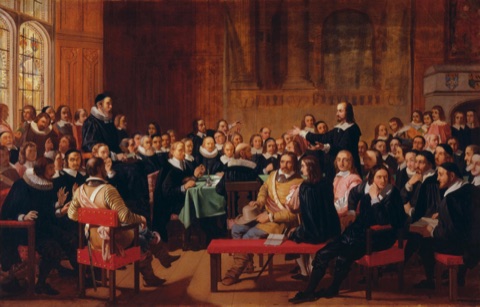
About the author
Westminster Assembly
The Westminster Assembly (1643 to 1649) was a council of English clergy and members of Parliament called by the Long Parliament to reform the Church of England along Reformed lines. It first met on 1 July 1643 in Westminster Abbey, with 121 divines and 30 lay assessors. After the Solemn League and Covenant of 1643, Scottish commissioners including Alexander Henderson, Samuel Rutherford and George Gillespie sat with it. Its long debates over church government set Presbyterians against the Independents and the Erastians. It completed the Directory for Public Worship in 1645, the Confession of Faith in 1646, and the Larger and Shorter Catechisms in 1647. Set aside in England at the Restoration in 1660, these standards became the confessional basis of Presbyterian churches in Scotland, Ireland and North America.