Modernized edition · Full text · Free PDF/EPUB
The Great Catechism in Modern English
Want the file? The PDF/EPUB is free with an account.
Summary
- Author
- Gregory of Nyssa (around 335 to 395 AD), one of the three Cappadocian Fathers
- Written
- Around 385 AD
- Source edition
- Gregory's treatise in modern English, from Nicene and Post-Nicene Fathers, Second Series, Volume 5
- Type
- Handbook of doctrine for those who instruct catechumens
- Length
- 24,000 words · 2 hours
What is The Great Catechism about?
The Great Catechism is Gregory of Nyssa's guide for teachers of converts, written around 385 AD. Arguing from premises Greeks, Jews and heretics already accept, Gregory explains the Trinity, the fall, the incarnation and ransom, baptism and the Eucharist, and requires a changed life as the proof of new birth.
Read the full summary (9 points, key themes)Show less
How the argument unfolds
- 01
Prologue. Instruction must start from what each hearer believes, and the Greek's many gods yield to one God once perfection is granted.
- 02
The Word and the Spirit. God's Word and Spirit are living and one in nature with the Father, shown by reason and by Psalm 33:6.
- 03
Creation and the fall. Humanity was made good and free, and fell when an envious angelic power deceived it.
- 04
Mortality as mercy. Death dissolves the body so it can be remade pure, and the soul is healed by virtue now or correction hereafter.
- 05
Objections to the incarnation. Nothing free from vice is unworthy of God, flesh does not confine the infinite, and Christ's works show his deity.
- 06
The way of salvation. Goodness, wisdom, justice and power meet in a ransom the enemy accepted, with Christ's deity hidden in his flesh.
- 07
Further objections. Why Christ came by human birth, why the remedy came late, and why faith is not forced.
- 08
Baptism and the Eucharist. Water, prayer and triple immersion give a second birth, and Christ's body received in bread transforms ours.
- 09
Faith and the changed life. The one reborn must confess the uncreated Trinity and show the marks of God in his conduct.
Key themes
- The Trinity between two errors. Gregory affirms the Word and Spirit against the Jew and one God against the Greek: “The number three serves as a cure for those who err regarding the One.”
- Freedom as the image of God. God would not withhold the best gift from his image, and Gregory names it: “I mean the gift of being our own master and having free will.”
- Small means, great grace. The second birth needs nothing elaborate, “simply faith and water”, yet it brings human beings into kinship with God.
- Healing through purification. Judgment, death and fire are cures that remove evil grown into a nature, until all creation gives thanks.
Reader questions (9)Hide the questions
Questions about The Great Catechism
Is there a modern English version of The Great Catechism?
Yes. This is The Great Catechism by Gregory of Nyssa in modern English. The language is modernized and the author's order and argument are kept. The full modernized text is free to read on this page.
Can I read The Great Catechism online for free?
Yes. The complete text of this modern English edition is on this page, with no sign-up or paywall.
Is there a free PDF of The Great Catechism?
Yes. The PDF and EPUB of this edition are free with an Updated Works account. Sign in with Google or an email link; no card is needed.
What is The Great Catechism by Gregory of Nyssa about?
It sets out the main doctrines of the faith for teachers preparing converts: the Trinity, creation and the fall, the incarnation, the ransom and the cross, baptism and the Eucharist. Gregory answers Greeks, Jews and heretics in turn, arguing from what each already accepts.
Why does Gregory say God became human instead of saving by a word?
Every divine attribute had to be at work. Humanity had sold itself to the enemy, so justice required a ransom rather than seizure by force, and wisdom found a way to make the ransom accepted.
Does Gregory teach that the devil was deceived?
Yes. The deceiver who used the bait of pleasure was deceived by Christ's human form, a just repayment in Gregory's view. The purpose was healing, and even the author of evil gains when evil is removed from his nature.
What does Gregory teach about baptism?
Prayer, water and faith give a second birth by the same power that turns a seed into a human being. Threefold immersion enacts Christ's three days in the tomb, and those not cleansed by water must be cleansed by fire.
What does Gregory say about the Eucharist?
Christ's immortal body is an antidote that must enter as the poison did, by eating and drinking. As bread once became his body by nourishment, the bread consecrated by the Word is changed into that body.
Does baptism change a person automatically?
No. Someone who keeps his anger, greed and stolen goods after baptism has not been reborn, and Gregory tells the baptized to show the marks of their Father: “What you have not become, you are not.”
The Great Catechism in Modern English · Full text
Prologue
Ministers who preside over the “mystery of godliness” (1 Timothy 3:16) need a structured method of instruction. Through clear teaching of the word of faith brought home to unbelievers, the church grows by the addition of those who are being saved (Acts 2:47). Yet a single method of teaching will not fit everyone who approaches the faith. Catechetical instruction must adapt to the wide diversity of people’s religious beliefs. While keeping one single goal in view, the teacher cannot use the same preparation for every individual.
The Judaizer already holds one set of convictions. Someone shaped by Greek thought holds another. Meanwhile, the Anomoean, the Manichean, and the followers of Marcion, Valentinus, Basilides, and others who have wandered into heresy are each bound to their own distinct ideas. Each requires a tailored response to their particular errors. The method of healing must match the form of the disease. You will not use the same medicine to cure Greek polytheism and Jewish unbelief regarding the only-begotten God. Nor can you overturn the deceptive fictions of every heretic with the exact same arguments.
No one can set Sabellius straight with the same instruction that benefits an Anomoean. Debating a Manichean achieves nothing with a Jew. Therefore, as I have said, you must consider the beliefs your listeners already hold. Shape your argument to answer the specific error into which each has fallen. In every conversation, advance clear principles and reasonable premises. Starting from ground both sides accept, you can bring the truth conclusively to light.
When you speak with someone who favors Greek ideas, begin by discovering his starting point. Does he assume a God exists, or does he agree with atheism? If he says there is no God, point him to the skillful and wise ordering of the universe. Through these works, he can be brought to recognize a supreme power revealed throughout creation.
If he has no doubt that God exists, yet leans toward assuming there are many gods, use a different line of reasoning. Ask him whether he believes the divine nature is perfect or defective. Most likely, he will affirm perfection in the divine nature. Then press him to grant perfection in every quality observed in divinity. Otherwise, God would be a mixture of opposites, combining defect and perfection. Consider power, goodness, wisdom, imperishability, eternal existence, or any other quality fitting for God. In every case, he will agree that perfection defines the divine nature, as a sound conclusion from his own premises.
Once he grants this, it is not hard to lead his scattered notions of many gods to acknowledge one God. Suppose he admits that perfection in every respect belongs to the divine, yet still imagines several perfect beings sharing the exact same character. Logic forces him to make a choice. Either he must point out some distinguishing trait in beings that show no variation and always display the same marks. Or else, if the mind can grasp nothing distinctive in them, he must give up the idea of any separation at all.
Consider the possibilities. No one can detect a difference of “more” and “less,” since perfection allows no degrees. Nor can anyone point to “worse” and “better,” since no true idea of divinity remains wherever anything “worse” exists. Nor can anyone speak of “older” and “newer,” since whatever does not exist forever is foreign to divinity. On the contrary, the concept of Godhead is one and the same. Reason can discover no separate trait at any point.
By strict necessity, the mistaken notion of many gods yields to acknowledging the unity of God. If goodness, justice, wisdom, and power are all equally affirmed of that nature, then imperishability, eternal existence, and every sound doctrine follow in the same way. Once every distinguishing difference in every respect is removed, belief in many gods disappears along with it. Complete sameness leads conviction straight to the unity of God.
Chapter 1
The Living Word of God
Our religion recognizes a distinction of persons within the unity of the divine nature. Therefore, we must take care that our debate with the Greeks does not sink to the level of Judaism. We need another clear, precise line of reasoning to guard against error on this point.
Not even those outside our faith hold that God is without logos, or reason. That concession gives our argument a ready opening. Anyone who admits that God is not without logos will agree that he certainly possesses logos. Now notice that human speech, or word, is called by the very same term. Suppose our listener says he understands God’s Word by analogy with our own speech. That very comparison will lift him to a loftier concept. He must recognize that utterance, like everything else, corresponds to the nature of the speaker.
We observe a certain kind of strength, life, and wisdom in human beings. Yet no one imagines from the shared names that God’s life, power, or wisdom are of the same sort as ours. Instead, the meanings of all such terms are scaled down to match the measure of our nature. Because human nature is weak and prone to decay, our life is brief, our strength is fragile, and our word is unstable. In that transcendent nature, however, the greatness of the subject elevates everything said about it. When we speak of God’s Word, we must not think of it as existing only in the moment of spoken sound, then vanishing into nothing like our words. Our perishable nature produces speech that comes to an end. In contrast, that imperishable, eternal nature possesses an eternal and substantial Word.
Once logic compels our listener to admit the eternal subsistence of God’s Word, he must also admit that the Word’s subsistence is a living state. It is impious to suppose that the Word has a lifeless existence like a stone. If the Word genuinely subsists as something intelligent and bodiless, it certainly lives. If it were divorced from life, it would just as certainly not subsist at all. Yet we have already seen that denying the Word’s subsistence is blasphemy. Consequently, the Word must be understood as living.
Moreover, the nature of the Word is rightly believed to be simple. It shows no doubleness or mixture in itself. No one, therefore, should imagine that the living Word depends on merely participating in life. Saying that one thing exists inside another would introduce composition. Since simplicity is admitted, we must recognize that the Word possesses life independently, rather than merely sharing in life.
If the Word lives because he is life itself, he certainly possesses the faculty of will. No living being is without will. A devout mind must also conclude that this will has the capacity to act. If you deny that power, you imply its opposite, powerlessness. Yet powerlessness is completely foreign to our concept of God. Nothing contradictory belongs to the divine nature. We must affirm that the Word’s power is as great as his purpose. Otherwise, a mixture or collision of opposites would enter a simple being. That is exactly what would happen if we found both power and powerlessness in the same will, able to do one thing yet unable to do another.
We must also recognize that this all-powerful will has no inclination toward evil. Any impulse toward evil is alien to the divine nature. Rather, whatever is good, the Word also wills. Willing it, he is able to perform it. Being able, he will not fail to act, but will bring all his good purposes to full accomplishment.
Now the world is good, and everything in it is clearly ordered with wisdom and skill. All of it, therefore, is the work of the Word. He lives and subsists as God’s Word. He has a will because he lives, and he has power to accomplish what he wills. He wills what is wholly good, wise, and supremely excellent.
Since the world is admitted to be good, and our argument has shown it to be the work of this willing, capable Word, this Word is distinct from the one whose Word he is. In a real sense, “Word” is a relational term. The Father of the Word must be thought of alongside the Word. There could not be a word unless it were someone’s word.
When listeners grasp this relational meaning, they see the distinction between the Word and the one from whom he proceeds. Our gospel mystery, in contending with Greek thought, will then no longer risk collapsing into Jewish beliefs. Instead, it escapes the error of both sides. It acknowledges that the living Word of God is an active, creative being, which the Jew refuses to accept. At the same time, it affirms that the Word and the one from whom he comes do not differ in nature.
Consider our own case. We say that a word comes from the mind. It is neither entirely the same as the mind nor entirely different from it. Because it comes from the mind, it is something distinct and not the mind itself. Yet because it brings the mind to light, it can no longer be regarded as alien to it. In essence it is one with the mind, while as a subject it is distinct.
In the same way, God’s Word is distinct by his self-subsistence from the one from whom he receives his subsistence. Yet by displaying in himself the very qualities recognized in God, he is identical in nature with the one known by those same marks. Think of any quality by which someone defines the Father: goodness, power, wisdom, eternal existence, immunity from vice, death, and decay, or complete perfection. By those very same marks, he will recognize the Word who subsists from him.
Chapter 2
The Living Spirit of God
By ascending in thought from human realities to that transcendent nature, we gained knowledge of the Word. By the same method, we are led to a concept of the Spirit. We observe in our own nature certain shadows and reflections of his indescribable power. In us, spirit, or breath, is the drawing in of air. It is a substance outside ourselves that we inhale and exhale to sustain the body. When we speak a word, this breath becomes a vocal utterance that expresses the meaning of the word.
In the divine nature as well, our religion holds that there is a Spirit of God, just as we affirmed that there is a Word of God. It would be inconsistent to think God’s Word is deficient compared with ours. How could our word always be joined with breath, while God’s Word is completely unconnected with Spirit?
Of course, it is not right to think of God as though something foreign from outside flows into him like our breath and becomes the Spirit inside him. When we think of God’s Word, we do not view it as unsubstantial or learned by instruction. We do not treat it as spoken by a voice, vanishing after utterance, or bound by any other limit of human speech. Rather, we understand the Word to be essentially self-subsisting, with an ever-working, all-powerful will.
We have received the same teaching concerning God’s Spirit. We regard him as the one who goes with the Word and manifests its active power, not as a mere outflow of breath. Supposing God’s Spirit to resemble human breath would diminish and demean the grandeur of divine power. Instead, we conceive of the Spirit as an essential power, centered in his own proper person. He is just as incapable of being separated from God in whom he dwells, or from the Word of God whom he accompanies, as he is of dissolving into nothingness. Like God’s Word, he exists personally. He is able to will, self-moved, effective, and always choosing the good. For every purpose, his power matches his will.
Chapter 3
Unity of Nature and Distinction of Persons
Anyone who closely studies the depths of this mystery quietly receives in his spirit a modest grasp of the doctrine of God’s nature. Yet he cannot explain clearly in words its indescribable depth. How, for instance, can the same reality be numbered and yet reject numbering? How can it be observed with distinctions and yet grasped as a single unity? How can it be separate in person and yet undivided in underlying essence?
In person, the Spirit is one, the Word is another, and the source from which the Word and Spirit come is another. Yet once you grasp the distinction among them, the oneness of their nature allows no division. The supremacy of the one First Cause is not split or carved up into separate divinities. At the same time, this teaching does not agree with Jewish dogma.
Instead, the truth walks the middle path between both views. It destroys each error while accepting what is useful from each. Jewish dogma is overturned by accepting the Word and believing in the Spirit. Meanwhile, the polytheistic error of Greek thought vanishes because the unity of the divine nature abolishes the illusion of many gods. Yet from the Jewish view, let the unity of nature stand. From the Greek view, keep only the distinction of persons. In this way, the proper remedy against profane error is applied on both sides. The number three serves as a cure for those who err regarding the One. The affirmation of unity cures those whose beliefs are scattered among many divinities.
Chapter 4
The Old Testament Witness to the Word and Spirit
If a Jew disputes these arguments, our discussion with him will no longer present the same difficulty. The truth can be demonstrated directly from the teachings in which he was raised. The divinely inspired Scriptures show in the clearest light that there is a Word of God and a Spirit of God. Both are essentially subsisting powers. They create everything that has come into being and hold together all that exists.
It is enough to recall a single testimony, leaving the search for more passages to those willing to take the trouble. “By the Word of the Lord,” Scripture says, “the heavens were established, and all the power of them by the breath of his mouth” (Psalm 33:6). What word and what breath is this? That Word is not mere speech, nor is that breath mere breathing. Would we not drag God down to the level of human nature if we taught that the Maker of the universe used speech and breath like ours?
What power arising from ordinary speech or breathing could ever suffice to establish the heavens and the powers within them? Suppose God’s Word is like our speech, and his Breath is like our breath. Then similar things must certainly yield similar power, and God’s Word has just as much force as ours and no more. Yet the words that come from us and the breath that carries them are ineffective and unsubstantial. Anyone who reduces God to a likeness of human speech renders the divine Word and Spirit completely ineffective and unsubstantial as well.
Consider the alternative. As David says, “By the Word of the Lord were the heavens established, and their powers had their framing by his breath” (Psalm 33:6). If that is true, then the mystery of truth stands confirmed. It instructs us to speak of a Word who exists in essential being, and a Breath who exists in distinct personality.
Chapter 5
Creation, Humanity, and the Origin of Evil
Neither the Greek with his “innate ideas” nor the Jew with his Scriptures will perhaps deny that there is a Word of God and a Breath of God. Yet both parties would likely reject the saving plan by which the Word of God became human. They dismiss it as unbelievable and unworthy to be told of God. Starting from another point, therefore, we will bring these objectors to believe this truth.
Either they believe that all things came into being through the thought and skill of the one who framed the universe, or they hold a view that contradicts this. If they refuse to grant that reason and wisdom guided the framing of the world, they enthrone unreason and unskillfulness over the universe. Since that is absurd and impious, they clearly must allow that thought and skill govern the world.
Earlier, we showed that God’s Word is not spoken utterance or the mere possession of some craft or skill. Rather, he is a power existing essentially and substantially. He wills all good and possesses full strength to carry out his will. Of a world that is good, this power that desires and creates good is the cause. Our argument has shown that the existence of the entire universe depends on the power of the Word. Strict necessity therefore forbids us from imagining any other cause for the ordering of the world’s parts. Everything passed into being through the Word himself.
If anyone wants to call him Word, Skill, Power, God, or any other lofty and prized title, we will not quarrel with him. Whatever word or name is chosen, every expression points to one single reality. That reality is the eternal power of God. He creates the things that exist and brings forth what does not yet exist. He sustains what has been made and foresees what is yet to come.
This power, whether called God, Word, Skill, or Power, has been logically shown to be the Maker of human nature. He was not driven to shape humanity by any necessity. Instead, he produced such a creature out of overflowing love. For it was fitting that his light should not remain unseen, nor his glory without witness, nor his goodness unenjoyed. No quality in the divine nature was meant to lie idle, with no one to share or enjoy it.
Humanity comes into existence on these very terms, namely to share in the good things in God. Therefore, human nature had to be fashioned in a way suited to receive that good. Consider how the eye holds fellowship with the light because of the bright ray naturally built into it. Through its built-in capacity, it draws to itself what is akin to it. In the same way, some kinship with the divine had to be blended into human nature. Through this correspondence, humanity could reach toward what is native to it.
The same holds true even for irrational creatures whose home is water or air. Each has a body shaped for its way of life. Through its special physical structure, air is the proper and fitting element for one, and water for the other. Thus humanity, born to enjoy divine goodness, needed something in its nature akin to what it was meant to share. For this purpose we were furnished with life, thought, skill, and all the excellences we attribute to God. Through each of them, we can set our desire on what is not foreign to us.
Eternal existence is also one of the excellences of the divine nature. Our constitution, therefore, could not lack the further gift of this attribute. It had to hold immortality within itself. By this inherent capacity, humanity could both recognize what is above it and feel a longing for divine, eternal life.
All of this is summed up in a single comprehensive phrase in the account of creation. It says that humanity was made “in the image of God” (Genesis 1:27). The likeness implied in that word “image” summarizes everything that characterizes God. Everything else Moses relates about these matters in a more historical style, placing doctrines before us in the form of a story, belongs to the same teaching. Look at his Paradise, with its special fruits. Eating them did not satisfy bodily appetite, but bestowed knowledge and eternal life. That agrees completely with what we have concluded about humanity: our nature was good at its beginning, and placed in the midst of good.
Perhaps someone looking only at the present state of things will contradict this. He may think he can prove our account false, since humanity no longer lives under those original conditions, but under almost opposite ones. “Where is the divine likeness in the soul?” he asks. “Where is the body’s freedom from suffering? Where is eternal life? Human life is brief, subject to passions, prone to decay, and open in both body and mind to every form of suffering.” With assertions like these attacking human nature, the opponent thinks he has overturned the account we have offered.
So that our argument will not have to detour at a later stage, let us answer these points briefly now. The fact that human life currently suffers abnormal conditions does not prove that humanity was not created in the midst of good. Humanity is the work of God, who brought this creature into being through his goodness. No one could reasonably suspect that a being whose very makeup stems from goodness was created by its Maker in the midst of evil.
There is another reason why our present circumstances are what they are and why we lack our original state. Once again, the starting point of our answer lies well within what our opponents themselves accept. God made humanity to share in his own goodness. He built into us instincts for every excellence so that our desire would move naturally toward its like. Surely, then, he would never have deprived us of the finest and most precious good of all. I mean the gift of being our own master and having free will.
If necessity ruled human life in any way, the “image” would have been falsified in that very respect. It would be alienated by its unlikeness to its archetype. How can a nature under the yoke and bondage of any compulsion be called an image of a sovereign Being? Was it not completely right that a creature modeled in every detail on God should possess a self-ruling, independent principle? Only then could sharing in the good become the reward of its own virtue.
How, then, you will ask, did it happen that a creature adorned throughout with such supreme endowments exchanged good for worse? The reason for this is also plain. No growth of evil ever began in the divine will. Vice would be blameless if it carried the name of God as its maker and father. Rather, evil is somehow born from within (James 1:15). It springs up in the will the very moment the soul turns away from what is beautiful and good.
Sight is a natural activity, while blindness is simply the deprivation of that natural function. Virtue and vice oppose each other in the same way. In fact, it is impossible to form any other idea of the origin of vice than as the absence of virtue. When light is removed, darkness follows. As long as light is present, there is no darkness. In the same way, as long as good remains in our nature, vice has no real existence of its own. The departure of the better state becomes the origin of its opposite.
The distinctive mark of free will is that it chooses whatever pleases it. You will see, therefore, that God is not the author of our present evils. He structured your nature to be free and its own master. The real cause is the recklessness that chooses the worse over the better.
Chapter 6
The Angelic Fall and the Deception of Humanity
You may still ask what caused this error of judgment, for our discussion naturally leads to that point. Here again, we may rightly expect to find a starting point that sheds light on this inquiry. We have received the following account by tradition from the Fathers. It is no mere mythical tale, but a teaching that naturally invites our belief.
Everything that exists is understood in a twofold way. Creation is divided between what belongs to the intellect and what belongs to the senses. Nothing in the nature of existing things lies outside this division. Now these two realms are separated from each other by a wide gap. The sensory realm does not share the qualities that mark the intellectual, nor does the intellectual share those that distinguish the sensory. Each receives its distinct character from qualities opposite to the other. The realm of thought is bodiless, untouchable, and without physical shape. The sensory realm, by its very name, is bounded by perceptions that arrive through bodily sense organs.
Even within the sensory world itself, its elements strongly oppose one another. Yet the wisdom governing the universe has devised a harmony among those opposites. This produces concord across the entire creation, so that natural contrariety does not break the chain of unity. In the same way, divine wisdom brought about a blending and interpenetration of the sensory with the intellectual realm. All things may thus share equally in what is good, and no single created thing lacks a portion in that higher world. For this reason, the region suited to the intellectual world is a subtle and mobile essence. In keeping with its heavenly dwelling, it holds in its own nature a strong affinity with the intellectual realm.
By the foresight of the supreme Mind, the intellectual and sensory realms are woven together, so that nothing in creation is rejected as worthless, as the apostle says (1 Timothy 4:4), or left without its share in fellowship with God. For this reason, God brought about the blending of the intellectual and sensory in humanity, as the creation account instructs us. It tells us that God took dust from the ground, formed the human being, and by his own breath planted life in the work of his hand. In this way, the earthy was raised up to the divine. One single grace of equal value now pervades the whole creation, mingling the lower nature with the heavenly.
Now the intellectual nature existed first. For the ordering of the whole, the authority presiding over all things assigned each angelic power a specific role. Among them, a certain power was appointed by the ruler of the universe to uphold and govern the earthly region. Then came that creature molded from earth, an “image” copied from the supreme Power: humanity. Into him, through an indescribable grace, was mingled the godlike beauty of the intellectual nature. The one entrusted with administering the earth took this badly. He judged it unbearable that any being made from the earthly nature under his rule should display a likeness to his own transcendent dignity.
How did a being created for no evil purpose by the good Framer of the universe still fall into this passion of envy? It is not part of my present task to examine that question in minute detail. Still, it would not be hard or take long to explain it to anyone open to persuasion.
The difference between virtue and vice is not like the difference between two independently existing realities. Rather, there is a logical opposition between what exists and what does not exist. You cannot treat nonbeing as a substance standing beside being. We say that nonentity is only logically opposed to entity. In the same way, vice opposes virtue not as an independent existence of its own, but solely as something recognized through the absence of the better. Blindness is logically opposed to sight without possessing a natural existence of its own, since it is only the loss of an earlier faculty. Likewise, vice is simply the deprivation of goodness, like a shadow that appears when the sun’s ray passes away.
Uncreated nature cannot undergo the movement involved in turning, change, or alteration. Everything that comes into existence through creation, however, is tied to change. Creation’s very existence began in change, when what did not exist passed by divine power into existence. That angelic power was also a created being, able to choose freely whatever he wished. So he closed his eyes to the good and the generous. Think of someone standing in bright sunshine who lets his eyelids fall and sees only darkness. In the same way, by refusing to look upon the good, this being came to know the opposite of goodness. That opposite is envy.
It is undeniable that the beginning of any condition causes everything else that naturally follows from it. Health produces physical vigor, activity, and an enjoyable life. Sickness brings weakness, lack of energy, and a life spent with distaste for everything. So it is in every other case: consequences follow their proper beginnings. Freedom from unruly passions is the beginning and foundation of a virtuous life. In the same way, the bent toward vice produced by that envy became the open road to all the evils seen since.
Once he fell away from goodness and gave birth to envy within himself, he received a downward bias toward evil. He became like a boulder torn loose from a mountain ridge and driven headlong by its own weight. Dragged away from his original natural inclination toward goodness, he gravitated with all his weight toward vice. He was deliberately driven and swept as if by a kind of gravity to the utmost depth of wickedness. He had received intellectual power from his Creator to cooperate with higher gifts, yet he turned it into a tool for inventing schemes of vice. With crafty skill, he deceived and outmaneuvered humanity, persuading us to become our own murderers by our own hands.
He saw that humanity, through the commission of God’s blessing, had been elevated to lofty preeminence. We were appointed king over the earth and everything on it. We were beautiful in form, created as an image of archetypal beauty. We were free from disordered passion in our nature, as an imitation of the passionless God. We were full of bold openness, delighting in a face-to-face manifestation of the personal God. All of this served as fuel for the adversary’s envy.
Yet he could not achieve his goal by sheer strength or brute force. The strength of God’s blessing overpowered his own force. His plan, therefore, was to draw humanity away from this enabling strength. Once stripped of it, we would be easily captured and exposed to his treachery.
Think of a lamp whose flame has caught the wick. When someone cannot blow it out, he mixes water with the oil and dulls the flame by that device. In the same way, the enemy craftily mixed badness into human will, dimming and quenching the divine blessing. Once that blessing failed, its opposite necessarily rushed in. Death opposes life, weakness opposes strength, curse opposes blessing, and shame opposes bold openness. To every good stands whatever opposite can be imagined. That is why humanity lives in its present evil condition, because that beginning opened the door to such an end.
Chapter 7
Why a Good God Created Free Creatures
Yet let no one ask, “If God foresaw the disaster that human thoughtlessness would bring, why did he create humanity at all? Would it not perhaps have been better never to be born than to live in the midst of such evils?” This is the objection raised by those swept away by the false teaching of the Manicheans. They use it to establish their error, hoping to prove that the Creator of human nature is evil.
If God is not ignorant of anything that exists, they argue, and yet humanity lives surrounded by evil, you cannot defend God’s goodness. How could he be good if he brought into life a creature destined for such misery? If an active force aligned with good belongs wholly to a good nature, they argue, then this painful and perishing life can never be traced to the workmanship of the good. Instead, they claim, we must suppose another author for such a life, from whom our nature gets its bent toward misery.
To those thoroughly soaked in heretical fraud, as with some deeply ingrained stain, arguments like these seem to carry real force because of their superficial plausibility. Yet those with deeper insight into the truth see clearly that these claims are unsound. Their fallacy can be quickly exposed.
In my judgment, it is also fitting to call on the apostle to plead alongside us in refuting them. Writing to the Corinthians, he draws a distinction between fleshly and spiritual dispositions of the soul. By what he says, he shows that we must not judge moral excellence or evil by the standard of physical senses. Rather, withdrawing the mind from bodily impressions, we must determine on its own terms the true nature of moral excellence and its opposite. “The spiritual man,” he says, “judgeth all things” (1 Corinthians 2:15).
Here, I think, lies the real reason why the promoters of these deceptive doctrines invented them. When they define what is good, they look only at the sweetness of bodily enjoyment. Because the human body is composite and constantly drifts toward dissolution, it is unavoidably subject to suffering and illness. Pain naturally follows such suffering. From this, they declare that the making of humanity is the work of an evil deity.
Had their thoughts taken a loftier view, they would have pulled their minds away from judging by sensory pleasure. Looking dispassionately at the nature of things, they would have understood that there is no evil other than wickedness. All wickedness has its form and character in the deprivation of good. It does not exist by itself and cannot be conceived as an independent substance. No evil of any kind lies outside and independent of the will. What is called evil is simply the nonexistence of the good.
Now what does not exist has no substantial existence. And the Maker of things that have substantial existence is not the maker of what has no substantial existence. Therefore, the God of things that exist stands completely outside the cause of evil, since he is not the maker of what does not exist.
The one who formed sight did not make blindness. The one who revealed virtue did not create its deprivation. God set the reward of every good thing as the prize in the contest of free will for those who live virtuously. He never subjected humanity, for his own pleasure, to the yoke of harsh compulsion, as though dragging us unwillingly toward the right like a lifeless tool. When the light shines brightly in a clear sky and a person deliberately shuts his eyelids to block his sight, the sun bears no blame on the part of the one who does not see.
Chapter 8
Mortality as Mercy and the Healing of Soul and Body
Nevertheless, someone who looks only at the breakdown of the body is deeply troubled. To him, it seems a terrible hardship that this life of ours should be dissolved by death. The worst possible evil, he says, is that our existence should be snuffed out by mortality. Yet let him look through that gloomy prospect and see the sheer abundance of divine goodness. Seeing it may move him all the more to admire how graciously God cares for human affairs.
Life is desirable to those who share in it because they can enjoy what pleases them. When someone lives in constant bodily pain, nonexistence seems far more desirable than continuing in agony. Let us ask, then, whether the one who equips us for life has any goal other than letting us pass our lives under the best conditions.
By a movement of our own self-will, we entered into fellowship with evil. Lured by sensual pleasure, we mixed evil into our nature like a poisonous ingredient spoiling the taste of honey. Falling away from the blessedness of freedom from passion, we were twisted into vice. For this very reason, a human being is dissolved back into the dust of the ground like a broken clay pot. We are broken down so that we may shed the stain we have absorbed and be remolded anew after the original pattern through the resurrection. That renewal awaits us, provided that in this present life we have preserved what belongs to that image.
Moses sets this teaching before us in the guise of a historical narrative. Yet even under this historical veil, the lesson is unmistakable. As he tells us, the first human beings came into contact with what was forbidden and were stripped bare of their original blessedness. Afterward, the Lord clothed his first-formed creatures in garments of skin.
In my view, we are not bound to take these skins literally. What slain and flayed animals could possibly have supplied clothing for them? Every skin separated from an animal is dead. Therefore, I am convinced that the healer of our sinfulness, in his foresight, afterward clothed humanity with the capacity to die, which had belonged specifically to irrational animals.
This mortality was not meant to last forever. A coat is something external put on us, serving the body for a time, not native to its nature. This liability to death, borrowed from the animal world, was temporarily wrapped around a nature created for immortality. It covered us on the outside, not the inside. It took hold of the sensory part of humanity, yet laid no hand upon the divine image.
Even that sensory part does not vanish into nothingness, but is dissolved. Disappearance means passing away into nonexistence, whereas dissolution means dispersing back into the world’s constituent elements from which it was formed. What is held within those elements does not perish, even though it escapes our senses.
The cause of this dissolution becomes clear from the illustration we have just given. The senses are closely tied to what is coarse and earthly, while the intellect is nobler and higher by nature than the movements of sensation. When judgment guided by the senses misjudges what is morally good, that error gives substance to an opposite condition. As a result, the part of us made useless is dissolved by taking in that opposite.
Think of our illustration this way. Suppose a clay vessel is filled, through some mischief, with molten lead. The lead hardens and stays solid inside. Then the owner recovers the vessel. Possessing the potter’s skill, he crushes the clay holding the lead into pieces. Then he remolds the vessel to its former pattern for his own use, now free of the foreign metal mixed into it. In the same way, the Maker of our vessel sees that wickedness has mingled with our sensory and bodily part. He will dissolve the material that absorbed evil, remold it in the resurrection without any trace of that alien matter, and recombine the elements into the vessel in its original beauty.
Because both soul and body share a common bond in sinful passions, there is also a parallel between the death of the soul and the death of the body. For the flesh, we call the departure of sensory life death. For the soul, we call the departure of true life death. Both soul and body share in the same evil, since evil moves into action through both. Yet the death of dissolution brought by those dead garments of skin does not affect the soul. How could something uncompounded undergo dissolution?
Still, the stains that sin has bred in the soul must also be removed through some healing process. In this present life, the medicine of virtue is applied to heal these wounds. If the soul remains unhealed, however, the remedy is administered in the life that follows this one.
Bodily ailments vary widely. Some admit of an easy cure, while others require harder treatment. For those severe cases, physicians resort to the knife, cautery, or doses of bitter medicine to remove the disease attacking the body. For the healing of the soul’s sicknesses, the coming judgment announces something similar. To careless people, it is held out as the threat of a harsh correction, so that fear of painful retribution may teach them the wisdom of fleeing wickedness. To those of deeper insight, it is understood as a healing process ordered by God to bring humanity, his own treasured creature, back to the grace of its original state.
Surgeons who use the knife or cautery to remove unnatural growths in the body, such as cysts or warts, do not offer their patients a painless cure. Yet they certainly never apply the knife with any intent to injure the patient. In the same way, material growths harden on souls sensualized by fellowship with bodily passions. On the day of judgment, those growths are cut and scraped away by the inexpressible wisdom and power of him who, as the Gospel says, “healeth those that are sick” (Matthew 9:12). For as he says again, “they that are whole have no need of the physician, but they that are sick” (Mark 2:17).
Because a strong inclination toward evil has become ingrained in the soul, it must suffer, just as cutting away a wart brings sharp pain to the skin. Anything contrary to nature that takes root within a nature attaches itself in a shared feeling. This produces an abnormal union of what is our own with something alien, so our nature is painfully wounded and torn when that abnormal growth is cut away. Thus the soul wastes and melts away under the correction of its sins, as prophecy somewhere tells us (Psalm 39:11). Its deep intimacy with evil inevitably produces unspeakable and inexpressible pangs. Describing those pangs is just as impossible as describing the good things we hope for. Neither can be captured in words or brought within the reach of our understanding.
Anyone who looks to the final goal of the Wisdom directing the universe would be unreasonable and narrow-minded to call the Maker of humanity the author of evil. It is equally foolish to claim that God is ignorant of the future. Nor can anyone say that knowing the future and still making us means he shares an impulse toward what is bad. He knew what would happen, yet he did not block the tendency toward what actually occurred. That humanity would turn aside from the good could not be hidden from him who grasps all things by his foresight and sees coming events as clearly as past ones. Just as he saw the perversion ahead of time, he also devised humanity’s return to the good.
Which course, then, was better? Should he have refused to bring our nature into existence at all because he foresaw that the creature he was about to make would fall away from moral beauty? Or was it better to bring humanity back through repentance and restore its diseased nature to its original beauty?
Bodily pains and sufferings are inevitable consequences of an unstable nature. To call God the author of evil because of them reveals extreme narrow-mindedness. So does denying that he created humanity at all in hopes of avoiding making him the source of pain. That is the mark of people who measure moral good and moral evil by mere sensation. They do not understand that only what lies beyond sensation is intrinsically good, and that the only evil is estrangement from the good. Making pleasure and pain the standard of moral good and its opposite belongs to unreasoning creatures, whose lack of mind and understanding leaves no room for grasping true goodness.
Humanity is God’s work, created morally noble and destined for the noblest end. This is clear not only from what we have said, but from countless other proofs too numerous to list here. When we call God the Maker of humanity, we do not forget how carefully we defined our position against the Greeks at the outset. We showed there that the Word of God is a real, personal being, himself both God and the Word. He embraces all creative power within himself, or rather is power itself directed toward all good. He accomplishes effectively whatever he wills because his power always matches his will. His will and work are the life of all that exists. Through him, humanity too was brought into being and adorned with the highest excellences after the likeness of God.
Yet only what does not derive its origin through creation is unchangeable by nature. Everything brought into existence out of nothing by the uncreated Being undergoes constant change from the very first moment it begins to be. When it acts according to its nature, it changes ever for the better. When it turns aside from the straight path, a movement toward the opposite follows.
Humanity was made in this condition, and its changeable element slipped aside into the exact opposite. That departure from the good brought every form of evil in its wake to match each good. When life failed, the hostility of death entered. When light was lost, darkness came over us. In the absence of virtue, vice sprang up in its place. Against every form of good stood an equal array of opposite evils.
Who, then, could call humanity back to the grace of its original state after it had fallen through recklessness into such misery? Once estranged from prudence, a human being could not keep even his prudence. Once cut off from wisdom, he could not take wise counsel. Whose task was it to restore the fallen, recover the lost, and take the wanderer by the hand to lead him home? Whose else than solely his who is the Lord of our nature? Only he who gave life at the beginning was able, or fitted, to recover it once lost. This is what the revelation of truth teaches us: in the beginning God made humanity, and when humanity fell, he saved it.
Chapter 9
Why Nothing Free from Vice Is Unworthy of God
Up to this point, someone who has followed our argument will likely agree, since nothing we have said seems foreign to a worthy concept of God. Toward what follows, however, which forms the strongest part of this revelation of truth, he will not be so well disposed. I mean the human birth, the growth from infancy to maturity, the eating and drinking, and the fatigue and sleep. I mean also the sorrow and tears, the false accusation and judgment hall, the cross of death, and the burial in the tomb.
All these events, woven into the revelation, dull the faith of narrower minds. Because of what came before, they reject what follows. They refuse to admit that the resurrection from the dead holds anything worthy of God, because of the seemingly undignified circumstances of his death.
First of all, then, we must lift our thoughts away from coarse, fleshly impressions. We must fix them on what is morally beautiful in itself, on what is not, and on the marks by which each is recognized. No thoughtful person, I believe, will dispute that in the entire order of things only one thing is disgraceful, and that is weakness rooted in vice. Whatever has no connection with vice is a stranger to all disgrace. Whatever has no trace of disgrace belongs on the side of the beautiful. And what is truly beautiful has no mixture of its opposite.
Now whatever belongs within the sphere of the beautiful befits the character of God. Let objectors, then, take one of two paths. Either let them prove that there was vice in his birth, his upbringing, his growth, his advance to the fullness of human nature, his experience of death, and his return from death. Or, if they concede that all these events of his life stand completely outside the sphere of vice, they must admit that nothing foreign to vice can be disgraceful. Everything untouched by disgrace or vice is plainly shown to be morally beautiful. How, then, can we help pitying the folly of people who claim that what is morally beautiful is unworthy of God?
Chapter 10
How the Infinite God Unites with Human Nature
“Human nature,” objectors say, “is narrow and limited, whereas God is infinite. How could the infinite be contained within a single tiny human frame?”
Yet who claims that the infinity of God is enclosed within the covering of flesh as though inside a container? Not even in our own life is our intellectual nature shut up inside the boundaries of the flesh. On the contrary, while the body’s bulk stays within its own proportions, the soul can range at will through the entire creation by the movement of thought. It rises to the heavens and steps into the depths. It crosses the breadth of the world and, in its restless curiosity, enters the regions beneath the earth. Often it is absorbed in examining the wonders of heaven and feels no drag from the appendage of the body.
If the human soul, though bound by nature to pervade the body, can still present itself everywhere at will, why insist that God must be hemmed in by fleshly nature? Why not use examples we can understand to form a reasonable idea of God’s plan of salvation?
Consider the analogy of a lamp’s flame embracing the fuel supplied to it. Reason distinguishes between the flame resting on the material and the material that feeds the flame. In fact, however, we cannot cut one off from the other to display the flame apart from the material. United, they form one single thing. Please do not carry over the perishableness of the flame into this comparison. Keep only what fits the image, and set aside what is irrelevant or mismatched.
Just as we see flame fastening onto material without being enclosed inside it, what prevents us from thinking of a union or closeness between the divine nature and humanity? In that very closeness we still guard the true concept of God, believing that even though the Godhead is in a human being, it remains beyond all limitation.
Chapter 11
Accepting the Fact of the Incarnation Without Demanding Its Mechanism
If you ask how deity is mingled with humanity, you will first have to inquire how the soul joins with the flesh. If you do not know how the soul is united to the body, do not assume that the higher question must fall within your grasp.
In the union of soul and body, we have good reason to believe the soul is distinct from the body, because flesh isolated from the soul becomes dead and inert. Yet we have no exact knowledge of the method of their union. It is the same with the union of deity and humanity. We are fully aware of the gulf in majesty between the divine nature and our mortal, perishable nature, yet we cannot detect how the divine and human elements are joined together.
The recorded miracles leave us no room to doubt that God was born in human nature. Yet how this took place lies beyond the reach of reasoning, so we decline to investigate it. In the same way, we believe that all bodily and intellectual creation draws its existence from the incorporeal and uncreated Being. Still, we do not turn where it came from or how into subjects of inquiry alongside our faith in the fact itself. While accepting the fact, we pass over the manner in which the universe was assembled as a subject not to be probed with idle curiosity, but wholly inexpressible and beyond explanation.
Chapter 12
Recognizing God in the Flesh Through His Works
If someone demands proofs that God appeared to us in the flesh, let him look at the divine works. Even for the existence of God itself, no other demonstration can be found than the witness those activities supply. We survey the universe, consider how the world is ordered, and observe the divine blessings operating in our lives. From all this, we grasp the concept of a power over all things that creates whatever comes into being and sustains whatever exists.
By the same principle, we have solid proof of God’s appearing in the flesh through the wonders of his deeds. In everything recorded of his work, we recognize the hallmarks of the divine nature. It belongs to God to give life to humanity and to uphold all existing things by his providence. It belongs to God to provide food and drink to those who have received bodily life from him. It belongs to him to help the needy and, through restored health, to bring back to itself a nature distorted by sickness. It belongs to God to govern all creation with equal authority: earth, sea, air, and the realms above the air. It belongs to him to possess a power sufficient for all things, and above all to be stronger than death and decay.
If the record of him had fallen short in any one of these or similar marks, outsiders to the faith would have had good reason to object to the gospel revelation. But if every quality conceivable of God can be traced in what is recorded of him, what remains to hinder our faith?
Chapter 13
The Supernatural Birth and Resurrection as Proofs of Deity
“To be born and to die,” it is argued, “are conditions peculiar to fleshly nature.” I admit it. Yet what came before that birth and what followed that death break free from the mark of our common humanity. When we look at either end of human life, we see where we begin and where we end. Human beings begin existence in weakness and complete it in weakness. In the incarnation, however, neither did the birth begin in weakness nor did the death end in weakness. Sensual pleasure did not precede the birth, and decay did not follow the death.
Do you disbelieve this marvel? I welcome your disbelief. By judging what is told to be beyond belief, you completely concede that these marvelous events are supernatural. Let that very fact, that the proclamation of this mystery did not unfold on merely natural terms, serve as proof to you that God appeared. If what is told of Christ stayed within the bounds of nature, where would the Godhead be? But if the account surpasses nature, then the very facts you disbelieve prove that the one thus proclaimed was God.
An ordinary man is conceived by the union of two people and left to decay after death. Had the Gospel contained nothing more than that, you certainly would not have regarded him as God, since the testimony would have described only what belongs to our nature. Yet you are told that he was born, and still transcended our common humanity both in the manner of his birth and in his immunity to decay. You ought, therefore, to direct your disbelief toward the opposite point. Refuse to class him among those who have plainly lived as mere human beings. Inevitably, anyone who does not believe such a one is merely human must be led on to believe that he is God.
Besides, the same witness who recorded that he was born has also told us that he was born of a virgin. If his birth is established as a matter of faith on that testimony, it is completely inconsistent to reject the manner of his birth on the very same testimony. The author who mentions his birth adds that it was from a virgin, and in recording his death bears further witness to his resurrection from the dead.
If, on the basis of what is reported, you grant that he was both born and died, then on those very same grounds you must admit that both his birth and his death stood free from human weakness and were above nature. The conclusion is clear: the one shown to have been born under supernatural circumstances was certainly not limited by nature himself.
Chapter 14
The Objection Against God’s Humiliation in Human Flesh
“Then why,” people ask, “did God stoop to such humiliation? Our faith is staggered at the thought that God, that incomprehensible, inconceivable, and inexpressible reality transcending all glory and greatness, wraps himself in the lowly covering of humanity. Even his sublime works seem degraded by this mixture with the groveling earth.”
Chapter 15
Love for Humanity as the Reason for the Incarnation
Even to this objection, we have an answer fully consistent with our concept of God. You ask why God was born among human beings. Take away from life the blessings we receive from God, and you could not tell me how we arrive at any knowledge of God at all. We recognize a benefactor from his kindness toward us. By observing what happens to us, we infer the character of the one who acts.
If love for humanity is a special hallmark of the divine nature, here is the reason you are searching for. Here is the cause of God’s presence among us. Our diseased nature needed a healer. Fallen humanity needed someone to set it upright. The one who had lost the gift of life needed a life-giver. The one who had fallen away from fellowship with the good needed someone to lead him back to the good. The one shut up in darkness longed for the presence of light. The captive looked for a ransomer, the bound prisoner for an advocate, and the one held in slavery’s bondage for a deliverer. Were these trivial or unworthy needs to move God to come down and look upon human nature when humanity lay in such misery and ruin?
“Still,” comes the reply, “humanity might have been helped while God remained free from suffering. He framed the universe in wisdom and called what did not exist into being by a simple impulse of his will. Could he not, if he had chosen, have rescued humanity from the enemy’s grip by a direct divine command and restored us to our original state? Instead, he waits for long ages to pass and submits to the condition of a human body. He enters life through birth, passes through every stage of life in turn, and tastes death. Only at last does he accomplish his goal by raising his own body. It looks as though he could not fulfill his purpose while remaining in the heights of divine glory, saving humanity by a single command and setting those long ages aside.”
We must lay out the true answer to objections like these, so that no obstacle blocks the faith of people who examine the reasonableness of the gospel revelation closely. First, as we touched on earlier, let us consider what stands opposed to virtue by the rule of contraries. Just as darkness is the opposite of light and death is the opposite of life, vice, and nothing else, is plainly the opposite of virtue.
Among the many objects in creation, nothing is defined by opposition to light or life except the specific realities that are their exact opposites, namely darkness and death. Not stone, wood, water, humanity, or anything else in the world is contrary to them. In the same way, no created thing can be conceived as contrary to virtue, only the reality of vice.
If our faith preached that God was born under circumstances of vice, an objector would have every opportunity to attack our belief as absurd and unworthy of the divine nature. It would indeed be blasphemous to claim that God, who is wisdom itself, goodness, incorruptibility, and every exalted perfection in thought or word, had changed into the opposite.
God, however, is true and essential virtue. No mere nature or existence of any kind is logically opposed to virtue, only vice. Moreover, the divine birth was not into vice, but into human existence. Only weakness rooted in vice is unseemly and shameful, and God neither was born with such weakness nor had it in his nature to be born with it. Why, then, are critics scandalized at confessing that God came into touch with human nature, when nothing in humanity’s makeup stands contrary to virtue? Neither reason, nor understanding, nor capacity for knowledge, nor any other quality proper to human essence opposes the principle of virtue.
Chapter 16
Natural Change Versus Moral Weakness in Birth, Death, and Resurrection
“Yet,” it is objected, “the change our body undergoes in birth is a weakness, and anyone born under that condition is born in weakness. God is free from weakness. It is a strange idea about God, then, when people claim that one who is essentially free from weakness enters into fellowship with weakness.”
To answer this, let us apply the same distinction as before: the word “weakness” is used partly in a strict sense and partly in an extended sense. Whatever affects the will and twists it from virtue to vice is truly and properly weakness. Whatever unfolds in nature through its own sequence of successive stages, however, is more accurately called a work of nature than a weakness. Consider birth, growth, and the sustaining of our underlying substance through taking in and expelling nourishment. Consider also the coming together of the body’s elements and, conversely, the dissolution of its parts back into their kindred elements.
Which “weakness,” then, does our mystery say God came into contact with? That which is properly called weakness, meaning vice, or that which results from natural movements? If our faith affirmed that God was born under forbidden circumstances, we would be duty-bound to reject so profane and unsound a picture of the Divine Being. Yet it asserts that God took hold of this nature of ours, whose first creation and ongoing existence both originated in him. How does such preaching fall short of the reverence due to him?
No inclination toward weakness enters our thoughts of God alongside our belief in him. We do not say a physician is in weakness when he is busy healing someone who is sick. Even though he touches the infirmity, he remains unaffected by it himself. If birth is not regarded in itself as a weakness, no one can call life a weakness either. True, sensual pleasure precedes human birth, and the impulse toward vice in all living people is a disease of our nature. Yet the gospel mystery declares that the one who took our nature was completely pure from both. If his birth had no link to sensual pleasure and his life had no link to vice, what “weakness” remains that our faith claims God shared in?
Suppose someone still calls the separation of body and soul a weakness. Far more justly might he call the coming together of those two elements a weakness as well. If severing things that were joined is a weakness, then uniting things that were apart must also be a weakness. There is an experience of movement in uniting what was sundered just as much as in separating what was welded into one. The same term applied to the final movement ought to apply to the one that began it. If the first movement, which we call birth, is not a weakness, then neither is the second movement, which we call death, by which soul and body are separated.
Our position is that God was born subject to both movements of our nature. First comes the movement by which the soul hastens to join the body, and then the movement by which the body separates from the soul. Concrete humanity was formed by the union of these two, the sensory and the intelligent elements, through that inexpressible joining. From this, a decisive result followed in the incarnation: once soul and body had been united, the union continued forever.
Even when our nature, following its own course, advanced in him to the separation of soul and body, he knitted the separated elements back together. He bonded them as though with the cement of his divine power, recombining what had been torn apart into a union never to be broken. This is the resurrection: the return of elements that had once been linked together, after their dissolution, into an indissoluble union through mutual recombination. Thus the original grace that clothed humanity is recalled, and we are restored to everlasting life. Once the vice mixed into our kind has drained away through dissolution, it vanishes, just as liquid spills and disappears when the vessel holding it is broken and nothing remains to contain it.
The principle of death took its rise in one person and passed in succession through the entire human race. In the same way, the principle of resurrection life extends from one person to all humanity. By the very power that had mingled with both elements at their first framing, he reunited to his own body the soul he had assumed. Then he joined the intellectual nature to the sensory nature on a wider scale, letting the new principle spread freely to the farthest bounds of humanity by natural consequence. In that concrete humanity he had taken to himself, the soul returned to the body after dissolution. From that point on, this reuniting of the parts passes like a new principle with equal power upon the whole human race.
This, then, is the mystery of God’s plan in his death and resurrection from the dead. Rather than preventing the dissolution of his body by death and the inevitable results of nature, he brought both back together in the resurrection. He became in himself the meeting ground of both life and death. He re-established in himself the nature that death had divided, and he became the originating principle that reunites those separated parts.
Chapter 17
Why God Did Not Save Humanity by a Single Command
Still, critics will say that their earlier objection has not yet been solved, and that everything we have said has only strengthened the case of unbelievers. Our argument has shown that both destroying death and introducing life reside in his power. Why, then, does he not achieve his purpose by a simple act of will? Why work out our salvation in such a roundabout way, being born, growing up as a human being, and even tasting death while saving us? Could he not have saved humanity without submitting to such conditions?
To fair-minded people, a simple reply would be enough. The sick do not dictate the terms of recovery to their physicians, nor do they quibble with those who help them over the method of healing. They do not ask why the doctor probed the diseased spot and chose one particular remedy when they expected another. Instead, the patient looks to the outcome of the good work and receives the benefit with gratitude.
Yet as the prophet says (Psalm 31:19), God’s abounding goodness keeps its usefulness hidden and is not seen in full clarity in this present life. If our eyes could already see everything we hope for, every objection of unbelievers would vanish. As it is, that fullness awaits the ages to come, when what is now seen only by the eye of faith will be revealed. Accordingly, as far as we can, we must use the best arguments within our reach to find a solution to these difficulties as well, in harmony with what has gone before.
Chapter 18
Present Proofs of Christ’s Coming in the Fall of Idolatry and the Ruin of Jerusalem
Even so, people who believe that God lived among us may be pushing things too far when they criticize the manner of his appearing as lacking wisdom or clear reasonableness. For anyone not fiercely hostile to the truth, there is no small proof right now in this present life, before the life to come begins, that God lived among us: the testimony borne by plain facts.
Who does not know that every part of the world was once blanketed with demonic delusion, dominating human life through the madness of idolatry? Across all nations, the established custom was to worship demons in the shape of idols, with the slaughter of living animals and polluted offerings on their altars.
Then, as the apostle says, “the grace of God that bringeth salvation to all men appeared” (Titus 2:11) and dwelt among us in human nature. From that time on, all those things vanished like smoke into nothingness. The frenzy of their oracles and prophecies ceased. The annual pageants and pollutions of their bloody mass sacrifices came to an end. Among most nations, altars disappeared completely, along with colonnades, temple precincts, and shrines. With them went the entire ritual carried out by the attending priests of those demons to deceive both themselves and all who crossed their path. In many of these places, not even a memory remains that such things ever existed.
Instead, across the entire world, there have risen in the name of Jesus temples, altars, a holy and bloodless priesthood, and a lofty philosophy. More by deed and example than by words, this way of life teaches disregard for this bodily life and contempt for death. Those whom tyrants tried to force into abandoning the faith displayed this contempt openly, making nothing of the cruelties done to their bodies or their sentence of death. Plainly, they would never have submitted to such treatment without clear and undeniable proof that God had truly lived among humanity.
Here is another clear sign, as against the Jews, of the presence among them of the one in whom they refuse to believe. Right up to the appearing of Christ, the royal palaces in Jerusalem stood in all their splendor. There stood their famous Temple, and the regular cycle of their sacrifices continued throughout the year. Everything the Law expressed in symbols for those who knew how to read its hidden meaning remained unbroken in observance, following the pattern of worship established from the beginning.
At last, however, they saw the one they had been waiting for, the one foretold to them by their Prophets and the Law. Yet above faith in him who had appeared, they prized what thereafter became a degraded superstition. They took it in the wrong sense and clung to the bare phrases of the Law out of habit rather than understanding. Having refused the grace that had appeared, they saw even those sacred monuments of their religion left standing in history alone. No trace of their Temple can even be recognized, and their splendid city lies in ruins. Nothing of their ancient institutions remains to the Jews, while by decree of those who rule over them, the very ground of Jerusalem they so revered is forbidden to them.
Chapter 19
Turning to the Divine Attributes to Explain the Way of Salvation
Nevertheless, neither those who hold the Greek view nor the leaders of Jewish opinion are willing to accept such facts as proofs of that divine appearing. To answer their objections, then, it is worth examining more closely why the divine nature joined itself to ours, saving humanity through itself rather than carrying out its design by a bare command. Where must we begin so as to guide our thinking in logical sequence to that conclusion? Where else than with a concise summary of the qualities we can reverently ascribe to God?
Chapter 20
The Harmony of God’s Goodness, Wisdom, and Justice
Everyone agrees that God is not only almighty, but also just, good, wise, and filled with every excellence. It follows that in the present order of things, one divine attribute never displays itself in creation while another is absent. Speaking once for all, none of those exalted qualities is a virtue on its own when separated from the rest. Goodness is not truly good unless united with justice, wisdom, and power. Whatever is unjust, unwise, or powerless is not good. Power divorced from justice and wisdom cannot be considered a virtue either. That kind of power is brutal and tyrannical. The same holds for every other quality. If wisdom oversteps the bounds of justice, or if justice stands apart from power and goodness, we would more accurately call it vice. How could anything that falls short of perfection be counted among good things?
Since all excellences must unite in our view of God, let us test this saving plan for humanity. Does it fall short of any conception we ought to hold about him? First and foremost, when we think of God, we look for signs of his goodness. What clearer proof of goodness could there be than winning back the allegiance of someone who had deserted to the enemy? Rather than letting the instability of the human will alter his unchanging goodness, God drew the rebel back to himself. As David says, God would not have come to save us unless “goodness” had formed that purpose in him (Psalm 106:4-5; Psalm 119:65-66, 68). Yet goodness alone would not have carried out that purpose. Wisdom also had to make his love for humanity effective.
Consider people who are sick. Many may wish a sick person were free from such misery. Yet only those with practical skill to treat illness can turn goodwill into real healing. In the same way, wisdom must be joined with goodness. How, then, do we see wisdom combined with goodness in the actual events that took place? You cannot observe a good purpose in the abstract. A purpose becomes visible only when concrete events shed light on it. The events that unfolded, advancing in an orderly sequence, reveal the wisdom and skill of God’s saving plan. Earlier we noted that wisdom becomes a true virtue only when joined with justice, and cannot be good on its own apart from it. Therefore, as we discuss God’s saving plan for humanity, we should carefully examine these two qualities side by side: its wisdom and its justice.
Chapter 21
Human Freedom, Change, and the Fall
What, then, is justice? We clearly recall what we stated at the start of this treatise. Humanity was formed in imitation of the divine nature. We reflect God in other excellences as well as in the gift of free will, yet our nature is necessarily subject to change. A being whose very origin came from change could not be wholly free from the capacity to change. Passing from nonexistence into existence is itself a kind of change. By the exercise of divine power, being takes the place of nothingness.
Change is also necessarily present in humanity for another specific reason. Humanity was created as an imitation of the divine nature. Without some distinguishing difference, the imitation would be identical in every way to what it resembles. Here, however, a clear difference separates what “was made in the image” from its original pattern. The pattern is not subject to change, while the image is, because it came into existence through change. Being subject to change, it does not always remain in its present state.
Change is a movement continually advancing from one state to another, and it takes two forms. One moves steadily toward what is good. Its progress has no limit, because no end to the path ahead can ever be reached. The other moves in the opposite direction, and its very essence is that it has no real existence. As we stated earlier, the opposite of goodness implies a fundamental contrast. It is like saying that what exists is logically opposed to what does not exist, and being is opposed to nonbeing.
Because of this constant impulse toward change, a changeable nature cannot stay fixed in itself and unmoved. The will is always reaching toward something, naturally drawn into motion by its longing for moral beauty. Sometimes that beauty is genuine in its own nature. At other times it is false, only blooming with a deceptive appearance of beauty. The judge between these two kinds is the mind within us. Under these conditions, we face a real risk. We may choose true beauty, or a deceptive appearance may turn us aside so we drift toward its opposite. It is just like the dog in the pagan fable. Glancing at the water’s reflection of the food in its mouth, it let go of the real food, opened its mouth wide to swallow the image, and remained hungry.
So the human mind was disappointed in its craving for the true good and turned aside to what is not good. The great advocate and inventor of vice tricked us into believing that the exact opposite of beauty was beautiful. That deception would never have succeeded unless the allure of beauty had been spread like bait over the hook of vice. On one side, then, stands the human being who voluntarily enslaved himself through indulgence to the enemy of his life. He fell into this wretched condition of his own free accord. On the other side, consider the qualities that belong to our understanding of God: goodness, wisdom, power, immortality, and everything else marked by supremacy. Because God is good, he feels pity for fallen humanity. Because he is wise, he knows the means for our recovery. A just decision must also form part of that wisdom, for no one would attribute genuine justice to a lack of wisdom.
Chapter 22
Justice and the Ransom from Bondage
What, then, is justice under these circumstances? It means refusing to exercise arbitrary force against the one who holds us in his power. It means not tearing us from his grip by sheer violence. Doing so would give the one who enslaved humanity through sensual pleasure grounds for a just complaint.
Consider people who sell their freedom for money. They become the slaves of those who bought them, because they acted as their own sellers. Neither they nor anyone else on their behalf may legally claim freedom back, even if those who lowered themselves to this sad state are of noble birth. Suppose someone, out of concern for a person who sold himself, uses violence against the buyer. He clearly acts unjustly by forcibly taking away someone legally purchased as a slave. Yet if he chooses to pay a price to buy that person free, no law forbids it.
The same principle applies to us. Since we voluntarily bartered away our freedom, the one who in his goodness undertook our rescue had to devise no arbitrary method of recovery. He chose a way consistent with justice. That method, in essence, is this: to hand over to the slave’s master whatever ransom he agrees to accept in exchange for the captive in his possession.
Chapter 23
Why the Enemy Accepted Christ as Ransom
What, then, was the slave’s master likely to choose in humanity’s place? We can infer his wishes by examining the clear evidence right before us. Remember what we said about him at the start of this treatise. In his envy of humanity’s happy state, he closed his eyes to the good and bred within himself the dark cloud of wickedness. He suffered from the disease of loving power. That passion is the primary root of every inclination toward evil and, so to speak, the mother of all the wickedness that follows. What would such a being accept as a ransom in exchange for what he already held? Surely only something higher and greater. By profiting from the exchange, he could feed his own ruling passion of pride even more.
Beyond question, in no one who had lived since the beginning of the world had he seen anything like what surrounded the one who now appeared. Look at the wonders surrounding him: conception without sexual union, birth without impurity, motherhood combined with virginity, and voices from the unseen realm testifying from above to a transcendent worth. Look at the extraordinary healing of natural diseases without medical remedies, worked simply by a spoken word and an act of will. Consider the raising of the dead to life, the pardon of the condemned, the fear he struck into demons, and his authority over storms. Consider his walking across the sea. He did not divide the waters on either side to lay bare the sea floor for travelers, as in Moses’ miracle. Instead, the water’s surface became solid ground beneath his feet, supporting his steps with firm, unyielding resistance.
Consider also his independence from food for as long as he chose to fast, and his abundant banquets in the wilderness that fed many thousands. The sky did not rain down manna on them, nor did the earth supply grain in its natural way. Rather, that act of generosity flowed from the indescribable storehouses of his divine power. The bread lay ready in the hands of those distributing it, as though they were harvesting it on the spot. It multiplied the more the eaters had their fill. Then came the banquet of fish, supplied not by the sea, but by the one who had stocked the sea with its fish.
How could anyone recount every single Gospel miracle in turn? Seeing such power in him, the enemy also saw a chance to gain in the exchange far beyond the value of what he held. For this reason, he chose Christ as a ransom for those locked in the prison of death. Yet he had no power to gaze upon the unveiled presence of God. He needed to see in him some share of that fleshly nature he had held so long in bondage through sin.
That is why the divine nature was clothed in flesh. By looking on something familiar and akin to himself, the enemy would feel no fear in approaching that supreme power. Yet as that power revealed greater and greater splendor only gradually through the miracles, he would regard what he saw as an object of desire rather than dread. Here, then, you see how goodness was joined with justice, and how wisdom was never separated from either. Divine power was contained within the covering of a body so that terror at God’s direct appearance would not thwart the saving plan on our behalf. That single design proves all three qualities at once: goodness, wisdom, and justice. His choice to save humanity testifies to his goodness. Making the captive’s redemption a matter of exchange displays his justice. And the ingenious plan enabling the enemy to grasp what had previously been beyond his reach reveals supreme wisdom.
Chapter 24
Divine Power Revealed in Humility
Someone who has followed the argument so far may ask a fair question. “Where can we trace the power of God, and the imperishability of that divine power, in the events you have described?” To make this clear as well, let us examine the rest of the gospel mystery. There, power united with love shines out even more clearly.
First, the omnipotence of the divine nature had the strength to descend to the lowliness of humanity. That furnishes an even clearer proof of omnipotence than the greatness and supernatural character of the miracles. For divine power to work something supremely great is, in a sense, natural and expected of God. No one is startled to hear that the entire created world, along with everything beyond visible things, is sustained by God’s power. His will gives it existence according to his good pleasure. Yet his descent into human lowliness is an overflowing exercise of power. It meets no check, even in directions that run counter to nature.
It is the natural property of fire to rise upward, so no one considers it amazing to see a flame behave that way. Yet if a flame were seen streaming downward like a heavy object, people would call it a miracle. Fire would remain fire, yet pass beyond its own nature by reversing its motion downward. In the same way, God’s transcendent power is not most vividly shown by the vastness of the heavens, the bright shining of the constellations, the order of the universe, or the unbroken governance of all existence. It is shown most clearly by this willing descent into the weakness of our nature. Sublimity exists in lowliness and is truly seen in lowliness, yet never steps down from its height. The divine nature, woven together with human nature, becomes this while still remaining that.
As we said before, the opposing power could not come into contact with God’s undiluted presence or endure his unveiled manifestation. Therefore, to ensure that the ransom offered for us would be readily accepted by the one who demanded it, divinity was hidden beneath the veil of our nature. Just as happens with greedy fish, the hook of divinity was swallowed along with the bait of flesh. In this way, life entered the house of death and light shone in darkness. Everything utterly opposed to light and life vanished. Darkness cannot remain when light is present, nor can death exist when life is active.
Let us now summarize the argument for the gospel mystery. This completes our answer to those who question God’s saving plan and shows why God personally intervened to work out human salvation. At every point, our conceptions of God must be worthy of him. We must not keep one idea that fits his sublimity while discarding another that belongs just as much to our understanding of him. On the contrary, every exalted concept and reverent thought must enter into our belief in God, each linked to the next in necessary order.
We have shown, then, that God’s goodness, wisdom, justice, power, and immunity to decay are all evident in the teaching of this saving plan. His goodness appears in his choice to save lost humanity. His wisdom and justice are displayed in the method of our salvation. His power is seen in his birth and its outcome. Born in the likeness and form of a human being, on the humble level of our nature, he created the expectation that death could overpower him. Yet after that birth, he still produced the effects proper and natural to himself.
Now it is the natural effect of light to banish darkness, and of life to destroy death. We had strayed from the right path, turned away from the life that was ours at the beginning, and fallen under death’s dominion. What, then, is improbable in the lesson taught by the gospel mystery? It teaches that cleansing reaches those stained by sin, life reaches the dead, and guidance reaches the wanderers. Defilement is washed away, error is corrected, and the dead are restored to life.
Chapter 25
God’s Presence in Creation and in Human Nature
That God should be born in our nature should not seem strange to anyone who does not take too narrow a view of things. Who can survey the universe and be so simpleminded as to doubt that divinity is present in everything, penetrating it, embracing it, and dwelling within it? All things depend on him who is (Exodus 3:14). Nothing can exist without having its being in him who is.
If all things are in him and he is in all things, why are people scandalized by the plan of revelation? It teaches that God was born among human beings, the very same God who we are convinced is not outside humanity even now. Although this later form of God’s presence among us differs from that earlier presence, his existence among us is equally evident both then and now. The difference is that now the one who holds all nature together in existence is infused in us, whereas at that earlier time he was infused throughout our nature. He did this so that, through this infusion of the divine, our nature might itself become divine. Rescued from death, it was placed beyond the reach of the enemy’s whim. For his return from death becomes for our mortal race the beginning of our return to immortal life.
Chapter 26
Deceiving the Deceiver and the Purging of Evil
Still, while examining the justice and wisdom in this saving plan, someone might think God carried out our rescue through a measure of deceit. After all, God approached not in pure divinity alone, but in divinity veiled in human nature. Without his enemy realizing it, he slipped behind the lines of the one holding humanity in his power. That looks, in some degree, like a trick and a surprise. People who want to deceive typically steer their victims’ expectations in one direction, then bring about something entirely different from what they expected.
Yet anyone who respects truth will agree on the essential qualities of justice and wisdom. First, justice gives every person what he deserves. Second, wisdom refuses to distort justice, yet never separates the loving aim of goodwill toward humanity from justice’s verdict. Instead, wisdom skillfully combines both requirements. In regard to justice, it renders due repayment. In regard to kindness, it never swerves from its aim of love for humanity.
Let us see, then, whether both qualities appear in what took place. The repayment matching the debt, by which the deceiver was deceived in turn, exhibits the justice of the act. Meanwhile, the goal aimed at testifies to the goodness of the one who carried it out. Justice rightly assigns to each person the exact results whose foundations and causes he himself laid down, just as the earth yields harvests matching the kinds of seed sown into it. Wisdom, in the very act of giving equivalent returns, never departs from the kinder course.
Two people might both mix poison into food. One intends to take a life, while the other intends to save it. One uses it as a poison, and the other solely as an antidote to poison. The method of cure in no way spoils the beneficial purpose intended. Both people mix poison with food alike, yet when we look at their intentions, we condemn the one and approve the other. So it is here. By the fair rule of justice, the one who practiced deception receives back the very treatment whose seeds he voluntarily sowed. He who first deceived humanity with the bait of sensual pleasure is himself deceived by the appearance of the human form.
Yet in its aim and purpose, what happened moves toward something far nobler. The enemy carried out his deception to ruin our nature. By contrast, the one who is at once just, good, and wise used his stratagem, which involved deception, to save the one who had perished. In doing so, he brought benefit not only to lost humanity, but also to the very one who had caused our ruin. When death meets life, darkness meets light, and decay meets incorruption, the worse element is obliterated and passes into nothing. Meanwhile, the one freed from those evils receives a lasting benefit.
It is just like when worthless material gets mixed with gold. Gold refiners burn away the foreign, impure residue in consuming fire, restoring the precious metal to its natural luster. Of course, the separation does not happen without difficulty. It takes time for the fire’s melting heat to make the baser matter disappear. Even so, melting away what was embedded in the gold to the harm of its beauty is a kind of healing for the gold. In the same way, death, decay, darkness, and every other offshoot of evil had grown into the nature of the author of evil. The approach of divine power, acting like fire (Malachi 3:2-3), makes that unnatural growth vanish. By purging away the evil, it becomes a blessing to that nature, even though the separation is agonizing.
Therefore, even the adversary himself will not be likely to dispute that what took place was both just and healing, if he comes to perceive the gift. Right now it is just as with patients who undergo the surgeon’s knife and cautery for their cure. They are angry with the doctors and wince at the pain of the incision. Yet once health returns through that treatment and the pain of the cautery fades, they feel grateful to those who cured them.
In the same way, after long periods of time, the evil now mixed with our nature and grown intertwined with it will be driven out. When those now lying in sin have been restored to their original state, a harmony of thanksgiving will rise from all creation. That praise will come both from those who suffered chastisement during cleansing and from those who needed no cleansing at all. These and similar blessings are what the great mystery of the divine incarnation bestows. By mingling with humanity and passing through all the conditions proper to human nature, including birth, upbringing, growing up, and advancing even to the taste of death, he achieved all the results just described. He freed humanity from evil and healed even the introducer of evil himself. However painful it may be, the chastisement of moral disease is the healing of its weakness.
Chapter 27
Why Christ Entered Full Human Life on Earth
It fits this completely, then, that the one pouring himself into our nature should accept this union in all its conditions. People who wash clothes do not skip over part of the dirt and wash only the rest. They clear the entire cloth of every stain from one end to the other. That way the cloak, uniformly brightened by washing, measures up throughout to its own standard of cleanliness. In the same way, human life was defiled by sin at its beginning, its end, and every stage in between. A cleansing force therefore had to penetrate the whole, not mend one part by washing while leaving another unattended. Since our life is enclosed between two boundaries, one at its beginning and the other at its end, the power capable of restoring our nature stands at each boundary. It attaches itself to the beginning, extends to the end, and touches everything between those two points.
There is only one way of entrance into this life for all human beings. From where, then, was the one entering our life to transport himself among us? “From heaven,” someone may answer, rejecting human birth with contempt as lowly and degraded. Yet there was no humanity in heaven, and in that realm above the world, no disease of evil had ever taken root. The one who poured himself into humanity adopted this union for its benefit. Where evil did not exist and human life was not lived, why does anyone look there for God clothing himself in humanity? That would not be humanity at all, only some phantom resemblance of a human being.
How could our nature have recovered if this earthly creature was sick and needed healing, while some other being among the heavenly creatures experienced God’s dwelling? A sick person cannot be healed unless his suffering limb receives the healing. While this sick part lay on earth, suppose almighty power had left it untouched and cared only for its own dignity. Such preoccupation with matters having nothing in common with us would have brought humanity no benefit at all.
Besides, when it comes to what is undignified for God, we can draw no distinction between earthly and heavenly things, if indeed anything except evil can be thought beneath God’s dignity. Consider someone whose narrow view of God’s greatness makes it consist in an inability to share the distinct traits of our nature. On that view, the supposed degradation is not lessened in any way by God taking the form of a heavenly body rather than an earthly one. Every created being stands at an equal distance of inferiority below the Highest, who is unapproachable because of the sublimity of his being. The whole universe sits at the very same distance beneath him in value.
What is utterly inaccessible does not allow access to one thing while remaining unapproachable to another. It transcends every existing thing by an equal sublimity. Therefore, neither is the earth farther removed from that dignity, nor are the heavens closer to it. Nor do the beings existing within either of those elemental worlds differ from each other in this respect, as though some were allowed contact with the inaccessible Being while others were barred from approaching. Otherwise we would have to suppose that the power governing the universe does not pervade the whole equally, but exists in excess in some parts and falls short in others. Through such differences of less or more in quantity or quality, God would appear composite and out of harmony with himself. We would be imagining his essence as far away from us, yet a close neighbor to some other creature and easily grasped through that proximity.
On this question of supreme dignity, sound reason looks neither downward nor upward to make comparisons. All things sink to a single level beneath the power that presides over the universe. So if critics think an earthly nature is unworthy of this close connection with God, no other creature can be found with such worthiness either. Yet if all things fall equally short of that dignity, one thing is not beneath the dignity of God: to do good to those who need it. If we confess, then, that healing power went right where the disease was, what in this belief conflicts with a proper understanding of God?
Chapter 28
The Goodness of Human Birth and the Body
Yet our critics mock our human condition and keep harping on the manner of our birth. They suppose this makes the mystery look ridiculous, as if it were unbecoming for God to join the fellowship of human life through such an entrance into the world. We touched on this point earlier. The only thing inherently degraded is moral evil or whatever has a kinship with evil. The orderly course of nature, arranged by God’s will and law, stands beyond any charge of wickedness. Otherwise, finding fault with anything in nature as degraded and shameful would reach straight up to the Author of nature.
Consider these truths. God is separate only from evil. Evil has no real nature of its own. The mystery declares that God was born in humanity, not in evil. And human beings have only one entrance into life: the path by which an embryo passes onto the stage of life. What other mode of entrance into life would our critics prescribe for God? I mean those very people who judge it right and proper for divine power to visit a nature weakened by evil, yet take offense at this particular method of visitation. They forget that the entire structure of the body has equal value throughout. Nothing among all the parts that sustain physical life deserves the charge of being worthless or wicked.
The whole arrangement of the body’s organs and limbs was built with one goal in view: keeping humanity alive. The other organs conserve our present vitality, each assigned to a different task so that our senses and actions can operate. By contrast, the reproductive organs look ahead to the future, introducing on their own their counteracting transmission of life for our race. Judging by their usefulness, then, to which of the parts deemed more honorable are these inferior (1 Corinthians 12:14-24)? Indeed, should they not reasonably be judged even more worthy of honor than any of the rest?
Our race is not carried forward by the eye, the ear, the tongue, or any other sense. Those parts, as we noted, serve the enjoyment of the present. By those other organs, however, humanity’s ongoing life is secured. Even though death constantly works against us, it becomes in a certain measure powerless and ineffective. Nature thwarts death by continually throwing itself into the breach through each new generation that comes into being. What shamefulness, then, is there in our revelation that God mingled with human life through the very means by which nature wages its battle against death?
Chapter 29
Why God Waited to Send the Remedy
Next our critics shift their ground and try to attack our faith in another way. If what took place brought no dishonor to God and was not unworthy of him, they ask, why did he delay the benefit for so long? Since evil existed from the beginning, why did he not cut off its further advance?
To this we have a concise answer. This delay in bestowing the benefit sprang from wisdom and a far-sighted care for what would truly gain our nature’s good. Consider diseases of the body. When a corrupt fluid spreads unseen beneath the pores, physicians who treat illness by the rules of their art do not immediately use medicines that would harden the flesh. Before all the unhealthy secretion has appeared on the skin, they hold back. They wait until everything lurking within comes out to the surface. Then, with the disease fully unmasked, they apply their remedies.
Once the disease of evil had fixed itself in human nature, the universal Healer waited until no form of wickedness remained hidden inside that nature. That is why he did not apply his cure to humanity’s disease right after Cain’s hatred and murder of his brother. At that time, the wickedness of those destroyed in the days of Noah had not yet burst into flame. Nor had that terrible disease of Sodom’s lawlessness been displayed, nor the Egyptians’ war against God, nor the pride of Assyria. Nor had the Jews’ bloody persecution of God’s saints appeared, nor Herod’s cruel murder of the children, nor all the other evils, recorded or unrecorded, committed in the generations that followed, as the root of evil sprouted in various forms through willful human choices.
Only when wickedness had reached its utmost height, and no form of evil remained that human beings had not dared to commit, did he minister to the disease. He intervened not at its beginning, but when it had completely developed. In that way, the healing remedy could pervade the whole diseased system.
Chapter 30
Remaining Sin and the Universal Call of Faith
Someone may still think he can refute our argument on another ground. Even after the cure has been applied, he says, human life remains in discord through its errors. Let us lead him to the truth with a familiar example. Think of a serpent that receives a deadly blow on the head. The rear part of its coils is not deadened right away along with it. Even while the head is dead, the tail still moves with its own lingering vitality and has not yet lost its vital motion. In the same way, we see sin struck its deadly blow, yet in its remnants still troubling human life.
At this point, our critics stop finding fault with revelation on these issues and bring another charge against it. The faith, they say, does not reach all humanity. “Why is it,” they ask, “that not all people obtain this grace? Instead, while some cling to the Word, a large portion remains unbelieving. Either God was unwilling to bestow his gift generously upon all, or he was altogether unable to do so.” Neither alternative can escape criticism. It is unworthy of God either to refuse to will what is good or to be unable to do it. “If the faith is a good thing, then,” they ask, “why does its grace not come upon everyone?”
Now, suppose our presentation of the gospel mystery claimed that God intended faith to be distributed selectively among humanity. If some people were called while the rest had no share in the calling, critics would have grounds to bring that charge against this revelation. Yet the call went out with equal meaning to all. It makes no distinction of status, age, or national traits. That is the very reason why, at the earliest beginning of the gospel’s proclamation, those who ministered the Word were instantly enabled by divine inspiration to speak in the language of every nation. God did this so that no one would lack a share in the blessings of gospel instruction.
With what fairness, then, can critics still blame God because the Word has not won over all humanity? Out of his abundant regard for humanity, the sovereign ruler of the universe left something under our own control, of which each of us alone is master. That is the will. It is a faculty that cannot be enslaved and has self-determining power, because it is seated in the liberty of thought and mind. Therefore, such a charge belongs far more justly to those who have not attached themselves to the faith than to the one who called them to believe.
Even at the beginning, when Peter preached the gospel in a crowded assembly of Jews, three thousand received the faith at once. Yet those who disbelieved outnumbered the believers. Even so, they did not lay blame on the apostle for their disbelief. Indeed, once the grace of the gospel has been publicly set forth, it makes no sense for someone who stayed away of his own accord to blame anyone other than himself for his exclusion.
Chapter 31
Why God Does Not Force Belief
Even in answering this and similar points, our critics never run short of a combative reply. They claim that if God had pleased, he could have forcibly drawn even unwilling people to accept the gospel message. Yet where would their free will have been then? Where would their virtuous merit be? Where would be their reward of praise from their moral guides?
Only inanimate or irrational creatures are steered by another’s will to serve his purpose. A reasoning, intelligent nature, if it lays aside its freedom of action, loses at the very same moment the gracious gift of intellect. On what could someone exercise any faculty of thought if his power to choose according to his own inclination lay in the will of another? Furthermore, if the will remains unable to act, virtue necessarily disappears, shackled by the forced inactivity of the will.
If virtue does not exist, life loses its value. In that case, reason would move according to fatalism, the praise of moral guardians would vanish, sin could be indulged without risk, and the difference between ways of living would be wiped out. Who from then on could reasonably condemn reckless vice or praise self-control? Everyone would have a ready answer: nothing we incline toward lies in our own power, because some higher, ruling influence bends human wills to the purpose of whoever holds mastery over them. The conclusion, then, is clear. It is not God’s goodness that is to blame when faith does not take root in everyone, but rather the disposition of those who receive the preaching of the Word.
Chapter 32
Why Christ Submitted to Death and the Cross
What other objection do our opponents raise? This one: ideally, to take their preferred view, there was no need at all for that transcendent Being to submit to death. Through the overflowing abundance of his power, he could easily have achieved his purpose without it. Yet even if, for some indescribable reason, his death was strictly necessary, he should at least not have been subjected to the disgrace of such a shameful kind of death. What death, they ask, could be more shameful than crucifixion?
What answer can we give to this? First, death is made necessary by birth. Having determined once for all to share human nature, he had to pass through all the conditions belonging to that nature. Human life is bounded between two endpoints. If he had passed through the first without touching the second that follows, his intended design would have remained only half fulfilled. He would have left that second condition of our nature untouched.
Perhaps, however, someone who understands the mystery accurately would be even more justified in reversing that statement. Instead of death occurring as a consequence of birth, he accepted birth for the sake of death. The one who lives forever did not descend into the conditions of bodily birth from any need to live. He came to call us back from death to life. Since our entire nature needed to be lifted up from death, he reached out a hand, as it were, to prostrate humanity. Stooping down to our dead corpse, he came so far within the grasp of death as to touch a state of deadness. Then, in his own body, he bestowed on our nature the principle of the resurrection, raising up the whole of humanity along with himself by his power.
That flesh, which became the vessel of divinity and was raised together with divinity in the resurrection, came from no other source than the shared clay of our human nature (Romans 9:21; Genesis 2:7; Job 10:9). Think of our own physical body. When one organ of sense experiences something, the whole system feels it at once because it is one with that member. In the same way, it is as though all humanity were a single living being. The resurrection principle of this Member passes through the entire race, imparted from that Member to the whole by virtue of the continuity and oneness of our nature.
What, then, goes beyond the bounds of reason in what this revelation teaches? The one who stands upright stoops down to the one who has fallen, in order to lift him up from his prostrate state. As for the cross, whether it holds some other and deeper meaning, those skilled in mystical insight may explain. Be that as it may, the traditional teaching that has reached us is this. Since all things in the Gospel, both words and deeds, carry a lofty and heavenly meaning, and nothing in it lacks a complete blending of the human and the divine, it follows that here too we must not focus on one element and overlook the other. In the Gospel, the spoken words and enacted deeds are human, while the deeper sense reveals the divine. In the fact of this death we must therefore see the human element, while in the manner of it we must search out the divine.
It belongs to the very nature of God to pervade all things and extend through the full length and breadth of existence. Nothing could keep existing unless it remained within what truly exists. What truly and primarily exists is the divine being, whose presence in the world is proven by the continuing existence of all things. This is the exact lesson taught by the shape of the cross. Divided into four parts, it sends out four arms from a central point where the whole converges on itself. The one stretched upon it at the hour of his prearranged death binds all things together in himself. Through himself he brings the diverse natures of existence into one harmony.
In all existing things, our minds think of what lies above, what lies below, or what stretches sideways toward the outer bounds. Look above the heavens, beneath the earth, or out to the edges of the universe on either side. Everywhere, the presence of God meets your thought first. He is the sole observable power in every part of creation, holding all things in being. We may call this reality Deity, Mind, Power, Wisdom, or some loftier title for the one above all. Our argument does not quarrel over names or phrasing. All creation looks to him, centers around him, and holds together through him. Through him, what is above joins what is below, and both sides hold together. It was therefore fitting that not only hearing should lead us to the full knowledge of God, but sight as well should teach us these lofty truths.
Indeed, the great apostle Paul starts from sight when he initiates the Ephesians into these mysteries. Through his teaching he gives them power to understand the “depth and height and breadth and length” (Ephesians 3:18). He gives each projection of the cross its own proper name. The upper part he calls height, the lower part depth, and the side extensions breadth and length. He makes his meaning even clearer to the Philippians. To them he writes, “that at the name of Jesus every knee should bow, of things in heaven, and things in earth, and things under the earth” (Philippians 2:10). There he gathers the center and the projecting arms under a single term. Everything in the middle between things in heaven and things under the earth he calls “things in earth.”
Such is the lesson we learn from the mystery of the cross. The events that follow in the Gospel narrative unfold so fittingly that even unbelievers must admit nothing in them conflicts with a worthy view of God. He did not remain in death. The wounds his body suffered from the iron nails and spear could not hinder him from rising again. After his resurrection he appeared to his disciples whenever he chose. When he wished to be with them, he stood in their midst unseen, needing no open doors to enter.
He also strengthened the disciples by breathing the Holy Spirit upon them. He promised to remain among them with no dividing wall between them and him. Visibly he ascended into heaven, while to the mind he remained everywhere. All these events, and others like them in his story, need no philosophical proof to show they are signs of deity and transcendent power. I therefore see no need to examine them in detail. Simply recounting them reveals their supernatural character. Yet the saving ordinance of washing also belongs to our revealed teaching. Whether we call it baptism, illumination, or regeneration, we will not argue over names. It is worth discussing this briefly as well.
Chapter 33
How Water and Prayer Bring New Birth
Unbelievers hear us explain that for the mortal to pass into life, a second birth is necessary. Our first birth leads only to mortal existence. Another birth must therefore be found that neither begins nor ends in corruption, leading the one born of it into immortal life. A mortal birth necessarily produces a mortal being. Likewise, a birth untouched by corruption produces one who rises above death’s decay. They also learn how this takes place: prayer, the invocation of heavenly grace, water, and faith accomplish the mystery of regeneration. Still they remain skeptical. They fix their eyes solely on what is outward and visible, as though bodily actions could not cooperate in fulfilling God’s promise. How, they ask, can prayer and calling upon divine power over water become the foundation of life for the initiated?
Unless these objectors are utterly stubborn, one single consideration is enough to win their agreement. Let us ask them in return about ordinary physical birth, which everyone observes. How does that tiny beginning, cast forth to start forming a living creature, become a human being? No method of human reasoning can discover even a probable answer. What link exists between the definition of a human being and the observable traits of that starting substance? Once formed, a human being is rational and intellectual, capable of thought and knowledge. That first element, however, shows nothing more than moisture. The mind detects nothing in it beyond what the eye can see.
Whatever answer skeptics give about how a human being can come from that moist element is the very answer we give about new birth through water. Anyone questioned about physical birth has a ready reply. That element becomes a human being through divine power, without which it remains motionless and lifeless. The underlying matter does not create the human being. Instead, divine power transforms that visible substance into human nature. It is wholly unfair, then, for skeptics to recognize such power in God in physical birth while supposing him too weak to accomplish his will in spiritual birth. What does water have in common with life, they ask? What does moisture have in common with God’s image, we ask in return? In physical birth there is no paradox when, by God’s will, moisture changes into the noblest of living creatures. Equally, there is nothing strange when divine power transforms what was born corruptible into a state of incorruption.
Chapter 34
Proof of God’s Presence in Baptism
Objectors next ask for proof that God is truly present when called upon to sanctify the baptismal rite. Anyone demanding such evidence should recall what we established earlier. The very reasoning that proved the power revealed to us in the flesh was genuinely divine also defends what we say now. Once we have shown that he who appeared in the flesh and revealed his nature through his miracles was truly God, we have also shown something else. He is present in this rite whenever he is called upon.
Every existing thing has a defining trait that reveals its nature. Truth is the defining trait of the divine nature. Now Christ has promised that he will always be present with those who call on him. He has promised to stand in the midst of believers, remaining among them as a community and holding personal fellowship with each individual. We therefore need no further proof of God’s presence in what takes place in baptism. We believe he is God because of the miracles he worked. We know that freedom from every trace of falsehood belongs to the divine nature. We also hold with confidence that the gift promised is guaranteed by the truthfulness of his word.
The prayer of invocation that precedes this divine rite therefore gives abundant proof that what occurs is God’s work. Think again of how human beings are formed in physical birth. Even though parents do not call upon God, their natural impulse still shapes the embryo through God’s power, as we said earlier. If that power is withheld, their eagerness proves useless and ineffective. How much more, then, will the goal be accomplished in spiritual birth? Here God has promised to be present in the rite. As we believe, he has put his own power into the work. Our own will is also fixed on that goal, provided that the help of prayer has been properly called upon.
People who pray to God for the sun to shine on them do not slow down what is already going to happen. Yet no one calls their earnest prayer useless just because they ask God for what must occur. The same holds true for those who rely on the truthfulness of Christ’s promise. Firmly persuaded that his grace is truly present in everyone reborn through this mystical rite, they either add to that grace through their prayers or at least keep existing grace from failing. That the grace is present is a matter of faith, because the one who promised it is divine. Meanwhile, the testimony to his divinity comes through his miracles. Thus there can be no doubt that God is present throughout the entire baptismal rite.
Chapter 35
Triple Immersion and the Pattern of Resurrection
Going down into the water and being immersed three times holds yet another mystery. Our salvation became effective not so much through verbal instruction as through the deeds of him who entered into true fellowship with humanity. He brought life into being as a living reality. Through the flesh he assumed and at the same time deified, everything related and kindred to that flesh can be saved along with it. Some way therefore had to be devised in baptism to create an affinity and likeness between the follower and the one who leads the way. We must examine what appears in the author of our life. That way our imitation as followers may match the pattern of the captain of our salvation, as the apostle says (Hebrews 2:10; Hebrews 12:2).
Skilled drillmasters train recruits in ordered, measured movements with weapons. Those recruits gain skill by watching with their eyes and practicing what is shown them, while anyone who fails to practice remains unskilled. In the same way, all who have the same earnest desire for the good as the leader of salvation must follow him through exact imitation. They must put into action what he has shown them. People cannot reach the same destination unless they walk the same road.
Consider travelers lost in a maze. When they meet someone who knows its paths, they get past its misleading turns and chambers by following behind him. They could never escape unless they followed their guide step by step. Notice this carefully: human strength alone cannot thread the labyrinth of this life. We can do so only by walking the very path taken by him who entered it and broke past every barrier that hemmed him in. By this image of a labyrinth, I mean that inescapable prison of death which surrounds the wretched human race.
What, then, have we seen in the captain of our salvation? Three days in the state of death, followed by life again. Some likeness to this must be arranged in us as well. How is that likeness carried out in us? Everything touched by death has its proper, natural place: the earth, where it is laid and hidden. Now earth and water share a close natural kinship. Alone among the elements, they have weight and sink downward. They abide within each other and enclose one another.
The death of the author of our life brought him to burial in the earth, in keeping with our common nature. Our enactment of his death therefore uses the neighboring element. That man from above (John 3:31; 1 Corinthians 15:47) took death upon himself, was laid in the earth, and returned to life on the third day. In the same way, everyone joined to him by our shared bodily form looks forward to that same triumph of attaining life. Instead of earth, he has water poured over him and submits to that element. In those three movements, he enacts the grace of resurrection that came after three days.
Something similar has already been said earlier. Divine providence introduced death into human nature as a saving measure. When soul and body separate, sin drains away. Through resurrection, humanity can then be refashioned healthy, free from passion, stainless, and untouched by any trace of evil. In the author of our salvation, this measure of death reached full completion and achieved its exact purpose. In his death, things once joined were separated, and things separated were brought together again. Through the dissolution of soul and body, which had naturally grown together, our nature was purified. The reunion of those parted elements then guaranteed freedom from every foreign contamination.
For those who follow this leader, however, our nature does not permit a complete and exact imitation right now. It receives as much as it can hold at present and reserves the rest for the time to come. In what, then, does this imitation consist? It suppresses that mixed-in stain of sin through the symbol of dying enacted in water. This is not yet a complete erasure, but a break in the continuity of evil. Two things work together to remove sin: the sinner’s repentance and the imitation of Christ’s death. Together, they partly free a person from the inborn bent toward evil. Through repentance we grow to hate and turn away from sin. Through dying with Christ we suppress evil.
If a person could undergo a complete death in this imitation, the result would be identity rather than imitation. The evil in our nature would vanish so completely that, as the apostle says, “he would die unto sin once for all” (Romans 6:10). Yet we can imitate transcendent power only as far as our frail nature allows. We therefore have water poured over us three times and rise back out of it, enacting that saving burial and third-day resurrection. As we do this, we keep one truth in mind. Just as we have power over water to enter it and emerge from it, so he who holds sovereign authority over the universe immersed himself in death as we immerse ourselves in water, in order to return to his own blessedness.
Judge reasonably and weigh each outcome against the power of each actor, and you will find no disproportion. Each achieves what lies within the reach of his natural power. A human being, if willing, can enter water and remain safe. With infinitely greater ease, divine power can handle death, entering it without suffering any harm or change. Observe, then, why we must rehearse the grace of resurrection beforehand in water. It teaches us that, in terms of ease, it is the same thing for us to be baptized with water and to rise again from death.
In earthly life, certain things must come first as indispensable conditions for the final outcome. Even so, the beginning may look negligible when compared with the end. What equality is there, for example, between a grown human being and the tiny seed laid as the foundation of bodily life? Yet if that beginning had never existed, what we now see would not exist either. In the same way, the great resurrection, though vastly greater in essence, has its beginnings and causes here. In fact, it cannot occur unless this first step has gone before.
By this I mean that without the washing of regeneration, a person cannot truly enter the resurrection. In saying this, I am not speaking of the mere remolding and reassembly of our physical bodies. Human nature must inevitably move toward that under its own laws, by the decree of him who ordained it. That happens whether a person has received baptismal grace or remained without that initiation. Rather, I am speaking of restoration to a blessed and divine condition, freed from all shame and sorrow. Not everyone granted a return to existence in the resurrection will return to the same kind of life. A wide gulf separates those who have been purified from those who still need purification.
Those who were purified during this life through the washing of baptism are restored to a kindred state. For the pure, that kindred state is freedom from passion, and no one disputes that blessedness consists in freedom from passion. Other people, however, have let their weaknesses become deeply ingrained. They received no purification from their defilement: no mystic water, no calling on divine power, and no renewal through repentance. They must necessarily pass into what fits their condition, just as gold mixed with dross belongs in the furnace. There, after long ages, the vice blended into them will be melted away, and their nature will be restored pure again to God. Both fire and water possess cleansing power. Those who have washed away sin’s defilement in the mystic water have no further need of the other cleansing. Those who have not entered that cleansing must be purified by fire.
Chapter 36
The Simplicity and Greatness of Baptismal Grace
Both common sense and the teaching of Scripture show that no one can join the heavenly company without thoroughly cleansing every stain of evil. This cleansing, though small in itself, is the beginning and foundation of great blessings. I call it small because the means of renewal are so simple. What difficulty is there in believing that God is everywhere? Since he is in all things, he is also present with those who call on his life-giving power. Once present, he does what properly belongs to him.
Now the work that properly belongs to divine power is the salvation of those who need it. This salvation proves effective through cleansing in water (John 3:5). Whoever has been cleansed in this way shares in purity, and true purity is God himself. See, then, how small a thing this is in its beginning and how easily accomplished: simply faith and water. Faith lies within our own will. Water is humanity’s constant companion from the cradle. Yet how great and astonishing is the blessing that springs from these two things, since it brings us into kinship with deity itself!
Chapter 37
The Eucharist and the Transformation of the Body
Because a human being is a twofold creature compounded of soul and body, the saved must lay hold of the author of new life through both parts. The soul, united to him through faith, draws from faith the means and starting point of salvation. Union with life naturally brings fellowship with life. The body, however, enters into fellowship and union with the author of our salvation in another way.
Consider people who have swallowed poison through some act of treachery. They counteract its deadly power with another medicine. The antidote must enter the body’s inner organs by the same route as the poison, so its healing effect spreads through the entire system. In the same way, we who have tasted what dissolves our nature need something to reunite what has been dissolved. That antidote must enter within us and undo, by its counteracting power, the harm the poison introduced into our bodies.
What, then, can this remedy be? Nothing other than that very body which proved superior to death and became the firstfruits of our life. As the apostle says, a little leaven assimilates the whole lump to itself (1 Corinthians 5:6). In the same way, that body to which God granted immortality enters ours and transforms our whole body into itself. Mixing a wholesome liquid with a poisonous one strips the whole drink of its deadly effect. So too the immortal body, once inside the one who receives it, changes the whole person into its own nature. Yet nothing can enter inside the body except through our inward parts by eating and drinking. The body must therefore receive this life-giving power in the one way its physical constitution allows.
Only that body which served as the dwelling place of deity received this grace of immortality. We have also shown that our bodies can become immortal only by sharing in incorruption through fellowship with that immortal body. We must therefore consider a pressing question. How can that one body, continually distributed to countless thousands of believers across the whole world, enter whole into each person through a single portion and still remain whole in itself? So that our faith may harbor no doubt and rest on sound reasoning, let us make a brief digression to examine human physiology.
Everyone knows that our bodily frame, taken by itself, possesses no life of its own. It holds together and stays alive through an inflow of power from outside. By ceaseless motion it draws in what it needs and expels what is excess. Imagine a leather bottle filled with liquid that leaks out at the bottom. It could not keep its full rounded shape unless more liquid entered at the top to fill the empty space. Anyone seeing the bottle swollen to its full size would realize that this fullness does not belong to the vessel itself. Rather, what is poured in gives shape and volume to the whole by being inside it. In the same way, the bare framework of our body has nothing observable of its own to hold it together. It stays alive because of a force introduced into it from outside.
That force both is and is called nourishment. Not all bodies that require food take the same kind. Instead, the ruler of nature has assigned to each creature a diet suited to its condition. Some animals feed on roots they dig up, others eat grass, and others eat various kinds of flesh. For human beings, the staple food above all is bread. To maintain and preserve our body’s moisture, we drink not plain water alone, but water often sweetened with wine to join forces with our internal heat. Anyone who thinks of bread and drink, then, implicitly thinks of the substance of our body. Once inside me, these things become my blood and flesh. By its power of adaptation, nourishment transforms itself into the form of my body.
With these distinctions in mind, let us return to our question. How can the one body of Christ give life to all humanity, that is, to everyone who has faith, and remain undiminished even though divided among all? We may now be close to a reasonable explanation. Every body depends for its subsistence on nourishment, which means eating and drinking. For human beings, that consists of bread and water sweetened with wine. As we explained at the beginning, the Word of God, who is both God and Word, united himself with human nature. When he came in a body like ours, he did not alter human physiology into something different. He sustained his own body by the ordinary, proper means, maintaining its life through food and drink, with bread as the staple food.
With ourselves, as we have repeatedly noted, looking at bread is in a sense looking at a human body, because bread inside the body becomes that body. The same was true in Christ’s case. The body into which God entered, by taking bread as nourishment, was in a certain sense identical with bread, since that food changed into the nature of his body. What is common to all flesh held true of his flesh too. That body also was sustained by bread, and by the indwelling of God the Word it was transformed to the dignity of Godhead. Rightly, then, we believe that now as well the bread consecrated by the Word of God is changed into the body of God the Word. That body was once, implicitly, bread, yet was consecrated by the indwelling of the Word who dwelt in the flesh.
Therefore, the same cause that transformed the bread in Christ’s body into divine power produces a similar result now. In Christ’s earthly life, the grace of the Word made holy the body whose substance came from bread and in a sense was itself bread. Likewise now, the bread, as the apostle says, “is sanctified by the Word of God and prayer” (1 Timothy 4:5). It does not advance through the process of digestion to become the body of the Word. Instead, it is changed at once into the body by means of the Word, just as the Word himself said, “This is my body.”
Moreover, all flesh is nourished by moisture, for without this combination our earthly frame could not stay alive. Just as we support the solid parts of our body with solid food, we replenish its moist parts from a kindred element. Once inside us, that liquid is changed into blood by our body’s assimilating power. This is especially true when wine gives it the capacity to turn into warmth. That God-bearing flesh also depended on this nourishment for its substance and support.
Now consider why the God who appeared infused himself into perishable humanity. He did so in order that, through communion with deity, humanity might at the same time be deified. Toward that very end, by the gracious working of his plan, he imparts himself to every believer through that flesh whose substance comes from bread and wine. He blends himself with believers’ bodies so that, through union with what is immortal, humanity too may share in incorruption. He bestows these gifts through the power of the blessing, by which he transforms the natural elements of these visible things into that immortal reality.
Chapter 38
Faith in the Gospel Mystery
Nothing now remains missing from these remarks on the gospel mystery except a word on faith. We will address it briefly in this treatise. For readers who want a fuller account, we have already published other works explaining the subject with all the earnestness and precision in our power. In those treatises we both contended in debate with our opponents and examined privately the objections raised against us. In this discussion, however, we have thought it best to say only as much about faith as the language of the Gospel itself involves. Anyone begotten through spiritual regeneration must know who begets him and what sort of creature he becomes. For only this kind of birth holds within itself the power to become what it chooses to be.
Chapter 39
Choosing the Uncreated Trinity in New Birth
Every other creature that is born depends on the impulse of those who beget it. Spiritual birth, however, depends on the power and choice of the one being born. Here lies the real danger. Because free choice lies open to everyone, a person must be careful not to miss what serves his own good. Anyone moving toward this self-chosen rebirth would do well to decide beforehand through careful reasoning. He should consider what kind of father will benefit him and what kind of nature he ought to receive. As we have said, such a child has the power to choose his own parents.
All existence falls into two divisions: the created and the uncreated. The uncreated realm possesses unchangeability and stability within itself, whereas the created realm is subject to change and alteration. Suppose someone deliberately weighs what is for his own benefit. Whose offspring will he prefer to be? Will he choose to be the offspring of what is always shifting? Or will he choose to be the offspring of a nature that is changeless, steadfast, and always constant and unvarying in goodness?
Now the Gospel has handed down to us three persons and names through whom believers are born anew. Anyone begotten by this Trinity is equally begotten of the Father, of the Son, and of the Holy Spirit. The Gospel speaks this way of the Spirit, saying, “that which is born of Spirit is spirit” (John 3:6). Paul begets believers “in Christ” (1 Corinthians 4:15), and the Father is the “Father of all.” Here, then, I urge the listener to keep a sober mind in his choice. He must not make himself the offspring of some unstable nature when he has the power to make the steadfast and unchangeable nature the founder of his life.
What is born in a person who comes to this rite reveals its power according to the disposition of his heart. Whoever confesses that the Holy Trinity is uncreated enters into steadfast, unchangeable life. By contrast, someone who through a mistaken belief sees only a created nature in the Trinity, and is then baptized into that, is born once again into a shifting and changeable life. What is born must share the nature of what begets it. Which, then, offers the greater advantage? Is it better to enter unchangeable life, or to be tossed once more by the waves of this uncertain and changing existence?
Anyone with the slightest understanding can see the answer. What is stable is far more valuable than what is unstable. What is perfect is better than what is deficient, and what needs nothing is better than what is needy. What abides forever in the perfection of all good, with no further height to climb, surpasses what struggles upward through toil. Every sensible person must therefore make a decisive choice between two alternatives. Either believe that the Holy Trinity belongs to the uncreated realm and make the Trinity the foundation of your life through spiritual birth, or take the opposite path. If you think the Son or the Holy Spirit stands outside the being of the first, true, and good God (that is, the Father), exclude them from the faith you profess at your new birth. Otherwise you will unknowingly hand yourself over to an imperfect, created nature that itself needs someone else to make it good. By withdrawing your faith from that higher realm, you pull yourself back down to something of your own kind.
Whoever binds himself to any created thing forgets that he no longer has hope of salvation from God. All creation, because the whole of it comes equally from nonexistence into being, shares an intimate bond within itself. Think of the limbs of a body. All of them share a natural coherence with one another, even though some point downward and others upward. In the same way, the created universe, viewed as creation, forms a single unity with itself. Differences among us in abundance or deficiency never break that natural coherence. Among things that equally began from prior nonexistence, whatever differences exist in other respects, we find no variation in this fundamental nature.
Suppose a human being, who is himself a created being, thinks that the Spirit and the only-begotten God are likewise created. His hope of changing to a better state is empty, for he simply returns to himself. What happens to him matches the assumptions of Nicodemus. When our Lord taught him the necessity of being born from above, Nicodemus could not yet comprehend the mystery. His thoughts were pulled back to his mother’s womb (John 3:4). In the same way, anyone who directs himself not toward the uncreated nature, but toward what is kindred to himself and shares his own bondage, belongs to the birth from below, not the birth from above. Yet the Gospel tells us that the birth of the saved is from above.
Chapter 40
True New Birth Proven by a Changed Life
Even with all that has been said so far, the instruction of this catechism does not yet seem complete to me. We ought to consider what follows after baptism, which many who come to baptismal grace overlook. They go astray and deceive themselves, becoming reborn only in appearance and not in reality. The change in our life brought about by regeneration is no change at all if we stay in the same state we were in before. Everyone clearly knows that we receive this saving birth for the renewal and transformation of our nature. I therefore cannot see how anyone who stays in the same condition, with no change in the defining marks of his character, can be regarded as different from who he was.
Yet human nature itself does not change its essential faculties in baptism. Neither reason, nor understanding, nor the capacity for knowledge, nor any other distinctive trait of humanity is subject to change. In fact, the change would be for the worse if any of these natural qualities were traded away for something else. Birth from above truly refashions a person, even while these natural faculties stay the same. We must ask, then, what exactly in us changes to bring the grace of regeneration to completion. Clearly, a change for the better happens when the evil traits that mark our nature are blotted out. By being “washed” in that mystic bath, as the prophet says, we become “clean” in our wills and “put away the evil” of our souls (Isaiah 1:16). In that way we truly become better people and enter a better state.
Suppose, however, that the bath has been applied to the body while the soul has not cleansed itself from the stains of its passions and desires. Suppose life after initiation stays on the same level as the uninitiated life. Though it may be a bold thing to say, I will say it without shrinking: in such cases the water is merely water. The gift of the Holy Spirit never appears in a person baptized in this way. This happens whenever the ugliness of anger, the craving of greed, and unbridled, shameful thoughts, along with pride, envy, and arrogance, still disfigure the divine image. It happens even more plainly when the profits of injustice stay in his hands and the woman he took in adultery still serves his pleasures.
If these and similar vices surround the baptized person’s life afterward just as before, I cannot see how he has changed. I observe the exact same man he was before. The person he treated unjustly, the person he falsely accused, and the person he forcibly stripped of property see no change in him, even though he has been washed in the bath of baptism. They do not hear from him the cry of Zacchaeus: “If I have taken anything from any man by false accusation, I restore fourfold” (Luke 19:8). What they said of him before his baptism they now declare even more loudly. They call him by the same names: a covetous man, greedy for what belongs to others, living in luxury at the expense of other people’s suffering.
Some people remain in the same moral condition as before, yet babble to themselves about the beneficial change they received from baptism. Let any such person listen to what Paul says: “If a man think himself to be something, when he is nothing, he deceiveth himself” (Galatians 6:3). What you have not become, you are not. Speaking of those who have been born again, the Gospel says, “As many as received him, to them gave he power to become the sons of God” (John 1:12). Every child born of a parent shares entirely in that parent’s nature. If, then, you have received God and become a child of God, display in your character the God who dwells in you. Reveal in yourself the one who begot you.
The son born of God must show his relationship to God by the very marks through which we recognize God himself. “He openeth his hand and filleth every living thing with his good pleasure” (Psalm 145:16). “He passeth over transgressions” (Micah 7:18). “He repenteth him of the evil” (Joel 2:13). “The Lord is good to all, and bringeth not on us his anger every day” (Psalm 145:9; Psalm 7:11). “God is a righteous Lord, and there is no injustice in him” (Psalm 92:15). Countless similar sayings are scattered throughout Scripture for our instruction. If you live in qualities like these, you are truly a child of God. If you still carry the defining marks of vice, you babble in vain about your birth from above. Prophecy will speak against you and say, “You are a ‘son of man,’ not a son of the Most High. You ‘love vanity, and seek after leasing.’ Do you not know how a person is ‘made admirable’? Only by becoming holy” (Psalm 4:2-3).
One final statement must be added to all we have said. The good things promised in the Gospels to those who have led a godly life cannot be described in exact terms. How is that possible with things that “eye hath not seen, neither ear heard, neither have entered into the heart of man” (Isaiah 64:4; 1 Corinthians 2:9)? Equally, the sinner’s life of torment has no counterpart in anything that pains the senses here. Even when some punishment in the next world is called by a name well known to us here, the distinction remains far from small.
When you hear the word “fire,” you have been taught to think of a fire different from the fire we see. Something is added to that fire which this one lacks. That fire is never quenched, whereas experience has found many ways to quench earthly fire. There is a vast difference between a fire that can be extinguished and one that cannot be put out. That fire, therefore, is something other than this one. Again, when someone hears the word “worm,” he must not let the shared term carry his thoughts to the creature that crawls upon the ground here. Adding that it “dieth not” points to a different kind of crawling creature than anything known here.
These realities await us in the life that follows this one, growing naturally out of each person’s own disposition under the righteous judgment of God. Wise people must therefore look not to the present, but to what follows after. During this short and fleeting life, they should lay the foundations for that indescribable blessedness. By making a good choice, they should wean themselves from all experience of evil, both now in their lifetime here and hereafter in their eternal reward.
Finis
Keep this book
Free PDF/EPUB
It stays free to read here. Choose how you would like to take it with you.
One free account opens 500+ books and saves your place on every device. Google sign-in or an email link. No card.
Theme
Typeface
Size
Save your place
A free account remembers where you stopped, on your phone or at your desk, and adds the PDF/EPUB to your library.
Create a free accountAlready have one? Log in
Readers like you keep these books free
Every edition takes real work to modernize and record. One gift funds the next classic, with no subscription.
Supporters receive
All 153 audiobooks, now and future
The whole ebook library as one download
Support the work Copied words
Take the whole book with you
Your passage is on your clipboard. If you want the full text to quote, print or read offline, the PDF/EPUB is free with an account.
Get the free PDF/EPUBGoogle sign-in or an email link. No card.
You are reading The Great Catechism, free
Readers like you keep these books free
Every edition takes real work to modernize and record. One gift funds the next classic. No subscription.
- All 153 audiobooks, now and future
- The whole ebook library as one download
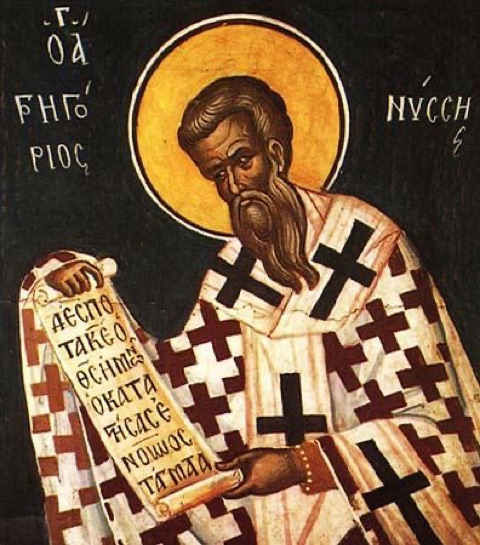
About the author
Gregory of Nyssa
Gregory of Nyssa (around 335 to 395 AD) was a bishop and theologian from Cappadocia in central Asia Minor, the younger brother of Basil the Great and of Macrina the Younger. With Basil and Gregory of Nazianzus he is counted among the three Cappadocian Fathers. He worked for a time as a teacher of rhetoric before Basil had him consecrated bishop of Nyssa around 372 AD. Deposed by an Arian synod around 376 AD, he returned to his see in 378 AD after the death of the emperor Valens. He attended the Council of Constantinople in 381 AD, which reaffirmed the Nicene Creed, and wrote Against Eunomius, On the Soul and the Resurrection and The Life of Moses. He is last recorded at a synod in Constantinople in 394 AD.