Full text in modern English · Free PDF/EPUB
The Saints’ Privilege and Profit
Want the file? The PDF/EPUB is free with an account.
Summary
- Author
- John Bunyan (1628 to 1688 AD), English Puritan preacher and author
- Published
- 1692 AD, four years after Bunyan’s death
- Source edition
- George Offor’s The Works of John Bunyan, vol. 1 (1855)
- Type
- Treatise on a single verse
- Length
- 44,000 words · 3 hours
What is The Saints’ Privilege and Profit about?
The Saints’ Privilege and Profit is John Bunyan’s treatise on Hebrews 4:16. It argues that God’s throne of grace is Christ himself, shows how a praying believer can tell he has reached it, insists that sinners come only by Christ’s blood, and urges them to come boldly for mercy and grace in every time of need.
Read the full summary (9 points, key themes)Show less
How the argument unfolds
- 01
Opening: more thrones than one. God reigns in heaven, in his church, over rulers, and at the last judgment. Prayer must be aimed at the throne of grace, because away from it God is “terrible to the sons of men.”
- 02
The throne defined: Christ’s humanity. The old mercy seat was the figure. The throne itself is Christ in his human nature, in which “God sits and rests forever in love toward those who believe in him.”
- 03
Placement: above the ark. The mercy seat sat over the tables of the law, showing that grace “sits on a throne that is higher than the law.” The law stays in view so the one who prays remembers he is a sinner.
- 04
Six signs of the throne. A rainbow, a ministering priest, a slain Lamb, a river, crowned elders, and lightnings with thunder. On that last sign Bunyan remarks, “We have had great lightnings in this land in recent years, but little thunder.”
- 05
Who may come: wash first. Those invited are the people Hebrews describes, washed at the laver before they enter. That laver is the Word, so “a man must first come to Christ as he is set forth in the Word” before he comes to Christ in heaven.
- 06
How to come: through the veil. The way in is by blood, through Christ’s flesh, “for there is no back door here.” Weak faith still comes, and strong faith in the dark “will play the man.”
- 07
First motive: such a high priest. Christ was called with an oath, robed in his own obedience, consecrated in Gethsemane, and offered on the altar of his divine nature. His nature, brotherhood, temptations and members fit him to feel for us.
- 08
Second motive: help in time of need. Ten needy times, then mercy for pardon and grace for strength, which must be fetched fresh: “The day of grace is the day of expense.”
- 09
Conclusion: lessons from the whole. Sin is “the worst of devils,” the soul is worth the blood paid for it, and the right response is shame, thanks, study of Christ’s priesthood, and coming boldly.
Key themes
- Boldness rests on blood, not feelings. Bunyan is plain that “there is no boldness, no godly boldness, except by blood.” Guilt drives the soul away; the blood applied by faith is what gives it nerve.
- Weak faith still comes. Full assurance is not the entry fee. “There is a sincere coming to the throne of grace without this boldness,” and faith under attack may only “cry, groan, sweat, fear, fight, and gasp for life.”
- Grace that has to be renewed. Yesterday’s grace will not carry today’s load. Christians are travelers, and “as the traveler at a fresh inn is made to spend fresh money,” each new temptation calls for a fresh supply.
Reader questions (7)Hide the questions
Questions about The Saints’ Privilege and Profit
Can I read The Saints’ Privilege and Profit online for free?
Yes. The complete text of this modern English edition is on this page, with no sign-up or paywall.
Is there a free PDF of The Saints’ Privilege and Profit?
Yes. The PDF and EPUB of this edition are free with an Updated Works account. Sign in with Google or an email link; no card is needed.
What is the throne of grace in Hebrews 4:16?
Bunyan answers that it is Christ himself in his human nature, the place where God rests in love toward believers. The mercy seat on top of the ark was its Old Testament figure, and that is why the law lies underneath it.
What does it mean to come boldly to the throne of grace?
For Bunyan, boldness comes from faith in Christ’s blood: “It is the blood, its power applied by faith to the conscience, that drives away guilt, and so fear, and consequently produces boldness.” He adds that a sincere, trembling coming is still a true coming.
Was the cross the altar on which Christ was offered?
No. Bunyan argues the altar was Christ’s divine nature, since the altar must be greater than the gift. The cross was like the wood on the altar: “Let the tree, then, be the tree, the sacrifice the sacrifice, and the altar the altar.”
How does Christ intercede for us in heaven?
Bunyan will not settle whether it is by spoken prayer or by the worth of his merits. He compares it to a courtier who obtains a pardon for a man in the country: the man knows he is pardoned without knowing how it was done.
When was The Saints’ Privilege and Profit published?
It was first printed in 1692, four years after Bunyan died in 1688. This edition follows George Offor’s The Works of John Bunyan (1855).
The Saints’ Privilege and Profit · Full text
The Text Opened: Five Things to Consider
Let us therefore come boldly unto the throne of grace, that we may obtain mercy, and find grace to help in time of need (Heb 4:16).
The Holy Spirit wrote this epistle and left it to the church to show us particularly, and more distinctly, the high priesthood of Jesus Christ and the excellent benefits his people have by it. Both the excellence of his person and the surpassing glory of his office, far beyond any priest or priesthood of the law, are set forth before us at length, from Heb 1:2 onward.
So, that we may read this epistle with profit, the Spirit of God calls on us, first of all, to consider most seriously what kind of person this excellent one is. “Wherefore, holy brethren,” he says, you who are “partakers of the heavenly calling,” and so you who are related to this holy one and concerned in what he has undertaken, “consider the Apostle and High Priest of our profession, Christ Jesus” (Heb 3:1). Consider how great this man is, and how fit he is for so holy and glorious a calling. He is so high that he is far above all heavens. He is so great that he is the Son of the Father, and God equal with the Father. Consider him also in his humanity: he is really flesh of our flesh. He is so without sin, he is so with fellow feeling, he is so in all the compassions of a man. He is touched with our condition; he has compassion on us, pities us, loves us and helps us; he feels our infirmities and makes our case his own.
Yes, and from the thought of Christ’s greatness and love, the Spirit again moves us to rely confidently on what Christ has undertaken. He also presses us to come boldly to that throne of grace where Christ continually remains, carrying out his office. “Seeing then,” he says, “that we have a great high priest that is passed into the heavens, Jesus the Son of God, let us hold fast our profession. For we have not an high priest which cannot be touched with the feeling of our infirmities: but was in all points tempted like as we are, yet without sin. Let us therefore come boldly unto the throne of grace” (Heb 4:14-16).
In these words we have, first, an exhortation, and second, an implication that we will reap a worthy benefit if we truly put the exhortation into practice. The exhortation is that we should come boldly to the throne of grace: “Let us therefore come boldly unto the throne of grace.” In all of this five things are hinted at.
1. God has more thrones than one; otherwise there would be no need to name the throne of grace in particular. “Let us come unto the throne of grace.”
2. The godly can tell one throne from another. For this throne is not described here by where it is, or by any signs by which it may be known. It is only set before us by its name, and so left for the saints to make their way to it: “Let us come unto the throne of grace.”
3. The third thing is the persons this exhortation intends: “Let us therefore come.” Us? Which us? Or who are the people this exhortation calls to come? “Let us.”
4. The manner in which these persons come to this throne of grace; and that is through the veil, boldly, confidently: “Let us come boldly unto the throne of grace.”
5. The motive for this exhortation, and that is twofold. First, because we have so great a high priest, one who cannot help but be touched with the feeling of our infirmities: “Let us therefore come boldly unto the throne of grace.” And second, because we are sure to succeed: “That we may obtain mercy, and find grace …”
As God helps me, I will handle these things in order.
God Has More Thrones Than One
To take the first point: God has more thrones than one. He has a throne in heaven and a throne on earth: “The Lord’s throne is in heaven” (Ps 11:4), and “they shall call Jerusalem the throne of the Lord” (Jer 3:17). He rules over the angels; he rules in his church. “He ruleth in Jacob, unto the ends of the earth” (Ps 59:13). Yes, he has a throne and seat of majesty among the princes and great ones of the world. He rules, or “judgeth among the gods” (Ps 82:1). There is a throne for him as a Father, and a throne for Christ as the giver of reward to all faithful and overcoming Christians: “To him that overcometh, will I grant to sit with me in my throne, even as I also overcame, and am set down with my Father in his throne” (Rev 3:21).
There is also to be a throne of judgment. On it God, by Christ, will sit at the great and notable day to give the whole world their last or final sentence, a sentence from which they will never be released, no, not by any means. This throne is mentioned in the New Testament, and Christ calls it “the throne of his glory” (Matt 25:31) and “a great white throne” (Rev 20:11). And when he sits on this throne, his presence will be so terrible that nothing will be able to endure it that has not been reconciled to God by him beforehand.
So it is not out of place for me to give you this hint, because it may help to inform unwary Christians. When they go to God, they should not address themselves to him aimlessly, or at random. When they come to him for benefits, they should direct their prayer to the throne of grace, or to God as he is considered on a throne of grace. For he is not to be found a merciful and gracious God except as he is on the throne of grace. This is his holy place; outside it he is terrible to the sons of men and cannot be gracious to them. At the last day, when he sits on his throne of judgment, he will not be moved by the tears or misery of the world to do anything for them that would tend in the least to ease the least part of their sorrow. Just so now: let men take him where they will, or consider him as they please, he gives no grace, no special grace, except as he is considered on the throne of grace. Therefore those who would pray and succeed must come to a throne of grace, to a God who sits on a throne of grace: “Let us therefore come boldly to the throne of grace, that we may obtain…” (Heb 4:16).
The unbeliever, the erroneous, and the superstitious do not consider this. So they speak to God as their fancies lead them, not as the word directs them, and therefore they obtain nothing. Ask the carnal man to whom he prays, and he will say, “To God.” Ask him where this God is, and he will say, “In heaven.” But ask him how, or in what character, God is to be considered there, and he will give you a few generalities. He cannot direct his soul to God as he is on a throne of grace, as the apostle here bids us, saying, “Let us come boldly unto the throne of grace.” So they come and go, or rather go and come, to no advantage at all: they get nothing for their pains but their labor, or their words. For the right way of considering God when I go to him, and knowing how or where I may find him gracious and merciful, is all in all. It is when we come to him as sitting on a throne of grace that mercy and grace are obtained.
What the Throne of Grace Is and Where It Stands
We come, therefore, to the second thing, namely, that the godly can distinguish one throne from another. My reason for drawing this conclusion is, as I said, that the throne here is not set forth to us by where it stands or by what signs it may be known. It is only put before us by its name, a throne of grace, and so left for the saints to make their approach to it: “Let us therefore come boldly unto the throne of grace” (Heb 4:16). We will therefore divide this conclusion into two parts and consider it under this double proposition. First, that there is a throne of grace. Second, that it is the privilege of the godly to distinguish this throne of grace from all other thrones whatever.
First, there is a throne of grace. This must be true, because the text says so. It is also that of which the mercy seat, so often mentioned in the Old Testament, was a type, shadow, or figure. Nor do the terms seat and throne have any strength to make this supposition void. For it is common for the antitype to be set forth to us in more glorious words than the figure or shadow of that thing. And the reason is that the heavenly things themselves are far more excellent than the shadows by which they are represented. What is a sheep, a bull, an ox, or a calf compared to Christ, or their blood compared to the blood of Christ? What is the Jerusalem that stood in Canaan compared to that new Jerusalem that shall come down from heaven? Or what is the tabernacle made with corruptible things compared to the body of Christ, or to heaven itself? No wonder, then, if the shadows are set forth to us in words of a lower rank, while the fullest and fittest words are reserved to set out the highest things.
Before I go on to give you a more particular description of this throne of grace, and also of how it may be known, I will touch a little on the terms themselves and show briefly what they must imply.
The Meaning of the Terms
First, by this word grace we are to understand God’s free, sovereign good pleasure, by which he acts in Christ toward his people. Grace and mercy, therefore, are terms with distinct meanings. Mercy signifies pity, an overflowing of infinite tender compassion toward those who are in a miserable and helpless condition. But grace signifies that God still acts in this as a free agent. He is not moved by the misery of the creature as though that were the cause that procured his favor; he acts out of his own princely mind.
Were there no objects of pity among those in the old world who perished by the flood, or among those in Sodom who were burned with fire from heaven? Doubtless, as far as we can judge, there were many. But Noah, and he only, found grace in God’s eyes. This was not because he was better in himself than the rest, but because God acted as a gracious prince toward him and let him share in mercy by his own sovereign will and pleasure. But at first this was not made so fully known as it was afterward. That is why the propitiatory was not called a throne of grace, as it is here, but a mercy-seat. Yet there was great glory in these terms too. For by mercy-seat it was shown not only that God had compassion for men, but also that to be good was, as it were, his continual resting place. There he would retire at last, and there he would sit down and abide, whatever terrible or troublesome work for his church was on the wheel at present. For a seat is a place of rest; indeed, it is prepared for that very purpose. And in that mercy is here called that seat, it shows, as I said, that whatever work is on the wheel in the world, however dreadful and amazing it may be, yet for God’s church it shall end in mercy, for that is God’s resting place.
Therefore, after God had so severely threatened and punished his church under the name of a whorish woman, as you may read in the prophet Ezekiel, he says, “So will I make my fury toward thee to rest, and my jealousy shall depart from thee; and I will be quiet, and will be no more angry” (Ezek 16:42). And again, speaking of the same people and of the same punishments, he says, “Nevertheless, I will remember my covenant with thee in the days of thy youth, and I will establish unto thee an everlasting covenant.” And again, “I will establish my covenant with thee, and thou shalt know that I am the Lord; that thou mayest remember and be confounded, and never open thy mouth any more because of thy shame, when I am pacified toward thee for all that thou hast done, saith the Lord God” (Ezek 16:60-63). These places, with many more, show that mercy is God’s place of rest, that he will retire there at last, and that from there he will bless his church, his people.
But these terms, a throne, the throne of grace, exceed in glory still more. This is not only because the word grace shows that God, in all he does toward us in saving and forgiving, acts freely as the highest Lord, of his own goodwill and pleasure. It is also because he now says that his grace has become a king: a throne of grace. A throne is not only a seat for rest but a place of dignity and authority. Everyone knows this. Therefore this word a throne, or the throne of grace, intimates that God rules and governs by his grace. And this he can justly do: “Grace reigns through righteousness, unto eternal life, through Jesus Christ our Lord” (Rom 5:21). So then, in that a throne of grace is mentioned here, it shows that sin and Satan and death and hell must certainly be subdued. For these last are nothing but weakness and destruction, but grace is life, and the absolute sovereign over all of them, to rule them utterly down. A throne of grace!
This, then, God plainly declares: that he is resolved to rule this way, and that he points at sin as his deadly foe. And if so, then “where sin aboundeth, grace must much more abound” (Rom 5:20). For it is the wisdom and good sense of all who rule to fortify themselves as much as they can against those who rebel against them. Therefore he says again, “Sin shall not have dominion over you; for ye are not under the law, but under grace” (Rom 6:14). Sin seeks the dominion, and grace seeks the dominion; but sin shall not rule, because it has no throne in the church among the godly. Grace is king. Grace has the throne, and the people of God are not under the dominion of sin but under the grace of God. They are implicitly told here to acknowledge this, in that they are told to come boldly to it for help, “that we may obtain mercy, and find grace to help; to help in time of need.”
For as help and relief come to the subject from the hand and power of the king when an enemy assaults him, so from the throne of grace, or from grace as it reigns, come the help and health of God’s people. That is why it is said again, “A glorious high throne from the beginning is the place of our sanctuary” (Jer 17:12). Here, then, the saints take shelter from the roaring of the devil, from the raging of their lusts, and from the fury of the wicked. That too is a very notable place: “He will subdue our iniquities; and thou wilt cast all their sins into the depths of the sea” (Mic 7:19). He speaks here of God as taking his comfort in mercy, and as delighting himself in the salvation of his people, and that beyond all comparison: “Who is a God like unto thee, that pardoneth iniquity, and passeth by the transgression of the remnant of his heritage? he retaineth not his anger for ever, because he delighteth in mercy” (Mic 7:18). So mercy and grace have got into the throne. They reign, and they will assuredly conquer all; yes, they will conquer, and do it with a shout. “Mercy rejoiceth against judgment” (Jas 2:13). Yes, it glories when it gets the victory over sin and subdues the sinner to God and to his own salvation, as is shown yet more fully in the parable of the prodigal son (Luke 15).
But let this be enough, briefly, to show you something of the nature of these terms and what they must necessarily imply.
What the Term Throne of Grace Implies
Second, we will next show what is to be inferred from this. And:
1. This, to be sure, is inferred: that converted people are not free in every way, or in every sense, from the presence of sin. If they were, they would not need to go to a throne of grace for help. When the text says there is grace in God, it implies that there is sin in the godly. And when it says that grace reigns, as on a throne, it implies that sin would ascend the throne, would reign, and would have dominion over the children of God. This is also plain when he says, “Let not sin therefore reign in your mortal body, that ye should obey it in the lusts thereof” (Rom 6:12). And the only way to prevent it is to apply ourselves, as the text directs us, to the throne of grace for help against it.
2. The text implies that at certain times the most godly man in the world may be hard put to it by the sin that dwells in him. Indeed, he may be so hard put to it that there is no way to save himself from a fall except by imploring heaven and the throne of grace for help. This is called the needy time: the time when the wayfaring man who knocked at David’s door shall knock at ours (2 Sam 12); or when we have got into the sieve into which Satan got Peter (Luke 22:31); or when those fists are about our ears that were about Paul’s, and when that thorn pricks us that Paul said was in his flesh (2 Cor 12:7-8). But why, or how, does it come to pass that the godly are so hard put to it at these times? Is it not because in them, that is, in their flesh, there is no good thing, and consequently every readiness to close in with the devil and his suggestions, to the overthrow of the soul? But now here we are presented with a throne of grace, to which, as David says, we must “continually resort” (Ps 71:3); and that is the way to obtain relief and to find help in time of need.
3. As Christians are sometimes in imminent danger of falling, so sometimes they have fallen. They are down, dreadfully down, and can by no means lift themselves up. And this happens to them because they have been careless about conscientiously doing what this exhortation commands them. They have not been constant suppliants at this throne for preserving grace. For had they been, they would most certainly, as the text suggests, have been kept from such a fall; help would have been granted them in their time of need. But such people are guilty of what is written in the prophet Isaiah: “But thou hast not called upon me, O Jacob; but thou hast been weary of me, O Israel” (Isa 43:22). Therefore you are profaned; therefore you are given over to reproaches (Isa 43:28). Now, as those who are falling are kept from coming down by coming to this throne of grace, so those who have fallen must rise by the scepter of love held out to them from there. People may fall by sin, but they cannot raise themselves up without the help of grace. It is therefore worth our while to seek a more thorough knowledge of this throne of grace, from which, as we may well perceive, our help comes, and by what comes from there we are made to stand. I therefore come now to a more particular description of this throne of grace, and to show how the godly know it, or may know it, from the other thrones of God.
What This Throne of Grace Is
First, then, this throne of grace is the humanity, or the heart and soul, of Jesus Christ, in which God sits and rests forever in love toward those who believe in him. For Christ, by the body of his flesh when he was here, reconciled them to the Father. “The key of the house of David,” says God, “will I lay upon his shoulder; so he shall open and none shall shut; and he shall shut and none shall open. And I will fasten him as a nail in a sure place; and he shall be for a glorious throne to his Father’s house” (Isa 22:22-23). A glorious throne to his Father’s house: that is, a throne for his Father’s house to come to their Father by, for they shall always find him on it, or, as another scripture puts it, in Christ reconciling them to himself, not imputing their trespasses and sins to them (2 Cor 5:19). Nor is it possible, if we set aside the human nature of Christ, for us to find any such thing as a throne of grace, either on earth or in heaven; for then nothing can be found to be the rest of God. “This is my beloved Son, in whom I am well pleased” (Matt 3:17) is God’s own language, but there is no other of whom he has said so. Therefore he rests in him toward us, and in him only.
Besides, grace cannot be extended toward us except in a way of justice, for the law and our sin block any other way (Gen 3:24). But set the human nature of Christ aside, and where will you find that which shall become such a sacrifice to justice for the sin of men that, for its sake, God shall both forgive and cause grace to reign toward us in such a way forever? Grace reigns through righteousness, or justice, by Jesus Christ, and no other way (Rom 5:21). Christ Jesus, therefore, is this throne of grace: he, or that, by which grace reigns toward the children of God.
That scripture also gives us a little light here: “And I beheld, and lo! in the midst of the throne … stood a Lamb, as it had been slain” (Rev 5:6). This shows the cause why grace is so freely let out to us: because there stands there, in the midst of the throne and in the midst of the elders, a lamb as it had been slain, or, in other words, as he was made a sacrifice for our sin. For as a slain lamb he now lives in the midst of the throne, and he is the meritorious cause of all the grace we enjoy. And though by this text it seems that the throne is one thing and the Lamb another, yet the Lamb of God is the throne, though not as a lamb or sacrifice, but as one who by his sacrifice has made way for grace to run like a river into the world. The Son of God, Jesus Christ, is all. He is the throne, the altar, the priest, the sacrifice, and all. But he is the throne, the priest, the altar, and the sacrifice in different respects. He is not the throne as he is the priest; he is not the priest as he is the sacrifice; he is not the sacrifice as he is the altar; yet he is truly all of these. Indeed, there is no throne of grace, no high priest, no propitiatory sacrifice, and so on, but he. Of all this we may speak further before we conclude this treatise.
I conclude, then, that Christ Jesus in his human nature is this throne of grace. In his human nature, I say, he has completely accomplished everything necessary to make way for grace to be extended to men. And that human nature is not only God’s place of rest, but that by which and from which, as from a glorious throne, his grace shall reign over the devil, death, sin, hell, and the grave forever. This human nature of Christ is also called the tabernacle of God, for the fullness of the Godhead dwells in it bodily. It is God’s habitation, his dwelling place, his chair and throne of state. He does everything in it and by it, and without it he does nothing at all. But to pass on from this, let us come to the next thing.
Where the Throne of Grace Is Set Up
Second, we will now discuss the placing of this throne of grace, that is, discover where it is set up. For this we must go back to the type, which, as was said before, is called the mercy-seat. We find it not in the outer court, nor yet within the first veil (Heb 9:3-5), which signifies not in the world, nor in the church on earth, but in the Holy of Holies, behind the second veil, which is the flesh of Christ (Heb 10:20). There, then, is this throne of God, this throne of grace, and nowhere here below. And since it is called the throne of God, of grace, and is there, it signifies that it is the highest and most honorable. That is why Christ is said to be far above all heavens and to have a name above every name. Therefore anyone who wants to come to this throne of grace must know what manner of coming it is by which he must approach it. It is not in person, but by the running out of the heart; not by himself, but by his Priest, his High Priest, for so it was in the type (Heb 9:7). Into the second part, where the mercy-seat was, the high priest went alone (that is, in person), and the people went by him, as he made intercession for them. This, then, is what those who want to approach this throne of grace must do. They must go to God as he is enthroned in Christ; they must go by Christ, as he is the High Priest of his church; and they must go to God in the Holiest, by Christ.
But again, as this throne of grace is in the Holiest, not in the world, not in the church on earth, so in this Holiest it is set up above the ark of the testimony. For so was the mercy-seat: it was set up in the most holy place, above the ark of the testimony (Deut 10:1-5; 1 Kgs 8:9; 2 Chr 5:10). The ark of the testimony: what was that? Why, it was the place of the law, the ark in which the law was kept. The testimony was the law; the ark was prepared to put it in. This ark, with the law put in it, was set up in the Holiest, and the mercy-seat was set above it, for that is how Moses was commanded to place them. God told him to make an ark, “and thou shalt make a mercy-seat.” The ark was to be called the ark of the testimony, and in it “thou shalt put the testimony that I shall give thee” (that is, the law), “and thou shalt put the mercy-seat above upon the ark, and there I will meet with thee, from above the mercy-seat between the two cherubims, which are upon” (that is, above) “the ark of the testimony” (Exod 25:16-22), “shadowing the mercy-seat” (Heb 9:5).
Thus, then, things were ordained of old in the type, and from them we gather what we must now keep in mind in our worship of God. An ark was made, and the two tables of stone on which the law was written were put in it (Deut 10:2-5). This ark, with these two tables, was put into the Holiest, and this mercy-seat was set above it. In my judgment the Holy Spirit was showing by this that grace sits on a throne that is higher than the law, above the law, and that grace is therefore to rule ahead of the law, notwithstanding every sentence of the law. For grace sits, I say, on a throne, but the law sits on none. It is a throne, I say, which the law, instead of accusing, justifies and approves. For although the law condemns all men, yet it makes an exception of Christ, who in his manhood is this throne of grace. Him, I say, it does not condemn, but approves, and it is well pleased with all he does. Indeed, as we see here, it grants that he, as a throne of grace, be exalted above itself. It cannot do otherwise, because it is appointed to do so by wisdom and holiness itself, which is also the Lord of the law. Here, then, is the throne of God, the throne of grace, namely above the ark of the testimony. On this God and his grace sit and reign, and give sinners leave to approach his presence for grace and mercy. He gives leave, I say, for those sinners to do so who have first washed in the brass laver that is prepared for washing in first, of which we may speak more later.
Now look at the wisdom of God in ordaining things this way: in placing, first of all, the law and Christ, the ark of the testimony and the mercy-seat or throne of grace, so near together. For doubtless it was wisdom that ordained them so, and it might have ordained it so for these reasons:
1. That we who approach the throne of grace might, when we come there, still be made to remember that we are sinners, “for by the law is the knowledge of sin” (Rom 3:20). And look: just before us is this ark, in which are the two tables that condemn all flesh. Indeed, we must look that way if we look at all, for just above it is the mercy-seat or throne of grace. So here, then, is a memento for those who come to God and to his throne of grace for mercy, namely the law, by which they are freshly reminded of themselves, their sins, and how much they need fresh supplies of grace. I read that the laver of brass and its foot were made of the looking-glasses of the women who assembled at the door of the tabernacle (Exod 38:8). To my mind this was to signify that men might see their smudges when they came to wash. So here you see the law is placed right alongside the mercy-seat, only the mercy-seat stood above, so that those who come to the throne of grace for mercy might be reminded still more that they are sinners.
2. This also serves to put an edge on prayer, and to make us more fervent in spirit when we come to the throne of grace. If a king ordered that the axe and the noose should stand before all who petition him for mercy, it would put a still sharper edge on all their petitions for his grace, and make them implore His Majesty for favor all the more humbly and fervently. But look: the mercy-seat stands above; it is set up above the ark and the testimony that is in it. Here, therefore, we have encouragement to look for good. For notice: though the law is here, and that in the holiest of all, where we go, yet above it is the mercy-seat and throne of grace, triumphant. To this we should look, and to this we should direct our prayers. Let us therefore come boldly to the throne of grace, even though the ark and the testimony are close by. For the law cannot hurt us when grace is so near. Besides, God is now not in the law, but on the throne of grace that is above it, to give out pardons, and grace, and help in time of need.
This, then, may serve to tell some people where they are when they are in their private rooms at prayer. Are you most dejected when you are at prayer? Listen to me: you are not far from the throne of grace. For your dejection comes from your looking into the ark, and God has ordained that whoever looks into it shall die (1 Sam 6:19). Now if you are indeed so near as to see your sins, by reading yourself in the tables in the ark, just lift your eyes a little higher, and look! There is the mercy-seat and throne of grace that you want to come to, and by which you must be saved. When David came to pray to God, he said he would direct his prayer to God and would look up (Ps 5:3). It is as if he said, “When I pray, I will say to my prayers, ‘O my prayers, mount up! Do not stop at the ark of the testimony, for there is the law and condemnation. Soar aloft to the throne that stands above, for there is God, and there grace is displayed, and there you may obtain what is necessary to help in time of need.’”
Some, indeed, do not know what these things mean. When they are on their knees at their devotions, they never read their sin, nor their condemnation for it. So they are neither dejected at the sight of what they are, nor driven by a sense of things to look higher for help in their need; for need, indeed, they see none. Of such I will say that they are not concerned in our text, nor can they come here until they have been prepared to do so, as may appear before we come to an end.
The Signs by Which the Throne of Grace Is Known
And so I have shown you what this throne of grace is, and where it stands. And now, second, I will go on to show you how you may find it, and know when you have come to it, by several other things.
1. About the throne of grace, then, there is “a rainbow … in sight like unto an emerald” (Rev 4:1-3). This was the first sight that John saw after he had received his epistles for the seven churches. Before he received them, he had the great vision of his Lord, and heard him say to him that he was the one who was dead and is alive, or, “that liveth and was dead, and behold I am alive for evermore, amen; and have the keys of hell and of death” (Rev 1:18). And it was a good preparation for a work of the kind he was now called to: that he might bear witness all the more warmly, affectionately, and confidently to the truth which his Lord now had for him to testify to them.
So here, before he enters upon his prophecy of things to come, he hears a first voice and sees a first sight. The first voice he heard was, “Come up hither,” and the first sight he saw was a throne with a rainbow round about it. “And immediately,” he says, “I was in the Spirit; and behold a throne was set in heaven, and one sat on the throne. And he that sat was to look upon like a jasper, and a sardine stone, and there was a rainbow round about the throne” (Rev 4:1-3).
The first time we find a rainbow mentioned in God’s Word, we also read of its spiritual meaning: it was a token of the firmness of the covenant that God made with Noah, concerning his not drowning the earth anymore with the waters of a flood. “I do set,” he says, “my bow in the cloud, and it shall be for a token of a covenant between me and the earth. And it shall come to pass, when I bring a cloud over the earth, that the bow shall be seen in the cloud. And I will remember my covenant which is between me and you, and every living creature of all flesh: and the waters shall no more become a flood to destroy all flesh” (Gen 9:13-15). The first use of the rainbow, therefore, was to be a token of a covenant of mercy and kindness to the world. But that was not its utmost end. For that covenant was only a shadow of the covenant of grace which God has made with his elect in Christ, and that bow only a shadow of the token of the permanence and lastingness of that covenant.
So the next time we read of the rainbow is in the first chapter of Ezekiel, and there we read of it only with reference to the excellence of its color. For there it is said to be exactly like the color of the glory of the man whom the prophet saw sitting upon a throne (Ezek 1:28). The glory, that is, the priestly robes; for he is a priest upon the throne (Zech 6:13), and his robes are for his glory and beauty (Exod 28:2). His robes: what are they but his blessed righteousness, with the skirts of which he covers the sinful nakedness of his people (Ezek 16:8), and with the perfection of which he decks and adorns them, “as a bride adorneth herself with her jewels” (Isa 61:10)?
Now here again, in the third place, we find a rainbow, a rainbow round about the throne, round about the throne of grace. A rainbow: that is, a token of the covenant, a token of the covenant of grace in its lastingness. And that token is the appearance of the man Christ. The appearance: that is, his robes, his righteousness, “from the appearance of his loins even upward,” and “from the appearance of his loins even downward” (Ezek 1:27), even down to the foot, as you have it in the book of Revelation (Rev 1:13). “As the appearance of the bow that is in the cloud in the day of rain, so was the appearance of the brightness round about. This was the appearance of the likeness of the glory of the Lord” (Ezek 1:28).
The sum, then, is this. By the rainbow round about the throne of grace, upon which God sits to hear and answer the petitions of his people, we are to understand the righteousness of Jesus Christ’s obedience, which he worked out and accomplished for his people in the days of his flesh. By it God’s justice is satisfied and their persons justified, and so they are made acceptable to him. This righteousness, which shines more gloriously in God’s eyes than the rainbow in the cloud does in ours, is, says John, round about the throne. But for what purpose? Why, to be looked upon. But who must look upon it? Why, God and his people: the people when they come to pray, and God when he is about to hear and give. “And the bow shall be in the cloud,” says God, “and I will look upon it, that I may remember the everlasting covenant between God and every living creature of all flesh that is upon the earth” (Gen 9:16). And, I say, as the bow is for God to look on, so it is also for our sight to behold. A rainbow round about the throne, in sight. In whose sight? In John’s and his companions’, like unto an emerald.
We read of Solomon’s great throne of ivory that, though there was not its like in any kingdom, yet he was not willing that the bow of it should stand before him. It was round behind (1 Kgs 10:18-20). Oh! but God’s throne has the bow in front, even round about, to view, to look upon, in sight. Solomon’s was only a shadow, and therefore fit to be put behind; but this is the sum and substance, and therefore fit to be in front, in view, in sight, for God and his people to behold.
So you see that a rainbow is round about the throne of grace, and what this rainbow is. When you go to prayer, then, look for the throne; and so that you may not be deceived with a fancy, look for the rainbow too. The rainbow, that is, as I have said, the personal performances of Christ your Savior for you. Look, I say, for that. It is his righteousness; the token of the everlastingness of the covenant of grace; the object of God’s delight; and it must be what justifies your person and your performances before God. God looks at it; you look at it, and at it only (Ps 71:16). For in heaven or earth, if that is cast away, there is nothing to be found that can please God or justify you. If it is said that faith pleases God, I answer: faith is a relative grace. Take away, then, that to which it relates, which, as to justification, is this spangled robe, this rainbow, this righteousness of Christ, and faith dies, and becomes, as to what we are now treating of, extinct and quenched like tow.
And the rainbow is a very fit emblem of the righteousness of Christ, in these particulars:
(1) The rainbow is an effect of the sun that shines in the sky; and the righteousness that encompasses this throne of grace is the work of the Son of God.
(2) The rainbow was a token that the wrath of God in sending the flood was appeased; this righteousness of Christ is that for the sake of which God forgives us all trespasses.
(3) The rainbow was set in the cloud so that sinful man might look at it and grow confident in common mercy; this righteousness is shown to us in the Word, so that by it we may believe and obtain special mercy.
(4) The bow is seen only now and then in the cloud; Christ’s righteousness is revealed only here and there in the Word.
(5) The bow is commonly seen during or after rain; Christ’s righteousness is laid hold of by faith during, or soon after, a sense of wrath.
(6) The bow is seen sometimes more, sometimes less; and so is this righteousness, according to the degree or clearness of the sight of faith.
(7) The bow is of such a nature as to make whatever you look at through it appear the same color as itself, whether that thing is a bush, or a man, or a beast. And the righteousness of Christ is what makes sinners, when God looks upon them through it, look beautiful and acceptable in his sight. For we are made comely through his comeliness (Ezek 16:14), and made accepted in the Beloved (Eph 1:6).
One word more about the rainbow, and then on to some other things. As here you read that the rainbow is round about the throne, so if you read on, even in the same place, you will find its glorious effects to be far more than all that I have said.
2. But as the throne of grace is known by the rainbow that is round about it, so you will also know it by this: the high priest is continually ministering before it. The high priest, or Christ as priest, is there before God in his high priest’s robes, making continual intercession for your acceptance there. Now, as I said before, Christ is priest and throne and all: throne in one sense, priest in another; even as he was priest, and sacrifice, and altar too, when he became our reconciler to God.
As a priest here, he is presented under the figure of an angel: an angel that came and stood at the altar to offer incense for the church all the time that the seven angels were to sound out with trumpets the alarm of God’s wrath against the antichristian world, lest that wrath should swallow up the church as well. “And,” says John, “another angel came and stood at the altar, having a golden censer; and there was given unto him much incense, that he should offer it with the prayers of all saints upon the golden altar which was before the throne. And the smoke of the incense which came with the prayers of the saints, ascended up before God out of the angel’s hand” (Rev 8:1-4).
Here, then, you have the high priest before the throne, that is, the throne or mercy seat. For it was there that God appointed the altar of incense, the altar to burn incense on, to be placed (Exod 30:1-7). This incense altar in the type was to be overlaid with gold; but here the Holy Spirit implies that it is all of gold. This throne, then, is the mercy seat, or throne of grace, to which we are bidden to come. And, as you see, here is the angel, the high priest, with his golden censer and his incense, ready to wait upon us. For so the text implies: he is there to offer his incense with the prayers of all saints who are waiting outside at his time of offering incense within (Luke 1:10). So, then, at the throne of grace, or before it, stands the high priest of our propitiation, Christ Jesus, with his golden censer in his hand, full of incense, to perfume with it the prayers of saints who come there for grace and mercy to help in time of need. And he stands there, as you see, under the name of an angel, for he is the angel of God’s presence and the messenger of his covenant.
But now it is worth our considering how, or in what method, the high priest under the law was to approach the incense altar. When he came to make intercession for the saints before the throne, he was to go in there to do this work in his robes and ornaments, and not without them, lest he die. The chief of these ornaments were “a breast-plate, and an ephod, and a robe, and a broidered coat, a mitre, and a girdle” (Exod 28:4). In Rev 1 these are briefly called his garments. In general they show us that he is clothed with righteousness, and girded with truth and faithfulness, for that is the belt about his waist to strengthen him (Isa 11:5). They also show us that he bears upon his heart the names of the children of Israel who are Israelites indeed. For as the names of the twelve tribes of Israel were fixed on Aaron’s breastplate, and he was to bear their weight by the strength of his shoulders, so are we on the heart of Christ (Isa 22:21).
Thus our high priest is within the holiest to offer incense upon the golden altar of incense, that is, before the throne. So when you go there, even to “the throne of grace,” look for him. And do not be content, even if you should find God there, if you do not find him there. I am supposing an impossibility here, for edification’s sake; for without him nothing can be done. I mean, without him as a priest. He is the throne, and without him as a throne, God has no resting place as far as we are concerned. He is a priest, and without him as such we can make no acceptable approach to God; for it is by him as priest that our spiritual sacrifices are accepted (1 Pet 2:5). “By him, therefore, let us offer the sacrifice of praise to God continually, … giving thanks,” and confessing to his name and “in his name” (Heb 13:15).
And for our further edification in this, let us consider that as God has chosen him and made him his throne of grace, so he has sworn that he shall be accepted there as a priest forever. As for his natural qualifications, we may say something about them afterward. In the meantime, know that there is no coming to God without him, on pain of death.
Nor can I get it out of my mind that his wearing the rainbow upon his head (Rev 10:1) has something to do with him as priest, since his priestly garments, which are for glory and beauty, are compared, as was said before, to its color (Ezek 1). For why does he wear the rainbow upon his head, but to show that the sign of the everlastingness of the covenant of grace is to be found only in him, and that he wears it as a miter, or a frontlet of gold, and can always plead it with acceptance to God, both for the subduing of the world and for the good of his people?
3. But further, the throne of grace is to be known by the sacrifice that is presented there. The high priest was not to go into the holiest, nor come near the mercy seat (which, as I have shown you, was a type of our throne of grace), “without blood.” “But into the second went the high priest alone once every year, not without blood, which he offered for himself, and for the errors of the people” (Heb 9:7). Indeed, the priest was to take some of the blood of his sacrifice and sprinkle it seven times before the Lord, that is, before the mercy seat, or throne of grace; and he was to put some of the blood upon the horns of the altar of incense before the Lord (Lev 4:5-7; Lev 16:13-15). So, then, the throne of grace is known by the blood that is sprinkled on it, and by the atonement that is made there by that blood.
I told you before that our high priest is there before the throne of grace; and now I tell you that his sacrifice is there too: his sacrifice, which he presents there as amends for the sins of all such as have a right to come with boldness to the throne of grace. Hence, as I mentioned before, there is said to be in the midst of the throne (the same throne we have spoken of before) “a lamb as it had been slain” (Rev 5:6). These words are to the point. They signify that in the midst of the throne is our sacrifice, with the very marks of his death upon him, showing God who sits upon the throne the holes of the thorns, of the nails, of the spear, and how he was disfigured with blows and blood when at his command he gave himself a ransom for his people. For it cannot be imagined that either the exaltation or the glorification of the body of Jesus Christ should make him forget the day on which he died the death for our sins; especially since what puts worth into his whole intercession is the death he died, and the blood he shed upon the cross, for our trespasses.
Besides, there is no sight that takes the heart of God more than to see the travail of his Son’s soul and the bruising of his Son’s body for our transgressions. Hence it is said that he “is in the midst of the throne” as he died, or as he had been slain. It is said again, “The Lamb which is in the midst of the throne shall feed them” (Rev 7:17). The Lamb, that is, the Son of God as a sacrifice, shall always be in the midst of the throne to feed and comfort his people. He is the throne, he is the priest, he is the sacrifice.
But then how is he in the midst of the throne as a Lamb? Why, in my opinion the meaning is that Christ, as a dying and bleeding sacrifice, shall be chief in reconciling us to God; or that his being offered for our sins shall be of great power, when pleaded by him as priest, for obtaining grace, mercy, and glory for us. By his blood he enters into the holy place (Heb 9:12); by his blood he has made an atonement for us before the mercy seat. It is his blood that speaks better for us than the blood of Abel did for Cain (Heb 12:24). Also, it is by his blood that we have bold admittance into the holiest (Heb 10:19). So it is no wonder if you find him here a Lamb as it had been slain, and that in the midst of the throne of grace.
Therefore, while you are thinking of him as he is the throne of grace, do not forget him as he is priest and sacrifice. For as a priest he makes atonement; but there is no atonement made for sin without a sacrifice. Now, as Christ is a sacrifice, he is to be considered as passive, or a sufferer; as he is a priest, he is active, one who has offered up himself; as he is an altar, he is to be considered as God, for it was in and upon the power of his Godhead that he offered up himself. The altar, then, was not the cross, as some have foolishly imagined. But as a throne, a throne of grace, he is to be considered as distinct from these three things, as I have also hinted before.
Would you, then, know this throne of grace, where God sits to hear prayers and give grace? Then cast the eyes of your soul about, and look until you find the Lamb there; a Lamb there “as it had been slain,” for by this you will know that you are right. A slain Lamb, or a Lamb as it had been slain, when it is seen by a suppliant in the midst of the throne he has come to for grace, is a blessed sight! A blessed sight indeed! And it tells him that he is where he should be.
And you must look for this all the more because without blood there is no remission. He who thinks to find grace at God’s hand, and yet does not enter into the holiest by the blood of Jesus, will find himself mistaken, and will find a dead way instead of “a living way” (Heb 10:19-20). For if nothing below blood, or besides blood, can yield remission on God’s part, how could remission be received by us without our exercising faith in it? We are justified by his blood, through faith in his blood (Rom 5:6-9).
Therefore, I say, when you approach the throne of grace, be diligent to look for the Lamb, that is, the Lamb “as it had been slain,” in the midst of the throne of grace. And then you will have not only a sign that you are presenting your supplications to God where and as you should, but there you will also meet with something to break, to soften, to bend, to bow, and to make your heart as you would have it. For if the blood of a goat will, as some say, dissolve an adamant, a stone that is harder than flint, shall not the sight of “a Lamb as it had been slain” much more dissolve and melt down the spirit of the man who is on his knees before the throne of grace for mercy? Especially when he sees that not his prayers, not his tears, not his wants, but the blood of the Lamb has prevailed with a God of grace to give mercy and grace to an undeserving man?
This, then, is the third sign by which you may know when you are at the throne of grace: that throne is sprinkled with blood. Yes, in the midst of that throne there is to be seen to this day a Lamb as it had been slain; and he is in the midst of it to feed those who come to that throne, and to lead them by and to “living fountains of waters” (Rev 7:17).
4. Further, the throne of grace is to be known by the streams of grace that continually proceed from it, and that run out like a river into the world. And John says, “He showed me a pure river of water of life, clear as crystal, proceeding out of the throne of God and of the Lamb” (Rev 22:1). Mark this: here again is a throne, the throne of God, which, as we have shown, is the human nature of his Son; and out of it, as you read, proceeds a river, a river of water of life, clear as crystal. And the joining of the Lamb with God here is to show that it comes, I say, from God by the Lamb: by Christ, who as a lamb or sacrifice for sin is the procuring cause of the running of this river. It proceeds out of the throne of God and of the Lamb.
See, therefore, how carefully the Lamb is brought in here, as the one from or through whom the water of life proceeds to us. God is the fountainhead; Christ the golden pipe that conveys it; the elect the receivers of this water of life. He does not say here “the throne of the Lamb,” but “and of the Lamb,” to show, I say, that he is the one out of or through whom this river of grace should come. But if it should be understood that it proceeds from the throne of the Lamb, it may be to show that Christ also has power as a mediator to send grace like a river into the church. And then it amounts to this: that God, for Christ’s sake, gives this river of grace, and that Christ, for his merit’s sake, has power to do so too. And hence comes that good wish so often mentioned in the epistles, “Grace to you, and peace from God our Father, and the Lord Jesus Christ” (Rom 1:7; 1 Cor 1:3; 2 Cor 1:2; Gal 1:3; Eph 1:2; Phil 1:2; Col 1:2; 1 Thess 1:1; 2 Thess 1:2).
And again, “Grace, mercy, and peace, from God the Father and the Lord Jesus Christ” (1 Tim 1:2; 2 Tim 1:2; Titus 1:4). For Christ has power with the Father to give grace and forgiveness of sins to men (John 5:21-26; Mark 2:10).
But let us come to the terms in this text. Here we have a throne, a throne of grace. And to show that this throne really is such a throne, a river of this grace flows out from it, put here under the term “water of life.” That term is fit to express both the nature of grace and the condition of the one who comes to the throne of grace for it.
It is called by the name of water of life to show what a reviving cordial the grace of God in Christ is, shall be, and will be found to be by all who drink of it through him. It “shall be in him,” that is, in the one who drinks it, “a well of water springing up into everlasting life” (John 4:14). It will therefore beget life and maintain it; yes, it will itself be a spring of life in the very heart of the one who drinks it. Ah! It will also be such a preservative of spiritual health that by its power the soul (I mean the soul that drinks it) will be kept forever from total and final decay. It will be in them a well of living water, springing up into everlasting life.
But this phrase or term also briefly touches on the present state of those who will come here to drink: they are not the healthy, but the sick. It is with the throne of grace as it is with Bath and other places of sovereign, healing waters. Those who are diseased want them most, and they also show their virtues on those who have their health and limbs. So, I say, it is with the throne of grace: its waters are for healing, for soul-healing; that is their virtue (Ezek 47:8-9). Therefore, just as at those waters I mentioned the lame leave their crutches, and the sick obtain such tokens of their recovery as may show that they received health and cure there, so the throne of grace is where true penitents, and those who are sick for mercy, leave their sighs and tears. “And the Lamb that is in the midst of the throne shall feed them, and shall lead them unto living fountains of waters; and God shall,” there, “wipe away all tears from their eyes” (Rev 7:17).
Therefore, as Joseph washed his face and dried his tears away when he saw his brother Benjamin, so all God’s saints will wash their souls from sorrow, and have their tears wiped from their eyes, here at the throne of grace, where God’s Benjamin, the Son of his right hand, is. Therefore, O you who are diseased and afflicted, and who want to live, come by Jesus to God as merciful and gracious. Yes, look for this river when you are on your knees before him, for by it you will find whereabouts the throne of grace is, and so where you may find mercy.
But again, as what proceeds out of this throne of grace is called “water of life,” so it is said to be a river, a river of water of life. This shows, in the first place, that with God there is plenty of grace, just as in a river there is plenty of water. A pond, a pool, a cistern will hold much, but a river will hold more. From this throne come rivers and streams of water of life, to satisfy those who come for life to the throne of God.
Further, as a river shows what abundance of grace proceeds from God through Christ, so it shows the unquenchable thirst and desire of one who truly comes in the right way to the throne of grace for mercy. Nothing but rivers will satisfy such a soul; ponds, pools, and cisterns will do nothing. Such a one is like him of whom it is said, “Behold he drinketh up a river, and hasteth not; he trusteth that he can draw up Jordan into his mouth” (Job 40:23). David testifies to this when he says, “As the hart panteth after the water-brooks, so panteth my soul after thee, O God” (Ps 42:1). So the invitation is in proportion to the thirst: “Drink abundantly” (Song 5:1). And so those who are saved are saved to receive abundance of grace: “they which receive abundance of grace, and of the gift of righteousness, shall reign in life by one, Jesus Christ” (Rom 5:17).
And so it is said again, “When the poor and needy seek water, and there is none, and their tongue faileth for thirst, I the Lord will hear them, I the God of Israel will not forsake them.” But, Lord, how will you quench their boundless thirst? “I will open rivers in high places, and fountains in the midst of the valleys: I will make the wilderness a pool of water, and the dry land springs of water” (Isa 41:17-18). Look: here is a pool of water as big as a wilderness, enough, one would think, to satisfy any thirsty soul. Oh, but that will not do! Therefore he will open rivers, fountains, and springs, and all this to quench the drought of one who thirsts for the grace of God, so that they may have enough. “They shall be abundantly satisfied with the fatness of thy house, and thou shalt make them drink of the river of thy pleasures, for with thee is the fountain of life” (Ps 36:8-9).
This is the abundance the throne of grace yields for the help and health of those who want the water of life to drink and to cure their diseases with: it yields a river of water of life. Moreover, since grace is said here to proceed as a river from the throne of God and of the Lamb, this is to show how common it is. Rivers, you know, are common in the stream, whatever they may be at the head. And to show how common it is, the apostle calls it “the common salvation” (Jude 3). And it is said in Ezekiel and Zechariah to go forth to the desert and into the sea (that is, the world) to heal the beasts and fish of every kind that are there (Ezek 47:8; Zech 14:8).
This, therefore, is a text that shows us what it is to come to a throne where the token of the covenant of grace is, where the high priest ministers, and in the midst of which there is a Lamb “as it had been slain” (Rev 5:6). For from there come not drops, nor showers, but rivers of the grace of God, a river of water of life.
Again, as the grace we read of here is said, as it comes from this throne, to come as a river of water of life, so it is said to be pure and clear as crystal. Pure is set in opposition to muddy and dirty waters (Ezek 34:19), and clear is set in opposition to waters that are black because of their cold and icy nature (Job 6:15-16). That is why the word crystal is joined to this phrase, and everyone knows crystal is a clear and shining stone. Indeed, the life and spirit that is in this water will keep it from looking black and dull, and the throne it comes from will keep it from being muddy, even in its streams. “The blessing of the Lord, it maketh rich, and he addeth no sorrow with it” (Prov 10:22).
Indeed, all the sorrow that is mixed with our Christianity proceeds, as from its procuring cause, from ourselves, not from the throne of grace. For that is the place where our tears are wiped away, as I showed you, and also where we hang up our crutches. Its streams are pure and clear, not muddy or frozen, but warm and delightful, and they “make glad the city of God” (Ps 46:4).
These words also show us that this water of itself can do without a mixture of anything of ours. What comes from this throne of grace is pure grace and nothing else: clear grace, free grace, grace that is not mixed, and need not be mixed, with works of righteousness which we have done. It is sufficient of itself to answer all our wants, to heal all our diseases, and to help us at a time of need. It is grace that chooses, grace that calls, grace that preserves, and grace that brings to glory: even the grace that proceeds like a river of water of life from this throne. And that is why, from first to last, we must cry, “Grace, grace unto it!” (Zech 4:7).
So you see what a throne the Christian is invited to. It is a throne of grace on which sits the God of all grace. It is a throne of grace before which the Lord Jesus ministers continually for us. It is a throne of grace sprinkled with the blood, and in the midst of which is a Lamb as it had been slain. It is a throne with a rainbow round about it, which is the token of the everlasting covenant, and out of which proceeds, as you read here, a river, a pure river of water of life, clear as crystal. Look, then, for these signs of the throne of grace, all of you who want to come to it, and do not rest until by some of them you know that you have really come to it. They are all to be seen, if only you have eyes; and the sight of them is very delightful, and has a natural tendency, once they are seen, to revive and quicken the soul.
5. But as the throne of grace is known and distinguished by the things named above, so it is also known by the effects these things have produced. There are around that throne “four and twenty seats, and upon the seats four and twenty elders sitting, clothed in white raiment, and they have on their heads crowns of gold” (Rev 4:4). No throne but this one has these signs and effects belonging to it. Therefore, as by these signs, so also by their effects, one may know which throne is the throne of grace, and so when he has really come to it. And as we commented a little on what went before, we will touch on this too.
(1) By seats I understand places of rest and of dignity: places of rest, because those who sit on them rest from their labors (Rev 14:13); and places of dignity, because they are around the throne. “And the four and twenty elders which sat before God on their seats, fell upon their faces and worshipped God” (Rev 11:16). And the seats are mentioned before those who sat on them to show that the places were prepared before those who sit there were converted.
(2) The elders I take to be the twelve patriarchs and the twelve apostles, or the first fathers of the churches. For they are the elders of both churches, that is, of both the Jewish and the Gentile church of God. They are the ancients, as they are also called in the prophet Isaiah, who are in some sense the fathers of both these churches (Isa 24:23). These elders are well set forth by the four and twenty you read of in the book of Chronicles, each of whom had twelve for sons. So there you have the four and twenty (1 Chr 25:8-31).
(3) Their sitting also denotes their abiding in the presence of God. “Sit thou at my right hand” was the Father’s word to the Son, and it signifies the same thing (Ps 110:1). It is the throne of grace, then, where the four and twenty seats are, and before which the four and twenty elders sit.
(4) Their white robes are Christ’s righteousness, their own good works, and glory. Not that their works brought them there, for in themselves they were polluted, and they were washed white in the blood of the Lamb; but still God will have everything his people have done in love to him rewarded. Yes, and they will wear their own labors, washed as was hinted before, as a badge of their honor before the throne of grace; and this is grace indeed. “They have washed their robes, and made them white in the blood of the Lamb, therefore are they before the throne of God” (Rev 7:14-15). They have washed, as others did before them.
(5) “And they had on their heads crowns of gold” (Rev 4:4). This denotes their victory, and also that they are kings, and as kings will reign with him forever and ever (Rev 5:10).
(6) But what? Were they silent? Did they say nothing, did they do nothing, while they sat before the throne? They did indeed: they were appointed to be singers there. This was signified by the four and twenty we mentioned before, who with their sons were instructed in the songs of the Lord; and all who were skilled at this then numbered two hundred and eighty-eight (1 Chr 25:7). These were the figure of the hundred and forty-four thousand redeemed from the earth. For as the first four and twenty and their sons are said to sing and to play on cymbals, psalteries, and harps, and as they are said there to be instructed and skilled in the songs of the Lord, so these who sit before the throne are also said to sing their song before the throne with harps in their hands. And such a song it was, and so skillfully did they sing it, that “no man could learn it, but the hundred and forty and four thousand which were redeemed from the earth” (Rev 14:3).
Now, as I said, as he began at first with four and twenty in David’s day and ended with four and twenty times twelve, so here in John he begins with the same number but ends with such a company as no man could number. For he says, “After this I beheld, and lo, a great multitude which no man could number, of all nations, and kindreds, and people, and tongues stood before the throne, and before the Lamb, clothed with white robes, and palms in their hands. And cried with a loud voice, saying, Salvation to our God, which sitteth upon the throne, and unto the Lamb. And all the angels stood round about the throne, and the elders, and the four beasts, and fell before the throne on their faces, and worshipped God” (Rev 7:9-11). This numberless number seems to have the song perfectly by heart, for they cry aloud, “Salvation, salvation to our God and to the Lamb”; and that, to be sure, is a song that none can learn but those who are redeemed from the earth.
But I say, what a splendid encouragement it is for one who has come for grace to the throne of grace to see so great a number already there, on their seats, in their robes, with their palms in their hands and their crowns on their heads, singing of salvation to God and to the Lamb! And I say again, and I speak now to the dejected: I think it would be strange, O you who are so afraid that the greatness of your sins will bar you out, if among all this great number of pipers and harpers who have got to glory you cannot spot one who, when here, was as vile a sinner as yourself. Look, man! They are there for you to view them, and for you to take encouragement to hope when you consider what grace and mercy have done for them. Look again, I say, now that you are on your knees, and see if some among them have not done worse than you have done. And yet, look, they are seated; and yet, look, they have their crowns on their heads and their harps in their hands, and they sing aloud of salvation to their God and to the Lamb.
This, then, is a fifth note or sign that distinguishes the throne of grace from other thrones. Before it there is to be seen, for our encouragement, a numberless number of people sitting and singing round about it: singing, I say, to God for his grace, and to the Lamb for his blood, by which they are secured from the wrath to come. “And the four and twenty elders fell down before the Lamb, having every one of them harps, and golden vials full of odors, which are the prayers of saints, and they sung a new song, saying, Thou art worthy to take the book, and to open the seals thereof; for thou wast slain, and hast redeemed us to God by thy blood, out of every kindred, and tongue, and people, and nation; and hast made us unto our God, kings and priests, and we shall reign on the earth” (Rev 5:8-10).
Look, tempted soul, do you not yet see what a throne of grace is here, and what multitudes have already arrived there to give thanks forever and ever to the name of him who sits on it, and to the Lamb? And will you hang your harp on the willows, and go drooping up and down the world as if there were no God, no grace, no throne of grace to apply yourself to for mercy and grace to help in time of need? Listen! Do you not hear what they say? “Worthy,” they say, “is the Lamb that was slain, to receive power, and riches, and wisdom, and strength, and honor, and glory, and blessing. And every creature which is in heaven,” where they are, “and on the earth,” where you are, “and under the earth, and such as are in the sea, and all that are in them, heard I saying, Blessing, and honor, and glory, and power be unto him that sitteth upon the throne, and unto the Lamb for ever and ever” (Rev 5:12-13).
All this is written “for our learning, that we through patience and comfort of the scriptures might have hope” (Rom 15:4); and it is written so that the drooping ones might come boldly to the throne of grace, to obtain grace and find mercy to help in time of need. They bless, they all bless; they thank, they all thank; and will you hold your tongue? “They have all received of his fullness, and grace for grace” (John 1:16); and will he shut you out? Or is his grace so far gone, and so nearly spent, that he now has not enough to pardon, and secure, and save one sinner more? For shame, give up this unbelief! Why, do you think, are you told all this, if not to encourage you to come to the throne of grace? And will you hang back, or be sullen, because you are not one of the first? After all, he has said, “The first shall be last, and the last first” (Matt 19:30). Look at the legions, the thousands, the untold and numberless number that stand before the throne, and be bold to hope in his mercy.
6. As the throne of grace is distinguished from other thrones by these things, so “out of this throne proceeds lightnings, and thunderings, and voices.” Also before this throne are “seven lamps of fire burning, which are the seven spirits of God” (Rev 4:5). This, then, is another thing by which the throne of grace may be known, as an effect of what is before it. So again, in the eighth chapter, it is said that from the altar of incense that stood before the throne “there were voices, and thunderings, and lightnings, and an earthquake” (Rev 8:5). All these, then, come out of the holiest, where the throne is, and are kindled by this throne and by him who sits on it.
(1) Lightnings here are to be taken for the illuminations of the Spirit in the gospel (Heb 10:32). As it is said in the book of Psalms, “They looked unto him,” that is, on the throne, “and were lightened” (Ps 34:5). Or, as it is said in other places, “The voice of thy thunder was in the heaven, the lightnings lightened the world” (Ps 77:18). And again, “His lightnings enlightened the world, the earth saw and trembled” (Ps 97:4). This lightning, therefore, brings light to those who sit in darkness. “God,” says the apostle, “who commanded the light to shine out of darkness, hath shined in our hearts, to give the light of the knowledge of the glory of God in the face of Jesus Christ” (2 Cor 4:6). It was from this throne that the light came that struck Paul off his horse when he was going to destroy it and the people who professed it (Acts 9:3).
These are the lightnings by which sinners are made to see their sad condition, and by which they are made to see the way out of it. Are you, then, made to see how bad your condition is, and that the way out of it is by Jesus Christ? (For, as I said, he is the throne of grace.) Why, then, come in good order, in the light of these convictions, to the throne your light came from, and cry there, as Samuel did to Eli, “Here am I, for thou hast called me” (1 Sam 3:8). This is what Saul did by the light that made him see. By it he came to Christ and cried, “Who art thou, Lord?” and, “What wouldst thou have me do?” (Acts 9:5-6). And is it not an encouragement to you to come to him, when he lights your candle so that you might see the way; yes, when he does it on purpose so that you might come to him? “He gives light to them that sit in darkness, and in the shadow of death,” to do what? “To guide our feet into the way of peace” (Luke 1:79).
This interpretation of the passage seems to me to fit best with what went before. For first you have here a throne, and one sitting on it. Then you have the elders, and in them the whole church presented to you, sitting round about the throne. Then, in the words last read to you, you have an account of how they came there, and that is by the lightnings, thunderings, and voices that proceed out of the throne.
(2) As you have lightnings here, so thunders are joined to them. Out of this throne proceeded lightnings and thunders. By thunders I understand that powerful display of the majesty of God by the word of truth which seizes the heart with a reverent dread and awe of him. That is why it is said, “The voice of the Lord is full of majesty; the voice of the Lord breaketh the cedars” (Ps 29:4-5). The voice, that is, his thundering voice. “Canst thou thunder with a voice like him?” (Job 40:9). And “the thunder of his power who can understand?” (Job 26:14). It was on this account that Peter, and James, and John were called “the sons of thunder”: because in the word they were to preach there was to be not only lightnings but thunders, not only illuminations but a great seizing of the heart with the dread and majesty of God, to the effectual turning of the sinner to him (Mark 3:16-17).
Lightnings without thunder are dangerous in this case, because those who receive the one without the other are liable to miscarry. Some were “once enlightened,” but you read of no thunder they had, and they were liable to fall into an irrecoverable state (Heb 6:4-6). Saul had thunder with his lightnings, to the shaking of his soul (Acts 9); so did the three thousand (Acts 2); so did the jailer (Acts 16). Those who receive light without thunder are liable to turn the grace of God into wantonness (Rom 3:8; Jude 4); but those who know the terror of God will persuade men (2 Cor 5:11). So then, when he decrees to give the rain of his grace to a man, he makes “a way for the lightning of the thunder” (Job 28:26): not the one without the other, but the one following the other. Lightning and thunder together are made a cause of rain, but lightning alone is not: “Who hath divided a water-course for the overflowing of waters? or a way for the lightning of thunder to cause it to rain on the earth, where no man is: on the wilderness wherein there is no man?” (Job 38:25-26).
So you may see how, in the darkest sayings of the Holy Spirit, there is as great a harmony with truth as in the plainest and easiest. There must be thunder with light if your heart is to be well poised and balanced with the fear of God. We have had great lightnings in this land in recent years, but little thunder; and that is one reason why so little grace is found where light is, and why so many professors rush headlong in such a day as this, in spite of all they have seen.
Well then, this also should be a help to a soul to come to the throne of grace. The God of glory has thundered, has thundered to awaken you, as well as sent lightnings to give you light: to awaken you to come to him, as well as to enable you to see his things. This, then, has come from the throne of grace to make you come there. Therefore observe where it is, by these signs mentioned before and by these effects; and go, and come to the throne of grace.
(3) As lightnings and thunders proceed from this throne, so voices are also said to proceed from it. Now these voices may be taken either for such as are sent with this lightning and thunder to instruct, or for such as this lightning and thunder beget in our hearts.
[1] They may be taken in the first sense: that light and dread, when they fall from God into the soul, are attended with a voice or voices of instruction to the soul, so that it knows what to do (Acts 2:3-7). This was so in Paul’s case. He had light and dread, and voices for his instruction; he had lightnings, and thunderings, and voices. “Good and upright is the Lord; therefore will he teach sinners in the way. The meek will he guide in judgment; and the meek will he teach his way” (Ps 25:8-9).
[2] Or by voices you may understand such as the lightning and thunder beget in our hearts. For though man is as mute as a fish toward God before this thunder and lightning comes to him, yet afterward he is full of voices (2 Cor 4:13; 2 Cor 7:14). And how much more numerous are the voices begotten in the whole church on earth by these lightnings and thunders that proceed from the throne of grace! Their faith has a voice, their repentance has a voice, their subjection to God’s word has a voice in it; yes, there is a voice in their prayers, a voice in their cry, a voice in their tears, a voice in their groans, in their roarings, in their bemoaning of themselves, and in their triumphs (1 Thess 1:2-8; Ps 5:3; Ps 7:17; Ps 20:2-5; Ps 22:1; Ps 138:5; Jer 31:18)!
This, then, is an effect of the throne of grace, and that is why it is said that they proceed from it, the lightning, and the thunder, and the voices: that is, effectual conversion to God. It follows, then, that if all these are with your soul, the operations of the throne of grace have been upon you to bring you to the throne of grace, first in your prayers and then in your person. And this leads me to the next thing I proposed to speak to, which is to show who the persons are who are invited here to come to the throne of grace: “Let us therefore come.”
Who Are Invited to Come
Third, the persons called upon here to come to the throne of grace are not all men, or every sort of men, but the men who may properly be included under these words us and we: “Let Us therefore come boldly, that We may obtain” (Heb 4:16). And those who are placed here under these particular terms are described, both before and after, by terms that explain who they are.
They are called:
1. Such as give the most earnest heed to the word they have heard (Heb 2:1).
2. They are such as see Jesus crowned with glory and honor (Heb 2:9).
3. They are called the children (Heb 2:14).
4. They are called the seed of Abraham (Heb 2:16).
5. They are called Christ’s brethren (Heb 2:17).
So in the third chapter they are called holy brethren. They are said to be partakers of the heavenly calling, and they are the people of whom it is said that Christ Jesus is the apostle and high priest of their profession (Heb 3:1-6). They are called Christ’s own house, and are said to be partakers of Christ (Heb 3:14). They are said to be the believers, those who do enter into rest, those who have Christ for a high priest, who is touched with the feeling of their infirmities and sympathizes with them (Heb 4:3, 14, 15).
So in the sixth chapter they are called beloved, and the heirs of promise. They are those who have fled for refuge to lay hold on the hope set before them. They are called those who have hope as an anchor, and those for whom Christ, as a forerunner, has entered and taken possession of heaven (Heb 6:9, 17-20). So in the seventh chapter they are said to be such as draw near to God (Heb 7:19). And in the eighth chapter they are said to be those with whom the new covenant is made in Christ. In the ninth chapter they are those for whom Christ has obtained eternal redemption, and for whom he has entered the holy place (Heb 9:12, 24).
In the tenth chapter they are said to be sanctified by the will of God. They have boldness to enter into the holiest by the blood of Jesus. They draw near with a true heart, in full assurance of faith, or have liberty to do so, having their hearts sprinkled from an evil conscience and their bodies washed with pure water. They were those who had suffered much for Christ in the world, and who became companions of those who were so treated (Heb 10:10, 19, 22-25, 32-34). Yes, he tells them in the eleventh chapter that they and the patriarchs must be made perfect together (Heb 11:40). He also tells them in the twelfth chapter that they have already come to Mount Zion, to the city of the living God, the heavenly Jerusalem, and to an innumerable company of angels; to the general assembly and church of the firstborn, which are written in heaven, and to God the Judge of all; and to the spirits of just men made perfect, and to Jesus the mediator of the New Testament, and to the blood of sprinkling, that speaks better things than that of Abel (Heb 12:22-24).
So you see with what terms, characters, titles, and privileges those are invested who are exhorted here to come to the throne of grace. From this we may conclude that not everyone is fit to come there; no, not even everyone who is under convictions and has a sense of his need of the mercy of God in Christ, and a desire for it.
The Orderly Coming to the Throne of Grace
Next, then, we will show the orderly coming of a soul to the throne of grace for mercy. For this we must first turn to the Old Testament, where we have the shadow of what we are now about to discuss. Then we will come to the antitype, where the thing is explained far more fully.
1. The mercy seat was for the church, not for the world. A Gentile could not go directly from his natural state to the mercy seat by way of the high priest. He must first, in due order, join himself, or be joined, to the church, which then consisted of the body of the Jews (Exod 12:43-49). The stranger, then, must first be circumcised, and so profess faith in the Messiah to come (Ezek 44:6-9). This was signified by his going from his circumcision directly to the Passover, and so in due order to other privileges, and especially to this privilege of the mercy seat, into which the high priest was to go only once a year.
2. The church is again set forth to us by Aaron and his sons: Aaron as the head, his sons as the members. But the sons of Aaron were not to meddle with any of the things of the Holiest until they had washed in a laver. “And the Lord spake unto Moses, saying, Thou shalt also make a laver of brass, and his foot also of brass, to wash in; and thou shalt put it between the tabernacle of the congregation and the altar, and thou shalt put water therein. For Aaron and his sons shall wash their hands and their feet thereat. When they go into the tabernacle of the congregation they shall wash with water, that they die not; or when they come near to the altar to minister, to burn offerings made by fire unto the Lord. So they shall wash their hands and their feet that they die not: and it shall be a statute for ever unto them, even to him, and to his seed throughout their generations” (Exod 30:17-21; Exod 40:30-32). See the margin there.
3. Indeed, this law was so strict that if any of Israel, as well as the stranger, were defiled by any dead thing, they were to wash before they partook of the holy things, or else abstain. And if they did not, their sin would remain upon them (Lev 17:15-16). So again, “the soul that hath touched any such” uncleanness “shall be unclean until even, and shall not eat of the holy things,” much less come within the inner veil, “unless he wash his flesh with water” (Lev 22:4-6).
Now I would ask: what could all this signify, if a sinner, as a sinner, may go directly to the throne of grace before he washes or is washed? Yes, I ask again: why does the apostle presuppose washing as a preparation for the Hebrews’ entering into the holiest, if men may go directly from under convictions to a throne of grace? For this is what he says: “let us draw near” to “the holiest” (Heb 10:19), “with a true heart, in full assurance of faith; having our hearts sprinkled from an evil conscience, and our bodies washed with pure water” (Heb 10:22). “Let us draw near,” he says. He does not say, “that we may have,” but “having”: having first been washed and sprinkled.
So the laver must be washed in first, and whoever did not wash there first has no right to come to the throne of grace. That is why you also have here a sea of glass standing before the throne of grace, to signify this very thing (Rev 4:6). It stands before the throne for those to wash in who would truly approach the throne of grace. For this sea of glass is the same thing that was shadowed forth by the laver mentioned before, and by the brass sea that stood in Solomon’s temple, where they were to wash before they went into the holiest.
But you may ask me, “What should the laver, or molten sea, signify to us in the New Testament?”
I answer: it signifies the word of the New Testament, which contains the cleansing doctrine of the forgiveness of sins by the precious blood of Jesus Christ. That is why we are said to be clean through the Word (John 15:3), through the washing of water by the Word (Eph 5:26; Titus 3:5). The meaning, then, is this: a man must first come to Christ as he is set forth in the Word, which is this sea of glass, before he can come to Christ in heaven, as he is the throne of grace. For the Word, I say, is this sea of glass that stands before the throne for the sinner to wash in first.
Know, then, whoever you are who intend to be saved, that you must first begin with Christ crucified, and with the promise of the forgiveness of sins through his blood. You will not find this crucified Christ in heaven as such, for there he is alive. But you will find him in the Word, for there, to this day, he is set forth in all the circumstances of his death, as crucified before our eyes (Gal 3:1-2). There you will find that he died, when he died, what death he died, and why he died, and you will find the Word open to you, inviting you to come and wash in his blood. The word of Christ’s testament, then, is the laver for all New Testament priests to wash in, and every Christian is a priest to God.
Here, then, you must receive your justification, and that before you go one step further. For if you are not justified by his blood, you will not be saved by his life. And the justifying power of his blood has been left behind here, and is contained in the molten sea, or laver, or word of grace, for you to wash in. Indeed, there is an interceding voice in his blood for us before the throne of grace, or mercy seat. But that voice still serves either to bring us to wash, or to plead for those who have washed in his blood as it was shed upon the cross.
Therefore we have boldness to enter into the holiest by the blood of Jesus, that is, by faith in his blood as shed outside the gate. For as his blood was shed outside the gate, so it sanctifies the believer and makes him fit to approach the Holy of Holies. This is why the apostle, having said, “That he might sanctify the people with his own blood,” goes on to say that he “suffered without the gate” (Heb 13:11-15). Let us by him therefore, that is, because we are first sanctified by faith in his blood, offer to God the sacrifice of praise continually, that is, the fruits of our lips, giving thanks in his name.
So the laver of regeneration, or Christ set forth by the Word as crucified, is for all coming sinners to wash in for their justification. And the throne of grace is to be approached by saints, that is, by sinners justified by faith in a crucified Christ, who so come to the mercy seat as those washed from sin in the sea of his blood.
And this is yet far more evident from the fact that those who approach this throne of grace must do it by believing. For the apostle says, “How shall they call on him in whom they have not believed,” of whom they have not heard, and in whom they have not believed? For that is the drift of the text (Rom 10:14). “How then shall they call on him in whom they have not believed,” before their calling on him, “and how shall they believe in him of whom they have not heard” first? So hearing goes before believing, and believing before calling upon God as he sits on the throne of grace.
Now, believing must be according to the sound of the beginning of the gospel, which presents Christ to us first, not as ascended, but as dying, buried, and risen. “For I delivered unto you first of all, that which I also received; how that Christ died for our sins according to the scriptures; and that he was buried, and that he rose again the third day, according to the scriptures” (1 Cor 15:3-4).
I conclude, then, as to this point, that the order of heaven is that men wash in the laver of regeneration, that is, in the blood of Christ as held forth in the word of the truth of the gospel, which is the ordinance of God. For there sinners, as sinners, or men as unclean, may wash, so that they may approach God as he sits upon the throne of grace.
And besides, is it possible that a man who passes by the doctrine of Christ as dead should be admitted with acceptance to a just and holy God for life? Or that one who slights the blood of Christ as shed upon the cross, and tramples it underfoot, should be admitted to an interest in Christ as he is the throne of grace? It cannot be. He must wash there first or die, whatever his profession, or pretended faith, or holiness may be. For God sees iniquity in all men, and all the lye and soap in the world cannot keep our iniquity from being marked before God (Jer 2:22). “For without shedding of blood is no remission” (Heb 9:22). Nothing that pollutes, that defiles, or that is unclean may enter God’s sanctuary, much less its most holy part, except by their sacrifice. By that sacrifice they are purged, and for the sake of its perfection they, believing, are accepted. We have “therefore, brethren, boldness to enter into the holiest by the blood of Jesus,” and by no other way (Heb 10:19).
How We Must Approach the Throne of Grace
Fourth, this will become clearer still from what we have yet to say about the manner of our approach to the throne of grace.
1. We must, then, approach the throne of grace by the second veil, for the throne of grace is behind the second veil. So, though a man came into the tabernacle or temple, which was a figure of the church, yet if he entered only within the first veil, he came only where there was no mercy seat or throne of grace (Heb 9:3). And what is this second veil, in, at, or through which, as the phrase is, we must enter by blood into the holiest? Why, under the law, the second veil hung between the holy place and the most holy place, and it hid what was within the holiest from the eyes of those who went no further than the first tabernacle. Now this second veil in the tabernacle or temple was a figure of the second veil that all must go through who will approach the throne of grace; and that veil is the flesh of Christ.
This is what the holy apostle testifies in his exhortation, where he says we have “boldness to enter into the holiest by the blood of Jesus, by a new and living way which he hath consecrated for us through the veil, that is to say, his flesh” (Heb 10:19-20). The second veil, then, is the flesh of Christ. Until a man can enter or go through it by his faith, it is impossible for him to come to the holiest where the throne of grace is, that is, to the heart and soul of Jesus, which is the throne. The body of Christ is the tabernacle of God, and so the place in which God dwells, for the fullness of the Godhead dwells in him bodily (Col 2:9). Therefore, as has also been hinted before, Christ Jesus is the throne of grace.
Now, since his flesh is called the veil, it is evident that the glory that dwells within him (that is, God resting in him) cannot be understood except by those who by faith can look through, or enter through, his flesh to that glory. For the glory is within the veil. There is the mercy seat, or throne of grace. There God sits as one delighted, as one at rest, in and with sinners who come to him by and through that flesh, and through the offering of it for sin outside the gate. “I am the way,” says Christ (John 14:6). But to what? And how? Why, to the Father, through my flesh. “And having made peace through the blood of his cross, by him to reconcile all things to himself; by him, I say, whether they be things in earth, or things in heaven. And you that were sometime alienated, and enemies in your mind by wicked works, yet now hath he reconciled” (but how?) “in the body of his flesh” (that, then, must come first; and to what?) “to present you holy and unblameable, and unreprovable in his sight” (Col 1:20-22). That is, he presents you so when you enter into his presence, or approach the mercy seat, the throne of grace, by this flesh.
This, therefore, is the manner of our coming, if we come rightly to the throne of grace for mercy: we must come by blood through his flesh, as through the veil. Until you have entered through it, the glory of God, and the fact that he is resolved that grace shall reign, will be utterly hidden from your eyes. I will not deny that men may get whirling fancies from a mere notion of these things, and may create for themselves wild notions and flattering imaginations of Christ, of the throne of grace, and of glory. But the gospel knowledge of this is absolutely necessary to my right coming to the throne of grace for mercy. I must come by his blood, through his flesh, or I cannot come at all, for there is no back door here.
This, then, is the sum. Christ’s body is the tabernacle, the holiest. “Thy law,” he says, “is within my heart,” or in the midst of my bowels (Ps 40:7-8). In this tabernacle, then, God sits, that is, on the heart of Christ, for that is the throne of grace. Through this tabernacle men must enter, that is, by a godly understanding of what has been done by this tabernacle, or flesh of Christ, to reconcile us to God who dwells in him. This is the way, the whole way, for there is no way but this to come to the throne of grace. This is the new way into the heavenly paradise, for the old way is hedged and ditched up by the flaming sword of the cherubim (Gen 3:24). It is the new and living way, for to go the other way is immediate death. So, then, this “new and living way which he hath consecrated for us through the veil, that is to say, his flesh,” is the only way into the holiest, where the throne of grace is (Heb 10:20).
2. We must approach this throne of grace as having our hearts first sprinkled from an evil conscience. The priest who represented all Israel was not to go into the holiest except as first sprinkled with blood (Exod 29). Thus it is written in the law, “not without blood”; and thus it is written in the gospel (Heb 9:7). And now, since by the gospel we all have admittance to enter in through the veil by faith, we must take heed that we do not enter without blood. For if the blood, in its power, is not seen upon us, we die instead of obtaining mercy and finding the help of grace.
I press this the more often because there is nothing we are more naturally inclined to do than to forget it. Who that understands himself does not know how apt he is, when he attempts to approach the throne of grace, to forget to exercise faith in the blood of Jesus and to get his conscience sprinkled with its virtue? Yet the Scripture calls on us to take heed that we do not neglect to prepare ourselves thus: “Let us draw near with a true heart, in full assurance of faith, having our hearts sprinkled from an evil conscience,” that is, with the blood of Christ, lest we die (Heb 10:22; Heb 9:14). Under the law all the people were to be sprinkled with blood. And it was necessary that the patterns of things in the heavens should be purified with these, that is, with the blood of bulls, but the heavenly things themselves with better sacrifices than these, that is, with the offering of the body and the shedding of the blood of Christ. By this, then, you must be purified and sprinkled, you who would approach the throne of grace by Christ.
3. Therefore it is added, “And our bodies washed with pure water.” The apostle takes this also out of the law, where it was appointed, as was shown before. Christ also, just before he went to the Father, gave his disciples a sign of this, saying to Peter, and through him to all the rest, “If I wash thee not, thou hast no part with me” (John 13:8). This pure water is nothing but the wholesome doctrine of the word mixed with the Spirit. By it, just as the conscience was first sprinkled with blood, the body and outward conduct are now sanctified and made clean. “Now ye are clean through the word,” says Christ, “which I have spoken unto you” (John 15:3). Hence washing, sanctifying, and justifying are put together, and are said to come by the name of our Lord Jesus Christ and by the Spirit of our God (1 Cor 6:11).
You must, then, be washed with water and sprinkled with blood if you would approach the throne of grace in good order; if you would approach it in good order with a true heart, in full assurance of faith; or if you would do as the text bids you here, that is, “come boldly unto the throne of grace, to obtain mercy, and find grace to help in time of need” (Heb 4:16).
To tell you what it is to come boldly is one thing; to tell you how you should come boldly is another. Here you are told to come boldly, and you are also shown how it may be done. It may be done through the blood of sprinkling, and through the sanctifying work of the Spirit, which are here to be received by faith. And when all that can be said has been said to the utmost, there is no boldness, no godly boldness, except by blood. The more the conscience is a stranger to the sprinkling of blood, the further it is from being rightly bold with God at the throne of grace. For it is the blood that makes the atonement, and that gives boldness to the soul (Lev 17:11; Heb 10:19).
It is the blood, its power applied by faith to the conscience, that drives away guilt, and so fear, and consequently produces boldness. Therefore whoever would be bold with God at the throne of grace must first be well acquainted with the doctrine of the blood of Christ: namely, that it was shed, and why, and that it has made peace with God, and for whom. Yes, you must be able by faith to bring yourself within the number of those who are made partakers of this reconciliation before you can come boldly to the throne of grace.
(1) Yet there is a coming to the throne of grace before this boldness, or without it. That is not the coming to which these texts exhort us. Yet that coming, however deficient it may be, if it is right, comes through some measure of entrance into the death and blood of Christ, and through some use of it, though very little, and perhaps scarcely noticed by the soul at all, to hope for grace from the throne. I say, the encouragement must arise from the cross, and from Christ as dying there. Christ himself went that way to God, and we cannot help but go the same way too. So, then, the encouragement, be it little or be it much (and it is little or much just as the faith that lays hold of Christ is strong or weak), is according to the proportion of faith. Strong faith gives great boldness; weak faith does not, nor can it.
(2) There is a sincere coming to the throne of grace without this boldness, even a coming in uprightness of heart without it. Hence a true heart and full assurance are distinguished: “Let us draw near with a true heart, in full assurance of faith” (Heb 10:22). Sincerity may be accompanied by a great deal of weakness, just as boldness may be accompanied by pride. But whatever kind of coming to the throne of grace it is, whether a coming with boldness or with the doubting that saints are subject to, the cause or ground of that coming is still some knowledge of redemption by blood, a redemption the soul sees it has faith in, or longs to see it has faith in. For Christ is precious, sometimes as the soul sees his worth, sometimes as it sees its want of him, and sometimes as it sees its enjoyment of him.
(3) There is an earnest coming to the throne of grace, even with all the desire of one’s soul. When David had guilt and trouble, and that so heavy that he did not know what to do, he could still say, “Lord, all my desire is before thee, and my groaning is not hid from thee” (Ps 38:1-9). He could come earnestly to the throne of grace; he could come there with all the desire of his soul. But still this must have come from the knowledge he had of the way of the forgiveness of sins by the blood of the Son of God.
(4) There is also a constant coming to the throne of grace. “Lord,” said Heman, “I have cried day and night before thee, let my prayer come before thee, incline thine ear unto my cry, for my soul is full of troubles: and my life draweth nigh unto the grave” (Ps 88:1-3). Here, you see, is constant crying before the throne of grace, crying night and day. And yet the man who cries seems to be in a very black cloud, and to find it hard work to keep his soul up. Yet this he had, namely, the knowledge of how God was the God of salvation. Yes, he called him his God as such, though with a good deal of difficulty of spirit, to be sure.
Therefore it must not be concluded that those who do not come with full assurance do not come to the throne of grace at all, or that men must hold back from coming until they come with assurance. But this I say: those who do not take the ground of their coming from the death and blood of Christ do not come rightly at all. And those who come to the throne of grace with only a little knowledge of redemption by blood will come with only a little hope of obtaining grace and mercy to help in time of need.
I conclude, then, that it is the privilege, the duty, and the glory of a man to approach the throne of grace as a prince, as Job said he would be sure to do, if only he could find it. “O that I knew where I might find him!” he says, “that I might come even to his seat: I would order my cause before him, and fill my mouth with arguments: I would know the words which he would answer me, and understand what he would say unto me. Will he plead against me with his great power? No; but he would put strength in me. There the righteous might dispute with him: so should I be delivered for ever from my judge” (Job 23:3-7).
Indeed, God sometimes tries us. “He holdeth back,” sometimes, “the face of his throne, and spreadeth his cloud upon it” (Job 26:9). And this seems to be Job’s case here, which made him confess that he was at a loss, and cry out, “O that I knew where I might find him!” And God does this to try us, and to prove our honesty and constancy. For the hypocrite will not pray always. Will he always call on God? No, truly; especially not, Lord, when you bind them, afflict them, and make praying hard work for them (Job 36:13).
But difficulty in finding God’s presence, and the sweet shining of the face of his throne, does not always lie in weakness of faith. Strong faith may be in this perplexity, and may at times be hard put to it to stand. It is said here that God held back the face of his throne and spread a cloud upon it, not to weaken Job’s faith, but to try Job’s strength, and to show men of later ages how valiant a man Job was. Faith, if it is strong, will play the man in the dark. Like a spirited horse, it will plunge on through a bad road. It will not be discouraged by trials, even by many or strong trials. “Though he slay me, yet will I trust in him” is the language of that invincible grace of God (Job 13:15).
There is also a tendency in those who come to the throne of grace to throw away every degree of faith that does not carry within itself the evidence of its own being and nature. They think that if it is faith, it must be known to the soul; yes, that if it is faith, it will do this and that, even as the highest degrees of faith will do. But, alas, faith is sometimes in a calm, sometimes up and sometimes down, and sometimes at it with sin, death, and the devil, as we say, with blood up to the ears. Faith now has little time to speak peace to the conscience. It is now struggling for life; it is now fighting with angels, with infernal spirits. All it can do now is cry, groan, sweat, fear, fight, and gasp for life.
Indeed, the soul should now run to the cross, for there is the water, or rather the blood and water, that is provided for faith to maintain the comfort of justification. But the soul whose faith is attacked like this will find it hard work to do so, though much of the good management of faith in the good fight of faith will lie in the soul’s hearty and constant clinging to the death and blood of Christ. But a man must do as he can.
Thus I have now shown you the manner of right coming to the throne of grace, for mercy and grace to help in time of need.
Why Only the Godly Can Find the Throne of Grace
The next thing I am to handle is, first, to show you that it is the privilege of the godly to distinguish this throne of grace from all other thrones whatever. As I told you, I gathered this from the apostle in the text, because he only mentions this throne and gives no sign by which to distinguish it. No sign, I say, though he knew that there were more thrones than this one. “Let us come boldly,” he says, “to the throne of grace” (Heb 4:16), and so he leaves it. He knew full well that, being Hebrews, they had a good understanding of his meaning (Heb 9:1-8). They were also now enlightened by what they had been taught through the placing of the ark of the testimony and the mercy seat in the most holy place, and so the apostle did not then count it absolutely necessary to discuss that particular distinctly. Indeed, as I have shown, the Gentiles have this throne of grace described and set before them by those tokens I touched on in the pages that go before. For the Gentiles are particularly concerned with the book of Revelation, since it was written to churches of the Gentiles. The great things prophesied there also relate to Gentile believers, and to the downfall of Antichrist as he stands among them.
But still, I think John set out his account of the things attending the throne of grace not so much because the Gentiles could not find it without such a description, as to show how the antitype answers to the type, and also to strengthen their faith and illustrate the thing. For those who know may know more, and know better what they already know. Yes, they may be greatly comforted when someone else enlarges on what they know. Besides, the Holy Spirit by the Word always gives the most perfect description of things, so we should go to the Word to complete our knowledge. By what I say I do not in the least mean to suggest that this throne of grace could be known without the text, for it is the text that gives the revelation of Jesus Christ. My meaning is this: a saint, as a saint, has such a working of things upon his heart as makes him able, by the Word, to find out this throne of grace and to distinguish it for himself from the others. For:
1. The saint has strong guilt of sin on his conscience, especially at first, and this makes him a better judge of what grace is, in the nature of grace, than others can be who have no sense of what guilt is. The jailer relished what it was to be saved better when he was afraid and trembled at the thought of the wrath of God than he had ever done in all his life before (Acts 16:29-33). Peter, too, saw what saving was when he began to sink into the sea. “Lord, save me,” he said, for he was perishing (Matt 14:30). Sin is the thing without a sense of which a man cannot grasp what grace is. Sin and grace, favor and wrath, death and life, hell and heaven are opposites, and each sets off the other, showing out its evil or good, its shame or glory. What makes grace so good to us as sin in its guilt and filth? What makes sin so horrible and damnable a thing in our eyes as when we see that nothing can save us from it but the infinite grace of God?
Further, there seems to be, if I may call it so, a kind of natural instinct in the new creature to seek after the grace of God. For so the Word says: “They that are after the flesh, do mind the things of the flesh; but they that are after the Spirit, the things of the Spirit” (Rom 8:5). The child by nature nuzzles in its mother’s bosom for the breast; the child by grace seeks, by grace, to live by the grace of God. All creatures, the calf, the lamb, and the rest, as soon as they have dropped from their mother’s belly, will by nature look for the teat and turn themselves toward it, and the new creature does so too (1 Pet 2:1-3). For guilt makes it hunger and thirst, as the hunted deer pants after the water brooks. Hunger directs a man to bread, and thirst directs him to water; yes, they call bread and water to mind. Let a man be busy with other business, and hunger will remind him of his cupboard, and thirst of his jug of water. Yes, it will call him, make him, force him, command him to think what nourishing food is, and it will also drive him to search out where he may find it, to satisfy himself. All the right kind of talk to such a person also sets his stomach and appetite craving; yes, into a kind of running out of the body after this bread and water, so that it may be fed, nourished, and filled with it. So it is by nature, and so it is by grace. So it is for the bread that perishes, and for that which endures to everlasting life. But,
2. As nature (the new nature) teaches this by a kind of heavenly natural instinct, so experience also helps the godly much here. For they have found all other places, except the throne of grace, empty, places or things that hold no water. They have been to Mount Sinai for help, but could find nothing there but fire and darkness, thunder and lightning, earthquake and trembling, and a voice of killing words. Those who heard those words once could never bear to hear them again. And as for the sight of vengeance revealed there against sin, it was so terrible that Moses, even Moses, said, “I exceedingly fear and quake” (Heb 12:18-21; Exod 19; 2 Cor 3). They have sought grace by their own performances, but alas, these have yielded them nothing but wind and confusion. There is not a performance, not a duty, not an act in any part of religious worship but, when they look at it in the Lord’s mirror, they find it spotted and defective (Isa 64:5-8). They have sought grace by their resolutions, their vows, their purposes and the like, but alas, these all do as the others did: they show that they have been very imperfectly managed, and so they are such as can by no means help them to grace. They have gone to their tears, their sorrow and their repentance, in case they might find some help there. But all of it has either fled away like the early dew, or, if it has stayed, it has stunk even in the nostrils of the very people it belonged to. How much more, then, in the nostrils of a holy God!
They have gone to God as the great Creator and have seen how wonderful his works have been. They have looked to the heavens above, to the earth beneath, and to all their ornaments; but neither these, nor anything that comes from them, have yielded grace to those who felt their want of it. So, as I said, they have gone with these pitchers to their fountains and have come back empty and ashamed. They found no water, no river of the water of life. They have been like the woman with the issue of blood, spending and spending until they had spent all, and were nothing better, but rather grew worse (Mark 5). Even if they had searched into nothing but the law, that would have been enough to convince them that there was no grace, nor throne of grace, in the world. For the law is the most excellent of all the things of the earth, and yet it is found to be such as yields no grace, for grace and truth come by Jesus Christ, not by Moses (John 1:17). How then can anyone imagine that grace should be found in anything inferior? So Paul, not finding it in the law, despairs of finding it in anything else below, and immediately turns to look for it where he had not yet sought it. For at one time he sought it not by faith but, as it were, by the works of the law (Phil 3:6-8; Rom 9:31-32). He looked for it, I say, by Jesus Christ, who is the throne of grace. There he found it, and rejoiced in hope of the glory of God (Rom 5:1-3). But,
3. Saints come to know the throne of grace and distinguish it from other thrones by the very direction of God himself. It is said of the well that the nobles dug in the wilderness that they dug it by the direction of the lawgiver (Num 21:18); in the same way, saints find out the throne of grace by the direction of the grace-giver. That is why Paul prays that the Lord would direct the hearts of the people into the love of God (2 Thess 3:5). Man, as man, cannot aim directly at this throne. If he is not helped by the Spirit, he will drop his prayers short of it, or wide of it, or the like (Rom 8:26). That is why the Son says of himself, “No man can come to me, except the Father which hath sent me draw him” (John 6:44). This text not only justifies what I am now saying, but also implies that there is an unwillingness in man, of himself, to come to this throne of grace; he must be drawn to it. He sets us in the way of his steps, that is, in that way to the throne by which grace and mercy are conveyed to us.
4. We know the throne of grace from other thrones by the glory in which it always appears when God reveals it to us. Its glory outbids all; there is no such glory to be seen anywhere else, either in heaven or on earth. But, I say, this comes by the sight God gives, not by any excellence in my natural understanding as such. My understanding and grasp of things, simply as natural, are blind and foolish. So when I set to work in my own spirit, and in the power of my own abilities, to reach this throne of grace and to see something of its glory, then I am dark, ignorant, foolish, and see nothing. My heart grows flat, dull, tasteless, lifeless, and has no warmth in the duty. But it mounts up with wings like an eagle when the throne is truly grasped. So that is another thing by which the Christian knows the throne of grace from all others: his heart meets with good there that it can meet with nowhere else. But for the present let these things be enough on this point.
The First Motive: Christ Lawfully Made Our High Priest
Fifth, I come now to the motives by which the apostle stirs up the Hebrews and encourages them to come boldly to the throne of grace. The first is that we have such a high priest there, a high priest qualified in this way and that. The second is that we who come there for grace are sure to succeed, that is, to find grace and obtain it.
To take the first of these: we have an encouragement to move us to come with boldness to the throne of grace, because we have a high priest there, because we have such a high priest there. “For we have not an high priest which cannot be touched with the feeling of our infirmities, but was in all points tempted like as we are, yet without sin. Let us therefore come boldly unto the throne of grace” (Heb 4:15-16). I have already mentioned this high priest before, at least far enough to show you that Christ Jesus is he, just as he is also the altar, and the sacrifice, and the throne of grace before which he himself makes intercession. But since the apostle here presents him to us not only as a throne of grace but also as a high priest ministering before it, it will not be amiss if I treat his priesthood somewhat particularly as well. The main part of my discourse, however, will be to treat his qualifications for his office, which I find to be, in general, of two sorts: first, legal; second, natural.
Christ’s Legal Qualifications
When I say legal, I mean, in the apostle’s words, not by “the law of a carnal commandment,” but by an eternal covenant, and “the power of an endless life” through it (Heb 7:16). The priesthood of old was only a type of this, and the law of their priesthood only a shadow (Heb 9:15, 24). But because their law, and their entrance into their priesthood by it, was, as I said, “a shadow of good things to come” (Heb 10:1), I will make use of it wherever it helps to illustrate the point, and where it does not, I will let it pass.
The thing to be spoken to now is this: the consideration that Jesus Christ is a high priest before the throne of grace is a motive and encouragement for us to come boldly there for grace. “Seeing then that we have a great high priest that is passed into the heavens, Jesus the Son of God, let us hold fast our profession,” and “come boldly unto the throne of grace” (Heb 4:14, 16). Now let us see how he was made a high priest, for that is the expression: “made an high priest for ever after the order of Melchisedec” (Heb 6:20).
First. He did not take this honor on himself without a lawful call to it. This is how the priests under the law were put into office, and this is how the Son of God was too. “No man taketh this honor to himself, but he that is called of God, as was Aaron. So also Christ glorified not himself to be made an high priest, but he that said unto him, Thou art my Son, today have I begotten thee.” Therefore he was “called of God an high priest after the order of Melchisedec” (Heb 5:4-6, 10). So far, then, the law of his priesthood corresponds to the law of the priesthood of old: both were made priests by a legal call to their work or office. But the law by which this Son was made high priest excels the other, and it does so in these particulars.
1. He was made a priest after the likeness of Melchizedek, for God testifies, “Thou art a priest for ever after the order of Melchisedec” (Heb 7:17). Those under the law, by contrast, were made priests only after the order of Aaron, that is, by a carnal commandment, not by an everlasting covenant of God.
2. And, says the apostle, “inasmuch as not without an oath he was made priest, for those priests were made without an oath, but this with an oath, by him that said unto him, The Lord sware, and will not repent, thou art a priest for ever after the order of Melchisedec” (Heb 7:20-21).
3. The priesthood under the law, with its law and sacrifices, was fading, and was not allowed to continue, because the priest died and his offering could not do its work (Heb 7:23). “But this man, because he continueth ever, hath an unchangeable priesthood” (Heb 7:24). “For the law maketh men high priests which have infirmity, but the word of the oath which was since the law, maketh the Son, who is consecrated for evermore” (Heb 7:28).
From what has already been said, we gather (1) what kind of person our high priest is, and (2) the manner of his being called to that office and installed in it.
(1) What kind of person he is. He is the Son, the Son of God, Jesus the Son of God. That is why the apostle says, “we have a great high priest,” such a high priest “that is passed into the heavens” (Heb 4:14), such a high priest as is “made higher than the heavens” (Heb 7:26). And why does he enlarge like this on the dignity of his person, except that it implies the excellence of his sacrifice, and by that, the power of his intercession with God for us? So he says again, “Every” Aaronic “priest standeth daily ministering and offering oftentimes the same sacrifices, which can never take away sins: but this man,” this great man, this Jesus, this Son of God, “after he had offered one” (one only, one once, just one (Heb 9:25-26)) “sacrifice for sins for ever, sat down on the right hand of God; from henceforth expecting till his enemies be made his footstool. For by one offering he hath perfected for ever them that are sanctified” (Heb 10:11-14). In this way, I say, the apostle touches on the greatness of his person, so as to set forth the excellence of his sacrifice and the power of his intercession. “Wherefore, holy brethren, partakers of the heavenly calling, consider the Apostle and high priest of our profession, Christ Jesus” (Heb 3:1). Or, as he says again when he mentions Melchizedek, “consider how great this man was” (Heb 7:4). We have such a high priest, so great a high priest, one who has entered into the heavens: Jesus the Son of God.
(2) The manner of his being called to his office and installed in it is not to be overlooked either. He is made a priest after the power of an endless life; that is, he is to be a priest as long as he lives, and as long as we need his mediation. Now Christ, having been raised from the dead, dies no more; death has no more dominion over him. He himself is the Prince of life. Therefore it follows that “he hath an unchangeable priesthood.” And what then? Why, then “he is able also to save them to the uttermost that come unto God by him, seeing he ever liveth to make intercession for them” (Heb 7:24-25).
But again, he is made a priest with an oath: “the Lord sware, and will not repent, thou art a priest for ever.” From this I gather two things. (a) That before God there is no high priest but Jesus, and there never will be. (b) That God is fully pleased with his high priesthood, and so with all those for whom he makes intercession. For though this priest is not accepted for anyone else’s sake, yet he is accepted on behalf of others. “For every high priest taken from among men is ordained for men in things pertaining to God,” to make reconciliation for the sins of the people (Heb 5:1-2). And again, he has entered “into heaven itself, now to appear in the presence of God for us” (Heb 9:24). So God, by making him a priest with an oath, and by also determining that he will never repent of doing so, declares that he is satisfied with his offering, and always will be. And this is a great encouragement to those who come to God by him. By this oath they have firm ground to stand on. The oath is, “Thou art a priest for ever”: you will be accepted forever for every one for whom you make intercession, and I will never reject anybody who comes to me by you. Here, then, is ground for faith, for hope, and for rejoicing. Because of this, a man has ground to come boldly to the throne of grace.
Second. But again, just as Christ is made a priest by a call and with an oath, and so far legally, so also, being called in this way, he has other legal qualifications that prepare him for his work. The high priest under the law was not allowed by the law to come into the holiest place except in the robes that were appointed for him to minister in before God. And those robes were not to be made according to the people’s fancy, but according to the commandment of Moses (Exod 28). Christ our high priest in heaven also has his holy garment, with which he covers the nakedness of those who are his. That robe was not made of corruptible things, such as silver and gold, but by a patient continuance in a holy life, according to the law of Moses, both moral and ceremonial. Not that either of these was the eternal testament by which he was made a priest. But the moral law had to be satisfied, and the types of the ceremonial law had to be eminently fulfilled in this respect, and he was bound to do so by that eternal covenant by which he is made a mediator. So before he could enter the holiest of all, he had to have these holy garments made. Nor did he trust others to make these garments for him, as was done in Aaron’s case; he made them all himself, according to all that Moses commanded.
Christ was a long while making this garment. You may ask, “How much time did it take?” I answer, all the days of his life. For all the things that were written concerning him in this respect were not completed until the day he hung on the cross. It was then that he said, “It is finished”; “and he bowed his head, and gave up the ghost” (John 19:28-30). This robe is for glory and for beauty. This is the robe that I said earlier was the color of the rainbow, and that encircles this throne of grace to which we are told to come. This is the garment that reaches down to his feet, and that is girded to him with a golden belt (Rev 1:13). This is the garment that covers his whole mystical body, and hides the blemishes of its members from the eye of God and of the law. And it is made up of his obedience to the law, by his complete and perfect obedience to it (Rom 5:19). Christ wears this always. He never takes it off, as the former high priests took off theirs by a ceremonial command. He always lives to make intercession, and so he always wears this priestly robe. He could not go into the holy place without it, on pain of death, or at least of being sent back again. But he did not die; he lives forever. He is not sent back; he is seated at God’s right hand, and there he will sit until his foes are made his footstool (John 16:10).
This is the robe for whose sake all who come to God by him are made welcome, embraced and kissed, forgiven and saved. This is that righteousness, that spotless mantle, that Paul so much desired to be found wrapped in. For he knew that if he were found in that, he would be presented by it to God as a glorious man, not having spot, or wrinkle, or any such thing. This, then, is another of the Lord Jesus’s legal qualifications, preparing him to carry out his office as high priest in heaven. But something has been said about this before, and so I will not enlarge on it here.
Third. When the high priest under the law had been equipped in this way, with a legal call and a garment suited to his office, there was still another thing that had to be done before he could carry out his office properly. He had to be consecrated, and solemnly ushered into it by certain offerings, first presented to God for himself. You find this mentioned in the Levitical law. There you find it first commanded that, before the high priest could approach the holiest place for the people, there must first be an offering of consecration for himself, and that this was to follow his call and the finishing of his holy garments (Exod 29:5-7, 19-22). For this ceremony was not to be observed until his garments were made and put on him. Also, the blood of the ram of consecration was to be sprinkled on him, his garments, and so on, so that he might be hallowed and rightly set apart for the high priest’s office (Lev 8). In this, I think, the Holy Spirit was signifying that Jesus the Son of God, our great high priest, was not only to sanctify the people with his blood, but first had to be sanctified for that work himself by blood. “For their sakes,” he says, “I sanctify myself, that they also might be sanctified through the truth” (John 17:19).
But someone may ask, “When was this done to Christ? What sacrifice of consecration did he have before he offered himself up for our sins?” I answer, it was done in the garden, when he was washed in his own blood, when his sweat was in great drops of blood falling down to the ground. For it was there that he was sprinkled with his blood, not only on the tip of his ear, his thumb, and his toe, but there he was washed all over. That, therefore, was his most solemn consecration to his office; at least, so I think. And this, like Aaron’s, was done by Moses: it was Moses who sprinkled Aaron’s garments. It was also an agony that produced his bloody sweat, and what caused that agony but the dread of the justice and curse of Moses’s law, which he was now to undergo for the sins of the people?
To this sacrifice he then added another, which also prepared him for the great acts of his office as high priest that he was afterward to perform for us. That was his drink offering (Exod 29:40; Num 28:7): his tears, which were offered to God with strong cries. For this was the place and the time when, in a special way, he caused his strong wine to be poured out, and drank his tears like water. This is called his offering, his offering for his own acceptance with God. After “he had offered up prayers and supplications, with strong crying and tears unto him that was able to save him,” he “was heard” for his piety, that is, for his acceptance as to this office; for he merited his office as well as his people (Heb 5:7). So it follows, “and being made perfect,” that is, by a complete performance of all that was necessary for him to attain his office as high priest in due order, “he became the author of eternal salvation, unto all them that obey him” (Heb 5:9).
To help you understand me better on this, notice that I speak of a twofold perfection in Christ: one with respect to his person, the other with respect to his performances. In the perfection of his person, two things are to be considered. First, there is the perfection of his humanity as to its nature. From its first appearing it was wholly without the pollution of sin, and so completely perfect. Yet this humanity was to have another perfection joined to it, and that was a perfection of stature and age. That is why it is said that, as to his humanity, he increased, that is, grew more perfect. For this increasing of his led toward a perfection not of nature, simply as nature, but of stature. “Jesus increased in wisdom and stature” (Luke 2:52). The Passover lamb was a lamb from the first day it was born, but it was not to be sacrificed until it had reached the full age that God’s law appointed for it (Exod 12:5-6). It was necessary, therefore, that Christ, as to his person, should be perfect in both these senses. And indeed, “in due time Christ died for the ungodly” (Rom 5:6).
Again, just as there was a perfection of person (of nature and personhood) in Christ, so there was also to be a perfection of performances in him. That is why it is said that Jesus increased in favor with God (Luke 2:52), that is, by perfecting his obedience to God for us. Now, his performances were either such as concerned his bringing in righteousness for us in general, or such as concerned preparations for his sacrifice as a high priest. But whether you apply them to both, or to one or the other in particular, it cannot be that while most of his performances were still lacking, he should be as perfect as when he said, “The things concerning me have an end” (Luke 22:37).
I do not deny that every act of his obedience was perfect, carrying in it a length and breadth proportionate to the law that demanded it. Nor was there ever anything in his obedience that set one commandment against another. He did all things well, and so stood in God’s favor. But still, one act was not actually all of it, though in virtue any one of his actions might carry in it a merit sufficient to satisfy and quiet the law. So, as I said, we are told not only that he is the Son of God’s love, but that he increased in favor with God; that is, by going on in doing, by continuing always to do what pleased the God of heaven.
Take a man who pays money on the appointed day. He begins with one shilling, or one pound, and does not stop until he has counted out the whole sum to the creditor in current coin. He does well at the beginning. But the first shilling, or first pound, is not the full debt, and so it cannot be counted or reckoned as the whole, only as a part. Yet it is not an imperfect part, nor does the creditor find any fault at all because only that much has been counted out so far. Instead he concludes that the whole is at hand, and accepts this first payment as a firstfruits. So it was with Christ. When he came into the world, he began to pay, and he kept on paying until he had paid the whole debt, and so increased in favor with God. There was, then, a gradual performance of duties by our Lord while he was in the world, as to their number. Consequently there was a time when it might be said that Christ had not yet, in actual deed, done all that was appointed for him to do in preparation for that great thing he was to do for us. Therefore, in conclusion, he is said to be made perfect: “and being made perfect, he became the author of eternal salvation to all them that obey him” (Heb 5:9).
Someone will object, then, that at some time it might have been said of Christ that he was imperfect in his obedience.
Answer. There was a time when it might have been said that Christ had not yet done all that he was to do for us on earth. But it does not follow from this that he was therefore imperfect in his obedience. For all his acts of obedience were done in their proper time, when they should have been done, according to the will of God. The timing of performances adds to or takes away from the perfection of obedience, or its imperfection. Had the Jews killed the Passover three days earlier than the appointed time, they would have transgressed (Exod 12:6). Had the Jews done on the fourth day at Jericho what was to be done on the seventh day, they would have sinned (Josh 6:10-16). Duty is beautiful in its time, and the Son of God kept to the time. “I must,” he says, “work the works of him that sent me, while it is day” (John 9:4), that is, in their seasons. You must keep in mind that all this while we are speaking of that part of Christ’s perfection, as to duties, which lay in the number of his performances, and not in the nature or quality of his acts. And I say, as to the matter in hand, Christ had duties to do with respect to his office as high priest for us that concerned himself directly. These were duties that gave him legal admittance to the carrying out of that office: duties which, had they not been done in due order, would by their lack have made him an improper approacher to the presence of God in that respect. Therefore, as I said before, by what he did in this, he consecrated, or sanctified, himself for that work according to God, and was accepted for his piety, that is, because he feared God and did in due order what he ought to do.
Fourth. The next thing that prepared him to carry out this office of high priest was the sacrifice itself. The sacrifice, you know, must, as to its existence, come before the offering of it; it must be before it can be offered. Nor could Christ have been a high priest if he had not had a sacrifice to offer. “For every high priest is ordained to offer gifts and sacrifices; wherefore it is of necessity that this man have somewhat also to offer” (Heb 8:3). And I bring in the sacrifice as the last thing preparatory, not because it was last in existence. It came before he could be capable of doing any of the duties already named, since it was his body, in and by which he did them. But it was last as to fitness. It was not to be a sacrifice before the time, the time appointed by the Father. For since he had prepared it for that purpose, it was fitting that the time of its being offered should also be when God thought best (Heb 10:5).
See, then: here is the high priest with his sacrifice. And see again how he comes to offer it. He comes to offer his burnt offering at the call of God. He comes to do it in his priestly garments, consecrated and sanctified in his own blood. He comes with blood and tears, or by water and blood, and offers his sacrifice, himself a sacrifice to God for the sin of the world. And he does it at a time when God had begun to be weary of the service and sacrifices of all the world. “Wherefore when he cometh into the world, he saith, Sacrifice and offering thou wouldest not, but a body hast thou prepared me,” that is, you have fitted me; “in burnt offerings and sacrifices for sin thou hast had no pleasure; then said I, Lo I come, in the volume of the book it is written of me, to do thy will, O God” (Heb 10:5-7).
Christ’s Sacrifice, Altar, and Intercession
So you see that our high priest went on to carry out his priestly office. And now that we have come to his sacrifice, we will consider a little of its parts, and how he offered it, and how he pleads it. The burnt offering for sin had two parts, the flesh and the fat; and this fat is called the fat of the inward parts, of the kidneys, and so on (Lev 3:12-16). Corresponding to this, the sacrifice of Christ had two parts, the body and the soul. The body is the flesh, and his soul the fat, that inward part which must not by any means be kept back from the fire (Isa 53:10). For without the burning of the fat, the burnt offering and the sin offering (both of which were figures of the sacrifice of our high priest) were counted imperfect, and so not acceptable.
And it is worth noticing that in these kinds of offerings, when they were to be burned, the fat and the head had to be laid on the fire and burned together: and the priest “shall cut it into his pieces with his head and his fat; and the priest shall lay them in order on the wood that is on the fire which is upon the altar” (Lev 1:12). This signifies, I think, how keenly this sacrifice of his body and soul was to feel the curse of God due to sin, all the while it suffered for sin. And so it is from this that this sacrifice gets the name of burnt offering. It is the burnt offering because of the burning, because of the burning upon the altar all night until the morning; and the fire of the altar shall be burning in it.
The fat made the flame grow and rise; that is why God speaks so affectionately of the fat, saying, The fat of mine offerings. And again, “He shall see of the travail of his soul and shall be satisfied” (Isa 53:10-12). The soul-groans, the soul-cries, the soul-conflicts that the Son of God went through, together with his soul-submission to his Father’s will when he was made a sacrifice for sin, no doubt flamed bright, rose high, and gave off a sweet smell in the nostrils of God, whose justice was then being appeased for the sin of men.
His flesh also was part of this sacrifice, and was made to feel as much of God’s judgment for sin as it was capable of feeling. And it was capable of feeling a great deal, as long as natural life, and with it bodily sense, remained. It also began to feel along with the soul, because of the union between the two. The soul felt, and the body bled; the soul was in an agony, and the body sweated blood; the soul wrestled with the judgment and curse of the law, and the body, to show its sense and sympathy, sent out sorrowful cries and poured out rivers of tears before God. We will not speak at length here of the lashes, of the crown of thorns, of how his face was blinded with blows and blood, or of how he was wounded and pierced, and what pains he felt while life lasted, as he suffered for our sins. Yet these things too are prefigured in the old law, by the nipping or wringing of the head, the cutting of the sacrifice in pieces, and the burning of it in the fire (Lev 1). Now you must understand that as the high priest was to offer his sacrifice, so he was to bring its blood to the mercy seat, or throne of grace, where our Jesus now is. He was to offer it at the door of the tabernacle, and to carry the blood within the veil. I will say a little about both.
Christ a Willing and Effectual Sacrifice
1. He was to offer it; and how? Not grudgingly, nor as if forced to, but of a voluntary will and a cheerful mind: “If his offering be a burnt-sacrifice of the herd, let him offer a male without blemish; he shall offer it of his own voluntary will” (Lev 1:3). This is what Christ did when he offered up himself, as is plain from what follows.
(1) He offered a male, “himself,” without blemish (Heb 7:27).
(2) He gave himself a ransom; he “gave his life a ransom” (Matt 20:28).
(3) He laid down his life of himself (John 10:18).
(4) He longed for the day of his death, so that he might die to redeem his people (Luke 12:50).
(5) Nor, as far as we read, was he ever so joyful in all his life as when his sufferings drew near. Then he takes the sacrament of his body and blood into his own hands and, with thanksgiving, gives it out among his disciples. Then he sings a hymn, then he rejoices, then he comes with a “Lo, I come.” Oh, the heart, the great heart, that Jesus Christ had for us, to do us good! He did it with all the desire of his soul.
2. He did it not only voluntarily and of a free will, but out of love and affection for the life of his enemies. Had he done this for the life of his friends, it would have been much; but since he did it out of love for the life of his enemies, that is much more. “Scarcely for a righteous man will one die, yet peradventure for a good man some would even dare to die; but God commended his love toward us, in that while we were yet sinners, Christ died for us” (Rom 5:7-8).
3. He did it without giving up in his mind once he was in it. No discouragement disheartened him. Cry and bleed he did, yes, and roar because of the troubles of his soul, but his mind was fixed. His Father swore, and did not repent, that he should be his priest; and he vowed, and said he would not repent of having threatened to be the plague and death of death (Hos 13:13-14).
4. He did it effectually and to good purpose. He has stopped the mouth of the law with blood. He has so pacified justice that it can now forgive. He has carried sin away from before the face of God, and set us clear in his sight. He has destroyed the devil, abolished death, and brought life and immortality to light through the gospel. He has brought about such a change in the world, by what he has done for those who believe, that all things work together for their good, from then on and forever.
Christ the Altar
I should now come to the second part of the office of this high priest and speak to that, and also to the things that were preparatory to his carrying it out. But first I think it fitting to treat a little of the altar, too, on which this sacrifice was offered to God.
Some, I take it, have thought the altar to be the cross on which the body of Christ was crucified when he gave himself an offering for sin. But they are greatly deceived, for he himself was also the altar through which he offered himself. And this is one of the treasures of wisdom that are hidden in him, and of which the world and Antichrist are utterly ignorant. I touched on this in one hint before, but now I will be a little more explicit. The altar is always greater than the gift. And since the gift was the body and soul of Christ (for so the text says, “He gave himself for our sins” (Gal 1:4)), the altar must be something other than a sorry bit of wood, or a cursed tree. So I will say to such people what one wiser than Solomon said to the Jews when they made a superstition of the gift by counting it more honorable than the altar: “Ye fools, and blind, for whether is greater, the gift, or the altar that sanctifieth the gift?” (Matt 23:18-19).
If the altar is greater than the gift, and yet the gift is so great a thing as the very humanity of Christ, can it (I will now direct my speech to the greatest fool), can that greater thing be the cross? Is, or was, the cross, the wooden cross, the cursed tree that some worship, greater than the gift, that is, than the sacrifice which Christ offered when he gave himself for our sins? Oh, idolatry! Oh, blasphemy!
Question. But what, then, was the altar?
Answer. The divine nature of Christ, that Eternal Spirit by which, and with the help of which, he “offered himself without spot to God.” Through the Eternal Spirit he “offered himself” (Heb 9:14).
1. And it must be that, because, as was said, the altar is greater than the gift; but there is nothing greater than Christ’s human nature except his divine nature. A sorry bit of wood, a tree, the stump of a tree, certainly is not.
2. It must be this, because the text says plainly, “the altar sanctifies the gift,” that is, puts worth and virtue into it. But was it the tree, or the Godhead of Christ, that put virtue and power into this sacrifice which he offered to God for us? If you can just count your fingers, judge for yourself.
3. In the old days it was the altar that had to bear up the sacrifice until it was consumed. And with reference to the sacrifice we are considering, the tree could not bear that up. For since our sacrifice was a man, made up of soul and body, whatever could bear him up in his suffering condition had to be something that could reach his reasoning and feeling part with relief and support. It had to have power to keep him steady in his spirit, and in complete submission to God, in the condition he was then in. And could the tree do this, do you think? Did the tree have such command and government over the soul and senses of Christ, over the reason and feeling of the Lord Jesus, as to keep him, in this bitter suffering, so even and spotless in his torment that he came off from this great work without the least smell or tang of imperfection? No, no; it was through the Eternal Spirit that he “offered himself without spot to God.”
Question. What, then, was the cross for?
Answer. I ask in return, what then was the wood for, with which the sacrifices were burned? The sacrifices were burned with wood upon the altar; the wood, then, was not the altar. The wood was the instrument by which the sacrifice was consumed, and the cross was that by which Christ suffered his torment and affliction. The altar, then, was what bore both the wood and the sacrifice: it held up the wood to burn, and the sacrifice to endure the burning. And with reference to the matter in hand, the tree on which Christ was hanged and the sacrifice of his body were both upheld by his divine power. Yet the tree was no more a sacrifice, nor an altar, than the wood upon the altar was. Nor was it the wood that was holy, but the fire by which the sacrifice was consumed. Let the tree, then, be the tree, the sacrifice the sacrifice, and the altar the altar. And let men take care how, in their worship, they make altars on which, as they claim, they offer the body of Christ. And let them stop foolishly doting on wood and the works of their own hands. The altar is greater than the gift or sacrifice that was, or is, upon it.
How Christ Carries Out His Office as High Priest
We come now to the second part of the office of this high priest, and to show how he performs it. To do this I must, as I did with the first part, show you what things had to come first, as preparation, before it was carried out. We have here, as you see, “our passover sacrificed for us” (1 Cor 5:7), for our encouragement to come to the throne of grace. And now let us look at it as it is presented in the holiest of all, and at the order in which it was presented there.
1. Then, before anything further was done (I mean by this high priest, by way of a further application of his offering), he waited for the judgment of God concerning how God valued what had already been done, that is, how far it had satisfied and pleased him. And God declared this to the full by raising him from the dead. For since he was raised from the dead, even though he died for our sins, it is evident that his offering was accepted, or judged to be of sufficient value to accomplish that for which it was made a sacrifice, which was for our sins. This, therefore, was a step toward his being admitted into heaven. God, by raising him from the dead, justified his death and counted it sufficient for the saving of the world. And Christ knew that this would be the effect of his death long before he gave himself a ransom, as where he says, “This also shall please the Lord better than an ox, or bullock that hath horns and hoofs” (Ps 69:31). And again, “For the Lord God will help me, therefore shall I not be confounded: therefore have I set my face like a flint, and I know I shall not be ashamed. He is near that justifieth me; who will contend with me? Let us stand together; who is mine adversary? Let him come near to me. Behold, the Lord God will help me; who is he that shall condemn me? Lo, they all shall wax old as a garment, the moth shall eat them up” (Isa 50:7-9). All this is the work of the Lord God, his Father, and he had faith in it, as I said before. And since it was God who was to be appeased, it was necessary that he should be heard in the matter, that is, whether he was pacified or not. And this, I say, he has declared by raising him up from the dead. The apostles, both Paul and Peter, point to this when they ascribe his resurrection to the power of another, rather than to his raising himself, saying, “this Jesus hath God raised up” (Acts 2:32); “God hath raised” him up “from the dead” (Acts 3:15); “whom God raised from the dead,” and the like (Acts 4:10; Acts 5:30; Acts 13:30). I say, therefore, that God, by raising up Christ from the dead, has said that thus far his offering pleased him, and that he was content.
2. But in case the world, besotted by sin, should not interpret these actions rightly, God added to his raising him from the dead a solemn showing of him to view. This was not to all men, but to such as were faithful and could be trusted to pass it on to others. “Him,” says Peter, “God raised” from the dead, “and showed him openly, not to all the people, but to witnesses chosen before of God, even to us who did eat and drink with him, after he rose from the dead” (Acts 10:40-41). And this was needed, not because it added anything to the value and worth of his sacrifice, but to help the faith of those who were to have eternal salvation by him. And it is for this reason that Paul dwells so fully on this very thing: that there were people who could testify that God had raised him from the dead. The purpose was that men might see that God was well pleased, and that they had encouragement to come boldly by him to the throne of grace for mercy (1 Cor 15:1-8). And this showing of him to view did not last only for a surprising or dazzling moment, but for days and nights, no fewer than forty of them. And it was to the very same persons, namely, “the apostles whom he had chosen: To whom also,” says the text, “he showed himself alive after his passion, by many infallible proofs, being seen of them forty days, and speaking of the things pertaining to the kingdom of God” (Acts 1:2-3). So God, being willing to show him to the world all the more abundantly, appointed this great season between his resurrection and his ascension, so that the world might see they had good ground to believe that an atonement was made for sin.
3. But again, a third thing that was to come before the carrying out of the second part of his priestly office was the manner and order of his going into the holiest. I say, the manner and order of his going. He was to go there in that robe I mentioned before, that is, in the virtue of his obedience; for that was what was to make his way for him, now that it was sprinkled with his blood. He was to go there with a noise that the Holy Spirit calls a shout, saying, “God is gone up with a shout, the Lord with the sound of a trumpet” (Ps 47:5). This was prefigured, as I said, by the bells that hung on the border of Aaron’s garments. This shout seems to signify the voice of men and angels, and this trumpet the voice and joy of God. For that is how it says he will descend: “For the Lord himself shall descend from heaven with a shout, with the voice of the archangel, and with the trump of God” (1 Thess 4:16). He will come down just as he ascended and went up; for Aaron’s bells were to be heard both when he went into the holy place and when he came out of it (Exod 28:33-35). And what men were to ascend with him but, as I said before, the men who “came out of the graves after his resurrection” (Matt 27:53)? And what angels but those who ministered to him here in the day of his humiliation? As for the evil ones, he then rode in triumph over their heads and crushed them as captives under his chariot wheels. He has ascended on high; he has “led captivity captive, he has received gifts for men” (Eph 4:8).
So then he ascended up into the holy paradise, where he was waited for by a multitude of the heavenly host, and by thousands of millions of the spirits of just men made perfect. And so, approaching the highest heavens, the place of God’s special presence, he was bidden to sit down at his right hand. This was a sign that, for the sake of his sufferings, God had made him the highest of every creature and given him a name above every name. God commanded that at the name of Jesus all things in heaven should now bow, and he promised that at the day of judgment all on earth and under it should bow too, to the glory of God the Father (Phil 2:6-11). In this way he presented himself to God on our behalf as a sacrifice of sweet-smelling fragrance, in which God rests forever; for the blood of this sacrifice always has a pleasing and prevailing voice with him. It cannot be denied. It cannot be outweighed by the heaviness, the circumstances, or the aggravations of any sin whatever, in those who come to God by him. He is always, as I said before, in the midst of the throne and before the throne, “a Lamb as it had been slain” (Rev 5:6), now appearing in the presence of God for us.
As to the manner of his intercession, whether it is vocal or virtual, that is, whether it is by the voice of his mouth, or by the merit of his deeds, or both, I will not decide. We know very little, while we are here, about how things are done in heaven, and we can easily become too carnal or too fanciful in the way we picture them. Intercession he does make; that is, he manages the power and worth of his sufferings with God for us, and he always prevails in managing his merits this way on our behalf. And as to the manner, though in itself it is infinitely beyond what we can conceive while we are here, God has stooped to our weakness. He has expressed himself in this matter in such a way that we might grasp him somewhat, even if only like children (1 Cor 13:11-12). And we do nothing wrong if we picture it as the Word of God has revealed it. For the Scriptures are the green poplar, hazel, and chestnut rods that lie in the troughs where we should come to drink. All the difficulty lies in seeing the white streaks, the very mind of God there, so that we may form our thoughts by it.
But the text says that he prays in heaven, that he makes intercession there. Again, it says that his blood speaks. If so, why may not his groans, his tears, his sighs, and his strong cries, which he uttered here in the days of his flesh, speak as well? I believe they do, and that they have a strong voice with God for the salvation of his people. So he may intercede both by voice and by the virtue of his merits. By the virtue of his merits he certainly does, and we are allowed to think of it that way, because the text suggests such a manner of intercession to us. And because our weakness will not allow us to understand the thing fully as it is, our belief that he makes intercession for us also has this advantage: its faultiness is purged away by his intercession. And we shall be saved by it, because we have relied on his shed blood and on the prevailing worth of that blood with God for us, even though we should be somewhat at a loss about this one circumstance, the manner of his interceding.
The Word says that we have as yet only the image of heavenly things, or of things in the heavens. I do not doubt at all that many of those who were saved before Christ came in the flesh, though they were right in the main and relied on him for the saving of their souls, still came far short of knowing many of the circumstances of his suffering for them (Heb 10:1). Did they all know that he was to be betrayed by Judas? That he was to be scourged by the soldiers? That he was to be crowned with thorns? That he was to be crucified between two thieves, and pierced until blood and water came out of his side? Or that he was to be buried in Joseph’s tomb? I say, did all who were saved by faith that he was to come and die for them understand these things, along with many more circumstances that went with him to his death? It would be crude to think so, because we have neither Scripture nor reason for it. In the same way, we who now believe that “he ever liveth to make intercession for us” (Heb 7:25) also fall far short of understanding the manner or mode of his interceding. Yet we believe that he died, and that his merits have a voice with God for us; yes, that he manages his own merits before God by way of intercession for us, far beyond what we are able to conceive while we are here.
The Scripture says that “all the fulness of the Godhead” dwells in him “bodily” (Col 2:9). It also says that he is the throne of God (Isa 22:23), and yet again that he sits “on the right hand of the throne” (Heb 12:2). These things are so far from being understood by the weakest that they strain the wits and abilities of the strongest; yet there is heavenly truth in all of them. Heavenly things are not easily believed, no, not even by believers themselves while they are here on earth; and when they are believed, it is only weakly and feebly. I believe that the very appearing of Christ before God is an intercession as a priest, as well as the plea of an advocate (Heb 9:24). And I believe, again, that his very life there is an intercession there, a continual intercession (Rom 5:10).
But there is still something more to be said. If all the fullness of the Godhead dwells bodily in Christ, in the humanity of Christ, how then does he appear before God to make intercession? Or if Christ is the throne of grace and the mercy seat, how does he appear before God as sitting there, to sprinkle it now with his blood? Again, if Christ is the altar of incense, how does he stand as a priest by that altar to offer the prayers of all the saints on it before the throne?
That all this is written is true; and that it is all truth is just as true. But I do not believe it is true that everyone who is saved understands it all. I mean, understands it so well that they could all reconcile the seeming contradictions in these texts. So there are three lessons God has set us for perfecting our understanding of the mysteries of God: letters, words, and meanings.
(1) Letters. That is what I call the ceremonial law. For there everything is set out distinctly, each thing by itself, as letters are set out for children. There you have a priest, a sacrifice, an altar, a holy place, a mercy seat, and all of them distinct.
(2) Words. Now in the gospel these letters are all put together into a word, and Christ is that word, that word of God’s mind. And so the gospel makes Christ that priest, Christ that sacrifice, Christ that altar, Christ that holy place, Christ that throne of grace, and everything; for Christ is all. All these meet in him as several letters meet in one word.
(3) Meanings. Next to the word you have the meaning, and the meaning is harder to learn than either the letters or the word. So the perfect understanding of that is held back until we are promoted to a higher class, until we come to be a perfect man: “But when that which is perfect is come, then that” knowledge “which is in part, shall be done away” (1 Cor 13:10). In the meantime our business is to learn to bring the letters into a word, to bring the ceremonies to Christ, and to make them all end in him. I mean, to find the priesthood in Christ, the sacrifice in Christ, the altar in Christ, the throne of grace in Christ, and also God in Christ, reconciling the world to himself by him. And if we can learn this well while we are here, we will not be blamed at all! For this is the highest lesson set for us: to learn Christ as we find him revealed in the gospel. “I determined,” says Paul, “not to know any thing among you, save Jesus Christ, and him crucified” (1 Cor 2:2). And Christians do, after some time, attain a good measure of knowledge of him; I mean those who pray and pry into the Word well. It is eternal life to know him as he is to be known here, as he is to be known by the Holy Scriptures (John 17:3). So keep close to the Scriptures, and let your faith obey their authority, and you will be sure to grow in faith; “for therein is the righteousness of God revealed from faith to faith; as it is written, The just shall live by faith” (Rom 1:17; Rom 16:25-27).
Believe, then, that Christ died, was buried, rose again, ascended, and ever lives to make intercession for you. And beware of prying too far, for in mysteries people soon lose their way. So it is good for you to rest in this, that he does it, even though you cannot tell how he does it. A man at court obtains a pardon by his intercession for a man in the country. The person concerned, once he has news of it, knows that so-and-so has obtained his pardon, and has done it by interceding for him. But for all that, he may know nothing of that man’s methods of intercession. And so it is with us, at least in part, concerning Christ. The meaning, then, is that I should believe that for Christ’s sake God will save me, since he has justified me with his blood: “being now justified by his blood, we shall be saved from wrath through him” (Rom 5:9). That is, through his intercession, or through his coming between me, a poor sinner, and the God I have offended. He comes between with the voice of his blood and merits, which speaks to God on my behalf, because that blood was shed for me, and because the benefit of those merits is made over to me by an act of God’s grace, according to his eternal covenant made with Christ. This is what I know of his intercession; I mean, with reference to the act itself, that is, how he makes intercession.
And since all the fullness of the Godhead dwells in him bodily, and since he also, as to his humanity, is the throne of grace, yes, and since he is also the holiest of all and the rest of God forever, I have had some scruple about it. I wonder whether it is not too carnal to imagine Christ standing distinct in his humanity (distinct, I say, as to space) from the Father, as if the Father sat on a throne, and Christ in that way presented his merits and made spoken prayers for the life and salvation of his people. The truer meaning, as I understand it, is this. The presence and worth of the human nature is with the divine nature; indeed, it is taken into union with God forever. Because of the service that was done by God for it in the world in reconciling his elect to him, it still is, and always will be, so deserving in his sight as to prevail (I do not know how else to express it) with the divine nature. And in the divine nature alone is the power to subdue all impossibilities to itself, to preserve those who are thus reconciled to eternal life.
When I speak of the human nature, I mean the man Christ, not stripped of sense and reason, nor of the power to will and to feel affection. But what I mean is this: the human nature so finds its end in the will of the divine nature, and again, the will of the divine nature, as to the saving of sinners, so finds its end in the merit and will of the human nature, that what the Father wants, the Son wills, and what the Son wills, the Father agrees to forever. And this is what the Son wills, and his will is backed with infinite merit, in which the Father also rests: that those, all those, whom the Father has given him, be with him where he is, that they may behold his glory (John 17:24). And now I have come to the will and affections of the high priest.
Christ’s Natural Fitness to Be Our High Priest
This brings me to the second head, namely, his natural qualifications. And,
1. The first thing I want to urge is this: he is not of a nature foreign to that of man. The angels love us well, but they are not as able to sympathize with us in our distresses, because they do not share our nature. Nature has a peculiar sympathy in it. Now he is naturally one with us, sin only excepted, and that exception is to our advantage too. He is a man as we are, flesh and blood as we are, born of a woman, and in all points made like us, except for what the Holy Spirit excepts. “Forasmuch then as the children are partakers of flesh and blood, he also himself likewise took part of the same. For verily he took not on him the nature of angels, but he took on him the seed of Abraham” (Heb 2:14, 16). This qualifies him greatly, for, as I said before, there is a sympathy in nature. A man will not be as moved by the harm that comes to a beast as he naturally will be by the harm that comes to a man. A beast will be more moved by attacks made on its own kind to hurt it than by attacks made on man. Why is that? Why, there is a sympathy in nature.
Now that Christ, the high priest of the house of God, is naturally one with us, you see the Scriptures plainly affirm. “God sent forth his Son, made of a woman” (Gal 4:4). He was “made of the seed of David, according to the flesh” (Rom 1:3; 2 Tim 2:8). He came from the fathers, of whom, “as concerning the flesh Christ came…” (Rom 9:5). And this, then, must make him a well-qualified high priest. We will not speak now of why it was necessary for him to take human nature upon himself, namely, that he might destroy him who had the power of death, that is, the devil, and deliver his people (Heb 2:14-15). That would take us too far from our subject here and would only distract the reader.
We are now on his office as high priest, and on the natural qualifications that belong to him in that office. And I say, nature is a great qualification, because in nature there is sympathy; and where there is sympathy, there will be a provocation to help, a provocation to help with jealousy and indignation against those who afflict. A bear robbed of her cubs is not more provoked than the Lord Jesus is when means are used to make those for whom he has died, and for whom he always lives to make intercession, miss eternal life. But,
2. As there is natural sympathy in Christ toward those for whom he is a high priest, so there is relative sympathy. He has not only taken our nature to himself, or upon himself, but he has become one brotherhood with us. Now you know that brotherhood will carry a man further than nature, so when nature and relation meet, there is a double obligation. “For both he that sanctifieth,” which is Christ, “and they who are sanctified,” his saints, “are all of one,” which is God; and they are all of God, as children of a Father; “for which cause he is not ashamed to call them brethren, saying, I will declare thy name unto my brethren, in the midst of the church will I sing praise unto thee” (Heb 2:11-12).
Now a relation counts for much, and a natural relation most of all. Why, here is a natural relation between Christ the high priest and those for whom “he ever liveth to make intercession”; a natural relation, I say, and that with respect to humanity, which is the nature subject to affliction and distress. “Forasmuch then as the children are partakers of flesh and blood, he also himself likewise took part of the same” (Heb 2:14). So then, it is for a brother that he is engaged, and for a brother that he makes intercession. When Gideon learned from the confession of Zebah and Zalmunna that the men they had killed at Tabor were his brothers, his fury came into his face, and he swore that they should die for it (Judg 8:18-21). Relation is a great matter.
And therefore it is said again, “In all things it behoved him to be made like unto his brethren, that he might be a merciful high priest” (Heb 2:17). A brother is born for adversity, and a brother will go a long way. This, then, is a second thing, or another qualification, with which Christ Jesus is furnished to be a high priest: he is a brother, and there is a brotherly relation between him and us. Therefore, by virtue of this relation, he makes intercession for us all the more affectionately.
3. There are other things in Christ Jesus that make him naturally of excellent qualification for his priesthood on our behalf, and they are the temptations and infirmities with which he was exercised in the days of his humiliation. It is true that temptations and infirmities, strictly considered, are no part of our nature, any more than they are of his. Yet if it is proper to say that temptations and afflictions have a nature, his and ours were naturally the same, and that in all points too. For so says the text: “He was tempted in all points, like as we are, yet without sin” (Heb 4:15). Are we tempted to distrust God? So was he. Are we tempted to murder ourselves? So was he. Are we tempted with the bewitching vanities of this world? So was he. Are we tempted to commit idolatry and to worship the devil? So was he (Matt 4:3-10; Luke 4:1-13). So in this, too, we were alike. Yes, from his cradle to his cross he was a man of sorrows and acquainted with griefs, a man of affliction through the whole course of his life.
And notice this: he was made so, or subjected to it, by the ordinance of God. Indeed, more than that, it was fitting that he be made so, that is, made like us in all things, the better to equip him for the work of his priesthood with all the more tender mercy and compassion. We will read you the text: “Wherefore in all things it behoved him to be made like unto his brethren, that he might be,” qualified to be, “a merciful and faithful high priest in things pertaining to God, to make reconciliation for the sins of the people. For in that he himself hath suffered being tempted, he is able to succour them that are tempted” (Heb 2:17-18).
See here how he is qualified, and to what end. He was tempted as we are, and suffered by temptations as we do, in all points and things as we are, so that he might be all tender mercy, so that he might be a merciful and faithful high priest in things pertaining to God, to make up the breach that sin has made between God and his people, to make reconciliation for the sins of the people. Yes, by being tempted, and by suffering as he did, he is prepared and enabled to do so; “for in that he himself hath suffered, being tempted, he is able to succour them that are tempted.”
Therefore I call this qualification both natural and necessary. It is natural because it is the same in kind as ours; that is, his temptations were the same as ours: the same in nature, the same in design, the same in their own natural tendency. For their natural tendency was to ruin both him and us, but God prevented it. They were also necessary, though not in themselves; they were made so by him who can bring good out of evil and light out of darkness. They were made necessary, I say, with respect to us, for whose sakes they were permitted to assault and afflict him, namely, that he might be able to be merciful, faithful, and a help to us.
4. Another qualification with which our high priest is furnished, to fit him better to make intercession for us, is that we are his members. To be a member is more than to be of the same nature, or than the nearest of relations, that one excepted. So then, he now makes intercession for his own self, for his own body, and for the several members of his body. The high priest under the law used to offer up sacrifice for himself: first “for himself,” for his own sins, and then “for the errors of the people” (Heb 9:7). I will not say that Christ had any sin that was his own personally, or by his own act, for that would be to blaspheme the name of that Holy One. Yet I will say that he made the sins of the people his own (Ps 69:5). Yes, God the Father made them his (2 Cor 5:21). Those also for whom he always lives to make intercession are united to him, made members of his body, of his flesh, and of his bones, and so are a part of himself.
But we are now on his natural qualifications, and this is one: that those for whom he always lives to make intercession are his members, the members of his body. “We are members of his body, of his flesh, and of his bones,” so says the Word (Eph 5:30). So here is a close concern, for his church is part of himself. It is his own concern; it is for our own flesh. “No man ever yet hated his own flesh, but nourisheth and cherisheth it” (Eph 5:29). (Things are spoken this way because of the infirmity of our flesh.)
So even if Christ had no love for us as we are sinners, yet because we are part of himself, he cannot help caring for us; nature drives him to it. Yes, and the more infirm and weak we are, the more he is touched with the feeling of our infirmities, and the more he is afflicted for us. “For we have not an high priest which cannot be touched with the feeling of our infirmities” (Heb 4:15). He never loses this fellow feeling, because he is always our head, and we are his members. I will add that the infirm member is the one most cared for, most pitied, most watched over to keep it from harm, and most provided for.
I love to play the child with little children, and I have learned something by doing it. I have met with a child who had a sore finger, so sore that for the present it was altogether useless. And not only that, but because of its weakness it was a hindrance to the use of all the other fingers on that hand. Then I have begun to pity the child, and said, “Alas, my poor boy,” or girl, “have you got a sore finger?” “Ah!” says the child, with water in its eyes, and comes to me to be pitied. Then I have begun to offer to touch the sore finger. “Oh!” says the child, “please don’t hurt me.” Then I have replied, “Can’t you do anything with this finger?” “No,” says the child, “nor with this hand either.” Then I have said, “Shall we cut off this finger and buy my child a better one, a fine golden finger?” At this the child has started, stared me in the face, drawn back from me, and taken up a kind of indignation against me, and has no longer cared to be close to me.
Then I have begun to make some use of the good sermon this little child has preached to me, and this is how I have gone on. If membership is so dear; if this child has such tenderness toward the most infirm, the most useless of its members; if it counts me its friend only as long as I have a mouth to pity it and a manner that shows tenderness to this useless finger; then what an interest membership gives one in the body, and what compassion the soul has for such a useless thing, because it is a member! And when I turn all this over to Jesus Christ, then instead of pus and corruption, honey at once comes to me out of this child’s sore finger. I take the liberty now of telling you how I am used to playing. And though I have told this tale about so serious a truth as the membership of Christians with their head, yet bear with me. No child can be as tender of its sore finger as the Son of God is of his afflicted members; he cannot help being touched with the feeling of our infirmities.
Ah, who would not make many supplications, prayers, and intercessions for a leg, for an eye, for a foot, for a hand, for a finger, rather than lose it? And can it be imagined that Christ alone will be like the foolish ostrich, hardened against his young, yes, against his members? It cannot be.
If he should lose a member, he would be disfigured, maimed, dismembered, imperfect, next to monstrous. For his body is called his fullness, yes, the fullness of him who fills all in all. This, therefore, shows you that Christ as high priest naturally has regard for those for whom he always lives to make intercession; yes, an unfathomable regard for them, because they are his members.
5. But again, when I urge nature, relation, and membership to show the fit qualifications with which Christ is endowed, I do not mean to suggest that the foundation of everything lies here. For then it might be argued that one who is imperfect has all these too. Who does not know that sinful man has all these qualifications in him toward his own nature, his relations, and his members? So, as I said, I have spoken in this way only for the sake of demonstration, and to suit myself to the infirmity of your flesh.
I might also go on next to tell you that Jesus Christ our high priest is like this with respect to other purposes as well. We are his purchase, and he counts us so; his jewels, and he counts us so; his real estate, and he counts us so (Ps 16:5-6). And you know that a man will do much, speak much, and intercede much and long for something he has such an interest in. But we will go on to speak more particularly of the exceeding excellence of his natural qualifications, and show you that he has some that are peculiar to himself alone, and that we have a stake in them.
Qualifications Peculiar to Christ Alone
1. He is holy, and so a suitable high priest. There is a holiness that sets a person further off from those in affliction, and there is a holiness that brings one nearer to their condition and makes one more concerned with it; and that is the holiness that is tied to an office. When a man is put into an office, the more unholy he is, the worse he performs it, and the holier he is, the better he performs it. For his holiness obliges him to be faithful to the people his office concerns him with. Hence you read that he is “a faithful high priest” (Heb 2:17), because he is a holy one, and “such an high priest became us, who is holy…” (Heb 7:26). “Good and upright is the Lord,” Jehovah, Christ Jesus, “therefore will he teach sinners in the way” (Ps 25:8). “He that ruleth over men must be just, ruling in the fear of God” (2 Sam 23:3). I mention these texts to show you that holiness, when tied to an office, makes a man do that office better.
Now then, Christ is holy, and he is made, called, and made by God a high priest after the order of Melchizedek, and he is to manage that office of his for you with God. That is to say, he is to go on making reconciliation for iniquity: for the iniquity that clings to you, and that breaks out spuriously, or issues from your flesh, after you are called and converted. For we are now on the second part of the execution of Christ’s priesthood, the part he is carrying out now, I say; and by carrying it out he takes away the iniquity of our holy things and of our life after we have turned to God by him.
Now he who is to do this is holy, and so one who will make it a matter of conscience to perform for us the office with which God has entrusted him. Hence he is set in contrast to those high priests who had infirmities and were not holy, and on this very account he is preferred above them. “For the law maketh men high priests which have infirmity; but the word of the oath, which was since the law, maketh the Son, who is consecrated,” perfected, or holy, “for evermore” (Heb 7:28). This, therefore, is a great thing: that we have a high priest who is holy, and so one who will not fail to perform to the utmost the trust committed to him on our behalf, namely, “to offer both gifts and sacrifices for sins” (Heb 5:1). This is one thing.
2. To his holiness another thing is added, and that is that he is harmless. “For such an high priest became us who is holy, harmless” (Heb 7:26). A harmful man in office, oh, how much mischief he may do! Such a one is partial in doing his office; such a one will rob the poor of their right; such a one will buy and sell a cause, a man, an interest; he will do or not do as his harmfulness prompts him. “So is a wicked ruler over the poor people” (Prov 28:15). But now our Jesus, our high priest, is holy and harmless. He will wrong no one, he will deprive no one, he will despise no one, and he will deny to no one who comes to God by him the benefit and advantage of his blessed intercession. He shows no partiality and takes no bribe.
A harmful man will resent a man, and hate him, and do him injury. He will wait for an opportunity to do him mischief. He will take the advantage, if he can, to deny him his right and keep back his due, even when it is in the power of his hand to help him. Oh, but Christ is harmless, harmless as a dove. He thinks no ill, intends no ill, does no ill, but graciously, innocently, harmlessly makes intercession for you. Nor will he be prevailed on to work against you, or to refrain from taking your name on his lips, however many your infirmities, weaknesses, and provocations may be, if you truly come to God by him. He is holy and harmless, and so all the more fit to be our high priest and to make intercession for us.
3. But again, this is not all; he is also undefiled. “For such an high priest became us, who is holy, harmless, undefiled.” This term is put in to show that he neither is nor can be found faulty in his office, not now, and not at any time. A man who is holy may still be defiled; a man who is harmless may still be defiled. We are told to be holy and harmless, and in a gospel sense every Christian is so. Oh, but Christ is so in a legal sense; in the eye of the law he is perfectly so. This is a great matter, for it shows that as nothing we do can tempt him to be hurtful to us, so there is nothing in himself that can tempt him to be so.
A man who is defiled has something within him that will push him to use his office unfaithfully, even if he has no provocation from those for whose good he is to exercise it. But he who is undefiled, undefiled in the sense of the law, as our Lord Jesus is, is one who not only does no harm and does not act falsely in his office, but who cannot, who does not know how to be unfaithful to his trust. He is holy, harmless, undefiled; this, therefore, is a great thing. He does not have the origin of hurtfulness in him; there is no such root there. There is a root of bitterness springing up in us, by which not only we ourselves but often others are defiled (Heb 12:15). Oh, but our high priest is undefiled. He is not corrupt, nor does he corrupt. He does his office fairly, faithfully, holily, justly, in keeping with, or answering to, our necessities and the trust placed in him and committed to him. But,
4. This is not all. As he is holy, harmless, and undefiled, so he is separate from sinners: in his conception, in his composition, and in the place appointed for him to carry out this part of his office as high priest. He was not conceived in the womb by carnal generation. He was not made up of a polluted and defiled nature. He does not officiate with materials that are corrupt, stained, or imperfect, but with those that are unspotted, even with the spotless sacrifice of his own unblemished offering. Neither he nor his offering has any such taint as the priests and their sacrifices under the law had, namely, sin and imperfection. In this respect he is further separated from them than an angel is from a beast. He has none of the qualities, actions, or inclinations of sinners. His ways are his own alone; he never saw them or learned them from anyone but the Father. There is none upright among men; therefore he is separated from them to be a priest. Again,
5. As he is all this, so he is also said to be “higher than the heavens.” “For such an high priest became us, who is holy, harmless, and undefiled, separate from sinners, and made higher than the heavens.” The text says that neither saints nor heavens are clean in God’s sight. “Behold he puts no trust in his servants” (Job 4:18); he charges his angels with folly. And again, “Behold he putteth no trust in his saints, yea, the heavens are not clean in his sight” (Job 15:15). So by this expression he shows us that our high priest is nobler than either heaven or angel, yes, cleaner and more perfect than any. It also shows us that all the heavenly host are at his command, to do as his intercession shall prevail with the Father for us. All the angels worship him, and at his word they become, they all become, ministering spirits for those who shall be heirs of salvation.
Besides, by this word he shows that it is impossible for our high priest to degenerate or decay, because he is made “higher than the heavens.” The spirits that were once in the heavens have decayed (2 Pet 2:4). The heavens themselves decay and grow old, and that is as far as the Word permits us to go (Heb 1:10-12). But as for him who is above the heavens, who is made higher than the heavens, who has ascended far above all heavens, he is the same, and “his years fail not” (Heb 1:12). He is “the same yesterday, today, and for ever” (Heb 13:8).
This, then, is added to show that Christ is not, like the angels or the heavens, subject to decay, or to degenerate, or to flag and grow cold in carrying out his office. Rather, he will be found even at the last, when he has come to the end of this work and is about to come out of the holy place, as affectionate, as full of love, as willing, and as desirous of our salvation as he was the first moment he was made high priest and took upon himself the carrying out of that blessed office for us. Therefore our high priest is not one like those you read of in the law (Lev 21:18). He is no dwarf; he has no blemish or any imperfection. Therefore he is not liable to flag or fail in the due carrying out of his office, but is able to save to the uttermost those who come to God by him, “seeing he ever liveth to make intercession for them” (Heb 7:25).
And it is well worth our consideration that it is said he is made this way; that is, appointed, instituted, called, and qualified so by God. This shows the Father’s heart toward us as well as the Son’s, namely, that this priesthood was from him, and its glorious effects come by him. “Let us therefore come boldly unto the throne of grace, that we may obtain mercy, and find grace to help in time of need” (Heb 4:16).
The Second Motive: Mercy and Grace in Times of Need
I come now to the second motive: that we may find grace and mercy to help in time of need. Or, to put it another way, we shall find grace and mercy to help us if we come to the throne of grace as we should. In this motive there are three things to consider. First, that saints are likely to meet with needy times while they are in this world. Second, that nothing can carry us through our needy times but more mercy and grace, that is, a continual supply of them. Third, that mercy and grace are to be had at the throne of grace, and that we must fetch them from there by prayer if we would go through these needy times as we should.
First. For the first of these: that saints are likely to meet with needy times, that is, with times that will show them that they need the continual help of the grace of God if they are to go rightly through this world. This, then, is a motive that wears a spur on its heel, a spur to prick us forward to make our requests at the throne of grace. In other places this needy time is called the perilous time (2 Tim 3:1), the evil day (Eph 6:13), the hour and power of darkness (Luke 22:53), the day of temptation (Heb 3:8), and the cloudy and dark day (Ezek 34:12). And indeed, in general, all the days of our pilgrimage here are evil (Gen 47:9). Yes, every day has evil enough in it to destroy the best saint who breathes, were it not for the grace of God (Matt 6:34). But there are also, as I have hinted, particular, special times, times that are more especially dangerous and hazardous to saints. These are:
1. Their young days, the days of their youth and childhood in grace. This time usually brings much evil against the person, or the people, who are asking the way to Zion with their faces turned toward it. Now the devil has lost a sinner. Here is a captive who has broken out of prison, a servant who has run away from his master. Now hell seems to be roused from sleep. The devils have come out; they roar, and, roaring, they try to recover their runaway. Now they tempt him, threaten him, flatter him, brand him with an ugly name, throw dust in his eyes, poison him with error, and spoil him while he is still on the potter’s wheel. Anything to keep him from coming to Jesus Christ! And is this not a needy time? Does not such a person need an abundance of grace? If you are the man so beset, is it not absolutely necessary that you keep plying the throne of grace for mercy and grace to help you in such a time of need as this? To be without a spirit of prayer now is as much as your life is worth. Oh, therefore, you who know what I am saying, you who have broken loose from hell, who have fled for refuge to lay hold on the hope set before you, who hear the lion roaring after you and are kept awake by the constant sound of his chinking chain: cry as you fly! Yes, the promise is that God will lead those who come to him with weeping and with supplication. Well, this is one needy time. Now your hedge is low, now your branch is tender, now you are only in the bud. Pray that you are not marred in the potter’s hand.
2. The time of prosperity is also a time of need; I mean the time of your spiritual prosperity. For as Satan knows how to fit temptations to you in the day of your want, so he has others that can entangle you in the day of your fullness. He has his spiritual wickednesses in the high and heavenly places (Eph 6:12). He knows how to lay a snare for you in the land of Canaan as well as in the wilderness, in your time of receiving good things as well as in your hungry and empty hours. In fact, such times seem to be the most dangerous of all, not in themselves, but through the deceitfulness of our hearts. That is why Moses gives this caution to the children of Israel. When God had given them the promised land, with its vineyards and wells and olive trees, and when they had eaten and were full, “Then,” he says, “beware lest thou forget the Lord which brought thee forth out of the land of Egypt, from the house of bondage” (Deut 6:10-13). And again he repeats the caution, saying, “When thou hast eaten and art full, then thou shalt bless the Lord thy God, for the good land which he hath given thee. Beware that thou forget not the Lord thy God in not keeping his commandments, and his judgments, and his statutes, which I command thee this day; lest when thou hast eaten and art full,” and you have increased in all good things, “then thine heart be lifted up, and thou forget the Lord thy God, which brought thee forth out of the land of Egypt, from the house of bondage” (Deut 8:10-14). All this may be applied spiritually. For, as I said, snares are laid for us in our best things. And the one who has great enjoyments, and forgets to pray for grace to keep him humble at such a time, will quickly be where Peter was after he came to know the Lord Jesus by the revelation of the Father.
3. Another needy time is when people are low and empty as to worldly goods. This time is full of temptations and snares. At such a time, unless people look well to their doings and their goings, they will be tempted to take liberties both with conscience and with God’s Word, and to venture on things that are dangerous and that tend to make all their religion and profession worthless. Holy Agur was aware of this. So he prayed that he might not be rich and full, lest he deny God, and that he might not be poor, lest he steal and take the name of his God in vain (Prov 30:7-9). Many troubles attend the person who has fallen into decline in this world. It is an evil day for him, and the devils will be as busy with him as flies are with a lean and scabby sheep. It will be strange if such a man is not full of maggots, full of silly, foolish, idle schemes to get back up and to abound in plenty again. “This is no time,” Satan will say, “to keep a tender conscience, to honor your word or promise, to pay for what you buy, or to stop short at pilfering and filching from your neighbor.” This is what Agur was afraid of. Therefore he prayed that God would keep him from whatever would be a temptation to him to do it. How many in our day, on these very grounds, have brought a foul smell on religion and brought themselves into the snare of the devil! And all because they have not given themselves to praying to God for grace to help in this time of need, but rather have abandoned what is good and given themselves up to the temptations of the devil and the subtle, ensnaring impulses of the flesh.
4. Another needy time is the day of persecution. As was hinted before, this is called “the hour of darkness” and “the cloudy and dark day.” This day, therefore, is full of snares and of evils of every kind. Here is the fear of man, the terrors of a prison, of the loss of goods and of life. Now everything looks black; now the fiery trial has come. The one who cannot pray now, the one who does not now apply himself to God on the throne of grace by the priesthood of Jesus Christ, is likely to take a fall before all men on the public stage. It will be a foul fall, a fall that will break not only his own bones but also the hearts of those who fear God and see it. “Come therefore boldly unto the throne of grace, that ye may obtain mercy, and find grace to help in time of need.”
5. Another time of need is when you change your condition and enter into a new relationship. For here, too, snares and traps lie waiting for you. Here is a promising child who goes into service or becomes an apprentice. Here is a young man or a young woman who enters into marriage. Though they prayed before, they stop praying then. Why, these people are often ruined and undone! The reason is that this change brings new snares, new cares and new temptations with it. Because they are not watchful, they are not aware of these, and so they are caught by them and drawn to perdition and destruction. In my short day, many have gone down to the pit this way, I fear, who were at one time, to all appearance, the very foremost and most promising in the place where they lived. Oh, how soon their fire has gone out! How soon their lamps have stopped burning! How quickly they have lost their love for their ministers, by whom they were enlightened, and for the warmest Christians, through whose fellowship they used to be kept awake and lively! How quickly they have found themselves new friends, new companions, new ways and patterns of life, and new delights to feed their foolish minds with! Therefore, you who are concerned in this fifth head, “Come boldly unto the throne of grace, to obtain mercy, and find grace to help in time of need.”
6. Another time of need is when professing Christians in general have declined, when the fashion of fancies and follies has taken away all seriousness and modesty from among the children of men. Now pray, or you die! Yes, pray against those declines, those vain customs, those foolish fancies, those light and empty ways of behaving that have overtaken others. Otherwise they will certainly knock at your door and win favor at your hand. And if they do, they will quickly bring you down into the dirt with the others and put you in danger of damnation as well as them.
7. Another time of need is the time when guilt has been incurred and God has hidden his face. This is a dangerous time. If you hold back from prayer now, you are undone, for the natural tendency of guilt is to drive a man away from God. That is how it went with our first father. And often, when God hides his face, people run into despair, throw up all their duties, and say, as one did of old, “What should I wait for the Lord any longer?” (2 Kgs 6:33). Now your great help against this is prayer, continuing in prayer. Prayer wrestles with the devil and will overthrow him. Prayer wrestles with God and will overcome him. Prayer wrestles with all temptations and makes them flee. Great things have been done by prayer, even by the prayer of those who have incurred guilt and who by their sins have lost the smiles and the sense of the favor of God. Therefore, when this needy time, this evil time, has overtaken you, pray: “Come boldly unto the throne of grace, to obtain mercy, and find grace to help in time of need.”
8. The day of reproach and slander is another time of need, a day in which you will need supplies of grace. Sometimes we meet with days in which we are loaded with reproaches, slanders, scandals, and lies. Christ found the day of reproach a burdensome day to him (Ps 69:7). And many a professing Christian has been driven right away from all conscience toward God, and from openly professing his name, by things like these. When reproach is thrown at a man, it is as if he were being stoned to death. Now ply the throne of grace hard for mercy and grace to hold you up, or you will either miscarry or sink underground under the weight of the reproach that may fall on you.
9. Another time of need is when a man’s friends desert and forsake him because of his gospel principles, or because of the temptations that come with his profession. This is a time that often comes to those who are good. So it was with Christ, with Paul, with Job and with Heman, and so it has been with many others of God’s servants in the day of their temptations in this world. And a painful time it is. Job complained under it (Job 19:13-19), and so did Heman, Paul (2 Tim 1:15) and Christ (John 6:66). Now a man is as forlorn as a pelican in the wilderness, as an owl in the desert, or as a sparrow on the housetop. If a man cannot now go to the throne of grace by prayer, through Christ, and fetch grace from there for his support, what can he do? He cannot live of himself (John 15:4). Therefore this is a grievous evil.
10. Another time of need is the day of death, when I am to pack up and be gone from here, the way of all the earth. Now the greatest trial has come, except for that of the day of judgment. Now a man is to be stripped of everything but what cannot be shaken. Now a man draws near the borders of eternity. Now he begins to see into the outskirts of the next world. Now death is death, and the grave is the grave indeed! Now he begins to see what it is for body and soul to part, and what it is to go and appear before God (Eccl 12:5). Now the dark entry, and the thought of what lies along the way from a deathbed to the gate of holy heaven, come nearer to the heart than when health and prosperity surround a man. Therefore this is likely to be a trying time, a time of need indeed. A prudent man will make it one of the great concerns of his whole life to get and lay up a stock of grace for this day, though the fool will rage and be confident. For the prudent man knows that it will all be little enough to keep him warm in his soul while cold death strokes its hand over his face and over his heart and is turning his blood to jelly, while strong death is loosing his silver cord and breaking his golden bowl (Eccl 12:6)! Therefore, I say, this motive wears a spur on its heel, a spur to prick us on to the throne of grace for mercy, and grace to help in time of need. But now,
Second. I come now to the next thing, which is to show that nothing can carry us through our needy times but more mercy and grace, that is, a continual supply of them. The text fully implies this, because it directs us to the throne of grace for mercy and grace for that very purpose. And if there had been anything else that could have done it, the apostle would have mentioned it and would also have directed the saints to it. But since he mentions the needy time here, and directs them to the throne of grace for mercy and grace to help, it follows that mercy and grace, and they alone, can help us in the evil time. Now mercy and grace are to be considered separately. First, mercy, because by it, through Christ, we have the continuing and multiplying of forgiveness, without which there is no salvation. Second, grace, because by it we are upheld, supported and enabled to go through our needy times as Christians, without which there is no salvation either. Everyone will grant the first. The second is clear: “If any man draws back, my soul shall have no pleasure in him; but we are not of them who draw back unto perdition, but of them that believe to the saving of the soul” (Heb 10:38-39).
1. Mercy is that by which we are pardoned for all the falls, faults, failings and weaknesses that attend us, and that we are liable to, in this our day of temptation. And for this mercy we should pray, and say, “Our Father, forgive us our trespasses” (Matt 6:9-12). For though mercy is free in its exercise toward us, yet God will have us ask so that we may have. As he also says in the text, “Let us come boldly unto the throne of grace, that we may obtain mercy.” Here, then, we have one help: the mercy of God is to be extended to us from his throne through Jesus Christ, for our pardon and forgiveness in all the weaknesses that attend us in needy or evil times. And we should come to God for this very thing. This is what David means when he says, “Surely goodness and mercy shall follow me all the days of my life, and I will dwell in the house of the Lord for ever” (Ps 23:6). And again, “When I said my foot slippeth; thy mercy, O Lord, held me up” (Ps 94:18). That is, it set me clear and free from guilt, and from having sin charged to me unto death, by Christ.
Nor can anything help where this is lacking. For neither our gifts, our knowledge, our attainments nor our graces can carry us through this world in such a way that we shall not be guilty of what will sink us down to hell without God’s pardoning mercy. It is not the grace we have received that can do it, nor the grace yet to be received that can do it. Nothing can do it but the pardoning mercy of God. Because all our graces here are imperfect, they cannot produce a spotless obedience. But where there is not a spotless obedience, there must of necessity follow a continuing pardon and forgiveness by mercy, or I know only too well what will become of the soul. Here, therefore, the apostle lays an obligation on you to come to the throne of grace, namely, that you may obtain mercy: a continuation of mercy, mercy as long as you are likely to live this vain life on the earth, mercy that will reach through all your days. For there is not a day or a duty, not a day you live nor a duty you do, but will need mercy to come after it to take away your iniquity. In fact, you cannot even receive mercy so purely that you do not need another act of mercy to pardon the weakness in your receiving the last one no better than you did. We do not receive our mercies as humbly, as readily, as gladly, or with as much thankfulness as we should. And therefore, for want of these, we need another and yet another act of God’s sin-pardoning mercy, and need it we shall, as long as the evil time lasts with us.
But is it not great grace that we should be called on in this way to come to God for mercy? Yes, is God not unspeakably good in providing such a throne of grace, such a sacrifice, such a high priest, and so much mercy for us, and then inviting us to come to him for it with boldness? Indeed, does his kindness not appear still further in giving us hints and warnings of needy times and evil days, on purpose to stir us up to come to him for mercy? This, then, shows us, as we have also hinted before, that the throne of grace and Christ Jesus our high priest are both provided on account of our imperfections, namely, that we who are called might not be kept from the eternal inheritance by our remaining weaknesses, but obtain it. Weaknesses remain in the justified, such weaknesses, and such slips and failings are found in them and on them, that they call for a course of mercy and forgiveness to follow them. Further, this also shows that God’s people should not be dejected when they become aware of their imperfections. I say, not so dejected as to cast off faith, and hope, and prayer because of them; for a throne of grace is provided for them, and they may, they must, they ought continually to resort to it for mercy, sin-pardoning mercy.
2. As we are here to obtain mercy, so we are here to find grace. Those who obtain mercy will find grace, and therefore the two are put together: “that we may obtain mercy, and find grace.” Only they must find mercy first. For as forgiveness at the first goes before sanctification in general, so forgiveness afterward goes before the particular acts of grace given for further sanctification. God does not give the Spirit of grace to those whom he has not first forgiven by mercy, for the sake of Christ. Also, for as long as he, as a Father, holds back from forgiving us as his adopted children, so long we go without those further additions of grace that are suggested here in the text. But when we have obtained mercy to forgive us, then we also find grace to renew us. Therefore he puts them in this order: first obtain mercy, and then find grace.
By grace here I understand that grace which God has appointed to dwell in us, and by the continual supply of which we are to be enabled to do and to suffer, and to manage ourselves in doing and suffering, according to the will of God. “Let us have grace whereby we may serve God acceptably with reverence and godly fear” (Heb 12:28). So again, “he giveth more grace; wherefore he saith, God resisteth the proud, but giveth grace unto the humble” (Jas 4:6; Prov 3:34; 1 Pet 5:5). The grace this text means, therefore, is grace given or to be given, grace received or to be received: grace as a root, a principle of grace, together with its continual supplies, for the perfecting of that salvation which God has designed for us.
This was what comforted Paul when the messenger of Satan was sent to buffet him. Christ said to him, “My grace is sufficient for thee” (2 Cor 12:9). It is as if he had said, “Paul, do not be utterly cast down. I have the means to make you stand and overcome, and that is my grace. By it you will be supported, strengthened, comforted, and made to live a triumphant life, in spite of all that oppresses you.” But this came to him in answer to his praying, for he says that he prayed to God about it three times. So again, “God is able to make all grace abound toward you; that ye always have all sufficiency in all things, may abound to every good work” (2 Cor 9:8). So you see that by grace in these places is meant that Spirit, and those principles of grace, by whose increase and continual supply we are inwardly strengthened and made to abound to every good work.
This, then, is the conclusion. As there is mercy for us to obtain at the throne of grace for the pardon of all our weaknesses, so there is also grace to be found there that will strengthen us still more for all good walking and living before him. He gives more grace, and those who shall reign in life by one, Jesus Christ, receive abundance of grace at one time or another. This, then, teaches us several things, some of which I will mention.
(1) Nature, as nature, is not capable of serving God. No, not even nature where grace dwells, if it is considered apart from the grace that dwells in it. Nothing can be done rightly without grace; I mean no part or piece of gospel duty. “Let us have grace whereby we may serve God acceptably.” Nature that is managed by grace, seasoned with grace, and held up by grace can serve God acceptably. Let us have grace, then; let us seek for grace and find it, so that we may do so, for we cannot do so except by grace. “By the grace of God I am what I am; and his grace which was bestowed upon me, was not in vain; but I laboured more abundantly than they all; yet not I, but the grace of God which was with me” (1 Cor 15:10).
What could be plainer than this beautiful text? For here the apostle shuts out nature altogether, even sanctified nature (for he was indeed a sanctified man), and concludes that even he, as of himself, did nothing of all the great works that he did. Rather, they were done, he did them, by the grace of God that was in him. Therefore nature, even sanctified nature, as nature, can of itself do nothing that pleases God the Father.
Is this not the experience of all the godly? Can they do at all times what they can do at some times? Can they pray, believe, love, fear, repent, and bow before God always alike? No. Why not? They are the same men, the same human nature, the same saints. Yes, but the same grace, in the same degree, operation, and life of grace, is not now working in the same way on that man, that nature, that saint. Therefore, though he is what he is, he cannot do the same at all times. So it is plain that nature, simply as nature, is a long way from doing what is acceptable to God. Refined, purified, sanctified nature cannot do it except by the immediate supplies, lifts, and helps of that Spirit and principle of grace by which it is sanctified.
(2) Just as nature, even where grace is, cannot do anything acceptable before God without the help of that grace, so grace already received, if it is not also supplied with more grace, cannot keep us continuing to do acceptable service to God. This also is clear from the text. For there he speaks to those who had already received grace; yes, he puts himself among them, saying, “Let us come boldly unto the throne of grace, that we may find grace to help in time of need.” If the grace we have received were enough, what need would there be of more? What need would we have to pray for more? What need would we have to go to the throne of grace for more? This very exhortation says it is not enough. Present supplies of grace are proportioned to our present need, and to help us do a present work or duty.
But is our present need all the need we are likely to have, and our present work all the work we have to do in the world? Just so, the grace we have received at present, though it can help us to do a present work, cannot, without a further supply, help us to do what is to be done later. Therefore the apostle says that his continuing to do his work came through his obtaining help, continual help, from God. “Having, therefore,” he says, “obtained help of God, I continue unto this day witnessing both to small and great…” (Acts 26:22). There must be a daily imploring of God for daily supplies from him, if we are to do our daily business as we should.
A present dispensation of grace is like a good meal, a timely shower, or a penny in your pocket, all of which will serve for the present necessity. But will the good meal I ate last week enable me, without a fresh supply, to do a good day’s work this week? Or will the timely shower that fell last year be, without fresh supplies, a timely help to the grain and grass that are growing now? Or will the penny that supplied my want the other day, I say, will that same penny, without a fresh supply, supply my wants today? The same, I say, may be said of grace received. It is like the oil in the lamp: it must be fed; it must be added to. And there, there shall be a supply: “wherefore he giveth more grace.” Grace is the sap that flows from the root and keeps the branches alive. Stop the sap, and the branch will wither. Not that the sap will be stopped where there is union, not stopped altogether. For as the branch is supplied from the root, so every member is furnished from Christ with a continual supply of grace, if it does as it should: “of his fullness have all we received, and grace for grace” (John 1:16).
The day of grace is the day of expense: this is our spending time. That is why we are called pilgrims and strangers on the earth (Heb 11:13), that is, travelers from place to place, from state to state, from trial to trial. Now, as the traveler at a fresh inn is made to spend fresh money, so Christians at a fresh temptation, at a new temptation, are made to spend afresh, to spend a new supply of grace.
Great men, while their sons are traveling, arrange for bags of money to be lodged ready for them, or conveniently paid in at such and such a place, for their suitable relief; and so the sons meet with supplies. Why, the sons of the Great One are travelers too. He has allotted that we should travel beyond the sea, or at a great distance from our Father’s house. Therefore he has appointed that grace shall be provided for us, to supply us at such a place, in such a state or temptation, as need requires. But with this, just as the nobleman expects his son to let him know about the present emptiness of his purse and the difficulty he now has to grapple with, so God our Father expects us to plead our need by Christ at the throne of grace, in order to obtain a supply of grace: “Let us therefore come boldly unto the throne of grace, that we may obtain mercy, and find grace to help in time of need.”
Now, then, this shows the reason why many Christians who are indeed possessed of the grace of God still walk so oddly, act so poorly, and live such ordinary lives in the world. They are like those gentlemen’s sons of the more extravagant sort who go about shabby and lice-ridden when they might be better kept. Such young men do not care, and perhaps scorn, to let their fathers know their wants; and so they walk about in their threadbare jackets, with their stockings and shoes out at the heels. They are a fitting picture of the careless child of God.
This also shows the reason for all those dreadful falls and miscarriages that many of the saints suffer. They did not make it their business to watch and see what was coming, and to pray for a supply of grace to hold them up. Like David, they are too careless; or, like Peter, too confident; or, like the disciples, too sleepy. And so the temptation comes upon them, and their want comes like an armed man.
This also shows the reason why some who, you would think, should fall every day (for their lack of gifts, their small experience, and their little knowledge of the things of God seem to point that way) still stand, walk better, and keep their garments whiter than those who, compared with them, have twice as much as they. They are praying saints. They are often at the throne of grace. They are aware of their weakness, keep the sight of their danger before their eyes, and will not be content without more grace.
Third. And this leads me, in the third place, to show you that if we were wise, and worked hard at the throne of grace for grace as we should, Oh, what spotless lives we might live! We would then always have help in time of need, for so the text suggests: “That we may obtain mercy, and find grace to help in time of need.” This is what Peter means when he says, “And besides this” (that is, besides your faith in Christ, and besides your happy state of justification), “giving all diligence, add to your faith, virtue; and to virtue, knowledge; and to knowledge, temperance; and to temperance, patience; and to patience, godliness; and to godliness, brotherly kindness; and to brotherly kindness, charity. For if these things be in you and abound” (and are continually supplied with a supply from the throne of grace), “they make you that ye shall neither be barren nor unfruitful in the knowledge of our Lord Jesus Christ. But he that lacketh these things is blind, and cannot see afar off, and hath forgotten that he was purged from his old sins. Wherefore the rather, brethren, give diligence to make your calling and election sure: for if you do these things, ye shall never fall: for so an entrance shall be ministered unto you abundantly into the everlasting kingdom of our Lord and Saviour Jesus Christ” (2 Pet 1:5-11).
The greater part of professing Christians these days spend their time running up guilt and asking for pardon, and yet are not much the better for it. Whereas if they only had the grace to add to their faith virtue, and the rest, they might have more peace, live better lives, and not have their heads in a bag so often as they do. “To him that ordereth his conversation aright will I show the salvation of God” (Ps 50:23); that is, to the one who orders his way rightly. Now this cannot be done without constant supplication at the throne of grace for more grace.
This, then, is the reason why every new temptation that comes upon you so defeats you, so overcomes you, that you need a new conversion to be recovered from under the power and guilt that cling to you from its overshadowing of you. A new temptation, a sudden temptation, an unexpected temptation, usually defeats those who are not on their watch, and who have not first been with God to be stored with grace in proportion to what may come upon them.
“That ye may find grace to help in time of need!” There is grace to be found at the throne of grace that will help us in the greatest straits. “Seek and ye shall find” (Matt 7:7). It is there, and it is to be found there; it is to be found there by the seeking soul, by the soul that seeks him. Therefore I will conclude as I began: “Let us therefore come boldly unto the throne of grace that we may obtain mercy, and find grace to help in time of need.”
Conclusion: Lessons from the Whole
We will now say something by way of conclusion, and so wind up the whole.
1. You must remember that up to now we have been speaking of the throne of grace and showing what it is. We have also been speaking of Christ’s sacrifice, and how he carries out his office as high priest before the throne of grace. And here, as you see, we have also been speaking of the mercy and grace that are to be obtained and found at this throne of grace, and of what advantage it is to us in this pilgrimage of ours. Now, from all this it follows that sin is a fearful thing, for all this ado is so that people might be saved from sin! What a devil, then, is sin? It is the worst of devils; it is worse than all devils. Those who are devils, sin has made them so; nor could anything but sin have made them devils. Now, I ask you, what is it to be a devil but to be forever under the power and dominion of sin, an implacable spirit against God? That is what such a one is, and all the power in heaven and earth cannot release them from that implacable hatred, because God in his justice has bound them over to judgment.
These spirits have been carried by sin quite away from themselves, as well as from the God who made them. They cannot plan for their own good. They cannot leave what they know will be everlastingly harmful to themselves. Sin has bound them to itself so fast that there can be no deliverance for them except by the Son of God, and he too has refused them and left them to themselves and to the judgment they have deserved. Sin has also won a victory over man. It has made him an enemy to God and to his own salvation. It has caught him, taken him captive, and carried his mind and will and heart away from God. It has made him choose to be vain and to run the risk of eternal damnation with rejoicing and delight. But God did not leave man where he left those wicked spirits, that is, under the everlasting chains of darkness, reserved unto judgment. Instead he devised means for their ransom and reconciliation to himself (2 Sam 14:14), and that is what the earlier part of this book has been about.
But, I say, what a thing sin is! What a devil, and master of devils, it is, that wherever it takes hold it should cling so tightly that nothing can pry loose its grip but the mercy of God and the heart’s blood of his dear Son! Oh, the fretting, eating, infecting, defiling and poisonous nature of sin, that it should eat so deeply into our flesh and spirit, body and soul, and stain us so with its vile and stinking nature! Yes, it has almost turned man into its own nature, so much so that sometimes, when nature is mentioned, sin is meant, and when sin is mentioned, nature is meant (Eph 2:3; Eph 5:8). Therefore sin is a fearful thing. It is a thing to be lamented, a thing to be abhorred, a thing to be fled from with more astonishment and trembling than anyone would flee from any devil. For it is the worst of things, and that without which nothing could be bad. And wherever it takes hold, it fastens itself so firmly that nothing, as I have said, can release the one it has taken captive but the mercy of God and the heart’s blood of his dear Son. Oh, what a thing sin is!
2. As what has been said shows sin to be exceedingly sinful, so it also follows from this that the soul is a precious thing. For you must understand that all this is for the redemption of the soul. The redemption of the soul is precious (Ps 49:8, 20). I say, it is for the redemption of the soul. It was for this that Christ was made a priest, a sacrifice, an altar, a throne of grace; yes, sin, a curse, and whatever else was necessary for our deliverance from sin, and death, and everlasting damnation. Whoever wants to know what a soul is, let him read in letters of blood the price paid to purchase the soul. It was not for a light thing, a little thing, an insignificant thing, that Christ Jesus underwent what he suffered when he was in the world, and gave himself as a ransom for souls. No, no! The soul is a great thing, a vast, great thing, even though some think so little of it.
Some people prefer anything they fancy above the soul. A loose woman, a lie, a pot of drink, an act of fraud, the sway of some overpowering passion: anything will be preferred when the occasion offers itself. If Christ had thought as little of souls as some people do, he would never have left his Father’s bosom and the glory he had with him. He would never have humbled himself so, never have given himself up to punishment, affliction and sorrow, and never have made himself the object of scorn and contempt and reproach as he did, and all so that the souls of sinners might live a life in glory with him.
But it seems to me that the greatest mystery of all in this is that the soul should take such pains, contrive such ways, and take such advantage against itself! For it is the soul that sins, so that the soul might die! O sin, what are you? What have you done? And what more will you do yet, if mercy and blood and grace do not stop you? O silly soul! What a fool sin has made of you! What an ass you have become to sin! That an immortal soul, first made in the image of God, for God and for his delight, should ever sink so far from its first station, and so debase itself to serve sin, as to become the devil’s ape and play the Jack Pudding, the clown, for him on any stage or theater in the world! But let me take that back. For if sin can make one who was once a glorious angel in heaven now abuse himself so far as to appear like a filthy frog, a toad, a rat, a cat, a fly, a mouse, a dog or a bitch’s pup, to serve its ends on a poor mortal, so that it might cheat them out of everlasting life, then it is no wonder if the soul is so deceived as to sell itself away from God and all good for so poor a nothing as a momentary pleasure. But,
3. If sin and the soul are such great things, then look at the love and care of God: his love for souls, and the care he has taken to deliver them from sin. Sin, as I have said, is something no one can deliver himself from. The soul is something so rich and valuable in its nature that hardly one in twenty thousand values it as they should. But God, the lover of mankind and the greatest enemy of sin, has provided means effectively to overthrow the one, and to save and secure the other. Look, then, at the love of God, the care of God for us! For when we neither loved nor cared for ourselves, God both loved us and cared for us. God commended his love toward us by sending his Son to be the propitiation for our sins.
Let it be concluded, then, that “God is love” (1 Jn 4:8), and that the love God has for us is such as we never had for ourselves. Our love for ourselves has often been tested, and it has been proved over and over and over that at times even we who are Christians could and would, had it been possible, have pawned ourselves, our souls and our interest in Christ for some foul and beastly lust. But God, who is rich in mercy, for his great love wherewith he loved us, would not allow it to be so. Now, if we are so fickle and unreliable in our love for ourselves as to value our salvation at so low and base a rate, can anyone imagine that we would ever, had it been left to our choice, have given the best of what we have for the salvation of our souls? Yet God gave his Son to be the Savior of the world.
I say again, if our love for our own souls is so thin, can anyone think it would be any fuller toward the souls of others? And yet God had such love for us as to give his only begotten Son for our sins. And again, we are usually so taken up with the notion of our own happiness; yet since we care no more than this for our own souls, how could it be that we would do our best to secure the souls of others? And yet God, who is infinitely above all creatures, has stooped so low as to concern himself, and to give the best of his flock, even his only beloved Son, for mere dust and ashes. Therefore, “Herein is love, not that we loved God,” or our neighbor, “but that God loved us, and sent his Son to be the propitiation for our sins” (1 Jn 4:10).
4. Is sin so vile a thing? Is the soul so precious a thing? And is God’s love and care for the salvation of sinners’ souls infinitely greater than their own care for their own souls? Then this should teach those concerned to blush, to blush, I say, and to cover their faces with shame. There is nothing I know of that better becomes a sinner than blushing and shame. For he is the harborer, the nurse and the nourisher of that vile thing called sin, that great enemy of God, and that great enemy of the soul. Shame also becomes him if he considers what a creature God has made him, and how little he has valued his own creation, and the stuff of which God made his soul. Let him also consider what base things he has stooped and bowed down to, while things infinitely better have stood by and freely offered themselves to him. Yes, let him consider how he has thrown the God who made him, and his Son who came to redeem him, completely behind his back, and before their faces has embraced, loved and devoted himself to the one who seeks nothing more than the damnation of his soul.
Ah, Lord! When will foolish man be wise, and come to God with his hands on his head and his face covered with shame, to ask his forgiveness for the wickedness he has committed? For it is wickedness committed not only against holiness and justice (which people by nature also have an aversion to), but against mercy and love, without which man would not know what to do. Blush, sinner, blush! Oh, that you had the grace to blush! But this is God’s complaint: “Were they ashamed when they had committed abomination? Nay, they were not at all ashamed, neither could they blush” (Jer 8:12). It is a sad thing that people should be so empty of serious thought, and yet they are. They keep up a continual jest with God and his Word, with the devil and sin, with hell and judgment. But they will be in earnest one day; only that day will be too late!
5. Is it so that God, even though sin is such a fearful thing, has prepared an effective remedy against it, and has purposed to save us from its evil and damning effects?
(1) Then this should produce thankfulness in the hearts of the godly, for they are made partakers of this grace. I say, it should produce thankfulness in your heart. “Thanks be unto God for his unspeakable gift” (2 Cor 9:15), said the apostle, when he thought seriously about something much inferior to what we have been discussing. That was about man’s willingness to do good; this is about God’s. That was about people’s willingness to give money to poor saints; this is about God’s willingness to give Christ Jesus his Son to the world. It was the thought of this redemption and salvation that made David say, “Bless the Lord, O my soul, and all that is within me, bless his holy name” (Ps 103:1). Oh, those who share in redeeming grace, and who have a throne of grace, a covenant of grace, and a Christ who is the Son of God’s love to come to and to live by, ought to be a thankful people! “By him therefore let us offer the sacrifice of praise to God continually, … giving thanks in his name” (Heb 13:15). How many obligations God has laid on his people to give thanks to him at every remembrance of his holiness!
(2) Study the priesthood, the high priesthood of Jesus Christ, both its first and its second part. The first part was when he offered himself up outside the gate, when he bore our sins in his own body on the tree. The second part is what he carries out where he has now gone, in heaven itself, where the throne of grace is. I say, study what Christ has done and is doing. Oh, what is he doing now? He is sprinkling his blood, with his priestly robes on, before the throne of grace. The saints of God think too little about this: “We have such a high priest, who is set on the right hand of the throne of the Majesty in the heavens, a minister of the sanctuary, and of the true tabernacle, which the Lord pitched, and not man” (Heb 8:1-2). Busy yourself, fellow Christian, with this blessed office of Christ. It is full of good, it is full of sweetness, it is full of heaven, it is full of relief and help for the tempted and downcast. Therefore, I say again, study these things; give yourself wholly to them.
6. Since God has provided himself a lamb, a sacrifice, a priest and a throne of grace, and has told you to come to him, come to him as he sits there. Come, come boldly, as he tells you. What better warrant can you have for coming than to be invited to come by God? When the master of the house himself invites the beggar to come to his house, then he may come, then he may come boldly; thinking about the invitation gives him courage. That we have our friend at court should also make us come boldly. Jesus, as has been shown, is there as sacrifice and high priest, “in whom we have boldness, and access with confidence by the faith of him” (Eph 3:12). Again, “By whom also we have access by faith into this grace, wherein we stand, and rejoice in hope of the glory of God” (Rom 5:2). Again, “We have boldness, brethren, to enter into the holiest by the blood of Jesus” (Heb 10:19-20). What could be plainer, more encouraging, more comforting to those who would obtain mercy “and find grace to help in time of need”? It is a dishonor to God, a disadvantage to you and an encouragement to Satan when you hang back and seem afraid to “come boldly unto the throne of grace.” “Let us,” therefore, “draw near with a true heart, in full assurance of faith, having our hearts sprinkled from an evil conscience, and our bodies washed with pure water; let us hold fast the profession of our faith without wavering, for he is faithful that promised, and let us consider one another, to provoke unto love and to good works” (Heb 10:22-24).
Farewell.
Finis
Keep this book
Free PDF/EPUB
It stays free to read here. Choose how you would like to take it with you.
One free account opens 400+ books and saves your place on every device. Google sign-in or an email link. No card.
Theme
Typeface
Size
Save your place
A free account remembers where you stopped, on your phone or at your desk, and adds the PDF/EPUB to your library.
Create a free accountAlready have one? Log in
Readers like you keep these books free
Every edition takes months to modernize and record. One gift funds the next classic, with no subscription.
Supporters receive
All 153 audiobooks, now and future
The whole ebook library as one download
Support the work Copied words
Take the whole book with you
Your passage is on your clipboard. If you want the full text to quote, print or read offline, the PDF/EPUB is free with an account.
Get the free PDF/EPUBGoogle sign-in or an email link. No card.
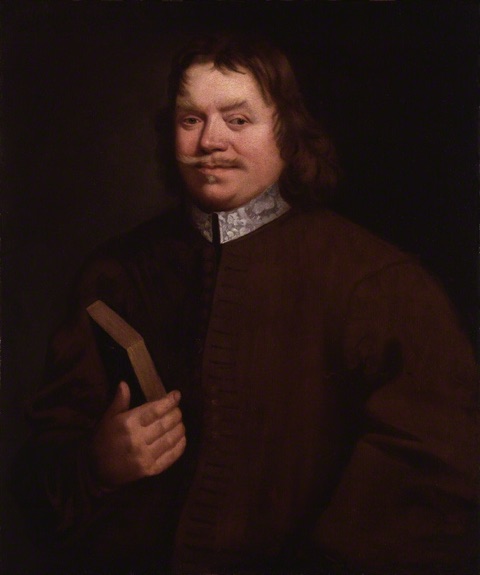
About the author
John Bunyan
John Bunyan (1628 to 1688 AD) was a tinker’s son from Elstow near Bedford who spent twelve years in Bedford jail from 1660 for refusing to stop preaching, and later served as pastor of the Bedford congregation. He died in London in 1688. This treatise on the throne of grace was not printed until 1692, four years after his death.