Ursinus's definitive commentary on the catechism he helped write — a masterwork of Reformation theology covering misery, redemption, and the foundations of the Christian faith.
One free account opens 250+ books and saves your place on every device. Google sign-in or an email link. No card.
You’re on the list — we’ll email you if this goes to print.
Included with your free account
This book, and 250+ more, free to read
A free account opens the whole library to read online, on your phone or at your desk. Open a book on one device and it is waiting at the same page on the next. The PDF and EPUB of every book are yours to keep, and audiobooks play in the same app.
250+ modernized editionsNot samples. The whole work, free.
Your place, on every devicePhone, tablet or desktop, same page.
131 audiobooksFrom $4.99 each, or all of them with a $50 gift.
The Heidelberg Catechism Commentary is Zacharias Ursinus's exhaustive theological exposition of the catechism he helped write. Published posthumously from his university lectures at Heidelberg, this commentary has served as the definitive academic guide to the Heidelberg Catechism since the late sixteenth century. Part 1 covers the opening sections of the catechism, addressing the foundations of church doctrine, the relationship between law and gospel, and the first Lord's Days on human misery, redemption, and the Apostles' Creed.
Ursinus works through each catechism question with methodical thoroughness, unpacking definitions, drawing careful distinctions, marshaling biblical evidence, and answering objections. His treatment moves from broad prolegomena — what the doctrine of the church is, how it differs from philosophy and false religion, and why catechetical instruction matters — into the specific theological content of the catechism's opening questions on sin, salvation, and the mediatorial work of Christ.
What makes this commentary invaluable is not merely its theological depth but its origin: it was written by the man who designed the catechism's architecture. Ursinus explains not just what the catechism says but why it says it in the order it does, revealing the pastoral and theological logic that made the Heidelberg Catechism one of the most enduring documents of the Reformation. This modernized edition makes his rigorous but rewarding exposition accessible to contemporary readers.
Introduction
These prolegomena fall into two categories: general ones, which address the whole body of church doctrine, and specific ones, which deal with the Catechism itself.
The general prolegomena, concerning the doctrine of the church, can be organized around the following questions:
1. What is the doctrine of the church? 2. What are its component parts, and how do those parts differ from one another? 3. How does the doctrine of the church differ from that of the various sects and from philosophy, and why should those distinctions be maintained? 4. What evidence supports the truth and certainty of this doctrine? 5. What are the best methods for teaching and studying this doctrine?
I. What is the Doctrine of the Church?
The doctrine of the church is the complete and uncorrupted teaching of the law and the gospel concerning the true God: His will, His works, and the worship due to Him. This teaching was divinely revealed and set down in the writings of the prophets and apostles, confirmed by numerous miracles and divine testimonies. Through it, the Holy Spirit works powerfully in the hearts of the elect, gathering from all of humanity an everlasting church in which God is glorified, both in this life and in the life to come.
This doctrine is the clearest and most defining mark of the true church, which God intends to be visible in the world and set apart from the rest of humanity, as these passages of Scripture make plain: "Keep yourselves from idols" (1 John 5:21); "Come out from among them, and be separate" (2 Cor 6:17); "If anyone comes to you and does not bring this doctrine, do not receive him into your house or greet him" (2 John 10); "Be holy, touch no unclean thing, you who bear the vessels of the Lord. Come out of her, my people, that you may not share in her sins or receive any of her plagues" (Isa 52:11; Rev 18:4).
God wills that His church be distinct and separate from the world, for the following reasons.
(1.) For the sake of His own glory. Just as He will not be joined with idols and devils, He will not have His truth confused with falsehood or His church mingled with her enemies, the children of the devil; He insists that the two be carefully distinguished and kept apart. It would be an insult to God to imagine that He would claim as His children those who persecute Him. Indeed, it would be outright blasphemy to make God the author of false doctrine and the protector of the wicked, for "what accord has Christ with Belial?" (2 Cor 6:14).
(2.) For the comfort and salvation of His people. The church must be visible in the world so that the elect, scattered throughout the whole human race, can recognize the community they are called to join, and so that, once gathered into the church, they may rest in the sure comfort of knowing they belong to the household in which God delights and which holds the promises of everlasting life. It is God's will that all who are to be saved should be gathered into the church during this life. Outside the church, there is no salvation.
How the church can be recognized, and what marks distinguish it from the various sects, will be addressed when we come to treat the subject of the church directly. For now, we can say that there are three such marks: purity of doctrine, the proper use of the sacraments, and obedience to God across all areas of this doctrine, whether in faith or in practice. If someone objects that serious vices have often appeared within the church, the answer is that the church does not defend or cling to those vices the way the various sects do. On the contrary, the church is the first to censure and condemn them. When faults arise in the church, they are disapproved of and removed. As long as that remains true, the church endures.
II. What Are the Parts of the Church's Doctrine, and How Do They Differ from Each Other?
The church's doctrine consists of two parts: the Law and the Gospel, which together contain the sum and substance of the entire Scriptures. The Law is known as the Decalogue, and the Gospel is the doctrine concerning Christ the mediator and the free forgiveness of sins through faith. This division of the church's doctrine is established by the following clear and compelling arguments.
1. Everything taught in the sacred writings concerns either the nature of God, His will, His works, or sin, which is the particular work of men and devils. All of these subjects are fully set forth and taught either in the Law, or in the Gospel, or in both. Therefore, the Law and the Gospel are the chief and overarching divisions of the holy Scriptures, encompassing the whole of the doctrine contained within them.
2. Christ himself establishes this division of the doctrine he intends to have preached in his name, when he says, "Thus it is written, and thus it was necessary for Christ to suffer, and to rise from the dead the third day; and that repentance and remission of sins should be preached in his name" (Luke 24:46-47). This statement encompasses the entire substance of both the law and the gospel.
3. The writings of the prophets and apostles together comprise the Old and New Testaments, which is to say the covenant between God and humanity. It follows, then, that the principal terms of that covenant must be contained and explained within these writings. They declare what God promises and grants to us, namely His favor, the forgiveness of sins, righteousness, and eternal life, and they also declare what He requires from us in return, which is faith and obedience. These are precisely the things taught in the law and the gospel.
4. Christ is the substance and foundation of all Scripture. The doctrine contained in the law and the gospel is essential for bringing us to a knowledge of Christ and His benefits, because the law serves as our teacher, driving us to Christ, compelling us to flee to Him, and showing us what that righteousness is which He has accomplished and now offers to us. The gospel, for its part, deals directly with the person, office, and benefits of Christ. In the law and the gospel together, then, we have the whole of Scripture, encompassing the doctrine revealed from heaven for our salvation.
The principal differences between these two parts of the church's doctrine come down to three things.
1. The subject matter, or general character, that is distinctive to each. The law prescribes what must be done and forbids what should be avoided, while the gospel announces the free forgiveness of sin through Christ and for His sake.
2. The manner of revelation that is distinctive to each. The law is knowable from nature; the gospel is revealed by God alone.
3. In the promises they make to humanity. The law promises life on the condition of perfect obedience; the gospel promises it on the condition of faith in Christ and the beginning of new obedience. More will be said on this subject in its proper place.
III. How Does the Doctrine of the Church Differ from Other Religions and from Philosophy, and Why Should These Distinctions Be Maintained?
The doctrine of the church differs from all other religions in four respects.
(1.) The church's doctrine has God as its author, who delivered it through the prophets and apostles, while the various religious systems of sectarians were invented by men under the influence of the devil.
(2.) The church's doctrine alone carries divine testimony in confirmation of its truth that is certain and infallible, capable of quieting the conscience and exposing the errors of every competing sect.
(3.) In the church, God's law is preserved whole and uncorrupted, while in other religious systems it is narrowed and badly distorted. The advocates of these false religions reject entirely the teaching of the first table, which concerns the knowledge and worship of the true God. They either set up some other god in place of the One who has revealed Himself to the church through His word and works, or they seek knowledge of God outside His Son rather than through Him, or they worship Him in ways He has never commanded. And beyond this, they are equally ignorant of the inward and spiritual obedience required by the second table. Whatever truth and moral value exists in these systems amounts to nothing more than a partial grasp of the second table's precepts, and only as they relate to outward conduct and the civil duties people owe one another.
(4.) It is only within the church that the gospel of Christ is fully taught and rightly understood. The various sects, including pagans, philosophers, Jews, and Muslims, are either entirely ignorant of it and therefore reject it outright, or they graft onto their errors whatever fragments they have borrowed from apostolic teaching, without properly grasping or understanding what those fragments mean. This is true of the Arians, the Roman Catholics, the Anabaptists, and all other heretics, some of whom hold mistaken views about the person of Christ the mediator, and others about His office. These profound distinctions demonstrate that the church's doctrine alone should be taught and held firmly, while the teachings and religious systems of sects that oppose the truth should be rejected and avoided as the corruptions and wicked schemes of the devil, as Scripture says: "Beware of false prophets" (Matt 7:15), and "Keep yourselves from idols" (1 John 5:21).
The case of Philosophy, however, is quite different. True philosophy, while it differs significantly from the teaching of the church, does not set itself against that teaching. Nor is it a wicked fabrication and instrument of Satan, as the false doctrines of the sects genuinely are. Instead, it contains real truth and functions as a kind of ray of divine wisdom, impressed on the human mind at creation. It is a discipline that addresses God and His creatures, along with many other things that are genuinely good and useful to humanity. It has been drawn from the light of nature and from principles that are clear and self-evident in themselves, then organized into a coherent system by wise and serious thinkers. It follows, then, that Christians are not only permitted but actually benefit from devoting themselves to the study of philosophy. The sects, by contrast, are another matter entirely: their various doctrines are not a legitimate field of study for Christians, because those doctrines are to be rejected and avoided as the corrupt inventions of the devil.
Philosophy and the doctrine of the church differ in several important ways.
(1.) They differ in their principles. Philosophy is entirely natural, built on principles drawn from nature. While many elements of church doctrine can also be known through nature, its most essential part, the gospel, so far exceeds what nature can reveal that no human or angelic wisdom could ever have discovered it on its own. Only the Son of God, revealing it to us from the heart of the Father, could make it known.
(2.) They differ in their subject matter. Church doctrine encompasses the true meaning of both law and gospel, while philosophy is completely ignorant of the gospel, ignores the most important parts of the law, and handles even those portions it does address, mainly civil duties and outward conduct drawn from a handful of the Ten Commandments, only obscurely and incompletely. Beyond this, philosophy also covers disciplines that are genuinely useful, such as logic, natural philosophy, and mathematics, none of which appear in church doctrine, yet all of which contribute meaningfully to the good of society when properly taught and understood.
(3.) They differ in their effects. Church doctrine alone traces all the evils and miseries of human life back to their true source: the fall and disobedience of our first parents in Paradise. It also offers genuine and lasting comfort to the conscience, showing us the way of escape from sin and death and assuring us of eternal life through our Lord Jesus Christ. Philosophy, by contrast, does not understand the true cause of our misery and cannot provide, or even point us toward, the kind of comfort that can truly satisfy the human heart.
There are, however, certain comforts that philosophy and theology share. Among these, we might mention the doctrine of God's providence, the necessity of obeying the law, a good conscience, the excellence of virtue, the ultimate goals that virtue sets before us, the examples of others, the hope of reward, and a thoughtful comparison of life's varying circumstances and events. But those greater and more precious comforts, by which the soul is sustained when it faces the terrible realities of sin and death, belong uniquely to the church. They consist in the free forgiveness of sin through Christ and for His sake, the grace and presence of God in the midst of suffering, and the promise of final deliverance and eternal life.
That said, while true philosophy falls short of meeting the full demands of our moral nature, and while it remains incomplete when compared to theology, it does not stand in opposition to the teaching of the church or set itself against it as an enemy. Therefore, when we encounter mistaken ideas in the writings of various philosophers, ideas that heretics have seized upon to challenge and undermine the plain meaning of Scripture, we should recognize one of two things: either those ideas are not genuinely philosophical at all, being nothing more than the clever inventions of human ingenuity and the very diseases of true philosophy (such as Aristotle's view on the creation of the world, or Epicurus's position on the immortality of the soul), or they are legitimately philosophical but have been misapplied to theology.
We should observe and maintain these distinctions between the doctrine of the church and that of other religions and philosophies, for the following reasons.
(1.) So that all glory properly belonging to God may be given to Him. This cannot happen unless we acknowledge and confess whatever He requires us to believe about Himself and His will, and unless we add nothing to the revelations He has graciously given us. God cannot be joined with idols, and His truth cannot be mixed with the lies and falsehood of Satan, without casting the gravest reproach upon His name.
(2.) So that we don't endanger our salvation, which we would risk if we were deceived into embracing philosophy or the teaching of some sect in place of the true religion.
(3.) So that our faith and comfort may grow, as we see the clear superiority of the church's doctrine over every other religious system, recognizing how many things are found in biblical religion that are entirely absent from all others, and understanding why only those who hold to the teaching of God's word are saved, while the various sects and their followers are condemned and rejected by God.
Finally, So that we may separate ourselves from the Epicureans and the Academics, who either dismiss all godliness or distort it so thoroughly that they assume anyone who professes some form of religion will be saved. They read the apostle's declaration, "The just shall live by his faith" (Rom 1:17), in this careless way. Now, the Epicureans are frankly not worth refuting. As for the Academics, they clearly twist the apostle's words away from their proper meaning and can therefore be answered without much difficulty. The pronoun his never refers to whatever faith a person might invent or construct for himself; it refers to the true Catholic faith, the faith that belongs personally to everyone who has embraced the gospel of Christ. In this way, it stands in contrast to the faith of every other person, even if that faith contains some truth, and it also stands against the doctrine of justification by works. The true meaning of this passage, then, is this: the just man is justified not by the works of the law, but by faith in Christ alone, and specifically by his own personal faith, not by the faith of another.
IV. What Are the Evidences by Which the Truth of the Christian Religion, or the Doctrine of the Church is Confirmed?
There are many arguments that establish the truth and certainty of the church's teachings. Some of these convince the conscience, as is true of the first thirteen we list below, while those that follow incline and convert the heart. We will present these arguments in the following order:
1. The purity and perfection of the Law. No religion can be true and divine if it either invents and tolerates idols or endorses forms of wickedness that stand in plain opposition to the law of God and the judgment of sound reason. Every form of religion except the one revealed in the Scriptures and received by the church clearly does exactly this. All of them, as we have already noted, either abolish the first table of the Decalogue entirely (the table that concerns the one true God and His worship) or corrupt it beyond recognition, while retaining only a small portion of the second table, which deals with outward conduct and civil duties. The church alone preserves both tables of the Decalogue whole and uncorrupted, in accordance with Scripture. Therefore, it is the doctrine of the church alone that is true and divine.
2. The same point can be argued from the gospel, which reveals the only path of escape and deliverance from sin and death. Any doctrine or religion that is genuinely true and divine must do two things: it must reveal a way of deliverance from these great evils without violating God's justice, and it must offer real, lasting comfort to the conscience regarding eternal life. The teaching of the church is the only religious system that has ever discovered and proclaimed such a path, and the only one that provides genuine comfort to the conscience. That alone is sufficient reason to conclude that it is true and divine.
3. The great antiquity of this doctrine also testifies to its truth. No other religious system besides the one delivered to us in the Holy Scriptures can trace its origin to God and demonstrate an unbroken line of descent from the beginning of the world. Every major historical record, taken together with sacred history, confirms that all other religions arose later and are comparatively recent. Since the most ancient religion rightly commands the greatest respect and carries the strongest evidence of truth (people have always recognized the first religion as coming directly from God), it follows that the teaching of the church alone is true and divine.
4. The miracles by which God confirmed this doctrine from the beginning of the world testify to its divine origin. These are miracles the devil cannot imitate, even in their outward appearance: raising the dead, making the sun stand still and move backward, dividing seas and rivers, causing the barren to become fruitful, and many others like them. All of these bear the strongest possible testimony to the truth and divine character of this doctrine, since they were performed by God (who could never lend such confirmation to something false) in order to validate what the prophets and apostles proclaimed.
5. The prophecies and predictions found throughout both the Old and New Testaments, many of which have been fulfilled with remarkable completeness and precision, establish the divine character of the church's teaching in the most compelling and conclusive way possible. No one but God can make declarations of that kind.
6. The internal harmony of the church's doctrine is itself evidence of its truth. Any teaching that contradicts itself can be neither true nor from God, since truth is perfectly consistent with itself and God cannot contradict Himself. Every other religion, apart from what is taught in the writings of the prophets and apostles, differs sharply from the others, even on points considered central and foundational. This doctrine alone holds together with such complete and seamless consistency across all its parts, and that coherence is precisely what marks it as true and as coming from God.
7. The acknowledgment of Christianity's superior excellence by its very enemies can itself serve as an argument for its truth. Even the devil was forced to confess, "Thou art Christ, the Son of God" (Luke 4:41). Other enemies have also been repeatedly compelled to bear witness to the superior quality of the church's teachings. Indeed, one could argue that whatever goodness and truth can be found in other religions is also contained in the religion of the Bible, only expressed far more clearly and completely. It can easily be demonstrated that these other traditions borrowed such truths from the church's teachings and then mixed them with their own inventions, much as the devil himself, acting as an imitator of God, habitually blends certain truths with his falsehoods in order to deceive people more effectively. Therefore, the elements that various sects share in common with the church's teaching should not be opposed, since those elements were borrowed from us in the first place. The elements that stand in opposition to Christian doctrine, however, can be readily refuted, since they are nothing more than human invention.
8. The malice of Satan, and his many agents, against the church's doctrine is itself evidence that the doctrine is true. Any religion that the devil and wicked people unite to despise and destroy is almost certainly genuine and from God. Truth reliably draws opposition from the wicked, and we are told that the devil was a murderer from the beginning who never stood in the truth. What is plainly clear is that the world and Satan hate and attack no other doctrine as fiercely as that of the church, and the reason is straightforward: it rebukes them more sharply, challenges their errors, exposes their deceptions and frauds, and condemns their idols and vices more severely than the various sects that turn a blind eye to these things, and in many cases even defend them. "The world hateth me because I testify of it, that the works thereof are evil," and "If ye were of the world, the world would love his own; but because ye are not of the world, therefore it hateth you" (John 7:7; 15:19).
9. The remarkable protection and survival of this doctrine, despite the malice and fury of Satan and his allies, is further proof of its truth. No other religion has been so relentlessly and violently attacked by tyrants and heretics as that of the church, yet God has preserved it against the rage of its enemies and the gates of hell in ways that can only be called extraordinary. It alone survives to the present day, to the astonishment of the world, while other religions have in the meantime quietly degenerated and vanished from the earth with little or no resistance. We can therefore conclude with confidence that God approves of and cares for the church's doctrine, because He would never have extended to it the protection He has if He did not.
10. The punishments and various judgments that God has inflicted on the enemies of the church throughout history declare the divine character of her teachings. Any religion against which no one can stand with impunity is, without question, from God, and all of history testifies that this is precisely true of the system of religion delivered in the writings of the prophets and apostles. Although the wicked often prosper in this world and the church can appear to be trampled underfoot, this does not happen by mere chance, nor does it mean that God favors the wicked over the church. The final outcome of these events makes this abundantly clear, and Scripture confirms it everywhere: the church is always preserved, even through the most severe persecutions, and she ultimately receives deliverance from her most violent oppressors, while the brief season of prosperity enjoyed by cruel tyrants and wicked men is invariably followed by a most terrible destruction. Nor does this argument lose its force simply because not every persecutor of the church is punished in this life in the same dramatic fashion as Antiochus, Herod, and others like them. God, for the most part, does avenge Himself on His enemies in this life, and by these judgments He signals clearly enough what we should think of others who share the same character but escape such severe punishment: He regards them as His enemies and will cast them into everlasting punishment unless they repent and seek His favor.
11. The testimony and constancy of martyrs who declared, even in the midst of excruciating pain, that they genuinely believed what they had taught, that they were firmly convinced in their hearts of the truth they professed, that they drew from it the very comfort they had preached to others, that they were truly children of God through Christ, and that God watched over them even in death, can be taken as evidence for the truth of the Christian religion; because God, by sustaining them with the precious consolations of the gospel, showed that He approved of the very doctrines for which they were made to suffer.
12. The piety and holiness of those who wrote the Holy Scriptures and professed the doctrine contained in them is a powerful confirmation of that doctrine's truth; for any religion that makes people holy and acceptable to God must itself be holy and divine. The patriarchs, prophets, apostles, and all others who have sincerely embraced and believed this teaching, including those who do so today, far surpass the followers of other religions in virtue and practical godliness, as anyone can plainly see who takes the time to make a fair comparison. We can therefore reasonably conclude that the teachings of the church rest on stronger and more compelling evidence than those of any other religious system ever devised.
13. The candor and honesty of those whom the Holy Spirit employed to commit this doctrine to writing, seen in the way they openly acknowledged and condemned their own faults as well as the faults of others, can itself be offered as an argument in favor of the truth of what they wrote.
Finally, we should mention one more confirmation of this doctrine: the testimony of the Holy Spirit, through whose inspiration the Scriptures were given. By this testimony, we mean a strong and living faith, a firm conviction worked in the hearts of believers by the Holy Spirit, that the Scriptures are the word of God and that God will be gracious to us according to what the Scriptures affirm. This faith naturally produces love for God, prayer in His name, and a confident hope of receiving everything necessary for our comfort both in this life and in the life to come, including everlasting life. This assurance and lasting consolation of the godly does not rest on the testimony of any human being or any other creature, but on God Himself, and it is the proper work of the Holy Spirit. As such, it is experienced by all who truly believe, and in them it is further strengthened and confirmed by that same Spirit through the reading, hearing, and study of the teaching delivered by the prophets and apostles. It is therefore chiefly through the testimony of the Holy Spirit that all who are converted to Christ are confirmed in the truth of this heavenly doctrine and have it sealed on their hearts. This argument also applies to the unregenerate: it not only convinces their consciences of the truth and authority of the Scriptures, but it also moves and inclines their hearts to accept this doctrine and receive it as the truth of God. This argument is therefore the most important of all those we have presented, because unless the preceding arguments are accompanied by the inward testimony of the Holy Spirit, they only convince the conscience and silence those who object, but they do not move or incline the heart.
V. What Are the Various Methods of Teaching and Learning the Doctrine of the Church?
The study and teaching of theology follows three distinct methods.
The first is catechetical instruction: a brief summary and straightforward explanation of the core doctrines of the Christian faith, commonly known as catechizing. This method matters enormously for everyone, because it is equally necessary for the learned and the unlearned alike to understand what forms the foundation of true religion.
The second method involves examining and discussing broader, more complex subjects, known as the Common Places. These contain a fuller explanation of every individual point, along with difficult questions, their definitions, divisions, and supporting arguments. This method belongs more naturally to theological schools, and it is necessary for three reasons. First, those who are trained in these schools and may later be called to teach in the church need to understand the whole system of theology as clearly and completely as possible. As with any field of study, theological knowledge comes slowly and with considerable effort, and it will remain confused and incomplete unless each part of the doctrine is taught in some systematic form that the mind can actually grasp and follow. Second, students of theology who are eventually called to teach in the church must be able to present the substance of God's word clearly and in an orderly way. To do that, they first need to carry a complete and coherent framework of that doctrine in their own minds. Third, this method is essential for discovering and establishing the true and natural interpretation of Scripture, which requires a clear and thorough knowledge of every part of church doctrine. This ensures that interpretation stays in line with the analogy of faith, so that Scripture holds together consistently throughout. Finally, it is necessary for making sound judgments about the controversies of the church, which are many, complex, and dangerous, so that we are not pulled away from truth into error and falsehood.
The third method of theological study is the careful, diligent reading of Scripture. This is the highest form of theological study, and the two previous methods exist to prepare us for it, equipping us to read, understand, and expound the sacred text. Just as catechism and the study of common doctrinal topics are drawn from Scripture and governed by it as their rule, so they in turn lead us back to Scripture, guiding us there by the hand, so to speak. The catechism we will be examining in these lectures belongs to that first method of theological study.
Special Introduction
THE SPECIAL PROLEGOMENA concerning catechesis are five:
1. What is catechesis, or the system of catechization? 2. Has it always been practiced in the church, or what is its origin? 3. What are its principal parts? 4. Why is it necessary? 5. What is its purpose?
I. What is Catechization?
The Greek word katechesis (κατηχησις) derives from katecheo (κατηχεω), just as katechismos (κατηχισμος) derives from katechizo (κατηχιζω). In their common usage, both words carry the sense of sounding or resounding, of instructing someone by word of mouth, and of repeating the teachings of another. More precisely, however, katecheo means to teach the foundational principles and basic elements of a particular doctrine. When applied to Christian teaching, it means to instruct someone in the first principles of the Christian faith, which is exactly how the word is used in Luke 1:4, Acts 18:25, and Gal 6:6. In its broadest sense, then, catechization refers to the initial, brief, and elementary oral instruction given in the rudiments of any particular doctrine. As the church uses the term, it refers specifically to a structured course of instruction in the first principles of the Christian faith, designed for those who are ignorant of or untrained in those truths.
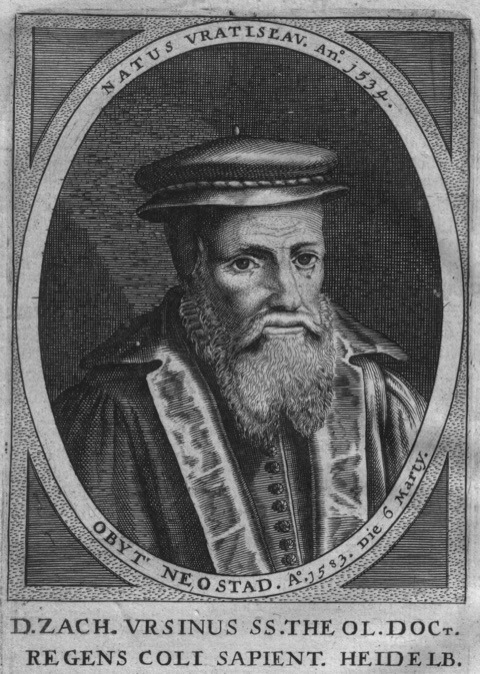
Zacharias Ursinus was a German Reformed theologian and professor at the University of Heidelberg, best known as the principal author of the Heidelberg Catechism (1563). Trained under Philip Melanchthon at Wittenberg and later influenced by John Calvin, Ursinus combined scholastic precision with pastoral warmth. His exhaustive commentary on the catechism, published posthumously from his lecture notes, became the standard academic exposition of the Heidelberg Catechism for centuries.
“Updated Works has been an incredible blessing to my Christian life and ministry… remarkably faithful to the original authors while making these timeless treasures understandable for modern readers.”