

Modern English edition · 1535 AD
Commentary on Galatians
Luther's passionate exposition of Paul's letter on Christian freedom. This commentary became a foundational text of the Reformation, proclaiming justification by faith alone against works-righteousness.
One free account opens 250+ books and saves your place on every device. Google sign-in or an email link. No card.
You’re on the list — we’ll email you if this goes to print.
Included with your free account
This book, and 250+ more, free to read
A free account opens the whole library to read online, on your phone or at your desk. Open a book on one device and it is waiting at the same page on the next. The PDF and EPUB of every book are yours to keep, and audiobooks play in the same app.
- 250+ modernized editions Not samples. The whole work, free.
- Your place, on every device Phone, tablet or desktop, same page.
- 131 audiobooks From $4.99 each, or all of them with a $50 gift.
- PDF and EPUB included Download any book to keep.



About this book
Luther's Commentary on Galatians stands as one of the most influential biblical commentaries ever written. Luther considered Galatians his "Katherine von Bora"—his beloved—because its message of justification by faith alone was central to his understanding of the gospel. This expanded commentary, based on his 1531 lectures, became a manifesto of Reformation theology and has shaped Protestant understanding of Paul ever since.
Luther interprets Galatians as Paul's battle against those who would add works to faith as necessary for salvation. The Judaizers in Galatia insisted that Gentile converts must be circumcised and keep the Mosaic law. Paul responded with perhaps his most passionate letter, defending the sufficiency of Christ's work. Luther saw the same battle being fought in his own day against Roman Catholic teaching on merit and works.
Central to Luther's exposition is the distinction between law and gospel. The law commands what we cannot perform, revealing our sin and driving us to despair. The gospel announces what God has done in Christ, offering free forgiveness to all who believe. Confusing these two—treating the gospel as a new law or the law as a path to salvation—corrupts Christianity at its core.
Luther's treatment of Galatians 2:20 ("I have been crucified with Christ...") is particularly memorable. He expounds the believer's union with Christ, arguing that through faith Christ's righteousness becomes ours. We are simultaneously sinners in ourselves and righteous in Christ. This "alien righteousness" received through faith alone sets us free from the burden of earning salvation.
The commentary addresses practical questions of Christian living. If salvation is by faith alone, does this encourage sin? Luther answers that true faith necessarily produces love and good works—not as the cause of salvation but as its fruit. The freedom of the Christian is not license to sin but liberation to serve God and neighbor from a willing heart.
For modern readers, Luther's Commentary on Galatians remains remarkably fresh. Its central message—that we are saved by God's grace through faith in Christ apart from our own works—continues to challenge both religious moralism and secular self-improvement schemes. Luther's passionate, personal style makes ancient theological debates feel urgently relevant.
About the author
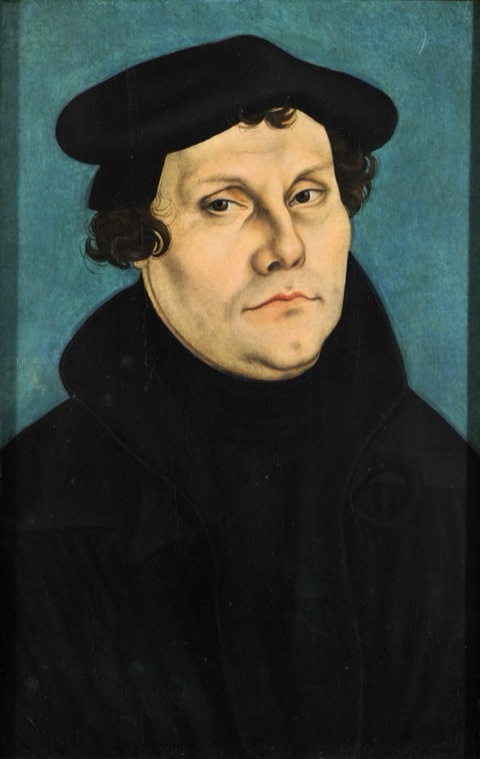
Martin Luther
Martin Luther (1483-1546) was a German theologian, monk, and professor whose writings sparked the Protestant Reformation. After entering an Augustinian monastery, Luther was ordained a priest and earned a doctorate in theology. His intensive study of Scripture, particularly Romans and Galatians, led him to the conviction that salvation comes through faith alone, not works. His Ninety-Five Theses (1517), challenging indulgence practices, ignited a reformation that transformed Western Christianity. Luther translated the Bible into German, wrote influential catechisms and hymns, and produced a vast body of theological writings. Despite suffering from various ailments and periods of depression, he remained productive until his death. His emphasis on Scripture alone, grace alone, and faith alone became defining principles of Protestant Christianity, and his influence on Western religion, culture, and language remains immense.
“Updated Works has been an incredible blessing to my Christian life and ministry… remarkably faithful to the original authors while making these timeless treasures understandable for modern readers.”
More in the free library
All 250+ books → Audio
Audio
A Treatise on Good Works
Martin Luther · Free

The Covenant of Life Opened
Samuel Rutherford · Free

The Economy of the Covenants Between God and Man: Volume 1
Hermann Witsius · Free

The Economy of the Covenants Between God and Man: Volume 2
Hermann Witsius · Free
 Audio
Audio
Foxe’s Book of Martyrs
John Foxe · Free
 Audio
Audio
Institutes of the Christian Religion: Book 4
John Calvin · Free