The philosophical foundation of American democracy. Locke argues that governments derive their power from the consent of the governed—and citizens can overthrow tyrants who violate their rights.
A free account opens the whole library to read online, on your phone or at your desk. Open a book on one device and it is waiting at the same page on the next. The PDF and EPUB of every book are yours to keep, and audiobooks play in the same app.
250+ modernized editionsNot samples. The whole work, free.
Your place, on every devicePhone, tablet or desktop, same page.
131 audiobooksFrom $4.99 each, or all of them with a $50 gift.
Sir Robert Filmer's defense of patriarchal kingship
Structure
Nineteen chapters plus the author's preface, in numbered sections
Length
About 53,600 words · a 4-hour read
The “Second Treatise of Government” is John Locke's argument that lawful political power rests on the consent of the governed rather than on the divine right of kings. He traces authority from natural freedom through property and consent into civil government, and defends the people's right to remove rulers who betray their trust.
How the argument unfolds
01
Clearing the ground. Filmer had traced royal power back to Adam's fatherhood. Locke holds the line cannot be rebuilt, so rulers draw from it not “even the faintest shadow of authority”. Political power is instead the right to make laws “for the regulation and preservation of property.”
02
The state of nature. People begin in “a state of perfect freedom” bounded by the law of nature. It is not lawless. Reason teaches that “no one ought to harm another in his life, health, liberty, or possessions,” and each person may punish offenders.
03
The state of war. “The state of war is a state of enmity and destruction.” It begins wherever force is used without right, and anyone trying to place another under absolute power has already declared it.
04
Property from labor. The earth is given in common, yet “every person has property in his own person.” What a person “removes from the state in which nature provided and left it, he has mixed his labor with it.” Two limits follow: leave “enough and as good” for others, and own only what “he can use for some benefit in life before they spoil.”
05
Consent and its purpose. “No one can be removed from this state and subjected to another's political power without his own consent.” People unite for “the mutual preservation of their lives, liberties, and estates.” The state of nature lacks a settled law, an impartial judge, and power to execute a sentence.
06
Power held in trust. The legislature is supreme, “sacred and unalterable in the hands where the community has once placed it.” Yet it rules by standing laws and can “never have a right to destroy, enslave, or deliberately impoverish the subjects.” Discretion beyond the law is prerogative, judged by whether it helps or harms the people.
07
When government dissolves. “The legislature is the soul that gives the commonwealth form, life, and unity.” Alter it by force, or let legislators invade what they were appointed to guard, and they “put themselves into a state of war with the people.” Power returns to those who gave it.
Key themes
Freedom under law. Locke's natural liberty is bounded, not absolute. Reason is the law of nature, so equality carries duties rather than license.
Labor and value. Locke reckons that “nine-tenths of the products of the earth useful to human life are the effects of labor,” and usually far more.
Government as trust. “Every power entrusted for the achievement of an end is limited by that end.” No title or form of government escapes that test.
Tyranny. Tyranny is “the exercise of power beyond right, to which no one can have a right,” power turned to private advantage. “Wherever law ends, tyranny begins.” It is no fault of monarchy alone, as the Thirty Tyrants at Athens showed.
Who judges. On who decides that a trust is broken, Locke answers plainly: “I reply that the people shall judge.” Where no earthly court can settle it, “God in Heaven is judge.”
You have here the beginning and end of a discourse on government. What fate did with the papers that should have filled the middle, and that made up more than all the rest, is not worth telling you. I hope those that remain are enough to establish the throne of our great restorer, our present King William; to confirm his title in the consent of the people, the only basis of all lawful governments, which he possesses more fully and clearly than any prince in Christendom; and to justify before the world the people of England, whose love of their just and natural rights, together with their determination to preserve them, saved the nation when it stood on the very brink of slavery and ruin.
If these papers contain the force of evidence that I flatter myself can be found in them, the loss of the missing papers will not matter greatly, and my reader may be satisfied without them. I imagine I shall have neither the time nor the inclination to repeat my labor and fill the missing part of my answer by tracing Sir Robert Filmer once more through all the twists and obscurities found in the various branches of his wonderful system.
The king and the body of the nation have since so thoroughly refuted his hypothesis that I suppose no one hereafter will have either the audacity to oppose our common safety and become an advocate for slavery again, or the weakness to be deceived by contradictions dressed in a popular style and well-turned sentences. If anyone is willing to take the trouble, in the parts left untouched here, to strip Sir Robert’s arguments of the flourish of ambiguous expressions, reduce his words to direct, positive, intelligible propositions, and then compare them with one another, he will quickly be satisfied that so much glib nonsense was never before assembled in well-sounding English.
If he does not think it worthwhile to examine Sir Robert’s works from beginning to end, let him try an experiment on the part where Sir Robert discusses usurpation. Let him see whether, with all his skill, he can make Sir Robert intelligible and consistent with himself or with common sense.
I would not speak so plainly of a gentleman who has long been dead and unable to answer, had not the pulpit in recent years publicly embraced his doctrine and made it the prevailing theology of the times. Those who have taken it upon themselves to be teachers, and who have so dangerously misled others, must be shown openly how much authority their patriarch, whom they have followed, has or ought to have. Then they may either retract what they have proclaimed on such poor grounds or defend his opinions.
I would not have written against Sir Robert or taken the trouble to expose his mistakes, inconsistencies, and lack of scriptural proofs, though he boasts so much of such proofs and claims to build entirely upon them, if there were not men among us who, by praising his books and embracing his doctrine, spare me the reproach of writing against a dead adversary. They have been so zealous on this point that, if I have done him any wrong, I cannot expect them to spare me.
I wish they were equally ready to repair the wrong they have done to truth and the public, since there is hardly a greater harm to prince and people than the spread of false ideas about government. I also wish they would do so that every age might not have reason to complain of the clergy’s drumbeat.
If anyone genuinely concerned for truth undertakes to refute my hypothesis, I promise either to retract my error when fairly convinced or to answer his difficulties. But he must remember two things. First, quibbling here and there over some expression or minor incident in my discourse is not an answer to my book. Second, I will not accept abuse as argument or consider either of these worth my attention. Yet I shall always consider myself bound to satisfy anyone who appears to have conscientious scruples about the point and who presents just grounds for those scruples.
[The following key refers to Locke’s companion First Treatise. “Our author” is Sir Robert Filmer.]
I have nothing more to do but inform the reader that:
A. stands for our author.
O. stands for his Observations on Hobbes, Milton, etc.
A page citation given without another title always refers to pages of his Patriarcha.
Political Power
1. The preceding discussion has shown:
1. Adam had no such authority over his children or dominion over the world as has been claimed for him, either by a natural right of fatherhood or by a positive grant from God.
2. Even if he had possessed such authority and dominion, his heirs would have had no right to it.
3. Even if his heirs had possessed that right, no law of nature or positive law of God determines the rightful heir in every case that may arise. The right of succession, and therefore the right to rule, could not have been determined with certainty.
4. Even if that right had been determined, all knowledge of which line of Adam’s descendants is the eldest has long since been utterly lost. Among the races of humanity and the families of the world, no one has the slightest claim over another to be the eldest house and possess the right of inheritance.
Since all these premises have, I think, been clearly established, today’s rulers cannot gain any advantage or derive even the faintest shadow of authority from what is claimed to be the source of all power: Adam’s private dominion and paternal jurisdiction. Anyone who does not want to give good reason for thinking that every government in the world is produced solely by force and violence, and that people live together by no rule except that of beasts, where the strongest prevails, must find another source of government, another origin of political power, and another way to identify and recognize those who possess it. Otherwise, he lays the foundation for perpetual disorder and mischief, tumult, sedition, and rebellion, the very things that the followers of this theory denounce so loudly. The account must therefore be different from what Sir Robert Filmer has taught us.
2. For this purpose, I think it useful to state what I understand political power to be. This will allow us to distinguish a magistrate’s power over a subject from a father’s power over his children, a master’s over his servant, a husband’s over his wife, and a lord’s over his slave. All these distinct powers sometimes belong to the same man, considered in his different relationships. Distinguishing them may therefore help us see the difference between a ruler of a commonwealth, a father of a family, and the captain of a galley.
3. Political power, then, is the right to make laws carrying the penalty of death and, consequently, every lesser penalty, for the regulation and preservation of property. It is also the right to employ the force of the community to execute those laws and defend the commonwealth from foreign injury, all solely for the public good.
The State of Nature
4. To understand political power correctly and trace it to its origin, we must consider the state all people are naturally in. It is a state of perfect freedom to order their actions and dispose of their possessions and persons as they think fit, within the bounds of the law of nature, without asking permission or depending on the will of anyone else.
It is also a state of equality, in which all power and jurisdiction are reciprocal, and no one has more than another. Nothing is more evident than that creatures of the same species and rank, born indiscriminately with all the same natural advantages and the use of the same faculties, should also be equal to one another, without subordination or subjection. This remains so unless the lord and master of them all, by some manifest declaration of his will, sets one above another and confers on him, by an evident and clear appointment, an undoubted right to dominion and sovereignty.
5. The judicious Hooker considers this natural equality of human beings so self-evident and beyond question that he makes it the foundation of our obligation to love one another. On this obligation he builds the duties people owe one another, and from it he derives the great principles of justice and charity. In his words:
“The same natural impulse has led people to know that it is no less their duty to love others than themselves. Since equal things must all be measured by one standard, if I cannot help wishing to receive as much good from every person as anyone can wish for his own soul, how could I expect any part of this desire to be satisfied unless I myself take care to satisfy the same desire, which undeniably exists in other people, since we all share one and the same nature? Anything offered to them that conflicts with this desire must grieve them in every respect as much as it would grieve me. Therefore, if I do harm, I must expect to suffer, since there is no reason others should show me more love than I have shown them. My desire to be loved by my equals in nature as much as possible therefore imposes on me a natural duty to bear exactly the same affection toward them. Everyone knows the various rules and canons that natural reason has drawn, for the guidance of life, from this relation of equality between ourselves and those who are like us.”
6. But although this is a state of liberty, it is not a state of license. Although a person in that state has an uncontrollable liberty to dispose of his person or possessions, he does not have the liberty to destroy himself, or even any creature in his possession, except when some nobler use than its mere preservation requires it.
The state of nature has a law of nature to govern it, and that law binds everyone. Reason, which is that law, teaches all humanity, if they will only consult it, that because all are equal and independent, no one ought to harm another in his life, health, liberty, or possessions. For all people are the workmanship of one omnipotent and infinitely wise maker. They are all servants of one sovereign master, sent into the world by his order and on his business. They are his property, whose workmanship they are, and were made to last according to his pleasure, not one another’s.
Because people have similar faculties and all share in one community of nature, we cannot suppose that there is any subordination among us that authorizes us to destroy one another, as if we were made for one another’s uses in the way that the lower ranks of creatures were made for ours. Just as everyone is bound to preserve himself and not willfully abandon his station, so, by the same reasoning, when his own preservation is not at stake, he ought, as much as he can, to preserve the rest of humanity. Unless it is necessary to do justice to an offender, he must not take away or impair another person’s life, or anything that contributes to the preservation of life, including liberty, health, limb, or possessions.
7. To restrain everyone from invading the rights of others or harming one another, and to ensure that the law of nature, which wills the peace and preservation of all humanity, is observed, the execution of that law is placed in every person’s hands in the state of nature. Everyone therefore has a right to punish transgressors of that law to the degree necessary to prevent its violation.
Like every other law concerning people in this world, the law of nature would be useless if no one in the state of nature had the power to enforce it, preserve the innocent, and restrain offenders. If anyone in the state of nature may punish another for an evil he has done, everyone may do so. In that state of perfect equality, where no one naturally has superiority or jurisdiction over another, everyone must have the right to do whatever anyone may do in enforcing that law.
8. In this way, one person acquires power over another in the state of nature, but not absolute or arbitrary power. When an offender is in his hands, he may not treat him according to the passionate heat or boundless extravagance of his own will. He may impose only what calm reason and conscience dictate as proportionate to the transgression, which is only as much as may provide reparation and restraint. These are the only two reasons one person may lawfully harm another, which is what we call punishment.
By transgressing the law of nature, the offender declares that he lives by a rule other than reason and common equity, the standard God has set for human actions for people’s mutual security. He therefore becomes dangerous to humanity, because he has slighted and broken the bond intended to secure people from injury and violence. His act is an offense against the whole species and against its peace and safety, which the law of nature provides for. For this reason, every person, by the right he has to preserve humanity in general, may restrain or, when necessary, destroy what is harmful to it. He may therefore bring such consequences upon anyone who has transgressed that law as will make the offender repent and deter both him and, by his example, others from committing the same wrong. In this case and on this ground, everyone has a right to punish the offender and to act as executor of the law of nature.
9. I do not doubt that this doctrine will seem very strange to some people. But before they condemn it, I ask them to explain by what right any prince or state can put a foreigner to death, or punish him for any crime he commits in their country.
It is certain that their laws, by virtue of any sanction they receive from the legislature’s publicly declared will, do not extend to a foreigner. They do not speak to him, and even if they did, he would not be bound to obey them. The legislative authority that gives those laws force over the subjects of that commonwealth has no power over him. Those who possess the supreme power of making laws in England, France, or Holland are, to an Indian, merely people like the rest of the world, without authority over him.
Therefore, unless every person has, by the law of nature, a power to punish offenses against that law as he soberly judges the case to require, I do not see how the magistrates of any community can punish a foreigner from another country. In relation to him, they can have no more power than every person may naturally have over another.
10. Besides the crime of violating the law and departing from the right rule of reason, by which a person degenerates so far that he declares himself to have abandoned the principles of human nature and become a harmful creature, some particular person is also commonly injured and suffers damage from the transgression.
In that case, the person who has suffered damage possesses, besides the right of punishment he shares with everyone else, a particular right to seek reparation from the offender. Anyone else who considers it just may also join the injured person and assist him in recovering from the offender as much as will compensate for the harm he has suffered.
11. From these two distinct rights, one to punish a crime for the purpose of restraint and preventing a similar offense, which belongs to everyone, and the other to obtain reparation, which belongs only to the injured party, it follows that a magistrate, who receives the common right of punishment by virtue of his office, may often remit the punishment for a criminal offense by his own authority when the public good does not require enforcement of the law. But he cannot remit the compensation owed to a private person for the damage that person has suffered. The person who suffered the damage has a right to demand it in his own name, and he alone can release the offender from it.
By the right of self-preservation, the injured person has the power to appropriate the offender’s goods or services to himself. In the same way, everyone has a power to punish a crime to prevent it from being committed again, by the right each person has to preserve all humanity and to do everything reasonable toward that end.
It is for this reason that everyone in the state of nature has a power to kill a murderer. First, the example of the punishment imposed by everyone may deter others from committing the same irreparable injury. Second, it may secure people from the attempts of a criminal who, by renouncing reason, the common rule and standard God has given humanity, and by committing unjust violence and slaughter against one person, has declared war against all humanity. Such a person may therefore be destroyed like a lion or a tiger, one of those wild and savage beasts with whom people can have neither society nor security.
On this is founded that great law of nature, “who so sheddeth Mans Blood, by Man shall his Blood be shed.”Cain was so thoroughly convinced that everyone had a right to destroy such a criminal that, after murdering his brother, he cried out, “every one that findeth me, shall slay me.” So plainly was this law written in the hearts of all humanity.
12. By the same reasoning, a person in the state of nature may punish lesser breaches of that law. It may perhaps be asked: with death? I answer that each transgression may be punished to the degree and with the severity sufficient to make it a bad bargain for the offender, give him reason to repent, and frighten others away from doing the same.
Every offense that can be committed in the state of nature may also be punished in the state of nature as fully and to the same extent as it may be punished in a commonwealth. Although it would be beside my present purpose to enter here into the particulars of the law of nature or its standards of punishment, it is certain that such a law exists. It is as intelligible and plain to a rational creature who studies it as the positive laws of commonwealths, and perhaps plainer. Reason is easier to understand than the fantasies and intricate contrivances of people who follow conflicting and hidden interests and put them into words. That is truly what a great part of the civil laws of countries are. Such laws are right only so far as they are founded on the law of nature, by which they must be regulated and interpreted.
13. I do not doubt that an objection will be made to this strange doctrine that everyone in the state of nature has the executive power of the law of nature. It will be said that it is unreasonable for people to be judges in their own cases, that self-love will make them partial to themselves and their friends, and that, on the other side, bad nature, passion, and revenge will carry them too far in punishing others. Nothing but confusion and disorder will follow, and God must therefore have appointed government to restrain human partiality and violence.
I readily grant that civil government is the proper remedy for the inconveniences of the state of nature. Those inconveniences must certainly be great where people may be judges in their own cases, since it is easy to imagine that someone unjust enough to injure his brother will hardly be just enough to condemn himself for it.
But I ask those who make this objection to remember that absolute monarchs are only human. If government is the remedy for the evils that necessarily follow from people being judges in their own cases, and the state of nature is therefore intolerable, I want to know what kind of government it is, and how much better it is than the state of nature, when one man commands a multitude, is free to judge his own case, and may do whatever he pleases to all his subjects without the least questioning or restraint from those who carry out his will. Whatever he does, whether guided by reason, error, or passion, must be submitted to. People in the state of nature are not bound to submit to one another in this way. If someone judges wrongly in his own case or in anyone else’s, he is answerable for it to the rest of humanity.
14. It is often asked, as though it were a powerful objection, where there are, or ever were, any people in such a state of nature. For the present, it may be enough to answer that all princes and rulers of independent governments throughout the world are in a state of nature. It is therefore clear that the world never has been and never will be without many people in that state.
I include all rulers of independent communities, whether or not they are in league with others. Not every agreement ends the state of nature between people. Only one kind does so: a mutual agreement to enter into one community and form one body politic. People may make other promises and agreements with one another and still remain in the state of nature.
Promises and bargains for trade between two people in Saldanha Bay, or between a Swiss and an Indigenous American in the forests of America, are binding on them even though they are entirely in a state of nature toward one another. Truthfulness and keeping faith belong to people as people, not merely as members of society.
15. To those who say that there have never been any people in the state of nature, I will not only oppose the authority of the judicious Hooker, who says:
“The laws mentioned so far, that is, the laws of nature, bind people absolutely, simply because they are human, even if they have never formed any settled fellowship or made any solemn agreement among themselves about what they will or will not do. But because we are not sufficient by ourselves to provide an adequate supply of the things needed for the kind of life our nature desires, a life fit for human dignity, we are naturally led to seek community and fellowship with others in order to make up for the defects and imperfections we experience while living alone and entirely by ourselves. This was the reason people first united themselves into political societies.”
I further affirm that all people are naturally in that state and remain in it until, by their own consent, they make themselves members of some political society. I do not doubt that I will make this very clear in the course of this discourse.
The State of War
16. The state of war is a state of enmity and destruction. Therefore, anyone who declares by word or action a settled and deliberate design upon another person’s life, rather than acting from sudden passion, puts himself into a state of war with that person. He thereby exposes his own life to the other person’s power, to be taken by him or by anyone who joins in his defense and takes up his cause. It is reasonable and just that I should have a right to destroy what threatens me with destruction.
By the fundamental law of nature, humanity is to be preserved as far as possible. When everyone cannot be preserved, the safety of the innocent must be preferred. A person may therefore destroy someone who makes war upon him or has revealed himself to be an enemy of his existence, for the same reason that he may kill a wolf or a lion. Such people are not under the restraints of the common law of reason and have no rule except force and violence. They may therefore be treated as beasts of prey, those dangerous and harmful creatures that will certainly destroy him whenever he falls into their power.
17. From this it follows that anyone who attempts to bring another person under his absolute power puts himself into a state of war with that person. The attempt must be understood as a declaration of a design upon his life. I have reason to conclude that anyone who would bring me under his power without my consent would use me however he pleased once he had me there, and would destroy me too whenever he chose. No one can desire to have me under his absolute power unless it is to compel me by force to do what violates my rightful freedom, that is, to make me a slave.
Freedom from such force is the only security for my preservation. Reason therefore directs me to regard as an enemy to my preservation anyone who would take away the freedom that safeguards it. Thus, anyone who attempts to enslave me puts himself into a state of war with me. Whoever, in the state of nature, would take away the freedom belonging to anyone in that state must necessarily be presumed to intend to take away everything else, since freedom is the foundation of all the rest. Likewise, whoever, in a state of society, would take away the freedom belonging to the members of that society or commonwealth must be presumed to intend to take everything else from them, and so must be regarded as being in a state of war.
18. This makes it lawful for a person to kill a thief who has not harmed him in the least or declared any design upon his life beyond using force to bring him under his power and take his money, or anything else he pleases, from him. The thief uses force where he has no right to do so in order to bring me under his power. Whatever his pretense may be, I have no reason to suppose that someone who would take away my liberty would not also take away everything else once he had me in his power.
It is therefore lawful for me to treat him as someone who has put himself into a state of war with me, that is, to kill him if I can. Anyone who introduces a state of war and is the aggressor in it justly exposes himself to that danger.
19. Here we see the clear difference between the state of nature and the state of war. Although some people have confused them, they are as far apart as a state of peace, goodwill, mutual assistance, and preservation is from a state of enmity, malice, violence, and mutual destruction. When people live together according to reason, without a common superior on earth who has authority to judge between them, they are properly in the state of nature. But force, or a declared design to use force against another person, where there is no common superior on earth to whom one can appeal for relief, creates the state of war.
The lack of such an appeal gives a person the right of war even against an aggressor who is in society and is a fellow subject. Thus, if a thief has stolen everything I own, I may not harm him except by appealing to the law. But when he attacks me to rob me of no more than my horse or coat, I may kill him. The law was made for my preservation, but in this case it cannot intervene to secure my life against immediate force. Since a lost life cannot be restored, the law permits me to defend myself and grants me the right of war, the liberty to kill the aggressor. The aggressor allows no time to appeal to our common judge or to obtain the law’s decision as a remedy in a case where the harm may be irreparable.
The absence of a common judge with authority puts everyone into a state of nature. Force used without right against a person creates a state of war, whether or not there is a common judge.
20. But once the actual force is over, the state of war ends between people who live in society and are equally subject on both sides to the law’s fair judgment. They can appeal for a remedy for the past injury and protection against future harm.
Where no such appeal exists, as in the state of nature, because there are no positive laws or judges with authority to hear an appeal, a state of war, once begun, continues. The innocent party retains the right to destroy the other whenever possible, until the aggressor offers peace and seeks reconciliation on terms that repair any wrongs already done and secure the innocent party against future harm.
Indeed, even where an appeal to the law and established judges is available, it is hard to imagine anything but a state of war if that remedy is denied by an obvious perversion of justice and a barefaced distortion of the laws to protect or excuse the violence or injuries committed by certain people or a particular group. Wherever violence is used and injury done, even by hands appointed to administer justice, it remains violence and injury, however it may be disguised by the name, claims, or forms of law. The purpose of law is to protect the innocent and provide them redress by applying it impartially to everyone under it. Wherever that is not done in good faith, war is made upon those who suffer. With no appeal on earth that can right the wrong, they are left with the only remedy in such cases: an appeal to Heaven.
21. One great reason people enter society and leave the state of nature is to avoid this state of war. Where there is no authority to decide between the parties, there is no appeal except to Heaven, and every slightest dispute is liable to end in war. But where there is an authority, an earthly power from which relief can be obtained by appeal, the state of war cannot continue, and that power decides the controversy.
If there had been such a court, some superior jurisdiction on earth able to determine who was in the right between Jephthah and the Ammonites, they would never have entered a state of war. But we see that he was forced to appeal to Heaven. “The Lord the Judge,” he says, “be Judge this day between the Children of Israel, and the Children of Ammon” (Judg 11:27). Then, pursuing and relying on his appeal, he led his army into battle.
Therefore, when the question in such controversies is asked, “Who shall be judge?” it cannot mean, “Who shall decide the controversy?” Everyone knows what Jephthah tells us here: the Lord the Judge will judge. Where there is no judge on earth, the appeal lies to God in Heaven.
The question, then, cannot mean, “Who shall judge whether another person has put himself into a state of war with me, and whether I may appeal to Heaven in the matter, as Jephthah did?” I alone can judge that in my own conscience, as I will answer for it on the great Day before the Supreme Judge of all people.
Questions
Why did John Locke write the “Second Treatise of Government”?+
To refute Filmer's case for absolute patriarchal monarchy and to justify England's settlement of 1689 AD. His preface credits the English people with having “saved the nation when it stood on the very brink of slavery and ruin.”
What is Locke's theory of property?+
A person owns himself and therefore his labor, so mixing that labor with what nature left in common makes the result his. The invention of money, accepted by consent, then lets unequal holdings accumulate without anything perishing.
Does Locke defend a right of revolution?+
Yes, framed as recovering a forfeited trust rather than a license for disorder. He adds that “such revolutions do not happen because of every small instance of public mismanagement,” only when “a long series of abuses, evasions, and schemes, all tending in the same direction, makes the design visible to the people.”
How did the “Second Treatise of Government” influence the Declaration of Independence?+
The Declaration follows Locke's structure: rights that precede government, government instituted by consent to secure them, and a people entitled to alter or abolish it once a long train of abuses reveals a settled design.
Is the “Second Treatise of Government” hard to read?+
The argument is orderly, but the original prose is dense 17th century English with long periodic sentences and block quotations from Richard Hooker in older language still. This edition presents all nineteen chapters and the original section numbers in modern English.
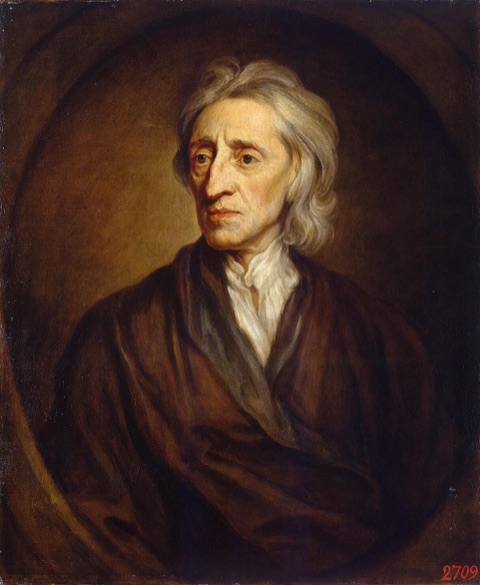
John Locke was an English philosopher and physician widely regarded as one of the most influential Enlightenment thinkers. His political philosophy, articulated in "Two Treatises of Government," provided foundational arguments for natural rights, government by consent, and the right of revolution against tyranny. These ideas profoundly influenced the American Founders and the Declaration of Independence. Locke's "Essay Concerning Human Understanding" established empiricism as a major philosophical approach, arguing that the mind begins as a blank slate (tabula rasa) shaped by experience. His "Letter Concerning Toleration" advocated religious freedom and separation of church and state. Locke's emphasis on reason, individual rights, and limited government helped shape modern liberal democratic thought.