Full text in modern English · Free PDF/EPUB
Holy Living
Want the file? The PDF/EPUB is free with an account.
Summary
- Author
- Jeremy Taylor (1613 to 1667 AD), Church of England clergyman
- Published
- 1650 AD · written at Golden Grove, Wales
- Source edition
- Henry G. Bohn's London edition of Holy Living and Dying, 1850
- Type
- Devotional rule of life, with prayers
- Length
- 126,000 words · 8 hours
What is Holy Living about?
"Holy Living" (The Rule and Exercises of Holy Living) is Jeremy Taylor's handbook for Christians whose church had been shut down. Through numbered rules and prayers it shows how to spend your hours, govern your appetites, deal justly with others and worship God at home, without a pastor or a parish.
Read the full summary (8 points, key themes)Show less
How the argument unfolds
- 01
Dedication: the religion no one can ban. Twelve marks show who belongs to God, among them prayer, mercy, honest work and patience. Those who have them need not envy others' revenues or "unbroken successions of bishops."
- 02
Chapter 1: the care of time. Twenty-three rules. Idleness is "the greatest wastefulness in the world," and even the busiest person owes God a yearly retreat of fasting and prayer.
- 03
Chapter 1: intention and God's presence. Aim decides whether a deed is holy, so "every meal is an act of worship" when eaten for God. "God is in every place: suppose it, therefore, to be a church."
- 04
Chapter 2: temperance and chastity. Drunkenness "differs from madness in nothing except that it is voluntary." The chastity section opens with a warning, "Reader, stop," and goes on to set limits even inside marriage: moderate, healthy and not too time-consuming.
- 05
Chapter 2: contentment. Taylor takes each grief by name: poverty, many children, childlessness, a child's early or violent death. "Every child we have to feed is a new income." A child who dies young "lost but little."
- 06
Chapter 3: obedience and authority. "Do not lift your hand against your prince or your parent on any pretext whatever." Husbands rule wives "as the soul rules over the body." Rulers are bound too, and must not sell judgeships: "those who buy the office will sell the act."
- 07
Chapter 3: trade and restitution. Thirteen rules cover lies, prices, credit, wages and bad promises. Then the hard line: "our sin can never be pardoned until we have restored what we unjustly took or wrongfully keep."
- 08
Chapter 4: religion toward God. Faith acts, as when "Ferdinand of Aragon believed the story Columbus told him." Fasting by itself "is a duty nowhere commanded or even advised." Prayer can "rescind or alter" God's conditional decrees, and at the Supper "the people are sacrificers too."
Key themes
- Rules as tools. Readers must "distinguish instruments from duties," and the rules are to be kept "not with scruples and anxiety." Precision is no virtue here: "A man must not weigh grains in the accounts of his repentance."
- Repentance as a life. Strictly, "there is only one repentance in a man’s whole life," the single turn from the devil's power to grace. The rest is the slow work of keeping it, so "No one should count on his pardon immediately."
- Work as worship. Plowmen, artisans and merchants are "the ministers of divine providence," and God attends a tradesman's quick prayer "as readily as at the longer services of less busy people."
Reader questions (7)Hide the questions
Questions about Holy Living
Can I read Holy Living online for free?
Yes. The complete text of this modern English edition is on this page, with no sign-up or paywall.
Is there a free PDF of Holy Living?
Yes. The PDF and EPUB of this edition are free with an Updated Works account. Sign in with Google or an email link; no card is needed.
What is the difference between Holy Living and Holy Dying?
They are companions. Holy Living teaches a Christian how to live day by day. Holy Dying, published in 1651 AD, teaches how to prepare for death and face it on the sickbed, and it sends readers back to this book's chapter on repentance.
Is Holy Living an Anglican book?
Yes, though Taylor says he has "neither served nor harmed the interest of any party of Christians." Its Anglican shape shows in the feast days, set prayers and commended confession to a spiritual guide.
How should you read it?
Daily. Its counsels must be used "like nourishment," not as an emergency dose. Where several remedies are offered, take the one that "fits your person or the circumstances of your need."
How did it influence John Wesley?
Wesley read Taylor in 1725 AD and later said the passages on purity of intention moved him to dedicate his whole life to God.
Is this the complete book?
Yes. This edition keeps the dedication, all four chapters and all the prayers.
Holy Living · Full text
Dedication
To the Right Honorable and Truly Noble Richard, Lord Vaughan, Earl of Carbery, Baron of Emlin and Molingar, Knight of the Honorable Order of the Bath
My Lord,
I have lived to see religion painted on banners and thrust out of churches; the temple turned into a tabernacle, and that tabernacle made portable and covered with the skins of beasts and torn curtains; and God worshiped not as he is, “the Father of our Lord Jesus” (an afflicted Prince, the King of sufferings), nor as the “God of peace” (two titles that God newly took upon himself in the New Testament and glories in forever), but acknowledged now rather as “The Lord of hosts,” a title he was pleased to lay aside when the kingdom of the gospel was preached by the Prince of peace. But when religion puts on armor, and God is not acknowledged by his New Testament titles, religion may have in it the power of the sword, but not the power of godliness. We may complain of this to God, and among those who are afflicted, but we have no remedy except what we must expect from the fellowship of Christ’s sufferings and the return of the God of peace.
In the meantime, religion now lays claim to stranger actions on new principles. People are apt to prefer a prosperous error to an afflicted truth. Some will think they are religious enough if their worship has in it the prevailing ingredient. The ministers of religion are so scattered that they cannot unite to stop the flood, nor, from their chairs or pulpits, from their synods or tribunals, rebuke the wickedness of the error, the ambition of evil guides, and the faithlessness of the willingly misled multitude. And those few good people who have no other plot in their religion than to serve God and save their souls lack such help of spiritual counsel as might serve their urgent needs, assist their efforts in acquiring virtues, and relieve their dangers when they are tempted to sin and death. With all this before me, I thought I had reasons enough inviting me to gather into one body the advice that the various needs of many people must use at some time or other, and many of them daily. I hoped that by a collection of holy precepts they might feel less the lack of personal guides at their side, and that the rules for the conduct of souls might be committed to a book they could always have, since they could not always have a prophet at hand when they needed one, nor be allowed to go up to the house of the Lord to inquire of the appointed oracles.
I know, my Lord, that there are some self-interested people who add scorn to the afflictions of the Church of England. Because she is afflicted by men, they call her “forsaken of the Lord”; and because her solemn assemblies are scattered, they think that the religion is lost and the church divorced from God. They suppose that Christ, who was a man of sorrows, is angry with his spouse when she is like him (for that is what the error truly amounts to). They suppose that he who promised his Spirit to help his servants in their troubles will, because they are in trouble, take away from them the Comforter, who cannot be a comforter except while he cures our sadness, relieves our sorrows, and turns our persecutions into joys, and crowns, and scepters.
But concerning the present state of the Church of England, I consider this. Because we now lack, to a great degree, the blessings of outward communion and the circumstances of a prosperous and unafflicted people, we must each assess ourselves by our own individual judgment. Every man is to pass sentence on the state of his own soul by the precepts and rules of our Lawgiver, not by the later decrees and customs of the church; that is, by the essential parts of religion rather than by the uncertain signs of any outward attachments. For although it is uncertain, when a man is a member of a church, whether he is a member of Christ or not, because in the church’s net there are fish both good and bad, yet we may be sure that, if we are members of Christ, we belong to a church for all purposes of spiritual religion and salvation. With this in view, allow me to state this great truth.
That man certainly belongs to God who (1) believes and is baptized into all the articles of the Christian faith, and studies to improve his knowledge of the things of God in the way best suited to make him live a holy life; (2) who, in obedience to Christ, worships God diligently, frequently, and constantly with natural religion, that is, with prayer, praise, and thanksgiving; (3) who takes every opportunity to remember Christ’s death by frequent sacrament (as it can be had), or else supplies the lack of the outward rite by inward acts of understanding, will, and memory (which is spiritual communion); (4) who lives chastely; (5) and is merciful; (6) and despises the world, using it as a man, but never letting it plunder a duty; (7) and is just in his dealings and diligent in his calling; (8) who is humble in spirit; (9) and obedient to government; (10) and content with his fortune and employment; (11) who does his duty because he loves God; and (12) especially if, after all this, he is afflicted and patient, or prepared to suffer affliction for the cause of God. The man who has these twelve signs of grace and predestination belongs to God as certainly, and is his son as surely, as he is his creature.
And if my brothers in persecution and in the bonds of the Lord Jesus can truly show these marks, they need not be troubled that others can show a prosperous appearance, great revenues, public assemblies, unbroken successions of bishops, conquering armies, or any arm of flesh, or any less certain circumstance. These are the marks of the Lord Jesus and the characteristics of a Christian. This is a good religion. These things God’s grace has put within our power, God’s laws have made our duty, and the nature of men and the needs of commonwealths have made necessary. The other circumstances and splendors of a church are beyond our power and not within our choice. They are good to use when they can be had, and they help to adorn or benefit the church; but even if some of them make up a church in its being as a society and a government, they are not part of its constitution as it is Christian and hopes to be saved.
And now our situation is such that we have been reduced to that religion which no one can forbid; which we can keep in the midst of persecution; by which the martyrs in our fathers’ days went to heaven; by which we can be servants of God, receive the spirit of Christ, make use of his comforts, and live in his love and in charity with all people. And those who do so cannot perish.
My Lord, I have now described some general lines and features of that religion which I have set down more particularly in the following pages. In them I have neither served nor harmed the interest of any party of Christians, as they are divided by uncharitable names from the rest of their brothers. No one will have reason to be angry with me for refusing to mix in his unnecessary or sinful quarrels, especially while I am trying to do him good by guiding him along the narrow way to heaven, without entangling him in the labyrinths and wild turnings of questions and uncertain talk. I have told people what they ought to do and by what means they may be helped, and in most cases I have also told them why. Yet I have done it as briefly as I thought necessary to establish a rule, without launching into homily or discourse. These rules are plain and useful, fitted for the best and the worst understandings and for the needs of all people; yet in using them I would ask the reader to proceed according to the following advice.
1. Those who would make profitable use of the proper instruments of virtue must live as if they were always under the physician’s care. For the counsels of religion are not to be applied to the disorders of the soul the way people used to take hellebore. They must dwell together with a person’s spirit and be twisted about his understanding forever. They must be used like nourishment, that is, with daily care and meditation, not like a single dose of medicine taken under the actual pressure of a present necessity. For counsels and wise discourses applied to an actual disorder are at best like strong smells to an epileptic: sometimes they may rouse him, but they never cure him. The following rules, if they are made familiar to our natures and to the thoughts of every day, may make virtue and religion easy and habitual. But when the temptation is present and has already seized some portion of our consent, we are not so ready to take counsel, and we find no taste or relish in the precept. The lessons are the same, but the instrument is unstrung, or out of tune.
2. In using the instruments of virtue, we must be careful to distinguish instruments from duties, and prudent advice from necessary commands. If the duty can be secured by some other means, let no scruples be stirred up about any other helps. Only, if in that case they can strengthen and secure the duty, or help toward perseverance, let them serve in whatever place they can fill. For there are some people in whom the Spirit of God has breathed so bright a flame of love that they do all their acts of virtue by perfect choice and without objection, and their zeal is too warm to be cooled by temptation. To such people, mortification by philosophical instruments, such as fasting, sackcloth, and other harshness to the body, is wholly useless. It is always a more uncertain means of acquiring any virtue or securing any duty; and if love has filled every corner of our soul, love alone is able to do all the work of God.
3. Do not be overprecise in defining the obligations of religion. Where the duty is necessary, and the means very reasonable in itself, do not argue too busily over whether it fits your particular case in every circumstance; but on the whole, make use of it. For it is a good sign of great religion, and no imprudence, when we have sufficiently considered the substance of things, then to be easy, humble, obedient, ready, and trusting in the details appointed for us, in particular by our spiritual guides, or in general by all wise people in similar cases. Whoever gives alms does best not always to consider the minute and strict measures of his ability, but to give freely, without calculation, and abundantly. A man must not weigh grains in the accounts of his repentance. For a great sin he should have a great sorrow and a great severity, and in this he should take the ordinary advice, even though perhaps a lesser rigor might be sufficient. Exacting precision, or arithmetical measurement, especially in proportions we set for ourselves, is only evidence of a lack of love and of eagerness in religion; or else it is an instrument of scruple, and then it becomes dangerous. Follow the rule wholeheartedly and fully enough, and if you should happen to make a mistake, it will do no harm.
4. If you sincerely intend to serve God and avoid sin in any one instance, do not refuse the hardest and most severe advice prescribed for that purpose, even though it may be unfamiliar to you; for whatever it is, habit will make it easy.
5. When many instruments are proposed for obtaining any virtue or restraining any vice, observe which of them fits your person or the circumstances of your need, and use it rather than the others, so that in this way you may be committed to watching over your soul and using spiritual skill and observation concerning it. In managing the soul, as the stakes are greater, so the needs are more numerous, the cases more intricate, and the circumstances and dangers greater and more pressing; and greater skill is required than in securing an estate or restoring health to an infirm body. I wish everyone in the world sincerely believed as much of this as is true; it would greatly help to do the work of God.
Thus, my Lord, I have made bold to reach out, by your hand, this little scroll of cautions to all those who, seeing your honored name set before my book, will be invited by the fairness of such a frontispiece to look into it. I must confess it cannot help looking like a design on my part to borrow your name and beg your patronage for my book, so that, if it has no other worth, it may at least have the splendor and warmth of a burning-glass, which borrows a flame from the eye of heaven and shines and burns by the rays of the sun, its patron. I will not clear myself of the suspicion, for I cannot pretend that the book is a present either fit in itself to be offered to such a person or any part of a just return. But I humbly ask that you would accept it as an acknowledgment of the great kindnesses and noblest treatment you have shown me. Yet it is in the same way that people in their religion give a piece of gum resin, or the fat of a cheap lamb, in sacrifice to him who gives them all that they have or need. He was pleased to employ your Lordship as a great minister of his providence, in making to me, the least of his servants, a promise of his goodness, “that he would never leave me nor forsake me.” Unless he enables me by greater services of religion to pay my great debt to your Honor, I must still run up my account, since I shall now spend as much in my need of pardon for this boldness as in receiving those favors by which I stand accountable to your Lordship in all the bonds of service and gratitude. Yet I am, in the deepest sense of duty and affection,
My most honored Lord,
Your Honor’s most obliged and most humble servant,
Jeremy Taylor
Chapter 1
The General Means of a Holy Life
Each of us needs to consider this. God has given us an excellent nature, wisdom and the power of choice, an understanding soul and an immortal spirit; he has made us lords over the beasts and only a little lower than the angels. Since he has done this, he has also appointed for us a work and a service great enough to employ those abilities, and he has destined us for a state of life after this one, which we can reach only by that service and obedience. Therefore, as every person is wholly God’s own portion by right of creation, so all our labors and care, all our powers and faculties, must be wholly employed in the service of God, and that through all the days of our life, so that when this life is ended we may live with him forever.
Nor is it enough for us to think of the service of God as a matter of the least necessity or of small occupation. It must be done by us as God intended it. It must be done with great earnestness and passion, with much zeal and desire. We must refuse no labor, give it much time, use the best guides, and arrive at our goal of glory by all the ways of grace, of prudence, and of religion.
And indeed, consider how much of our lives is taken up by the needs of nature; how many years are spent entirely before we come to any use of reason; how many more years pass before that reason serves us for any great purpose; how imperfect our reasoning is made by bad upbringing, false principles, bad company, bad examples, and lack of experience; how many parts of our wisest and best years are spent in eating and sleeping, in necessary business and unnecessary vanities, in worldly courtesies and less useful incidentals, in learning arts and sciences, languages, or trades. When we consider all this, the little portion of hours left for the practices of piety and for walking religiously with God is so short and trifling that, were the goodness of God not infinitely great, it might seem unreasonable or impossible for us to expect eternal joys in heaven from him. And this would be so even after we had spent well those few minutes left for God and his service, once we have served ourselves and our own affairs.
And yet it is worth considering that the fruit of our many days of recreation and vanity is very little; although we scatter much, we gather only a little profit. But from the few hours we spend in prayer and the exercises of a devout life, the return is great and profitable. What we sow in the minutes and spare portions of a few years grows up into crowns and scepters in a happy and glorious eternity.
1. Therefore, although it cannot be required that the greatest part of our time be spent in the direct acts of devotion and religion, it will be fitting, not only as a duty but also as great foresight, to set aside as much as we can for the service of God and the business of the Spirit. For God rewards our minutes with long and eternal happiness, and the greater the portion of our time we give to God, the more we store up for ourselves; and “no man is a better merchant than he who lays out his time upon God, and his money upon the poor.”
2. Only we should remember, and adore God’s goodness for it, that God has not only permitted us to serve the necessities of our nature but has made them become parts of our duty. If we direct these actions to the glory of God and intend them as means to keep ourselves in his service, he, by adopting them into religion, may turn our nature into grace and accept our natural actions as actions of religion. God is pleased to count it as part of his service if we eat or drink, provided it is done temperately and in the way that best preserves our health, so that our health may enable our service to him. As Arrian records, when someone asked Epictetus how a person may eat in a way pleasing to the gods, he answered, “If one eats justly, graciously, fairly, temperately, and decently, is that not also pleasing to the gods?” And there is not one minute of our lives (after we have come to the use of reason) in which we are not doing, or may not be doing, the work of God, even when we are most of all serving ourselves.
3. To this let us add that in these and all the other actions of our lives we always stand before God, acting and speaking and thinking in his presence, and that it makes no difference that our conscience is sealed in secrecy, since it lies open to God. If we add this, it will concern us to behave carefully, as in the presence of our Judge.
These three considerations, rightly handled and applied to the various parts and particulars of our lives, will be like Elisha stretched upon the child: they are fit to put life and vigor into every part of our life, and to make us live the life of grace and do the work of God.
Therefore, by way of introduction, I will bring these three into practice and show how every Christian may turn each and all of them to the advantage of piety through the whole course of life. Then whoever chooses to carry even one of them in the spirit may feel its benefit, like a universal instrument, helpful in all spiritual and temporal actions.
The Care of Our Time
Whoever is careful in the choice of how he spends his time will also be careful in the choice of his company and of his actions. Otherwise his company will entangle him in vanity and loss, and his actions, by being sinful, will throw away both his time and himself and set him back in the accounts of eternity.
God has given man a short time here on earth, and yet eternity depends on this short time. It depends on it in this way: for every hour of our life (after we are capable of being bound by laws and know good from evil) we must give an account to the great Judge of men and angels. This is what our blessed Savior told us, that we must give account for every idle word (Matt 12:36). He did not mean that every word not designed to build others up, or every word less than prudent, will be counted as a sin. He meant that the time we spend in idle talk and unprofitable conversation, time that could and should have been used for spiritual and useful purposes, is what must be accounted for.
For we must remember that we have a great work to do: many enemies to conquer, many evils to prevent, much danger to pass through, many difficulties to master, many necessities to serve and much good to do; many children to provide for, or many friends to support, or many poor to relieve, or many diseases to cure. Besides all this there are the needs of nature and of our relationships, our private and our public cares, and the duties of the world, which necessity and the providence of God have adopted into the family of religion.
We need not fear that this practice will become a snare to us, or that the duty must end in scruples, anxiety and endless fears. For we must remember that every person’s life may be so ordered (and indeed must be) that it becomes a continual service of God. The greatest trouble, the busiest trade and the entanglements of the world, when they are necessary, or charitable, or profitable for any of those ends we are bound to serve, whether public or private, are all a doing of God’s work.
For God provides the good things of the world to serve the needs of nature through the labors of the plowman, the skill and pains of the artisan, and the dangers and trade of the merchant. These people are, in their callings, the ministers of divine providence, the stewards of creation, and servants of a great family of God, the world, employed in procuring the necessities of food and clothing, ornament and medicine. In their measure, too, a king, a priest and a prophet, a judge and an advocate, doing the work of their offices according to its proper rules, are doing the work of God. For they serve those needs which God has made and yet has made no provision for except through their ministry. So no one can complain that his calling draws him away from religion. His calling itself, his very worldly employment in honest trades and offices, is a service of God. And if it is pursued moderately and according to the rules of Christian prudence, it will leave empty spaces enough for prayer and for withdrawing into a more spiritual religion.
God has given everyone work enough to do, so that there is no room for idleness; and yet he has so ordered the world that there is space for devotion. The person who has the least business in the world is called to spend more time in the dressing of his soul. And the one who has the most affairs may so order them that they become a service of God, while at certain times they are blessed with prayers and acts of religion, and all day long are hallowed by a holy intention.
In any case, as long as idleness is completely shut out of our lives, all the sins of wantonness, softness and effeminacy are prevented, and little room is left for temptation. So temptation is forced to climb up to a busy man along with his business, and sins creep upon him only through chance events and occasions. But to an idle person they come in full force, with open violence and the impudence of ceaseless pestering.
Idleness is called “the sin of Sodom and her daughters” (Ezek 16:49), and indeed, as Seneca says, it is “the burial of a living man.” An idle person is so useless for any purpose of God or man that he is like someone dead, unconcerned in the changes and needs of the world. He lives only to spend his time and eat the fruits of the earth, like vermin or wolves, which die and perish when their time comes and in the meantime do no good. They neither plow nor carry burdens; all that they do is either unprofitable or harmful.
Idleness is the greatest wastefulness in the world. It throws away something priceless in its present use and irreparable once it is past, since no power of art or nature can recover it. But we may practice the way to secure our time and make good use of it in the following rules.
Rules for Using Our Time
1. In the morning, when you wake, train yourself to think first of God, or of something that leads to his service; and at night also, let him close your eyes. Let your sleep be necessary and healthful, not idle and wasteful of time beyond the needs and conveniences of nature. And sometimes make a point of watching the preparation the sun makes as he comes out from his chambers in the east.
2. Let everyone who has a calling be diligent in carrying out its work, so as not to neglect it lightly, or without reasonable cause, at any of those times which by the custom of prudent people and good managers are usually given to it.
3. Let all the intervals and empty spaces of time be filled with prayer, reading, meditation, works of nature, recreation, charity, friendliness and neighborliness, and the means of spiritual and bodily health. Let us always remember to work in our calling in such a way that we do not neglect the work of our high calling, but begin and end the day with God, with such forms of devotion as suit our needs.
4. The resting days of Christians and the festivals of the church must in no sense be days of idleness. It is better to plow on holy days than to do nothing or to do wickedly. But let them be spent in the works of the day, that is, in works of religion and charity, according to the rules appointed for them (see chapter 4, on keeping festivals).
5. Avoid the company of drunkards and busybodies, and of all who tend to talk much to little purpose. No one can be careful of his time who is not prudent in the choice of his company; and if one of the speakers is empty, tedious and trifling, the one who listens and the one who answers in the conversation lose their time equally.
6. Never walk with anyone, or take up any trifling occupation, merely to pass the time. For every day well spent may become a “day of salvation,” and time rightly used is an “acceptable time.” And remember that the time you trifle away was given you to repent in, to pray for pardon of your sins, to work out your salvation, to do the work of grace, and to lay up a treasure of good works against the day of judgment, so that your time may be crowned with eternity.
7. In the midst of the work of your calling, often withdraw to God in short prayers and brief, fervent aspirations. So Lucan praises Caesar: “In the midst of battles I always found leisure for the stars, the regions of the sky, and the gods above.” These short prayers may make up for the lack of those larger portions of time which perhaps you desire for devotion, and in which you think other people have an advantage over you. For in this way you reconcile your outward work and your inward calling, the church and the commonwealth, the employment of the body and the interest of your soul. Be sure that God is present at your breathings and heartfelt sighs of prayer as readily as at the longer services of less busy people. Your time is as truly sanctified by a trade, together with devout though shorter prayers, as by the longer services of those whose time is not filled up with labor and useful business.
8. Let your occupation be one that befits a reasonable person: not a business fit for children or for people out of their minds, but one suited to your age and understanding. For a person may be very idly busy, and take great pains to so little purpose that in all his labor and spending of time he serves no end but folly and vanity. There are some trades that wholly serve the ends of idle people and fools, trades fit to be seized upon by the severity of the laws and banished from under the sun. And there are some people who are busy, but, like Domitian, only in catching flies.
9. Let your occupation be suited to your person and calling. There are some who spend their time on affairs infinitely beneath the dignity of their position. Called by God or by the state to help bear great burdens and to judge a people, they weaken their understanding and unfit themselves by base and brutish business. So Nero went up and down Greece and challenged the fiddlers at their own trade. Aeropus, a Macedonian king, made lanterns. Harcatius, the king of Parthia, was a mole-catcher, and Biantes the Lydian filed needles. Whoever is appointed to minister in holy things must not let secular affairs and menial crafts eat up large portions of his working time. A clergyman must not keep a tavern, nor a judge be an innkeeper. And it was great idleness in Theophylact, the patriarch of Constantinople, to spend his time in his horse stable when he should have been in his study, or the pulpit, or saying his holy offices. Such occupations are the diseases of labor and the rust of time, a rust it gathers not by lying still but by dirty employment.
10. Let our occupation be such as befits a Christian, that is, in no way mixed with sin. For whoever takes pains to serve the ends of covetousness, or ministers to another’s lust, or keeps a shop of impurity or intemperance, is idle in the worst sense. Every hour so spent runs him backward, and must be spent again in the remaining and shorter part of his life, and spent better.
11. People of high rank and of no trade must be especially prudent and careful in how they employ and manage their time. They are miserable if their education has been so loose and undisciplined that it left them without the skill to spend their time. But they are most miserable if such poor management and lack of skill make them fall into vicious and baser company, and drive on their time through the sad minutes and periods of sin and death. Those among them who are learned know the worth of time and how to make good use of a day. They should prepare themselves for the purposes in which they may be most useful, whether in arts or arms, in public counsel, or in the government of their country.
But as for others of them who are unlearned, let them choose good company: people who will not tempt them to any vice or join with them in one, but who may supply their deficiencies by counsel and conversation, by way of guidance and companionship. Let them learn easy and useful things: let them read history and the laws of the land, and learn the customs of their country, the condition of their own estate, and profitable and charitable ways of managing it. Let them study to govern their families prudently, and learn the burdens of their tenants and the needs of their neighbors. In proportion to their means let them supply those needs, reconcile their quarrels, and prevent their lawsuits or quickly end them. And in this glut of leisure and lack of occupation, let them set apart larger portions of their time for religion and the needs of their souls.
12. Let women of noble birth and great fortune do the same things in their measure and capacity. Let them nurse their children, look after the affairs of the house, visit poor cottages and relieve their needs, be courteous to the neighborhood, learn in silence from their husbands or their spiritual guides, read good books, pray often and speak little, and “learn to do good works for necessary uses” (Titus 3:14). By that phrase St. Paul expresses the obligation of Christian women to good housekeeping and to charitable provision for their family and neighborhood.
13. Let people of every condition avoid all delicacy and fussiness in their clothing or diet, because such softness leads them into great waste of their time. They dress and comb away all the opportunities for their morning devotion and half the serious work of the day, and sleep away the care and provision for their souls.
14. Let everyone of every condition avoid curiosity and all inquiry into things that do not concern them. For all business in things that do not concern us is a spending of our time to no good of our own, and therefore not to the purpose of a happy eternity. Our neighbors’ needs are not to be counted in this reckoning, for they concern us, as one member of the body is concerned in the grief of another. But going from house to house, and being tattlers and busybodies, which are the canker and rust of idleness as idleness is the rust of time, are reproved by the apostle in severe language and are forbidden for the sake of this practice.
15. As far as possible, cut out all irrelevant and useless occupations from your life: unnecessary and whimsical visits, long waiting upon great personages where neither duty, nor necessity, nor charity obliges us, all empty meetings, all laborious trifles, and whatever spends much time to no real civil, religious or charitable purpose.
16. Do not let your recreations be lavish spenders of your time. Choose those that are healthful, short, passing, restorative and fit to refresh you; but by no means dwell on them or make them your great occupation. For whoever spends his time in sports and calls it recreation is like a man whose garment is made entirely of fringes and whose food is nothing but sauces: such sports are unhealthy, costly and useless. Therefore avoid games that require much time or long attendance, or that tend to steal your affections from more serious occupations. For whatever you have given your affections to, you will not begrudge your time. Natural necessity, and the example of St. John, who refreshed himself by playing with a tame partridge, teach us that it is lawful to relax and unbend our bow, but not to let it become unready or unstrung.
17. Set apart some portions of every day for more solemn devotion and religious exercise, and be strict in observing them. If a variety of business, or prudent affairs, or the demands of society press upon you, still so order your rule that its necessary parts are not left out. Though just occasions may make our prayers shorter, let nothing but a violent, sudden and urgent necessity make you omit your morning and evening devotions entirely on any one day. If you are forced to make them very short, you may supply and lengthen them with brief, fervent prayers and short withdrawals during the day, in the midst of your work or of your company.
18. Do not do the “work of God negligently” (Jer 48:10) and idly. Do not let your heart be on the world when your hand is lifted up in prayer. And be sure to prefer an act of religion, in its place and proper season, to all worldly pleasure, letting secular things that can in themselves be set aside wait upon it in these circumstances.
Do not be like the patriarch who ran from the altar in St. Sophia to his stable, in all his pontifical robes and in the middle of the service, to see a colt newly foaled by his beloved and much-prized mare Phorbante. More prudent and strict was the conduct of Sir Thomas More. When the king sent for him while he was at his prayers in public, he sent back word that he would attend him once he had first performed his service to the King of kings. And it did honor to Rusticus that, when letters from Caesar were handed to him, he refused to open them until the philosopher had finished his lecture. In honoring God and doing his work, put forth all your strength. For the only time you can be fully confident you have gained is the time prudently and zealously spent in God’s service.
19. When the clock strikes, or however else you measure the day, it is good to say a short, fervent prayer every hour, so that the parts and returns of devotion may be the measure of your time. Do the same whenever your sleep is broken, so that those spaces which have no direct worldly business in them may be filled with religion.
20. If by doing all this you have not secured your time through early and forward-looking care, then be sure to redeem the time by timely diligence. That is, be devout and religious in those very matters in which you formerly sinned. As Procopius says, those who win good repute in the very things in which they once went wrong always bring a more becoming defense. Spend your time especially on those graces whose opposites you formerly practiced, doing acts of chastity and temperance with as great zeal and earnestness as you once acted out your uncleanness. And then by every means watch against your present and future dangers, securing your footing from day to day. This is properly to redeem your time, that is, to buy your security from it at the price of any labor and honest means.
21. Let even the busiest person set apart some “solemn time every year” (1 Cor 7:5), in which, for that time, he leaves all worldly business and gives himself wholly to fasting and prayer, and to the dressing of his soul by confessions, meditations and waiting upon God. In this way he may settle his accounts, renew his vows, make amends for his carelessness, and return to the place from which frivolity and the vanities of the world, or the opportunity of temptations, or the distraction of secular affairs, have carried him.
22. We shall be much helped in this, and find the work easier, if every night before we sleep we examine the actions of the past day with particular scrutiny whenever anything out of the ordinary has happened, such as a long conversation, a feast, much business or a variety of company. As the Golden Verses of Pythagoras counsel, “Do not let sleep come upon your soft eyes until you have gone over each of the day’s deeds three times: Where did I go wrong? What did I do? What that I ought to have done was left undone?” If nothing but the ordinary has happened, less examination will be enough. Only let us take care not to sleep without such a recollection of the day’s actions as may bring before us anything remarkable and important, as matter either for sorrow or for thanksgiving. For other things a general care is proportionate.
23. Let all these things be done prudently and moderately, not with scruples and anxiety. For these are good aids, but the particulars are not divine commandments, and therefore they are to be used as each person finds them suitable to his condition. Provided that our duty is secured, everyone is left to himself, and to the guidance of those who are appointed for him, as to the degrees and the means. Happy is the one who can secure every hour for a sober or pious occupation. But the duty does not consist scrupulously in minutes and half-hours, but in greater portions of time. It requires only that no minute be spent in sin, that the greater portions of our time be spent in sober occupation, and that all the appointed days, and some portions of every day, be given to religion. In all the lesser parts of time we are left to our own choices and prudent management, and to the consideration of the great degrees and differences of glory laid up for us in heaven according to the degrees of our care, piety and diligence.
The Benefits of This Practice
Besides its influence on our whole lives, this practice has a special power in the following ways.
1. It prevents beggarly sins, that is, those sins into which idleness and poverty usually betray people, such as lying, flattery, stealing and deceit.
2. It is a fitting antidote against sins of the flesh, and those that come from fullness of bread and emptiness of occupation.
3. It is a great means of preventing the smallest sins and irregularities of our life, which usually creep upon idle, unoccupied and meddlesome people.
4. It not only teaches us to avoid evil but engages us in doing good, as the proper business of all our days.
5. It prepares us so well against sudden changes that we shall not easily be caught off guard by the sudden coming of the day of the Lord. For whoever is careful of his time will not easily be unready and unprepared.
Purity of Intention
That we should intend and aim at God’s glory in every action we do, whether it is natural or chosen, is expressed by St. Paul: “Whether ye eat or drink, do all to the glory of God” (1 Cor 10:31). When we observe this rule, every action of nature becomes religious, and every meal is an act of worship, and will have its reward in its proportion, just as an act of prayer does. Blessed be that goodness and grace of God which, out of infinite desire to glorify and save mankind, would make the very works of nature capable of becoming acts of virtue, so that all our lifetime we may do him service.
This grace is so excellent that it sanctifies the most ordinary action of our life, and yet so necessary that without it the very best actions of our devotion are imperfect and corrupt. For whoever prays out of custom, or gives alms for praise, or fasts to be thought religious, is only a Pharisee in his devotion, a beggar in his alms, and a hypocrite in his fast. But a holy end sanctifies all these, and all other actions that can be made holy; it gives them their distinction and wins them acceptance.
For as knowing the end distinguishes a man from a beast, so choosing a good end distinguishes him from an evil man. Hezekiah recounted his good deeds on his sickbed and obtained favor from God, but the Pharisee was judged insolent for doing the same thing, because the Pharisee did it to reproach his brother, and Hezekiah did it to obtain mercy from God. As Juvenal says, “If Atticus dines splendidly, he is thought a man of taste; if Rutilus does, a madman.” Zechariah questioned the angel about his message and was struck speechless for his unbelief; but the blessed Virgin Mary questioned too, and was blameless. For she asked in order to inquire into the manner of the thing, but he did not believe the thing itself: he doubted God’s power, or the truth of the messenger, while her doubt concerned only her own incapacity. It was this that distinguished the mourning of David from the outcry of Saul, the confession of Pharaoh from that of Manasseh, and the tears of Peter from the repentance of Judas. As Seneca says, “The praise is not in the deed done, but in the manner of its doing. If a man visits his sick friend, and watches at his pillow for charity’s sake and because of his old affection, we approve it; but if he does it in hope of a legacy, he is a vulture, and only watches for the carcass. The same things are honorable and dishonorable: the manner of doing them, and the end of the design, makes the separation.”
Holy intention is to a man’s actions what the soul is to the body, or form to its matter, or the root to the tree, or the sun to the world, or the fountain to a river, or the base to a pillar. For without these the body is a dead trunk, the matter is sluggish, the tree is a block, the world is darkness, the river is quickly dry, and the pillar crashes down flat into ruin; and without holy intention the action is sinful, or unprofitable and vain. The poor farmer who gave a dish of cold water to Artaxerxes was rewarded with a golden goblet; and whoever gives the same to a disciple in the name of a disciple will have a crown. But if he gives water out of spite, when the disciple needs wine or a cordial, his reward will be to lack that very water to cool his tongue.
But this duty must be put into rules.
Rules for Our Intentions
1. In every action reflect on the end. When you undertake it, consider why you are doing it, and what you are proposing to yourself as a reward, and to your action as its end.
2. Begin every action in the name of the Father, of the Son, and of the Holy Spirit. The meaning of this is (1) that we take care not to do the action without God’s permission or warrant; (2) that we design it for the glory of God, if not in the direct action, then at least in its consequence, and if not in the particular, then at least in the whole order of things and events; (3) that it may be so blessed that what you intend for innocent and holy purposes may not, by any chance, or by people’s abuse or misunderstanding, be turned into evil or made the occasion of sin.
3. Let every action of importance begin with prayer that God would not only bless the action but sanctify your purpose; and make an offering of the action to God. Holy and well-intended actions are the best offerings and gifts we can make to God; and when God has been given title to them, he will all the more readily keep the fire on the altar bright and shining.
4. As you carry the action forward, renew and rekindle your purpose by short, fervent prayers to this effect: “Not unto us, O Lord, not unto us, but unto thy name let all praise be given” (Ps 115:1). And consider: “Now I am doing the work of God. I am his servant; I am in a happy employment; I am doing my Master’s business. I am not at my own disposal; I am using his talents, and all the gain must be his.” For then you may be sure that, as the glory is his, so the reward will be yours. If you bring his goods home with increase, he will make you ruler over cities.
5. Take care that, while the altar is sending up its holy smoke in this way, you do not let the birds come and carry away the sacrifice. That is, do not let what began well, and was intended for God’s glory, decline and end in your own praise, or in temporal satisfaction, or in sin. A story told to show the vileness of unchastity is well begun; but if your female listener is pleased with your language, and begins to like your person for the sake of your story rather than to dislike the crime, be watchful, lest this fine head of gold descend into silver and brass and end in iron and clay, like Nebuchadnezzar’s image. For an action takes its name and its reward from its end; as Aristotle says, “He who steals in order to commit adultery is more an adulterer than a thief.”
6. If some incidental result that you did not first intend could come about, do not take it into your purposes or make any use of it at all. For example, if by telling a true story you could do your enemy a bad turn, by no means do it; but once the temptation is discovered, turn all your hostility against that.
7. In every more solemn act of religion, join many good ends together, so that considering them may engage all your affections, and so that when any one of them ceases, the purity of your intention may be supported by another supply. Whoever fasts only to tame a rebellious body may be tempted to leave off fasting once he is provided with a remedy, either in grace or in nature. But suppose someone intends in his fast the mortification of every unruly appetite; the habit of bearing the yoke of the Lord; contempt of the pleasures of food and drink; the humbling of all wilder thoughts; obedience and humility, austerity and charity; its fitness for devotion and its help to it; and the performing of an act of repentance. Whatever happens, he will have reason enough to continue his purpose and to sanctify it. And it is certain that the more good ends are designed in an action, the more degrees of excellence a person attains.
8. If any temptation to spoil your purpose arises during a religious duty, do not immediately abandon the action; rather strive to correct your intention and to mortify the temptation. St. Bernard taught us this rule. When the devil saw him preaching excellently and doing much good to his hearers, he tempted him to vainglory, hoping that the good man would stop preaching in order to avoid it. Bernard gave only this answer: “I neither began for you, nor for you will I make an end.”
9. In all actions of long duration, deliberation, and continuance, let your holy and devout intention be actual; that is, let it be given to God by a special prayer or action, by a particular act of resignation or offering. But in smaller actions, in little and indifferent things, do not fail to secure a devout habitual intention; that is, let it be included in your general care that no action should have a bad end, and let it be comprehended in your general prayers, in which you offer yourself and all you do to God’s glory.
10. Do not call every temporal end a defiling of your intention, but only (1) when it contradicts any of God’s ends, or (2) when it is the principal aim in an act of religion. For sometimes a temporal end is part of our duty, as are all the actions of our calling, whether our employment is religious or civil. We are commanded to provide for our family. But if the minister of divine services takes up that holy calling for covetous or ambitious ends, or does not aim principally and especially at the glory of God, he has polluted his hands and his heart; the fire of the altar is quenched, or it sends up nothing but the smoke of mushrooms or unpleasant gums. And it is a great unworthiness to prefer the interest of a creature before the ends of God, the Almighty Creator.
But many cases may arise in which a man’s heart may deceive him, and he may not clearly know what is in his own spirit. Therefore we shall best judge by the following signs whether our intentions are pure and our purposes holy.
Signs of Purity of Intention
1. It is probable that our hearts are right with God, and our intentions innocent and devout (see rule 18 in the preceding section, on the care of our time), if we take up actions of religion or of civil life with an affection proportionate to the quality of the work: if we pursue our temporal affairs with a desire no greater than our need; if in actions of religion we are zealous, active, and effective, as far as prudence will permit; but, in all cases, if we value a religious design above a temporal one, when in other respects they stand in equal relation to their respective ends. That is, whatever is necessary for our soul’s health should be more highly esteemed than what serves the body, and the necessities, the indispensable necessities, of the spirit should be served before the needs of nature, when they are required in their several circumstances. Or, to put it more plainly still, our hearts are probably right when we choose any temporal inconvenience rather than commit a sin, and when we choose to do a duty rather than to make a profit.
But if someone goes about his recreation or his trade cheerfully, promptly, readily, and busily, and the works of religion slowly, flatly, and without appetite, so that his spirit moves like Pharaoh’s chariots when the wheels were off, it is a sign that his heart is not right with God, but clings too much to the world.
2. It is likely that our hearts are pure and our intentions spotless when we are not anxious about the opinions and judgments of others, but only that we do our duty and are accepted by God. For our eyes will certainly be fixed on the place from which we expect our reward; and if we desire that God should approve us, it is a sign that we are doing his work and expect him to be our paymaster.
3. Whoever does as well in private, between God and his own soul, as in public, in pulpits, theaters, and marketplaces, has given himself good evidence that his purposes are full of honesty, nobility, and integrity. For what Elkanah said to the mother of Samuel, “Am not I better to thee than ten sons?” (1 Sam 1:8), is most certainly true of God: he who is to be our judge is better than ten thousand witnesses. But whoever wants his virtue publicized is pursuing not virtue but glory. As Seneca says, “He is not just who will not be just without praise; but he is a righteous man who does justice when to do so is made infamous, and he is a wise man who is delighted with an ill name that is well gotten.” And indeed a man has a strange covetousness, or folly, if he is not content with this reward, that he has pleased God. And see what he gets by it. Whoever does good works for praise or for worldly ends sells a priceless jewel for a trifle; what would purchase heaven for him he parts with for the breath of the people, which at best is only air, and seldom wholesome air.
4. It is well, too, when we are not anxious or troubled about the effect and outcome of all our actions, but, having first commended them to God in prayer, leave them at his disposal. For then, if the outcome does not answer to our desires, or to the effectiveness of the means, we have nothing left to rest in but the honesty of our purposes; and the more indifferent we are about success, the more likely it is that we have secured that honesty. St. James converted only eight persons when he preached in Spain; and our blessed Savior converted fewer than his own disciples did. If your labors prove unsuccessful and you are much troubled by it, it is certain that you did not think yourself sure of a reward for your intention, which you might have done if it had been pure and just.
5. Whoever loves and honors virtue wherever it is to be seen loves virtue for God’s sake and its own. But whoever is envious or angry at a virtue that is not his own, at the perfection or excellence of his neighbor, does not covet the virtue but its reward and reputation; and then his intentions are polluted. It showed great generosity of spirit in Moses that he wished all the people might be prophets; if he had aimed at his own honor, he would have prophesied alone. But whoever desires only that the work of God and of religion should go forward is pleased with it, whoever the instrument may be.
6. Whoever despises the world and all the vanities that belong to it is the best judge of his intentions, and the most secure in them, because he is furthest removed from temptation. Every degree of mortification is a testimony to the purity of our purposes; and in whatever degree we despise sensual pleasure, or earthly honors, or worldly reputation, in the same degree we may conclude that our heart is right toward religion and spiritual aims.
7. When we are not anxious about the instruments and means of our actions, but use the means God has set before us with resignation, indifference, and thankfulness, it is a good sign that we are intent on the end of God’s glory rather than on our own convenience or temporal satisfaction. Whoever is indifferent whether he serves God in riches or in poverty is a seeker of God rather than of himself; and whoever will throw away a good book because it is not elaborately gilded is more eager to please his eye than to inform his understanding.
8. When a temporal end that is consistent with a spiritual one, and professed to be subordinate to it, happens to fail and be defeated, if we can rejoice in that, so long as God’s glory and the interests of religion are secured, it is a great sign that our hearts are right and our ends prudently designed and ordered.
When our intentions are balanced, regulated, and examined in this way, we may consider the following.
1. This exercise has such universal power in the whole course of a holy life that it is like the soul to every holy action and must be provided for in every undertaking; and by itself alone it is sufficient to adopt all natural and indifferent actions into the family of religion.
2. There are some actions, usually counted as parts of our religion, which are nevertheless in themselves so relative and imperfect that without purity of intention they degenerate; and unless they are directed toward, and carried on to, the purposes for which God designed them, they return into the family of common, secular, or sinful actions. Thus alms are for charity, fasting for temperance, prayer for religion, humiliation for humility, and austerity or suffering serves the virtue of patience. When these actions fail of their several ends, or are not directed to their own purposes, alms are misspent, fasting is a pointless trouble, prayer is mere lip-labor, humiliation is only hypocrisy, and suffering is only vexation. Such were the alms of the Pharisee, the fast of Jezebel, the prayer of Judah rebuked by the prophet Isaiah, the humiliation of Ahab, and the martyrdom of heretics. In these nothing is given to God but the body, or the forms of religion, while the soul and the power of godliness are wholly lacking.
3. We are to consider that no intention can sanctify an unholy or unlawful action. Saul the king disobeyed God’s commandment and spared the cattle of Amalek in order to reserve the best for sacrifice; Saul the Pharisee persecuted the church of God with the design of doing God service; and those who killed the apostles also had good purposes, but their actions were unhallowed. When there is both truth in the choice and charity in the intention, when we go to God in ways of his own choosing or approving, then our eye is single, our hands are clean, and our hearts are pure. But when someone does evil that good may come of it, or does good for an evil purpose, he is like a man who rolls himself in thorns so that he may sleep easily; he roasts himself in the fire so that he may quench his thirst with his own sweat; he turns his face to the east so that he may go to bed with the sun. I end this with the saying of a wise heathen, Publilius Syrus: “He is to be called evil who is good only for his own sake. Regard not how full the hands are that you bring to God, but how pure. Many cease from sin out of fear alone, not out of innocence or love of virtue”; and such people are not yet to be called innocent, but fearful.
The Practice of the Presence of God
That God is present in all places, that he sees every action, hears every word spoken, and understands every thought, is nothing strange to a Christian ear. We have been taught this doctrine not only by right reason and the agreement of all the wise people in the world, but also by God himself in Holy Scripture: “Am I a God at hand, saith the Lord, and not a God afar off? Can any hide himself in secret places that I shall not see him? saith the Lord. Do not I fill heaven and earth?” (Jer 23:23-24). “Neither is there any creature that is not manifest in his sight; but all things are naked and open to the eyes of him with whom we have to do” (Heb 4:13). “For in him we live, and move, and have our being” (Acts 17:28).
God is wholly in every place, yet enclosed in no place. He is bound with no cords except those of love; he is not divided into parts, nor changeable into different shapes; he fills heaven and earth with his present power and with his never-absent nature. That is how St. Augustine expresses this article of faith. So we may imagine God to be like the air and the sea, and all of us enclosed in his circle, wrapped up in the lap of his infinite nature, or like infants in the wombs of their pregnant mothers. We can no more be removed from the presence of God than from our own being.
The Different Ways God Is Present
We understand the presence of God in several ways, and for several purposes.
1. God is present by his essence. Because his essence is infinite, it cannot be contained within the limits of any place. And because he is of an essential purity and spiritual nature, he is not diminished by being thought present even in places of unnatural uncleanness. For as the sun casts its light on the mud of beaches and shores and its beams remain unpolluted, so God is not dishonored when we suppose him present in each of his creatures, and in every part of every one of them. He remains as unmixed with any unseemly contact as the soul is within the inward parts of the body.
2. God is present everywhere by his power. As the Answers to the Orthodox puts it, “God encompasses the universe by his will, being greater than the universe in dignity, just as he is in essence.” He rolls the orbs of heaven with his hand; he fixes the earth with his foot; he guides all the creatures with his eye and refreshes them with his influence. He makes the powers of hell shake with his terrors, binds the devils with his word, and throws them out with his command; and he sends the angels on embassies with his decrees. He hardens the joints of infants and strengthens their bones when they are being fashioned in secret, deep in the earth. It is he who assists at the countless births of fishes. There is not one hollow in the bottom of the sea where he does not show himself to be its Lord by sustaining the creatures that come to live there. And in the wilderness the bittern and the stork, the dragon and the satyr, the unicorn and the elk live on his provisions, revere his power, and feel the force of his almightiness.
3. God is more specially present in some places by distinct and more special manifestations of himself for extraordinary purposes. First, by glory. In this sense his seat is in heaven, because there he sits surrounded by all the outward displays of his glory, which he is pleased to show to all the inhabitants of those inward and secret courts of his. And so those who “die in the Lord” may properly be said to have “gone to God.” They were with him before, but now they enter into his courts, into the secret place of his tabernacle, into the retinue and splendor of his glory. The former is called walking with God, but this is dwelling or being with him. “I desire to be dissolved and to be with Christ,” said St. Paul (Phil 1:23). But this manner of the divine presence is reserved for the elect people of God, as their portion in their homeland.
4. God is specially present, by grace and blessing, in holy places and in the solemn assemblies of his servants (Matt 18:20; Heb 10:25). If holy people meet in caves and dens of the earth when persecution or some public necessity disturbs the public order, arrangements, and convenience, God does not fail to come to them there. But for the same or a greater reason, God is also present where they meet ordinarily, by order and public authority; there God is present ordinarily, that is, at every such meeting. God will go out of his way to meet his saints when they themselves are forced out of their orderly way by a sad necessity. Otherwise, God’s usual way is to be present in those places where his servants are appointed to meet ordinarily (1 Kgs 5:9; Ps 138:1-2). But his presence there means nothing other than a readiness to hear their prayers, to bless their persons, to accept their services, and to approve even the circumstance of orderly and public meeting. For the prayers of consecration, the public authority that set the place apart, God’s love of order, and the reasonable customs of religion have fixed this manner of his presence there, ordinarily and to a certain degree; and he loves to have it so.
5. God is especially present in the hearts of his people by his Holy Spirit. Indeed, the hearts of holy people are temples in the truth of things, and in type and shadow they are heaven itself. For God reigns in the hearts of his servants: there is his kingdom. The power of grace has subdued all his enemies: there is his power. They serve him night and day and give him thanks and praise: that is his glory. This is the religion and worship of God in the temple. The temple itself is the human heart. Christ is the High Priest, who from there sends up the incense of prayers, joins them to his own intercession, and presents them all together to his Father. And the Holy Spirit, by dwelling there, has also consecrated it into a temple (1 Cor 3:16; 2 Cor 6:16). God dwells in our hearts by faith, Christ by his Spirit, and the Spirit by his purities, so that we are also the private chambers of the mysterious Trinity. And how does this fall short of heaven itself, except as infancy falls short of maturity, and letters fall short of words? It is the same state of life, but not the same age. It is heaven in a mirror, dim but true, showing forth the beauties of the soul, the graces of God, and the images of his eternal glory by the reality of a special presence.
6. God is especially present in the consciences of all people, good and bad, by way of testimony and judgment. That is, he is there as one who reminds us, calling our actions to mind; as a witness, bringing them to judgment; and as a judge, to acquit or to condemn. In this life, this manner of presence follows the manner of this life, which is to say it is imperfect, and we forget many actions of our lives. Yet the greatest changes in our state of grace or sin, our most significant actions, are always present to us, like capital letters to an old and dim eye. And at the day of judgment God will draw aside the cloud and reveal this manner of his presence more openly. He will make it plain that he observed our very thoughts, and that he had only laid aside those things which we did not then discern because we had covered them with dust and negligence. But when we have risen from our dust and imperfection, they all appear plain and legible.
Now, the consideration of this great truth is of very wide use in the whole course of a Christian’s life. All its consequences and effects are universal. Whoever remembers that God stands by as witness and judge, seeing every secret, and yet is not greatly restrained when tempted to sin, must have added shamelessness to his impiety. As St. Augustine says: “The greatest part of sin is taken away if a man has a witness of his conduct. And he is a great despiser of God who sends a boy away when he is going to commit fornication, and yet will dare to do it though he knows God is present and cannot be sent off: as if the eye of a little boy were more awe-inspiring than the all-seeing eye of God. He is to be feared in public, he is to be feared in private: if you go out, he spies you; if you go in, he sees you; when you light the candle, he observes you; when you put it out, then also God marks you. Be sure that while you are in his sight, you behave yourself as befits so holy a presence.” But if you are determined to sin, withdraw wisely and go where God cannot see you; for nowhere else can you be safe.
And certainly, suppose people would always consciously consider and truly value this truth: that God is the great eye of the world, always watching over our actions, an ever-open ear to hear all our words, and an unwearied arm always lifted up to crush a sinner into ruin. That would be the readiest way in the world to make sin cease from among the children of men, and for people to draw near to the blessed state of the saints in heaven, who cannot sin, because they always walk in the presence of God and behold his face. This means of holy living is to be put into practice by the following rules.
Rules for Practicing This Awareness
1. Let this conscious thought return often: that God is everywhere present, filling every place. Say with David, “Whither shall I go from thy spirit, or whither shall I flee from thy presence? If I ascend up into heaven, thou art there: if I make my bed in hell, thou art there,” etc. (Ps 139:7-8). By recurring often, this thought will create a habitual dread and reverence toward God, and fear in all your actions. For, as Boethius observes, it lays a great necessity and obligation on us to act blamelessly when we act before the Judge, who is infallible in his sentence, all-knowing in his information, severe in his anger, powerful in his providence, and unbearable in his wrath and indignation.
2. At the beginning of your acts of religion, make an act of adoration: that is, solemnly worship God, place yourself in God’s presence, and behold him with the eye of faith. Let your desires actually fix on him as the object of your worship, the reason for your hope, and the fountain of your blessing. For when you have placed yourself before him and kneel in his presence, it is most likely that all the following parts of your devotion will correspond to the wisdom of such an awareness and the glory of such a presence.
3. Let everything you see represent to your spirit the presence, the excellence, and the power of God, and let your dealings with created things lead you to the Creator. In this way your actions will more often be done with a conscious eye to God’s presence, because you so often see him in the mirror of creation. In the face of the sun you may see God’s beauty; in the fire you may feel his heat warming you; in the water, his gentleness to refresh you. It is he who comforts your spirit when you have taken restoring cordials; it is the dew of heaven that makes your field give you bread; and the breasts of God are the bottles that supply drink for your needs. This philosophy, which lies open to everyone’s experience, is a great help to our piety; and by this act of understanding our wills are restrained from violence and misbehavior.
4. In your private hours, hold frequent conversations, or short exchanges, between God and your own soul. “Seven times a day do I praise thee: and in the night season also I thought upon thee, while I was waking.” So did David. And every act of complaint or thanksgiving, every act of rejoicing or of mourning, every petition, and every turning of the heart in these exchanges is a going to God, an appearing in his presence, and a picturing of him as present to your spirit and to your need. A devout person long ago called this “building to God a chapel in our heart.” It reconciles Martha’s work with Mary’s devotion, charity with religion, and the necessities of our calling with the employments of devotion. For in this way, in the midst of the work of your trade, you may retire into your chapel, your heart, and converse with God by frequent addresses and returns.
5. Present and offer to God “acts of love and fear,” which are the proper effects of this awareness and the proper exercise of this consideration. For as God is present everywhere by his power, he calls for reverence and godly fear; as he is present to you in all your needs and relieves them, he deserves your love. In every event of our lives we find one or the other of these evident, and in most things we see both. So it is a fitting and proportionate response that, at every such demonstration of God, we show that we are aware of it, either by admiring the divine goodness or by trembling at his presence: always obeying him because we love him, and always obeying him because we fear to offend him. This is what Enoch did, who in this way “walked with God.”
6. Let us remember that God is in us, and that we are in him. We are his workmanship; let us not deface it. We are in his presence; let us not pollute it by unholy and impure actions. God has “also wrought all our works in us” (Isa 26:12). And because he rejoices in his own works, if we defile them and make them unpleasant to him, we walk perversely with God, and he will walk crookedly toward us.
7. “God is in the inmost heart of your brother”: refresh it when he needs it. Then you give your alms in the presence of God and to God, and he feels the relief that you provide for your brother.
8. God is in every place: suppose it, therefore, to be a church. The decency of conduct and devoutness of bearing that religion, custom, or civility and public manners teach you to use in churches, use the same in all places. There is only this difference: in churches, let your conduct be religious in its external forms and circumstances as well; but there and everywhere, let it be religious in abstaining from spiritual indecencies and in readiness to do good actions. Then it may not be said of us what God once complained of his people, in the Vulgate’s reading of the verse: “Why hath my beloved done wickedness in my house?” (Jer 11:15).
9. God is in every creature: be cruel toward none, and do not abuse any by intemperance. Remember that the creatures, and every member of your own body, are each one of the lesser chambers and dwelling places of God. They are things that God has blessed with his presence, hallowed by his touch, and set apart from unholy use by making them belong to his dwelling.
10. The person who walks as in the presence of God is the one who converses with him in frequent prayer and frequent communion; who runs to him in all his necessities; who asks his counsel in all his doubts; who opens all his wants to him; who weeps before him for his sins; who asks him for remedy and support for his weakness; who fears him as a judge, reverences him as a lord, obeys him as a father, and loves him as a patron.
The Benefits of This Practice
Since the benefits of this consideration and exercise extend to every part of piety, I have less need to specify any particulars. Yet, most properly, this exercise of considering the divine presence is:
1. An excellent help to prayer, producing in us reverence and awe toward the divine majesty of God, and actual devotion in our acts of worship.
2. It produces confidence in God and fearlessness of our enemies, patience in trouble and hope of remedy. For God is so near in all our sad circumstances; he governs the hearts of men and the outcome of events; he measures out our trials and supplies us with remedy; and where his rod strikes us, his staff supports us. To this we may add that God, who is always with us, is especially with us by promise in tribulation, to turn the misery into a mercy, so that our greatest trouble may become our advantage by entitling us to a new manner of the divine presence.
3. It tends to produce joy and rejoicing in God, since we are more inclined to delight in those who share and witness our way of life; every degree of living and conversing together creates a bond and an affection. We are of the same household as God. He is with us in our natural actions, to preserve us; in our recreations, to restrain us; in our public actions, to applaud or reprove us; in our private ones, to observe us; in our sleep, to watch beside us; in our waking hours, to refresh us. And if we walk with God in all his ways, as he walks with us in all ours, we will find constant reasons that enable us to keep that rule of God: “Rejoice in the Lord always, and again I say rejoice” (Phil 4:4). This reminds me of a saying of an old religious man, recorded in the Life of St. Antony: “There is one way of overcoming our spiritual enemies: spiritual mirth, and a perpetual bearing of God in our minds.” This effectively resists the devil and allows us to receive no harm from him.
4. This exercise also tends to kindle holy desires to enjoy God, because it produces joy when we do enjoy him: the same desires that a weak man has for a defender, the sick man for a physician, the poor for a patron, the child for his father, and the engaged lover for her betrothed.
5. From the same fountain there naturally flow humility of spirit; an awareness of our great distance and our great needs, our daily wants and hourly supplies; and wonder at God’s unspeakable mercies. It is the cause of great modesty and decency in our actions. It helps the mind to gather itself, and restrains the scattering and looseness of wandering thoughts. It establishes the heart in good purposes and leads on to perseverance. It wins purity and perfection, according to God’s saying to Abraham, “walk before me and be perfect” (Gen 17:1); it wins holy fear and holy love, and indeed everything that belongs to holy living. When we see ourselves placed in the eye of God, who sets us to work and will reward us generously, to serve him with eye-service is very pleasing, for he sees the heart as well. And the lack of this consideration was declared to be the reason why Israel sinned so grievously: “for they say, The Lord hath forsaken the earth, and the Lord seeth not” (Ps 10:11); therefore “the land is full of blood, and the city full of perverseness” (Ezek 9:9).
What a child would do in the eye of his father, a pupil before his tutor, a wife in the presence of her husband, and a servant in the sight of his master, let us always do the same. For we are made a spectacle to God, to angels, and to men. We are always in the sight and presence of the all-seeing and almighty God, who is also to us a father and a guardian, a husband and a lord.
Prayers and Devotions for These Considerations
1. For grace to use our time well
O eternal God, who from all eternity behold and love your own infinite glories and perfections, and who created me to do the work of God in a human way, and to serve you in this generation and according to my abilities: give me your grace, that I may be a careful and prudent spender of my time. So may I best forestall or resist all temptation, be useful to the Christian commonwealth, and glorify your name by fulfilling all my duty. Take from me all slothfulness, and give me a diligent and active spirit, and wisdom to choose my work, that I may do works suited to my station and to the dignity of a Christian, and may fill up all the spaces of my time with actions of religion and charity. Then, when the devil assaults me, he may not find me idle; and my dearest Lord, at his sudden coming, may find me busy in lawful, necessary, and holy actions, improving the talent you, my Lord, have entrusted to me, so that I may enter into the joy of my Lord and share in his eternal happiness. Grant this for your mercy’s sake, and for my dearest Savior’s sake. Amen.
Here follow the devotions for ordinary days, for the right use of those portions of time that every day must allow for religion.
The First Morning Prayers, After Dressing
Humbly and reverently compose yourself, with your heart lifted up to God and your head bowed, and, kneeling meekly on your knees, say the Lord’s Prayer. After it, use the following collects, or as many of them as you choose.
“Our Father, which art in heaven,” etc.
1. An act of adoration: the song that the angels sing in heaven
Holy, holy, holy, Lord God Almighty, who was, and is, and is to come (Rev 11:17): heaven and earth, angels and men, the air and the sea, give glory, and honor, and thanks to him that sitteth on the throne, who liveth for ever and ever (Rev 5:10, 13). All the blessed spirits and souls of the righteous cast their crowns before the throne, and worship him that liveth for ever and ever (Rev 4:10). Thou art worthy, O Lord, to receive glory, and honour, and power; for thou hast created all things, and for thy pleasure they are, and were created (Rev 4:11). Great and marvelous are thy works, O Lord God Almighty; just and true are thy ways, thou King of saints (Rev 15:3). Your wisdom is infinite, your mercies are glorious; and I am not worthy, O Lord, to appear in your presence, before whom the angels hide their faces. O holy and eternal Jesus, Lamb of God, who were slain from the beginning of the world: thou hast redeemed us to God by thy blood out of every nation, and hast made us unto our God kings and priests, and we shall reign with thee for ever. Blessing, honour, glory, and power, be unto him that sitteth on the throne, and to the Lamb, for ever and ever. Amen.
2. An act of thanksgiving: the song of David for the morning
Sing praises unto the Lord, O ye saints of his, and give thanks to him for a remembrance of his holiness. For his wrath endureth but the twinkling of an eye, and in his pleasure is life; heaviness may endure for a night, but joy cometh in the morning (Ps 30:4-5). You, Lord, have preserved me this night from the violence of the spirits of darkness, from all sad mishaps and harmful accidents, and from the wrath that I have deserved every day. Thou hast brought my soul out of hell; thou hast kept my life from them that go down into the pit (Ps 30:3); thou hast showed me marvellous great kindness, and hast blessed me for ever: the greatness of thy glory reacheth unto the heavens, and thy truth unto the clouds. Therefore shall every good man sing of thy praise without ceasing. O my God, I will give thanks unto thee for ever (Ps 30:12). Hallelujah!
3. An act of oblation, or presenting ourselves to God for the day
Most holy and eternal God, Lord and sovereign of all creatures, I humbly present to your divine majesty myself, my soul and body, my thoughts and my words, my actions and intentions, my passions and my sufferings: to be disposed by you for your glory, to be blessed by your providence, to be guided by your counsel, to be sanctified by your Spirit, and afterward, that my body and soul may be received into glory. For nothing can perish that is in your keeping, and the enemy of souls cannot devour what is your portion, nor take it out of your hands. This day, O Lord, and all the days of my life, I dedicate to your honor; the actions of my calling I dedicate to the uses of grace; and the religion of all my days, to be united to the merits and intercession of my holy Savior Jesus, so that in him and for his sake I may be pardoned and accepted. Amen.
4. An act of repentance or contrition
For as for me, I am not worthy to be called your servant; much less am I worthy to be your son. For I am the vilest of sinners and the worst of men: a lover of the things of the world and a despiser of the things of God; proud and envious, lustful and intemperate, greedy for sin and impatient of correction, eager to seem holy and careless of being so; carried away by self-interest; fooled by presumption and false principles; disturbed by anger, with a peevish and unmortified spirit; and thrown into disorder by a whole body of sin and death. Lord, pardon all my sins for my sweetest Savior’s sake. Holy Jesus, you who died for me, save me and deliver me. Do not reserve my sins to be punished in the day of wrath and eternal vengeance, but wash away my sins and blot them out of your remembrance, and purify my soul with the waters of repentance and the blood of the cross. Then, for what is past, your wrath may not come out against me; and for the time to come, I may never provoke you to anger or to jealousy. O just and dear God, be compassionate and gracious to your servant. Amen.
5. The prayer or petition
Bless me, gracious God, in my calling, for such purposes as you choose for me or employ me in. Relieve me in all my sadness; make my bed in my sickness; give me patience in my sorrows, confidence in you, and grace to call on you in all temptations. O be my guide in all my actions and my protector in all dangers. Give me a healthy body and a clear understanding; a sanctified and just, a charitable and humble, a religious and a contented spirit. Do not let my life be miserable and wretched, nor my name stained with sin and shame, nor my condition lifted up to a tempting and dangerous fortune. But let my condition be blessed, and my way of life useful to my neighbors and pleasing to you; so that when my body lies down in its bed of darkness, my soul may pass into the regions of light and live with you forever, through Jesus Christ. Amen.
6. An act of intercession, or prayer for others, to be added to this or any other service as our devotion, our duty, or their needs shall lead us
O God of infinite mercy, who have compassion on all people and relieve the needs of all who call to you for help: hear the prayers of your servant, who is unworthy to ask anything for himself, yet in humility and duty is bound to pray for others.
For the Church. O let your mercy descend on the whole church. Preserve her in truth and peace, in unity and safety, in all storms, and against all temptations and enemies; that she, offering to your glory the never-ceasing sacrifice of prayer and thanksgiving, may advance the honor of her Lord, be filled with his Spirit, and share in his glory. Amen.
For the King. In mercy, remember the king. Preserve his person in health and honor; his crown in wealth and dignity; his kingdoms in peace and plenty; and the churches under his protection in piety and knowledge, and in a strict and holy religion. Keep him always in your fear and favor, and crown him with glory and immortality. Amen.
For the Clergy. Remember those who minister in holy things; let them be clothed with righteousness, and sing with joyfulness. Amen.
For Wife or Husband. Bless your servant [my wife or husband] with health of body and of spirit. O let the hand of your blessing be on his [or her] head night and day; support him in all necessities, strengthen him in all temptations, comfort him in all his sorrows, and let him be your servant in all changes. And make us both dwell with you for ever in your favor, in the light of your countenance, and in your glory. Amen.
For Our Children. Bless my children with healthy bodies, with good understanding, with the graces and gifts of your Spirit, with sweet dispositions and holy habits. Sanctify them throughout, in their bodies, and souls, and spirits, and keep them blameless until the coming of the Lord Jesus. Amen.
For Friends and Benefactors. Be pleased, O Lord, to remember my friends, all who have prayed for me, and all who have done me good. [Here name those you especially wish to commend.] Do good to them, and return all their kindness double into their own bosom, rewarding them with blessings, sanctifying them with your graces, and bringing them to glory.
For Our Family. Let all my family and kindred, my neighbors and acquaintances [here name any other relations you wish], receive the benefit of my prayers and the blessings of God, the comforts and supports of your providence, and the sanctification of your Spirit.
For All in Misery. Relieve and comfort all the persecuted and afflicted. Speak peace to troubled consciences; strengthen the weak; confirm the strong; instruct the ignorant; deliver the oppressed from those who plunder them, and relieve the needy who have no helper. And bring us all, by the waters of comfort and in the ways of righteousness, to the kingdom of rest and glory, through Jesus Christ our Lord. Amen.
To God, the Father of our Lord Jesus Christ; to the eternal Son, who became incarnate and was born of a virgin; and to the Spirit of the Father and the Son, be all honor and glory, worship and thanksgiving, now and for ever. Amen.
Another Form of Morning Prayer
In the name of the Father, and of the Son, and of the Holy Spirit. Our Father, etc.
1. Most glorious and eternal God, Father of mercy and God of all comfort, I worship and adore you with the deepest humility of my soul and body. I give you all thanks and praise for your infinite and essential glories and perfections, and for the continual demonstration of your mercies to me, to all who are mine, and to your holy catholic church.
2. I acknowledge, dear God, that I have deserved the greatest measure of your wrath and indignation. If you had dealt with me as I deserved, I would now, at this very moment, be desperately lamenting my miseries in the sorrows and horrors of a sad eternity. But your mercy has triumphed over your justice and over my sins. You have continued to give me life and time for repentance; you have opened to me the gates of grace and mercy, and you are always calling me to enter in and to walk in the paths of a holy life, so that I might glorify you and be glorified by you eternally.
3. See, O God: for this great and inexpressible goodness of yours, for preserving me this night, and for all your other graces and blessings, I offer up my soul and body, all that I am and all that I have, as a sacrifice to you and to your service. I humbly beg you to pardon all my sins, to defend me from all evil, and to lead me into all good; and let my portion be among your redeemed, in the gathering together of the saints in the kingdom of grace and glory.
4. Guide me, O Lord, through all the changes and varieties of the world, so that in everything that happens I may keep an even and tranquil spirit, and my soul may be wholly resigned to your most divine will and pleasure. Let me never murmur at your gentle chastisements and fatherly correction, and never grow proud and insolent, even when I feel a torrent of comforts and prosperous successes.
5. Fix my thoughts, my hopes and my desires on heaven and heavenly things. Teach me to despise the world and to repent deeply of my sins. Give me holy purposes of amendment, and spiritual strength and help to carry out faithfully whatever I piously intend. Enrich my understanding with an eternal treasure of divine truths, so that I may know your will. And you who work in us to will and to do according to your good pleasure, teach me to obey all your commandments and to believe all your revelations, and make me a partaker of all your gracious promises.
6. Teach me to watch over all my ways, so that I may never be caught off guard by sudden temptations or a careless spirit, nor ever return to folly and vanity. Set a watch, O Lord, before my mouth, and keep the door of my lips, so that I do not offend with my tongue against either piety or charity. Teach me to think of nothing but you and what serves your glory and service; to speak of nothing but you and your glories; and to do nothing but what befits your servant, whom your infinite mercy, by the graces of your Holy Spirit, has sealed for the day of redemption.
7. Let all my passions and affections be so put to death and brought under the dominion of grace that I may never offend your divine Majesty, whether deliberately and on purpose, or through levity, rashness or thoughtlessness. Make me what you would have me be. Strengthen my faith, confirm my hope, and give me a daily increase of charity, so that today and always I may serve you according to all my opportunities and abilities, growing from grace to grace. And so at last, by your mercies, may I receive the consummation and perfection of grace, the glories of your kingdom, in the full enjoyment of the face and excellences of God the Father, the Son and the Holy Spirit, to whom be glory and praise, honor and adoration, given by all angels, all people and all creatures, now and to all eternity. Amen.
To this you may add the prayer of intercession for others whom we are bound to remember, which is found at the end of the preceding prayer. Or else you may use the special prayers that follow at the end of chapter 4 (for parents, for children, and so on).
Then conclude with this short prayer.
Now, in all tribulation and anguish of spirit, in all dangers of soul and body, in prosperity and adversity, in the hour of death and in the day of judgment, holy and most blessed Savior Jesus, have mercy on me, save me, and deliver me and all faithful people. Amen.
Between this and noon, the public prayers appointed by authority are usually said. All the clergy are obliged to attend them, and other devout people who have the leisure are to join them as well.
In the afternoon, or at any time of the day when a devout person withdraws to a private room for prayer or spiritual exercises, that person may say the following devotions.
An Exercise for Any Time of Day
In the name of the Father, and of the Son, etc. Our Father, etc.
A hymn gathered from the Psalms, recounting the excellence and greatness of God.
O be joyful in God, all ye lands; sing praises unto the honor of his name, make his name to be glorious. O come hither, and behold the works of God, how wonderful he is in his doings towards the children of men. He ruleth with his power for ever (Ps 66:1, 4, 6).
He is the Father of the fatherless, and defendeth the cause of the widow, even God in his holy habitation. He is the God that maketh men to be of one mind in a house, and bringeth the prisoners out of captivity; but letteth the runagates continue in scarceness (Ps 68:5-6).
It is the Lord that commandeth the waters; it is the glorious God that maketh the thunder. It is the Lord that ruleth the sea: the voice of the Lord is mighty in operation; the voice of the Lord is a glorious voice (Ps 29:3-4).
Let all the earth fear the Lord: stand in awe of him, all ye that dwell in the world (Ps 33:8). Thou shalt show us wonderful things in thy righteousness, O God of our salvation; thou art the hope of all the ends of the earth, and of them that remain in the broad sea (Ps 65:5).
Glory be to the Father, etc.
Or this:
O Lord, thou art my God, I will exalt thee; I will praise thy name, for thou hast done wonderful things; thy counsels of old are faithfulness and truth (Isa 25:1).
Thou, in thy strength, settest fast the mountains, and art girded about with power. Thou stillest the raging of the sea, and the noise of his waves, and the madness of his people (Ps 65:6-8).
They, also, that remain in the uttermost parts of the earth shall be afraid at thy tokens; thou, that makest the outgoings of the morning and evening to praise thee.
O Lord God of hosts, who is like unto thee? thy truth, most mighty Lord, is on every side (Ps 89:9). Among the gods there is none like unto thee: O Lord, there is none that can do as thou doest. For thou art great, and doest wondrous things; thou art God alone (Ps 86:8-9).
God is very greatly to be feared in the council of the saints, and to be had in reverence of all them that are round about him (Ps 89:8, 15).
Righteousness and equity are in the habitation of thy seat; mercy and truth shall go before thy face. Glory and worship are before him; power and honor are in his sanctuary (Ps 96:6).
Thou, Lord, art the thing that I long for; thou art my hope, even from my youth. Through thee have I been holden up, ever since I was born; thou art he that took me out of my mother’s womb; my praise shall be always of thee (Ps 71:5-6).
Glory be to the Father, etc.
After this, some portion of Holy Scripture may be read, from the New Testament or from the wisdom books of the Old, such as Proverbs, Ecclesiastes and the like, because these are of great use both for piety and for good conduct in ordinary life. When you have meditated on it for a while, humbly settle yourself on your knees and say the following.
Short Prayers
My help standeth in the name of the Lord, who hath made heaven and earth (Ps 124:8).
Show the light of thy countenance upon thy servant, and I shall be safe (Ps 80:7).
Do well, O Lord, to them that be true of heart, and evermore mightily defend them (Ps 125:4).
Direct me in thy truth, and teach me; for thou art my Savior, and my great Master (Ps 25:5).
Keep me from sin and eternal death, and from my enemies, visible and invisible.
Give me grace to live a holy life, and give me your favor, so that I may die a godly and happy death.
Lord, hear the prayer of your servant, and give me your Holy Spirit.
The Prayer
1. O eternal God, merciful and gracious, grant your favor and your blessing to your servant. Let the love of your mercies, and the dread and fear of your majesty, make me careful and eager to search out your will, diligent to carry it out, and steadfast in the practices of a holy life to the very last of my days.
2. Keep me, O Lord, for I am yours by creation; guide me, for I am yours by purchase. You have redeemed me by the blood of your Son, and loved me with the love of a father, for I am your child by adoption and grace. Let your mercy pardon my sins, your providence keep me safe from the punishments and evils I have deserved, and your care watch over me, so that I may never offend you again. Make me a child in malice; but in understanding, piety and the fear of God let me be a full-grown man in Christ, innocent and prudent, readily equipped and instructed for every good work.
3. Keep me, O Lord, from the destroying angel and from the wrath of God. Never let your anger rise against me, but let your rod gently correct my follies and guide me in your ways, and your staff support me in all sufferings and changes. Preserve me from broken bones, from noxious, infectious and severe sicknesses, from great violence of fortune and sudden surprises. Keep all my senses whole until the day of my death, and let my death be neither sudden, untimely nor unprepared for. Let it come in the common manner of men, having nothing extraordinary in it except an extraordinary piety and the manifestation of your great and miraculous mercy.
4. Let no riches ever make me forget myself, and no poverty ever make me forget you. Let no hope or fear, no pleasure or pain, no accident from without, no weakness within, hinder or disorder my duty, or turn me from the ways of your commandments. O let your Spirit dwell with me forever, and make my soul just and charitable, full of honesty, full of religion, resolute and constant in holy purposes, but unbending toward evil. Make me humble and obedient, peaceable and devout. Let me never envy anyone’s good, nor deserve to be despised myself; and if I am despised, teach me to bear it with meekness and charity.
5. Give me a tender conscience; a manner of life that is discreet and affable, modest and patient, generous and obliging; a body chaste and healthy; a sufficient livelihood suited to my condition; contentment in every state; a resigned will and mortified affections. So may I be as you would have me, and may my portion be in the lot of the righteous, in the brightness of your countenance and the glories of eternity. Amen.
Holy is our God. Holy is the Almighty. Holy is the Immortal. Holy, holy, holy Lord God of Sabaoth, have mercy upon me.
A Form of Evening Prayer
For those who do not have the time or opportunity to say the public prayers appointed for this service.
1. O eternal God, great Father of men and angels, who established the heavens and the earth in a wonderful order, making day and night follow each other, I humbly address your divine Majesty, begging your mercy and protection this night and always. O Lord, pardon all my sins: my light and rash words, the vanity and impiety of my thoughts, my unjust and uncharitable actions, and whatever wrong I have done against you this day or at any time before. See, O God, my soul is troubled by the memory of my sins and by the frailty and sinfulness of my flesh, which is exposed to every temptation and of itself unable to resist any. Lord God of mercy, I earnestly beg you to give me a great portion of your grace, enough to be sufficient and effective for putting to death all my sins and vanities and disorders. Then, as I once served my lust and unworthy desires, I may now give myself up wholly to your service and to the pursuits of a holy life.
2. Blessed Lord, teach me to remember my sins often and with sorrow, and be pleased to remember them no more yourself. Let me never forget your mercies, and may you always remember to do me good. Teach me to walk always as in your presence. Ennoble my soul with great degrees of love for you, and seal my spirit with great fear, devotion and veneration for your holy name and laws. So may it become the great work of my whole life to serve you, to advance your glory, and to root out all the accursed habits of sin, so that in holiness of life, in humility, in charity, in chastity and all the ornaments of grace, I may wait in patience for the coming of our Lord Jesus. Amen.
3. Teach me, O Lord, to number my days, that I may apply my heart unto wisdom, and always to remember my last end, so that I may not dare to sin against you. Let your holy angels be always present with me, to keep me in all my ways: from the malice and violence of the spirits of darkness, from evil company and the occasions and opportunities of evil, from perishing in public calamities, from all the ways of sinful shame, from the hands of all my enemies, from a sinful life, and from despair in the day of my death. Then, O brightest Jesus, shine gloriously on me; let your mercies and the light of your countenance sustain me in all my agonies, weaknesses and temptations. Give me the opportunity of a prudent and spiritual guide, and of receiving the holy sacrament. And let your loving Spirit so guide me in the ways of peace and safety that, with the testimony of a good conscience and the sense of your mercies and refreshment, I may depart this life in the unity of the church, in the love of God, and in a certain hope of salvation through Jesus Christ our Lord and most blessed Savior. Amen.
Our Father, etc.
Another Form of Evening Prayer
This may also be used at bedtime.
Our Father, etc.
I will lift up my eyes unto the hills, from whence cometh my help (Ps 121:1-8).
My help cometh of the Lord, which made heaven and earth.
He will not suffer thy foot to be moved: he that keepeth thee will not slumber.
Behold, he that keepeth Israel shall neither slumber nor sleep.
The Lord is thy keeper; the Lord is thy shade upon thy right hand.
The sun shall not smite thee by day, neither the moon by night.
The Lord shall preserve thee from all evil; he shall preserve thy soul.
The Lord shall preserve thy going out and thy coming in, from this time forth for evermore.
Glory be to the Father, etc.
1. Visit this dwelling, I beg you, O Lord, with your mercy, and visit me with your grace and salvation. Let your holy angels pitch their tents around it and dwell here, so that no illusion of the night may deceive me, the spirits of darkness may not come near to hurt me, and no evil or sad accident may oppress me. And let the eternal Spirit of the Father dwell in my soul and body, filling every corner of my heart with light and grace. Let no deed of darkness overtake me; and let your blessing, most blessed God, be upon me forever, through Jesus Christ our Lord. Amen.
2. Into your hands, most blessed Jesus, I commend my soul and body, for you have redeemed both with your precious blood. So bless and sanctify my sleep to me that it may be temperate, holy and safe, a refreshment to my wearied body, enabling it so to serve my soul that both may serve you with a never-failing duty. O let me never sleep in sin or in eternal death, but give me a watchful and prudent spirit, so that I may neglect no opportunity of serving you. Whether I sleep or wake, live or die, let me be your servant and your child. And when the work of my life is done, let me rest in the bosom of my Lord, until I am awakened by the voice of the archangel, the trumpet of God, and called to sit down and feast at the eternal supper of the Lamb. Grant this, O Lamb of God, for the honor of your mercies and the glory of your name, O most merciful Savior and Redeemer Jesus. Amen.
3. Blessed be the God and Father of our Lord Jesus, who has sent his angels and kept me this day from the destruction that walks at noon and the arrow that flies by day, and who has given me his Spirit to restrain me from those evils into which my own weaknesses, my evil habits and my restless enemies would easily betray me. Blessed and forever hallowed be your name for that never-ceasing shower of blessing by which I live, and am content and blessed, and provided for in all my needs, and set forward in my duty and in my way to heaven. Blessing, honor, glory, and power be unto Him that sitteth on the throne, and to the Lamb, for ever and ever. Amen.
Holy is our God. Holy is the Almighty. Holy is the Immortal. Holy, holy, holy Lord God of Sabaoth, have mercy upon me.
Short Prayers and Meditations for the Night
To be used when we wake in the night.
Stand in awe and sin not; commune with your own heart upon your bed and be still. I will lay me down in peace and sleep: for thou, Lord, only makest me to dwell in safety (Ps 4:4, 9).
O Father of spirits and God of all flesh, have mercy and pity on all sick and dying Christians, and receive the souls you have redeemed as they return to you.
Blessed are those who dwell in the heavenly Jerusalem, where there is no need of the sun, neither of the moon, to shine in it: for the glory of God does lighten it, and the Lamb is the light thereof (Rev 21:23). And there shall be no night there, and they need no candle; for the Lord God giveth them light, and they shall reign for ever and ever (Rev 22:5).
Meditate on Jacob wrestling with the angel all night. You too must press God earnestly for a blessing, and not give up until he has blessed you.
Meditate on the angel passing over the children of Israel and destroying the Egyptians for disobedience and oppression. Pray for the grace of obedience and charity, and for divine protection.
Meditate on the angel who in one night destroyed the whole army of the Assyrians for fornication. Call to mind the sins of your youth, the sins of your bed, and say with David, “My reins chasten me in the night season, and my soul refuseth comfort.” Pray for pardon and for the grace of chastity.
Meditate on the agonies of Christ in the garden, his sorrow and affliction all that night. Thank and adore him for his love, which made him suffer so much for you; and hate your sins, which made it necessary for the Son of God to suffer so much.
Meditate on the four last things: (1) the certainty of death; (2) the terrors of the day of judgment; (3) the joys of heaven; (4) the pains of hell; and the eternity of both.
Think of all your friends who have gone before you, and pray that God would grant you to meet them in a joyful resurrection.
“The day of the Lord will come as a thief in the night; in the which the heavens shall pass away with a great noise, and the elements shall melt with fervent heat; the earth also, and the works that are therein, shall be burnt up. Seeing, then, that all these things shall be dissolved, what manner of persons ought we to be, in all holy conversation and godliness, looking for and hastening unto the coming of the day of God?” (2 Pet 3:10)
Lord, in mercy remember your servant in the day of judgment. Thou shalt answer for me, O Lord my God. In thee, O Lord, have I trusted: let me never be confounded. Amen.
I ask the Christian reader to notice that all these services or forms of prayer, even if every one of them were used every day, would not take more than an hour and a half. And because some of them are given in two forms (so that only one of the pair is to be used on any one day), the time is much less. By giving God one hour in twenty-four, you may have the comforts and rewards of devotion. Anyone who thinks this is too much is either very busy in the world or very careless of heaven. I have divided the prayers into smaller portions so that each reader may use whichever portions, and as many of them, as they please in any one of the forms.
A Prayer for Holy Intention
For the section on purity of intention: a prayer for holy intention at the beginning and throughout any significant undertaking, such as study, preaching and the like.
O eternal God, who made all things for man, and man for your glory, sanctify my body and soul, my thoughts and my intentions, my words and actions, so that whatever I think or speak or do may be directed by me to the glorifying of your name, and by your blessing may be effective and successful in the work of God, as far as it is capable. Lord, turn my necessities into virtue, and the works of nature into works of grace, by making them orderly, regular, temperate, subordinate, and profitable to ends beyond their own proper power. Let no pride or self-seeking, no covetousness or revenge, no impure mixture or unworthy purposes, no petty aims and low imaginings, pollute my spirit and profane any of my words and actions. But let my body be a servant of my spirit, and both body and spirit servants of Jesus, so that, doing all things for your glory here, I may share in your glory hereafter, through Jesus Christ our Lord. Amen.
A Prayer on the Presence of God
For the section on the practice of the presence of God: a prayer meditating on and referring to God’s presence. This prayer is especially to be used in temptation to private sin.
O Almighty God, infinite and eternal, you fill all things with your presence. You are everywhere by your essence and by your power: in heaven by glory, in holy places by your grace and favor, in the hearts of your servants by your Spirit, and in the consciences of all people by your testimony and your observation of us. Teach me to walk always as in your presence, to fear your majesty, and to reverence your wisdom and omniscience, so that I may never dare to commit any indecency in the sight of my Lord and my Judge. Let me conduct myself with such care and reverence that my Judge may be not my accuser but my advocate. So may I, expressing my belief in your presence here by walking carefully, feel its effects in sharing eternal glory, through Jesus Christ. Amen.
Chapter 2
Christian Sobriety
Sobriety in General
In all its moral parts, the Christian religion is nothing else but the law of nature and great reason. It meets the great necessities of the whole world and promotes the great good of every relationship, and it carries us through all the changes and chances of life to that end which God has purposed from eternal ages for all who live according to it, and which he has revealed in Jesus Christ. By the apostle’s arithmetic it has only these three parts: (1) sobriety, (2) justice, and (3) religion. “For the grace of God, bringing salvation, hath appeared to all men; teaching us that, denying ungodliness and worldly lusts, we should live, (1) soberly, (2) righteously, and (3) godly, in this present world, looking for that blessed hope and glorious appearing of the great God and our Savior Jesus Christ” (Titus 2:11-13). The first contains all our conduct in our personal and private capacities, the fair treatment of our bodies and our spirits. The second extends our duty into all our relationships with our neighbor. The third contains the offices of direct religion and our dealings with God.
Christian sobriety is the whole of that duty which concerns ourselves in the matter of food and drink, pleasures and thoughts. It contains within it the duties of (1) temperance, (2) chastity, (3) humility, (4) modesty, and (5) contentment.
It is the practice of severity, denial and frustration toward our appetite when it grows unreasonable in any of these matters. We will best understand why this is necessary by considering the evil consequences of sensuality, softness, or a foolish craving after fleshly pleasures.
The Evil Consequences of Sensuality
1. A longing after sensual pleasures is a dissolving of a person’s spirit. It makes the spirit loose, soft and wandering, unfit for noble, wise or spiritual work, because the principles on which pleasure is chosen and pursued are stupid, weak and ignorant. They prefer the body to the soul, the appetite to reason, sense to the spirit, and the pleasures of a short stay to the pleasures of eternity. As Plautus says, “If you have conquered your inclination rather than your inclination you, you have reason to rejoice. Those who conquer their inclinations are always reckoned better men than those whom their inclinations conquer.”
2. Sensual pleasure is by nature vain, empty and unsatisfying. It is always biggest in expectation and a mere vanity in the enjoying, and when it goes off it leaves a sting and a thorn behind it. Our laughter, if it is loud and high, commonly ends in a deep sigh; and every kind of pleasure has a sting in its tail, though it carries beauty on its face and sweetness on its lip.
3. Sensual pleasure does great injury to a person’s spirit. It is a kind of enchantment or witchcraft, blinding the understanding and enslaving the will. Whoever knows that he is freeborn, or redeemed with the blood of the Son of God, will not readily allow the freedom of his soul to be entangled and plundered. In Arrian we read: “Only consider, man, at what price you are selling your own will. If nothing else, do not sell it cheap.”
4. It is utterly contrary to the state of a Christian, whose life is a continual exercise, a wrestling and a warfare. Sensual pleasure disables him for this by making him yield to the very enemy he must fight if he is ever to be crowned. As Epictetus says, “Do you want to win at the Olympic games? Then you must keep good order, eat by strict rule, abstain from sweets, and train under compulsion, and so on.” The apostle pointed to this same argument: “He that striveth for masteries is temperate in all things: now they do it to obtain a corruptible crown, but we an incorruptible” (1 Cor 9:25).
5. It follows with certainty that sensual pleasure is the greatest hindrance in the world to martyrdom. Sensual pleasure is a pampering of the flesh; martyrdom is a cruelty to it. A Christian arrives at martyrdom by degrees, and must first have crucified his lesser affections, for whoever is overcome by small arguments of pain will hardly consent to lose his life under torments.
The Degrees of Sobriety
Sobriety opposes this love of pleasure in three degrees.
1. The first is a contempt for or aversion to pleasures, or a resolve against all welcome of the occasions and temptations of sensuality. It lies in the inner faculties of will and understanding, which decree and declare against such pleasures, disapproving and disliking them on good reason and with strong resolution.
2. The second is a fight and actual war against all the temptations and offers of sensual pleasure, in every evil instance and degree. It consists in prayer, in fasting, in cheap food and hard beds, in strenuous exercise, in avoiding the occasions of it, and in using every art and effort to fortify the spirit and make it severe, manly and Christian.
3. Spiritual pleasure is the highest degree of sobriety. In the same degree that we relish and are in love with spiritual delights, with the hidden manna (Rev 2:17), with the sweetness of devotion, with the joys of thanksgiving, with rejoicing in the Lord, with the comforts of hope, with the deliciousness of charity and almsgiving, with the sweetness of a good conscience, with the peace of meekness and the happiness of a contented spirit, in that same degree we lose our relish for the husks of swinish lusts and the parings of the apples of Sodom, and loathe them; and the taste of sinful pleasures becomes as unsavory as a drunkard’s vomit.
Rules for Subduing the Love of Pleasure
The precepts and counsels that are best and most generally useful for curing sensuality are these:
1. Accustom yourself to cut off all excess in the provisions of your life. For our desires will always stretch beyond what we possess, so long as all the things of this world are unsatisfying. If, then, you allow them to extend beyond the measures of necessity or moderate convenience, they will keep on swelling; but you shrink them to a small compass when you make nature your limit. We must take more care, as Seneca says, that our desires should cease than that they should be satisfied. Therefore, reducing them to narrow measures and small proportions is the best means of buying off their trouble and keeping them from swelling into a dropsy, because that comes closest to denying them altogether. It certainly pares away from them all that is unreasonable and disordered. For, as the philosopher Aristotle said, “Whatever covets unseemly things, and is apt to swell into an unfitting bulk, is to be chastened and tempered: and such are sensuality and a boy.”
2. Suppress your sensual desires at their first approach, for then they are weakest, and your faculties and power of choice are stronger. As Seneca says, “It is easier to forbid the beginnings of the passions than to govern their onrush.” But if, in their weakness, they prevail over your strength, there will be no resisting them once they have grown and your powers have diminished. “You will scarcely get them to end if you let them begin.”
3. Divert them with some praiseworthy occupation, and take off their edge by inattention, that is, by simply not attending to them. Since a person’s faculties cannot attend with any sharpness to two objects at the same time, if you set your mind on a book, or on bodily labor, or on any innocent and morally neutral occupation, you have no room left for the present trouble of a sensual temptation. It was in this sense that Alexander told the Queen of Caria that his tutor Leonidas had provided two cooks for him: “Hard marches all night, and a small dinner the next day.” These tamed his youthful inclinations to dissipation, so long as he ate of their provisions.
4. Look at pleasures not from the side that faces the sun, where they look beautiful, that is, as they come toward you to be enjoyed. For then they paint and smile, and dress themselves up in tinsel, glass gems and counterfeit finery. But when you have plundered and disordered them by enjoying their false beauties, and they begin to go off, then look at them in their nakedness and weariness. As Seneca says, “Nature has set before our minds pleasures as they depart, weary and full of regret, so that they may be sought again less eagerly”; and, as the verse has it, “Venus comes in gladness and goes away in sadness.” See what sighing and sorrow, what naked, ugly proportions and what a filthy carcass they reveal. The next time they put on their disguise, remember what you have already discovered, and be deceived no more.
I have known some wise people who advised curing the passions and longings of their children by letting them taste everything they passionately fancied. For they would be sure to find less in it than they expected, and their impatience at being denied would be loosened and made slack. When our wishes are no bigger than the thing deserves, and our use of things matches our needs (which may be achieved by trying what they are and what good they can do us), we will find so little satisfaction in all pleasures that the emptiness of possessing them will soon rebuke the violence of the appetite. If this permission is given in innocent cases, it may be of good use. But Solomon tried it in all things, taking his fill of every pleasure, and soon grew weary of them all. We may do by reason the same thing that we do by experience, if we will either look at pleasures as we are sure they look when they go off after being enjoyed, or trust the experience of those who have tasted them and loathed them.
5. Often consider and contemplate the joys of heaven, so that when they have filled your desires, which are the sails of the soul, you may steer only toward heaven and never again look back to Sodom. When your soul dwells above and looks down on the pleasures of the world, they seem like things at a distance, small and contemptible. People running after the satisfaction of their besotted appetites seem as foolish as fish, thousands of them chasing a rotten worm that covers a deadly hook; or at best they seem like children noisily chasing a bubble rising from a walnut shell, which ends sooner than the noise.
6. In this the example of Christ and his apostles, of Moses, and of all the wise men of every age of the world will greatly help. Understanding how to distinguish good from evil, they chose a somber and sorrowful way to happiness rather than the broad, pleasant and easy path to folly and misery.
But this is only the general duty. Its first particular is temperance.
Temperance in Eating and Drinking
Sobriety is the bridle on the passions of desire; indeed, the Greek word for self-control means holding desire within one’s power. Temperance is the bit and curb of that bridle: a restraint put into a man’s mouth, a moderate use of food and drink that best agrees with our health, and that does not hinder but helps the works of the soul by giving us the support we need and supplying cheerfulness and refreshment.
Temperance consists principally in the actions of the soul, for it is a grace that chooses natural means for proper, natural, and holy ends. It is exercised about eating and drinking because they are necessary; but for that very reason it permits their use only as they serve lawful ends. It does not eat and drink for pleasure, but for need, and for refreshment, which is a part or a degree of need. I do not deny that eating and drinking may be, and in healthy bodies always is, accompanied by pleasure, because there is no greater pleasure in nature than the satisfying of all the appetites God has made. And a man may choose a morsel that is pleasant (the less pleasant being rejected as less useful and less fit to nourish), or one that agrees better with a weak stomach, or he may do so when the day is a festival, whether by public order or by private joy. In all these cases it is permitted to take a freer delight, and even to aim at it, as the less principal end: that is, the chief reason we choose the more delicious food must be to serve the end for which such refreshments and choices are permitted. But when delight is the only end, and rests in itself, and lingers there long, then eating and drinking is not a service of God but a disordered action, because it is not on the way to the end toward which God directed it.
Still, choosing a delicate dish over a more ordinary one is to be done as other human actions are, in which no precise degrees or natural limits are laid down, but some latitude is allowed. It must be done moderately, prudently, and according to the judgment of wise, religious, and sober people. Then God, who gave us such a variety of creatures and the choice to use whichever we will, may receive glory from our temperate use and our thanksgiving. And we may use them freely, without scruple, and without making them snares to us, either by too licentious and studied a use of them, or by too restrained and scrupulous a fear of using them at all except in certain precise circumstances, in which no one can be sure he is not mistaken.
But temperance in food and drink is to be measured by the following standards.
Measures of Temperance in Eating
1. Do not eat before the proper time, unless necessity, or charity, or some intervening circumstance that may make it reasonable and prudent should arise. Remember that it almost cost Jonathan his life when he tasted a little honey before the sun went down, contrary to the king’s command. And although the great need he was in excused him from the sin of gluttony, it is inexcusable when you eat before the usual time and thrust your hand into the dish out of season, from greed for the pleasure and impatience at the delay.
2. Do not eat hastily and impatiently, but with such seemly and unhurried action that your eating is a human act, subject to deliberation and choice, and that you can think while you eat. Whoever eats hastily cannot pay particular attention to the circumstances, degrees, and little accidents and chances that happen in his meal; he may fall into many small indecencies and be suddenly overtaken.
3. Do not eat fastidiously or fussily; that is, do not be troublesome to yourself or to others in the choice of your food or the delicacy of your sauces. It was counted a sin in the Israelites that they loathed the manna and craved meat: “the quails stunk in their nostrils, and the wrath of God fell upon them.” And as for the manner of cooking, the sons of Eli were marked for an indiscreet fastidiousness: they would not have the meat boiled, but raw, so that they might roast it over the fire. Not that it was a sin to eat it so, or to want meat roasted; but when it was appointed to be boiled, they refused it, and this revealed an intemperate and finicky palate. It is lawful in every sense to accommodate a weak and delicate stomach, but not a fussy and finicky palate. When our health requires something, it ought to be provided for; but not so our sensuality and intemperate cravings. Whatever is set before you, eat. If it is provided for you, you may eat it, however delicate it is; and if it is plain and common, so long as it is wholesome and suitable for you, it must not be refused out of fastidiousness, for every degree of that is a degree of intemperance.
Happy and innocent were the ages of our forefathers, who ate herbs and parched grain, drank from the pure stream, and broke their fast with nuts and roots. Boethius sings of that “too happy former age, content with its faithful fields,” which “used to break its late fasts with the easy acorn”; and Ovid says they gathered the fruit of the arbutus and strawberries from the mountains. When they were permitted meat, they ate it seasoned only with hunger and fire, and the first sauce they had was bitter herbs, and sometimes bread dipped in vinegar. But in this matter moderation is to be reckoned in proportion to present customs, to the company, to one’s upbringing, to the judgment of honest and wise people, and to the necessities of nature.
4. Do not eat too much: overload neither your stomach nor your understanding. “If thou sit at a bountiful table, be not greedy upon it, and say not there is much meat on it. Remember that a wicked eye is an evil thing: and what is created more wicked than an eye? Therefore it weepeth upon every occasion. Stretch not thy hand whithersoever it looketh, and thrust it not with him into the dish. A very little is sufficient for a man well nurtured, and he fetcheth not his wind short upon his bed” (Sir 31:12-14, 19).
Signs and Effects of Temperance
We shall best know that we have the grace of temperance by the following signs, which also serve as so many arguments to engage us in its study and practice.
1. A temperate man is modest; greed is unmannerly and rude. This is implied in the advice of the son of Sirach: “When thou sittest amongst many, reach not thy hand out first of all. Leave off first for manners’ sake, and be not insatiable, lest thou offend” (Sir 31:17-18).
2. Temperance is accompanied by gravity of bearing; greed is garish and rejoices loosely at the sight of delicacies. Cicero calls temperance the ornament of life, in which all that is fitting and honorable is placed.
3. Sound but moderate sleep is its sign and its effect. “Sound sleep cometh of moderate eating; he riseth early, and his wits are with him” (Sir 31:20).
4. A spiritual joy and a devout prayer.
5. An anger that is held down and seldom roused.
6. A command of our thoughts and passions.
7. A temptation that seldom returns and never prevails.
8. Add to these that a temperate person is not fussy about fancies and delicacies. He does not think much or speak often about food and drink, and he has a healthy body and a long life, unless some other circumstance prevents it. Gluttony, by contrast, has as its constant companions the pain of sleeplessness and bile and the pangs of the belly. And so Stratonicus spoke aptly of the luxury of the Rhodians: “They built houses as if they were immortal; but they feasted as if they meant to live only a little while.” And Antipater, in his reproach of the old glutton Demades, well expressed the baseness of this sin. He said that Demades, now old and always a glutton, was like a spent sacrifice: nothing was left of him but his belly and his tongue, and all the rest of the man was gone.
Drunkenness
But I want it observed that intemperance in eating is not perceived by others as quickly as immoderate drinking, and its outward, visible effects are neither so notorious nor so ridiculous; therefore gluttony is not in such great disrepute among people as drunkenness. Yet, according to its degree, it takes on the full greatness of the sin before God, and it must be watched most strictly, lest we be caught off guard through our complacency and lack of diligence. The intemperance is equally criminal in both, according as our affections are set on the food or on the drink. Gluttony is more unkind to the body, and drunkenness to the soul, or the understanding part of man. That is why drunkenness is more often forbidden and denounced in Scripture than gluttony, and why by long usage “sobriety” has come to mean temperance in drinking.
Drunkenness is an immoderate affection for drink and an immoderate use of it. I call that immoderate which lies outside or beyond the order of good things for which God has given us the use of drink. Those ends are the digestion of our food, the cheering and refreshing of our spirits, or any purpose of health. If we go outside these, or at any time beyond them, it is disordered and criminal: it is the vice of drunkenness. Our blessed Savior forbids it in these words: “Take heed to yourselves, lest at any time your hearts be overcharged with surfeiting and drunkenness” (Luke 21:34). By surfeiting he means the evil effects, the stupor and lingering dullness, that follow habitual drunkenness or last night’s. For Christ forbids both actual and habitual intemperance: not only its effect, but also the affection for it, for in both there is sin.
Whoever drinks only a little, if that little makes him drunk and he knows his own weakness beforehand, is guilty of surfeiting, not of drunkenness. Plutarch likewise distinguishes tipsiness, which signifies a certain slackening and lightness of mind, from drunkenness, which signifies foolish babbling. But whoever drinks much, and is strong enough to bear it, and is not violently deprived of his reason, is guilty of the sin of drunkenness. It is a sin not to prevent such harmful effects on the body and the understanding. Therefore a man who does not love the drink is guilty of surfeiting if he does not watch to prevent the evil effect; and it is a sin, and the greater of the two, to love or to use drink inordinately, even though surfeiting or loss of reason does not follow. Good, therefore, is the counsel of the son of Sirach: “Show not thy valiantness in wine; for wine hath destroyed many” (Sir 31:25).
The Evil Consequences of Drunkenness
The evils and sad consequences of drunkenness (and considering them gives us so many arguments to avoid the sin) are reckoned to this effect by the writers of Holy Scripture and by other wise persons of the world.
1. It causes woe and mischief (Prov 23:29; Sir 31:26), wounds and sorrow, sin and shame; as Seneca says, “Drunken men do many things that make sober men blush.” It produces bitterness of spirit, brawling, and quarreling; it increases rage and lessens strength; it makes red eyes and a loose, babbling tongue.
2. It especially serves lust, and yet it disables the body, so that in effect it makes a man as wanton as a satyr and as impotent as old age. And Solomon, listing the evils of this vice, adds this to the account: “thine eyes shall behold strange women, and thine heart shall utter perverse things” (Prov 23:33). It is as if the drunkard were nothing but desire, and then impatience, muttering and enjoying like a eunuch embracing a woman.
3. It besots the understanding and hinders its actions; it makes a man brutish in his passions and a fool in his reason. It differs from madness in nothing except that it is voluntary, and so it is an equal evil in nature and a worse one in morals. Plutarch says that anger is the companion of madness, but drunkenness lives under the same roof with it; Horace, that “the body, weighed down with yesterday’s excesses, weighs down the mind as well”; and Seneca calls drunkenness a voluntary madness.
4. It takes off all the guards and lets loose the reins of all the evils to which a man is inclined by his nature or by his evil habits, and from which he is restrained by reason and strict principles. Drunkenness calls the watchmen down from their towers; and then all the evils that can come from a loose heart, an untied tongue, a dissolute spirit, and an unguarded, unlimited will, we may lay to the account of drunkenness.
5. It extinguishes and quenches the Spirit of God, for no one can be filled with the Spirit of God and with wine at the same time. That is why St. Paul makes them exclude each other: “Be not drunk with wine, wherein is excess; but be filled with the Spirit” (Eph 5:18). As Homer says, “Honey-sweet wine is harming you, as it harms others too, whoever gulps it greedily and does not drink in due measure.” And since Joseph’s cup was put into Benjamin’s sack, no one has had a divining goblet.
6. It opens all the sanctuaries of nature and uncovers the nakedness of the soul, all its weaknesses and follies; it multiplies sins and exposes them; it makes a man unfit to be either a private friend or a public counselor.
7. It takes a man’s soul into slavery and imprisonment more than any other vice whatever (Prov 31:4); as the poet Philemon says, “There is no one drunk, if you look closely, who is not a slave to his drinking.” It does so because it disarms a man of all the reason and wisdom by which he might be cured, and therefore it commonly grows on him with age, a drunkard becoming ever more a fool and less a man.
I need not add any sad examples, since all history and every age have too many of them. Amnon was killed by his brother Absalom when he was warm and high with wine. Simon the high priest and two of his sons were killed by their brother at a drunken feast. Holofernes was drunk when Judith killed him. And all the great things that Daniel spoke of Alexander were drowned in the surfeit of one night’s intemperance; as Seneca says, “Intemperance in drinking, and that fatal cup of Hercules, destroyed Alexander.” And the drunkenness of Noah and of Lot stands on record for all ages, so that in those early instances, in righteous persons, and in a drunkenness less criminal than that of Christians in this period of the world, God might show that very great evils are prepared to punish this vice: no less than shame, slavery, and incest. The first fell upon Noah, the second upon one of his sons, and the third in the person of Lot.
Signs of Drunkenness
But if it is asked what the stages and distinct marks of this crime are, and when a man may be said to be drunk, I answer that drunkenness is to be judged in the same way as sickness. Every illness or violence done to health, at every point in its continuance, is a part or degree of sickness; so every departure from our natural and ordinary temper and from our usual seriousness of behavior is a degree of drunkenness. Not only is he drunk who can drink no more, for few are so; but whoever has done anything toward it beyond his proper measure has sinned in a degree of drunkenness. Its stages and periods, however, are usually counted thus: first, apish gestures; second, much talking; third, immoderate laughing; fourth, dullness of the senses; fifth, scurrility, that is, wanton, jeering, or abusive language; sixth, a useless understanding; seventh, stupefied sleep; eighth, fits, that is, falling and reeling, and beastly vomiting. The least of these, even when the tongue begins to be untied, is a degree of drunkenness.
But so that we may avoid the sin of intemperance in food and drink, besides the earlier rules of measure, these counsels may also be useful.
Rules for Gaining Temperance
1. Do not be present often at feasts, nor at all in dissolute company when it can be avoided. For a variety of pleasing objects steals away the heart of man; and company is either forceful or enticing, while we are weak or compliant, or perhaps eager enough to be led astray. But if you are engaged in it unavoidably or unwisely, do not let mistaken courtesy or good nature commit you either to the temptation of staying (if you know your weakness) or to the sin of drinking inordinately.
2. Be strict in your judgment about your portions, and let no occasion make you go far beyond your usual measure. For a man is overtaken by stages: while he thinks one glass more will not make him drunk, that one glass has disabled him from rightly discerning his present condition and the danger close at hand. “While men think themselves wise, they become fools.” They think they can taste aconite and not die, or crown their heads with the juice of poppies and not be drowsy; and if they drink off the whole vintage, they still think they can swallow another goblet. As the Italian proverb says, whoever has drunk the whole sea can still drink one more draught. But remember this: whenever you begin to consider whether you may safely take one draught more, it is then high time to stop. Count that sign late enough to break off; for every reason to doubt is reason enough to leave the company.
3. Do not come to the table except when your need invites you; and if you are in health, leave something of your appetite unfilled and something of your natural heat unused, so that it may secure your digestion and serve other needs of nature or of the spirit.
4. If you are in a position to do so, set yourself a fixed rule of living, of eating and drinking. It may not be wise to keep it scrupulously, lest it become a snare to your conscience or endanger your health whenever some accident forces a change. Yet do not let your rule be broken often or much, but only out of great necessity and in small degrees.
5. Never urge anyone to eat or drink beyond his own limits and his own desires. Whoever does otherwise is drunk with his brother’s surfeit, and reels and falls with his intemperance; that is, the sin of drunkenness is charged to both their accounts, and they both lie wallowing in the guilt. As Seneca says, “It makes no difference whether you favor a crime or commit it.”
6. Use St. Paul’s instruments of sobriety: “Let us who are of the day be sober, putting on the breastplate of faith and love, and, for an helmet, the hope of salvation” (1 Thess 5:8). Faith, hope, and charity are the best weapons in the world to fight against intemperance. The faith of the Muslims forbids them to drink wine, and they abstain religiously, like the sons of Rechab. The faith of Christ forbids drunkenness to us, and therefore it is infinitely more powerful to suppress this vice when we remember that we are Christians, that abstaining from drunkenness and gluttony is part of the faith and discipline of Jesus, and that neither our love for God nor our hopes of heaven can possibly coexist with these vices. Therefore, when these graces enter the heart, those vices go out at the mouth; for this is the devil that is cast out by fasting and prayer, which are the proper actions of these graces.
7. In keeping with this rule, it is good advice that, as we begin and end all our times of eating with prayer and thanksgiving, so during the meal we lift our mind and spirit away to the heavenly table, often thinking of it and often desiring it. Then, by kindling your desire for heavenly banquets, you may become indifferent to the earthly ones and less eager for them.
8. As occasion offers, mingle conversation with your meal: conversation that is pious, or in some sense profitable, and in every sense charitable and innocent.
9. Let your drink serve your food as your food serves your health: let it be fit to carry your food down and digest it, and to refresh the spirits. But never let it go beyond such refreshment as may lighten a little the present load of a sad or troubled spirit; never to the point of harm, frivolity, stupor, vanity, or intemperance. And know that loosening the bonds of the tongue, the very first slackening of its duty, is one degree of intemperance.
10. In all cases be careful not to be brought under the power of things that are otherwise lawful enough to use. “All things are lawful for me; but I will not be brought under the power of any,” said St. Paul (1 Cor 6:12). To be perpetually longing for anything and impatiently desiring it, so that a man cannot abstain from it, is to lose a man’s liberty and to become a servant of food and drink, or of smoke. And I wish this last example were more considered by people who little suspect themselves guilty of intemperance, though their desires are strong and impatient, and their use of it perpetual and unreasonable for every purpose, except that they have made it habitual and necessary, as intemperance itself is made to some men.
11. Use the counsels prescribed in the preceding section, on sobriety in general, as means to suppress the love of sensual pleasure.
Chastity
Reader, stop, and do not read the counsels of the following section unless you have a chaste spirit, or desire to be chaste, or are at least inclined to consider whether you ought to be or not. For some spirits are so godless, and some so wholly possessed by a spirit of uncleanness, that they turn the most prudent and chaste discussions into dirty and filthy imaginings. They are like bilious stomachs that change even their cordials and medicines into bitterness, and, in a literal sense, they turn the grace of God into wantonness. They study cases of conscience about sins of the flesh, not to avoid them, but to learn ways to offend God and pollute their own spirits; they search their houses with a sunbeam so that they may be instructed in every corner of filth. I have used all the care I could in the following passages, so that I would neither fail to help those who need it nor give any occasion for fantasies or idle thoughts to those who do not. If anyone will snatch the pure candle from my hand and hold it to the devil, he will only burn his own fingers. He will not rob me of the reward of my care and good intention, since I have taken care how to express the following duties and have warned him how to read them.
Chastity is the duty that God mystically intended in the law of circumcision. It is the circumcision of the heart, the cutting off of all excess of wickedness, and the suppression of all irregular desires in the matter of sensual or carnal pleasure. I call all desires irregular and sinful that are not sanctified: first, by the holy institution of marriage, that is, by being within its protection; second, by being within the order of nature; third, by being within the moderation of Christian modesty. Against the first are fornication, adultery, and all voluntary pollutions of either sex. Against the second are all unnatural lusts and incestuous unions. Against the third is all immoderate use of the permitted marriage bed. Judgment must be made about this as it is about food and drink, since no fixed degree of frequency or intensity is prescribed for everyone. It is to be governed like a person’s other actions: by its proportion to its purpose, by the dignity of the person in the honor and strictness of being a Christian, and by other circumstances of which I am to give an account.
Chastity is the grace that forbids and restrains all these, keeping body and soul pure in the state in which God has placed them, whether the single or the married life. St. Paul describes our duty in this matter: “For this is the will of God, even your sanctification, that ye should abstain from fornication; that every one of you should know how to possess his vessel in sanctification and honour, not in the lust of concupiscence, even as the Gentiles which know not God” (1 Thess 4:3-5).
Chastity is either abstinence or continence. Abstinence is the chastity of virgins or widows; continence, that of married persons. Chaste marriages are honorable and pleasing to God. Widowhood is pitiable in its loneliness and loss, but lovely and becoming when it is adorned with seriousness and purity, and not stained with memories of past license or with present desires to return to a second marriage bed. But virginity is a life of angels, the enamel of the soul, the huge advantage of religion, the great opportunity for the retirements of devotion. As St. Augustine says, virginity is, “in corruptible flesh, a perpetual meditation on incorruption.” Being empty of cares, it is full of prayers; being unmingled with the world, it is fit to converse with God; and because it does not feel the warmth of a too eager and indulgent nature, it flames out with holy fires until it burns like the cherubim and the most rapturous order of holy and unpolluted spirits.
Natural virginity is not, of itself, a state more acceptable to God. But virginity that is chosen and voluntary, for the sake of the advantages of religion and of separation from worldly encumbrances, is for that reason better than married life. This is not because it is more holy, but because it is a freedom from cares and an opportunity to spend more time in spiritual work; it is not diluted by business and attention to lower affairs. And if it is a condition chosen for these ends, it contains a victory over lusts, greater desires for religion, and self-denial. It is therefore more excellent than married life in the degree to which it has greater religion and greater mortification, less satisfaction of natural desires and a greater fullness of spiritual ones. And in just that degree it may expect that little coronet, or special reward, which God has prepared (extraordinary, and besides the great crown of all faithful souls) for those “who have not defiled themselves with women, but follow the” virgin “Lamb for ever” (Rev 14:4).
But some married persons, even in their marriage, please God better than some virgins in their state of virginity. By giving a great example of married love, by keeping their faith unbroken, by bringing up children in the fear of God, by patience and contentment, by holy thoughts and the exercise of the virtues proper to that state, they not only please God but please him in a higher degree than those virgins whose piety does not answer to their great opportunities and advantages. However, married persons and widows and virgins are all servants of God and co-heirs in the inheritance of Jesus, if they live chastely, temperately, justly, and religiously within the restraints and laws of their particular state.
The Evil Consequences of Uncleanness
We shall best understand the blessings and proper effects of chastity by counting up the evils of uncleanness and carnality.
1. Of all vices, uncleanness is the most shameful. “The eye of the adulterer waiteth for the twilight, saying, No eye shall see me; and disguiseth his face. In the dark they dig through houses, which they had marked for themselves in the daytime; they know not the light, for the morning is to them as the shadow of death. He is swift as the waters; their portion is cursed in the earth; he beholdeth not the way of the vineyards” (Job 24:15-18). Shame is the eldest daughter of uncleanness, whose passions are passions of dishonor.
2. The appetites of uncleanness are full of cares and trouble, and its enjoyment is sorrow and repentance. The way of the adulterer is hedged with thorns (Hos 2:6). It is full of fears and jealousies, burning desires and impatient waiting, the tedium of delay, the enduring of insults, and terrors of discovery. As St. Jerome says, “The appetite for fornication is anxiety, and its fill is repentance.”
3. Most of its kinds are such that they involve the ruin of two souls. Whoever commits fornication or adultery steals his neighbor’s soul as well as dishonoring his neighbor’s body. And so it becomes like the sin of the falling Lucifer, who drew part of the stars down from heaven with his tail.
4. Of all sins of the flesh, it is the only one that the devil delights to imitate and counterfeit. He has dealings with witches and impure persons in the bodily act, but in this sin alone.
5. Uncleanness in all its kinds is a vice at open war with the body. “Every sin which a man doth is without the body; but he that committeth fornication sinneth against his own body” (1 Cor 6:18).
6. Uncleanness is hugely contrary to the spirit of governing, because it debases a person’s spirit, making it effeminate, sneaking, soft, and foolish, without courage and without confidence. David felt this after his folly with Bathsheba. He fell to unkingly tricks and stratagems to hide the crime, and did nothing but increase it; and he remained timid and poor-spirited until he prayed to God once more to establish him with a free and princely spirit (Ps 51:12). And no superior dares to enforce discipline strictly on those in his charge if he has let himself loose to the shame of incontinence.
7. The gospel has added two arguments against uncleanness that were never used before, and indeed could not have been. Since God has given the Holy Spirit to those who are baptized, rightly confirmed, and entered into covenant with him, our bodies are made temples of the Holy Spirit, in which he dwells. Uncleanness is therefore sacrilege, for it defiles a temple. This is St. Paul’s argument: “Know ye not that your body is the temple of the Holy Ghost?” (1 Cor 6:19) and “He that defiles a temple, him will God destroy” (1 Cor 3:17); “Therefore glorify God in your bodies” (1 Cor 6:20), that is, flee fornication. To this, because the argument is so similar, add that “our bodies are members of Christ; and therefore God forbid that we should take the members of Christ, and make them members of a harlot” (1 Cor 6:15). So uncleanness dishonors Christ and dishonors the Holy Spirit. It is a sin against God and, in this sense, a sin against the Holy Spirit.
8. The next special argument the gospel supplies, especially against adultery and for preserving the purity of marriage, is that Christ has hallowed marriage into a mystery, to signify the sacramental and mystical union of Christ and his church (Eph 5:32). Whoever breaks this knot, then, which the church and the couple’s mutual faith have tied and which Christ has knit up into a mystery, dishonors a great rite of Christianity, one of high, spiritual, and excellent significance.
9. St. Gregory reckons uncleanness to be the parent of these monsters: blindness of mind, thoughtlessness, rashness or giddiness in action, self-love, hatred of God, love of present pleasures, and a contempt for or despair of the joys of religion here and of heaven hereafter. A pure mind in a chaste body, on the other hand, is the mother of wisdom and deliberation, sober counsels and noble actions, open behavior and gracious conduct, sincere principles and unprejudiced understanding, love of God and self-denial, peace and confidence, holy prayers and spiritual comfort, and a pleasure of spirit infinitely greater than the besotted and beastly pleasures of unchastity. “For to overcome pleasure,” as St. Cyprian says, “is the greatest pleasure: and no victory is greater than that which is gotten over our lusts and filthy inclinations.”
10. Add to all these the public disgrace and ill repute that all the nations of the world have cast on adulterous and unhallowed embraces. Abimelech made it death for the men of Gerar to meddle with the wife of Isaac, and Judah condemned Tamar to be burned for her adulterous conception. And God, besides the law that put the adulterous person to death, established a settled and constant miracle to expose the adultery of a suspected woman (Num 5:14): her bowels would burst when she drank the waters of jealousy. The Egyptian law was to cut off the nose of the adulteress and the offending part of the adulterer. The Locrians put out both the adulterer’s eyes. The Germans, as Tacitus reports, set the adulteress naked in the midst of her relatives, shaved her head, and made her husband beat her with clubs through the city. The Gortynians crowned the man with wool to shame him for his effeminacy; and the Cumaeans made the woman ride on an ass, naked and jeered at, and ever afterward called her by a name of scorn, “a rider upon the ass.” All nations, barbarous and civilized, agree in their general aim of rooting so dishonorable and shameful a vice out from under heaven.
In the middle ages of the church it was not thought right that the adulteress should be put to death. But in the primitive ages, the civil laws under which Christians were then governed allowed the wronged husband to kill his adulterous wife if he caught her in the act. Yet because this was a privilege granted to men rather than a direct detestation of the crime, a consideration of the injury rather than of the uncleanness, it was soon changed. Still, it has raised the question: which is worse, the adultery of the man or of the woman?
The answer to this case, as it bears on our present subject, is this. First, with respect to the person, the fault is greater in a man than in a woman. She has a more pliant and yielding spirit and a weaker understanding, and she has nothing to make up for the unequal strength of men except the defense of a passive nature and the armor of modesty, which is the natural ornament of her sex. And “it is unjust that the man should demand chastity and severity from his wife which he himself will not observe towards her,” said the good emperor Antoninus. It is as if the man should persuade his wife to fight against those enemies to whom he had already surrendered himself a prisoner.
Second, with respect to the effects and evil consequences, the adultery of the woman is worse, since it brings illegitimacy into a family, disinheritance or great injuries to the lawful children, endless breaches of peace, murders, divorces, and all the effects of rage and madness.
Third, with respect to the crime, and as it relates to God, they are equal, intolerable, and damnable. And since men are no more permitted to have many wives than women are to have many husbands, so that in this respect their privilege is equal, their sin is equal too. This is how the question stands in Christianity. And the church in ancient times refused to admit such persons to holy communion until they had done seven years’ penance in fasting, in sackcloth, and in severe punishments and instruments of chastity and sorrow, according to the discipline of those ages.
Acts of Chastity in General
The actions and proper duties of the grace of chastity in general are these:
1. To resist all unchaste thoughts: by no means to take pleasure in the barren fancies and memories of uncleanness, even though no definite desire or resolution is entertained.
2. By no means to entertain any desire, or any fanciful, imagined loves, even though shame, or inability, or some other circumstance restrains them from action. This is what the poet describes: “…to love, with an empty delight at least, what one is not allowed to possess.”
3. To have a chaste eye and hand. For it makes no difference with what part of the body we commit adultery; and if a man lets his eye loose and enjoys its lust, he is an adulterer. Isidore called the eyes “the dishes of lust,” and someone else called them “the torments of mankind.” “Look not upon a woman to lust after her” (Matt 5:28). As St. Augustine says, “Fear to look at what could make you fall, and do not become careless through a perverse simplicity.” Even supposing all the other members are restrained, if the eye is allowed to lust, the man can no more be called chaste than a man can be called strict and mortified who sits all day long watching plays and revels, and in his greed to fill his eye neglects his belly. There are some vessels that you cannot stir if you try to lift them by the belly or the bottom, but that are easily moved if you take them by the ears. It does not matter by which of your members you are taken and carried off from your duty and strictness.
4. To have a chaste and pure heart and mind; that is, detesting all uncleanness, and disliking all its stirrings, past actions, circumstances, likenesses, and talk. This ought to be the chastity of virgins and widows, of old persons and eunuchs especially, and generally of all people, according to their various needs.
5. To speak chastely and purely, carefully avoiding all indecency of language, chastening the tongue and restraining it with grace, as the fumes of wine are restrained with a bunch of myrrh. Plutarch tells how Spurius Minucius the pontiff warned Posthumius not to use words that fell short of the chastity of his life.
6. To disapprove by a later act all involuntary and natural pollutions. For if a man delights in having suffered any natural pollution and remembers it with pleasure, he chooses what was in itself involuntary; and what was innocent because it was natural becomes sinful by becoming voluntary.
7. Those who have performed these duties and parts of chastity will certainly abstain from all outward actions of uncleanness: those noonday and midnight devils, those lawless and ungodly worshipings of shame and uncleanness, whose birth is in trouble, whose growth is in folly, and whose end is in shame.
But besides these general acts of chastity, which are common to all states of men and women, there are a few things proper to each particular state.
Acts of Virginal Chastity
1. Virgins must remember that the virginity of the body is excellent only for the sake of the purity of the soul. They must therefore consider that, since they are in some measure in a condition like that of angels, it is their duty to spend much of their time in angelic work. For in the same degree that virgins live more spiritually than other persons, in the same degree their virginity is a more excellent state. Otherwise it is no better than the state of involuntary or forced eunuchs, a misery and a trouble, or else a mere privation, as empty of excellence as it is free of mixture.
2. Virgins must strive for a singular modesty. Its first part must be an ignorance of the distinction of the sexes or of their proper organs; or, if they happen to have been instructed in that, it must be made up for by inattention to and neglect of all thoughts and memories of such difference. The following parts of it must be pious and chaste thoughts, holy language, and modest conduct.
3. Virgins must be retiring and not public. For all freedom and looseness in society does violence to virginity, not in its natural but in its moral capacity. That is, virginity loses part of its seriousness, strictness, and opportunity of advantages by making public that person whose work is religion, whose company is angels, and whose thoughts must dwell in heaven, separate from all mixtures of the world.
4. Virgins have a special obligation to love, for love is the virginity of the soul, as purity, integrity and separation are the virginity of the body. St. Peter teaches us this doctrine: “Seeing ye have purified your souls in obeying the truth through the Spirit unto unfeigned love of the brethren, see that ye love one another with a pure heart fervently” (1 Pet 1:22). For a virgin who consecrates her body to God but pollutes her spirit with rage, or impatience, or uncontrolled anger, gives him what he hates most: a soul most foul and defiled.
These rules are necessary for virgins who offer that state to God and do not intend to enter the state of marriage. Those who are only waiting for a suitable opportunity to change their state must steer by the general rules of chastity.
Rules for Widows
As for widows, whose desires have found an open outlet through the permissions of the marriage bed they once enjoyed, they must remember the following.
1. God has now restrained their former freedom. He has bound up their eyes, shut their hearts into a narrower compass, and given them sorrow to be a bridle to their desires. A widow must be a mourner, and one who is not cannot so well secure the chastity proper to her state.
2. It is against public decency for a widow to marry another man while she is carrying her former husband’s child. Marrying within the year of mourning brings the same disrepute, in a lesser degree. In ancient times, indeed, it was considered shameful for her to marry until, by common reckoning, her husband’s body had dissolved into its first element, earth.
3. A widow must restrain her memory and her imagination, not recalling or recounting her former permissions and freer liberties with any present delight. If she does, she opens the sluice that her husband’s death and her own sorrow have shut.
4. A widow who wants her widowhood to be a state pleasing to God must spend her time as devoted virgins should, in fasting, prayer and charity.
5. A widow must forbid herself those worldly comforts which were innocent in her former state but are now dangerous.
Rules for Married Persons
For married persons, besides keeping their mutual faith and contract with each other, the following particulars are useful to observe. As Euripides says, “Unless the foundations of a family are rightly laid, its descendants must be miserable ever after.”
1. Although their mutual endearments are safe within the protection of marriage, those who have wives or husbands must still be as though they had none (1 Cor 7:29). That is, they must love each other more than they love anyone else in the world, but not more than they love God, and they must be ready to give up every claim on each other’s person rather than sin against God.
2. In their permissions and liberty they must be sure to observe the order of nature and the ends of God. “He is a bad husband who uses his wife as a man treats a harlot,” having no other aim but pleasure. As Plutarch puts it, “We ought not to use the same person as both friend and flatterer, nor the same woman as both wife and harlot.” On this point our best rule is as follows. In this, as in eating and drinking, there is an appetite to be satisfied, and that cannot be done without pleasing the desire. Yet since nature intended that desire and its satisfaction for other ends, they should never be separated from those ends. They should always be joined with all of these ends or with one of them: “with a desire of children, or to avoid fornication, or to lighten and ease the cares and sadness of household affairs, or to endear each other.” But they should never be joined with a purpose, whether in act or in desire, of separating the sensual pleasure from these ends which make it holy. Onan separated his act from its proper end, arranging his embraces so that his wife would not conceive, and God punished him.
3. Married persons must keep such modesty and decency in their treatment of each other that they never drive themselves into high and violent lusts by artful and unbecoming devices. They should always remember that those unions are most innocent which are most simple and most natural, most orderly and most safe. As Plutarch says, “Herodotus was not right to say that a woman puts off her modesty together with her tunic. For a chaste woman, when she has laid aside her clothing, puts on modesty in its place; and married people use the greatest modesty as the token of the greatest love for each other.”
4. It is a duty of married chastity to be restrained and temperate in the use of their lawful pleasures. No universal rule can be laid down in advance for all persons here, any more than one measure of food and drink can be set for all bodies. Yet married persons are to judge the degree of their liberty by the following measures.
(1) It should be moderate, so as to be consistent with health.
(2) It should be so ordered as not to consume too much time, that precious opportunity for working out our salvation.
(3) When the marriage duty is asked for, it should always be rendered (so far as lies in our power and choice) according to the measures just given.
(4) It should be with a temperate affection, without violent, overmastering desires or too sensual indulgence. In this a man must judge by comparison with his other actions, with the strictness of his religion, and with the judgments of sober and wise persons. He must always remember that marriage is a provision for supplying the natural needs of the body, not the artificial and contrived appetites of the mind.
It is a sad truth that many married persons, thinking the floodgates of liberty are set wide open without measure or restraint so long as they sail in that channel, have felt the final rewards of intemperance and lust through their unlawful use of lawful permissions. Only let each of them be temperate, and both of them be modest. Socrates used to say that women to whom nature had not been generous in features and complexion should make up for it themselves with excellent manners, and that those who were beautiful and attractive should take care that so fair a body was not defiled by unseemly conduct. To this Plutarch adds that a wife who is plain should consider how extremely ugly she would be if she lacked modesty; but if she is beautiful, let her think how gracious that beauty would be if she adds chastity to it.
5. By mutual consent, married persons should abstain from their marital relations at solemn times of devotion. This is not a duty necessary in itself. But it is the most fitting act of purity that, in their condition, they can offer to God, and it is a real help in attending to their preparation for the solemn duty and to their conduct in it. It is St. Paul’s counsel that “by consent for a time they should abstain, that they may give themselves to fasting and prayer” (1 Cor 7:5). When Christians received holy communion every day, it is certain that they did not abstain, but had children. Yet when communion was less frequent, they religiously abstained from the marriage bed during the time of their solemn preparatory devotions, as in ancient times they abstained from eating and drinking until the solemnity of the day was past. This was a Christian custom. Tertullian, urging Christian women not to marry pagans, asks, “Who, after all, will calmly put up with her being away all night at the Easter solemnities?” It was also a custom of the pagans. Plutarch says, “But we, if we rightly observe the laws of the city, must take care not to approach temples and sacrifices shortly after having had intercourse. It is therefore fitting, with night and sleep coming between and a proper interval allowed, to rise clean again as if anew, and (as Democritus says) thinking new thoughts for a new day.”
6. It would be well if married persons, in their penitential prayers and general confessions, would suspect themselves, and accordingly ask a general pardon for all their indecencies and their more passionate indulgence of themselves in the duties of marriage. Then what is lawful and honorable in its kind may not be stained by imperfect circumstances; or if it is, it may be made clean again by the interruptions and retractions of the kind of repentance that such uncertain areas of conduct allow.
But of all the dangers a Christian faces, none is more pressing and troublesome than the temptations to lust; no enemy is more dangerous than the flesh; no accounts are greater than those we must settle at the audit of sinful desire. Therefore it concerns all who would be safe from this death to arm themselves with the following rules, to prevent or to cure all the wounds made in our flesh by the poisoned arrows of lust.
Remedies Against Impurity
1. When a temptation of lust assaults you, do not resist it by piling up arguments against it and disputing with it, weighing its offers and its dangers. Flee from it. That is, do not think of it at all; set aside every consideration of it, and turn away from it to some serious and worthwhile thought of business. As St. Augustine says, “Against the onset of lust, take to flight, if you want to win the victory”; and the Italian saying runs, “In the war of love, the one who flees wins.” St. Jerome very cleverly rebukes the pagan superstition that pictured the virgin goddesses armed with shield and lance, as though chastity could not be defended without war and direct combat. No; this enemy must be dealt with differently. If you listen to it speak, even only to dispute with it, it ruins you, and the very arguments you set out to answer leave a taste upon the tongue. A man may be burned if he goes near the fire, even only to put it out in his house; and by handling pitch, even only to get it off your clothes, you defile your fingers.
2. Avoid idleness, and fill all the spaces of your time with serious and useful work, for lust usually creeps in at those empty places where the soul is unoccupied and the body at ease. No one who was comfortable, healthy and idle was ever chaste, if he was capable of being tempted. But of all occupations, bodily labor is the most useful and of greatest benefit for driving away the devil.
3. Give no welcome to the beginnings, the first stirrings and secret whispers, of the spirit of impurity. If you suppress it entirely, it dies; if you let the furnace breathe out its smoke and flame at any vent, it will rage until the whole is consumed. As Seneca says, “… Whoever resisted at the first and drove love away was safe and victorious; whoever nursed the sweet evil by indulging it refuses too late to bear the yoke he has taken on.” This cockatrice is most easily crushed in the shell; but if it grows, it turns into a serpent, and a dragon, and a devil.
4. Bodily mortification and hard treatment of our body have been counted in every age of the church a good means, and of some profit, against the spirit of fornication. Such means are a spare diet and a thin, coarse table, rare refreshment, and frequent fasts: not violent fasts broken by returns to ordinary eating, but a constant diet that is small, unpleasant, wholesome but sparing. By cutting off provisions in this way, we shall weaken the strength of our enemy.
To this we may add lying on the ground, painful postures in prayer, and saying our devotions with our arms stretched out at full length, like Moses praying against Amalek, or like our blessed Savior hanging upon his painful bed of sorrows, the cross. And if the lust is upon us and tempting sharply, we may inflict some stinging hurt, to overthrow the strongest passion by the most violent pain. If we do these things, we shall find great relief for the present, and resolution and readiness to endure against the danger to come. This was St. Paul’s remedy: “I bring my body under” (1 Cor 9:27); he treated it with some roughness.
But it was a great nobility of chastity that St. Jerome reports of a son of the king of Nicomedia. He was tempted on a bed of flowers and perfume with a soft violence, yet bound down to the temptation, and solicited by an impure courtesan with every circumstance of Asian luxury. Lest the ease of his posture should betray him, he spat his own tongue into her face, showing that no virtue has cost the saints so much as chastity. Benedict rolled himself among thorns; St. Martinian did the same with his face and hands; St. John, surnamed the Good, drove sharp reeds between his nails and the flesh of his fingers; and St. Theoctistus lived in the woods like the wild beasts, so as not to be defiled among the Arabs.
5. Flee from all occasions and temptations: loose company, balls and revels, indecent mingling in wanton dances, idle talk, private company with women who are strangers to you, staring at a beautiful face, the company of women who are singers, amorous gestures, gaudy and wanton dress, feasting and license, banquets and perfumes, wine and strong drink, which are made to persecute chastity. As Julian writes:
Weaving a garland once, I found
Love among the roses;
I caught him by the wings
and dipped him in the wine;
then took him up and drank him;
and now, within my limbs,
he tickles me with his wings.
Venus loves the rose, says Libanius, because of the fable he relates. St. Jerome says, “A belly seething with wine quickly foams over into lusts.” And the Italian saying runs, “I do not want a fire that does not warm me to scorch me.”
Some of these occasions are the very prologues to lust, and the most innocent of them are only like preserved and pickled mushrooms, which, if carefully prepared and seldom tasted, may be harmless, but can never do good. Always remember that it is easier to die for chastity than to live with it. The executioner could not extort consent from some persons from whom a lover could have won it by pleading. For the glory of chastity will easily overcome the roughness of fear and violence; but ease and softness and smooth temptations creep in, and, like the sun, make a young woman lay aside her veil and robe, which persecution, like the north wind, makes her hold fast and wrap tightly around her.
6. Whoever would secure his chastity must first cure his pride and his rage. For lust is often the punishment of a proud man, sent to tame the vanity of his pride by the shame and humiliations of unchastity. As Horace asks, “… Do I demand of you a woman born of a great consul … and veiled in the matron’s robe, when my heat is boiling?” And the same intemperate heat that produces anger also kindles lust.
7. If you are assaulted by an unclean spirit, do not trust yourself alone, but run out into company whose reverence and modesty may suppress your thoughts, or whose society may divert them. A constant witness of your conduct is especially useful against this vice, which evaporates in the open air like camphor, because it cannot bear light and witnesses.
8. Pray often and earnestly to the King of purities, the first of virgins, the eternal God, whose very being is purity, that he would be pleased to rebuke and cast out the unclean spirit. For besides the blessings that prayer brings by way of reward, it has a natural power to restrain this vice, because a prayer against it is an unwillingness to commit it. So long as we pray against it from the heart, our desires are secured, and then this devil has no power. This was St. Paul’s other remedy: “For this cause I besought the Lord thrice” (2 Cor 12:8). There is much reason and much advantage in using this means, because the main thing to be secured in this matter is a man’s mind, for “it is the mind, not the body, that usually makes a woman unchaste.”
Whoever sets out to cure lust by bodily exercise alone, to use St. Paul’s phrase (1 Tim 4:8), or by mortifications, will find them sometimes serving the lust and stirring up sudden desires, and always insufficient and of little profit. But whoever has a chaste mind will find his body ready enough to be governed. Let the body do its worst: it cannot make a sin, and at its greatest violence it can produce only a little natural uneasiness, less trouble than a strict fast day or a hard night’s lodging on boards. If a man is hungry he must eat, and if he is thirsty he must drink at some suitable time, or else he dies. But if the body is rebellious, provided the mind is chaste, let it do its worst; if you resolve completely not to satisfy it, you can suffer no great harm from it. The proper cure, then, lies in applying ourselves to the spirit and to the safeguards of the mind, which can be secured in no way so well as by frequent and fervent prayers, sober resolutions and serious reflections.
9. Therefore bring help here from consideration of the divine presence and of his holy angels, from meditation on death and on the sufferings of Christ upon the cross, and from imitation of his purity, and of the Virgin Mary, his spotless and holy mother, and of those eminent saints who in their generations were burning and shining lights, unmixed with the impurities that defile the soul, and who now follow the Lamb wherever he goes.
10. These remedies are effective in every extraordinary and violent case. But in ordinary and common cases, the remedy God has provided, that is, honorable marriage, has a natural power, besides a power that comes by divine blessing, to cure the troubles that might otherwise afflict persons who are temperate and sober. As Plutarch says, writing on the education of children, “Care must be taken that they be bound by marriage, which is the safest bond of youth.”
Humility
Humility is the great ornament and jewel of the Christian religion, the thing that distinguishes it from all the wisdom of the world. The wise men of the Gentiles never taught it. It was first made into a discipline, and made part of a religion, by our Lord Jesus Christ, who set himself before his disciples to be imitated in nothing so markedly as in the twin sisters of meekness and humility: “Learn of me, for I am meek and humble; and ye shall find rest unto your souls” (Matt 11:29). For all the world, all that we are and all that we have, our bodies and our souls, our actions and our sufferings, our conditions at home, our fortunes abroad, our many sins and our infrequent virtues, are so many arguments to make our souls dwell low in the deep valleys of humility.
Considerations Against Pride
1. Our body is weak and impure. It sends out more uncleanness from its various drains than could be endured if it were not necessary and natural; and we are forced to pass through our mouths things that, as soon as we see them on the ground, we loathe like rottenness and vomit.
2. Our strength is inferior to that of many beasts, and our weaknesses are so many that we are forced to groom and tend horses and donkeys so that they may help our needs and relieve our wants.
3. In color our beauty is inferior to many flowers, and in the proportion of its parts it is no better than nothing; for even a dog has parts as well proportioned and as well fitted to his purposes and the designs of his nature as we have. And when our beauty is at its most blooming and gay, three bouts of fever can change it into yellowness and leanness, and into the hollowness and wrinkles of deformity.
4. Our learning is at its best when it teaches the most humility; but to be proud of learning is the greatest ignorance in the world. For our learning takes so long to get, and is so very imperfect, that the greatest scholar does not know the thousandth part of what he is ignorant of. What he seems to know, he knows so uncertainly; and even what he is told, or what he guesses at, he knows no differently than a fool or a child does. So, apart from the things that concern his duty and that God has revealed to him (which every woman also knows, as far as is necessary), the most learned man has nothing to be proud of. Unless, that is, it is a sufficient reason to exalt him that he guesses uncertainly at more unnecessary things than many others do, who nevertheless know all that concerns them and attend to other things more necessary for the needs of life and of commonwealths.
5. Whoever is proud of riches is a fool. For if he is exalted above his neighbors because he has more gold, how far inferior he is to a gold mine! How far he must give place to a chain of pearls or a cluster of diamonds! For certainly the thing from which he derives all his splendor and preeminence over his neighbors has the greatest excellence.
6. If a man is exalted because of some excellence in his soul, he may be pleased to remember that all souls are equal. Their different workings come about because their instrument is in better tune, because their body is healthier or better tempered; and that is no more to his praise than his being born in Italy.
7. Whoever is proud of his birth is proud of the blessings of others, not of himself. For if his parents were more eminent than their neighbors in any circumstance, he should thank God and rejoice in them; but he may still be a fool, or unfortunate, or deformed. And when he himself was born, it made no difference to him whether his father was a king or a peasant, for he knew nothing and chose nothing. It is most commonly true that whoever boasts of his ancestors, who founded and raised a noble family, confesses that he has in himself less virtue and less honor, and therefore that he has degenerated.
8. Whatever other difference there is between you and your neighbor, if it is bad, it is your own; but you have no reason to boast of your misery and shame. If it is good, you have received it from God, and then you are all the more obliged to pay him duty and tribute, interest and principal. It would be a strange folly for a man to be proud of being more in debt than another.
9. Remember what you were before you were conceived: nothing. What were you in the first region of your dwelling, before your birth? Uncleanness. What were you for many years afterward? Weakness. What in all your life? A great sinner. What in all your excellences? A mere debtor to God, to your parents, to the earth, to all the creatures. But if we please, we may use the method of the Platonists, who reduce all the causes and arguments for humility that we can draw from ourselves to these seven heads. (1) The spirit of a man is frivolous and troublesome. (2) His body is brutish and sickly. (3) He is constant in his folly and error, and inconstant in his manners and good purposes. (4) His labors are vain, tangled, and endless. (5) His fortune is changeable, yet seldom pleasing, and never perfect. (6) His wisdom does not come until he is ready to die, that is, until he is past using it. (7) His death is certain, always ready at the door, and never far off. If we dwell on these or similar meditations, or often retreat to them, we shall see nothing more reasonable than to be humble, and nothing more foolish than to be proud.
Acts of Humility
The grace of humility is exercised by the following rules.
1. Do not think yourself better for anything that comes to you from outside. For although the gifts bestowed on you may make you better than another, as one horse is better than another (that is, more useful to others), yet as a man you have nothing to commend you to yourself except that by which alone you are a man, that is, what you choose and what you refuse.
2. Humility does not consist in railing against yourself, or wearing shabby clothes, or walking softly and submissively, but in a heartfelt, real, low and poor opinion of yourself. Believe heartily that you are an unworthy person, as you believe yourself to be hungry, or poor, or sick, when you are.
3. Whatever evil you say of yourself, be content for others to think it true; and if you call yourself a fool, do not be angry if another says so of you. For if you truly think so, everyone in the world wants others to share their opinion; and whoever accuses himself before others with the intention of not being believed is a hypocrite. But whoever calls himself intemperate, foolish, and lustful, and is angry when his neighbors call him so, is both a false and a proud person.
4. Love to be hidden and little esteemed. As Gerson says, “Love to be unknown and to be counted as nothing.” Be content to go without praise, and never be troubled when you are slighted or undervalued. For you cannot undervalue yourself; and if you think of yourself as lowly as there is reason to, no contempt will seem unreasonable, and so it will be very bearable.
5. Never be ashamed of your birth, or your parents, or your trade, or your present employment, because of the lowliness or poverty of any of them. As the Italian proverbs say, “The peasant made noble does not acknowledge his kin,” and “Whoever is ashamed of his trade always lives in shame.” When there is an occasion to speak of these things, the kind of occasion that would invite you to speak of anything that pleases you, do not pass it by; speak as readily and evenly of your lowliness as of your greatness. Primislaus, the first king of Bohemia, always kept his country shoes by him to remember where he had been raised from; and Agathocles confessed by the furnishings of his table that he had been raised from a potter to be king of Sicily.
6. Never say anything aimed directly at your own praise or glory, that is, with the purpose of being commended and for no other end. If other ends are mingled with your honor (if the glory of God, or charity, or necessity, or anything prudent is your end), you are not bound to give up your speech or your plan in order to avoid praise. Pursue your end, even though praise comes along in its company. Only do not let praise be the aim.
7. When you have said or done anything for which you receive praise or esteem, take it with indifference and return it to God, reflecting on him as the giver of the gift, or the one who blessed the action, or the help of the plan. And thank God for making you an instrument of his glory for the benefit of others.
8. Secure a good name for yourself by living virtuously and humbly; but let this good name be nursed away from home, and never brought home for you to look at. Let others use it for their own advantage; let them speak of it if they please. But do not use it at all yourself, except as an instrument to give God glory and to do your neighbor more good. Let your face, like Moses’s, shine to others, but make no mirrors for yourself.
9. Take no satisfaction in praise when it is offered to you, but let your rejoicing in God’s gift be tempered with fear, lest this good bring you to evil. Use praise as you use your pleasure in eating and drinking: if it comes, make it do drudgery, let it serve other ends, and let it minister to necessities and to caution. Otherwise by pride you may lose the just praise you have deserved, or else, by being praised unjustly, you may bring shame upon yourself before God and wise men.
10. Use no tricks and devices to get praise. Some people make a habit of asking about the faults in their own actions or speeches on purpose to hear that it was well done or well said, and without fault. Epictetus, in Arrian, asks such a man, “Why then do you walk about before us as if you had swallowed a spit?” and has him answer, “I wanted those who meet me to admire me, and those who follow me to cry out, ‘What a great philosopher!’” Others bring the matter into conversation, or push themselves into company, and hint and give occasion to be thought or spoken of. These people make a bait to persuade themselves to swallow the hook, until by drinking the waters of vanity they swell and burst.
11. When you are disgraced or slighted, make up no consolations for yourself by pleasing yourself with the supposition that you deserved praise, though people did not understand you or enviously disparaged you. Nor get yourself a private theater and flatterers, in whose empty noise and fanciful praise you can keep up your own good opinion of yourself. As Seneca says, “We are a large enough theater for one another; one is enough, none is enough.”
12. Do not entertain fancies of vanity and the private whispers of this devil of pride, such as Nebuchadnezzar’s: “Is not this great Babylon, which I have built for the honour of my name, and the might of my majesty, and the power of my kingdom?” (Dan 4:30). Some fanciful spirits will walk alone and dream waking dreams of greatness: of palaces, excellent speeches, full theaters, loud applause, sudden advancement, great fortunes. So they will spend an hour in imaginary pleasure, all their occupation being nothing but fumes of pride and secret, vague desires and signs of what their heart wishes. Although there is nothing in this that is directly vicious by its own nature, yet it is either a bad mother or a bad daughter, a bad sign or a bad effect; and therefore it is by no means consistent with the safety and interests of humility.
13. Allow others to be praised in your presence, and welcome their good and glory with delight. But by no means disparage them, or diminish the report, or raise an objection; and do not think that your brother’s advancement lessens your worth. But this act must extend still further.
14. Be content for him to be employed while you are laid aside as useless; for his opinion to be approved and yours rejected; for him to be promoted while you are fixed in a lowly position.
15. Never compare yourself with others, unless it is to raise them and to lower yourself. To that end we must be sure, in one sense or another, to think ourselves the worst in every company we come into: one is more learned than I am, another more prudent, a third more honorable, a fourth more chaste, or this one is more charitable, or less proud. For the humble man notices their good and reflects only on his own vileness. Or he considers that the many evils in himself are certainly known to him, while he knows the ill of others only by uncertain report. Or he considers that the evils another does come from much weakness or ignorance, while his own sins are against a clearer light, and that if the other had had such great helps, he would have done more good and less evil. Or he remembers that his old sins before his conversion were greater than the sins of other men, in the nature of the thing or in certain circumstances. So St. Paul counted himself the chief of sinners, because he had formerly committed the chief sin of persecuting the church of God. But this rule is to be used with this caution: though it is always good to think least of ourselves, it is not always safe to say so. The circumstances and considerations that determine your thoughts are not known to others as they are to you, and it may matter to others that they hear you thank God for the graces he has given you. But if you keep your thoughts and opinions of yourself truly humble, you may more safely thank God in public for the good that cannot or ought not to be concealed.
16. Do not always be ready to excuse every oversight, or indiscretion, or wrong action; if you are guilty of it, confess it plainly. For virtue scorns a lie for its cover, and to hide a sin with one is like a crust of leprosy drawn over an ulcer. If you are not guilty, do not be overeager to remove the charge (unless it is scandalous), but rather use it as an argument to chastise all inflated fancy and opinion of yourself. Accustom yourself to bear reproof patiently and contentedly, and the harsh words of your enemies too, knowing that an enemy’s anger is a better monitor than the kindness, or the precious balms, of a friend: it shows us our faults, or admonishes us of our duty, more heartily.
17. Thank God for every weakness, deformity, and imperfection, and accept it as a favor and grace of God, and an instrument to resist pride and nurse humility. Always remember that when God, by giving you a crooked back, has also made your spirit stoop, or made it less vain, you are readier to enter the narrow gate of heaven than by being straight, standing upright, and thinking highly. So the apostles rejoiced in their infirmities (not moral ones, but natural and accidental ones): in being beaten and whipped like slaves, in their nakedness and poverty.
18. Do not reproach anyone with his weakness to discourage him, or report it to disparage him, or delight to remember it in order to lessen him or to set yourself above him. Be sure never to praise yourself or to dispraise anyone else, unless God’s glory or some holy end hallows it. It was noted to the praise of Cyrus that among his equals in age he would never play any sport or take part in any exercise in which he knew he was more skilled than they were. But in those in which he was unskillful he would issue his challenges, so that he would not shame them by his victory, and so that he himself might learn something of their skill and show them courtesy. As the Italian proverb says, “Love your friend with his fault.” And Plutarch writes, “In conversation, boys will not become hateful to others if they do not strive always to win the victory in arguments at all costs. It is not only excellent to know how to conquer; it is also a fine thing to be able to be conquered, where victory does harm.”
19. Besides the parts and actions already described, humility teaches us to submit ourselves and all our faculties to God, “to believe all things, to do all things, to suffer all things” that his will requires of us. It teaches us to be content in every state or change, knowing that we have deserved worse than the worst we feel, and that (as Anytus said to Alcibiades) he has taken only half when he might have taken all. It teaches us to adore his goodness, to fear his greatness, to worship his eternal and infinite excellences, to submit ourselves to all our superiors in all things according to godliness, and to be meek and gentle in our conduct toward others. As Plutarch says, “Nothing is so deserving of hatred as the manners of those who make themselves difficult toward those who speak to them.”
Now, according to the nature of every grace, humility begins as a gift and is increased like a habit, that is, best by its own acts. Yet besides the acts and duties of humility already given, there are certain other exercises and considerations that are good helps and instruments for gaining and increasing this grace and for curing pride.
Means of Gaining and Increasing Humility
1. Confess your sins often to God, and consider what all the evil you then charge yourself with amounts to. Do not look at your sins as scattered over the course of a long life, now an intemperate anger, then too full a meal, now idle talk, and another time impatience. Instead, gather them into one continuous picture. Remember that a man whose life seems fair, because his faults are scattered at wide intervals through its various parts, would yet seem vicious and miserable if all his errors and follies were drawn up item by item as charges against him. Perhaps this exercise, really applied to your spirit, may be useful.
2. Remember that we usually disparage others on slight grounds and small instances; with them, one fly is enough to spoil a whole box of ointment. And if a man is highly praised, we think him sufficiently lessened if we add one sin or folly or weakness to his account. Since we are so severe to others, then, let us be just to ourselves. Let us consider that whatever good anyone can think or say of us, we can tell him of hundreds of base, unworthy, and foolish actions, any one of which would be enough (we hope) to destroy another person’s reputation. Therefore let so many be enough to destroy our overly high thoughts of ourselves.
3. When our neighbor is cried up by public fame and popular noise, we cry out, in order to disparage and lessen him, that the people are a herd of unlearned and ignorant persons, bad judges, loud trumpets that never give a certain sound. Let us use the same art to humble ourselves. Let us never take delight and pleasure in public reports and the acclamations of assemblies, or please ourselves with the judgment of those whom, in other similar cases, we declare to be mad. As Epictetus asks in Arrian, “Are these not the people of whom you are accustomed to say that they are mad? Why then do you want to be admired by madmen?”
4. We change our opinion of others according to their kindness or unkindness toward us. If he is my patron and generous, he is wise, he is noble; his faults are only warts, his virtues are mountains. But if he proves unkind, or rejects our persistent request, then he is ill-natured and covetous, and his hearty eating is called gluttony; what we used to call courtesy is now sheer drunkenness, and all he says is flat and dull and as ignorant as a pig. This indeed is unjust toward others, but it is a good instrument if we turn its edge on ourselves. We treat ourselves badly: we abuse ourselves with false principles, cheat ourselves with lies and pretenses, steal choice and decision from our wills, place willful ignorance in our understandings, deny the desires of the spirit, and set up a faction against every noble and just desire. Since we would resent the least of these injuries so much as to revile the person who did it, it is only reasonable that we should at least not flatter ourselves with foolish and overly kind opinions.
5. Every day call to mind one of your foulest sins, or the most shameful of your disgraces, or the most indiscreet of your actions, or anything that troubled you most at the time, and apply it to the present swelling of your spirit and opinion; it may help to subdue it.
6. Pray often for God’s grace with all humility of posture and passion of desire. In your devotions, interpose many acts of humility by way of confession and address to God, and of reflection on yourself.
7. Avoid great offices and positions and the noise of worldly honor (Pythagoras said, “Abstain from beans,” for in former times, as Plutarch notes, magistrates were elected by votes cast with beans). For in such positions so many ceremonies and formalities will often seem necessary that they will destroy the sobriety of your thoughts. If your servants are fewer, their attentions less, and their marks of respect less solemn, perhaps they will seem beneath your dignity; and if they are that great and that many, they will likely be too big for your spirit. And here be very careful not to be deceived by the pretense that you would use your great dignity as an opportunity to do great good. For supposing it might be good for others, it is not good for you: they may be encouraged in noble things by you, and by the same instrument you may yourself be tempted to pride and vanity. And it is certain that God is glorified as much by your example of humility in a low or moderate condition as by your generosity in a great and dangerous one.
8. Do not turn back to contemplate your own humility, or any other grace with which God has enriched your soul. For God often hides from his saints and servants the sight of those excellent things by which they shine to others (the dark side of the lantern being turned toward themselves), so that he may secure the grace of humility; and so it is good that you do the same yourself. If you see a grace of God in yourself, remember to thank him for it, so that you may not boast of what is not your own; and consider how you have soiled it by handling it with dirty fingers, with your own imperfections, and with a mixture of unseemly circumstances. Spiritual pride is very dangerous, not only because it spoils so many graces by which we drew near to the kingdom of God, but also because it so often creeps up on the spirit of holy persons. For it is no wonder for a beggar to call himself poor, or for a drunkard to confess that he is not a sober person. But for a holy person to be humble, for one whom everyone considers a saint to fear lest he himself become a devil, to observe his own danger, to discern his own weaknesses, and to uncover the bad things that cling to him, is as hard as for a prince to submit to being guided by tutors and to make himself subject to discipline like the lowest of his servants.
9. Often meditate on the effects of pride on the one side and of humility on the other. First, pride is like a blight that destroys the beauty of the fairest flowers, the most excellent gifts and graces; but humility crowns them all. Second, pride is a great hindrance to perceiving the things of God (Matt 11:25), and humility is an excellent preparation for spiritual wisdom and instrument of it. Third, pride hinders the acceptance of our prayers, but “humility pierceth the clouds, and will not depart till the Most High shall regard.” Fourth, humility is simply speaking the truth, and all pride is a lie. Fifth, humility is the surest way to real honor, and pride is always affronted or despised. Sixth, pride turned Lucifer into a devil, and humility exalted the Son of God above every name and placed him eternally at the right hand of his Father. Seventh, “God resisteth the proud” (Jas 4:6), declaring open defiance and hostility against such people, but “giveth grace to the humble”: grace and pardon, remedy and relief against misery and oppression, contentment in all conditions, tranquility of spirit, patience in afflictions, love abroad, peace at home, and complete freedom from contention, from the sin of censuring others, and from the trouble of being censured themselves. For the humble man will not “judge his brother for the mote in his eye,” being more troubled at “the beam in his own eye”; and he is patient and glad to be reproved, because he himself has cast the first stone at himself, and therefore is not surprised that others are of his mind.
10. Remember that the blessed Savior of the world has done more to prescribe, transmit, and secure this grace than any other (John 13:15). His whole life was one great, continuous example of humility: a vast descent from the glorious bosom of his Father to the womb of a poor maiden, to the form of a servant, to the miseries of a sinner, to a life of labor, to a state of poverty, to a criminal’s death, to the grave of death, and to the intolerable calamities that we deserved. It would be a good aim, and yet no more than reasonable, that we should be as humble in the midst of our greatest imperfections and basest sins as Christ was in the midst of his fullness of the Spirit, great wisdom, perfect life, and most admirable virtues.
11. Drive all flatterers away from your company, and by no means put up with them. For whoever allows himself to be so abused by another is not only a fool for entertaining the mockery, but also loves to have his own opinion of himself heightened and cherished.
12. Never change what you are doing because someone suddenly comes in on you. If modesty or discretion permits, appear to your visitor the same as you were to God and yourself in private. If you were walking or sleeping, or in any other innocent occupation or rest, do not snatch up a book to seem studious, or fall on your knees to seem devout, or alter anything to make him believe you were better occupied than you were.
13. To the same purpose, it is very useful for someone who wants to preserve his humility to choose some spiritual person to whom he will bind himself to reveal his very thoughts and fancies, every act of his, and all his dealings with others in which there may be danger. By such openness of spirit he may expose every gust of vainglory, every idle thought, to be chastened and diminished by the rod of spiritual discipline. Whoever finds himself bound to confess every proud thought, every vanity of his spirit, will also perceive that they must not live with him or find any kindness from him. Besides this, the nature of pride is so shameful and ugly that merely uncovering it is a great mortification and a means of suppressing it. A man would be ashamed to be told that he asks about the faults of his last speech or action on purpose to be praised; therefore, when he tells his spiritual guide the same shameful story about himself, he will very likely be humbled and heartily ashamed of it.
14. Let everyone consider what opinion he would have of someone who spent his time playing with drumsticks and cockleshells, who wrangled all day long with a little boy over pins, or who studied hard and labored to cheat a child out of his trinkets; and who would run into a deep and dangerous river with a great burden on his back, even when he was told of the danger and earnestly begged not to do it. Then let him only change the examples and the person, and he will find that he has the same reason to think just as badly of himself. For he pursues trifles with earnestness, spending his time in vanity and his “labour for that which profits not.” He knows the laws of God, the rewards of virtue, and the cursed consequences of sin. He knows that it is an evil spirit that tempts him to it, a devil, one who hates him and longs intensely to ruin him; that it is his own destruction he is then working; that the pleasures of his sin are base and brutish, unsatisfying in the enjoyment, soon over, shameful in their story, bitter in the memory, painful in their effect here, and intolerable hereafter and forever. Yet in spite of all this he runs foolishly into his sin and his ruin, merely because he is a fool: he shuts his eyes tight and rushes violently, like a horse into the battle or a madman to his death. Whoever can think great and good things of such a person may next court the rack as an instrument of pleasure, admire a pig for its wisdom, and go for counsel to the prodigal and trifling grasshopper.
After using these and similar instruments and considerations, if you want to test how your soul has grown, you may know from the following fine fruits, which appear above ground, that humility, like the root of a goodly tree, has been thrust very deep into the ground.
Signs of Humility
1. The humble man does not trust his own discretion, but in matters of importance relies rather on the judgment of his friends, counselors, or spiritual guides.
2. He does not stubbornly pursue the choice of his own will, but in all things lets God choose for him, and his superiors in the things that concern them.
3. He does not grumble against commands. As the Italian proverb says, “He commands enough who obeys the wise.”
4. He is not inquisitive about the reasonableness of indifferent and innocent commands, but believes that their being commanded is reason enough in such cases to require his obedience.
5. He lives by a rule, and in compliance with public customs, without any affectation or singularity.
6. He is meek and even-tempered in all circumstances and chances.
7. He bears injuries patiently. As St. Jerome says, “Patience shows the truly humble man.”
8. He is always dissatisfied with his own conduct, resolutions, and counsels.
9. He is a great lover of good men, a praiser of wise men, and a censurer of no one.
10. He is modest in his speech and restrained in his laughter.
11. He is afraid when he hears himself praised, lest God judge his actions differently than men do.
12. He gives no pert or saucy answers when he is reproved, whether justly or unjustly.
13. He loves to settle quietly in private, and if he can, he refuses the temptation of offices and new honors.
14. He is candid, free, and open in his actions and his speech.
15. He mends his fault and gives thanks when he is admonished.
16. He is ready to do good turns to those who murder his reputation, to his slanderers, backbiters, and detractors, as Christ washed the feet of Judas.
17. And he is content to be suspected of indiscretion, provided that before God he is really innocent, not offensive to his neighbor, and not neglectful of his own just and prudent interest.
Modesty
Modesty is an appendage of sobriety, and it is to chastity, to temperance, and to humility what the fringes are to a garment. It is a grace of God that moderates the overactivity and curiosity of the mind, and orders the passions of the body and our outward actions. It is directly opposed to curiosity, to boldness, and to indecency. The practice of modesty consists in the following rules.
Modesty as Opposed to Curiosity
1. Do not inquire into the secrets of God (Sir 3:21-23), but be content to learn your duty according to your station or employment. That is, learn it plainly, if you are not responsible for the conduct of others; but if you are a teacher, learn it in the way that will best enable you to fulfill your office. God’s commandments were proclaimed to all the world, but God’s counsels belong to himself and to his secret ones, when they are admitted within the veil.
2. Do not inquire into things that are too hard for you, but learn modestly to know your weaknesses and your abilities. For Scripture says, “He who searches into majesty shall be overwhelmed by glory” (Prov 25:27). And Arrian writes, “This is the beginning of philosophy: to perceive the condition of one’s own ruling faculty; for once a person knows that it is weak, he will no longer want to use it for the greatest matters.” Lactantius, too, says that the common people are sometimes the wiser, because they are wise only so far as is needful. And do not raise your mind to inquire into mysteries of state, the secrets of government, or difficult theological questions, if your employment really is, or your understanding is judged to be, of a lower rank.
3. Let us not inquire into the affairs of others that do not concern us, but keep busy within ourselves and our own spheres. Let us always remember that to pry into the actions or interests of other people who are not under our charge may feed pride, tyranny, uncharitableness, and trouble, but can never be consistent with modesty, except where duty, or the pure intentions of charity and the bonds of relationship, justify it.
4. Never listen at doors or windows (Eccl 7:21). Besides the fact that this carries danger and a snare in it, it is also an invasion of my neighbor’s privacy, a laying open of what he enclosed precisely so that it would not be open. Never ask what he is carrying so carefully covered; it is enough that it is carefully covered. To this also belongs the duty never to open letters without public authority, or reasonably presumed permission, or great necessity, or charity. As the Italian saying goes, “No eyes in another’s letters, no hand in another’s pocket, no ears in another’s secrets.”
Every one of us has sins enough in our own life, trouble enough in our own mind, evils enough in our own fortunes, and more than enough failings in the performance of our own duties to occupy our inquiry. So curiosity about the affairs of others cannot exist without envy and an evil mind. What is it to me if my neighbor’s grandfather was a Syrian, or his grandmother illegitimate, or that another man owes five thousand pounds, or whether his wife is extravagant? Yet curious people, or (as the apostle calls them) “busybodies,” are not usually anxious or inquisitive about the beauty and order of a well-governed household, or about the virtues of an excellent person. But if there is anything for which people keep locks and bars and porters, things that blush to see the light, things either shameful in conduct or private by nature, these are their care and their business.
But if great things will satisfy our inquiry, the course of the sun and moon, the spots on their faces, the firmament of heaven and its supposed spheres, the ebb and flow of the sea, are work enough for us. Or if this is not enough, let the curious person tell me whether the number of the stars is even or odd, and when they began to be so; for some ages have discovered new stars which earlier ages did not know, but might have seen if the stars had been where they are now fixed. If these questions are too troublesome, search lower. Tell me why this patch of turf brings forth a daisy one year and a plantain the next; why the apple bears its seed in its heart and wheat bears it in its head. Let him tell why a graft, drawing its nourishment from a crab-apple stock, will bear fruit nobler than its nurse and parent. Let him say why the best of oil is at the top, the best of wine in the middle, and the best of honey at the bottom, unlike what happens in some liquids that are thinner and in some that are thicker.
But these are not the things that please busybodies; they must feed on tragedies, and on stories of misfortunes and crimes. And yet you might tell them ancient stories of the rape of chaste virgins, or the corruption of nations, or the extreme poverty of learned men, or the persecutions of the early saints, or the changes of governments and the sad events that befell royal families among the Arsacids, the Caesars, and the Ptolemies. These ought to be enough to scratch the itch for knowing sad stories. But unless you tell them something sad and new, something done within the bounds of their own acquaintance or kindred, it seems tedious and unsatisfying to them. This shows plainly that it is an evil spirit: envy and idleness married each other and gave birth to curiosity.
Therefore Plutarch very aptly compares curious and inquisitive ears to the accursed gates of cities, through which only criminals and hangmen and tragedies pass, and nothing that is chaste or holy. If a physician went from house to house without being sent for, and asked which woman had a cancer in her bowels, or which man had a fistula in his colon, he would be almost as unwelcome as the disease itself, even though he could claim to cure it. It is therefore inhuman to inquire after crimes and disasters without any intention of mending them, but only to uncover them. We are not angry with customs searchers and tax collectors when they look only at merchandise that is publicly declared; but we are when they break open trunks, pierce casks, rip open packs, and open sealed letters.
Curiosity is the very incontinence of the spirit. Adultery itself, in its root, is often nothing but a curious prying into, and envying of, another man’s enclosed pleasures; and there have been many who refused fairer objects so that they might ravish an enclosed woman from her seclusion and from her one possessor. But these inquiries are seldom without danger, and never without baseness. They are neither just, nor honest, nor pleasant, and very often they are useless to the curious inquirer. For people stand on their guard against them, as they protect their food from harpies and cats, laying all their counsels and secrets out of the way; or as people pull their garments close about them when the searching and saucy winds would expose their nakedness, knowing that what people willingly hear they willingly talk about. Knock, therefore, at the door before you enter your neighbor’s privacy, and remember that there is no difference between entering his house and looking into it.
Modesty as Opposed to Boldness
1. Let us always carry with us such impressions of reverence and fear of God that we tremble at his voice, and express our sense of his greatness in all great events: in judgments that fall upon whole peoples, in loud thunder, tempests, and earthquakes. We should do this not only for fear of being struck ourselves, or because we are caught up in the event, but also so that we may humble ourselves before his almighty power, and express the infinite distance between his infinity and our weaknesses, especially at those times when he gives such visible proofs of it. Whoever is merry and lighthearted on shore while watching a grim and roaring tempest on the sea, or dances briskly when God thunders from heaven, pays no attention when God speaks to all the world, and is possessed by a settled immodesty.
2. Be reverent, modest, and reserved in the presence of your betters. Give everyone the titles of honor that belong to their rank; keep your distance, speak little, answer to the point, do not interrupt without permission or good reason, and do not answer a question put to someone else. Always present to your superiors the fairest side of your conversation, your temper, and your manners, as one who would be ashamed to serve excellent people with graceless dealings.
3. Never lie before a king or a great person, nor persist in a lie when you are accused. Do not try to justify what is really a fault, but be modestly ashamed of it, ask pardon, and make amends. For, as Maimonides says, “Whomever God covers with the cloak of modesty, his stains he does not show to men.” And from Antonius Melissa’s collection: “The first of good things is to commit no sin; the second, to be ashamed.” And Seneca: “The first thing is to resist the will and not slip from the way; the second is shame, to know a limit in sinning.”
4. Never boast of your sin, but at the very least lay a veil over your nakedness and shame. As Martial says, “Learn modesty at least from Chione or from Helis; these tombs conceal the filthy harlots.” Put your hand before your eyes, so that you may have this beginning of repentance: to believe that your sin is your shame. For whoever does not blush at his crime, but adds shamelessness to his shame, has no means left to restore him to the hopes of virtue.
5. Do not be confident and assertive in an uncertain matter, but report things modestly and temperately, according to the degree of conviction that is produced in you, or ought to be produced in you, by the force of the authority or the reason that persuades you.
6. Do not pretend to more knowledge than you have, but be content to seem ignorant where you are ignorant, so that you do not either fall into shame or retreat into shamelessness (Sir 3:25).
Modesty as Opposed to Indecency
1. In your prayers, in churches and places of worship, use reverent postures, close attention, grave ceremony, and the lowliest gestures of humility. Remember that we are speaking to God, and in our reverence toward him we cannot possibly go too far. But let the expression of this reverence follow law or custom and the example of the most prudent and devout people; that is, let it be the best of its kind, offered to the best of all beings.
2. In all public meetings and private visits, in conversation and on journeys, use the forms of greeting, respect, and courtesy that custom prescribes and that are usual among the most sober people. Give honor to whom honor is due; do not take precedence over any of your betters; and in every question of civil precedence, yield it to anyone who wants to take it, if it is only your own right that is in question.
3. Keep a fitting proportion of feeling in all gatherings and toward all persons. Do not be merry at a funeral, nor sad at a festival, but rejoice with them that rejoice, and weep with them that weep (Rom 12:15).
4. Abstain from wanton and dissolute laughter, impudent and unseemly jokes, loud talking, jeering, and all such actions as are counted indecent and uncivil in polite society.
5. Toward your parents show all the modesty of duty and humble behavior. Toward them and all your relatives, be strict in the modesties of chastity, always fearing that the freedoms of natural affection might grow into anything bordering on impropriety. For all incestuous unions, and every circumstance and degree tending toward them, are the greatest violations of modesty in the world. Incest has come to be regarded as so grave a crime, especially in these later ages of the world, precisely because it breaks the reverence toward our parents and nearest relatives that the agreement of all nations and the severity of human laws have required, in imitation of the law that God gave to the Jews to secure modesty in this particular case.
6. Be a careful observer of all things that are of good report and are part of public decency (Phil 4:8). For public opinion, and the judgment of prudent and public persons, is the measure of good and evil in things morally indifferent; and charity requires us to comply with those notions and feelings that agree with nature, or with the pattern of virtue, or with public laws, or with long-standing customs. It is against modesty for a woman to marry a second husband while she is still carrying a child by the first, or to admit a second love while her funeral tears are not yet wiped from her cheeks. It is against public decency to do some lawful private actions in public view, and therefore in such cases withdrawing from sight is a duty of modesty. Even the harlot, as Martial says, “drives away a witness with curtain and bolt, and rarely does a chink lie open in the brothel arch of Summoenium.”
7. Be grave, decent, and modest in your clothing and adornment. Never let it be above your station, and not always even equal to it; never frivolous or seductive, never revealing a nakedness through a thin veil that you pretend to hide, never designed to lay a snare for a soul. Remember instead what becomes a Christian who professes holiness, chastity, and the discipline of the holy Jesus. And let your servants feel the first effect of this in your gentleness and your readiness to be pleased with their usual diligence and ordinary conduct. For the man or woman who is dressed with anger and impatience wears pride under their robes and immodesty on top. As Ovid writes: “Let the hairdresser be safe: I hate the woman who tears her maid’s face with her nails and stabs her arms with a snatched-up pin. The maid curses her mistress’s head even as she touches it, and weeps, bleeding, over the hated locks.”
8. To this also belong a peculiar and affected way of walking, proud, fussy, and ridiculous gestures of the body, face-painting, and lascivious dress. God rebukes all of these together through the prophet: “The Lord saith, Because the daughters of Sion are haughty, and walk with stretched-forth necks and wanton eyes, walking and mincing as they go, and make a tinkling with their feet; therefore the Lord will smite her with a scab of the crown of the head, and will take away the bravery of their tinkling ornaments” (Isa 3:16-18). And this duty of modesty, in this particular, is expressly enjoined on all Christian women by Paul: “That women adorn themselves in modest apparel, with shamefacedness and sobriety, not with broidered hair, or gold, or pearl, or costly array, but (which becometh women professing godliness) with good works” (1 Tim 2:9).
9. As we should avoid foods that tempt our appetite beyond our hunger, so prudent people should also decline all spectacles, reports, theaters, loud noises, and outcries that do not concern us and lie outside our natural or moral interest. Our senses should not, like impudent and wanton girls, wander into markets and theaters without proper business; but when reason sends them out, they should return quickly with their errand and stay modestly at home under their guide until they are sent out again. For, as Plutarch says, curiosity threw Oedipus into the most extreme calamities.
10. Let everyone be careful to observe modesty toward themselves, in the decent treatment of their own bodies and of those in their power, whether living or dead. Those offend against this rule who expose their own nakedness to others, or pry into the nakedness of others beyond the limits of necessity, or where the liberty is not made holy by God’s permission. It is also said that God was pleased to work a miracle concerning the body of Epiphanius, to rebuke the immodest curiosity of an uninvolved person who pried too closely while charitable people were preparing the body for burial. In all these cases and particulars, though they seem small, our duty and our concern are not small. On this I use the words of the son of Sirach: “He that despiseth little things, shall perish by little and little” (Sir 19:1).
Contentment in Every Condition and Circumstance
Virtues and wise counsels are like friends: we need them in every kind of fortune, but the best are those that befriend us in our sadness and support us in our sorrows and misfortunes. In this sense no virtuous person can be friendless. Nor has anyone reason to complain of divine providence, or to blame the public disorder of things or his own unhappiness, since God has appointed one remedy for all the evils in the world, and that is a contented spirit. This alone lets a person pass through fire and not be scorched, through seas and not be drowned, through hunger and nakedness and lack nothing.
All the evil in the world consists in a mismatch between what we have and what we desire: a person has what he does not want, or wants what he does not have, or wants wrongly. So whoever settles his spirit to fit his present circumstances has plenty of occasions to exercise his virtue but none to trouble him, because his desires do not reach beyond his present fortune. A wise person stands among the changes of chance like the hub at the center of a wheel. Through all its turnings and changes of position it suffers no violence and no change, except that it turns gently along with its changing parts, and it does not care which part is up and which is down. For whatever happens, there is some virtue or other to be exercised: patience or thanksgiving, love or fear, moderation or humility, charity or contentment. Every one of them serves equally toward his great end and his immortal happiness.
Beauty is not made by white or red, by dark eyes and a round face, by a straight body and a smooth skin, but by a fit with the beholder’s fancy. No rules can create loveliness; our minds and perceptions do that. Our happiness is made the same way. We can be reconciled to poverty and a low fortune if we let contentment and the grace of God set the proportions. For no one is poor who does not think himself so. But if someone in a full fortune impatiently wants more, he advertises his own need and his beggarly condition. As the Latin saying goes, “If you take no notice of an injury, it has not been done to you.”
This grace of contentment was the sum of all the old moral philosophy. It is a great duty in Christianity, of the widest use in the whole course of our lives, and the only means of easing the burdens of the world and the hostility of unhappy chances. So it will not be out of place to press it by the proper arguments with which God has bound it upon our spirits. It is fastened there by reason and religion, by duty and self-interest, by necessity and convenience, by example, and by the offer of excellent rewards, nothing less than peace and happiness.
1. Contentment in every condition is a duty of religion. It is the great reasonableness of complying with divine providence, which governs the whole world and has ordered our places as it has in the management of God’s great household. Anyone would be a strange fool who got angry because dogs and sheep need no shoes while he himself must take great pains to get some. God has supplied those needs to them by natural provision, and to you by an artificial one. He has given you reason to learn a trade, or some means to make or buy shoes, so the only difference lies in the manner of our provision. And which would you rather go without, shoes or reason? A patron who gives me a farm is more generous to me than if he gave me a loaf ready baked. In any case, all these gifts come from God, and so it is right for him to give them out as he pleases. If we grumble here, then in our next fit of gloom we may be upset that God did not make us angels or stars. For if what we are and what we have does not content us, we may be troubled by everything in the world that lies beyond our own being or our own possessions.
God is the director of the play. We must not choose which part we will act; our only concern is to be careful to act it well, always saying, “If this pleases God, let it be as it is.” We who pray that God’s will may be done on earth as it is in heaven must remember that the angels do whatever they are commanded, go wherever they are sent, and refuse no circumstances. If their work is overruled by a higher decree, they sit down in peace and rejoice in the outcome. When the angel of Judea could not prevail on behalf of the people committed to his charge, because the angel of Persia opposed it (Dan 10:13), he simply told the story at God’s command. He was as content, and worshiped with as great an ecstasy in his measure, as the spirit that prevailed. Do the same yourself. Keep the post where God has placed you, and you will never long for things outside it. You will sit at home, feasting on God’s providence and on your own reason, which teaches us that it is necessary and reasonable to submit to God.
For is not the whole world God’s household? Are we not his creatures? Are we not like clay in the hand of the potter? Do we not live on his food, move by his strength, and do our work by his light? Are we anything except what we are from him? Shall there be a mutiny among the flocks and herds because their owner or their shepherd chooses their pastures and does not let them wander into deserts and unknown ways? If we choose, we choose so foolishly that we cannot like our choice for long, and most often not at all. But God, who can do whatever he pleases, is wise to choose safely for us, loving enough to meet our needs, and powerful enough to carry out all his wise decrees. Here, then, is the wisdom of the contented person: to let God choose for him. When we have given up our wills to God and stand at the post in the battle where our great General has placed us, our spirits must necessarily be at rest, since our condition has for its security the power, the wisdom and the love of God.
2. Contentment in all circumstances brings great peace of spirit, and is the great and only means of happiness in this life. It takes the sting out of misfortune. It makes a person depend for his well-being not on chance and the uncertain moods of other people, but only on God and his own spirit. We ourselves make our fortunes good or bad; as Arrian records, Zeus has so ordained it, and says, “If you want anything good, get it from yourself.” When God lets loose a tyrant on us, or a sickness, or scorn, or a reduced fortune, the calamity sits heavy on us if we are afraid to die, or do not know how to be patient, or are proud or greedy. But suppose we know how to manage ourselves by a noble principle. Suppose we fear death less than a dishonest act, think impatience a worse evil than a fever and pride the greatest disgrace, and count poverty infinitely preferable to the torments of greed. Then we, who now think vice so easy, make it so familiar, and think the cure so impossible, will quickly change our minds and count these misfortunes among things worth choosing.
But no one can be happy who has great hopes and great fears about things outside himself, about outcomes that depend on other people or on the chances of fortune. The rewards of virtue are certain, and provision for our natural support is certain. Or, if we lack food until we die, then we die of that disease, and there are many worse ways to die than by wasting away or consumption, or from unsuitable and coarser food. But whoever lets a violent passion carry him away over things within other people’s power is free from sorrow and dismay only as long as his enemy allows. It is ten to one that he will then be struck exactly where it will trouble him most; for the adder shows us where to strike by the anxious and fearful way she guards her head.
When you told the old Stoics some sad story, they would always answer, “What is that to me?” “Yes, but the tyrant has sentenced you to prison too.” “Well, what of it? He will put a chain on my leg, but he cannot bind my soul.” “No, but he will kill you.” “Then I will die. If it is to be now, let me go, so that I may be freer than he is at once. But if not until later, or tomorrow, I will have my dinner first, or sleep, or do whatever reason or nature calls for, as at other times.” In pagan philosophy this is the same as the teaching of St. Paul (Phil 4:11-12; 1 Tim 6:6; Heb 13:5): “I have learned, in whatsoever state I am, therewith to be content. I know both how to be abased, and I know how to abound: everywhere and in all things I am instructed, both to be full and to be hungry; both to abound and suffer need.” An Italian proverb says, “Whoever cannot bear both good and evil cannot come to great honor.”
In this world we are like people playing backgammon. The fall of the dice is not in our power, but how we play it is, and once it has fallen we must manage it as well as we can. Let nothing trouble us except when we do a base action, or speak like a fool, or think wickedly; these things God has put into our power. But things that lie wholly in another’s choice cannot fall under our deliberation, and so they are not fit objects for our passions either. My fear may make me miserable, but it cannot prevent what another person has in his power and intends to do. Prosperity can be enjoyed only by those who are not afraid of losing it at all, since dread and anxiety about the future take away all the pleasure of present possession. So if you have lost your land, do not lose your composure as well; and if you must die a little sooner, still do not die impatiently. For no chance is evil to the one who is content, and nothing is miserable to a person unless it is unreasonable. No one can make another person his slave unless that person has first enslaved himself to life and death, to pleasure or pain, to hope or fear. Master these passions, and you are freer than the kings of Parthia.
Means and Exercises for Gaining Contentment
On the strength of these premises we may put this virtue into practice, first by its proper means, and then by some more particular considerations or arguments for contentment.
1. When anything happens that displeases us, let us try to take away its trouble by turning it to spiritual or practical advantage, and take hold of it by the side on which it may be useful to the purposes of reason. For there is nothing that does not have two handles, or at least we have two hands to grasp it with. When an enemy reproaches us, let us regard him as an impartial reporter of our faults, for he will tell you the truth more readily than your fondest friend will. You may call his reproaches precious balms, even though they break your head, and forgive his anger while you make use of the plainness of his attack. “The ox treads surest when he is weary.” If there is nothing else in the disgrace except that it makes us walk warily and tread surely for fear of our enemies, that is better than being flattered into pride and carelessness. This is the charity of Christian philosophy: it interprets the meaning of divine providence fairly, and reconciles us to it by putting a charitable construction on it. We might just as well refuse all medicine if we considered only its unpleasant taste, and we might find fault with the rich valleys of Thasos because they are ringed by sharp mountains. But on the same principle we may be at peace with every unpleasant event, because, though it tastes bitter, it is intended for our health, as medicine.
If, then, you fall from your public office, take refuge in an honest retirement, and be indifferent whether you have gain abroad or safety at home. If you are out of favor with your prince, secure the favor of the King of kings, and then no harm has come to you. When Zeno of Citium lost all his goods in a storm, he withdrew to the study of philosophy, to his short cloak and an austere life, and thanked fortune for his prosperous mishap. When the north wind blows hard and the rain pours down miserably, only fools sit down in it and cry. Wise people protect themselves against it with a warm coat, or a good fire and a dry roof. When a storm of sad misfortune beats on our spirits, let us turn it to some advantage by noticing where it can serve another end, whether of religion or prudence, of greater safety or less envy. It will turn into something good if we choose to make it so. At the least it may make us weary of the world’s vanity, take away our confidence in uncertain riches, and make our spirits dwell in those regions where contentment has its true home. If it does our souls any good, it has made more than enough recompense for all the temporal affliction.
The man who threw a stone at a dog and hit his cruel stepmother said that, although he had meant it otherwise, the stone was not entirely wasted. So if we fail in our first aim but bring the matter home to another that contents us as much or profits us more, then we have put our condition beyond the power of chance. In the old Greek comedy this was called “taking revenge on fortune by becoming philosophers,” turning chance into reason or religion. For in this way a wise person will overrule his stars, and have a greater influence on his own contentment than all the constellations and planets of the sky.
2. Never compare your condition with those above you. Instead, to secure your contentment, look at the thousands with whom you would not change your fortune and condition for any advantage. A soldier must not think himself unfortunate if he is not as successful as the son of Philip, or cannot seize a fortune as large as the Roman Empire. Be content that you have not been brought low as Pyrrhus was; or, if you have, that you have not been routed like Crassus. And when that comes to you, it is great good fortune that you have not been caged and made a spectacle like Bayezid, or had your eyes put out like Zedekiah, or been flayed alive like Valentinian. If you admire the greatness of Xerxes, look also at those who dug through Mount Athos, or whose ears and noses were cut off because the Hellespont carried away the bridge. You think it a fine thing to be carried on men’s shoulders; but thank God that you are not forced to carry a rich fool on your shoulders, as those poor men do whom you see. There are only a few kings among mankind, but many thousands who are very miserable compared with you. In any case, it is great folly to grieve over the good of others rather than rejoice in the good God has given us for our own.
And yet there is no wise or good person who would exchange persons or conditions entirely with anyone in the world. Perhaps he would like one man’s wealth added to himself, or a second man’s power, or a third man’s learning. But he would still take these into his own person, because he loves that best, and therefore esteems it best, and therefore overvalues all that he is above all that any other person in the world can be. Would anyone become Dives to have his wealth, or Judas for his office, or Saul for his kingdom, or Absalom for his beauty, or Ahithophel for his statecraft? He would probably wish for all these things, and yet he would want to remain the same person. For everyone has desires of his own, and objects exactly fitted to them, without which he cannot exist unless he were to stop being himself. Let everyone who loves himself so well that he loves himself before all the world consider whether he does not have something for which, taken as a whole, he values himself far more than he can value anyone else. There is no reason, then, to take the finest feathers from the whole race of birds to deck out one bird that already thinks herself more valuable than any other creature of the air. Either change everything or nothing. Stop loving yourself best, or be content with the portion of being and blessing for which you love yourself so well.
3. It does much for our contentment if we pass over the things that happen to trouble us and consider what is pleasing and prosperous, so that the picture of the better may blot out the worst. At the worst, you have enough to keep you alive, and to keep up and strengthen your hopes of heaven. If I lose my lawsuit, I still have my house and my land; or I have a virtuous wife, or promising children, or kind friends, or good hopes. If I have lost one child, perhaps I still have two or three left. Or else count the blessings you have already received, and so be willing, amid the changes and variety of affairs, to receive evil from the hand of God as well as good. Antipater of Tarsus used this art to bear his sorrows on his deathbed. He counted up the good things of his past life, and did not forget to name as a blessing, and as evidence that God took care of him, that he had had a prosperous journey from Cilicia to Athens.
Or else cheer yourself with hopes for the future. As the Italian proverb says, “Hope is the bread of the poor”; and as Horace says, “If things are bad now, they will not always be so.” We were not born with this sadness on us. A change brought us into it, and a change may bring us out again. Harvest will come, and then every farmer is rich, at least for a month or two; as the Greek saying has it, “The farmer is always rich next year.” Perhaps you have entered the cloud that will bring a gentle shower to refresh your sorrows.
Now suppose you were in as great a sadness as ever weighed down your spirit. Would you not bear it cheerfully and nobly if you were sure that within a certain time some wonderful and excellent fortune would relieve you, enrich you and repay you, so as to overflow all your hopes and desires and capacities? Then when sadness lies heavy on you, remember that you are a Christian destined for the inheritance of Jesus. What do you think about your great fortune, your lot and portion in eternity? Do you think you will be saved or damned? If you really think you will perish, I cannot blame you for being sad until your heartstrings crack; but then why are you troubled at the loss of your money? What would a damned man do with money, which in so great a sadness he could not possibly enjoy? Did anyone on the rack ever torment himself because he had received a sharp answer from his sweetheart? Or ask for the details of a property purchase on the gallows? If you truly believe you will be damned, I do not say that will cure the sadness of your poverty, but it will swallow it up. But if you believe you will be saved, consider how great that joy is, how infinite that change, how unspeakable that glory, how excellent that recompense for all the sufferings in the world, even if they were all laid on one spirit. So let your condition be what it will: if you consider your present condition and compare it with your future prospects, you cannot feel the present sting of a hard fortune to any great degree, because you have either a far greater sorrow or a far greater joy. Here you are only a stranger traveling to your own country, where the glories of a kingdom are prepared for you. It is therefore great folly to be much distressed because you have a less comfortable inn to lodge in along the way.
But these arts of looking forward and backward are more than enough to support a Christian’s spirit: there is no one who does not have blessings enough in present possession to outweigh the evils of a great affliction. Count the joints of your body, and do not accuse the providence that rules all things over a lame leg or a missing finger, when all the rest is perfect, and you have a noble soul, a particle of divinity, the image of God himself. And by the loss of a finger you may better learn how to value the remaining parts and take account of every degree of the blessings that remain. Aristippus lost a farm in a great lawsuit, and when a gentleman politely pitied him and lamented his loss, he answered, “I have two farms left still, and that is more than I have lost, and more than you have by one.” If you miss an office for which you were a candidate, then, besides being free of its cares and the envy it brings, you still have all the excellent qualities that made you fit to receive it, and they are better than the best office in the commonwealth. If your estate is reduced, you have less reason to care who governs the province, whether he is harsh or gentle. My journey is thwarted, and yet I escaped robbers. I consider that if I had been set upon by villains, I would gladly have bought off that evil with this one I now suffer, and counted it a deliverance. Or if I did fall into the hands of thieves, still they did not steal my land.
Or perhaps I have fallen into the hands of tax collectors and sequestrators, and they have taken everything from me. What now? Let me look around me. They have left me the sun and moon, fire and water, a loving wife, and many friends to pity me and some to help me, and I can still converse. Unless I allow it, they have not taken away my merry face, my cheerful spirit and a good conscience. They have still left me the providence of God, and all the promises of the gospel, and my religion, and my hopes of heaven, and my love for them too. I still sleep and digest, I eat and drink, I read and meditate. I can walk in my neighbor’s pleasant fields, see the varieties of natural beauty, and delight in all that God delights in, that is, in virtue and wisdom, in the whole creation, and in God himself. Whoever has so many causes of joy, and such great ones, and yet loses all these pleasures and chooses to sit down on his little handful of thorns, is very much in love with sorrow and peevishness. Such a person is fit to keep Nero company in his funeral mourning for the loss of one of Poppaea’s hairs, or to help mourn Lesbia’s sparrow. And because he loves sorrow, he deserves to starve in the midst of plenty and to lack comfort while he is surrounded by blessings.
4. Enjoy the present, whatever it may be, and do not be anxious about the future. If you take your foot off the ground where it now stands and thrust it forward toward tomorrow’s outcome, you are in a restless condition. It is like refusing to quench your present thirst for fear you will lack drink the next day. Horace counsels, “Avoid asking what tomorrow will bring, and count as gain whatever days fortune gives you.” He also says, “A wise God hides the outcome of future time in murky night, and laughs if a mortal is anxious beyond what is right. Remember to settle calmly what is at hand.” And Anacreon sings, “Today is my concern; who knows tomorrow?” If all is well today, it is madness to make the present miserable by fearing it may go badly tomorrow, to fear you will lack tomorrow’s supper when your stomach is full of today’s dinner. For perhaps you will not lack it, and then what was the point of today’s distress? But if you are going to lack it tomorrow, your sorrow will come soon enough, even if you do not hurry it on; let your trouble wait until its own day comes. And if today happens to go badly, do not add to it by worrying about tomorrow. Enjoy the blessings of this day, if God sends them, and bear its evils patiently and sweetly, for only this day is ours. We are dead to yesterday, and we are not yet born to tomorrow. So whoever enjoys the present, if it is good, enjoys as much as is possible; and if only that day’s trouble weighs on him, it is single and limited. “Sufficient to the day,” said Christ, “is the evil thereof” (Matt 6:34): sufficient, but not unbearable. But if we look far afield and bring into one day’s thoughts the evils of many days, certain and uncertain, what will happen and what never will, our load will be as unbearable as it is unreasonable.
To rebuke this cause of discontent, the ancients imagined a man standing in hell twisting a rope of hay. He kept on twisting while he let a donkey eat up everything he had finished. Just so miserable is the person who thrusts his passions forward toward future events and lets everything he might enjoy be lost and devoured by folly and thoughtlessness, thinking nothing fit to be enjoyed except what does not exist or cannot be had. In the same way, many young people are reluctant to die and so wish to live to old age; and when they arrive there, they are troubled that they have come to that stage of life which, before they reached it, they were terribly afraid they would never reach.
5. Let us prepare our minds for changes, always expecting them, so that we are not taken by surprise when they come. For nothing is so great an enemy to tranquility and a contented spirit as the dismay and confusion of being unready and unthinking. When our fortunes are violently changed, our spirits remain unchanged if they have always lived in the suburbs of sorrow, expecting it. “O death, how bitter art thou to a man that is at rest in his possessions!” (Sir 41:1). To the rich man who had promised himself ease and plenty for many years, it was a grim arrest when his soul was seized the very first night. But the apostles, who knocked at the gate of death every day and looked on it continually, went to their martyrdom in peace and composure.
6. Let us often picture to ourselves and set before our minds the blessings we have, just as we usually see them when we lack them. Consider how desirable health is to a sick man, or freedom to a prisoner. If even a bout of toothache seizes us violently, all the troubles that afflicted us while we were well vanish at once and seem trivial. Take someone who, while healthy, is troubled about being in debt, spends sleepless nights, and refuses food because of his misfortune: let him be struck by an attack of kidney stones or a high fever, and he scorns the hold all his earlier troubles had on him and is like a man unconcerned. Remember, then, that God has given you a blessing whose loss would be infinitely more troublesome than your present debt or poverty or loss. So it is now to be valued all the more while you have it, and it ought to outweigh your trouble. The very blessings that consist in what we are spared, the blessings of immunity, safety, liberty and soundness that we commonly enjoy, deserve the thanksgiving of a whole lifetime.
If God should send a cancer on your face or a gnawing ulcer into your side, if he should spread a crust of leprosy over your skin, what would you give to be only as you are now? On that condition, would you not be as poor as I am, or as the lowliest of your brothers? Would you not choose your present loss and affliction as something greatly to be desired, and a rescue for you, if you could exchange the other for this? You are free of a thousand calamities, any one of which, if it were on you, would make you forget your present sorrow. So let your joy at being free of them (which should be as great as your sadness when you feel any of them) work the same cure on your discontent. For unless we are extremely foolish or vain, ungrateful or senseless, a great joy is better suited to cure sorrow and discontent than a great trouble is.
I have known a loving wife who, when she feared she would be parted from her beloved husband, earnestly begged God for his life and companionship on any terms that were not sinful, and chose to go begging with him rather than to feast without him. And on that consideration the same woman bore poverty nobly when God had heard her prayer in the other matter. What wise person in the world does not prefer a small fortune with peace to a great one with strife, war and violence? And he is no longer wise if he changes his opinion once he has his wish.
7. If you want to secure a contented spirit, you must measure your desires by your fortune and condition, not your fortune by your desires. That is, be governed by your needs, not by your fancy; by nature, not by evil customs and ambitious principles. As the Italian saying puts it, “Enough is plenty for anyone who is not greedy.” Someone who tries to shoot an arrow from a plow, or hunt a hare with an elephant, is not unlucky when he misses the mark or the prey; he is foolish for choosing such unfit instruments. So is the person who chases contentment with appetites that spring not from natural needs but from artificial, fantastic and violent necessities. These cannot be satisfied; or if they could, he would still have chosen a bad instrument for his contentment, for nature never meant to give a person rest by filling such desires. Is the beast that has two or three mountains to graze on better off than a little bee that feeds on dew or manna and lives on what falls every morning from the storehouses of heaven, the clouds and providence? Can a man quench his thirst better from a river than from a full jar? Does he drink better from a fountain finely paved with marble than when the water swells over the green turf? As Juvenal says, “How much more excellent the spirit of the spring would be, if grass enclosed its waters with a green border, and marble did not violate the native rock!” And Horace: “Olives feed me, and chicory and light mallows. Grant me, son of Leto, to enjoy what I have, and in good health.” And Pindar: “I will love the slender cypress and leave the pastures of Crete; little land is given to me, but meanwhile I am free from pains.”
Pride and artificial gluttony only corrupt nature. They make our diet unhealthy, our appetites impatient and impossible to satisfy, and our taste mixed, fanciful and gaudy. But what we wrongly call poverty is in fact nature, and its proportions are the true measures of a human being and the best instruments of contentment. When we create needs that God or nature never made, we have built up for ourselves an infinite stock of trouble that can have no end. Sempronius complained that he lacked clothes and was much troubled to get a new suit, because he was ashamed to appear in the theater in a gown that was a little threadbare. But when he got it, and gave his old clothes to Codrus, the poor man was overjoyed and went and thanked God for his new acquisition. Codrus was made richly fine and cheerfully warm by the very thing Sempronius was ashamed to wear. Yet their natural needs were exactly alike. The only difference was that Sempronius had certain artificial and fanciful necessities laid on top of his needs, which Codrus did not have. So Sempronius was harder to relieve and could not have joy at so cheap a rate, because Codrus lived only according to nature, while Sempronius lived by pride and bad customs, by standards taken from other people’s eyes and tongues, and by artificial needs. Whoever sets before his imagination things greater than himself or his needs, and is discontented and troubled when he fails to obtain them, should not accuse providence or blame his fortune, but his own folly. God and nature made no more needs than they intend to satisfy; anyone who makes more must look for satisfaction wherever he can find it.
8. In all troubles and sadder circumstances, let us take sanctuary in religion. By innocence let us cast out anchors for our souls, to keep them from shipwreck even though they are not kept from storm, for to be free from guilt in calamity is the greatest comfort. What philosophy can comfort a villain who is dragged to the rack for murdering his prince, or broken on the wheel for sacrilege? His cup is full of pure and unmixed sorrow. His body is torn with torment, his name with disgrace, his soul with shame and sorrow that will last eternally. But when someone suffers in a good cause, or is afflicted and yet does not walk perversely with his God, then he can say, “Anytus and Melitus may kill me, but they cannot hurt me.” Then St. Paul’s character is engraved on the forehead of our fortune: “We are troubled on every side, but not distressed; perplexed, but not in despair; persecuted, but not forsaken; cast down, but not destroyed” (2 Cor 4:8-9). “And who is he that will harm you, if ye be followers of that which is good?” (1 Pet 3:13; 1 Pet 4:15-16). For in truth everything in the world is indifferent except sin; and all the scorching of the sun is very bearable compared with the burning of an ordinary fever or a delirious tropical fever. The greatest evils come from within us, and from ourselves also we must look for our greatest good. God is its fountain, but he conveys it to us through our own hands. When everything around us looks sad, only then shall we find what an excellent fortune it is to have God as our friend; and of all friendships, that alone was created to support us in our needs. For it is sin that turns an ague into a fever and a fever into the plague, fear into despair, anger into rage, loss into madness, and sorrow into bewilderment and confusion. But if we were innocent, or else are made penitent by the sorrow, then we are put to school or into the arena, either to learn how to fight for a crown or actually to fight for one. The event may serve a purpose of mercy; it is not a messenger of wrath.
So let us not be governed by external, present and apparent things. Let us not judge things as common and weak minds do, nor make other people (and not the wisest ones) the judges of our happiness, so that we are happy or miserable just as they please to think us. Instead, let reason, experience, religion, and hope resting on the divine promises be the measure of our judgment. No wise man ever described happiness without virtue; as Plutarch says, happiness depends on right counsels that come to rest in a steady disposition of the mind. And no good man ever thought that virtue could depend on the changes of good or bad fortune. It is no evil to be poor, but it is an evil to be vicious and impatient.
Means to Contentment by Way of Consideration
If we add to these exercises and spiritual instruments the following considerations about the nature and circumstances of human chance, we may secure our peace more firmly. With children who are afraid of empty images, we usually build their confidence by having them handle such things and look at them more closely, so that, when this familiarity shows them the things are harmless, they may overcome their fears. Timid, fanciful, sad and discontented people must be treated the same way. They must be made to consider the event, to look at it from every side and take all its dimensions, to consider its consequences, and to see the purposes of God, the common mistakes of men, and the false verdicts that men usually pass on such events. Then we shall see that, like colts or untrained horses, we shy at dead bones and lifeless stumps, things as inactive as they are harmless. But if we take hold of our hopes and our fears, and make them moderate and keep them under control, we may sooner overcome the evil of the event; for nothing we feel is as bad as what we fear.
1. Consider that the universal providence of God has so ordered things that the good gifts of nature and fortune are divided up, so that we may learn how to bear our own wants and imperfections and relieve each other’s. It is not for a man but for a God to have all excellences and all happiness: “Atreus did not father you, Agamemnon, for joys alone. You must rejoice and grieve, for you were born mortal; and even if you do not wish it, the gods have so ordained.” Another man supports my poverty with his wealth; I counsel and instruct him with my learning and experience. He has many friends, I have many children; he has no heir, I have no inheritance. Any one great blessing, together with the common portions of nature and necessity, is a fair fortune, even if it is only health, or strength, or the swiftness of Ahimaaz. It is an unreasonable discontent to be troubled that my roosters, dogs or horses are not as good as my neighbor’s, being more troubled that I lack one thing I do not need than thankful for having received everything I do need. Nero had this disease. He was not content with the fortune of the whole empire, but put the musicians to death for being more skillful at their trade than he was. And Dionysius the Elder was so angry with Philoxenus for singing better than he did, and with Plato for arguing better than he did, that he sold Plato as a slave into Aegina and condemned the other to the quarries.
This consideration may be enlarged by adding that some parts of good fortune and a fair condition cannot stand together with others. If you want this, you must give up that; and unless you are content with one, you lose the comfort of both. If you covet learning, you must have leisure and a retired life. If you want to be a statesman, you must go out into the world and gain experience, do all kinds of business, keep all kinds of company, and have no leisure at all. If you want to be rich, you must be frugal; if you want to be popular, you must be generous; if you want to be a philosopher, you must despise riches. The Greek painter who set out to make the most exquisite picture imaginable chose the eye of Chione, the hair of Paegnium, Tarsia’s lip, Philenium’s chin and the forehead of Delphia, and set them all on Milphidippa’s neck, thinking he would outdo both art and nature. But when he came to view the proportions, he found that what was excellent in Tarsia did not agree with the other excellence of Philenium; and although each was a rare piece by itself, together they made a most ugly face. The scattered excellences and blessings of many people, if given to one, would make not a handsome fortune but a monstrous one. Use, therefore, the faculty that nature has given you, that your education has made actual, and that your calling has made a duty. But if you want to be a saint, do not refuse a saint’s persecution. If you want to be as famous as Epaminondas or Fabricius, accept their poverty as well; for that added luster to their persons and envy to their fortune, and without it their virtue could not have been so excellent. Let Euphorion sleep quietly with his rich old wife, and let Medius go on drinking with Alexander. Remember that you cannot have the riches of the first unless you have the old wife too, nor the favor the second had with his prince unless you buy it at his price. As the saying goes, “Aristotle dines when Philip pleases; Diogenes dines when Diogenes pleases.” That price is to lay down your sobriety first and your health a little later. And then their condition, however splendid it looks, will prick your fingers when you handle it on all sides.
2. Consider how many excellent people in every age have suffered calamities as great as the one that now tempts you to impatience, or greater. Agis was the noblest of the Greeks, and yet his wife bore a child by Alcibiades. Philip was prince of Ituraea, and yet his wife ran away with his brother Herod into Galilee; and certainly, in so great a fortune, that was a great calamity. But these are only single instances. Almost every age of the world has noticed that its most eminent scholars were most eminently poor, some by choice, but most by chance and an inevitable decree of providence. And on the whole sex of women God has laid the sharpest pains of childbirth, to show that no state is exempt from sorrow, and yet that the weakest people have more than enough strength to bear the greatest evil. The greatest queens, and the mothers of saints and apostles, have no charter of exemption from this hard sentence. But the Lord of men and angels was also the king of sufferings. If your coarse robe troubles you, remember the swaddling clothes of Jesus. If your bed is uncomfortable, it is still no worse than his manger. And it is no sadness to have a meager table if you remember that the King of heaven and earth was fed with a little breast milk; and besides this, he suffered all the sorrows that we deserved. We therefore have great reason to sit down at our own hearths, warm ourselves at our own fires, and feed on contentment at home. It would be a strange pride to expect gentler treatment from divine providence than the best and wisest men received, than apostles and saints, indeed, than the Son of the eternal God, the heir of both worlds.
This consideration may be enlarged by surveying all the states and families of the world. Servius Sulpicius, who saw Aegina and Megara, Piraeus and Corinth lying at once gasping in their ruins and almost buried in their own rubble, had reason to blame Cicero for mourning the death of one woman so impatiently. In the most beautiful and splendid fortune there are many cares and particular interruptions and alloys. In the fortune of a prince there is not the coarse robe of beggary, but there are endless cares. The judge sits on the bench with great ceremony and display of fortune, and yet at home or in his heart there is something that makes him sigh deeply. Pittacus was a wise and brave man, but his wife overturned the table when he had invited his friends; at which the good man, to excuse her rudeness and his own misfortune, said that “every man had one evil, and he was most happy that had but that alone.” As the verses say, “In the marketplace this man is thought happy, though once his doors are open he is most miserable among his own: his wife commands, orders everything, is always quarreling. Many things bring him grief, nothing brings me any.” And again, “No one refuses to bear the lot that all endure.” Even if nothing else happens, sicknesses so often embitter the fortune and contentment of a family that a physician, within a few years and with practice among a very few families, gains experience enough to treat almost every disease. And when your little misfortune troubles you, remember that you have seen the best of kings and the best of men put to death publicly by his own subjects.
3. There are many events that are reckoned great calamities, and yet we have reason enough to bear them well and without concern; for they touch neither our bodies nor our souls. Our health and our virtue remain whole, our life and our reputation. Perhaps I am slighted, or have been spoken to abusively. But my head does not ache for it, it has not broken my thigh, and it has not taken away my virtue, unless I lose my charity or my patience. Ask yourself, therefore, how much worse off you are, either in your soul or in your body, for what has happened. On this ground alone many evils will disappear, since the body and the soul make up the whole person. As Plutarch quotes, “If you alone of all men, Trophimus, were born under this law when your mother brought you forth, that things should always go as you wish, and if some god promised you this happiness, you would be right to be angry; for he has dealt in bad faith,” etc. When the daughter of Stilpo turned out to be a wanton, he said that it was none of his sin, and therefore there was no reason it should be his misery. And if an enemy has taken from a prince everything that made him a king, he may refresh himself by considering everything that is left to him by which he is a man.
4. Consider that sad events and a state of affliction are a school of virtue. Affliction brings our spirits to soberness and our counsels to moderation; it corrects frivolity and interrupts our confidence in sinning. “It is good for me,” said David, “that I have been afflicted, for thereby have I learned thy law” (Ps 119:71). And, “I know, O Lord, that thou of very faithfulness hast caused me to be troubled” (Ps 119:75). For God, who governs the world in mercy and wisdom, would never have allowed so many sorrows, and sent them especially to the most virtuous and the wisest people, unless he meant them to be the seedbed of comfort, the nursery of virtue, the exercise of wisdom, the trial of patience, the venture for a crown and the gate of glory.
5. Consider that afflictions are often the occasions of great temporal advantages. We must not look at them as they sit heavily on us, but as they serve some of God’s ends and the purposes of universal providence. When a prince fights justly and yet without success, if he could see all the reasons for which God has so ordered it, he would think it the most reasonable thing in the world, and would think it very wrong for it to be otherwise. If anyone could have opened one of the pages of the divine counsel and seen the outcome of Joseph’s being sold to the merchants of Amalek, he might with good reason have dried the young man’s tears. And when God’s purposes are revealed in the outcome of events, as they were in Joseph’s case when he sustained his father’s family and became lord of Egypt, then we see what poor judgments we made of things, and that we were as emotional as children, carried away by our senses and by a mistaken sense of our interest. The case of Themistocles was much like Joseph’s. Banished into Egypt, he too grew in favor with the king, and told his wife that “he would have been undone, had he not been undone.” For God counts it one of his glories that he brings good out of evil. It is only reasonable, then, that we should trust God to govern his own world as he pleases, and wait patiently until the change comes or the reason is revealed.
This consideration is also of great use to those who envy the prosperity of the wicked, the success of persecutors, the bait set for fish and the bread thrown to dogs. God never fails to sow blessings in the long furrows that the plowers plow on the back of the church. This success that troubles us will be a great glory to God, a great benefit to his saints and servants, and a great ruin to the persecutors. They will have only the fortune of Theramenes, one of the Thirty Tyrants of Athens, who escaped when his house fell on him and was put to death with torments shortly afterward by his colleagues in the tyranny.
To this may also be added that the great evils that happen to the best and wisest people are one of the great arguments on whose strength we can expect happiness for our souls and the joys of another world. And certainly such evils are very bearable, even worth choosing, when they serve the faith and hope of a Christian with such great advantages. If we consider what unspeakable tortures are prepared for the wicked for all eternity, we should not be troubled to see them prosperous here. We should rather wonder that their portion in this life is not bigger, and that they should ever be sick, or thwarted, or insulted, or troubled by the contradiction and disease of their own vices. For even if they were fortunate beyond their own ambition, it could not compensate them for one hour’s torment in hell, which they will nevertheless have as their eternal portion.
After all these considerations drawn from sense and experience, grace and reason, two remedies still remain: necessity and time.
6. It is only reasonable to bear patiently whatever event God sends, since impatience only entangles us, like a bird fluttering in a net, and cannot ease our trouble at all or prevent the event. No one refuses to bear what he must necessarily suffer. The thing must be gone through, so it is better that we compose ourselves to suffer patiently than to suffer in trouble and misery.
7. But in any case, if you will not be cured any other way, time alone will cure you in the end. Then consider: do you mean to mourn always, or only for a time? If always, you are miserable and foolish. If for a time, why will you not apply to your grief at the start the same reasons with which you will cure it at the end? Or if you will not cure it with reason, see how little of a man there is in you, that you let time do more with you than reason or religion! You let yourself be cured just as a beast or a tree is: leave it alone, and the thing will heal itself. But this does no honor to you as a person and no credit to your religion. Still, be content to bear your calamity, because you are sure that in a little while it will settle down gentle and easy; for to a mortal man no evil is immortal. And here, let the worst thing that can happen happen: it will end in death, and we commonly think that is near enough.
8. Lastly, of the things that are counted among evils, some are better than their opposites; and to a good person the very worst is bearable.
Poverty or a Low Fortune
1. Poverty is better than riches, and a modest fortune is to be chosen before a great and splendid one. Poverty is indeed despised, and it makes people contemptible. It exposes a man to the insolence of evil persons and leaves him defenseless. It is always suspected; its stories are taken for lies, and all its counsels for follies. It shuts a man out of all employment; it makes his conversation tedious and his company troublesome. This is the worst of it. And yet all this, and far worse than this, the apostles suffered for being Christians; and Christianity itself might be counted an affliction as well as poverty, if this is all that can be said against it. For the apostles and the most eminent Christians were really poor, and were treated with contempt. And yet the very fact that poverty is despised may be an argument to commend it, if it is despised by none but vicious and ignorant people. As the Italian saying goes, “High fortune brings high trouble.” However that may be, it is certain that a great fortune is a great vanity, and riches are nothing but danger, trouble, and temptation. They are like a garment that is too long and has a train: it is less useful to one person than it is troublesome to two, to the one who bears one part on his shoulders and to the one who carries the other part in his hand. But poverty is the sister of a good mind, the parent of sober counsels, and the nurse of all virtue.
For what is it that you admire in the fortune of a great king? Is it that he always goes about in a great company? You may push yourself into the same crowd, or go often to church, and then you have as great a company as he has; and that may please you on as good grounds as it pleases him, which is to say, on no good grounds for either of you. For such irrelevant and useless pomp, and the other trappings that keep him at a distance, are not made for him but for his subjects, so that they may learn to set him apart from ordinary ways and be taught to be governed. As the Italian saying has it, “Ceremony gives authority to the act.” But if you look on these things as fine in themselves, you may quickly change your opinion when you consider that they cannot cure a toothache, or make anyone wise, or fill the belly, or give one night’s sleep (though they help to break many). They satisfy no appetite of nature, or reason, or religion; they are states of greatness that only make it possible for a man to be made extremely miserable.
It was observed long ago by the Greek tragedians, and from them by Arrian, who says that “all our tragedies are of kings and princes, and rich or ambitious personages; but you never see a poor man have a part, unless it be as a chorus, or to fill up the scenes, to dance or to be derided; but the kings and the great generals. First,” he says, “they begin with joy, crown the houses; but about the third or fourth act they cry out, O Citheron! why did you spare my life to reserve me for this more sad calamity?” So Tantalus speaks in the tragedy: “I sow fields of twelve days’ measure, the Berecynthian lands; and my spirit, carried up even to the sky, falls to the ground and seems to speak to me thus: Learn not to value mortal things too highly.”
And this is really true in the great events of the world, for a great estate has great crosses, and a modest fortune has only small ones. It may be that the poor man loses a cow; for if his child dies, he is rid of his biggest care. But such an event in a rich and splendid family falls with double weight on the spirits of the parents. Or it may be that the poor man is troubled to pay his rent, and that is his biggest trouble. But it is a bigger care to secure a great fortune in unsettled times, or to defend a lawsuit with a show of equal greatness, or with all the considerations of honor and the delicacy of reputation; and what will secure a common man’s whole estate is not enough to defend a great man’s honor.
And therefore the ancients observed, not without hidden meaning, that those who made gods of gold and silver, of hope and fear, peace and fortune, garlic and onions, beasts and serpents, and even a quartan fever, yet never deified money. As Juvenal says, “Deadly Money, you do not yet dwell in a temple; we have raised no altars to coins, as Peace and Faith are worshiped.” Their meaning was that however much wealth was admired by common or misled understandings, yet from riches, that is, from that portion of good things which is beyond the necessities of nature, nothing of weight could be added to a man’s real contentment or happiness. Grain from Sardinia, herds of Calabrian cattle, meadows through which the pleasant Liris glides, silks from Tyre, and golden goblets to drown my health in are nothing but instruments of vanity or sin, and they presuppose a disease in the soul of the one who longs for them or admires them.
I have set this out more fully elsewhere (see chapter 4, on alms, where covetousness is treated); to which I here add that riches bring very great dangers to the souls not only of those who covet them but of all who have them. For if a great personage undertakes an action passionately and with great interests at stake, let him manage it indiscreetly, let the whole design be unjust, let it be carried out with all the malice and lack of self-control in the world, he will have plenty of people to flatter him but not enough to reprove him. It would take a bold man to tell his patron he is going to hell, and that prince would need to be a good man who would put up with such a counselor. And though it is a strange kind of civility, and an evil sort of dutifulness, in friends and relatives to let him perish without reproof or medicine rather than seem unmannerly to a great sinner, yet it is not the least of the misfortunes of the great that their wealth and greatness lead them into sin and yet put them beyond reproof.
I need not give examples of the habitual intemperance of rich tables, or the evil incidents and effects of fullness, pride and lust, wantonness and softness of disposition, big talk and an imperious spirit, contempt for religion, and scorn of poor people. At best, “it is a great temptation for a man to have in his power whatsoever he can have in his sensual desires” (Jas 2:5-7). And therefore riches are a blessing like the present of a whole vintage given to a man in a wasting fever: he will be much tempted to drink of it, and if he does, he is inflamed, and may happen to die of the kindness.
Now, besides what has already been noted about the state of poverty, there is nothing left to account for but the fear of lacking necessities. If a man could be assured of these, so that he might live free from care, all the other aspects of poverty might be reckoned among the advantages of wise and sober persons rather than as objections against that state of fortune.
But concerning this, I consider that all Christians must have great security, since Christ not only made express promises that we should have enough for this life, but also took great pains and used many arguments to create confidence in us. And those arguments were such that by their own strength they would be sufficient, even if you set aside the authority of the speaker. The Son of God told us that his Father takes care of us; he who knew all his Father’s counsels, and his whole kindness toward mankind, told us so. How great is that truth, how certain, how necessary, which Christ himself proved by arguments! The excellent words and most comforting sentences which are our bills of exchange, on whose credit we lay our cares down and receive provisions for our need, are these: “Take no thought for your life, what ye shall eat, or what ye shall drink, nor yet for your body, what ye shall put on. Is not the life more than meat, and the body than raiment? Behold the fowls of the air, for they sow not, neither do they reap, nor gather into barns, yet your heavenly Father feedeth them. Are ye not much better than they? Which of you, by taking thought, can add one cubit to his stature? And why take ye thought for raiment? Consider the lilies of the field, how they grow: they toil not, neither do they spin; and yet I say unto you, that even Solomon in all his glory was not arrayed like one of these. Therefore if God so clothe the grass of the field, which today is, and tomorrow is cast into the oven, shall he not much more clothe you, O ye of little faith? Therefore take no thought, saying, What shall we eat, or what shall we drink, or wherewithal shall we be clothed? (for after all these things do the Gentiles seek;) for your heavenly Father knoweth that ye have need of all these things. But seek ye first the kingdom of God and his righteousness, and all these things shall be added unto you. Take therefore no thought for the morrow, for the morrow shall take thought for the things of itself: sufficient to the day is the evil thereof” (Matt 6:25-34).
The same discourse is repeated by St. Luke (Luke 12:22-31); and accordingly our duty is urged, and our confidence encouraged, by the disciples of our Lord in various places of Holy Scripture. So St. Paul: “Be careful for nothing; but in every thing by prayer and supplication, with thanksgiving, let your requests be made known unto God” (Phil 4:6). And again: “Charge them that are rich in this world, that they be not high-minded, nor trust in uncertain riches, but in the living God, who giveth us richly all things to enjoy” (1 Tim 6:17). And yet again: “Let your conversation be without covetousness, and be content with such things as ye have; for he hath said, I will never leave thee, nor forsake thee: so that we may boldly say, The Lord is my helper” (Heb 13:5-6). And St. Peter sums up all this as our duty thus: “Cast all your care upon him, for he careth for you” (1 Pet 5:7). He seems to have borrowed these words from Ps 55:22, where David says the same thing in almost the same words. To this I add only the observation David made, and the argument of experience: “I have been young, and now am old, and yet saw I never the righteous forsaken, nor his seed begging their bread” (Ps 37:25). And now, after all this, a fearless confidence in God concerning the provision of necessities is so reasonable that it has become a duty. He is scarcely a Christian whose faith is so small that he is distrustful of God and suspicious about food and clothes; that man has nothing in him of the nobility or confidence of charity.
Does not God provide for all the birds, and beasts, and fish? Do not the sparrows fly from their bush, and every morning find food where they did not lay it? Do not the young ravens call to God, and he feeds them? And would it be reasonable for the sons of the household to fear that the Father would give food to the chickens and the servants, his sheep and his dogs, but give none to them? He would be a very bad father who did so, or he would be a very foolish son who thought so of a good father. But besides the reasonableness of this faith and this hope, we have endless experience of it. How innocent, how free from care, how untroubled infancy is, and yet how surely provided for! We have lived at God’s expense all the days of our life, and (as the Italian proverb says) have sat down to dinner at the sound of a bell; and so far he has not failed us. We have no reason to suspect him for the future. We do not treat people that way: a shorter time of trial gives us great confidence in those who for twenty years together never broke their word to us. And God has so ordered it that a man will have had the experience of many years’ provision before he learns how to doubt, so that he may be furnished with an answer against the temptation when it comes, and the mercies he felt in his childhood may make him fearless when he is a man. Add to this that God has given us his Holy Spirit; he has promised heaven to us; he has given us his Son; and we are taught from Scripture to draw this inference from it: “How should not he with him give us all things else?” (Rom 8:32).
The Burden of Many Children
We have a title to be provided for as we are God’s creatures, another title as we are his children, and another because God has promised; and each of our children has the same title. Therefore it is a huge folly and want of faith to be troubled and full of care because we have many children. Every child we have to feed is a new income, a new title to God’s care and providence, so that many children are great wealth. And if it is said that they are expensive, that is no more than is true of all wealth and great revenues. For what difference is there? Titius keeps ten plows; Cornelia has ten children. He has land enough to employ and to feed all his farmhands; she has blessings and promises, and the provisions and the truth of God, to maintain all her children. His farmhands and horses eat up all his grain, and her children are sufficiently maintained with her little. His men bring in and eat up; she indeed eats up, but her children also bring in from the storehouses of heaven and the granaries of God. And my children are not so much mine as they are God’s. He feeds them in the womb, by ways secret and imperceptible, and he would not work a perpetual miracle to bring them forth and then starve them.
Extreme Necessities
But some people are severely tempted, and are brought into such straits that they cannot be relieved without a miracle. What shall they do? It may be that their pride or vanity has brought the necessity upon them, and it is not a need of God’s making. If it is not, they must cure it themselves, by lessening their desires and moderating their appetites. And yet, if the need is innocent, though unnecessary, God usually relieves such necessities. Upon our prayers he not only grants us more temporal things than he promised, but also many times gives more than we ask. This is no object for our faith, but it is ground enough for a temporal and prudent hope; and if we fail in the particular thing, God will turn it into a greater mercy if we submit to his dispensation and adore him in the denial. But if it is a matter of real necessity, let no one cry out in impatience that God will not work a miracle. For God by miracle gave food and drink to his people in the wilderness, though he had made no particular promise of it in any covenant; and if all natural means fail, it is certain that God will rather work a miracle than break his word. He can do the one; he cannot do the other.
Only we must remember that our portion of temporal things is only food and clothing. God has not promised us coaches and horses, rich houses and jewels, Tyrian silks and Persian carpets; nor has he promised to supply our needs in such circumstances as we shall appoint, but in such as he himself shall choose. God will either enable you to pay your debt (if you beg it of him), or else he will pay it for you; that is, he will take your desire as a discharge of your duty, and pay it to your creditor in blessings or in some secret of his providence. It may be he has laid up the grain that will feed you in your brother’s granary, or will clothe you with your brother’s wool. He enabled St. Peter to pay his tax by the service of a fish, and Elijah to be waited on by a crow, which was both his servant and his steward for provisions; and his holy Son rode in triumph on a donkey that grazed in another man’s pastures. And if God gives your brother the ownership and reserves the use to you, you have the better half of the two. But the charitable man serves God and serves your need, and both join to provide for you, and God blesses both.
But if God takes the fleshpots away from you, he can also change your appetite, and he has given you power and a command to restrain it. If he lessens the income, he will also shrink the need; or if he gives only a very little, he will make it go a long way; or if he sends you only coarse food, he will bless it and make it healthful, and he can cure all the anguish of your poverty by giving you patience and the grace of contentedness. For the grace of God assures you of provisions, and yet the grace of God also feeds and supports the spirit in the lack of provisions. And if a thin table tends to weaken the spirits of one used to eating better, yet the cheerfulness of a blessed spirit will make a thin table become a delicacy, if the man was as well taught as he was fed, and learned his duty when he received the blessing. Poverty, therefore, is in some senses desirable, and to be preferred before riches; but in all senses it is very bearable.
The Death of Children, Relatives and Friends
There are some persons who have been noted as excellent in their lives and passions, remarkably innocent, and yet hugely penitent for indiscretions and harmless infirmities. Such was Paulina, one of the spiritual children of St. Jerome; and yet, when any of her children died, she was seized with a sorrow so great that it brought her to the edge of her grave. And the more tender our spirits are made by religion, the more easily we let in grief, if the cause is innocent and is in any sense intertwined with piety and proper affections. To cure this, we may consider that all the world must die. Therefore to be impatient at the death of a person of whom it was certain and known that he must die is to mourn because your friend or child was not born an angel. And when you have made yourself miserable for a while by an insistent and useless grief, it may be you will die yourself, and leave others to choose whether they will mourn for you or not. But by that time it will appear how pointless that grief was, which served no purpose of life and ended in your own funeral.
But what great matter is it if sparks fly upward, or a stone falls into a pit; if what was combustible is burned, or what was liquid is melted, or what is mortal dies? It is no more than a man does every day. For every night death has taken possession of that day, and we shall never live that day over again; and when the last day has come, there are no more days left for us to die. And what are sleeping and waking but living and dying? What are spring and autumn, youth and old age, morning and evening, but real images of life and death, and really the same in many significant effects and changes?
Early Death
But it is not mere dying that some allege as the cause of their impatient mourning. It is that the child died young, before he knew good and evil, or his right hand from his left, and so lost all his portion of this world, and they do not know of what excellence his portion in the next will be. If he died young, he lost but little, for he understood but little, and had no capacity for great pleasures or great cares. And yet he died innocent, before the sweetness of his soul was deflowered and ravished from him by the flames and follies of a perverse age. He went out from the dining room before he had fallen into error through excess in eating or the deluge of drink. And he has obtained this favor from God: that his soul suffered a shorter imprisonment, and her load was taken off sooner, so that with fewer delays he might go and converse with immortal spirits. The babe is taken into paradise before he knows good and evil (for that knowledge threw our great father out, and this ignorance returns the child there).
But as for your own particular case, take your thoughts back to the days when your child was not yet born. You are now just as you were then, and there is no difference except that you had a son born to you. If you reckon that as an evil, you are unthankful for the blessing; if it is good, it is better that you had the blessing for a while than not at all. And yet, if he had never been born, this sorrow would never have existed. As Seneca says, “The same people think that if a little boy dies, it should be borne with composure, and if a child in the cradle dies, that it should not even be lamented; and yet from this one nature has more harshly demanded back what she had given. But in other things it is thought better to have attained some part than none.” So be no more displeased with God for giving you a blessing for a while than you would have been if he had not given it at all. Reckon that intervening blessing as a gain, but do not account it an evil; and if it is a good, do not turn it into sorrow and sadness.
But if we have great reason to complain of the calamities and evils of our life, then we have the less reason to grieve that those whom we love have so small a portion of evil assigned to them. And it is no small advantage that our children receive by dying young, for their condition of a blessed immortality is made secure to them by their being snatched from the dangers of an evil choice and carried to their little cells of happiness, where they can weep no more. The wisest of the Gentiles understood this well when they forbade any offerings or libations to be made for dead infants, as was usual for their other dead. They believed that the infants had entered into a secure possession, to which they went on no other condition than that they passed into it by the way of mortality and for a few months wore an uncomfortable garment. And let weeping parents say whether they do not think that the evils their little babes have suffered are enough. If they are, why are the parents troubled that their babes were taken from those many and greater evils which in succeeding years are great enough to test all the reason and religion that art, and nature, and the grace of God have produced in us to equip us for such sad struggles? Possibly we may have doubts concerning men and women; but we cannot suspect that death can be so great an evil to infants that it does not bring them much more good than it takes from them in this life.
Death Out of Season
Others, again, can bear the death of infants well. But when their children have spent some years of childhood or youth, and have entered into learning and society, when they are promising and provided for, when the parents are about to reap the comfort of all their fears and cares, then it breaks their spirit to lose them. This is true in many cases; but this is not love for the dead, but for themselves, for they miss what they had flattered themselves into by hope and opinion. And if it were kindness to the dead, they may consider that, since we hope they have gone to God and to rest, it is a poor expression of our love for them that we weep for their good fortune. For that life is not best which is longest; and when they have gone down into the grave, it will not be asked how long they lived, but how well. And yet this shortening of their days is an evil depending wholly on opinion (as Menander says, “He whom the gods love leaves life young”). For if men naturally lived only twenty years, we would be satisfied if they died at about sixteen or eighteen; and yet eighteen years now are as long as eighteen years would be then. And if a man had only a day’s life, it is well if he lasts until evensong and then says his compline an hour before the time. And we are pleased, and do not call that death premature, if he lives till seventy; and yet this age falls as far short of the old life spans before and after the flood as this youth’s age (for whom you mourn) falls short of the present full span.
Suppose, therefore, that a decree has been passed upon this person (as there have been many upon all mankind), and that God has set him a shorter span. Then we may as well bear the premature death of the young man as the death of the oldest men, for their deaths too are premature and unseasonable in respect of the old life spans of many generations. And why are we troubled that he had arts and sciences before he died? Or are we troubled that he does not live to make use of them? The first is cause for joy, for they are excellent as means to certain ends; and the second cannot be cause for sorrow, because, as the case now stands, he has no need to use them, being provided for with the provisions of an angel and the manner of eternity. In any case, sons and parents, friends and relatives, are in the world like hours and minutes to a day. The hour comes and must pass; and some stay for minutes, and they also pass, and shall never return again. But let it be considered that from the time a man is conceived, from that time forward to eternity, he will never cease to be. Let him die young or old, he still has an immortal soul, and has laid down his body only for a time, as the thing that was the instrument of his trouble and sorrow and the scene of sicknesses and disease. But after death he is in a nobler manner of being than he can be here; and the child may with more reason be allowed to cry for leaving his mother’s womb for this world than a man can for exchanging this world for another.
Sudden or Violent Death
Others again are troubled at the manner of their child’s or friend’s death. He was drowned, or was beheaded, or died of the plague; and this is a new spring of sorrow. But no one can give a reasonable account of how it should be worse for a child to die by drowning in half an hour than to endure a fever of twenty-one days. And if my friend lost his head, so long as he did not lose his constancy and his religion, he died with huge advantage.
Childlessness
But by this means I am left without an heir. Well, suppose that: you have no heir, and I have no inheritance. And there are many kings and emperors who have died childless; many royal lines are extinct; and Augustus Caesar was forced to adopt his wife’s son to inherit all the greatness of Rome. And there are many wise persons who never married; and we read nowhere that any of the children of the apostles survived their fathers. All who inherit anything of Christ’s kingdom come to it by adoption, not by natural inheritance; and to die without a natural heir is no intolerable evil, since it was sanctified in the person of Jesus, who died a virgin.
Wicked or Unfortunate Children
And by this means we are freed from the greater sorrow of having a fool, a swine, or a goat to rule after us in our families. And yet even this condition admits of comfort; as Epictetus says, “It is better that your son be bad than that you be miserable.” For all the wild native peoples of America are supposed to be the sons of Dodanim; and the sons of Jacob are now the most scattered and despised people in the whole world. The son of Solomon was only a simple, weak man, and the son of Hezekiah was wicked; and all the fools and barbarous people, all the thieves and pirates, all the slaves and miserable men and women of the world, are the sons and daughters of Noah. We must not expect to be exempted from that portion of sorrow which God gave to Noah and Adam, to Abraham, to Isaac, and to Jacob. I pray God to send us into the lot of Abraham. But if anything worse happens to us, it is enough for us that we bear it evenly.
Our Own Death
And what if you were to die yourself? You know you must. Only be ready for it by the preparations of a good life, and then it is the greatest good that ever happened to you; otherwise there is nothing that can comfort you. As Pythagoras taught, “When you have come to the end, do not turn back.” But if you have served God in a holy life, send away the women and the mourners; tell them it is as much intemperance to weep too much as to laugh too much. And when you are alone, or with fitting company, die as you should; but do not die impatiently, like a fox caught in a trap. For if you fear death, you will not avoid it any the more, but you make it miserable. Fannius, who killed himself for fear of death, died as certainly as Portia, who swallowed burning coals, or Cato, who cut his own throat. To die is necessary and natural, and it may be honorable; but to die poorly, and basely, and sinfully, that alone is what can make a man unfortunate. No one can be a slave except the one who fears pain or fears to die. For such a man nothing but chance and peaceful times can secure his duty, and he depends on things outside himself for his happiness; and so he is well only during the pleasure of his enemy, or a thief, or a tyrant, or perhaps of a dog or a wild bull.
Prayers for the Graces of Christian Sobriety
A Prayer Against Sensuality
O eternal Father, you who sit in heaven clothed with essential glories and divine perfections, fill my soul with so deep a sense of the excellence of spiritual and heavenly things that my affections may be weaned from the pleasures of the world and the false allurements of sin. Then may I, with great rigor, with the prudence of a holy discipline and strict desires, with clear resolutions and a free spirit, have my whole manner of life in heaven and in heavenly employments. Being a pilgrim and a stranger here in my affections as in my condition, may I long and labor for an abiding city, and at last enter into the heavenly Jerusalem, which is the mother of us all, and dwell there forever, through Jesus Christ our Lord. Amen.
A Prayer for Temperance
O almighty God and gracious Father of men and angels, who open your hand and fill all things with plenty, and have provided for your servant enough to satisfy all my needs: teach me to use your creatures soberly and temperately. Do not let me, with loads of food or drink, give the temptations of my enemy power to prevail over me, or make my spirit unfit for the performance of my duty, or my body unhealthy, or my affections sensual and unholy. O my God, never allow the blessings you give me to minister either to sin or to sickness, but to health and holiness and thanksgiving; that in the strength of your provisions I may cheerfully and actively and diligently serve you; that I may worthily feast at your table here, and be counted worthy, through your grace, to be admitted to your table hereafter, at the eternal supper of the Lamb, to sing a hallelujah to God the Father, the Son, and the Holy Spirit, forever and ever. Amen.
A Prayer for Chastity
To be said especially by unmarried persons.
Almighty God, our most holy and eternal Father, who are of pure eyes and can behold no uncleanness: let your gracious and holy Spirit descend upon your servant, and rebuke the spirit of fornication and uncleanness, and cast him out, so that my body may be a holy temple, and my soul a sanctuary to welcome the Prince of purities, the holy and eternal Spirit of God. O let no impure thoughts pollute the soul which God has sanctified; let no unclean words pollute the tongue which God has commanded to be an organ of his praises; let no unholy and unchaste action tear the veil of that temple which the holy Jesus has been pleased to enter and has chosen for his dwelling. But seal up all my senses from all vain objects, and let them be entirely possessed with religion and fortified with prudence, watchfulness, and mortification; so that I, possessing my vessel in holiness, may lay it down with a holy hope and receive it again in a joyful resurrection, through Jesus Christ our Lord. Amen.
A Prayer for the Love of God
To be said by virgins and widows who have professed or resolved to live so; it may also be used by anyone.
O holy and purest Jesus, who were pleased to espouse every holy soul and join it to yourself with a holy union and with mysterious instruments of religious fellowship and communion: O fill my soul with religion, and with desires as holy as the thoughts of cherubim and passionate beyond the love of women, so that I may love you as much as any creature ever loved you, even with all my soul and all my faculties, and all the degrees of every faculty. Let me know no loves but those of duty and charity, obedience and devotion, so that I may forever run after you, who are the King of virgins, with whom whole kingdoms are in love, for whose sake queens have died, and at whose feet kings have joyfully laid their crowns and scepters. My soul is yours, O dearest Jesus; you are my Lord, and you have bound up my eyes and heart from all alien affections. Give me for my dowry purity and humility, modesty and devotion, charity and patience; and at last bring me into the bridal chamber, to share the joys and to lie in the bosom of the Bridegroom to eternal ages, O holy and sweetest Savior Jesus. Amen.
A Prayer for Married Persons
To be said by married persons on behalf of themselves and each other.
O eternal and gracious Father, who have consecrated the holy estate of marriage to become a mystery and to represent the union of Christ and his church: let your Holy Spirit so guide me in doing the duties of this state that it may not become a sin to me, and that the liberty which you have hallowed by the holy Jesus may not become an occasion of licentiousness through my own weakness and sensuality. And forgive all those irregularities and too sensual indulgences which may in any degree have disordered my spirit and the seriousness of a Christian. Let me, in all events and circumstances, be strict in my duty toward you, affectionate and dear to my wife (or husband), a guide and good example to my family, and, in all quietness, sobriety, prudence, and peace, a follower of those holy couples who have served you with godliness and a good testimony. And may the blessings of the eternal God, blessings of the right hand and of the left, be upon the body and soul of your servant my wife (or husband), and abide upon her (or him) till the end of a holy and happy life; and grant that both of us may live together forever in the embraces of the holy and eternal Jesus, our Lord and Savior. Amen.
A Prayer for the Grace of Humility
O holy and most gracious Master and Savior Jesus, who by your example and by your precept, by the practice of a whole life and by frequent discourses, commanded us to be meek and humble in imitation of your incomparable sweetness and great humility: be pleased to give me the grace, as you have given me the commandment. Enable me to do whatever you command, and command whatever you please. O mortify in me all proud thoughts and vain opinions of myself. Let me return to you the acknowledgment and the fruits of all the good things you have given me, so that, by confessing that I am wholly in debt to you for them, I may not boast of what I have received and for which I am strictly accountable. And for what is my own, teach me to be ashamed and humbled, since it is nothing but sin and misery, weakness and uncleanness. Let me go before my brothers in nothing but in striving to do them honor and you the glory; let me never seek my own praise, never delight in it when it is offered; so that, despising myself, I may be accepted by you in the honors with which you will crown your humble and despised servants, for Jesus’ sake, in the kingdom of eternal glory. Amen.
Acts of Humility and Modesty in Prayer and Meditation
1. Lord, I know that my spirit is light and thorny, and my body is brutish and exposed to sickness. I am constant in folly and inconstant in holy purposes. My labors are vain and fruitless; my fortune is full of change and trouble, seldom pleasing, never perfect. My wisdom is folly, for I am ignorant even of the parts and passions of my own body. And what am I, O Lord, before you, but a miserable person, hugely in debt and not able to pay?
2. Lord, I am nothing, and I have nothing of myself: I am less than the least of all your mercies.
3. What was I before my birth? First nothing, and then uncleanness. What during my childhood? Weakness and folly. What in my youth? Folly still, and passion, lust, and wildness. What in my whole life? A great sinner, a deceived and misled person. Lord, pity me; for it is your goodness that keeps me from confusion and bewilderment when I consider the misery and shame of my person and the defilements of my nature.
4. Lord, what am I? And, Lord, what are you? “What is man, that thou art mindful of him? and the son of man, that thou so regardest him?”
5. “How can man be justified with God? Or how can he be clean that is born of a woman? Behold, even to the moon, and it shineth not; yea, the stars are not pure in his sight: how much less man, that is a worm, and the son of man, which is a worm!” (Job 25:4-6).
A Prayer for Contentment, Moderation and Patience
O almighty God, Father and Lord of all creatures, who have so ordered all things and all chances as may best glorify your wisdom, serve the ends of your justice, and magnify your mercy by secret and imperceptible ways, bringing good out of evil: I most humbly ask you to give me wisdom from above, that I may adore you and admire your ways and footsteps, which are in the great deep and not to be searched out. Teach me to submit to your providence in all things; to be content in all changes of person and condition; to be temperate in prosperity and to read my duty in the lines of your mercy; and in adversity to be meek, patient, and resigned, and to look through the cloud, that I may wait for the consolation of the Lord and the day of redemption. In the meantime let me do my duty with unwearied diligence and undisturbed resolution, having no fondness for the vanities or possessions of this world, but laying up my hopes in heaven and the rewards of holy living, and being strengthened by the Spirit in my inner being, through Jesus Christ our Lord. Amen.
Chapter 3
Christian Justice
The Christian religion enjoins justice in all its parts by two propositions in Scripture. The first is this: “Whatsoever ye would that men should do to you, even so do to them” (Matt 7:12). This is the measure of commutative justice, that is, the justice that presupposes an exchange of one benefit for another: as I supply your need, you may supply mine; as I do you a kindness, I may receive one from you. And because anyone can be injured by another, each person’s security will depend on mine. If he will not let me be safe, he will not be safe himself. (Only the manner of his punishment has, for very good reason, been taken out of private hands by God and by all the world, and committed to a public, disinterested person who will do justice to both him and me without passion.) If he refuses to do me any good, he will receive none when his own needs require it.
In this way God gave needs to humankind, so that all of us would be in need, and gave different abilities to different people, so that each might help to supply the common needs. And so, by joining together to fill up every want, they may be knit together by justice, as the parts of the world are knit together by nature. He has also made everyone liable to injury, and made every little thing strong enough to hurt us by some means or other. And he has given all of us a sufficient stock of self-love and desire for self-preservation to serve as a chain tying together all the parts of society, and to restrain us from doing violence for fear that we ourselves will be dealt with violently.
The other part of justice is commonly called distributive. It is commanded in this rule: “Render to all their dues: tribute to whom tribute is due; custom to whom custom; fear to whom fear; honour to whom honour. Owe no man any thing, but to love one another” (Rom 13:7). This justice is distinguished from the first because its obligation does not depend on a contract or an explicit bargain. Instead, it falls upon us by virtue of some command of God or of our superior, by nature or by grace, by piety or religion, by trust or by office, according to that commandment: “As every man hath received the gift, so let him minister the same one to another, as good stewards of the manifold grace of God” (1 Pet 4:10). And whereas the first kind regards persons as equals with respect to the contract or the particular need, this kind presupposes a difference between persons. It involves no particular bargains, only such necessary dealings as the laws of God or of man have established.
But I will reduce all the particulars of both kinds to these four heads: first, obedience; second, provision; third, negotiation; and fourth, restitution.
Obedience to Our Superiors
Our superiors are set over us either in the affairs of the world or in the affairs of the soul and the things that belong to religion, and accordingly they are called civil or ecclesiastical. The New Testament describes our duty toward them in general terms as follows. For temporal or civil governors, these are the commands: “Render to Caesar the things that are Caesar’s”; and, “Let every soul be subject to the higher powers: for there is no power but of God; the powers that be are ordained of God: whosoever, therefore, resisteth the power resisteth the ordinance of God; and they that resist shall receive to themselves damnation” (Rom 13:1); and, “Put them in mind to be subject to principalities and powers, and to obey magistrates” (Titus 3:1); and, “Submit yourselves to every ordinance of man, for the Lord’s sake: whether it be to the king, as supreme; or unto governors, as unto them that are sent by him for the punishment of evil-doers, and the praise of them that do well” (1 Pet 2:13).
For spiritual or ecclesiastical governors, we are commanded this way: “Obey them that have the rule over you, and submit yourselves; for they watch for your souls, as they that must give an account” (Heb 13:17); and, “Hold such in reputation” (Phil 2:29); and, as St. Paul said to the church at Corinth, “To this end did I write, that I might know the proof of you, whether ye be obedient in all things” (2 Cor 2:9). Our duty can be put into practice by the following rules.
Acts and Duties of Obedience to All Our Superiors
1. We must obey all human laws appointed and established by lawful authority, that is, by the supreme power, according to the constitution of the place where we live. I mean all laws that are not against the law of God.
2. In obeying human laws, we must keep the letter of the law wherever we can do so without violence to the reason of the law and the intention of the lawgiver. But where the two conflict, the charity of the law is to be preferred before its discipline, and its reason before its letter.
3. If the general reason for a law ceases in our particular case, and a contrary reason arises, we should obtain a dispensation, that is, permission to omit observing the law in those circumstances, if any persons or office have been appointed to grant one. But if there are none, or if a dispensation cannot easily be had, or not without an inconvenience greater than the good of observing the law in our particular case, then we are released by the very nature of the case, without further process or trouble.
4. As long as a law is binding, our obedience is due. Whoever begins a contrary custom without reason sins. But whoever breaks the law after the custom has come in and become fixed is excused, because the lawmaking power is presumed to consent when, by not punishing, it allows disobedience to grow into a custom. As has been said, “Customs have now brought the laws under their own power; the laws are slaves to custom.”
5. Obedience to human laws must be for conscience’ sake. That is, because public order, charity and benefit are bound up in such obedience, and because the law of God commands us, we must make it a matter of conscience to keep the just laws of our superiors. Even though the matter was indifferent before the law was made, obedience is now not indifferent. As Aristotle says, “At the outset it makes no difference; but once they are laid down, it does.” Next to the laws of God, we are to obey the laws of all our superiors, and the more public their authority, the higher they stand in the order of our obedience.
6. Submit to the punishment and censure of the laws. Do not seek to reverse their judgment by resisting it; instead, by submitting, or by flight, or by silence, pass through it or get clear of it as best we can. Although we may appeal from lower judges where the law permits, we must settle down and rest in the judgment of the supreme authority. And if we are wronged, let us complain to God of the injury, not of the persons, and he will deliver our souls from unrighteous judges.
7. Do not believe that you have kept the law when you have suffered its punishment. For although patient submission to the power of the sword is a part of obedience, it is a part that presumes another part has been left undone. The law does not punish because she is as well pleased with taking vengeance as with being obeyed. Rather, because obedience is what pleases her, she uses punishment as a means of securing obedience in the future, or in others. Therefore, although in such cases the law is satisfied, and the injury and injustice are paid for, the sins of irreligion, of scandal and of disobedience to God must still be answered for: we must beg pardon for them, and they must be washed away by repentance.
8. Human laws must not be broken in a way that gives scandal, nor ever without a reason. Whoever breaks them without cause despises the law and holds its authority cheap. For human laws differ from divine laws chiefly in two ways. First, the positive commands of a man may be broken for lesser and more numerous reasons than the positive commands of God. We may omit keeping one of the church’s fast days for a smaller reason than we may omit giving alms to the poor. There is only this condition: the reason must carry weight in proportion to the seriousness and importance of the law. A law in a small matter may be omitted for a small reason; a law in a great matter, not without a greater reason. Second, the negative precepts of men may lapse by many means: by contrary customs, by public distaste, by long disuse. But the negative precepts of God can never lapse unless they are expressly repealed by the same authority that gave them. As for what reasons can dispense us from a man’s command, a man may be his own judge. Sometimes he may take his measure from his own reason and necessity, sometimes from public opinion, from the practice of devout and strict persons, and from popular customs. In all of this a man walks most safely when he does not walk alone, but a spiritual guide takes him by the hand.
9. We must not be too eager to obtain dispensations, nor use them any longer than the reason continues for which we first obtained them. For needing to be dispensed is a sign of natural weakness if it is necessary; but if it is not necessary, it shows an undisciplined and unmortified spirit.
10. We must not be too busy examining the prudence and unreasonableness of human laws. We are not bound to believe that they are all the wisest possible. Yet if, by inquiring into their lawfulness or by any other means, we find that some fall short of the wisdom with which others have been framed, we must never use this to disparage the person of the lawgiver, or to encourage anyone’s disobedience, much less our own.
11. Pay to the person of your prince and of his ministers, and to your parents and spiritual guides, the reverence that the customs of the place where you live usually pay to such persons in their several ranks. That is, let the highest reverence be paid to the highest person, and so on in proportion, and let this reverence be expressed in all the forms and manners of your city and nation.
12. Do not lift your hand against your prince or your parent on any pretext whatever. Bear all personal affronts and hardships at their hands, and seek no remedy except by patience and piety, by yielding and praying, or by taking yourself away.
13. Do not speak evil of the ruler of your people, nor curse your father or mother, nor revile your spiritual guides, nor expose and lay bare their weaknesses. Instead, treat them with reverence and religious respect, and keep their authority sacred by holding their persons in honor.
14. Pay tribute and customs to princes according to the laws, maintenance to your parents according to their need, and honorable support to the clergy according to the dignity of their work and the customs of the place.
15. Always remember that duty to our superiors is not an act of justice in reciprocal exchange, but of distributive justice. That is, kings, parents and spiritual guides do owe a great duty to those under them, the duty of their several charges and government. Yet the good government of a king and of parents is an act of religion as it relates to God, and of piety as it relates to their people and families. We usually call princes just when they administer their laws exactly to the people, because their actions take the form of justice; yet, speaking properly, they should rather be called pious and religious. For just as a father who brings up his children well is called not just but pious, so a prince who defends and rules his people well is religious, and does the duty for which he is answerable to God alone. The consequence for our own duty is this: if the prince or parent fails in their duty, we must not fail in ours. For we are answerable both to them and to God, since we are accountable to all our superiors, and they in turn to theirs. They are above us, and God is above them.
Remedies Against Disobedience, and Considerations That Make Obedience Dear
1. Consider that all authority comes down from God, and that our superiors bear the image of the divine power, which God stamps on them as on an image of clay, or as a stamp on a coin of baser metal. Whoever defaces such a coin will be held to account, not for the loss or spoiling of the material, but for defacing the king’s image. In the same measure God will require it at our hands if we despise his authority, on whomever he has stamped it. “He that despiseth you, despiseth me” (Luke 10:16). Dathan and Abiram were said to be “gathered together against the Lord” (Num 16:11). And this was St. Paul’s argument for our obedience: “The powers that be are ordained of God” (Rom 13:1).
2. There is very great peace, and freedom from sin, in surrendering our wills to the command of others. For provided our duty to God is secure, their commands are our warrant in everything else, and the question of conscience is settled if the command is clear and urgent. It is certain, too, that an action which is merely indifferent and brings no reward if done only by our own choice becomes an act of duty and of religion, rewardable by the grace and favor of God, if done in obedience to the command of our superiors. For since by nature we desire what is forbidden us (and sometimes there is no other evil in a thing except that it is forbidden us), God in his grace has commanded obedience and accepts it in proportion, as the direct opposite of that disorder. And obedience is acceptable even when there is no other good in the thing commanded except that it is commanded.
3. By obedience we are made a society and a commonwealth, and are distinguished from herds of beasts and swarms of flies, which do as they please, are incapable of laws and obey no one. Therefore they are killed and destroyed, though never punished, and they can never have a reward.
4. By obedience we are made capable of all the blessings of government. St. Paul signifies these in the words, “He is the minister of God to thee for good” (Rom 13:4), and St. Peter in these, “Governors are sent by him for the punishment of evil-doers, and for the praise of them that do well” (1 Pet 2:14). Anyone who has ever felt, or seen, or can understand the miseries of confusion in public affairs, or the bewilderment of a mind crowded with sad, tumultuous and shapeless thoughts, may judge from this the admirable effects of order and the beauty of government. What health is to the body and peace is to the spirit, government is to human societies: the greatest blessing they can receive in their temporal condition.
5. No one will ever be fit to govern others who does not first know how to obey. For if the spirit of a subject is rebellious, in a prince it will be tyrannical and intolerable. It will also set so bad an example that it will encourage the disobedience of others, and make it unreasonable for him to demand of others what he himself refused to pay in the same case.
6. There is no sin in the world that God has punished with such severity and such deep abhorrence as this sin of disobedience. For the crime of idolatry God sent the sword among his people; but it was never heard that the earth opened and swallowed up any but rebels against their prince.
7. Obedience is better than the particular actions of religion. Whoever follows his prince in lawful service serves God better than one who refuses his command on the pretext that he must go and say his prayers. But rebellion is compared to the sin that seems, of all sins, the most unnatural and damnable impiety: “Rebellion is as the sin of witchcraft” (1 Sam 15:23).
8. Obedience is a compound act of virtue, and many graces are exercised in a single act of obedience. It is an act of humility, of mortification and self-denial, of love toward God, of care for the public, of order and charity toward ourselves and our whole society. It is also a great instance of victory over the most stubborn and unruly passions.
9. To be a subject is a greater temporal happiness than to be a king. For all high positions of government, in proportion to their height, carry a great burden, enormous care, endless business, little rest and countless fears. As Homer says, “A man of counsel, to whom the people are entrusted and who has so many cares, ought not to sleep the whole night through.” All that a ruler enjoys above another man is that he enjoys the things of the world with grander circumstances and more noise. If others move at his single command, it is just as certain that he must suffer inconvenience from the needs and disturbances of all his people. The troubles of one man and of one family are not enough for him to bear; he must also be nearly crushed under the troubles of mankind. Anyone, then, who weighs the scales down with a load of his own adding, and by disobedience puts more thorns into the crown or miter of his superior, is an ungrateful person. Much better is the advice of St. Paul: “Obey them that have the rule over you, as they that must give an account for your souls; that they may do it with joy and not with grief: for (besides that it is unpleasant to them) it is unprofitable for you” (Heb 13:17).
10. The angels are ministering spirits, and continually carry out the will and commandment of God. All the wise and all the good people of the world are obedient to their governors. The eternal Son of God counted it his “meat and drink to do the will of his Father” (John 4:34), and for his obedience alone obtained the greatest glory. No one ever came to perfection except by obedience. Thousands of saints have chosen rules and ways of life in which they could not choose their own work, nor follow their own will, nor please themselves, but must be accountable to others, subject to discipline and obedient to command. They knew this to be the highway of the cross, the way that the King of sufferings and humility chose, and by which he became the King of glory.
11. No one ever perished who followed first the will of God and then the will of his superiors. But thousands have been damned merely for following their own will, relying on their own judgment, choosing their own work and acting on their own fancies. For if we begin with ourselves, whatever seems good in our eyes is most often displeasing in the eyes of God.
12. The sin of rebellion is a spiritual sin, one that devils are capable of. Yet among intelligent spirits it is so disordered, so unreasonable and so impossible that those in lower stations never murmured or mutinied against their superiors. Indeed, the good angels of a lower order dared not revile a devil of a higher order. This consideration, which I count the most compelling of all the arguments of reason, and binding next only to the necessity of a divine command, we learn from Jude: “Likewise also these filthy dreamers despise dominion, and speak evil of dignities. And yet Michael the archangel, when, contending with the devil, he disputed about the body of Moses, durst not bring against him a railing accusation” (Jude 8-9).
But because our superiors rule by their example, by their word or law, and by the rod, there are correspondingly several degrees and parts of obedience, of differing excellence and of differing nearness to perfection.
Degrees of Obedience
1. The first is the obedience of the outward act, and this is all that human laws of themselves regard. Because man cannot judge the heart, human law prescribes nothing to it. The public purpose is served not by good wishes but by real and actual performance, and if a man obeys against his will, the laws cannot punish him.
2. The obedience of the will. This too is necessary in our obedience to human laws, not because man requires it for himself, but because God commands it toward man; and although man cannot demand an account of it, God will. For we are to obey as to the Lord and not to men, and therefore we must obey willingly. By this means, moreover, our obedience in private is secured against secret tricks and evasions. Even when we could avoid the punishment, we will not shirk our duty, but will serve man for God’s sake, that is, cheerfully, promptly and vigorously; for these are the proper marks of willingness and choice.
3. The understanding must yield obedience in general, though not in each particular instance. That is, we must be firmly persuaded of the excellence of obedience, though we are not bound in every case to think the particular law the most prudent. In this our rule is plain enough. Our understanding ought to inquire whether the civil constitution agrees with our duty to God, but we are bound to inquire no further. Beyond this, a man who is under no obligation to inquire (as counselors are obliged to) and who does not inquire at all into the wisdom or reasonableness of the law may not always be the wisest man, but he is always the best subject. For when he has given up his understanding to his prince and his prelate, provided his duty to God has been secured by a prior search, he has also secured his obedience to man by the best means, and indeed by every means in the world.
The Duties of Superiors
God has imprinted his authority, in different portions, upon different ranks of people, such as princes, parents and spiritual guides. In the same way he has also delegated and entrusted to them parts of his care and providence, so that they may be the instruments for conveying the blessings that God knows we need and intends to be the fruits of government. For God governs the whole world as a king, provides for us as a father, and is the great guide and conductor of our spirits as the head of the church and the great shepherd and bishop of our souls. Therefore those who hold portions of these dignities also have their share in the administration. The sum of it all is usually expressed in two words, governing and feeding, and it is set out in detail in the following rules.
Duties of Kings and Rulers as Lawgivers
1. Princes of the people, and all who have legislative power, must provide useful and good laws: for the defense of property, for the encouragement of labor, for the safety of the people’s persons, for settling disputes, for rewarding noble actions, excellent arts and rare inventions, for promoting trade, and for enriching their people.
2. In making laws, princes must take account of the public mood, of the affections and disaffections of the people. They must not introduce a law that brings public scandal and displeasure, but must consider the public benefit, the present state of affairs, and the general inclinations of people’s minds. As Tacitus says, “It is better to leave alone vices that have grown overpowering and full-grown than to achieve only this: to make it public which shameful practices we are too weak to master.” For whoever forces a law on a people against their first and general sense of things tempts them to disobedience. He turns laws into snares and hooks to catch the people, to enrich the treasury with the spoils and tears and curses of the common people, and to multiply their mutiny and their sin.
3. Princes must see that the laws are duly enforced, for a good law that is not enforced is like a promise that is not kept. Therefore they must strictly demand an account from their delegates and ministers of justice.
4. The severity of laws must be tempered with dispensations, pardons and remissions as the case changes, as new necessities arise, or when some unusual circumstance occurs in which the law would be unreasonable or intolerable in that particular instance. As Aristotle says, “Equity is a correction of law where it falls short because of its generality.” So it was that the people, by their pressing entreaty, prevailed against Saul in the case of Jonathan, and obtained his pardon for breaking the law his father had made, because his need forced him to taste honey. And his breaking the law in that case actually advanced the very service the law was intended to advance.
5. Princes must be fathers of the people, and must provide such instances of gentleness, ease, wealth and advantage as may create mutual confidence between them. Under God they must rest their security on the love of the people. They must therefore labor to secure that love to themselves by every art of kindness, leniency, popularity, nobility and sincerity.
6. Princes must not multiply public oaths without great, evident and pressing necessity. Otherwise the king’s security may become a snare to the people, and they may become false when they see themselves suspected, or restless when they are forcibly held fast. The greater and more useful safeguard lies in things rather than in persons. If the security of kings can be obtained in other ways, it is better that oaths should be the last resort, used only when nothing else will suffice.
7. The people must not be tempted, and handed arguments for disobedience, by the imposition of great and unnecessary taxes; for that is what lost Solomon’s son the rule of the ten tribes of Israel. As the Italian saying puts it, “The avarice of kings is the plague of kingdoms.”
8. Princes must in a special way be guardians of wards and widows. They must not allow their persons to be oppressed or their estates embezzled, or exposed in any way to the plunder of greedy people. Instead, wards and widows must be provided for by just laws, careful judges and good guardians, and the prince must always have an ear open to their just complaints, a heart full of pity, one hand to support them and the other to avenge them.
9. Princes must see that the laws are administered in such a way that they are truly and really a relief to the people and not an instrument of harassment. They must therefore take care that the shortest and fairest methods of trial are appointed, that fees are moderated, and that intricacies and windings are cut away as far as possible. Otherwise injured persons may be forced to perish under the oppression or under the law, by the injury or by the lawsuit. Laws are like princes: those are best and most beloved that are easiest of access.
10. Pious princes, who remember that they are fathers of the people, ought by no means to sell the offices of judges. For those who buy the office will sell the act. Those who are determined to be judges at any price will not do justice at any easy price; and their bribery is less punishable when bribery opened the door by which they entered.
11. Ancient privileges, favors, customs and acts of grace that former kings granted to their people must not be revoked by their successors without high reason and great necessity. Nor must forfeitures be violently exacted, nor penal laws enforced rigorously or in trivial cases, nor laws multiplied without great need. Nor must vicious persons who are publicly and deservedly hated be kept in office in defiance of the people’s wishes. Nor must anything be done that may needlessly make the yoke heavy and affection light, or that may increase murmuring and lessen charity. Princes must always remember that the interest of the prince and that of the people are so folded together in a mutual embrace that they cannot be untwisted without tearing off a limb or dissolving the bonds and union of the whole body.
12. All princes must consider themselves as much bound by their word, their grants and their promises as the lowest of their subjects are bound by the restraint and penalty of the laws. As Tertullian says, “No civil law owes the awareness of its own justice to itself alone, but to those from whom it expects obedience.” And although princes are above the people, they are not above their own voluntary concessions and engagements, their promises and oaths, once these have passed from them.
Duties of Superiors as Judges
1. Princes sitting in judgment, and the judges they delegate, must judge the causes of all persons uprightly and impartially, without any personal regard for the power of the mighty, the bribe of the rich, or the needs of the poor. For although a poor man must fare no worse because of his poverty, in justice he must fare no better because of it; and although a rich man must be regarded no more, he must not be regarded less. To this purpose the tutor of Cyrus instructed him. In a dispute where a big boy wanted to take a large coat from a little boy, because his own coat was too small for him and the other’s was too big, Cyrus awarded the large coat to the big boy. His tutor answered, “Sir, if you had been made a judge of what was becoming or fitting, you would have judged well in giving the biggest coat to the biggest boy. But when you are appointed judge not of whom the coat fits but of whose it is, you should have considered the title and the possession: who used violence, and who made the coat or who bought it.” So it must be in judgments between the rich and the poor. The question is not what the poor man needs, but what is his own.
2. A prince may not deny justice when it is lawfully and properly demanded, and still less may lower judges. If the prince chooses to use his prerogative in pardoning an offender against whom justice is sought, he must take care to give satisfaction to the injured person, or to his relatives, by some other means. He must also be watchful to remove the scandal, that is, to prevent such leniency from making people bolder to do injury. And if he spares the offender’s life, let him change the punishment into one that will make the offender, if not suffer justice, at least do justice, and bring more real advantage to the injured person.
These rules concern princes and their delegates in making or administering laws, in appointing rules of justice, and in performing acts of judgment. The duty of parents to their children and grandchildren is briefly described by St. Paul.
Duties of Parents to Their Children
1. “Fathers, provoke not your children to wrath” (Eph 6:4). That is, be tenderhearted, compassionate and gentle, bearing with all the weaknesses of children, and at their different ages suiting your treatment of them to their needs and capacities.
2. “Bring them up in the nurture and admonition of the Lord.” That is, secure their religion. Season their younger years with prudent and pious principles. Make them love virtue, and make that love a habit before they come to choose, or to discern good from evil, so that their choice may involve less difficulty and danger. For while they are under discipline they drink in everything they are first taught, and believe it without limit. Provide them with wise, learned and virtuous tutors, with good company and discipline, and with timely baptism, catechism and confirmation; for, as Quintilian says, “The principle of living honorably seems to me worth more even than that of speaking excellently.” It is great folly to heap up wealth for our children and take no care of the children for whom we gain it. It is as if a man took more care of his shoe than of his foot.
3. Parents must show piety at home (Heb 12:9; 1 Tim 5:4). That is, they must give a good example and conduct themselves reverently in front of their children. All the expressions of love that usually endear people to one another (sweetness of companionship, friendliness, frequent admonitions, every sign of love and tenderness, care and watchfulness) must be shown toward children, so that they may look on their parents as their friends and patrons, their defense and sanctuary, their treasure and their guide. Under this heading belongs the nursing of children, which is the first, the most natural and the most necessary act of piety that mothers can show their babies. It is a duty from which nothing excuses them except inability, sickness, danger or public necessity.
4. Parents must provide for their own (1 Tim 5:8) according to their condition, upbringing and occupation. St. Paul calls this “laying up for the children” (2 Cor 12:14): that is, enabling them, by sufficient portions or by good trades, skills or learning, to defend themselves against the chances of the world, so that they may not be exposed to temptation, to beggary, or to unworthy ways of living. This must be done without covetousness, without impatient and greedy desires to make them rich; yet it must be done with great care and deep affection, with every reasonable provision, and as far as our ability allows. And if we can improve our estates for them without sin, that too is part of the duty we owe to God on their behalf. This rule extends to all who descend from us. Even if we have been overtaken in a fault and have children born outside marriage, they also become part of our care, yet in such a way as not to wrong the children of the lawful marriage bed.
5. This duty extends to providing a settled condition and state of life for them. In Euripides a daughter says, “My father will take care of my marriage; it is not for me to decide these things”; and in Ovid, Hermione says, “Tyndareus, weighty in life and in years, gave me to you by his authority; the grandfather had the disposal of his granddaughter.” Parents must, as far as their power and reason allow, provide husbands or wives for their children.
For children ought not to contract marriage without their parents’ consent. Andromache in Euripides, when she was sought in marriage, answered that the care of her betrothal belonged to her father. Achilles in Homer would not marry a king’s daughter without his father’s consent: “For if the gods preserve me and I reach home, Peleus himself will then seek a wife for me.” The Emperor Justinian says that it agrees with natural and civil reason alike that sons should not take wives without their parents’ authority. Simo in Terence prepares to disown his son because Pamphilus had married a wife without his knowledge. Betrothals of this kind become void unless the parents consent; but if the marriage has been consummated, many cautions and dangers advise against rashly dissolving it.
Children, however, who enter into secret marriages while they are not yet their own masters under the laws of their country, sin against the fifth commandment and against the secondary law of nature. For, properly speaking, parents have not power but authority: they have the right to command or forbid, but not to make the marriage void. And even this authority must be exercised according to what is fair and good; that is, the father must not be peevish and difficult. The mother has hardly any right beyond that of persuasion, love and gratitude. Under Roman law, if a father had not settled his daughter in marriage before she was twenty-five, she could marry whom she wished. For the authority of fathers is greater or less according to the laws of each country. It usually extends to a certain age and then expires so far as marriage is concerned, and it is greater over daughters than over sons (Num 30).
In providing marriages, parents must secure piety and religion. As Plutarch says, “A wife ought to know and worship only the gods her husband worships, and shut the door against superfluous rites and foreign superstitions; for no sacred rites that a woman performs secretly and by stealth are pleasing to any god.” They must also secure the affection and love of the persons concerned, as Scripture says: “Let us call the girl, and inquire of her own mouth” (Gen 24:57). After these, let them make what provision they can for other conveniences or advantages. They must always remember that they can do their children no more painful injury than to bind them together with the cords of a disagreeing affection. It is like tying a wolf to a lamb, or planting a vine in a garden of cabbages. Let the children be persuaded with reasonable inducements to make them willing and to choose according to their parents’ wishes; but on no account let them be forced. Better to sit up all night than to go to bed with a dragon.
Rules for Married Persons
Husbands must give their wives love, maintenance, duty and the sweetness of companionship. As Homer writes, “May the gods give you as much . . . a husband and a home, and grant you a noble oneness of mind. For nothing is better or greater than this, when husband and wife keep house together, of one heart and mind: a great grief to their enemies and a joy to their friends, and they themselves know it best.” (On the duty of husbands, see also chapter 2, on chastity.)
Wives, in turn, must pay their husbands all they have or can give, with the interest of obedience and reverence. As Menander says, “A kindly disposition is a true love charm; by this a wife is accustomed to win the mastery over her husband.” And in Homer: “Are the sons of Atreus the only mortal men who love their wives? For every man who is good and sensible loves and cares for his own, as I too loved her from my heart, though she was won by my spear.” Husband and wife must be so intertwined in affection and interest that there is no distinction of mine and yours between them. Even if the title belongs to the husband or to the wife, the use must be common; only the husband’s wisdom is to regulate all extravagances and indiscretions. In other matters no question is to be raised. Their goods should be like their children, not divided, but one shared possession and provision. Whatever is otherwise is not marriage but merchandise.
On this ground, I suppose, St. Basil commended the woman who took part of her husband’s goods to do good works with them. “She stole good thefts,” he says, “and did her good works without her husband.” Suppose that her husband was unwilling, and that the work was his duty or hers alone, or the duty of both together, or of great advantage to the soul of either of them, and did no harm to the support of their families: then she had a right to all that. And Abigail, by her own right, made a costly present to David when her husband Nabal had refused one.
The husband must rule over his wife as the soul rules over the body. He is subject to the same sufferings and bound by the same affections, and he acts or suffers by their mutual consent and shared interest. As the old philosopher said, just as the humors of the body are mingled with one another through the whole substance, so marriage may be a mixture of interests, of bodies, of minds, of friends, a union of the whole of life, and the noblest of friendships. For living together is, as it were, an intensifying of goodwill. As Plutarch says, “A husband’s rule ought to be cheerful and kindly.” And again, “For you are to her father and brother and honored mother; nor does it add less to a husband’s dignity if his wife calls him her guide, her philosopher and her teacher.”
But if, after all fair conduct and innocent, chaste compliance, the husband is morose and ungentle, let the wife reason this way: “If my husband neglects me while I do my duty, what will he do if I neglect him?” As the Greek lines say, “Not gold, not royal power, not the luxury of wealth holds such surpassing pleasures as the just mind of a good husband and a devout wife, a wife of one mind with her husband.” And as the Latin lines say, “Let the wife, Priscus, be beneath her husband; in no other way do woman and man become equals.” And if she thinks of separating because of her husband’s unchaste life, let her consider that the man will then be ruined beyond cure, and that her rivals could wish for nothing more than to have him to themselves.
Duties of Masters of Households
1. The same care is to extend, in due proportion, to all the members of our household as to our children. For as, in St. Paul’s ordering of things, the heir differs in nothing from a servant while he is under age (Gal 4:1), so a servant should differ in nothing from a child in the substantial part of the care we give; the difference is only one of degree. Servants and masters are of the same kindred, of the same nature, and heirs of the same promises. Therefore (1) servants must be provided with necessities for their support and maintenance. (2) They must be treated with mercy. (3) Their work must be bearable and merciful. (4) Their restraints must be reasonable. (5) Their recreations must be fitting and healthful. (6) Their religion and the interest of their souls must be cared for. (7) And masters must correct their servants with gentleness, prudence and mercy: not for every slight fault, not constantly, and not with reproachful and humiliating language, but only with such words as may express and reprove the fault and amend the person.
But in all these things the measures are to be taken from the contract made, from the laws and customs of the place, from the judgment of prudent and merciful men, and from the cautions and reminders God gives us, such as the one St. Paul writes: “as knowing that we also have a Master in heaven” (Col 4:1). The master must not be a lion in his house, or his power will be obeyed and his person hated; his eye will be waited on, and his business neglected in secret. No servant will do his duty unless he makes it a matter of conscience or loves his master. If he does not do it for God’s sake or for his master’s, he will not need to do it always for his own.
Duties of Guardians and Tutors
Tutors and guardians stand in the place of parents. Being parents by a fiction of law, they must remember this as a reason binding them to act as parents in the reality of their duty. They must do all the duty of parents, except those obligations that are merely natural.
The duty of ministers and spiritual guides to the people carries so great a burden, so many different rules, and such intricate and demanding cautions, that it requires a separate treatise of its own.
Negotiation and Civil Contracts
This part of justice depends directly on human laws, and on the laws of God only by consequence and for indirect reasons. It takes its estimate and its measures from civil laws or private agreements. Our duty here is plain and easy: it requires of us honesty in contracts, sincerity in what we affirm, simplicity in bargaining, and faithfulness in performing. Yet it may still be helped by adding the following rules and considerations.
Rules and Measures of Justice in Bargaining
1. In making contracts, do not use many words. The whole business of a bargain is summed up in a few sentences, and the one who speaks least means most fairly, since he has fewer opportunities to deceive.
2. Do not lie at all, neither in a little thing nor in a great one, neither in the substance nor in the circumstances, neither in word nor in deed. That is, do not pretend what is false, and do not cover up what is true. Let the measure of what you affirm or deny be the understanding of the person you are dealing with. For whoever deceives the buyer or the seller by saying something true in a sense the other neither intends nor understands is a liar and a thief. In bargains you must avoid not only what is false but also whatever deceives.
3. In setting prices for goods whose value is uncertain, you may ordinarily buy as cheaply as you can and sell as dearly as you can, provided that you do so, first, without violence; second, when you contract on equal terms with people who are equal to yourself in every sense (as to the matter and the skill of bargaining), that is, merchants with merchants, wise men with wise men, the rich with the rich; and third, when there is no deceit, no necessity, and no monopoly. For in these cases, namely when the parties are equal and neither side has an advantage, both parties act voluntarily, and therefore there can be no injustice or wrong to either. But add this further consideration as well: that the public must not be oppressed by unreasonable and unjust rates. For this the following rules are the best measure.
4. Let your prices follow that measure of good and evil which is established by the reputation and common reckoning of the wisest and most merciful people skilled in that manufacture or commodity. And let your gain be such as is allowed, without scandal, to people in exactly the same circumstances.
5. Let no prices be raised because of the necessity or the inexperience of the person you are dealing with. The first is direct uncharitableness to the person and injustice in the thing, because a man’s necessity could not naturally enter into the reckoning of what the commodity is worth; and the second is deceit and oppression. Much less may anyone create necessities, as by buying up the whole supply of a commodity, by monopoly, by withholding grain, or by similar underhanded arts. People who do this are unjust to every single person they deal with in such cases, and they are oppressors of the public.
6. In your dealings with others, do not do all that you may lawfully do, but keep something back within your own power. And because there is a range of gain allowed in buying and selling, do not take the very last penny that is lawful, or that you think is lawful. For although it may be lawful, it is not safe; and whoever gains all that he can lawfully gain this year may well be tempted next year to gain something unlawfully.
7. Whoever charges more because he does not sell for ready money must raise his price no higher than will compensate him for the loss that, by the rules of trade, he sustains by waiting for payment, reckoned by common computation. He may also take into account the risk, which he must estimate prudently, carefully, and charitably. But although this is the measure of his justice, sellers sometimes deal with their friends, or with needy and poor people. In these cases they must consider the rules of friendship and neighborliness and the obligations of charity, so that justice does not turn into unmercifulness.
8. No one should be charged a higher price or rent on account of any circumstance, advantage, or disadvantage of his person. As the Italian saying has it, “Trade will have neither friends nor kinsmen.” A prince must be dealt with conscientiously as well as a common person, and a beggar must be treated justly as well as a prince. There is only this difference: toward poor people the utmost measure and full extent of justice is unmerciful, while toward a rich person it is innocent, because it is just, and he does not need your mercy and your remission.
9. Let no one become more oppressive and cruel in his bargaining because of his own poverty. Instead, let him quietly, modestly, diligently, and patiently commend his condition to God, attend faithfully to its business, and leave the outcome to him. Such a course will more probably advance his trade, and it will certainly obtain for him a blessing and a reward. If it does not cure his poverty, it will take away the evil of it, and there is nothing else in poverty that can trouble him.
10. Do not hold back the wages of the hired worker. Every degree of delay in paying them beyond the due time is injustice and uncharitableness, and it grinds his face until tears and blood come out. Pay him exactly according to your agreement, or according to his needs.
11. Keep all your promises and agreements religiously, even when they were made to your disadvantage, and even when you see afterward that you might have done better. Do not let any earlier act of yours be altered by anything that happens later. Let nothing make you break your promise unless keeping it is unlawful or impossible. It is impossible when it lies outside your natural power, or outside your civil power because you yourself are under the power of another. You may also be released when keeping it would be intolerably inconvenient to yourself and of no advantage to the other person, or when you have permission, either expressly given or reasonably presumed. As Seneca says, “I will get up to attend a betrothal because I promised, even though I have not digested my food; but not if I have a fever. For a tacit exception lies beneath the promise: if I can, if I ought. Make the situation the same when the promise is claimed as it was when I made it. It will not be fickleness to fail, if something new has intervened. Keep everything the same for me, and I am the same.”
12. Let no one take wages or fees for work that he cannot do, or cannot with any likelihood undertake, or cannot in some sense manage profitably and with ease, or with advantage. Physicians must not take on desperate diseases known to be incurable without declaring their judgment beforehand, so that the patient, if he wishes, may engage the physician on the chance of success, or to give him some small relief. Advocates must deal plainly with their clients and tell them the true state and danger of their case, and they must not pretend confidence in a bad cause. But when the advocate has in this way cleared his own innocence, if the client wants to have collateral and legal advantages obtained through his industry, he may commit his efforts to it, provided he does no injury to the just cause or to anyone’s person.
13. Let no one appropriate to his own use what God, by a special mercy, or the commonwealth has made common. That is against both justice and charity, and God has declared his displeasure against such enclosure by miraculous events. When the kings of Naples enclosed the gardens of Oenotria, where the best manna of Calabria falls, so that no one might gather it without paying tribute, the manna ceased until the tribute was taken off, and then it came again. And so, after the third trial, when the princes found that they could not hold as private property what God had made to be common, they left it as free as God gave it. Something similar happened in Epirus. When Lysimachus laid a tax on the Tragasaean salt, it vanished until Lysimachus left it public. And when the officers of King Antigonus imposed a charge on the sick people who came to Aedepsus to drink the waters, which had lately sprung up and were very healthful, the waters instantly dried up, and the hope of gain perished.
The sum of all this is in these words of St. Paul: “Let no man go beyond and defraud his brother in any matter; because the Lord is the avenger of all such” (1 Thess 4:6). And our blessed Savior, in listing the duties of justice, adds “Defraud not” to the commandment “Do not steal” (Lev 19:13; 1 Cor 6:8; Mark 10:19). As a distinct explanation of the old law, he forbids the tacit and secret theft of abusing our brother in civil contracts. No other argument is needed to enforce this caution than this alone: the Lord has undertaken to take vengeance on all such people. He always does it on the great day of recompense, and very often he does it here as well, by making the unclean portion gained by injustice like a cankerworm that eats up all the rest of a man’s increase. It brings beggary and a declining estate, or a wretched and accursed spirit, a bad name, the curse of the injured and oppressed person, and a fool or a spendthrift for an heir.
Restitution
Restitution is that part of justice to which a person is bound by a previous contract or a previous wrong, whether by his own act or another’s, and whether with or without his consent. Someone who borrows is bound to repay, and much more someone who steals or cheats; as the proverb says, “Whoever will not give back does wrong to take.” For suppose that one who borrows, and does not repay when he is able, is an unjust person and a robber because he keeps another’s goods to the rightful owner’s loss. Then one who took those goods in the first place without leave is the same thing at every moment he keeps them that the debtor is after the time when he should and could have paid.
For in all sins we must distinguish the passing act from the lasting effect or harm. The act of stealing was soon over and cannot be undone. For that act the sinner is answerable only to God or to God’s deputy, and he is specifically appointed to atone for it by suffering punishment, repenting, asking pardon, judging and condemning himself, and doing acts of justice and charity in opposition and contradiction to that evil action. But in the case of stealing, an injury is done to our neighbor, and the harm still remains after the action is past. For this, therefore, we are accountable to our neighbor, and we must take away from him the harm we brought upon him, since “if the damage was done through your fault, you are rightly bound to make satisfaction for it.” Otherwise he remains an injured person, a sufferer all the while. And that anyone should be worse off because of me, by my direct act and by my intention, is against the rule of equity, of justice, and of charity. I do not do to others what I would want done to myself, for I grow richer on the ruins of his fortune.
On this ground it is a settled rule in theology that “our sin can never be pardoned until we have restored what we unjustly took or wrongfully keep.” I mean restored either in fact, or in purpose and desire, a purpose we must truly carry out when we can. Besides its plain and evident reasonableness, this doctrine is drawn from the express words of Scripture, which count restitution as a part of repentance, necessary for the forgiveness of our sins: “If the wicked restore the pledge, give again that he had robbed, etc., he shall surely live, he shall not die” (Ezek 33:15). The practice of this part of justice is to be guided by the following rules.
Rules for Making Restitution
1. Whoever is an effective and real cause of wrong done to his neighbor, by whatever means he does it, is bound to make restitution to his neighbor, provided that without him the injury would not have been done, but through him or his help it was. He may do it by commanding or encouraging the wrong, by counseling or commending it, by doing it, or by not hindering it when he could and should have, by concealing it, or by receiving it. As Totila says in Procopius, “Whoever praises the man who has done the deed becomes no less its doer than those who carried it out.” Ulpian too says, “Whoever praises a runaway slave is liable, for evil ought not to be increased by praise.” And Nicetas Choniates holds that the burning is charged not only to the one who kindled the fire, but also to the one who was able to put it out and wholly unwilling to do so. In the same way the Syrians were condemned by the judgment of the Amphictyons because they did not suppress piracy when they could. For by the same reason that every one of these is guilty of the sin and a cause of the injury, they are all bound to make reparation. Through each of them his neighbor has been made worse off, and therefore he must be put back into the condition from which he was forced. Suppose you persuaded someone to do your neighbor an injury which others would have urged if you had not. You are still bound, because you really did cause the injury, just as they would have been bound if they had done it. And you are not one bit less bound because others were as ill-inclined as you were.
2. The one who commanded the injury is bound first; then the one who did it; and after these, those who gave such help that without them the thing would not have been done. If satisfaction is made by any of the earlier ones, the later ones are bound to repentance, but not to restitution. But if the injured person is not righted, every one of them is wholly guilty of the injustice, and therefore each is bound to restitution, singly and for the whole.
3. Whoever intends a small injury to his neighbor and carries it out, and by it a greater harm comes about by accident, is obliged to make full reparation for the whole injury: both for what he intended, and for what he did not intend but still brought about by his own instrument going further than he first meant it to. As Seneca says, “Even if you did not wish to cause part of the damage, you must be held liable for the whole, as if you had caused it knowingly; for whoever is defended on the plea of ignorance must have been unwilling in every respect.” And as Strabo puts it, “What is involuntary, when it arises from what is voluntary, is counted as voluntary.” A man who set fire to a plane tree to spite his neighbor, when the plane tree set his neighbor’s house on fire, is bound to pay for the whole loss, because all of it arose from his own ill intention. It is like a murder committed by a drunken person: involuntary in part of its effect, but voluntary in the other parts of it and in the whole of its cause; and therefore the guilty person is answerable for all of it. When Ariarathes, the king of Cappadocia, merely out of caprice stopped up the mouth of the river Melanus, he intended no harm. Yet the Euphrates, swollen by that means, carried away part of the shore of Cappadocia and did great damage to the Phrygians and Galatians. For this the Roman senate fined him three hundred talents toward reparation of the damage. How much more, then, is a person bound when the lesser part of the harm was directly intended.
4. Whoever hinders a charitable person from giving alms to a poor man is bound to restitution if he hindered him by fraud or violence. Once the good man had planned and resolved the gift, it was a right that belonged to the poor man; the fraud or violence prevented the effect, but not the purpose. Therefore the one who used the deceit or the force has done wrong and has damaged the poor man. But if the alms were hindered only by entreaty, the one who hindered them is not bound to restitution. Entreaty did not take liberty away from the giver; it left him still master of his own act, with power to change his purpose, and as long as that was so, no injustice was done. As Aristotle says, one who fails to help another with money out of stinginess takes no unfair advantage. The same is true of a testator leaving a legacy, either out of kindness, or by promise and common right. Whoever hinders the charitable legacy by fraud or violence, or the legacy that is owed by entreaty, is equally obliged to restitution. The reason for the latter part of this case is that whoever entreats or persuades another to a sin is as guilty as the one who commits it. And if without his persuasion the sin and the injury would not have been committed, he is in his own way the entire cause, and is therefore obliged to repair the injury as much as the person who does the wrong directly.
5. Whoever refuses to do any part of his duty (which he is already obliged to do) unless he is bribed is bound to give that money back. He took it to his neighbor’s wrong, not as a wage for his labor or a reward for his wisdom; for either his salary has paid for all that, or he has bound himself to the work by his own voluntary undertaking.
6. Whoever takes from his neighbor anything that was justly forfeited, yet takes it not as a minister of justice but to satisfy his own revenge or greed, is bound to repentance, but not to restitution. My neighbor is not worse off for my act, for the law and his own misdeeds brought him to that point. But because I took the forfeiture improperly, I am answerable to God for the unbecoming, unjust, or uncharitable circumstances of my act. Thus Aristides rebuked Philip of Macedon for destroying the Phocians: although they deserved it, he did it not in pursuit of the law of nations but to enlarge his own dominions.
7. The heir of a person under obligation is not bound to make restitution if the obligation rested only on a personal act. But if it passed from the person to his estate, then the estate passes to the heir with all its burden. If a father is bound to restore because he persuaded his neighbor to do an injustice, the claim is extinguished by the father’s death. It was only the father’s sin that bound him, and that cannot directly bind the son; therefore the son is free. And this holds in all personal actions, except where the civil law intervenes and alters the case.
These rules concern the persons who are obliged to make restitution. The other circumstances of it are described as follows.
8. Whoever by deed, or word, or sign, whether fraudulently or violently, does harm to his neighbor’s body, life, goods, good name, friends, or soul is bound to make restitution in each of these cases, so far as restitution can be made. In all these cases we must distinguish entreaties and enticements from deceit or violence. If I persuade my neighbor to commit adultery, I still leave him or her in their own power; and though I am answerable to God for my sin, I am not answerable to my neighbor. For though I made her willing, still she was willing; that is, she was at last what I was at first. As Epictetus says, “No one falls through another’s deed.” But suppose I have used fraud and made her believe a lie, trusting which she did the act, and without which she would not have done it (as if I tell a woman that her husband is dead, or that he intended to kill her, or that he is himself an adulterer). Or suppose I use violence: that is, I either force her, or threaten her with death, or a grievous wound, or anything else that takes from her the liberty of her choice. Then I am bound to restitution; that is, to restore her to a right understanding of things and to full liberty, by taking the deceit or the violence away from her. For, as Plato says, “Every soul is deprived of the truth against its will”; and as Rabbi Maimonides teaches, “It is not lawful to steal away the mind even of a Samaritan.”
9. An adulterer is bound to make restitution for the injury, so far as it can be repaired and made good to the wronged person. That is, he must make provision for the children conceived in unlawful embraces, so that they do no injury to the legitimate children by receiving a share of the common inheritance. And if the injured husband sets store by it, the adulterer must satisfy him with money for the wrong done to his marriage bed. He is not bound to offer this, because money is no proper exchange for such a wrong; but he is bound to pay it if it is reasonably demanded. For every man has justice done to him when he himself is satisfied, even if by a word, or an action, or a penny.
10. Whoever has killed a man is bound to make restitution by allowing the children and near relatives of the dead man as much maintenance as they have lost by his death, taking into account all the circumstances of the man’s age, health, and likelihood of living. And so Hercules is said to have made atonement for the death of Iphitus, whom he killed, by paying a fine to his children. As Michael of Ephesus says, “What the wife, or the children, or the relatives of the slain man receive is in a certain way given to him.”
11. Whoever has really lessened his neighbor’s reputation by fraud or violence is bound to restore it by its proper means: by confessing his fault, bearing witness to the other’s innocence or worth, doing him honor, or (if that will do it, and both parties agree) by money, which answers all things. So Vivianus, as Cassiodorus records, repented of an unjust accusation.
12. Whoever has wounded his neighbor is bound to pay the surgeon’s fees and other incidental costs, and to make good whatever loss his neighbor suffers through being unable to work or trade. The same holds in the case of false imprisonment. In these cases only the real effect and the remaining harm are to be mended and repaired; the action itself is to be punished or repented of, and does not enter into the question of restitution. But in these and all other cases, the injured person is to be restored, so far as possible, to the sound and good condition from which he was removed by my fraud or violence. Thus a man who has violated a young woman must repair the temporal harm or injury done to her, and give her a dowry, or marry her if she desires it. For this restores her, as far as it can be done, to that capacity of being a good wife which the injury took away.
13. Whoever robs his neighbor of his goods, or keeps anything from him by violence or fraud, is bound to restore not only the principal but all its yield and profits that would have come to the rightful owner during the time it was withheld. In proportion to these rules we may judge the obligation that lies on every kind of injurious person: the sacrilegious, those who withhold tithes, those who cheat others of their inheritances, unjust judges, false witnesses and accusers; those who fraudulently or violently bring others to sin, who force others to drink, who laugh at and disgrace virtue, who persuade servants to run away or commend such plans; violent persecutors of religion in any form; and all of the same kind.
14. Whoever has wronged so many people, or in such a way (as in the course of daily trade), that he does not know how much harm he has done or to whom, must redeem his fault by alms and gifts to the poor, according to the value of his wrongful dealing, as nearly as he can calculate it. Better to go begging to heaven than to go to hell loaded with the spoils of plunder and injustice.
15. The order of paying debts of contract or of restitution is, in some instances, set down by the civil laws of a kingdom, and in such cases their rule is to be observed. Where such rules are lacking, we are to consider (1) the creditor’s need; (2) then the length of the delay; and (3) the special obligations of friendship or kindness. According to these, in their several degrees, we should make our restitution if we are not able to do all that we should. But if we are able, the best rule is to do it as soon as we can, taking our measures in this, as in our other human actions, by prudence and by what is civilly or naturally convenient and possible. Only we must secure these two things: (1) that the duty is not wholly omitted; and (2) that it is not put off at all out of covetousness or any other vicious motive. Remember that on the same day Zacchaeus made restitution to all whom he had wronged, Christ himself declared that salvation had come to his house (Luke 19:9).
16. But besides the obligation arising from contract or from wrongdoing, there is one of another sort, which comes from kindness and from acts of charity and friendship: the obligation of gratitude. Whoever does me a favor has bound me to return him thankfulness. The obligation comes not by covenant, nor by his own express intention, but by the nature of the thing. It is a duty springing up within the spirit of the person obliged, to whom it is more natural to love his friend and to return good for good than to return evil for evil; for a man may forgive an injury, but he must never forget a good turn. Everything that is excellent, and everything that is profitable, whatever is good in itself or good to me, cannot help but be loved; and what we love we naturally cherish and do good to. Whoever, therefore, refuses to do good to those he is bound to love, or to love what did him good, is unnatural and monstrous in his affections. He thinks the whole world was born to serve him, with a greed worse than the sea’s; for although the sea receives all rivers into itself, it still supplies the clouds and springs with a return of all they need.
Our duty to benefactors is to esteem and love their persons; to make them proportionate returns of service, or duty, or profit, as we are able, or as they need, or as opportunity presents itself, and according to the greatness of their kindness; and to pray to God to repay them for all the good they have done us. This last office should also be done for our creditors, who in charity have relieved our wants.
Prayers for the Duties of Justice
A Prayer for the Grace of Obedience, to Be Said by All Under Authority
O eternal God, great Ruler of men and angels, you have set all things in a wonderful order, making all the creatures subject to man, and one man to another, and all to you, the last link of this admirable chain being fastened to the foot of your throne. Teach me to obey all those whom you have set over me: to reverence their persons, to submit to all their lawful commands without exception, and cheerfully to bear the burdens that public wisdom and necessity shall lay upon me, never murmuring against the government. So may the spirit of pride and mutiny, of murmuring and disorder, never enter into me and consign me to the portion of the disobedient and rebellious, of the despisers of authority and the revilers of dignity. Grant this, O holy God, for the sake of him who, for his obedience to the Father, has obtained glory for eternal ages, our Lord and Savior Jesus Christ. Amen.
Prayers for kings and all magistrates, and for our spiritual and natural parents, are given in the litanies at the end of chapter 4.
A Prayer to Be Said by Subjects When the Land Is Invaded
To be said when the land is invaded and overrun by barbarous or wicked people, enemies of our religion or of the government.
1. O eternal God, you alone rule in the kingdoms of men. You are the great God of battles and of recompense, and by your glorious wisdom, by your almighty power, and by your secret providence you determine the outcome of war, the issues of human counsels, and the return of peace and victory. Now at last be pleased to let the light of your countenance, and the effects of a glorious mercy and a gracious pardon, return to this land. You see how great the evils are that we suffer under the power and tyranny of war. And although we submit to and adore your justice in our sufferings, yet be pleased to pity our misery, to hear our complaints, and to provide us with a remedy against our present calamities. Do not let the defenders of a righteous cause go away ashamed, nor our counsels be forever confounded, nor our parties defeated, nor religion suppressed, nor learning discouraged; and do not let us be stripped of all the outward ornaments, means, and helps of piety which you formerly were pleased to provide for our weakness, for the interests of learning and religion. Amen.
2. We confess, dear God, that we have deserved to be utterly cut off and separated from the communion of saints and the comforts of religion, to be made servants to ignorant, unjust, and inferior persons, or to suffer any other calamity which you shall assign us as the instrument of your anger, for we have so often provoked you to wrath and jealousy. Lord, we humbly lie down under the burden of your rod, begging you to remember our weaknesses and to remember our sins no more; to support us with your staff, to lift us up with your hand, to refresh us with your gracious eye. And if a sad cloud of earthly misfortunes must still surround us, open to us the window of heaven, so that with an eye of faith and hope we may see beyond the cloud, and look upon those mercies which, in your secret providence and admirable wisdom, you intend for all your servants out of such unlikely and sad beginnings. Teach us diligently to do all our duty, and cheerfully to submit to all your will. And at last be gracious to your people who call upon you, who put their trust in you, who have laid up all their hopes in the bosom of God, and who have no helper besides you. Amen.
3. Place a guard of angels about the person of the king, and wall him in with the defense of your right hand, so that no unhallowed arm may do violence to him. Support him with aid from heaven in all his battles, trials, and dangers, so that in every moment of his temptation he may become dearer to you; and return to him with mercy and deliverance. Give him the hearts of all his people, and put into his hand a prevailing rod of iron, a scepter of power, and a sword of justice; and enable him to defend and comfort the churches under his protection.
4. Bless all his friends, relatives, allies, and loyal subjects; direct their counsels, unite their hearts, strengthen their hands, bless their actions. Give them holiness of intention, so that with great sincerity and integrity they may pursue the cause of God and the king. Sanctify all the means and instruments of their purposes, so that they may not proceed with cruelty, injustice, or oppression toward the end of their just desires. Crown all their endeavors with a prosperous outcome, so that all things may work together toward, and actually bring about, those great mercies which we beg of you: honor and safety to our sovereign, defense of his just rights, peace to his people, establishment and advancement to religion, support and encouragement to learning and holy living, deliverance to all the oppressed, comfort to all your faithful people, and, from all these, glory to your holy name. Grant this, O King of kings, for the sake of him through whom you have sealed to us all your mercies and promises, and to whom you have given all power in heaven and earth, our Lord and Savior Jesus Christ. Amen.
A Prayer to Be Said by Kings or Magistrates for Themselves and Their People
O my God and King, you rule in the kingdoms of men; by you kings reign and princes decree justice. You have appointed me under yourself [a delegate or subordinate adds: and under my prince] to govern this portion of your church according to the laws of religion and of the commonwealth. O Lord, I am only a frail man, and I do not know how to pronounce sure judgments without erring. But give your servant an understanding heart to judge this people, so that I may discern between good and evil. Cause me to walk before you and all the people in truth and righteousness, and in sincerity of heart, so that I may not regard the person of the mighty nor be afraid of his terror, nor despise the person of the poor and reject his petition. Rather, doing justice to all, may I and my people receive mercy from you, peace and plenty in our days, and mutual love, duty, and harmony; so that there may be no leading into captivity, no complaining in our streets, but we may see the church in prosperity all our days, and religion established and increasing. Establish the house of your servant, and bring me to share in the glories of your kingdom, for the sake of him who is my Lord and King, the holy and ever blessed Savior of the world, our Redeemer, Jesus. Amen.
A Prayer to Be Said by Parents for Their Children
O almighty and most merciful Father, you have promised children as a reward to the righteous, and you have given them to me as a testimony of your mercy and a pledge of my duty. Be pleased to be a Father to them, and give them healthy bodies, understanding souls, and sanctified spirits, so that they may be your servants and your children all their days. Let a great mercy and providence lead them through the dangers, temptations, and ignorance of their youth, so that they may never run into folly and the evils of an unbridled appetite. So order the events of their lives that, by good education, careful tutors, holy example, innocent company, prudent counsel, and your restraining grace, their duty to you may be kept safe in the midst of a crooked and perverse generation. If it seems good in your eyes, enable me to provide suitably for their support, so that they may not be destitute and miserable at my death. Or if you call me away from this world by an earlier summons, let their portion be your care, mercy, and providence over their bodies and souls. May they never live vicious lives, nor die violent or untimely deaths; but let them glorify you here with a free obedience and the duties of a whole life, so that when they have served you in their generation and have profited the Christian commonwealth, they may be fellow heirs with Jesus in the glories of your eternal kingdom, through the same Jesus Christ our Lord. Amen.
A Prayer to Be Said by Heads of Households, Curates, Tutors, or Others for Those in Their Charge
O almighty God, merciful and gracious, have mercy on my family [or pupils, or parishioners, etc.] and all committed to my charge. Sanctify them with your grace, preserve them by your providence, guard them from all evil by the protection of angels, and direct them in the ways of peace and holy religion by my ministry and the guidance of your most Holy Spirit. Sharing your blessings and graces in this world, with healthy bodies, good understanding, and sanctified spirits, bring them all at last to the full enjoyment of your glories hereafter, through Jesus Christ our Lord.
A Prayer to Be Said by Merchants, Tradesmen, and Craftsmen
O eternal God, fountain of justice, mercy, and blessing, by my education and other workings of your providence you have called me to this occupation, so that by my industry I may, in my small measure, work together for the good of myself and others. I humbly beg your grace to guide me in my intention and in the conduct of my affairs, so that I may be diligent, just, and faithful. Give me your favor, so that this labor of mine may be accepted by you as part of my necessary duty. Give me your blessing to help me and to prosper me in my calling to whatever measure you in mercy shall choose for me. And be pleased to let the Holy Spirit be present with me forever, so that I may never be given to covetousness and sordid appetites, to lying and falsehood, or to any other base, dishonest, and contemptible practices. Give me prudence, honesty, and Christian sincerity, so that my trade may be sanctified by my religion, and my labor by my intention and your blessing. Then, when I have done the portion of work you have allotted me, and have improved the talent you have entrusted to me, and have served the commonwealth in my place, may I receive the mighty prize of my high calling, which I hope for and beg, in the portion and inheritance of the ever blessed Savior and Redeemer, Jesus. Amen.
A Prayer to Be Said by Debtors and All Bound by Crime or Contract
1. O almighty God, you are rich toward all, the treasury and fountain of all good, all justice, all mercy, and all bounty. To you we owe all that we are and all that we have, for we are your debtors by reason of our sins and by your own gracious contract made with us in Jesus Christ. Teach me, in the first place, to perform all my obligations to you, both of duty and of thankfulness. Next, enable me to pay my duty to all my friends and my debts to all my creditors, so that no one may be made miserable or reduced in his estate by his kindness to me or his dealings with me. Forgive me all those sins and disorderly actions by which I went into debt further than my need required, or by which that need was brought upon me; but do not let my creditors suffer on account of my sin. Lord, repay all their kindness into their own bosoms, and make them recompense where I cannot. Make me very willing in all that I can do, and able for all that I am obliged to do. Or if it seems good in your eyes to afflict me by the continuance of this condition, yet make it up to them by some means, so that the prayer of your servant may obtain from you at least this: to pay my debt in blessings. Amen.
2. Lord, sanctify and forgive all whom I have tempted to evil by my talk or my example; instruct in the right way those whom I have led into error; and let me never run up any further debt of sin. Blot out all the evils I have done with the sponge of your passion and the blood of your cross, and give me a deep and an excellent repentance, and a free and a gracious pardon, so that you may answer for me, O Lord, and enable me to stand upright in the judgment. For in you, O Lord, have I trusted; let me never be confounded. Pity me and instruct me, guide me and support me, pardon me and save me, for the sake of my sweet Savior Jesus Christ. Amen.
A Prayer for a Patron and Benefactors
O almighty God, fountain of all good, of all excellence both to men and angels, extend your abundant favor and loving-kindness to my patron and to all my friends and benefactors. Reward them, and repay them plentifully for all the good which they have conveyed to me from your merciful providence. Let the light of your countenance shine upon them, and let them never come into any affliction or sadness except such as may be an instrument of your glory and their eternal comfort. Forgive them all their sins; let your most divine Spirit preserve them from all deeds of darkness; let your ministering angels guard their persons from the violence of the spirits of darkness. And you, who by your infinite wisdom know every degree of their need, supply all their needs by your glorious mercy, preserving their persons, sanctifying their hearts, and leading them in the ways of righteousness, by the waters of comfort, to the land of eternal rest and glory, through Jesus Christ our Lord. Amen.
Chapter 4
Christian Religion
In a broad sense, religion means the whole duty of man. It includes justice, charity, and sobriety, because all of these are commanded by God and so become part of the honor and worship we are bound to pay him. This is how the word is used in St. James: “Pure religion and undefiled before God and the Father is this, to visit the fatherless and widows in their affliction, and to keep himself unspotted from the world” (Jas 1:27). But in a narrower sense, religion means that part of our duty which relates particularly to God: worshiping and adoring him, confessing his excellences, loving his person, admiring his goodness, believing his word, and doing everything that may honor him in a proper and direct way. In this sense it contains only the duties of the first table of the Ten Commandments. So it is called godliness (Titus 2:12), and St. Paul distinguishes it from justice and sobriety. It is in this sense that I now set out to explain its parts.
The Inward Acts of Religion
I call those acts of religion internal in which the soul alone is at work, serving God in the particular acts of faith, hope, and charity. Faith believes the revelations of God; hope expects his promises; and charity loves his excellences and mercies. Faith gives our understanding to God; hope surrenders all our passions and affections to heaven and heavenly things; and charity gives our will to the service of God. Faith is opposed to unbelief, hope to despair, and charity to enmity and hostility. These three sanctify the whole person. They make our duty to God and our obedience to his commandments chosen, reasonable, and delightful, and therefore entire, persevering, and universal.
Faith
The Acts and Duties of Faith
1. To believe everything that God has revealed to us. Once we are convinced that God has spoken it, we are to inquire no further but humbly submit, always remembering that there are some things our understanding cannot fathom, nor search out their depth. As St. Augustine says, “Let us grant that God can do something which we confess we cannot search out.”
2. To believe nothing about God except what is honorable and excellent, knowing that a belief which entertains any dishonorable thoughts of him does God no honor. Faith is the parent of charity, and whatever faith entertains must tend to produce love for God. But whoever believes that God is cruel or unmerciful, or that he rejoices in the unavoidable damnation of the greater part of mankind, or that he says one thing and privately means another, thinks evil thoughts about God, thoughts for which we would hate a man. Such thoughts are therefore great enemies of faith, because they tend to destroy charity. Our faith about God must be as he himself has revealed and described his own excellences; and in our discussions we must remove from him all imperfection and attribute to him all excellence.
3. To give ourselves wholly up to Christ in heart and desire, and to become disciples of his teaching by our own choice, not merely because we are convinced. In the presence of God we are to be like the unlearned, that is, without any principles of our own to hinder the truth of God, eagerly drinking in all that God has taught us, believing it without limit, and loving to believe it. For this is an act of love reflected upon faith, or an act of faith leaning upon love.
4. To believe all God’s promises, and that whatever is promised in Scripture will be performed on God’s part as surely as if we already had it in our possession. This act makes us rely on God with the same confidence we had in our parents when we were children, when we never doubted that whatever we needed we would have, if it was in their power to give.
5. To believe also the conditions of the promise, that is, the part of the revelation that concerns our duty. Many are quick to believe the article of the forgiveness of sins, but they believe it without the condition of repentance or the fruits of a holy life; and that is to believe the article otherwise than God intended it. For the covenant of the gospel is the great object of faith, and that covenant supposes that our duty answers his grace: God will be our God so long as we are his people. The other kind of belief is not faith but flattery.
6. To profess publicly the teaching of Jesus Christ, openly owning whatever he has revealed and commanded, and not being ashamed of the word of God or of any practice it enjoins. And we must do this without bending to anyone’s interest, without regard for favor, unmoved by fair words, and unafraid of disgrace, or loss, or inconvenience, or death itself.
7. To pray without doubting, without weariness, without faintness; entertaining no jealousies or suspicions of God, but confident that God hears us, and that his answer to us, whatever its manner or particular form, will be gracious and merciful if we do our duty.
These acts of faith are found in different degrees in the servants of Jesus. Some have faith only as a grain of mustard seed; some grow up into a plant; some have the fullness of faith. But the least faith there is must be a persuasion strong enough to make us undertake all the duty that Christ built on the foundation of believing. We shall best discern whether our faith is true by the following signs. St. Jerome counts three.
Signs of True Faith
1. Earnest and fervent prayer. For it is impossible that we should heartily believe the things of God and the glories of the gospel and not desire them most urgently. Everything is desired in proportion to our belief in its excellence and its attainability.
2. To do nothing for vainglory, but wholly for the interests of religion and of the articles we believe; caring nothing for the talk of men but only for the praise of God, to whom by faith we have given up all our intellectual faculties.
3. To be content with God as our judge, our patron, our Lord and our friend; desiring God to be all in all to us, as we are wholly his in our understanding and affections.
To these add the following.
4. To be a stranger on earth in our affections, and to have all our thoughts and chief desires fixed on the matters of faith, the things of heaven. If a man were adopted as heir to Caesar, and believed it real and certain to take effect, he would despise his present state and live wholly at court, under his father’s eye. His desires would outrun his swiftest speed, and all his thoughts would spend themselves in forming ideas and little fanciful images of his future condition. Now God has made us heirs of his kingdom and co-heirs with Jesus. If we believed this, we would think, feel and strive accordingly. But consider the man who rejoices in gain, whose heart dwells in the world, who is wedded to a fine estate, carried away by light and momentary joy, afflicted by losses and dismayed by earthly persecutions, and who considers disgrace or poverty in a good cause unbearable. Such a man either has no inheritance in heaven or believes in none; he does not believe that he is adopted to be a son of God, the heir of eternal glory.
5. St. James’s sign is the best: “Show me thy faith by thy works” (Jas 2:18). Faith makes the merchant diligent and venturesome, and that makes him rich. Ferdinand of Aragon believed the story Columbus told him, and so he furnished him with ships and gained the West Indies by his faith in the man who undertook the voyage. But Henry the Seventh of England did not believe him, and so did not trust him with ships, and lost everything that such faith would have gained. Christ tells us, “He that forgives shall be forgiven.” If we believe this, we will certainly forgive our enemies, for there is not one of us who does not need and desire to be forgiven. No one could possibly despise such excellent glories as are revealed to the servants of Christ, or refuse to desire them; and yet we do nothing of what we are commanded as the condition for obtaining them. No one could work a day’s labor without faith: it is because he believes he will receive his wages at the end of the day or the week that he does his work. But only the person truly believes who does what others do in similar cases when they really believe. Whoever believes that money gained with danger is better than poverty with safety will venture for it in unknown lands or seas; and so will the one who believes it better to reach heaven with labor than to go to hell with pleasure.
6. The one who believes does not make haste, but waits patiently until the times of refreshing come. He dares to trust God for tomorrow, and is no more anxious about next year than about the year that is past. It is certain that a person lacks faith who dares to be more confident of being provided for when he has money in his purse than when he has it only in bills of exchange from God, or who relies more on his own industry than on God’s providence when his own industry fails him. If you dare to trust God when, to human reason, the case seems impossible, and trust God then also by choice, not because you have nothing else to trust, but because he is the only support of a just confidence, then you give good evidence of your faith.
7. True faith is confident, and will stake the whole world on the strength of its persuasion. Will you wager your life, your estate and your reputation that the teaching of Jesus Christ is true in every article? Then you have true faith. But whoever fears men more than God believes men more than he believes in God.
8. Faith, if it is true, living and justifying, cannot be separated from a good life. It works miracles: it makes a drunkard sober, a lustful person chaste, a covetous man generous. “It overcomes the world” (1 John 5:4); it “works righteousness” (2 Cor 13:5; Rom 8:10); and it makes us diligently do, and cheerfully suffer, whatever God has placed in our way to heaven.
The Means of Obtaining Faith
1. A humble, willing and teachable mind, or a desire to be instructed in the way of God. For persuasion enters like a sunbeam, gently and without violence. Only open the window and draw back the curtain, and the Sun of righteousness will lighten your darkness.
2. Remove all prejudice, and all love for anything that faith may contradict. “How can ye believe (said Christ) that receive praise one of another?” (John 5:44). An unchaste man cannot easily be brought to believe that without purity he will never see God. The one who loves riches can hardly believe the doctrine of poverty and the renunciation of the world; and almsgiving, martyrdom and the doctrine of the cross are folly to the one who loves his ease and pleasures. Whoever has within him any principle contrary to the doctrines of faith cannot easily become a disciple.
3. Prayer, which is a means to everything, has a particular promise in this matter: “He that lacks wisdom, let him ask it of God” (Jas 1:5); and, “If you give good things to your children, how much more shall your heavenly Father give his Spirit to them that ask him!” (Luke 11:13).
4. Considering God’s almighty power and infinite wisdom, and our own ignorance, is a great means of curing all doubt and silencing the murmurs of unbelief. As St. Augustine says, “In marvelous things, the chief reason for believing is the almighty power of the Creator.”
5. Avoid all curious inquiry into particulars, circumstances and mysteries. True faith is full of candor and heartfelt simplicity, free from suspicion, wise and confident, trusting in general truths without watching and prying into particulars that are unnecessary or cannot be discerned. No one carries a bed into the field to watch how the grain grows; he trusts the general order of Providence and nature, and at harvest finds he has not been deceived.
6. In time of temptation, do not be eager to argue, but rely on the conclusion and throw yourself on God. Do not contend with him except in prayer, and in the presence and with the help of a prudent guide who is not himself being tempted. And be sure to regard every change of belief that presents itself in the time of your greatest weakness, contrary to the convictions of your best understanding, as a temptation, and reject it accordingly.
7. It is a prudent course, while we are in health and at our best, to lay up particular arguments and means of persuasion and confidence, to be brought out and used in the great day when they must be spent. Do this especially for the things in which we are usually most tempted, in which we are least confident, which are most necessary, and with which the devil commonly assaults us in the days of our trial.
8. The wisdom of the church of God is very remarkable in appointing festivals or holy days whose solemn observance and services have no other special purpose than to commemorate the article of faith belonging to that day, such as Trinity Sunday, Ascension, Easter and Christmas Day. For those who can only believe, and cannot prove or argue, there is no better means of fixing the article in memory and giving them a plain understanding of it, and of endearing it to their affection and hearty assent, than proclaiming and commending it through the festivity and joy of a holy day.
The Hope of a Christian
Faith differs from hope in the range of its object and in the intensity of its degree. St. Augustine accounts for their differences this way. Faith is about all things revealed, good and bad, rewards and punishments, things past, present and to come, things that concern us and things that do not. But hope has for its object only things that are good and fit to be hoped for, things future and concerning ourselves. These things are offered to us on conditions that we may fail to keep, just as we may change our will; and therefore our certainty in hope is less than the firm adherence of faith. Faith relies on only one proposition, that is, the truth of the word of God, and so its adherence cannot be made uncertain in itself, even though the object of our hope may become uncertain to us and to our possession of it. For it is infallibly certain that there is a heaven for all the godly, and for me among them all, if I do my duty. But that I will enter heaven is the object of my hope, not of my faith; and it is exactly as sure as it is certain that I will persevere in the ways of God.
The Acts of Hope
1. To rely on God with a confident expectation of his promises, always regarding every promise of God as a storehouse of all the grace and relief we can need in the particular case for which the promise is made. Every degree of hope is a degree of confidence.
2. To regard all the danger of an action, every possibility of failure and every adverse event that can intervene, not as any defect on God’s part, but either as a mercy on his part or as a fault on ours. For then we will be sure to trust in God, when we see that he is our confidence and that we ourselves are the cause of all mischances. The hope of a Christian is prudent and religious.
3. To rejoice in the midst of a misfortune or apparent sadness, knowing that this may work for good, and will, if we do not fail our own souls. This is a direct act of hope: to look through the cloud and look for a beam of light from God. Scripture calls this “rejoicing in tribulation, when the God of hope fills us with all joy in believing.” Every degree of hope brings a degree of joy.
4. To desire, to pray and to long for the great object of our hope, the mighty prize of our high calling; and to desire the other things of this life as they are promised, that is, so far as they are made necessary and useful to us for the glory of God and the great end of souls. Hope and fasting are said to be the two wings of prayer. Fasting is only like the wing of a bird; but hope is like the wing of an angel, soaring up to heaven and bearing our prayers to the throne of grace. Without hope it is impossible to pray; but hope makes our prayers reasonable, passionate and religious, for it relies on God’s promise, or on experience, or on providence and history. Prayer is always zealous and affectionate in proportion to our hope.
5. Perseverance is the perfection of the duty of hope and its last act. As long as our hope continues, we go on in duty and diligence. But whoever is told to raise a castle in an hour sits down and does nothing toward it. So Herod the sophist gave up teaching his son when he saw that twenty-four pages, appointed to wait on him and each named after a letter of the alphabet, could not make him understand his letters perfectly.
Rules to Govern Our Hope
1. Let your hope be moderate, proportioned to your state, person and condition, whether it is for gifts, for graces or for temporal favors. It is an ambitious hope when people whose diligence is like that of the least in the kingdom of heaven believe themselves as dear to God as the greatest saints, or expect to have a throne equal to St. Paul’s or the blessed Virgin Mary’s. A stammerer cannot, with moderation, hope for the gift of tongues, nor a peasant to become as learned as Origen. If a beggar desires or hopes to become a king, or asks for a thousand pounds a year, we call him shameless, not ardent, much less reasonable. Hope that God will crown your efforts with a matching measure of that reward which he indeed gives freely, but still gives according to our proportions. Hope for good success according to the power of the causes and the means, or not much beyond it. Let the farmer hope for a good harvest, not for a rich kingdom or a victorious army.
2. Let your hope be well founded, relying on just grounds of confidence, that is, on God, according to his revelations and promises. For it is possible for a man to have a vain hope in God. In matters of religion it is presumption to hope that God’s mercies will be poured out on lazy people who do nothing toward holy and strict living; who do nothing, I say, but trust and long for an outcome apart from, and even against, every right use of the means. Every false principle in religion is a reed of Egypt, false and dangerous. In temporal things, do not rely on uncertain prophecies and astrology, nor on your own wit and industry, nor on gold or friends, nor on armies and princes. Do not expect health from physicians, who cannot cure even their own bad breath, much less their mortality. Use every lawful means, but expect nothing from them beyond their natural or ordinary power; and in using them, expect a blessing from God. A hope that is easy and credulous is an arm of flesh, a poor support without a bone (Jer 17:5).
3. Let your hope be without vanity or showiness of spirit. Let it be sober, grave and silent, fixed in the heart, not carried on the lips, fit to support our spirits within but not to provoke envy outside.
4. Let your hope be for things that are possible, safe and useful. As the Italian saying puts it, “Do not set your hope on things beyond belief.” Whoever hopes for an opportunity to act out his revenge, or lust, or plunder is lying in wait to do himself harm. All evils that could befall ourselves or our brothers and sisters are objects of our fear, not of our hope. And when the matter is truly understood, things useless and unsafe can no more be wished for than things impossible can be obtained.
5. Let your hope be patient, without weariness of spirit and without hastily fixing a time in advance. Set no limits or deadlines for God; but let your prayers and efforts keep going with constant attention to the times of God’s providence. The men of Bethulia resolved to wait on God only five days longer; but deliverance delayed seven days, and yet it came at last. Do not take every mishap as a reason for despair, but keep on hoping; and if some misfortune has interrupted you, begin to work again.
Means of Hope and Remedies Against Despair
The means to cure despair and to continue or increase hope are partly by consideration and partly by exercise.
1. Apply your mind to curing all the proper causes of despair, which are weakness of spirit and violence of passion. Whoever covets greedily cannot bear delay and despairs when things go against him; and whoever is small of heart is also small of hope, and prone to sorrow and suspicion.
2. Despise the things of the world, and be indifferent to all the changes and events of providence. As for the things of God, the promises are certain to be performed exactly as promised; and where there is less variety of chance, there is less possibility of being mocked. As the Greek poet Palladas wrote:
Hope, and you too, Fortune, a long farewell: I have found the way.
I take no more delight in what is yours; be gone, the two of you,
for among mortals you are great deceivers.
Things that truly never will be, you cast into our minds
like phantoms in a dream, as though they really were.
Go, play and spin about all those who come after me,
whom you may find not knowing what is right to know.
But whoever creates for himself thousands of little hopes, uncertain in the promise, fallible in the outcome and dependent on ten thousand circumstances (as all the things of this world are), will often be disappointed in his expectations and will grow used to finding reasons to distrust such hopes.
3. So long as your hopes are orderly and reasonable, even in temporal affairs, such as deliverance from enemies, escaping a storm or shipwreck, recovering from a sickness, being able to pay your debts and the like, remember that there are some ordinary and some extraordinary things that guard against despair. Among the ordinary, remember these:
(1) The very act of hoping in God endears us to him and is a means of obtaining the blessing: “I will deliver him, because he hath put his trust in me.”
(2) In God are all those glorious attributes and excellences which, in the nature of things, can possibly create or confirm hope. God is, first, strong; second, wise; third, true; fourth, loving. No other quality could be added to create confidence, for on these grounds we cannot fail to receive what is fit for us.
(3) God has bound himself by promise that we will have the good of everything we desire; for even losses and refusals will work for the good of those who fear God. And if we will trust God’s truth to perform the general promise, we may well trust his wisdom to choose the particulars for us.
But God’s extraordinary works are able to supply what all natural and human possibilities lack.
(1) In many instances God has given extraordinary power to the active causes and means: to a jawbone, to kill a multitude; to three hundred men, to destroy a great army; to Jonathan and his armor-bearer, to rout a whole garrison.
(2) He has given remarkable endurance and vigor to those who suffer, arming them with wonderful courage, heroic fortitude, invincible resolution and glorious patience. In this way he lays no more on us than we are able to bear; for when he increases our sufferings, he lessens them by increasing our patience.
(3) His providence goes beyond the ordinary course and produces wonderful things beyond common rules. He led Israel through a sea; he made a rock pour out water and the heavens give them bread and meat; he had whole armies destroyed by imaginary noises; he had the fortunes of all France recovered and completely turned around by the arms and leadership of a girl, against the tide of English fortune and chivalry. He can do whatever he pleases, and he still keeps the same affection for his people and the same providence over mankind as ever.
And it is impossible for anyone to despair who remembers that his helper is all-powerful and can do whatever he pleases (Heb 2:18). Let us rest there a while. He can, if he pleases; and he is infinitely loving, so he is willing enough; and he is infinitely wise, choosing better for us than we can choose for ourselves. This, in every age and circumstance, has supported the afflicted people of God and carried them on dry ground through a Red Sea. God invites and cherishes the hopes of men by all the variety of his providence.
4. If your case is brought to the last extremity, and you are at the pit’s brink, at the very edge of the grave, do not despair even then; at least put it off a little longer. Remember that whatever final event takes away all hope from you will also take away all despair, if you wait a little longer and bear it sweetly in the meantime. For when you enter the regions of death, you rest from all your labors and your fears.
5. Let those who are tempted to despair of their salvation consider how much Christ suffered to redeem us from sin and its eternal punishment. Whoever considers this must believe that God’s desire to save us was nothing less than infinite, and therefore would not easily be satisfied without our salvation.
6. Let no one despair of God’s mercies to forgive him unless he is sure that his sins are greater than God’s mercies. If they are not, we have much reason to hope that the stronger ingredient will prevail, so long as we are in the time and state of repentance and within the possibilities and breadth of the covenant, and as long as any promise can cast on us even a slanting beam of comfort. Perhaps the man may be mistaken in his judgment of his circumstances; therefore let him fear. But because it is not certain that he is mistaken, let him not despair.
7. Consider that God knows all the outcomes of men and what their final condition will be, who will be saved and who will perish. Yet he treats them as his own, calls them to be his own, offers them fair conditions as his own, and gives them blessings, arguments of mercy and instances of fear, to call them away from death and home to life. In all this he shows no despair of their happiness. Much less, therefore, should anyone despair for himself, since he has never been able to read the scrolls of eternal predestination.
8. Remember that despair belongs only to passionate fools or villains, such as Ahithophel and Judas, or else to devils and damned souls. As the hope of salvation is a good disposition toward it, so despair is a certain consignment to eternal ruin. A man may be damned for despairing of being saved. Despair is the proper passion of damnation. As the Venerable Bede says, “God has placed truth and felicity in heaven, curiosity and repentance on earth, but misery and despair are the portions of hell.”
9. Gather into your spirit and its treasure-house, the memory, not only all the promises of God but also the remembrances of experience and your past sense of God’s favors. From these you may argue from times past to the present, and extend your hope to the future and to greater blessings. For although the conjectures and expectations of hope are not like the conclusions of faith, they are still a helmet against the scorching heat of despair in temporal things, and an anchor of the soul, sure and steadfast, against the tossing of the spirit in matters of the soul. St. Bernard reckons up various grounds of hope by listing the instances of God’s mercy, and by them we may put this rule into practice in the following way:
(1) God has preserved me from many sins; his mercies are infinite; I hope he will still preserve me from more, and forever.
(2) I have sinned, and God did not strike me; his mercies are still over the penitent; I hope he will deliver me from all the evils I have deserved. He has forgiven me many sins of malice, and so surely he will pity my weaknesses.
(3) God visited my heart and changed it. He loves the work of his own hands, and that is what my heart has now become; I hope he will love this too.
(4) When I repented, he received me graciously; and therefore I hope that, if I do my part, he will forgive me completely.
(5) He helped my slow and first beginning efforts; and therefore I hope he will lead me on to perfection.
(6) When he had first given me something, he then gave me more; I hope, therefore, that he will keep me from falling and give me the grace of perseverance.
(7) He has chosen me to be a disciple under Christ’s instruction; he has elected me to his kingdom of grace; and therefore I hope to be elected to the kingdom of his glory as well.
(8) He died for me when I was his enemy; and therefore I hope he will save me now that he has reconciled me to himself and become my friend.
(9) “God hath given us his Son: how should not he with him give us all things else?” (Rom 8:32).
St. Bernard reduces all these to three heads as the instruments of all our hopes: first, the love of God in adopting us; second, the truth of his promises; third, the power of his performance. Whoever truly weighs these will find that no weakness or misfortune can break his hopes into fragments too small to see; some good planks will remain after the greatest storm and shipwreck. This was St. Paul’s means: “Experience begets hope, and hope maketh not ashamed” (Rom 5:4-5).
10. Take care only of your duty, of the means and proper instruments of your purpose, and leave the end to God. Lay that up with him, and he will take care of everything entrusted to him. This, being an act of confidence in God, is also a means of security for you.
11. By special arts of spiritual prudence, and by arguments, make your confident belief in the resurrection secure; and then you cannot help hoping for everything else that you may reasonably expect or lawfully desire on the strength of God’s mercies and promises.
12. If despair seizes you in some particular temporal matter, do not let it defile your spirit with an impure mixture or mingle with spiritual considerations. Let it rather make you fortify your soul in matters of religion. Then, by being thrown out of your earthly dwelling and confidence, you may retire into the strongholds of grace and hope all the more strongly in grace the more you are defeated in this world, so that despair of a fortune or of success may become the very thing that compels you to every virtue.
Charity, or the Love of God
Love is the greatest thing that God can give us, for he himself is love; and it is the greatest thing we can give to God, for it will also give ourselves and carry with it all that is ours. The apostle calls it the bond of perfection (Col 3:14). It is the old commandment and the new, it is the great commandment, and it is all the commandments, for it is the fulfilling of the law (Rom 13:10). It does the work of all the other graces with no instrument but its own immediate power. For just as the love of sin makes a man sin against all his own reason, against all the counsels of wisdom and all the advice of his friends, even without temptation and without opportunity, so it is with the love of God. It makes a man chaste without the laborious arts of fasting and outward disciplines, and temperate in the midst of feasts. It is active enough to make that choice without any intermediate appetites, and it reaches for glory through the very heart of grace, with no weapons but those of love. It is a grace that loves God for himself, and our neighbors for God’s sake. Reflecting on God’s goodness and generosity, and experiencing the beneficial and excellent gifts that flow from him, may be, and most commonly are, the first motive of our love. But once we have entered in and tasted the goodness of God, we love the spring for its own excellence. We pass from passion to reason, from thanking to adoring, from sense to spirit, from thinking about ourselves to union with God. This is the image and small likeness of heaven; it is blessedness in a picture, or rather the infancy and beginning of glory.
We need no list of particular incentives to move us to the love of God, for we cannot love anything for any reason, real or imagined, without that same excellence being infinitely greater in God. Only two things can create love: perfection and usefulness. To these correspond, on our part, first, admiration, and second, desire; and both of these are centered in love. To feed the first, there is in God an infinite nature; immensity or vastness without extension or limit; unchangeableness, eternity, omnipotence, omniscience, holiness, dominion, providence, bounty, mercy and justice; perfection in himself; and his being the end to which all things and all actions must be directed, and at which they will at last arrive. Our sense of these may be heightened if we consider our distance from all these glories: our smallness and limited nature, our nothingness, our inconstancy, our life no longer than a handspan, our weakness and ignorance, our poverty, our heedlessness and thoughtlessness, our inability and unwillingness to do good, our harsh natures and unmerciful inclinations, our universal wickedness, and our needs and dependencies. We depend not only on God, originally and essentially, but even need the lowliest of God’s creatures, and lie exposed to harm from the weakest and most contemptible of them.
To feed the second, desire, we may consider that in him is a torrent of pleasure for the pleasure-lover; he is the fountain of honor for the ambitious and an inexhaustible treasure for the covetous. Our vices are in love with imaginary pleasures and images of perfection that are truly and really to be found nowhere but in God. Our virtues, therefore, have such fitting objects that it is only reasonable they should all turn into love; for it is certain that this love will turn everything into virtue. For in the inquiries of righteousness and judgment, when it is asked whether a certain person is a good man or not, the question is not, What does he believe? or What does he hope? but, What does he love? So St. Augustine teaches.
The Acts of Love to God
1. Love does everything that may please the beloved person; it keeps all his commandments. This is one of the greatest proofs and evidences of our love that God requires of us: “this is love, that we keep his commandments.” Love is obedient.
2. It carries out all the hints and secret signs of the pleasure of the one we love, and this is evidence of a great degree of love. The first act makes our love accepted, but this one gives it greatness and distinction. The first is the least, and anything less than it cannot fulfill our duty; but without this second we cannot come to perfection. Great love is also pliant and inquisitive in the ways it finds to express itself.
3. Love gives away everything so that it may advance the interest of the beloved person. It relieves all whom he would have relieved, and spends itself in whatever real tokens it is able to give. No one ever loved God who would give up any part of his religion to save his money. Love is always generous and ready to share.
4. It suffers everything that its beloved imposes, or that may happen for his sake, or that comes in the way of his service, and suffers it cheerfully, sweetly and willingly, expecting God to turn these things into good and into instruments of happiness. “Charity hopeth all things, endureth all things” (1 Cor 13:7). Love is patient and content with anything, so long as it may be together with its beloved.
5. Love is also impatient of anything that may displease the beloved person, and hates all sin as the enemy of its friend. For love takes on all the same relationships, and marries the same friendships and the same hatreds; and any affection for a sin is entirely inconsistent with the love of God. Love is not divided between God and God’s enemy. We must love God with all our heart: that is, give him a whole and undivided affection, loving nothing else but the things he allows, and those he commands or loves himself.
6. Love strives forever to be present with its object, to converse with it, to enjoy it, to be united with it. It loves to be talking of him, reciting his praises, telling his stories, repeating his words, imitating his gestures, copying his example in everything. Every degree of union and every degree of likeness is a degree of love, and love can endure anything except the displeasure and the absence of its beloved. For we are not to use God and religion as people use perfumes, which delight them when they have them but which they can do very well without. True charity is restless until it enjoys God in those respects in which it lacks him. It is like hunger and thirst: it must be fed, or it cannot be satisfied, as anyone knows who has truly felt the bite of love. Nothing can supply the presence of God, or make up for the absence of God, or of the effects of his favor and the light of his countenance.
7. True love, in every circumstance, looks at the beloved person and watches his face, noting how he approves or disapproves, and accordingly looks sad or cheerful. Whoever loves God is not displeased at the events God chooses, nor murmurs at the changes he makes in his family, nor envies the gifts he bestows. He chooses as God likes, is ruled by God’s judgment, and is entirely of God’s mind, loving to learn where God is the teacher, and content to be ignorant or silent where God is not pleased to reveal himself.
8. Love is careful about little things, about circumstances and measures and small occurrences. It allows itself no weakness that it does not strive to master. It aims at what it cannot yet reach, desiring to be of angelic purity, perfect innocence and seraphic fervor, and it fears every image of offense. It is as much afflicted at an idle word as some people are at an act of adultery; it will not allow itself so much anger as would disturb a child, nor endure the impurity of a dream. (Plutarch, quoting a poem about his Apollo, adds from Herodotus, as though it were his own: “Concerning this, let my mouth keep restraint.”) This is the scrupulous care and delicacy of divine love; this is the fear of God, and it is the daughter and offspring of love.
The Measures and Rules of Divine Love
But because this passion is as pure as the brightest and smoothest mirror, and is therefore apt to be clouded by every less pure breath, we must take care that our love to God is governed by these measures.
1. Our love to God should be gentle, even and full of tranquility. It should have no violence or transports in it, but go on in a course of holy actions and duties proportioned to our condition and present state, meant to satisfy not all our desire, but all the likelihoods and measures of our strength. A new beginner in religion has passionate and violent desires, but they must not be the measure of his actions. He must consider his strength, his recent sickness and state of death, and the particular temptations of his condition, and at first stand on the defensive. He should not go to storm a strong fort, or attack a powerful enemy, or do heroic actions that are fitter for giants in religion. Indiscreet violence and untimely eagerness are the rocks of religion, on which tender spirits often suffer shipwreck.
2. Let our love be prudent and free from illusion: that is, let it express itself in the ways God has chosen, or in those we choose ourselves in proportion to his rules and measures. Love turns into doting when religion turns into superstition. No degree of love can be imprudent, but its expressions may be. We cannot love God too much, but we may proclaim it in unseemly ways.
3. Let our love be firm, constant and inseparable. Let it not come and go like the tide, but descend like a never-failing river, always running into the ocean of divine excellence, passing on in the channels of duty and constant obedience, and never ceasing to be what it is until it comes to be what it desires to be: still a river until it is turned into sea and vastness, even the immensity of a blessed eternity.
Consideration of the divine excellences and mercies is infinitely sufficient to produce in us love to God, who is invisible and yet not distant from us: we feel him in his blessings, he dwells in our hearts by faith, we feed on him in the sacrament, and we are made all one with him in the incarnation and glorification of Jesus. Even so, that we may better kindle and increase our love to God, the following counsels are not useless.
Exercises to Increase Our Love to God
1. Cut off all earthly and sensual loves, for they pollute and unhallow pure and spiritual love. Every degree of disordered affection for the things of this world, and every act of love for a sin, is an outright enemy to the love of God. It is a great shame to take any part of our affection from the eternal God and bestow it on his creature in defiance of the Creator, or to give it to the devil, our open enemy, in disparagement of him who is the fountain of all excellences and of heavenly friendships.
2. Put fetters and restraints on the imaginative and fanciful part of us. Our fancy, being an imperfect and higher faculty, is usually pleased with entertaining shadows and trinkets; and because the things of the world fill it with such beauties and fantastic imagery, the fancy presents to the affections and the powers of choice such objects as are attractive to them. People of strong fancy, such as women and children, always have the most violent loves. Therefore, if we are careful about the images with which we fill our fancy, we may the sooner set our love right. To this end it is good to transplant the instruments of fancy into religion. For this reason music was brought into churches, along with ornaments, perfumes, comely garments, solemnities and decent ceremonies, so that the busy and less discerning fancy, bribed with its own proper objects, might serve a more heavenly and spiritual love.
3. Remove anxiety, or worldly cares, and the multitude of secular business. For if these take up the attention and actual application of our thoughts and our employments, they will also take possession of our passions; and our passions, once filled with one object, however ignoble, cannot attend to another, however much more excellent. We always form a friendship and connection with those among whom we live. Our very country is dear to us because we live in it, and the neighbors of our own village, and those who buy and sell with us, have laid hold of some portions of our love. Therefore, if we dwell in the affairs of the world, we shall also grow in love with them. Then all our love or all our hatred, all our hopes or all our fears, which the eternal God would gladly secure for himself and count among his treasures and precious things, will be spent on trifles and vanities.
4. Do not only choose the things of God, but secure your inclinations and natural leanings for God and for religion. For it will be hard for a man to do such violence to his first desires as to choose whatever he has no mind to. A man will often give in to the insistence and daily pleading of his first longings. Therefore nothing can secure our love to God except stopping up the natural fountains and making religion grow close to the first desires of the soul.
5. Converse with God by frequent prayer. In particular, desire that your desires may be right, and love to have your affections ordered and holy. To this end, come to God very often in short, fervent prayers and in communions, and in diligent daily devotion. Lay open to him all your wants; complain to him of all your affronts. Do as Hezekiah did: lay your misfortunes and your bad news before him, and spread them before the Lord. Call to him for health, run to him for counsel, beg him for pardon. It is as natural to love the one to whom we come in this way, and on whom we so depend, as it is for children to love their parents.
6. Consider the immensity and vastness of God’s love to us, expressed in every outflowing of his providence: (1) in his creation; (2) in his preservation of us. For it is not my prince, or my patron, or my friend who supports me or relieves my needs, but God, who made the grain that my friend sends me, who created the grapes, and who sustained my friend, who has as many dependencies, as many natural needs and as complete disabilities as I do. God, indeed, made him the instrument of his providence to me, as he has made his own land or his own cattle instruments to him, with only this difference: by his service to me God intends to do him a favor and give him a reward, which he does not do for natural instruments. (3) In giving his Son; (4) in forgiving our sins; (5) in adopting us to glory; and in ten thousand times ten thousand small events and particulars that occur in the doing of each of these. It is impossible that we should not give love in return for so great a love, give man in return for God, and part with our misery in return for happiness. Indeed, so great is the love of the holy Jesus, God incarnate, that he would leave all his triumphant glories and die once more for man, if that were necessary to procure man’s happiness. Jesus said as much to St. Carpus, as Dionysius reports.
In the use of these means, love will grow by various knots and stages, like the sugar canes of India, according to a thousand differences in those who love. It will be greater or less in different persons, and in the same person according to his growth in Christianity. But speaking generally, there are only two states of love: the labor of love and the zeal of love. The first is duty; the second is perfection.
The Two States of Love to God
1. The least love there is must be obedient, pure, simple and ready to share. That is, it must exclude all affection for sin and all disordered affection for the world; it must express itself, as far as we are able, in acts of duty; and it must be love for love’s sake. Of this love martyrdom is the highest instance: that is, a readiness of mind to suffer any evil rather than do any. Of this our blessed Savior affirmed that no man had greater love than this (John 15:13); that is, this is the highest point of duty, the greatest love that God requires of man. And yet the most imperfect person must also have this love in readiness of mind, and must differ from another in nothing except degrees of promptness and eagerness. In this sense, whoever loves God truly, even with a beginning and tender love, loves God with all his heart: that is, with that degree of love which is the highest point of our duty and of God’s charge upon us. And whoever loves God with all his heart may still grow with the increase that God gives, just as there are degrees of love to God among the saints, and yet each of them loves him with all their powers and capacities.
2. But the greater state of love is the zeal of love, which runs out into outgrowths and suckers like a fruitful and pleasant tree, or bursts into gums and produces fruits, not of a monstrous, but of an extraordinary and heroic greatness. Concerning this zeal, the following cautions are to be observed.
Cautions and Rules Concerning Zeal
1. If zeal comes at the beginning of our spiritual birth, or is short, sudden and passing, or is a result of a man’s natural temperament, or comes from any cause other than the long growth of a temperate and well-regulated love, it is to be suspected as passion and perversity rather than the highest point of love. Yet, as the apostle says, “it is good to be zealous in a good thing always” (Gal 4:18).
2. Only that zeal is good which, in a fervent love, has temperate expressions. For let the affection boil as high as it can; yet if it boils over into irregular and strange actions, it will have few excuses and will need many. Elijah was zealous for the Lord of hosts, and yet he was so carried away by it that he could not receive an answer from God until he was recomposed and calmed by music. And Moses broke both tablets of the law by being passionately zealous against those who broke the first.
3. Zeal must spend its greatest heat chiefly on the things that concern ourselves, but only with great care and restraint on things that concern others.
4. Remember that zeal, being an outgrowth of divine love, must in no way contradict any act of love. Love to God includes love to our neighbor, and therefore no pretense of zeal (Phil 3:6) for God’s glory must make us uncharitable to our brother; for that pleases God just as much as hatred is an act of love.
5. Zeal that concerns others can spend itself on nothing but arts, actions and charitable means for their good. When the good of many requires that one should suffer, it must be done by persons of competent authority, in great necessity, in rare instances, according to the law of God or man; but never by private right, or for trifling occasions, or on mistaken premises. The Zealots under the old law had authority to pierce and stab certain persons, but God gave them warrant. It was in cases of idolatry or similarly notorious and enormous crimes, whose danger was unbearable and which could be known infallibly; and even that warrant expired with the synagogue.
6. Zeal in matters of our own duty and personal conduct is safer than in matters of counsel and in actions beyond our strict duty that tend toward perfection. In these there is no direct sin, even where zeal is less careful; yet there is much trouble and some danger, as when it is spent on overhasty vows of chastity and restraints on natural and innocent liberties.
7. Zeal may be given free rein in internal, personal and spiritual acts that are matters of direct duty, such as prayers, acts of adoration and thanksgiving, and frequent approaches to God, provided that no indirect act passes over them to defile them: self-satisfaction and opinions of one’s own holiness, censuring others, scruples and opinions of necessity, needless fears, and superstitious countings of times and hours. But in direct address and communion with God, let zeal be as eager as it will, as devout as it will, as seraphic as it will; there is no danger and no transgression. Do all the parts of your duty as earnestly as if the salvation of the whole world, the whole glory of God, the confusion of all devils, and all that you hope or desire depended on every single action. As the Italian lines have it: “Work as though you were to live forever; worship as though you were to die this very hour.”
8. Let zeal be seated in the will and choice, and regulated by prudence and sober understanding, not in the fancies and affections (Rom 10:2). For these will make it full of noise and empty of profit, but that will make it deep and smooth, substantial and devout.
The sum is this. Zeal is not a direct duty, and it is nowhere commanded for its own sake. It is nothing but an eagerness and circumstance of another duty, and therefore it is acceptable only when it advances the love of God and of our neighbors, whose circumstance it is (Titus 2:14; Rev 3:16). Only that zeal is safe, only that is acceptable, which directly increases charity. And because love to our neighbor and obedience to God are the two great portions of charity, we must never count our zeal good except as it advances both of these, if it concerns a matter that relates to both, or each separately, if it relates to them separately. St. Paul’s zeal was expressed in preaching without any offerings or stipend, in traveling, in spending and being spent for his flock, in suffering, and in being willing to be accursed for love of the people of God and his countrymen. Let our zeal be as great as his was, provided it is in affection toward others, and not at all in anger against them. In the first there is no danger; in the second there is no safety. In brief, let your zeal (if it must be expressed in anger) always be more severe against yourself than against others (2 Cor 7:11).
The other part of love to God is love to our neighbor, for which I have reserved the section on alms.
The External Actions of Religion
Religion teaches us to present our bodies to God as well as our souls, for God is the Lord of both. If the body serves the soul in natural, civil and intellectual actions, it must not be excused from the offices of religion alone, unless the body is to expect no share in the rewards of religion, such as resurrection, reunion and glorification. Our bodies are a living sacrifice to God, and to present them to God is holy and acceptable (Rom 12:1).
The actions of the body as it serves religion, and as distinguished from sobriety and justice, relate either to the word of God, or to prayer, or to repentance. They make up these kinds of external actions of religion: (1) reading and hearing the word of God; (2) fasting and bodily austerities, which St. Paul calls bodily exercise (1 Tim 4:8); (3) feasting, or keeping days of public joy and thanksgiving.
Reading and Hearing the Word of God
Reading and hearing the word of God are only different circumstances of the same duty. It is a means especially of faith, and, as a consequence, of all the other graces of the Spirit. It makes no difference to us whether the Spirit conveys his precepts to us through the eye or through the ear. If we hear St. Paul telling us that “whoremongers and adulterers God will judge” (Heb 13:4), or read it in one of his letters, either way we are equally and sufficiently instructed. The Scriptures, when read, are to us the same thing that the same doctrine was when our blessed Lord’s disciples preached it, and we are to learn from either with the same dispositions. Many people cannot read the word, and they must take it in by the ear; those who can read find the same word of God by the eye. Everyone must learn it in some way or other, and, for the purpose of putting it into practice, it is enough that they learn it in any way.
The word of God is all the commandments and revelations, the promises and threats, the stories and sermons recorded in the Bible. Nothing else is known to us, by any certain means, to be the word of God. Good books and spiritual discourses, sermons and homilies, written or spoken by men, are only the word of men, or rather explanations of the word of God and exhortations in keeping with it; in themselves they are not the word of God. In a sermon, only the text can properly be called God’s word. And yet good sermons are of great use and benefit in advancing religion. Someone who preaches for a whole hour against drunkenness, with the tongue of men or of angels, has spoken no other word of God than this: “Be not drunk with wine, wherein is excess” (Eph 5:18). And whoever writes that sermon in a book and publishes the book has preached to everyone who reads it a louder sermon than could be spoken in a church.
I say this for a purpose: so that we may separate truth from error, and popular opinions from substantial truths. For God preaches to us in the Scripture, and by his secret help, his spiritual thoughts and his holy promptings. Good men preach to us when, by popular arguments and human skill and accommodation, they explain and press home any of the doctrines that God has preached to us in his holy word. But:
1. The Holy Spirit is certainly the best preacher in the world, and the words of Scripture are the best sermons.
2. All the doctrine of salvation is set down there so plainly that the most unlearned person, by hearing it read, may understand all his duty. What could be said more plainly than this: “Thou shalt not kill; Be not drunk with wine; Husbands, love your wives; Whatsoever ye would that men should do to you, do ye so to them”? Human wit cannot tell us our duty more plainly or more fully than the Holy Spirit has done already.
3. Good sermons and good books are of excellent use; yet they can serve no other end than that we practice the plain doctrines of Scripture.
4. What Abraham said in the parable about the rich man’s brothers is very fitting here: “They have Moses and the prophets, let them hear them; but if they refuse to hear these, neither will they believe though one should arise from the dead to preach unto them” (Luke 16:29, 31).
5. Reading the Holy Scriptures is a duty expressly commanded us (Deut 31:11; Luke 24:45; Matt 22:29; Acts 15:21; 2 Tim 3:16; Rev 1:3), and in Scripture it is called “preaching.” All other preaching is the product of human skill and diligence; and although it is of great benefit, it is only an ordinance of the church. For God’s law concerning preaching is expressed in the matter of reading the Scriptures, and of hearing the word of God that is set down there, in the form in which it is set down there.
But this duty is put into practice through the following rules.
Rules for Hearing or Reading the Word of God
1. Set apart some portion of your time for reading Holy Scripture, as far as the opportunities of your calling and necessary work allow; and, if possible, read some of it, or hear some of it read, every day. You can be sure that this book teaches all truth, commands all holiness, and promises all happiness.
2. When it is in your power to choose, make a habit of reading the portions that set out the plainest and most certain duty, and those that contain the story of the life and death of our blessed Savior. Read the Gospels, the Psalms of David, and especially those portions of Scripture that the wisdom of the church has appointed to be read publicly on Sundays and holy days, namely the Epistles and Gospels. In choosing any other portions, you may consult a spiritual guide, so that you may spend your time with the most profit.
3. Do not fail to attend diligently to the reading of Holy Scripture on those days when it is read most publicly and solemnly in churches. At such times, besides learning our duty, we obtain a blessing along with it, because on those days the reading becomes for us a part of the solemn worship of God.
4. When the word of God is read or preached to you, make sure that your heart and mind are ready and free from worldly cares and thoughts. Be diligent to hear, careful to take note, eager to remember, and desirous to practice all that is commanded and to live according to it. Do not listen for any other purpose than to become better in your life, to be instructed in every good work, and to grow in the love and service of God.
5. Ask God in prayer to give you the spirit of obedience and profit, and by his Spirit to write the word in your heart, and that you may write it out in your life. For this purpose, make use of some short, heartfelt prayers before and after this duty.
Further Advice on Spiritual Books and Ordinary Sermons
6. Do not let a prejudice against anyone’s person keep you from receiving good from his teaching, if it is in keeping with godliness. Rather, if the occasion offers it, or especially if duty presents it to you (that is, if it is preached in the congregation where you are bound to be present), accept the word preached as a message from God, and the minister as his angel in that ministry.
7. Consider and take note of the doctrine presented to you in any discourse. If the preacher adds incidental helps, anything to accommodate your weakness or to stir your spirit to action or holy resolution, remember it and make use of it. But if the preacher is a weak person, the text is still the doctrine you are to remember, and it contains all your duty. It is worth your attendance to hear that spoken often and renewed in your thoughts. Even if you are a learned person, the same thing you already know, when spoken by another, may be made active by that application. I can be better comforted by my own reflections if another hand applies them than if I apply them myself. For the word of God does not work as a natural agent but as a divine instrument. It does not prevail only by the force of deduction and skillful reasoning, but chiefly by way of blessing, in the ordinance and in the ministry of an appointed person. At the least, obey the public order, reverence the constitution of the church, and give a good example of humility, charity, and obedience.
8. When the Scriptures are read, you are only to inquire, with diligence and modesty, into the meaning of the Spirit. But if homilies or sermons are made on the words of Scripture, you are to consider whether everything said agrees with the Scriptures. For although you may be moved to practice by human reasons and human arguments supplied by the preacher’s skill, you must practice nothing but the command of God, nothing but the doctrine of Scripture, that is, the text.
9. Use the advice of some spiritual guide or other prudent person in choosing spiritual books that may be useful and beneficial for building up your spirit in the ways of holy living. And count that time well spent, for time spent hearing or reading good books and devout discourses is wisely and devotedly employed. Always remember that God, by hearing us speak to him in prayer, obliges us to hear him speak to us in his word, by whatever instrument it is conveyed.
Fasting
Fasting, considered in itself and apart from any spiritual purpose, is a duty nowhere commanded or even advised. But Christianity is concerned with it insofar as it can be made an instrument of the Spirit, by subduing the lusts of the flesh or removing any hindrances to religion. It has been practiced in every age of the church and recommended for the sake of three ministries: first, prayer; second, the mortification of bodily lusts; third, repentance. And it is to be practiced according to the following measures.
Rules for Christian Fasting
1. Fasting for the sake of prayer is to be measured in proportion to the times of prayer; that is, it ought to be a total fast from everything during the solemn service, unless some probable necessity intervenes. So the Jews ate nothing on the Sabbath days until their great services had been performed, that is, until about the sixth hour. St. Peter used this as an argument that the apostles at Pentecost were not drunk: it was only the third hour of the day, and on such a day it was not lawful to eat or drink until the sixth hour. And the Jews took offense at the disciples for plucking the ears of grain on the Sabbath early in the morning, because it was before the time when, by their customs, they considered it lawful to break their fast. In imitation of this custom, and in pursuit of its reason, the Christian church has religiously observed fasting before Holy Communion; and the more devout (though under no obligation at all) refused to eat or drink until they had finished their morning devotions. Further still, on days of public humiliation, which are meant to be spent wholly in devotion and in averting God’s judgments (if they were imminent), fasting is commanded together with prayer. It is commanded, I say, by the church for this purpose: that the spirit may be clearer and more angelic when it is freed in some measure from the burdens of the flesh.
2. Fasting undertaken for the sake of prayer must be either a total abstinence from all food or else a reduction in its quantity. For the help that fasting gives to prayer cannot be served by exchanging meat for fish, or dairy dishes for dry fare, but only by turning much into little, or little into nothing at all, during the time of solemn and extraordinary prayer.
3. Fasting, as an instrument of prayer, must be accompanied by other aids of similar virtue and effect, such as setting aside for the time all worldly cares and secular business. That is why our blessed Savior includes these parts within the same warning: “Take heed, lest your hearts be overcharged with surfeiting, and drunkenness, and the cares of this world, and that day overtake you unawares” (Luke 21:34). To these add almsgiving; for on the wings of fasting and almsgiving holy prayer infallibly rises up to heaven. As St. Augustine says, “Fasting without almsgiving is a lamp without oil.”
4. When fasting is meant to serve the duty of repentance, it is best chosen when it is short, sharp, and afflictive. That is, it should be a total abstinence from all nourishment, as we appoint for ourselves or have appointed for us, during the time set apart for the solemnity and for attending to its work. Or, if we extend our severity beyond the solemn days, and keep our anger against our sin as we are to keep our sorrow (always in readiness and often called upon), then our fast should be to refuse a pleasant morsel, to abstain from the bread of our desires, and to take only wholesome and less pleasing nourishment. In this way we vex our appetite by refusing it a lawful satisfaction, since in its wantonness and excess it preyed upon an unlawful one.
5. Fasting meant for repentance must always be joined with extreme care that we fast from sin. For there is no greater folly or impropriety in the world than to commit the very thing for which I am now judging and condemning myself. This is the best fast; and the other may serve to advance it, by increasing our aversion to sin and multiplying arguments against it.
6. Whoever fasts for repentance must, during that solemn time, abstain from all bodily delights and from the sensual pleasure of all his senses and appetites. For a man must not mourn in his fast and be merry in his sport; weep at dinner and laugh all the rest of the day; keep silence in his kitchen and have music in his chamber; judge his stomach and feast his other senses. I do not deny that a man may, in a single instance, punish a particular sin with a fitting instrument. If he has offended with his palate, he may choose to fast only; if he has sinned in softness and in his touch, he may choose to lie hard or work hard and inflict sharp pains on himself. But although this discipline is fitting and particular, yet because the sorrow belongs to the whole man, no sense may rejoice, or be deliberately and purposely feasted and softly entertained.
This rule is meant to apply to the solemn days appointed for repentance, whether publicly or privately. Beyond these, throughout the whole course of our life, even in the midst of our most festive and freest joys, we may sprinkle in some single instances and acts of self-condemnation or self-punishment, such as refusing a pleasant morsel or a delicious drink with a silent remembrance of the sin that now returns to displease my spirit. And though these actions are single, there is nothing unseemly in them. For a man may, with great prudence, give up some of his ordinary liberty and bold freedom, provided he does it without singularity in himself or trouble to others. But he may not give up any of his solemn sorrow. The first may be caution; the second would be softness, effeminacy, and impropriety.
7. When fasting is an act of mortification, that is, when it is meant to subdue a bodily lust such as the spirit of fornication or the fondness of strong and impatient appetites, it must not be a sudden, sharp, and violent fast. It must be a state of fasting, a diet of fasting, a daily lessening of our portion of food and drink, and a choosing of such coarse fare as does the least to feed the lusts of the body. As the Italian saying goes, “He fasts enough who eats poorly.” Whoever fasts three days without food will weaken other parts more than those that minister to fornication; and when meals return as usual, these will be served as soon as any. Meanwhile, they will be supplied and stirred into activity by the incidental heat that comes with such violent fasts. For this is a kind of aerial devil: the prince that rules in the air is the devil of fornication, and he will tempt as much with the windiness of a violent fast as with the meat of an ordinary meal. Another Italian saying warns, “Whoever fasts and does no other good saves his bread and goes to hell” (see chapter 2, on temperance in eating and drinking). But a daily reduction of nourishment will bring about a less restless condition of body, and that will prove the more effective remedy.
8. Fasting alone will not cure this devil, though it helps a great deal toward it. But it must not on that account be neglected; it must be assisted by all the proper means of remedy against this unclean spirit. And what it cannot do alone, it may accomplish in company with other means and with God’s blessing upon them.
9. All fasting, for whatever end it is undertaken, must be done without any opinion that the thing itself is necessary, without censuring others, and with all humility, as directed to its proper end. It is just like a man taking medicine: no one has reason to be proud of it, and no one thinks it necessary except because he is sick, or in danger of sickness and inclined toward it.
10. All fasts ordained by lawful authority are to be observed for the same purposes for which they are commanded, and accompanied by actions of the same nature, just as with private fasts. For there is no other difference, except that in public our superiors choose for us what in private we do for ourselves.
11. Fasts ordained by lawful authority are not to be neglected on the ground that by themselves they cannot accomplish the purpose for which they were commanded. It may be that one day of humiliation will not obtain the blessing, or by itself kill the lust; yet it must not be despised if it can do anything toward it. An act of fasting is an act of self-denial; and though it does not produce the habit, it is still a good act.
12. Suppose the chief purpose for which a fast is publicly prescribed is achieved in a particular person by some other means, as when the spirit of fornication is cured by the rite of marriage or by a gift of chastity. Even so, the person thus relieved is not freed from the fasts of the church by that alone, if those fasts can prudently serve any other end of religion, such as prayer, or repentance, or the mortification of some other appetite. For when fasting serves as an instrument of any end of the Spirit, it is free from superstition; and then we must have some other reason to release us from the obligation, for that relief alone will not do it.
13. When a publicly commanded fast cannot achieve the purpose of the command because of some indisposition in a particular person, still the avoidance of offense and compliance with public order are reason enough to make obedience necessary. For one who is otherwise released from the obligation (as when the reason for the law ceases in his particular case) still remains bound if he cannot do otherwise without giving scandal. But this is an obligation of charity, not of justice.
14. All fasting is to be used with prudence and charity. For there is no end that fasting serves which cannot be obtained by other means. Therefore it must by no means be made an instrument of scruple, or become an enemy to our health, or be imposed on those who are sick or aged, or on those to whom it is in any sense uncharitable, such as weary travelers, or on those to whom it is useless by its very nature, such as pregnant women, poor people, and little children. But in these cases the church has made provision and written cautions into her laws; and these are to be put into practice according to custom and the judgment of prudent persons, with great latitude and without fussiness or overprecision. Our first care should be to secure our virtue, and our next to secure our health, so that we may better carry out the labors of virtue. Otherwise, through too much austerity, we may bring ourselves to such a condition that we must indulge softness, ease, and extreme tenderness, and so, as St. Basil and Cassian warn, under the excuse of necessity we stumble into serving our pleasures.
15. Do not let intemperance be the prologue or the epilogue to your fast, lest the fast be so far from taking away any of the sin that it becomes an occasion for increasing it. Therefore, when the fast is over, take care that no following act of gluttony or excessive drinking unhallows the religion of the day just past. Eat temperately, in proportion to your other meals, so that gluttony does not stand guard at either gate of abstinence. Otherwise we are like those Gregory of Nazianzus describes, “taking revenge on the day.”
The Benefits of Fasting
Whoever undertakes to list the benefits of fasting might, on the next page, also count up all the benefits of medicine. For fasting is not to be commended as a duty but as an instrument; and in that sense no one can reprove it or undervalue it except one who knows neither spiritual arts nor spiritual needs. But the doctors of the church call it the nourishment of prayer, the restraint of lust, the wings of the soul, the diet of angels, the instrument of humility and self-denial, the purification of the spirit. And the paleness and leanness of face that follows the daily fasting of great mortifiers is said by St. Basil to be the mark on the forehead which the angel looked for when he marked the saints on their foreheads so that they might escape the wrath of God. “The soul that is greatly vexed, which goeth stooping and feeble, and the eyes that fail, and the hungry soul, shall give thee praise and righteousness, O Lord!” (Bar 2:18).
Keeping Festivals and the Lord’s Day
True natural religion, the religion common to all nations and ages, rested chiefly on four great propositions: first, that there is one God; second, that God is none of the things we see; third, that God takes care of all things below and governs the whole world; fourth, that he is the great Creator of all things outside himself. The first four precepts of the Ten Commandments were framed according to these. The first expressly affirms the unity of the Godhead; the second, his invisibility and immateriality. The third affirms God’s government and providence, since he avenges those who swear falsely by his name, and this also declares his omniscience. In the fourth commandment he proclaims himself the Maker of heaven and earth. For in memory of God’s rest from the work of six days, the seventh day was hallowed into a Sabbath, and keeping it was a confession that God is the great Maker of heaven and earth. As a consequence, it was also a confession of his goodness, his omnipotence and his wisdom, all of which were written with a sunbeam in the great book of creation.
As long as the law of the Sabbath was binding on God’s people, God wanted that to be the solemn way of confessing these attributes. But when the priesthood was changed and there was a change of the law also (Heb 7:12), the great duty remained unaltered in changed circumstances. We are eternally bound to confess Almighty God to be the Maker of heaven and earth, but the manner of confessing it has changed: from a rest, or doing nothing, to saying something; from a day to a creed; from a ceremony to a substance; from a Jewish rite to a Christian duty. We profess it in our creed, and we confess it in our lives. We describe it by every line of our life, by every act of duty, by faith and trust and obedience. And for very good reason we also follow the Jewish manner of confessing the creation, so far as it serves a real duty. We keep one day in seven, and so confess the manner and circumstance of the creation; and we also rest, so that we may attend to holy duties. In this way we imitate God’s rest better than the Jew in Synesius, who lay on his face from evening to evening and could not be raised by blows or wounds to steer the ship in a great storm. God’s rest was not a natural ceasing from work, for one who could not labor could not be said to rest. God’s rest is to be understood as beholding his finished work and rejoicing in it. Therefore we truly represent God’s rest when we confess and rejoice in God’s works and God’s glory.
The Christian church does this every day, but especially on the Lord’s Day, which she has set apart for this and for all the other offices of religion. She was led to choose this day by the resurrection of her dearest Lord, since it was the first day of joy the church ever had. And now, on the Lord’s Day, we are not bound to the rest of the Sabbath, but to all the work of the Sabbath. We are to abstain from bodily labor, not because this is a direct duty for us, as it was for the Jews, but because it is necessary for our duty that we attend to the offices of religion.
The observance of the Lord’s Day differs not at all from the observance of the Sabbath in the substance of religion, only in the manner. They differ in ceremony and outward rite: for the Jews rest was the principal thing; for us it is secondary. They differ in the service, or forms of worship: the Jews were then to worship God as Creator and gentle Father, while we are to add to that his being our Redeemer, and all his other excellences and mercies. And although we have more natural and fitting reason to keep the Lord’s Day than to keep the Sabbath, the Jews had a divine commandment for their day, which we do not have for ours. But we have many commandments to give God all the honor that was intended in the fourth commandment, and the apostles appointed the first day of the week for doing so in solemn assemblies. The manner of worshiping God, and of giving him solemn honor and service on this day, we may best observe by the following measures.
Rules for Keeping the Lord’s Day and Other Christian Festivals
1. When you set out to distinguish festival days from ordinary ones, do not do it by reducing your devotions on ordinary days, so that your usual devotion may seem greater on festivals. Rather, keep your ordinary devotions whole every day, and enlarge them on the holy day.
2. On the Lord’s Day we must abstain from all servile and laborious work, except work that is a matter of necessity, of ordinary life, or of great charity; for these are permitted by the same authority that set the day apart for holy uses. The Sabbath of the Jews, though it consisted principally in rest and was established by God, gave way to these. The labor of love and the labors of religion were not against the reason and spirit of the commandment, for whose sake the letter was decreed and which the letter ought to serve. Much more, therefore, is this so on the Lord’s Day, where the letter is wholly turned into spirit, and where there is no commandment of God except for spiritual and holy actions. The priests might kill their beasts and dress them for sacrifice. Christ, though born under the law, might heal a sick man; and the sick man might carry his bed to witness his recovery, confess the mercy, and leap and dance to God for joy. An ox might be led to water, and a donkey hauled out of a ditch. A man may take medicine, and he may eat food, and so there were necessarily some people to prepare and give it to him. Nor were these labors measured in minutes and exactly fixed stages. Even then they had a reasonable latitude, provided only that it excluded unnecessary labor, or labor that did not serve charity or religion. This latitude, therefore, is to be enlarged under the gospel, whose sabbath, or rest, is only a circumstance and an accessory to the principal and spiritual duties. On the Christian Sabbath, necessity is to be served first, then charity, and then religion. For religion is to give way to charity in great cases, and charity to necessity in all cases; and in all cases God is to be worshiped in spirit and in truth (John 4:24).
3. The Lord’s Day, being the remembrance of a great blessing, must be a day of joy, festivity, spiritual rejoicing and thanksgiving. It is therefore a proper work of the day to let your devotions spend themselves in singing or reading psalms; in recounting the great works of God; in remembering his mercies; in worshiping his excellences; in celebrating his attributes; in admiring his person; in sending portions of pleasant food to those for whom nothing is provided; and in all the arts and means of advancing God’s glory and the good name of religion. Among these it would be very fitting to include the remembrance of the resurrection, so that the particular devotion of the day is not swallowed up in the general. We can more easily make room for this by rising in good time in the morning for private devotion, and by withdrawing during the leisure and free spaces of the day not taken up with public services.
4. Do not fail to be present at the public hours and places of prayer. Come early and cheerfully, attend reverently and devoutly, stay patiently through the whole service, take a devout part in the prayers, and also gladly hear the sermon. By no means omit to receive Holy Communion when it is offered (unless some serious reason excuses you), for this is the great solemnity of thanksgiving and a proper work of the day.
5. After the services are over, and in the intervals between morning and evening devotion (as you find opportunity), visit the sick, reconcile quarrels, do neighborly kindnesses, and inquire into the needs of the poor, especially poor householders, and relieve them as they need and as you are able. For we truly rejoice in God when we make our neighbors, the poor members of Christ, rejoice together with us.
6. Whatever you must do yourself as a matter of necessity, you must take care that others under your charge also do, in their own station and manner. Have your servants called to church, and all your household who can be spared from necessary and important household work. Let those who cannot be spared go by turns, and see that they are provided for otherwise as well as they can be. And especially on these days, make sure that they are instructed in the articles of the faith and the necessary parts of their duty.
7. Those who labor hard during the week must be given rest on the Lord’s Day, since such ease is a great charity and alms. But by no means may they be allowed to play any unlawful games, or do anything forbidden by the laws, anything scandalous, or anything dangerous and apt to bring sin along with it. Let there be no games that lead to wantonness, drunkenness, quarreling, or ridiculous and superstitious customs. Let their recreations instead be innocent, charitable and of good report, and such as do not shut out the duties of religion.
8. Beyond these bounds, since neither God nor man has laid any obligation on us, we must keep our Christian liberty and not allow ourselves to be entangled with a yoke of bondage (Gal 5:1). For even a good action may become a snare to us if we make it an occasion of scruple by pretending it is necessary, binding loads on the conscience not with the bonds of God but with those of men, of fancy, of opinion or of tyranny. Whatever is laid on us by human hands must be carried out and reckoned by human measures. But our best measure is this: the one who keeps the Lord’s Day best is the one who keeps it with the most religion and the most charity.
9. What the church has done for the article of the resurrection, she has in some measure done for the other articles: the nativity, the ascension, and the descent of the Holy Spirit at Pentecost. Such great blessings deserve a yearly solemnity. For anyone is very ungrateful who does not often call them to mind throughout the year, and regard them as the ground of his hopes, the object of his faith, the comfort of his troubles, and the great outpourings of divine mercy, greater than all the victories over our earthly enemies for which glad people usually give thanks. And if, with great reason, the memory of the resurrection returns solemnly every week, it is only reasonable that the others should return once a year. To this I add that commemorating the articles of our Creed in solemn days and services is an excellent means of conveying and imprinting their sense and memory on the minds of even the most ignorant people. For as a picture may convey a story to someone’s imagination more vividly than a plain narrative in speech or writing, so an enacted representation, a service of remembrance, and a day to declare it are far more impressive than a picture or any other art of making and fixing images.
10. The memories of the saints are precious to God, and therefore they ought to be precious to us as well. People who serve God by holy living, diligent preaching and godly dying ought to have their names kept in honor; God ought to be glorified in them, and their holy teachings and lives made known and imitated. By doing this we bear witness to the article of the communion of saints. But in these cases, just as every church should be sparing in the number of such days, so she should also be moderate in what she requires, imposing these observances only on those who are willing and free from business, without snare or burden. The holy day, however, is best kept by giving God thanks for the excellent people, apostles or martyrs, whom we then remember, and by imitating their lives. This everyone can do; and those who are also able to keep the solemnity must do that too, when it is publicly appointed.
The mixed actions of religion are: (1) prayer, (2) almsgiving, (3) repentance, and (4) receiving the blessed sacrament.
Prayer
There is no greater proof in the world of our spiritual danger and our unwillingness toward religion than the reluctance that most people always have, and all people sometimes have, to say their prayers. How weary they are of their length, how glad when they are done, how clever at excusing themselves and letting an opportunity slip! And yet prayer is nothing but asking God to give us the greatest and best things we can need, the things that can make us happy. It is a work so easy, so honorable, and to such great purpose that in all the instances of religion and providence (except only the incarnation of his Son) God has given us no greater proof of his willingness to have us saved and of our unwillingness to accept it, of his goodness and our gracelessness, of his infinite condescension and our carelessness and folly, than by rewarding so easy a duty with such great blessings.
Motives to Prayer
I cannot say anything beyond this very consideration and what belongs to it to invite Christian people to pray often. But we may consider the following.
1. It is a duty commanded by God and his holy Son.
2. It is an act of grace and the highest honor that we, who are dust and ashes, are admitted to speak to the eternal God: to run to him as to a father, to lay open our needs, to complain of our burdens, to explain our scruples, and to beg for remedy and relief, support and counsel, health and safety, deliverance and salvation.
3. God has invited us to it by many gracious promises to hear us.
4. He has appointed his most glorious Son to be the pattern of prayer and to make continual intercession for us before the throne of grace.
5. He has appointed an angel to present the prayers of his servants.
6. Christ unites them to his own, sanctifies them, and makes them effective and prevailing.
7. And he has put it into human hands, by the power of prayer, to rescind or alter all of God’s decrees that are of one kind: that is, those that are conditional and concern ourselves and our final state, and many that concern our intermediate or temporal condition.
8. The prayers of men and women have saved cities and kingdoms from ruin. Prayer has raised the dead to life, stopped the violence of fire, shut the mouths of wild beasts, altered the course of nature, and caused rain in Egypt and drought in the sea. It made the sun go from west to east, the moon stand still, and rocks and mountains walk. It cures diseases without medicine, and makes medicine do the work of nature, nature do the work of grace, and grace do the work of God; and it works miracles of circumstance and outcome.
And yet prayer, which does all this, is in itself nothing but the ascent of the mind to God, a desiring of things fit to be desired, and an expression of this desire to God as well as we can and as befits us. And our unwillingness to pray is nothing else but a failure to desire what we ought passionately to long for; or, if we do desire it, it is a choice to miss our satisfaction and happiness rather than ask for it.
There is no more to be said in this matter, except that we put it into practice according to the following rules.
Rules for the Practice of Prayer
1. We must be careful never to ask God for anything that is sinful or that directly serves sin, for that is to ask God to dishonor himself and to undo us. We need to consider what we pray, because before it returns to us as a blessing it must be joined with Christ’s intercession and presented to God. Let us principally ask God for power and help to do our duty, to glorify God, to do good works, to live a good life, and to die in the fear and favor of God, and for eternal life. These things God delights to give and commands us to ask for, and we may confidently expect to be answered graciously, for these things are promised without any reservation of a secret condition. If we ask for them, and do our duty toward obtaining them, we are sure never to miss them.
2. We may lawfully pray to God for the gifts of the Spirit that serve holy ends, such as the gift of preaching, the spirit of prayer, good expression, a ready and fluent tongue, good understanding, learning, opportunities to use them publicly, and so on. But we pray for them with only these restraints. First, we cannot be as confident of the outcome of these prayers as of the former. Second, we must be careful to secure our intention in these desires, so that we do not ask for them to serve our own ends but only for God’s glory; and then we shall have them, or else a blessing for desiring them. With regard to such purposes, our intentions in the first kind of desires cannot be amiss, because those desires are able to sanctify other things and therefore cannot be unhallowed themselves. Third, we must submit to God’s will, desiring him to choose our work and to equip us as he sees fit.
3. Whatever temporal things we may lawfully desire, we may lawfully ask of God in prayer, and we may expect them in the way they are promised.
(1) Whatever is necessary to our life and being is promised to us. Therefore we may expect food and clothing with certainty: food to keep us alive, clothing to keep us from nakedness and shame. As long as our life is granted to us, all things necessary to our life will be supplied. We may be sure of our maintenance, but not sure of our life, for the one is promised and the other is not. Only, concerning food and clothing, we are not to reckon by the measure of our desires but by the measure of our needs.
(2) Whatever is convenient for us, pleasant, and modestly delightful, we may pray for, on these conditions: first, that we do it with submission to God’s will; second, that we do it without impatient desires; third, that the thing is not a trifle of no consequence, but a matter so serious and important as to be fit to be treated between God and our souls; and fourth, that we do not ask for it to spend on our lusts, but for ends of justice, or charity, or religion, and that such things are used with sobriety.
4. Whoever would pray effectively must live with care and piety (1 John 3:22; John 9:31; Isa 1:15; Isa 58:5; Mal 3:10; 1 Tim 2:8; Ps 34:15; Ps 66:18). For although God gives sinners and evil people the common blessings of life and fortune, yet either they lack the comfort and blessing of those blessings, or the blessings become occasions of sadder events for them, or serve to reproach them for their ingratitude or irreligion. And in every case they are not the effects of prayer, or the fruits of promise, or instances of a father’s love; for they cannot be expected with confidence, or received without danger, or used without a curse and harm in their company. But as all sin is a hindrance to prayer, so some sins carry a special unfitness for acceptance: uncharitableness and wrath, hypocrisy in the present act, pride and lust. These, by defiling the body or the spirit, or by contradicting some necessary ingredient of prayer (such as mercy, humility, purity, and sincerity), defile the prayer and make it a direct sin in its circumstances or in the very form of the act.
5. All prayer must be made with faith and hope. That is, we must firmly believe that we shall receive the grace which God has commanded us to ask for (Mark 11:24; Jas 1:6-7); and we must hope for those things which he has permitted us to ask for. Our hope will not be in vain, even though we miss what is not absolutely promised, because we shall at least have as great a blessing in the denial as in the grant. Therefore the former conditions must first be secured: that we ask for things that are necessary, or at least good, innocent, and profitable, and that our persons be gracious in the eyes of God. Otherwise, what God has promised to our natural needs he may in many degrees deny to our personal unfitness. But when the thing is secured and the person rightly disposed, there can be no fault at all, for whatever else remains is on God’s part, and that cannot possibly fail. Yet because things that are not commanded cannot possibly be secured (for we are not sure they are good in all circumstances), we can only hope for such things, even after we have secured our good intentions. We are sure of a blessing, but in what particular form we are not yet assured.
6. Our prayers must be fervent, intense, earnest, and importunate when we pray for things of great importance and necessity. “Continuing instant in prayer; striving in prayer; labouring fervently in prayer; night and day praying exceedingly; praying always with all prayer”: so St. Paul calls it (Rom 12:12; Rom 15:30; Col 4:12; 1 Thess 3:10; Eph 6:18). “Watching unto prayer”: so St. Peter (1 Pet 4:7). “Praying earnestly”: so St. James (Jas 5:16). And this is not to be abated at all in spiritual matters and matters of duty; for as our desires are, so are our prayers; and as our prayers are, so will the grace be; and as that is, so will be the measure of glory. This admits of degrees, according to the perfection or imperfection of our state of life, but it has no other measure: it ought to be as great as it can be, and the bigger the better. Here we must place no deliberate limits on ourselves. In other things we are to use a bridle; and as we must limit our desires by submission to God’s will, so we must also limit the importunity of our prayers by the moderation and boundary of our desires. Pray for a thing as earnestly as you may desire it.
7. Our desires must be lasting, and our prayers frequent, persistent, and continual. We must not ask for a blessing once and then leave it, but daily renew our requests, exercising our hope and faith and patience and long-suffering and religion and resignation and self-denial in every degree to which we shall be put. Our blessed Savior taught this circumstance of the duty, saying that “men ought always to pray, and not to faint” (Luke 18:1; Luke 21:36). To pray always signifies doing the duty frequently in general. But because we cannot always be asking for different things, and we also frequently need the same things, and those are the things that concern our great interest, the precept comes home to this very circumstance. St. Paul calls it “praying without ceasing” (1 Thess 5:17), and in his own case he gave an example: “For this cause I besought the Lord thrice” (2 Cor 12:8). So did our blessed Lord: he went to God three times on the same errand, with the same words, within a short space of about half a night, for his time to press his request was short. And the Philippians were remembered by the apostle, their spiritual father, “always in every prayer of his” (Phil 1:4). In this way we must always pray for the pardon of our sins, for the help of God’s grace, for charity, and for eternal life, never giving up until we die. In this way also we pray for the supply of great temporal needs, each in its due proportion. In every case we must take care not to give up out of weariness or impatience; for God often delays granting our request because he loves to hear us ask for it, and intends to give us more than we ask: both the satisfaction of our desires and a blessing for our very importunity.
8. Let the words of our prayers be relevant, serious, and substantial; not deliberately many, but suited to our need, sufficient to express our wants and to show our importunity. God does not hear us any sooner for our many words, but much sooner for an earnest desire; and let fitting and sufficient words serve that desire, whether few or many, as it happens. A long prayer and a short one do not differ in their capacity to be accepted, for both take their value from the fervency of spirit and the charity of the prayer. A prayer that is short because of an impatient spirit, or dullness, or contempt for holy things, or indifference of desire, is very often blameworthy and always imperfect. And a prayer that is long out of ostentation, or superstition, or a trifling spirit, is as blameworthy and imperfect as the other, each in its own way. This rule relates to private prayer. In public, our devotion is to be measured by the appointed service, and we are to sustain our spirit with spiritual arts, so that our private spirit may become part of the public spirit and be adopted into the fellowship and blessings of the communion of saints.
9. In every form of prayer mingle petition with thanksgiving, so that you may make both the present prayer and the future blessing the dearer by returning praise and thanks for what you have already received. This is St. Paul’s advice: “Be careful for nothing; but in every thing by prayer and supplication with thanksgiving let your requests be made known unto God” (Phil 4:6).
10. Whatever we ask of God, let us also work for, if the thing is a matter of duty or follows from industry; for God loves to bless labor and to reward it, but not to support idleness. As Arrian has it: “Then we say, ‘Lord God, how am I not to be anxious?’ Fool, have you no hands? Did not God make them for you? Sit there now and pray that your nose may not run! Wipe it instead.” And therefore our blessed Savior in his sermons joins watchfulness with prayer, for God’s graces are only helps, not new creations of the whole habit at every instant or period of our life. Read the Scriptures, and then pray to God for understanding. Pray against temptation; but you must also resist the devil, and then he will flee from you. Ask God for a sufficient living; but you must also work with your hands at what is honest, so that you may have enough to supply you in time of need. We can only do our best and pray for a blessing, and then leave the outcome with God. Beyond this we cannot deliberate, we cannot take care; but as far as this, we must.
11. For this purpose let each of us study our prayers and read our duty in our petitions. For the body of our prayer is the sum of our duty; and as we must ask God for whatever we need, so we must labor for all that we ask. Because it is our duty, we must therefore pray for God’s grace. But because God’s grace is necessary, and without it we can do nothing, we are sufficiently taught that the proper matter of our religious prayers is the very matter of our duty. And if we turn our prayers into precepts, we shall more easily turn our heartfelt desires into effective practice.
12. In all our prayers we must be careful to attend to the work in hand; as Tacitus says, amid sacred rites and vows we should abstain even from profane words. We must keep a present mind, not wandering on irrelevant things, not distant from our words, much less contrary to them. And if our thoughts at any time wander and turn aside to other objects, bring them back again by prudent and strict methods, striving by every means to obtain a diligent, a sober, an untroubled, and a composed spirit.
13. Let your posture and bodily gestures in prayer be reverent, grave, and humble. If it is in public, follow public order or the best examples. If it is in private, either stand, or kneel, or lie flat on your face upon the ground in your ordinary and more solemn prayers. But in extraordinary, occasional, and brief spontaneous prayers, the reverence and devotion of the soul, and the lifting up of the eyes and hands to God, with any other posture that is not unseemly, is usual and commendable. For we may pray in bed, on horseback, “every where” (1 Tim 2:8), at all times and in all circumstances, and it is good if we do so. And some servants do not have the opportunity to pray as often as they would like, unless they satisfy the appetite of religion by such incidental devotions.
14. “Let prayers, and supplications, and giving of thanks be made for all men; for kings, and all that are in authority; for this is good and acceptable in the sight of God our Saviour” (1 Tim 2:1-3). We who must love our neighbors as ourselves must also pray for them as for ourselves, with only this difference: we may enlarge our temporal desires for kings, and pray for secular prosperity for them more insistently than for ourselves, because they need more to enable them in their duty and government, and for the interests of religion and justice. This part of prayer the apostle calls intercession. In it we are to remember with special care our relatives, our family, those in our charge, our benefactors, and our creditors, not forgetting to beg pardon and charity for our enemies, and protection against them.
15. Do not rely on a single prayer in matters of great importance, but make it as public as you can by getting others to pray for you. This is the great blessing of the communion of saints: that a united prayer is strong, like a well-ordered army; and God loves to be tied fast with such cords of love and constrained by a holy violence.
16. Any time that is not already claimed by some other duty is a fit enough time for prayer. But let prayer be offered as a solemn duty morning and evening, so that God may begin and end all our business, and so that “the outgoing of the morning and evening may praise him” (Ps 65:8); for in this way we bless God, and God blesses us. And yet do not fail to find or make opportunities to worship God at other times of the day as well, at least by short, fervent prayers and brief addresses to him: more or less, longer or shorter, solemnly or without solemnity, privately or publicly, as you are able or as you are permitted. Always remember that as every sin is a degree of danger and insecurity, so every devout prayer and every well-used opportunity is a degree of return to hope and pardon.
Cautions for Making Vows
17. A vow to God is an act of prayer. It is a great degree and instance of opportunity, and an increase of duty, whether by some new instance that was not commanded, or by some higher degree of duty, or by more frequent action, or by greater earnestness of spirit in the same duty. And because it has pleased God in every age of the world to admit dealings with his servants in the matter of vows, it is not bad advice that we make vows to God in cases where we are in great need or great danger. But let it be done according to these rules and with these cautions.
(1) The thing vowed must be lawful.
(2) It must be useful for the purposes of religion or charity.
(3) It must be weighty, not trifling or irrelevant; it should be great, as our share of duty in proportion to the blessing.
(4) It must be an uncommanded instance. That is, it must concern something, or some manner, or some degree, to which we were not formerly obliged, or which we might have omitted without sin.
(5) It must be made with prudence. That is, it must be safe in all the circumstances of the person, lest we beg for a blessing and fall into a snare.
(6) Every vow of a new action should also be accompanied by a new degree and a fresh reinforcement of our essential and unchangeable duty. Such was Jacob’s vow: besides the payment of a tithe, he vowed that God should be his God, so that he might strengthen his duty to him, first in essentials and commandments, and then in additions and incidentals. For it is a poor tree that spends more on leaves and suckers and gums than on fruit; and that thankfulness and religion is best which first secures duty and then goes further into counsels. Therefore let every great prayer, every great need and every great danger draw us nearer to God by the approach of a devout purpose to live more strictly; and let every mercy of God that answers that prayer produce a real performance of that purpose.
(7) Let not young beginners in religion enlarge their hearts and restrict their liberty by vows of long duration; nor, indeed, should anyone else do so without great experience of himself and of all the dangers that may arise. Pythagoras said, as Plutarch reports, “Do not wear a tight ring,” meaning: follow a free way of life, and do not bind yourself with a chain. In this way Novatus compelled his novices to swear that they would never return to the catholic bishops, as Eusebius records. Vows of single actions are safest, and they are proportioned to those single blessings that are always prayed for in such cases of sudden and passing urgency.
(8) Let no action that is a matter of question and dispute in religion ever become the subject of a vow. He vows foolishly who promises God to live and die in a particular opinion on an article that is neither necessary nor certain; or who, trusting his present guide, binds himself forever to profess what he may later have better reason to contradict, or may find to be not useful or not profitable, but somewhat dangerous or unnecessary.
If we observe the preceding rules, we shall pray devoutly and effectively. But because even this duty has some special temptations of its own, we must be armed with special remedies against them. The dangers are, first, wandering thoughts, and second, weariness of spirit. Against the first, the following advice is useful.
Remedies Against Wandering Thoughts in Prayer
If we find our spirits inclined to wander in our prayers and to withdraw into the world, or into things that are unprofitable, or vain and irrelevant:
1. Use prayer to gain help in prayer. Pray for the spirit of supplication, for a sober, steady and collected spirit. When you add to this your own moral effort to keep your thoughts steady, whatever wanderings still return after that beyond your power to cure are a misery of nature and an imperfection, but no sin, so long as they are not cherished and indulged.
2. In private it is not a bad idea to attempt the cure by turning your prayers into collects and short forms of prayer, making deliberate pauses and beginning again, so that the short stages and breaks may make up for your lack of spirit and breath.
3. When you have noticed any considerable wandering of your thoughts, bind yourself to repeat that prayer again with real attention, or else turn over its full sense in your spirit and repeat it in all its intent and desires. Possibly the tempter may be driven away by his own trick, and may stop interposing his trifles when he perceives that they only provoke the person into greater carefulness and piety. And yet that person loses nothing of his devotion, but doubles the earnestness of his care.
4. If this is not suitable or convenient, or does not fit a person’s circumstances, then at least be sure, with real attention, to say a hearty Amen to the whole prayer with one united desire, earnestly asking for the graces mentioned in the prayer. For that desire does the great work of the prayer and secures the blessing, provided the wandering thoughts were against our will and were disowned by our struggling against them.
5. Avoid a multitude of worldly business. In the business that cannot be avoided, work for evenness and calm of spirit, so that you may remain untroubled and unruffled in all the storms of fortune. For we shall attend to religion better when we are not torn in pieces by the cares of the world and seized by low affections, passions and interests.
6. It greatly helps our attention and actual alertness in prayer if we say our prayers silently, without the voice, in the spirit alone. For in mental prayer, if our thoughts wander, we only stand still; when our mind returns, we go on again. None of the prayer is lost, as it is when our mouths speak and our hearts wander.
7. To spur yourself to use these or any other counsels you may come across, remember that it is a great impropriety to ask God to hear prayers a great part of which we do not hear ourselves. If they are not worthy of our attention, they are far more unworthy of God’s.
Signs of Weariness in Prayer and All Religious Duties
The second temptation in our prayer is weariness of spirit, a tiredness of the work itself. It is like the weariness of the Jews, who complained that they were tired of the new moons and whose souls loathed the frequent return of their sabbaths. So it is with very many Christians:
1. They pray without fervor and earnestness of spirit.
2. They meditate only seldom, and then without fruit, or feeling, or affection.
3. They seldom examine their consciences, and when they do, they do it only sleepily and slightly, without compunction, or hearty purpose, or fruits of amendment.
4. They give themselves freely to thinking about and enjoying temporal things, and in any sadness or misfortune they run to these alone for comfort.
5. They do not love to frequent the sacraments or any of the means of religion, such as sermons, confession, public prayers and fasting; instead they love ease and a loose, undisciplined life.
6. They do not obey their superiors, but follow their own judgment, when their judgment follows their affections and their affections follow the senses and worldly pleasures.
7. They neglect, or pretend not to notice, or put off, or do not attend to the motions and inclinations to virtue that the Spirit of God puts into their souls.
8. They regret their vows and holy purposes, not because they discover any indiscretion in them or any intolerable inconvenience, but because those purposes carry labor within them, and labor, as things now stand with them, is displeasing to them.
9. They content themselves with the first degrees and the necessary parts of virtue; and when they have arrived there, they sit down as if they had come to the mountain of the Lord, and do not care to go on toward perfection.
10. They inquire into every case in which it may be lawful to omit a duty. Though they will not do less than they are bound to, they will do no more than they absolutely must; for they act out of fear and self-love, not out of the love of God or the spirit of holiness and zeal. The result will be this: whoever will do no more than he absolutely must will soon be brought to omit something of his duty, and will be inclined to believe that less is necessary than really is.
Remedies Against Weariness of Spirit
The remedies against this temptation are these.
1. Arrange your private devotions so that they do not become reasons and causes of weariness through unwise length. Reduce your words to a narrow compass while still keeping all the substance, and make up in the earnestness of your spirit what is cut from the length of your prayers. In this way nothing is lost, since words are exchanged for substance and length of time for fervor of devotion. The forms are made no less perfect, the spirit is increased, and the scruple is removed.
2. It is not unwise to provide a variety of forms of prayer for the same purposes, so that the change, by catering to the appetites of the imagination, may better hold the attention of the spirit. Possibly we may be glad to recite a hymn when a collect seems flat and unpleasant to us, and we may be willing to sing rather than say, or to sing this rather than that. We are certain that variety is delightful; and whether that is natural to us or an imperfection, if it is accommodated, it may remove some part of the temptation.
3. Break your daily office and devotion into fragments, and return to God frequently by short, fervent prayers and sudden turnings to him. In this way no length can oppress your tender and sickly spirit. And by praying often in this way and in all circumstances, we shall accustom our souls to prayer by making it the business of many smaller portions of our time. By thrusting itself in between all our other employments, prayer will make everything taste of religion and by degrees turn everything into its own nature.
4. Learn to withdraw your thoughts and desires from pleasures and the things of the world, for nothing directly cures this evil except cutting off all other loves and attachments. Order your affairs so that religion is set before you as your reward, prayer as your defense, holy actions as your security, and charity and good works as your treasure. Consider that all other things satisfy only the animal part of a man, while these are the refreshment and delight of that noble part of us by which we are better than beasts. And whatever other means, exercise or consideration serves to take our loves away from the world also tends to place them upon God.
5. Do not seek delights and felt consolations in the duties of religion, but regard only the duty and the conscience of it. It is true that God, most often at the beginning of a religious life and at some other times irregularly, makes allowance for our weakness and encourages our duty with little overflowings of spiritual joy, felt pleasure and sweetness in prayer, so that we seem to feel some little beam of heaven and great refreshment from the spirit of consolation. Yet this is not always safe for us to have, nor safe for us to expect and look for. When we do look for it, it tends to make us cool in our seeking and waiting upon Christ when we lack these delights. It is running after him not for the miracles but for the loaves; not for the wonderful things of God and the desire to please him, but for the pleasure of pleasing ourselves. And as we must not judge our devotion to be barren or unfruitful when we lack overflowing joy, so neither must we stop for want of it. If our spirits can serve God deliberately and eagerly out of pure conscience of our duty, that is better in itself and safer for us.
6. Make a habit of softening your spirit by frequent meditation on sad and sorrowful subjects: death, the terrors of the day of judgment, fearful judgments upon sinners, strange and horrible events, the fear of God’s wrath, the pains of hell, the unspeakable dread of the damned, the intolerable weight of a sad eternity. For whatever creates fear, or makes the spirit dwell in a religious sadness, tends to make the spirit tender, devout and pliant toward any part of duty. For a great fear, when it is badly managed, is the parent of superstition; but a discreet and well-guided fear produces religion.
7. Pray often, and you will pray more often. When you are accustomed to frequent devotion, it will unite itself so imperceptibly to your nature and affections that it will become a trouble to omit your usual or appointed prayers. What you gain at first by doing violence to your inclinations will at last not be given up without as great an unwillingness as that with which it first entered. This rule rests not only on a reason drawn from the nature of habits, which become a second nature and make their actions easy, frequent and delightful. It also rests on a reason drawn from the nature and constitution of grace, whose offspring are of the same nature as their parent, and which increases itself, growing naturally from grains to huge trees, from minutes to vast proportions, and from moments to eternity. But be sure not to omit your usual prayers without great reason, even though it may be done without sin. For once you have omitted something, in a little while you will be past the scruple about it and will begin to be tempted to leave out more. Keep yourself up to your usual forms. You may enlarge them whenever you wish, but do not shorten or reduce them without a very probable reason.
8. Let a man often and seriously place himself in imagination upon his deathbed, and consider what great joy he will have in remembering every day well spent, and what he would then give to have spent all his days that way. He may estimate it by proportion. For it is certain that he who has spent his day in holiness will have a joyful and prosperous night, and that he who has lived in the peace of God and in the works of religion during his lifetime will give up his soul in peace into the hands of God. This consideration concerns a real event, a thing that will certainly come to pass. “It is appointed for all men once to die; and after death” comes “judgment” (Heb 9:27). The thought of it is dreadful, and its presence is intolerable, unless religion and holiness have prepared us for so solemn an appearance.
9. To this end it may be useful to consider the easiness of Christ’s yoke; the excellences and sweetness that are in religion, the peace of conscience, the joy of the Holy Spirit, the rejoicing in God, the simplicity and pleasure of virtue; and the entanglement, trouble and toil of sin; the blessings, health and reward of the one, and the curses, sicknesses and sad consequences of the other. Consider too that if we are weary of the labors of religion, we must sit still eternally and do nothing; for whatever we do contrary to it is infinitely fuller of labor, care, difficulty and vexation.
10. Consider this also: weariness of spirit is the beginning of the most dangerous condition and state in the whole world. For it strongly disposes a man toward the sin against the Holy Spirit. It tends to bring him to backsliding and to an unregenerate state, to make him return to his vomit and his cesspit, and either to make the man impatient or to make his condition scrupulous, unsatisfied, irksome and desperate. And it would be better for him never to have known the way of godliness than to fall away after knowing it. There is no greater sign in the world that the spirit of reprobation is beginning to take hold of a man than when he is habitually and constantly, or very frequently, weary, and slights or loathes holy duties.
11. The last remedy that preserves the hope of such a man, and can bring him back to a state of zeal and the love of God, is a sharp, sad and heavy affliction: not a hopeless one, but one relieved by some intervals of kindness or little comforts, or sustained by hopes of deliverance. If a man falls into that condition, by the grace of God he is likely to recover; but if this does not help him, the odds are overwhelming that he will quench the Spirit.
Alms
Love is as eager to share itself as fire is, and as busy and as active. It has four twin daughters, extremely like one another. Had the schoolmen not done what Tamar’s midwife did when she tied on a scarlet thread, giving us something to distinguish them by, it would be very hard to tell them apart. Their names are (1) mercy; (2) beneficence, or well-doing; (3) liberality; and (4) alms, which by a special privilege has come to be called by its mother’s name and is commonly called charity.
The first, or eldest, is seated in the affections, and it is the one that all the others must attend. For mercy without alms is acceptable when a person is unable to express outwardly what he heartily desires. But alms without mercy are like prayers without devotion, or religion without humility. Beneficence, or well-doing, is a readiness and nobility of mind that moves us to perform acts of courtesy and humanity to all sorts of people, whether they are in need or not. Liberality is a disposition of mind opposite to covetousness. It consists in disregarding and setting light by money on just occasions, and it concerns our friends, children, relatives, servants, and others connected with us. But alms is the relief of the poor and needy.
Only the first and the last are duties of Christianity. The second and third are circumstances and accompaniments of these duties. Liberality increases the degree of alms, making our gift greater; beneficence extends it to more persons and ranks of people, spreading it wider. The former sometimes makes us give more than we are able. The latter gives to more people than those reduced to a beggar’s necessity, serving people’s needs and conveniences and providing for their circumstances. Alms, properly speaking, are gifts and bounties to needy and stricken people, supplying the necessities of nature and bringing remedies to their miseries.
Mercy and alms are the body and soul of that charity which we must pay to our neighbor’s need. God enjoined this precept on the world for a purpose: that the great inequality he was pleased to allow in people’s possessions and circumstances might be brought to some balance and evenness, and that the most miserable person might be restored to some sense and share of happiness.
The Works of Mercy, or the Kinds of Bodily Alms
The works of mercy are as many as the objects that mercy’s affections have, or as the kinds of misery the world contains. People lack food, or drink, or clothes, or a house, or liberty, or care, or a grave. Corresponding to these, seven works are usually assigned to mercy, and seven kinds of bodily alms are counted: (1) to feed the hungry (Matt 25:35); (2) to give drink to the thirsty; (3) or clothes to the naked; (4) to redeem captives; (5) to visit the sick; (6) to take in strangers; (7) to bury the dead (Matt 26:12; 2 Sam 2:5).
But many more may be added, such as these: (8) to give medicine to sick people; (9) to bring cold and freezing people to warmth and to the fire, for sometimes clothing will not do it, or this may be done when we cannot do the other; (10) to lead the blind in right ways; (11) to lend money; (12) to forgive debts; (13) to remit forfeitures; (14) to mend highways and bridges; (15) to bring back or guide wandering travelers; (16) to ease people’s labors by supplying their work with suitable tools, or their journeys with beasts of burden; (17) to deliver the poor from their oppressors; (18) to die for my brother, which Martial calls “a noble quarrel of devotion between two, that each would wish to be first to die for his brother”; (19) to pay young women’s dowries, and to arrange honest and chaste marriages for them.
Works of Spiritual Alms and Mercy
The works of spiritual alms and mercy are these: (1) to teach the ignorant; (2) to counsel those in doubt; (3) to admonish sinners diligently, prudently, seasonably, and charitably, to which may also be added provoking and encouraging others to good works (Heb 10:24); (4) to comfort the afflicted; (5) to pardon offenders; (6) to bear with and support the weak (1 Thess 5:14); (7) to pray for all conditions of people, and for relief in all their necessities.
To these may be added: (8) to punish or correct stubborn disobedience; (9) to be gentle and charitable in judging the actions of others; (10) to steady scrupulous, wavering, and inconstant spirits; (11) to confirm the strong; (12) not to cause others to stumble; (13) to free a person from his fear; (14) to rescue young women from prostitution and the public sale of their bodies. So in the old story of Apollonius the girl throws herself at someone’s feet and cries: “Have pity on my virginity; do not prostitute this body under so shameful a title.”
To both these kinds a third may also be added, of a mixed nature, partly bodily and partly spiritual. Such are: (1) reconciling enemies, which the ancients counted worthy of praise, to have “quickly and skillfully put an end even to a great quarrel”; (2) founding public schools of learning; (3) maintaining lectures in divinity; (4) founding colleges for religion and for retreat from the noise and the more frequent temptations of the world; (5) finding employment for idle people, and putting children to honest trades.
For the particular forms of mercy or alms cannot be narrower than people’s needs are, and the old scheme of alms is too narrow to include them all. And yet the kinds are too many to be discussed one by one. Only, our blessed Savior, in the precept of alms, uses the examples of relieving the poor and forgiving injuries; and by comparison with these the rest may be determined, since their duty is plain, simple, easy, and necessary. But alms in general are to be managed according to the following rules.
Rules for Giving Alms
1. Let no one give alms out of what is not his own, for of that he must make restitution: it is due to the owners, not to the poor. Everyone has need of his own, and that must be provided for first; then you must think of the needs of the poor. Whoever gives the poor what is not his own makes himself a thief, and the poor receivers of stolen goods.
This is not to be understood as if it were unlawful for someone who cannot pay his debts to give smaller alms to the poor. He may not give such amounts as could in any way make him less able to do justice (Prov 3:9). As St. Augustine says, “Let them show mercy in such a way that justice is preserved.” But amounts that could not advance the other duty even if they were saved may be turned to this one, and do here what they can, since in the other duty they cannot do what they should. In general, however, cheats and robbers cannot give alms out of what they have cheated and robbed, unless they cannot tell whom they have injured, or in what proportions. In such cases they are to give those unknown portions to the poor by way of restitution, for it is not alms; rather, God is the supreme Lord to whom such forfeited goods revert, and the poor are his receivers.
2. Money unjustly taken, and yet voluntarily parted with, we may give in alms, and indeed are bound to: for example, money given and taken for false witness, bribes, or simoniacal contracts. For the receiver has no right to keep it, nor the giver any right to recall it. It is unjust money, and yet payable to no one but the supreme Lord (who is the person injured) and to his delegates, that is, the poor. To this I add two cautions. First, if the person injured by the unjust sentence of a bribed judge, or by false witness, is poor, he is the proper object, the very bosom, into which restitution is to be made. Second, in the case of simony, the church, which the simony injured, is the lap into which restitution is to be poured; and if it is poor and out of repair, the alms (or restitution, shall I call it?) are to be paid to it.
3. There is a sort of gain that has no injustice in it, properly so called, and yet it is unlawful and filthy lucre. Such is money taken for work done unlawfully on the Lord’s Day; pay taken for disfiguring oneself, and for being professional jesters; and the wages of those who make unjust bargains, and of harlots. Some preparation must be made with this money before it is given in alms. The money is infected with the plague, and it must pass through the fire or the water before it is fit for alms: the person must repent and leave the crime, and then minister to the poor.
4. Whoever gives alms must do it in mercy, that is, out of a true sense of his brother’s calamity. He should first feel it in himself in some proportion, and then try to ease both himself and the other of their common calamity. As the civil law says, “A gift is naked unless it is clothed with consent.” Those offend against this rule who give alms out of custom, or to reproach the other for his poverty, or to make him mercenary and obligated, or with any other ungracious circumstances.
5. Whoever gives alms must do it with a single eye and heart, that is, without aiming to win the praise of others. If he secures that, he may give either publicly or privately. For when Christ commanded alms to be given in secret, he intended only to guard against pride and hypocrisy, since it is otherwise one of his commandments “that our light should shine before men” (Matt 5:16). Public giving is the more excellent; secret giving is the safer.
6. To this also belongs the rule that whoever has done a good turn should forget it so far as not to speak of it. As Seneca says, “Let the one who gave a benefit be silent; let the one who received it tell of it.” But whoever boasts of it, or throws it in the other’s face, has paid himself and lost the nobility of the charity.
7. Give alms with a cheerful heart and face, “not grudgingly or of necessity, for God loveth a cheerful giver” (2 Cor 9:7). Therefore give quickly, when the power is in your hand, and the need is in your neighbor, and your neighbor is at the door. Whoever relieves quickly gives twice.
8. Give to all who are in need, according to your ability (Luke 6:30; Gal 6:10). When the needs are equal, give first to good people rather than to bad. Do the same if the needs are unequal, provided that the need of the poorest is not violent or extreme. But if an evil man is in extreme necessity, he is to be relieved before a good man who can wait longer and may manage without it. And if he is a good man, he will want it to be so, because he himself is bound to save his brother’s life even at some inconvenience to himself. No difference of virtue or vice can make one beggar’s ease equal to another’s life.
9. Give no alms to vicious people if such alms will support their sin. Do not give if they will continue in idleness, for “if they will not work, neither let them eat” (2 Thess 3:10); as the saying goes, “No one sifts oats for the horse that will not carry a saddle.” Nor give if they will spend it on drunkenness or wantonness. As Plautus says, “He does a beggar a bad turn who gives him something to eat or drink; for he both loses what he gives and prolongs the beggar’s life into misery.” When such people are reduced to very great want, they must be relieved in such proportions as will not revive their dying lust, but may refresh their faint or dying bodies.
10. The best objects of charity are poor householders who work hard and are burdened with many children; or gentlefolk fallen into grievous poverty, especially if by innocent misfortune (and if their crimes brought them into it, they are still to be relieved according to the previous rule); persecuted people; widows; and fatherless children, whom we should put to honest trades or schools of learning. And search out the needs of large and humbler families. As the psalm says, “Blessed is he who considers the needy and the poor” (Ps 41:1); and as the proverb has it, “To give and to keep, you need skill.” For there are many people who have nothing left to them but misery and modesty. Toward such people we must add two circumstances of charity: first, to seek them out; second, to convey our relief to them in such a way that we do not make them ashamed.
11. Give, looking for nothing in return, that is, without regard to future advantage. Give to children, to old people, to the ungrateful and the dying, and to those you will never see again; otherwise your alms or kindness is not charity, but trade and merchandise. And be sure that you do not neglect to relieve the needs of your enemy and of those who have wronged you. By this you may perhaps win him to yourself, but your aim should be to win him to God.
12. Do not entrust your alms to intermediate, unreliable, and subordinate distributors. This rule is meant to secure not only that your alms run in the right channel, but also the humility of your person, and what the apostle calls “the labor of love.” If you spend time in hospitals and almshouses, and minister with your own hand what your heart has first resolved, you will find your heart grown tender toward and familiar with the needs and the persons of the poor, those excellent images of Christ.
13. Whatever is surplus in your estate is to be given away in alms. As Plautus warns, “I advise you so to pity others that others need not pity you.” “He that hath two coats must give to him that hath none” (Luke 3:11); that is, whoever has more than he needs must give what is beyond his need. Only, among our needs we must count not only what will support our life, but also what will maintain the decency of our estate and person; and not only present needs, but all future necessities and very probable contingencies, but no further. We are not obliged beyond this, unless we see very great, public, and calamitous necessities. And yet, if we do go beyond our means and give more than we are able, we have the Philippians and many holy people as our precedent. We have St. Paul for our encouragement; we have Christ for our counselor; we have God for our rewarder; and we have a great treasure in heaven for our recompense and restitution.
But I commend this to the consideration of all Christian people: that they not be fussy and particular, or fond and indulgent toward themselves, in reckoning up their personal comforts, and that they keep their allowances moderate and easy, according to the order and manner of Christianity. The result will be this: the poor will be relieved more plentifully, they themselves will be better able to do it, the duty will be less costly, and the owners of estates will be charged with fewer accounts for how they spent them. It cannot be denied that in the expenses of all wealthy and great persons many things might be spared: some superfluous servants, some idle gatherings, some unnecessary and imprudent feasts, some garments too costly, some unnecessary lawsuits, some vain journeys. When we are tempted to such needless expenses, if we will come down to moderation and lay aside the surplus, we shall find it more profitably spent on the poor members of Christ than on our own in vanity.
But this is intended only as advice about the manner of giving alms. For I am well aware that a great variety of clothes has always been permitted to princes and nobility, and to others in their proportion. They usually give those clothes as rewards to servants and to other people needy enough, and so they may serve both their own fancy and their duty. But it is only reason and religion to take care that the clothes are given only where duty, or prudent liberality, or alms directs; and in no sense let them do it so as to feed vanity, luxury, or prodigality. The same is to be observed in other instances. If we once give our minds to the study and arts of alms, we shall find ways enough to make this duty easy, profitable, and useful.
(1) Whoever plays at any game must resolve beforehand to be indifferent whether he wins or loses. If he gives to the poor all that he wins, that is better than keeping it for himself. But it would be better still to set aside as much as he is willing to lose, leave the game alone, and by giving that much in alms, trade for eternity. That is one way.
(2) Another is keeping the fasting days of the church. Suppose our condition allows us to reckon our accounts and make deductions for going without so many meals in the whole year. By the old appointment these fasts amounted to one hundred and fifty-three; and since most of them have fallen into disuse, we may make up as many of them as we please by voluntary fasts. From this we may find considerable relief for the poor. But if we are not willing sometimes to fast so that our brother may eat, we would be poorly prepared to die for him. St. Martin had given everything he had in the world to the poor except one coat, and that too he divided between two beggars. A father on the mountain of Nitria was reduced at last to an inventory of one Testament, and that book too was drawn away from him by the needs of someone he thought poorer than himself. Greater still: St. Paulinus sold himself into slavery to redeem a young man whose captivity his mother bitterly lamented. And it is said that St. Katherine sucked the poisoned wounds of a villain who had wronged her most shamelessly. And I will tell you of a greater charity than all these put together: Christ gave himself to shame and death to redeem his enemies from bondage, and death, and hell.
(3) Learn from the frugal man; only avoid sordid actions. Become a careful manager, and turn your skill in getting into provision for the poor, and we shall soon become rich in good works. And why should we not do as much for charity as for covetousness; for heaven as for the fading world; for God and the holy Jesus as for the needless superfluities of back and belly?
14. In giving alms to beggars and people of that low condition, it is better to give a little to each, so that we may give to more, extending our alms to many people. But in charities of religion, such as building hospitals, colleges, and houses for devotion, and supplying the unexpected wants of ruined people fallen from great plenty into great necessity, it is better to unite our alms than to scatter them. It is better to make a noble provision or maintenance for one person and restore him to comfort than to support only his natural needs, merely keeping him alive, unrescued from grievous discomforts.
15. The precept of alms or charity does not bind us indiscriminately to every instance and kind of charity. Whoever delights to feed the poor and spends his whole portion that way is not bound to enter prisons and redeem captives. But we are obliged to this or that particular act of charity by the presence of circumstances, the special arrangement of Providence, and the pitiableness of an object. The eye is the sense of mercy, and the deep inward affections are its organ; so pity is kindled, and pity produces alms. When the eye sees what it never saw, the heart will think what it never thought. But when we have an object present to our eye, then we must pity, for there the providence of God has fitted our charity with its circumstances. Whoever is in your sight, or in your neighborhood, has fallen to the lot of your charity.
16. If you have no money, you must still have mercy (Luke 12:2; Acts 3:6). As the saying goes, “Whoever gives you a bone would not want you dead.” You are bound to pity the poor and pray for them, and to cast your holy desires and devotions into the treasury of the church. And if you do what you are able, be it little or great, bodily or spiritual, the charity of alms or the charity of prayers, a cup of wine or a cup of water; if it is only love to the brethren (1 Pet 1:22), or a desire to help all or any of Christ’s poor, it shall be accepted according to what a person has, not according to what he does not have (2 Cor 8:12). For love is all this, and all the other commandments too. It will express itself where it can; and where it cannot, it is love still, and it is also sorrow that it cannot.
Motives to Charity
The motives to this duty are those that Holy Scripture has set before us by way of considering and proposing its excellences and the reward that follows from it.
1. There is no duty that our blessed Savior commended to his disciples with such repeated injunction as this of charity and alms (Matt 6:4; Matt 25:45; Luke 11:41; Luke 12:33). Add to this the words spoken by our Lord, “It is better to give than to receive” (Acts 20:35). And when we consider what a great blessing it is that we do not beg from door to door, relieving for God’s sake those who do is a ready expression of our thankfulness to him.
2. This duty is the only one by which the coming day of judgment will be conducted. For charity and alms alone are the grounds on which Christ will declare the justice and mercy of the eternal sentence. Martyrdom itself is not mentioned there, and it is included in no other way than as the greatest charity.
3. Christ made himself the greatest and daily example of alms or charity. He went up and down doing good, preaching the gospel, and healing all diseases. And God the Father can be imitated by us in nothing but purity and mercy.
4. Alms given to the poor bring profit to the giver, both temporal and eternal (Phil 4:17).
5. They are instrumental to the forgiveness of sins, since our forgiveness and mercy to others is made the very rule and measure of our confidence and hope, and of our prayer to be forgiven ourselves (Acts 10:4; Heb 13:16; Dan 4:27).
6. It is a treasure in heaven; it wins us friends when we die. Whatever we do to our poor brother is counted as done to Christ. Therefore, when a poor man begs for Christ’s sake, if he has reason to ask for Christ’s sake, give to him if you can. Now every man has a right to ask for Christ’s sake whose need is great and who cannot remedy it himself, provided he is a Christian. Whatever charity Christ will reward is all given for Christ’s sake, and therefore it may be asked in his name. But not everyone who uses that sacred name to win favor has a right to it, neither he nor his need.
7. It is one of the wings of prayer, by which prayer flies to the throne of grace.
8. It crowns all the works of piety. As St. Jerome says, “I do not remember ever having read of anyone dying a bad death who gladly practiced works of charity.”
9. It causes thanksgiving to God on our behalf.
10. And the poor bless us from the depths of their hearts, and they pray for us.
11. And that portion of our estate out of which a tenth, or a fifth, or a twentieth, or some other offering goes out to God for religion and the poor certainly returns with a great blessing on all the rest. It is like the pouring out of oil by the Sidonian woman: as long as she poured it into empty vessels, it could never stop running. Or it is like the widow’s barrel of meal, which was not used up as long as she fed the prophet.
12. The sum of everything is contained in the words of our blessed Savior: “Give alms of such things as you have, and behold all things are clean unto you” (Luke 11:41).
13. To this may be added that charity or mercy is the distinctive mark of God’s elect and a sign of predestination. St. Paul teaches us this advantage: “Put on, therefore, as the elect of God, holy and beloved, bowels of mercy, kindness, etc. Forbearing one another, and forgiving one another, if any man have a quarrel against any” (Col 3:12).
The conclusion of all this we may read in the words of St. Chrysostom: “To know the art of alms is greater than to be crowned with the diadem of kings. And yet to convert one soul is greater than to pour out ten thousand talents into the baskets of the poor.”
But because giving alms is an act of the virtue of mercifulness, we must try by proper means to put to death the parents of unmercifulness, which are (1) envy, (2) anger, and (3) covetousness. In this we may be helped by the following rules or practices.
Remedies Against Unmercifulness and Uncharitableness
1. Remedies Against Envy: Considerations
Against envy I shall use the same argument I would use to persuade someone away from a fever or dropsy.
(1) It is a disease. So far from having any pleasure in it or any temptation to it, it is full of pain, a great instrument of vexation. It eats the flesh and dries up the marrow, and it makes hollow eyes, lean cheeks, and a pale face.
(2) It is nothing but a downright resolution never to enter heaven by the way of noble pleasure taken in the good of others.
(3) It is most contrary to God.
(4) And it is a state exactly contrary to the happiness and actions of heaven, where every star increases the light of the others, and the multitude of guests at the supper of the Lamb makes the eternal meal more festive.
(5) It is precisely the state of hell and the passion of devils. For they do nothing but despair in themselves and envy the peace or safety of others. Yet they cannot rejoice either in others’ good or in their evil, although they labor to hinder the good and to bring about the evil with all the devices and arts of malice and of a great understanding. As Cicero says, “No one envies another’s virtue who has enough confidence in his own.”
(6) Envy can serve no purpose in the world. It cannot please anything, or do anything, or hinder anything, except the contentment and happiness of the one who has it.
(7) Envy can never pretend to justice, as hatred and uncharitableness sometimes may. For there may be causes for hatred: I may have been wronged, and then hatred has some pretext, though no just argument. But no one is unjust or injurious for being prosperous or wise.
(8) And therefore many people admit to hating another, but no one owns to envy, since it is an enmity and displeasure for no cause but goodness or happiness. Envious people are like blister beetles and caterpillars, which delight most to devour ripe and the most excellent fruits. So Homer, describing the wicked character of Thersites, set this as the height of his malice: that he was above all an enemy to Achilles and Ulysses.
(9) It is the basest of all crimes. Malice and anger are appeased by benefits, but envy is exasperated by them, since it begrudges fortunate people both their power and their will to do good. It never stops grumbling until the envied person is brought low, and only then does the vulture stop eating the liver. For if his neighbor is made miserable, the envious man is apt to be troubled. He is like someone who goes on pulling down the turrets until the whole roof is low or flat, or until the stones fall on the lower buildings and do damage that the man regrets.
2. Remedies Against Anger: Exercises
The next enemy to mercy and the grace of almsgiving is anger. Against it there are fitting means both in prudence and in religion.
1. Prayer is the great remedy against anger. Prayer presupposes that anger has already been removed to some degree before we pray, and then it is all the more likely that the cure will be finished when the prayer is done. We must lay aside the act of anger as a preparation for prayer, and the cure of the habit will be the effect and blessing of prayer. So if a man resolves to turn to God in prayer in order to cure his anger, he must first, by his own watchfulness and diligence, lay the anger aside before his prayer can be fit to be offered. And when we pray in this way and strive in this way, we have all the blessings God has promised to prayer as our security for success.
2. If anger rises in your breast, instantly seal your lips and do not let it go out; for, like a fire that has no vent, it will smother itself. As Sappho says, “When swift anger has seized the breast, I bid you beware of the idle tongue that hurls out empty barking.” And the psalmist says, “I was troubled, and I did not speak” (Ps 39). It is good to have a soft and smooth tongue in a fever, but it is better still to have one in anger. For if the tongue is rough and inflamed, in a fever it is a bad sign, but in anger it is a bad cause. Angry passion is a fire, and angry words are like breath that fans it; they are like steel and flint, striking out fire against each other. Some people will talk themselves into a passion, and if their neighbor catches fire too, together they blaze with rage and violence.
3. Humility is the most excellent natural cure for anger in the world. For the one who daily considers his own weaknesses and failings makes his neighbor’s or his servant’s error his own case. He remembers that he daily needs God’s pardon and his brother’s charity. Such a person will not be quick to rage at another’s lapses, misfortunes or indiscretions, when he considers that he himself is very often guilty of greater ones, and with less excuse.
4. Consider the example of the ever blessed Jesus. He suffered all the contradictions of sinners and received all the insults and reproaches of malicious, rash and foolish people, and yet in all of them he was as calm and gentle as the morning sun in autumn; and in this, too, he set himself forth as an example we can imitate. For if innocence itself suffered such great injuries and disgraces, it is no great matter for us to receive quietly all the calamities of fortune, the indiscretions of servants, the mistakes of friends, the unkindnesses of relatives and the rudeness of enemies, since we have deserved these and worse, even hell itself.
5. We may be tempted to anger in the work of governing and disciplining those under our authority. In that case anger is permitted so far as it prudently serves good government, and it is a sin only when it is excessive and unreasonable, apt to disturb our own reasoning, or ready to express itself in imprudent words or violent actions. If we are tempted in this way, let us set before ourselves the example of God the Father. At the same moment and with the same tranquility he decreed heaven and hell, the joys of blessed angels and souls and the torments of devils and accursed spirits. And on the day of judgment, when all the world burns under his feet, God will not be in the least inflamed or shaken in his essential seat and center of tranquility and joy. And if at first the cause seems reasonable, still put off acting on your anger until you can judge better. When the Athenians heard the first news of Alexander’s death and were ready to revolt, Phocion told them, “Wait a while; for if the king is not dead, your haste will ruin you; but if he is dead, your waiting cannot harm your affairs, for he will be dead tomorrow as well as today.” In the same way, if your servant or someone under you deserves punishment, waiting until tomorrow will not make him innocent; but it may keep you innocent, by preventing you from striking a guiltless person or raging over a trifle.
6. Remove from yourself all provocations and incitements to anger, especially the following.
(1) Games of chance and great wagers. Patroclus killed his friend, the son of Amphidamas, in a rage and sudden fury that rose from an unlucky game at backgammon. As Homer has him tell it, it happened “on the day when, a foolish child, I killed the son of Amphidamas, not meaning to, in anger over the knucklebones.” Petty fussiness belongs here too, and worldly business and anxiety over it. Instead, carry yourself with indifference to those external things, or even contempt for them, and do not spend a passion on them, for that is more than they are worth. But, as Plutarch says, those who desire only a few things can be crossed in only a few.
(2) Avoid heaping up, with ambitious or fastidious extravagance, any very elaborate or choice utensils, seals, jewels, glassware or precious stones. For the very many accidents by which these rarities are spoiled or lost turn out to be an irresistible cause of violent anger.
(3) Do not welcome or tolerate talebearers. They abuse first our ears, then our credulity, and then they steal our patience, and perhaps for a lie. If the report is true, the matter is not worth our notice; or if it is, it is still pardonable. And we can always escape with our patience by one of these exits: first, by not hearing slanders; second, by not believing them; third, by disregarding the matter; or fourth, by forgiving the person.
(4) To this end it may also serve well if we choose, as far as we can, to live with peaceable people, for that prevents occasions of confusion; and if we live with prudent people, they will not easily give occasion for our disturbance. But because these things are not in many people’s power, I propose this as a happy circumstance rather than as a remedy or a duty, and as an art of prevention rather than of cure.
7. Do not be inquisitive about other people’s affairs, or the faults of your servants, or the mistakes of your friends. Whatever is set before you, deal with according to the rules above; but do not go out gathering sticks to kindle a fire that will burn down your own house. And add this: “If my friend said or did well in the thing I am angry about, I am at fault, not he. But if he did wrong, he is the one in misery, not I. For either he was deceived or he was malicious, and either way he is simply a miserable person; and that is an object of pity, not of anger.”
8. Use every reasonable argument to excuse the faults of others. Consider that there are many circumstances to weigh: time, person, accident, inadvertence, infrequency, readiness to amend, and sorrow for having done it. And it is good for us to take any good in exchange, since the evil has already been done or suffered.
9. When anger arises, instantly enter into a deep consideration of the joys of heaven or the pains of hell; for, as Homer teaches, “fear and joy naturally tend to calm this violence.”
10. In quarrels always be passive, never active; take the defensive part, not the attacking one. And even then give a gentle answer, receiving the fury and indiscretion of the other like a stone dropped into a bed of moss and soft yielding, and you will find it settle quietly. Anger and violence, by contrast, make the quarrel loud and long and harmful to both parties.
11. In the actions of religion, take care to temper all your earnestness with meekness and with the means that belong to it. If you are prone to anger, neither fast violently nor indulge the overeager heats of zeal, but secure your duty with steady and regular practices and a good temper of body, with suitable refreshments and recreations.
12. If anger rises suddenly and violently, first restrain it with reflection, and then let it end in a heartfelt prayer for the one who did you the real or apparent injury. The first of the two stops its growth, and the second kills it outright and makes amends for its monstrous and involuntary birth.
Remedies Against Anger: Considerations
1. Consider that anger is a declared enemy of counsel. It is an outright storm, in which no one can be heard speaking or calling from outside. If you counsel gently, you are despised; if you press your counsel vehemently, you provoke the anger more. Be careful, therefore, to lay up beforehand a great store of reason and prudent reflection, so that, like a besieged town, you may be provisioned and able to defend yourself from within, since you are not likely to be relieved from without. For as Medea confesses in Euripides, “I understand what evils I am about to do, but my anger is stronger than my resolves.” Anger can be suppressed only by something as inward as itself and more habitual. To this end, add the following considerations.
2. Of all the passions, anger strives most to make reason useless.
3. It is a universal poison, with no limit to its objects. No one was ever so amorous as to love a toad, none so envious as to begrudge the miserable their condition, no one so timid as to fear a dead bee; but anger is troubled at everything, and everyone, and every event. And therefore, unless it is suppressed, it will make a person’s life restless.
4. If it comes from a great cause, it turns to fury; if from a small cause, it is peevishness; and so it is always either terrible or ridiculous. As Aristotle says, “Anger is the cause of murder, the ally of calamity, the accomplice of harm and dishonor, the loss of wealth, and besides all this the beginning of ruin.”
5. It makes a man’s body monstrous, deformed and contemptible: the voice horrid, the eyes cruel, the face pale or fiery, the walk fierce, the speech clamorous and loud.
6. It is neither manly nor noble.
7. It comes from softness of spirit and faintheartedness. That is why women are angrier than men, sick people angrier than the healthy, old men angrier than young, and the unprosperous and afflicted angrier than the blessed and fortunate.
8. It is a passion fitter for flies and insects than for people who profess nobility and generosity.
9. It is troublesome not only to those who suffer it but to those who see it. There is no greater discourtesy to guests than to be cruel, outrageous or unpleasant in their presence because of the cook’s fault or the servants’ negligence. As the Latin poet asks, “What could you call more unpleasant than such a dinner?”
10. It makes marriage a necessary and unavoidable trouble, and makes friendships, companionships and close acquaintance intolerable.
11. It multiplies the evils of drunkenness and makes the giddiness of wine run into madness.
12. It makes innocent jesting the beginning of tragedies.
13. It turns friendship into hatred. It makes a man lose himself, his reason and his argument in debate. It turns the desire for knowledge into an itch for wrangling. It adds insolence to power. It turns justice into cruelty and judgment into oppression. It changes discipline into tediousness and a hatred of liberal education. It makes the prosperous man envied and the unfortunate unpitied. It is a meeting place of all the disordered passions: in it are envy and sorrow, fear and scorn, pride and prejudice, rashness and thoughtlessness, delight in evil and a desire to inflict it, self-love, impatience and curiosity. And lastly, though it is very troublesome to others, it is most troublesome to the one who has it.
In using these arguments and the exercises above, take care that, in your desire to suppress anger, you do not become passionate and angry at yourself for being angry. That would be like physicians who give a bitter potion when they mean to drive out the bitterness of bile; for this will provoke the person and increase the passion. Instead, set about putting it to death calmly and quietly. Attempt it first for a single day, resolving not to be angry at all that day, and to be watchful and attentive; for one day is no great trouble. Then, after one day’s watchfulness, it will be as easy to watch for two days as it was at first to watch for one, and so you may increase until it becomes easy and habitual.
Only note that the only anger that is sinful is anger that goes against charity toward myself or my neighbor. Anger against sin is a holy zeal, and an effect of love to God and to my brother, for whose interest I am passionate, as one who is personally concerned. And if I take care that my anger casts no scorn or cruelty on the offender, and brings no pride, violence or loss of self-control upon myself, anger becomes charity and duty. Plutarch relates that when someone praised Charilaus, king of Sparta, as a gentle, good and meek prince, his colleague said well, “How can he be good, who is not an enemy even to wicked people?”
3. Remedies Against Covetousness, the Third Enemy of Mercy
Covetousness is also an enemy to almsgiving, though not to all the effects of mercy. But it is to be cured by the proper motives to charity already mentioned and by the proper rules of justice; once these are secured, the arts of getting money do not easily become sinful. To these we may also add the following.
1. Covetousness makes a man miserable, because riches are not a means of making a man happy. And unless happiness could be bought with money, anyone who marvels at heaps of gold and rich possessions is a fool. As Juvenal says, “What does it matter, then, under how great colonnades he wearies his horses, in how deep a shade of groves he is carried, how many acres near the forum, what mansions he has bought? No wicked man is happy.” When some people praised a tall man as fit to be a champion in the Olympic games, Hippomachus said to them, “It is true, if the crown hangs so high that the longest arm can reach it.” We may say the same about riches. They would be excellent things if the richest man were certainly the wisest and the best. But as things are, they are nothing to marvel at, because they contribute nothing toward happiness. This is evident because some people choose to be miserable so that they may be rich, rather than to be happy by spending money and doing noble things.
2. Riches are useless and unprofitable, for beyond our needs and comforts nature knows no use for riches. As Plutarch observes, they say that the princes of Italy, when they dine alone, eat from a single dish and drink from a plain glass, and the wife eats without purple; for nothing is more frugal than the back and the belly, if they are used as they should be. But when they want to entertain the eyes of strangers, when they are vain and want to make a show, then the riches come out to stage the spectacle and furnish the comedy of wealth, of vanity. No one, with all the wealth in the world, can buy enough skill to be a good lute player; he must go the same way that poor people do, and learn and take pains. Much less can he buy constancy, or chastity, or courage; no, not even contempt for riches. And by possessing more than we need, we cannot gain so much power over our souls as to stop requiring more. Certainly riches can deliver me from no evil if possessing them cannot take away the longing for them. If someone is thirsty, drink cools him; if he is hungry, eating food satisfies him; and when a man is cold and asks for a warm cloak, he is pleased if you give it to him, but you trouble him if you load him with six or eight cloaks. Nature rests and sits still when she has her portion, but whatever exceeds it is a trouble and a burden. Therefore, in true philosophy, no one is rich except the one who is poor by the common reckoning. For when God has satisfied the needs he made, that is, all that is natural, whatever goes beyond it is thirst and a disease. Unless it is sent back again in charity or religion, it can serve no end but vice or vanity. It can increase the appetite, so as to make the man seem poorer and fill him with a new, artificial and unnatural need; but it never satisfies the need it creates or makes the man richer. No wealth can satisfy the covetous desire of wealth.
3. Riches are troublesome, but satisfying the appetites that God and nature have made is cheap and easy. For who ever paid interest on a loan for bread and onions and water to keep himself alive? As Propertius says, “So you, money, are the cause of an anxious life; through you we travel the road to an early death.” But when we covet houses built in the Italian style and design, or long for jewels, or for my next neighbor’s field, or horses from Barbary, or the richest perfumes of Arabia, or Galatian mules, or fat eunuchs from Tunis for our slaves, or rich coaches from Naples, then we can never be satisfied until we have the best thing that can be imagined, and all that can be had, and all that can be desired, and can lust for nothing more. But before we reach half of our first wild desires, we are the slaves of moneylenders, and of our appetites, which are worse tyrants still, and of the tortures of envy and impatience. And I observe that those who keep drinking after their thirst is quenched, or keep eating after they have dined well, are forced to vomit up not only their excess but even what was necessary at first. In the same way, those who covet more than they can temperately use are often forced to part even with the inheritance that would have supported them in freedom and honor and satisfied all their reasonable desires.
4. Contentedness, therefore, is health, because covetousness is a downright sickness. Aristippus put it well, as Plutarch reports: if a man is still unsatisfied after much eating and drinking, he needs not more food or more drink but a physician; he needs to be purged more than to be filled. And therefore, since covetousness cannot be satisfied, it must be cured by emptying and purging. The man is beyond remedy unless he is brought back to the measure of nature and the limits of his personal necessity. Give a poor man a house and a few cows, pay his little debt, and set him to work, and he is provided for and at peace. But when a man reaches beyond a fair estate and desires another lordship, you do him harm if you let him have it. For by it he is one degree further from rest in his desires and satisfaction; now he sees himself in a position to reach for a still larger fortune, and he will never come to an end until you begin to take away some of what he has, for then he will begin to be glad to keep what is left. But bring him back to nature’s measures, and there he will surely find rest. For there no one can desire more than his bellyful; and when he lacks that, any one friend or charitable person can cure his poverty, but all the world cannot satisfy his covetousness.
5. Covetousness is the most fantastic and self-contradictory disease in the whole world. It must therefore be incurable, because it fights against its own cure. No one abstains from food because he is hungry, or from wine because he loves it and needs it; but the covetous man does exactly that. He desires it passionately because, he says, he needs it, and when he has it he will still need it, because he dares not use it. He gets clothes because he cannot do without them; but when he has them, then he can, as if he needed grain for his granary and clothes for his wardrobe more than for his belly and his back. For covetousness pretends to heap up much for fear of want; and yet, after all his pains and purchases, the covetous man really suffers what at first he vainly feared. By not using what he gets, he makes that suffering actual, present and necessary which, even in his lowest condition, was only future, contingent and possible. Covetousness stirs up the desire and takes away the pleasure of being satisfied. It increases the appetite and will not content it. It swells the principal to no purpose and shrinks its use for every purpose, disturbing the order of nature and the designs of God. It makes money no instrument of exchange or charity, grain no food for himself or the poor, wool no clothing for himself or his brother, wine no refreshment for the sorrow of the afflicted, and his oil no means of making his own face cheerful. All these are only to look at, to count over, to keep accounts by, and to make himself important and admired by fools; so that while he lives he may be called rich, and when he dies he may be counted miserable. Like the dish-makers of China, he may leave a greater heap of dirt for his descendants, while he himself has a new lot fallen to him in the portion of Dives. He is like the donkey that carried wood and sweet herbs to the baths but was never washed or perfumed himself: he heaped up sweet things for others while he himself was filthy with smoke and ashes. And this is worth considering. If the man can be content to eat poorly, work extremely hard, lie awake with anxiety, and suffer insults and disgrace so that he may get more money than he uses for his temperate and just needs, how easily might this man be happy! And with how much unease and trouble he makes himself miserable! For he takes pains to get contentment, and when he might have it he lets it go. He would do better to be content with a virtuous and quiet poverty than with one that is artificial, troublesome and vicious. The same diet and less labor would have made him happy from the start, and worthy of reward forever after.
6. The sum of it all is what the apostle says: “Covetousness is idolatry” (Col 3:5). That is, it is an admiring of money for itself, not for its use; it relies on money and loves it more than it loves God and religion. And it is “the root of all evil” (1 Tim 6:10). It teaches people to be cruel and crafty, industrious in evil, full of care and malice. It devours young heirs and grinds the faces of the poor, and it ruins those who belong in a special way to God’s protection: helpless, simple and innocent people. It inquires into our parents’ age and longs for the death of our friends. It makes friendship an art of plunder, and changes a partner into a vulture and a companion into a thief. And after all this it does itself no good, for it dares not spend the heaps of treasure it has snatched. People hate serpents and basilisks worse than lions and bears, for lions and bears kill because they need the prey, but serpents sting to death and do not eat. As Phocylides says, “The love of money is the mother of all wickedness. Gold and silver are ever a deceit to men. Gold, author of evils, destroyer of life, grievous in all things, would that you were not a bane so longed for by mortals! For because of you there are battles and plunderings and murders, and children hateful to their parents, and brothers to their kin.” And if the covetous claim that all this care and heaping is for their heirs (like the mice of Africa, which hide the golden ore in their bowels and refuse to give back the undigested gold until their guts are out), they may remember that what was unnecessary for themselves is just as unnecessary for their sons. And why can the sons not do without it as well as their fathers, who did not use it? It often happens that for the sons it becomes an instrument to serve some lust or other; so that, as the gold was useless to their fathers, the sons may be useless to the public: fools or spendthrifts, burdens to their country, and the curse and punishment of their father’s avarice. And yet all that wealth falls short of a single blessing; it is a load that comes with a curse, descended from a long line of sin. Be that as it may, the father passes it to the son, and perhaps the son to one more, until a tyrant, or an oppressor, or a war, or a change of government, or the moneylender, or folly, or an expensive vice makes holes in the bottom of the bag, and the wealth runs out like water and flies away like a bird from the hand of a child.
7. Add to these the consideration of the advantages of poverty, which, as Claudian says, is so resourceful that it “rouses sluggish minds and little by little explores the hidden ways of things.” Poverty is a state freer from temptation, secure in dangers, subject to only one trouble, safe under divine providence, cared for in heaven by a daily ministry; a state for whose support God makes a new decree every day; a state that Christ was pleased to profess openly, and that many wise men daily vow to embrace. Consider, too, that a rich man is only like a pool to which the poor run, first muddying it and then drawing it dry; that he enjoys no more of his wealth than the few and limited needs of one man allow, since he cannot eat like a wolf or an elephant; and that a variety of dainty food serves only sin and sickness. The poor man feasts more often than the rich, because every little addition is a feast to the poor; but he who feasts every day feasts on no day, since nothing is left to which he may stretch his appetite beyond his ordinary fare. As Juvenal says, “But long since, old age among the nobility has been as rare as a portent.” The rich man does not sleep as soundly as the poor laborer; his fears are more and his needs are greater (for who is poorer, the one who needs five pounds or the one who needs five thousand?). The poor man has enough to fill his belly, but the rich man has not enough to fill his eye. The poor man’s wants are easily relieved by ordinary charity, but the needs of rich men can be supplied only by princes, and they are left to the temptation of great vices to repair their needs. People’s ambitious labors to get great estates are only like selling a fountain to buy a fever, parting with contentment to buy necessity, purchasing an unseemly condition at the price of unhappiness. And princes, and those who enjoy most of the world, have most of it only in title: in supreme rights and reserved privileges, peppercorn rents, homages, trifling services and acknowledgments, while the real use passes down to others for more substantial purposes. These considerations may be useful for curing covetousness, so that, as the grace of mercy enlarges a person’s heart, his hand may not be closed but stretched out to the poor in alms.
Repentance
Of all things in the world, repentance makes the greatest change. It changes things in heaven and on earth, for it changes the whole man from sin to grace, from vicious habits to holy customs, from unchaste bodies to angelic souls, from swine to philosophers, from drunkenness to sober counsels. And God himself, “with whom is no variableness or shadow of change” (Jas 1:17), is pleased, by stooping to our weak understandings, to say that he also changes when a man repents: that he alters his decrees, revokes his sentence, cancels the bills of accusation, throws the records of shame and sorrow out of the court of heaven, and lifts the sinner up from the grave to life, from his prison to a throne, from hell and the guilt of eternal torment to heaven and a title to never-ending happiness. If we are bound on earth, we shall be bound in heaven; if we are absolved here, we shall be loosed there; if we repent, God will repent, and will not send upon us the evil we had deserved.
But repentance is a union and fellowship of many duties. It contains within it all the parts of a holy life, from the time of our return to the day of our death inclusive. And it has in it some things that relate especially to the sins of our former days: sins that must now be abolished by special methods, that have bound us to special labors, brought in many new necessities, and put us in a very great deal of danger. And because it is a duty made up of so many parts and so much work, it also requires much time. It leaves a man’s hope of pardon at the same degree as his restoration to the state of righteousness and holy living for which we covenanted in baptism.
For we must understand that there is only one repentance in a man’s whole life, if repentance is taken in the proper and strict sense of the gospel covenant, and not in the ordinary understanding of the word. That is, we are to change our whole state of life only once: from the power of the devil and his complete possession, from the state of sin and death, from the body of corruption, to the life of grace, to the possession of Jesus, to the kingdom of the gospel. This is done in the baptism of water, or in the baptism of the Spirit, when the first rite is made real by God’s grace coming upon us and by our obedience to the heavenly calling, we working together with God.
After this change, if we ever fall into the contrary state, and become wholly estranged from God and religion, and profess ourselves servants of unrighteousness, God has made no further covenant of restoration with us. There is no room left for any more repentance, or entire change of condition, or new birth; a man can be regenerated only once. Such are voluntary, malicious apostates, witches, obstinate impenitent persons and the like. But suppose we are overtaken by weakness, or enter the marches or borders of this state, and commit a grievous sin, or ten, or twenty. Provided we are not in the entire possession of the devil, we are for the present in a damnable condition if we die; but if we live, we are in a recoverable condition, for in this sense we may repent often. We repent, or rise from death, only once; but we rise from sickness many times, and by the grace of God we shall be pardoned if we repent in this way.
But our hopes of pardon are just as our repentance is. If it is timely, heartfelt, diligent and effective, God accepts it, not by weighing out grains and scruples, but by estimating the broad proportions of our life. A heartfelt endeavor and an effectual general change will obtain the pardon. The unavoidable weaknesses, past evils, present imperfections and brief interruptions, against which we watch and pray and strive, are put to the account of the cross and paid for by the holy Jesus. This is the state and condition of repentance; its parts and actions must be valued according to the following rules.
Acts and Parts of Repentance
1. Whoever repents truly is deeply sorrowful for his past sins: not with a superficial sigh or tear, but with a piercing, afflicting sorrow, a sorrow that hates the sin so much that the man would choose to die rather than commit it any more. Scripture calls this sorrow “a weeping sorely; a weeping with bitterness of heart; a weeping day and night; a sorrow of heart; a breaking of the spirit; mourning like a dove, and chattering like a swallow” (Jer 13:17; Joel 2:13; Ezek 27:31; Jas 4:9). We may read its degree and manner in the laments and sad accents of the prophet Jeremiah when he wept for the sins of the nation, in the heartbreak of David when he mourned for his murder and adultery, and in the bitter weeping of St. Peter after his shameful denial of his Master.
The expression of this sorrow differs according to the temperament of the body, the sex, the age, the circumstances of the act and the motive of the sorrow, and according to many incidental tendernesses or masculine hardnesses. Repentance is not to be measured by the tears but by the grief; and the grief is to be valued not by the felt distress but by a heartfelt hatred of the sin, a ready and actual abandonment of it, and a resolution to resist, and a real resistance to, the temptations that follow from it. Some people can shed tears for nothing, some for anything. But the proper and true effects of a godly sorrow are fear of the divine judgments, awareness of God’s displeasure, watching and striving against sin, and patiently enduring the cross of sorrow (which God sends as the punishment of sins): in accusing ourselves, in perpetually begging pardon, in low and humble opinions of ourselves, and in all the natural expressions that grow from these according to our temperament and constitution. For if we are apt to weep at other events, it is a bad sign if we do not weep also in the sorrows of repentance. Not that weeping is a duty in itself; but sorrow, if it is as great, will always be expressed in as great a manner.
2. Our sorrow for sins must keep the proportion of our sins, though not their equality. We have no exact measures of sins. We do not know which is greater, sacrilege or superstition, idolatry or covetousness, rebellion or witchcraft. Therefore God does not bind us to precise measures of sorrow, but only to keep the general rules of proportion: that is, a great sin should have a great grief, while a smaller offense may be washed away with a lighter shower.
3. Our sorrow for sins is best judged in its degree when, together with all the penal and afflicting duties of repentance, it has equaled or exceeded the pleasure we had in committing the sin, as Hugh of St. Victor teaches.
4. True repentance is a punishing duty, and puts its sorrow into action. It judges and condemns the sin by voluntarily submitting to such sadnesses as God sends upon us, or (to forestall the judgment of God) by judging ourselves and punishing our bodies and our spirits with such instruments of piety as are troublesome to the body: fasting, keeping vigil, long prayers, uncomfortable postures in our prayers, costly alms, and all outward acts of humiliation. For whoever must judge himself must condemn himself if he is guilty; and if he is condemned, he must be punished; and if he is judged in this way, it will help to forestall the judgment of the Lord, as St. Paul instructs us on this point (1 Cor 11:31).
But I indicated earlier that the punishing actions of repentance are only actions of sorrow, and therefore serve to make up its proportions. For our grief may be so full of trouble as to outweigh all the burdens of fasts and bodily afflictions, and then the others are less necessary. And when they are used, their benefit is to obtain from God a remission or a lessening of the temporal judgments that God has decreed against the sins, as it was in the case of Ahab. But the sinner is not reconciled to the eternal favor of God by anything of this kind; for as yet this is only the introduction to repentance.
5. Every true penitent is obliged to confess his sins and to humble himself before God forever. Confession of sins has a special promise: “If we confess our sins, he is faithful and just to forgive us our sins” (1 John 1:9). This means that God has bound himself to forgive us if we duly confess our sins and do everything for which confession was appointed: that is, be ashamed of them and own them no more. For confession of our sins to God can signify nothing of itself, in its direct nature. He sees us when we commit them, and keeps a record of them; and we forget them, unless he reminds us of them by his grace. So “to confess them to God does not punish us or make us ashamed: but confession to him, if it proceeds from shame and sorrow, and is an act of humility and self-condemnation,” and is a laying open of our wounds to be cured, is then a duty in which God delights.
In all these circumstances we may be greatly helped if we take the assistance of a spiritual guide. Therefore the church of God has in all ages commended, and in most ages required, that we confess our sins and disclose the state and condition of our souls to such a person as we or our superiors judge fit to help us in such needs. As St. Basil says, “It is necessary to confess sins to those who have been entrusted with the stewardship of the mysteries of God.” For in this way, “if we confess our sins one to another,” as St. James advises (Jas 5:16), we shall obtain the prayers of the holy man whom God and the church have appointed to pray for us solemnly. And when he knows our needs, he can best administer comfort or reproof, oil or caustics. He can more fittingly commend your particular state to God; he can resolve your cases of conscience, and judge better for you than you do for yourself; and the shame of opening such ulcers may restrain your readiness to contract them. All these advantages together will do a great deal toward the forgiveness.
This was the course taken by the new converts in the days of the apostles: “For many that believed came and confessed and showed their deeds” (Acts 19:18). And it would be well if this duty were practiced prudently and innocently, for the sake of public discipline or private comfort and instruction. But that confession be made to God is a duty, not directly for its own sake, but for what accompanies it and the duties that go with it, or before it, or after it. And since all these duties are to be helped and guided by our pastors and those who have the care of souls, a man is careful of his eternal interest when he will not lose the advantage of using a private guide and judge. “He that hideth his sins shall not prosper” (or, as the Latin Vulgate has it, “he shall lack a guide”), “but who confesseth and forsaketh them shall have mercy” (Prov 28:13). And to this purpose Climacus reports that various holy persons in that age used to carry notebooks with them, and in them wrote down an account of all their deliberate thoughts, purposes, words and actions in which they had given way to weakness, so that by communicating the state of their souls they might be instructed and guided, or corrected or encouraged.
6. True repentance must carry all its holy purposes into action, and enter into and run through the state of holy living (Rom 6:3-4, 7; Rom 8:10; Rom 11:22, 27; Rom 13:13-14; Gal 5:6, 24; Gal 6:15; 1 Cor 7:19; 2 Cor 13:5; Col 1:21-23; Heb 12:1, 14, 16; Heb 10:16, 22; 1 Pet 1:15; 2 Pet 1:4, 9-10; 2 Pet 3:11; 1 John 1:6; 1 John 3:8-9; 1 John 5:16), which is the opposite of that state of darkness in which we walked in times past. As Plautus puts it, “‘He means well’ is a worthless phrase, unless he also does well.” For to resolve to do it and yet not do it is to break our resolution and our faith, to mock God, to falsify and empty out all the preceding acts of repentance, and to make our pardon hopeless and our hope fruitless.
Suppose a man resolves to live well when danger is upon him, or a violent fear, or when the appetites of lust have just been satisfied or served; and yet when the temptation comes again he sins again, and then is sorrowful and resolves once more against it, and yet falls when the temptation returns. Such a man is a vain man, but no true penitent, nor in the state of grace; and if he happens to die in one of these good moods, he is very far from salvation. For if it is necessary that we resolve to live well, it is necessary that we actually do so. Resolution is an incomplete act, a term of relation, and means nothing except as it is directed to the actions. It stands to them as a faculty to its act, as spring to the harvest, as eggs to birds, as a relative to its correlative: it is nothing without them. No man, therefore, can be in the state of grace and actual favor through resolutions and holy purposes. These are only the gate and doorway toward pardon. A holy life is the only perfection of repentance, and the firm ground on which we can cast the anchor of hope in the mercies of God, through Jesus Christ.
7. No one should count on his pardon immediately when he turns from sin to the beginnings of a good life. He is to begin his hopes and degrees of confidence according as sin dies in him and grace lives; as the habits of sin lessen and righteousness grows; according as sin returns only seldom, in smaller instances, without choice, by surprise and without deliberation, and is deeply disliked and at once dashed against the rock Christ Jesus by a holy sorrow, renewed care and stricter watchfulness. For since a holy life is the condition of the covenant on our part, as we return to God, so God returns to us, and our state returns to the probabilities of pardon.
8. Every man is to work out his salvation with fear and trembling (Phil 2:12), and after committing sins his fears must multiply. For every new sin, and every great turning aside from the ways of God, is always a further degree of new danger. It has increased God’s anger and made him less ready to grant pardon; and when he does grant it, it is on harder terms, both for doing and for suffering. That is, we must do more for pardon, and perhaps suffer much more. For we must understand that God pardons our sins by parts: as our duty increases, and our care becomes more prudent and active, so God’s anger decreases. And yet perhaps the last sin you committed made God unalterably resolve to send some grievous judgment upon you. Of the particulars in every case we are uncertain. Therefore we always have reason to mourn for our sins, which have so provoked God and made our condition so full of danger that perhaps no prayers, or tears, or duty can alter his sentence concerning some grievous judgment upon us. In this way God irrevocably decreed to punish the Israelites for idolatry, although Moses prayed for them and God forgave them in some degree: that is, he would not cut them off from being a people. Yet he would not forgive them so fully that he would not visit that sin of theirs upon them; and he did so.
9. A true penitent must pray for pardon all the days of his life (as Tacitus says, “time must be given for repentance”), and never think the work complete until he dies: not by any act of his own, by no act of the church, by no forgiveness from the injured party, by no restitution. These are all instruments of great use and power, and the means by which the work is at length to be done; but still the sin lies at the door, ready to return upon us in judgment and damnation if we return to it in choice or action. And whether God has forgiven us or not, we do not know, nor how far; for, as the Italian saying has it, “sins and debts are always more than one believes.” And all that we have done is not of sufficient worth to obtain pardon. Therefore keep praying, keep sorrowing for ever having done it, and keep watching against it forever. Then those beginnings of pardon which are at work all along the way will at last be perfected in the day of the Lord.
10. Do not put off repentance at all; much less may you put it off to your deathbed. It is not an easy thing to root out the habits of sin that a man’s whole life has gathered and confirmed. As Arrian says, “What help, then, is to be found against habit? The contrary habit.” We find work enough to put to death one beloved lust when we are at our very best advantage of strength and time, and before it is as deeply rooted as it must be supposed to be at the end of a wicked life. Therefore it will prove impossible when the work is so great and the strength so little, when sin is so strong and grace so weak. For they always keep the same proportion of increase and decrease: as sin grows, grace decays. So the more need we have of grace, the less of it we shall have at that time, because the greatness of our sins, which creates the need, has reduced to nothing the grace of God that should help us.
Add to this consideration that on a man’s deathbed the day of repentance is past. For since repentance is the renewing of a holy life, a living of the life of grace, it is a contradiction to say that a man can live a holy life on his deathbed. This is especially so if we consider that for a sinner to live a holy life presupposes, first, that he has overcome all his evil habits, and then that he has acquired the contrary graces by the labors of great prudence, watchfulness, self-denial and severity. As has been said, “no one receives death cheerfully when it comes, except one who has long composed himself for it.” And as Arrian says, “Nothing that is excellent can be wrought suddenly.”
11. After the beginnings of your recovery, be extremely afraid of a relapse. Therefore, drawing on the stock of your sad experience, observe where your failings were, and by special methods strengthen that faculty and arm yourself against that temptation. Consider all the arguments God uses with us to preserve our innocence, and your recent danger, and your fears, and the goodness of God in letting you escape once, and the shame of your fall, and the sense of your own weaknesses. If all these will not make you watchful against a fall, especially when you know how much it costs a man to be restored, then it will be infinitely more dangerous if you ever fall again. The danger is not only that God may no longer accept you to pardon; your own hopes will also be made more desperate, your impatience greater, your shame will turn to shamelessness, your will itself will be more estranged, violent and stubborn, and your latter end will be worse than your beginning.
Add to this consideration that your sin, which was formerly well on the way to being pardoned, will return upon you not only with all its own burdens but with the baseness of ingratitude, and you will be set as far back from heaven as ever. All your former labors and fears and watchings and agonies will count for nothing, except as arguments to reproach your folly: that when you had set one foot in heaven, you pulled that one back and carried both to hell.
Motives to Repentance
I shall use no other argument to move a sinner to repentance than to tell him that unless he repents he shall certainly perish; and if he does repent in time and entirely, that is, if he lives a holy life, he shall be forgiven and saved. Yet I desire that this consideration be enlarged with some great circumstances; and let us remember:
1. That to admit mankind to repentance and pardon was a favor greater than God ever gave to the angels and devils; for they were never admitted to the condition of second thoughts. Christ never groaned one groan for them. He never suffered one stripe or one insult, nor shed one drop of blood, to restore them to hopes of blessedness after their first failings. But this he did for us. He paid the reckoning of our sins, only so that we might be admitted to repent, and that this repentance might be effective for the great purposes of happiness and salvation.
2. Consider that, as it cost Christ many millions of prayers and groans and sighs, so he is now, at this very moment, and has been for these sixteen hundred years, night and day, ceaselessly praying for grace for us, that we may repent; for pardon when we do; and for degrees of pardon beyond the capacities of our weaknesses and the merit of our sorrows and amendment. And he will continue this prayer until his second coming, for “he ever liveth to make intercession for us” (Heb 7:25). And so that we may know on behalf of what he intercedes, St. Paul tells us his purpose: “We are ambassadors for Christ, as though he did beseech you by us; we pray you in Christ’s stead to be reconciled to God” (2 Cor 5:20). And what Christ begs us to do, he prays God that we may do. What he desires of us as his servants, he desires of God, who is the fountain of grace and power for us, and without whose help we can do nothing.
3. That we should ever repent was so costly a purchase, so great a concern and so high a favor, and God himself esteems the event so great an excellence, that our blessed Savior tells us, “there shall be joy in heaven over one sinner that repenteth” (Luke 15:7). He means that when Christ is glorified, and makes intercession for us at the right hand of his Father, praying for our repentance, the conversion and repentance of every sinner is part of Christ’s glorification. It is the answering of his prayers; it is a portion of his reward, in which he essentially glories through the joys of his glorified humanity. This is directly the joy of our Lord himself, not of the angels, except by reflection. The joy (said our blessed Savior) shall be in the presence of the angels: they shall see the glory of the Lord, the answering of his prayers, the satisfaction of his desires and the reward of his sufferings in the repentance and consequent pardon of a sinner. For this is why he once suffered, and for that reason he rejoices forever. And therefore, when a penitent sinner comes to receive the effect and full completion of his pardon, it is called “an entering into the joy of our Lord” (Matt 25:21); that is, a sharing in that joy which Christ received at our conversion and has enjoyed ever since.
4. Add to this that the rewards of heaven are so great and glorious, and Christ’s burden is so light and his yoke so easy, that it is shameless impudence to expect such great glories at a lower price than so small a service, at a lower price than a holy life. It cost the heart’s blood of the Son of God to obtain heaven for us on that condition; and who will die again to get heaven for us on easier terms? What would you do if God commanded you to kill your eldest son, or to work in the mines for a thousand years together, or to fast all your lifetime on bread and water? Would heaven not be a very great bargain even after all this? And when God requires nothing of us but to live soberly, justly and godly (things which are themselves a very great happiness to a man, and necessary to our present well-being), shall we think this an intolerable burden, and heaven too small a purchase at that price? Shall we think that God, in strict justice, will take a deathbed sigh or groan, and a few unprofitable tears and promises, in exchange for all our duty?
If these motives, joined with our own interest (which amounts to as much as happiness, and the sight of God, and escape from the intolerable pains of hell and many intermediate judgments), will not move us to leave sin, with first its filthiness, second its trouble, third its uneasiness and fourth its unreasonableness, and turn to God, there is no more to be said; we must perish in our folly.
Preparing for and Receiving the Lord’s Supper
1. The celebration of the holy sacrament is the great mystery of the Christian religion. It succeeds the most solemn rite of natural religion and of the Jewish religion, the law of sacrifice. For God spared mankind, and accepted the sacrifice of animals, together with our solemn prayers, as a means of expiation. Yet these could not purify the soul from sin; they were figures of the sacrifice of something that could. And nothing could do this except one of two things. Either everyone who had sinned must be offered, so that every person would become the anathema, the devoted thing; or else someone sharing the same nature must be offered, who by some added excellence might have in his own personal sufferings a value great enough to make satisfaction for the whole race of sinners. This the Son of God, Jesus Christ, God and man, undertook, and he accomplished it by the sacrifice of himself on the altar of the cross.
2. Because this sacrifice was perfect, it could be only one, and offered only once. But because the needs of the world would last as long as the world itself, it was necessary to establish a perpetual ministry by which this one sufficient sacrifice would be made eternally effective for the new needs that keep arising throughout the world, for everyone who desires it or is in any sense capable of it.
3. To this end Christ was made a priest forever. He was initiated, or consecrated, on the cross, and there began his priesthood, which was to last until his coming to judgment. It began on earth, but it was to continue and be carried out in heaven, where he sits perpetually representing and presenting to the Father that great effective sacrifice which he offered on the cross, for eternal and never-failing purposes.
4. Christ is pleased to represent that great sacrifice to his Father as a means of atonement and expiation for all mankind, with special purposes and intent for all the elect, all who serve him in holiness. In the same way he has appointed that the same ministry shall be carried out on earth too, in our manner and according to our measure. Therefore he has constituted and set apart an order of men who, by “showing forth the Lord’s death” (1 Cor 11:26) through sacramental representation, may pray to God in the same way that our Lord and High Priest does. That is, in this solemn prayer and sacrament they offer to God and represent before him Christ as already offered. In this way they send up a gracious instrument by which our prayers, for his sake and in the same manner of intercession, may be offered up to God on our behalf and on behalf of all those for whom we pray, for all the purposes for which Christ died.
5. As the ministers of the sacrament, in a sacramental manner, present the sacrifice of the cross to God by imitating Christ’s intercession, so the people are sacrificers too, in their own manner. For besides joining in the act of the one who ministers by saying Amen, and so making it their own, they also receive Christ within them when they eat and drink the consecrated and blessed elements worthily. Therefore they may also offer him to God, while in their sacrifice of obedience and thanksgiving they present themselves to God with Christ, whom they have spiritually received; that is, they present themselves together with the one who will make them gracious and acceptable. The offering of their bodies and souls and services to God in him and by him and with him, who is his Father’s well-beloved and in whom he is well pleased, cannot fail to be accepted for all the purposes of blessing, grace and glory. As Martial wrote, “You know the times when Jove is serene, when he shines out calm and with his own face, the face with which he is accustomed to refuse nothing to those who pray to him.”
6. This is the sum of the greatest mystery of our religion. It is the copy of the passion and the ministration of the great mystery of our redemption. Therefore whatever entitles us to the general privileges of Christ’s passion is all necessary as a disposition for celebrating the sacrament of his passion, because this celebration is our way of applying or using it. The particulars of this preparation are set out in the following rules.
1. No one may dare to approach the holy sacrament of the Lord’s Supper if he is in a state of any one sin, that is, unless he has entered into the state of repentance, which is a state of sorrow and amendment. As Plautus says, sacred rites call for “clean vessels.” If someone comes in that state, it may be said of him, as it was said of Judas, “the hand of him that betrayeth me is with me on the table” (Luke 22:21). Whoever receives Christ into an impure soul or body first turns his most excellent nourishment into poison, and then feeds on it.
2. Every communicant must first have examined himself. That is, he must have tested the condition and state of his soul, searched out its secret ulcers, and inquired into its weaknesses and indiscretions and all those tendencies that leave it exposed to temptation. Then, by finding out its diseases, he may find a cure; and by discovering its tendencies, he may secure his present resolutions of future amendment and be armed against dangers and temptations.
3. This examination must be a person’s own act and inquiry into his life. But it should also lead him on to run to those whom the great Physician of our souls, Christ Jesus, has appointed to administer medicine to our diseases, so that in all dangers and serious crises we may be helped with comfort and remedy, with medicine and caution.
4. In this matter let no one deceive himself by weeping for his sins as a matter of solemnity and ceremony in preparation for the time that public authority has appointed for us to receive the sacrament, while he still keeps his affection for them. Whoever comes to this feast must have on the wedding garment. That is, he must have put on Jesus Christ, he must have put off the old man with its affections and lusts, and he must be wholly conformed to Christ in the image of his mind. For we have put on Christ when our souls are clothed with his righteousness, when every faculty of our soul is fitted and clothed according to the pattern of Christ’s life.
Therefore a person must not leap from last night’s overindulgence and bath and then go to communion. But when he has effectively begun the work of God, has made some progress in repentance, and has walked some stages and periods in the ways of godliness, then let him come to the one who is to minister it; and when he has made known the state of his soul, he is to be admitted. But to receive it into an unhallowed soul and body is to receive the dust of the tabernacle in the waters of jealousy. It will make the belly swell and the thigh rot. It will not convey Christ to us; instead the devil will enter and dwell there, until he carries that soul back with him to his dwelling of torment. Always remember that after a great sin, or after a habit of sins, a person is not soon made clean, and no unclean thing may come to this feast. It is not two or three days of preparation that can make a person fit for this banquet. For in this feast the whole Christ is conveyed, and Christ’s passion, and all his graces, the blessings and effects of his sufferings. Nothing can fit us for this except what can unite us to Christ and prevail on him to present our needs to his heavenly Father. This sacrament can be celebrated on no other terms than those on which we may hope for pardon and for heaven itself.
5. When we have this general and indispensably necessary preparation, we are to adorn and trim our souls further with the added circumstances of pious actions and special devotions, setting apart some portion of our time immediately before the day of the solemnity, as far as our important business will permit. This time is especially to be spent in acts of repentance; in confession of our sins; in renewing our resolutions of holy living; in praying for pardon of our failings and for those graces which may prevent similar sad failures in time to come; in meditation on the passion and on the infinite love of God, expressed in such great and mysterious ways of redemption; and generally in all acts of virtue which may build our souls up into a temple fit for receiving Christ himself and for the indwelling of the Holy Spirit.
6. The celebration of the holy sacrament is the most solemn prayer, joined with the most effective instrument of its acceptance. It must therefore presuppose that we are in the love of God and in charity with all the world. So, especially before every communion, we must remember what differences or suspicions there are between us and anyone else, and mend every breach, and bring about right understanding with one another. We must offer to make amends to those we have injured, and to forgive those who have injured us, without any thought of resuming the quarrel when the solemnity is over. For that is only to rake light and illusory ashes over the embers. The fire must be quenched and a holy flame kindled. There must be no fires at all except the fires of love and zeal; and then the altar of incense will send up a sweet perfume and make atonement for us.
7. When the day of the feast has come, lay aside all the cares and distractions of the world, and remember that this is your soul’s day, a day of trade and fellowship with heaven. Rise early in the morning. (1) Give God thanks for the approach of so great a blessing. (2) Confess your own unworthiness to receive so divine a guest. (3) Then remember and lament your sins, which have made you so unworthy. (4) Then confess God’s goodness, take sanctuary there, and place your hopes on him; (5) and invite him to you with renewed acts of love, of holy desire, and of hatred of his enemy, sin. (6) Offer yourself wholly, to be disposed of by him, to obey him, and to be under his providence and in his possession, and ask him to enter and dwell there forever. After this, with joy and holy fear and the eagerness of love, prepare yourself to receive him: him to whom, and by whom, and for whom all faith and all hope and all love in the whole catholic church, both in heaven and on earth, is directed; him whom kings and queens and whole kingdoms love, counting it the greatest honor in the world that their crowns and scepters are laid at his holy feet.
8. When the holy man stands at the table of blessing and ministers the rite of consecration, then do as the angels do, who behold and love and wonder that the Son of God should become food for the souls of his servants; that he who cannot suffer any change or diminishment should be broken into pieces and enter into the body to support and nourish the spirit, and yet at the same time remain in heaven while he descends to you on earth; that he who possesses happiness by his very nature should become miserable and die for you, and then give himself to you forever to redeem you from sin and misery; that by his wounds he should procure health for you, by the insults he suffered he should entitle you to glory, by his death he should bring you to life, and by becoming a man he should make you a partaker of the divine nature. These are such glories that, although they are made so plain that every eye may see them, they are also so deep that no thought can fathom them. But it has pleased him to make these mysteries perceptible to the senses, because the excellence and depth of the mercy cannot be grasped by the understanding. So while we are enraptured and enclosed within the infiniteness of so vast and mysterious a mercy, we may still be as sure of it as of the things we see and feel, and smell and taste; and yet it is so great that we cannot understand it.
9. These holy mysteries are offered to our senses, but not to be trodden underfoot; they are perceptible, but not common. Therefore, as the weakness of the elements adds wonder to the excellence of the sacrament, so let our reverence and our reverent handling of them add honor to the elements, and acknowledge the glory of the mystery and the divinity of the mercy. Let us receive the consecrated elements with all devotion and humility of body and spirit. And let us do it this honor: that it be the first food we eat and the first drink we take that day, unless in case of sickness or other great necessity; and that your body and soul both be prepared to receive it by abstaining from worldly pleasures, so that you may better have attended to fasting and preparatory prayers. For if it is ever fitting to observe the counsel of St. Paul, that married persons should by consent abstain for a time so that they may attend to solemn religion (1 Cor 7:5), it is now. As Tibullus says, “Depart from the altars, you to whom Venus brought her joys last night.” Neither St. Paul nor the later ages of the church called it a duty to do so. But it is most reasonable that the more solemn acts of religion should be attended to without the mixture of anything that may unsettle the mind and make it more worldly or less devout.
10. In the act of receiving, exercise acts of faith with great confidence and surrender, believing that these are not common bread and wine, but holy in their use, holy in their meaning, holy in their change, and holy in their effect. And believe that, if you are a worthy communicant, you receive Christ’s body and blood, for all the effects and purposes of the Spirit, as truly as you receive the blessed elements into your mouth; that you put your finger to his hand, and your hand into his side, and your lips to his fountain of blood, drawing life from his heart. As Cyprian says, “We cling to the cross, we suck his blood, and we fix our tongue within the very wounds of our Redeemer.” And yet, if you communicate unworthily, you eat and drink Christ to your danger and death and destruction.
Do not dispute about the secret of the mystery and the fine points of the manner of Christ’s presence. It is enough for you that Christ will be present to your soul as an instrument of grace, as a pledge of the resurrection, as the guarantee of glory and immortality, and as a means of many blessings along the way, all such blessings as are necessary for you and serve your salvation. And to make all this good to you, nothing is necessary on your part but a holy life and a true belief in all the sayings of Christ. Among these, assent to the words of institution without defining them further, and believe that Christ, in the holy sacrament, gives you his body and his blood. Whoever does not believe this is not a Christian. Whoever believes this much need not inquire further, nor entangle his faith by disbelieving his senses.
11. On this solemn occasion, do not fail, according to the custom of pious and devout people, to make an offering to God for the uses of religion and for the poor, according to your ability. For when Christ feasts his body, let us also feast our fellow members, who have a right to the same promises, are partakers of the same sacrament and partners in the same hope, are cared for under the same Providence, and are descended from the same common parents; whose Father is God, and whose elder Brother is Christ. If you happen to receive communion where this holy custom is not observed publicly, make up for the lack by your private charity; but offer it to God at his holy table, at least by privately intending it there.
12. When you have received, pray and give thanks. Pray for all conditions of people, for they too have a share in the body of Christ, of which they are members. And you, joined with Christ (whom you have then received), are better fitted to pray for them with that advantage, and in the celebration of that holy sacrifice which is then sacramentally represented to God. Give thanks for the passion of our dearest Lord. Remember all its parts and all the instruments of your redemption, and ask God that by a holy perseverance in doing good you may pass from shadows to substances, from eating his body to seeing his face, from the figurative, sacramental and passing supper to the real and eternal supper of the Lamb.
13. After the solemnity is over, let Christ dwell in your hearts by faith and love and obedience, and by conformity to his life and death. As you have taken Christ into you, so put Christ on you, and conform every faculty of your soul and body to his holy image and perfection. Remember that Christ is now all one with you. Therefore, when you are about to do anything, consider how Christ did, or would do, the like. Then imitate his example and copy out his pattern; understand all his commandments, choose all that he set before you, desire his promises, fear his threatenings, wed yourself to his loves and hatreds, and enter into his friendships. For then you receive communion every day, especially when Christ dwells in you in this way, and you in Christ, as you grow up toward a perfect man in Christ Jesus.
14. Do not, the moment you return from church, return also to the world and to worldly thoughts and employments. Let the rest of that day be like a post-communion, an after-service, in which you entertain your blessed Lord with all the caresses and sweetness of love and intimate conversation, and the exchanges of duty and affection: acquaint him with all your needs, reveal to him all your secrets, and lay open all your weaknesses. And as your personal affairs or your work call you away, come back again to your beloved guest with frequent short prayers and acts of hospitality.
The Effects and Benefits of Worthy Communion
I have said that the sacrifice of the cross, which Christ offered for all the sins and all the needs of the world, is represented to God by the minister in the sacrament, and offered up in prayer and sacramental remembrance, after the manner in which Christ himself intercedes for us in heaven (so far as his glorious priesthood can be imitated by his ministers on earth). In saying this I must necessarily also mean that all the benefits of that sacrifice are then conveyed to all who communicate worthily. But if we come down to particulars, then and there the church is nourished in her faith, strengthened in her hope, and enlarged in her heart with an increasing charity. There all the members of Christ are joined with one another, and all to Christ their head. We renew again the covenant with God in Jesus Christ: God seals his part, and we promise ours, and Christ unites both, and the Holy Spirit signs both by bestowing those graces which we then pray for, and exercise, and receive all at once.
There our bodies are nourished with the signs, and our souls with the mystery. Our bodies receive into them the seed of an immortal nature, and our souls are joined with him who is the firstfruits of the resurrection and can never die. And if we desire anything else and need it, here it is to be prayed for, here to be hoped for, here to be received. Long life and health, and recovery from sickness, and sufficient support and livelihood, and peace and deliverance from our enemies, and contentment, and patience, and joy, and sanctified riches or a cheerful poverty, and liberty, and whatever else is a blessing: all of it was purchased for us by Christ in his death and resurrection and in his intercession in heaven. And since this sacrament is to each of us in particular what the great mysteries are in themselves, and by design, to all the world, if we receive worthily we shall receive any of these blessings as God shall choose for us. And he will choose not only with more wisdom, but also with more affection, than we can for ourselves.
After all this, the guides of souls, wise and pious men, advise that all people should receive communion very often, even as often as they can, without excuses or delays. For everything that keeps us from so holy an employment, when we are moved toward it, is either a sin or an imperfection, an infirmity or a lack of devotion, and a sluggishness of spirit.
All Christian people must come. Those who are in a state of sin, indeed, must not come in that state; but still they must come. First they must leave their state of death, and then partake of the bread of life. Those who are at enmity with their neighbors must come; that is no excuse for their not coming. Only they must not bring their enmity along with them, but leave it, and then come. Those who have a variety of worldly employments must come, as the Bishop of Geneva advises in his Introduction to the Devout Life; only they must leave their worldly thoughts and affections behind them, and then come and converse with God. If anyone is well grown in grace, he must certainly come, because he is excellently disposed for so holy a feast; but whoever is only in the infancy of piety has need to come, so that he may grow in grace. The strong must come lest they become weak, and the weak that they may become strong. The sick must come to be cured, the healthy to be preserved. Those who have leisure must come, because they have no excuse; those who have no leisure must come here, so that by so excellent an act of religion they may sanctify their business. Penitent sinners must come, that they may be justified; and those who are justified, that they may be justified still.
Those who have fears and great reverence toward these mysteries, and think no preparation sufficient, must receive, so that they may learn how to receive more worthily; and those who have a lesser degree of reverence must come often to have it heightened. In this way, as the creatures that live among the snows of the mountains turn white from their food and their constant companionship with such perpetual whiteness, so our souls may be transformed into the likeness of Christ and union with him by perpetually feeding on him and keeping company with him, not only in his courts but in his very heart, and his most secret affections, and his incomparable purities.
Prayers for All People and Needs, Relating to the Parts of Religion
A Prayer for Faith, Hope and Charity
O Lord God of infinite mercy and infinite excellence, you have sent your holy Son into the world to redeem us from an unbearable misery, to teach us a holy religion, and to forgive us an infinite debt. Give me your Holy Spirit, so that my understanding and all my faculties may be so surrendered to the discipline and doctrine of my Lord that I may be prepared in mind and will to die for the testimony of Jesus, and to suffer any affliction or calamity that may try to hinder my duty or tempt me to shame, or sin, or apostasy. Let my faith be the parent of a good life, a strong shield to repel the fiery darts of the devil, and the source of a holy hope, of modest desires, of confidence in God, and of a never-failing charity toward you, my God, and toward all the world. So may I never have my portion with unbelievers, or with uncharitable and despairing people. May I instead be supported by the strength of faith in all temptations, be refreshed with the comforts of a holy hope in all my sorrows, and bear the burden of the Lord and the weaknesses of my neighbor by the support of charity. So may the yoke of Jesus become easy to me, and my love do all the miracles of grace, until from grace it swells to glory, from earth to heaven, from duty to reward, and from the imperfections of a love that is only beginning and still growing it arrives at the fulfillment of an eternal and never-ceasing charity, through Jesus Christ, the Son of your love, the anchor of our hope, and the author and finisher of our faith. To him, with you, O Lord God, Father of heaven and earth, and with your Holy Spirit, be all glory and love and obedience and dominion, now and forever. Amen.
Acts of Love in Prayer and Short Aspirations, for Private Use
O God, thou art my God, early will I seek thee: my soul thirsteth for thee, my flesh longeth for thee in a dry and thirsty land, where no water is; to see thy power and thy glory so as I have seen thee in the sanctuary. Because thy loving-kindness is better than life, my lips shall praise thee (Ps 63:1-3).
I am ready, not only to be bound, but to die for the name of the Lord Jesus (Acts 21:13).
How amiable are thy tabernacles, thou Lord of hosts! My soul longeth, yea, even fainteth for the courts of the Lord; my heart and my flesh crieth out for the living God. Blessed are they that dwell in thy house; they will still be praising thee (Ps 84:1-2, 4).
O blessed Jesus, you are worthy of all adoration, and all honor, and all love. You are the Wonderful, the Counselor, the mighty God, the everlasting Father, the Prince of Peace; of your government and peace there shall be no end. You are the brightness of your Father’s glory, the express image of his person, the appointed heir of all things. You uphold all things by the word of your power; you by yourself purged our sins; you are seated at the right hand of the Majesty on high; you are made better than the angels; you have by inheritance obtained a more excellent name than they. You, O dearest Jesus, are the head of the church, the beginning and the firstborn from the dead; in all things you have the preeminence, and it pleased the Father that in you all fullness should dwell. Kingdoms are in love with you; kings lay their crowns and scepters at your feet; and queens are your handmaids, and wash the feet of your servants.
A Prayer in Any Affliction: Bereavement, Poverty, Imprisonment, Desolation or Temptation to Despair
O eternal God, Father of mercies and God of all comfort, look with great mercy on the sadness and sorrows of your servant. My sins lie heavy upon me and press me hard, and there is no health in my bones because of your displeasure and my sin. The waters have gone over me, and I stick fast in the deep mire, and my miseries are without comfort, because they are punishments of my sin. And I am so evil and unworthy a person that, though I have great desires, I have no disposition or worthiness for receiving comfort. My sins have caused my sorrow, and my sorrow does not cure my sins. Unless you pity me and relieve me for your own sake, and simply because you are good, I am as much without remedy as I am now without comfort. Lord, pity me! Lord, let your grace refresh my spirit! Let your comforts support me and your mercy pardon me, and never let my portion be among hopeless and accursed spirits; for you are good and gracious, and I throw myself upon your mercy. Let me never loosen my hold, and do with me what seems good in your own eyes. I cannot suffer more than I have deserved; and yet I can need no relief as great as your mercy is. For you are infinitely more merciful than I can be miserable, and your mercy, which is above all your works, must surely be far above all my sin and all my misery. Dearest Jesus, let me trust in you forever, and let me never be put to shame. Amen.
Brief Prayers and Meditations in Sickness and Sorrow, or Danger of Death
Hear my prayer, O Lord, and let my cry come unto thee (Ps 102:2-4, 10). Hide not thy face from me in the time of my trouble, incline thine ear unto me when I call: O hear me, and that right soon. For my days are consumed like smoke, and my bones are burnt up as it were with a firebrand. My heart is smitten down and withered like grass, so that I forget to eat my bread: and that because of thine indignation and wrath; for thou hast taken me up and cast me down: thine arrows stick fast in me, and thine hand presseth me sore (Ps 38:2-4, 18). There is no health in my flesh because of thy displeasure; neither is there any rest in my bones by reason of my sin. My wickednesses are gone over my head, and are a sore burden, too heavy for me to bear. But I will confess my wickedness, and be sorry for my sin. O Lord, rebuke me not in thine indignation, neither chasten me in thy displeasure (Ps 6:1). Lord, be merciful unto me, heal my soul, for I have sinned against thee (Ps 41:4).
Have mercy upon me, O God, after thy great goodness, according to the multitude of thy mercies do away mine offences (Ps 51:1). O remember not the sins and offences of my youth; but according to thy mercy think thou upon me, O Lord, for thy goodness (Ps 25:7). Wash me thoroughly from my wickedness; and cleanse me from my sin. Make me a clean heart, O God, and renew a right spirit within me (Ps 51:2, 10-11). Cast me not away from thy presence, from thy all-hallowing and life-giving presence: and take not thy Holy Spirit, thy sanctifying, thy guiding, thy comforting, thy supporting, and confirming Spirit, from me.
O God, thou art my God for ever and ever: thou shalt be my guide unto death (Ps 48:13). Lord, comfort me now that I lie sick upon my bed: make thou my bed in all my sickness (Ps 41:3). O deliver my soul from the place of hell; and do thou receive me (Ps 49:15). My heart is disquieted within me, and the fear of death is fallen upon me (Ps 55:4). Behold, thou hast made my days as it were a span long, and my age is even as nothing in respect of thee; and verily every man living is altogether vanity (Ps 39:5). When thou with rebukes dost chasten man for sin, thou makest his beauty to consume away, like a moth fretting a garment: every man therefore is but vanity. And now, Lord, what is my hope? truly my hope is even in thee. Hear my prayer, O Lord, and with thine ears consider my calling: hold not thy peace at my tears. Take this plague away from me: I am consumed by the means of thy heavy hand. I am a stranger with thee and a sojourner, as all my fathers were. O spare me a little, that I may recover my strength, before I go hence and be no more seen. My soul cleaveth unto the dust: O quicken me according to thy word (Ps 119:25). And when the snares of death compass me round about, let not the pains of hell take hold upon me (Ps 116:3).
An Act of Faith in the Resurrection and the Day of Judgment
To be said or meditated on by the sick.
I know that my Redeemer liveth, and that he shall stand at the latter day upon the earth: and though after my skin worms destroy this body, yet in my flesh shall I see God; whom I shall see for myself, and mine eyes shall behold, though my reins be consumed within me (Job 19:25 and following).
God shall come, and shall not keep silence; there shall go before him a consuming fire, and a mighty tempest shall be stirred up round about him: he shall call the heaven from above, and the earth, that he may judge his people (Ps 50:3-4).
O blessed Jesus, you are my judge and you are my advocate: have mercy on me in the hour of my death and on the day of judgment. (See John 5:28 and 1 Thess 4:15.)
Short Prayers for the Sick
O holy Jesus, you are a merciful high priest, touched with the feeling of our weaknesses. You know the sharpness of my sickness and the frailty of my person. The clouds have gathered around me, and you have covered me with your storm; my mind does not grasp things as it once did. Lord, let your mercy support me and your Spirit guide me, and lead me safely through the valley of this death, so that I may pass through it patiently and in a holy way, with perfect resignation. And let me rejoice in the Lord: in the hope of pardon, in the expectation of glory, in the sense of your mercies, in the refreshments of your Spirit, and in victory over every temptation.
You have promised to be with us in trouble. Lord, my soul is troubled, my body is weak, my hope is in you, and my enemies are busy and mighty: now make good your holy promise. Now, O holy Jesus, now let your hand of grace be upon me. Restrain my spiritual enemies, and give me every kind of spiritual help. Lord, remember your servant on the day when you bind up your jewels.
O take from me all weariness of spirit, all impatience and restlessness. Let me possess my soul in patience, and let me resign my soul and body into your hands, as into the hands of a faithful Creator and a blessed Redeemer.
O holy Jesus, you died for us. By your heavy, piercing, and unbearable pains, which you endured for me, have pity on me, and ease my pain or increase my patience. Lay on me no more than you will enable me to bear. I have deserved it all, and more, and infinitely more. Lord, I am weak and ignorant, fearful and unstable, and I am afraid that something may happen to unsettle the state of my soul and displease you. Do what you will with me, so long as you keep me in your fear and favor. You know that this is my great fear; but let your Spirit make sure that nothing may be able to separate me from the love of God in Jesus Christ. Then strike me here, so that you may spare me forever; and yet, O Lord, strike me as a friend would, for you know my weaknesses. Into thy hands I commend my spirit; for thou hast redeemed me, O Lord, thou God of truth. Come, Holy Spirit, help me in this conflict. Come, Lord Jesus, come quickly.
Let the sick man often meditate on the following promises and gracious words of God.
My help cometh of the Lord, who preserveth them that are true of heart (Ps 7:11).
And all they that know thy name will put their trust in thee: for thou, Lord, hast never failed them that seek thee (Ps 9:10).
O how plentiful is thy goodness, which thou hast laid up for them that fear thee, and that thou hast prepared for them that put their trust in thee, even before the sons of men! (Ps 31:21)
Behold, the eye of the Lord is upon them that fear him, and upon them that put their trust in his mercy, to deliver their souls from death (Ps 33:17).
The Lord is nigh unto them that are of a contrite heart; and will save such as are of an humble spirit (Ps 34:18).
Thou, Lord, shalt save both man and beast: how excellent is thy mercy, O God! and the children of men shall put their trust under the shadow of thy wings (Ps 36:7).
They shall be satisfied with the plenteousness of thy house; and thou shalt give them to drink of thy pleasures, as out of the rivers (Ps 36:8).
For with thee is the well of life; and in thy light we shall see light (Ps 36:9).
Commit thy way unto the Lord, and put thy trust in him, and he shall bring it to pass (Ps 37:5).
But the salvation of the righteous cometh of the Lord, who is also their strength in the time of trouble (Ps 37:40).
So that a man shall say, Verily there is a reward for the righteous: doubtless there is a God that judgeth the earth (Ps 58:10).
Blessed is the man whom thou choosest and receivest unto thee: he shall dwell in thy court, and shall be satisfied with the pleasures of thy house, even of thy holy temple (Ps 65:4).
They that sow in tears shall reap in joy (Ps 126:6).
It is written, I will never leave thee nor forsake thee (Heb 13:5).
The prayer of faith shall save the sick; and the Lord shall raise him up: and if he have committed sins, they shall be forgiven him (Jas 5:15).
Come, and let us return unto the Lord; for he hath torn, and he will heal us; he hath smitten, and he will bind us up (Hos 6:1).
If we sin, we have an advocate with the Father, Jesus Christ the righteous; and he is the propitiation for our sins (1 John 2:1-2).
If we confess our sins, he is faithful and righteous to forgive us our sins, and to cleanse us from all unrighteousness (1 John 1:9).
He that forgives shall be forgiven (Luke 6:37).
And this is the confidence that we have in him, that if we ask any thing according to his will, he heareth us (1 John 5:14).
And ye know that he was manifested to take away our sins (1 John 3:5).
If ye, being evil, know how to give good things to your children, how much more shall your Father which is in heaven give good things to them that ask him? (Matt 7:11)
This is a faithful saying, and worthy of all acceptation, that Jesus Christ came into the world to save sinners (1 Tim 1:15).
He that hath given us his Son, how should he not, with him, give us all things else? (Rom 8:32)
Acts of Hope for the Sick After a Godly Life
I am persuaded, that neither death, nor life, nor angels, nor principalities, nor powers, nor things present, nor things to come, nor height, nor depth, nor any other creature, shall be able to separate me from the love of God, which is in Christ Jesus our Lord (Rom 8:38-39).
I have fought a good fight: I have finished my course: I have kept the faith. Henceforth there is laid up for me a crown of righteousness, which the Lord, the righteous Judge, shall give me at that day; and not to me only, but unto all them also that love his appearing (2 Tim 4:7-8).
Blessed be God, even the Father of our Lord Jesus Christ, the Father of mercies and the God of all comforts, who comforts us in all our tribulation (2 Cor 1:3-4).
A Prayer for a Sick or Dying Person
O Lord God, there is no counting your days or your mercies, and the sins and sorrows of your servant are multiplied as well. Lord, look on him with great mercy and pity. Forgive him all his sins, comfort his sorrows, ease his pain, settle his doubts, relieve his fears, instruct his ignorance, strengthen his understanding, and take from him all disorders of spirit and all weakness and abuse of imagination. Restrain the malice and power of the spirits of darkness. Do not allow him to be harmed either by his spiritual enemies or by his own weaknesses, and let a holy and a just peace, the peace of God, be within his conscience.
Lord, preserve his senses to the very end of his time. Strengthen his faith, confirm his hope, and give him a never-ceasing love for you, our God, and for all the world. Stir up in him a deep contrition, in proportion to all the evil he has done, and give him a fitting measure of patience for all he suffers. Give him prudence, memory, and careful thought, to set the accounts of his soul in order rightly; and remind him of all his duty, so that, when it pleases you that his soul should go out from the prison of his body, it may be received by angels and preserved from the sudden assault of evil spirits, and from the horrors and bewilderment of new and strange regions, and may be laid up in the bosom of our Lord until, on the day of your second coming, it is reunited to the body. That body is now to be laid down in weakness and dishonor; but we humbly ask that it may then be raised up with glory and power, to live forever and to behold the face of God in the glories of the Lord Jesus, who is our hope, our resurrection, and our life, the light of our eyes and the joy of our souls, our blessed and ever-glorious Redeemer. Amen.
At this point the sick person may bring in and use the acts of the various virtues scattered through the different parts of this book, the several litanies (namely, of repentance and of the passion), and the single prayers, according to his present needs.
A Prayer in a Storm at Sea
O my God, you created the earth and the sea for your glory and for the use of man, and you daily show wonders in the deep: look on the danger and fear of your servant. My sins have taken hold of me, and without the supporting arm of your mercy I cannot look up; but my trust is in you. O Lord, rebuke the sea and make it calm, for the winds and the sea obey you. Do not let the waters swallow me up, but let your Spirit, the spirit of gentleness and mercy, move upon the waters. Be reconciled to your servants, and then the face of the waters will be smooth. I fear that my sins make me, like Jonah, the cause of the storm. Cast out all my sins, and do not throw your servants away from your presence and from the land of the living into the deep, where all things are forgotten. But if it is your will that we should go down into the waters, Lord, receive my soul into your holy hands, and keep it in mercy and safety until the day of the restoration of all things. Be pleased to unite my death to the death of your Son, and to accept it, so united, as a punishment for all my sins, so that you may forget all your anger, blot my sins out of your book, and write my soul there, for the sake of Jesus Christ, our dearest Lord and most mighty Redeemer. Amen.
Then make an act of resignation in this way:
To God pertain the issues of life and death. It is the Lord, let him do what seemeth good in his own eyes. Thy will be done in earth as it is in heaven.
Recite Ps 107 and Ps 130.
A Form of Vow in This or a Similar Danger
If the Lord will be gracious and hear the prayer of his servant, and bring me safe to shore, then I will praise him in private and in public, and give to the uses of charity [or of religion] [then name the sum you intend for holy uses]. O my God, my goods are nothing to you; I will also be your servant all the days of my life, and remember this mercy and my present resolutions, and live more for God’s glory and more strictly in my duty. Please accept this vow as a sign of my earnest pleading and of the greatness of my needs, and be graciously moved to pity me and deliver me. Amen.
This form may also be used in praying for a blessing on an undertaking, and the vow may be expressed in acts of devotion as well as of charity.
A Prayer Before a Journey
O almighty God, you fill all things with your presence, and you are a God far off as well as near at hand. You sent your angel to bless Jacob on his journey, and you led the children of Israel through the Red Sea, making it a wall on the right hand and on the left. Be pleased to let your angel go out before me and guide me on my journey, preserving me from the danger of robbers, from the violence of enemies, from sudden and grievous accidents, and from falls and from going astray. Prosper my journey to your glory and to all my innocent purposes, and keep me from all sin, so that I may return in peace and holiness, with your favor and your blessing, and may serve you in thankfulness and obedience all the days of my pilgrimage. And at last bring me to your country, to the heavenly Jerusalem, there to dwell in your house and to sing praises to you forever. Amen.
A Prayer Before Hearing or Reading the Word of God
For use with chapter 4, on reading or hearing the word of God.
O holy and eternal Jesus, you have begotten us by your word, renewed us by your Spirit, and fed us by your sacraments and by the daily ministry of your word: go on still to build us up to eternal life. Let your most Holy Spirit be present with me and rest on me as I read or hear your sacred word, so that I may do it humbly, reverently, and without prejudice, with a mind ready and eager to learn and to obey. So may I be readily equipped and instructed for every good work, and may I practice all your holy laws and commandments, to the glory of your holy name, O holy and eternal Jesus. Amen.
A Form of Confession and Repentance
For use with chapter 4, on fasting, on repentance, and on preparing for the holy Sacrament of the Lord’s Supper. To be used on fast days or days of humiliation, especially in Lent, and before the holy sacrament.
“Have mercy upon me, O God, after thy great goodness; according to the multitude of thy mercies do away mine offences: for I will confess my wickedness, and be sorry for my sin.” O my dearest Lord, I am not worthy to be counted among the least of your servants, nor worthy to be sustained by the smallest fragments of your mercy, but only to be shut out of your presence forever with dogs and unbelievers.
But for thy name’s sake, O Lord, be merciful unto my sin, for it is great.
I am the vilest of sinners and the worst of men: proud and vainglorious, impatient of scorn or of just rebuke, unable to bear being slighted, and yet extremely deserving it. I have been deceived by the outward show of humility; and when I have truly called myself full of vice, I could not bear that anyone else should say so or think so. I have been disobedient to my superiors, churlish and ungentle in my behavior, unchristian and unmanly.
But for thy name’s sake, etc.
O just and dear God, how can I expect pity or pardon, when I am so angry and peevish, with and without cause, envious at good, and rejoicing in the misfortunes of my neighbors? I am negligent of my charge, idle and useless, fearful and base, jealous and impudent, ambitious and hard-hearted, soft, unmortified, and self-indulgent in my life. I am undevout in my prayers, praying without imagination or feeling, without attention to them or perseverance in them; but eager and fastidious in pleasing my appetite for food and drink and pleasures, making material both for sin and for sickness. And I have reaped the cursed fruits of such heedlessness, entertaining indecent and impure thoughts. I have brought them forth in indecent and impure actions, and the spirit of uncleanness has entered in and profaned the temple that you consecrated as the dwelling place of your Spirit of love and holiness.
But for thy name’s sake, O Lord, be merciful unto my sin, for it is great.
You have given me a whole life in which to serve you and to advance my hopes of heaven; and I have thrown this precious time away on my sins and vanities. I have been careless of my time and of my talent, of your grace and of my own opportunities, resisting your Spirit and quenching him. I have been a great lover of myself, and yet I have used many ways to destroy myself. I have pursued my worldly ends with greed and by crooked means. I am vengeful and unthankful, forgetting benefits but not so quickly forgetting injuries, prying and grumbling, a great breaker of promises. I have not loved my neighbor’s good, nor advanced it in everything where I could. I have been unlike you in everything. I am unmerciful and unjust, a besotted admirer of the things below, and careless of heaven and of the ways that lead there.
But for thy name’s sake, O Lord, be merciful unto my sin, for it is great.
All my senses have been windows to let sin in, and death by sin. My eyes have been adulterous and covetous; my ears open to slander and detraction; my tongue and palate unrestrained and wanton, intemperate and foul in language, talkative and lying, rash and malicious, false and flattering, irreligious and irreverent, disparaging and censorious. My hands have been harmful and unclean, my passions violent and rebellious, my desires impatient and unreasonable. All my members and all my faculties have been servants of sin; and even my best actions give more cause for pity than for confidence, being imperfect at their best and intolerable for the most part.
But for thy name’s sake, O Lord, etc.
To this, and to a far bigger heap of sin, I have also added the faults of others to my own account, by neglecting to keep them from sin as far as I could and ought. And more than that, I have encouraged them in sin: I have taken away their fears, hardened their consciences, tempted them directly, and succeeded, to my own ruin and theirs, unless your glorious and unspeakable mercy has prevented so intolerable a calamity.
Lord, I have abused your mercy, despised your judgments, and turned your grace into wantonness. I have been unthankful for your infinite loving-kindness. I have sinned and repented, and then sinned again and resolved against it, and immediately broke that resolution. Then I bound myself with vows, and then I was tempted, and then I yielded little by little, until I was willingly lost again, and my vows fell off like cords of vanity.
Miserable man that I am! Who shall deliver me from this body of sin?
And yet, O Lord, I have another heap of sins to unload. My secret sins, O Lord, are beyond number: sins I did not notice; sins I willingly neglected; sins I committed out of willful ignorance and errors I chose to believe; sins I have forgotten; and sins that a diligent and watchful spirit might have prevented, but I would not. Lord, I am overwhelmed by their multitude and by the horror of remembering them, even when I consider them bare, as they directly appear, without the deformity of their ugly and aggravating circumstances. But dressed in those circumstances, they are too ugly a sight, a cause of astonishment, infinite in degree and unbearable in their weight.
And yet you have spared me all this while, and have not thrown me into hell, where I deserved to have been long ago, and even now deserve to be shut up to an eternity of torments, in unbearable terror, dreading the revelation of your day.
Miserable man that I am! Who shall deliver me from this body of sin?
Thou shalt answer for me, O Lord my God. You who pray for me shall be my judge.
The Prayer
You have prepared for me a more healthful sorrow: O do not deny your servant when he begs sorrow from you. Give me a deep contrition for my sins, a heartfelt detestation and loathing of them, hating them worse than death with torments. Give me grace to forsake them entirely, immediately, and forever; to walk with care and prudence, with fear and watchfulness, all my days; to do all my duty with diligence and love, with zeal and a never-fainting spirit; to redeem the time, to trust in your mercies, to make use of all the means of grace, and to work out my salvation with fear and trembling, so that you may have the glory of pardoning all my sins, and I may reap the fruit of all your mercies and all your graces, of your patience and long-suffering: that is, to live a holy life here and to reign with you forever, through Jesus Christ our Lord. Amen.
Special Devotions for the Lord’s Day and Festivals
These devotions belong with the section of chapter 4 on keeping festivals. In the morning on the special festivals, recite the following form of thanksgiving, adding the commemoration of the special blessings according to the prayers that follow, and adding such prayers as you choose from the devotions given earlier. Besides the ordinary and public duties of the day, if you retire into your private room to read and meditate, then after you have performed that duty, say the Song of St. Ambrose, commonly called the Te Deum, or “We praise thee,” etc. Then add the prayers for particular graces found at the end of the previous chapter, choosing such and as many of them as fit your present needs and desires, and end with the Lord’s Prayer. For the sake of variety, this form of devotion may also be used at other times without distinction.
A Form of Thanksgiving for Sundays and Festivals
This form of thanksgiving, with a recital of public and private blessings, is to be used on Easter Day, Whitsunday, Ascension Day, and all the Sundays of the year. The middle part of it may be reserved for the more solemn festivals, and the rest used on the ordinary ones, as each person’s devotion or leisure determines.
Taken in large part from the Liturgy of St. Basil.
O eternal Essence, Lord God, Father Almighty, Maker of all things in heaven and earth: it is a good thing to give thanks to you, O Lord, and to pay you all reverence, worship, and devotion from a clean and prepared heart, and with a humble spirit to present a living and reasonable sacrifice to your holiness and majesty. For you have given us the knowledge of your truth; and who is able to declare your greatness, and to recount all the marvelous works you have done in all the generations of the world?
O great Lord and Governor of all things, Lord and Creator of all things visible and invisible, you sit upon the throne of your glory and behold the secret of the lowest abyss and darkness. You are without beginning, unbounded, incomprehensible, unchangeable, and seated forever immovable in your own essential happiness and tranquility. You are the Father of our Lord Jesus Christ, who is our dearest and most gracious Savior, our hope, the wisdom of the Father, the image of your goodness, the eternal Word, and the brightness of your person, the power of God from eternal ages, the true light that enlightens every man who comes into the world, the redemption of mankind, and the sanctification of our spirits.
Through him the Holy Spirit descended upon the church: the Holy Spirit of truth, the seal of adoption, the pledge of the inheritance of the saints, the firstfruits of everlasting happiness, the life-giving power, the fountain of sanctification, the comfort of the church, the ease of the afflicted, the support of the weak, the wealth of the poor, the teacher of the doubtful, the scrupulous, and the ignorant, the anchor of the fearful, and the infinite reward of all faithful souls. Through this Spirit all reasoning and understanding creatures serve you and send up a never-ceasing and never-rejected sacrifice of prayer, and praises, and adoration.
All angels and archangels, all thrones and dominions, all principalities and powers, the cherubim with many eyes, and the seraphim covered with wings from the terror and amazement of your brightest glory: these, and all the powers of heaven, perpetually sing praises and never-ceasing hymns and eternal anthems to the glory of the eternal God, the Almighty Father of men and angels.
Holy is our God; holy is the Almighty; holy is the Immortal; holy, holy, holy, Lord God of hosts; heaven and earth are full of the majesty of your glory. Amen. With these holy and blessed spirits I also, your servant, O great lover of souls, though I am unworthy to offer praise to such a majesty, yet out of the duty I owe, humbly offer up my heart and voice to join in this blessed choir and to confess the glories of the Lord. For you are holy, and there is no end of your greatness; and in your justice and goodness you have measured out all your works to us.
You made man out of the earth and formed him after your own image. You placed him in a garden of pleasure and gave him laws of righteousness to be a seed of immortality to him.
“Oh that men would therefore praise the Lord for his goodness, and declare the wonders that he hath done for the children of men” (Ps 107:8).
For when man sinned, listening to the whispers of a tempting spirit and refusing to hear the voice of God, you threw him out of paradise and sent him to till the earth. Yet you did not leave his condition without remedy, but provided for him the salvation of a new birth. By the blood of your Son you redeemed your own creature, paying the price to your own justice, so that the work of your own hands would not perish.
“Oh that men would therefore praise the Lord,” etc.
For in every age, O Lord, you sent testimonies from heaven: blessings, and prophets, and fruitful seasons, and preachers of righteousness, and miracles of power and mercy. You spoke by your prophets and said, “I will help by one that is mighty”; and in the fullness of time you spoke to us by your Son, through whom you made both the worlds. By the word of his power he sustains all things in heaven and earth. He did not think it robbery to be equal to the Father. Existing before all time, he was pleased to be born in time, to live among men, to be incarnate of a holy virgin. He emptied himself of all his glories and took on himself the form of a servant, being made like us in all things: in a soul of passions and reasonings, in a body of humility and sorrow, but in all things innocent, and in all things afflicted. And he suffered death for us, so that through him we might live and be partakers of his nature and his glories, of his body and of his Spirit, of the blessings of earth, and of immortal joys in heaven.
“Oh that men would therefore praise the Lord,” etc.
For you, O holy and immortal God, O sweetest Savior Jesus, were made under the law to condemn sin in the flesh. You who knew no sin were made sin for us. You gave us righteous commandments and made known to us all your Father’s will. You redeemed us from our empty way of life, and from the vanity of idols, false principles, and foolish confidences, and brought us to the knowledge of the true and only God and our Father. You have made us a people peculiarly your own, purchased for yourself, a royal priesthood, a holy nation. You have washed our souls in the washing of regeneration, the sacrament of baptism. You have reconciled us by your death, justified us by your resurrection, and sanctified us by your Spirit: sending him upon your church in visible forms, giving him in powers and miracles and mighty signs, continuing this incomparable favor in gifts and sanctifying graces, and promising that he will abide with us forever. You have fed us with your own broken body and given drink to our souls out of your own heart. You have ascended on high, overcome all the powers of death and hell, and redeemed us from the miseries of a sad eternity; and you sit at the right hand of God, making intercession for us with a never-ceasing love.
“Oh that men would therefore praise the Lord,” etc.
The grave could not hold you long, O holy and eternal Jesus. Your body could not see corruption, nor could your soul be left in hell. You were free among the dead, and you broke the iron gates of death and the bars and chains of the lower prisons. You brought comfort to the souls of the patriarchs, who waited for your coming and longed for the redemption of man and the revelation of your day. Abraham, Isaac, and Jacob saw your day and rejoiced. And when you arose from your bed of darkness, left the graveclothes behind you, and put on a robe of glory (over which you wore a veil for forty days), and then entered into a cloud, and then into glory, then the powers of hell were confounded, then death lost its power and was swallowed up in victory. Though death is not yet wholly destroyed, it is made harmless and without a sting, and the condition of human nature is made an entrance to eternal glory. And you have become the Prince of life, the firstfruits of the resurrection, the firstborn from the dead, having made the way plain before our faces, so that we also may rise again in the resurrection of the last day, when you come to us again to render to every man according to his works.
“Oh that men would therefore praise the Lord,” etc.
O give thanks unto the Lord; for he is gracious, and his mercy endureth for ever.
O all ye angels of the Lord, praise ye the Lord; praise him and magnify him for ever.
O ye spirits and souls of the righteous, praise ye the Lord; praise him and magnify him for ever.
And now, O Lord God, what shall I render to your divine Majesty for all the benefits you have done for me, your servant, in my own person?
You are my Creator and my Father, my Protector and my Guardian. You brought me from my mother’s womb; you have counted all my joints, and all my members were written in your book. You have given me a well-formed body, Christian and careful parents, and a holy upbringing. You have been my guide and my teacher all my days. You have given me ready faculties, a free tongue, a cheerful spirit, straight limbs, a good reputation and personal liberty, a quiet life and a tender conscience [a loving wife or husband, and hopeful children]. You were my hope from my youth; through you I have been upheld ever since I was born. You have clothed me and fed me, given me friends and blessed them, and given me many days of comfort and health, free from those sad infirmities with which many of your saints and dearest servants are afflicted. You have sent your angel to snatch me from the violence of fire and water, to guard me from falls and broken bones, and to rescue me from thunder and lightning, plague and pestilential diseases, murder and robbery, the violence of chance and of enemies, and all the spirits of darkness. In the days of sorrow you have refreshed me; when I lacked provisions you have taken care of me; and you have said to me, “I will never leave thee, nor forsake thee” (Heb 13:5).
“I will give thanks unto the Lord with my whole heart, secretly among the faithful, and in the congregation” (Ps 111:1).
You, O my dearest Lord and Father, have taken care of my soul, pitied my miseries, sustained my weaknesses, and relieved and instructed my ignorance. I broke your righteous laws and commandments, ran passionately after vanities, was in love with death, and was dead in sin. I was exposed to thousands of temptations, fell foully, continued in it, loved to have it so, and hated to be reformed. Yet you called me with the checks of conscience, with daily sermons and precepts of holiness, with fear and shame, with benefits and the warnings of your most Holy Spirit, by the counsel of my friends, by the example of good people, with holy books and thousands of excellent means. You would not allow me to perish in my folly, but compelled me to attend to your gracious calling, and you have put me into a state of repentance and the possibility of pardon, being infinitely desirous that I should live, recover, make use of your grace, and share in your glories.
“I will give thanks unto the Lord with my whole heart, secretly among the faithful, and in the congregation. For salvation belongeth unto the Lord, and thy blessing is upon thy servant. But as for me, I will come into thy house in the multitude of thy mercies, and in thy fear will I worship towards thy holy temple. For of thee, and in thee, and through and for thee, are all things. Blessed be the name of God, from generation to generation.” Amen.
A Thanksgiving for a Special Deliverance
To be said on any special deliverance, as from childbirth, from sickness, from battle, or from imminent danger at sea or on land, and the like.
O most merciful and gracious God, fountain of all mercy and blessing, you have opened the hand of your mercy to fill me with blessings and the sweet effects of your loving-kindness. You feed us like a shepherd, you govern us as a king, you carry us in your arms like a nurse, you cover us under the shadow of your wings and shelter us like a hen. You (O dearest Lord!) keep watch for us like a watchman, you provide for us like a husband, you love us as a friend, and you think of us constantly, as a careful mother thinks of her helpless baby; and you are exceedingly merciful to all who fear you. And now, O Lord, you have added this great blessing of deliverance from my recent danger [here name the blessing]. It was your hand and the help of your mercy that relieved me. The waters of affliction would have drowned me, and the stream would have gone over my soul, if the Spirit of the Lord had not moved upon these waters. You, O Lord, revoked your angry sentence, which I had deserved and which had gone out against me. To you, O Lord, I ascribe the praise and honor of my redemption. I will be glad and rejoice in your mercy, for you have considered my trouble and have known my soul in adversity. As you have spread your hand over me for a covering, so also enlarge my heart with thankfulness and fill my mouth with praises, that my duty and my returns to you may be as great as my need of mercy. Let your gracious favors and loving-kindness rest on your servant forever and ever. Grant that what you have sown in mercy may spring up in duty, and let your grace so strengthen my resolutions that I may sin no more, lest your threat return upon me in anger and your anger break me in pieces. Instead, let me walk in the light of your favor and in the paths of your commandments, so that I, living here to the glory of your name, may at last enter into the glory of my Lord, to spend a whole eternity in giving praise to your exalted and ever-glorious name. Amen.
“We praise thee, O God, we acknowledge thee to be the Lord. All the earth doth worship thee, the Father everlasting. To thee all angels cry aloud, the heavens and all the powers therein. To thee cherubim and seraphim continually do cry, Holy, holy, holy, Lord God of sabaoth; heaven and earth are full of the majesty of thy glory. The glorious company of the apostles praise thee. The goodly fellowship of the prophets praise thee. The noble army of martyrs praise thee. The holy church throughout all the world doth acknowledge thee, the Father, of an infinite majesty; thine honorable, true, and only Son; also the Holy Ghost the Comforter. Thou art the King of glory, O Christ; thou art the everlasting Son of the Father. When thou tookest upon thee to deliver man, thou didst not abhor the virgin’s womb. When thou hadst overcome the sharpness of death, thou didst open the kingdom of heaven to all believers. Thou sittest at the right hand of God in the glory of the Father. We believe that thou shalt come to be our judge. We, therefore, pray thee, help thy servants, whom thou hast redeemed with thy precious blood. Make them to be numbered with thy saints in glory everlasting. O Lord, save thy people, and bless thine heritage. Govern them, and lift them up for ever. Day by day we magnify thee, and we worship thy name ever world without end. Vouchsafe, O Lord, to keep us this day without sin. O Lord, have mercy upon us, have mercy upon us. O Lord, let thy mercy lighten upon us, as our trust is in thee. O Lord, in thee have I trusted: let me never be confounded.” Amen.
A Thanksgiving for a Great Blessing
To be said after receiving some great blessing, such as the birth of an heir, the success of an honest undertaking, a victory, a good harvest, and the like.
O Lord God, Father of mercies, fountain of comfort and blessing, of life and peace, of plenty and pardon, who fill heaven with your glory and earth with your goodness: I give you the most earnest, most humble, and most abundant returns of my glad and thankful heart. For you have refreshed me with your comforts and enlarged me with your blessing; you have made my flesh and my bones rejoice. Besides the blessings of all mankind, the blessings of nature and the blessings of grace, the support of every minute and the comforts of every day, you have opened your bosom and at this time poured out an excellent expression of your loving-kindness [here name the blessing]. What am I, O Lord, and what is my father’s house? What is the life, and what are the abilities, of your servant, that you should do this for me? That the great God of men and angels should make a special decree in heaven for me and send out an angel of blessing, and instead of condemning and ruining me, as I have miserably deserved, should distinguish me from many of my equals and my betters by this and many other special acts of grace and favor?
Praised be the Lord daily, even the Lord that helpeth us, and poureth his benefits upon us. He is our God, even the God of whom cometh salvation; God is the Lord, by whom we escape death. Thou hast brought me to great honour, and comforted me on every side.
Thou, Lord, hast made me glad through thy works; I will rejoice in giving praise for the operation of thy hands.
O give thanks unto the Lord, and call upon his name; tell the people what things he hath done.
As for me, I will give great thanks unto the Lord, and praise him among the multitude.
Blessed be the Lord God, even the Lord God of Israel, which only doeth wondrous and gracious things.
And blessed be the name of his Majesty for ever; and all the earth shall be filled with his majesty. Amen. Amen.
Glory be to the Father, etc.
As it was in the beginning, etc.
A Prayer for Christmas
To be said on the Feast of Christmas, the birth of our blessed Savior Jesus. The same may also be said on the Feasts of the Annunciation and of the Purification of the Blessed Virgin Mary.
O holy and almighty God, Father of mercies, Father of our Lord Jesus Christ, the Son of your love and eternal mercies: I adore and praise and glorify your infinite and unspeakable love and wisdom, for you have sent your Son from the bosom of bliss to take upon himself our nature, and our misery, and our guilt, and have made the Son of God become the Son of Man, so that we might become the sons of God and partakers of the divine nature. Since you have so exalted human nature, be pleased also to sanctify my person, so that by conformity to the humility, and laws, and sufferings of my dearest Savior, I may be united to his Spirit and made all one with the most holy Jesus. Amen.
O holy and eternal Jesus, you pitied mankind lying in its blood and sin and misery, and chose our sadnesses and sorrows so that you might make us share in your joys. Let your eyes pity me, your hands support me, your holy feet tread down all the difficulties in my way to heaven. Let me dwell in your heart, be instructed by your wisdom, be moved by your affections, choose with your will, and be clothed with your righteousness, so that in the day of judgment I may be found wearing your garments, sealed with your impression; and that, bearing upon every faculty and member the mark of my elder Brother, I may not be cast out with strangers and unbelievers. Amen.
O holy and ever-blessed Spirit, who overshadowed the holy virgin mother of our Lord and caused her to conceive in a miraculous and mysterious manner: be pleased to overshadow my soul and enlighten my spirit, so that I may conceive the holy Jesus in my heart, bear him in my mind, and grow up to the fullness of the stature of Christ, to be a perfect man in Christ Jesus. Amen.
To God, the Father of our Lord Jesus Christ, to the eternal Son, who was incarnate and born of a virgin, and to the Spirit of the Father and the Son, be all honor and glory, worship and adoration, now and forever. Amen.
The same form of prayer may be used on our own birthday or on the day of our baptism, with the following prayer added.
A Prayer for Our Birthday or the Day of Our Baptism
O blessed and eternal God, I give you praise and glory for your great mercy to me in causing me to be born of Christian parents. You did not assign me a portion with unbelievers and heathen who have not known you. You did not allow me to be strangled at the gate of the womb, but your hand sustained me and brought me to the light of the world and the illumination of baptism. Your grace went before my own choice, and by a skillfully arranged necessity and a holy forestalling, it bound me to the profession and practice of Christianity. Lord, since then I have broken the promises made on my behalf, which I confirmed by my own later act: I went back from them by an evil life. And yet you have still continued to give me life and time for repentance, and did not cut me off at the beginning of my days and in the progress of my sins. O dearest God, pardon the errors and ignorances, the vices and vanities, of my youth, and the faults of my riper years, and let me never again stain the whiteness of my baptismal robe. And now that by your grace I still persist in my purposes of obedience, enlist myself under Christ, and glory in being a disciple of your teaching and a servant of Jesus, let me never fail of your grace. Let no root of bitterness spring up to disorder my purposes and defile my spirit. O let my years be so many steps of nearer approach to you. Do not forsake me, O God, in my old age, when I am gray-headed; and when my strength fails me, be my strength and my guide even to death, so that I may number my years and apply my heart to wisdom. And at last, after I have spent a holy and blessed life, may I be brought to a glorious eternity, through Jesus Christ our Lord. Amen.
Then add the form of thanksgiving described earlier.
A Prayer for the Days of Apostles and Martyrs
To be said on the days kept in memory of apostles, martyrs, and other saints.
O eternal God, to whom the spirits of those who depart this life in the Lord are alive, and in whom the souls of the elect, after they are delivered from the burden of the flesh, are in peace and rest from their labors, while their works follow them and their memory is blessed: I bless and magnify your holy and ever-glorious name for the great grace and blessing shown to your apostles and martyrs and other holy persons, who glorified your name in the days of their flesh and served the cause of religion and of your service. And this day we remember your servant [name the apostle or martyr, etc.], whom you led through the troubles and temptations of this world and have now lodged in the bosom of a certain hope and great blessedness, until the day of the restoration of all things. Blessed be the mercy and eternal goodness of God; and the memory of all your saints is blessed. Teach me to practice their doctrine and to imitate their lives, following their example and being united with them as part of the same mystical body by the bond of the same faith, a holy hope, and a never-ceasing love. And may it please you, of your gracious goodness, shortly to complete the number of your elect and to hasten your kingdom, so that we, with your servant and all others who have departed in the true faith and fear of your holy name, may have our perfect consummation and bliss, in body and soul, in your eternal and everlasting kingdom. Amen.
A Prayer Recalling Christ’s Passion
This form of prayer recounts all the parts and mysteries of Christ’s passion and is a short history of it. It is to be used especially in Passion Week and before receiving the blessed Sacrament.
All praise, honor, and glory be to the holy and eternal Jesus. I adore you, O blessed Redeemer, eternal God, the light of the Gentiles and the glory of Israel; for you have done and suffered for me more than I could wish, more than I could think of, even all that a lost, miserable, perishing sinner could possibly need.
You were afflicted with thirst and hunger, with heat and cold, with labors and sorrows, with hard journeys and restless nights. And when you were devising all the mysterious and wonderful ways of paying our debts, you allowed yourself to be marked out for slaughter by the very people for whom, in love, you were ready to die.
“What is man, that thou art mindful of him; and the son of man, that thou thus visitest him?” (Ps 8:4)
Blessed be your name, O holy Jesus; for you went about doing good, working miracles of mercy, healing the sick, comforting the distressed, instructing the ignorant, raising the dead, enlightening the blind, strengthening the lame, straightening the crooked, relieving the poor, preaching the gospel, and reconciling sinners by the mightiness of your power, by the wisdom of your Spirit, by the word of God, and by the merits of your passion, your healing and bitter passion.
“Lord, what is man, that thou art mindful of him,” etc.
Blessed be your name, O holy Jesus, for you were content to be conspired against by the Jews, to be sold by your servant for a vile price, to wash the feet of him who took money for your life, and to give to him and to all your apostles your most holy body and blood, to become a sacrifice for their sins, even for their betraying and denying you. You gave it for all my sins too, even for my crucifying you afresh, and for sins that I am ashamed to think of, except that the greatness of my sins magnifies the infiniteness of your mercies, who did such great things for so vile a person.
“Lord, what is man,” etc.
Blessed be your name, O holy Jesus. When you were about to leave the world, you comforted your apostles, pouring treasures of wonderful discourses into their ears and hearts, and commended them to your Father with a mighty love. Then you entered the garden set with nothing but briers and sorrows, where you suffered a most unspeakable agony, until the sweat strained through your pure skin like drops of blood. There you sighed and groaned, fell flat upon the earth, and prayed, and submitted to the intolerable burden of your Father’s wrath, which I had deserved and you suffered.
“Lord, what is man,” etc.
Blessed be your name, O holy Jesus, for you have sanctified to us all our natural weaknesses and passions by consenting to be in fear and trembling and deep dismay; by being bound and imprisoned; by being harassed and dragged with cords of violence and rough hands; by being plunged into the brook along the way; by being hunted like a thief and treated like a sinner, you who were the most holy and the most innocent, cleaner than an angel and brighter than the morning star.
“Lord, what is man,” etc.
Blessed be your name, O holy Jesus, and blessed be your loving-kindness and pity, by which you neglected your own sorrows and went to comfort the sadness of your disciples, rousing their dullness, encouraging their duty, and arming their weakness with excellent precepts against the day of trial.
Blessed be that humility and sorrow of yours. Though you were Lord of the angels, you were willing to need and receive comfort from your servant the angel. You offered yourself to your persecutors and made them able to seize you. You received the traitor’s kiss and allowed a veil to be thrown over your holy face, so that your enemies would not at once be confounded by so bright a splendor. You were willing to work a miracle to cure the wound of one of your spiteful enemies, and you rebuked a zealous servant on behalf of a malicious adversary. And then you went like a lamb to the slaughter, without noise, or violence, or resistance, when you could have commanded millions of angels for your guard and rescue.
“Lord, what is man,” etc.
Blessed be your name, O holy Jesus, and blessed be that holy sorrow you suffered when your disciples fled and you were left alone in the hands of cruel men, who like evening wolves thirsted for a draught of your best blood. You were led to the house of Annas and there asked ensnaring questions, and struck on the face by him whose ear you had only lately healed. From there you were dragged to the house of Caiaphas, and there all night you endured spitting, affronts, scorn, insults, blows, and intolerable insolence; and all this for man, who was your enemy and the cause of all your sorrows.
“Lord, what is man,” etc.
Blessed be your name, O holy Jesus, and blessed be your mercy. When your servant Peter denied you, forsook you, and forswore you, you looked back upon him, and by that gracious and reproving look called him back to himself and to you. You were accused before the high priest, railed at, and examined for evil purposes and with designs of blood. You were declared guilty of death for speaking a most necessary and most profitable truth. You were sent to Pilate and found innocent, and sent to Herod and still found innocent, and arrayed in white, both to declare your innocence and yet to mock your person. You were sent back to Pilate and examined again, and still nothing but innocence was found in you, and malice all around you to devour your life; yet you were more eager to lay that life down for them than they were to take it from you.
“Lord, what is man,” etc.
Blessed be your name, O holy Jesus, and blessed be that patience and love by which, for our sakes, you were content to be struck with canes, and to have that holy face, which angels behold with joy and wonder, spat upon and despised when compared with Barabbas. You were content to be scourged most roughly by unhallowed hands, till the pavement was purpled with that holy blood; to be condemned to a sad and shameful, a public and painful death; to be arrayed in scarlet and crowned with thorns, stripped naked and then clothed, and loaded with the cross; to be tormented with a tablet studded with nails at the fringes of your garment, bound hard with cords, and dragged most vilely and most piteously, till the load was too great and sank your tender and virginal body to the earth. And yet you comforted the weeping women, pitied your persecutors more than yourself, and grieved for the miseries of Jerusalem that were to come forty years later more than for your present passion.
“Lord, what is man,” etc.
Blessed be your name, O holy Jesus, and blessed be that incomparable sweetness and holy sorrow that you suffered when your holy hands and feet were nailed to the cross, and the cross, being set down into a hollow in the earth, tore the wounds wider as it fell into place. There, naked and bleeding, sick and faint, wounded and despised, you hung upon the weight of your wounds for three long hours, praying for your persecutors, satisfying your Father’s wrath, reconciling the penitent thief, providing for your holy and afflicted mother, tasting vinegar and gall. And when the fullness of your suffering was accomplished, you gave your soul into the hands of God and descended to the regions of longing souls, who waited in their prisons of hope for the revelation of this your day. Then your body was pierced with a spear, and from it flowed two sacraments, water and blood; and your body was laid out for burial and lay in darkness three days and three nights.
“Lord, what is man, that thou art mindful of him, and the son of man, that thou thus visitest him?”
The Prayer
Thus, O blessed Jesus, you finished your holy passion with pain and anguish so great that nothing could be greater, except yourself and your own infinite mercy. And all this was for man, even for me. Nothing could be more miserable than I, except only you, who became so by taking on yourself our guilt and our punishment. And now, Lord, since you have done so much for me, be pleased only to make it effective for me, so that in my own case it may not be useless and lost, lest I become eternally miserable and lost to all hope and possibility of comfort. All this deserves more love than I have to give. But, Lord, turn me wholly into love, and all my love into obedience, and let my obedience be without interruption; and then I hope you will accept such a return as I can make. Make me something you delight in, and you shall have all that I am or have from you, even whatever you make fit for yourself. Teach me to live wholly for my Savior Jesus, and to be ready to die for Jesus, and to be conformed to his life and sufferings, and to be united to him by inseparable bonds, and to own no passions except those that may be servants to Jesus and disciples of his teaching. O sweetest Savior, clothe my soul with your holy robe; hide my sins in your wounds, and bury them in your grave; and let me rise in the life of grace, and abide and grow in it, until I arrive at the kingdom of glory. Amen. “Our Father,” etc.
A Form of Intercession for All People in the Christian Church
(See chapter 4, on prayer, on alms, and on receiving the Lord’s Supper.) The parts of this form may be added to any other forms of prayer, and the whole office, said entire as it stands, is fitting for our preparation for the Holy Sacrament or for the day of its celebration.
1. For ourselves
O gracious Father of mercy, Father of our Lord Jesus Christ, have mercy on your servants, who bow our heads and our knees and our hearts to you. Pardon and forgive us all our sins. Give us the grace of holy repentance and a strict obedience to your holy word. Strengthen us in our inner being with the power of the Holy Spirit for all the parts and duties of our calling and of holy living. Preserve us forever in the unity of the holy catholic church, in the integrity of the Christian faith, in the love of God and of our neighbors, and in the hope of eternal life. Amen.
2. For the whole catholic church
O holy Jesus, King of the saints and Prince of the catholic church, preserve your bride, whom you have purchased with your right hand and redeemed and cleansed with your blood: the whole catholic church, from one end of the earth to the other. She is founded upon a rock, but planted in the sea. O preserve her safe from schism, heresy, and sacrilege! Unite all her members with the bonds of faith, hope, and charity, and with an outward communion, when it shall seem good in your eyes. Let the daily sacrifice of prayer and sacramental thanksgiving never cease, but be forever presented to you, and forever united to the intercession of her dearest Lord, and forever prevail to obtain for every one of her members grace and blessing, pardon and salvation. Amen.
3. For all Christian kings, princes, and governors
O King of kings, and Prince of all the rulers of the earth, give your grace and Spirit to all Christian princes: the spirit of wisdom and counsel, the spirit of government and godly fear. Grant them to live in peace and honor, so that their people may love and fear them, and they may love and fear God. Speak good to their hearts concerning the church, that they may be nursing fathers to it, fathers to the fatherless, judges and avengers of the cause of widows. Make them compassionate to the wants of the poor and the groans of the oppressed. Let them not harass or kill the Lord’s people with unjust or ambitious wars, but let them feed the flock of God, and seek out and do all things that may promote peace, public honesty, and holy religion. So may they govern the things of the present that they do not fail of the everlasting glories of the world to come, where all your faithful people shall reign as kings forever. Amen.
4. For all the orders of those who minister in holy things
O great Shepherd and Bishop of our souls, holy and eternal Jesus, give to your servants, the ministers of the mysteries of the Christian religion, the spirit of prudence and holiness, faith and charity, confidence and zeal, diligence and watchfulness, so that they may declare your will to the people faithfully, dispense your sacraments rightly, and intercede with you graciously and acceptably for your servants. Grant, O Lord, that by a holy life and true belief, by doing well and suffering patiently (when you call them to it), they may glorify you, the great lover of souls; and that, after a plentiful conversion of sinners from the error of their ways, they may shine like the stars in glory. Amen.
Give to your servants the bishops a discerning spirit, so that they may lay hands hastily on no one, but may appoint to the ministries of religion such persons as may adorn the gospel of God, whose lips may preserve knowledge, and who by their good preaching and holy living may advance the service of the Lord Jesus. Amen.
5. For our nearest relatives, such as husband, wife, children, family, and so on
O God of infinite mercy, let your loving mercy and compassion descend upon the heads of your servants [my wife, or husband, children, and family]. Be pleased to give them health of body and of spirit, and a sufficient portion of the things of this life to support them in comfort on their journey to heaven. Preserve them from all evil and sad mishaps; defend them in all the assaults of their enemies; direct their persons and their actions; sanctify their hearts, and words, and purposes. So may we all be united to our Lord Jesus by the bonds of obedience and charity, and, always finding you our merciful and gracious Father, become a holy family, fulfilling our whole duty in all our relationships. And so may we, who in this life are your children by adoption and grace, be admitted into your holy family hereafter, to sing praises to you forever in the church of the firstborn, in the family of your redeemed ones. Amen.
6. For our parents, our relatives by blood, our friends and benefactors
O God, merciful and gracious, you have made [my parents,] my friends and my benefactors ministers of your mercy and instruments of your providence to your servant. I humbly ask that a blessing may descend upon the heads of [name the persons or the relations]. Appoint your holy angels to guard their persons, your Holy Spirit to guide their souls, and your providence to supply their needs. Let your grace and mercy preserve them from the bitter pains of eternal death and bring them to everlasting life, through Jesus Christ. Amen.
7. For all who lie under the rod of war, famine, or pestilence; to be said in time of plague, war, and so on
O Lord God Almighty, you are our Father, and we are your children; you are our Redeemer, and we are your people, purchased with the price of your most precious blood. Be pleased to moderate your anger toward your servants. Do not let your whole displeasure arise, lest we be consumed and brought to nothing. Let health and peace be within our dwellings; let righteousness and holiness dwell forever in our hearts and be expressed in all our actions; and let the light of your countenance be upon us in all our sufferings, so that we may delight in the service and in the mercies of God forever. Amen.
O gracious Father and merciful God, if it is your will, say to the destroying angel, “It is enough.” We are not better than our brothers who are struck with the rod of God, but much worse. Yet may it please you, simply because you are good, and because we are fearful and sinful and not yet fit to appear before you, to set your mark upon our foreheads, so that your angel, the minister of your justice, may pass over us and not hurt us. Let your hand cover your servants and hide us in the clefts of the rock, in the wounds of the holy Jesus, from the present anger that has gone out against us; so that though we walk through the valley of the shadow of death, we may fear no evil, and suffer none. And support with your staff those whom you have struck with your rod, and visit them with your mercies and salvation, through Jesus Christ. Amen.
8. For all expectant mothers and for unborn children
O Lord God, you are the Father of those who trust in you, and you show mercy to a thousand generations of those who fear you. Have mercy on all women who are with child, and be pleased to give them a joyful and a safe delivery. Let your grace preserve the fruit of their wombs and bring them to the holy sacrament of baptism. Then, being regenerated by your Spirit and adopted into your family, and into the portion and duty of sons, may they live to the glory of God, to the comfort of their parents and friends, to the building up of the Christian commonwealth, and to the salvation of their own souls, through Jesus Christ. Amen.
9. For people of every state of life in the Christian church
O holy God, eternal King, out of the infinite storehouses of your grace and mercy, give to all virgins chastity and a devout spirit; to all persons dedicated to you and to religion, continence and meekness, active zeal and an unwearied spirit; to all married couples, faith and holiness; to widows and the fatherless and all who are oppressed, your protection, comfort, and defense; to all Christian women, simplicity and modesty, humility and chastity, patience and charity. Give to the poor, and to all who are robbed and stripped of their goods, sufficient support, a contented spirit, and a treasure in heaven hereafter. Give to prisoners and captives, to those who toil in the mines and row in the galleys, strength of body and of spirit, liberty and redemption, comfort and restitution; to all who travel by land, your angel for their guide, and a holy and prosperous return; to all who travel by sea, freedom from pirates and shipwreck, and bring them to the haven where they would be. To distressed and scrupulous consciences, to melancholy and disconsolate persons, to all who are afflicted with evil and unclean spirits, give a light from heaven, great grace, proportionate comforts, and timely deliverance. Give them patience and resignation; let their sorrows be changed into grace and comfort, and let the storm carry them surely to the regions of rest and glory.
Lord God of mercy, give to your martyrs, confessors, and all your persecuted ones constancy and prudence, boldness and hope, a full faith and a never-failing charity. To all who are condemned to death, minister comfort: a strong, a quiet, and a resigned spirit. Take from them the fear of death, all remaining affection for sin, and all imperfections of duty, and let them die full of grace, full of hope. And give to all the faithful, and particularly to those who have commended themselves to the prayers of your unworthy servant, a supply of all their needs, temporal and spiritual, and, according to their various states and necessities, rest and peace, pardon and refreshment. And show us all mercy in the day of judgment. Amen.
Give, O Lord, to the magistrates equity, sincerity, courage, and prudence, so that they may protect the good, defend religion, and punish wrongdoers. Give to the nobility wisdom, valor, and loyalty; to merchants, justice and faithfulness; to all craftsmen and laborers, truth and honesty; to our enemies, forgiveness and brotherly kindness.
Preserve for us the heavens and the air in a healthful influence and condition, the earth in plenty, the kingdom in peace and good government, our marriages in peace and sweetness and innocent companionship. Preserve your people from famine and pestilence, our houses from fire and robbery, our persons from being burned alive, from banishment and prison, from widowhood and destitution, from violence of pains and passions, from tempests and earthquakes, from floods of water, from rebellion or invasion, from impatience and excessive cares, from weariness of spirit and despair, from murder and all violent, accursed, and unusual deaths, from the surprise of sudden and violent accidents, and from passionate and unreasonable fears. From all your wrath, and from all our sins, good Lord, deliver and preserve your servants forever. Amen.
Restrain the violence of all implacable, warlike, and tyrannical nations. Bring home into your fold all who have gone astray; call all strangers into the church; increase the number and holiness of your own people. Bring infants to ripeness of age and reason; confirm all baptized people with your grace and with your Spirit; instruct the novices and new Christians. Let great grace and merciful providence bring young people safely and holily through the indiscretions and passions and temptations of their younger years. And to those whom you have permitted, or shall permit, to live to full maturity, give sufficient strength and wisdom. Take from them covetousness and churlishness, pride and impatience; fill them with devotion and charity, repentance and sobriety, holy thoughts and longing desires for heaven and heavenly things. Give them a holy and a blessed death, and to us all a joyful resurrection, through Jesus Christ our Lord. Amen.
Using These Devotions to Prepare for the Lord’s Supper
(See chapter 4, on receiving the Lord’s Supper.) The right preparation for this holy feast consists chiefly in a holy life, and so in repeating the acts of all the virtues, and especially of faith, repentance, charity, and thanksgiving. To exercise these four graces, let the person who intends to receive communion, in the times set apart for his preparation and devotion, recite the prayer or litany of the passion as an exercise of his faith. For the exercise of repentance, let him use the form of confession of sins with the prayer attached to it; and for the graces of thanksgiving and charity, the special forms of prayer described above. Or if less time can be given to preparatory devotion, the first two will be the more fitting, since they contain all the personal duty of the communicant. To these, on the morning of that holy solemnity, let him add the following.
A Prayer of Preparation for Approaching the Holy Sacrament
An Act of Love
O most gracious and eternal God, helper of the helpless, comforter of the comfortless, hope of the afflicted, bread of the hungry, drink of the thirsty, and Savior of all who wait upon you: I bless and glorify your name, and adore your goodness, and delight in your love, because you have once more given me the opportunity of receiving the greatest favor I can receive in this world, even the body and blood of my dearest Savior. O take from me all affection for sin or vanity. Let my affections not dwell below, but soar upward to the element of love, to the seat of God, to the regions of glory, and to the inheritance of Jesus, so that I may hunger and thirst for the bread of life and the wine of elect souls, and may know no loves but the love of God and of the most merciful Jesus. Amen.
An Act of Desire
O blessed Jesus, you have used many means to save me. You have given your life to redeem me, your Holy Spirit to sanctify me, yourself for my example, your word for my rule, your grace for my guide, and the fruit of your body hanging on the tree of the cross for the sin of my soul. And after all this, you have sent your apostles and ministers of salvation to call me, to plead with me, to compel me to holiness, and peace, and happiness. O come now, Lord Jesus, come quickly. My heart longs for your presence and thirsts for your grace, and would gladly receive you, not as a guest but as an inhabitant, as the Lord of all my faculties. Enter in and take possession, and dwell with me forever, so that I also may dwell in the heart of my dearest Lord, which was opened for me with a spear and with love.
An Act of Contrition
Lord, you will find my heart full of cares and worldly desires, cheated by love of riches and by neglect of holy things, proud and unmortified, false and crafty in deceiving itself, entangled and knotted with difficult cases of conscience, with knots that my own wildness and thoughtlessness and impatience have tied and shuffled together. O my dearest Lord, if you can look upon so impure a seat, see: the place to which you are invited is full of passion and prejudice, evil principles and evil habits. It is peevish and disobedient, lustful and intemperate, and full of sad remembrances that I have often provoked you to jealousy and to anger, you my God, my dearest Savior, the one who died for me, the one who suffered torments for me, who are infinitely good to me, and infinitely good and perfect in yourself. This, O dearest Savior, is a sad truth. I am heartily ashamed and truly sorrowful for it. I deeply hate all my sins, and am full of indignation against myself for so unworthy, so careless, so continued, so great a folly. I humbly beg you to increase my sorrow, and my care, and my hatred of sin; and make my love for you swell up to a great grace, and then to glory and immensity.
An Act of Faith
This indeed is my condition. But I know, O blessed Jesus, that you took my nature upon yourself so that you might suffer for my sins, and that you suffered to deliver me from them and from your Father’s wrath; and I was delivered from this wrath so that I might serve you in holiness and righteousness all my days. Lord, I am as sure that you did the great work of redemption for me and for all mankind as I am that I am alive. This is my hope, the strength of my spirit, my joy, and my confidence. Never let the spirit of unbelief enter into me and take me from this rock. Here I will dwell, for I delight in it; here I will live, and here I desire to die.
The Petition
Therefore, O blessed Jesus, you who are my Savior and my God, whose body is my food and whose righteousness is my robe: you are the priest and the sacrifice, the master of the feast and the feast itself, the physician of my soul, the light of my eyes, the purifier of my stains. Enter into my heart, and cast out from it all impurities, all the remains of the old self. Grant that I may partake of this holy sacrament with much reverence, holy relish, and great effect, receiving from it the communication of your holy body and blood. Let it be for the establishment of a blameless faith and a sincere love, for the fullness of wisdom, for the healing of my soul, for the blessing and preservation of my body, for taking out the sting of temporal death, and for the assurance of a holy resurrection; for the casting out of all evil from within me, and the fulfilling of all your righteous commandments; and to obtain for me mercy and a fair reception at the day of judgment, through your mercies, O holy and ever-blessed Savior Jesus. Amen.
Here the prayer for after receiving the cup may also be added.
Short Prayers Before or at Receiving the Sacrament
Like as the hart desireth the water-brooks, so longeth my soul after thee, O God. My soul is athirst for God, yea, even for the living God: when shall I come before the presence of God? (Ps 42:1-2)
O Lord my God, great are thy wondrous works which thou hast done; like as be also thy thoughts, which are to us-ward: and yet there is no man that ordereth them unto thee (Ps 40:6).
O send out thy light and thy truth, that they may lead me, and bring me unto thy holy hill, and to thy dwelling; and that I may go unto the altar of God, even unto the God of my joy and gladness; and with my heart will I give thanks to thee, O God my God (Ps 43:3-4).
I will wash my hands in innocence, O Lord, and so will I go to thine altar: that I may show the voice of thanksgiving, and tell of all thy wondrous works (Ps 26:6-7).
Examine me, O Lord, and prove me, try thou my reins and my heart. For thy loving-kindness is now and ever before my eyes: and I will walk in thy truth (Ps 26:2-3).
Thou shalt prepare a table before me against them that trouble me: thou hast anointed my head with oil, and my cup shall be full. But thy loving-kindness and mercy shall follow me all the days of my life, and I will dwell in the house of the Lord for ever (Ps 23:5-6).
This is the bread that cometh down from heaven, that a man may eat thereof and not die (John 6:50).
Whoso eateth my flesh, and drinketh my blood, dwelleth in me and I in him, and hath eternal life abiding in him; and I will raise him up at the last day (John 6:54, 56).
Lord, whither shall we go but to thee? thou hast the words of eternal life (John 6:68).
If any man thirst, let him come unto me and drink (John 7:37).
The bread which we break, is it not the communication of the body of Christ? and the cup which we drink, is it not the communication of the blood of Christ? (1 Cor 10:16)
What are those wounds in thy hands? They are those with which I was wounded in the house of my friends (Zech 13:6).
Immediately before receiving, say:
Lord, I am not worthy that thou shouldest enter under my roof. But do thou speak the word only, and thy servant shall be healed (Matt 8:8).
Lord, open thou my lips, and my mouth shall show thy praise. O God, make speed to save me: O Lord, make haste to help me.
Come, Lord Jesus, come quickly.
After receiving the consecrated and blessed bread, say:
O taste and see how gracious the Lord is: blessed is the man that trusteth in him. The beasts do lack and suffer hunger; but they which seek the Lord shall want no manner of thing that is good (Ps 34:8, 10). Lord, what am I, that my Savior should become my food; that the Son of God should be the food of worms, of dust and ashes, of a sinner, of one who was his enemy? But you have done this for me because you are infinitely good and wonderfully gracious, and love to bless every one of us by turning us from the evil of our ways. Enter into me, blessed Jesus. Let no root of bitterness spring up in my heart, but be Lord of all my faculties. O let me feed on you by faith, and grow up by the increase of God to a mature man in Christ Jesus. Amen. Lord, I believe: help mine unbelief (Mark 9:24).
Glory be to God the Father, Son, etc.
After receiving the cup of blessing
It is finished. Blessed be the mercies of God revealed to us in Jesus Christ. O blessed and eternal High Priest, let the sacrifice of the cross obtain mercy and peace, faith and charity, safety and establishment for your holy church: the sacrifice which you once offered for the sins of the whole world, which you now and always present in heaven to your Father by your never-ceasing intercession, and which this day has been set forth sacramentally on your holy table. You have founded your church upon a rock, the rock of a holy faith; let not the gates of hell prevail against her, nor the enemy of mankind take out of your hand any soul whom you have purchased with your blood and sanctified by your Spirit. Preserve all your people from heresy and division of spirit, from scandal and the spirit of delusion, from sacrilege and hurtful persecutions. You, O blessed Jesus, died for us. Keep me forever in holy living, free from sin and sinful shame, in the communion of your church; and keep your church in safety and grace, in truth and peace, until your second coming. Amen.
Dearest Jesus, since you are pleased to enter into me, O be jealous for your house and the place where your honor dwells. Let no unclean spirit or unholy thought come near your dwelling, lest it defile the ground where your holy feet have trodden. O teach me so to walk that I may never discredit the honor of my religion, nor stain the holy robe you have now put upon my soul, nor break my holy vows, which I have made and you have sealed, nor lose my right of inheritance, my privilege of being co-heir with Jesus, into the hope of which I have now entered further. But be pleased to love me with the love of a father, and a brother, and a husband, and a lord. Make me serve you in the communion of saints, in receiving the sacrament, in the practice of all holy virtues, in the imitation of your life, and in conformity to your sufferings. So may I, having now put on the Lord Jesus, marry his loves and his enmities, desire his glory, obey his laws, and be united to his Spirit; and in the day of the Lord may I be found wearing the wedding garment, and bearing in my body and soul the marks of the Lord Jesus, so that I may enter into the joy of my Lord and share his glories forever and ever. Amen.
Short Prayers for Any Time That Day After the Service
Lord, even if I had lived innocently, I could not have deserved to receive the crumbs that fall from your table. How great is your mercy, for you have feasted me with the bread of virgins, with the wine of angels, with manna from heaven!
O when shall I pass from this dark glass, from this veil of sacraments, to the vision of your eternal brightness; from eating your body to beholding your face in your eternal kingdom?
Let not my sins crucify the Lord of life again. Let it never be said of me, “The hand of him that betrayeth me is with me on the table” (Luke 22:21).
Oh, that I might love you as well as any creature ever loved you! Let me think of nothing but you, desire nothing but you, enjoy nothing but you.
O Jesus, be a Jesus to me. You are all things to me. Let nothing ever please me but what savors of you and your miraculous sweetness.
Blessed be the mercies of our Lord, who by God is made to me wisdom, and righteousness, and sanctification, and redemption.
“He that glorieth, let him glory in the Lord” (1 Cor 1:31). Amen.
Finis
Keep this book
Free PDF/EPUB
It stays free to read here. Choose how you would like to take it with you.
One free account opens 400+ books and saves your place on every device. Google sign-in or an email link. No card.
Theme
Typeface
Size
Save your place
A free account remembers where you stopped, on your phone or at your desk, and adds the PDF/EPUB to your library.
Create a free accountAlready have one? Log in
Readers like you keep these books free
Every edition takes months to modernize and record. One gift funds the next classic, with no subscription.
Supporters receive
All 153 audiobooks, now and future
The whole ebook library as one download
Support the work Copied words
Take the whole book with you
Your passage is on your clipboard. If you want the full text to quote, print or read offline, the PDF/EPUB is free with an account.
Get the free PDF/EPUBGoogle sign-in or an email link. No card.
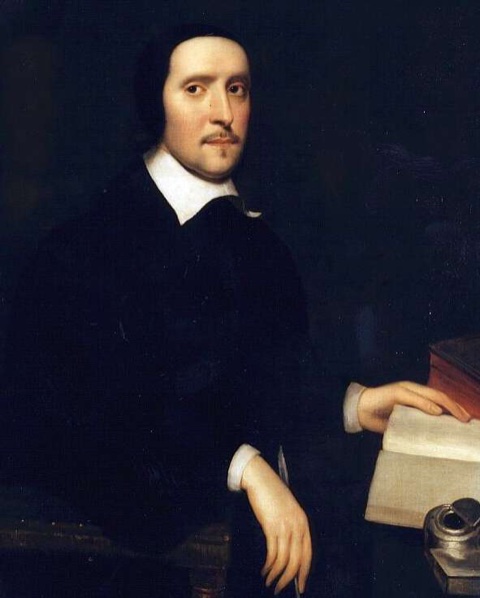
About the author
Jeremy Taylor
Jeremy Taylor (1613 to 1667 AD) was an English clergyman and devotional writer. Born in Cambridge, the son of a barber, he studied at Gonville and Caius College, won the notice of Archbishop William Laud, and served as a chaplain to Charles I. After the royalist defeat he found shelter at Golden Grove in Wales under the Earl of Carbery, and there he wrote Holy Living and Holy Dying. After the Restoration he became Bishop of Down and Connor in Ireland, and he died at Lisburn.