Full text in modern English · Free PDF/EPUB
An Exposition of the First Ten Chapters of Genesis
Want the file? The PDF/EPUB is free with an account.
Summary
- Author
- John Bunyan (1628 to 1688 AD), English Puritan preacher and author of The Pilgrim's Progress
- Published
- 1692 AD, after Bunyan's death, from his papers
- Source edition
- An Exposition on the First Ten Chapters of Genesis, and Part of the Eleventh, complete
- Type
- Verse-by-verse Bible commentary
- Length
- 87,000 words · 6 hours
What is An Exposition of the First Ten Chapters of Genesis about?
An Exposition of the First Ten Chapters of Genesis is John Bunyan's unfinished verse-by-verse commentary on Genesis 1 to 11, printed in 1692 after his death. It reads creation, the fall, Cain and Abel, the flood, Noah's covenant and the nations as history and as pictures of Christ, his church and the world that opposes her.
Read the full summary (9 points, key themes)Show less
How the argument unfolds
- 01
God, the Trinity and creation. Bunyan begins with God's being and the three in the Godhead, then the order of creation: “The first thing that God made was time.”
- 02
The six days (Genesis 1). Each day is read twice, as history and as a picture of the new creation, with the first light as the gospel's first light in the heart and the sun as Christ.
- 03
The garden (Genesis 2). The sabbath points to Christ and the saints' coming rest, the tree of knowledge to the covenant of works, and Eve's making from Adam's side to the church as Christ's body.
- 04
The fall (Genesis 3). The serpent's method is doubt first, denial after. The promise of the woman's seed is the first gospel: “To bruise is more than to break: he will crush your head to death.”
- 05
Cain and Abel (Genesis 4). Abel's offering is accepted because his person was accepted first by faith, and Cain is cut off from the offer of grace.
- 06
From Adam to Noah (Genesis 5). The genealogy becomes the book of the church, with Cain's line left out and Enoch's translation read as a picture of the Lord's coming.
- 07
Corruption and the ark (Genesis 6). The church mixes with Cain's line by marriage, Noah preaches separation, and the ark is a figure of Christ and of working faith.
- 08
The flood and the dove (Genesis 7 and 8). The flood pictures the last judgment, then the persecution of the church; the raven and the dove are two kinds of professors.
- 09
Covenant, nations and Babel (Genesis 9 to 11). The rainbow seals the covenant of grace in Christ, Noah falls in a time of ease, Nimrod hunts the godly, and the work breaks off as Babel's builders begin.
Key themes
- The new creation in the old. Bunyan reads the six days as the order of conversion, light first and then fruit, because creation was made to show “some higher and more excellent thing.”
- Faith before works. Abel was accepted before his gift was: “For it is not a good work that makes a good man, but a good man who makes a good work.”
- The enmity that never ends. Genesis 3:15 sets the pattern for all of history, the church and the serpent's seed at war, with God himself keeping up the enmity.
- The danger of ease. Noah stood firm among scoffers and fell in peace. “Ah, Noah! It was better with you when you were better employed!”
- The covenant of grace. The covenant with Noah is God's gift, not a bargain: “Oh, how gladly God would drum it into the heads of the world that he has a covenant of grace for men!”
Reader questions (9)Hide the questions
Questions about An Exposition of the First Ten Chapters of Genesis
Can I read An Exposition of the First Ten Chapters of Genesis online for free?
Yes. The complete text of this modern English edition is on this page, with no sign-up or paywall.
Is there a free PDF of An Exposition of the First Ten Chapters of Genesis?
Yes. The PDF and EPUB of this edition are free with an Updated Works account. Sign in with Google or an email link; no card is needed.
What is An Exposition of the First Ten Chapters of Genesis?
It is John Bunyan's commentary on Genesis, taken verse by verse from creation to the opening of the Babel story. Bunyan reads each passage as history and also as a figure of Christ, the church, and the church's enemies. It was found among his papers and printed in 1692.
Did Bunyan finish the commentary?
No. The original title calls it an exposition of the first ten chapters and part of the eleventh, and it breaks off at Genesis 11:3, with the builders of Babel deciding to make brick. Bunyan died in 1688 before he could go further.
When was it written and published?
It was published in 1692, four years after Bunyan's death in 1688, among the writings gathered from his papers. The exact year he wrote it is not known. What survives runs from Bunyan's opening chapters on God and creation through Genesis 10 and the first three verses of Genesis 11.
How does Bunyan interpret Genesis?
He takes the history as true, including a universal flood, and then reads it typologically. Adam, the ark and the rainbow point to Christ; Eve, the garden and the ark's company picture the church; Cain, Nimrod and the flood's waters picture persecutors. He says creation was made to present “some higher and more excellent thing.”
What does Bunyan say about Genesis 3:15?
He calls it the promise of Christ, the woman's seed, who would crush the devil's whole power by taking away sin and the curse. Satan could bruise only his heel, his human flesh, because the Godhead was beyond his reach.
How is the book organized?
Short opening chapters treat God, the Trinity and the order of creation. The rest follows Genesis in eleven parts, from the six days to the first verses on Babel, quoting each verse and commenting on its phrases one at a time.
How long is it?
About 87,000 words, which is longer than The Pilgrim's Progress. Bunyan moves quickly through some verses, such as the names in Genesis 10, and slows down on others, such as the temptation, Cain and Abel, the ark and the covenant with Noah.
An Exposition of the First Ten Chapters of Genesis · Full text
God, the Trinity, and the Six Days of Creation
1. God
God is a Spirit (John 4:24), eternal (Deut 33:27), infinite (Rom 1:17-20), incomprehensible (Job 11:7), perfect, and unspeakably glorious in his being, attributes, and works (Gen 17:1; Isa 6:3; Exod 33:20). He is “the eternal God.” “Do not I fill heaven and earth? saith the LORD” (Jer 23:24). “Neither is there any creature that is not manifest in his sight” (Heb 4:13; Prov 15:11).
In his attributes of wisdom, power, justice, holiness, mercy, and the rest, he is also inconceivably perfect and infinite. He cannot be comprehended by things on earth or things in heaven; in the perfection of his being he is known only to himself. The seraphim cannot behold him except through a veil; no one can see him in his perfection and live.
In the word of God his attributes are set down separately, so that we, being weak, might better grasp his eternal power and Godhead. Yet in him they are without division: one glorious and eternal being. Again, though sometimes this attribute, such as wisdom, or that one, such as justice and mercy, is most clearly displayed in his works and wonders before men, yet every such work is begun and completed by all his attributes acting together. No act of justice is without his will, power, and wisdom; no act of mercy is against his justice, holiness, and purity.
Besides, no one must picture God as if he were made up of these attributes the way our body is made up of its members, one standing here and another there, to complete a personal being. For though by the word we may distinguish them, we may not divide them, or presume to assign them their places in the Godhead. Wisdom is in his justice, holiness is in his power, justice is in his mercy, holiness is in his love, power is in his goodness (1 John 1:9; Num 14:17-18).
Therefore in all his attributes he is almighty, all-wise, holy, and powerful. Glory is in his wisdom, glory is in his holiness, glory is in his mercy, justice, and strength; and “God is love” (1 John 4:16).
2. The Persons or Subsistences in the Godhead
The Godhead is only one, yet in the Godhead there are three. “There are three that can bear record in heaven” (1 John 5:7-9). These three are called the Father, the Son (the Word), and the Holy Spirit, each of whom is really, naturally, and eternally God; yet there is only one God. But again, the Father is of himself, the Son is by the Father, and the Spirit is from them both. Therefore the Scripture not only applies to each of them, and truly, the whole nature of the Deity, but also distinguishes the Father from the Son, and the Spirit from them both. It calls the Father he, by himself; the Son he, by himself; and the Spirit he, by himself.
Yes, the Three themselves, in showing the church what she should believe about this matter, have expressed it this way: “Let us make man in our image, after our likeness” (Gen 1:26). Again, “The man is become as one of us” (Gen 3:22). Again, “Let us go down, and there confound their language” (Gen 11:6-7). And again, “Whom shall I send, and who will go for us?” (Isa 6:8).
To these general expressions we might add that Adam heard the voice of the Lord God walking in the midst of the garden (Gen 3:8). John takes that voice to be one of the Three. What Moses here calls the voice, John calls the Word of God. “In the beginning,” he says, “was the word,” that is, the voice that Adam heard walking in the midst of the garden. This word, says John, “was with God,” this “word was God. The same was in the beginning with God” (John 1:1-2).
What marvelous language! Once it asserts the unity of essence, but twice it hints at a distinction of substances within it: “The word was with God, the word was God, the same was in the beginning with God.” Then follows, “All things were made by him” (John 1:3), that is, by the Word, the second of the three.
Now the godly in former ages have called these three, as they are in the Godhead, Persons or Subsistences. I do not condemn this, yet I choose rather to keep to the language of Scripture. For though the other terms may be good and sound, I know that when the adversary spurns and rejects the plain text, he must do it all the more shamelessly.
To proceed, then. First, there are Three. Second, these three are distinct.
First, by this word Three is meant the Father, the Word, and the Holy Ghost. And they are said to be three (1) because the names given them in Scripture, namely Father, Son, and Holy Ghost, show them to be so, and (2) because their acts toward one another show them to be so.
Second, these three are distinct. (1) They are so distinct as to be more than one only: there are three. (2) They are so distinct as to subsist without depending. The Father is true God, the Son is true God, the Spirit is true God. Yet the Father is one, the Son is one, the Spirit is one. The Father is one of himself, the Son is one by the Father, the Spirit is one from them both. Yet the Father is not above the Son, nor is the Spirit inferior to either: the Father is God, the Son is God, the Spirit is God.
Among the three, then, there is no superiority: (1) not as to time, for the Father is from everlasting, and so is the Son, and so is the Spirit; (2) not as to nature, for the Son is of the substance of the Father, and the Spirit of the substance of them both; (3) and the fullness of the Godhead is in the Father, is in the Son, and is in the Holy Ghost.
So then, though the Godhead admits of a Trinity, it does not admit of inferiority within that Trinity. If it did, there would have to be a less and a more in it, and so either a plurality of gods or something there that is not God. So then, Father, Son, and Spirit are in the Godhead, yet they are only one God. Each of these is God over all, yet there is no Trinity of Gods, but one God in the Trinity.
Explanation. The Godhead, then, is common to the three, but the three themselves remain distinct in that Godhead: distinct, I say, as Father, and Son, and Holy Spirit. This is made further clear by the following several positions.
First, Father and Son are relative terms, and so they must have their relation to each other as such: a Father begets; a Son is begotten.
Proof. “Who hath ascended up into heaven, or descended? Who hath gathered the wind in his fists? Who hath bound the waters in a garment? What is his name, and what is his son’s name, if thou canst tell?” (Prov 30:4).
“God so loved the world, that he gave his only begotten Son …” (John 3:16).
“The Father sent the Son to be the Saviour of the world” (1 John 4:14).
Secondly, the Father, then, cannot be the Son he begot, nor can the Son be the Father who begot him; they must be distinct as such.
Proof. “I am one that bear witness of myself, and the Father that sent me beareth witness of me” (John 8:17-18).
“I came forth from the Father, and am come into the world”; again, “I leave the world, and go to the Father” (John 16:28).
“The Father judgeth no man, but hath committed all judgment unto the Son: That all men should honour the Son, even as they honour the Father” (John 5:22-23).
Thirdly, the Father must have worship as a Father, and the Son as a Son.
Proof. Those who worship the Father must worship him “in spirit and in truth: for the Father seeketh such to worship him” (John 4:23-24).
And of the Son he says, “When he bringeth in the first begotten into the world, he saith, And let all the angels of God worship him” (Heb 1:6).
Fourthly, the Father and the Son really have these distinct, but heavenly, relative properties, which show them, as such, to be two as well as one.
Proof. “The Father loveth the Son, and sheweth him all things” (John 5:20).
“Therefore doth my Father love me, because I lay down my life, that I might take it again” (John 10:17). The Father sent the Son; the Father commanded the Son; the Son prayed to the Father, and always did the things that pleased him.
The absurdities that flow from denying this are many. Some of them follow here.
Absurdity 1. It makes void all those scriptures that affirm the doctrine, some of which you have seen above.
Absurdity 2. If in the Godhead there is only one, not three, then that one must be either the Father, the Son, or the Spirit, if it is any one of them alone; and so the other two are nothing. Again, suppose the reality of a being is not in the Father, Son, or Spirit, as such, but in the eternal Deity, without any consideration of Father, Son, and Spirit as three. Then none of the three is anything but notions in us, or manifestations of the Godhead, or nominal distinctions that the word relates in that way. But if so, then when the Father sent the Son, and the Father and Son sent the Spirit, one notion sent another, one manifestation sent another. Grant this, and it unavoidably follows that there was no Father to beget a Son, no Son to be sent to save us, and no Holy Ghost to be sent to comfort us and to guide us into all the truth of the Father and Son, and so on. The most it amounts to is this: a notion sent a notion, a distinction sent a distinction, or one manifestation sent another. These are the consequences of this error: when we believe in the Father and the Son, we are only believing in notions and distinctions; and so we shall have no other heaven and glory than notions and nominal distinctions can furnish us with.
Absurdity 3. If Father and Son, and so on, are three in no other way than as notions, names, or nominal distinctions, then to worship them distinctly, or together, as such, is to commit the most gross and horrible idolatry. For although we are commanded to fear that great and dreadful name, the Lord our God, yet by this doctrine, to worship a Father, a Son, and a Holy Spirit in the Godhead as three, as really three as one, is to imagine falsely of God, and so to break the second commandment. But to worship God as Father, and Son, and Holy Ghost, and to believe them to be as really three as one when I worship, is the sum and substance of the doctrine of the Scriptures of God. Therefore there are really and substantially three in the eternal Godhead.
But let me help you a little in your study of this deep matter.
1. When you read that in the Godhead there are Father, and Son, and so on, you must take care not to imagine things about them according to your own carnal and foolish fancy. For no one can grasp this doctrine except in the light of the word and Spirit of God. “No man knoweth the Son, but the Father; neither knoweth any man the Father, save the Son; and he to whom the Son will reveal him” (Matt 11:27). If, therefore, you are without the Spirit of God, you cannot grasp the truth of this mystery as it is in itself. Either your darkness will drive you to deny it, or, if you do own it, you will still imagine falsely about it, your acknowledgment notwithstanding.
2. If you feel your thoughts begin to wrestle about this truth, and to struggle with one another over it, beware of admitting such a question as, How can this thing be? For here there is no room for reason to work it out; here there is only room to believe that it is a truth. You do not find one of the prophets setting out an argument to prove it. Instead, they assert it and let it lie, for faith to take it up and embrace it.
“The grace of the Lord Jesus Christ, and the love of God, and the communion of the Holy Ghost, be with you all. Amen” (2 Cor 13:14).
3. The Creation of the World
The apostle says that “to us there is but one God, the Father, of whom are all things, and we in him, and one Lord Jesus Christ, by whom are all things, and we by him” (1 Cor 8:6). He is the “God that made the world” (Acts 17:24). “All things were made by him; and without him was not any thing made that was made” (John 1:3). This world, therefore, had a beginning, and was created by the God of heaven. This work is wonderful, and it shows us much of the greatness of the wisdom and power of the eternal Godhead. Therefore it is fitting for such poor mortals as we are to look at these works of the mighty God, so that by them we may see how great he is, and be made to cry out, “What is man!” (Ps 8:3-4).
Now in the creation of the world we may consider several things, such as: What was God’s order in this work? And was there a secret or mystery in this work, containing the truth of some higher thing? To take the first of these:
The Order of God in Making the World
God is indeed omnipotent. He not only can do whatever he wills, but does it; and he needs no length of time to do his works. Yet in the creation of the world it pleased him best to proceed by degrees from one thing to another, until he had completed the six days’ work of making it, though he could, had it pleased him, have done it all by one single word.
And since this work went forward by degrees, now this thing and then another, it may not be amiss if, in our discussion of this wonderful work, we begin where God began, and, if we can, go wondering after him who has worked in this way.
1. The first thing that God made was time. I say, it was time: the plain on which he would build this beautiful world. He made nothing before it, but in the beginning: “In the beginning God created the heaven and the earth” (Gen 1:1), that is, in the beginning of time. “For in six days the LORD made heaven and earth, the sea, and all that in them is” (Exod 20:11). Therefore the first day itself had first to have a beginning. Whatever was before time was eternal; but nothing except God himself is eternal; therefore no creature was before time. Time, then, which was indeed the beginning, was the first of the creatures of God.
2. I think the second of the creatures that the Lord created were the holy angels of God. They are called the morning stars, as being created and shining in the morning of the world. And so they are said to have been present when the cornerstone of the universe was laid, that is, when he “laid the foundations” of the world. Then “the morning stars sang together, and all the sons of God shouted for joy” (Job 38:4-7).
3. I think the third thing that the Lord created was these vast and spacious heavens, the highest heaven. For they are mentioned as being before the earth or any visible creature: “In the beginning God created the heavens” (Gen 1:1). Nor do I think that the heavens were made out of that confused chaos which we read of afterward. It is said that he stretched out the heavens as a curtain, and that with his hand he has spanned the heavens (Ps 104:2; Isa 40:22; Isa 48:13). This implies that they were not taken out of that formless heap, but were formed directly by his power. Besides, when the Holy Ghost speaks of the creating of heaven and earth, he only says, The earth was void and without form; but he says no such thing of the heavens.
4. The fourth thing that God created was, in my opinion, that chaos, or first matter, out of which he framed this earth and all that belongs to it in the six days. For the visible things here below seem to me to have been brought into being and order in a different way from time, the angels, and the heavens, which were each created in their own simple essence by themselves. But the things that are visible here below, whatever their essence and nature may be, were formed out of that first shapeless chaos. “In the beginning God created the heaven and the earth, and the earth was without form and void” (Gen 1:1-2).
He does not say this of the heavens. As I said, they were stretched out at the first as a curtain. Indeed, they were afterward adorned with the beauty we now behold; but otherwise, at the first instant of their being, they had the form they have now. This seems clear from the contrast the Holy Ghost sets between them: God created the heaven and the earth, but “the earth was without form and void” (Gen 1:2). The earth was without form; that is, it was without order. Things lay together in a confused heap. The waters were not divided from the earth, and the things that now stand on the face of the earth had not yet appeared, such as man and beast, fish, birds, trees, and plants. All these showed themselves afterward, as the word of God gave them being by commanding them to appear, in the form, order, place, and time that he had determined beforehand in himself. But all of them, I say, took their matter and substance from that first chaos, which on the first day of the world he had commanded to appear and had given being to.
And so it is said that God said, Let the earth bring forth grass, herbs, and trees (Gen 1:11); that the waters brought forth the fish and the birds, yes, even the mighty whales (Gen 1:21-22); that the earth brought forth cattle and creeping things (Gen 1:24); and that God made man of the dust of the ground (Gen 3:19). All these things, therefore, were made from that first matter which he had already created by his word; or, to put it another way, his word caused them to appear distinctly out of it, and to be each after its kind. Observe, then, that the matter of all earthly things was made at the same instant, but their forming, and the rest, came according to the day on which God gave them their being, each in its own order and kind.
And so it is said that after that first matter was created, and found to be without form and void, the Spirit of God moved upon the face of the waters. That is, he moved to work, and to cause those things to appear in their own essence and form which, as to matter and substance, had already been created. Therefore it follows, And God said, “Let there be light”; and God divided the light from the darkness. Now he set about putting into frame what had lain in disorder and confusion before. And this was a great part of the six days’ work. I say a great part, but not all; for, as I said, the angels and the heavens were made before that time, yes, after the morning of the first day had begun.
I am also of the belief that other things, formed afterward, were not made of that first chaos, such as the sun, the moon, the stars, the light, the souls of men, and possibly the air, and so on. The sun, moon, and stars are said to have been made on the fourth day, yet not out of the body of heaven itself, and much less, in my opinion, out of any earthly matter. God made them and set them in the firmament of heaven (Gen 1:16-17). So too the light that was made earlier seems to be a thing created after the heavens and the earth were created. It was created, I say, as a thing that had no being before, except in the decree of God: and God said, “Let there be light”; that is, let it have a being (Gen 1:3). And so, though the body of man was made of the substance of earth, yet as to his soul it is said that God “breathed into his nostrils the breath of life, and man became a living soul” (Gen 2:7).
Whether Creation Holds a Mystery of Higher Things
We who are Christians believe that God, in very deed, by his eternal power, created heaven and earth out of things that do not appear. Yet in this wonderful work of his, neither his will nor his understanding ended or came to a stop here. Being infinite in wisdom, he made them so that, in both matter and manner, they might present to us, as in a mystery, some higher and more excellent thing. In this wisdom he made them all. And that is why other things are also called a creation, such as (1) the essential conversion of a sinner (2 Cor 5:17), and (2) the recovery of the church from a degenerate state (Rev 21:5).
And so, as Moses begins with the creation of the world, John begins with the gospel of salvation (Gen 1:1; John 1:1). Besides this, there are many excellent things held out to those who have understanding in the manner and order of the creation of the world. I may touch on some of them by way of observation. But to begin with the first:
The first appearance of this earthly part of the world is recorded to be only a formless and void heap, or chaos. And such is man before a new creation: formless, I mean, as to the order of the Testament of Christ, and void of its holy order. And so Jeremiah, when he wants to set out the condition of a wicked people, does it under this metaphor: “I beheld,” he says, “the earth, and, lo, it was without form and void” (Jer 4:23). Indeed, the world would make this a type of Christ, namely, a man of no form or comeliness (Isa 53:2). But it is true only of themselves. They are without a New Testament impression upon them; they are void of the sovereign grace of God. So then, the power of God gave the world a being, but by his word he set it in form and beauty. In the same way, by his power he gives a being to man, but by his word he gives him New Testament framing and glory (Eph 2:10-13). And this is carried on by what follows:
“And darkness was upon the face of the deep” (Gen 1:2).
The deep here may be a type of the heart of man before conversion, and Solomon seems to hint at this. Now as the darkness of this world covered the face of this first chaos, so spiritual darkness covers the heart of the sons of men. And so they are said to be darkened, to be in darkness, yes, to be very darkness itself.
“And the Spirit of God moved upon the face of the waters” (Gen 1:2).
This is a blessed emblem of the word of God in the matter of regeneration. For the first chaos remained without form and void until the Spirit of God moved to work upon it, and by working to put this world into frame and order. Just so, man, as he comes into the world, remains a confused lump, an unclean thing, a creature without New Testament order, until by the Spirit of the Lord he is transformed into the image of Jesus Christ (Gal 1:15).
“And the Spirit of God moved upon the face.”
Solomon compares the heart to a man’s face. For as you can tell in a face whether there is anger or not, so by the inclinations of the heart the truth of a man’s condition is discovered, as to whether he is bound for heaven or for hell. And besides, as the Spirit of God moved upon the face of the waters, so in the work of our conversion the Spirit of God begins with the heart of the sons of men, because the heart is the main fort (Acts 2:37). Now if the main fort is not taken, the adversary is still able to keep up a continual resistance. Therefore God first conquers the heart; therefore the Spirit of God moves upon the face of our heart when he comes to convert us from Satan to God.
“And God said, Let there be light” (Gen 1:3).
This is the first thing with which God began the ordering of the creation, namely light: “Let there be light.” From this many profitable notes may be gathered about God’s order in the salvation of the soul, such as these:
1. When the Holy Ghost works upon us and in us to make a new creation, he first touches our understanding, that great piece of the heart, with his spiritual illumination (Matt 4:16). His first word toward our conversion is, Let there be light: light to see their state by nature; light to see the fruits and effects of sin; light to see the truth and worth of the merits of Jesus Christ; light to see the truth and faithfulness of God in keeping promise and covenant with those who embrace salvation on the blessed terms of the gospel of peace (Heb 10:32). Now, to see that this word, Let there be light, was a picture of the first work of the Holy Ghost upon the heart, compare it with what Paul says to the Corinthians: “For God, who commanded the light to shine out of darkness,” that is, at the beginning of the world, “hath shined in our hearts to give the light of the knowledge of the glory of God in the face of Jesus Christ” (2 Cor 4:6).
2. “And God said, Let there be light.” As the light of this world came that way here, so in conversion the light of the New Testament of Christ comes by the word of God. No word, no light. Therefore the apostle says that he “hath brought life and immortality to light through the gospel” (2 Tim 1:10). And therefore Paul says again that salvation is made manifest through preaching, through the expounding or opening of the word of faith.
3. “And God said, Let there be light: and there was light.” He spoke the word, and it was done. All the darkness that had covered the face of the deep could not now hinder the being of light. So neither can all the blindness and ignorance in the heart of man hinder the light of the knowledge of the glory of God in the face of Jesus Christ. When it pleases God to reveal, it is revealed; when he opens, no one can shut (Rev 3:7). He said, Let there be light, and there was light.
And God saw that the light was good. Truly the light is good, says Solomon, and a pleasant thing it is for the eye to behold the sun. It was good because it was God’s creature. And so in the work of grace that is wrought in our hearts, that light of the new covenant is good, because it is God’s work, the work of his good pleasure (2 Thess 1:11), that good work which he has not only begun, but promised to fulfill until the day of Jesus Christ (Phil 1:6).
God saw that the light was good. The darkness that had covered the face of the waters was not a creature of God, but a privation: something that existed only because light was not yet in the world. So sin, that darkness which might be felt, is not the workmanship of God in the soul, but the work of the devil; and it finds occasion to exist because the true light does not yet shine in the soul.
“And God divided the light from the darkness.” As Paul says, “What communion hath light with darkness?” (2 Cor 6:14). They cannot agree to live together. We see that the night still flees before the day, and dares not come upon us again except as the light fades and slips away. So it is in the new creation. Before the light of the glorious gospel of Christ appears, there is night, all night, in the soul (Eph 5:8); but when that light does indeed shine in the soul, then instead of night there is day in the soul. “Ye were … darkness,” says Paul, “but now are ye light in the Lord” (Eph 5:8). And, “The darkness is past,” says John, “and the true light now shineth” (1 John 2:8).
“And God divided the light from the darkness.”
God took the side of the light, and preserved it from the darkness. By these words it seems that darkness and light began their quarrel before that bloody bout between Cain and Abel. The light and the darkness struggled together, and nothing could divide them or part them but God. Darkness is at implacable enmity with light in the creation of the world. And so it is in that rare work of regeneration: “the flesh lusteth against the spirit, and the spirit against the flesh” (Gal 5:17); as Peter says, fleshly lusts war against the soul. Every Christian feels this. He feels also what I mentioned before, namely, that before he is able to oppose antichrist, with Abel, in the world, he finds a struggle in his own soul between the light and the darkness that is there.
“And God called the light Day, and the darkness he called Night” (Gen 1:5).
God not only distinguishes things by separating them, but also by certain distinguishing marks, so that things which are distinguished and separate may be better known to us. He did so here in the work of creating the world, and he does so also in the great concern of man’s eternal happiness. The place of happiness is called heaven; the place of torment is called hell. What leads to hell is called sin, transgression, iniquity and wickedness; what leads to heaven, righteousness, holiness, goodness and uprightness. Even so, in these types God called the light day, of which the godly are the children (1 Thess 5:5), but the darkness he called night, of which all ungodly men are the inhabitants and children also. So, after the Spirit of God had moved upon the face of the waters, after God had commanded the light to shine, had divided between the light and the darkness, and had marked them out by their proper names, he concludes the first day’s work: “And the evening and the morning were the first day.”
In this conclusion a blessed gospel mystery is wrapped up. For God, by concluding the first day here, shows us how we ought to judge that someone has indeed been made a Christian. It is when the Spirit of God has moved upon the face of the heart; when he has commanded that light should be there; when he divides between them, or sets the light at variance with the darkness; and when the soul receives the distinguishing marks of both, to observe them, and carries itself toward each according to what God has spoken.
The Second Day’s Work
“And God said, Let there be a firmament” (Gen 1:6).
This firmament he calls heaven (Gen 1:8). Now this firmament, or heaven, was to make a separation, or to divide between the waters and the waters (Gen 1:7); to separate, I say, the waters from the waters, the waters which were under the firmament from the waters which were above the firmament. Now in the Scriptures waters signify many things, such as afflictions and worldly people (Ps 69:1-2), and particularly the saints (Rev 19:6). But in this place they figure forth all the people in the world, yet as consisting of two parts: the children of God and the children of the wicked one. Those under the heaven represent the world, or the ungodly; those above the firmament, the elect and chosen of God. And that is why in Scripture the one is called heaven and the other is called earth, to signify the separation and difference there is between the one and the other.
“And God made the firmament, and divided the waters … from the waters.”
Indeed, the world thinks this separation comes about, or is made, through the preacher’s quarrelsome spirit. But in truth it is the handiwork of God. God made the firmament, and God divided, and so on. “I,” he says, “will put enmity between thee and the woman, and between thy seed and her seed” (Gen 3:15). The good seed are the children of the kingdom of God, but the bad are the children of the wicked one (Matt 13:38).
“And God made the firmament, and divided the waters which were under the firmament, from the waters which were above the firmament: and it was so” (Gen 1:7).
Whatever the Lord does, it abides forever (Eccl 3:14). And again, who can make straight what he has made crooked (Eccl 7:13)? He said it in the beginning, and see how it has continued! Yes, though there have been endeavors on Satan’s part to mingle his children with the seed of men, yet it has never been possible for them to cleave to one another, “even as iron is not mixed with clay” (Dan 2:43). Yes, let me add further: what laws have been made, what blood has been shed, what cruelty has been used, and what flatteries and lies invented, all to make these two waters and peoples one? And yet all has failed and fallen short of producing the desired effect. For the Lord has made a firmament; heaven itself has divided between them.
“And God called the firmament heaven. And the evening and the morning were the second day” (Gen 1:8).
After the waters were divided from the waters, God called the cause of the dividing heaven, and so concluded the second day’s work. And indeed it was a very great work, as we feel in the antitype to this very day. Dividing work is difficult work, and whoever can, according to God, completely end and finish it need do no more that day of his life.
The Third Day’s Work
“And God said, Let the waters under the heaven be gathered together unto one place, and let the dry land appear: and it was so” (Gen 1:9).
In the second day’s work, the waters above the firmament and those under it are the two peoples, or great families, of the world (Prov 8:31). Yet because God wanted to show us, by things on earth, the flourishing state of those who are his, he here expresses his mind by another kind of representation of things: “And God said, Let the waters under the heaven be gathered together unto one place; and let the dry land appear.” The waters here signify the world, but the fruitful earth the thriving church of God.
That the fruitful earth is a figure of the thriving church of God in this world is evident from many scriptures (and there was nothing but thriving until the curse came). And so it is said of the church that she should break the clods of the ground; that she should sow righteousness and reap it (Hos 10:12); that she should not sow among thorns; and that if this is done, the heart is circumcised, and spiritual fruit will flow forth and grow abundantly (Jer 4:3-4; Joel 2:21-23). And so again the officers and eminent ones in the church are called vines, trees and other fruitful plants. And so again it is said, When the Lord reigns, let the earth (that is, the church) rejoice (Ps 97:1). That earth which brings forth fruit fit for him by whom it is dressed receives blessing from God (Heb 6:7). In all these places, and many more that might be named, the earth is made a figure of the church of God; and so I take it here in this place.
“And God said, Let the waters under the heaven be gathered into one place.”
Let them be together. It is not so with all waters, but with the sea, which here is still a type of the world. Let them be so together that the earth may appear, that the church may be rid of their rage and tumult; and then she will be fruitful, as follows in this first book of Genesis. The church is in a flourishing state when the world is farthest off from her, and when the roaring of their waves is far away. Now therefore let all the wicked be far from there (Ezra 6:6). May the Lord gather these waters, which in another place are called the doleful creatures and birds of prey. Let these, O Lord, be gathered together to their own places, and be settled in the land of Shinar upon their own base (Zech 5:11). Then the wilderness and the solitary places will be glad for them, that is, glad that they have departed from there, and the desert will rejoice and blossom as a rose (Isa 34; Isa 35).
“And God called the dry land Earth; and the gathering together of the waters called he seas: and God saw that it was good” (Gen 1:10).
God saw that separating the waters from the earth was good. And so it is, for then the churches have rest. Then this earth brings forth her fruit, as can be seen here (Gen 1:11-12).
The Fourth Day’s Work
“And God said, Let there be lights in the firmament of the heaven” (Gen 1:14).
The wisdom of God shows itself in making use of figures and shadows where the things under consideration may be most fitly demonstrated. The dividing of the waters from the waters most fitly shows the work of God in choosing and refusing; the dividing of the waters from the earth shows how fruitful God’s earth, the church, is when persecutors are made to be far from there.
Therefore he does not speak of adorning his church until he comes to this fourth day’s work. “By his Spirit he hath garnished the heavens” (Job 26:13), and that most fitly shows the glory of the church.
Let there be lights: that is, the sun, the moon and the stars.
The sun in this place is a type of Christ, the Sun of Righteousness. The moon is a type of the church in her uncertain condition in this world. The stars are types of the various saints and officers in this church (Rev 1:20). And that is why the sun is said not only to rule, but, with the moon and stars, to be set for signs and for seasons, for days and for years, and so on. But if we take the heaven for the church, then how beautiful she is when the Son of God is placed in her midst (Rev 1:12-13)! And how plainly her condition is set out, even by the changing, increasing and diminishing of the moon! And how excellent is that congregation of men who, for light and glory, are figured by the stars (Matt 28:20)!
From this day’s work much might be observed.
First, since the sun was not made before the fourth day, it is evident that there was light in the world before the sun was created; for on the first day God said, Let there be light, and there was light. This may also teach us this much: that before Christ came in person, there was spiritual light in the saints of God. And again, that as the sun was not made before the fourth day of the creation, so Christ would not be born before the fourth mystical day of the world. For it is evident that Christ, the true light of the world, was not born until about four thousand years after the world was made.
Second, as to the moon, four things attend her which may fitly hold forth the state of the church. (1) In that she changes from old to new, we may conceive that God made her so to show that he would one day make a change of his church, from a Jewish to a Gentile congregation. (2) In that she increases, she shows the flourishing state of the church. (3) In her diminishing, she shows the diminishing state of the church. (4) The moon is also sometimes made to look as red as blood, to show how dreadful and bloody the suffering of the church is at certain times.
Third, by the stars we understand two things: (1) how innumerable the saints, those spiritual stars, will be (Heb 11:12); (2) how they will differ from one another in glory (1 Cor 15:41).
“And God said, Let there be lights in the firmament of the heaven, to divide the day from the night.”
For though the light had been divided from the darkness before, yet the day and night were not kept within their bounds as they now were by these lights. This probably signifies that nothing would be so clearly distinguished and made to appear as by the sunlight of the gospel of Christ; for it is by that that “the shadows flee away” (Song 2:17). The light of the sun gathers the day into its hours, both longer and shorter, and also forces the night to keep within its bounds.
“And God made two great lights; the greater light to rule the day, and the lesser light to rule the night” (Gen 1:16).
This signifies that Christ would be the light and governor of his church, who are the children of the day; but the church would be a light to the children of the night, so that by them they might learn the mysteries of the kingdom. Christ says to his own, “Ye are the light of the world” (Matt 5:14); and again, “Let your light so shine … that men may see …” (Matt 5:16). For though those who walk only in the night cannot see to walk by the sun, yet by the moon they may. So the heaven is a type of the church; the moon a type of her uncertain state in this world; the stars types of her immovable converts; and their glory a type of the differing degrees of their glory, both here and in the other world. Much more might be said, but I pass over this.
The Fifth Day’s Work
“And God said, Let the waters bring forth abundantly the moving creature that hath life” (Gen 1:20).
The sea, as I said, is a figure of the world; therefore the creatures in it are figures of the men of the world (Zech 13:8; Isa 60:5). This sea brings forth small and great beasts, just as the world yields both small and great persecutors, who, like fish of prey, eat up and devour what they can of those fish that are of another condition. Now also, as fishermen catch fish out of the natural sea, so both Christ and his servants catch mystical fish out of the world, that mystical sea, even fish like those of the great sea.
In the sea God created great whales, and he made them to play there.
These whales in the sea are types of the devils in the world. Therefore, as the devil is called the prince of this world, so the whale is called king over all the children of pride (Job 41:33-34).
The Sixth Day’s Work
“And God said, Let the earth bring forth the living creature after his kind” (Gen 1:24).
Of the beginning of this sixth day’s work, what is said of the fishes and the rest of the sea may also be said. For as there is a variety of fish in the one, so there is of beasts and cattle in the other, which also make a prey of their fellows, as the fishes do. This is a most apt representation of the nature and actions of bloody and deceitful men. That is why persecutors are called bulls, bears, lions, wolves, tigers, dragons, dogs, foxes, leopards and the like.
“And God said, Let us make man” (Gen 1:26).
I observe that in the creation of the world God goes on gradually, from lesser things to things more abundantly glorious; I mean, as to the creation of this earth and the things that belong to it. First he brings forth a confused chaos; then he commands matter to appear distinct; then the earth brings forth trees and herbs and grass; after that, beasts; and the sea, fowls; and last of all, “Let us make man.” Now, passing by the doctrine of the Trinity, because I have spoken to it before, I come to make some observations on this wonderful piece of God’s workmanship.
“Let us make man.” Man, in whom the woman is also included, was made the last of the creatures. From this we may gather God’s regard for this excellent creature, in that he first provides for him before he gives him his being. He does not bring him into an empty house, but into one well furnished with all kinds of necessities, having beautified the heaven and the earth with glory, and with all sorts of nourishment, for his pleasure and sustenance.
“Let us make man in our image, after our likeness.”
An image, or the likeness of anything, is not the thing of which it is a figure. So here, Adam is an image of God, or made in his likeness. Now, as Adam is the image of God, this must have respect to him either as he consists of the soul, as one part, or as he consists of body and soul together. If it is as he is made a reasonable soul, then he is an excellent image of the eternal Godhead, the attributes of the one being shadowed out by the qualities and passions of the other. For as there is in the Godhead power, knowledge, love and righteousness, so a likeness of these is in the soul of man, especially of man before he had sinned. And as there are passions of pity, compassion, affection and tender yearnings in man, so these are in God in a far more infinite way.
Again, if this image respects the whole man, then Adam was a figure of God as incarnate, or of God as he was afterward to be made man. And so it is that, as Adam is called the image of God (Rom 5:14), so Christ himself is also called and reckoned the answering antitype of such an image.
But again, though Adam is here called the image or likeness of God, it is only as the shadow of a more excellent image. Adam was a type of Christ, who alone is “the express image” of his Father’s person, and the likeness of his excellent glory (Heb 1:3). For the things that were in Adam were only of a human, a created, substance; but those that were in Christ were of the same divine and eternal excellency with the Father.
Is Christ, then, the image of the Father simply as considered to be of the same divine and eternal excellency with him? Certainly not; for an image is doubtless inferior to that of which it is a figure. Understand, then, that Christ is the image of the Father’s glory as born of the Virgin Mary, yet in such a way as being very God also. Not that his Godhead in itself was a shadow or image; but by the acts and doings of that man, every act being infinitely perfect by virtue of his Godhead, the Father’s perfections were made manifest to flesh. An image is there to be looked at, and by looking at it another thing is seen. So by the person and doings of the Lord Jesus, those who could indeed see him as he was discovered the perfection and glory of the Father: “Philip, He that hath seen me hath seen the Father; and how sayest thou then, Show us the Father?” (John 14:9).
Neither the Father nor the Son can be seen by us at all as they are simply and entirely in their own essence. Therefore the person of the Father must be seen by us through the Son as consisting of God and man, the Godhead, by working effectually in the manhood, showing clearly through it the infinite perfection and glory of the Father: “The word was made flesh, and …” then “we beheld his glory, the glory as of the only begotten of the Father” (he being, in his personal excellencies, infinitely and perfectly what is recorded of his Father), “full of grace and truth” (John 1:14).
So again, he “is the image of the invisible God” (Col 1:15). The Godhead is indeed invisible; how then is Christ the image of it? Not by being invisible also, for then he would be as much hidden as the Father. But being clothed with flesh, so that the works of the Son might be seen by us, he thereby presents to us, as in a figure, the eternal excellency of the Father. And so, as he is called “an image,” he is also called “the first-born” of every creature (Col 1:15), his being a creature having respect to his manhood, his birth and his rising again from the dead. Therefore a little after he is called “the first-born from the dead” (Col 1:18); and in another place, “the first-begotten of the dead” (Rev 1:5); and “the first-fruits of them that slept” (1 Cor 15:20).
So then, though Adam was the image of God, yet he was God’s image only as a mere creature. But Christ, though a creature as touching his manhood, yet being also God, as the Father is, showed forth plainly, in capital letters, by all his works and doings in the world, the beauty and glory of the Father: “The light of the knowledge of the glory of God” is given “in the face of Jesus Christ” (2 Cor 4:6). By face here we must understand what is visible, since the face is open when all else is covered, and it is chiefly by the face that we are discovered and known to others. Now, as to the case in hand, this face must signify to us the personal virtues and doings of Christ, by which the glory of the Father is displayed: the glory of his justice by Christ’s exactness of life, the glory of his love by Christ’s compassion to sinners, and so on.
“And God said, Let us make man in our image, after our likeness: and let them have dominion over the fish of the sea, and over the fowl of the air, and over the cattle, and over all the earth, and over every creeping thing that creepeth upon the earth” (Gen 1:26).
As Adam was a type of Christ as the image and glory of God, so by these words God further shows that Adam was a type of Christ’s sovereign power; for to him be dominion and power everlasting (Heb 2:8-9), “to whom be praise and dominion for ever” (1 Pet 4:11; Jude 25). Now by the fish of the sea, the beasts of the earth, the fowls of the air and every creeping thing, we may understand all creatures, visible and invisible, whether they are men, angels or devils, in heaven, earth or under the earth; and also all thrones, authorities and powers, whether in heaven, on earth or in hell. Christ is made head over all. He also has a name above every name, “not only in this world, but in that which is to come” (Eph 1:21).
“And God blessed them; and God said unto them” (that is, to the man and his wife), “Be fruitful, and multiply, and replenish the earth, and subdue it” (Gen 1:28).
In the type this shows, in the antitype, how fruitful Christ and his church will be; how at last he will have a seed all over the earth to replenish and subdue it by the power of the immortal seed of the word of God; how his name will be reverenced from one end of the earth to the other; how the kingdoms of the earth will all at last become the kingdoms of our Lord and of his Christ.
“And subdue it.” God put such majesty and dread upon Adam at his creation that all the beasts of the field submitted themselves to him. As God also said to Noah, “The fear of you and the dread of you shall be upon every beast of the earth, and upon every fowl of the air, upon all that moveth upon the earth, and upon all the fishes of the sea; into your hand are they delivered” (Gen 9:2).
“And God said, Behold I have given you every herb bearing seed, which is upon the face of all the earth; and every tree, in the which is the fruit of a tree yielding seed; to you it shall be for meat” (Gen 1:29).
These herbs and trees are types of the wholesome word of the gospel, on which Christ, his church and unconverted sinners ought all to feed and be refreshed, and without which neither the one nor the other can subsist: “He causeth the grass to grow for the cattle, and herb for the service of man: that he may bring forth food out of the earth; and wine that maketh glad the heart of man, and oil to make his face to shine, and bread which strengtheneth man’s heart” (Ps 104:14-15).
“And God saw every thing that he had made, and, behold, it was very good” (Gen 1:31).
All things have their natural goodness by creation. Things are not good merely because they have a being, but because God gave them such a being. Nor did God make them because he saw they would attract a goodness to themselves; rather, he made them of such a kind as to bring forth the goodness he had determined beforehand that they should.
“And the evening and the morning were the sixth day.”
The Sabbath, the Garden, and the Making of Woman
And God blessed the seventh day, and sanctified it: because that in it he had rested from all his work which God created and made (Gen 2:3).
The seventh day signified two things. First, Christ Jesus, who is the rest of the justice of God as well as a rest for sinful man. Second, it was also a type of that glorious rest that the saints will have when the six days of this world are fully ended.
For the first: the apostle makes the sabbath a shadow of Jesus Christ, “a shadow of things to come; but the body is of Christ” (Col 2:17), the body, that is, the substance. And that is why he is so often said to be “a rest” to the Gentiles, a glorious rest, and why he promises rest to those who cast their burden upon him (Matt 11:29).
The apostle also asserts the second in the fourth chapter of Hebrews: “There remaineth therefore a rest,” or the keeping of a sabbath, “to the people of God” (Heb 4:9; read also Heb 4:4-11). This sabbath, as I understand it, will be the seventh thousand years, which are to follow immediately after the world has first stood six thousand. For as God was six days in the works of creation and rested on the seventh, so in six thousand years he will perfect his works and providences that concern this world. He will also finish the toil and labor of his saints, along with the burden of the beasts and the curse of the ground, and bring everything into rest for a thousand years. A day with the Lord is as a thousand years (2 Pet 3:8). Therefore this blessed and desirable time is also called “a day,” “a great day,” “that great and notable day of the Lord” (Acts 2:20), which will end in the eternal judgment of the world. God has held this out by several other shadows as well: the sabbath of weeks, the sabbath of years, and the great jubilee, which is to be the year after forty-nine years have expired (Lev 25:1-13). Of all these, more in their place, if God permits.
“These are the generations of the heavens and of the earth when they were created, in the day that the LORD God made the earth and the heavens” (Gen 2:4).
By these words, “In the day,” Moses seems to dwell chiefly on the heavens and the earth in their first and original state, before there was sin or curse in the world. For in the day that they were created, there was a far more glorious luster and beauty than can be seen now. Because of sin, the heaven is, as it were, turned into brass, and the rain into powder and dust, compared with what it was as it came from the fingers of God. The earth also has had a curse upon it from that time. Yes, the whole creation, by sin, is even “made subject to vanity,” is in travail, and groans under the burden that sin has brought upon it (Rom 8:19-23).
“And every plant of the field before it was in the earth, and every herb of the field before it grew” (Gen 2:5).
So it was in the first creation. They became herbs and trees, therefore, not by the course of nature but by the creation of God. And it is just the same in the new creation. Men do not spring up by nature to be saints, no, not even in the church of God. First they are created in Christ Jesus and made fit to share in the benefit, and then they are planted in the church of God; “planted,” I say, as plants already prepared. Hypocrites and formal professors of religion may indeed spring up in the church by virtue of her forms and outward services, as thorns and thistles spring up in the earth by virtue of its moisture and richness. But these are only the fruits of the curse, and they are destined to be burned in the fire at last (Heb 6:8): “Every plant,” says Christ, “which my heavenly Father hath not planted, shall be rooted up” (Matt 15:13).
“For the Lord God had not caused it to rain upon the earth.” This is the reason the plants did not come up by nature first, but were first created, then planted, then made to grow. In the same way, the reason men do not grow in the church by nature is that the Lord does not cause it to rain upon them while they still remain in the course of this world and act according to it. But he plants them in his house by the mighty power of his word and Spirit, by which they are created saints, and afterward they grow in grace and in the knowledge of our Lord and Savior Jesus Christ.
“And there was not a man to till the ground.” It seems from this that there was a kind of necessity for God to make man, yes, a multitude of men. Otherwise he would have made in vain what he had made before. That is, his purpose in making so glorious a creature as this world, by which he meant to show forth his glory, would have been void and without effect. For although the world was glorious as it came out of the hand of God, it did not have the power to preserve itself. Without men to look after it and tend it, it would have turned into a wilderness.
It is the same with the world of men. If there were not the second Adam to plow them and sow them, not one of them could become a saint, no, not even the elect themselves, because the means are determined as well as the end.
By this we may also see what a woeful condition that people is in who have no ministers of the word of the gospel: “My people perish” (that is, “are destroyed”) “for lack of knowledge” (Hos 4:6). And again, “Where there is no vision, the people perish” (Prov 29:18). Pray therefore to the Lord of the harvest that he would send out his plowmen to plow, and his laborers into his harvest.
“But there went up a mist from the earth, and watered the whole face of the ground” (Gen 2:6).
Although as yet there was neither plowman nor rain, a mist still arose from the earth. So where the word of the gospel is absent, there is still enough light to teach men how to govern themselves in civil and natural society. But this is only “a mist”; men cannot grow in a gospel way by it. Therefore, as in the next verse, man must of necessity be formed.
But again, I have sometimes thought that this mist might set forth the nourishment men had by the doctrine of faith before the gospel was made known by Moses, the prophets, or Christ. For before these, the nourishment the church received was only slender and short, as short as the nourishing of a mist is compared with gentle and moderate showers of rain, to which both the law and the gospel are compared.
Again, I have also sometimes thought that this mist might typify those excellent proverbs and holy sayings of the men of old, before there was a written word. For it cannot be otherwise than that the godly contained in proverbs and certain sayings the doctrine of salvation hereafter and of good living here (see Rom 2:14). Of these we have a touch in Genesis, but more at large in that blessed book of Job. In my opinion that book is a holy collection of those proverbs and sayings of the ancients, occasioned by the temptation of that good man. But whatever this mist signified (in other men’s judgment), it is certain that it was for present necessity, until a man should be made to till the ground and its fruits be watered with “the bottles of heaven” (Job 38:37). And this mist, as far as I can yet see, most aptly presents us with something of all these.
“And the Lord God formed man of the dust of the ground …” (Gen 2:7).
In the creation of man, God began with his outside; but in the work of regeneration he begins first within, at the heart. He made him, that is, his body, of the dust of the ground; but he remains a lifeless lump until the Lord puts forth a second act, and “breathed into his nostrils the breath of life; and man became a living soul.” Now he lives; now he acts. So it is in the kingdom of Christ. No man can be a living soul in that kingdom by his first creation. He must have life “breathed” into him, life and spirit from Jesus Christ (John 20:22).
Now, therefore, Adam is a type, though only an earthly one, of things higher and more heavenly: “And as we have borne the image of the earthy, we shall also bear the image of the heavenly” (1 Cor 15:49).
“And the Lord God planted a garden eastward in Eden, and there he put the man whom he had formed” (Gen 2:8).
“And the Lord God planted a garden.” In this the Holy Spirit speaks more and more clearly, for now he presents the church to us under the likeness of a garden, which is taken out of the wide and open field and enclosed: “A garden enclosed is my sister, my spouse”; a garden enclosed, “a spring shut up, a fountain sealed” (Song 4:12). And there he put the man whom he had formed: an excellent type of the presence of Christ with his church (Rev 1:12-13).
“And out of the ground made the Lord God to grow every tree that is pleasant to the sight …” (Gen 2:9).
These trees and their pleasantness show us the beauty of the truly godly, whom the Lord has beautified with salvation. That is why it is said that the glory of Lebanon, of Sharon, and of Carmel is given to the church. That is, she is more beautified with gifts and graces than types and shadows can express. “The tree of life also in the midst of the garden, and the tree of knowledge of good and evil.”
This “tree of life” was another type of Christ, as the bread and healing medicine of the church, which stands “in the midst of the paradise of God” (Rev 2:7; Rev 22:2).
The tree of the knowledge of good and evil was a type of the law, or covenant of works, as the sequel of the story clearly shows. For if Adam had not eaten of it, he would have enjoyed his first blessedness forever. As Moses says, “It shall be our righteousness, if we observe to do all these commandments before the Lord our God, as he hath commanded us” (Deut 6:25). But both Adam and we have touched, that is, broken, the boughs and fruit of this tree. And therefore now, forever, no man can stand just before God by the law (Gal 2:16).
“And a river went out of Eden to water the garden; and from thence it was parted, and became into four heads” (Gen 2:10).
While this river remained in Eden, in the garden, it was the river of God. That is, it served the trees and fruit of the garden, and in this it was a type of those watering ministers who water the plants of the Lord. But observe: when it had passed the garden and gotten outside the bounds of the garden, “from thence it was parted, and became into four heads.” From there it was transformed, or turned into another kind of thing; it now became four heads. This is a type of the four great monarchies of the world, of which Babylon is the first in order of being, yet the last in a gospel or mystical sense. The fourth is the river Euphrates, which was the face of the kingdom of Babel of old.
Note from this that however eminent and serviceable men are while they remain in the garden of Eden, the church, yet when they come out from there, they wickedly seek the great things of the world. One wants to encompass the whole land of Havilah, where there is gold; another wants to encompass this, a third that, and a fourth something else, just as you see these four heads did.
Observe again that while men remain in the church of God, they do not seek after the monarchies of this world; but when they depart from there, then they seek and strive to be heads. So that cursed monster the pope, forsaking the garden of God, became in a manner the prince of all the earth. Tyre, which Ezekiel mentions, was a very lively type of him: “Thou hast been in Eden, the garden of God; every precious stone was thy covering” (that is, every doctrine), “as the sardius, topaz, diamond …” “till iniquity was found in thee” (Ezek 28:13-18). That is, till you left your station and the place God appointed for you; and then you were cast as profane out of the mountain of God, yes, even though you were a covering cherub. See it again in Cain. While he continued in the church, he was a busy sacrificer, as busy as Abel his brother. But when he stopped fearing the Lord and had bloodily butchered his holy brother, then he sought to be a head, or monarch; then he went and built a city to preserve his name and posterity forever (Gen 4:17).
“And the Lord God took the man, and put him into the garden of Eden, to dress it and to keep it” (Gen 2:15).
In this also Adam was a figure of our Lord Jesus Christ as pastor and chief bishop of his church. Christ says, “I the Lord do keep it; I will water it every moment, I will keep it night and day” (Isa 27:3).
“And the Lord God took the man.” No man takes this honor upon himself except the one who is called by God, as Aaron was (Heb 5:4). Blessed also is he who can say with the prophet Amos, “And the Lord took me,” he says, “as I followed the flock, and the Lord said unto me, Go, prophesy unto my people Israel” (Amos 7:15).
“To dress it and to keep it.” He who is not dressed is not kept. That is a sad judgment: what dies, let it die; what is diseased, let it not be dressed, but let it die of that disease. By dressing, therefore, I understand pruning, manuring, and the like, which the dresser of the vineyard was commanded to do. Without this everything is overrun with briers and nettles, and is fit for nothing but cursing and to be burned (Luke 13:6-9; Prov 24:30-34; Heb 6:7-8).
“And the Lord commanded the man, saying, Of every tree of the garden thou mayest freely eat” (Gen 2:16).
It is God’s word that gives us power to eat, to drink, and to do our other works, and without the word we may do nothing. The command gave Adam leave: “Every creature of God is good, and nothing to be refused, if it be received with thanksgiving; for it is sanctified by the word of God and prayer” (1 Tim 4:4-5). It is sanctified by the word of God, that is, by the command of the word, and by our receiving it within the limits the word sets.
“But of the tree of the knowledge of good and evil, thou shalt not eat of it” (Gen 2:17). I said before: what God’s word prohibits, we must take care to shun.
This “tree of knowledge,” as I said before, was a type of the covenant of works. If Adam had not touched it (for by touching it he broke that covenant), he would have lived forever; but touching it, he dies (Gen 3:3).
Adam’s going into the garden under these conditions and penalties was in this a type of the humiliation of Christ, who at his coming into the world was made under the law, under its command and penalty, even as other men are, but without sin (Gal 4:4-5).
“For in the day that thou eatest thereof thou shalt surely die.”
“For in the day.” Adam lived to God no longer than while he kept himself from eating the forbidden fruit. In that very day he died: first a spiritual death in his soul; and his body also was then made capable of mortality and all diseases, and these two great impediments in time brought him down to dust again.
“And the Lord God said, It is not good that man should be alone; I will make him an help meet for him” (Gen 2:18).
By these words, Adam’s state, even in innocence, seems to crave help. It is therefore plain that that state falls short of what we attain by the resurrection from the dead. Yes, since his need required earthly help, it is evident that his condition was not heavenly: “The first man is of the earth, earthy: the second man is the Lord from heaven” (1 Cor 15:47). Adam in his first estate was not spiritual: “That was not first which is spiritual, but that which is natural; and afterwards that which is spiritual” (1 Cor 15:46). Therefore those who think it enough to attain to the state of Adam in innocence think it sufficient to be mere natural men; they think themselves well off without being made spiritual. Yes, let me add, they think it safe to stand by a covenant of works. They think themselves happy, though they have no part in a covenant of grace. They think they know enough, though they are ignorant of a mediator, and they count that they have no need of the intercession of Christ.
Adam stood by a covenant of works. Adam’s kingdom was an earthly paradise. Adam’s excellence was that he had no need of a Savior, and Adam’s knowledge was ignorance of Jesus Christ. Adam in his greatest glory needed earthly comforts. Adam in his innocence was a mere natural man.
“And out of the ground the Lord God formed every beast of the field, and every fowl of the air” (Gen 2:19).
This further proves what I said at first: that all that was made upon the earth was contained in the first chaos.
“And brought them unto Adam, to see what he would call them: and whatsoever Adam called every living creature, that was the name thereof.”
In this Adam was a lively type of the Lord Christ’s sovereign and glorious power over all flesh: “Thou hast given him power over all flesh, that he should give eternal life to as many as thou hast given him” (John 17:2).
“And brought them unto Adam to see what he would call them.”
So Christ names the world. Whom he will, he calls saints; and whom he will, he calls the world, “ungodly,” “serpents,” “vipers,” and the like: “I pray for them, I pray not for the world” (John 17:9).
“And whatsoever Adam called every living creature, that was the name thereof.” Even as Christ passes sentence, so their judgment will be.
“And Adam gave names to all cattle, and to the fowl of the air, and to every beast of the field” (Gen 2:20). So Christ judges angels, devils, and men.
“But for Adam there was not found an help meet for him.” If Adam had not had a wife, all the glory of this world could not have completed this man’s blessedness; he would still have been lacking. So all the glory of heaven, considering Christ as mediator, could not have made him complete without his church. The church, I say, “which is his body, the fulness of him that filleth all in all” (Eph 1:23).
“And the Lord God caused a deep sleep to fall upon Adam, and he slept: and he took one of his ribs, and closed up the flesh instead thereof; and the rib which the Lord God had taken from man, made he a woman, and brought her unto the man” (Gen 2:21-22).
In these words we find a help provided for Adam, and also where it came from. The help was a wife; she came out of his side; she was taken from there while Adam slept. This is a blessed figure of a further mystery. Adam’s wife was a type of the church of Christ. Her being taken out of his side signifies that we are flesh of Christ’s flesh and bone of Christ’s bone (Eph 5:30). And her being taken from there while Adam slept signifies that the church is Christ’s by virtue of his death and blood: “Feed the church of God, which he hath purchased with his own blood” (Acts 20:28).
“And he brought her to the man.” That is, God brought her to the man. By this he clearly intimates that, although the church is the workmanship of God and the purchase of the blood of Christ, she still cannot come to Christ unless God brings her to him: “No man can come to me,” says Christ, “except the Father which hath sent me draw him” (John 6:44).
“And Adam said, This is now bone of my bones, and flesh of my flesh: she shall be called Woman, because she was taken out of Man” (Gen 2:23).
Adam’s acknowledging his wife in this way to be bone and flesh of his own substance shows us that Christ will acknowledge those who are his: “He is not ashamed to call them brethren, saying, I will declare thy name unto my brethren, in the midst of the church will I sing praise unto thee” (Heb 2:11-12).
And observe this: he said, “She is bone of my bone …” before the God who brought her to him. This intimates that Christ both owns us now at his Father’s right hand and will not be ashamed of us, even in the day of judgment (Matt 10:32; Luke 12:8).
“Therefore shall a man leave his father and his mother, and shall cleave unto his wife: and they shall be one flesh” (Gen 2:24).
This ought to be truly carried out in our married life in this world. But the mystery does not end here.
“Therefore shall a man leave his father.” So Christ did when he came into the world to save sinners. He came forth from the Father: “I came forth from the Father, and am come into the world” (John 16:28).
“Therefore shall a man leave his father and his mother.” In a mystical sense the Jewish church may be called the mother of Christ, for she was indeed God’s wife, and from her came his Son Jesus Christ. Yet he left and forsook his mother to be joined to his Gentile spouse, who is now his only wife.
“And they were both naked, the man and his wife, and were not ashamed” (Gen 2:25).
No sin, no shame. Let men stand where God has set them, and there is no cause for shame, however much contempt they may be exposed to in outward appearance.
“And they were both naked.” Clothing is the fruit of sin. Therefore let those who pride themselves in it remember that they cover one shame with another. But let those who are truly godly have modest and sober clothing, and put it on with a sense of shame (1 Pet 3:3), always remembering that the first cause of our covering our nakedness was the sin and shame of our first parents.
The Temptation, the Fall, and the Promised Seed
Verse 1. “Now the serpent was more subtle than any beast of the field which the Lord God had made. And he said unto the woman, Yea, hath God said, Ye shall not eat of every tree of the garden?” (Gen 3:1)
In these words we have the beginning of the first great spiritual conflict ever fought between the devil and flesh. And it is worth observing how the enemy attempted, engaged, and overcame the world (2 Cor 11:3).
1. He tempts by means. He does not appear in his own shape and color, but takes on the body of one of the creatures, the body of the serpent, and so begins the combat. That is why, in later ages, he is spoken of under the name of that creature: “the dragon, that old serpent, which is the devil, and Satan” (Rev 20:2). For as the Holy Spirit would have us beware of the devil, so he would have us beware of the means and engines the devil uses. Where one person is overcome by the devil’s own fearful appearance, ten thousand are overcome by the means and engines he uses.
2. “The serpent was more subtle.” In his attempts to destroy us, the devil makes use of the most suitable means. The serpent was more subtle, and so the devil’s cunning was the least discerned of all. Had he made use of one of the most foolish of the creatures, Adam would, to his good fortune, have drawn back; for he knew the nature of all the creatures and gave them names accordingly. Adam knew the serpent was subtle, so Satan uses him to catch this goodly creature. In this way the devil appeared least; and appearing least, the temptation caught like fire in tinder all the sooner.
“Now the serpent was more subtle.” More subtle! This is why the devil is called “the serpent with heads,” for his great cunning; “the crooked serpent,” for his knotty objections; and “the piercing serpent,” because he often wounds. And this is why his ways are called “devices,” “temptations,” “delusions,” “wiles,” “power,” and “the gates of hell”: because of their mighty power to prevail. This is the one who took on our first parents.
But how did he take them on?
He labors to make them question the simplicity of the word of God. He leads Adam’s wife to believe that there must be some meaning that softens the text: Hath God said ye shall not eat of the tree? That question planted in them a strong doubt that this word would ever prove true, as you will see if you compare it with the fourth verse.
Learn from this that as long as we hold on to the simplicity of the word, we keep Satan at the end of the staff. Unless we give way to a doubt about the word, about its truth and simplicity, he gains no ground on us. And this is why the apostle says he feared that by some means, as the serpent beguiled Eve through his subtlety, so our minds should be corrupted from the simplicity that is in Christ (2 Cor 11:3). That is, he feared that our minds would be drawn away from the simplicity of the word of the gospel by some devilish and deceiving arguments. For notice: Satan does not deny the word first of all. He raises a doubt about it, whether it is to be taken in this sense or in another. And so, having first corrupted the mind with a doubt about the simplicity of the true sense, he afterward brings people to deny it outright: “Hath God said, Ye shall not eat of every tree of the garden?”
Verse 2. “And the woman said unto the serpent, We may eat of the fruit of the trees of the garden.” (Gen 3:2)
“And the woman said.” The question was indeed put to her, but the command had not been given so directly to her: “The Lord God commanded the man” (Gen 2:16). So I count this a great fault in the woman, a usurpation: she took on so mighty an adversary when she was not the principal party concerned. More than that, her husband was at hand, who was more able than she, and to whom the law had been given as the chief. And it is for this act, I think, that women are now commanded to keep silent, and also commanded to learn from their husbands (1 Cor 14:34-35). It is a command necessary enough for that simple and weak sex. Though they see that it was through them that sin came into the world, how hard it is, even to this day, to dissuade some of them from meddling without warrant with powerful enemies over the great and weighty matters that concern eternity (1 Tim 2:11-15)!
Note from this that those who are least able are often the first to venture to put their heads in to defend something, and then they come away from it in shame.
“And the woman said unto the serpent, We may eat of the fruit of the trees of the garden.” This was the prologue to her defense, and she had no warrant for that either. In a time of temptation it is our wisdom and our duty to keep close to the word that prohibits and forbids the sin. We are not to reason with Satan about how far our outward and worldly privileges reach, especially those privileges that border on the temptation, as she did here: We may eat of all but one. By this she goes to the outer edge of her liberty and sets herself on the brink of the danger. When the tempter assaulted Christ, Christ might have told him that he could have made stones into bread, and that he could have come down from the pinnacle of the temple, as he afterward did (Matt 4:3-7; Luke 4). But that would have opened the way to other questions. So he chooses to lay aside such needless and unwarranted reasonings, and resists the tempter with a direct word of God, the most fitting word to quash the tempter and also to keep himself in the way. To go out to the edge of our privileges, especially when the devil is tempting us, is often, if not always, very dangerous and hazardous.
By these words, then, in my opinion, she spoke at this time too much in favor of the flesh, and made way for what afterward came upon her: We may eat of all but one.
Verse 3. “But of the fruit of the tree which is in the midst of the garden, God hath said, Ye shall not eat of it, neither shall ye touch it, lest ye die.” (Gen 3:3)
Now, too late, she urges what should have been her only stay and weapon, namely, the express word of God. If she was going to dispute with the tempter at all, she should have urged that alone from the first and thought of nothing else. That is what the Lord himself did. But she looked first at the worthy privileges God had given her and dwelt on them with delight before the devil. So she lost the dread of the command from her heart and now kept only the notion of it. Satan saw this, and took heart from it to make the most of his advantage. He now adds to his earlier forged doubt a plain and flat denial: “Ye shall not surely die.”
Verse 4. “And the serpent said unto the woman, Ye shall not surely die.” (Gen 3:4)
When people dally with the devil and sit too near their outward advantages, when they are tempted to break the command of God, they commonly fall into temptation even by setting their hearts on things that in themselves are honest and lawful. To see a piece of ground, to try out a yoke of oxen, to marry a wife: these are doubtless lawful things. But the devil’s temptation lay on the borders of these privileges. Therefore, by the love of these things, which were still lawful in themselves, the devil hardened the heart. And so at last he made way for, and fully brought about in them, a flat refusal at that time to embrace the words of God’s salvation (Matt 22:5; Luke 14:16-20). The same thing befell our first mother. Although at last she freely brought out the word against him, she had already reasoned so much to please the flesh that she had lost the dread and savor of the command. Having nothing left but the notion of it, she found nothing with which to rebuke so plain a lie of the devil, but listened to his further reasoning.
“Ye shall not surely die.” As if he said, “Not surely. There is some slight meaning in the word, and you need not be so afraid of it. And besides…”
Verse 5. “God doth know that in the day ye eat thereof, then your eyes shall be opened, and ye shall be as gods, knowing good and evil.” (Gen 3:5)
In these words two privileges are asserted. The first is that their eyes would be opened; the second, that they would be as gods, knowing good and evil. The first is very desirable, and was in no way withheld from them. The second, as far as their knowing good and evil is concerned, was absolutely forbidden, because they could not attain to the knowledge of what was evil except by transgressing, or by eating of that forbidden tree.
Observe from this that it is usual for the devil, in tempting poor creatures, to put a good thing and a bad thing together, so that by the show of the good the tempted person may be drawn to do what in truth is evil. That is how he dealt with Saul. Saul spared the best of the herd and flock under pretense of sacrificing to God, and so transgressed the plain command (1 Sam 15:20-22). But the apostle saw that this was dangerous, and therefore he censures such people as being in a state of condemnation (Rom 3:8). That is how he dealt with Adam. He put the desirableness of sight together with a plain transgression of God’s law, so that by the loveliness of the one they might more easily be brought to do the other. O poor Eve! Do we wonder at your folly? Doubtless we would have done just as badly with half the argument of your temptation.
“Ye shall be as gods.” In these words he tries to breed in them a desire to be greater than God had made them. He knew this was a likely way, for this is how he himself fell (1 Tim 3:6). Being puffed up with pride, those angels left their own estate, or habitation, and so became devils, and were tumbled down to hell, where they are “reserved in everlasting chains under darkness unto the judgment of the great day” (Jude 6).
“Ye shall be as gods.” When souls have begun to listen to the tempter, that listening opens the way to so much darkness of mind and hardness of heart that now they can listen to anything. They can hear God charged with folly: “Ye shall not surely die.” They can hear him made the author of ignorance, as though he delights to have it so, seeking by a command to keep them from knowing what they could know: “God doth know, that in the day ye eat thereof, then your eyes shall be opened,” and that is why he forbids them to touch it.
“Ye shall be as gods.” Here is also a pretense of holiness, which he knew they were inclined to: “Ye shall be as gods,” as knowing and as perfect as God. Oh, thousands are overcome by such temptations even to this day! This is how he wraps up his temptations, in such words and suggestions as will carry it either way. But mark his holiness, or the way he prescribes for holiness. If it is not point-blank against the word, it is still outside it and beside it. It is not by doing what God commands and abhorring what he forbids, but by following the delusion of the devil and their own roving fancies, as Eve does here.
Verse 6. “And when the woman saw that the tree was good for food, and that it was pleasant to the eyes, and a tree to be desired to make one wise, she took of the fruit thereof…” (Gen 3:6)
This verse shows us the use Eve made of the serpent’s reasonings: she took them into consideration, not by the word of God, but as her flesh and blood sensed them. This is a very dangerous way, one that devours the soul, and Paul fled from it as from the devil himself: “Immediately I conferred not with flesh and blood” (Gal 1:16). So, as she paused over these reasonings, they entangled her as with a threefold cord. First, “the lust of the flesh”: she saw it was good for food. Second, “the lust of the eye”: she saw it was pleasant to the eye. Third, “the pride of life”: a tree to be desired, to make one wise (1 John 2:16). Taken, I say, in these three snares of the adversary, which are not of the Father but of the world and of the devil, its prince, she immediately falls before him: “And when the woman saw” this, “she took of the fruit thereof, and did eat.”
“And when the woman saw.” This seeing, as I said, is to be understood of her considering what Satan presented to her, and of her sensing or tasting his doctrine. She did not test it by the word, which ought to be the touchstone of everything, but by and according to her own natural reason without the word. Now this makes her forget the very command she had just urged against the tempter. It also makes her consent to that very reason as an inducement to transgress which God had put forward as a reason why they should forbear, because it was the nature of the tree. It was the tree of the knowledge of good and evil, so they should not touch it. It was the tree that would make them know good and evil if they touched it, so she touches it and eats of it too.
See, then, what plausible pretenses the devil, and those who are under the power of temptation, will find for transgressing the command of God. The very thing God makes a reason for the prohibition, the devil will make a reason for their transgression.
God commands self-denial, but the world makes that a reason for standing off from the very grace of God in the gospel. God also commands that we be sober, chaste, humble, just, and the like; but the devil and carnal hearts make these very things the argument that keeps sinners from the word of salvation. Or rather, take it this way: God forbids wickedness because it is delightful to the flesh and draws the heart away from God, but for that very reason carnal men love wickedness and sin. Therefore they go on in sin, and “therefore they say unto God, Depart from us, for we desire not the knowledge of thy ways” (Job 21:14; Job 22:15-17).
She “did eat, and gave also unto her husband with her, and he did eat.”
The devil’s great design, as he supposed, was now accomplished. He had both of them in the snare, both the man and his wife, and in them the whole world that would come after. And indeed Satan’s chief design was aimed at the head from the first; he only made the weaker one the channel for his mischief. Note again from this that Satan, by tempting one person, may chiefly intend the destruction of another. By tempting the wife, he may aim at the destruction of the husband; by tempting the father, he may plan the destruction of the children; and by tempting the king, he may plan the ruin of the subjects. So it was in the case of David: “Satan stood up against Israel, and provoked David to number the people” (1 Chr 21:1). He had a mind to destroy seventy thousand, and so he tempted David to sin.
She gave also to her husband, and he did eat. Sin seldom or never ends in one person. The pernicious example of one animates and emboldens another. Or put it this way: seeing evil in another often allures a bystander. Adam was the onlooker; he was not in the action as it came from the serpent. “Adam was not deceived,” that is, by having to deal with the devil, “but the woman being deceived was in the transgression” (1 Tim 2:14). This should urge everyone to beware of so much as looking on evil done by others, lest they too be allured. When Israel went into Canaan, God commanded them not so much as to ask how those nations served their gods, lest by doing so Satan should gain an advantage over their minds and incline them to do the same (Deut 12:30). Evil acts, as well as evil words, “will eat as doth a canker” (2 Tim 2:17). This, then, is the reason for the ugliness you see attending some people’s lives and professions of faith. They have been corrupted, as Adam was, either by evil words or by bad examples, until the very face of their lives and professions is disfigured as if with the pox or a canker.
So we have led you through that woeful tragedy acted out between the woman and the serpent, and have also shown how it happened that the serpent went away the victor.
1. The woman admitted a doubt about the truth of the word that forbade her to eat; for unbelief was the first sin that entered the world.
2. She preferred the privileges of the flesh to the argument for self-denial. By this means her heart became hardened and grew insensible to the dread and terror of the words of God.
3. She took Satan’s arguments into consideration and sensed, or tasted, them, not by the word of God but by her own natural, or rather sorely deluded, fancy.
4. She had a mind to gratify the lusts of the flesh, the lusts of the eyes, and the pride of life.
Now, to speak of the evil consequences that followed this sinful act is beyond the wisdom of mortal man. This is partly because we know only in part even the evil and destructive nature of sin, and partly because much of the evil that will follow from this act is yet to be committed by people not yet born. Yet enough might be said to astonish the heavens and make them horribly afraid (Jer 2:12). First, by this act of these two the whole world became guilty and liable to condemnation and eternal judgment (Rom 5). Second, by this came all the blindness, atheism, ignorance of God, enmity and malice against him, pride, covetousness, adultery, idolatry, implacableness, and the like, that is found in all the world. By this, I say, came all the wars, bloodshed, treachery, tyranny, and persecution, with every kind of plunder and outrage found among the sons of men. Third, besides these, all the plagues, judgments, and evils that befall us in this world, together with those everlasting burnings that will swallow up millions forever and ever: all of these, every bit of them, came into the world as the portion of mankind for that first transgression of our first parents.
Verse 7. “And the eyes of them both were opened, and they knew that they were naked; and they sewed fig leaves together, and made themselves aprons.” (Gen 3:7)
That their eyes would be opened was one branch of the temptation, and one of the reasons that prevailed on the woman to forsake the word of God. But she little thought of seeing in this way, or of seeing such things as she was now made to behold. She expected some sweet and pleasant sight that might tickle and delight her deluded fancy; but look, sin and the wrath of God appear, to the shaking of their hearts! And so, even to this very day, the devil deludes the world. His temptations are gilded with some sweet and fine pretenses: people will be wiser, richer, more in favor; they will live merrier, fare better, or something; and they will see it, if only they will obey the devil. And by these and similar things the fools are easily allured to do it. But look: when their eyes are opened, instead of seeing what the devil falsely told them, they see themselves entangled in sin, made guilty of breaking God’s command, and subject to the wrath of God.
“And they knew that they were naked.” They were not only naked of outward clothing, but even destitute of righteousness. They had lost their innocence, their uprightness, and their sinless veil, and had made themselves polluted creatures, both in their hearts and in their flesh. This is nakedness indeed. It is the kind of nakedness with which Aaron made Israel naked when he set up his idol calf for them to worship: “For Aaron had made them naked unto their shame” (Exod 32:25). They were naked before the justice of the law.
“And they knew that they were naked.” And they knew it! Why, did they not know it before? The text says they were naked and were not ashamed. Oh, they did not stand naked before God! They did not stand before him without righteousness or uprightness, and therefore they were not ashamed. But now they knew they were naked in that respect.
“And they sewed fig leaves together, and made themselves aprons.” What a fit picture this is of the inclination of awakened people who are still only natural! They think neither of Christ nor of the mercy of God in him for pardon. Instead they immediately betake themselves to their own fig leaves, to their own inventions, or to the righteousness of the law, and look for healing from means God never provided for a cure. “When Ephraim saw his sickness, and Judah saw his wound, then went Ephraim to the Assyrian” (Hos 5:13). He did not go to God, and he sent to King Jareb, not to Christ; yet they could not heal him nor cure him of his wound.
“And made themselves aprons.” Not coats, as God made afterward. A carnal man thinks himself sufficiently clothed with righteousness if only the nakedness he sees can be covered from his own sight. It is as if God, too, saw only what such people can see by the light of nature, and as if, because fig leaves would hide their nakedness from their own sight, they would therefore hide it from the sight of God. But alas! No one, without another person’s help, can bring all his nakedness before his own eyes. Much remains hidden from him that may yet lie open and bare to a bystander. So it is with those who stand before God without Christ. At best they see only some of their nakedness, namely, their grossest and worst faults, and so they try to cover them. Once they have hidden these from their own sight, they think them hidden from the sight of God as well. That is what Adam did. He saw his own most shameful parts, and so he covered them. They made themselves aprons, things to gird about them, not to cover them all over. No one by all his own doings can hide all his own nakedness from the sight of the justice of God; and yet people are as busy as Adam trying to do it, but all in vain.
“And they sewed fig leaves together, and made themselves aprons.” Fig leaves! A poor apron, but it was the best they could get. But was it a sufficient shelter against either thorn or thistle? Or could it be otherwise than that after a while these fig leaves would rot and turn to dung? So it will be with all of man’s own righteousness, which is of the law. Paul saw it that way, and therefore he counted it but loss and dung, that he might win Christ and be found in him (Phil 3:7-8).
Verse 8. “And they heard the voice of the Lord God walking in the garden in the cool of the day: and Adam and his wife hid themselves from the presence of the Lord God, among the trees of the garden.” (Gen 3:8)
“And they heard the voice of the Lord God.” This voice is not to be understood as if it were merely the effect of a word, as when we speak and the sound lingers as a noise for some time afterward. By voice here we are to understand the Lord Christ himself. That is why this voice is said to walk, not only to sound: “They heard the voice of the Lord God walking.” John calls this voice the Word, the Word that was with the Father before he made the world, and that at this very time was heard walking in Adam’s garden. And so John also says this voice was in the beginning; that is, in the garden with Adam at the beginning of his conversion, as well as at the beginning of the world (John 1:1).
“And they heard the voice of the Lord God walking in the garden in the cool of the day.” The gospel meaning of it is this: in the season of grace. For by “the cool of the day” he here means the patience, gentleness, goodness, and mercy of the gospel, set against the heat, fire, and severity of the law.
“And Adam and his wife hid themselves.” Observe from this that a man’s own righteousness will not fortify his conscience against fear and terror when God begins to come near him in judgment. Why did Adam hide himself, except because, as he said, he was naked? But how could he be naked, when he had already made himself an apron? Oh, the approach of God consumed and burned off his apron! Though his apron might hide him from the sight of a bird, it would not hide him from the eye of the incorruptible God.
So let all self-righteous people beware. However much they please themselves for now with the worthiness of their glorious fig leaves, when God comes to deal with them for sin, they will assuredly find themselves naked.
“And they hid themselves.” A man in a natural state cannot bear the presence of God, yes, even though he is a righteous man. Adam, though adorned with his fig leaves, flees.
Observe again that a self-righteous man, a man of the law, takes grace and mercy for his greatest enemy. This is plain from the way the Pharisees behaved toward Jesus Christ. Because they were wedded to the works of their own righteousness, they hated, persecuted, condemned, and crucified the Savior of the world. So it is here in the text: though the voice of the Lord God walked in the garden in the cool of the day, in the time of grace and love, yet look how Adam with his fig leaves flees from him.
“And Adam and his wife hid themselves from the presence of the Lord God.” These words are not spoken to persuade us that people can hide themselves from God, but to show that Adam, and those who are his by nature, will try to do it, because they do not know God rightly. So these words show us further what a bitter thing sin is to the soul. It is fit only for hiding, sometimes under its fig leaves, sometimes among the trees of the garden. Oh, what a shaking, starting, fearful evil conscience a sinful and guilty conscience is! Especially when it is only a little awakened, it would run its head into any hole, first by one fancy, then by another. For the power and goodness of a man’s own righteousness cannot withstand or answer the demands of the justice of God and his holy law.
“And Adam and his wife hid themselves from the presence of the Lord God, among the trees of the garden.” If you take the trees in a mystical sense, as they may sometimes be taken (Ezek 31:8-11), then take them here to signify, or to be a type of, the saints of God. Then the gospel of it is this: when carnal men are truly awakened and roused out of their foolish fig-leaf righteousness, they would be glad of some shelter with those who are saved and justified freely by grace. So it was with those in the Gospel of Matthew: “Give us of your oil; for our lamps are gone out” (Matt 25:8). And again, the man without the wedding garment had crowded himself in among the wedding guests (Matt 22:11). They had hidden themselves among the trees of the garden.
Verse 9. “And the Lord God called unto Adam, and said unto him, Where art thou?” (Gen 3:9)
Adam, having eaten of the forbidden tree, has now shifted from his station and gone somewhere other than where God left him. So if God will find Adam, he must now look for him where he has hidden himself. And that is just what he does: “Adam, where art thou?”
“And the Lord God called…” Here begins Adam’s conversion from his sinful state back to God. But notice: it does not begin with Adam calling on God, but with God calling on him: “And the Lord God called unto Adam.” By these words, then, we are to understand the beginning of Adam’s conversion. And indeed, grace has gone the same way with the elect from that time to this day. This is how he dealt with Abraham, Isaac and Jacob: he called them from their native country, the country of their kindred. And this is why, especially in the New Testament, the saints are said to be the Called: “Called of God,” and “Called of Jesus Christ.” And this again is why Paul makes calling the first proof of election, and why saints are urged to prove their election by their calling. For as Adam was in a lost, miserable and perishing condition until God called him out of the holes into which sin had driven him, so we lie where sin and the devil have laid us until we are called by the word of God to the fellowship of his Son Jesus Christ.
So by these words we have the first unfolding of effectual calling, or conversion: “And the Lord God called.” In this call, observe three things.
1. God called in such a way that Adam heard him. And so it is in the conversion of New Testament saints, as Paul says: “If ye have heard him, and have been taught by him, as the truth is in Jesus” (Eph 4:21). So this is one mark of effectual calling: the sinner is made to hear him, and to hear him distinctly, as he singles out the very person and calls, “Adam, Where art thou?” “Saul, Saul, why persecutest thou me?” (Acts 9:4). “I have called thee by thy name, thou art mine” (Isa 43:1). As he also said to Moses, “I know thee by name, and thou hast also found grace in my sight” (Exod 33:12).
2. God called in such a way as to fasten sin on Adam’s conscience and to force from him a confession of his naked and shameful state.
3. God called in such a way as to make him tremble under the judgment of God and be afraid of it.
“And the Lord God called unto Adam, and said unto him, Where art thou?” Indeed, “Where art thou?” must of necessity be pressed forcibly on every person in whose soul God works effectual conversion. For until a person is awakened to the state and condition he is in, he will not desire, no, he will not even endure, to be turned to God. But when people are truly made to see what condition sin has brought them to, namely, that it has laid them under the power of sin, the tyranny of the devil, the strength of death, and the curse of God by his holy law, then mercy is sweet.
“Where art thou?” God knew where he was, but foolish Adam thought otherwise. He thought he could hide himself from the presence of the Lord, but the Lord found him out. Deluded sinners do indeed think they can hide themselves and their sins from God. “How doth God know?” they say. “Can he judge through the thick cloud?” (Job 22:13). But such people will learn that he sees them. They will learn it either to their correction or to their condemnation. “Though they dig into hell,” says God, “thence shall mine hand take them; though they climb up to heaven, thence will I bring them down: And though they hide themselves in the top of Carmel, I will search and take them out thence…” (Amos 9:2-3). “Can any hide himself in secret places that I shall not see him, saith the LORD? Do not I fill heaven and earth? saith the LORD” (Jer 23:24).
Verse 10. “And he said, I heard thy voice in the garden, and I was afraid, because I was naked; and I hid myself.”
This, then, was the cause of his flight: he heard the voice of God. A wicked and evil conscience says that everything is to it a messenger of death and destruction. For, as was said before, “the voice of the Lord walked in the garden in the cool of the day,” in the time of grace and mercy. But it made no difference whether he came with grace or with vengeance. Guilt was in Adam’s heart, and so he could not endure the presence of God. He “that doeth evil hateth the light” (John 3:20). And again, “The wicked flee when no man pursueth” (Prov 28:1). Cain thought that everyone who met him would seek his blood and his life.
“I heard thy voice.” Something was spoken by the word of God that shook the heart of this poor creature, something of justice and holiness, even before they fell into this conversation. For notice: Adam went straight from the tree of the knowledge of good and evil a convicted man, first to his fig leaves. But they would not do, so he tries to hide among the trees. And notice again that the insufficiency of the fig leaves was exposed by this voice of the Lord God that was walking in the garden at this time: “I heard thy voice in the garden, and I was afraid, because I was naked; and I hid myself.” So, then, there was a first and a second voice that Adam heard. The first he ran away from: “I heard thy voice, and hid myself.” The second was this one, in which they talk with each other. The first, therefore, was the word of justice, severity and the vengeance of God, like the word in Exod 19, at whose pronouncing trembling, and almost death, seized six hundred thousand people.
“I heard thy voice in the garden.” It is a word from outside that does it. While Adam listened to his own heart, he thought fig leaves a sufficient remedy. But the voice that walked in the garden shook him out of all such fancies: “I heard thy voice in the garden, and I was afraid, because I was naked; and I hid myself.”
Verse 11. “And he said, Who told thee that thou wast naked? Hast thou eaten of the tree, whereof I commanded thee that thou shouldest not eat?”
“Who told thee?” This, as I said before, supposes a third person, a preacher, and that was the Son of God, the voice of the Lord God that walked in the garden.
“Hast thou eaten of the tree?” That is: if you have been shown your nakedness, you have indeed sinned. For the voice of the Lord God will not charge guilt except where and when a law has been broken. So by these words God drives Adam to the point, either to confess or to deny the truth of the case. If he confesses, he concludes himself under judgment. If he denies, he adds to his sin. So he neither denies nor confesses, except in such a way as to lessen and excuse his sin.
Verse 12. “And the man said, The woman whom thou gavest to be with me, she gave me of the tree, and I did eat.”
He had tried before to hide his transgressions with fig leaves. But that being found too scanty and short, he now tries what he can do with arguments. He does acknowledge that he ate of the tree he was forbidden. But notice where he lays the reason. He does not lay it on any infection that had settled in him through listening to the conversation between the woman and the serpent, but on the fact that God had given him a woman to be with him: “The woman whom thou gavest to be with me, she gave me of the tree.” The woman was given as a help, not a hindrance. But Satan often makes what God has given us as a blessing become our snare. So here Adam mixes truth with falsehood. It is true that he was beguiled by the woman; but God did not intend her, as Adam would insinuate, to be a trap for him. Here, then, Adam tried to lessen and gloss over his offense, as man by nature is prone to do. For if God insists on charging people with the guilt of sin for breaking the law, they will lay the fault on anything, even on God’s own ordinance, as Adam does here, rather than honestly fall under the guilt, and so under the judgment of the law for guilt.
It is a rare thing, and it shows great knowledge of God and also hope in his mercy, when people heartily acknowledge their iniquities, as is evident in the case of David: “Wash me thoroughly from mine iniquity, and cleanse me from my sin. For I acknowledge my transgressions: and my sin is ever before me” (Ps 51:2-3). But young converts do not have this knowledge at first. So when God begins to awaken them, they begin, like sleepy men, to creep further under their carnal covering, which is still too short to hide them and too narrow to cover their shame (Isa 28:20).
“The woman whom thou gavest to be with me, she gave me of the tree.” As I said, this sinner tries to hide, or at least to lessen, his sin by laying the cause on the woman, the gift of God. Even so, this shows that his heart was now filled with shame and confusion of face because he had broken God’s command. For it is indeed the nature of guilt, however much people may bluster under it outwardly and put their best foot forward to vindicate themselves, to make them inwardly blush and quail before their accuser. In fact, their inward shame is the cause of their excuse. So it was with Aaron when he had made the golden calf. For shame of heart he could not confess the truth of the matter in plain speech to his brother Moses, but only falteringly: they gave me their gold, he says, and “I cast it into the fire, and there came out this calf” (Exod 32:24). “And there came out this calf”: a pitiful, fumbling speech! The Holy Spirit says that Aaron had made them naked, “had made them naked unto their shame” (Exod 32:25). For Aaron, and Adam too, being chief and lord in their place, should have stoutly resisted the folly and sin that was proposed to them, and not have listened to wicked proposals like people of a womanish spirit.
Verse 13. “And the Lord God said unto the woman, What is this that thou hast done? …”
Since Adam did acknowledge his sin, though with much weakness and infirmity, God accepts it, and now turns to the woman, whom Satan had used as his engine to undo the world.
From this, observe that when God sets out to search out sin, he will follow it from the seduced to the seducer, until he comes to its source and first author, as will appear more clearly in the words that follow. Not that he excuses or acquits the seduced because the seducer was the first cause, as some vainly imagine. Rather, he does it to bring all who are concerned in it under guilt. The woman was concerned as a principal, so he takes her for examination.
“And the Lord God said unto the woman, What is this that thou hast done?” What is this? God seems to speak as if he were astonished at the flood of evil with which the woman by her sin had overflowed the world. “What is this that thou hast done!” You have undone yourself, you have undone your husband, you have undone all the world. Yes, you have brought a curse on the whole creation, with a surplus of evils, plagues and distresses.
“What is this that thou hast done!” You have defiled your body and soul. You have disabled the whole world from serving God. Yes, more than that, you have let the devil in at the door of your heart, and have also made him the prince of the world.
“What is this that thou hast done!” Ah, little, little do sinners know what they have done when they have broken the law of the Lord! I say, they little know what death, what plagues, what curse, yes, what hell they have prepared for themselves by doing it.
“What is this that thou hast done!” By these words, then, God would fasten on the woman’s heart a deep sense of the evil of her doings. And indeed, for the soul to be brought into a deep sense of its sin, so as to cry out before God, “Ah, what have I done!” is for them the first step toward conversion. “Acknowledge thy iniquity,” says God, “that thou hast transgressed against me” (Jer 3:13). And again, “If we confess our sins, he is faithful and just to forgive us our sins, and to cleanse us from all unrighteousness” (1 John 1:9). The lack of this is the cause of that obstinate and lasting hardness that still possesses so many thousands of sinners. They do not cry out before God, “What have I done?” but foolishly rush into sin and continue in it, “till their iniquity be found to be hateful” (Ps 36:2), yes, and their persons too, because of their sin.
“What is this that thou hast done?” By this question the Lord also implies a prompting to the woman to plead for herself, as he had also given her husband. He also makes way for the working of his tender mercies toward her, which (as will be shown shortly) he flatly denies to the serpent, the devil. I say he made way for the woman to plead for herself, or to bemoan herself, a clear sign that he was unwilling to cast her away for her sin: “I have surely heard Ephraim bemoaning himself; … I will surely have mercy upon him, saith the Lord” (Jer 31:18-20). Again, by these words he made way for the working, or yearning, of his own heart over her. For when we begin to cry out over our miscarriages, and to bewail and bemoan our condition because of sin, at once God’s tender mercies begin to sound and to move toward his distressed creature, as appears from the passage just cited: “I have surely heard Ephraim bemoaning himself; … therefore my bowels are troubled for him: I will surely have mercy upon him, saith the Lord.” See also Hos 11 and Hos 14.
“And the woman said, The serpent beguiled me and I did eat.” A poor excuse, but a heart-moving one. For many times our very lack of wit and cunning to defend ourselves moves and turns the heart of a bystander to pity us. And so, I think, it was with the woman. She was dealing with one who was too cunning for her, one who caught her by his subtlety or wiles. And this the woman confesses quite simply, even to the point of provoking God to take vengeance on her behalf.
Verse 14. “And the Lord God said unto the serpent, Because thou hast done this, thou art cursed above all cattle, and above every beast of the field.”
The serpent was the author of the evil, so the thunder rolls until it comes over him, and the hot, burning thunderbolt falls on him.
The Lord, you see, does not deal with the serpent as with the man and his wife, that is, by giving occasion to talk with him. Instead he directly pronounces him cursed above all, “above every beast of the field.” This shows us that God is at eternal enmity with the angels that fell, reserving them in everlasting chains under darkness. “Cursed art thou.” By these words, I say, they are cut off from any plea forever, and also shut out from any share in the fruits of the Messiah who was afterward to be born into the world (Heb 2:16).
“Because thou hast done this, cursed art thou.” “Because thou hast done this”: not as though he were blessed before, for if he had not been wicked before, he would not have attempted so wicked a design. The meaning, then, is this: either by this deed the devil aggravated his misery and made himself hang the faster in the everlasting chains under darkness, or else by this he is shown to us to be truly a cursed creature.
Further, “Because thou hast done this” may also signify how great a delight and contentment God took in Adam and his wife while they continued without transgression, and how much this wicked work was against his mind and his workmanship.
1. It was against his mind. For sin so sets itself against the nature of God that, if it were possible, it would annihilate him and turn him into nothing, since it is in its very nature point-blank against him.
2. It is against his workmanship. For if the power of the Messiah had not stepped in, all would have been brought back to confusion, and worse than nothing, as Christ himself expresses it: “The earth, and all the inhabitants thereof, are dissolved: I bear up the pillars of it” (Ps 75:3). And again, “He upholdeth all things by the word of his power” (Heb 1:3).
Besides, now that this has been done, man, in spite of the grace of God and the merits of Jesus Christ, still lives a miserable life in this world. For although Christ has most certainly secured the elect and chosen of God from perishing by what Satan has done, yet the very elect themselves, because of the first transgression, are so infested and troubled with inward filth, and still so assaulted by the devil and his vassals, the proper children of hell, that they groan unutterably under their burden. Yes, all creatures do: “the whole creation groaneth and travaileth in pain together until now” (Rom 8:22). And this is chiefly on account of this very first sin of Adam. It must follow, then, that God should be so highly offended at it, since it was so high an affront to the divine majesty, so directly destructive to the work of his hands, and aimed by the devil chiefly at the most excellent of his creation (for man was created in God’s own image), that even if the fallen angels had not sinned at all before, he would bind them over for this very deed to the pains of the eternal judgment of God.
Verse 15. “And I will put enmity between thee and the woman, and between thy seed and her seed; it shall bruise thy head, and thou shalt bruise his heel.”
The woman in this place may be taken either literally or figuratively. If literally and naturally, then the threat is also true as to the very natures of the creatures under consideration here, namely, the serpent and the woman, and so all who come of the human race. For we find so great an antipathy between all such deadly beasts as serpents and human beings that, as long as they remain in their own natures, it is not possible for them ever to be reconciled. “I will put enmity”: I will put it. This enmity, then, was not infused at creation, but afterward, and that as a punishment for the abuse of the serpent’s subtlety. For before the fall, and before the serpent was taken over by the fallen angels, they were, being God’s creatures, “good,” like the rest in their kind; nor was there any jarring or violence between them. But after the serpent had become the devil’s mask, an enmity was begotten between them.
“I will put enmity between thee and the woman.” If by the woman we understand the church here (but then we must understand the devil, not simply the natural serpent), then the threat is also most true. For between the church of God and the devil, from the beginning of the world, there have been kept up the mightiest wars and conflicts, which have no equal in all the blood shed on the earth. Yes, here there can be no reconciliation (the enmity is still maintained by God). The reason is that their natural dispositions and inclinations, together with their ends and purposes, are utterly opposed to each other, fully as much as good and evil, righteousness and sin, God’s glory and an attempt to root him out completely.
Indeed, Satan has tried many ways to be on friendly terms with the church: not because he loves her holiness, but because he hates her welfare (so such friendship can only be pretended). To bring about his enterprise, he has sometimes lured her with the dainty delicacies of this world, the lusts of the flesh, of the eyes, and the pride of life. When this proved fruitless, he has tried to entangle and bewitch her with his glorious appearance as an angel of light. To that end he has made his ministers look like the ministers of righteousness, preaching up righteousness and contending for a divine and holy worship (2 Cor 11:12-15). But when this also failed, he has at length undertaken to frighten her into friendship with him: by stirring up the hellish rage of tyrants to threaten and molest her, by devising strange inventions to torment and afflict her children, and by making many bloody examples of her own flesh and blood before her eyes, if by that means he might at last obtain his purpose. But behold, it has all been in vain! There can be no reconciliation. And why, except that God himself maintains the enmity?
And this is the reason why the efforts of all the princes and potentates of the earth who, through ignorance or malice, have carried on his design against the church have fallen to the ground and come to nothing.
God has maintained the enmity. No doubt the mighty wonder why their laws cannot be obeyed. I mean their laws and statutes that they have made against the church at the suggestion of the prince of this world. But if they understood just this one sentence, they might perceive the reason a little: God has put enmity between the devil and the woman, between that old serpent called the Devil and Satan, and the holy, beloved and espoused wife of Christ.
“I will put enmity between thee and the woman, and between thy seed and her seed.” The seeds here are the children of both, but the woman’s seed is especially Christ (Gal 3:16). “God sent forth his Son made of a woman” (Gal 4:4). This holds whether you take it literally or figuratively. For in a mystery the church is the mother of Jesus Christ, though naturally, or according to his flesh, he was born of the virgin Mary and came from her womb. But take it either way, the enmity has been maintained, and showed itself most mightily against the whole kingdom of the devil, and death, and hell, by the undertaking, engagement and war that the Son of God maintained against them from his conception to his death and his exaltation to the right hand of the Father, as is prophesied and promised in the text: “It shall bruise thy head.”
“It shall bruise thy head.” By head we are to understand the whole power, subtlety and destroying nature of the devil. For as the serpent’s power, subtlety and poisonous nature lie in his head, so the very strength of the devil himself lies in sin, death, hell, and the wisdom of the flesh. Take away sin, then, and death is not harmful: “The sting of death is sin.” And take away the condemning power of the law, and sin ceases to be charged, or to have any more harm in it, so as to destroy the soul: “The strength of sin is the law” (1 Cor 15:56). Therefore the seed, Jesus Christ, in bruising the serpent’s head, must take away sin, abolish death, and conquer the power of the grave. But how must this be done? Why, he must remove the curse, which makes sin intolerable and death destructive. But how must he take away the curse? Why, by taking on himself “flesh,” as we have (John 1:14); by being made “under the law,” as we are (Gal 4:4); by being made “to be sin for us” (2 Cor 5:21); and by being “made a curse for us” (Gal 3:10-13). So, standing in our place under the law and the justice of God, he both bore and overcame the curse, and so bruised the power of the devil.
“It shall bruise thy head.” To bruise is more than to break: he will crush your head to death. So also the serpent crushed the heel of Christ, and that would have caused him to perish forever, had not his eternal power and Godhead sustained him.
“And thou shalt bruise his heel.” By these words a necessity was laid on Jesus Christ to take on our flesh, to engage the devil in it; and also, because of the curse that was due to us for sin, and so that he might truly deliver us from it, even to fall for a while before this curse and to die the death that the curse inflicts: “Christ hath redeemed us from the curse of the law, being made a curse for us” (Gal 3:13). This, then, is how Satan bruised, or killed, the flesh of Christ: by the fruits and effects of sin. But since he was God, as the Father is, it was not possible for him to be overcome. Therefore his head remains untouched. A man’s life does not lie in his heel, but in his head and heart. And since the Godhead was the head and heart of the manhood, it was not possible for Satan to meddle with that. He could only bruise his heel, and even that, by the power of the Godhead of this eternal Son of the Father, was raised up again from the dead: “He was delivered for our offences, and was raised again for our justification” (Rom 4:25).
In these words, then, the Lord God gave Adam a promise: that although Satan had brought his design so far as to cause them, by falling from the command, to lay themselves open to the justice and wrath of God, yet by grace his enterprise would be made of no effect. It is as if the Lord had said, “Adam, you see how the devil has overcome you, how by your consenting to his temptation he has made you a subject of death and hell. But though by this means he has made you a spectacle of misery, even an heir of death and damnation, yet I am God, and your sins have been against me. Now because I have grace and mercy, I will plan your recovery. But how shall I bring it about? Why, I will give my Son out of my bosom, who will, in your place and in your nature encounter this adversary and overcome him. But how? Why, by fulfilling my law and by answering its penalties. He will bring in a righteousness that will be ‘everlasting,’ by which I will justify you from sin and from the curse of God that is due to it. But this work will make him smart. He must be made ‘a man of sorrows,’ for on him I will lay your iniquities (Isa 53:6). Satan will bruise his heel.”
Verse 16. “Unto the woman he said, I will greatly multiply thy sorrow and thy conception; in sorrow shalt thou bring forth children; and thy desire shall be to thy husband, and he shall rule over thee.”
“I will greatly multiply thy sorrow…” This is true whether you consider the woman according to the letter of the text or as she was a figure of the church. In both senses their sorrows for sin are great and multiplied upon them. The whole mass of womankind knows the first; only the church knows the second.
“In sorrow shalt thou bring forth children.” The more fruitful the church is, the more afflicted she is in this world, because her righteousness sets the rage of hell and the enmity of the world on fire all the more.
But again, since the promise was made before this judgment of God for sin was threatened, we must not count these afflictions as coming from the hand of God by way of vengeance, for lack of satisfaction for the breach of the law. They are meant to show us his holiness and to keep us mindful of it, so that from now on we should not presume to continue in sin, now out of notions of grace and mercy, as at first we did out of ignorance.
I might add that these words make it plain that a promise of mercy and forgiveness of sin, and great afflictions and rebukes for that same sin, may and will attend the same soul. “I will greatly multiply thy sorrow” comes after the promise of grace.
“And thy desire shall be to thy husband, and he shall rule over thee.” No doubt the woman was made, in her first creation, in subordination to her husband, and ought to have been in obedience to him. So that would still have remained a duty even if they had never transgressed God’s commandment. But notice that here the duty is not only enjoined and imposed again, but imposed as the fruit of the woman’s sin. So the duty she could formerly have done as her natural right by creation, she must now do as the fruit of her disobedience to God. Therefore, whenever women want to put themselves forward and lord it over their husbands, they ought to remember that both by creation and by transgression they are made to be in subjection to their own husbands. Paul himself draws this conclusion: “Let the woman,” he says, “learn in silence with all subjection. But I suffer not a woman to teach, nor to usurp authority over the man, but to be in silence; for Adam was first formed, then Eve; and Adam was not deceived, but the woman being deceived, was in the transgression” (1 Tim 2:11-14).
Verse 17. “And unto Adam he said, Because thou hast hearkened unto the voice of thy wife, and hast eaten of the tree of which I commanded thee, saying, Thou shalt not eat of it: cursed is the ground for thy sake, in sorrow shalt thou eat of it all the days of thy life.”
Having laid his censure on the woman, God now goes on to her husband and lays his judgment on him too. The judgment is, “Cursed is the ground for thy sake,” and in sorrow you will eat of it. The causes of this judgment are, first, that he hearkened to his wife, and also that he had eaten of the tree.
“Because thou hast hearkened to thy wife.” Why? Because in doing so he left his station and headship, the position God had appointed him, and let his wife take it on, contrary to the order of creation, of her relation, and of her sex. For God had made Adam lord and chief, and he ought to have taught his wife, not become her pupil.
From this, note that the man who lets his wife take his place has already transgressed the order of God.
“Because thou hast hearkened to the voice…” Wicked women, as Eve now was, are “the snares of death” to their husbands if they are listened to. For because they are more weakly built, and because the devil fastens on them more easily than on men, they are more prone than men to vanity and to every kind of disorder in the things of God. And so, if they are listened to, they are more dangerous on many accounts. “Did not Solomon king of Israel sin by these things? yet among many nations was there no king like him, who was beloved of his God, nevertheless even him did outlandish women cause to sin” (Neh 13:26). “But there was none like unto Ahab, which did sell himself to work wickedness in the sight of the Lord, whom Jezebel his wife stirred up” (1 Kgs 21:25).
Note further from this: if it is so dangerous for a man to listen to a wicked wife, how dangerous it is for anyone to listen to wicked whores, who will seldom give themselves up to the lusts of beastly men except on condition that the men will serve their ungodly purposes! It would be too tedious to relate here what mischief has come upon souls, countries, and kingdoms by these things.
“Because thou hast hearkened to the voice of thy wife, and hast eaten of the tree.” That is, from the hand of your wife, for it was she who gave him to eat: “Therefore…” Although Scripture lays a great blot on women, and warns men to beware of these fanciful and unstable spirits, it still sets limits to a man’s censure. She is to be rejected and rebuked only when she does things unworthy of her place and calling. It may happen that the woman, not the man, is in the right (I mean when both are godly) (Gen 21:12), but ordinarily it is otherwise. So the conclusion is this: let God’s word judge between the man and his wife, as it ought to have judged between Adam and his, and neither of them will go wrong. On the contrary, they will walk in all the commandments of God without fault (Luke 1:6).
“Therefore cursed be the ground for thy sake.” See what arguments are thrust into every corner to make man remember his sin! For all the toil of man, all the barrenness of the ground, and all the fruitlessness after all: what is it but the fruit of sin? Let us not, then, find fault with the weeds, or with the heat, cold, or barrenness of the soil. Rather, when we see these things, let us remember our sin. Cursed be the ground “for thy sake.” For this reason God makes our “heaven as iron” and our “earth as brass” (Lev 26:19). “The Lord shall make the rain of thy land powder and dust; from heaven shall it come down upon thee, until thou be destroyed” (Deut 28:20-24).
“In sorrow shalt thou eat of it all the days of thy life.” Then he is badly deceived who thinks he can fill his body with the delicacies of this world without drinking the cruel venom of asps along with them. Yes, “He shall suck the poison of asps, the viper’s tongue shall slay him” (Job 20:16). The reason is that the one who gives himself up to the lusts and pleasures of this life contracts guilt, because he has sinned. That guilt will curdle all his pleasures and make the sweetest of them as deadly as poison.
“In sorrow shalt thou eat.” Even you who have received the promise of forgiveness! How then can those eat with pleasure who eat and forget the Lord (Prov 30:9; Prov 31:5)?
Again, do not let the sorrows, crosses, and afflictions that attend the godly in the things of this life weaken their faith in the promise of grace and forgiveness of sins, for such things may befall the dearest Christian.
Verse 18. “Thorns also and thistles shall it bring forth to thee; and thou shalt eat the herb of the field.”
This shows us (as I also hinted before) that the thorns and thistles of the ground are only its excrement, as it were, and the fruits of sin and of the curse for sin. This world, as it dropped from the fingers of God, was far more glorious than it is now. Now it is loaded with a burden of corruption, thorns, thistles, and other annoyances that Adam knew nothing of in the days of his innocence. So no one ever saw this world as it was in its first creation except Adam and his wife. Nor will anyone ever see it so until the manifestation of the children of God, that is, until the redemption or resurrection of the saints. But then it will be delivered from the bondage of corruption into the glorious liberty of the children of God.
“And thou shalt eat the herb of the field.” These words are for his comfort under all the sorrow that sin would bring upon him. “Thou shalt eat the herb.” The herb was a type of the gospel comforts that the destroying angels were forbidden to strike (Rev 7:3). So Adam and his seed are allowed to eat of these medicinal and healing herbs, so that their souls may be refreshed in the midst of their sorrow.
Verse 19. “In the sweat of thy face shalt thou eat bread, till thou return unto the ground; for out of it wast thou taken: for dust thou art, and unto dust shalt thou return.”
“In the sweat of thy face.” This is true whether it is understood literally or allegorically. For just as the things that belong to this life do not become ours without toil and labor, so the spiritual comforts of the kingdom of heaven are not obtained without travail and sweat. “Labour,” says Christ, “for the bread and meat which endureth to everlasting life” (John 6:27).
“In the sweat of thy face.” Those who make it a matter of conscience to walk in the commandments of God will be blessed with the bread of life when others are pinched with hunger. This may also be applied in a spiritual sense: “On all hills that shall be digged with the mattock, there shall not come thither the fear of briars and thorns; but it shall be for the sending forth of oxen, and for the treading of lesser cattle” (Isa 7:25). The meaning is this: where people are diligent according to the word of God, especially in spiritual and heavenly things, they will be fat and flourishing, though sorrow is mixed with it. “When men are cast down, then thou shalt say, there is lifting up; and he shall save the humble person” (Job 22:29).
“Till thou return to the ground.” A Christian should not leave off sweating labor as long as he is above ground. Right up until he returns there, he ought to be diligent in the way and worship of God. Jacob, when he was sick, would still worship God, even though he was so weak that he could not do it without leaning on the top of his staff (Heb 11:21). That is a blessed example for the diligent and a rebuke to the slothful.
“For out of it wast thou taken.” That is, out of the ground. See how the Lord mixes his doctrine! Now he tells him of his sin; then he promises to give him a Savior; then again he shows him the fruits of his sin, and immediately after that the comforts of the promise. And yet again he wants him to remember that he is only a mortal creature, not to live here forever, made not of silver or gold but of a mere clod of dust: “For dust thou art.” Observe, then, that in the midst of all our enjoyments God wants us to consider our frame, so that we may know how frail we are.
“For out of it wast thou taken.” It is hard for us to believe it, though we see every day that it is the way of all the earth to return there again: “For dust thou art, and to dust shalt thou return.”
Whether this was spoken to Adam as a judgment, or as a mercy, or as both, is not hard to determine, once we first lay down that Adam had received the promise. As it was the fruit of sin, it was a judgment and a token of God’s displeasure, “for the wages of sin is death” (Rom 6:23). But as the wisdom of God makes it a means of preventing further wickedness, and, through faith in Christ, a passage to a more perfect enjoyment of God in the heavens, it is a mercy and a blessing of God (Isa 57:1-2). For in this way “to die is gain.” So in this way we may praise the dead who are already dead more than the living who are still alive (Eccl 4:2). This is what made Paul desire to depart. He knew that death was the way to a more perfect sight of the Father, the Son, and the Spirit in the heavens, and to closer and higher communion with them (2 Cor 5:6). “I have a desire to depart, and be with Christ, which is far better” (Phil 1:21-23). So the things that in their own nature are the proper fruits and wages of sin may still, through the wisdom of God, be turned around for our good (Jer 24:5; Rom 8:28). But do not let this embolden us to sin. Let it rather give us occasion to magnify the wisdom of God.
Verse 20. “And Adam called his wife’s name Eve; because she was the mother of all living.”
By this act Adam returns to the first station and authority in which God had placed him, from which he fell when he became his wife’s pupil. For naming the creatures was in Adam a mark of sovereignty and power. He attained to this as an effect of receiving the promise. For before the promise is received, a man cannot serve God in his station, because he lacks both the power of the will and a good understanding. But when he has received the promise, he has also received the Holy Spirit, who enables the godly to know and do their duty in their station. The “spiritual” man discerns, and so “judgeth all things,” but he himself is not discerned or judged by anyone (1 Cor 2:15).
And he called his wife’s name Eve, or Hevah, because she gave life to all mankind, or was the first mother of all mankind. This, then, yields two positions. First, that the world was created when Adam was created. And second, that there were none of the sons of men in the world before Adam, as some have suggested, not only vainly but irreligiously and blasphemously. “Eve is the mother of all living.” So there is not one man among the sons of men who has not had his being since the woman was made.
Verse 21. “Unto Adam also and to his wife did the Lord God make coats of skins, and clothed them.”
By this action the Lord God preached to Adam and his wife the meaning of the promise you read of in verse 15: namely, that by means of Jesus Christ God himself would provide sufficient clothing for those who accept his grace through the gospel. The coats here are a type of that blessed and durable righteousness.
“The Lord God made the coats.” Not Adam now, because now he has been received into a covenant of grace with God. Indeed, before he entered into this covenant he made his own clothing, such as it was, but that could not cover his nakedness. Now, however, the Lord will make them: “Unto Adam also and to his wife did the Lord God make coats.” “Their righteousness is of me, saith the Lord” (Isa 54:17). Of me, that is, of my providing and of my performing. “And this is the name whereby he shall be called, The LORD our righteousness” (Jer 23:6).
“He made them coats, and clothed them.” Just as the righteousness by which a sinner stands just in God’s sight, free from the curse, is a righteousness of God’s providing, so also it is of his putting on. No one can put on the righteousness of Christ except by God’s imputation. If God reckons it ours, then it is ours indeed. But if he refuses to show that mercy, who can impute that righteousness to anyone? Blessed are they to whom the Lord imputes righteousness (Rom 4). Then those to whom God has not imputed the righteousness of his Son must of necessity be cursed. “The Lord clothed them,” in keeping with what Paul says: “Christ is made unto us of God wisdom and righteousness…” (1 Cor 1:30). And it is of that God who has made him so to us, even of him, that we are in Christ Jesus.
“Did the Lord God make coats of skins.” The coats were made of the skins of beasts, the skins of slain beasts, which were slain either for food only or for sacrifice as well. This being so, the effects of the promise mentioned before were expounded to Adam all the more clearly by this action: namely, that Christ “in the fulness of time” would be born of a woman, clothed with flesh, and, considered as such, would be made a curse and so die that cursed death which we had brought on ourselves by sin. The effects and fruits of that death would be durable clothing to us, that is, “everlasting righteousness” (Dan 9:24).
Verses 22–23. “And the Lord God said, Behold, the man is become as one of us, to know good and evil: and now, lest he put forth his hand, and take also of the tree of life, and eat, and live for ever: therefore the Lord God sent him forth from the garden of Eden, to till the ground from whence he was taken.”
“Behold, the man is become as one of us.” These words look back to the devil’s temptation, the argument that prevailed with Adam, and the fruits of their consenting. And so I understand them as spoken ironically, or in derision of Adam. It is as if God had said, “Now, Adam, you see what a god you have become! The serpent told you ‘you should be as gods,’ as one infinite in wisdom. But look: your godhead is horrible wickedness, even the pollution of body and soul by sin. You little thought of that when you pleased yourself with the thought of that high attainment. And now, if you are not prevented, you will go on from evil to evil. For although I have promised to send a Savior, you will, through the pollution of your mind, forget my promise and set it at nothing, and seek life and salvation by that tree of life, which was never intended for the justification of sinners. Therefore I will turn you out of the garden, ‘to till the ground whence thou wast taken.’”
1. From this, observe that it often happens, after the promised blessing has come, that God still makes us possess our former sins. He does this not so that their guilt may be charged to our condemnation, but so that, remembering them, we may blush before God and be driven all the more effectually to keep embracing the mercy promised.
2. Observe again that, just as God wants us to remember our former sins, so he will not have us feed on anything but the very mercy promised. We must not rest in shadowy sacraments, such as the typical tree of life was, but must remember that it is our duty to live by faith in the promised seed.
3. Observe also that even our outward and temporal employments, if they are lawful and honest, are so ordered by God that we may gather some heavenly mystery from them. “To till the ground from whence he was taken” mysteriously suggests two things to Adam.
(1) Since he was of the earth, he stood in as much need of being ordered and dressed by God for the sake of his future happiness as the ground does for the sake of its thriving and fruitfulness.
(2) Again, since he was taken from the ground, he is neither God nor angel, but a poor earthen vessel, the kind God can easily knock to pieces and cause to return to the ground again.
So Adam was to learn these things from his calling, so that he might neither think too highly of himself nor forget to live by faith and to depend on the Lord God to be blessed by him.
Verse 24. “So he drove out the man; and he placed at the east of the garden of Eden Cherubims, and a flaming sword which turned every way, to keep the way of the tree of life.”
“So he drove out the man.” Adam was reluctant to leave this garden of Eden, because the tree of life was there. The promise will hardly satisfy where faith is weak and low. If this man had received and held on to the gospel preached to him before with great faith, he would not have hankered so after a shadow. But when the conscience is awakened and faith is low and weak there (because faith lacks the flower or bloom of assurance), the ceremonial or moral law easily breeds bondage.
“And he placed at the east of the garden of Eden Cherubims, and a flaming sword.” This shows the truth of what I said before: that Adam was reluctant to leave the garden, reluctant to give up his doing of something. But God sets a shaking sword against him, a sword to guard that way, to prevent Adam from having life by eating of the tree of life.
Observe that this tree of life, though lawful for Adam to feed on before he transgressed, is now wholly forbidden him. This suggests that what would have nourished him before he broke the law will now do him no good at all for life before the justice of God. The tree of life might have maintained his life before he sinned. But having sinned, he now has no way to live except by faith in the promise. And so that he might do this effectually, God takes from him the use of all other things: he drives him out of the garden, and to keep him from the tree of life he sets “Cherubims, and a flaming sword.”
“And he placed at the east of the garden Cherubims, and a flaming sword.” These cherubim are one sort of the angels of God, made at this time ministers of justice, shaking the flaming sword of God’s severity against Adam for his sin and threatening to cut him off with it if he ever returns by the way he went.
We also read that the law was delivered to Israel from Sinai by the hand and disposition of angels (Acts 7), but the gospel only by the Son himself (Heb 1:2).
“To keep the way.” From this the apostle implicitly concludes that it is a way to death and damnation, by setting another way against it, namely the new and living one: a new way, not this old one; a living way, not this dead one (Heb 10). For since the cherubim are placed here with a flaming, shaking sword to guard the tree of life, it is evident that death is threatened to anyone who at any time tries to come at it, or who seeks life that way.
“A flaming sword, turning every way to keep…” This shows us still that man, though he has already received the promise, is yet exceedingly prone to seek life by some other way than free grace by Jesus Christ: either by the law he has broken, or by the law and Christ together, and so, though not directly, yet “as it were by the works of the law” (Rom 9:32). But it is all to no purpose; they are prevented every way. For if you forsake the simplicity of the promise in the gospel, you will meet with the stroke of God’s justice. That flaming sword of his vengeance turns every way, and so it will lay wrath on you in every way if you seek life by anything but Christ.
Cain and Abel, and the Rise of Seth
Verse 1. “And Adam knew Eve his wife; and she conceived, and bare Cain, and said, I have gotten a man from the Lord” (Gen 4:1).
Now we have come to the begetting of mankind. “Adam knew his wife.” This is a modest expression. It should teach us that in every such matter, where we speak of things that are either the fruits of sin or the proper effects of our natural weaknesses, we should try to use expressions that will neither provoke anyone to lust nor infect us with evil and uncivil talk. “Adam knew his wife”; Jacob, Samson, David and others are said to go in to them. It is the same with our natural need to relieve ourselves. The Scripture’s expression is, “When thou goest abroad to ease thyself, thou shalt turn again and cover that which cometh from thee” (Deut 23:12-13). Modest and bashful expressions, the kind that become the godly, are the ones furthest from giving occasion to evil. They are also the nearest to hinting that such weaknesses show us to be weak and imperfect creatures.
“And she conceived and bare Cain.” Here is the first sprout of a disobedient couple: a man in shape, but a devil in disposition. This is the one who is called elsewhere the child “of that wicked one” (1 John 3:12).
“And she said, I have gotten a man from the Lord.” If by these words Eve only meant to say that the blessing of children is the gift of God, then she spoke like a godly woman. But if she supposed that this man Cain was in fact the promised seed, then it shows that she was deceived in this as well. In that case she was a picture of all those who make false and strange delusions into signs of God’s mercy toward them. The man she thought she had gotten from the Lord as a mercy, and as a Savior, proved to be a man of the devil, a curse, and a destroyer.
Verse 2. “And she again bare his brother Abel. And Abel was a keeper of sheep, but Cain was a tiller of the ground” (Gen 4:2).
Notice here that the good child is not the firstborn, but Abel, whose name means “a breath” (1 Cor 1:27-28). God often does as Jacob did: he crosses his hands when he gives out blessings, and gives the best to the one who is least thought of. Cain was the man in Eve’s esteem. When she had him, she thought she had gotten an inheritance. But as for Abel, he was worth little; by his name they showed how little they thought of him. It is the same with the sincere to this day. The world gives them no glorious name. With the world, Cain is the son who is good for something, while Abel has no credit with them, and they see no form or comeliness in him. He is the gloomy, scowling child whose face spoils the world’s mirth. “The heart of the wise is in the house of mournings; but the heart of fools is in the house of mirth” (Eccl 7:4).
“And Abel was a keeper of sheep, but Cain was a tiller of the ground.” From this it seems further that Cain was the favored one. He was the one who, as his father intended, should have been heir and enjoyed the inheritance. He was brought up in his father’s own work, while Abel was put in the lower rank.
It was the same with Isaac and Jacob, and with Ishmael and Esau: Ishmael and Esau were the eldest, the ones who by intention were to be heirs.
Now in old times a great blessing lay in the inheritance. So Esau, in losing his father’s inheritance, also lost the blessing of grace, and the kingdom of heaven as well (Heb 12:16-17). So by this Cain had the advantage of Abel, just as the Jews by their privileges had the advantage of the Gentiles (Rom 3:1-2). But mark this: the blessing of grace is not governed by outward order, but by electing love. So where a person is under the blessing of election, whether he is the first son or the second, the highest or the lowest in the family, more loved by his relatives or less, he is the one who has the everlasting blessing along with Abel.
Verse 3. “And, in process of time, it came to pass that Cain brought of the fruit of the ground an offering unto the Lord” (Gen 4:3).
Mark here that the devil can allow his children to be godly and righteous men in outward forms of worship. Here is Cain, a limb of the devil, and yet the first in order to present himself and his service to God.
Cain brought of the fruit of the ground, such as wheat, oil, honey or the like, and these things were also clean and good. This suggests that his offering was excellent. In fact, I believe it was not at all inferior to Abel’s as far as the thing offered was concerned. For when it is said that Abel’s was more excellent, this does not refer to the excellence of the material or the things they sacrificed. It refers to Abel’s faith, which gave his offering glory and acceptableness with God. “By faith he offered unto God a more excellent sacrifice than Cain” (Heb 11:4).
“And Abel, he also brought of the firstlings of his flock and of the fat thereof…” (Gen 4:4).
Abel was last in appearance, but in truth first in grace, as is also the case today. Who make such a show as our swaggering formal worshipers? Alas, the good, the sincere and the humble seem to be least and last. But the end of the tragedy will make it plain that the first are last and the last first, for the many are only called, and the few are chosen.
“And the Lord had respect unto Abel, and to his offering.” Here the true footsteps of grace are uncovered: the person must be first in favor with God. The person comes first, the performance afterward.
“And the Lord had respect to Abel.” But how can God respect a man before he respects his offering? A man’s gift, says Solomon, makes way for him. It would seem, then, that no such weight lies in the order of the words, and that it might just as well be read, “The Lord had respect to Abel, because he respected his offering.”
Answer. Not so. It is true among men that the gift makes way for the acceptance of the person, but in the order of grace it works another way. If the person is not accepted first, the offering must be abominable. For it is not a good work that makes a good man, but a good man who makes a good work. The fruit does not make a good tree, but “a good tree bringeth forth good fruit” (Matt 7:17). “Make,” says Christ, “the tree good, and his fruit good; or the tree evil, and his fruit evil” (Matt 12:33). “Do men gather grapes of thorns, or figs of thistles?” (Matt 7:16). Had Abel been a thorn, he would not have brought forth grapes; had he been a thistle, he would not have brought forth figs. So then, Abel’s person must be accepted first, and his works after that.
Objection. But God accepts no man while he remains a sinner, and all men are sinners before they do good works. How then could Abel’s person be accepted first?
Answer. Abel was just before he offered sacrifice. Just, I say, in the sight of God. God bore witness to this by testifying of his gift: “By faith Abel offered unto God a more excellent sacrifice than Cain, by which he obtained witness that he was righteous” (Heb 11:4). That is, by accepting Abel’s gift, God testified that Abel was a righteous man. For we know that God “heareth not sinners” (John 9:31), and the prayers of the wicked are an abomination unto God. But Abel was accepted; therefore he was righteous first.
Observe from this that a man must be righteous before he can do any good work.
Question. Righteous! “With what righteousness?”
Answer. With the righteousness of faith. That is why it is said that Abel had faith before he offered sacrifice: “By faith he offered” (Heb 11:4). There faith is made to come before the work that he offered to God by faith.
Question. But are not good works the righteousness of faith?
Answer. They are the fruits of faith, as here in Abel’s case. His faith produced an offering, but before he gave his offering, his faith had made him righteous. For faith looks to a promise of grace, not to a work of mine. Now the promise of grace was this: that the seed of the woman, who is Christ, would destroy the power of the devil. By this Abel saw that it was Christ who would abolish sin and death by himself, and bring in “everlasting righteousness” for sinners. Believing this, he had accepted Christ for righteousness. And because he had done so, God in truth proclaims him righteous by accepting his person and his performances when they were offered.
So Abel presented his person and his offering by faith, sheltering both under the righteousness of Christ, which lay wrapped up in the promise. But Cain stands on his own legs, and that is how he presents his offering. Therefore Abel is accepted, both his person and his offering, while Cain remains accursed.
Verse 5. “But unto Cain, and to his offering, he [the Lord] had not respect. And Cain was very wroth, and his countenance fell” (Gen 4:5).
Mark this: just as Abel’s person is accepted first and then his offering, so Cain’s person is rejected first and afterward his offering. For God sees no sin in his own institutions unless they are defiled by those who worship him. And defiled they must be when people offer sacrifice to God by themselves, because then they lack the righteousness of faith.
This, then, made the difference between Abel and his brother: Abel had faith, but Cain had none. Abel’s faith covered him with Jesus Christ, and so he stood righteous in his person before God. This being so, his offering was accepted, because it was the offering of one who was righteous.
“But unto Cain, and to his offering, the Lord had not respect.” Note from this that a man without Christ is a wicked man, however full he may be of actions that are righteous. For righteous actions do not make a righteous man; the man himself must be righteous first.
So although Cain was the eldest and first in the worship, Abel was the wisest and the most acceptable in it.
“And Cain was very wroth, and his countenance fell.” From these words we may gather that Cain had some clear token, from watching how God dealt with himself and with his brother, that his brother was smiled on but he was rejected. He was angry: angry with God, and angry with his brother. And indeed, before the world hates us, it must hate Jesus Christ. “It hated me,” he says, “before it hated you” (John 15:18). He was angry, and why? Angry because his sacrifice was not accepted by God. And yet the fault was not in the Lord, but in Cain. He did not come before the Lord as one already made righteous with the righteousness of Christ, which would indeed have been doing well. Instead, like a cursed, wicked wretch, he thought that he must be made just before the Lord by his own good works.
So the difference between these worshipers did not lie in their worshiping different gods, but in their worshiping the same God in different ways: the one in faith, the other without it; the one as righteous, the other as wicked.
And this is exactly how it is between us and our adversaries. We do not worship different gods, but the same God in different ways: we according to faith, and they according to their own inventions.
“And Cain was wroth.” This further shows us the force of the law, and the end of those who would be justified by it. In the end they will quarrel with God. For when the soul is rejected and cast off by God even in its best performances and acts of righteousness, it will fret and wrangle, and in its spirit lash out against God. For this is how it judges: that God is harsh and exacting, since it has done what it could to please him, and he is not pleased with it. This in turn offends God, and makes his justice curse and condemn the soul. Condemn it, I say, for imagining that the righteousness of a poor, sinful, wretched creature could be enough to appease eternal justice for sin. This is how the law works wrath: it always binds our transgression to us, and still counts us sinners and accursed when we have done our utmost to answer and fulfill it (Rom 4:15).
“And his countenance fell.” While God holds back from striking a hypocrite, the hypocrite may triumph and rejoice in his goodness. Yet when God pronounces his judgment according to how he regards the hypocrite’s act, his face must darken and fall. For his person and his gift are rejected, and he is still counted a sinner.
Verse 6. “And the Lord said unto Cain, Why art thou wroth? and why is thy countenance fallen?” (Gen 4:6).
These words are put to Cain to convict him further that his state is miserable. “Why art thou wroth?” Is it because I have not accepted your offering? That has no ground; your person is still an abomination to me. Must your gift, which is polluted for the sake of your person and by it, make me justify you as righteous? You have not yet done well. So Cain had no reason to be angry, for God rejected only what was sinful, as both his person was and his gift for its sake. Nor did he have grounds to lift up his looks on high when he came to offer his sacrifice, because he did not come as a man in a justified state. But “there is a generation that are pure in their own eyes, and yet is not washed from their filthiness. There is a generation, O how lofty are their eyes! and their eyelids are lifted up” (Prov 30:12-13). Cain was one of these, or rather the father of them. He counted himself clean, and yet he was not washed; he lifted up his looks on high before he was changed from his iniquity.
Verse 7. “If thou doest well, shalt thou not be accepted? and if thou doest not well, sin lieth at the door. And unto thee shall be his desire, and thou shalt rule over him” (Gen 4:7).
“If thou do well.” Why, is not worshiping God doing well? It may be, and it may not be, depending on how the person who worships is found. If he is found righteous when he comes to worship, and if he worships according to the rule, then he does well, and then he is accepted by God. But if he is not found righteous beforehand, you may be sure he cannot do well, whether the material he worships with is wrong or right. “Who can bring a clean thing out of an unclean?” (Job 14:4). Let Cain be clean, and his offering will be clean, because it is brought to God in a clean vessel. But if Cain is unclean, then every holy thing he touches or carries in his skirt is made unclean by the uncleanness of his person. “And so is this nation before me, saith the Lord; and so is every work of their hands, and that which they offer there is unclean” (Hag 2:11-14).
People ought therefore to distinguish between doing and doing well, even in the worship of God. Not all who worship do well, even though the material of their worship is good in itself. You do not find Cain’s offering blamed, as if it had a superstitious character. But he did not come rightly to worship. Why? He did not come as one already made righteous. So, as I have already touched on, the difference between the gifts of Abel and Cain was not in the gifts themselves, but in the qualifications of the persons. Abel’s faith and Cain’s works made God approve the one offering and reject the other. “By faith Abel offered to God a more excellent sacrifice than Cain.” For, as I said, faith in Christ as promised to come made him righteous, because by it he obtained “the righteousness of God.” For that is what Christ was in himself, and what he was to be to the one who received and accepted him by faith. This, I say, Abel did, and so now he is righteous or just before God. This being so, his offering is found to be the offering of Abel the just, and he is said here to have obtained witness even from God that he was righteous, because God accepted his gift.
So the one who does well must first be good. “He that doeth righteousness is [must first be] righteous” (1 John 3:7). He is righteous first. He is righteous even as Christ is righteous, because Christ himself is that person’s righteousness. And so on the contrary side. The reason some men’s good deeds are accursed by God is that, in truth and according to the law, the Lord finds sin in them. He cannot pardon those sins, because he does not find them in Christ. So, being evil for lack of the righteousness of the Son of God, they worship God as sinners. This agrees with what the apostle says: because they are not good, they do no good, no, not one of them (Rom 3:10-12).
The way to do well, then, is first to receive the mercy of God in Christ. That act of yours will be more pleasing to the Divine Majesty than all whole burnt offerings and sacrifices. “I will have mercy,” says God, “I will have mercy, and not sacrifice” (Matt 9:13; Matt 12:7). Cain did not understand this, so he goes to God in his sins and offers his sacrifice without faith in the mercy of God through Christ. And because his sacrifice could not take away his sin, his sin still remained on him.
But “if thou doest not well, sin lieth at the door.” This reasoning fitted Cain’s condition exactly. He would be angry because God did not accept his offering, and yet he did not do well. Now, if he had done well, God shows by receiving his brother’s sacrifice that he would have accepted him. For this much is evident: they were both alike by nature, and their offerings were also, in themselves, the one as holy as the other. How is it, then, that both were not accepted, since they both offered to God? Why, Abel alone sacrificed well, because he was first made righteous by faith in Christ. And because Cain lacked this, “sin abideth at his door.”
“And to thee shall be his desire, and thou shalt rule over him.” That is, if sin still lies at your door, his desire will be toward you: your brother will love you, pity you, pray for you and try to bring about your conversion. But you will be lord over him, and will put your yoke on his neck. This was Jacob’s portion as well. For after Esau gained the upper hand, he broke Jacob’s yoke from off his neck, and reigned by nineteen or twenty dukes and princes before there was any king in Israel (Gen 27:40).
It is the lot of Cain’s brood to be lords and rulers first, while Abel and his generation have their necks under persecution. Yet while they lord it over us, and tyrannically afflict and persecute us in this way, our very desire is toward them, and we wish for their salvation. While they curse, we bless; and while they persecute, we pray.
Verse 8. “And Cain talked with Abel his brother: and it came to pass, when they were in the field, that Cain rose up against Abel his brother, and slew him” (Gen 4:8).
When Cain saw that by God’s judgment Abel was the better worshiper, and that he himself could by no means be admitted as one who did well, his heart began to grow more obstinate and hard. It grew to such a height of desperation that he tried to root all true religion out of the world. It seems he mightily accomplished this by killing his brother, until the days of Enos, for “then began men [again] to call upon the name of the Lord” (Gen 4:26).
See from this the spite of the children of hell against God. They have slain thy prophets, and digged down thine altars (1 Kgs 19:10). If they can have their way, God must be content with their religion or none. They will not endure any other to make a show within their reach. Rather than that, they will kill their brother with Cain, or kill their Lord with the Pharisees, or kill their sons and subjects with the evil kings of old. So that the truth, I say, may fall to the ground and their own inventions stand as acceptable sacrifices, they will not only envy but try to overthrow all the true worship and worshipers of God in the world. And if they cannot accomplish this without blood, they will slay and kill until their cruelty has destroyed many tens of thousands, just as Cain did, who killed his brother Abel.
And Cain talked with his brother. He had no law by which to put him on trial, but he had malice enough, and a tongue to set everything on fire. No doubt his malice was easily blown up into rage and madness by his brother’s good replies, and the end of it was his brother’s blood.
“And Cain talked with Abel…” That is, about the goodness and truth of his religion. For the New Testament seems to imply this: he killed him “because his works were righteous” (1 John 3:12). No doubt Abel had defended those works before his brother, even at the very time when Cain set himself most to oppose him. Besides this, the way the account is joined together implies it: he talked with him, he killed him. He talked with him and killed him purely on a religious account, because his works were righteous.
Note from this that when wicked men have the upper hand in the world, those who profess the faith need to be resolved to risk the worst before they enter into debate with ungodly men about the things that belong to the kingdom of God. For see here: words did not end in words, but from words came blows, and from blows blood. So the counsel is that you sit down first, and count up the cost, before you talk with Cain about religion (Luke 14:27-33). “They make a man an offender for a word, and lay a snare for him that reproveth in the gate, and turn aside the just for a thing of nought” (Isa 29:21).
“And Cain talked with Abel his brother.” With Abel, his only brother, who was also a third part of the world. But tyrants care nothing for nearness of kin, or for how much they destroy. “The brother shall betray the brother to death…” (Mark 13:12).
“And it came to pass, when they were in the field, that Cain rose up against Abel his brother, and slew him.” When they were in the field: away from home, out of their father’s sight, and far from his help. Subtle persecutors do not like to bite until they can make their teeth meet, and for this they watch for their time and place. Joseph also was hated by his brothers, but they did not dare to meddle with him until they found him in the field (Gen 37:15). It is also here that the holy virgin falls: “He found her in the field, … and there was none to save her” (Deut 22:27).
Observe from this again that however near the danger, and however great the adversary’s advantage, the one who sincerely professes the truth stands his ground against wind and weather. Bloody Cain did not daunt holy Abel, no, not even now that he had the advantage of him (Dan 3:16-18).
He rose up against Abel his brother and killed him. “And wherefore slew he him? Because his own works were evil…” (1 John 3:12). So it is to be observed from this that when a way cannot stand without the shedding of innocent blood, that is a sign it is an evil way, even if it is covered with the name of the worship of God. “Wherefore slew he him? Because his own works were evil.” If his works had been good, they would have been accepted by God. He would also have had the joy of it in his conscience, as Abel no doubt had. That joy and peace would have produced love and pity toward his brother, as it did in his brother toward him. But since his works were evil, they gave him no heavenly joy, and they did not beget in him any love for his brother. On the contrary, his heart filled his eye with evil as well. And his eye, as it watched Abel’s godly behavior, provoked his heart in turn to more desperate resolutions, even to set on him with all his might and cut him off from the earth. In this way the goodness of God’s people provokes the wicked heart of the hypocrite to envy. So it was between Saul and David. After Saul had seen that God had rejected him for his wickedness, he hated David’s goodness all the more. “And Saul saw and knew that the Lord was with David” (1 Sam 18:28). “And Saul was yet the more afraid of David; and Saul became David’s enemy continually” (1 Sam 18:29).
Verse 9. “And the Lord said unto Cain, Where is Abel thy brother? And he said, I know not: Am I my brother’s keeper?” (Gen 4:9).
Cain thought that he had only to kill his brother, and then his intentions and desires would surely be accomplished, and he himself would be the only man. “Come, let us kill him, and the inheritance shall be ours” (Mark 12:7). But wait: Abel was beloved by his God, who had also justified his offering and accepted it as a more excellent service than his brother’s. So then, because the quarrel between them arose over this very thing, Abel’s God counts himself bound to take up his servant’s cause himself, since Abel is no more.
“And the Lord said unto Cain, Where is Abel thy brother?” This is a question not grounded on uncertainty, but put as the beginning of further reasoning, and also to open the way with this wicked wretch, to expose the desperate wickedness of his bloody heart all the more. For questions that begin some way off from the point draw out more of another person’s heart, and also give more occasion for matter, than if they had been put closer to the matter.
“Where is Abel?” God missed the acceptable sacrifices of Abel. Abel was dead, and his sacrifices had ceased, which used to be a sweet savor in the nostrils of God. Cain could not supply them; his sacrifices were deficient, for they were not of faith. Note from this that if tyrants had their will, even to the destroying of the whole remnant of God, their own sacrifices and worship would still be as abominable before God as they were before.
“And the Lord said unto Cain, Where is Abel?” O dreadful question! It is the beginning of Cain’s hell, for now God enters into judgment with him. So however this wretch tried at first to stifle and choke his conscience, this question was the arrow of death to him. Abel cries. His brother would not hear him while he was alive, and now that he is dead, God hears the cry of his blood. “When he maketh inquisition for blood, he remembereth them: he forgetteth not the cry of the humble” (Ps 9:12). Blood that is shed for the sake of God’s word will not be forgotten or disregarded by God. “Precious in his sight is the death of his saints” (Ps 116:15). “And precious shall their blood be in his sight” (Ps 72:14).
“Where is Abel thy brother?” These words, thy brother, must not be left out, because they greatly aggravate his wickedness. He killed “his brother,” a horrid act that the very law and bond of nature forbid. But when a man is given up by God, neither this relation nor any other will bind his hands or keep him within the bounds of any law. Judas will seek his master’s blood, and Absalom his father’s. “Where is Abel thy brother?”
“And he said, I know not.” He knew full well what he had done, and that his brother’s blood had fallen to the ground by his hands. But now that he is called to account for it, he tries to plead ignorance before God: “I know not.” When men have once begun to sin, they do not know where they will end. He killed his brother, and now he tries to cover his deed with a lie. David also little thought that his act of adultery would lead him to spill the blood of Uriah, and afterward to cover it all with dissembling lips and a lying tongue (2 Sam 11).
“I know not: Am I my brother’s keeper?” This is the way of all ungodly men: they will not put up with having guilt fastened on them. Sin they love, along with its lusts and delights, but to give account for it they cannot bear. They will put it off with excuses or denials. They are just like Saul, who, though he had spared the cattle and Agag contrary to the command of God, would still insist to Samuel’s face that he had kept, yes, “performed the commandment of the Lord” (1 Sam 15:13, 20). But denials made to hide the sin of the soul from the sight and judgment of God are denials to no purpose, and excuses that will not profit. Lies and falsehood will do nothing here.
Verse 10. “And he said, What hast thou done? the voice of thy brother’s blood crieth unto me from the ground” (Gen 4:10).
Poor Cain, your feeble shifts do you no good at all; your excuses are drowned out by the cries of the blood you have shed.
“What hast thou done?” The blood of your brother cries out. Beware, you persecutors! You think that when you have killed the godly, you are rid of them. But you are far off the mark: the blood you have shed cries out against you in the ears of God. O, the cries of blood are strong cries! They are cries that reach to heaven. Yes, they are cries that have a continual voice, and that never stop making a noise until they have obtained vengeance from the hands of the Lord of hosts (Job 16:18). And therefore this is the word of the Lord against all who follow the practice of Cain: “As I live, saith the Lord God, I will prepare thee unto blood, and blood shall pursue thee: sith thou hast not hated blood” (that is, hated to shed it), “even blood shall pursue thee” (Ezek 35:6).
“The voice of thy brother’s blood crieth unto me.” The apostle makes this voice of the blood of Abel a type of the voice of the justice of the law, and so extends it further than merely to the act of murder. He suggests that whoever breaks any of the commands of God sheds blood. And indeed he does, for “he layeth wait for his own blood, and privily lurketh for his own life” (Prov 1:18). This is why the apostle compares the blood of Abel and the blood of Christ together, but by the rule of contraries. He gives them contrary voices, just as there is between a broken command and a promise of grace: the one calls for vengeance and damnation, the other calls for forgiveness and salvation. “The blood of sprinkling it speaketh better things than the blood of Abel” (Heb 12:24). That is, Christ’s blood calls on God to forgive the sinner; but Abel’s blood, the blood that speaks for the broken law, cries, “Damn them, damn them.”
Christ also sets his own blood in opposition to the blood of all who were killed before him. He concludes that the proper voice of all the blood of the godly is to call for vengeance on the persecutors, from the blood of Abel even to the blood of Zechariah, who was killed between the altar and the temple (Matt 23:35). And let me take leave here to put forward my private thoughts: namely, that the Zechariah mentioned here might not be the one we find in the book of Chronicles (2 Chr 24:21), but someone of that name who lived in the days of Christ, possibly John the Baptist’s father, or some other holy man. Bear with this conjecture. My reasons for it are these:
1. Because the murderers are convicted by Christ himself: “Zechariah, whom ye slew between the altar and the temple.”
2. Because Christ makes a stop at the blood of Zechariah, not at the blood of John the Baptist. So if the person mentioned here was murdered not after John the Baptist but before him, then Christ seems to excuse them for killing his servant John, for the judgment stops once it has taken in the guilt of the blood of Zechariah.
3. I think so because the voice of all the holy blood that the adversary has shed before the law, except only the blood of Jesus, must necessarily be included here; for the proper voice of his blood is only to plead for mercy for the murderers.
However that may be, the voice of blood is a very killing voice. One day it will speak with such thunder and terror in the consciences of all the brood of Cain that their pain and burden will be unbearable forever.
Verse 11. “And now art thou cursed from the earth, which hath opened her mouth to receive thy brother’s blood from thy hand.”
Here begins God’s sentence against this bloody man. It is a fearful and terrible sentence, for it contains his removal from all the privileges of grace and mercy, and binds him over to the punishment and pains of the damned.
“And now art thou cursed from the earth.” Peace on earth is one part of the blessed tidings that were brought into the world at the coming of the Messiah (Luke 2:14). Again, before Christ had come in the flesh, it is said that he rejoiced “in the habitable part of his earth” (Prov 8:31). So by the earth in this place I understand the state of those men to whom, by the mind of God, the gospel and grace of God are to be offered. Now, whether it refers to the state of man by nature or to the state of those who are saints, Cain is cut off from both these privileges, as are all whom the Lord has utterly rejected. Not that they may not still live long in the world; but God has cut them off from the earth and all the gospel privileges in it, and has put them in the condition of devils. As to grace and mercy, then, they are cut off from it, and stand as men who, though alive, are bound over to eternal judgment. And as for their lives, it does not matter how long they live: there is “no sacrifice for their sins, but a certain fearful looking for of judgment and fiery indignation, which shall devour the adversaries” (Heb 10:26-27). So, I say, just as the devils are bound in hell, such men lie bound on earth. They are bound, I say, in the chains of darkness and of their own obstinate heart, over to the day of wrath and revelation of the righteous judgment of God. By these words, therefore, Cain is denied the blessing of any future means of grace, and stands bound over to answer for his brother’s blood, which the ground had received from his cruel hand.
Verse 12. “When thou tillest the ground, it shall not henceforth yield to thee her strength; a fugitive and a vagabond shalt thou be in the earth.”
This is a branch, or the fruit, of this willful murder. Indeed, sins not only carry in them a curse with respect to eternity, but are also the cause of all the miseries of this life. “God turneth … a fruitful land into barrenness, for the wickedness of them that dwell therein” (Ps 107:34).
“When thou tillest the ground.” Sin committed does not always shut the sinner out from enjoying God’s mercies, but if it is not repented of, it brings a curse on them. “I will curse,” says God, “your blessings: yea, I have cursed them already, because ye do not lay it to heart” (Mal 2:2). This is also the reason why the table of some is made their snare, their trap, a stumbling block, and a recompense to them (Rom 11:9). Men ought not, therefore, to judge the goodness of their state by their enjoyment of God’s creatures. Rather, they should tremble while they enjoy them, lest for sin those things become cursed to them, as this wicked man’s enjoyments were.
“A fugitive and a vagabond shalt thou be in the earth.” The meaning is: you will have no rest in the world, but will be continually possessed by a guilty conscience, which will make your condition restless and empty of comfort. For the man who really is linked in the chains of guilt and damnation, as Cain was here, cannot rest, but (as we say) fidgets up and down from place to place, because his burden is unbearable. As David said, “Let their eyes be darkened that they see not, and make their loins continually to shake” (Ps 69:23). So a continual shaking and restlessness takes hold of such persons as are given up by God and swallowed up by guilt.
“A fugitive and vagabond shalt thou be in the earth.” Some men certainly know, even while they are in this world, that their state is most miserable and damnable, as Cain, Saul, and Judas did. As I have hinted, this knowledge sets them outside the ordinary course of other carnal men. While they see those others at ease under their enjoyments, they themselves cannot help but wonder and fear, and be overwhelmed by the deep thoughts that will stay on them of their certain misery and everlasting destruction.
Verse 13. “And Cain said unto the Lord, My punishment is greater than I can bear.” Or, as the margin has it, “Mine iniquity is greater than that it may be forgiven.” And both readings are true. For however some men please themselves by making light of sin and its punishment, a burdened conscience judges otherwise. And if Cain went wrong in either, it was in counting his sin (if he did so) beyond the reach of God’s mercy. But again, when men persecute the worship and people of God, as Cain did his blessed and religious brother, even out of spite, and because he envied the goodness of his brother’s work, I question whether it is lawful for a minister to press the promise of grace and forgiveness on such people, and also whether it is the mind of God that such persons should hope in it. He who sins the sin unto death is not to be prayed for (1 John 5:16); on the contrary, he is to be taken from God’s altar so that he may die (Exod 21:14). This was Cain’s case, and now he knew it. Therefore, as one shut out by God from his mercy and all the means of it, he breaks out roaring under the intolerable burden of God’s judgment on him. He concludes that his present punishment is “greater than he could bear,” and that his sin must still remain unpardonable forever, as our Lord Jesus Christ says: such a one has no forgiveness, either here or in the world to come (Matt 12:32).
Verse 14. “Behold, thou hast driven me out this day from the face of the earth; and from thy face shall I be hid; And I shall be a fugitive and a vagabond in the earth, and it shall come to pass, that every one that findeth me shall slay me.”
These words confirm what was said before: that to be cursed from the earth was to be cut off from the privileges of the gospel. For Cain was not to die yet, nor was he driven into any den or cave; yet he was driven out from the face of the earth. That is, as I have said, he was shut out from a share in those special mercies that, by the gospel, were still offered by grace to the others who lived in the world. I mean the mercies offered by the gospel, namely, the mercy of eternal life; for as to the blessings of this world, he still had a notable share of them.
Besides, he groans under this judgment as under an unbearable curse: “Thou hast driven me out this day from the face of the earth.” And indeed, if we take it as I have laid it down, it is a curse that would break the whole world to pieces. For whoever is denied a share in the grace that is now offered must necessarily be denied a portion in God’s kingdom. And Cain saw this; therefore he adds, as his complaint goes on, “And from thy face shall I be hid”: “I will never come into your kingdom; I will never see your face in heaven.” This, then, is the highest of all complaints: for a man to grieve and bemoan his forlorn condition out of a certain conviction that his condition must without fail be damnable.
“Thou hast driven me out.” O, when God binds someone over to eternal judgment for his sin, who then can release him? This was Cain’s state: God had bound him over. The blood of his brother was to rest on him and was never to be purged with sacrifice.
“Thou hast driven me out this day.” By the sentence that fell on him from heaven he knew that from that very day he was made a companion and associate of devils: “This day, or for this day’s work, I am made an inhabitant of the pit with the devil and his angels.” Note from this that God sometimes strikes the reprobate so plainly that from that day the man himself may form a certain judgment of the certainty of his damnation. So it was with Balaam: “I shall see him, but not now: I shall behold him, but not nigh” (Num 24:17). By now he means the time of grace, and by nigh the time or day of judgment. It is as if he said, “For my sorceries and wicked divinations I am shut out from a portion in the day of grace, and therefore I will not see the Savior now. I am also rejected as to a portion in the blessed world to come, and therefore when he judges, I will not see him nigh: nigh as a friend, as a savior to my soul.” I fear this is the condition of many now alive who, for their faithlessness and treachery to Christ and his church, have already received “in themselves that recompence of their error which was meet” (Rom 1:27).
Ishmael also, in the day he laughed at Isaac (Gen 21:9), and Esau in the day he sold his birthright, might have gathered that from then on they were both shut out from grace and glory. The one might have gathered it from God’s agreeing with the judgment of Sarah; the other from his father’s holding to his brother (Gen 27-28), holding to him, I say, in a prophetic spirit (Gal 4:29). And afterward the apostle, by the Holy Spirit, draws the same conclusion (Heb 12:16-17).
“And from thy face shall I be hid.” By face here we are to understand God’s favor and blessed presence, which the saints enjoy both here and in the world to come (Ps 4:6-7; Ps 16:11). This wicked man now knew himself shut out from both, for murdering his brother and for his envy against the truth.
“From thy face shall I be hid.” Besides the torment the damned meet with there, the pit of hell to which they go is such a region of darkness, and so far from the heavens and the glorious, comforting presence of God, that those who are found to be its proper subjects will forever be strangers to a single glimpse of him. Besides, sin will bind all their faces in secret and so confound them with horror, shame, and guilt that from then on, forever, they will not be able even once to think of God with comfort.
“From thy face.” All the glory of heaven, as it were, lies in beholding the face of God. The ungodly little think of this; yet the men who have already received in themselves the sentence of eternal damnation know it to an astonishing degree. Do what they can, the thought of losing his face and presence torments them as much as the thought of all the other misery they are likely to meet.
“And a fugitive and a vagabond shall I be on the earth.” Even from the present frame of his spirit, now that he had received the sentence, and the judgment passed was irrevocable, he knew how it would go with him all his life long: that he would spend his days in trouble and guilt, rolling under the justice of God, always a terror and a burden to himself, until the day he was to be cut off from the earth and go to the place appointed for him.
“And it shall come to pass, that every one that findeth me shall slay me.” Guilt is a strange thing. It makes a man think that everyone who sees him knows of his iniquity. It also brings such faintness into the heart that the sound of a shaken leaf chases such persons (Lev 26:36). And above all things, the cries of blood are most fearful in the conscience: the cries of the blood of the poor innocents, which the seed of Cain has shed on the face of the earth (Jer 2:34; Jer 19:4). So much for Cain’s complaint.
Verse 15. “And the Lord said unto him, Therefore whosoever slayeth Cain, vengeance shall be taken on him seven-fold. And the Lord set a mark upon Cain, lest any finding him should kill him.”
These words confirm the judgment that Cain, in the verse before, so mournfully pronounced against his own soul. It is as if the Lord had said: “Cain, your judgment is just as you have said. I have driven you out this day from a share in my special favor, and when your life is ended, you will be hidden from my face and blessed presence forever. And since it is so, I will not allow you to die before your time. Alas, your hourglass will soon run out! Besides, your days while you are here will be filled enough with vexation and distress, for you will always carry in your conscience the cries of innocent blood and the fear of the wrath of God. I have said it, and I will perform it. I am not a man, that I should repent. So this is how your judgment will be. Therefore, whoever kills Cain, I will take vengeance on him.”
Note from this that no one needs to add to the sorrows of persecutors. They above all men are made ready for wrath. Let them alone, says Christ; they will soon fall into the ditch. Besides, God has taken the avenging of the blood of his servants into his own hand, and will carry out his wrath himself. Therefore he says to his saints (as in this case), “Dearly beloved, avenge not yourselves, but rather give place unto wrath: for it is written, Vengeance is mine, I will repay, saith the Lord” (Rom 12:19). And the reason is that the quarrel is especially between the persecutor and God himself. For we are not hated because we are men, nor because we are men of evil and debauched lives, but because we are religious, because we stand to maintain the truth of God. Therefore no one must step in here, but must leave the enemy in the hand of that God whom he has slighted and despised. This is why Moses did not meddle with Korah and his company, but left them to that new thing which the Lord himself would do to them, because they had despised the ordinance of God (Num 16:25-35). This is also why David did not meddle with Saul, but left him to the vengeance of God, though he had the opportunity to destroy him (1 Sam 24; 1 Sam 26:10-12). Let us learn, therefore, to be quiet and patient under the hand of wicked and bloodthirsty men. Let us fall before them like holy Abel. It is and will be grief enough to them that when we are dead, our blood will cry from the ground against them.
“Therefore he that killeth Cain, vengeance shall be taken …” Whoever now, after this warning, pleads the cause of religious blood with the sword, vengeance will be taken on him, because he does not give place to the wrath of God but steps in with his own, which “worketh not the righteousness of God” (Jas 1:19-20). So when the persecutor troubles you, say with David, My hand shall not be upon him; but “as the Lord liveth, the Lord shall smite him; or, his day shall come to die; or, he shall descend in battle, and perish” (1 Sam 26:10).
“Vengeance shall be taken on him seven fold.” It would not be hard to show how little those have prevailed who have taken it on themselves to avenge the blood of the saints on those who spilled it. But my business here is brevity, so I will not launch out into that deep. I will only say to any who attempt it hereafter, “Put up thy sword into his place; for all they that take the sword shall perish with the sword!” (Matt 26:52). And “here is the patience and faith of the saints” (Rev 13:10). Leave Cain and God alone, and see to faith and patience yourselves. Suffer with Abel, until your righteous blood is spilled. Even the work of persecutors is, for the present, punishment enough. Its fruits are these: it provokes God to jealousy, it denies them the knowledge of the way of life, and it binds them over to the pains and punishment of hell.
“And the Lord set a mark upon Cain.” What others think about this mark I do not know. To me it seems like the mark on those in Timothy who had “their conscience seared with a hot iron” (1 Tim 4:2). Those words allude to the way magistrates deal with rogues and felons: so that they may be known to all, they are branded with a hot iron, either on the hand, the shoulder, or the cheek. In the same way Cain was marked by God as a reprobate, as one who had murdered a righteous man, and that out of envy at the goodness of his work. But the mark (as it was with those in Timothy) was not on any outward or visible part of his body. It was, as the apostle there expresses it, on his very conscience. His conscience had now received the fire-mark of the wrath and displeasure of God. Like a burning iron on the flesh, it had left so deep an impression there that it stayed on him as a scar or brand, as a token that God would forever after hold him for a fugitive rogue and vagabond.
“And the Lord set a mark upon Cain, lest any finding him should kill him.” For though the mark was burned into his conscience, and so was inward and invisible, yet the effects of this hot iron could be visible and seen by all. The effects, I say, which were, or might have been, his restlessness in every place, his dejection, and the sudden and fearful pangs and agonies of his mind, which might break out into mournful and astonishing complaints. Besides this, his fearful behavior before everyone he met, in case they should kill him, let all understand that God had branded him with a vengeance. And indeed this was such a mark as astonished all who saw him. It made them ten times more afraid of spilling blood than if some visible mark had been set on him. By his trouble and distress of mind they saw what the guilt of blood is. And by his continual fear and trembling under the judgment of God they saw what it is to be in fear of everlasting damnation, indeed, to have its firstfruits already. In this way, then, God reserved Cain for the judgment he had appointed for him.
Verse 16. “And Cain went out from the presence of the Lord, and dwelt in the land of Nod, on the east of Eden.”
Here is the true behavior of a reprobate, and the unfailing fruit of final despair. Take a man who has received in his mind the stroke of the judgment of God, and who is denied all means of saving and sanctifying grace (as the great transgressors are). To such a man the presence of God is most dreadful, whether we mean the knowledge of God as he is in himself, or as he reveals himself in his church. For the thought of his being and eternal majesty keeps the wound open and makes terror and guilt revive. To such people it would be the best of news to hear that the Godhead had ceased to be, or that they themselves were high above him. But that they are in the hands of the living God: this is the dreadful and fearful thought.
“And Cain went out from the presence of the Lord.” These words may be taken many ways.
1. That he separated himself from the church, the place of God’s presence (2 Cor 6:16), which then consisted of his father and mother and the other children they had. The text itself shows this: “He went out from the presence of the Lord, and dwelt in the land of Nod.”
2. A man goes out from the presence of God when he withdraws his thoughts from holy meditation and spends the strength of his mind on the things of this life (Job 21:14-18). And Cain did this too. He went into the land of Nod, and there he set to building a city and amusing himself as best he could with the pleasures of the flesh.
3. A man goes out from the presence of God when he throws up the worship and the way of God. And Cain did this in leaving the church (2 Chr 19:1-3).
4. Besides this, his going out from the presence of the Lord implies that he hardened his heart against God and set his spirit against him. It implies that he said to God, Depart from me (Heb 3:12), and that he became an implacable enemy to God and to every appearance of good in the world (Job 15:12-13).
“And Cain went out from the presence of the Lord.” These words may also refer to his being thrust out from God as one anathematized, accursed, or cut off, which in effect is the same as excommunication. But if so, the act was extraordinary, since God himself carried it out, just as he dealt with Korah and his company. There was a difference in kind, though. The one, Cain, was still allowed to live for a while in the world; the others were sent down alive into hell. But both, for their villainy against the worship and people of God, stand bound over to answer for it at the eternal judgment.
Verse 17. “And Cain knew his wife; and she conceived, and bare Enoch: and he builded a city, and called the name of the city, after the name of his son, Enoch.”
Cain’s wife was his sister, or a near kinswoman, for she sprang from the same loins as he did, since his mother was “the mother of all living” (Gen 3:20).
This wife bore him a son, and for his sake, it seems, he built the city. From this, note that men who are shut out of heaven will still use some means to be honored on earth. Cain, though accursed by God, still builds himself a city, and so that the fame of this act will not be forgotten, he names it after his son. Much like this was that carnal act of blighted Absalom. Because he had no child, he would put up a pillar, which, if you please, must be called Absalom’s place, after the name of Absalom, to keep his name in remembrance on the earth (2 Sam 18:18).
“And he builded a city.” Note that it is the design of Satan, and of the deceitful heart of man, to try to quiet a guilty conscience, not by faith in the blood of Christ, but by too much busyness in the things of this world.
“And called the name of the city, after the name of his son, Enoch.” Although Cain had a mind to keep his name famous in the world, he would not venture to dedicate the city to his own name. That would have been too gross, and perhaps others would have called it The City of the Murderer. So he names it after his son, his son Enoch, who, he claimed, was a man both taught and dedicated, as his name seems to mean. From this, note again that men who are themselves accursed by God will still put as fair a gloss on their actions as their hypocritical hearts can invent. To whom must this city be dedicated, but to the one whom Cain had dedicated and taught? I will not say that he truly gave his son to God, for his reprobate heart would not allow that. But though he was given up by God, he still kept, like Saul, an eye to his honor. And so, as is the habit of ungodly hypocrites, he would put the best face on his ungodly actions.
Saul did the same. When he had received the sentence of the Lord against him, he still says to Samuel, Turn again with me, “yet honour me now before the people, and before Israel” (1 Sam 15:30). So too with the money the high priests and scribes had used to buy the life, and obtain the death, of Christ. With it they make some show of godliness, by buying a piece of ground to bury strangers in (Matt 27:3-7).
Verse 18. “And unto Enoch was born Irad: and Irad begat Mehujael: and Mehujael begat Methusael: and Methusael begat Lamech.”
These are the offspring of Cain. If their nature and disposition matched the English meaning of their names, they might well be called, with abhorrence, the brood of wicked Cain, the generation the Lord had cursed, even though Enoch was their father. Enoch fathered Irad, “a wild donkey.” Irad fathered Mehujael, one presumptuous beyond measure: his name means “one teaching God.” But “who hath directed the Spirit of the Lord?” (Isa 40:13). Or, “Shall any teach God knowledge?” (Job 21:22). This man’s son was Methusael, “asking death,” the true fruit of all such presumptuous people: “his confidence shall be rooted out of his tabernacle, and it shall bring him to the king of terrors” (Job 18:14). His son was Lamech, “one poor” or “smitten,” the first, as far as we read, who broke the order of God in the matter of marriage.
Verse 19. “And Lamech took unto him two wives: the name of the one was Adah, and the name of the other Zillah.”
This man was the first who broke God’s first institution of marriage. “He took unto him two wives.” The New Testament says, “Let every man have his own wife” (1 Cor 7:2). And the law said the same in its first institution. So having more than one wife first came into practice through the seed of cursed Cain, and for a time it was tolerated in the world because of the hardness of men’s hearts.
Verses 20–21. “And Adah bare Jabal: he was the father of such as dwell in tents, and of such as have cattle. And his brother’s name was Jubal: he was the father of all such as handle the harp and organ.”
Jabal means “bringing” or “budding”; Jubal, “bringing” or “fading.” So in these two sons we may be shown the world as it is in its utmost glory: it brings buds, and it brings fading. Today in the field, tomorrow in the oven. “All flesh is grass, and all the goodliness thereof, is as the flower of the field. The grass withereth, the flower fadeth: because the Spirit of the Lord bloweth upon it: surely the people is grass” (Isa 40:6-8).
And notice that of these two, the last was the musical one. Indeed, the spirit of the world, once things have budded, is so far from remembering that they must fade again that this is just when it settles into its ease. Then it says to itself, “Eat, drink, and be merry” (Luke 12:16-20). Then it is all for handling the harp and organ.
Verse 22. “And Zillah, she also bare Tubal-Cain, an instructor of every artificer in brass and iron: and the sister of Tubal-Cain was Naamah.”
Tubal-Cain means “a worldly possession,” and Naamah, one who by her name should be beautiful. Lamech’s fruit, then, was a budding, fading, worldly possession, with a little deceitful, vain beauty. For “favour is deceitful, and beauty is vain: but a woman that feareth the Lord, she shall be praised” (Prov 31:30).
Verse 23. “And Lamech said unto his wives, Adah and Zillah, hear my voice; ye wives of Lamech, hearken unto my speech: for I have slain a man to my wounding, and a young man to my hurt.”
The man who does not stick at going too far in one point will not fear to transgress in another. Lamech had hardened his heart by breaking the modest and orderly bounds of marriage, and so he made himself fit to shed blood, or to do any other wickedness.
“Hearken to me, ye wives.” Lustful men sometimes open their minds to their fleshly companions sooner than to wiser counselors. So Ahab, in the business of Naboth’s vineyard, opens his mind to his ungodly wife Jezebel.
“I have slain a man to my wounding.” Who the murdered man was, the Word is silent. Yet since this Lamech was the descendant of a bloody murderer, it is possible that the man was some godly person, one of Adam’s other children, or one of his grandchildren, a son of Seth. For these sons of Cain, and this one in particular, it seems, paid no heed to the mark with which God branded Cain. Like Belshazzar, he hardened his heart even though he knew of it, and he would turn murderer too (Dan 5:18-22).
“I have slain a man to my wounding.” Who can bear the guilt of blood? Or who can help himself by it? It is a wounding thing; it is a hurtful thing. The one who sheds man’s blood wrongfully cannot establish himself by it (Matt 22:6-7). The Jews thought they would preserve themselves and their country by killing Jesus Christ. But this so provoked the justice of God that for this very thing he sent the Gentiles against them to burn up their city. When the Gentiles came, if the histories are true, they killed eleven hundred thousand of them, and those taken alive were sold to whoever would buy them, thirty for a penny. “Ye shed blood,” says God, “and shall ye possess the land? Ye stand upon your sword, ye work abomination, and ye defile every one his neighbour’s wife: and shall ye possess the land?” (Ezek 33:25-26).
Verse 24. “If Cain shall be avenged sevenfold, truly Lamech seventy and sevenfold.”
Wicked men may be willfully ignorant of that part of God’s judgments which is meant to warn them beforehand not to do the wicked thing for which the judgment was carried out. Yet if there is anything like favor mixed in with the judgment, they will take notice of that, to encourage themselves in evil. So it was with this ungodly man. He would not be stopped from shedding blood by God’s judgment on Cain. Rather, it seems, because the judgment was not carried out speedily, his heart was fully set in him to do evil (Eccl 8:11). It is much like what the Jews did. Because Jehoiakim had killed Uriah the prophet and yet God spared the land, they made that an argument to persuade Zedekiah to kill Jeremiah too (Jer 26:20-23).
“If Cain shall be avenged sevenfold, truly Lamech seventy and sevenfold.” Let wicked men judge themselves, and they will pass a sentence favorable enough. Lamech had no pity when he spilled blood. Indeed, even the judgment of God on Cain could not hold back his murderous hands. Yet now that he is guilty, only let him make the law in the case, and woe to the one who kills Lamech: vengeance will be taken on him seventy and sevenfold. Joab could spill with pitiless hands the blood of men more righteous than himself, with no regard for what became of their souls. But when vengeance required his blood for it, then he would take sanctuary at the horns of the altar (1 Kgs 2:28). But judgment is not wholly left to men. The Lord himself is judge, and before him Cain and Lamech and all their successors will be arraigned and receive a just doom, one never to be reversed.
Verse 25. “And Adam knew his wife again; and she bare a son, and called his name Seth: for God, said she, hath appointed me another seed instead of Abel, whom Cain slew.”
Now we are done with Cain for a while, and we come again to the church of God. Cain had killed Abel, and by that means had for a while greatly suppressed the flourishing of religion. In that time his own brood began to grow mighty on the earth, increasing as though religion had been put to an end forever. But see their disappointment! “Adam knew his wife again” (for Adam’s family was then the true church of God). Or take Adam as a type of Christ, and his wife as a type of the church, and then this observation follows: as long as Christ and the church have dealings with one another, it is useless for Cain to think of suppressing religion.
“Adam knew his wife again.” If Eve had now been barren, or Adam had died without further children, then Cain might have carried the day. But see, another seed! A seed to stand in Abel’s place. So she called his name Seth, that is, “Set” or “Put,” namely, in the place of Abel, to stand up for and defend the truth against all the army and power of Cain. As Paul also says of himself, “I am set for the defence of the gospel” (Phil 1:17), that is, put there. So this man, as far as we can gather, was the first to put a check on the outrage of Cain and his company. But mark some observations about him.
1. He was set in the stead or place of Abel: not an inch behind him, but at the very place where his blood was spilled. So the one who would revive lost religion must avow it as God’s Abels have done before him. Not every talker can do this. The blood that was shed before his face must not put a check on his godly courage. Indeed, he must say to religion what Ruth once said to her mother-in-law: “Where thou diest, I will die, and there will I be buried” (Ruth 1:17). This is the way to revive and maintain the ways of God, in spite of bloody Cain.
2. This Seth, who was set to put a check on Cain, did not do it out of his own head. The hand of God was the chief agent in the work. “God,” said she, “hath appointed me another seed” to be set in the place of Abel. And indeed, apart from this, once religion has been suppressed it is useless to think it should ever revive again. Alas! Where is the man, if he lacks God’s Spirit, who will care for the flourishing of religion, and who will truly make the Lord his delight? “This is Zion, whom no man seeketh after” (Jer 30:17): no one seeks for it, or seeks after it. Here all men say, “See to thine own house, David” (1 Kgs 12:16). But when Seth comes, the ground is made good again. Then a living saint is found to stand up and maintain the truth his brother had just bled for. When James was killed, Peter stands up, and so on (Acts 12:1-3). And therefore Seth is said to be another seed, a man of another spirit: one who was moved by a spirit beyond and above the spirit of the world. “Another seed,” one whose heart was set on God’s Word and God’s worship, and who would maintain his brother’s cause.
3. Observe that once Seth maintains his brother’s lot, you hear no more of the brood of Cain. And indeed, the way to wear out God’s enemies is to hold and make good the front line against them. “Resist the devil, and he will fly” (Jas 4:7). Now if the captain, their king Apollyon, is made to yield, how can his followers stand their ground? “The dragon … the devil, Satan … he was cast out into the earth, and his angels were cast out with him” (Rev 12:9). But how? It was by fighting. “Michael and his angels fought against the dragon; … and overcame him by the blood of the Lamb, and by the word of their testimony, and by not loving of their lives unto the death” (Rev 12:7-8, 11).
4. In the last place, let this serve as a word to persecutors. When you have cast down many tens of thousands, and the truth with them, to the ground, there is still a Seth, another seed coming behind, whom God has appointed to stand in the place of his brothers. By him you will certainly be put to flight and made to stop oppressing the truth.
Verse 26. “And to Seth, to him also there was born a son; and he called his name Enos: Then began men to call upon the name of the Lord.”
In recording the birth of Enos, the Holy Spirit departs from his ordinary style, in that he mentions the father twice in connection with the birth of this son. And it is indeed worth noticing. For it shakes the faith of some to think that the man who makes good the ground of a murdered brother should leave no children behind him. But “to Seth, to him was born a son.” Our faithfulness to the truth will be no hindrance to the flourishing of our offspring, whether you take them as the fleshly or the spiritual seed of God’s servants. Sons (especially in the latter sense, if we truly stand by the Word of God) will surely be born to us.
“And to Seth, to him also there was born a son; and he called his name Enos.” Enos means “a man”: not a devil, like Cain, but a man. Or it means a man who was miserable in this world for the sake and cause of God. For it seems that as his father was, so was he: both were given up to maintain God’s truth, which cannot be done without great hazard as long as Cain or his offspring remain. So his father, by the very name he gave him, offered him up to bear every hardship for the name and cause of God. “Behold I send you forth,” says Christ, “as lambs in the midst of wolves” (Luke 10:3). In effect, he called their name Enos, men who must be acquainted with grief and miseries. But mark: “Then began men to call upon the name of the Lord.”
“Then”: when Seth held Abel’s ground, and when Enos endured every misery for it. For indeed, this is what makes onlookers believe that religion is more than a made-up notion. The hardships, miseries, and blood of the saints will make men who would otherwise pay no attention consider and weigh their cause rightly.
“Then began.” For, as I have also hinted before, the outrage of bloody Cain did for a time put a stop to the flourishing of God’s worship. In all probability this lasted no less than fifty years, until Seth, and Seth’s son, stood up to maintain it. But “then,” then men began (more men than Seth and Enos) “to call upon the name of the Lord.”
Note again that all true religion begins with fervent prayer. Or put it this way: when men begin to be servants of God, they begin by calling on him. So it was with Saul: “Behold he prayeth” (Acts 9:11). And “Lord have mercy upon me” is the first of the groans of a sanctified heart.
The marginal reading has it, “They began to call themselves by the name of the Lord.” As God says in another place, “My name is called on them.” The disciples were called Christians (indeed, the saints are called the anointed ones, and the church is called Christ) (1 Cor 12:12). But note that fervent prayer ends in faith and confidence in God. They called themselves by the name. They counted themselves the saints and holy people of God, not out of a vain and groundless opinion, but through the faith they had in the mercy of God.
They began to declare themselves the holy people of God, in contrast to the offspring of Cain. So a separation from the wicked began early, the one side going by the name of “the sons of God,” the other by “the sons and daughters of men” (Gen 6:1-2). “Then began men to call upon the name of the Lord.”
The Generations of the Church from Adam to Noah
Verse 1. “This is the book of the generations of Adam. In the day that God created man, in the likeness of God made he him” (Gen 5:1).
The Holy Spirit has now dealt at length with Cain and his offspring, with the stand that Seth and Enos made against him, and with the good success that followed. Now he comes to deal with the church in particular, and with the flourishing state of that church.
“This is the book.” The Holy Spirit cuts off the genealogy of Cain and counts him as no part of the race of the church, although before this he was within its bounds. John takes note of this and calls him “a child of that wicked one” (1 John 3:12), just as our Lord also counted Judas. So here the Spirit begins his book again, so that this wicked race might be completely shut out: “Let them be blotted out of the book of the living, and not be written with the righteous” (Ps 69:28).
“In the day that God created man, in the likeness of God made he him.” Although the Holy Spirit shuts out Cain by this new beginning, he still draws the genealogy of the church from the day that man was created. By this he hints that in the very act of creation God had a special intention to plant himself a church in the world. That is why, even before sin was in the world, the image of God was upon man, as a token of God’s special regard for him and of the great delight he meant to take in that creature above all that he had made (Prov 8:30-31).
Verse 2. “Male and female created he them; and blessed them, and called their name Adam, in the day when they were created” (Gen 5:2).
When Adam was created, the Lord created two in one. In the same way, when Christ, the head of the church, was chosen, the church was also chosen in him (Eph 1:4).
“And blessed them.” He blessed them with the blessing of generation, a type of the blessing of regeneration that was to come by Christ in the church, according to what is written: “So shall thy seed be” (Gen 15:5).
“And called their name Adam, in the day when they were created.” So the woman is included in the man: “Neither is the man without the woman, neither the woman without the man, in the Lord” (1 Cor 11:11). For in the work of the new creation, of which this creation was a type, the Holy Spirit does not count by male and female, but says, “ye are all one in Christ Jesus” (Gal 3:28). So women are not to be shut out from the means of salvation. No, if they believe, they have a special right to all the promises of grace that God has made to his saints in every age. Yes, “she shall be saved in childbearing,” though she bear children, “if she continue in faith, and charity, and holiness with sobriety” (1 Tim 2:15).
Verse 3. “And Adam lived an hundred and thirty years, and begat a son in his own likeness, after his image; and called his name Seth” (Gen 5:3).
Here too, in the book of Chronicles, the Holy Spirit carries the genealogy straight on, because Abel had no children. He says, “Adam, Seth…” (1 Chr 1:1).
“An hundred and thirty years.” See the rage of hell! For until Seth stood in Abel’s place, religion was greatly hindered, and that was after the world had stood for a hundred and thirty years. Abel, it is true, held religion up in the world while he had breath; but Cain, who was of that wicked one, struck down both him and religion to the ground.
“And begat a son in his own likeness.” “Who can bring a clean thing out of an unclean? not one” (Job 14:4). If the father is polluted with the inward filth of sin, the son must be like him. As David said, “I was shapen in iniquity; and in sin did my mother conceive me” (Ps 51:5). Seth, then, was no better than we are by nature. He came into the world in the blood of his mother’s filth: “What is man, that he should be clean? and he which is born of a woman, that he should be righteous?” (Job 15:14).
This should teach us, then, not to judge our election and our effectual calling by anything but the word of God. By nature Seth was a sinful man, and yet he was the chosen servant of God, the first to take up God’s quarrel after the death of blessed Abel.
This should also help us hold up our shields against the kingdom of the devil and hell. Seth was subject to the same weaknesses we are, and yet he gained ground on the children of iniquity. I know that a sense of our own weaknesses tends to weaken our hand in so mighty an undertaking, but it should not. Although we are like old Adam by nature, God is still able to make us stand.
Verse 4. “And the days of Adam, after he had begotten Seth, were eight hundred years: and he begat sons and daughters” (Gen 5:4).
So Adam, as a type of Christ, reigned in the church for almost a thousand years. Since the world began this way, it shows us how it will end: by the reign of the second Adam, just as it began with the reign of the first.
These long-lived men, then, show us the glory that the church will have in the latter day, in the seventh thousand years of the world. That will be the sabbath when Christ sets up his kingdom on earth, according to what is written: “They lived and reigned with Christ a thousand years” (Rev 20:1-4). They? Who are they? The church of God, just as it was with Adam. That is why John says they are holy as well as blessed: “Blessed and holy is he that hath part in the first resurrection: on such the second death hath no power, but they shall be priests of God, and of Christ, and shall reign with him a thousand years” (Rev 20:6). Through all that time the wicked in the world will hold back from persecuting, just as the brood of wicked Cain did in the days of Adam, Seth, and the rest. That is why we find, first of all, the dragon chained for these thousand years.
Verse 5. “And all the days that Adam lived were nine hundred and thirty years: and he died” (Gen 5:5).
So Adam lived to see the translation of Enoch, in which a conquest was won over all the enemies of Enoch’s soul and body. In the same way, Christ will reign in and among his saints until all his enemies are destroyed. “The last enemy that shall be destroyed is death” (1 Cor 15:26). Death will be swallowed up when the members of that glorious head have put on incorruption, and their “mortal shall have put on immortality” (1 Cor 15:54). Adam’s reign until Enoch’s translation, then, looks like a prophecy of the perfection of Christ’s kingdom. For Christ will reign until he has “delivered up the kingdom to God, even the Father” (1 Cor 15:24), just as Adam reigned until his Enoch was translated and taken up to God.
Verse 6. “And Seth lived an hundred and five years, and begat Enos” (Gen 5:6).
So Seth stood by the truth of God for a long time without much help or encouragement from anyone. This was a great trial to his spirit and a proof of the genuineness of his faith, and it did much to perfect his patience. It was something like Paul’s case, when no one stood with him as he stood before Nero.
Seth was set in Abel’s place to hold the gap against the children of hell. By the grace of God he did this faithfully, right up until Enos was sent to his aid and support.
Seth, then, was the church’s forlorn hope in those days, the advance party set there by God to check the enemy until the church had grown and was better able to defend herself against its fury.
This should teach the saints of God, especially those who are sent out first against the offspring of Cain, to stand their ground. They must not shrink back as Saul did, but hold on until God sends others to take their part (1 Sam 10:8; 1 Sam 13:8-14).
In this way David stood, as it were, by himself against the wicked of his day, which made him cry, “Who will rise up for me against the evil doers, or who will stand up for me against the workers of iniquity?” (Ps 94:16).
Verse 7. “And Seth lived after he begat Enos eight hundred and seven years, and begat sons and daughters” (Gen 5:7).
From this, too, we who are set in the front of the army of the Lamb, against the army and regiment of Cain, may gather great encouragement. Seth, says the Spirit, was set in Abel’s place, posted there as a forlorn hope to defend religion. Must he not now be swallowed up? Will the bloodhounds let him escape? See, then: his life must be counted a wonder, as Paul’s also was (2 Cor 6:9). But for Seth to stand eight hundred years against such a murderous crew and still have breath in his nostrils! Our times are in your hands, and you, Lord, are the one who “holdeth our soul in life” (Ps 66:9).
Verse 8. “And all the days of Seth were nine hundred and twelve years, and he died” (Gen 5:8).
So his life was eighteen years shorter than Adam’s. He lived fifty-five years after Enoch’s translation and died six hundred and fourteen years before the flood.
Verse 9. “And Enos lived ninety years, and begat Cainan” (Gen 5:9).
Cainan means “a buyer,” or “an owner.” Take it with respect to religion, and the sense may be that he had this privilege in religion at the risk of his father’s and grandfather’s lives. They bought it for him and made him its owner. As Paul says, he did not give place to the false apostles, “that the truth of the gospel might continue with the Galatians” (Gal 2:5). As Jotham also said to the men of Shechem, “My father fought for you, and adventured his life far, and delivered you out of the hand of Midian” (Judg 9:17); that is, so that they might still be owners of the inheritance the Lord had given them. This shows us, then, that the fruit of standing constantly by the word of God is this: generations not yet born will be made its possessors and owners.
Verse 10. “And Enos lived after he begat Cainan eight hundred and fifteen years, and begat sons and daughters” (Gen 5:10).
So he lived to see his son enjoy the fruits of his own constancy to the truth for as long as eight hundred years and more, as we hope God’s people may do now. It is true that they now hold to the truth at their peril, and keep it up by enduring much misery from the rage of wicked men. But, I say, it is hoped that others will reap the fruits of our labors, and that some of us will live to see it, as Enos lived to see his Cainan possess religion for eight hundred years.
Verse 11. “And all the days of Enos were nine hundred and five years: and he died” (Gen 5:11).
So he lived one hundred fifty-three years after Enoch’s translation and died five hundred and sixteen years before the flood.
Verse 12. “And Cainan lived seventy years, and begat Mahalaleel” (Gen 5:12).
Mahalaleel means praising God. So he was born in settled times, when religion met with little or no trouble. In the days of blessed Cainan religion had begun to be, as it were, hereditary, so it was fitting that the very next to possess the truth should spend their days praising God (Rev 11:15). And so it will be at the downfall of Antichrist. As John says, “After this I heard a great voice of much people in heaven, saying Allelujah; Salvation, and glory, and honour, and power unto the Lord our God…. And a voice came out of the throne saying, Praise our God, all ye his servants; and ye that fear him, both small and great” (Rev 19:1-6).
As the prophet says, “The whole earth is at rest and is quiet, they break forth into singing. Yea, the fir-trees rejoice at thee” (O you brood of bloodthirsty Cain!) “and the cedars of Lebanon, saying, Since thou art laid down, no feller is come up against us” (Isa 14:7-8).
Verse 13. “And Cainan lived after he begat Mahalaleel eight hundred and forty years, and begat sons and daughters” (Gen 5:13).
God gave him long possession and enjoyment of the fruits of his father’s labors. They sowed, as Christ said, and he entered into their labors. They sowed in tears, and he reaped in joy. “Mahalaleel,” or “Praise our God,” was the language of those times.
Verse 14. “And all the days of Cainan were nine hundred and ten years: and he died” (Gen 5:14).
So he lived two hundred and forty-eight years after Enoch’s translation and died four hundred twenty-one years before the flood.
Verse 15. “And Mahalaleel lived sixty and five years, and begat Jared” (Gen 5:15).
Jared means ruling. It shows us what the holy fruit of peace and thanksgiving in the church is: government according to the testament of Christ (Acts 9:31). It is hard to have everything in order in the day of the church’s affliction. That is because of the weakness and fearfulness of some, and because those who have the most skill in that work may perhaps be laid up in chains for a time. But when the church has rest and quietness, then, as she praises God, she also conceives and brings forth governors, and good government and order among her members. David, a man of blood, could not build that house for the Lord, which peaceable Solomon, that man of rest, built afterward (1 Chr 28:3, 6). When armies are engaged and hot in battle, it is harder to keep them in rank and file than when they have rest and time for discipline. Jared, then, is the fruit of thanksgiving, as thanksgiving is the fruit of peace and possession.
Verse 16. “And Mahalaleel lived after he begat Jared eight hundred and thirty years, and begat sons and daughters” (Gen 5:16).
He lived not only to give thanks to God, but to show everyone that he gave thanks in truth, by submitting his neck to God’s holy law and word for the rest of the hundreds of years he lived.
That is a good rule to test people by. For not all who profess to give thanks for liberty put their necks under the yoke. Some instead use their liberty as an occasion for the flesh, rather than serving and benefiting one another by love in the things of the kingdom of Christ (Gal 5:13; 1 Pet 2:16). But as the bramble said to the rest of the trees, so Christ says to such pretended thanksgivers: “If in truth ye anoint me king over you, then come and put your trust in my shadow” (Judg 9:15). Submit to my law, and be governed by my testament. Let your thanksgiving bring forth Jared, and walk with God in the days of Jared.
Verse 17. “And all the days of Mahalaleel were eight hundred ninety and five years: and he died” (Gen 5:17).
So he lived three hundred and three years after Enoch’s translation and died three hundred and sixty-six years before the flood.
Verse 18. “And Jared lived an hundred sixty and two years, and he begat Enoch” (Gen 5:18).
Enoch means taught, or dedicated. That is the true effect of rule or government, whether it is good or bad. In Cain’s posterity it was bad, “for an evil tree cannot bring forth good fruit.” By Enoch here we are to understand one taught in God and dedicated to God. This Enoch, then, was a son who would listen to the rules and submit to the government of his father Jared. “As an earring of gold, and an ornament of fine gold, so is a wise reprover upon an obedient ear” (Prov 25:12).
Verse 19. “And Jared lived after he begat Enoch eight hundred years, and begat sons and daughters” (Gen 5:19).
So he lived to see the fruit of his good rule and government in the church. He even saw his teachable and dedicated son caught up to God and to his throne. This is a good encouragement to all rulers in the house of God, and also to all godly parents, to teach and rule in the fear of God. For that is the way to part with church members and children with comfort. Yes, if we outlive them, that is the way to send them to heaven and to God before us.
Verse 20. “And all the days of Jared were nine hundred sixty and two years: and he died” (Gen 5:20).
So he lived four hundred thirty-five years after Enoch’s translation and died two hundred thirty-four years before the flood.
Verse 21. “And Enoch lived sixty and five years, and begat Methuselah” (Gen 5:21).
Methuselah means “spoiling his death.” This, then, is the true fruit of one who is truly taught in God and dedicated to God’s service, as Enoch was: by this means he spoils his death. That is why the text adds, “And Enoch walked with God.” Walking with God spoils death, or overcomes it; or death will be prevented, and the man will not be harmed by it. As Christ says, “If a man keep my saying, he shall never taste death” (John 8:52).
Verse 22. “And Enoch walked with God after he begat Methuselah three hundred years, and begat sons and daughters” (Gen 5:22).
These words, “after he begat Methuselah,” may refer either to his beginning to walk with God, or to the number of years he lived after Methuselah was born, or to both.
If they refer to the first, then they show that the only encouragement a sinner has to walk with God is to see Methuselah, that is, to see his death spoiled. For when a person sees death and all evils conquered and overcome, then his soul is encouraged in holiness (1 Cor 15:55-58). There is no encouragement to walk with God like this: “Enoch walked with God after he begat Methuselah.” As Paul says, “Now being made free from sin” (which is indeed the sting of death), “ye have your fruit unto holiness, and the end everlasting life” (Rom 6:22).
If they refer to the second, then they show us the invincible nature of true faith (for it was by faith that Enoch walked with God). I say, they show us the invincible nature of true faith, in that it could hold a man up in close communion with God for the space of three hundred years.
“He walked with God three hundred years.” How Enoch’s way of life will rise up in judgment against this generation, which does not walk with God at all! Or if they do, they do it by fits and starts, as if walking with God were only a sideline.
“He walked with God and begat sons and daughters.” He also kept house and lived with his wife according to knowledge. This shows, then, that it is sin, not our lawful and honest work, that hinders a person from walking with God.
Verses 23–24. “And all the days of Enoch were three hundred and sixty and five years: And Enoch walked with God: and he was not; for God took him” (Gen 5:23-24).
The New Testament says, “By faith Enoch was translated that he should not see death; and was not found, because God had translated him: for before his translation he had this testimony, that he pleased God” (Heb 11:5).
“And all the days of Enoch were three hundred and sixty and five years.” So Enoch lived here only a short while. He was too good to live long in this world; the world was not worthy of him. Nor could he be spared so long from heaven, “for God took him.” The end of walking with God, or of its pathway, is that it leads people to heaven, to the enjoyment of the glory of God. So it was also with blessed Elijah. He followed God from place to place, until at last he was caught up into heaven (2 Kgs 2:1-11).
A word or two more about Enoch. Jude observes that he was the seventh from Adam. By this, as I understand it, Jude quietly suggests that God foreshadowed the resurrection and the end of the world by Enoch, and also suggests that this resurrection will come in the seventh great day of the world, each generation from Adam being a type of a thousand years. So Enoch, the seventh from Adam, was a type of the seventh thousand years, in which the Lord will reign with his church for a thousand years.
There are two things in Enoch that incline me to this opinion. First, he cries out, “Behold the Lord comes!” (Jude 14-15). Then he is translated so that he should not see death. That is the right posture and end of those who will be alive at the day of God Almighty, and who, like Enoch, will be found “walking with God” when the Lord comes from heaven.
Verse 25. “And Methuselah lived an hundred eighty and seven years, and begat Lamech” (Gen 5:25).
Lamech means poor, or smitten. So I suspect that the apostasy you read of in the next chapter began either in the days of this man or by him. As it seems, he was drier and emptier of grace than those who went before him: poor, or smitten.
Note from this that faith and godliness often pass from father to son, as from Seth to Enos and from Enos to Cainan. Yet they are not tied to that line. They run according to electing love, and so do their fruits.
Verses 26–27. “And Methuselah lived after he begat Lamech seven hundred eighty and two years, and begat sons and daughters. And all the days of Methuselah were nine hundred sixty and nine years, and he died” (Gen 5:26-27).
Methuselah, the spoiling of death, is the longest-lived man in the world. Yet he died in the year that the flood came upon the earth. He died not by the flood but by the course of nature, as did Lamech his son also. For only the wicked reprobate were swept away by the flood, according to the apostle Peter.
Verses 28–29. “And Lamech lived an hundred eighty and two years, and begat a son: and he called his name Noah, saying, This same shall comfort us concerning our work and toil of our hands, because of the ground which the Lord hath cursed” (Gen 5:28-29).
“And he called his name Noah.” Noah means rest. So his name fit his work, for he was a preacher of righteousness, which gives rest to all who embrace it. Besides, it was he who prepared the ark, the place of rest for the church of God.
“This same shall comfort us concerning our work and toil of our hands, because of the ground which the Lord hath cursed.”
These words seem to carry in them repentance for the apostasy mentioned before. “This same shall comfort us,” by restoring the church to her former rest, and by delivering us from the “toil of our hands.” For once sin is admitted into the church, it is not rooted out and driven from it without much toil. Yes, sometimes it gets such a foothold and root that it cannot be purged and destroyed again except by breaking up the very being of the church where it is. So it was in the case at hand, and this is also signified by the pulling down of the house in which the leprosy was (Lev 14:43-45). Indeed, Ephesus itself was almost infected this far, had not a threatening prevented it (Rev 2:4-5).
“Because of the ground which the Lord hath cursed.” The Lord cursed it for the sin of Adam. He also renewed the curse to Cain, because Cain was guilty of his brother’s blood. I am also inclined to think that the curse mentioned here is the first one, repeated because of the grievous apostasy of this congregation, according to what is written: “If ye walk contrary unto me… I will punish you seven times more… I will bring seven times more plagues upon you, according to your sins” (Lev 26:18-21).
Verse 30. “And Lamech lived after he begat Noah, five hundred ninety and five years, and begat sons and daughters” (Gen 5:30).
So Lamech heard the preaching of Noah, who was God’s only minister in those days to recover the church to repentance from its apostasy. Noah did accomplish this in some good measure, while he condemned the world for its unbelief (Heb 11:7).
Verse 31. “And all the days of Lamech were seven hundred seventy and seven years: and he died” (Gen 5:31).
He died five years before the flood. Methuselah, then, was the longest-lived of those godly people who died before the flood came. He did not die until the very year the flood came, and he died not by the water but before it. The righteous is taken away from the evil to come, though, as the prophet says, none of the wicked laid it to heart.
Verse 32. “And Noah was five hundred years old: and Noah begat Shem, Ham, and Japhet” (Gen 5:32).
The Corruption of the Old World and the Building of the Ark
And it came to pass, when men began to multiply on the face of the earth, and daughters were born unto them (Gen 6:1).
Moses now leaves the genealogy for a while and searches into the state and condition of the church, now that it has stood so long a time, upward of, or above, a thousand years. There he immediately finds two things: first, that the church had declined; and second, that God was provoked. Therefore he makes inquiry into the nature of the church’s sin, which he relates in this following chapter.
“And it came to pass, when men began to multiply.” The men here I understand to be the children of Cain, the church and synagogue of Satan, because they are mentioned by way of contrast to the church and sons of God.
“And daughters were born unto them.” This is a snare the devil has often used in his hand to entangle the church of God with. Yes, and it so usually succeeds that he has often counted it infallible. This is the very doctrine of his prophet Balaam, and it prevailed when all the other engines of hell were thwarted: “The people began to commit whoredom with the daughters of Moab” (Num 25:1-2). It may be that this child of hell, in his advice to Balak, looked back to the daughters of Cain, and, calling to mind how they had entangled the church of old, advised him to put the same thing into practice again (Rev 2:14).
Verse 2. “That the sons of God saw the daughters of men, that they were fair; and they took them wives of all which they chose” (Gen 6:2).
This, then, was the way of the sons of Cain: to let their fair daughters be shown to the sons of God (Prov 22:14). For it seems that all their other wiles and devices were not able to bring the church and the world together and make them live as in one communion. To the church these women were such as had hearts that were snares and nets, and hands that were bands to entangle them and hold them back from observing the laws and judgments of God (Eccl 7:26).
“And they took them wives.” First their eye saw them, and then their heart lusted after them. This is how the devil deceived the woman, and by this means cursed Achan perished: “And Achan answered Joshua, and said, Indeed I have sinned against the Lord, and thus and thus have I done: When I saw among the spoils a goodly Babylonish garment... then I coveted them” (Josh 7:20-21).
Note, therefore, that it is not good to look with the eye at what God has forbidden us to touch with our hand. “I made a covenant with mine eyes,” says Job (Job 31:1). And again, if something was cast before him unawares, and the looking at it was of an entangling nature, he would at once hold back his heart as with a bridle, so that the design of hell would not be accomplished upon him (Job 31:7). Crush sin, then, in its conception, lest it bring forth death in your soul.
Verse 3. “And the Lord said, My Spirit shall not always strive with man, for that he also is flesh: yet his days shall be an hundred and twenty years” (Gen 6:3).
These words aggravate the sin of the church: she would set about joining in a sinful communion and holding to it, against the dissuasions of the Spirit of God.
“My Spirit shall not always strive.” That is, my Spirit in Noah, for he was the only preacher of righteousness to the church in those backsliding times.
By this, then, I find that the doctrine of Noah was to declare against a sinful communion, or to command the church, in the name of God, that she must still maintain a separation from the cursed children of Cain. As God said to the prophet Jeremiah, if he would separate the precious from the vile, “thou shalt be as my mouth” (Jer 15:19).
Noah therefore had a hard task when he preached this doctrine among them. For this, above all, is hard to bear, for by this he condemned the world.
The first great quarrel, therefore, that God had with his church was over their holding unwarrantable communion with others. The church should always “dwell alone, and not be reckoned among the nations” (Num 23:9). The church is “a chosen generation, a royal priesthood, an holy nation, a peculiar people” (1 Pet 2:9). Therefore the work of the church of God is not to fall in with any sinful fellowship, or to receive the ungodly world into their communion, but to show forth the praises and virtues of him who has called them out from among such communicants into his marvelous light.
“My Spirit shall not always strive.” Note from this that the people who continue to grieve the Spirit of God, and to resist the doctrine of Noah, are appointed for heavy judgments. “Come out of her, my people, that ye be not partakers of her sins, and that ye receive not of her plagues” (Rev 18:4). Because those in Noah’s time (the finally impenitent) refused to do this, the wrath of God overtook them and swept them off the face of the earth.
“Yet his days shall be an hundred and twenty years.” Noah therefore began his preaching about the four hundred and eightieth year of his life; and since his preaching continued for the space of a hundred and twenty years more, it reached to the day the flood came.
During that time his faith was no doubt sufficiently tried, both by the hard censures of the hypocrites in the church and by the openly profane of the world, against whom he daily pronounced the judgments of God for maintaining their forbidden communion (Gen 3:15).
“Yet his days shall be an hundred and twenty years.” God also would still have patience with these people, in case they might perhaps repent, so that his hand might not be upon them.
Verse 4. “There were giants in the earth in those days; and also after that, when the sons of God came in unto the daughters of men, and they bare children to them, the same became mighty men, which were of old, men of renown” (Gen 6:4).
“There were giants in the earth in those days.” These words seem to be spoken to show us the hazards Noah ran while he preached the truth of God. He incurred the displeasure of the giants, who no doubt made all men tremble and kept the whole world in awe. But Noah must engage the giants; he must not fear the face of a giant. God took this way also with Moses and with his people Israel. They must go and possess the land of the giants, a people as high and tall as the cedars, a people of whom that proverb went, “Who can stand before the children of Anak?” (Deut 9:2). They must not be afraid of Og the king of Bashan, though his head were as high as the ridge of a house, and his bedstead a bedstead of iron (Deut 3:11).
This should teach us, then, not to fear the faces of men: no, not the faces of the mighty. Not to fear them, I say, in the matters of God, even though they should run upon us like a giant.
These giants, I suppose, were the children of Cain, because they are mentioned as another sort than those who were the fruit of their forbidden and ungodly communion. For he adds, “And also after that” (or, besides them), “when the sons of God came in unto the daughters of men, and they bare children to them, the same” (or, they also) “became mighty men which were of old, men of renown.”
So Noah found giants everywhere: giants in the world, and giants in this confused communion. And so it is at this day. We do not only meet with giants abroad, among the most ungodly and uncircumcised in heart; but even among those who seem to be of the religious, among them too we meet with giants, men mighty to oppose the truth and very profound to make slaughter. But mark the advice of the Lord: “Fear not their fear, nor be afraid. Sanctify the Lord of hosts himself” (who is stronger than all the giants that are upon the face of the earth), “and let him be your fear, and let him be your dread” (Isa 8:12-13).
“And when the sons of God came in unto the daughters of men, and they bare children to them, the same became mighty men,” much like the giants. The fruit of ungodly communion, therefore, is monstrous, and of a very strange complexion. They are like those who worshiped the Lord and served their own gods also (2 Kgs 17:24, 41). Or they are like those of the church of whom Nehemiah speaks, who had mixed themselves with the children of Ashdod, Ammon, and Moab, whose children were a monstrous brood that spoke half the language of Ashdod and could not speak the Jews’ language (Neh 13:23-24).
Faithful Noah was despised by both these sorts of giants, and his work for God condemned. In David’s time also Goliath defied Israel (1 Sam 17:10), and so did his brothers too: giants, the sons of the giant. But David and his servants must engage them and fight them, though they were giants (1 Chr 20:4-8).
“Mighty men which were of old.” Persecution, therefore, or the appearance of the giants against the servants of God, is no new business. It is not a thing of yesterday, but of old, even from when Noah ministered for God in the world: “There were giants in the earth in those days,” to oppose him.
“Men of renown.” Not for faith and holiness, but for some other high achievements. They were perhaps mighty to fight and to shed man’s blood, or to find out arts and the nature of things; and both of these made them famous, and men to be noted in their place. Korah, Dathan, and their company may have been men of this kind; yet they opposed Moses and Aaron, yes, God, his way and worship, and perished in an unheard-of manner (Num 16:1-2). So also did the opposers of righteous Noah in the day of the flood.
Verse 5. “And God saw that the wickedness of man was great in the earth, and that every imagination of the thoughts of his heart was only evil continually” (Gen 6:5). The margin says, “not only the imagination, but also the purposes and desires.”
These words are to be understood as still referring to the apostasy we read of in the first and second verses, and (in my thoughts) they are to be taken as the effect of their degeneracy. For though it is true that the best of men, in their most holy and godly behavior, have wicked and sinful hearts, yet as long as they walk sincerely according to the rules God has prescribed, no such character is laid upon them. This is especially so as it stands related to the words that immediately follow, namely, “that it repented the Lord that he made them.”
These evil and wicked purposes, then, were especially the fruit of their apostasy. For indeed, when men have once fallen from God, they are then given up to all unrighteousness, as the judgment of God upon them. Again, apostatizing persons are counted abhorrers of God (Zech 11:8). Yet persons in this condition will seek their own justification. They turn things upside down, traversing their ways like the dromedaries, and keep insisting to us that they do not stand guilty of sin, but that what they do is allowable, or winked at by God. Besides, they say their hearts are still upright with God, and that they have not forsaken the simplicity of his way out of any wicked and ungodly design, with a hundred more such pretenses. God condemns all these and holds them as abominable and vile (Jer 2:31-37).
“And God saw...” They covered their shame from men, like the adulterous woman in the Proverbs, and would speak with oily mouths in order to cheat the world (Prov 30:20). But God knew their hearts and had revealed their sin to his servant Noah. He therefore, in the Spirit of God, as one alone, cried out against their wickedness.
Learn from this to judge apostates, not by their words, nor by their pretenses, nor by the ungodly coverings with which they may seek to hide themselves from the stroke of a convincing argument, but by the words of God. For however they think of themselves, or would be thought of by others, God sees that their wickedness is great.
“And that every imagination of the thoughts of his heart was only evil continually.” If they think they have not sinned; if they think they are promoting religion; if they think to find out a middle way to make peace between the seed of the woman and the wicked seed of Cain: all is alike ungodly. They have forsaken the right way, they have disguised the known truth, they have rejected the word of the Lord. And what wisdom or goodness is in them?
Verse 6. “And it repented the Lord that he had made man on the earth, and it grieved him at his heart” (Gen 6:6).
In us, repentance is a change of the mind; but in God, it is a change of his dispensations. Otherwise he does not repent, nor can he, because repenting does not stand with the perfection of his nature. In him “is no variableness, neither shadow of turning” (Jas 1:17).
Therefore it is man, not God, who turns (Num 23:19). So when men reject the mercy and ways of God, they cast themselves under his wrath and displeasure. And because that wrath is executed according to the nature of his justice and the severity of his law, they miss the mercy promised before. Those who continue in final impenitence will one day feel this, so that we may know it. Therefore God, speaking in terms they can grasp, tells them he has repented of doing them good: “The Lord repented that he had made Saul king” (1 Sam 15:35). And yet this repentance was only a change of the dispensation that Saul by his wickedness had put himself under. Otherwise the Strength, the Eternity of Israel, “will not lie nor repent” (1 Sam 15:29).
The sum, therefore, is this: men had now by their wickedness put themselves under the justice and law of God. Because of its perfection, that justice could not endure that they should remain on the earth any longer; and therefore now, as a just reward of their deeds, they must be swept from its face.
“And it grieved him at his heart.” This is said to show that he did not pretend, but was simple and sincere in his promise of remission and forgiveness of sins, had they kept close to his word as he had commanded. Therefore God’s heart did not go with them in their backsliding, but left them, and was offended with them.
Verse 7. “And the Lord said, I will destroy man whom I have created, from the face of the earth; both man, and beast” (or, from man to beast), “and the creeping thing, and the fowls of the air; for it repenteth me that I have made them” (Gen 6:7).
This may be understood either as a threatening or as a determination. If it was a threatening, then it allowed time for repentance. But if it was spoken as a determination, then they had held out past the day of grace and had laid themselves under unavoidable judgment. If it referred to the first, then it served the ministry of Noah, or the accomplishing of the ends for which that ministry was sent: either to soften or to harden, either to bring them to repentance or to leave them utterly and altogether inexcusable. But if it referred to the second, as it might, then it was pronounced as an effect of God’s displeasure at their abuse of his patience, his minister, and his word. So it was also with Israel of old: “They mocked the messengers of God, and despised his words, and misused his prophets, until the wrath of the Lord arose against his people, till there was no remedy” (2 Chr 36:16).
“And the Lord said, I will destroy man whom I have created.” This word created is added on purpose to show that the world is under the power of his hand. For who can destroy but he who can create? Or who can save alive when the maker of the world is set against them? “There is one lawgiver, who is able to save and to destroy” (Jas 4:12). And again, “Fear him which is able to destroy both soul and body in hell” (Matt 10:28). In both these places his power to destroy is implied from his power and Godhead, as he says in another place: “All souls are mine... the soul that sinneth, it shall die” (Ezek 18:4).
“Both man and beast, and the creeping thing, and the fowls...” So it was at first: the sin of a man brought a curse and judgment upon the other creatures God had made. As Paul says, “The whole creation groaneth” (Rom 8:22).
But again, this threatening upon the beasts, the fowls, and the creeping thing might arise from a double consideration. First, to show that when God intends the destruction of man, he will also destroy the means of his preservation (Josh 6:20). Or second, to show that when he is determined to execute his judgments, he will cut off all that stands in his way (2 Chr 35:21). He could not destroy the earth without a flood and still preserve the beasts and the rest alive; therefore he destroys them also.
“For it repenteth me that I have made them.” This seems to fall under the first consideration, namely, that God repented that he had made the beasts and fowls, because they were now used to sustain his implacable enemies.
Verse 8. “But Noah found grace in the eyes of the LORD” (Gen 6:8).
This word grace must especially be noted, for it is grace that delivers from all deserved judgments and destruction.
By nature Noah was no better than other men. Therefore the reason he did not perish with the others was that he “found grace in the eyes of the Lord.” You are saved by grace (Eph 2:8). And so was Noah, as is evident, because he was saved by faith (Heb 11:7). For faith looks not to works, but to grace: you are saved by grace through faith. As Paul says again, “Therefore it is of faith that it might be by grace...” (Rom 4:16). We must therefore, in our deliverance from all the judgments of God, sing grace, grace, to it.
Verse 9. “These are the generations of Noah: Noah was a just man, and perfect in his generations; and Noah walked with God” (Gen 6:9).
The Holy Spirit here makes a short digression from his course in relating the wickedness of the world, and yet not irrelevantly. For since Noah was the man who escaped the judgment, his escape must be for some reason. And the reason was that God was gracious to him, and that God had justified him. Besides, Noah, being now made righteous, walks faithfully with God.
“He was just and perfect in his generations.” But why does it say generations? It might be because he was faithful to God and man, having the armor of righteousness on the right hand and on the left. It is said in Isaiah that Christ “made his grave with the wicked, and with the rich in his death” (Isa 53:9). This signifies that only those have benefit by him to eternal life who die by his example as well as live by his blood. For in his death were both merit and example, and those who are not concerned in the second are likely to miss out on the first (Phil 3:10).
“Perfect in his generations.” That is, in his conduct, doctrines, and life, before both God and man. And so every preacher ought to be. He ought to do in the sight of God what he commands to men; by this means he saves both himself and those who hear him (1 Tim 4:16).
Besides, Noah was a man as well as a saint, and in either sense he had a generation; and grace made him faithful to both. He who will not serve his generation as a man will hardly serve his generation as a Christian. But Noah was perfect in both; he was “perfect in his generations.”
“And Noah walked with God.” This shows that he was sincere in his work. For a hypocrite may, as to outward show, do the same as the saint of God; but he does it with respect to men, not God, and therefore he is a hypocrite. To walk with God, then, is not only to do the duty commanded, but to do it as God requires it: that is, to do it with faith and son-like fear, as in God’s sight, “with singleness of heart.”
Verse 10. “And Noah begat three sons, Shem, Ham, and Japheth” (Gen 6:10).
These are the offspring of Noah, and by these the earth was replenished after the flood, as will be seen more fully hereafter.
Verse 11. “The earth also was corrupt before God, and the earth was filled with violence” (Gen 6:11).
He has now returned to the matter he had in hand before, namely, the causes of the flood.
“The earth also was corrupt.” By earth he may here mean those who are outside the church. If so, then by corrupt here we must understand wicked in the highest manner. For although the world and generation of Cain are always sinners before God, yet the Lord does not cut off the world in general, or a nation in particular, except for the commission of eminent outrage and wickedness. So it was with the people of Sodom a little before the Lord devoured them with fire: “The men of Sodom,” says the text, “were wicked, and sinners before the Lord exceedingly” (Gen 13:13).
Again, as by corrupt we may understand corrupt in an eminent degree, so also they were corrupt incurably. This is evident because they were not brought off from sin by the ministry of Noah, the only appointed means of their conversion.
Note from this that when men are sinners exceedingly, and when the means of grace God has appointed for their recovery prove ineffectual, then they are near some signal judgment (2 Chr 36). So it was with backsliding Jerusalem. Because she was wicked with a high hand (Ezek 24:13-14), and could not be cured by the ministry of the prophets, her sons must go out of her into captivity, and the city be burned to the ground with fire (Jer 15:1-3).
“And the earth was filled with violence.” First, they had violated the law of God by making and maintaining ungodly and wicked communion, according to that saying of the prophet, “Her priests have violated my law, and have profaned mine holy things.” But how? “They have put no difference between the holy and profane, neither have they showed difference between the unclean and the clean” (Ezek 22:26).
They also perverted judgment between a man and his neighbor, adhering to their own party in disaffection toward the religious. This is supposed because of the exceeding breadth of the expression “The earth was filled with violence”; that is, all manner of violence, outrage, and cruelty was committed by this sort of people. This takes in that saying of Solomon: the oppression of the poor, especially God’s poor, is included in a “violent perverting of judgment and justice” (Eccl 5:8).
They also did violence to the lives of good men, as may be gathered from the act of Lamech, one of the sons of Cain. In a word, “The earth was filled with violence”: violence of every kind. Lust and wickedness were outrageous; there was a world of ungodliness among these ungodly men.
Verse 12. “And God looked upon the earth, and, behold, it was corrupt; for all flesh had corrupted his way upon the earth” (Gen 6:12).
These words, therefore, confirm the sense of the former verse. “The earth was corrupt,” for God saw it was so; “The earth was full of violence,” for they had corrupted God’s way.
“And God looked upon the earth.” This shows us that the Lord does not pour his judgments upon the world in haste, or in a rash, inconsiderate way, but with judgment and knowledge, the wickedness first being certain and deserving the same. This is seen in his way of dealing with Sodom: “And the Lord said, Because the cry of Sodom and Gomorrah is great, and because their sin is very grievous, I will go down now, and see whether they have done altogether according to the cry of it, which is come unto me; and if not, I will know” (Gen 18:20-21).
“And, behold, it was corrupt; for all flesh had corrupted his way upon the earth.” It proved, as Sodom’s did, to be according to the cry of it; for “all flesh had corrupted his way.” That is, God’s way, by violating his law and perverting judgment, as was hinted before. All flesh had corrupted it, and therefore the evil did not need long searching out. As God says by the prophet Jeremiah, “I have not found it by diligent search, but upon all these” (Jer 2:34). Here it was upon the whole earth, none exempted but righteous Noah.
Verse 13. “And God said unto Noah, The end of all flesh is come before me; for the earth is filled with violence through them; and, behold, I will destroy them with the earth” (Gen 6:13).
“And God said unto Noah,” or told Noah his purpose. He went the same way with Abraham: “Shall I hide from Abraham that thing which I do?” (Gen 18:17). “Surely the Lord will do nothing, but he revealeth his secrets unto his servants the prophets” (Amos 3:7).
“The end of all flesh is come.” The time of the world, its expiration, is at hand. God speaks before he strikes. He did the same through the prophet Ezekiel, saying, “An end” is come, “the end is come”; and again, “An end is come, the end is come: it watcheth for thee; behold, it is come” (Ezek 7:1-6).
“The end of all flesh is come before me.” Sin and wickedness do not put an end to the ungodly before their own eyes, yet they bring their end before the face of God. It is said of these very people that “they knew not” of their destruction “until” the day “the flood came, and took them all away” (Matt 24:37-39). Indeed, the nature of sin is to blind the mind, so that the person concerned can see neither mercy nor judgment. But God sees their end: “The end of all flesh is come before me.”
“The end of all flesh.” By these words the souls are left to, and reserved for, another judgment. So although here we find the flesh consumed, yet Peter says their spirits are still in prison. These are the very souls that Christ once preached to in the days of Noah, and by Noah’s ministry: the souls “which sometime were disobedient when once the long-suffering of God waited in the days of Noah, while the ark was a preparing...” (1 Pet 3:19-20).
Verse 14. “Make thee an ark of gopher wood; rooms shalt thou make in the ark, and shalt pitch it within and without with pitch” (Gen 6:14).
This is the fruit of the grace of God. He said before that Noah “found grace in the eyes of the Lord,” and that grace now appoints him the means of his preservation.
“Make thee an ark.” He does not say, Make one, or, Make one for me. He says, Make one, and make it for thee: “Make thee an ark of gopher wood.”
So from this word thee Noah gathered that God intended to preserve him from the judgment he had appointed in this work of his. In this lay Noah’s own profit and comfort. There was not a thought he had, not a blow he struck, in preparing the ark, but by it he preached to others their ruin, and to himself his safeguard and deliverance. He “prepared an ark, to the saving of his house” (Heb 11:7).
This, then, must have brought much peace and contentment to his mind while he preached to others their overthrow. As the prophet says, “The work of righteousness shall be peace; and the effect of righteousness quietness and assurance for ever. And my people shall dwell in a peaceable habitation” (Isa 32:17-18). So it was with Noah when he lived in the ark, in sure dwellings and in quiet resting places.
“Make thee an ark.” The ark was a figure of several things. First, it was a figure of Christ, in whom the church is preserved from the wrath of God. Second, it was a figure of the works of the faith of the godly: “By faith he prepared an ark,” by which the followers of Christ are preserved from the rage and tyranny of the world (for the raging of the water was a type of that, as I will show you later).
So then Noah, by preparing an ark, or by being told by God to do so, was admonished by it. First, he was admonished to live by the faith of Christ, of whom the ark was a type. That is why it is said that in preparing the ark he “became heir of the righteousness which is by faith”: he understood the mind of God in it, and throughout his figure he exercised faith upon Christ. But second, his faith was not to be idle, and so he was told to work. This bred in him an obedient fear of doing anything God had forbidden: “By faith Noah, being warned of God of things not seen as yet, moved with fear, prepared an ark, to the saving of his house; by the which he condemned the world, and became heir of the righteousness which is by faith” (Heb 11:7).
“Rooms shalt thou make in the ark,” or nests: that is, for himself, and for the beasts and the birds of the field, and so on. This implies that in the Lord Jesus there is room for Jews and Gentiles. Yes, since these rooms were prepared for beasts of every sort and for fowls of every wing, it tells us that for all sorts, ranks and qualities of people there is preservation in Jesus Christ. “Compel them to come in”: drive them (in a gospel sense), as Noah of old drove the beasts into the ark, that my house may be full, “and yet there is room” (Luke 14:22-23).
“And thou shalt pitch it within and without with pitch.” This was to secure everything from the flood, or to keep those who were in the ark from perishing in the waters.
Verse 15. “And this is the fashion which thou shalt make it of: the length of the ark shall be three hundred cubits, the breadth of it fifty cubits, and the height of it thirty cubits” (Gen 6:15).
Here is a vessel fit to float on the waters.
“And this is the fashion...” God’s ordinances must follow God’s order and appointment, not our fancies. “This is the fashion”: that is, according to what is set down afterward.
By these words, then, Noah was limited and bound to a direction from which he must not vary. It is like what the angel said to the prophet: “Son of man,” he says, “behold with thine eyes, and hear with thine ears, and set thine heart upon all that I shall show thee; for to the intent that I might show them unto thee, art thou brought hither” (Ezek 40:4). The Lord also said to his servant Moses, “In all things that I have said unto you, be circumspect” (Exod 23:13). And so again about making the tabernacle in the wilderness, which the apostle also takes special notice of: “See,” he says, “that thou make all things according to the pattern showed to thee in the mount” (Heb 8:5).
From this, note that God’s command must be the rule by which we order all our actions, especially when we lay claim to worship that is divine and religious. If our works, orders and observances do not carry this inscription, “This is the fashion,” or “This is according to the pattern,” such works and orders will profit us nothing. Nor, when all is done, since they lack the order of God, do we have any promise that we will escape those judgments which will surely be escaped by those who, in their work, keep their eye on the “pattern” revealed in the word.
Verse 16. “A window shalt thou make to the ark, and in a cubit shalt thou finish it above; and the door of the ark shalt thou set in the side thereof: with lower, second, and third stories shalt thou make it” (Gen 6:16).
I told you before that the ark was a type of Christ, and also of the works of the faith of the godly. And now he seems to bring in more, and to make it a type of the church of Christ. The prophet does this too, when he calls the church one afflicted and tossed with tempests, and compares her troublers to the waters of Noah, saying, “This is as the waters of Noah” (Isa 54:9).
Now as the ark was a type of the church, so, according to the description in this verse, she has three most excellent things attending her: first, light; second, a door; third, stories of a lower and higher rank.
1. She has a window for light, and that at a time when she was to be tossed on the waters. From this, note that the church of Christ does not lack light, no, not in the worst of times. This light is the Word and Spirit of God, which Christ has given to those who obey him (John 17).
2. She has a door. This door was a type of Christ, and so was the door of the tabernacle. That is why you read that Moses, when he went to talk with God, would stand and talk at the door of the tabernacle, and also that the cloudy pillar stood at the door (Exod 33:9-10). “I,” says Christ, “am the door”; and again, “I am the door of the sheep” (John 10). By this door, then, all who went into the ark entered, just as all who rightly enter the church must enter by Christ.
3. She had stories in her, of the first, second and third degree. This shows that in the church of Christ, too, some are higher than others, both in persons and in states: first apostles, second evangelists, third pastors and teachers. And again, there are degrees of states in the church, as there are also in heaven.
Verse 17. “And, behold, I, even I, do bring a flood of waters upon the earth, to destroy all flesh, wherein is the breath of life from under heaven; and every thing that is in the earth shall die” (Gen 6:17).
This is the reason for the earlier command to make an ark. But some time was still to pass; the flood was to overflow the world later. That is why those words, “of things not seen as yet,” are inserted, and why the ark is called a work, or the fruit, of Noah’s faith: “By faith Noah, being warned of God of things not seen as yet...” (Heb 11).
“And, behold, I, even I...” These words clear Noah of treason or rebellion, because his preparing for himself, and his warning and threatening the whole world with death and judgment for their transgression, was grounded solely on the word of God. God told him to prepare; God said he would punish the world for their iniquity.
From this, note that a man is not to be counted an offender, however contrary he stands to other people, whether in doctrine or in practice, if both his doctrine and his practice have the command of God and are surely grounded on the words of his mouth. This is what made Jeremiah stand on his own vindication before his enemies and plead his innocence against those who persecuted him, even though he preached that the city of Jerusalem would be burned with fire, and that the king and people would go into captivity (Jer 26:10-15). Daniel too, though he openly broke the king’s decree and refused to stoop to his idolatrous and devilish demand, still cleared himself of both treason and sedition, and justified his act as innocent and harmless, even in the sight of God. “My God,” he says, “hath sent his angel, and hath shut the lions’ mouths, that they have not hurt me: forasmuch as before him innocency was found in me; and also before thee, O king, have I done no hurt” (Dan 6:22).
Further, Paul also, though by his doctrine he cried down the ceremonies of the Jews and the idolatry of the heathen emperor, still clears himself of blame from either side: “Neither against the law of the Jews,” he says, “neither against the temple, nor yet against Caesar, have I offended anything at all” (Acts 25:8). The reason is this. However severely the words of God threaten sinners, and however sharply this doctrine is urged on the world (so long as the preacher keeps within the very heart of the word), if it destroys, it destroys only sin and impenitent sinners, just as the waters of Noah were bound to do.
This, then, gives us another note worth remarking: whatever God has said in his word, however offensive it may be to ungodly people, that we who are Christians ought to observe, whether it directs us to declare against the gross wickedness of others or to provide for ourselves against the judgment to come.
“And, behold, I, even I, do bring a flood...” From this, note again: let us preach and practice well, and leave God to execute his judgments. It is said of Samuel that not one of his words fell to the ground (1 Sam 3:19). He preached, and God, according to his blessing or cursing, either spared and forgave, or executed his judgments.
“And, behold, I, even I.” Note again that when sinners have slighted and despised the threatened judgment with the utmost contempt, yet because its execution is in the hand of an omnipotent Majesty, it must fall with violence on the head of the wicked. “I, even I,” therefore, were words of strong encouragement to Noah and the godly with him, but black, and like claps of thunder, to the pestilent, unbelieving world. As the prophet says, “He is strong that executes his word” (Joel 2:11); and again, not one of his judgments fail.
“And, behold, I, even I, do bring a flood.” The flood was a type of three things:
1. It was a type of the enemies of the church (Isa 54:9-14).
2. It was a type of water baptism under the New Testament (1 Pet 3:20-21).
3. It was a type of the last and general overthrow of the world by fire and brimstone (2 Pet 3:6-7).
But here, as it simply concerns the cause (which, as related earlier, was the sin you read of before), it was precisely a type of the last of these, and to that end it put an end to the world that then was. The world that then was, being overflowed with water, perished, to signify that the heavens and the earth which are now are reserved for fire, against the day of judgment and perdition of ungodly men.
“I bring a flood of waters upon the earth, to destroy all flesh, wherein is the breath of life from under heaven; and every thing that is in the earth shall die.” By these latter words, the extent of this curse is expressed as well as its cause, and that under three descriptions:
1. Every thing that is in the earth.
2. All flesh wherein is the breath of life.
3. Every thing that is under heaven.
So then, this deluge was universal. It extended not only to those parts of the world where Noah and that generation lived, which we find mentioned before, but over the face of all the earth. And it took hold of the life of every living thing that was either on all the earth or in the air, except only those in the ark, as the general judgment will also do: “And Noah only remained alive, and they that were with him in the ark” (Gen 7:23).
Verse 18. “But with thee will I establish my covenant; and thou shalt come into the ark, thou, and thy sons, and thy wife, and thy sons’ wives with thee” (Gen 6:18).
“But with thee...” This concerns what was said before about the universality of the flood, as he also said above, “But Noah found grace in the eyes of the LORD.” Peter notes this too: he “saved Noah the eighth person, a preacher of righteousness, bringing in the flood upon the world of the ungodly” (2 Pet 2:5).
“With thee will I establish my covenant”: my covenant of mercy, or my promise to save you when I drown the whole world for their iniquity. And so he adds, “And thou shalt come into the ark.”
“I will establish.” Making promises and establishing them are not always the same thing. He made his promise to Abraham, he backed it with an oath to Isaac, and he confirmed or established it to Jacob; for by him he multiplied the seed of Abraham as the stars of heaven for multitude (Ps 105:8-10).
“With thee will I establish”: or, to you I will perform my promise, “Thou shalt come into the ark.”
From this, note again that we ought to look on signal and great deliverances from severe and imminent dangers as confirmations of the promise or covenant of God. Or put it this way: when God finds means of deliverance, and settles our souls in a special share of that means, we should take this as a sign that God has confirmed or established his covenant with us (Luke 1:68-73).
“Thou, and thy sons, and thy wife, and thy sons’ wives with thee.” This is because the whole of the visible church on the earth now resided in that family; all the rest were lost. Peter also hints at this when he calls Noah the eighth person: that is, one of the eight, and the chief of them, who made up the visible church, or who maintained the purity of the worship of God on the face of the whole earth. As he explains it a little later: “For thee have I seen righteous before me in this generation” (Gen 7:1).
Verse 19. “And of every living thing of all flesh, two of every sort shalt thou bring into the ark, to keep them alive with thee; they shall be male and female” (Gen 6:19).
By these words Noah seems to be, in this action, a figure or likeness of Christ, who, before the Lord rains fire and brimstone from heaven, will gather into his ark, the church, people of all kindreds, and tongues, and peoples, and nations (Luke 13:29; Luke 14:21), even as Noah was to gather some of all, of every thing, of all flesh, of every sort, with him into the ark.
“Two of every sort.” This two concerns the unclean in particular (Gen 7:2), which were a type of the Gentiles, and so it further confirms the point.
“They shall be male and female.” He would not make a full end; in judgment he would remember mercy (Acts 10:11-12, 17, 28).
Verse 20. “Of fowls after their kind, and of cattle after their kind, of every creeping thing of the earth after his kind: two of every sort shall come unto thee, to keep them alive” (Gen 6:20).
“Of fowls after their kind, and of cattle after their kind.” This, still looking to the antitype, may also show us how God, to prove the prophecy of the spreading of the gospel, does not only tell us that the Gentiles were gathered into his ark. Rather, as the beasts and birds are specified here according to their kind, so the Gentiles are also named according to their several countries: Galatians, Corinthians, Ephesians, Colossians, Thessalonians, Bereans, and so on. These, according to their country and nation, were gathered to Jesus to be preserved from the flood of wrath that will at last fall from God who dwells in heaven, to the burning up of the sinner and the ungodly.
“Two of every sort shall come unto thee, to keep them alive.” If the emphasis lies on come, as I am inclined to think, and as the eighth verse of the next chapter fairly allows me to judge, then we must still observe that Noah was not only first in the ark, as our Lord and Christ is the first from the dead, but that the cattle, the fowls and the creeping things came to him into the ark by a special instinct from heaven, the fruit of a divine election. So Noah, as a man, did not choose which of every kind. He went first into the ark, and then the clean beasts by sevens and the unclean beasts by twos went in to Noah into the ark, as the Lord commanded Noah.
And so it is in the antitype. “Unto thee shall all flesh come,” says the prophet (Ps 65:2); and again, “To him shall the gathering of the people be” (Gen 49:10). But how? Why, by an instinct from heaven, the fruit of a divine election: “All that the Father giveth me shall come to me; but no man can come to me,” says Christ, “except the Father which hath sent me draw him” (John 6:37, 44).
The beasts that came into the ark, then, were neither chosen by men, nor did they come in by any instinct of nature common to them all. Rather, they entered as singled out by a divine hand and guided there; the rest were left to the fury of the flood. The antitype is like this too. Sinners do not come to Jesus by any work or choice of flesh and blood, nor by any instinct of nature common to all the world. They come as singled out from others by a divine hand, and as guided by the Father, so they come to Christ into the ark. The rest are left to the fury of the wrath of God, which in the day of judgment will swallow them up forever.
“They shall come unto thee to keep them alive.” Indeed, they did not live for their own sakes, for they were no better than those that perished. But “they shall come unto thee to save them”; for it was for Noah’s sake that they were preserved when many millions were drowned in the waters. Bring this also to the antitype, and you will find the two look like one another. For the reason some are saved from the wrath to come is not that they are better in themselves, for Jews and Gentiles alike are all under sin. It is Christ who saves by his righteousness, as Noah saved the beasts and fowls and the rest. Let us therefore, as the beasts did, go to Jesus Christ, so that he may keep us alive from perishing in the day of judgment.
Verse 21. “And take thou unto thee of all food that is eaten, and thou shalt gather it to thee, and it shall be for food for thee, and for them” (Gen 6:21).
This, then, was for preserving the life of those who were in the ark; and in this action, as in the former, a gospel mystery is enclosed.
“Take thou unto thee of all food.” This food was not to be at the will and disposal of unruly beasts. Noah, as lord of all that was in the ark, was to take it into his own custody. And so he doubles the command, “Take it unto thee,” and gather it to you; that is, to dispose of according to your discretion and faithfulness. In this he was a type of Christ, whom God has set as Lord and King in the church, “to feed his flock as a shepherd.” For the “bread of God” is in the hand of Christ, for him to give out to his spouses, saints and children, as Joseph did to Egypt according to the power committed to him and the trust placed in him. And so it is said concerning the bread that endures to everlasting life, “The Son of man shall give it you; for Him hath God the Father sealed,” or appointed to that work (John 6:27). Therefore what he gives, we receive, and no more of the bread of God: “That thou givest them they gather: thou openest thine hand, they are filled with good” (Ps 104:28).
“Take unto thee all food.” That is, food to be eaten by man and beast, and by the fowl also, and the creeping thing. Followed still and brought into the gospel, this shows us that even when the church is driven up into a hole and tossed on the waves of the world’s rage and fury, as the ark was on the face of the waters, even then her Noah has all food for her, or food of every sort, for her support and refreshment: “Bread shall be given him; his waters shall be sure” (Isa 33:16).
“Take unto thee.” How blessedly this was answered when the Lion of the tribe of Judah took the book out of the hand of him who sat on the throne (Rev 5:7)! For in the book are contained the words of everlasting life, and the words of God are the food of his church, which this Noah has received to nourish them with. Man “liveth not by bread only, but by every word that proceedeth out of the mouth of the Lord doth man live” (Matt 4:4; Deut 8:3).
“And it shall be for food for thee, and for them.” That is, each according to their kind. The same is true also in the matter we are now considering. Christ is the shepherd, we are the sheep, yet he feeds with us in the ark: “I will come in to him, and will sup with him, and he with me” (Rev 3:20). Again, here Christ goes beyond this action of Noah. Noah was to have his own food, but Christ feeds on the same food as we do, namely the words of God. Yet here again we differ: he feeds as a Lord, we as servants; he as a Savior, we as the saved. But in general, as regards the words of God, we all feed from one dish, at one table. The bread, therefore, that he has provided, gathered and taken to himself was food for him as well as for us.
Verse 22. “Thus did Noah; according to all that God commanded him, so did he” (Gen 6:22).
These words, then, present us with a description of the sincerity and simplicity of Noah’s faith. He received the word from the mouth of God, not only to hear it, but to do it and live in it.
“Thus did Noah.” It is also said of the Lord’s servant Moses, “As the Lord commanded Moses, so did he”; “As the Lord commanded Moses, so did he.” Yes, to show us how pleasing the Holy Spirit counts this holy obedience of faith, he is not weary of repeating, and repeating again, no fewer than eight times in one chapter, how punctually Moses conformed to the word of God, in this manner: “Thus did Moses”; “according to all that the Lord commanded Moses, so did he” (Exod 40:16, 19, 21, 23, 25, 27, 29, 32).
“Thus did Noah.” This note, then, is as it were a character or mark by which the Lord’s people are known from the world: they have special regard for the word. “All his saints are in thy hand: they sat down at thy feet; every one shall receive of thy words” (Deut 33:3). As Christ said, “I have given them thy words and they have received them” (John 17:8); yes, “and they have kept thy word” (John 17:6).
“Thus did Noah.” Let this, then, be the character that distinguishes the saints from the people of this world. It was so in the days of Noah, when all the world went whoring away from their God and said, “We desire not the knowledge of thy ways” (Job 21:14). Then Noah kept the words of God: “Thus did Noah; according to all that God commanded him, so did he.”
Noah Enters the Ark and the Flood Prevails
And the Lord said unto Noah, Come thou and all thy house into the ark; for thee have I seen righteous before me in this generation. (Gen 7:1)
The ark is now prepared, and the day of God’s patience has come to an end. So he is now resolved to carry out his threat against the world of ungodly people, but first of all to make his saints safe, and those who have feared his name. In this, then, we have a likeness of the last judgment, and of how God will deal with his friends and his enemies.
“Come thou into the ark.” God, I say, will take care of us who have feared him, and will safely provide for us, when he most openly enters into judgment with the world. As he also says by Isaiah the prophet, “Come, my people, enter thou into thy chambers, and shut thy doors about thee: hide thyself as it were for a little moment, until the indignation be overpast” (Isa 26:20). “He shall send forth his angels with a great sound of a trumpet, and they shall gather together his elect from the four winds, from one end of heaven to another” (Matt 24:31).
“Come thou and all thy house.” Not a hoof must be left behind. God will not lose the very dust of his people: “Of all that thou hast given me have I lost nothing, but will raise it up at the last day” (John 6:39). So God took care not only of Noah but of everyone in his house. Because they all belonged to his visible church, they must be preserved from the rage and fury of the deluge. “Gather my saints together unto me,” he says, “those that have made a covenant with me by sacrifice” (Ps 50:5).
“For thee have I seen righteous before me.” This is not to be understood as the meritorious cause of Noah’s deliverance, but as the distinguishing mark that sets God’s people apart from others who are the objects of his wrath and displeasure. And so those who perished at this time bear the badge of ungodliness, as the thing that made them liable to this overflowing judgment. We have it this way also in the book of Job: “Hast thou,” said Eliphaz, “marked the old way which wicked men have trodden? Which were cut down out of time, whose foundation was overflown with a flood” (Job 22:15-16).
Righteousness, then, is the distinguishing character by which the good are known from the bad. So it was in Ezekiel’s time: “Set a mark,” says God, “upon the foreheads of the men that sigh and that cry for all the abominations that be done in the midst of the city” (Ezek 9:4). That mark was to distinguish them from those who were profane, and who for their wickedness were to be destroyed by the ministers of God’s justice.
“For thee have I seen righteous before me.” These words, “before me,” are put in on purpose to show us that Noah was no pretending worshiper, but one who did all things in the sight of God. Indeed, two things are absolutely necessary for obtaining this approval from God: (1) all things must be done according to the word as to their manner; and (2) all things must also be done according to the word as to their matter. Both of these were found in what Noah did, and therefore he is said to be perfect in his generations, and to have walked with God. So it was also with Zacharias and Elizabeth: “they were both righteous before God”; that is, sincere and unfeigned in their obedience (Luke 1:6).
“Righteous before me in this generation.” By this we see that righteousness, or the truth of God’s worship in the world, had now sunk to a low ebb. The devil and the children of Cain had bewitched the church of God, and had drawn its professors so far off from the truth of his way that, had they won Noah over too, the church would have been quite extinct and gone. So it was now time for God to act and to cherish what was left, even by sending the broom of destruction over all the face of the earth to sweep away all the workers of iniquity.
Verses 2–3. “Of every clean beast thou shalt take to thee by sevens, the male and his female: and of beasts that are not clean by two, the male and his female. Of fowls also of the air by sevens, the male and his female; to keep seed alive upon the face of all the earth.” (Gen 7:2-3)
Something has been said about this already; I will add only this further. By this commandment of God, Noah and all who were with him were warned in advance to look to their hearts, so that they might continue sincere before him. For if God would save unclean beasts and fowls from the present and terrible destruction, why might not some of these people, too, though they shared in this temporal deliverance, still be counted unclean in his sight? And so indeed it came to pass, for a cursed Ham was there. So do not read the commands of God lightly. There may be both doctrine and exhortation in them, both a warning as well as an obligation to a duty. Circumcision was a binding duty as to the letter of the commandment, but there was also doctrine in it, a higher and more spiritual teaching than the letter simply conveyed.
Note, then, from this: when you read that unclean beasts and unclean birds may be in the ark of Noah, learn that unclean men and unclean women may be in the church of God. “One of you is a devil” (John 6:70) was a warning to all the rest. Let this matter of the unclean beasts be a warning to you as well.
“For yet seven days, and I will cause it to rain upon the earth forty days and forty nights; and every living substance that I have made, will I destroy (or, blot out) from off the face of the earth.” (Gen 7:4)
Now the judgment is at the door. It is time to make haste and pack into the ark. God does not like his people to have much idle time, free from work, while they are in this world. Idle times are dangerous; David found them so in the business of Uriah’s wife. So Noah, having finished the ark, has another work to do: to get himself, with his family and household, properly settled in the vessel that was to save him from the deluge. And he must do it within seven days, at his peril.
“For yet seven days, and I will bring a flood.” Note again that it has been God’s way, even when he carries out the severest judgments, to tell it in the ears of some of his saints some time before he carries it out. Yes, it seems to me that it will be so even in the great day of God Almighty. For I read that before the bridegroom came, a cry was made: “Behold the bridegroom cometh!” (Matt 25:6). That cry does not seem to me to be the ordinary cry of the ministers of the gospel, but a cry brought about by some sudden and marvelous awakening, the product of some new and extraordinary revelation. This also seems to point to some advance word to the church: “Then shall appear the sign of the Son of man in heaven” (Matt 24:30). That is, some strange and unusual revelation that the notable day is near, such as was not made known to the world in other ages; and upon that sign he immediately appears. Now whether this sign will be the appearing of the angels first, or the opening of the heavens, or the voice of the archangel and the trump of God, or something else, I will not presume to determine here. But an advance word there is likely to be, yet so immediately followed by the personal presence of Christ that those who did not have grace before will have neither time nor means to get it then: “And while they went to buy, the bridegroom came; and they that were ready went in with him, and the door was shut” (Matt 25:10).
“And I will cause it to rain forty days and forty nights.” This length of time announces beforehand that the judgment will be complete. It is as if he should say, “I will cause it to rain until I have blotted out all the creatures, men, beasts, and fowls alike.” And so the words that follow imply: “And every living substance that I have made, will I destroy from off the face of the earth.”
“And Noah did according to all that the Lord commanded him.” (Gen 7:5)
This remark, as I have already said, marks him out as a righteous man, one who might, with honor to his God, escape the judgment now about to be carried out. So the repeating of this description does much to vindicate God’s justice and to justify his overthrowing the world of ungodly sinners.
But again, these words seem to refer especially to what Noah did in the last seven days in obedience to the commandment laid before him in the first three verses of this chapter. And so they signify his faithfulness to the word and his keeping of the law of his God, right up to the day the rain began to fall upon the earth. Therefore they preach to us not only that he began well, but that he continued in godly and sincere perseverance. And perseverance, when it is carried through to the end, is the most effectual proof that what he did before, he did with uprightness of heart, and that therefore he must now escape the judgment. As it is said in the gospel of Matthew, “He that shall endure unto the end, the same shall be saved” (Matt 24:13).
“And Noah was six hundred years old when the flood of waters was upon the earth.” (Gen 7:6)
For four hundred and eighty of those years the world had leisure to study the prophecy that God gave about him by the mouth of his father Lamech (Gen 5:29). The other hundred and twenty he spent in more open testifying, both by his word and by his preparing of the ark, that God would one day overtake them with judgment. Yet up to the day the flood came, the world knew nothing of it (Matt 24:38-39). (How astonishing are the fruits of sin!) So it came to pass that in the six hundredth year of Noah’s life, which was the one thousand six hundred and fifty-sixth year of the world’s age, the flood of waters came upon the earth, to the utter destruction of everything found on its face. Only Noah was left alive, and those who were with him in the ark.
“And Noah went in, and his sons, and his wife, and his sons’ wives with him, into the ark, because of the waters of the flood.” (Gen 7:7)
They had scarcely finished their work in the world before it began to rain, before the first drops of the judgment appeared. They went into the ark, says the text, “because of the waters of the flood.” This should teach Christians diligence, lest they be called away by God’s dealings, whether death or judgment, before they have fully served their generation by the will of God. Noah had done it, but it seems he had only just done it; his work was finished just as the judgment came. “Be ye also ready; for in such an hour as ye think not the Son of man cometh” (Matt 24:44).
“Of clean beasts, and of beasts that are not clean, and of fowls, and of everything that creepeth upon the earth, there went in two and two unto Noah into the ark, the male and the female, as God had commanded Noah.” (Gen 7:8-9)
By these words it seems (as I also touched on before) that the beasts and fowls, both clean and unclean, came in to Noah into the ark. They came not by Noah’s choosing, nor by any instinct common to all creatures, but by an instinct from above, which had settled the life and death of these creatures down to a single sparrow; for not one of them falls to the ground without the providence of our heavenly Father.
“They went in unto Noah.” And let no one mock me for saying, “by an instinct from above.” For God has worked wonders not only in men but even in the beasts and the fowls of the air, making them act both above and against their own nature. How did Balaam’s donkey speak (Num 22:28-30)! And the cows that drew the ark, how they carried it straight to the place God had appointed, paying no regard to their sucking calves (1 Sam 6:10-14)! Yes, how did those ravenous creatures, the ravens, bring the prophet bread and flesh twice a day, if not by immediate instinct from heaven (1 Kgs 17:6)? By that very same instinct these creatures went in to Noah, into the ark.
“And it came to pass after seven days, that the waters of the flood were upon the earth.” (Gen 7:10)
Just as the Lord had announced beforehand. Mark it, then: what God has said will surely come to pass, whether it is believed or counted an idle tale. So the fulfilling of what God has spoken did not depend on whether men believed it, because it did not come by the will of man. “He hath said it, and shall he not make it good?” Whatever God has spoken will therefore surely come to pass, whether it is to save his Noahs or to drown his enemies. And the reason is this: to do otherwise would be inconsistent with his nature. He is faithful, holy, and true, and cannot deny himself, that is, the word that he has spoken.
“In the six hundredth year of Noah’s life, in the second month, the seventeenth day of the month, the same day were all the fountains of the great deep broken up, and the windows (or floodgates) of heaven were opened.” (Gen 7:11)
As to the month and the day of the month, I have but little to say. Yet no doubt, had there not been something worth knowing in it, it would not have been left on record so precisely. For I dare not say that this writer wrote it in vain, or that it was needless to set it down so exactly. There is a mystery in it, but my darkness does not see it; I must speak according to the proportion of faith.
“The same day were all the fountains of the great deep broken up.” By these words it seems that it did not only rain from heaven, but the springs and fountains were also opened, and these, together with the great rain of his strength, flooded the world all the sooner.
This great deep, in my opinion, was also a type of the bottomless pit, that mouth and gulf of hell, which at the day of judgment will gape open upon the world of ungodly people to swallow them up from the face of the earth and to carry them away from the face and presence of God.
“And the windows (or floodgates) of heaven were opened.” That is, so that the water might come down without measure or order, with its own natural force, violently upon the heads of the wicked. It came upon them like water out of his buckets (Num 24:7), judgment without mercy.
This opening of the floodgates of heaven was a type of the way that will be made for the justice of God against ungodly men when Christ has laid aside his work as mediator. For he indeed is the sluice that holds back this justice of God from dealing with men according to its infinite power and severity. He stands, like Moses, and, as it were, holds the hands of God. Oh, but when he is taken away! When he has finished his mediatorial work, then the floodgates of heaven will be opened. Then the justice and holiness of God will deal with men without limit or lessening, until it has filled the vessels of wrath with vengeance till they run over. “It is a fearful thing to fall into the hands of the living God” (Heb 10:31).
“And the rain was upon the earth forty days and forty nights.” (Gen 7:12)
That is, it rained that long without stop or let-up (Gen 7:4).
“In the selfsame day entered Noah, and Shem, and Ham, and Japheth, the sons of Noah, and Noah’s wife, and the three wives of his sons with them, into the ark.” (Gen 7:13)
This, then, more fully confirms what I said before: that they had hardly finished their work in the world before it began to rain, and that as soon as they had finished, the flood was upon the earth. Much like this is the case of Lot. It was not to rain fire and brimstone upon Sodom until he had reached Zoar. But when Lot had entered, just barely entered, “Then the Lord rained upon Sodom and upon Gomorrah brimstone and fire from the LORD out of heaven” (Gen 19:21-24).
Note from this, then, that the reason God holds back from destroying the world for the wickedness of those who live in it is for the sake of the elect, because his work upon them is not yet fully completed. “The Lord is not slack concerning his promise” (2 Pet 3:9), no, nor concerning his threatening either, but is long-suffering toward us who are the elect, not willing that any of us should perish. But when Christ, head and members, is complete in all things, let the world look for patience and forbearance no longer. For in that selfsame day the trump of God will sound, and the Lord will descend from heaven with a shout, to execute his anger with fury and his rebukes with flames of fire. Look, he is now “ready to judge the quick and the dead!” (1 Pet 4:5); “ready to be revealed in the last time!” (1 Pet 1:5). The judge also stands at the door (Jas 5:9). It needs only to be opened, then, and his hand is upon you; and he will most assuredly open it when his body is full and complete.
Observe again that providence sometimes so orders things that, in the matter of the Lord’s commands, necessity is, as it were, the great wheel that brings men to perform them, as here the flood drove them into the ark. As he said above, they went in “because of the waters of the flood.” So it was with the ordinance of unleavened bread. The first institution of that law was, as it were, accompanied by an unavoidable necessity: it was unleavened, says the text, “because they were thrust out of Egypt, and could not tarry, neither had they prepared for themselves any victual” (Exod 12:39).
It will be like this also at the day of judgment. Israel will be thoroughly weary of this world; they will, as it were, groan beyond words to be taken up from here. So the Lord will come, as though making use of the weariness and groaning of his people, and will take them up into his chambers of rest and wipe away all tears from their eyes, just as here Noah and his sons and the rest entered into the ark.
“They, and every beast after his kind, and all the cattle after their kind, and every creeping thing that creepeth upon the earth after his kind, and every fowl after his kind, every bird of every sort (or, wing).” (Gen 7:14)
Without doubt this careful repetition is not without a cause, and at its heart there is also some comforting doctrine for the church of God: every beast, all the cattle, every creeping thing that creeps, every fowl and bird of every wing.
First, this shows that God has regard for the fulfilling of his word even in the midst of all his zeal and anger against sin (Gen 19). He does not do as we do when we are angry, and run headlong at the offenders. If there are only three in a kingdom, or one in four cities, he will have regard for them (Ezek 14:19-20).
Secondly, it shows that however insignificant the persons may be who are within the reach and care of God’s love and mercy, their insignificance will not stand in the way of their safety and preservation. Yes, though they are no more than these creeping things that creep on the earth, or, as the saying goes, no more than a flea, a dead dog, a grasshopper, or one of the least of the grains of wheat, not one of them, no, not a hair of their heads, shall fall to the ground and perish.
Verses 15–16. “And they went in unto Noah into the ark, two and two of all flesh, wherein is the breath of life. And they that went in, went in male and female of all flesh, as God had commanded him: and the Lord shut him in.”
The Holy Spirit is wonderfully precise and exact in this account. Every beast, all cattle, every creeping thing, every fowl, and every bird went in after their kind. And again he says, they that went in, went in two and two, as if these irrational creatures had some knowledge that the flood would shortly be upon the earth. It is true that many of the creatures that live by their senses have strange instincts added to their nature, by which they do some things and leave others undone, to the astonishment of those who have reason. But that any instinct in nature should move them to provide shelter from the flood ahead of time by going into the ark, no one can with any reason imagine for a moment. For the ark was a place to shut them up rather than to save them, had not God’s occasion and command been otherwise. Therefore, just as their going into the ark, so also their going in two by two, and male and female at that, plainly declares that their movement was ordered and governed by heaven, while they themselves knew nothing of it.
“And they that went in went in male and female of all flesh” (both man and beast), “and the Lord shut him in”: that is, Noah and those who were with him.
These last words are of great importance, and they show us the distinguishing grace of God. For by shutting the door of the ark in this way, he not only confirmed his mercy to Noah but also revealed its bounds and limits. It is as if he said, “Now, Noah, you have your full count. Just this many I will save from the flood.” And with that he shut the door, leaving all the others, both man and beast and everything else, to the fury of the waters.
By this act, therefore, God has shown how it will go with men in the day of judgment. Those who, like those beasts and birds and creeping things, come to Christ, into his ark, before it rains fire and brimstone from heaven, God will shut up in the ark, and they will live in that day. But those who are found in the world at that time as strangers to Jesus Christ, God will shut out: “They that were ready went in with him to the marriage: and the door was shut” (Matt 25:10).
And notice that it does not say that Noah shut the door, but that the Lord shut him in. If God shuts in or shuts out, who can change it? “I shut, and no man openeth” (Rev 3:7). No doubt, before the flood carried off the ark, others besides would gladly have had a lodging room there, even if it were no better than a dog kennel. But now it was too late; the Lord had shut the door. Besides, even if there had now been tender pity or compassion in Noah’s heart toward those outside the ark, or if he had wanted to take them in with him, it would all have been worth nothing; the Lord had shut him in. This signifies that at the day of judgment neither the tender compassion of Jesus Christ nor the misery that damned men will be in will count for anything at all with God to save one more sinner: “the door is shut.”
So wherever you read, in both Matthew and Luke, of the shutting of the door, understand that by such expressions Christ is alluding to the door in Noah’s ark. That door was open while Noah and his company were entering the ark, but once they were in, the Lord shut the door. Then those who stood outside and knocked wept, and knocked, and asked, too late.
As Christ says, “When once the master of the house is risen up, and hath shut to the door, and ye begin to stand without, and to knock at the door, saying, Lord, Lord, open unto us; and he shall answer and say unto you, I know you not whence ye are: Then shall ye begin to say, We have eaten and drunk in thy presence, and thou hast taught in our streets” (as Noah did of old). “But he shall say, I tell you, I know you not whence ye are; depart from me, all ye workers of iniquity. There shall be weeping and gnashing of teeth, when ye shall see Abraham, and Isaac, and Jacob, and all the prophets, in the kingdom of God, and you yourselves thrust out” (Luke 13:25-28).
Verse 17. “And the flood was forty days upon the earth, and the waters increased, and bare up the ark, and it was lift up above the earth.”
While the ark stayed still and remained in its place, no doubt Noah’s ears were filled with mournful cries from the wretched and miserable people whom God had shut out of the ark, sometimes crying, sometimes knocking, as was just described. For all I know, this may have gone on for many of the forty days. But when the waters greatly increased and lifted the ark above the earth, this miserable company was soon shaken off.
It will be like this also in the day of judgment. At the beginning of that day the ears of the godly will be filled enough with the cries and tears of the damned and miserable world. But when the ark is taken up, that is, when the godly ascend into the clouds and so go away from here with Jesus, they will soon lose this company and be out of hearing of their pitiful wailing.
“And the waters increased.” God’s judgments have no ears to receive the cries of the damned, nor a heart to pity their miseries. They cry, and it rains. They increase their cries, and the Lord increases his judgment. “And it came to pass, that as he cried, and they would not hear; so they cried, and I would not hear, saith the Lord of hosts” (Zech 7:13).
Again, as the waters were a type of the wrath of God that will fall upon ungodly men in the day of judgment, so they were also a type of the afflictions and persecutions that attend the church. For the very water that drowned the ungodly also tossed and tumbled the ark about. So by the increase of the waters we may also understand how mighty and how numerous the afflictions and afflicters of the godly sometimes are. As David said, “Lord, how are they increased that trouble me? many are they that rise up against me” (Ps 3:1).
“And the waters increased, and bare up the ark.” The higher the rage and tyranny of this world grows against the church of God, the higher the ark is lifted up toward heaven. The proudest wave lifts it highest. The church is also more purged and purified from earthly and carnal delights by persecution. Therefore it is added, “the waters bare up the ark, and it was lift up above the earth.”
Verse 18. “And the waters prevailed, and were increased greatly upon the earth; and the ark went upon the face of the waters.”
These words are still to be considered under the same double view as before: both as they present us with God’s wrath at the last judgment, and as they present us with a sign of the rage and malice of ungodly men.
“And the waters prevailed”: that is, over all ungodly sinners. Though they were mighty and stout and cared for no one, yet the waters prevailed against them, as the fire and brimstone will prevail over all the world at the day and coming of our Lord Jesus Christ. So it may well be said to all impenitent sinners, “Can thy heart endure, or can thy hands be strong, in the days that I shall deal with thee?” says the Lord God (Ezek 22:14). Oh, they cannot! The waters of the wrath of God will prevail against them and increase upon them until they have utterly swallowed them up.
“And the waters prevailed.” Now take it as a type of the nature of persecution. Then it shows that, just as the waters here swallowed up everything but the ark, so when persecution is mighty in the world, it prevails to swallow up everything but the church; for no one else can rightly withstand or oppose the persecutors’ wickedness. It is said that when the beast had power to work, “the whole world wondered after the beast” (Rev 13:3), and all men who were not sealed, who did not have the mark of God in their foreheads, fell in with the worship of the beast. As it is said, “And all that dwell upon the earth shall worship him, whose names are not written in the book of life of the Lamb…” (Rev 13:8). So then it might well be said, “The waters prevailed and increased.”
“And the ark went upon the face of the waters.” It is said that in the beginning the Spirit of God moved upon the face of the waters, and here that the ark went upon the face of them. Indeed, the Spirit of God moves, and the church, like God, walks in strange and unthought-of places. It is said that God has “a way in the whirlwind, and in the storm” (Nah 1:3). So he has upon the very face of the persecution of the day, but no one except the church can follow him there. It is the ark that can follow him upon the face of the waters.
Deep things are seen by those who are on the waters: “They that go down to the sea in ships, that do business in great waters; They see the works of the Lord, and his wonders in the deep” (Ps 107:23-24). Indeed, it often happens that the church sees more of God in affliction than when she is at rest and ease. When she is tumbled to and fro in the waters, then she sees the works of God and his wonders in the deep.
And this is what makes persecution such a pleasant thing; this is what makes the ark go upon the face of the waters. She sees more in this condition of hers than in all the treasures of Egypt (Heb 11:24-25).
Verse 19. “And the waters prevailed exceedingly upon the earth; and all the high hills, that were under the whole heaven, were covered.”
This second repetition of the waters’ prevailing also calls for a second consideration.
1. It shows us that all the hope any ungodly man might have had, at the beginning of the flood, of escaping its rage was now swallowed up in death. It is natural for creatures, when floods and inundations are upon the earth, to make for the high places, as the only places left for the preservation of life. There life may also be kept going, if the waters do not overflow them. But when it comes to pass, as we read here, that all the hills under the heavens are covered, then life bids farewell and is gone from the world, as was the effect of the waters of Noah.
The hills, therefore, were types of the hope of the hypocrite. Hypocrites clamber up them until their heads touch the clouds, thinking by this to escape the judgment of God. But “though they hide themselves in the top of Carmel, I will search and take them out thence,” says God (Amos 9:2-3). The flood of his wrath will come there too, even over the tops of all the hills. So safety is only in the ark with Noah, in the church with Christ; every other place must be drowned with the flood.
2. We may also understand by this verse how God, in a time of persecution, will cut off the carnal confidence of his people. When persecution arises because of the word, we are apt to place our hope somewhere other than in God. We hope that such a man, or such outward means, may keep us from being swept away with this flood. But because this confidence is not according to God, and tends to weaken our steadfast dependence on him, this flood will therefore cover all our hills; not one will be found for us under the whole heaven (Jer 2:36-37). When the king of Babylon came up against Jerusalem to make war, Israel, instead of trusting in God, put their confidence in the king of Egypt. But he too was swallowed up by this flood, so that Israel might be ashamed of such confidence, and at last they confessed it. “As for us,” they said, “our eyes as yet failed for our vain help: in our watching, we have watched for a nation that could not save us” (Lam 4:17).
It was necessary, therefore, that the hills should be covered, so that Noah might not have confidence in them. But surely this dealing of God was a heart-shaking providence to Noah and those who were with him, for here indeed his faith was tried. There was no hill left in all the world. Now his carnal helpers were gone; there was none shut up or left. Now, therefore, if they could rejoice, it must be only in the power of God. As David said, in the reading the margin gives, “Shall I lift up mine eyes to the hills? whence should my help come?” And then, “My help cometh from the Lord that made heaven and earth” (Ps 121:1-2).
Verse 20. “Fifteen cubits upward did the waters prevail; and the mountains were covered.”
The height of Goliath was only six cubits and a span (1 Sam 17:4), and Og’s bedstead was no more than nine (Deut 3:11). So this flood prevailed far above the highest of those mighty ones: fully fifteen cubits above the highest mountains.
Verses 21–23. “And all flesh died that moved upon the earth, both of fowl, and of cattle, and of beast, and of every creeping thing that creepeth upon the earth, and every man: All in whose nostrils was the breath of life, of all that was in the dry land, died. And every living substance was destroyed, which was upon the face of the ground, both man, and cattle, and the creeping things, and the fowls of the heaven; and they were destroyed from the earth, and Noah only remained alive, and they that were with him in the ark.”
In these words you have the effects of the flood, which were exactly according to the judgment threatened. But notice, I beg you, how the Holy Spirit amplifies the matter by repeating it: “All flesh,” “All in whose nostrils was the breath of life,” “All that was in the dry land,” “every living substance,” “every man”; and they were destroyed from off the earth. By this manner of speaking there is no doubt a threat quietly conveyed to those who would afterward live ungodly lives.
And indeed the Holy Spirit affirms that these judgments, together with that of Sodom, are only examples set before our eyes to show us that such sins bring such punishment. “Making them an ensample,” says Peter, “unto those that after should live ungodly” (2 Pet 2:6). More than that, Jude says they are “set forth” in their overthrow for that very purpose (Jude 7). So this careful repeating of this judgment of God carries a threat in it, surely foretelling the doom and downfall of those who continue to tread in their steps.
Yes, notice how Peter puts it: for if God “spared not the old world…” (2 Pet 2:5). He is quietly implying that those who lived then were the first of God’s workmanship and of far surpassing magnificence, so that if he would have spared anyone, he would have spared them. But seeing that he swept them away so dreadfully, let no one be so bold as to presume that wickedness will now deliver the one who is given to it.
“And Noah only remained alive, and they that were with him in the ark.” Noah was that man of God who had set himself against a world of ungodly men, the man who had risked life and limb for the word of God committed to him. He “only remained alive…” Note from this that the man who outlived the world was the one who would venture his life for God against all the world. So the saying in the gospel is true: He that will lose his life for my sake shall save it unto life eternal. Noah did just that, and he passed the end and went beyond the bounds that God had appointed for every living thing. Look! He was a man in both worlds; yes, the world then to come was given to him as a possession.
Verse 24. “And the waters prevailed upon the earth an hundred and fifty days.” For about the same length of time, the scorpions mentioned by John had power to hurt the earth (Rev 9:10). So this prevailing of the water might be a type of our persecution now, in New Testament days. All that time, no doubt, Noah was thoroughly tried, while the waves of the water had no pity on him.
The Waters Assuaged, the Dove, and Noah’s Sacrifice
Verse 1. “And God remembered Noah, and every living thing, and all the cattle that was with him in the ark; and God made a wind to pass over the earth, and the waters assuaged.” (Gen 8:1)
Moses has now told of the judgment of the waters as it concerned the drowning of the world, and in this way pictured the last judgment. Now he returns to speak of the waters more fully as a type of the persecution and afflictions of the church, and so shows how God delivered Noah from the merciless violence of their waves.
“And God remembered Noah.” This word remembered is common in Scripture, both when God is about to deliver his people out of affliction and when he is about to grant them the petition they ask of him. It is said, “God remembered Abraham; and sent Lot out of Sodom” (Gen 19:29). It is said that he remembered Rachel and hearkened to her (Gen 30:22), and that he also remembered his covenant with Abraham when he went to bring Israel out of their bondage (Exod 2:24).
Note from this that Noah was now both afflicted and praying: afflicted with dread of the waters, and praying for them to go down. It is a question that fills us with astonishment: how could the ark, with a hull and bulk no bigger than it had, hold so many creatures, along with food for them? And truly, I think Noah himself was hard put to it to believe and to wait for so long a time. But God remembered him, and the beasts too, and every living thing that was with him, and began to put an end to these mighty afflictions by causing the waters to go down.
“And God made a wind to pass over the earth.” Since the waters here are a type of persecutors and persecution, this wind was a type of the breath of the Lord’s mouth, by which he is said to slay the wicked: “He shall smite the earth with the rod of his mouth, and with the breath of his lips shall he slay the wicked” (Isa 11:4). It was a wind also that blew away the locusts of Egypt (Exod 10:19), and those locusts were a type of our graceless clergy, who have covered the ground of our land. Again, the kingdom of Babel was to be destroyed by a destroying wind that the Lord would send against her (Jer 51:1-2), and Paul explains this as being done by the breath of the Lord’s mouth and by the brightness of his coming.
So this wind, as I said, was a type of the breathing of the Spirit of the Lord. By it these tumultuous waves shall be laid lower, and in a while God’s ark shall be made to rest on the top of his mountain (2 Sam 22:19). For by the breath of the Lord the earth is lit up, and by this lightning coals are kindled: “yea, he sent out his arrows and scattered them, and he shot out lightnings, and discomfited them. Then the channels of waters were seen, and the foundations of the world were discovered at thy rebuke, O Lord, at the blast of the breath of thy nostrils” (Ps 18:14-15). “And God made a wind to pass over the earth, and the waters assuaged.” That is, in New Testament language, the afflicters and the afflictions of the church ceased, decayed, and came to nothing.
“And the waters assuaged”: that is, by the blowing of this wind. So as this wind assaulted the waters, it refreshed the spirit of this servant of God, because by it the affliction was driven away. In the same way, by the wind of the Lord those dry bones were refreshed and made to stand on their feet (Ezek 37:9-10).
“And God made a wind to pass over.” And God made it. When God blows, the enemies of his truth shall pass away like waters that fail.
Verse 2. “The fountains also of the deep and the windows of heaven were stopped, and the rain from heaven was restrained.” (Gen 8:2)
By these words we see that when the church of God is afflicted, both heaven and hell have a hand in it, but from different motives and to different ends. From heaven it comes so that we may remember we have sinned, and that we may be made white and tried (Dan 11:35). But from hell, from the great deep, it comes so that we might sin the more, and despair, and be damned (Job 1:11; Job 2:5).
“And the fountains of the great deep.” When God begins to slacken and abate the afflictions of his church, he first, as it were, rebukes the powers of hell. For if he were to take off his own hand while they still had leave to do whatever they pleased, the church would be worse for it, not better. So first he rebukes them: “The Lord rebuke thee, O Satan.” That is the first thing. And then he clothes his people “with change of raiment” (Zech 3:1-5). The fountains of the great deep were stopped first, and then the bottles of heaven (Gen 15:14).
“And the rain from heaven was restrained,” that is, held back, or made to cease. Afflictions are governed by God as to their time, number, nature, and measure: “In measure when it shooteth forth, thou wilt debate with it: he stayeth his rough wind in the day of his east wind” (Isa 27:8). Our times, therefore, and our conditions in those times, are in the hand of God. Yes, and so are our souls and bodies, to be kept and preserved from the evil while the rod of God is upon us (Jer 15:1-3).
Verse 3. “And the waters returned from off the earth continually: and after the end of the hundred and fifty days the waters were abated.” (Gen 8:3)
The verse before deals with the source, the fountains of the deep and the windows of heaven, and tells us that they were shut or stopped. Once that was done, the effect began to cease. Note from this that ease and release from persecution and affliction do not come by chance, or by the good moods or gentle dispositions of men. No, the Lord holds them back from sin; the Lord restrains them. It is said, “the Lord stirred up the adversaries of Solomon” (1 Kgs 11:14, 23). Again, when the Syrians fought against Jehoshaphat, “the Lord helped him, and God moved them to depart from him” (2 Chr 18:31). The Lord sent the flood, and the Lord took it away.
“And the waters returned from off the earth continually.” When God stops being angry, the hearts and dispositions of the adversaries shall be softened and made more pliable. It is said that when the afflictions of Israel in Egypt were ended, the hearts of the people were turned to pity them; yes, he caused them “to be pitied of all those that carried them captives” (Ps 106:46).
So when you see the hearts of kings and governors beginning to soften toward the church of God, acknowledge that this is the hand of God. “I,” he says, “will cause the enemy to entreat thee well in the time of evil, and in the time of affliction” (Jer 15:11). For by the waters here the great and mighty of the world are pictured: by their flowing, their rage; and by their ebbing and returning, their stillness and moderation.
“And the waters returned”: that is, to the sea (Gen 1:9-10). “He gathereth the waters of the sea together as an heap: he layeth up the depth in storehouses” (Ps 33:7).
As for the persecutors, this “gathering up” may be understood as his gathering them to their graves. So he did with Herod, who stood in the way of Christ (Matt 2:19-20), and so he did with those in Ezekiel who hindered the promotion of truth and the exaltation of the gospel (Ezek 31:14).
“And after the end of the hundred and fifty days the waters were abated.” These words imply, then, that for so long a time Noah, and the church with him, had to exercise patience. They also show us that when the waters are up, they do not fall suddenly. They were up four hundred years, from Abraham to Moses (Gen 15:13). They were up seventy years in the days of the captivity of Babylon (Jer 25:12; Zech 1:12). They were up ten mystical days in the persecution that was in the days of Antipas (Rev 2:10). And they are to be up forty-two months in the reign, and under the tyranny, of antichrist (Rev 13:5). But they will abate. The house of Saul will grow weaker. Yes, they shall be gathered to their sea and laid in the pit; yes, they shall not be on the earth when God shall set glory in the land of the living (Ezek 26:19-21).
Verse 4. “And the ark rested in the seventh month, on the seventeenth day of the month, upon the mountains of Ararat.” (Gen 8:4)
These mountains, then, were a type of Christ, the munition of rocks (Isa 33:16), who is elsewhere called the mountain of the Lord’s house (Mic 4:1), the rock on which he will build his church, and the gates of hell shall not prevail against it (Matt 16:18). For after the ark had felt the ground, or had settled on the tops of these mountains, the waters that came from the great deep still, for some time, shook it and made it stir. Yet with all their rage and fury they could not get it off these mountains. It rested there; these gates of hell could not prevail.
But mark this: it rested on these mountains almost a quarter of a year before any ground appeared to Noah. This is a true figure of saving faith. For faith does not make outward observation its ground and foundation, but Christ the rock, who, as far as sense and feeling go, is at first quite out of sight. That is why the hope of the godly is compared to the anchor of a ship, which rests on, or takes hold of, the rock that is now invisible under the water at the bottom of the sea (Heb 6:19).
This, then, should teach us to stay ourselves on the Lord Jesus, and to rest there, when the waters have drowned all the world, and when all the mountains and hills we might look to for help are as if they were cast into the midst of the sea.
That is an excellent saying of the prophet: “God is our refuge and strength, a very present help in trouble. Therefore will not we fear, though the earth be removed” (as it now seemed to be), “and though the mountains be carried into the midst of the sea; though the waters thereof roar and be troubled; though the mountains shake with the swelling thereof. Selah” (Ps 46:1-3).
Verse 5. “And the waters decreased continually until the tenth month: in the tenth month, on the first day of the month, were the tops of the mountains seen.” (Gen 8:5)
In the third verse we read that after a hundred and fifty days’ flood the waters returned, that is, began to return, from off the earth. And this beginning of their return came because God had mercifully remembered the prayer and affliction of Noah. Again, in this verse we read that from the day the ark rested on the mountains of Ararat, the waters decreased continually. Now the resting of the ark on the mountain was a figure of our trusting in Christ. It follows that the tumults and raging of the mystical waters are made to decrease by the power of faith: “This is the victory, even our faith” (1 John 5:4). As it is also said of Moses, “By faith they passed through the Red sea” (Heb 11:29). But above all, take this as most pertinent: “Through faith they subdued kingdoms, … stopped the mouths of lions, … and turned to flight the armies of aliens” (Heb 11:33-34). Here you see that faith made the waters decrease; it took away the heat and rage of the adversary.
“And the waters decreased continually until the tenth month” (another period of time), “and in the first day of the tenth month were the tops of the mountains seen.” Before the flood these mountains were a type of the hope of the hypocrites, and so at that time they were swallowed up fifteen cubits under the waters. But now, it seems to me, they should be a figure to the church of some visible ground of deliverance from the flood; for almost three months the ark had rested on the invisible mountains of Ararat. But now the tops of the mountains are seen: a further sign that the waters had abated, and a ground for hope that at length they would be quite dried up.
Let these mountains, then, be types of the high and mighty, whom God is accustomed to stir up to deliver his church from the heat and rage of tyranny and persecution. For this very end they are often termed and called in Scripture the mountains of Israel. So from considering the mountains in this way, we are taught two things.
1. When the great ones of this world begin to show themselves to the church by way of encouragement, it is a sign that the waters are now decreasing. Or put it this way: when God lets us see the tops of the mountains, we may certainly conclude that the rage of the waters is abating.
No doubt when God promised to raise up Josiah for Israel in Canaan (1 Kgs 13:1-3), and to raise up Cyrus for them in Babylon (Isa 45; Ezra 1:1-3), this appearing of the tops of these mountains was a comfort to the church in her day of affliction.
2. This should teach us, while we are in affliction, to look this way and that, to see whether perhaps the tops of the mountains may be seen by us (1 Sam 11:1-3). For though it is far beneath a Christian to place his confidence in men, yet when God raises up a Josiah or a Cyrus, we may take encouragement at this working of God. That is why that verse in the Psalms is read both ways, as though it asked, Shall I look to the mountains? “I will lift up mine eyes unto the hills, from whence cometh my help.” Yet he says it in such a way that he would also conclude that his help came from the Lord (Ps 121:1-2).
So then, we must take heed that we do not look to the mountains. Again, it is our wisdom to look to the mountains: only do not look to them except when God shows them to you. Look to them if God shows them, and even then only as means of God’s appointing. But again, God does not let us see the hills for our help before we have first of all seen them drowned. So do not look to them while the water is rising. But if the waters begin to cease their raging, if they begin to fall, and with that the tops of the mountains are seen, you may look on them with comfort: they are tokens of God’s deliverance.
Verse 6. “And it came to pass at the end of forty days, that Noah opened the window of the ark which he had made.” (Gen 8:6)
These forty days seem to be counted from the discovery of the tops of the mountains. So Noah did not go out of the ark at once, but stayed there still more than fourteen days. This shows us that we must not expect to be delivered as soon as the tops of the mountains are seen, but may yet be assaulted with the waters of the flood for days, and weeks, and months, and more.
When Moses was sent to deliver Israel, they did not come out of Egypt at once. Nor did their burdens seem any lighter to sense or feeling, though faith indeed saw the end (Exod 5:15-23). Again, when he had brought them out of Egypt, they did not come to Canaan in a day, or in a month. But, says the Holy Spirit, “He brought them out” (or, out of affliction), “after that he had showed wonders and signs in the land of Egypt, and in the Red sea, and in the wilderness forty years” (Acts 7:36).
Let us therefore beware of a feverish spirit while we behold “the tops of the mountains.” It may be that, for all they are visible tokens of deliverance to us, they themselves are still much under water. We see what work Moses, Gideon, Jephthah, and Samson had to deliver Israel, even after more than their tops were seen. Be content to wait forty days more. David waited, after he was anointed, until years and times went over him, before he could deliver Israel from the tyranny of its opposers.
“At the end of forty days Noah opened the window of the ark.” This opening of the window was also a type that he was now preparing to take possession of the world. It might also be a type of the opening of the law and the testimony, so that by it light might come into the church. For we do not find that this window had any other use than to let light into the ark, and to serve as a passage for the raven and the dove, as may be shown further on.
Much like this is that saying of John: “The temple of God was opened in heaven, and there was seen in his temple the ark of his testament” (Rev 11:19). And again: “I looked, and, behold, the temple of the tabernacle of the testimony in heaven was opened.” And then, as the raven and the dove came out of the window of the ark, so “the angels,” that is, the Lord’s executioners, “came out of the temple” that was opened in heaven (Rev 15:5-6).
Note from this that men may be borne with if they lie in their holes at the height of the tempest. But if they do so when the tops of the mountains are seen, and then hold back from opening their window, they are worthy of blame indeed. When the lepers saw that the Assyrians had fled, and that liberty from heaven was granted to Samaria, they were afraid to keep the thing hidden any longer. They feared, I say, that if they did not go to the city to declare it, some judgment of God would fall on them (2 Kgs 7:9).
Verses 7–8. “And he sent forth a raven, which went forth to and fro, until the waters were dried up from off the earth. Also he sent forth a dove from him, to see if the waters were abated from off the face of the ground.” (Gen 8:7-8)
See, the raven and the dove are now sent out at the window of the ark, as the angels are said to come out of the temple when it was opened in heaven. This raven and the dove, therefore, were figures and types of those angels (Rev 15:5-6).
But let me speak of them each separately. The raven went out, but did not return again to the ark. This is intimated by these words: she went to and fro, until the waters were abated, and dried up. It is further evident from the contrast the word draws between what the raven did and what the dove did. The raven went out, and went to and fro till the waters were dried up. But mark it: “But the dove found no rest for the sole of her foot, and she returned unto him into the ark” (Gen 8:9). So the raven found rest elsewhere; the raven did not return to him into the ark.
But what did the raven do, then? Why, certainly she made a banquet of the carcasses of the giants who were drowned by the flood. She fed on the flesh of the men who had sinned against the Lord.
The raven, therefore, was a type of those messengers that God sends out of his temple against Antichrist, that is, for “eating the flesh of kings, and the flesh of captains, and the flesh of mighty men, and the flesh of horses” (Rev 19:18). The raven was, I say, a type of those professing believers for whom God says he has a great sacrifice to offer: a sort of professing believers in his church, just as the raven was one that had his being in the ark. These are the ones Ezekiel mentions, who were to eat flesh and drink blood, to eat fat till they were filled and drink blood till they were drunken (Ezek 39:17-20). These are also the guests Zephaniah mentions, and he says that God has bidden them to the same feast as well (Zeph 1:7-14).
And let no one be offended that I say these birds are in the church. For one effect of the sixth vial was that battle of the great day of God Almighty (Rev 16:16). Further, the angel who proclaims this feast calls those who are God’s guests by the name of “the fowls that fly in the midst of heaven,” that they should “come and gather together to the supper of the great God: That they may eat the flesh of kings, and the flesh of captains, and the flesh of mighty men…” (Rev 19:17-18). Besides, this supper is the effect of the going forth of the King of kings against the antichristian whore; and his going forth was at the opening of heaven, just as the going forth of the raven was at the opening of the window of the ark (Rev 19:11-16).
Note therefore that God, in the overthrow of the kingdom of Antichrist, and at the assuaging of the rage of her tumultuous waves, will send forth his birds among her fat ones to share in the banquet he has appointed. And when they are given leave by that angel who stands in the sun, they will come down to their feast with such greediness that neither king nor captain shall keep them from their prey. They will eat flesh and fat till they are full, and drink blood till they are drunk. Beware of Noah’s raven.
“Also he sent forth a dove from him, to see if the waters were abated.” This dove was a type of another sort of professing believers in the church, who are of a gentler nature (Matt 10:16). For not all the saints are for such work as the raven’s. They are not all for feeding on the carcasses, the kingdoms and estates, of the antichristian party. Rather, they are for spending their time and bending their spirits to a more spiritual and retired work. So the dove is said to be harmless, and to mourn for communion with her companion (Isa 38:14), and to be content if she has her nest in the sides of the rock, Christ (Jer 48:28). That is why he adds:
Verse 9. “But the dove found no rest for the sole of her foot, and she returned unto him into the ark, for the waters were on the face of the whole earth…” (Gen 8:9)
The dove could not live as the raven did. The raven was content so long as she found the carcasses; but the dove found no rest till she returned again to Noah.
The raven, therefore, though he was in the ark, was not a type of the most spiritual Christian. No, rather, I think, he was a type of the worldly professing believer, who gets into the church in the time of her affliction, as Ziba got into the army of David in the day of his trouble: not out of love for the grace of David, but that, if time should serve, he might be made lord of his master’s inheritance (2 Sam 16:1-4). But David was content to let him go along with him, and that too on such terms. In the same way Christ also lets these ravens herd with his innocent doves, because he has flesh to give them, which the doves do not care to eat.
“But the dove found no rest.” It seems the raven did. So it is also with some professors of religion: when they have used their profession to advance themselves to some worldly honor, they have ease and rest, though, like the raven, they have it by going out of the church.
“But the dove found no rest.” Though all the enemies of God lay tumbling in the sea, this could not satisfy a gracious soul. Part her from the ark, and she finds no rest; she is not at ease till she is with Noah.
“And she returned unto him into the ark; … and he put forth his hand, and took her, and pulled her in unto him into the ark” (Gen 8:9).
Noah here was a type of Christ, who took the dove to himself. And it shows us that Christ has a bosom open for the cries and complaints of his people. For the dove came back weary, bringing this news: that the waters still raged. She is a fit figure of those saints who are groaning and weary under the oppression and cruelty of the enemy.
Note, then, that though you have no other news to bring to Christ but sighs and groans and weariness, because of the rage of the waters, yet he will not despise you. Yes, he invites you, weary as you are, to come (Matt 11:28-30).
Verse 10. “And he stayed yet other seven days; and again he sent forth the dove out of the ark.” (Gen 8:10)
This staying shows us that Noah exercised patience, waiting on God’s leisure till the flood should be taken away. So this grace had another seven days’ work to do before he obtained any further evidence that the waters were going down. Oh, this staying work is hard work! Alas, sometimes patience comes with so much heat and feverishness that every hour seems like seven, until the trial ends and the waiting soul possesses the blessing promised. It may be that Noah was not altogether a stranger to this. I am sure the Psalmist was not, for under affliction he often cries, But how long, O Lord! for ever! (Ps 6:3; Ps 79:5; Ps 13:1; Ps 74:1; Ps 89:46) and Make haste! O Lord, how long! (Ps 90:13; Ps 94:3).
“And again he sent forth the dove.” The first time he sent her, she brought no good news, but came home panting and weary; yet he sends her a second time.
This should teach us not to draw conclusions too suddenly about God’s dealings, saying it must be now or never; for it may be the seven days are not yet out. David’s men said, This is the day that the Lord will give you the kingdom of Israel. But David saw otherwise, and so he added patience to his self-control (1 Sam 24:1-4; 1 Sam 26:8-10). He did not sullenly say, like that wicked king, “Why should I wait on the Lord any longer?” (2 Kgs 6:33). Instead he comforted himself with the truth of the promise, saying, “His time shall come to die.” The one who believes does not make haste, but waits patiently for God to finish God’s work in God’s time. That word in the Song is excellent: “I charge you,” says the church, “that ye stir not up, nor awake my love, until he please” (Song 8:4). Noah was much for this, and so he stayed yet another seven days.
“And again he sent forth the dove.” Elijah did much the same. When his servant brought him no news of rain the first time he sent him, he gave him his errand again, saying, “Go again: go seven times” (1 Kgs 18:43-45). So Noah did here with the dove: again he sent her. Apparent delays are no hindrance to faith; they ought to test it and put it to work. So it was here with this good man about the waters of the flood. He did not faint, but believed that he would see the goodness of the Lord. What the prophet says is notable on this point: “The vision is yet for an appointed time, but at the end it shall speak, and not lie: though it tarry, wait for it; because it will surely come, it will not tarry” (Hab 2:3).
Verse 11. “And the dove came in to him in the evening; and lo! in her mouth was an olive-leaf plucked off: so Noah knew that the waters were abated from off the earth.”
“And the dove came in to him in the evening.” So his patience was tested this day also. All day long he heard nothing of his dove. Surely she could not stay on the wing all day! Is she drowned, I wonder? Is she lost? Oh, no! She comes at last, though she stayed out long. Samuel also stayed long before he came to Saul; but Saul could not wait as Noah did, and so he did not have the benefit of the mercy promised.
“The dove came in to him in the evening, and lo, in her mouth was an olive-leaf …” Now Noah is rewarded for exercising patience. So too was Abraham when God gave him Isaac; for “after he had patiently endured, he obtained the promise” (Heb 6:15).
“And lo, an olive-leaf.” This was a sign that God was going through with his work of lowering the waters. It was a sign, I say, and a good experience of God’s continuing love to his servant, according to that saying of Paul, “patience worketh experience” (Rom 5:4). That is, patience at last obtains the blessing promised, and so settles the soul in a fresh experience of the love and faithfulness of God.
“And lo!” This word lo is, as it were, an appeal to all readers to judge whether God was faithful to Noah or not. So then, this was not written for his sake only, but for us also who believe in God, so that we might now exercise patience as Noah did, and obtain the tokens of God’s goodness as he did. For lo, the dove at last came to Noah into the ark, though it was night first, “and lo in her mouth was an olive-leaf plucked off: so Noah knew that the waters were abated.”
“An olive-leaf plucked off.” These words, “an olive-leaf plucked off,” suggest that Noah was now inquiring and searching into how the dove got the leaf: whether she found it dead and floating on the waters, or whether she plucked it off some tree. But he found by the greenness and freshness of the sprig that she had plucked it off the olive tree. So now he had good ground to be comforted. For if this leaf was plucked off a tree, then the waters could not be deep, especially because, as the story tells us, the olive also used to stand in the bottoms, or valleys.
This should teach us not to be too ready to conclude that messages or tokens are signs of God’s mercy. There are lying visions, and they are causes of banishment. We should beware of them, or else we are not only deceived for the present, but our faith is in danger of the rocks. For not a few have thrown up everything because the truth of some apparent vision failed them. Notice how David handles the messenger who brought him news of Saul’s death. He says, How do you know that Saul is dead? What proof can you give that this story is true? (2 Sam 1:1-10). So we should say of all those visions or messengers that come to persuade us that some deliverance, inward or outward, is at the door for us. Test these stories. See whether they are not dead and lifeless fancies. See if you can find that they were plucked off the tree that is green.
Verse 12. “And he stayed yet other seven days; and sent forth the dove; which returned not again unto him any more.”
We read before of forty days’ patience, and after that of seven days’ patience, and that after the waters began to return from off the earth; and here again we read of seven days more. Note from this that the best of God’s people, in times of trial, find their patience too short-winded to hold out for the whole length of a trial, unless the time is, as it were, cut into pieces. When the prophet was to lay siege against Jerusalem, he had to rest one side by turning over onto the other (Ezek 4:2-6). It went exceedingly hard with holy Job when he could not get time even to swallow his spittle, when he could not sit down and rest himself a little. And if you observe him, he does not yet ask for complete deliverance, but only for time to catch his wind and breathe awhile, and then, if God wills, to engage in the combat again. “How long,” he says, “wilt thou not depart from me?” Depart? What, altogether? Oh, no, he says; I do not beg that outright, but only for as long as it takes a man to “swallow down his spittle” (Job 7:19). The church in Ezra’s time took this as an exceedingly great favor. “And now,” they say, “for a little space, grace hath been showed from the Lord our God, to leave us a remnant to escape, and to give us a nail in his holy place, that our God may lighten our eyes, and give us a little reviving in our bondage” (Ezra 9:8).
“And he stayed yet other seven days.” Note again that it is not God’s way to show his people all their troubles at once. First he shows them a part: first forty days, after that seven other days, and then seven days more again. He does this so that, as their troubles come upon them piece by piece, they may be better able to travel through them. While Israel was in affliction in Egypt, they did not know the trials that would meet them at the Red Sea. And again, when they had gone through that, they little thought that for forty years they must be tempted and proved in the wilderness. And so it was with this blessed Noah. He thought his trials might be over by the end of the first seven days. But look, there are still seven more days to come: “and he stayed yet other seven days.”
Further, these words may also suggest this much: that these periods of time may have been fixed in advance by Noah himself. If so, then note that the people of God in our day are not the first who have been mistaken about the timing of their afflictions. Noah reckoned it would end many days before it actually ended: seven days, and seven days, and seven days on top of that. For he sent out his dove about the beginning of the first month, and in that month also came his two seven-day trials. Again, after that he stayed two sevens of days more, that is, to the end of that first month. And again he stayed almost four sevens more, for he did not come out of the ark till the twenty-seventh day of the second month.
So, as a caution, let Christians beware that they do not set times for God, lest everyone see their folly. “It is not for you to know the times or the seasons, which the Father hath put in his own power” (Acts 1:7). Yes, I say again, take heed, lest for your setting God a seven days’ time, he set you as many as seven times seven.
“And he sent forth the dove, which returned not again unto him any more.” This is the third time the dove was sent out to see how far the waters had gone down on the face of the earth. The first time, by her restlessness, she told him that the waters were high and mighty. The second time, by her olive-leaf, she gave notice that the waters were low and ebbing. But this third time she seems to be weary of her service; she did not return to him again. Yet by staying away she confirms to Noah that the waters were, in a manner, entirely gone. If he will take this for a proof, let him; if not, let him hang in suspense with himself.
Note from this that God will not always be testifying, by renewing his tokens, to something of which we have already been sufficiently convinced; for in doing so he would gratify and humor our unbelief. Noah had already received two sufficient testimonies that the waters were going down: first by seeing the tops of the mountains, and then by the olive-leaf. Yet in spite of these two testimonies his unbelief in part remains. But God will not humor such groundless mistrust by giving him any further token than the dove’s very staying away. Much like this was the case of Samson’s father. The angel had once told his wife that she would have a son who would deliver Israel. Well, Manoah heard of this, and he also desired that he might see the man who had told his wife this happy news. Now God condescends so far as to send the angel a second time. But then, since this was now a sufficient antidote against their unbelief, after his next departure the angel was not seen by them again at all. For the word says, “The angel of the Lord did no more appear to Manoah, and to his wife” (Judg 13:3, 9, 21). So now they must live by faith, or not at all.
God’s dealing with his people with respect to their spiritual condition is much like this. The Holy Spirit is not in the habit of confirming us with new revelations of grace and justification as often as our foolish doubts or mistrust call for and desire them. But having confirmed in us the testimony of Christ, it may be twice or three times (for the testimony of two men is true, John 8:17), he then expects us to live by faith. And notice this: if after such testimony we have joyful communion with God, it is either by falling back on former experience or by reasoning according to faith, like this: because God has done this before, he has therefore given me a share in such and such promises and mercies besides.
I am speaking now of the first seals of the love of God to the soul, after we have been sufficiently tossed upon the waves of unbelief, as Noah was by the waters of the flood. Such seals are few. The Lord gave them to Solomon twice (1 Kgs 11:9), and also twice to his servant Paul (Acts 22:6, 18). It is enough that they have seen “the tops of the mountains,” and have had the olive-leaf brought to them. Let them now believe that this confirmation of mercy is sufficient; and if they will not believe now, they shall not be established.
Verse 13. “And it came to pass in the six hundredth and first year, in the first month, the first day of the month, the waters were dried up from off the earth: and Noah removed the covering of the ark, and looked, and behold, the face of the ground was dry.”
“And it came to pass.” That is, by the working of God, the waters were dried up. This came to pass in God’s time, namely “the six hundredth and first year, in the first month, the first day of the month,” not at the times Noah had fixed in advance. God’s time is the time, the best time, because it is the time he has appointed for the proof and testing of our graces, and the time in which just so much of the rage of the enemy, and so much of the power of God’s mercy, may best be shown to us. “I the Lord will hasten it in his time” (Isa 60:22), not before, even if we were the signet ring on his right hand (Jer 22:24).
Noah, the only man with God in that generation, could not be restored before the time; any more than Israel could be restored from the slavery of Egypt before the time (Exod 13:4). Yes, the Son of God himself must give way here and be content. When Satan had ended all the temptation, when he “had ended all, … then he departed from him for a season” (Luke 4:13).
“And Noah removed the covering of the ark, and looked.” The failure, once again, of the comforter he expected stirred him to be up and doing. Probably he would not yet have uncovered the ark, that is, to look around him, if the dove had pleased his wishes by returning. But when she failed him, he stirs himself up. So it should be with the Christian now. Does the dove hold back from coming to you with a leaf in her beak as before? Do not let this make you sullen and mistrustful. Instead, uncover the ark and look, and by looking you will see a further testimony of what you received in the first manifestations: “He looked, and behold the earth was dry.” Paul tells us that by looking we have a testimony like, or as, that which was first given us by the Spirit of the Lord (2 Cor 3:18). “And behold the face of the earth was dry.”
Verse 14. “And in the second month, on the seven and twentieth day of the month, was the earth dried.”
This sight was like the rain we read of in another place, which confirmed God’s inheritance when it was weary. It was a comforting sight to Noah to see that the face of the earth was dry. And now he could wait upon God for the remaining days, which were fifty-four (that is, from the first of the first month to the twenty-seventh of the second month), with less trial and strain on his patience than he could wait through one of the sevens he had met with before. Indeed, the path is narrowest just at the entrance, and our nature is also most stubborn then; but after we are in, the walk seems wider and easier, and the flesh is also by then more mortified and willing to conform. The walk is only a cubit wide at the door, but inside it is ten times as broad (Ezek 42:4, 11).
“And in the second month, on the seven and twentieth day of the month, was the earth dried.” So from the first day it began to rain, which was the seventeenth day of the second month in the year before, to this day, Noah was in the ark: it was just a year and ten days. That, then, was the time God had appointed to try his servant Noah by the waters of the flood. In that time he was so thoroughly crucified to the things of this world that it was as if he were never to enjoy them again. And so Peter, mentioning this state of his, tells us it was like our baptism, in which we profess ourselves dead to the world and alive to God through Jesus Christ (1 Pet 3:21).
In the first verse of this chapter we read that God remembered Noah; but not until now do we read that the face of the earth was dried. Note from this that our being under the rage of the enemy does not prove that God has therefore forgotten us. “He remembereth us in our low estate” (Ps 136:23), even when we are tossed to and fro by the waters of a flood of temptations.
Verses 15 and 16. “And God spake unto Noah, saying, Go forth of the ark, thou, and thy wife, and thy sons, and thy sons’ wives with thee.”
Now we have come to the end of the trial, and so to the time of Noah’s deliverance. And look: as he went in, so he came out. He went into the ark at the commandment of the Lord: “And the Lord said unto Noah, Come thou and all thy house into the ark” (Gen 7:1). And here again: “And God spake unto Noah, saying, Go forth of the ark.” Note from this that although the earth had been dry for about fifty-four days before, Noah still waited for the word of God, his commission to bring him out of the ark. Providence seemed to smile on him before, in that the earth was dry; and if Noah had only added reason to that, he would have been bound to conclude, “The time has come for me to go out of the ark.” But Noah knew that the providences of God, as well as the waters of the flood, might be sent to test his dependence on the word of the Lord. So, though he saw this, yet because he had no answer from God, he would not take the opportunity.
It is dangerous, or at least very difficult, to make even the most smiling providence of God our rule to act by. Had David done that, he would have killed Saul before the time; but David respected the word of God (1 Sam 24:17-20). Elisha also would not let the king make the use of God’s providence that reason would have put into execution, when he rebuked the king’s desire to kill the Syrians and commanded that bread be set before them, so that they might eat and go home again to their master (2 Kgs 6:19-23). “Hear the word of the Lord, ye that tremble at his word” (Isa 66:5): “At the commandment of the Lord the children of Israel journeyed, and at the commandment of the Lord they pitched. … At the commandment of the Lord they rested in their tents, and at the commandment of the Lord they journeyed; they kept the charge of the Lord, at the commandment of the Lord, by the hand of Moses” (Num 9:18-23).
“Go forth of the ark, thou, and thy wife, and thy sons, and thy sons’ wives with thee.”
When God delivers, he delivers completely. So Israel also went out of Egypt: they, their wives, their children, with their flocks and herds; not a hoof was left behind (Exod 10:24-26). When David’s time came to possess the kingdom, he brought along with him those six hundred men who had been his companions in his suffering state, every man with his household. But I say, he went up to possess it not simply at the voice of providence, though Saul was dead. Rather, “David enquired of the Lord, saying, Shall I go up into any of the cities of Judah?” No, a general answer, even from God, would not satisfy this holy man. “The Lord said, … Go,” but David replied, “Whither shall I go?” and he said, “unto Hebron” (2 Sam 2:1).
Oh, it is safe to regard the word of the Lord! This brings us all safe to land. When men wrench themselves out from under the hand of God, seizing for their deliverance opportunities that are set before them only to test their obedience to the word, they may very likely have an apparent success; but the end will be as it was with Zedekiah king of Judah: affliction with more added to it. The Jews who were left in the land of Israel were set on fleeing from the hand of the king of Babylon into the land of Egypt (Jer 41:17), so that they might have quiet there. But they went without the word of God, and therefore their rest brought them to their ruin (Jer 42-43).
So Noah chose the safest way: to stay in the ark till God’s word came. As it is also said of Joseph, “The word of the Lord tried him,” until the word of the Lord came to deliver him, and then he had deliverance indeed (Ps 105:19); just as Noah and David also had safe deliverance, each for himself and his family.
Verse 17. “Bring forth with thee every living thing that is with thee, of all flesh, both of fowl, and of cattle, and of every creeping thing that creepeth upon the earth; that they may breed abundantly in the earth, and be fruitful, and multiply upon the earth.”
In this deliverance Noah was to have regard not only for himself and his family, but for the good of the whole world. People’s spirits are too narrow for the mind of God when their chief aim, or their only design, in enjoying this or that mercy is for the sake of themselves alone. Such desires cannot be encouraged by God: “none of us liveth unto himself” (Rom 14:7). Why then should we desire life only for ourselves?
The church cries out like this: “God be merciful unto us, and bless us; and cause his face to shine upon us.” Why? “That thy way may be known upon earth, thy saving health among all nations” (Ps 67:1-2).
So David says, “Restore unto me the joy of thy salvation; and uphold me with thy free spirit. Then will I teach transgressors thy ways; and sinners shall be converted unto thee” (Ps 51:12-13). So then, we must not desire to come out of trials and afflictions alone, or by ourselves, but rather that the salvation of many may be bound up in our deliverance. It is said that when Israel went up out of Egypt, “a mixed multitude” went up with them, that is, Egyptians and people of other nations (Exod 12:37-38). This going out of captivity was the right kind. They carried out with them the fowls, the beasts and the creeping things, that is, the heathen of other lands, and so added increase to the church of God. In Esther’s time also, when the Jews came out from under the snare of Haman, they brought many of the people of the provinces with them to God: “Many of the people of the land became Jews” (Esth 8:17).
These words, then, “bring forth with thee every living thing” and the rest, are not to be passed over lightly. They show us that in our deliverance we ought to have special regard for the deliverance of others. And if our deliverance comes by the word and good pleasure of God, it is bound to have this effect: “When I shall bring again their captivity, the captivity of Sodom and her daughters, and the captivity of Samaria and her daughters, then will I bring again the captivity of thy captives in the midst of them” (Ezek 16:53).
And indeed there is good reason for this. In every affliction and persecution the devil’s design is to damage Christ’s kingdom; so it is no wonder that in our deliverance God designs the damaging and lessening of the kingdom of sin and Satan. So then, O church of God in England, you who are now on the waves of affliction and temptation: when you come out of the furnace, if you come out at the bidding of God, the fowl, the beast and an abundance of creeping things will come out with you. “O Judah, he hath set an harvest for thee, when I returned the captivity of my people” (Hos 6:11).
“That they may breed abundantly in the earth, and be fruitful, and multiply upon the earth.” This was God’s purpose in preserving the creatures from the flood: that the earth might be filled with them again. He has the same purpose when he allows the persecutors, and every kind of adversity, to take away only “a part” (Amos 7:4), only some. Some of them they will kill and crucify, but he leaves a remnant alive in the world, so that they may breed abundantly in the earth, and be fruitful, and multiply upon the earth. As he says through the prophet Isaiah, “He shall cause them that come of Jacob to take root: Israel shall blossom and bud, and fill the face of the world with fruit” (Isa 27:6). And this comes after their deliverance from persecution, as he says again: “The remnant that is escaped of the house of Judah shall again take root downward, and bear fruit upward: for out of Jerusalem shall go forth a remnant” (Isa 37:32), a remnant that is yet to fill the earth with converts. Luke observes the same thing: when the churches in Judea, Galilee and Samaria had rest, they, “walking in the fear of the Lord, and in the comfort of the Holy Ghost, were multiplied” (Acts 9:31).
Verse 18. “And Noah went forth, and his sons, and his wife, and his sons’ wives with him.”
Obedience is better than sacrifice. Noah is at God’s beck and call: whatever God bids him do, he does. And indeed, this is truly to worship God; yes, this is to know and worship God. It is said of Abraham, when he went at God’s command to offer up Isaac, that he counted it going to worship the Lord (Gen 22:5). And God says of Josiah that he did “judgment and justice,” judging the cause of the poor and needy; and then he adds, Is not this “to know me, saith the Lord?” (Jer 22:15-16). I bring these to show that obedience to the word of God is the true mark of God’s people in every age. This very text, like others before it, is recorded on purpose by the Holy Spirit to show you that Noah was obedient in all things. Yes, I may add that these commands were given to bring out the proof of him, whether he would be obedient in all things; and this was also God’s way with the New Testament churches (2 Cor 2:9). The sincerity of our love and the uprightness of our heart are greatly revealed by the commandments of God. “He that hath my commandments, and keepeth them,” says Christ, “he it is that loveth me” (John 14:21).
Verse 19. “Every beast, every creeping thing, and every fowl, and whatsoever creepeth upon the earth after their kinds, went forth out of the ark.”
These words are a further expression of the sincerity of Noah’s obedience. At God’s command he carefully searched and sought out every little creeping thing that God had brought to him in the ark. Obedience in little things often tests us most; for through the pride of our hearts we are apt to overlook little things, because, though they are commanded, they are only little (Jer 23:38). Oh, but Noah was of another spirit! He carefully looked after little things, indeed after everything, “whatsoever creepeth upon the earth.” And not only that, but he took pains that they should go out in order, that is, male and female, according to their kind. Sometimes God would have people exact to a word; sometimes exact to a clasp, or a pin, or a loop (Exod 36:12-13); sometimes to a step (Ezek 40:3-4, 37). Be careful, then, in little things, but do not leave the other things undone either (Matt 23:23).
Indeed, the command of God is a great thing. So if he commands us to worship him, even if only with a bird, we must not count such ordinances insignificant, or beneath a human being (Lev 14:52).
Verse 20. “And Noah builded an altar unto the LORD, and took of every clean beast, and of every clean fowl, and offered burnt-offerings on the altar.”
This is the first thing we read that Noah did when he came out of the ark; and it shows us that at this time he had a deep sense of the distinguishing mercy of God. And indeed he had good cause to wonder, for the whole world was drowned except himself and those who were with him in the ark.
But I say this was his first work, namely, “to worship God.” From this, note that a sense of mercy, of distinguishing mercy, naturally draws the heart to worship. It is said of Moses that when the name of the Lord was proclaimed before him as “merciful and gracious, … and abundant in goodness and truth, … and that he pardoned iniquity, transgression and sin,” he “made haste, and bowed his head toward the earth, and worshipped” (Exod 34:8).
“And Noah builded an altar.” Although this altar is the first we read of, yet since there was a blessed church before this, and an open profession of godliness, together with the offering of sacrifice, in all probability this was not the first altar built to the Lord. Besides, we do not read of any direct revelation from which Noah had light and instruction to build it. The text only says that he built an altar to the Lord; which may fitly be explained as his doing what he had been accustomed to do in the former world.
This altar was a type of Christ as made able to bear the sin of the world (for the altar was the thing on which the sacrifices were burned). So in my opinion it pointed especially to his Godhead, by the power of which he offered himself, that is, his flesh. Again, it is said, “The altar sanctifieth the gift” (Matt 23:19). So the Godhead sanctified the humanity of Christ, through which “eternal Spirit, he offered himself without spot to God” (Heb 9:14). By this altar, then, this blessed man preached to his family the Godhead and eternity of Christ.
“And took of every clean beast, and of every clean fowl.” These beasts and fowls were types of the flesh of the Son of God, as Paul affirms in Heb 9-10. So by this act Noah also preached to his family the incarnation of the Lord Christ: how “in the fullness of time” he would offer himself in our flesh as a sacrifice for us. For just as all the ordinances of the New Testament ministration preach to us that Christ is come, so all the ordinances of worship under the Old Testament preached to those who were under it Christ as yet to come.
“Of every clean beast and of every clean fowl.” This was to show that when Christ came, he would not take hold of the Jew and shut out the Gentile, but that in his flesh he would present to God every clean beast and every clean fowl; that is, all the elect, both Jew and Gentile (Acts 10:11-16).
And it was fitting that Noah should preach this, because the whole world was still in his family. From there, as people multiplied, if they did not lose this doctrine through their rebellion and idolatry, they might preach the Lord Jesus to all their offspring.
So the doctrine of the gospel, had the world been faithful, might have been kept to this day among those who are now the most barbarous peoples.
Verse 21. “And the Lord smelled a sweet savor (a savor of rest); and the Lord said in his heart, I will not again curse the ground any more for man’s sake; for the imagination of man’s heart is evil from his youth; neither will I again smite any more every living thing, as I have done.”
These words show more fully that this sacrifice of Noah was a type of the offering up of the body of Jesus Christ. For he is said to be that blessed sacrifice which is like perfume in the nostrils of God: “He gave himself for us an offering and a sacrifice to God for a sweet-smelling savor” (Eph 5:2). Besides, this offering of Noah was a burnt offering to God; and the burning signified the curse of God, which Christ was made in his death for us. So the burnt offerings were all along a type of him, as you may see by reading the epistle to the Hebrews. “It is the burnt-offering,” says God, “because of the burning upon the altar all night unto the morning, and the fire of the altar shall be burning in it” (Lev 6:9). This was a type of the fire of the law, and the guilt of sin, which Christ would undergo for the sins of mankind when he offered himself.
“And the Lord smelled a sweet savor.” This signifies the contentment and satisfaction that God would have, for the sin of the world, through the offering up of his Son for us on the cross. That is why God is said to be now “in Christ, reconciling the world unto himself, not imputing their trespasses unto them” (2 Cor 5:19).
Now it is worth observing that Noah was a man of faith long before this. From this, note two things.
1. Even people of eminent faith still need a continual remembrance of the death and sufferings of Christ, and that too in the plainest and easiest way to understand.
2. Though they had faith before, they also need to present themselves before God through Jesus Christ our Lord. For just as our persons are not accepted except in and through him, neither are our performances, even though they are spiritual services or sacrifices. It is the blood that makes the atonement, for works as well as for persons (Lev 17:11; Heb 9:21). As he says in another place, he will accept you with your sweet savor, but not without it (1 Pet 2:5; Ezek 20:41). As he also said to his church in Egypt, “When I see the blood, I will pass over you, and the plague shall not be upon you to destroy you, when I smite the land of Egypt” (Exod 12:13).
“And the Lord said in his heart, I will not again curse …” By “heart” here we may understand two things.
1. That God was entirely sincere in this promise. He spoke it from his very heart, and we usually count that the most sincere expression of our mind. This agrees with the words of the prophet: “Yea, I will rejoice over them to do them good, and I will plant them in this land assuredly,” that is, in truth, in stability, “with my whole heart, and with my whole soul” (Jer 32:41). Mark it: I will rejoice to do it, I will do it assuredly, I will do it in truth, even “with my whole heart, and with my whole soul.”
2. By his saying “in his heart” we may understand the secrecy of his purpose. For this doctrine of not cursing again is hidden from all but those to whom it is revealed by the Spirit of God. This purpose in the heart of God is one of the depths, the deep things of God, which the spirit of a man cannot understand. “Who hath known the mind of the Lord?” None of all the sons of men except those who have the Holy Spirit. That is why Paul applies this to himself and his fellow believers as something peculiar to them to know: “We have the mind of Christ” (1 Cor 2:16). It is said that after Christ had preached his gospel to the world in parables, in private “he expounded all things to his disciples” (Mark 4:34).
From this, note that those who would hear God speak this must be near his very heart. Those who are in his heart may hear it; but to those who are outside, it comes in parables. This secret in the revelation of the gospel is also expressed in other terms: as when the prophet says that the Lord spoke “in mine ears” (Isa 5:9), and “it was revealed in mine ears” (Isa 22:14); and again, “Hear now this word that I speak in thine ears” (Jer 28:7).
“I will not again curse the ground any more.” These words also lie under Moses’ veil, for they contain the sin of the world and its damnation. When God was about to bring the flood, he said that the “earth was corrupt,” and that he would “destroy the earth” (Gen 6:11, 13); but his great meaning was the sinners who lived on it, as the effect of that flood made plain. So again he says that he will not bring a flood any more to destroy the earth, and that the bow in the cloud would be a sign of peace between him and the earth. By all this is meant especially the people who live on the earth (Ps 114:7; Deut 32:1; Jer 6:19; Jer 22:29); and they are called the ground and the earth because they came from it. So then, the foundation of all spiritual blessedness lies, as it were, folded up in these words, “I will not curse the ground, I will not destroy man.” And to see that this must be their meaning, consider that this promise arises from the sweet savor he had smelled just before in the burnt offering. That offering was a figure of Christ, who was “made a curse for us” (Gal 3:13) to deliver us from the curse of the law, so that through him we might obtain the blessing of the forgiveness of sins, to which the curse stands directly opposed.
“I will not again curse the ground for man’s sake; for the imagination of man’s heart is evil from his youth.” The imagination of man’s heart was the ground of this dreadful curse; and the effect of this curse was to lay them up in chains in hell. That is why Peter says that these people are “now in prison” (1 Pet 3:19). The curse, then, in its fullest extent, reached the souls of those ungodly ones who were swept away by the flood.
But it seems a strange argument, or reason given by God, for why he would not curse the ground again, if it was because of the evil imagination of man’s heart, since this was the only argument that prevailed with him to send the flood. The meaning, then, is rather this: because of the satisfaction that Christ has given to God for sin, God said in his heart that he would “not again curse the ground” for the evil imagination of man. That is, he would not curse it for want of a sacrifice that had a sufficient propitiation in it (John 3:18-19).
From this, note that the great cause of people’s condemnation now is not their inherent pollution, but that they do not accept, as Noah did, the satisfaction made by Christ. For to all who have accepted it in this way there is now no curse nor condemnation (Rom 8:1), though the imagination of their heart is still evil. “If any man sin, we have an advocate with the Father, Jesus Christ the righteous” (1 John 2:1).
“For the imagination of man’s heart is evil from his youth.” These words seem to hint at the cause of these evil imaginations, and that is the corruption of their youth. Now how early their youth was corrupted, David shows in these words: “I was shapen in iniquity; and in sin did my mother conceive me” (Ps 51:5). Ezekiel also shows that we were polluted on the day we were born (Ezek 16:1-8). Further, God strongly affirms it to Moses when he commands that for the firstborn, in whom the rest were included, an offering should be made by the time they were a month old (Exod 13:13; Exod 34:20). So by this word God seems to look back to the transgression of our first parents, through whom sin came into our natures. And in doing so he not only hints at, indeed promises, a pardon for our personal failings; he also assures us that neither those failings nor our inward pollutions will destroy us, because of the rest that he had found before in Christ (Rom 5).
“Neither will I again smite any more every living thing, as I have done.” So the creatures also have some kind of benefit from the death and blood of Christ: that is, they get to live and have a being. For infinite justice is so perfectly just that without a sacrifice it could not have allowed the world to stand after sin had entered it; it must have destroyed, for the sake of sin, the world which God had made.
For although it would be grossly absurd to say that beasts and birds are defiled with sin as man is, yet no doubt they received harm from it. “The creature was made subject to vanity, by reason of him who hath subjected the same …” (Rom 8:20), that is, by Adam’s sin. The creatures also show this vanity in various of their behaviors, both in their hostility to man and to one another, which they were not created with; this came by the sin of man. Now the fact that man lives, yes, that beasts live, is because of the offering up of Christ. That is why it is said in the epistle to the Colossians that the gospel is “preached to every creature” (Col 1:23), that is, in every creature under heaven, in that they live and have a being.
“Neither will I again smite any more every living thing, as I have done.” These words, “as I have done,” do not exempt the creature from every judgment of God, but only from this one, or one like it. For we know that other judgments do fall on ungodly people now; and if they continue in final impenitence, they will share in far greater judgments than being drowned by the waters of a flood. “The wicked is reserved unto judgment” (Job 21:30). Yes, the heavens and the earth that now are, are “reserved unto fire … and perdition of ungodly men” (2 Pet 3:7).
Verse 22. “While the earth remaineth, seedtime and harvest, and cold and heat, and summer and winter, and day and night, shall not cease.”
“While the earth remaineth.” These words may refer both to the words before them and to those that follow. If they refer to the words before, then they set limits to that large promise of not destroying the world again. It is not that the day will not come, as I said, when another general judgment, far more dreadful than this one of water, will overflow the world, and every living thing will again be cut off from the face of all the earth: as now by a rain of water, so then by a rain of fire and brimstone. God showed that day and that severe judgment to men when he burned Sodom and Gomorrah with “fire and brimstone from heaven.” But “while the earth remaineth,” this will not happen.
But in the end, then indeed both it and “the works that are therein shall,” as Peter says, “be burned up” (2 Pet 3:10). But as long as it remains, that is, until it is overtaken by this second judgment, which is also the beginning of eternal judgment, no universal judgment will overrun the earth. For although since that flood the earth has been struck with many a curse, yet it has been only here and there, not in every place at once. Famines and earthquakes and pestilences have been in various places, but at the same time there has also been seedtime and harvest (Mark 13:8; Luke 21:11).
“Seedtime and harvest, and cold and heat, and summer and winter, and day and night, shall not cease.” These words, along with the words about “the bow in the cloud,” were some of the first that prevailed with me to believe that the Scriptures were the word of God.
For my reason tells me that they are, and have continued to be, a true prophecy from the day they were spoken. Otherwise the world could not have survived; for take away seedtime and harvest, cold and heat and the rest, and an end is put to the foundation of the universe.
Besides, if these words are taken in a spiritual sense, they have also stood true from that very day; otherwise the church would have ceased to exist long before now. For take away seedtime and harvest from the church, with cold and heat, and day and night, and those ordinances of heaven are taken from her which were ordained for her begetting and continuance. A great deal more might be said on this head; but I will pass it by and come to the next chapter.
God’s Covenant with Noah and the Blessing of Shem and Japheth
And God blessed Noah, and his sons, and said unto them, Be fruitful and multiply, and replenish the earth. (Gen 9:1)
Noah had now waded through these great temptations. He had been made to share in the mercy of God, who preserved and saved him from their evil, and he had been brought in to share in the beginning of a new world, while the ungodly who lived before the flood had perished for their iniquity. Now he receives, from the mouth of the Lord before whom he had walked before the flood, laws and ordinances as rules by which he should still govern his life before him. But take note: before he receives these rules and commandments, he receives a blessing from God. A blessing, I say, as that which would fit him beforehand to do his will.
“And God blessed Noah.” He blessed him with spiritual and special grace, for without that no one can walk before God and be accepted by him. He blessed him with grace suited to the work he was now to begin, that is, the replenishing and governing of the new world God had brought him into. So Noah did not take this work upon himself without being qualified for it beforehand. In the same way God gave Caleb and Joshua another spirit, and then they followed him fully. David’s words are remarkable on this point: “Who am I,” he said, “and what is my people, that we should be able to offer so willingly after this sort? for all things come of thee, and of thine own have we given thee.” And again: “O Lord our God,” he says, “all this store that we have prepared to build thee an house for thine holy name, cometh of thine hand, and is all thine own” (1 Chr 29:10-16). The same is true of faith, love, strength, wisdom, sincerity, and all the other good things with which and by which we walk with God, worship him, and do his will. All of it is comprised in these words: “I will give them an heart to know me, that I am the LORD: and they shall be my people, and I will be their God; for they shall return unto me with their whole heart” (Jer 24:7). “A new heart also will I give them” (Ezek 36:25-29). And again: “I will put my fear in their hearts, that they shall not depart from me” (Jer 32:37-40).
“And God blessed Noah and his sons, and said unto them, Be fruitful, and multiply, and replenish the earth.” After he had blessed him, he tells him what they should do, namely, “Be fruitful, and multiply.” He said this with respect to the seed that Noah and his sons should beget, to people the world with them. This was now the remaining part of his work, and he had three arguments to encourage him to it: first, he had been delivered from the wicked and the sinners of the old world; second, he had been made the heir of a new world; and third, he was to leave it as an inheritance to his children.
This, then, should teach us who have been brought into the kingdom of Christ, that new world which took its beginning in the word of the gospel, not to be idle. We are to be fruitful, and to labor to fill the world with a spiritual seed for God. For as Noah was, so we are made heirs of this blessed kingdom. And like that good man, when we sleep in Jesus, we shall also leave this spiritual seed behind us to possess the kingdom after us.
Verse 2. “And the fear of you and the dread of you shall be upon every beast of the earth, and upon every fowl of the air, upon all that moveth upon the earth, and upon all the fishes of the sea; into your hand are they delivered” (Gen 9:2).
These words seem to be a promise of what would follow if they put into practice what was commanded in the verse before, namely, their being fruitful and their “multiplying in the earth.” From this, note that the faithful keeping of God’s word puts majesty, and dread, and terror upon those who keep it. That is why it is said that when the church is “fair as the moon, and clear as the sun, she is terrible as an army with banners” (Song 6:4, 10). The presence of godly Samuel made the elders of Bethlehem tremble. Yes, when the king of Syria went after Elisha, he did not dare to take him on except with chariots and horses and a great army (2 Kgs 6:13-14). Godliness is a wonderful thing. It commands reverence and makes spirits stoop, even the spirits of the world of ungodly people (Acts 5:13).
“And the fear of you and the dread of you shall be upon every beast.” This is true in the letter. Because there is more of the image and likeness of God upon man, as man, than there is upon the other creatures, the beasts and all the creatures are made to stoop and fall before men, even though in themselves they are mighty and fierce. Every kind (or, nature) of birds, and of serpents, and of things in the sea, is tamed, and has been tamed, by mankind (Jas 3:7).
But let us allegorize the word, for according to the word, ungodly men are beasts. Then, as I said before, godliness puts such a majesty and dread upon those who profess it that their enemies are afraid of them. Yes, even when they rage against them and lay heavy afflictions on them. It is a marvel to see how afraid the ungodly are, even of godly men and of godliness. They stir up the mighty and make edicts against them. Yes, they raise armies, and whatever else can be imagined, to suppress them. Yet the people opposed in this way, if you consider their condition and standing in this world, are of no account at all, no more than a dead dog or a flea (1 Sam 24:14). Oh, but they are clothed with godliness! The image and presence of God is upon them! This is what makes the beasts of this world afraid. One of you shall chase a thousand.
“Into your hand are they delivered.” That is, the beasts, the birds, and the fish of the sea (as David says) are given for the service of man. But again, this is also true in a higher sense. For if we take these beasts and the rest to mean men, even they are delivered into the hand of the church, by whose doctrine, power, and faith they are struck with the severest judgments (2 Cor 2:15-16). The church lays all who reject her even in the depth of death, and smites them “with all plagues as often as they will” (Rev 11:6). The world, then, is in our hand, and is disposed of by our doctrine, by our faith and prayers, although they think far otherwise. And one day they will feel their judgments come accordingly.
Verse 3. “Every moving thing that liveth shall be meat for you; even as the green herb have I given you all things” (Gen 9:3).
From these words some would suggest that before the flood men lived only on herbs and did not eat flesh, as here they are given authority to do. But in my opinion such people are mistaken, for this reason, if there were no other: they offered sacrifices before the flood. Sacrifices, I say, as types and representations to the church of the death and sufferings of Christ. Now, those who offered such sacrifices used to eat of them, as is clear from the lamb of the Passover and many other offerings. So these words seem to be only a renewal of their former privileges, not the granting of a new liberty to the world.
“Every moving thing.” This must be taken with this restriction: whatever is wholesome and good for food. For by the law of nature nothing of that kind is forbidden to man, though for the sake of certain things they signified, many such creatures were forbidden us for a time (Deut 14).
“Even as the green herb.” They had been expressly granted liberty to eat these in the first chapter of this book (Gen 1:29). And this liberty may have been repeated here afresh because of some scruple that might arise in Noah and those with him. He might have remembered that the world before might have been drowned by the flood for its abuse of God’s creatures as well as for its abuse of his worship. For sometimes the abuse of what is lawful for one person may be a snare, an abuse, and a stumbling block to another (1 Cor 7:1; 1 Cor 8).
Verse 4. “But flesh with the life thereof, which is the blood thereof, shall ye not eat” (Gen 9:4).
This law seems to be ceremonial, although it was given long before Moses lived, as some sacrifices and circumcision also were (John 7:22). We must therefore look for the reason behind this prohibition. “Whatsoever man,” says God, “there be of the house of Israel, that eateth any manner of blood, I will even set my face against that soul that eateth blood, and will cut him off from among his people.” Why? “For the life of the flesh is in the blood: and I have given it to you upon the altar to make an atonement for your souls: for it is the blood that maketh an atonement for the soul. Therefore I said unto the children of Israel, No soul of you shall eat blood” (Lev 17:10-12). Again, just as the prohibition here concerns only blood, so in another place the word is also against our eating the fat: “It shall be a perpetual statute for your generations, throughout all your dwellings, that ye neither eat fat nor blood.” And the reason given is this: for “all the fat is the LORD’s” (Lev 3:16-17).
So then the meaning, the spiritual meaning, seems to be this. Since the blood is the life, and is what makes the atonement, and the fat is the glory and belongs to the Lord, both were to be offered to the Lord. That is, we ought always to offer the merit of our salvation to God, by continually acknowledging that it came through the blood of Christ. And we ought always to give him the glory of it, and this is the fat of all our performances (Isa 25:6). Now this is so blessed a thing, and calls for a grace that not every professing believer has, that not everyone can ascribe the whole of his reconciliation to God to the blood of the Lamb, or offer up the fat, the glory, which is God’s, to the Lord for so great a benefit. This is the privilege of a peculiar people, even of “the priests the Levites, the sons of Zadok” (that is, those who are justified, or just, by it, for that is what Zadok means), “that kept the charge of my sanctuary, when the children of Israel went astray from me; they shall come near to me, to minister unto me, and they shall stand before me to offer unto me the fat and the blood, saith the Lord God” (Ezek 44:15).
Therefore, for men to ascribe the merit of their salvation to their own works, or to take its glory to themselves, is like eating the blood and the fat themselves. And they shall be cut off from the people of God.
Verse 5. “And surely your blood of your lives will I require; at the hand of every beast will I require it, and at the hand of man; at the hand of every man’s brother, will I require the life of man” (Gen 9:5).
These words are spoken to the church, which at that time lived in this family. That is not to say that God will not avenge blood that is wrongfully shed when the person murdered is utterly carnal and irreligious. “A man that doeth violence to the blood of any person, shall flee to the pit; let no man stay him” (Prov 28:17).
But I say these words concern the church in a more special and eminent way. “Surely,” says God, “your blood of your lives will I require.” David also points to the same thing: “When he maketh inquisition for blood, he remembereth them” (that is, the saints and the godly in particular); “he forgetteth not the cry of the humble,” that is, of the afflicted (Ps 9:12).
“At the hand of every beast will I require it.” Here too the beasts are to be taken for men, who are often likened to beasts in Scripture. They are so likened because they have cast off human affections and, like savage creatures, make a prey of those who are better than themselves. So, wicked man, your ignorance or brutishness will not excuse you on the day of judgment. All the injuries you do to the people of God will certainly be required of you.
“At the hand of man will I require it.” By man here we may understand those who manage their cruelty with greater standing and a greater show of reason than those who are like the natural beast. For not all persecutors are brutish in the same way. Some are as smooth as oil in their words. Others can offer a semblance of reasons of state why they should sell “the righteous for silver, and the poor for a pair of shoes” (Amos 2:6). To carnal reason these act like men, as Saul acted against David for the safety of his kingdom. But these must give an account of their cruelty, for there is blood on their hands.
“At the hand of every man’s brother will I require the life of man.” This word brother may reach to all the apostate hypocrites who forsake or betray the godly, for brother will betray brother to death (Matt 10:21). Isaiah speaks of such people: “Your brethren that hated you,” says God, “and that cast you out for my name’s sake, said, Let the LORD be glorified: but he shall appear to your joy, and they shall be ashamed” (Isa 66:5). So let them be as vile as the brute, or as reasonable in appearance as men, or as near in relation as a brother: neither their ignorance, nor their reason, nor their relation to the saints will shield them from the stroke of God’s judgment.
Verse 6. “Whoso sheddeth man’s blood, by man shall his blood be shed: for in the image of God made he man” (Gen 9:6).
In these words we have both a threatening and a command, and the same words carry both. “By man shall his blood be shed”: there is the threatening. “By man shall his blood be shed”: there is the command. For as they threaten, so they also instruct us that whoever wickedly sheds the blood of another deserves to lose his own blood (Matt 26:52; Rev 13:10). Blood for blood, equal measure. As he also says elsewhere, an eye for an eye, a tooth for a tooth (Exod 21:24; Lev 24:20; Deut 19:21), wound for wound, burning for burning (Exod 21:25).
“For in the image of God made he man.” This seems to be the reason for this equal law: no one can kill his neighbor without striking at the image of God. It is counted a heinous crime for a man to run his sword through a picture of the king. How much more, then, to shed the blood of the image of God? “He that mocketh, or oppresseth, the poor reproacheth his Maker; but he that honoureth him, hath mercy on the poor” (Prov 14:31; Prov 17:5). And if that is so, how much more do those who kill and murder his image reproach their Maker, and even despise and abhor him! But most of all, those prove themselves the enemies of God who make the holiness, the goodness, the religion, and the sobriety found in the people of God the object of their wrath and hellish cruelty. That is why, in the New Testament, murder is charged to the man who hates a holy and godly man: “He that hateth his brother, is a murderer; and ye know that no murderer hath eternal life abiding in him” (1 John 3:15).
Verse 7. “And you, be ye fruitful, and multiply; bring forth abundantly in the earth, and multiply therein” (Gen 9:7). So he doubles the blessing and the command to multiply and increase the church in the earth, for that is the delight of God and of Christ.
Verses 8–9. “And God spake unto Noah, and to his sons with him, saying, And I, behold, I establish my covenant with you, and with your seed after you” (Gen 9:8-9).
God, having blessed them in this way and given them laws and judgments to walk by, now sets before them the unchangeableness of his mind, by establishing his covenant with them, to confirm their hope in God still further. For a covenant not only settles the matter between the persons concerned. It also provides a remedy against later temptations, fears, and mistrust about whether what has been promised will be faithfully performed. So Laban said to Jacob, “Now therefore come thou, let us make a covenant, I and thou; and let it be for a witness between me and thee” (Gen 31:44). The apostle also points to this where, mentioning the promise and the oath of God, he says that this promise and oath are both unchangeable, so that “we might have a strong consolation” (or always have ground for great rejoicing), “who have fled for refuge to lay hold upon the hope set before us” (Heb 6:18).
This covenant, then, was for the encouragement of Noah and his sons, so that they might walk before God without fear. Yes, it was to keep up their hope in his promise of forgiveness, even though they would find their later performances mixed with infirmities. For he had told them this before, namely, that he would not again destroy the earth for man’s sake, even though the imagination of man’s heart is evil from his youth. “I will establish my covenant with you, and with your seed after you.”
Verse 10. “And with every living creature that is with you: of the fowl, of the cattle, and of every beast of the earth with you; from all that go out of the ark, to every beast of the earth” (Gen 9:10). These words concern the whole creation (see Gen 8). For all the things in the world, devils alone excepted, benefit from this covenant of God. And that is why not man only, but “every thing that hath breath,” is commanded to “praise the Lord” (Ps 150:6). But notice this: just as before they were destroyed by the flood because of man’s sin, so now, because of God’s mercy to man, they are spared and share in mercy too. This is intimated by these words: “Every creature that is with you; every beast of the earth with you.”
Verse 11. “And I will establish my covenant with you, neither shall all flesh be cut off any more by the waters of a flood; neither shall there any more be a flood to destroy the earth” (Gen 9:11).
This is the sum of the covenant as it concerns the letter, the type, and the whole creation in general. But as to the spirit and gospel of it, the Holy Spirit must surely reach further, intending more glorious things, as may be shown further on.
“And I will establish my covenant with you.” For you who are men, and especially the members of the church, have the most special share in it.
“Neither shall all flesh be cut off any more by the waters of a flood.” That is: because of my covenant which I establish with you, I will spare them also, and give them a taste of my mercy and goodness.
“Neither shall there any more be a flood to destroy the earth.” This covenant, then, is not of the same nature as the covenant made with Adam, that is, a covenant of works, as the only condition of life. For under that covenant the ground was cursed for man’s sin, cursed, and cursed again. But now the Lord goes another way, the way of grace and the forgiveness of sins. So now it is not the curse but the mercy of God that comes in on the back and neck of sin, still sparing and forgiving man, the great transgressor, and the beast and the rest, and the earth, for his sake.
Verses 12–13. “And God said, This is the token of the covenant which I make between me and you and every living creature that is with you, for perpetual generations. I do set my bow in the cloud, and it shall be for a token of a covenant between me and the earth” (Gen 9:12-13).
So then, the way to discover what the covenant is, is to see whether we can discover this token of it, that is, the bow, of which the rainbow is only a type. Now I find in the Scriptures, where this bow is spoken of mystically, that the Lord Jesus Christ himself is encircled with the bow. The first scripture is this:
“And above the firmament that was over their heads was the likeness of a throne, as the appearance of a sapphire stone: and upon the likeness of the throne was the likeness, as the appearance of a man above upon it. And I saw, as the colour of amber, as the appearance of fire round about within it, from the appearance of his loins even upward, and from the appearance of his loins even downward, I saw as it were the appearance of fire, and it had brightness round about. As the appearance of the bow that is in the cloud in the day of rain, so was the appearance of the brightness round about. This was the appearance of the likeness of the glory of the LORD” (Ezek 1:26-28). That is, the man, the Lord’s Christ.
The second scripture is this: “I was in the Spirit: and, behold a throne was set in heaven, and one sat on the throne. And he that sat was to look upon like a jasper and a sardine stone: and there was a rainbow round about the throne, in sight like unto an emerald” (Rev 4:2-3). In these two texts the rainbow is mentioned, and it was not to be the covenant but the token or sign of it. Now then, the covenant itself must surely be the man who was set in the midst of the bow upon the throne. For so he says by the prophet, “I the LORD have called thee in righteousness, and will hold thine hand, and will keep thee, and give thee for a covenant of the people” (Isa 42:6). The covenant, therefore, is Jesus Christ the Savior, of whom the bow in the clouds was a sign or token.
So then the sum of the text is this: for the sake of the Lord Jesus Christ, God will not again, all the days of the earth, bring a universal judgment upon the creation, as he did in the days of Noah and of the old world. For Christ, by the worth of his blood and righteousness, has pacified the justice of the law for sin. So then the whole universe does not stand on a foundation of its own, but by the word and power of Christ (Heb 1:2-3). “The earth,” he said, “and all the inhabitants thereof are dissolved: I bear up the pillars of it” (Ps 75:3).
Question. But how must God reckon Christ, when he makes him the counterweight against all the sin of the world?
The prophet tells us this: he shall be the covenant of the people, that is, he shall be counted as the conditions and the worth of the world. He shall be the covenant, or the works, or the righteousness of the people. For like the high priest under the law, he is set on the people’s behalf toward God. That is, he stands always in the presence of God as the complete obedience of the people. So then, as long as the Lord Christ upholds his work as mediator, God in justice will destroy neither the world nor the things in it.
In this covenant, therefore, the justice as well as the mercy of God is displayed in its perfection, since without the perfection of Christ the mediator the world could not be saved from judgment.
Verse 14. “And it shall come to pass, when I bring a cloud over the earth, that the bow shall be seen in the cloud” (Gen 9:14).
With these words the Lord looks back to the flood that had drowned the earth before. For in those clouds there was no bow, no token of Christ or of the mercy of God. But now, God says, I will do far otherwise. From now on, when I bring a cloud and there are showers of rain on the earth, these clouds will not be like the others. Rather, my bow shall be therein.
The cloud spoken of here, then, must be understood as the judgment of God for sin, like the clouds before and at the overthrow of the world, with only this difference: those were clouds, judgments without mercy, but these are judgments mixed with mercy. And clouds are often to be understood this way. When Job curses his day, he says, “Let a cloud dwell upon it” (Job 3:5). So the judgments of God upon Zion are called the covering of a cloud (Lam 2:1). So also in Joel, the judgments of the church are compared to the darkness of clouds (Joel 2:2). Yes, the pillar that went before the children of Israel, because it was a judgment to the people of Egypt, goes under this description, as the term most fit to express that judgment: “It was a cloud and darkness to them” (Exod 14:20).
And now to the cloud at hand, the cloud in which the bow is, the cloud of rain. Although by the mercy and grace of God it is the great blessing it is, it still sometimes becomes a judgment. It comes for correction, as a rod with which to afflict the inhabitants of the world (Job 37:13). So it was in the days of Ezra (Ezra 10:12-14), and very often both before and since.
“The bow shall be seen in the cloud.” This is the mercy of God to the world, and that by which it has been preserved until now: “The bow shall be seen in the cloud.” You know I told you before about the bow, that it was a sign or token of God’s covenant with the world, and that the covenant itself was Christ, as given by God to us, with all his good conditions, merit, and worth. So then, in that God “set this bow in the cloud,” and especially in the clouds he sends for judgment, he would have the world remember that as yet no judgment comes upon the world without being mixed with, or balanced by, the mercy of God in Christ.
“The bow shall be seen in the cloud.” This seeing of the bow in the cloud may refer either to God or to the world. If it refers to God, it tells us that in judgment he will remember mercy. If it refers to the world, it warns us not to lose heart or sink in despair under the greatest judgment of God, for the bow, the token of his covenant, is seen in the judgments he carries out.
When the vision of the ruin of Jerusalem was revealed to the prophet Ezekiel, he saw that Christ still sat under the bow (Ezek 1:28).
When Antichrist was to come against the saints of God, the commission came from Christ as he sat under the bow (Rev 4:3). John saw this and told of it, and we should take special notice of it. For by this token God would have us know that these clouds, though they come for correction, do not come to destroy the church.
My bow shall be seen in the cloud.
Verse 15. “And I will remember my covenant, which is between me and you, and every living creature of all flesh; and the waters shall no more become a flood to destroy all flesh” (Gen 9:15).
“And I will remember my covenant.” Much like this is what the Lord says to Israel when they are under all or any of the forty judgments mentioned in Leviticus 26. “If they shall confess their iniquity,” he says, “and the iniquity of their fathers…”; and then, “Then will I remember my covenant with Jacob, and also my covenant with Isaac, and also my covenant with Abraham will I remember; and I will remember the land” (Lev 26:40-42). His usual way in other sayings is to begin with Abraham, but here he ends with him. The reason is that it was there, so to speak, that the great promise of the Messiah to that people began, “Saying, in thy seed shall all nations be blessed.”
“And I will remember my covenant which is between me and you.” We do not read here of any compact or agreement between Noah and God Almighty. Therefore such conditions and compacts could not be the terms between him and us. What, then? Why, that covenant which he calls his, which is his gift to us: “I will give thee for a covenant” (Isa 42:6). This is the covenant between God and us: “There is one God, and one mediator between God and man, the man Christ Jesus” (1 Tim 2:5). This, then, is the reason why all the waters, all the judgments of God, and all the sins that have provoked those judgments cannot become a flood to destroy all flesh.
Verse 16. “And the bow shall be in the cloud; and I will look upon it, that I may remember the everlasting covenant between God and every living creature of all flesh that is upon the earth” (Gen 9:16).
“And the bow shall be in the cloud.” This is a kind of repetition, for he had told us this before, saying, “I do set my bow in the cloud,” and “the bow shall be seen in the cloud.” This repetition is very necessary, for it is hard for us to believe that Christ and grace are wrapped up in the judgments of God (1 Pet 1:12). So it needed to be attested twice and three times. “To write the same things to you,” says Paul, “to me indeed is not grievous, but for you it is safe” (Phil 3:1).
“And I will look upon.” This is a familiar expression, suited to our capacity, and spoken to head off any further ground for mistrust. It is much like what God said when he was about to send the plague on Egypt: “The blood,” says God (the blood of the Lamb), “shall be to you for a token upon the houses where ye are: and when I see the blood I will pass over you, and the plague shall not be upon you, to destroy you, when I smite the land of Egypt” (Exod 12:13).
“And I will look upon it, that I may remember.” Not that God is forgetful: “He is ever mindful of his covenant.” But such expressions are used to show us, and persuade us, that the whole heart and delight of God is in it.
“That I may remember the everlasting covenant.” This word covenant now comes for the sixth time: my covenant, the covenant, a covenant, and the everlasting covenant. Oh, how gladly God would drum it into the heads of the world that he has a covenant of grace for men!
“The everlasting covenant.” It is everlasting because the parties on both sides are faithful, perfect and true: the Father is the one, and the Son of his love is the other. For this covenant, as I said before, is not a compact and agreement between God and the world. Rather, his Son, as his gift to men, is set to stand for them toward God (Zech 9:11). So whatever conditions there are, they are perfectly found in Christ. By his blood the covenant is sealed and established, and indeed becomes everlasting; that is why it is called “the blood of the everlasting covenant” (Heb 13:20). And again, the New Testament is said to be in this blood. Besides, the promises are all in Christ, I mean the promises of this covenant. In him they are yes, and in him amen, to the glory of God the Father. Now since they are all in him, and are yes and amen nowhere else, the covenant itself must be of pure grace and mercy. And the bow in the cloud, not any qualifications in us, is the proper token of this covenant.
Verse 17. “And God said unto Noah, This is the token of the covenant, which I have established between me and all flesh that is upon the earth” (Gen 9:17).
See here a repetition of everything that was essential either to the covenant itself or to our faith in it: the making of the covenant, the looking on the covenant, and the token of the covenant. How often they are mentioned, so that we might be more fully convinced of its unchangeable nature! As Joseph said to Pharaoh, “For that the dream was doubled unto Pharaoh twice, it is because the thing is established by God” (Gen 41:32).
“And God said unto Noah.” Where God loves, he delights to deal with such people in more than a general way. He singles out the person: Noah, Abraham, and the like. “I know thee by name,” he says to Moses, and “thou hast found grace in my sight” (Exod 33:17).
“This is the token of the covenant.” It still needs beating into people’s heads where they should look for the covenant itself, namely, to the throne that the rainbow encircles. For that is the token of the presence of the Messiah, and there we are to look for salvation from all plagues, and from all the judgments that are due to sin. The Lord has forgiven you for Christ’s sake: this is the token of the covenant.
“Of the covenant which I have established.” This word I, as I also hinted before, shows that this covenant is the covenant of grace and mercy. For a covenant of works cannot be established, that is, settled between God and men, until both parties have ratified and confirmed it, either by sureties or by performance. Indeed, it may be established in the sense that God will appoint no other. But for it to be established so as to give us its fruits, that must be the effect of God’s being well pleased with the conditions of those concerned in making it. And that is not the world, but the Son of God. Therefore it is called his covenant, and he, “as given to us of God,” is reckoned as our condition and our worth (Zech 9:11).
“Which I have established.” That is, established on better promises than duties merely commanded, or than the obedience of all the angels in heaven. It is as if he said, “I have established it in the truth and faithfulness, in the merit and worth, of the blood of my Son, of whom the rainbow you see in the cloud is a token.”
Verse 18. “And the sons of Noah, that went forth of the ark, were Shem, and Ham, and Japheth: and Ham is the father of Canaan” (Gen 9:18).
With these words Moses returns to the history of Noah. “And the sons of Noah that went forth of the ark.” If these words, “that went forth of the ark,” carry the emphasis in this part of the verse, then it may seem that Noah had more children than these. But they were not counted, for being ungodly like the rest of the world, they perished with the world in their ungodliness. Only these went into the ark with him and came out again, namely, “Shem, and Ham, and Japheth.”
The names are not placed here in the order of their birth. Japheth was the elder, Ham the younger, and Shem between the two.
Shem therefore takes first place because of his eminence in godliness (Gen 9:24), and also because the line went up from him to Christ (Gen 11:10-26). For the same reason the family of the sons of Judah, though Judah was only the fourth son of Israel, was reckoned before the family of Reuben, Jacob’s firstborn, and before the rest of the sons of his brothers (1 Chr 2:3). Sometimes people take their place in a genealogy because the might of their offspring is foreseen. In this way Ephraim was placed before Manasseh: “Truly,” said Jacob, “his younger brother shall be greater than he” (Gen 48:17-20). And he set Ephraim before Manasseh.
Ham is next in order. This is not because of his birthright, or because he amounted to much, if anything, in godliness by now. It is because he was the next to be eminent in his offspring, who would oppose and fight against godliness.
Shem and Ham, then, are the two heads, or chief sources, from which good and evil men sprang in a prominent way. “Ham is the father of Canaan,” that is, of the Canaanites, the people under God’s curse. The sons of Shem who later came from Abraham, Isaac and Jacob were to cut them off from the earth for their extreme abominations.
Japheth comes in last, in the first place as one who at present was the least concerned in either the mercy or the displeasure of God. His offspring were to be neither devoutly religious nor incorrigibly wicked, though afterward he was to be persuaded to dwell in the tents of Shem.
Verse 19. “These are the three sons of Noah: and of them was the whole earth overspread” (Gen 9:19).
So, though Noah’s beginning was small, his latter end greatly increased.
Verses 20–21. “And Noah began to be an husbandman, and he planted a vineyard: … And he drank of the wine, and was drunken; and he was uncovered within his tent” (Gen 9:20-21).
This is the blot on this good man’s coat of arms. And a strange blot it is, that such a man as Noah should be overtaken by evil like this! One would have thought that Moses would now have begun with an account of some eminent virtues and honorable deeds of Noah. For he had now been saved from the death that overtook the whole world, and he and his children had been delivered to possess the whole earth. Indeed, he stepped from the earth to the altar, just as Israel of old sang on the shore of the Red Sea. But like them, he soon forgot; he repaid God evil for good.
Nor is Noah alone in this. Lot too, after being delivered from the fire from heaven that burned up Sodom and Gomorrah, soon falls into lewdness with the children of his own body, and gets his own two daughters with child (Gen 19:30-36).
Gideon also, after he was delivered out of the hands of his enemies, took the very gold that God had given him as the spoil of those who hated him, and made himself idols with it (Judg 8:24-27).
What shall I say of David? And of Solomon too? He had spent twenty years at work in the service of the true God, both in building and preparing for his worship and in writing proverbs by divine inspiration. Yet after this he built temples for idols, yes, for the gods of almost every country! Indeed, he did it when he was old, when he should have been preparing for his grave and for eternity. “It came to pass, when Solomon was old, that his wives turned away his heart after other gods: … For Solomon went after Ashtoreth, the goddess of the Zidonians; and after Milcom, the abomination of the Ammonites. … He did also build an high place for Chemosh, the abomination of Moab, in the hill that is before Jerusalem; and for Molech, the abomination of the children of Ammon. And likewise did he for all his strange wives, which burnt incense and sacrificed unto their gods” (1 Kgs 11:4-8).
All these sins were sins against mercies, yes, and no doubt against covenants and the most solemn resolutions to the contrary. For who can imagine anything else? When Noah was tossed on the flood; when Lot, with his sons and his daughters, was within the scent and smell of the fire and brimstone that burned down Sodom; and when Gideon was so fiercely engaged with so great an enemy, and delivered by so strange a hand: surely each of them promised and vowed to God in the most solemn manner. But look! Now that they are truly delivered and saved, they repay it all with sin. Lord, what is man! “How abominable and filthy is man, which drinketh iniquity like water” (Job 15:16). Let these things teach us to cease from man, “whose breath is in his nostrils: for wherein is he to be accounted of?” (Isa 2:22). Indeed, it is a vain thing to build our faith on the most godly man in the world, because he is liable to err. Yes, men far better than he have erred.
Noah, Lot, Gideon, David and Solomon did not lack material for arguments, and arguments of the strongest kind, as arguments drawn from mercy and goodness are, to bind them to holiness and the fear of God. Yet after all this they fell so foully, as we see. If that is so, let us marvel at grace that anyone stands. Let the strongest fear, lest he fall fearfully. And let no one but Jesus Christ himself be the absolute model and pattern of faith and holiness. As the prophet says, “Let us cease from man.” But to return:
“And Noah began to be an husbandman.” He took up this trade for want of better employment; or rather, in my opinion, from some liberty he allowed himself to be slack in his care and work as a preacher. For the church was now at rest, and they had the world before them, and still kept up an outward sobriety. So poor Noah, good man, might now think to himself, “I need not be as diligent, watchful and painstaking in my ministry as I used to be. The church is small, it has no opposition, and it is well settled in the truth. I may now take a little time for myself to dabble in worldly things.” So he tries his hand at farming: “He began to be an husbandman.”
Ah, Noah! It was better with you when you were better employed! Yes, it was better with you when a world of ungodly men set themselves against you! Yes, when every day your life was in danger of being destroyed by the giants, against whom you were a preacher for more than a hundred years! For then you walked with God; then you were better than all the world. But now you have relapsed!
Note from this that though the days of affliction, temptation and distress are harsh to flesh and blood, they are not half as dangerous as the days of peace and liberty. That is why Moses warned Israel in advance that when they had received the land of Canaan, and had herds, and silver and gold in abundance, their heart should not then be lifted up to forget the Lord their God (Deut 8:10-15). Jeshurun kicked when he grew fat. Oh, when full feeding makes us frisky, we are apt to be like the horse or mule that has no understanding!
“He planted a vineyard: and he drank of the wine, and was drunken.” In the course of godliness many people have only a speculative knowledge of things. But it is not so in the ways of this world and of sin: the practical part of these things is lived out by all the world. Here they are sinners indeed. “He drank of the wine.”
“He drank of the wine, and was drunken.” When the Holy Spirit has to deal with sin, he loves to call it by its own name. Drunkenness must be drunkenness, murder must be murder, and adultery must bear its own name. No, neither the goodness of the man nor his being in favor with God will make the Spirit lessen or mince his sin. Noah was drunk; Lot lay with his daughters; David killed Uriah; Peter cursed and swore in the garden, and also dissembled at Antioch. But this is not recorded so that the name of these godly men should rot or stink. It is recorded to show that the best men are nothing without grace, and “that he that standeth, should not be high minded, but fear.” Yes, these things are also recorded to support the tempted, who, when they have fallen, are often raised up by considering the weaknesses of others. “Whatsoever things were written aforetime were written for our learning, that we through patience, and comfort of the scriptures might have hope” (Rom 15:4).
“And he was uncovered within his tent.” That is, he lay like a drunken man who did not care who saw his shame. Note from this what a beastly sin drunkenness is. It robs a man of thoughtfulness and decent behavior. It makes him as brutish and shameless as a beast. Yes, it exposes his nakedness to all who look on.
“And he was uncovered.” That is, he lay naked. See now how a little of the fruit of the vine lays low gravity, gray hairs, and a man who for hundreds of years was a lover of faith, holiness, goodness, sobriety and all righteousness, leaving him shamelessly exposed in his tent with his nakedness, an object for the eye of the wicked.
“He was uncovered within his tent.” It was the most private place he had, but it could not hide him from the eye of the ungodly. So it is not your secret room, nor your lurking in holes, that will hide you from the eye of the one who reproaches you. Nothing can do this but righteousness, goodness, sobriety and faithfulness to God. This will hide you. These are the garments which, if they are on you, will keep the shame of your nakedness from appearing (Rev 16:15).
Verse 22. “And Ham, the father of Canaan, saw the nakedness of his father, and told his two brethren without” (Gen 9:22).
Ham was the unsanctified one, the father of the children of God’s curse. He saw his father’s nakedness, and he spread the matter abroad. Note from this that it is the wicked and ungodly man who watches for the weaknesses of the godly. As David says, they watched for my halting. Indeed, they know no other way to justify their own ungodliness. But instead of excusing them of their wickedness, this only proves the word right against them, for by it they show themselves graceless men who watch for iniquity. “Let them not say in their hearts,” said David, “Ah, so would we have it” (Ps 35:25). Ammon said, “Aha! against the sanctuary when it was profaned; and against the land of Israel when it was desolate, and against the house of Judah when it went into captivity” (Ezek 25:3). The enmity in the hearts of ungodly men will not let them do otherwise. When they see evil befall the saint, they rejoice and skip for joy (Ezek 26:2; Ezek 36:2).
“He saw the nakedness of his father.” Note from this that saints can rarely slip without the eyes of the Canaanites seeing them. This should make us walk in the world with watchful eyes, eyes that look all around, not only at what we are and what we do, but also at how the world takes what we do (Gen 13:7). Abraham was good at this, and so were Isaac and Jacob (Gen 34:30), for they cared more for the honor and glory of God than for their own concerns.
“He saw the nakedness of his father.” This was the nearest and dearest relation he had in the world. Yet neither relationship nor kinship, nor all the good his father had done him, could keep his polluted lips from declaring his father’s folly. Out it must go! The sin of his own defiled heart must take precedence over the fifth commandment, and must rather amuse itself by rejoicing in his father’s iniquity than by covering his father’s nakedness. Wicked men have no regard for kindred; and no wonder, for they do not love godliness. He who does not love God does not love his brother or his father. No, he “wrongeth his own soul” (Prov 8:36).
“And told his two brethren without.” He told them, that is, mockingly, casting reflection not only on Noah but also on his brothers, though he himself was far beneath all of them, both in grace and in humanity.
Verse 23. “And Shem and Japheth took a garment, and laid it upon both their shoulders, and went backward, and covered the nakedness of their father; and their faces were backward, and they saw not their father’s nakedness” (Gen 9:23).
Shem and Japheth did it. This is recorded to their renown, as Ham’s action is recorded to his perpetual disgrace.
They “took a garment, and went backward, and covered their father, and saw not his nakedness.” Love will take the hard way to do what it cannot accomplish any other way. I think it may be from this action that the wise man drew his proverb: “Hatred stirreth up strifes; but love covereth all sins” (Prov 10:12). Indeed, Ham would gladly have set his father and his brothers at odds by presenting the folly of the one to the shame and provocation of the others. But Shem and his brother Japheth took steps to prevent it: they covered their father’s nakedness.
Verse 24. “And Noah awoke from his wine, and knew what his younger son had done unto him” (Gen 9:24).
These words imply more than they express. This awaking of Noah tells us not only of his natural awaking from sleep, but of his spiritual awaking from his sin. He awoke from his wine. As Eli said to Hannah, “How long wilt thou be drunken? Put away thy wine from thee” (1 Sam 1:14). By these words he urges her to repentance. It is said of Nabal that his wine went out of him, in the way that many men’s sins forsake them because the men have decayed and lack the strength and opportunity to commit them. Now this may happen where the heart still remains unsanctified. But Noah awoke from his wine; he put it away, that is, he repented of the evil of what he had done. “A just man falleth seven times, and riseth up again: but the wicked shall fall into mischief” (Prov 24:16). So the godly have cause to say to all the Hams in the world, “Rejoice not against me, O mine enemy: when I fall, I shall arise” (Mic 7:8); but your fall is a fall into mischief.
“He knew what his younger son had done unto him.” Whether this was by revelation from heaven or through the information of Japheth and Shem, I do not decide. But so it was: the good man came to understand it. This may have been needed on two accounts: not only that he might now be ashamed of it, but also that he might take notice that he had given the enemies of God occasion to reproach. For this sinks deep into a good man’s heart and afflicts him all the more.
Verse 25. “And he said, Cursed be Canaan; a servant of servants shall he be unto his brethren” (Gen 9:25).
By these words one would think that Canaan, Noah’s grandson, was the first to discover his nakedness; but about this I am uncertain. I rather think that Noah, in a spirit of prophecy, determined the destruction of Ham’s posterity from the monstrousness of his wicked action, and from his name, which means indignation, or heat. For in old times names were often given according to the nature and destiny of the persons concerned. “Is not he rightly called Jacob?” (Gen 27:36). And again, “As his name is, so is he” (1 Sam 25:25). Besides, by this act Ham declared himself void of the grace of God. For whoever rejoices in iniquity, or makes a mockery, being secretly pleased with or at the weaknesses of the godly, is already declared by the Spirit of God to be nothing (1 Cor 13).
“A servant of servants shall he be unto his brethren.” This was fulfilled when Israel took the land of Canaan, and made the offspring of this same Ham, as many as escaped the edge of the sword, their captives, bondmen and tribute-payers.
Note from this that the censures of good men are dreadful and are not to be lightly passed over, whether they prophesy evil or good, because they speak with judgment and in keeping with the tenor of the word of God.
Verse 26. “And he said, Blessed be the LORD God of Shem; and Canaan shall be his servant” (Gen 9:26).
By this it seems that Shem was the first in that act of love to his father, and that Japheth helped because Shem persuaded him. For Shem is blessed in a special manner, and Canaan is made his servant.
Note from this that forwardness in good things is a blessed sign that the Lord is our God: “Blessed be the Lord God of Shem.” It is said of Hananiah that “he was a faithful man, and feared God above many” (Neh 7:2). Now such men stir others up to good, as I do not doubt Shem’s forwardness did to Japheth. As Paul says of some, “Your zeal hath provoked very many” (2 Cor 9:2).
Verse 27. “God shall enlarge Japheth, and he shall dwell in the tents of Shem” (Gen 9:27).
In the margin it reads, “God shall persuade.” This looks like a confirmation of what I said before. It is a prophecy of the reward of love that God would one day give to Japheth’s posterity for his kindness to Noah his father. It is as if Noah had said, “Well, Japheth, you were quickly persuaded by Shem to show kindness to me, your father; and the Lord will one day persuade your posterity to trust in the God of Shem.”
“God shall enlarge.” This may refer to liberty of soul, or to how great the church of the Gentiles would be, for Japheth was the father of the Gentiles (Gen 10:5).
If it refers to the first, then it shows that sin is like fetters and chains that hold souls in captivity and bondage. And that is why, when Christ comes in the gospel, it is “to preach deliverance to the captives, … and to set at liberty them that are bruised” (Luke 4:18).
“God shall persuade.” That is, God will enlarge him by persuasion, for the gospel knows no other compulsion than the force of argument. Those, therefore, whom God brings into the tents, or churches, of Christ are set free by the gospel from the bondage and slavery of the devil, and are also persuaded to embrace his grace to salvation.
Verse 28. “And Noah lived after the flood three hundred and fifty years” (Gen 9:28).
So he lived to see Abraham fifty-eight years old. He also lived to see the foundation of Babel laid, yes, and its top stone too, and also the confusion of tongues. He lived to see mighty kings and princes among the fruit of his body. But in all this time he did not live to do one work that the Holy Spirit thought worth recording for the honor of his name or the edification and benefit of his church, except only that he died at nine hundred and fifty years. So great a breach did this drunkenness make in his spirit.
Verse 29. “So all the days of Noah were nine hundred and fifty years: and he died” (Gen 9:29).
The Nations Descended from Noah’s Sons
Now these are the generations of the sons of Noah, Shem, Ham, and Japheth: and unto them were sons born after the flood. (Gen 10:1)
Having passed over the flood in this way, with what Noah and his sons did after it, we now come to the second planting of the world, namely, by the three sons of Noah; for by these three the world was filled again after the flood. Shem was the father of the Jews, Ham the father of the Canaanites, and Japheth the father of the Gentiles. So then, from Shem came the visible church of that time; from Ham came its opposers and enemies; but from Japheth came those who would be received into the church afterward, as well as an abundance of haters of the Lord.
Verse 2. “The sons of Japheth; Gomer, and Magog, and Madai, and Javan, and Tubal, and Meshech, and Tiras” (Gen 10:2).
Gomer means a consumer; Magog, covering, or melting; Madai, measuring, or judging; Javan, making sad; Tubal, born, brought, or worldly; Meshech, prolonging; Tiras, a destroyer. That is what their names mean in English.
Gomer, and Magog, and Meshech, and Tubal are the great persecutors of the church in the latter days (Ezek 38:2). The church will be persecuted then by consumers, melters, and men of this world (Rev 20:8). Madai and Javan (as some say) were the fathers of the Medes and the Greeks. These, therefore, sometimes helped the church, and did not always hinder it.
Verses 3–4. “And the sons of Gomer; Askenaz, and Riphath, and Togarmah. And the sons of Javan; Elishah, and Tarshish, Kittim, and Dodanim” (Gen 10:3-4).
Riphath means medicine, or release; Elishah, the Lamb of God; Dodanim, beloved. Either these names were given them by way of prophecy, implying that from their seed many Gentile churches would arise; or they were given to show us that when men, such as their fathers, have left or lost the power of godliness, they may still keep something of the notion of it (Isa 60:9).
Verse 5. “By these were the isles of the Gentiles divided in their lands, every one after his tongue, after their families, in their nations” (Gen 10:5).
But this must be understood to be after the building of Babel and the confusion there. For before that they all had only one tongue, and besides, they all kept together (Gen 11:1-2).
Verse 6. “And the sons of Ham; Cush, and Mizraim, and Phut, and Canaan” (Gen 10:6).
Cush means black. From Ham and Mizraim came the Ethiopians, or Black Africans. The land of Ham was the country around Egypt (Ps 105:23); and that is why Israel was first afflicted by them.
Verse 7. “And the sons of Cush; Seba and Havilah, and Sabtah, and Raamah, and Sabtechah: and the sons of Raamah; Sheba and Dedan” (Gen 10:7).
Seba and Sheba sometimes looked kindly on the church; but when they did not, God gave them for her ransom (Ps 72:10; Isa 43:3).
Verse 8. “And Cush begat Nimrod” (or, the rebellious one): “he began to be a mighty one in the earth” (Gen 10:8).
The begetting of Nimrod is counted as something over and above the rest, and the Holy Spirit lays it upon Cush as a blot forever. For when men wanted to vilify someone, they used to say, “You are the son of the rebellious, the son of a murderer.” So again, he who begets Solomon’s fool (or wicked one) begets him to his own shame (Prov 17:21).
“Cush begat Nimrod.” So then, the curse came early upon the sons of Ham, for Ham was the father of Cush. For the curse, as it were, begins in rebellion, and Nimrod was a rebellious one, both by name and by nature.
“He began to be a mighty one in the earth.” I am inclined to think he was the first in this new world who sought after absolute monarchy.
“He began to be a mighty one in the earth” (or, among the children of men). I take him to have been a giant, not only in body but in disposition. And so, through the pride of his countenance, he scorned that others, or anyone at all, should be his equal. No, he could not be content until everyone bowed down to him. He would therefore insist on being the author and master of whatever religion he pleased, and would also force the rest of his brothers to submit to it, by whatever means his lusts thought best. So here a fresh persecution began. That sin for which the old world was drowned was revived again by this cursed man: to lord it over the sons of God, and to force idolatry and superstition upon them. And this is why he is called “the mighty hunter.”
Verse 9. “He was a mighty hunter before the LORD: wherefore it is said, even as Nimrod the mighty hunter before the LORD” (Gen 10:9).
He was a mighty hunter, that is, a persecutor. That is why Saul’s persecuting of David is compared to hunting (1 Sam 26:20), and so is the persecution of others (Lam 4:18). “They hunt every man his brother with a net” (Mic 7:2). And persecution may well be compared to hunting. For the dog or lion that hunts has no compassion and no pity; and if they can only satisfy their doggish and lionish nature, they care nothing for the innocence, or the goodness, or the life of what they pursue (1 Sam 24:11). The life, the blood, the rooting out of the opposite party, is the goal of their whole course of hunting (Ezek 13:18, 22).
“He was a mighty hunter.” As it is said of Jabin, “He mightily oppressed Israel twenty years” (Judg 4:2-3); that is, he did it exceedingly. He went beyond others; he was more cruel and barbarous; he was a mighty hunter. So the children of blessed Shem suffered sore affliction from this monster. Noah therefore lived to see Nimrod, the mighty one, make havoc of the very children of his own body, to his great grief and sorrow of spirit.
“He was a mighty hunter before the LORD”; or, in the presence of the Lord; or, in defiance of him. This shows that the hand of God was stretched out against his work, as it also was against Jeroboam’s by that man of God who went down from Judah to prophesy against him. Yet he remained obstinate and hard; he did not regard the Lord, nor the work of his hands (1 Kgs 13:1-3). As God also says in another place of the cursed brood of Antichrist, “When they fall upon the sword, they shall not be wounded” (Joel 2:8). However much they act against the plain text, they do not feel the wounds of conscience. But this is a heavy judgment, and it was the judgment this hunter was under. And therefore the presence and hand of God did not break him off, nor hinder his hunting of souls. Even before the face of the keeper of the godly, Nimrod the rebel would hunt for their precious life to destroy it.
Therefore it is said, even as Nimrod, the mighty hunter, before the Lord. These words, it seems, were the proverb that went around about him among the godly in later generations. For he had left his marks so deeply in the sides of the church that she could not quickly forget him. So whenever another man arose who showed cruelty to the ways of God, he was at once compared to Nimrod, who “hunted before the Lord.” Nimrod, then, was a proverb for rebellion. And as it is said of Ahab, so it might be said of him, “There was none like” Nimrod, “which did sell himself to work wickedness in the sight of” (or, before) “the LORD” (1 Kgs 21:25).
Verse 10. “And the beginning of his kingdom was Babel, and Erech, and Accad, and Calneh, in the land of Shinar” (Gen 10:10).
These words, as I take it, explain the words in the chapter that follows, where it says, “Let us build us a city, and a tower” (Gen 11:4). For this work was chiefly the invention of Nimrod. He, with his wicked council, contrived this work; and as one who had made himself head of the people, he ordered them to set about it.
“And the beginning of his kingdom was Babel.” Babel, then, was the first great seat of oppressors after the flood. It was situated in the land of Shinar, in the land that is now called Babylon. From this we may also gather who built our mystical Babel: namely, those who rebelled (as Nimrod did) from the simplicity of the gospel of Christ. For the builders, especially the chief ones, bear a likeness to one another. Its builders were men who came from the seed of the godly, just as these came from blessed Noah. In time they fell away from the word and desired mastery over their brothers; and then, as lords, they nursed their own notions and ordered the people to build. As Rehoboam forsook the counsel of the old men who had stood before his father Solomon, so these have forsaken the counsel of the old men, the apostles, who stood before Jesus Christ. And listening to the counsel of a younger sort, men who lacked the apostles’ grace and wisdom, they imagine and build a Babel.
Verses 11–12. “Out of that land went forth Asshur, and builded Nineveh, and the city Rehoboth, and Calah, and Resen, between Nineveh, and Calah: The same is a great city” (Gen 10:11-12).
Once Nimrod had begun to exalt himself, others who were swollen with desires for display soon followed his example. They made themselves captains and heads of the people, and built themselves strongholds to support their glory. But they did it, as I said, by Nimrod’s example; and that is why it is said they went “out of that land.” It was just so at the beginning of mystical Babel. First the tyranny began at Babel itself, where the usurper was seen sitting in his glory, and the world trembled before his face. Then other persons, inferior, I say, in power but not in pride, wanting to be lords like Nimrod himself, would also go and build themselves cities. By this means Nimrod’s invention could not be kept at Rome, but has spread itself through many mighty kingdoms.
“Out of that land went forth Asshur, and builded Nineveh.” Asshur seems to be the second son of Shem (Gen 10:22). He is a fit picture of those persons who have come out of mystical Babel to build their Ninevehs, and Rehoboths, and Calnehs, in all lands. They have always pretended religion: that they had their orders from the apostolic see, and that they were the true sons of Shem, or disciples of Christ. But the Christian who has eyes to see should remember that some of the children of Shem were in Babel with rebellious Nimrod; and that instead of learning humility from their father, they learned wickedness and rebellion from cursed and monstrous Nimrod, through the pride and rebellion of their own vainglorious fancies.
Note, then, that whatever cities (that is, churches) have been built by persons who have come from Romish Babel, those builders and cities are to be suspected of having had their founder and foundation from Babel itself. Therefore let Israel say, “Asshur shall not save us” (Hos 14:3), for he shall not save himself (Num 24:24); but as the star of Jacob rises, he shall fade and perish forever. So shall all the builders and all the building that have had their pattern from mystical Babel perish, unless a miracle of grace prevents it.
It was Asshur who carried away the ten tribes (Ezra 4:2); it is Asshur who joins with the enemies of the church (Ps 83:8); it is Asshur who, with others, upholds the great market of the nations (Ezek 27:23). Therefore Asshur and all his company must at last go down into their pit (Ezek 32:22).
So then, let Augustine the monk come from Rome into England and build his Nineveh here; let others go into other countries too and build their Resens and Calahs there. These are all nothing but brats of Babel, and their end shall be that they perish forever. John saw it: the cities, that is, the churches of the nations, or the national churches, fell; and great Babylon, their inventor and founder, “came into remembrance before God, to give unto her the cup of the wine of the fierceness of his wrath” (Rev 16:19).
Verses 13–14. “And Mizraim begat Ludim, and Anamim, and Lehabim, and Naphtuhim, and Pathrusim, and Casluhim, (out of whom came Philistim,) and Caphtorim” (Gen 10:13-14).
Ludim, as I suppose, may be the same as the Lubim who came up with the Egyptians and Ethiopians against Israel (2 Chr 12:3; 2 Chr 16:8). Nahum complains of their cruelty where he says that they also helped Nineveh against the children of God (Nah 3:9). The rest of them were of the same disposition, especially the Philistines, who came from Casluhim. For both in Saul’s days and in David’s they were implacable against the church and people of God. They were a giant-like people who trusted in their strength, and they were seldom overcome except when Israel went against them in the name of the Lord their God.
Verses 15–18. “And Canaan begat Sidon his firstborn, and Heth, and the Jebusite, and the Amorite, and the Girgasite, and the Hivite, and the Arkite, and the Sinite, and the Arvadite, and the Zemarite, and the Hamathite: And afterward were the families of the Canaanites spread abroad” (Gen 10:15-18).
These are the children of Canaan, the son of Ham, the one accursed by the Lord. These chiefly possessed the land of Canaan before Israel went out of Egypt. They were a mighty, giant-like people; yet Israel had to fight with them, even though the Israelites, compared with them, were only like grasshoppers.
Verse 19. “And the border of the Canaanites was from Sidon, as thou comest to Gerar, unto Gaza; as thou goest, unto Sodom, and Gomorrah, and Admah, and Zeboim, even unto Lasha” (Gen 10:19).
So they bordered upon the Philistines on one side (Gen 26:15, 18-19), for Gerar and Gaza belonged to the Philistines (Judg 16:1, 21); and they touched upon Sodom and Gomorrah and the rest on the other side. They were placed there, then, by the judgment of God, between these two wicked and sinful peoples, so that, as a punishment for their former sins, they might be infected by the sight and the infection of those peoples’ ungodly and monstrous abominations. Those who “turn aside unto their crooked ways, the LORD shall lead them forth with the workers of iniquity” (Ps 125:5).
Verse 20. “These are the sons of Ham, after their families, after their tongues, in their countries, and in their nations” (Gen 10:20).
Ham had a mighty offspring; but the judgment of God was that they should be wicked men, idolaters, persecutors, sinners with a high hand, such as God was resolved to number to the sword, both in this world and in the world to come. I mean this of the general mass of them.
Verse 21. “Unto Shem also, the father of all the children of Eber, the brother of Japheth the elder, even to him were children born” (Gen 10:21).
The style the Holy Spirit uses here in his preamble to the genealogy of Shem is worth noticing: Shem is called “the father of all the children of Eber,” and “the brother of Japheth.”
From his being called “the father of all the children of Eber,” we may suppose that from Eber to Abraham (with whom the reckoning of the genealogy was cut off from Eber and settled upon the name of Abraham), all the children of Eber were, as it were, the disciples of Shem; for Shem lived for a while after Abraham. They might therefore profess Shem’s doctrine, though possibly with some mixture of those inventions that came in among men afterward, which I think were at their height around Abraham’s time. Besides, the Holy Spirit shows by this that the other children of Shem, such as Elam, Asshur, Lud and Aram, with Uz, Hul, Gether and Mash, went away with Nimrod and the rest of that company into idolatry, tyranny and other profaneness. So only the line from Shem to Eber, and from there to Abraham, and so on, was the visible church in those days.
“The brother of Japheth.” Shem was Ham’s brother too. But because Ham was cut off for his wickedness to his father, both Shem and Japheth held him in abomination, and would not own the relationship that had been between them before, especially in things pertaining to the kingdom of God and of Christ. Therefore the Holy Spirit also, in reckoning up the kindred of Shem, leaves out Ham, the younger brother, and stops after mentioning Japheth: “the brother of Japheth the elder.”
“Unto him were children born,” unto Shem also. Unto him were children born: here the Holy Spirit quietly hints at a wonder, as he did before in the generation of Seth. For considering the godliness of Shem, and the ungodliness of Ham, and the multitude of his tyrannical brood, it is a wonder that any such thing as the offspring of Shem should be found upon the face of the earth. For I am inclined to think that Shem, with his posterity, testified against the actions of Nimrod, and also against the children of Ham in their wickedness and rebellion against the way of God, as may be hinted later. So he and his seed were in danger among that unruly generation. Yet God preserved him and his seed upon the face of the earth. For however great the number and wickedness of men in the world may be, there must also be a church, by whose actions the ways of the wicked must be condemned.
Verse 22. “The children of Shem; Elam, and Asshur, and Arphaxad, and Lud, and Aram” (Gen 10:22).
These children were born to Shem. The book of Chronicles mentions four more, namely Uz, and Hul, and Gether, and Meshech, or Mash; but these were the natural sons of Aram, Shem being only their grandfather.
Elam and Asshur, and Lud and Aram as well, though they were the sons of Shem, broke away, as I think, with Nimrod, and left their father for the glory of Babel. Indeed, they had a province there in the days of Daniel (Dan 8:2). That is why great judgments are threatened against Elam: that Elam shall drink the cup of God’s fury; that their bow shall be broken; that God would bring the four winds upon him (Jer 49:36); and that there should be no nation to which the captives of Elam would not come. Yet God would save them in the latter days (Jer 49:39).
As for Lud, although through the wickedness of his heart he forsook his father Shem, and so the true religion, yet a promise is made of his conversion, when God calls home the children of Japheth and persuades them to dwell in the tents of Shem. “I will set a sign among them,” says God, “and I will send those that escape of them, unto the nations to Tarshish, Pul and Lud, … to Tubal and Javan, to the isles afar off, that have not heard my fame” (Isa 66:19). Yes, so it shall be, even though they were once the soldiers of the church’s adversaries, and bore the shield and helmet against her (Ezek 27:10). Of Asshur I have spoken before. Aram also became a heathen, and lived among the mountains of the east. Out of him came Balaam the soothsayer, whom Balak sent for to curse the children of Israel (Num 23:7).
In Arphaxad, though he was not the eldest, remained the line that went from Abraham to David, and from him to Jesus Christ (Luke 3:36).
Verse 23. “And the children of Aram; Uz, and Hul, and Gether, and Mash” (Gen 10:23).
Uz also went off from Shem, yet good men came from his loins; for Job himself was of that land (Job 1:1). Yet the wrath of God was threatened to go out against them, because they had a hand in the persecution of the children of Israel (Jer 25:20; Lam 4:21).
Verses 24–25. “And Arphaxad begat Salah; and Salah begat Eber. And unto Eber were born two sons: the name of one was Peleg; for in his days was the earth divided; and his brother’s name was Joktan” (Gen 10:24-25).
This Eber was a very godly man, the next after Shem to stand up vigorously to maintain religion. Two things are settled upon him to his everlasting honor. First, the children of God, even Abraham himself, were not ashamed to own themselves this man’s disciples, or followers; and that is why Abraham is called Abraham the Hebrew, or Ebrew (Gen 14:13). Joseph also insists on putting it this way: “I was stolen,” he said, “out of the land of the Hebrews” (Gen 40:15). What is more, the Lord God himself, to show how he honored this man’s faith and life, calls himself the God of his fathers, that is, the God of the Hebrews, the Lord God of the Hebrews (Exod 3:18; Exod 7:16; Exod 9:1, 13). Second, this was the man who kept the language in which Adam was created, and in which God spoke to the fathers of old, from being corrupted and confounded by the confusion of Babel. And therefore it is forever called his, the Hebrew tongue (John 5:2; John 19:13, 20), the tongue in which Christ spoke from heaven to Saul, and by Saul (Acts 21:40; Acts 22:2; Acts 26:14). This man, then, was a stiff opposer of Nimrod. Nor did he have a hand in the building of Babel; for all who had a hand in it had their language confounded by that strange judgment of God.
“And unto Eber were born two sons: the name of the one was Peleg” (that is, Division), “for in his days was the earth divided; and his brother’s name was Joktan.” In my opinion, this division was not only the division that was made by the confusion of tongues, but also a division that was made among men by the blessed doctrine of God, which rested most eminently in the bosom of Shem and Eber, neither of whom had a hand in that monstrous work. Therefore, as Eber by abstaining kept the holy language whole, so Shem, to show that he too was clear of this sin, is called by the Holy Spirit “the father of all the children of Eber.” This implies that Eber and Shem labored mightily to preserve a seed from the tyranny and pollution of Nimrod and Babel, and by that means made a division in the earth. And because the rebels would not hold to them, God the Lord struck the rebels with confusion of tongues, and scattered them abroad upon the face of all the earth.
Verse 26. “And Joktan begat Almodad, and Sheleph, and Hazarmaveth, and Jerah” (Gen 10:26).
Here again Moses has left the holy line, which runs from Eber to Abraham, and pauses on Joktan’s genealogy, and so comes down to the building of Babel.
Verses 27–30. These, then, Joktan also begat: “Hadoram, and Uzal, and Diklah, and Obal, and Abimael, and Sheba; and Ophir, and Havilah, and Jobab: all these were the sons of Joktan. And their dwelling was from Mesha, as thou goest, unto Sephar a mount of the east” (Gen 10:27-30).
Verse 31. “These are the sons of Shem, after their families, after their tongues, in their lands, after their nations” (Gen 10:31).
Moses, as I said, in this account has regard to and deals chiefly with those persons who were at first the planters of the world after the flood. He leaves the church, or an account of it and its seed, to be taken up after the building of Babel, at Genesis 11:10. From this, I think, one might gather that those mentioned above, whose genealogies are given at length (as the families of Japheth, of Ham, and of Joktan are), were all engaged, both in their own persons and in their offspring, in that foul work, the building of Babel, with only a few excepted who might hold to Noah, Shem, and Eber. What inclines me to think so is this: immediately after Moses has reckoned them up in this way, even before he takes up the genealogy of Shem, he brings in the building of Babel. And he not only mentions it but enlarges upon it; yes, and he also tells the cause of the stopping of that work, before he returns to the church and the line that went from Shem to Abraham.
Verse 32. “These are the families of the sons of Noah after their generations, in their nations: and by these were the nations divided in the earth after the flood” (Gen 10:32).
The Beginning of Babel
And the whole earth was of one language, and of one speech. (Gen 11:1)
Moses has now briefly passed through the genealogies of Japheth, Ham and Joktan. Next he comes to show us the work they had by this time set themselves to do, and that was to build a Babel whose tower might reach to heaven. Now, as a lead-in to this work of theirs, or rather to his account of it, he gives a short preface that has two branches. The first is that they now all had one language, or lip. The other is that they had still kept themselves together, whether resting or on the march, like a close-packed army. This is an excellent picture of the state of the church before she took it into her head to build herself a Babel. For until then, however far one might outstrip another in knowledge and love, yet as far as they had attained, their language, or lip, was only one. Having only one heart and one soul, they glorified God, even the Father, with one mouth.
“And the whole earth was of one language.” By these words, then, we may understand why so great a judgment as that great wickedness, Babel, should be plotted and attempted. The multitude was one. Not that it is anything but a blessed thing for the church to be one; as Christ says, “My beloved is but one” (Song 6:9). But here was a oneness not only within the church but in her mixing with the world. “The whole earth” includes, as I suppose, Noah, Shem and others. Being dominated by Nimrod, the mighty hunter, they may have kept company with him until he began to build Babel. That is why the next verse says that they traveled together from the east to the land of Shinar.
From this, note that the first and primitive churches were safe and secure as long as they kept whole and by themselves. But once they let in a mixture, great Babel was allowed, as a judgment of God, to come into their minds.
Verse 2. “And it came to pass, as they journeyed from the east, that they found a plain in the land of Shinar; and they dwelt there” (Gen 11:2).
From these words we gather that Noah’s first resting place, and so the dwelling place of his descendants, was still east of Babylon, toward the sunrise.
But to apply this to the gospel: they journeyed from the east, and so, as a consequence, they turned their backs on the rising of the sun. So did the primitive church too, in the day when she began to decline from her first and purest state. Indeed, as long as she kept close to the doctrine and discipline of the gospel, according to the word and commandment of the Lord Jesus, she kept her face still toward the sunrise. This agrees with the type in Ezekiel, who says of the second and mystical temple that its forefront, or face, stood toward the east (Ezek 47:1). He also says that when he saw the glory of God coming into this temple, it came “from the way of the east” (Ezek 43:2). Their journeying from the east, then, was their turning their backs on the sun. And to us in gospel times it holds out this mystery: their journey was recorded in this way to show that they had now fallen away. For they had certainly turned their backs on the glorious Sun of Righteousness, just as they had on the sun that shines in the firmament of heaven.
“They found a plain in the land of Shinar.” Shinar is the land of Babylon, as these scriptures declare (Dan 1:2; Zech 5:11).
“They found a plain,” that is, a place of fatness and plenty, as plains usually are; and for that reason they are a great contentment to our flesh. This is what made Lot separate from Abraham and choose to live with the sinners of Sodom. Why? The country was a plain, and therefore fat and plentiful, even like the garden of the Lord and the land of Egypt. So here they made a stop; here they settled and stayed together. This is a true picture of the course the degenerate church took in the days of the general apostasy, from the true apostolic doctrine to the church of our Roman Babel. As long as the church endured hardship and affliction, she was greatly preserved from revolts and backslidings. But after she had turned her face from the sun and found the plain of Shinar (that is, the fleshly contentments that the pleasures, profits and honors of this world afford), she forgot the word and order of God. Then she was content, with Lot, to pitch her tent toward Sodom, or, with the travelers in the text, to dwell in the land of Babel.
Verse 3. “And they said one to another, Go to, let us make brick, and burn them throughly, (and burn them to a burning). And they had brick for stone, and slime had they for mortar” (Gen 11:3).
Now, being filled with ease and plenty, they begin to lift up the horn, and to consult with one another about what they had best do. After some time of debate, they came to this conclusion: they would go and build a Babel.
“And they said one to another, Go to.” This manner of speaking is often used in Scripture. Sometimes, as here, it is used to show that the thing intended must come to pass, whatever opinion or objection there may be to the contrary. It shows that a decision has been made in the matter, and that action will follow accordingly. It is to be taken this way also in Judges 7:3, Ecclesiastes 2:1, Isaiah 5:5, James 5:1 and elsewhere. So it shows that these men had cast off the fear of God. Like Israel in the days of the prophet Jeremiah, they resolved to follow their own imagination, however loudly God or his judgments might speak to the contrary. And this is indeed what God says of them in the sixth verse: “And this they begin to do,” says God, “and now nothing will be restrained from them” (Gen 11:6).
Finis
Keep this book
Free PDF/EPUB
It stays free to read here. Choose how you would like to take it with you.
One free account opens 400+ books and saves your place on every device. Google sign-in or an email link. No card.
Theme
Typeface
Size
Save your place
A free account remembers where you stopped, on your phone or at your desk, and adds the PDF/EPUB to your library.
Create a free accountAlready have one? Log in
Readers like you keep these books free
Every edition takes months to modernize and record. One gift funds the next classic, with no subscription.
Supporters receive
All 153 audiobooks, now and future
The whole ebook library as one download
Support the work Copied words
Take the whole book with you
Your passage is on your clipboard. If you want the full text to quote, print or read offline, the PDF/EPUB is free with an account.
Get the free PDF/EPUBGoogle sign-in or an email link. No card.
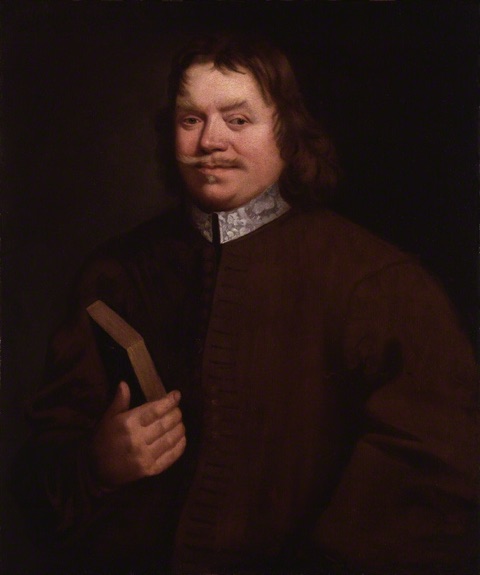
About the author
John Bunyan
John Bunyan (1628 to 1688 AD) was a tinker from Elstow, near Bedford, who became the preacher of the separatist congregation in Bedford and the author of The Pilgrim's Progress. Arrested in 1660 for preaching without a license, he spent most of the next twelve years in Bedford jail, where he wrote and studied the Bible with little else to read. He had no university training, and this exposition shows how he read Scripture: closely, verse by verse, and always looking for Christ and his church under the history. He died in London in 1688 with the commentary unfinished. It was printed in 1692 among the writings his friends gathered for the first folio of his works. Its readings of persecutors, the pope and the separation of the church from the world come out of his own experience as a nonconformist preacher under the Restoration.