Full text in modern English · Free PDF/EPUB
A Defense of the Doctrine of Justification by Faith
Want the file? The PDF/EPUB is free with an account.
Summary
- Author
- John Bunyan (1628 to 1688 AD), English Puritan preacher
- Written
- In prison at Bedford, early 1672 AD; printed the same year
- Source edition
- The complete 1672 work, in modern English
- Type
- Doctrinal controversy: a point-by-point reply to another book
- Length
- 53,000 words · 4 hours
What is A Defense of the Doctrine of Justification by Faith about?
A Defense of the Doctrine of Justification by Faith is John Bunyan's 1672 reply, written in prison, to Edward Fowler's The Design of Christianity. Fowler taught that the gospel aims to restore the natural holiness lost in Adam. Bunyan answers that sinners are justified only by Christ's righteousness received by faith, and that true holiness follows from that.
Read the full summary (9 points, key themes)Show less
How the argument unfolds
- 01
A warning to the reader. Bunyan lists forty doctrines from Fowler's book, ending with the claim that imitating Christ's righteousness is nobler than relying on it, and signs the letter from prison.
- 02
Fowler's holiness examined. Fowler's sound complexion of soul and purity of human nature are taken apart phrase by phrase. Bunyan concludes it is a holiness common to heathens and the same thing the Quakers promote.
- 03
What gospel holiness requires. Three essentials: the Holy Spirit, faith in Christ, and a new heart. Law-keeping from natural principles is “the old gentleman in his holiday clothes.”
- 04
Not Adam's lost holiness. Fowler spends nearly three hundred pages proving that Christ came to restore Adam's holiness, and Bunyan replies, “I do not doubt that I can effectually confute it in fewer than three hundred lines.”
- 05
Coming to God by Christ. Against Fowler's claim that this is an indifferent precept like baptism and the Supper, Bunyan answers from John 14:6: “If he is the only way, then there is no other.”
- 06
Christ's life, miracles, death and ascension. Each was for revealing the Father, fulfilling the law for sinners, confirming faith, and sealing pardon, not for driving people back to a natural holiness.
- 07
God justifies the ungodly. Pardon and imputed righteousness are for real sinners. The hungry sinner must feed on Christ, and Fowler's “every step” is turned inside out.
- 08
Justifying faith and imputation. Faith justifies as it receives a righteousness offered to sinners, and Christ is received as Lord first as a Savior: “He is Lord as he is righteousness.”
- 09
Later chapters and the appendix. Bunyan defends the preachers of free grace, rejects an obedient temper as a preparation for faith, answers Fowler's conclusion, and sets him against the Articles, Campion and Penn.
Key themes
- Righteousness that is not our own. The righteousness that justifies resides in the person of Christ and is counted to the sinner who believes. Bunyan draws his contrast from Romans 10:3 and Philippians 3:9.
- Holiness that follows pardon. Bunyan does not set holiness aside; he puts it after faith. Of the cross he says, “There is no encouragement to holiness like this, like being persuaded of this and believing it.”
- Free grace and holy living. Against Fowler's charge that free-grace preachers harden hypocrites, Bunyan says, “The preaching of free grace, pressing men to believe and to lay hold on Christ’s righteousness, is the most effective means under heaven to make men holy and righteous.”
- Christ the foundation. Fowler ranked faith in Christ among secondary fundamentals. Bunyan answers that “Christ is not only a fundamental, but the very foundation of all other fundamental truths.”
Reader questions (9)Hide the questions
Questions about A Defense of the Doctrine of Justification by Faith
Can I read A Defense of the Doctrine of Justification by Faith online for free?
Yes. The complete text of this modern English edition is on this page, with no sign-up or paywall.
Is there a free PDF of A Defense of the Doctrine of Justification by Faith?
Yes. The PDF and EPUB of this edition are free with an Updated Works account. Sign in with Google or an email link; no card is needed.
What is A Defense of the Doctrine of Justification by Faith?
It is John Bunyan's 1672 reply to Edward Fowler's The Design of Christianity. Bunyan works through Fowler's book chapter by chapter, arguing that sinners are justified by Christ's righteousness received through faith alone, and that gospel holiness is the fruit of that justification rather than its ground.
Who was Edward Fowler, and what did he argue?
Fowler was a Church of England clergyman who later became Bishop of Gloucester. In The Design of Christianity (1671) he argued that the main purpose of the gospel was inward, real righteousness, and that Christ came to put us again in possession of the holiness lost in Adam.
Did Bunyan write this book in prison?
Yes. The warning to the reader is signed “From prison, the 27th of the 12th month, 1671.” Under the calendar then in use that is February 1672. Bunyan had been held in the Bedford jail since 1660 and was released later in 1672.
What does imputed righteousness mean in this book?
It means that the righteousness Christ performed is counted by God to the sinner who believes, while that person is still ungodly in himself. Fowler defined imputation as God treating sincerely righteous people as if they were perfect; Bunyan says that makes healing come first, “and then the plaster comes.”
Why does Bunyan object to calling faith in Christ a positive precept?
Fowler placed coming to God by Christ with baptism and the Lord's Supper as things neither good nor evil in themselves. Bunyan argues that this makes Christ unnecessary to salvation and treats his blood like the ceremonies of the old law, when Christ is the only way to the Father.
Was Bunyan attacking the Church of England?
Not in this book. He was a nonconformist, but he closes by quoting the Church's own Articles on free will, justification and works before justification, and says, “I am not quarreling with him about things in which I dissent from the Church of England.”
How is the book organized, and how long is it?
It has a forty-point warning to the reader, a reply that follows Fowler's chapters and conclusion in order, and an appendix comparing Fowler with the Articles, the Jesuit Edmund Campion and the Quaker William Penn. It runs to about 53,000 words.
A Defense of the Doctrine of Justification by Faith · Full text
A Warning to the Reader
Dear Reader,
I do not want you to be worn out with longing to know what errors, and what doctrines destructive to Christianity, Mr. Fowler has presented to the world in his feigned Design of Christianity. I also want you to see, even at the entrance, what is shown more fully inside the house: namely, how his book contradicts the sound doctrine of the Church of England, even while he stands as a minister of that same church. So instead of a letter to the reader, I have thought it fitting to set before you the doctrines contained in his book, which are refuted by the book you now hold in your hand. I hope this will also be a sufficient defense of this undertaking of mine.
His doctrines are these:
1. That the first principles of morals, those first written in men’s hearts, are the essentials, the indispensable and fundamental points or doctrines of the gospel.
2. That these first principles are to be followed principally as they are made known to us by the dictates of human nature; and that this obedience is the first and best sort of obedience we Christians can perform.
3. That there is such a thing in the world as a soundness of soul, and the purity of human nature.
4. That the law, in its first principles, is far above the law of coming to God by Christ, and more binding on the hearts of Christians.
5. That the precept of coming to God by Christ … is in its own nature an indifferent thing, and, considered absolutely, neither good nor evil.
6. That Christ’s great errand in coming into the world was to put us back in possession of the holiness we had lost.
7. That John the Baptist, the angel that was sent to Zacharias, and Mary preached this doctrine, and so did Malachi the prophet.
8. That by Christ’s saving us from sin is meant, not first his saving us from the punishment, but from the filth; and from the punishment as a consequence of that.
9. That Christ’s work, when he had come, was to establish only an inward, real righteousness.
10. That Christ’s fulfilling the law for us was by giving more perfect and higher examples of moral duties than had been expressly given before.
11. That Christ’s doctrine, life, actions, miracles, death, resurrection, ascension, and coming again to judgment are all preached to establish us in this righteousness.
12. That it is not possible that a wicked man should have God’s pardon.
13. That it is impossible that Christ’s righteousness should be imputed to an unrighteous man.
14. And that if it were, he boldly affirms, it would mean as little to his happiness, while he continues unrighteous, as a gorgeous and splendid garment would to someone who is almost starved.
15. For God to justify a wicked man … would far more disparage his justice and holiness than advance his grace and kindness.
16. He says that men are not capable of God’s pardoning grace until they have truly repented of all their sins.
17. The devils, he says, have a large measure of these attributes of God, such as his power, knowledge, and so on.
18. That Christ himself performed, as our example, whatever he required us to do; yes, that he himself trod every step of our way to heaven.
19. The salvation of Christ consists first in curing our wounds (our filth), and secondarily in freeing us from the smart.
20. That pardon does not consist so much in remission as in healing (that is, the healing of our filth).
21. Faith justifies as it includes true holiness in its nature; it justifies as it does so.
22. That the faith which entitles a sinner to so high a privilege as justification must necessarily be such as complies with all the purposes of Christ’s coming into the world. And it is no less necessary that it should justify as it does this.
23. He wonders that any worthy man should be so hard to persuade to embrace this account of justifying faith.
24. There can be no pretense for anyone to think that faith should be the condition or instrument of justification as it complies only with the precept of relying on Christ’s merits for obtaining it.
25. It is, he says, as clear as the sun at noonday that obedience to the other precepts must go before obedience to this one.
26. Whoever can give him a sufficient reason why justifying faith should consist in resting and relying on Christ’s merits for the pardon of sin shall be his Apollo.
27. He will take the boldness to tell those who are displeased with this account of justifying faith that, in his opinion, it is impossible that they should once think of any other.
28. The imputation of Christ’s righteousness consists in dealing with sincerely righteous persons as if they were perfectly so.
29. The grand intent of the gospel is to make us partakers of inward, real righteousness; and it is only secondary that we should be accepted in the way just described.
30. It is not possible (he says) that any other notion of this doctrine should have truth in it.
31. Whatever things are commended by the customs of the place we live in, or commanded by superiors, or made convenient to be done by any circumstance, our Christian liberty consists in this: that we have leave to do them.
32. For our refusing to comply with these can hardly come from anything other than a proud affectation of singularity, or at best from superstitious scrupulosity.
33. Those ministers hinder the design of Christianity who preach up free grace and Christian privileges in any other way than as motives to obedience, and who scarcely ever insist on any other duties than those of believing, laying hold of Christ’s righteousness, applying the promises, and so on.
34. But to make Christian duties consist either wholly or mostly in these … is the way to harden hypocrites effectually.
35. Those ministers do anything but promote the design of Christianity who are never in their element except when they are talking of the unconditional character of God’s decrees, the absoluteness of his promises, and the utter disability and perfect impotence of natural men to do anything toward their own conversion.
36. He alone is a child of Abraham who, in the purity of his heart, obeys those substantial laws that God has imposed on him.
37. There is no duty more affectionately commanded in the gospel than that of almsgiving.
38. It is impossible that we should not have the design of Christianity accomplished in us … if we make our Savior’s most excellent life the pattern of our lives.
39. To do well is better than believing.
40. To be imitators of Christ’s righteousness, even of the righteousness we should rely on, is counted by Mr. Fowler more noble than to rely on it or trust in it.
Reader,
I have given you here only a taste of these things, and by my book only a brief reply to the errors that he has spread abroad in the world by his. Yes, only a brief one, though in it I take up many more of his errors than the forty set before you here.
God give you eyes to see, and a heart to shun and escape all these things that may yet come to pass to do harm, and to stand before the Son of Man (Luke 21:36).
So, hoping that this short taste may make Mr. Fowler ashamed, and that you may receive satisfaction concerning the truth and state of this man’s spirit and principles, I rest,
Yours to serve you in the gospel of Christ,
John Bunyan
From prison, the 27th of the 12th month, 1671.
Fowler’s Holiness Examined: Nature, Not Grace
Sir,
Having heard of your book entitled The Design of Christianity, and that it contained such principles as gave just offense to Christian ears, I wanted to see it for myself, so that from my own sight of things I might be better able to judge. But I could not obtain it until the 13th of this 11th month. And even that was too soon for you, Sir, a man who claims to be a minister of the word, to expose so vilely to public view the rottenness of your heart, in principles diametrically opposed to the simplicity of the gospel of Christ. Had it not been for this consideration, that it is not too late to oppose open blasphemy (such blasphemy as endangers the souls of thousands), I would have laid this answer aside as a thing out of season.
Two things are the design of your book:
1. To assert and justify a thing which you call inward, real righteousness and holiness.
2. To prove that the whole, the grand, the only and the ultimate design of the gospel of Christ is to begin and perfect this righteousness.
Into the truth or untruth of both these I shall now inquire, as briefly as I can.
First, then, let me examine a little the nature of your holiness and righteousness, as you yourself have described it.
“It is,” you say, “so sound a complexion of soul as maintains in life and vigor whatsoever is essential to it, and suffers not anything unnatural to mix with that which is so; by the force and power whereof a man is enabled to behave himself as becomes a creature endued with a principle of reason, keeps his supreme faculty in its throne, brings into due subjection all his inferior ones, his sensual imagination, his brutish passions and affections.”
You add further, “It is the purity of the human nature, engaging those in whom it resides to conduct themselves suitably in that state in which God has placed them, and not to act unbecomingly in any condition, circumstance or relation.”
You say, moreover, “It is a divine, or Godlike nature, causing a hearty approbation of, and an affectionate compliance with the eternal laws of righteousness; and a behavior agreeable to the essential and immutable differences of good and evil.”
Further, you call it a principle or habit of soul, “originally dictates of human nature”; and “a disposition and temper of the inward man as powerfully inclines it to regard and attend to; affectionately to embrace and adhere to; to be actuated by, and under the government of, all those good practical principles that are made known either by revelation, nature, or the use of reason.” And in conclusion you call it that holiness which we have already lost.
Thus, Sir, you have described your holiness. And this holiness, you affirm, is the thing that Christ’s great and only design was to promote, both by his life and by his glorious gospel.
Let me therefore take your description to pieces, to see whether perhaps anything may be found in it but what is worthless.
1. “It is,” you say, “a healthful complexion of soul, the purity of the human nature…”
Answer. These are mere words. There is no such thing as the purity of our nature, abstract and distinct from the sinful pollution that dwells in us (Rom 7:24). It is true that a man may talk of nature and of sin, and may distinguish between them by argument. But that there is such a principle in man since Adam’s fall, a principle by which he may act, or that Christ’s whole gospel design is to help such a principle forward, is altogether without Scripture or reason. There is no man by nature who has any soundness in him (Isa 1:6); no, neither in soul nor in body. His understanding is darkened, his mind and conscience are defiled (Titus 1:15), and his will is perverted and obstinate (Eph 4:18). “There is no judgment in his goings” (Isa 59:6-10). Where now is the sound and healthful complexion of soul? Let the best come to the best: when we have mustered up all the excellences of the soul of man, as man, we shall find nothing there but its lame, blind, defiled, obstinate and misled faculties.
And never think to evade me by saying that the graces of the Spirit of God are pure, for you have nothing to do with them. Your doctrine is of the sound complexion of soul, the purity of the human nature, a habit of soul, and the holiness we lost in Adam: things a great way off from the Spirit of grace, or the gracious workings of the Spirit. You do indeed talk of a divine or godlike nature, but this is still the same as your pure human nature, or your sound complexion or habit of soul. So it must either refer to man as he was created in the image or likeness of God, or else you have a palpable contradiction in this description of yours. But it must be concluded that the divine nature you talk of is nothing other than the dictates of the human nature, or your feigned purity of it, because by your own words you make them one and the same: it is the purity of the human nature, it is a divine or godlike nature.
2. But you go on to tell us of a degree. It is so sound and healthful a complexion or temperament of the faculties, qualities or virtues of soul “as maintains in life and vigor whatsoever is essential to it, and suffers not anything unnatural to mix with that which is so.”
Answer. If, as was said before, there is no soundness of soul in man, as man, and no such thing as a purity of our nature abstract from what is sin, then where shall we find so healthful a complexion or temperament of soul as to maintain in life and vigor whatever is essential to it, and to allow nothing unnatural to mix with it?
But let us take Paul’s definition of a man: “There is none righteous, no, not one: there is none that understandeth, there is none that seeketh after God. They are all gone out of the way, they are together become unprofitable; there is none that doeth good, no, not one. Their throat is an open sepulchre; with their tongues they have used deceit; the poison of asps is under their lips: whose mouth is full of cursing and bitterness: their feet are swift to shed blood: destruction and misery are in their ways: and the way of peace have they not known: there is no fear of God before their eyes” (Rom 3:10-18). I give you this from Paul rather than anything of my own, because it is the soundest complexion of soul that the Holy Ghost himself could draw. Here, now, is no purity of the human nature, nor any such sound complexion of soul as can keep itself from mixing with what is contrary to itself. And note that this is the state of all men, and that as they stand in themselves before God. Therefore take all the men in the world together, even altogether, in their purest natural state, or with all the purity of humanity they can produce: together they will still be unprofitable, and so must come short of doing good, “that every mouth might be stopped, and all the world become guilty before God” (Rom 3:19).
3. But going on, you say that this complexion is so forcible as to “keep his supreme faculty” (I suppose you mean the conscience) “in its throne,” and that it “brings into due subjection all his inferior ones,” namely, “his sensual imagination, brutish passions and affections.”
Answer. These words suppose that it is within the power of a man’s own soul always to keep sin out of itself, and so to keep guilt out of the conscience. Yet the Scripture says that both the mind and the conscience are defiled with the filth of sin in all who do not believe the gospel (Titus 1:15); and with that belief this description has nothing to do.
They suppose that this conscience is perfectly clear and full of light, when the Scriptures say that men have the understanding darkened (Eph 4:18-19). Yes, and further, in spite of these sayings of yours about the sound complexion of soul, the purity of human nature and this supreme faculty, the Scriptures teach that man in his best state is altogether vanity (Ps 39:5), and that men are darkness and night (1 Thess 5).
Yes, you say, this sound complexion “brings into due subjection all his inferior ones.”
Answer. Here there seems to be a contradiction of the former part of this description, yes, and of the nature of the soul itself. For you said before that it allows nothing unnatural to mix with it; and yet here you seem to suggest that part, I say, even part of itself, is disobedient and rebellious: “it brings into subjection all his inferior ones.”
“It brings into due subjection.”
Answer. Due subjection is such as is everlasting, universal, and perfect in nature, kind and manner; such as the most righteous, perfect and comprehensive law or commandment cannot object against or find fault with. Here’s a soul! Here’s a pure human nature! Here are the pure dictates of a brutish, beastly man, who knows neither himself nor one tittle of the word of God! But “There is a generation that are pure in their own eyes, and yet are not washed from their filthiness” (Prov 30:12).
“It is the purity of the human nature, engaging those in whom it resides…”
Answer. That is, in truth, in none at all. For there is no such thing in any man in this world as a purity of human nature. “We are all as an unclean thing” (Isa 64:6), and “Who can bring a clean thing out of an unclean? not one” (Job 14:4). And again, “What is man, that he should be clean? or he which is born of a woman, that he should be righteous?” (Job 15:14). These, therefore, are expressions without the testimony of the word, arising from your own fancy.
“It is a divine, or Godlike nature.”
Answer. This too you seem to fetch from the similitude or likeness of God that was in us at our first creation, before we sinned. But that similitude was at best only a created thing, and it has since been most unspeakably defiled, defaced and polluted with sin. So there is now, no, not in the best of men, as men, any sinless likeness and similitude of God to be found; there is no such petty divine or godlike nature to be found as you imagine.
But having thus stated your holiness in its nature and essence, you go on next to tell us under what considerations it moves a person to act, and also by what rules and laws it squares its acts and doings.
First, then, by or under what considerations it acts. These you scatter here and there in your description of holiness, under these heads. The first is to act “as becomes a creature endued with a principle of reason,” eyeing the state or place in which God has set him, and approving of, loving and complying with the eternal laws of righteousness. These eternal laws you elsewhere call “divine moral laws,” those that were first written in the hearts of men, “and originally dictates of human nature.” The second is “to do these from truly generous motives and principles,” such as these: first, “because it is most highly becoming all reasonable creatures” (you might also have added, and unreasonable ones too) “to obey God in everything” (within their spheres) “and as much unbecoming them to disobey him”; and second, “because it is a base thing to do unjustly.”
Now let me touch a little on all these, and then go on to what remains.
1. To act and do the things of the moral law only as “creatures endued with a principle of reason” is only to do things in our sphere as men, as the beast, the hog or the horse does things in his sphere as a beast. At best, even if it could be attained, this is to act only from pure nature. And that state of man is at an infinite distance from the one in which God expects a man to act who does anything that is pleasing in his sight. For:
(1) The qualification and consideration you propose is what is in all men, in men simply as men, since they are reasonable creatures and somewhat (though only somewhat) capable of acting as such.
(2) This qualification is not only in men, but of men. Reason is of the man himself, something as essential to him as his very being created or made.
(3) The law also, which you call divine, moral and eternal, is what is naturally seated in the heart; and, as you yourself express it, it is originally the dictates of human nature, or what mankind naturally assents to.
Now I say it is plain that a man cannot please the God of heaven by these principles and these qualifications. (1) Because none of these is faith, “But without faith it is impossible to please him” (Heb 11:6). (2) Because none of these is of the Holy Ghost; but under the New Testament nothing is accepted by God except what are the fruits of the Spirit (Gal 5:22-24). (3) The man and the principles you have stated may be utterly ignorant of Jesus Christ, and of all his New Testament things as such: “But the natural man receiveth not the things of the Spirit of God” (that is, the things of his New Testament), “for they are foolishness unto him: neither can he know them, because they are spiritually discerned” (1 Cor 2:14). (4) Your qualifications and considerations know nothing at all of the adoption of sons, or of our acting and doing our duty as sons. You content yourself to rest only within the confines of human nature, in acts of reason, as men or creatures only, or in their supposed pure natural principles.
And, Sir, by way of a little digression, I will also tell you of our truly Christian righteousness: both its origin or first principle, and how, or in what capacity, it places the person who is moved by it.
First, the principle that is laid within us is not of the purity of human nature, but of the Holy Ghost himself, whom we have received from God (1 Cor 6:19) by believing in the Son of God. It is a principle as far above your principle of humanity as the heavens are above the earth; for yours are like those of the first Adam, but ours are truly those of the second. “As is the earthy, such are they also that are earthy: and as is the heavenly, such are they also that are heavenly” (1 Cor 15:48).
Now whoever does not have this principle, although he is a creature, and also has the dictates of human nature, yes, and follows them too, is still not Christ’s: “If any man have not the Spirit of Christ, he is none of his” (Rom 8:9). So the Christian principle is different from your heathenish, pagan one, and far above it. By this Spirit the Christian is furnished with principles that are not natural but spiritual, such as faith, hope, joy, peace and the like, all of which are the fruits of the revelation of the forgiveness of sins freely by grace, “through the redemption that is in Jesus Christ” (Rom 3:24). In this Spirit and faith we walk (Gal 5:25); by this Spirit we are led (Rom 8:14), even into the joy and peace of the New Testament of our Lord. Therefore our holy actions are the fruits of righteousness which are by Jesus Christ, not by our human nature or the purity of it in us. Yes, they are the fruits of the Spirit of God, the qualifications that go along with the new covenant, and with those who by the work of regeneration are brought within its bounds and privileges.
Second, therefore, the capacity in which we stand, who act and do from the heavenly principle, is that of sons, the sons of God by adoption. As the apostle said, “Because ye are sons, God hath sent forth the Spirit of his Son into your hearts, crying, Abba, Father” (Gal 4:6). And again, “As many as are led by the Spirit of God, they are the sons of God” (Rom 8:14). This is something far different from your human description of acting as a creature endued with a principle of reason. For here is a man who acts as a son, endued with the Holy Spirit of God; and God, before the world was, predestined him to this state by Jesus Christ, to himself (Eph 1:4-5). As a son, therefore, the Christian acts and does, because he is endued with that high and heavenly principle mentioned before. By that principle this man has received a new heart, a new spirit, a new understanding and a good conscience, made so by faith in the blood of the Lord Jesus (Heb 10). So, being made new again, and another man, he acts from a new and another principle than yours: a principle as far beyond and above you as a man is above a brute, and as grace is above nature (2 Cor 5:14-16).
Third, as the Christian acts and does from a better principle, and in a better capacity or consideration, than the one you have described, so (to allude to your own notion) the first principles by which Christians receive this Spirit and adoption are not those principles of morals, or those things that are originally dictates of human nature. No, it is through the hearing of faith (Gal 3:1-3). By it we understand that the Son of God became a man, died for our sins, has saved us from the curse of God, and has accounted us to be the righteousness of God in him. When this is heard with the gospel, with a New Testament hearing, the Holy Ghost immediately takes possession of us, by whose glorious working we are helped, through the Son, to call the God of heaven our Father.
Now, being made free from sin in this way, by the faith of Jesus Christ alone, “we have our fruit unto holiness, and the end everlasting life” (Rom 6:22).
And here come in those reasonable conclusions which you would make the very roots of Christianity, though they are only remote and later conclusions, drawn from the mercy of God I mentioned before: that is, from predestination, calling, adoption, and justification by Christ’s blood while we in ourselves are sinners. I say, these are the things by which Paul tried to stir up the Romans, the Philippians, and the Colossians to a holy life.
To the Romans he says, “I beseech you therefore … by the mercies of God” (What mercies? Why, those of election, redemption, calling, justification, and adoption, mentioned in the chapters before), “that ye present your bodies a living sacrifice, holy, acceptable unto God, which is your reasonable service” (Rom 12:1).
To the Philippians: “If there be therefore any consolation in Christ, if any comfort of love, if any fellowship of the Spirit, if any bowels and mercies, fulfil ye my joy, that ye be like minded” (Phil 2:1-2).
To the Colossians: “If ye then be risen with Christ, seek those things which are above, where Christ sitteth on the right hand of God; set your affection on things above, not on things on the earth; for ye are dead, and your life is hid with Christ in God. When Christ, who is our life, shall appear, then shall ye also appear with him in glory” (Col 3:1-4). Now notice: mortify therefore (Col 3:5). Therefore! Why? Why, because they were risen with Christ, and because they would appear with Christ himself in glory at the end of this world. Therefore mortify the deeds of the body, or our members that are upon the earth.
These, Sir, are the motives by which we Christians act. We act because we are forgiven, because we are sons, and if sons, then heirs. But I will say more about this later.
Perhaps you will say that I am not dealing fairly with you, because you treat gospel or New Testament laws as well as moral ones.
For now I will answer that in this description of your holy principle, which is the foundation of your book, it makes no difference whether the laws are natural or spiritual, moral or of grace. The principle by which you do them is nothing other than the principle of nature, the dictates of human nature. And so it is a principle that can by no means reach the doctrines of the gospel any further than to pass judgment on them by that wisdom which is “enmity with God,” as will be seen more fully as I go on through your book.
It is true that you mention divine laws, and that under two heads. First, those that are of an indispensable and eternal obligation, such as those that are purely moral. Second, those you call positive precepts, which are in themselves of an indifferent nature and, considered absolutely, are neither good nor evil. Of this kind, you say, you know of only three that we have under the gospel: coming to God by Christ, and the institutions of baptism and the Lord’s Supper.
So then, although you talk of positive laws of the gospel, and particularly that of coming to God by Christ, yet what you call the first principles of morals are of higher concern with you, and far more indispensable than this. For this, you say, is a thing of an indifferent nature, and in itself, considered absolutely, is neither good nor evil; but the other is the life of the matter. But let me gather up your meaning a little.
The morals, you say, are indispensable and good in themselves, but coming to God by Christ is a thing indifferent, and in itself neither good nor evil. So although in this description of yours you talk of conforming to all those good and practical principles that are made known either by revelation, nature, or the use of reason, yet in this obedience of yours you count coming to God by Christ as merely an act of a very indifferent nature. It is a thing that, if done, is not good in itself, and if a man should leave it undone, is not evil in itself. And so, consequently, a man may have in him the ground and essentials of Christianity without it, and may be saved and go to heaven without it. For this I say: whatever is of an indifferent nature in itself is not essential to the Christian religion, but may be done or not done without hazard to eternal salvation. But this coming to God by Christ, you say, is one of the positive precepts, which are in themselves things indifferent, and neither good nor evil. Therefore it is not of the substance of Christianity.
But, Sir, where did you learn this new doctrine, to count coming to God by Christ a thing of so indifferent a nature, a thing not good in itself but only with respect to certain circumstances? Had you said this of baptism and the Supper of the Lord, I could, with some allowance, have put up with your words. But to count coming to God by Christ a thing indifferent in itself is a blasphemy that Christians must not put up with. It is too high a contempt of the blood, and too great a disgrace to the person of the Lord, the King of glory. I will say more about this later; but to return.
2. The aim of this description of yours is to set two things before us.
(1) What are the essentials of the rule of that holiness which the gospel immediately obliges us to, if we would be justified in the sight of God?
(2) What are the principles by which we act when we do these works rightly?
(1) As for the first, you tell us that “they are the first principles of morals, such as are self-evident, and therefore not capable of being properly demonstrated; as being no less knowable, and easily assented to, than any proposition that may be brought for the proof of them.” “Such as are self-evident,” that is, evident of themselves. Evident to what? To us, as men who know the principles of reason; and such as are as easily assented to as any proposition. Why did you not simply say, such as may be known as easily as we know there is day or night, winter and summer, or any other thing that may be brought to prove them? This law, therefore, is none other than the one mentioned in Rom 2:14-15, which is the law of our nature, the law that was implanted in us in the day of our creation. And therefore it is said to be ourselves, even “nature itself” (1 Cor 11:14).
(2) The principle by which we act, you say, and in the strength of which we do this law, is the principle of reason, or a reasonable compliance with this law written in our hearts, the original dictates of human nature, and so on. And this particular principle, you say, is this: to count it “most highly becoming all reasonable creatures, to obey God in everything; and as much unbecoming them, in anything to disobey him.”
In sum, this holiness of yours, both in root and in act, is nothing other than what is common to all men on earth. I mean it is so common that the first, the root, is in their nature, and the second, the act, is also part of themselves. For they are creatures whose prime or principal distinction from other creatures consists chiefly in this: that they are reasonable, and have reason as something essential to them. So the excellence you have discoursed about is nothing other than the excellence and goodness that belongs to this world. In its first principles it is common to heathens, pagans, Turks, and infidels. It dictates just as plainly to those who have not heard the gospel (I mean as to the nature of good and evil) as it does to those who sit under the sound of it. And it is the very same thing that our ungodly heretics of late, the Quakers, have made such a stir to promote and exalt.
Only in describing it you seem more candid than they are. For whereas they wrongly call it Christ, the light of Christ, faith, grace, hope, the spirit, the word that is near, and so on, you give it the names that properly belong to it: a complexion, or complication and combination, of all the virtue of the soul; human nature; its dictates; the principles of reason, such as are self-evident, than which there is nothing mankind more naturally assents to. Only here, as I have said, you also glorify your errors with names and titles that are not to be found anywhere but in your own deluded brains. For example, you say that the virtues of the soul can keep themselves unmixed; that there is still in us the purity of human nature, or such a disposition as can, both by light and by power, enable a man to see all those good and practical principles that are made known either by revelation, nature, or the use of reason, and can powerfully incline him to them and bring him under their government.
But I say that these principles, as you have stated them, are the principles and the goodness of this world. They are such as have in them not faith but the law, not the Holy Spirit but human nature. Therefore they cannot be what you affirm was, or is, the design, the great, the only, and the ultimate design, of Christ or his gospel to promote and spread in the world. They are not that design with respect to our justification before God from the curse. Nor are they that design with respect to the workings of his Spirit and the faith of Jesus in our hearts, which is the true gospel or evangelical holiness.
First, it is not the righteousness that justifies us before God from the curse, because it is a righteousness that is properly our own. It is carried out and managed by principles of our own, and springs originally, in its roots, from what is our own. There is the righteousness of men, and there is the righteousness of God. The righteousness of men is what we work from material and principles of our own; but the righteousness of God is what is worked from material and principles that are purely divine, and of the nature of God. Again, our own righteousness is what is worked in and by our own persons as men; but the righteousness of God is what is worked in and by the second Person in the Trinity, as God and man in one person, and it resides only in that person of the Son. I am speaking now of the righteousness by which we stand just before God, free from the curse of the law.
Now the apostle always sets this righteousness of ours, our own righteousness, against the righteousness of God, saying, “They going about to establish their own righteousness, have not submitted themselves unto the righteousness of God” (Rom 10:3). Further, Paul counts this righteousness of our own as loss and dog’s meat in comparison with that other, far more glorious righteousness, which he calls, as indeed it is, the righteousness of God (Phil 3:7-9); and that righteousness, as I said just now, resides in the person of the Son. Therefore, Paul says, I cast away my own righteousness and count it loss, and “but dung, that I may win Christ, and be found in him, not having mine own righteousness, which is of the law, but that which is through the faith of Christ, the righteousness which is of God by faith.” The righteousness, then, that is our own, that arises from material and principles of our own (such as the righteousness you have described), does not justify us before God from the curse.
Second, the righteousness you have described does not justify us, as I said before, because it is the righteousness of the moral law; that is, it is worked by us as we walk in the law. Now it does not matter whether you consider the law in its first principles or as it is revealed in the table of the Ten Commandments. In nature they are one and the same, and their substance and matter are written in our hearts as we are men. Now the apostle casts this righteousness away, as was shown before: “Not having mine own righteousness,” he says, “which is of the law” (Phil 3:9). Why? Because the righteousness that saves us from the wrath of God is the righteousness of God, and so a righteousness that is without the law. “But now the righteousness of God without the law is manifested, being witnessed by the law and the prophets; even the righteousness of God, which is by faith of Jesus Christ unto all and upon all them that believe” (Rom 3:21-22).
The righteousness of God without the law is the righteousness of Christ, who is by nature God. It is therefore a righteousness accomplished by him who was Lord, and the very God of the law. His nature was infinite, and not something the law could command or condemn. Nor was the command of the law, not even in its first and highest principles, the great and principal motive that moved him to do righteousness or to continue doing it. Rather, what the law commanded of us, he did, not by the law, but by that spirit of life, that eternal spirit and Godhead, which was essential to his very being. He did naturally and infinitely what the law required of us, and from higher and mightier principles than the law could require of him. For I would count it a piece of monstrous blasphemy to say that the law could command its God, that the creature could command its Lord and Creator. But this Lord God, Jesus Christ, has himself accomplished righteousness, a righteousness that is without the law, that is above it, higher and better than the law’s; and that is the righteousness that is given to and put upon all who believe.
So the Lord Jesus Christ, in his most blessed life, was neither prompted to acts of holiness, nor managed in them, by the purity of human nature, or by what you call the first principles of morals, or as he was simply a reasonable creature. Rather, being the natural Son of God, truly and essentially, eternal as the Father, his manhood was governed, moved, and stirred to do and to suffer by the eternal Spirit, his Godhead. “He through the eternal Spirit offered himself without spot to God” (Heb 9:14). This offering concerns not only his act of dying, but also that which made him able to die without spot in God’s sight: the infinite dignity and sinlessness of his person, and the perfect justice of his actions.
Now this person, acting in this way, is approved, or justified, by the law as good. For if the righteousness of the law is good, though the law is only a creature, then the righteousness of the Lord, the God of this law, must be much better. So here the law and its perfection are swallowed up, just as the light of a candle or a star is swallowed up by the light of the sun. In this way, then, the believer is made, not the righteousness of the law, “but the righteousness of God in Christ” (2 Cor 5:21). For Christ Jesus, who is the Christian’s righteousness, walked in this world in and under the law, not by legal and human principles, which are the excellences of men, but in and by divine principles, such as were and are of his own nature and the essence of his eternal Godhead.
This is the righteousness without the law, accomplished by a person and by principles far different from the person and principles you describe. And therefore yours cannot be the righteousness by which we stand just before the justice of God without the law. Now if it is a righteousness without the law, then it is a righteousness without men, a righteousness that cannot be found in the world. For take away the law, the rule, and you take away not only the righteousness but also that by which men, as men, work righteousness in the world: “Mine own righteousness which is of the law” (Phil 3:9). The righteousness, then, by which a man must stand just in the sight of God, free from the curse, is not to be found in men, nor in the law, but in him, and him only, who is greater than the law and also without the law. For although for our sakes he came under the law, even to the curse and displeasure of God, yet the principles by which he walked in the world toward God were neither human nor legal, but heavenly, and carried out in the Spirit of the Son. So it is not the righteousness you have described by which we stand just before God.
Third, the righteousness you have described cannot be the one that justifies us before God, because of its imperfections, both in the principle and in the power by which it is managed. You have talked of a sound complexion of soul, the purity of human nature, and that with this added power, that it is able to keep itself unmixed with whatever is not of itself. Yet we Christians know, and that by the words of God, that there is now in man, as man, no soundness at all, but from the crown of the head to the sole of the foot nothing but swellings and boils, festering wounds and sores (Isa 1:6). We are all an unclean thing, and our righteousness is like filthy, ulcerous rags (Isa 64:6). “If there had been a law given which could have given life, verily righteousness should have been by the law” (Gal 3:21). If a man could perform the law to the satisfaction of the justice of the eternal Majesty, then the law would give life to that man. But because of the perfection of an infinite justice, and the weakness and unprofitableness of the law through our flesh (Rom 8:3), you must flee from yourself to another righteousness for life, however much more you may say about the excellence of your sound complexion and the purity of human nature. Otherwise you will at last stick fast in the jaws of death and everlasting despair. “For by the works of the law shall no flesh be justified” (Gal 2:16).
It is therefore nothing better than error to ascribe in this way a soundness of soul, a purity of human nature, to poor man, “that hath drank iniquity like water” (Job 15:16). That is why Jude says of you, and of all such champions of nature, “That even in the things that you know naturally, as the brute, in them you corrupt yourselves” (Jude 10); yes, even in the very principles, the first or original dictates, of your nature or humanity. There is none that understands or is good, and therefore there is none that does good, no, not one. That is, there is none who does good while continuing in a natural state, none by the power or principles of nature. For he means it here in your own sense, as men deal with the justice of the law by natural principles.
Fourth, the righteousness you have described cannot be the one that justifies us before God, because it is not of faith. “The law is not of faith: but, The man that doeth them shall live in them” (Gal 3:12). The apostle also tells us in Rom 10 that the righteousness completed by doing the law is one thing, and the righteousness of faith is another. For faith, in the justification of a sinner from the curse and wrath of God, looks only to the mercy of God and the forgiveness of sins for Christ’s sake. “God for Christ’s sake hath forgiven” (Eph 4:32) the one who is enabled to believe, that is, to trust and venture the eternal concern of his soul upon the righteousness that is to be found nowhere but in the person of the Son of God. For there, in him, is a justice more than equal to all the demands of the law, and equal to the requirements of the eternal justice of God; and he is our justice. God has made him righteousness, or justice, to us; that is, the righteousness or justice that is in him is counted by God as belonging to the man who will accept it by faith, so that he might be made the justice or righteousness of God in him.
For the righteousness that saves a sinner from damnation must be equal to what is in the eternal Deity. But where can that be found, except in him who is by nature God, as the Son of the Father truly is? In him, therefore, and not in the law, there is a righteousness fit for faith to lay hold of. Besides, the law is not, and cannot be, the object of faith for men. For the object of faith (I am speaking now of justifying righteousness) must be a righteousness already completed, and, as I said, a righteousness to be received and accepted, since it is now perfected and offered and given to us by the kindness and mercy of God. But a man may believe in the law as long as he likes before it ever performs a perfect righteousness for him. The law can work nothing but wrath (Rom 4:15). The law says, “No, you must work by the law, not believe in it.” Besides, all that comes out of the mouth of the law is this: “Cursed is every one that continueth not in all things which are written in the book of the law to do them” (Gal 3:10). And no man who has once, or already, transgressed the law is able to do this so as to escape the curse by doing. It is therefore a vain thing, yes, a horrible wickedness in you, to abuse the law and the weakness of man in this way, by suggesting that the only, the ultimate, or the grand design of Christ Jesus was, or is, to promote a righteousness by the law that is performed by human principles in us.
What True Gospel Holiness Requires
I could double, yes, ten times double, the number of these arguments against you, but I will pass from this to the second thing: “The righteousness you have described is not the true gospel inward holiness.”
I told you before that the principles you have described are not gospel principles. Now I will add that, just as they are not such in themselves, so neither do they fetch in or obtain, by our holding to them, those things which alone can make or work in the soul the truly gospel inward acts of holiness.
Things Essential to Inward Gospel Holiness
There are three things which are essential to inward gospel holiness. Your description is utterly without them, and neither can they be obtained by it or come into the heart by it. They are, first, the Holy Ghost; second, faith in Christ; and third, a new heart and a new spirit.
Without these three there is no such thing as gospel holiness in man, as I have also hinted before. But now, as none of these three is found in your description of inward holiness, so neither can you or anyone else, by all your inclinations, whether to what you call the first principles of natural reason or to the dictates of human nature, obtain or fetch into the soul the smallest dram of what is essential to that holiness which truly agrees with the gospel’s description of inward gospel holiness. This will be made further plain in what follows.
1. The Holy Ghost is not obtained by your description, since that consists only in principles of nature and puts itself forth in acts of civility and morality. The apostle wanted to convince the bewitched Galatians that your doctrine, which was also the doctrine of the false apostles, was a doctrine that hindered and perverted the gospel of Christ instead of helping it forward. So he addresses them in this manner: “This only would I learn of you, Received ye the Spirit by the works of the law, or by the hearing of faith?” (Gal 3:2).
By the works of the law, that is, by putting your principles into practice. Indeed, may I not add, by putting your principles into practice by a brighter and clearer rule than the one you set down at the beginning of your description? For the law as written and engraved in stones, with all the precepts of Moses added to it, was a fuller and more ample discovery of the mind of God than can be obtained by your virtues of soul, your purity of human nature, or the first principles of morals as they are written in the heart of man and are originally dictates of human nature (Rom 3:1-3). Yet their own experience told them that by these, by following these, by laboring to live up to the light of these, they neither could nor did obtain the enjoyment of the Holy Ghost. Rather, it told them that their present turning away from the word of faith, by which they had in fact received the Spirit at first, was in truth nothing other than the very witchcraft and enchantments of the devil, whatever pretenses of holiness and godliness were the arguments that persuaded them to do it.
Further, the apostle sets this spirit and these principles of yours, and what is truly the Spirit of God, in a line diametrically opposite one against the other. Yes, the receiving of the one opposes the receiving of the other. “Now we have received,” he says, “not the spirit of the world” (that is, your spirit and principles of humanity, to walk by it or live in it), “but the Spirit which is of God; that we may know the things that are freely given to us of God” (1 Cor 2:12). But what is the spirit of the world? He tells us in the verse before: it is the spirit of a man. Solomon calls it “the candle of the Lord; searching all the inward parts of the belly” (Prov 20:27). It searches by human principles, good motions toward moral duties, workings of reason, and dictates of nature to obey God as Creator. These things flow from the spirit of a man, which is the spirit of all the world. Those who preach or speak by this spirit preach or speak of the world, of the virtues of the world; and the world, “the whole world heareth them,” or knows in itself what they say (1 John 4:5).
Now when this spirit is received, embraced, and followed as the spirit that is of God, then it must be branded with the mark of the spirit of error and of antichrist. For the act of doing so is most wicked; yes, and by it opposition is raised against Christ himself.
But I say, the Holy Ghost is not obtained by these principles, nor by the pursuit of them.
2. Faith is not obtained by the pursuit of your principles, but by hearing another doctrine. Whoever presses men to look to and live by the purity of human nature, the principles of natural reason, or the law as written in the heart or in the Bible, puts the word of faith out of the world. For these doctrines are as opposite as the spirits I spoke of before: “For Moses describeth the righteousness which is of the law, That the man which doeth those things shall live by them” (Rom 10:5). Now whoever receives this law, to do it and live by it, has set up, and is pursuing, a doctrine of another nature than what is called the righteousness of faith. For the righteousness of faith, when it comes to justification and deliverance from the curse, makes no mention at all of hearing the law or of doing good works. It speaks of hearing of the mercy of God as extended to sinners, and of its coming to us through the death and resurrection of Christ Jesus. “The righteousness which is of faith speaketh on this wise, Say not in thine heart, Who shall ascend into heaven? (that is, to bring Christ down from above:) or, Who shall descend into the deep? (that is, to bring up Christ again from the dead.) But what saith it? The word is nigh thee, even in thy mouth, and in thy heart: that is, the word of faith, which we preach; That if thou shalt confess with thy mouth the Lord Jesus, and shalt believe in thine heart that God hath raised him from the dead, thou shalt be saved” (Rom 10:6-9).
This, then, is the doctrine of faith, or the righteousness that faith has to do with. Now, as old-covenant works are begotten in men by the doctrine of works, so faith is begotten by the doctrine of faith. Therefore, after he had said, “faith cometh by hearing,” he suggests that this is the hearing of the preaching of the gospel of peace (peace by the blood of the cross) and of the glad tidings of good things (Rom 10:14-17): good things promised for the sake of the Lord Jesus, not for the sake of good deeds done by us from human principles or the dictates of our nature.
Faith, then, the second essential, comes into the heart not by the preaching or the practice of your principles, but by another doctrine, a higher and far more heavenly one. And so the apostle sets out completely the difference between the worker of good works in the spirit of the law and the believer who takes hold of grace by Christ so that he may be saved by it. The one he calls “them that are of the works of the law”; the other, “they which are of faith” (Gal 3). Having done this, he tells us that as they differ in their principles, namely faith and works, so they shall differ in the outcome: For the law is not of faith, the promise is only made to faith; therefore, they only that are of faith, are blessed with faithful Abraham.
3. The third essential is a new heart and a new spirit or mind. This also does not come by your principle, for that is only the old covenant, which gives birth to bondage and holds its Ishmaels under the curse forever. No new heart comes by the law, nor any new spirit. It is by the new covenant, that is, the gospel, that all things are made new (Jer 31:33; Ezek 36; Heb 8:8; 2 Cor 5:17-19).
The apostle, after a long discussion of the two ministrations and their excellencies (2 Cor 3), tells us that the heart is not changed at all as long as it remains in the works of the law, but stays blind and ignorant. “Nevertheless,” he says, “when it shall turn” (from the law) “to the Lord, the veil shall be taken away.” But what is it to turn from the law to the Lord? Why, it is to leave and forsake your spirit and principles, and the works that come from those principles, and to fly to the grace and merits, “the glory of the Lord Jesus Christ.” Now when the heart is turned to Christ, the veil of Moses is taken off. So then the soul, “with open face beholding as in a glass the glory of the Lord, is changed from glory to glory, even as by the Spirit of the Lord” (2 Cor 3:14, 18).
Objection. But it seems a paradox to many that a man should live to the law, that is, devote himself to the works of the Ten Commandments, the most perfect rule of life, and yet not be counted a changed or new man.
Answer. Though it seems untrue, it is most true that by the works of the law no heart is made new, and no man is made new. A man may give himself up to the goodness of the law from principles of nature and reason (principles that are of himself, and as old as he is). Yet these principles are so far from being new that they are as old as Adam in Paradise, and they come into the world with all the children of men. And the law, or the first principles of morals, suits these principles so well that, as you have said, “they are self-evident, than which there is nothing mankind does more naturally assent to.” Now nature is no new principle, but an old one: our very own, and of ourselves. The law is no new principle, but old, and one with ourselves; as you have also well called it, “first written in men’s hearts, and originally dictates of human nature.”
Let a man, then, be as devout as it is possible to be for the law and the holiness of the law. Yet if the principles from which he acts are only the habit of soul, the purity (as he imagines) of his own nature, the principles of natural reason, or the dictates of human nature, all this is nothing else but the old gentleman in his holiday clothes. The old heart, the old spirit, the spirit of the man, not the Spirit of Christ, is here.
And so the apostle, when he wants to show us a man alive, or made a new man indeed, speaks of the Holy Ghost and faith, and just so he tells us that such people are dead to the law: to the law as a law of works, to the law as principles of nature. “Wherefore, my brethren, ye also are become dead to the law” (the moral law and the ceremonial law) “by the body of Christ, that ye should be married to another” (another than the law), “even to him who is raised from the dead, that we should bring forth fruit unto God” (Rom 7:4).
You have become dead to the law. Dead to the law! Why? So that you should be married to another. Married to another! Why? “That you should bring forth fruit unto God.” But does not a man who walks orderly according to the Ten Commandments bring forth fruit to God? No, not if he does it before faith, in the spirit of a man, by the dictates of human nature, regarding the law as that by obeying which he must obtain acceptance with God. This is bringing forth fruit to himself. For all that he does, he does as a man, as a creature, from natural principles, of himself, his own, and for none other than himself. And therefore he serves in an old spirit, the oldness of the letter, and for himself.
But now (that is, you being dead to the law and married to Christ), the law by which we were held while we were in ourselves is dead. We are now delivered from that law, both as to its curse and its impositions, as it stands as a law of works in the heart of the world. We serve in newness of the spirit, “and not in the oldness of the letter” (Rom 7:6). A man, then, must first be dead to your principles, both of nature and of the law, if he will serve in a new spirit, if he would bring forth fruit to God.
Therefore your description of the principle of holiness in man, and also of the principles by which he puts this holiness forth into righteous acts, is altogether empty of the true essentials of inward gospel holiness and righteousness.
Christ Came Not to Restore Adam’s Lost Holiness
But there is one thing more in this description, or rather in its effect, that I will also look into. It is your saying, “As it was the errand of Christ to effect our deliverance out of that sinful state we had brought ourselves into: so to put us again into possession of that holiness which we had lost.” The proof of this position is now your next business. That is, if I understand your learning, the whole remaining part of your book, which runs to well nigh three hundred pages, is spent proving it. And I do not doubt that I can effectually confute it in fewer than three hundred lines.
Only first, by the way, I want my reader to take notice that this last clause (“to put us again into possession of that holiness which we had lost”) is the sum of this whole large description of his holiness in the foregoing pages; that is, of the holiness and righteousness that Mr. Fowler has been describing. And he adds that Christ’s whole business when he came into the world was, as to effect our deliverance from sin, “so to put us again in possession of that holiness which we had lost.” The holiness he contends for here, therefore, is that, and only that, which was in Adam before the fall: the holiness he lost by transgression, and we by transgressing in him. So let us look into this a little, so that his reader and mine may perhaps come to a right understanding of things.
First, Adam before the fall, even in his best and most sinless state, was only a pure natural man, made up of body and soul. These, to use your own terms, were his “pure essentials.” In this man’s heart God also wrote the law; that is, as you term them, “the first principles of morals.” This, then, was Adam’s state. He was a pure natural man, made sinless by God; all the faculties of his soul and all the members of his body were clean. “God made man upright” (Eccl 7:29). But God did not then make him a spiritual man. “The first Adam was made a living soul,” “howbeit that was not first which is spiritual; but that which is natural, and afterward that which is spiritual: The first man is of the earth, earthy” (1 Cor 15:45-47). A living soul he was, yet only a natural man, even in his first and best estate; and earthly, when compared with Christ, or with those who believe in Christ. So then, the holiness of Adam in his best estate, even the holiness that he lost, and we in him, was nothing other than natural holiness: the sinless state of a natural man.
This holiness, then, was not of the same nature as the holiness that has the Holy Spirit for its root, for we read nothing at all of that in him. He was only endowed with a living soul. His holiness, then, could not be gospel holiness, nor a branch of the second covenant. His acts of righteousness were not done by the workings of the Spirit of grace, but by the dictates of the law in his own natural heart. But when the apostle treats of the Christian’s inherent holiness, he first shuts out Adam’s holiness as earthly, and then tells us that it is such as is in Christ: “As is the earthy, such are they that are earthy; and as is the heavenly, such are they that are heavenly” (1 Cor 15:48). Let those, then, who are the sons of Adam, in the state of nature as he was (though not so pure and spotless as he), be reckoned to bear his image and likeness. But let those who are the children of Christ, though not so pure as he, bear the image and likeness of Christ, for they are conformable to the image of the Son of God (Rom 8:29). Therefore the holiness that was in Adam, being only natural, earthly, and not of the Holy Spirit, cannot be the holiness that Christ came into the world to give us possession of.
Second, Adam in his best and most sinless state was only a type or figure: “The figure of him that was to come” (Rom 5:14). A type in what respect? Doubtless in his sinless and holy estate: a type and figure of the holiness of Christ. But if Christ should come from heaven to put us in possession of this sinless holiness that was in Adam, or that we lost in him, what more would his work amount to than putting us in possession of a natural, figurative, shadowy righteousness or holiness? But he never intended that. Therefore the great errand Christ came into the world on was not to possess his people with that holiness.
Third, the holiness and righteousness that was in Adam before the fall, and that we lost by him, was a holiness that stood in, and was to be kept up by, his natural and perfect compliance with a covenant of works. For “Do this; sin and die” were the terms God gave to Adam. But Christ at his coming brings in another covenant, a better one, a blessed covenant of grace. And he also possesses his children with the holiness and privileges of that covenant: not with Adam’s heart or Adam’s mind, but with a new heart, a new spirit, a new principle to act by and to walk in a new covenant. Therefore the holiness that was in Adam before, or that we lost in him by the fall, could not be the holiness that Christ at his coming made it his great or only business to put us in possession of.
Fourth, the holiness that was in Adam before, and that we lost in him by the fall, was such as could stand alongside perfect ignorance of the mediation of Jesus Christ. For Christ was not made known to Adam as a Savior before Adam was a sinner; nor did Adam need at all to know him as his Mediator before he knew he had offended (Gen 3). But Christ did not come into the world to establish us in, or give us possession of, a holiness that could stand alongside perfect ignorance of his mediatorship. No; the holiness that we believers have, and the righteous acts that we fulfill, come to us and are done by us through the knowledge of the Lord Jesus, and of his being the promised Messiah (Eph 4:21-22; 2 Pet 1:3).
Fifth, the holiness that was in Adam was neither given him through the promise nor encouraged by the promise. Adam had no promise to possess him with a principle of holiness; it came to him by creation. Nor did he have any promise to strengthen or encourage him in holiness. All he had was instructions about his duty, and death threatened if he did not do it (Gen 2:15-17). But Christ did not come to give us possession of a holiness or righteousness that came to us by our creation, without a promise, and that has no promise to encourage us to continue in it. He came to give us a holiness that comes to us by the best of promises, and that we are encouraged to by the best of promises. Therefore it was not his great errand, when he came from heaven to earth, to put us in possession of that promiseless holiness that Adam had before, and that was lost in him by the fall.
Lastly, in a word, the holiness that Adam had before, and that we lost in him by the fall, was a natural, shadowy, old-covenant, promiseless holiness: a holiness that stood, and could be walked in, while he stood perfectly ignorant of the Mediator Christ. Therefore it is rather the design of your Apollo, the devil (whom you bring forth in your book to applaud your righteousness), I say, it is rather his design than Christ’s, to set men endeavoring to possess that holiness. For what is truly evangelical is the spiritual, substantial, new-covenant, promised holiness: the holiness that comes to us by, and stands in, the Spirit, faith, and knowledge of the Son of God, not the holiness we lost in Adam. Therefore the song which you learned there from the devil is true in the sense in which he made it, and in the sense for which you bring it: namely, to beget in men the highest esteem of their own human nature, and to set up this natural, shadowy, promiseless, ignorant holiness in opposition to what is truly Christ’s.
To dwell in heaven does not more please him, than
Within the souls of pious mortal men.
This is the song. But you do not find it in Matthew, Mark, Luke, or John. You find it among the heathen, who were the devil’s disciples, and who used to inquire at his mouth and learn from him.
Thus I have razed the foundation of your book, by overthrowing the holiness and righteousness that you set up as the only true gospel and evangelical holiness. It follows, then, that the rest of your book (that is, whatever is brought and urged in it to prove this description of holiness of yours, and the like) is nothing but the abuse of Christ, of Scripture, and of reason. It is nothing but a wresting and corrupting of the word of God, to your own destruction and to the destruction of those who believe you.
Coming to God by Christ Is No Indifferent Thing
But let me pass over this and come to some other passages in your book. First, there is the one on page 5, where you say:
“The holiness which is the design of the religion of Christ Jesus … is not such as is subjected in anything without us, or is made ours by a mere external application …”
Answer. 1. These words secretly strike at the justification that comes by the imputation of that most glorious righteousness which resides only in the person of the Lord Jesus. That righteousness is made ours by an act of eternal grace, as we rest upon it by the faith of Jesus.
2. But if the holiness you speak of is not seated in anything outside us, then it is no part of all that fullness which it pleased the Father should dwell in Christ. For the holiness and righteousness of the saints, even the inward holiness that is in them, is none other than that which dwells in the person of the Son of God in heaven. Nor does any man partake of it, or enjoy the least measure of it, except as he is united by faith to this Son of God. The thing is as true in him as in us (1 John 2:8): in him as the head, and without measure. It is seated originally in him, not in us. “Of his fulness have all we (saints) received, and grace for grace” (John 1:16). Therefore the holiness that has its origin in us, in the purity of human nature (which is the thing you aim at), and which is originally, as you put it, the dictates of that nature, is the religion of the Socinians, the Quakers, and the like, and not the religion of Jesus Christ.
And now I will come to your indifferent things, that is, those you call “positive precepts.” These are things, you say, “of an indifferent nature; and absolutely considered, are neither good, nor evil … but are capable of becoming so; only by reason of certain circumstances.” Of these positive, indifferent precepts you say you know of only three in the gospel, only three that are purely so, namely, “That of going to God by Christ, and the institutions of baptism, and the Lord’s Supper.” This we have on pages 7 and 9.
Answer. These words, as I hinted before, are highly derogatory to the Lord, the King of glory. They trample on the blood of the Son of God as much as words are likely to do. For:
1. If going to God by Christ is in itself only an indifferent thing, then, as I also hinted before, it is not of the substance of Christianity. A man may be truly a Christian without it; he may be saved and go to heaven without it. This is, in truth, the consequence of your words. For things purely of an indifferent nature do not in themselves either make or mar the righteousness that justifies us from the curse before God. So by your argument, if a man remains ignorant of that positive precept of “coming to God by Christ,” he remains ignorant of nothing but an indifferent thing. It is a thing that in itself is neither good nor evil, and therefore not essentially material to his faith or his justifying righteousness.
2. An indifferent thing in itself is next to nothing: neither good nor evil, then, but a thing between the two.
By that reckoning the blood of the Lord Jesus is, in itself, of no value at all, and faith in him is, of itself, no more than a thing of nothing. Their virtue and goodness depend only on certain circumstances that make them so. For the indifference does not lie simply in coming to God, but in coming to him by Christ. Coming to God some other way is, even in this man’s eyes, the all in all; but in this coming, in coming to him by Christ, there lies the indifference. What injury, I wonder, has the Lord Jesus done this man, that he should have such indifferent thoughts of coming to God by him?
But has he no better thoughts of his own good deeds, which are by the law? Yes, doubtless. For those, he says, “are of an indispensable, and eternal obligation, which were first written in men’s hearts, and originally dictates of human nature” (page 8). Mark this: not one dictate of human nature, nor any necessary conclusion or deduction from it, is of an indifferent obligation, but of an indispensable one; not of a passing obligation, but of an eternal one. It is only going to God by Christ, and two other things he finds in the gospel, that are of an indifferent nature in themselves.
But how indifferent? Even as indifferent in itself as the blood of a poor, simple sheep, or the ashes of a heifer; for these are his very words: “Such (that is, such ordinances as in themselves are of an indifferent nature) were all the injunctions and prohibitions of the ceremonial law; and some few such we have under the gospel” (page 7). Then on page 9 he tells you what these positive precepts under the gospel, or things indifferent, are: “That of going to God by Christ, is one; and the other two, are the institutions of baptism, and the Lord’s supper.” So, as the ceremonies of the law were, such, even such, he says, is going to God by Christ, and the rest.
Therefore, whoever lays no more weight on the Lord Jesus as the one by whom to come to God than this man does would lay as much weight on a poor, simple sheep as on the Christ of God, if the old ceremonies were still in force. For these are all alike positive precepts, such as the ceremonies of the law were: things in themselves neither good nor evil, but, absolutely considered, of an indifferent nature.
So coming to God by Christ is reckoned by him to be, of itself, a thing of a very indifferent nature. Therefore this man cannot do it except with a very indifferent heart. His great and most substantial coming to God must needs be by some other way (John 10:1). But why should this thief love to clamber up like this, and seek to go to God by other means, which he reckons of a more indispensable and eternal nature, seeing that Christ alone, indifferent as he is, is the only way to the Father? “I am the way,” he says, “the truth and the life; no man cometh to the Father but by me” (John 14:6). If he is the only way, then there is no other. If he is in this sense the truth, then all else is the lie. And if he is here the life, then all else is death, however often this man calls those other things indispensable and eternal.
So then, let him who is wise consider how far this man’s doctrine is from the sin against the Holy Spirit. For if coming to God by Christ is in itself only a thing indifferent, and made a duty only on account of certain circumstances, then coming to God by Christ is a duty laid on us only by reason of certain circumstances. It is not that the thing in itself is good, or that the nature of sin and the justice of God lay a necessity on us to do it. But what are these certain circumstances? For it is because of these, if you will believe him, that God the Father, yes, the whole Trinity, consulted in eternity and agreed that Christ should be the way to life. Now, I say, it is partly because the greatest safety was by him, since he is by nature the justice, wisdom, and power of God; and partly because, we having sinned, it would be utterly impossible for us to come to God by any other means and live. Whoever calls these circumstances, that is, things over and above, beside the substance of the gospel, will only reveal his own unbelief and ignorance, and the like.
As for your saying that Calvin, Peter Martyr, Musculus, Zanchius, and others did not question but that God could have pardoned sin without any other satisfaction than the repentance of the sinner (page 84): it matters nothing to me. I have not made my creed out of them, nor out of anything other than the holy Scriptures of God.
But if Christ was ordained from before all worlds to be the Savior, then from all eternity he was appointed and prepared to be so. And if God is, as you say, infinitely just (page 136), and I will add, eternally just, how can he pardon unless he is presented with a satisfaction for sin that answers, in every point of the highest perfection, the demands of this infinite and eternal justice? Unless you will say that the repentance of a sinner is enough to answer whatever could justly be demanded as a satisfaction to that justice. If you said that, you would in consequence be saying that man is, or may be, just in himself, that is, equal with God. Or you would be saying that the sin of man was not a transgression of the law that was given, and did not bring on the punishment that is threatened by the eternal God who gave it. (But let me give you a caution: take care that you do not misrepresent these men.) Christ cries, “If it be possible let this cup pass from me” (Matt 26:39). If what is possible? Why, that sinners should be saved without his blood (Heb 9:22). “Ought not Christ to have suffered?” (Luke 24:26). “Christ must needs have suffered” (Acts 17:3). He had to suffer, not because of some certain circumstances, but because the eternal justice of God could not consent to the salvation of the sinner without a satisfaction for the sin committed. More of this in my next, if you think fit to reply.
Now, so that my reader may see that I have not misrepresented you in this reply to your sayings, I will repeat your words in full and leave you to answer for them.
You say, “Actions may become duties or sins these two ways; first, as they are compliances with, or transgressions of, divine positive precepts: These are the declarations of the arbitrary will of God, whereby he restrains our liberty, for great and wise reasons, in things that are of an indifferent nature, and absolutely considered are neither good nor evil; and so makes things not good in themselves (and capable of becoming so only by reason of certain circumstances) duties, and things not evil in themselves, sins. Such were all the injunctions and prohibitions of the ceremonial law, and some few such we have under the gospel” (page 7). Then on page 9 you tell us that “the reasons of the positive laws (that is, concerning things in themselves indifferent) contained in the gospel are declared; of which (you say) I know not above three that are purely so, namely, That of going to God by Christ, and the institutions of baptism, and the Lord’s Supper.”
Here now let the reader note this. Positive precepts are declarations of the arbitrary will of God in things of an indifferent nature, things that, absolutely considered, are neither good nor evil. And some few such, you say, we have under the gospel, namely, coming to God by Christ, and the rest. I am the more exact in this matter because you have confused your weak reader with a crooked parenthesis in the middle of the paragraph. You also put off spitting your intended venom at Christ until you had puzzled him again with your mathematics and metaphysics and the like, putting another page between the beginning and the end of your blasphemy.
Indeed, in the seventh chapter of your book you make a great noise about the effects and consequences of the death of Christ: that it was a sacrifice for sin, an expiatory and propitiatory sacrifice (page 83). Yet whoever weighs you well, and compares you with yourself, will find that with you words and sense are two different things. He will also find that you have learned from your brethren of old to dissemble with words, so that your own heart-errors, and the snake that lies in your bosom, may stay there the more undiscovered. For in the conclusion of that very chapter, in and by a word or two, you take away the glory that rightly belongs to the death and blood of Christ, and lay it on other things.
For you say, “The scriptures that frequently affirm, that the end of Christ’s death was the forgiveness of our sins, and the reconciling of us to his Father, we are not so to understand, [those places where this is expressed] as if these blessings were absolutely thereby procured for us any otherwise, than upon condition of our effectual believing” (page 91).
I answer: by the death of Christ the forgiveness of sins was effectually obtained for all who shall be saved, and by that death they were reconciled to God even while they were still enemies. So, as to forgiveness from God, it is purely on account of grace in Christ. “We are justified by his blood, we are reconciled to God by the death of his Son” (Rom 5:9-10). Yes, peace is made by the blood of his cross (Col 1:20), and God for Christ’s sake has forgiven us (Eph 4:32). So then, our effectual believing is not a procuring cause in the sight of God. Nor is it a condition of ours foreseen by God, and the motive that prevails with him to forgive us our many transgressions. Believing is rather that which applies that forgiveness, and fills the soul with the peace that is already made for us with God by the blood of his Son Christ Jesus. “Being justified by faith, we have peace with God through our Lord Jesus Christ” (Rom 5:1). The peace and comfort of it do not come to the soul except by believing. Yet the work is finished and pardon procured, justice having already, that is, beforehand, been satisfied by the precious blood of Christ.
Observe: I am commanded to believe. But what should I believe? Or what should be the object of my faith in the matter of my justification with God? Why, I am to believe in Christ; I am to have faith in his blood. But what is it to believe in Christ, and what is it to have faith in his blood? Truly, it is to believe that while we were still sinners Christ died for us, and that even then, when we were enemies, we were reconciled to God by the death of his Son. It is to believe that there is a righteousness already completed for us.
I may as well give you the apostle’s argument and conclusion in his own language: “But God commendeth his love toward us, in that, while we were yet sinners, Christ died for us. Much more then, being now justified by his blood, we shall be saved from wrath through him” (Rom 5:8-9). And note that this word now refers to the same time as the yet that went before. “For if, when we were enemies, we were reconciled to God by the death of his Son, much more, being reconciled, we shall be saved by his life” (Rom 5:10), that is, by his intercession.
Believing, then, as to the business of my deliverance from the curse before God, is an accepting (1 Tim 1:15), a trusting (Eph 1:12-13), or a receiving (John 1:12) of the benefit that Christ has already obtained for me. By this act of faith I see my interest in the peace that was made beforehand with God by the blood of his cross. For if peace is already made by his blood, then the curse is taken away from his sight. And if the curse is taken away from his sight, then there is no sin, with its curse, to be charged by God through the law. For as long as sin is charged by the law, with the curse that belongs to it, the curse, and so the wrath of God, remains.
“But,” you say, “Christ died to put us into a capacity of pardon” (page 91).
Answer. True; but that is not all. He died to put us into the personal possession of pardon. Yes, he died to put us into a personal possession of it, and that before we know it.
“But,” you say, “the actual removing of our guilt is not the necessary and immediate result of his death” (page 91).
Answer. Yes, it is, as to its removal from before the face of God, and from the judgment and curse of the law. For before God the guilt is taken away immediately by the death and blood of his Son, for all who shall be saved. Otherwise how can it be said that we are justified by his blood, and that he has made peace by his blood? How can it be said that “He loved us, and washed us from our sins in his own blood” (Rev 1:5), and that we are reconciled to God by the death of his Son? None of this could possibly be true if, notwithstanding his death and blood, sin in its guilt, and consequently the curse that is due to it, should still remain in the sight of God. But what does the apostle say? “God was in Christ, reconciling the world to himself, not imputing their trespasses unto them” (2 Cor 5:19).
Those who are only being reconciled are not yet reconciled. I mean, as Paul means, that they are not yet truly brought over in their own souls by faith. Yet to these he does not impute their trespasses. Why? Because they have none? Or because he forgives them as they believe and work? Neither; but because he has first made his Son to be sin for them, and laid all the guilt and curse of their sin on him, so that they might be made the righteousness of God in him. Therefore, precisely because their sin and curse are taken off by him from before the law of God, God for Christ’s sake seeks and pleads with the sinner to be reconciled, that is, to believe in and embrace his majesty.
“No,” you say, “the actual removing of our guilt, is not the necessary and immediate result of his death; but suspended until such time as the forementioned conditions, by the help of his grace, are performed by us” (page 92).
Answer. 1. Then a man may have the grace of God within him, yes, the grace and mercy of the new covenant, namely faith and the like, and yet remain under the curse of the law. And so he still has his sins not taken away from before the face of God. For where the curse is only suspended, it may still stand there in force against the soul. Now, let the soul stand accursed, and its duties must stand accursed. For first the person, and then the offering, must be accepted by God. God did not accept the works of Cain, because he had not accepted his person (Gen 4:5). But having first accepted Abel’s person, he therefore accepted his offering (Heb 11:4). And hence it is said that Abel offered by faith. He believed that his person was accepted by God for the sake of the promised Messiah, and therefore he also believed that his offering would be accepted.
2. Faith, as it concerns justification in the sight of God, must know nothing to rest on but the mercy of God through Christ’s blood. But if the curse is not taken away, mercy also hangs in suspense; yes, it lies as if drowned and hidden at the bottom of the sea. This doctrine of yours, then, overthrows faith and drives the soul headlong into the works of the law, the moral law. And so it entangles the soul entirely in the fear of the wrath of God, makes it forget Christ, and takes from it the object of faith. And unless a miracle of mercy prevents it, the soul must die in everlasting despair.
“But,” you say, “it is suspended till such time as the forementioned conditions, by the help of his grace, are performed by us” (page 92).
Answer. Had you said that the manifestation of it is kept from us, that might, with some allowance, have been admitted. Even so, the revelation of it in the word, which in some sense may be called a manifestation of it, is first made known to us by the word. Yes, it is seen by us, and also believed as a truth recorded, before we enjoy it with comfort in our own souls (1 John 5:11).
But you go on to say, “Therefore was the death of Christ designed to procure our justification from all sins past, that we might be by this means provoked to become new creatures” (page 92).
Answer. That the death of Christ is a mighty argument to persuade the believer to devote himself to God in Christ in all things, as befits one who has received grace and redemption by his blood, is true. But that it is in our power, as is here insinuated, to become new creatures, is just as untrue. The new creature is of God; yes, immediately of God. Man is as incapable of making himself new as a child is of begetting himself (2 Cor 5:17-18). Nor is our conformity to the revealed will of God, if it is right, anything other than the fruit and effect of that new creation. All things have already, beforehand, become new in the Christian. But to return.
After all the flourish you have made about the death of Christ, even as he is an expiatory and propitiatory sacrifice, in the end you bring the business to a close far short of what God intended it for. For you make its effects almost nothing but a bare suspension of present justice and of death for sin, or that which has delivered us for the present from the necessity of dying, so that we might live to God. That is, as you have stated it, “That we might from principles of humanity and reason, act towards the first principles of morals … till we put ourselves into a capacity of personal and actual pardon.”
Answer. The sum of your doctrine, therefore, is this: that by his death Christ only holds back the point of the sword of justice, not that he received it into his own soul; that he suspends the curse from us, not that he himself was made a curse for us; that the guilt might be remitted by our virtues, not that he was made to be our sin. But Paul and the New Testament give us a far different account, namely, that Christ was made our sin, our curse, and our death, so that we by him (not by the principle of pure humanity, or by our obedience to your first principles of morals, and the like) should be set free from the law of sin and death (2 Cor 5:21; Gal 3:13).
If anyone objects that Christ has designed the purifying of our hearts and natures, I answer: yet he has not designed to promote or to perfect that righteousness which is founded on, and flows from, the purity of our human nature. For then he must design the setting up of man’s righteousness, that which is of the law. And then he must also design the setting up of that which is directly opposed both to the righteousness that God has designed to justify us and to the righteousness by which we are inwardly made holy, as I have shown before.
Therefore, Sir, in all that you have yet asserted, you have shown no other wisdom than a heathen’s, or that of one who falls short even of a novice in the gospel.
In the next place, I might trace you chapter by chapter, and refute at large, by a detailed reply to each, not only the whole design of your book but also various damnable errors that drop like venom from your pen.
But as I told you before in general, so I tell you here again: neither the Scriptures of God, nor the promise or threatenings, nor the life, death, resurrection, ascension, or coming again of Christ to judgment, has the least syllable or tendency in it to set up your heathenish and pagan holiness or righteousness. Therefore your whole discourse is nothing but a mere abuse and corruption of the holy Scriptures, in order to fasten your errors on the godly, if that could have been done. I conclude, then, upon the whole, that the gospel has cast out man’s righteousness to the dogs. And I conclude that there is no such thing as a purity of human nature, as a principle in us, by which to work righteousness. Further, the gospel never thought of returning us to the holiness we lost in Adam, or of making our perfection, in all the things of the holy gospel, consist in possessing so natural and ignorant a principle as that is. Rather, it has declared another and far better way, which you can by no means understand by all the dictates of your humanity.
I will therefore content myself for the present with gathering up a few errors out of the abundance that are in your book, and so leave you to God, who can either pardon these grievous errors or damn you for your pride and blasphemies.
Fowler’s Proof-Texts Answered
At the beginning of your second chapter you claim to prove your assertion, namely, “That the great errand that Christ came upon was to put us again into possession of that holiness which we had lost.” For proof of this you bring John the Baptist’s doctrine (Matt 3:1-2), the angel’s saying to Zacharias (Luke 1:16-17), and the prophet Malachi (Mal 3:1-3). In these texts there is as much for your purpose, and no more, as there is in a perfectly blank page. For which of them speaks one word of the righteousness or holiness that we have lost? Or where is it said, either by these you mention or by the whole of Scripture, that we are to be restored to, and put again into possession of, that holiness? These are nothing but the dictates of your human nature.
John’s ministry was “To make ready a people prepared for the Lord Jesus” (Luke 1:17), not to put people back in possession of themselves and their own holiness, which is now lost. And so the angel told his father, saying, “Many of the children of Israel shall he turn to the Lord their God” (Luke 1:16): not to Adam’s innocence, or to the holiness that we lost by him. Nor did the prophet Malachi prophesy that Christ at his coming would put men again in possession of the holiness we had lost. And I say again: just as you fall short of your purpose here, so I challenge you to produce even one piece of a text that looks in the least toward such a thing. The whole tenor of the Scriptures that speak of the errand of Christ Jesus teaches us another lesson, namely, that he himself came to save us, and that by his own righteousness; not by that righteousness which was in Adam, or which we lost in him. Unless, that is, you can say and prove that once, even before we were converted, we had the holiness of Christ within us, or the righteousness of Christ upon us.
But you still press on, and tell us, “That this was also the prophecy of the angel to Joseph in these words, he (Jesus) shall save his people from their sins” (Matt 1:21). “Not,” you say, “from the punishment of them, although that be a true sense too; but not the primary, but secondary, and implied only, and the consequence of the former salvation.”
Answer. 1. In this, Penn the Quaker and you run in one and the very same spirit, for he affirms that sanctification comes before justification and is not the consequence of it.
2. But what salvation? Why, salvation, you say, first from the filth, for that is the primary and first sense; justification from the guilt is the never-failing consequence of this. But how, then, must Jesus Christ first save us from the filth? You add, “That he shall bring in, instead of the ceremonial observations, a far more noble, namely, an inward substantial righteousness: and by abrogating that (namely of the ceremonies) he shall establish only this inward righteousness.” This is that holiness or righteousness you told us of at the end of the chapter before, which you acknowledge we had lost. So the sum of all you have said is this: the way Christ will take to save his people from their sins is first to restore to them, and give them possession of, the righteousness they had lost in Adam; and having established this in them, he would then acquit them of guilt as well.
But that this is a shameless error, and blasphemy, is plain from what has already been said about the nature of the holiness or righteousness that we have lost. It was only natural; it belonged to the old covenant; it was a type and figure; and it was such as could stand with perfect ignorance of the mediation of Jesus Christ. And now I add this: for Christ to come to establish this righteousness would be all one as if he were sent from heaven to overthrow and abolish the eternal purpose of grace, which the Father had purposed should be shown to the world by Christ. But Christ did not come to restore, or to give us possession of, what was once our own holiness. He came to make us partakers of what is in him, “that we might be made partakers of his holiness” (Heb 12:10).
Nor, even if it were granted that you speak the truth, is it possible for a man to be filled with inward gospel holiness and righteousness while he still lies, as before the face of God, under the curse of the law or the guilt of his own transgressions. The guilt must therefore first be taken off, and we must be set free by faith in the blood that did it, before we can act on pure Christian principles.
Please tell me the meaning of this one text, which says of Christ, “Who when he had by himself purged our sins, sat down on the right hand of the Majesty on high” (Heb 1:3). Tell me, I say, from this text: are the sins of all who shall be saved intended here? If so, what kind of purging is meant here, seeing that thousands, and thousands of thousands, of the persons intended by this act of purging were not then in existence, nor were their personal sins yet committed? And note, it says he purged them before he sat down at the right hand of God. Purging, then, in this place cannot first and primarily refer to the purging of the conscience. It refers to the taking away, the complete taking away, of the guilt, and so of the curse, from before the face of God, in keeping with other scriptures: “He hath made him to be sin, and accursed of God for us.”
Now, since he was made the sin which we committed and the curse which we deserved, there is no more sin or curse; I mean, none for the law to charge in order to damn those who shall believe. It is not that their believing takes away the curse. Rather, believing sets the soul to trusting in him who had already purged this guilt and curse beforehand: I say, before he sat down at the right hand of God. And he did it not to suspend the sin of the world, as you would have it, but to take it away. “The Lord hath laid upon him the iniquities of us all” (Isa 53:6). And he bore them in his own body on the tree (1 Pet 2:24). Nor did he come to offer himself often, “for then must he often have suffered since the foundation of the world: but now,” and that once for all, “in the end of the world hath he appeared, to put away sin by the sacrifice of himself” (Heb 9:24-26).
Mark this: he did put sin away by the sacrifice of his body and soul when he died on the cross. But he could not at that time put away the inward filth of those who then remained unconverted, or of those who did not yet even exist in the world. The putting away of sin that the Holy Spirit intends here, therefore, is such a putting of it away as concerns the guilt, curse and condemnation of sin, as it stood by the accusations of the law against all flesh before the face of God. And Christ himself was made that guilt, curse and condemnation on the day when he died the death for us. This is the first and chief meaning of the angel in that blessed saying to godly Joseph concerning Christ, “He shall save his people from their sins”: from the guilt and curse due to them first, and afterward from their filth.
This is made still plainer because the heart is purified by faith and hope (Acts 15:9; 1 John 3:3). Now it is not the nature of faith (I mean justifying faith) to have anything for its object, from which it draws peace with God and holiness, before or besides the Christ of God himself. For he is the way to the Father, and no man can come to the Father but by him. Come, that is, so as to find acceptance and peace with him. The reason is that without his blood, guilt remains (Heb 9:22). He has made peace by the blood of his cross. So then, faith seeks peace in the first place.
But why peace first? Because until peace is brought into the soul by faith laying hold on the blood of Christ, sin remains in its guilt and curse. It does not remain so in the sight of God, but it does upon the conscience, through the power of unbelief. “He that believeth not, stands yet condemned” (John 3:18-19). Now, as long as guilt and the curse remain in power, there is not purity but unbelief; not joy but doubting; not peace but peevishness; not contentment but murmuring and growing angry against the Lord himself. “The law worketh wrath” (Rom 4:15). Therefore, as yet there can be no purity of heart, because faith still lacks its object. But once the soul has found peace with God by believing what the blood of Christ has done, joy follows; so do peace, quietness, contentment and love, which is also the fulfilling of the law. Yet these do not come from such dung-heap principles as yours (for that is what the apostle calls them, Phil 3:8). They come from the Holy Spirit himself, whom God has granted, by faith, to be received by those who believe in the blood of his Jesus.
But you add that Christ gives first repentance, and then forgiveness of sins.
Answer. 1. This does nothing for the holiness we lost in Adam, which is what you bring that text to prove (Acts 5:31).
2. But for Christ to take away guilt and the curse from before the face of God is one thing; to make that known is another.
3. Again, Christ does not give forgiveness for the sake of that repentance which has its rise originally from the dictates of our own nature, and that is the thing you have to prove. For that repentance is called the sorrow of this world, and must itself be repented of again. But the repentance mentioned in the text is the repentance that comes from Christ. But,
4. It cannot be for the sake of gospel repentance that the forgiveness of sins is shown to us, because both are his own special gift.
5. Therefore faith, repentance and forgiveness of sins are all given by Christ, and come to us for the sake of that blessed offering of his body once for all. For after he rose from the dead, having led captivity captive and taken the curse from before the face of God, his Father therefore gave him gifts for men: all the things that are necessary and effective for our conversion and our preservation in this world (Eph 4:8).
This text, then, together with all the rest you bring, falls short of even the least show of proof “That the great errand for which Christ came into the world was to put us in possession of the holiness that we had lost.”
Your third chapter is as empty of proof for your design as the one we have just passed through. There is not one scripture cited in it that gives the least hint that it ever entered the heart of Christ to put us again into possession of the holiness we had before we were converted; for that is what the holiness we lost in Adam was.
You tell us the sum of it all is “that we are commanded to add to our faith, virtue …” (2 Pet 1:5). I suppose you mean a gospel faith. If you can prove that Adam had this faith before the fall, and that we lost it in him, and also that this gospel faith is nothing other than what originally arises from human nature, or is the dictates of it, I will confess that you have Scripture and knowledge beyond me. In the meantime, you must allow me to tell you that in this you are as far from the mind of the Holy Spirit as if you had never yet, in all your days, heard whether there is a Holy Spirit or not.
“Add to your faith.” The apostle here lays down a gospel principle, namely, faith in the Son of God; and this faith lays hold of the forgiveness of sins for the sake of Christ alone. Therefore he is a long way off from laying down the purity of human nature, the law as written in the heart of the natural man, as the principle of holiness from which good works are produced in the souls of the godly.
In your fourth chapter also, at the very beginning of it, you have overthrown your whole book with a single text. This chapter is meant to prove that the only design of the promises and threatenings of the gospel is to promote, and to put us again in possession of, the holiness we had lost. For that, the reader must still remember, is the only design of your book. Yet the first text you speak of (2 Pet 1:4) makes mention of the divine nature, that is, of the Spirit of the living God, who is also received by the precious faith of Christ and the revelation of the knowledge of him. This blessed Spirit, and therefore not the dictates of human nature, is the principle that is laid in the godly. But Adam’s holiness had neither the knowledge, nor the faith, nor the Spirit of the Lord Jesus as its foundation or principle. No, nature was his foundation; his own nature was the source from which his righteousness and good works arose.
The next scriptures also (2 Cor 7:1; Rom 12:1) overthrow you, for they urge the promises as motives to stir us up to holiness. But Adam had neither the Spirit of Jesus nor faith in him as a principle, nor any promises made to him as motives. So Adam’s holiness is not the holiness the apostle urges, nor what we Christians are exhorted to seek possession of. We are exhorted to seek the holiness that is worked by the Spirit we receive through the faith of Jesus, and that is encouraged by the promises God has since given to those who have closed with Jesus by faith.
As for the rest of the texts you cite, not one of them promises us possession of the holiness we have lost, or any mercy to those who have it.
You add, “And whereas the promises of pardon and of eternal life are very frequently made to believing, there is nothing more evidently declared than that this faith is such as purifies the heart, and is productive of good works.”
Answer. 1. If the promise is made to believing at all, it is not made to us on account of the holiness we had lost. For I tell you yet again, that holiness is not of faith, nor was faith the effect of it. But,
2. The promises of pardon, though they are made to such a faith as is fruitful in good works, are not made to it as it is fruitful in doing, but as it is fruitful in receiving good. Sir, the quality of justifying faith, in the business of the pardon of sin, is this: not to work, but to believe. And that is not only because of the sufficiency this faith sees in Christ to justify, but also because it knows that those whom God pardons in this way, he justifies as ungodly. “But to him that worketh not, but believeth” (mark, here faith and works are set against each other), “But to him that worketh not, but believeth on him that justifieth the ungodly, his faith is counted for righteousness” (Rom 4:5).
You add further, “That the promises may be reduced to these three heads: that of the Holy Spirit, of remission of sins, and eternal happiness in the enjoyment of God.”
Answer. If you can prove that any of these promises were made to the holiness we had lost, or that by these promises we are to be put in possession of that holiness again, I will lay down my shield this very minute. For although the time will come when the saints shall be absolutely and perfectly sinless, yet then they shall also be spiritual, immortal and incorruptible. And you cannot prove that Adam was these things even at the best of his holiness, the holiness which we lost in him.
The threatenings you speak of are every one made against sin, but not one of them is made to drive us into possession of the holiness we had lost. No, on the contrary, whoever looks to that holiness, or seeks after it, is as sure to be damned and go to hell as the one who transgresses the law. For that holiness is not the righteousness of God, nor the righteousness of Christ, nor the righteousness of faith, nor that to which the promise is made.
And this was shown to the world early, even on the day when God drove the man and his wife out of Eden, and placed cherubim and a flaming sword in the way by which they came out, so that if they went back by that way they would sooner be killed and die than lay hold of the “tree of life” (Gen 3). The apostle also has this in view when he calls the way of the gospel the new and living way, the way made by the blood of Christ (Heb 10:20). By this description of the way that is by blood, he concludes that the other way is old, and the way of death: the way of the moral law, or the dictates of our nature, or that foolish notion of the fine holiness of Adam.
The True Purpose of Christ’s Life
Your fifth chapter tells us “that the promoting of holiness was the design of our Savior’s whole life and conduct among men.”
Answer. 1. Even if this were granted, it does nothing at all toward the purpose for which you, in your way, present it to us.
2. For what you have asserted is this: that the errand Christ came on was both to deliver us from the sinful state we had brought ourselves into and to put us back in possession of the holiness we had lost. That, you say, is the business of your book. You should therefore have told us at the head of this chapter, not so much that our Savior designed by his life to promote holiness in general, but that the whole design of our Savior’s life and conduct was to put us back in possession of that holiness which we had lost: to put us in possession of that natural, old-covenant, figurative, ignorant holiness. But it seems you think there is no holiness other than that which was in Adam, which is now lost and never to be gained again.
3. Further, you also waver here in how you state your proposition. At the beginning of your book you state it this way: that endowing men with inward, real righteousness, or true holiness, was the ultimate end of our Savior’s coming into the world, and by this you still mean the holiness we lost in Adam. In this place, therefore, you should also have reminded your reader of this proposition of yours, and made it plain, if you could, that the ultimate end of our Savior’s whole life and conduct was to endow men with this Adamic holiness. But to you, holiness and that holiness are all one; and to make it his end, and his whole end, his business, and the whole business of his life, is all the same to you.
But you must know that the whole life and conduct of our Savior was intended for another purpose than to drive us back to, or to endow us with, such a holiness and righteousness as I have proved this to be.
In this discourse of yours, therefore, you have put an intolerable affront on the Son of God, by making all his life and conduct center and end in the holiness we had lost. It is as if the Lord Jesus had been sent down from heaven, and the Word of God made flesh, so that by a perfect life and conduct he might show us how holy Adam was before he fell, or what sort of holiness that holiness of ours was which we had before we were converted.
Your discourse on the life and conduct of the Lord Jesus is therefore nothing but heathenish. For you do not treat of the principle by which he did his works, which is his Godhead. Nor do you, in the least, in one syllable, affirm the first, the main, and the prime reason for his conduct. You treat of it only so far as any ordinary man might have considered it. And indeed, it did not suit your design to deal rightly with these things. For had you mentioned the first even once, your Babel would have come tumbling down about your ears. For if “the Word,” one of the three in heaven, dwelt in the holy Jesus, or if the Lord and Savior Jesus Christ was truly, essentially, and naturally God, then the principle from which his works proceeded must be better than the principle from which the goodness in Adam proceeded. Otherwise Adam must be God and man.
Also, you know, or may know, that the very same act may be done from different principles. And you know, again, that it is the principle from which the act is done, and not the bare doing of the act, that makes it better or worse accepted in the eyes of either God or men.
Now then, let me show you the main or chief purpose of the life and conduct of the Lord Jesus.
First, it was not to show us what excellent holiness we once had in Adam. It was so that by it God, the Eternal Majesty, might, according to his promise, be seen by mortal men and dwell with them. For the Godhead is altogether invisible in its own nature, and yet it desires to be seen by the children of men and to dwell with them. Therefore the Son, who is the very same substance with the Father, was united with, or tabernacled in, our flesh, so that in that flesh the nature and glory of the Godhead might be seen by us and dwell with us.
“The word was made flesh, and dwelt among us, (and we beheld his glory, (what glory? the glory,) as of the only begotten of the Father) full of grace and truth” (John 1:14). And again: “The life (that is, the life of God in the works and conduct of Christ) was manifested, and we have seen it, and bear witness, and show unto you that eternal life, which was with the Father, and was manifested unto us” (1 John 1:2). And this is why he is called “the image of the invisible God” (Col 1:15), that is, the one by whom the invisible God is most perfectly presented to the sons of men.
Did I say just now that the God of glory desires to be seen by us? Even so, the pure in heart also desire that it should be so. “Lord,” they say, “show us the Father, and it sufficeth us” (John 14:8). And therefore, for their comfort, the promise is that “they shall see God” (Matt 5:8). But how, then, must they see him? Why, in the person of Jesus, and by his life and works. When Philip, under a mistake, thought of seeing God some other way than in and by this Lord Jesus Christ, what was the answer? “Have I been so long time with you,” says Christ, “and yet hast thou not known me, Philip? He that hath seen me, hath seen the Father; and how sayest thou then, Show us the Father? Believest thou not that I am in the Father, and the Father in me? The words that I speak unto you I speak not of myself: but the Father, that dwelleth in me, he doth the works. Believe me, that I am in the Father, and the Father in me; or else believe me for the very works’ sake” (John 14:9-11).
See here that both the words and the works of the Lord Jesus were not meant to show you the holiness we had lost and so call you back to it, but to give us visions of the perfections that are in the Father. He has given us “the knowledge of the glory of God, in the face of Jesus Christ” (2 Cor 4:6). And this is why the apostle, in that brief summary of the wonderful mystery of godliness, puts this at the very front of it: “God was manifest in the flesh” (1 Tim 3:16). He was manifest, that is, in and by the person of Christ, when he lived among us in the flesh. He was manifest, I say, for this as one reason: that the pure in heart, who long for nothing more, might see him. “I beseech thee,” said Moses, “show me thy glory” (Exod 33:18). “And will God indeed dwell with men on the earth?” says Solomon (2 Chron 6:18).
Now, to fulfill the desires of those who fear him, he has shown himself to them in the flesh, and this revelation is made chiefly by the words and works of Christ.
Second, by his words and works of righteousness in the days of his flesh, Christ neither showed us what the holiness we had lost was, nor called us back to the possession of it. Rather, in and by himself, he perfected for us the law that we had broken. Man was entangled in sin and misery because of transgression committed against the law, the ministry of death, and he was utterly unable to recover himself from it. So the Son of God himself took on the flesh of man, and for sin condemned sin in that flesh.
He did this, first, by walking through the power of his eternal Spirit in the highest perfection, in every point of the whole law, in its most exact and complete requirements. This had to be done not only without mixing any sin into his doing, but by one who had not the least trace of sin in his nature. Yes, it had to be done by one who was now God-Man, because it was God whose law was broken and whose justice was offended. For even if it were now possible to give a man possession of the holiness he lost in Adam, that holiness could not, either in its principle or in its acts, deliver him from the sin he had already committed. This is evident for many reasons:
1. Because it is not a righteousness able to answer the law’s demands for sin. For the law requires not only perfect continuance in what it commands, but satisfaction by death for the transgression committed against it. “The wages of sin is death” (Rom 6:23). Therefore whoever would undertake the salvation of the world must be one who can do both these things. He must be one who can perfectly do what the law demands in thought, word, and deed, without the least mixture of the least sinful thought in the whole course of his life. He must also be able to give the law complete satisfaction for its breach by death, and by the very death that has the curse of God in it.
Now none but Christ could accomplish this, for no one else had the power to do it. “I have power,” he said, “to lay down my life, and I have power to take it again: And this commandment have I received of my Father” (John 10:18). This work, then, had to be done not by another earthly Adam, but by the Lord from heaven: by one who can abolish sin, destroy the devil, kill death, and rule as Lord in heaven and on earth.
Now the words and works of the Lord Jesus declared him to be such a one. First he was without sin; then he did no sin. Neither the devil, nor the whole world, nor the law could find any deceit in his mouth. But by being under the law, and by walking in the law by that Spirit who was the Lord God of the law, he not only always did the things that pleased the Father, but by that means, in man’s flesh, he perfectly accomplished and fulfilled the law by which all flesh stood condemned.
It is a foolish and a heathenish thing, and worse, to think, as you teach, that the Son of God would only, or chiefly, fulfill or perfect the law and the prophets by giving more and higher instances of moral duties than had been expressly given before. That would have been nothing but loading men with heavy burdens. But know this, then, whoever you are who read this: Christ’s exposition of the law was meant more to show you the perfection of his own obedience than to drive you back to the holiness you had lost. For God sent him to fulfill the law by doing it, and by dying under the severest sentence it could pronounce. And he did this not as one standing for himself alone, but as a common person, as Mediator between God and man, repairing in himself the breach that sin had made between God and the world.
Third, for he was to die as a lamb, as a lamb without blemish and without spot, according to the type: “Your lamb shall be without blemish” (Exod 12:5). But because no such lamb was to be found by and among all the children of men, God sent his from heaven. This is why John calls him “the Lamb of God” (John 1:29), and Peter calls him the one who was without spot, who washed us by his blood (1 Pet 1:19). Now how does it appear that he was without spot and blemish, except as he walked in the law? These words without spot are therefore the sentence of the law itself, which searched him and could find nothing in him for which he should be slain. Yet he died, because there was sin. Sin! Where? Not in him, but in his people: “For the transgression of my people was he stricken” (Isa 53:8). He died, then, for our sins, and he qualified himself to do so by coming into the world sinless and by going through it sinless. For had he not done both of these, he would have had to die for himself. But being God, in spite of all who stumble at him, he conquered death, the devil, sin, and the curse by himself, and then sat down at the right hand of God.
Fourth, he has a second part of his priestly office to carry out in heaven. Therefore it was necessary that he should in this way show himself holy and harmless, undefiled, and separate from sinners here on earth (Heb 7:26), just as Aaron first put on the holy garments and then went into the holiest of all. The life and conduct of our Lord Jesus, therefore, was meant to show us with what a finely wrought robe and sash he went into the holy place, and not to show us with what Adamic holiness he would endow his own. “Such an high priest became us, who is holy, harmless, undefiled, separate from sinners, and made higher than the heavens”: so that he might always be accepted, both in his person and in his offering, when he presents his blood to God as the atonement for sin.
Indeed, in some things he was an example for us to follow. But note well: it was not as he was Mediator, not as he was under the law to God, not as he died for sin, nor as he makes reconciliation for iniquity. Yet it is in these things that the life of our soul and the beginning of our happiness consist. He was an example to us, then, in how he conducted himself meekly, patiently, and self-denyingly toward the world. Yet even in this he was an example to none but those to whom he had first offered justification by means of his own righteousness. For before he says, “Learn of me,” he says, “I will give you rest” (Matt 11): rest from the guilt of sin and from the fear of everlasting burnings. And so Peter first tells us that he died for our sins, and next that he left us an example (1 Pet 2:21).
But suppose it were granted that the whole of Christ’s life and conduct among men was for our example, and for no other end at all than that we should learn to live by his example. Yet it would not follow that by this means he sought to put us in possession of the holiness we had lost. That conclusion would be as far from the truth as the ends of the earth are from each other. For that holiness he did not have in himself. It is true he was born without sin, yet he was born God and man. He lived in the world without sin, but he lived as God-Man. He walked in the law and lived up to it, but it was as God-Man. Nor did his manhood do anything apart from his Godhead, even in those acts of goodness which, as actions, most properly belonged to his manhood; it acted by and in conjunction with his Godhead. Therefore every bit of the righteousness and good that he did was that of the God-Man, the righteousness of God. But this was not Adam’s principle, nor any holiness that we had lost.
Your fifth chapter, therefore, consists of words spoken into the air.
Why Christ Worked Miracles
Your sixth chapter tells us “that to make men truly virtuous and holy, was the design of Christ’s inimitable actions, or mighty works and miracles, and these did only tend to promote it.”
Christ neither worked nor needed so much as one small piece of a miracle to persuade men to seek the holiness they had lost, or to put them back in possession of it. For that holiness, as I have shown, though you would gladly have it otherwise, is not the Christian or gospel righteousness at all. So, in a word, this chapter comes as far short of proving that your natural, old-covenant, promiseless, figurative holiness is what is intended here as if you had said nothing at all. Further, Christ did not need to work a miracle to persuade men to fall in love with themselves and their own natural dictates, or to persuade them that they have a purity of human nature in them, or that the holiness they have lost is the only true, real, and substantial holiness. Corrupt nature and the devil have long since fastened and fixed these things in their minds.
His miracles, therefore, tend rather to draw men off from the pursuit of the righteousness or holiness we had lost, and to confirm to us the truth of a far more excellent and blessed thing: that is, the righteousness of God, of Christ, of faith, of the Spirit, which that holiness you speak of never knew. Nor is it possible for anyone to know it who is hunting for your sound complexion, your purity of human nature, or its dictates, as the only true, real, and substantial righteousness. “They are ignorant of God’s righteousness, that go about to establish their own righteousness” (Rom 10:3). Such people neither have submitted themselves to the righteousness of God, nor can they, without a miracle. They cannot submit themselves to it. Talk of it they may, make a notion of it they may, profess it too they may; but for a man to submit himself to it is the work of the mighty power of God.
Miracles and signs are for those who do not believe (1 Cor 14:22). Why for them? So that they might believe. That is why the state of those who have not yet believed, for all his wondrous works, is reckoned a fearful one. And though he did so many miracles among them, yet they did not believe him (John 12:37-40). But what should they believe? That Jesus is the true Messiah, the Christ who was to come into the world. Christ asks, Do you say that I blaspheme because I said I am the Son of God? “If I do not the works of my Father, believe me not; but if I do, though ye believe not me, believe the works: that ye may know, and believe, that the Father is in me, and I in him” (John 10:37-38).
But what is it to believe that he is the Messiah, or Christ? It is to believe that this man Jesus was ordained and appointed by God (and that before all worlds) to be the Savior of men, by accomplishing in himself an everlasting righteousness for them, and by bearing their sins in his body on the tree; and that it was he who was to reconcile us to God by the body of his flesh when he hanged on the cross. This is the doctrine that Christ preached at the beginning to that learned yet ignorant man Nicodemus. He said, “As Moses lifted up the serpent in the wilderness, even so must the Son of Man be lifted up, that whosoever believeth in him should not perish, but have eternal life” (John 3:14-15).
The serpent was lifted up on a pole (Num 21:9); Christ was hanged on a tree. The serpent was lifted up for murmurers; Christ was hanged up for sinners. The serpent was lifted up for those who were bitten by fiery serpents, the fruit of their wicked murmuring; Christ was hanged up for those who are bitten with guilt, the rage of the devil, and the fear of death and wrath. The serpent was hung up to be looked at; Christ was hanged up so that we might believe in him, so that we might have faith in his blood. Those who looked at the serpent of brass lived; those who believe in Christ shall be saved, and shall never perish. Was the serpent, then, lifted up for those who were good and godly? No, but for the sinners: “So God commended his love to us, in that, while we were yet sinners Christ died for us” (Rom 5:8). But what if those who were stung could not look up to the brass serpent because of the swelling of their faces? Then they die without remedy. So he who does not believe in Christ shall be damned. But might they not be healed by humbling themselves? One would think that better than living by merely looking up. No; only looking up did it, while death swallowed up those who did not look.
This, then, is the doctrine: “Christ came into the world to save sinners” (1 Tim 1:15), according to the proclamation of Paul: “Be it known unto you therefore, men and brethren, that through this man is preached unto you the forgiveness of sins; and by him all that believe are justified from all things, from which ye could not be justified by the law of Moses” (Acts 13:38-39). The forgiveness of sins: but what is meant by forgiveness? Forgiveness strictly concerns the debt, or punishment, that we have brought on ourselves by sin. But how are we forgiven this by this man? Because by his blood he has answered the justice of the law, and so made amends to an offended Majesty. Besides, this man’s righteousness is made over to the one who looks up to him for life; indeed, that man is made the righteousness of God in him. This is the doctrine that the miracles were worked to confirm, both by Christ and by his apostles; and not that holiness and righteousness which is the fruit of a feigned purity of our nature.
Take two or three instances for all.
First, “Then came the Jews round about him, and said unto him, How long dost thou make us to doubt? If thou be the Christ, tell us plainly. Jesus answered them, I told you, and ye believed not: the works that I do in my Father’s name, they bear witness of me. But ye believe not, because ye are not of my sheep” (John 10:24-26).
By this scripture the Lord Jesus testifies what the purpose of his words and wondrous works was: namely, that men might know that he was the Christ, that he was sent by God to be the Savior of the world; and that these miracles required of them, first of all, that they accept him by believing. This is a thing our author sets little store by. For elsewhere in his book he ranks his righteousness of doing far before it, and above all things else. His words, word for word, are these: “Let us exercise ourselves unto real and substantial godliness” (such as he has described in the first part of his book, namely, that which is the dictates of his human nature, and so on), “and in keeping our consciences void of offence, both towards God and towards men, and in studying the gospel to enable us, not to discourse, or only to believe, but also and above all things to do well.” But believing is what Christ and his wondrous miracles expect from men first and above all things, though this man does not; and doing well, in the best sense (though his sense is the worst), is what is to come after by the gospel.
Second, “Go into all the world, and preach the gospel to every creature. He that believeth and is baptized shall be saved; but he that believeth not shall be damned. And these signs shall follow them that believe: In my name shall they cast out devils; they shall speak with new tongues; they shall take up serpents; and if they drink any deadly thing, it shall not hurt them …” (Mark 16:15-18).
Mark this: it is believing, believing. It is, I say, believing that Christ requires here. Believing what? The gospel; that is, good tidings to sinners by Jesus Christ, good tidings of good, glad tidings of good things. Notice how the apostle puts it. The glad tidings is “That through this man [Jesus] is preached unto you the forgiveness of sins; and by him all that believe are justified from all things, from which ye could not be justified by the law of Moses” (Acts 13:38-39).
“These signs shall follow them that believe.” Notice: signs before and signs after, and all to stir men up to believing and to confirm its weight. “And they went forth, and preached everywhere, the Lord working with them, and confirming the word with signs following. Amen” (Mark 16:20).
Third, “Therefore we ought to give the more earnest heed to the things which we have heard, lest at any time we should let them slip. For if the word spoken by angels was steadfast, and every transgression and disobedience received a just recompense of reward; how shall we escape, if we neglect so great salvation; which at the first began to be spoken by the Lord, and was confirmed unto us by them that heard him; God also bearing them witness, both with signs and wonders, and with divers miracles, and gifts of the Holy Ghost, according to his own will” (Heb 2:1-4).
Here we are urged to faith in the Lord Jesus under these words, “so great salvation.” It is as if he had said, Give earnest heed, the most earnest heed, to the doctrine of the Lord Jesus, because it is “so great salvation.” What this salvation is, he tells us: it is what the Lord himself preached. “For God so loved the world, that he gave his only begotten Son, that whosoever believeth in him should not perish, but have everlasting life” (John 3:16). God so loved that he gave his Son to be so great salvation. Now, as the text expresses it, to be the better for this salvation is to give heed to hearing it; for “Faith cometh by hearing” (Rom 10:17).
He does not say, Give heed to doing, but to the word you have heard. Faith, I say, “cometh by hearing, and hearing by the word of God” (Rom 10). But that this hearing is the hearing of faith is further evident:
1. Because he speaks of a great salvation, accomplished by the love of God in Christ, accomplished by his blood. “By his own blood he entered in once into the holy place, having obtained eternal redemption for us” (Heb 9:12).
2. This salvation is set in opposition to the way put forward before by the ministration of angels, which consisted in a law of works: the law that Moses received to give to the children of Israel. “For the law” (that is, a command to works and duties) “was given by Moses, but grace and truth came by Jesus Christ” (John 1:17). To live by doing works is the doctrine of the law and of Moses; but to live by faith and grace is the doctrine of Christ and of the gospel.
Besides, the threatening, pressed home with a “How shall we escape?”, still has in view a better, a freer, a more gracious way of life than either the moral or the ceremonial law; for both of these were given long before. But here comes in another way, not the one put forward by Moses or the angels, but one given since by the Lord himself: “How shall we escape, if we neglect so great salvation; which at the first began to be spoken by the Lord, and was confirmed unto us by them that heard him” (Heb 2:3).
Now notice. It is this salvation, this so great and eternal salvation, that was obtained by the blood of the Lord himself. It was this that the God of heaven himself came down to confirm by signs and wonders, even to confirm faith in it: “God bearing them witness, both with signs and wonders, and with divers miracles, and gifts of the Holy Ghost, according to his own will” (Heb 2:4).
Thus we see that Jesus Christ gave little thought to establishing a holiness that came from the first principles of morals in us, or that arises from the dictates of our human nature, or to driving us back to that figurative holiness which we once had but lost in Adam; and none of the gospel miracles intended it any more than he did.
A word or two more. The tribute money you mention was not, as you would fawningly insinuate, for no other purpose than to show Christ’s loyalty to the magistrate. It was first, and above all, to show his Godhead and to confirm his gospel, and then to show his loyalty; and the persons you secretly strike at, Sir, have as much respect for that loyalty as you do.
Again, the curse of the barren fig tree, which you mention, was not (if the Lord himself may be believed) to give us an emblem of a person void of good works, but to show his disciples the power of faith, and what a wonder-working thing that blessed grace is. So when the disciples wondered at the sudden blight that came on the tree, Jesus did not answer, Behold an emblem of one void of moral virtues; but, “Verily I say unto you, If ye have faith, and doubt not, ye shall not only do this which is done to the fig tree, but also if ye shall say unto this mountain, Be thou removed, and be thou cast into the sea; it shall be done. And all things, whatsoever ye shall ask in prayer, believing, ye shall receive” (Matt 21:21-22).
Again, Mark says that when Peter saw that the fig tree the Lord had cursed was dried up from the roots, he said to his Master, “Behold, the fig tree which thou cursedst is withered away” (Mark 11:21). Christ does not now say, as you do, This tree was an emblem of a professing believer void of good works; but, “Have faith in God” (or, the faith of God). “For verily I say unto you, That whosoever shall say unto this mountain, Be thou removed, and be thou cast into the sea; and shall not doubt in his heart, but shall believe that those things which he saith shall come to pass; he shall have whatsoever he saith. Therefore I say unto you, What things soever ye desire, when ye pray, believe that ye receive them, and ye shall have them” (Mark 11:22-24).
Christ Jesus, therefore, had a higher and a better end in cursing the barren fig tree than the one you propose: namely, to show, as he himself explains it, the mighty power of faith, and how it lays hold of things in heaven and tumbles things on earth before it. So your scriptureless exposition only lays at your own door Solomon’s proverb, “The legs of the lame are not equal …” (Prov 26:7).
I might enlarge, but enough of this. I only add here that the wonders and miracles that attend the gospel were worked, and are recorded, to persuade men to faith in Christ. By faith in Christ men are justified from the curse and judgment of the law. This faith works by love: by the love of God it brings the heart up to God and to goodness. But it does so not by your covenant (Ezek 16:61), not by principles of human nature but by those of the Spirit of God; not in a poor, legal, old-covenant, promiseless, ignorant, shadowy, natural holiness, but by the Holy Spirit.
Christ’s Death, Resurrection, Ascension, and Return
I come now to your seventh chapter. But I have already spoken briefly to that, and so I will be the shorter here.
In this chapter you say “that to make men holy was the design of Christ’s death” (page 78).
Answer. 1. Yes, but not with your described principles of humanity and dictates of human nature. As I have fully proved, he did not design, either by his death or by his life, to put us back into possession of the holiness we had lost, though the proof of that is the business of your book.
2. To make men holy was doubtless designed by the death and blood of Christ. But you do not write about the way and manner in which the Holy Spirit proceeds in this, although the first text you mention (pages 78 and 79) plainly sets it before you. For the way to make people inwardly holy by the death and blood of Christ is, first, to fill them with the knowledge of this: that their sins were crucified with him, or that he bore them in his body on the tree. “Knowing this, that our Old Man is crucified with him, that the body of sin might be destroyed, that henceforth we should not serve sin” (Rom 6:6). So he died for all, that those who live should not from now on live for themselves, as you would have them do, nor live to the law or dictates of their own nature, as your doctrine would persuade them, “but to him that died for them, and rose again” (2 Cor 5:15).
There are two things in the right stating of the doctrine of the effects of the death and blood of Christ that naturally work in us a holy principle, and also a life fit for such a mercy.
First, by it, through faith in it, we are set free from guilt and from the curse that is due to guilt, from death, the devil, and the wrath to come. There is no encouragement to holiness like this, like being persuaded of this and believing it. For this carries in it the greatest expression of love that we are capable of hearing or believing, and nothing works on us so powerfully as love. “Herein is love, not that we loved God, but that he loved us, and sent his Son to be the propitiation for our sins” (1 John 4:10). So the one who by faith can see that the body of his sin hung on the cross by the body of Christ, and who can see death and sin, the devil and hell, destroyed for him by that act, is the one who will say, “Bless the Lord, O my soul, and all that is within me bless his holy name…” (Ps 103:1-4).
Second, the knowledge of this also gives a person understanding of this mystery: that Christ and he are united as one. For faith says, If our Old Man was crucified with Christ, then we were also reckoned in him when he hung on the cross: “I am crucified with Christ” (Gal 2:20). All the elect mystically hung on the cross in Christ. We are dead, then, to the law and to sin, first by the body of Christ (Rom 7:4). Now “he that is dead is free from sin”; and “if we be dead with Christ, we believe that we shall live with him, knowing that Christ being raised from the dead, dieth no more, death hath no more dominion over him; for in that he died, he died unto sin once; but in that he liveth, he liveth unto God: likewise reckon yourselves also dead unto sin, but alive unto God, through Jesus Christ our Lord” (Rom 6:7-11).
Peter also speaks of this vividly: “Forasmuch then” (he says) “as Christ hath suffered for us in the flesh, arm yourselves likewise with the same mind: for he that hath suffered in the flesh hath ceased from sin” (1 Pet 4:1). By these words he hints at the mystical union between Christ the head and the elect, his body, arguing that from the suffering of one part there should be a sympathy in the whole. If Christ, then, suffered for us, we (even our sins, bodies, and souls) were reckoned in him when he suffered. Therefore, by his sufferings the wrath of God is appeased for us, and the curse is taken from us.
For as Adam by his acts of rebellion made all who were in him guilty of his wickedness, so Christ by his acts and deeds of goodness and justice made all who were reckoned in him good and just as well. But as Adam’s transgression first and immediately resided with and remained in the person of Adam only, and was imputed to those who sprang from him, so the goodness and justice accomplished by the second Adam first and immediately reside in him, and are made over to his own as well by the imputation of God. But again, as those who were in Adam stood not only guilty of sin by imputation but also polluted by the filth that possessed him at his fall, so the children of the second Adam do not only stand just by virtue of the imputation of the personal acts of justice and goodness done by Christ (though that comes first). They also receive of that inward quality, the grace and holiness that was in him, at the day of his rising from the dead.
Thus, therefore, we come to be holy by the death and blood of the Lord. This also is what those other scriptures contain which you misapply to justify your assertion, namely, “That the great errand of Christ in coming into the world was… to put us again into possession of the holiness which we had lost. And that only designed the establishing such a holiness, as is seated originally in our natures, and originally dictates of the human nature.” Since the rest of the chapter has already been spoken to, I pass it by and go on to the next.
Your eighth chapter tells us “that it is only the promoting of the design of making men holy that is aimed at by the apostles’ insisting on the doctrines of Christ’s resurrection, ascension, and coming again to judgment.”
Even if this were granted (as indeed it should not be), there is still not one syllable in all their doctrines that tends in the least to drive people back to the possession of the holiness we had lost. Yet that is still the thing you assert, the very thing you make all this noise and fuss to prove. Nor did Christ at all design to promote holiness by such principles as you have asserted in your book. Nor does the Holy Spirit of God either help us in our duty or stir us up to it simply from such natural principles.
But the apostles, in these doctrines you mention, had far different and glorious designs, such as were truly gospel and tended to strengthen our faith still further. For example:
First, as for the resurrection of Christ, they urge that as an undeniable argument that he did away with sin by his sacrifice and death. “He was delivered for our offences,” because he put himself into the place and state of the wicked, undertaking their deliverance from death and from the everlasting wrath of God. Now, having put himself into their condition, he bears their sins and dies their death. But how shall we know that by undertaking this work he accomplished what he intended? The answer is, “He was raised again for our justification” (Rom 4:25): that is, to make it plain that by the offering of himself he had purged our sins from before the face of God. For since he was raised again, and raised by the very one to appease whose wrath he was delivered up to death, it is evident that the work for us was effectually done by him; for God raised him up again.
And this is why Paul calls the resurrection of Christ “the sure mercies of David”: “And as concerning that he raised him up from the dead, now no more to return to corruption, he said on this wise, I will give you the sure mercies of David” (Acts 13:34). For since Christ conquered and overcame death, sin, the devil, and the curse by himself, as it is plain he did by his rising from the dead, what now remains for the one for whom he did this but mercy and goodness forever?
Therefore the resurrection of Christ is what seals the truth of our being delivered from the wrath by his blood.
Second, as for his ascension, the apostles urge and make use of that for various weighty reasons too.
1. As a still further testimony to the sufficiency of his righteousness to justify sinners. For if the one who undertook the work is still received by the one whose wrath he was to appease by it, what does that mean but that he has fully completed that work? That is why he says that the Holy Spirit will convince the world that he has a sufficient righteousness, and that because he went to the Father and they saw him no more (John 16:8-10): because when he ascended to the Father, he was received there, accepted, and embraced by God. That is an excellent word: “He is chosen of God, and precious” (1 Pet 2:4). He is chosen of God to be the righteousness that his Divine Majesty is pleased with and delights in. God has chosen and exalted Christ and set him down at his own right hand because of the sweet fragrance he smelled in his blood when he died for the sins of the world.
2. By his ascension he shows how he returned as conqueror and victor over our enemies. His ascension was his going home, back to where he came from to deliver us from death. Now it is said that when he returned home, or ascended, “he led captivity captive” (Eph 4:8): that is, he carried off as prisoners those whose prisoners we were. He rode to heaven in triumph, with the enemies of believers in chains.
3. He ascended so that he might perform for us the second part of his priestly office, or mediatorship. He has gone into heaven itself, “now to appear in the presence of God for us” (Heb 9:24). “Wherefore, he is able also to save them to the uttermost, that come unto God by him” (though you make coming to God by him such an indifferent thing), “seeing he ever liveth” (that is, in heaven, where he has ascended) “to make intercession for them” (Heb 7:25).
4. He ascended so that he might be exalted not only above all, but also be made head over all things to the church. So now in heaven, as the Lord in whose hand is all power, he rules over both men and devils, sin and death, hell and all calamities, for the good and profit of his body, the church (Eph 1:19-23).
5. He ascended to prepare a place for us who will live and die in the faith of Jesus (John 14:1-3).
6. He ascended because there he was to receive the Holy Spirit, the great promise of the New Testament, so that he might impart that to his chosen ones, to give them light to see his wonderful salvation and to be a principle of holiness in their souls. “For the Holy Ghost was not yet given, because that Jesus was not yet glorified” (John 7:39). But when he ascended on high, just as he led captivity captive, so he received gifts for men. By these gifts he means the Holy Spirit and the blessed and saving operations of the Spirit (Luke 24; Acts 1:2).
Third, as for his coming again to judgment, that doctrine is urged to show the benefit the godly will have on that day, when he gathers together his elect and chosen from one end of heaven to the other; and also to show you what an end he will make of those who have not obeyed his gospel (Matt 25; 2 Thess 1:8; 2 Pet 3:7-11).
Now it is true that all these doctrines powerfully produce a holy and heavenly life, but neither from your principles nor to the end you propose: namely, that we should be put into possession of our first, old-covenant righteousness and act from human and natural principles.
Your ninth chapter is spent, as you suppose, in showing us the nature and evil of sin. But because you do it more like a heathen philosopher than a minister of the gospel, I will not trouble myself much with it.
Your tenth chapter consists of a commendation of virtue, but still of that virtue and no other than the one you described at first (chapter 1), though it is passed off as another. It is such virtue as is found as much in the heathens you mention as in any other man, being the same in both root and branches; it is naturally found in all men, just as sin and wickedness are. And so here you call it a living up to your invented “highest principle, like a creature possessed of a mind and reason.” And again: “While we do thus, we act most agreeably to the right frame and constitution of our souls, and consequently most naturally; and all the actions of nature are confessedly very sweet and pleasant.” And of this very thing you say, “the heathens had a great sense” (pages 113 and 114).
Answer. No wonder, for it was their work not to search the deep things of God but the things of a man, and to discourse on that righteousness and principle of holiness which was naturally founded, and found, within themselves as men; or, as you say, “as creatures possessed with a mind and reason.” But as I have already shown, all this may be where the Holy Spirit and faith are absent, even by the dictates of human nature, as you call them. And such a principle and such actions, when trusted in, please the devil as much as any wickedness committed by the sons of men. I would not have inserted this so boldly, except that you yourself told me of it (page 101). But I believe it was only forced out of you; your judgment and your Apollo do not agree here. Yet indeed the devil is in the right, for this righteousness and holiness which is our own, and of ourselves, is the greatest enemy to Jesus Christ: the post set against his post, and the wall against his wall. “I came not to call the righteous” (that rules you out altogether) “but sinners to repentance” (Mark 2:17).
God Justifies the Ungodly
Your eleventh chapter is meant to show what a miserable creature the man is who lacks your holiness.
Answer. And I add that the man who has no better holiness than that, or knows of none better, is just as miserable. For such a man is under the curse of God, because he abides in the law of works, or in the principles of his own nature. And these can neither cover his sins from the sight of God nor possess him with faith or the Holy Spirit.
There are two things in this chapter that proclaim you to be ignorant of Jesus Christ.
First, you say that it is not possible for a wicked man to have God’s pardon.
Second, you suppose it to be impossible for Christ’s righteousness to be imputed to an unrighteous man.
Answer. To both of these, a little, briefly. God does not usually pardon painted sinners, but sinners who are really so. Christ died for sinners (1 Tim 1:15), and God justifies the ungodly (Rom 5:6-9), even the one who does not work (Rom 4:3-5) and who has no works to make him godly (Rom 9:18; Isa 33:11). Besides, pardon supposes sin. Now he who is a sinner is a wicked man: by nature a child of wrath, and as such an object of the curse of God, because he has broken the law of God. Yet such men God pardons. He does not do it because they have made themselves holy, or have given themselves up to the law of nature or to the dictates of their human principles. He does it because he will be gracious, and because he will give his beloved Son Jesus Christ the benefit of his blood.
As to the second point, what need is there for the righteousness of Christ to be imputed, where men are righteous first? That is not God’s way. His righteousness is for the “stout-hearted, that are far from righteousness” (Isa 46:12).
Abraham believed while he was still uncircumcised. Circumcision was added, not to save him by, but as a seal of the righteousness of the faith that he had while he was yet uncircumcised. Now we know that circumcision in the flesh was a type of circumcision in the heart (Rom 2). So the faith that Abraham had before his outward circumcision was to show us that faith, if it is right, lays hold upon the righteousness of Christ before we are circumcised inwardly. And it must be so. For if faith purifies the heart, then it must be there before the heart is purified.
Now this inward circumcision is a seal, or sign, of this: that the only saving faith is the faith that lays hold upon Christ before we are circumcised. But he who believes before he is inwardly circumcised must believe in another, in a righteousness outside himself, and must do so as he stands at present in himself, ungodly, for he is not yet circumcised. And this faith, if it is right, also proves itself to be so by a later work of inward circumcision.
But, I say, the soul that thus lays hold on Christ takes the only way to please its God, because this is also what God himself has determined shall be accomplished upon us. “Now to him that worketh, is the reward not reckoned of grace, but of debt. But to him that worketh not, but believeth on him that justifieth the ungodly, his faith is counted for righteousness” (Rom 4). He who is ungodly lacks righteousness, even the inward righteousness of works. But what must become of him? Let him believe in him that justifies the ungodly, because for that very purpose there is a righteousness in him.
We will now return to Paul himself. He had righteousness before he was justified by Christ. Yet he chose to be justified as an unrighteous man rather than as one endowed with so fine a qualification. He says, “That I may be found in him, not having mine own righteousness” (Phil 3). As if he said: Away with my own righteousness! I would rather be justified as ungodly, by the righteousness of Christ, than by my own and his together.
You argue, therefore, like the one who desires to be a teacher of the law (no, worse), who neither knows what he says nor what he affirms (1 Tim 1:7). But you say,
“Were it possible that Christ’s righteousness could be imputed to an unrighteous man, I dare boldly affirm that it would signify as little to his happiness, while he continues so, as would a gorgeous and splendid garment to one that is almost starved…”
Answer. 1. That Christ’s righteousness is imputed to men while they are sinners is sufficiently testified by the word of God (Ezek 16:1-8; Zech 3:1-5; Rom 3:24-25; Rom 4:1-5; Rom 5:6-9; 2 Cor 5:18-21; Phil 3:6-8; 1 Tim 1:15-16; Rev 1:5).
2. And it is just as abundantly evident that the sinner, or unrighteous man, is happy in this imputation. For:
(1) The wrath of God and the curse of the law are both taken off by this imputation.
(2) The graces and comforts of the Holy Spirit are all settled upon this imputation, and follow after it. “Blessed is he to whom the Lord will not impute sin” (Rom 4:8). It does not say that the man is blessed who has no sin to be imputed, but the man to whom God will not impute it. Therefore the non-imputation of sin does not prove that there is no sin in the soul. It is a glorious act of grace, imputing the sufficiency of Christ’s righteousness to justify the one who is still ungodly.
But what blessedness follows the imputation of the righteousness of Christ to one who is still ungodly?
Answer. Even the blessing of Abraham, that is, grace and eternal life. For Christ was made the curse and the death that were due to us as sinners, “That the blessing of Abraham might come on the Gentiles, through [faith in] Jesus Christ; that we might receive the promise of the Spirit through faith” (Gal 3:13-14). Now faith has its eye upon two things in its act of justifying. First, it acknowledges that the soul is a sinner. Then it acknowledges that there is a sufficiency in the righteousness of Christ to justify that soul in the sight of God, though it is a sinner. “We have believed in Jesus Christ, that we might be justified by the faith of Christ, and not by the works of the law” (Gal 2:16). Therefore those who believe rightly receive righteousness, even the righteousness of another, to justify them while they are still sinners in themselves.
Why do they believe in Christ? The answer is: that they might be justified, not because in their own eyes they already are. So at present they stand condemned in themselves, and therefore they believe in Jesus Christ, that they might be set free from present condemnation. Now, being justified by his blood as ungodly, they shall be saved by his life, that is, by his intercession. For those whom he justifies by his blood, he saves by his intercession; for by that intercession are given the Spirit, faith, and all the grace that preserves the elect to eternal life and glory.
I conclude, therefore, that you do not argue like a gospel man when you so “boldly affirm” that it would signify as little to a man’s happiness to be justified by Christ’s righteousness while he is a sinner as would a gorgeous and splendid garment to one who is ready to perish. For, further, to be justified in this way is meat and drink to the sinner, and so the beginning of eternal life in him. “My flesh is meat indeed,” said Christ, “and my blood is drink indeed; and he that eateth my flesh, and drinketh my blood, hath eternal, or everlasting life” (John 6:54-55). He affirms it once again: “As the living Father hath sent me, and I live by the Father, so he that eateth me, even he shall live by me” (John 6:57).
Here, then, is a hungry man. What must he feed upon? Not upon his pure humanity, not upon the sound complexion of his soul, nor yet upon the dictates of his human nature, nor upon those principles either which you call truly generous. He must feed upon the flesh and blood of the Son of God, which was once given for the sin of the world. So let those who would be saved from the devil and hell, and who would find a fountain of grace in themselves, first receive Christ and feed upon him as sinners and ungodly. Let them believe that his body, and blood, and soul were all offered for them as they were sinners. Believing this is the eating of Christ. And this eating of Christ is the beginning of eternal life, that is, of all grace and health in the soul, and of glory to be enjoyed most perfectly in the next world.
Your twelfth chapter is meant to show “That holiness being perfected is blessedness itself; and that the glory of heaven consists chiefly in it.”
Answer. But none of your holiness, none of that inward holiness that we had lost before conversion, shall ever come to heaven. For that, as I have shown, is a holiness of another nature, and springs from another root, than the holiness we shall enjoy in heaven.
But further, your description of the glory that we shall possess in heaven is questionable as to your notion of it. Your notion is that the substance of it consists “in a perfect resemblance to the divine nature.”
Answer. Then it does not consist in the enjoyment of the divine nature itself. For what is in substance only a bare resemblance, though it is a most perfect one, is not the thing itself that it resembles. But the blessedness that we shall enjoy in heaven, in its very substance, does not consist wholly, or even chiefly, in a resemblance of God, but in the enjoyment of God himself. We are “Heirs of God.” Therefore there shall be in us not only a likeness to God, but the very nature of God: “Heirs of God, and joint heirs with Christ” (Rom 8:17). That is why the apostle tells us that he “rejoiced in hope of the glory of God” (Rom 5:2), not only in hope of a resemblance of it. “The Lord is my portion, saith my soul” (Lam 3:24). But this is like the rest of your discourse. You are so in love with your Adamic holiness that with you it must be God on earth and in heaven.
Who they are that hold that our happiness in heaven shall come by merely fixing our eyes upon the divine perfections, I do not know. But this is what I read: “we shall be like him.” Why? Or how? “For we shall see him as he is” (1 John 3:2). Our likeness to God, then, even in heaven itself, will come in great part by the sight of him. And to speak the truth, our very entrance into eternal life, or the beginnings of it here, come to us in this way: “But we all (every one of us who shall be saved comes by it only in this way), with open face beholding as in a glass the glory of the Lord, are changed into the same image from glory to glory, even as by the Spirit of the Lord” (2 Cor 3:18).
And you tell us that the devils themselves have a large measure of some of the attributes of God, such as knowledge, power, and so on, though they themselves are unlike him.
In this you blaspheme monstrously.
Your thirteenth chapter is meant to show “That our Savior’s preferring the business of making men holy, before any other, witnesses, that this is to do the best service to God.”
But as long as it still refers to the holiness you described in your first chapter (and the reader must keep his eye on that all along), it is false, and a slander against the Son of God. He never intended to promote or prefer your natural, old-covenant holiness, that is, the holiness we lost in Adam, or what still remains from him, in its dregs, in human nature. He intended to promote the holiness that is of the Holy Spirit, of faith, and of the new covenant.
I will not take notice here again of your 130th page, nor deal with the error it contains about justification by imputed righteousness.
But I do observe one thing: in this whole chapter you have not fortified anything you say with any word of God. You have not, even though you hint that some dissent from your opinion. Instead of the holy words of God, being conscious (as you pretend) that you cannot do it so well as by another method, you use the words of Mr. John Smith. So you proceed with his words, as he did with Plato’s, and so you wrap up the business.
Natural Light, Christ’s Example, and Free Will
You come next to apply the whole, where you make a comparison between the heathens and the gospel, showing how far the gospel helps the light the heathens had in their pursuit of your holiness. But still the excellence of the gospel, as you have vainly dreamed, is first to improve the heathen principles; such good principles, you say, “as were by the light of nature dictated to them.” For example:
1. “That there is but one God; that he is infinitely perfect…”
2. “That we owe our lives, and all the comforts of them, to him.”
3. “That he is our sovereign Lord.”
4. “That he is to be loved above all things.”
Answer. First, all these things are known, and may be known, as you yourself confess, by those who do not have the gospel; and, I add, who do not have the Holy Spirit either, nor any saving knowledge of God or of eternal life. Therefore it cannot be the design of Jesus Christ by the gospel to promote or help forward this knowledge simply from this principle, namely, natural light and its dictates. My reason is this: when nature is strained to the highest pin, it is still only nature; and so all the improvement of its light and knowledge is only an increase of what is merely natural. “But,” says Paul, “the natural man receiveth not the things of the Spirit of God: for they are foolishness unto him: neither can he know them, because they are spiritually discerned” (1 Cor 2:14).
But the gospel is the ministration of the Spirit. It is a revelation of something other than what is found in, or can be acquired by, the heathenish principles of nature.
I say, a revelation of something else; or rather, a different discovery of the same things. First, concerning the Godhead: the gospel gives us a different discovery of it than can possibly be obtained by the dictates of natural light, namely a discovery of a trinity of persons, and yet a unity of essence, in the same Deity (1 John 5:1, 5, 8). Second, the light of nature will not show us that God was in Christ, reconciling the world to himself. Third, the light of nature will not show us that we owe what we are and what we have to God because we are the purchase of the blood of his Son. Fourth, the light of nature will not show that there is any such thing as election in Christ. Fifth, nor that there is any such thing as the adoption of children to God through him. Sixth, nor that we are to be saved by faith in his blood. Seventh, nor that the man Christ shall come from heaven to judgment. These things, I say, the light of nature does not teach. Yet these are the great and mighty things of the gospel, the things it chiefly bends itself to, touching on other things only as things that can be known by a spirit inferior to this spirit of the gospel.
Besides, as these things are not known by the light of nature, so the gospel, when it comes, implants in the soul another principle, as I also told you before. By that principle they may be received, and from it the soul should act and do, both toward God and toward men: namely, the Holy Spirit, faith, hope, the joy of the Spirit, and the like.
The other things you mention are these:
1. “The immortality of the soul.”
2. “The doctrine of rewards and punishments in the life to come.”
3. “Of the forgiveness of sin upon true repentance…”
Answer. All these things may be assented to where the grace of the gospel is not. Yet the understanding of them can only be such as the light by which they are discovered. But the light of nature cannot discover them according to the light and nature of the gospel, because the gospel’s knowledge of them also arises from another principle. So then, these doctrines are not confirmed by the gospel in the way the light of nature teaches them. That is why Paul, speaking of the things of the gospel, and so of these as well, says, “Which things also we speak, not in the words which man’s wisdom teacheth, but which the Holy Ghost teacheth; comparing spiritual things with spiritual” (1 Cor 2:13). It is as if he said: We speak of God, of the soul, of the life to come, of repentance, of the forgiveness of sins, and the rest, not as philosophers do, nor yet in their light, but as saints, Christians, and sons of God; as those who have received, not the spirit of the world, but the Spirit who is of God, so that we may know the things that are freely given to us by God.
But you add, for the glory of the gospel, that we have other things which no man could ever have dreamed of without divine revelation. For example, that God has made miserable sinners the objects of such transcendent love as to give them his only begotten Son.
Answer. I must confess that if you had handled this one head well, you would have written like a worthy gospel minister. But you add:
1. That when Christ was sent, it was to show us on what terms God was reconcilable to us, namely, by laying “before us all the parts of that holiness which is necessary to restore our natures to his own likeness… and most movingly, moreover, to entreat us to do what lies in us to put them in practice, that so it may be to eternity well with us.” What these things are, you do not mention here; therefore I will leave them to be spoken to under the third head.
2. You also mention “That this Son of God conversed upon equal terms with men, becoming the Son of Man, born of a woman (a great demonstration that God has a liking to the human nature).” But as you have handled it, it is little to the purpose.
3. “That the Son of God taught men their duty by his own example, and did himself perform what he required of them; and that he himself did tread before us every step of that way which he has told us leads to eternal life.”
Answer. Now we have come to the point, namely, “That the way to eternal life is, first of all, to take Christ for our example, treading his step.” And the reason, if it is true, is weighty: “For he has trod every step before us which he has told us leads to eternal life.”
(1) Every step. Then he went to heaven by virtue of an imputed righteousness, for this is one of our steps there.
(2) Every step. Then he must go there by faith in his own blood for the pardon of sin, for this is another of our steps there.
(3) Every step. Then he must go there by virtue of his own intercession at the right hand of God before he came there, for this is one of our steps there.
(4) Every step. Then he must come to God and ask mercy for some great wickedness that he had committed, for this also is one of our steps there.
But again, we will consider it the other way around.
(1) Every step. Then we cannot come to heaven before we are first made accursed of God, for so was he before he came there.
(2) Every step. Then we must first make our body and soul an offering for the sin of others, for he did this before he came there.
(3) Every step. Then we must go to heaven for the sake of our own righteousness, for that was one of his steps there.
O sir! What will your gallant, generous mind do here? Indeed, you talk of his being an expiatory sacrifice for us, but you put no more trust in that than in baptism or the Lord’s Supper, counting it, along with the other two, only things indifferent in themselves.
You add again, “That this Son of God, being raised from the dead and ascended to heaven, is our high priest there.” But you say nothing at all of his sprinkling the mercy seat with his blood. Instead you clap upon him the part of the heathens’ demons, negotiating the affairs of men with the supreme God, and so you wrap it up with a declaration that it is needless to enlarge on the point.
But to be plain, and to tell you in one word: about all these things you are heathenishly dark. In these hundred and fifty pages, not one gospel truth has been handled by you in a Christian way; rather, there has been a darkening of truth by words without knowledge. What man who ever read the gospel, or assented to it, would not have spoken more honorably of Christ than you have done, and still kept within the bounds of truth? His sacrifice must be stepped over, as the spider straddles over the wasp; his intercession is needless to be enlarged upon. But when it falls in your way to talk of your human nature, of the dictates, of the first principles of morals within you, and of your generous mind to follow it, oh, what need there is now of amplifying, enlarging, and pressing it on men’s consciences! As if that poor heathenish, pagan principle were the very Spirit of God within us; and as if righteousness done by it were the thing, and the only thing, that would or could fling heaven’s gates off their hinges.
Indeed, a little later you tell us that “The doctrine of his sending the Holy Ghost was to move and excite us to our duty, and to assist, cheer, and comfort us in the performance of it.” You still mean our close adherence, by the purity of our human nature, to the dictates of the law as written in our hearts as men. This is as false as God is true. For the Holy Spirit is sent into our hearts, not to stir us up to comply with our old and wind-shaken excellences that came into the world with us, but to write new laws in our hearts: the law of faith, the word of faith and of grace, and the doctrine of the remission of sins through the blood of the Lamb of God, so that holiness might flow from there.
Your fifteenth chapter sets out to show that the gospel gives far greater helps to a holy life than the Jewish ceremonies did of old. I answer:
The reader must weigh this well here: in the gospel you also find some positive precepts that are of the same nature as the ceremonies under the law. You call coming to God by Christ one of them, and baptism and the Lord’s Supper the other two. So then, by your doctrine, the excellence of the gospel does not lie in our having a Christ to come to God by, but in things that, as you pretend, are more substantial. What are they? “Inward principles of holiness”; spiritual precepts; that height of virtue and true goodness to which the gospel aims to raise us. All these are general words, falling from a staggering conscience. They leave the world, who do not know the writer’s mind, puzzling over them, while they tickle his brethren with the delights of their moral principles, the dictates of their human nature, and their gallant, generous minds. In this way he makes a mere stalking-horse of the Lord Jesus Christ and of the words of truth and holiness, so as to slay the simple with them. He makes the Lord of life and glory, instead of a Savior by his blood, merely the instructor and schoolmaster of human nature, a chaser-away of evil passions and an extinguisher of burning lusts. And not even that, except by giving perfect explanations of moral precepts and by setting himself as an example before people for them to follow.
Your sixteenth chapter contains an answer to those who object against the power of the Christian religion to make men holy.
Answer. To tell the truth, what you first give as the cause of the unholiness of those who profess it would be to the purpose, had you handled it in a Christian way: namely, men’s gross unbelief of its truth, for it “effectually worketh in them that believe” (1 Thess 2:13). But you only touch on that and are gone. You neither show what the object of faith is, nor the cause of its being so effective for that purpose. Nor do you treat at all of the power of unbelief, and how all men by nature are shut up in it (Rom 11:32). Instead, following your old and natural course, you fall at once, first, upon a supposed power in men to embrace the gospel, both by closing with the promise and by shunning the threatening. You go on to add that “mankind is endued with a principle of freedom, and that this principle is as essential as any other to the human nature.” By all this it is plain that, although you mention unbelief because the gospel has laid it in your way, your real principle is something else. Your old doctrine of the purity of human nature, now broken out into a freedom of will, and that as an essential part of human nature, is your great principle of faith. And your following of it, as it dictates to you obedience to the first principles of morals, is the practice of faith by which you think to be saved.
That this is so must unavoidably be gathered from the good opinion you yourself have of coming to God by Christ: namely, that as a command it is one of these positive precepts, and a thing in itself, absolutely considered, indifferent, neither good nor evil. Now, whoever looks on coming to God by Christ with such an eye as this cannot lay the weight of his salvation on faith in it, or belief of it. An indifferent faith will serve for indifferent things. Indeed, a man must look beyond what he believes is only one with the ceremonial laws, though not the same as baptism or the Lord’s Supper; for it is with those that you compare coming to God by Christ. Therefore with you, faith must be turned into a cheerful and generous compliance with the dictates of human nature; and unbelief into whatever opposes this, or makes the heart backward and sluggish in it.
This is also gathered from what you assert of the divine moral laws: that they are of an indispensable and eternal obligation, things that are good in themselves, considered as an abstract notion. On your terms, then, things that are good in themselves must necessarily be better than things that are in themselves only indifferent. Nor can a positive precept make what is of itself neither good nor evil better than what in its own nature remains the essentials of goodness.
I conclude, then, by comparing you with yourself and bringing your book to your book, that you understand neither faith nor unbelief any further than as obeying or disobeying human nature and its dictates in chief; and that you take coming to God by Christ as one of the things that are indifferent in themselves.
But let me touch a little on your principle of freedom, which you call an understanding and liberty of will.
Answer. First, that there is no such thing in man by nature as liberty of will, or a principle of freedom, in the saving things of the kingdom of Christ is plain from several scriptures. Indeed, there is in men, as men, a willingness to be saved their own way, namely by following their own natural principles, as you do. This is seen in the Quakers as well as in yourself. But that there is a freedom of will in men, as men, to be saved by the way God has prescribed is neither asserted in the Scriptures of God nor consistent with the nature of the principles of the gospel.
The apostle says, “The natural man receiveth not the things of the Spirit of God.” And the reason is not because, or not principally because, he lays aside a liberty of will, but because “they are foolishness to him” (1 Cor 2:14). For in his judgment they are things of no importance, but things that in themselves are only indifferent, as you have imagined them to be. And this judgment that the natural man passes on the things of the Spirit of God (of which coming to God by Christ is the chief) is one he cannot help passing as a man. That is evident from what follows: “neither can he know them, because they are spiritually discerned.” He cannot know them as a man, because they are spiritually discerned. Now, if he cannot know them, from what principle should he will them? For judgment, or knowledge, must come before the will can act. I say again, a man must know them to be things of the first rank, absolutely and indispensably necessary, and the things in which the greatest glory rests; otherwise his will will not comply with them, nor rest and settle in them as such. Instead, he will still count them, as you do, things that in themselves are only indifferent and, absolutely considered, neither good nor evil, even though he is somewhat convinced that he ought to adhere to them.
A further enlargement on this subject will be time enough if you contradict it.
Another reason, or cause, which you call an immediate one, for the unsuccessfulness of the gospel is “men’s unaccountable mistaking the design of it… not to say worse, as to conceive no better of it than as a science and a matter of speculation.”
Answer. If this is true, you have shown us the reason why you yourself have such base and unworthy thoughts of it. For although coming to God by Christ is the very chief, the first, the substance, and the most essential part of obedience to the gospel, yet you have reckoned it as no more than one of the ceremonies of the law, or like baptism with water and the Lord’s Supper. You fall more directly upon the body of the moral law as written in the hearts of men, and lean more to the teaching or dictates of human nature (neither of which was ever any essential part of the gospel), than upon what truly is the gospel of Christ.
And here, God willing, I may give my reader timely notice that the gospel and its attendants are to be counted as distinct things. The gospel, properly taken, is glad tidings of good things; or, the doctrine of the forgiveness of sins freely by grace, through the redemption that is in Christ Jesus. For, strictly speaking, neither the grace of faith, nor hope, nor repentance, nor newness of life is the gospel. Rather, they are things that are worked by the preaching of it, things that are its effects, or its inseparable companions in all those who shall be saved. That is why the gospel is said to be preached in all nations for the obedience of faith (Rom 16:26). Hope also is called the hope of the gospel, not the gospel itself. So again, the gospel is preached so that men should repent; but it is not preached so that men should gospel.
But your gospel, which centers principally or chiefly in the dictates of human nature, and your faith, which is chiefly a subjecting of oneself to those dictates, are so far from being near attendants of the gospel at all that they are never urged in the New Testament except to show men that they have forgotten to act as men (Rom 1:19-21; Rom 2:14-15; 1 Cor 11:14).
Your last reason why the gospel is so very unsuccessful is “several untoward opinions.”
Answer. But what these opinions are, we do not hear; nor do you tell us anything at all here about how to shun them. This much I am sure of: there are no men in this day who have more opposed the light, glory, and luster of the gospel of Christ than those, such as the Quakers and others, who have set up themselves and their own humanity as its essential parts.
In answer to other things, you add many other reasons to prove that those are mistaken who count the gospel a thing of only feeble power to work holiness in the heart. At this you yourself ought to tremble, seeing that the Son himself, who is the Lord of the gospel, is of so little esteem with you that you make coming to God by him as trivial a business as you have done.
Your long transcript of other men’s sayings, to prove the good success of the gospel in former times, better suited that people and age than it suits you and yours. They were a people who lived in the power of the gospel, but you are such bats as cannot see it. That saying of Rigaltius which you mention better suits you and yours: “Those nowadays do retain the name and society of Christians which live altogether antichristian lives. Take away publicans, and a wretched rabble… and our Christian churches will be lamentably weak, small, and insignificant things.”
I will add to yours another reason for the gospel’s lack of success in our days. It is this: so many ignorant Sir Johns, on the one hand, and so many who have done violence to their former light, and who damned themselves in their former pronouncing of others accursed, have now for a long time, as a judgment of God, been permitted to be, and been made, the mouth to the people. These are persons whose lives are debauched. In the face of the world, after seemingly serious detestation of wickedness, they have, for the love of filthy lucre and the pampering of their idle carcasses, made shipwreck of their former faith and of that feigned good conscience they had. If you, sir, have kept yourself clear of that number, the less blood of the damned will fall on your head. I do not know you by face, much less your personal practice; yet I have heard it said that blood may pursue you for your unstable, weathercock spirit, which no doubt could not help but stumble the weak, and give the adversary occasion to speak contemptuously of religion.
Justifying Faith and Imputed Righteousness
As to your seventeenth and eighteenth chapters, I shall say little. I only wish that your eighteenth had been more explicit in showing how far a man may go with a notion of the truth of the gospel, and yet perish because he does not have it in power.
Only this: since you inveigh so much against the pardon of sin while you seem to cry up healing so much, you must know that pardon of sin is the beginning of health to the soul. He pardons our iniquities and heals all our diseases (Ps 103:3). And where he says that by the stripes of Christ we are healed (1 Pet 2:24; compare Isa 53), it is evident that healing begins at pardon, and not pardon after healing, as you would rather have it. As for your comparison of the plaster and the physician’s medicine, I say you only abuse your reader and muddy the way of the gospel. For the first thing the soul is sick of, and by which the conscience receives its wound, is the guilt of sin and the fear of the curse of God for it. For this, the wounds and precious blood of Christ are provided; and this flesh and blood, if the soul eats of it by faith, gives deliverance from it.
Upon this, the filth of sin appears most odious. It is not only that sin has defiled the soul at present, but also that it keeps the soul from doing those duties of love which, by the love of Christ, it is constrained to strive to perfect. For filth then appears as filth; that is, it is irksome and odious to a contrary principle now planted in the soul. And that principle was conveyed there by faith in the sacrifice and death of Christ going before. “The love of Christ constraineth us; because we thus judge, that if one died for all, then were all dead: and that he died for all, that they which live should not henceforth live unto themselves, but unto him which died for them, and rose again” (2 Cor 5:14).
The man who has received Christ desires to be holy. For the nature of the faith that lays hold on Christ (although I will not say, as you do, that it is of a generous mind) works by love. It longs, yes, greatly longs, that the soul may be brought not only into a universal conformity to his will, but into his very likeness. And because that state does not stand with what we are now, but with what we shall be hereafter, therefore “in this we groan … being burdened” (with that which is of a contrary nature) “to be clothed upon … with our house which is from heaven” (2 Cor 5:1-8). That state is not the state of Adam’s innocence, but one that is spiritual and heavenly, even the state that is now in the Lord in heaven.
But I will go down to your nineteenth chapter; perhaps more may be discovered there.
Your nineteenth chapter is to show “that a right understanding of the design of Christianity” (that is, as you have laid it down) “will give satisfaction concerning the true notion, first, of justifying faith; second, of the imputation of Christ’s righteousness.”
First, justifying faith. “It is,” you say, “such a belief of the truth of the gospel as includes a sincere resolution of obedience unto all its precepts.”
Answer. To this I shall answer, first, that the faith we call justifying faith is “like precious faith” with that of all the elect (2 Pet 1:1), and is most holy (Jude 20). But those acts of it which concern our justification with God from the curse of the law that is due for sin do not look to any good work done by us. They look to the righteousness that resides in the person of Christ and is made ours by the imputation of grace. This faith, I say, counts the one in whom it dwells as at present a sinner and without works. Yes, if he has any works that in his own eyes are good, this faith rejects them and throws them away. For it sees in the person of Christ a righteousness that is sufficient, even such as is truly the righteousness of God. “Now to him that worketh not, but believeth” (Rom 4:5). Works and faith are here set in opposition, faith being considered as justifying in the sight of God from the curse.
The reason is this: the righteousness by which the soul must stand justified in this way is a righteousness of God’s appointing, not of his prescribing to us. It is a righteousness that is entirely contained in the person of Christ. The apostle also, when he speaks of God’s saving the elect (which hangs on the same hinge as justification does, namely, the grace of God), sets it against works. And he does not set it against this or that sort of works only, but against works in the very nature of work: “If by grace, then is it no more of works: otherwise grace is no more grace. But if it be of works, then is it no more grace: otherwise work is no more work” (Rom 11:6). By this text, I say, the apostle so thoroughly distinguishes between grace and works that whichever one stands in the case, the other must be done away with entirely. If it is by grace, then works must be no more: “then it is no more of works.” But if it is of works, then grace is no more: “then it is no more of grace.”
But notwithstanding this, you press further, “that faith justifies as it includes a sincere resolution …”
Answer. As I have said before, the faith that justifies is of the holiest nature. Yet in the act by which it lays hold of justifying righteousness, it regards that righteousness simply as a righteousness offered by grace, or given to the person who lays hold of it by faith while he stands still ungodly and a sinner.
Faith does not justify apart from the righteousness of Christ, as it is a grace in us, nor as it brings the soul under obedience to the moral law. It justifies as it receives a righteousness offered to the sinner who, as a sinner, will lay hold on it and accept it. Christ Jesus came into the world to save sinners by being himself their redemption and righteousness (1 Cor 1:30).
But you add, “The faith which entitles a sinner to so high a privilege as that of justification must needs be such as complies with all the purposes of Christ’s coming into the world.”
Answer. On this supposition, faith does not justify by receiving the righteousness that Christ accomplished by himself for sinners, but by falling in with all good works. Yet these cannot be known by the soul at first, much less done, because his faith is then weak as to a perfect knowledge of his duties. So he still stands before God unjustified, and must go on standing so until he complies with all those purposes of Christ’s coming into the world.
But yet again you recall yourself, and single out one purpose from the rest as a grand one. And that is to receive Christ as Lord as well as Savior.
Answer. 1. The soul that truly receives Christ receives him wholly and entirely as Christ, and not chopped and pulled in pieces. Even so, I distinguish between the act of faith that lays hold of Christ for my justification from the curse before God, and the consequences of that act, which are to engage me to newness of life. And indeed, as it is impossible for a man to be a new man before he is justified in the sight of God, so it is just as impossible that faith, once it has laid hold on Christ for life, should not also follow Christ by love. But,
2. Christ may be received at first as Lord, and that in our justification, and yet not be considered at all as a lawgiver. For as a lawgiver he is not the object of faith for our justification with God. As a lawgiver he requires obedience to laws and statutes from those who are already justified by the faith that receives him as righteousness. But Christ is Lord for us, as well as Lord to us or over us. And it greatly concerns the soul, when it believes in or trusts to the righteousness of Christ for justification with God, to see that this righteousness lords it over death, and sin, and the devil, and hell for us. The name by which he shall be called is “the Lord our righteousness” (Jer 23:6). Our righteousness, then, is Lord and conqueror over all, and we are more than conquerors through this Lord that loved us (Rom 8). The author of Hebrews calls him “King of righteousness” (Heb 7), because by his righteousness he rules as Lord and King. By it he can reign and lord it at all times over all those that seek to separate us from the presence and glory of God.
Now, how you will stomach this doctrine I do not know. But I am sure the man needs it who is lorded over by the curse of the law, the guilt of sin, the rage of the devil, and the fear of death and hell. He, I say, would be glad to know that in Christ there is a righteousness that lords it, or that Christ, as he is righteousness, is Lord.
So, reader, when you read or hear that Jesus Christ is Lord, and you are at that same time under the guilt of sin and the fear of hell, then remember that Christ is Lord in more ways than one. He is Lord as he is righteousness. He is Lord as he is imputed righteousness. He is “the Lord our righteousness” (Jer 23:6). Of the same meaning is this also: “He is a Prince, and a Savior” (Acts 5:31). He is a Prince as he is a Savior, because the righteousness by which he saves bears rule in heaven and earth. And so we read again that even when he was in combat with our sins, the devils, the curse, and death upon the cross, he even in that place “made a show of them openly, triumphing over them” (Col 2:15). Now in these things he is Lord for us, and the Captain of our salvation; as he is also in this, that “He led captivity captive” (Eph 4:8). All these places, with many more, are testimonies to us of the sufficiency of that righteousness which saves us from the justice of the law and the wrath of God.
But you have no regard for this manner of his lording. You will have him be a Savior as he gives laws, especially those you call indispensable and eternal, the moral law. You would have him a Savior as he brings us back to the holiness we had lost. But this is nothing other than barbarous Quakerism, for the stress of their writings also tends to no other purpose.
But you tell us “that you scarcely wondered at anything more in all your life than that any, worthy men especially, should be so hard to persuade to embrace this account of justifying faith, and should perplex and make intricate so very plain a doctrine.”
Answer. And no doubt they, on far better grounds, stand amazed at such as you. While you pretend to show the design of the gospel, you make the very essential of it a thing in itself indifferent, and, considered absolutely, neither good nor evil. You make obedience to the moral laws more essential to salvation than going to God by Christ. You make it the great design of Christ to put us in possession of that natural, old-covenant holiness, which has no promise, and which we lost long ago in Adam. You make it seem as if Christ, rejecting all other righteousness or holiness, has established only this. Yes, you make the very principle of this holiness consist in “a sound complexion of soul, the purity of human nature in us, a habit of soul, truly generous motives and principles, divine moral laws which were first written in men’s hearts, and originally dictates of human nature.” All this villainy against the Son of God, with much more as bad, is packed within less than the first sixteen pages of your book.
But you say, “What pretense can there be for thinking that faith is the condition or instrument of justification as it complies with only the precept of relying upon Christ’s merits for the obtaining of it? Especially when it is no less manifest than the sun at noonday that obedience to the other precepts must go before obedience to this; and that a man may not rely upon the merits of Christ for the forgiveness of his sins (and he is most presumptuous in so doing, and puts an affront upon his Savior too) till he be sincerely willing to be reformed from them.”
Answer. I have already shown that the merits of Christ for justification are made over to the faith that receives them, while the person who believes still stands, in his own account and by the law, a sinner. And that God did not appoint them for any other purpose is plain throughout the whole Bible.
1. In the type, when the bloody sacrifices were to be offered and an atonement made for the soul, the people were only to confess their sins over the head of the bullock, or goat, or lamb, by laying their hands on it; and so the sacrifice was to be slain. They were only to acknowledge their sins. And observe this: on the day these offerings were made, they were not to work at all; for he that did any work therein, was to be cut off from his people (Lev 4; Lev 16; Lev 23).
2. In the antitype it runs like this: “Christ died for our sins; Christ gave himself for our sins; he was made to be sin for us; Christ was made a curse for us” (1 Cor 15:3; Gal 1:4; 2 Cor 5:21; Gal 3:13).
“Yes, but,” you say, “what pretense can there be that faith is the condition or instrument of justification as it complies with only the precepts of relying upon Christ’s merits?” That is, first, or before the soul does other things.
Answer. Avoiding your own ambiguous terms, I say that it is the duty, the indispensable duty, of all who would be saved first, immediately, now, to close in by faith with that work of redemption which Christ has purchased for them by his blood, as they are sinners.
1. Because God holds it out, yes, has set it forth, to be received by us as such (Rom 3:23-27).
2. Because God has commanded us to receive it by faith as such (Acts 16).
And I add this. The jailer was altogether ignorant of what he must do to be saved, and yet Paul bids him then, before he knew anything else, believe in the Lord Jesus Christ, and he should be saved. If so, then believing, even believing on Christ for a righteousness to justify and save him, must go first. It may, no, it ought to be pressed even then, when the soul stands ignorant of what else he ought to do (Acts 16:30-32).
“But,” you say, “it is evident as the sun at noonday that obedience to the other precepts must go before obedience to this,” that is, before faith in Christ.
Answer. So you say. But Paul told the ignorant jailer, who knew nothing of the mind of God in the doctrine of justification, that he should first believe on the Lord Jesus Christ, and so should be saved. Again, when Paul preached to the Corinthians, the first doctrine he delivered to them was “that Christ died for their sins, according to the scriptures” (1 Cor 15:1-3).
But what are these other precepts? Not baptism, nor the Supper of the Lord. For these, you say, are as poor and inconsiderable as coming to God by Christ: all three are things in themselves neither good nor evil, but of an indifferent nature. They must therefore be some weightier things of the gospel than these positive precepts. But what things are they? It would be good for you to tell us, seeing that you tacitly forbid everyone, on pain of presumption and of affronting Jesus Christ, to rely on the merits of Christ for forgiveness until they are sincerely willing to perform them first. Yet I do not find one particular precept named by you here. But perhaps we shall hear of them later, so for now I will let them pass.
You tell us further, “That such a reliance” (that is, acting faith first on the merits of Christ for justification) “is ordinarily to be found amongst unregenerate, and even the worst of men.”
Answer. This is nothing but a falsehood and a slander. For the unregenerate do not know him; how then can they believe on him (1 John 3:1)? Besides, the worst of men, so far as they pretend to religion, set up your idol in their hearts, namely, their own good meanings, their own good nature, the notions and dictates of their nature. They live what little they do live on the snuff of their own light and the sparks of their own fire, and therefore woe to them.
But you add, “How can it be otherwise than that that act of faith must needs have a hand in justifying, and the special hand too, which distinguishes it from that which is to be found in such persons?”
Answer. 1. No act of faith more clearly distinguishes true faith from false, and the Christian from the painted hypocrite, than the act that first lays hold on Christ while the person who has it stands, in his own esteem, ungodly, all over like yourself, being among the fearful and unbelieving (Rev 21:8) and the despisers who wonder and perish (Acts 13:40-41).
2. And this faith, acting in this way, subdues sin more than all the wisdom and purity of human nature, or all the dictates of that nature that are found in the whole world. Yet it does not justify as it subdues sin, but as it applies Christ’s righteousness.
But you add further, “What good ground can men have for this fancy, when our Savior has merited the pardon of sin for this end, that it might be an effectual motive to turn from it?”
Answer. Although you say this in great derision of faith when it works rightly, yet know (since you want to hear it) that I say this: it is for this very reason that our Savior has merited pardon, bestowed it on men freely, and bidden them believe or receive it, and have it, so that by it they might be encouraged to live to him, and love him, and comply with his commandments. “For scarcely for a righteous man will one die, yet peradventure for a good man some would even dare to die: but God commendeth his love toward us, in that, while we were yet sinners, Christ died for us. Much more then, being now justified by his blood, we shall be saved from wrath through him” (Rom 5).
Now, as here we are said to be justified by his blood, that is, as his blood appeases the justice of God, so again it is said that this blood is set forth by God for us to have faith in it, under the name of a propitiation: “Whom God hath set forth to be a propitiation” (or a sacrifice to appease the displeasure of God) “through faith in his blood … to declare at this time his righteousness, that he might be just, and the justifier of him which believeth in Jesus” (Rom 3:25-26).
Again, as we are thus justified in the sight of God by blood, through faith in it, so it is also testified of his blood that it sprinkles the conscience of the faithful, but still only as it is received by faith. And from what is the conscience sprinkled, if not from those dead works that remain in all who have not yet been justified by faith in this blood? Now if faith in this blood sprinkles the conscience, and so purges it from all dead works, then faith must go first to the blood of Christ for justification. It must bring this home to the defiled conscience before that conscience is delivered from the dead works that are in it and made capable of serving the living God (Rom 5:7-10; Rom 3:24-25; Heb 9:14; Heb 10:19-22).
But you say “you will never trust your discursive faculty so long as you live, if you are mistaken here.”
Do not tell me about your discursive faculty: the word of God is plain. And never challenge anyone; for he who condemns your way to heaven to the very pit of hell, as Paul does, can still set forth a better one.
Second, the imputation of Christ’s righteousness. I come now to the second thing, namely, the doctrine of the imputation of Christ’s righteousness, which you explain like this: “It consists in dealing with sincerely righteous persons as if they were perfectly so, for the sake and upon the account of Christ’s righteousness.”
Answer. 1. Anything but the truth! But I would like to know how sincerely righteous they were who were justified without works. Or how sincerely righteous were those whom God justified as ungodly (Rom 4:3-5)?
2. Your explanation of the imputation of Christ’s righteousness makes it concern our works rather than our persons. “It consists,” you say, “in dealing with sincerely righteous persons as if they were perfectly so.” That is, it justifies their imperfect righteousness first, and then, secondarily, their persons for the sake of that.
But observe a few things from this explanation.
1. This concludes that a man may be sincerely righteous in God’s account without the righteousness of Christ; for that righteousness is to be imputed to such persons, and to none but such.
2. This concludes that men may be sincerely righteous before Christ’s righteousness is imputed; for this sincere righteousness comes before the imputation of Christ’s.
3. This concludes that a man may have true, yes, saving grace in great and mighty action in him before he has faith in the righteousness of Christ. For if a man must be sincerely righteous first, then he must have not only what we call the habit of grace, but the powerful acts of grace.
Besides, if the righteousness of Christ is not to be looked to first, but secondarily, not before but after we are made sincerely righteous, then faith may not act in this way, even if a man should have it, until he is first a sincerely righteous person.
4. This concludes that a man may be brought out from under the curse of the law in God’s sight before he has faith in the righteousness of Christ, yes, before it is imputed to him. For he who in God’s account is reckoned sincerely righteous is beloved of his God.
5. This concludes that a man may be out from under the curse of God without the imputation of the righteousness of Christ. For if a man must be sincerely righteous in God’s account without it, then he is out from under the curse of God without it.
6. This doctrine teaches further that Christ came to call and justify the righteous, contrary to his express word. In short, by this account of things, first we must be healed, and then the plaster comes.
Yes, this man is so confident in this assertion of his that he says, “It is not possible any other notion of this doctrine should have truth in it.” O this Jesus! This rock of offense! But “he that believeth on him shall not be confounded” (1 Pet 2:6).
But blessed be God for Jesus Christ, and that he took our nature, and sin, and curse, and death upon him; and that he also, by himself, by one offering, purged our sins. We who have believed have found rest, even there where God and his Father has smelled a sweet savor of rest. For we are presented to God, even now, complete in his righteousness, and we stand discharged of guilt, even by the faith of him. Yes, sins to come as well as sins past were taken up and satisfied for by that offering of the body of Jesus. We who have had a due sense of sins, and of the nature of the justice of God, know that there can be no remission of the guilt of any one sin except by atonement made by blood (Heb 9:22).
We also know that where faith in Jesus Christ is lacking, there can be neither good principle nor good endeavor. For faith is the first of all graces, and without it there is nothing but sin (Rom 14:23). We know also that faith as a grace in us, severed from the righteousness of Christ, is only a beholder of things, not a justifier of persons. If it does not lay hold of and apply the righteousness that is in Christ, it carries us no farther than the faith of devils. We know that this doctrine kills sin and curses it at the very roots. I say we know it, we “who have mourned over him whom we have pierced” (Zech 12:10), and who have been confounded to see that God should be pacified toward us by his blood for all the wickedness we have done (Ezek 16:63).
Yes, we have a double motive to be holy and humble before him: one, because he died for us on earth; another, because he now appears for us in heaven, there sprinkling the mercy seat for us with his blood, there ever living to make intercession for those who come to God by him. “If any man sin, we have an advocate with the Father, Jesus Christ the righteous, and he is the propitiation for our sins” (1 John 2:1-2). Yet this works in us no looseness, nor any favor toward sin, but so much the more an abhorrence of it. She loveth much, for much was forgiven her (Luke 7:47). Yes, she weeps, she washes his feet, and wipes them with the hairs of her head, to the confounding of Simon the Pharisee and all such ignorant hypocrites.
The True Standard and Foundation of Doctrine
But I pass over this, and come to the twentieth chapter, which is meant to teach us by what measure and standard we are to judge of doctrines. That standard is the design of Christianity, as stated, you must understand, by Mr. Fowler. So it will be necessary here again to gather a collection of principles and doctrines out of this book. That way the man who has a short memory may be helped all the better to bear them in mind, and to make them, if he is so bewitched by them, a standard for truth instead of the Bible, and a rule by which to obtain salvation.
1. He must know, then, that the principle by which he must walk must be the purity of the human nature, a divine or God-like nature. Yet this is only a habit of the soul, or, more plainly, the moral law as written in the heart, and originally the dictates of human nature. It is a generous principle, such a one as, although it respects law, yet acts in a sphere above it: above it as a written law, for it acts even in the first principles of it.
2. He must know that the holiness Christ designed to possess his people with is the holiness we had lost in Adam, the holiness Adam had before he fell: that natural, old-covenant, Christless holiness.
3. He must put a difference between those laws of the gospel that are essential to holiness and those positive precepts that are indifferent in themselves, and, absolutely considered, neither good nor evil. But he must also know that of these positive precepts, Mr. Fowler allows only three in the gospel, only three that are purely such: namely, that of coming to God by Christ, the institution of baptism, and the institution of the Lord’s Supper.
4. He must hold for certain that the faith which entitles a sinner to so high a privilege as justification must necessarily be such as complies with all the purposes of Christ’s coming into the world, whether at present it understands them or not; and that it is no less necessary that it should justify in so doing.
5. He must know that a man may not rely on the merits of Christ for the forgiveness of his sins before he has first done other good works.
6. And he must know that the right explanation of the imputation of Christ’s righteousness is this: that it consists in having to do with persons who are sincerely righteous. For it is not possible, says Mr. Fowler, for Christ’s righteousness to be imputed to an unrighteous man.
These things, with many like them, are the main points this man has handled, and he asserts them to be the design of Christianity. By these, as by a rule and standard, we must learn how to judge of the truth of doctrines. And he says, “Seeing the design of Christianity is to make men holy” (still meaning holy from principles of humanity, and by possessing us again with that often-repeated holiness which we had lost), “whatsoever opinions do either directly, or in their evident consequences, obstruct the promoting of it, are perfectly false.”
Answer. So with one word, as if he were Lord and Judge himself, he sends to the pit of hell all things that sanctify, or make holy, the hearts of men, if they oppose the design of his Christianity. But what if the Holy Spirit will become a principle in the hearts of the converted, and will no longer allow them to act simply and alone on the principles of pure humanity? Or what if faith will now become a principle to act by, instead of those principles that are originally dictates of human nature? Or what if a man should now act as a son, rather than simply as a creature endowed with a principle of reason? I ask here whether these things, acting in this way, do not obstruct, set aside, yes, and take the place of his pure humanity and dictates of human nature, and instead of them act in and govern the soul by and with their own principles. For although the dictates of human nature are in the sons of men, yet neither this nature nor its dictates are laid down by Jesus Christ as the truly Christian principles in his own people. But you add: “Those doctrines which in their own nature do evidently tend to the serving of this design of Christianity, we may conclude are most true and genuine.”
Answer. You yourself say that the holiness you so often call the design of Christianity is the holiness we had lost; and this one sentence is the one on which your whole book is built. Then whatever doctrine or teacher asserts it, that doctrine is of the devil, and that teacher is an angel of darkness, or rather a minister of Satan disguised as a minister of righteousness. For where in all the whole book of God is it ever said that the Lord Christ designed, yes, made it his errand from heaven, to put us again in possession of the holiness which we had lost? Yet you affirm this, and tell us that the business of your book is to prove it. But blessed be God, your tricks are discovered, your fig leaves are torn off you, and the righteousness or holiness you cry up so much is proved to be none of the holiness of the gospel, but a holiness that could stand with perfect ignorance of the gospel. I might speak to the falsehood that still remains in the other part of this chapter. But having overthrown the foundation and broken the head of your Leviathan, I leave what remains to fall of itself and die of its own accord.
As for what you say of modes or forms, and of sticklers for little trifles who place their religion in mere externals, you may fasten those charges where they rightly belong. Yet I tell you, the least of the commandments of Christ is better than your Adamic holiness.
The Necessity of a Sound Foundation
Your twenty-first chapter tells us, if we will believe you, how we are to judge of the necessity of a doctrine, whether it is to be embraced or rejected. You also say it gives us a brief discourse of the nature of fundamentals. But because your discourse of them is general, and you do not particularize any one of them, I might leave you in your generalities until you dealt more candidly, both with the word of God and with your abused reader.
1. You do indeed tell us of primary fundamentals: “Such, as without the knowledge and belief of which it is impossible to acquire that inward righteousness and true holiness which the Christian religion aims at; but the particulars of these,” you say, “I shall not enumerate, because (as will appear from what will be said shortly) it is not needful to have a just table of them.”
Answer. Deep divinity! (1) They are such that without the knowledge and belief of them it is not possible for us to acquire your true holiness; and yet, for all that, it is not needful that we be told what they are, or that we should have an exact list of them. (2) But if they are necessary things, things without the knowledge of which it is impossible for us to be truly holy, then it is needful that we understand what they are. Yes, then it is needful that they be written down and presented to us one by one, so that, our knowledge of them being distinct and full, we may be all the better able to obtain or acquire your glorious (so-called) holiness.
But I know your primary fundamentals. They are your first principles of morals, not faith in the righteousness of Christ; for that is included among your positive things, which are indifferent in themselves. Your morals are the things that are absolutely necessary in themselves, of an indispensable and eternal obligation. But,
2. You tell us of points of faith that are secondarily fundamental, the disbelief of which cannot stand with true holiness in those to whom the gospel is sufficiently made known.
Answer. The secondary fundamentals, too, are all kept close and hidden, and cannot be understood except by implication. However, the disbelief of these is not of such sad consequence as the disbelief of the former, because, you say, “They are not in their own nature holiness.” Yes, he insinuates that the disbelief of them may stand with true holiness in those to whom the gospel is not sufficiently made known.
Of these secondary fundamentals, then, whatever their number, this is one: coming to God by Christ. For as in two earlier places he calls it a positive precept, a thing that in itself is neither good nor evil, so here he speaks of such things as are not in their own nature holy, not such that holiness cannot be attained in some degree or other without believing them.
That Mr. Fowler intends coming to God by Christ to be one of these secondary fundamentals, I further gather from this: he says that “in the number of these are all such doctrines as are with indisputable clearness revealed to us,” that is, by the holy Scriptures of the New Testament. For in them this is revealed to be a fundamental. But it is not a primary one, he says, because in itself it is only indifferent, and not good in its own nature. “Now the belief of these,” he says, “though it is not in itself any more than in higher or lower degrees profitable” (confusion! darkness! confusion!) “yet it is absolutely necessary from an external cause.” That is, these doctrines are revealed with such abundant clearness that nothing can cause men to refuse to admit them except what proves those men to be thoroughly wicked.
Answer. Then it seems from this that the reason you admit this secondary sort of fundamentals is not any internal power in them, but only an external declaration. Second, you do no more than admit them, and even that only for some external cause, not because of the worthiness of the nature of the points themselves. Third, so far as I can discern, if you were not loath to be counted thoroughly wicked in the eyes of men, you would not make any profession of them at all, with any pretense of doing it as to God. For you say, “We must take notice here, that all such points” (such as these, that is, these fundamentals) “are not of equal necessity to be received by all Christians, because, in regard of the diversity of their capacities, educations, and other means and advantages, some of them may be most plainly perceived by some to be delivered in the Scriptures, which cannot be so by others with the like ease.”
Answer. From these words I take notice of four things.
1. That under this universal term, “all Christians,” are included the heathen and pagan peoples who give heed to and intend to follow that light which originally and naturally stirs them to moral duties. These are the ones who lack the education and advantages of others, and are not in such a capacity as those to whom these things are delivered by the Scriptures.
2. That these people, although they lack a Scripture revelation of these secondary fundamentals, still have the more necessary ones, the first sort of fundamentals. For the secondary sort, you say, are not in their own nature such that holiness cannot be attained in some degree or other without believing them.
3. That therefore this secondary sort of fundamentals is necessary to be believed only by those who have the indisputable revelation of them, that is, the Scripture revelation; and that, in truth, the others may be saved without them.
4. But that even those who are made capable, by education and other advantages, of coming to believe them ought nevertheless not to have the same respect for them as for the first sort of fundamentals, because they are not such in their own nature.
But let this man know that Christ is not only a fundamental, but the very foundation of all other fundamental truths revealed in both the Old Testament and the New (1 Cor 3:11; Eph 2:19-20); and that the pure human nature he speaks of, with its dictates and with his invented Adamic holiness, is no fundamental at all. I mean that it is no fundamental of faith, no gospel fundamental. Yes, let him know that there is no other name given from heaven than the name of Jesus Christ whereby we must be saved, no other name given under the whole heavens (Acts 4:12).
Oh, the witchcrafts by which some men’s spirits are intoxicated! And oh, the strength of the delusion by which some are infatuated, and turned aside from the simplicity that is in Jesus Christ! But I proceed.
Your great question, or rather your Urim and Thummim, by which you would have all men judge whether their state is savable or damnable, is, according to your description of things, most devilish and destructive. For with you, to obey God and Christ in all things is to do it from principles purely human, in the belief of this: that Christ has designed to possess us again with the holiness we had lost. Again, with you, to obey God and Christ is to obey all their laws as respecting the first principles of morals, and to count our obedience to these far more indispensable than coming to God by Christ. Further, whoever obeys them in all things according to your directions must not look on faith in the blood of Christ, and justification by his righteousness, as the main and first part of our duty, but as the second part. Other commands or precepts, more naturally holy and good, must first be embraced by us and lived out in our practice.
This, I say, is the doctrine you have asserted, and the foundation on which your Urim and Thummim stands. That foundation, together with your test, is from the devil and hell, as has been proved at length and exposed in this book.
And now I will add this, and bid you make what advantage of it you can: suppose a man should strive with all his might to obey all the moral laws, whether as they are contained in the first principles of morals or in the express Decalogue, or Ten Commandments, without first having faith in the blood, death, and resurrection of Christ, and the rest, for his justification with God. His doing so would be counted wickedness, and in the end he would be accounted a rebel against the gospel, and he will be damned for lack of faith in the blood of the Lord Jesus.
Contending for the Faith Against a Turncoat Religion
Your twenty-second chapter says “that the design of Christianity teaches us what doctrines and practices we ought, as Christians, to be most zealous for, or against.”
Answer. But there is not one syllable in that, rightly stated, that tends to encourage any man to have lower thoughts of coming to God by Christ than of keeping the moral law. For even the first text you bring utterly overthrows it. “Contend [earnestly],” you say, “for the faith” (Jude 3). Then I answer: contend for the faith, not for the law of works. For the law is not of faith; but the man who does these things shall live in them, that is, by them (Gal 3:12). “Contend earnestly for the faith, for there are certain men crept in unawares, which were before of old, ordained unto this condemnation” (Jude 3-4). That is, the condemnation that is to come upon those who contend against the faith; for these ungodly men turn the grace of God into lasciviousness, and deny the only Lord God, and our Lord Jesus Christ. Now these creeping ungodly men may be divided into three ranks.
1. Such as say, by principle and practice both, “Let us do evil, that good may come: whose damnation is just” (Rom 3:8).
2. Such as appear to be of that sort by their practice only, while they refuse to profess its principle. Such are those who made excuses and delays when they were invited to come to the wedding (Matt 22:1-5; Luke 14).
3. There is yet another sort. They are such as seem to disown it in both principle and practice; only they do it covertly, privily bringing in damnable heresies, even denying the Lord that bought them. These “bring upon themselves swift destruction” (2 Pet 2:1).
This third sort have made the doctrine of grace, and of the forgiveness of sins through faith in the righteousness of Christ, a loose and licentious doctrine, a doctrine that gives liberty to the flesh. Because of these, the way of truth is evil spoken of, and the hearts of innocent people are turned away from it. These will not hesitate to charge even the very chief of the brethren, if they say, “As sin abounded, grace hath much more abounded,” with pressing men to do evil that good may come of it (Rom 3:8-9). But, as I said, these vilify Christ not with open words but covertly. They secretly bring in their blasphemy under a cloak, all the while crying out about the law, holiness, strictness, good works, and the like. Besides this, they clothe their doctrines with names and notions that do not belong to them at all, such as Christ, grace, the Spirit, and the gospel, when there is nothing there but the devil and his angels, and errors, passing as angels of light and ministers of righteousness.
You, and the subject matter of your book, belong to this last sort. For you bring into the world an anti-gospel holiness, anti-gospel principles, and anti-gospel fundamentals. And so that your disciples might worship these things, you give them the name of holiness, the design of Christ, and the design of Christianity. By this means you remove the Christ of God from the front and set him behind, forbidding men to believe on him until they have first practiced your things. Indeed, even after they have practiced yours, they must then come to God by him while still regarding the principles and dictates of humanity as things of the greatest weight, things that are good in themselves. And they must still consider that “coming to God by Christ is not good in itself, but so only upon the account of certain circumstances; a thing in itself of an indifferent nature, and absolutely considered neither good nor evil.”
Therefore, sir, laying aside all fear of men, and not caring what you may get inflicted on me for this plain dealing with you, I tell you again that you yourself are one of those who have covertly, secretly, and devilishly, by your book, turned the grace of our God into a lascivious doctrine. You have bespattered it with the charge of giving liberty to looseness and of hardening the ungodly in wickedness. And against you, if you persist in your wickedness, I will not fail, if I live and know of it, and God helps me to do it, to expose still further the rottenness of your doctrine, along with its accursed tendencies.
As for what you say about “doubtful opinion, alterable modes, rites, and circumstances in religion,” I know none so wedded to these things as yourselves, the whole gang of your rabble of counterfeit clergy. Generally, like the ape you speak of, you lie blowing up the applause and glory of your trumpery; and like the ape’s tail, you cover its filthy parts with your foolish and sophistical arguments. So you sweetly argue in the next chapter, saying, “Whatsoever of such are commended by the custom of the place we live in, or commanded by superiors, or made by any circumstance convenient to be done, our Christian liberty consists in this, that we have leave to do them.” So just call them things indifferent, things that are the customs of the place we live in, or things made convenient by any circumstance, and a man need not doubt that he has leave to do them, whether he lives at Rome or Constantinople, or in the midst of the greatest corruption of worship and government.
These, then, are no doubt a third sort of fundamentals. By them you can wrestle with the conviction of conscience and stifle it; by them you can suit yourself to every fashion, mode, and way of religion. Here you may hop from Presbyterianism to prelacy, and, if time and chance should serve you, backward and forward again. Yes, here you can make use of several consciences, one for this way now and another for that way soon after: now putting out the light of this one by a sophistical, deluding argument, then putting out the other by an argument that best suits the time. Yes, “how oft is the candle of the wicked put out” (Job 21:17) by such glorious learning as this!
Indeed, I do not doubt that a man of your principles, if he were put to it, would not hesitate to count the things you call gospel-positive precepts of no value at all in the Christian religion. For now, even now, you do not hesitate to say that even that of going to God by Christ is one of these, and such a one as, absolutely considered in itself, is neither good nor evil. How then, if God should cast you into Turkey, where Muhammad reigns as Lord? It is only a matter of reckoning that this is the religion and custom of the country, and what is authorized by the power that is there. So it is only a matter of sticking to your dictates of human nature, and remembering that coming to God by Christ is a thing of an indifferent nature in itself. Then, for peace’s sake and to keep a whole skin, you may comply and do as your superior commands. Why? Because your first sort of fundamentals is found in Turkey. There are men there who have human nature, and the law of morals written in their hearts. They also have its dictates written within them, which teach them what you call the eternal laws of righteousness. So you and they would agree in your “essential and immutable differences of good and evil,” and differ only about these positive laws, these indifferent things. Yes, and Muhammad also, for the time, might now be accounted worthy of worship, because a custom has made it convenient. And the circumstances that attend his worship, especially those that do not clash with the dictates of your human nature, might also be swallowed down.
Here, then, good reader, behold a glorious Latitudinarian, who can turn and twist in religion like an eel on the hook, or rather like the weathercock that stands on the steeple.
“For,” he says, “our refusing to comply with either of these can hardly proceed from anything better than a proud affectation of singularity, or at best, from superstitious scrupulosity.”
Only believe what he says, then, and you cannot help being ready with him to comply with every mode that may serve your advantage.
Besides this, he says “that the word superstition, in the Greek, implies a frightful and over-timorous apprehension of the divine nature; and consequently a base and under-valuing conception of it.”
So then, by his account, to be tender of conscience, especially in matters of divine worship, binding up the soul to the words of the everlasting testament, especially in such things as a fool can call little, insignificant, trivial matters, makes a man one who has a very erroneous conscience.
But he would not have it thought that he here intends to vilify things that are plainly commanded, or to tolerate what is plainly forbidden. He would only have all things that may fall within the reach of these two general heads examined by this general rule: “his description of the design of Christianity.”
Answer. But I could tell him that whatever is imposed as a part of God’s worship is judged by a better rule than his, both as to its goodness and its badness; nor can we account anything indifferent that is a part of that worship. Besides, whatever is reputed a part of God’s worship lays hold on the conscience of the godly, although a ranting Latitudinarian may say, “If the devil should preach, I would hear him, before I would suffer persecution,” as a brave fellow whom I could name was pleased to declare in his zeal.
But what trust should anyone put in the rule to which you direct him for help and relief in this, seeing that from beginning to end, from top to bottom, it is a cursed, blasphemous book? It is a book that vilifies Jesus Christ more than many of the Quakers themselves do. For which of them has said worse of him, or made coming to God by him a more insignificant thing, than you have done by your pretended design of Christianity?
We have, therefore, a more sure word of the prophets, to which “we do well to take heed” (2 Pet 1:19). By that word both your doctrine and your practice are already judged to be worthless, as will be further shown in good time, when you come to justify or condemn particulars.
Your twenty-fourth chapter I will pass by for now, until I can better compare you and popery, against which you there so stoutly cross swords.
In Defense of the Preachers of Free Grace
Your twenty-fifth chapter carries in it a hideous outcry against many of your ministers and guides. You complain and confess, “That no one thing hath so conduced to the prejudice of your Church of England, and done the separating parties so much service, as the scandalous lives of some that exercise the ministerial function in her.”
Answer. I will grant it, if you mean those poor carnal people who, carnal as they are, have still been shamed out of your congregations by such vicious men as you mention. But the truly godly and spiritually judicious have left you on other grounds, which I will not enlarge on here.
But in the rest of the chapter, to its end, you take it upon yourself to name in particular other ministers of yours who are an offense to you and to the design of your Christianity.
1. “Such as affect to make people stare at their high-flown bombast language, or to please their fantasies with foolish jugglings, and pedantic or boyish wit; or to be admired for their ability in dividing of a hair, their metaphysical acuteness, and scholastic subtlety, or for their doughty dexterity in controversial squabbles.” And I add this: if you had joined to these the men who vilify and trample on the blood of the Lord Jesus, preferring the snivel of their own brains to him, you would only have drawn your own picture here, and given your reader an emblem of yourself.
2. The second sort you blame are “such as seek to approve themselves to their audiences to be men of mysteries, and endeavor to make the plain and easy doctrines of the gospel as intricate and obscure as ever they are able.” To these I will add those who take away the doctrine of faith and set themselves and their works in its place; those who have sought to overturn the foundation, Jesus Christ, and have made coming to God by him, in itself, a thing of a far more indifferent nature than the dictates of our humanity.
3. Another sort, you say, are “such as preach upon free grace, and Christian privileges, otherwise than as motives to incite to obedience, and scarcely ever insist upon any duties, but those of believing, laying hold on Christ’s righteousness, applying the promises, and renouncing our own righteousness,” which, you add, “they that have none at all to renounce, have a mighty kindness for.”
Answer. (1) Who the men are in your church that preach free grace to excite people to uncleanness, you may know better than I. But if you have thrust in these words, otherwise than to incite men to obedience, on purpose to speak evil of the preachers of free grace and the exalters of the imputed righteousness of Christ, then look to it. For such venomous language as this only wraps you up in the very bowels of that most dreadful prophecy concerning the false prophets of the last days, who shall secretly “bring in damnable heresies, even denying the Lord that bought them” (2 Pet 2:1).
(2) The preaching of free grace, pressing men to believe and to lay hold on Christ’s righteousness, is the most effective means under heaven to make men holy and righteous: first before God, and then before men.
(3) The preaching of these things is first and principally to beget faith, to beget life, to beget souls to God; yes, to beget in men such a principle that by it they may serve God acceptably, with reverence and godly fear (Heb 12:28).
(4) But to preach free grace greatly condemns your free will. To preach Christ’s righteousness utterly curses and condemns yours. And to preach the promise of grace quite shuts out a covenant of works. So it is no wonder that you, who are so wedded to these things, are such an enemy to free grace, to the righteousness of Christ, and to the gospel promises, that you make even these things (after first abusing their consequences) the distinguishing mark of a church-troubling preacher.
(5) You go on tauntingly, saying, “Such preachers also press us to renounce our own righteousness, which they that have none at all to renounce, have a mighty kindness for.”
Answer. Indeed, those who have a righteousness of their own, like the Pharisees and hypocrites of old, never had much kindness for the doctrine of grace and the ministers of Christ; but the publicans and harlots did. And therefore, while those who had righteousness stumbled and fell, these entered into the kingdom of heaven. “The publicans and the harlots go into the kingdom of God before you” (Matt 21:31). But what righteousness of your own do you have, that you are so dearly wedded to it that it may not be let go for the sake of Christ? Especially since, as long as you go about to establish it, you do not submit yourself “to the righteousness of God” (Rom 10:3). Yes, why do you taunt those ministers who persuade us to renounce our own righteousness, and those also who follow their doctrine? For this was both the doctrine and the practice of Paul and of all others, except only those who had Moses’ veil over their hearts.
Another sort of ministers who, you say, are enemies to the promoting of holiness are such as “are never in their element, but when they are talking of the irrespectiveness of God’s decrees, the absoluteness of his promises, the utter disability and perfect impotence of natural men, to do anything towards their own conversion, and that insist with great emphasis, and vehemence, upon suchlike false, and dangerous opinions.”
Answer. The men who preach these things, when they are rightly stated, preach the truth of God, if the Scriptures may bear sway. For all these things have been proved to be the truth of the gospel, by both the prophets and the apostles. And when you see fit to contradict them by argument, either I or someone else may show you the folly of your undertaking. In the meantime, let the reader take notice that here you have judged not by Scripture, nor by reason, but on a bare presumption arising from your pride or ignorance. So I ask you, in your next book, show us these things. First, what is there in man that the decree of election should regard as a thing foreseen by God, to prevail with him to predestinate that man to eternal life by Jesus Christ our Lord? Second, make it plain that in the word of God there neither is nor can be any absolute promise. Third, show us what ability there is in a natural man, as such, to do things toward his own conversion (I mean things that tend immediately to it and must infallibly end in it), and let us see what those things are. And know this: when you have done all this well, according to the scriptures of truth, then it will be time enough to condemn the contrary as false and dangerous opinions.
But shall I tell the truth for you? The reason for this presumptuous outcry of yours, and your condemnation of these things, is that they stand in the way of promoting your ignorant, tottering, promiseless, and gospelless holiness. They stand in the way of old Adam. They stand in the way of your dunghill, rebellious righteousness. They stand in the way of your freedom of will, and of a great rabble more of such pretended virtues. Yes, they do, and must, and shall stand there, when you and the rest of the Socinians and Quakers have said all you can against them.
There is yet another sort of preachers whom you condemn, and so do I as well as you, though not in your spirit, nor to advance your pestilent principles. They are “such as make it their great business, to advance the petty interest of any party whatsoever, and concern themselves more about doing this, than about promoting, and carrying on that, wherein consists the chief good of all mankind, and are more zealous to make proselytes to their particular sects, than converts” (I will add, first to Jesus Christ, and then) “to a holy life; and press more exact and rigid conformity to their modes and forms, than to the laws of God, and the essential duties of the Christian religion.”
Lastly, the caution you give to ministers is to be counted nothing but an error, and an abuse of the words and practices of the apostle, because among you it lacks a foundation. And as for your subtle and secret stirring up of the civil power to persecute Nonconformists, know that we are willing, with God’s help, to overcome you with truth and patience. We will not shrink from sacrificing our lives and our dearest concerns in faithful witness-bearing against your filthy errors, which you have compiled and foisted on the world by your devilish design to promote paganism against Christianity.
An Obedient Temper Is No Preparation for Faith
I come now to your twenty-sixth chapter, which is spent proving “that an obedient temper of mind is a necessary and excellent qualification to prepare men for a firm belief, and a right understanding of the gospel of Christ.”
Answer. 1. Since the obedient temper you mention comes before faith and before the right understanding of the gospel, it must also be something that exists alongside unbelief and ignorance of that gospel. Now the claim that this should be an excellent and necessary qualification for a firm belief and a right understanding of the gospel is altogether without proof and without truth. But it is affirmed to further promote your human nature, and the things that originally arise as its dictates. But,
2. The obedience, or inclination to obedience, that comes before faith or the understanding of the gospel is so far from being an excellent preparation or good qualification for faith and the knowledge of the gospel that in its own nature (which is more than merely in its consequences) it is a great obstruction to them.
For while a man remains faithless and ignorant of the gospel, what does his obedient temper of mind incline him to? Not to faith, nor to the gospel of Christ, for, as you yourself suppose, he has nothing to do with these as yet. Therefore he inclines to the law of morals, either as it was delivered in tables of stone from Sinai, or as it is written in the hearts of all the children of men. And it is to this law in the last of these forms, which is in truth the most heathen and pagan of the two, that you intend your obedient temper of mind to incline.
Now this doctrine is in itself of quite another nature than the doctrine of faith, and is also, as such, a covenant by itself. By virtue of its commands it requires the mind to stand to that, and to rest in that. For of necessity the heart and mind of a man can go no farther than it sees and has learned. But by this moral doctrine the heart and mind are bound and limited to the law itself, by the power of its command to obey and by its promise that the blessing will be obtained when the commanding part of it is fulfilled. This is why Paul tells us that although that ministration which was written and engraved in stones (which in nature is the same as this law) is glorious, yet these imperfections attended the man who was under it (2 Cor 3):
1. He was still only within the bounds of the ministration of death.
2. In this condition he was blind, and could not see how to be delivered from it. “The veil is over their heart,” so that they could not before, and cannot now, see to the end of what was commanded. They could see neither the perfection of the command, nor their own inability to do it, nor the death and curse of God that falls on the one who does not continue in everything, in all that is written in the book of the law, to do them.
3. Every lecture, or reading, of this old law is like a fresh blindfolding of its disciples, and doubles the hindrance to their coming to Christ for life. “But their minds were blinded, for until this day, remaineth the same veil untaken away in reading of the old testament; which veil is done away in Christ. But even unto this day, when Moses is read, the veil is upon their hearts” (2 Cor 3:14-15).
And let the reader note that all these things attend the doctrine of morals. The ceremonies were in themselves better suited to instruct men in the knowledge of Christ, since by God’s ordination they were figures, shadows, representations and emblems of him (Gal 3:24). But the morals are not so, neither as written in our natures, nor as written and engraved in stones. Therefore your so highly commended obedient temper of mind, by which you mean a hearty compliance with the moral law for righteousness before faith, is so far from being an excellent temper and a necessary qualification to help a man to a firm belief and right understanding of the gospel that it is the readiest way of all ways in the world to keep a man perpetually blind and ignorant of it.
That is why the apostle says that the veil, the ignorance, cannot be taken away except when the heart turns to the Lord. That is, it must turn from the doctrine of morals, whether as a law and covenant in our natures or as it was written and engraved in stones, to Christ, for mercy to pardon our transgressions against it, and for imputed righteousness to justify us from it. While Moses is read, the veil is over the heart; that is, while men stand with their minds bent on doing it. But note this: when the heart turns to the Lord, or to the word of the gospel, which is the revelation of him, then the veil will be taken away.
So it will not be amiss if we consider once more how the Holy Spirit compares these two administrations, or sets them against each other.
The law he calls the letter, meaning the law of morals, the law that was written and engraved in stones. The other ministration he calls the ministration of the spirit, meaning what Christ offered to the world upon believing.
Again, Paul denies that he is a minister of the law of morals. God has made us able ministers of the New Testament, not of the letter, or law, but of the spirit, or gospel. The reason is that the letter, or law, can do nothing but kill, curse or condemn; but the spirit, or the gospel, gives life. Further, in comparing them he calls the law the ministration of death, that is, the thing that lays death at the doors of all flesh. But he calls the gospel the ministration of righteousness, because by this ministry there is a revelation of that righteousness which is fulfilled by the person of Christ, and which is to be imputed for righteousness to those who believe, so that they might be delivered from the ministration of death.
What then? Does this ministration of God have no glory? Yes, it does, since it is a revelation of the justice of God against sin. But then again, its glory is turned into no glory when it is compared with that which excels. “But if the ministration of death, written and engraven in stones, was glorious, so that the children of Israel could not steadfastly behold the face of Moses for the glory of his countenance; which glory was to be done away; how shall not the ministration of the Spirit be rather glorious? For if the ministration of condemnation be glory, much more doth the ministration of righteousness exceed in glory. For even that which was made glorious had no glory in this respect, by reason of the glory that excelleth” (2 Cor 3:7-10).
So then, your obedient temper of mind, since it looks to the law of morals, and that before faith or a right understanding of the gospel, is nothing else but obedience to the law, a living to death and to the ministration of condemnation. It amounts to persuading the world that obedience to a ministration which is not the ministration of the gospel, but holds its disciples in blindness and ignorance (in which it is impossible that Christ should be revealed), is an excellent, yes, a necessary qualification to prepare men for a firm belief and a right understanding of the gospel of Christ. Yet that ministration blinds, and keeps blind, all who follow it.
I come now to your proof, which in fact is no proof of this anti-gospel assertion at all, but texts abused and wrenched out of their place to prop up your erroneous doctrine. The first is, “If any man will do his will, he shall know of the doctrine, whether it be of God, or whether I speak of myself” (John 7:17).
Answer. This scripture has nothing at all to do with the moral law, or with obedience to the dictates of human nature, as an acceptable qualification that comes before faith, or as something for whose sake God will give men faith in the gospel and a right understanding of it. Rather, it is itself a direct exhortation to believe, with a promise of what will follow. It is as if Christ were saying, “The Father has sent me into the world to be salvation to it, through faith in my blood. My Father’s will, therefore, is ‘that men believe in me.’ And if anyone will do his will, he shall know of the doctrine: he will feel its power by the peace and comfort that will immediately possess his soul, and by the holy effects that follow.”
That this is the true explanation of this place will be confirmed if you consider that, in a New Testament sense, doing the will of God must be understood in two ways: first, as it concerns Christ; and second, as it concerns man.
1. As it concerns Christ, it refers to his completing the redemption of man by himself, through his own personal performances (John 6:38-39; Heb 10:5-10).
2. As it concerns man, it first and directly refers to our believing on him for the forgiveness of sins and eternal life. As Christ says, “And this is the will of him” (that is, the Father) “which sent me, that every one that seeth the Son, and believeth on him, may have everlasting life: and I will raise him up at the last day” (John 6:40). This, then, is the will of God: that men believe in Jesus Christ.
Again, when the Jews asked Jesus Christ what they should do to work the works of God, he did not first send them to the moral precept, or to its first principles in the hearts of men, so that by obeying that they might fit themselves for faith. Instead he told them at once, “This is the work of God, that ye believe on him whom he hath sent” (John 6:29). “This is the work of God”; that is, “This is his commandment, That we should believe on the name of his Son Jesus Christ, and love one another, as he gave us commandment” (1 John 3:23). “If any man will do his will, he shall know of the doctrine”; that is, as I have said, he will feel and have the authority of this faith in his heart, to give him peace and joy in his heart, and assurance, and the sealing of his soul to glory. For all these things come in upon believing first in Christ.
1. “By faith we have peace with God” (Rom 5:1).
2. “We have joy and peace through believing” (Rom 15:13).
3. Assurance also comes through believing (John 6:69; Heb 10:22).
4. Yes, and so does the sealing up to eternal life: “In whom also after that ye believed, ye were sealed with that holy spirit of promise” (Eph 1:13).
5. Sanctification, and a right obedient temper, is not to be found in men before they have believed, but after: “He purified their hearts by faith” (Acts 15:9). Yes, heaven and eternal happiness are promised to those who are sanctified by faith that is in Christ (Acts 26:18).
This first text, therefore, you have abused, in that you have wickedly strained it, though in vain, to make it warrant your heathenish preparations for faith.
The second scripture is: “He that is of God heareth God’s words: ye therefore hear them not, because ye are not of God” (John 8:47).
Answer. This scripture supposes that men must first be of God before they can hear God’s word, that is, before they can hear it with the hearing of faith. Therefore it has nothing to do with those who live under the law of works before they have faith, and least of all with those who become obedient to that law so that by it they may obtain everlasting life. For these are not of God, not of him in a New Testament sense. They are not sons, because they are born of men, of the will of men, of the law, and according to the wisdom of flesh and blood (John 1:12-13).
Your third scripture is, “And as many as were ordained to eternal life believed” (Acts 13:48). You explain this text as follows: “That as many of the Gentiles as were disposed, or in a ready preparedness for eternal life, believed; that is, those which were proselytes of the gate, who were admitted by the Jews to the hope of eternal life, and to have their portion in the age to come, without submitting to their whole law, or any more than owning the God of Israel, and observing the seven precepts of Noah.”
Answer. 1. I have already proved that obedience to the moral law is not a preparation for faith, or an excellent and necessary qualification for the right understanding of the gospel.
2. The whole drift of all the scriptures that deal with Jewish proselytes is that to be a proselyte was to live in the faith of the Messiah who was to come.
3. But the claim that ordaining men to eternal life refers to an act of the Jews, or that the Jews released the Gentile proselytes from all their laws except the seven precepts of Noah, does not agree with the word of God, nor with the zeal of that people.
4. Nor does it agree with either of them that God counted this a fitting qualification, or one that runs before and prepares for faith in Jesus Christ.
5. Besides, the words immediately following seem to me to suggest more. They indicate that the Jews and religious proselytes who followed Paul after his first sermon (Acts 13:43) contradicted and blasphemed at his second (Acts 13:45), and moreover that it was they who raised persecution against him and expelled him out of their territory (Acts 13:50). Meanwhile the Gentiles, even those who were the most barbarously ignorant when he came, believed when they heard that by Christ the forgiveness of sins was offered to them, and glorified the word of the Lord (Acts 13:48). The wisdom of heaven so disposed the hearts of those among them who had beforehand been ordained to life by him, not by the Jews. “And as many as were ordained to eternal life believed.”
But you come back again to the scripture you first urged, “If any man will do his will …,” and you tell us that this must also necessarily be implied: he will rightly understand the doctrine too. You handle that word, understand, in whatever way may best help you in case you meet an opponent. Suppose someone objects that here you have granted that the words promise an understanding of the gospel, and even require for it the very first act of the will. Then you readily shift your ground by saying that this is only implied, suggesting that obedience to morals is what is expressed, and therefore must be thought of and done first.
But if one of your own brotherhood stops here and raises the objection, then you add, “It is knowledge, at least, in all the necessary points thereof, absolutely necessary and essential parts,” though from among those parts you long ago cast out “coming to God by Jesus Christ.” You even add “that by” what you call “the design of the gospel, it may be presumed, that whosoever considers it, with a design of being so” (that is, of living up to human principles, and desiring to be possessed again of the holiness he has lost, for that is what you have written more than three hundred pages to prove), “he must needs believe the gospel to have come from God, and also be enlightened in the true knowledge of at least the necessary points of it.” By these points you mean all the moral duties contained in the gospel. Yet not one of these duties, as such, is an essential of the gospel; they are duties that follow upon believing it.
Therefore, although you pretend otherwise, “this honest temper,” as you call it, will not help you, first, to judge the gospel without prejudice; nor second, to find satisfying evidence for it; nor third, to keep those who have it safe from error and delusion. For no man is more brutish or heathenish, or so empty of satisfaction about the gospel, or more entangled in error concerning it, than you yourself. You are truly what you charge others with being: first, grossly ignorant; second, too highly opinionated; third, proud in affectation; fourth, greedy of appetite; fifth, a self-lover; and sixth, for your blasphemy, under the just judgment of God. “If our gospel be hid, it is hid to them that are lost: In whom the god of this world hath blinded the minds of them which believe not, lest the light of the glorious gospel of Christ, who is the image of God, should shine into them” (2 Cor 4:3-4).
The Life of Faith, Not the Imitation of Christ
I have come now to your last chapter, which tells us what the essence and life of Christianity consist in, namely, in a good state and habit of mind, in a holy frame and temper of soul.
Answer. 1. It consists in a life of faith, when I live in the belief of this: that Christ loved me and gave himself for me. “The life that I now live in the flesh,” says Paul, “I live by the faith of the Son of God, who loved me, and gave himself for me” (Gal 2:20).
2. And besides, a good state and habit of mind, or a holy frame and temper of soul, in your notion of them (which looks purely to obedience to morals arising from natural impulses or the dictates of our humanity), is more heathen than Christian; and standing alone, such things end in death rather than life. “As many as are of the works of the law, are under the curse” (Gal 3:10). He does not say those who sin against it, but those who are of the works of it. Those who do justice, righteousness, charity, goodness, mercy, patience, and every kind of moral duty from human and natural principles, or merely as men, are under the curse. They are under it because they have sinned first, and also because they are infirm and weak in their pursuit of the perfections they desire. These follow after righteousness, but it flies from them. So they do not obtain it, because they do not seek it by faith in Christ, but as it were by the works, the righteous, good, and holy works of the law (Rom 9:30, 32).
But you add, “It is such a habit of mind, such a frame and temper of soul, as esteems God as the chiefest good, and prefers him and his Son Jesus Christ before all the world, and that prizes above all things an interest in the divine perfections.”
Answer. 1. God must necessarily be esteemed the chief good by all who have nothing more than the light of nature and are ruled by it, because they see by his works that he is almighty, merciful, and eternal (Rom 1:20). But this may be found where there is no knowledge of the man who is the Mediator. Therefore this, in this sense and in yours, cannot belong to the essence of Christianity, since it is common to all the world. That esteem for God which is common to natural men cannot be of the essence of Christianity, because they lack the knowledge of him that comes by Jesus Christ, and so are not capable of esteeming him in a Christian way.
But you say, “It is that good habit and temper of mind that prefers God, and his Son Jesus Christ, before all the world.”
Answer. Whoever esteems God above all must necessarily, at least in his judgment, prefer him in this way. But when you add “and his Son Jesus Christ,” you put in those words only as a cloak. For you yourself have not preferred his Son Jesus Christ, no, not before a moral law, no, not even before your own obedience to it, though that obedience comes only from human principles. Yes, you have counted the command of God, by which he enjoins us to come to God, as a thing in itself no better than the Levitical ceremonies, or than Baptism and the Lord’s Supper: a thing in itself indifferent, and, considered absolutely, neither good nor evil.
You add, “It is such a temper as prizes above all things an interest in the divine perfections; such as justice and righteousness, universal charity, goodness, mercy, patience, and all kinds of purity.”
Answer. Since by these expressions you mean only moral virtues, and those that are inherent in you and are originally workings of humanity, it is plain that you have impiously and idolatrously given your own goodness so high and blessed a title. For whatever is in your nature and is originally its dictates, and whatever progress you make in it by human principles and the help of natural endowments, these things are only of yourself: your own justice, your own righteousness, your own charity, goodness, mercy, patience, kindness, and the like. Now to call these the divine perfections, when they are only your own human virtues, shows you, I say, to be foolish, impious, and idolatrous. And it shows that you, in the midst of all your pretended design to glorify God, are one who has set up your own goodness alongside him, yes, and given it the title of his blessed grace and favor.
As for that scripture you mention, Rom 14:17: although by the word “righteousness” there obedience to the moral law is meant, yet it is obedience to it by persons already justified by Christ’s righteousness. That is why they are said to do it in the joy and peace of the Holy Ghost, or by the joy and peace which they had by faith in Christ’s righteousness, as revealed to them by the Spirit of God. That is why, again, they are said in it to serve Christ, or to receive the law at his hand, which he gives them to walk by, having first justified them from its curse by his blood.
2. The law was given twice on Sinai, the last time with a proclamation of mercy going before it; and whoever receives it in that way receives it in a gospel manner. For as justified persons they are dead to the law as a covenant of works by the body of Christ, so that they might live to another, even to him who is raised from the dead (Rom 7; Gal 2:19). But you do not mean this doctrine by this scripture. For you make justification by Christ come after obedience to the law, not before it. Yes, you make obedience to the law the essential thing, and coming to God by Christ only something more remote from true and substantial gospel righteousness.
Next you speak again of the old principle, and this is your comment: “A principle of holiness that respects duty, as with respect to the nature of the command, so not with respect to the duty as occasioned by certain external inducements and motives, but from a good temper and disposition of soul.”
Answer. This, I say, still looks to your old principle of humanity and the purity of your nature, and at most it amounts only to this: your principle is confined to a liberty of will and affections with regard to doing the law of works. Many before you have professed to have this, and to do it, and yet have come short of the glory of God. For as I told you before, I tell you now again: the gospel principles are the Holy Ghost and faith. These help the soul in whom they dwell to count believing in Jesus Christ the great and essential part of our Christianity, together with our reckoning ourselves pardoned for his sake. And thus being set free from sin, we become the servants of God, and have our fruit unto holiness, and the end everlasting life (Rom 6:22).
Your description of a child of Abraham, meaning it in a New Testament sense, is quite wide of the truth. For although the sons of Abraham will live holy lives and become obedient to the substantial laws, yet it is not their subjection to morals but faith in Jesus that gives them the name of children of Abraham. “Know ye, therefore, that they that are of faith are the children of faithful Abraham: They that are of faith, the same are the children of Abraham: Yea, they that are of faith are blessed with faithful Abraham” (Gal 3:7, 9).
You say “that there is no one duty more affectionately recommended to us in the gospel than is alms-giving.”
Answer. Yes, there is, and one that bears more directly on our justification with God than ten thousand such commandments: that is, faith in Christ. Almsgiving is also a blessed command, yet only one of the second table of the law, the kind that must flow from faith going before it (I mean faith that lays hold of Christ’s righteousness) if it is to be accepted by God. For until the heart is good, the action must be worthless. Now the heart is made good by faith, because faith, by applying Christ’s righteousness, makes over a whole Christ to the soul, of whose fullness it receives, even grace for grace (John 1:16). Many things in this last chapter deserve rebuke, but because you tell us that what is in its last two pages is the sum of all that needs to be said, I will go straight to what is contained there.
You say, “It is not possible we should not have the design of Christianity accomplished in us, and therefore that we should be destitute of the power of it, if we make our Savior’s most excellent life the pattern of our lives.” By our Savior’s life, as you also explain in a parenthesis, you mean what you yourself have briefly described in your fifth chapter, namely, “The greatest freedom, affability, courtesy, candor, ingenuousness, gentleness, meekness, humility, contempt of the world, contentment, charity, tenderness, compassion, patience, submission to the divine will, love of God, devoutest temper of mind towards him, mighty confidence and trust in God…”
Answer. Our Savior’s life, not only in these but in all other duties that concerned morals, was not chiefly or first of all for us to imitate. It was lived so that the law, even in its preceptive part, might be fully and perfectly fulfilled for us. “Christ is the end of the law for righteousness” (Rom 10:4): the end not only of the ceremonial law but of the Ten Commandments too, for the word “righteousness” refers especially to them. “Jesus increased in favor with God” (Luke 2:52). This concerns him as made under the law, and his pleasing God in that capacity. So also does this: “In him I am well pleased” (Matt 3:17).
Now I say, as Jesus stood in this capacity, he dealt with the law in its greatest force and severity, as it came directly from God without the advantage of a Mediator, and he stood by his perfect compliance with it and his fulfilling every tittle of it. Besides, when Jesus Christ had to do with the law in this way, he did it in order to his finishing transgression, and putting an end to sin (Dan 9:24), and so, consequently, as Mediator and surety for the world. For his perfect compliance with the law, and his fulfilling every tittle of it, did not concern his own private person at all, as though he needed to be made righteous by it for himself; for in himself he was eternally just and holy, even as the Father is. It concerned us, even us. For us he was made under the law, so that we, by his fulfilling the law, might by him be redeemed from under the law, and also receive the adoption of sons (Gal 4:4-5).
For we had sinned and transgressed the law, and the justice of God still required obedience to it, and the law was too weak through our flesh to bring it about. Therefore God sent his own Son in the likeness of sinful flesh, who himself, for us, first of all walked in the law, and then for sin also suffered in his flesh the sentence and curse pronounced against us by the law. For when the Son of God became surety for the sin of the world, it was no less necessary that he should walk in obedience to the whole of the precepts of the law, to deliver us from the judgment of the law; I say it was no less necessary that he should do this than that he should bear our curse and death. For it would have been impossible for him to overcome the last if he had not been spotless with regard to the first. This is why it was impossible that he should be held by death: because he did nothing worthy of death, no, not in the judgment of the law, before which he stood directly.
Now, since Christ Jesus stood before the law in this way and walked in it, it is blasphemy for anyone to presume to imitate him, because to do so is to set oneself up as Mediator and surety for the sin of the world. Besides, whoever attempts it undertakes an impossibility. For no man can stand by the moral law as it comes directly from the divine majesty, since he has sinned first, even before he sets about fulfilling it. And this is the sense in which we are to understand “as many as are of the works of the law are under the curse” (Gal 3:10). They are held accursed because they have sinned first; accursed in their performances because of imperfection; and therefore assuredly accursed at last, because they come short of the righteousness of the law.
1. Christ Jesus never set himself forth as an example so that we, by imitating his steps in morals, should obtain justification with God from the curse of that law. For this would be to overthrow and utterly abolish the work which he himself came into the world to accomplish. That work was not to be our example, so that by treading in his steps we might have forgiveness of sins, but that through the faith of him, through faith in his blood, we might be reconciled to God.
2. Besides, to imitate Christ in this way is to make him a Savior not by sacrifice but by example. No, to speak the whole truth, this would be to make his mediatorship center wholly in prescribing rules and exacting obedience to morals, rather than in giving himself a ransom for men. Yes, I will add that imitating Christ as you have prescribed may be done by someone who is still ignorant of the excellence of his person and of the chief end of his being made flesh. For in all the things about him that you have discussed in that fifth chapter, you have spoken only of what the light of nature in some measure apprehends. Yes, nature itself will teach that men should trust in God, which is the most excellent particular you mention there.
Therefore our Lord Jesus himself, foreseeing that there would be a pride in men that would content itself with that confidence, intimates that in us it would count for nothing if it stood without faith in himself. “Ye believe in God” (that is, naturally), he says, “believe also in me” (John 14:1). Faith in Jesus is as absolutely necessary as believing directly in the divine being. Yes, without faith in Jesus, whoever believes in God is sure to perish and burn in hell. “If you believe not that I am he, ye shall die in your sins” (John 8:24). And to take Jesus as an example in morals is nowhere called believing in him, nor is there a single promise of eternal life attached to such a practice.
But you say, “If we tread in his blessed steps, and be such, according to our measure and capacity, as we have understood he was in this world.”
Answer. I say that for a man to confine himself only to the life of the Lord Jesus as an example, or to think it enough to make him, in his life, a pattern for us to follow, leaves us in the end, through our falling short, with the devil and his angels, for lack of faith in the doctrine of the forgiveness of sins. For Christ nowhere made another mediator between God and himself, nor did he ever trust in another man’s righteousness to be justified by it from the curse of the law; nor did he stand in any need of such a righteousness at all, though without it we must be damned and perish. Now I say, since these things were nowhere practiced by him, he cannot be an example to us in them. And I say again, since our reconciliation with God is wrapped up directly in these things, by faith in them, it follows that though a man takes the Lord Christ in his whole life as an example, in the end he nevertheless remains unreconciled to God. Nor will that clause, “and be such,” help such a person at all. For justification with God does not come by imitating Christ as an example in morals, but through faith in his precious blood.
In the law I read that the Passover lamb was to be eaten neither boiled nor raw, but must be eaten roasted with fire (Exod 12). Now to make salvation depend chiefly on imitating Christ’s life is to feed on him raw, or at most boiled, not sanctified and holy. But the precept is, “Eat it roast with fire”: that is, the antitype is to be taken as accursed of God for sin and enduring the punishment for it. The law is compared to fire (Exod 19; Deut 33:2), and its curse to a burning oven (Mal 4:1). Now under the curse of this fiery law the Lord Jesus was afflicted for the sins of the world. Therefore, considered in this way, our faith must lay hold of him for justification with God. “This is the law of the burnt-offering” (which was the offering for sin): “It is the burnt-offering, because of the burning upon the altar all night unto the morning, and the fire of the altar shall be burning in it” (Lev 6:9).
But now I would ask: would Israel have done the commandment if they had eaten the Passover raw, or boiled in water? Or if they had offered the offering that was to be burned as a sin offering in any other way than was commanded? Even so, to feed on Christ only as he is holy and of good life, and also to take him in this as an example to us, following his steps for justification with God, is to eat the Passover raw and not roasted with fire. It is to feed on Jesus without regarding him as accursed of God for our sin, and so, consequently, to miss that eternal life which by his blood he has obtained for everyone who believes in him.
I have been pleased with this observation: that none of the signs and wonders in Egypt could deliver the children of Israel from there until the Lamb was slain and roasted with fire (Exod 12:31). And I have also been pleased with this: that the Father, not Moses, gave the manna from heaven, which was a type of the flesh and blood of Christ, which whoever feeds on shall live forever (John 6:32). Yes, circumcision also, which was a type of inward, heart holiness, was not of Moses but of the fathers, and was chiefly a consequence of the faith of Abraham (John 7:22). From this I gather that no wonder but the blood of Christ can save; that no kindness but the mercy of God can give this to us; and that no law but the law of faith can make us truly holy in heart.
But you add, “Those that sincerely and industriously endeavor to imitate the holy Jesus in his Spirit and actions can never be ignorant what it is to be truly Christians.” Those who follow Jesus in his Spirit must first receive that Spirit from heaven; and that Spirit is received, as I have often said, by first applying, by faith, the merits of Christ to the soul for life and justification with God. The Spirit is not received by the works of the law, but by the hearing of faith. Nor does it come in the ministry or doctrine of morals, but in and by the ministry of faith; and the law is not of faith.
Therefore, since you have in your book forbidden sinners to come first to Jesus for justification with God, the Spirit you talk of, however much you call it the Spirit of Jesus, can be no other than the spirit of a man. You yourself also call it, near the start of your book, “the purity of human nature, a principle of reason, the first principles of morals, or those that are originally dictates of human nature.” So by these words, “in his Spirit,” you only blaspheme the Holy Ghost and abuse your ignorant reader, now calling the dictates of your humanity, and your Socinian compliance with them, the Spirit of holy Jesus, just as a Quaker would.
I conclude, therefore, that the way of salvation, or the design of Christianity, as you prescribe it, is nothing other than the errors of your own brain, the way of death, the sum and heart of popish Quakerism, and is utterly denied by the Lord Jesus and by his blessed Testament. And now go your ways, and imitate the Lord Jesus, and take the whole history of his life for your example, and walk in his steps, and be such as much as you can. Yet if you do it without faith in his blood first, yes, and if you do not stand just before God through the imputation of his righteousness, your imitating will be found no better than rebellion. For by it, instead of by faith in his blood, you hope to obtain forgiveness of sins, thrusting him by this from his office and work, and setting up your dunghill righteousness in his place.
Answer to Fowler’s Conclusion
I come now to your conclusion. First, on page 298, “You press men to betake themselves to find (that which you call) the design of Christianity, accomplished in their hearts and lives.”
Answer. The holiness that your erroneous book has exalted is nothing other than the holiness we have lost. And more than that, you have set this holiness at the head of the righteousness of Christ, and before it. Seeing this, I warn my reader to tremble at the blasphemy of your book, and to count the whole design in it as nothing other than the design of an enemy to the Son of God and to the salvation of the world. For that holiness, as I have shown, is nothing but a shadowy, Christless, graceless holiness, and your exalting it like this is plain blasphemy.
You go on to say, “Let us exercise ourselves unto real and substantial godliness” (still meaning your holiness of Adam’s kind); “let us study the gospel not to discourse, or only to believe, but also, and above all things, to do well.”
Answer. Here you still show either ignorance of the doctrine of faith or malice against it. Yet that doctrine, above all doctrines, is the very heart and essence of the New Testament. For it is in this doctrine, and not principally in doing well, as you pretend, that the righteousness of God is revealed, and that from faith to faith: not from faith to works, nor yet from works to faith. Besides, the gospel is preached in all nations for the obedience of faith (Rom 16:26). Neither works, nor the law, nor the dictates of humanity, nor the first principles of morals know what to do with the righteousness of the gospel. For it is a righteousness imputed by God, not worked out by us; a righteousness given, not earned; a righteousness received by believing, not one that flows from our obedience to laws; a righteousness that comes from God to us, not one that goes from us to God. Besides, as I have also hinted before, the apostle and you are directly opposite. You cry, “Above all things, do well,” that is, work and do the law. But he says, “Above all, take the shield of faith, wherewith are quenched all the fiery darts of the wicked” (Eph 6:16).
But you add, on page 300, “Let us do what lies in us to convince our atheists that the religion of the blessed Jesus is no trick or device; and our wanton and loose Christians that it is no notional business, or speculative science.”
Answer. This you cannot do by your moral, natural principles of humanity. For even some of your fine philosophers, whose godliness you have applauded so much, were at that very time, in the midst of their virtues and yours, as ignorant as atheists of the religion of Jesus. And as for the loose Christian, Christ has no need of your blasphemous opinions, or of your feigned godliness, which is really ungodliness, to make such people converts to his faith and grace; nor will he bless them to that end. Nor can it be expected that he should, seeing you have not only dirty thoughts about his person, work, and righteousness, but also speak vilifying words and sayings against them. You have set your works before his, calling them substantial, indispensable, and real (page 223), but you call coming to God by him a thing in itself indifferent (pages 7–9).
You go on to say, “Let us declare … that we are not barely reliers on Christ’s righteousness, by being imitators of it” (page 300). You cannot stop despising and blaspheming the Son of God! Do you not know yet that the righteousness of Christ on which the sinner ought to rely for life is the kind that consisted in his standing to the law, and doing it, without a Mediator? And would you be doing this? What! Do you not know that an essential part of the righteousness he accomplished for sinners when he was in the world is “That he was conceived by the Holy Ghost, born without sin, did all things in the power of, and union with his own eternal Godhead”? And are you able to imitate him in that?
Again, the righteousness on which we ought to rely for life is the righteousness that has in it the merit of blood. We are “justified by his blood” through faith in his blood (Rom 5:9). Is this the righteousness you would imitate? Further, the righteousness on which poor sinners should rely is the one for whose sake God forgives the sins of the person who rests on it by faith. But would you be imitating, or accomplishing, a righteousness like that?
Your book, sir, was begun in ignorance, carried on in error, and ended in blasphemy.
Now may the God of glory, if it is consistent with his glory, give you a sight of your sins against the Son of God, so that you may, like Saul, lie trembling and astonished, and cry out to be justified with “the righteousness of God without the law,” even that “which is by faith of Jesus Christ unto all and upon all them that believe” (Rom 3:21-22).
There are many other gross absurdities in your whole book which I have left out. Perhaps they may be gathered up more thoroughly when you have taken the opportunity to reply. In the meantime I will content myself with this:
“Behold the Lamb of God, which taketh away the sin of the world” (John 1:29).
“Even Jesus, which delivered us from the wrath to come” (1 Thess 1:10).
“Who when he had by himself purged our sins, sat down on the right hand of the Majesty on high” (Heb 1:3).
“Christ died for our sins” (1 Cor 15:3).
“God hath made him to be sin for us” (2 Cor 5:21).
“Christ was made a curse for us” (Gal 3:13).
“He bare our sins in his own body on the tree” (1 Pet 2:24).
“He loved us, and washed us from our sins in his own blood” (Rev 1:5).
“God for Christ’s sake hath forgiven you” (Eph 4:32).
“We have redemption through his blood, the forgiveness of sins, according to the riches of his grace” (Eph 1:7).
Now unto the King eternal, immortal, invisible, the only wise God, be honor and glory forever and ever. Amen.
Fowler Against the Church’s Articles, and in League with Papist and Quaker
I want my reader to see still further that Mr. Fowler stands judged to be in error even by the chief articles of the Church of England, and that he has gone wide of the very fundamentals of the doctrine of Jesus Christ. He has done so in those very principles that are the main ones, I say, the ones that most immediately concern Christ, faith, and salvation. This will be evident to anyone who compares his Design of Christianity with the articles I set down here.
The Article on Free Will. “The condition of man, after the fall of Adam, is such that he cannot turn and prepare himself, by his own natural strength and good works, to faith and calling upon God. Therefore we have no power to do good works, pleasant and acceptable to God, without the grace of God by Christ going before us, that we may have a good will, and working with us when we have that good will.”
The Article on Justification. “We are accounted righteous before God only for the merit of our Lord and Savior Jesus Christ, by faith, and not for our own works or deservings. Therefore, that we are justified by faith only is a most wholesome doctrine, and very full of comfort…”
The Article on Works Before Justification. “Works done before the grace of Christ and the inspiration of his Spirit are not pleasant to God, inasmuch as they do not spring from faith in Jesus Christ … or deserve grace of congruity. Yes, rather, because they are not done as God has willed and commanded them to be done, we do not doubt that they have the nature of sin.”
I have set down these articles because they bear on the points in controversy between Mr. Fowler and me, and because they are also fundamental truths of the Christian religion, as I heartily believe. So let everyone know that I am not quarreling with him about things in which I dissent from the Church of England. I am contending for the truth contained even in these very articles of theirs. He has revolted from them so deeply that he clashes with every one of them, as may be shown further when he takes heart to reply.
But to wind up this unpleasant scribble: I will be done when I have further shown how he joins with papist and Quaker against these wholesome and fundamental articles.
Mr. Fowler’s Doctrine Compared with Campion the Jesuit
On the question whether faith alone justifies, Campion says:
1. Campion: “We (Papists) say that as grace is put into us in justification, so also our righteousness is enlarged through good works, and is inherent in us; therefore it is not true that God justifies by faith only.”
Fowler: “Justifying faith is such a belief of the truth of the gospel as includes a sincere resolution of obedience to all its precepts, and it justifies as it does so. … In short, is it possible that faith in Christ’s blood, for the forgiveness of sins, should be the only act which justifies a sinner?”
2. Campion: “So that faith is urged, but not faith only; again, by faith is meant all Christianity, and the whole religion of Christians.”
Fowler: “For surely the faith which entitles the sinner to so high a privilege as that of justification must be such as complies with all the purposes of Christ’s coming into the world, especially with his grand purpose … as Lord, and it is no less necessary that it should justify as it does this.”
3. Campion: “Though works void of Christ are nothing, yet through grace they serve to justification.”
Fowler: “Of the imputation of Christ’s righteousness … this is the true explication: it consists in dealing with sincerely righteous persons as if they were perfectly so, for the sake and on the account of Christ’s righteousness; the grand intent of the gospel being to make us partakers of an inward and real righteousness, and it being but a secondary one that we should be accepted and rewarded as if we were completely righteous.”
4. Campion: “Speaking of faith, hope, and charity, he confesses that faith in nature is before them, but it does not justify before they come.”
Fowler: “What pretense can there be for thinking that faith is the condition or instrument of justification as it complies with only the precept of relying on Christ’s merits for the obtaining of it, especially when it is no less manifest than the sun at noonday that obedience to the other precepts [or works of love] must go before obedience to this?”
5. Campion: “I deny (that faith only justifies), for you have not in all the word of God that faith only justifies.”
Fowler: “And for my part, I must confess that I would not willingly be he who should undertake to encounter one of the champions of that foul cause with the admission of this principle, that faith justifies only as it apprehends (rests or relies on) the merits and righteousness of Jesus Christ. I must certainly have great luck, or my adversary but little cunning, if I were not forced to repent of such an engagement.”
6. Campion: “Abraham, being a just man, was made more just by a living faith.”
Fowler: “He only is a true child of Abraham who in the purity of the heart obeys those substantial laws that are imposed by God upon him.”
7. Campion: “I say that charity and good works are not excluded (in the causes of our justification).”
Fowler: “For we have shown not only that reformation of life from the practice, and purification of heart from the liking, of sin are as plainly as can be asserted in the gospel to be absolutely necessary to give men a right to the promises of it, but also that its great salvation even consists in it.”
Mr. Fowler’s Doctrine Compared with William Penn the Quaker
1. Penn, in his Sandy Foundation: “Life and salvation is to those who follow Christ the light in all his righteousness, which every man comes only to experience as he walks in a holy subjection to that measure of light and grace with which the fullness has enlightened him.”
Fowler: “That is, those which are of an indispensable and eternal obligation, which were first written in men’s hearts, and originally dictates of human nature.”
2. Penn: “I really confess that Jesus Christ fulfilled the Father’s will, and offered up a most satisfactory sacrifice, but not to pay God, or help him (as otherwise being unable) to save men.”
Fowler: “Christ was set forth to be a propitiatory sacrifice for sin; I will not say that his Father (who is perfectly his own master) might be put by this means into a capacity of forgiving it.”
3. Penn: “God’s remission is grounded on man’s repentance, not that it is impossible for God to pardon without a plenary satisfaction.”
Fowler: “There are many who do not question but that God could have pardoned sin without any other satisfaction than the repentance of the sinner…”
4. Penn: “Justification does not go before, but is subsequent to the mortification of lusts.”
Fowler: “This blessing of making men holy was so much the design of Christ’s coming that he had his very name from it. Observe, the words are, ‘He shall save his people from their sins,’ not from the punishment of them. And that is the primary sense of them which is most plainly expressed in them: that he shall save his people from the punishment of sin is a true sense too; but it is secondary and implied only, as this latter is the never-failing and necessary consequence of the former salvation.”
5. Penn: “Since therefore there can be no admittance had without performing that righteous will, and doing those holy and perfect sayings, alas! to what value will an imputative righteousness amount?”
Fowler: “Christ shall bring in an inward, substantial, and everlasting righteousness, and by abrogating the outward (ceremonial) and establishing only this righteousness, he should enlarge the Jewish church, an accession of the Gentiles being by that means made to it.”
6. Penn: “Since God has prescribed an inoffensive life as that which only can give acceptance with him, and on the contrary has determined never to justify the wicked … will not the abomination appear greatest of all where God shall be found condemning the just on purpose to justify the wicked, and that he is compelled to it, or else no salvation? Which is the tendency of their doctrine who imagine the righteous and merciful God to condemn and punish his righteous Son, that he having satisfied for our sins, we might be justified (while unsanctified) by the imputation of his perfect righteousness. O why should this horrible thing be contended for by Christians!”
Fowler: “If it were possible (as it has been proved it is not) that a wicked man should have God’s pardon, it would not make him cease to be miserable.”
Fowler again: “Were it possible that Christ’s righteousness could be imputed to an unrighteous man, I dare boldly affirm it would signify as little to his happiness as would a gorgeous and splendid garment to one who is almost starved with hunger, or who lies racked by the torturing diseases of the stone or colic.”
And again: “To justify a wicked man while he continues so, if it were possible for God to do it, would far more disparage his justice and holiness than advance his grace and kindness.”
7. Penn: “Unless we become doers of that law which Christ came not to destroy, but as our example to fulfill, we can never be justified before God.”
Fowler: “It is impossible we should not have the design of Christianity accomplished in us, and therefore that we should be destitute of the power of it, if we make our Savior’s most excellent life the pattern of our lives. Those who sincerely and industriously endeavor to imitate the holy Jesus in his spirit and actions can never be ignorant what it is to be truly Christians, nor can they fail to be so.”
8. Penn: “Nor let anyone fancy that Christ has so fulfilled it for them as to exclude their obedience from being requisite to their acceptance, but only as their pattern.”
Fowler: “This Son of God taught men their duty by his own example, and did himself perform among them what he required of them. Now that he should tread before us every step of that way which he has told us leads to eternal happiness, and commend those duties which are most unwelcome to our corrupt inclinations by his own practice, our having so brave an example is no small encouragement to a cheerful performance of all that is commanded.”
“Understandest thou what thou readest?” (Acts 8:30)
Finis
Keep this book
Free PDF/EPUB
It stays free to read here. Choose how you would like to take it with you.
One free account opens 400+ books and saves your place on every device. Google sign-in or an email link. No card.
Theme
Typeface
Size
Save your place
A free account remembers where you stopped, on your phone or at your desk, and adds the PDF/EPUB to your library.
Create a free accountAlready have one? Log in
Readers like you keep these books free
Every edition takes months to modernize and record. One gift funds the next classic, with no subscription.
Supporters receive
All 153 audiobooks, now and future
The whole ebook library as one download
Support the work Copied words
Take the whole book with you
Your passage is on your clipboard. If you want the full text to quote, print or read offline, the PDF/EPUB is free with an account.
Get the free PDF/EPUBGoogle sign-in or an email link. No card.
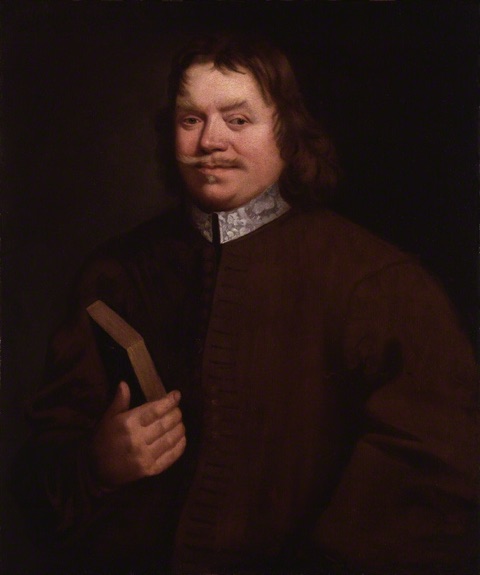
About the author
John Bunyan
John Bunyan (1628 to 1688 AD) wrote this book in the last months of a long imprisonment. A tinker from Elstow, near Bedford, he served in the Parliamentary army as a young man, joined the separatist congregation at Bedford, and began to preach. He was arrested in November 1660 for preaching without a license and spent most of the next twelve years in the county jail at Bedford, where he also wrote Grace Abounding (1666). This reply is signed from prison early in 1672; he was released that year under Charles II's Declaration of Indulgence and became pastor of the Bedford church. Edward Fowler, whom he answers, was a university-trained clergyman of the Church of England who later became Bishop of Gloucester. Bunyan had no such learning, and he says so plainly: “I have not made my creed out of them, nor out of anything other than the holy Scriptures of God.” The Pilgrim's Progress followed in 1678.