Full text in modern English · Free PDF/EPUB
An Exposition of Philippians 3
Want the file? The PDF/EPUB is free with an account.
Summary
- Author
- Richard Sibbes (1577 to 1635 AD), English Puritan preacher
- Published
- 1639 AD, London, after Sibbes's death
- Source edition
- Grosart's Complete Works of Richard Sibbes, vol. 5 (1862)
- Type
- Verse-by-verse exposition
- Length
- 64,000 words · 4 hours
What is An Exposition of Philippians 3 about?
An Exposition of Philippians 3 is Richard Sibbes's verse-by-verse reading of Paul's third chapter, printed in 1639 AD after his death. It argues that a blameless religious record turns into loss the moment a person trusts it, that only Christ's righteousness survives judgment, and that Christians run toward a heavenly city and a changed body.
Read the full summary (9 points, key themes)Show less
How the argument unfolds
- 01
Verse 1: joy by command, truth by repetition. Rejoicing is an order, and it belongs to believers alone. Paul repeats himself because good things "sink through them like water through a sieve," so ministers "must cast and cast again."
- 02
Verse 2: a concision on each side. Rome says Protestants cut themselves off: "We have suffered a concision; we have made none." Then Sibbes turns on people who leave over ceremonies, "cutting themselves off from our church and unchurching us."
- 03
Verse 3: worship and its test. Outward religion pays: worshipers are "known to be no atheists, and so are not on that account disqualified for promotion."
- 04
Verses 4 to 6: the record. A child who dies unbaptized is not lost for that reason. Paul's later self-accusation shows what new light does: "We know that we see the motes only where the sun shines."
- 05
Verses 7 to 9: loss, dung and gain. One kept sin forfeits everything: "For a bird caught, though only by a wing, is as surely the fowler's as if her whole body were bound."
- 06
Verses 10 to 14: Calvary first, and who holds whom. The order is fixed: "we must suffer with Christ on Mount Calvary before we come with him to Mount Olivet." Paul reaches for Christ because Christ has him: "It is the mother who holds the child."
- 07
Verses 15 to 17: grown Christians and good copies. Ten signs mark maturity, and the last is producing new believers: "A weak Christian has enough to do to look after himself."
- 08
Verses 18 and 19: tears and enemies. Paul weeps, and Sibbes defends strong feeling: "We are as we love, not as we know." The enemies include people "who will endure nothing for Christ."
- 09
Verses 20 and 21: the city and its power. Prayer is commerce with home: "It is their trade that makes citizens rich." Christ's power gives nerve to the small, as with Luther, "a poor monk, who alone set himself against the whole world."
Key themes
- Zeal with an eye. Heat proves nothing, for "unless our zeal has an eye, nothing is more tempestuous and troublesome than the man it possesses."
- Firm on the main points. "We are not to force men tyrannically to our opinions in lesser matters." Yet God will judge "even for errors in judgment."
- Working by contraries. "It is God's order to work by contraries, that his power may appear the more."
Reader questions (7)Hide the questions
Questions about An Exposition of Philippians 3
Can I read An Exposition of Philippians 3 online for free?
Yes. The complete text of this modern English edition is on this page, with no sign-up or paywall.
Is there a free PDF of An Exposition of Philippians 3?
Yes. The PDF and EPUB of this edition are free with an Updated Works account. Sign in with Google or an email link; no card is needed.
Who are the dogs in Philippians 3:2?
Teachers who join works of the law to Christ in the matter of salvation: "These, in St. Paul's esteem, are dogs." Sibbes extends the word to those who "press merits with Christ, saints with Christ."
What does "our conversation is in heaven" mean?
Sibbes says the word "most properly means the freedom of a city, or citizenship." Heaven has a governor, laws and liberties, and its citizens live by them on earth.
What does Paul mean by "as many as be perfect"?
People in a growing state, compared with beginners. The Christian has only "a kind of derivative spiritual perfection, which consists chiefly in having all the parts."
What does Sibbes say about Roman Catholics?
He treats them as Paul's opponents in a new generation. He asks "what else is popery but a body without a soul," says merits and purgatory make the cross of no effect, and tells magistrates to watch its priests.
Is this the complete book?
Yes, every verse is covered. Grosart's notes are left out, the chapter titles belong to this edition, and the other pieces printed with it in 1639 are not included.
An Exposition of Philippians 3 · Full text
Brethren, Rejoice in the Lord
Finally, my brethren, rejoice in the Lord (Phil 3:1).
This chapter contains a general exhortation to several duties. In this verse you have the manner of doing them: all must be done in rejoicing. From there he goes on to support other particular exhortations with reasons and with examples from himself, which we will speak of in detail when we come to them. Now in this verse I will speak first of the form of address, “brethren”; then of the exhortation, “rejoice”; and lastly of the limitation, “in the Lord.”
1. The form of address, “brethren.” By this loving title he labors to enter into their hearts and affections, knowing well that exhortations have the more force when they are directed to those who are persuaded of the speaker’s good affection. If exhortation comes from the pride of a man, the pride of a man in the hearers will beat it back, and that is all the welcome it will receive.
But why are Christians brethren?
First, they have the same beginning of life from the same Father, and they also have the same common brother, that is, Christ. They have the same womb, the church, and the same food, the word of God. They have the same promises; they are all heirs, all born to an inheritance.
Furthermore, the word brother is a word of equality and of dignity. It is a word of equality: though in personal callings one is superior to another, this does not take away the common brotherhood. This should fill up the valleys of men’s hearts that are dejected here because of their low estate, and also pull down the mountains of the proud hearts of men that are lifted up by these outward things. Kings must not lift themselves up in disdain of others, because all these personal distinctions end in death; we do not carry them to heaven. And in those things in which we agree here, as in grace and goodness, we shall continue united forever. And yet we must honor those who are in eminence, acknowledge them as men worthy of all respect, and give them dignity according to their places.
But further, this is a name of dignity. It shows that we are not basely born, that we are sons of God and heirs of heaven. After his resurrection, the first name Christ gives his disciples is this: Tell my brethren, he says, I go to my Father and their Father (John 20:17).
This word is also a word of love, and with it the apostle wins his way into the affections of the Philippians. Examine, therefore, your affections toward the sons of God. If we love and respect them as our own brethren, our state is good; if we hate them, our state cannot be good.
And in the second place, do not let this word be appropriated to some and denied to others who nevertheless belong to the same number. For one brother cannot make another no brother, since it is one and the same Father who makes brethren. So long, therefore, as you see anything of Christ in anyone, do not break off your affection, and do not disdain to give such a person the name of brother. For where the Spirit is, he works in us a resemblance of God; and where he stamps God’s image, he makes them brethren.
2. The exhortation, “rejoice.” This is not only an affection but a duty enjoined on us. In it, observe first:
(1) It is a Christian’s duty to rejoice. It is commanded here. Ministers are charged to speak comfort to such people: “Comfort ye, comfort ye, my people” (Isa 40:1). Christ came to “bind up the broken in heart” (Isa 61:1), and ministers are sent to show men their righteousness (Job 33:23). The Spirit in such people is the Spirit of joy, and therefore joy is reckoned as a fruit of the Spirit (Gal 5:22).
And why should Christians not rejoice? They are free from the spiritual Egypt, from the greatest miseries. Indeed, why should we not sing as the Israelites did after their deliverance? Our enemies and our deliverance are far greater than theirs. And we have the greatest privileges. Here we have an assured hope of eternal, perfect happiness hereafter. We have “peace with God” (Rom 5:1). We have free access to the throne of grace in all our wants, and we have a God ready to hear all our prayers and to help us. We have many gifts already received. Christ is already given to us. We are in a state of regeneration. And for the time to come, we have promises from God, the God of truth, that nothing shall separate us from Christ. Surely these are great causes of joy in us; and having such things as these, we dishonor them, their Giver, ourselves, and our profession of faith if we do not rejoice in them.
(2) Observe that it belongs only to Christians to rejoice. Others have neither cause of joy nor commandment to rejoice. The ministers and prophets are told to bid such people howl and lament, to show them their miserable state. And indeed, what ground of joy can a condemned person have? As for the wicked, until they have remission of sins, they are in a damned state. And though they will seize this for themselves and say that they are sure to be saved, salvation is not their portion.
They do rejoice, but it is in sin, in seeing or doing evil to others. Or if sometimes they rejoice in the gospel (for a wicked man may do so), it is only a forced joy, much like strong liquor taken in the cold fit of a fever. It brings heat and drives out the cold for the moment, but it burns them afterward. So this joy seems to comfort them now, but when trial comes it fails them, and makes them more disconsolate to see themselves so deceived. It would be fitter for such people first to be humbled and brought to see their state than to have comfort administered to them. To speak peace where none belongs is to undo men. It is the broken who must be healed, and the weary who must come to Christ.
3. Limitation. Observe the limitation of this joy: it must be “in the Lord,” that is, in Christ, who in the New Testament is often called Lord. And he is our Lord, first, by gift: God has given us all to Christ. Secondly, by conquest: he has won the victory over Satan. And thirdly, by marriage. Therefore we may well call him Lord and rejoice in him because he is our Lord; for by him we come to conquer all our enemies, and by him we have peace (Rom 5:1). He makes us kings and priests, and brings us to heaven.
Now, that we may be encouraged in the practice of this duty of rejoicing in the Lord, let us consider how it is a means not only of adherence to God but also of obedience to his laws.
[1] Adherence to God. Joy, if it is sound, knits us firmly to God, so that we rest content in him as our only and sufficient joy, seeking no other joy in anything else. To us Christ is made “all in all,” that we should solace ourselves in his fullness. If we truly do this, we will count all other things as despised, assuring ourselves that they cannot supply or add one jot of sound comfort at all. And therefore we will not endure any thought of mixing other things with Christ, as if that would make him more sufficient and complete for our joys to rest on.
[2] Obedience to his laws. For joy stirs up cheerfulness for every duty, and makes all duties acceptable to God and man. For want of it many are dead and dull in good duties; but where a large portion of this joy is present, it will remove all obstacles and delays to duty. It enables us not only to come to a duty but also in the doing of it. Cain no doubt came cheerfully to a good duty, to sacrifice; but for want of this cheerful and joyful spirit, what was his behavior in performing it? “His countenance was cast down” (Gen 4:6).
God spots this at once, just as he does in all our dull performances. For he expects things to be done cheerfully, and with good reason, for he has left us a treasure of excellent promises to encourage us. We see it among men. They love to have a thing done cheerfully, for they know it shows love in the person who does it. Can we then think it strange that God requires it?
Again, if we can fashion ourselves to this duty, God has promised to increase our joy more abundantly. And he performed this for Hezekiah (2 Chr 29:36). He will give delight as a reward to the one who delights in his work. Therefore we ought to labor to bring ourselves to this duty; and for obtaining it, observe these directions.
Means to Get Joy. First, consider that joy comes from faith. For it is the sense of our reconciliation with Christ that makes us rejoice (Rom 5:2; 1 Pet 1:6). Therefore whatever strengthens faith also strengthens our joy; and on the other hand, what weakens the one must of necessity weaken the other.
Furthermore, joy comes from peace. Whatever disturbs our peace, therefore, must disturb our joy. So Satan, to rob us of our joy, spoils our faith through our sins, and by them he weakens our hope and our comfort. What is to be done then? Surely we must go back to the fountain of health, the well of joy, the word of God (Isa 12:3). From there we must draw all our comfort. Use, therefore, the ordinances of God, but use them in the Lord, in obedience to his commandment, and wait for the outcome with patience. There are many who use the means but take no joy at all in them. Why? They do not do it in obedience to God’s command; they rest in the deed done, and they think God is bound to give them joy. God justly denies such people what they presume upon.
In the second place, pray that your joy may be full. See this in most of David’s psalms. At first he complains of the want of God’s presence and of God’s wrath and anger, but he comes away with a large portion of comfort: “Depart from me, ye wicked, for the Lord hath heard my prayer” (Ps 6:8). In the use of all means, therefore, join prayer. Pray for faith, for hope, and for such graces as may bring joy. Though at first you find yourself cold, with little or no comfort at all, do not give up; at length you will find plenty of it. Remember the woman of Canaan. At first she was despised and called a dog, but what did her constancy gain? A gracious answer: “O woman, great is thy faith: be it to thee as thou desirest” (Matt 15:28).
In the third place, remember former times, as David did (Ps 77:6). He was so oppressed that his “sore ran in the night, and ceased not,” as he says (Ps 77:2). But then, “I remembered the days of old.” You too, in your deepest affliction, should consider that there were once times when you had the clear and comforting light of God’s Spirit present with you. He will not leave you; his nature is unchangeable.
In the fourth place, have fellowship with the saints, and keep company with those who are good. And as the two disciples’ hearts burned when they talked with Christ, so you will surely find this heat of comfort increase little by little. For God blesses the communion of saints. Those who are discerning Christians can tell us more, can opportunely bring to mind things we do not remember ourselves, and can inform our judgments when they are blinded with grief and melancholy. Use, therefore, the company of the good when you find doubts arising, and make your griefs known to some wise and judicious Christian. For the devil is too strong for anyone alone. He will prevail against you. You will be too weak to wrestle with him hand to hand. It is no wonder, therefore, that melancholy persons are so destitute of comfort.
Question. It will be asked, May we not rejoice in the society of friends, in deliverance from dangers, and in similar good things of this world?
Answer. I answer, yes, and rejoice in the Lord as well. For when we receive whatever we have as a token of God’s particular love to us in Christ, who gives us both our daily bread and the word of life, comforts both heavenly and earthly, then, I say, these outward things strengthen the faith of a Christian, and thereby our joy is strengthened. Therefore we may rejoice in them in this way; indeed, it is our duty to do so.
The wicked do indeed receive them, but only as coming from God’s care for the general good of the world, or of the human race; and therefore they can take no true joy from them as the child of God does. In the right use of them, the child of God first rejoices that he is God’s child and is reconciled to God in Christ, that Christ is his; and then that, having the field, he also has the pearl (Matt 13:45-46). All blessings belonging to this life and a better one are made his in Christ, and he so rejoices in them that he refers the comfort and strength he receives from them to the honor of God.
God’s children, receiving good things from him, are threatened for not rejoicing in them (Deut 28:47). In Deuteronomy 28:45-47 he says, “The curses shall be upon thee, for that thou servest not the Lord thy God with joyfulness and gladness of heart, for the abundance of all things.” And it is expressly commanded in Deuteronomy 26:11, “Thou shalt rejoice in every good thing which the Lord thy God hath given thee, and thine house.”
Question. But it may be asked, Why, if this is true, are God’s children so disconsolate? Why are none so much troubled in conscience as they are? I answer:
1. Their sorrow does not come from their good state, in that they are Christians, but from the want of the perfections that would make them complete Christians indeed.
2. Either they do not know themselves, or, if they do, because they do not glorify God or adorn their profession of faith, God justly allows his joy to be hidden by hiding the comforting presence of his Spirit.
3. The joy of God’s children, though it is great, is not discerned by the world. It is a hidden joy. The feast is kept in the conscience. It is not seen by the world, which discerns all things carnally. Carnal joy is always outward and easy to express.
4. While God’s children live here, they always have a mixture of the two affections of joy and grief, to temper one another, for fullness of joy is only in heaven. This life will not endure perfect joy. Whenever there is cause given for joy, we have something to humble us and to keep us from being exalted above measure. So Paul had some base temptation, which he calls the “prick of the flesh” (2 Cor 12:7); and he therefore bids us fear and tremble, so that we do not lose the sense of God’s Spirit through the prevailing of our corruptions.
Objection. But it will be objected that the Christian is fuller of sorrow than of joy.
Answer. It arises either from ignorance of the grounds of comfort or from failure to apply them. When a man is a young Christian, newly begun, he neither knows nor understands what grounds of joy he has. Such people are like children, who at first do not know their inheritance or their father’s love; especially if he corrects them, they think he does not love them. Even those who are grown Christians fail too often in this, either by misapplying the grounds and misjudging their state, or sometimes through the distemper of their body, through melancholy. These judge grace by its measure, when they should judge by its truth, however little it may be. For it is not the measure that is the evidence of a child of God, but the truth of grace. For there are degrees of grace: more in some, less in others, and more in one person at one time than at another.
Take, therefore, a Christian in his right state, a grown Christian, whom neither melancholy nor temptation troubles. Take him, I say, as he should be, and he rejoices more soundly, with true and hearty joy, than any ungodly man can, however merry he may be.
However, this we may be sure of: a Christian has the greatest cause to rejoice, and, as I said before, he ought to stir up joy in himself by all means. Therefore, however indisposed to it he may be, he ought to search out what good things God has worked in him. If he does not know his state, he cannot praise God as he should. He must also meditate on the vanity of all worldly things. They vanish, and those who put their trust in them have always fallen short of any true joy. Their joy never comes to the heart of a man. These things are not deep enough to comfort men who meet with afflictions. They only touch the fancy, as the fancy of a beast may be delighted.
Let him also compare all discomforts that can come, with this joy in the Lord, and he will find that it outweighs a world of sorrow. This joy has no end; those discomforts are momentary, they last only for a night. This joy is in the Lord, in whom is fullness of joy. This made the saints of God so resolute that they made light of all afflictions whatsoever; and therefore in their greatest afflictions they have the sweetest joy and greatest comforts. And let him also consider that by this he avoids the reproach of religion, and shows the force and efficacy of religion to be such as was declared above.
And let him take heed of the hindrances of this joy. First of all, let him take heed of sin committed and not repented of. Let him repent in good time, or else it keeps a man dead, and dull, and backward. So long as this Achan remains unfound, it will keep him in discomfort (1 Chr 2:7).
Let him take heed of secret purposes, either to sin or to favor himself in any one sin, however small, for the time to come. This will rob him utterly of comfort, for joy cannot lodge in such a heart. “If I regard iniquity in my heart, the Lord will not hear me,” says David (Ps 66:18).
Furthermore, let him take heed of negligence in good duties. For it is not enough to do them; he ought to stir up the graces of God in him to do them thoroughly, and he must strive against his corruptions. For Christians never have so much joy as when they have labored with their endeavors to overcome their imperfections in good actions.
Lastly, let him take heed of casting himself into dull or dead acquaintance. It is true we cannot avoid associating with such people, but we must have no secret and inward acquaintance except with the best. A companion of fools shall be beaten, and the wise with the wise will learn wisdom. We are all travelers to heaven; let us therefore choose such company as may be, as it were, a chariot to carry us there with their good example and conversation. And with the prophet David, let us think it a great grief when we do not have such society as may do us good: “Woe is me, that I am constrained to dwell in the tents of Meshech” (Ps 120:5). And therefore, if any of us have been at fault in the past, let us take warning from this for the future.
The Safety of Hearing the Same Things Again
To write the same things to you, to me indeed is not grievous, but for you it is safe (Phil 3:1).
Although the apostle had already told them to rejoice in the previous chapter (Phil 2:18, 28), he nevertheless tells them to “rejoice” again, saying that it is safe for them to hear the same things often, and that it is not grievous to him to write the same things twice. Besides this, he also tells them to beware of those who may hinder their joy, such as dogs and those of the concision. In this way he forestalls the secret objections they might make against repeating the same things. From this we may observe in general:
Doctrine 1. The word and Spirit of God are wise to know the secret objections that might be made, and to forestall them, turning away in this way whatever might hinder the force of the word.
Doctrine 2. And it teaches us that it is the duty of those who mean to prevail by instruction to know the secret dispositions of those they deal with. For when the minds of such people are not quieted or cleared of doubts and hindrances, they are not fit to receive any good counsel at all.
Doctrine 3. And (for I cannot dwell on these things) it shows how we are disposed by nature: we count the repetition of the same things tedious and irksome. For since the fall of man we wander in our thoughts, affections, and intentions, and part of our loss is to have lost our constancy and settled disposition. That is why we find it noted of the Israelites that they were weary of one kind of food (Num 11:6), although it is called “angels’ food” (Ps 78:25).
Doctrine 4. Observe with me (and this I intend to dwell on more) that dwelling on the same things is necessary, even for the best Christians. The reasons are these.
Reason 1. Truth is supernatural and our minds are carnal, and whatever is to change these minds of ours must be persistent, or else our minds will sink back into their first state. We are naturally changeable. Therefore, just as we needed the truth at the first to change us, so we need to have it continually presented to our souls, to keep us perpetually in this spiritual change.
Reason 2. Another reason may be that we often do not regard the truth the first, second, or third time it is urged and taught to us. That is why it is said, “God speaketh once or twice, yet man perceives not” (Job 33:14). Therefore, if the caution and the point are necessary, then receiving them must surely be necessary as well.
Reason 3. There is such breadth and depth in the points delivered out of the word of God that, although we often hear the same thing, we never come to understand their full extent. Our souls are narrow. At the first we cannot consider them so soundly and deeply, nor can we understand as many particulars as we otherwise would. For in every Christian truth there is milk for children and strong meat, which requires digestion and also repetition.
Reason 4. Another reason may be that our corruptions daily increase and grow upon us, and the variety of occasions and worldly business, being natural to us and therefore more delightful, are too powerful and thrust out the consideration of divine truths, which commonly go against the grain. We cannot hold two different things strongly in our minds at the same time. So it comes about that the better of them is always more liable to be thrust out, and it therefore needs to be hammered in by frequent repetition and by insisting on it again and again.
Reason 5. Another reason may be that our working, like our understanding, is either weak or strong. When we work well, we must have things strongly present in our understanding, as when we tell people of God’s justice and omnipresence, of the day of judgment, of death, and the like. A living and present remembrance of these things keeps the human mind in such good order that it cannot will any evil, any more than a wicked person will offend in the presence of the judge. This living remembrance of things is produced chiefly by repetition and by often pressing home the same things, and it makes the mind wholly taken up with them. So when we want to do any good action well, it is a good way to prepare for it by being taken up with reading or hearing what is good. And the lack of good things present in our minds lays us open and makes us fit for all companies and occasions of sin.
Reason 6. Last, our memories are very weak at remembering and retaining anything that is good. Since the fall they are broken, and good things sink through them like water through a sieve, and so they have great need of reminders. In this way God has dealt with man, as in the promise of the blessed seed. How often it is reiterated and typified! To Abraham it is renewed seven times. So God often renewed to David his promise concerning the kingdom, and likewise the promise of the deliverance of the people of Israel from captivity is often repeated in Isaiah. Christ, the great teacher of his church, also did this in his parables. In one chapter he argues one principal matter with four parables, one after another, although with some variety, teaching ministers by this to do the same in order to avoid tediousness.
Repetition in Scripture serves various ends. Sometimes it is to affirm more strongly the certainty of what is said. That is why Pharaoh’s dream was doubled. Sometimes it is for emphasis, as when Christ often said, “Amen, amen,” and as with “in dying thou shalt die” (Gen 2:17) and similar phrases. But the main end is to stir up us and our affections, and to keep them alive and active once they are stirred up. Therefore, because they knew they could not be too sure of salvation or grow too much in grace, Peter says that so long as he lives he will put them in mind of such things (2 Pet 1:12).
Use 1. Therefore let it not be grievous to ministers to do what is for the safety of God’s children. They must do it until they see practice come to perfection, and they must cast and cast again. Peter cast often and got nothing, yet at Christ’s word he cast again. So must ministers. God, who does not bless every cast, may bless the last cast to the catching of many. A minister therefore needs a fatherlike affection toward his hearers, as St. Paul had (1 Thess 2:11).
Use 2. Another use may be for ourselves. If we hear the same things repeated, let us hear them as an impression that may carry force and work on our hearts more strongly than before. And know that God may work on us by one means at one time in a way he did not at another, just as a dart pierces deeper when cast by one person than by another. So let us not grow weary of attending on God’s ordinances, for our corruptions increase daily as our age does. Our attention to things is only slight, and our memory very brittle. We must also know that the word teaches doing and practicing as well as knowing. Therefore we must recognize the necessity of a continual ministry to perfect a church as well as to begin it.
The sacraments are necessary; receive them often. The early church had them every Lord’s day. Until we come to the holy land of that heavenly Canaan, let us submit ourselves to this manna. It is angels’ food, and they desire to look into these mysteries (1 Pet 1:12). So take heed of fullness or loathing, for when we come to the point where we must have something new or nothing, God takes away this manna that has been so loathed.
He did this with the Greek churches (Rev 1-2). They gave themselves not to the plain, sincere truth but to man’s inventions, and for this God gave them over to strange opinions. And indeed it is a rule that no one absents himself from God’s word without being given over, and that justly, to believe trifles, and to attribute all praise and delight to this or that idle author, who perhaps is heathenish or popish. The Greek churches, running after novelties, were justly given over to Muhammad. But to a true Christian heart there can be no greater delight than in the experiential knowledge of Christ’s death and office, and of perseverance in grace. There are standing dishes in this Christian banquet. It is a sign that God means to plague any person or nation that delights in such bad sauces. He will make them come out of our nostrils. We shall have our fill of them, and never hunger after the sincere milk of the word.
Beware of Dogs and False Teachers
Beware of dogs (Phil 3:2).
Doctrine 1. In this general exhortation, consider first the persons to whom it is directed: to all the Philippians, not only to the pastor but even to the common Christians. They must beware of false teachers. Is that so? Then surely they ought to take notice of these teachers and to know them, and therefore they ought to have rules to discern them by. Christ’s sheep discern between a wolf and a shepherd (John 10:4-5). His sheep can tell a heretic or false teacher from those who are true shepherds in the main points of the Christian religion. And therefore John bids all in general “to try the spirits” (1 John 4:1), and the apostle bids them “prove all things, and hold fast the good” (1 Thess 5:21). If, then, they were all bound to test and prove, they were no doubt bound to know the rules by which they were to test, and those rules are laid down only in the word of God.
Question. But some popish heart may ask, How are common people to know that the word is the word of God?
Answer. I would ask such a person how they know that the pope’s canons, or any book of his constitutions, are the pope’s. They will say that their teachers bring them in the pope’s name, and that they believe their teachers. So say we: we believe our teachers and ministers, who tell us that this is the word of God.
Objection. But they object that we make everyone a judge.
Answer. There is a threefold manner of judging. First, there is a judging by which we discern anything. Every Christian must have this, so that it will be no plea at the day of judgment to say, “My teacher misled me.” No. Both the leader and the one who is led, if they are blind, shall fall into the ditch (Matt 15:14). Then there is a second kind of judging, which is by way of direction. This is required principally in the pastor, to direct his flock. And there is a third kind, that of jurisdiction. This belongs to the church and the magistrate. Yet everyone must have a judgment to discern the good from the bad, for he who does not know his master’s will shall be beaten.
In the second place, not only young, ordinary Christians but even the most settled Christians need to beware as well. The Philippians were a church established in the truth. Eve was seduced while she was in her state of innocence. But I need not dwell on this at present.
I proceed to the duty, which is to “beware.” This word signifies first to discern and then to avoid. And because those who are aware of evil will by nature avoid it, “beware” here includes both discerning and avoiding evil. For the church of God in this world is always subject to danger. And God allows it to be so: first, to test who is true and who is false; and second, to test those who are good and to be an evidence to them of their own condition. So where there is such trial and danger, it is true that “it takes ingenuity to be a Christian.”
But concerning the words “dogs, concision, evil workers,” they all signify the same thing, and he repeats the word “beware” three times to show how necessary it is. Take heed of those who urge works of the law along with doctrines of faith, especially of pastors who do so. Indeed, take heed of these, for so the word reads in the original: “these dogs.” By “concision” he means those who urged circumcision when it was out of date and when it was dangerous to admit it.
But observe the term the Holy Spirit uses for these men: “dogs.” It is a strange term, and one I would not have dared to give them had the Holy Spirit not led the way. And since that is so, let us not be more modest than he is, but boldly affirm that wicked men are dogs.
Now, wicked men are either outside the church or within it. Outside the church, all are dogs: “It is not meet to take the children’s bread and to cast it to dogs” (Matt 15:26). Of this number are all Turks and Jews, who were children but are dogs. We were dogs, but now through God’s mercy have come to be children. All, therefore, who are outside the church are dogs.
But there are also dogs within the church. That is why the Philippians were told to beware of them, which St. Paul would have had no need to do if they had not been troubled by them. And he describes these dogs by this: they join works of the law and Christ together in the matter of salvation. These, in St. Paul’s esteem, are dogs.
The reason for this may be grounded in God’s esteem of them, in their behavior toward other men, and in regard to themselves. As for God’s esteem, we may see it in Isaiah 66:3: he detests them as dogs.
As for their behavior toward men whom they go about to seduce, they fawn on them and use all manner of enticing, flattering, and false alluring words (Rom 16:18). See here the picture of a Jesuited papist: a pleasing, courteous, fawning nature. They creep into houses. And when these dogs cannot prevail by flattery, then they snarl and bark against them with false calumnies, and slanders, and railings, and bitter scoffs, and the like; and this they do when they cannot bite. But once they have gotten power in their hand, they persecute with fire and sword and the most exquisite torments they can devise.
In regard to themselves, too, they are dogs: rotten in nature, corrupt in life, filthy in their own courts, devouring their own vomit. And God justly punishes them by allowing them to heap up wrath in store and to return with the sow that was washed to wallow in the mire of corrupt courses (2 Pet 2:22).
Hence we may observe and see what a man is now brought to by sin. He who would be like God is justly compared to the beasts that perish. All by nature are now no better than dogs, all for their bellies, for present contentments, with an envious and currish disposition against anyone who tries to cross them in their unlawful lusts. And that rule of reason which should overrule a man and amend him, he so abuses that by it he is made more like a devil than a dog.
Would we, then, be changed? Let us give heed to that word which is able to make lambs of lions. It can cleanse us throughout (John 15:3). It sanctifies and alters us. Moral precepts may restrain and alter outward practices. The word that alters the condition and nature of men is the word of him who works all with his Spirit.
And therefore take heed of them, and have no more to do with them than you must. They will fawn; they will not show themselves dogs at first. But until religion alters a man, he assuredly has a currish nature.
But to proceed. He says not only “beware of dogs” in general, but beware of these dogs of the concision. And these we also ought to beware of, for there is a perpetual litter of them. Though those the apostle spoke of are gone, yet the same spirit is in many today. They are fawners and flatterers, yet they bark at Protestants; and of this sort are our Jesuited papists and seminary priests. Our fathers were troubled with them.
Let these take heed. For were those men dogs who press circumcision with Christ, and shall not those be dogs also who press merits with Christ, saints with Christ, and equal traditions with the word of God? The dogs in St. Paul’s time had some excuse. They urged circumcision, but it was first founded by God. But these men endeavor to establish fancies out of their own brains, and where they cannot prevail by conference, they seek to accomplish their intentions by scattering books. Therefore magistrates in their place ought to look to them, and every private person ought to look to their own salvation.
We ought also to take heed of neutrals, those who are or would be mediators, and who will be of every religion, or rather of none; who jumble religions, mixing truth and falsehood, light and darkness together. But he who made a distinction between the seed of the woman and the seed of the serpent also made an eternal distinction between religion and irreligion.
Though Judas thought he might keep on good terms with both the Pharisees and his Master, yet his fawning kiss could not preserve him, but desperation overtook him. So with these neutrals: let them fawn as much as they will, let them halt between two opinions as long as they will, they shall at length know that they have betrayed their religion, and desperation shall at length assuredly overtake them, as it overtook Spira. Take heed of them. There has been a continual brood of them.
In the emperors’ time the Jews had some liberty granted to them, because their ceremonies carried a show of reverend antiquity. The Christians were “the laughingstock of the human race.” Even then, as St. Paul found, there were such Christians as found themselves scorned and, because they would be scorned by neither, took part with neither.
Question. But some will say, What a great matter you make of this! Is it not prudence and wisdom for us to avoid reproach in this way and to gain the goodwill of all?
Answer. Remember what Christ says: “He that denies me before men, I will deny him before my Father” (Matt 10:33). True, they say, “yet I may inwardly be sound in my heart; I may honor Christ, though outwardly I may please others.” But what place is left for profession of faith? “With the mouth man confesses to salvation” (Rom 10:10). And those who are ashamed to confess Christ before men, Christ may justly refuse to acknowledge in that fearful day of judgment. For shall we try all things to be sure of our temporal estate, and shall we not much more seek to make sure of our spiritual and eternal estate? God forbid.
In the next place, let us not be discouraged or hindered in a good course. Though these dogs bark ever so much, they are only like the dogs that bark at the moon. Though we meet with many changes, let us keep our course constantly, without turning aside. For you must expect to be barked at beforehand. You are, or should be, a stranger to this world, and then the dogs will assuredly take notice of you. And comfort yourself: you shall be admitted into your own country when these dogs shall be kept out, as it says at the end of Revelation (Rev 22:15).
And though we cannot have too harsh an opinion of them in regard to their condition, yet we are to respect the image of God they carry about with them and to regard them as those who may become lambs. In this way St. Paul respected and reverenced Agrippa. Yet see how sharp he is, not to those who are heathen, but to those who, while making a profession of Christianity, added circumcision to Christ. In this we may observe his zeal for Christ’s honor.
Beware of evil workers (Phil 3:2).
Beware of those who in general were bad, and who in this particular were especially “evil workers,” seducing men from Christ by it. Seducers, therefore, are evil workers, and magistrates ought to look to them. Magistrates are the keepers of the two tables of the law, and are to look to the souls of men as well as to their bodies. Let private members also look to themselves, lest they be seduced by them.
Nor is it likely that these men were seducers by false doctrine only; they were also ill men and wicked livers. For God justly gives up to wickedness in life those who are seduced in judgment. And so he dealt with the scribes and Pharisees: “Do not after their works,” says Christ (Matt 23:3).
Some think that if they live in such a way that no one can lay any gross sin to their charge, they are good enough. It does not matter, they think, what the heart is like, how ignorant, how dark; God will bear with them. Alas, poor ignorant men! Is not the understanding God’s as well as the outward parts? “Thou shalt love the Lord thy God with all thy mind” (Matt 22:37). The understanding is the spouse of truth. And know that God looks to purity of judgment. He cannot endure that his children should be ignorant, for it is a dishonor to God when his children conceive of things, especially in religion, otherwise than is fitting, indeed, otherwise than they are.
Beware of the concision (Phil 3:2).
That is, as I said before, circumcision, called here by the name of concision because it tended to cut and make a division and sect in the church. This is a natural and proper elegance, not affected, describing and naming it by its effect. It is God’s custom to name things from their outcome and effect. “Why will you perish?” (Jer 27:13). That is, why will you do those things that will lead you to destruction? The end of them is death, and those who neglect wisdom hate themselves. So also it was said to the Jews who neglected the gospel, that they judged themselves unworthy of salvation (Acts 13:46), because in effect they hated themselves and deprived themselves of salvation.
Circumcision had formerly been an honorable ceremony, serving as a partition between Jew and Gentile and as a seal of the covenant of grace. But the ceremony was to cease, since it did not have a continual promise. It was to last until Christ came, and when he died, it and all the others died also. St. Paul, and Christ, and Timothy were circumcised. But after the time came that Christ had broken down the partition wall by his suffering, these ceremonies not only died but were also deadly to all who would maintain their observance. Their use was prejudicial to Christ’s honor, and therefore Paul bids us beware of them.
And today this instruction, by proportion, is of good use. For are there not those who teach concision and urge merits, as the papists do? Take heed of them. They say that we are the concision, that we have cut ourselves off from the true mother church of Rome.
I answer: We have suffered a concision; we have made none. And again, we acknowledge that we have separated from these Romans, not from those who were in Paul’s time. It is they who have made a concision and cut themselves off from the mother church.
But to pass from these: we have a concision among us, and that in a contrary extreme, those who think every ceremony and thing that does not suit their opinion to be antichristian and concision. They do not consider that many things are urged as fitting for order that are no parts of God’s worship. Yet even for these things they make a concision, cutting themselves off from our church and unchurching us. It is dangerous for such people, for when a member is cut from the body it must necessarily die. And how can we receive grace from Christ as our head except by union with the body of which Christ is the head?
It must be our duty to beware of all manner of seducers, and to this end let us:
Remedy 1. Get fundamental truths into our hearts; cherish and love truth. For lack of this the eastern churches were given up to Muhammad, and antichrist ruled over many in these western churches, because they did not love the truth (2 Thess 2:10). For none are seduced who are not cold in love.
Remedy 2. Let us labor to practice what we know, and God will give us a fuller measure of knowledge, by which we shall learn to find and know seducers. “If any man will do his will, he shall know” (John 7:17).
Remedy 3. Pray to God for wisdom to discern schisms, and heresies, and ill-disposed persons. God has promised us anything that is necessary for our strengthening and for bringing us to heaven. God will not deny us so necessary an aid as this is.
Remedy 4. Let us see that we keep in us a holy fear and reverence of God: “What man is he that feareth the Lord? him shall he teach in the way he shall choose” (Ps 25:12).
We are to observe these things duly, all the more because we shall always find seducers. It will always be a hard matter for men to find the way to heaven. And though the doctrine and profession of religion are not always opposed in all places, yet we shall always find those who practice it maligned. So it is in these days, when no one is accounted a Protestant who is not a loose libertine. And so, instead of making a concision from religion, they join to it what is quite contrary to its power. Beware of such people also, for their courses of life are as pernicious as fundamental errors; for no one shall be saved for his knowledge.
The True Circumcision
For we are the circumcision (Phil 3:3).
In these words, and those that follow, our apostle describes who are truly circumcised. We are the true Israel, the circumcised sons of Abraham, who are members of Christ. The Philippians were not circumcised outwardly, yet they were truly circumcised; they had the reality of it. In the same way, those who were under the cloud and in the sea were said to be truly baptized in the cloud and in the sea (1 Cor 10:2).
The sacraments therefore, before and after Christ, were in substance all one. As the church was one and the same, they may be said to be baptized as we are, and we circumcised as they were. The difference was only in the outward ceremony and show, which the church, being then young, had need of. It is the same religion, clothed differently.
Bellarmine says that their government was carnal and that the promises made to them were carnal, but he speaks carnally in saying so. The fathers before Christ had respect to the recompense of reward (Heb 11:26), and they “accepted not deliverance that they might obtain a better resurrection” (Heb 11:35). Are these carnal promises?
The Anabaptists press rebaptism, not considering that in substance the same covenant existed before Christ and after, so that every true Christian is spiritually circumcised once he is regenerate. Before that, indeed, he is uncircumcised, and a spiritual leprosy overspreads the whole frame of his body and mind, which must be washed, pared, and cut off.
We must part with uncircumcised hearts, ears, and lips: that is, ears that delight to hear corrupt and lewd talk; a tongue and lips that delight to utter and let out words savoring of a rotten and uncircumcised heart; eyes that delight in beholding lustful and sinful objects, by which the heart is kindled into vain desires. I say, a Christian must circumcise himself, his heart, and those parts that are uncircumcised, before he can ever think of going to heaven, where nothing corrupt or unclean enters.
Religion therefore is no easy thing; circumcision is painful and bloody. Mortification is very hard. Corruption must be cut off, even though blood follows, or else it will kill you in the end. Therefore we must also labor for circumcised hearts, to understand God’s truth, his will, and his commandments. Cut off all excessive desires, which little by little take away comfort and communion with God. It is no mercy, then, to spare them.
Circumcise your eyes; pray with David, “Turn away mine eyes from regarding vanity” (Ps 119:37). Stop your ears at the charming of such objects as may infect your soul. We can never enjoy that beatific vision hereafter if we do not wean ourselves from the liking of these things. And though we cannot, while we are in this house of clay, come to the perfection we should, yet strive for it earnestly, and God will accept our very endeavors and will further them; yes, we will get the victory in the end. If sin begins to fall, it will surely fall; the house of David in us will grow stronger, and the house of Saul will daily be weakened.
The means to this duty are these:
1. Know your sin, and your particular sin, by the checks of your conscience and by the checks we receive from our enemies, who will spy out what they can in us in order to disgrace us. Observe also what your thoughts work on most, and what main thing generally occupies your mind.
2. When you have found out your sin, make it as odious as you can. For circumcision implies a thing that is odious and superfluous. Now all sins cherished in us may well be odious to us, for sin hinders us from all good and clothes us with all evil. It makes all outward things evil to us, which otherwise are ill only so far as they strengthen our corruptions. It hinders us from all good duties. Pride of heart and corruption dog us. This made Paul cry out, not of temporal bonds, but of the bonds of sin and of death. “Who shall deliver me, wretched man that I am?” he says (Rom 7:23-24).
3. Having found out your sins and how abominable they are, complain of them to God, as Hezekiah did of the blasphemous letter that Sennacherib wrote, and claim the fruit of God’s promise. For he who bids us circumcise (Deut 10:16) promised that he himself will do it (Deut 30:6). Faith in the promises is an effectual means of attaining them. Men come with doubts. They see a great deal of corruption. They think their labor is in vain and that they cannot be relieved against it. They are deceived. Only touch the hem of Christ’s garment. Fly to God in his name, and you will find this “issue” of sin, though not wholly dried up, yet much abated. And here is the excellence of faith, that it assures us of all the promises concerning sanctification here, as well as those concerning glory hereafter.
Which worship God (Phil 3:3).
The apostle places circumcision before worship; for unless there is a cutting off, we cannot bring our corrupt nature to perform the duties of God’s worship rightly.
The words contain a description of a Christian by his proper act, worship; by the proper object of that act, God; and by his most proper part, in spirit. The word “worship” is taken here for the inward worship of God, commanded in the first commandment. It also includes our fear and love of God and our joy in him, flowing from the knowledge of the true God. All our obedience flowing from this is worship of God, including our duties to man, done in obedience and relation to God’s commandment.
The ground of this obedience and worship is the relation between God and the rational creature, who is the image of God. Now since this image was lost in the fall of our first parents, we must worship him not only as our creator and maker, but as reconciled to us in Christ, as he has made us anew.
Second, we are to worship him as the wellspring of all grace, goodness, excellence, and greatness.
Third, we are to worship him as he communicates all to us. He is ours. Christ is ours. All is ours. This should carry our souls to love him and to be his as he is ours; especially to be his in spirit, by which is meant the rational soul, understanding, will, and affections. And second, we are to be his with sanctified understanding, sanctified will, and sanctified affections. Third, we are to be his with all our strength, spirit, life, and cheerful readiness.
Therefore God is the proper object of spiritual worship. Trust in him, love him, rejoice in him, call on him and pray to him, and to him only; not to the Virgin Mary, saints, or images, as the papists do. “Him only shalt thou serve,” as Christ says (Matt 4:10). We do this because our commandment is only from him and extends only to him. The promises are only from him. He only is present in all places; he only supplies our needs; and he only knows what our needs are and how to help. Saints are not present in all places. They cannot hear many at once; indeed, they cannot hear our prayers unless they are present. They are finite creatures; they have no infinite properties. Christ bids us, invites us, to come to him; he has promised to hear us and to ease us.
And further, God knows the secret needs that the saints cannot know. We ourselves do not know them. Therefore we are to go only to God in all our necessities, because it is most profitable for us to go to him who can help us; indeed, we owe him this honor, by going to him, of acknowledging his omnipresence and his willingness and ability to do good.
In spirit (Phil 3:3).
The apostle in these words shows the manner of true worship by the most proper and fit part of a Christian, namely, his spirit; that is, a soul truly sanctified, lively and cheerful, with a willing and ready mind, fitly disposed, contrary to outward, false, and hypocritical worship.
1. And the reason is, because God is a Spirit, and therefore must be worshipped in spirit (John 4:24).
2. It is the best part of a man; and God, who claims all, and that justly, looks especially to have the best part.
3. The spirit has a being of itself, and praises, loves, and rejoices in God when it is out of the body. The body is stirred up to this duty only by the spirit, being of itself as senseless as a block; and outward worship without inward is only the carcass of worship. The prayer of a wicked man is abominable, because he regards iniquity in his heart (Ps 66:18). And this spirit of ours, without the Spirit of God, cannot worship him; and therefore everyone who is not changed makes God an idol.
Use. This may deprive of comfort all those who care nothing for this spiritual worship, thinking they have done enough if they have mumbled over a few idle words. God accepts it no more than if they had sacrificed a dog’s head, as he says (Isa 66:3). And truly, what else is popery but a body without a soul, when they worship in blind sacrifices, in a foreign language? Is this spiritual worship, when they know neither what they do nor what they say?
Let us show that we are not of their number. Let us come with love, and with the full stretch of all our affections, and this will sway the whole man, body and soul. So we will worship him in truth and not in hypocrisy, as many do who bring their idols with them. Their minds are on their pleasures and riches, though their bodies are present before God.
And it has always been an error in the world, this limiting and tying of God’s worship to the outward worship of the body, with a kind of ceremonious gesture; and it is very much liked for such reasons as these.
First, the outward gesture, such as holding up the hands, bending the knee, and casting up the eyes, is a thing that may easily be done.
Second, these things make a glorious show in the eyes of the world. It is a commendable and good quality to be religious, especially if one is observed to be so.
Third, it is beneficial to men, since by it they are known to be no atheists, and so are not on that account disqualified for promotion or the like.
Fourth, outward worship satisfies conscience a little. Men know they must worship God and go to church, and that these are means to save men, and they think that in doing so they stop the cries of their consciences. Alas! Alas! These sleepy, blinded consciences of theirs will at length awake, and will accuse them for the outward, ceremonious, hypocritical worship of him who requires the Spirit to worship him with.
Objection. But some men say, “How shall we know whether we serve God in spirit or not?”
Answer. Observe these marks.
First, whether you lament your defects in the best actions you do, and are not puffed up with conceit of the sufficiency of your performances. Paul found this in himself. Although as a Pharisee he lived beyond rebuke as concerning the law, yet when he was converted he saw much corruption that he had not known before, and he laments and bewails it (Rom 7:23-24).
Second, examine yourself, whether you make a matter of conscience of private closet duties: of prayer in your study when no one sees you, and of your very thoughts. Do you serve God with your affections and your very soul? Do you weep in secret for sins, yes, for your secret sins? Do you avoid doing good duties to be seen by men, as the Pharisees did? On the contrary, will you pass over no place or time, but worship God always and in all places?
This must be done; for God is always and forever God, and he is in all places, in private as well as in public. Therefore a Christian’s heart must be the holy of holies, where God must remain present continually. And therefore he makes a matter of conscience of the least sins and is humbled for them, yes, even those the world thinks nothing of and counts as petty scruples; and he is humbled in as great a measure as men ordinarily are for the greatest sins they commit.
Third, can you endure the search of yourself and your infirmities by every means? By yourself, by others, by the word, by private friends? Indeed, can you desire this search, so that you may know your sin more and more, for this end, that you may truly hate it with a more perfect hatred? Can you truly appeal to God, as Peter did to Christ, “Thou knowest that I love and prefer thee above all” (John 21:15)? It is a sure sign of your sincerity, which the world cannot have. And therefore when they see their sins laid open, they spurn the ordinances and show spite toward the minister and their true friends who remind them of their faults, counting them as their only enemies. Surely they will never be able to endure the search of God hereafter; and on the last day, when he lays them open, they will be overcome with shame.
A fourth sign is that at the hour of your death this spiritual worship of God will give you contentment, when nothing else can. You may say with comfort, as Hezekiah did, “Lord, remember how I have walked before thee in sincerity” (Isa 38:2-3). When downright affliction comes, outward verbal profession vanishes, with all its comforts; then the hope of the hypocrite perishes. Two things upheld Job in comfort in his great extremity. First, he was assured that his Redeemer lived; and second, he knew his innocence in those things his friends charged him with. And such times will fall on us all, either at the time of death or before, when nothing but innocence and sincerity will be able to uphold us.
Labor therefore for sincerity and spiritual worship. “Worship God in spirit,” but let it be done outwardly also. But first bring your heart and intention to what you do, and that will stir up the outward man to its duty. And for the performance of this, follow these directions.
First, learn to know God rightly. For worship corresponds to knowledge. How can we reverence God rightly when we know neither his goodness nor his greatness? How can we trust in God when we do not see his truth in the performance of his promises, in the Scriptures, and in our own experience? Those who do not do these things do not know God. For as the heart is affected according to knowledge, so it is also in divinity. As we know his justice, we will fear; as we know his mercy, we will love him; as we know his truth, we will trust in him. “They that know thy name shall trust in thee” (Ps 9:10); and in other places of the same psalm, the Lord is known in the judgment he executes (Ps 9:16).
Second, know God to be the first mover and cause of all. Men ordinarily fear the creature, attributing to it what belongs to the Creator. But God is the giver of all, and Christians look through the secondary means to the first author and ground of all the rest. They see the magistrate as in God, and fear magistrates no otherwise than in the Lord. Atheists will not balk at any sin whatsoever to get the love of those who may bring them any worldly advantage. A Christian pleases and seeks the love of him who can make enemies friends when he wishes, and when it is for our good. He knows that “in him we live, move, and have our being” (Acts 17:28).
Third, make much of spiritual means. God works by means, by his word; attend to it. It works love, fear, joy, and reverence in us; and therefore it is no marvel if those who neglect these means are not acquainted with these graces of God’s Spirit.
Fourth, lift up your heart to Christ, the quickening Spirit (1 Cor 15:36 and following). Our hearts by nature are dead; Christ is our life. When you are most especially called to love, to fear, to humility, pray to him to move you, and yield yourself to him, and then you will pray in spirit, as it is said in Jude 20. Hear in spirit, do all in spirit. Do the outward works of your calling in spirit; for a true worshiper will, out of spiritual grounds, do all the outward works of his particular calling as well as the works of his general Christian vocation. Let us therefore do all things from our hearts to God and to our neighbor; otherwise God will not accept our works. It is the Jew inwardly who will have praise from God. The lack of this sincerity has extinguished the light of many a glorious professor of the faith, and has thereby brought a great scandal upon the true worshipers of God in spirit.
And rejoice in Christ (Phil 3:3).
The word “rejoice” implies a boasting or glorying of the heart, which shows itself in the outward countenance and gesture, and in speech as well. It also implies resting and finding contentment in the thing we glory in, and this proceeds from an assurance that what we glory in is worthy of glory, for those who delight in baubles are fools. Observe from this, therefore:
Doctrine 1. Those who would worship Christ rightly must glory in him. For the worship of Christ requires encouragement, and nothing can produce this encouragement like glorying in Christ. And so Paul, in the first part of his epistle to the Romans, having shown that God had elected them freely and had begun the work of sanctification in their hearts, comes in Romans 12:1 to this: “I beseech you,” he says, “present yourselves as a holy, living, and acceptable sacrifice to God.” And in Titus 2:11-12, “The grace of God teacheth,” by encouraging us, “to deny ungodliness, and to walk unblamably, soberly, righteously, and godly in this present world.” So whenever we grow dull or dead, think of the great benefits we have through Christ, and it will enliven us and all our duties.
Doctrine 2. Next, observe that Christ is the matter and subject of true glory and rejoicing, and only Christ. For these go well together, a full and large affection with a full and large object. Boasting is a full affection, and its object is every bit as full.
Reason 1. Because he is God and man. He is God, full of all things; he is man, full of all grace and void of all sin. He is Christ, anointed to perform all his offices. He is a prophet all-sufficient in all wisdom; in him are the treasures of wisdom. He teaches us not only how to do a thing, but the very deed itself. He is our high priest: he is the sacrifice, the altar, and the priest. He is our eternal priest in heaven and on earth: on earth as suffering for us, in heaven as mediating for our peace. “Who shall condemn us? It is Christ that died, yea rather, that is risen again, who is even at the right hand of God, who also maketh intercession for us” (Rom 8:34).
He is also our King. He is King of all, King of kings and Lord of lords; a King forever and at all times, subduing all rebellions within us and all enemies outside us. And he is all these things as no one else is, and so he is worthy of our glory.
Reason 2. Christ shares himself with us in all these. He is prophet, priest, and king for us; he is God-man; he is Christ for us. He did not seek his own. It was his goodness, eager to share itself, that drew him from heaven to take our nature.
Reason 3. He is present and ready to do all good for us. He is present with us to the end of the world.
Reason 4. More than that, we are his members. He is in us. We are his wife; indeed, we are him: “Saul, why persecutest thou me?” (Acts 9:4). We are all one body with Christ (1 Cor 12:12 and following).
Reason 5. Even while we are here, we are glorified with Christ. He is our husband. If he is honored, we his spouse are also raised up. If he is our king, we are his queen. If the head is crowned, the body is honored.
Reason 6. And all this is from God, and comes freely from him. Christ is anointed by the Spirit and sent from the Father. 1 Corinthians 1:30 says, “He is made of God wisdom, righteousness, sanctification and redemption to us.” And John 6:44 says, “No man can come to me, except the Father who hath sent me draw him”; and it is further said that God “sealed him” (John 6:27). So we may rejoice in Christ, because by this we come to rejoice in God; for Christ reconciles us to the God who called him to this office. This was witnessed at his baptism, when the whole Trinity bore witness to it.
Question. But it may be asked, What! May we not rejoice in anything else but Christ?
Answer. There may be two causes of our joy, one principal, the other less principal. We must rejoice in Christ alone as the main and principal cause of our happiness. But we may rejoice in created things so far as they are testimonies of Christ’s love, and in peace of conscience as coming from Christ, and in the word of God as it is the gospel of the revelation of Christ to us.
Use 1. We may observe this doctrine as a ground of the necessity of particular faith. For no one can boast unless the boasting arises from a particular faith, which alone is the true ground of each person’s particular assurance.
Use 2. Let it serve as a direction to every Christian who would rejoice: let them go out of themselves and rejoice in Christ, their king, their priest, and their prophet. Let them observe what he has done for them and what he will do for them, and so see themselves perfectly happy.
Use 3. And let us first boast that we have Christ, and then in his benefits and blessings that follow him. First rejoice that we have the field, then rejoice in the pearl. So the apostle does not say to rejoice in faith or in obedience, but “in Christ.” Once he is mine, how shall I not have all things with him?
Use 4. Let those who are burdened with sorrow for their sin consider this. Why do they grieve? Do their sins trouble them? Christ came to die for sin; he is their high priest; he came to save sinners. Does the devil accuse them? Let them know that Christ chose them and that he pleads for them. Who can lay anything to their charge? Christ has died and is risen; indeed, he has ascended into heaven.
Are they troubled with crosses? That is the best time to rejoice in Christ. “We joy in tribulation” (Rom 5:3). When nothing comforts us, that is when Christ has his sweetest communion with our hearts. St. Stephen, when the stones flew around him, and Paul in the dungeon, had the sweetest consolation and comforting presence of God’s Spirit, which upheld them. Indeed, in death we may glory most of all. It lets us into that state, into that sweet society with our Savior and the saints, the very hope of which now sustains us and causes us to glory here, as in Romans 5:2. And death now is only a drone bee: the sting is gone, and all enemies are conquered.
Use 5. See where the glory of a person, of a nation, of a kingdom consists. It is in Christ, and in that which exhibits Christ. What made the Jews rejoice? Mark the prerogatives they had (Rom 9:4-5): adoption, covenant, promises, and Christ. What made the house of Judah so famous? And what made Mary so bless herself: “All generations shall call me blessed” (Luke 1:48)? It was Christ, who graciously consented to come forth from her loins and from that stock. “Abraham rejoiced to see Christ’s day” (John 8:56), though he saw it afar off by the eye of faith.
And what should we glory in, above the Jews and above other nations, but this? The veil is taken away; Christ shines, and we have the gospel in its purity. This is what the apostle looks for in the Corinthians: “Having confidence that my joy is the joy of you all” (2 Cor 2:3). Now what was Paul’s joy? “God forbid,” he says, “that I should rejoice, but in the cross of Christ” (Gal 6:14). So let us not rejoice in peace or plenty, in fortified places, or the like. No! If we did not have Christ to rejoice in, we would be no better than Turks. “Happy is the people whose God is the Lord” (Ps 144:15); for in him we shall have fullness of joy and comfort.
Make use of this in the time of temptation. When the devil would rob us of our joy, flee to Christ. Set him against everything; set the “second Adam” against the first, for he came to do whatever the other undid. Learn to see the subtlety of the devil and of your own heart. Fill your heart with the Scriptures and with meditations on the promises, and they will make your love so fervent that all your service of God will seem easy to you, just as the time Jacob served seemed as nothing, for the love he bore Rachel (Gen 29:20).
Question. But how shall we know whether we rejoice in Christ or not?
Answer. By these signs:
1. When we glory, see the ground from which it arises, whether from God reconciled to us or not. If it is otherwise, remember that word of Jeremiah 9:23-24: “Let not the wise man glory in his wisdom, nor the strong man in his strength”; all such rejoicing is evil; “but let him that glorieth glory in this, that he understandeth and knoweth me, that I am the Lord.”
2. If we glory in the Lord, it will stir us up to thanks. What we rejoice in we will praise. If we rejoice in Christ, we shall, like the spouse in the Song of Songs, always be setting forth the praises of our beloved. Paul did this (Eph 1:3), and so did Peter (1 Pet 1:3). And so, where deadness and dullness are, it shows there is no true Christian joy.
3. Our glorying will be seen in duty. Delight always implies the intention to do any good work, and diligence in it.
4. If we glory in Christ rightly, we shall not endure any addition to Christ. And so we shall abhor that popish tenet which puts so many additions to Christ in the meritorious work of our salvation. Those who truly rejoice in Christ see such all-sufficiency in Christ’s merits and work that they abhor purgatory and such trash, and they abhor it all the more, the more fervent and sincere their glorying in Christ is. Christ is our husband, we are his spouse; if we cleave to any other than Christ, we are adulterers. No; let him kiss us with the kisses of his mouth, and none but he (Song 1:2).
5. This joy, where it is, will breed contentment in every condition. Paul could be in want and could abound, and so can those who truly rejoice: in Christ they have everything. They care nothing for earthly wants, so long as they lack no heavenly comfort. If they are poor, they are rich in heaven; indeed, the very things they most complain of are good for them. Life or death, it is all one to them. Christ is theirs, and in him all things.
Question. But it may be said that many Christians are not in this happy condition.
Answer. It is their own fault, in yielding to the devil’s schemes, and their own weakness, that they will not labor to break through these clouds and lay claim to the promises.
And have no confidence in the flesh (Phil 3:3).
These words are in truth included in the former, for anyone who glories in Christ “will have no confidence in the flesh.” But the apostle sets this down as a plain demonstration and evidence of glorying in Christ. For by joining the two with an “and,” it is all the same as if he had said, What people trust in they glory in, and what they glory in they trust in and are confident of. If their glorying is in their cleverness, they trust in it, though it be to their ruin, as happened with Ahithophel (2 Sam 17:23). If it is in eloquence of speech, they trust in that, and it brings them shame, as it did to Herod (Acts 12:23). If it is in honor, they trust in that and bring themselves to dishonor, as Haman did (Esth 7:10).
By “flesh” is meant outward things, such as prerogatives, privileges, and actions of a person’s own doing. In particular he aims at circumcision, which he calls outward, and that of the flesh (Rom 2:28).
Doctrine 1. So the observation we may gather is that confidence in Christ takes away confidence in outward things. The reason is this: if Christ is fully all-sufficient, what need is there of any outward thing to put confidence in? For these are two opposite things, and one overthrows the other.
Doctrine 2. The second instruction is that by nature people have confidence in outward things. For since their hearts are not filled with grace, they have no relish for Christ, but flee to ceremonious outward actions as their refuge. Indeed, even in the church, until we are converted, we naturally flee to an outward, fleshly confidence. We have the word taught to us; we come to hear it twice on the Lord’s day. Alas! What is this, if you are not transformed, and conformed in obedience inwardly and outwardly? Do you have the sacraments? Do you uncover your head, or bow the knee? These are good, and they look fair; but where is the heart? How is that prepared? Do you have an earnest desire to leave off your course of sinning, and do you resolve from now on to amend your life? Oh, here is the hard spiritual work!
So too with outward fasting and abstinence: that is an easy matter. The Pharisees did it often. But this is the fast that God has commanded: to loose the bands of wickedness, to fast from sin (Isa 58:6). The suffering of the flesh, if it is separated from spiritual use, and alms as well, profit nothing (1 Cor 13:3). All Paul’s prerogatives, which were many (2 Cor 11-12), were in his account only dross and dung in comparison with Christ.
Most people are like Ephraim (Hos 10:11), like heifers that serve to tread out the grain and to plow. Ephraim loved to tread the grain, where he could eat his fill, for by the law of Moses the mouth of the ox that treads out the grain was not to be muzzled. People delight in performing slight duties; but to put their neck under the yoke, to plow, is hard work. Who can bear it?
Objection. But some will say, Oh, what! Do you condemn outward duties and the use of them?
Answer. We may consider religious duties in two ways. First, as outward means to salvation, for that is what they are. Second, as expressions of inward truth; and so we do them out of a sincere, wholehearted affection that we bear toward them, and out of a desire to be worked upon by them. Those who use them in this way are commended. But let them fall short of this by so much as an inch, and all is abominable, all is “flesh.” The Jews boasted in the name of “holy people,” in their law, “in the temple,” in the “Holy Land”; yet for all these, God says, you shall go into captivity. Against such people Christ preached: Woe to you, Scribes and Pharisees! you tithe mint, but let pass justice and judgment (Matt 23:23). And Paul says, “Be not high-minded, but fear” (Rom 11:20).
And the reasons why people are taken up with this fleshly confidence are these:
Reason 1. Outward things are easy, and people cannot bend themselves to perform the hard matters of the law.
Reason 2. They are glorious, and people desire to be observed.
Reason 3. People have a foolish notion that God is delighted with the outward act when the inward sincerity is lacking.
Reason 4. People lack knowledge of themselves, lack the inward change, lack a sense of their own unworthiness and of Christ’s worthiness.
Reason 5. God follows such people with prosperity in this world. By this they think God is well pleased with them, until the hour of death comes, and then they find it all to be nothing but froth.
Question. How shall we know whether our confidence is fleshly or not?
Answer. 1. Where this fleshly confidence is, there is bitterness of spirit against sincerity. The Pharisees, the doctors of the law, sat in Moses’ chair (Matt 23:2), yet who opposed Christ more than they did? Indeed, throughout their whole course they sought wholly and only to persecute him, and they made it their trade.
2. Where this fleshly confidence is, there is also a secret blessing of ourselves in our performance of good duties, without humiliation for our defects. Hypocrites think that God is indebted to them, and so they bless themselves in the deed done.
In the fourth verse he comes to an argument, drawn from himself, against those of the concision.
Paul’s Grounds for Confidence in the Flesh
Though I might also have confidence in the flesh. If any other man thinketh that he hath whereof he might trust in the flesh, I more (Phil 3:4).
It is as if he had said, If any other man may glory in the flesh, then I may much more. But I do not think that I have sufficient cause to glory in the flesh; therefore they have none either, nor may they glory in the flesh. The reason or ground of this proposition is taken from the many prerogatives he had, which he comes to in the verses that follow (Phil 3:5-6).
First, circumcision was the first prerogative before conversion. It was not performed before the eighth day, so that the child might gather some strength to bear and endure the ceremony, for it was grievous in itself, and a bloody ceremony. That is why Moses’ wife called him a bloody husband (Exod 4:25). And this ceremony was not to be put off beyond eight days, so that the parents might not be delayed in their comfort.
From this we may gather that dying before baptism is no necessary impediment to the salvation of the child, for the same covenant is attached to circumcision as to baptism. The papists, who hold that the death of children before baptism hinders the salvation of the infant, may as well hold that all the children who died before the eighth day, the day of circumcision, were damned.
Second, observe this: children, though infants, may, indeed must, be baptized, if it can suitably be done. For children were circumcised, indeed were commanded to be circumcised, on the eighth day. Now, seeing the covenant is the same, and given to children now as it was then, why may not its seal now be given in their infancy, as it was then?
Paul’s Privileges of Birth and Sect
Of the stock of Israel (Phil 3:5).
Jacob had his name changed because he wrestled with the angel and prevailed. St. Paul says that he himself was of that stock of Israel that prevailed with God.
Of the tribe of Benjamin (Phil 3:5).
There were two tribes of special repute, Judah and Benjamin. They were kingly tribes. Benjamin was honored with the first king, Saul the son of Kish. Though he was a castaway, yet it is a matter of great joy in the flesh for people to have great men, personages, and learned men of their own lineage.
An Hebrew of the Hebrews (Phil 3:5).
This is a more ancient title than Israelite, for Abraham was a Hebrew before Jacob was an Israelite. And Paul was a Hebrew by birth, not a proselyte or a convert to Judaism.
As touching the law, a Pharisee (Phil 3:5).
Before Christ’s time there were various sects among the Jews, such as the Pharisees, Scribes, Herodians, and Essenes. But the Pharisees were the greatest sect of all. As the word signifies, they separated themselves as better than any other Jews whatsoever. And St. Paul sets this down as one particular carnal thing in which he might glory. He was no common Jew, but a zealous Jew. From this we may observe that there is a fire and zeal that is not kindled by heaven but, as St. James says of the tongue, “is set on fire of hell” (Jas 3:6), out of ignorance. Blind zeal, therefore, is a cause of destruction. We must therefore take heed, for unless our zeal has an eye, nothing is more tempestuous and troublesome than the man it possesses.
Persecuting Zeal and Blameless Righteousness
Concerning zeal, persecuting the church (Phil 3:6).
Where there is zeal, if the word is meant in its largest sense, it is very hot against all that opposes it. It takes its name from fire, which separates things of different kinds and gathers together things of the same kind. Our apostle was not one of those drowsy professors of the faith who would be content to mingle religions. So where there is no opposition, there is no zeal. And therefore those who would reconcile religions, false and true, do not have a spark of zeal, but are as cold as a key.
Again, Paul does well to join persecution and a Pharisee together, for there was never a hypocrite who was not a persecutor. For the hypocrite makes and grounds his profession of religion on pride and a desire to be counted holy. So when a straightforward person does not esteem him, but by his own integrity puts that outward profession to shame, the hypocrite at once falls to persecuting, especially if his hypocrisy brings any profit or gain. So it was with Demetrius in Acts 19:24, 38, and so it is now with the Roman Church, whose chief end is profit, as appears by its purgatory, indulgences, pardons, dispensations, and the like. You can have as much Mass as you want, and as little preaching.
We may observe further that carnal zeal is persecuting zeal, and that the persecuting church is the false church. Christ’s flock never persecutes wolves. It will not, indeed, endure being near them, but it is not cruel toward them. The papists, indeed, speak much of their mildness and meekness, but what is the reason? Their hands are bound. “Loose the lion, and then you shall find he is a lion.”
Touching the righteousness which is in the law, blameless (Phil 3:6).
This was a great prerogative.
Objection. But how can he be said to be blameless concerning the law, when he was without the law (Rom 7:9)?
Answer. It is true that he was without the law in respect of the inward man, in respect of sanctified knowledge, love, and fear. But in regard to his outward course of life, no one could blame him. Let carnal, respectable people take note of this: they may be blameless in their outward conduct, and yet be without the law.
Question. But if he was blameless concerning the law, how could he blame himself as he did (Rom 7:15)?
Answer. By then St. Paul had a new estimate and judgment. He had a new light, which showed him much corruption where before he saw none. This speaks to weak Christians who think themselves unconverted and castaways because they see a great deal of sin in themselves. Paul was without blame; now it is “miserable man, who shall deliver me?” (Rom 7:24).
Christians, therefore, are to be comforted. They are to know that they are not the worse because they see themselves more and more sinful every day, but that they are better, being those on whom God daily bestows the light of his Holy Spirit, to make them see more clearly into their own condition. We know that we see the motes only where the sun shines; yet we cannot deny that all the air is as full of them as the part the sun lights up.
Let such people not be discouraged, therefore, but let them know that where there is any opposition, there is spirit as well as flesh, and that at length the spirit will have the victory.
Counting Gain as Loss for Christ
But what things were gain to me, those I count loss for Christ (Phil 3:7).
1. Those things and privileges that he formerly counted gain, he now counts loss.
2. It is good, therefore, to teach by example, as St. Paul here enforces rules by his own experience and example.
It is also sometimes expedient to speak of the prerogatives and privileges a man has in himself. It is no universal rule that we must not speak of anything that might concern our own praise. For we may do it as St. Paul does here, to beat down the pride of others who are vainglorious; or we may, as Paul does, lift ourselves up in order to abase and beat ourselves down the lower.
3. When God graciously grants his children any outward privileges, he does it for the good and help of others, though we do not see it at first. Paul had these privileges so that he might beat down the pride of the Jews more powerfully. And Solomon had all abundance of wisdom, riches, and the like. Why? Only so that he might without contradiction judge them all to be “vanity and vexation of spirit” (Eccl 1:14), and make that verdict more firmly believed. For had an ordinary man said it, people would have thought it easy for him to say so, and that if he had tried those things, he would have been otherwise minded.
In these later times, our best teachers were at first papists, and of the more zealous sort: Bucer and Luther, who were also learned men, and likewise Peter Martyr and Zanchius, who were brought up in Italy. All this was so that, once they saw their blindness, they might be the more able to confound the papists, since when they were of their belief they were not a whit inferior to them in any outward respect whatsoever.
4. God (having to deal with men of a desperate condition) allows great and famous men to remain in ignorance, nay, to be persecutors, so that after their conversion they may comfort weak Christians; and therefore let such Christians comfort themselves. Do they find that their sins are many and great? Paul was a Pharisee, a persecuting Pharisee, and continued so a long while. Nay, after his conversion he complains of a body of sin, and yet he found mercy. Therefore do not despair.
But to proceed. We see what St. Paul was and what he is now, how his judgment is quite contrary to what it was. For where grace is, it makes people opposite to themselves, and therefore this re-creation is called a new creature: Paul quite contrary to Saul, and yet both one person. From this we may gather:
First, that a man before conversion always has something that is his gain. For we are prone to think too highly of natural things, and we will ground our esteem of them on mere probabilities rather than lose it. For we know that this outward gain is easily gotten, and that the duties are easily performed, look fair outwardly, and will procure praise from men, which is all we naturally look for.
Second, observe from this that what we thought gain before conversion is indeed loss and unprofitable, nay, it is dangerous. For things may be good in their use but dangerous in their abuse. Riches are good in use, but in abuse they are “mammon” and “thorns,” as Christ calls them. Circumcision, sacrifices, and baptism were good in themselves, and many things are still good; yet when we trust in them and neglect inward graces, sacrifice is no more acceptable than a dog’s head (Isa 66:3). Good works are good in their proper nature; yet if we rely on them, they block the way to Christ.
So it is our wicked and abusing affections that have brought an ill report on the good things God created, so that to us they are dross and dung, nay, loss. The Holy Spirit gives them these names to turn our affections away from these earthly things. Such things as an outward, respectable, and conforming life are, by our high esteem of them, hindrances that keep many from heaven. For while people tell themselves that they live honestly and justly, doing no wrong, they suppose themselves to be saints indeed and look no further. But every true Christian knows his infirmity, and the more he is enlightened, the more he sees his darkness. He knows these things cannot be gain to him.
For, first, he knows they are lower than the soul. These are earthly; the soul is from heaven. These are outward; the soul is spiritual, and therefore it is satisfied only with spiritual and heavenly comforts.
Second, a Christian sees that these things are fading, arising from nothing and tending to nothing; by contrast, he knows that his soul is eternal, and that it requires comforts that can last with it forever. As for the one who rejoices in these outward things, when they leave him or he leaves them, as of necessity he must, they do indeed vanish to nothing. But he cannot vanish; he must go on comfortless forever and undergo the just wrath of God.
Furthermore, a Christian not only knows these things to be no gain; he also knows them to be loss. For that is loss which a man finds by experience to be loss when his understanding is awakened. But take all outward things, whatever they are: that a man is a Christian by profession, or a preacher with a good gift of speech who is embraced by the people and approved, or whatever other privilege there may be. When the conscience is awakened, they breed more horror at the hour of death, when we must give an account of them, and they set us further off from Christ.
A profane person is nearer conversion than a proud Pharisee. As Christ says, “The publicans and harlots go before you into the kingdom of God” (Matt 21:31). The reason is that those who are thus outwardly disposed sing peace to their souls, whereas the profane man has no bolt-holes of excuse, his vileness being more manifest.
Second, God detests such boasters more than those who are outwardly profane, and therefore Christ always inveighs against such people, “Woe to you Pharisees, hypocrites” (Matt 23:13). He often threatens them with the punishment provided for hypocrites, as if those were the people his soul abhorred and for whom alone hell was prepared.
But how may we be so prepared that outward things will not hinder us?
First, look to the foundation of all conversion: consider the nature of God and his law. By them we shall see a further degree of holiness than the best of us can attain. The excellency of God’s nature is such that God’s children have been ashamed to be in his presence. So Job, when God spoke, abhorred himself (Job 42:6). Peter, when he saw the power of Christ, said, “Depart from me, Lord, for I am a sinful man” (Luke 5:8). We are, therefore, to think often of the presence of God, before whom we must all appear before long.
Second, bring yourself to the spiritual meaning of the law, as Paul did (Rom 7). Look into your thoughts, and behold the uncleanness of your heart.
Third, keep company with those who are better than you, and compare yourself with them. Do not do as the Pharisees, who compared themselves with the publicans. Many are deceived in this, and by undervaluing others they overvalue themselves. For things compared with what is less seem to be something, but compared with what is bigger they seem nothing. It ought not to be so with us. Let us compare ourselves with the rule we live by, and with such examples as we are to follow. Let us compare ourselves with Christ, our righteousness with his, and then we shall see what we lack.
Fourth, practice what Christ so constantly drives home, that is, self-denial. Hate father, mother, world, nay, yourself, or never think of coming to Christ. They will be loss to you unless you account them loss. The young rich man’s wealth made him a loser. The love of the praise of men kept the Pharisees from being able to believe. Whoever nourishes any lust, it will rule him and his affections, so that he makes it his gain, however vile it may be in itself.
But St. Paul, being guided by another spirit, casts away everything, and so must we. If we do not want to lose Christ and suffer shipwreck, let us cast away these commodities that load us down and hinder us in our course.
This does not mean an actual casting away of our goods, so as to establish the foolish vow of poverty. What is meant here is a judicious discerning of the true worth of these things in comparison with Christ, and from that a preparation and a resolved mind to part with all that may hinder us from enjoying peace of conscience and the love of Christ. For a man may have a weaned soul in the midst of abundance, and he may live in the world, though not to the world. This is a duty easily spoken of but not easily performed; nor was it easily wrought in our apostle, who, being a persecutor of the church, was powerfully altered and changed from heaven.
And this is how God deals with his children. He first casts them down and afflicts them, so that they may find by experience that these outward things can do us no good. He may allow them to fall into some grievous, scandalous sin, so that they may see the “body of sin” that lies in them; and when they see no good or help in themselves, their desires are stirred up to embrace some better thing in which they may find comfort. Then God reveals Christ to us, to whom he would have us flee and say, “Lord, what wilt thou have me to do?” (Acts 9:6). So this power of changing ourselves is not in ourselves; it is an almighty power.
If, therefore, we think that we are lovers of self, let us go to God and present ourselves in the means of grace, and then our eyes shall be opened to see and discern good and evil. For God has promised to join his Spirit to the use of those means, if we in obedience submit ourselves to them.
All Things Loss to Win Christ
Yea doubtless, and I count all things but loss (Phil 3:8).
The words contain a kind of correction, as if he had said in a few words, “All things whatever that I formerly boasted in, indeed my very privileges, I count not only ‘dung,’ but I do count them to be ‘loss’ to me. Indeed, I have suffered the loss of them all, in comparison with Christ my Lord and for his sake. Yes, I desire to express the earnest intensity of my affections by my desire to win him, to know him, to be found in him, and to be conformable to his death.”
In general, observe:
1. The apostle’s resolution and zeal, his assured certainty, his large heart unable to express its affection except in many words: his love of Christ and his hatred of all outward things whatever. Therefore we also, in main fundamental points, must be resolute, carrying a full sail. As there is a certainty in the truth of the thing, so there must be an assured persuasion of it in us. For it is from these uncertain, irresolute hearts that apostasy comes. Men who are not grounded are carried about with every “wind of doctrine,” and from this also come the different measures of grace in Christians. Some say with Paul, “doubtless”; others are of doubting hearts. But the end of the word is to settle us (Eph 4:13). And however true it may be, yet if we do not believe it, and however sure the foundation may be, yet if we do not build on it, its truth and force do us no good.
2. From the apostle’s example, we are to learn to be zealous in fundamental truths. When the apostle speaks of anything that seeks to compete with Christ for value, how he vilifies it, until he has not words sufficient to press home his fervent hatred of it! For zeal is an affection that causes a constant hatred against anything that opposes what we entirely love, even such a hatred as will not endure to hear of it. And therefore God promises Ephraim that he shall so abhor idols that he will have nothing to do with them (Hos 14:8). And indeed a jealous God and a zealous heart agree well. When we have to do with anyone who opposes God in his truth, we are not to be cold, but zealously affected.
3. We are to learn to be large-hearted in expressing the affection we bear to the truth; and therefore we are to be ashamed of our shortness of breath in speaking or meditating of God’s honor and glory and his truth.
But particularly from our apostle’s esteem we may learn that God’s children have sanctified and regenerate thoughts and estimations. For with new souls they have new eyes, new senses, new affections and judgments; what they saw before to be gain, they see now to be loss. Beasts, we know, have no conception of men’s affairs, and neither do weak, simple men conceive of matters of state. What weak, silly men admire, the apostle scorns and condemns. Moses valued the afflictions with the children of God more than the pleasure of Egypt. We may observe this as a mark by which to know our state. What is high in your esteem? Is it honor, riches, pleasure, or the like? You are not yet thoroughly sanctified; for if you were, you would have a sanctified judgment.
Question. But some may say, Did Paul esteem all things to be loss, even his good works?
1. I answer, Good works in their own nature are good; but when weighed with Christ, as Paul weighed them, they too are dross and dung.
2. It teaches us that we are not righteous, or justified, by any works, ceremonial or moral, either before or after our conversion. The papists allege works as meritorious; we on the contrary disclaim them. As to that point, “Yes,” they say, “you mean ceremonial works.” We say no, we mean moral works also. For Paul was unblamable as concerning the works of the law, and yet he counts them dung. “Oh,” they say, “St. Paul meant those works before his conversion, and not those after his conversion.” I answer: Yes, those too; all things, in respect of Christ. I do now account them dross and loss.
To prove the point more fully: If nothing after conversion is perfect, then works cannot entitle us to heaven; but all our best works in the state of regeneration are imperfect. To prove this, see the examples of David, a man after God’s own heart: “None righteous in thy sight, and who can say his heart is clean?” (Ps 143:2); and see Isaiah 64:6: “We are all as an unclean thing, and all our righteousness as filthy rags.”
Oh, but Bellarmine says that the prophet speaks this in the person of the wicked. I hope he will not put the prophet into that number, for he says “we,” and “our,” and “our righteousness,” not our evil deeds, and “all our righteousness.” Indeed, Isaiah says as much of himself in particular (Isa 6:5). And besides, the wicked are not in the habit of praying, and the whole chapter is given to that end. And Daniel also includes himself in his confession (Dan 9:20).
And to prove this by reason: we know that weak and corrupt sources must produce imperfect effects. Now the sources of all our motions are ill disposed; our understandings, memories, and affections are all corrupt and weak. Corruptions make combats in all parts of the soul and body, and so in whatever we do there is flesh and spirit.
And their own authors agree with this, as Ferus and Catharinus, a cardinal of their own, say: there is a righteousness given to us, and a righteousness inherent in us. When the question is what we must lean on, it must be only Christ and his righteousness, with which we are endowed from him. And a pope of theirs, Adrian the Fourth, says that all our righteousness is as the reed of Egypt, which will not only fail us if we rest on it, but will pierce our sides. St. Cyprian says also that he is either proud or foolish who says or thinks he is perfect. And good reason, for what shines in the eyes of man is base in God’s esteem. “In thy sight shall no flesh be justified” (Rom 3:20).
Now there are various degrees of judgment. In God’s judgment none shall be justified. Nor shall any be justified in the judgment of the law, for in many things we all offend. As for the judgment of the world, what is it if it clears us? Can that acquit us if God and the law condemn us? And as for the judgment of our own consciences, if they are made clear they will condemn us. Indeed, the papists are not satisfied in their own consciences on this point. For if there may be a perfect fulfilling of the law in this life by a man’s own inherent righteousness, why do they teach the doctrine of doubting as necessary to salvation? But however they may wrangle in the schools to maintain this assertion of theirs, yet when death comes they must abandon those evasions and lay hold only on God’s love.
Some will say, “What of the graces of God’s Spirit? The sacrifices, the sweet odors, and the ornaments of the spouse: are these dung?”
I answer, Things admit of one esteem when simply considered, and of another when compared. Stars are not seen in the day, yet in the night they are great lights. So works, in regard of Christ’s works, are not visible, are nothing, but in themselves are good.
Secondly, I say there are two courts: one of justification, another of sanctification. In the court of justification merits are worth nothing, insufficient; but in the court of sanctification, as they are ensigns of a sanctified course, so they are jewels and ornaments.
Objection. But the ignorant papist objects against us, saying that we discourage men from good works because we esteem them so basely.
Answer. I answer, A sick man cannot eat food without its breeding humors that strengthen the disease. Shall he therefore forbear all manner of food? No. For food strengthens nature, and makes it able to overcome the power of the disease. So, by reason of the corruption we have within us, we limp in every good work we put our hand to. Are we not to work at all, then? Yes, we are to work. For notwithstanding our weakness, and though we do not merit any good, yet God overlooks the badness of our works, and accepts and rewards the good that is in them, giving us comfort and assurance of our justification by the sanctified fruits, which, though imperfect, are yet true.
To conclude: seeing that we cannot have Christ while putting any confidence in outward things, let us labor to gain a sense of the weakness and imperfections that are in them, and also in our persons and actions, so that we may hunger after Christ. To this end, let us daily renew our repentance and the examination of our hearts. And when we do any good, let us examine what weakness, what lack of zeal, what lack of affection or attention has possessed us in our performances (of praying, hearing, reading the word, and the like), and what lack of watchfulness in our courses. Then we shall be of St. Paul’s mind: all will be worthless.
And beware of spiritual pride and of conceit of any good in us, for it keeps spiritual comfort from us. Let us meditate on the greatness of God’s love to us and on the infinite reward, and it will make us ashamed of how weakly we repay God’s love to us. Consider the multitude of our sins before the time we were called, and consider our proneness to spiritual pride; let us by all means abase ourselves. For those whom God loves, he will have vile in their own esteem, since it is his method first to beat down, then to raise up. And therefore John comes thundering, “Hypocrites, generation of vipers!” (Matt 3:7). Then comes Christ: “Blessed are the poor, those that hunger and thirst after righteousness” (Matt 5:6), as if only those who feel their wants were blessed.
We must disdain any other title to any good except God’s mercy alone, and accordingly give the glory of all to him. So did the church militant: “Not unto us, not unto us, Lord, but to thy name” (Ps 115:1). And so does the church triumphant: “Honor, glory, and power be to the Lamb” (Rev 5:13). Those who do not do this are no members of the church.
Last of all, let us beware of extenuating sin. The papists tell us of various sins that are venial. Such are surreptitious thoughts, taking pins, stealing laces, and the like; these they call venial. But we must know that to admit that sin, as a sin, is venial is a contradiction, though God does pardon it, for that comes from his free mercy. And these surreptitious, stealing motions that creep into us unawares, though the papists make them of small account, God may punish with his fierce indignation. Moses’ anger kept him out of Canaan. An apple cast Adam out of paradise. Every sin is a breach of the law. The least sin soils us. We must give account of idle words. And the wages of any sin, however small, is death (Rom 6:23).
For the excellency of the knowledge of Christ Jesus (Phil 3:8).
That is, either all things are loss to me that hinder me from the knowledge of Christ Jesus, or all things are loss in comparison with Christ Jesus. Therefore, before we can know Christ as we ought, we must know all other things to be loss; for when we learn to know Christ aright, we then cast out of our affections those things which would otherwise keep Christ out of our heart. So it is no wonder that great scholars should be in error on many points of religion; for look at their lives, and we shall see them envious and ambitious. They maintain idols in their hearts; they do not account those things loss which must be loss, or else they must account Christ loss.
Second, this knowledge of Christ is an excellent knowledge, better than that of the Jews, who had all their knowledge shadowed out in ceremonies; but this is unveiled, and therefore Christ said, “Blessed are the eyes that see those things that you see” (Luke 10:23). And as the state of the church has grown more excellent now than before Christ’s coming, and shall be most excellent hereafter in heaven, even so our knowledge does and shall grow in its excellent perfection.
It is better also than human arts and sciences, not in regard of the author, for all knowledge is from God, but in the following respects.
1. In regard of the manner of revealing it. For whereas we come to the other by the light of nature and reason, this is inspired into us by the Spirit.
2. In regard of the matter of this knowledge, which is far beyond the other. For this teaches the natures and person of Christ, God and man in one person, which may swallow up the thoughts of man. “Great is the mystery of godliness” (1 Tim 3:16). In the next place, it teaches us his offices: that he is a king to rule over us and deliver us; a priest to make us acceptable to God; a prophet to teach and instruct us. Third, it teaches us the benefit of his offices, exercising them in his state of humiliation and exaltation. Fourth, it teaches us to know our duties: to welcome him, rest on him, and glory in him only; and it teaches that all other things are loss in comparison with him.
3. This knowledge is better than other knowledge in the effects it has, being a transforming knowledge (2 Cor 3:18). It makes us glorious, happy, and full of comfort, carrying with it the Spirit, who changes us into his likeness; and therefore it is called the word of the Spirit.
4. It is better than other knowledge in regard of the depth of the knowledge, and therefore it is called “The manifold wisdom of God” (Eph 3:10). That a virgin is a mother, that God has become man: this is far above natural reach. And therefore Christ may well be called “Wonderful” (Isa 9:6), who being God should also be man, die, rise, and ascend far above all power.
5. This knowledge is a sweet knowledge, and therefore excellent. It tells us who were miserable and lost; it tells us also of redemption, of a kingdom, of a Savior. “How sweet are thy testimonies to my mouth” (Ps 119:103). And if the promises here are so sweet to us, what will the accomplishment of them be to us hereafter!
6. This knowledge, furthermore, is excellent in regard of its continuance. The knowledge of other things dies with the things. The world must perish, and what use will there be then for our skill in its nature? Only this knowledge abides forever, working grace, love, and heavenly-mindedness, and bringing us to glory.
7. This knowledge of Christ teaches us to know God aright: his justice in punishing sin, his wisdom and mercy in reconciling us to him, and in willing that Christ should become man and die for us. Nor could we know these things except by knowing Christ, who is the engraved image of his Father.
8. Furthermore, it teaches us to know ourselves: our filthiness, and our ignorance in esteeming sins so lightly, counting them venial. But great surely must the sore be that necessarily requires such a salve and such a physician as Christ, and his blood to be shed for the curing of it.
9. This knowledge is altogether sufficient in itself without all other knowledge, and no other is sufficient without this to make a man wise to salvation, both of soul and body. All men without this are but fools.
Use 1. This refutes the shallow notion men have of divinity: that the knowledge of it is but shallow, that every man may know it, and that any man may soon have enough of it. But alas! St. Paul had a large heart, and had more insight into the deep mysteries of this knowledge than such men have, however they boast. And yet he desires more, and could not pierce its depth, for none ever could do that but Christ Jesus only. Indeed, the very angels desire to pry and look into these deep mysteries, and to know more of them (1 Pet 1:12). It is therefore no shallow knowledge.
Use 2. This ought to put us in mind to set apart times to meditate on the excellency of this knowledge. And to this end we are to empty ourselves of whatever fills us. Especially we are to empty ourselves of sin, and of care for the world and its vanities, and of the knowledge of them, because both it and they shall all perish. Make no excuses about risking displeasure or suffering disadvantage; true love offers no delays and will not endure them. “Behold, Lord, half of my goods I do give to the poor, and I do restore to every man his own,” said Zacchaeus (Luke 19:8).
Use 3. In the next place, we must call upon God to open our eyes, that we may see and know his nature, his offices, his benefits, and our duties; that we may know them more distinctly, effectually, and firmly; that we may see the wonders of his law; that we may be even enraptured when we behold his fullness.
Use 4. We are to frequent places where we shall have a fuller knowledge of Christ, such places as those where the commerce between Christ and the church is carried on. In Song of Solomon 5:1, Christ had more love for his church, and wooed her by his gracious promises. In Song of Solomon 5:2-8 she, being drowsy, offers excuses. Upon this Christ goes away, but he leaves a gracious scent of his quickening Spirit, enough to stir her up to seek after her well-beloved who was gone. As she asks after her well-beloved, those she inquires of ask her who he is; and upon her description of him they are enamored of him and stirred up to seek him also (Song 6:1). (Here, by the way, mark the benefit of conferring together.) And they are told that he has gone into his garden, to the beds of spices; that is, into the congregation and assembly of his saints. If we will know Christ, therefore, we must go into these gardens, where he is ever present, and there he will teach us.
Use 5. And then we shall be stirred up to magnify God’s goodness and mercy, who has reserved us for these times of knowledge and this marvelous light, in which we are more blessed than John, who was the greatest of those born of women. We see more than he saw: Christ our Savior, already ascended to be our eternal high priest.
My Lord (Phil 3:8).
This is the end of all our knowledge, to know Christ to be our Lord; for otherwise the devils knew Christ as well. “Paul I know, and Christ I know,” one of them said to those conjurers (Acts 19:15), but he could not know Christ to be his Lord. “My Lord”: not only for the title he has in me, but “my Lord” for the title I have in him. “My beloved is mine, and I am his” (Song 2:16). He is mine, for he made himself mine by redeeming me and paying the price for me. He is my head, from whom I receive force and vigor; my husband, my head of eminence. Briefly, “my Lord,” making me his and stirring up in me a love and desire to make him mine and to rest on him by faith.
In the covenant of grace, therefore, there is a mutual consent between God and us. He is ours; we are his, by faith to trust in him and by love to embrace him, which stirs up the whole man to obedience.
We must not think that this came from a spiritual pride in the apostle, as though he thought himself the only darling of Christ. No. They are the words of a particular faith and love in the apostle, not excluding others from the same. For every Christian must labor for this faith, that we may know Christ to be our Jesus, our Savior, and of this we shall be assured; for if he makes us his, he will make us love him and say from our hearts, “my Lord,” and my head. His love of us is the cause of our love to him. We love him because he loved us first (1 John 4:19). His knowledge is the cause of ours; he chose us, and therefore we choose him. And if he loved me when I hated him, surely now that I love him he must love me.
Again, we shall know that we are Christ’s, for then there will be a likeness of Christ worked in our hearts. For that Spirit which stirs us up to own Christ always works the image of Christ in our souls; as a seal it imprints on our soul the image of Christ in all graces, of love, meekness, heavenly-mindedness, and goodness. If we are the spouse of Christ, we shall represent and show forth his glory, “for the woman is the glory of the man” (1 Cor 11:7). Otherwise, whatever we boast, we are only hypocrites in it. We must forsake all for the sake of Christ.
For whom I have suffered the loss of all things (Phil 3:8).
Here St. Paul confirms his resolution and judgment of the value of Christ above all other things. First, he said he accounted him gain and all other things loss. Lest men should think these were only brags, he shows that he had suffered the loss of all for him, and therefore esteemed him so highly; and then it was that he was stripped of all for Christ’s sake. He was in want, hungry, naked, often in danger of death; indeed, he willingly suffered the loss of his privileges. He was an apostle, yet not worthy of the name, as he says; and as for his care in his office, though he was very diligent, yet he did not look to merit by it.
He suffered the loss of all willingly. He worked this on his heart, to lose all for Christ. This is the duty a Christian must learn: not only to be patient, but willingly to lose, to part with all. And therefore we are bidden to examine ourselves, to judge and condemn ourselves. And though the Lord has not called us to the loss of all, yet bring your mind this far, to be prepared to lose all when we shall be called to it, so that in regard of this we may say we have parted with all. For when we part with them in our affections, God sees it, takes notice of it, likes it, and looks for it. Therefore he bids us leave all and follow him; and if we do not forsake all, honor, credit, yes, our lives, we cannot be his disciples.
And do count them but dung (Phil 3:8).
This shows his loathing of them, and that he could not endure the thought of them but abhorred it as dogs’ vomit, or dogs’ meat, counting it fit meat for none but such dogs as he spoke of before. If therefore we love Christ, there will be a detestation of those things that cross the power of Christ’s merits, in the same degree that we love Christ. And we will express the degree of our love of him by expressing the degree of hatred we bear to other things in comparison with him.
Question. But why does the apostle press these words so often?
Answer. 1. To show the expression of the largeness of his own heart, and by that to work an impression of it in the hearts of the Philippians.
2. To show the power of the Spirit, that where it once leads, it leads further and further to a higher degree of love of Christ; that the longer he is loved, the greater and more fervent love will grow, and the Spirit so constrains the person in whom it rules that he cannot but speak (Acts 4:20).
3. To show the excellency of the subject. He dwells on it so that we should think highly of it.
4. Also, to show the necessity of it, without which we cannot look for salvation.
5. To show the difficulty of coming to this esteem of Christ, and to subdue our proud imaginations of ourselves, which, however, will prove a hard and difficult matter.
6. Lastly, in regard of the Philippians, he knew it would be a difficult matter for them, and therefore he sought out fit words to express the nature of the subject and the truth of his esteem. So did the wise man (Eccl 12:10-11), who knew that the words of the wise man are as goads. It is our duty, therefore, to take notice of this, and to learn in what respect these outward things are good, and to rank them in their right places.
That I may win Christ (Phil 3:8).
To win Christ, in this place, is to get a nearer communion with Christ, a fuller assurance of him, and a larger portion in him. For St. Paul had Christ already, and that made him desire a fuller enjoyment of him. Though his heart was not large enough to entertain all of Christ, yet he desired to be satisfied with his fullness.
1. It must be granted here, then, that Christ is gain; otherwise why should the apostle desire to win him? He is gain, I say, both considered in himself and with respect to us. Considered in himself, for no jewel can compare with the God-man, with a Mediator. He was enriched with all the graces that human nature was capable of. But much more in regard of us; for, first, he is our “ransom” from the wrath of God. Now we know that a ransom must be a gainful thing, and that what must satisfy God’s wrath is of no small price.
2. He is not only our ransom but our purchase, purchasing God’s favor and heaven for us.
3. He is our treasure, for all things for this present life and also for a better. In him are the treasures of heavenly wisdom, and of his fullness we all receive grace for grace. He is our comfort in trouble and our direction in all our perplexities.
4. He is of such precious power that he turns all to gold. All things are sanctified to us: death, the grave, crosses. Though we are not freed from these, yet he turns them all to work our good.
5. By him we are made heirs, and have title to all things. He is our Lord; and he who has given Christ to us, how shall he not with him give us all things (Rom 8:32)? So in all our wants we may boldly come to the throne of grace.
6. By Christ we gain such offices as he himself had. We are kings; we are priests; we are over the greatest of our enemies. We are no longer slaves to lust or to the world. We may freely offer sacrifice for ourselves and others in the name of this our high priest.
7. We have communion with all that are good: the angels, the saints, the ministers. They are all ours, to defend us and pray for us. If the young rich man had had this spirit of St. Paul, he would have thought it the best bargain he ever made, though he had parted with all, if he had gotten Christ.
Objection. But it may be said, “True, Christ is gain; but what hope is there for us to attain to this? It may be like paradise in itself, yet kept from us by a flaming sword.”
Answer 1. No. This gain may be gotten, and this is the thing I propose to speak of. Christ is a treasure in a field. If anyone will seek, he may find. We had a Savior before we were born. He was elected to this, and we to gain heaven through him; and he was manifested in the flesh in the fullness of time to encourage us. And Christ our gain calls us to buy “without money” (Isa 55:1), and invites us who are laden with sin to come to him (2 Cor 5:20). To this end he appoints men to lay open his riches to allure us.
2. We have the Spirit, by which we lay hold on this gain. If we depend on God in prayer for his Spirit, then even when we have gotten only a little portion of this gain, it makes our gains increase. To this end he gives us the word and sacraments; and this condemns those who live in the field where this pearl is, and have the ministry to show it to them, and yet neglect so great a jewel. And this ought to stir us up to magnify God’s goodness to us. He has recovered us, who were the lost sons of a lost father, and he keeps us from going back into our former natural state.
3. This gain is not to be gotten except at a price. It must be gotten by parting with all outward things, so far as we would make them our gain.
Question. Ah, but is God so hard on us that he will not allow us to enjoy the comforts of this life without our losing Christ for them?
Answer. God does not deny us our worldly comforts, for Paul had them. But when they come in competition with Christ for excellence and superiority in esteem, and also when you are called forth to confess the truth, then be resolved to count all, yes, your life, dross and dung. We must therefore resolve and forecast the worst; and do not leave off until you work this mind within you, to endure the worst rather than lose peace of conscience.
And therefore we may well conclude from this that confidence in Christ and in outward things cannot stand together. We cannot love God and mammon; and therefore, if we do not part with the world, we may expect to part with Christ. We may note this against the shrewd politicians of our times, who think themselves the only wise men. In their esteem Paul was only a weak man, who did not know how to value things. They can trust in God, they hope, and yet provide against the worst. The time will come when they will find they have been made fools indeed, when God will say he does not know them, and their riches will take their wings and leave them without hope of comfort.
And therefore let us acquaint ourselves with Christ’s value and with the vanity of outward things, and meditate on these; and at length you will find the same mind in you that was in St. Paul.
In the last place, we may observe from this who they are that have not gained Christ. For are there not many who will not part with a sin, no, though it is a sin that brings no profit or pleasure at all with it, such as swearing and blaspheming God’s name? Indeed, are there not those who, like Judas, sell Christ for thirty pieces of money, and perhaps for less? A fine price to set on heaven, happiness, and their own souls! Let anyone tell them so, and they will swear you do them open wrong, and be ready to cut your throat for saying so. How far these are from true grace!
4. The fourth and last general observation is that when we have parted with all, we are to know that we are gainers. For Christ, whose promises are yea and amen, says in Mark 10:30 that such a person shall have a hundredfold in this life; that is, so much contentment as shall be worth a hundredfold. For when a man’s conscience can tell him, “I parted with these things and those, only to obtain peace of conscience,” that peace of conscience will give him more contentment than the whole world can bring him. And what can a man desire above contentment and comfort? It is all we seek for here, and if we do not have it, all is nothing.
5. He who has Christ can be no loser, for in him are all things, eminently and fundamentally; for he is Lord of all, and what I lose for his sake, if it is good for me, he has said I shall have it.
Hence we may see, therefore, the wisest man and the noblest spirit. Who is the wisest man? He who makes the best choice. It is judgment that makes a man, not confused notions swimming in his brain. Now a Christian considers things, lays them together, and judges of them duly; therefore he is the wise man. The wicked man is a fool. He parts with a priceless pearl for his present delight in a few idle, vain, childish baubles and toys.
Who is also the most truly noble-minded? A thoughtful, true Christian. He is able to count as nothing that for which the world forgets God, heaven, soul, and all. He can despise the pleasures of a court and of a country. His eye is on his soul, on heaven, on the innumerable company of angels, on that presence where there is fullness of joy. A wicked man roots in the dirt of this world. “See what manner of stones and building are here” (Mark 13:1). That is their delight, to admire the stage of this world. But had they known this gift of God, this peace of conscience and the comfort of it, they would look for another city and foundation, whose builder is God alone.
Question. But how shall we know whether we have made this choice or not?
Answer. By these signs:
First, if a man values anything, his eye and mind will be on it. If we account Christ as our gain, our hearts will be set on him continually; if he is our treasure, our hearts will be on him.
Second, if we have made choice of him, our hearts will rejoice in him above all things, as he who found the jewel went away rejoicing. Show me the light of thy countenance; for therein do I delight, David says. Where true belief is, there is joy. Zacchaeus, the jailer, and the eunuch, after they were converted, rejoiced. This makes a covetous man not regard at all what men say of him, for he has what they would be glad of. So it ought to be with us. Let us be taunted, mocked, scoffed at; if we have chosen Christ, it is all the same. We have other things to comfort us, and our eyes will be on them.
The third note is, if we can part with anything for Christ, and endure any harsh treatment, for the sense and assurance we have in Christ Jesus. Many are so far from this that they will not part with the least earthly pleasure for Christ. Such people, though they say they have peace of conscience, lie; for they can have no more peace of conscience than they have love to Christ, nor more love than they have esteem of him above all things.
Fourth, he who has made this choice must part with all things, whatever he loves, yes, his dearest affections and lusts. For a bird caught, though only by a wing, is as surely the fowler’s as if her whole body were bound. So if we favor or like and embrace but one sin, though we do not think of it, a flood of sin comes in at that gate. He who is guilty of one sin is guilty of all.
Question. But the weak Christian will object, “Are we not, yes, the best of us, troubled with our personal secret infirmities? What then shall become of us?”
Answer. “Fear not.” For it is true, though the best child of God is troubled in this way, yet he pleads against it, he hates it, he undermines it, and he strives against it; and as he thus opposes it, it is not counted against him by God. But if he forsakes all sin in heart but one, the devil will allow that and put up with it well enough, for he knows he is sure enough of him.
The fifth note is that such a one can be content to be at some cost, yes, loss and pains, for the word, for the field in which this pearl is hidden. He who is not of this mind does not care for the word. It is not enough that men can speak well of it and commend it; for many will do so, yet afterward make a mock of it, especially when they are in some company. But he who once esteems it will always esteem it, and in all company will extol it. Herod, a true reprobate, may seem well affected where there is no temptation, or while the word is being preached. Can this be a plea to God at the last day, who searches and knows your heart? Many dream they have this when in fact they have nothing but the shell. How few can say in truth, “I have denied myself this or that advantage, and refused my profit for Christ’s sake!”
Those who have done this, let them know they have a most rich gain, and the best gain of all. They have a universal gain, which will comfort at all times. Riches and honors cannot cure the troubled mind; neither can they deliver in the day of wrath.
Then, in the next place, let them know they have an everlasting gain, which will comfort them for ever and ever. In the last place, those who have won Christ have such a gain as makes those who have him truly rich, and noble, and good. Other riches without grace corrupt us. The image of God is the true and intrinsic worth. Let this encourage us to labor to get Christ, to attend the means that lay his riches open; and in this way our love will be so stirred up, and our judgment so sanctified, that we shall be of St. Paul’s mind, to count all other things loss in regard of him. And therefore it is no wonder that those who do not have the benefit of the means lack this esteem.
Found in Christ, Not in Our Own Righteousness
And be found in him (Phil 3:9).
Some read the words actively, “that I may find Christ”; but since the phrase in the original differs from the former one, it is better translated passively, as we have it. But when is it that St. Paul desires to be found in Christ? Always, no doubt, but especially at the hour of death and on the day of judgment.
The phrase implies, first, that there is a state in Christ; second, an abiding in it; and third, being found abiding in him. In handling this, we will first explain the phrase; second, we will show what doctrines it clears; then we will come to some instructions arising from it. The phrase “to be in Christ” is taken from plants that are grafted into stocks, or from branches, which are said to be in the tree. That is how we are in the vine. It is Christ’s own comparison. And of this union with Christ there are three degrees.
1. We are in Christ and in God, who first loved us; and so we were in him before we existed. He chose us from all eternity.
2. When Christ died, then we were in him as a public person.
3. We are said most properly to be in him now, when we believe in him; and this is principally the sense to be understood in this place. And so we are in Christ, not as the human nature is in Christ, but mystically; not as friends are in one another by love, but by faith we are engrafted. As truly as the branches are in the vine, so are we one.
Objection. But Christ is in heaven and we are on earth. How can we be united to him who is so far distant from us?
Answer. If a tree reached to heaven and had its root in the earth, would this keep the branches and the root from being united? Not at all. So Christ is in heaven and we are on earth, yet we are united to him by his Spirit, receiving from him the inflow of all grace and goodness.
Now let us see what doctrines are cleared by this. First, it clears the point of justification by Christ. For if the question is how we are saved by Christ’s righteousness, I answer that Christ and we are both one. Does not the eye see for the body? Are not the riches of husband and wife all one? Yes. And in the same way, whatever Christ has is ours. He is our husband; he is our head.
In the second place, it clears the matter of the sacrament. The papists would have the bread transubstantiated into the body of Christ, so that it may be united to us. I answer, how is the foot in the head? Is it not by spiritual vigor passing to and fro through the body, but chiefly in the head? It is not necessary, therefore, that there should be any bodily union. Indeed, Christ comforted his disciples more by his Spirit when he departed from them than he did by his bodily presence. We say also that the mystical body of Christ is invisible, because the Spirit by whom we are made one is invisible.
This should comfort us at all times and in all conditions. Before we were in Christ we were in a state of horror, in a state of damnation. What comfort is it to be one of a body politic? It is only for life. Or to be in any man’s favor? It holds only at his will. But now to be brought back to Christ, this is a most excellent, glorious, and eternal state of being: that man’s nature should be so highly advanced as to be united to the Godhead. Yes, our persons are mystically united to Christ.
Second, in all crosses or losses. What if we lose other estates? Here is an estate that cannot be shaken. Third, in the hour of death we are in Christ; and blessed are they that die in the Lord. Death, which separates the soul from the body, cannot separate either one from Christ. Fourth, after death. Can it go hard with me, who am in Christ, who am his spouse? I am in him in whom is fullness of comfort. Fifth, in all wants here I have him to supply everything. He will give what is necessary. If we had fullness of grace here, we would not desire to be in heaven hereafter. Sixth, in persecution all the hurt done to me falls on him: “Saul, Saul, why persecutest thou me?” (Acts 9:4). What you do to my members you do to me.
In the fourth place, let us consider how this being in Christ is a ground of doing all duty. I say, therefore, that it will direct us in duties to God, toward men, and to ourselves.
First, in duties toward God, how thankful we ought to be to him for taking us to himself, for being Immanuel, God with us, so that we have become bone of his bone. What need do we now have of saints or angels to intercede for us? Whom should Christ hear above his own flesh? For duties toward men, this ought to stir us to duties of peace and unity. Shall we be so unnatural as to fall out with the members of our own body? “There is no concord with Christ where there is discord with a Christian.”
Second, it ought to stir us up to duties of respect to one another, considering that they are members of Christ as we are, and will be so found in him before long.
Third, this should stir us up to charity to the poor members of Christ. Being his members, they are our fellow members; and in loving them and doing them good, we show our love to Christ himself.
And in the last place, toward ourselves, we are to carry ourselves with more respect, and not prostitute ourselves to every base pleasure. Consider: in whom am I, to what am I redeemed, and with what price? Shall I make my body the member of a harlot, I who am the member of Christ? This pride and high esteem of ourselves above base pleasures and lusts is commendable; and therefore the apostle had good reason to count these earthly things dross and dung.
In the second place, this will teach us to look to our residence in Christ and our growth in him. For if we are in Christ, we will have a special eye to our conduct, that we may not be feet of iron and clay under a golden head, the kind of members many base, licentious drunkards and filthy persons take themselves to be. Will Christ own such members as these, do we think? No. Those who are in Christ, Christ will be in them, revealing himself by ruling in them. His house is holy. If we are of his house, we will not desire, grieve, or love except by the sway of his Spirit.
In the last place, how shall we come to be found in Christ?
Answer. We must first come where he is. We shall find him in the temple, teaching and strengthening our faith and love; and so in our judgments and affections we shall be in him. Second, we must separate ourselves from what is contrary to Christ, as a loyal wife will from all doubtful acquaintance. We must depart from antichrist and from our own corruptions and lusts, and daily we must labor to gain ground on them.
And from these words we may learn this:
1. A Christian is continually under Christ’s wing until he is in heaven; otherwise how could the apostle desire to be found in him at the day of judgment?
2. We learn that there is such a time when God will, as it were with a candle, search men out and lay them open as they are. This is not thought about. Men now shuffle it off: “I shall be saved as well as anyone else, and I am acquainted with this and that good company.” Do not trust, I say, in good acquaintance. There is a time of separation, when you will be found out as you are, in your own colors.
3. Hence we learn that the foundation of future happiness must be laid now. Before we can be with Christ in the kingdom of glory we must be his members in the kingdom of grace. Do you then live a corrupt and carnal life here? Never think to be found in him hereafter. And therefore let the uncertainty of this life be a spur to you to watch over your ways, so that at this and all other times you may be such as you would be willing to be found at that day. Many boast of this, but their lives have no savor of it, and are knit altogether to their lusts or to antichrist. Woe to such. They shall go on the left hand. But with those whom Christ finds in him, it must go well. Christ will not judge those for whom he died, but shall set them on his right hand forevermore.
Not having mine own righteousness, which is of the law (Phil 3:9).
In these words and those following, the apostle summarily lays down his desire: first, negatively, in these words, he desired not to be found in Christ trusting to his own righteousness, implying a difference and distinction between his righteousness by the law and that by Christ. The righteousness by the law he disclaims as in any way meritorious, and that whether habitual, wrought by God in him, or actual righteousness, consisting in the outward works that he did.
And that with good reason. For, first, man’s righteousness is only finite, and therefore unfit to work or deserve infinitely, and unable to deserve heaven and its joys. Second, this righteousness is imperfect and stained as a “menstruous cloth,” and unable to quiet or satisfy our own consciences, much less God, who is greater than our own consciences. And therefore the saints prayed, “Enter not into judgment with thy servants, Lord, for in thy sight shall no flesh be justified” (Ps 143:2).
But the papists answer: the work of God is perfect; but our righteousness is the work of God; and therefore it is perfect. We say that the works of God are either within us or outside us. The works of God outside us are perfect, but those within us are imperfect, still savoring of our pollution and corruption, because the old man in us perverts all that is good in us; and therefore “the offspring follows the womb.”
Second, it is true that the works of God within us are perfect so far as they tend to the end for which he works them in us. But our righteousness was never ordained by God to that end, to save us by it, and therefore it cannot accomplish that end. Rather, God works this righteousness in us to convince us of our own weakness, and to be a testimony of the presence of his Spirit in us. Paul therefore does not say, I will not have my own righteousness, but, I desire not to be found in my righteousness, so as to merit salvation by it.
But that which is through the faith of Christ, the righteousness which is of God by faith: that I may know him and the power of his resurrection (Phil 3:9-10).
That is, that righteousness which is in Christ, but laid hold of by me and apprehended by faith; and all the righteousness that he had, both active and passive obedience as Mediator, but especially his passive. For he was born, lived, and died for us. This is what St. Paul desired to be “found in,” and this is what we must trust in.
But how can this righteousness, performed wholly by him, be mine?
I answer, by faith it is made ours; for if Christ is ours, all his righteousness must consequently be made ours.
But how can this righteousness performed by Christ be sufficient for us?
I answer, first, because God ordained it to that purpose: “Christ by God is made to us wisdom, righteousness, sanctification, and redemption” (1 Cor 1:30); and to this end “God the Father sealed him” (John 6:27).
Second, I say, Christ is a second Adam and a public person, and he became ours, we then being in his loins. So the righteousness of Christ is made ours, we being born in Christ by faith and found in him. He being our head, we have a spiritual life descending on us; he being our husband, all his goods are ours also.
This point is the soul of the church, and the golden key that opens heaven for us. If we join anything else to it, it opens hell to us, as God will reveal at that great day. It is true that the papists now acknowledge that their good works are not of themselves but from God; but so did the Pharisee: he thanked God that he was not as other men, nor as the publican (Luke 18:11). But the poor publican, disclaiming all such goodness, went away justified rather than the other. Let it be our wisdom, therefore, to rely only on Christ, whose obedience and righteousness is so all-sufficient that nothing may be added to it, and to say with the apostle, “Not I, but the grace of God in me” (1 Cor 15:10).
The Fellowship of Christ’s Sufferings
And the fellowship of his sufferings (Phil 3:10).
Having shown his desire for Christ’s righteousness, the apostle now goes on to show his desire also for communion with Christ in his sufferings. He shows that whoever boasts of justification must show it in his sanctification. He must show that he has his part in the fellowship of Christ’s sufferings if he means to show that he has his part in the power of his resurrection. Water is not alone; water and blood must go together.
Now Christ’s sufferings are either for us as Mediator, or with us as our head, we being his members. As Mediator he suffered death, and this was solely for our good. We can place no trust in our own death, as if we could deserve anything by it as he did. For by his death he appeased God’s wrath and obtained for us his favor, which we had lost; and by it he sanctifies our sufferings and pulls out the sting of all our afflictions. It is as with the unicorn, which, having put its horn into the water, drives out all the poison, so that the beasts may drink freely without hurt. So it is with us: we may suffer and endure afflictions without hurt, since Christ has purged them of all the poisonous nature that was in them.
But there are other sufferings that we and Christ suffer jointly, he as our head suffering with us his members. For just as the head is pained when the foot is pained, so the Christian’s sufferings are called Christ’s sufferings, and a Christian must expect to suffer if he is a living member of the body of Christ. Yet not every suffering of affliction is Christ’s suffering, for a man may suffer justly for what he deserves. Even then, however, when a man suffers for his faults, Christ may be said to suffer with him after repentance; and that is why the fathers called the death of the repentant thief a martyrdom. For in all our sufferings Christ is in us, teaching and helping us to bear them with patience, as the sanctifier of them all to a blessed end, and as the one who shapes us to bear them all, even as he himself did.
Use 1. This ought to teach us to think rightly of the condition of a Christian: he is not alone when he seems to be alone. Christ does not leave Christians in misery. No, for in misery he is most near and present. It is therefore a good condition, though misery in itself is not desirable. For Christ desired to die and not to die, and we may do the same in different respects. If we regard death as a destroyer of nature, it is not to be desired. But considering it as the will of God my Father, we are to desire it and yield ourselves to it. Accordingly, we do not desire afflictions for any natural good of their own; yet because they are a means to prepare and fit us for heaven, we say with David, “It is good for us to be afflicted” (Ps 119:71).
Use 2. This will teach us that we are not to fear anything that we shall suffer, because there are more with us than against us. Joseph in the dungeon, Israel in Egypt, Daniel among the lions, the three young men in the fire, Paul in prison, did not fear danger. For what did they care, so long as they knew God was with them? And therefore they rejoiced. If we have Christ we have all; if we lack Christ we lack all.
Use 3. This may serve to daunt Christ’s enemies. They cannot hurt the least of his little ones without hurting him. “Saul, why persecutest thou me?” (Acts 9:4).
Use 4. This should teach us to side with God’s children. What if they do suffer affliction? Moses chose the better part, when he chose to be with the afflicted people of God rather than at the court of Pharaoh. Wicked men may bite and kick, but they can do no hurt. “The tongue of the wicked is the file of the good.”
Being made conformable to his death (Phil 3:10).
The conformity meant here is not in regard to the end, as if we too should die for sin as Christ did, but in the manner of suffering. As he suffered and died, so must we suffer and desire death. Second, as he died patiently and meekly, so must we suffer patiently and meekly. Third, as he had, so must we have, sweet comforts to sustain and support us. And fourth, as he had, so must we strive to obtain, the same outcome of our affliction, that is, eternal glory. Briefly, we are to be conformable to Christ in grace, in suffering, and in glory. All these are inevitably linked together, and since our head has led us by his example, we are to follow. Every Christian must therefore die to sin, as Christ died for sin.
But how shall we know whether we die to sin or not?
A dead man does no harm and has no power. Are we, on the contrary, strong to commit sin, and do we earnestly strive after it? Then surely we are not dead to sin. Second, dead men’s senses are not delighted with fair and sinful objects. If we are dead with Christ, then however delightful the sinful objects may be, they will not move or affect us one bit; no, they will be distasteful to us. Most people are of the opposite mind. Offer them good conversation and good occasions, and they cannot bear them; offer them any fleshly pleasure, and like tinder they are soon set on fire. As such people have no heart to suffer for righteousness, so even if they were willing to suffer for vainglory, God would not honor them so much as to let them suffer.
Now for the grounds of this doctrine.
1. It is honorable to be like Christ our captain, our head, our husband.
2. It is out of proportion for the head to be crowned with thorns, and the members to be dressed in luxury; out of proportion that the natural son, in whom there is no blemish, should suffer, and the adopted sons, who are the causes of all offense, should go free. It is only right that, having taken Christ for our husband, we should accompany him in sickness and in health, in dishonor as in honor.
3. It was decreed by God long ago, and predestinated, and therefore it cannot be avoided. “Whom he did foreknow, them he predestinated to be conformed to the image of his Son” (Rom 8:29).
4. It is just that if he was conformed to us, we should be conformable to him. Now he was conformed to us in that he suffered what we should have suffered, and did for us what we were to do and could not. Since he has drunk deep of the cup prepared for us, let us at the least taste of it. Yes, let us suffer anything with undaunted courage when we are called to it for Christ. He will come with comforts. He is not empty. He will make us like him. He will prepare us by this for glory. So do not fear. God will turn all your troubles to your good.
And in this way we fill up the measures of the afflictions of Christ in our flesh (Col 1:24), and are made partakers of Christ’s sufferings (1 Pet 4:13). We have like exhortations to this (1 Pet 2:21; 1 Pet 3:14-18). So did Paul: he carried the dying of Christ about with him (2 Cor 4:10).
Let no Christian, therefore, promise himself immunity from crosses. Whoever would be a Christian must be conformable to Christ, and whoever would be like him in glory must be like him in drinking the cup he drank of while he was here in the flesh.
Attaining the Resurrection of the Dead
If by any means I might attain to the resurrection of the dead (Phil 3:11).
By “resurrection of the dead” the apostle means the glorious state after this life, though the resurrection is only the beginning of it. The words amount in effect to this, as if he had said, “I know I will be happy at last, but between this time and that I know I will meet with troubles, with many crosses. Yet however difficult the way may be, I do not care by what means I come to so excellent an end as the resurrection of the dead.” In these words we will take up the following.
1. Consider that there is a happy state reserved hereafter, which begins with the resurrection of the body. Through this we are far happier than the angels who fell, and also happier than we were in our first state in Adam, which we lost. And therefore our hearts should be enlarged with thanks to God, who regards us above those angels, whom he has left without hope of recovery.
2. Consider next that the beginning of our blessed state hereafter is at the resurrection, which is called the day of restoring of all things and a time of refreshing (Acts 3:19). It is a day when all good will be perfected and all evil will cease; all grief of mind, all trouble of body, and death itself will be swallowed up into victory.
Question. But why are we not happy before our resurrection?
Answer. Because our bodies and souls share in misery and sin here, and therefore cannot share in the fullness of happiness before they are united together again. God will have us wait until all his family of blessed saints meets together, those of us who are now alive as well as our children and posterity after us.
3. Observe that the apostle makes the resurrection of the dead the last thing, establishing by this an order: there must be means to the resurrection, and then the resurrection itself. “Ought not Christ to suffer these things, and so to enter into his glory?” (Luke 24:26). And if we suffer with him, we shall also reign with him (2 Tim 2:12). The second resurrection must begin with the first. We are sons and saints hereafter, but so we must also be here; the only difference will be in degree of holiness. This resurrection does not follow every manner of life, although people ordinarily expect a crown without crosses. They never look for justification and sanctification, but think they will be in heaven in an instant without them. But we must suffer with Christ on Mount Calvary before we come with him to Mount Olivet.
4. We may likewise note that it is hard to come to heaven, because of this order established by God. It is hard not in comparison with the end, for the end surpasses in excellence the hardness of the means, but in respect of the means. Some come by a peaceful death, with many crosses in their life. Some come not by many outward crosses, yet have a store of inward troubles of the mind, because of their inward corruption that troubles them. Others come by violent deaths and by martyrdom. The ways are so many and the means so diverse that there is no certainty which way we will pass. As St. Paul did not know the means, so he did not care what the means were, for he was content to go there by any means. However bitter the cup of affliction may be, the glory that follows will sweeten it all.
1. Away, therefore, with all idle and complacent thoughts of sparing ourselves. “Pity thyself,” said Peter to Christ, but he was answered sharply, “Get thee behind me, Satan” (Matt 16:23). No, the way is very hard. We must come to health through medicine. The end is so lovely that it will sweeten all sour means, and therefore it is good for us to be afflicted. Crosses bring at length the sweetest comforts. Let us therefore deny ourselves in Christ’s cause and in it know nobody. Let us look to God and Christ’s promises, and promise ourselves no more than God promises. It is beyond our knowledge what God will do with us. He promises no immunity from crosses.
Indeed, the saints and the apostles chose crosses and afflictions rather than the pleasures of sin. They were wise and had tried both kinds, and yet they counted these momentary afflictions not worthy of comparison with the glory that shall be revealed (Rom 8:18). They were only light (2 Cor 4:17). And if we would truly believe this, it would be easy for us to be resolved, as St. Paul was, to come to heaven by all assurances, and to come to all manner of assurances by any means. For no worldly thing can bring contentment like these heavenly assurances of the presence of the light of God’s love, which the children of God will by no means lose.
2. In all crosses let us not look so much at the state we are in as at the state we are going into. We are going to a palace; let us not be dejected when we consider the narrowness of the way that leads there. God will not allow this fiery trial to consume anything but dross, and therefore let us with Christ suffer the cross and despise the shame (Heb 12:2).
3. Labor for a right estimate of the things of this world. They are only momentary and fading. Yes, even our lives are given to us by God. What if we part with them? If it is for his cause, he will bring us to a better life that will not be taken away from us, and this life we must part with before long. And so we ought to work on ourselves by often meditating on them, as the saints have done.
4. We are to labor to strengthen three graces in us especially: faith, to assure us that we are the children of God, and that we have heaven and all things belonging to it laid up for us. And we are to labor to see more and more into the value of them. Then we are to strengthen our hope, which makes us cheerfully undergo and do anything for God’s cause, through our expectation of what faith believes. Lastly, let us cherish our love of Christ. This made St. Paul desire to be dissolved and to be with Christ, which was best of all (Phil 1:23). And this love comes from faith and hope, and these together will breed a largeness of heart that cares for no worldly thing and will be daunted by no affliction or crosses whatever.
But how far are we from this? Did St. Paul part with life? That, it seems, does not pertain to us. No, not even leaving a newfangled fashion, or an oath by which we tear God’s name daily. Alas, where is faith? What corruption is overcome here? Which of us will ever be of Paul’s or David’s mind, to become vile or base for God’s cause? Where is the person who will endure a scoff or a scorn for religion? Let us beg God for this large spirit and these large affections. The children of heaven have a free spirit, placing a low value on all worldly things. Zacchaeus, when he is called, does not care for his goods, nor Paul for his privileges.
The Stoics commend this resolution in men, to be willing and ready to die. Alas! Paul thought nothing of crosses and afflictions, so long as he might attain to the resurrection of the dead. These are the things that the Stoics feared most, and it was the fear of these, together with a base servitude to pride, that made them so willing and ready to die. But a Christian heart is more noble. It not only does not fear these things, but despises them. Indeed, it does not care for life without afflictions, but can undergo all manner of torments with joy.
Let us therefore be careful how we quiet ourselves in our earthly dwellings here, supposing our state to be happy. Surely this is the main ground of apostasy. We will never come to see the worth of religion, nor the excellence of a peaceful conscience, nor the vanity of these things, so long as we bless ourselves in them. And on the contrary, let us exercise our graces in the daily trials we meet with here. Does the favor of great men, does pleasure, profit, or honor, cross and oppose your conscience? Let the peace of conscience always be preferred above everything, or else you will never come to Paul’s holy resolution. And do not dream of a vain, empty faith. You have no more than you practice. It is not “Lord, Lord,” that will prevail at the day of judgment. Rather, at the day of judgment Christ will be ashamed of those who made so little account of him while they lived that they preferred every vain, idle, wanton delight and pleasure before his honor.
Not Yet Perfect, Yet Apprehended by Christ
Not as though I had already attained, either were already perfect (Phil 3:12).
This is a correction on the apostle’s part. He had spoken earlier of his desire, choice, and esteem of Christ’s death and resurrection, and of the force of them that he found in him. Now, lest secret, insinuating, proud notions should arise, either in himself or in them, concerning his holiness, he checks them with a “not as,” showing that the best state of God’s children in this world is imperfect. There is always something to do or suffer, some lust to conquer or some grace to strengthen.
There is no absolute perfection except in God himself. Yet in Christians there is a kind of derivative spiritual perfection, which consists chiefly in having all the parts. A Christian has this perfection, having all grace in some measure. We have no other perfection; no, not even so much as the “perfection of the way,” though the papists say they have it. Indeed, we are so far from it that no Christian has ever been able to keep the rules of nature, and much less can we attain to the perfection of obedience to the law, for by the law we are all cursed.
No, even in Christ no one attains to evangelical perfection of grace in such a way that we can be justified by it, as by a work of our own; for our righteousness is only in part. And this “perfection of the way,” which they boast of so much, differs from their “perfection of the end” no more than love for a man, raised by a good report of him, differs from love caused by the good I find in him through personal fellowship with him; and this difference is only one of degrees in nature. They are the same love.
But why or how is it that there is no perfection of grace in this life?
Because there is and always will be in us, during this life, a perpetual combat between the flesh and the spirit, so that one weakens and hinders the other. Paul at his best found a law in his members warring against the law of his mind (Rom 7:23). The flesh continually lusts against the spirit (Gal 5:17), hindering us from doing good, or, in doing good, from doing it in the right manner.
Objection 1. But the papists object: Love is the fulfilling of the law (Rom 13:10). We may love; therefore we may fulfill the law, and consequently be perfect.
I answer: Love in the abstract, being perfect, is the fulfilling of the law, but in this or that person it is not perfect. Neither Paul’s love nor Peter’s love was the fulfilling of the law.
Objection 2. They urge further: All God’s works are perfect; therefore the grace that is in us is perfect.
It is true that God’s works are perfect, but in their own time, when they are finished. Grace shall at length be perfect in us.
Second, all God’s works outside us are perfect; justification and glorification are perfect. For we are perfectly justified even now. But his works within us, such as his sanctifying graces, are not perfected until our time of glorification. For he allows the old Adam to remain within us, for various reasons, as long as we live in this earthly tabernacle.
To make use of this, observe it as a ground for justification by faith. In Romans 5:9 Paul proves that even now he was justified, and in this place he denies and disclaims absolute perfection. He therefore could not be justified by it, and so must of necessity be justified by faith. If that was his case, it is much more ours, who do not come to the measure of the fullness of grace that he attained.
Second, this may serve to comfort Christians who find themselves burdened with various wants, with dullness and perverseness of spirit, and with manifold corruptions, and who are led by these to call their Christian state into question. Let them look at a better pattern than themselves. They may be grown Christians and still complain with Paul of corruptions. Indeed, the strongest Christians see most deeply and clearly into their corruptions, and find the most opposition. There is in all people by nature a spring of popery. They would gladly deserve heaven by a perfect and holy life, without blot; and God, to humble them, allows corruptions to check them and keep them under, who otherwise would be lifted up through a good opinion and esteem of themselves.
Third, it may serve as a caution to many who, when justly reproved for their faults, say, “What! We are not angels; you have your own imperfections as well as I.” Stir them up to any good duty, and at once they are so good that anyone better than themselves is too strict and too particular. St. Paul, on the contrary, rests in no degree of goodness, but strives on to perfection; and it is the devil’s sophistry to turn into a plea for negligence what should stir us up to be more diligent, watchful, and careful.
But I follow after, if that I may apprehend that for which I also am apprehended of Christ Jesus (Phil 3:12).
The word translated “I follow after” properly means to labor with earnest intention of the heart and affections; and the lesson we may learn from this is that the life of a Christian is a laborious and painstaking life. For in the same proportion as the things we labor for are more excellent than these worldly things, our desire and labor in obtaining them should be that much greater than in obtaining this world’s goods. And to this end Scripture always enforces this duty with words suited to work: “Labour for the meat that perisheth not” (John 6:27); “Strive to enter in at the strait gate” (Luke 13:24); “Give all diligence to make your calling and election sure” (2 Pet 1:10).
When people will take no pains, it is a sure sign they find no sweetness in the thing, and therefore in such people there can be no true goodness. And from this we may observe a difference between people’s desires. Some are effectual, some ineffectual. Those whose desires are ineffectual commonly desire the thing and delight in it, but will have none of the means. “Let me die the death of the righteous,” says the wicked man (Num 23:10). Glory and happiness are excellent, but the gate is narrow and the way is tedious and full of troubles, and he will have none of that. We laugh at someone who wishes the work and the journey were done, yet sits down and never goes about it. Why should we not laugh much more at such sluggards, who wish daily, “Oh, that we might be saved!” while they not only do not further their salvation, but hinder it?
But where there is true desire of grace, there will be joined to it an endeavor, with a jealous watch over our corruptions, with grief and shame for them, and for our backwardness and lack of goodness; for otherwise hell itself is full of good wishes and desires. If we mean to be better, we must use all means, undertake all pains, and toil with vehemence. So those who pursue gain with delight follow through thick and thin, especially if the gain is in their eye, while those who go along only for company are soon tired. And this is what Paul did. He went through fire and water, through all manner of dangers, through good report and ill. His gain is always in his eye. He does not regard the way, if by any means he may attain his desired mark.
But how shall we come to this grace?
I answer, get faith first; for by it the weak are made strong (Heb 11:34 and following). Get assurance that heaven is yours; and God has promised you sufficient grace. This is Paul’s argument: “Be ye constant and unmovable, always abounding in the work of the Lord, knowing your labour shall not be in vain” (1 Cor 15:58). Where there is hope of reward in the use of the means, it will stir us up to a constant use of the means.
Second, get a fervent love, for it is a strong affection. If lust so prevails with us that we will omit no means to accomplish it, then love in itself is much more powerful, nothing being too hard for it. It has an enlarging, knitting, and imparting power. It makes a person give away everything, and rejoice much more in doing good than in receiving. It is a grace that comprehends a number under it; and therefore Christ comprehended all the law under the love of God and our neighbor.
Third, cut off all superfluities. People think they are happy when they have much to do, when in fact they would be happy if they had less to do than they have. Satan does as Cyrus did with the waters of Babylon: he diverts and separates our affections so that he may pass over. As nurses hurt themselves and the children too when they keep too many, so people hurt themselves with too much business. The Lord has not made us wholly for the world, but has reserved one day in seven for his service. For shame, let us show that we have some regard for religion and goodness. Seeing God requires only one day in seven, let us not be so unjust as to deny him his service on that day.
Use. Well, let those who profess to belong to another world pursue it by all means. In nature everything tends to its center and place; heavy things go downward, light things ascend upward. In handicrafts and arts everyone aims at excellence. Shall it be so with them? Shall mediocrity in other arts merit dispraise, and is it praiseworthy only in religion? The wicked labor for hell, risking the loss of credit, strength, and estate; and is there not better gain in goodness? Have we such rich promises, and do we esteem them no more than this? Are not the afflictions we shall meet with many and great, and do we think to undergo them with ordinary grace, gotten without labor and watchfulness? But let us go on to the next words:
“That I may apprehend.” From this we may observe that the main aim of a Christian is to apprehend Christ: here by revelation, that we may apprehend him hereafter by vision. There are many who may follow good things and use good means, yet, lacking these apprehending graces of faith and love (which make us have communion with Christ), they perish all the same. Human knowledge is commendable, yet it is no more than a scaffold in this building. It helps, but once the building is done, it is of little use.
Let us therefore apprehend him by knowledge of his truth, rely on him by faith, and embrace him by love. Then if we are chased by him, we may, like Joab, lay hold of the horns of the altar, Christ Jesus, and there live and die (1 Kgs 2:28). And as we have daily breaches, so let us get more and more hold of him, and this will make us desire with Simeon, “Lord, let me now depart in peace, for mine eyes have seen thy salvation” (Luke 2:29). Let us therefore learn daily to see our own foulness, and go to him, the rock of our refuge.
Objection. Oh, but some will say, Christ is in heaven and we are on earth; we cannot go to him when we please.
Answer. Yes, we can, for the arms of faith are large. Faith takes hold of things past and to come. No height is out of its reach. And besides, Christ is present with us. He is in his word, in the sacraments, in the communion of saints. “Where two or three are gathered together in my name, I will be in the midst of them” (Matt 18:20). It is his own promise.
“For which I am apprehended of Christ.” Christ apprehends us, and that in several degrees.
First, as he is God. In his eternal love we had a being before we had any being here. God conceived us in his eternal affection and embraced us.
Second, Christ apprehends us in his effectual calling of us. Paul was hurrying another way when Christ called him, “Saul, Saul.” Others he calls from their mother’s womb; some by afflictions and powerful crosses, as he did the jailer; others by more gentle means, as Lydia.
Third, there is an apprehending in all our actions, courses, and states of life, directing us continually in them and never leaving us. No one can pluck us out of his hands. He is stronger than our corruptions. He will not let us go until he has drawn us up to heaven and placed us with himself. More will be said on the use of this doctrine under the next doctrine, which is taken from the order here.
Doctrine. Christ is the first to apprehend us when we apprehend him. He apprehends us that we may apprehend him, and it is because he has apprehended us that we apprehend him. For “in him it is that we live, and move, and have our being” (Acts 17:28), and therefore much more our best being. It is he who gives us the will and the deed. To us it is given by him to believe and to suffer with him.
Use 1. This should teach us in all our actions to beg ability and strength from him, and to get a persuasion that his Spirit apprehends us in love; that he will direct us, remove all impediments, and stand by us in all our crosses; that we are able to do nothing except by reflection from him; and that though we are naturally dead and dull, yet he will bring us to life by shining on our hearts with the sunshine of his grace.
Use 2. Give him the praise for all the good you do, for the deed is his. Those who do not, apprehend and are apprehended by themselves. And so this may serve as a mark for discerning our state. Where do we run? And what do we apprehend in our trouble? Is it Christ, who is our present help in time of trouble? Then there is a blessed change in us. But do we go to our own devices, to our own policies and inventions? Surely we have not apprehended Christ as we ought; and therefore we are to stir up the graces in us, and beg an increase of grace from him who is the fountain of all grace.
Use 3. In the next place, this should comfort us, by the consideration of the certainty of our state, without falling away, if we hold fast to the end. If it were we ourselves who apprehended us, we could not continue long; but since it is Christ who holds us, our comfort is that he will not forsake us. It is the mother who holds the child. The child cannot lay hold of the mother, but is liable to fall every hour. Christ, holding us, has promised to love us to the end, and to put his fear in our hearts, so that we shall not fall or depart from him. Considered daily, this will greatly comfort weak Christians. Christ may seem to let them fall, by allowing them to fall into some great sin, but it is only to humble them, and to teach them not to trust in their own strength, which will soon fail them, but in his mercy and grace.
Use 4. And therefore, in the next place, this teaches us to hold fast to him, rely on him, and pray to him that he would hold us fast; and then we fall not from God, but to God. He has delivered us, and will deliver us and keep us for his heavenly kingdom. If we fall into sin, let us repent and go to God. There is mercy in Israel concerning this, and with him is plenteous redemption. His right hand is always under us to hold us up, so that we cannot fall so deeply but that he will lift us up again.
Use 5. In the next place, this may be a comfort to us in all our troubles and afflictions of this life. Are troubles near? God is not far off (Ps 22:11 and following; Ps 118:5 and following), but full of comforts for such people. We have an invisible wall about us, the wall of angels; and God fights for us. There is more with us than against us. God will not allow us to be tried above what we are able to bear. Let us therefore pray, “Do not forsake me, Lord, lest I forsake you.” If we pray to him, he will be found by us. Paul prayed for this. Christ also, who knew he was apprehended, still prayed all night; and this is what we are to do. He has promised to hear us. And therefore let us go to him in faith and assurance in all our troubles.
The One Thing: Reaching Forward
Brethren, I count not myself to have apprehended (Phil 3:13).
The holy apostle dwells on this point so that he may press it the more, and it is good to press a matter of weight. Showing how dangerous this conceit of perfection is, the apostle again tells the Philippians that he did not have what they were boasting of. This pride in ourselves, this conceit, is a sin that climbs up to heaven and encroaches on God’s prerogative, a sin that God directly sets himself against. I have spoken before of this form of address, “brethren.”
I might also touch on the doctrine that the kingdom of heaven is not perfected in us here, but that it grows by degrees. At first it is like a grain of mustard seed. There are babes in Christianity, and there are old men, grown Christians. The ground of this may lie partly in the subject, partly in the object.
In regard of the subject, it is because graces are imperfect in us, and the more the soul has, the more it desires.
In regard of the object, it is because Christ is so full that we are not able to receive all his fullness, so that there is imperfection in us and superabundant perfection in him. Paul’s affection was large, yet he came far short. This capacity of the soul to receive more will remain in us until we are in heaven, where we shall be full. Therefore, while we are here, we still pray, “Thy will be done on earth as it is in heaven,” and “Thy kingdom come” (Matt 6:10), more and more. It is a strange notion, therefore, to think that one may be too good. Yet those who think so daily pray, or should pray, for more and more perfection here on earth, although they do not know what they are saying.
And another reason why we do not apprehend Christ as fully here as we shall hereafter is that the manner of making Christ known to us is by revelation. Here we behold him only as it were in a mirror (1 Cor 13:12 and following), the mirror of his word and sacraments, which cannot represent him to our understanding as clearly as we shall behold him hereafter in the beatific vision.
Beware, therefore, of the self-conceit that you are perfect. When we begin to be unwilling to grow better, we begin to grow worse. There is no standing still in Christianity. It is the sight of our imperfection that makes us strive toward perfection, and the more we see into our misery, the more earnestly we strive on to be freed from it.
But this one thing I do, forgetting those things which are behind, and reaching forth to those things that are before (Phil 3:13).
See what the apostle’s one thing needful is: to grow more and more to the fullness of the knowledge of Christ. All other things he counts as “dung and loss” (Phil 3:8). So we may observe from this that the Spirit of God in a Christian heart subjects all things to one Christ.
“One thing have I desired of the Lord,” said David (Ps 27:4). Make this, therefore, a rule by which to tell what spiritual state we are in. What is it that we chiefly aim at? Is it riches, or pleasures, or honors? This one thing will be the utter overthrow of all religion in us. Christ will be supreme, or he will not be. “He that loves father or mother more than me, is not worthy of me,” says Christ of himself (Matt 10:37). No one is so wicked that they would not be religious, until religion comes to cross that one thing, their darling sin. And so they have their base limitations, which must necessarily harm their growth in religion; for where religion is, it will cross their base affections and lusts.
Therefore, whoever we are that intend to be true Christians indeed, let us resolve first to prefer the peace of conscience and the fruit of religion above all, and let us resolve to abhor everything that will cross this one thing of St. Paul.
The Christian Race and the High Calling
I press towards the mark (Phil 3:14).
See here an excellent description of a Christian course, borrowed from the exercise of running a race, a manly and commendable exercise that fits men and enables them for war. The very heathen condemn us in this. For what are our ordinary chief exercises but “good company,” as we call it, continual lingering at taverns, to the impoverishing of our estates and the weakening of our bodies? The kind I do not condemn, but the excess is such as the heathen would be ashamed of, and for this they shall even rise up in judgment against us and condemn us.
But from the simile we may gather this much: that Christianity is a race. The beginning of this race is at the beginning of our conversion. It should begin at our baptism. The first thing we should know ought to be God. The race is the performance of good duties, both those that concern our general calling and those that concern our particular one. As for the length of our races, some are longer and some shorter, but the end of every man’s race is the end of his life. Some men’s ways are plainer, some rougher. The prize is fullness of joy. The onlookers are heaven, earth, and hell. God instituted this race, and he is its rewarder. The helpers are Christ, good angels, and the church, which helps by prayer. The hinderers are the devil and his instruments, who hinder us by slanders, persecutions, and the like.
As for the ground of this race in us, we need to know that man is created with understanding, which directs him to do things toward a good end and aim. Other creatures are carried to their end, like the shaft shot from a bow. Only man, foreseeing his end, grasps the means to it. His end is to receive reconciliation and union with God, and he aims at this by doing some things, suffering others, and resisting others.
This race is also ordered by laws, for not every runner is crowned. There is a way of running badly that will never win the prize. The laws of this race concern either the preparation or the action itself. For preparation:
Direction 1. We are to know that there is a diet required. Those who ran in a race took care of this, using such a diet as would strengthen them, not cloy them, and such clothing as would cover them, not clog them. So it should be in our spiritual race. We must cast aside all heavy loads, “every weight and sin which doth so easily beset us,” as it is in Hebrews 12:1.
If God lays any position or riches on us, let us use them for a good end but not make them our end. And therefore, along with them, let us take up a daily examination of ourselves, how we behave toward these worldly things. It would be madness in a runner, in his race, to take up a burden and not think it will be a sore trouble to him; and why do we not think this way in our spiritual race? Let us therefore cast off original corruption, and the corruption of our place, time, and calling, which in time will grow unbearable to us. Let us desire no more than God gives; and whatever afflictions God sends us, let us take them, assuring ourselves they are for our good.
Direction 2. A second law is to consider the ways we are to run in, and what dangers we are likely to meet with. Let us foresee and resolve against the worst, and at the same time promise ourselves God’s assured protection in our worst condition. The lack of this is the seedbed and ground of all apostasy, when men promise themselves in Christianity such things as God never promised. Christ therefore promises and shows the worst first. But the devil, to deceive us, keeps the worst out of our sight and shows us a sort of vain delights and pleasures. But through his subtlety and craft he lets us feel their sting before we see it.
Direction 3. A third law is that we enter the race early. It is the devil’s trick to put off concern for this, telling us we need not enter yet, that we are only young and have many years to live, just as those did who hindered the building of the temple. But let us consider the uncertainty of life: that we may die suddenly, and that it is just for God to take us away in that manner if we neglect ourselves and him. We must also know that we shall lose no pleasure or delight, but shall find such sweet delights in those ways that, with St. Augustine, we shall be grieved that we did not enjoy them sooner. Besides, those who begin early get a great advantage over others, and through continual custom come at length to a habit of religion.
In the next place, we are to take heed of the hindrances in our preparation, such as these:
Hindrance 1. The hope of long life, by which we are besotted, thinking that life and death are at our command, that we shall have time enough, and that we need not enter on good duties so soon.
Hindrance 2. The notion that when we have once given up our names to Christ, we immediately bid farewell to all delight, mirth, and pleasure. In this, alas, we are far deceived. God does not deny us pleasure, but will give us whatever is good for us. We shall delight and rejoice, but with a spiritual joy; and we shall see nothing in this world that can in any way deserve our delight.
Hindrance 3. A third hindrance is despair of ever getting through this race. This settles on some, strangely making them cast away all care and desperately trust to Christ’s mercy. This made Cyprian complain of his corruptions, saying that they were bred and brought up with him, and that he therefore feared they would hardly give place to grace, which was but a stranger. When men consider how great and powerful their corruption is, they despair, with the Israelites, of ever entering the land of Canaan. These sons of Anak terrify them so.
But let us consider also that God is above all our corruptions, that he can make a lamb of a lion, and that if we will trust in him, in his time he will help us, and we shall overcome these giant-like corruptions. Christ has conquered them already. And though we cannot wholly overcome them while we live, yet David’s house shall grow stronger and stronger, and Saul’s house weaker (2 Sam 3:1). We shall have grace sufficient for us. God will sweeten religion to us, so that we shall delight in it. And Christ will not lead us into temptation until he has fitted us for it by his grace, and then we shall rejoice, as the apostles did (Acts 5:41), that we are accounted worthy to suffer.
Contrary to this mood, some think it so easy a matter to run this race that they think they cannot fall out of it or grow tired in it, when in fact they have never yet set foot in it. Let such people look to themselves. If they are in this race, they will find it no easy matter.
So much for the rules or laws for preparation for this race. Now there are laws to be observed by those who are in the race, such as these:
Direction 1. They must resolve to hold on, without any break in their course of good duties. For some, by omitting good duties now and then on slight occasions, come through God’s just permission to leave them off and never take them up again. And so, while they are not gaining ground by continuing their course, they lose ground. It is as with boatmen rowing against the stream: if they do not row, but rest ever so little, the stream carries them back again, and they cannot recover themselves except with great difficulty. So it is in this Christian race. A little interruption of duty costs three times the pains to recover our former state. Therefore we are to take up a holy resolution not to be interrupted in good duties.
Direction 2. The next law is that we must look to keep gaining ground, to grow from grace to grace. It is the apostle’s constant aim to grow better than himself. Contrary to this, many forsake their first love. They think themselves wise but are fools, such as the Lord will spew out of his mouth, as he threatens the church of Laodicea (Rev 3:16). And indeed most men at their best are merely respectable. They only provide for their own ease, and can put up with any mixture of religion or company. The ground of this coldness is a self-conceit, by which men think well of themselves and their condition. Paul was of another spirit, ever pressing forward.
Direction 3. A third law is that we do things with all our might, that we run this race with all our earnest endeavor. No bodily exercise does any good unless it is done with a putting forth of our strength. So our Christian actions should show, even outwardly, that we do things as if we truly intended by them to honor God. To this end we are to depend on God by prayer, asking that he would give us strength, and minds to put forth our strength for gaining the most honor for his Majesty. This will bring great assurance and comfort to us in time of need.
Direction 4. A fourth rule is that we are to run this race with a cheerful and speedy course. A dead performance of duties is no part of our race. Indeed, as many go to hell by the bad performance of good duties as by committing sins that are scandalously evil. For this resting in the work done is the cause of hardness of heart, and so of despair, and at best it never brings us any sound comfort at all. And therefore we are commanded to do good duties, and to do them in a good manner. “Let a man examine himself, and so let him eat of this bread, and drink of this cup” (1 Cor 11:28); and “so run that you may obtain” (1 Cor 9:24).
There is to be no lingering. We do not know how long we shall live or how soon we shall die, and therefore let us make haste to do our work before God takes time away from us by taking us out of the world. Those especially need to look to this who have lived long in their own courses and have only lately been reclaimed. They are far behind, and need to make haste. The journey is long, their time but short. And to this end, let us not look at what we have done and how far we have gone, but look at what remains to be done, and know that we have done nothing until we have done all.
Question. But it will be asked, What! May we not think of duties that are past?
Answer. We may think of them by way of defense, and to give God the glory, and also to encourage ourselves onward, but not to rest or take comfort in them until we have done all.
Question. But men may say, What, is there no pause? Is there no Sabbath?
Answer. Yes, when we are dead. “Blessed are the dead in the Lord” (Rev 14:13). It is they that rest from their labours. Heaven is a sufficient reward for all the pains we can possibly take here. Besides, the comforts we have here are many, which no one knows but those who enjoy them. And God has promised the continual assistance of his blessed Spirit, who will encourage us and lead us into all truth.
Alas, what comfort do we have from all we have done if we do not continue, but sit down and take our rest here? What good did they get who came out of Egypt and died in the wilderness, perhaps even at the border of the land of promise, and yet never saw it? It will assuredly fall out with us as it did with them if we harbor any unbelief in our hearts. We shall be cast out, so that we shall never see this good land, the spiritual Canaan.
In the next place, let us take heed of such hindrances as may make us either slacken or interrupt this race of ours.
1. We must take heed of idle scruples and temptations. These are nothing other than dust thrown in the eyes of the runners, and stones that gall their feet. Interpret them as the subtleties of the devil, and therefore shake them off, give yourself earnestly to the duty you are about, and pray for wisdom to discern things rightly. Do not regard the golden apples of the profits and pleasures of this life, which lie in your way to divert your steps. And sweep off continually the dirt of these worldly cares, which we gather in our race, and which little by little grow to clog us.
2. Beware of sins against conscience. They take away joy and make our hearts dead. There are many who, seeing various of their sins before them, about which they find no peace in themselves, are soon out of breath and quite out of heart, and so little by little run into despair, without hope of ever attaining the prize.
3. Let us take heed of bad and dull company, those who are cold in religion and cannot bear good religious duties. For as in our ordinary travels good company makes the time and the way pass speedily and with comfort, so it is in this race. Good and gracious company, by exhortation and example, wonderfully encourages us; and bad company, on the contrary, disheartens us, dissuades us, clogs us, and draws us back from every good duty we take in hand.
But many men’s notion is that they do not need all this fuss; they are well enough, though they are not so holy as this; not all can come to the high pitch of mortification. Surely there is hardly any beginning of grace in those who allow themselves a dead course. For where the love of God is, it will constrain men to show their thankful and loving hearts to him by walking before the Lord with all their might.
4. Let us take heed how we let our minds wander in this race. Let us not look at the onlookers. As for the world and the devil and wicked men, do not care about their censures. We may assure ourselves before we enter this race that we shall have no applause from them. Let a slow, dull nag come by, and like dogs they let him pass, and no one takes notice. But if another comes by at a good pace, every man runs barking and slandering and backbiting after him, and if they can, they will bite too. Should a man care for such as these? No. We must resolve beforehand to have the world, the devil, and all the enemies he can raise against us.
Let us therefore set our eyes only on him who has our reward in his hand, who observes us and is ready to crown us. And let us beg courage and strength from him, and spiritual wisdom as to how we should perform every action: with what intensity or relaxing of heart and affection; how to sanctify his name in performing the duties of our callings; how to make every action, yes, even our recreations, a furtherance in this our Christian race.
Secondly, let us daily search and try our hearts and ways. Let us see how we profit or go back, how we grow like or unlike Christ. In particular, let us examine how the pomp of the world seems to us, whether base or contemptible. If so, then we are that much further along in this Christian race. For as with objects of sight, the further we are from them the smaller they seem to us, and the nearer we are to them the greater they appear, so it is with the object of our minds. Does heaven appear full and beautiful to us? It is a sign that we are near it and have come a good way in our race. But on the contrary, if it seems poor and of no esteem or account, it is far from us; we are at most only coming toward it.
Secondly, examine what takes up the powers of our souls and affections each day. Do we delight in the best things, and with Mary choose the better part, which shall not be taken away from us (Luke 10:42)? Or on the contrary, are our delights here below, and is our rest set up here? Then we have our reward here, and the prize is not prepared for us, but God will spew us out for our coldness. And therefore, if we find coldness creeping on us, let us take heed of it. It is a dangerous condition. God cannot endure it. For while we approve of good things but show no earnestness of spirit in performing them, we even pass judgment on them, and tell the world they are not worthy of our pains and endeavors. Let us therefore not allow this coldness, though it is in us, but strive against it. Let us meditate on such things as may inflame us, and pray against it.
For the prize of the high calling of God in Christ Jesus (Phil 3:14).
“I press forth.” It is a word of vehemence, signifying to put forth his utmost bent and endeavor, both of the inward man and of the outward, and all of it is toward heaven. So a Christian’s aim is always toward Jerusalem. His looks are that way, his tongue speaks its language, and his conduct will tell that he seeks another city (Heb 11:14). But as for these words, observe that there is, first, a “prize.” Secondly, it is a prize of a calling. Thirdly, this calling is “high.” Fourthly, this calling we have here in part.
Concerning this word “prize,” it is a metaphor taken from the reward of victory won in some exercise. God by this brings heaven down to us. Because we cannot go to it, he works his way into our affections by pleasing things, and teaches faith by sense.
Use 1. And therefore we must not rest in these borrowed words, but always know that the thing described goes beyond the description given by any earthly comparison.
Doctrine. From the thing itself, observe that God has reserved a happy state for such Christians as are elected to run in this race, who are fitted for it and preserved to it.
Use 2. And this should teach us to magnify God’s goodness: that whereas by nature death with his pale horse and hell should follow us, now the course is altered. A holy life in God’s commandments is given to us here, and then glory will be heaped upon us. God has begotten us to a living hope, but has passed by the angels and left them without hope of recovery.
Doctrine. Secondly, observe that this happy prize is to be given after running. God keeps this order to exercise his graces in us, that we might be a means to gain others, and that we might value happiness the more. If we did not suffer here, we could not taste heaven so sweetly; after labor, sleep and rest are sweet. And it is fitting that we should be followers of Christ, to fill up the measure of his sufferings. He first ran, and then was crowned. And we must keep this order if we mean ever to be with him.
Use. And let us be comforted in this, that though the race is long and painful, yet there is an end. It will not continue forever, and with the end there comes a prize. The world runs in a mass, here and there. They have their reward, and their happiness will end soon; but a Christian’s happiness will never end.
Doctrine. In the next place, observe that it is expedient and useful to have an eye to this prize. It made Paul run cheerfully, and it will make us do so; and God tells us of it so that we may fix the eyes of our minds on it. Whatsoever we do, do it heartily, as to the Lord, knowing of the Lord we shall receive the reward of the inheritance (Col 3:23-24).
Question. But some may say, If it is an inheritance to us, how then is it set before us as a prize?
Answer. It is both a reward and an inheritance. It is an inheritance because it is given to adopted sons. It is a reward after labor, not for labor, so that running is the way to a crown, not the cause of it.
Question. But the papists say, If we have it by faith, why then is it a prize or reward? Why or how can it be a prize or reward and yet ours by belief?
Answer. Encouragement and this prize are not given to works as works, but as works by faith, for by faith we run and overcome all trials and troubles. Reward is due to perseverance, but perseverance cannot exist without faith.
But for the matter in hand, I say it is expedient to look to the prize, so that we are not carried away by temptations on the right hand or on the left; and therefore let us not look at them. Moses’s eye was so fixed on this prize that he thought little of all the pleasures of his life (Heb 11:25-26).
The eye of faith in a Christian is stronger than that of sense, yet let us take these cautions. First, that we know ourselves to be sons, and that we come to this prize by inheritance. And secondly, that we love God not so much for his goodness to us as for that goodness which is in him. For a Christian aims first at God’s glory, then at his own good. And so he loves God for being goodness itself, then for being good to him. And yet in order a Christian comes first to see God’s goodness to him, and therefore loves him; and then he rises higher to the love of God, even because he is goodness, and from then on admires and adores his fullness. Otherwise, to love God because God loves us is mercenary.
Use 1. We are therefore to think of this happy state. Though as children at first we do not know what belongs to inheritances and rewards, yet the older we grow in Christianity, the more let us search into these things and see what is laid up for us. It is an invaluable prize that will free us from all evil: of company, of enemies, of Satan’s annoyances, of hindrances, of sin; from all occasions outside us and inclinations within us; from sickness of body and troubles of mind. It is a Sabbath after six days’ work. It is beyond all earthly crowns.
The runners here do not envy one another; rather, they help and further one another, and are glad of one another’s progress. All are heirs, all happy, all shall be crowned, and with an incorruptible crown, an inheritance that does not fade but is undefiled, and such a one as is kept for us (1 Pet 1:4). It is not like crowns of leaves that soon fade. No. We shall ever be in the presence of the Sun of righteousness, where we shall have a continual spring.
Use 2. But to proceed in the next place: This is a prize of calling. We must be called to it. Who can take a calling on himself unless God calls him? And who can be enabled but those he enables? This calling of his is the beginning of his golden chain of salvation. He calls us from a cursed state to a happy communion, from death and bondage under the devil to be kings and princes. And this is done by outward means and the inward work of the Spirit. This calling is a powerful calling, enabling those who are called to come.
And by this we may test whether we have any title to heaven or not.
Sign 1. For if we are effectually called, it presupposes that we are chosen, called, and singled out from others of the world. And therefore all swearers, and those given to drunkenness and profaneness, are not called or singled out; they remain as they were. For this singling out is the first part of the execution of God’s decree of election. And those whom God calls, he qualifies. Princes may call men to positions, but they cannot qualify them. But when God calls Saul to be a king, he gives him a king’s heart. So if we are called to this heavenly kingdom, we shall have holy and kingly hearts and minds given to us.
Sign 2. Men’s tongues will show what calling they are of, in their conversation. A Christian will remember that he is a Christian, and will walk worthy of his calling. With Nehemiah he will reason, Shall such a man as I do thus? (Neh 6:11); speak thus? think such vile, sinful thoughts? Those who do not carry themselves this way show no great religion in them. And it is just for God to give such people over to a great measure of sin.
Sign 3. This calling is to glory; and therefore he who is called will think of heaven, and magnify and admire God’s goodness to him: “What thing is man, Lord, that thou shouldst be mindful of him?” (Ps 8:4). And therefore, for those who admire the pomp and glory of this world, it is a sign that their calling is worldly, and that they are called by the world.
Sign 4. If a man is called by God, he will find a spiritual answering within himself to God’s call. If God says, “Thou art my son,” the heart answers, “Thou art my God.” “Behold I come quickly,” says Christ; “Even so come, Lord Jesus,” says the Christian heart (Rev 22:20). And therefore a rebellious disposition shows that God’s Spirit is not there.
Thirdly, this calling of ours is a high calling. It is from heaven to heaven. It is from a heavenly spirit, by spiritual means, to Christ in heaven, to saints, to spiritual employments and privileges.
Use 1. Hence, therefore, we may learn who are the greatest men. Sensual men think those in outward position the greatest men of all. Alas, they are nothing compared with a prince of heaven. He is a spouse to Christ; he shall judge all the world and triumph over Satan. All other callings end in the dust with our bodies. Kings will rise as peasants, and perhaps in a worse state than many of the lowest. There is no difference in death. All other callings are by men, from men, to men, for earthly purposes. Let us therefore make a difference, and know where our calling is from, that we may be thankful, and where it leads, that we may be joyful.
Use 2. We may also, in the next place, gather from this who are of the highest spirits. It is a Christian, and only he. He looks down on all these base things. His way, his mind, is ever upward; and with Paul, he thinks all that is here dross and dung. It is the disposition of the world to set its mind on high matters. Here in religion are the true aspiring thoughts. If men will be covetous of honor, here is the right honor, and these are the honorable persons. “Who honour me, I will honour,” says God (1 Sam 2:30). Only a Christian attains his desire. Other men desire high matters. God knows to what end, but they leave them in the dust. But when a Christian dies, he then attains his desires in fullness.
Question. But it will be questioned, Does a Christian ever know that he is called?
Answer. Sometimes a Christian staggers a little, either because he is not an experienced Christian, or through the sight of corruptions and temptations. But setting these aside, a Christian knows his calling and will live by its rules. For it is not only a calling, but it works a disposition. And therefore, if we do not find it, let us attend on the means of the gospel, which is called the kingdom of heaven. It will bring us into a good state, and will also show us our state. Once that state is made known to us, we may assure ourselves it will remain with us forever. This may also be gathered from the fact that it is a high calling. For nothing can break any one link of that chain made by God and demonstrated in Romans 8.
But to proceed. This is the calling of God; for by nature we are dead, and it can be none but God who revives the dead. God, together with the voice of his ministers, sends his quickening Spirit, giving ears to hear and understandings to understand.
Again, we are not only dead, but in bondage under the devil. It must be one who is stronger than this strong man who dispossesses us of him.
This calling is God’s calling in Christ, and that is, first, as our head. God looks on us as we are in him, and he elects us as in Christ. For from eternity he appointed so many to be members of Christ as he meant to save. We are called and justified in Christ. He must be ours before his obedience can be ours. We are sanctified in Christ. We must be in him as branches in the vine, partaking of the quickening sap and juice of his grace. And when we are glorified, we must be glorified as being his members.
Then we are called by Christ, who is the author of this holy calling; and, lastly, we are called through Christ as our Mediator. And it is chiefly meant this way here, not through works, as the papists would have it. No. Christ is the author and finisher of our faith (Heb 12:2). In him we are crowned, as the body is said to be crowned when the head is. Let us therefore cherish this communion with Christ by all means, for by it we shall share with him in his fullness.
Christian Perfection and Degrees of Holiness
Let us therefore, as many as be perfect, be thus minded (Phil 3:15).
St. Paul now proceeds to others. If any of you are perfect as I am, then you also be thus minded, as I am. Perfection in this place does not mean the perfection we shall have hereafter, or the perfection we should have now, or legal perfection. Rather, a person is said to be perfect here who is in a growing state, increasing more in grace, righteousness, and sincerity. Or it may mean perfection in regard of degrees, comparatively, by which one outgoes another who is only a novice in religion.
Such are those who can rule their affections and live in a settled course of holiness, who are called men of “full age” in Hebrews 5:14. For there are children in religion, newly entered into Christ’s school. Then there are those who have come to “full age,” who surely are exercised to discern good and evil. And then there are those who have come to their full height in heaven; and between them and those just named there is no more comparison than between the sun and a star for light. So compared with the saints in heaven, the best here are imperfect; yet compared with beginners, they may be said to be perfect. However that may be, we may safely gather this:
Doctrine. In Christianity there are degrees of holiness. There are different grounds; some bring thirtyfold, some sixty.
Let this comfort those who discomfort themselves over their imperfections. Grace must at first be like a grain of mustard seed. Therefore let such people with patience attend on the means, and trust God for the outcome.
Doctrine. Second, we may observe that there is a kind of perfection attainable in this life, which we ought to strive toward. The reason is that in all things God has ordained a set height, beyond which they cannot come and toward which they all tend; and as it is in nature, so it is in grace. Though he has appointed to each person a particular portion and measure of grace here, yet he has also set a height for all, which we are to aim at, growing better still, though in this life we cannot attain to it. And the reason for this is that we do not know how God will exercise us. He exercises all his children, but some with greater trials than others.
Besides, we have a perfect God and a perfect word, which is able to make the man of God perfect for every good work. And these are not given to us for nothing. Therefore it is a shame for a Christian to sit down at any degree on the pretense of imperfection. We see that plants in nature desire growth, so that they may be able to stand in storms and withstand them. And where this spiritual nature is, and this new creature, there will be an endeavor to increase in strength, to undergo and overcome all temptations and hindrances whatsoever.
Now here is how to know whether we have this perfection or not.
Sign 1. There will always be a low esteem of these outward earthly privileges and honors; indeed, even of the good endowments of our minds, counting them loss in comparison with Christ. And this will work a sure, settled hope in Christ forevermore.
Sign 2. Again, there will be a perfection of holiness: a neglect of things past, and an earnest endeavor toward things ahead, to press to the prize.
Sign 3. A perfect Christian desires the coming of Christ; but the weak one always cries, “Let me, O Lord, recover myself before I go from here.” He does not have the assurance of his good state that a well-grown Christian has.
Sign 4. A perfect Christian has sweet communion with Christ and can go to God with boldness, without fear of judgment or terror of his presence. Whereas the weakest are driven to God by fear, and others by hope, this man comes to God moved by a sweet disposition of love.
Sign 5. A strong Christian is not moved by any change, either of prosperity or adversity. Weak brains are soon overturned by strong drink, and so weak Christians are soon drunk with prosperity. But a strong Christian, in any prosperity, is pliable and fit for anything. David, in the midst of all his royalty, saw a greater blessedness than honor and riches: “Blessed is the man to whom the Lord imputeth not sin, and in whose lips is no guile” (Ps 32:2).
In adversity too a sound Christian will not shrink, knowing that God cannot be changed, though his own condition may alter. Therefore he can want as well as abound, growing stronger in patience as in other Christian graces. But it is the opposite with the weak Christian, for every cross strikes at his heart and at the foundation of his faith, making him at once doubt God’s love and favor toward him.
Sign 6. A grown Christian is experienced in finding out Satan’s devices and plots, and can tell the difference between the motions of the flesh and of the spirit. Therefore he knows what corruption to weaken and what grace to strengthen. A new beginner, for want of practice and experience, does not see these things; and so, before he is aware, he runs into many offenses and looks for no remedy.
Sign 7. A well-grounded Christian can withstand the bitter blasts and oppositions of this world. Nothing could move Paul or separate him from the love of God. But a weak Christian is either blown away, or at least shaken, by every blast, as it is with young trees newly planted.
Sign 8. A grounded Christian bears with the infirmities he sees in others. He pities them and helps them if he can, but he does not judge them as the weak do, who for the most part are quick to find fault. “You that are spiritual must restore,” says the apostle, “those that are weak, with the spirit of meekness” (Gal 6:1). So it is the weak ones who are made to stumble; and as they are soon offended, so they soon give occasion of offense to others by their bad example. But the grown Christian endeavors to live free from offense; in the least things he is watchful against Satan’s wiles.
Sign 9. A perfect man, more than all others, sees into his own particular wants, and from this looks after a further degree of grace. Therefore the apostle bids those who are perfect to forget things past, not to look on what has gone before, but to see what is still ahead to be attained, and to press forward to it.
Sign 10. A strong Christian has both the ability and the endeavor continually to beget other Christians. It is the property of a grown creature to beget its like. A weak Christian has enough to do to look after himself.
There may be many more signs named, but these will suffice. Let us come to the means by which we may grow to this strength and perfection.
1. First of all, we must know that there must be an order. We are to grow in fundamental graces in the first place; for we do not water the leaves of our plants, but the root. And once the graces that are the foundation of all works are gotten and diligently cherished, the works, which are only like leaves, will soon put forth. The main fundamental grace of all is faith, which we are chiefly to look after.
We look after it first in getting assurance of our salvation. To this end, walk in holiness. For many live in sins against conscience, and so can have no assurance of the pardon of their sins; and how dead and senseless they are! David, though a man after God’s own heart, lost the comforting assurance of the pardon of sin by sinning against conscience, and he thought God’s Holy Spirit had quite forsaken him. Therefore he prays, “Take not thy Holy Spirit from me” (Ps 51:11). Therefore labor for assurance of the pardon of sin. For where the soul is wounded with the guilt of sin, it cannot enlarge itself in love, but is possessed with a fearful expectation of judgment. But when the soul is assured of the pardon of its sins, this breeds love to Christ. And so it is said of Mary, “She loved much, for many sins were forgiven her” (Luke 7:47).
In the next place, we are to labor for faith in the promises of the forgiveness of sin and of God’s goodness to us: that “he will give grace and glory,” and that we shall want nothing (Ps 84:11). This will put courage into us.
And as we are to labor for faith, so also for love, which is cherished by meditation on God’s mercies and his love to us. And this will set us on fire in all good works. As much of this grace as we have in us, with so much strength and intensity of spirit shall we endeavor to please God in all things. And this is the argument the apostle used to stir up the Corinthians: “Having these promises, let us cleanse ourselves from all filthiness, perfecting holiness in the fear of God” (2 Cor 7:1).
2. In the next place, whatever we do, let us labor to do it to the best advantage, laboring to practice and exercise as much grace, and as many graces, as we can. For example, in giving, give with zeal for God’s honor, with love, with mercy toward our brother who is in need, and out of regard for justice, since we owe it to him. God has commanded us to give to him, and he will reward it; for we lend to the Lord when we give to the poor (Prov 19:17).
If we are to abstain from any evil, we are to abstain from it with a perfect hatred of it, and to consider how it will offend. It will break peace of conscience and dishonor religion, cause those who are weak to stumble, dishonor God, and bring shame on ourselves. Indeed, we must remember that the talents God gives us increase in the use of them. The more we strive to do things exactly, the more perfection we shall attain in the practice of our duties.
3. Let us not neglect little things, either in good or in evil. Omit no occasion of doing good, and beware of the least beginnings of evil. Abstain from all occasions and appearance of evil, for though they seem small in comparison, they are of great consequence.
4. We must keep our affections set on holy exercises and means, for God works by means. Neglect none of them, for by neglecting any you lose just so much perfection. And consider what means will fit our disposition when we are indisposed. Are we dull in prayer? Then read. If that cannot be endured, then use the communion of saints. And always remember not to be wearied with prayer, for God does not send his own away empty.
And so that these things may be the more effectual, observe some motives to stir us up. To this end, consider:
1. The privilege of a perfect Christian. “He is as mount Sion, which cannot be moved” (Ps 125:1). If we tell him of death, it is his heart’s desire. Tell him of afflictions: he is resolute; he looks for them; he knows that he lives as God’s child, and so he shall die. A weak professing Christian, by contrast, fears afflictions, fears bad news, fears death, and when it comes, seeks for comfort and hardly finds it.
2. A perfect Christian is a beautiful example and makes others fall in love with religion. He is thoroughly exercised and practiced. The weakling is a stumbling block, making men take offense at religion. He soon takes offense, soon stumbles, and gets many knocks, so that his life is bitter.
3. The perfect man honors God and gets him much glory by hearing, reading, praying, and such duties. Now as parents love best those children who are most like them, so those whom the Lord finds like him, he will make nearer to him in likeness.
4. The more perfect a man is, the nearer communion he has with Christ. He has the greater fruit of Christ’s love, and finds peace of conscience and joy in the Holy Spirit. To such as these Christ has promised to come and sup, and to feast and refresh them with his graces. For Christ came to this very end, to make us holy and pure, that he might present us to himself a glorious church (Eph 5:26-27). Therefore, so that Christ may attain his end in us, let us endeavor after perfection.
5. Our state hereafter should move us to this. We look for “a new heaven and a new earth” (2 Pet 3:13), and we desire to be forever with the Lord in that heaven in which righteousness dwells. Therefore we ought to be diligent that we may be found in him in peace, without spot and blameless. It is the apostle Peter’s argument (2 Pet 3:13-14). And therefore “as many of us as be perfect, let us be thus minded,” knowing that we cannot go far enough; we must strive on still to perfection.
And if in anything ye be otherwise minded, God shall reveal even this unto you (Phil 3:15).
St. Paul aims at the comfort of those who are weak, implying that not every Christian stood at this height of disposition with the apostle; and yet they were not to be discouraged. God will reveal the same mind to them also in his time.
1. In these words we may observe, first, that some Christians do not see as far as others, nor at some times as well as at other times. They are like the man in the gospel: at first they see men walking like trees, and afterward they see things more plainly. “The way of the righteous shineth more and more unto the perfect day, as the light doth,” says the wise man (Prov 4:18). And as the church grew in knowledge by degrees, so do we; for we first know things in general. At first, Peter did not know that the Gentiles should be called (Acts 10). And the disciples at first were weak and subject to many infirmities. Therefore we must take heed of judging and censuring others, and also take heed that we do not discourage ourselves because of our weakness. In his time God will strengthen us, and, it may be, call them.
Second, observe that it is God who reveals this to such people. It is God who must first take away the veil, the veil of the thing, opening our understandings by reading and hearing; and so the thing itself is made fit to be known. Then he opens the veil of the heart and affections, so that we embrace and love the things. It is God who opened the heart of Lydia (Acts 16:14). Let us therefore bear with the ignorant. Though God’s time has not yet come, it may hereafter.
2. Ministers, when they come to preach, must pray that God would take away the veil from the people’s ears and hearts; and when people come, let them pray that God would open their hearts, and let them not come in the strength of their own wit, knowing that God opens and shuts: no one can open or shut until he does it.
3. In the third place, we may observe that God in mercy will do this for us. He will open our hearts. He will reveal, though not every particular truth, yet all necessary truths, according to our stations. Some stand in need of more than others: ministers ought to have more than the people, and governors are to have a larger spirit than their inferiors. Yet all shall have enough.
Therefore, for our necessities, let us go to God. He has promised to lead us. And let us pray with David, “Lord, open thou mine eyes, that I may see the wonders of thy law” (Ps 119:18). He has promised to anoint our eyes with eye-salve; and it is his office to guide us; he is our prophet to instruct us.
4. In the next place, observe that if any man belongs to God, he must at one time or another be thus minded as Paul was: to hate all things as vain; to strive on to perfection; to make a matter of conscience of the least offenses, yes, of idle thoughts and words, and of loose, wanton behavior; to know that he is not perfect enough, not vigilant enough; to see how far short he is of that height of perfection he ought to attain; and not to content himself that he has outgone others. These things they shall know either here, in a time of trial and temptation, or at the hour of death, when no man ever repented of his goodness or earnestness in religion, or of his care or constancy in good courses.
And therefore let us be stirred up to be of the same mind now. And if any man thinks to himself that, because God will reveal this, he will neglect the means and wait until God inspires this mind into him, let such people take heed. If they love goodness, they will set about it at once; but if they quench the good motions of God’s Spirit, God will take his Spirit from them. Beg God to change you now, for you are not master of your own thoughts. If we now put God off until we die, it is just for God to allow us to forget ourselves. Let us be well disposed for the present. And though we do not see as clearly as we should, let us attend on the means. And though we cannot grow in religion, yet let us not think it a shame, but approve and uphold such courses; otherwise our state is desperate.
Observe further this saying, as it reveals a moderate spirit in the apostle. There are some graces that in appearance seem to cross one another, such as zeal and moderation, but they do not. For zeal, when it meets a fit subject for moderation, can be moderate. Paul does not condemn, but hopes; and this is an example for our imitation. Love bears all and hopes all. While God bears with people, why should we not bear with them? Christ’s Spirit will not break the bruised reed, in whomever it is.
God has a time for those we condemn, even as he had a time for us. Therefore we must use all means, waiting to see if at any time God will give them repentance (2 Tim 2:25). Ministers must not be harsh with weak Christians. It is God’s work to bow affections, not man’s. And second, when we have used all the means we can, we must depend on God’s providence. Therefore we are to draw grounds for toleration and patience toward others from God’s love and wisdom, who sometimes reveals the seed long afterward.
The papists rebuke us for lacking the means to bring men back into unity and to settle controversies. They brag of the pope’s power in this; but it is only a brag. For why do they not settle their own?
They must be far happier than the church was in Christ’s time, for he says, “Offences must come” (Matt 18:7). Paul sees that there must be errors (1 Cor 11:19). He could not settle them all. God must reveal it in his time.
But how do they settle differences? By excommunication, imprisonment, and death; and this, perhaps, by the censure of an ignorant man, which is brutish and unfit for the church of God. For our part, we lack no means; but the effect or success we must leave to God. We are not to force men tyrannically to our opinions in lesser matters, but to leave them to God’s time of revelation.
And lastly, as this hope of revelation is promised, so we are to expect it and wait for it; “for to him that hath, more shall be given” (Mark 4:25). Therefore let those who have beginnings of grace be comforted to walk on; and as for those who have not entered, let them not be discouraged. God will reveal. But on what condition, the words that follow will show.
Walking by the Same Rule
Nevertheless, whereto we have already attained, let us walk by the same rule (Phil 3:16).
Some read the word “nevertheless” as “only,” as if it were a condition. But it implies both a precept and a condition, showing that those who look for the revelation of further knowledge and goodness must walk according to the measure of knowledge they have. The word “rule” implies the Scripture in general, and more particularly a company of sound truths concerning faith, love, and hope. There is a great Bible, which is the whole word of God. The little Bible is the foundational truths of religion. These are not only to be understood in the book, but taken in and installed in our understanding and affections; and we must walk according to them. Truth is no guide to us while it is only in the book, but only as it is seated in the heart.
Doctrine. But let us come to some observations. First, we may learn that God in his goodness has left to his church a rule of faith and conduct. There is a rule by which people must walk. Otherwise we would continually be in a labyrinth of errors, having no other light but this torchlight of nature to guide us in this thick darkness in which we are by nature.
This rule has several properties. First, it is a fixed and unchangeable rule, and therefore we must bring everything to it, not it to everything.
Secondly, this rule is a plain and clear rule: “Thy word is a lantern to my steps, and a light to my paths” (Ps 119:105).
Thirdly, this rule is homogeneous. Everything in it is spiritual, all holy, all pure. And therefore, when the question concerns religion, we must turn to it as the only absolute, complete rule. And therefore we must know this rule and then be led by it, for the word “rule” implies that there must be something to be ruled. Otherwise what need is there of a rule, or what use would it serve? An instrument is in vain without use. It is true that many people make religion and Scripture nothing more than a subject of conversation. But their example ought to be no rule to us.
If we look to be saved, it must be by walking according to this rule, and therefore a Christian life is no licentious life. Though a Christian is freed from the law, yet he must serve God day and night. That is why the Christian does not prosper or thrive in this world: he will not lie or swear or keep a broad conscience as the children of this world do, who take every occasion and all the scope they can to be rich. But a Christian lives by rule. He has little, and it is blessed to him, for he has his eye on riches and profits of another kind.
In the second place, we may observe that a Christian walks by this rule. He does not think it enough to take a step, but keeps a right course steadfastly onward.
But how may this be done? some may say.
1. I answer: let us use the means. First, let us treasure up the word in our consciences. Let us get the rule within us. Let us get the articles of faith and assurance of the promises, and let us do this early, while we are young. People commonly cry that the Scriptures are hard, that they cannot understand them. But what is the reason? They are brought up in earthly business and are so stuffed with it that they find no room for the word, and it is a miracle to see people brought up this way live by this rule.
2. When we have once treasured up the knowledge of these things, we must learn to apply them on particular occasions, for where there is no practice, knowledge is idle and makes us worthy of more stripes. Many have general truths in their minds, but when they come to apply them, they find themselves greatly lacking. David knew adultery was a sin, and Peter knew it was dangerous for a man to rely on himself, yet how foully they fell!
3. Let us compare our experience with our rule. We will find that there is nothing in it that is not fulfilled: that there is no suffering but for some sin or other, and that, besides heaven hereafter, God rewards particular obedience here with particular rewards, and particular sin with particular corrections. We will know that his judgments are not scarecrows. The work of the wicked is accursed, but it will go well with the righteous. And by this means we will be encouraged to good and scared away from bad courses.
4. Let us be inquisitive about and watchful over our particular steps. Let us receive and listen to admonitions and instructions, and be inquisitive in seeking them out. As for those who are otherwise minded, it is no wonder if they, like libertines, kick against all instruction and advice, and accordingly feel the smart of their ways before they see it.
5. Let us keep an extraordinary, jealous watch over our hearts. We often offend in thoughts and desires, which God, the searcher of the heart, looks into. We must therefore keep a jealous watch over our own idle thoughts and words, not only over those of others, for a hypocrite may do that much.
Objection. But those who live loosely will say, “Oh, this is an unpleasant course! We must bid all joy farewell when we come to this.”
Answer. No. The ways of wisdom are ways of comfort and pleasure. God approves of them, and our consciences will tell us so, and in doing so will fit us for life or death, and will so settle us that no condition will be unwelcome to us. And as Psalm 50:23 says, “To such as order their conversation aright God will show his salvation.” And, as in the preceding text, God will reveal himself more and more, so that if we are faithful and conscientious in a little, we will have greater matters revealed to us.
Contrarily, if we are unfaithful and careless, God will take from us the key of knowledge and the use of it. He will give us up to foul vices, even sins against nature, as he punished the Gentiles, and to believing lies, as Paul says in 2 Thessalonians 2:11. And he will answer us as he did the idolaters, even according to their multitude of idols (Ezek 14:4).
So would we have favor in our sins, and teachers who will bolster us up in them and not cross our vain courses? God will let us have our heart’s desire. But we must know that this is an inevitable way to a desperate state. And therefore do not marvel so much at someone who lives loosely in spite of a good upbringing, for as such people desire evil, so they have it, and are justly punished with it.
Let us mind the same thing (Phil 3:16).
Observe here that we are not only to walk in keeping with others, but must also mind the same thing that others who share our profession of faith do. So this is a direction to concord, showing that a Christian is a member of Christ as his head, and of the mystical body, the church. Faith ties him to Christ and love ties him to the body, so that he must walk with Christ and also with the body. He must look to himself first, and then to the body. The ground of this union is set down here as being first a union of mind and affection, and this must be in what is good, or else we are brothers in evil. It is no wonder the world complains of a lack of love, when there is no agreement in the rule of our love, when there is no agreement in the objects of our love. It is not riotous fellowship but fellowship in the gospel that unites us.
Let us mind this same thing, and then we will have affection for one another. And because our knowledge does not extend to every particular alike, let us agree in the main points, and not let lesser things break us off from one another. If we walked according to our measure of knowledge in those things in which we and the Lutherans agree, there would not be the bitterness of spirit that there is; all harsh judgments and ill tempers would cease. And it is a fault in many Christians that, though well brought up in knowledge, yet being of a harsh spirit and nature, they grow bitter while they do not walk according to the same rule and do not mind the same things in the main as they should.
As for those who want to be sincere, they must strive to be united in one, as they have one God, one faith, one baptism; for a Christian does not love to go to heaven alone. And when he is there, he knows he will be one with Christ and one with the holy saints, and therefore he will strive to be in perfect unity here. Since he has no good thing that he does not enjoy as a member of the body of Christ, he knows it is a horrible thing that members of the same body should fall out with one another.
And therefore what shall separate or divide us? Shall infirmities? Alas! We are all sick of this disease: “we ask pardon and we give it.” Are they too hot? We are too cold. Why should we not stoop and yield? Christ stooped from heaven to us. Shall errors? Why, the time will come when God will reveal himself more fully. Shall sin? We know what the apostle says in Galatians 6:1: “Those that are spiritual must restore such with the spirit of meekness.” We must not cut off members for every sore. Shall injuries? It is a man’s honor to pass by such things. Do we expect Christ to forgive us when we will not forgive others? Consider that this is the practice of all holy men. Paul “became all things to all men, if by any means he might win some” (1 Cor 9:20-22). Peter received reproof from him, yet did not fall out with him.
Some are of so perverse a spirit that if they see any infirmity in anyone, they immediately break out in these or similar words: “I will not be of that man’s profession,” thus forsaking all the good in the holy profession because of some weakness in those who profess it.
If they must be separating, let them separate from the world, from scandalous, careless, riotous people. Otherwise Satan rules in division. He knows he is best able to deal with those who are alone, and therefore he draws Eve from Adam, and one Christian from another, and so quickly overcomes them. If in company one falls, another may help him up; if he is cold, another may warm him by exhortation and example.
Consider, therefore, who are best minded, and mind the best things with them. If we find we have attained a greater degree of grace than others, let us strive to bring them to us. The communion of saints is an article of our faith. Everyone believes it, but few know what it means, and therefore it is no wonder they do not desire it.
Following Godly Examples
Brethren, be followers together of me (Phil 3:17).
These words contain another exhortation, with a friendly form of address, which I pass over, having often had occasion to speak of it before. The exhortation is to imitation of the apostle: “follow me.” And because I cannot always be with you, therefore follow those among you who walk as I do.
From this we learn that together with the rules of religion we must set forth God’s graces in us as examples for others to imitate. This arises not from pride but from confidence of truth and holiness in our own hearts and conduct. Religion makes this a virtue and a duty, which without it would be boasting. In the same way, religion makes many things very fitting that are not seemly in themselves. David’s dance was counted nothing but folly in worldly esteem, yet because it had respect to God’s glory it is commendable. Therefore we must not be quick to find fault when we see such things in others as men ordinarily count indiscretion. Instead, mark their ground, judge them by it, and follow such people accordingly.
“Be ye followers of me,” says St. Paul; that is, observe what my doctrine is and what I do and acknowledge, and follow and imitate me. The apostle’s doctrine consists chiefly of three heads. The first concerns our natural condition, as in Romans 1-3 and Ephesians 2. The second concerns our remedy by Christ Jesus, God and man, who is king, priest, and prophet, as in the letter to the Hebrews. The third concerns the manner in which Christ has become ours by imputation and is laid hold of by faith, which is given to us by God. And because God is unchangeable and true, we persevere in this rule and course of obedience, by the mercies of God, though with many combats and strivings, even to the fullness of glory.
As for the apostle’s example, see it in part in this chapter, in his holiness of life and death to sin, and in his esteem of the goods of this world as base. See in the Acts his labors in the ministry and his calling, and see his heavenly and holy mind in the next verse.
Therefore let us read these things often and consider them. They are an excellent mirror that will transform us into a holy form and fashion. There are many things in him that are extraordinary and not to be imitated. He worked in another calling for his living. He was an apostle and had extraordinary gifts by revelation, and indeed not so much by study as the ministers of the gospel have them now, to whom God gives gifts only in the faithful and painstaking use of the means. So are they bound to imitate the apostle in this, any more than in the other things he did as an apostle?
But to proceed to particulars. Imitation implies four things:
First, doing what another does.
Second, doing it in the same manner.
Third, doing it grounded on the same affections, not as in a stage play, where the one who acts the part of a king is often a rascal. But it implies such an imitation as is found in a child, who endeavors to be like the father in disposition of mind as well as of body.
Fourth, it implies doing it out of a zeal to imitate, with an earnest desire to be like the one imitated. For whoever does what God commands, but not as expressing a desire to imitate, is no follower. Therefore in all our actions we ought to desire to be like God and endeavor to express in action what we desire. To this end we are to search the Scripture for examples and patterns, for those that are more excellent. For the most excellent in every kind are the best rules for others. And because in many things we all offend, let us follow the examples of men no further than they follow Christ (1 Cor 11:1). And it was one purpose of Christ’s incarnation that he might be an example to us: “As I, your Lord and Master, have washed your feet, so ye ought to wash one another’s feet” (John 13:14); “and learn of me, for I am meek” (Matt 11:29).
Hence we may gather the reason why we have in Scripture not only rules to live by but also examples. First, they show that the things commanded are possible to be done. Then they show us the way and means more plainly, how to do them. Third, they show how graceful and acceptable they are when they are done. So the Scriptures are not written altogether in a commanding fashion but have mingled in sweet, alluring examples. For there are four ways of teaching: rule, reason, similitudes, and examples. The first two command but do not work on the affections. Similitudes are only slight; examples alone conform us in a most sweet, alluring manner.
Use 1. Therefore we ought to be exemplary, as well as to follow others, and especially those who are above others. They should be burning and shining lights, like stars giving light to travelers in the darkness of this world. To this end, observe some means.
Direction 1. Reverence not only the eye of God but also the eye of weak Christians: “the greatest reverence is owed to a child.” We are to stand in awe of how we conduct ourselves, so that we may give them no bad example. To this end we are to know that we will have to give account for those sins that we either cause others to fall into or allow them to fall into, if we could prevent them. Therefore give no offense or cause of stumbling to the little ones.
Direction 2. Labor to deny ourselves in liberties, especially when we are in the presence of those who will take offense. To this end labor for the grace of love, which will cause us to endure much and to put up with many things that we count injuries.
Direction 3. In our conduct we are to behave so that we value, esteem, and respect those with whom we associate. Otherwise, since our actions are visible to others, they will seem to be done out of self-regard, and so will not affect them or work on them. Grace will teach us to honor the lowliest as those who may be dearly loved by God, who may also excel us in many excellent qualities, and who may also go beyond us in some kind of grace.
Use 2. If we are bound to give a good example, then woe to the world for offenses. What will become of those who continually wound and vex the hearts of those with whom they associate? Many are in hell on account of another’s sin. In the eyes of God, who knows the heart and intentions, sin is committed before it is acted, and therefore it is all one whether you commit it or not. But it is not so before men; when it is committed, it turns to scandal, opens the mouths of enemies, and grieves the Spirit of God in his children. The prophets complain of this. And we may observe that God corrects his children chiefly to keep them from being a scandal to others, and so that others may beware of scandal. So David’s sin was pardoned, yet because he gave scandal the child died.
Use 3. As we must give a good example, so we must endeavor to take good from others’ example. To this end:
1. We must eye them and look closely into their actions, for it is to this end that God has left us a continual succession of examples.
2. We must eye them, not to observe their weaknesses or to uncover their shame, for this is a poisonous disposition, proceeding even from the devil. Neither are we to observe them in order to take liberty for the flesh from their bad example. Rather, we are to eye them as we look in mirrors, to deck and adorn ourselves by them and to compose ourselves in a good course.
3. In imitation we are to observe the best, and the best of the best, and not to compare ourselves with those who are inferior to us. For whoever thinks himself good by comparison is not good, just as a runner will not conclude that he runs swiftly because he has outrun a lame man. Therefore St. Paul says elsewhere, “Brethren, follow me as I follow Christ” (1 Cor 11:1), setting before himself the most excellent pattern of all, Christ Jesus. On the contrary, he blames the Corinthians because they measured themselves by themselves (2 Cor 10:12).
4. We must learn truths before we practice, for the best have their blemishes, so that we must learn to know how to avoid them. The papists urge us with the succession and universality of their church. No, we say, it is the doctrine that must test the church, whether it is true or false, for men are a measure that is measured. It is the doctrine that is the measure measuring, by which our actions ought to be squared and framed aright. The papists urge us with an implicit faith. Alas! What example, what imitation can there be when they do not know what to imitate? They do not know what the church believes, and yet they must believe as the church believes.
5. We must labor to have soft hearts, sanctified with grace and made tender, for a stony, hard heart will receive no impression. To this end we are to use the means: to embrace the word, to receive the sacraments, and to pray that God would open our eyes and soften our stony hearts.
6. We are to look to everyone who has any good thing worthy of imitation, like those who delight in gardens: wherever they hear of any choice flowers, they will have a slip for their own garden. So it should be with us. Wherever we see any flower of any grace, let us get it and place it in our own gardens. In every Christian there is something imitable and something that may further us, and therefore this apostle longed to see the Romans, that he might be comforted by their faith (Rom 1:12). It is with the church as with the firmament: some are ever rising and some are setting. Let us look to the stars of our time and walk by their light.
It is not enough that we can commend the martyrs, for that is ordinary, as it was with the Jews in Matthew 23:29. Though they built the sepulchers of the prophets, if they had been alive together with them they would have persecuted them, and therefore Christ says, “They killed the prophets.” The ground of this is that it is a dishonor to God not to take notice of his goodness and glorious graces in others. Therefore if the stars praise him, surely these stars must much more set forth his glory, who, being in themselves sinful, wretched men, are by his power made glorious lights for others to walk by.
7. In things for which there is no certain rule to direct us, we ought to imitate the example and custom of the most holy and sober sort. In apparel, for example, there is much question what sort and what fashion is most to be imitated; let the most sober and moderate of your own rank be your guide. To differ from such people with a desire to be noticed is singularity, and it savors of pride. And those who do so will be condemned by the examples of the sober, even as Noah condemned the old world.
Use. For the use of all this, learn from it what the best succession is. The best and surest mark of succession is that which is both in doctrine and in example. Local succession is nothing. They are the children of Abraham who do the works of Abraham. They are Jews who are Jews inwardly, in the spirit. The papists cry out against us that we have no succession, but it is they who have no succession. Their doctrine everywhere crosses the doctrine of the ancient Church of Rome. Their practice is without precedent. What precedent do they have for rebellion, for their equivocation, and the like? They follow, indeed, but only as corruption follows generation.
Enemies of the Cross of Christ
For many walk, of whom I have told you often (Phil 3:18).
These words give a reason for Paul’s exhortation, and from the connection we may observe that where truth is, error is. Where wheat is, there are tares. He means: walk as I do, for there are many you live among who walk as enemies to the cross of Christ. Our enemies tell us that because of our errors we are not the true church. They might better conclude the opposite: that because we have some few errors, there is a true church among us. Where truth is, there will be opponents, and so we should not stumble at this. The skill and courage of a Christian are seen most where truth is in danger, just as the goodness of a pilot is seen especially in a tempest.
The papists will not allow the word to be read in the common language. Why? Because, they say, many errors will arise from it, since the common people do not understand it. They might as well argue, “There is much deceit, therefore I will not buy or sell.” St. Paul was of another mind. He chose to preach at Ephesus, “for a great door and effectual was opened,” though he knew there were “many adversaries” (1 Cor 16:9).
Next, observe that he says, many there were, meaning the better and more eminent sort, that is, teachers. What a pitiful thing, that in the golden times of the church the chief leaders of the church should be misled! And so we are not to wonder that we find it this way too, and we must not be made to stumble by the multitude. One Micaiah is better than four hundred false prophets. So we must not number the followers, but weigh them rightly.
To proceed, he says there are “many.” He names no one in particular, and yet there is no doubt that notorious, scandalous persons may and ought to be named individually, so that others may take notice of them and beware of them. Yet this must be done cautiously. The apostle curses the coppersmith, but only names Demas. Those who are weak must be touched gently; those who are obstinate and scandalous must be plainly made known. This is what leads some of our writers specifically to expose the vices and falsehoods of those who are hardened, and so we must not take offense at it, since it arises from a zealous care for God’s church, not from malice.
Next, he says he told them “often.” The apostle’s heart was affectionately set on their good, and so writing the same things to them often was not grievous to him, seeing that for them it was safe. For the nature of man is very dull in grasping the things that belong to salvation, and people’s memories are but brittle. If, then, we often press home and lay open the danger of that whorish religion long since condemned, it ought to be taken well in these times especially, when people are so complacent. They dare to venture on anything, yes, even to go to their masses, on the pretense of their strength, that they can come away without being defiled.
And now tell you weeping (Phil 3:18).
It is as if he had said, “If nothing else will make you beware, then let my tears move you, my tears that come from grief and compassion for the miserable condition of such teachers and of those who are led by them.”
Affections, therefore, are lawful, yes, necessary in God’s children. All actions in God’s worship are valued according to the affections with which they are done. We are as we love, not as we know. What is the life of a Christian but the performance of things with courage, delight, and joy? And so the strongest Christians have the strongest affections. For religion does not harden the heart but softens it, and regeneration does not take the affections away but restores them sanctified and pure.
But to come particularly to the matter here. He is compassionate, as compassionate as his natural constitution will allow, and he expresses this with tears. Tears arise from grief over something within ourselves, or from sympathy with others for some danger they are in or are likely to fall into.
Reason 1. The reasons for this are as follows. The saints are led by the Spirit of Christ, who was made all of compassion. For he wept for his friends, for Lazarus, and for his enemies: “O Jerusalem, Jerusalem, how often would I have gathered you, and you would not” (Matt 23:37). He was tender in bearing the infirmities of his weak disciples and of weak women. His compassion was such that it drew him to the lowest degree of humiliation to free us from danger.
Reason 2. The saints have clear, sanctified judgments to perceive the true causes of sorrow. They know what danger is. So Paul saw here that the sheep were in danger of wolves, and he saw that danger as all the greater because they did not see the danger they were in.
Reason 3. The saints have their hearts broken by the sense and feeling of Christ’s compassion in their hearts, and so they are softened, and they express it outwardly toward their brethren. The wicked, by contrast, never felt any of Christ’s tenderness or pity in them, and therefore do not know what compassion means, so that their mercies are cruelties. Use this as a mark by which we may discern our Christian condition, for surely where there is no compassion there can be no excellent condition.
Again, from the apostle’s object of compassion and weeping, observe that spiritual evil and danger is the most proper object of Christian compassion. Paul does not pity himself because of the fetters he was in; it was the bonds of sin that made him cry, “O wretched man that I am, who shall deliver me from the body of this death?” (Rom 7:24). And with good reason, for these spiritual evils of error in judgment, hardness of heart, complacency, seared conscience, and the like lead us the sure way to damnation, as it is said in the words following, “whose end is damnation” (Phil 3:19).
By contrast, outward crosses, when they are sanctified to us, bring us to heaven, as it is said in 1 Corinthians 11:32, “We are chastened of the Lord, that we should not be condemned with the world.” For those crosses are occasions of good affections: they purge the heart of deadness and fleshly trust, and they draw us to God. And therefore spiritual danger is the proper object of pity.
It is otherwise with us. We lament Christian bloodshed. But how many souls are carried into error daily and turned to popery, and there is no grief, no pity! There is great need of this pity, both in the magistrate and in the minister, so that they may be moved to provide remedies against such mischiefs.
And let us be far from envying those who are in evil courses. However great their outward pomp may be, let us rather lament their misery. Alas, poor souls! How they are hurried along, or rather, how willingly they run to destruction, while they are blinded by those idle shows of vanity!
But much more miserable is the condition of those who draw others on to mischief, who are brethren in evil. What other end can they look for but to be as tares bound up and cast into the depth of hell, since they are guilty of as many deaths as they have given bad examples in their past life?
But as for ourselves, let our souls not come into their secrets; let us mourn at the wickedness of some and the danger of all. And to this end let us duly consider the afflictions of Joseph, taking heed of sensual pleasures, which, as Hosea says, take away the heart (Hos 4:11). Moses saw the misery of his brethren and pitied them. So we should consider the danger of popery, of schism, and of rebellion, and this will break our hearts and cause us, with Jeremiah, to mourn in secret for the sins of the times (Jer 13:17).
They are the enemies of the cross of Christ (Phil 3:18).
In these and the following words is a description of these disorderly walkers the apostle speaks of. They are described by their disposition: first, outwardly, that they are enemies to Christ’s death; then inwardly, their belly is their God, they glory in their shame, and they mind earthly things. Then they are described by their end, which is “damnation.” They are pointed out and described to us so that we may take notice of them. By the cross is not meant the sign of the cross, as the papists foolishly imagine, but Christ’s death on the cross, by which satisfaction and redemption and reconciliation were made.
1. The enemies of this cross are, first, those who added to it ceremonial obedience to the law and their own works of satisfaction.
2. Those who are carnal, denying the power of Christ’s crucifixion by not crucifying their affections.
3. Those who could not endure or suffer for the testimony of Christ’s crucifixion, and therefore, to avoid persecution, pressed circumcision along with Christ, and so were enemies to his cross (Gal 6:12). Such were its enemies then, and such we have now among the papists, let them brag as much as they will of the esteem and reverence they give to its sign. While they seem to kiss it, they betray it, like Judas. For while they teach merits, satisfaction in purgatory, indulgences, and the like, they make the cross of Christ of no effect, which alone is wholly sufficient in itself.
As for their claim that in adding they take nothing from the sufficiency of Christ, I answer that circumcision was added here by those who are nevertheless condemned. For as joining poison with wholesome food takes away the nourishment of the food, so if we are circumcised, Christ will profit us nothing (Gal 5:2), and grace is no grace where there is merit (Rom 11:6). Again, consider how just this is by natural reason. Can it be thought likely that God should become man to do anything that man has the power to patch up and make good, and that would otherwise be insufficient? Shall finite, corrupt man be able to make an infinite work perfect? No. God will not give his glory to another; and will he part with his glory in this great work, which sets forth his glory as its main end (Eph 1:6, 12)?
4. There is another sort of enemies, those who do not cast themselves on the merits of Christ’s cross, whose consciences were never convicted of sin. There are multitudes who glory in their proud, presumptuous, swaggering courses, showing that they are either blind or stark mad. They willfully run to perdition; they will not listen or be restrained.
Others see how wicked their past life has been, and they are so far from casting themselves on Christ’s merits that they despair and grow more and more obstinate in it, even to their own destruction. This comes either from not seeing the merits of Christ, or from lack of confidence in them, though they see his righteousness to be above their sins. And some are so detestably wicked that, because they see no salve for themselves, they run desperately into a custom of sin and continue in it until death.
As we desire to avoid this fearful state and condition, let us take heed of the custom of sinning, for that will make us senseless and will move God to give us up. And therefore let us take heed that we do not receive the grace of God in vain, since it is so freely offered to us. And to this end, know that so far as we allow our lusts to overrule us and do not crucify them, so far we are enemies (Gal 5:24). For while we know and consider Christ as crucified for our sins, it will make us, if we have any grace, think of sin as a thing that deserves to be crucified, and hate what caused the death of our dear Savior; for our sins were the cruel tormentors of Christ. And if we embrace Christ, we will have the same feeling toward sin that Christ had, for Christ will not lodge anywhere but in a heart humbled for sin.
And the condition of those people is miserable who are so far from crucifying their lusts that they thrust themselves into every occasion of temptation and sin, and regard as their only enemies those who tell them of their unchristian courses. Surely, however they may plaster things over for a time, their outward profession will never give them sound comfort, but they will find bitterness at their latter end.
5. There is yet another sort of enemies, namely, those who will endure nothing for Christ, though he bore his cross and bids us take up our cross of reproach for religion. Some will endure any pain, toil, danger, and sleepless nights for riches or ambition, but dare not speak a word or appear in Christ’s cause. Are these not enemies? Shall Christ, out of his love, come from heaven to the basest abasement for us, and shall we not endure for a little while here, seeing that it is also for our own good and we are gainers by it, and considering that Christ called us to suffer? For while we live here and embrace true religion, there will always be a cross and shame in the world accompanying the profession of it, if it is sincere.
Preachers, therefore, who do not preach Christ plainly and boldly, and hearers who come to hear the word rather for rhetorical flourishes and clever sayings fit only for the sake of conversation, are to this extent enemies. For if Christ is not preached mainly and chiefly to this end, to amend people’s lives and to win souls to Christ, and if people coming to hear do not come mainly for this very end, to be bettered in their salvation and to be strengthened in grace, they will be damned as enemies for this: that they profane and despise the means of salvation.
And therefore let us humble ourselves for our sins, and magnify God’s goodness in providing the means of salvation. Labor also to show how we profit by suffering for the gospel, and count it an honor, and rejoice that we are worthy to suffer for Christ (Acts 5:41). Labor to overcome the world and our lusts, and to honor Christ even in his lowliest children. If the love of Christ will not constrain us, no motives will draw us.
Whose End Is Destruction, Whose God Is Their Belly
Whose end is destruction (Phil 3:19).
The word signifies a reward, and it is often translated and taken for an end, because a reward is given at the end of the work. In this way salvation is called a reward for goodness, because it is given at the end of a holy life. The other word signifies damnation or destruction, which implies all things tending to or accompanying the punishment of a wicked life.
And the connection of these words with the former may be framed this way. Whoever is an enemy to the cause of life is an enemy to life. But those who are enemies to the cross of Christ are enemies to the cause of life and to that which saves them, and therefore they must necessarily be destroyed. This made the apostle judge them as he did, and besides this, he saw that they were void of grace and incorrigible.
And from this we may infer that we may in some sort judge the spiritual state of people, even while they are alive. For as astronomers can judge of eclipses, and statesmen of the continuance or danger of the state, and physicians of the outcome of diseases, by the course of natural causes, so in religion there are predictions, on good grounds, of what will follow from evil courses tending to damnation.
But more particularly, there is a threefold judgment.
1. One is by faith, which, concerning ourselves, brings certainty; and so we are able to judge ourselves.
2. There is a judgment by fruits, comparing people’s disposition and state with their fruits. So we say, if a man walks riotously, we can infer, “Surely he is in no good state.” “By their fruits shall you know them,” says Christ (Matt 7:16).
3. There is a particular revelation of God’s Spirit. The prophets and apostles had this, but now we have no such rule. Yet by the fruits and course of men, it is an easy matter to judge what the end of those men will be who follow those courses, for God’s word is the same now that it was then. Indeed, when we judge men in things indifferent, this is rash, and it is condemned by the apostle (Rom 14:3).
To put this to use, let us learn to judge ourselves, and know that if we willfully break the known rules of salvation, we are in a fearful state. And we should also submit to the judgment of God’s ministers while we are here, and amend. Otherwise, look assuredly for the sentence of death hereafter from God himself, when there will be no revoking it. For though punishment may be deferred for a while, yet assuredly it shall not go well with the wicked at the last (Eccl 8:13).
In the next place observe that there is an end to every way, for it is taken for granted that they have an end; and surely we will not and cannot always be as we are. We are laborers, and there is a time for the payment of our wages. Therefore we should look to where our ways tend. There will be an end of this life, but damnation shall be without end. We should also be inquisitive to see whether we are out of this way, so that we may be reformed; for these worldly pleasures must end in eternal vengeance, and this life is only a way to that end.
And in the third place, learn to be patient. When we see the wicked run on in a broad highway, what does it matter if they are admired and lifted up here! They are only condemned persons. Therefore do not envy them, seeing that, upon serious deliberation, we would be loath to change places with them.
Observe further from these words that God will judge eternally, not only for gross, scandalous sins in the course of our life, but even for errors in judgment. For we must judge rightly as well as have our affections rightly set, and God receives no service from corrupt judgments. Those who join man’s merits with Christ’s merits cannot rely on God alone, nor can they rejoice in Christ. Christ has only half of them. Therefore, let us keep the virginity of our judgments; let us not prostitute them to lies, but reserve them chaste and pure for Christ.
And secondly, let us take heed how we keep company with those who are of corrupt judgments. They are God’s and Christ’s enemies, and will labor to bring us into their ways; and then let us assuredly look for their end. It is only reasonable that those with whom we keep company here, we should keep company with hereafter.
Whose God is their belly (Phil 3:19).
These words partly show the inward disposition of these men. By “belly” in this place he means in general all contentments and worldly pleasures. Being satisfied with these, these teachers lived freely and at ease.
Question. But how may they be said to make their belly their God?
Answer. 1. We may be said to make anything our God when we count it one. This is how some of the papists have esteemed the pope, as a being between man and God; and some emperors have required that they themselves be so esteemed, and adored as a deity.
2. When we give it such affections as are due and proper only to God, such as trusting in it, resting content in it, and rejoicing in it. In this way the saying is true, “Your love is your God.”
3. When we use acts of invocation and adoration toward it. In this way the papists make saints their god, attributing to them such power in working as is proper only to God.
4. When we bestow all our labor to give it satisfaction. To explain, these men gave the full strength of their most inward affections to procuring content for their lusts. All their labor was to this end, and so they quieted themselves in the enjoyment of them. And as they made their “belly their god,” so their belly acted the part of a god in giving them laws, bidding them do, project, or devise this or that, and undermine such a one. It grounded them in this first fundamental law: “You cannot live long, nor will you live well. Therefore, while you live, live for your pleasure, take your ease.” And from there it enjoins them to use every means to that end: “Take up every acquaintance, undermine all who cross you, and all to this end, that you may have your ease.”
As it was then, so it is now with the papists, their successors. All the differences in religion between them and us are grounded by them on the belly. That is the meaning of the monarchy of the pope, and of worldly pomp, of masses invented for idle priests, of Latin prayers, of little or no preaching: all only so that, the people being ignorant, they might command them more easily. If their errors were not wrapped up in gain, we should soon agree that their worship, especially the manner of it, serves only to delight the senses.
And among ourselves there is no lack of many who make a profession of religion but deny its power. So long as religion and outward contentment meet, and when religion brings preferment, all will be religious, for they live by no rules but those their lusts prescribe. Morning and evening they take care for the flesh, how to be rich, how to live at ease; and for this they will sell their birthright in happiness, refusing the word, refusing good company, yes, heaven itself. And this justly comes as a judgment for man’s first rebellion. When men will not serve God as they should, they are justly given over to the service of those that are no gods.
Question. But it may be asked, May we not seek to content our flesh?
Answer. We may respect our bodies, and there is a due honor that belongs to the outward man. But we must seek for these things in such a way that in the first place and principally we seek the kingdom of heaven and its righteousness; and then God has promised to cast these things upon us (Matt 6:33). But when we break order and measure, being first and principally careful for our lusts, the devil, knowing our haunts, offers baits fitted to our humors, and we, like filthy swine, devour our own destruction.
And therefore, to avoid this, let us set the fear of God and damnation before our eyes. If we do not use these things moderately and soberly, let the word in Romans 8:13 be like a flaming sword to keep us from the way of destruction: If we live according to the lusts of the flesh, we shall die. And therefore, “as strangers and pilgrims, let us abstain from fleshly lusts, which fight against the soul” (1 Pet 2:11), against our comfort here and our happy state hereafter.
Secondly, let us avoid the company of condemned persons, but look on them with a kind of horror and detestation. And do not care about their wicked censures. “Their end is damnation, and their belly is their god.”
But because the best are drawn away by these pleasures, let us observe some directions.
And first, let us see the reasons why we are so enticed by them.
Reason 1. These earthly contentments are present to our senses. The others are present only to faith, which the carnal man neither looks after nor cares for.
Reason 2. We nurse ourselves up in an opinion of the necessity of these things, seeing the present use of them, while we see no present use of those better things.
Reason 3. These things are bred up with us, and we are acquainted with them from our infancy, and so they plead the right of long possession. And when we are taken up with them beforehand, religion comes afterward, and it must be very hard to keep our minds lifted up. And yet it is most necessary that they should be, for lusts drown men in perdition (1 Tim 6:9).
1. But for helps in this state of ours, observe, with due consideration, the nature, dignity, and excellency of the soul. It is a spirit of excellent beauty, adorned with understanding and judgment, not made to cast off the crown and submit itself to the rule of every base lust, which indeed is the only happiness of the beasts. No, if happiness consists in pleasing the senses, beasts are happier than we are, for they have neither shame without nor conscience within to disquiet them in the enjoyment of their pleasures.
And know also that this body of ours, being of such an excellent constitution, is a structure that was not made only to be a strainer for food to pass through. The quality of the brain in man and the structure of the eye testify that man was made for divine meditation, to contemplate the works of God, which the soul beholds with the eye as through a glass.
2. We must know that by giving our affections to these things, we are made like the things we love. For the soul is placed in the midst, as it were, between heaven and earth, and as it is drawn to the one or the other, so it is fashioned. If we love the flesh, we are flesh; if we follow the Spirit, we are transformed into its likeness.
3. Consider that God is better than the worshiper; otherwise, whoever will worship such a thing is mad. But the belly is baser than ourselves. Reason teaches us that the pleasures of this life end in death, while our souls must still continue after all. Now to seek such pleasures as cannot continue with us is madness, as appears even by the light of reason; and therefore such reasons have more power with natural men than pure religious truths.
But as for those who are called, the Scripture puts them in mind of the last day of judgment, and tells them that they are made for heaven. Such people are therefore to set their minds on “things which are above, where Christ sitteth on the right hand of God” (Col 3:1). And when they begin to grow worldly and to follow their belly, it calls them back with a “but know for all this, God will bring thee to judgment” (Eccl 11:9). This, duly pondered, cannot but be like a hook in our jaws to bring us back to a more diligent watch over our ways.
And whose glory is in their shame (Phil 3:19).
This is a second part of their inward disposition, showing that they glory in that which brought shame to them. For circumcision was a ceremony given to the church when it was only in its infancy; and for those who were born in the strength of the church, now well grown, to glory in such beggarly rudiments was shameful. In the words, first consider the affection; second, the object or end, for the word implies both. And in the first, consider the sin, then the cure.
The sin reproved in them is “vainglory,” that is, glorying in a thing not to be gloried in. It is grounded upon pride, which is a desire of excellency in vain things, and it is found for the most part in vain, injudicious men, who ordinarily glory in things that tend to shame. These Philippians saw that Paul was now committed to prison. The doctrine he taught they thought was not good enough; they would be wiser than he, and of deeper reach.
And so even within the pale of the church, what a scandal it is that men should glory in a graceless grace of swearing, filling up rotten talk with newly devised oaths! And others glory in their foolish, fanciful, showy apparel, which had no other end, principally, than to cover shame. Is this not to glory in shame? And much more do those glory in it who, blaming God, as it were, for not making them fairer, will mend the workmanship of God by painting their faces. While such people seek to keep outward blemishes from the eyes of men, they reveal to the whole world that they have a spotted, rotten heart within them.
And indeed, it is too common for men badly brought up to think admirably of themselves, when all their courses are mere vanity. In their eyes, he is the only man of account who cannot put up with a cross word without blood. Is this not to glory in shame, when it is the glory of a man to pass by an offense, and those are the best men who can overcome themselves? And as helpers of this vain boasting, we have a generation of ignorant, unsettled understandings who admire such shameless boasters, and so are causes of strengthening them in their vainglory. Such are flatterers of great men. Let them remember what is denounced against such: “Woe be to them that call evil good and good evil” (Isa 5:20).
In the next place, shame is not only the object of vainglory, but the end. Those who are vainglorious shall be brought to shame at length. So it is said of Babylon in Isaiah, and of mystical Babylon in the Revelation: “Though she say, I sit as a queen, and shall see no mourning, yet shall her plagues come in one day, death, and destruction, and mourning” (Isa 47:9; Rev 18:7-8).
For God has knit vainglory and shame together, a punishment proportionate and fitting to the sin, and striking the offender most nearly, even to the heart. This is how God dealt with Ahithophel, Absalom, and Haman. They sought vainglory, and their ends were shameful; and such shall be the end of all who boast that they can do mischief like Doeg (the title of Psalm 52 and following). And the righteous shall see, and fear, and laugh at them.
To put this to use for ourselves, therefore, let us take heed of sin. For by nature the best of us are subject to it. We are all inclined either to glory in such things as we should not, or to receive glory from such things as we ought not, or else to glory in an inordinate manner. And in the measure that we glory amiss, in that measure we devise shame for ourselves. Glory we may, but it must be well grounded, and in a right manner.
And to attain this we must first labor for a sound knowledge of God, and for a sound dependence upon him in all things, and also labor to see our own state and our many wants. For lacking this knowledge, men glory in merits while they live. But when they die they grow ashamed of their courses and blind judgment. For while they live they judge themselves by their own opinion of themselves, which is grounded either on comparing themselves with those who are worse than themselves, like the Pharisee who thanked God he was not as the publican (Luke 18:11), or else on the opinion that shallow persons have of them.
1. But these are not rules for us to follow. Look rather to what the humbled conscience says, what God’s word and his justice say; and take the example of the apostles and holy men of God, who gloried in the Lord reconciled to us in Christ, “who is made to us wisdom, sanctification, and redemption” (1 Cor 1:30). “Rejoice that our names are written in heaven” (Luke 10:20). Rejoice that we understand and know God to be just and merciful (Jer 9:23-24). Glory in the testimony of a good conscience, that we are true Christians, though only weak ones (2 Cor 1:12).
2. We should be content with the judgment and approval of God, and hearken to the admonitions of his ministers, and not care for the censures of the world.
3. Let us take heed of the first beginnings and motions of sin; at first they are always modest. The worst man who ever lived was not shameless in sin at the beginning. But by giving way to sin little by little, he loses all shame, and this at last causes corruption in judgment and a man’s justifying himself in wicked courses.
Pleasures, riches, and such things are like a mask, only an outside of beauty; or like someone who boasted that he can act the person of a king, but in himself is a slave. They act their parts here on this worldly stage for an hour, and leave all their followers in eternal bondage forever. Therefore let us not be ashamed for Christ’s cause, but stand firm and labor for sincerity now, and we shall have glory hereafter, which shall increase like the light, when “the candle of the wicked shall be put out” (Prov 24:20).
Who mind earthly things (Phil 3:19).
To “mind” in this place is taken broadly: to think upon, remember, desire, rejoice in, and to have the whole soul exercised. “Earthly things” means lusts of the flesh, lusts of the eyes, pride of life, pleasures, and profits, and honors. These are called “earthly” because they are concerned with earthly things, and because they make their followers “earthly minded”; and lastly, they are called earthly in opposition to those that are heavenly. And so in particular, those who mind honor are ambitious; those who mind riches are covetous; if pleasure, then they are voluptuous; and all of them are earthly. For as the ocean is only one, and yet its various parts have separate names, so worldliness is only one sin, yet having many kinds, it also has various names.
1. The observation we may gather from this is that the earthly disposition and mind is the temper of the man who is in the state of damnation. For the mind of such people shows a dead soul, estranged from the life of God: “To be carnally-minded is death,” says the apostle (Rom 8:6). For a man lives as he minds and loves.
2. Earthly disposition is opposite to God: “The carnal mind is enmity against God” (Rom 8:7).
Observe further that the apostle does not describe these men by any notorious, gross, scandalous sin, but by the inward disposition of the heart; for outward actions are only effects, and rivers flowing from the spring of corruption in our hearts.
From this we may note that God looks to the inward frame of the soul in men. And therefore, though in the eyes of men a man may be without spot, yet his corruption within is open and manifest to the all-seeing eye of God.
1. And therefore from this we are to be stirred up to humble ourselves before God, by examining our hearts and laying open our most secret corruptions.
2. This ought to comfort us, that though in our daily practice we often fall, yet God in his goodness looks at the inward frame of the soul, and accepts it.
3. This justly lays open the folly of men’s censures. If a man does not break out into open, outrageous sins, they esteem and commend him as a good man, though it may be that his soul is stuffed full of atheism, revenge, and all manner of villainy.
4. This should teach us to condemn ourselves, even for sinful thoughts. For know that though you live without danger from man’s law, you may have a rebellious mind opposite to the divine law of God, by which you shall be judged.
Yet seeing that for this present life we stand in need of earthly things, and are not to cast off all care of them, let us hearken to some directions for using them. For riches and other necessaries God sends to us to be means to sweeten our pilgrimage here.
Rules. 1. In using them, take heed that they do not possess and take up our whole heart, so that we labor after them immoderately and before any spiritual grace. The apostle blames this in these men. He saw that they made religion subordinate, and made it give place to their worldly lusts. Just as he did not care what it cost, if by any means he could attain to the resurrection of the dead, so they, on the contrary, did not care what it cost, if by any means, through any cross or loss whatever, they could attain to riches, honor, or the like; yes, if religion stood in their way, even with the loss of religion and a good conscience.
2. We must take heed that we use these earthly things so as to draw good out of them, and to employ them for good. Let us labor to see God in pleasure, in riches, and in our abundance, knowing and esteeming them as a beam of the bright sunshine of God’s favor to us, and so be lifted up to admire and praise his goodness.
3. Make them instruments of mercy and bounty. It is an excellent way to further our accounts. Let us so receive the good that we avoid the snare. The way is not to hide our talents in a napkin, to enter a monastery, to live idle, but to trade with them, use them, and employ them in the service of God and of our neighbors.
4. To conclude, let us so use them that they are helpers to us toward a better life, not hinderers. For we are in a state between two, a warring and conflicting state, even as a piece of iron between two lodestones, and we do not know which way to lean; and yet we may offend in the excess of either side.
And therefore let us observe some signs by which we may know whether we are right or not.
Signs. 1. First of all, this affection of love, being the primary and principal part, is known by other affections. If therefore our love is set on the world, we shall grieve and vex ourselves over worldly losses, and fret and be chafed when we are crossed in them. This is what made Ahab so sullen that nothing could comfort him but Naboth’s vineyard.
2. Let us observe where our labors and endeavors are carried, what we talk of most, what we think or meditate on, first and last, morning and evening. If we observe our conduct, it will reveal our mind.
Such people are also opposed to any good religious course. He who is rich bitterly opposes goodness; and for this reason Christ said, “Ye cannot serve God and Mammon” (Matt 6:24), and concludes, It is harder for a rich man to get into heaven, than for a camel to pass through a needle’s eye (Matt 19:24).
But to cure this sore, let us fetch arguments from the nature of the soul of man and the nature of these things, and consider the incongruity between the soul, a pure, heavenly, spiritual essence, and base, earthly, corrupt things. Dust was made food for the serpent by a curse, and not for man.
And remember, the God of truth has threatened vengeance against his dearest children who do not mortify their carnal lusts. Let us therefore abhor the first thoughts of this sin, and divert our souls to higher thoughts; and let us be humbled, shaming ourselves for debasing our souls in that way, or else God will take us in hand. For he will not allow his children to surfeit on the world, but will bring them back, so that they shall see and know that “all is but vanity and vexation of spirit” (Eccl 1:14).
Our Conversation in Heaven and the Coming Savior
For our conversation is in heaven (Phil 3:20).
The word translated here as “for” is “but” in the former translation, and so it depends on the foregoing words: “some walk as enemies to the cross of Christ.” “But our conversation is in heaven.” If it is as it is translated here, “for,” then it follows on from Philippians 3:17: “mark them that walk, as ye have us for an example. For our conversation is in heaven.” This shows the reason why he was so confident in offering his example to be imitated. Whichever way it is taken makes little difference. Only, we should mark the contrast between those examples he speaks of immediately before and the one set forth in this verse.
Note that in the church there are always people of different dispositions. Some always go along with the current into the Dead Sea, and others always go against the stream. These are like the stars, which are carried by a secret motion of their own, even though in this world they seem to be carried by the violent motion of the common course of men.
1. And this was first in God’s eternal decree, that there should be perpetual enmity between the seed of the woman and of the serpent.
2. There is a difference in calling. Some are called only outwardly, some inwardly by his Spirit: “Many are called, but few are chosen” (Matt 20:16).
3. They differ in their rulers. The one sort are governed by the devil and led captive to do his will, the others by God.
4. In regard to their way of life, some are heavenly minded, others are altogether earthly.
5. Their ends are different. The way of the one is upward to heaven; the way of the other is downward, tending to the gates of death, even to hell.
But to come to the words. The apostle does not say “my conversation” but “our conversation.” This implies that those who do not mean to be numbered among those whose end is damnation must be numbered among those whose way of life is holy. The word in the original most properly means the freedom of a city, or citizenship. So from the metaphor we may gather this much.
Doctrine. Heaven is a city, and all true Christians are citizens and inhabitants of this city. For as it is with the city of this world, so it may be said by comparison of this city and its inhabitants.
First, it is under a governor, who is the Lord Christ.
Second, it is governed by law, which is God’s law.
Third, it has a storehouse of all good things, of food and of other things of the same sort. This storehouse is heaven, for it has bread of life; it has rich and plenteous treasure.
Fourth, it has liberties. Its citizens are free from Satan’s tyranny, free from the law’s curse and condemning power; and they are all kings, and shall all reign. They shall be free from all weakness, from bad company, from temptation. The Lamb shall be all in all. “Glorious things are spoken of thee, thou city of God” (Ps 87:3).
Fifth, they speak one language, the language of Canaan. The language of the beast they abhor.
And last, their bearing is alike. They are grave, like citizens of heaven, and their faces are always set as though they were going to Jerusalem, their continuing and abiding city; for while they are in this life, they are still, as it were, in the suburbs.
Hence we may gather several grounds. The first is that while we live in this world, a Christian is only a pilgrim and stranger. First, heaven is his home, and this life is only a way, and he a traveler. Thus David counted himself, though a king, only a stranger, both himself and his fathers. And therefore, as a traveler, he provides for his journey. He does not stop over ill treatment, and he does not care to go looking for delights along the way, but uses them as helps to his journey.
And second, he is inquisitive about the way, fearing he may go astray, and he furnishes himself with cordials to cheer him and strengthen him on his journey. He seeks the guidance of God’s Spirit, to be like the pillar of fire to guide him in the darkness of this world.
Third, he is well provided with weapons against such enemies as he will meet along the way. He has the shield of faith, and the sword of the Spirit, which is the word of God.
2. The second ground that arises from this is that a Christian’s endeavors are of a high nature. His look is high; his soul and mind are always upward, casting from him all burdens of earthly cares and delights, that he may freely mount up into the presence of his Maker.
3. This bearing of a Christian is not by fits and starts; it is his trade, his way and course of life. In all things he looks to heaven. His course is by rule and by law. Whatever he does, he does chiefly in obedience to God, with all his power, as approving himself to God, in whose sight he always sets himself. In brief, he does all things as a citizen of heaven.
4. We may also ground on this that a Christian may have his way of life in heaven, even while he is here alive; for he is born anew, having received the life of grace. God does not require impossibilities, but always gives ability to discharge what he commands.
Question. But in particular, how may a Christian be said to be in heaven, or to have his way of life in heaven?
Answer. (1) I answer that a Christian may be said to be in heaven, first, in his head, Christ Jesus, who is in heaven already, having gone to prepare a place for us.
(2) He is there by faith, which makes absent things present. So it is that Abraham saw Christ’s day and was glad; and therefore faith is called “The evidence of things not seen” (Heb 11:1).
(3) A Christian is in heaven by his hopes.
(4) He is there by his desires. “The soul is where it loves.”
(5) A Christian is in heaven when his meditations are there, when his thoughts are continually busied with it, as St. Paul’s were when, in admiration of those joys, he cried out, “O the depth both of the riches and wisdom of God!” (Rom 11:33).
(6) He is there when by continual prayers to God he has an inward admittance to the throne of grace, where he may freely open his heart to his God. And therefore those who are Christians indeed are often in this duty.
5. Hence we may gather that the glorious state in heaven is of the same kind as this life of grace, differing only in degrees of happiness. Both states are free: only there it is a freedom of glory, here a freedom of grace. Both are states of redemption. There we are redeemed from sin and death and the devil; here we are redeemed only from their power. There we have the full harvest; here we have the first fruits. Here we are heirs by faith, there by full possession. To all of us Christ is all in all, only there he rules directly, while here he rules by means, by his deputies. There they have communion with the saints; here we also have communion, though we live among the wicked. There they praise God continually; here we endeavor to do it continually. There they have communion with the beatific vision; here we have communion with the ordinances that will bring us to it.
And therefore let those who intend to be saints hereafter be saints here, and live by the laws that are given us from heaven, the laws they live by in heaven; for the kingdom is in this way one and the same. The kingdom of grace, the preaching of the word, is called “the kingdom of heaven,” as well as the kingdom of glory. And people think in vain ever to enter into glory without coming in at the gates of grace, as appears from the apostle’s argument in 2 Peter 1:10-11: “Give diligence to make your calling and election sure, for so an entrance shall be ministered unto you abundantly, into the everlasting kingdom of our Lord and Saviour Jesus Christ.”
And to this end, among many others, observe with me these following directions.
Direction 1. For a preparation, hear the word of God; for by this we are in heaven in part already. For where the word is preached, there is the presence of the blessed Trinity and the holy angels, bringing down heaven itself to us, teaching us in the laws of that kingdom. Use reading also; for even by this we talk with the saints who wrote those things for our instruction, and the Spirit who guided them in writing will also guide you in reading. Receive the sacraments often, for these ordinances are the heavenly manna to us, and strengthen us on our way to the spiritual Canaan.
Direction 2. Rejoice in frequent fellowship with the saints. These earth moles, who delight in the mire and not in the heavens, find all company alike. But a Christian will converse here with those he will be with hereafter, and the saints have found much help in this. Even Saul, in the company of prophets, became a prophet. And the most earthly man there is, when he is among good people, in good discourse, will suit himself to them. Indeed, good discourse is of great benefit in this way, if it is as frequent as it should be. I do not press it as a duty to be done at all times, but it should happen more often than it does.
Direction 3. Use such means as have power to subdue the hindrances of this disposition. Such hindrances are the lusts of youth, which ought to be tamed by fasts, and by such watchfulness as may at length make us wise; for so far as we overcome our lusts, so far we have our way of life in heaven. And therefore we must often watch in private and pray in private; as the Scripture says, we must watch unto prayer.
Direction 4. Use much meditation. Let us always be setting our minds on something to this end, that our affections may be worked upon to forsake the world with detestation, and to love and embrace heaven; and for this duty we ought continually to redeem some time. In this way, principally, Enoch walked with God; and David, though a king, meditated in God’s law day and night.
Direction 5. And from this duty, let us be brought to a holy use of soliloquies, checking and shaming ourselves for following these pleasures, and for unthankfulness and lack of cheerfulness, as David did: “Why art thou cast down O my soul, why art thou so disquieted?” (Ps 42:5). By such recollection a Christian is truly himself, and for the present is even seated in heaven.
Direction 6. In the last place, besides brief, sudden prayers, use a set prayer daily; for by it we ascend into heaven, and are fitted to be more and more heavenly. It is their trade that makes citizens rich. This is our trade: to trade by prayer with that heavenly city where our treasure is, and by it we shall grow daily in riches. Thus our soul is strengthened and our affections are stirred up to converse with God. Thus we come to set our faith in heaven, together with our love, where our Father is, where angels and saints are, our city and eternal happiness. Thus our hope is strengthened, which carries us undaunted through all afflictions, and so is a heaven to us before heaven. And thus our desires are in heaven, to be at rest, to be with Christ, which is best of all.
Objection. But some will say, “We cannot always attend to such things as these. We have our callings, and are kept busy with earthly matters and cares.”
Answer. 1. I answer that this is true; yet in the use of these things we may be heavenly minded. For God in mercy appoints us callings to busy our minds about, which otherwise would be delving in the idle pleasures of sin. Only he requires that we in the first place seek for heaven. We shall not remain here; we are always traveling. And therefore it is good for us always to redeem some time for heaven, that we may come with more speed to our journey’s end.
2. As a help to us, he has left us his Sabbaths, in pity to our souls, which otherwise would be altogether rooting in the earth. Let us take care to spend them well; for by this we pay homage to heaven, and are put in mind of it.
3. Every day redeem some time for meditation on the vanity of this world. By this our untunable souls will be continually set in tune. And as for our callings, sanctify them every day by prayer, and then all is clean.
4. Go about them as in obedience to God, knowing that God has placed us in these callings, and that he looks for service in the employing of the talents bestowed on us and in our serving one another. And let us endeavor to show what our religion is by avoiding the corruptions of our callings. Labor also to see God in everything, in crossing us, in encouraging and assisting us. This will stir us up accordingly to pray continually, and in all things to give thanks; and it will make us fear always, for the same care and love of God that brings us to heaven guides us in our particular actions and callings.
And in other matters, let us so conduct ourselves that by these things we raise our minds on high, for there is a double use of the creatures. First there is the temporal use, and from that a spiritual use is raised. Christ did this. By considering water he was raised to think of spiritual regeneration and washing. So we should do: labor to see God in his creatures, and thus we will help our souls by our bodies. God will have it so, and therefore he sets down heavenly things in earthly comparisons.
Direction 7. Lastly, we must endeavor to make a spiritual use of all things, as God does. Does God send crosses on us? Then before they leave us, beg a blessing, that they may work his intended effect in bettering us. Does God bless us with prosperity? Pray that God would sanctify it to encourage us on to good duties, so that in all states we may have our way of life in heaven. Let no one, therefore, pretend that he is poor, that he has no time for this. No. Grace works matter out of everything. Look at poor Paul, or rather Paul a prisoner, and see how he is busied. And the truth is that worldly prosperity is the greatest enemy to a heavenly mind that can be.
Objection. But the weak Christian will complain that he cannot find this in himself, but is still carried away with worldly matters. Though he strives against it ever so much, yet the world carries him off.
Answer. To such I answer that strength of grace in this way is not in every Christian, nor is it there at the first. Paul had his distractions (Rom 7:15-24), yet our labors and endeavors must go in that direction. The sin that is in us cannot hurt us if we strive against it. God allows his children to see their weakness, as he dealt with Solomon, to humble us and make us learn his lesson, that all “is vanity and vexation of spirit” (Eccl 1:14). Let such people therefore not be discouraged, but cheerfully go on in a good course, in which the more we labor and strive, the more we beautify religion, and credit our city, and draw others on to be fellow citizens with us.
Thus we will free ourselves from terrors of conscience and from the snares of the devil, even as birds, when they soar aloft, need fear no snares. Thus also we will get a portion here, for it is the promise of the God of truth that if we first seek the kingdom of heaven, all these things shall be cast upon us. Thus also we will be sure of God’s gracious and faithful protection, for he has said he will keep us in our ways.
And lastly, thus we will end our days with comfort. Woe to him who does not die to the world before he goes hence! But to him who has his soul in heaven, even while it is in his body, this life is only a pilgrimage, and death is advantage.
From whence we also look for the Saviour, the Lord Jesus Christ (Phil 3:20).
These words set forth such a state of a Christian as is both a cause and a sign of a heavenly way of life. In them we may consider, first, that Christ is in heaven; second, that there is a second coming of Christ; third, that Christians expect it; fourth, that this expectation is a cause of heavenly conduct.
For the first, that Christ is in heaven, we have the Scripture to warrant it, but this text is compelling on the point. We look for him from heaven; therefore he is in heaven.
And therefore it is a gross notion of the papists, who dream that his body is everywhere in the bread, or with the bread, as the Lutherans would have it. The Scripture determines that the heavens must contain him; that he now sits on the right hand of God; that he shall hereafter come to judge, and therefore he is not here now. Indeed, because he is not here he sent us the Comforter, the Spirit, who shall lead us into all truth, as he himself expressly says (John 16:13).
Second, we may observe from this that there is another coming of Christ, which is not yet fulfilled. There is a twofold coming of Christ. One is that by which he comes in the flesh; this was his first coming. The second coming is in triumph, when he shall perfect our salvation. This appears, first, by the desires of the creature (Rom 8:19 and following). Second, by the faithful desires of his children, which cannot be in vain. Third, to this end he took our flesh, to draw us after him. Fourth, to this end he left his Spirit with us, to testify of it. Lastly, he has left us his promises and prophecies of it, witnessed by the angels: “This Jesus shall so come, even as you have seen him go into heaven” (Acts 1:11).
Third, that Christians do expect this coming of Christ is evident from the words of the text, “from whence we look for the Saviour.” The word “look” means an earnest expectation, implying faith, hope, and patience. Faith is a ground of hope, presupposing the promises, which are grounded on an almighty God of truth. Now patience comes from hope, so that the word implies this much: we hope, we believe, we patiently wait for the second coming of Christ. This is the disposition of every sound Christian, and it begins with the beginning of our new birth; for so it is said, “We are begotten to a lively hope” (1 Pet 1:3), and, “The grace of God once appearing, teacheth to look for the blessed hope” (Titus 2:13).
Reason 1. For as in nature the seed desires growth, and everything desires perfection, so much more in grace. Where grace is once settled, it continually desires a more perfect state, until the coming of Christ, when it reaches its top and height.
Reason 2. There is such a relation between Christ and us, we being betrothed to him here, that there is a continual longing for the consummation of this marriage, even as the time between the betrothal and the marriage is a continual longing.
Reason 3. Our state here is a warring and laborious state, and a painful service. What wonder, then, if a sabbath, a peaceable, victorious, and triumphant state, is sweet and to be desired?
Use 1. Hence we may learn that the state of the children of God here is imperfect, for they are under hope of a better state. Before Christ’s time they expected the first coming of Christ. So it is said of Abraham that he longed to see Christ’s day. Now, after Christ’s first coming, we look for his second coming, when we shall be perfected. And so the souls in heaven are in expectation of a further happiness.
Use 2. And this is the reason for the contrary conditions that are in a Christian. He rejoices because he is under hope, but he sorrows because he has not already obtained the thing he hopes for. He rejoices because of his assurance, but sorrows because of the crosses he daily meets with. He rejoices in the communion of saints, but “woe is me that I dwell in Mesech” (Ps 120:5). We are kings, but over rebels; prophets, but with much ignorance, for we see only in part; priests, but daily polluted with the soil of this world, and therefore standing in need of continual washing.
Use 3. This expectation is not only a work of ours, but a grace worked in us by Christ, by virtue of the covenant. For God fits us with graces that have reference to our future happiness; and it arises from love and patience, grounded on assurance of an end and glorious outcome. Christ knew we were to meet with enemies, and therefore he gives us hope as a helmet and an anchor to keep us from shipwreck; for he is a Savior as much in saving us here from despair as in saving us hereafter from hell.
Use 4. Lastly, this may serve for a trial of our state. For many who think themselves good Christians think with Peter, “it is good being here” (Matt 17:4); it is good for them to be in this world. They fear the coming of Christ. The very thought of it destroys all their mirth. It is to them like the handwriting on the wall to Belshazzar. The child of God is of another disposition. He is begotten to this hope, and his desire is accordingly; his endeavor and labor is by any means to attain to the resurrection of the dead (Phil 3:11).
Objection. But it will be said that it is often seen that good Christians do not always desire the coming of Christ.
Answer. To which I answer that it is true, but it is caused by their careless conduct. And yet there is always a spirit in them that endeavors to do something that may prepare for his coming. But a strong Christian always has this desire; and if he is a mortified and growing Christian, he never lacks this hope and comfort and earnest longing. And therefore his prayer always is, “Come, Lord Jesus” (Rev 22:20).
Fourth, we may observe from the words that where this hope and this expectation are, it stirs up and quickens the soul to a holy way of life. It is set forth here as a ground of the apostle’s holy way of life.
For it stirs us up to be pure, even as he is pure, as it says in 1 John 3:3. For we are a holy spouse, and the marriage day will shortly come, and it is fitting that we prepare ourselves suitably for such a husband. So it was with the concubines of Ahasuerus. Though he was a temporal and earthly king, yet the custom was that they should spend twelve months preparing before they came to the king (Esth 2). And much more should it be our duty always to be prepared to come into the presence of our eternal, heavenly King, to meet the bridegroom, because we do not know how soon he may come and send his angels for us, to appear before him in glory, to call us to the wedding.
Second, this hope will stir us up to do all good duties, and to the right performance of good duties; to do all things sincerely, as in the presence of God our judge. And therefore not only the duty of preaching is urged on Timothy but also the manner. He is charged by the Lord Jesus Christ, who shall judge all at his appearing, that he should “preach the word: be instant in season, out of season, reprove, rebuke, exhort, with all long-sufferance” (2 Tim 4:2). And the apostle Peter, having declared the second coming of Christ, infers from it, “What manner of men ought we to be in all godly conversation” (2 Pet 3:11). And indeed, meditation on the principles of religion will inform us well in the manner of our duties as well as in their nature. And thus we will be fruitful in particulars, according as our meditations are directed, though the principal matters and objects of our meditation are only few.
Third, this hope and expectation will stir us up to pray for the consummation and fulfillment of all those promises that are to be fulfilled before the coming of Christ: that the gospel should be preached in all places, that the conversion of the Jews might be hastened, and that the downfall of antichrist might speedily come to pass. And this hope will also encourage us and put us forward, in our several callings and stations, to help on the fulfillment of them as much as is in our power, by helping on the building of the church, the enlargement of Christ’s kingdom, and the confusion of his enemies.
Lastly, this hope will work in us a sweet and comforting bearing in all states and conditions, carrying us through all obstacles with courage. For “yet a little while, and he that shall come will come, and will not tarry” (Heb 10:37), and he will come with full hands. “My reward is with me,” says Christ (Rev 22:12). And lest we should think it long before he comes, he told us long ago that those were the latter days, and that the ends of the world had then come upon them.
Do people, then, molest us, persecute and vex us? Let us be comforted. He is coming who will tread all our enemies under our feet. Do we find that our spirits soon give out, that our graces are only weak? Let us not be disheartened. He who keeps heaven for us will give us the graces necessary to bring us there. If we are in want, let us go to the God of faith and love. He has promised to give us his Spirit, to make all grace abound in us, and never to leave us nor forsake us until he has perfected his work by setting us with him in glory.
But to proceed to the object of this expectation: it is Christ, who is described to us by the title Savior, and whom he also calls Jesus, which means a Savior. He does this to press it the deeper into his affections.
Question. But some may say, “Christ has saved us already. What need is there, then, of his second coming?”
Answer. I answer that it is to perfect our salvation. For the redemption of our bodies and glorious liberty are reserved for his second coming. We do not look for him to die any more, but to appear as a Lord of glory in glory, without humiliation for sin, having already gained the victory over it.
Doctrine. The observation is that Christ is a Savior, and the Savior by way of excellence. He saves all who belong to his mystical body from all evil, and preserves them to all good. He saves their bodies and their souls now from the power of all evil, and hereafter he will free them from all evil. He is the everlasting Savior. While we live here his blood runs continually. This is the “fountain opened for the house of Judah for sin and uncleanness” (Zech 13:1). In it we are cleansed from the guilt and damnation of sin. What more would we have? “We are kept by faith to salvation” (1 Pet 1:5).
Let this raise up our souls. Are we swallowed up with the sense of any misery? Let us know that we trust a Savior who is in every way complete, who invites those who are sick with sin to come to him; and “how can we escape, if we neglect so great salvation?” (Heb 2:3). Away, therefore, with all popish notions of meriting by our works! All glory must be given only to his mercy; all that he did for us was to the glory of his grace (Eph 1:6).
Lastly, this should comfort us when we think of the last day, to think at the same time that he who is our Savior shall be our judge. This should cast away all terror from us, knowing that our head will not destroy his members, but that he, our husband, being a great king, will also crown us, his spouse, with a glorious crown. Therefore, when we see the foregoing signs come to pass, “let us lift up our heads, knowing our redemption draweth near” (Luke 21:28).
To go on, in the next place: Christ is not only our Savior, but he is our Lord. In this we may see the apostle’s Christian wisdom. He uses such titles as may most of all strengthen his faith and affection in the present meditation. Since this meditation is a point of the resurrection, a thing that seems contrary to reason, to flesh and blood, he strengthens himself with this consideration, that he is the Lord, who has all power and authority committed to him (Matt 28:18).
Second, he is Lord by title of redemption, so that we are no longer our own, but his; for he has bought us with a price.
Third, he is Lord of the world and of the devil by conquest (Heb 2:14).
Fourth, he is Lord over his church by marriage. He is our husband, governing his church with sweetness and love.
He is also, first, the Lord by way of excellence above others, depending on no creature. He is “Lord of lords.”
Second, he is Lord of body and soul and conscience, punishing with terrors here and damnation hereafter.
Third, he is Lord eternal. He endures forever and cannot die.
Fourth, he is such a Lord as cannot abuse his authority. He cannot tyrannize. His grace and virtue are of equal extent with his power.
Fifth, he is a holy Lord. Holy, holy, holy, Lord God of Sabaoth, that is, Lord of hosts (Rev 4:8).
In all these he is far above any earthly man, yes, above all creatures. And therefore it is a sweet state to be under this government and rule. Those, then, who are lords here on earth must consider that though they rule and are above others, yet they are under the Lord. So did Joseph. Therefore they must rule, “but in the Lord.” It is his will that must rule their wills.
Second, this should comfort Christians, that they have such a Lord, who is Lord of angels, at whom the devils tremble, whom storms, winds, seas, sickness, death, and all creatures obey. Yet we cannot claim this comfort except on condition of our obedience. The apostle joins Lord and Savior together to show that he is a Savior only to those who take him for their Lord to govern and rule them. As he is our priest, he must also be our king. He comes by water to purge and wash us, as well as by blood to suffer for us. As for the wicked, they will not have this man rule over them, but they shall not say no to it. God will be a Lord over them, ruling by his power; with a rod of iron he will bruise them in pieces, and none shall deliver them. If we would avoid this miserable state, let us make him Lord in us. Thus we will crown him, and then he will crown us with himself.
The Change of Our Vile Body by Christ’s Power
Who shall change our vile body (Phil 3:21).
The words are plain and need no exposition, so we will come briefly to the doctrines.
Doctrine 1. We may observe from this that our bodies are base. This is true not only of the bodies of wicked, profane people, but of the bodies of the servants and dearest children of God; all are vile. And they are vile in these respects.
First, in life our origin is base. We are dust, and to dust we must return (Gen 3:19). Our continuance here is full of change, subject to all kinds of conditions: sickness, health, pain, ease, hunger, fullness. And we are base because we are upheld by creatures inferior to us. We enter the world by one way, but go out by many different deaths, some violent, some more natural, and by various sicknesses loathsome to the eyes and to the nostrils, especially when we are nearest our end, when our face is pale, our limbs tremble, and all our beauty is gone.
But after we have departed, this carcass of ours is so loathsome that it must be taken out of sight, even though it is the body of the patriarch Abraham’s wife (Gen 23:4). For as the human body has the finest constitution, so its corruption is the most vile. The finest faces of the greatest people are then the ugliest, most ghastly sights of all, and the more so the more excellent they were, for so much the greater is their change.
And yet we must not think of this body as though no glory belonged to it. For, first, it is God’s workmanship and therefore excellent, so excellent that the heathen Galen, struck with wonder at its admirable frame, breaks out into a hymn in praise of the Maker. And David could not express it, but says, “I am wonderfully made” (Ps 139:14). God made this his last work, as an epitome of all the rest.
Secondly, we are told that we owe glory to our bodies, and therefore we are commanded not to wrong them. Scripture speaks with infamy of those who murdered themselves, such as Judas, Saul, and Ahithophel. They are branded with a mark of shame and reproach. And God, to show the respect we owe our bodies, has provided pleasing recreations for every sense, such as flowers for the smell, light for the eyes, and music for the ear. In brief, he made all things for the bodily use of man.
Thirdly, these bodies of ours are members of Christ, redeemed and sanctified temples of the Holy Spirit, just as our souls are. And therefore, when we read the base terms that are given to the body, we must take care not to mistake them. It is true that, insofar as it keeps the soul from heaven, it is the grave of the soul. But in truth it is the house, the temple, and the instrument of the soul. Yet when it is misused, it proves a troublesome, dark house and an unwieldy instrument.
We must beware, therefore, of the error of those who afflict the body by writing and declaiming against it, or by whipping it, when, alas, it is the sin of the soul, the unruly lusts and affections, that cause all the rebellions in us. And if the body does rebel, as since the fall it often does, this comes from the corruption of the soul, which lends the body aid to serve the lusts. God has appointed a religious abstinence as a means to tame such lusts and weaken them, and it is to be wished that it were used more often than it is.
Question. But it will be said, are the bodies of Christians, for whom Christ shed his most precious blood, base?
Answer. While we live here, we are in no better condition than others as far as our bodies are concerned. Hezekiah is sick; Lazarus has his sores; David and Job are troubled with loathsome diseases. And it is fitting that it should go this way with us.
For, first, Christ set us this example. He took our base, ragged nature upon him. He hungered and thirsted, he was in pain, and death had a little power over him. And shall we desire a better condition than our master, our head, had? Or do we ever think to share with him in happiness if we will not share with him in his lowly condition? God’s decree is that to dust we must go, as all the rest of our fellow saints and servants shall.
Secondly, by this God exercises our faith and hope, causing us to look for and expect a better resurrection. By this means our desires are sharpened for a better life; otherwise we would settle down here and make this our paradise.
Thirdly, there is still sin in us. Though we are delivered from its danger, a corruption still remains behind in us. By this God will teach us the contagion of sin, and teach us to see how the devil has deceived us, by its effects, which bring pain, torment, and loathsomeness.
Fourthly, it shows God’s wisdom in vanquishing sin by death, which is the child of sin. For by death we shall be purged from sin, from corruption of both body and mind, and so our base condition is made a way to our excellent condition hereafter.
We must therefore moderate our affections for the best things of this life. Health is changeable and will not last. Beauty is a flower on a stalk. The flower quickly fades away and perishes; the stalk, which is baser, lasts longest. Flesh is grass, cut down either by violent death or by age; and if by age, the longer it lives the baser it is, growing continually baser until death, when it is most base.
It is therefore foolish for anyone to swell with pride because of beauty or strength, which at best are only delicate excellencies of a base body. And far more senseless are those who think to resist old age and God’s decree by trimming up and painting a withered stump. This is not the way to conquer vileness. But if we would be rid of it, let us labor for the food that does not perish (John 6:27). What makes us endure to everlasting life is to choose, with Mary, the “better part, that shall not be taken away” (Luke 10:42). “Meat for the belly, and the belly for meat: but God shall destroy both the one and the other” (1 Cor 6:13).
And let this act as a cooling remedy, to quench the base wildfire of love. Consider what it is we so set our hearts on. It is only beautiful dust, a painted sepulcher, a body that after death will be vileness itself, and that even while it breathes is full of rottenness, the matter of worms, supported perhaps by a carrion soul, which, whether it will or not, must leave it and go into a far worse place.
And on the other hand, in the last place, it should teach us to be resolved cheerfully to honor God by sacrificing ourselves to him when he calls for us. Count it no shame, with David, to be vile in the eyes of men for God’s cause. If the worst could be imagined, which it cannot, we might as well perish by use as by rust. But this is the only way to be glorious and to avoid vileness: to sacrifice our bodies and all in a good cause. What if the world thinks vilely of us, as good for nothing but the slaughterhouse (Rom 8:36)? Shall we fear them? No. Fear him who can destroy both body and soul. It is better to go to heaven without a limb than to go to hell with a sound, healthy body. Therefore when the temptations of the world begin to provoke you, say to your flesh with Bernard, “Wait your time; the time is not yet to be happy.”
And therefore, to conclude, our soul is only a stranger here; we must receive it well into this house of our body. It is only a guest; do not treat it basely. It is no bad guest. It gives us sight, taste, speech, and motion. When it goes away, our body is only a dumb, dull, base lump of earth. Indeed, when it is gone, while the body lies in the ground, the soul, having a most vehement and earnest desire to be knit to it again, continually reminds God to raise it up at the last day of the general resurrection and to glorify it in a holy, eternal, and happy condition.
Doctrine 2. Out of the words we may observe that these vile bodies of ours shall be changed. We receive this as an article of our faith. And yet if it were truly believed as it ought to be, it would work a strange alteration in the minds and manners of men, contrary to what they are now. And though it is not embraced, it still remains a settled truth that these bodies of ours, sown in corruption, shall rise incorruptible (1 Cor 15:42).
It was foretold by implication in paradise, for the head of the serpent could not be broken except by conquering death, which is the last enemy. It was pictured for us in Aaron’s dead, dry rod that budded, and in Jonah’s deliverance out of the belly of the fish, where he had been three days and three nights. It was believed by all the fathers (Heb 11:1 and following). And for assurance, Enoch before the flood and Elijah after the flood were taken up in their bodies.
And besides, it is not contrary to reason. I do not say that reason can reach it. For Christ is alive still. The dust of which we are made, and to which we go, is preserved. It is not annihilated. And why can Christ not raise a body out of the dust, as he made it out of dust at the first? Why should he not be as able to give life to dust now as at the first, especially since the soul is reserved in heaven for this very purpose, until the day of his second coming?
Indeed, it is not contrary to the course of nature. Every year we see summer come out of winter, day out of night, youth out of infancy, and manhood out of youth. And the apostle says to the Corinthians, “Thou fool, the corn is not quickened except it die” (1 Cor 15:36). Indeed, we see what strange changes are worked daily by human skill; and shall we think God’s almighty power cannot work far stranger effects?
Use 1. The use, therefore, is to instruct us that if we believe Christ shall change these vile bodies, then surely the same bodies that died shall rise; for change is of qualities, and does not abolish substances. And therefore Job’s confidence in this is remarkable: “Whom I shall see for myself, and mine eyes shall behold” (Job 19:27), speaking of Christ. So it is in 1 Corinthians 15:53: “This corruptible must put on incorruption, and this mortal must put on immortality.” And the ancient creeds had, “I believe the resurrection of this flesh.”
Secondly, it would be very unjust for one body to honor or defile itself, and another body to be honored or damned. It is a comfort, therefore, to us who love our bodies and honor them, that they shall rise again and we shall enjoy them forever.
Thirdly, Christ our surety raised the same body that was crucified. And therefore the same bodies that fulfill the measure of the sufferings of Christ here shall share in his fullness in glory.
Use 2. A second use is for comfort. Is this a life of changes? Let it not daunt us, but let us know that they will all end in glory, and that they all tend to bring us there. We are always changing for the better, and the last change of all is the best of all. And therefore let us endure these changes with a light heart.
Use 3. Who is the author of this change in us? The text says that Christ shall change us. “I will raise them up at the last day,” says Christ of those who know him and believe on him (John 6:39-40). Secondly, he is our head. Now we know the body must be conformed to the head. If the head is crowned, the body is crowned. And therefore the apostle says that if the Spirit who dwelt in him dwells in us, the Spirit who raised him up will raise us up also (Rom 8:11).
Thirdly, Christ is a whole Savior. He will therefore raise up our bodies as well as our souls, for he is the Savior of both. He has delivered both from hell; he will raise up both to heaven.
Fourthly, he is the second Adam. As we bore the image of the first Adam in corruption, so we must bear the image of the second Adam in glory.
Fifthly, he is the seed of the woman, who must break the serpent’s head; and therefore he must work this change.
Sixthly, Christ changed his own body, when it was burdened with all our sins. And therefore, as the exemplary cause, he shall much more raise us up. For once sin is overcome, which is the sting of death, what can keep us in the grave?
Use 1. Let this strengthen our faith, as we consider that we have such a strong Savior that nothing shall be able to separate us from his love, or to take us out of his hand.
Use 2. Let this be a ground to direct us how to honor our bodies, not making them instruments of sin against him, but using them in such a way that we may with comfort and joy expect and desire his coming to change these vile bodies.
Use 3. Let us labor to assure ourselves of our part in this change, in this resurrection. We shall know this if we find Christ’s Spirit in us. The same Spirit who raised him up, if he is in us, will raise us up also (Rom 8:11). For the first resurrection is an argument for the second, and whoever finds his understanding enlightened, his will pliable, and his affections set on right objects will easily believe the second resurrection of his body. Secondly, we shall know it if we hope for this change, and so hope that we are stirred up by it to fit ourselves for it and to cleanse ourselves. Thirdly, if we grow in grace (2 Pet 3:18), it is a sign that we have an entrance into Christ’s kingdom, for God always honors growth with assurance of a blessed condition.
Use 4. This should comfort us in the time of death, since we lose nothing but baseness, and our bodies are only sown in the earth. And this deposit which God commits to the fire, air, earth, and water, they must render up again, pure and changed by Christ. It was therefore a foolish notion of the heathen to burn the martyrs’ bodies and to cast their ashes into the water, thinking in this way to put them out of hope of their resurrection, not knowing that God is as able to raise them out of fire and water as out of earth.
Use 5. This ought to give us comfort at the death and departure of our friends out of this life, knowing that they are not lost, that the earth is only a house and a hiding place for them to sleep in, and that in the end God will not forget to raise them up with the rest of his saints. He will change them and make them like his glorious body. This was the use the apostle made of it (1 Thess 4:18).
Use 6. And lastly, pray to God to teach us to number our days, so that we may apply our hearts to wisdom (Ps 90:12).
But when is the time of this blessed change? It is not stated; it is only implied by the word “shall” that the time is still to come. But beyond all question it is meant of the last day, and not before.
First, because all are to be gathered together. Even those who were buried four thousand years ago must wait until the number is fulfilled. And it will serve God’s glory that we should all meet together to attend on him, with multitudes of angels, so that they cannot be perfected without us or before us, and we shall not go ahead of those who are asleep (1 Thess 4:15).
Secondly, it is for the comfort of weak Christians that the martyrs and those who steadfastly professed Christ, who continually cry, “How long, Lord?” (Rev 6:10), should be pledges of their rising.
Thirdly, God wills that things should now be carried on as in a cloud, and that the last day should be a day of revelation, which it could not be if this change took place before then.
Use. This must teach us to desire that day and pray for its hastening. Until then, the souls in heaven are not perfectly happy, for all must be brought in before they can be made perfect. And therefore they desire and hope for, and pray for, being united again to those bodies that they lived with and so dearly loved.
But who are these who shall be changed in this way? The text says, “our bodies,” that is, our bodies that have had “our conversation in heaven.” And therefore those who have had no part in the first resurrection shall have no part in the second. As with Pharaoh’s baker and butler, all shall arise and be lifted out of prison, but some to the resurrection of life and others to the resurrection of condemnation. But to proceed.
That we may be fashioned like unto his glorious body (Phil 3:21).
So Christ shall be the exemplary cause, as well as the efficient cause, of our resurrection. For he is our head and our husband, and it is right that we should be suited to him and ruled by him. He did not come to make himself like us, but to make us like him. He must first be a king, blessed and anointed, and a Son. The head makes us like himself, kings, blessed and glorious. Enoch and Elijah, though they came before his actual incarnation, still ascended by virtue of his resurrection, and so shall we. They are glorious like him; so shall we be, in his good time and pleasure.
Question. But how?
Answer. In these particulars:
First, as he is immortal, never to die again, so shall we be. We shall be freed from all sin, and so, consequently, from all mortality.
Secondly, we shall be incorruptible. We shall have no corruption within us or outside us, as it says in 1 Corinthians 15:53. We shall be embalmed with the Spirit, who shall cause us to remain incorruptible forever.
Thirdly, we shall be unchangeable, always the same, without sickness of body or indisposition of mind.
Then, in the fourth place, we shall be in perfect strength. Here we bring weakness on ourselves by every little thing, such as a change of air, study, and the like; there the body shall be equal to everything. But here we are weak, unfit, and soon weary of any duty, soon tired in prayer, weary in hearing, so that even Moses’ arms had to be held up (Exod 17:12).
Fifthly, we shall have beauty and comeliness, the most lovely complexion and proportion of parts. There shall be no dregs in our body; all shall be spent by death, far better than after a purging medicine, which nevertheless brings the body into a quiet repose. Every lack shall be supplied. What is out of place shall be restored to right order. And therefore, what if we lose limbs for Christ’s sake? He will not be in our debt; no one shall go there maimed.
Objection. But some will say that Christ himself retained wounds after his resurrection, and therefore much more shall we be imperfect.
Answer. This was a voluntary dispensation. He allowed them to appear for the sake of Thomas’s faith, not out of necessity.
Sixthly, these bodies of ours shall be spiritual, as we read in 1 Corinthians 15:44 and following. A natural body is upheld by natural means, such as food, drink, and medicine, but then there shall be no need of such things. Christ shall be all in all to us. And again, our body shall obey the spirit. Now the body keeps the spirit in slavery, but then it shall readily yield to every prompting of the spirit. When the ubiquitarians speak of the spirituality of Christ’s body, they would have it to be in all places. But they might as well conclude that, because we shall have spiritual bodies, our bodies also shall be in all places like Christ’s body.
The ground of the glory of these bodies shall be the beatific vision and our union with Christ. If our beholding him here in his ordinances has such power as to transform us from glory to glory (2 Cor 3:18), what a change shall be worked in us when we see him as he is! And if his first coming had that power to make all things new (2 Cor 5:17), much more, when he comes the second time in glory, shall he make all things new and glorious.
Use 1. This, therefore, in the first place, should encourage us in all causes of dismay and trouble to lose our bodies rather than offend God, knowing that we give them to God and shall receive them again with gain.
Use 2. Let us labor to make our bodies instruments of his honor, who honors us. And let us honor our bodies, in which are the seeds of immortality, and glory in so using them that they may be carried to the grave with honor.
Use 3. Let us also honor the bodies of the deceased saints of God and the places of their burial, as cabinets in which the precious dust of the holy saints is laid up in safekeeping.
Use 4. And let us not be like those without faith, who think that the bodies cast into the grave are lost forever. They are like children who see silver cast into the furnace and think it utterly thrown away, until they see it come out again a pure vessel.
Use 5. And when we die, let us not trouble our minds with the comfortless thoughts of worms, rottenness, darkness, and the like; but with the eye of faith let us look beyond these, to the haven where we are going. This made Job, though covered all over with ulcers, say with a cheerful heart, “My Redeemer liveth, though after my skin worms consume this flesh” (Job 19:25-26).
Use 6. If we lack limbs for our bodies, let us comfort ourselves: the resurrection will restore all things.
Use 7. Furthermore, let us serve here with our best efforts. It is only for a little while, and it shall not be in vain. Is it not better to do this and share in this blessed change than to spare this vile body and pamper it by sacrificing everything? Or than to spend all our time serving and pleasing others, and to that end to think nothing of prostituting ourselves to every kind of filthiness? What shall we get by these courses, except that at the resurrection of the just, when we should lift up our heads because our redemption draws near, we shall be overcome with shame, grief, terror, and horror of conscience?
How happy we are, then, if in a good course we can so resign ourselves as to be resolute with Esther, “If I perish, I perish” (Esth 4:16), and to say, If I live, I live to Christ; if I die, I die to him (Phil 1:21). What I have committed to him he will keep. I am assured of this, and therefore I will not offend him for any pleasure or profit whatsoever. The patriarchs and God’s saints had these resolutions, and these made them die with comfort.
According to the working whereby he is able even to subdue all things to himself (Phil 3:21).
The word translated “working” may and does signify power. It was so translated in the past, and so it is to be understood. But since the words are plain, we will come to some observations.
Doctrine 1. And first of all observe that Christ has a power able to subdue all things to himself. He has this by virtue of his office as mediator: first, in respect of God, to reconcile and appease him; second, in respect of opposing powers, to overcome all of them; third, in respect of the persons to be saved, that he might free them from all ill and raise them to all happiness. These things require a power that must be above all created powers. For God could not be appeased except by an infinite price, the blood of one who is God. And we could not be defended from sin and hell, whose power is the greatest of all finite power, except by a power beyond it. It must also be a power that regenerates and renews us, in spite of the opposing power of the devil and our corruptions within us, and that is a greater work than the work of our creation.
And all this he has done. “He hath subdued him that had the power of death, the devil” (Heb 2:14). He has subdued diseases and winds with a word, and with a word he struck his enemies to the ground. He has subdued all ill of the body and mind, forgiving sins, opening our hearts, subduing our corruptions, and death has yielded to his power. “O death, I will be thy death” (Hos 13:14).
Doctrine 2. In the next place, as Christ has this power, so he will use this power for the good of his saints. And this he will do because whatever Christ is, he is for the good of his church. He is powerful, merciful, and loving for his church’s sake. And second, because our bodies require it. For it must be an infinite power that makes the body out of dust. And therefore, though Christ was the Son of God, declared from the beginning, yet it was said that he was mightily declared to be the Son of God by his resurrection from the dead (Rom 1:4). For from privation back to possession there can be no return by a natural course. And therefore, for our bodies to return from dust must be the work of a supernatural, infinite power, the power of one who is God.
Let those who are enemies to Christ’s members consider this. Against whom are you striving? Even against the Almighty, who in his humiliation was able with a word to strike his enemies to the ground. And now that he is in glory, how fearful and terrible should his power be to such people? They should learn early to kiss the Son, before they perish midway (Ps 2:12).
And as for his children, let them comfort themselves who are under the government of so powerful a majesty, for he will bruise all their enemies under them. Indeed, those enemies are already all conquered. And let them consider all his promises and apply them to his power. It is a powerful Savior who said, “Come to me, all you that are heavy laden, I will raise you up” (Matt 11:28). It is he who is able to subdue all things to himself who promises, “My grace shall be sufficient for you” (2 Cor 12:9). He is a prophet, to instruct fully; a priest, to satisfy God’s wrath to the utmost; a king, to subdue all their corruptions.
Third, let this encourage us to set ourselves against our corruptions. There are some who, having striven a little with their lusts and finding that they have not gained any noticeable ground against them, sit down as though out of hope and heart, with this opinion, “as good never to try at all as to be none the better,” and so yield up their shields. What a distrustful, unbelieving condition this is! Is it not God who has promised? Is he not truth itself? Has he said it, and shall it not come to pass? Do not fear these Anakim or Canaanites. Depend on God in the use of the means, and leave the performance of his promises to him.
Fourth, despair of no one, however weak, so long as they use the means. For Christ has created all things by his word, he will raise us up by his word, and he will change us by his word; and by this word he is able to change others, however obstinate. For so long as they are under the word and the means, they are under the arms of an almighty power. And therefore, if any are in our power, or if we wish any well, we should persuade them to prize the word and to use the means.
In the next place, this is a ground for testing our condition. Would we know whether we are among those who shall be raised up hereafter and changed? Then let us examine whether we have found this power changing us and bringing us to grace here. For the same power that raised up Christ works in us to believe (Eph 1:19-20). Do we then find our understandings enlightened, our wills conformed to his will? Do we find the strongholds of sin in us razed, and new spirits, new thoughts, new desires in us? Oh, these are blessed evidences of Christ’s almighty power in us, which will raise us up at the last day.
By this means also we may test our profession. Do we come by faith and religion with pleasure and ease? Alas, this is no sign of any powerful, strong work in us. It is easy to go to church to hear the word or read it, and to receive the sacraments. On the other hand, if we find an inward change, that our hearts are so altered that we can overrule our members against our lusts and against every occasion for them, then “stronger is he that ruleth in us than he that ruleth in the world” (1 John 4:4). It is easy to resist a temptation where there is none. The mighty power of Christ is seen when, surrounded by temptations, we are enabled to resist. “I pray,” says Christ, “that thou shouldst keep them from evil in the world, and not that thou shouldst take them out of the world” (John 17:15).
If we are under crosses, and this Spirit and power of Christ is in us, it will enable us to bear all patiently and will keep us from murmuring and fretting. It will also convince us of our natural condition, so that we shall see the evident necessity of God’s almighty power to change us. This made the apostle Paul and the jailer look about them for help: “Lord, what wouldst thou have me to do?” (Acts 9:6). And thus it will make us never give God rest, nor Christ respite, until that power that shall raise up our bodies also raises up our souls, and until he who brought light out of darkness shines in us by his Spirit and fashions us as in his wisdom shall be most fitting.
In the next place, the consideration of God’s almighty power should teach us not to be dejected or cast down at the reports of the afflicted state of the church abroad. It should rather bring us to God, to rely on his goodness and power, for God is always God almighty, and the same merciful God he ever was. Therefore we should pray for the church all the more urgently, that God would give them beauty instead of ashes. We should urge him with his promise of building up and defending his church and destroying antichrist. And let us make the resurrection of the body a ground to strengthen us in the belief of this, as the return of the children of Israel from Babylon was sealed by the resurrection of the dry bones (Ezek 37:1 and following). So also the apostle, from the resurrection of the dead, concludes that God by that power has delivered and will deliver him (2 Cor 1:9-10).
Furthermore, when we are oppressed by any extremity, however great, we should strengthen ourselves by continual meditation on his promises, and apply them to our present state and condition, knowing that he who raised us out of dust will not allow us to be buried in misery. Rather, with the trial he will give us a gracious outcome at last, by raising up our bodies at the last day by his almighty power. That power also made the patriarch Abraham hope above hope. What if our helps are few? It does not matter what the instrument is, so long as Christ is the chief worker.
In the next place, this should encourage us to stand steadfast in a good cause for the truth. Let us not think to ourselves, “Alas! I am only one, and a weak, simple man. What can I do against a multitude?” Do not let such thoughts discourage you. Think of Luther, a poor monk, who alone set himself against the whole world, and brought about such an effect that we all have cause to this day to honor his memory. It is not you, but God in you, who is able to confound all your enemies. And therefore, with Moses, behold him who is invisible.
Yet further, this should be observed by a Christian as a ground of his perseverance to the end. For when we know that we are Christians, what can rob us of our blessings? What can make our faith fail? It is God’s power that will keep us to salvation, and he who believes shall have life and shall not come into condemnation (John 6:39-40, 44, 47, and many other places). And Christ, by his almighty power, directs all our life to our building up to salvation. And therefore, in contraries we should believe contraries: that death will work life, misery happiness, corruption incorruption, and this vileness glory. For it is God’s order to work by contraries, that his power may appear the more.
And at the hour of death, then behold him who is thus able and all-sufficient, who shall immediately glorify our soul, and at length will raise up our body also and unite it to our soul, to share with it in glory and happiness; who will then free us from all sin, corruption, death, and change. All our enemies shall be trodden under our feet, and all this by his almighty power, by which he is able to do far above what we are able to think. And therefore let us, with holy wonder at this, say with the apostle, “To him be glory for evermore. Amen” (Eph 3:20-21).
Finis
Keep this book
Free PDF/EPUB
It stays free to read here. Choose how you would like to take it with you.
One free account opens 400+ books and saves your place on every device. Google sign-in or an email link. No card.
Theme
Typeface
Size
Save your place
A free account remembers where you stopped, on your phone or at your desk, and adds the PDF/EPUB to your library.
Create a free accountAlready have one? Log in
Readers like you keep these books free
Every edition takes months to modernize and record. One gift funds the next classic, with no subscription.
Supporters receive
All 153 audiobooks, now and future
The whole ebook library as one download
Support the work Copied words
Take the whole book with you
Your passage is on your clipboard. If you want the full text to quote, print or read offline, the PDF/EPUB is free with an account.
Get the free PDF/EPUBGoogle sign-in or an email link. No card.
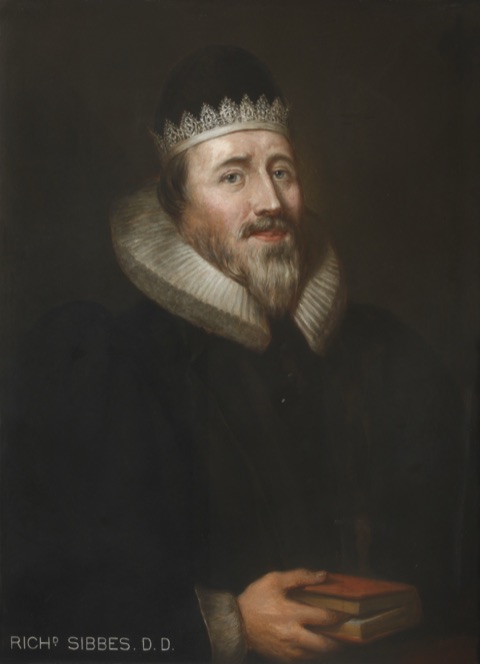
About the author
Richard Sibbes
The man explaining why Paul's credentials count for nothing had earned a good many of his own. A wheelwright's son from Tostock, Suffolk, Richard Sibbes (1577 to 1635 AD) went through St John's College, Cambridge, became preacher at Gray's Inn, London, in 1617, and became Master of Catharine Hall, Cambridge, in 1626. He died at Gray's Inn on July 5, 1635, four years before this exposition was printed.