Full text in modern English · Free PDF/EPUB
The Excellency of the Gospel Above the Law
Want the file? The PDF/EPUB is free with an account.
Summary
- Author
- Richard Sibbes (1577 to 1635 AD), English Puritan preacher
- Published
- 1639 AD, after Sibbes's death, by Thomas Goodwin and Philip Nye
- Source edition
- Grosart's Works of Richard Sibbes, vol. 4 (1862)
- Type
- Preached exposition of a Bible passage
- Length
- 72,000 words · 5 hours
What is The Excellency of the Gospel Above the Law about?
The Excellency of the Gospel Above the Law is Richard Sibbes's exposition of 2 Corinthians 3:17-18, published in 1639 AD. It argues that the law can show people their faces but never alter them, that the gospel remakes whoever looks into it, and that the freest person is one unable to sin.
Read the full summary (8 points, key themes)Show less
How the argument unfolds
- 01
Chapter 1: Sinai outclassed. Sibbes grants the law real glory, then ranks it: "it is more glorious to pardon than to condemn." Of his five advantages, the last drives the book: the gospel changes people.
- 02
Chapter 2: the Spirit in the sermon. Why does one sermon move you and leave your neighbor cold? "The substance of the thing is the same, but the Spirit is not the same." The killer among churchgoers is "this same dead formality."
- 03
Chapter 3: what liberty frees you from. Calling, pardon, holiness and glory each set a person free, yet "not freeing us from combat." Divines who say the Spirit only persuades, he says, picture the way "a man might entreat a stone to be warm."
- 04
Chapter 4: how to tell if you are free. The surest mark is whether you can still go to God at your lowest. Judas could not: "If he had said as much to Christ and to God, he might have found mercy."
- 05
Chapters 5 and 6: mercy in a mirror. God's attributes have different stages: power in creation, justice in hell, mercy toward sinners. We see that mercy by reflection, and reflections weaken. Before communion he tells hearers the bread and wine are mirrors too.
- 06
Chapters 7 and 8: the change refused. Plenty of people want pardon without change: "They are content to go to heaven if they may have it by the way to hell." The pattern is Christ's conduct, and when the devil comes in a wife, a child or a friend, Christ's answer to Peter is yours.
- 07
Chapters 9 and 10: grace is already glory. The world despises it for four reasons he lists. Then the hard pastoral claim: "It is profitable for God's children to fall sometimes." An older believer who seems cooler may have "less wildfire," not less grace.
- 08
Chapter 11: nothing from yourself. "Words are wind without the Spirit." God will not repeat the trust he placed in Adam, for "God saw that we were all bad stewards of grace and goodness."
Key themes
- Pardon never comes alone. "Pardon and power go together, both in God's gift and in the desire of a Christian's soul."
- Conscience above every master. No one may make you say what you know is false, yet "a true Christian is the greatest servant and the greatest freeman in the world."
- A nation ranked by its preaching. "Is there any outward thing that advances our kingdom above Turkey, or Spain, and the rest? Nothing."
Reader questions (7)Hide the questions
Questions about The Excellency of the Gospel Above the Law
Can I read The Excellency of the Gospel Above the Law online for free?
Yes. The complete text of this modern English edition is on this page, with no sign-up or paywall.
Is there a free PDF of The Excellency of the Gospel Above the Law?
Yes. The PDF and EPUB of this edition are free with an Updated Works account. Sign in with Google or an email link; no card is needed.
What does "the Lord is that Spirit" mean in 2 Corinthians 3:17?
It does not make Christ and the Holy Spirit one person; that "would be a confusion of the persons." Christ is that Spirit because he holds the Spirit without measure and gives him to others.
What does "with open face" mean?
Clear sight and boldness. Believers look at God's glory unafraid: "We do not come as criminals to a judge."
Does Sibbes believe in free will?
In one sense everyone has it, for "The devil's will is free in that sense, free to evil." Power toward spiritual good comes only from the Spirit, who works through reasons the mind sees and so does not cancel choice.
What does Sibbes say about crucifixes and pictures of Christ?
He rejects them as helps to grace: "bastard means breed a bastard devotion." The word and sacraments are the true picture.
Is this the complete book?
Yes, the complete text as printed by Grosart. His editorial notes are left out.
The Excellency of the Gospel Above the Law · Full text
How the Gospel Excels the Law
Now the Lord is that Spirit: and where the Spirit of the Lord is, there is liberty. But we all, with open face beholding as in a glass the glory of the Lord, are changed into the same image from glory to glory, even as by the Spirit of the Lord (2 Cor 3:17-18).
The apostle begins this chapter by commending his ministry, having been driven to it by the Corinthians’ low regard for him. Yet he does it in such a way that, together with himself, he commends them as his best and only testimonial and letters of commendation (2 Cor 3:2). And so he makes way for himself to move into a fuller and more deliberate commendation of the glorious gospel itself, of which God has made him so able a minister to them (2 Cor 3:6). Now the excellence of anything is best commended by comparing it with something else, and setting beside it something that excels in itself and yet is exceeded by it. Therefore he carries his commendation of the ministry of the gospel through the whole chapter by comparing it with the law and the ministry of the Old Testament.
The apostle makes this comparison, first, more briefly, by laying down some distinct properties and prerogatives of the gospel in which it excels the law (2 Cor 3:6). These are as follows:
(1) That this was “the ministry of the New Testament,” while that of the law was the ministry of the Old.
(2) And that it was “not of the letter,” as the law was, “but of the Spirit.”
(3) Nor was it of death, “for the letter killeth,” but of life, for “the Spirit quickeneth.”
And then, by inferences drawn from these properties thus briefly summed up, the apostle more largely illustrates the transcendent glory of the gospel, and how far it exceeds the glory of the law, although it is granted that the law is glorious. He does so in this way:
1. Suppose that which was only a ministration of the letter, written and engraved in stone, was glorious (2 Cor 3:7). That is, suppose the literal notions and bare knowledge of the law were glorious, though, like so many dead words or characters, they make no change at all, but leave people’s hearts hard and stony, like the tables on which the law was written, which remained stones still. If this was glorious, even the literal knowledge of the law (as indeed it was, both in the Jews’ own estimation of themselves and in the judgment of the nations among whom they lived), then “how shall not the ministration of the Spirit be rather glorious?” (2 Cor 3:8).
The meaning of this is explained at length in 2 Corinthians 3:3, where the Corinthians are said to be an “epistle written not with ink” (or dead letters), “but with the Spirit of the living God.” This kind of writing does not leave the heart a heart of stone, as the dead writing of the law did. It changes it into a “heart of flesh,” and makes such a thorough change in the whole person that the writing within, “in the tables of their hearts,” is “known and read of all men.” Since their lives and conduct answer to that spiritual and gracious writing of Christ in their hearts, they are “manifestly declared to be the epistle of Christ.” Therefore such a ministry as this must surely be “rather glorious.” For by it the Spirit of the living God is received, and not by the law (Gal 3:2); and he is a Spirit of glory, who works glorious things both in the hearts and in the lives of people.
2. We have another inference in 2 Corinthians 3:9: “If the ministration of condemnation be glorious.” That is, if that word which “concluded men under sin” (Gal 3:22) and pronounced the sentence of death upon them “be glorious, much more doth the ministration of righteousness exceed in glory.” For it is more glorious to pardon than to condemn, and to give life than to destroy. It is the glory of a man to pass over an offense (Prov 19:11), and in God it is called “the riches of his glory” (Rom 9:23). “The law, which was made glorious” in terrifying and condemning people and stopping their mouths, so that they had not a word to say for themselves, “hath no glory, by reason of the glory” of the gospel “that excelleth” (2 Cor 3:10). It excels even in this respect: it brings such a righteousness that, by its merit and by the satisfaction made by it, we are justified and have peace toward God, notwithstanding the utmost rigor of the law.
3. The apostle argues further in 2 Corinthians 3:11: “If that which is done away was glorious,” as the old covenant is. It was made old by the coming of the new (Heb 8:13) and was removed by it as a thing grown weak and shaken (Heb 12:27). Then “much more that which remaineth,” which is the new covenant, “is more glorious.” The new covenant cannot be shaken but shall remain, and it is “the everlasting gospel” (Rev 14:6). It is more glorious in the way that God’s last works exceed his former ones and, by comparison, take away the remembrance of them. So when he creates “new heavens and a new earth,” the former shall not be remembered nor come into mind (Isa 65:17).
4. There is another excellence of the gospel above the law, which the apostle adds and dwells on more fully than on all the rest. That is the comforting plainness and clearness of its doctrine and ministry: “Seeing we have such hope, we use great plainness of speech” (2 Cor 3:12). In this it excelled the ministry of Moses, which was marked by much difficulty and obscurity, and that in a threefold respect, laid down in 2 Corinthians 3:13-15.
(1) The matter of it was terrible. It tended to the shame, confusion of face and condemnation of the hearers, so much so that they were not able to stand before him, nor to behold his face steadfastly. Such a dazzling and overwhelming light shone in his ministry.
(2) The manner of delivery was in obscure and dark expressions, so that “the children of Israel could not see to the end of that which is abolished.” That is, they could not see the drift and scope of his ministry because of the types and shadows, which were “the veil he put upon his face.”
(3) Their minds were blinded. There was “a veil upon their hearts.” This is evident by experience in the Jews at this day, who cling so closely in their affection to Moses, and to the shadows and ceremonies of his ministry, that they reject its scope and end, which is Jesus Christ crucified. And they can do no other. Though the veil that was upon Moses’s face has been removed, as it is by the doctrine of the gospel, which shows us with all possible plainness what the drift and meaning of Moses was in all those types and ceremonies, yet the Jews will unavoidably remain in their ignorance and bondage until the gospel, in its spirit and efficacy, comes home to their hearts and takes off “the veil that is upon their hearts” also. That is, they will remain so until their natural blindness and obstinacy are taken away. This cannot be done by the law; rather, the law increases them: “For although Moses be read, yet until this day remaineth the same veil untaken away” (2 Cor 3:14).
Now, in contrast to this darkness and obscurity of the law in all those respects, the apostle exalts the gospel in this high and excellent privilege: it is plain and evident and full of demonstration, and its light is not terrifying and overwhelming, but sweet and comforting. So we may, with much liberty and boldness of spirit, look steadily upon the great and glorious things set before us in it, even though they are nothing less than the glory of the Lord Jesus Christ.
5. Moreover, there is such efficacy and working power in this ministry of the gospel that it will not allow people to remain the same, without change, as they did under Moses’s ministry, though he was read daily. Rather, it will “change” them, even into the image of Jesus Christ, and carry them on still in that image and likeness, from one degree of glory to another, after a most wonderful and spiritual manner of working.
This special excellence and prerogative of the gospel is laid down in the last two verses of this chapter, which are the words we shall dwell on more fully in the following discourse.
Christ the Lord Is That Spirit
Now the Lord is that Spirit: and where the Spirit of the Lord is, there is liberty (2 Cor 3:17).
“The Lord is that Spirit” who takes away the veil spoken of before. The apostle sets down what Christ is by what he does: Christ is “that Spirit” because he gives the Spirit. And then follows a sweet effect of the Spirit of Christ: “Where the Spirit of Christ is, there is liberty.”
Here “Spirit” is not taken for the person of God, as if the Holy Spirit had said, “The Lord is a Spirit,” and not a bodily thing, though that is true. And as it is not meant of God’s nature, so neither is it meant personally, “Christ is that Spirit,” as if Christ were the Holy Spirit. That would be a confusion of the persons. Nor is it restricted to the third person. The Holy Spirit is the Spirit. Nor is it meant, as some in the past would have it, to show that the Spirit is Jehovah, God. Its purpose is neither to show that Christ is God, nor that the Spirit is God, nor that Christ is the Holy Spirit. Rather, it is meant with regard to a special dispensation. “The Lord is that Spirit”; that is, the Lord Jesus Christ, who is the Lord of his church by marriage, by office, and so on, “is that Spirit.” That is, he (1) has the Spirit in himself eminently, and (2) dispenses and gives the Spirit to others, so that all receive the Spirit from him as the common root and fountain of all spiritual gifts.
First, he is “that Spirit” as having the Holy Spirit in himself as man. The Holy Spirit filled the human nature and made it spiritual. The Spirit is all in all in the human nature of Christ, and whatever he does, he does, as it were, as one full of the Spirit in himself. He gives the Spirit as God and receives it as man; so he both gives and receives. The Spirit proceeds from the Father and the Son as God, but the Spirit sanctified Christ as man, as it did in the virgin’s womb. The Holy Spirit sanctified that blessed mass of his body. The Spirit sanctified him and filled him with all graces and gifts. That is why it is said he received the Spirit without measure (John 3:34), that is, in abundance. Christ has the Spirit in himself in a more eminent and excellent way than all others, and it must be so, for these reasons:
(1) Because of the close union between the human nature and the divine. They are one person. Therefore there is more of the Spirit in Christ than in all creatures put together, more than in all the angels and all men, because the divine nature is nearer to Christ than it is to the angels or to any creature.
(2) Christ has the Spirit without measure, both in extent and in intensity, as we say. He has all graces in all degrees, even next to infinite. All others have it in their own measure and proportion.
(3) The Spirit rests upon Christ unchangeably. In other men who have the Spirit, it ebbs and flows; it is sometimes more and sometimes less. There are spiritual desertions, not only with respect to comfort but with respect to grace, though not total ones. But the Spirit rests on Christ eternally in full measure, and therefore you have it this way in Isaiah 11:2: “The Spirit of the Lord shall rest upon him, the Spirit of wisdom and understanding, the Spirit of counsel and might.”
(4) Because of his place or offices in relation to the church, as head, husband, king, priest, prophet, and so on. By nature the head is made the seat of the nobler faculties, such as seeing, hearing, understanding and judging, and it is furnished accordingly with a greater supply of spirits for ruling and governing the whole body. So Christ is the Head of the church. The government of all the world is laid upon him, and all excellencies are conveyed from him to all his members, as life is conveyed from the root to all the branches. Therefore he must have the Spirit in the greatest abundance. His fullness of the Spirit is like the fullness of the fountain; ours is only like the fullness of the cistern. He has grace in the spring; we have it only in the conduit. His graces are original; ours are derived. We have nothing but what we have received. Therefore it is said “He hath the oil of gladness poured upon him above his fellows” (Ps 45:7).
He has his name from anointing: “Christ.” He was anointed; that is, he was set apart and ordained to the office of mediator by anointing, not literally with any material oil, but with the Spirit. This was with respect to his human nature only, but it was above his fellows, that is, above all kings and priests, for they are his fellows in respect of titles. He was above them all, for all have their anointing from him. Therefore he is the King of kings and the Prophet of prophets, and so on. He is also above all his fellows. If we take his fellows to mean Christians, they are his fellows: “I go to my God and your God” (John 20:17). He is the “firstborn” among them, and in all things he has the preeminence.
(5) He is to be the pattern; we are to follow him. We are “predestinated to be conformed to him” (Rom 8:29), and to grow up to the fullness that is in him. In this respect, too, there is reason why he should have the Spirit and all its graces in greater abundance, so that he might exceed all, even Christians of the greatest growth and perfection. He is to be a pattern and example to all, to the strongest as well as to the weak. Even Paul himself, who was a leader to others because of the excellence of the grace of Christ that was in him, was still a follower of Christ: “Be you followers of me, as I am of Christ” (1 Cor 11:1).
Question. When did this fullness of the Spirit come upon Christ? When did he have it?
Answer 1. A fullness of the Spirit was poured out upon Christ in the union of the human nature with the divine. Union and unction went together. There was an anointing of the Spirit together with the union of the Spirit.
Answer 2. There was a fuller manifestation of the Spirit at his baptism. When the Holy Spirit fell on him in the shape of a dove, then he received the Spirit. He was about to enter into the ministry of the gospel. The Spirit of the Lord God was upon him, because he had anointed him to preach good tidings to the meek (Isa 61:1).
Answer 3. But the fullest degree of the declaration and manifestation of the Spirit upon Christ came after his resurrection, after he had made full satisfaction for our salvation. Then the restraint upon his glory was removed. For in order to work our salvation, the glory of Christ was held back from his human nature, so that he might be humbled to suffer for us. When he had fully suffered for us, that check upon his glory, his humiliation, was taken away, and then nothing appeared in Christ but glory and Spirit. All things were put under his feet, and he was set upon his throne as a glorious king. His priestly office appeared in his death, and his prophetic office before his death; but in the resurrection he appeared to be King and Lord of all.
Thus we see how Christ is that Spirit; that is, he is full of the Spirit with respect to himself.
Second, he is “that Spirit” with respect to his dispensations toward his church and children. “The Lord is that Spirit”; that is, the Spirit (1) of all truths and (2) of all persons, to give them life and quickening.
(1) Of truths. What is the scope of the whole Scriptures but Christ, from the first promise of the blessed seed, that the seed of the woman shall break the serpent’s head (Gen 3:15), to the end of the book? What are all the Scriptures without Christ? The law is a dead letter; yes, and so is the gospel too without Christ. He is “that Spirit” who gives life to all the Scriptures. Moses without Christ is only a shadow without a body, or a body without a soul. Take away Christ, and what was the bronze serpent? What was the ark? What were the sacrifices? What is any of it? Is not Christ “all in all” in these? The kings and priests and prophets were types of Christ; all the promises were made and fulfilled in Christ. The ceremonial law aimed at Christ; the moral law is meant to drive us to Christ. Christ is the Spirit of all. And the Scripture without Christ is a mere dead thing. It is only a shell without a kernel, as it is to the Jews to this day.
(2) Christ is “that Spirit” with respect to persons, quickening them. He is a universal principle of spiritual life, infusing it into all his church and children. Christ is always with his church, from the beginning of the world, and will be to the end. It was no loss to the church that Christ left it in his bodily presence, for he left them “the Comforter,” his Spirit, by whom he did greater works after his ascension than he did before. He is “anointed with the oil of gladness” and grace “above his fellows” (Ps 45:7), but all was for his fellows. Whatever he is or has, all is for his church and children. For us he was born; for us he was given. He is a King, a Priest and a Prophet for us. He died for us; he rose again for us.
And all that he does toward the church, he does as one who has the Spirit, and by the Spirit. The Father is the first in the Trinity, “from whom” all comes; and the Son, “by whom” all things are; but the Holy Spirit is the immediate worker of all things, next to the creature. All things are applied from God the Father, through the Son, by the Spirit. What Christ accomplished, and what the Father in wisdom devised, was applied by the Spirit; and so the framing of us to be fit for such a glorious condition as we have by Christ is also by the Spirit. And this is why Christ gives the Spirit to those to whom he purposes to give faith or love, or in whom he purposes to work any gracious work.
For where Christ saves, he does it not only by merit and by satisfying the wrath of God for us, but also by sanctifying and working effectually in us, so that he might be a perfect Savior. Now the essential vigor and working principle in all things done either by or from the Father or the Son is the Spirit. In man there is his will, from which he resolves and purposes; there is wisdom and understanding, by which he proceeds; and then there is a vigorous power in him by which he carries out and does everything. So it is in this working of God. The Father devises and determines what is to be done; the Son, who is the wisdom of the Father (1 Cor 1:24), dispenses what the Father wills; the Holy Spirit, the power of both, finishes and works all upon us. That is why he is called the “power of the highest” (Luke 1:35).
Whatever works come from God to the creature in general and are done in the world, such as the works of creation and providence, are done immediately by the Holy Spirit considered simply as the third person, coming from the Father and the Son. And in those special works done in his church and on his children, all things come from the Holy Spirit, yet not considered simply as the third person, but as he is “the Spirit of Christ”; that is, first sanctifying and filling the human nature of Christ, and then sanctifying and filling us. Christ could not give the Holy Spirit to us immediately, since we were at enmity with God and separated from him through our sins. He had first to take the Spirit to himself. Then, having reconciled us to his Father by his death and sufferings, and having purchased the Spirit for us, he may now dispense and give out his Spirit to us.
If we had stood in Adam, we would not have received grace as we now do, for we would have received it from the first Adam only as from a man. Now we receive it not from a mere man but, what is much more, from the “second Adam,” who is God-man. Indeed, Adam himself did not receive his grace in so glorious a way as we do. He received it from the Spirit considered simply as the third person in the Trinity, just as all other creatures received their excellencies. But we receive it from the Holy Spirit, who not only proceeds from the Father and the Son, but comes to us, as it were, through our own nature, which was marvelously united to God the Son and made one with him; and he works in us.
“The first Adam was a living soul, the last Adam was a quickening Spirit” (1 Cor 15:45). He quickened himself when he was dead, and he quickens all his members too. First he receives the Spirit himself; and the same Spirit that filled and sanctified his human nature sanctifies his church, which he “loves even as himself.” As he loves his own human nature, which the Holy Spirit sanctified, so he loves his own mystical body, his church, which is mystically united to him, and he sanctifies it by the same Spirit.
Christ dispenses his Spirit to us as head of his church, and he does this in various respects.
(1) As he is God, by way of immediate influence. He pours it out upon us as the prime and principal cause. And this he does as God, not as man, for the manhood cannot work above itself. It cannot do the work of God; it cannot work grace or give the Spirit.
(2) As he is man, considered as joined together with the Godhead, by way of merit and satisfaction. He procures the Spirit to be given and poured out, which is done by the Father and the Son on all those who are beloved in the Son. So the Spirit is given by Christ, with the Father, as Mediator, meritoriously, for by suffering and satisfying he procured the gift. Christ himself is the first gift, yes, the greatest that was ever given: the giving of Christ to die, to satisfy the wrath of God, and to obtain eternal life. Next to that main gift is the gift of the Spirit, in which lies the seed of all gifts and graces, and this we have by his merit and mediatorship. Yet we must also remember that although Christ is said to give the Spirit, as he does, the Holy Spirit gives himself too. For there is such a unity in the Trinity, of consent and of nature, that though the Father and the Son send the Spirit, the Spirit comes of his own self. Though the Father and the Son give the Spirit, yet the Spirit gives himself.
(3) We have the Spirit from Christ not only by way of merit but, in some sense, by way of example. He is the exemplary cause of all graces in us; looking to him, we are transformed, as we shall see later, “from glory to glory.” For when we consider that Christ has done so much for us as to save us, redeem us and die for us, this begets in us a love for Christ. It makes us think of him often and desire to imitate him, as we usually do with those we love and highly esteem.
The dispensation of the Spirit is in greatest abundance after the resurrection of Christ. As he appeared in himself to be most spiritual and glorious after he rose again, so then, being like the sun at its full height and perfect beauty, he casts his beams most plentifully abroad. And this is for these reasons:
[1] Because then, having finished the work of redemption, fully satisfied the wrath of God, brought contentment to divine justice and accomplished all by his death, there was nothing to hinder the blessed gift of the Spirit. It is said that “before, the Holy Ghost was not given, because Christ was not glorified” (John 7:39). The gift of the Holy Spirit depends especially upon the glorifying of Christ. When he had fulfilled the work of redemption and was raised to glory, God, being pacified, gave the Holy Spirit as a gift of his favor.
[2] Then again, after his resurrection and ascension he gave the Holy Spirit to his church more abundantly than before, because he is now in heaven and has the advantage of the place, being exalted on high. That glorious creature the sun, by the advantage it has of being placed in the heavens above us, is able to shine upon the greatest part of the earth at all times. We do not need to call the sun down from its place to come into our houses, or fields, or gardens. No. Seated in its proper place or sphere, it has the best opportunity to send down heat and light and influence to things below, in the greatest abundance and to the widest extent. So Christ does his church more good now that he is in heaven, from where he sends the Spirit, than he could do if he were below. For though his human nature is confined in heaven, his person is everywhere. And being “ascended now far above all heavens,” he gives gifts more liberally and plentifully, so that he fills all things (Eph 4:10). He enlarges the tents of his gospel and has taken in a greater people to himself.
We see in winter, when the sun is low and near the earth, that all things are dead and cold; but when the sun in spring rises over us to a higher point above us, we see how all things put on a new garment. There is a new vigor and freshness in them. So there was a more abundant vigor of the Spirit when Christ came in the flesh; his power appeared much more in every way than before. But then this blessed Sun of righteousness was exalted and seated at the right hand of his Father, where his nature was perfectly enriched and perfectly adorned with every kind of grace in its highest glory. His influence of light and heat now began to increase, and its efficacy and working began to be felt everywhere. The glorious beams of the sun began to be scattered, and the light of the gospel to shine to a greater number of people. Now there was no respect of persons, whether Jew or Gentile, slave or free, male or female; all were one. The commission was enlarged to all: “Go preach the gospel to every creature” (Mark 16:15). And with the word the Spirit went and was received, and those who were “added to the church,” even such as “should be saved” (Acts 2:47), were many thousands.
Thus we have opened the meaning of the words and shown how Christ is that Spirit, both with respect to the Spirit’s being eminently in him and with respect to his giving of it, and of spiritual gifts by it. All the vigor and life and influence we have that is spiritual and supernatural, and above the ordinary course, is from the Spirit; and whatever the Spirit has or does for us is done as sent from Christ, in whom the Spirit is in all fullness. Now we shall show in how many ways the consideration of these truths will be profitable and useful to us in the course of our lives, and for the comfort of our spirits.
Use 1. Christ is the Spirit of the Scriptures, of all truths, of all ordinances. By this we may be able to reconcile the Scriptures, one place with another, where they seem to contradict. The law is said to be a dead letter, a “ministration of condemnation” (2 Cor 3:6 and following); but in Psalm 19:7 it is said, “The law of the Lord is perfect, converting the soul.” These places are reconciled in this way. The law is said to be dead, and so it is without Christ, without the Spirit who quickens; and so is the gospel too, even “a savor of death” (2 Cor 2:16). So also are the sacraments, as well as the word: they are dead ordinances if Christ is not in them. The law is said to be “perfect” and “to convert the soul.” So it does when the Spirit goes along with it, as the Spirit ordinarily did before Christ came in the flesh, as in David’s time. But after Christ had come, who was the substance of those shadows, they became “beggarly rudiments,” as in Paul’s time (Gal 4:9). And the Spirit did not work with them, but with the gospel, “the hearing of faith” (Gal 3:2).
Use 2. And from this we may also understand why an ordinance differs so much from itself at one time compared with another, in respect of its life and comfort, as we often find even in our own experience; and also why the same ordinance (whether word or sacrament) at the same time profits one person, while another gets no benefit at all from it. This comes from the presence or absence of Christ, who is “that Spirit.” What is the reason that wine, or distilled spirit, refreshes and strengthens more than common water does? It is of the same substance and the same color as other water. But there is more spirit in it. All things work according to the spirits that are in them. So why does the reading or hearing of the same thing affect one person and not another at all? The substance of the thing is the same, but the Spirit is not the same. The Spirit goes with the one and not with the other. We grant that our negligence in preparation and attention, our pride and earthly-mindedness, our lack of faith to mingle with the word, these or the like, may be causes why we are many times sent away empty. Yet this must still be observed as a most evident truth: all the efficacy and fruit of any ordinance depends on Christ’s being present in it, who is “that Spirit” that gives life. The most powerful means that was ever ordained for our good will be dead and heartless if he is not there by his Spirit to put life into it.
What John says may seem strange: “The flesh profiteth nothing” (John 6:63). The flesh of Christ, our nature which Christ took, and in which so much was accomplished for us, is the greatest ordinance of all; yet even this flesh “profiteth not,” nor will there be any benefit from it, if it is not applied to us spiritually. For it is not the flesh simply considered that profits, but the flesh as by it and with it we receive the Spirit of Christ; and that Spirit gives life and makes the flesh of Christ “meat indeed.” As it is with the flesh of Christ, so it is with all other ordinances. The Scriptures profit nothing, preaching profits nothing, the sacraments will profit nothing; none of these will be “meat indeed” unless the Spirit of Christ gives them life.
Therefore with all the ordinances of God we ought to join a desire that Christ would join his Spirit to them and make them effectual. We ought to come to the ordinances depending on Christ for a blessing on them and for his presence in them, since he is the life and aim of them all. Then we would not find such dullness and deadness in them. This formality is the sin of this age. It is the sin of those who have anything in them at all. Set aside desperate drunkards and brawlers and such wretches, who plainly show themselves to be driven by the spirit of the devil. Take those who conform themselves to religion in any fashion: the killing sin they lie under is this same dead formality. They will hear a sermon now and then, look into a book, and perhaps pray morning and evening, but they never look up to the living and life-giving Spirit, Jesus Christ. So all they do is dead and loathsome, like salt that has lost its savor. What is the best liquor, if it has lost its life and spirit, but flat and unsavory? And what is blood, when the spirits are gone out of it, but loathsome gore? So are all their performances, just like sacrifices that had no fire in them. The Lord loathed such sacrifices, as he loathed Cain’s; and so he loathes all our flat and lifeless services, yes, and our persons too, when we are, as Jude says, “fleshly, and not having the Spirit” (Jude 19).
Use 3. How necessary it is that we should sanctify everything we take in hand by prayer! When we go to hear a sermon, or when we take up the Bible to read a chapter alone by ourselves or in our families, we should lift up our eyes and hearts and voices to heaven. We should say to Christ, “Lord, join your Spirit to it; be present with us. Without you your word is dead, and our hearts are dead. They will harden under the means and grow dark in the light, and we will fall under the heavy condemnation of these complacent and formal times, if you leave us.”
Use 4. Christ is said to be that Spirit: to send the Spirit as God, and to receive it as man, in fullness, and that for our sakes. It is a point of much comfort that there is such an abundance of the Spirit in our nature in Christ, on behalf of the church, so that we have a fullness to receive from. It was a comfort to Joseph’s brothers and that whole family that Joseph was full of honor and ruled as the second in the kingdom. Therefore they would lack nothing that was good in Egypt. Is it not a comfort for Christians to know that Christ is the Spirit, that he has the Spirit to give: the Spirit of wisdom in all difficulties, the Spirit of truth to keep us from all errors, the Spirit of strength for all services, the Spirit of comfort for all afflictions? He who is their Lord has an abundance of the Spirit in him, and for them. Therefore, when we lack any grace or gift of the Spirit, we should go to Christ; for God does everything by Christ, and Christ does everything by the Spirit. Ask Christ to be pleased to grant his Spirit to rule us, counsel us, comfort us, and strengthen us. Therefore in our emptiness (and indeed we are empty creatures of ourselves), let us go to Christ for the Spirit. He has received that fullness for us; ask him to be pleased to give to us out of his fullness.
This is the reason why Christians are so dead and so dull and so dark in their spirits: they do not first consider themselves and then go to Christ. In all emergencies whatever, we should all make use of this our great high treasurer, the great high steward of heaven and earth, this our Joseph, the second person in heaven. He is at the right hand of God, and all this is to fill his church with his Spirit. Our comfort now is that our strength and comfort lie hidden in Christ, who is near to us as man and near to God as God. He is between the Father and us. He is near the Father, being of the same nature with him; he is near us, being of the same nature with us. Since he is a mediator by office, and so fit to be a mediator by nature, what a comfort this is!
Indeed, there is no coming to God, no dealings between God and us, directly. All passes between God and us through the God-man, who is the mediator between God and us. He comes between. In Christ we go to God, in our flesh, in our nature; and in Christ, and from Christ, and by Christ, we have all grace and comfort. From Christ we have everything as he is God, together with the Holy Spirit and the Father. We have everything in Christ as a head and husband. And we have everything through Christ as mediator, by his merit. Therefore we should go to Christ in every way.
Use 5. Let us labor to be in Christ, so that we may get the Spirit. It is of great necessity that we should have it. Above all things, next to redemption by Christ, labor for the Spirit of Christ.
Christ is our Savior not only by merit and satisfaction but by efficacy and grace. That is, as he has purchased us by his blood to be his people, so he will subdue our corruptions and rule us by his Spirit.
For, first, “He that hath not the Spirit of Christ is none of his” (Rom 8:9). Those who do not have the efficacy of the Spirit in them to rule them will not have the benefit of his death to reconcile them. For these always go together: Christ as a king to rule, and as a priest to die. He came by blood and by water (1 John 5:6), to satisfy and to sanctify.
Second, the Spirit is necessary so that we may be new creatures. It was the Spirit’s brooding upon the chaos that brought forth everything (Gen 1:2). So the Spirit must sit upon our souls before any change will be made. Now it is necessary that we be changed and that we be new, or else we can never be inhabitants of the new heavens and the new earth. We must have the Spirit of God. Therefore, as with the material temple, “it is not by might, or by power, but by the Spirit” (Zech 4:6), so in raising up spiritual temples it is not by strength of wit or natural gifts, but by the Spirit. Therefore the Spirit is as necessary for us as our being in grace is necessary.
We know what dark creatures the holy apostles were until the Spirit came upon them more abundantly! But when the Holy Spirit had come upon them, how full of life and light and courage they were, so that the more they suffered, the more they were ready to suffer! So it will be with Christians: the more spiritual they grow, the brighter and more courageous they will be, the stronger, and the more lively and vigorous for all duties. The Holy Spirit is the substantial vigor of all creatures whatever. All the spiritual vigor of everything comes from the Holy Spirit, and the Holy Spirit comes from Christ.
For nothing can work above itself. Nature cannot work above nature. What raises nature above itself, sets a spiritual stamp on it, and puts divine qualities upon it is the Spirit of God. That divine quality is called spirit. There is the flesh and there is the spirit. Everything in us is flesh by nature, and whatever is spiritual and divine comes from the Spirit, and therefore it is called spirit. You see, therefore, that the working of the Spirit is necessary, just as it is necessary to be new creatures and to be spiritual. If we would be spiritual, we must have it from him who is first spiritual, the Spirit himself, who is the source and fountain of all that is spiritual.
Third, we are often called to do and suffer things that are above nature, and therefore we must have a spirit above nature. When we feel sin, to believe the forgiveness of sins; when we see death, to believe life everlasting; and when we are in extremity, to believe that God is present with us to deliver us; to believe contraries in the midst of contraries is a strange, almighty work of faith, by the working of the Spirit. It is above the work of nature to die, to end our days with comfort, and to yield up our souls, for nature sees nothing but darkness and desolation in the grave, and destruction. Nothing can make a man comfortable in death but what raises him above nature, the Spirit of God.
Now these things, and many like them, we must do and suffer if we are Christians; and therefore we must have the Spirit to enable us to do it all. The Spirit is to the soul what the soul is to the body. What is the body without the soul? A carcass, a loathsome dead thing. What is the soul without the Spirit? A chaos of darkness and confusion.
Well, how will we know whether we have the Spirit of Christ or not?
(1) We may know it partly by what I said before. The Spirit is a vigorous, working thing. That is why all three persons take the name of Spirit, but the Holy Spirit especially, because he is the spiritual vigor. The Spirit is an operative thing. Spirits are the quintessence and extract of things, and that is nothing but operation. God, who is nothing but pure act, is said to be a spirit. Those who have the Spirit of God are full of activity and vigor. The spirits of dull creatures are active when they are extracted. Will the spirits of bodies be vigorous, and will the Holy Spirit, who is a substantial vigor, not be vigorous? Therefore, if a man has the Spirit of God in him, it will work in him; it is very operative.
That is why it is compared to fire in various respects. First, fire is of a working nature. It is the instrument of nature. If we did not have fire, what could we make? All fabrics and all things are made by fire, especially metals; they are framed and made malleable by fire. So it is with the Holy Spirit: it is a working thing, and softens the heart, and makes us malleable; it makes us fit to receive the impression of everything good.
Second, again, though bodies are dark, fire makes them bright like itself. Iron is a dark body, but if the fire penetrates it, it makes it bright. We are dark creatures of ourselves; if we have the Spirit, it makes us light.
Third, again, fire makes cheerful, and ascends upward. If a man has the Spirit of God, his way of life will be upward; his way of life will be heavenly. He minds the things of God; he does not grovel here below. So in various such respects the Holy Spirit is compared to fire and has such effects in us. If in some measure we find our understandings enlightened, and ourselves quickened and carried up above nature in holy and heavenly actions, then it is a good sign that we have the Spirit of Christ. A part will follow the whole. As we see, a piece of earth falls to the center, because all the earth is heavy: the whole earth falls down toward the center, and therefore every little clod will do the same. So Christ our head, who has an abundance of the Spirit, is in heaven, and if we have the Spirit we will follow him and mind the things where Christ is.
(2) Likewise, where the Spirit of Christ is, it convinces, as in John 16:8 and the verses that follow. That is, it brings with it a clear, evident conviction that the truth of God is the truth of God. It is no doubtful thing. Therefore, when a man staggers in the truth, in this course or that, unsure whether he should do this or that, it is a sign that he does not have the Spirit, or has it in a very small measure, because the Spirit is a convincing thing. Like light, it convinces a man. He does not doubt what he sees at noonday. So whatever a man sees by the Spirit, he is convinced of. When a man doubts and wavers whether he should take a good course or a bad one, and keeps wavering, it is a sign that he is carnal and does not have the Spirit of God. For if he had the Spirit, it would convince him and settle him: “You must take this course if you will be saved.” That is said to convince which says more for a thing than anything can say against it. Now when a man has the Spirit of God, he can say more for God, and for good things and good ways, than all the devils in hell can say against them to discourage him. Therefore, when a man cannot say anything to the purpose for God and for good causes, he does not have the Spirit of God. The Spirit of God would so convince him that he would answer all cavils and objections. The subject is exceedingly large. I give you only a taste, so that you may know whether the Spirit of Christ is in you or not.
(3) In a word, if Christ is that Spirit and has infused the Spirit into us, it will make us like him. It will transform us into his likeness; it will make us holy and humble and obedient as he was, even to death. These things might be followed out at length, but we will have occasion to speak of them in other portions of Scripture. Therefore, so that you may get the Spirit of God, take these directions.
[1] We must go to Christ; study Christ. If we would have the Spirit, let us study the gospel of Christ. Why was there so little of the Spirit before Christ, in comparison? There was only a small measure of the knowledge of Christ. The more Christ is revealed, the more the Spirit is given. According to the manifestation of Christ, of what he has done for us and what he has, and the more the riches of Christ are unfolded in the church, the more the Spirit goes along with them. The more the free grace and love of God in Christ alone is made known to the church, the more Spirit there is. And back again the other way: the more Spirit, the more knowledge of Christ; for there is a reciprocal movement between these two, the knowledge of Christ and the Spirit. Why was it that in popery the schoolmen, who were so clever at making distinctions, had so little of the Spirit in them? They had no taste for the gospel. They were wonderfully quick in distinctions, but they had no taste for the matters of grace and of Christ. It was not fully revealed to them; instead they attributed it to satisfaction, and to merits, and to the pope, the head of the church, and so on. They divided Christ; they did not know him. And dividing Christ, they lacked the Spirit of Christ; and lacking that Spirit, they did not teach Christ as they should have.
Those were dark times, as they themselves confessed, especially around nine hundred and a thousand years after Christ. For Christ was then veiled in a world of idle ceremonies serving to darken the gospel and the victory of Christ, ceremonies made by the pope, who was the vicar of Satan. These were the doctors of the church then, and Christ was hidden and wrapped in a heap of idle traditions and ceremonies of men; and that was the reason things were obscure.
[2] Now, when Christ, and all good things by Christ, and by Christ only, are revealed, the veil is taken off. Now of late, for these hundred years, in the time of reformation, there has been more spirit and more brightness and comfort. Christians have lived and died more comfortably. Why? Because Christ has been better known. And as it is with the church, so it is with individual Christians. The more they study Christ, and the fullness that is in Christ, and how all comfort is to be had in him alone, “wisdom, righteousness, sanctification, and redemption” (1 Cor 1:30), the more they grow up in the knowledge of Christ, and the more they grow spiritually. And the more spiritually they grow, the more they grow in the knowledge of Christ. Therefore, if we would have the Spirit, let us come near to Christ and labor to know him better, for he is the fountain of all that is spiritual.
[3] Then again, if we would be spiritual, let us take heed that we do not trust too much in dead things without Christ, holding a kind of popery of the work done. Let us not think that reading, and hearing, and receiving the sacrament, and the government of the church, if only it were as men would have it, will do it. Suppose we had all these, which are excellent good things; yet what are all these without the Spirit of Christ! A man may be dead with all of them. Though he hears ever so much and receives the sacrament ever so often, he is dead if he does not go to Christ, the life-giving Spirit, in this manner: “Lord, these things, and my soul too, are dead things without your Spirit; therefore give me life.” Join Christ with all our performances, without whom all is nothing, and then he will be spiritual to us.
[4] And we must beg for the Spirit if we would have it, for God will give the Holy Spirit to those who ask him (Luke 11:13). But when we go to Christ for the Spirit, let us remember to use the means carefully: reading, and hearing, and the holy communion of saints. For though these can do nothing without the Spirit, yet the Spirit is not given except by these. These are the golden conduits of the Spirit of Christ. No one is ever spiritual who is not a reader, a hearer, one who confers about good things, and one who attends on the means of salvation, because God will work by his own tools and instruments. Therefore it is said that John was full of the Spirit upon the Lord’s day (Rev 1:10). Let a Christian sanctify the Sabbath as he should, and he will be in the Spirit on the Lord’s day more than on other days. Why? Because then he is reading, and hearing, and conferring, and engaged in some spiritual course. And the more a man is in a spiritual course on the Lord’s day, the more he is in the Spirit: “John was in the Spirit on the Lord’s day.” So much for these words, “The Lord is that Spirit.”
Where the Spirit Is, There Is Liberty
And where the Spirit of the Lord is, there is liberty (2 Cor 3:17).
Here we see what the Spirit works where he is: “Where the Spirit of the Lord is, there is liberty.” I will repeat the illustration I gave before, so that I may go on the better. We say the sun is heat and influence. It is not that the sun is these things, for they are accidents. But the sun shows itself to us for our comfort in heat and influence, and so we call it by that name. We say of a man, “He is all spirit.” In the same way Christ is all Spirit. The sun is all light, and where the light and heat of the sun are, there is fruitfulness. So Christ is all Spirit, and where the Spirit of Christ is, there is spiritual liberty.
It would be a waste of time to tell you of the various kinds of liberty. In a word, liberty is what everyone desires, but where we go wrong is in the means of it, the way to attain it. Here we see where to get it: from the Spirit of Christ. Liberty is a sweet thing, especially liberty from the greatest enemies of all. Outward liberty, liberty from tyranny and base servitude, is such a sweet thing that man’s nature delights in it, and man as man abhors the contrary; whoever does not abhor it does not have the nature of a man. If that is so, what shall we think of the liberty of the Spirit from the great enemies that daunt the greatest monarchs in the world? Liberty from the anger of the great God; liberty from Satan, God’s executioner; liberty from the terror of conscience, from the fear of death and hell and judgment: what shall we think of liberty in these respects? We speak of great matters here below, then, when we speak of liberty.
Now liberty is either Christian or evangelical. You may think this a fine distinction, but there is some reality in it.
(1) Christian liberty is that which belongs to all, even to those before Christ. Though they did not have the name of Christians, yet they were members of Christ. Christ was head of the church “yesterday, and today, and for ever” (Heb 13:8).
(2) Evangelical liberty is that which belongs more particularly to the times of the gospel since the coming of Christ. Now the liberty that belongs to Christians as Christians is a perpetual liberty from those grand enemies, the greatest enemies of all: a spiritual and inward liberty. In evangelical liberty, besides that, there is another, outward liberty, from the ceremonial and moral law and the like, and a liberty from the restraint of the law. The Jews were under many restraints that we under the gospel in this time are not under. I speak, therefore, of liberty as it runs through all ages of the church, not merely of evangelical liberty since the time of Christ. Where the Spirit is, both these liberties are now present, since the coming of Christ.
Now, in that the Holy Spirit says here, “Where the Spirit of Christ is there is liberty,” it supposes that we are in bondage before we have the Spirit of Christ.
That is a supposed ground and truth, and indeed it is so. For out of Christ we are slaves; the best of us all are slaves. In Christ the lowliest of all is a free man, and a king. Out of Christ there is nothing but slavery. We are under the kingdom of the devil; when he calls us, we come. We are in slavery under the wrath of God, under the fear of death and damnation, and under all those spiritual enemies that I need not mention, for they are well enough known to you by frequent repetition. There is no man but is a slave until he is in Christ. And the freer a man thinks himself to be, and labors to be, the more of a slave he is. Take a man who labors to have his liberty, to do whatever he chooses: he thinks it the happiest condition in the world. Others think it the best condition to have liberty not to be tyrannized over by others. This is the disposition of man’s nature without grace. Such men count it happiness to have their wills over all others, but the more liberty in this, the more slavery. Why?
The more liberty a man has to do lawlessly whatever he wants, contrary to justice and fairness, the more he sins. The more he sins, the more he is enslaved to sin. The more he is enslaved to sin, the more he is in bondage to the devil, and the more he becomes the enemy of God. Therefore, if anyone wanted to pick out the most wretched man in the world, I would pick out the greatest man in the world, if he is wicked: the one who has the most under him. He has the most liberty, seeks the most liberty, and counts it his happiness that he may have his liberty. This is the greatest slavery, and when he dies and comes to answer for it, it will prove the greatest slavery of all. So the point needs little proof that if we are not in Christ we are slaves. As Augustine says in his book The City of God, “He is a slave, though he domineers and rules.”
Until a man is in Christ he is a slave, not to one man or one lord over him, but he has as many lords as he has lusts. There are only two kingdoms that the Scripture speaks of: the kingdom of Satan and darkness, and the kingdom of Christ. All, therefore, who are not in the kingdom of Christ, in that blessed liberty, must be herded together under the other kingdom, the kingdom of Satan. This is a ground. I speak of it briefly, then, as an incentive and a provocation to stir us up to get into Christ, to get the Spirit of Christ, so that we may have this spiritual liberty. Otherwise we are all slaves, notwithstanding all our civil liberties, whatever they may be.
Now, “where the Spirit of Christ is there is liberty”: there is freedom from the bondage that we are in by nature, and which is strengthened by a wicked course of life. For though we are all slaves by nature, born slaves, yet by a wicked course of life we put ourselves into further bonds and tangle ourselves. So many sins and so many repetitions of sin, so many cords; the longer a man lives, the greater slave he is. Now when the Spirit of Christ comes, he frees us from it all, both from the natural slavery and from the slavery of custom.
Now this liberty is wrought by Christ and applied by the Spirit. What Christ works, he makes ours by his Spirit, who takes everything from Christ. As Christ does everything by the Spirit, so the Spirit takes everything from Christ. All the comfort the Spirit gives comes from reasons taken from Christ, from grounds taken from Christ, and from doctrines taken from Christ. Yet both have their efficacy: Christ as the meritorious cause, and the Spirit as the applying cause. The Spirit reveals the state of bondage we are in by nature, and with it he reveals a more excellent condition. And as he reveals, so likewise the Spirit of God brings us into this state, by working faith in what Christ has done for us. Christ has freed us by his death from the curse of the law, from the wrath of God, from death and damnation, and the like. Now whatever Christ has done, the Spirit works faith to make it our own by uniting us to Christ. When Christ and we are one, his sufferings are ours and his victory is ours; all is ours. Then the Spirit, persuading us of the love of God, and of Christ’s redeeming us from that cursed slavery we were in, works love in us and other graces by which the dominion of sin is broken more and more, and so we are set at liberty by the Spirit.
Now, properly speaking, the Spirit is not the original worker of liberty; Christ is the great Redeemer. But Christ redeems in two ways.
First, he redeems us by paying the price, and in this way he alone redeems, for he paid the price to divine justice. We are in bondage to the wrath of God, under his justice, and so there must be satisfaction to justice before we can be free.
Then, second, we are in bondage to Satan, as God’s executioner and jailer. Now from him we are freed by a strong hand. So Christ frees us by his Holy Spirit, working such graces in us as make us see the loathsomeness of that bondage, and likewise working grace in us to fall in love with a better condition, which the Spirit reveals to us. So the Spirit brings us out both by revelation and by power. All whom Christ frees by virtue of redemption, paying the price for them, he likewise frees by his Spirit. He reveals to them their bondage, and the blessed condition into which they are to be brought, a state of freedom. And this freedom he perfects little by little, until he brings them to a glorious freedom in heaven.
Now as for the reason of this, that where Christ frees anyone by way of redemption, dying and satisfying God’s justice for them, he gives his Spirit to those same people, by which Spirit they are set at liberty: the reasons are many. To name one or two:
[1] Christ saves all whom he saves in a way that answers to the nature of those he saves. He saves them as reasonable persons, for he saves us so that he may make us his friends. He saves us as men and redeems us as men. He does not merely pay a price for us, as we buy a thing that is dead; he also frees us in such a way that we may understand to what we are freed, and by whom, and from what condition. Therefore there must be a Spirit joined with the work of Christ, to inform us thoroughly, since we are creatures fit to be informed.
[2] And since God intends to come into covenant with us, so that we may be friends with him, which is our glory and happiness, he acquaints us as friends with all the favors and blessings that he has done for us. He acquaints us with what misery he brings us out of, what happiness he brings us into, and what our duty is. This is the work of the Spirit: to show us what he has done for us, so that we may be friends.
[3] And then, it is a ground for loving God. God saves us by a way of love in the covenant of grace. His desire is that we may love him in return, and maintain that love. Now how can this be unless the Spirit of God reveals what God in Christ has done for us? Therefore there must be the Spirit to show it to the eye of the soul, and to tell us, “Christ has done this for us.”
[4] Then again, there must be a fitting for heaven, for the glory that God intends for us in election. Now this fitting must be wholly by the Spirit. The same Spirit who sanctified Christ in the womb, the same Spirit who anointed Christ, anoints all who are Christ’s, so that they may be fit for so glorious a head. So there must be the Spirit as well as Christ in the work of redemption and liberty.
Now this Spirit of God sets us at liberty throughout the whole course and progress of salvation, from the beginning to the end. He sets us at liberty at the first, in calling us. He sets us at liberty when we are justified. He sets us at liberty when he sanctifies us. And then he sets us fully at liberty in glorification.
1. The Spirit of God is a Spirit of liberty when we are first called powerfully and effectually. For living in the church does not set us at liberty unless the Spirit stirs us up to answer a divine call. “For many are called but few are chosen” (Matt 20:16). In the church there is Hagar and Ishmael as well as Isaac. There are hypocrites as well as sound Christians. There is outward baptism as well as inward. There is outward circumcision of the flesh as well as inward circumcision of the spirit. A man may have all these outward privileges and yet be a slave in the bosom of the church, for Ishmael was a bondslave though he lived in the house of Abraham. Therefore the first beginning of spiritual liberty is this:
(1) When the Spirit of God, in the ordinances, in the means of salvation, stirs up the heart to answer God’s call, as it were. When we are exhorted to believe and repent, the Spirit gives power to echo back to God, “Lord, I believe; help thou my unbelief” (Mark 9:24). “Lord, I repent, and I desire to repent more and more.” When the Spirit of God says in the ordinance, “Seek my face,” then: “Thy face, Lord, will I seek” (Ps 27:8). “Be mine, Lord, and I will be yours.” This spiritual echo and answer of the soul comes from the Spirit of God in calling, and it is the first degree of liberty.
(2) Now this answer of the soul, by the power of the Spirit overpowering our corruptions, is joined with the obedience of the inner man to go out. For a man answers the call not only by the speech of the heart, “Lord, I do it,” but he actually does it. Therefore when by the power of the Spirit we come out of the world and out of our corruptions, and walk more freely in the ways of God, then we are set at spiritual liberty. Now the Spirit does all this. For if it were not the Spirit that persuaded the soul when the minister speaks, alas, all ministerial persuasions would be to no purpose. If the Spirit does not stir up the soul to answer, all speech from men is to no purpose. But this the Spirit does. In the first place he opens the eyes with spiritual eye salve to see our natural bondage. He opens our eyes to see: “I must of necessity come out of this condition if I will be saved, or else I am miserable forever.” And it is enough for the soul of a miserable man if he is convinced and brought to see his misery and bondage, what he is by nature. Let us once be convinced of that, and all the rest of the links of the golden chain of salvation will follow. Let a man be convinced that he is what the Scripture says he is, and what he will hereafter find himself to be to his cost, and you will not need to tell him to come out of his way of life and condition, and the worldly course he is in. All this will follow where there is conviction of spirit. Therefore the first work of the Spirit in spiritual liberty is to convince us of sin and misery, and then to work, as I said, an answer of the soul and an obedience of the whole man. I will not dwell long on this, since it is a clear point.
2. “Where the Spirit is, there is liberty.” Again, in the matter of justification there is a liberty and freedom of conscience, by the Spirit, from sin and the curse of sin, and from all the danger that follows upon sin.
Objection. But you will say, “The liberty of justification is wrought by Christ. We are justified by the obedience of Christ, and the righteousness of Christ is imputed to us.”
Answer. It is true that Christ is our righteousness. But what is that to us unless we have something by which to put it on? Unless we are united to Christ, what good do we have from Christ if Christ is not ours? If there is no spiritual marriage, what benefit do we have from him, if we do not have him to pay our debt? For his riches to be ours, and our debt to be his, there must first be a union. Now this union is wrought by the Spirit. It is begun in effectual calling. From this union there comes an exchange: his righteousness is mine, as if I had obeyed and done it myself, and my debts and sins are his. This is by the Spirit, because the union between Christ and me is by the Spirit. For whatever Christ has done, it is nothing to me until there is a union.
And then freedom is by the Spirit likewise, because the Spirit of God works faith in me, not only to unite and knit me to Christ, but faith to persuade me that Christ is mine, that all that is his is mine, and that my debts are his. The Spirit works this supernatural hand of faith to lay hold upon Christ, and then to persuade me. For the Spirit is a thing full of light, and together with the graces he works, he tells me of the graces he works. Take reason: besides reasoning, it tells me that I use reason when I do. It has a reflex act. So the Spirit of Christ has a reflex act upon itself. Being above reason, it does not only lay hold upon Christ; it does not only do the work, but it tells me that I do so when I do. Therefore it not only tells me that Christ is mine when I believe, but it assures me that I do believe. It carries a light of its own. I know the light by the light, and reason by reason, and faith by faith, with the reflex act joining with it. So, with that reflex act joining with it, the Spirit is the cause of liberty in justification in this respect: he is a means of union, by which there is a passing over of all that is Christ’s to be mine, and of mine to be Christ’s. And he likewise assures me that I do believe, when I do believe, without error. For the Spirit is given to me so that I may know the things that I have by Christ: not only the privileges I have by Christ, but the graces of Christ.
And, beloved, unless the Spirit did it, it would never be done. For the soul of man is so full of terrors and fears and suspicions that unless the Spirit of God witnesses to my spirit that God is reconciled in Christ, and that Christ’s righteousness is mine, I could never be persuaded of it. For the soul always thinks, “God is holiness itself, and I am a mass of sin. What reason do I have to think that God will be so favorable to such a wretch, to such a lump of sin as I am, were it not that God the Son has satisfied God the Father?” God has satisfied God, and the Spirit certifies it to my conscience. So the Spirit, who searches the deep things of God and knows what love is in the breast of God, searches the heart: he searches the heart of God, and he searches my spirit. Unless the Spirit told me that God the Son has made satisfaction (and that God the Father will accept the satisfaction of God the Son), I would never believe it. Therefore, besides God the Son’s having accomplished it, God must establish the heart in a gracious liberty of justification.
It is no wonder that men of great gifts who are without grace are full of terrors and despair. For the more gifts and wit a man has without the Spirit of God, the more he argues against himself and entangles himself with desperate thoughts. But when the Spirit is brought to speak peace to the soul in Christ, and makes the soul cast itself on him for salvation, then God’s Spirit is above the conscience. Though conscience is above all things else, yet God is above conscience and can still the conscience. And the Spirit tells us that God the Father is reconciled by the death of God the Son. And when God witnesses to what God has wrought, then conscience is at peace. Thus we see how the Spirit sets us at liberty in the great matter of justification.
3. So likewise in the matter of holy life, in the whole course of a holy life, “where the Spirit of Christ is, there is liberty,” and freedom from the slavery of sin. For there the understanding is freed from the bondage of ignorance, and there the will is freed from the bondage of rebellion; there the affections likewise, and the whole inward and outward man, are freed. But this liberty of holiness, this inherent liberty, springs from the liberty that we have by justification, by the righteousness of Christ, through which we are perfectly righteous and freed from every claim that Satan has on us. We are freed from the curse of God, from the law, and enabled in a course of sanctification to go on from grace to grace. The Spirit of Christ comes after justification. For to whomever God gives forgiveness, he gives his Spirit to sanctify them. The same Spirit who assures me of the pardon of my sin sanctifies my nature. Where the Spirit of sanctification is, he breaks the ruling power of sin. Before that, the whole life is nothing but continual sinning and offending of God. But now there is a gracious liberty of disposition, a largeness of heart, which follows the liberty of condition. When a man is free in state and in law from wrath and from the sentence of damnation, then a free and willing disposition is wrought in him to serve God freely, without fear or constraint.
When a man is under the bondage of the law, when he is under the fear of death, armed with its sting, whatever he does he does with a slavish mind. Where the Spirit of God is, there is the spirit of adoption, the spirit of sons, which is a free spirit. The son does not do his duties to his father out of constraint and fear, but out of nature. The Spirit alters our nature and disposition. He makes us sons, and then we do everything freely. God enlarges the hearts of his children. They can deny themselves in a good work. They are “zealous of good works.” It is the end of their redemption, as it is in Titus 2:14: we are redeemed to be “a peculiar people, zealous of good works.” For then we have a low esteem of all things that hinder us from freeness in God’s service, such as worldliness. What does a Christian do when he sees his gracious liberty in Christ? As for the love of the world and worldly things, he is ready to part with it all for the service of God. He is so free-hearted that he can part with life itself. Paul says of himself, “My life is not dear to me, so I may finish my course with joy” (Acts 20:24). We see this in the martyrs and others, how free they were, even with their very blood.
What, then, shall we think of those from whom, if we get anything at all, it must be struck like a spark out of a flint? Duties come from Christians like water out of a spring. They are natural and not forced to flow, so far as they are spiritual.
I confess that there are remainders of bondage where the Spirit sets us at liberty, for while we live in this world there is a double principle in us, of nature and of grace. Therefore there will be a conflict in every holy duty. When the Spirit would be generous, the flesh will draw back. The flesh will say, “Oh, but I may come to want!” When the Spirit would be most courageous, the flesh will say, “But there is danger in it.” So there is nothing we can do that must not be won out of the fire. We must resist. Yet here, nevertheless, is liberty to do good, because here is a principle that resists the backwardness of the flesh.
In a wicked man there is nothing but flesh, and therefore there is no resistance. And we must understand the nature of this spiritual liberty in sanctification. It is not a liberty that frees us altogether from conflict, and deadness, and dullness, and the like; it is a liberty enabling us to combat, not freeing us from combat. It is a liberty to fight the battles of the Lord against our own corruptions, not freeing us from it. That freedom is the liberty of glory in heaven, when there will be no enemy within or without.
Therefore let not Christians be discouraged by the backwardness and unwillingness of the flesh toward good duties. If we have a principle in us to fight against it, enabling us to fight against our corruptions and to get good duties out of the flesh in spite of it, that is evidence of a new nature. God will perfect his own beginnings, and he will subdue the flesh more and more by the power of his Spirit. Look at our blessed Savior, and see what a sweet excuse he makes for his disciples when they were dead-hearted and drowsy, when they should have comforted him in the garden. “Oh,” he says, “the spirit is willing, but the flesh is weak” (Matt 26:41).
Indeed, there is a double hindrance in God’s people when they are about holy duties. Sometimes it comes from their very mold and nature, considered not as corrupted: the very mold itself, without regard to corruption.
And then consider that nature as it is made heavier and duller by the flesh and the corruptions in them, for there are invincible infirmities and weaknesses in nature. Sometimes deadness creeps in invincibly after labor and the spending of one’s energies, so that a man cannot overcome those necessities of nature. So the spirit may be willing, and the flesh weak, the flesh being weak without any great corruption. God looks upon our necessities, as the church father says, “Free me from my necessities.” As we see, Christ made an excuse for them. It was not so much corruption, though that was an ingredient in it, as nature in itself. Christ saw a great deal of gold in the ore, and so we see how he excuses them.
Therefore when we are dull, let us strive. Christ is ready to make excuse for us if our hearts are right: “The spirit is willing, but the flesh is weak.” I speak this for the comfort of the best sort of Christians, who think they are not set at liberty by the Spirit because they find some heaviness and dullness in good duties. As I said, there is sin in us while we live here, but it does not reign. After a man has the Spirit of Christ, the Spirit of Christ maintains a perpetual combat and conflict against sin. The Spirit could subdue sin all at once if God saw it good; but God will humble us while we live here, and exercise us with spiritual conflicts.
Therefore God sees it sufficient, for bringing us to heaven, to set up a combat in us, so that we are able by the help of the Spirit to fight God’s battles against the flesh. In this way the dominion of sin may be broken in us. Paul says it excellently in Romans 8:2: “The law of the spirit of life in Christ Jesus hath freed me from the law of sin and of death.” The law of the Spirit of life, that is, the commanding power of the Spirit of Christ, which commands as a law in the hearts of God’s people, frees us from the law, that is, from the commanding power of sin and death. So the dominion and tyranny of sin is broken by the Spirit of Christ, and so we are set at a gracious liberty. In some respects we are under grace, and therefore sin shall not have dominion over us, as the apostle speaks (Rom 6:14).
Again, by the Spirit of Christ in sanctification we are made kings, to rule over our own lusts in some measure. We are not kings who are freed from them altogether, but kings who strive against them. It is a liberty to fight, and in fighting to overcome at last. When the Israelites had a promise that God would give their enemies into their hands, the meaning was not that he would give them up without the Israelites fighting a blow. Rather it was: I will give them into your hands. You shall fight; and be of good comfort, in fighting you shall overcome. So this liberty of sanctification is not a liberty in which we should have no combat with our corruptions, but a gracious liberty to keep them under, until by subduing them little by little we get a perfect victory. What greater encouragement can a man have to fight against his enemy than when he is sure of the victory, of final victory, before he fights!
You see, then, how the Spirit brings a liberty into the soul. It brings us out of that cursed kingdom of Satan and sin. It brings us out of the curse of God and the law in justification. And it brings us from the dominion and tyranny of sin by a spirit of sanctification.
But this is not all that is in liberty. For the Spirit not only frees us from all that is evil, from sin, but also from what follows it. There is some evil that follows sin, such as fear and terrors of conscience, and the like. They follow sin and death and wrath and the like, and subjection to these. Now where the Spirit of God is, it frees us from these evil consequences, from the tail that follows sin. Where the Spirit is, it frees us from fear. For the same Spirit that tells us in justification that God is appeased frees us from the fear of damnation and death and judgment, and from the terrors of an evil conscience. Being sprinkled with the blood of Christ (1 Pet 1:2), we are freed from fear.
And the Spirit not only frees us from the fear of evil things, but shows us our immunity and freedom for good. Liberty here implies two things: a freedom from evil, from a cursed condition, and likewise a liberty to a better condition; a liberty from evil, and to good. We must take it in its full breadth, because the benefits of Christ are complete, not only privative but positive. They not only free us from evil but confer all good on us, as much as our nature is capable of. As much as these souls of ours are capable of, they will be made free and glorious and happy in heaven. God will leave no part of the soul unfilled, no corner of the soul empty. He does it little by little, as we will see in the next verse.
When we are called out of Satan’s kingdom, we are not only called out of that cursed state, but we are made free of a better kingdom. We are made members of Christ; we are enfranchised. And so in justification we are not only freed from damnation, from the justice and wrath of God, but we can also plead our righteousness, by which we have title to heaven. That is a blessed privilege and prerogative. We are not only free from the curse of the law, but we also have other gracious prerogatives and privileges. We are not only freed from the dominion of sin, but we are also set at liberty by the Spirit to do what is good. We have a willing, free spirit to serve God with as great cheerfulness as we served our lusts before. And as we are freed from the rigor and curse of the law, so we have answerable prerogatives for good.
We are now set at liberty by the Spirit to delight in the law, to make the law our counselor, to make the word of God our counselor. What terrified and frightened us before is now our direction. A severe schoolmaster to a child in his younger years later becomes, when the child comes of age, a wise tutor to guide and direct him. Even so the law that terrified and whipped us when we were in bondage, until we are in Christ (it scares us to Christ), afterward comes to be a tutor. It tells us, “This you shall do.” It counsels us and says, “This is the best way.” And we come to delight in those truths when they are revealed to us in the inward man. And the more we know, the more we want to know, because we want to please God better every day. So besides freedom from what is evil, and from the consequences of evil, there is a blessed immunity and prerogative and privilege. That is what is meant here by liberty.
For God’s works are complete. We must understand that when he delivers from evil, he advances to good. His works are always full works. He does not do things by halves. Therefore through Christ and by the Spirit we have not only freedom from what is evil, but advancement to all that is comforting and graciously good.
And give me leave to touch on one thing which, though it is more subtle, is still useful, and the text leads me to speak of it. “Where the Spirit of God is, there is liberty” of the inward man, liberty of judgment, and liberty of will. Where the Spirit of God is not, there is no liberty, no free will. Let me touch on that a little.
What we call free will is sometimes taken for a natural power and endowment that God has put upon the soul, and in that sense the will is always free, on earth and in hell. The devil’s will is free in that sense, free to evil. That is the natural freedom. For freedom is a dowry bestowed on the will, invested in the will, which God never takes from it. To do something freely in that sense, that is, upon reasons the will sees, whether good or evil, is not what I mean by freedom. I take freedom for ability and strength toward what is good. For any liberty and ability toward what is good comes only from the Spirit. And the position that Luther and others who wrote of this freedom defended is sound and good: that the will of man is altogether slavish without the Spirit of God. “Where the Spirit is, there is liberty”: liberty, that is, as it is taken for power and ability to do good.
In a word, there is always a liberty of the subject, of the person, a liberty of the understanding; but not a liberty with respect to the object, to this or to that thing. A liberty toward supernatural objects comes from supernatural principles. Nothing moves above its own sphere. Nothing acts beyond the activity that God has put into it. Now a natural man can do nothing but naturally, for nothing can work above itself by its own strength, any more than a beast can work according to the principles of a man. Therefore the soul of man has no liberty at all toward what is spiritually good without a supernatural principle that raises it above itself and puts it into the rank of supernatural things.
First, the Spirit of God puts a new life into the soul of a man. Then, when he has done that, he preserves that life against all opposition. And together with preserving that life, he applies the inward life and power he has put into the soul to particular works. For even when we have a new life, we cannot do particular actions without the stirring power of the Spirit of God. The Spirit stirs us up to every particular thing, when the soul, left to itself, would be idle. The moving comes from the Spirit of God. As every particular movement in the body comes from the soul, so the Spirit puts a new life into us, applies that life, and applies the soul to every action.
Therefore where the Spirit of God is not, there is no liberty for any supernatural action; but “where the Spirit of God is, there is liberty.” It holds both negatively and affirmatively. There is a liberty of will toward what is good. So this also arises from it: where the Spirit of God is efficacious and effectual in his working, he does not rob the soul of liberty, but perfects that liberty.
There are some divines, too many indeed, who hold that the Holy Spirit works on the soul only by way of persuasion, moving it, as it were, from outside. In their view he does not enter into the soul, nor alter and change the soul. He does not work on the soul as an inward worker, but only as an outward entreater and persuader and allurer, setting objects before it, and with those objects persuasions and allurements. This is too shallow a notion for so deep a business as this, for the Spirit works more deeply than that. He puts a new life into the soul; he takes away the stony heart and gives a fleshly heart (Ezek 11:19). Those phrases of Scripture are too weighty to fasten such a shallow sense on them, as though God only entreated people to be converted, the way a man might entreat a stone to be warm and to come out of its place. He might entreat long enough! But with that speech the Spirit puts in a new life and power, and then acts and stirs that power to all that is good.
Objection. “Oh,” they say, and this is their main objection, “this is prejudicial to the liberty of the will! This overthrows the nature of man!”
Answer. Oh, by no means! This is no prejudice to the liberty of the will. For the Spirit of God is so wise an agent that he works on the soul while preserving the principles of a man. He alters the judgment by presenting greater reasons and further light than it saw before. And then he alters the will, so that we will the contrary of what we willed before, by presenting to the will greater reasons to be good than it ever had to be evil before. The soul chooses anything freely, of its own will, when it does so upon the discovery of light and reason, with deliberation and reason. The soul does things freely when it does them at the direction of reason, when judgment tells me, “This is good.”
Now when the Spirit changes the soul, he presents such strong reasons to come out of the cursed state I am in, and to come to the blessed state in Christ, that the will immediately follows what the understanding presents as the chief good of all. Here freedom is preserved, because the will is so stirred by the Holy Spirit that it stirs itself, being stirred by the Holy Spirit; and it does so on this ground, that it sees a better good. So grace does not take away liberty. No; it establishes liberty.
Though we hold that in effectual grace the Spirit of God works on the soul thoroughly, we nevertheless preserve liberty. For we say that the soul works from its own principles, notwithstanding grace, because the Spirit of God acts and leads the soul according to the nature of the soul. The Spirit of God preserves things in their manner of doing things. It is the manner of a reasonable creature to do things freely. Therefore the Spirit, working on the soul, preserves that manner, though he works effectually on the soul. And the more effectually he works on the soul, the more free the soul is, because it sees reason to do good. Therefore the more we give to the Spirit in the question of grace and nature, the more we establish liberty, and do not prejudice it.
Where these three or four rules are observed, liberty is preserved, even though there is a mighty working of the Holy Spirit.
1. The will chooses, makes its choice, and inclines to a thing with the deliberation of reason. That must always be so, or else it is not a human action. Now when the Spirit of God sets the will at liberty, a man does what he does with the full deliberation of reason. For though God works on the will, he does so by enlightening the understanding at the same time. All grace in the will comes through the understanding, just as all heat on things below comes with light. Though heat cherishes the earth, it comes with light. So all the work on the soul is by the heat of the Spirit, but it comes through the light of the understanding. So the freedom of the soul is preserved, because the work comes with light.
2. Again, where freedom is, there is a power to apprehend other things as well as the thing it does; to reason on both sides: “I may do this or that.” For that power to reason on both sides always belongs to the soul. Now grace does not take away that power to reason on both sides. For when a man is set at liberty from the base slavery of evil to do good, he can reason with himself, “I might have done this and that, if I were willing to be damned.” So the judgment is not bound to one thing only. The judgment tells him he might have done otherwise if he would; but he sees he must do this if he does not want to be damned.
3. Again, where there is liberty and freedom, there is an enlargement to understand more things than one, or else there would be no freedom. And though the soul is determined to choose one thing and not many, yet of itself it has power to choose many things. To make this a little clearer: some creatures are confined to one thing out of the narrowness of the faculties they have; some are confined to one thing out of the largeness of their faculties. These seem contrary, but I will give this instance to make it clear. The creature that lacks reason is always confined to one manner of working, because such creatures lack understanding to work in diverse ways. Birds make their nests and bees make their hives always in one manner, because of their narrowness, since they have no choice.
Now when the Spirit sets a man at liberty to holy things, he is confined to good, and this is especially so in heaven. This is out of largeness of understanding, which apprehends many goods and many evils; and out of that large understanding he is determined to the one good that he conceives to be the best. So the Spirit of God takes away, as it were, the present liberty to do evil, so that a man cannot do evil (it will not allow him to be as bad as he was). Yet it leaves him in a state of good, to do a multitude of good things. And then, though it confines him to a state of happiness so that he cannot will the contrary, still no liberty is taken away here. For this is done out of strength of knowledge, not out of narrowness, as though there were nothing more for him to judge, but out of largeness, which tells him that this is the best of all and carries the whole soul after it. The glory of heaven does not rob a man of his power.
What is the reason they are determined eternally to what is good? Is it for want of understanding that the angels do not choose evil? No! They know what evil is by contemplation, but they have a strength of understanding to know what is good; and the understanding, where it has full light, carries the will to choose. Therefore “where the Spirit of the Lord is, there is liberty.” Notwithstanding all objections to the contrary, the Spirit does not take away the liberty of the soul; no, he strengthens it.
It is an idle objection, and a great prop for many who are willing to be deceived: “Oh, if grace confines a man, determines him (as the term is), sways him one way perpetually so that he holds on to the end, and does not leave him at liberty to follow his own will, then this confining and swaying one way is an abridging of his liberty.” No. For it comes not from weakness of understanding but from strength of understanding, and it is perfect liberty to do well. So, on the contrary, the fact that the soul cannot do evil, or that it cannot but persevere in doing good, is so far from abridging its liberty that it is the very strength of liberty.
For I would like to know which liberty was greater: the first Adam’s liberty, or the liberty in heaven, the second Adam’s liberty? Our liberty in grace, or our liberty in glory? The liberty of the first man was that he might not sin if he would; the liberty of Christ was that he could not sin at all. Which do you think was the chief: he who could not sin, or he who might not sin if he would? Was there not a more gracious and blessed liberty in Christ than in Adam, when Adam might not sin if he would? Is this a worse liberty, then, when a man cannot sin? So when the Spirit of God bears such sway over the soul, and takes away the potentiality and possibility of sinning, a man cannot sin because he will not. His will is so carried by strength of judgment: “This is the greatest good. I will not move out of this circle. If I go out of it, I will be unhappy.” And this is the greatest liberty of all.
What do we pray for in the Lord’s Prayer but for this liberty? “Thy will be done” (Matt 6:10). That is, take me out of my own will more and more; conform my will to yours in all things. The more I do so, the more liberty I have. The force of that petition is that we may have perfect liberty in serving God.
The greatest and sweetest liberty is when we have no liberty to sin at all, when we cannot sin. It is a greater chastity not merely to have power to resist, but to be impregnable in self-control and sobriety. When there is such a measure of these graces that they cannot be overcome, it is greater strength than when they may be prevailed over. So men are mistaken to think that the greatest liberty is to have power to do good or evil. That is the imperfection of the creature. Man was at first created free to either good or evil of himself, so that he might fall of himself. This was not strength, but something that came with a creature that came out of nothing and was subject to fall back upon its own principles again. But to have the soul so established that it has no freedom to evil, it is so established in good; to have the understanding so enlightened, and the will so confirmed and strengthened, that it is out of danger of temptation: that is properly glorious liberty. And that is the better endowment of the two. So we see clearly that grace does not take away liberty, but establishes it.
Now besides this inward spiritual liberty that we have by the Spirit, there is an outward, preserving liberty that must be touched on a little, and it is twofold: (1) a liberty of preaching the gospel, and (2) a liberty of discipline, as we call it, that is, of the government that is in the church of God, which should be in all places at least, because we are men and must have such helps. Now these are liberties that the Spirit bestows on the church wherever there is an inward spiritual liberty. Men are brought into the church by the liberty of the gospel, and preserved by government. There must be subjection to pastors; there must be teaching and some discipline, or else all will be in confusion. Now this inward liberty is brought about by the liberty of the gospel.
Question. What is the liberty of the gospel?
Answer. It is when there is a blessed liberty in the church to have true liberty opened up, the charter of our liberty.
Question. What is the charter of our liberty?
Answer. The word of God. When the charter and patent of our liberty is laid open, in laying it open we come to have a share in those liberties. Therefore the liberty of the temple, the liberty of the church, of the word and sacraments, together with some order in the church, brings in spiritual liberty and preserves it. It is, as it were, the bonds and sinews of the church.
Now where the Spirit of God is with the gospel, there is this liberty of the gospel. There the doors of the temple and sanctuary are set open, as, blessed be God, this kingdom has had them. Along with spiritual liberty there is an outward liberty of the tabernacle of God and the house of God, so that we can all meet to hear the word of God and to receive the sacraments, and we can all meet to call on God in spirit and in truth. And these outward liberties, beloved, are blessed liberties. For where God gives these outward liberties, he intends to bestow and convey spiritual liberty. How shall we come to spiritual liberty without the unfolding of the charter, the word of God? Therefore Christ has established a ministry, apostles and teachers and pastors, to build up the church to the end of the world. And therefore we see that where there is no outward liberty of unfolding the word, where there is no outward liberty of the ministry, this inward liberty is lacking. For God sets us at liberty by the preaching of the gospel.
Again, when Christ first preached the gospel, it was the year of jubilee. Now in the year of jubilee all servants were set at liberty, and those who had sold their inheritances might recover them again if they would. This jubilee was a type of the spiritual liberty that the gospel sets us at. Those who have served sin and Satan before may, if they will regard the gracious promises of the gospel, become free men of Jesus Christ instead of slaves of sin and Satan. But in those times some would be servants still, and would not be set at liberty. Their ears were bored as perpetual slaves. And it is only fitting that the ears of those who now, in the glorious jubilee of the gospel, resolve to remain slaves should be bored as everlasting slaves. When a proclamation of liberty was made that all who would might come out of Babylon, many would stick there still. So many are in love with Egypt and Babylon and slavery. It is only fitting that they should be slaves.
But those who have more noble spirits, as they desire liberty, so they should desire spiritual liberty especially. And here you see how to come by it. “Where the Spirit of the Lord is, there is liberty”; and where the ordinance of God is, that is, the ministry of the Spirit, there is the Spirit. Where these outward liberties are, it is a sign that God intends to set men at spiritual liberty.
Those, therefore, who are enemies of the dispensing of the gospel in the ministry are enemies of spiritual liberty. And it is evidence that a man is in bondage to Satan when he is in any way an enemy of the unfolding of the word of God. For it is evidence that he is licentious, that he will not be called to spiritual liberty, but will live according to the flesh, when he will not hear of the liberty of the Spirit. You have some kinds of men who account it a bondage: “Let us break their bands, and cast away their cords” (Ps 2:3). “Why should we be tied by the word and by these holy things? It is better that we have no preaching, no order at all, but that every man live as he likes.” Though they do not say so in words, yet their lives and profane conduct show that they do not regard outward liberties. And that shows that they are in spiritual bondage, and that they have no share in spiritual liberty, because they are enemies of the very thing by which spiritual liberty is preserved.
Therefore the gospel is set out by that phrase, “The kingdom of God.” Not only is the kingdom of God set up in our hearts, the kingdom of the Spirit, but also where the gospel is preached, there is the kingdom of God. Why? Because with the dispensing of divine truth Christ comes to rule in the heart. By the outward kingdom comes the spiritual kingdom. They come under one name.
Therefore those who would have the spiritual kingdom of God ruling in their hearts by grace and peace, until they reign forever in heaven, must come by this door: by the ministry, by the outward ordinance. The ordinance brings them to grace, and grace to glory. And it is a good and sweet sign that a man is spiritually set at liberty, brought out of the kingdom of Satan, and freed from the guilt of sin and from the dominion of sin, which is broken in sanctification, when we can meekly and cheerfully submit to the ordinance of God, with a desire to have our spiritual bondage exposed, to have spiritual duties unfolded, and to have the riches of Christ laid open. When a man hears these things with a taste and relish, and with love, it is a sign that God loves his soul, and that he has a share in spiritual liberty, because he can make such good use of the charter of his soul. “Where the Spirit of the Lord is, there is liberty.”
And besides this liberty in this world, there is a liberty of glory, called “the liberty of the sons of God” (Rom 8:21). This is the liberty of our bodies from corruption, the glorious liberty in heaven, when we will be perfectly free. For, alas, in this world we are free to fight, not free from fighting; and we are free, not from misery, but from bondage to misery. But then we will be free from the encounter and the encumbrance. All tears shall be wiped from our eyes (Rev 7:17). We will be free from all hurt of body, in sickness and the like, and free from all the remainders of sin in our souls. That is perfect liberty, perfect redemption, and perfect adoption, of both body and soul.
And we have that by the Spirit too. For where the Spirit of God is, there is that too in this world, in its beginning. For, beloved, what is peace of conscience and joy in the Holy Spirit? Is it not the beginning of heaven? Is it not a grape of the heavenly Canaan? Is it not the Spirit whom we have here as an earnest of that inheritance? An earnest penny; and an earnest is a piece of the bargain. It is never taken away, but is made up with the full bargain. Therefore, when by the Spirit we have the beginnings of grace and comfort, we have the beginnings of that glorious liberty; and it assures us of that glorious liberty as surely as we have the earnest. For God never repents of the bargain he makes with his children. Grace in some sense is glory, as we see in the next verse, because grace is the beginning of glory. It frees the soul from terror and from subjection to sin, from the bondage of sin. So the life of glory is begun in grace. We have the life of glory, this glorious life, begun by the Spirit.
Seeking, Testing, and Keeping Spiritual Liberty
Use 1. If we have all these blessed liberties in this world and in the world to come by the Spirit, then we should labor to have the Spirit of Christ, or else we have no liberty at all. And we should labor every day more and more to gain this spiritual liberty in our consciences: to have our consciences assured by the Spirit that our sins are forgiven, and to feel in our consciences a power to bring under the sin that has tyrannized over us before. Let us labor every day more and more to find this spiritual liberty, and let us prize more every day the ordinances of God, which are sanctified to set us at liberty.
Attend upon the spiritual means that God has sanctified, in which he will convey the Spirit. There were certain times when the angel came to stir the waters of the pool (John 5:4). In the same way the Spirit of God stirs the waters of the word and ordinances and makes them effectual. Attend upon the ordinances of God, the communion of saints, and the like, and the Spirit of God will slide into our souls in the use of holy means. There is no one who does not find experience of it. He finds himself raised above himself in the use of holy means.
The more we know the gospel, the more we have of the Spirit; and the more of the Spirit we have, the more liberty we enjoy. If we prize and value outward liberty, as indeed we do, and as we are naturally moved to do, how much more should we prize the charter of our spiritual liberty: the word of God and the promises of salvation! By these we come to know all our liberty, for there all the promises are opened to us: the promise of forgiveness of sins, the promise of necessary grace, and the promise of comfort in every condition whatever. Therefore let us labor every day to grow further and further, both in the knowledge and in the taste and feeling of this spiritual liberty.
Use 2. Oh, beloved, what a blessed condition it is to have this spiritual liberty! Only consider the blessed use and comfort of it in every condition. For if a man has the Spirit of God to set him at spiritual liberty, then in all temptations to sin he has the Spirit of God to free him from the temptation. Or if temptation catches hold of him and draws him into sin, he has the Spirit of God to fly to. He has the blood of Christ, to show him that if he confesses his sins and lays hold on Christ, he has pardon of sin. The blood of Christ “speaks better things than the blood of Abel” (Heb 12:24). It speaks mercy and peace. If he sprinkles it upon his soul by faith, if he knows the liberty of justification and makes use of it, what a blessed liberty this is when we have sinned!
So too in the restraint of the outward man. If ever God restrains us to humble us, what a blessed thing it is that the spirit is at liberty! And the spirit is the best part of a man. A man may have a free conscience and mind in a restrained condition, and a man may be restrained in a free state. Even under the guilt of sin, when he is bound over to the wrath of God and bound over to another evil day, a man in the greatest bondage may have liberty. What a blessed condition this is!
So in sickness, consider that there is a glorious liberty of the sons of God, and a redemption of the body as well as of the soul; that this lowly body of mine will be like Christ’s glorious body; that there is a resurrection to glory. The resurrection will make amends for all these sicknesses and ills of the body. What a comfort it is to think of the resurrection to glory!
And so when death comes, what a comfort to know that by the blood of Christ there is liberty to enter into heaven, that Christ by his blood has opened a passage to heaven.
And so in all our needs, it is a comfort to think: “I have liberty to come to the throne of grace. I have the freedom of heaven. I have the freedom of the company of saints, on earth and in heaven too. I am free to have communion with God. I have a freedom in all the promises.” What a sweet thing this is, in all wants and needs, to use a spiritual liberty, and to have the ear of God as a favorite in heaven! It is not only to be free from the wrath of God, but to have his favor, and to have his care in all our needs. What a blessed liberty this is, that a man may go with boldness to the throne of grace by the Spirit of Christ!
Beloved, it is beyond all value. There is not the least branch of this spiritual liberty that is not worth a thousand worlds. How we should value it, and bless God for giving Christ to work this blessed liberty, and for giving his Spirit to apply it to us more and more and to set us more and more at spiritual liberty! For the Father, the Son, and the Holy Spirit all join in this spiritual liberty. The Father gives the Son, and he gives the Spirit, and all to set us free. It is a comforting and blessed condition.
Use 3. But how will we know whether we are set at liberty or not? For everyone will claim a liberty from the law, and from the curse of God and his wrath, in justification. And though that liberty is the foundation of all, I will not speak of it, but of what always accompanies it: a liberty of holiness, a liberty to serve God, a liberty from bondage to our lusts and to Satan. Therefore:
(1) Wherever the Spirit of God is, there is a liberty of holiness, to free us from the dominion of any one sin. We are freed “to serve him in holiness all the days of our lives” (Luke 1:75). Therefore, where the Spirit is, he will free a man from bondage to sin, even to any one sin. For the Spirit reveals to the soul how hateful the bondage is. For a man to be a slave to Satan, who is his enemy, and a cruel enemy, what a hateful thing that is! Now whoever is enslaved to any lust is in bondage to Satan by that lust. Therefore, where this liberty is, there cannot be slavery to any one lust.
That is why Satan does not care how many sins someone leaves, if he lives in any one sin. He has them by one sin and can pull them back in by one sin. Children who have a bird can give it leave to fly, so long as it is on a string, to pull it back again. In the same way Satan has men on a string if they live in any one sin. The Spirit of Christ is not there, but Satan’s spirit, and he can pull them in whenever he will. The beast that runs away with a cord about it is caught by the cord again. So when we leave many sins, and yet still carry his cords about us, he can pull us in whenever he pleases.
Such people are prisoners who have more liberty than others, but they are slaves to Satan all the same by that one sin. And where Satan keeps possession by one sin and rules there, there is no liberty. For the Spirit of sanctification, wherever he is, is a counter-poison to the corruption of nature. He is opposed to it in all the powers of the soul, and he allows no corruption to gain the upper hand.
(2) Again, where this liberty from the Spirit is, there is not only a freedom from all gross sins, but also a blessed freedom to all duties, an enlargement of heart to duties. God’s people are a willing people. Those who are under grace are anointed by the Spirit (Ps 89:20), and that spiritual anointing makes them nimble. The name Christian means nothing but “anointed.” Now he who is truly anointed by the Spirit is nimble and quick and active in what is good, in some degree and proportion. One use of anointing is to make the limbs nimble, agile, and strong. So the Spirit of God is a spirit of cheerfulness and strength where he is. Therefore, those who find some cheerfulness and strength to perform holy services (to hear the word, to pray to God, and to perform holy duties) have a sign that this comes from the Spirit of God. The Spirit sets them at this liberty, because otherwise spiritual duties are as contrary to flesh and blood as fire is to water.
So when we are drawn to duties like a bear to the stake, as the saying goes, by motives from outside us (for fear, or out of custom, by external motives and not from a new nature), this is not from the Spirit. Such performance does not come from the true liberty of the Spirit. For the liberty of the Spirit is when actions come off naturally, without the force of fear or hope or any external motive. A child does not need external motives to please his father. When he knows he is the child of a loving father, it is natural. So there is a new nature in those who have the Spirit of God, to stir them up to duty, though God’s motives, such as his sweet encouragements and rewards, may help. But the principal thing is to do things naturally, not out of fear or to satisfy this or that person.
Artificial things move from a principle outside themselves; that is why they are artificial. Clocks and such things have weights that stir all the wheels they run by and that move them. So it is with an artificial Christian who arranges himself into a course of religion. He moves by weights outside himself. He does not have an inward principle of the Spirit to make things natural to him, to stir him up, and to make him do things naturally and sweetly. Where the Spirit of God is, there is freedom; that is, a kind of natural freedom, not forced, not moved by any outside, external motive.
(3) Again, where the freedom of spirit is, there is a kind of courage against all opposition whatever, joined with a kind of light and strength of faith, breaking through all oppositions. Consider the excellent state I am in, and the vileness of the state that opposition would move us into. When the Spirit reveals these things with a kind of conviction, what is all opposition to a spiritual man? It only adds courage and strength to him to resist. The more opposition, the more courage he has.
In Acts 4:23 and the verses that follow, when they had the Spirit of God, they opposed opposition; and the more they were opposed, the more they grew. They were cast into prison and rejoiced; and the more they were imprisoned, the more courageous they still were. There is no setting oneself against this wind, and no quenching of this fire, by any human power, where it is genuine. For the Spirit of God, where he truly sets a man at liberty, gathers strength by opposition. See how the Spirit triumphed in the martyrs over all opposition, fire, imprisonment, and everything else. The Spirit in them set them at liberty from such base fears that he prevailed in them over all.
The Spirit of God, where he is, is a victorious Spirit. He frees the soul from base fears of any creature. “If God be on our side, who shall be against us?” (Rom 8:31). It is said of Saint Stephen that they could not withstand the Spirit by which he spoke (Acts 6:10). And Christ promises a Spirit that all the enemies will not be able to withstand.
So when God’s children are in a time of opposition, and they understand themselves and the cause for which they stand, God gives them a Spirit that all their enemies cannot stand against. The Spirit of Christ in Stephen put such a glory upon him that he looked as if he had been an angel (Acts 6:15). So the Spirit of liberty, where he is, comes with boldness, strength, and courage against opposition. Therefore, those who are cowed by every petty thing when they stand in a good cause do not have the Spirit of Christ. For where he is, he frees men from these base fears, especially if the cause is God’s.
(4) Again, where the Spirit of liberty is, he gives boldness with God himself, and this is especially how it is known where he is: “where the Spirit is, there is liberty.” Liberty to do what? Even to go to God himself, who otherwise is a “consuming fire” (Heb 12:29). For the Spirit of Christ goes to God through the mediation of Christ. Christ, by his Spirit, leads us to God. He who does not have the Spirit of God cannot go to God with a spirit of boldness.
Therefore, when a man is in affliction, in a time of temptation or great affliction, especially when there is opposition, he can best judge what he truly is. When a man is in temptation, or under opposition from the world, within or without, and can go boldly to God and pour out his soul to God freely and boldly as to a father, this comes from the Spirit of liberty. Where the Spirit of Christ is not, however strong or great a man’s gifts may be, they will never do this. Take another man in a time of extremity, and he sinks. But take a child of God in extremity, and he still has a spirit to go to God and to cry, “Abba, Father,” to go to God in a familiar manner.
Saul was a mighty man, yet when he was in anguish he could not go to God. Cain could not go to God. Judas, a man of great knowledge, could not go to God. His heart was wicked. He did not have the Spirit of Christ, but the spirit of the devil, and the spirit of bondage bound him over for his treason to hell and destruction, because he did not have the Spirit to go to God, but counted God his enemy; he had betrayed Christ. If he had said as much to God as he did to the scribes and Pharisees, he might have had mercy, in the very nature of the thing. I do not speak of the decree of God, but of the nature of the thing itself. If he had said as much to Christ and to God, he might have found mercy.
So however great a sinner a man may be, if he can go to God and spread out his soul and lay open his sins with any remorse; if he can come and open his soul in confession and in petition, and beg mercy of God in Christ, that God would shine upon his soul as a Father; this Spirit of liberty to go to God shows that the Spirit of Christ is there, because there is liberty to go to God.
In Romans 8:26, where Paul speaks of comfort in afflictions, this is one comfort among the rest: that the children of God have the Spirit of God, to stir up sighs and groans. Now where the Spirit of God stirs up sighs and groans, God understands the meaning of his own Spirit. There is the spirit of liberty, and there is the spirit of sons, for a spirit of liberty is the spirit of a son. A man may know that he is a son of God and a member of Christ, and that he has the spirit of liberty in him, if in affliction and trouble he can sigh and groan to God in the name and mediation of Christ. For the Spirit stirs up groans and sighs; they come from the Spirit.
That familiar boldness by which we cry “Abba, Father” comes from sons. Only sons can cry so. This comes from the Spirit. If we are sons, then we have the Spirit by whom we cry, “Abba, Father” (Rom 8:15). So if we can go to God with a sweet familiarity (“Father, have mercy on me, forgive me, look upon me with tender pity”), this sweet boldness and familiarity comes from the spirit of liberty, and shows that we are sons and not illegitimate children.
Your strong, rebellious, stubborn-hearted people, who think they can work their way out of their misery by the strength of their own gifts and friends and the like, die in despair. Their sorrows are too good for them. But when a broken soul goes to God in Christ with boldness, this opening of the soul to God is a sign of liberty, and of the liberty of sons. For this liberty here is the liberty of sons, of a spouse, of kings, of members of Christ: the sweetest liberty that can be imagined. It is the liberty that those sweet relationships produce: the liberty of a wife with her husband, of loving subjects with their prince, and of children with their father. Here is a sweet liberty; and where the Spirit of God is, there is all this sweet liberty.
There are three degrees, or states, that a man passes through who is on the way to heaven.
[1] The state of nature. In this state he cares, in a manner, for neither heaven nor hell, so long as he may have his sensual nature pleased. He goes on without fear or wisdom, without grace, and indeed without even the principles of nature, so long as he may satisfy himself in a course of sin. That is the worst state, the state of nature.
[2] But if he belongs to God, God will not allow him to remain long in this senseless and brutish condition, but brings him under the law. That is, God sets his own corrupt nature before him and shows him the course of his life, and then he is afraid of God: “Depart from me, I am a sinner” (Luke 5:8). He is like Adam, who ran from God when he had sinned, though God had been sweet to him before. So a brutish man, when he is awakened with conscience of sin, considers that there is but a step between him and hell, considers what kind of God he has to deal with, and considers that after death there is eternal damnation. When the Spirit of God has convinced him of this, then he is in a state of fear. And while he is in this state, he is unfit to have liberty to run to God. He uses all his power to shift away from God as much as he can. He hates God, wishes there were no God, and trembles at the very thought of God, and of death, and the like.
[3] Oh, but if a man belongs to God, God will not leave him in this condition (and though this is better than the first, it is better that a man were almost out of his wits than as senseless as a block). There is another condition spoken of here, that is, of liberty: when God by his Spirit reveals to him in Christ the forgiveness of sins, and the gracious face of God ready to receive him. “Come unto me all ye that are weary and heavy laden,” says Christ (Matt 11:28); and “where sin hath abounded, grace more abounds” (Rom 5:20). When a man hears this still, sweet voice of the gospel, he then begins to take comfort to himself; then he goes to God freely.
Now all who are in this state of freedom, take them at their worst, have boldness to go to God. David in his extremity runs to God; David trusted in the Lord his God. When Saul was at his wits’ end, what does he do in his extremity? He runs upon the point of his own sword (1 Sam 31:4 and following). Take a man under nature, or under the law, in extremity: the more wit he has, the more he entangles himself. His wit serves only to entangle him, to weave a web of his own despair. But take a gracious man, one who is acquainted with God in Christ. In such a man there is a liberty to go to God at the lowest, for he has the Spirit of Christ in him. What did the Spirit in Christ himself direct him to do at the lowest? “O my God, my God” (Mark 15:34). In the deepest desertion, still “my God.” There was a liberty to go to God. So take a Christian who has the same Spirit in him, as indeed he has: it is “My God” still. He owns God and knows him in every extremity.
By this many are shown to have no Spirit of God in them. In trouble, where do they go? To their purse, to their friends, to anything. They labor to overcome their troubles one way or another, by medicine and the like, but they never go to God with boldness and comfort and a kind of familiarity. They have no familiarity with God. Therefore they do not have a Spirit of liberty.
[4] Again, where this Spirit of liberty is, just as there is a freedom to go to God, so with regard to the creature and the things here below, there is a freedom from popular, common opinions, from the errors of the times, and from the slavish courses of the times.
There are always two sorts of wicked persons in the world.
(1) The one sort accounts it their heaven and happiness to domineer over others: to bring them into subjection, to rule over their consciences if they can, and to have them sell everything to please them, conscience and all.
(2) The other sort, so long as they may gain, will sell their liberty, their reason and all. Even if it is only for some poor thing, so long as they may get anything they value in the world, they will sell it. This makes them beasts, as if they had no reasonable, understanding souls, much less grace.
Between these two, some domineering and others serving like beasts, only a few, those who go upon the terms of Christianity, are of sound judgment. Now where the Spirit of God is, there is liberty; that is, a freedom not to enslave our judgments to any man, much less our consciences. The judgment of a man enlightened by reason is above any creature. For reason is a beam of God, and not all the people in the world together ought to think they have power over a man to make him say anything against his knowledge. To do that is to speak against God, even if it is only in civil matters, whatever the matter may be. Judgment is the spark of God. Nature is only God’s candle; it is a light of the same light that grace comes from, but inferior.
For a man to speak against his conscience to please men, where is the liberty in that! For a man to enslave his conscience to please another man! No man who has the spirit of a man will be so Pharisaical as to say what another man says, judge as another man judges, and do everything as another man does, without seeing some reason for it himself, going upon his own principles as a man. This is true of a man as a man, unless he will unman himself. It is much more true of a Christian man. He will not, for base fears and obligations, enslave his conscience and sell heaven and happiness and his comfort for this and that. And those who do it, though they talk of liberty, are slaves. Though they domineer in the world, the curse of Ham is upon them; they are slaves of slaves.
Therefore, where the Spirit of Christ is, there is an independent liberty. A man does not depend on any other man any further than he sees that it agrees with the rules of religion; he depends only on God, and on divine principles and grounds. The apostle says, “The spiritual man judgeth all things, and is judged of none” (1 Cor 2:15). So far as a man is “led with the Spirit” (Rom 8:14), he discerns things in the light of the Spirit. He judges all things to be as they are, in the light of the Spirit, and is judged by none.
The apostle’s meaning is not that no one will take it upon themselves to judge him, for that they will do. The emptiest men are the most rash and censorious. But he is judged by none rightly. Their judgment is only a fool’s bolt. The spiritual man, however, does pass a right verdict upon persons and things, as far as he is spiritual. And that is the reason carnal men especially hate spiritual men above all things. They hate even men who have a natural conscience and judge according to the light of reason, for that is above any creature. A man who has a natural conscience will not say white is black, or that good is evil, to please any man in the world. And this is very distasteful to them. Where men make idols of themselves, they do not love such people, but only those who are slaves to them.
But much more, when a man is spiritual, he judges all things and passes censure on such men and their courses, for he is above all and sees everything beneath him. Therefore the greatest men in the world are holy men. They are above all other men, and without usurping anything, they pass a censure on the course and state of other men, however great those men may be. Though the image of God is upon such great men in regard of their authority and the like, yet in their dispositions they are base, slaves to their corruptions and to Satan. They have not risen out of the base rank of nature.
Now a man who is a child of God is taken into a better condition and has a spiritual liberty in him. “He judgeth all things and is judged of none.” They may call him this and that; it is only malice, and a touch of the sin against the Holy Spirit; but their hearts tell them he is otherwise. He will judge them before long, for “the saints shall judge the world” (1 Cor 6:2). Therefore Christians should know and take notice of their excellency. “Where the Spirit of God is, there is liberty” to judge all things, as far as they come within their reach and calling, and to judge rightly of all things. Therefore we should know how to maintain the honor of a Christian, that is, to maintain a liberty that depends on none but God, and to receive other things with reservation, as far as they agree with conscience and religion. Thus we see how we may judge of this liberty. “Where the Spirit of the Lord is, there is liberty.”
He does not say licentiousness, a shaking off of all government, for through too much licentiousness all liberty is lost. He says, “where the Spirit of God is, there is liberty.” For a true Christian is the greatest servant and the greatest freeman in the world. He has a spirit that will yield to none: in spiritual things he reserves a liberty for his own judgment. Yet in outward conformity of life and conduct he is a servant to all, to do them good. Love makes him a servant. Christ was the greatest servant who ever lived. He was both the servant of God and our servant, and there is none so free.
The greater the portion of the Spirit, the more inward and spiritual freedom; and the more freedom, the more disposition to serve one another in love, and to do outwardly all the things a man should do, all things that are lawful. We must take heed of this and not mistake this spiritual liberty. It is consistent with conformity to all good laws and all good orders, and carnal men make a great mistake for want of understanding this. They think it liberty to do as they please. That is true, if a man has a strong and holy understanding to lead it well. But it is the greatest bondage in the world to have the most freedom in evil.
As I said before, those who are most free in evil are the greatest slaves of all. Their corruptions will not allow them to hear good things, to be where good things are spoken, or to keep company with those who are good; their corruptions hold them in such close custody. In some kinds of men the corruptions are so malignant and binding that they will not allow them to be in any situation where their corruptions might be restrained at all. They hate the very sight of persons who might restrain them, and all laws that might restrain them. Now this is the greatest slavery in the world, for a man to have no acquaintance with anything contrary to his corrupt disposition.
Well, “new lords, new laws.” As soon as ever a man is in Christ and has Christ’s Spirit, he has another law in his soul to rule him, contrary to the one that was there before. Before, he was ruled by the law of his lusts, which carried him wherever they would. But now in Christ he has a new Lord and a new law, and that rules him according to the government of the Spirit: “The law of the Spirit of life in Christ hath freed me from the law of sin and of death” (Rom 8:2).
Use 4. Again, seeing that where the Spirit of God is there is this sweet and glorious liberty, let us take heed by all means that we do not grieve the Spirit. When we find the Holy Spirit touching our souls as we use any good means, oh, give him entrance and room to come into his own chamber, to provide a room for himself, as it were. As Cyprian says, “Enter into your bedchamber; consecrate a habitation for yourself.” So let us give him room to come into our souls when he knocks by his promptings. As for us who live in the church, there is none of us whose heart does not tell us that we have often resisted the Holy Spirit. We might have been saved if we had not been rebellious and contrary. By no means grieve the Spirit.
Question. How is the Spirit grieved?
Answer. Especially in these two or three ways.
(1) The Spirit, being a Spirit of holiness, is grieved with unclean courses, with unclean impulses and words and actions. He is called the Holy Spirit, and he stirs up in the soul holy impulses like himself. He breathes holy impulses into us, and he breathes good, holy and wholesome words out of us, and stirs us up to holy actions. Now when we give our mouths liberty to speak rottenly, to swear (I am almost ashamed to name that word), when we give liberty to such filthiness, is this not a grieving of the Spirit, if we have the Spirit at all? If we do not care that we grieve ourselves, do we not grieve all around us? Therefore take heed of all filthy, unholy words, thoughts or behavior. It grieves the Spirit.
(2) Then, since the Spirit is a Spirit of love, take heed of rancor and malice. We grieve the Spirit of God by cherishing rancor and malice against one another. It drives away the sweet spirit of love. Therefore make it a matter of conscience not to grieve the Spirit. He who is the Spirit of love will not rest in a malicious heart.
(3) Again, the Spirit of Christ, wherever it is, is joined with a spirit of humility. “God gives grace to the humble” (Jas 4:6). It empties the soul so that it may fill it. It empties the soul of what is in it, of windy vanity, and fills it with itself. Therefore those who are filled with vain, high, proud notions grieve and keep out the good Spirit of God. For we should empty our souls so that the Spirit of God may have a large dwelling there, or else we grieve the Spirit.
(4) In a word, any sin against conscience grieves the Spirit of God and hinders spiritual liberty, because “where the Spirit of God is, there is liberty.” If we would preserve liberty, we must preserve the Spirit. If we sin against conscience, we hinder liberty in every way. We hinder our liberty for good duties. When a man sins against conscience, he is dead to good actions. Conscience tells him, “Why do you go about it? You have done this and that.” He is shackled in his performances; he cannot go so naturally to prayer and to hearing. Conscience hangs a clog upon him.
[1] He is shackled in prayer especially; he has no liberty to approach the throne of grace. How dare he look to heaven when he has grieved the Spirit of God and broken the peace of his conscience? What communion does he have with God? So it hinders peace with God. A man cannot look Christ in the face. As a man who has wronged another man is ashamed to look at him, so the soul, when it has run into sins against conscience, is ashamed to look at Christ and to go to God again. Therefore any sin against conscience grieves the Spirit and hinders all the sweet liberty that was there before. It takes away from the degree of it.
[2] It hinders boldness with men. For what makes a man courageous in his dealings with men? A clear conscience. Let it be the boldest man in the world: let him maintain any lust against conscience, and it will make him a slave to that extent. For once it comes to crossing that lust, then you will see him betray all his former boldness and strength. If a man is covetous and ambitious, he may be bold for a time, but when he comes to be crossed, cherishing any sin will take away all the liberty a man has.
In a word, to preserve this liberty, let us go to Christ, from whom we have this liberty, and complain to him. When we find any corruption stirring, let us go to the Lord in the words of Augustine and say, “Now, Lord, free me from my necessities.” I cannot serve you as I should, nor as I want to. I am enslaved to sin, but I want to do better. I cannot do as well as I want to; free me from my necessities. Let us complain of our corruptions to God. The woman in the law, when she was assaulted, saved her life by crying out (Deut 22:25-27); so let us cry out to Christ if we find violence offered to us by our corruptions: “I cannot set myself at liberty from this corruption by my own strength. Lord, give me your Spirit to do it. Set me more and more at liberty from my former bondage, and from this that has enslaved me.”
So complain to Christ, and desire him to do his office: “Lord, your office is ‘to dissolve the works of the devil’ (1 John 3:8).” And go to the Spirit. It is the office of the Holy Spirit to free us, to be a Spirit of liberty. Now desire Christ and the Holy Spirit to do their office of setting us at spiritual liberty. And this we must do in the use of means and in avoiding occasions of sin. Then it will be effective to preserve such spiritual liberty as will tell our consciences that we are not hypocrites, and that will end in a glorious liberty in the life to come.
And let this be a comfort to all poor struggling and striving Christians who are not yet set at perfect liberty from their lusts and corruptions: this is the office of the Spirit of Christ as the King of the church. It is his office, by his Spirit, to purge the church perfectly and to make it a glorious spouse. At last he will do his own office. And besides this liberty of grace joined with conflict in this world, there is another liberty, of glory, when I will be freed from all opposition without and from all conflict and corruption within. It is called “the liberty of the sons of God” (Rom 8:21).
Those who do not look more and more for the gracious liberty to be free from passions and corruptions here must not look for the glorious liberty in heaven. But those who live a life of conflict, and pray to Christ more and more for the Spirit of liberty to set up a liberty in us, these may look for the liberty of the sons of God, which will come before long, when we will be out of reach and free from corruption, when the Spirit of God will be all in all. Now our lusts will not allow the Spirit to be all in all, but in heaven he will be; there will be nothing there to rise against him. Let what has been spoken suffice for that seventeenth verse, “The Lord is the Spirit, and where the Spirit of the Lord is there is liberty.”
Beholding the Glory of God’s Mercy in Christ
I proceed to the next verse, which I intend to dwell on at greater length.
“But we all, as in a glass, with open face behold the glory of the Lord, and are changed into the same image, from glory to glory, as by the Spirit of the Lord” (2 Cor 3:18).
As the sun rises by degrees until it comes to shine in glory, so it was with the Sun of righteousness. He revealed himself in the church little by little. These latter times are more glorious than the former. And because comparisons give luster, the blessed apostle, to set forth the excellence of the administration of the covenant of grace under the gospel, compares it with the administration of the same covenant in the time of the law. In the comparison he prefers the administration under the gospel as the more excellent. Now, besides other differences in the chapter, he insists on three especially. They differ in generality, in evidence, and in efficacy.
(1) First, in regard to generality: “We all now with open face…” Only Moses beheld the glory of the Lord on the mountain, but “we all” behold this glory. That does not mean all men, but all sound Christians who have their eyes opened, all sorts of believers. In spiritual things there is no envy. Everyone may share in the whole of them entirely. Envy belongs to the things of this life, where the more one has, the less another has. But with spiritual things, the more who share in them, the more glory and excellence there is. The Jews rejoiced that the Gentiles were to be called. And we now rejoice in hope, and should rejoice marvelously if we could see it brought about, that the Jews were taken in again. The more the better: “we all.”
(2) Then for evidence: “We behold with open face,” that is, with freedom and boldness, which was not the case in the time of the law. For they were afraid to look at Moses when he came down from the mountain, his countenance was so majestic and terrible. But “we all with open face” look freely, boldly and cheerfully upon the glory of God in the gospel. The light of the gospel is an alluring, comforting light; the light of the law was dazzling and terrifying.
“As in a glass.” They beheld God in a glass, but it was not so clear a glass. They beheld him, as it were, in the water; we behold him in crystal. We see God in the glass of the word and sacraments, but they saw him in a world of ceremonies. To them Christ was swaddled and wrapped up in a great many types.
(3) Then for power and efficacy, the gospel goes beyond the law. The law had no power to convert, to change people into its own likeness. But now the gospel, which is the ministry of the Spirit, has a transforming, changing power into the likeness of Christ whom it preaches. “We are changed from glory to glory.” It is a gradual change, not all at once, but from glory to glory, from one degree of grace to another; for grace is here called glory. We are changed from the state of grace until we come to heaven, the state of glory.
And then there is the cause of it all. It is “by the Spirit of the Lord.” The Spirit runs through everything. It is “by the Spirit of the Lord” that we behold. It is the Spirit of the Lord who takes away the veil. It is by the Spirit that we are changed from glory to glory.
So you see in how many ways the administration of the covenant of grace now is more excellent than the administration of the covenant of grace was then. In a word, it has four excellences especially.
First, liberty and freedom from the bondage of ceremonies and of the law. For the most part they had little gospel, with a great deal of law mingled with it. We have much gospel and little law. We have more freedom and liberty.
Second, as a result we have more clearness. We see Christ more clearly. “With open face we behold the glory of the Lord.”
Third, there is a greater intensity of grace. The Spirit works more strongly now, even to the point of a change. The ministry of the gospel has the Spirit with it, by whom we are changed from the root of the heart, inwardly and thoroughly.
Fourth and lastly, in its extent. It is wider. “We all,” Gentiles as well as Jews, “behold…”
Therefore let us seriously and fruitfully consider in what excellent times the Lord has placed us, so that we may answer it with thankfulness and obedience. God has reserved us for these glorious times, better than any our forefathers ever saw.
There are three main parts of the text. First, our communion and fellowship with God in Christ: “We all now in a glass behold the glory of the Lord.” Then, our conformity that follows from it: by beholding we are changed into the same image. The third is the cause of both, the cause why we “behold the glory of God,” and why by beholding “we are changed from glory to glory.” It is “the Spirit of God.”
This text has many themes of glory. Everything in it is glorious. There is the glorious mercy of God in Christ, who is the Lord of glory. There is the gospel, in which we see the grace of God and of Christ, “the glorious gospel” (1 Tim 1:11). There is the change by which we are changed, a glorious change “from glory to glory,” and that by a glorious power, by “the Spirit of the Lord.” All here is glorious. Therefore blessed be God, and blessed be Christ, and blessed be the Spirit, and blessed be the gospel, and blessed are we who live in these blessed and glorious times! But to come to the words: “But we all as in a glass…”
The happiness of man consists especially in two things: in communion with God, and in conformity to God. The means to attain them both are laid down in this verse. I will speak of them in order: first, of our communion with the chief good; and then of the conformity brought about by that communion. And in the communion, first of God’s revealing of himself by his Spirit, and then of our apprehension of him by beholding.
“We all with open face behold the glory of the Lord.” In the glass of the gospel we see Christ, and in Christ we see the glory of God shining, especially the glory of his mercy. The point here, then, is this:
Doctrine. The grace and free mercy of God is his glory. Now in our fallen state the glory of God is especially his mercy shining in Jesus Christ.
What is glory? Glory implies these things.
[1] Excellence. Nothing is glorious but what is excellent.
[2] Evidence and manifestation. For nothing is glorious, even if it is excellent, if it does not appear to be so. That is why light is said to be glorious: its rays appear and, as it were, run into the eyes of everyone. And that is why we call glorious things by the name of light, with titles such as “most illustrious” and “most brilliant,” terms taken from light, because where there is glory there must be manifestation. So light is a creature of God that manifests both itself and other things.
[3] Victoriousness. In glory there is such a degree of excellence as is victorious, and convinces us that it truly is so, conquering the contrary that opposes it. Light makes darkness vanish at once. When the sun, which is a glorious creature, appears, where are the stars? And where are lesser men at the appearance of a glorious prince? They are hidden. Lesser things are overshadowed by glory.
[4] Further, glory usually has with it the vote and approval of others, or else it does not reach its proper end. That is, why does God create such glory in nature as light and the like, except that men may behold the light? And why are kings and great men glorious at certain times, except that there may be beholders? If there were no beholders, there would be no glory.
Now to apply this to the point in hand. “The glory of the Lord”: that is, his attributes, especially his grace, mercy and love in Christ. That especially is his excellence.
And there is an evidence and manifestation of it. It appears to us in Christ: “The grace of God hath appeared” (Titus 2:11). Christ is called grace. He is the grace of God invested and clothed with man’s nature. When Christ appeared, the grace and mercy and love of God appeared.
Then again, it is victorious, shining to victory over all that is contrary to it. For alas, beloved, what would become of us if there were not grace above sin, and mercy above misery, and power in Christ Jesus above all the power of Satan and death!
And then this grace has the testimony of all who belong to God. For they have their eyes opened to behold this glory, and by beholding they are transformed from glory to glory, as we will see later.
So whatever may be said of glory may be said of this glory, from which indeed all other glory is derived.
“The glory of the Lord.” By the glory of the Lord, then, is meant especially the glory of his mercy and love in Jesus Christ.
The various attributes of God shine on various occasions. They have, as it were, various theaters on which to display their glory. In creation it was power most of all. In governing the world, it is wise providence. In hell, it is justice in punishing sinners. But now, toward man in his fallen state, what attribute shines most and is most glorious? Oh, it is mercy and free grace. If grace and mercy were hidden, our state being what it has been since the fall, what would all the other attributes be but matter for terror? To think of the wisdom and power and justice of God would only add aggravations. He is all the more wise and powerful to take revenge on us, and so on. Grace is the glorious attribute by which God, as it were, sets himself to triumph over the greatest evil there can be, over sin. That which is worse than the devil himself cannot prevail over his grace. There is a greater height and depth and breadth, there are greater dimensions, in the love and mercy in Christ than there are in our sins and miseries. And all this is gloriously revealed in the gospel.
Do you wonder, then, why the grace of God has always found such enemies as it has, especially in popery, where they mingle their works with grace? The reason is that the opposing heart of man, being set in enmity against God, sets itself most against what God will be glorified in. Therefore we should labor to defend nothing so much as grace. A dangerous, encroaching sect has risen up among us, enemies to the grace of God, who disguise and cover their plot cunningly and closely; but they set nature against grace. Let us defend grace on every occasion. For we live by grace, and we must die by grace, and stand at the day of judgment by grace, not in our own righteousness but in the righteousness of Christ, being found in him.
But because it is a sweet point, and may stand us all in good stead to consider that God will honor himself gloriously in this sweet attribute, let us look a little at how the glory of God shines in Christ more than in other ways, and compare it a little with other things.
(1) The glory of God was in Adam. For Adam had the image of God upon him, and had communion and fellowship with God. But there is greater glory now shining in the gospel, in Jesus Christ, to poor sinners. For when man stood in innocence, God did good to a good man, and God was kind and friendly to a friend. Adam was the friend of God then. Now to do good to someone who is good, and to maintain sweet communion with a friend, is good indeed. And it was a great glory of God’s mercy that he would raise such a creature as man to that height. But now in Jesus Christ there is a further glory of mercy. For here God does good to evil men, and the goodness of God is victorious and triumphant over the greatest misery and the greatest evil of man. In the gospel God does good even to his greatest enemies, as it says in Romans 5:10. God set forth and gloriously commended his love in this: that when we were enemies, he gave his Son for us. Therefore here is a greater glory of mercy and love shining forth to fallen man in Christ than shone to Adam in innocence.
(2) The glory of God shines in the heavens. “The heavens declare the glory of God, and the firmament showeth his handiwork” (Ps 19:1). Every creature has a beam of God’s glory in it. The whole world is a theater of the glory of God. But what is the glory of creation, and of preserving and governing the world, compared with the glory of his mercy and compassion that shines in Christ? The glory of the creature is nothing to this. For all the creatures were made out of nothing; but here the glory of mercy in Christ is such that God himself became a creature.
(3) Indeed, to go higher, to the angels themselves. It is not God’s love of angels but his love of mankind that outshines all. God is not called the lover of angels. He did not take upon him the nature of angels, but the nature of man. And man is the spouse of Christ, the member of Christ. Angels are not so. They are only ministering spirits for the good of those who will be saved. When Christ rose again, as it says in Ephesians 1:21, he was advanced above all principalities and powers, and therefore above the angelic nature. Now Christ and the church are all one. They make but one mystical body. The church is the queen, and Christ is the king. Therefore the mystical Christ, the church, is above all angelic nature whatsoever. The angels are not the queen and spouse of Christ.
So the glory of God’s goodness is greater toward man, toward sinful man after he believes and is made one with Christ, than toward any creature whatsoever. In this way God has dignified and advanced our nature in Jesus Christ. Comparisons give luster. Therefore this shows us Christians plainly that the glory of the mercy and love and kindness of God to man in Christ shines more than his glory and mercy and kindness to all the other creatures in the world. Here, then, is a glory that excels.
On the other hand, nothing is more terrible than to think about God this way: out of Christ, what is he but a “consuming fire” (Heb 12:29)? But nothing is sweeter than to think about his mercy, his glorious mercy in Jesus Christ. For in Jesus Christ God has taken upon himself that sweet relation of a Father: “The Father of mercy, and God of all comfort” (2 Cor 1:3). So the nature of God is lovely in Christ, and our nature in Christ is lovely to him.
And this is what made the angels sing from heaven when Christ was born, “Glory to God on high” (Luke 2:14). For though they receive no increase of grace by Christ, they do receive an increase of comfort and glory. What glory? Why, the glory of his mercy, of his love, of his grace to sinful men. Indeed, there is a glory of wisdom in reconciling justice and mercy, and a glory of truth in fulfilling the promise. But what set all the attributes to work for our salvation was mercy and grace. Therefore that is the glory of God especially meant here. For as we say in ethics that the greatest virtue is the one the other virtues serve, so in theology the attribute the others serve is the greatest of all. In our salvation, wisdom, yes, and justice itself, serves mercy. For God by his wisdom devised a way to satisfy justice, by sending his Son to take our nature and in that nature to give satisfaction to justice, so that there might be harmony among the attributes.
To make some use of this:
Application 1. Does God manifest his glory? I will not speak at length of glory, since it is an endless subject, but will confine myself to the glory of grace and mercy in the gospel, which is therefore called the glory of the gospel. I say, does God show such glorious mercy in Christ? Then, I beg you, let us justify God, and justify this course God has taken to glorify his mercy in Jesus Christ, by embracing Christ. It is said of the proud Pharisees that “they despised the counsel of God” (Luke 7:30). God has poured out mercy, mercy from the depths of his heart, in Christ crucified. Therefore in embracing Christ we justify the counsel of God concerning our salvation.
Only consider what a loving God we have, who would not be so taken up with love for his only Son as to keep him to himself when we had need of him. He is a God who counts himself most glorious in those attributes that are most for our comfort. He does not count himself so glorious for his wisdom, for his power, or for his justice, as for his mercy and grace, for his love of mankind. Shall we not, then, be set on fire with a desire to please him, who has joined his glory with our salvation, and who counts himself glorious in his mercy above all his other attributes? Shall the angels, who do not have that benefit by Christ that we have, sing from heaven on our behalf, out of love for us and zeal for God’s glory, “Glory to God on high”? And shall we, who reap the crop, be so dead and frozen-hearted as not to acknowledge this glory of God breaking out in the gospel, the glory of his mercy and rich grace?
The apostle is so full when he comes to this theme that he cannot speak without words of amplification and enlargement. At one point he calls it rich grace (Eph 1:7); at another he stands in wonder: Oh the depth of the love of God (Rom 11:33). What deserves wonder but glorious things? The best testimony that can be given to glorious things is when we stand in wonder at them. Now if we would wonder at anything, is there anything so wonderful that we can say, “Oh the height, and depth!” as we may say of the love of God in Christ? There are all the dimensions of unparalleled glory: height, and breadth, and depth. Therefore, I beg you, let us often stand in wonder at the love of God to us in Christ. “So God loved the world” (John 3:16). The Scripture leads us to this wonder by phrases that can have no answering clause given back to complete them. “So.” How? We cannot tell how. “So” as is beyond all expression. The Scripture itself is at a loss for words.
Oh, base nature, that we are dazzled by anything except what we should admire most! How few of us spend our thoughts this way, considering God’s wonderful and admirable mercy and grace in Christ! And yet there is no object in the world so sweet and comforting as this, which the very angels pry into! They desire to look into the mystery of our salvation by Christ. They are students of it. The cherubim were set on the mercy seat facing one another, which implies a kind of wonder. They pry into the secrets of God’s love in governing his people and bringing them to heaven. Shall they do this, and shall we not study and admire these things, so that God may have the glory?
God made all things for his glory, beloved, and “the wicked for the day of wrath,” as Solomon says (Prov 16:4). And has he not made all things new for his glory? Is not the new creature more for his glory than the old creature? Therefore, if we would prove that we are new creatures, let us seek to glorify God in every way: not in word alone, but in our hearts admiring him, and in our lives walking in fellowship with him.
And so that we may glorify God in deed, let us glory in God’s love, for we must glory in this glory. Nature, beloved, is proud of itself and vainglorious. But would you glory without vanity? Go out of yourselves and see what you are in Christ, in the grace and mercy and free love of God, singling us out from the rest of mankind. There you may glory safely over sin, and death, and hell. For being freely justified from our sins, you can think of death, of the damnation of others, and of hell without fear. “God forbid,” says St. Paul, “that I should glory in anything, but in the cross of Christ” (Gal 6:14), that is, in the mercy of God appointing such a means of satisfaction. “Let not the wise man glory in his wisdom, nor the strong man glory in his strength” (Jer 9:23). There is danger in such glorying. It is subject to a curse. But if a man will glory, let him “glory in the Lord” (1 Cor 1:31).
Application 2. Again, if God counts his mercy and love in Christ as especially his glory, shall we think that God will admit any partner with Christ in the matter of salvation? If, as the psalmist says, “he made us, and not we ourselves” (Ps 100:3), shall we think that we have a hand in making ourselves again? Will God allow his glory to be encroached upon by the intercessions and merits of saints, by satisfaction, and by free will? Grace is not glorious if we add the least thing of our own to it. Can we not make a hair of our head, or the grass we trample on, without there being a glory and power of God in it? And can we bring ourselves to heaven? Therefore away with that “Hail, Mary, full of grace!” “Hail, Mary, freely beloved!” is the right interpretation. Those who attribute power and grace and favor to her, as in that “Oh, beseech thy Son,” take away that in which God and Christ will be glorified, and attribute it to his mother and to other creatures. I only touch on this to bring us to loathe and abhor that religion which sets something of the creature against that in which God will be glorified above all.
Application 3. Again, let us steady ourselves, when we walk in darkness, by considering the gloriousness of God’s mercy in Jesus Christ, here called “the glory of the Lord.” Nothing less than glorious mercy will satisfy us when we are in distress of conscience; and if this will not, what will? Let Satan aggravate our sins as much as he can, and join with conscience in this business; yet set this glorious mercy against all our sins. Make them as great as you can; they are the sins of a finite creature. But here is infinite mercy, triumphing and rejoicing over justice, having gained the victory over it.
Oh, beloved, when the time of temptation comes, and the hour of death, and conflict with conscience, and a confluence and concurrence of everything that may discourage us, Satan will bestir himself. He is a cunning rhetorician, setting out sin in all its colors, especially in the time of despair. Be just as cunning to set out mercy, glorious mercy, in all its colors. If God were glorious in all his other attributes and not in mercy, what would become of us? The glory of the other attributes without mercy tends to despair: glorious in wisdom to find us out, glorious in justice to deal with us in rigor. These frighten us; but what sweetens all the other attributes is his mercy.
What a comfort this is to sinful man, that in casting himself upon Christ, and upon God’s mercy in Christ, he gives glory to God! God has joined his glory with our particular good. Here is a sweet concurrence between man’s chief end and man’s chief good! The final end of man, above all, is the glory of God. For that is, as it were, the point of the circle from which all things came (for he made all things for his glory), and in which all things end. And so it is with the chief good. Therefore, by the way, it is a vain notion for some to think, “Oh, we must not look to our own salvation so much; this is self-love.”
That is true if we sever from it the consideration of the glory of God’s mercy and goodness in it. But see how both are wrapped and knit together inseparably, our salvation and God’s glory. We hinder God’s glory if we do not believe his mercy in Christ toward us. So at once we wrong ourselves and him; and we wrong him not in some lesser attribute, but in his mercy and goodness, in which he has appointed to glorify himself most of all. Therefore, I beg you, let us give him the glory of his mercy. And let us think that when we sin, we cannot glorify him more than by having recourse to his mercy. When Satan tempts us to run from God and discourages us, as he will at such times, just keep this in your thoughts: God has set himself to be glorious in mercy above all his other attributes. And this is the first moving attribute that stirs up all the rest; therefore God will count himself honored if I have recourse to him.
So let this thought be like a city of refuge. When the avenger of blood follows you, flee at once to this sanctuary. Think this way: “Let me not deny myself comfort and God glory at the same time.” “Where sin abounds, grace abounds much more” (Rom 5:20). Though sins after conversion stain our profession more than sins before conversion, nevertheless go to the glorious mercy of God still, even to seventy times seventy times; there is still mercy for these. “We beseech you be reconciled,” says St. Paul to the Corinthians (2 Cor 5:20), when they were in the state of grace and had their pardon already. Let us never be discouraged from going to Christ.
“Oh, but I have offended often and grievously.” What does the prophet say? “My thoughts are not as your thoughts; but as high as the heavens are above the earth…” (Isa 55:8). Therefore, however much repeated offenses among men breed an eternal estrangement, with God it is not so. As often as we have the heart to go to God for mercy and spread our sins before him with broken and humble hearts, so often we may take out our pardon.
Compare Exodus 33 with Exodus 34. Moses, in Exodus 33:18 and the verses that follow, had desired to see the face of God. There was perhaps some little curiosity in it. God told him that no one could see him and live. To see the face of God in himself must be reserved for heaven; we are not fitted for that sight. But in the next chapter he shows himself to Moses. And how does he show himself and his glory to Moses? “The Lord, the Lord, gracious, merciful, long-suffering” (Exod 34:6), clothed all in sweet attributes. He will be known by those names.
Now, then, if we would know the name of God, and see God as he is pleased and delighted to reveal himself to us, let us know him by those names that he proclaims there. This shows that the glory of the Lord in the gospel shines especially in mercy. And as I said before, it must be glorious mercy that can satisfy a distressed conscience, however much in a time of ease and peace we think a little mercy will serve the purpose. But once conscience is awakened, it must be glorious and infinite mercy that calms it.
And therefore you who find your consciences in any way wounded by any sin, hold out no longer against God. Come and yield; lay down your weapons; there is mercy ready. The Lord is glorious in his mercy in Jesus Christ. It is a victorious mercy, triumphing over all sin and unworthiness whatsoever. Look upon God in the face of Jesus Christ, as you have it in 2 Corinthians 4:6: “God, who commanded light to shine out of darkness, hath shined in our hearts, to give us the light of the knowledge of God, in the face of Jesus Christ.” In the face of Christ God is lovely. Loveliness and excellence are in the face above all the other parts of the body.
“The glory of God.”
We are never in the condition we ought to be in unless grace is glory to us. And when is grace glory to a sinner? Oh, when he feels the weight and burden of his sin and has languishing desires: “Oh, that I might have a drop of mercy!” Then grace is glory, not only in God’s esteem, but in the eyes of the sinner. Indeed, we are never soundly humbled until grace is glory in our esteem, that is, until it appears excellent and victorious. I beg you, remember it. We may have use for it in the time of desertion.
As in a Glass, With Open Face: How Believers See God’s Glory
How is this grace of God in Christ conveyed to us more closely still? By the gospel.
“As in a glass” (2 Cor 3:18).
The gospel is the “good word of God” (Heb 6:5). It reveals the good God to us, and the good Christ. It is a sweet word. For Christ could do us no good without the word, if there were not an obligation, a covenant made between God and us, the foundation of which covenant is the satisfaction made by Christ. If there were no promises built on the covenant of grace, by which God has made himself a debtor, what claim could a sinful soul have to Christ and to God’s mercy? But God has bound himself in his word. Therefore the grace of God shines in Christ, and all that is in Christ is conveyed to us by the word, by the promise.
The gospel, then, is a sweet word. You know the promise that bred all the others, “The seed of the woman” (Gen 3:15). That promise repealed the curse and conveyed the mercy of God in Christ to Adam. So the continuation of that promise, and all the sweet and gracious promises, bud from it. They all meet in Christ as in a center; they are all made for him and in him. He is the sum of all the promises. All the good things we have are portions of Christ. Christ is the Word of the Father, who reveals everything from the bosom of his Father. That is why he is named “the Word.” The gospel is the Word that comes from him. Christ was revealed to the apostles, and from the apostles to us, to the end of the world, by his Spirit accompanying the ordinance.
So the mirror in which we see the glorious mercy of God is, first, Christ. God shines in him. And then there is another glass in which Christ is revealed, the glass of the gospel. In this way it pleases God to condescend, to stoop to us poor sinners, to reveal his glory, the glory of his mercy, fittingly and suitably in a Savior: God-man, God incarnate, God our brother, God our kinsman. And to do it all yet more familiarly, he reveals it in a word. And then he ordains a ministry together with the word, to lay open the riches of Christ. For it is not the gospel considered nakedly, but the gospel unfolded by the ministry.
Christ is the great ordinance of God for our salvation. The gospel is the great ordinance of God to lay open “the unsearchable riches of Christ” (Eph 3:8). Here is the casket of this jewel, the treasury of his treasure: the grace and love and mercy of God are stored up in Christ, and Christ and all good things are stored up in the gospel. That is the rich mine, and the ministry of the gospel lays that mine open to the people.
Indeed, God goes further still. He gives his Holy Spirit with the ministry. It is the ministry of the Spirit. Though there are many who are not called and converted under the gospel, yet the Spirit of God has been at work with them beforehand. There are none under the gospel to whom the Spirit does not give sweet stirrings. He knocks at their hearts; he allures and persuades them. And if they do not yield, it is because of the rebellion of their hearts. More grace of the Spirit is offered than is welcomed, so that the mouths of men will be stopped. Thus God descends, and Christ, and grace, the gospel, the ministry, the Spirit, all in the way of love to us, so that we may do everything in a way of love to God in return. This should therefore move us to do everything for him in return with free and willing hearts.
The gospel is the glass in which we see this glory. Christ, indeed, is in some sense the glass, for outside of Christ we cannot see God except as a terrifying sight. But in the glass that is Christ we can see God, as we see the sun in the water. If we cannot look at the sun in its glory, which is only a creature, how can we see God himself except in some glass? Therefore we must see him in Christ, and so the sight of him is comforting.
And in the dispensing of the gospel, especially in the preaching and unfolding of the word, the riches of God in Christ are unfolded. And they are not only unfolded; the Spirit, in unfolding them, conveys to us the sense, assurance, and persuasion of them.
There is such a connection between the gospel truth of God and Jesus Christ that they both have one name. This suggests to us that if we would be partakers of Christ, it must be of Christ as he is revealed in the gospel, not in notions of our own. The word is truth, and Christ is truth. They have the same name. For however much mercy and love there might be in God, what comfort could we take in it if it were concealed from us, so that we had nothing to plead, and no title to it through some revelation of it in his will? That will is the word and the seal of the word, the sacraments. (For the sacrament is but a visible word; the word and sacraments make one entire thing, the one being the evidence and the other the seal.) Now his will is in the promise. In the promise there is not only a revelation of what he does or will do; he has also engaged himself: If we believe, we shall not perish, but have life (John 3:15). And, “Come unto me” (Matt 11:28), and be refreshed, says Christ. Everyone who thirsts is to come and be satisfied (John 7:37). And now we may claim the performance of what he has spoken and bind him by his own word. “He cannot deny himself” (2 Tim 2:13). So now we see him comfortably in the glass of the word and sacraments.
These three go together: the glory of God; Christ, the foundation of all grace in the covenant of grace; and then the gospel of grace, the gospel of the kingdom, the gospel of life, which reveals the gracious face of God shining in Christ. We have communion with God through Christ, and with Christ through the gospel. Therefore in the gospel “we behold as in a glass the glory of God.”
This suits our condition while we are here below. We cannot see divine things otherwise than in a glass. The sight of God that we will have in heaven, immediately, without the word and sacraments, is of a higher nature, when our natures will be perfect. But while we live here we cannot see God except in Christ, and we cannot see Christ except in the word and sacraments. Such is the imperfection of our sight, and such is the luster and glory of the object, the glory of God, that we cannot see it perfectly except in a glass. God said to Moses, “None can see me and live” (Exod 33:20). His meaning is: none can see me as I am; none can see me immediately and live. If we would see God and the glory of God immediately, without a glass, we must see it in heaven. We must die first. We must pass through death to see God face to face as he is; and even then not as he is, but more familiarly than we can now. Then God will represent himself in a way that serves our happiness, though not simply as he is. For he is infinite, and how should the finite comprehend the infinite? We will apprehend him, but not comprehend him. While we are on earth, therefore, we must be content to see him in a glass, which is the gospel, especially as it is unfolded.
Now in this word “glass,” in which we see the glory of God, is implied both a perfection and some imperfection.
Perfection, because it is like a clear crystal glass compared with the glass that came before. For those under the law saw Christ in a glass of ceremonies. And, as I said before, there is a difference between seeing one’s face in water and seeing it in a crystal glass. So this implies perfection compared with the former state.
Again, compared with heaven, it implies imperfection, for there we will not see in a glass. Sight in a glass is imperfect, though it is more perfect than sight in water. For we know from the principles of learning and from experience that reflections weaken, and the more reflections, the weaker the sight. When we see a thing by reflection, we see it weakly; and when we see it by a second reflection from that, we see it more weakly still. When we see the sun on a wall, or anything that is lit, it is weaker than the light of the sun itself. When a man sees his face in a glass, it is a weaker representation than seeing face to face. But when we see the sun on a wall reflected onto another wall, the third reflection is weaker than the first. The more reflections, the weaker the sight.
So here, all sight by glasses is not as powerful as the sight and knowledge that is face to face in heaven. That is the reason St. James says that he who sees his face in a glass is apt to forget (Jas 1:23). Why is it that a man cannot remember himself, when he sees his face in a glass, as well as he can remember another man’s face when he sees it? Because he sees himself only by reflection. Therefore it is a weaker presentation to him, and his memory and apprehension of it are weaker. When he sees another face to face, he remembers him longer, because there is a more lively representation. It is not a reflection, but face to face.
So there is imperfection in this sight we have of God while we are here, as in a glass. It is nothing compared with the time when we will see face to face, without the word and sacraments or any other medium. What that sight is, we will know better when we are there. We cannot discover it now. It is a part of heaven to know what apprehensions of God we will have there. But surely it is more excellent than what we have here. Therefore this implies imperfection.
In this world we consist of body and soul, and our souls are much confined and tied to our senses. The imagination presents greater things to the soul than the senses do. So God helps the soul by outward things that work on the senses; the senses work on the imagination, and so things pass into the soul.
God frames his way of dealing with us to suit the nature in which he has created us. Therefore he uses the word and sacraments, and such things, by which he makes impressions on the very soul itself.
And this, by the way, is indeed what makes spiritual things as difficult as they often are: we are too much enthralled to imagination and sense, and cannot abstract and raise our minds from outward, sensible things to spiritual things. Therefore you have some who spend their time, all the days of their life, in the outer bark of the Scriptures; and they are better than some others who are all for notions and outward show, such things as suit the imagination. These never come to know the spirit of the Scriptures, but rest in outward things, in languages and tongues and the like. Yet these things are meant to lead further, or else they never reach their perfection. The Scripture is but a glass in which to see certain excellencies. “We see as in a glass.”
Now the use of a glass among us is especially twofold.
(1) It is either to help weakness of sight against the excellency of the object. When there is a weak sight and an overly excellent object, then a glass is used, or some polished and clear body. We cannot see the sun in itself, for instance. The eye is weak and the sun is glorious. These two meeting together, therefore, we help the eye by seeing the sun in water, as in an eclipse. If a man would judge an eclipse, he must not look at the sun, but see it in water, and there behold and discern these things. So it is with seeing the glory of God in himself: it is too glorious an object. Our eyes are too weak. How does God help this? He helps it by a glass, by “God manifest in the flesh” (1 Tim 3:16), and by the word and sacraments, by which we come to have communion with Christ.
To apply this more particularly. Now that we are about to receive the sacrament, think of the sacraments as glasses in which we see the glory of the love and mercy of God in Christ. For take the bread alone, insofar as it does not represent and figure better things, and what is it? And take the wine alone, insofar as it does not represent better things, and what is the wine? Only an ordinary poor creature. Oh, but take them as they are glasses, as things that convey to the soul and represent things more excellent than themselves, and so they are glorious ordinances. Take a glass merely as a glass, and it is a poor thing; but take the glass as it represents something more excellent than itself, and it is of excellent use. So bread and wine must not be taken as naked elements, but as they represent and convey something more excellent than themselves, that is, Christ and all his benefits, the love and mercy and grace of God in Christ. And so they are excellent glasses.
Therefore I beg you now, when you are about to receive the sacrament, let your minds be more occupied than your senses. When you take the bread, think of the body of Christ broken. And when you think of the bread being united into one substance, think of Christ and you made one. When the wine is poured out, think of the blood of Christ poured out for sin. When you think of the refreshment the wine gives, think of the refreshing of your spirits and souls by the love of God in Christ, and by the love of Christ, who did not spare his blood for your soul’s good. How Christ crucified, shedding his blood, refreshes the guilty soul, as wine refreshes weak spirits! Consider them in this way as glasses in which better things are presented, and let your minds be occupied as well as your senses. Then you will be fit receivers, as “in a glass.”
“We behold.”
When God made the world, this glorious frame of the creatures with all their excellencies, he created light to reveal itself and all other excellencies. For light is a glorious creature. It reveals itself. It goes forth with a majesty and reveals all other things, good and bad alike. And together with light, God created sight in man, and the other senses, to apprehend the excellency of the creation. What would all this goodly frame of creatures be, the sun and moon and stars and the glory of the earth, if there were no light to reveal it and no sight to apprehend it? Is it not so in this outward creation of the old heavens and the old earth, which must be consumed with fire? And is it not much more so in the new creation? There is excellent glory, marvelous glory, wondrous grace in Christ. Must there be light, and must there not be an eye to discern it? Surely there must. Therefore it is said here, “We behold.”
God, by his Spirit, puts a spiritual eye into all true believers, by which they behold this excellent glory, this glorious grace, so that God may have the glory and we the comfort. Those are the two main ends: God intends his own glory and our salvation. There must be a “beholding.” How could he have glory and we comfort unless all were conveyed by spiritual sight! Well then, the Spirit creates and works spiritual senses in us. With spiritual life come spiritual senses: sight, and taste, and feeling. Sight is put here for them all: “We behold.”
There are many degrees of sight. It is good to know them, so I will name some of them.
1. We see God in his creatures, for “the heavens declare the glory of God” (Ps 19:1). They are a book in folio. There God is laid open in his creatures. That is a goodly sight. But what is this compared with knowing him in his will toward us, what he means toward us? The creatures do not reveal what he means toward us.
2. Besides the sight of God in the creatures, therefore, there is a sight of God in his will, in his word and promises. There we see what he is. His grace is revealed in Christ, and there we see what his good will toward us is, and what he wills from us: what he will do for us, and what he will have from us in return. There we see him as a wife sees her husband in a loving letter that concerns herself. We see him as an heir sees a deed made over to him with an inheritance. He sees with application. It is not a bare sight, but a sight with feeling and the discovery of a favor. So the sight in the word and sacraments is a higher sight.
3. There was a sight of Christ when he was in the flesh. When he was covered with the veil of our flesh on earth, it was a sweet sight. Abraham desired to see it (John 8:56); and Simeon, when he saw it, was willing to be dissolved and to depart (Luke 2:29). He had enough. But that outward sight is nothing without another, inward sight of faith.
4. There is, therefore, a sight of faith, and the other sights are to no purpose without this one: a sight of God shining in Christ. And this is perfected in heaven, in the sight of glory, when we see him as he is. Now there is comfort in all these sights: to see him in his word and works. It was a glorious thing to see him in his bodily presence, and to see God in Christ by faith, to see his face in Christ. Oh, it is a sweet and lovely sight to see God shining in Christ! Oh, but what is all this compared with the sight of him hereafter in glory!
Now the beholding especially meant here is the beholding of faith, in the ordinances, in the word and sacraments. “We all behold,” as in the glass of the word and sacraments, by the eye of faith. Faith is expressed by beholding, by knowledge; for indeed faith is nothing but knowledge with application. Therefore faith includes knowledge. What is faith but to know God and Christ and the promises as mine? Christ in the sacrament as mine, as truly as the outward things are mine: knowledge with application is faith. Therefore, when I say faith, I include knowledge. “We behold.”
The knowledge of the mind is compared to the eye of the body. Knowledge and faith are compared to seeing and beholding for many reasons.
First, because sight is the most glorious and noble sense. It is the highest in position and the quickest in apprehension, for in a moment, instantly, sight apprehends its object in the highest heavens. So it is with faith. It is the most noble sight of all, and it is quick, as sight is. For faith is that eagle in the cloud. It breaks through everything and sees Christ in heaven in a moment. It looks backward and sees Christ on the cross; it looks forward and sees Christ coming in glory. Faith is so quick a grace that it presents things past, things above, and things to come, all in a moment, so quick is this eagle eye of faith.
Second, it is the largest sense, for we can see almost the whole hemisphere at one view. That so small a thing as the eye should apprehend so much in a moment! As it is quick in apprehension, so it is large in comprehension.
Third, it is the surest sense, surer than hearing. Therefore that divine act of knowledge is compared to seeing; believing is compared to beholding. When faith looks upon God in the glass of the word and promises, it is as certain as the object is certain. And how certain is the object? The mercy and love of God in Christ, who is truth itself, is most certain.
Fourth, sight is the sense that works most upon the soul; for what the body sees, the soul is affected and moved with. The affections of desire and love rise out of sight. It works upon the affections most. Therefore the knowledge that stirs up the affections and works upon the heart is compared to sight. It affects us marvelously, for in proportion to our faith we love, and rejoice, and delight. It alters the frame of the whole person. Therefore it is expressed here by beholding. Divine, spiritual knowledge works upon the heart.
So we see why this spiritual beholding of the understanding and soul is compared to outward sight. It is called beholding because it is a most noble spiritual act of the soul, and it is most certain and sure. “Faith is the evidence of things not seen” (Heb 11:1). And it works upon the heart and soul.
Use. Therefore we should labor to clear this eye of the soul, so that we may behold the glory of God in the glass of the gospel.
Question. How shall we have the eyes of our souls fit to behold the glory of God?
Answer. 1. We must fix the eye of the soul: fix our meditation upon the glory of God and the excellency of Christ. A moving, rolling eye sees nothing. Therefore we must set some time apart to fix our meditations upon these excellent things in the gospel.
2. Then again, we must labor to have the hindrances removed, both within and without.
(1) Sight within is hindered by some inward clouding of the eye. We must labor that the soul be cleansed and purged from all carnal passions and desires and base humors, so that we may clearly behold this spiritual object. Unless the soul is spiritual, it can never behold spiritual things. The bodily eye cannot grasp rational things, nor can the rational eye behold spiritual things. Therefore there must be a spiritual eye. The soul must be purged and sanctified by the Spirit. There must be some proportion between the soul and spiritual things before the soul can behold them. Therefore, as the soul must be fixed upon this meditation, so the Spirit of God must sanctify and purge the soul.
(2) There are outward hindrances of sight, such as dust in the eyes, and clouds, and the like; these hinder sight. Satan labors to keep the eye of the soul from beholding the glory of God shining in the gospel by means of the dust of the world. As the apostle says in the next chapter, the god of this world blinds the eyes of men (2 Cor 4:4), so that they do not behold the glory of God shining in the gospel. Therefore, if the gospel is hidden, it is hidden to those who perish, who are lost, in whom the god of this world has blinded their minds so that they do not believe, lest the light of the glorious gospel of Christ should shine upon them (2 Cor 4:4).
Therefore take heed of too much worldliness, of fixing our souls upon the dust of the world, upon things here below. The sight of Christ, and of God in Christ, is not gained by looking below, by fixing the soul upon base things below. Let us see to it, therefore, that our souls are inwardly cleansed and fixed upon spiritual things, and then we will the better behold the glory of God shining in the gospel.
And we should preserve this sight of faith by hearing. In religion, hearing begets seeing. Death came in by the ear at the first. Adam heard the serpent, whom he should not have listened to, and so death came in by the ear. So life comes in by the ear. We hear, and then we see: “As we have heard, so have we seen,” they say in the psalm (Ps 48:8). It is true in religion that most of our sight comes by hearing, which is the sense of learning. God will have it so. Therefore we should maintain this beholding of the glory of the Lord in the glass of the word all we can, and to that end hear much.
You will ask me, “What is the best glass of all in which to see and know Christ?”
If you ask a papist, he will show you crucifixes and things of that kind. Oh, but to behold Christ in the glass of the word with a spirit of faith, that is the best picture and representation there can be! It is scarcely worth spending so much time as it takes to refute that foolery, the notion of having any grace worked in the heart by such abominable means as that is, the way they use it. Take it at its best, it is only a bastard help, and bastard means breed a bastard devotion. For will God work grace in the heart by means of man’s devising? If pictures are any teachers, they are “teachers of lies,” says the prophet (Hab 2:18). And in the church of God, until pastors and teachers became idols, idols never became teachers. The doctrine of idols teaching simple people came in when idols became teachers, a thousand years after Christ.
So the best picture in which to see Christ is the word and sacraments, and the best eye to see him with is the eye of faith in the word and sacraments. Keep that eye clear, and we need no crucifixes, no such bastard helps to a bastard devotion, devised by proud men who would not be indebted to God for his ordinances. But even a touch is almost too much for such things, which are so clear to those who have spiritual eyes. See what St. Paul’s judgment was in Galatians 3:1: “Oh foolish Galatians, before whom Christ hath been painted and crucified!” How was he painted? By nothing but the preaching of Christ crucified in the gospel, and the riches of Christ laid open in the gospel and in the sacraments. Do you think there were any other crucifixes in the world then?
“With open face.” The manner of this beholding is “with open face.” A double veil must be taken away before we can behold the glory of God: the veil of obscurity and the veil of slavery; the veil of ignorance and unbelief within, and the veil over the things themselves. Both these veils are taken away before we can behold the glory of the Lord with open face. The inward veil is taken away by the Spirit of God illuminating our understandings and giving us a spirit of faith. The outward veil, the obscurity of the things, is taken away by the teaching and ministry of the gospel, which gives us help to know the meaning of the Scriptures. So now, in these glorious times of the gospel, both veils are taken away, so that we may behold the glory of God shining in the gospel without hindrance. For now we enjoy the ministry of the Spirit, and the Spirit is effectual to shine in our hearts. And then we have the gifts of men, outward gifts, by which the veil of ignorance is taken away with regard to the things themselves; the things are unfolded.
If the things themselves are dark; or if they are full of light and there is no sight within; or if there is sight and that sight is veiled; there can be no seeing. But now, for God’s elect, he takes away all these veils. He shines inwardly, and gives outward light by the help of means. And yet, notwithstanding, while we live here there is always some obscurity and darkness, for the veil over the Scriptures is not quite taken away. There is some darkness in the Scriptures, and likewise the veil of ignorance and unbelief is not altogether taken away. There are some remnants of ignorance, of unbelief, and of hardness of heart. Yet in great measure it is taken away here, and it will be taken away little by little until we come to see God face to face in heaven.
“With open face.” Coverings had two uses in the Jewish state.
They had a use of subjection. That is why the women wore their veils as a token of subjection.
And they also had a use of obscurity, to keep back the injurious brightness of what is glorious. That is why Moses put a veil on his face when he came down from the mount.
Now in Christ Jesus, in the gospel, both these veils are taken away in some respects. The veil of subjection and slavery, so far as it is slavery, is taken away. The Spirit of Christ works liberty. As I said before, we now serve God as sons, and no longer as servants. The veil of subjection is taken away; there remains only a spouselike, childlike subjection. From servile subjection we are freed.
And then the veil that hid the things is taken away too. So now “with open face we behold the glory of the Lord.” The things themselves, Christ and the gracious promises of grace and glory and comfort, are now clearly laid open without any veil. How is it, then, that we do not see them? There is a veil over our hearts. The more shame for us, that when the things are unveiled we should have a veil of ignorance and unbelief upon our hearts! Therefore, if any do not believe, it is because “the god of this world hath blinded their eyes” (2 Cor 4:4). Where the means of salvation are, and Christ is laid open in the means, if people do not believe, the fault is not in the things, for they are unveiled; they are uncovered and laid open. The fault is in us. There is a veil over the heart. There is a cloud of ignorance and unbelief that keeps the heart from beholding the glory of the mercy of God in Christ.
“With open face.” We see the glory of God with boldness in the gospel. We go boldly to God. Christ takes us by the hand and leads us to his Father. We have boldness and access to God through Christ by the Spirit, as St. Paul teaches in various places. God is not terrible to us. Now, in Christ, God’s nature is fatherly and sweet to us. Christ in the gospel is our head. Therefore we go boldly to God in Christ, and Christ by his Spirit brings us to his Father. We may boldly lay open our souls in prayer, and all our complaints before him, as to a Father. We do not come as criminals to a judge, or as slaves to a lord, but as children to a father, as a wife to her husband. “With open face” in the gospel we behold God; that is, we go to him with boldness.
The gospel, by shining upon us, takes away a spirit of fear and bondage. The more we see Christ, the less fear; the more love, the less fear. The more we see the grace of God in Christ, the more it diminishes a spirit of fear and puts into us a spirit of love and boldness. For it presents to us, in Christ, full satisfaction to divine justice, so that when we offer to the Father the Christ whom he has sent and sealed for us, God cannot refuse a Savior of his own sending, sealing and appointing to satisfy his justice. Therefore we go boldly to the throne of grace. It is a marvelous privilege that we see God clearly in the gospel, with open face, with a spirit of boldness, the veil of ignorance being taken away.
For the sight of God, to a conscience that is merely natural and is not convinced of the mercy of God by the Spirit, is a terrible sight. A guilty conscience cannot see a man without trembling. It cannot see a judge without trembling. And will not the trembling conscience, the guilty soul that trembles at the sight of a man, flee from the face of God in haste? What is so contrary as the nature of God to the nature of man out of Christ, the unholy, impure and unclean nature of man to the pure, holy nature of God? If Christ had not taken our nature and sanctified it in himself, and satisfied justice in it, what boldness could this unclean nature of ours have had to go to the holy God? I beg you, let us be wrapped up in wonder at the singular love of God to us, especially in the days of the gospel, in that we now see the love of God in Christ in a glass, in a clear glass, and may go to God boldly with open face.
Sometimes, when the soul is bold in sin, that boldness weakens our boldness with God and our faith, and makes us look upon the object our sins have deserved, upon a wise God. For however much we may behold his glorious face in Christ, yet if we venture on sin against conscience, God will hide himself. Christ will hide his face, and hide the promises, and leave us to terrors of conscience. And the soul will not grasp his gracious face in Christ, but the correction that our sin has deserved. God has power over the soul and makes the soul grasp whatever object he will. To a bold soul that runs into sin he presents what it deserves: hell, for the present. There is no terror like the terror of a Christian who is bold in sin, until God shines upon him in his grace again.
Sins against conscience, especially wasting sins, weaken faith, so that we cannot go to God so boldly. Therefore those who say, when they sin against conscience, that the whole cause of their grief is that they do not grasp the free mercy of God, are ignorant of God’s ways. God is wise. Though he pardons sin (as sin is pardoned in heaven before it is pardoned in the conscience), your sins will never be pardoned in your conscience until God has made your conscience smart for them. God will let wrath into your conscience, and your faith will stagger. It is a sin for faith to stagger; it should not do so. But it will tremble and quake until we have humbled ourselves before God.
What is the way to recover ourselves after we have had boldness and sweet familiarity with God, and it has been interrupted by sin?
Surely, it is to grasp that our sins are pardonable in Christ, that God is an everlasting Father, that the covenant of grace is everlasting, and that there is mercy in Israel concerning this thing. And this sense of mercy must work our hearts to grief and shame. That is certain. For mark in the gospel: “Come unto me, all ye that are weary and heavy laden” (Matt 11:28). He calls us when we find our consciences afflicted and tormented. “He came to save that which was lost” (Matt 18:11). By the blessed power of the Spirit, the blood of Christ is like a fountain “for Judah and Jerusalem to wash in” (Zech 13:1), and the “blood of Christ purgeth us from sin” (1 John 1:7). And Christ bids us ask pardon for daily trespasses (Matt 6:12). Daily, therefore, keep conceiving of goodness in God, an everlasting current of mercy. This must work grief and shame in us, and recover and strengthen our faith again. For God’s children, after such breaches, rise up stronger than they ever were before.
But this is only by the way. We see here how God’s glorious grace is conveyed to us, and what is worked in us to grasp it: a spiritual eye to see it in the glass of the gospel. And “with open face we behold it”; we may go boldly to the throne of grace.
I beg you, do not let that privilege be forgotten, this privilege of the gospel. What is the glory of the times we live in, but God’s face uncovered in Christ? In the gospel, faith is worked in us to grasp this, to see God’s face openly, so that we may come boldly with our Benjamin, our elder brother; come in Esau’s garments (Gen 27:23); come with Christ, and we cannot be too bold. Always remember, there must be a reverent familiarity, because he has majesty mixed with his tender mercy. Both are mixed together: beams of majesty and tender mercy. So our conduct toward him must be loving and familiar, since he is full of tender mercy. But then he has majesty. A reverent familiarity is fitting toward a father, and toward so gracious and so sweet a God. That is why we see that phrase in the Scriptures, we go boldly, and we cry, “Abba, Father” (Rom 8:15). Father is a word of reverence. That is, we go boldly to God in Christ and open our wants to him as to a father, with love and reverence, as it is said here, “with open face.” Let us not forget this privilege.
“We all.” Here is the generality: “We all.” Before, in Moses’s time, he alone went up into the mount and saw God; but now “we all,” Jews and Gentiles, wherever the gospel is preached, “we all.” So you see here that the church is enlarged by the coming of Christ. And it was a comfort to St. Paul, and to all good Christians, to think of the enlargement of the church by the taking in of the Gentiles, as it will be a comfort hereafter to think of the enlarging of the church by the taking in of the Jews again. The more the better in religion.
Why is it a privilege for many, that it is “we all”? Because in matters of grace and glory there is no envy at all. All may share without loss to anyone. Not all can be kings here on earth, nor can all be great men, because the more one has, the less another has. But in Christ and in religion all may be gracious. God regards every one as if there were none but them. He regards all as one, and each one as if there were none but he. Every one enjoys Christ entirely, in full (as the civil lawyers express it), as if there were none but he. He is to all as to one, and to each one as if there were none but he. As I said, there is no envy in grace and glory, where all may share alike. And that is the reason why it is always comforting to think of community in religion. It is joined with comfort.
And indeed it is a matter of comfort to see a communion of many in one. For what is the mystical body of Christ Jesus but many members joined in one body, under one gracious and glorious head? And therefore it is a deformed sight to see fracture and disunion. That is how the devil rules: divide and rule. It suits the devil. God and Christ rule in union. The same Spirit of God that knits the members to the head by faith knits the members to one another in love. And all grace is derived from the head to the members as they are united to the body. If, therefore, there is disunion, no grace is conveyed so far as there is disunion. No grace is conveyed from the head, for the body grows up as compacted under one head.
Therefore let us labor to cherish union. As we hate destruction itself, so let us hate distraction and division, for scattering causes destruction. Therefore by all means labor for union, especially now that we are to take the communion, which is a seal of our communion with Christ by faith, and with one another. Let us labor by love to bring our hearts to a holy communion. No one gains by disunion but the devil himself. His policy is always to make the breach greater wherever there is any. Therefore let us labor by all means to be united. The more people join together in the blessed mysteries of the gospel, the more comfort and the more glory. When all live and join together in the holy things of God, and in sweet love to one another, it is the glory of that place and society and state. So much for that “we all.”
The Necessity of Change and the Image of Christ
I showed before how man’s happiness stands partly in communion with God and partly in conformity and likeness to God. And surely wherever there is communion, there will be conformity. Here this conformity is set down as springing from communion. We all behold the glory of God. Now, reconciled in Jesus Christ, what does that beholding work? A conformity. We are “changed into the same image, from glory to glory” (2 Cor 3:18). In these words we see the following.
First, a necessity of a change: changed we must be.
Then, in this change there must be a pattern of conformity. We are changed into the image of Christ, who is the prototype, the first type and idea of all perfection. We are changed into the same image.
Then, how this change to the image of Christ is brought about. It is by beholding the glory of Christ in the gospel. There is a transforming power in beholding the glory of God’s mercy in Christ. To see the mercy of God in Christ is not only a delightful object; it is a powerful object that has an influence upon the soul.
Then, the state of man after this change: it is a glorious condition. “We are changed from glory.”
And then it is a growing condition. “We are changed from glory to glory.” It grows still, until we come to that height where there can be no growth: when the soul shall be filled “with the fullness of God,” as the apostle speaks (Eph 3:19); when the soul shall have all the powers it has to receive, retain and comprehend, all its corners, filled. So we grow from glory to glory until then. These things follow one another. To begin with the first.
There is a necessity of a change.
In the state we are in, we must be changed, as Christ tells Nicodemus (John 3:1 and following). There must be a change, and such a change as is a new birth. It must be all new, like a bell: if there is but a crack in it, it must be molded new and cast again. It is good for nothing else. So it is with the soul of man. If there is but a flaw, but a crack, all is worthless. It must be cast and molded again anew. We must be set in tune again, for all is out of tune. Before the soul can make any sweet harmony in the ears of God, there must be a change. There is no coming to heaven without a change. Why need I press this? It is so plain a point in religion. Except we be born anew we cannot enter into heaven (John 3:3). But let me make clear from the evidence of reason the necessity of a change in the whole man.
1. Because we are in a state contrary to grace and to God. We are dead. There must be life in us before we come to heaven. We are enemies, and enemies must be made friends. Otherwise, how shall we be fit for communion with God, in which our happiness stands, without conformity? Communion is between friends. Before those who are in an opposite condition can be friends, there must be an alteration, and this alteration must be either on God’s part or on ours. Now who must change? God, who is unchangeable, or we, who are corrupt and changeable? God will not change. There is no reason he should. He is goodness itself, always unchangeable. His perfection stands in an indivisible point. He cannot alter in the least. There is not a shadow of change in God. Therefore, when there is a difference between God and us, the change must be on our part. We must be changed, as Romans 12:2 and other places say, “in the spirit of our minds” (Eph 4:23). We must be wholly molded anew.
Where there is a condition so opposite to God as the frame of our hearts is, he being holiness and we a mass and lump of sin, there must of necessity be a change. God intends in the gospel to bring us near to himself, and Christ’s purpose is to bring us to God (1 Pet 3:18). The whole gospel is to bring us back to God, from whom we fell. Now our nature, as I said, is defiled and unholy, and we cannot be friends with God until there is a likeness to God in disposition. Therefore our natures must in some measure be suited to the sweet, holy and pure nature of God. We enter into a covenant with God, the covenant of grace; and how can we maintain the covenant of grace without some likeness to God and Christ? In that respect there must of necessity be a change, and this change must be on our part. As we see in an instrument, the strings that are out of tune are brought to those that are in tune; so it is we who must change and alter, and not God. God is always unchangeable, like himself in his love, and it is our comfort that he is so unchangeable in his mercy and holiness and justice. Therefore I say the change must be on our part.
Flesh and blood, as it is, cannot enter into heaven (1 Cor 15:50); that is, the nature of man as it is corrupted. We must have new judgments of things, new desires, new esteem, new affections, new joys, new delights, a new way of life, new company. The whole frame of the soul must be new. There must be a new bent of soul. It must be turned another way. The face of the soul must look in a completely different direction. Whereas before it looked toward the world and to things below, now it must look toward God and toward heaven. What, then, shall we think of those who are still in their merely natural state and feel no change in themselves? They are not in the state of grace, for there must of necessity be a change.
There is a double change, real and gradual. First, a real change, from evil to good. Then, a gradual change, from better to better, “from glory to glory.” The first change is from the state of nature to grace at our first conversion, when God puts the first form and stamp upon us. And then there is a change in grace: “from glory to glory” we must be changed.
2. Again, we all expect glory in heaven; and how can we do that unless we are fitted for it? The church is the fitting place for glory. We enter into heaven in the church here. Here we are hewn and squared. If we are not holy here, we shall never enter into heaven. There must be a change begun here if it is ever to be perfected in heaven. No unclean thing shall come there (Rev 21:27). As soon as ever Satan, an angel of light, sinned, he was tumbled out of heaven. Heaven will endure no unclean thing; no unclean thing shall ever come there again. Therefore our nature must be altered to suit that place and glorious condition before we come to heaven. Unless we are born anew, we cannot enter into the kingdom of God. There is direct Scripture for it.
Beloved, this is forgotten. People trust in the grace and mercy of God and do not look for a change; and this keeps many from embracing the gospel in its truth, from knowing Christ as the truth is in him. They hear that they must be changed, and to that they are unwilling. They believe that God is merciful, that Christ died, and so on. They snatch as much of the gospel as may serve to build them up in self-love. So far, they think, all is well. But when they see such grace as must teach them “to deny ungodliness and worldly lusts” (Titus 2:12), such grace as must change and alter them, this they cannot endure. They are content to go to heaven if they may have it by the way to hell: by keeping their corruptions, being proud and covetous and worldly, just as they are. This must not be. There must of necessity be a change.
3. Indeed, I say more. Besides the former reasons, the soul that truly desires mercy and favor always desires power against sin. Pardon and power go together, both in God’s gift and in the desire of a Christian’s soul. No Christian fails to desire the grace of sanctification to change him as much as the grace of pardon. For he looks upon corruption and sin as the vilest thing in the world, and upon grace and the new creature as the best thing in the world. No one is changed who does not have such thoughts of sanctification.
Remember this also against some weak notions that would put the whole change in justification. They tear apart Christ’s offices, as if he were all priest and not a king to govern; as if he were righteousness and not sanctification; as if he had merit to die for us and to give us his righteousness, but no efficacy to change our natures; as if in the covenant of grace God did not write his law in our hearts but only forgave our sins. He does both in the covenant of grace. And where God makes a combination, we must not break it. Efficacy and merit, justification and sanctification, water and blood, go together. There must be a change. But let us follow the point a little further.
4. There must be a change because no holy action can come from an unchanged power and faculty. Actions spring from powers and faculties. They are suited to them. Therefore there must be a change in the powers and faculties of the soul before there is a change in the life and conduct. These three follow one another in nature: first the form, life and being of things; then powers; then action issuing from the power. So in the life of grace and sanctification, there is a power and ability to believe in God, to be holy and to love God; and then the actions of love spring from that power. We live, and then we have a power to move. In nature, being and life and moving go together. So if we have a being in grace, we have a power to move. I beg you, therefore, consider the necessity of a change in the inward man, in the powers and faculties of the soul. Can the eye see without a power of seeing? Or the ear hear without a faculty of hearing? Can the soul perform sanctified actions without a sanctified power? It is impossible.
And this alteration and change is especially in the will, which some would leave untouched. They would have it free, those who would give no more to grace than they must. But grace works upon the will most of all. Divinity rules the will especially. For the bent of the will makes a good or a bad man, and the desires of the will carry the whole man with them. We are as the bent of our will is. We are as the choice of our will is. If the choice and bent and bias go the right way, by the Spirit, it is good. If the will is not inclined and wrought upon to go the best way, there is no work of grace at all. Though all grace comes in through the enlightened understanding, which is first, yet it goes on into the will. It passes through the understanding into the will, and it puts a new taste and relish upon the will and affections.
Well, you see, therefore, that the grace wrought in the gospel is not a mere persuasion and entreaty and the like, but a powerful work of the Spirit, entering into the soul and changing it, altering and turning the bent and inclination of the will heavenward, whereas the corruption of nature turns the soul downward to things below. When the Spirit of God enters the soul, it is not only by mere outward persuasion that leaves the soul to the liberty of the will; it alters the taste of the will. The soul is carried upward and is shut to things below. It uses the world as though it did not use it. We must have great thoughts of the work of grace. The Scripture has great words for it. It is an alteration, a change, a new man, a new creature, a new birth, and so on. We see the necessity of a change.
5. Again, another reason is this: where God calls and dignifies, he also qualifies. Princes cannot qualify those they raise, but God fits and qualifies for glory those whom he advances to glory. Where he bestows his mercies and favors unto everlasting life, he calls them to great matters, and he also changes them. If Saul was changed when he came to be king, in regard to a new quality, shall we think that God will call anyone to share in his glorious mercy in Christ, pardoning their sin and accepting them to eternal life, and yet not change them? No. Whomever he calls to glory, he changes and alters their dispositions to make them fit for so glorious a condition as a Christian is called to. There must be a change.
Proud people do not love to hear of this. It is a blow to their former authority. What! I, who was counted a wise man, now to be a fool! I, who was counted this and that, to alter my whole frame and course and turn the stream another way? The world will say I have gone mad. Grace alters and changes everything: “Old things are passed away, and all things are become new” (2 Cor 5:17). Because of this, I say, those who are carnal and proud cannot endure a change, because it does some harm to their reputation. But it must be so if they look for salvation. So you see that point sufficiently proved.
“Into the same image” (2 Cor 3:18).
The pattern to which we are changed is the image of Christ. It is a rule, and a true rule, that the first in every kind is the measure of all the rest. It is the idea, the pattern and the model of all the rest. Now Christ is the first, for he is the “firstborn,” the “firstfruits,” the first beloved. Therefore he is the pattern of all the rest and the measure of all others. The nearer we come to Christ, the better we are; for that is the measure of a thing, and the nearer anything answers to it, the better. Now Christ is the best, and our nature in Christ is joined to the Godhead in one person. Therefore we are changed into the likeness of Christ, the second Adam. For before we are changed, we are corrupted and depraved according to the likeness of the first Adam after his fall. And just as, if he had not fallen, we would have been born according to his likeness before his fall, that is, good and righteous, so now that he has fallen, as soon as we are planted and grafted by faith into the second Adam, we are changed into his likeness. Christ is, as it were, God’s masterpiece, that is, the most excellent work and device and frame of heaven that ever was: to set up such a Mediator, to reconcile justice and mercy by bringing God and man into one person. Now since Christ is God’s masterpiece, the best and most excellent frame of all, he is fit to be the pattern of all excellence whatsoever. Therefore he is the image, the idea, the pattern and blueprint of all our sanctification.
Christ the second Adam is the image into which we are changed. By grace we are not changed into the image of the first Adam, but into the image of the second Adam. From him there flows all good, answering to all the ill we drew from the first Adam. From the first Adam we drew the displeasure of God; by the second we obtain the favor of God through his death and satisfaction. Along with the wrath of God we drew corruption from the first Adam; in the second we have grace. From the first Adam we have death, and all the miseries that attend death and follow it. In the second Adam we have life and all happiness, until it ends in glory. In a word, whatever ill we have in the first Adam is abundantly repaired in the second, when we are changed into his image. Therefore, when you read of the image of God in the New Testament, it must be understood of the image of God in Jesus Christ, the second Adam.
Now this image consists in knowledge, in holiness and righteousness. Compare Colossians 3 with Ephesians 4. This image was perfect in Christ, who was the image of his Father, and we must be like Christ the second Adam in sanctification.
Now the grounds why we must be conformed to the image of the second Adam, and not to the first, are these.
Because the second Adam far excels the first Adam; and, as I said, we must be conformed to the best image. As we have borne the image of the first, so we must bear the image of the second, as it is in 1 Corinthians 15:49.
And then the image of God in the second Adam is more durable. For all excellencies and grace are more firmly set on Christ than they ever were on Adam. They are set on him with such a character and stamp as will never be altered. When God set his image on the first Adam, it was erased, decayed, and lost by the malice of the devil, because it was not set on so firmly. Adam was a man, and a good man, yet he was a man, and changeable. But Christ is God-man. On the one nature, the human nature, which is eternally united to the Godhead, God has set such a stamp of grace that it will never be altered. Therefore we are renewed according to the image of God as it is stamped on Christ, not as it was stamped on the first Adam.
And that is the reason why the state of God’s children cannot be altered, why once they are gracious they are so forever. If God sets the stamp of the Spirit of Christ on them, it is firm, as it is on Christ. It never alters in Christ, nor in those who are members of Christ. The only alteration is growth from better to better. God’s children sometimes deface that image a little by sin, complacency, and the like. But as a coin that is a little defaced still has the old stamp and is acknowledged as good coin, so a Christian in all his desertions, even in his worst state, still has the stamp. Though it is darkened by his carelessness, yet after it receives a fresh stamp, it is an everlasting stamp. Once we are God’s coin, we are never reprobate silver. And all this is because we are renewed according to the image of Christ, and grace is set so firmly in our nature in Christ that all the devils in hell cannot erase it. And he is the “quickening Spirit,” and is therefore able to transform us into his likeness better than the first Adam was. Therefore the image of God is the likeness of the second Adam, and it is into that likeness that we are changed.
Now the reasons why the second Adam changes us into his own image are many.
1. Because he is a powerful head that changes all his members, a powerful root that changes all his branches into his own nature, a powerful husband that changes his own spouse. I say, he is a quickening Spirit, a public person, and the root of all believers, as the first Adam was the root of all of us as we are natural men.
2. Again, it is fitting that brothers should all be alike. Therefore, as it is in Romans 8:29, we are predestinate to be conformed to Christ. He is the first among many brethren. The chief brethren must all be alike. Therefore, since we are predestined to salvation, it was fitting that we should be predestined to be conformed to our elder brother, so that brothers might be of one nature and disposition. It is fitting that husband and wife should be of one disposition. Christ is the husband and we are the spouse. Therefore by grace he alters, cleanses, and purges his spouse, as it is in Ephesians 5:25 and following: He loved his spouse, and gave himself for it; that he might purge it, and make it a glorious spouse. It is fitting that the wife should be the glory of the husband, as St. Paul says in 1 Corinthians 11:7; that is, that she should reflect the excellencies of her husband. Therefore, so that the church might be the glory of Christ and reflect the excellencies of Christ, she is changed to be more and more like Christ every day. There is a kind of fitness in brothers being alike, and in the spouse and the husband being alike. Therefore God has ordained that we should be like him in a threefold degree: in suffering, in grace, and in glory. Whoever will be like him in glory must be like him in grace. God’s election and ordaining must first have its outcome, that is, the representation of the likeness of Christ in our natures.
3. Again, the end of Christ’s coming was “to destroy the works of the devil” (1 John 3:8), to deface all Satan’s works, especially his work in us, the image of Satan in our dispositions. For every man by nature carries the image of the devil on him, until the image of Christ is stamped on him and the image of Satan is erased. For in man there is naturally an opposition to the truth, a hatred of God and of good things. Now Christ, coming to dissolve the works of the devil, blots out this image and sets his own stamp and image on the soul. Therefore, unless Christ changed us into his own image, he would miss the end of his coming. There are these and many such reasons to prove that we are restored according to the image of Christ Jesus, and why Christ will change us into his own likeness. To add one more:
4. The end of Christ is that we should enter into a sweet communion with him. Therefore he will set such a stamp on us that he may delight in us and we may be friends. Now if he did not change our natures, what fellowship could there be between Christ and us? But when he has altered and changed us, he looks on us as carrying his stamp and image.
Use 1. If this is so, that we are changed into the image of the second Adam, Jesus Christ, then I beg you, let us labor every day more and more to study Christ, so that by beholding Christ we may be transformed into his likeness. For looking on Christ is a transforming sight. Therefore let us look into his disposition as it is set forth in the gospel, and at his conduct, and look at his privileges, so that we may receive “grace for grace” (John 1:16): grace suited to his grace, disposition suited to his disposition, way of life suited to his way of life, and privilege and prerogative suited to his prerogative, so that we may be like him in every way.
What was his disposition and conduct? It would take too long to unfold it to you as it is in the gospel. But because we must be changed into the image of Christ, it is good to look at that picture, so that we may resemble that image as much as we can. You see in the gospel how he carried himself toward his friends, his enemies, the devil, and himself.
You see how full of love he was. What drew him from heaven to earth, and so to his cross and to his grave, but love for mankind? You see how full of goodness he was: He went about doing all the good he could (Acts 10:38). How much goodness that saying breathes which Paul reports of him: “It is a more blessed thing to give than to receive” (Acts 20:35). See how full of zeal he was! He whipped the buyers and sellers out of the temple (John 2:15). He was full of goodness. It was his food and drink to do good (John 4:32 and following). It was as natural to him as it is for a fountain to stream out.
(1) And, as I said, as for his conduct toward his friends, toward those who were good, how sweet and indulgent he was.
[1] Where there was any beginning of goodness, he encouraged it. He never sent anyone away, except those who went away of their own accord, like the young man. Christ did not send him away. He was so full of sweetness toward weak Christians; indeed, he revealed himself most to the weakest. He was never more familiar with anyone than with the woman of Samaria, who was an adulteress (John 4:6 and following). And Mary, who had been a sinner: how sweetly he appeared to her first (John 20:1 and following). How sweet he was to sinners when they repented! How ready to forgive and pardon! See it in Peter. He never threw his apostasy in his face; he never reproached him with it; he never so much as mentions it to him. He only “looks” on him, and afterward asks, “Lovest thou me?” (John 21:15).
[2] He would not quench the smoking flax, nor break the bruised reed (Matt 12:20). So gentle and sweet a Savior we have. He was sweet to those who were good in the lowest degree of goodness. Indeed, where there was only an appearance of goodness, as in the young man, he kissed and embraced him when he came and said, “What good thing shall I do to inherit eternal life?” (Mark 10:17). He embraced him and made much of him. And so with the Pharisee: “Thou art not far from the kingdom of God” (Mark 12:34). He labored to draw him further. He had a winning disposition, one that gained people over. He loved those who were good, and carried himself that way toward all, as far as he could. Shall we not labor to be of his disposition, not to push people further off, but to be of a nature that wins and gains them?
[3] See how obedient he was to his Father: “Not my will, but thine be done” (Luke 22:42). In both active and passive obedience, in all things he looked to his Father’s will, being subordinate to him. Wherever there is subordination, there ought to be obedience. Now there is a subordination to God as our Father in Christ. Therefore we should labor to be obedient even to death, as Christ was. Our happiness lies in subordination. The happiness of the inferior lies in subjection to the superior who is able to do him good. Therefore we must be obedient to God as Christ was. We see that he prayed whole nights.
(2) As for himself, how holy and heavenly he was. He takes occasion from vines, from stones, from water, from sheep, and from all things to be heavenly-minded, to raise his soul on every occasion. And when he rose from the dead and talked with his disciples, what was his conversation? He spoke entirely of matters of the kingdom of heaven. So his whole disposition was heavenly and holy in himself, and patient under wrongs done to him. He did not return injury for injury. You see how meek he was. I give you only a touch of each particular; you may apply the rest by proportion. In himself he was holy and heavenly, full of purity and holiness and heavenliness.
(3) What was he toward his enemies? Did he call for fire from heaven when they wronged him? Did he grow hot with anger? When his poor disciples, being more flesh than spirit, wanted fire from heaven, he said, “You know not what spirit you are of” (Luke 9:55). He shed tears for those who shed his blood: “O Jerusalem, Jerusalem…” (Matt 23:37), the very people who afterward crucified him. And on the cross you see him say to his very enemies, “Father, forgive them, they know not what they do” (Luke 23:34). So then, if we want to be like Christ, consider how he carried himself toward God in devotion and obedience; how in himself he was full of purity and holiness, spotless in every way; how he carried himself toward his friends, toward all who had any goodness in them; and how toward his enemies: he prayed for his very enemies.
(4) And as for the devil himself, deal with him as Christ did; that is, have no terms with him, even when he comes to us in our nearest friends. He came to Christ in Peter. “Satan avoid,” says Christ (Matt 16:23). If the devil comes to us in our wives, in our children, in our friends, “Avoid, Satan.” Satan sometimes comes to us in our friends, urging us to give a corrupt judgment, to maintain selfish causes, to do this or that which may crack our conscience. Discern the devil in our best friends, for sometimes they may be the channels of the devil. The devil may convey his spirit through Peter. Let us imitate Christ. Let us discern between our friends’ love and the subtlety of the devil in them, and be able to send them off with “Avoid, Satan.” We see that when Christ encountered Satan, he did not fight with Satan’s weapons, nor when he had to deal with Satan’s instruments, but with the word of God. He does not give reproach for reproach, nor sophistry for sophistry, but answers, “It is written” (Matt 4:4, and elsewhere), showing that we must encounter Satan with God’s armory, with weapons out of the book of God.
And then, when Satan would confess him and make much of him, saying, “O thou art the Son of God,” he would have nothing to do with him. So with those who are manifestly led by the spirit of Satan and would press kindness on us: have nothing to do with them, so far. As we say of the devil, he is not always a liar, but he always deceives. So take those who are led by the spirit of the devil, the Jesuit-minded papists: they do not lie in everything, but there is deceit in everything, for all of it is only ensnaring kindness and gifts that will do more harm. We ought to suspect all offers from Satan and from those who are led by the spirit of Satan. So we see that when Satan offered Christ a kindness, he saw that it was to be guarded against. Therefore he says, “Away,” you and your kindness together. So have nothing to do with devilish men. Those who have least to do with them are most at ease and prosper most; those who see that such men are always deceivers, even though they are not always liars, and who stand nearest to open hostility with them, prosper best. Thus you see a taste of Christ’s conduct toward his friends, toward his enemies, and toward Satan. And as for hypocrites, he says, “Woe to them” (Matt 23:13). Above all he hated them, the proud Pharisees. I could spend much time going over particulars in the gospel, to see what expressions of Jesus Christ there are.
Use 2. I beg you, make this use of it. When in the gospel you read of any expression of his love and gentleness, of his obedience and humility, as in washing his disciples’ feet, and in “Learn of me for I am meek” (Matt 11:29), and in “Come unto me, all ye that are weary and heavy laden” (Matt 11:28), then think, This is the expression of my blessed Savior, the second Adam, to whose image I must be conformed, and transformed, and changed. And therefore, when you are moved and tempted to sin, whether by your own corruption or by Satan, reason this way with yourselves: Would our blessed Savior do this, if he were on earth? Would he speak this way? Would he not act this way if he were here now? Would he not be ready to do this good turn? Surely he would; and I must be changed into his image and likeness. Therefore let me consider what my blessed Savior would do in the same situation. Surely our blessed Savior would not stain and defile his body. He would not make his tongue an instrument of untruth to deceive others. He would not be covetous and injurious.
Are you a Christian or not? If you are a Christian, you have the anointing of Jesus Christ. That anointing which was poured on him as the head runs down to you as a member, as Aaron’s ointment ran down to the skirts of his robe. If you are the skirt of Christ, the lowliest Christian, you have the same grace, if you are a Christian. And therefore you must express Christ, so that as you share in his name, you must also share in his anointing. If you are a Christian, why do you act like this? Does this suit your profession? Do you carry the image of Satan, and do you think yourself a Christian, except in title and profession only? No. There is no Christian who, if he is a true Christian, is not changed into the likeness of Christ, into his image. Therefore it is a good thought on every occasion, every day, to ask: What would my blessed Savior say if he were here? And what did he do in the same situation when he was on earth? I must be led by the Spirit of Christ, or else I am none of his. Therefore let us shame ourselves when we are moved by our corruptions and temptations to do anything contrary to this blessed image.
And consider: the more we grow into the likeness of Christ, the more we grow in the love of God, who delights in us as he does in his own Son: “This is my beloved Son, in whom I am well pleased” (Matt 3:17). Now the more like Christ we are, the more he is pleased with us.
And the more we will grow in love for one another. For the more closely pictures resemble the original pattern, the more closely they resemble one another. So the more like Christ we grow, the more like one another we are; and the more alike, the more love.
Who keeps Christ alive in the world but a company of Christians who carry his resemblance? As we say of a child who is like his father, “This man cannot die as long as his son is alive,” because the son resembles his father; so as long as there are Christians in the world who have the Spirit of Christ, Christ cannot die. He lives in them, and Christ is alive in the world in no other way than in the hearts of gracious Christians who carry the picture and resemblance of Christ in them.
How Beholding Christ Transforms Us into His Likeness
But how are we changed into the likeness of Christ? How do we come to be like him?
When once we believe in Christ, we are grafted into the likeness of his death and into the likeness of his resurrection. It is a somewhat mystical point, yet the Scriptures insist on it, and especially at length in Romans 6.
How do we come to die to sin by virtue of Christ’s death, and to live to righteousness by the fellowship of Christ’s resurrection? It is said that we are transformed into the likeness of Christ. The phrases of Scripture show it. But let us dwell on these phrases a little.
Beloved, in Christ’s own person, when Christ died, the whole Christ died and was crucified; and yet the death itself, the crucifying, terminated in the human nature. The human nature died, and not the Godhead. Yet by reason of the union, the whole Christ died and was crucified: “the Lord of glory” was crucified, as the Scripture speaks (1 Cor 2:8). And as it was in the natural Christ, so it is in the mystical Christ. The whole mystical Christ was crucified, and the whole mystical Christ is risen again, even though the crucifying terminated in Christ the head and not in the members. His death terminated in his human nature; it ended there and was confined to it. In the same way, this crucifying belonged to the head, and the head rose. Yet the whole Christ, that is, all believers, as soon as they are one with Christ, are by reason of the mystical union dead and crucified in Christ their head, and risen and seated in heavenly places in Christ their head.
So then a true believer, once he is made one with Christ, reasons like this: “My corruption of nature, this pride of heart that I naturally have, this enmity against goodness, is crucified, for I am one with Christ. When he died, I and my head died, and this pride and covetousness and worldliness, this base and filthy carnal disposition, was crucified in Christ my head. In my head I was crucified, and in my head I am now risen and seated in heaven. Therefore I am now in some sense glorious. Therefore I set my mind on things above, in my head. And therefore, because of the necessary conformity of the members to the head, I must more and more die to sin, be crucified to sin, and rise by the Spirit of Christ and ascend with him.” The more I know and consider and meditate on this, the more I am transformed into the likeness of his death and resurrection.
But to go a little further.
Question. What things in Christ’s death especially reveal themselves to us for our comfort once we believe?
Answer. Three things.
In regard to us, wonderful love, in that he died for us.
In regard to sin, wonderful hatred, in that he would die for sin.
And wonderful holiness and love of grace. He showed his hatred of sin in that he would shed his heart’s blood for it, and would go without the glory of God, as it were, by feeling the wrath of God for a time, even out of hatred for sin.
These two affections abounded in Christ upon the cross: wondrous love for us, to die for us, and wondrous hatred of sin, to purge away the sin for which he died. And there was wondrous holiness, from which the hatred of sin came. For where does hatred of sin come from, if not from a wonderful purity and holiness that cannot endure sin?
So when the soul considers that it is one with Christ, it has the same affections that Christ had. Christ died out of love for us. Can I take in that love of Christ, when he died and was crucified and tormented for my sin, and not hate sin in return out of love? And when I consider how Christ was disposed toward sin upon the cross, when he died to purge it and to make satisfaction for it, can I, being one with him, have any other affections than he had upon the cross? I cannot. So whether I consider his love to me or the hatred he bore to sin, when I consider myself one with him by a mystical union, I will have the same affection of love toward him, and be like him in every way: I will love what he loves and hate what he hates.
I cannot help hating sin. And, hating sin, I must act his part over again. That is, as he died for sin, so I die to sin. As he was crucified for it, so it is crucified in me. As he was pierced, so he gives corruption a stab in me. As he was buried, so my corruption is buried. And as he died once, never to die again, so I follow my sins to the grave, to the death and consuming of the old Adam, so that he never rises again.
So I say, the consideration of my union with Christ, that I in Christ died and was crucified because my head died and was crucified, then puts into me the same affection that was in Christ, and makes me act Christ’s part, dying to sin daily, more and more. These and similar thoughts are stirred up in a Christian, and this is what St. Paul aims at in Romans 6 and other places.
So too, by the virtue of his resurrection, I am conformed more and more to the graces in him. For as the power of God’s Spirit raised him up when he was at the lowest, when he had been three days in the grave, so the Spirit in every Christian raises them up when they are at the lowest, to comfort and to a further degree of grace, more and more. Indeed, when they have fallen into some sin, or into some affliction for sin, the same power that raised Christ when he was in the grave for our sins, in the lowest humiliation there could be, raises them from their sins daily, so that they gather strength from their sins. The power that raised Christ at the lowest raises a Christian at the lowest, in sin and in affliction for sin. For when he is tripped up and undermined by his corruptions, God, by the power that raised Christ at the lowest, recovers and strengthens him, and makes him take fresh revenge on his sin. And when he is at the lowest, in the grave, the same power will raise him, making him like Christ in every way. So you see how we are changed into the likeness of Christ.
How then shall we know whether we have the image of Christ stamped upon us or not?
If we are changed into the likeness of Christ, we will be changed in our understandings, so as to judge of things as he did. His aim was to please his Father in all things. If we have the same ends, and the same opinion and esteem of things…
He judged the matters of grace and of the kingdom of God above all others, for the soul is worth more than the whole world. See the judgment that he passed upon things: “Seek ye first the kingdom of God, and all other things shall be cast upon you” (Matt 6:33). We must be changed in our judgment if we want to have his image upon us.
We must be like him in our will: in our choice, and in the cleaving, purpose, and resolution of our will. We must have the bent of our soul that he had. Our souls must be edged and pointed as his was, wholly toward heaven and the kingdom of God.
And so for our affections: there must be a change in them, in our love and joy and delight. We must love and rejoice and delight in whatever he did.
Now the way to stir ourselves up to this is to see what image we naturally carry, and to see ourselves in the mirror of the law. If a man would reason like this, “If Christ’s image is not upon me, I carry the image of the devil,” it would make him labor to get another image upon him. For, beloved, on the day of judgment Christ will not acknowledge us as his if he does not see his image upon us. Caesar will acknowledge Caesar’s coin if he sees his image upon it: “Whose image and superscription is this? Give unto Caesar that which is Caesar’s” (Matt 22:20). If Christ sees his stamp on us, he will acknowledge us on the day of judgment; otherwise he will not. By nature we are all opposite to Christ. By nature we are full of pride and malice, full of the spirit of the world and of the devil. Get this out by all means, or else Christ will not acknowledge us on the day of judgment. He will not look at us. He cannot bear to see us if we do not have his image. We must bear the image of the second Adam, as we have borne the image of the first.
Again, the law of God was written in Adam’s heart, and it has now been expressed and copied out. There let us see ourselves. There let us see all the curses. There let us see ourselves guilty of breaking every commandment. If we understand the law spiritually, lustful desire for women is adultery, and revengeful thoughts are murder. Understand the law spiritually, and see yourselves in that mirror; see yourselves utterly condemned. This will make us fly to the mirror of the gospel, so that we may be changed into the image of Christ.
There is another image that we would rather be changed into. We are transformed into the likeness of the world, cast into the mold of the times. We labor to hold the opinions that the times hold, and to follow the world’s ways of getting on and rising to preferment, and to have the world’s bearing and disposition in every way. So we shape ourselves to the spirit of the world in all things, so that we will not be singled out by others and thwarted in our pleasures and preferments and profits. Well, what will this desire to be transformed into the likeness of the world, to have the spirit of the world, come to in the end? The world shall be condemned. If we are willing to be condemned with the world, then let us labor to be transformed into the opinion of the world, and to go with the stream and the errors of the times, if we desire to be damned. The world must be condemned. It is the kingdom of Satan, in which he rules. Therefore, if we want to be saved and to have comfort, there is no image or likeness for us to be transformed into except the image of Christ. And can we have a better likeness to be transformed into than the image of him by whom we hope to be saved? Can there be anything better than to be like him from whom we hope for so great a thing as salvation?
Use 2. Again, so that we may be changed into the likeness of Christ, let us fix our meditations upon him, and we will find a change, we know not how, imperceptibly. Those who stand in the sun for other purposes find themselves lit and warmed. In the same way, let us set ourselves to holy meditations, and we will find a secret, imperceptible change: our souls will be altered and changed, we know not how. There is a virtue that goes with holy meditation, a changing, transforming virtue. And indeed, we can think of nothing in Christ that will not alter and change us into its own likeness, because we have everything from Christ.
Can we think of his humility and not be humble? Can we think, “Was God humble, and shall base worms be proud?” Shall I be fierce when my Savior was meek? Can a proud, fierce heart take in a sweet, meek Savior? No. The heart must be suited to the thing it takes in. It is impossible for a heart that is not meek and sweetened and brought low to take in a loving and humble Savior. There must be a fitness between the heart and Christ. As he was born of a humble virgin, so he is born and conceived in a humble heart. Christ is born and conceived, and lives and grows, in every Christian, and in a humble and lowly heart made like him by his Spirit: that is the womb. The heart that is suited to him is the heart in which he is formed.
Use 3. Again, to be changed into this image once we are in the state of grace, let us look to the remains of our corruptions. The best of us will see what will make us look to Christ. Look at our worldly-mindedness, our passions, our rebellions, our darkness and deadness of spirit, and then go to Christ: “Lord, you have appointed Christ to be a head, to be a full vessel, so that of his grace we might have grace for grace. He was ‘anointed with the oil of gladness above his fellows’ (Ps 45:7), but for his fellows. I am earthly-minded; he is heavenly. I am full of rebellions and lusts; all is at peace in him. The image of God is perfect in him, and he is a head to pour in grace, a head of influence as well as of eminence. He is not only above me; he has all grace for me.”
Therefore go to Christ: “I need your heavenly-mindedness, and some portion of your meekness and of your spiritual strength. I am weak and dark and dead; shine on me. You have fullness for me.” So go to Christ, and on every occasion draw virtue and life from Christ our head. This is to know what is meant by being transformed into Christ our head.
There are two conformities, beloved, that are exceedingly comforting to us, and we must meditate on both.
First, Christ’s conformity to us. He was transfigured into our likeness. He became man out of love to us, and not only man, but, in the form of a servant, lowly man. He took man’s nature and man’s lowly condition (Phil 2:8). Here is the ground of our comfort, that Christ took our form; he transfigured himself to our lowliness. And shall we not labor to be transformed, to be like him who out of love stooped so low to be like us? Only think of this, beloved!
Our blessed Savior took our nature upon him, pure and holy by his Spirit. He pursued sin to the death. He was conceived, and lived, and died without sin, to make satisfaction for sin; and now by his Spirit he cleanses out sin. He pursued sin and chased it out from his conception through all the stages of his life. So we should be like him. Drive away sin; get the Spirit, so that our nature may be in us as it was in him: holy and pure and spiritual. Shall he be conformed to us, and shall we not be conformed to him? There are many such reasons and considerations to move us to be changed into the image of Christ.
Christ is all in all in this work of changing, for the following reasons.
1. By Christ’s death and satisfaction to divine justice, we have the Spirit of God, who does all. For the Spirit is the gift of God’s love, the greatest next to Christ. Now Christ has reconciled God, and God, being reconciled, gives the Spirit. Our sins being forgiven, the fruit of God’s love is the Spirit. So we have the Spirit by the merit of Christ.
2. Again, we have the Spirit from Christ, conveyed to us from him as a head. We have the Spirit for Christ’s sake and from Christ. Christ receives the Spirit first, and then he sends it into our hearts. So we have the Spirit for Christ’s sake, and from Christ as a head.
3. Again, from Christ we have the pattern of all grace whatsoever into which we are changed. The pattern of all grace is from Christ. He goes before us in every grace.
4. Again, the reasons that persuade us are all from Christ. For we are changed not only by power but by reason. There are the greatest reasons in the world to be a Christian and to come out of the state of nature. When our understanding is enlightened to see the horrible state of nature, with the angry face of God against it, and then at the same time our eyes are opened to see the glorious and gracious face of God in Jesus Christ, here is the greatest wisdom in the world: to come out of that cursed state into a better one. Now, the reasons for this change are drawn from Christ. By knowing Christ we know by reflection the cursed state outside of him, and we see the glorious benefits of Christ’s redemption and glorification. These are set before the eye of the soul, and then the heart is wrought upon by these reasons. If Christ gave himself for me, shall I not give myself to Christ? Paul has his heavenly logic: Christ died for us, that we might live to him (2 Cor 5:15).
So we have from Christ the merit of the Spirit, the conveying of the Spirit from Christ as a head, the pattern of grace, and the persuading reasons, all from Christ, in this changing into his image.
5. Again, since Christ is the image to which we are changed, let us learn that if we want to see anything excellent and comforting in ourselves, we must see it in Christ first. There is nothing comforting in us but it is in Christ first, as the first image, the first receiver of all: Christ Jesus himself. If we want to see the love of God, let us see the love of God in Christ our head first, in him who is God’s beloved. If we want to see the gifts, the spiritual blessings with which God has blessed us, they are only in Christ. We have them from our head first. If we want to see God’s favor: “This is my beloved Son, in whom I am well pleased” (Matt 3:17). I am well pleased in him, and in all who are his, who are one mystical body with him. If we want to see, to our comfort, our evil done away and our sins removed, let us see it in Christ abased, in Christ crucified and made a curse. See them all wiped away in the cross of Christ. If we want to see glory following upon the removal of our sins, let us see it in Christ first. He has risen first, and therefore we shall rise. He has ascended and sits in heavenly places; therefore we ascend and sit in heavenly places with him. Whatever comforting thing we have in us, or look to have, let us see it in the first pattern and model, in Christ.
The reason is clear in Romans 8:29. We are elected and predestined “to be conformed to the image of his Son.” We are predestined to be conformed to Christ in all things: to be loved as he is, to be gracious as he is, to rise, to be glorious, to be freed and justified afterward from all our sins, as he our surety was. We are ordained to be conformed to him in every way.
In a word, the flesh of Christ was holy; it was a suffering flesh, and then a glorious flesh; now it is glorious. So our nature must be like this image. It must be sanctified flesh, sanctified by the same Spirit who sanctified the substance he was made of in the womb. It must be suffering flesh, in conformity to him; for the flesh he took was suffering flesh, and he had a kingdom of patience before he had a kingdom of glory. So we must go through a kingdom of patience to the kingdom of glory; and then, upon our conformity with Christ in holiness, comes our conformity with him in glory. When we are content to be conformed to Christ in our suffering flesh, then we shall be conformed to Christ in our glorious flesh; for our flesh must be dealt with as his was. It must be holy and patient and suffering, and then it shall be glorious. So in all things we must look to Christ first; he must have the preeminence.
Beloved, of all contemplations under heaven, none is so sweet and powerful as to see God in Christ: to see Christ first abased for us, and ourselves abased in Christ, crucified in Christ, and acquitted in Christ. And then let us raise our thoughts a little higher. Let us see ourselves made glorious in Christ little by little. Let us see ourselves in him rising and ascending and sitting at the right hand of God in heavenly places. Let us see ourselves, by a spirit of faith, in heaven already with Christ. What a glorious sight and contemplation this is! If we first look upon ourselves, at what we are, we are like branches cut off from the tree, like a river cut off from the spring, which soon dies. What is there in us that we do not have by derivation from Christ, who is the first, the spring of all grace, the sun of all the beams that shine upon us? We are like branches cut off. Therefore, now, to see Christ, and ourselves in Christ, transforms us to be like his image. It is the sweetest contemplation there can be.
We see that this change is brought about by beholding. The beholding of the glory of God in the gospel is a powerful beholding; for, he says, we are changed, by beholding, into the image of Christ. Sight works upon the imagination in brute creatures. So it was with Laban’s sheep: when they saw the parti-colored rods, it worked upon their imaginations, and they bore lambs to match. Will sight work upon imagination, and imagination work a real change in nature, and shall not the glorious sight of God’s mercy and love in Christ work a change in our souls? Is not the eye of faith stronger to alter and change us than natural imagination? Certainly the eye of faith, laying hold of God’s love and mercy in Christ, has a power to change. The gospel itself, together with the Spirit, has a power to change. By it we partake of the divine nature.
This glass of the gospel has an excellence and a preeminence above all other glasses. It is a glass that changes us. When we see ourselves and our corruptions in the glass of the law, there we see ourselves dead. The law finds us dead and leaves us dead; it cannot give us any life. But when we look into the gospel and see the glory of God, the mercy of God, the gracious promises of the gospel, we are changed into the likeness of Christ, whom we see in the gospel. It is an excellent glass, therefore, that has a transforming power to make us beautiful. Such a glass would be highly prized in this proud world; such a glass is the gospel.
Therefore let us be in love with this glass above all other glasses whatever. Nothing can change us but the gospel. The gospel has a changing power, as you have it in Isaiah 11:6 and the verses following: there the lion shall feed with the lamb. “For the whole earth shall be full of the knowledge of the Lord” (Isa 11:9). The knowledge of Christ Jesus is a changing knowledge, which changes a man even from an untamable, fierce creature into one that is docile, sweet, and gentle. So the knowledge of God in Jesus Christ, you see, is a transforming knowledge, and changes us into the image of Christ, into the likeness of Christ.
This is especially so on this ground: when we look upon Christ, and upon God in Christ, we see ourselves there in the love of Christ and in the love of God; and thereupon we are moved to be changed into the likeness of Christ. We are moved not by seeing Christ alone, or by seeing God in Christ alone, but by seeing God’s love in Christ to us, and Christ’s love to us. For the Spirit of faith, which is given together with the gospel, sees Christ giving himself for me, and sees God the Father’s love to me in Christ, and his giving me to Christ. When the Spirit of faith, with this personal appropriation, sees God as mine in Christ, and sees Christ as mine, and sees myself in the love of God and in the love of Christ, then the soul is stirred up with a holy desire to be like Christ Jesus, who loved me so much, and to be conformed to God as far as I can. For if a person is great and glorious, and our friend too, there is a natural desire to be like such a one, to imitate them and express them all we can. Now when we see ourselves in the love of God and Christ, the very nature of the thing will stir us up to be like so sweet and gracious and loving a Savior.
There are three sights that have a wonderful power, and they go together.
God sees us in Christ, and therefore loves us as we are in Christ.
Christ sees us in the love of his Father, and therefore loves us as he sees us in his Father’s love.
We see ourselves in Christ, and see the love of God to us in Christ.
These three sights are the foundation of all comfort. God gives us to Christ, and sees us as given to him in his election. Christ sees us as given by the Father, as you have it in John 17:12, and loves us as we are loved by the Father, and then sees us as his own members. And we, by a Spirit of faith, see Christ, and see ourselves in Christ and given to Christ by the Father. From this comes a desire to imitate and express Jesus Christ.
When we see ourselves in Christ, God looks upon us in Christ and we look upon ourselves in Christ; and when we look upon the mercy of God in Christ, it kindles love. Love kindles love, as fire kindles fire. Fire has this quality: it turns everything into itself. Now meditating on the glorious love of God in Christ works love, and love is a changing affection; love transforms as fire does. The love of God warms us, and we are fit for all impressions, as things that are warm are. Iron is a dull and heavy thing, yet when it is heated it is bright and pliable, and has as much of the nature of fire imprinted upon it as it can. So our dead and dull and inflexible and unyielding souls become malleable and flexible by the love of Christ shining upon them. His love transforms them and kindles them.
So here is the way the glory of God’s love in Christ transforms us. The uncovering of God’s inward, tender mercy toward us kindles love to him; and that love, once kindled, works likeness, for love to greatness transforms us. It works a desire to be like those who are great. Where there is dependence there is a desire to be like, even among men. How much more, then, considering that God so loves our nature in Christ, and that our nature is so full of grace in Christ! The love of God in Christ, which has done so much for us, breeds a desire to be like Christ in our disposition, as far as we can.
By looking to the glory of God in Christ we see Christ as our husband, and that breeds in us a disposition to have the affections of a spouse. We see Christ as our head, and that breeds in us a disposition to be members like him.
Question. How then shall we know that we see God in Christ, and the glory of God in the gospel, in a way that truly brings comfort?
Answer. Does this sight have a transforming power in you, to the image of Christ, to make you like him? If it does not have a transforming power, it is a barren, empty contemplation that has no power or comfort at all. As far as the sight of God’s love in Christ breeds conformity to Christ, so far it is gracious and comforting. See, therefore, whether you are transformed into the image of Christ. If there is no change, there is no beholding of Christ worth speaking of. No one ever sees the mercy of God in Christ by the eye of faith without being changed.
For, beloved, as there must be a change, so it comes in this order: from beholding the mercy of God in Christ. For can you imagine that any soul can see itself in the glass of God’s love in Jesus Christ, can see Christ in the gospel, and in him God reconciled to it in particular, and yet that soul, out of its apprehension of God’s love in Christ, will not love God in return and be altered and changed? It is impossible. Such a sight, therefore, by which we see ourselves in this glass (as when we look into a glass and see our own image, so we see our own selves in Christ, and the love of God), such a sight always alters and changes.
It works love, and love is the worker of imitation. For what makes one person labor to express another in disposition, behavior, and conduct? Oh, it is love, as children imitate their parents. Love is full of invention, and of this kind of invention: it studies to please the person loved in every way it can. That is how we come to desire to be like Christ, because we see the glory of God’s mercy shining in Christ.
The adversaries of the grace of God fall foul of us because we preach justification by the free mercy and love of God in Christ. “Oh,” they say, “this deadens the spirits of men, so that they have no care for good works.” Beloved, can there be any greater incentive and motive in the world to sanctification, to expressing Christ and studying Christ, than to consider what favor and mercy we have in Christ, how we are justified and freed by him, by the glorious mercy of God in Christ? There cannot be a greater. Therefore we see here that they depend upon one another. By seeing the glory of God in the glass of the gospel, we are transformed from glory to glory.
An excellent glass the gospel is: by seeing God’s love in it we are changed. The law is a glass too, but such a glass as St. James speaks of: when a man looks into it and sees his duty, he goes away and forgets it all (Jas 1:23). The law reveals our sin and misery. It is indeed a true glass. If we look there, we shall see the true picture of old Adam and of corruption; but it is a glass that works nothing upon us. But when this glass is held out by the ministers of the word, whose office it is to hold the glass up to people, and they see the love of God in Christ, this is a changing, transforming glass. It transforms those who were deformed and disfigured before, who bore the image of Satan upon them before, to be like Christ, by whom they must be saved. Is there any study in the world, therefore, more excellent than that of the gospel and of the mercy of God in Christ, which transforms and changes people from one degree of grace to another, as it follows in the text?
Therefore, those who find themselves to be the “old men” still, who have lived in corrupt courses and do so still, must not think they have any benefit by the gospel. They deceive themselves. They never knew God. For whoever says he has communion with God and walks in darkness is a liar (1 John 1:6). St. John charges him with lying, for God is light. How can a man see himself in the love of God and remain in a dark state opposed to love? Will it not alter a man? It will not allow him to live in sins against conscience. Let no one who does so think he has benefit by Christ. That knowledge is only a notional knowledge, a speculation, a knowledge that swims on the surface. It is not a spiritual knowledge, because wherever the knowledge of God in Christ is to any real purpose, there is a change and conversion of the whole man. There is a new judgment and there are new affections. Their bent and bias run another way than they did before.
There is a change which Scripture calls a turning. The things that were formerly before them are now behind them, and the things that were behind them are now before them. Whereas they used to turn their backs upon God and good things, now they turn their faces; they look Godward and heavenward, and toward a better condition. For this change is nothing else but conversion. Therefore a man may say, as one said, “I am not I.” Seeing Christ makes those who have seen him differ from themselves; this sight works a change.
If there were no change, it would make God a breaker of his oath, as Zechariah says in his song: “He hath sworn that, being delivered out of the hands of our enemies, we should serve him without fear, in holiness and righteousness, all the days of our lives” (Luke 1:73-75). If anyone, therefore, says he is delivered from his enemies, so that he thinks he shall not be damned and go to hell, and yet does not live in holiness and righteousness, he makes God’s oath void, for God’s oath joins both together: “He hath sworn that, being delivered out of the hands of our enemies, we should serve him without fear”: without slavish fear, but with a fear of reverence, “in holiness and righteousness all the days of our life.” All, therefore, who are in a state of deliverance have grace granted to them by which they may serve God in holiness and righteousness all the days of their life; they are changed into the same image, “from glory to glory.”
From Glory to Glory: Why Grace Is Glory
By glory is meant here especially grace, and what accompanies the grace of God, the favor of God. When we are persuaded of that favor by the Spirit, by whom grace is worked in us, then upon grace in us there follow peace, and joy, and comfort, and many such things which the Scripture counts as glory.
We say there are four degrees of the glory of a Christian.
First, there is initial glory, at his first conversion. Along with it comes the knowledge of his deliverance from the cursed and damnable state he was in, and likewise the knowledge of his title to life everlasting. He comes to have friendship with God. He comes to have his nature renewed, so that he may be a friend of God. There must be an assimilation by the Spirit, a likeness to God in a holy disposition. Now, upon the favor of God we come to be friends with God and to have our natures changed. And from this come those glorious qualities: peace, and joy, and consolation in every condition, and liberty, and boldness to come to the throne of grace. This is glory, beloved! Is it not a glory to be friends with God, and to have God deal with us as friends? To have him reveal to us his secrets of love and grace in Christ? To have him open to us the hidden mysteries of his love toward us, which were hidden from the beginning of the world? We never know this until our effectual calling, until our first conversion: that God is to be our friend all our lives. Abraham was the friend of God.
And then there is the renewal of our nature, the laying aside of our shame. Indeed, sin makes us shameful. It is the dishonor and debasement of the soul. The very change of our nature into something God can delight in: this is glory. The image of God is glory. That is why it is said in Romans 3:23, and elsewhere, that since the fall we are stripped and “deprived of the glory of God,” that is, by Adam’s sin we lost the image of God by which we resembled God in holiness. So grace, by which we resemble God, is the image and likeness of God, and that is the glory of man. If anyone should ask, “What is the highest glory of a man? What is that inward glory that truly marks a man?” the answer is this: it is the stamp of Christ upon him, the image of the second Adam in his soul, making him like Christ.
And from this come the glorious qualities that follow upon it: glorious peace and glorious joy, glorious and unspeakable comfort, above all discomforts whatsoever. For indeed the comforts of religion are comforts that triumph and prevail over all discomforts. There are no comforts but those of religion that rise above the discomforts we meet with in this world. For what can be set against the wrath of God, against hell and damnation, but the comforts of the gospel? Now when a man is in the state of grace, and has these glorious things following him (sweet and glorious peace that passes understanding, which all the world and all the devils in hell cannot shake; joy in the Holy Spirit; and comforts above all discomforts whatsoever), and then has glorious liberty to come into the presence of God on every occasion, being a friend of God, are these things not glorious, beloved? And these belong to every Christian.
Second, as a Christian grows in assurance of his salvation, and in further friendship with God, and further peace and joy and comfort, there is a further degree of glory. The growth of grace is glory. That is why Peter pursues the point at length in 2 Peter 1:5 and the verses following. When we add grace to grace, he says, it gives us a further entrance into the kingdom of God. For the kingdom of God is begun in grace here. The further we grow in grace, the further we enter into the kingdom of grace; and the further we enter into that, the nearer we are to the kingdom of glory.
Third, the next degree of glory is when the soul enjoys the presence of God in heaven.
Fourth, there is the outcome and conclusion, the close and consummation of all, at the day of judgment, when body and soul shall be united again. Then there is perfect glory. This is implied here when the apostle says we are changed from glory to glory, that is, from grace to grace, until all ends in glory. That glory is the perfection of all in heaven, when body and soul shall both be glorious: “from glory to glory.”
In this we should consider, first, that grace is glory; and then, that grace, being glory, grows in a continual course until it comes to perfection. We grow “from glory to glory,” from one degree of grace to another.
1. Grace, by which we resemble Christ, is glory. And indeed it is so, for the image and likeness of God is our glory. What was Adam’s glory but his likeness to God? He was created in God’s image. And what is our glory? To be like Christ. Therefore grace is our glory.
2. Man’s perfection is his glory. But the renewing of God’s image in grace is man’s perfection. Therefore it is his glory.
3. Whatever makes a man fearsome to every opponent whatsoever is glory. But grace makes a man fearsome to the devil and to wicked men. This is true both of grace in one person and of grace in the church, for the church is “terrible, like an army with banners” (Song 6:4). When the ordinances of God are set up in glory, and there is glorious obedience to them in the church, it is terrible to the enemies, like an army with banners. For there is a luster and glory in everything that is God’s, both in the persons of believers and likewise in the ordinances of God.
Grace is glorious. As the wise man says, “Wisdom makes a man’s face to shine” (Eccl 8:1). Is wisdom not a glorious thing? To see a wise, understanding man able to guide himself and others? It puts a beauty upon a man to be wise and understanding. Humility makes a man glorious, for it causes God to put glory upon a man, so that a man is glorious and does not know it. So it was with Moses: when his face shone, he himself did not know that it shone. Many humble people are glorious and do not think so. They are glorious, and they shine, though they do not see it.
Is it not a glorious thing to be taken out of ourselves, to deny ourselves, to do a holy violence to ourselves and to our corruptions? Is it not a glorious thing, when others lie groveling like slaves under their corruptions, to stand immovable in all the changes of the world? In every encounter with troubles, to stand like a rock in the midst of it all, immovable, founded upon the love of God in Christ and the hope of glory to come? Not to be shaken from one’s standing by the wind of temptation, or at least not to be shaken off it: this is glorious, to have a constant spirit.
Is it not glorious to be admitted boldly by grace, to go into the presence of God at all times, to prevail with God? Faith overcomes not only the world but God himself. It binds him with his own promise. Is faith not a glorious grace, that triumphs over the great God himself, binding him with his own word and promise?
Is love not a glorious grace, that melts a person into the likeness of Christ? Beloved, get love. It alone has the skill to work imitation in us. It melts us into the likeness of Christ. It constrains us; there is a kind of holy violence in it. No water can quench it. We shall glory in sufferings for what we love. Nothing can quench that holy fire that is kindled from heaven. It is a glorious grace.
And hope, what does it do? When it casts anchor in heaven, it holds us steady through all the waves. It purifies our natures to be like the thing hoped for. There is no grace that is not glorious. So grace is glory. The image of God is glory. It makes a man glorious. It makes him shine.
Beloved, only picture in your minds someone like Joseph, of a sweet, wise, and loving spirit. It is an excellent sight to see a man in his place in the commonwealth. What a glorious sight it is to see a Joseph, a Nehemiah, to see a man like Paul, all on fire for the glory of God and the good of the church! The care of all the churches lay upon him. The very thought of a man shining in grace: what a glorious picture it makes in our minds!
And so it is with people now living. When we see wisdom and love working toward the common good; when we see a spirit of mortification; when we see a spirit of love that is not for itself but for others, a spirit of love that rises above self-love, all for the good of others, as Christ “went about doing good” (Acts 10:38): this makes them so lovely and glorious that no object in the world is as glorious as a person in whom the image of Christ is. It puts a glory upon him.
Besides this, grace puts an inward glory upon a man when it makes him rejoice: “The Spirit of glory rests upon him” (1 Pet 4:14). No, even in imprisonments and humiliations, take a good man in any condition, and he is glorious. His conduct is glorious. You will not see flesh and blood in him, no vengeful temper. When flesh and blood are subdued, and nothing appears in a man but the image of Christ, he is a glorious creature in the deepest humiliation there can be. When Paul was in the stocks, what a glorious condition he was in! When he sang at midnight, when the Spirit of glory was upon him! To see the martyrs suffer without revenge and pray for their enemies; to see that they had a spirit that conquered all wrongs, and the fear of death, and the displeasure of men, a triumphant spirit above all things here below that raised them above both encouragements and discouragements: what a glorious thing this was! To see a man in his right principles, with the image of God upon him: he sees all things below as beneath him. This is glorious, to see a man who overcomes the world, who no longer cares for offers of advancement on the right hand or for threats on the other. It is all nothing to him. He breaks it all as Samson broke his cords. To see such a victorious spirit, is this not glorious! To see a glorious soul that is above all earthly things whatsoever, that tramples the world underfoot, as the “woman clothed with the sun” treads the “moon under her foot” (Rev 12:1)! The church, clothed with Christ, who is the glory of the church, tramples all earthly things underfoot.
Grace is victorious and conquering. It prevails over those corruptions that prevail over ordinary people. A Christian, like David when he had Saul in the cave, overcomes himself (1 Sam 24:4 and following). It is evidence of a great deal of strength of grace. Christ overcame himself on the cross; he prayed for his enemies. So when the nature of a man is so subject to the power of grace that, though there are rebellions in us (as there will be while we are in this world), they cannot overpower the principle of grace, then all this while he is a glorious Christian, because he is not subject to the common moods and infirmities and weaknesses of people. What makes a Christian glorious, then, is when he brings every thought and affection, and every corruption, as far as possible, into subjection to the Spirit of glory, to the Spirit of Christ in him. Though the old Adam stirs in him, he brings him down, so that the old Adam does not show himself to the scandal of the gospel and of the Christian profession, and to the weakening of love for good things in the hearts of others. It shall not break out. He subdues these rising thoughts. Here grace is glorious.
Another man cannot do this. He cannot love God. He cannot deny himself. He cannot resist temptations, not inwardly. He may refrain from an action out of fear. But a Christian can love, and fear, and delight in good things; and he can resist; and he can enjoy the things of this life in a manner subordinate to better things. A worldling cannot do this. There is a glory upon a Christian, a glory derived from Christ. For we shine in his beams. We are changed according to his image “from glory to glory.”
Objection. It is hardly open to question that grace is glorious. But someone may object: “Does grace make a person glorious? Then how does it come about that the world despises those who have grace, those who are like Christ?”
Answer 1. I answer that it comes from blindness, from spiritual drunkenness and madness. They cannot discern things rightly. They are besotted; they see no difference. Therefore they cannot discern the things that are excellent. But take a man in his right principles, take a sober man, and he will see an excellence in a Christian above himself.
Answer 2. Again, grace is often not made much of in the world because it is joined with so many infirmities. Our life “is hid with Christ” (Col 3:3). It is often hidden under infirmities and under afflictions, and being hidden, it does not appear much in this world.
Answer 3. And then again, however much people force themselves to show contempt for grace and for the best things, it is still only forced. For their conscience bows before it. Let conscience be the witness when it gives its evidence on their deathbed. Take a man when he is himself, when he is sober, when he is best able to judge, when the things that obscured and darkened his judgment are taken from him, and then you will find him approving of all things that are good, both grace and the means of grace.
Answer 4. Again, it must be so, so that we may be conformed to Christ. The world misjudges the state of a Christian. They think Christians vile and base people. So they thought of Christ, the head of the church. You see how Christ was regarded. His glory was veiled for a while by our nature and by misery, though it often sparkled out in his miracles. Now this was so that he might suffer and accomplish the work of salvation. For neither the devil nor the wicked world would ever have done to him what they did, if his glory had broken forth in its full luster.
So it is with the mystical body of Christ. The world misjudges Christians. It does not appear now what they shall be hereafter, nor what they truly are now, because God will have them conformed to Christ. If the glory of Christians were revealed in its true luster, who would wrong a Christian? If people saw him as he truly is, a member of Christ and an heir of heaven, the charge of angels and the purchase of Christ’s death; if they saw him in his excellence, all the world would admire him and think more of him than of potentates and monarchs! But then how would he be conformed to his head in afflictions? The head was to save us by death. He had to be humbled. The world had to take him for a stranger. And we who must be conformed to him must pass as unknown people in the world. Yet not so unknown that grace does not sometimes break out so as to stir admiration and imitation. And where it does not stir imitation, it stirs up envy and malice in others, in the children of the devil.
Therefore, notwithstanding all objections, grace is glory. It makes us like Christ, who is glorious, who is “the Lord of glory.” And then it draws glory along with it: glorious peace and glorious comfort, and joy in the Holy Spirit, the attendants of grace in the hearts of God’s people. Is it not, as I said, a glorious thing for a man to have within him that peace which passes all understanding, which will settle and quiet his soul in all the tumults of the world? When all things are turned upside down, for a Christian to stand immovably built upon the rock: where does this glorious height come from, but from grace? Grace and peace: one follows the other. Then for a man to have inward joy and comfort in the midst of afflictions and sorrows in the world is a wonderful and a glorious thing. It is called “joy unspeakable” (1 Pet 1:8) and glorious grace (2 Cor 3:8). Therefore, in regard to what follows it in this world, grace is glory.
This is why the wise man says that “the righteous is more excellent than his neighbor” (Prov 12:26). He is more glorious than another man, as pearls are above pebbles. He is more excellent in life, in death, and especially after death, for there is a growing from glory to glory. He is glorious in life; more glorious in death, when his soul shall be taken into glory in heaven; and most glorious of all when Christ shall come to be glorious in his saints, as it says in 2 Thessalonians 1:10. So he is excellent in life, and in death, and forever. As for another man, who is merely a man (a man, did I say? No: if a man is merely a man, he is either like a devil in cunning or like a beast in sensuality), he carries the image either of a beast or of the devil, besides that of a man. A righteous man, therefore, who has the image of God stamped upon him, is better than another man in every way, for he is in a higher rank of creatures. Grace sets a man as far above other men as other men are above other creatures. In the beginning the creatures reverenced God in Adam. They came and took their names from him. They were subject to him. So grace is a glorious, majestic thing. Wicked men, even Herod, reverenced grace in John the Baptist (Mark 6:20). And evil people reverence it in their hearts, in God’s people, though their mouths speak against it. A Christian is a spiritual man. As reason lifts a man above other creatures, so the image of God set upon a man lifts and raises him above other men.
Use 1. If grace, and the image of God and of Christ in us, is glory and makes us excellent, let us all labor for grace above all things. We all, as I said before, desire liberty; and as we desire liberty, so we desire glory. But we do not know the way to come to it. In seeking liberty, we seek license; in seeking glory, we seek it from people who cannot give it. We seek glory in outward things that are nothing. What is the glory of all outward things but the shining of a rotten piece of wood in the nighttime, or of a glowworm? What is all this glory but a flash? It is nothing. If we would seek true glory indeed, as all naturally do, let us seek grace. By it we resemble Christ, “the Lord of glory.” By it we are glorious in the eyes of Christ. By it we are glorious both outwardly and inwardly. Though this glory is hidden for the present, by it we are fearsome to the devil and all our enemies. For ever since his head was crushed by Christ, who broke the serpent’s head, the devil has been afraid of human nature in Christ. He is afraid of Christians, knowing that they are better than he is. And he shall be judged by them before long. The devil shall be judged by Christians. Therefore let us make this glory our study. A man is never glorious until he is a Christian.
It is said of Antiochus that he was a vile person. What! Though he was a king? Yes. Let a man be ever so great in the world: if he is a wicked man, a man who dishonors his tongue, which should be his glory, who does not have the language of Canaan, who dishonors and defiles his body, which should be the “temple of the Holy Ghost” (1 Cor 6:19), a man who carries a malicious and malignant spirit, who has the image of the devil in his soul, then however great a person he is, he will be vile before long, when all relations end in death. All excellencies must be laid down in death. Therefore, since no other excellencies can keep a man from being a vile person, let us labor for what will put a glory upon us. Labor to have the image of Christ stamped upon your soul.
There is a great fashion in this age for looking at works of art. If a man has the skill to judge a “piece,” as they call it, that counts for something more than ordinary. Beloved, what a vanity this is (though these pictures are lawful; they are a kind of silent poetry)! But what is this compared with having the glorious image of Christ stamped upon us, so that we are glorious in the eye of God, and even in the judgment of worldly people!
There is nothing so excellent as grace, and nothing so base as sin. Indeed, there is nothing base but sin, and nothing excellent but grace. So God’s children are glorious not only in their glorious riches and privileges, being sons of God and heirs of heaven, but they also have an inward glory. The spouse of Christ is glorious within (Ps 45:13). So much so that Christ is in love with his own graces. He marvels at his own graces in his children.
Use 2. Again, set this against the scorn and hatred of the world: the base-minded people who disgrace goodness so that their own wickedness may be less noticed. They labor to make everyone alike, as far as they can, at least by slanders, so that their own wickedness may not appear. Set the judgment of God’s Spirit, which counts grace as glory, against all the judgment of the base world. Beloved, they will know one day that those whom they despise shall judge them, and their hearts secretly tell them so. What makes them bear malice toward people better than themselves? They have a secret sense that “he is above me. ‘The spiritual man judgeth all things’ (1 Cor 2:15). He is a man who discerns with a spiritual eye. He judges and condemns my ways, and hereafter he will judge me.” A secret conscience in such a man makes him fear a good man. Though he disparages him and bears him malice, his heart still bows before him.
Use 3. Again, is grace glory? When God has set it upon us, shall we cast our crown in the dirt? Shall we defile and blemish our glory by sinning against conscience? We forget our excellence, that grace is glory. This teaches us how to conduct ourselves toward ourselves. If there is grace in us, let us hold ourselves in honor. It is a good caution that we should hold ourselves in reverence; that is, Christians should maintain a holy dignity before themselves. What! I who am an heir of heaven, I who am a king, I who am a conqueror, I who am a son of God, I who am a free man: should I entangle myself with these things? Shall I go and stain myself? Is it not an unsightly thing to see a golden pillar smeared with dirt, or to see a crown cast into the dirt? God has put a crown upon me. He has made me a king. He has made me an heir of heaven. He has made me his son. He has put a glory upon me. Shall I lower myself to devilish, base courses? No. I will be more honorable in my own eyes. Let us think ourselves too good for the base services of Satan. We should take these thoughts to ourselves. These are not proud thoughts, but thoughts befitting our condition. When we are tempted to any base course, whatever it is, let us say, “It is contrary to my calling.”
Use 4. And let us comfort ourselves in the work of grace, though it is worked in ever so poor a measure, in all the disparagements of the world. For those who are besotted with false vainglory have had the eyes of their souls put out, dimmed and dazzled by false glory. They cannot judge the glory of a Christian. They lack eyes. Therefore let us be content to pass through the world as hidden people. Christ passed through the world concealed; only now and then did the beams of his glory break forth in his miracles. So we must be content. For our glory is hidden in Christ, for the most part, and it is clouded by the accusations and malice of men, and sometimes by our infirmities, as it will be in this world. Let us comfort ourselves with this: that we are glorious nonetheless, and glorious within, and this glory will break out in a holy life. And it is better to be glorious in the eyes of God, and angels, and good people, and in the consciences of evil people, than to have glory from their mouths. Malice will not allow them to glorify such people with their mouths, but their consciences must bow to goodness. For God has put a majesty into goodness, so that anyone who is a man and not a beast, who has natural principles, will reverence it. And the consciences of such people will make them speak the truth one day, and they shall say, “We fools thought these men mad,” but “now we see ourselves fools.” Therefore, in the disparagements of worldly people, who do not know where true glory lies, let us be content with this: that God has made us truly glorious by working a change in us in a comforting measure. Let us comfort ourselves in this.
Use 5. Again, by this we may know whether we have grace in us or not. If we think grace to be glory, let us hold that judgment and estimate of grace. (1) Let us hold that judgment and estimate of the change of our natures by the Spirit of God and the truth of God, as the Holy Spirit does here in calling it glory. That very judgment shows that there is an alteration in our affections, that we are changed in the spirit of our minds, that we have a right estimate of heavenly things. For no one but a true Christian can judge grace to be glory, can truly think so. For if a man truly thinks grace to be glory, if he is convinced of it by the power of the Spirit, he will be gracious. For there is an instinct in all people by nature to glory in something. You have the dupes of the world, who glory in something: in swaggering, beastly courses. You have devilish men who glory in being able to outwit others. Rather than have no glory, people will glory in what is truly shameful. Since man has a disposition always to glory in something, if he is convinced that grace is glory, he will be gracious.
Therefore, I urge you, enter into your own souls and see what estimate you have of the image of God, of the graces of Christianity. And then it will certainly stir up a holy ambition to have that stamp set upon you.
(2) Again, this is another evidence that a man is gracious: if he can look upon the life of another who is better than himself with a sense that it is glory, and love it as glory. Many people see grace in others, but with a malicious eye. They see it in order to disgrace it. For this is natural in people. They are so vainglorious and ambitious that when they see the lives of others outshine their own, instead of imitating them, they turn to base courses. With slanders they obscure and darken the light that they will not imitate in their own lives. This is found among those of higher rank, the prouder and greater sort of people. What grace they will not imitate, they will defame. They will not be outshone by anything. Therefore, those who can see so far into the life of another person that they love it and honor the grace of God in that person have a sign that some work of glory has begun in them. People can endure good things in books, and in reports, and good things in those who are dead, and so on, but they cannot endure good things right before their eyes, especially when it comes to a kind of competition and comparison. They do not love to be outshone.
Grace Here, Glory Hereafter: The Growing Christian
From glory to glory.
We see that the state of God’s children here and their state in heaven both come under one name: both are “glory.” The children of God are kings here, and they shall be kings in heaven. They are saints here, as they are saints in heaven. There is an adoption of grace as well as an adoption of glory (Rom 8:23, and elsewhere). There is a regeneration of our souls here; there will be a regeneration of soul and body then. We are new creatures here, and we shall be new creatures there.
Question. Why do both come under one name, the state of glory in heaven and the state of grace here? Is there no difference?
Answer. Yes, there is. But the difference is in degree, and in nothing else. For heaven must be begun here. If we ever mean to enter heaven hereafter, we enter its suburbs here. We must be new creatures here. We are kings here; we are heirs apparent here; we are adopted here; we are regenerate here; we are glorious here, before we are glorious hereafter. Therefore, beloved, we may read our future state in our present one. We must not think to come, as one says, out of the filth of sin straight into heaven. No, heaven must be begun here. You see that both have the same name, grace and glory. So would you know what your condition will be afterward? Read it in your present disposition. If there is not a change, and a glorious change, here, never look for a glorious change hereafter. What is not begun in grace shall never be completed in glory. Since grace here and glory hereafter come under the same name, this necessarily follows.
It is likewise a ground of comfort. For why do we have the same term here? When we are in the state of grace, why are we decked and adorned with the same title we shall have in heaven?
It is partly for certainty. Grace is glory, just as the perfection of grace is glory, to show that where grace is truly begun it will end in glory. All the powers in the world cannot interrupt God’s gracious progress and way. What is begun in grace will end in glory. Where the foundation is laid, God will be sure to put up the roof. He never repents of his beginnings. Solomon says that the righteous is like to the sun, which grows brighter and brighter until it comes to its full strength (Prov 4:18). So the state of the godly grows more and more, from light to light, until the godly person comes to full strength.
The state of the wicked is the very opposite. The state of the wicked is like the declining day. The sun sinks lower and lower until it is twilight, and from there to darkness, and then to utter darkness. So the wicked, being dark in themselves, go from the darkness of misery and terror of conscience to eternal darkness, the black, dismal darkness of hell. But the state of the godly is like the course of the sun after midnight, which keeps rising, up and up, until it comes to midday. So the state of the godly is always on the mend; it is always a growing state; it is a hopeful condition. They go from glory to glory. And therefore let us be as sure of eternal glory in the time to come as we are of the beginnings of grace wrought in us here.
You see, then, a main difference between the godly and others. Other men grow backward; as the saying goes, they make progress toward the worse. They take degrees backward, from worse to worse, until they end in utter desolation and destruction forever. But the godly rise by degrees, until they come to that happiness which admits no further degrees. All the glory of the world ends in vanity and in nothing; but the glory of a Christian, which begins in grace, proceeds, as you see, from glory to glory, always growing and improving. If men were not spiritually mad, would they not rather be in a condition that is always improving and growing more and more hopeful, than in a condition that is always declining, and most liable to decline when it is at the top? There is no stability in any human happiness. It is always on the brink, near a downfall, when it is at its highest. God’s children are near rising when they are at their lowest.
The Spirit of glory alights on them, and not only so, but rests on them. He does not light on them and then go away. He is not like a flash, or the blaze of burning flax. No, the Spirit rests on them and keeps growing upon them, “from glory to glory.” The state of a Christian who is soundly converted is a comfortable one, when he can think, “Every day brings me nearer my glory. Every day I rise I am somewhat happier than I was the day before, because I am somewhat more glorious and nearer to eternal glory.” Meanwhile another wretch who lives in sins against his conscience may say, “I am somewhat nearer hell, nearer eclipse, and ebbing, and declining, than I was before.” So every day brings terror to the one and matter of comfort to the other.
“From glory to glory.”
Grace, we see, is glory, especially when it is in strength; and the more grace grows, the more glory there is. The more it shines, the more glory. We say of fire that the more it burns, the less it smokes. So the less infirmity appears that might disgrace grace, the more grace there is: the more light and luster, and the less infirmity. Glory belongs to the growth of grace in this world. For is not a Christian a glorious Christian when he is a grown Christian? When he sends out a luster like a pearl? When, like a glorious light, he shines as an example to others? When he is able to say, as Paul says so gloriously of himself, “I can do all in Christ that strengtheneth me” (Phil 4:13), both to be in want and to abound? Cast him into any condition you will, and he is still like himself. Cast Joseph into prison, and he is Joseph still. Cast Paul into the dungeon, and he is Paul still, and he is never more glorious than in the midst of afflictions.
So grace that has grown to some perfection is glorious. “Wisdom makes a man’s face to shine,” says Solomon (Eccl 8:1). The same is true of all the other graces when they reach some perfection: they make a man shine. There is nothing in the world so glorious as a Christian who has grown to some perfection. Indeed, he is so glorious that when the eye of the world is cast upon him, it stirs up envy. Carnal people see a Christian immovable in the midst of all commotions and unchangeable in all changes. When nothing can alter him, but he keeps on his way, they wonder at the condition of this man, when in fact his grounds and resolutions are above all the discouragements or encouragements the world can offer.
David was a king and a prophet, and David was a holy man. In his bodily constitution David was ruddy and of a fair complexion, and as for his kingdom, he was king of a great people. There were many excellent things about David. But what does David count as the true privilege of a man? “Blessed is the man whose sins are forgiven, in whose spirit there is no guile” (Ps 32:2). That is, the man who is truly sanctified in spirit; who is in the state of justification, and who, as a witness to that, to the forgiveness of his sins, has a spirit without guile. Happy is that man: not the one who is a king, or a prophet, or a strong man, or a beautiful man, or who has this endowment or that, but happy is the man whose sins are forgiven and whose spirit is sanctified.
“From glory to glory.”
We see, then, that there must be an increase, a growing “from glory to glory.” There is no stopping or standing still in religion. There must of necessity be a desire to grow better and better; for glory will keep growing toward glory. Grace will never cease until it ends in glory.
1. This is so in our dispositions, once grace is wrought in us: we shall desire that the image of God and of Christ may increase in us more and more.
2. It is also so in God’s purpose. Where he begins, he finishes. Whether we look to him who will not have us remain in a state of imperfection… He has not chosen us to imperfection, but to perfection; and he has called us not to imperfection, but to perfection. He has elected us to perfection. He has chosen us to be spotless, not to be forever struggling with our corruptions and always limping, as Jacob did. We shall have perfect strength. We are called and elected to perfection. Therefore there is no standing still in religion; there must be perpetual growth. It is our disposition to desire it and to keep striving for it.
For, beloved, it is inbred in all things that are imperfect to hasten toward perfection until they come to their proper place, to their full height. We see it in grain, in weak grain. Until it comes to full growth, it breaks through clods, through things harder than itself. There is a nature in corn and in seeds that have a beginning of life of their own kind in them: until those seeds come to growth, they push themselves out with a great deal of strength against opposition. Grace is of just such a strong nature. Being intended by God for perfection, it will not rest in small beginnings, but keeps pressing forward and breaks through opposition. I will not dwell on the common topic of growth in grace. It is a large subject, and I have touched on it on many occasions. You see the necessity of it. There must be a growth from glory to glory.
This is not a growth in parts, as we say. For at the first regeneration, at the very beginning, when we are made gracious, there is the beginning of a new life, and there are the seeds of all the graces. Rather, this growth is especially in intensity and in extent. Grace grows more and more in strength, and it extends and reaches itself further and further, to the use of many. Grace grows, I say, in its own intensity, and it extends and reaches itself to the use of more people. The longer a Christian lives, when he is in a right state and frame, as a Christian should be, the more strength he has in all the particular graces, the more good he does, and the more he shines in his life and conduct before others.
And just as there is a growth in intensity and extent, so there is a growth in the quality and purity of grace. For the longer a man lives, the more refined are the graces he has. When a Christian is only a new Christian, he tastes strongly of the old stock. As all fruit at first tastes of the stock it is grafted on, so no fruit of righteousness comes from a man at his first conversion without tasting a great deal of old Adam. It savors of the old stock. The longer he lives and the more spiritual he grows, the more what comes from him has the relish of the Spirit. The more refined his wisdom becomes, the more refined his love, the more refined from self-love; and his joy and delight become more refined.
Objection. From this we may answer an objection in passing. An old man seems not to grow in grace. He does not seem to be as good a man, or as zealous, as he was when he was young; he is not as forward.
Answer. Beloved, in those who are young there is a great deal of nature joined with a little grace, and that grace in them makes a greater show, because it is carried along by the current of nature. But in age it is more refined. The knowledge they have is purer and more settled, and their love and affection are more refined. There is less self-love, and the zeal they have is joined with more heavenly discretion. There is less wildfire, less strange fire, mixed with it. Though there is less natural heat, so that it does not work in outward displays before the eyes of the world, yet it is more refined and pure. So grace grows in this way too, in its purity and perfection. It is not altogether pure, for something will cling to our best performances that savors of the worst principle in our nature. For as we always carry both flesh and spirit, so what comes from us will savor of corruption. Yet there is less of this in a grown Christian, one who is a father in Christianity, than in another.
“From glory to glory.”
Grace is glory in comparison with our former state. The least degree of grace is glory compared with the state of nature. But grace is not properly glory until it comes to some growth. Nor is grace glorious in that sense when compared with other Christians who are grown. In comparison with the state of nature, grace is glory, even taken at its lowest. For is it not glory for a man to be taken into fellowship with Christ? To be the son of God and an heir of heaven? To have angels as his attendants? To be begotten by the glorious gospel, the word of God, that immortal seed? Whatever belongs to a Christian is glorious. Is he not glorious who has God the Father, and God the Son, the Lord of glory, and the Holy Spirit, the Spirit of glory, and the glorious gospel, and glorious angels as his attendants? Everything is glorious in a Christian, and this is so in every Christian. So grace is a kind of glory. Nevertheless, we must not content ourselves with that. Grace is especially glory when it comes to growth.
We must labor that grace may appear. What is glory? Properly speaking, glory is excellence and victory over its contrary, together with manifestation: excellence made manifest. Now a man is said to be glorious in grace when his grace becomes excellent to view, and victorious over its contrary, with public manifestation.
Use 1. This, now, is what we ought to labor for. Though grace is glory in respect to our former state, yet in the ranks of Christians we ought to be glorious, that is, more and more gracious, in both respects.
We ought to labor for it in regard to God, so that God may have the more glory from us. The more grace we have, the more esteem we have from him, because we resemble him.
And we ought to labor for it in regard to Christ Jesus: the more glorious we are, the more we resemble him. Let us labor to be more and more glorious in regard to the church as well, which we shall benefit all the more. The more we grow in grace, the more we shall prevail with God by our prayers. Who prevailed more by their prayers than Moses and men like him? Again, when grace is glorious, that is, with victory and full manifestation, the better fitted we are to give out luster and light, so that others seeing it may glorify God, and so as to draw others to the love of grace when they see grace glorious. Grace is glorious in us in this way so that others may be encouraged.
When we can resist strong temptations, when we are not like children “carried away with the wind of every doctrine” (Eph 4:14), this is a glorious thing. So it is when a Christian can hold his ground in the worst times, when it takes real wisdom to be a Christian. As Hilary said in a time of schism, “It required a great deal of wit to be a Christian.” It takes a great deal of wisdom and study to keep a man going on in Christianity.
And for a man to be strong against temptations and against the world, whether it frowns or fawns, so that he cares for neither but holds his ground: is not this a glorious thing? When a man carries himself like a lion, breaks through opposition in evil times, and lands square in all conditions, throw him however you will, here is a glorious Christian. Therefore, though grace is glory, that must not content us. We must labor to have such a measure of glory that we may be glorious in our own rank. Is it not a glorious thing when a man can break through the doubts and fears that trouble other people too much? The sun is said to be in its glory when it has climbed on high. There are many clouds in the morning, but when the sun has reached its height at noon, it scatters them all. So a Christian is in his glory and exaltation when he can scatter the doubts, fears, and terrors that trouble other weak, beginning Christians. Therefore, when we are troubled with scruples, with this and that, we should labor to get out of them, so that grace may be glorious. We should show that we have gained such light and such convincing knowledge, and that we are so rooted in faith and grace, that the Spirit of Christ in us has broken through all these clouds and mists and made us glorious.
“From glory to glory.”
Our glory is not like a torrent that rushes along at full force for a while and afterward dries up forever. Grace is a continuing and an increasing thing. It keeps on continuing. Grace is like a stream fed by an ever-living spring. It is fed with the grace in Christ, and he is a never-failing spring, a fountain. For the grace in him is fed by his divinity. Therefore there must be a perpetual spring in Christ. So where Christ has opened a spring in the heart, he will feed that grace perpetually.
Use 2. Let none who have grace begun in them be discouraged. God will go on with his own grace. When he has begun a good work, he will finish it to the day of the Lord (Phil 1:6). Though grace is little at first, it shall not stay that way. It grows up we know not how, but at last it is glorious indeed. For until grace has grown, it is hard to tell apart from other things, just as there is little difference between weeds and herbs while they are green, until they have grown. Grace is little at first, like a grain of mustard seed (Matt 13:31). Jerusalem is not built in a day, as we say of Rome.
You have some of the weaker sort of Christians, who are good, who would gladly be in Canaan the moment they are out of Egypt, and I cannot blame them. But because of this they become discouraged. As soon as they have grace in them, they want to reach their full height at once, out of a kind of spiritual covetousness: “Oh, that I had more knowledge, and more victory!” These desires are good, for God does not put desires into the hearts of his children in vain. But they must be content to be led from glory to glory, from one degree of grace to another. Christ himself grew more and more in favor with God and man. As that little stone grew into a mountain (Dan 2:35), so we must be content to grow from grace to grace. There is a gradual progress in the new creature. We must not expect to be in Canaan at once. God will lead us through the wilderness, through temptations and crosses, before we come to heaven. Many, because they see they fall far short of others who are stronger Christians, conclude that they have no grace at all.
Therefore let those who are growing, though they fall short of many who are ahead of them, not be discouraged by their very small beginnings. For it is God’s ordinance and course in this world to bring his children little by little through many stations. As the Israelites were led in the wilderness from camp to camp and from place to place, so God brings his children to heaven through many stages. And it is one part of a Christian’s meekness to be subject to God’s wisdom in this matter, and not to murmur that they are not as perfect as they would like to be, or as they shall be. Rather, they should magnify the mercy of God that there is any change at all in such defiled and polluted souls; that he has granted them any spiritual light of understanding, any love of good things; that the bent of their affections has been turned to a course contrary to what it was before; that God has granted any beginnings at all. Let them magnify his mercy rather than quarrel with his dispensation because he does not do all this at once. And indeed, if we look into our own hearts, it is our own fault that we are not more perfect.
But let us labor to be meek, and say, “Lord, since you have ordained that I shall grow from glory to glory, from one degree of grace to another, give me grace to magnify your mercy that you have given me any goodness at all, rather than to murmur that I have no more.” And let us be content in the use of means, and strive to grow further, though we do not have as much as others have.
Indeed, just as we must not be discouraged because of the weakness of grace, so we must not be discouraged by a seeming interruption in our spiritual growth. God sometimes works by contraries. He makes men grow by their setbacks and stand by their falls. Sometimes, when God means for a man to grow, he will allow him to fall, so that by his fall he may grow in a deeper hatred of sin, in jealousy over his own heart, and in closer watchfulness over his own ways; so that he may grow more in love with God for pardoning him, and grow stronger in his resolution for the time to come; so that he may grow more in humility. None grow so much as those whose growth has been stopped for a time.
Let none be discouraged when they find a stop, but let them consider that God is working grace of another kind. The Spirit appears in one grace when he does not in another. He brings growth in one grace when he does not in another. Sometimes the Spirit will have us grow in humility. The sap of plants runs to the root in winter, it is in the leaves in spring, and it is in the seed in autumn; the life of a plant appears sometimes in one part and sometimes in another. In the same way the Spirit of God appears sometimes in humility, sometimes in joy, sometimes in spiritual strength and courage. Let none be overly discouraged when they find a stop. For there is no complete interruption of the Spirit, and this little interruption is like a sickness that will make them grow and shoot up all the more afterward. It uses up the bad humors that hinder growth. There is such a mystery in God’s carrying of men from glory to glory that he sometimes makes them more glorious even by base sins. I would have no one discouraged, therefore. Indeed, God will so work that such a man will wish he had never given God occasion to show his strength in the man’s weakness and his glory in the man’s shame. But where God has begun, he will go through with the work, and he will turn all to good.
And to encourage us here, grace begun has the same name as grace perfected. Both are glory. Why does God call them by one name? To encourage Christians. He tells them that if grace is begun, it is glory: not that it is properly so, but that if it is begun, it shall never end until it comes to heaven. Therefore God gives grace in its whole range, from the highest degrees to the very beginnings, the same name, to encourage Christians. If they are within the door of the temple, though they have not gone as far as those who are in the high and glorious places, yet they are on their way there. It is to encourage Christians to know that, if it has once begun, they shall unavoidably and irrevocably come to the perfection of glory. And God does not look on Christians as they are in their imperfections and beginnings, but as what he means in time to bring them to. He intends to bring them to glory; therefore he gives grace the name of glory. In creation God did not look on the seeds of trees as mere seeds, but as seeds that he meant to make into trees. So when God looks upon his children, he does not look on them as they are now, children, but as they shall be: full-grown men. Does the wisdom of God look on the seeds of trees as he intends to make them trees, and does he not look upon Christians who are babes in grace as he intends to make them men, coming to the perfect stature of Christ? He views us at once in our beginnings and in our perfection. All is presented to him at once. Therefore he gives one name to the whole state of grace, grace and glory alike: all is glory.
I beg you, then: if there is any goodness, any blessed change in us, let us take comfort. He who has brought us to the beginnings of glory will never fail until he has brought us to perfect glory in heaven, and there our change shall come to rest. Once we are in our element, there is no further change.
For even as God, when he made man, rested from all his work on the Sabbath (man was his masterpiece), so the Spirit of God will rest from sanctifying and altering us. Once we are in heaven, in that eternal Sabbath, we shall need no more changes from glory to glory. We shall be filled forever with the fullness of God. Until then, there is no creature in the world so changeable as a Christian.
For first, as you see, man was made in God’s image and likeness in the state in which he first stood.
After he fell, there was a change to his second state, the state of sin.
After the state of the fall, there is a change to the state of grace.
After that, he changes from one degree of grace to another in this world until he dies.
And then the soul is more perfect and glorious. But at the last, when body and soul shall be united, there shall be no more change; there shall be an end of all alteration.
So we see that God intends by his Spirit to bring us to perfection, though little by little: to the perfection of glory, as far as our nature is capable of it. And this shall be at the last day.
Question. Why not before? Why not in this world?
Answer. Beloved, here we are not capable of that fullness of glory. St. Peter on the mount had only a glimpse of the glory of heaven, and he was, as it were, spiritually drunk; he did not know what he was saying (Mark 9:6). We are not capable of it. Therefore we must grow here from glory to glory until we come to that perfection of glory. God, who gives us the earnest, could complete the whole bargain here if we were capable of it, but we are not.
God will have a difference between the church militant and the church triumphant. He will train us up here to live the life of faith until we come to live the life of sight, the life of vision, forever in heaven.
Does God by his Spirit change us into the likeness of Christ, “from glory to glory,” until he has brought us to perfection of glory in heaven? Oh, let us comfort ourselves in our imperfections here. Here we are lame Mephibosheths. He was a king’s son, but he was lame. We are spiritually lame and defective, though we are kings’ sons. Oh, but we shall grow from glory to glory, until all ends in perfection in heaven. What a comfort this is in our imperfections! Every day we live in this world cuts off a day of our life, for we live so much the shorter; yet every day we live brings us nearer to heaven. As we decay in the life of nature every day, so we grow up in another way, “from glory to glory,” until we come to perfect glory in heaven. Is this not a sweet comfort? Let us comfort ourselves with these things.
Use 3. Again, if the state of God’s people is this sweet and comforting, and full of well-grounded hopes that glory shall go on further to glory and end in glory, then why should we be afraid of death? For grace will only end in glory. A less glorious state will simply be swallowed up by a truly glorious state. Indeed, grace is swallowed up by glory, just as the rivers are swallowed up by the ocean. Glory takes nothing away, but by death perfects everything for the better. Why should we be afraid of death? Then we are afraid of our glory, and of the perfection of our glory.
There are degrees of glory. There is glory begun here in grace; there is the glory of the soul after death; and there is the glory of both soul and body forever in heaven. And these make way for one another. A Christian is glorious while he lives, and he grows in glory while he lives. He is more glorious when he dies, for then his soul has the image of Christ perfectly stamped upon it. But he is most glorious at the day of resurrection, when body and soul shall be glorious, when he shall outshine the very sun itself. All glory shall be nothing compared with the glory of the saints: “They shall shine as the sun in the firmament” (Dan 12:3). And indeed there will be no glory but the glory of Christ and of his spouse; all other glory shall vanish and come to nothing. But the King of heaven, and the queen he has chosen for himself to delight in eternally, shall be forever glorious together when the spiritual marriage is accomplished.
Why then should we be afraid of death? For then there shall be a further degree of glory for the soul, and after that a further degree for body and soul together, when our bodies shall be conformed to the glorious body of Christ, when they shall be spiritual, as we read in 1 Corinthians 15:44. I beg you, therefore, let us learn this, to comfort ourselves against those dark times of dissolution when we shall see an end of all other glory. All worldly glory shall end in the dust and lie down in the grave, when we must say that rottenness is our father, and the worm our mother (Job 17:14). We can claim no other kin as regards our body; yet then we shall be more glorious as regards our souls. Christ shall put a robe of glory upon us, and then afterward we shall be more glorious still.
Therefore it is base unbelief to be afraid of our dissolution, when in truth it is not a dissolution but a way to glory. We should consider the joining rather than the dissolving. Death takes body and soul apart, but it joins the soul to Christ. It makes the soul more glorious than it was before. We go from glory to glory. Our Savior Christ says, “He that believeth in me shall never die” (John 11:26). What does he mean by that?
Indeed, we shall never die, for grace shall be swallowed up by glory. As soon as ever the life of nature is gone, the believer immediately lives the life of glory. So he never dies. There is only an exchange of the life of grace and of nature for the life of glory.
What that glory shall be on that day, to know it is itself part of that glory; for indeed it is beyond expression and beyond the comprehension of our minds. Our minds cannot conceive it, nor can our tongues express it. Peter, as I said, seeing only a glimpse of it, said, “It is good for us to be here” (Mark 9:5). He forgot all his former troubles and afflictions. If such a little glimpse of glory could so possess the soul of that blessed man Peter that it made him forget all his former miseries and all his afflictions whatever, and to be in love with that condition above all others, what then shall the glory of heaven be! Shall we think then of our former misery and baseness, our trouble and persecutions? Oh, no.
Use 4. Again, let us be exhorted by this to test the truth of grace in us by our care to grow and proceed from glory to glory, to become ever more glorious in Christianity. Beloved, of necessity it must be so. Let us not deceive ourselves. In our natural condition, do we content ourselves with living a sick man’s life? No. We desire health. When we have health, is that all? No. When we have health, we desire strength too, so that we may meet opposition. Is it so in nature, that life is not enough without health, and health is not enough without strength too? And is it not much more so in the new creature, in the new nature, in the divine nature? If there is life, there will be a desire for health: that our sick souls may be more and more healed; that the actions that come from our sanctified faculties may not be sick actions, not weak, languishing actions; that we may have healed souls; that God may join healing grace to pardoning grace, to cure our souls daily more and more, so that we may be more able for our duties. And then, when we have gained spiritual health, let us desire spiritual strength to meet opposition and temptations, to go through afflictions, and to make our way through everything that stands in our way to heaven. Let us not deceive ourselves. This will be so: if there is truth of grace, there will still be a further and further desire for grace, carrying us on to further and further endeavor.
The more we grow in grace, the more God smells a sweet sacrifice from us; what comes from us is more refined and less corrupt. It finds better acceptance with God.
And then for others: the more we grow in grace, the more we grow in ability, in nimbleness and cheerfulness to do them good. And what comes from us finds more acceptance with others, being carried with a strong spirit of love and delight, which is always accepted in the eyes of men.
The more we grow in grace, the more cheerful we shall be as regards ourselves. The better we are, the better we may be; the more we do, the more we may do. For God instills still more of the oil of grace, to give us strength and cheerfulness in good actions, so that they are done with delight. Our own cheerfulness increases as our growth increases. In a word, you see that glory tends to glory, and that is enough to stir us up to grow in it. Since glory here, which is grace, tends to glory in heaven, we should never rest until we come to that perfection, until the glory of grace ends in glory indeed. For what is the glory of heaven but the perfection of grace? And what are the beginnings of grace here but the beginnings of glory? Grace is glory begun, and glory is grace perfected. Therefore, if we would be in heaven as much as may be, and enter further and further into the kingdom of God, as Peter says (2 Pet 1:5 and following), let us always be adding grace to grace, and one degree to another. Keep adding something to the heap, so that we may go from glory to glory, from knowledge to knowledge, from faith to faith, from one degree to another.
Objection. But it will be objected that Christians sometimes stand still, and sometimes seem to go backward.
Answer. In a word, to answer that: some, because they cannot see themselves growing, think they do not grow at all. That is only ignorance. We see that the sun moves, though we do not see it moving. We know things grow, though we do not see them growing. Therefore it does not follow that because we do not perceive our growth from grace to grace, we do not grow.
But suppose the case that Christians do indeed decay in their first love and in some grace. There is a suspension of growth. It is so that they may grow in some other grace. God sees that it is needful for them to grow in the root, and therefore humbles them with the sense of some infirmity, and then they spring out again with full force. As after a hard winter comes a glorious spring, so after a check grace breaks out more gloriously. And there is a mystery in God’s government in this matter: God often increases grace by the sight and sense of our infirmities. God shows his powerful government in our weakness; for God’s children never hate their corruption more than when they have been overcome by it. Then they begin to be aware of it, that there is some hidden corruption that they did not discern before and that they ought to take notice of. The best man living does not know himself until he comes into temptation. That reveals him to himself. Temptation uncovers corruption and makes it known, and then stirs up hatred of it. As love stirs up endeavor, so hatred stirs up aversion and loathing.
It is profitable for God’s children to fall sometimes. Otherwise they would never be as good as they are. Mere spots would not make them wash; but when they see that they are foul indeed, then they go and wash. But this is a mystery; God will have it so for good ends.
This phrase checks the disposition of some good people. They think they have no grace because they have only a little. It shows that we do not have everything at once. God carries us by degrees, “from glory to glory,” from one degree of grace to another. When God’s children have the truth of grace worked in them, their desires go beyond their endeavor and their strength. Their desires are wonderfully large, and their prayers answer to their desires. Therefore what do we say in the Lord’s Prayer? “Thy kingdom come; thy will be done in earth as it is in heaven” (Matt 6:10). Can that be so in this world? No. But we must pray until we come to it. We must pray until we come to heaven, where prayer shall cease. So the prayers and desires of God’s people go beyond their endeavors. Their prayers are infinite.
Hence, though the chief thing in conversion is the desire, the turning of the stream of the will, yet when they find their will and their desire good, but their endeavor falling short of their purposes, they say, “Surely I have no good, because I do not have what I would have,” as if they should have heaven on earth. We must grow “from glory to glory.” And thank God for that beginning. It is God’s mercy that he would work the least degree of grace in such rebellious hearts as all of us have, that he would work any goodness, any change, however little. God does not look so much to the measure as to the truth. For he will bring truth to perfection, however little it is. Let us be comforted in this.
And it is God’s way of governing to bring his children to glory little by little, so that there may be a dependence of one Christian upon another, the weaker on the stronger; and that there may be pity and sweet affection from one Christian to another; and that there may be a perpetual experience of God’s mercy in helping weak Christians; and a perpetual experience of that which is the true ground of comfort, justification. For, having experience of our own imperfect righteousness, we learn that we must of necessity be justified and stand righteous before God by Christ’s absolute righteousness. So a little measure of grace in us serves a great purpose. Therefore let none be discouraged, especially considering that God, whom we desire to please, values us by the little good we have, and esteems us by the condition he means to bring us to before long, that is, perfection. So long as we do not take the side of our corruptions but of the Spirit of God, and give way to him, and let him have his work in us, so long be of good comfort in any measure of grace whatever.
Use 5. Again, since grace is of a growing nature, in all changes and alterations, whatever we decay in, let us not decay in grace. Beg of God: “Lord, whatever you take from me, do not take your Spirit from me! Do not take your stamp from me! Let me grow in the inward man, although I do not grow in the world.” Let us labor to grow “from glory to glory,” though we lose in other ways. Whatever is lost and parted with in the world with the gain of any grace is well lost, because grace is glory. It is a good sickness that gains more patience and more humility. It is a good loss that makes us grow less worldly-minded and more humble. All other things are vanity in comparison, and the grace we get by losing them is well gained. Grace is glory; and the more we grow in grace, the more we grow in glory.
Therefore I beg you, labor to thrive that way, to grow up heavenward in our disposition daily more and more. Beloved, the more grace we get, the more glory. And the more like we are to Christ and to God, the more we adorn our profession, the more we shame Satan and his instruments and stop their mouths, and the more naturally and sweetly our duties come from us, without constraint. It is good for us to be grown Christians, so that we need not be encumbered with corruptions. The more we grow, the more nimble and cheerful and willing we shall be in duty. We shall partake more of that anointing that makes us nimble in God’s service. There is nothing in the world so glorious as a grown Christian. Therefore let us be in love with the state of Christianity, and especially with grown Christians.
Of all things, the Christian is compared with the best. If he is a house, he is a temple; if he is a plant, he is a cedar growing up; if he is a flower, he is a lily rising and growing fresher; if he is a stone, he is a pearl. He grows in esteem and usefulness more and more. Beloved, if we had spiritual eyes to see the state of a Christian, of a grown Christian especially, we would labor above all things to thrive in this way. Have we not many works to do? Have we not many enemies to resist? Have we not many graces to perfect? Must we not die and appear before God? Are we not to enjoy the blessings of God purely? And do not these things require a great deal of strength of grace? Oh, they do. Therefore labor above all things in the world to behold God’s love in Christ, and to behold Christ, so that by this sight we may grow from glory to glory.
And this will make us willing to die. What makes a man willing to die, but knowing that he shall go from glory to greater glory? After death comes the perfection of glory. Then, when we are in heaven, we are glorious indeed. A weak sight here by faith changes us; but a strong sight, when we shall see face to face, changes us perfectly. Then we shall be like him, when we shall see him face to face.
A wicked man cannot desire death; he cannot desire heaven itself. Why? Because heaven is the perfection of grace. Glory, which is but grace, he does not love. Therefore it is a certain evidence of future glory for a man to love grace and to grow. Such a man, I say, is willing to die. A wicked man, who hates grace, who does not love Christ in his image, in his children, or in his truth, hates glory, which is the perfection of grace. For peace and joy and comfort are only things that issue from grace and spring from grace. Grace is the chief part of heaven, the perfection of the image of God, the perfection of all the powers to be like Christ. As for the peace and comfort that spring from it, a wicked man loves peace and quiet; but to have his nature altered, that he does not love. And if he does not love grace, how can he love glory? There is no man but a Christian who loves heaven.
We are ready to drop away daily. Now to be in an unchanged state is a fearful thing. Unless we are changed by the Spirit of God, we shall be afraid to die. We cannot desire to be in heaven. The very heaven of heavens is the perfection of grace. To see God to be all in all, and by the sight of God to be transformed into his likeness, is the chief thing in heaven. Therefore I beg you, let us labor more and more to grow in grace; let us set Christ before us.
Let me add this one thing: make use of the patterns among us. Christ is now in heaven, but the Spirit of Christ will be in his children to the end of the world; and grace is sweetly conveyed from those we live among. We grow up in grace by growing in holy communion with one another. Christ will kindle lights in every generation. Therefore let us labor to have the spirit of those we live with given to us: in our company with them, to be like Christ in his members; to love the image of Christ in his children and to keep company with them; to be altered into their likeness. This will change us into the glorious likeness of Christ more and more.
Those who do not care what company they keep, those who despise the image of Christ in those among whom they live, can they grow in grace?
We shall give account of all the good examples we have had. Does God kindle lights for nothing? We should glorify God for the sun and moon and stars and the other creatures. Is not a Christian more glorious than all the creatures in the world? We should glorify God for grace in Christians, and labor to be transformed into their likeness, so that we may grow more like Christ, so that we may grow more and more glorious. I speak this to advance the communion of saints more and more, as we desire to partake more and more of this grace, and to grow “from glory to glory.”
Use 6. Again, considering that God means to bring us little by little, by degrees, to the perfect glory of body and soul, and to a condition in heaven like Christ’s, let this make us content to be vile for Christ in this world, as David said when he was scorned: “I will be yet more vile” (2 Sam 6:22). “Do you think I begrudge showing myself like this, for the honor of God?” When Michal scoffed: “I will be more vile.” Let us be content to go out of the camp and bear the reproach of Christ (Heb 13:13), to bear the reproach of religion. Let the world scorn us for our profession of religion. God is bringing us from glory to glory until he brings us to perfect glory; and shall we suffer nothing for him? Let us be content to be more vile, and to bear the reproach of religion. The very worst thing in religion, the reproach of Christ, is better than the treasures of Egypt, as Moses wisely chose (Heb 11:26). The most excellent things in the world are not as good as the worst thing in religion, because reproach ends with the assurance of comfort that God will take it away and give us glory afterward. Therefore let us not be discouraged from a Christian course, but go through good report and bad report, and break through everything, to finish our course with joy, as St. Paul speaks of himself (Acts 20:24).
Use 7. And does God bring us from glory to glory until he has brought us to the perfection of glory? Then, I beg you, let us be thankful to God beforehand, as we see in the epistles of blessed St. Paul and St. Peter. “Blessed be God, the Father of our Lord Jesus Christ, that hath begotten us to an inheritance immortal, undefiled, reserved in heaven,” says St. Peter (1 Pet 1:3-4); and so does St. Paul. Let us begin the employment of heaven beforehand. For why does God reveal to us that he will bring us to glory? Why does he reveal that excellent state to our faith? So that we might begin heaven on earth, as much as may be. And how shall we do that? By the employment of heaven. What is that? “Holy, holy, holy, Lord God of hosts” (Rev 4:8). There is nothing there but magnifying and glorifying God. There shall be no need of prayer; there are praises always. And so far as we are engaged in the praises of God, and in glorifying God for his mercy and love in Christ, so far we are in heaven before our time. I beg you, therefore, be stirred up by considering this: that we are being led on by degrees, from glory to glory, until we come to perfection. Let us even give God the praise for all of it beforehand. For it is as sure as if we had it. For one way in which things to come are present is by faith. Glory to come is already present in two or three ways, which may stir us up to glorify God beforehand.
(1) The glory to come is present to Christ our head. We, in our husband, are in heaven. Now he has taken heaven for us!
(2) And it is present in regard of faith, which is the evidence of things not seen. It is the nature of faith to present things to come as present. To faith, glory to come is present, present in Christ; and we are part of Christ, Christ mystical, and his members. And we in our head are in heaven already, and sit there. And to faith, which makes things to come present, we are in heaven already.
(3) And we have the earnest of heaven, the first-fruits of the Spirit. We have grace, which is glory, the beginnings of glory. We have the first-fruits and the earnest. Now an earnest is never taken back, but is made up with the rest of the bargain. So the earnest of the Spirit of God, the first-fruits of peace and joy, of comfort and liberty of access to the throne of grace, these are the beginnings of heaven.
Therefore be much in praising God. Oh, that we could be so! If we could get into a frame and disposition to bless God, we could never be miserable, no, not in the greatest afflictions; for thankfulness always has joy. When a man is joyful, he can never be miserable, for joy enlarges the soul. When is a man most joyful, but in a state of thankfulness? And what makes us so thankful as to consider the wonderful things that are reserved in another world, the glory that God is leading us to little by little, from glory to glory, until we are perfect?
Changed by the Spirit of the Lord
Even as by the Spirit of the Lord (2 Cor 3:18).
The word “as” is used here according to a phrase in the Greek, and there is a similar word in the Hebrew. Sometimes it signifies likeness and similarity, and sometimes it means something else. It is not meant here as if we were like the Spirit of the Lord. Rather, this change is worked “even as by the Spirit of the Lord.” That is, it is so excellent and so strong that you may know it is done by none but the Spirit of God.
Again, “as by the Spirit of the Lord” means: so far as the Spirit of the Lord changes us. It implies two things. First, it is done by the power of the Spirit, so that we may know it is done by the Spirit of the Lord. Second, it is done as far as he does it and no further, for we shine no further than he enlightens us. The air is light no further than the sun shines into it; so we have no more glory, strength, comfort and peace, or anything gracious or glorious, than the Spirit of God shines into us. That is why he says, “as by the Spirit of the Lord.” The change is so glorious and excellent, and it reaches just so far as he works it. In saying “as by the Spirit of the Lord,” the apostle expresses this meaning.
Now you see the doctrine here is clear: all that I have spoken of before comes from the Spirit of the Lord, and from no other cause. The beholding, the transforming, the degrees of transforming from glory to glory, the taking away of the veil: all is from the Spirit of the Lord. Let me go over the particulars.
The Holy Spirit opens our eyes to behold the glory of the Lord, and so he is called the Spirit of illumination. The Holy Spirit takes away the veil of ignorance and unbelief, and so he is called the Spirit of revelation. The Holy Spirit reveals the love of God to us in Christ and the love of Christ to us, and he enlightens our understanding to see these things. In showing us the love of God to us, he breeds in us love to God in return, and so he is called the Spirit of love. Now when God’s love is shed into us by the Spirit of illumination and revelation, then we are changed according to the image of Christ. So the Holy Spirit, from his working of a change, is called the Spirit of sanctification, because he is not only holy in the temple of that blessed person, but he makes us holy. And because this change is a glorious change, a change from one degree of grace to another until we come to be perfect in heaven, he is called a Spirit of glory. As St. Peter says, “The Spirit of glory resteth on you” (1 Pet 4:14); that is, the Spirit of peace, of love, of comfort, of joy, and so on. Because of this blessed attribute, working all these things, the Spirit is called the Spirit of glory.
The Spirit has various names according to the various works he does in the saints and people of God. So here he is the Spirit of illumination, of revelation, of love, of sanctification, of glory. All is by the Spirit. Whatever is worked in man is worked by the Spirit. All comes from the Father as the fountain, and through the Son as Mediator; but whatever is worked in us is worked by the Holy Spirit, who is the substantial vigor in the Trinity. All the vigor and working of the Trinity upon the creature is by the Holy Spirit, the third person. In the creation the Spirit moved upon the waters, and by moving and brooding there he framed the whole pattern of the creatures; all were framed by the Holy Spirit. In the same way the Holy Spirit, moving upon the waters of our souls, frames the new creature and frames this whole change “from glory to glory.” All is by the Holy Spirit.
That is why the words here are in the passive: “We are changed from glory to glory, as by the Spirit of the Lord.” So too in the chain of salvation you have passive words in every link: Whom God foreknew he chose: and whom he chose he justified: and whom he justified he glorified (Rom 8:29-30). All are passive because they come from God and from the Spirit of God. So here we are transformed from glory to glory, and all is by the Spirit of God, the third person.
For, beloved, just as all things come from God to us through the Son by the Spirit, so in return all things from us to God must come by the Spirit and through Christ. We do everything by the Spirit, as everything is worked in us by the Spirit. God gives us the Spirit of prayer and supplication, and the Spirit of sanctification; and we pray in the Spirit, and work in the Spirit, and walk in the Spirit. We do everything in the Spirit, to show that the Spirit does all in all. This new creature and work of sanctification comes from no less than the Spirit of the Lord.
For, beloved, as it was God who redeemed us, so it is God who must change us. As it was God who worked our salvation and reconciled us (no lesser person could do it), so it must be God who persuades us of that glorious work and fits us for it by his Holy Spirit. It is God who must knit us to our head, Christ, and then little by little transform us into that blessed condition which Christ has purchased for us. God the Son does the one, and God the Spirit does the other.
You have all three persons in this place, for we see the glory of God the Father, Son, and Holy Spirit shining in Jesus Christ. Christ is the image according to which we are changed. The Spirit is the one who changes us according to that image. God shows his mercy in Christ, and we, knowing and grasping the mercy of God in Christ by the Spirit, are changed by that Spirit “from glory to glory.” So the blessed Trinity, as they have a perfect unity among themselves in nature (for they are all one God), so they have a most perfect unity in their love, care and regard for mankind. We cannot do without the work of any one of them. Their work is for the good of mankind. The Father in his wisdom decreed and laid the foundation for how mercy and justice might be reconciled in the death of the Mediator. Christ worked our salvation. The Holy Spirit assures us of it, knits us to Christ, changes us and fits us to be members of so glorious a head, and so carries us over and transforms us more and more “from glory to glory.”
It is a comforting thing to see how our salvation, and our fitting for salvation until we are put in full possession of it, rests upon the unity of the three glorious persons in the Trinity, who all join together to make man happy.
I will name two or three doctrines before I come to the one I mean to dwell on. The first is this:
Doctrine. The Spirit comes from Christ.
It is said here, “By the Spirit of the Lord,” that is, of Christ, because Christ breathes forth the Spirit as well as the Father. The Father breathes him forth, and the Son breathes him forth. The Holy Spirit proceeds from both by way of spiration, that is, by being breathed forth. Therefore the Spirit is not only the Spirit of the Father but also of the Son, as we see here: “The Spirit of the Lord.” Christ sends the Spirit as well as the Father: “I will send you the Comforter” (John 15:26). The Holy Spirit proceeds from the Father and the Son, and he reports to us the love of the Father and of the Son. That is why the close of the chapter in 2 Corinthians 13:14 reads, “The grace of our Lord Jesus Christ, the love of God the Father, and the communion of the Holy Ghost.” As the Holy Spirit shares in proceeding from the Father and the Son, and knows the secrets of both, so he reveals them to us: the love of God the Father and of the Son, and the communion of the Holy Spirit. So the Holy Spirit proceeds from the Son as well as from the Father, and here he is called the Spirit of the Lord.
Then again, the Spirit is a person distinct from Christ. It was said before, “The Lord is that Spirit.” That might trouble people, how to understand that “the Lord is that Spirit.” They might think that Christ is altogether one and the same with the Spirit. No. Here the Spirit is said to be the Spirit of the Lord. He means that the Spirit is another person, distinct from Christ. And the Spirit is God as well as Christ, because the works of God are attributed to the Spirit: to change and transform and make new. “We are changed into the same image, from glory to glory, even as by the Spirit of the Lord.” Creating and renewing, making all things new, comes from almighty power. All the power in heaven and earth cannot bring into being what was not, especially what was contrary and opposed. Now for a man who stands in opposition and hostility to religion to be changed into a better image, the image of Christ, shows an almighty power.
These doctrinal points I only touch on. I come to what I judge more useful, which is this:
Doctrine. Whatever is good in us comes from the Spirit of God.
What need is there for me to dwell on reasons? Whatever is above nature must come from God’s Spirit. The Spirit is the author of all things above nature. Grace, by which we are like Christ, is above nature; therefore it must be by the Spirit of God.
Besides, whatever rises from nothing, and is opposed, and has Satan opposing it, must have an almighty power to work it. Therefore whoever works anything supernaturally good in us must be above the devil. We cannot so much as call Jesus Lord with feeling except by the Spirit of God. We cannot think a good thought. All that is gracious and comforting in us is by the Spirit. I would be tiresome to you if I spent long on so clear and common an argument as this. Therefore I will hasten to make some use of it.
Use 1. And so, I beg you, when you look for any grace or comfort to be worked in you, put out of your thoughts and shut out of your hearts too much reliance upon any outward thing. Do not think that education can make a man good, or that plodding effort can make a man good: bodily exercise, hearing much, conferring much, custom or education, or any pains of our own. These are things in which the Spirit will be effective, if we use them as we should; but without the Spirit what are they? Indeed, what is the body of Christ without the Spirit? “The flesh profiteth nothing” (John 6:63). What are the sacrament and the word? Dead things without the Spirit of the Lord. Nothing can work upon the soul, no outward thing in the world, but the Spirit of God; and the Spirit of God works upon the soul by the means of grace, and by gracious habits and qualities worked in it. For he does not work upon the soul without means. Before he alters and changes the soul, the Spirit works upon the soul by altering and changing it; and when he has altered the soul, he then joins with the soul and alters and changes it according to the image of Christ, more and more still.
I beg you all to learn this in your daily practice: do not trust too much to any outward performance or task, and do not make idols of outward things. When people want to change their dispositions and become better, they take a great deal of pains in hearing, reading and praying. All these things are necessary, but they are dead things without the Spirit of Christ. Therefore in the use of all these outward things, whatever they are, look up to Christ, who is the life-giving Spirit and who sends the Spirit into our hearts. The Spirit must enliven and give vigor to all these things, and then something will be done in religion, in hearing, reading, praying and receiving the sacrament. Therefore in all these look to the Spirit first. He labors in vain who does not rely wholly upon the Spirit of God and does not trust to a higher strength than his own. It must be a higher strength than our own that works any good in our souls, whether grace, comfort or peace.
So in the use of all things, as the proverb has it, let the eye be toward heaven while the hand is at the helm at the same time; and then we will be transformed and changed by the Spirit of God. Know that in all means the Spirit is always the principal, efficient, blessing cause of all. And so, before we set about anything good in which we look for any spiritual good, let us ask God that by his Holy Spirit he would clothe what is to be said. Words are wind without the Spirit.
The Spirit must go with the ordinances, as the arteries go together with the veins. You know that in the body there are arteries running alongside the veins. The arteries carry the vital spirits; the veins carry the blood. The blood by itself, without the spirits, is a dull thing. If there were no spirits in the arteries, what would the blood in the veins be? Nothing but a heavy, cheerless fluid. But the arteries that come from the heart, the fountain of life, being joined to the veins and carrying the spirits, quicken the blood that comes from the liver. So the veins and arteries join together to make the blood lively. The word and truth of God are like the blood in the veins. There is a great deal of substance in them, but no life at all. The Spirit must go along with them to give life and quickening to the word and to clothe those divine truths with the Spirit; then it works wonders, and not otherwise. Paul spoke to Lydia, but the Holy Spirit opened her heart (Acts 16:14). The Spirit has the key of the heart, to unlock and open it. We speak to the outward man, but unless the inward man is opened and unlocked by the Spirit of God, all is to no purpose. Therefore let us pray for the Spirit of this changing. All is by the Spirit of the Lord.
It is in the mystical Christ even as it was in the natural Christ. All his grace as man was from the Holy Spirit. For though he was conceived by the Holy Spirit, he was also anointed by the Holy Spirit; he was sealed by the Holy Spirit; he was led by the Holy Spirit into the wilderness; he offered himself by the Spirit; he was raised by the Spirit; he was full of the Spirit. As it was in Christ natural, so it is in Christ mystical, that is, in the church: all is by the Spirit. As he was conceived in the womb by the Spirit, so we are conceived as Christians by the Spirit. The same Spirit who sanctified him sanctifies us. But first the Spirit sanctifies us by way of union, by knitting us to him, the head of all; and then anointing comes after union. Then the Spirit, when he has knit us to Christ, works in us the same anointing that he worked in Christ. Therefore we are called Christians, from Christ, as partakers not only of the bare name but of the anointing of Christ: that anointing which runs down from the head of our spiritual Aaron to the skirts of his garments, to every poor Christian.
All change, all comfort, all peace is from the Spirit of Christ. Therefore give him the glory of it all. If we find any comfort in any truth, it does not come from us but from his Spirit, and we must go upward to him again. As everything descends from heaven, from the Father of lights and from the Spirit of God, so everything must ascend again. Give him the praise for all. And one work of the Spirit is to carry our souls up. For the Spirit, as he comes from heaven to change us, so he carries us up again to behold and to imitate Christ, and to be where Christ is. When water is to be carried upward, it is carried as high as the spring from which it came. So the Spirit, coming from Christ, never stops changing and altering us until he has carried us to Christ again. Therefore, as it is the work of the Spirit to carry us to Christ, let us desire that he may carry us up beforehand, in thankfulness for the good work begun in us, so that we may begin heaven on earth. All is from the Spirit of Christ.
A man now in the state of grace must look for nothing from himself. For as we are saved altogether outside ourselves by Christ the Mediator, so our fitting for that glorious salvation which we have obtained by Christ’s purchase is by the Spirit. The working of our salvation is by God, and the assurance of it to our souls is by the Holy Spirit, by the witness of God sealed to us. And the fitting, preparing, changing and sanctifying of us is by the Holy Spirit. In the covenant of grace, in which God is a gracious Father in Christ, all is outside us. All is outside us with regard to the spring. The work indeed ends in us: the Spirit of God alters our understanding, will and affections. But the spring is outside us.
In paradise there were four streams that watered it and ran through it, yet their source was outside paradise, in another part of the world. So, though the work of the Holy Spirit, the streams of the Spirit, run through the soul and water it, yet the spring of those graces, the Holy Spirit, is outside us, and Christ, the root of salvation, is outside us. For in the covenant of grace God will not trust us as he trusted us with grace in Adam. Adam had grace in his own keeping. If he had wanted to, he could have stood. He had freedom of will. But God saw that we were all bad stewards of grace and goodness, so that he would not trust us again. Therefore he entrusted grace to the God-man, the second Adam; and he sends his Spirit into us and conveys grace “from glory to glory” by degrees, and all by the Spirit of the Lord.
And in the next place, this point of doctrine should wonderfully comfort us, steady us and direct us.
Use 2. It should comfort us when we find no goodness at all and no strength at all in our natures. Does God expect us to have anything from ourselves? Who expects anything from a barren wilderness? Our hearts are just that, and God knows it well enough. There is no more goodness in us than there is moisture in a stone or a rock. Therefore he expects us to beg the Spirit from him and to depend upon him for the Spirit of his Son: to open our eyes by the Spirit of illumination, to reveal his love to us, and then to sanctify us, to work us more and more toward glory, and to work out all corruption little by little. He expects us to depend upon him for the Spirit in everything we do.
Therefore Christians are much to blame. They think they can work and carve the love of God out of their own nature, and they struggle and fuss with their own hearts, as if they had a principle of grace in themselves and from themselves. They may work that way as long as they like. But that is not the way. The way is to acknowledge that in ourselves, and from ourselves, as St. Paul says, we cannot do anything (2 Cor 3:5). We cannot, by all the power in the world, so much as think a good thought. If we lived a thousand years, no good desire could rise out of our hearts by ourselves. All comes from outside us, from the Spirit of the Lord. So we must not look for it in ourselves, but go to God for his Holy Spirit. Go to Christ for his Spirit, for the Spirit proceeds from them both, and ask that he would enlighten us and sanctify us, as I showed in detail before.
So we must not presume that we can do anything of ourselves; and neither must we despair. Shall we despair once we believe in Christ, when we have abundance of grace and of the Spirit in our head, Christ? And he can convey his Spirit as he pleases. He gives the Spirit by degrees as he pleases, for he is a voluntary head, dispensing it as he wills. He is not a natural head. Who should despair when he is in Christ, who is complete? And in him we receive grace for grace, grace answering to the grace in him.
Let no one presume that he can do anything of himself, for you see how God allowed holy men to fall. It was folly in Peter, in this case, to presume on his own strength: Though all forsook Christ, yet he would not (Mark 14:29). He presumed on his own strength. God left him to himself, and you see how foully he fell. So it is with all of us when we presume on the strength of our nature and abilities. We must not come to this holy place in the strength of our own wit and abilities, but come with a desire that the Spirit may join with his ordinances and make them effective for our change. All change is by the Spirit of the Lord. Nothing works above its own sphere. It is beyond the power of nature to work anything supernatural.
Therefore, if we want to profit by the word, let us not come with presumptuous spirits, but lift up our hearts to God, that his Spirit may clothe the ministry with vigor and power, and that he may convey holy truths into our hearts and make them effective for the changing of both the inward and the outward man. Then we come as we should. All is by the Spirit of the Lord, who blesses every means whatsoever; without him all means are dead. Therefore we must open as the flower does that opens and shuts as the sun shines on it. So we must open as Christ shines on us. We ebb and flow as he flows upon us. We shine or are dark as he shines on us. As the air is light no longer than the sun shines, so we are bright and open, and flow and are carried to anything, no longer than Christ flows upon us by his Spirit. For we do what we do, but first we are acted upon, receiving that power from the Spirit. We hear and do good works, but the activity, power and strength all come from the Spirit of God.
Use 3. From this, likewise, we may make another use, one of trial: whether we have the Spirit of Christ or not, whether we have the Holy Spirit, who is here called the Spirit of the Lord. I will not go outside the text for these trials.
(1) If a man has the Spirit of God, it opens the eyes of his soul to see, in the glass of the word, the face of God shining on him in Christ. If a man has the Spirit, he sees God as a Father, by the Spirit of illumination.
(2) Again, if you have the Spirit of God, you have the Spirit of love. God’s Spirit makes known to a person’s soul the hidden love of God, the love that was hidden in the heart of God. For the Spirit of God searches the heart of God and the secrets of God, and he searches my heart. Now whoever has the Spirit of God knows the love of God in Christ to him. The Spirit reveals the love of God, its height and breadth and depth, to our spirits. As in the text, we see the gracious love of God in Christ, and then we love him in return.
(3) And so, where the Spirit is, he changes. He is not only a Spirit of illumination but of sanctification. Where he dwells, he sanctifies the house and makes it a temple. He is effective. Where the Spirit is, he will work. He is like the wind: where it is, it will stir, it will move. Where it does not move, it is not there at all. Where the Spirit does not alter a person’s condition from bad to good, and from good to better, suspect that he is not there. At the very least he will move. As the pulse has a drawing in and a sending out as it beats, so there will be some working of the Spirit that is discernible to a judicious eye. There is always some stirring where the Spirit of God is.
The papists slander us willfully, and I think against the consciences of many of them who understand anything. “Oh,” they say, “you will have Christians like Satan, who appears as an angel of light; like Moors in white garments, with nothing white about them but their teeth. So your Christians put on the garment of Christ’s righteousness. Let them put that on, and then, though they are not changed a bit, it does not matter.” Who teaches this? What we teach from this text is this. First of all, the Spirit of God opens our eyes. He takes off the veil, and then we see the glory of God’s mercy in Christ, pardoning our sins for the sake of Christ’s righteousness and obedience. And then that love warms our hearts, so that it changes our hearts by the Spirit from one degree of grace to another. There is a changing power that goes with the love of Christ and with the mercy of God in Christ. This is our doctrine. The same Spirit who justifies us by applying to us the obedience of Christ is the same Spirit who sanctifies us. Therefore their charges and objections are to no purpose. We see here that the Spirit of the Lord changes us.
And so it is with your common atheistic professors of religion, who profess themselves Christians. They share the name of Christ, but not his anointing. In true Christians, who are anointed with the Spirit of Christ, it will compel a change.
Beloved, we cannot behold the sun without being enlightened; we cannot behold the Sun of righteousness without being changed and enlightened. Though we do not think of it, and though the eye of faith looks on Christ for justification and forgiveness of sins, yet at the same time, imperceptibly, there is an alteration of the soul. If someone looks up for some other purpose, the sun still enlightens them at that very moment. So at the same moment that we look on the mercy of God in Christ, a glory shines on us, and we are altered and changed, though we do not think of it.
At the very instant that we lay hold of justification and forgiveness of sins in the mercy of God in Christ, at that same instant a glory is put on the soul. We cannot have dealings with the God of glory without becoming glorious. Therefore no one who has anything to do with God is without some glory put into his soul, whatever he may be.
Therefore let no one think he has anything to do with religion until he finds the work of the Spirit altering and changing him. He bears the title “Holy Spirit” from his blessed work of sanctifying and changing: he does change us.
(4) And when he has changed us, he governs and guides us from glory to glory. Where the Holy Spirit is, therefore, he advances the work of grace that has begun. He not only moves us but moves us onward; he promotes the work begun. Therefore those who have the Spirit of God rest in no degree of grace. They grow from grace to grace, from knowledge to knowledge, from faith to faith, until they come to that measure of perfection that God has appointed for them in Christ. Those, therefore, who plant their staff and will go no further, who think all is well, do not have the Spirit of God. For the Spirit stirs us up to grow from one degree of grace to another, to add grace to grace, to enter further and further into the kingdom of grace, and to come ever nearer to glory.
(5) For this purpose the Holy Spirit dwells in us and guides us, as we read in Romans 8:26. He is a tutor to us. Where the Holy Spirit is in anyone, he is a counselor. “Guide me by thy counsel, till thou bring me to glory” (Ps 73:24, and elsewhere). He is a tutor. As noblemen’s children have their tutors, so God’s children are nobly born. They have their tutor and counselor, as well as angels to attend them. They have the Spirit of God to tell them, “Do this, and do that, and here you have done wrong.” They have a voice behind them to teach them in particular where they have gone astray.
Those who have the Spirit find such a sweet working of the Spirit that he is a teacher and a counselor to them. Those who are acquainted with the government of God’s Spirit find him checking them at once when they do wrong. It grieves them when they grieve the Spirit. So he teaches them in particular matters: “Do this; do not do that.” By this we may know whether we have the Spirit: if he guides and governs us from glory to glory, until we come to perfection, where the Spirit is all in all in heaven.
(6) Another evidence is this: where the Spirit is, he rests and abides. For he does not only change us at the first; he leads us from glory to glory. As St. Augustine says, “Wicked men have the Spirit of God knocking, and he would gladly enter.” Even the wickedest man, when he hears holy truths laid open, has the Spirit of God knocking at his heart, and he finds sweet motions in his poisonous, rebellious nature. But this is only the Spirit knocking, seeking entrance.
God’s children, however, have the Spirit entering, dwelling, and resting in them. The Spirit of God rests on Christ, and he rests on Christ’s members. How could he change them, and having done so, guide and govern them from glory to glory, unless he rests there? He must take up his lodging and residence there. A Christian is not an ordinary house, but a temple. He is not an ordinary man, but a king. He is not an ordinary stone, but a pearl. He is not an ordinary tree, but a cedar. He is an excellent person, and therefore the Spirit of God delights to dwell in him. As the excellence of the body comes from the soul, so the excellence of the soul comes from the Spirit dwelling in it. However much the Spirit, in particular operations, suspends his acts of comforting and guiding to humble his people for their presumption, the Holy Spirit is always in the heart, though he may be hidden in a corner of it. “I will send you the Comforter, and he shall abide with you for ever,” says Christ (John 14:16).
Thus we may see how to test ourselves, whether we have the Spirit of the Lord or not. If we do not have the Spirit, we are none of his; we are none of Christ’s (Rom 8:9). And then whose are we, if we are none of Christ’s? Just think of that. Therefore, if we do not want to be people without the Spirit, that is, dead people, led by a worse spirit than our own, let us labor to know whether we have the Spirit of Christ or not. Let us see what change there is in us toward the likeness of Christ. For:
(7) The Spirit, as he comes from the Lord, so he makes us like the Lord, and we are changed by reasons from the Lord: by reasons and considerations drawn from Christ, and from the love of God in Christ. For the Spirit takes from Christ whatever he has: “He shall take of mine…” (John 16:15). That is the comfort with which he comforts the soul. He fetches his comforts from Christ’s death and bloodshed, and from the love of God in him. That is what he takes of Christ. So a change is worked in us by reasons fetched from the love of God in Christ, those conforming reasons: God has given his Son, and Christ has given himself, and we feel the love of God by the Spirit.
If the Spirit works any grace or comfort by considerations fetched from Christ, this is the true Spirit. The change and alteration he works in us is according to the image of Christ, so that we may be like Christ. So Christ is the beginning and the end, and Christ is all. The Spirit works from Christ and to Christ. Let us examine, therefore, if we have the Spirit of Christ, whether he changes us; and let us examine, if we have the Spirit, from what reasons and grounds he changes us. Then we may say, on some comforting grounds, that we have the Spirit indeed.
If we do not have the Spirit, how shall we come to have the Spirit? What means must we use to get him?
In a word, this chapter sets this out excellently. For:
[1] The gospel is called the ministry of the Spirit, for the opening of the love of God in Christ, which is the gospel, is the ministry of the Spirit. Why? Because God has joined the Spirit with the publishing and opening of these mysteries. Therefore study the gospel, and hear divine gospel truths unfolded. The more we hear of the sweet love of God in Christ, the more the Spirit flows into the soul along with it. The Spirit goes together with the doctrine of the gospel, which is called the ministry of the Spirit. Therefore let us delight in hearing the points of the gospel, the love of God opened in Christ.
A merely civil, moral man is mightily taken if he hears a moral, witty, worldly-wise discourse that touches him; he is in his element then. But what is this compared to the gospel? Such things have their use. Oh, but the Spirit goes with the opening of the gospel, with the points of the gospel. And if our hearts were ever seasoned with the love of God, these points of Christ, and the benefits and privileges we have by Christ, would affect us more than anything else in the world. That is one means: to study the gospel, and to hear the truths of the gospel opened, where the Spirit works.
[2] Again, the Spirit of the Lord is usually given to us in holy community. The Holy Spirit fell on them in the Acts when they were gathered together (Acts 4:31). And surely we never find sweeter motions of the Spirit than now, when we are gathered at such times about holy business, as we are this day. We never find the Spirit more effective to alter and change our souls than at such times. “Where two or three are gathered together, I will be in the midst of you,” says Christ (Matt 18:20); but he is there by the Spirit, warming, altering, and changing the soul. For God pours in all grace in communion, as we are members of the mystical body. Those who have sullen spirits, a spirit of separation, who scorn all meetings, are carried along by the spirit of the devil and of the world. They do not know what belongs to the things of God. It is the meek spirit that submits itself to the ordinance of God. The Holy Spirit usually falls on people when they are in holy communion.
[3] And in Luke 11:13 God will give the Holy Spirit to all who beg him. Pray for the Holy Spirit, as the most excellent thing in the world. He shall be given to those who beg him, as if he should say, there is nothing greater than that, and God will give him to those who ask him. Therefore come to God, and in anything we have to do, let us empty ourselves and beg the Spirit. For the more a man empties himself of his own confidence with respect to the holy performance of duties, the more he will desire to be filled with the fullness of the Spirit; and this sense of our own emptiness will drive us to prayer.
Therefore know that of ourselves we can do nothing in a holy way that may count for us at the reckoning, except by the Spirit. Do all things, therefore, in a sense of our own emptiness, and beg the Spirit.
So it is likewise when we are framed by the Spirit for obedience. Those who obey the motions of the Spirit find the Spirit joining more and more closely with their souls. God gives his Spirit to those who obey him. Those who obey the first motions of the Spirit receive further degrees. What is the reason that people have no more of the Spirit in the ordinances? The Holy Spirit knocks at their hearts and would gladly enter, and they resist him, as Stephen says (Acts 7:51). The Holy Spirit is willing to enter the soul, but he is resisted. Therefore, if you would have him more and more, let us open our souls, that the King of glory may come in.
The Spirit is willing to enter, especially in holy assemblies. St. John says, “I was on the Lord’s day, I was in the Spirit” (Rev 1:10), as if he were drowned in the Spirit on the Lord’s day. When we are about holy exercises, we are never more in the Spirit than then. Let us open our souls to the Spirit, and then we shall find the Spirit joining with our souls. The Spirit is more willing to save us and to sanctify us than we are to welcome him. Oh, that we were willing to welcome the sweet motions of the Spirit! Our natures would not be so defiled, nor we so comfortless, as we are. There is not one of us who does not find comforting motions in holy exercises. Thus we may get the Spirit of the Lord, who does all, who illuminates, sanctifies, rules, and rests in us.
(8) And let us learn from this, I beg you, to give the third glorious person, the Holy Spirit, his due. Since we have everything by the Spirit, let us learn to give the Spirit his due, and learn how to make use of the work of the Spirit. There are several works of the Spirit. You see here what the Spirit does. “We all”: the Spirit unites us together. He is a Spirit of union. He knits all together by one faith to God. All meet in God the Father, reconciled; and we are all joined together by love, which the Spirit works.
“With open face”: who takes away the veil? We are all veiled by nature. The Spirit takes away the veil from our eyes, and from the truth. What is the reason the gospel is so obscure? The Spirit does not take away the veil: either he does not teach by the ministry, or else he does not take the veil away from the eyes. The Spirit takes away the scales from our eyes, and the Spirit in the ministry takes away the obscurity of the Scriptures. All those things we call graces, the free gifts, the ministerial gifts, are the gifts and graces of the Spirit, and they serve the graces of the Spirit. Skill in languages, in the Scriptures, and in other learning is given to men so that they may take away the veil from the Scriptures and make them full of light. Then, when the Spirit is given, he takes away the veil from the soul by his own work; and then with open face “we behold the glory of the Lord.”
What opens our eyes to see when the veil is taken off? The Spirit. We have no inward light or sight except by the illumination of the Spirit. All light in the things, and all sight in us, comes by the illumination of the Spirit. And then the change according to the image of Christ is altogether by the Spirit of Christ; it is altogether from the Holy Spirit. Christ baptizes “with the Holy Ghost, and with fire” (Matt 3:11), and Christ came “by blood, and by water” (1 John 5:6): by blood, to die for us; and by water, by his Spirit, to change us, purge us, and cleanse us. All is by the Spirit. Christ came by the Spirit as well as by blood. This change, and the gradual change from glory to glory, is all by the Spirit. Therefore, when we go to God in prayer, we should not think only of Christ, or of God the Father, but also think of the work of the Spirit, so that the Holy Spirit may have his due.
Lord, without your Spirit my body is like a thing without a soul, a dead, loathsome, stiff, useless carcass that cannot stir in the least; and so my soul, without the working of your Holy Spirit, is a stiff, dead, immovable thing. Therefore breathe upon me by your Spirit. In the creation your Holy Spirit lay upon the waters and brooded, as it were, over all things there; lying upon the waters, he fashioned this goodly creation, heaven and earth, this ordered world. So the Spirit of God, lying upon the waters of the soul, fashions all graces and comforts, whatever they are. All is worked by the Spirit in the new creature, just as everything in this glorious fabric of the world was made by the Spirit of God. Let the Spirit of God, therefore, have due acknowledgment in all things whatever.
And what are we to look to mainly now? The knowledge of God the Father, and his love to us shining in Christ; all is in Christ. And if we would have anything worked in us, any alteration of our natures, let us beg the Spirit, that we may have the discovery of the love of God in Christ, and the Spirit attending the gospel.
And we have all these abundantly in these latter times of the church, in the second spring of the gospel. In the reformation of religion, after our recovery out of popery, there is a second spring of the gospel. Oh, beloved, how indebted we are to God! Never since the beginning of the world have there been such glorious times as we enjoy. We see how the holy apostle prefers these times to former times, when the veil was on their eyes and all was hidden in ceremonies and types and such things among the Jews. Now, he says, we behold the glory of God, and are changed by the Spirit from glory to glory.
To conclude all: consider, therefore, that the glory of the times, and the glory of places and persons, all comes from the revelation of Christ by the Spirit, a revelation that has the Spirit accompanying it. The more God in Christ is laid open, the more excellent the times, places, and persons are. What made the second temple surpass the first? Christ came to the second temple. Therefore, though it was humbler in itself, the second temple was more glorious than the first. What made Bethlehem, that little city, glorious? Christ was born there. What makes the heart where Christ is born more glorious than other people’s? Christ is born there. Christ makes persons and places glorious.
What makes the times now more glorious than they were before Christ? What made the least in the kingdom of heaven greater than John the Baptist? He was greater than all who were before him, and all who are after him are greater than he. Because his head was cut off, he did not see the death and resurrection of Christ and the giving of the Holy Spirit. He did not see as much of Christ. So it is the revelation of Christ, and of the love of God in Christ, that makes times and persons and places glorious, all glorious, because the veil is taken away from our eyes. We see Christ the King of glory flourishing in the gospel, and the love of God made manifest; and by the Spirit of God the veil is taken away inwardly as well as outwardly.
Now the glory of the times comes from a fuller discovery of Christ than in former times. Now more are converted than in former times, because the Spirit goes together with the manifestation of Christ. What is the reason that this kingdom is more glorious than any place across the seas? Because Christ is revealed here more fully than there. The veil is taken off, and here we see the glory of God with open face, which changes many thousands from glory to glory by the Spirit of God that accompanies the revelation of the gospel. Is there any outward thing that advances our kingdom above Turkey, or Spain, and the rest? Nothing. Their government, riches, and outward things are as great as ours, if not greater. The glory of places and times comes from the revelation of Christ, which has the Spirit accompanying it. That Spirit changes us “from glory to glory.”
Our times are more glorious than they were a hundred or two hundred years ago. Why? Because we have a double revelation: of Christ and of antichrist. We see Christ revealed, the gospel opened, and the veil taken off. We see antichrist revealed, who has masked himself under the name of head of the church and has deceived the world.
Now this double revelation demands that we acknowledge these blessed times. What should all this do but stir us up to know the time of our visitation, and to thankfulness? It should stir us to bless God, who has reserved us for these places and countries we live in, and has cast our times so that we were born in this glorious light of the gospel. What if we had been born in those dark Egyptian times of popery? Our lives would not have been so comfortable. Now we live under the gospel, in which “with open face” we see the glory of the mercy of God in Christ, the “unsearchable riches” of Christ opened and laid out before us. And together with the gospel, the ministry of the Spirit, goes the Spirit; and those who belong to God, thousands of them, by the blessing of God, are changed from glory to glory.
Certainly, if we share in the good of the times, we will have hearts to thank God and to walk accordingly: as we have the glorious gospel, so we will walk gloriously, so that we do not dishonor so glorious a gospel by a base and fruitless life. I beg you, let us think of the times. Otherwise, if we are not the better for these glorious times, if the veil is not taken away, we are under a fearful judgment. “The god of this world hath blinded our eyes” (2 Cor 4:4). Do we live under the glorious light and yet remain dark, so that we see no glory in Christ? We see nothing in religion, but are as ready to welcome popery as true religion. Is this the fruit of the long preaching of the gospel, and of the veil being taken off so long? Certainly the god of this world has cast the dust of the world into our eyes, so that we can see nothing but earthly things. We are under the seal of God’s judgment. He has sealed us up to a dark state, from darkness of judgment to the darkness of hell, unless we repent.
Therefore let us take heed how we live in a dull and dead condition under the glorious gospel; otherwise, how cursed we shall be! The more we are exalted and lifted up above other people in the blessings of God in this way, the more we shall be cast down. “Woe be to Chorazin” (Matt 11:21); and “How shall we escape if we neglect so great salvation?” (Heb 2:3).
I beg you, let us take heed how we trifle away our time, these precious times and blessed opportunities. For if we do not labor to get out of the state of nature into the state of grace, and so to be changed from glory to glory, God in justice will curse the means we have, so that in hearing we shall not hear, and in seeing we shall not see; and he will secretly and imperceptibly harden our hearts. It is the curse of all curses, when we live under plenty of means, to grow worse and duller. Oh, take heed of spiritual judgments above all others; tremble at them. They belong to reprobates and castaways. Let us labor for hearts that are sensitive to the mercies of God in Christ, and labor to be transformed and molded into this gospel every day more and more. What has been spoken shall be sufficient for this time, and for this whole text.
Finis
Keep this book
Free PDF/EPUB
It stays free to read here. Choose how you would like to take it with you.
One free account opens 400+ books and saves your place on every device. Google sign-in or an email link. No card.
Theme
Typeface
Size
Save your place
A free account remembers where you stopped, on your phone or at your desk, and adds the PDF/EPUB to your library.
Create a free accountAlready have one? Log in
Readers like you keep these books free
Every edition takes months to modernize and record. One gift funds the next classic, with no subscription.
Supporters receive
All 153 audiobooks, now and future
The whole ebook library as one download
Support the work Copied words
Take the whole book with you
Your passage is on your clipboard. If you want the full text to quote, print or read offline, the PDF/EPUB is free with an account.
Get the free PDF/EPUBGoogle sign-in or an email link. No card.
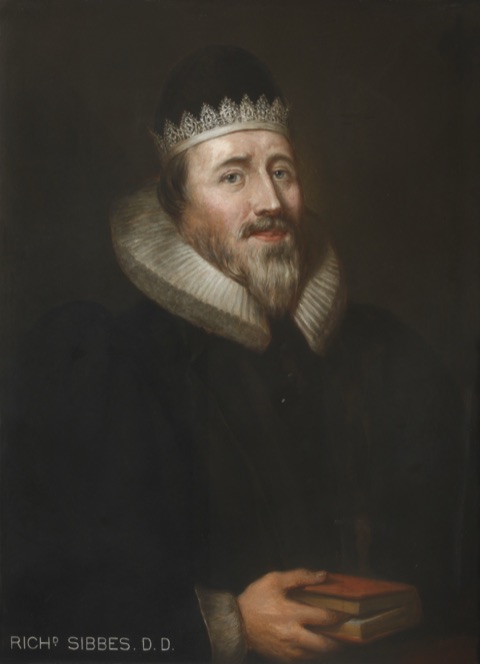
About the author
Richard Sibbes
Richard Sibbes (1577 to 1635 AD) left this exposition unprinted; it reached the press four years after his death at Gray's Inn, London, on July 5, 1635. The son of a Suffolk wheelwright, born at Tostock, he studied at St John's College, Cambridge, preached at Gray's Inn from 1617, and was Master of Catharine Hall, Cambridge, from 1626.