Xenophon
Athenian soldier and writer who helped lead the Ten Thousand out of Persia and told the story in the Anabasis. He also wrote the Hellenica, the Cyropaedia, and Socratic works including the Memorabilia and Oeconomicus.
Biography
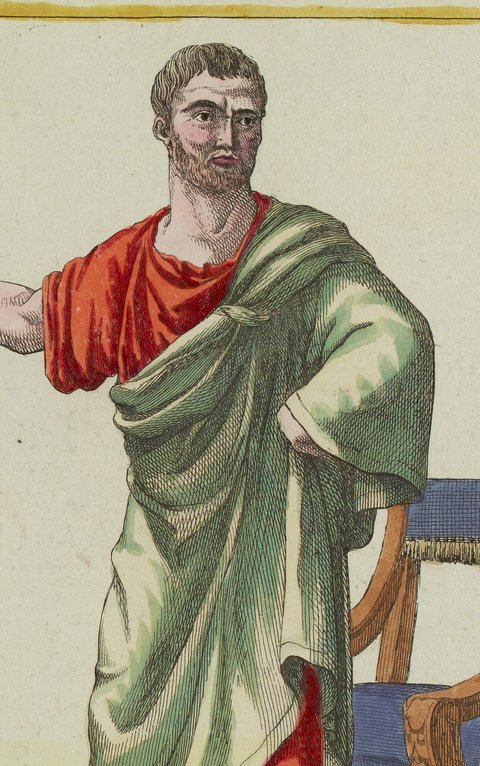
Xenophon (around 430 to 354 BC) was an Athenian soldier, historian, and writer whose works range from military memoir and history to Socratic dialogues and practical treatises on household management, horsemanship, and government. He was born in Athens, the son of Gryllus, and as a young man he became one of the companions of Socrates.
In 401 BC, at the invitation of his friend Proxenus of Boeotia, he joined the Greek mercenary army that the Persian prince Cyrus the Younger was raising against his brother, King Artaxerxes II. Xenophon later wrote that he consulted Socrates before going, and that Socrates sent him to ask the oracle at Delphi. At the battle of Cunaxa, near Babylon, Cyrus was killed, and soon afterward the Greek generals were seized and put to death by the Persians. Xenophon was among the new officers the army chose, and he helped lead the Ten Thousand north through hostile country and the mountains of Armenia until they reached the Black Sea. His account of the campaign, the Anabasis, is the most famous of his books.
Xenophon then served with Spartan forces in Asia Minor and came to know the Spartan king Agesilaus II, whom he accompanied back to Greece and later praised in the Agesilaus. He was present at the battle of Coronea in 394 BC. At some point in these years Athens exiled him, for reasons that are still debated, though his service with Cyrus and his close ties to Sparta are the usual explanations. The Spartans gave him an estate at Scillus, near Olympia, where he lived for about twenty years with his wife and two sons, Gryllus and Diodorus. There he hunted, farmed, and built a small temple to Artemis from his share of the campaign's spoils.
After Sparta's defeat at Leuctra in 371 BC, Xenophon lost Scillus and moved to Corinth. Athens later revoked his exile, and his sons served in the Athenian cavalry; Gryllus was killed fighting at Mantinea in 362 BC. Xenophon continued writing into his last years and died around 354 BC.
His writings appear to have survived complete. The Hellenica continues Thucydides' history of Greece from 411 BC down to the battle of Mantinea. The Cyropaedia is a long, partly fictional account of the education and rule of Cyrus the Great of Persia. His Socratic works, the Memorabilia, the Apology, the Symposium, and the Oeconomicus, preserve a picture of Socrates as a practical moral teacher, set alongside Plato's. The Hiero is a dialogue on tyranny between Hiero of Syracuse and the poet Simonides. His shorter works include the Constitution of the Lacedaemonians, Ways and Means, on the public revenues of Athens, On Horsemanship, and The Cavalry Commander.
Life & Career
Why Xenophon Matters
Along with Plato, Xenophon is one of the two followers of Socrates whose writings about him survive at length, and the only writer besides Plato whose Socratic dialogues have come down whole. His Socrates is less of a metaphysician and more of a counselor on self-control, friendship, household management, and public service, and readers have long compared the two portraits in trying to recover the historical Socrates.
As a historian he supplies much of what is known about Greece in the first half of the fourth century BC. The Hellenica is the main continuous narrative for the years after Thucydides breaks off, and the Anabasis is an eyewitness account of a Greek army inside the Persian Empire. Later writers modeled themselves on him: Arrian titled his history of Alexander the Great an Anabasis in imitation.
His writings on leadership and government had a long afterlife. Cicero translated the Oeconomicus into Latin, and the Cyropaedia was read for centuries as a portrait of the ideal ruler; Machiavelli cites it in The Prince. The Hiero drew renewed attention in the twentieth century through Leo Strauss's On Tyranny.