William Guthrie
The Christian's Great Interest, a two-part manual on how to tell whether one is savingly united to Christ, and what to do about it if the answer is no. John Owen carried a gilt copy in his pocket as his vade mecum and said of it, "I have wrote several folios, but there is more divinity in it than them all."

Biography
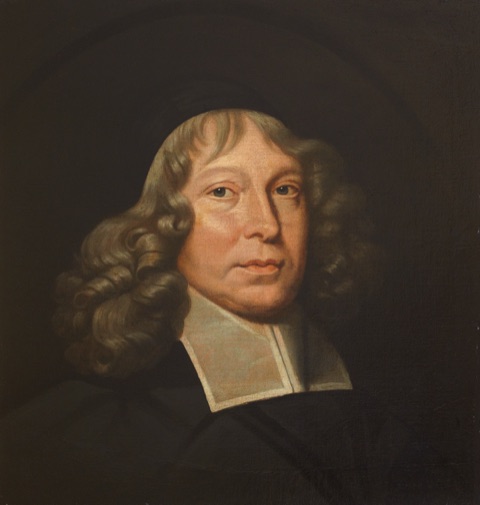
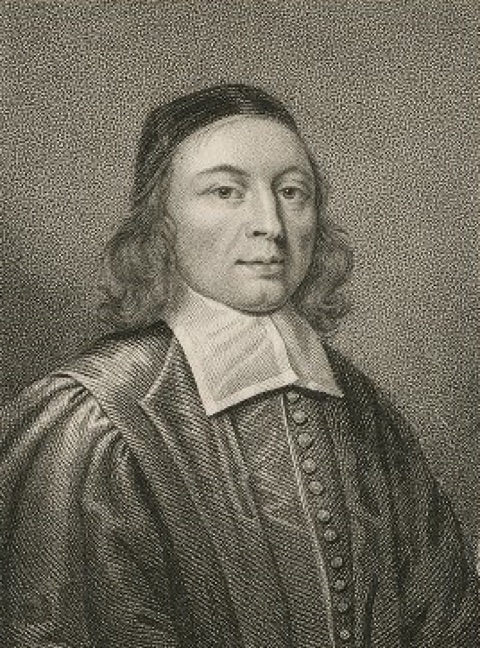
William Guthrie was born in 1620 at Pitforthy in Angus-shire, where his father was laird. He studied at the University of St Andrews, lodging with his cousin James Guthrie, then a Professor of Philosophy in the New College and later one of the first ministers executed under Charles II. The presbytery ordained him to the newly erected parish of Fenwick in Ayrshire on 7 November 1644, after a handful of parishioners heard him preach at Galston on a communion preparation day and pressed their neighbours to call him. Most of his new congregation had until then been without regular preaching at all.
He published only one book, and did so unwillingly. Someone printed disordered notes taken from a few of his sermons under the title "A Clear, Attractive, Warming Beam" — a title he found as offensive as the piracy — and he wrote The Christian's Great Interest in 1658 partly to put an authorized text in its place. He set out to keep it short and plain, on the grounds that the readers he cared about had "neither much money to spend on books nor much time to spare for reading."
Guthrie was removed from Fenwick for nonconformity on 24 July 1664. He died on 10 October 1665, in his forty-fifth year, at the Brechin house of his brother-in-law Lewis Skinner, and was buried under the Pitforthy gallery in the church of Brechin.
Life & Career
Why Guthrie Matters
Guthrie wrote on the question that occupied Scottish and English Reformed pastors more than any other in the seventeenth century: how a person can know whether saving faith is actually present. His answer refuses both easy paths. He rejects the assumption that a real Christian is free from prevailing sin, always has felt access in prayer, or always carries the inward witness of the Spirit, quoting Psalm 65:3 and Romans 7:23 against each. He equally refuses to treat assurance as unattainable, arguing from 2 Corinthians 13:5 and 2 Peter 1:10 that Scripture commands self-examination and therefore makes it possible.
The structure carries the argument. Part I asks whether a person has a saving interest in Christ; Part II tells anyone who cannot answer yes exactly how to close with Christ, and answers the objections such a person actually raises — unworthiness, the sin against the Holy Spirit, inability to believe, and unfruitfulness. Guthrie insists throughout that God, not the believer's own holiness, is the ground of hope, so that "many failings should not weaken their hope and confidence."
The book travelled further than its author. Koelman translated it into Low Dutch, French copies circulated early, and it became a standard text of Scottish practical divinity on the strength of one small volume by a minister who published nothing else.