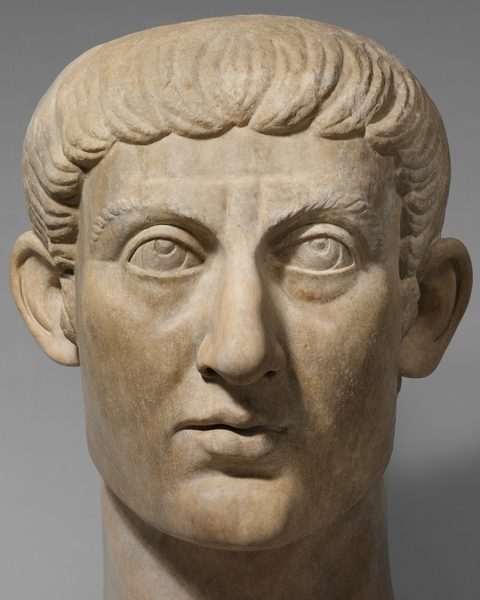
Theodosius the Great
Roman emperor from 379 to 395 AD, the last to rule both the eastern and western halves of the empire. He issued the edict Cunctos Populos in 380 AD making Nicene Christianity the faith of the empire, convened the Council of Constantinople in 381 AD, and closed the pagan temples by law in 391 to 392 AD.
Biography
Theodosius the Great (347 to 395 AD) was the Roman emperor who ruled from 379 to 395 AD and was the last man to hold both the eastern and western halves of the empire together. He was born in 347 AD at Cauca in the Spanish province of Gallaecia, the son of the general known as Count Theodosius, one of the leading soldiers of the age. He served under his father in campaigns in Britain and along the Danube before his father was executed at Carthage in 376 AD, after which the younger Theodosius withdrew to the family estates in Spain.
In 378 AD the eastern emperor Valens was killed and his army destroyed by the Goths at the battle of Adrianople, the gravest military disaster the empire had suffered in generations. The western emperor Gratian recalled Theodosius from retirement, and on 19 January 379 AD proclaimed him emperor of the East, charging him with the defense of the Danube frontier and the recovery of the Balkans. During a severe illness at Thessalonica in 380 AD, Theodosius was baptized by the city's bishop, Acholius, a Nicene Christian.
On 28 February 380 AD, together with Gratian and Valentinian II, Theodosius issued the edict known from its opening words as Cunctos Populos, which directed that all peoples of the empire hold the faith professed by Damasus, bishop of Rome, and Peter, bishop of Alexandria, confessing the Father, Son, and Holy Spirit of equal majesty. The following year he summoned the Council of Constantinople, which met in 381 AD, reaffirmed the creed of Nicaea, and settled the standing of the see of Constantinople. In 382 AD he brought the long Gothic war to an end by settling the Goths within the empire as federates, allies bound to supply troops while keeping their own leaders and lands.
Two events of his reign concern his dealings with the church directly. After a riot at Thessalonica in 390 AD in which a garrison commander was killed, an order went out that resulted in a massacre of the city's population in the circus. Ambrose, bishop of Milan, withheld communion from the emperor and called for penance; Theodosius performed a public penance at Milan before being restored to communion. In 391 and 392 AD he issued a series of laws that closed the temples, forbade sacrifice, and withdrew public standing from the traditional cults, measures that ended the legal practice of the old Roman religion.
Theodosius fought two civil wars against western usurpers. In 388 AD he defeated Magnus Maximus, who had killed Gratian and seized the West. In 394 AD he defeated Eugenius, a usurper supported by the general Arbogast, at the battle of the Frigidus on 6 September, a hard-fought engagement in the eastern Alps. Having reunited the whole empire under his rule, Theodosius died at Milan on 17 January 395 AD. He was the last emperor to govern both East and West; on his death the empire was divided between his sons, Arcadius in the East and Honorius in the West, a partition that proved permanent.
The works gathered under his name on this site are not books he composed but legal texts issued in his reign: the rescript addressed to the officials Faustinus and Marcellinus, and a selection of the religious decrees preserved in the later imperial codes. They form an editorial dossier assembled from the law, a record of how his government legislated on matters of faith, rather than writings of his own authorship.
Life & Career
Why Theodosius Matters
Theodosius gave Nicene Christianity the standing of law. Where Constantine had extended toleration and Nicaea had produced a creed, the doctrinal disputes of the fourth century had left the empire's official faith unsettled, with Arian and Nicene parties contending for imperial favor. The edict Cunctos Populos of 380 AD named the faith of Damasus of Rome and Peter of Alexandria as the belief required of all subjects and labeled its opponents heretics. With this act the confession of Nicaea passed from the decision of a council into the statute law of the Roman state.
His convening of the Council of Constantinople in 381 AD completed the work begun at Nicaea in 325 AD. The council reaffirmed the Nicene faith, addressed the standing of the Holy Spirit against those who denied it, and ranked the see of Constantinople second in honor after Rome. The creed associated with this council became the confession recited in the churches of both East and West, and the settlement it ratified closed the central phase of the Trinitarian controversy that had run through the century.
His penance before Ambrose at Milan after the events at Thessalonica in 390 AD was remembered in later centuries as a defining scene of the relation between the imperial and episcopal offices. A bishop had required penance of an emperor and the emperor had submitted, and writers of the medieval West returned to the episode as a precedent when they argued for the accountability of rulers to the church. The sources present it as an act of ecclesiastical discipline accepted by the throne, and it was cited in that sense long after the reign in which it occurred.
The anti-pagan laws of 391 and 392 AD brought the public practice of the old religion to a legal end. Half a century earlier Firmicus Maternus had urged the emperors to suppress the pagan cults; under Theodosius that program became statute, as sacrifice was banned, the temples were closed, and the traditional rites lost their standing in law. Together with the establishment of Nicene Christianity, these measures marked the point at which the Roman state ceased to be a patron of the old cults and became, in its law, a Christian order.
Complete Works in English
Free to readEvery surviving work, translated in full and free to read, from our Patrologia Latina project.