Jan Amos Comenius's allegory of a pilgrim who is led through every estate of the world by two guides, Impudence and Falsehood, finds vanity and disorder in each, and at last hears a voice calling him back into the house of his own heart, where Christ receives him. Known in Czech as Labyrint světa a ráj srdce, it was written in 1623 AD while Comenius was in hiding in Bohemia after the Battle of White Mountain, and first printed in 1631 AD.
A free account opens the whole library to read online, on your phone or at your desk. Open a book on one device and it is waiting at the same page on the next. The PDF and EPUB of every book are yours to keep, and audiobooks play in the same app.
250+ modernized editionsNot samples. The whole work, free.
Your place, on every devicePhone, tablet or desktop, same page.
131 audiobooksFrom $4.99 each, or all of them with a $50 gift.
A pilgrim's tour of the world and his return to the heart
First published
1631 AD (written 1623 AD)
Type
Allegory
Length
About 55,000 words · a 4-hour read
The Labyrinth of the World and the Paradise of the Heart, known in Czech as Labyrint světa a ráj srdce, is Jan Amos Comenius's allegory of 1623 AD. A pilgrim guided by Impudence and Falsehood tours every estate of the world-city and finds vanity in all, then a voice calls him back into his own heart, where Christ receives him.
How the argument unfolds
01
A pilgrim and two guides. Wanting to choose a way of life, the pilgrim resolves to survey everything first: “first I would examine all earthly things under the sun. Only then, after carefully comparing one thing with another, would I choose a way of life and somehow obtain what I needed to live quietly in the world.” He is met by Searchall, who goes by the name Impudence, and by an interpreter of Queen Wisdom who at last gives his name as Falsehood.
02
Bridle and spectacles. Impudence throws a bridle over his neck and Falsehood fits him with spectacles through which “distant things appeared near, and near things distant; small things large, and large things small; ugly things beautiful, and beautiful things ugly; white things black, and black things white, and so forth.” They are, he later learns, “made from the glass of Illusion. The frames that held it were made from the horn called Custom.” Because they sit crookedly, he can still look over them.
03
The world from the tower. From a high tower he sees a round walled city: a gate of life to the east, six streets for the six estates, a market-place with the palace of Wisdom at its center, and the Castle of Fortune on a rock to the west. “The streets you see are the various social ranks, orders, and occupations people choose.” Fate hands out lots from a copper urn; the pilgrim receives a paper reading Speculare, look around.
04
The market-place and Death. Everyone wears a mask and is deformed beneath it; each speaks his own tongue; all are busy at childish tasks and stumble into pits no one fills. Death walks among them with arrows that her victims have shaped themselves: “each person is themselves the maker of their own death.”
05
Marriage, trades, and the sea. Couples are weighed on scales and fettered with chains welded on the spot; the pilgrim is briefly bound himself. The trades are seven kinds of striving, and a voyage by sea ends in shipwreck: “Until the day I die, I will never let myself be led into anything like this again.”
06
The street of the learned. Through the gate Disciplina, past a library the interpreter calls an apothecary's shop “where remedies for ailments of the mind are kept,” adding “Its proper name is a library.” The pilgrim watches scholars duel with leather swords and paper bullets, visits the philosophers, alchemists, Rosicrucians, physicians, and jurists, and sees a new master of the seven arts who cannot read or write.
07
Religion, rule, and war. Christians quarrel at a touchstone and split into chapels, while a few ragged true Christians pass by unnoticed: “Here I missed the center of heaven and earth and the road to the place where a person is filled with joy.” In the magistrates' court Judge Nogod, Judge Lovegold, and Judge Takegift sentence Simplicity to forty stripes save one; soldiers are fattened at troughs and slaughtered; knights, newsmen, and their whistles follow.
08
The Castle of Fortune. “Only one tall, narrow gate led to the castle, but it had fallen into ruins, been buried in earth, and become overgrown with thorns. It seemed to me that its name was Virtue.” Chance sets people on Fortuna's wheel at random; inside, the rich sit chained to their gold, the voluptuaries sicken, the great perch on seats at the edge, and Fame is a figure made entirely of mouths.
09
Queen Wisdom unmasked. Arraigned before Queen Wisdom in a palace of paper walls, the pilgrim watches her council rename the banished vices and grant new titles, until Solomon arrives and “took the veil from her face. Before, it had appeared costly and glittering; now it seemed nothing more than a spider’s web.” Solomon is then led away by Pleasure, his zealous companions are killed, and the pilgrim flees to the abyss at the edge of the world: “O God, God, God! God, if you are God, have mercy on wretched me!”
10
The paradise of the heart. A voice says, “Return to where you came from, to the house of your heart, and close the doors behind you.” Christ appears there, gives him one small book, wings, and new spectacles, and sends him behind the screens Contemptus Mundi and Amor Christi to see the true Christians: “In the world I saw blindness and darkness everywhere; here, clear light. In the world, deceit; here, truth.” Death comes to them in Christ's grave-clothes, the pilgrim sees the throne, and the book ends in prayer.
Key themes
Vanity of the world. Every estate, from marriage to the Castle of Fortune, ends in toil, deceit, and death, and Solomon's verdict is the book's own: “Vanity of vanities; all is vanity! Can that which is crooked be made straight, and that which is wanting be numbered?”
Illusion and custom. The spectacles of Falsehood are made of Illusion and Custom, and the interpreter's whole counsel is “distrust nothing, believe everything, examine nothing, accept everything, condemn nothing, find pleasure in everything.” The pilgrim keeps looking over the rims.
Worldly wisdom and God's wisdom. Among the philosophers Paul of Tarsus whispers, “If anyone thinks himself wise in this world, let him first be simple, so that he may become wise. Assuredly the wisdom of this world is folly before God.” Queen Wisdom herself turns out to be painted and scabby under her veil.
The heart as God's dwelling. Christ asks, “And what is the temple of the living God except the living temple he himself has made, your own heart?” and tells the pilgrim that what he sought in vain on earth, rest, comfort, glory, and abundance, is found there.
The liberty of the devoted heart. The true Christians are bound to nothing but God and are therefore free of everything else: “Truly, to serve Christ is to be like a king. To be God’s serf is a far greater glory than to be monarch of the whole world.”
Free audiobook preview
Listen to the first 10 minutes
The Labyrinth of the World and the Paradise of the Heart · Audiobook · 5 hr 55 min
0:00 / 9:52
Enjoying it? The full audiobook runs 5 hr 55 min. Listen in the Updated Works app on any device.
Every living being, even one without reason, tends to enjoy and desire pleasant and useful things. This is especially natural for human beings. Our inborn power of reason develops our desire for what is good and useful. It also leads us to take greater pleasure in something, and to pursue it more eagerly, the better, more useful, and more pleasant it is. Long ago, therefore, scholars began asking where and in what the highest good could be found: the point at which human desires could come to rest. Having reached that point in their minds, people could and should be satisfied, with nothing further to wish for.
2. When we consider this, we find that philosophers have carefully examined, and still examine, this question and how to answer it. But we also find that every person’s mind generally tries to discover where and how to obtain the greatest delight. Almost everyone flees outward from themselves, seeking in the world and its things something to calm and quiet their minds. One seeks it in estates and riches, another in pleasure and sensuality, another in glory and honors. Others seek it in wisdom and learning, in merry company, and so forth. In general, everyone strives for outward things.
3. But Solomon, the wisest of men, bears witness that this satisfaction cannot be found there. He too sought comfort for his mind. After traveling through and examining the whole world, he finally said: “I hate this life; because the work that is wrought under this sun is grievous unto me; for all is vanity and vexation of spirit” (Eccl 2:17). When he afterward searched for the spirit’s true comfort, he declared that it lay in renouncing the world as it is, seeking only the Lord our God, fearing him, and obeying his commandments. This, he said, is the whole duty of humanity. Similarly, David found that the happiest person is one who puts the world out of sight and mind, trusts in the Lord God alone, considers him their portion forever, and dwells with him in their heart (Ps 73).
4. Praise be to God’s mercy, which has opened my eyes too. I have learned to recognize the many vanities of this world and the miserable deceit hidden beneath its outward splendor. I have also learned to seek peace and security for my mind elsewhere. Wishing to set all this clearly before my own eyes and show it to others, I imagined this pilgrimage, or wandering, through the world. In this work I have, as it were, pictured the monstrous things I saw or encountered, and where and how I finally discovered the comfort I had sought in vain in the world. How much wit I have shown does not concern me. May God only grant that my work be useful to me and to my fellow human beings!
5. Reader, what you are about to read is not a poem, although it may seem like one. It contains true material. If you understand me, you will readily recognize this, especially if you know something of my life and what has happened in it. I have chiefly depicted experiences I have already had in the few years of my life. But I have also described some incidents I witnessed in others’ lives, and things about them that were reported to me. I have not, however, mentioned everything that happened to me, partly out of embarrassment and partly because I did not know what instruction such an account would offer others.
6. I have two guides, as does everyone who gropes through this world: Impudence of mind, which inquires into everything, and ingrained habit in all things, which gives the world’s deceits the appearance of truth. Whoever follows these guides with discernment will recognize, along with me, the miserable turmoil of the human race. But if it appears otherwise to someone, let them know that the spectacles of universal deception are pressing on their nose.
7. As for the happy ways of hearts devoted to God, I describe these more as an ideal. I do not mean to imply that all this happens to everyone who is chosen. But God will not lack such chosen souls, and every truly devout person must strive to reach the same degree of perfection. Farewell, dear Christian. May the guide of light, the Holy Spirit, show you better than I can both the vanity of the world and the glory, happiness, and pleasure of chosen hearts united with God.
Why I Set Out Through the World
When I reached the age at which the human mind begins to distinguish good from bad, I saw how much people differed in rank, circumstances, and occupation, and in the work and pursuits they labored over. It seemed essential to consider which group I should join and what I should devote my life to.
2. I thought about this often and at length, weighing it carefully in my mind. I decided that the way of life that pleased me most was the one with the least worry and violence, and the most comfort, peace, and cheerfulness.
3. But then it seemed difficult to know what my calling was. I did not know whom to ask for advice, nor did I particularly want to consult anyone. I thought each person would praise their own way of life. Nor did I dare to choose anything hastily, because I feared making the wrong choice.
4. Yet I confess that, in secret, I began reaching first for one thing, then another, then a third. I quickly abandoned each one, because I noticed, or thought I noticed, some hardship and vanity in each. Meanwhile, I feared that my fickleness would bring me shame. I did not know what to do.
5. As I longed for an answer and turned the matter over in solitude, I reached this decision: first I would examine all earthly things under the sun. Only then, after carefully comparing one thing with another, would I choose a way of life and somehow obtain what I needed to live quietly in the world. The more I thought it over, the more the idea pleased me.
The Pilgrim Takes Impudence as a Guide
Then I left my solitude and began looking around, wondering how and where to begin my journey. At that very moment someone approached from a direction I could not identify. His stride was brisk, his eyes keen, and his speech quick. His feet, eyes, and tongue all seemed remarkably agile. He came up to me and asked where I had come from and where I intended to go. I said I had left home and decided to wander through the world and gain some experience.
2. This pleased him greatly, and he said, “But where is your guide?”
“I have none,” I answered. “I trust in God and my eyes not to lead me astray.”
“You won’t succeed,” he said. “Have you heard of the labyrinth of Crete?”
“I’ve heard something about it,” I answered.
“It was a wonder of the world,” he replied, “a building with so many chambers, small rooms, and corridors that anyone who entered without a guide wandered and blundered through it in every direction and never found the way out. But it was nothing compared with the way the labyrinth of this world is built, especially in these times. Believe me, I would not advise a sensible person to enter it alone.”
3. “Where, then, should I look for such a guide?” I asked.
“I can guide those who wish to see and learn something,” he answered, “and show them where everything is. That is precisely why I came to meet you.”
Amazed, I said, “Who are you, my friend?”
“My name is Searchall,” he answered, “and my byname is Impudence. I wander through the whole world, peer into every corner, and inquire into everyone’s words and deeds. I see everything visible, spy out and discover everything secret. In general, nothing can happen without me. My duty is to examine everything. If you come with me, I will lead you to many secret places you would never have found yourself.”
4. Hearing this, I began to rejoice at having found such a guide. I begged him not to shrink from the labor of leading me through the world.
“As I have gladly served others in this matter,” he answered, “I will gladly help you too.”
He seized my hand. “Let’s go,” he said, and we went.
“Now I’ll gladly see the ways of the world,” I said, “and whether it contains anything a person can safely rely on.”
At this, my companion stopped and said, “Friend, if you are setting out on this journey to judge our things by your own understanding, rather than to take pleasure in seeing them, I don’t know whether Her Majesty our Queen will be pleased.”
5. “Who is your Queen?” I asked.
“She is the one who has directed the whole world and its ways from the beginning,” he answered. “She is called Wisdom, though some know-it-alls call her Vanity. So I’m warning you in advance: when we go there and look around, don’t find fault. If you do, you will bring trouble on yourself, even with me beside you.”
Falsehood Joins Them
While he was talking with me, someone crept up to us, a man or a woman. I could not tell, because he was strangely bundled up and surrounded by something like mist.
“Impudence,” he said, “where are you hurrying with this man?”
“I’m leading him into the world,” Impudence replied. “He wants to see it.”
2. “And why without me?” the other asked. “You know that your duty is to lead the pilgrims, and mine is to show them where things are. Her Majesty the Queen does not want anyone entering her kingdom to interpret what he hears and sees however he pleases, or to find too much fault. She wants him to be told what all existing things are and what purposes they serve, and to be content with that.”
“As if anyone could be so insolent as to refuse to stay with the others,” Impudence answered. “But this one, I think, will need a bit.”
“Very well. Let’s go on.”
Then he joined us, and we went forward.
3. But I thought to myself, “Would to God I hadn’t been led here! They’re discussing a bit for my mouth.”
I said to this new companion, “Friend, please don’t take offense. I’d like to know your name too.”
“I am the interpreter of Wisdom, the queen of the world,” he answered. “My duty is to teach everyone how to understand the things of the world. So I put everything that belongs to true worldly wisdom into everyone’s mind: old and young, noble and lowborn, ignorant and learned. I lead them to joy and merriment. Without me, even kings, princes, and the proudest people would suffer strange anxiety and spend their time on earth in sorrow.”
4. “If that is true, dear friend,” I said, “God has been good to give me you as a guide. I have set out into the world to seek what is safest and most satisfying in it, and then rely on that. Now that I have such a trustworthy adviser in you, I should find it easy to choose well.”
“Don’t doubt it,” he said. “Although you will find everything in our kingdom beautifully arranged and full of cheer, some professions and trades always offer more convenience and freedom than others. You will be able to choose whatever you want from among them all. I will explain everything to you as it is.”
“What name do people call you?” I asked.
“My name is Falsehood,” he answered.
The Pilgrim Receives a Bridle and Spectacles
Hearing this, I was terrified and thought to myself, “Alas, my sins have brought me such companions! The first one, as I thought it over, spoke of some sort of bridle. The other is called Falsehood. Their queen was called Vanity, though I think that name was carelessly blurted out. But what is all this?”
2. As I continued silently, with my eyes downcast and my feet moving somewhat reluctantly, Searchall said, “What now, you fickle fellow? I think you want to turn back!”
Before I could answer, he threw a bridle over my neck, and suddenly a bit slipped into my mouth.
“Now,” he said, “will you go obediently to the place you set out for?”
3. I looked at the bridle and saw that it was stitched together from straps of impertinence. The bit was made of the iron of obstinacy. I understood that I would no longer be free to examine the world as before. Instead, my mind’s fickleness and lack of comfort would drag me forcibly onward.
4. Then my companion on the other side said, “And I give you these spectacles, through which you will look at the world from now on.”
He thrust the spectacles onto my nose, and immediately I saw everything differently. They certainly had this power, as I often experienced afterward: to anyone looking through them, distant things appeared near, and near things distant; small things large, and large things small; ugly things beautiful, and beautiful things ugly; white things black, and black things white, and so forth. I understood very well why someone who knew how to make such spectacles and put them on people should be called Falsehood.
5. As I later understood, these spectacles were made from the glass of Illusion. The frames that held it were made from the horn called Custom.
6. Fortunately for me, he had put them on somewhat crookedly, so they did not fit closely over my eyes. By raising my head and looking upward, I could still clearly see things as they naturally were. I rejoiced at this and said to myself, “Though you have shut my mouth and covered my eyes, I trust in my God that you will not take away my mind and reason. I will go on. I wonder what this world is that Lady Vanity wants us to see, but to see without our own eyes.”
The Pilgrim Views the World from Above
While I am reflecting on this, we find ourselves, I do not know how, on a very high tower. It seems to me that I am just beneath the clouds. Looking down from here, I see a city on the earth that seems fine and beautiful, and very broad. Yet I can make out its boundaries and limits in every direction. It is built in a circle, with walls and ramparts. Instead of a moat, there is a dark, deep valley that seems to have neither banks nor bottom. There is light only above the city; everywhere around it is utter darkness.
2. Now I see that the city itself is divided into countless streets, squares, houses, and larger and smaller buildings. It is crowded with people as though with insects. To the east I see a kind of gateway. A narrow street leads from it to another gate facing west. Only through this second gate can people enter the city’s various streets. I count six main streets, all running side by side from east to west. In their center is a large, round square or marketplace. Behind it, to the west, a high and splendid castle stands on a steep, rocky hill. Almost all the city’s inhabitants are gazing at it.
3. My guide, Impudence, says to me, “Here, pilgrim, is this dear world you were so eager to see. That is why I first brought you up here, so you could look over the whole world and understand its order. That eastern gate is the gate of life. Everyone who comes to live in the world passes through it. The second gate is the gate of separation. From there, each person goes to one calling or another, according to the lot he draws.
4. “The streets you see are the various social ranks, orders, and occupations people choose. You see six main streets. In this one to the south live those who belong to domestic life: parents, children, and servants. In the next street live tradespeople and everyone engaged in commerce. In the third street, nearest the marketplace, live the learned, who work with the mind. On the other side is the order of the clergy, through whom others avoid practicing religion. Behind them is the order of magistrates and rulers of the world. Finally, to the north, we find the order of knights, who practice all the arts of war. And oh, how noble this is! These bring everyone into the world; these feed everyone; these teach everyone; these pray for everyone; these judge everyone and protect them from disorder; these fight for everyone. They all serve one another, and they all have equal rights.
5. “That castle to the west is the castle of Fortune. Chosen people live there, enjoying riches, pleasure, and glory. The central marketplace is for everyone. People of all classes meet here and discuss what is needed. In the middle of the marketplace is what might be called the center of everything: the residence of Wisdom, the queen of the world.”
6. This good order pleases me, and I begin to praise God for dividing people’s social ranks so nobly. But I am displeased to see that the streets have openings in many places, so that one sometimes runs into another. This seems to me a sign that confusion and error could easily arise. Also, when I look at the round globe, I clearly see it moving and turning in a circle, and I fear I will grow dizzy. Wherever I turn my eyes, everything swarms with people. When I listen, everything is full of knocking, stamping, scrubbing, whispering, and screaming.
7. My interpreter, Falsehood, says, “You see, dear friend, how delightful this world is, and how noble everything in it is, even when you look at it from far away. What will you say later, when you see it clearly, with all its delights? Who would not find it pleasant to be in the world?”
I say, “Seen from a distance, it pleases me. I do not know how it will seem later.”
“It will please you in every way,” he says. “Just trust me, and we will leave here.”
Impudence says, “Wait. I will also show him the place we will not visit afterward. Look back toward the sunrise. Don’t you see something crawling through that dark gate and creeping toward us?”
“I see it,” I say.
He continues, “These are people who have just arrived in the world from somewhere they themselves do not know. They do not yet even know that they are human beings. So there is darkness around them, and nothing but moaning and crying. But as they go along this street, gray light and dawn slowly come to them, until they reach that gate beneath us. Let us go on and see what is happening there.”
Questions
What is The Labyrinth of the World and the Paradise of the Heart about?+
It is a first-person allegory by Jan Amos Comenius. A young pilgrim who wants to choose a way of life is taken through the world, pictured as a walled city of six streets, by two guides, Impudence and Falsehood, and finds disorder, deceit, and death in every estate. After Solomon unmasks Queen Wisdom and the pilgrim looks into the abyss beyond the world, a voice calls him back into his own heart, where Christ receives him and shows him the hidden life of the true Christians.
Is this the same book as Labyrint světa a ráj srdce?+
Yes. Labyrint světa a ráj srdce is the Czech title; Comenius wrote the book in Czech, and Comenius is the Latin form of his name, Komenský. This edition gives the whole work in modern English: the dedication to Charles the elder, Baron of Zerotin, the address to the reader, and all fifty-four chapters.
When and why was it written?+
The dedication is dated from under the hill of Klopota in December 1623, when Comenius was in hiding in Bohemia after the defeat of the Czech Protestants at White Mountain in 1620 AD. He says that, cut off from the duties of his calling, he began to reflect on the vanity of the world and that this work grew out of those reflections. It was first printed in 1631 AD.
How is the book structured?+
After the dedication and an address to the reader there are fifty-four chapters, each divided into short numbered sections with marginal subheadings. Chapters 1 to 36 are the labyrinth: the pilgrim's tour of the market-place, the six estates, the Castle of Fortune, and the palace of Queen Wisdom, ending with his flight to the edge of the world. Chapters 37 to 54 are the paradise of the heart: his return inward, Christ's speech to him, his visit to the true Christians, and the closing vision and prayer.
Who are the pilgrim's guides, and what are the bridle and spectacles?+
Searchall, who goes by the name Impudence, leads the pilgrim and spies out everything; Falsehood, the interpreter of Queen Wisdom, explains what he sees. In the address to the reader Comenius glosses them as the insolence of the mind that inquires into everything and the inveterate custom that lends truth to the world's deceits. The bridle is made of pertness and obstinacy; the spectacles are glass of Illusion in rims of Custom, and because they sit crookedly the pilgrim can still see over them.
How does it relate to The Great Didactic and The School of Infancy?+
Those two works, also by Comenius, are treatises on teaching and on the upbringing of young children. The Labyrinth is earlier and is a different kind of book, a satirical and devotional allegory. Its street of the learned, with the gate Disciplina, the library as apothecary's shop, and the master of arts who cannot read, treats schools and books as one more estate of the world, and at the end Christ gives the pilgrim a single small book in place of every library.
Who is this book for?+
Readers of Christian allegory and devotional writing, and anyone interested in the literature of the Czech Reformation and the period after White Mountain. The first part reads as satire of every profession and institution of its day; the second is a plain account of the inward Christian life. This edition keeps the full text, the dedication, and the chapter and section headings.
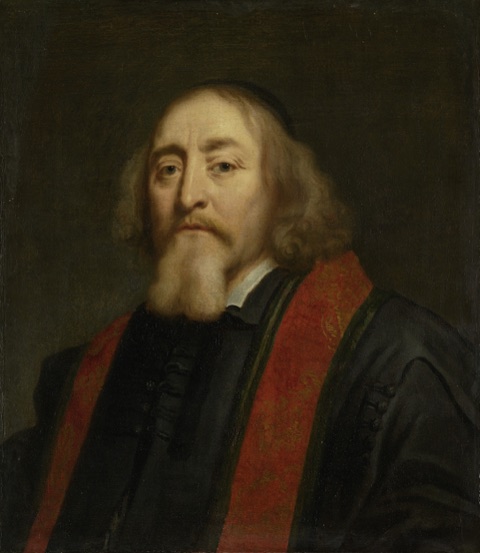
Jan Amos Comenius (1592–1670) was a Czech philosopher, theologian, and pedagogue, and is often called the father of modern education. A bishop of the Unity of the Brethren, he was driven into lifelong exile after the defeat of the Czech Protestants at the Battle of White Mountain in 1620 and spent the rest of his life in Poland, England, Sweden, Hungary, and the Netherlands. His educational writings — The Great Didactic, Orbis Sensualium Pictus (the first illustrated textbook for children), and The School of Infancy — argued that every human being, regardless of class, sex, or nation, should be educated, and that the goal of teaching is not just learning but the formation of the whole person in wisdom, virtue, and piety.
“Updated Works has been an incredible blessing to my Christian life and ministry… remarkably faithful to the original authors while making these timeless treasures understandable for modern readers.”