Christopher Columbus
The Genoese navigator who crossed the Atlantic for Ferdinand and Isabella in 1492 and who, between his third and fourth voyages, compiled The Book of Prophecies to show that his discoveries fulfilled the prophets.
Biography
Christopher Columbus (1451 to 1506 AD) was the Genoese navigator whose voyage of 1492 AD, under the crowns of Castile and Aragon, crossed the Atlantic and reached the islands of the Caribbean. He was born in Genoa in 1451, the son of a wool weaver, and went to sea as a boy. In his own words to Ferdinand and Isabella, "At a very early age I took to the sea, sailing, and I have continued at it to this day." He sailed the Mediterranean and the Atlantic coasts, settled in Portugal, and married there, and his son Diego was born in Portugal.
In Portugal and Spain Columbus studied cosmography, histories and the works of authorities such as Pierre d'Ailly, and became convinced that the Indies could be reached by sailing west. King John II of Portugal declined the plan. Columbus came to Castile in the mid-1480s and spent years seeking the support of Ferdinand and Isabella, finding friends among the Franciscans of La Rábida while royal advisers judged the scheme vain. After the fall of Granada in January 1492, the sovereigns agreed to his terms. He sailed from Palos on August 3, 1492, with the Niña, the Pinta and the Santa María, and on October 12 made landfall in the Bahamas on an island he named San Salvador. He went on to Cuba and Hispaniola and returned to Spain in triumph in 1493.
Three more voyages followed. The second, in 1493, brought a large fleet and settlers to Hispaniola. On the third, in 1498, he reached Trinidad and the mainland of South America at the Gulf of Paria. Troubles in the colony led the crown to send Francisco de Bobadilla, who arrested Columbus in 1500 and sent him back to Spain in chains. The sovereigns released him and received him at court, but he did not recover the government of the Indies. It was in this period, at Granada and Seville in 1501 and 1502, that he compiled The Book of Prophecies with the Carthusian Gaspar Gorricio.
On his fourth voyage, from 1502 to 1504, Columbus explored the coast of Central America and was stranded for a year on Jamaica, where he recorded the eclipse of the moon of February 29, 1504. He returned to Spain in poor health, shortly before the death of Queen Isabella, and spent his last months pressing his claims at court. He died at Valladolid on May 20, 1506. His younger son Ferdinand wrote a life of his father and gathered the great library in Seville, now the Biblioteca Colombina, where the manuscript of The Book of Prophecies is kept.
Life & Career
Why Columbus Matters
Columbus understood his life as a calling. In the letter that opens The Book of Prophecies he tells the sovereigns that God gave him seamanship, astronomy, geometry and arithmetic, opened his understanding to the possibility of sailing to the Indies, and opened his will to carry it out. When the learned rejected the plan, he held that Scripture itself urged him on, and he asked, "Who doubts that this light was from the Holy Spirit, as was mine?" He insisted that the success of the voyage owed nothing to reason, mathematics or maps, and everything to the fulfillment of Isaiah, the prophet whom the Fathers called an evangelist and who had written of the islands waiting for the Lord's law.
From that conviction came the larger design of the book. Columbus reckoned, with Augustine and Pierre d'Ailly, that the world would end in its seventh millennium, about 155 years after his own day, and that everything the prophets had foretold must be accomplished first: the Gospel preached to all nations, the islands converted, and Jerusalem and Mount Zion restored to the Church. He recalled Abbot Joachim's saying that the one who would rebuild the house of Mount Zion was to come out of Spain, and urged Ferdinand and Isabella to take up that enterprise with the faith they had shown at Granada. As early as his first voyage he had written of his hope that the riches of the Indies would enable the sovereigns to recover the Holy Sepulchre.
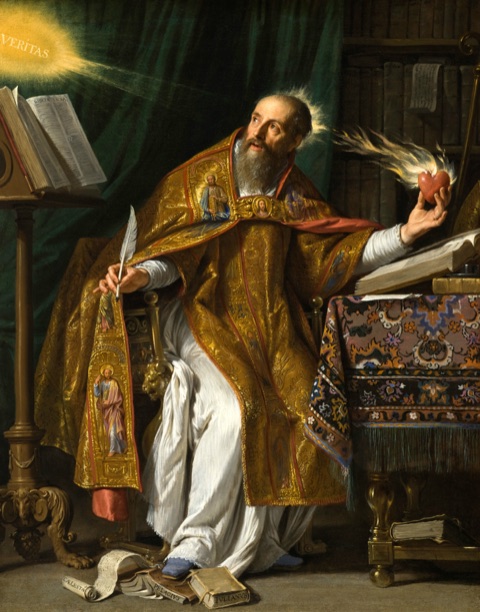
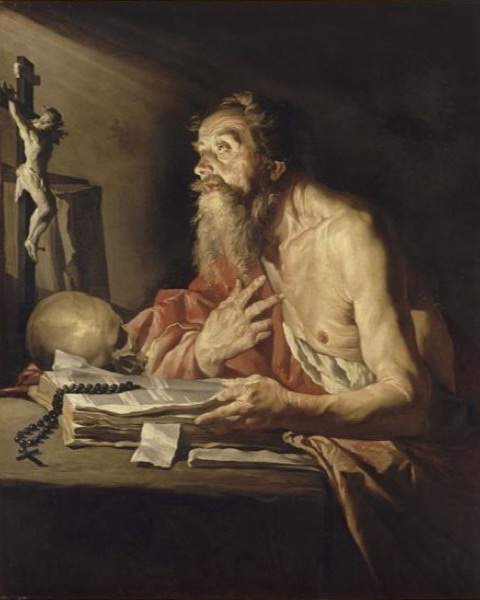
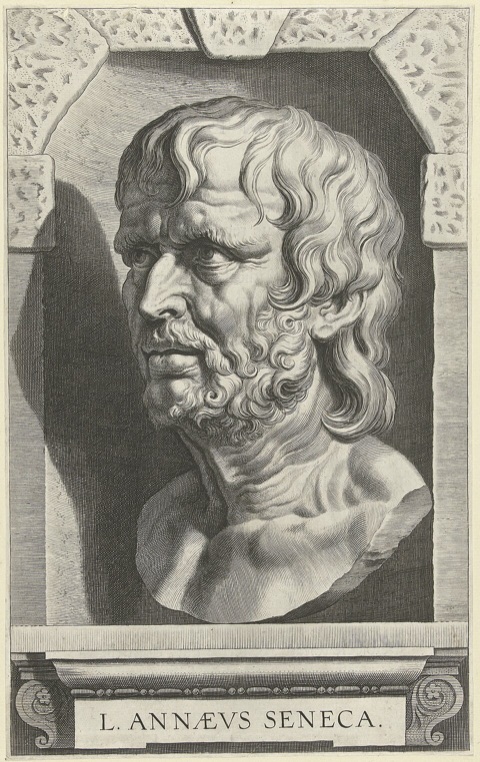
The Book of Prophecies is the fullest record of this side of Columbus. Its anthology of Psalms, prophets, Gospels, Fathers and medieval commentators, gathered with Gaspar Gorricio, shows a layman reading Scripture through the fourfold sense taught in the schools and finding his own voyages written there. Its pages on Tharsis and Ophir, Seneca's chorus of the new world beyond Ocean, and his own observations of eclipses in the Caribbean place the navigator and the believer side by side in a single work.