Krummacher's nineteenth-century meditations on the passion of Christ — a Reformed court preacher walking scene by scene through the final days of Jesus, from the anointing at Bethany to the tomb, with the eye of a novelist and the theology of a man who believed the cross was the only ground of peace with God.
One free account opens 250+ books and saves your place on every device. Google sign-in or an email link. No card.
You’re on the list — we’ll email you if this goes to print.
Included with your free account
This book, and 250+ more, free to read
A free account opens the whole library to read online, on your phone or at your desk. Open a book on one device and it is waiting at the same page on the next. The PDF and EPUB of every book are yours to keep, and audiobooks play in the same app.
250+ modernized editionsNot samples. The whole work, free.
Your place, on every devicePhone, tablet or desktop, same page.
131 audiobooksFrom $4.99 each, or all of them with a $50 gift.
The Suffering Savior is Krummacher's extended meditation on the passion of Christ. Published in 1854 while he was serving as court preacher at Potsdam, the book works scene by scene through the final days of Jesus's life — from the journey to Jerusalem and the anointing at Bethany through the arrest, the trials, the cross, and the burial. Krummacher structures the book around three metaphorical regions of the Old Testament sanctuary: the Outer Court, the Holy Place, and the Most Holy Place, marking the deepening intensity of Christ's suffering as the narrative approaches Calvary.
What distinguishes Krummacher's treatment is his method. Rather than presenting the passion as a series of doctrines to be defended, he draws the reader into the scenes themselves. He walks through the rooms at Bethany and points out who is present at the table. He stands on the Mount of Olives and watches Jesus mount the donkey. He listens to the whispered conversations of the disciples, the cold calculations of Judas, the furious silence of the Pharisees. Every gesture is observed and pressed for meaning. The effect is almost cinematic, and it makes the Gospel narratives vivid in a way that flat doctrinal exposition cannot. Underneath the imaginative surface, however, Krummacher's theology is fully Reformed. He insists that the sufferings of Christ are not simply moral example or noble martyrdom but the substitutionary offering through which the Father's justice is satisfied and the sinner is reconciled.
This commitment to the cross as the objective ground of peace with God was, in Krummacher's German context, a deliberate stand against the rationalism that had dominated much of eighteenth-century Protestant theology. He belonged to the generation of Reformed pastors who pushed back against a religion of mere moral improvement and insisted that the Gospel stands or falls with the real atoning work of a real Savior in a real garden and a real hill outside Jerusalem. The book's enduring popularity in the English-speaking world — where it was read by Victorian evangelicals and continues to be reprinted today — testifies to how powerfully that combination of imaginative preaching and confessional rigor can still move a reader. This modernized edition preserves Krummacher's voice while bringing his nineteenth-century German prose (via its earlier English translations) into contemporary English.
Preface
"In these meditations, I trust I have succeeded in showing my readers at least a portion of the riches contained in the inexhaustible treasury of our Savior's sufferings. Uncompromised scriptural truth, which I believe I proclaim, still finds a warm reception in the world, as I have been privileged to witness in the most gratifying way. I mention this solely to the praise of God and for the encouragement of those who share the same conviction: my writings, or at least a portion of them, have already been translated into English, French, Dutch, Swedish, and, as I am assured (though I cannot personally verify it), into Danish as well. My Elijah the Tishbite has even appeared in a Chinese edition. But what matters far more is the news I continually receive of the abundant blessing that the Lord, in His great and undeserved grace, has poured out on my labors. That in His condescension and loving-kindness He would also see fit to bless this most recent work is all the more my heartfelt wish and earnest prayer, since its subject is the chief supporting pillar of the entire church: the cross of our Lord Jesus Christ.
The division of the work into the Outer Court, the Holy Place, and the Most Holy Place is intended simply to mark the different stages of the Redeemer's sufferings from their beginning to their close, and by no means to assign greater or lesser importance to any of them. Had that been my intention, I would naturally have placed the institution of the Lord's Supper in the 'Most Holy Place' rather than the 'Outer Court.' But within the plan of this volume, it belongs among those events that immediately precede the atoning work of the Mediator."
The Announcement
The history of our Savior's passion is about to unfold before us its bleeding mysteries and its solemn, vicarious scenes. The "Lamb of God, who takes away the sins of the world," obedient to the council of peace held before the foundation of the world, now approaches the altar of burnt offering. Bonds, the scourge, the cross, and the crown of thorns loom before us in the distance; and the "seven words" spoken by Jesus on the cross ring in our ears like the funeral knell of Satan's kingdom, and like the first whispers of liberty and joy to the sinful race of humanity.
God said to Moses from the burning bush, "Put off thy shoes from off thy feet, for the place whereon thou standest is holy ground" (Exod 3:5). Those words are spoken to us now with even greater force, from the sacred ground where that deeply significant type found its ultimate fulfillment. What wonders we are about to approach in our meditations! From the most appalling scene the world has ever witnessed, a paradise of peace springs forth. From the most shameful suffering, the most glorious triumph emerges; and from the most dreadful of deaths, a divine and unfading life arises.
May devotion, humility, and childlike faith accompany us in these meditations, and may tears of repentance become the salve that opens our eyes. But do Thou, who holds the key of David, unlock for us the gates to the sanctuary of Thy sacred passion, and in the solemn scenes of Thy suffering, enable us to discover the mystery of our eternal redemption.
Almost immediately after our Lord performed what was perhaps the greatest of His miracles, raising Lazarus from the grave after four days of death, the Evangelist tells us that "the chief priests and the Pharisees took counsel together to put Him to death." What a devastating portrait this gives us of human depravity as seen in these men, who, while forced to acknowledge the reality of the miracles Jesus performed, not only refused to accept Him as the Messiah but actually conspired to rid themselves of Him through execution. In doing so, they confirmed the words Abraham spoke to the rich man in torment: "Neither will they be persuaded, though one rose from the dead."
"Jesus, therefore," we are told, "walked no more openly among the Jews, but went thence unto a country near to the wilderness, into a city called Ephraim, and there continued with his disciples. But when the time was come, that he should be received up, he steadfastly set his face to go to Jerusalem."
With this purpose in mind, the Lord takes His twelve disciples aside. He has important matters to share with them. Since they were destined to lay the foundations of His church, it was essential that they have a thorough understanding of God's plan for the redemption of the world. They sense His intention quickly and hang on His every word with growing eagerness. They probably expect some encouraging news, anticipating that the triumphant arrival of His kingdom is near. But how shortsighted and naive they are! What an enormous gap separates their thoughts from God's thoughts! As though restoring fallen humanity were a simple matter! As if sin had caused only a passing disruption in the relationship between God and man, and opened a wound that could be healed either by a simple declaration of mercy from above or by a confession of sin on the part of the fallen!
The Lord opens His mouth and, to the astonishment of the disciples, announces to them in plain terms both His approaching suffering and His subsequent victory. "Behold," He says, "we go up to Jerusalem, and all things that are written by the prophets concerning the Son of Man shall be accomplished."
Notice, first of all, how these words reveal our Lord's unwavering resolve. His heart, driven by love, is firmly and irrevocably set on the road to the cross. You will remember with what striking intensity he rejected Simon Peter's advice to spare himself and not go up to Jerusalem. "Get thee behind me, Satan," he replied; "thou art an offence unto me; for thou savourest not the things that be of God, but those that be of man." It was perfectly clear to him that the sufferings he was about to face were not simply the product of human depravity, but also the express will and purpose of his heavenly Father. In his disciple's well-meaning counsel, he could recognize nothing less than a temptation from the pit itself, with Simon as its unwitting instrument. No tender plea could hold him back from his course; no threat born of hatred could turn him aside from it. The bloodthirsty council had already gathered in Jerusalem, quietly assembling its plan of treachery and murder. Yet the watchword of Jesus remained: "Behold, we go up!" And even if another Red Sea had been foaming at his feet, even if a hundred deaths had stood waiting for him, the only conviction in his heart was still "We go up." It was his Father's will, and it was the path toward the great and deeply longed-for goal of the world's redemption. What resignation, what obedience, what love for sinners our adorable Immanuel displays in this moment.
"Behold," our Lord says, "we go up to Jerusalem, and all things that are written by the prophets concerning the Son of Man shall be accomplished." Here we learn what sustained Him on the road to His sufferings. He found that sustenance in the "sure word of prophecy," in which He read what had been recorded about Himself and the Father's purpose for Him. If anyone still needs a clear authority for the divine inspiration of the Holy Scriptures, it is presented right here. Christ, the King of Truth, recognizes in the Scriptures nothing less than the infallible record of His heavenly Father's revelation; He carries it on His heart day and night; He decides according to its statutes as the supreme law that settles all debate about the vital questions of human life, and He directs His steps wherever it points the way. It is, for Him, the infallible guiding star of His life. Whether His heavenly Father's voice comes directly from heaven or reaches Him through this ancient record makes no difference to Him. One is as important as the other, and He bows reverently to every last letter and stroke of it. This is how His ways are established, and every moment's experience confirms to Him that He is genuinely obeying a divine command. Everything the Word requires becomes reality, and even its most subtle detail takes on life and substance.
"Certainly," someone might say, "it should strengthen our resolve to walk the path God's word has laid out for us, when we recognize, as Christ did, that our journey through life is not only divinely ordered and overseen in a general sense, but can also be traced step by step in the light of an infallible divine revelation, all the way to its glorious end." But isn't this precisely the case, if you have sincerely and believingly given yourself over to God? Is there any situation in which God's word, with all its wisdom, leaves you without guidance? Is it not also written concerning you: "The Lord will not suffer thee to want any good thing"? "Through much tribulation thou must enter into the kingdom of heaven." And yet, "when thou passest through the waters, they shall not overflow thee; and through the fire, the flame shall not kindle upon thee, for the Lord is with thee." It may well be that people will revile and persecute you, but if you endure faithfully, your reward will be great. Light will always rise after the darkness, and after sorrow, joy will visit your threshold once more. No one will be able to snatch you from the Lord's hands; and after you have fought the good fight, you will finally receive the crown of righteousness, will not see death but pass from death into life, and will triumph eternally.
Does not all of this, and so much more, stand written concerning you? Is your path not therefore clearly marked out and prophetically declared? Can you not say, in your own measure, along with the Lord Jesus: "Behold, we go up to Jerusalem, and all shall be accomplished that stands written by the finger of God concerning me, a poor sinner, since I am no longer my own but belong to Christ"? You most certainly can say this.
How much more, then, should we walk our pilgrimage with cheerful courage, feeling as though the music of heaven's triumph goes before us on our journey through life.
My dear readers, let us place our firm trust in the word of truth and, by its light, climb the steep road ahead. Following its guidance, let us press forward with steady, resolute steps, undistracted by the noise of the world and unwilling to stray even slightly from the path it prescribes. When someone tries to lead us elsewhere, let us answer with the force of thunder: "Get behind me, Satan, for you do not have in mind the things of God, but the things of men!" When we do this, the Almighty will look on us with favor. We will carry the peace of God, that most precious pearl, deep within our hearts; and the literal fulfillment of the divine promises we have taken as our compass and as a lamp to our feet will fall across our path each day like light streaming down from heaven.
The Lord's face is set toward Jerusalem, and we have already seen why. His intention is to suffer and to die. There must be something of immense importance bound up with His passion! It stands as the crisis point of the entire work for which He left His Father's bosom and came down to earth. If that were not the case, then to judge it as charitably as possible, rushing toward death after completing His prophetic ministry in Jerusalem would have amounted to tempting God; and the sovereign Majesty on high would have exposed His own justice to well-founded reproach by handing over the Holy One, who had fulfilled every command, to the horrible fate of a criminal and an outcast, in the most blatant contradiction of the principles of His own government. But the Eternal Father had already included the cross, the scourge, and the crown of thorns in His eternal counsel long before the sons of Belial ever thought to reach for those instruments of torture; and all His prophets, however reluctantly, were compelled in spirit to weave those terrible emblems into the majestic portrait of the Messiah they were painting. So the Lord could say with profound truth, "All things that are written by the prophets concerning the Son of Man shall be accomplished; for he shall be delivered unto the Gentiles, and shall be mocked, and spitefully entreated, and spitted on, and they shall scourge him and put him to death."
Such were the elements, drawn from the prophetic writings, that filled the cup which Satan, in accordance with the counsels of Eternal Wisdom, was to present to the Son of the Most High. And believe me, these counsels went far, very far beyond anything we mean by martyrdom, chastisement, purification, or trial. The immaculate and righteous Savior had no need of correction for His own sake; and if purification had somehow been necessary for Him, it need not have come upon the Holy One of Israel in the form of such degrading infamy, unheard-of reproach and humiliation, and such unparalleled suffering (unless some towering shadow had temporarily obscured divine justice). The passion of our Lord carries an infinitely more profound significance, and even a brief glance at the narrative is enough to confirm this. Consider what the Evangelist tells us about how the Twelve received their Master's words. He states that "they understood none of these things, and this saying was hidden from them, neither knew they the things which were spoken."
How striking this detail is. Who can resist asking what, exactly, they failed to understand? They could not possibly have misheard what their Master said about His suffering and dying at Jerusalem. The idea that He intended to seal the truth of His teaching with His death must also have crossed their minds. And yet Luke assures us that "they understood none of those things, and knew not what it was that was spoken."
Isn't it clear that the Evangelist means something deeper here: that anyone who merely follows the history of Christ's sufferings and treats His passion as a form of martyrdom, not essentially different from the bloody witness borne by other saints, has missed its true significance entirely? We have here an unmistakable reference to an infinitely deeper cause behind the tragic end of our Savior's life.
It is universally acknowledged that the eternal Father, by an act of almighty power, could have simply annihilated the fallen human race, in which sin had taken root, and so brought the evil to an end. But we were meant to live, not to perish. And so He has not only allowed human sin to serve as a backdrop against which the full radiance of His attributes could shine, especially His love; He has also, through the offering of His Son, provided a way of salvation by which we might reach a far higher stage of glory and closeness to God than we ever possessed in our first ancestor, or than we could ever have attained had we never fallen. Our fall gave Him the opportunity to demonstrate that, in the destruction of sin, He could not only express His justice but also glorify His mercy in pardoning and forgiving sin without compromising His righteousness. We sinned and fell under the curse.
Then the Word who was with God, and who was God, became flesh. The eternal Son became our brother; He took our sin upon Himself through a mysterious act of imputation; He paid our debt to the majesty of the inviolable law; He covered our nakedness with His righteousness; He presented us, as those in whose place He stood, blameless and acceptable to the Father; He stirred the hallelujahs of angels at our exaltation; He raised us to share in His own riches, blessedness, and privileges; He established a shelter of peace for us around the throne of God; and He bound us to Himself with ties of eternal gratitude and love. Such is the structure the Almighty built on the ruins of sin, of which the disciples at that time had not the faintest idea. In time, they came to recognize the divine way of salvation and peace, and how blessed they were, in the end, to know this "great mystery of godliness!"
The Anointing
Six days before the Passover, and therefore four days before the terrible day of crucifixion, we find our Lord in the peaceful village of Bethany, on the far side of the Mount of Olives, where He so willingly made His home. We encounter Him this time in the house of a man named Simon, where His followers had prepared a feast in His honor. He appears before us in the unassuming role of an invited guest among others; but look a little more closely, and you will see Him even there as John later saw Him in his vision, though in a somewhat different sense: walking among the lampstands.
The Lord Jesus has no need to speak on His own behalf, because those present bear witness to Him in the most eloquent way imaginable. Look first at Mary and her sister Martha. These are women of genuine nobility of soul, respected by all, perceptive, clear-eyed, and grounded. Martha is cheerful, active, and industrious; Mary is thoughtful and contemplative. Yet both rest all their hopes on Jesus. To both of them, He is the living pillar that holds up their heaven; their hope of a blessed eternity rests entirely on His mediation; and the peace and comfort that sustains them through life and death flows from Christ alone as its source. What a remarkable testimony this single fact offers us about the Man of Nazareth!
Look around you further. There are the disciples: Peter, Andrew, John, James, Nathaniel, Thomas, and the rest. You once saw them listening to John the Baptist in the wilderness, like a scattered and helpless flock of sheep. You came to know them as people driven to seek help by something far deeper than a mere thirst for knowledge. They were men whose hearts were crushed under the weight of sin and by the dread of "the wrath to come," men whose inner peace had completely collapsed after they had seen God in the blazing splendor of His law, with all its demands and warnings. Neither man nor angel could comfort them. But once they had found Jesus, their thoroughly humbled souls were like the sparrow that has found a house, and the swallow a nest, where they could finally fold their weary wings. They were now lifted above all anxiety. What brilliant light this fact also casts on Jesus! How powerfully it raises Him above any notion that He was merely a mortal man!
But among the disciples we still find Judas, the child of darkness, the son of perdition. He had never, in his own eyes, been a helpless sinner; he had never thirsted after God; he was never truly devout; nor had he ever set his heart on things above. One might reasonably ask what drew him into the immediate circle of Jesus. The answer is almost certainly this: first, the irresistible and overwhelming impression made by the superhuman greatness and dignity of the Son of David, and then, no doubt, an ambitious desire to play some important role in the new kingdom that Christ had so clearly come to establish. In this way, even the instincts of the traitor contributed to the glory of the Lord Jesus. The divine majesty of Immanuel shone so powerfully through His human form that its rays penetrated even into the darkness of Iscariot's soul.
Let us look more closely at the circle of guests. Who is the master of the house? His name is Simon, and he bears the surname "the Leper." He carries that name to the honor of Jesus, because it marks what he was before the Lord spoke those almighty words over him: "Be clean!" Simon had once been consumed by that terrible disease, which no earthly physician could heal, and which only the One who had permitted it could remove: the Almighty, the One who could declare, "I and my Father are one" (John 10:30). Simon, step forward and show yourself to every skeptic as a living monument to the divine fullness that dwelt in Christ! All of Bethany knows that he prepared this feast for the Lord Jesus out of pure gratitude for the miraculous healing he had received through Him; and even his enemies cannot deny that in this man, a monument has been raised to the Lord Jesus that speaks more powerfully and more convincingly than any inscription ever could.
But look closely. Who is it sitting next to Jesus? It's the young man with the piercing eyes and the bright, open face. Don't you recognize him? You once saw him lying wrapped in burial cloths on a bier. You were there when his body was carried out, his weeping sisters and a crowd of mourners following behind. You peered down into the dark vault where they lowered him. But you also witnessed what happened four days later, when someone approached that grave, someone who called himself "the Resurrection and the Life," and commanded the stone to be rolled away from its mouth. You heard Martha's words: "Lord, by this time he stinketh," and the majestic reply, "Said I not unto thee, that if thou wouldst believe, thou shouldst see the glory of God?" Then, after the stone had been removed, the Lord lifted His eyes toward heaven over the decaying body and cried out, "Father, I thank Thee that Thou hast heard me. And I knew that Thou hearest me always; but because of the people which stand by, I said it, that they may believe that Thou hast sent me!" And then, with a voice that was loud and commanding and creative in the deepest sense, He called down into the tomb: "Lazarus, come forth!" You know what happened next.
He who was once dead now sits among the guests, having escaped from the unyielding prison of the tomb. He is alive, vigorous, and full of joy; and it occurs to neither friend nor foe to deny that Lazarus once lay as a corpse in the grave and now lives again at the omnipotent word of Jesus. We find abundant evidence that the Pharisees were beside themselves with rage and envy at this miracle, yet not the slightest indication that anyone dared to deny or even question the fact itself. There he sits, completing the row of lights among which Jesus walks. No herald is needed here to testify on Jesus' behalf; no harpist is required to strike his strings in His honor. Whoever looks at Lazarus hears in spirit an entire choir crying out in triumph, "Judah, you are he whom your brothers praise!" No sacred melody is needed to sing the glory of Jesus; Lazarus himself is a sufficient hymn of praise to the King of Glory from the world above.
Go to Jesus, then, dear readers, as the Lord from heaven, the Prince of Life, the Conqueror of Death. He is all of this and more, even when seen only in the light that streams toward Him from the circle gathered around Him at Bethany. And He is still something greater than all of this.
He is staying at Bethany. His public ministry is now complete, and he has made this clear to his disciples on several occasions. He has told them everything they were ready to hear. The Comforter, who will take his place, will guide them further. According to those who consider themselves "the enlightened" among us, his work should be finished at this point, his mission fully accomplished. But in his own estimation, nothing could be further from the truth. We don't see him retreating into silence or returning to his heavenly Father. Instead, we hear him say, "I have a baptism to be baptized with, and how am I constrained until it is accomplished!" He knows that the central task assigned to him has yet to be carried out. He is on the road to Jerusalem, fully aware of everything being plotted there: his enemies are now serious about capturing him, and the chief priests and Pharisees have already issued orders that anyone who knows his whereabouts should report it so they can arrest him. He knows all of this, yet rather than trying to escape the trap being set for him, he walks straight toward it.
By his own words, he was about to be handed over to the Gentiles, crucified, and killed, and there was a necessity to it. "The Lamb of God, who takes away the sin of the world," had not yet been sacrificed. His declaration that "the Son of Man came not to be served but to serve, and to give his life a ransom for many" had not yet been fulfilled. The blood to which the entire Old Testament had pointed as the source of all forgiveness of sin had not yet stained the cross; it still ran through his veins. And it was for this that he prepared himself on that evening in Bethany.
Above all else, draw near to Jesus as your one eternal High Priest, your Mediator, Surety, and Ransom. "Without shedding of blood there is no remission." "The blood of Jesus Christ cleanseth us from all sin." The saints above "have washed their robes and made them white in the blood of the Lamb." Don't delay any longer to follow their example. Jesus, in his crown of thorns and bleeding wounds, must be the object of your love and the foundation of your hope, or he is nothing to you, and you stand in danger of eternal perdition.
The Lord has just taken his place at the table when Mary approaches, moved deeply by gratitude, reverence, and love, and by a sense of foreboding about what is soon to befall him. She feels compelled to open her heart to him one final time and to show him the full depth of her devoted attachment. But how can she do this? Words feel inadequate. She has no gift to offer. Yet she does possess something of real value, perhaps a keepsake inherited from her mother: an alabaster jar of pure spikenard oil, highly prized throughout the East and reserved only for the most special occasions. She brings it with her. Her intention is not to pour out a few drops, but to offer it entirely as a symbol of her profound devotion to the Lord of Glory. With the deepest reverence she draws near to her divine Friend, quietly breaks open the tightly sealed vessel behind him, pours the spikenard over his head and feet, then humbly kneels down and wipes his feet with her loosened hair.
"And the whole house was filled with the ointment." We can well believe that this fragrance rose all the way to the throne room of heaven, where the holy angels breathed it in with delight. The earthly anointing oil was only the symbol and vessel of what the wise virgins carried in their lamps when they went out to meet the bridegroom. In this tender, symbolic act, Mary displayed a depth of devotion that is rarely seen. She longs to belong to Christ for time and eternity: to cling to Him by faith, as ivy clings to the tree around which it winds itself. She wants to live in His light the way a dark planet lives in the rays of the sun, which lends it all its radiance. Mary knows no anchor of hope, no ground of consolation, no path to heaven except through His mediation. If she were to imagine existence without Him, she could only picture herself in the grip of despair, utterly and irrecoverably lost. He is her last resort, yet at the same time entirely sufficient for her eternal salvation. And so she clings to Him with everything she has; nothing can separate her from Him. He is always in her thoughts, her only delight, the supreme object of her affections. All of this she pours out in the act of anointing just described.
The entire gathering at Bethany is deeply moved by Mary's remarkable act. Only one person hears its sweet harmony as discord; only one recoils from the fragrant offering with contempt. We can guess who it is. None other than the wretched Judas, a child of darkness. Rarely, if ever, has cold self-interest stood in such horrifying contrast to warm and sacred devotion as it does here, expressed in his chilling words: "Why this waste? Why was not this ointment sold for three hundred pence, and given to the poor?" How far the miserable man has already fallen. "The poor?" What a hypocrite. As if his Master didn't already know the real reason he would have preferred the ointment sold. "For three hundred pence!" He knows exactly how to appraise the spikenard's market value, yet he cannot begin to appreciate the love that prompted the gift, because he is utterly incapable of such a feeling.
Let the example of Judas serve as a warning to any reader who shows a strong tendency to misread a soul like Mary's devotion to her Savior. When that kind of love is on display, some people respond with a quiet inner disgust and bitterness, dismissing it not necessarily as wasteful, but as enthusiasm, empty religious talk, or hypocrisy. Understand this: in those moments, something of the traitor Judas passes across the face of your inner life. You need to guard yourself with the greatest care, so that what you feel in those moments doesn't gradually spread until it makes you a brother to that betrayer. When the scales finally fall from your eyes (and God grant that this happens soon), when your soul wakes from its self-righteous dreams at the sobering thought of eternity, when you find yourself pursued by the condemnation of the law, terrified at the coming judgment, and pressed hard by Death, that king of terrors, you will learn to thank and praise the Almighty that, as a last resort, the bleeding arms of Jesus are still open to you. At that point, you will no longer furrow your brow when you encounter someone who has given his whole heart to the Lord, nor will you feel any revulsion at the fervor with which Asaph cries out, "Whom have I in heaven but Thee, and there is none on earth that I desire besides Thee!" (Ps 73:25). No, you will weep quiet, penitential tears over the fact that you could ever have so badly misjudged the most precious thing on earth, the love of Christ, and you will grieve with us that we do not love Him as we should.
Observe how the Lord Jesus responds to Mary's act. Like a faithful advocate, He immediately steps forward on her behalf, pushing back against Judas and the fleeting impression his dark spirit had made on the disciples. He says, while making clear to Judas that He knew exactly what was behind his complaint: "Why trouble you the woman? Let her alone; she has done a good work on me. The poor you have always with you, but me you have not always. Against the day of my burying has she kept this" (or, as another Evangelist puts it, "She has come beforehand to anoint my body for burial"). "Truly, I say to you, wherever this gospel is preached throughout the whole world, what she has done will also be spoken of as a memorial to her." Notice how He, who was otherwise so restrained in praising human works, singles out Mary's act with particular emphasis and calls it good. The whole world is to know that the kind of devotion Mary shows Him is something He values deeply, and that He holds this feeling in the highest regard as the very source of her action. The whole world is to understand that the affectionate bond Mary has with Him is not something strained or fanatical, but the one thing that truly blesses those who possess it. And so that no one would miss it, He ensured that Mary's act was recorded repeatedly in His gospel. What He predicted then has come to pass: wherever this gospel is preached in the world, what she did is mentioned as a memorial to her, even to this day.
Scarcely had our Lord finished this remarkable speech when, as Matthew relates, "One of the twelve, called Judas Iscariot, went unto the chief priests, and said unto them, What will ye give me, and I will deliver him unto you? And they covenanted with him for thirty pieces of silver. And from that time, he sought opportunity to betray him." Horrible. Where in all the world can we find a contrast so striking, so appalling, and so utterly dreadful as the one presented here: Mary's tender and affectionate act set against the monstrous conduct of this wretched son of perdition? He has already fallen so far that words of compassion, which might have led him toward eternal salvation, are transformed the moment they reach the atmosphere of his soul. Rather than producing repentance, they generate only vexation and bitter hatred, spreading through the unhappy man like a mortal poison. "He went out." What a horrible departure. He turns his back on his only Savior, because he now senses that Christ sees through him entirely. He rushes out into the night, to which he belongs as a child of darkness; indeed, he rushes into a darkness far more terrible than any natural night could offer, and the divine "Woe!" follows him on his way.
We shudder. We recoil from the thought of following that wretched man any further, and we turn back to Jesus with renewed intensity. "Against the day of my burial hath she kept this," our Lord says. We understand what He means. He sees His death and resurrection in a single glance. His body would need to be anointed while He was still alive, since there would be no time for it after His death. We shouldn't assume that Mary understood any of this; yet a deep sense of His approaching departure had clearly settled over her heart, and her intuition of its saving significance fanned the holy warmth of her love into a brilliant flame, driving her toward that outpouring of devotion in Simon's house that we have just been considering. Her Master's love, which reached even to death, stirred her own love for Him to its highest pitch, just as the love of His people is most powerfully kindled by the remembrance of Christ's sufferings.
But wherever the love of Jesus takes root, there will never be a shortage of compassion for those in need. "The poor," our Lord says, sending the words like an arrow into Judas's soul, "the poor, ye have always with you." He means by this that Mary will not fall short in her generosity toward them. "But me," He adds at the close, "ye have not always." And these words are addressed to every reader of mine who cannot yet call Jesus their Savior.
Take these words to heart, my friends. You will no longer have Him when the wings of death suddenly overshadow you, or when your senses fade under the weight of illness and the message of salvation can no longer break through the chaos of an unguarded mind. You will no longer have Him when God, the Righteous Judge, finally gives you over to "strong delusions" and allows them to take permanent hold of your thinking, because you have hardened yourselves long enough against His calls to repentance. You will no longer have Him when the last great "hour of temptation," with its infernal deceptions and its persecuting horrors, breaks in upon you, and when, to borrow a prophet's words, "Your feet shall stumble upon the dark mountains." You will no longer have Him if, in the fullness of your prosperity, you are ready to cry out with the man in the gospel, "Soul, thou hast much goods laid up for many years: eat, drink, and be merry!" to whom the terrifying verdict came: "Thou fool! this night shall thy soul be required of thee." Therefore, "flee from the wrath to come!" Hasten to save yourselves. Do not linger in the plain. Let nothing keep you from running immediately to the blessed Savior, who has so graciously assured us that whoever comes to Him, He will in no way cast out.
The Entry Into Jerusalem
"Are you the one who was to come, or should we look for someone else?" Questions like this weigh heavily on the hearts of many people today whose intentions are otherwise honest and sincere. "Is he the Lord from heaven? Is he the King of Israel?" The answer from an apostatizing world is a resounding "No," and sadly, the troubled condition of his Church on earth seems only to confirm that verdict. For if he sits on the throne of omnipotence and glory, why do the nations rage? If he governs all things, why does Satan so often triumph? If his arm reaches from heaven to earth, why does he not silence the blasphemers? If he wields the sword of divine justice, why does he not strike down those who defy him and ravage his vineyard? If all power belongs to him, why does he not compel the world's worship through signs and wonders? And if he needs only to breathe life into the dead and refresh the wilderness, why have the wastelands of the pagan world not long since flourished, and the deserts blossomed like a rose?
How often do questions like these press themselves even on believers, tempting them to doubt whether he is truly who they believe him to be. But doubt is the worst enemy of peace, and nothing is more welcome to sincere souls than whatever defeats and destroys it. For such people, the account of our Lord's triumphant entry into Jerusalem will therefore be a great comfort. It scatters every cloud of uncertainty, displays a divinely confirmed testimony to the Messiahship and kingly dignity of Christ, and once again frees our tongue-tied hearts, revives our faith, and moves us to cry out with joy: "Yes, you are the Christ! Blessed are you who comes in the name of the Lord! Hosanna in the highest!"
That he is the Christ, the Son of God, and that we have every reason to trust in Him, is confirmed first by His own awareness of who He is. We find Him leaving Jericho on His final journey to Jerusalem. On reaching the Mount of Olives, He instructs two of His disciples, with unmistakable authority, to go into the village ahead of them, where they would find a donkey tied up with her colt beside her. They were to untie the animals and bring them to Him.
Notice here that He sees the animals He needs from a distance far beyond what the human eye could reach. Even in this small detail, something superhuman breaks through the humble appearance of the Savior. He then gives instructions about the donkey and her colt with a decisiveness that reveals the One who governs all things. He tells them, "If anyone says anything to you, say, 'The Lord has need of them,' and he will send them at once." He says "the Lord," not merely "the Teacher" or "Jesus of Nazareth." This is a title of majesty, a name of dignity, by which He places Himself far above every created being and declares Himself to be the very counterpart of Jehovah. "The Lord has need of them." As a mere son of man, He could never have spoken these words about Himself without committing blasphemy. But He knows who He is and what He may rightfully call Himself, and He speaks the words with calm firmness and dignity.
But will the owner actually be moved to hand over the animals simply because the disciples say, "The Lord has need of them"? He certainly will. Jesus has no doubt about it. As the Lord from heaven, He knows that nothing lies outside His ownership, that He holds authority over all things, and that His eternal Father will so empower His words that, as He says explicitly, the owner will "straightway" send them. Let this reality lift us out of our despondency. The self-awareness Jesus displays here confirms His superhuman glory far more powerfully than the entire weight of anti-Christian objections aimed at proving otherwise.
But wait: unbelief finds even here a back door through which it hopes to escape. It argues: "The owner of the donkey and its colt may well have been a friend of the Prophet from Nazareth, and if so, his willingness to hand over the animals loses all its significance." Yet the all-seeing eye of Jesus is not deceived by this, and His majestic title "the Lord" retains its full force. And while unbelief may keep raising fresh objections, the confirmations that follow are stronger and more compelling still. The donkey's colt is led away alongside its mother. The disciples spread their garments over it as a covering, and the Lord settles himself on the animal to ride into Jerusalem. This detail seems trivial at first glance, barely worth a second thought; but look more closely, and its significance grows considerably. By this single act, our Lord declares something infinitely greater about himself than he would have communicated by suddenly ascending a royal throne, or entering the Holy City beneath a gilded canopy dressed in purple robes. It is clear, and Scripture tells us so directly, that our Lord had a specific ancient prophecy in mind at that moment. You can read it in Zech 9:8-9. There the Lord speaks of the future, saying: "I will encamp around my house as a guard against marauding armies, against all who pass through and turn back, so that no oppressor will overrun my people again; for now I have seen their misery with my own eyes." Then, following this general promise of future deliverance, the prophecy continues: "Rejoice greatly, O daughter of Zion! Shout aloud, O daughter of Jerusalem! See, your king comes to you; righteous and victorious, lowly and riding on a donkey, on a colt, the foal of a donkey."
This is a delightful prophecy, one that every sinner in the world has reason to celebrate. It shines like a star of hope in the Old Testament sky, greeted for centuries by the saints of God with tears of deep longing. More than four hundred years passed after these words were first spoken, and then, on the summit of the Mount of Olives, the Man of Nazareth appeared and called this ancient prophecy to mind. On the verge of entering Jerusalem, He ordered a donkey and its colt to be brought to Him, seated Himself on one of them, and rode publicly into the city before the assembled crowds.
But what did He communicate through this silent yet deeply significant act? Nothing less than that the prophet's words were being fulfilled in His own person. Nothing less than that He was the promised King of Glory, righteous and bearing salvation, bringing peace to His people. It was as though He were saying aloud: "I am the one whose dominion will stretch from sea to sea, and from the river to the ends of the earth. I am He; so rejoice, O daughter of Zion, and shout aloud, O daughter of Jerusalem!" He proclaimed this as clearly as if He had spoken with a voice of thunder. No other interpretation can be drawn from that scene. If Jesus were not the promised King of Peace, we would be forced to describe that act in very different terms. But He knew exactly what He was doing and how fully He was justified in doing it. In His entry into Jerusalem, we have fresh, compelling, and concrete proof that Christ was the true Messiah foretold by the prophets, and at the same time the only begotten Son of the Father, our Mediator, and eternal High Priest.
My readers will doubtless feel how striking this moment is in our Lord's story, and the passage we are reflecting on has never been fully appreciated from this angle. After this event, the disciples and even many of the common people had no doubt whatsoever that he was the Mighty Prince of Peace, predicted so long before. Consider the scene around him. His entry is prepared with more than royal splendor. The people throw their garments down in the road, scatter branches across his path, and walk before and behind him carrying palms, as in a triumphal procession, with their exultant hosannas rising without end. "Hail to the Son of David!" they cry. "Blessed is he who comes in the name of the Lord! Hosanna in the highest!" Think about what it means that such homage was being paid to a man who carried none of the outward marks of royalty. But the scene explains itself. The ancient prophets had seen, at least in part, the rider on that humble beast of burden, surrounded by exactly this kind of adoration. Zechariah in particular, whose prophetic vision of the King of Glory allowed him to describe the scene with the precision of an eyewitness, would have swept away any lingering uncertainty in their minds about the identity of the one now entering Jerusalem. But what lifted their conviction to absolute certainty was the staggering miracle he had performed at Bethany, raising Lazarus from the dead. After something like that, how could they stay silent? How could they stop themselves from crying out, "Hosanna to the Son of David!"
The Pharisees heard the rejoicing with quiet fury, and sourly said to the one being celebrated, "Master, rebuke your disciples." But why didn't they rebuke the crowd themselves? Why didn't they accuse the people of being deceived? Why didn't they produce evidence that their rabbi's raising of Lazarus was nothing but a story, just as they might have challenged the account of the man born blind receiving his sight? If they had been able to do any of this, they certainly would have. But it was beyond them. The facts were too widely known and too firmly established. In desperation, then, they turned to the Master himself and asked him to silence his followers. How powerfully this telling detail strengthens our faith! But does the Savior comply with their request and rebuke the enthusiastic crowd? On the contrary, He rides on, surrounded by a thousand hosannas, allowing the ancient prophecy of Zechariah to unfold in every dimension through His procession, and calmly receiving the homage as His rightful due, while remarking to the Pharisees, "I tell you that if these should hold their peace, the stones would immediately cry out." My friends, what more could you ask for? Nothing under heaven is more thoroughly established than the fact that the Lord Jesus knew himself to be the God-man who had been promised and anticipated for thousands of years; and this knowledge alone is a sufficient weapon for us to repel and overturn every objection that might be raised against our faith in Him.
The entire scene of Jesus's entry into Jerusalem carries both typological and prophetic significance. Our Lord's procession was stripped of all grandeur: no purple robes, no magnificently adorned war-horse, no ribbon-wearing nobles or dignitaries in attendance. Instead, he came in the simplest clothing, riding on a donkey's foal, surrounded by poor fishermen and tradespeople. This gives us a clear indication of how Christ will continue to make himself known on earth, century after century, until his second coming. The prophecy of Zechariah, explicitly quoted and now fulfilled, confirms this in the words, "Behold, thy King cometh unto thee, lowly" (Zech 9:9), a word that simultaneously conveys the complete absence of spectacle, pomp, and worldly dignity. This quality of humble, unassuming rule remains the defining characteristic of his reign to this day.
But where do we find him? Descend into the lower levels of human society. Enter into the private world of lived faith in the humble cottage. Listen to the stories told by "the quiet in the land." Read the missionary reports that, like Noah's dove, come flying back to us carrying the green olive branch of encouraging news from home and foreign mission fields. Ask the many thousands who, in every corner of the world, kneel quietly at Jesus's feet, healed of their deepest spiritual wounds, hungering for salvation, or already comforted and drifting peacefully to sleep in his name, only to wake to eternal life. Do this, and you will no longer need to ask where Christ the King is. He is still among you, carrying the same power, love, and miraculous grace that accompanied him in the days of his earthly ministry. The cry of "Hosanna to the Son of David" has not yet fallen silent on this earth, and it never will.
"But will his kingdom prosper in the world?" Don't be anxious about this. The passage we have been considering offers a powerful argument against such fears. Notice, first, what our Lord commissions his disciples to say to the owner of the donkey and its colt: "Say to him, that the Lord has need of them, and straightway he will send them." "The Lord has need of them": that is all that needs to be said. If He requires them, everything must come under His command. He speaks, and it is done; He commands, and it stands firm. "The Lord has need of them!" What a glorious encouragement for missionaries; what genuine consolation for the church, when people begin to fear that faithful witnesses will run out! What an unmatched assurance that He can never lack the means to accomplish His purposes! Store these words in your spiritual treasury, my friends, and return to them whenever your courage begins to fail.
Notice, too, how the Lord, while fulfilling Zechariah's prophecy to the letter through the manner of His entry into the Holy City, simultaneously confirms the full sweep of every prophecy concerning Him. You know what these passages foretell. According to them, His enemies will ultimately become His footstool; the ends of the earth will be His inheritance; the Lord will be one, and His name one. Jerusalem, cleansed and purified, will become a praise among the nations; there will be one flock and one shepherd; and whatever else the eternal Father has sworn to give Him. As certainly as the one was fulfilled, so surely will the rest not remain mere type and shadow. The literal fulfillment of Zechariah's prophecy stands as a powerful guarantee that the vision of John in Revelation will also come to pass in its time: "Behold, a white horse, and he that sat upon him is called Faithful and True, and hath on his vesture and on his thigh a name written, King of kings, and Lord of lords" (Rev 19:11, 16). And in the same way, that other vision will be fulfilled, in which John beheld around the throne of the Lamb a host of adoring saints "which no man could number" (Rev 7:9).
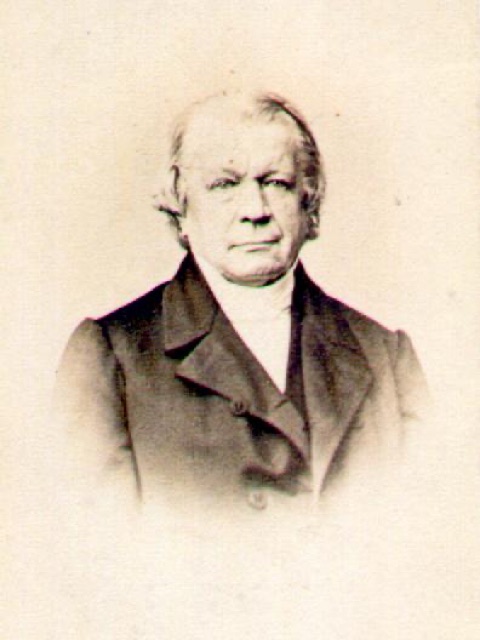
Friedrich Wilhelm Krummacher (1796–1868) was a German Reformed pastor and preacher, born into a family already known for its preaching. He served influential pulpits in Elberfeld, Berlin, and finally as court preacher at Potsdam under King Friedrich Wilhelm IV. His preaching was vivid, dramatic, and saturated with biblical imagery — he retold scriptural narratives with a novelist's eye for scene and character while pressing every detail toward evangelical application. Several of his books became international bestsellers in the nineteenth century. Elijah the Tishbite (1828) was translated into at least five languages, and The Suffering Savior (1854), his meditations on the passion of Christ, was widely read throughout the English-speaking world.
“Updated Works has been an incredible blessing to my Christian life and ministry… remarkably faithful to the original authors while making these timeless treasures understandable for modern readers.”