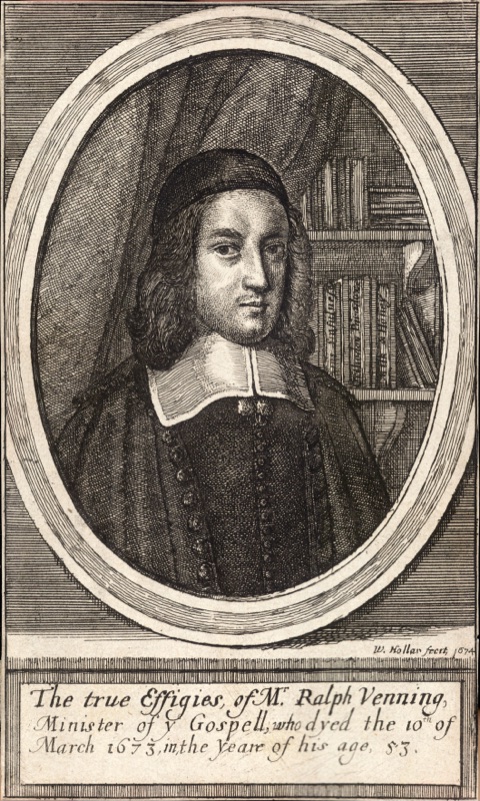



Preface
The Christian religion not only exposes us to suffering but also prepares us for it, just as it prepares us for glory. The all-wise God has arranged things so that while we remain on this side of the grave, we must exercise certain graces that both assume suffering and prepare us for glory. These graces operate and continue only in this world. In fact, they would never have existed at all if sin had not entered the world. I'm speaking of graces like faith, repentance, hope, and patience. We would have no need for faith to obtain righteousness if we had not lost our own. We would have no need or occasion for repentance if we had remained innocent. There would be no room for hope, since we would have enjoyed continuous sight, enjoyment, and possession of happiness if we had not sinned. And there would be no use or exercise of patience when there was no suffering, and there would have been no suffering if there had been no sin. The state of innocence (before sin existed) was in the next degree like the state of glory (when sin will be no more), and that state excludes these and similar things. For then sorrow and sighing will flee away, and all tears will be wiped from their eyes. Then faith will be turned into vision, and hope into fulfillment. Suffering (and consequently patience) will come to an end, at least for good and holy people.
Understanding just how deeply sinful sin really is can be incredibly useful for developing, exercising, and perfecting these spiritual qualities. This knowledge serves multiple purposes: it helps us suffer well, as Christ Jesus did (1 Pet 2:19-23), and make the choice Moses made (Heb 11:25), rather than the one Job was accused of making (Job 36:21). But there's an even more fundamental reason. If we're ever going to be saved, we must practice these spiritual qualities, and we can't truly do that until sin appears to us as it did to Paul: something profoundly sinful, deceitful, and destructive.
Here's the reality: sinners aren't likely to wake up to this truth until the commandment comes to them (as it came to the apostle) and reveals sin for what it is. But once people are awakened and converted, this same revelation powerfully compels them to marvel at God's love and mercy, and to offer Him endless gratitude for their deliverance and salvation from sin. I discuss the usefulness of this doctrine more thoroughly in the treatise itself, so I won't elaborate further on it here.
Regarding the book itself, I have only a few things to say. I began this treatise and nearly finished it before the recent terrible plague struck. Although I've chosen to give it a name that references that disaster (as a memorial), the book isn't specifically focused on the plague alone. Instead, it takes a broader view of the universal damage that sin has inflicted on humanity: affecting both soul and body, time and eternity. Sin is the root of all evil, whether physical, spiritual, or eternal.
Still, we should reflect on that sweeping broom of destruction and the dreadful fire from heaven (or hell, or in various ways from both) that later consumed the buildings just as the plague had consumed the inhabitants before. I fear both events are already too easily forgotten. We need to consider God's hand raised in judgment, take it to heart, confess our sin, and give Him glory. Though God remembered mercy in the midst of judgment, we should remember judgment in the midst of mercy. Both should lead us to repentance.
Otherwise, even though the plague has passed and that fire no longer burns, if the plague in our hearts and our burning lusts (our sins) continue, we remain far from health and safety. If after such deliverances we go on sinning as though we were delivered only to do nothing else, or to speak as Ezra does: "After all that has come upon us for our evil deeds and our great guilt, seeing that God has punished us less than our sins deserved and has given us such deliverance as this, should we again break His commandments and join with people who practice such abominations? Would He not be angry with us until He consumed us, so that there would be no remnant or survivors left? Then the fire of His wrath might burn to the lowest hell, and we might burn there with it" (Ezra 9:13-14).
Let us hear and fear, and stop acting so wickedly (Deut 13:11). Sin is so notoriously, excessively, and intolerably evil that just as it is now the disgrace of any people, it will later be their ruin if they don't repent. And what is impenitence? It's nothing less than storing up sin and wrath together, growing rich in both (Rom 2:4-9). And what is that but being abundantly damned?
I'm well aware that several godly and learned men have already written on this subject, but that doesn't discourage their successors from doing the same. After all, it didn't stop Luke from writing his Gospel even though others had written before him (Luke 1:1-3). In fact, what are the Gospels of Matthew, Mark, Luke, and John but the same Gospel presented with slight variations?
The apostle Peter wrote about the same things Paul had covered (2 Pet 3:15), and both of them wrote about the same subjects repeatedly (Phil 3:1; 2 Pet 1:12-13). Jude, the brother of James (Jude 1), either copied or at least summarized a large portion of Peter's second letter, almost word for word (nearly *in terminis et verbatim*). I recall Augustine somewhere advising that the same truths should be published by different authors so that, through their various connections, relationships, and influence in the world, these truths can reach more people who might otherwise never encounter them.
Besides, as Ausonius tells us, *unus plus alio invenire potest, nemo omnia* (one person can discover more than another, but no one can find or express everything). This is profoundly true. The commands and truths contained in Scripture are so extraordinarily vast that they surpass all other writings. Therefore, while I don't think it's any disgrace to admit that I've read other authors and learned from them, I can say without vanity or boasting that I've not only approached this subject differently but also addressed matters that I haven't found in any other work I've encountered. And I have no doubt that much more could be said than what I, or anyone else who has written on this theme, has managed to express.
Regarding the sinfulness of sin (the subject of this treatise), I have indeed dealt with it most extensively as it relates to humanity's good and happiness, since that is most properly the intent and scope of the text. God is so gracious that He is pleased to approach people as self-interested beings, and thus to gain and win them through their own advantages. In fact, He seems by His patience to care more about humanity's salvation than His own vindication in this world, as the apostle leads us to believe (2 Pet 3:9). And truly, this condescension, self-denial, and humbling of Himself is such a great and rich goodness that it most powerfully leads and draws us to repentance (Rom 2:4).
Regarding style, I haven't worried about being fancy. I still believe what I've always thought: eloquence actually hurts the message when it draws attention to itself. Words exist only to serve the content, and they should help rather than hinder what we're trying to communicate. As a learned and eloquent writer once put it, fine expressions are like the gaudy, gilded frame of a mirror. The frame doesn't show us our faces and features (which is what a mirror is actually for). In fact, the richness of the frame often distracts and dazzles childish people so much that they ignore everything else. Rhetoric diverts people from paying attention to the more important, instructive parts of a discourse. Many who claim to be critics use sermons and good books for nothing more than critiquing or praising the structure and phrasing, without paying attention to the doctrine or bothering to correct what they've discovered to be wrong in themselves.
It's no compliment to a preacher if he cares more about crafting his expressions than about making his hearers good. We can't flatter sinners. We should try to make them condemn themselves rather than applaud us. A good minister will find more joy in hearing people sigh over their sins than in hearing them praise his sermon, and he'll be happier when they follow his counsel than when they admire his language. We shouldn't speak against sin to show off our skill at declaiming or our ability to speak eloquently, but to exercise our own hatred against it and to provoke others to express theirs. Even when the best people do their absolute best, I'm afraid there will still be too many who read pious books with less reverence and concern than they'd give a romance novel or a play. They care more about the rhetoric than the divinity, more about the wit than the worth (in other words, the shadow rather than the substance) of what they're reading. As that same excellent person put it so well: if a devotional book doesn't have plenty of witty passages, some readers won't pay attention to it at all, and if it does have them, they won't pay attention to anything else. Experience confirms this.
But whatever readers this book finds, I've tried to make it profitable (and in that way pleasing) to them. I hope they'll find nothing worthy of their displeasure except the thing I'm writing against. I've committed it to God and asked for His blessing, that it may be useful in teaching people to profit in the future from what they've lost so far, and to gain something by reading what they could never gain by committing sin.
But I won't keep you much longer. I urge you to remember that this world is nothing but a glittering, pompous vanity, something that passes with use and won't reach beyond the grave. Perhaps it won't even last that long, for its lust and fashion pass away. Yes, they take wings and fly away. Remember that sin leads nowhere but to hell, the place and element of torment. Remember that before long, death will arrest you and carry your body to the dust and dungeon of the grave, and (if you die in your sins) your soul to hell and damnation. I urge you, therefore, to exercise yourself in the power of godliness, and don't live as if the practice of piety were nothing but a book with that title. What good is it to have religion in your Bible, in your head and on your tongue, yet have none in your heart and life? Just think about what you will say or do when you come to judgment, as Solomon tells the young man (Eccl 11:9). Take the course you can own and justify on that day, and do what you will. Then I'm sure you won't dare to do anything but what you should, for who can answer for one sin out of a thousand, or even for just one sin?
As for any of them (still alive) who were hearers and will now be readers of what's contained in the following treatise, let me tell them that they have it double: precept upon precept and line upon line. God seems to send it to them a second time so that it may do more good for them than it did at first, so that the repetition and calling of it to remembrance may do more than the preaching of it did. Though I know, blessed be God, that it wasn't delivered and heard without good effects on many, and I hope on more than I know of. That God may be glorified and the readers may profit by it is much my prayer, as it will be much the joy and rejoicing of my soul, whatever judgments may be passed on me.
Ralph Venning.