
Full text in modern English · Free PDF/EPUB
The Holy War
Want the file? The PDF/EPUB is free with an account.
Summary
- Author
- John Bunyan (1628 to 1688 AD), English Puritan preacher
- Published
- 1682 AD
- Type
- Allegory
- Structure
- Verse address to the reader, 18 chapters, closing verses on authorship
- Length
- 99,000 words · 7 hours
What is The Holy War about?
The Holy War is John Bunyan's 1682 allegory of the town of Mansoul, built by King Shaddai and captured by the giant Diabolus through lies and flattery. Shaddai's Son, Prince Emmanuel, besieges the town, wins it back, and pardons it, then must return after its backsliding lets Diabolus and an army of Doubters in again.
How the argument unfolds
- 01
Chapter 1: the fall. Diabolus comes to Eargate in the shape of a dragon. His archer kills Captain Resistance, Lord Innocency dies on the wall, and the townspeople eat the forbidden fruit and open the gates.
- 02
Chapter 2: the new model. Diabolus removes Lord Understanding and Mr. Conscience from office, works to "persuade the men of the town that Mr. Recorder was mad," and makes Lord Will-be-will his chief officer.
- 03
Chapters 3 to 5: the first siege. Shaddai sends Captains Boanerges, Conviction, Judgment, and Execution. They besiege the town through a winter, and a riot breaks out inside between the old officers and the new.
Read the full summary (8 points, key themes)Show less
- 04
Chapters 6 to 8: Emmanuel takes the town. Emmanuel refuses every compromise Diabolus offers, breaks Eargate, takes the castle, and leads Diabolus away bound to his chariot wheels.
- 05
Chapter 8: the petitions. The prisoners send three petitions. They reject old Mr. Good-deed as their messenger, since "Not even a thousand old Good-deeds could save Mansoul", and send Mr. Desires-awake and Mr. Wet-eyes instead.
- 06
Chapters 9 to 11: the Prince in residence. Emmanuel enters the town, the Diabolonians are tried and executed, and Mansoul receives a new charter, a standing ministry, and white garments.
- 07
Chapters 12 to 15: the withdrawal and the Doubters. Mr. Carnal-security lulls the town, Emmanuel withdraws, and Diabolus returns with an army of Doubters. Feelgate falls, and the enemy holds the town for about two and a half years.
- 08
Chapters 16 to 18: the return. Captain Credence carries the Lord Secretary's petition, Emmanuel routs the Doubters, the Bloodmen are beaten off, and the Prince gives Mansoul a closing charge.
Key themes
- The whole town or none. Diabolus offers to give up half the town, then all of it on conditions. Emmanuel answers, "So I will be the sole Lord and possessor of all of Mansoul, or of none of it at all."
- False peace. At the trials, Mr. Falsepeace insists his name is only Peace. The court answers that "peace that is not a companion of truth and holiness" is built on a lie.
- Why the enemy remains. Emmanuel leaves some Diabolonians in the walls on purpose: "It is to keep you awake, to test your love, to make you watchful".
The Holy War · Full text
To the Reader
It’s strange to me that those who love to tell
Of things done long ago, yes, and who excel
Their equals in the art of history,
Speak not of Mansoul’s wars, but let them lie
Dead, like old fables, or such worthless things
As to the reader no advantage brings,
When men, let them make what they will their own,
Till they know this, are to themselves unknown.
Of stories, I well know, there are many sorts,
Some foreign, some domestic; and reports
Are made of them, as fancy guides the pen;
By books a man may guess at writing men.
Some, too, invent, of that which never was
Nor ever will be, and without a cause,
Such matter, raise such mountains, tell such things
Of men, of laws, of countries, and of kings,
And in their story seem to be so sage,
And with such gravity clothe every page,
That though their title page says all is vain,
Yet to their way disciples still they gain.
But, readers, I have something else to do
Than with vain stories thus to trouble you.
What here I say, some men know so well,
They can with tears and joy the story tell.
The town of Mansoul is well known to many,
Nor are her troubles doubted of by any
Who are acquainted with those histories
That Mansoul and her wars anatomize.
Then lend your ear to what I now relate
About the town of Mansoul and her state:
How she was lost, taken captive, made a slave,
And how against him set who should her save;
Yes, how by hostile ways she did oppose
Her Lord, and his enemy instead she chose.
For they are true; he who will them deny
Must surely the best of records vilify.
For my part, I myself was in the town
Both when it was set up and when pulled down.
I saw Diabolus in his possession,
And Mansoul also under his oppression.
Yes, I was there when she took him for lord,
And to him did submit with one accord.
When Mansoul trampled upon things divine,
And wallowed in filth as does a swine;
When she betook herself unto her arms,
Fought her Emmanuel, despised his charms,
Then I was there, and did rejoice to see
Diabolus and Mansoul so agree.
Let no one, then, count me a fable-maker,
Nor make my name or credit a partaker
Of their derision; what is here in view,
Of my own knowledge, I dare say is true.
I saw the prince’s armed men come down
By troops, by thousands, to besiege the town.
I saw the captains, heard the trumpets sound,
And how his forces covered all the ground.
Yes, how they set themselves in battle array
I shall remember to my dying day.
I saw the colors waving in the wind,
And how those within for mischief had combined
To ruin Mansoul, and to do away
With her prime mover without delay.
I saw the siege mounds heaped against the town,
And how the slings were placed to beat it down.
I heard the stones fly whizzing past my ears
(What’s kept in mind longer than what’s got in fears?),
I heard them fall, and saw what work they made,
And how old Death spread over, with his shade,
The face of Mansoul; and I heard her cry,
“Woe to the day! In dying I shall die!”
I saw the battering rams, and how they played
To batter Ear-gate open; I was afraid
Not only Ear-gate but the very town
Would by those battering rams be beaten down.
I saw the fights, and heard the captains shout,
And in each battle saw who turned about;
I saw who wounded were, and who were slain,
And who, when dead, would come to life again.
I heard the cries of those who wounded were,
While others fought like men bereft of fear;
And while the cry, “Kill, kill!” was in my ears,
The gutters ran not so much with blood as tears.
Indeed, the captains did not always fight,
But then they would molest us day and night;
Their cry, “Up, fall on, let us take the town!”
Kept us from sleeping, or from lying down.
I was there when the gates were broken ope,
And saw how Mansoul then was stripped of hope.
I saw the captains march into the town,
How there they fought, and cut their enemies down.
I heard the prince bid Boanerges go
Up to the castle and there seize his foe,
And saw him and his fellows bring him down
In chains of great contempt right through the town.
I saw Emmanuel when he possessed
His town of Mansoul, and how greatly blessed
A town his gallant town of Mansoul was
When she received his pardon, lived by his laws!
When the Diabolonians were caught,
When tried, and when to execution brought,
Then I was there; yes, I was standing by
When Mansoul did the rebels crucify.
I also saw Mansoul clad all in white,
And heard her prince call her his heart’s delight.
I saw him put upon her chains of gold,
And rings, and bracelets, lovely to behold.
What shall I say? I heard the people’s cries,
And saw the prince wipe tears from Mansoul’s eyes.
I heard the groans, and saw the joy of many;
Tell you of all, I neither will nor can I.
But by what here I say, you well may see
That Mansoul’s matchless wars no fables be.
Mansoul! The desire of both princes was:
One would keep his gain; the other, gain his loss.
Diabolus would cry, “The town is mine!”
Emmanuel would plead a right divine
To his own Mansoul; then to blows they go,
And Mansoul cries, “These wars will me undo!”
Mansoul! Her wars seemed endless in her eyes;
She’s lost by one, becomes another’s prize.
And he, in turn, who lost her last would swear,
“Have her I will, or her in pieces tear!”
Mansoul, it was the very seat of war;
Therefore her troubles greater were by far
Than only where the noise of war is heard,
Or where the shaking of a sword is feared,
Or only where small skirmishes are fought,
Or where the fancy battles with a thought.
She saw the swords of fighting men made red,
And heard the cries of those by them wounded;
Must not her frights, then, be much more by far
Than theirs who to such doings strangers are?
Or theirs who hear the beating of a drum,
But are not made to flee in fear from house and home?
Mansoul not only heard the trumpet sound,
But saw her gallants gasping on the ground;
Therefore we must not think that she could rest
With those whose greatest earnest is but jest,
Or where the blustering threats of mighty wars
End up in parleys, or in wordy jars.
Mansoul, her mighty wars, they did portend
Her weal or woe, and that world without end;
Therefore she must be more concerned than they
Whose fears begin and end the selfsame day,
Or where no other harm will come to him
Who is engaged but loss of life or limb,
As all must surely grant who now do dwell
In Universe, and can this story tell.
Count me not, then, with those who, to amaze
The people, set them on the stars to gaze,
Insinuating with much confidence
That each of them is now the residence
Of some brave creatures; yes, a world they will
Have in each star, though it is past their skill
To make it manifest to any man
Who reason has, or count his fingers can.
But I have too long held you in the porch,
And kept you from the sunshine with a torch.
Well, now go forward, step within the door,
And there behold five hundred times much more
Of all sorts of such inward rarities
As will please the mind, and will feed the eyes
With those which, if a Christian, you will see
Not small, but things of greatest weight to be.
Nor should you go to work without my key
(In mysteries men soon will lose their way),
And also turn it right, if you would know
My riddle, and would with my heifer plow.
It lies there in the window. Fare you well;
My next may be to ring your passing bell.
John Bunyan
Chapter 1
The Fall of Mansoul
In my travels, as I walked through many regions and countries, I chanced to come into that famous continent of Universe. It is a very large and spacious country. It lies between the two poles, right in the middle of the four points of the heavens. It is a well-watered place, richly adorned with hills and valleys, and splendidly situated. For the most part (at least where I was) it is very fruitful and well peopled too, and its air is very sweet.
The people are not all of one complexion, nor of one language, fashion, or way of religion; they differ as much as the planets themselves are said to differ. Some are right and some are wrong, just as it happens to be in lesser regions.
In this country, as I said, it was my lot to travel, and travel there I did. I stayed so long that I learned much of their mother tongue, together with the customs and manners of the people I was among. And to tell the truth, I was much delighted to see and hear many things that I saw and heard among them. Yes, I was so taken with them and their doings that I would certainly have lived and died a native among them, had not my Master sent for me home to his house, to do business for him there and to oversee business done.
Now in this fine country of Universe there is a fair and delightful town, an incorporated town, called Mansoul. It is a town so ingeniously built, so conveniently situated, and so richly privileged (I mean with reference to its original state) that I may say of it, as was said before of the continent in which it is placed, that there is not its equal under the whole heaven.
As to the situation of this town, it lies just between the two worlds. Its first founder and builder, so far as I can gather from the best and most authentic records, was one Shaddai, and he built it for his own delight. He made it the mirror and glory of all that he made, the crowning piece, beyond anything else that he did in that country (Gen 1:26). Yes, so goodly a town was Mansoul when it was first built that some say the gods came down to see it when it was set up, and sang for joy. And as he made it goodly to look at, so he also made it mighty, to have dominion over all the country round about. Yes, everything was commanded to acknowledge Mansoul as its capital; everything was charged to do homage to it. Indeed, the town itself had express commission and power from her King to demand service of all, and also to subdue any that in any way refused to give it.
In the middle of this town there was built a most famous and stately palace. For strength, it might be called a castle; for pleasantness, a paradise; for size, a place so roomy as to hold all the world (Eccl 3:11). King Shaddai intended this palace for himself alone, and for no one else with him. This was partly because of his own delights, and partly because he would not have the terror of strangers come upon the town. Shaddai also made this place a garrison, but he committed the keeping of it only to the men of the town.
The wall of the town was well built. Yes, it was so fast and firm, so knit and compacted together, that had it not been for the townsmen themselves, it could never have been shaken or broken. For here lay the excellent wisdom of him who built Mansoul: the walls could never be broken down, or even hurt, by the mightiest hostile ruler, unless the townsmen gave their consent.
This famous town of Mansoul had five gates to come in at and go out at, and these were made to match the walls; that is, they were impregnable, and could never be opened or forced except by the will and permission of those within. The names of the gates were these: Eargate, Eyegate, Mouthgate, Nosegate, and Feelgate.
There were other things that belonged to the town of Mansoul which, if you add them to these, will give everyone still further proof of the glory and strength of the place. It always had a sufficient supply of provisions within its walls. It had the best, most wholesome, and most excellent law that was then in force in the world. There was not a rascal, rogue, or traitor then within its walls. They were all true men, and firmly joined together; and this, you know, is a great matter. And on top of all this, so long as it had the goodness to keep true to Shaddai the King, it always had his favor and his protection, and it was his delight.
Well, at a certain time there was one Diabolus, a mighty giant, who made an assault on this famous town of Mansoul, to take it and make it his own dwelling. This giant was king of the blacks or negroes (that is, of sinners, the fallen angels), and a most raving prince he was. We will, if you please, first speak of the origin of this Diabolus, and then of his taking of this famous town of Mansoul.
This Diabolus is indeed a great and mighty prince, and yet both poor and beggarly. As to his origin, he was at first one of the servants of King Shaddai, made and taken and placed by him in a most high and mighty position. Yes, he was put into such principalities as belonged to the best of his territories and dominions. This Diabolus was made son of the morning (Isa 14:12), and a fine place he had of it. It brought him much glory and gave him much brightness, an income that might have contented his Luciferian heart, had it not been insatiable, and as enlarged as hell itself.
Well, seeing himself thus exalted to greatness and honor, and raging in his mind for higher rank and degree, what does he do but begin to think how he might be set up as Lord over all, and have the sole power under Shaddai! Now the King had reserved that for his Son; yes, he had already bestowed it on him. So Diabolus first consults with himself about what is best to be done, and then opens his mind to some others of his companions, and they also agreed to it. So in the end they came to this conclusion: they would make an attempt on the King’s Son to destroy him, so that the inheritance might be theirs. Well, to be brief, the treason, as I said, was agreed on, the time appointed, the word given, the rebels assembled, and the assault attempted.
Now the King and his Son, being all and always eye, could not fail to see everything that passed in his dominions. And since he always loved his Son as himself, he could not help being greatly provoked and offended at what he saw. So what does he do but catch them in the very nick of time? At the first step they made toward their design, he convicts them of the treason, horrid rebellion, and conspiracy that they had devised and were now attempting to put into practice. He casts them all out of every place of trust, benefit, honor, and advancement. This done, he banishes them from the court and turns them down into the horrible pits, bound fast in chains, never again to expect the least favor from his hands, but to await the judgment that he had appointed, and that forever (2 Pet 2:4; Jude 6).
And yet, now that they were thus cast out of every place of trust, profit, and honor, and knew also that they had lost their prince’s favor forever, being banished from his courts and cast down to the horrible pits, you may be sure they would now add to their former pride all the malice and rage against Shaddai and against his Son that they could. So, roving and ranging in great fury from place to place, to see if perhaps they might find something that was the King’s, so as to take revenge on him by spoiling it themselves (1 Pet 5:8), at last they happened into this spacious country of Universe, and steered their course toward the town of Mansoul.
And considering that this town was one of the chief works and delights of King Shaddai, what do they do but, after taking counsel, make an assault on it! I say they knew that Mansoul belonged to Shaddai, for they were there when he built it and beautified it for himself. So when they had found the place, they shouted horribly for joy, and roared over it like a lion over its prey, saying, “Now we have found the prize, and how to be revenged on King Shaddai for what he has done to us.”
So they sat down and called a council of war, and considered among themselves what ways and methods they had best take to win this famous town of Mansoul for themselves. These four things were then put forward for consideration. First, whether they had best all show themselves in this design to the town of Mansoul. Second, whether they had best go and sit down before Mansoul in their present ragged and beggarly guise. Third, whether they had best show Mansoul their intentions and what design they had come about, or assault it with words and ways of deceit. Fourth, whether they had not best give private orders to some of their companions to take the opportunity, if they saw one or more of the principal townsmen, to shoot them, if they judged that their cause and design would be better promoted by it.
1. The first of these proposals was answered in the negative; that is, it would not be best for all of them to show themselves before the town, because the appearance of many of them might alarm and frighten the town, whereas a few, or only one of them, would not be so likely to do so. And to press this advice home, more was added; it was Diabolus who spoke now. “If Mansoul is frightened, or takes the alarm,” said Diabolus, “it is impossible for us to take the town, for no one can enter it without its own consent. So let only a few, or only one, assault Mansoul; and in my opinion,” said Diabolus, “let me be the one.” They all agreed to this, and then they came to the second proposal, namely:
2. Whether they had best go and sit down before Mansoul in their present ragged and beggarly guise. This too was answered in the negative: by no means. The reason was that though the town of Mansoul had been made to know, and to have to do with, invisible things before now, they had never yet seen any of their fellow creatures in so sad and wretched a condition as these were. This was the advice of that fierce Alecto.
Then Apollyon said, “The advice is to the point. For even one of us appearing to them as we are now must both breed and multiply such thoughts in them as will throw them into consternation of spirit and force them to put themselves on their guard. And if so,” he said, “then, as my lord Alecto said just now, it is useless for us to think of taking the town.”
Then that mighty giant Beelzebub said, “The advice already given is safe. For though the men of Mansoul have seen such things as we once were, they have never yet seen such things as we now are. And in my opinion it is best to come upon them in a guise that is common and most familiar among them.”
When they had agreed to this, the next thing to consider was what shape, color, or guise Diabolus had best show himself in when he went about making Mansoul his own. Then one said one thing, and another the opposite. At last Lucifer answered that in his opinion it was best for his lordship to take on the body of one of those creatures that the people of the town had dominion over. “For,” he said, “these are not only familiar to them, but being under them, they will never imagine that an attempt on the town would be made by them. And to blind them completely, let him take on the body of one of those beasts that Mansoul thinks wiser than any of the rest” (Gen 3:1; Rev 20:1-2). This advice was applauded by all. So it was determined that the giant Diabolus should take the form of the dragon, for in those days the dragon was as familiar to the town of Mansoul as the bird is now to the boy. For nothing that was in its original state was at all alarming to them. Then they proceeded to the third thing, which was:
3. Whether they had best show their intentions, or the design of his coming to Mansoul, or not. This also was answered in the negative, because of the weight of the former reasons: namely, that the people of Mansoul were strong, a strong people in a strong town, whose wall and gates were impregnable (to say nothing of their castle), and who could by no means be won except by their own consent.
“Besides,” said Legion (for he gave the answer to this), “a discovery of our intentions may make them send to their King for help, and if that is done, I know soon enough what time of day it will be with us. Therefore let us assault them with every pretense of fairness, covering our intentions with all kinds of lies, flatteries, and deluding words: pretending things that never will be, and promising them what they will never find. This is the way to win Mansoul, and to make them open their gates to us of their own accord; yes, and even to want us to come in to them.
“And the reason I think this plan will work is that the people of Mansoul are now every one simple and innocent, all honest and true, and they do not yet know what it is to be assaulted with fraud, guile, and hypocrisy. They are strangers to lying and dissembling lips. So if we are disguised like this, they cannot detect us at all. Our lies will pass for true sayings, and our pretenses for upright dealings. They will believe whatever we promise them, especially if in all our lies and feigned words we profess great love for them, and claim that our design is only their advantage and honor.”
Now there was not one bit of a reply against this; it went down as smoothly as water down a steep slope. So they went on to consider the last proposal, which was:
4. Whether they had not best give orders to some of their company to shoot one or more of the principal townsmen, if they judged that their cause might be promoted by it.
This was carried in the affirmative, and the man marked out by this stratagem to be destroyed was one Mr. Resistance, otherwise called Captain Resistance. And a great man in Mansoul this Captain Resistance was, and a man whom the giant Diabolus and his band feared more than they feared the whole rest of the town of Mansoul. Now, who should be the one to commit the murder was the next question, and they appointed one Tisiphone, a fury of the lake, to do it.
Having thus ended their council of war, they rose up and set about doing what they had determined. They marched toward Mansoul, but all of them in a manner invisible, except one, only one; and he did not approach the town in his own likeness, but under the shape and in the body of the dragon.
So they drew up and sat down before Eargate, for that was the place of hearing for all outside the town, as Eyegate was the place of seeing. So, as I said, he came up with his train to the gate, and laid his ambush for Captain Resistance within bowshot of the town. This done, the giant went up close to the gate and called to the town of Mansoul for a hearing. He took no one with him but one Illpause, who was his orator in all difficult matters. Now, as I said, when he had come up to the gate, he sounded his trumpet for a hearing, as the custom of those times was. At this the chief men of the town of Mansoul, such as my Lord Innocency, my Lord Will-be-will, my Lord Mayor, Mr. Recorder, and Captain Resistance, came down to the wall to see who was there and what was the matter. And my Lord Will-be-will, when he had looked over and saw who stood at the gate, demanded what he was, why he had come, and why he roused the town of Mansoul with so unusual a sound.
Then Diabolus, as if he had been a lamb, began his speech and said, “Gentlemen of the famous town of Mansoul, I am, as you may see, no distant dweller from you, but near, and one who is bound by the King to pay you my homage and whatever service I can. So, that I may be faithful to myself and to you, I have something of concern to share with you. Therefore grant me a hearing, and hear me patiently. And first, I assure you, it is not myself but you, not my advantage but yours, that I seek by what I am now doing, as will be made fully plain once I have opened my mind to you. For, gentlemen, to tell you the truth, I have come to show you how you may obtain great and ample deliverance from a bondage under which, unawares to yourselves, you are held captive and enslaved.”
At this the town of Mansoul began to prick up its ears. “What is it, please? What is it?” they thought.
And he said, “I have something to say to you about your King, about his law, and also about yourselves. As for your King, I know he is great and powerful, but even so, all that he has told you is neither true nor for your advantage. First, it is not true, for the thing he has used to keep you in awe until now will not come to pass or be fulfilled, even if you do what he has forbidden. But even if there were danger, what slavery it is to live always in fear of the greatest of punishments for doing so small and trivial a thing as eating a little fruit!
“Second, as for his laws, I say further that they are unreasonable, intricate, and intolerable. They are unreasonable, as was hinted before, because the punishment is not proportioned to the offense. There is a great difference and disproportion between life and an apple; yet the one must go for the other by the law of your Shaddai. But it is also intricate, in that he says first that you may eat of all, and yet afterward forbids the eating of one. And then, last of all, it must be intolerable, since the fruit you are forbidden to eat (if you are forbidden any) is that, and that alone, which is able, by your eating it, to bring you a good as yet unknown to you. This is plain from the very name of the tree: it is called the tree of knowledge of good and evil. And do you have that knowledge yet? No, no; nor can you conceive how good, how pleasant, and how much to be desired to make one wise it is, as long as you stand by your King’s commandment. Why should you be held in ignorance and blindness? Why should you not be enlarged in knowledge and understanding?
“And now, ah, you inhabitants of the famous town of Mansoul, to speak more particularly about yourselves: you are not a free people! You are kept both in bondage and slavery, and that by a grievous threat, with no reason attached but ‘So I will have it; so it shall be.’ And is it not grievous to think that the very thing you are forbidden to do, if only you might do it, would yield you both wisdom and honor? For then your eyes shall be opened, and you shall be as gods. Now, since this is so,” he said, “can you be kept by any prince in more slavery and greater bondage than you are under this day? You are made underlings, and are wrapped up in inconveniences, as I have plainly shown. For what bondage is greater than to be kept in blindness? Will not reason tell you that it is better to have eyes than to be without them, and so that to be at liberty is better than to be shut up in a dark and stinking cave?”
And just then, while Diabolus was speaking these words to Mansoul, Tisiphone shot at Captain Resistance where he stood on the gate, and mortally wounded him in the head, so that, to the amazement of the townsmen and the encouragement of Diabolus, he fell down dead right over the wall. Now when Captain Resistance was dead (and he was the only man of war in the town), poor Mansoul was left wholly stripped of courage, and she no longer had any heart to resist. But this was just as the devil would have it. Then that fellow Mr. Illpause, whom Diabolus had brought with him, and who was his orator, stood up and addressed himself to the town of Mansoul. His speech ran as follows.
“Gentlemen,” he said, “it is my master’s happiness that he has a quiet and teachable audience today, and we hope that we will prevail with you not to throw away good advice. My master has a very great love for you, and although he knows very well that he runs the risk of King Shaddai’s anger, yet his love for you will make him do more than that. Nor is there any need for another word to be spoken to confirm the truth of what he has said; there is not a word of it that does not carry its own evidence within it. The very name of the tree may put an end to all controversy in this matter. So at this time I will only add this advice to you, under my lord and by his leave” (and with that he made Diabolus a very low bow): “Consider his words; look at the tree and its promising fruit. Remember also that as yet you know only a little, and that this is the way to know more. And if your reason is not won over to accept such good counsel, you are not the men I took you to be.”
But when the townsfolk saw that the tree was good for food, and that it was pleasant to the eye, and a tree to be desired to make one wise (Gen 3:6), they did as old Illpause advised: they took of it and ate.
Now I should have told you this before: even then, while this Illpause was making his speech to the townsmen, my Lord Innocency sank down in the place where he stood, whether by a shot from the giant’s camp, or from some sinking fit that suddenly seized him, or by the stinking breath of that treacherous villain old Illpause (which is what I am most inclined to think); nor could he be brought back to life. Thus these two brave men died. Brave men I call them, for they were the beauty and glory of Mansoul as long as they lived in it. Nor was there any noble spirit left in Mansoul now; they all fell down and yielded obedience to Diabolus, and became his slaves and vassals, as you shall hear.
Now that these were dead, what do the rest of the townsfolk do but, like men who had found a fool’s paradise, at once set about proving the truth of the giant’s words, as was hinted before? First they did as Illpause had taught them: they looked, they considered, they were taken with the forbidden fruit, they took of it and ate. And having eaten, they immediately became drunk with it. So they opened the gates, both Eargate and Eyegate, and let in Diabolus with all his bands, quite forgetting their good Shaddai, his law, and the judgment that he had attached, with solemn threatening, to the breaking of it.
Chapter 2
Diabolus New-Models the Town
Diabolus, having now gotten in at the gates of the town, marches up to the middle of it to make his conquest as sure as he could. Finding by this time that the affections of the people were warmly inclining toward him, and thinking it was best to strike while the iron is hot, he made them this further deceitful speech:
“Alas, my poor Mansoul! I have indeed done you this service: I have promoted you to honor and enlarged your liberty. But alas, alas, poor Mansoul, you now lack someone to defend you! For you may be sure that when Shaddai hears what has been done, he will come; for he will be sorry that you have broken his bonds and cast his cords away from you. What will you do? Now that you have been set free, will you let your privileges be invaded and taken away? Or what will you resolve to do?”
Then with one consent they all said to this bramble, “Reign over us.” So he accepted the motion and became the king of the town of Mansoul.
This being done, the next thing was to give him possession of the castle, and so of the whole strength of the town. So into the castle he goes. It was the castle that Shaddai had built in Mansoul for his own delight and pleasure, and now it had become a den and stronghold for the giant Diabolus.
Now, having gotten possession of this stately palace or castle, what does he do but make it a garrison for himself? He strengthened it and stocked it with all sorts of provisions against King Shaddai, or against any who should try to win it back for him and bring it under his obedience again.
This done, but not thinking himself secure enough yet, he next sets his mind to new-modeling the town. And so he does, setting up one and putting down another as he pleased. So my Lord Mayor, whose name was my Lord Understanding, and Mr. Recorder, whose name was Mr. Conscience, he puts out of place and power.
As for my Lord Mayor, he was a man of understanding, and he too had gone along with the rest of the town of Mansoul in admitting the giant into the town. Even so, Diabolus did not think it fit to let him remain in his former luster and glory, because he was a seeing man. So he darkened him, not only by taking away his office and power, but by building a high and strong tower right between the sun’s rays and the windows of my lord’s palace (2 Cor 10:4-5). By this means his house and everything in it, his whole dwelling, was made as dark as darkness itself. And so, being alienated from the light, he became like one who was born blind (Eph 4:18-19). My lord was confined to this house of his as if to a prison, and he was not allowed, even on his word of honor, to go beyond his own bounds. And now, even if he had had a heart to do something for Mansoul, what could he have done for it? Or how could he have been of any use to her? So then, as long as Mansoul was under the power and government of Diabolus (and it was under him as long as it obeyed him, which was right up until it was rescued out of his hands by a war), my Lord Mayor was more a hindrance than a help to the famous town of Mansoul.
As for Mr. Recorder, before the town was taken he was a man well read in the laws of his King. He was also a man of courage and faithfulness, ready to speak the truth on every occasion, and he had a tongue as bold and ready as his head was full of judgment. Now Diabolus could by no means stand this man. For though he had given his consent to the giant’s coming into the town, still Diabolus could not, by all the wiles, trials, stratagems and devices he could use, make him wholly his own. True, he had fallen far from what he had been under his former King, and he was also much pleased with many of the giant’s laws and much of his service. But all this would not do, because he was not wholly his. Now and then he would think about Shaddai and feel the dread of his law upon him, and then he would speak out against Diabolus with a voice as loud as a lion’s roar. Yes, and at certain times, when his fits were upon him (for you must know that he sometimes had terrible fits), he would make the whole town of Mansoul shake with his voice. And so the new king of Mansoul could not stand him.
Diabolus therefore feared the Recorder more than anyone left alive in the town of Mansoul, because, as I said, his words shook the whole town. They were like rattling thunder, and like thunderclaps too. Since, then, the giant could not make him wholly his own, what does he do but study every way he could to debauch the old gentleman, and by debauchery to stupefy his mind and harden his heart further in the ways of vanity? And as he attempted, so he accomplished his design. He debauched the man, and little by little drew him so far into sin and wickedness that at last he was not only debauched, as at first, and so consequently defiled, but was at last, I say, almost past all conscience of sin. And this was as far as Diabolus could go.
So he thought up another plan, and that was to persuade the men of the town that Mr. Recorder was mad, and so not to be listened to. For this he pointed to his fits and said, “If he is in his right mind, why doesn’t he act this way all the time? But,” he said, “just as all mad people have their fits, and in their fits their raving talk, so does this old, doting gentleman.”
So by one means or another he quickly got Mansoul to slight, neglect and despise whatever Mr. Recorder might say. For besides what you have already heard, Diabolus had a way of making the old gentleman, when he was in a merry mood, unsay and deny what he had affirmed in his fits. And indeed, this was the surest way for him to make himself ridiculous, and to make sure that no one paid him any attention. Also, he now never spoke freely for King Shaddai, but always under force and constraint. Besides, at one time he would be hot against something about which at another time he would hold his peace, so uneven was he now in his doings. Sometimes he would seem fast asleep, and at other times as if dead, even at the very times when the whole town of Mansoul was in full career after vanity and dancing to the giant’s pipe.
So sometimes, when Mansoul had been frightened by the thundering voice of the former Recorder and they told Diabolus about it, he would answer that what the old gentleman said came neither from love for him nor from pity for them, but from a foolish fondness he had for prating. And so he would hush them, calm them, and put everything at rest again. And so that he might leave no argument unused that might help to make them complacent, he said, and said it often, “O Mansoul! Consider that, for all the old gentleman’s rage and the rattle of his high and thundering words, you hear nothing from Shaddai himself.” Yet all the while (liar and deceiver that he was), every outcry of Mr. Recorder against the sin of Mansoul was the voice of God in him speaking to them. But he goes on and says, “You see that he does not care about the loss of the town of Mansoul, nor about its rebellion. Nor will he trouble himself to call his town to account for giving themselves to me. He knows that though you were his, you are now lawfully mine. So he leaves us to one another, and he has now washed his hands of us.”
“Moreover, O Mansoul,” he said, “consider how I have served you to the very utmost of my power, and with the best of what I have, or could get or procure for you in all the world. Besides, I dare say that the laws and customs you are now under, by which you do homage to me, give you more comfort and contentment than the paradise you possessed at first. Your liberty too, as you yourselves know very well, has been greatly widened and enlarged by me, whereas I found you a pent-up people. I have not laid any restraint on you. You have no law, statute or judgment of mine to frighten you. I call none of you to account for what you do, except the madman (you know whom I mean). I have granted each of you to live like a prince in his own domain, with as little control from me as I myself have from you.”
And this is how Diabolus would hush up and quiet the town of Mansoul whenever the former Recorder disturbed them from time to time. Yes, and with cursed speeches like these he would set the whole town raging in fury against the old gentleman. Indeed, at times the rascal crew were all for destroying him. I have often heard them wish that he lived a thousand miles away from them. His company, his words, even the sight of him, terrified and afflicted them sorely, especially when they remembered how in the old days he used to threaten and condemn them, debauched as he now was.
But all their wishes were in vain. For I do not know how he was preserved alive among them, unless it was by the power and wisdom of Shaddai. Besides, his house was as strong as a castle and stood close to a stronghold of the town. Moreover, if at any time any of the crew or rabble tried to do away with him, he could pull up the sluices and let in such floods as would drown everything around him.
But to leave Mr. Recorder and come to my Lord Will-be-will, another of the gentry of the famous town of Mansoul. This Will-be-will was as high-born as any man in Mansoul, and was as much a freeholder as many of them, if not more. Besides, if I remember my tale correctly, he had some privilege peculiar to himself in the famous town of Mansoul. Along with all this, he was a man of great strength, resolution, and courage, and once he was set on his business, no one could turn him aside. But I say, whether he was proud of his estate, his privileges, his strength, or something else (but it was certainly through pride of something), he now scorns to be a slave in Mansoul. So he resolves to bear office under Diabolus, so that he, such a man as he was, might be a petty ruler and governor in Mansoul. And headstrong man that he was, he began early. For when Diabolus made his speech at Eargate, this man was one of the first to be for consenting to his words and accepting his counsel as wholesome, and for opening the gate and letting him into the town. So Diabolus had a kindness for him, and therefore he planned a place for him. Seeing the valor and stoutness of the man, he wanted to have him as one of his great ones, to act and manage matters of the highest concern.
So he sent for him and talked with him about the secret matter that lay in his heart. But there was no need of much persuasion in the case. For just as at first he had been willing that Diabolus should be let into the town, so now he was just as willing to serve him there. When the tyrant therefore saw that my lord was willing to serve him, and that his mind was bending that way, he immediately made him captain of the castle, governor of the wall, and keeper of the gates of Mansoul. Yes, there was a clause in his commission that nothing should be done in all the town of Mansoul without him. So now, next to Diabolus himself, who but my Lord Will-be-will in all the town of Mansoul? Nor could anything now be done anywhere in the town of Mansoul except at his will and pleasure. He also had one Mr. Mind for his clerk, a man who, to describe him, was in every way like his master; for he and his lord were one in principle, and not far apart in practice (Rom 8:7). And now Mansoul was brought under in earnest, and made to fulfill the lusts of the will and of the mind.
But I cannot get it out of my thoughts what a desperate man this Will-be-will was once power was put into his hand. First, he flatly denied that he owed any allegiance or service to his former Prince and liege Lord. This done, he next took an oath and swore loyalty to his great master Diabolus. And then, once he was established and settled in his places, offices, advancements and preferments, oh, you cannot imagine, unless you had seen it, the strange work this workman made in the town of Mansoul!
First, he hated Mr. Recorder with a deadly hatred. He could not bear either to see him or to hear the words of his mouth. He would shut his eyes when he saw him, and stop his ears when he heard him speak. Also, he could not bear for so much as a fragment of the law of Shaddai to be seen anywhere in the town. For example, his clerk, Mr. Mind, had some old, ripped and torn parchments of the law of good Shaddai in his house, but when Will-be-will saw them, he cast them behind his back (Neh 9:26). True, Mr. Recorder had some of the laws in his study, but my lord could by no means get at them. He also thought, and said, that the windows of my old Lord Mayor’s house were always too light for the good of the town of Mansoul. He could not stand even the light of a candle. Now nothing at all pleased Will-be-will except what pleased Diabolus, his lord.
There was no one like him for trumpeting about the streets the brave nature, the wise conduct and the great glory of King Diabolus. He would range and roam through all the streets of Mansoul to cry up his illustrious lord, and he would make himself even like an outcast among the base and rascal crew in order to cry up his valiant prince. And I say, whenever and wherever he found these lowly hangers-on, he would make himself like one of them. In every evil course he would act without being told, and do mischief without being commanded.
My Lord Will-be-will also had a deputy under him, whose name was Mr. Affection. He too was greatly debauched in his principles, and his life matched them (Rom 1:25). He was wholly given over to the flesh, and so they called him Vile-affection. Now he and one Carnal-lust, the daughter of Mr. Mind (like to like, as the devil said to the coal miner), fell in love, made a match, and were married. And as I understand it, they had several children, such as Impudent, Blackmouth and Hate-reproof; these three were black-hearted boys. Besides these they had three daughters, Scorn-truth and Slightgod, and the youngest was named Revenge. These all married in the town, and also fathered and bore many bad brats, too many to list here. But I will pass over this.
When the giant had in this way garrisoned himself in the town of Mansoul, and had put down and set up whomever he thought good, he turns to defacing. Now in the marketplace of Mansoul, and also on the gates of the castle, there was an image of the blessed King Shaddai. This image was so exactly engraved, and engraved in gold, that it resembled Shaddai himself more than anything else then in the world. This image he basely commanded to be defaced, and it was just as basely done by the hand of Mr. Notruth. Now you must know that, just as the image of Shaddai was defaced at Diabolus’s command by the hand of Mr. Notruth, he likewise gave orders that this same Mr. Notruth should set up in its place the horrid and fearsome image of Diabolus, to the great contempt of the former King and the debasing of his town of Mansoul.
Moreover, Diabolus made havoc of all the remains of the laws and statutes of Shaddai that could be found in the town of Mansoul, that is, all that contained the teachings of morality, along with all civil and natural instruction. He also sought to stamp out the strict duties that belong to our relations. In short, there was nothing left of the remains of good in Mansoul that he and Will-be-will did not seek to destroy. For their design was to turn Mansoul into a brute and make it like the sensual sow, by the hand of Mr. Notruth.
When he had destroyed what law and good order he could, then, to carry his design further (namely, to alienate Mansoul from Shaddai, her King), he commands his own vain edicts, statutes and commandments to be set up, and they set them up in every place where people gathered or passed in Mansoul. These were the kind that gave liberty to the lusts of the flesh, the lusts of the eyes, and the pride of life, which are not of Shaddai but of the world (1 John 2:16). He encouraged, countenanced and promoted lewdness and all ungodliness there. Indeed, Diabolus did much more to encourage wickedness in the town of Mansoul. He promised them peace, contentment, joy and bliss in doing his commands, and promised that they would never be called to account for not doing the contrary. And let this serve to give a taste to those who love to hear of things done far off in other countries, beyond their own knowledge.
Now, with Mansoul wholly at his beck and call and brought wholly under his bow, nothing was heard or seen there except what tended to set him up.
But now he had disabled the Lord Mayor and Mr. Recorder from holding office in Mansoul. He saw that the town, before he came to it, was the most ancient of corporations in the world, and he feared that if he did not keep up its greatness, they might at some time object that he had done them an injury. Therefore, I say, so that they might see that he did not intend to lessen their grandeur or take from them any of their advantages, he chose a Lord Mayor and a Recorder for them himself, such as contented them to the heart, and such as also pleased him wonderfully well.
The name of the Mayor of Diabolus’s making was the Lord Lustings, a man who had neither eyes nor ears. All that he did, whether as a man or as an officer, he did by nature, as the beast does. And what made him even more base (though not to Mansoul, yet to those who looked on and grieved over its ruins) was that he could never relish good, but only evil.
The Recorder was one whose name was Forget-good, and a very sorry fellow he was. He could remember nothing but mischief, and doing it with delight. He was naturally inclined to do things that were hurtful, hurtful even to the town of Mansoul and to everyone who lived there. These two, therefore, by their power and practice, their example and their smiles on evil, did all the more to school the common people in hurtful ways and settle them there. For who does not see that when those who sit on high are vile and corrupt themselves, they corrupt the whole region and country where they are?
Besides these, Diabolus made several burgesses and aldermen in Mansoul, from among whom the town, when it needed, might choose its officers, governors and magistrates. And these are the names of the chief of them: Mr. Incredulity, Mr. Haughty, Mr. Swearing, Mr. Whoring, Mr. Hardheart, Mr. Pitiless, Mr. Fury, Mr. Notruth, Mr. Stand-to-lies, Mr. Falsepeace, Mr. Drunkenness, Mr. Cheating and Mr. Atheism, thirteen in all. Mr. Incredulity is the eldest of the company, and Mr. Atheism the youngest.
There was also an election of common councilmen and others, such as bailiffs, sergeants, constables and the like. But all of them were like those already named, being either fathers, brothers, cousins or nephews to them. For brevity’s sake I leave out their names.
When the giant had gone this far in his work, he next set himself to build some strongholds in the town. And he built three that seemed to be impregnable. The first he called the Hold of Defiance, because it was made to command the whole town and to keep it from the knowledge of its ancient King. The second he called Midnight-hold, because it was built on purpose to keep Mansoul from the true knowledge of itself. The third was called Sweet-sin-hold, because by it he fortified Mansoul against all desires for good. The first of these holds stood close by Eyegate, so that as much light as possible might be darkened there. The second was built close to the old castle, so that the castle might be made even more blind, if possible. And the third stood in the marketplace.
The one Diabolus made governor over the first of these was one Spitegod, a most blasphemous wretch. He came with the whole rabble that came against Mansoul at first, and was himself one of them. The one who was made governor of Midnight-hold was one Love-no-light. He too was one of those who first came against the town. And the one who was made governor of the hold called Sweet-sin-hold was a man named Loveflesh. He was also a very lewd fellow, but not of that country to which the others are bound. This fellow could find more sweetness when he stood sucking on a lust than he did in all the paradise of God.
And now Diabolus thought himself safe. He had taken Mansoul. He had garrisoned himself in it. He had put down the old officers and set up new ones. He had defaced the image of Shaddai and set up his own. He had spoiled the old law books and promoted his own vain lies. He had made himself new magistrates and set up new aldermen. He had built himself new holds and manned them for himself. And all this he did to make himself secure, in case the good Shaddai, or his Son, should come to make an incursion on him.
Chapter 3
Shaddai’s Purpose to Redeem and Diabolus’s Countermeasures
Now you may well think that, long before this time, word could not help but be carried by someone or other to the good King Shaddai of how his Mansoul in the continent of Universe was lost, and how the renegade giant Diabolus, once one of his Majesty’s servants, had rebelled against the King and made the town sure for himself. Yes, the tidings were carried and brought to the King, and that down to the smallest detail.
First, the King heard how Diabolus had come upon Mansoul with craft, subtlety, lies and guile, since they were a simple and innocent people. Next, that he had treacherously slain the right noble and valiant captain, their Captain Resistance, as he stood upon the gate with the rest of the townsmen. Next, how my brave Lord Innocency had fallen down dead when he heard his just lord and rightful prince Shaddai so abused by the mouth of so filthy a Diabolonian as that scoundrel Illpause. Some say he died of grief; others say he was poisoned by the stinking breath of this Illpause.
The messenger further told how, after this Illpause had made a short speech to the townsmen on behalf of his master Diabolus, the simple town believed that what was said was true. With one consent they opened Eargate, the chief gate of the corporation, and let him and his crew into possession of the famous town of Mansoul. He further showed how Diabolus had treated the Lord Mayor and Mr. Recorder: he had removed them from every place of power and trust. He showed also that my Lord Will-be-will had turned an outright rebel and renegade, and so had one Mr. Mind, his clerk, and that the two of them roamed and reveled all over the town and taught the wicked their ways. He said, moreover, that this Will-be-will had been put into a position of great trust. In particular, Diabolus had put all the strong places in Mansoul into Will-be-will’s hand, and Mr. Affection had been made my Lord Will-be-will’s deputy in his most rebellious affairs. “Yes,” said the messenger, “this monster, Lord Will-be-will, has openly disowned his King Shaddai, and has horribly given his faith and pledged his loyalty to Diabolus.”
“Also,” said the messenger, “besides all this, the new king, or rather the rebellious tyrant, over the once famous but now perishing town of Mansoul has set up a Lord Mayor and a Recorder of his own. For Mayor he has set up one Mr. Lustings, and for Recorder, Mr. Forget-good, two of the vilest men in all the town of Mansoul.” This faithful messenger went on, and told what sort of new burgesses Diabolus had made, and that he had built several strong forts, towers and strongholds in Mansoul. He told, too (and I had almost forgotten this), how Diabolus had put the town of Mansoul under arms, the better to equip them to resist Shaddai their king on Diabolus’s behalf, should Shaddai come to bring them back to their former obedience.
Now this teller of tidings did not deliver his report in private, but in open court. The King and his Son, the high lords, chief captains and nobles were all there to hear it. But by the time they had heard the whole story, it would have amazed you, had you been there to see it, to behold what sorrow and grief and anguish of spirit there was among all sorts of them at the thought that famous Mansoul was now taken. Only the King and his Son had foreseen all this long before. Yes, and they had made ample provision for the relief of Mansoul, though they did not tell everybody about it. Yet because they too would share in grieving over the misery of Mansoul, they also bewailed the loss of Mansoul, and that to the very highest degree. The King said plainly “that it grieved him at his heart” (Gen 6:5-6), and you may be sure that his Son was not a whit behind him. In this way they convinced all about them that they had love and compassion for the famous town of Mansoul.
Well, when the King and his Son had withdrawn into the private chamber, they consulted there again about what they had planned before: that as Mansoul should in time be allowed to be lost, so it should as certainly be recovered again. Recovered, I say, in such a way that both the King and his Son would win eternal fame and glory by it.
The Son of Shaddai was a sweet and lovely person, one who always had great affection for those in affliction, but who had deadly enmity in his heart against Diabolus, because he was appointed for it, and because Diabolus sought his crown and dignity. So, after this consultation, this Son of Shaddai, having struck hands with his Father on it and promised that he would be his servant to recover his Mansoul again, stood by his resolution, nor would he repent of it (Isa 49:5; 1 Tim 1:15; Heb 13:14). The substance of this agreement was as follows. At a certain time fixed in advance by both of them, the King’s Son should take a journey into the country of Universe. And there, by way of justice and equity, by making amends for the follies of Mansoul, he should lay a foundation for her perfect deliverance from Diabolus and from his tyranny.
Moreover, Emmanuel resolved to make war at a convenient time upon the giant Diabolus, even while Diabolus still held the town of Mansoul. He resolved that he would fairly, by strength of hand, drive him out of his stronghold, his nest, and take it for himself, to be his own dwelling.
Once this was resolved upon, the Lord Chief Secretary was ordered to draw up a fair record of what had been determined, and to have it published in every corner of the kingdom of Universe. You may, if you please, take a short summary of its contents here, as follows:
“Let all men who are concerned know that the Son of Shaddai, the great King, is engaged by covenant to his Father to bring his Mansoul back to him again. Yes, and through the power of his matchless love, to put Mansoul into a far better and happier condition than it was in before it was taken by Diabolus.”
These papers, then, were published in several places, to the no small disturbance of the tyrant Diabolus. “For now,” he thought, “I shall be disturbed, and my dwelling will be taken from me.”
But when this matter (I mean this purpose of the King and his Son) first got out at court, who can tell how the high lords, chief captains and noble princes there were taken with the business? First they whispered it to one another, and after that it began to ring out throughout the King’s palace, with all of them wondering at the glorious design that the King and his Son had on foot for the miserable town of Mansoul. Yes, the courtiers could hardly do anything, either for the King or for the kingdom, without mixing into the doing of it some talk of the love that the King and his Son had for the town of Mansoul.
Nor could these lords, high captains and princes be content to keep this news at court. Before the record of it was even finished, they themselves came down and told it in Universe. At last, as I said, it came to the ears of Diabolus, to his no small displeasure. For you must think it would perplex him to hear of such a design against him. Well, after turning it over a few times in his mind, he settled upon these four things.
First, that this news, this good tidings, should if possible be kept from the ears of the town of Mansoul. “For,” he said, “if they once come to know that Shaddai, their former King, and Emmanuel his Son are planning good for the town of Mansoul, what can I expect but that Mansoul will revolt from under my hand and government and return to him again?”
Now, to accomplish this design of his, he renews his flattery of my Lord Will-be-will, and also gives him strict charge and command to keep watch by day and by night at all the gates of the town, especially Eargate and Eyegate. “For I hear of a design,” he said, “a design to make us all traitors, and that Mansoul must be brought back into its first bondage again. I hope they are only flying stories,” he said; “however, do not by any means let any such news into Mansoul, or the people will be dejected by it. I think, my lord, it can be no welcome news to you; I am sure it is none to me. And I think that at this time all our wisdom and care should go toward nipping the head off all such rumors as tend to trouble our people. So I desire, my lord, that you will do as I say in this matter. Let strong guards be kept daily at every gate of the town. Also, stop anyone you see coming here from far away to trade, and examine where they come from. Do not by any means let them be admitted into Mansoul unless you plainly see that they favor our excellent government. Moreover,” said Diabolus, “I command that there be spies continually walking up and down the town of Mansoul. Let them have power to suppress and destroy any they see plotting against us, or chattering about what Shaddai and Emmanuel intend.”
This, then, was done accordingly. My Lord Will-be-will listened to his lord and master and went willingly after the commandment. With all the diligence he could, he kept anyone who wanted to go out from going abroad, and kept anyone who sought to bring these tidings to Mansoul from coming into the town.
Second, when this was done, Diabolus, so that he might make Mansoul as sure as he could, next frames and imposes a new oath and horrible covenant upon the townsfolk. It was this: “That they should never desert him, nor his government, nor yet betray him, nor seek to alter his laws; but that they should own, confess, stand by and acknowledge him as their rightful king, in defiance of any who do now, or shall hereafter, by any pretense, law or title whatever, lay claim to the town of Mansoul.” He was thinking, it seems, that Shaddai had no power to release them from this covenant with death and agreement with hell (Isa 28:15). Nor did foolish Mansoul balk or boggle at all at this most monstrous commitment. Like a sprat in the mouth of a whale, they swallowed it without any chewing. Were they troubled at it? No, they rather bragged and boasted of their fine loyalty to the tyrant, their pretended king, swearing that they would never be turncoats, nor forsake their old lord for a new one.
So Diabolus tied poor Mansoul fast. But his jealous suspicion, which never thinks itself strong enough, next put him upon another exploit, which was meant to corrupt this town of Mansoul still more, if possible. So he had an odious, nasty, lewd piece of beastliness drawn up in writing by the hand of one Mr. Filth, and set upon the castle gates. By it he granted and gave license to all his true and trusty sons in Mansoul to do whatever their lustful appetites prompted them to do. No one was to stop, hinder or restrain them, on pain of incurring the displeasure of their prince.
Now he did this for these reasons:
1. That the town of Mansoul might be made weaker and weaker still, and so more unable to believe, hope in or consent to the truth of it, should tidings come that their redemption was planned. For reason says that the bigger the sinner, the fewer grounds there are to hope for mercy.
2. The second reason was that perhaps Emmanuel, the Son of Shaddai their king, seeing the horrible and profane doings of the town of Mansoul, might repent of pursuing that covenant of their redemption, even though he had entered into a covenant to redeem them. For Diabolus knew that Shaddai was holy, and that his Son Emmanuel was holy. Yes, he knew it by woeful experience, for it was for his own iniquity and sin that Diabolus was cast down from the highest spheres. So what could be more reasonable than for him to conclude that it might go the same way with Mansoul because of sin? But fearing also that this knot might break, he thinks of another, namely:
3. To try to persuade every heart in the town of Mansoul that Shaddai was raising an army to come and overthrow and utterly destroy this town of Mansoul. He did this to forestall any tidings of their deliverance that might come to their ears. “For,” he thought, “if I spread this report first, all the tidings that come after will be swallowed up by it. For what else will Mansoul say, when they hear that they must be delivered, but that the true meaning is that Shaddai intends to destroy them?” So he summons the whole town into the marketplace, and there, with a deceitful tongue, he addresses them like this:
“Gentlemen, and my very good friends, you are all, as you know, my lawful subjects and men of the famous town of Mansoul. You know how I have behaved myself among you, from the first day I have been with you until now, and what liberty and great privileges you have enjoyed under my government. I hope it has been to your honor and mine, and also to your contentment and delight. Now, my famous Mansoul, there is a rumor of trouble going around, of trouble to the town of Mansoul, and I am sorry about it for your sakes. For I have just now received word by the post from my lord Lucifer (and he usually has good intelligence) that your old king Shaddai is raising an army to come against you and destroy you root and branch. And this, O Mansoul, is why I have called you together at this time: to take counsel about what is best to be done at this juncture. For my part, I am only one, and could easily shift for myself, if I cared to seek my own ease and leave my Mansoul in all the danger. But my heart is so firmly united to you, and I am so unwilling to leave you, that I am willing to stand and fall with you, whatever the utmost hazard that may befall me. What do you say, O my Mansoul? Will you now desert your old friend, or do you mean to stand by me?” Then as one man, with one mouth, they cried out together, “Let him die the death who will not!”
Then Diabolus spoke again: “It is useless for us to hope for quarter, for this king does not know how to show it. True, perhaps when he first sits down before us he will talk of mercy and pretend to it, so that with more ease and less trouble he may again make himself master of Mansoul. So whatever he says, do not believe one syllable or tittle of it. All such language is meant only to overcome us, and to make us, while we wallow in our blood, the trophies of his merciless victory. My mind, therefore, is that we resolve, to the last man, to resist him, and not to believe him on any terms; for in at that door our danger will come. But shall we be flattered out of our lives? I hope you know more of the basics of politics than to let yourselves be served so pitifully.
“But suppose that, if he gets us to yield, he should spare some of our lives, or the lives of some of those who are underlings in Mansoul. What help will that be to you who are the chief men of the town, especially those of you whom I have set up, and whose greatness you have gained by sticking faithfully to me? And suppose again that he should give quarter to every one of you. You can be sure he will bring you into the bondage under which you were held captive before, or a worse one. And then what good will your lives do you? Will you live in pleasure with him as you do now? No, no! You must be bound by laws that will pinch you, and be made to do what you now hate. I am for you, if you are for me, and it is better to die valiantly than to live like pitiful slaves. But I tell you, the life of a slave will be counted too good a life for Mansoul now. Blood, blood, nothing but blood is in every blast of Shaddai’s trumpet against poor Mansoul now. Please, take this to heart: I hear he is coming up. Stand to your arms, so that while you still have some leisure, I may teach you some feats of war. I have armor for you, and I have it right here. Yes, and it is enough for Mansoul from top to toe. Nor can you be hurt by anything his forces can do, if you keep it well girded and fastened about you. So come to my castle, and welcome, and harness yourselves for the war. There is helmet, breastplate, sword and shield, and whatever else will make you fight like men.
“1. My helmet, otherwise called a headpiece, is the hope of coming out well at last, whatever kind of lives you live. This is what those people had who said that they should have peace though they walked in the wickedness of their heart, ‘to add drunkenness to thirst’ (Deut 29:19). This is a tried and approved piece of armor. Whoever has it, and can hold on to it, cannot be hurt by any arrow, dart, sword or shield for as long as he holds it. So keep this on, and you will keep off many a blow, my Mansoul.
“2. My breastplate is a breastplate of iron (Rev 9:9). I had it forged in my own country, and all my soldiers are armed with it. In plain language, it is a hard heart, a heart as hard as iron and as far past feeling as a stone. If you get it and keep it, mercy will never win you, nor will judgment frighten you. This, then, is a piece of armor most necessary for all to put on who hate Shaddai, and who would fight against him under my banner.
“3. My sword is a tongue (Ps 57:4) that is set on fire of hell, a tongue that can bend itself to speak evil of Shaddai, his Son, his ways and his people (Ps 64:3). Use this. It has been tried a thousand times over, and twice that. Whoever has it, keeps it, and uses it as I would have him use it can never be conquered by my enemy (Jas 3:3-5).
“4. My shield is unbelief, or calling into question the truth of the Word, or of all the sayings that speak of the judgment that Shaddai has appointed for wicked men. Use this shield (Job 15:26). He has made many attempts upon it, and sometimes, it is true, it has been bruised (Ps 76:3). But those who have written of the wars of Emmanuel against my servants have testified that he could do no mighty work there because of their unbelief (Mark 6:5-6). Now, the right way to handle this weapon of mine is not to believe things because they are true, whatever sort they are and whoever asserts them. If he speaks of judgment, do not care about it. If he speaks of mercy, do not care about it. If he promises, if he swears that he will do Mansoul no harm but good if it turns, pay no attention to what is said. Question the truth of it all. For this is to wield the shield of unbelief rightly, as my servants ought to and do. Whoever does otherwise does not love me, and I count him nothing but an enemy to me.
“5. Another part or piece of my excellent armor,” said Diabolus, “is a mute and prayerless spirit, a spirit that scorns to cry for mercy. So be sure, my Mansoul, that you make use of this. What! Cry for quarter? Never do that, if you would be mine. I know you are stout men, and I am sure that I have clad you in armor of proof. So let crying to Shaddai for mercy be far from you. Besides all this, I have a maul, firebrands, arrows and death, all good hand weapons, and such as will do execution.”
After he had thus furnished his men with armor and weapons, he addressed them in words something like these: “Remember,” he said, “that I am your rightful king, and that you have taken an oath and entered into covenant to be true to me and my cause. I say, remember this, and show yourselves stout and valiant men of Mansoul. Remember also the kindness that I have always shown you, and that without your asking. I have granted you outward things. So the privileges, grants, immunities, profits and honors with which I endowed you call for loyalty in return at your hands, my lionlike men of Mansoul. And when will there be so fit a time to show it as when another seeks to take my dominion over you into his own hands? One word more and I am done. If we can only stand and overcome this one shock or onset, I do not doubt that in a little while all the world will be ours. And when that day comes, my true hearts, I will make you kings, princes and captains, and what fine days we shall have then!”
Diabolus, having thus armed and forearmed his servants and vassals in Mansoul against their good and lawful king Shaddai, next doubles his guards at the gates of the town and takes himself to the castle, which was his stronghold. His vassals also, to show their goodwill and their supposed but ignoble gallantry, drill themselves in their arms every day and teach one another feats of war. They also defied their enemies and sang the praises of their tyrant. They also made threats about what men they would be, if things should ever rise so high as a war between Shaddai and their king.
Chapter 4
The Four Captains Summon Mansoul
Now all this time the good King, King Shaddai, was preparing to send an army to recover the town of Mansoul from under the tyranny of their pretended king, Diabolus. But at the first he thought it good not to send them under the hand and leadership of brave Emmanuel his Son, but under the hand of some of his servants. By them he would first see the temper of Mansoul, and whether by them the people would be won back to the obedience of their King. The army consisted of more than forty thousand, all true men, for they came from the King’s own court and were men of his own choosing.
They came up to Mansoul under the leadership of four stout generals, each man a captain of ten thousand men. And these are their names and their emblems. The name of the first was Boanerges; the name of the second was Captain Conviction; the name of the third was Captain Judgment; and the name of the fourth was Captain Execution. These were the captains that Shaddai sent to regain Mansoul.
These four captains, as I said, the King thought fit to send to Mansoul in the first place, to make an attempt upon it. For indeed, in all his wars he generally used to send these four captains in the vanguard. They were very stout, rough-hewn men, men fit to break the ice and to make their way by force of the sword, and their men were like themselves.
To each of these captains the King gave a banner to be displayed, because of the goodness of his cause and because of the right that he had to Mansoul (Ps 9:4). First to Captain Boanerges, for he was the chief; to him, I say, were given ten thousand men. His standard-bearer was Mr. Thunder. He carried the black colors, and his coat of arms was three burning thunderbolts (Mark 3:17). The second captain was Captain Conviction; to him also were given ten thousand men. His standard-bearer’s name was Mr. Sorrow. He carried the pale colors, and his coat of arms was the book of the law wide open, with a flame of fire issuing out of it (Deut 33:2). The third captain was Captain Judgment; to him were given ten thousand men. His standard-bearer’s name was Mr. Terror. He carried the red colors, and his coat of arms was a burning fiery furnace (Matt 13:40-41). The fourth captain was Captain Execution; to him were given ten thousand men. His standard-bearer was one Mr. Justice. He also carried the red colors, and his coat of arms was a fruitless tree with an axe lying at its root (Matt 3:10).
These four captains, as I said, each had ten thousand men under his command, all of good loyalty to the King and stout in their military actions.
Well, one day Shaddai brought the captains and their forces, their men and under-officers, into the field. There they were all called over by their names, and then and there they were fitted out in such armor as suited their rank and the service they were now going about for their King.
Now when the King had mustered his forces (for it is he who musters the host for battle), he gave the captains their several commissions. In the hearing of all the soldiers he charged and commanded them to take care to carry them out faithfully and courageously. In substance their commissions were all the same in form, though as to the name, title, place and rank of each captain there might be some variation, but very small. And here let me give you an account of the matter and sum of what their commission contained.
A commission from the great Shaddai, King of Mansoul, to his trusty and noble captain, Captain Boanerges, for his making war upon the town of Mansoul.
“O Boanerges, one of my stout and thundering captains, over ten thousand of my valiant and faithful servants: go in my name, with this your force, to the miserable town of Mansoul. When you come there, first offer them conditions of peace (Matt 10:11; Luke 10:5). Command them to cast off the yoke and tyranny of the wicked Diabolus and return to me, their rightful Prince and Lord. Command them also to cleanse themselves from all that is his in the town of Mansoul, and see to it yourself that you are well satisfied about the truth of their obedience. When you have commanded them so, if they truly submit to it, then do all that lies in your power, to the utmost, to set up a garrison for me in the famous town of Mansoul. And do not hurt the least native who moves or breathes there, if they will submit themselves to me, but treat such as if they were your friend or brother. For I love all such, and they shall be dear to me. And tell them that I will take a time to come to them and let them know that I am merciful (1 Thess 2:7-11).
“But if, notwithstanding your summons and the showing of your authority, they resist, stand out against you and rebel, then I command you to use all your skill, power, might and force to bring them under by strength of hand. Farewell.”
So you see the sum of their commissions, for, as I said before, in substance they were the same as those the rest of the noble captains had.
So each commander received his authority from the hand of their King. The day was appointed and the place of their rendezvous fixed, and each commander appeared in such fine array as suited his cause and calling. So, after Shaddai had entertained them once more, they set out with flying colors to march toward the famous town of Mansoul. Captain Boanerges led the vanguard; Captain Conviction and Captain Judgment made up the main body; and Captain Execution brought up the rear. They had a long way to go, for the town of Mansoul was far off from the court of Shaddai (Eph 2:13, 17). So they marched through the regions and countries of many peoples, not hurting or abusing any, but blessing them wherever they came. They also lived at the King’s expense all the way they went.
Having traveled like this for many days, at last they came within sight of Mansoul. When they saw it, the captains could not, for their very hearts, keep from mourning a while over the condition of the town, for they quickly saw how it lay prostrate to the will of Diabolus and to his ways and designs. Well, to be short, the captains came up before the town, marched up to Eargate, and sat down there, for that was the place of hearing. So when they had pitched their tents and dug themselves in, they set themselves to make their assault.
Now at first, when the townsfolk saw so gallant a company, so finely equipped and so excellently disciplined, with their glittering armor on and their colors flying, they could not help coming out of their houses to gaze. But the cunning fox Diabolus feared that after this sight the people, at some sudden summons, might open the gates to the captains. So he came down from the castle in all haste and made them withdraw into the body of the town. When he had them there, he made them this lying and deceitful speech:
“Gentlemen,” he said, “although you are my trusty and well-beloved friends, I cannot help scolding you a little for your recent careless action in going out to gaze on that great and mighty force. Only yesterday they sat down before the famous town of Mansoul, and now they have dug themselves in to keep up a siege against it. Do you know who they are, where they come from, and what their purpose is in sitting down before the town of Mansoul? They are the ones I told you about long ago, who I said would come to destroy this town. It is against them that I have gone to the expense of arming you from head to foot for your body, besides great fortifications for your mind. Why, then, did you not instead, at their very first appearance, cry out, light the beacons, and raise the alarm about them through the whole town? Then we might all have been ready to defend ourselves, and ready to receive them with the boldest acts of defiance. Then you would have shown yourselves men to my liking. But by what you have done, you have made me half afraid. I say half afraid that when it comes to pike against pike between them and us, I will find you lack the courage to hold out any longer. Why have I ordered a watch, and told you to double your guards at the gates? Why have I tried to make you as hard as iron, and your hearts as a piece of the lower millstone? Was it, do you think, so that you might show yourselves women, and go out like a crowd of simple innocents to gaze on your mortal foes? Shame, shame! Put yourselves in a posture of defense, beat the drum, gather together in warlike order, so that our foes may know that before they conquer this town there are valiant men in Mansoul.
“I will stop scolding now and will not rebuke you further. But I charge you that from now on you let me see no more such actions. From now on let not one man of you so much as show his head over the wall of the town of Mansoul without first getting an order from me. You have now heard me. Do as I have commanded, and you will give me cause to dwell securely with you, and to take care for your safety and honor as well as for my own. Farewell.”
Now the townsmen were strangely changed. They were like men struck with panic. They ran to and fro through the streets of the town of Mansoul, crying out, “Help, help! The men that turn the world upside down are come hither also!” None of them could be quiet afterward, but like men out of their wits they kept crying out, “The destroyers of our peace and people have come!” This went down well with Diabolus. “Yes!” he said to himself. “This I like well. Now it is as I would have it. Now you show your obedience to your prince. Just hold to this, and then let them take the town if they can.”
Well, before the King’s forces had sat before Mansoul three days, Captain Boanerges commanded his trumpeter to go down to Eargate. There, in the name of the great Shaddai, he was to summon Mansoul to give a hearing to the message that he had been commanded to deliver to them in his Master’s name. So the trumpeter, whose name was Take-heed-what-you-hear, went up to Eargate as he was commanded and sounded his trumpet for a hearing. But no one appeared to give an answer or take any notice, for so Diabolus had commanded. So the trumpeter returned to his captain and told him what he had done, and also how he had fared. At this the captain was grieved, but told the trumpeter to go to his tent.
Again Captain Boanerges sent his trumpeter to Eargate to sound for a hearing as before. But again they kept close and did not come out, nor would they give him an answer, so carefully did they keep the command of Diabolus their king.
Then the captains and other field officers called a council of war to consider what more should be done to win the town of Mansoul. After some close and thorough debate over the contents of their commissions, they decided to give the town yet another summons to hear, by the hand of the trumpeter already named. But if that was refused, they said, and the town still held out, then they were determined (and they told the trumpeter to tell them so) to try by whatever means they could to compel them by force to the obedience of their King (Luke 14:23).
So Captain Boanerges commanded his trumpeter to go up to Eargate again and, in the name of the great King Shaddai, to give the town a very loud summons to come down without delay to Eargate and there give a hearing to the King’s most noble captains. So the trumpeter went and did as he was commanded. He went up to Eargate, sounded his trumpet, and gave Mansoul a third summons. He said, moreover, that if they still refused to do this, the captains of his Prince would come down upon them with might and try to reduce them to their obedience by force (Isa 58:1).
Then my Lord Will-be-will stood up. He was the governor of the town. This Will-be-will was that apostate of whom mention was made before, and the keeper of the gates of Mansoul. So with big, blustering words he demanded of the trumpeter who he was, where he came from, and what was the reason for his making so hideous a noise at the gate and speaking such intolerable words against the town of Mansoul.
The trumpeter answered, “I am servant to the most noble captain, Captain Boanerges, general of the forces of the great King Shaddai, against whom both you yourself and the whole town of Mansoul have rebelled and lifted up the heel. And my master, the captain, has a special message to this town, and to you as a member of it. If you of Mansoul will hear it peaceably, well and good; if not, you must take what follows.”
Then Lord Will-be-will said, “I will carry your words to my lord, and find out what he will say.”
But the trumpeter answered at once, “Our message is not to the giant Diabolus, but to the miserable town of Mansoul. Nor shall we pay any attention at all to whatever answer he makes, or anyone makes for him. We are sent to this town to recover it from under his cruel tyranny, and to persuade it to submit, as it did in former times, to the most excellent King Shaddai.”
Then Lord Will-be-will said, “I will do your errand to the town.”
The trumpeter replied, “Sir, do not deceive us, or in doing so you will deceive yourselves far more.” He added, moreover, “For we are resolved that if you do not submit yourselves peaceably, we will then make war upon you and bring you under by force. And this shall be a sign to you of the truth of what I now say: tomorrow you will see the black flag, with its hot-burning thunderbolts, set up on the mount, as a token of defiance against your prince, and of our resolve to bring you back to your Lord and rightful King.”
So Lord Will-be-will went back down from the wall, and the trumpeter came into the camp. When the trumpeter had come into the camp, the captains and officers of the mighty King Shaddai gathered to learn whether he had gotten a hearing, and what had come of his errand.
So the trumpeter told them. “When I had sounded my trumpet,” he said, “and called aloud to the town for a hearing, my Lord Will-be-will, the governor of the town and the one who has charge of the gates, came up when he heard me sound. Looking over the wall, he asked me what I was, where I came from, and why I was making this noise. So I told him my errand, and by whose authority I brought it. Then he said, ‘I will tell it to the governor and to Mansoul.’ And then I came back to my lords.”
Then the brave Boanerges said, “Let us lie still in our trenches a while yet, and see what these rebels will do.”
Now when the time drew near that Mansoul must give audience to the brave Boanerges and his companions, orders went out that all the men of war throughout the whole camp of Shaddai should stand to their arms as one man and make themselves ready. If the town of Mansoul would hear, they were to receive it to mercy at once; but if not, they were to force it into subjection. So when the day came, the trumpeters sounded, and that throughout the whole camp, so that the men of war might be ready for whatever the work of that day would be.
But when those in the town of Mansoul heard the sound of the trumpets throughout the camp of Shaddai, they thought it could only mean that the camp was about to storm the town. At first they were thrown into great alarm of spirit. But after they had settled a little again, they also made what preparation they could, for war if the captains did storm, and otherwise to secure themselves.
Well, when the time was fully up, Boanerges was resolved to hear their answer. So he sent his trumpeter out again to summon Mansoul to a hearing of the message they had brought from Shaddai. So he went and sounded, and the townsmen came up, but they made Eargate as secure as they could (Zech 7:11).
Now when they had come up to the top of the wall, Captain Boanerges asked to see the Lord Mayor. But Lord Incredulity was Lord Mayor by then, for he had come in to replace Lord Lustings. So Incredulity came up and showed himself over the wall. But when Captain Boanerges set his eyes on him, he cried out aloud, “This is not the man! Where is my Lord Understanding, the ancient Lord Mayor of the town of Mansoul? It is to him that I would deliver my message.”
Then the giant (for Diabolus had also come down) said to the captain, “Mr. Captain, by your boldness you have given Mansoul at least four summonses to submit herself to your King. By whose authority, I do not know, nor will I dispute that now. I ask, therefore, what is the reason for all this fuss? What are you after, if you even know yourselves?”
Then Captain Boanerges, whose colors were the black ones, and whose coat of arms was the three burning thunderbolts, took no notice of the giant or of his speech, but addressed himself to the town of Mansoul like this: “Be it known to you, O unhappy and rebellious Mansoul, that the most gracious King, the great King Shaddai, my master, has sent me to you with a commission” (and here he showed the town his broad seal) “to bring you back to obedience to him. And he has commanded me, if you yield at my summons, to treat you as if you were my friends or my brothers. But he has also ordered that if, after being summoned to submit, you still hold out and rebel, we should try to take you by force.”
Then Captain Conviction stood forth. His were the pale colors, and for a coat of arms he had the book of the law wide open, with a flame of fire coming out of it. He said, “Hear, O Mansoul! You, O Mansoul, were once famous for innocence, but now you have degenerated into lies and deceit (Rom 3:3, 10-23; Rom 16:17-18). You have heard what my brother Captain Boanerges has said. It is your wisdom, and it will be your happiness, to stoop to and accept conditions of peace and mercy when they are offered; and especially when they are offered by one against whom you have rebelled, and who has the power to tear you in pieces. For such is Shaddai our King; nor, when he is angry, can anything stand before him (Ps 50:21-22).
“If you say you have not sinned, nor acted in rebellion against our King, the whole of your doings since the day you cast off his service (and that was where your sin began) will testify well enough against you. What else does your listening to the tyrant mean, and your receiving him as your king? What else does your rejecting the laws of Shaddai mean, and your obeying Diabolus? Yes, what does this mean, your taking up arms against us, and shutting your gates on us, the faithful servants of your King? Be ruled, then, and accept my brother’s invitation. Do not let the time of mercy run out on you, but agree with your adversary quickly (Luke 12:58-59).
“Ah, Mansoul, do not let yourself be kept from mercy, and run into a thousand miseries, by the flattering tricks of Diabolus. Perhaps that piece of deceit may try to make you believe that we are seeking our own profit in this service of ours. But know this: it is obedience to our King, and love for your happiness, that is the cause of this undertaking of ours.
“Again I say to you, O Mansoul, consider whether it is not amazing grace that Shaddai should humble himself as he does. Now, through us, he reasons with you, by way of entreaty and sweet persuasion, that you would submit yourselves to him. Does he need you the way we are sure you need him? No, no! But he is merciful, and does not want Mansoul to die, but to turn to him and live” (2 Cor 5:18-21).
Then Captain Judgment stood forth. His were the red colors, and for a coat of arms he had the burning fiery furnace. He said, “O you inhabitants of the town of Mansoul, who have lived so long in rebellion and acts of treason against King Shaddai: know that we have not come to this place today, in this manner, with our message, of our own minds, or to avenge some quarrel of our own. It is the King, my master, who has sent us to bring you back to obedience to him. And if you refuse to yield to that peaceably, we have a commission to compel you to it.
“And never think to yourselves, nor let the tyrant Diabolus persuade you to think, that our King is not able by his power to bring you down and lay you under his feet. For he is the maker of all things, and if he touches the mountains, they smoke. Nor will the gate of the King’s mercy stand open forever. For the day that shall burn like an oven is before him; yes, it hurries on greatly, and it does not slumber (Mal 4:1; 2 Pet 2:3).
“O Mansoul! Is it a small thing in your eyes that our King offers you mercy, and that after so many provocations? Yes, he still holds out his golden scepter to you, and will not yet let his gate be shut against you. Will you provoke him to do it? If so, consider what I say: to you it is opened no more forever. If you say you will not see him, yet judgment is before him; therefore trust in him (Job 35:14). Yes, ‘because there is wrath, beware lest he take thee away with his stroke; then a great ransom cannot deliver thee’ (Job 36:18). ‘Will he esteem thy riches? No; not gold, nor all the forces of strength’ (Job 36:19). ‘He hath prepared his throne for judgment’ (Ps 9:7). For ‘he will come with fire, and with his chariots like a whirlwind, to render his anger with fury, and his rebuke with flames of fire’ (Isa 66:15). Therefore, O Mansoul, take heed, lest, after you have fulfilled the judgment of the wicked, justice and judgment should take hold of you.”
Now while Captain Judgment was making this speech to the town of Mansoul, some observed that Diabolus trembled. But the captain went on with his discourse and said, “O you woeful town of Mansoul! Will you not even now open your gate to receive us, the deputies of your King, and those who would rejoice to see you live? ‘Can thine heart endure, or can thine hands be strong, in the days that he shall deal’ in judgment ‘with thee?’ (Ezek 22:14). I say, can you endure to be forced to drink, as one would drink sweet wine, the sea of wrath that our King has prepared for Diabolus and his angels? Consider in time, consider!”
Then the fourth captain, the noble Captain Execution, stood forth and said, “O town of Mansoul! Once famous, but now like the fruitless bough; once the delight of the high ones, but now a den for Diabolus: listen to me too, and to the words that I shall speak to you in the name of the great Shaddai. Behold, ‘the axe is laid unto the root of the trees: therefore every tree which bringeth not forth good fruit, is hewn down, and cast into the fire’ (Matt 3:7-10).
“You, O town of Mansoul, have up to now been this fruitless tree. You bear nothing but thorns and briars. Your evil fruit already declares that you are not a good tree. Your ‘grapes are grapes of gall, thy clusters are bitter’ (Deut 32:32). You have rebelled against your King, and look! we, the power and force of Shaddai, are the axe that is laid to your roots. What do you say? Will you turn? I say again, tell me before the first blow is struck: will you turn?
“Our axe must first be laid to your root before it is laid at your root. It must first be laid to your root by way of threatening, before it is laid at your root by way of execution. And between these two your repentance is required, and this is all the time you have. What will you do? Will you turn, or shall I strike? If I fetch my blow, Mansoul, down you go. For I have a commission to lay my axe at your roots as well as to them, and nothing but yielding to our King will prevent the execution. What are you fit for, O Mansoul, if mercy does not prevent it, but to be hewn down, and cast into the fire, and burned?
“O Mansoul! Patience and forbearance do not go on forever. They may for a year or two, or three. But if you provoke them by three years’ rebellion (and you have already done more than this), then what follows but ‘cut it down’? No, ‘after that thou shalt cut it down’ (Luke 13:9). And do you think these are only threats, or that our King does not have the power to carry out his words? O Mansoul! You will find that in the words of our King, when sinners make little or light of them, there is not only threatening, but burning coals of fire.
“You have been cumbering the ground long enough already; will you go on doing so still? Your sin has brought this army to your walls; and shall it bring it into your town in judgment, to do execution? You have heard what the captains have said, and yet you still keep your gates shut. Speak out, Mansoul: will you go on doing so, or will you accept conditions of peace?”
The town of Mansoul refused to hear these brave speeches of these four noble captains. Yet the sound of them beat against Eargate, though their force could not break it open. In the end the town asked for time to prepare their answer to these demands. The captains then told them that if they would throw out to them one Illpause, who was in the town, so that they might reward him according to his works, then they would give them time to consider. But if they would not cast him over the wall of Mansoul to them, then they would give them none. “For,” they said, “we know that as long as Illpause draws breath in Mansoul, all good consideration will be thrown into confusion, and nothing but mischief will come of it.”
Then Diabolus, who was there present, was unwilling to lose his Illpause, because he was his orator (and lose him he surely would have, if the captains could have laid their fingers on him). So he resolved at this moment to answer them himself. But then, changing his mind, he commanded the Lord Mayor of that time, Lord Incredulity, to do it, saying, “My lord, give these runaways an answer, and speak out, so that Mansoul may hear and understand you.”
So Incredulity, at Diabolus’s command, began and said, “Gentlemen, as we see, you have camped here against the town of Mansoul, to the disturbance of our prince and the harassment of the town. But where you come from we will not know, and what you are we will not believe. Indeed, you tell us in your terrible speech that you have this authority from Shaddai; but by what right he commands you to do it, we shall go on being ignorant. By the same authority you have also summoned this town to desert her lord, and to yield herself up for protection to the great Shaddai, your King. You flatteringly tell her that if she will do it, he will pass over her past offenses and not charge her with them. Further, to the terror of the town of Mansoul, you have also threatened to punish this corporation with great and severe destructions if she does not consent to do as you would have her.
“Now, captains, wherever you come from, and however right your designs may be, know this: neither my lord Diabolus, nor I his servant Incredulity, nor yet our brave Mansoul, cares anything for either your persons, your message, or the King who you say has sent you. His power, his greatness, his vengeance, we do not fear; nor will we yield to your summons at all.
“As for the war you threaten to make upon us, we must defend ourselves in it as well as we can; and know that we are not without the means to defy you. And in short, for I will not be tedious, I tell you that we take you to be some vagabond crew of runaways. Having shaken off all obedience to your King, you have gathered together in a riotous way, and you range from place to place to see whether, by the flatteries you are skilled at making on the one side, and the threats you think will frighten on the other, you can make some silly town, city, or country desert its place and leave it to you. But Mansoul is not one of them.
“To conclude, we do not dread you, we do not fear you, nor will we obey your summons. We keep our gates shut against you, and we will keep you out of our place. Nor will we put up much longer with your sitting down before us like this. Our people must live in quiet, and your appearance disturbs them (Luke 11:21). So get up, bag and baggage, and be gone, or we will let fly at you from the walls.”
This speech, made by old Incredulity, was seconded by the desperate Will-be-will, in words to this effect: “Gentlemen, we have heard your demands, and the noise of your threats, and we have heard the sound of your summons; but we do not fear your force. We pay no attention to your threats, but will stay just as you found us. And we command you to stop appearing in these parts within three days’ time, or you will learn what it is ever to dare to rouse the lion Diabolus when he is asleep in his town of Mansoul.”
The Recorder, whose name was Forget-good, also added this: “Gentlemen, as you see, my lords have answered your rough and angry speeches with mild and gentle words. What is more, they have given you leave, in my hearing, to depart quietly as you came. So take their kindness, and be gone. We might have come out against you in force and made you feel the edge of our swords. But as we love ease and quiet ourselves, so we do not love to hurt or trouble others.”
Then the town of Mansoul shouted for joy, as if Diabolus and his crew had gained some great advantage over the captains. They also rang the bells, and made merry, and danced on the walls. Diabolus also went back to the castle, and the Lord Mayor and the Recorder to their places. But Lord Will-be-will took special care that the gates should be secured with double guards, double bolts, and double locks and bars. And so that Eargate especially might be better watched (for that was the gate by which the King’s forces most sought to enter), Lord Will-be-will made one old Mr. Prejudice, an angry and ill-natured fellow, captain of the guard at that gate. He put sixty men under his command, called Deafmen: men well suited to that service, since they cared nothing for any words of the captains, or of their soldiers.
Chapter 5
The First Siege, the Winter, and the Mutiny
Now when the captains saw the answer of the great ones, and that they could not get a hearing from the old natives of the town, and that Mansoul was resolved to give the King’s army battle, they prepared themselves to receive them and to fight it out by force of arms. First, they made their force more formidable against Eargate, for they knew that unless they could break through there, no good could be done against the town. This done, they put the rest of their men in their places, and after that they gave out the word, which was, “Ye must be born again” (John 3:7). Then they sounded the trumpet. Then those in the town answered them, shout against shout and charge against charge, and so the battle began.
Now those in the town had planted two great guns upon the tower over Eargate, the one called Highmind and the other Heady. They trusted much in these two guns. They had been cast in the castle by Diabolus’s gun founder, whose name was Mr. Puffup, and mischievous pieces they were. But when the captains saw them, they were so vigilant and watchful that, though the shot sometimes went whizzing past their ears, it did them no harm. The townsfolk had no doubt that with these two guns they would do the camp of Shaddai great damage and keep the gate safe enough. But they had little cause to boast of the execution they did, as will be gathered from what follows.
The famous Mansoul also had some other small guns in it, and these they used against the camp of Shaddai.
Those in the camp did just as stoutly, and with as much of what may truly be called valor, let fly as fast at the town and at Eargate. For they saw that unless they could break open Eargate, it would be useless to batter the wall. Now the King’s captains had brought with them several slings and two or three battering rams. With their slings, therefore, they battered the houses and people of the town, and with their rams they tried to break Eargate open.
The camp and the town had several skirmishes and sharp encounters, while the captains with their engines made many brave attempts to break open or beat down the tower that was over Eargate, and to make their entrance at that gate. But Mansoul held out so vigorously, through the rage of Diabolus, the valor of the Lord Will-be-will, and the leadership of old Incredulity the Mayor and Mr. Forget-good the Recorder, that the cost and effort of that summer’s campaign on the King’s side seemed almost entirely lost, and the advantage seemed to swing back to Mansoul. But when the captains saw how things stood, they made an orderly retreat and entrenched themselves in their winter quarters. Now you may be sure there was much loss on both sides in this war, and I ask you to accept the following brief account of it.
When the King’s captains marched from the court to come up against Mansoul to war, they happened, as they came across the country, upon three young fellows who had a mind to become soldiers. They were fine-looking men, and to all appearances men of courage and skill. Their names were Mr. Tradition, Mr. Human-wisdom, and Mr. Man’s-invention. So they came up to the captains and offered their services to Shaddai. The captains then told them of their design and urged them not to be rash in their offers. But the young men told them they had already considered the matter. Hearing that the captains were on the march for such a purpose, they had come on purpose to meet them, so that they might be enlisted under their excellencies. Then Captain Boanerges, because they were men of courage, enlisted them in his company, and so away they went to the war.
Now when the war had begun, it so happened that in one of the sharpest skirmishes a company of the Lord Will-be-will’s men sallied out at the sally port, or postern, of the town and fell upon the rear of Captain Boanerges’s men, where these three fellows happened to be. So they took them prisoner and carried them away into the town. They had not lain long in custody before it began to be noised about the streets of the town what three notable prisoners the Lord Will-be-will’s men had taken and brought in out of the camp of Shaddai. At length the news was carried to Diabolus at the castle: what my Lord Will-be-will’s men had done, and whom they had taken prisoner.
Then Diabolus called for Will-be-will to find out the truth of the matter. So he asked him, and Will-be-will told him. Then the giant sent for the prisoners. When they came, he demanded to know who they were, where they came from, and what they were doing in the camp of Shaddai, and they told him. Then he sent them back to prison.
Not many days later he sent for them again and asked them whether they would be willing to serve him against their former captains. They told him that they did not live so much by religion as by the turns of fortune, and that since his lordship was willing to take them on, they would be willing to serve him. Now while things were in hand, there was a certain Captain Anything, a great doer in the town of Mansoul. To this Captain Anything, Diabolus sent these men with a note in his own hand directing him to receive them into his company. The contents of the letter were these:
“Anything, my darling, the three men who bring you this letter want to serve in the war, and I know of no one better to put them under than you. Receive them, therefore, in my name, and as need requires, make use of them against Shaddai and his men. Farewell.”
So they came, and he received them. He made two of them sergeants, but he made Mr. Man’s-invention his armor-bearer. But that is enough of this; now to return to the camp.
Those in the camp also did some execution upon the town. They beat down the roof of the old Lord Mayor’s house, and so laid him more open than he had been before. With a sling they very nearly killed my Lord Will-be-will outright, but he managed to recover. But they made a notable slaughter among the aldermen, for with a single shot they cut off six of them: Mr. Swearing, Mr. Whoring, Mr. Fury, Mr. Stand-to-lies, Mr. Drunkenness, and Mr. Cheating.
They also dismounted the two guns that stood upon the tower over Eargate and laid them flat in the dirt. I told you before that the King’s noble captains had drawn off to their winter quarters and had entrenched themselves and their baggage there. They did this so that, with the best advantage to their King and the greatest annoyance to the enemy, they might sound well-timed and hot alarms against the town of Mansoul. And this plan of theirs hit the mark so well that, I may say, they could do almost whatever they liked to harass the town.
For now Mansoul could not sleep securely as before, nor could they go to their debaucheries as quietly as in times past. They had such frequent, hot, and terrifying alarms from the camp of Shaddai, yes, alarms upon alarms, first at one gate, then at another, and then again at all the gates at once, that their former peace was broken. Yes, they had their alarms so often, and that when the nights were longest, the weather coldest, and so the season most unseasonable, that that winter was a winter all its own to the town of Mansoul. Sometimes the trumpets would sound, and sometimes the slings would whirl stones into the town. Sometimes ten thousand of the King’s soldiers would be running around the walls of Mansoul at midnight, shouting and lifting up their voices for the battle. At other times some of those in the town would be wounded, and their cries and pitiful voices would be heard, to the great distress of the now languishing town of Mansoul. Indeed, they were so distressed by those who laid siege against them that, I dare say, Diabolus their king had his rest badly broken in those days.
In those days, as I was told, new thoughts, and thoughts that began to run counter to one another, began to take hold of the minds of the men of the town of Mansoul. Some would say, “There is no living like this.” Others would then reply, “This will be over soon.” Then a third would stand up and answer, “Let us turn to the King Shaddai, and so put an end to these troubles.” And a fourth would come in with a fear, saying, “I am afraid he will not receive us.” The old gentleman too, who had been Recorder before Diabolus took Mansoul, also began to talk aloud, and his words were now to the town of Mansoul like great claps of thunder. No noise was now so terrible to Mansoul as his, joined with the noise of the soldiers and the shouting of the captains.
Things also began to grow scarce in Mansoul. Now the things her soul lusted after were departing from her. Upon all her pleasant things there was a blast, and burning instead of beauty. Wrinkles now, and some signs of the shadow of death, were upon the inhabitants of Mansoul. And now, oh, how glad Mansoul would have been to enjoy quietness and satisfaction of mind, even joined with the lowliest condition in the world!
The captains also, in the depth of this winter, sent a summons to Mansoul by the mouth of Boanerges’s trumpeter, calling on her to yield herself up to the King, the great King Shaddai. They said it once, and twice, and three times, for they did not know but that at some time or other there might be some willingness in Mansoul to surrender themselves to them, if only they had some show of an invitation to do it under. Indeed, so far as I could gather, the town would have been surrendered to them before now, had it not been for the opposition of old Incredulity and the fickleness of the thoughts of my Lord Will-be-will. Diabolus also began to rave, and so Mansoul was not yet all of one mind about yielding. Therefore they still lay distressed under these perplexing fears.
I told you just now that the King’s army had sent to Mansoul three times this winter, calling on her to submit.
1. The first time the trumpeter went, he went with words of peace. He told them that the captains, the noble captains of Shaddai, pitied and grieved over the misery of the now perishing town of Mansoul, and were troubled to see them stand so much in the way of their own deliverance. He said, moreover, that the captains had told him to tell them that if poor Mansoul would now humble herself and turn, her former rebellions and most notorious treasons would be forgiven them by their merciful King, yes, and forgotten too. And having warned them to beware that they did not stand in their own way, did not oppose themselves, and did not make themselves their own losers, he returned to the camp.
2. The second time the trumpeter went, he treated them a little more roughly. After sounding his trumpet, he told them that their continuing in their rebellion only chafed and heated the spirit of the captains, and that the captains were resolved either to conquer Mansoul or to lay their bones before the town walls.
3. He went again the third time and dealt with them more roughly still. He told them that now, since they had been so horribly profane, he did not know, did not certainly know, whether the captains were inclined to mercy or to judgment. “Only,” he said, “they commanded me to give you a summons to open the gates to them.” So he returned and went into the camp.
These three summonses, and especially the last two, so distressed the town that they immediately called a consultation. The result of it was this: my Lord Will-be-will should go up to Eargate and there, with the sound of the trumpet, call to the captains of the camp for a parley. Well, the Lord Will-be-will sounded upon the wall, and the captains came up in their armor, with their ten thousands at their feet. The townsmen then told the captains that they had heard and considered their summons, and that they would come to an agreement with them and with their King Shaddai upon certain terms, articles, and propositions which they had been appointed, by order of their prince, to put to them. That is, they would agree to be one people with them upon these grounds:
1. That those of their own company, namely the present Lord Mayor and their Mr. Forget-good, together with their brave Lord Will-be-will, might still be the governors of the town, castle, and gates of Mansoul under Shaddai.
2. Provided that no man who now serves under their great giant Diabolus be cast out by Shaddai from house, harbor, or the freedom he has enjoyed up to now in the famous town of Mansoul.
3. That it be granted them that the people of the town of Mansoul shall enjoy certain of their rights and privileges, that is, such as were formerly granted them and which they have long enjoyed under the reign of their king Diabolus, who now is, and long has been, their only lord and great defender.
4. That no new law, officer, or executioner of law or office shall have any power over them without their own choice and consent.
“These are our propositions, or conditions of peace,” they said, “and upon these terms we will submit to your King.”
But when the captains had heard this weak and feeble offer of the town of Mansoul, and their high and bold demands, they answered them by their noble captain, Captain Boanerges, with this speech:
“O inhabitants of the town of Mansoul, when I heard your trumpet sound for a parley with us, I can truly say I was glad. And when you said you were willing to submit yourselves to our King and Lord, I was gladder still. But when, by your silly provisos and foolish quibbles, you lay the stumbling block of your iniquity before your own faces, then my gladness was turned into sorrow, and my hopeful beginnings of your return into languishing, fainting fears.
“I judge that old Illpause, the ancient enemy of Mansoul, drew up these proposals that you now present to us as terms of an agreement. But they do not deserve to be allowed to sound in the ear of any man who claims to be in Shaddai’s service. We do, therefore, jointly, and that with the highest disdain, refuse and reject such things as the greatest of iniquities (2 Tim 2:19).
“But, O Mansoul, if you will give yourselves into our hands, or rather into the hands of our King, and will trust him to make such terms with you and for you as shall seem good in his eyes (and I dare say they will be such as you will find most profitable to you), then we will receive you and be at peace with you. But if you do not like to trust yourselves in the arms of Shaddai our King, then things are just where they were before, and we also know what we have to do.”
Then old Incredulity, the Lord Mayor, cried out, “And who, being out of the hands of their enemies, as you see we are now, would be so foolish as to put the staff out of their own hands into the hand of they know not whom? For my part, I will never yield to so unlimited a proposal. Do we know the manner and temper of their King? Some say that he will be angry with his subjects if they happen to step even a hair’s breadth out of the way. Others say that he requires much more of them than they can perform. So it seems to me, O Mansoul, that your wisdom is to take good heed what you do in this matter. For if you once yield, you give yourselves up to another, and then you are no longer your own! Therefore, to give yourselves up to an unlimited power is the greatest folly in the world. For then you may indeed repent, but you can never justly complain. And do you really know, once you are his, which of you he will kill and which of you he will save alive? Or whether he will not cut off every one of us, and send another new people out of his own country, and make them live in this town?”
This speech of the Lord Mayor undid everything, and threw their hopes of an agreement flat to the ground. So the captains returned to their trenches, to their tents, and to their men, as they were; and the Mayor returned to the castle and to his king.
Now Diabolus had been waiting for his return, for he had heard that they had been negotiating terms. So when the Mayor came into the chamber of state, Diabolus greeted him with, “Welcome, my lord. How did matters go between you today?” So the Lord Incredulity, with a low bow, told him the whole matter, saying, “The captains of Shaddai said this and that, and I said this and that.”
When this was told to Diabolus, he was very glad to hear it, and said, “My Lord Mayor, my faithful Incredulity, I have tested your loyalty more than ten times already, and have never yet found you false. I promise you, if we get through this assault, I will promote you to a place of honor, a place far better than being Lord Mayor of Mansoul. I will make you my Universal Deputy, and next to me you will have all nations under your hand. Yes, and you will lay bonds on them so that they cannot resist you, and none of our vassals will walk any more at liberty except those who are content to walk in your fetters.”
Now the Lord Mayor came out from Diabolus as if he had indeed obtained a favor. So he goes off to his house in great state, and thinks to feed himself well enough on hopes until the time comes for his greatness to be enlarged.
But now, though the Lord Mayor and Diabolus agreed so well, this repulse of the brave captains threw Mansoul into a mutiny. For while old Incredulity went into the castle to rejoice with his lord over what had happened, the old Lord Mayor (the one who had held that office before Diabolus came to the town, namely, my Lord Understanding) and the old Recorder, Mr. Conscience, got word of what had happened at Eargate. For you must know that they had not been allowed to be present at that debate, for fear that they would then have mutinied in favor of the captains.
But, as I say, they got word of what had happened there, and were much concerned about it. So, gathering some of the townspeople together, they began to convince them of how reasonable the noble captains’ demands were, and of the bad consequences that would follow from the speech of old Incredulity, the Lord Mayor. They showed how little reverence he had shown in it, either to the captains or to their King. They showed also how he had by implication charged them with unfaithfulness and treachery. “For what less,” one of them said, “could be made of his words, when he said he would not yield to their proposal, and added besides the supposition that their King would destroy us, when before he had sent us word that he would show us mercy?”
The crowd, now convinced of the evil that old Incredulity had done, began to run together in groups in every place and in every corner of the streets of Mansoul. First they began to mutter, then to talk openly, and after that they ran to and fro, crying as they ran, “O the brave captains of Shaddai! If only we were under the government of the captains, and of Shaddai their King!”
When the Lord Mayor heard that Mansoul was in an uproar, down he comes to calm the people, and he thought to have quashed their heat with his grand air and the show of his countenance. But when they saw him, they came running at him, and would no doubt have done him some harm if he had not taken refuge in a house. Even so, they fiercely assaulted the house where he was, meaning to pull it down about his ears. But the place was too strong, so they failed in that. Then, taking some courage, he addressed the people out of a window in this manner:
“Gentlemen, what is the reason for this uproar here today?”
Understanding. Then my Lord Understanding answered, “It is precisely because you and your master have not dealt rightly with the captains of Shaddai, as you should have. For you are at fault in three things. First, in that you would not let Mr. Conscience and me be present to hear your discussion. Second, in that you proposed such terms of peace to the captains as could by no means be granted, unless they had intended that their Shaddai should be a prince in title only, and that Mansoul should still have the power by law to live in all lewdness and vanity before him. By that reckoning Diabolus would still be king here in power, and the other King only in name. Third, in that you yourself, after the captains had shown us on what conditions they would have received us to mercy, undid it all again with your distasteful, ill-timed, and ungodly speech.”
Incredulity. When old Incredulity had heard this speech, he cried out, “Treason, treason! To your arms, to your arms, O you trusty friends of Diabolus in Mansoul!”
Understanding. “Sir, you may put whatever meaning you please on my words, but I am sure that the captains of so high a Lord as theirs deserve better treatment at your hands.”
Incredulity. Then old Incredulity said, “This is little better. But, sir,” he said, “what I spoke, I spoke for my prince, for his government, and for the quieting of the people, whom you have this day stirred up to mutiny against us by your unlawful actions.”
Conscience. Then the old Recorder, whose name was Mr. Conscience, replied, “Sir, you ought not to throw back what my Lord Understanding has said in this way. It is plain enough that he has spoken the truth, and that you are an enemy to Mansoul. Be convinced, then, of the evil of your saucy and insolent language, and of the grief you have caused the captains; yes, and of the damage you have done to Mansoul by it. Had you accepted the conditions, the sound of the trumpet and the alarm of war would by now have ceased about the town of Mansoul. But that dreadful sound remains, and your lack of wisdom in your speech has been the cause of it.”
Incredulity. Then old Incredulity said, “Sir, if I live, I will carry your message to Diabolus, and there you will have an answer to your words. Meanwhile we will seek the good of the town, and not ask your counsel.”
Understanding. “Sir, your prince and you are both foreigners to Mansoul, and not natives of it. And who can tell whether, when you have brought us into greater straits, and you also see that you can be safe by no other means than flight, you may not leave us and shift for yourselves? Or set us on fire and go away in the smoke, or by the light of our burning, and so leave us in our ruins?”
Incredulity. “Sir, you forget that you are under a governor, and that you ought to conduct yourself like a subject. And know this: when my lord the king hears of this day’s work, he will give you very little thanks for your labor.”
Now while these gentlemen were still at their quarreling, down from the walls and gates of the town came the Lord Will-be-will, Mr. Prejudice, old Illpause, and several of the newly made aldermen and burgesses, and they asked the reason for the hubbub and uproar. At that every man began to tell his own tale, so that nothing could be heard clearly. Then silence was commanded, and the old fox Incredulity began to speak. “My lord,” he said, “here are a couple of peevish gentlemen who, as a fruit of their bad dispositions (and, as I fear, on the advice of one Mr. Discontent), have riotously gathered this crowd against me today, and have also tried to drive the town into acts of rebellion against our prince.”
Then all the Diabolonians who were present stood up and affirmed these things to be true.
Now when those who took the side of my Lord Understanding and Mr. Conscience saw that they were likely to come off worst, because force and power were on the other side, they came in to help and relieve them. So there was a great company on both sides. Then those on Incredulity’s side wanted to have the two old gentlemen taken off to prison at once, but those on the other side said they should not be. Then they began to cheer for their parties again. The Diabolonians cheered for old Incredulity, Forget-good, the new aldermen, and their great one, Diabolus. The other party cheered just as hard for Shaddai, the captains, his laws, and their mercifulness, and applauded their conditions and ways.
So the bickering went on for a while, until at last they passed from words to blows, and now there were knocks on both sides. The good old gentleman Mr. Conscience was knocked down twice by one of the Diabolonians, whose name was Mr. Benumming. And my Lord Understanding was nearly killed with a harquebus, except that the man who fired it failed to take proper aim. Nor did the other side escape altogether. For there was one Mr. Rashhead, a Diabolonian, who had his brains beaten out by Mr. Mind, the Lord Will-be-will’s servant.
And it made me laugh to see how old Mr. Prejudice was kicked and tumbled about in the dirt. For though a while before he had been made captain of a company of the Diabolonians, to the hurt and damage of the town, now they had got him under their feet. And I assure you, some of the Lord Understanding’s party gave him a soundly cracked head into the bargain. Mr. Anything also became a busy man in the brawl, but both sides were against him, because he was true to neither. Even so, he had one of his legs broken for his impudence, and the one who did it wished it had been his neck.
Much more harm was done on both sides. But this must not be forgotten: it was a wonder now to see how indifferent my Lord Will-be-will was. He did not seem to take one side more than the other, except that it was noticed that he smiled to see how old Prejudice was tumbled up and down in the dirt. Also, when Captain Anything came limping up before him, he seemed to take very little notice of him.
Chapter 6
The Petition to the King and Emmanuel’s March
Now when the uproar was over, Diabolus sent for my Lord Understanding and Mr. Conscience and clapped them both in prison as the ringleaders and managers of this most grievous riot in Mansoul. So the town began to be quiet again, and the prisoners were treated harshly. Indeed, he meant to have done away with them, except that the present moment did not serve that purpose, since war was at all their gates.
But let us return again to our story. When the captains had gone back from the gate and come into the camp again, they called a council of war to consult what they should do next. Some said, “Let us go up at once and fall upon the town.” But the greater part thought it would be better to give them another summons to yield. The reason they thought this best was that, so far as could be seen, the town of Mansoul was now more inclined to yield than before. “And if,” they said, “while some of them are leaning our way, we should put them off by harshness, we may drive them further from accepting our summons than we would wish.”
So they agreed to this advice. They called a trumpeter, gave him his message, set him his time, and bid him Godspeed. Well, not many hours had passed before the trumpeter set out on his journey. Coming up to the wall of the town, he steered his course to Eargate and sounded there, as he had been commanded. Then those who were within came out to see what was the matter, and the trumpeter made them this speech:
“O hard-hearted and deplorable town of Mansoul, how long will you love your sinful, sinful simplicity, and will you fools delight in your scorning? Do you still despise the offers of peace and deliverance? Will you still refuse the golden offers of Shaddai and trust the lies and falsehoods of Diabolus? When Shaddai has conquered you, do you think that the memory of the way you have behaved toward him will bring you peace and comfort? Or do you think that by blustering talk you can make him afraid as a grasshopper? Does he plead with you because he is afraid of you? Do you think that you are stronger than he is?
“Look to the heavens, and see, and consider the stars: how high they are! Can you stop the sun from running his course, and keep the moon from giving her light? Can you count the number of the stars, or hold back the bottles of heaven? Can you call for the waters of the sea and make them cover the face of the ground? Can you look on everyone who is proud and bring him low, and bind their faces in secret? Yet these are some of the works of our King, in whose name we come up to you this day, so that you may be brought under his authority. In his name, therefore, I summon you again to yield yourselves up to his captains.”
At this summons the Mansoulians seemed to be at a loss, and did not know what answer to make. So Diabolus appeared at once and took it upon himself to answer. This is how he began, though he turned his speech to the people of Mansoul:
“Gentlemen,” he said, “and my faithful subjects, if what this summoner has said about the greatness of their King is true, then by his terror you will always be kept in bondage and made to cower. Indeed, how can you bear even now to think of such a mighty one, though he is far away? And if you cannot bear to think of him while he is far away, how can you bear to be in his presence? I, your prince, am on familiar terms with you, and you may play with me as you would with a grasshopper. Consider, therefore, what is for your profit, and remember the privileges that I have granted you. Further, if everything this man has said is true, how does it come about that the subjects of Shaddai are so enslaved wherever they go? No one in the universe is as unhappy as they are; no one is so trampled on. Consider, my Mansoul. I wish you were as unwilling to leave me as I am to leave you! But consider, I say: the ball is still at your foot. You have liberty, if you know how to use it. Yes, and you have a king too, if you know how to love and obey him.”
At this speech, the town of Mansoul hardened their hearts yet again, and still more, against the captains of Shaddai. The thought of Shaddai’s greatness completely crushed them, and the thought of his holiness sank them in despair. So after a short consultation they, Diabolonians that they were, sent back this word by the trumpeter: “That for their part they were resolved to stick to their king, but never to yield to Shaddai.” So it was useless to give them any further summons, for they would rather die on the spot than yield. And now things seemed to have gone completely backward, and Mansoul seemed to be out of reach or call. Yet the captains, who knew what their Lord could do, would not yet be beaten out of heart.
They therefore sent them another summons, sharper and more severe than the last. But the more often they were sent to, to be reconciled to Shaddai, the further off they went. “As they called them, so they went from them”; yes, “though they called them to the most High” (Hos 11:2, 7).
So the captains stopped dealing with them in that way and turned their minds to another. They gathered together to confer freely among themselves and to find out what more could be done to win the town and deliver it from the tyranny of Diabolus. One said this, and another said that. Then the right noble Captain Conviction stood up and said, “My brothers, this is my opinion:
“First, that we keep our slings continually playing on the town and keep it in constant alarm, harassing them day and night. By doing this we will stop the growth of their unruly spirit, for even a lion may be tamed by continual harassment.
“Second, when this is done, I advise that next we draw up, with one consent, a petition to our Lord Shaddai. In it we will show our King the condition of Mansoul and of affairs here, and beg his pardon for our having had no better success. Then we will earnestly implore his Majesty’s help, asking that he would be pleased to send us more force and power, and some gallant and well-spoken commander to lead them. In this way his Majesty will not lose the benefit of these good beginnings of his, but may complete his conquest of the town of Mansoul.”
To this speech of the noble Captain Conviction they all consented as one man. They agreed that a petition should be drawn up immediately and sent by a fit man to Shaddai with speed. The contents of the petition were these:
“Most gracious and glorious King, the Lord of the best world, and the builder of the town of Mansoul: Dread Sovereign, at your command we have put our lives in jeopardy, and at your bidding we have made war upon the famous town of Mansoul. When we went up against it, we first offered it conditions of peace, according to our commission. But they, great King, made light of our counsel and would have none of our reproof (Matt 22:5; Prov 1:25-30; Zech 7:11-12). They were for shutting their gates and keeping us out of the town. They also mounted their guns and sallied out against us, and have done us all the damage they could. But we have pursued them with alarm upon alarm, repaying them with such retribution as was fitting, and we have done some execution upon the town.
“Diabolus, Incredulity, and Will-be-will are the great doers against us. We are now in our winter quarters, but in such a way that we still harass and distress the town with a high hand. At one point, we think, if we had had just one substantial friend in the town, one who would have seconded the sound of our summons as they ought, the people might have yielded themselves. But there were none there but enemies, and no one to speak to the town on behalf of our Lord. So although we have done what we could, Mansoul still remains in a state of rebellion against you.
“Now, King of kings, may it please you to pardon the lack of success of your servants, who have achieved no more in so desirable a work as the conquering of Mansoul. And send, Lord, as we now request, more forces to Mansoul, so that it may be subdued, and a man to lead them whom the town may both love and fear. We do not speak like this because we are willing to give up the war, for we are ready to lay our bones against the place. We speak so that the town of Mansoul may be won for your Majesty. We also pray your Majesty to act quickly in this matter, so that after its conquest we may be free to be sent about your other gracious designs. Amen.”
The petition, once drawn up, was sent off in haste to the King by the hand of that good man, Mr. Love-to-Mansoul.
When this petition came to the palace of the King, to whom should it be delivered but to the King’s Son? So he took it and read it, and because its contents pleased him well, he corrected it and also added some things to the petition himself. After he had made such corrections and additions with his own hand as he thought proper, he carried it in to the King. When he had delivered it to him with a bow, he put his own authority on it and spoke for it himself.
Now the King was glad at the sight of the petition. But how much gladder, do you think, when it was seconded by his Son! It also pleased him to hear that his servants who were camped against Mansoul were so hearty in the work and so steadfast in their resolve, and that they had already gained some ground against the famous town of Mansoul.
So the King called to him Emmanuel his Son, who said, “Here I am, my Father.”
Then the King said, “You know, as well as I do, the condition of the town of Mansoul, and what we have purposed, and what you have done to redeem it. Come now, therefore, my Son, and prepare yourself for the war, for you shall go to my camp at Mansoul. There you shall also prosper, and prevail, and conquer the town of Mansoul.”
Then the King’s Son said, “Thy law is within my heart. I delight to do thy will” (Ps 40:8; Heb 10:7). “This is the day that I have longed for, and the work that I have waited for all this while. So grant me whatever force you in your wisdom think fit, and I will go and deliver your perishing town of Mansoul from Diabolus and from his power. My heart has often been pained within me for the miserable town of Mansoul, but now it rejoices, now it is glad.” And with that he leaped over the mountains for joy, saying, “I have not thought anything in my heart too dear for Mansoul. The day of vengeance is in my heart for you, my Mansoul. And I am glad that you, my Father, have made me the Captain of their salvation (Heb 2:10). And now I will begin to plague all those who have been a plague to my town of Mansoul, and I will deliver it from their hand.”
When the King’s Son had said this to his Father, the news immediately flew like lightning all around the court. Indeed, the only talk there was of what Emmanuel was going to do for the famous town of Mansoul. You cannot imagine how taken the courtiers too were with this design of the Prince. They were so moved by this work, and by the justice of the war, that the highest lord and greatest peer of the kingdom longed to have commissions under Emmanuel, to go and help recover the miserable town of Mansoul for Shaddai again.
Then it was decided that some should go and carry the news to the camp that Emmanuel was coming to recover Mansoul, and that he would bring with him so mighty, so unconquerable a force that he could not be resisted. But oh, how ready the high ones at court were to run like lackeys to carry this news to the camp at Mansoul! Now when the captains learned that the King would send Emmanuel his Son, and that the Son was delighted to be sent on this errand by the great Shaddai his Father, they too gave a shout to show how pleased they were at the thought of his coming. The shout was such that the earth split at the sound of it. Yes, the mountains answered it again by echo, and Diabolus himself tottered and shook.
For you must understand that the town of Mansoul itself was not much concerned with the project, if at all. Alas for them, they were woefully besotted, for they cared chiefly for their pleasure and their lusts. But Diabolus their governor was concerned, for he had his spies continually abroad, who brought him intelligence of all things. They told him what was being done at court against him, and that Emmanuel would certainly come shortly with an army to invade him. Nor was there any man at court, or any peer of the kingdom, that Diabolus feared as much as he feared this Prince. For if you remember, I showed you before that Diabolus had already felt the weight of his hand. So, since it was he who was to come, this made him all the more afraid.
Well, you see how I have told you that the King’s Son was engaged to come from the court to save Mansoul, and that his Father had made him the Captain of the forces. The time for his setting out having now come, he prepared for his march and took with him as his army five noble captains and their forces.
The first was that famous captain, the noble Captain Credence. His colors were red. Mr. Promise carried them, and for his coat of arms he had the holy lamb and the golden shield (John 1:29; Eph 6:16). And he had ten thousand men at his feet.
The second was that famous captain, the Captain Goodhope. His colors were blue, his standard-bearer was Mr. Expectation, and for his coat of arms he had the three golden anchors (Heb 6:19). And he had ten thousand men at his feet.
The third captain was that valiant captain, the Captain Charity. His standard-bearer was Mr. Pitiful, his colors were green, and for his coat of arms he had three naked orphans embraced in the bosom (1 Cor 13). And he had ten thousand men at his feet.
The fourth was that gallant commander, the Captain Innocent. His standard-bearer was Mr. Harmless, his colors were white, and for his coat of arms he had the three golden doves (Matt 10:16).
The fifth was the truly loyal and well-beloved captain, the Captain Patience. His standard-bearer was Mr. Suffer-long, his colors were black, and for his coat of arms he had three arrows through the golden heart (Heb 6:12).
These were Emmanuel’s captains; these were their standard-bearers, their colors, and their coats of arms; and these were the men under their command. So, as I said, the brave Prince began his march to go to the town of Mansoul. Captain Credence led the van, and Captain Patience brought up the rear. The other three, with their men, made up the main body, and the Prince himself rode in his chariot at the head of them.
But when they set out on their march, oh, how the trumpets sounded, how their armor glittered, and how the colors waved in the wind! The Prince’s armor was all of gold, and it shone like the sun in the sky. The captains’ armor was of proven strength and looked like the glittering stars. There were also some from the court who rode along as volunteers, for the love they had for the King Shaddai and for the happy deliverance of the town of Mansoul.
Emmanuel also, when he had set out in this way to go and recover the town of Mansoul, took with him, at his Father’s command, forty-four battering rams and twelve slings for hurling stones. Every one of these was made of pure gold, and they carried them in the heart and body of their army all the way as they went to Mansoul.
So they marched until they came within less than a league of the town. There they stayed until the first four captains came there to inform him how matters stood. Then they set out for the town of Mansoul, and to Mansoul they came. When the old soldiers who were in the camp saw that they had new forces to join with, they again gave such a shout before the walls of the town of Mansoul that it put Diabolus into another fright. So they sat down before the town, not as the other four captains had done, that is, against the gates of Mansoul only. Instead they surrounded it on every side and hemmed it in behind and before, so that now, let Mansoul look whichever way it would, it saw force and power lying in siege against it. Besides this, mounts were thrown up against it.
Mount Gracious was on one side, and Mount Justice was on the other. Further, there were several small banks and pieces of advanced ground, such as Plaintruth Hill and No-sin Banks, where many of the slings were placed against the town. Four were planted on Mount Gracious, and as many on Mount Justice, and the rest were conveniently placed in various parts around the town. Five of the best battering rams, that is, the biggest of them, were placed on Mount Hearken, a mount thrown up close by Eargate with the intent of breaking it open.
Now when the men of the town saw the multitude of soldiers that had come up against the place, and the rams and slings, and the mounts on which they were planted, together with the glittering of the armor and the waving of the colors, they were forced to shift, and shift, and shift their thoughts again. But they hardly changed them for braver thoughts; rather, they changed them for fainter ones. For though before they had thought themselves well enough guarded, now they began to think that no one knew what their fortune or lot would be.
When the good Prince Emmanuel had besieged Mansoul in this way, the first thing he did was hang out the white flag, which he had set up among the golden slings planted on Mount Gracious. He did this for two reasons: first, to let Mansoul know that he could and would still be gracious if they turned to him; and second, so that he might leave them all the more without excuse should he destroy them while they continued in their rebellion.
So the white flag, with the three golden doves on it, was hung out for two whole days, to give them time and room to consider. But, as was hinted before, they made no reply to the Prince’s favorable signal, as if it were no concern of theirs. Then at his command they set the red flag on the mount called Mount Justice. It was the red flag of Captain Judgment, whose emblem was the burning fiery furnace, and this too stood waving before them in the wind for several days together. But just as they had behaved under the white flag when it was hung out, so they behaved when the red one was; and still he took no advantage of them.
Then he commanded again that his servants should hang out the black flag of defiance against them, whose emblem was the three burning thunderbolts. But Mansoul was as unconcerned at this as at the ones that came before. When the Prince saw that neither mercy, nor judgment, nor the carrying out of judgment would or could come near the heart of Mansoul, he was touched with much sorrow, and said, “Surely this strange conduct of the town of Mansoul comes from ignorance of the customs and practices of war, rather than from secret defiance of us and contempt for their own lives. Or, if they know the ways of their own kind of war, they do not know the rites and ceremonies of the wars we are engaged in when I make war on my enemy Diabolus.”
Therefore he sent to the town of Mansoul to let them know what he meant by those signs and ceremonies of the flags, and also to learn from them which they would choose: grace and mercy, or judgment and the execution of judgment. All this while they kept their gates shut as fast as they could with locks, bolts and bars. Their guards were doubled too, and their watch made as strong as they could make it. Diabolus also plucked up what courage he could to encourage the town to resist.
The townsmen answered the Prince’s messenger in substance as follows:
“Great Sir, as to what you have signified to us by your messenger, whether we will accept your mercy or fall by your justice, we are bound by the law and custom of this place and can give you no definite answer. For it is against the law, the government and the royal prerogative of our king to make either peace or war without him. But this we will do: we will petition our prince to come down to the wall and there deal with you as he thinks fit and profitable for us.”
When the good Prince Emmanuel heard this answer, and saw the slavery and bondage of the people, and how content they were to stay in the chains of the tyrant Diabolus, it grieved him to the heart. And indeed, whenever he saw that any were content under the giant’s slavery, it would affect him deeply.
But to return to our purpose. When the town had carried this news to Diabolus, and had told him besides that the Prince who lay encamped outside the wall was waiting for their answer, he refused, and blustered as much as he could; but in his heart he was afraid. Then he said, “I will go down to the gates myself and give him such an answer as I think fit.” So he went down to Mouthgate and there began to speak to Emmanuel, but in a language the town did not understand. What he said was as follows:
“O great Emmanuel, Lord of all the world, I know who you are: the Son of the great Shaddai! Why have you come to torment me and to cast me out of my possession? This town of Mansoul, as you know very well, is mine, and by a twofold right. First, it is mine by right of conquest: I won it in the open field. And shall the prey be taken from the mighty, or the lawful captive be delivered? Second, this town of Mansoul is mine also by their submission. They have opened the gates of their town to me; they have sworn loyalty to me and have openly chosen me to be their king. They have also given their castle into my hands; yes, they have put the whole strength of Mansoul under me.
“Moreover, this town of Mansoul has disowned you. Yes, they have thrown your law, your name, your image and all that is yours behind their backs, and have accepted and set up in their place my law, my name, my image and everything that is mine. If you doubt it, ask your captains, and they will tell you that in answer to all their summonses Mansoul has shown love and loyalty to me, but always disdain, spite, contempt and scorn to you and yours. Now you are the Just One and the Holy, and should do no wrong. So depart from me, I beg you, and leave me to my just inheritance in peace.”
This speech was made in Diabolus’s own language. For although he can speak to every man in his own language (otherwise he could not tempt them all as he does), he has a language of his own, and it is the language of the infernal cave, or black pit.
So the town of Mansoul, poor hearts, did not understand him, nor did they see how he crouched and cringed as he stood before Emmanuel their Prince. Yes, all this while they took him to be one of such power and force that he could by no means be resisted. And so, while he was pleading in this way that he might still have his residence there, and that Emmanuel would not take it from him by force, the inhabitants even boasted of his valor, saying, “Who is able to make war with him?”
Well, when this pretended king had finished what he had to say, Emmanuel, the golden Prince, stood up and spoke. The substance of his words follows:
“You deceiver,” he said, “I have something to say to you in my Father’s name, in my own name, and on behalf of and for the good of this wretched town of Mansoul. You claim a right, a lawful right, to the pitiable town of Mansoul, when it is perfectly plain to all my Father’s court that the entrance you gained through the gates of Mansoul came by your lies and falsehood. You lied about my Father, you lied about his law, and so you deceived the people of Mansoul. You claim that the people have accepted you as their king, their captain and their rightful liege lord; but that was by the practice of deceit and guile. Now, if lying cunning, sinful craft and every kind of horrible hypocrisy will pass in my Father’s court for fairness and right (and in that court you must be tried), then I will admit to you that you have made a lawful conquest. But alas, what thief, what tyrant, what devil is there who could not conquer that way?
“But I can show, O Diabolus, that in all your claims to a conquest of Mansoul you have nothing true to say. Do you think it right that you charged my Father with lying, and made him out to Mansoul to be the greatest deceiver in the world? And what do you say to your knowingly perverting the true purpose and intent of the law? Was it good, too, that you made a prey of the innocence and simplicity of the now miserable town of Mansoul? Yes, you overcame Mansoul by promising them happiness in their transgressions against my Father’s law, when you knew, and could not help knowing, had you consulted nothing but your own experience, that this was the way to ruin them. You yourself also, O master of enmity, of spite, have defaced my Father’s image in Mansoul and set up your own in its place, to the great contempt of my Father, the heightening of your sin and the intolerable damage of the perishing town of Mansoul.
“Moreover, as if all these were only small things to you, you have not only deluded and ruined this place, but by your lies and fraudulent dealing you have set them against their own deliverance. How you have stirred them up against my Father’s captains, and made them fight against those he sent to deliver them from their bondage! All these things, and very many more, you have done against your own light and in contempt of my Father and of his law; yes, and with the design of bringing the miserable town of Mansoul under his displeasure forever. I have come, therefore, to avenge the wrong you have done my Father, and to deal with you for the blasphemies with which you have made poor Mansoul blaspheme his name. Yes, you prince of the infernal cave, I will require it on your head.
“As for myself, O Diabolus, I have come against you by lawful power, to take this town of Mansoul out of your burning fingers by strength of hand. For this town of Mansoul is mine, O Diabolus, and by undoubted right, as all who diligently search the most ancient and most authentic records will see; and I will plead my title to it, to the confusion of your face.
“First, as for the town of Mansoul, my Father built it and fashioned it with his own hand. The palace too, which is in the middle of that town, he built for his own delight. This town of Mansoul is therefore my Father’s, and by the best of titles; and whoever denies the truth of this must lie against his own soul.
“Second, O master of the lie, this town of Mansoul is mine.
“1. For I am my Father’s heir, his firstborn and the only delight of his heart. I have therefore come up against you in my own right, to recover my own inheritance out of your hand (Heb 1:2; John 16:15).
“2. But further, just as I have a right and title to Mansoul by being my Father’s heir, so I have one also by my Father’s gift. It was his, and he gave it to me (John 17). Nor have I at any time offended my Father so that he should take it from me and give it to you. Nor have I been forced, by turning bankrupt, to sell my beloved town of Mansoul to you or to put it up for sale to you (Isa 50:1). Mansoul is my desire, my delight and the joy of my heart.
“3. But more than this, Mansoul is mine by right of purchase. I have bought it, O Diabolus; I have bought it for myself. Now, since it was my Father’s and mine, as I was his heir, and since I have also made it mine by virtue of a great purchase, it follows that by every lawful right the town of Mansoul is mine, and that you are a usurper, a tyrant and a traitor in holding possession of it. Now the reason for my purchasing it was this. Mansoul had trespassed against my Father, and my Father had said that in the day they broke his law they should die. And it is more possible for heaven and earth to pass away than for my Father to break his word (Matt 5:18). So when Mansoul had indeed sinned by listening to your lie, I stepped in and became surety to my Father, body for body and soul for soul, that I would make amends for Mansoul’s transgressions; and my Father accepted it. So when the appointed time had come, I gave body for body, soul for soul, life for life, blood for blood, and so redeemed my beloved Mansoul.
“4. Nor did I do this by halves. My Father’s law and justice, which were both concerned in the threat against transgression, are now both satisfied, and very well content that Mansoul should be delivered.
“5. Nor have I come out against you this day except by my Father’s command. It was he who said to me, ‘Go down and deliver Mansoul.’
“Therefore be it known to you, O fountain of deceit, and be it known also to the foolish town of Mansoul, that I have not come against you this day without my Father.”
“And now,” said the golden-headed Prince, “I have a word for the town of Mansoul.” But as soon as it was mentioned that he had a word to speak to the besotted town of Mansoul, the gates were double guarded and everyone was commanded not to listen to him. So he went on and said:
“O unhappy town of Mansoul, I cannot help being touched with pity and compassion for you. You have accepted Diabolus as your king, and have become a nurse and servant of Diabolonians against your sovereign Lord. You have opened your gates to him but shut them fast against me. You have given him a hearing but have stopped your ears at my cry. He brought you your destruction, and you received both him and it; I have come to you bringing salvation, but you pay no attention to me. Besides this, as if with sacrilegious hands, you have taken yourself, with all that was mine in you, and given it all to my foe, the greatest enemy my Father has. You have bowed and submitted yourselves to him; you have vowed and sworn yourselves to be his. Poor Mansoul! What shall I do with you? Shall I save you? Shall I destroy you? What shall I do with you? Shall I fall on you and grind you to powder, or make you a monument of the richest grace? What shall I do with you? Listen, therefore, town of Mansoul; listen to my word, and you will live. I am merciful, Mansoul, and you will find me so. Do not shut me out of your gates (Song 5:2).
“O Mansoul, it is neither my commission nor my inclination to do you any harm at all. Why do you flee so fast from your friend and cling so close to your enemy? Indeed, I would have you be sorry for your sin, because that becomes you; but do not despair of life. This great force is not here to hurt you but to deliver you from your bondage and to bring you back to your obedience (Luke 9:56; John 12:47).
“My commission, indeed, is to make war on Diabolus your king, and on all the Diabolonians with him. For he is the strong man armed who keeps the house, and I will have him out. I must divide his spoils, take his armor from him and cast him out of his stronghold, and I must make it a dwelling place for myself. And this, O Mansoul, Diabolus shall know when he is made to follow me in chains, and when Mansoul rejoices to see it so.
“If I chose to put forth my might now, I could make him leave you and depart at once. But it is in my heart to deal with him in such a way that the justice of the war I make on him may be seen and acknowledged by all. He has taken Mansoul by fraud and keeps it by violence and deceit, and I will make him bare and naked in the eyes of all who look on. All my words are true. I am mighty to save, and I will deliver my Mansoul out of his hand.”
This speech was meant chiefly for Mansoul, but Mansoul would not give it a hearing. They shut up Eargate, they barricaded it, they kept it locked and bolted; they set a guard at it and commanded that no Mansoulian should go out to him, and that no one from the camp should be let into the town. All this they did, so horribly had Diabolus enchanted them to do it, and to seek to do it for him, against their rightful Lord and Prince. And so no man, nor voice, nor sound of any man who belonged to the glorious host, was to come into the town.
Chapter 7
Diabolus’s Proposals Refused and Eargate Broken
So when Emmanuel saw that Mansoul was so tangled up in sin, he called his army together, since now his words too had been despised. He gave out a command throughout all his host to be ready against the appointed time. Now, since there was no lawful way to take the town of Mansoul except to get in by the gates, and at Eargate as the chief of them, he commanded his captains and commanders to bring their rams, their slings, and their men, and to place them at Eyegate and Eargate, so that he might take the town.
When Emmanuel had put everything in readiness to give Diabolus battle, he sent again to find out from the town of Mansoul whether they would yield themselves peaceably, or whether they were still resolved to push him to the utmost extremity. Then they, together with Diabolus their king, called a council of war and resolved on certain proposals to be offered to Emmanuel, if he would accept them. So they agreed; and then the next question was who should be sent on this errand. Now there was in the town of Mansoul an old man, a Diabolonian, whose name was Mr. Loth-to-stoop, a stiff man in his ways and a great doer for Diabolus. So they sent him, and put into his mouth what he should say.
So he went and came to the camp, to Emmanuel. When he had arrived, a time was appointed to give him a hearing. So at the appointed time he came, and after a Diabolonian ceremony or two, he began like this: “Great Sir, so that all men may know what a good-natured prince my master is, he has sent me to tell your Lordship that, rather than go to war, he is very willing to deliver up into your hands one half of the town of Mansoul (Titus 1:16). I am therefore to learn whether your Mightiness will accept this proposal.”
Then Emmanuel said, “The whole is mine by gift and by purchase, so I will never lose one half of it.”
Then Mr. Loth-to-stoop said, “Sir, my master has said that he will be content for you to be Lord of all in name and title, if he may possess just a part (Luke 13:25).”
Then Emmanuel answered, “The whole is mine in reality, not in name and word only. So I will be the sole Lord and possessor of all of Mansoul, or of none of it at all.”
Then Mr. Loth-to-stoop said again, “Sir, see how far my master is willing to come down! He says that he will be content if he may only have some place in Mansoul assigned to him as a place to live privately, and you shall be Lord of all the rest (Acts 5:1-5).”
Then the golden Prince said, “All that the Father giveth me, shall come to me; and of all that he hath given me I will lose nothing (John 6:37, 39), no, not a hoof, nor a hair. So I will not grant him, no, not the least corner in Mansoul to dwell in. I will have all to myself.”
Then Loth-to-stoop said again, “But, Sir, suppose my lord should resign the whole town to you, with only this condition: that sometimes, when he comes into this country, he may be entertained for old acquaintance’ sake as a traveler, for two days, or ten days, or a month or so. May not this small matter be granted?”
Then Emmanuel said, “No. He came as a traveler to David, and he did not stay long with him, and yet he nearly cost David his soul (2 Sam 12:1-5). I will not consent that he should ever have any lodging there again.”
Then Mr. Loth-to-stoop said, “Sir, you seem to be very hard. Suppose my master should yield to all that your Lordship has said, provided that his friends and kindred in Mansoul may have liberty to trade in the town and to enjoy their present dwellings. May not that be granted, Sir?”
Then Emmanuel said, “No. That is contrary to my Father’s will. For all Diabolonians, of every kind, who are in Mansoul now or who shall at any time be found there, shall lose not only their lands and liberties but also their lives (Rom 6:13; Gal 5:24; Col 3:5).”
Then Mr. Loth-to-stoop said again, “But, Sir, if my master and great lord delivers up everything to you, may he not keep up some kind of old friendship with Mansoul, by letters, by people passing through, by chance opportunities and the like (John 10:8)?”
Emmanuel answered, “No, by no means. Any such fellowship, friendship, intimacy, or acquaintance, kept up in whatever way, sort, or manner, will tend to corrupt Mansoul, to turn their affections away from me, and to endanger their peace with my Father.”
Mr. Loth-to-stoop added yet further, saying, “But, great Sir, my master has many friends in Mansoul, and they are dear to him. If he departs from them, may he not, out of his own bounty and good nature, bestow on them as he sees fit some tokens of the love and kindness he had for them? That way, when he is gone, Mansoul may look on such tokens of kindness once received from their old friend, and remember him who was once their King, and the merry times they used to enjoy with one another while he and they lived in peace together.”
Then Emmanuel said, “No. For if Mansoul comes to be mine, I will not allow or consent that the least scrap, shred, or dust of Diabolus should be left behind as tokens or gifts bestowed on anyone in Mansoul, to call to mind the horrible communion that was between them and him (Rom 6:12-13).”
“Well, Sir,” said Mr. Loth-to-stoop, “I have one thing more to propose, and then I have come to the end of my commission. Suppose that, when my master is gone from Mansoul, someone still living in the town should have business of such high concern that if it were neglected that person would be ruined. And suppose, Sir, that nobody can help in that case as well as my master and lord. May not my master be sent for on so urgent an occasion as this? Or if he may not be admitted into the town, may not he and the person concerned meet in one of the villages near Mansoul, and there put their heads together and consult about the matter (2 Kgs 1:3, 6-7)?”
This was the last of the ensnaring proposals that Mr. Loth-to-stoop had to put to Emmanuel on behalf of his master Diabolus. But Emmanuel would not grant it, for he said, “No case, thing, or matter can arise in Mansoul, once your master is gone, that cannot be remedied by my Father. Besides, it would be a great slight on my Father’s wisdom and skill to allow anyone from Mansoul to go out to Diabolus for advice (1 Sam 28:15; 2 Kgs 1:2-3), when they have already been told to let their request be made known to my Father in everything, by prayer and supplication. Further, to grant this would be to grant that a door should be set open for Diabolus and the Diabolonians in Mansoul to hatch and plot and bring about treasonous designs, to the grief of my Father and me, and to the utter destruction of Mansoul.”
When Mr. Loth-to-stoop had heard this answer, he took his leave of Emmanuel and departed, saying that he would bring word to his master about this whole affair. So he departed and came to Diabolus in Mansoul, and told him the whole matter: how Emmanuel would not allow, no, not by any means, that once Diabolus had gone out he should ever have anything more to do, either in the town of Mansoul or with anyone who belonged to it. When Mansoul and Diabolus had heard this account of things, they agreed with one consent to do their utmost to keep Emmanuel out of Mansoul. And they sent old Illpause, of whom you have heard before, to tell the Prince and his captains so.
So the old gentleman came up to the top of Eargate and called to the camp for a hearing. When they gave him a hearing, he said, “I have orders from my high lord to bid you tell your Prince Emmanuel that Mansoul and their King are resolved to stand and fall together. It is useless for your Prince ever to think of having Mansoul in his hand unless he can take it by force.” So some went and told Emmanuel what old Illpause, a Diabolonian in Mansoul, had said.
Then the Prince said, “I must try the power of my sword (Eph 6:17). For in spite of all the rebellions and rebuffs that Mansoul has made against me, I will not raise my siege and depart. I will surely take my Mansoul and deliver it from the hand of her enemy.” And with that he gave out a command that Captain Boanerges, Captain Conviction, Captain Judgment, and Captain Execution should march up to Eargate at once, with trumpets sounding, colors flying, and shouting for the battle. He also wanted Captain Credence to join himself with them. Emmanuel, moreover, gave orders that Captain Goodhope and Captain Charity should draw themselves up before Eyegate. He also ordered the rest of his captains and their men to place themselves round about the town, wherever they could best gain the advantage against the enemy. And everything was done as he had commanded.
Then he ordered that the watchword be given out, and the word at that time was “Emmanuel.” Then an alarm was sounded, and the battering rams went to work, and the slings whirled stones into the town with full force, and so the battle began. Now Diabolus himself directed the townsmen in the fighting, and that at every gate, which made their resistance all the more forceful, hellish, and offensive to Emmanuel. So the good Prince was engaged and kept busy by Diabolus and Mansoul for several days together. And it was a sight worth seeing, to watch how the captains of Shaddai behaved themselves in this war.
And first for Captain Boanerges (not to undervalue the rest): he made three most fierce assaults, one after another, on Eargate, so that its posts shook. Captain Conviction also came up to join Boanerges as fast as he possibly could, and both of them, seeing that the gate began to yield, commanded that the rams should keep battering it. Now Captain Conviction, going up very near the gate, was driven back with great force and received three wounds in the mouth. And those who rode as volunteer officers went about to encourage the captains.
For the valor of these two captains I have mentioned, the Prince sent for them to his pavilion and commanded that they should rest themselves a while and be refreshed with something. Care was also taken that Captain Conviction should be healed of his wounds. The Prince also gave each of them a chain of gold and told them to be of good courage still. Nor did Captain Goodhope and Captain Charity fall behind in this most desperate fight, for they behaved so well at Eyegate that they had almost broken it quite open. These also had a reward from their Prince, as did the rest of the captains, because they fought valiantly round about the town.
In this engagement several of Diabolus’s officers were slain, and some of the townsmen were wounded. Among the officers, one Captain Boasting was slain. This Boasting thought that nobody could have shaken the posts of Eargate, or have shaken the heart of Diabolus. Next to him, one Captain Secure was slain. This Secure used to say that the blind and the lame in Mansoul were able to hold the gates of the town against Emmanuel’s army (2 Sam 5:6). It was Captain Conviction who cut this Captain Secure down, cleaving his head with a two-handed sword, at the same time that he himself received three wounds in his mouth. Besides these, there was one Captain Bragman, a very desperate fellow, who was captain over a band of those who threw firebrands, arrows, and death. He too received a mortal wound in the breast, by the hand of Captain Goodhope at Eyegate.
There was, moreover, one Mr. Feeling. He was no captain, but he was a great stirrer-up of Mansoul to rebellion. He received a wound in the eye by the hand of one of Boanerges’s soldiers, and he would have been slain by the captain himself if he had not made a sudden retreat.
But I never saw Will-be-will so daunted in all my life. He was not able to do as he used to. And some say that he also received a wound in the leg, and that some of the men in the Prince’s army have certainly seen him limp as he afterward walked on the wall.
I will not give you a detailed account of the names of the soldiers who were slain in the town, for many were maimed and wounded and slain. When they saw that the posts of Eargate shook, and that Eyegate was very nearly broken quite open, and also that their captains were slain, this took the heart out of many of the Diabolonians. They fell also by the force of the shot that was sent by the golden slings into the midst of the town of Mansoul.
Of the townsmen there was one Love-no-good. He was a townsman, but a Diabolonian, and he too received his mortal wound in Mansoul, though he did not die very soon. Mr. Illpause also, who was the man that came along with Diabolus when he first attempted to take Mansoul, received a grievous wound in the head. Some say that his brainpan was cracked. This much I have noticed: he was never able after this to do Mansoul the mischief he had done in times past. Old Prejudice and Mr. Anything also fled.
Now when the battle was over, the Prince commanded that the white flag should once more be set up on Mount Gracious, in sight of the town of Mansoul, to show that Emmanuel still had grace for the wretched town of Mansoul.
When Diabolus saw the white flag hanging out again, knowing that it was not for him but for Mansoul, he made up his mind to play another trick: that is, to see whether Emmanuel would raise his siege and be gone upon the promise of a reformation. So one evening, a good while after the sun had gone down, he came down to the gate and called to speak with Emmanuel, who came down to the gate at once. And Diabolus said to him:
“Since you make it plain by your white flag that you are wholly given to peace and quiet, I thought it fit to let you know that we are ready to accept peace on terms that you may allow.
“I know that you are given to devotion, and that holiness pleases you; yes, that your great purpose in making war on Mansoul is that it may be a holy dwelling place. Well, draw off your forces from the town, and I will bend Mansoul to your bow.
“I will lay down all acts of hostility against you, and I will be willing to become your deputy. And as I have formerly been against you, so I will now serve you in the town of Mansoul. And more particularly:
1. “I will persuade Mansoul to receive you as their Lord, and I know that they will do it all the sooner when they understand that I am your deputy. 2. I will show them where they have gone wrong, and that transgression stands in the way to life. 3. I will show them the holy law to which they must conform, the very law that they have broken. 4. I will press on them the necessity of a reformation according to your law. 5. And besides this, so that none of these things may fail, I myself, at my own proper cost and charge, will set up and maintain a sufficient ministry in Mansoul, besides lecturers. 6. You shall continually receive from us, year by year, as a token of our subjection to you, whatever you think fit to lay and levy on us, in token of our subjection to you.”
Then Emmanuel said to him, “You who are full of deceit, how changeable your ways are! How often have you changed and changed again, if only you might still keep possession of my Mansoul, even though, as has been plainly declared before, I am its rightful heir? You have made your proposals often enough already, and this last one is not a bit better than the others. And having failed to deceive when you showed yourself in your black, you have now transformed yourself into an angel of light, and to deceive, you would now pass for a minister of righteousness (2 Cor 11:14).
“But know this, Diabolus: nothing you can propose is to be regarded, for you do nothing except to deceive. You have neither conscience toward God nor love for the town of Mansoul. Where, then, could these sayings of yours come from, except from sinful craft and deceit? Anyone who can propose whatever he pleases, at will, even things by which he may destroy those who believe him, is to be abandoned along with everything he says. But if righteousness is such a beauty spot in your eyes now, how is it that you clung so closely to wickedness before? But I only mention that in passing.
“You talk now of a reformation in Mansoul, and say that you yourself, if I please, will be at the head of that reformation. And all the while you know that the greatest progress a man can make in the law and its righteousness will amount to just nothing at all toward taking away the curse from Mansoul. For Mansoul has broken a law in which God had already pronounced a curse on him, on the supposition that he would break it; and so he can never deliver himself from that curse by obeying the law. To say nothing of what kind of reformation is likely to be set up in Mansoul when the devil has become the corrector of vice! You know that all you have now said in this matter is nothing but guile and deceit. It is the last card you have to play, just as it was the first. There are many who soon recognize you when you show them your cloven foot; but in your white, in your light, and in your transformation, you are seen for what you are by only a few. But you shall not do this with my Mansoul, Diabolus, for I still love my Mansoul.
“Besides, I have not come to set Mansoul on works to live by them. If I did that, I would be like you. No, I have come so that through me, and through what I have done and will do for Mansoul, they may be reconciled to my Father, even though by their sin they have provoked him to anger, and even though they cannot obtain mercy by the law.
“You talk of bringing this town into subjection to good, when no one wants it at your hands. I am sent by my Father to possess it myself, and to guide it by the skill of my hands into such conformity to him as will be pleasing in his sight. Therefore I will possess it myself. I will dispossess you and cast you out. I will set up my own standard in the midst of them. I will also govern them by new laws, new officers, new motives, and new ways. Yes, I will pull down this town and build it again, and it shall be as though it had not been, and then it shall be the glory of the whole universe.”
When Diabolus heard this, and saw that he was found out in all his deceits, he was confounded and utterly at a loss. But since he had in himself the fountain of iniquity, rage and malice against both Shaddai and his Son, and against the beloved town of Mansoul, what does he do but strengthen himself as well as he could to give fresh battle to the noble Prince Emmanuel? So now we must have another fight before the town of Mansoul is taken. Come up to the mountains, then, you who love to see military action, and see on both sides how the fatal blow is given, while one seeks to hold the famous town of Mansoul and the other seeks to make himself its master.
So Diabolus withdrew from the wall to his forces in the heart of the town of Mansoul, and Emmanuel also returned to the camp; and both of them, each in his own way, put themselves into a posture fit to give battle to each other.
Diabolus, filled with despair of keeping the famous town of Mansoul in his hands, resolved to do what mischief he could (if indeed he could do any) to the Prince’s army and to the famous town of Mansoul. For alas, it was not the happiness of the poor, simple town of Mansoul that Diabolus intended, but its utter ruin and overthrow, as is now plain enough to see. So he commands his officers that when they see they can hold the town no longer, they should do it all the harm and mischief they can, rending and tearing men, women, and children (Mark 9:26-27). “For,” he said, “we had better utterly demolish the place and leave it like a ruinous heap than leave it in such a state that it may be a dwelling for Emmanuel.”
Emmanuel, for his part, knowing that the next battle would end in his being made master of the place, gave out a royal command to all his officers, high captains, and men of war to be sure to show themselves men of war against Diabolus and all Diabolonians, but to be favorable, merciful, and meek toward all the old inhabitants of Mansoul. “Therefore,” said the noble Prince, “bend the hottest front of the battle against Diabolus and his men.”
So when the day came, the command was given, and the Prince’s men stood bravely to their arms and, as before, bent their main force against Eargate and Eyegate. The watchword then was “Mansoul is won,” and so they made their assault on the town. Diabolus also, as fast as he could, put up resistance from within with the main body of his power, and his high lords and chief captains fought very cruelly against the Prince’s army for a time.
But after three or four notable charges by the Prince and his noble captains, Eargate was broken open, and the bars and bolts with which it used to be shut fast against the Prince were broken into a thousand pieces. Then the Prince’s trumpets sounded, the captains shouted, the town shook, and Diabolus retreated to his stronghold. Well, when the Prince’s forces had broken open the gate, the Prince himself came up and set his throne in it. He also set his standard beside it, on a mount that his men had earlier raised to place the mighty slings on. The mount was called Mount Hearwell, and there the Prince stayed, that is, close by the entrance of the gate. He also commanded that the golden slings should still be played on the town, especially against the castle, because Diabolus had retreated there for shelter.
Now from Eargate the street ran straight to the house of Mr. Recorder (who had been Recorder before Diabolus took the town), and close by his house stood the castle, which Diabolus had for a long time made his loathsome den. So the captains quickly cleared that street with their slings, and a way was made up to the heart of the town. Then the Prince commanded that Captain Boanerges, Captain Conviction, and Captain Judgment should march up through the town at once to the old gentleman’s gate. So the captains entered the town of Mansoul in a most warlike manner, and marching in with flying colors, they came up to the Recorder’s house, which was almost as strong as the castle. They also took battering rams with them to set against the castle gates.
When they had come to the house of Mr. Conscience, they knocked and demanded entrance. Now the old gentleman, not yet fully knowing their design, had kept his gates shut all through this fight. So Boanerges demanded entrance at his gates, and when no one answered, he gave the gate one stroke with the head of a ram. This made the old gentleman shake, and his house tremble and totter. Then Mr. Recorder came down to the gate and, as well as he could, with quivering lips, asked who was there. Boanerges answered, “We are the captains and commanders of the great Shaddai and of the blessed Emmanuel his Son, and we demand possession of your house for the use of our noble Prince.” And with that the battering ram gave the gate another shake. This made the old gentleman tremble all the more, yet he dared not do anything but open the gate. Then the King’s forces marched in, namely, the three brave captains mentioned before.
Now the Recorder’s house was a very convenient place for Emmanuel, not only because it was near the castle, and strong, but also because it was large and faced the castle, the den where Diabolus now was; for he was now afraid to come out of his stronghold. As for Mr. Recorder, the captains behaved very reservedly toward him. He knew nothing yet of Emmanuel’s great designs, so he did not know what judgment to make, or what the end of such thundering beginnings would be.
It was also soon noised about the town how the Recorder’s house had been seized, his rooms taken over, and his palace made the seat of the war. No sooner was it noised abroad than those who heard it took the alarm just as warmly and passed it on to others of his friends; and, as you know, a snowball loses nothing by rolling, so in a short time the whole town was convinced that they must expect nothing from the Prince but destruction. The ground of the business was this: the Recorder was afraid, the Recorder trembled, and the captains carried themselves strangely toward the Recorder, so many came to see. But when they saw with their own eyes the captains in the palace, and their battering rams constantly playing at the castle gates to beat them down, they were riveted in their fears, and it left them as if in a daze. And, as I said, the man of the house would add to all this, for whoever came to him or talked with him, he would talk of nothing, tell them nothing, and hear nothing, except that death and destruction now awaited Mansoul.
“For,” said the old gentleman, “you are all aware that we have all been traitors to that once despised, but now famously victorious and glorious, Prince Emmanuel. For now, as you see, he not only lies in close siege around us but has forced his way in at our gates. What is more, Diabolus flees before him, and, as you see, he has made my house a garrison against the castle where Diabolus is. I, for my part, have transgressed greatly; it is well for him who is clean. But I say, I have transgressed greatly in keeping silent when I should have spoken, and in perverting justice when I should have executed it. True, I have suffered something at the hand of Diabolus for taking the side of the laws of King Shaddai; but alas, what good will that do? Will that make up for the rebellions and treasons that I have committed, and have allowed to be committed in the town of Mansoul without speaking a word against them? Oh, I tremble to think what the end of so dreadful and so wrathful a beginning will be!”
Now, while these brave captains were busy like this in the old Recorder’s house, Captain Execution was just as busy in other parts of the town, securing the back streets and the walls. He also hunted the Lord Will-be-will hard; he would not let him rest in any corner. He pursued him so closely that he drove his men away from him and made him glad to thrust his head into a hole. This mighty warrior also cut three of the Lord Will-be-will’s officers down to the ground. One was old Mr. Prejudice, the one who had his crown cracked in the mutiny. Lord Will-be-will had made this man keeper of Eargate, and he fell by the hand of Captain Execution. There was also one Mr. Backward-to-all-but-naught, who was likewise one of Lord Will-be-will’s officers and was the captain of the two guns that were once mounted on top of Eargate; he too was cut down to the ground by the hands of Captain Execution. Besides these two there was another, a third, whose name was Captain Treacherous. He was a vile man, but one in whom Will-be-will put a great deal of confidence; yet this Captain Execution cut him down to the ground along with the rest.
He also made a very great slaughter among my Lord Will-be-will’s soldiers, killing many who were stout and sturdy, and wounding many who were nimble and active for Diabolus. But all these were Diabolonians; not one man who was a native of Mansoul was hurt.
Other feats of war were likewise performed by others of the captains. At Eyegate, for example, where Captain Goodhope and Captain Charity had command, great execution was done; for Captain Goodhope with his own hands killed one Captain Blindfold, the keeper of that gate. This Blindfold was captain of a thousand men, and they were the ones who fought with mauls. Captain Goodhope also pursued his men, killed many, wounded more, and made the rest hide their heads in corners.
There was also at that gate Mr. Illpause, whom you have heard of before. He was an old man with a beard that reached down to his belt; he was the one who had been orator to Diabolus. He did much mischief in the town of Mansoul, and he fell by the hand of Captain Goodhope.
What shall I say? In those days the Diabolonians lay dead in every corner, though too many were still alive in Mansoul.
Chapter 8
Diabolus Bound and Mansoul Pardoned
Now the old Recorder and my Lord Understanding, with some others of the chief men of the town (those, that is, who knew they must stand or fall with the famous town of Mansoul), came together one day. After consulting, they jointly agreed to draw up a petition and send it to Emmanuel, now while he sat in the gate of Mansoul. So they drew up their petition to Emmanuel, and its contents were these: that they, the old inhabitants of the now pitiful town of Mansoul, confessed their sin and were sorry that they had offended his princely Majesty, and they prayed that he would spare their lives.
He gave no answer at all to this petition, and that troubled them all the more.
Now all this while the captains who were in the Recorder’s house were working the battering rams against the gates of the castle, to beat them down. So after some time, labor, and toil, the gate of the castle that was called Impregnable was beaten open and broken into splinters, and so a way was made up to the stronghold where Diabolus had hidden himself.
Then the news was sent down to Eargate, where Emmanuel still remained, to let him know that a way had been made in at the gates of the castle of Mansoul. But oh, how the trumpets sounded throughout the Prince’s camp at the news! For now the war was so near an end, and Mansoul itself so near to being set free.
Then the Prince rose from the place where he was, took with him those of his men of war who were best fitted for that expedition, and marched up the street of Mansoul to the old Recorder’s house.
Now the Prince himself was clad all in armor of gold, and so he marched up through the town with his standard carried before him. But he kept his face very reserved all the way as he went, so that the people could not tell whether to read love or hatred in his looks. As he marched up the street, the townsfolk came out at every door to see, and they could not help being taken with his person and its glory. Yet they wondered at how reserved his face was, for as yet he spoke to them more by his actions and works than by words or smiles.
But poor Mansoul, as all are apt to do in such cases, interpreted Emmanuel’s bearing toward them just as Joseph’s brothers interpreted his: the exact opposite of what it was. “For,” they thought, “if Emmanuel loved us, he would show it to us by word or by manner. But he does neither, so Emmanuel hates us. And if Emmanuel hates us, then Mansoul will be slain; then Mansoul will become a dunghill.” They knew that they had broken his Father’s law, and that they had sided with Diabolus, his enemy, against him. They also knew that Prince Emmanuel knew all this, for they were convinced that he was like an angel of God, to know all things that are done in the earth. And this made them think that their condition was miserable, and that the good Prince would make them desolate.
“And,” they thought, “what time could be so fit to do this as now, when he has the bridle of Mansoul in his hand?” And I took special notice of this: that in spite of all this, the inhabitants could not, no, they could not help it, when they saw him march through the town, but cringe, bow, and bend, and they were ready to lick the dust off his feet. They also wished a thousand times over that he would become their Prince and Captain, and would become their protection. They would also talk to one another about how handsome his person was, and how far he outstripped the great ones of the world in glory and valor. But, poor hearts, their thoughts about themselves would change and run to every kind of extreme. Indeed, through the working of these thoughts backward and forward, Mansoul became like a ball tossed about, and like a rolling thing before the whirlwind (Isa 17:13; Isa 22:18).
Now when he had come to the castle gates, he commanded Diabolus to appear and to surrender himself into his hands. But oh, how unwilling the beast was to appear! How he balked at it! How he shrank back! Yes, how he cringed! Yet out he came to the Prince. Then Emmanuel gave the command, and they took Diabolus and bound him fast in chains, the better to hold him for the judgment that the Prince had appointed for him. But Diabolus stood up to plead for himself, begging that Emmanuel would not send him into the deep, but would let him depart out of Mansoul in peace.
When Emmanuel had taken him and bound him in chains, he led him into the marketplace, and there, before Mansoul, he stripped him of the armor he had boasted of so much before. This was one of Emmanuel’s acts of triumph over his enemy. And all the while the giant was being stripped, the trumpets of the golden Prince sounded loud and long, the captains shouted, and the soldiers sang for joy. Then Mansoul was called on to see the beginning of Emmanuel’s triumph over the one in whom they had trusted so much, and of whom they had boasted so much in the days when he flattered them.
Having thus made Diabolus naked in the eyes of Mansoul and before the Prince’s commanders, he next commanded that Diabolus be bound with chains to his chariot wheels. Then he left some of his forces, namely Captain Boanerges and Captain Conviction, as a guard for the castle gates, so that resistance might be made on his behalf if any who had formerly followed Diabolus should attempt to take possession of it. And he rode in triumph over him right through the town of Mansoul, and so out by the gate called Eyegate and onto the plain before it, where his camp lay.
But unless you had been there, as I was, you cannot imagine what a shout went up in Emmanuel’s camp when they saw the tyrant bound by the hand of their noble Prince and tied to his chariot wheels! And they said, “He hath led captivity captive; he hath spoiled principalities and powers. Diabolus is made subject to the power of his sword, and made the object of all derision!” (Eph 4:8; Col 2:15)
Those also who rode as volunteer officers, and who had come down to see the battle, shouted with such a great voice, and sang with such melodious notes, that they made those who dwell in the highest spheres open their windows, put out their heads, and look down to see the cause of that glory (Luke 15:7-10).
The townsmen also, as many of them as saw this sight, were, as it were, suspended between earth and heaven while they looked. True, they could not tell what the outcome of things would be for them. But everything was done in such excellent order, and, I cannot tell how, the way things were managed seemed to cast a smile toward the town, so that their eyes, their heads, their hearts, their minds, and all that they had were captured and held while they watched Emmanuel’s orderly proceedings.
So when the brave Prince had finished this part of his triumph over Diabolus his foe, he turned him loose in the midst of his contempt and shame, having charged him never again to be a possessor of Mansoul. Then Diabolus went from Emmanuel, and out of the midst of his camp, to inherit the parched places in a salt land, seeking rest but finding none (Matt 12:43).
Now Captain Boanerges and Captain Conviction were both men of very great majesty. Their faces were like the faces of lions (1 Chr 12:8), and their words like the roaring of the sea (Isa 5:29-30). They were still quartered in the house of Mr. Conscience, who was mentioned before. So when the high and mighty Prince had finished his triumph over Diabolus thus far, the townsmen had more leisure to view and observe the actions of these noble captains. But the captains carried themselves with such terror and dread in all that they did (and you may be sure they had private instructions to do so) that they kept the town in continual heartache. As the townsmen saw it, the captains made the future well-being of Mansoul hang in doubt before them, so that for a considerable time they did not know what rest, or ease, or peace, or hope meant.
Nor did the Prince himself as yet stay in the town of Mansoul; he stayed in his royal pavilion in the camp, in the midst of his Father’s forces. So at a convenient time he sent special orders to Captain Boanerges to summon Mansoul, the whole body of the townsmen, into the castle yard. There, before their faces, he was to take my Lord Understanding, Mr. Conscience, and that notable one, the Lord Will-be-will, and put all three of them in custody, and the captains were to set a strong guard over them there until the Prince’s pleasure concerning them was further known. When the captains had carried out these orders, it added not a little to the fears of the town of Mansoul, for now, as they thought, their former fears of Mansoul’s ruin were confirmed.
What death they would die, and how long they would be in dying, was what most perplexed their heads and hearts. Yes, they were afraid that Emmanuel would command them all into the deep, the place that the prince Diabolus was afraid of, for they knew that they had deserved it. To die by the sword, too, in the sight of the town and in open disgrace, at the hand of so good and so holy a Prince, troubled them sorely. The town was also greatly troubled for the men who were committed to custody, because they were its support and its guides, and because the townspeople believed that if those men were cut off, their execution would be only the beginning of the ruin of the town of Mansoul.
So what did they do but, together with the men in prison, draw up a petition to the Prince and send it to Emmanuel by the hand of Mr. Wouldlive. So he went to the Prince’s quarters and presented the petition, the substance of which was this:
“Great and wonderful Potentate, Victor over Diabolus, and Conqueror of the town of Mansoul: We, the miserable inhabitants of that most woeful corporation, humbly beg that we may find favor in your sight. Do not remember our former transgressions against us, nor the sins of the chief men of our town, but spare us according to the greatness of your mercy. Let us not die, but live in your sight. Then we will be willing to be your servants, and, if you think fit, to gather our food under your table. Amen.”
So the petitioner went with his petition to the Prince, as has been said, and the Prince took it from his hand but sent him away in silence. This still afflicted the town of Mansoul. Yet considering that now they must either petition or die (for now they could do nothing else), they consulted again and sent another petition, and this petition was much in the form and manner of the first.
But when the petition was drawn up, the next question was by whom they should send it. They would not send this one by the man who had carried the first, for they thought that the Prince had taken some offense at the way he had conducted himself before him. So they tried to make Captain Conviction their messenger with it. But he said that he neither dared nor would petition Emmanuel for traitors, nor be an advocate to the Prince for rebels. “Yet for all that,” he said, “our Prince is good, and you may venture to send it by the hand of one of your own town, provided he goes with a rope about his head and pleads nothing but mercy.”
Well, out of fear they put off sending it as long as they could, and longer than delay was good. But fearing at last how dangerous their delay was, they decided (though with many a fainting of heart) to send their petition by Mr. Desires-awake. So they sent for Mr. Desires-awake. Now he lived in a very poor cottage in Mansoul, and he came at his neighbors’ request. So they told him what they had done and what they meant to do about petitioning, and that they wanted him to go with the petition to the Prince.
Then Mr. Desires-awake said, “Why should I not do the best I can to save so famous a town as Mansoul from deserved destruction?” So they delivered the petition to him, told him how he must address himself to the Prince, and wished him good speed ten thousand times over. So he came to the Prince’s pavilion, as the first messenger had, and asked to speak with his Majesty. Word was carried to Emmanuel, and the Prince came out to the man.
When Mr. Desires-awake saw the Prince, he fell flat with his face to the ground and cried out, “Oh, that Mansoul might live before you!” And with that he presented the petition. When the Prince had read it, he turned away for a while and wept. But restraining himself, he turned again to the man, who all this while lay crying at his feet as at first, and said to him, “Go your way to your place, and I will consider your requests.”
Now you may well think that those of Mansoul who had sent him, what with guilt and what with fear that their petition would be rejected, could not help looking out with many a long look, and with strange stirrings of heart too, to see what would become of their petition. At last they saw their messenger coming back. So when he arrived, they asked him how he had fared, what Emmanuel had said, and what had become of the petition. But he told them that he would keep silent until he came to the prison, to my Lord Mayor, my Lord Will-be-will, and Mr. Recorder. So he went on toward the prison house where the men of Mansoul lay bound. But oh, what a multitude flocked after him to hear what the messenger had to say!
So when he had come and shown himself at the grate of the prison, my Lord Mayor himself turned as white as a sheet, and the Recorder also trembled. But they asked him, “Come, good sir, what did the great Prince say to you?”
Then Mr. Desires-awake said, “When I came to my Lord’s pavilion, I called, and he came out. So I fell flat at his feet and delivered my petition to him, for the greatness of his person and the glory of his face would not let me stand on my legs. Now as he received the petition, I cried, ‘Oh, that Mansoul might live before you!’ So when he had looked at it for a while, he turned around and said to me, his servant, ‘Go your way to your place again, and I will consider your requests.’”
The messenger added further, “The Prince to whom you sent me is such a one for beauty and glory that whoever sees him must both love and fear him. I, for my part, can do no less. But I do not know what the end of these things will be.”
At this answer they were all at a loss, both those in prison and those who had followed the messenger there to hear the news. Nor did they know what interpretation, or what kind of interpretation, to put on what the Prince had said.
Now, when the prison was cleared of the crowd, the prisoners began to comment among themselves on Emmanuel’s words. My Lord Mayor said that the answer did not have a harsh look; but Will-be-will said it signaled evil, and the Recorder said that it was a messenger of death. Now those who were left behind and stood at the back, and so could not hear well what the prisoners said, caught hold, some of one piece of a sentence and some of a bit of another. Some took hold of what the messenger said, and some of the prisoners’ judgment on it, so that none of them rightly understood things. But you cannot imagine what a stir these people made, and what confusion there was in Mansoul now.
For at once those who had heard what was said flew about the town, one crying one thing and another the exact opposite, and both were quite sure they were telling the truth. For they said they had heard with their own ears what was said, and therefore could not be deceived. One would say, “We must all be killed”; another would say, “We must all be saved”; and a third would say that the Prince would have nothing to do with Mansoul; and a fourth, that the prisoners must be put to death without delay. And, as I said, every one insisted that he told his tale most correctly, and that all the others but he were wrong.
So Mansoul now had trouble upon trouble, and no one could know where to rest the sole of his foot. For one would go by, and as he went, if he heard his neighbor tell his tale, you could be sure he would tell the exact opposite, and both would insist that they told the truth. Indeed, some of them had got hold of this tale: that the Prince intended to put Mansoul to the sword. And now it began to get dark, so poor Mansoul was in sad perplexity all that night until the morning.
But as far as I could gather, by the best information I could get, all this hubbub came from the words the Recorder spoke when he told them that in his judgment the Prince’s answer was a messenger of death. It was this that set the town on fire and started the fright in Mansoul. For in former times Mansoul used to count Mr. Recorder a seer, and his verdict equal to the best of oracles. And so Mansoul was a terror to itself.
And now they began to feel what the effects of stubborn rebellion and unlawful resistance against their Prince were. I say they now began to feel its effects through guilt and fear, which had now swallowed them up. And who were more caught up in the one than those who were most caught up in the other, namely the chief men of the town of Mansoul?
To be brief, when the rumor of the fright had gone out of the town, and the prisoners had recovered themselves a little, they took some heart and thought of petitioning the Prince for life again. So they drew up a third petition, the contents of which were these:
“Prince Emmanuel the Great, Lord of all worlds, and Master of mercy: We, your poor, wretched, miserable, dying town of Mansoul, confess to your great and glorious Majesty that we have sinned against your Father and you, and are no longer worthy to be called your Mansoul, but rather to be cast into the pit. If you slay us, we have deserved it. If you condemn us to the deep, we cannot but say that you are righteous. We cannot complain, whatever you do or however you deal with us. But oh, let mercy reign, and let it be extended to us! Oh, let mercy take hold of us and free us from our transgressions, and we will sing of your mercy and of your judgment. Amen.”
When this petition was drawn up, it was meant to be sent to the Prince like the first. But who should carry it? That was the question. Some said, “Let the man who went with the first one do it.” But others did not think that wise, because he had fared no better. Now there was an old man in the town whose name was Mr. Good-deed, a man who bore only the name but had nothing of the nature of the thing. Some were for sending him, but the Recorder was by no means in favor of that. “For,” he said, “we now stand in need of mercy and are pleading for it, so to send our petition by a man of his name will seem to contradict the petition itself. Should we make Mr. Good-deed our messenger when our petition cries for mercy?
“Besides,” the old gentleman went on, “suppose the Prince, as he receives the petition, should ask him, ‘What is your name?’ (as for all anyone knows he will), and he should answer, ‘Old Good-deed.’ What do you think Emmanuel would say but this: ‘Ah! Is old Good-deed still alive in Mansoul? Then let old Good-deed save you from your distresses.’ And if he says that, I am sure we are lost. Not even a thousand old Good-deeds could save Mansoul.”
After the Recorder had given his reasons why old Good-deed should not go to Emmanuel with this petition, the rest of the prisoners and the chief men of Mansoul opposed it too. So old Good-deed was set aside, and they agreed to send Mr. Desires-awake again. They sent for him and asked him to go a second time with their petition to the Prince, and he readily told them he would. But they charged him by all means to take care that he gave no offense to the Prince in any word or behavior. “For by doing that,” they said, “for all we can tell, you may bring Mansoul to utter destruction.”
Now when Mr. Desires-awake saw that he must go on this errand, he begged them to let Mr. Wet-eyes go with him. This Wet-eyes was a near neighbor of Mr. Desires, a poor man, a man of a broken spirit, yet one who could speak well to a petition. So they agreed that he should go with him. Then they set about their business. Mr. Desires put a rope on his head, and Mr. Wet-eyes went with his hands wringing together. So they went to the Prince’s pavilion.
Now as they went to petition this third time, they were not without the thought that by coming so often they might become a burden to the Prince. So when they came to the door of his pavilion, they first made their apology for themselves and for coming to trouble Emmanuel so often. They said that they had not come there today because they delighted in being troublesome, or because they delighted to hear themselves talk, but because necessity drove them to come to his Majesty. They could have no rest, they said, day or night, because of their transgressions against Shaddai and against Emmanuel his Son. They also thought that some misbehavior on Mr. Desires-awake’s part the last time might have displeased his Highness, and so caused him to come back from so merciful a Prince empty and without a look of favor.
When they had made this apology, Mr. Desires-awake threw himself face down on the ground, as at the first, at the feet of the mighty Prince, saying, “Oh, that Mansoul might live before you!” And so he delivered his petition. When the Prince had read the petition, he turned aside for a while, as before. Then, coming back to the place where the petitioner lay on the ground, he asked what his name was, and what standing he had in the reckoning of Mansoul, that he, above all the multitude in Mansoul, should be sent to him on such an errand.
Then the man said to the Prince, “Oh, do not let my Lord be angry! And why do you ask the name of such a dead dog as I am? Pass me by, I beg you, and take no notice of who I am, because, as you know very well, there is so great a distance between me and you. Why the townsmen chose to send me on this errand to my Lord is best known to themselves; but it could not be because they thought I had favor with my Lord. For my part, I am out of love with myself; who then should be in love with me? Yet I would live, and I would have my townsmen live too. And because both they and I are guilty of great transgressions, they have sent me, and I have come in their names to beg my Lord for mercy. May it please you, therefore, to incline to mercy; but do not ask what your servants are.”
Then the Prince said, “And who is this who has become your companion in so weighty a matter?” So Mr. Desires told Emmanuel that he was a poor neighbor of his, and one of his most intimate companions. “And his name,” he said, “may it please your most excellent Majesty, is Wet-eyes, of the town of Mansoul. I know that there are many of that name who are worthless, but I hope my Lord will not be offended that I have brought my poor neighbor with me.”
Then Mr. Wet-eyes fell on his face to the ground and made this apology for coming with his neighbor to his Lord:
“O my Lord,” he said, “what I am I do not know myself, nor whether my name is false or true, especially when I begin to think about what some have said: that this name was given me because Mr. Repentance was my father. Good men have had bad children, and the sincere often beget hypocrites. My mother also called me by this name from my cradle, but whether because of the moistness of my brain or the softness of my heart, I cannot tell. I see dirt in my own tears, and filthiness at the bottom of my prayers. But I beg you” (and all this while the gentleman wept) “not to remember our transgressions against us, nor to take offense at your servants’ unfitness, but mercifully to pass by the sin of Mansoul, and to hold back no longer from glorifying your grace.”
Then at his bidding they rose, and both stood trembling before him, and he spoke to them to this effect:
“The town of Mansoul has grievously rebelled against my Father, in that they have rejected him as their king and chosen for themselves as their captain a liar, a murderer and a runaway slave. For this Diabolus, your pretended prince, though once so highly thought of by you, rebelled against my Father and me even in our palace and highest court there, thinking to become a prince and king. But he was found out there in good time and seized, and for his wickedness he was bound in chains and sent away to the pit with those who were his companions. Then he offered himself to you, and you have received him.
“Now this is, and for a long time has been, a high affront to my Father. So my Father sent you a powerful army to bring you back to your obedience. But you know how you regarded those men, their captains and their counsels, and what they received at your hand. You rebelled against them, you shut your gates on them, you gave them battle, you fought them, and you fought for Diabolus against them. So they sent to my Father for more power, and I have come with my men to subdue you. But as you treated the servants, so you treated their Lord. You stood up against me in a hostile manner, you shut your gates against me, you turned a deaf ear to me, and you resisted as long as you could. But now I have conquered you.
“Did you cry to me for mercy as long as you had hopes that you might prevail against me? But now that I have taken the town, you cry. Why did you not cry before, when the white flag of my mercy, the red flag of justice and the black flag that threatened execution were set up to summon you to it? Now that I have conquered your Diabolus, you come to me for favor. But why did you not help me against the mighty? Yet I will consider your petition, and I will answer it in a way that will be for my glory.
“Go, tell Captain Boanerges and Captain Conviction to bring the prisoners out to me into the camp tomorrow. And say to Captain Judgment and Captain Execution, ‘Stay in the castle, and take good care that you keep everything quiet in Mansoul until you hear further from me.’” And with that he turned from them and went into his royal pavilion again.
So the petitioners, having received this answer from the Prince, went back to their companions, as at the first. But they had not gone far before thoughts began to work in their minds that the Prince as yet intended no mercy for Mansoul. So they went on to the place where the prisoners lay bound. But these workings of mind about what would become of Mansoul had such strong power over them that by the time they came to those who had sent them, they were scarcely able to deliver their message.
But at length they came to the gates of the town. Now the townsmen were waiting earnestly for their return, and many met them there to learn what answer had been made to the petition. They cried out to those who had been sent, “What news from the Prince? And what has Emmanuel said?” But they said that they must, as before, go up to the prison and deliver their message there. So away they went to the prison, with a multitude at their heels.
Now when they came to the gates of the prison, they told the prisoners the first part of Emmanuel’s speech: how he had reproached them for their disloyalty to his Father and himself, and how they had chosen and sided with Diabolus, had fought for him, listened to him and been ruled by him, but had despised the Prince and his men. This made the prisoners turn pale. But the messengers went on and said, “He, the Prince, said moreover that he would still consider your petition, and give such an answer to it as would stand with his glory.” And as these words were spoken, Mr. Wet-eyes gave a great sigh. At this they were all plunged into gloom and could not tell what to say. Fear also took hold of them in a marvelous way, and death seemed to sit on some of their brows.
Now there was in the company a notably sharp-witted fellow, a man of small means, whose name was old Inquisitive. This man asked the petitioners whether they had told every bit of what Emmanuel said. And they answered, “Truly, no.” Then Inquisitive said, “I thought so indeed. Please, what more did he say to you?” Then they paused a while, but at last they brought it all out, saying, “The Prince told us to tell Captain Boanerges and Captain Conviction to bring the prisoners down to him tomorrow, and that Captain Judgment and Captain Execution should take charge of the castle and the town until they heard further from him.” They said also that when the Prince had given them this command, he immediately turned his back on them and went into his royal pavilion.
But oh, how this answer, and especially its last clause, that the prisoners must go out to the Prince in the camp, broke their very loins to pieces! So with one voice they raised a cry that reached up to the heavens. This done, each of the three prepared himself to die. And the Recorder said to them, “This is the thing that I feared.” For they concluded that tomorrow, by the time the sun went down, they would be tumbled out of the world. The whole town also expected nothing else but that, in their own time and order, they must all drink of the same cup. So the town of Mansoul spent that night in mourning, and sackcloth, and ashes.
When the time came for the prisoners to go down before the Prince, they dressed themselves in mourning clothes, with ropes on their heads. The whole town of Mansoul also showed themselves on the wall, all dressed in mourning, in case the Prince might perhaps be moved with compassion at the sight of it. But oh, how busy the busybodies in the town of Mansoul now made themselves! They ran here and there through the streets of the town in groups, crying out as they ran in a tumultuous way, one after one fashion and another quite the contrary, to the almost utter distraction of Mansoul.
Well, the time has come for the prisoners to go down to the camp and appear before the Prince. And this was the manner of their going down. Captain Boanerges went with a guard in front of them, Captain Conviction came behind, and the prisoners went down bound in chains in the middle. So, I say, the prisoners went in the middle, and the guard went with flying colors behind and before; but the prisoners went with drooping spirits.
Or, more particularly, it went like this. The prisoners went down all in mourning. They put ropes on themselves; they went along beating their breasts, but dared not lift up their eyes to heaven. In this way they went out at the gate of Mansoul until they came into the middle of the Prince’s army, and the sight and glory of it greatly heightened their affliction. Nor could they hold back any longer, but cried out aloud, “Oh, unhappy men! Oh, wretched men of Mansoul!” Their chains, all the while mixing their mournful notes with the cries of the prisoners, made the noise still more lamentable.
So when they came to the door of the Prince’s pavilion, they threw themselves face down on the ground there. Then someone went in and told his Lord that the prisoners had come down. The Prince then ascended a throne of state and sent for the prisoners to come in. When they came, they trembled before him, and they covered their faces with shame. As they drew near the place where he sat, they threw themselves down before him. Then the Prince said to Captain Boanerges, “Tell the prisoners to stand on their feet.” Then they stood trembling before him, and he said, “Are you the men who were once the servants of Shaddai?” And they said, “Yes, Lord, yes.” Then the Prince said again, “Are you the men who allowed yourselves to be corrupted and defiled by that abominable one, Diabolus?” And they said, “We did more than allow it, Lord; for we chose it of our own will.”
The Prince asked further, “Could you have been content for your slavery to continue under his tyranny as long as you lived?” Then the prisoners said, “Yes, Lord, yes; for his ways were pleasing to our flesh, and we had grown strangers to a better state.” “And when I came up against this town of Mansoul,” he said, “did you heartily wish that I might not gain the victory over you?” “Yes, Lord, yes,” they said. Then the Prince said, “And what punishment do you think you deserve at my hand for these and your other high and mighty sins?” And they said, “Both death and the deep, Lord; for we have deserved no less.”
He asked again whether they had anything to say for themselves why the sentence they confessed they had deserved should not be passed on them. And they said, “We can say nothing, Lord. You are just, for we have sinned.” Then the Prince said, “And what are those ropes on your heads for?” The prisoners answered, “These ropes are to bind us to the place of execution, if mercy is not pleasing in your sight.” So he asked further whether all the men in the town of Mansoul were in this confession as they were. And they answered, “All the natives, Lord. But as for the Diabolonians who came into our town when the tyrant took possession of us, we can say nothing for them.”
Then the Prince commanded that a herald be called, and that he should proclaim, in the midst of and throughout the camp of Emmanuel, and with the sound of the trumpet, that the Prince, the Son of Shaddai, had, in his Father’s name and for his Father’s glory, won a perfect conquest and victory over Mansoul; and that the prisoners should follow him and say, “Amen.” So this was done as he had commanded. And at once the music in the upper region sounded melodiously. The captains in the camp shouted, the soldiers sang songs of triumph to the Prince, the colors waved in the wind, and there was great joy everywhere. Only it was still missing in the hearts of the men of Mansoul.
Then the Prince called for the prisoners to come and stand before him again, and they came and stood trembling. And he said to them, “The sins, trespasses and iniquities that you, with the whole town of Mansoul, have from time to time committed against my Father and me, I have power and commandment from my Father to forgive to the town of Mansoul; and I do forgive you accordingly.” Having said this, he gave them a large and general pardon, written on parchment and sealed with seven seals. He commanded my Lord Mayor, my Lord Will-be-will and Mr. Recorder to proclaim it, and to cause it to be proclaimed, throughout the whole town of Mansoul tomorrow by the time the sun is up.
Moreover, the Prince stripped the prisoners of their mourning clothes and gave them “beauty for ashes, the oil of joy for mourning, and the garment of praise for the spirit of heaviness” (Isa 61:3). Then he gave each of the three jewels of gold and precious stones, took away their ropes, and put chains of gold around their necks and earrings in their ears.
Now when the prisoners heard the gracious words of Prince Emmanuel and saw all that was done for them, they almost fainted away; for the grace, the benefit, the pardon, was so sudden, so glorious and so big that they could not stand up under it without staggering. Indeed, my Lord Will-be-will swooned outright. But the Prince stepped to him, put his everlasting arms under him, embraced him, kissed him, and told him to be of good cheer, for everything would be performed according to his word. He also kissed, embraced and smiled on the other two who were Will-be-will’s companions, saying, “Take these as further tokens of my love, favor and compassion toward you. And I charge you, Mr. Recorder, to tell in the town of Mansoul what you have heard and seen.”
Then their fetters were broken to pieces before their faces and cast into the air, and their steps were enlarged under them. Then they fell down at the feet of the Prince, kissed his feet, and wet them with tears. They also cried out with a mighty strong voice, saying, “Blessed be the glory of the Lord from this place” (Ezek 3:12). So they were told to rise up, go to the town, and tell Mansoul what the Prince had done. He also commanded that someone with a pipe and drum should go and play before them all the way into the town of Mansoul. Then what they had never looked for was fulfilled, and they were made to possess what they had never dreamed of.
The Prince also called for the noble Captain Credence, and commanded that he and some of his officers should march with flying colors into the town before the noblemen of Mansoul. He also gave Captain Credence a charge: at about the time the Recorder was reading the general pardon in the town of Mansoul, at that very time he should march in at Eyegate with flying colors, with his ten thousands at his feet. He should go on until he came by the high street of the town up to the castle gates, and he himself should take possession of the castle and hold it until his Lord came there. He commanded, moreover, that Credence should tell Captain Judgment and Captain Execution to leave the stronghold to him, to withdraw from Mansoul, and to return with speed into the camp to the Prince.
And now the town of Mansoul was also delivered from the terror of the first four captains and their men.
Chapter 9
Emmanuel Enters and Dwells in Mansoul
Well, I told you before how the prisoners were entertained by the noble Prince Emmanuel, how they behaved themselves before him, and how he sent them away to their home with pipe and drum going before them. Now you must realize that the people of the town, who had been waiting all this while to hear of their death, could not help being troubled with sadness of mind and with thoughts that pricked like thorns. Nor could they keep their thoughts fixed on any one point. The wind tossed them about all this while in great uncertainty; indeed, their hearts were like a pair of scales set swinging by a shaking hand.
But at last, as they looked long and often over the wall of Mansoul, they thought they saw some people returning to the town. And they wondered again, “Who could they be? Who could they be!” At last they made out that they were the prisoners. But can you imagine how their hearts were struck with wonder, especially when they also saw in what array and with what honor the prisoners were sent home? They went down to the camp in black, but they came back to the town in white. They went down to the camp in ropes; they came back in chains of gold. They went down to the camp with their feet in fetters, but came back with their steps enlarged under them. They also went to the camp expecting death, but they came back from there with assurance of life. They went down to the camp with heavy hearts, but came back again with pipe and drum playing before them.
So, as soon as they reached Eyegate, the poor and tottering town of Mansoul ventured to give a shout. And they gave such a shout that it made the captains in the Prince’s army jump at the sound of it. Ah, poor hearts! Who could blame them, since their dead friends had come to life again? For it was like life from the dead to them to see the elders of the town of Mansoul shining in such splendor. They had looked for nothing but the axe and the block. But look: joy and gladness, comfort and consolation, and such melodious music accompanying them as was enough to make a sick man well.
So when the prisoners came up, they and the townspeople greeted each other with “Welcome! Welcome! And blessed be he who has spared you!” (Isa 33:24). The townspeople added, “We see it is well with you, but how will it go with the town of Mansoul? Will it go well with the town of Mansoul?” Then the Recorder and my Lord Mayor answered them, “O tidings! Glad tidings! Good tidings of good and of great joy to poor Mansoul!” Then they gave another shout that made the earth ring again.
After this the townspeople asked still more particularly how things had gone in the camp, and what message the prisoners had from Emmanuel to the town. So they told them everything that had happened to them at the camp, and everything the Prince had done to them. This made Mansoul wonder at the wisdom and grace of the Prince Emmanuel. Then they told them what they had received at his hands for the whole town of Mansoul, and the Recorder delivered it in these words: “Pardon, pardon, pardon for Mansoul! And Mansoul shall know this tomorrow.” Then he gave orders, and they went and summoned Mansoul to gather in the marketplace tomorrow, to hear their general pardon read there.
But who can imagine what a turn, what a change, what an alteration this hint of things made in the face of the town of Mansoul! No one in Mansoul could sleep that night for joy. In every house there was joy and music, singing and merrymaking. Telling and hearing of Mansoul’s happiness was all that Mansoul had to do then. And this was the refrain of all their song: “O, more of this at the rising of the sun! More of this tomorrow!”
“Who would have thought yesterday,” one would say, “that this day would be such a day for us? And who that saw our prisoners go down in irons would have thought that they would return in chains of gold! Yes, they who passed judgment on themselves as they went to be judged by their judge were acquitted by his own mouth. And that was not because they were innocent, but because of the Prince’s mercy; and they were sent home with pipe and drum. But is this the common custom of princes? Do they usually show such favors to traitors? No! This belongs to Shaddai alone, and to Emmanuel his Son.”
Now morning came on quickly, and so the Lord Mayor, the Lord Will-be-will, and Mr. Recorder came down to the marketplace at the time the Prince had appointed, where the townspeople were waiting for them. And when they came, they came in the clothing and the glory that the Prince had put them in the day before, and the street was lit up with their glory. So the Mayor, the Recorder, and my Lord Will-be-will went down to Mouthgate, which was at the lower end of the marketplace, because from old times that was the place where public matters were read. They came there, then, in their robes, with their drum going before them. Now the people were very eager to know the whole of the matter.
Then the Recorder stood up on his feet, and first beckoning with his hand for silence, he read out the pardon in a loud voice. But when he came to these words, “The Lord, the Lord God, merciful and gracious, pardoning iniquity, transgression, and sin” (Exod 34:6-7), and to these, “all manner of sin and blasphemy shall be forgiven…” (Matt 12:31), they could not keep from leaping for joy. For you must understand that every man’s name in Mansoul was joined to this pardon; and the seals of the pardon made a brave show as well.
When the Recorder had finished reading the pardon, the townsmen ran up onto the walls of the town and leaped and skipped on them for joy. They bowed themselves seven times with their faces toward Emmanuel’s pavilion, and shouted aloud for joy, and said, “Let Emmanuel live forever!” Then orders were given to the young men in Mansoul to ring the bells for joy. So the bells rang, and the people sang, and the music went on in every house in Mansoul.
When the Prince had sent the three prisoners of Mansoul home with joy, and pipe, and drum, he commanded his captains, with all the field officers and soldiers throughout his army, to be ready on the morning the Recorder was to read the pardon in Mansoul, to carry out his further pleasure. So when the morning came, as I have shown, just as the Recorder finished reading the pardon, Emmanuel commanded that all the trumpets in the camp should sound, and that the colors should be displayed, half of them on Mount Gracious and half of them on Mount Justice. He also commanded that all the captains should show themselves in their full armor, and that the soldiers should shout for joy. Nor was Captain Credence silent on such a day, though he was in the castle. From the top of the stronghold he showed himself, with the sound of a trumpet, to Mansoul and to the Prince’s camp.
So I have shown you the manner and the way that Emmanuel took to recover the town of Mansoul from under the hand and power of the tyrant Diabolus.
Now when the Prince had completed these outward ceremonies of his joy, he again commanded that his captains and soldiers should show Mansoul some feats of war. So they promptly set themselves to this work. But O, with what agility, nimbleness, dexterity, and bravery did these soldiers display their skill in feats of war to the town of Mansoul, now gazing on!
They marched, they countermarched, they opened to the right and left, they divided and subdivided, they closed, they wheeled, they secured their front and rear with their right and left wings, and twenty things more, and then were all back as they were again, with such readiness that they captivated, yes, ravished the hearts in Mansoul that beheld it. Add to this the handling of their arms and the management of their weapons of war, which were marvelously captivating to Mansoul and to me.
When this display was over, the whole town of Mansoul came out as one man to the Prince in the camp, to thank him and praise him for his abundant favor, and to beg that it would please his grace to come into Mansoul with his men, and to take up their quarters there forever. And they did this in the humblest manner, bowing themselves seven times to the ground before him. Then he said, “All peace be to you.”
So the town came near and touched the top of his golden scepter with their hands, and they said, “O that the Prince Emmanuel, with his captains and men of war, would dwell in Mansoul forever, and that his battering rams and slings might be lodged in her for the use and service of the Prince, and for the help and strength of Mansoul! For,” they said, “we have room for you, we have room for your men, we also have room for your weapons of war, and a place to make a storehouse for your baggage. Do it, Emmanuel, and you shall be King and Captain in Mansoul forever. Yes, and govern according to all the desire of your soul. Make governors and princes under you out of your captains and men of war, and we will become your servants, and your laws shall be our direction.”
They added, moreover, and begged his Majesty to consider it. “For,” they said, “if now, after all this grace bestowed on us, your miserable town of Mansoul, you should withdraw, you and your captains, from us, the town of Mansoul will die. Yes,” they said, “our blessed Emmanuel, if you should depart from us now, when you have done so much good for us and shown so much mercy to us, what will follow but that our joy will be as if it had never been, and our enemies will come upon us a second time with more rage than at the first? Therefore we beg you, O you who are the desire of our eyes, and the strength and life of our poor town, accept this proposal that we have now made to our Lord, and come and dwell in the midst of us, and let us be your people.
“Besides, Lord, we do not know but that to this day many Diabolonians may still be lurking in the town of Mansoul, and when you leave us they will betray us into the hand of Diabolus again. And who knows what designs, plots, or schemes have already passed between them about these things? We are loath to fall again into his horrible hands. Therefore let it please you to accept our palace for your place of residence, and the houses of the best men in our town for the lodging of your soldiers and their equipment.”
Then the Prince said, “If I come to your town, will you allow me to pursue further what is in my heart against my enemies and yours? Yes, will you help me in such undertakings?”
They answered, “We do not know what we shall do. We once did not think we would have been such traitors to Shaddai as we have proved to be. What then shall we say to our Lord? Let him put no trust in his saints. Let the Prince dwell in our castle and make our town a garrison; let him set his noble captains and his warlike soldiers over us. Yes, let him conquer us with his love and overcome us with his grace. And then surely, if he will only be with us and help us, as he was with us and helped us that morning our pardon was read to us, we shall comply with this, our Lord, and with his ways, and fall in with his word against the mighty.
“One word more, and your servants are done, and in this we will trouble our Lord no more. We do not know the depth of the wisdom of you, our Prince. Who that was ruled by his reason could have thought that so much sweetness as we now enjoy should have come out of those bitter trials with which we were tried at the first? But, Lord, let light go before, and let love come after. Yes, take us by the hand and lead us by your counsels, and let this always rest upon us, that all things shall be for the best for your servants; and come to our Mansoul, and do as it pleases you. Or, Lord, come to our Mansoul, do what you will, so long as you keep us from sinning and make us serviceable to your Majesty.”
Then the Prince said to the town of Mansoul again, “Go, return to your houses in peace. I will gladly comply with your desires in this. I will remove my royal pavilion, I will draw up my forces before Eyegate tomorrow, and so I will march on into the town of Mansoul. I will take possession of your castle of Mansoul and will set my soldiers over you. Yes, I will yet do things in Mansoul that cannot be matched in any nation, country, or kingdom under heaven.”
Then the men of Mansoul gave a shout and returned to their houses in peace. They also told their relatives and friends the good that Emmanuel had promised to Mansoul. “And tomorrow,” they said, “he will march into our town and take up his dwelling, he and his men, in Mansoul.”
Then the inhabitants of the town of Mansoul hurried out to the green trees and to the meadows to gather boughs and flowers, so as to strew the streets with them in readiness for the coming of their Prince, the Son of Shaddai. They also made garlands and other fine work to show how joyful they were, and would be, to receive their Emmanuel into Mansoul. Yes, they strewed the street all the way from Eyegate to the castle gate, the place where the Prince was to be. They also prepared for his coming whatever music the town of Mansoul could provide, so that they might play before him all the way to the palace, his dwelling.
So at the appointed time he made his approach to Mansoul, and the gates were set open for him. The ancients and elders of Mansoul also met him there, to greet him with a thousand welcomes. Then he arose and entered Mansoul, he and all his servants. The elders of Mansoul also went dancing before him until he came to the castle gates. And this was the manner of his going up there. He was clad in his golden armor, he rode in his royal chariot, the trumpets sounded around him, the colors were displayed, his ten thousands went up at his feet, and the elders of Mansoul danced before him.
And now the walls of the famous town of Mansoul were filled with the trampling of its inhabitants, who went up there to watch the approach of the blessed Prince and his royal army. The casements, windows, balconies, and tops of the houses were also all filled now with people of every sort, there to see how their town was to be filled with good.
Now when he had come as far into the town as the Recorder’s house, he commanded that someone should go to Captain Credence to find out whether the castle of Mansoul was prepared to receive his Royal Presence, for the preparing of it had been left to that captain. And word was brought back that it was (Acts 15:9). Then Captain Credence was also commanded to come out with his force to meet the Prince. This was done as he had commanded, and Credence conducted him into the castle (Eph 3:17). When this was done, the Prince lodged in the castle that night with his mighty captains and men of war, to the joy of the town of Mansoul.
Now the next concern of the townspeople was how the captains and soldiers of the Prince’s army should be quartered among them. And the question was not how they might be rid of them, but how they might fill their houses with them. For every man in Mansoul now held Emmanuel and his men in such esteem that nothing grieved them more than that they were not large enough, each one of them, to receive the whole army of the Prince. Yes, they counted it their glory to wait on them, and in those days they would run at their bidding like lackeys. At last they came to this decision:
1. That Captain Innocency should be quartered at Mr. Reason’s.
2. That Captain Patience should be quartered at Mr. Mind’s. This Mr. Mind had formerly been Lord Will-be-will’s clerk, in the time of the late rebellion.
3. It was ordered that Captain Charity should be quartered at Mr. Affection’s house.
4. That Captain Goodhope should be quartered at the Lord Mayor’s.
Now as for the house of the Recorder, he himself made a request. Because his house was next to the castle, and because the Prince had ordered that, if need be, the alarm should be given to Mansoul from him, he asked, I say, that Captain Boanerges and Captain Conviction should take up their quarters with him, they and all their men.
5. As for Captain Judgment and Captain Execution, Lord Will-be-will took them and their men to himself, because he was now to rule under the Prince for the good of the town of Mansoul, as he had ruled before under the tyrant Diabolus for its hurt and damage (Rom 6:19).
6. And Emmanuel’s forces were quartered throughout the rest of the town, but Captain Credence and his men still stayed in the castle (Eph 3:17).
So the Prince, his captains, and his soldiers were lodged in the town of Mansoul.
Now the ancients and elders of the town of Mansoul thought they could never have enough of the Prince Emmanuel. His person, his actions, his words, and his behavior were so pleasing, so winning, so desirable to them. So they begged him that, though the castle of Mansoul was his place of residence (and they desired that he might dwell there forever), he would still often visit the streets, houses, and people of Mansoul. “For, dread Sovereign,” they said, “your presence, your looks, your smiles, your words are the life and strength and sinews of the town of Mansoul.”
Besides this, they asked that they might have continual access to him, without difficulty or interruption. So for that very purpose he commanded that the gates should stand open, so that they might see there the manner of his doings, the fortifications of the place, and the royal mansion house of the Prince. When he spoke, they all held their tongues and listened; and when he walked, it was their delight to imitate him in the way he went.
Now once Emmanuel made a feast for the town of Mansoul, and on the feast day the townspeople came to the castle to share in his banquet. He feasted them with all kinds of foreign food, food that did not grow in the fields of Mansoul, nor in the whole kingdom of Universe. It was food that came from his Father’s court. So dish after dish was set before them, and they were commanded to eat freely. But still, whenever a fresh dish was set before them, they would whisper to each other, “What is it?” (Exod 16:15), for they did not know what to call it. They also drank of the water that was made wine, and were very merry with him. There was music, too, all the while at the table, and man did eat angels’ food and was given honey out of the rock. So Mansoul ate the food that belonged only to the court; yes, they now had it to the full (Ps 78:24-25).
I must not forget to tell you that there were musicians at this table, and they were not from the country, nor yet from the town of Mansoul. They were the masters of the songs that were sung at the court of Shaddai.
Now after the feast was over, Emmanuel set about entertaining the town of Mansoul with some intricate riddles of secrets drawn up by his Father’s secretary by the skill and wisdom of Shaddai. There are none like them in any kingdom. These riddles were made about King Shaddai himself, and about Emmanuel his Son, and about his wars and doings with Mansoul.
Emmanuel also explained some of those riddles to them himself, and oh, how enlightened they were! They saw what they had never seen. They could not have imagined that such rare things could be packed into so few and such ordinary words. I told you before whom these riddles concerned, and as they were opened, the people plainly saw that it was so. Yes, they gathered that the things themselves were a kind of portrait, and a portrait of Emmanuel himself. For when they read the page on which the riddles were written, and then looked in the face of the Prince, the one looked so like the other that Mansoul could not help saying, “This is the Lamb, this is the Sacrifice, this is the Rock, this is the Red Cow, this is the Door, and this is the Way,” with a great many other things besides.
And so he dismissed the town of Mansoul. But can you imagine how the people of the town were taken with this entertainment? Oh, they were carried away with joy! They were drowned in wonder as they saw and understood and considered what their Emmanuel had entertained them with, and what mysteries he had opened to them. And when they were at home in their houses, and in their most private places, they could not help singing of him and of his deeds. Yes, the townsmen were now so taken with their Prince that they would sing of him in their sleep.
Now it was in the heart of the Prince Emmanuel to new-model the town of Mansoul, and to put it into such a condition as might be more pleasing to him and might best serve the profit and security of the now flourishing town of Mansoul. He also provided against insurrections at home and invasions from abroad, such love did he have for the famous town of Mansoul. So first of all he commanded that the great slings that had been brought from his Father’s court, when he came to the war of Mansoul, should be mounted, some on the battlements of the castle and some on the towers. For there were towers in the town of Mansoul, towers newly built by Emmanuel since he came there.
There was also an instrument invented by Emmanuel to throw stones from the castle of Mansoul out at Mouthgate. It was an instrument that could not be resisted and would never fail to do its work. And so, because of the wonderful exploits it did when used, it went without a name. It was committed to the care and management of the brave captain, Captain Credence, in case of war.
When this was done, Emmanuel called Lord Will-be-will to him and commanded him to take care of the gates, the wall, and the towers in Mansoul. The Prince also put the militia into his hand, with a special charge to withstand all insurrections and tumults that might be raised in Mansoul against the peace of our Lord the King and the peace and tranquility of the town of Mansoul. He also gave him a commission that if he found any of the Diabolonians lurking in any corner of the famous town of Mansoul, he should at once arrest them and hold them, or commit them to safe custody, so that they might be proceeded against according to law.
Then he called to him the Lord Understanding, who was the old Lord Mayor, the one who was put out of office when Diabolus took the town, and he put him back into his former office; and it became his post for life. He also told him to build himself a palace near Eyegate, and to build it in the fashion of a tower for defense. He told him also to read in the revelation of mysteries all the days of his life, so that he might know how to perform his office rightly.
He also made Mr. Knowledge the Recorder. This was not out of contempt for old Mr. Conscience, who had been Recorder before, but because it was in his princely mind to give Mr. Conscience another employment, about which, he told the old gentleman, he would know more later.
Then he commanded that the image of Diabolus should be taken down from the place where it was set up, and that they should destroy it utterly, beating it into powder and casting it to the wind outside the town wall. He commanded also that the image of Shaddai his Father should be set up again, with his own, on the castle gates, and that it should be more beautifully drawn than ever, since both his Father and he himself had come to Mansoul in more grace and mercy than before (Rev 20:4). He also wanted his name to be beautifully engraved on the front of the town, and done in the finest gold, for the honor of the town of Mansoul.
Chapter 10
The Trial and Execution of the Diabolonians
After this was done, Emmanuel gave out a commandment that those three great Diabolonians should be arrested: namely, the two late Lord Mayors, that is, Mr. Incredulity and Mr. Lustings, and Mr. Forget-good the Recorder.
Besides these, there were some of those whom Diabolus had made burgesses and aldermen in Mansoul, who were committed to custody by the hand of the now valiant and now truly noble, the brave Lord Will-be-will. And these were their names: Alderman Atheism, Alderman Hardheart, and Alderman Falsepeace. The burgesses were Mr. Notruth, Mr. Pitiless, Mr. Haughty, and others like them. These were committed to close custody. The jailer’s name was Mr. Trueman. This Trueman was one of those whom Emmanuel brought with him from his Father’s court when he first made war on Diabolus in the town of Mansoul.
After this, the Prince gave a charge that the three strongholds which the Diabolonians had built in Mansoul at the command of Diabolus should be demolished and utterly pulled down. You read a little before about these strongholds and their names, with their captains and governors. But this was long in doing, because of the size of the places, and because the stones, the timber, the iron, and all the rubbish had to be carried outside the town.
When this was done, the Prince gave order that the Lord Mayor and Aldermen of Mansoul should call a court of justice for the trial and execution of the Diabolonians in the town, who were now in the charge of Mr. Trueman the jailer.
Now when the time had come and the court was set, a command was sent to Mr. Trueman the jailer to bring the prisoners down to the bar. Then the prisoners were brought down, pinioned and chained together, as the custom of the town of Mansoul was. So when they were presented before the Lord Mayor, the Recorder, and the rest of the honorable bench, first the jury was impaneled, and then the witnesses were sworn. The names of the jury were these: Mr. Belief, Mr. Trueheart, Mr. Upright, Mr. Hatebad, Mr. Lovegod, Mr. Seetruth, Mr. Heavenlymind, Mr. Moderate, Mr. Thankful, Mr. Goodwork, Mr. Zeal-for-God, and Mr. Humble. The names of the witnesses were Mr. Knowall, Mr. Telltrue, and Mr. Hatelies, with my Lord Will-be-will and his servant, if they were needed.
So the prisoners were set at the bar. Then Mr. Doright, who was the town clerk, said, “Set Atheism to the bar, jailer.” So he was set to the bar.
Then the clerk said, “Atheism, hold up your hand. You are indicted here by the name of Atheism, an intruder upon the town of Mansoul, because you have perniciously and stupidly taught and maintained that there is no God, and so no heed need be paid to religion. You have done this against the being, honor, and glory of the King, and against the peace and safety of the town of Mansoul. What do you say? Are you guilty of this indictment or not?”
Atheism. Not guilty.
Crier. Call Mr. Knowall, Mr. Telltrue, and Mr. Hatelies into the court.
So they were called, and they appeared.
Clerk. You, the witnesses for the King, look at the prisoner at the bar. Do you know him?
Knowall. Yes, my Lord, we know him. His name is Atheism. He has been a very pestilent fellow for many years in the miserable town of Mansoul.
Clerk. You are sure you know him?
Knowall. Know him! Yes, my Lord. I have been in his company too often in the past to be ignorant of him now. He is a Diabolonian, the son of a Diabolonian. I knew his grandfather and his father.
Clerk. Well said. He stands indicted here by the name of Atheism, and so on, and is charged with having maintained and taught that there is no God, and so no heed need be paid to any religion. What do you, the King’s witnesses, say to this? Is he guilty or not?
Knowall. My Lord, he and I were once in Villains’ Lane together, and at that time he was talking briskly about various opinions. Then and there I heard him say that, for his part, he believed there was no God. “But,” he said, “I can profess one, and be as religious as anyone too, if the company I am in and the circumstances of other things,” he said, “should require it of me.”
Clerk. You are sure you heard him say this?
Knowall. On my oath, I heard him say this.
Then the clerk said, “Mr. Telltrue, what do you say to the King’s judges concerning the prisoner at the bar?”
Telltrue. My Lord, I was formerly a great companion of his, which I now repent of. I have often heard him say, and that with very great stubbornness, that he believed there was neither God, angel, nor spirit.
Clerk. Where did you hear him say so?
Telltrue. In Blackmouth Lane, and in Blasphemers’ Row, and in many other places besides.
Clerk. Do you know much about him?
Telltrue. I know him to be a Diabolonian, the son of a Diabolonian, and a horrible man for denying a Deity. His father’s name was Never-be-good, and he had more children than this Atheism. I have no more to say.
Clerk. Mr. Hatelies, look at the prisoner at the bar. Do you know him?
Hatelies. My Lord, this Atheism is one of the vilest wretches I ever came near or had anything to do with in my life. I have heard him say that there is no God. I have heard him say that there is no world to come, no sin, and no punishment hereafter. And what is more, I have heard him say that it was as good to go to a whorehouse as to go to hear a sermon.
Clerk. Where did you hear him say these things?
Hatelies. In Drunkards’ Row, right at the end of Rascal Lane, at a house where Mr. Impiety lived.
Clerk. Set him aside, jailer, and set Mr. Lustings to the bar.
Clerk. Mr. Lustings, you are indicted here by the name of Lustings, an intruder upon the town of Mansoul, because you have devilishly and traitorously taught, by practice and by filthy words, that it is lawful and profitable for a man to give way to his carnal desires; and because you, for your part, have never denied yourself, and never will deny yourself, any sinful delight, as long as your name is Lustings. What do you say? Are you guilty of this indictment or not?
Lustings. My Lord, I am a man of high birth, and I have been used to the pleasures and pastimes of greatness. I have not been accustomed to being rebuked for my doings, but have been left to follow my will as if it were law. And it seems strange to me that I should be called into question today for something that not only I, but all men, either secretly or openly countenance, love, and approve of.
Clerk. Sir, we are not concerned with your greatness (though the higher you are, the better you ought to have been). But we are concerned, and so are you now, with an indictment brought against you. What do you say? Are you guilty of it or not?
Lustings. Not guilty.
Clerk. Crier, call on the witnesses to stand forward and give their evidence.
Crier. Gentlemen, you witnesses for the King, come in and give your evidence for our Lord the King against the prisoner at the bar.
Clerk. Come, Mr. Knowall, look at the prisoner at the bar. Do you know him?
Knowall. Yes, my Lord, I know him.
Clerk. What is his name?
Knowall. His name is Lustings. He was the son of one Beastly, and his mother gave birth to him in Flesh Street. She was the daughter of one Evil-concupiscence. I knew the whole family of them.
Clerk. Well said. You have heard his indictment here. What do you say to it? Is he guilty of the things charged against him or not?
Knowall. My Lord, he has indeed been a great man, as he says; and he has been greater in wickedness than in pedigree, more than a thousand times over.
Clerk. But what do you know of his particular actions, especially with reference to his indictment?
Knowall. I know him to be a swearer, a liar, and a Sabbath-breaker. I know him to be a fornicator and an unclean person. I know him to be guilty of a great many evils. To my knowledge, he has been a very filthy man.
Clerk. But where did he usually commit his wickedness? In some private corners, or more openly and shamelessly?
Knowall. All over the town, my Lord.
Clerk. Come, Mr. Telltrue, what do you have to say for our Lord the King against the prisoner at the bar?
Telltrue. My Lord, all that the first witness has said I know to be true, and a great deal more besides.
Clerk. Mr. Lustings, do you hear what these gentlemen say?
Lustings. I was always of the opinion that the happiest life a man could live on earth was to hold himself back from nothing he desired in the world. Nor have I ever been false to this opinion of mine, but have lived in the love of my notions all my days. Nor was I ever so churlish, having found such sweetness in them myself, as to keep my praise of them from others.
Court. Enough has come out of his own mouth to lay him open to condemnation. So set him aside, jailer, and set Mr. Incredulity to the bar.
Incredulity is set to the bar.
Clerk. Mr. Incredulity, you are indicted here by the name of Incredulity, an intruder upon the town of Mansoul, because you feloniously and wickedly, and that while you were an officer in the town of Mansoul, rose up against the captains of the great King Shaddai when they came and demanded possession of Mansoul. Yes, you defied the name, forces, and cause of the King, and you also, as Diabolus your captain did, stirred up and encouraged the town of Mansoul to rise up against and resist the King’s forces. What do you say to this indictment? Are you guilty of it or not?
Then Incredulity said, “I do not know Shaddai. I love my old prince. I thought it my duty to be true to my trust, and to do what I could to persuade the men of Mansoul to do their utmost to resist strangers and foreigners, and to fight against them with all their might. Nor have I changed my opinion, nor will I change it, for fear of trouble, though you at present are in possession of place and power.”
Court. The man, as you see, is incorrigible. He is for maintaining his villainies by boldness of words, and his rebellion with impudent confidence. Therefore set him aside, jailer, and set Mr. Forget-good to the bar.
Forget-good is set to the bar.
Clerk. Mr. Forget-good, you are indicted here by the name of Forget-good, an intruder upon the town of Mansoul, because when the whole affairs of the town of Mansoul were in your hand, you utterly forgot to serve them in what was good, and sided with the tyrant Diabolus against Shaddai the King, against his captains, and against all his army, to the dishonor of Shaddai, the breach of his law, and the danger of the destruction of the famous town of Mansoul. What do you say to this indictment? Are you guilty or not guilty?
Then Forget-good said, “Gentlemen, and at this time my judges, as to the indictment by which I stand accused before you of several crimes, I beg you to attribute my forgetfulness to my age and not to my willfulness, to the feebleness of my brain and not to the carelessness of my mind. And then I hope that by your charity I may be excused from great punishment, though I am guilty.”
Then the court said, “Forget-good, Forget-good, your forgetfulness of good did not come simply from frailty, but from purpose, and because you loathed to keep virtuous things in your mind. What was bad you could retain, but what was good you could not bear to think of. Your age, therefore, and your pretended feebleness of brain you use to blind the court, and as a cloak to cover your knavery. But let us hear what the witnesses have to say for the King against the prisoner at the bar. Is he guilty of this indictment or not?”
Hatelies. My Lord, I have heard this Forget-good say that he could never bear to think of goodness, no, not for a quarter of an hour.
Clerk. Where did you hear him say so?
Hatelies. In Allbase Lane, at a house next door to the sign of the Conscience-Seared-with-a-Hot-Iron.
Clerk. Mr. Knowall, what can you say for our Lord the King against the prisoner at the bar?
Knowall. My Lord, I know this man well. He is a Diabolonian, the son of a Diabolonian. His father’s name was Lovenaught. And as for him, I have often heard him say that he counted the very thought of goodness the most burdensome thing in the world.
Clerk. Where have you heard him say these words?
Knowall. In Flesh Lane, right opposite the church.
Then the clerk said, “Come, Mr. Telltrue, give your evidence concerning the prisoner at the bar, about the matter for which he stands indicted here, as you see, before this honorable court.”
Telltrue. My Lord, I have often heard him say that he would rather think of the vilest thing than of what is contained in the holy Scriptures.
Clerk. Where did you hear him say such grievous words?
Telltrue. Where? In a great many places; particularly in Nauseous Street, in the house of one Shameless, and in Filth Lane, at the sign of the Reprobate, next door to the Descent-into-the-Pit.
Court. Gentlemen, you have heard the indictment, his plea, and the testimony of the witnesses. Jailer, set Mr. Hardheart to the bar.
He is set to the bar.
Clerk. Mr. Hardheart, you are indicted here by the name of Hardheart, an intruder upon the town of Mansoul, because you most desperately and wickedly filled the town of Mansoul with impenitence and hardness, and kept them from remorse and sorrow for their evils all the time of their apostasy from and rebellion against the blessed King Shaddai. What do you say to this indictment? Are you guilty or not guilty?
Hardheart. My Lord, I never knew what remorse or sorrow meant in all my life. I am impenetrable. I care for no man, nor can I be pierced by men’s griefs; their groans will not enter my heart. Whomever I harm, whomever I wrong, to me it is music, while to others it is mourning.
Court. You see the man is a true Diabolonian, and has convicted himself. Set him aside, jailer, and set Mr. Falsepeace to the bar.
Falsepeace is set to the bar.
Clerk. Mr. Falsepeace, you are indicted here by the name of Falsepeace, an intruder upon the town of Mansoul, because you most wickedly and satanically brought, held, and kept the town of Mansoul, both in her apostasy and in her hellish rebellion, in a false, groundless, and dangerous peace and a damnable complacency, to the dishonor of the King, the transgression of his law, and the great damage of the town of Mansoul. What do you say? Are you guilty of this indictment or not?
Then Mr. Falsepeace said, “Gentlemen, and you who are now appointed to be my judges, I acknowledge that my name is Mr. Peace, but I utterly deny that my name is Falsepeace. If your honors will please send for any who know me intimately, or for the midwife who delivered my mother of me, or for the godparents who were at my christening, any or all of them will prove that my name is not Falsepeace, but Peace. Therefore I cannot plead to this indictment, since my name is not written in it.
“And as my true name is, so also is my character. I was always a man who loved to live in quiet, and what I loved myself, I thought others might love also. So when I saw any of my neighbors laboring under a troubled mind, I tried to help them as much as I could. I could give many instances of this good temper of mine, such as these.
“First, when at the beginning our town of Mansoul turned aside from the ways of Shaddai, some of them afterward began to have disquieting reflections on themselves for what they had done. But I, as one troubled to see them disquieted, immediately sought out means to get them quiet again.
“Second, when the ways of the old world and of Sodom were in fashion, if anything happened to disturb those who were for the customs of the present times, I labored to make them quiet again, and to let them carry on without disturbance.
“Third, to come nearer home, when the wars broke out between Shaddai and Diabolus, if at any time I saw any of the town of Mansoul afraid of destruction, I often labored by some way, device, invention, or other to bring them to peace again.
“Therefore, since I have always been a man of as virtuous a temper as some say a peacemaker is, and if a peacemaker is as deserving a man as some have been bold to declare he is, then, gentlemen, let me be counted by you, who have a great name for justice and fairness in Mansoul, as a man who deserves not this inhuman treatment, but liberty, and also permission to seek damages from those who have been my accusers.”
Then the clerk said, “Crier, make a proclamation.”
Crier. “Oyez! Since the prisoner at the bar has denied that his name is the one mentioned in the indictment, the court requires that if there is anyone in this place who can inform the court of the prisoner’s original and true name, they should come forward and give their evidence, for the prisoner stands on his own innocence.”
Then two men came into the court and asked that they might have leave to speak what they knew concerning the prisoner at the bar. The name of the one was Searchtruth, and the name of the other Vouchtruth. So the court asked these men whether they knew the prisoner, and what they could say concerning him, “for he stands,” they said, “on his own vindication.”
Then Mr. Searchtruth said, “My Lord, I…”
Court. Hold on, give him his oath.
Then they swore him in, and so he went on.
Searchtruth. My Lord, I know this man, and have known him from a child, and I can attest that his name is Falsepeace. I knew his father; his name was Mr. Flatter. And his mother, before she was married, was called by the name of Mrs. Soothup. These two, when they came together, did not live long without this son, and when he was born they named him Falsepeace. I was his playfellow, only I was somewhat older than he. When his mother called him home from his play, she used to say, “Falsepeace, Falsepeace, come home quick, or I’ll come and get you.” Yes, I knew him when he was still at the breast; and though I was then only little, I can remember that when his mother used to sit at the door with him, or played with him in her arms, she would call him twenty times over, “My little Falsepeace, my pretty Falsepeace,” and “O my sweet rogue, Falsepeace,” and again, “O my little bird, Falsepeace,” and “How I love my child!” The godparents also know this is so, though he has had the face to deny it in open court.
Then Mr. Vouchtruth was called on to speak what he knew of him. So they swore him in. Then Mr. Vouchtruth said, “My Lord, all that the former witness has said is true. His name is Falsepeace, the son of Mr. Flatter and of Mrs. Soothup his mother. And in former times I have seen him angry with those who called him anything other than Falsepeace, for he would say that all such people mocked him and called him names. But this was in the time when Mr. Falsepeace was a great man, and when the Diabolonians were the fine men of Mansoul.”
Court. Gentlemen, you have heard what these two men have sworn against the prisoner at the bar. And now, Mr. Falsepeace, to you. You have denied that your name is Falsepeace, yet you see that these honest men have sworn that this is your name. As to your plea, you are quite beside the point of your indictment. You are not charged by it with evildoing because you are a man of peace, or a peacemaker among your neighbors. You are charged because you wickedly and satanically brought, kept, and held the town of Mansoul, both under its apostasy from and in its rebellion against its King, in a false, lying, and damnable peace, contrary to the law of Shaddai, and to the hazard of the destruction of the then miserable town of Mansoul. All that you have pleaded for yourself is that you have denied your name, and so forth. But here you see we have witnesses to prove that you are the man.
As for the peace you boast so much of making among your neighbors, know this: peace that is not a companion of truth and holiness, but is without this foundation, is grounded on a lie, and is both deceitful and damnable, as the great Shaddai himself has said. Your plea, therefore, has not delivered you from what the indictment charges you with; rather, it fastens it all on you.
But you shall have very fair play. Let us call the witnesses who are to testify to the matter of fact, and see what they have to say for our Lord the King against the prisoner at the bar.
Clerk. Mr. Knowall, what do you say for our Lord the King against the prisoner at the bar?
Knowall. My Lord, to my knowledge this man has for a long time made it his business to keep the town of Mansoul in a sinful quietness in the midst of all her lewdness, filthiness and turmoils. And he has said, and that in my hearing, “Come, come, let us fly from all trouble, on whatever ground it comes, and let us be for a quiet and peaceable life, even though it lacks a good foundation.”
Clerk. Come, Mr. Hatelies, what do you have to say?
Hatelies. My Lord, I have heard him say that peace, even in a way of unrighteousness, is better than trouble with truth.
Clerk. Where did you hear him say this?
Hatelies. I heard him say it in Folly Yard, at the house of one Mr. Simple, next door to the sign of the Self-Deceiver. Yes, to my knowledge he has said this twenty times in that place.
Clerk. We may spare any further witness; this evidence is plain and full. Set him aside, jailer, and set Mr. Notruth to the bar.
Mr. Notruth, you are here indicted by the name of Notruth, an intruder upon the town of Mansoul, for this: that you have always, to the dishonor of Shaddai and to the danger of the utter ruin of the famous town of Mansoul, set yourself to deface and utterly spoil all the remains of the law and image of Shaddai that have been found in Mansoul since her deep apostasy from her King to Diabolus, the envious tyrant. What do you say? Are you guilty of this indictment, or not?
Notruth. Not guilty, my Lord.
Then the witnesses were called, and Mr. Knowall gave his evidence against him first.
Knowall. My Lord, this man was at the pulling down of the image of Shaddai. Yes, this is the one who did it with his own hands. I myself stood by and saw him do it, and he did it at the command of Diabolus. Yes, this Mr. Notruth did more than this: he also set up the horned image of the beast Diabolus in the same place. He is also the one who, at the bidding of Diabolus, ripped and tore and had destroyed all that he could of the remains of the law of the King, whatever he could lay his hands on in Mansoul.
Clerk. Who saw him do this besides yourself?
Hatelies. I did, my Lord, and so did many more besides. For this was not done by stealth or in a corner, but in the open view of all. Yes, he chose to do it publicly himself, for he delighted in the doing of it.
Clerk. Mr. Notruth, how could you have the face to plead not guilty when you were so plainly the doer of all this wickedness?
Notruth. Sir, I thought I had to say something, and as my name is, so I speak. I have gained by it before now, and I did not know but that by speaking no truth I might reap the same benefit now.
Clerk. Set him aside, jailer, and set Mr. Pitiless to the bar.
Mr. Pitiless, you are here indicted by the name of Pitiless, an intruder upon the town of Mansoul, for this: that you most traitorously and wickedly shut up all tender compassion, and would not allow Mansoul to mourn her own misery when she had fallen away from her rightful King, but at all times evaded those thoughts that tended to lead her to repentance, and turned her mind away from them. What do you say to this indictment? Guilty, or not guilty?
Pitiless. Not guilty of pitilessness. All I did was to give cheer, according to my name. For my name is not Pitiless but Cheer-up, and I could not bear to see Mansoul incline to melancholy.
Clerk. What! Do you deny your name, and say it is not Pitiless but Cheer-up? Call the witnesses. What do you witnesses say to this plea?
Knowall. My Lord, his name is Pitiless. So he has signed himself in all the papers of business he has had to do with. But these Diabolonians love to counterfeit their names. Mr. Covetousness covers himself with the name of Good-Husbandry, or something like it; Mr. Pride can, when need be, call himself Mr. Neat, Mr. Handsome, or the like; and so with all the rest of them.
Clerk. Mr. Telltrue, what do you say?
Telltrue. His name is Pitiless, my Lord. I have known him from a child, and he has done all the wickedness with which he stands charged in the indictment. But there is a company of them who know nothing of the danger of damnation, and so they call everyone melancholy who thinks seriously about how they may escape that state.
Clerk. Set Mr. Haughty to the bar, jailer.
Mr. Haughty, you are here indicted by the name of Haughty, an intruder upon the town of Mansoul, for this: that you most traitorously and devilishly taught the town of Mansoul to carry herself loftily and defiantly against the summons that was given them by the captains of the King Shaddai. You also taught the town of Mansoul to speak contemptuously and slanderously of their great King Shaddai. And moreover, by both words and example, you encouraged Mansoul to take up arms against both the King and his Son Emmanuel. What do you say? Are you guilty of this indictment, or not?
Haughty. Gentlemen, I have always been a man of courage and valor. Even under the darkest clouds I have never been one to sneak or hang my head like a bulrush. Nor did it ever please me at any time to see men take off their caps and bow to those who opposed them, yes, even when their adversaries seemed to have ten times the advantage of them. I was not in the habit of considering who my enemy was, or what the cause was in which I was engaged. It was enough for me if I carried it off bravely, fought like a man, and came off a victor.
Court. Mr. Haughty, you are not indicted here for being a valiant man, nor for your courage and boldness in times of distress, but for using this pretended valor of yours to draw the town of Mansoul into acts of rebellion against both the great King and Emmanuel his Son. This is the crime, and the thing you are charged with in and by the indictment.
But he made no answer to that.
Now when the court had proceeded this far against the prisoners at the bar, they handed them over to the verdict of their jury, and addressed the jurors in this way:
“Gentlemen of the jury, you have been here and have seen these men. You have heard their indictments, their pleas, and what the witnesses have testified against them. Now what remains is that you withdraw at once to some place where, without confusion, you may consider what verdict you ought, in truth and righteousness, to bring in for the King against them, and then bring it in accordingly.”
Then the jury, namely Mr. Belief, Mr. Trueheart, Mr. Upright, Mr. Hatebad, Mr. Lovegod, Mr. Seetruth, Mr. Heavenlymind, Mr. Moderate, Mr. Thankful, Mr. Humble, Mr. Goodwork, and Mr. Zeal-for-God, withdrew to do their work. And when they were shut up by themselves, they fell to talking among themselves in order to draw up their verdict.
Mr. Belief, since he was the foreman, began. “Gentlemen,” he said, “as for the men, the prisoners at the bar, for my part I believe that they all deserve death.”
“Very right,” said Mr. Trueheart. “I am wholly of your opinion.”
“Oh, what a mercy it is,” said Mr. Hatebad, “that such villains as these are caught!”
“Yes, yes,” said Mr. Lovegod, “this is one of the most joyful days I ever saw in my life.”
Then Mr. Seetruth said, “I know that if we judge them to death, our verdict will stand before Shaddai himself.”
“Nor do I question it at all,” said Mr. Heavenlymind. He said moreover, “When all such beasts as these are cast out of Mansoul, what a fine town it will be then!”
Then Mr. Moderate said, “It is not my way to pass judgment rashly. But as for these, their crimes are so notorious and the evidence so plain, that a man must be willfully blind who says the prisoners ought not to die.”
“Blessed be God,” said Mr. Thankful, “that the traitors are in safe custody.”
“And I join with you in this on my bare knees,” said Mr. Humble.
“I am glad too,” said Mr. Goodwork.
Then the warm and true-hearted Mr. Zeal-for-God said, “Cut them off! They have been the plague of Mansoul, and have sought her destruction.”
So, being all agreed in their verdict, they came at once into the court.
Clerk. Gentlemen of the jury, all answer to your names. Mr. Belief, one; Mr. Trueheart, two; Mr. Upright, three; Mr. Hatebad, four; Mr. Lovegod, five; Mr. Seetruth, six; Mr. Heavenlymind, seven; Mr. Moderate, eight; Mr. Thankful, nine; Mr. Humble, ten; Mr. Goodwork, eleven; and Mr. Zeal-for-God, twelve. Good men and true, stand together in your verdict. Are you all agreed?
Jury. Yes, my Lord.
Clerk. Who shall speak for you?
Jury. Our foreman.
Clerk. You gentlemen of the jury, being impaneled for our Lord the King to serve here in a matter of life and death, have heard the trials of each of these men, the prisoners at the bar. What do you say? Are they guilty of that crime, and those crimes, for which they stand indicted here, or are they not guilty?
Foreman. Guilty, my Lord.
Clerk. Look to your prisoners, jailer.
This was done in the morning, and in the afternoon they received the sentence of death according to the law.
So the jailer, having received this charge, put them all in the inner prison to keep them there until the day of execution, which was to be the next morning.
But now see how it happened. One of the prisoners, Incredulity by name, broke out of prison in the time between the sentence and the execution, and made his escape. He got himself clean out of the town of Mansoul, and lay lurking in whatever places and hideouts he could, until he should again have opportunity to do the town of Mansoul some mischief for handling him as they had.
Now when Mr. Trueman the jailer saw that he had lost his prisoner, he was in a terrible state, because that prisoner was, so to speak, the very worst of the whole gang. So first he went and told my Lord Mayor, Mr. Recorder, and my Lord Will-be-will about the matter, to get an order from them to make a search for him throughout the town of Mansoul. He got the order, and the search was made, but no such man could now be found in all the town of Mansoul.
All that could be gathered was that he had lurked for a while about the outside of the town, and that here and there someone or other had caught a glimpse of him as he made his escape out of Mansoul. One or two also declared that they had seen him outside the town, going at a great pace right across the plain.
Now when he was quite gone, one Mr. Didsee declared that Incredulity had roamed all over dry places until he met with Diabolus his friend. And where should they meet one another but right on Hell-gate Hill!
But oh, what a lamentable story the old gentleman told Diabolus about the sad change Emmanuel had made in Mansoul!
First, he told how Mansoul, after some delays, had received a general pardon at the hands of Emmanuel, and that they had invited him into the town and given him the castle for his possession. He said, moreover, that they had called his soldiers into the town, and vied over who should quarter the most of them. They had also entertained him with the tambourine, song, and dance.
“But what vexes me most sorely,” said Incredulity, “is that he has pulled down your image, O father, and set up his own; he has pulled down your officers and set up his own. Yes, and Will-be-will, that rebel, who one would have thought should never have turned from us, is now in as great favor with Emmanuel as ever he was with you. But besides all this, this Will-be-will has received a special commission from his master to search for, to arrest, and to put to death every Diabolonian of every kind that he finds in Mansoul. Yes, and this Will-be-will has already taken and committed to prison eight of my lord’s most trusted friends in Mansoul. And further, my lord, I say it with grief, they have all been arraigned and condemned, and I fear that by now they have been executed in Mansoul. I told my lord of eight; I myself was the ninth, and should certainly have drunk of the same cup, except that through craft, as you see, I have made my escape from them.”
When Diabolus had heard this lamentable story, he yelled, and snuffed up the wind like a dragon, and made the sky look dark with his roaring. He also swore that he would try to be revenged on Mansoul for this. So they, both he and his old friend Incredulity, resolved to enter into great consultation about how they might get the town of Mansoul back again.
Now before this time the day had come on which the prisoners in Mansoul were to be executed (Rom 8:13). So they were brought to the cross, and that by Mansoul, in a most solemn manner (Rom 6:12-14). For the Prince said that this should be done by the hand of the town of Mansoul. “That I may see,” he said, “the eagerness of my now redeemed Mansoul to keep my word and to do my commandments, and that I may bless Mansoul in doing this deed. Proof of sincerity pleases me well. Let Mansoul, therefore, first lay their hands on these Diabolonians to destroy them” (Gal 5:24).
So the town of Mansoul slew them according to the word of their Prince. But when the prisoners were brought to the cross to die, you can hardly believe what troublesome work Mansoul had of it to put the Diabolonians to death. For the men knew that they must die, and every one of them had an implacable hatred in his heart toward Mansoul. So what did they do but take courage at the cross, and there resist the men of the town of Mansoul? Therefore the men of Mansoul were forced to cry out for help to the captains and men of war.
Now the great Shaddai had a secretary in the town, and he was a great lover of the men of Mansoul, and he was at the place of execution too. So when he heard the men of Mansoul cry out against the struggling and unruliness of the prisoners, he rose up from his place, and came and put his hands on the hands of the men of Mansoul. So they crucified the Diabolonians that had been a plague, a grief, and an offense to the town of Mansoul (Rom 8:13).
Chapter 11
The New Charter, the Ministry, and the White Robes
Now when this good work was done, the Prince came down to see the men of Mansoul, to visit them, and to speak comforting words to them, and to strengthen their hands in such work. And he told them that by this act of theirs he had tested them and found them to be lovers of his person, keepers of his laws, and people who also cared for his honor. He said, moreover, to show them that they would not be losers by this, nor their town weakened by the loss of those men, that he would make them another captain, and one of their own number at that. This captain would be the ruler of a thousand, for the good and benefit of the now flourishing town of Mansoul.
So he called to him a man named Waiting and told him, “Go quickly up to the castle gate and ask there for a Mr. Experience, who attends that noble captain, Captain Credence, and tell him to come here to me.” So the messenger who waited on the good Prince Emmanuel went and said what he was commanded to say. Now the young gentleman was in attendance, watching the captain train and muster his men in the castle yard. Then Mr. Waiting said to him, “Sir, the Prince wants you to come down to His Highness at once.” So he brought him down to Emmanuel, and Mr. Experience came and bowed low before him.
Now the men of the town knew Mr. Experience well, for he was born and bred in the town of Mansoul. They also knew him to be a man of good conduct and courage, and a person prudent in his affairs. He was also a handsome person, well spoken, and very successful in what he undertook. So the hearts of the townsmen were carried away with joy when they saw that the Prince himself was so taken with Mr. Experience that he would make him a captain over a band of men.
So with one consent they bowed the knee before Emmanuel, and with a shout they said, “Let Emmanuel live forever!” Then the Prince said to the young gentleman whose name was Mr. Experience, “I have thought it good to give you a place of trust and honor in this town of mine, Mansoul.” Then the young man bowed his head and worshiped. “It is this,” said Emmanuel: “that you should be a captain, a captain over a thousand men in my beloved town of Mansoul.” Then the Captain said, “Let the King live!” So the Prince immediately gave orders to the King’s Secretary that he should draw up for Mr. Experience a commission making him a captain over a thousand men. “And let it be brought to me,” he said, “so that I may set my seal to it.” So it was done as he commanded. The commission was drawn up and brought to Emmanuel, and he set his seal to it. Then he sent it to the captain by the hand of Mr. Waiting.
As soon as the captain had received his commission, he sounded his trumpet for volunteers, and young men came to him quickly. Yes, the greatest and chief men in the town sent their sons to be enlisted under his command. So Captain Experience came under Emmanuel’s command for the good of the town of Mansoul. He had Mr. Skillful as his lieutenant and Mr. Memory as his standard-bearer. His under-officers I need not name. His colors were the white colors for the town of Mansoul, and his coat of arms bore the dead lion and the dead bear (1 Sam 17:36-37). Then the Prince returned to his royal palace again.
Now when he had returned there, the elders of the town of Mansoul, that is, the Lord Mayor, the Recorder, and the Lord Will-be-will, went to congratulate him, and in a special way to thank him for his love, his care, and the tender compassion he had shown to his ever-indebted town of Mansoul. So after a while, and some sweet communion between them, the townsmen solemnly ended their ceremony and returned to their places again.
At this time Emmanuel also appointed them a day on which he would renew their charter. Yes, he would renew and enlarge it, mending several faults in it, so that Mansoul’s yoke might be easier still (Matt 11:28-30). And he did this without their asking for it at all, purely out of his own generosity and noble mind. So when he had sent for their old charter and looked it over, he laid it aside and said, “Now that which decayeth and waxeth old is ready to vanish away” (Heb 8:13). He said, moreover, that the town of Mansoul would have another charter: a better one, a new one, far more steady and firm. Here is a brief summary of it:
“I, Emmanuel, Prince of Peace and a great lover of the town of Mansoul, in the name of my Father and out of my own mercy, do give, grant, and bequeath to my beloved town of Mansoul:
“First, free, full, and everlasting forgiveness of all wrongs, injuries, and offenses done by them against my Father, against me, against their neighbor, or against themselves (Heb 8:12).
“Second, I give them the holy law and my testament, with all that is contained in them, for their everlasting comfort and consolation (John 15:8-11).
“Third, I also give them a portion of the very same grace and goodness that dwells in my Father’s heart and in mine (2 Pet 1:4; 2 Cor 7:1; 1 John 4:16).
“Fourth, I freely give, grant, and bestow on them the world and what is in it, for their good. They shall have such power over these things as fits with the honor of my Father, my glory, and their comfort. Yes, I grant them the benefits of life and death, of things present and things to come (1 Cor 3:21-22). No other city, town, or corporation shall have this privilege, but only my Mansoul.
“Fifth, I give and grant them leave and free access to me in my palace at all seasons, in my palace above or below, there to make their needs known to me (Heb 10:19-20). And I give them, moreover, a promise that I will hear and set right all their grievances (Matt 7:7).
“Sixth, I give and grant to the town of Mansoul, and invest it with, full power and authority to seek out, take, enslave, and destroy all Diabolonians of every kind who at any time, wherever they come from, shall be found straggling in or about the town of Mansoul.
“Seventh, I further grant to my beloved town of Mansoul that they shall have authority not to allow any foreigner or stranger, or their offspring, to be made free citizens in and of the blessed town of Mansoul, or to share in its excellent privileges (Eph 4:22). Instead, all the grants, privileges, and immunities that I bestow on the famous town of Mansoul shall be for its old natives and true inhabitants: for them, I say, and for their rightful offspring after them (Col 3:5-9). But all Diabolonians, of whatever sort, birth, country, or kingdom, shall be barred from any share in them.”
So when the town of Mansoul had received their gracious charter from the hand of Emmanuel (and in itself it is infinitely larger than this thin summary sets before you), they carried it to be heard in public, that is, to the marketplace, and there Mr. Recorder read it in the presence of all the people (2 Cor 3:3; Jer 31:33). When this was done, it was taken back to the castle gates, and there it was finely engraved on the doors and inlaid in letters of gold. This was so that the town of Mansoul, with all its people, might always have it in view, or might go where they could see what a blessed freedom their Prince had bestowed on them, so that their joy might be increased in themselves and their love renewed to their great and good Emmanuel (Heb 8:10).
But what joy, what comfort, what consolation, do you think, now filled the hearts of the men of Mansoul! The bells rang, the musicians played, the people danced, the captains shouted, the colors waved in the wind, and the silver trumpets sounded. And the Diabolonians were now glad to hide their heads, for they looked like people who had been long dead.
When this was over, the Prince sent again for the elders of the town of Mansoul and talked with them about a ministry he intended to establish among them: a ministry that might open things up to them and instruct them in the things that concerned their present and future state.
“For,” he said, “unless you have teachers and guides, you will not be able by yourselves to know the will of my Father; and if you cannot know it, then you certainly cannot do it” (Jer 10:23; 1 Cor 2:14).
When the elders of Mansoul brought this news to the people, the whole town came running together, for it pleased them well, as whatever the Prince did now pleased the people. And all with one consent begged His Majesty that he would at once establish such a ministry among them as might teach them both law and judgment, statute and commandment, so that they might be instructed in all good and wholesome things. So he told them that he would grant their requests and would establish two ministers among them, one who was of his Father’s court and one who was a native of Mansoul.
“The one who is from the court,” he said, “is a person of no less rank and dignity than my Father and I. He is the Lord Chief Secretary of my Father’s house, for he is, and always has been, the chief author who has dictated all my Father’s laws. He is a person thoroughly skilled in all mysteries and in the knowledge of mysteries, as my Father is, or as I myself am. Indeed, he is one with us in nature, and also in loving, and being faithful to, and in, the eternal concerns of the town of Mansoul.
“And this,” said the Prince, “is the one who must be your chief teacher. For it is he, and he only, who can teach you clearly in all high and supernatural things (1 Thess 1:5-6). It is he, and he only, who knows the ways and methods of my Father at court. Nor can anyone like him show how my Father’s heart is toward Mansoul at all times, in all things, and on all occasions. For as no one knows the things of a man except the spirit of the man that is in him, so no one knows the things of my Father except this high and mighty Secretary of his. Nor can anyone, as he can, tell Mansoul how they must keep themselves in the love of my Father, and what they must do to keep themselves there. He also is the one who can bring lost things back to your memory, and who can tell you things to come. This teacher therefore must of necessity have first place, both in your affections and in your judgment, before your other teacher. His personal dignity, the excellence of his teaching, and the great skill he has in helping you to make and draw up petitions to my Father, petitions for your help that also please my Father (Rom 8:26; Jude 20; Eph 6:18), must lay obligations on you to love him, to fear him, and to take care that you do not grieve him (Rev 2:7, 11, 17, 29; Eph 4:30).
“This person can put life and vigor into all he says; yes, and he can also put it into your hearts. This person can make seers of you, and can make you tell what will come hereafter (Acts 21:10-11). It is by this person that you must frame all your petitions to my Father and me. And let nothing enter the town or castle of Mansoul without first obtaining his advice and counsel, for that may offend and grieve this noble person (Isa 63:10).
“Take care, I say, that you do not grieve this minister. For if you do, he may fight against you; and if you should once provoke him to set himself against you, against you in battle array, that will distress you more than if twelve legions were sent from my Father’s court to make war on you.
“But, as I said, if you will listen to him and love him, if you will devote yourselves to his teaching and seek to have fellowship with him and to keep up communion with him, you will find him ten times better than the whole world is to anyone. Yes, he will shed abroad the love of my Father in your hearts, and Mansoul will be the wisest and most blessed of all people” (2 Cor 13:14; Rom 5:5).
Then the Prince called to him the old gentleman who before had been the Recorder of Mansoul, Mr. Conscience by name. He told him that since he was well skilled in the law and government of the town of Mansoul, and was also well spoken, and could aptly deliver his Master’s will to them in all earthly and domestic matters, he would therefore also make him a minister for, in, and to the goodly town of Mansoul, in all the laws, statutes, and judgments of the famous town of Mansoul.
“And you must confine yourself,” said the Prince, “to the teaching of moral virtues and of civil and natural duties. But you must not presume to set yourself up as a revealer of those high and supernatural mysteries that are kept close in the bosom of Shaddai my Father. For no one knows those things, and no one can reveal them, except my Father’s Secretary alone.
“You are a native of the town of Mansoul, but the Lord Secretary is a native with my Father. So as you have knowledge of the laws and customs of the corporation, he has knowledge of the things and will of my Father. Therefore, Mr. Conscience, although I have made you a minister and a preacher in the town of Mansoul, yet as to the things that the Lord Secretary knows and will teach this people, there you must be his pupil and a learner, just as the rest of Mansoul are.
“So in all high and supernatural things you must go to him for information and knowledge. For though there is a spirit in man, it is this person’s inspiration that must give him understanding (Job 32:8). Therefore, Mr. Recorder, keep low and be humble. Remember that the Diabolonians who did not keep their first charge, but left their own standing, are now made prisoners in the pit. So be content with your station. I have made you my Father’s deputy on earth in the things I have mentioned before. And you are to take power to teach them to Mansoul; yes, and to enforce them with whips and chastisements if they will not willingly listen and do your commandments.
“And, Mr. Recorder, because you are old, and made feeble through many abuses, I give you leave and license to go whenever you wish to my fountain, my conduit, and there to drink freely of the blood of my grape, for my conduit always runs with wine. By doing this you will drive out of your heart and stomach all foul, gross, and harmful humors. It will also brighten your eyes, and will strengthen your memory to receive and keep all that the King’s most noble Secretary teaches” (Heb 5:14).
When the Prince had thus put Mr. Recorder (as he once was) into the place and office of a minister to Mansoul, and the man had thankfully accepted it, Emmanuel addressed a special speech to the townsmen themselves.
“See,” said the Prince to Mansoul, “my love and care toward you. To all that is past I have added this mercy: I have appointed preachers for you. The most noble Secretary is to teach you in all high and sublime mysteries, and this gentleman,” pointing to Mr. Conscience, “is to teach you in all things human and domestic, for that is where his work lies. He is not barred, by what I have said, from telling Mansoul anything he has heard and received from the mouth of the Lord High Secretary. Only he must not presume to pretend to be a revealer of those high mysteries himself. For opening them up and making them known to Mansoul lies only in the power, authority, and skill of the Lord High Secretary himself. Talk of them he may, and so may the rest of the town of Mansoul; yes, and as occasion gives them opportunity, they may urge them on one another for the benefit of the whole. These things, therefore, I would have you observe and do, for it is for your life and the lengthening of your days.
“And one thing more, to my beloved Mr. Recorder and to all the town of Mansoul. You must not rest in or lean on anything that he is commissioned to teach you, as to your trust and expectation of the next world. Of the next world, I say, for I intend to give another to Mansoul when this with them is worn out. For that, you must wholly and solely turn to, and rest upon, the doctrine of him who is your teacher of the first order. Yes, Mr. Recorder himself must not look for life from what he himself reveals; his dependence for that must be founded on the doctrine of the other preacher. Let Mr. Recorder also take care that he does not receive any doctrine, or point of doctrine, that has not been communicated to him by his superior teacher, or that does not lie within the bounds of his own formal knowledge.”
Now, after the Prince had thus settled things in the famous town of Mansoul, he went on to give the elders of the corporation a necessary caution, namely, how they should behave toward the high and noble captains that he had sent or brought with him from his Father’s court to the famous town of Mansoul.
“These captains,” he said, “love the town of Mansoul. They are picked men, picked out of abundance, as men who best suit, and who will most faithfully serve in, the wars of Shaddai against the Diabolonians for the preservation of the town of Mansoul. I charge you therefore,” he said, “O you inhabitants of the now flourishing town of Mansoul, that you do not treat my captains or their men roughly or rudely; since, as I said, they are picked and choice men, men chosen out of many for the good of the town of Mansoul. I say, I charge you not to treat them rudely. For though they have the hearts and faces of lions whenever they are called out to engage and fight with the King’s foes and the enemies of the town of Mansoul, yet a little coldness shown to them by the town of Mansoul will deject them and make their faces fall; it will weaken them and take away their courage. Do not, therefore, O my beloved, treat my valiant captains and courageous men of war unkindly. Love them, nourish them, help them, and hold them close to your hearts, and they will not only fight for you, but will make all those Diabolonians flee from you who seek your utter destruction, and who will bring it about if they possibly can.
“If, therefore, any of them should at any time be sick or weak, and so not able to perform that office of love which they are willing with all their hearts to do (and will do, too, when they are well and in health), do not slight them or despise them, but rather strengthen them and encourage them, though they are weak and ready to die (Heb 12:12). For they are your fence and your guard, your wall, your gates, your locks and your bars. And although, when they are weak, they can do only a little, and rather need to be helped by you than have you expect great things from them at such a time, yet when they are well, you know what exploits, what feats and warlike achievements they are able to do, and will perform for you.
“Besides, if they are weak, the town of Mansoul cannot be strong; if they are strong, then Mansoul cannot be weak. Your safety, therefore, lies in their health and in your encouraging of them (Isa 35:3). Remember also that if they are sick, they catch that disease from the town of Mansoul itself (Rev 3:2; 1 Thess 5:14).
“I have said these things to you because I love your welfare and your honor. Be careful, therefore, O my Mansoul, to be exact in all the things that I have given you in charge. And I mean this not only for you as a corporate town, and so for your officers and guard and chief guides, but for you as a people whose well-being, as individuals, depends on keeping the orders and commandments of their Lord.
“Next, O my Mansoul, I warn you of something of which you still need to be warned, notwithstanding the reformation that has now been worked among you. So listen carefully to me. I am now sure, and you will know hereafter, that there are still some Diabolonians remaining in the town of Mansoul. They are sturdy and implacable Diabolonians. Even now, while I am with you, they study, plot, contrive, invent, and jointly attempt to bring you to desolation, and so to a state far worse than the Egyptian bondage; and they will do so still more when I am away from you. They are the avowed friends of Diabolus; therefore look about you. In times past they used to lodge with their prince in the castle, when Incredulity was the Lord Mayor of this town (Mark 7:21-22). But since my coming here, they lie more in the outer parts and in the walls, and have made themselves dens and caves and holes and strongholds there. Therefore, O Mansoul, your work in this matter will be all the more difficult and hard (Rom 7:18): that is, to take them, mortify them, and put them to death according to the will of my Father. Nor can you utterly rid yourselves of them unless you pull down the walls of your town, which I am by no means willing that you should do. Do you ask me, ‘What shall we do, then?’ Why, be diligent and act like men. Watch their holds, find out their haunts, assault them, and make no peace with them. Wherever they haunt, lurk, or stay, and whatever terms of peace they offer you, abhor them, and all shall be well between you and me. And so that you may better tell them apart from the natives of Mansoul, I will give you this brief list of the names of the chief of them, and they are these that follow: the Lord Fornication, the Lord Adultery, the Lord Murder, the Lord Anger, the Lord Lasciviousness, the Lord Deceit, the Lord Evil-eye, Mr. Drunkenness, Mr. Reveling, Mr. Idolatry, Mr. Witchcraft, Mr. Variance, Mr. Emulation, Mr. Wrath, Mr. Strife, Mr. Sedition, and Mr. Heresy. These, O Mansoul, are some of the chief of those who will seek to overthrow you forever. These, I say, are the skulkers in Mansoul. But look well into the law of your King, and there you will find their features, and such other distinguishing marks of them, by which they may certainly be known.
“These, O my Mansoul (and I would gladly have you know it for certain), if they are allowed to run and range about the town as they please, will quickly, like vipers, eat out your bowels. Yes, they will poison your captains, cut the sinews of your soldiers, break the bars and bolts of your gates, and turn your now most flourishing Mansoul into a barren and desolate wilderness and a ruinous heap. Therefore, so that you may take courage to arrest these villains wherever you find them, I give to you, my Lord Mayor, my Lord Will-be-will, and Mr. Recorder, with all the inhabitants of the town of Mansoul, full power and commission to seek out, to take, and to cause to be put to death by the cross all Diabolonians of every kind, whenever and wherever you find them lurking within, or ranging outside, the walls of the town of Mansoul.
“I told you before that I had placed a standing ministry among you. Not that you have only these with you. For my four first captains, who came against the master and lord of the Diabolonians that was in Mansoul, are able not only to inform you privately but also to preach good and wholesome doctrine publicly to the corporation, such as shall lead you in the way; and if need be, and if they are asked, they will. Yes, they will set up a weekly lecture among you, O Mansoul, yes, a daily one if need be, and will instruct you in such profitable lessons as will do you good in the end, if they are heeded. And take good care that you do not spare the men whom you have a commission to take and crucify.
“Now, as I have set these vagrants and runaways before your eyes by name, so I will tell you that some of them shall creep in among yourselves to deceive you. They will be such as would seem very zealous and hot for religion, and in appearance are so. And if you do not watch, they will do you a mischief, such a mischief as at present you cannot imagine.
“These, as I said, will show themselves to you in a different color from those I described before. Therefore, Mansoul, watch and be sober, and do not let yourself be betrayed.”
When the Prince had thus far new-modeled the town of Mansoul, and had instructed them in such matters as were profitable for them to know, he appointed another day. On that day, when the townsfolk came together, he intended to bestow a further badge of honor on the town of Mansoul, a badge that should distinguish them from all the peoples, kindreds, and tongues that dwell in the kingdom of Universe. Now it was not long before the appointed day came, and the Prince and his people met in the King’s palace. There Emmanuel first made a short speech to them, and then did for them as he had said, and to them as he had promised.
“My Mansoul,” he said, “what I am now about to do is to make you known to the world as mine, and to distinguish you also in your own eyes from all false traitors that may creep in among you.”
Then he commanded those who waited on him to go and bring out of his treasury those white and glistening robes “which,” he said, “I have provided and laid up in store for my Mansoul.” So the white garments were fetched out of his treasury and laid out before the eyes of the people. Moreover, it was granted to them that they should take them and put them on, “according,” he said, “to your size and stature.” So the people were put into white, into fine linen, white and clean (Rev 19:8).
Then the Prince said to them, “This, O Mansoul, is my livery, and the badge by which my people are known from the servants of others. Yes, it is what I grant to all who are mine, and without it no one is permitted to see my face. Wear them, therefore, for my sake, who gave them to you, and also if you would be known by the world to be mine.”
But now! Can you imagine how Mansoul shone? It was fair as the sun, clear as the moon, and terrible as an army with banners (Song 6).
The Prince went on to say, “No prince, potentate, or mighty one of Universe gives this livery but myself. So you see, as I said before, you shall be known by it to be mine.
“And now,” he said, “I have given you my livery; let me also give you commands concerning these garments, and be sure that you take good heed to my words. First, wear them daily, day by day, so that you do not at times appear to others as if you were none of mine. Second, keep them always white; for if they are soiled, it is a dishonor to me (Eccl 9:8). Third, therefore, gird them up from the ground, and do not let them trail in the dust and dirt. Fourth, take care that you do not lose them, or you will walk naked and others will see your shame (Rev 16:15). Fifth, if you should sully them, if you should defile them (which I am very unwilling that you should do, though the prince Diabolus would be glad if you did), then hurry to do what is written in my law, so that you may still stand, and not fall before me and before my throne (Luke 21:36). This is also the way to make sure that I will not leave you or forsake you while here, but may dwell in this town of Mansoul forever (Rev 7:15-17).”
And now Mansoul and its inhabitants were like the signet on Emmanuel’s right hand. Where was there now a town, a city, a corporation that could compare with Mansoul? Here was a town redeemed from the hand and from the power of Diabolus; a town that the King Shaddai loved, and that he sent Emmanuel to win back from the prince of the infernal cave; yes, a town that Emmanuel loved to dwell in, and that he chose for his royal residence; a town that he fortified for himself and made strong by the force of his army! What shall I say? Mansoul now has a most excellent Prince, golden captains and men of war, proven weapons, and garments as white as snow. Nor are these benefits to be counted little; they are great. Can the town of Mansoul value them so, and use them for the end and purpose for which they were bestowed on it?
When the Prince had thus completed the modeling of the town, he commanded his standard to be set on the battlements of the castle, and they set it there. He did this to show that he took great delight in the work of his hands, and took pleasure in the good that he had done for the famous and flourishing Mansoul. And then, first, he visited them often. Not a day passed now but the elders of Mansoul must come to him, or he to them, into his palace. Now they must walk and talk together of all the great things that he had done, and further promised to do, for the town of Mansoul (2 Cor 6:16). He would often do this with the Lord Mayor, my Lord Will-be-will, and the honest subordinate Preacher Mr. Conscience, and Mr. Recorder. But oh, how graciously, how lovingly, how courteously and tenderly did this blessed Prince now behave toward the town of Mansoul! In all the streets, gardens, orchards, and other places where he came, the poor were sure to have his blessing and benediction. Yes, he would kiss them, and if they were ill, he would lay hands on them and make them well. He would also encourage the captains daily, yes, sometimes hourly, with his presence and his kind words. For you must know that a smile from him upon them would put more vigor, more life and courage into them than anything else under heaven could.
The Prince would now also feast them, and feast with them, continually. Hardly a week would pass without a banquet between him and them (1 Cor 5:8). You may remember that some pages back we mentioned one feast that they had together; but now to feast them was a more common thing. Every day was a feast day with Mansoul now. Nor, when they returned to their own places, did he send them away empty. They must have either a ring, a gold chain, a bracelet, a white stone, or something. So dear was Mansoul to him now; so lovely was Mansoul in his eyes.
Second, when the elders and townsmen did not come to him, he would send them plenty of provisions: meat that came from the court, wine and bread that had been prepared for his Father’s table. Yes, he would send them such delicacies, and would so cover their table with them, that whoever saw it confessed that the like could not be seen in any kingdom.
Third, if Mansoul did not visit him as often as he desired, he would walk out to them, knock at their doors, and ask to come in, so that friendship might be maintained between them and him. If they heard and opened to him, as they commonly would if they were at home, then he would renew his former love, and confirm it, too, with some new tokens and signs of continued favor (Rev 3:20; Song 5:2).
And was it not amazing now to see that in the very place where Diabolus once had his home, and entertained his Diabolonians to the almost utter destruction of Mansoul, the Prince of princes should sit eating and drinking with them, while all his mighty captains, men of war, and trumpeters, with the singing men and singing women of his Father, stood around to wait on them! Now Mansoul’s cup ran over; now her conduits ran with sweet wine; now she ate the finest of the wheat, and drank milk and honey out of the rock! Now she said, “How great is his goodness! For since I found favor in his eyes, how honorable I have been!”
The blessed Prince also appointed a new officer in the town, and a fine person he was. His name was Mr. God’s-peace (Col 3:15). This man was set over my Lord Will-be-will, my Lord Mayor, Mr. Recorder, the subordinate preacher, Mr. Mind, and all the natives of the town of Mansoul. He himself was not a native of it, but came with the Prince Emmanuel from the court. He was a close acquaintance of Captain Credence and Captain Goodhope. Some say they were kin, and I am of that opinion too (Rom 15:13). This man, as I said, was made governor of the town in general, and especially over the castle, and Captain Credence was to help him there. And I took careful notice that as long as everything in Mansoul went as this sweet-natured gentleman wished, the town was in a most happy condition. Now there were no quarrels, no scolding, no meddling, no unfaithful dealings in all the town of Mansoul. Every man in Mansoul kept close to his own work. The gentry, the officers, the soldiers, and all in office kept their proper order. And as for the women and children of the town, they went about their business joyfully; they would work and sing, work and sing, from morning till night. So throughout the whole town of Mansoul now, nothing was to be found but harmony, quietness, joy, and health. And this lasted all that summer.
Chapter 12
Mr. Carnal-security and Emmanuel’s Withdrawal
But there was a man in the town of Mansoul, and his name was Mr. Carnal-security. After all this mercy had been bestowed on this corporation, this man brought the town of Mansoul into great and grievous slavery and bondage. Here, briefly, is an account of him and of his doings.
When Diabolus first took possession of the town of Mansoul, he brought a great number of Diabolonians there with him, men of his own kind. Now among these there was one whose name was Mr. Self-conceit, and he was as notably brisk a man as any who held the town of Mansoul in those days. So Diabolus, seeing that this man was active and bold, sent him on many desperate errands, and he managed them better, and more to his lord’s liking, than most who came with him from the dens could do. Finding him so fit for his purpose, Diabolus promoted him and made him second only to the great Lord Will-be-will, of whom we have written so much before. Now the Lord Will-be-will, being very well pleased in those days with him and with his achievements, gave him his daughter, the Lady Fear-nothing, as his wife. And of my Lady Fear-nothing this Mr. Self-conceit fathered this gentleman, Mr. Carnal-security. With such strange mixtures in Mansoul at that time, it was hard for them in some cases to tell who were natives and who were not. For Mr. Carnal-security came from my Lord Will-be-will on his mother’s side, though he had for his father a Diabolonian by nature.
Well, this Carnal-security took very much after his father and mother. He was self-conceited, he feared nothing, and he was also a very busy man. No news, no doctrine, no change, or even talk of change, could ever be afoot in Mansoul without Mr. Carnal-security being sure to be at the head or the tail of it. But you may be sure he would steer clear of those he judged the weakest, and he always stood with the side that he supposed was the strongest, in his way of standing.
Now when Shaddai the mighty, and Emmanuel his Son, made war on Mansoul to take it, this Mr. Carnal-security was in the town at the time, and he was a great doer among the people. He encouraged them in their rebellion and pushed them to harden themselves in resisting the King’s forces. But then he saw that the town of Mansoul was taken and converted to the use of the glorious Prince Emmanuel. He saw also what had become of Diabolus, and how he had been driven from his roost and made to quit the castle in the greatest contempt and scorn. And he saw that the town of Mansoul was well stocked with captains, engines of war and men, and with provisions too. So what does he do but slyly wheel about as well? And as he had served Diabolus against the good Prince, so now he pretended that he would serve the Prince against his foes.
And having got hold of some little smattering of Emmanuel’s things by the end, and being bold, he ventures himself into the company of the townsmen and tries to chat among them too. Now he knew that the power and strength of the town of Mansoul was great, and that it could not help but please the people if he cried up their might and their glory. So he begins his tale with the power and strength of Mansoul, and declared that it was impregnable. Now he magnified their captains, and their slings, and their rams; then he cried up their fortifications and strongholds; and lastly the assurances they had from their Prince that Mansoul would be happy forever. But when he saw that some of the men of the town were tickled and taken with his talk, he made it his business to go from street to street, house to house, and man to man. At last he brought Mansoul to dance to his pipe, and to grow almost as carnally secure as he was himself. So from talking they went to feasting, and from feasting to sporting, and so on to some other matters.
Now Emmanuel was still in the town of Mansoul, and he wisely observed their doings. My Lord Mayor, my Lord Will-be-will, and Mr. Recorder were also all taken with the words of this tattling Diabolonian gentleman. They forgot that their Prince had warned them before to take heed that they were not deceived by any Diabolonian trick. He had further told them that the security of the now flourishing town of Mansoul did not lie so much in her present fortifications and force as in her using what she had in such a way as might oblige her Emmanuel to stay within her castle. For the right doctrine of Emmanuel was that the town of Mansoul should take heed not to forget his Father’s love and his, and also that they should so conduct themselves as to keep themselves in that love. Now falling in love with one of the Diabolonians was not the way to do this, especially with such a one as Mr. Carnal-security was, and being led up and down by the nose by him. They should have heard their Prince, feared their Prince, loved their Prince, stoned this wicked pack to death, and taken care to walk in the ways their Prince had prescribed. For then their peace would have been as a river, when their righteousness had been like the waves of the sea.
Now Emmanuel perceived that, through the scheming of Mr. Carnal-security, the hearts of the men of Mansoul had grown chilled and had abated in their practical love for him. First he mourns over them and laments their state with the Secretary, saying, “O that my people had hearkened unto me, and that Mansoul had walked in my ways! I would have fed them with the finest of the wheat, and with honey out of the rock would I have sustained them” (Ps 81:13-16). When this was done, he said in his heart, “I will return to the court and go to my place, until Mansoul considers and acknowledges their offense.” And so he did. The cause and the manner of his going away from them were as follows.
The cause was that Mansoul had turned away from him, as is plain in these particulars:
1. They gave up their former habit of visiting him; they did not come to his royal palace as before.
2. They paid no attention, nor even took notice, whether he came to visit them or not.
3. The love-feasts that used to be held between their Prince and them, though he still made them and called them to them, they neglected to come to, or to take delight in.
4. They did not wait for his counsels, but began to be headstrong and confident in themselves. They concluded that now they were strong and invincible, that Mansoul was secure and beyond all reach of the foe, and that her state must surely remain unchanged forever.
Now, as was said, Emmanuel perceived that by the craft of Mr. Carnal-security, the town of Mansoul had been drawn off from their dependence on him, and on his Father through him, and set to depending on what had been bestowed on it by them. So, as I said, he first mourned over their state. Then he used means to make them understand that the way they were going was dangerous. For he sent my Lord High Secretary to them to forbid them such ways. But twice when he came to them he found them at dinner in Mr. Carnal-security’s parlor. And seeing also that they were not willing to reason about matters concerning their good, he was grieved and went his way. When he had told this to the Prince Emmanuel, the Prince took offense and was grieved too, and so he made preparations to return to his Father’s court.
Now the ways in which he withdrew, as I was saying before, were these:
1. Even while he was still with them in Mansoul, he kept himself close and more retired than before.
2. If he came into their company, his speech was not as pleasant and familiar now as it had been.
3. Nor did he send to Mansoul from his table those dainty bits, as he used to do in times past.
4. Nor, when they came to visit him, as now and then they would, could he be spoken with as easily as they had found in times past. They might now knock once, yes, twice, but he would seem not to regard them at all. Yet before, at the sound of their feet, he would get up and run and meet them halfway, and take them too, and lay them in his bosom.
So this was how Emmanuel carried himself now, and by his conduct he sought to make them think again and return to him. But alas, they did not consider; they did not know his ways; they paid no regard; they were not touched by these things, nor by any true remembrance of former favors. So what does he do but withdraw himself privately, first from his palace, then to the gate of the town, and so away from Mansoul he goes, until they should acknowledge their offense and seek his face more earnestly (Hos 5:15). Mr. God’s-peace also laid down his commission, and for the present would act no longer in the town of Mansoul (Ezek 11:21).
So they walked contrary to him, and he in turn, by way of retaliation, walked contrary to them (Lev 26:21-24). But alas, by this time they were so hardened in their way, and had so drunk in the doctrine of Mr. Carnal-security, that the departure of their Prince did not touch them. Nor did they remember him when he was gone, and so, as a consequence, they did not mourn his absence (Jer 2:32).
Now there came a day when this old gentleman Mr. Carnal-security again made a feast for the town of Mansoul. At that time there was in the town one Mr. Godly-fear, a man now little thought of, though once he had been in great request. Old Carnal-security had a mind, if possible, to dupe and corrupt and abuse this man as he had done the rest. So he now invited him to the feast with his neighbors. When the day came, they got ready, and he went and appeared with the rest of the guests. And all being seated at the table, they ate and drank and were merry, all but this one man. For Mr. Godly-fear sat like a stranger, and neither ate nor was merry. When Mr. Carnal-security noticed this, he immediately addressed him in a speech like this:
Carnal-security. “Mr. Godly-fear, are you not well? You seem to be ill in body or mind, or both. I have a cordial of Mr. Forget-good’s making. Sir, if you will take a dram of it, I hope it may make you bonny and blithe, and so make you more fit for us feasting companions.”
Godly-fear. To this the good old gentleman discreetly replied, “Sir, I thank you for everything courteous and civil, but I have no desire for your cordial. But a word to the natives of Mansoul. To you, the elders and chief men of Mansoul, I say: it is strange to me to see you so jolly and merry, when the town of Mansoul is in such a woeful state.”
Carnal-security. Then Mr. Carnal-security said, “You need sleep, good sir, I suspect. If you please, lie down and take a nap, and meanwhile we will be merry.”
Godly-fear. Then the good man answered, “Sir, if you were not without an honest heart, you could not do as you have done, and are doing.”
Carnal-security. Then Mr. Carnal-security said, “Why?”
Godly-fear. “No, please do not interrupt me. It is true that the town of Mansoul was strong, and, with one condition, impregnable. But you, the townsmen, have weakened it, and it now lies exposed to its foes. Nor is this a time to flatter, or to be silent. It is you, Mr. Carnal-security, who have craftily stripped Mansoul and driven her glory from her. You have pulled down her towers, you have broken down her gates, you have spoiled her locks and bars.
“And now to explain myself. From the time that my lords of Mansoul and you, sir, grew so thick together, from that time the strength of Mansoul has been offended, and now he has risen and is gone. If anyone questions the truth of my words, I will answer him with this question and others like it: Where is the Prince Emmanuel? When did any man or woman in Mansoul see him? When did you hear from him, or taste any of his dainty bits? You are feasting now with this Diabolonian monster, but he is not your prince. I say, therefore, that though enemies from outside could not have made a prey of you, had you taken heed, yet since you have sinned against your Prince, your enemies inside have been too strong for you.”
Carnal-security. Then Mr. Carnal-security said, “Fie, fie, Mr. Godly-fear, fie! Will you never shake off your timidity? Are you afraid of being blasted by a sparrow? Who has hurt you? Look, I am on your side. It is only that you are for doubting and I am for being confident. Besides, is this a time to be sad? A feast is made for mirth. Why then, to your own shame and our trouble, do you break out now into such passionate, gloomy language, when you should eat and drink and be merry?”
Godly-fear. Then Mr. Godly-fear spoke again: “I may well be sad, for Emmanuel is gone from Mansoul. I say again, he is gone, and you, sir, are the man who has driven him away. Yes, he is gone without so much as letting the nobles of Mansoul know of his going. And if that is not a sign of his anger, then I know nothing of the ways of godliness.
“And now, my lords and gentlemen (for my speech is still to you), your gradual turning away from him provoked him to depart from you gradually. This he did for some time, to see whether you might be made aware of it that way and be renewed by humbling yourselves. But when he saw that no one would pay attention, or take these fearful beginnings of his anger and judgment to heart, he went away from this place. And I saw this with my own eyes. So now, while you boast, your strength is gone. You are like the man who had lost his locks that used to wave about his shoulders. You may shake yourselves with this lord of your feast and resolve to do as at other times. But since without him you can do nothing, and he has departed from you, turn your feast into a sigh and your mirth into lamentation.”
Then the subordinate preacher, old Mr. Conscience by name, the one who in former days was Recorder of Mansoul, was startled at what was said, and he began to back it up like this:
Conscience. “Indeed, my brothers,” he said, “I fear that Mr. Godly-fear is telling us the truth. For my part, I have not seen my Prince for a long time. For my part, I cannot remember the day. Nor can I answer Mr. Godly-fear’s question. I suspect, and I am afraid, that all is bad with Mansoul.”
Godly-fear. “No, I know that you will not find him in Mansoul, for he has departed and gone. Yes, and he has gone because of the faults of the elders, and because they repaid his grace with unbearable unkindnesses.”
Then the subordinate preacher looked as if he would fall down dead at the table. And all who were there, except the man of the house, began to look pale and wan as well. But when they had recovered themselves a little, and agreed together to believe Mr. Godly-fear and what he said, they began to consult on what was best to be done, both to the man of the house for drawing them into evil, and also to recover Emmanuel’s love. (By now Mr. Carnal-security had gone into his withdrawing room, for he did not like such gloomy goings-on.)
And with that, the saying of their Prince came very hot into their minds, the command he had given them about what to do to any false prophets who should arise to deceive the town of Mansoul. So they took Mr. Carnal-security, concluding that he must be such a one, and burned his house down over him with fire, for he too was a Diabolonian by nature.
So when this was past and over, they hurried off to look for Emmanuel their Prince, and they sought him, but they did not find him (Song 5:6). Then they were all the more convinced of the truth of Mr. Godly-fear’s sayings, and they also began to reproach themselves severely for their vile and ungodly conduct, for they now concluded that it was because of it that their Prince had left them.
Then they agreed together and went to my Lord Secretary, the one they had earlier refused to hear, the one they had grieved by their conduct. They wanted to learn from him (for he was a seer and could tell where Emmanuel was) how they might direct a petition to him. But the Lord Secretary would not admit them to a conference about this matter. Nor would he admit them to his royal place of residence, nor come out to them to show them his face or give them any word (Isa 63:10; Eph 4:30; 1 Thess 5:19).
And now it was a gloomy and dark day with Mansoul, a day of clouds and thick darkness. Now they saw that they had been foolish, and they began to see what the company and chatter of Mr. Carnal-security had done, and what desperate damage his swaggering words had brought poor Mansoul into. But what more it was likely to cost them, they did not know. Now Mr. Godly-fear began to be held in esteem again by the men of the town; yes, they were ready to look on him as a prophet.
Well, when the Sabbath day came, they went to hear their subordinate Preacher. But oh, how he thundered and lightened that day! His text was the one in the prophet Jonah, “They that observe lying vanities forsake their own mercies” (Jonah 2:8). There was such power and authority in that sermon, and such dejection was seen in the faces of the people that day, that the like has seldom been heard or seen. When the sermon was done, the people were hardly able to get to their homes, or to go about their work the week after. They were so sermon-smitten, and so sermon-sick from being smitten, that they did not know what to do (Hos 5:13).
He not only showed Mansoul their sin, but he trembled before them under the sense of his own, still crying out against himself as he preached to them: “Unhappy man that I am! That I should do so wicked a thing! That I, a preacher, whom the Prince set up to teach Mansoul his law, should myself live here senseless and besotted, and be one of the first found in transgression! This transgression also fell within my own precincts. I should have cried out against the wickedness, but I let Mansoul lie wallowing in it until it had driven Emmanuel from its borders.” He also charged all the lords and gentry of Mansoul with these things, until they were almost out of their minds (Ps 88).
About this time there was also a great sickness in the town of Mansoul, and most of the inhabitants were sorely afflicted. Yes, the captains too, and the men of war, were brought by it to a languishing condition, and that for a long time together. So if there had been an invasion now, nothing to any purpose could have been done, either by the townsmen or by the field officers. Oh, how many pale faces, weak hands, feeble knees, and staggering men were now seen walking the streets of Mansoul! Here there were groans, there pantings, and over yonder lay those who were ready to faint (Heb 12:12-13; Rev 3:2).
The garments, too, that Emmanuel had given them were in a sorry state. Some were ripped, some were torn, and all were in a filthy condition. Some also hung so loosely on them that the next bush they came to was ready to pluck them off (Isa 3:24).
After some time spent in this sad and desolate condition, the subordinate Preacher called for a day of fasting, for them to humble themselves for having been so wicked against the great Shaddai and his Son. And he asked Captain Boanerges to preach. So he consented to do it. The day came, and his text was this: “Cut it down, why cumbereth it the ground?” (Luke 13:7). And he made a very stinging sermon on the passage. First, he showed what occasioned the words, namely, that the fig tree was barren. Then he showed what the sentence contained, namely, repentance or utter desolation. Next he showed by whose authority this sentence was pronounced, and that was by Shaddai himself. And lastly, he showed the reasons for the point, and then concluded his sermon. But he was very pointed in the application, so much so that he made poor Mansoul tremble.
For this sermon, as well as the former one, worked powerfully on the hearts of the men of Mansoul. Yes, it did a great deal to keep awake those who had been roused by the preaching that went before. So now, throughout the whole town, there was little or nothing to be heard or seen but sorrow and mourning and woe.
Now after the sermon they got together and consulted about what was best to be done. “But,” said the subordinate Preacher, “I will do nothing on my own initiative without taking counsel with my neighbor Mr. Godly-fear. For if he had the mind of our Prince before, and understood more of it than we did, I do not know but that he may have it now too, now that we are turning again to virtue.” So they called and sent for Mr. Godly-fear, and he appeared at once. Then they asked him to give them his further opinion about what they had best do. Then the old gentleman said as follows:
“It is my opinion that this town of Mansoul should, in this day of her distress, draw up and send a humble petition to their offended Prince Emmanuel, asking that he would, in his favor and grace, turn again to you and not keep his anger forever.”
When the townsmen had heard this speech, they all agreed with one consent to his advice. So they immediately drew up their request, and the next question was, “But who shall carry it?” At last they all agreed to send it by my Lord Mayor. So he accepted the service and set out on his journey, and he went and came to the court of Shaddai, where Emmanuel the Prince of Mansoul had gone. But the gate was shut, and a strict watch was kept at it, so that the petitioner was forced to stand outside for a long while together (Lam 3:8). Then he asked that someone would go in to the Prince and tell him who stood at the gate and what his business was. So someone went and told Shaddai, and Emmanuel his Son, that the Lord Mayor of the town of Mansoul stood outside at the gate of the King’s court, desiring to be admitted into the presence of the Prince, the King’s Son. He also told both the King and his Son Emmanuel what the Lord Mayor’s errand was.
But the Prince would not come down, nor allow the gate to be opened to him (Lam 3:44), but sent him an answer to this effect: “They have turned their back to me, and not their face, but now in the time of their trouble they say to me, ‘Arise and save us.’ But can they not go now to Mr. Carnal-security, to whom they went when they turned from me, and make him their leader, their lord, and their protection, now in their trouble? Why do they visit me now in their trouble, when in their prosperity they went astray?” (Jer 2:27-28).
This answer made my Lord Mayor look black in the face (Lam 4:7-8). It troubled him, it perplexed him, it tore at him sorely. And now he began once more to see what it meant to be on familiar terms with Diabolonians, such as Mr. Carnal-security was. When he saw that there was little help to be expected at court as yet, either for himself or for his friends in Mansoul, he beat on his breast and went back weeping, lamenting the pitiful state of Mansoul all the way. Well, when he came within sight of the town, the elders and chief men of the people of Mansoul went out at the gate to meet him, to greet him, and to learn how he had fared at court. But he told them his tale in so mournful a way that they all cried out, and mourned, and wept. So they threw ashes and dust on their heads, put sackcloth around their waists, and went crying out through the town of Mansoul. When the rest of the townsfolk saw this, they all mourned and wept. So this was a day of rebuke and trouble and anguish to the town of Mansoul, and of great distress as well.
After some time, when they had somewhat composed themselves, they came together to consult again about what they should still do. And they asked advice, as they had done before, of the reverend Mr. Godly-fear. He told them that there was no better way than to do as they had done. Nor would he have them be discouraged at all by what they had met with at court, no, not even if several of their petitions should be answered with nothing but silence or rebuke. “For,” he said, “it is the way of the wise Shaddai to make men wait and to exercise their patience, and it should be the way of those in need to be willing to wait his leisure.”
Then they took courage and sent again, and again, and again, and again. For now not one day, not one hour went over Mansoul’s head in which a man might not have met on the road some rider or other riding post-haste, sounding his horn, from Mansoul to the court of King Shaddai, and all of them carrying letters of petition on behalf of, and for, the Prince’s return to Mansoul. The road, I say, was now full of messengers going and returning and meeting one another, some from the court and some from Mansoul. And this was the work of the miserable town of Mansoul all that long, that sharp, that cold and tedious winter.
Now, if you have not forgotten, you may still remember that I told you before that after Emmanuel had taken Mansoul, yes, and after he had new-modeled the town, there remained in various lurking places of the corporation many of the old Diabolonians. They had either come with the tyrant when he invaded and took the town, or else had their birth and breeding and upbringing there by reason of unlawful mixtures. And their holes, dens, and lurking places were in, under, or around the wall of the town. Some of their names are the Lord Fornication, the Lord Adultery, the Lord Murder, the Lord Anger, the Lord Lasciviousness, the Lord Deceit, the Lord Evil-eye, the Lord Blasphemy, and that horrible villain, the old and dangerous Lord Covetousness. These, as I told you, with many more, still had their dwelling in the town of Mansoul, and that after Emmanuel had driven their prince Diabolus out of the castle.
Against these the good Prince had granted a commission to the Lord Will-be-will and others, yes, to the whole town of Mansoul, to seek, take, secure, and destroy any or all of them that they could lay hands on, because they were Diabolonians by nature, enemies to the Prince, and those who sought to ruin the blessed town of Mansoul. But the town of Mansoul did not pursue this warrant. They neglected to look for, to arrest, to secure, and to destroy these Diabolonians. So what do these villains do but little by little take courage to put out their heads and show themselves to the inhabitants of the town? Yes, and as I was told, some of the men of Mansoul grew too familiar with some of them, to the sorrow of the corporation, as you will hear more about in its proper time and place.
Chapter 13
The Plot from the Pit and the Army of Doubters
Well, when the Diabolonian lords who were left perceived that Mansoul had offended Emmanuel their Prince by sinning, and that he had withdrawn himself and was gone, what do they do but plot the ruin of the town of Mansoul? So at a certain time they met together at the hideout of one Mr. Mischief, who was also a Diabolonian, and there they consulted how they might deliver Mansoul into the hand of Diabolus again. Some advised one way and some another, every man according to his own liking.
At last my Lord Lasciviousness raised the question whether it might not be best, in the first place, for some of the Diabolonians in Mansoul to venture to offer themselves as servants to some of the natives of the town. “For,” he said, “if they do so, and Mansoul accepts them, they may make the taking of the town of Mansoul easier for us, and for Diabolus our lord, than it will otherwise be.”
But then the Lord Murder stood up and said, “This cannot be done at this time, for Mansoul is now in a kind of rage, because our friend Mr. Carnal-security has already ensnared her once and made her offend against her Prince. And how shall she reconcile herself to her Lord again except by the heads of these men? Besides, we know that they are commissioned to take and kill us wherever they find us. So let us be as wise as foxes. When we are dead we can do them no harm, but while we live we may.”
So when they had tossed the matter back and forth, they all agreed that a letter should be sent off at once to Diabolus in their name. By it the state of the town of Mansoul would be shown to him, and how much it is under the frowns of its Prince. “We may also,” said some, “let him know our intentions, and ask his advice in the matter.”
So a letter was quickly drawn up, and these were its contents:
“To our great Lord, the Prince Diabolus, dwelling below in the Infernal Cave.
“O great Father and mighty Prince Diabolus, we, the true Diabolonians still remaining in the rebellious town of Mansoul, who received our being from you and our nourishment at your hands, cannot contentedly and quietly endure to see, as we do this day, how you are dispraised, disgraced, and reproached among the inhabitants of this town. Nor is your long absence at all delightful to us, because it is greatly to our harm.
“The reason we are writing to our lord is that we are not altogether without hope that this town may become your dwelling place again. For it has greatly declined from its Prince Emmanuel, and he has risen up and departed from them. Yes, and though they send, and send, and send, and send after him to return to them, they still cannot prevail with him, or get a good word from him.
“There has also been lately, and still remains, a very great sickness and fainting among them. It is not only upon the poorer sort of the town, but upon the lords, captains, and chief gentry of the place. Only we, who are Diabolonians by nature, remain well, lively, and strong. So, between their great transgression on the one hand and their dangerous sickness on the other, we judge that they lie open to your hand and power. If, then, it suits your horrible cunning, and the cunning of the rest of the princes with you, to come and make an attempt to take Mansoul again, send us word, and we shall be ready, to the utmost of our power, to deliver it into your hand. Or, if what we have said is not thought best and most fitting by your fatherhood, send us your mind in a few words, and we are all ready to follow your counsel, at the hazard of our lives and whatever else we have.
“Given under our hands, on the day and date written above, after a close consultation at the house of Mr. Mischief, who is still alive and has his place in our desirable town of Mansoul.”
When Mr. Profane (for he was the carrier) had come with his letter to Hellgate Hill, he knocked at the brazen gates for entrance. Then Cerberus the porter (for he is the keeper of that gate) opened to Mr. Profane, and Mr. Profane delivered to him the letter he had brought from the Diabolonians in Mansoul. So Cerberus carried it in and presented it to Diabolus his lord, and said, “News, my lord, from Mansoul, from our trusty friends in Mansoul.”
Then from all over the den came Beelzebub, Lucifer, and Apollyon, with the rest of the rabble there, to hear what news there was from Mansoul. So the letter was broken open and read, and Cerberus stood by. When the letter had been read aloud, and its contents had spread into all the corners of the den, the command was given that Deadman’s bell should be rung for joy, without delay or hindrance. So the bell was rung, and the princes rejoiced that Mansoul was likely to come to ruin. Now the clapper of the bell went, “The town of Mansoul is coming to dwell with us; make room for the town of Mansoul!” They rang this bell, then, because they hoped that they would have Mansoul again.
Now, when they had performed this horrible ceremony of theirs, they got together again to consult about what answer to send to their friends in Mansoul. Some advised one thing and some another. But at length, because the business required haste, they left the whole business to the Prince Diabolus, judging him to be the most proper lord of the place. So he drew up a letter as he thought fit, in answer to what Mr. Profane had brought, and sent it to the Diabolonians who dwelt in Mansoul by the same hand that had brought theirs to him. These were its contents:
“To our offspring, the high and mighty Diabolonians who still dwell in the town of Mansoul: Diabolus, the great Prince of Mansoul, wishes a prosperous outcome and conclusion to those many brave enterprises, conspiracies, and designs that you, out of your love and respect for our honor, have it in your hearts to attempt against Mansoul.
“Beloved children and disciples, my Lord Fornication, Adultery, and the rest: we have received here in our desolate den, to our highest joy and contentment, your welcome letter by the hand of our trusty Mr. Profane. To show how acceptable your news was, we rang out our bell for gladness. For we rejoiced as much as we could when we perceived that we still had friends in Mansoul, and such as sought our honor and our revenge in the ruin of the town of Mansoul. We also rejoice to hear that they are in a degenerate condition, that they have offended their Prince, and that he is gone. Their sickness also pleases us, as do your health, might, and strength. We would be glad too, most horribly beloved, if we could get this town into our clutches again. Nor will we be sparing in spending our wit, our cunning, our craft, and our hellish inventions to that end, to bring this brave beginning of yours to the conclusion we wish for.
“And take this for your comfort, you who are our birth and our offspring: if we surprise it and take it again, we will try to put all your foes to the sword, and will make you the great lords and captains of the place. Nor need you fear, if we ever get it again, that we shall be cast out any more after that. For we will come with more strength, and so lay far faster hold than we did at first. Besides, it is the law of that Prince whom they now own, that if we get them a second time they shall be ours forever (Matt 12:43-45).
“So you, our trusty Diabolonians, pry still further into the weakness of the town of Mansoul, and try to spy it out. We would also have you yourselves try to weaken them more and more. Send us word, too, by what means you think we had best attempt to regain it: that is, whether by persuading them to a vain and loose life, or by tempting them to doubt and despair, or by blowing up the town with the gunpowder of pride and self-conceit. And you, O brave Diabolonians and true sons of the pit, always be ready to make a most hideous assault within when we are ready to storm it from without. Now may you prosper in your project, and we in our desires, with the utmost power of our gates. This is the wish of your great Diabolus, Mansoul’s enemy, who trembles when he thinks of the judgment to come! All the blessings of the pit be upon you, and so we close our letter.
“Given at the pit’s mouth, by the joint consent of all the princes of darkness, to be sent by the hand of Mr. Profane to the force and power we still have remaining in Mansoul.
“By me, Diabolus.”
This letter, as was said, was sent from the dark dungeon of Diabolus to Mansoul, to the Diabolonians who still remained there and still inhabited the wall. It went by the hand of Mr. Profane, by whom they in Mansoul had also sent theirs to the pit. Now when this Mr. Profane had made his return and come to Mansoul again, he went, as he used to, to the house of Mr. Mischief, for that was where the conclave was, and the place where the plotters met. When they saw that their messenger had returned safe and sound, they were greatly gladdened by it. Then he presented them with the letter he had brought from Diabolus for them, and when they had read and considered it, it greatly increased their gladness. They asked him about the welfare of their friends: how their Lord Diabolus, Lucifer, and Beelzebub were doing, with the rest of those in the den. To this Profane answered, “Well, well, my lords, they are well, even as well as anyone can be in their place. They also,” he said, “rang for joy at the reading of your letter, as you will see from this when you read it.”
Now, as was said, when they had read their letter and perceived that it encouraged them in their work, they fell again to their way of contriving, that is, how they might complete their Diabolonian design upon Mansoul. The first thing they agreed upon was to keep everything as secret from Mansoul as they could. “Do not let it be known; do not let Mansoul learn what we are planning against it.” The next thing was how, or by what means, they should try to bring about the ruin and overthrow of Mansoul. One said it should be done this way, and another that.
Then Mr. Deceit stood up and said, “My true Diabolonian friends, our lords and the high ones of the deep dungeon propose to us these three ways: (1) Should we seek its ruin by making Mansoul loose and vain? (2) Or by driving them to doubt and despair? (3) Or by trying to blow them up with the gunpowder of self-conceit?
“Now I think that if we tempt them to pride, that may do something; and if we tempt them to wantonness, that may help. But in my mind, if we could drive them to desperation, that would drive the nail home. For then, in the first place, we would have them questioning the truth of the love of their Prince’s heart toward them, and that will displease him greatly. If this works well, it will make them quickly give up their way of sending petitions to him. Then farewell to earnest pleas for help and supply, for then this conclusion lies naturally before them: ‘We might as well do nothing as do something to no purpose.’” So they all consented to Mr. Deceit.
Then the next question was, “But how shall we bring this project of ours to pass?” And the same gentleman answered that this might be the best way to do it. “Let as many of our friends as are willing to venture themselves to promote their prince’s cause,” he said, “disguise themselves in their clothing, change their names, and go into the market like men from a far country. Let them offer to hire themselves out as servants to the famous town of Mansoul, and let them pretend to serve their masters as profitably as they can. By doing this, if Mansoul hires them, they may in a short time so corrupt and defile the corporation that her present Prince will not only be further offended with them, but in the end will spew them out of his mouth. And when this is done, our prince Diabolus will prey upon them with ease. Yes, they will fall of themselves into the mouth of the eater (Nah 3:12).”
No sooner was this project proposed than it was highly approved, and all the Diabolonians were now eager to engage in so delightful an enterprise. But it was not thought fit that all of them should do this, so they picked two or three: namely, the Lord Covetousness, the Lord Lasciviousness, and the Lord Anger. The Lord Covetousness called himself by the name of Prudent-thrifty, the Lord Lasciviousness called himself by the name of Harmless-mirth, and the Lord Anger called himself by the name of Goodzeal.
So on a market day they came into the marketplace. They were three strapping fellows to look at, and they were dressed in sheep’s russet, which was now also, in a manner, as white as the white robes of the men of Mansoul. And the men could speak the language of Mansoul well. So when they had come into the marketplace and offered to hire themselves out to the townsmen, they were taken on at once, for they asked only small wages and promised to do their masters great service.
Mr. Mind hired Prudent-thrifty, and Mr. Godly-fear hired Goodzeal. True, this fellow Harmless-mirth hung back a little and could not get himself a master as soon as the others did, because the town of Mansoul was now in Lent. But after a while, because Lent was almost over, the Lord Will-be-will hired Harmless-mirth to be both his waiting-man and his lackey. And so they got themselves masters.
These villains, having now got this far into the houses of the men of Mansoul, quickly began to do great mischief there. For being filthy, crafty, and sly, they quickly corrupted the families where they were; yes, they tainted their masters badly, especially this Prudent-thrifty and the one they called Harmless-mirth. True, the one who went under the mask of Goodzeal was not so well liked by his master, for his master quickly found that he was only a counterfeit rascal. When the fellow perceived this, he made his escape from the house with speed, or I have no doubt his master would have hanged him.
Well, when these vagabonds had carried on their design this far, and had corrupted the town as much as they could, they next considered among themselves at what time their prince Diabolus from without, and they themselves from within the town, should make an attempt to seize Mansoul. And they all agreed on this: that a market day would be best for that work. “Why? Because then the townsfolk will be busy about their own affairs. And always take this as a rule: when people are busiest in the world, they least fear a surprise. Then too,” they said, “we shall be able to gather ourselves together with less suspicion for the work of our friends and lords. Yes, and if we attempt our work on such a day and miss it, then when they put us to rout we can more easily hide ourselves in the crowd and escape.”
When they had agreed on these things this far, they wrote another letter to Diabolus and sent it by the hand of Mr. Profane. These were its contents:
“The Lords of Looseness, from our dens, caves, holes, and strongholds in and about the wall of the town of Mansoul, send greeting to the great and high Diabolus.
“Our great lord and the nourisher of our lives, Diabolus: how glad we were when we heard of your fatherhood’s readiness to go along with us, and to help forward our design in our attempts to ruin Mansoul! No one can tell except those who, as we do, set themselves against every appearance of good, whenever and wherever we find it (Rom 7:21; Gal 5:17).
“As for the encouragement your greatness is pleased to give us to keep on devising, contriving, and studying the utter desolation of Mansoul, we are not anxious about that. For we know very well that it cannot fail to be pleasing and profitable to us to see our enemies, and those who seek our lives, die at our feet or flee before us. So we are still contriving, to the best of our cunning, to make this work as easy and simple as possible for your lordships and for us.
“First, we have considered that most hellishly cunning, close-knit, threefold project that you proposed to us in your last letter. We have concluded that, though blowing them up with the gunpowder of pride would do well, and doing it by tempting them to be loose and vain will help it on, yet contriving to bring them into the gulf of desperation will, we think, do best of all. Now we, who are at your beck and call, have thought of two ways to do this. First, we for our part will make them as vile as we can; and then you, together with us, at an appointed time, shall be ready to fall upon them with the utmost force. And of all the nations that come at your whistle, we think an army of Doubters may be the most likely to attack and overcome the town of Mansoul. Thus we shall overcome these enemies; or else the pit shall open its mouth upon them, and desperation shall thrust them down into it.
“To bring about this design we so much desire, we have also already sent three of our trusty Diabolonians among them. They are disguised in their dress, they have changed their names, and they are now accepted by them: namely, Covetousness, Lasciviousness, and Anger. The name of Covetousness is changed to Prudent-thrifty, and Mr. Mind has hired him and has almost become as bad as our friend. Lasciviousness has changed his name to Harmless-mirth, and he has got to be the Lord Will-be-will’s lackey, but he has made his master very wanton. Anger changed his name to Goodzeal and was taken in by Mr. Godly-fear, but the peevish old gentleman took offense in a peppery temper and turned our companion out of his house. In fact, our companion has told us since that he ran away from him, or else his old master would have hanged him for his pains.
“Now these have greatly helped forward our work and design upon Mansoul. For notwithstanding the spite and quarrelsome temper of the old gentleman last mentioned, the other two ply their business well and are likely to ripen the work quickly.
“Our next project is that it be settled that you come upon the town on a market day, and when they are in the heat of their business. For then, to be sure, they will be most careless, and will least think that an assault will be made upon them. At such a time they will also be less able to defend themselves, and to strike back at you as we carry out our design. And we, your trusty ones, and we are sure your beloved ones, shall be ready to second the business within when you make your furious assault from without. So, in all likelihood, we shall be able to throw Mansoul into utter confusion, and to swallow them up before they can come to themselves. If your serpentine heads, most subtle dragons, and our highly esteemed lords can find a better way than this, let us know your minds quickly.
“To the Monsters of the Infernal Cave, from the house of Mr. Mischief in Mansoul, by the hand of Mr. Profane.”
Now all the while that the raging renegades and hellish Diabolonians were contriving the ruin of the town of Mansoul in this way, the poor town itself was in a sad and woeful condition. This was partly because they had so grievously offended Shaddai and his Son, and partly because the enemies had thereby gained fresh strength within them. It was also because, though they had made suit by many petitions to the Prince Emmanuel, and through him to his Father Shaddai, for their pardon and favor, they had not yet obtained one smile. On the contrary, through the craft and subtlety of the Diabolonians at home, their cloud was made to grow blacker and blacker, and their Emmanuel to stand at a further distance.
The sickness also still raged fiercely in Mansoul, both among the captains and among the inhabitants of the town. Their enemies, and their enemies only, were now lively and strong, and likely to become the head, while Mansoul was made the tail.
By this time the letter last mentioned, the one written by the Diabolonians who still lurked in the town of Mansoul, had been conveyed to Diabolus in the black den by the hand of Mr. Profane. He carried the letter by way of Hell-gate-hill, as before, and conveyed it by Cerberus to his lord.
But when Cerberus and Mr. Profane met, they were at once as thick as beggars, and so they fell into talk about Mansoul and about the plot against her.
“Ah, old friend,” said Cerberus, “have you come to Hellgate Hill again? By Saint Mary, I am glad to see you.”
“Yes, my lord,” said Profane, “I have come again about the affairs of the town of Mansoul.”
“Please tell me,” said Cerberus, “what condition is that town of Mansoul in at present?”
“In a fine condition, my lord,” said Profane, “for us, and for my lords, the lords of this place, I believe. For they have greatly decayed in godliness, and that is as well as our hearts could wish. Their Lord is greatly displeased with them, and that pleases us well too. We already have a foot in their dish as well, for our Diabolonian friends are lodged in their bosoms; and what do we lack but to be masters of the place? Besides, our trusty friends in Mansoul are plotting daily to betray it to the lords of this town. The sickness is also raging bitterly among them. And, to crown it all, we hope at last to prevail.”
Then the Dog of Hellgate said, “There is no time like this to attack them. I wish that the enterprise may be followed closely, and that the success we desire may soon be achieved. Yes, I wish it for the sake of the poor Diabolonians, who live in continual fear for their lives in that traitorous town of Mansoul.”
“The plan is almost finished,” said Profane. “The lords in Mansoul who are Diabolonians are at it day and night, and the others are like silly doves. They lack the heart to be concerned about their state and to consider that ruin is at hand. Besides, you may, indeed you must, see when you put everything together that there are many reasons pressing Diabolus to make what haste he can.”
“You have told it as it is,” said Cerberus. “I am glad things have come to this point. Go in, my brave Profane, to my lords. They will give you as lively a dance for your welcome as the whole of this kingdom can afford. I have already sent your letter in.”
Then Mr. Profane went into the den, and his lord Diabolus met him and greeted him with, “Welcome, my trusty servant. Your letter has made me glad.” The rest of the lords of the pit also gave him their greetings. Then Profane, after bowing to them all, said, “Let Mansoul be given to my lord Diabolus, and let him be her king forever.” And with that the hollow belly and yawning throat of hell gave so loud and hideous a groan (for that is the music of that place) that it made the mountains around it totter, as if they would fall to pieces.
Now after they had read and considered the letter, they consulted about what answer to send back, and the first to speak to it was Lucifer.
Then Lucifer said, “The first project of the Diabolonians in Mansoul is likely to succeed and to take hold: namely, that by every way and means they can, they will make Mansoul still more vile and filthy. There is no way like this to destroy a soul; it has been tried and proved. Our old friend Balaam went this way and prospered many years ago (Num 31:16; Rev 2:14). So let this stand with us as a maxim, and be a general rule for Diabolonians in all ages; for nothing can make it fail but grace, and I would hope this town has no share in that.
“But whether to fall on them on a market day, because they are encumbered with business then, I would have put under debate. And there is more reason why this point should be debated than some other, because the whole of what we attempt will turn on it. If we do not time our business well, our whole project may fail. Our friends the Diabolonians say that a market day is best, for then Mansoul will be at her busiest and will think least of a surprise. But what if they should also double their guards on those days? (And I think nature and reason should teach them to do it.) And what if they should keep such a watch on those days as the necessity of their present case requires? Yes, what if their men should be under arms the whole time on those days? Then, my lords, you may be disappointed in your attempts, and may bring our friends in the town into utter danger of unavoidable ruin.”
Then the great Beelzebub said, “There is something in what my lord has said, but his guess may or may not come true. Nor has my lord laid it down as something that must not be departed from, for I know that he said it only to provoke a warm debate about it. So we must find out, if we can, whether the town of Mansoul has such sense and knowledge of her decayed state, and of the design we have on foot against her, as to stir her to set watch and guard at her gates, and to double them on market days. But if, after inquiry is made, it is found that they are asleep, then any day will do, though a market day is best. And this is my judgment in this case.”
Then Diabolus said, “How should we know this?” And the answer came, “Ask Mr. Profane about it.” So Profane was called in and asked the question, and he answered as follows:
“My lords, as far as I can gather, this is the present condition of the town of Mansoul. They have decayed in their faith and love. Emmanuel their Prince has turned his back on them. They often send petitions to fetch him back, but he makes no haste to answer their request, nor is there much reformation among them.”
“I am glad that they are backward about reformation,” said Diabolus, “but still I am afraid of their petitioning. However, their loose living is a sign that there is not much heart in what they do, and without the heart things are worth little. But go on, my masters; I will not distract you any longer, my lords.”
“If the case with Mansoul is as Mr. Profane has described it,” said Beelzebub, “it will be no great matter what day we attack it. Neither their prayers nor their power will do them much good.”
When Beelzebub had ended his speech, Apollyon began. “My opinion on this matter,” he said, “is that we go on slowly and steadily, not doing things in a hurry. Let our friends in Mansoul go on polluting and defiling it, by seeking to draw it still further into sin, for there is nothing like sin to devour Mansoul. If this is done and takes effect, Mansoul will of herself stop watching, petitioning, or doing anything else that would tend to her security and safety. For she will forget her Emmanuel; she will not desire his company; and if she can be brought to live this way, her Prince will not come to her in a hurry.
“Our trusty friend Mr. Carnal-security drove him out of the town with one of his tricks; and why may not my Lord Covetousness and my Lord Lasciviousness, by what they may do, keep him out of the town? And I will tell you this (not because you do not know it): two or three Diabolonians, if entertained and encouraged by the town of Mansoul, will do more to keep Emmanuel from them, and toward making the town of Mansoul your own, than an army of a legion sent out from us to withstand him could do.
“So let this first project that our friends in Mansoul have set on foot be carried on strongly and diligently, with all the cunning and craft imaginable. And let them send continually, under one disguise or another, more and other men of theirs to play with the people of Mansoul. Then perhaps we shall not need to go to the expense of making war on them. Or if that must of necessity be done, still, the more sinful they are, the more unable they will surely be to resist us, and so the more easily we shall overcome them.
“And besides, suppose (and that is the worst that can be supposed) that Emmanuel should come to them again: why may not the same means, or the like, drive him from them once more? Yes, why may he not be driven from them forever by their lapsing again into that sin for whose sake he was driven from them for a season at first? And if this should happen, then away with him go his rams, his slings, his captains, his soldiers, and he leaves Mansoul naked and bare. Yes, when this town sees herself utterly forsaken by her Prince, will she not open her gates to you again of her own accord, and make much of you as in the days of old? But this must be done over time; a few days will not accomplish so great a work as this.”
As soon as Apollyon had finished speaking, Diabolus began to vent his own malice and to plead his own cause. He said, “My lords and powers of the cave, my true and trusty friends, I have listened to your long and tedious speeches with much impatience, as suits me. But my furious throat and empty belly so crave to repossess my famous town of Mansoul that, whatever comes of it, I can wait no longer to see the outcome of lingering projects. I must, and that without further delay, seek by every means I can to fill my insatiable gulf with the soul and body of the town of Mansoul. So lend me your heads, your hearts, and your help, for now I am going to recover my town of Mansoul.”
When the lords and princes of the pit saw the flaming desire in Diabolus to devour the miserable town of Mansoul, they stopped raising any more objections and agreed to lend him what strength they could. Yet if Apollyon’s advice had been taken, they would have distressed the town of Mansoul far more fearfully. But, I say, they were willing to lend him what strength they could, since they did not know what need they might have of him when they should have to fight for themselves, as he was now doing. So they fell to consulting about the next thing proposed: namely, what soldiers, and also how many, Diabolus should take with him against the town of Mansoul to capture it. After some debate it was concluded, as the Diabolonians had suggested in their letter, that none were fitter for that expedition than an army of terrible Doubters. So they concluded to send an army of sturdy Doubters against Mansoul. The number thought fit to employ in that service was between twenty and thirty thousand.
So the result of that great council of those high and mighty lords was this: Diabolus should now, at once, beat his drum for men in the land of Doubting (which land lies on the borders of the place called Hellgate Hill), men who might be employed by him against the miserable town of Mansoul. It was also concluded that these lords themselves should help him in the war, and that to that end they would lead and command his men. So they drew up a letter and sent it back to the Diabolonians who lurked in Mansoul and were waiting for Mr. Profane to come back, to let them know how far forward they had now brought their design and in what order. Its contents follow:
“From the dark and horrible Dungeon of Hell, Diabolus, with all the Society of the Princes of Darkness, sends to our trusty ones in and about the walls of the town of Mansoul, now impatiently waiting for our most devilish answer to their venomous and most poisonous design against the town of Mansoul.
“Our native ones, in whom we boast from day to day, and in whose actions we greatly delight ourselves all the year long: we received your welcome letter (welcome because highly esteemed) at the hand of our trusty and greatly beloved old gentleman, Mr. Profane. We let you know that when we had opened it and read its contents (be it remembered to your amazing credit), our yawning, hollow-bellied place, where we are, made so hideous and yelling a noise for joy that the mountains standing around Hellgate Hill were nearly shaken to pieces at the sound of it.
“We could also do no less than marvel at your faithfulness to us, and at the greatness of the subtlety that has now shown itself to be in your heads to serve us against the town of Mansoul. For you have devised for us so excellent a method of proceeding against that rebellious people that a more effective one could not be thought of by all the wits of hell. As for the proposals, then, which you have now at last sent us: ever since we saw them, we have done little else but highly approve and admire them.
“Indeed, to encourage you in the depth of your craft, we let you know that at a full assembly and conclave of our princes and principalities of this place, your project was discussed and tossed from one side of our cave to the other by their mightinesses. But a better way, and, as they themselves judged, a more fit and proper way to surprise, take, and make our own the rebellious town of Mansoul, could not be invented by all their wits.
“So, in short, everything that was said that differed from what you had proposed in your letter fell to the ground of itself, and yours alone was held to by Diabolus the prince. Yes, his gaping throat and boasting belly were on fire to put your plan into execution.
“We therefore let you know that our stout, furious, and unmerciful Diabolus is raising, for your relief and the ruin of the rebellious town of Mansoul, more than twenty thousand Doubters to come against that people. They are all stout and sturdy men, men who have long been accustomed to war and who can therefore well endure the drum. I say, he is doing this work of his with all possible speed, for his heart and spirit are engaged in it. We desire, therefore, that as you have stuck with us until now, and given us both advice and encouragement so far, you will still pursue our design. You shall not lose by it but be gainers; indeed, we intend to make you the lords of Mansoul.
“One thing must by no means be left out. Those with us desire that every one of you who are in Mansoul would still use all your power, cunning, and skill, with deceiving persuasions, to draw the town of Mansoul into yet more sin and wickedness, so that sin may be finished and bring forth death.
“For it is concluded among us that the more vile, sinful, and debauched the town of Mansoul is, the more backward their Emmanuel will be to come to their help, either by his presence or by other relief. Yes, the more sinful they are, the weaker they will be, and so the more unable to resist when we make our assault on them to swallow them up. Yes, that may cause their mighty Shaddai himself to cast them out of his protection, and even to send for his captains and soldiers home, with his slings and rams, and leave them naked and bare. And then the town of Mansoul will open to us of herself, and fall like the fig into the mouth of the eater (Nah 3:12). Yes, then, to be sure, we shall come upon her and overcome her with a great deal of ease.
“As to the time of our coming upon Mansoul, we have not yet fully settled that, though at present some of us think, as you do, that a market day, or a market day at night, will certainly be best. However, be ready; and when you hear our roaring drum outside (1 Pet 5:8), be just as busy making the most horrible confusion inside. So Mansoul will certainly be distressed in front and behind, and will not know which way to turn for help. My Lord Lucifer, my Lord Beelzebub, my Lord Apollyon, my Lord Legion, with the rest, salute you, as does my Lord Diabolus also. And we wish both you and all that you do or shall possess the very same fruit and success for their doing as we ourselves now enjoy for ours.
“From our dreadful confines in the most fearful Pit we salute you, and so do the many legions here with us, wishing that you may be as hellishly prosperous as we desire to be ourselves.
“By the letter carrier, Mr. Profane.”
Then Mr. Profane prepared to return to Mansoul with his errand from the horrible pit to the Diabolonians who lived in that town. So he came up the stairs from the deep to the mouth of the cave where Cerberus was. Now when Cerberus saw him, he asked how matters were going below concerning the town of Mansoul and the design against it.
“Things are going as well as we can expect,” said Profane. “The letter I carried down there was highly approved and well liked by all my lords, and I am going back to tell our Diabolonians so. I have an answer to it here in my bosom that I am sure will make our masters who sent me glad. For its contents encourage them to pursue their design to the utmost, and also to be ready to fall on from within when they see my lord Diabolus besieging the town of Mansoul.”
“But does he intend to go against them himself?” asked Cerberus.
“Does he!” said Profane. “Yes, and he will take with him more than twenty thousand, all sturdy Doubters and men of war, picked men from the land of Doubting, to serve him in the expedition.”
Then Cerberus was glad, and said, “Are such brave preparations being made to go against the miserable town of Mansoul? I wish I might be put at the head of a thousand of them, so that I too might show my valor against the famous town of Mansoul.”
“Your wish may come to pass,” said Profane. “You look like one who has mettle enough, and my lord will have with him those who are valiant and stout. But my business requires haste.”
“Yes, so it does,” said Cerberus. “Hurry to the town of Mansoul with all the deepest mischiefs that this place can give you. And when you come to the house of Mr. Mischief, the place where the Diabolonians meet to plot, tell them that Cerberus wishes them his service, and that if he can, he will come up with the army against the famous town of Mansoul.”
“That I will,” said Profane. “And I know that my lords who are there will be glad to hear it, and to see you too.”
So after a few more compliments of this kind, Mr. Profane took his leave of his friend Cerberus; and Cerberus in turn, with a thousand of their pit-wishes, bid him hurry with all speed to his masters. When he heard this, he bowed and took to his heels.
So he returned and came to Mansoul, and going as before to the house of Mr. Mischief, he found the Diabolonians assembled there and waiting for his return. Now when he had come and presented himself, he delivered his letter to them and added this compliment with it: “My lords, from the confines of the pit, the high and mighty principalities and powers of the den salute you here, the true Diabolonians of the town of Mansoul. They wish you always the most fitting of their blessings, for the great service, high attempts, and brave achievements you have undertaken for restoring the famous town of Mansoul to our prince Diabolus.”
This, then, was the present state of the miserable town of Mansoul. She had offended her Prince, and he was gone. By her foolishness she had encouraged the powers of hell to come against her and seek her utter destruction.
True, the town of Mansoul was somewhat aware of her sin, but the Diabolonians had gotten into her bowels. She cried, but Emmanuel was gone, and her cries did not yet fetch him back. Besides, she did not now know whether he would ever return and come to his Mansoul again. Nor did they know the power and industry of the enemy, nor how eager they were to put into execution the plot of hell they had devised against her.
They did indeed still send petition after petition to the Prince, but he answered them all with silence. They neglected reformation, and that was just as Diabolus wanted it; for he knew that if they regarded iniquity in their heart, their King would not hear their prayer. So they grew weaker and weaker, and were like a rolling thing before the whirlwind. They cried to their King for help, and laid Diabolonians in their bosoms; what, then, should a King do to them?
Yes, there now seemed to be a mixture in Mansoul: the Diabolonians and the Mansoulians would walk the streets together. Indeed, they began to seek peace with them, for they thought that since the sickness had been so deadly in Mansoul, it was useless to come to grips with them hand to hand. Besides, the weakness of Mansoul was the strength of her enemies, and the sins of Mansoul the advantage of the Diabolonians. The foes of Mansoul now also began to promise themselves the town as their possession. There was no great difference now between Mansoulians and Diabolonians; both seemed to be masters of Mansoul. Yes, the Diabolonians increased and grew, but the town of Mansoul diminished greatly. More than eleven thousand men, women, and children died of the sickness in Mansoul.
Chapter 14
Mr. Prywell’s Discovery and the Siege by the Doubters
But now, as Shaddai would have it, there was one whose name was Mr. Prywell, a great lover of the people of Mansoul. As his habit was, he went listening up and down Mansoul, to see and to hear, if at any time he could, whether there was any plot against it or not. For he was always a jealous man, and feared that some mischief would sometime befall the town, either from the Diabolonians within or from some power without.
Now it so happened one time, as Mr. Prywell went listening here and there, that he came upon a place in Mansoul called Vilehill, where Diabolonians used to meet. Hearing a muttering there (you must understand that it was at night), he softly drew near to listen. He had not stood long under the end of a house that stood there before he heard someone confidently declare that it was not, or would not be, long before Diabolus would possess himself of Mansoul again. And then, the speaker said, the Diabolonians intended to put all the Mansoulians to the sword, to kill and destroy the King’s captains, and to drive all his soldiers out of the town.
He said, moreover, that he knew there were about twenty thousand fighting men prepared by Diabolus for carrying out this design, and that it would not be months before they all would see it. When Mr. Prywell had heard this story, he quickly believed it was true. So he went at once to my Lord Mayor’s house and told him of it. The Lord Mayor sent for the subordinate Preacher and broke the matter to him, and the Preacher promptly gave the alarm to the town. For he was now the chief preacher in Mansoul, because my Lord Secretary was as yet ill at ease.
And this was the way the subordinate Preacher went about alarming the town. That same hour he had the lecture bell rung, and so the people came together. Then he gave them a short exhortation to watchfulness and made Mr. Prywell’s news its subject. “For,” he said, “a horrible plot has been contrived against Mansoul, to massacre us all in a single day. Nor is this story to be taken lightly, for Mr. Prywell is its source. Mr. Prywell has always been a lover of Mansoul, a sober and judicious man. He is no tattler and no spreader of false reports, but one who loves to look into the very bottom of matters, and who passes on no news except on very solid grounds. I will call him, and you shall hear him for yourselves.”
So he called him, and he came and told his story so exactly, and affirmed its truth on such ample grounds, that Mansoul quickly came under conviction of the truth of what he said. The Preacher also backed him up, saying, “Sirs, it is not unreasonable for us to believe it. For we have provoked Shaddai to anger and have sinned Emmanuel out of the town. We have had too much dealing with Diabolonians and have forsaken our former mercies. No wonder, then, if the enemy both within and without should plot our ruin; and what time could be better for it than this? The sickness is now in the town, and we have been made weak by it. Many a well-meaning man is dead, and lately the Diabolonians grow stronger and stronger.”
“Besides,” said the subordinate Preacher, “I have received from this good truth-teller one further hint. He understood from those he overheard that several letters have lately passed between the Furies and the Diabolonians, aimed at our destruction.”
When Mansoul heard all this, and could not deny it, they lifted up their voices and wept. Mr. Prywell also, in the presence of the townsmen, confirmed everything their subordinate Preacher had said. So they now set about afresh to lament their folly and to double their petitions to Shaddai and his Son. They also broke the matter to the captains, high commanders, and men of war in the town of Mansoul, begging them to use the means to be strong and to take good courage. They asked them to look to their armor and make themselves ready to give Diabolus battle by night and by day, should he come, as they were informed he would, to besiege the town of Mansoul.
When the captains heard this (and they had always been true lovers of the town of Mansoul), what did they do but, like so many Samsons, shake themselves and come together to consult and work out how to defeat those bold and hellish schemes that were in the works, by means of Diabolus and his friends, against the now sickly, weak and much impoverished town of Mansoul. And they agreed on the following particulars.
1. That the gates of Mansoul should be kept shut and made fast with bars and locks, and that all persons who went out or came in should be very strictly examined by the captains of the guards (1 Cor 16:13). “We do this,” they said, “so that those who are managing the plot among us may be caught, either coming or going, and so that we may also find out who among us are the great contrivers of our ruin” (Lam 3:40).
2. The next thing was that a strict search should be made for all kinds of Diabolonians throughout the whole town of Mansoul. Every man’s house was to be looked into from top to bottom, and that house by house, so that, if possible, a further discovery might be made of all among them who had a hand in these designs (Heb 12:15-16).
3. It was further concluded that wherever, or with whomever, any of the Diabolonians were found, even those of the town of Mansoul who had given them house and harbor should do penance in the open square, to their own shame and as a warning to others (Jer 2:34; Jer 5:26; Ezek 16:52).
4. It was moreover resolved by the famous town of Mansoul that a public fast and a day of humiliation should be kept throughout the whole corporation, to justify their Prince and to humble themselves before him for their transgressions against him and against Shaddai his Father (Joel 1:14; Joel 2:15-16). It was further resolved that any in Mansoul who did not try on that day to keep the fast and to humble themselves for their faults, but instead minded their worldly business or were found wandering up and down the streets, should be taken for Diabolonians and should suffer as Diabolonians for such wicked doings.
5. It was further concluded that, with all the speed and all the warmth of heart they could, they would renew their humiliation for sin and their petitions to Shaddai for help. They also resolved to send word to the court of all that Mr. Prywell had told them (Jer 37:4-5).
6. It was also determined that the town of Mansoul should give thanks to Mr. Prywell for diligently seeking the welfare of their town. And further, since he was so naturally inclined to seek their good and also to undermine their foes, they gave him a commission as Scoutmaster General, for the good of the town of Mansoul.
When the corporation and their captains had concluded this, they did as they had said. They shut their gates; they made a strict search for Diabolonians; they made those with whom any were found do penance in the open square. They kept their fast and renewed their petitions to their Prince. And Mr. Prywell carried out his charge, and the trust that Mansoul had put in his hands, with great conscientiousness and faithfulness. For he gave himself wholly to his work, and not only within the town; he also went out to pry, to see and to hear.
And not many days later he prepared for his journey and went toward Hellgate Hill, into the country where the Doubters were. There he heard of all that had been talked of in Mansoul, and he perceived also that Diabolus was almost ready to march. So he came back with speed, and calling the captains and elders of Mansoul together, he told them where he had been, what he had heard and what he had seen. In particular, he told them that Diabolus was almost ready to march, and that he had made old Mr. Incredulity, who once broke out of prison in Mansoul, the general of his army. His army, he said, consisted entirely of Doubters, and their number was above twenty thousand. He told them, moreover, that Diabolus intended to bring with him the chief princes of the infernal pit and to make them chief captains over his Doubters. He told them, further, that it was certainly true that several from the black den would ride with Diabolus as volunteer officers, to bring the town of Mansoul back under obedience to Diabolus their prince.
He said, moreover, that he understood from the Doubters he had been among that the reason old Incredulity was made general of the whole army was that none was truer to the tyrant than he, and that he had an implacable spite against the welfare of the town of Mansoul. “Besides,” he said, “he remembers the affronts Mansoul has given, and he is resolved to be revenged for them. The black princes shall be made high commanders, but Incredulity alone shall be over them all, because (which I had almost forgotten) he can besiege the town of Mansoul more easily and more skillfully than any of the other princes can” (Heb 12:1).
Now when the captains of Mansoul and the elders of the town had heard the news Mr. Prywell brought, they thought it best, without further delay, to put into execution the laws against the Diabolonians that their Prince had made for them and had commanded them to enforce. So at once a diligent and impartial search was made in every house in Mansoul for all Diabolonians of every kind. Now in the house of Mr. Mind, and in the house of the great Lord Will-be-will, two Diabolonians were found. In Mr. Mind’s house was found one Lord Covetousness, but he had changed his name to Prudent-thrifty. In my Lord Will-be-will’s house one Lasciviousness was found, but he had changed his name to Harmless-mirth. The captains and elders of the town of Mansoul took these two and committed them to custody under the hand of Mr. Trueman the jailer. This man handled them so severely, and loaded them so well with irons, that in time they both fell into a very deep consumption and died in the prison house. Their masters also, according to the agreement of the captains and elders, were made to do penance in the open square, to their shame and as a warning to the rest of the town of Mansoul.
Now this was the manner of penance in those days. The offenders, once made aware of the evil of their doings, were required to make open confession of their faults and a strict amendment of their lives.
After this the captains and elders of Mansoul sought to find out still more Diabolonians, wherever they lurked, whether in dens, caves, holes, vaults or anywhere else they could, in or about the wall or town of Mansoul. But though they could plainly see their footprints, and so follow them by their track and smell to their strongholds, even to the mouths of their caves and dens, yet they could not take them, hold them and do justice on them. Their ways were so crooked, their holds so strong, and they were so quick to take sanctuary there.
But Mansoul now ruled with so firm a hand over the Diabolonians who were left that they were glad to shrink into corners. Time was when they dared to walk openly, and by day, but now they were forced to keep to privacy and the night. Time was when a Mansoulian was their companion, but now they counted the Mansoulians deadly enemies. This good change Mr. Prywell’s intelligence made in the famous town of Mansoul.
By this time Diabolus had finished raising the army he intended to bring with him for the ruin of Mansoul, and had set over them captains and other field officers, such as best suited his furious temper. He himself was lord paramount; Incredulity was general of his army. Their highest captains shall be named later; but now for their officers, colors and coats of arms.
1. Their first captain was Captain Rage. He was captain over the Election-doubters. His colors were red, his standard-bearer was Mr. Destructive, and he had the great red dragon for his coat of arms (Rev 12:3-4, 15-17).
2. The second captain was Captain Fury. He was captain over the Vocation-doubters. His standard-bearer was Mr. Darkness, his colors were pale, and he had the fiery flying serpent for his coat of arms (Num 21).
3. The third captain was Captain Damnation. He was captain over the Grace-doubters. His colors were red, Mr. Nolife carried them, and he had the black den for his coat of arms (Matt 22:13; Rev 9:1).
4. The fourth captain was Captain Insatiable. He was captain over the Faith-doubters. His colors were red, Mr. Devourer carried them, and he had the yawning jaws for his coat of arms (Prov 27:20; Ps 11:6).
5. The fifth captain was Captain Brimstone. He was captain over the Perseverance-doubters. His colors also were red, Mr. Burning carried them, and his coat of arms was the blue and stinking flame (Ps 11:6; Rev 14:11).
6. The sixth captain was Captain Torment. He was captain over the Resurrection-doubters. His colors were pale, Mr. Gnaw was his ensign-bearer, and he had the black worm for his coat of arms (Mark 9:44-48).
7. The seventh captain was Captain Noease. He was captain over the Salvation-doubters. His colors were red, Mr. Restless carried them, and his coat of arms was the ghastly picture of death (Rev 6:8; Rev 14:11).
8. The eighth captain was Captain Sepulchre. He was captain over the Glory-doubters. His colors also were pale, Mr. Corruption was his ensign-bearer, and he had for his coat of arms a skull and dead men’s bones (Jer 5:16; Jer 2:25).
9. The ninth captain was Captain Pasthope. He was captain of those who are called the Felicity-doubters. His ensign-bearer was Mr. Despair, his colors also were red, and his coat of arms was the hot iron and the hard heart (1 Tim 4:2; Rom 2:5).
These were his captains, these were their forces, these were their ensign-bearers, these were their colors, and these were their coats of arms. Now over these the great Diabolus made superior captains, seven in number: the Lord Beelzebub, the Lord Lucifer, the Lord Legion, the Lord Apollyon, the Lord Python, the Lord Cerberus and the Lord Belial. These seven he set over the captains; Incredulity was lord general, and Diabolus was king. The volunteer officers also, such as were like them, were made captains, some of hundreds and some of more. And so the army of Incredulity was completed.
So they set out from Hellgate Hill, for there they had their rendezvous, and from there they came by a straight course on their march toward the town of Mansoul. Now, as was hinted before, the town had, as Shaddai would have it, received the alarm of their coming beforehand from the mouth of Mr. Prywell. So they set a strong watch at the gates and doubled their guards. They also mounted their slings in good places, where they could conveniently hurl their great stones to harass the furious enemy.
Nor could the Diabolonians who were in the town do the harm they were meant to do, for Mansoul was now awake. But, alas, poor people! They were sorely frightened at the first appearance of their foes, and at their sitting down before the town, especially when they heard the roaring of their drum (1 Pet 5:8). To tell the truth, this was amazingly hideous to hear. It frightened everyone for seven miles around, if they were only awake and heard it. The streaming of their colors was also terrible and disheartening to see.
When Diabolus had come up against the town, he first made his approach to Eargate and gave it a furious assault, supposing, it seems, that his friends in Mansoul would be ready to do the work within. But the vigilance of the captains had taken care of that beforehand. So he missed the help he expected from them, and he found his army warmly greeted by the stones the slingers slung. (This much I will say for the captains: considering the weakness that was still upon them because of the long sickness that had afflicted the town of Mansoul, they behaved gallantly.) And so he was forced to make some retreat from Mansoul and to entrench himself and his men in the field, out of reach of the town’s slings (Jas 4:7).
Now, having entrenched himself, he raised four mounts against the town. The first he called Mount Diabolus, putting his own name on it to frighten the town of Mansoul all the more. The other three he named Mount Alecto, Mount Megaera and Mount Tisiphone, for these are the names of the dreadful furies of hell. Thus he began to play his game with Mansoul, and to treat it as the lion treats its prey, to make it fall before his terror. But, as I said, the captains and soldiers resisted so stoutly, and did such execution with their stones, that they made him retreat, though against his will. So Mansoul began to take courage.
Now on Mount Diabolus, which was raised on the north side of the town, the tyrant set up his standard. It was a fearful thing to behold, for by devilish art he had worked into it, in the manner of a coat of arms, a flaming flame, fearful to behold, with the picture of Mansoul burning in it.
When Diabolus had done this, he commanded his drummer to approach the walls of the town of Mansoul every night and beat for a parley. The command was to do it at night, because in the daytime they harassed him with their slings. For the tyrant said he had a mind to parley with the now trembling town of Mansoul, and he commanded that the drum should beat every night so that, even if they were unwilling at first, they might at last be forced through weariness to do it.
So his drummer did as he was commanded: he rose and beat his drum. But when his drum sounded, if anyone looked toward the town of Mansoul, behold, darkness and sorrow, and the light was darkened in the heaven thereof (Isa 5:30). No noise was ever heard on earth more terrible, except the voice of Shaddai when he speaks. But how Mansoul trembled! It now expected nothing but to be swallowed up at once.
When this drummer had beaten for a parley, he made this speech to Mansoul: “My master has bidden me tell you that if you willingly submit, you shall have the good of the earth; but if you are stubborn, he is resolved to take you by force.” But by the time the fugitive had finished beating his drum, the people of Mansoul had betaken themselves to the captains in the castle, so that there was no one to heed this drummer or give him an answer. So he went no further that night, but returned to his master at the camp.
When Diabolus saw that he could not work Mansoul to his will by drumming, the next night he sent his drummer without his drum, still to let the townsmen know that he had a mind to parley with them. But when all was said and done, his parley turned into a summons to the town to surrender. They gave him neither heed nor hearing, for they remembered what it had cost them at first to listen to a few words from him.
The next night he sent again, and who should be his messenger to Mansoul but the terrible Captain Sepulchre? So Captain Sepulchre came up to the walls of Mansoul and made this speech to the town:
“O you inhabitants of the rebellious town of Mansoul! I summon you, in the name of the Prince Diabolus, to open the gates of your town without any more ado and admit the great lord to come in. But if you still rebel, then when we have taken the town by force, we will swallow you up like the grave. So if you will listen to my summons, say so; and if not, let me know.
“The reason for this summons of mine,” he said, “is that my lord is your undoubted prince and lord, as you yourselves have formerly acknowledged. Nor will that assault made on my lord, when Emmanuel dealt so dishonorably with him, persuade him to give up his right and to refrain from trying to recover what is his own. Consider, then, O Mansoul, within yourself: will you show yourself peaceable or not? If you quietly yield yourself up, then our old friendship shall be renewed; but if you still refuse and rebel, expect nothing but fire and sword.”
When the languishing town of Mansoul had heard this summoner and his summons, they were thrown still further into the dumps, but made the captain no answer at all; and so he went away as he came.
But after some consultation among themselves, and also with some of their captains, they applied themselves afresh to the Lord Secretary for counsel and advice from him; for this Lord Secretary was their chief preacher, as was also mentioned some pages back, only now he was ill at ease. They begged his favor in these two or three things:
1. That he would look on them with comfort, and not keep himself so withdrawn from them as he had before; and also that he would be persuaded to give them a hearing while they made their miserable condition known to him. But to this he told them, as before, that as yet he was still ill at ease, and therefore could not do as he had done in the past.
2. The second thing they desired was that he would be pleased to give them his advice about their affairs, which were now so serious; for Diabolus had come and sat down before the town with no fewer than twenty thousand Doubters. They said, moreover, that both he and his captains were cruel men, and that they were afraid of them. But to this he said, “You must look to the law of the Prince, and see there what is laid on you to do.”
3. Then they desired that His Highness would help them frame a petition to Shaddai, and to Emmanuel his Son, and that he would set his own hand to it as a token that he was one with them in it. “For, my lord,” they said, “we have sent many a petition, but can get no answer of peace. But surely now, one with your hand on it may obtain good for Mansoul.”
But all the answer he gave to this was that they had offended their Emmanuel and had also grieved himself, and that therefore they must as yet partake of their own devices.
This answer of the Lord Secretary fell on them like a millstone. Yes, it crushed them so that they could not tell what to do; and yet they dared not comply with the demands of Diabolus, nor with the demands of his captain. So these, then, were the straits Mansoul was caught between when the enemy came upon her: her foes were ready to swallow her up, and her friends held back from helping her (Lam 1:3).
Then my Lord Mayor, whose name was my Lord Understanding, stood up, and he began to pick and pick until he had picked comfort out of that seemingly bitter saying of the Lord Secretary. For this is how he commented on it. “First,” he said, “it unavoidably follows from what our Lord said that we must still suffer for our sins. Second,” he said, “but the words ‘as yet’ sound as if at last we shall be saved from our enemies, and as if after a few more sorrows Emmanuel will come and be our help.” Now the Lord Mayor was all the more careful in handling the Secretary’s words because my Lord was more than a prophet, and because none of his words were ever anything but most exactly meaningful, at all times; and the townsmen were allowed to pry into them and to expound them to their best advantage.
So they took their leave of my Lord, and went back and came to the captains, and told them what my Lord High Secretary had said. When the captains heard it, they were all of the same opinion as my Lord Mayor himself. So the captains began to take some courage, and to prepare to make some brave attempt on the camp of the enemy, and to destroy all who were Diabolonians, together with the roving Doubters that the tyrant had brought with him to destroy the poor town of Mansoul.
So everyone went at once to their places: the captains to theirs, the Lord Mayor to his, the subordinate Preacher to his, and my Lord Will-be-will to his. The captains longed to be at some work for their Prince, for they delighted in warlike feats. So the next day they came together and consulted, and after consulting they resolved to give the captain of Diabolus an answer with slings. And so they did at sunrise the following morning; for Diabolus had ventured to come nearer again, but the sling-stones were like hornets to him and his (Zech 9:15). For as nothing is so terrible to the town of Mansoul as the roaring of Diabolus’s drum, so nothing is so terrible to Diabolus as the skillful playing of Emmanuel’s slings. So Diabolus was forced to make another retreat, still further off from the famous town of Mansoul. Then the Lord Mayor of Mansoul had the bells rung, and had thanks sent to the Lord High Secretary by the mouth of the subordinate Preacher; for by his words the captains and elders of Mansoul had been strengthened against Diabolus.
When Diabolus saw that his captains and soldiers, high and renowned lords, were frightened and beaten down by the stones that came from the golden slings of the Prince of the town of Mansoul, he thought it over and said, “I will try to catch them by fawning; I will try to flatter them into my net” (Rev 12:10).
So after a while he came down to the wall again, not with his drum this time, nor with Captain Sepulchre. Instead he had so sugared his lips all over that he seemed to be a very sweet-mouthed, peaceable Prince, intending nothing out of mere ill humor, nor to be revenged on Mansoul for the injuries they had done him. The welfare, good, and advantage of the town and its people was now, as he said, his only aim. So, after he had called for a hearing and asked the townsfolk to grant him one, he went on with his oration, and said:
“O the desire of my heart, the famous town of Mansoul! How many nights have I watched, and how many weary steps have I taken, if perhaps I might do you good (1 Pet 5:8)! Far be it, far be it from me to want to make war on you, if you will only willingly and quietly give yourselves up to me. You know that you were mine of old (Matt 4:8-9; Luke 4:6-7). Remember also that as long as you enjoyed me as your lord, and I enjoyed you as my subjects, you lacked nothing of all the delights of the earth that I, your lord and prince, could get for you, or that I could invent to make you bonny and blithe. Consider this: you never had so many hard, dark, troublesome, and heart-afflicting hours while you were mine as you have had since you revolted from me. Nor will you ever have peace again until you and I become one as before. Only be persuaded to embrace me again, and I will grant, yes, enlarge, your old charter with an abundance of privileges, so that you will have license and liberty to take, hold, enjoy, and make your own all that is pleasant from the east to the west. Nor will any of those discourtesies with which you have offended me ever be charged against you by me, as long as the sun and moon endure. Nor will any of those dear friends of mine who now, for fear of you, lie lurking in dens and holes and caves in Mansoul, be hurtful to you any more. Yes, they will be your servants, and will provide for you out of their own substance and out of whatever comes to hand. I need say no more; you know them, and some time ago you were greatly delighted in their company. Why then should we stay at such odds? Let us renew our old acquaintance and friendship again.
“Bear with your friend; I take the liberty at this time to speak so freely to you. The love I have for you presses me to do it, as does the zeal of my heart for my friends among you. So do not put me to further trouble, nor yourselves to further fears and frights. Have you I will, by way of peace or of war. And do not flatter yourselves with the power and force of your captains, or think that your Emmanuel will shortly come in to help you, for such strength will do you no good.
“I have come against you with a stout and valiant army, and all the chief princes of the den are at the head of it. Besides, my captains are swifter than eagles, stronger than lions, and greedier for prey than the evening wolves. What is Og of Bashan? What is Goliath of Gath? And what are a hundred more of them to one of the least of my captains? How then can Mansoul think to escape my hand and force?”
When Diabolus had finished this flattering, fawning, deceitful, and lying speech to the famous town of Mansoul, the Lord Mayor answered him as follows:
“O Diabolus, prince of darkness and master of all deceit, we have had your lying flatteries and have tested them well enough, and we have drunk too deeply of that destructive cup already. Should we then listen to you again, and so break the commandments of our great Shaddai to join in alliance with you? Would not our Prince reject us and cast us off forever? And once cast off by him, can the place he has prepared for you be a place of rest for us? Besides, O you who are empty and void of all truth, we would rather die by your hand than fall in with your flattering and lying deceits.”
When the tyrant saw that there was little to be gained by parleying with my Lord Mayor, he fell into a hellish rage, and resolved that he would assault the town of Mansoul once more with his army of Doubters.
So he called for his drummer, who beat the drum to call up his men (and while he beat, Mansoul shook) to be ready to give battle to the corporation. Then Diabolus drew near with his army and disposed his men in this way. Captain Cruel and Captain Torment he drew up and placed against Feelgate, and commanded them to sit down there for the war. He also appointed that, if need be, Captain Noease should come in to relieve them.
At Nosegate he placed Captain Brimstone and Captain Sepulchre, and told them to keep a good watch on that side of the town of Mansoul. But at Eyegate he placed that grim-faced one, Captain Pasthope, and there too he now set up his terrible standard.
Now Captain Insatiable was to look after the baggage of Diabolus, and was also appointed to take into custody whatever persons and things should at any time be taken from the enemy as plunder.
Now the inhabitants of Mansoul kept Mouthgate as a sally-port, and so they kept it strong; for that was the gate by which, and out of which, the townsfolk sent their petitions to Emmanuel their Prince. It was also the gate from whose top the captains played their slings at the enemy, for that gate stood on somewhat rising ground, so that placing the slings there and letting them fly from that place did great execution against the tyrant’s army. For these reasons, along with others, Diabolus tried, if possible, to choke up Mouthgate with dirt.
Now as Diabolus was busy and industrious in preparing to make his assault on the town of Mansoul from outside, so the captains and soldiers in the corporation were just as busy preparing inside. They mounted their slings, set up their banners, sounded their trumpets, and arranged themselves in the order judged best for annoying the enemy and for the advantage of Mansoul; and they gave their soldiers orders to be ready for war at the sound of the trumpet. The Lord Will-be-will also took charge of watching against the rebels within, and of doing what he could to catch them when they were out, or to stifle them inside their caves, dens, and holes in the town wall of Mansoul. And to tell the truth about him, ever since he did penance for his fault he has shown as much honesty and bravery of spirit as anyone in Mansoul.
For he took one Jolley and his brother Grigish, the two sons of his servant Harmless-mirth; until that day, though their father had been committed to prison, the sons had a dwelling in my lord’s house. I say he took them, and with his own hands put them to the cross. And this was the reason he hanged them: after their father was put into the hands of Mr. Trueman the jailer, his sons began to play his pranks, and to be flirting and toying with their lord’s daughters. In fact, it was suspected that they were too familiar with them, and this was brought to his lordship’s ear. Now his lordship, being unwilling to put any man to death rashly, did not fall upon them at once, but set watchmen and spies to see whether the thing was true. He was soon informed, for his two servants, whose names were Findout and Tellall, caught them together in indecent behavior more than once or twice, and went and told their lord. So when my Lord Will-be-will had enough grounds to believe the thing was true, he took the two young Diabolonians (for such they were, since their father was a Diabolonian born) and brought them to Eyegate. There he raised a very high cross right in the face of Diabolus and his army, and there he hanged the young villains in defiance of Captain Pasthope and of the tyrant’s horrible standard.
Now this Christian act of the brave Lord Will-be-will greatly abashed Captain Pasthope, discouraged the army of Diabolus, put fear into the Diabolonian runaways in Mansoul, and put strength and courage into the captains who belonged to Emmanuel the Prince. For those outside gathered from this very act of my lord that Mansoul was resolved to fight, and that the Diabolonians inside the town could not do the things Diabolus had hoped they would. Nor was this the only proof of the brave Lord Will-be-will’s honesty to the town, or of his loyalty to his Prince, as will appear later.
Now Prudent-thrifty had children who lived with Mr. Mind. For when Thrift was also committed to prison, he left children with Mr. Mind, and their names were Gripe and Rake-all; he had fathered them by Mr. Mind’s illegitimate daughter, whose name was Mrs. Hold-fast-bad. When these children saw how the Lord Will-be-will had dealt with the two who lived with him, what did they do but try to make their escape, so that they would not drink of the same cup? But Mr. Mind, being wary of this, took them and held them in his house till morning, for this was done overnight. And remembering that by the law of Mansoul all Diabolonians were to die (and to be sure, they were Diabolonians at least on their father’s side, and some say on their mother’s side too), what did he do but take them, put them in chains, and carry them to the very same place where my lord had hanged his two before; and there he hanged them.
The townsmen also took great encouragement from this act of Mr. Mind, and did what they could to capture some more of these Diabolonian troublers of Mansoul. But at that time the rest lay so low and hid so close that they could not be caught. So the townsmen set a careful watch against them, and every man went to his place.
I told you a little before that Diabolus and his army were somewhat abashed and discouraged at the sight of what my Lord Will-be-will did when he hanged those two young Diabolonians. But his discouragement quickly turned into furious madness and rage against the town of Mansoul, and fight it he would. The townsmen and captains inside also had their hopes and expectations raised, believing that at last the day would be theirs, and so they feared their enemies all the less. Their subordinate Preacher also made a sermon about it, and he took this theme for his text: “Gad, a troop shall overcome him; but he shall overcome at the last” (Gen 49:19). From it he showed that though Mansoul would be hard pressed at first, yet the victory would most certainly be Mansoul’s at the last.
So Diabolus commanded his drummer to beat a charge against the town, and the captains in the town also sounded a charge against them. But they had no drum; they sounded against them with trumpets of silver. Then those of Diabolus’s camp came down to the town to take it, and the captains in the castle, with the slingers at Mouthgate, played on them with all their might. And now nothing was heard in the camp of Diabolus but horrible rage and blasphemy; but in the town there were good words, prayer, and the singing of psalms. The enemy replied with horrible objections and the terror of their drum; but the town answered with the slapping of their slings and the melodious noise of their trumpets. And so the fight lasted for several days together, with only a short break now and then, in which the townsmen refreshed themselves and the captains made ready for another assault.
The captains of Emmanuel were clad in silver armor, and the soldiers in armor of proof; the soldiers of Diabolus were clad in iron, which was made to give way before Emmanuel’s engine-shot. In the town some were hurt, and some were badly wounded. Now the worst of it was that a surgeon was scarce in Mansoul, because Emmanuel was absent at the time. Still, with the leaves of a tree the wounded were kept from dying (Rev 22:2); yet their wounds festered badly, and some stank grievously (Ps 38:5). Among the wounded were these:
My Lord Reason was wounded in the head.
Another who was wounded was the brave Lord Mayor; he was wounded in the eye.
Another who was wounded was Mr. Mind; he received his wound about the stomach.
The honest subordinate Preacher also received a shot not far from the heart; but none of these wounds were mortal.
Many of the common sort, too, were not only wounded but killed outright.
Now in the camp of Diabolus a considerable number were wounded and killed. For instance:
Captain Rage was wounded, and so was Captain Cruel.
Captain Damnation was made to retreat and to entrench himself further off from Mansoul. The standard of Diabolus was also beaten down, and his standard-bearer, Captain Much-hurt, had his brains beaten out with a sling-stone, to the great grief and shame of his prince Diabolus.
Many of the Doubters were also killed outright, though enough of them are left alive to make Mansoul shake and totter. Now the victory, having gone to Mansoul that day, put great valor into the townsmen and captains, and covered Diabolus’s camp with a cloud; but it also made them far more furious. So the next day Mansoul rested and commanded that the bells be rung; the trumpets also sounded joyfully, and the captains shouted all around the town.
My Lord Will-be-will was not idle either, but did notable service within against the household enemies, that is, the Diabolonians who were in the town, and not only by keeping them in awe. For at last he laid hold of one whose name was Mr. Anything, a fellow mentioned before. It was he, if you remember, who brought to Diabolus the three fellows whom the Diabolonians took out of Captain Boanerges’s company, and who persuaded them to enlist under the tyrant to fight against the army of Shaddai. My Lord Will-be-will also took a notable Diabolonian whose name was Loosefoot. This Loosefoot was a scout for the vagabonds in Mansoul, and used to carry news out of Mansoul to the camp, and out of the camp to the enemies in Mansoul. My lord sent both of these away safely to Mr. Trueman the jailer, with a command to keep them in irons; for he intended to bring them out to be crucified at the time when it would be best for the corporation and most discouraging to the enemy’s camp.
My Lord Mayor also, though he could not get about as much as before because of the wound he had lately received, still gave orders to all the natives of Mansoul to keep their watch and stand on their guard, and, as occasion should offer, to prove themselves men.
Mr. Conscience the preacher also did his utmost to keep all his good teachings alive in the hearts of the people of Mansoul.
Chapter 15
The Night Sally, the Fall of Feelgate, and Credence’s Petition
Well, a while after this, the captains and stout ones of the town of Mansoul agreed and settled on a time to make a sally out upon the camp of Diabolus, and it had to be done at night. And there was the folly of Mansoul. For the night is always the best time for the enemy to fight in, but the worst for Mansoul. Yet they would do it all the same, their courage was so high; and their last victory still stuck in their memories as well.
So when the appointed night came, the Prince’s brave captains cast lots to decide who should lead the van in this new and desperate expedition against Diabolus and against his Diabolonian army. The lot fell to Captain Credence, Captain Experience, and Captain Goodhope to lead the Forlorn Hope. (This Captain Experience the Prince had made a captain when he himself lived in the town of Mansoul.) So, as I said, they made their sally out upon the army that lay in siege against them, and it so happened that they fell in with the main body of their enemies. Now Diabolus and his men, being expertly used to night work, took the alarm at once and were as ready to give them battle as if they had been sent word of their coming. So they went at it with all their might, and blows fell hard on every side. The hell-drum was also beaten most furiously, while the trumpets of the Prince sounded most sweetly. And so the battle was joined, and Captain Insatiable kept his eye on the enemy’s baggage and waited for the moment when he should receive some prey.
The Prince’s captains fought it out stoutly, beyond what anyone could really have expected of them. They wounded many, and they made the whole army of Diabolus retreat. But I cannot tell how it happened: as the brave Captain Credence, Captain Goodhope, and Captain Experience were in pursuit, cutting down the enemy and following hard after them in the rear, Captain Credence stumbled and fell. By that fall he was so badly hurt that he could not get up until Captain Experience helped him to his feet, and at this their men were thrown into disorder. The captain was also in so much pain that he could not keep from crying out aloud. At this the other two captains fainted, supposing that Captain Credence had received his mortal wound. Their men were thrown into still more disorder and had no heart left to fight.
Now Diabolus was very observant, though at this point he was still getting the worst of it. He noticed that the men who were pursuing him had come to a halt, and what does he do but take it for granted that the captains were either wounded or dead? So first he makes a stand, then he faces about, and so comes up upon the Prince’s army with as much fury as hell could lend him. And it so happened that he fell in right among the three captains, Captain Credence, Captain Goodhope, and Captain Experience, and he cut, wounded, and pierced them so dreadfully that, what with discouragement, what with disorder, what with the wounds they had now received, and the loss of much blood as well, they were scarcely able to get safely back into the stronghold, even though they had the three best companies in Mansoul as their force.
Now when the main body of the Prince’s army saw how these three captains had been put to the worst, they thought it wise to make as safe and orderly a retreat as they could. So they came back again by the sally port, and that was the end of this present action. But Diabolus was so flushed with this night’s work that he promised himself an easy and complete conquest over the town of Mansoul within a few days. So on the following day he comes up to the walls of the town with great boldness and demands entrance, and demands that they deliver themselves up to his government at once. The Diabolonians within the town also began to grow somewhat brisk, as we shall show afterward.
But the valiant Lord Mayor replied that what he got he would have to get by force. For as long as Emmanuel their Prince was alive (though at present he was not with them as they wished he were), they would never consent to yield Mansoul up to another.
And with that the Lord Will-be-will stood up and said, “Diabolus, you master of the den and enemy of everything good, we poor inhabitants of the town of Mansoul know your rule and government too well to submit to you. We know too well the end of those things that will certainly follow if we do. It is true that while we were without knowledge we let you take us, as the bird that did not see the snare fell into the hands of the fowler. But since we have been turned from darkness to light, we have also been turned from the power of Satan to God. And though through your cunning, and the cunning of the Diabolonians within, we have suffered much loss and have also plunged ourselves into much perplexity, yet we will not give ourselves up, lay down our arms, and yield to so horrid a tyrant as you. We would rather die on the spot. Besides, we have hopes that in time deliverance will come to us from the court, and so we will still keep up the war against you.”
This brave speech of the Lord Will-be-will, together with that of the Lord Mayor, somewhat dampened the boldness of Diabolus, though it kindled the fury of his rage. It also heartened the townsmen and the captains. Yes, it was like a plaster on the brave Captain Credence’s wound. For you must understand that a brave speech just then was timely and helpful too, now that the captains of the town had come home routed with their men of war, and the enemy had taken such courage and boldness from the success he had gained that he drew up to the walls and demanded entrance as he did.
The Lord Will-be-will also played the man inside the town. For while the captains and soldiers were out in the field, he was in arms in the town, and wherever he found a Diabolonian, that Diabolonian was made to feel the weight of his heavy hand and the edge of his piercing sword as well. So he wounded many of the Diabolonians, such as the Lord Cavil, the Lord Brisk, the Lord Pragmatic, and the Lord Murmur. Several of the meaner sort he maimed badly too, though I cannot give you an account at this time of any that he killed outright. The cause, or rather the opportunity, that my Lord Will-be-will had to do this at that time was that the captains had gone out to fight the enemy in the field. “For now,” thought the Diabolonians within, “is our time to stir and make an uproar in the town.” So what do they do but quickly gather themselves into a body and fall at once to hurricaning in Mansoul, as if nothing but whirlwind and tempest should be there from now on? So, as I said, he takes this opportunity to fall in among them with his men, cutting and slashing with undaunted courage. At this the Diabolonians scattered with all haste to their holds, and my lord went back to his place as before.
This brave act of my lord somewhat avenged the wrong Diabolus had done to the captains. It also let them know that Mansoul was not to be given up for the loss of a victory or two. So the tyrant’s wing was clipped again (as to his boasting, I mean), compared with what he would have done if the Diabolonians had put the town in the same plight that he had put the captains in.
Well, Diabolus still resolves to have another bout with Mansoul. “For,” thought he, “since I beat them once, I may beat them twice.” So he commanded his men to be ready at a certain hour of the night to make a fresh assault upon the town. And he gave orders in particular that they should bend all their force against Feelgate and attempt to break into the town through it. The watchword he gave his officers and soldiers then was Hell-fire. “And,” said he, “if we break in upon them, as I hope we shall, either with some of our force or with all of it, let those who break in see to it that they do not forget the word. Let nothing be heard in the town of Mansoul but ‘Hell-fire! Hell-fire! Hell-fire!’” The drummer was also to beat without ceasing, and the standard-bearers were to display their colors. The soldiers too were to put on what courage they could and see that they played their parts manfully against the town.
So the night came, and the tyrant made everything ready for the work. He suddenly makes his assault upon Feelgate, and after he had struggled there a while, he throws the gates wide open. For the truth is, those gates were only weak, and so they were very easily made to yield. When Diabolus had carried his attempt this far, he posted his captains there, namely Torment and Noease, and then he tried to press forward. But the Prince’s captains came down upon him and made his entrance harder than he wished. And to tell the truth, they put up what resistance they could. But three of their best and most valiant captains had been wounded, and their wounds had left them largely unable to do the town the service they wished to do. And all the rest had more than their hands full with the Doubters and the captains that followed Diabolus. So they were overpowered by force and could not keep them out of the town. Therefore the Prince’s men and their captains withdrew into the castle, as into the stronghold of the town. They did this partly for their own security, partly for the security of the town, and partly, or rather chiefly, to preserve for Emmanuel the royal prerogative of Mansoul; for that is what the castle of Mansoul was.
So the captains having fled into the castle, the enemy took possession of the rest of the town without much resistance. And spreading themselves into every corner as they went, they cried out as they marched, according to the tyrant’s command, “Hell-fire! Hell-fire! Hell-fire!” For a while nothing could be heard throughout the town of Mansoul but the dreadful noise of “Hell-fire,” together with the roaring of Diabolus’s drum. And now the clouds hung black over Mansoul, and as far as reason could see, nothing but ruin seemed to await it. Diabolus also quartered his soldiers in the houses of the inhabitants of the town of Mansoul. Yes, the subordinate Preacher’s house was as full of these outlandish Doubters as it could possibly hold, and so was my Lord Mayor’s, and my Lord Will-be-will’s as well. Indeed, where was there a corner, a cottage, a barn, or a pigsty that was not now full of this vermin? Yes, they turned the men of the town out of their houses, and lay in their beds and sat at their tables themselves. Ah, poor Mansoul! Now you feel the fruits of sin, and what venom there was in the flattering words of Mr. Carnal-security!
They made great havoc of whatever they laid their hands on. Yes, they set fire to the town in several places. Many young children too were dashed in pieces by them. Yes, those that were still unborn they destroyed in their mothers’ wombs. For you must surely realize that it could not be otherwise now. For what conscience, what pity, what tender compassion can anyone expect at the hands of outlandish Doubters? Many in Mansoul who were women, both young and old, they forced, ravished, and abused like beasts, so that they fainted, miscarried, and many of them died, and so lay at the top of every street and in every out-of-the-way place in the town.
And now Mansoul seemed to be nothing but a den of dragons, an emblem of hell, and a place of total darkness. Now Mansoul lay almost like the barren wilderness; nothing but nettles, briars, thorns, weeds, and stinking things seemed to cover the face of Mansoul. I told you before how these Diabolonian Doubters turned the men of Mansoul out of their beds. Now I will add that they wounded them, they mauled them, yes, and almost dashed out the brains of many of them. Many, did I say? Yes, most, if not all of them. They so wounded Mr. Conscience, and his wounds so festered, that he could have no ease day or night, but lay as if continually upon a rack. And were it not that Shaddai rules over all, they certainly would have killed him outright. They so abused my Lord Mayor that they almost put out his eyes. And if my Lord Will-be-will had not got into the castle, they intended to chop him all to pieces. For as his heart now stood, they looked upon him as one of the very worst enemies that Diabolus and his crew had in Mansoul. And indeed he has shown himself a man, and you will hear more of his exploits later on.
Now a man might have walked for days on end in Mansoul and scarcely have seen one person in the town who looked like a religious man. Oh, the fearful state of Mansoul now! Now every corner swarmed with outlandish Doubters. Redcoats and blackcoats walked the town in clusters and filled all the houses with hideous noises, vain songs, lying stories, and blasphemous language against Shaddai and his Son. Now too, those Diabolonians who had lurked in the walls and dens and holes in the town of Mansoul came out and showed themselves. Yes, they walked openly in company with the Doubters who were in Mansoul. Indeed, they now had more boldness to walk the streets, to haunt the houses, and to show themselves abroad than any of the honest inhabitants of the now woeful town of Mansoul had.
But Diabolus and his outlandish men were not at peace in Mansoul, for they were not welcomed there as the captains and forces of Emmanuel had been. The townsmen browbeat them as much as they could. Nor did the Doubters share in or make waste of any of the necessities of Mansoul except what they seized against the townsmen’s will. What the townsmen could hide from them, they hid, and what they could not hide, they let the Doubters have only with an ill will. The townsmen, poor hearts, would rather have had their room than their company. But for the present they were their captives, and their captives for the present they were forced to be (Rom 7). But, I say, they frowned on them as much as they were able and showed them all the dislike they could.
The captains in the castle also kept the enemy continually busy with their slings, to the harassing and fretting of the enemy’s minds. True, Diabolus made a great many attempts to break open the gates of the castle. But Mr. Godly-fear had been made the keeper of that, and he was a man of such courage, conduct, and valor that it was useless, as long as there was life in him, to think of doing that work, however much it was desired. So all the attempts that Diabolus made against him were fruitless. I have sometimes wished that that man had had the whole rule of the town of Mansoul.
Well, this was the condition of the town of Mansoul for about two and a half years. The body of the town was the seat of war. The people of the town were driven into holes, and the glory of Mansoul was laid in the dust. What rest, then, could there be for the inhabitants? What peace could Mansoul have, and what sun could shine upon it? Had the enemy lain so long outside in the plain against the town, it would have been enough to starve them out. But now the enemy was within. Now the town was their tent, their trench, and their fort against the castle that stood in the town. Now the town was against the town, and served as a defense for the enemies of her strength and life. I say, when the enemy could use the forts and strongholds of the town to secure themselves in, even until they could take, plunder, and demolish the castle, this was terrible. And yet this was now the state of the town of Mansoul.
After the town of Mansoul had been in this sad and lamentable condition for as long a time as I have told you, and no petitions that they had presented to their Prince all this while could prevail, the inhabitants of the town (that is, the elders and chief men of Mansoul) gathered together. And after spending some time lamenting their miserable state, and this miserable judgment that had come upon them, they agreed together to draw up yet another petition and send it to Emmanuel for relief. But Mr. Godly-fear stood up and answered that he knew that his Lord the Prince never did, and never would, receive a petition about these matters from the hand of anyone whatever, unless the Lord Secretary’s hand was on it. “And this,” he said, “is the reason you have not prevailed all this while.” Then they said they would draw one up and get the Lord Secretary’s hand to it. But Mr. Godly-fear answered again that he also knew the Lord Secretary would not set his hand to any petition that he himself had not had a hand in composing and drawing up. “And besides,” he said, “the Prince knows my Lord Secretary’s hand from all the hands in the world, so he cannot be deceived by any pretense whatever. My advice, then, is that you go to my Lord and beg him to lend you his aid.” Now the Lord Secretary was still staying in the castle, where all the captains and men-at-arms were.
So they heartily thanked Mr. Godly-fear, took his counsel, and did as he had told them. They went to my Lord and made known to him why they had come: since Mansoul was in so pitiful a condition, would his Highness be pleased to undertake to draw up a petition for them to Emmanuel, the Son of the mighty Shaddai, and through him to their King, his Father?
Then the Secretary said to them, “What petition is it that you would have me draw up for you?”
But they said, “Our Lord knows best the state and condition of the town of Mansoul, and how we have backslidden and fallen away from the Prince. You also know who has come up to make war against us, and how Mansoul is now the seat of war. My Lord knows, moreover, what savage treatment our men, women and children have suffered at their hands, and how our homegrown Diabolonians now walk the streets of Mansoul more boldly than the townsmen dare. Therefore let our Lord, according to the wisdom of God that is in him, draw up a petition for his poor servants to our Prince Emmanuel.”
“Well,” said the Lord Secretary, “I will draw up a petition for you, and I will also set my hand to it.”
Then they said, “But when shall we call for it at our Lord’s hands?”
But he answered, “You yourselves must be present when it is done. Yes, you must put your own desires into it. True, the hand and pen will be mine, but the ink and paper must be yours; otherwise how can you say it is your petition? Nor do I need to petition for myself, because I have not offended.”
He also added this: “No petition goes from me in my name to the Prince, and so through him to his Father, unless the people who are chiefly concerned in it join in the matter heart and soul, for that must be put into it.”
So they heartily agreed with the Lord’s judgment, and a petition was drawn up for them at once. But who should carry it? That was the next question. The Secretary advised that Captain Credence should carry it, for he was a well-spoken man. So they called for him and put the business to him.
“Well,” said the captain, “I gladly accept the proposal. And though I am lame, I will do this business for you as quickly and as well as I can.”
The petition ran to this effect:
“O our Lord and Sovereign Prince Emmanuel, the mighty, the long-suffering Prince: grace is poured into your lips, and to you belong mercy and forgiveness, though we have rebelled against you. We, who are no longer worthy to be called your Mansoul, nor even fit to share in common benefits, beg you, and your Father through you, to take away our transgressions. We confess that you might justly cast us away for them, but do not do it, for your name’s sake. Rather, Lord, let our miserable condition be your occasion to pour out your tender heart and compassion on us. We are hemmed in on every side, Lord. Our own backslidings rebuke us; our Diabolonians within our town terrify us; and the army of the angel of the bottomless pit distresses us. Your grace can be our salvation, and we do not know where to go but to you.
“Furthermore, O gracious Prince, we have weakened our captains, and they are discouraged and sick. Lately some of them have been badly worsted and beaten out of the field by the power and force of the tyrant. Yes, even those of our captains in whose valor we used to put most of our confidence are like wounded men. Besides, Lord, our enemies are lively and strong. They brag and boast of themselves and threaten to divide us among themselves as plunder. They have also fallen upon us, Lord, with many thousands of Doubters, the kind we do not know what to do with. They are all grim-looking and merciless, and they defy both us and you.
“Our wisdom is gone and our strength is gone, because you have departed from us. Nor have we anything we can call our own but sin, shame and confusion of face for sin. Take pity on us, O Lord, take pity on us, your miserable town of Mansoul, and save us out of the hands of our enemies. Amen.”
This petition, as I mentioned before, was drawn up by the Lord Secretary and carried to the court by the brave and very stout Captain Credence. He carried it out through Mouthgate, for that, as I said, was the town’s sally port, and he went with it and came to Emmanuel.
Now how it got out I do not know, but it certainly did, and so far that it reached the ears of Diabolus. I conclude this because the tyrant got hold of it at once and charged the town of Mansoul with it, saying, “You rebellious, stubborn-hearted Mansoul, I will make you give up petitioning! Are you still at your petitioning? I will make you give it up!” He also knew who the messenger was who had carried the petition to the Prince, and this made him both fear and rage.
So he commanded that his drum be beaten again, a thing Mansoul could not bear to hear. But when Diabolus will have his drum beaten, Mansoul must endure the noise. Well, the drum was beaten, and the Diabolonians were gathered together.
Then Diabolus said, “O you stout Diabolonians, know this: treachery has been hatched against us in the rebellious town of Mansoul. For although the town is in our possession, as you see, these miserable Mansoulians have still dared to make the attempt. They have been so bold as to send to the court, to Emmanuel, for help. I tell you this so that you may know how to deal with the wretched town of Mansoul from now on. Therefore, O my trusty Diabolonians, I command you to distress this town of Mansoul more and more, and to vex it with your wiles. Ravish their women, deflower their virgins, slay their children, dash out the brains of their old men, set fire to their town, and do whatever other mischief you can. And let this be the reward the Mansoulians get from me for their desperate rebellions against me.”
That, you see, was the order, but something stepped in between it and its execution, for as yet little more was done than raging.
Moreover, when Diabolus had done this, he went straight up to the castle gates and demanded, on pain of death, that the gates be opened to him and that he and the men following him be let in. Mr. Godly-fear replied to him, for it was he who had charge of that gate, that the gate would not be opened to him, nor to the men who followed him. He said, moreover, that Mansoul, when she had suffered a while, would be made perfect, strengthened, settled (1 Pet 5:10).
Then Diabolus said, “Then hand over to me the men who have petitioned against me, especially Captain Credence, who carried the petition to your Prince. Deliver that rascal into my hands, and I will leave the town.”
Then up jumped a Diabolonian whose name was Mr. Fooling, and said, “My lord is making you a fair offer. It is better for you that one man perish than that your whole Mansoul be ruined.”
But Mr. Godly-fear gave him this reply: “How long will Mansoul be kept out of the dungeon once she has given up her faith to Diabolus? We might as well lose the town as lose Captain Credence, for if one is gone, the other must follow.” To that Mr. Fooling said nothing.
Then my Lord Mayor replied, “You devouring tyrant, know this: we will listen to none of your words. We are resolved to resist you as long as there is a captain, a man, a sling and a stone to throw at you to be found in the town of Mansoul.”
But Diabolus answered, “Do you hope, do you wait, do you look for help and deliverance? You have sent to Emmanuel, but your wickedness clings too close to your skirts to let innocent prayers come out of your lips. Do you think you will win and succeed in this plan? You will fail in your wish, and you will fail in your attempts. For it is not only I who am against you; your Emmanuel is against you too (Ps 42:10). Yes, it is he who has sent me against you to subdue you. So what do you hope for, or by what means will you escape?”
Then the Lord Mayor said, “We have sinned indeed, but that will be no help to you. For our Emmanuel has said it, and said it in great faithfulness: ‘And him that cometh to me I will in no wise cast out’ (John 6:37). He has also told us, O our enemy, that all manner of sin and blasphemy shall be forgiven to the sons of men. Therefore we dare not despair, but will still look for, wait for and hope for deliverance.”
By this time Captain Credence had returned from the court, from Emmanuel, to the castle of Mansoul, and he came back to them with a packet. When my Lord Mayor heard that Captain Credence had come, he withdrew from the noise of the tyrant’s roaring and left him to yell at the wall of the town or against the gates of the castle. He went up to the captain’s lodgings, greeted him, and asked how he was and what was the best news at court. But when he asked Captain Credence that, the tears stood in his eyes.
Then the captain said, “Cheer up, my Lord, for all will be well in time.” And with that he first brought out his packet and laid it aside. The Lord Mayor and the rest of the captains took that as a sign of good tidings.
Now, a season of grace having come, he sent for all the captains and elders of the town, who were here and there in their lodgings in the castle and on their guard, to let them know that Captain Credence had returned from the court and that he had something in general and something in particular to tell them. So they all came up to him, greeted him, and asked him about his journey and what was the best news at court. And he answered them as he had answered the Lord Mayor before: all would be well at last.
When the captain had greeted them in this way, he opened his packet and drew out of it his several notes for those he had sent for. The first note was for my Lord Mayor, and it said this:
That the Prince Emmanuel was well pleased that my Lord Mayor had been so true and trustworthy in his office and in the great responsibilities that lay on him for the town and people of Mansoul. The Prince also wanted him to know that he was pleased he had been so bold for his Prince Emmanuel, and had engaged so faithfully in his cause against Diabolus. At the close of his letter he also signified that the Lord Mayor would shortly receive his reward.
The second note that came out was for the noble Lord Will-be-will. In it was signified that his Prince Emmanuel well understood how valiant and courageous he had been for the honor of his Lord, now in his absence, and while his name was held in contempt by Diabolus. It signified also that his Prince was well pleased that he had been so faithful to the town of Mansoul, keeping so strict a hand and eye over the Diabolonians, and so tight a rein on their necks, while they still lay lurking in their various holes in the famous town of Mansoul.
He signified, moreover, that he understood that my lord had with his own hand done great execution on some of the chief of the rebels there, to the great discouragement of the opposing party and as a good example to the whole town of Mansoul, and that his lordship would shortly have his reward.
The third note came out for the subordinate Preacher. In it was signified that his Prince was well pleased with him for having so honestly and faithfully performed his office and carried out the trust committed to him by his Lord, as he exhorted, rebuked and forewarned Mansoul according to the laws of the town. He signified, moreover, that he was well pleased with him for calling the town to fasting, to sackcloth and ashes, when Mansoul was in her revolt, and also for calling on Captain Boanerges for help in so weighty a work. And he too would shortly receive his reward.
The fourth note came out for Mr. Godly-fear, and in it his Lord signified this: that his Lordship had observed that he was the first of all the men in Mansoul to detect Mr. Carnal-security as the one man who, by his subtlety and cunning, had brought about for Diabolus a falling away and decay of goodness in the blessed town of Mansoul. Moreover, his Lord gave him to understand that he still remembered his tears and mourning over the state of Mansoul. It was also noted in the same letter that his Lord had taken notice of how he detected this Mr. Carnal-security at his own table, among his guests, in his own house, and that in the midst of his merrymaking, even while he was seeking to complete his villainies against the town of Mansoul. Emmanuel also took notice that this reverend person, Mr. Godly-fear, had stood his ground stoutly at the gates of the castle against all the threats and attempts of the tyrant. And he noted that Mr. Godly-fear had put the townsmen in the way of making their petition to their Prince so that he might accept it, and so that they might obtain an answer of peace. Therefore he too would shortly receive his reward.
After all this, one more note was brought out, written to the whole town of Mansoul. By it they saw that their Lord had taken notice of how often they had repeated their petitions to him, and that they would see more of the fruits of such doings in time to come. In it their Prince also told them that he was well pleased that their heart and mind were now at last fixed on him and his ways, though Diabolus had made such inroads on them, and that neither flatteries on the one hand nor hardships on the other could make them yield to serve his cruel designs. At the bottom of this note it was also added that his Lordship had left the town of Mansoul in the hands of the Lord Secretary and under the leadership of Captain Credence, with these words: “Be sure that you still submit yourselves to their government, and in due time you shall receive your reward.”
So after the brave Captain Credence had delivered his notes to those they belonged to, he went off to my Lord Secretary’s lodgings and spent time there talking with him. For those two were very close to one another, and they did indeed know more about how things would go with Mansoul than all the rest of the townsmen. The Lord Secretary also loved Captain Credence dearly. Yes, many a good morsel was sent to him from my Lord’s table, and he might enjoy a look of favor when the rest of Mansoul lay under the clouds. So after some time had been spent in conversation, the captain went off to his rooms to rest.
But it was not long before my Lord sent for the captain again. So the captain came to him, and they greeted one another in the usual way. Then the captain said to the Lord Secretary, “What does my Lord have to say to his servant?”
So the Lord Secretary took him aside in private, and after a sign or two of further favor he said, “I have made you the Lord’s lieutenant over all the forces in Mansoul, so that from this day forward all the men in Mansoul shall be at your word. You shall be the one who leads Mansoul in and leads Mansoul out. You shall therefore manage the war, as your place requires, for your Prince and for the town of Mansoul against the force and power of Diabolus, and the rest of the captains shall be at your command.”
Now the townsmen began to see what influence the captain had, both with the court and with the Lord Secretary in Mansoul. For no one before him had succeeded when sent, or brought such good news from Emmanuel, as he had. So what did they do, after some lamenting that they had made no more use of him in their distresses, but send their subordinate Preacher to the Lord Secretary to ask him that all that they ever were and had might be put under the government, care, custody and leadership of Captain Credence.
So their preacher went and did his errand, and he received this answer from his Lord’s own mouth: that Captain Credence should be the great doer in all the King’s army, against the King’s enemies and also for the welfare of Mansoul. So he bowed to the ground, thanked his Lordship, and returned and told his news to the townsfolk. But all this was done in the utmost secrecy, because the enemy still had great strength in the town.
But now to return to our story.
Chapter 16
Emmanuel Returns and Routs the Doubters
When Diabolus saw himself so boldly confronted by the Lord Mayor, and saw how stout Mr. Godly-fear was, he flew into a rage. At once he called a council of war, so that he might be revenged on Mansoul. So all the princes of the pit came together, with old Incredulity at the head of them and all the captains of his army, and they consulted about what to do. Now the drift and conclusion of the council that day was how they might take the castle, because they could not count themselves masters of the town as long as the castle was in the possession of their enemies.
So one advised this way, and another advised that. But when they could not agree on a verdict, Apollyon, the president of the council, stood up and began like this: “Brothers,” he said, “I have two things to propose to you, and my first is this. Let us withdraw from the town into the plain again. Our presence here will do us no good, because the castle is still in our enemy’s hands. Nor is it possible for us to take it as long as so many brave captains are in it, and as long as this bold fellow Godly-fear is made the keeper of its gates.
“Now when we have withdrawn into the plain, they will be glad, of their own accord, of some little ease. And it may be that, of their own accord, they will begin to grow careless again; and their being so will give them a bigger blow than we can possibly give them ourselves. But if that should fail, our going out of the town may draw the captains out after us, and you know what it cost them when we fought them in the field before. Besides, if we can only draw them out into the field, we may lay an ambush behind the town, which, once they have come out, will rush in and take possession of the castle.”
But Beelzebub stood up and replied, “It is impossible to draw them all away from the castle. Some, you may be sure, will stay there to keep it. So it will be useless to make this attempt, unless we were sure that they would all come out.” He therefore concluded that whatever was done must be done by some other means. And the likeliest means that the greatest heads among them could invent was the one Apollyon had advised before, namely, to get the townsmen to sin again.
“For,” he said, “it is not our being in the town, or in the field, or our fighting, or our killing of their men, that can make us the masters of Mansoul. As long as there is one in the town able to lift up his finger against us, Emmanuel will take their part; and if he takes their part, we know well enough what time of day it will be for us. Therefore, for my part,” he said, “there is in my judgment no way to bring them into bondage to us like inventing a way to make them sin (2 Pet 2:18-21).
“If we had left all our Doubters at home,” he said, “we would have done as well as we have done now, unless we could have made them the masters and governors of the castle. For Doubters kept at a distance are only like objections refuted by arguments. But if we can only get them into the stronghold and make them its possessors, the day will be ours. Let us therefore withdraw into the plain (not expecting the captains in Mansoul to follow us). Yet, I say, let us do this; and before we do it, let us consult again with our trusty Diabolonians who are still in their hiding places in Mansoul, and set them to work to betray the town to us. For they really must do it, or it will be left undone forever.”
By these sayings of Beelzebub (for I think it was he who gave this counsel), the whole conclave was forced to come round to his opinion, namely, that the way to get the castle was to get the town to sin. Then they set about devising by what means to do this.
Then Lucifer stood up and said, “Beelzebub’s counsel is to the point. Now the way to bring this about, in my opinion, is this. Let us withdraw our force from the town of Mansoul. Let us do this, and let us frighten them no more, either with summonses or threats, or with the noise of our drum, or by any other means that might wake them up. Let us only lie in the field at a distance, and act as if we took no notice of them; for I see that frights only wake them up and make them stand more firmly to their arms.
“I also have another stratagem in my head. You know that Mansoul is a market town, and a town that delights in commerce. What if some of our Diabolonians pretend to be men from a far country, and go out and bring some of our wares to the market of Mansoul to sell? And what does it matter at what prices they sell their wares, even if it is for half of what they are worth? Now let those who trade in their market in this way be men who are clever and true to us, and I will stake my crown that it will work.
“Two have come to my mind already who I think will be masters at this work: Mr. Penny-wise-pound-foolish and Mr. Get-in-the-hundred-and-lose-in-the-shire. And this man with the long name is not in the least inferior to the other. What if you also join Mr. Sweet-world and Mr. Present-good with them? They are men who are polite and cunning, but our true friends and helpers. Let these, with as many more, take up this business for us, and let Mansoul be taken up with a great deal of business. Let them grow full and rich, and this is the way to gain ground on them. Don’t you remember that this is how we prevailed over Laodicea (Rev 3:17), and how many we hold in this snare at present? Now when they begin to grow full, they will forget their misery. And if we do not frighten them, they may happen to fall asleep, and so be brought to neglect their town watch and their castle watch, as well as their watch at the gates.
“Yes, may we not by this means so burden Mansoul with abundance that they will be forced to make their castle a warehouse, instead of a garrison fortified against us and a place to receive men of war? So if we get our goods and commodities in there, I reckon that the castle is more than half ours. Besides, if we could so arrange it that the castle was filled with wares of that kind, then if we made a sudden assault on them, it would be hard for the captains to take shelter there. Do you know that saying of the parable, ‘The deceitfulness of riches choke the word’ (Matt 13:22)? And again, that when the heart is overcharged with surfeiting and drunkenness and the cares of this life, all mischief comes upon them unawares (Luke 21:34-36)?
“Furthermore, my lords,” he said, “you know very well that it is not easy for a people to be filled with our things without having some of our Diabolonians as retainers in their households and service. Where is there a Mansoulian full of this world who does not have, for his servants and attendants, Mr. Profuse, or Mr. Prodigality, or some other of our Diabolonian gang, such as Mr. Voluptuous, Mr. Pragmatical, Mr. Ostentation, or the like? Now these can take the castle of Mansoul, or blow it up, or make it unfit to be a garrison for Emmanuel; and any of these will do. Yes, for all I know, these may do it for us sooner than an army of twenty thousand men.
“Therefore, to end as I began, my advice is that we quietly withdraw, offering no further force or forcible attempts on the castle, at least for the present. Let us set our new project on foot, and let’s see whether it will not make them destroy themselves.”
This advice was highly applauded by them all, and was counted the very masterpiece of hell: to choke Mansoul with a fullness of this world, and to glut her heart with its good things.
But see how things fall out together! Just as this Diabolonian council was breaking up, Captain Credence received a letter from Emmanuel. Its contents were these: that on the third day he would meet him in the field, in the plains around Mansoul.
“Meet me in the field!” said the captain. “What does my Lord mean by this? I do not know what he means by meeting me in the field.” So he took the note in his hand and carried it to my Lord Secretary, to ask his thoughts on it; for my Lord was a seer in all matters concerning the King, and also in matters concerning the good and comfort of the town of Mansoul. So he showed my Lord the note and asked his opinion of it. “For my part,” said Captain Credence, “I do not know what it means.”
So my Lord took it and read it, and after a little pause he said, “The Diabolonians have held a great consultation against Mansoul today. They have, I say, been plotting the utter ruin of the town this very day, and the result of their council is to set Mansoul on a course which, if she takes it, will surely make her destroy herself. And to this end they are making ready for their own departure out of the town, intending to take themselves to the field again and lie there until they see whether this project of theirs will succeed or not. But be ready, you and the men of your Lord, for on the third day they will be in the plain, and there you are to fall upon the Diabolonians. For by that time the Prince will be in the field; yes, by the break of day, by sunrise or before, and with a mighty force against them. So he will be in front of them, and you will be behind them, and between the two of you their army will be destroyed.”
When Captain Credence heard this, away he went to the rest of the captains and told them about the note he had received a little while before from the hand of Emmanuel. “And what was dark in it,” he said, “my Lord, the Lord Secretary, has explained to me.” He told them, moreover, what must be done by himself and by them to answer the mind of their Lord.
Then the captains were glad, and Captain Credence commanded that all the King’s trumpeters should go up to the battlements of the castle and there, in the hearing of Diabolus and of the whole town of Mansoul, make the best music that heart could devise. The trumpeters did as they were commanded. They got themselves up to the top of the castle and began to sound. Then Diabolus started and said, “What can this mean? They are not sounding ‘boot and saddle,’ or ‘horse and away,’ or a charge. What do these madmen mean, that they should still be so merry and glad?” Then one of his own company answered him, “This is for joy that their Prince Emmanuel is coming to relieve the town of Mansoul, that he is at the head of an army for this purpose, and that this relief is near.”
The men of Mansoul also were greatly stirred by this melodious charm of the trumpets. They said, yes, they answered one another, saying, “This can be no harm to us; surely this can be no harm to us.”
Then the Diabolonians said, “What had we best do?” And the answer was that it was best to quit the town. “And that,” said one, “you may do in keeping with your last council, and by doing so you will also be better able to give the enemy battle, should an army from outside come upon us.” So on the second day they withdrew from Mansoul and stayed in the plains outside; but they encamped before Eyegate, in as earthly and terrible an array as they could.
The reason why they would not stay in the town, besides the reasons debated in their recent conclave, was that they did not hold the stronghold. “And,” they said, “we will have more opportunity to fight, and also to flee if need be, when we are encamped in the open plains.” Besides, the town would have been a pit for them rather than a place of defense, had the Prince come up and shut them in fast there. So they took themselves to the field, so that they might also be out of reach of the slings, which had greatly harassed them all the while they were in the town.
Well, when the time came for the captains to fall upon the Diabolonians, they eagerly prepared themselves for action; for Captain Credence had told the captains the night before that they would meet their Prince in the field the next day. This made them still far more eager to engage the enemy, for “You shall see the Prince in the field tomorrow” was like oil on a flaming fire. They had been at a distance from him for a long time, and so they were all the more earnest and eager for the work.
So, as I said, when the hour had come, Captain Credence, with the rest of the men of war, drew out their forces into the field through the sally port of the town before it was day. And when they were all ready, Captain Credence went up to the head of the army and gave the rest of the captains the word, and they passed it on to their under-officers and soldiers. The word was, “The sword of the Prince Emmanuel, and the shield of Captain Credence”; which is, in the Mansoulian tongue, “The word of God and faith.” Then the captains fell on, and began vigorously to attack Diabolus’s camp in front, on the flanks, and in the rear.
Now they had left Captain Experience in the town, because he was still ill from the wounds the Diabolonians had given him in the last fight. But when he saw that the captains were at it, what did he do but call for his crutches in haste, get up, and away he went to the battle, saying, “Shall I lie here when my brothers are in the fight, and when Emmanuel the Prince will show himself in the field to his servants?” But when the enemy saw the man coming on his crutches, they were all the more daunted; for, they thought, “What spirit has possessed these Mansoulians, that they fight us on their crutches!”
Well, the captains, as I said, fell on and handled their weapons bravely, still crying out and shouting as they laid on their blows, “The sword of the Prince Emmanuel, and the shield of Captain Credence!”
Now when Diabolus saw that the captains had come out, and that they had surrounded his men so valiantly, he concluded that for the present nothing was to be expected from them but blows, and the strokes of their two-edged sword. So he also fell upon the Prince’s army with all his deadly force, and the battle was joined.
Now who should Diabolus meet first in the fight but Captain Credence on the one hand and the Lord Will-be-will on the other? Now Will-be-will’s blows were like the blows of a giant, for that man had a strong arm. He fell upon the Election-doubters (for they were Diabolus’s lifeguard), and he kept them busy a good while, cutting and battering them severely. Now when Captain Credence saw my Lord engaged, he stoutly fell upon the same company from the other side as well, and so they threw them into great disorder.
Now Captain Goodhope had engaged the Vocation-doubters. They were sturdy men, but the captain was a valiant man. Captain Experience also sent him some help, and so he made the Vocation-doubters retreat. The rest of the armies were hotly engaged, and that on every side, and the Diabolonians fought stoutly. Then my Lord Secretary commanded that the slings from the castle should be brought into play, and his men could throw stones to a hair’s breadth.
But after a while those who had been made to flee before the Prince’s captains began to rally again, and they came up stoutly on the rear of the Prince’s army. At this the Prince’s army began to grow faint; but remembering that they would soon see the face of their Prince, they took courage, and a very fierce battle was fought. Then the captains shouted, “The sword of the Prince Emmanuel and the shield of Captain Credence!” And at that Diabolus fell back, thinking that more help had come.
But as yet no Emmanuel appeared. Moreover, the battle hung in doubt, and both sides drew back a little. Now in this time of respite, Captain Credence bravely encouraged his men to stand firm, and Diabolus did the same as well as he could. But Captain Credence made a brave speech to his soldiers, and its contents follow here:
“Gentlemen soldiers, and my brothers in this enterprise, it gives me great joy to see in the field for our Prince this day so stout and so valiant an army, and such faithful lovers of Mansoul. Up to now you have shown yourselves, as becomes you, men of truth and courage against the Diabolonian forces, so that, for all their boasting, they have not yet much cause to boast of their gains. Now take up your usual courage, and show yourselves men this once only. For within a few minutes after this next engagement, you will see your Prince show himself in the field. We must make this second assault on this tyrant Diabolus, and then Emmanuel comes.”
No sooner had the captain made this speech to his soldiers than one Mr. Speedy came in haste to the captain from the Prince, to tell him that Emmanuel was at hand. When the captain had received this news, he passed it on to the other field officers, and they in turn to their soldiers and men of war. So, like men raised from the dead, the captains and their men arose, made for the enemy, and cried as before, “The sword of the Prince Emmanuel, and the shield of Captain Credence!”
The Diabolonians also stirred themselves and resisted as well as they could. But in this last engagement the Diabolonians lost their courage, and many of the Doubters fell down dead on the ground. Now when they had been in the heat of battle for about an hour or more, Captain Credence lifted up his eyes and looked, and behold, Emmanuel was coming! He came with colors flying and trumpets sounding, and the feet of his men scarcely touched the ground, so fast did they hurry toward the captains who were engaged. Then Credence wheeled his men around toward the town and left Diabolus the field. So Emmanuel came upon him from the one side, and the enemy’s place was between them both. Then again they fell to it afresh, and now it was only a little while before Emmanuel and Captain Credence met, trampling down the slain as they came.
But when the captains saw that the Prince had come, and that he fell upon the Diabolonians from the other side, and that Captain Credence and his Highness had them caught between them, they shouted. They shouted so loudly that the ground split with the noise, and they cried, “The sword of Emmanuel and the shield of Captain Credence!” Now when Diabolus saw that he and his forces were so hard pressed by the Prince and his princely army, what does he do, he and the lords of the pit who were with him, but make their escape and forsake their army, and leave them to fall by the hand of Emmanuel and of his noble Captain Credence? So they all fell down slain before them, before the Prince and before his royal army. Not so much as one Doubter was left alive. They lay spread on the ground as dead men, as one would spread dung upon the land.
When the battle was over, everything was put in order in the camp. Then the captains and elders of Mansoul came together to greet Emmanuel while he was still outside the town. So they greeted him and welcomed him, and that with a thousand welcomes (Song 8:1), because he had come to the borders of Mansoul again. So he smiled on them and said, “Peace be to you” (John 20:19). Then they set out to go to the town. They went up to Mansoul, they and the Prince, with all the new forces that he had now brought with him to the war. Also all the gates of the town were set open for his reception, so glad were they of his blessed return. And this was the manner and order of his going into Mansoul.
First, as I said, all the gates of the town were set open, yes, the gates of the castle too. The elders of the town of Mansoul also placed themselves at the gates of the town to greet him at his entrance there. And so they did, for as he drew near and approached the gates, they said, “Lift up your heads, O ye gates; and be ye lift up, ye everlasting doors; and the King of glory shall come in.” And they answered again, “Who is the King of glory?” And they made answer among themselves, “The Lord strong and mighty, the Lord mighty in battle. Lift up your heads, O ye gates; even lift them up ye everlasting doors” (Ps 24:7-9).
Second, it was also ordered by those of Mansoul that all the way from the town gates to the gates of the castle, his blessed Majesty should be entertained with song by those who had the best skill in music in all the town of Mansoul. Then the elders and the rest of the men of Mansoul answered one another with songs and the sound of trumpets as Emmanuel entered the town, until he came to the castle gates, saying, “They have seen thy goings, O God, even the goings of my God, my King, in the sanctuary” (Ps 68:24). So “the singers went before, the players on instruments followed after; among them were the damsels playing with timbrels” (Ps 68:25).
Third, the captains (for I would like to say a word about them) waited on the Prince in their order as he entered the gates of Mansoul. Captain Credence went in front, and Captain Goodhope with him. Captain Charity came behind with others of his companions, and Captain Patience followed after them all. The rest of the captains, some on the right hand and some on the left, accompanied Emmanuel into Mansoul. And all the while the colors were displayed, the trumpets sounded, and there was continual shouting among the soldiers. The Prince himself rode into the town in his armor, which was all of beaten gold, and in his chariot. Its pillars were of silver, its bottom of gold, and its covering of purple, the middle of it being paved with love for the daughters of the town of Mansoul.
Fourth, when the Prince had come to the entrance of Mansoul, he found all the streets strewn with lilies and flowers, and skillfully decked with boughs and branches from the green trees that stood round about the town. Every door was also filled with people, each of whom had adorned the front of their house with something of variety and singular excellence, to entertain him with as he passed in the streets. And as Emmanuel passed by, they themselves welcomed him with shouts and cries of joy, saying, “Blessed be the Prince who comes in the name of his Father Shaddai!”
Fifth, at the castle gates the elders of Mansoul, namely, the Lord Mayor, the Lord Will-be-will, the subordinate Preacher, Mr. Knowledge, Mr. Mind, and others of the gentry of the place, greeted Emmanuel again. They bowed before him, they kissed the dust of his feet, they thanked, they blessed, and they praised his Highness for not taking advantage of their sins against them, but instead having pity on them in their misery, and returning to them with mercies, to build up their Mansoul forever. Then he was brought straight up to the castle, for that was the royal palace and the place where his honor was to dwell. It had been made ready for his Highness by the presence of the Lord Secretary and the work of Captain Credence. So he entered in.
Sixth, the people and common folk of the town of Mansoul came to him in the castle to mourn, and to weep, and to lament for their wickedness, by which they had forced him out of the town. So when they had come, they bowed themselves to the ground seven times. They also wept, they wept aloud, and asked the Prince’s forgiveness, and prayed that he would again, as in the old days, confirm his love to Mansoul.
To this the great Prince replied, “Do not weep, but ‘go your way, eat the fat and drink the sweet, and send portions unto them for whom nought is prepared: for the joy of the Lord is your strength’ (Neh 8:10). I have returned to Mansoul with mercies, and my name shall be set up, exalted, and magnified by it.” He also took these inhabitants and kissed them, and laid them in his bosom.
Moreover, he gave the elders of Mansoul, and each town officer, a chain of gold and a signet ring. He also sent their wives earrings, and jewels, and bracelets, and other things. He also bestowed many precious things on the true-born children of Mansoul.
When Emmanuel the Prince had done all these things for the famous town of Mansoul, he said to them, “First wash your garments, then put on your ornaments, and then come to me in the castle of Mansoul” (Eccl 9:8). So they went to the fountain that was set open for Judah and Jerusalem to wash in (Zech 13:1). There they washed, and there they made their garments white, and came again to the Prince in the castle, and so they stood before him (Rev 7:14-15).
And now there was music and dancing throughout the whole town of Mansoul, and that because their Prince had again granted them his presence and the light of his countenance. The bells also rang, and the sun shone warmly on them for a long while together.
The town of Mansoul also now sought more thoroughly than before the destruction and ruin of all the remaining Diabolonians who lurked in the walls, and in the dens that they had in the town of Mansoul. For some of them had escaped with life and limb, to this day, from the hands of those who were putting them down in the famous town of Mansoul.
But my Lord Will-be-will was a greater terror to them now than he had ever been before, since his heart was yet more fully bent on seeking them out, plotting against them, and pursuing them to the death. He pursued them night and day, and now put them in sore distress, as will appear later.
After things had been put in order this far in the famous town of Mansoul, the blessed Prince Emmanuel took care to give orders that the townsmen should, without further delay, appoint some to go out into the plain to bury the dead who were there, the dead who fell by the sword of Emmanuel and by the shield of Captain Credence. This was so that the fumes and foul smells that would rise from them might not infect the air, and so harm the famous town of Mansoul. There was also another reason for this order: that, as far as it lay in Mansoul’s power, they might cut off the name, and being, and remembrance of those enemies from the thoughts of the famous town of Mansoul and its inhabitants.
So the Lord Mayor, that wise and trusty friend of the town of Mansoul, gave out an order that people should be employed in this necessary business, and Mr. Godly-fear and one Mr. Upright were to be overseers of the work. So people were put under them to work in the fields and to bury the slain who lay dead on the plains. And these were their tasks: some were to make the graves, some to bury the dead, and some were to go to and fro on the plains, and also round about the borders of Mansoul, to see whether a skull, or a bone, or a piece of a bone of a Doubter was still to be seen above ground anywhere near the town. If any were found, it was ordered that the searchers who found it should set up a mark and a sign by it, so that those who were appointed to bury them might find it and bury it out of sight. This was so that the name and remembrance of a Diabolonian Doubter might be blotted out from under heaven, and so that the children, and those who were yet to be born in Mansoul, might not know, if possible, what a skull, what a bone, or a piece of a bone of a Doubter was.
So the buriers, and those who were appointed for that purpose, did as they were commanded. They buried the Doubters, and all the skulls and bones and pieces of bones of Doubters wherever they found them, and so they cleansed the plains. Now also Mr. God’s-peace took up his commission and acted again as in former days.
Thus they buried, on the plains about Mansoul, the Election-doubters, the Vocation-doubters, the Grace-doubters, the Perseverance-doubters, the Resurrection-doubters, the Salvation-doubters, and the Glory-doubters. Their captains were Captain Rage, Captain Cruel, Captain Damnation, Captain Insatiable, Captain Brimstone, Captain Torment, Captain Noease, Captain Sepulchre, and Captain Pasthope, and old Incredulity was their general under Diabolus. There were also the seven heads of their army, and they were the Lord Beelzebub, the Lord Lucifer, the Lord Legion, the Lord Apollyon, the Lord Python, the Lord Cerberus, and the Lord Belial. But the princes and the captains, with old Incredulity their general, all made their escape, and so their men fell down slain by the power of the Prince’s forces and by the hands of the men of the town of Mansoul. They also were buried as related before, to the exceedingly great joy of the now famous town of Mansoul. Those who buried them also buried their arms with them, which were cruel instruments of death: their weapons were arrows, darts, mauls, firebrands, and the like. They also buried their armor, their colors, and their banners, with the standard of Diabolus, and whatever else they could find that even smelled of a Diabolonian Doubter.
Chapter 17
The Bloodmen and the Trial of the Doubters
Now when the tyrant had arrived at Hell-gate Hill with his old friend Incredulity, they went straight down into the den. There, with their fellows, they mourned for a while over their misfortune and the great loss they had suffered against the town of Mansoul. At length they fell into a passion, and revenged they would be for the loss they had suffered before the town of Mansoul. So they at once called a council to plot still further what was to be done against the famous town of Mansoul. Their yawning bellies could not wait to see what would come of the counsel their lord Lucifer and their lord Apollyon had given before. Their raging gullets counted every day as long as a short forever, until they were filled with the body and soul, with the flesh and bones, and with all the delicacies of Mansoul. They therefore resolved to make another attempt upon the town of Mansoul, and to do it with a mixed army, made up partly of Doubters and partly of Bloodmen.
Now take a more detailed account of both.
The Doubters are those who take their name from their nature, as well as from the lord and kingdom where they are born. Their nature is to call into question every one of the truths of Emmanuel. Their country is called the Land of Doubting, and that land lies far off, in the remotest north, between the Land of Darkness and the land called the Valley of the Shadow of Death. The Land of Darkness and the land called the Land of the Shadow of Death are sometimes spoken of as if they were one and the very same place. Yet in fact they are two, lying only a little way apart, and the Land of Doubting juts in and lies between them. This is the Land of Doubting, and those who came with Diabolus to ruin the town of Mansoul are natives of that country.
The Bloodmen are a people whose name comes from the malignity of their nature, and from the fury in them to vent it upon the town of Mansoul. Their land lies under the Dog Star, and by that star they are governed in their understanding.
The name of their country is the Province of Loath-good. Its remote parts are far distant from the Land of Doubting, yet both of them border and adjoin the hill called Hell-gate Hill. These people are always in league with the Doubters, for together they call into question the faith and faithfulness of the men of the town of Mansoul. So both are equally fitted for the service of their prince.
Now from these two countries Diabolus, by the beating of his drum, raised another army against the town of Mansoul, twenty-five thousand strong. There were ten thousand Doubters and fifteen thousand Bloodmen. They were put under various captains for the war, and old Incredulity was once again made general of the army.
As for the Doubters, their captains were five of the seven who had been heads of the last Diabolonian army. These are their names: Captain Beelzebub, Captain Lucifer, Captain Apollyon, Captain Legion, and Captain Cerberus. Of the captains they had before, some were made lieutenants and some ensigns in the army.
But Diabolus did not count on these Doubters proving his principal men in this expedition of his. Their manhood had been tried before, and the Mansoulians had gotten the better of them. He brought them along only to swell the numbers, and to help at a pinch if need be. But his trust he put in his Bloodmen, because they were all rugged villains, and he knew they had done great exploits before.
As for the Bloodmen, they too were under command, and the names of their captains were Captain Cain, Captain Nimrod, Captain Ishmael, Captain Esau, Captain Saul, Captain Absalom, Captain Judas, and Captain Pope.
1. Captain Cain was over two bands, namely, the zealous Bloodmen and the angry Bloodmen. His standard-bearer bore the red colors, and his coat of arms was the murdering club (Gen 4:8).
2. Captain Nimrod was captain over two bands, namely, the tyrannical Bloodmen and the encroaching Bloodmen. His standard-bearer bore the red colors, and his coat of arms was the great bloodhound (Gen 10:8).
3. Captain Ishmael was captain over two bands, namely, the mocking Bloodmen and the scornful Bloodmen. His standard-bearer bore the red colors, and his coat of arms was a figure mocking Abraham’s Isaac (Gen 21:9-10).
4. Captain Esau was captain over two bands, namely, the Bloodmen who begrudge another person the blessing, and also the Bloodmen who are out to carry out their private revenge upon others. His standard-bearer bore the red colors, and his coat of arms was a figure lurking in secret to murder Jacob (Gen 27:42-45).
5. Captain Saul was captain over two bands, namely, the groundlessly jealous Bloodmen and the devilishly furious Bloodmen. His standard-bearer bore the red colors, and his coat of arms was three bloody darts hurled at harmless David (1 Sam 18:10; 1 Sam 19:10; 1 Sam 20:33).
6. Captain Absalom was captain over two bands, namely, the Bloodmen who will kill a father or a friend for the glory of this world, and also those Bloodmen who will string a man along with fair words until they have run him through with their swords. His standard-bearer bore the red colors, and his coat of arms was the son hunting for his father’s blood (2 Sam 15-17).
7. Captain Judas was over two bands, namely, the Bloodmen who will sell a man’s life for money, and also those who will betray their friend with a kiss. His standard-bearer bore the red colors, and his coat of arms was thirty pieces of silver and the hangman’s rope (Matt 26:14-16).
8. Captain Pope was captain over one band, for all these spirits are joined into one under him. His standard-bearer bore the red colors, and his coat of arms was the stake, the flame, and the good man in it (Rev 13:7-8; Dan 11:33).
Now the reason Diabolus rallied another force so soon after he had been beaten out of the field was that he put mighty confidence in his army of Bloodmen. He put a great deal more trust in them than he had before in his army of Doubters, though the Doubters had also often done him great service in strengthening him in his kingdom. But these Bloodmen he had tested often, and their sword seldom came back empty. Besides, he knew that these men, like mastiffs, would fasten upon anyone: upon father, mother, brother, sister, prince, or governor, yes, even upon the Prince of princes. And what encouraged him all the more was that they had once forced Emmanuel out of the kingdom of Universe. “And why,” he thought, “may they not also drive him out of the town of Mansoul?”
So this army, twenty-five thousand strong, was led up against the town of Mansoul by their general, the Lord Incredulity. Now Mr. Prywell, the scoutmaster-general, went out to spy himself, and he brought Mansoul news of their coming. So they shut their gates and put themselves in a posture of defense against these new Diabolonians who were coming up against the town.
So Diabolus brought up his army and laid siege to the town of Mansoul. The Doubters were posted around Feelgate, and the Bloodmen set themselves down before Eyegate and Eargate.
Now when this army had encamped in this way, Incredulity sent Mansoul a summons as hot as a red-hot iron, in the name of Diabolus, in his own name, and in the name of the Bloodmen and the rest who were with him. It demanded that Mansoul yield to their demands, and threatened that if the town still held out against them, they would immediately burn Mansoul down with fire. For you must understand that the Bloodmen were not so much after Mansoul’s surrender as after Mansoul’s destruction, to have it cut off out of the land of the living. True, they sent to the town to surrender. But even if it did, that would not stanch or quench the thirst of these men (Isa 59:7). They must have blood, the blood of Mansoul, or they die; and it is from this that they have their name (Ps 26:9-10; Isa 59:7; Jer 22:17). That is why Diabolus had held these Bloodmen in reserve until now, so that when all his other engines proved useless, he might play them against the town of Mansoul as his last and sure card.
Now when the townsmen had received this red-hot summons, it stirred up in them for the moment some shifting, back-and-forth thoughts. But in less than half an hour they all agreed to carry the summons to the Prince. This they did, after writing at the bottom of it, “Lord, save Mansoul from bloody men” (Ps 59:2).
So he took it and looked it over and considered it. He also took note of the short petition that the men of Mansoul had written at the bottom of it. Then he called the noble Captain Credence to him and told him to go, taking Captain Patience with him, and take charge of that side of Mansoul that was besieged by the Bloodmen (Heb 6:12, 15). So they went and did as they were commanded. Captain Credence went and took Captain Patience, and the two of them secured that side of Mansoul that was besieged by the Bloodmen.
Then he commanded that Captain Goodhope, Captain Charity, and my Lord Will-be-will should take charge of the other side of the town. “And I,” said the Prince, “will set my standard upon the battlements of your castle; and you three, keep watch against the Doubters.” When this was done, he further commanded that the brave captain, Captain Experience, should draw up his men in the marketplace and drill them there day by day before the people of the town of Mansoul.
Now this siege was long. The enemy, especially those called the Bloodmen, made many a fierce attempt upon the town of Mansoul, and some of the townsmen met many a hard knock from them, especially Captain Self-denial. I should have told you before that he had been commanded to take care of Eargate and Eyegate, now that the Bloodmen were against them. This Captain Self-denial was a young man, but stout, and a townsman of Mansoul, as Captain Experience also was. Emmanuel, at his second return to Mansoul, had made him a captain over a thousand of the Mansoulians for the good of the corporation. So this captain, being a hardy man of great courage and willing to risk himself for the good of the town of Mansoul, would now and then sally out upon the Bloodmen and give them many a notable alarm. He fought several brisk skirmishes with them and did some execution upon them as well. But you must realize that this could not easily be done without his meeting with knocks himself, for he carried several of their marks on his face, yes, and some on other parts of his body too.
So, after some time had been spent in the trying of the faith, and hope, and love of the town of Mansoul, the Prince Emmanuel one day called his captains and men of war together and divided them into two companies. When this was done, he commanded them to sally out upon the enemy at an appointed time, very early in the morning, saying, “Let half of you fall upon the Doubters, and half of you fall upon the Bloodmen. Those of you who go out against the Doubters, kill and slay and destroy as many of them as you can by any means lay hands on. But as for you who go out against the Bloodmen, do not slay them; take them alive.”
So at the appointed time, early in the morning, the captains went out against the enemies as they had been commanded. Captain Goodhope, Captain Charity, and those who were joined with them, such as Captain Innocent and Captain Experience, went out against the Doubters. Captain Credence and Captain Patience, with Captain Self-denial and the rest who were to join with them, went out against the Bloodmen.
Now those who went out against the Doubters drew up into a body in front of the plain and marched on to give them battle. But the Doubters, remembering how the last fight had gone for them, retreated, not daring to stand the shock, and fled from the Prince’s men. So the Prince’s men pursued them, and in their pursuit killed many, but they could not catch them all. Of those who escaped, some went home, and the rest went straggling up and down the country like wanderers, by fives, nines, and seventeens. There they practiced many of their Diabolonian deeds upon the barbarous people, and these people did not rise up in arms against them, but let themselves be enslaved by them. After this the Doubters would also show themselves in companies before the town of Mansoul, but they never stayed. For if Captain Credence, Captain Goodhope, or Captain Experience so much as showed themselves, they fled.
Those who went out against the Bloodmen did as they had been commanded. They held back from killing any, and sought instead to surround them. But when the Bloodmen saw that no Emmanuel was in the field, they concluded that no Emmanuel was in Mansoul either. So they looked on what the captains were doing as, in their words, the fruit of the extravagance of their wild and foolish fancies, and they despised them rather than feared them. But the captains kept to their business and at last surrounded them, and those who had routed the Doubters came in at full speed to help them. So in the end, after a little struggling, the captains took the Bloodmen and brought them to the Prince. (The Bloodmen would have run for it too, only now it was too late. For though they are mischievous and cruel where they can get the upper hand, all Bloodmen are chicken-hearted men once they see themselves matched and equaled.)
Now when they had been taken, brought before the Prince, and examined, he found them to be from three different counties, though they all came out of one land.
1. One sort of them came out of Blindmanshire, and they were those who did what they did in ignorance (1 Tim 1:13-15; Matt 5:44).
2. Another sort of them came out of Blindzealshire, and they did what they did out of superstition (Luke 6:22).
3. The third sort of them came out of the town of Malice in the county of Envy, and they did what they did out of spite and implacable hatred (John 16:2).
As for the first of these, those who came out of Blindmanshire: when they saw where they were and against whom they had fought, they trembled and wept as they stood before him. And as many of them as asked him for mercy, he touched their lips with his golden scepter (Acts 9:5-6).
Those who came out of Blindzealshire did not do as their fellows did. They pleaded that they had a right to do what they had done, because Mansoul was a town whose laws and customs were different from those of all the people who lived around it. Very few of these could be brought to see their wrong; but those who did, and asked for mercy, also obtained favor (John 8:40).
Those who came out of the town of Malice, which is in the county of Envy, neither wept, nor argued, nor repented. They stood before him gnawing their tongues for anguish and rage, because they could not have their will upon Mansoul (Rev 9:20-21). As for these last, together with all those of the other two sorts who did not sincerely ask pardon for their faults, he made them all give sufficient bond to answer for what they had done against Mansoul and against her King at the great and general assizes, to be held for our Lord the King at the place he himself would appoint for the country and kingdom of Universe. So they were bound over, each man for himself, to come in when called and answer before our Lord the King for what they had done, as I said before.
And so much for this second army that Diabolus sent to overthrow Mansoul.
But there were three of those who came from the land of Doubting who, after they had wandered and ranged the country for a while and saw that they had escaped, were so bold as to thrust themselves into Mansoul. They knew that there were still Diabolonians in the town, and, I say, they were so bold as to thrust themselves into Mansoul among them. Three, did I say? I think there were four.
Now, whose house should these Diabolonian Doubters go to but the house of an old Diabolonian in Mansoul whose name was Evil-questioning? He was a very great enemy to Mansoul, and a great doer among the Diabolonians there. Well, to this Evil-questioning’s house, as I said, these Diabolonians came (you may be sure they had directions on how to find their way there). So he made them welcome, pitied their misfortune, and helped them with the best he had in his house.
Now, after a little acquaintance, and it was not long before they had that, old Evil-questioning asked the Doubters whether they were all from one town. He knew that they were all from one kingdom.
They answered, “No, nor even from one county. For I,” said one, “am an Election-doubter.”
“I,” said another, “am a Vocation-doubter.”
Then the third said, “I am a Salvation-doubter.” And the fourth said that he was a Grace-doubter.
“Well,” said the old gentleman, “be from whatever county you like, I am persuaded that you are tough, knowing fellows. You have the very length of my foot; you are one with my heart, and you shall be welcome to me.”
So they thanked him, and were glad that they had found themselves a harbor in Mansoul.
Then Evil-questioning said to them, “How many of your company might there be who came with you to the siege of Mansoul?”
They answered, “There were only ten thousand Doubters in all, for the rest of the army was made up of fifteen thousand Bloodmen. These Bloodmen,” they said, “border on our country; but, poor men, we hear that every one of them was taken by Emmanuel’s forces.”
“Ten thousand!” said the old gentleman. “I promise you, that is a good round company. But how did it come about, since you were so mighty a number, that you lost heart and dared not fight your foes?”
“Our general,” they said, “was the first man to run for it.”
“Tell me,” said their landlord, “who was that cowardly general of yours?”
“He was once the Lord Mayor of Mansoul,” they said. “But please, do not call him a cowardly general. For whether anyone, from the east to the west, has done more service for our prince Diabolus than my Lord Incredulity has will be a hard question for you to answer. But if they had caught him, they would certainly have hanged him; and we promise you, hanging is a bad business.”
Then the old gentleman said, “I wish that all ten thousand Doubters were well armed in Mansoul right now, and I myself at the head of them. I would see what I could do.”
“Yes,” they said, “that would be good if we could see it; but wishes, alas, what are they?” And these words were spoken aloud.
“Well,” said old Evil-questioning, “be careful not to talk too loud. You must lie low and keep quiet, and you must look after yourselves while you are here, or, I assure you, you will be snapped up.”
“Why?” said the Doubters.
“Why?” said the old gentleman. “Why, because the Prince and the Lord Secretary, and their captains and soldiers, are all in town at present. Yes, the town is as full of them as it can hold. And besides, there is one whose name is Will-be-will, a most cruel enemy of ours. The Prince has made him keeper of the gates, and has commanded him to look for, search out, and destroy, with all the diligence he can, every Diabolonian of every kind.
“And if he comes upon you, down you go, even if your heads were made of gold.”
And now see how it turned out. One of Lord Will-be-will’s faithful soldiers, whose name was Mr. Diligence, had been standing all this while listening under old Evil-questioning’s eaves, and he heard all the talk that passed between him and the Doubters he was entertaining under his roof.
This soldier was a man in whom my Lord had great confidence and whom he loved dearly. That was both because he was a man of courage, and because he was a man who never wearied of seeking out Diabolonians to arrest them.
Now this man, as I told you, heard all the talk between old Evil-questioning and these Diabolonians. So what does he do but go to his Lord and tell him what he had heard.
“Do you say so, my trusty man?” said my Lord.
“Yes,” said Diligence, “I do. And if your Lordship will be pleased to go with me, you will find it just as I have said.”
“And are they there?” said my Lord. “I know Evil-questioning well, for he and I were great friends in the time of our apostasy. But I do not know where he lives now.”
“But I do,” said his man; “and if your Lordship will go, I will lead you the way to his den.”
“Go!” said my Lord. “That I will. Come, my Diligence, let us go and find them out.”
So my Lord and his man went together straight to the house. His man went ahead to show him the way, and they went on until they came right up under old Mr. Evil-questioning’s wall.
Then Diligence said, “Listen, my Lord! Do you know the old gentleman’s voice when you hear it?”
“Yes,” said my Lord, “I know it well; but I have not seen him for many a day. This much I know: he is cunning. I hope he does not give us the slip.”
“Leave that to me,” said his servant Diligence.
“But how shall we find the door?” said my Lord.
“Leave that to me too,” said his man.
So he led my Lord Will-be-will around and showed him the way to the door. Then my Lord, without more ado, broke open the door, rushed into the house, and caught all five of them together, just as Diligence his man had told him. So my Lord arrested them, led them away, and handed them over to Mr. Trueman the jailer; he commanded him to lock them up, and he did.
When this was done, my Lord Mayor was told in the morning what my Lord Will-be-will had done during the night. His Lordship rejoiced greatly at the news, not only because Doubters had been arrested, but because old Evil-questioning had been taken. For he had been a very great trouble to Mansoul, and a great affliction to my Lord Mayor himself. He had often been searched for, but no one could ever lay a hand on him until now.
Well, the next thing was to prepare for the trial of these five whom my Lord had arrested and who were in the hands of Mr. Trueman the jailer. So the day was set, the court was summoned and assembled, and the prisoners were brought to the bar. My Lord Will-be-will had had the power to kill them as soon as he took them, and that without any more ado. But he thought that at this time it would be more for the honor of the Prince, the comfort of Mansoul, and the discouragement of the enemy to bring them out to public judgment.
But, as I say, Mr. Trueman brought them in chains to the bar at the town hall, for that was the place of judgment. So, to be brief, the jury was impaneled, the witnesses were sworn, and the prisoners were tried for their lives. The jury was the same one that had tried Mr. Notruth, Pitiless, Haughty, and the rest of their companions.
Old Questioning himself was set at the bar first, for he was the one who had received, entertained, and comforted these Doubters, who were foreigners by nation. Then he was told to listen to his charge, and was told that he was free to object if he had anything to say for himself. So his indictment was read. Its manner and form follow here:
“Mr. Questioning, you are here indicted by the name of Evil-questioning, an intruder upon the town of Mansoul, for this: that you are a Diabolonian by nature, a hater of the Prince Emmanuel, and one who has made it his study to ruin the town of Mansoul. You are also indicted here for harboring and supporting the King’s enemies after wholesome laws were made against it. For: 1. You have questioned the truth of her doctrine and state. 2. You have wished that ten thousand Doubters were in her. 3. You have received, entertained, and encouraged her enemies who came to you from their army. What do you say to this indictment? Are you guilty or not guilty?”
“My Lord,” he said, “I do not know the meaning of this indictment, since I am not the man concerned in it. The man who stands accused by this charge before this bench is called by the name of Evil-questioning, and I deny that name is mine. Mine is Honest-inquiring. The one does indeed sound like the other; but I am sure your Lordships know that there is a wide difference between the two. For I hope that a man, even in the worst of times, and among the worst of men too, may make an honest inquiry after things without running the risk of death.”
Then my Lord Will-be-will spoke, for he was one of the witnesses. “My Lord, and you, the honorable bench and magistrates of the town of Mansoul, you have all heard with your own ears that the prisoner at the bar has denied his name, and so thinks to slip out from under the charge of the indictment. But I know that he is the man concerned, and that his proper name is Evil-questioning. I have known him, my Lord, for more than thirty years. For he and I (it is a shame for me to say it) were close acquaintances when Diabolus, that tyrant, had the government of Mansoul. And I testify that he is a Diabolonian by nature, an enemy to our Prince, and a hater of the blessed town of Mansoul. In times of rebellion, my Lord, he has stayed and lodged at my house no fewer than twenty nights at a time, and we used to talk then, in substance, just as he and his Doubters have been talking lately. True, I have not seen him for many a day. I suppose that Emmanuel’s coming to Mansoul has made him change his lodgings, just as this indictment has driven him to change his name. But this is the man, my Lord.”
Then the court said to him, “Have you anything more to say?”
“Yes,” said the old gentleman, “that I have. For all that has been said against me so far comes from the mouth of only one witness, and it is not lawful for the famous town of Mansoul to put any man to death on the word of one witness.”
Then Mr. Diligence stood up and said, “My Lord, as I was on my watch one night at the head of Bad Street in this town, I happened to hear a muttering inside this gentleman’s house. Then I thought, ‘What is going on here?’ So I went up close, but very quietly, to the side of the house to listen, thinking, as indeed it turned out, that I might come upon some secret Diabolonian meeting there. So, as I said, I drew nearer and nearer, and when I had got up close to the wall, it was only a little while before I saw that there were foreigners in the house. But I understood their speech well, for I have been a traveler myself. Now, hearing such talk in such a tottering cottage as this old gentleman lived in, I clapped my ear to a hole in the window, and there I heard them talk as follows.
“This old Mr. Questioning asked these Doubters who they were, where they came from, and what their business was in these parts. They answered him on all these questions, and still he took them in. He also asked how many of them there were, and they told him ten thousand men. He then asked them why they had made no more manly assault on Mansoul, and they told him; so he called their general a coward for marching off when he should have fought for his prince. Further, this old Evil-questioning wished, and I heard him wish it, that all ten thousand Doubters were in Mansoul right now, and himself at the head of them. He also told them to be careful and lie low, for if they were taken they must die, even though they had heads of gold.”
Then the court said, “Mr. Evil-questioning, here now is another witness against you, and his testimony is complete. 1. He swears that you received these men into your house, and that you fed and cared for them there, though you knew that they were Diabolonians and the King’s enemies. 2. He swears that you wished ten thousand of them were in Mansoul. 3. He swears that you advised them to lie low and keep quiet, so that they would not be taken by the King’s servants. All of this shows that you are a Diabolonian; for if you had been a friend to the King, you would have arrested them.”
Then Evil-questioning said, “To the first of these I answer that the men who came into my house were strangers, and I took them in. Has it now become a crime in Mansoul for a man to entertain strangers? That I also fed them is true; and why should my charity be blamed? As for the reason why I wished ten thousand of them were in Mansoul, I never told it to the witnesses, nor to the men themselves. I might have wished them here in order to have them taken, and so my wish might have meant well to Mansoul, for all that anyone yet knows. I also told them to take care not to fall into the captain’s hands; but that might be because I am unwilling that any man should be killed, and not because I would have the King’s enemies, as such, escape.”
My Lord Mayor then replied, “Though it is a virtue to entertain strangers, it is treason to entertain the King’s enemies. And as for everything else you have said, you are only laboring with words to evade judgment and put off its execution. But even if nothing more could be proved against you than that you are a Diabolonian, for that alone you must die by the law. But to be a receiver, a feeder, a supporter, and a harborer of others of them, yes, of foreign Diabolonians, yes, of those who came from far away on purpose to cut off and destroy our Mansoul: this must not be tolerated.”
Then Evil-questioning said, “I see how the game will go. I must die for my name and for my charity.” And with that he said no more.
Then they called the foreign Doubters to the bar, and the first of them to be arraigned was the Election-doubter. So his indictment was read, and because he was a foreigner, the substance of it was told to him by an interpreter: namely, that he was charged with being an enemy of Emmanuel the Prince, a hater of the town of Mansoul, and an opposer of her most wholesome doctrine.
Then the judge asked him whether he would plead. But he said only this: that he confessed he was an Election-doubter, and that this was the religion he had always been brought up in. And he said, moreover, “If I must die for my religion, I am sure I shall die a martyr, and so I care the less.”
Then the judge replied, “To question election is to overthrow a great doctrine of the gospel, namely, the omniscience, and power, and will of God. It is to take away God’s liberty with his creature, to make the faith of the town of Mansoul stumble, and to make salvation depend on works and not on grace. It also gives the lie to the Word, and disquiets the minds of the men of Mansoul. Therefore, by the best of laws, he must die.”
Then the Vocation-doubter was called and set at the bar. His indictment was in substance the same as the other’s, except that he was particularly charged with denying the calling of Mansoul.
The judge asked him too what he had to say for himself.
So he replied that he had never believed that there was any such thing as a distinct and powerful call of God to Mansoul, other than by the general voice of the Word. And he did not believe even in that, except so far as it urged them to refrain from evil and to do what is good, with a promise of happiness attached to their doing so.
Then the judge said, “You are a Diabolonian, and you have denied a great part of one of the truths of the Prince of the town of Mansoul that is most proved by experience. For he has called, and she has heard a most distinct and powerful call from her Emmanuel. By it she has been quickened, awakened, and filled with heavenly grace to desire communion with her Prince, to serve him and do his will, and to look for her happiness purely from his good pleasure. And for your hatred of this good doctrine, you must die.”
Then the Grace-doubter was called and his indictment was read. He replied to it that though he was from the land of Doubting, his father was descended from a Pharisee and lived in good standing among his neighbors, and that his father had taught him to believe (“and believe it I do, and will”) that Mansoul shall never be saved freely by grace.
Then the judge said, “Why, the law of the Prince is plain. 1. Negatively, ‘Not of works.’ 2. Positively, ‘By grace you are saved’ (Rom 3; Eph 2). And your religion rests in and upon the works of the flesh, for the works of the law are the works of the flesh. Besides, in saying what you have said, you have robbed God of his glory and given it to a sinful man. You have robbed Christ of the necessity of his undertaking and of its sufficiency, and have given both of these to the works of the flesh. You have despised the work of the Holy Spirit, and have magnified the will of the flesh and of the legal mind. You are a Diabolonian, the son of a Diabolonian; and for your Diabolonian principles you must die.”
Having proceeded this far with them, the court then sent out the jury, who promptly brought them in guilty of death. Then the Recorder stood up and addressed the prisoners: “You, the prisoners at the bar, have been indicted here and proved guilty of high crimes against Emmanuel our Prince, and against the welfare of the famous town of Mansoul: crimes for which you must be put to death. And so die you shall.”
So they were sentenced to the death of the cross. The place assigned for their execution was the place where Diabolus drew up his last army against Mansoul, except that old Evil-questioning was hanged at the top of Bad Street, just opposite his own door.
Chapter 18
The Last Purge and Emmanuel’s Charge to Mansoul
When the town of Mansoul had rid themselves this far of their enemies and of the troublers of their peace, the next thing was that a strict commandment went out. My Lord Will-be-will, with Diligence his servant, was to search for and do his best to arrest any Diabolonians of the town who were still left alive in Mansoul. The names of several of them were Mr. Fooling, Mr. Let-good-slip, Mr. Slavishfear, Mr. Nolove, Mr. Mistrust, Mr. Flesh, and Mr. Sloth.
It was also commanded that he should arrest the children Mr. Evil-questioning had left behind him, and that they should demolish his house. The children he left behind were these. Mr. Doubt was his eldest son; after him came Legal-life, Unbelief, Wrong-thoughts-of-Christ, Clip-promise, Carnal-sense, Live-by-feeling, and Self-love. He had all these by one wife, and her name was Nohope. She was a relative of old Incredulity, for he was her uncle. When her father, old Dark, died, Incredulity took her in and brought her up, and when she was old enough to marry, he gave her to this old Evil-questioning to be his wife.
Now the Lord Will-be-will carried out his commission with great Diligence, his servant. He caught Fooling in the streets and hanged him in Want-wit Alley, right opposite his own house. This Fooling was the one who would have had the town of Mansoul hand Captain Credence over to Diabolus, on condition that Diabolus would then withdraw his force from the town. He also caught Mr. Let-good-slip one day while he was busy in the market, and executed him according to law.
Now there was an honest poor man in Mansoul named Mr. Meditation. He had been of no great account in the days of apostasy, but he was now well thought of by the best people in the town. So they were willing to promote this man. Mr. Let-good-slip had formerly had a great deal of wealth in Mansoul, and at Emmanuel’s coming it had been confiscated for the Prince’s use. This wealth was now given to Mr. Meditation, to put to good use for the common good, and after him to his son, Mr. Thinkwell. Meditation had this Thinkwell by his wife, Mrs. Piety, and she was the daughter of Mr. Recorder.
After this my Lord arrested Clip-promise. Because he was a notorious villain, and because by his doings much of the King’s coin had been abused, he was made a public example. He was put on trial and sentenced first to be set in the pillory, then to be whipped by all the children and servants in Mansoul, and then to be hanged until he was dead. Some may wonder at how severely this man was punished. But those who are honest traders in Mansoul know the great damage that one clipper of promises can do to the town of Mansoul in a short time. And truly my judgment is that everyone of his name and way of life should be served exactly as he was.
He also arrested Carnal-sense and put him in custody, but somehow (how it came about I cannot tell) he broke out of prison and made his escape. Yes, and the bold villain still will not leave the town. He lurks in the Diabolonian dens by day and haunts honest men’s houses like a ghost by night. So a proclamation was posted in the marketplace in Mansoul, announcing that whoever should discover Carnal-sense, and arrest him and kill him, should be admitted daily to the Prince’s table and should be made keeper of the treasure of Mansoul. Many therefore set themselves to do this, but catch him and kill him they could not, though he was often discovered.
But my Lord took Mr. Wrong-thoughts-of-Christ and put him in prison, and he died there, though it was a long while first, for he died of a lingering consumption.
Self-love was also taken and committed to custody. But many in Mansoul were related to him, so his sentence was put off. At last, however, Mr. Self-denial stood up and said, “If such villains as these may be winked at in Mansoul, I will lay down my commission.” He also took Self-love out of the crowd and had him brought among his soldiers, and there his brains were dashed out. Some in Mansoul muttered about it, though none dared to speak plainly, because Emmanuel was in town. But this brave act of Captain Self-denial came to the Prince’s ears, so he sent for him and made him a lord in Mansoul. My Lord Will-be-will also received high praise from Emmanuel for what he had done for the town of Mansoul.
Then my Lord Self-denial took courage and set about pursuing the Diabolonians together with my Lord Will-be-will. They caught Live-by-feeling, and they caught Legal-life, and kept them in custody until they died. But Mr. Unbelief was a nimble rogue; they could never lay hold of him, though they often tried. He, therefore, and a few more of the subtlest of the Diabolonian tribe, still remained in Mansoul up to the time when Mansoul ceased to dwell any longer in the kingdom of Universe. But they kept to their dens and holes. If one of them appeared or happened to be seen in any of the streets of the town of Mansoul, the whole town would be up in arms after them. Yes, the very children in Mansoul would cry out after them as after a thief, and would wish they could stone them to death with stones.
And now Mansoul arrived at a good measure of peace and quiet. Her Prince also lived within her borders, her captains and her soldiers did their duties, and Mansoul minded her trade with the country that was far off (Isa 33:17; Phil 3:20). She was also busy in her manufacture (Prov 31).
When the town of Mansoul had rid themselves this far of so many of their enemies and the troublers of their peace, the Prince sent word to them. He appointed a day on which he would meet the whole people in the marketplace and give them a charge concerning some further matters. If these were observed, they would tend to the people’s further safety and comfort, and to the condemnation and destruction of their home-bred Diabolonians. So the appointed day came, and the townsmen met together. Emmanuel also came down in his chariot, with all his captains in their state attending him on the right hand and on the left. Then “Oyez!” was called for silence, and after some mutual expressions of love, the Prince began, and spoke as follows.
“You, my Mansoul, the beloved of my heart, many and great are the privileges I have bestowed on you. I have singled you out from others and have chosen you for myself, not for your worthiness, but for my own sake. I have also redeemed you, not only from the dread of my Father’s law, but from the hand of Diabolus. I have done this because I loved you, and because I have set my heart on you to do you good.
“I have also laid down for you, for your soul, a full satisfaction, so that everything that might hinder your way to the pleasures of paradise might be taken out of the way. I have bought you for myself, at a price not of corruptible things such as silver and gold, but a price of blood, my own blood, which I freely spilled upon the ground to make you mine. So I have reconciled you, O my Mansoul, to my Father, and given you a share in the mansions that are with my Father in the royal city. There are things there, O my Mansoul, that eye has not seen, nor has it entered into the heart of man to conceive.
“Besides, O my Mansoul, you see what I have done, and how I have taken you out of the hands of your enemies. You had gone over to them in deep revolt from my Father, and you were content to be possessed by them, and also to be destroyed by them. I came to you first by my law, then by my gospel, to awaken you and show you my glory.
“And you know what you were, what you said, what you did, and how many times you rebelled against my Father and me. Yet I did not leave you, as you see this day. I came to you, bore with your ways, waited on you, and after all accepted you, out of my mere grace and favor. I would not let you be lost, though you would most willingly have been lost. I also hemmed you in and afflicted you on every side, so that I might make you weary of your ways, and by trouble bring your heart down to a willingness to embrace your own good and happiness. And when I had won a complete conquest over you, I turned it to your advantage.
“You see also what a company of my Father’s host I have lodged within your borders: captains and rulers, soldiers and men of war, engines and excellent devices to subdue and bring down your foes. You know my meaning, O Mansoul. And they are my servants, and yours too, Mansoul. Yes, my purpose in putting you in possession of them, and the natural tendency of each of them, is to defend, purge, strengthen, and sweeten you for myself, O Mansoul, and to make you fit for my Father’s presence, blessing, and glory. For you, my Mansoul, were created to be prepared for these.
“You see, moreover, my Mansoul, how I have passed by your backslidings and have healed you. Indeed I was angry with you, but I have turned my anger away from you, because I loved you still; and my anger and my indignation have ceased in the destruction of your enemies, O Mansoul. Nor was it your goodness that brought me back to you after I had hidden my face and withdrawn my presence from you because of your transgressions. The way of backsliding was yours, but the way and means of your recovery were mine. I devised the means of your return. It was I who made a hedge and a wall when you were beginning to turn to things I did not delight in. It was I who made your sweet bitter, your day night, your smooth ways thorny, and who also confounded all who sought your destruction.
“It was I who set Mr. Godly-fear to work in Mansoul. It was I who stirred up your conscience and understanding, your will and your affections, after your great and woeful decline. It was I who put life into you, O Mansoul, to seek me, so that you might find me, and in finding me, find your own health, happiness, and salvation. It was I who drove the Diabolonians out of Mansoul the second time, and it was I who overcame them and destroyed them before your face.
“And now, my Mansoul, I have returned to you in peace, and your transgressions against me are as if they had never been. Nor shall it be with you as in former days, but I will do better for you than at your beginning. For in a little while, O my Mansoul, after a few more times have gone over your head (1 Chr 29:30), I will (but do not be troubled at what I say), I will take down this famous town of Mansoul, stick and stone, to the ground. And I will carry its stones, and its timber, and its walls, and its dust, and its inhabitants into my own country, even into the kingdom of my Father. And there I will set it up in such strength and glory as it never saw in the kingdom where it is now placed.
“I will set it up there for my Father’s dwelling place, for that was the purpose for which it was first built in the kingdom of Universe. And there I will make it a spectacle of wonder, a monument of mercy, and the admirer of its own mercy. There the natives of Mansoul shall see all that of which they have seen nothing here. There they shall be equal to those to whom they have been inferior here. And there, O my Mansoul, you shall have such communion with me, with my Father, and with your Lord Secretary as cannot be enjoyed here, and never could be, though you should live in Universe for a thousand years.
“And there, O my Mansoul, you shall no longer be afraid of murderers, nor of Diabolonians and their threats. There, there shall be no more plots, nor schemes, nor designs against you, O my Mansoul. There you shall no more hear the evil news, or the noise of the Diabolonian drum. There you shall not see the Diabolonian standard-bearers, nor yet behold Diabolus’s standard. No Diabolonian mount shall be cast up against you there, nor shall the Diabolonian standard be set up there to make you afraid. There you shall not need captains, engines, soldiers, and men of war. There you shall meet with no sorrow or grief. Nor shall it be possible for any Diabolonian ever again to creep into your outskirts, burrow in your walls, or be seen again within your borders all the days of eternity. Life shall last longer there than you are able, here, to desire that it should; and yet it shall always be sweet and new, and no hindrance shall ever attend it.
“There, O Mansoul, you shall meet with many who have been like you, and who have shared your sorrows: such as I have chosen, and redeemed, and set apart as I have you, for my Father’s court and royal city. They will all be glad of you, and you, when you see them, shall be glad in your heart.
“There are things, O Mansoul, things of your Father’s providing and mine, that have never been seen since the beginning of the world. They are laid up with my Father and sealed up among his treasures for you, until you come there to enjoy them. I told you before that I would remove my Mansoul and set it up elsewhere. Where I will set it, there are those who love you, and those who rejoice in you now; but how much more will they rejoice when they see you exalted to honor! My Father will then send them to fetch you, and their bosoms are chariots to carry you in (Ps 68:17). And you, O my Mansoul, shall ride upon the wings of the wind. They will come to convey you, conduct you, and bring you to that which, when your eyes see more, will be your desired haven.
“And so, O my Mansoul, I have shown you what shall be done for you hereafter, if you can hear, if you can understand. And now I will tell you what must be your duty and practice at present, until I come and fetch you to myself, as is told in the Scriptures of truth.
“First, I charge you from now on to keep the liveries I gave you before my last withdrawal from you whiter and cleaner than before. Do it, I say, for this will be your wisdom. In themselves they are fine linen, but you must keep them white and clean. This will be your wisdom and your honor, and it will be greatly for my glory.
“When your garments are white, the world will count you mine. Also, when your garments are white, then I delight in your ways; for then your goings to and fro will be like a flash of lightning, which those who are present must take notice of, and their eyes will be dazzled by it. Adorn yourself, therefore, as I bid you, and by my law make straight steps for your feet. So shall your King greatly desire your beauty, for he is your Lord, and you must worship him.
“Now, so that you may keep them as I bid you, I have, as I told you before, provided for you an open fountain to wash your garments in. See to it, therefore, that you wash often in my fountain, and do not go about in defiled garments. For just as it is to my dishonor and my disgrace, so it will be to your discomfort, when you walk in filthy garments (Zech 3:3-4). So do not let my garments, your garments, the garments I gave you, be defiled or spotted by the flesh (Jude 23). Keep your garments always white, and let your head lack no ointment.
“My Mansoul, I have often delivered you from the designs, plots, attempts, and conspiracies of Diabolus, and for all this I ask nothing of you except that you do not repay me evil for my good. I ask only that you bear in mind my love and my continued kindness to my beloved Mansoul, so that it may move you to walk, in your measure, according to the benefit bestowed on you. In old times the sacrifices were bound with cords to the horns of the golden altar. Consider what is said to you, O my blessed Mansoul.
“O my Mansoul, I have lived, I have died, I live, and will die no more for you. I live so that you may not die. Because I live, you shall live also. I reconciled you to my Father by the blood of my cross, and being reconciled, you shall live through me. I will pray for you, I will fight for you, I will yet do you good.
“Nothing can hurt you but sin; nothing can grieve me but sin; nothing can make you base before your foes but sin. Beware of sin, my Mansoul.
“And do you know why I at first allowed, and still allow, Diabolonians to dwell in your walls, O Mansoul? It is to keep you awake, to test your love, to make you watchful, and to make you still prize my noble captains, their soldiers, and my mercy.
“It is also so that you may still be made to remember what a deplorable condition you were once in. I mean the time when not some but all of them lived, not in your walls, but in your castle and in your stronghold, O Mansoul!
“O my Mansoul, if I should kill all those within, there are many without who would bring you into bondage. For if all those within were cut off, those without would find you sleeping, and then in a moment they would swallow up my Mansoul. I therefore let them remain in you, not to do you harm (which they still will do, if you listen to them and serve them), but to do you good, which they must do, if you watch and fight against them. Know therefore that whatever they tempt you to, my design is that they should drive you, not further off, but nearer to my Father: to teach you war, to make petitioning desirable to you, and to make you little in your own eyes. Listen carefully to this, my Mansoul.
“Show me your love, then, my Mansoul, and do not let those who are within your walls take your affections away from him who has redeemed your soul. Yes, let the sight of a Diabolonian heighten your love for me. I came once, and twice, and three times to save you from the poison of those arrows that would have worked your death. Stand up for me, your friend, my Mansoul, against the Diabolonians, and I will stand up for you before my Father and all his court. Love me against temptation, and I will love you in spite of your weaknesses.
“O my Mansoul, remember what my captains, my soldiers, and my engines have done for you. They have fought for you, they have suffered by you, they have put up with much at your hands in order to do you good, O Mansoul. If you had not had them to help you, Diabolus would certainly have made an end of you. Nourish them, therefore, my Mansoul. When you do well, they will be well; when you do badly, they will be ill, and sick, and weak. Do not make my captains sick, O Mansoul, for if they are sick, you cannot be well; if they are weak, you cannot be strong; if they are faint, you cannot be stout and valiant for your King, O Mansoul. Nor must you expect always to live by sense; you must live upon my Word. You must believe, O my Mansoul, when I am away from you, that I still love you and carry you on my heart forever.
“Remember, therefore, O my Mansoul, that you are loved by me. As I have taught you to watch, to fight, to pray, and to make war against my foes, so now I command you to believe that my love for you is constant. O my Mansoul, how I have set my heart, my love, upon you! Watch. Look, I lay no other burden on you than what you have already: hold fast till I come.”
Finis
Keep this book
Free PDF/EPUB · audiobook
It stays free to read here. Choose how you would like to take it with you.
One free account opens 350+ books and saves your place on every device. Google sign-in or an email link. No card.
Listen in the Updated Works app on any device, in the same place you read.
The Holy War: questions
Can I read The Holy War online for free?
Yes. The complete text of this modern English edition is on this page, with no sign-up or paywall.
Is there a free PDF of The Holy War?
Yes. The PDF and EPUB of this edition are free with an Updated Works account. Sign in with Google or an email link; no card is needed.
What is The Holy War about?
It tells how the town of Mansoul is lost to Diabolus, retaken by Prince Emmanuel, and then nearly lost again through carelessness before Emmanuel returns. The town and its officers, such as Lord Understanding, Mr. Conscience, and Lord Will-be-will, stand for the parts of a person's inner life.
Who are the main characters in The Holy War?
King Shaddai, his Son Prince Emmanuel, and the Lord Secretary on one side; the giant Diabolus and his orator Illpause on the other. In the town are Lord Understanding, Mr. Conscience, Lord Will-be-will, Mr. Carnal-security, Mr. Godly-fear, and Mr. Prywell, with captains such as Boanerges and Credence.
How is The Holy War different from The Pilgrim's Progress?
The Pilgrim's Progress follows one traveler along a road. The Holy War stays in one place and follows a single town through capture, siege, pardon, backsliding, and recovery.
Did Bunyan write The Holy War himself?
Yes. In closing verses he answers those who said The Pilgrim's Progress was not his own, declaring of that book "the whole, and every bit, is mine", and says The Holy War came from the same heart and pen.
Is this the complete book?
Yes. The whole story is here, divided into eighteen chapters, with Bunyan's opening verse address To the Reader and his closing verses on authorship.
Theme
Typeface
Size
Save your place
A free account remembers where you stopped, on your phone or at your desk, and adds the PDF/EPUB to your library.
Create a free accountAlready have one? Log in
Readers like you keep these books free
Every edition takes months to modernize and record. One gift funds the next classic, with no subscription.
Supporters receive
All 153 audiobooks, now and future
The whole ebook library as one download
Support the work Copied words
Take the whole book with you
Your passage is on your clipboard. If you want the full text to quote, print or read offline, the PDF/EPUB is free with an account.
Get the free PDF/EPUBGoogle sign-in or an email link. No card.
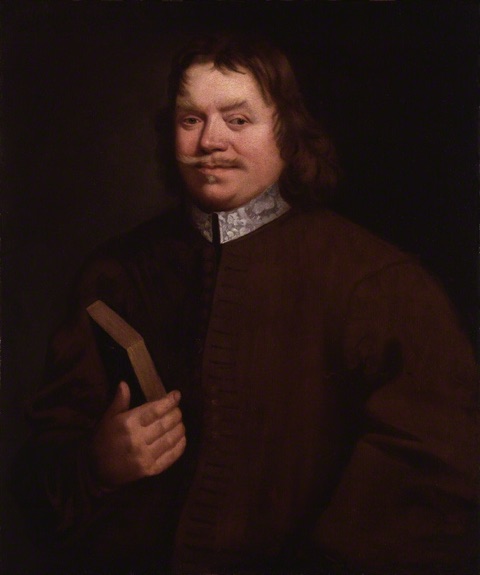
About the author
John Bunyan
John Bunyan was an English writer and Puritan preacher best known for his allegorical novel "The Pilgrim's Progress," which became one of the most published books in history. Born into a poor tinker's family, Bunyan had little formal education but became a powerful preacher after his conversion. His refusal to stop preaching without a license led to twelve years of imprisonment, during which he wrote many of his works, including "Grace Abounding to the Chief of Sinners," his spiritual autobiography. "The Pilgrim's Progress" tells the story of Christian's journey from the City of Destruction to the Celestial City, using vivid allegory to portray the Christian life. Bunyan's works, written in plain English accessible to common readers, have influenced countless Christians and remain devotional classics.
More in the free library
All 350+ books → Audio
A Body of Divinity
Thomas Watson · Free
 Audio
A Breathing After God
Richard Sibbes · Free
 Audio
A Call to the Unconverted
Richard Baxter · Free

A Christian Directory, Volume 1: Walking with God
Richard Baxter · Free

A Christian Directory, Volume 2: Governing Heart and Life
Richard Baxter · Free

A Christian Directory, Volume 3: Governing the Household
Richard Baxter · Free