Full text in modern English · Free PDF/EPUB
The Heavenly Footman
Want the file? The PDF/EPUB is free with an account.
Summary
- Author
- John Bunyan (1628 to 1688 AD), English Puritan preacher
- Published
- London, 1698 AD, ten years after Bunyan's death
- Source edition
- George Offor's The Works of John Bunyan (1855)
- Type
- Treatise on a single verse
- Length
- 15,000 words · 1 hours
What is The Heavenly Footman about?
The Heavenly Footman is John Bunyan's short treatise on 1 Corinthians 9:24, “So run, that ye may obtain.” It argues that those who want heaven must run for it, then gives nine directions for running the right way and nine motives for not giving up, and closes with a warning from Lot's wife.
Read the full summary (9 points, key themes)Show less
How the argument unfolds
- 01
Letter: to the slothful and careless. Sloth wastes the season and brings repentance too late. To the fear that running means leaving your friends, Bunyan answers that you “will run into the bosom of Christ and of God.”
- 02
Doctrine: run for it. Running means flying, pressing and continuing, like the manslayer racing for a city of refuge with the avenger behind him.
- 03
Seven reasons: why walking is not enough. Not every runner wins, the road is long, the time is uncertain, the gates may shut, and “the devil is nimble.”
- 04
Directions 1 to 4: the right road. Get into Christ, study the way, strip off what weighs you down, and watch for side lanes, since “the by-paths are usually the most beaten.”
- 05
Directions 5 to 8: eyes, ears and the cross. Do not stare after every new opinion or God's secret decrees, do not stop for those who call after you, do not lose heart, and do not stumble at the cross.
- 06
Direction 9: understanding and will. Pray for an enlightened mind and an inflamed will. “I tell you, the will is all.”
- 07
Nine motives: spurs for the runner. Win or lose everything, the pursuers behind, Christ's open arms ahead, and the saints already home, offered “as good as a pair of spurs to prick your sluggish heart on.”
- 08
Nine uses: examining the runner. Bunyan presses the almost-Christian, the backslider, the latecomer and the one content to keep pace with the slowest, who forgets that “the hindmost lose the prize.”
- 09
Closing: remember Lot's wife. Lot never looked back to see what became of her. The book ends with a direct question: “Think quickly, man; there is no dallying in this matter.”
Key themes
- Almost is not enough. Bunyan imagines the lost “tormented in hell by their almost and their but almost,” crying, “I was almost a Christian.”
- Another's righteousness. The heaviest piece of the cross is giving up your own goodness and resting on Christ's: “to do this in deed and in truth is the biggest piece of the cross.”
- The will as the wheel. The will “is one of the chief things that turns the wheel either backward or forward,” which is why God and the devil both work so hard on it.
Reader questions (6)Hide the questions
Questions about The Heavenly Footman
Can I read The Heavenly Footman online for free?
Yes. The complete text of this modern English edition is on this page, with no sign-up or paywall.
Is there a free PDF of The Heavenly Footman?
Yes. The PDF and EPUB of this edition are free with an Updated Works account. Sign in with Google or an email link; no card is needed.
What does “So run, that ye may obtain” mean in 1 Corinthians 9:24?
Bunyan reads it as a race run for a wager, where only those who run the right way to the finish win: “That is, do not only run, but be sure you win as well as run.”
Why is it called The Heavenly Footman?
A footman in Bunyan's day could mean a runner or a traveler on foot. The whole book pictures the Christian that way, running on the road to heaven, where “The crown is at the end of the race.”
What does Bunyan say about people who start following Christ and then turn back?
He treats it as worse than never starting, because the backslider “as good as says, ‘I have tried Christ, and I have tried sin, and I do not find as much profit in Christ as in sin.’”
What if I feel too weak to run?
Bunyan answers this in his seventh and eighth motives from Isaiah 40. Christ will either carry the tired runner or renew his strength: “Well, but Christ has a bosom.”
The Heavenly Footman · Full text
To All the Slothful and Careless
Friends,
Solomon says that “The desire of the slothful killeth him” (Prov 21:25); and if so, what will slothfulness itself do to those who entertain it? The proverb is, “He that sleepeth in harvest is a son that causeth shame” (Prov 10:5). And I dare to say this boldly: no greater shame can befall a man than to see that he has fooled away his soul and sinned away eternal life. And I am sure that the quickest way to do it is this: to be slothful. Slothful, I say, in the work of salvation. The vineyard of the slothful man, in the things of this life, is not fuller of briars, nettles and stinking weeds than the heart of the one who is slothful for heaven is full of heart-choking and soul-damning sin.
Slothfulness has these two evils. First, it neglects the time in which it should be getting heaven; and by that means, in the second place, it brings in repentance when it is too late. I assure you, whoever loses his soul in this world through slothfulness will have no reason to be glad of it when he comes to hell.
Slothfulness usually goes hand in hand with carelessness, and carelessness is for the most part bred by senselessness; and senselessness in turn puts fresh strength into slothfulness. By this means the soul is left without remedy.
Slothfulness shuts out Christ (Song 5:2-4); slothfulness shames the soul (Prov 13:4).
Slothfulness is condemned even by the feeblest of all the creatures: “Go to the ant, thou sluggard; consider her ways, and be wise” (Prov 6:6). “The sluggard will not plow by reason of the cold” (Prov 20:4); that is, he will not break up the fallow ground of his heart, because whoever does it must take some pains. “Therefore shall he beg in harvest”; that is, when the saints of God have their glorious heaven and happiness given to them. But the sluggard shall “have nothing”; that is, he will be none the better for his crying for mercy, as in Matt 25:10-12.
If you want to recognize a sluggard in the things of heaven, compare him with one who is slothful in the things of this world.
1. The man who is slothful is reluctant to set about the work he should be doing; so is the one who is slothful for heaven.
2. The man who is slothful is willing to make delays; so is the one who is slothful for heaven.
3. The sluggard will make any small matter that comes in between a good enough excuse to keep him from getting on with his work; and so it is also with the one who is slothful for heaven.
4. The man who is slothful does his work by halves; and so it is with the one who is slothful for heaven. He may almost, but he will never altogether, obtain complete deliverance from hell. He may almost, but he will never, unless he mends his ways, be altogether a saint.
5. Those who are slothful usually lose the season in which things ought to be done; and so it is also with those who are slothful for heaven: they miss the season of grace.
6. And therefore those who are slothful seldom or never have good fruit; and so it will be with the soul-sluggard too.
7. Those who are slothful are scolded for it; and so Christ will deal with those who are not active for him: “Thou wicked or slothful servant, out of thine own mouth will I judge thee; thou saidst I was thus, and thus, wherefore then gavest not thou my money to the bank?” (Luke 19:22). “Take the unprofitable servant, and cast him into utter darkness, where shall be weeping and gnashing of teeth” (Matt 25:26-30).
What more shall I say? Time is running; and will you be slothful? Much of your life is past; and will you be slothful? Your souls are worth a thousand worlds; and will you be slothful? The day of death and judgment is at the door; and will you be slothful? The curse of God hangs over your heads; and will you be slothful? Besides, the devils are earnest and hardworking. Every day they seek by every means, and by every sin, to keep you out of heaven and to hinder you from salvation; and will you be slothful? Your neighbors, too, are diligent for things that will perish; and will you be slothful for things that will last forever? Would you be willing to be damned for slothfulness? Would you be willing for the angels of God to neglect to fetch your souls away to heaven when you lie dying, while the devils stand by ready to scramble for them? Was Christ slothful in the work of your redemption? Are his ministers slothful in offering it to you? And lastly, if all this will not move you, I tell you that God will not be slothful or negligent to damn you, for your damnation has not been slumbering this long while. Nor will the devils neglect to fetch you, nor hell neglect to shut its mouth upon you.
Sluggard, are you still asleep? Are you resolved to sleep the sleep of death? Will no tidings from heaven or from hell wake you? Will you still say, “Yet a little sleep, a little slumber,” and “a little folding of the hands to sleep” (Prov 6:10)? Will you still turn over in your sloth, as a door turns on its hinges? Oh, if only I were skilled in lamentation, and had a truly yearning heart toward you, how I would pity you! How I would bemoan you! Oh, that I could, with Jeremiah, let my eyes run down with rivers of water for you! Poor soul, lost soul, dying soul, what a hard heart I have, that I cannot mourn for you!
If you were to lose only a limb, a child or a friend, it would not be so much. But, poor man, it is your soul! If it were to lie in hell only for a day, only for a year, no, even ten thousand years, it would (in comparison) be nothing. But oh, it is forever! Oh, this cutting ever! What a soul-amazing word that will be which says, “Depart from me, ye cursed, into everlasting fire…” (Matt 25:41).
Objection. But if I should set out and run as you would have me, then I must run away from all my friends, for none of them are running that way.
Answer. And if you do, you will run into the bosom of Christ and of God; and then what harm will that do you?
Objection. But if I run this way, then I must run away from all my sins.
Answer. That is true indeed; yet if you do not, you will run into hell-fire.
Objection. But if I run this way, then I will be hated, and lose the love of my friends and relatives, and of those I expect some benefit from or depend on; and I will be mocked by all my neighbors.
Answer. And if you do not, you are sure to lose the love and favor of God and Christ, and the benefit of heaven and glory, and to be mocked by God for your folly: “I also will laugh at your calamity; I will mock when your fear cometh” (Prov 1:26-28). And if you would not be hated and mocked, then take care that you do not by your folly bring on yourself the displeasure and mockery of the great God. For his mockery and hatred will be terrible, because they will fall on you in terrible times, even when tribulation and anguish take hold of you. That will be when death and judgment come, when all the people on earth and all the angels in heaven cannot help you.
Objection. But surely it will be time enough if I begin a year or two from now, won’t it?
Answer. 1. Do you hold any lease on your life? Did God ever tell you that you will live half a year, or two months, longer? No, it may be that you will not live so long.
2. And therefore, will you be so senseless and unwise as to stake your soul on a little uncertain time?
3. Do you know whether the day of grace will last another week or not? For the day of grace is past with some before their life is ended. And if it should be so with you, would you not say, “Oh, that I had begun to run before the day of grace was past, and the gates of heaven were shut against me!”
4. But if you saw any of your neighbors neglect to make sure of either a house or land for themselves when it was offered to them, saying, “Time enough hereafter,” when the time is uncertain, and besides, they do not know whether it will ever be offered to them again or not, would you not, I ask, call them fools? And if so, do you think you are a wise man to let your immortal soul hang over hell by a thread of uncertain time, which death may soon cut in two?
But to speak plainly, all these are the words of a slothful spirit. Arise, man, be slothful no longer! Set foot and heart and all into the way of God, and run. The crown is at the end of the race. There also stands the loving forerunner, even Jesus, who has prepared heavenly provision to make your soul welcome; and he will give it to you with a more willing heart than you could ever desire it of him. Oh, therefore, do not delay any longer, but put into practice the words of the men of Dan to their brothers after they had seen the goodness of the land of Canaan: “Arise,” they say, “…for we have seen the land, and behold it is very good; and are ye still?” In other words, are you holding back from running? “Be not slothful to go, and to enter to possess the land” (Judg 18:9). Farewell.
I hope that our souls may meet with comfort at the journey’s end.
John Bunyan
The Text Opened and the Doctrine: They That Will Have Heaven Must Run for It
So run, that ye may obtain (1 Cor 9:24).
Heaven and happiness is what everyone desires, so much so that even wicked Balaam could say, “Let me die the death of the righteous, and let my last end be like his” (Num 23:10). Yet for all this, there are very few who actually obtain that glory, which is forever to be desired. So few, in fact, that many eminent professing Christians fall short of a welcome from God into his pleasant place.
The apostle, therefore, because he desired the salvation of the souls of the Corinthians to whom he writes this letter, lays before them in these words such counsel as would help them and be to their advantage, if they took it. First, not to be wicked, and sit still, and wish for heaven, but to run for it. Second, not to content themselves with every kind of running, but, he says, “So run, that ye may obtain.” It is as if he should say: Some, because they would not lose their souls, begin to run early (Eccl 12:1); they run fast; they run with patience (Heb 12:1); they run the right way. Do you run like that? Some run from both father and mother, friends and companions (Luke 14:26), and they run like this so that they may have the crown. Do you run like that? Some run through temptations, afflictions, good report and evil report, so that they may win the pearl (1 Cor 4:13; 2 Cor 6). Do you run like that? “So run, that ye may obtain.”
These words are taken from men running a race for a wager, a very fitting comparison to set before the eyes of the saints of the Lord. “Know ye not that they which run in a race run all, but one receiveth the prize? So run, that ye may obtain” (1 Cor 9:24). That is, do not only run, but be sure you win as well as run. “So run, that ye may obtain.”
I will not need to make any great fuss about opening up the words at this time. Rather, I will lay down one doctrine that I find in them, and in pursuing that, I will show you, in some measure, the drift and purpose of the words.
The doctrine is this: They that will have heaven must run for it. I say, those who will have heaven must run for it. I beg you to pay close attention to it. “Know ye not that they which run in a race run all, but one receiveth the prize? So run ye.” The prize is heaven, and if you will have it, you must run for it. You have another scripture for this in Heb 12:1-3: “Wherefore seeing we also,” says the apostle, “are compassed about with so great a cloud of witnesses, let us lay aside every weight, and the sin which doth so easily beset us, and let us run with patience the race that is set before us.” And let us run, he says. Again, Paul says, “I therefore so run, not as uncertainly, so fight I …” (1 Cor 9:26).
What It Means to Run: Flying, Pressing, Continuing
But before I go any further, observe this.
1. Flying. This running is not an ordinary running, or just any sort of running. It is to be understood as the swiftest sort of running. That is why in the sixth chapter of Hebrews it is called a fleeing: “that we might have a strong consolation, who have fled for refuge, to lay hold upon the hope set before us” (Heb 6:18). Mark that: “who have fled.” The picture is taken from Josh 20, which tells of the man who was to flee to the city of refuge when the avenger of blood was hard at his heels, ready to take vengeance on him for the offense he had committed. So this is a running or flying for one’s life. It is running with all your might and main, as we say. So run!
2. Pressing. In another place this running is called a pressing: “I press toward the mark” (Phil 3:14). This means that those who want heaven must not stick at any difficulties they meet with. They must press, crowd and thrust their way through everything that may stand between heaven and their souls. So run!
3. Continuing. In another place this running is called a continuing in the way of life: “If ye continue in the faith grounded, and settled, and be not moved away from the hope of the gospel” of Christ (Col 1:23). It is not running a little now and then, by fits and starts, or halfway, or almost there. It is running for my life, running through all difficulties, and continuing in it to the end of the race, which must be to the end of my life. “So run, that ye may obtain” (1 Cor 9:24).
Seven Reasons Why We Must Run
And the reasons for this point are these:
1. Because not everyone who runs obtains the prize. There are many who do run, yes, and run far too, who still miss the crown that stands at the end of the race. You know that not all who run in a race win the victory; they all run, but one wins. And so it is here. It is not everyone who runs, nor everyone who seeks, nor everyone who strives for the mastery, who gets it (Luke 13). “Though a man do strive for the mastery,” says Paul, “yet he is not crowned, except he strive lawfully” (2 Tim 2:5); that is, unless he so runs and so strives as to have God’s approval. What, do you think that every heavy-heeled professing Christian will have heaven? What, every lazy one? Every frivolous and foolish professing Christian, who will be stopped by anything and held back by anything, who hardly runs heavenward as fast as a snail creeps on the ground? No, there are some professing Christians who do not go on in the way of God even as fast as a snail goes up the wall; and yet these people think that heaven and happiness are meant for them. But wait: there are many more who run than there are who obtain. Therefore he who will have heaven must run for it.
2. Because, as you know, even if a man does run, yet if he does not overcome, or win, as well as run, what will he be the better for his running? He will get nothing. You know that the man who runs does it so that he may win the prize. But if he does not obtain it, he loses his labor and spends his effort and his time, and all to no purpose. I say, he gets nothing. And oh, how many such runners will be found on the day of judgment! Multitudes, even multitudes, who have run, yes, run so far as to come to heaven’s gates, and then are not able to get any further, but stand there knocking when it is too late, crying, “Lord, Lord,” when all they get for their pains is rebukes: “Depart from me! You are not coming in here. You have come too late. You ran too lazily. The door is shut.” “When once the master of the house is risen up,” says Christ, “and hath shut to the door, and ye begin to stand without, and to knock at the door, saying, Lord, Lord, open unto us, I will say, I know ye not, Depart …” (Luke 13:25-27). Oh, how sad the condition of those who run and miss will be! Therefore, if you will have heaven, you must run for it, and “so run that ye may obtain.”
3. Because the way is long (I speak metaphorically), and there is many a dirty step, many a high hill, much work to do, and a wicked heart, a world and a devil to overcome. I say, there are many steps to be taken by those who intend to be saved by running or walking in the steps of that faith of our father Abraham. You must go out of Egypt through the Red Sea; you must run a long and tedious journey through the vast howling wilderness before you come to the land of promise.
4. Those who will go to heaven must run for it, because, just as the way is long, so the time in which they have to get to the end of it is very uncertain. The present time is the only time. You have no more time allotted to you than the time you now enjoy. “Boast not thyself of tomorrow, for thou knowest not what a day may bring forth” (Prov 27:1). Do not say, “I have time enough to get to heaven seven years from now.” For I tell you, the bell may toll for you before seven more days are over. And when death comes, away you must go, whether you are prepared or not. Therefore look to it; make no delays. It is not good to trifle with matters of such great importance as the salvation or damnation of your soul. You know that a man who has a long way to go in a short time, and that time less by half than he thinks, had better run for it.
5. Those who will have heaven must run for it, because the devil, the law, sin, death and hell are following them. There is never a poor soul going to heaven but the devil, the law, sin, death and hell chase after that soul. “Your adversary, the devil, as a roaring lion, walketh about, seeking whom he may devour” (1 Pet 5:8). And I assure you, the devil is nimble. He can run fast; he is light on his feet. He has overtaken many; he has knocked them head over heels and given them an everlasting fall. The law also can shoot a long way; be careful that you keep out of the range of those great guns, the Ten Commandments. Hell also has a wide mouth; it can stretch itself further than you realize. And as the angel said to Lot, take heed: “look not behind thee, neither tarry thou in all the plain” (that is, anywhere between here and heaven), “lest thou be consumed” (Gen 19:17). So I say to you: Take heed; do not linger, or else the devil, hell, death or the fearful curses of the law of God may overtake you and throw you down in the middle of your sins, so that you never rise and recover again. If this were well considered, then you as well as I would say, “Those who will have heaven must run for it.”
6. Those who will go to heaven must run for it, because perhaps the gates of heaven may soon be shut. Sometimes sinners do not have heaven’s gates open to them as long as they suppose. And if those gates are once shut against a man, they are so heavy that neither all the men in the world nor all the angels in heaven are able to open them. Christ says that he shuts, “and no man openeth” (Rev 3:7). And what if you should come just one quarter of an hour too late? I tell you, it will cost you an eternity in which to bewail your misery. Francis Spira can tell you what it is to wait until the gate of mercy is completely shut, or to run so lazily that the gates are shut before you get inside them. What, to be shut out! What, shut out of heaven! Sinner, rather than lose it, run for it; yes, and “so run that thou mayst obtain.”
7. Lastly, because if you lose, you lose everything. You lose your soul, God, Christ, heaven, ease, peace and all the rest. Besides that, you lay yourself open to all the shame, contempt and reproach that God, Christ, the saints, the world, sin, the devil and all of them can heap on you. As Christ says of the foolish builder, so I will say of you if you are one who runs and misses: I say, all who pass by will begin to mock you, saying, “This man began to run well, but was not able to finish” (Luke 14:28-30). But more about this later.
Nine Directions for Running So as to Win
Question. But what should a poor soul do in order to run? For this very thing is what afflicts me so badly: to think, as you say, that I may run and yet fall short. To fall short at last, oh, it frightens me terribly! Please tell me, then, how I should run.
Answer. So that you may be truly satisfied on this point, consider the following things.
The First Direction. If you want to run so as to obtain the kingdom of heaven, then be sure that you get into the way that leads there. For it is useless to think that you will ever have the prize, however fast you run, unless you are in the way that leads to it. Suppose there were a man in London who was to run to York for a wager. Now, however swiftly he ran, if he ran due south he might quickly run himself out of breath and be no nearer the prize, but rather farther off. It is just the same here. It is not simply the runner, nor even the fast runner, who wins the crown, unless he is in the way that leads to it. In the little time I have been a professing Christian, I have observed that there is a great running to and fro, some this way and some that way. Yet it is to be feared that most of them are out of the way, and then, though they run as swiftly as the eagle can fly, they gain nothing at all by it.
Here is one who runs after the Quakers, another after the Ranters; one again runs after Baptism, and another after Independency. Here is one for free will, and another for Presbytery. And yet possibly most of all these sects run quite the wrong way, and yet for every one of them his life and his soul are at stake, either for heaven or for hell.
If you now ask, “Which is the way?” I tell you it is Christ, the Son of Mary, the Son of God. Jesus says, “I am the way, and the truth, and the life; no man cometh unto the Father but by me” (John 14:6). So then, if you want salvation, your business is to see whether Christ is yours, with all his benefits: whether he has covered you with his righteousness; whether he has shown you that your sins are washed away with his heart’s blood; whether you are planted into him; and whether you have such faith in him as draws your life out of him and conforms you to him. That is, you must have such faith as concludes that you are righteous because Christ is your righteousness, and so are constrained to walk with him as the joy of your heart, because he saves your soul. And for the Lord’s sake, take heed! Do not deceive yourself and think you are in the way on too slight grounds. For if you miss the way, you will miss the prize; and if you miss that, I am sure you will lose your soul, that very soul which is worth more than the whole world.
But I have treated this more fully in my book on the two covenants, and so I will pass over it now. Only I beg you to take care of your soul. And so that you may do so, take this counsel. Distrust your own strength, and throw it away. Get down on your knees in prayer to the Lord for the Spirit of truth. Search his word for direction. Flee the company of seducers. Keep company with the soundest Christians, those who have the most experience of Christ. And be sure you beware of Quakers, Ranters, and Freewillers. Also, do not keep too much company with some Anabaptists, though I go under that name myself. I tell you, this is such a serious matter, and I fear you will regard it so little, that the thought of the worth of the thing, and of your regarding it too lightly, makes my very heart ache while I am writing to you. May the Lord teach you the way by his Spirit, and then I am sure you will know it. So run.
Only, by the way, let me urge you to take care about two things, and then I will pass on to the next point.
1. Beware of relying on outward obedience to any of God’s commands, or of thinking yourself any better in God’s sight because of it.
2. Take heed of drawing peace for your soul from any inherent righteousness. But if you can believe that, as you are a sinner, so you are justified freely by the love of God, through the redemption that is in Christ; and that God has forgiven you for Christ’s sake, not because he saw anything done, or to be done, in you or by you, that moved him to do it, then that is the right way. May the Lord put you into it and keep you in it.
The Second Direction. As you should get into the way, so you should also be much in studying and musing on the way. You know that people who want to be expert in anything usually spend much time studying that thing; and it is the same with those who quickly become expert in any way. So this is what you should do. Let your study be much occupied with Christ, who is the way: what he is, what he has done, why he is what he is, and why he has done what is done. For example, why “he took upon him the form of a servant,” why he “was made in the likeness of men” (Phil 2:7); why he cried; why he died; why he bore the sin of the world; why he was made sin, and why he was made righteousness (2 Cor 5:21); why he is in heaven in the nature of man, and what he does there. Be much in musing on and considering these things.
Think enough, too, about the places you must not go near, but must leave some on this hand and some on that. It is like those who travel into other countries: they must leave such a gate on this hand and such a bush on that hand, and pass by such a place where such a thing stands. So this is what you must do. Avoid the things that are expressly forbidden in the Word of God. “Withdraw thy foot far from her, and come not nigh the door of her house, for her steps take hold on hell, going down to the chambers of death” (Prov 5; Prov 7). And so with everything that is not in the way: take care that you do not go that way. Do not come near it; have nothing to do with it. So run.
The Third Direction. Not only this, but next you must strip yourself of those things that may hang on you and hinder you in the way to the kingdom of heaven, such as covetousness, pride, lust, or whatever else your heart may be inclined to that may hinder you in this heavenly race. Men who run for a wager, if they intend to win as well as run, do not usually weigh themselves down or carry things about them that may be a hindrance to them in their running. “Every man that striveth for the mastery is temperate in all things” (1 Cor 9:25); that is, he lays aside everything that would be in any way a disadvantage to him. As the apostle says, “Let us lay aside every weight, and the sin which doth so easily beset us, and let us run with patience the race that is set before us” (Heb 12:1). It is useless to talk of going to heaven if you let your heart be weighed down with things that would hinder you. Would you not say that such a man would be in danger of losing, even though he runs, if he filled his pockets with stones, hung heavy garments on his shoulders, and put great lumpish shoes on his feet? So it is here. You talk of going to heaven, and yet you fill your pocket with stones; that is, you fill your heart with this world and let it hang on your shoulders with its profits and pleasures. Alas, alas, you are widely mistaken! If you intend to win, you must strip; you must lay aside every weight; you must be temperate in all things. You must so run.
The Fourth Direction. Beware of by-paths. Take heed that you do not turn into those lanes that lead out of the way. There are crooked paths, paths in which men go astray, paths that lead to death and damnation; but beware of them all (Isa 59:8). Some of them are dangerous because of practice (Prov 7:25), some because of opinion; but pay them no mind. Mind the path before you. Look right in front of you. Turn neither to the right hand nor to the left, but let your eyes look right on, even right before you (Prov 4:25). “Ponder the path of thy feet, and let all thy ways be established. Turn not to the right hand nor to the left. Remove thy foot far from evil” (Prov 4:26-27). The reason for all this starting from opinion to opinion, reeling this way and that, out of this lane into that lane, and so missing the way to the kingdom, is that this counsel is not taken as seriously as it is given.
Though the way to heaven is only one, yet many crooked lanes and by-paths run down into it, so to speak. And again, although the kingdom of heaven is the biggest city, yet the by-paths are usually the most beaten; most travelers go those ways. And therefore the way to heaven is hard to find, and just as hard to keep to, because of them. Yet, nevertheless, in this case it is as it was with the harlot of Jericho. She had one scarlet thread tied in her window, by which her house was known (Josh 2:18). So it is here. The scarlet streams of Christ’s blood run throughout the way to the kingdom of heaven. Therefore mind that. See whether you find the sprinkling of the blood of Christ in the way; and if you do, be of good cheer, you are in the right way. But take care that you do not deceive yourself with a fancy, for then you may blunder into any lane or way. So that you may not be mistaken, consider this: however pleasant a way may seem, if you do not find written in the very middle of the road, with the heart’s blood of Christ, that he came into the world to save sinners, and that we are justified though we are ungodly, shun that way. For this is what the apostle means when he says that we have “boldness to enter into the holiest by the blood of Jesus, by a new and living way which he hath consecrated for us, through the veil, that is to say, his flesh” (Heb 10:19-20).
How easy it is in our day for the devil to be too cunning for poor souls by calling his by-paths the way to the kingdom! If some opinion or fancy is only cried up by one or more people, and the devil sets this inscription on it, “This is the way of God,” how speedily, how greedily, and in what heaps poor simple souls throw themselves away on it! Especially if it is daubed over with a few outward acts of morality, if it is even that good. But this is because men do not know painted by-paths from the plain way to the kingdom of heaven. They have not yet learned the true Christ and what his righteousness is, nor do they have a sense of their own insufficiency, but are bold, proud, presumptuous, and self-conceited. And therefore:
The Fifth Direction. Do not be too much given to looking too high in your journey heavenward. You know that men who run in a race do not usually stare and gaze this way and that; nor do they usually cast their eyes up too high, in case, perhaps, through gazing far too much after other things, they should stumble in the meantime and take a fall. This is the very same case. If you gaze and stare after every opinion and way that comes into the world, or if you pry too much into God’s secret decrees, or let your heart entertain too many questions about some overly subtle, foolish curiosities, you may stumble and fall. Many hundreds in England have done so, both in Ranting and in Quakerism, to their own eternal overthrow, unless the marvelous working of God’s grace is suddenly stretched out to bring them back again. Take heed, therefore. Do not follow that proud and lofty spirit which, like the devil, cannot be content with its own station. David was of an excellent spirit when he said, “Lord, my heart is not haughty, nor mine eyes lofty, neither do I exercise myself in great matters, or in things too high for me. Surely I have behaved and quieted myself as a child that is weaned of his mother: my soul is even as a weaned child” (Ps 131:1-2). So you must run.
The Sixth Direction. Take heed that you do not keep an ear open to everyone who calls after you as you go on your journey. You know that when men are running, if anyone calls after them, saying, “I would like to speak with you,” or, “Don’t go so fast, and you shall have my company,” then, if they are running for some great matter, they usually say, “Oh, I cannot stop; I am in haste. Please don’t talk to me now. Nor can I wait for you; I am running for a wager. If I win, I am made; if I lose, I am undone. So don’t hinder me.” Men are as wise as this when they run for corruptible things, and so should you be. You have more cause to be than they do, since they run only for things that do not last, but you run for an incorruptible glory.
I give you notice of this in good time, knowing that you will have plenty calling after you: the devil, sin, this world, vain company, pleasures, profits, esteem among men, ease, pomp, pride, together with an innumerable company of such companions. One will cry, “Wait for me!” another, “Don’t leave me behind!” and a third, “And take me along with you!” “What,” says the devil, “will you go without your sins, pleasures, and profits? Are you in such a hurry? Can’t you stay and take these along with you? Will you leave your friends and companions behind you? Can’t you do as your neighbors do, and carry the world, sin, lust, pleasure, profit, and esteem among men along with you?” Take care that you do not let your ear be open now to the tempting, enticing, alluring, and soul-entangling flatteries of such sink-souls as these. “My son,” says Solomon, “if sinners entice thee, consent thou not” (Prov 1:10).
You know what it cost the young man Solomon speaks of in Prov 7, who was enticed by a prostitute. “With her much fair speech she” won him, and “caused him to yield, with the flattering of her lips she forced him,” until he went after her “as an ox to the slaughter, or as a fool to the correction of the stocks”; even so far, “till the dart struck through his liver, and knew not that it was for his life. Hearken unto me now therefore,” he says, “O ye children, and attend to the words of my mouth, let not thine heart decline to her ways, go not astray in her paths, for she hath cast down many wounded, yea, many strong men have been slain by her” (that is, kept out of heaven by her); “her house is the way to hell, going down to the chambers of death.” Soul, take this counsel and say, “Satan, sin, lust, pleasure, profit, pride, friends, companions, and everything else, leave me alone! Stand back, and do not come near me, for I am running for heaven, for my soul, for God, for Christ, away from hell and everlasting damnation. If I win, I win all; and if I lose, I lose all. Leave me alone, for I will not listen.” So run.
The Seventh Direction. Next, do not be daunted, however many discouragements you meet with on your journey there. If Satan cannot win the man who is resolved for heaven by flatteries, he will try to weaken him by discouragements, saying, “You are a sinner; you have broken God’s law; you are not elected; you come too late; the day of grace is past; God does not care for you; your heart is no good; you are lazy,” with a hundred other discouraging suggestions. And so it was with David, where he says, “I had fainted, unless I had believed to see the goodness of the Lord in the land of the living” (Ps 27:13-14). It is as if he were saying, “The devil raged so, and my heart was so base, that if I had judged by my own sense and feeling, I would have gone completely out of my mind. But I trusted in Christ in the promise, and I expected God to be as good as his promise in having mercy on me, an unworthy sinner. This is what encouraged me and kept me from fainting.”
And this is what you must do when Satan, or the law, or your own conscience sets out to dishearten you, whether by the greatness of your sins, the wickedness of your heart, the tediousness of the way, the loss of outward comforts, the hatred you will bring on yourself from the world, or the like. Then you must encourage yourself with the freeness of the promises, the tenderheartedness of Christ, the merits of his blood, the freeness of his invitations to come in, and the greatness of the sins of others who have been pardoned; and with this, that the same God, through the same Christ, still holds out the same grace as freely as ever. If these are not your meditations, you will drag along very heavily on the way to heaven, if you do not give it all up for lost and so stop following any farther. Therefore, I say, take heart in your journey, and say to those who seek your destruction, “Rejoice not against me, O mine enemy, when I fall I shall arise, when I sit in darkness the Lord shall be a light unto me” (Mic 7:8). So run.
The Eighth Direction. Beware of being offended at the cross that you must pass by before you come to heaven. You must understand, as I have already touched on, that no one goes to heaven without going by the cross. The cross is the standing waymark that all who go to glory must pass by. “We must through much tribulation enter into the kingdom of God” (Acts 14:22). “Yea, and all that will live godly in Christ Jesus shall suffer persecution” (2 Tim 3:12). If you are on the way to the kingdom, I will stake my life on it that you will come to the cross shortly. The Lord grant that you do not shrink at it so as to turn back again! “If any man will come after me,” says Christ, “let him deny himself, and take up his cross daily, and follow me” (Luke 9:23).
The cross stands, and has stood from the beginning, as a waymark to the kingdom of heaven. You know that if someone asks you the way to such and such a place, you do not only say, “This is the way,” but, to direct them better, you also say, “You must go by such a gate, by such a stile, such a bush, tree, bridge,” or something like that. Why, it is the same here. Are you asking the way to heaven? Why, I tell you, Christ is the way. You must get into him, into his righteousness, to be justified. And if you are in him, you will soon see the cross. You must go close by it; you must touch it; no, you must take it up, or else you will quickly go out of the way that leads to heaven and turn up some of those crooked lanes that lead down to the chambers of death.
You may know the cross by these six things. It is known (1) in the doctrine of justification, (2) in the doctrine of mortification, (3) in the doctrine of perseverance, (4) in self-denial, (5) in patience, and (6) in communion with poor saints.
1. In the doctrine of justification there is a great deal of the cross. A man is forced to suffer the destruction of his own righteousness for the righteousness of another. This is no easy thing for a man to do; I assure you, it stretches every vein in his heart before he will be brought to yield to it. What! For a man to deny, reject, abhor and throw away all his prayers, tears, alms, keeping of Sabbaths, hearing, reading, and the rest, in the matter of justification, and to count them accursed! And to be willing, in the very midst of the sense of his sins, to throw himself wholly on the righteousness and obedience of another man, abhorring his own, counting it as deadly sin, as an open breach of the law! I say, to do this in deed and in truth is the biggest piece of the cross. And therefore Paul calls this very thing a suffering, where he says, “And I have suffered the loss of all things” (which was chiefly his righteousness), “that I might win Christ, and be found in him, not having” (but rejecting) “mine own righteousness” (Phil 3:8-9). That is the first.
2. In the doctrine of mortification there is also much of the cross. Is it nothing for a man to lay hands on his vile opinions, on his vile sins, his bosom sins, his beloved, pleasant, darling sins, which stick as close to him as the flesh sticks to the bones? What, to lose all these fine things my eyes behold, for something I never saw with my eyes? What, to lose my pride, my covetousness, my vain company, sports and pleasures, and the rest? I tell you, this is no easy matter. If it were, what need would there be for all those prayers, sighs and watchings? Why would we be so backward about it? No, do you not see that some men, rather than set about this work, will even risk the loss of their souls, heaven, God, Christ, and all? What else do all those delays and put-offs mean, when they say, “Wait a little longer; I am loath to leave my sins while I am so young and in good health”? Again, what other reason is there that others do it so by halves, coldly and seldom, even though they are convinced over and over, yes, and even promise to amend, and yet it is all in vain? I assure you, to cut off right hands and to pluck out right eyes is no pleasure to the flesh.
3. The doctrine of perseverance also runs cross to the flesh. Perseverance means not only to begin but to hold out; not only to make a fair show and say, “I wish I had heaven,” but so to know Christ, to put on Christ, and to walk with Christ as to come to heaven. Indeed, it is no great matter to begin to look for heaven, to begin to seek the Lord, to begin to shun sin. Oh, but it is a very great matter to continue with God’s approval! “My servant Caleb,” says God, is a man of “another spirit, he hath followed me”: followed me always, he has continually followed me, “fully, he shall possess the land” (Num 14:24). Almost all the many thousands of the children of Israel in their generation fell short of perseverance when they walked from Egypt toward the land of Canaan. Indeed, they went to the work at first willingly enough, but they were very short-winded. They were quickly out of breath, and in their hearts they turned back again into Egypt.
It is an easy matter for a man to run hard for a spurt, for a furlong, for a mile or two. Oh, but to hold out for a hundred, for a thousand, for ten thousand miles! The man who does this must expect to meet with the cross, with pain and weariness to the flesh, especially if, as he goes, he meets with briars and quagmires and other obstacles that make his journey all the more painful.
Indeed, do you not see with your own eyes every day that perseverance is a very great part of the cross? Why else do men grow weary so soon? I could point out many who followed the ways of God for about a year (others perhaps two, three or four years, some more and some less) and then were beaten out of wind. They have taken up their lodging and rest before they got halfway to heaven, some in this sin and some in that. And they have secretly, and sometimes even openly, said that the way is too narrow, the race too long, the religion too holy, and that they cannot hold out: “I can go no farther.”
4, 5, 6. And so it is likewise with the other three, namely, patience, self-denial, and communion with the poor saints and sharing with them. How hard these things are! It is an easy matter to deny another man, but it is not so easy a matter to deny oneself: out of love to God, to his gospel, and to his saints, to deny myself this advantage and that gain; yes, even things I might otherwise lawfully do, were it not that they would offend them. That scripture is seldom read, and still more seldom put into practice, which says, “I will eat no flesh while the world standeth, if it make my brother to offend” (1 Cor 8:13). And again, “We that are strong ought to bear the infirmities of the weak, and not to please ourselves” (Rom 15:1). But how perverse, how hasty, how peevish and self-willed most professing Christians are today! And how little they consider the poor, unless it is to say, “Be thou warmed and filled”! But giving is rare work, and especially giving to any poor (Gal 6:10). I tell you, all things run cross to flesh and blood. The man who keeps even a watchful eye over the flesh, and has some considerable measure of strength against it, will find his heart in these things like a shying horse ridden without a curb bridle, ready to start at everything that offends it; yes, and ready to bolt too, whatever the rider can do.
It is the cross that keeps from heaven those who are kept from it. I am persuaded that, were it not for the cross, where we have one professing Christian we would have twenty. But this cross, that is what spoils everything.
Some men, as I said before, when they come to the cross, can go no farther, but back to their sins they must go. Others stumble at it and break their necks. Others again, when they see the cross approaching, turn aside to the left hand or to the right, and so think to get to heaven another way; but they will be deceived. “Yea, and all that will live godly in Christ Jesus shall,” mark it, shall be sure to “suffer persecution” (2 Tim 3:12). There are only a few who, when they come to the cross, cry, “Welcome, cross!” as some of the martyrs did to the stake they were burned at. Therefore, if you meet with the cross in your journey, in whatever form it comes, do not be daunted and say, “Alas, what shall I do now?” Rather take courage, knowing that the way to the kingdom is by the cross. Can a man believe in Christ and not be hated by the devil? Can he make a profession of this Christ, and that sweetly and convincingly, and the children of Satan hold their tongues? Can darkness agree with light? Or will the devil endure that Christ Jesus should be honored both by faith and by a heavenly life, and leave that soul alone in quiet? Did you never read that “the dragon persecuteth the woman” (Rev 12)? And that Christ says, “In the world ye shall have tribulation” (John 16:33)?
The Ninth Direction. Beg God to do these two things for you: first, to enlighten your understanding; and second, to inflame your will. If these two are effectually done, there is no fear but that you will go safely to heaven.
First: Enlighten your understanding. One of the great reasons men and women regard the other world so little is that they see so little of it. And the reason they see so little of it is that their understandings are darkened. And therefore Paul tells you believers not to “walk as do other Gentiles, even in the vanity of their minds, having the understanding darkened, being alienated from the life of God through the ignorance,” or foolishness, “that is in them, because of the blindness of their heart” (Eph 4:17-18). Do not walk as they do; do not run with them. Alas, poor souls, they have their understandings darkened and their hearts blinded, and that is the reason they think so little of the Lord Jesus Christ and the salvation of their souls. For when men come to see the things of another world, what a God, what a Christ, what a heaven, and what an eternal glory there is to be enjoyed, and also see that it is possible for them to have a share in it, I tell you, it will make them run through thick and thin to enjoy it.
Moses, having a sight of this because his understanding was enlightened, did not fear the wrath of the king, but chose “rather to suffer affliction with the people of God, than to enjoy the pleasures of sin for a season.” He refused to be called the son of the king’s daughter, counting it wonderful riches to be counted worthy even to suffer for Christ with the poor despised saints. And that was because he saw him who was invisible, and “had respect unto the recompense of the reward” (Heb 11:24-27). And this is what the apostle usually prays for the saints in his epistles, namely, “That they might know what is the hope of God’s calling, and the riches of the glory of his inheritance in the saints” (Eph 1:18); and that they might “be able to comprehend with all saints, what is the breadth, and length, and depth, and height, and to know the love of Christ which passeth knowledge” (Eph 3:18-19).
Pray, therefore, that God would enlighten your understanding; that will be a very great help to you. It will make you endure many a hard blow for Christ. As Paul says, “After ye were illuminated, ye endured a great fight of afflictions. You took joyfully the spoiling of your goods, knowing in yourselves that ye have in heaven a better and an enduring substance” (Heb 10:32-34). Though the rarest jewel in the world were lying right in a man’s way, yet if he does not see it, he will sooner trample on it than stoop for it, and that is because he does not see it. Why, it is the same here. However much heaven is worth, and however much you need it, yet if you do not see it (that is, if your understanding is not opened or enlightened to see it), you will not regard it at all. Therefore cry to the Lord for enlightening grace, and say, “Lord, open my blind eyes! Lord, take the veil off my dark heart! Show me the things of the other world, and let me see their sweetness, glory and excellence, for Christ’s sake.” This is the first.
Second: Inflame your will. Cry to God that he would inflame your will also with the things of the other world. For when a man’s will is fully set on doing some particular thing, it must be a very hard matter that will stop that man from bringing about his end. When Paul’s will was resolutely set on going up to Jerusalem, though he was told beforehand what he would suffer there, he was not daunted at all. No, he says, “I am ready,” or willing, “not to be bound only, but also to die at Jerusalem for the name of the Lord Jesus” (Acts 21:13). His will was inflamed with love to Christ, and therefore all the persuasions that could be used accomplished nothing at all.
As for your self-willed people, nobody knows what to do with them. We have a saying, “He will have his own will, do what you can.” Indeed, to have such a will for heaven is an admirable advantage to a man who undertakes the race there. A man who is resolved and has his will fixed says, “I will do my best to advance myself; I will do my worst to hinder my enemies; I will not give up as long as I can stand; I will have it, or I will lose my life. ‘Though he slay me, yet will I trust in him’ (Job 13:15). ‘I will not let thee go except thou bless me’ (Gen 32:26). I will, I will, I will!” Oh, this blessed inflamed will for heaven! What is like it? If a man is willing, then any argument will be a matter of encouragement; but if he is unwilling, then any argument will give discouragement. This is seen both in saints and in sinners, in those who are the children of God and also in those who are the children of the devil. For example:
1. The saints of old, being willing and resolved for heaven, what could stop them? Could fire or stake, sword or noose, stinking dungeons, whips, bears, bulls, lions, cruel rackings, stoning, starving, nakedness, and the like (Heb 11)? “Nay, in all these things they were more than conquerors, through him that loved them” (Rom 8:37), who had also made them “willing in the day of his power” (Ps 110:3).
2. See again, on the other side, the children of the devil. Because they are not willing, how many excuses and bolt-holes they have! “I have married a wife; I have a farm; I shall offend my landlord; I shall offend my master; I shall lose my trade; I shall lose my pride, my pleasures; I shall be mocked and scoffed at; therefore I dare not come.” “I,” says another, “will wait till I am older, till my children are out of sight, till I have got a little ahead in the world, till I have done this and that and the other business.” But alas, the truth is, they are not willing. For if they were soundly willing, these and a thousand such as these would hold them no faster than the cords held Samson when he broke them like burned flax (Judg 15:14).
I tell you, the will is all. It is one of the chief things that turns the wheel either backward or forward. God knows that full well, and so does the devil; and therefore they both work very hard to strengthen the will of their servants. God is for making his people a willing people to serve him; and the devil does what he can to possess the will and affections of those who are his with love to sin. And therefore, when Christ comes close to the matter, he says plainly, “Ye will not come to me” (John 5:40). “How often would I have gathered you as a hen doth her chickens, and ye would not” (Luke 13:34). The devil had possessed their wills, and as long as he held them, he was sure enough of them.
Oh, therefore, cry hard to God to inflame your will for heaven and Christ. Your will, I say: if that is rightly set for heaven, you will not be beaten off by discouragements. And this was the reason that when Jacob wrestled with the angel, though he lost a limb, as it were, and the hollow of his thigh was put out of joint as he wrestled with him, yet he says, “I will not,” mark it, “I will not let thee go except thou bless me” (Gen 32:24-26). Get your will tipped with heavenly grace and with resolution against all discouragements, and then you will go full speed for heaven. But if you falter in your will and are not found firm there, you will run hobbling and limping all the way you run, and, to be sure, you will also fall short at the last. The Lord give you a will and courage!
Thus I have finished directing you how to run to the kingdom. Be sure to keep in memory what I have said to you, lest you lose your way. But because I want you to think of these things, take them all in short on this little bit of paper:
1. Get into the way.
2. Then study it.
3. Then strip, and lay aside everything that would hinder you.
4. Beware of by-paths.
5. Do not gaze and stare about you too much, and be sure to ponder the path of your feet.
6. Do not stop for any who call after you, whether it is the world, the flesh, or the devil; for all these will hinder your journey, if they can.
7. Do not be daunted by any discouragements you meet with as you go.
8. Beware of stumbling at the cross.
9. Cry hard to God for an enlightened heart and a willing mind. And God give you a prosperous journey!
Nine Motives to Spur the Runner On
Yet before I quite take my leave of you, let me give you a few motives to carry along with you. It may be they will be as good as a pair of spurs to prick your sluggish heart on in this rich journey.
The First Motive. Consider that there is no other way but this: you must either win or lose. If you win, then heaven, God, Christ, glory, ease, peace, life, yes, life eternal, is yours. You will be made equal to the angels in heaven. You will sorrow no more, sigh no more, feel no more pain. You will be out of the reach of sin, hell, death, the devil, the grave, and whatever else may try to hurt you. But on the other hand, if you lose, then your loss is heaven, glory, God, Christ, ease, peace, and whatever else tends to make eternity comfortable to the saints. Besides that, you bring upon yourself eternal death, sorrow, pain, blackness and darkness, fellowship with devils, together with the everlasting damnation of your own soul.
The Second Motive. Consider that this devil, this hell, death and damnation, are following after you as hard as they can drive. They have their commission to do so from the law, against which you have sinned. And therefore, for the Lord’s sake, make haste.
The Third Motive. If they seize you before you get to the city of refuge, they will put an everlasting stop to your journey. This also cries, “Run for it.”
The Fourth Motive. Know also that right now heaven’s gates, the heart of Christ, and his arms are wide open to receive you. Oh, it seems to me that this thought, that the devil is following after you to destroy you, and that Christ stands with open arms to receive you, should make you reach out and fly with all haste and speed!
The Fifth Motive. And therefore keep your eye upon the prize. Be sure that your eyes are continually upon the profit you are likely to get. The reason people are so apt to faint in their race for heaven lies chiefly in one of these two things:
1. They do not seriously consider the worth of the prize; or else, if they do, they are afraid it is too good for them. But most lose heaven for want of considering the price and the worth of it. And therefore, so that you may not do the same, keep your eye much upon the excellence, the sweetness, the beauty, the comfort and the peace that are to be had there by those who win the prize. This was what made the apostle run through anything: good report, evil report, persecution, affliction, hunger, nakedness, peril by sea and peril by land, bonds and imprisonments. It also made others endure being stoned and sawn in two, having their eyes bored out with augers, their bodies broiled on gridirons and their tongues cut out of their mouths, being boiled in cauldrons, thrown to the wild beasts, burned at the stake, whipped at posts, and a thousand other fearful torments, “while they looked not at the things which are seen” (that is, the things of this world), “but at the things which are not seen; for the things which are seen are temporal; but the things which are not seen are eternal” (2 Cor 4:18). Oh, this word “eternal”! It was this that made them refuse deliverance when they might have had it, for they knew that in the world to come they would have a better resurrection (Heb 11:35).
2. And do not let thoughts of how rare and fine the place is make you say in your heart, “This is too good for me.” For I tell you, heaven is prepared for whoever will accept it, and they will be entertained with a hearty welcome. Consider, then, that people as bad as you have gotten there. Shabby, beggarly Lazarus went there, and others like him. More than that, it is prepared for the poor: “Hearken, my beloved brethren,” says James (take notice of it), “Hath not God chosen the poor of this world rich in faith, and heirs of the kingdom?” (Jas 2:5). Therefore take heart and run, man!
The Sixth Motive. And think much about those who have gone before. First, how truly they got into the kingdom. Second, how safe they are in the arms of Jesus. Would they come back here again for a thousand worlds? Or if they did, would they be afraid that God would not make them welcome? Third, what would they think of you if they knew that your heart was beginning to fail you in your journey, or that your sins were beginning to entice you and persuade you to stop your race? Would they not call you a thousand times a fool? Would they not say, “Oh, if only he could see what we see, feel what we feel, and taste the delicacies that we taste! Oh, if he were here for one quarter of an hour, to behold, to see, to feel, to taste and enjoy only the thousandth part of what we enjoy, what would he do? What would he suffer? What would he leave undone? Would he favor sin? Would he love this world below? Would he be afraid of his friends, or shrink at the most fearful threats that the greatest tyrants could invent to give him?”
No, even those who have had only a sight of these things by faith, while they were as far off from them as heaven is from earth, have still been able to say with a comfortable and merry heart, like the bird that sings in the spring, that all this and more will not keep them from running to heaven. Sometimes my base heart has been inclining to this world, and to loiter in my journey toward heaven. At such times the very thought of the glorious saints and angels in heaven, of what they enjoy, of what low thoughts they have of the things of this world, and of how they would call me a fool if they only knew that my heart was drawing back, has made me rush forward. It has made me disdain these poor, low, empty, beggarly things, and say to my soul, “Come, soul, let us not be weary. Let us see what this heaven is. Let us even venture everything for it, and try whether it will repay the cost.” Surely Abraham, David, Paul and the rest of the saints of God were as wise as anyone is now, and yet they lost everything for this glorious kingdom. Oh, therefore, throw away stinking lusts, follow after righteousness, love the Lord Jesus, and devote yourself to his fear, and I guarantee you he will give you a rich reward. Reader, what do you say to this? Are you resolved to follow me? No, resolve, if you can, to get ahead of me. “So run, that ye may obtain” (1 Cor 9:24).
The Seventh Motive. To encourage you a little further: set to work, and when you have run yourself down weary, then the Lord Jesus will pick you up and carry you. Is this not enough to make any poor soul begin his race? Perhaps you cry, “Oh, but I am feeble, I am lame.” Well, but Christ has a bosom. Consider, therefore, that when you have run yourself down weary, he will put you in his bosom: “He shall gather the lambs with his arm, and carry them in his bosom, and shall gently lead those that are with young” (Isa 40:11). This is the way fathers encourage their children, saying, “Run, sweet little one, until you are weary, and then I will pick you up and carry you.” “He will gather his lambs with his arm, and carry them in his bosom.” When they are weary, they will ride.
The Eighth Motive. Or else he will convey new strength from heaven into your soul, which will serve just as well: “The youths shall faint and be weary, and the young men shall utterly fall; but they that wait upon the Lord shall renew their strength; they shall mount up with wings as eagles; they shall run and not be weary, they shall walk and not faint” (Isa 40:30-31). What more can I say besides what has already been said? You will have good and easy lodging, good and wholesome food, the bosom of Christ to lie in, and the joys of heaven to feed on. Shall I speak of the fullness and the duration of all these? Truly, to describe them to the full is a work too hard for me to do.
The Ninth Motive. Again, it seems to me that the very industry of the devil, and the industry of his servants and the rest, should make you who have a desire for heaven and happiness run at full speed. Why, the devil will lose no time and spare no pains, and neither will his servants, in seeking the destruction of themselves and others. And shall we not be as industrious for our own salvation? Shall the people of this world venture the damnation of their souls for a poor corruptible crown, and shall we not venture the loss of a few trifles for an eternal crown? Shall they venture the loss of eternal friends, such as God to love them, Christ to redeem them, the Holy Spirit to comfort them, heaven to live in, and saints and angels for company, and all this to get and keep fellowship with sin, and this world, and a few base, drunken, swearing, lying, covetous wretches like themselves? And shall we not labor as hard, run as fast, and seek as diligently, yes, a hundred times more diligently, for the company of these glorious eternal friends, even if it costs us the loss of such companions as these? Yes, even if it costs us the loss of things ten thousand times better than these poor, low, base, contemptible things? Shall it be said at the last day that wicked men made more haste to hell than you made to heaven? That they spent more hours and days, and that early and late, for hell, than you spent for what is ten thousand thousand of thousands times better? Oh, do not let it be so, but run with all your might and main.
Nine Uses: Examining and Rousing the Runner
So you see I have said something here, though only a little. Now I will come to make some use and application of what has been said, and so conclude.
First Use. You see here that whoever will go to heaven must run for it. Yes, and not only run, but so run: that is, as I have said, run earnestly, run continually, and strip off everything that would hinder him in his race, along with the rest. Well then, do you run like this? Now let us examine a little.
1. Have you gotten into the right way? Are you in Christ’s righteousness? Do not say yes in your heart when in truth there is no such thing. It is a dangerous thing, you know, for a man to think he is in the right way when he is in the wrong one. It is the quickest way for him to lose his way. And not only that, but if he is running for heaven, as you say you are, it is the quickest way for him to lose heaven too. Oh, this is the misery of most people: they persuade themselves that they are running right, when they never had one foot in the way! The Lord give you understanding here, or else you are undone forever. Please, soul, search out when it was that you turned from your sins and your own righteousness to the righteousness of Jesus Christ. I say, do you see yourself in him? Is he more precious to you than the whole world? Is your mind always musing on him? Do you love to be talking of him, and also to be walking with him? Do you count his company more precious than the whole world? Do you count all things poor, lifeless, empty, vain things without communion with him? Does his company sweeten all things, and his absence embitter all things? Soul, I beg you, be serious and lay it to heart. Do not take for granted, without good ground, things of such weighty concern as the salvation or damnation of your soul.
2. Are you unloaded of the things of this world, such as pride, pleasures, profits, lusts and vanities? What! Do you think you can run fast enough with the world, your sins and your lusts in your heart? I tell you, soul, those who have laid everything aside, every weight and every sin, and have gotten into the nimblest posture, find work enough to run, and to run in such a way as to hold out. To run through all that opposition, all these jostles, all these rubs, over all these stumbling blocks, over all the snares of all these entanglements that the devil, sin, the world and their own hearts lay before them: I tell you, if you are going heavenward, you will find it no small or easy matter. Are you, then, discharged and unloaded of these things? Never talk of going to heaven if you are not. It is to be feared that you will be found among the many who “will seek to enter in, and shall not be able” (Luke 13:24).
Second Use. If so, then, in the next place, what will become of those who have grown weary before they have gotten halfway there? Why, man, it is the one who holds out to the end who will be saved. It is the one who overcomes who will inherit all things. It is not everyone who begins. Agrippa took a fine step all of a sudden: he stepped almost into the bosom of Christ in less than half an hour. He says to Paul, you have “almost persuaded me to be a Christian” (Acts 26:28). Ah, but it was only almost, and so he might as well not have been persuaded at all. He stepped well indeed, but he still stepped short. He was hot while he was at it, but he was quickly out of wind. Oh, this but almost! I tell you, this but almost lost his soul. I think I have sometimes seen how fearfully these poor wretches who get only almost to heaven will be tormented in hell by their almost and their but almost, when they cry out in the bitterness of their souls, “I was almost a Christian. I was almost into the kingdom, almost out of the hands of the devil, almost out of my sins, almost out from under the curse of God. Almost, and that was all; almost, but not altogether. Oh, that I should come almost to heaven, and not go all the way through!” Friend, it is a sad thing to sit down before we are in heaven, and to grow weary before we come to the place of rest. And if that should be your case, I am sure you are not running so as to obtain.
Third Use. But again, in the next place, what then will become of those who some time ago were running post-haste to heaven, so much so that they seemed to outstrip many, but now are running back again just as fast? Do you think they will ever get there? What, run back again? Back again to sin, to the world, to the devil, back again to the lusts of the flesh? Oh! “It had been better for them not to have known the way of righteousness, than after they have known it, to turn,” to turn back again, “from the holy commandment” (2 Pet 2:21). Those people will be damned not only for sin, but for professing to all the world that sin is better than Christ. For the man who runs back again as good as says, “I have tried Christ, and I have tried sin, and I do not find as much profit in Christ as in sin.” I say, this man declares this by his very running back again. Oh, how sad! What a doom they will have who were almost at heaven’s gates and then ran back again! “If any draw back,” says Christ by his apostle, “my soul shall have no pleasure in him” (Heb 10:38). Again, “No man having put his hand to the plow,” that is, having set forward in the ways of God, “and looking back,” that is, turning back again, “is fit for the kingdom of God” (Luke 9:62). And if he is not fit for the kingdom of heaven, then he must certainly be fit for the fire of hell. And therefore, says the apostle, those who “bring forth” these apostatizing fruits, like “briars and thorns, are rejected, and nigh unto cursing, whose end is to be burned” (Heb 6:8). Oh, there is never another Christ to save them by bleeding and dying for them! And if those who neglect it will not escape, how will those escape who reject and turn their backs on “so great a salvation” (Heb 2:3)? And if the righteous, that is, those who run for it, will find work enough to get to heaven, “then where shall the ungodly” backsliding “sinner appear” (1 Pet 4:18)? Or if Judas the traitor, or Francis Spira the backslider, were alive in the world now to whisper in these men’s ears a little, and tell them what backsliding has cost their souls, surely it would stick with them and make them afraid of running back again for as long as they had one day left to live in this world.
Fourth Use. So again: will the sufferings of those who have sat still all this while, and have not so much as set one foot forward toward the kingdom of heaven, be any different from these men’s? Surely he who backslides and he who sits still in sin are both of one mind. The one will not stir, because he loves his sins and the things of this world. The other runs back again, because he loves his sins and the things of this world. Is it not one and the same thing? They are all one here, and will not one and the same hell hold them hereafter? He is an ungodly one who never looked after Christ, and he is an ungodly one who did once look after him and then ran quite back again. And therefore this word must certainly drop out of the mouth of Christ against them both: “Depart from me, ye cursed, into everlasting fire, prepared for the devil and his angels” (Matt 25:41).
Fifth Use. Again, you may see here, in the next place, that those who will have heaven must run for it. Then this calls aloud to those who began to run only a little while ago; I say, it calls on them to mend their pace if they intend to win. You know that those who are hindmost need to run fastest. Friend, I tell you, there are some who have run ten years to your one, no, twenty to your five, and yet if you talk with them, they will sometimes say they fear they will be late as it is. How then will it be with you? See to it, therefore, that you lose no time, not even an hour’s time, but quickly part with everything, with all that hinders you on your journey, and run. Yes, and so run that you may obtain.
Sixth Use. Again, you who have long professed the faith, take heed that the young striplings of Jesus, who began to strip only the other day, do not outrun you, so that this scripture is fulfilled on you: “The first shall be last, and the last first” (Mark 10:31). That will be a shame to you and a credit to them. What, for a young soldier to be more courageous than one who has been used to war! To you who are hindmost I say, strive to outrun those who are ahead of you. And to you who are foremost I say, hold your ground and keep ahead of them in faith and love, if possible. For indeed that is the right running: for one to strive to outrun another; for the hindmost to endeavor to overtake the foremost, and for the one who is ahead to be sure to spend himself to keep his ground, even to the very utmost.
Seventh Use. But then again, how basely those people behave, and how unlikely they are to win, who think it enough to keep company with the hindmost! There are some who profess to be running for heaven as well as anyone. Yet if there are any lazy, slothful, cold, halfhearted professing Christians in the country, they will be sure to take them as their example. They think that if they can only keep pace with them, they will do well enough. But they do not consider that the hindmost lose the prize. You may know, if you will, that coming too late cost the foolish virgins dearly: “They that were ready went in with him, and the door was shut. Afterward,” mark it, “afterward came the other,” the foolish, “virgins, saying, Lord, Lord, open to us; but he answered, and said,” Depart, “I know you not” (Matt 25:10-12). Depart, lazy professing Christians, cold professing Christians, slothful professing Christians! Oh, I think the Word of God is so plain about the overthrow of you lazy professing Christians that it is a wonder people take no more notice of it. How was Lot’s wife dealt with for running lazily, and for giving just one look behind her after the things she had left in Sodom? How was Esau dealt with for staying too long before he came for the blessing? And how were those dealt with who are mentioned in Luke 13, for staying till the door was shut? And the foolish virgins too. What a heavy after-groan those who have stayed too long like this will give! It turned Lot’s wife into a pillar of salt (Gen 19:26). It made Esau weep with an exceedingly loud and bitter cry (Heb 12:17). It made Judas hang himself. Yes, and it will make you curse the day you were born if you miss the kingdom, as you certainly will if this is your course.
Eighth Use. But again, what if by your lazy running you should not only destroy yourself, but also become the cause of the damnation of others? For since you profess to be a Christian, you must expect that others will take notice of you. And because you are only a poor, cold, lazy runner, and one who tries to drive the world and pleasure along with you, others will think of doing the same. “Indeed,” they say, “why may we not do so as well as he? He is a professing Christian, and yet he seeks pleasures, riches and profits. He loves vain company, and he is proud, and he is this and that, and yet he professes that he is going to heaven. Yes, and he also says he has no fear but that he will be welcomed in. Let us therefore keep pace with him; we will fare no worse than he does.” Oh, how fearful a thing it will be if you are instrumental in the ruin of others by your halting in the way of righteousness! See to it. You will have strength little enough to appear before God and give an account for the loss of your own soul. You can do without having to give an account for others as well, for stopping them from entering in. How will you answer that saying, You would not enter in yourselves, and them that would you hinder? For that saying will be eminently fulfilled on those who through their own idleness keep themselves out of heaven, and by giving others the same example, hinder them too.
Ninth Use. Therefore, to speak a word now to both of you, and so I will conclude.
1. I beg you, in the name of our Lord Jesus Christ, that none of you run so lazily in the way to heaven as to hinder either yourselves or others. I know that even the one who runs laziest would condemn a man running for his earthly life, if that man so neglected his own well-being in this world as to venture, while he was running for his life, to pick up here and there a lock of wool hanging by the wayside, or to step aside out of the way now and then to gather up a straw or two, or some rotten stick. I say, if he did this while running for his life, you would condemn him. And do you not condemn yourself, you who do the very same thing in effect, no, worse, you who loiter in your race, even though your soul, heaven, glory and everything are at stake? Take care, take care, poor wretched sinner, take care.
2. If there are still any who, despite this advice, will go on flagging and loitering in the way to the kingdom of glory, be wise enough not to take them as your example. Learn from no one further than he follows Christ. But look to Jesus, who is not only “the author and finisher of faith,” but who, “for the joy that was set before him, endured the cross, despising the shame, and is now set down at the right hand of God” (Heb 12:2). I say, look to no one to learn from him any further than he follows Christ. “Be ye followers of me,” says Paul, “even as I also am of Christ” (1 Cor 11:1). Though he was an eminent man, yet his exhortation was that no one should follow him any further than he followed Christ.
A Provocation: Remember Lot and His Wife
Now, so that you may be provoked to run with the foremost, take notice of this. When Lot and his wife were running from cursed Sodom to the mountains to save their lives, we are told that his wife looked back from behind him, and she became a pillar of salt (Gen 19:26). And yet you see that neither her practice nor the judgment of God that fell on her for it would make Lot look behind him.
I have sometimes wondered at Lot in this. His wife looked behind her and died immediately, but whatever became of her, Lot would not so much as look behind him to see her. We do not read that he looked even once to see where she was or what had become of her. His heart was set on his journey, and well it might be: there was the mountain before him, and the fire and brimstone behind him. His life was at stake, and he would have lost it if he had only looked behind him. Run like that yourself. And in your race remember Lot’s wife. Remember her doom, and remember what it was that brought that doom upon her. Remember that God made her an example for all lazy runners, to the end of the world, and take care that you do not fall after the same example. But if this will not provoke you, consider this:
1. Your soul is your own soul, and it is either to be saved or lost. You will not lose my soul by your laziness. It is your own soul, your own ease, your own peace, your own advantage or disadvantage. If it were my soul that you were being asked to be good to, I would think reason should move you to pity it somewhat. But alas, it is your own, your very own soul. “What shall it profit a man if he shall gain the whole world, and lose his own soul?” (Mark 8:36). God’s people wish well to the souls of others, and will you not wish well to your own? And if this will not provoke you, then think again:
2. If you lose your soul, it is you also who must bear the blame. It drove Cain stark mad, in a spiritual sense, to consider that he had not looked after his brother Abel’s soul. How much more will it torment you to think that you did not take care of your own? And if this will not provoke you to bestir yourself, think again:
3. If you will not run, the people of God are resolved to deal with you just as Lot dealt with his wife; that is, they will leave you behind them. It may be that you have a father, a mother, a brother, or others, hurrying post-haste to heaven. Would you be willing to be left behind them? Surely not. Again:
4. Will it not be a disgrace to you to see the very boys and girls in the countryside have more sense than you? It may be that the servants of some men, such as the stable hand, the plowman, the kitchen servant and the like, are looking after heaven more than their masters are. I am inclined to think sometimes that more servants than masters, and more tenants than landlords, will inherit the kingdom of heaven. But is this not a shame to those masters and landlords? I am sure you would scorn to have your servants say that they are wiser than you in the things of this world. And yet I am bold to say that many of them are wiser than you in the things of the world to come, which are of greater concern.
A Short Expostulation: Will You Run?
Well then, sinner, what do you say? Where is your heart? Will you run? Are you resolved to strip for the race? Or are you not? Think quickly, man; there is no dallying in this matter. Do not confer with flesh and blood. Look up to heaven, and see how you like it. Look also to hell (you may understand something of it from my book called A Few Sighs from Hell; or, The Groans of a Damned Soul, which I wish you would read seriously through), and then devote yourself accordingly. If you do not know the way, inquire of the Word of God. If you lack company, cry for God’s Spirit. If you need encouragement, welcome the promises. But be sure you begin in good time. Get into the way, run hard, and hold out to the end. And may the Lord give you a prosperous journey. Farewell.
Finis
Keep this book
Free PDF/EPUB
It stays free to read here. Choose how you would like to take it with you.
One free account opens 400+ books and saves your place on every device. Google sign-in or an email link. No card.
Theme
Typeface
Size
Save your place
A free account remembers where you stopped, on your phone or at your desk, and adds the PDF/EPUB to your library.
Create a free accountAlready have one? Log in
Readers like you keep these books free
Every edition takes months to modernize and record. One gift funds the next classic, with no subscription.
Supporters receive
All 153 audiobooks, now and future
The whole ebook library as one download
Support the work Copied words
Take the whole book with you
Your passage is on your clipboard. If you want the full text to quote, print or read offline, the PDF/EPUB is free with an account.
Get the free PDF/EPUBGoogle sign-in or an email link. No card.
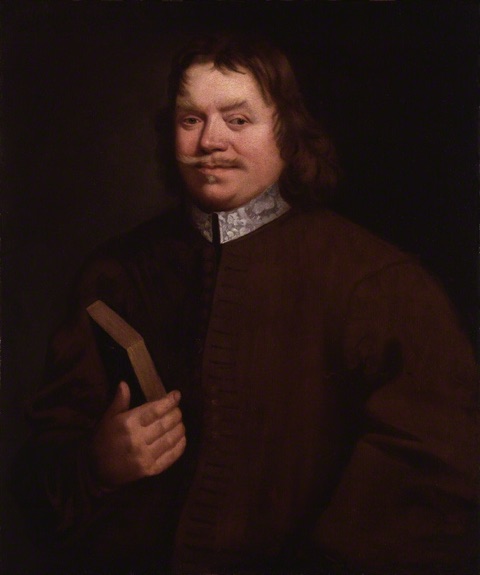
About the author
John Bunyan
John Bunyan (1628 to 1688 AD) was a tinker's son from Elstow near Bedford who spent twelve years in Bedford jail from 1660 and later pastored the Bedford congregation. The Heavenly Footman points back to his early years as a preacher: it sends readers to his book on the two covenants and to A Few Sighs from Hell, and it warns against the Quakers and Ranters he was then contending with. He died in London in 1688, and this treatise was first printed ten years later.