



131 audiobooks, 1,134 hours of narration. Give $50 and every one is yours.
Reformation books
Cover of The Freedom of a Christian

Modern English edition · 1520 AD

The Freedom of a Christian

by Martin Luther

Martin Luther's 1520 treatise on the Christian as free lord of all and servant of all, showing how faith alone justifies and how love then turns that freedom into service. Includes his open letter to Pope Leo X.

Start reading free

One free account opens 250+ books and saves your place on every device. Google sign-in or an email link. No card.

Buy the paperback · $10.99

Printed to order. Shipping is calculated at checkout. Read online tonight while it ships.

Get the audiobook · $4.99

Listen in the Updated Works app on any device, in the same place you read.

Give $50, get every audiobook

One gift, no subscription. It funds the next modernized classic and the next recording, and includes the whole ebook library as one download.

Listen to the first 9 minutes free

Included with your free account

This book, and 250+ more, free to read

A free account opens the whole library to read online, on your phone or at your desk. Open a book on one device and it is waiting at the same page on the next. The PDF and EPUB of every book are yours to keep, and audiobooks play in the same app.

  • 250+ modernized editions Not samples. The whole work, free.
  • Your place, on every device Phone, tablet or desktop, same page.
  • 131 audiobooks From $4.99 each, or all of them with a $50 gift.
  • PDF and EPUB included Download any book to keep.
Create your free account Google sign-in or an email link. No card.
The in-app reader on a phone, mid-chapter of The Mortification of Sin in modern English
My Library on a phone, with a book to continue reading and the cover grid

Summary

Written
1520 AD · Wittenberg
Type
Theological treatise with dedicatory letter
Structure
Letter to Leo X plus a treatise in three parts
Length
About 17,000 words · an hour's read
Based on
R. S. Grignon's 1883 translation of the Latin text

"The Freedom of a Christian" is a short treatise Martin Luther wrote in 1520 AD arguing that faith alone makes a believer righteous and free before God, and that this same freedom obliges the believer to serve every neighbor in love. Luther dedicated it to Pope Leo X in a covering letter.

“just as iron exposed to fire glows like fire because it is united with the fire.”
From this edition

How the argument unfolds

  1. 01

    A letter to the pope. Luther disclaims any ill will toward Leo while denouncing the Roman court, blames Eck and Cajetan for the conflict, and offers the treatise as "a summary of the Christian life gathered into a small compass."

  2. 02

    The double thesis. "A Christian is the freest lord of all, subject to no one; a Christian is the most dutiful servant of all, subject to everyone." The rest of the book reconciles the two halves.

  3. 03

    The word alone. Nothing done by or to the body touches the soul's freedom. Luther concludes that "the soul can do without everything except the word of God," and that the word is received only by faith.

  4. 04

    Three powers of faith. Faith receives what the promises give, honors God by counting him truthful, and unites the soul to Christ so that grace, life, and salvation pass to the believer while sin, death, and hell pass to Christ.

  5. 05

    Kings and priests. Christ shares his royal and priestly dignity with all believers; clergy differ only as ministers of the word. Preaching should present Christ as "Christ for you and for me," not as history alone.

  6. 06

    The outward person. Works return as bodily discipline and service, never as a claim on God: "good works do not make a good person, but a good person does good works."

  7. 07

    A Christ to the neighbor. Following Philippians 2, the free Christian reasons, "I will therefore give myself to my neighbor as a sort of Christ, as Christ has given himself to me."

  8. 08

    Ceremonies and the weak. Luther closes by steering between those who flaunt liberty and those who trust in rites: "Faith in Christ frees us from belief in works, rather than from works themselves."

Key themes

  • Law and promise. Commands show what we ought to do without the power to do it; promises supply it. "He alone commands; he alone also fulfills."
  • Freedom as a gift, not license. Liberty frees the conscience from seeking justification, not from obedience or discipline, and Luther rebukes those who treat it as permission to despise others.
  • Faith working through love. Faith carries the Christian up to God and love carries him down to his neighbor: "Through love he descends below himself to his neighbor, always remaining in God and his love."
  • Authority and conscience. Luther will keep human rules for the sake of the weak but refuses any law binding Scripture: "The Word of God, which teaches liberty in everything else, ought not itself to be bound."
The Freedom of a Christian paperback

The paperback

Prefer it in print? The same book, done right

$10.99 · 6 × 9 inches · Cream paper · Matte cover

Built to last, not printed cheap

Printed at 6 × 9 inches on cream paper with a matte cover, made to survive years of rereading and underlining.

Type you can actually read

Typeset at a comfortable reading size with generous margins and line spacing, so a long chapter is a pleasure rather than an eye test.

Online reading included

Every paperback comes with the full text in your free account, plus the PDF and EPUB, so you can start reading tonight while the book ships.

Your purchase funds the work

Reading online is free. Buying the paperback direct is what pays for the next modernized classic.

Buy the paperback · $10.99 Printed to order. Includes the ebooks.

Free audiobook preview

Listen to the first 9 minutes

The Freedom of a Christian · Audiobook · 1 hr 52 min

0:00 / 9:01

Enjoying it? The full audiobook runs 1 hr 52 min. Listen in the Updated Works app on any device.

Get the audiobook · $4.99

Letter to Pope Leo X

Among the monstrous evils of this age, against which I have now been waging war for three years, I am sometimes compelled to look toward you and call you to mind, most blessed Father Leo. Since you alone are everywhere considered the cause of my entering this war, I can never forget you. The groundless fury of your ungodly flatterers has compelled me to appeal from your seat to a future council. I have done so without fear of the futile decrees of your predecessors Pius and Julius, who in their foolish tyranny forbade such an appeal. Yet my feelings toward your Blessedness have never been so estranged that I have failed to seek every good gift for you and your See, with all my strength, in earnest prayer and cries to God.

I have begun to despise and overcome those who have tried to terrify me with the majesty of your name and authority. But one thing remains that I cannot dismiss, and it has led me to write again to your Blessedness. I find myself blamed for recklessness, judged to have spared not even your person, and charged with this as a great offense.

To speak the truth openly, I know that whenever I have had occasion to mention you personally, I have said only what was honorable and good. Had I done otherwise, I could never have approved my own conduct. I would have supported with all my strength those men’s judgment against me, and nothing would have pleased me more than to retract such recklessness and impiety. I have called you Daniel in Babylon. Every reader knows how zealously I defended your evident innocence against Silvester, who tried to stain it. Indeed, the published opinions of so many great men and the reputation of your blameless life are too widely known and respected throughout the world for anyone, however distinguished, to attack them by any means.

I am not foolish enough to attack someone everyone praises. Indeed, I have always wished, and always will wish, to refrain from attacking even those whose public reputation is disgraceful. I take no delight in anyone’s faults, since I am deeply conscious of the great beam in my own eye. Nor can I be the first to cast a stone at the adulteress.

I have certainly spoken sharply against ungodly doctrines, and I have not hesitated to condemn my opponents for their impiety, rather than their bad morals. Far from regretting this, I have resolved to disregard human judgments and persevere in this fierce zeal. I follow the example of Christ, who in his zeal calls his opponents a generation of vipers, blind, hypocrites, and children of the devil. Paul, too, charges the sorcerer with being a child of the devil, full of all deceit and malice. He denounces certain people as evil workers, dogs, and deceivers. To those with such delicate ears, nothing could be more bitter or intemperate than Paul’s language. What could be more bitter than the words of the prophets?

The senseless multitude of flatterers has made our generation’s ears so delicate that as soon as we discover anything of ours meets with disapproval, we cry out that we are being bitterly attacked. When we have no other pretext for rejecting the truth, we escape by accusing our opponents of bitterness, impatience, and intemperance. What use would salt be if it had no bite? Or a sword’s edge if it did not kill? Accursed is the man who does the work of the Lord deceitfully.

Therefore, most excellent Leo, I beg you to accept the defense I offer in this letter. Be assured that I have never thought any evil of you personally. I desire eternal blessing for you, and I dispute with no one about morals, but only about the word of truth. In everything else I will yield to anyone, but I neither can nor will abandon and deny the Word. Anyone who thinks otherwise of me, or understands my words in another sense, judges incorrectly and has not understood the truth.

Your See, however, which is called the Court of Rome, is more corrupt than any Babylon or Sodom. Neither you nor anyone else can deny it. I believe its impiety is utterly lost, desperate, and hopeless. This I have truly abhorred. I have been indignant that Christ’s people should be cheated under your name and the pretext of the Church of Rome. So I have resisted, and will resist, as long as the spirit of faith lives in me.

I am not pursuing the impossible or hoping that my efforts alone can accomplish any good in that utterly disordered Babylon, against the furious opposition of so many flatterers. Rather, I feel indebted to my brothers and sisters and bound to care for them, so that fewer may be ruined by Rome’s plagues, or their ruin may be less complete. For many years now, as you know, nothing has poured out of Rome into the world but the destruction of possessions, bodies, and souls, and the worst examples of all the worst things. These things are clearer than daylight to everyone. The Church of Rome, once the holiest of all churches, has become the most lawless den of thieves, the most shameless of all brothels, the very kingdom of sin, death, and hell. Even Antichrist, if he were to come, could devise nothing to add to its wickedness.

Meanwhile, Leo, you sit like a lamb among wolves, like Daniel among lions, and, with Ezekiel, you live among scorpions. How can you alone oppose these monstrous evils? Gather three or four of the best and most learned cardinals around you. What are they among so many? You would all die by poison before you could begin to decide on a remedy. It is all over with the Court of Rome. God’s wrath has come upon her to the utmost. She hates councils, dreads reform, and cannot restrain the madness of her impiety. She fulfills the sentence pronounced on her mother, of whom it is said, “We would have healed Babylon, but she is not healed; let us forsake her” (Jer 51:9).

It was your duty and that of your cardinals to remedy these evils. But this gout laughs at the physician’s hand, and the chariot does not obey the reins. With these feelings, I have always grieved that you, most excellent Leo, who deserved a better age, have been made pope in this one. The Roman Court is not worthy of you and those like you, but of Satan himself, who truly rules that Babylon more than you do.

Oh, that you could lay aside the glory your most depraved enemies declare to be yours and live instead as an ordinary priest, or on your paternal inheritance! No one deserves to glory in that glory except the race of Iscariot, the children of perdition. For what happens in your court, Leo? The more wicked and detestable a man is, the more successfully he can use your name and authority to ruin people’s possessions and souls, multiply crimes, and oppress faith, truth, and the whole Church of God.

O Leo, how unfortunate you really are, and how perilous the throne on which you sit! I tell you the truth because I wish you well. Bernard felt compassion for his Anastasius at a time when the Roman See, though already deeply corrupt, still ruled with greater hope than it does now. Why should we not lament, when so much more corruption and ruin has come upon us in three hundred years?

Is it not true that nothing under the vast heavens is more corrupt, more pestilential, or more hateful than the Court of Rome? She surpasses the impiety of the Turks beyond comparison. She who was once the gate of heaven is now truly a kind of open mouth of hell, a mouth that, under God’s pressing wrath, cannot be stopped up. Only one course remains for us wretched people: to call back and save a few, if we can, from that Roman abyss.

See, Leo my father, the purpose and principle with which I have stormed against that seat of pestilence. Far from feeling any rage against you personally, I even hoped to gain your favor and help your welfare by striking actively and vigorously at your prison, indeed, your hell. Whatever all human intellects can devise against the confusion of that ungodly Court will benefit you, your welfare, and many others with you. Those who harm her are doing your work. Those who utterly abhor her are glorifying Christ. In short, those who are not Romans are Christians.

But to say more, it had never even entered my heart to attack the Court of Rome or dispute about her at all. Seeing that every remedy for her recovery was hopeless, I regarded her with contempt, gave her a bill of divorce, and said to her, “He that is unjust, let him be unjust still; and he that is filthy, let him be filthy still” (Rev 22:11). I devoted myself to the peaceful, quiet study of sacred literature so that through it I might help the brothers and sisters living around me.

While I was making some progress in these studies, Satan opened his eyes and goaded his servant Johann Eck, that notorious enemy of Christ, with an unchecked lust for fame. Eck unexpectedly dragged me into the arena, trying to catch me in one small remark about the primacy of the Church of Rome that I had made in passing. That boastful Thraso, foaming and gnashing his teeth, proclaimed that he would dare anything for God’s glory and the honor of the holy apostolic seat. Inflated with pride in your power, which he was about to misuse, he looked forward to certain victory. He sought less to advance Peter’s primacy than his own preeminence among the theologians of this age. He thought leading Luther in triumph would contribute greatly to that end.

The outcome proved unfortunate for this sophist, and an incredible rage torments him. He feels that whatever discredit Rome has suffered through me has been caused entirely by his own fault.

Allow me, I beg you, most excellent Leo, both to plead my own cause and to accuse your true enemies. I believe you know how Cardinal Cajetan, your imprudent and unfortunate, indeed, unfaithful legate, treated me. Out of reverence for your name, I had placed myself and everything I possessed in his hands. Yet he failed to establish peace, though he could easily have done so with one little word. At that time, I promised to keep silent and bring my case to an end if he would command my opponents to do the same.

But that proud man was not content with this agreement. He began to justify my opponents, give them free license, and order me to recant, something certainly outside his commission. Thus, just when the case stood in the best possible position, his oppressive tyranny made it much worse. Whatever has followed is therefore entirely Cajetan’s fault, not Luther’s. He would not let me remain silent and quiet, though at that time I was pleading for this with all my strength. What more was it my duty to do?

Next came Charles Miltitz, also a nuncio from your Blessedness. He traveled widely, exerted himself in many ways, and left nothing undone that might restore the case, which Cajetan’s recklessness and pride had thrown into confusion. Even with the help of that most illustrious prince, Elector Frederick, he had difficulty at last arranging more than one informal meeting with me. In these I again yielded to your great name. I was prepared to keep silent and accept either the Archbishop of Trier or the Bishop of Naumburg as my judge. This was agreed and settled.

While this was proceeding with good hope of success, behold, that other and greater enemy of yours, Eck, rushed in with his Leipzig disputation, which he had undertaken against Karlstadt. Raising a new question about the pope’s primacy, he unexpectedly turned his weapons against me and completely overturned the plan for peace. Meanwhile, Charles Miltitz waited, disputations were held, and judges were chosen, but no decision was reached. No wonder! Eck’s falsehoods, pretexts, and schemes brought the whole affair into such disorder, confusion, and festering bitterness that, whichever way the judgment went, a greater fire was certain to break out. He was seeking his own reputation, not truth. In this case too, I left nothing undone that it was right for me to do.

I admit that on this occasion a considerable part of Rome’s corruption came to light. But if there was any offense in this, it was Eck’s fault. He took on a burden beyond his strength and, in his furious pursuit of reputation, exposed Rome’s disgrace to the whole world.

Here is your enemy, Leo, or rather your Court’s enemy. His example alone teaches us that an enemy is no more harmful than a flatterer. What did his flattery produce except evils that no king could have brought about? Today the name of the Court of Rome stinks in the world’s nostrils, papal authority is weakening, and its notorious ignorance is spoken of with contempt. We would hear none of this if Eck had not disrupted the plans Miltitz and I had made for peace.

He feels this clearly enough himself in the indignation he shows, too late and in vain, at the publication of my books. He should have considered this when he was mad for fame and sought only his own ends in your cause, at the greatest peril to you. The foolish man hoped that fear of your name would make me yield and keep silent. I do not think he relied on his talents and learning. Now that he sees my great confidence and hears me speaking openly, he regrets his recklessness too late. He sees, if he sees it at all, that there is One in heaven who resists the proud and humbles the presumptuous.

Since this disputation was only increasing the confusion of Rome’s cause, Charles Miltitz approached the fathers of the order, assembled in chapter, for the third time. He sought their advice on settling the case, which was now deeply troubled and perilous. By God’s favor there was no hope of proceeding against me by force. So some of the more prominent among them were sent to me. They begged me at least to show respect for you personally and to defend both your innocence and my own in a humble letter. They said the affair was not yet utterly hopeless if Leo X, with his natural kindness, would lend his hand to it.

I have always offered and desired peace so that I might devote myself to calmer, more useful pursuits. For this very purpose I have acted with such spirit and vehemence, in order to put down, through the strength and force of my words and feelings, men I saw to be far from my equals. So I not only gladly yielded to their request, but even accepted it with joy and gratitude as the greatest kindness and benefit, if you should see fit to fulfill my hopes.

Thus I come, most blessed Father, and in all humility beg you to lend your hand, if possible, and curb those flatterers who pretend to seek peace while they are its enemies. But there is no reason, most blessed Father, for anyone to assume that I will recant, unless he prefers to throw the case into still greater confusion. Nor can I tolerate laws governing the interpretation of God’s Word. The Word of God, which teaches liberty in everything else, ought not itself to be bound.

Apart from these two things, there is nothing I am not able and most heartily willing to do or endure. I hate conflict. I will challenge no one, and in return I wish no one to challenge me. But if challenged, I will not be silent in the cause of Christ my Master. Your Blessedness can, with one short and simple word, bring these controversies before you and suppress them, imposing silence and peace on both sides. I have always longed to hear that word.

Therefore, Leo my father, beware of listening to those Sirens who make you out to be more than a man, partly a god, able to command and require whatever you wish. It will not be so, and you will not prevail. You are the servant of servants, and more than anyone else you stand in a pitiable and perilous position. Do not let those men deceive you who pretend you are lord of the world, who will allow no one to be a Christian without your authority, and who babble about your power over heaven, hell, and purgatory. These men are your enemies. They seek to destroy your soul, as Isaiah says: “My people, they that call thee blessed are themselves deceiving thee” (Isa 3:12).

Those who raise you above councils and the universal Church are wrong. Those who give you alone the right to interpret Scripture are wrong. All these men seek to establish their own impieties in the Church under your name. Alas, Satan gained much through them in the time of your predecessors.

In brief, trust those who humble you, rather than those who exalt you. For this is God’s judgment: “He hath cast down the mighty from their seat, and hath exalted the humble” (Luke 1:52). See how unlike his successors Christ was, though everyone insists that they are his vicars. I fear that very many of them have indeed been his vicars in far too serious a sense, for a vicar represents an absent prince. Now if a pope rules while Christ is absent and does not dwell in his heart, what else is he but a vicar of Christ? And what is that Church but a multitude without Christ? What indeed is such a vicar but Antichrist and an idol? How much more rightly the apostles spoke when they called themselves servants of a present Christ, rather than vicars of an absent one.

Perhaps I am shamelessly bold in seeming to teach so great a head, by whom everyone ought to be taught, and from whom, as those plagues of yours boast, the judges on their thrones receive their judgments. But I imitate Saint Bernard in his book concerning Considerations, addressed to Eugenius, a book every pope ought to know by heart. I do this from duty, not from any desire to teach. I act from that simple, faithful concern which teaches us to care for everything that keeps our neighbors safe. It does not let us consider their worthiness or unworthiness, but attends only to their dangers or benefit.

I know that your Blessedness is driven and tossed by the waves at Rome, while the depths of the sea press upon you with endless perils. You labor in such misery that you need even the smallest help from the least of your brothers. So I do not think I act improperly if I forget your majesty until I have fulfilled the duty of love. I will not flatter you in so serious and perilous a matter. If you do not see in this that I am your friend and most thoroughly your subject, there is One who sees and judges.

Finally, blessed Father, so that I may not approach you empty-handed, I bring this little treatise, published under your name, as a good omen of peace established and of good hope. Through it you may see the pursuits in which I would prefer, and would be able, to occupy myself more profitably, if your ungodly flatterers would allow me, or had allowed me until now. Judged by its outward appearance, it is a small thing. But unless I am mistaken, if you grasp its meaning, it is a summary of the Christian life gathered into a small compass.

In my poverty I have no other gift to offer you, nor do you need anything else than to be enriched by a spiritual gift. I commend myself to your Paternity and Blessedness. May the Lord Jesus preserve you forever. Amen.

Wittenberg, September 6, 1520.
Freedom through Faith

Christian faith has seemed easy to many people. Indeed, quite a few even count it among the social virtues, because they have never tested it through experience or tasted its power. No one can write well about it, or properly understand what has been rightly written, without having tasted its spirit at some point under the pressure of suffering. Yet anyone who has tasted it, even a little, can never write, speak, think, or hear enough about it. For it is a living fountain, springing up to eternal life, as Christ calls it in John 4.

I cannot boast of having an abundance of faith, and I know how poorly equipped I am. Still, after being troubled by various temptations, I hope I have gained some little drop of faith. I hope I can speak about it, if not more elegantly, certainly more soundly than those disputants who cling to the letter and make overly subtle distinctions, discussing faith without understanding their own words. To open an easier way for those who lack knowledge, whom alone I am trying to serve, I will first set out these two propositions concerning spiritual freedom and servitude.

A Christian is the freest lord of all, subject to no one; a Christian is the most dutiful servant of all, subject to everyone.

These statements seem contradictory. But once we see how they agree, they will serve my purpose very well. Both are statements of Paul himself, who says, “Though I be free from all men, yet have I made myself servant unto all” (1 Cor 9:19), and, “Owe no man anything, but to love one another” (Rom 13:8). By its very nature, love is dutiful and obedient to the one it loves. Thus even Christ, though Lord of all things, was born of a woman and placed under the law. He was both free and a servant, both in the form of God and in the form of a servant.

Let us examine the subject more deeply, on a less simple basis. Human nature is twofold, spiritual and bodily. In our spiritual nature, called the soul, we are described as the spiritual, inward, new person. In our bodily nature, called the flesh, we are described as the fleshly, outward, old person. The Apostle speaks of this: “Though our outward man perish, yet the inward man is renewed day by day” (2 Cor 4:16). Because of this difference, Scripture makes opposing statements about the same person. These two persons within us oppose each other: the flesh desires what is against the spirit, and the spirit what is against the flesh (Gal 5:17).

We will first consider the inward person, to see how someone becomes justified, free, and a true Christian: a spiritual, new, inward person. It is certain that no outward thing, whatever name we give it, has any power to produce justification and Christian freedom. Nor can it produce the opposite state, one without justification and in slavery. A simple argument can show this.

What benefit does the soul receive if the body is healthy, free, and full of life, eating, drinking, and acting as it pleases? Even the most ungodly people, enslaved to every kind of vice, prosper in these things. Again, what harm can sickness, bondage, hunger, thirst, or any other outward evil do to the soul? Even the most godly people, whose consciences are pure and free, are troubled by these things. Neither condition determines the soul’s freedom or slavery.

So it does no good for the body to wear sacred vestments, live in holy places, perform sacred duties, pray, fast, abstain from certain foods, or do any other works through the body and in the body. Something entirely different is necessary for the soul’s justification and freedom. Any ungodly person can do the things I have mentioned, and devotion to these things produces only hypocrites. Conversely, it does the soul no harm if the body wears ordinary clothing, lives in ordinary places, eats and drinks in the usual way, does not pray aloud, and leaves undone all the things just mentioned that hypocrites can do.

To set everything else aside, even speculation, meditation, and anything the soul can accomplish by its own efforts are of no benefit. One thing alone is necessary for life, justification, and Christian freedom: the most holy word of God, the Gospel of Christ. As he says, “I am the resurrection and the life; he that believeth in me shall not die eternally” (John 11:25). He also says, “If the Son shall make you free, ye shall be free indeed” (John 8:36), and, “Man shall not live by bread alone, but by every word that proceedeth out of the mouth of God” (Matt 4:4).

Let us therefore hold this as certain and firmly established: the soul can do without everything except the word of God. Without it, none of the soul’s needs are met. With it, the soul is rich and lacks nothing. For it is the word of life, truth, light, peace, justification, salvation, joy, freedom, wisdom, virtue, grace, glory, and every good thing. This is why the prophet, throughout an entire psalm and in many other places, longs for and calls upon the word of God with so many groans and words (Ps 119).

There is no more cruel blow from God’s wrath than when he sends a famine of hearing his words (Amos 8:11). Likewise, there is no greater favor from him than sending out his word, as it is said, “He sent his word and healed them, and delivered them from their destructions” (Ps 107:20). Christ was sent for no other office than that of the word. The orders of apostles and bishops, and the entire body of the clergy, were called and established for no other purpose than the ministry of the word.

But you will ask, “What is this word, and how are we to use it, since there are so many words of God?” I answer that the Apostle Paul explains what it is in Romans 1: the Gospel of God concerning his Son, who became flesh, suffered, rose again, and was glorified through the Spirit, the sanctifier. To preach Christ is to feed the soul, justify it, set it free, and save it, if it believes the preaching. For faith alone, and the effective use of the word of God, bring salvation. “If thou shalt confess with thy mouth the Lord Jesus, and shalt believe in thine heart that God hath raised him from the dead, thou shalt be saved” (Rom 10:9). And again, “Christ is the end of the law for righteousness to every one that believeth” (Rom 10:4), and, “The just shall live by faith” (Rom 1:17).

The word of God cannot be received and honored by any works, but only by faith. It is therefore clear that, just as the soul needs the word alone for life and justification, it is justified by faith alone, without any works. If it could be justified by any other means, it would have no need of the word, and consequently no need of faith.

But this faith cannot coexist with works if you imagine that those works, whatever they are, can justify you alongside faith. That would mean wavering between two opinions, worshiping Baal, and kissing your hand to him, which is a very great sin, as Job says. When you begin to believe, you therefore learn at the same time that everything within you is utterly guilty, sinful, and deserving of damnation. As it is said, “All have sinned, and come short of the glory of God” (Rom 3:23). And also, “There is none righteous, no, not one; they are all gone out of the way; they are together become unprofitable; there is none that doeth good, no, not one” (Rom 3:10-12). Once you have learned this, you will know that you need Christ. He suffered and rose again for you so that, by believing in him, you might become a different person through this faith, with all your sins forgiven and yourself justified by another’s merits: those of Christ alone.

This faith can reign only in the inward person, as it is said, “With the heart man believeth unto righteousness” (Rom 10:10). Since faith alone justifies, it is evident that no outward work or labor can in any way justify, free, or save the inward person. No works whatever have any bearing on that person in this respect. Conversely, it is solely through ungodliness and unbelief in the heart that the inward person becomes guilty, enslaved to sin, and deserving of condemnation, rather than through any outward sin or work.

Every Christian’s first concern should therefore be to put aside all reliance on works and strengthen faith alone more and more. Through faith, Christians should grow in the knowledge of Christ Jesus, who suffered and rose again for them, rather than in the knowledge of works. Peter teaches this when he recognizes no other work as Christian. Thus, when the Jews asked Christ what they should do to perform the works of God, he rejected the multitude of works in which he saw them taking pride. He commanded only one thing, saying, “This is the work of God, that ye believe on him whom He hath sent, for him hath God the Father sealed” (John 6:27, 29).

A right faith in Christ is therefore an incomparable treasure. It brings salvation in its fullness and preserves us from all evil, as it is said, “He that believeth and is baptized shall be saved; but he that believeth not shall be damned” (Mark 16:16). Looking toward this treasure, Isaiah foretold, “The consumption decreed shall overflow with righteousness. For the Lord God of hosts shall make a consumption, even determined, in the midst of the land” (Isa 10:22-23). It is as though he said, “Faith, which is the brief and complete fulfillment of the law, will fill believers with such righteousness that they will need nothing else for justification.” Paul likewise says, “For with the heart man believeth unto righteousness” (Rom 10:10).

But you ask how faith alone can justify and provide so great a treasure of good things without works, when Scripture prescribes so many works, ceremonies, and laws for us. I answer: above all, remember what I have said, that faith alone, without works, justifies, sets free, and saves. I will show this more clearly below.

Meanwhile, we should note that the whole of God’s Scripture is divided into two parts: commands and promises. The commands certainly teach us what is good, but their teaching does not immediately bring about what they teach. They show us what we ought to do without giving us the power to do it. They were established to reveal us to ourselves, so that through them we might learn our own inability to do good and despair of our own strength. For this reason they are called the Old Testament, and that is what they are.

For example, “thou shalt not covet” is a command that convicts us all of sin. No one can avoid coveting, however hard they try. To fulfill the command and stop coveting, a person is therefore compelled to despair of their own strength and seek elsewhere, through another, the help they cannot find within themselves. As it is said, “O Israel, thou hast destroyed thyself; but in me is thine help” (Hos 13:9). What this one command does, all the commands do, for we are equally unable to fulfill any of them.

Once the commands have taught someone their own powerlessness, they become anxious about how to satisfy the law. For the law must be satisfied, so that not a jot or tittle of it passes away; otherwise, they must be condemned without hope. Then, truly humbled and reduced to nothing in their own eyes, they find within themselves no means of justification or salvation.

Then the other part of Scripture comes in: the promises of God. These declare God’s glory and say, “If you wish to fulfill the law and, as the law requires, not to covet, look! Believe in Christ, in whom grace, justification, peace, and freedom are promised to you.” You will have all these things if you believe, and lack them if you do not. What you cannot accomplish through all the works of the law, which are many yet useless, you will fulfill easily and directly through faith. For God the Father has made everything depend on faith, so that whoever has it has everything, and whoever lacks it has nothing. “For God hath concluded them all in unbelief, that He might have mercy upon all” (Rom 11:32). Thus God’s promises give what the commands demand and fulfill what the law requires. Everything comes from God alone, both the commands and their fulfillment. He alone commands; he alone also fulfills. Therefore God’s promises belong to the New Testament. Indeed, they are the New Testament.

These promises of God are words of holiness, truth, righteousness, freedom, and peace, full of every kind of goodness. The soul that clings to them with firm faith is so united to them, indeed so thoroughly absorbed by them, that it not only shares in all their power but is penetrated and saturated by it. If Christ’s touch brought healing, how much more does this most tender spiritual touch, this absorption of the word, impart to the soul everything that belongs to the word! In this way, through faith alone, without works, the soul is justified and sanctified by the word of God. It receives truth, peace, and freedom, is filled with every good thing, and truly becomes a child of God. As it is said, “To them gave he power to become the sons of God, even to them that believe on his name” (John 1:12).

From all this we can easily understand why faith has such great power, and why no good works, even all good works combined, can compare with it. No work can cling to the word of God or be within the soul. Faith alone and the word reign there. The word makes the soul like itself, just as iron exposed to fire glows like fire because it is united with the fire. Clearly, then, a Christian’s faith is sufficient for everything, and no works are needed for justification. But if Christians have no need of works, neither do they need the law. If they have no need of the law, they are certainly free from it, and the saying is true: “The law is not made for a righteous man” (1 Tim 1:9). This is Christian freedom: our faith. Its effect is not that we should be careless or lead an evil life, but that no one should need the law or works for justification and salvation.

Let us consider this the first power of faith, and look also at the second. Faith also has this function: it honors the one in whom it believes with the deepest reverence and the highest regard, holding that person to be truthful and worthy of belief. No honor compares with the reputation for truth and righteousness that we give someone we believe. What higher credit can we give anyone than truth, righteousness, and absolute goodness? Conversely, the greatest insult is to brand someone as false and unrighteous, or suspect them of these things, as we do when we disbelieve them.

Thus, by firmly believing God’s promises, the soul holds him to be true and righteous. It can give God no higher glory than to acknowledge him as such. The highest worship of God is to ascribe to him truth, righteousness, and whatever qualities we must ascribe to someone we believe. In doing this, the soul shows itself ready to do his entire will. It hallows his name and gives itself over to be dealt with as God pleases. It clings to his promises and never doubts that he is true, just, and wise, and will act, arrange, and provide for everything in the best way. Is not such a soul, in its faith, completely obedient to God? What commandment remains that such obedience has not abundantly fulfilled? What fulfillment can be more complete than obedience in everything? Yet this is accomplished by faith alone, without works.

On the other hand, what greater rebellion, ungodliness, or insult to God can there be than refusing to believe his promises? What is this but making God a liar or doubting his truth? It means attributing truth to ourselves, but falsehood and inconstancy to God. In doing this, do we not deny God and set ourselves up as idols in our own hearts? What good can works done in such an ungodly state do us, even if they were the works of angels or apostles? God has rightly enclosed everyone in unbelief, rather than in wrath or lust. Those who claim to fulfill the law through works of purity and benevolence, which are social and human virtues, must not presume that they will therefore be saved. Instead, enclosed in the sin of unbelief, they must either seek mercy or be justly condemned.

Questions

What is "The Freedom of a Christian" by Martin Luther about?
It explains how a believer can be completely free and completely a servant at once: free before God because faith alone justifies, and a servant to others because that faith overflows in love. It ends with practical counsel on fasts, church laws, and ceremonies.
When did Luther write "The Freedom of a Christian"?
In 1520 AD. The dedicatory letter to Leo X is dated from Wittenberg, September 6, 1520, and the treatise closes "In the year of the Lord 1520."
Is "The Freedom of a Christian" the same as "On Christian Liberty"?
Yes. Both titles render the same 1520 work, and English editions have also called it "Concerning Christian Liberty." This edition follows Luther's Latin version and keeps the full letter to the pope.
Why did Luther address it to Pope Leo X?
Mediators urged a humble letter as a gesture toward peace. Luther complied while refusing to recant or accept limits on interpreting Scripture.
How long is it, and is it hard to read?
It is one of Luther's shortest major works, about an hour's read. The modern English keeps the Scripture quotations in the King James wording of the source translation.
How does it relate to "The Bondage of the Will"?
"The Freedom of a Christian" (1520) describes the liberty faith gives; "The Bondage of the Will" (1525) argues against Erasmus that the unaided will cannot turn to God at all. Read together, they show that for Luther freedom is received, not achieved.
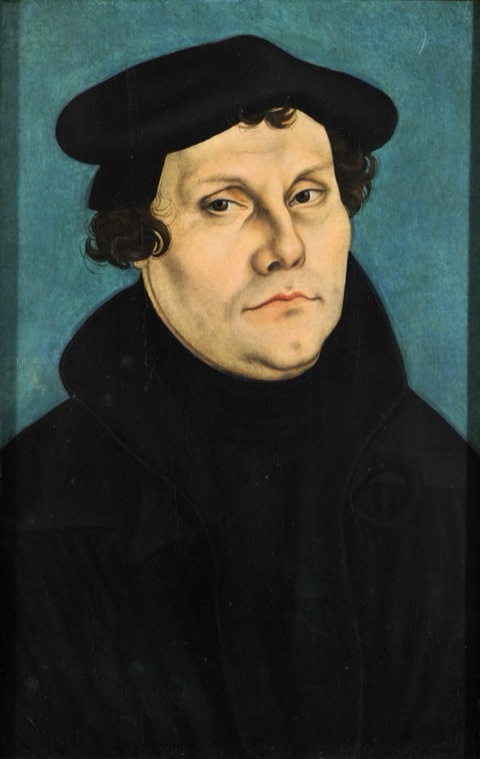
Portrait of Martin Luther

About the author

Martin Luther

Martin Luther was born on November 10, 1483, in Eisleben, Saxony, and studied at the University of Erfurt before entering the Augustinian friary there in 1505. Ordained a priest in 1507, he earned his doctorate in theology in 1512 and lectured on the Bible at the University of Wittenberg for the rest of his life. His Ninety-Five Theses against the sale of indulgences in 1517 set off a dispute that widened into a break with Rome: he debated Johann Eck at Leipzig in 1519, was threatened with excommunication by papal bull in 1520, and refused to recant at the Diet of Worms in 1521. While sheltered at the Wartburg castle he translated the New Testament into German. In 1525 he married Katharina von Bora and published The Bondage of the Will against Erasmus. He also wrote catechisms, hymns, and commentaries, and died in Eisleben on February 18, 1546.

“Updated Works has been an incredible blessing to my Christian life and ministry… remarkably faithful to the original authors while making these timeless treasures understandable for modern readers.”
— Pastor Mike Cleveland




