The blueprint for American democracy. Hamilton, Madison, and Jay explain why the Constitution works—and why it was worth fighting for. Essential reading for understanding American government.
A free account opens the whole library to read online, on your phone or at your desk. Open a book on one device and it is waiting at the same page on the next. The PDF and EPUB of every book are yours to keep, and audiobooks play in the same app.
250+ modernized editionsNot samples. The whole work, free.
Your place, on every devicePhone, tablet or desktop, same page.
131 audiobooksFrom $4.99 each, or all of them with a $50 gift.
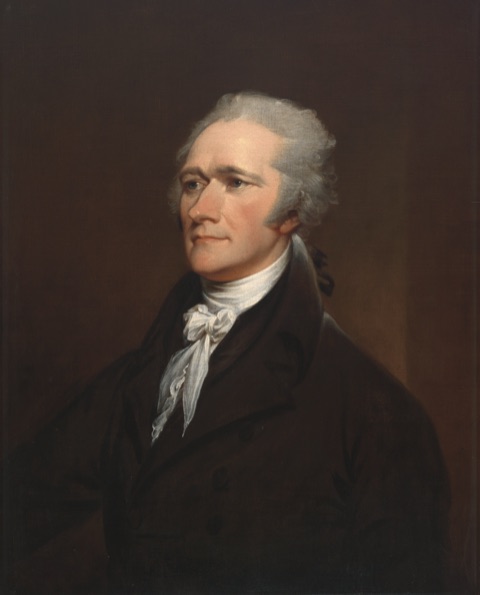
Alexander Hamilton, James Madison, and John Jay, writing as "Publius"
Published
1787 to 1788 · New York newspapers
Type
Essay collection
Length
85 essays · about 170,000 words · ~11 hour read
The Federalist Papers are 85 newspaper essays published in New York in 1787 and 1788 by Alexander Hamilton, James Madison, and John Jay under the shared pen name Publius. They argue for ratifying the proposed United States Constitution, explaining why the union needed a stronger national government and how that government would be built.
“Liberty is to faction what air is to fire, the nourishment without which it immediately dies.”
From this edition
How the argument unfolds
01
The ratification fight. Hamilton frames the vote as a test of “whether human societies are truly capable of establishing good government through reflection and choice, or whether they are forever destined to depend for their political constitutions on accident and force.”
02
The case for union. Jay argues Providence gave this country to “one united people: a people descended from the same ancestors, speaking the same language,” and that division invites foreign attack.
03
Why the confederation failed. Hamilton says the country has reached “almost the final stage of national humiliation,” with a Union that has “neither troops, nor treasury, nor government.” The old structure “now seems ready to fall upon our heads and crush us beneath its ruins.”
04
Factions and No. 10. Madison holds that “the causes of faction cannot be removed and that relief must be sought only in controlling its effects,” which a large republic does best.
05
Separation of powers and No. 51. Each branch must be given the means to resist the others: “the means of defense must be proportionate to the danger of attack. Ambition must be made to counteract ambition.”
06
Money and the executive. Hamilton defends a general taxing power, since “Money is properly regarded as the vital principle of the political body,” and a single president, since “Energy in the executive is a leading characteristic of good government.”
07
The judiciary and No. 78. The courts are “by far the weakest of the three departments of power,” yet must void laws conflicting with the Constitution. When the legislature's will and the people's will collide, “judges should be governed by the latter rather than the former.”
Key themes
Union as security. The early essays treat separation into rival confederacies as the real danger, arguing one national government gives fewer causes for war and more consistent dealings abroad.
Faction and the large republic. A faction is “a number of citizens, whether a majority or a minority of the whole, who are united and driven by a common impulse of passion or interest that is opposed to the rights of other citizens.” Size, not virtue, is the remedy.
Power divided and checked. Authority is split twice over, between the states and the national government and then among the branches, which “provides double security for the people's rights.”
After unmistakable experience of the ineffectiveness of the existing federal government, you are now called upon to consider a new Constitution for the United States of America. The importance of the subject speaks for itself. Its consequences involve nothing less than the existence of the Union, the safety and welfare of its parts, and the fate of an empire that is, in many respects, the most interesting in the world.
It has often been said that the people of this country seem destined, by their conduct and example, to decide an important question: whether human societies are truly capable of establishing good government through reflection and choice, or whether they are forever destined to depend for their political constitutions on accident and force. If there is any truth in this observation, the crisis we have reached may properly be regarded as the time when that decision must be made. From this point of view, choosing the wrong course may deserve to be considered a general misfortune for mankind.
This idea adds concern for humanity to our patriotic motives, increasing the concern that all thoughtful and good people must feel about the outcome. We will be fortunate if our choice is guided by a sound assessment of our true interests, free from confusion and bias caused by considerations unrelated to the public good. But this is something more earnestly to be wished for than seriously to be expected. The plan submitted for our consideration affects too many particular interests and changes too many local institutions for its discussion not to involve many matters unrelated to its merits, along with opinions, passions, and prejudices poorly suited to the discovery of truth.
Among the most formidable obstacles the new Constitution must face, we can readily identify the obvious interest of a certain class of people in every State in resisting any change that may reduce the power, income, and importance of the offices they hold under the State governments. We can also identify the misguided ambition of another class, whose members either hope to make themselves more powerful through the confusion of their country or imagine that they have better prospects of advancement if the empire is divided into several smaller confederacies than if it is united under one government.
I do not, however, intend to dwell on observations of this kind. I know that it would be unfair to attribute the opposition of any group of people entirely to selfish or ambitious motives merely because their positions might expose them to suspicion. Fairness requires us to admit that even such people may be guided by honorable intentions. Nor can it be doubted that much of the opposition that has already appeared, or may appear later, will arise from sources that are at least blameless, if not respectable: the honest errors of minds led astray by preexisting jealousies and fears.
The causes that give judgment a false bias are so numerous and powerful that, on many occasions, we see wise and good people on both the wrong and the right sides of questions of the greatest importance to society. If properly considered, this fact should teach moderation to those who are completely convinced that they are right in any controversy. There is another reason for caution: we cannot always be certain that those who defend the truth are influenced by purer principles than their opponents. Ambition, greed, personal hostility, party opposition, and many other motives no more honorable than these may influence those who support the right side of a question just as readily as those who oppose it.
Even without these reasons for moderation, nothing could be more unwise than the intolerant spirit that has always characterized political parties. In politics, as in religion, it is equally absurd to try to make converts by fire and sword. Heresies in either sphere can rarely be cured by persecution.
Yet, however just these sentiments may be acknowledged to be, we already have sufficient indications that this debate will proceed as all earlier great national debates have done. A torrent of angry and malicious passions will be released. Judging from the conduct of the opposing sides, we will be led to conclude that each hopes to prove the justice of its opinions and increase the number of its converts through the loudness of its declarations and the bitterness of its attacks.
An enlightened enthusiasm for an energetic and effective government will be condemned as the product of a disposition that favors despotic power and is hostile to the principles of liberty. An excessively cautious suspicion of danger to the people’s rights, which is more often an error of judgment than of intention, will be portrayed as mere pretense and manipulation, the familiar bait used to gain popularity at the expense of the public good.
On one side, people will forget that jealousy commonly accompanies intense love, and that the noble enthusiasm for liberty is too easily infected by a spirit of narrow and ungenerous distrust. On the other side, they will also forget that vigorous government is essential to the security of liberty; that, in the judgment of anyone with sound understanding and good information, the interests of liberty and vigorous government can never be separated; and that dangerous ambition more often hides behind the attractive mask of devotion to the people’s rights than beneath the less appealing appearance of devotion to firm and effective government. History teaches us that the first course has been a much more certain road to despotism than the second. Of those who have overthrown the liberties of republics, the greatest number began their careers by trying to win the people’s favor through servile flattery. They began as demagogues and ended as tyrants.
Throughout these observations, my fellow citizens, I have intended to put you on guard against every attempt, from whatever direction, to influence your decision on a matter of the utmost importance to your welfare through impressions not arising from the evidence of truth. At the same time, you have undoubtedly gathered from their general direction that they come from someone not unfriendly to the new Constitution.
Yes, my countrymen, I acknowledge that, after giving the Constitution careful consideration, I am clearly convinced that adopting it is in your interest. I believe this is the safest course for your liberty, your dignity, and your happiness. I do not pretend to have reservations that I do not feel. I will not entertain you with an appearance of deliberation after I have already decided. I frankly acknowledge my convictions, and I will freely present the reasons on which they are based. A consciousness of good intentions has no need for ambiguity.
I will not, however, multiply declarations on this point. My motives must remain within my own conscience. My arguments will be open to everyone and may be judged by everyone. At the very least, they will be offered in a spirit that will not disgrace the cause of truth.
In a series of papers, I propose to discuss the following important subjects: the usefulness of the Union to your political prosperity; the inability of the present Confederation to preserve that Union; the necessity of a government at least as energetic as the proposed government for achieving this purpose; the conformity of the proposed Constitution to the true principles of republican government; its similarity to your own State constitution; and, finally, the additional security its adoption will provide for the preservation of that kind of government, for liberty, and for property.
As this discussion proceeds, I will try to give satisfactory answers to every objection that comes forward and seems to deserve your attention.
It may perhaps be thought unnecessary to offer arguments proving the usefulness of the Union. That principle is undoubtedly deeply impressed on the hearts of the great majority of the people in every State, and one might imagine that it has no opponents. But the fact is that we already hear it whispered in the private circles of those who oppose the new Constitution that the thirteen States cover too much territory for any general system, and that we must therefore resort to separate confederacies made up of distinct portions of the whole. Several recent publications against the new Constitution have advanced the same idea when their arguments are followed to their consequences.
In all probability, this doctrine will gradually spread until it has enough supporters to permit its open declaration. Nothing can be more evident to those capable of taking a broad view of the subject than the choice between adopting the new Constitution and dismembering the Union. It will therefore be useful to begin by examining the advantages of the Union, along with the certain evils and probable dangers to which every State will be exposed if the Union is dissolved. This will accordingly be the subject of my next address.
PUBLIUS
Federalist No. 2
When the people of America reflect that they are now called upon to decide a question that, in its consequences, must prove one of the most important ever to engage their attention, it will be clear that they should take a very broad as well as very serious view of it.
Nothing is more certain than the absolute necessity of government. It is equally undeniable that, whenever and however government is established, the people must surrender some of their natural rights to it so that it may possess the necessary powers. It is therefore well worth considering whether it would better serve the interests of the American people to remain, for all general purposes, one nation under one federal government, or to divide themselves into separate confederacies and give the head of each the same kind of powers they are advised to place in one national government.
Until recently, it was a generally accepted and unchallenged opinion that the prosperity of the American people depended on their remaining firmly united. The wishes, prayers, and efforts of our best and wisest citizens have constantly been directed toward that goal. But politicians have now appeared who insist that this opinion is mistaken and that, instead of seeking safety and happiness in union, we should seek them by dividing the States into distinct confederacies or sovereignties.
However extraordinary this new doctrine may appear, it nevertheless has supporters. Certain individuals who once strongly opposed it are now among them. Whatever arguments or inducements may have caused this change in the opinions and declarations of these gentlemen, it would certainly be unwise for the people at large to adopt these new political principles without being fully convinced that they are founded on truth and sound policy.
It has often given me pleasure to observe that independent America does not consist of detached and distant territories. Instead, one connected, fertile, and extensive country has become the inheritance of our western sons of liberty. Providence has blessed it in a special manner with a variety of soils and products and has watered it with countless streams for the enjoyment and convenience of its inhabitants. A succession of navigable waters forms a kind of chain around its borders, as if intended to bind it together. Meanwhile, the world’s most magnificent rivers, flowing at convenient intervals, provide highways for the easy exchange of friendly assistance and for the mutual transportation and exchange of the country’s various goods.
With equal pleasure, I have often observed that Providence has chosen to give this single connected country to one united people: a people descended from the same ancestors, speaking the same language, professing the same religion, attached to the same principles of government, and very similar in their manners and customs. Through their joint deliberations, arms, and efforts, fighting side by side throughout a long and bloody war, they have nobly established their common liberty and independence.
This country and this people seem to have been made for each other. It appears as though Providence intended that an inheritance so well suited and convenient for a band of brothers, joined to one another by the strongest ties, should never be divided into a number of unfriendly, jealous, and alien sovereignties.
Similar sentiments have so far prevailed among people of every class and denomination among us. For all general purposes, we have consistently been one people. Every citizen everywhere has enjoyed the same national rights, privileges, and protection. As a nation, we have made peace and war. As a nation, we have defeated our common enemies. As a nation, we have formed alliances, made treaties, and entered into various agreements and conventions with foreign states.
A strong sense of the value and blessings of union led the people, at a very early period, to establish a federal government to preserve and perpetuate it. They formed that government almost as soon as they had a political existence. Indeed, they formed it when their homes were in flames, many of their citizens were bleeding, and the advance of hostility and destruction left little room for the calm and mature inquiry and reflection that must always precede the formation of a wise and well-balanced government for a free people. It is no wonder that a government established in such unfavorable times was found through experience to be deeply flawed and inadequate for its intended purpose.
This intelligent people recognized and regretted those defects. They remained as devoted to union as they were in love with liberty. They observed the danger that immediately threatened the former and more remotely threatened the latter. Convinced that sufficient security for both could be found only in a more wisely designed national government, they called, as if with one voice, the recent convention at Philadelphia to consider this important subject.
The convention consisted of men who possessed the people’s confidence. Many of them had become highly distinguished for their patriotism, virtue, and wisdom during times that tested the minds and hearts of men. They undertook the difficult task. During the calm season of peace, with their minds free from other subjects, they spent many months in careful, uninterrupted, daily consultation. Finally, without being intimidated by power or influenced by any passion except love of their country, they presented and recommended to the people the plan produced by their united and nearly unanimous deliberations.
It must be admitted, because it is a fact, that this plan is only recommended, not imposed. Yet it should be remembered that it is recommended neither for blind approval nor for blind rejection. It is offered for the calm and honest consideration demanded by the greatness and importance of the subject, consideration that it certainly deserves to receive.
But, as already observed, such consideration is more to be wished for than expected. Experience on an earlier occasion teaches us not to be too hopeful. We have not yet forgotten that well-founded fears of approaching danger led the American people to form the memorable Congress of 1774. That body recommended certain measures to the people it represented, and events proved the wisdom of those measures. Yet we still remember how quickly the press began to overflow with pamphlets and weekly papers attacking them.
Many government officials, following the demands of personal interest, worked tirelessly to persuade the people to reject the advice of that patriotic Congress. Others did the same because they mistakenly judged the consequences, were unduly influenced by old attachments, or pursued ambitions inconsistent with the public good. Many people were indeed deceived and misled, but the great majority reasoned and decided wisely. They are fortunate when they reflect that they did so.
They considered that the Congress was composed of many wise and experienced men. Because its members had assembled from different parts of the country, they brought and shared with one another a wide range of useful information. During the time they spent together investigating and discussing their country’s true interests, they must have acquired very accurate knowledge of the subject. Each of them had a personal interest in public liberty and prosperity. It was therefore not only their duty but also their inclination to recommend only those measures that, after the most mature consideration, they truly believed prudent and advisable.
These and similar considerations led the people to place great trust in the judgment and integrity of the Congress. They followed its advice despite the many devices and efforts used to frighten and dissuade them. But if the people at large had reason to trust the members of that Congress, few of whom had yet been fully tested or widely known, they now have still greater reason to respect the judgment and advice of the convention. It is well known that some of the most distinguished members of the Congress, who have since been tested and deservedly approved for their patriotism and abilities, and who have grown old in acquiring political knowledge, were also members of this convention and brought their accumulated knowledge and experience into it.
It is worth observing that not only the first Congress, but every Congress that followed it, as well as the recent convention, has consistently agreed with the people that America’s prosperity depends on its Union. Preserving and perpetuating the Union was the people’s great purpose in forming that convention, and it is also the great purpose of the plan the convention has advised them to adopt.
With what justification, then, or for what good purpose, are some people now trying to diminish the importance of the Union? Why is it suggested that three or four confederacies would be better than one? I am personally convinced that the people have always judged this subject correctly. Their universal and consistent attachment to the cause of the Union rests on great and substantial reasons, which I will try to develop and explain in some of the papers that follow.
Those who promote the idea of replacing the convention’s plan with a number of distinct confederacies seem clearly to foresee that rejecting the plan would place the continuation of the Union in the greatest danger. That certainly would be the result. I sincerely hope every good citizen will foresee just as clearly that, whenever the dissolution of the Union occurs, America will have reason to exclaim in the words of the poet: “FAREWELL! A LONG FAREWELL TO ALL MY GREATNESS.”
PUBLIUS
Federalist No. 3
It is not a new observation that the people of any country, if they are intelligent and well informed like the Americans, seldom adopt a mistaken opinion about their interests and persist in it steadily for many years. This consideration naturally inspires great respect for the high opinion that the American people have long and consistently held about the importance of remaining firmly united under one federal government, possessing sufficient powers for every general and national purpose.
The more carefully I consider and investigate the reasons that appear to have produced this opinion, the more convinced I become that they are powerful and conclusive.
Among the many subjects that require the attention of a wise and free people, providing for their safety seems to come first. The safety of the people undoubtedly relates to a great variety of circumstances and considerations. It therefore gives wide scope to anyone who wishes to define it precisely and comprehensively.
For the present, I intend to consider safety only as it relates to preserving peace and tranquility: security against dangers from foreign arms and influence, as well as dangers of the same kind arising from domestic causes. Because foreign dangers come first in order, they should be discussed first. Let us therefore examine whether the people are right to believe that a cordial Union under an effective national government provides the best possible security against hostilities from abroad.
The number of wars that have occurred or will occur in the world will always be proportional to the number and weight of the causes, whether real or pretended, that provoke or invite them. If this observation is correct, it is useful to ask whether united America or disunited America is likely to give more just causes for war. If united America is likely to give fewer, it follows that, in this respect, the Union is more likely to preserve peace between the American people and other nations.
Most just causes of war arise either from violations of treaties or from direct violence. America has already made treaties with no fewer than six foreign nations. All of them except Prussia are maritime powers and are therefore capable of troubling and injuring us. America also has extensive commerce with Portugal, Spain, and Britain. In the case of Spain and Britain, we must also consider that their territories border our own.
It is highly important to the peace of America that it obey the law of nations in its relations with all these powers. It seems clear to me that this will be done more perfectly and consistently by one national government than it could be by thirteen separate States or by three or four distinct confederacies. Several reasons support this opinion.
Once an effective national government has been established, the best-qualified people in the country will not only consent to serve it but will generally be appointed to administer it. Local influence within a town, the countryside, or another limited area may place people in State assemblies, senates, courts of justice, or executive departments. But a broader and more extensive reputation for talent and other qualifications will be necessary to recommend candidates for office under the national government. This is especially true because the national government will have the widest field from which to choose and will never experience the shortage of suitable people that is not uncommon in some States.
It will follow that the administration, political deliberations, and judicial decisions of the national government will be wiser, more systematic, and more judicious than those of individual States. They will consequently be more satisfactory to other nations and more safe for us.
Under the national government, treaties, individual treaty provisions, and the law of nations will always be interpreted in one sense and enforced in the same manner. By contrast, judgments on the same points and questions in thirteen States, or in three or four confederacies, will not always agree or remain consistent. This inconsistency would arise both from the variety of independent courts and judges appointed by separate and independent governments and from the different local laws and interests that might affect and influence them. The convention’s wisdom in assigning such questions to the jurisdiction and judgment of courts appointed by and responsible only to one national government cannot be praised too highly.
The prospect of immediate loss or advantage may often tempt the governing party in one or two States to depart from good faith and justice. Because those temptations would not affect the other States and would therefore have little or no influence on the national government, they would be ineffective, and good faith and justice would be preserved. The case of the peace treaty with Britain adds great weight to this reasoning.
Even if a State’s governing party were inclined to resist such temptations, the temptations might arise, as they commonly do, from circumstances peculiar to that State and might affect a great number of its inhabitants. The governing party might therefore be unable, even if willing, to prevent the intended injustice or punish the aggressors. The national government, unaffected by those local circumstances, would neither be induced to commit the wrong itself nor lack the power or inclination to prevent or punish others from committing it.
Therefore, to the extent that intentional or accidental violations of treaties and of the law of nations provide just causes of war, such violations are less to be feared under one general government than under several smaller governments. In this respect, the former arrangement best protects the safety of the people.
As for the just causes of war that arise from direct and unlawful violence, it seems equally clear to me that one good national government provides vastly greater security against such dangers than can be obtained from any other arrangement.
Such acts of violence are more often caused by the passions and interests of one part of a country than by those of the whole, and by one or two States rather than by the Union. Not a single Indian war has yet been caused by aggression from the present federal government, weak as it is. But there are several cases in which Indian hostilities were provoked by the improper conduct of individual States. Those States, either unable or unwilling to restrain or punish offenses, gave occasion for the killing of many innocent inhabitants.
Spanish and British territories border some States but not others. The causes of quarrels with those powers are therefore naturally concentrated among the people living along those borders. If any States provoke war with those nations through direct violence, they will most likely be the bordering States, driven by sudden anger and an immediate sense of apparent interest or injury. Nothing can prevent this danger as effectively as a national government whose wisdom and prudence are not diminished by the passions influencing the people most directly involved.
The national government will not only give fewer just causes for war. It will also have greater power to reconcile and settle such disputes peacefully. It will be calmer and more temperate and, in this as in other respects, better able to act with caution than the offending State.
The pride of states, like the pride of individuals, naturally inclines them to justify all their actions and makes them unwilling to acknowledge, correct, or repair their errors and offenses. In such cases, the national government will not be affected by this pride. It will proceed with moderation and fairness to consider and decide on the most suitable means of freeing those States from the difficulties threatening them.
Besides, it is well known that acknowledgments, explanations, and compensation are often accepted as satisfactory when offered by a strong, united nation, even though the same measures would be rejected as unsatisfactory if offered by a State or confederacy with little standing or power.
In 1685, after the state of Genoa offended Louis XIV, it attempted to appease him. He demanded that Genoa send its Doge, or chief magistrate, accompanied by four senators, to France to ask his pardon and accept his terms. For the sake of peace, the Genoese were forced to submit. Would Louis XIV, on any occasion, either have demanded or received a similar humiliation from Spain, Britain, or any other powerful nation?
PUBLIUS
Questions
Who wrote the Federalist Papers?+
Alexander Hamilton, James Madison, and John Jay wrote the Federalist Papers. All 85 essays appeared under the single pen name Publius, so readers at the time did not know which author wrote which.
What are the Federalist Papers?+
The Federalist Papers are 85 essays defending the proposed United States Constitution, published in New York newspapers during the ratification debate. They work through the plan section by section, answering objections as they appeared in print.
Why were the Federalist Papers written?+
The Federalist Papers were written to persuade New York to ratify the Constitution. Hamilton argued the real choice was “between adopting the new Constitution and dismembering the Union,” and the essays set out to show the Confederation could not hold the states together.
When were the Federalist Papers written?+
The Federalist Papers were written between October 1787 and mid-1788, in the months between the close of the Constitutional Convention and New York's ratifying convention. This edition prints the essays in their original sequence, from No. 1 through No. 85.
How many Federalist Papers did Hamilton write?+
Hamilton wrote 51 of the 85 essays under the standard scholarly attribution, with 29 credited to Madison and 5 to Jay. About a dozen were claimed by both men, and most modern scholarship assigns those disputed essays to Madison.
What are the most famous Federalist Papers?+
No. 10 on factions, No. 51 on checks and balances, and No. 78 on judicial review are the most famous and most often assigned. No. 70 argues for a single strong president, and No. 85 closes the case.
Alexander Hamilton, James Madison, and John Jay were American statesmen who together authored The Federalist Papers, a collection of 85 essays advocating for ratification of the United States Constitution. Hamilton, who conceived the project and wrote the majority of the essays, served as the first Secretary of the Treasury. Madison, known as the "Father of the Constitution," later became the fourth President. Jay, who contributed five essays before illness curtailed his participation, became the first Chief Justice. Writing under the pseudonym "Publius," they produced one of the most important works of American political philosophy, explaining and defending the Constitution's design. The Federalist Papers remain essential reading for understanding American constitutional principles.