

Modern English edition · 1630 AD
A Model of Christian Charity
Winthrop's famous sermon delivered aboard the Arbella in 1630. This vision of the Massachusetts Bay Colony as a "city upon a hill" shaped American identity for centuries.
Ebook temporarily unavailable. Ask about this edition
About this book
A Model of Christian Charity is the sermon John Winthrop delivered to Puritan colonists aboard the Arbella as they sailed toward Massachusetts in 1630. This foundational document of American history sets forth Winthrop's vision for the new colony as a covenanted community bound together by mutual love and accountability. Its image of the colony as "a city upon a hill" has echoed through American rhetoric ever since.
Winthrop begins by accepting social inequality as divinely ordained—some are rich, others poor; some in authority, others subject. Yet he argues that these differences exist not for exploitation but for the exercise of love. The rich are to show mercy and give generously; the poor are to receive graciously and labor diligently. All members of the community are bound to each other in a web of mutual obligation.
The central theme is that Christians must be "knit together" in bonds of brotherly affection. Winthrop calls for extraordinary generosity, even to the point of giving beyond what ordinary prudence might dictate. In times of necessity, the common good must take precedence over private interest. This vision of communal solidarity stands in sharp contrast to later American individualism.
The sermon's most famous passage describes the colony as "a city upon a hill" with "the eyes of all people upon us." This image, drawn from Jesus' Sermon on the Mount, carries both promise and warning. If the colonists keep their covenant with God, they will be blessed and become an example to the world. If they fail, they will become a byword and open themselves to divine judgment.
Winthrop grounds his vision in covenant theology. The colonists have entered into a special agreement with God, promising to follow His ways in exchange for His blessing. This covenant is corporate—the whole community bears responsibility. Individual sin threatens collective welfare; communal faithfulness brings collective blessing.
For understanding American history, A Model of Christian Charity is essential reading. Its themes—exceptional calling, covenantal responsibility, communal obligation, and the watchful eyes of the world—have shaped American self-understanding in complex ways. Whether invoked to justify American exceptionalism or to call the nation to account, Winthrop's sermon remains a living document in American civic life.
About the author
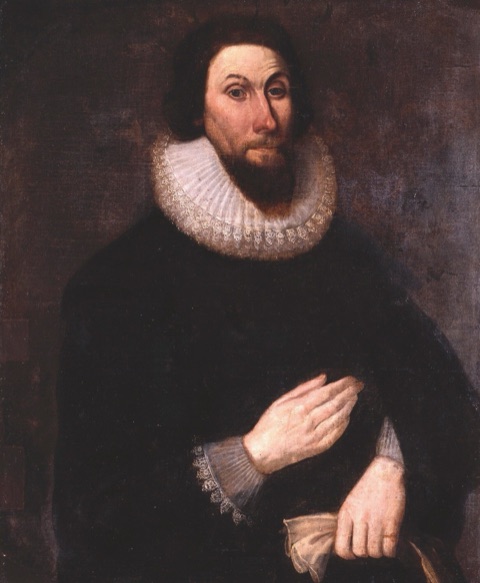
John Winthrop
John Winthrop (1588-1649) was an English Puritan lawyer who led the Massachusetts Bay Colony and served as its governor for twelve of its first twenty years. Born into a prosperous family in Suffolk, England, Winthrop became convinced that reforming the Church of England was hopeless and resolved to establish a godly commonwealth in the New World. He organized the Massachusetts Bay Company and led approximately 700 colonists to America in 1630. As governor, Winthrop worked to create a society governed by Puritan principles while navigating conflicts with religious dissenters like Roger Williams and Anne Hutchinson. His journal, published as The History of New England, provides invaluable documentation of the colony's early years. Winthrop's vision of America as a covenanted community with a special mission has profoundly influenced American identity and political rhetoric.
More in the free library
All 250+ books → Audio
Audio
The Autobiography of Benjamin Franklin
Benjamin Franklin · Free
 Audio
Audio
Common Sense
Thomas Paine · Free

Great Inventors and Their Inventions
Frank P. Bachman · Free

Letters from an American Farmer
J. Hector St. John de Crèvecoeur · Free
 Audio
Audio
Mourt’s Relation
William Bradford and Edward Winslow · Free

A Narrative of the Life of Mrs. Mary Jemison
James E. Seaver · Free