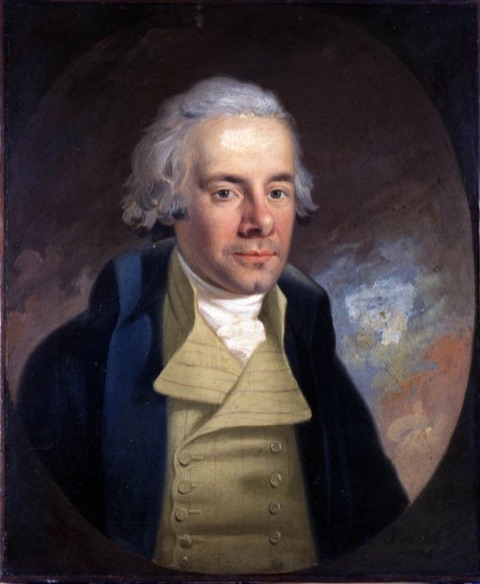
Wilberforce’s passionate call to distinguish genuine Christianity from the shallow, nominal faith of his day—a searching examination of what it means to take the gospel seriously.
One free account opens 250+ books and saves your place on every device. Google sign-in or an email link. No card.
You’re on the list — we’ll email you if this goes to print.
Included with your free account
This book, and 250+ more, free to read
A free account opens the whole library to read online, on your phone or at your desk. Open a book on one device and it is waiting at the same page on the next. The PDF and EPUB of every book are yours to keep, and audiobooks play in the same app.
250+ modernized editionsNot samples. The whole work, free.
Your place, on every devicePhone, tablet or desktop, same page.
131 audiobooksFrom $4.99 each, or all of them with a $50 gift.
William Wilberforce’s Real Christianity, first published in 1797, was one of the most widely read religious works of its era and remains a powerful challenge to nominal faith. Written by the man who led the campaign to abolish the slave trade in Britain, this book exposes the vast gulf between the comfortable, cultural Christianity of the English upper classes and the demanding, transformative faith taught in Scripture.
Wilberforce begins by diagnosing the root problem: most professed Christians have never seriously examined what Christianity actually teaches. They confuse the gospel with a vague morality, reduce faith to social respectability, and remain content with a religion that costs them nothing. He then turns to the specific doctrines they ignore or distort, beginning with the corruption of human nature—the foundation on which Christianity is built—and showing how their shallow understanding of sin produces an equally shallow understanding of salvation.
What makes the work remarkable is Wilberforce’s combination of moral urgency and intellectual rigor. He dismantles popular excuses with surgical precision: the claim that sincerity is all that matters, that belief doesn’t affect behavior, that religious knowledge can be acquired without effort. At every turn he insists that Christianity is not a system to be vaguely admired but a revelation to be studied, believed, and lived.
This modern English edition preserves Wilberforce’s eloquence and moral force while making the text fully accessible to contemporary readers. For anyone troubled by the gap between professed faith and genuine Christianity, this classic remains as urgent and convicting as the day it was written.
Why Christianity Matters More Than We Think
Before examining any specific failures in the religious lives of most professed Christians, we should first address a more foundational problem: the remarkably shallow understanding they have of Christianity itself, of what makes it distinctive, and of why it surpasses every alternative. Listen to their conversations, and you will hear virtue praised and vice condemned, piety applauded and irreverence criticized. So far, so good. But look more closely, as anyone must who refuses to be misled by these empty generalities, and a different picture emerges. The praise these people offer is directed not at Christianity in particular, but at religion in general, or perhaps at mere morality. Christianity as something distinct from these broader categories is largely unknown to them. Their engagement with it has been so passing and superficial that they have never grasped what makes it unique; they have noticed little more than the surface features that set it apart from other religions. There are a handful of facts, and perhaps a few prominent doctrines, that they cannot entirely ignore, but the implications of those facts, the connections between those doctrines, and their practical bearing on daily life, remain almost entirely unexplored.
Does this language seem too strong? Look at how these people actually live and conduct themselves day to day, and ask yourself: what genuinely distinguishes them from those who openly reject the faith? In an age when unbelief is widely acknowledged and lamented, do we see any serious effort on their part to teach their children the principles of Christianity, or to equip them with the reasoning needed to defend it? These parents would be mortified if their child entered adult life lacking any knowledge or skill appropriate to his social position, and so those things are cultivated with real diligence. But his religious formation is left to chance. Christianity has played no part in his education, and whatever attachment to it he carries (where any attachment exists at all) is too often not the product of careful thought and genuine conviction, but simply the residue of early, unexamined assumptions. He was born in a Christian country, so of course he is a Christian. His father was a member of the Church of England, and so is he. When this is how religion is passed down among us, like an inheritance no one bothered to appraise, it should not surprise us to find young men of intelligence and spirit beginning to question the entire system in which they were raised, and ready to abandon a position they have no idea how to defend. They know Christianity mainly through its difficulties and through the impossibilities falsely attributed to it. They fall, perhaps, into the company of unbelievers, where they are rattled by shallow objections and irreverent taunts that would have blown past them “as the idle wind,” had their faith ever been grounded in reason and honest argument.
Let us act before it is too late. No one can predict how far Christianity might fall into disrepute, especially at a time when the free mixing of different social classes so readily spreads the attitudes of the upper ranks throughout society. A similar ignorance may well explain, in no small part, the success with which Christianity has been attacked in recent years in a neighboring country. Had she not been completely defenseless going into that contest, she might have been pushed back from her weaker positions and forced to shed some of her unnecessary burdens, but she never could have been driven entirely from the field by such feeble opponents, armed as they were with little more than quibbles, mockery, and sarcasm. That, after all, was the full extent of their firepower. Let us take care that we do not suffer the same fate. And let it never be our shame that in schools, and perhaps even in universities, Christianity is almost entirely ignored.
It would be unreasonable to expect that those who pay so little attention to this vital matter in their children’s education would be more diligent in other areas of life, where the pull of parental affection is weaker and the sense of accountability less obvious. Naturally, then, they care little about the state of Christianity in their own country, and even less about carrying the light of divine truth to the nations that “still sit in darkness.”
But someone might object that religion is not loud or showy by nature. It is quiet and personal, they would say; it lives within a person’s own heart and keeps away from public view. Very well, let us grant that.
Drawing closer now from that distant, polite observation of these unassuming Christians, let us listen in on their private conversations, the kind shared only among trusted friends. If we can learn anything about the true condition of a person’s heart, it is here, in these unguarded moments, that we discover what they genuinely value and fear, what they consider good and what they consider evil. And yet, here of all places, you will find almost no trace of Christianity. It barely registers among the many things they hope for, fear, celebrate, or grieve. They may well be grateful, and rightly so, for their health, their abilities, their wealth, and the other blessings of this life; but they scarcely count among those blessings this most distinctive and extraordinary gift of God’s generosity. If they mention it at all, it is done coldly and as a formality, much like acknowledging some old family claim that carries little real weight in the accounting of one’s wealth or standing, yet is mentioned anyway out of a vague sense of tradition or social propriety.
But what settles the matter more decisively than anything else is this: watch what happens when their conversation takes a more serious turn. Here, at last, you might expect even a modest and retiring faith to show itself. Yet here too you will search in vain for the religion of Jesus. Their standard of right and wrong is not the standard of the gospel. They approve and condemn by an entirely different measure. The principles they advance and the opinions they defend are fundamentally at odds with the spirit and character of Christianity. You would think yourself sitting among the disciples of one of the old schools of ancient philosophy. Indeed, it would be nearly impossible to conclude otherwise, unless someone happened to mention the name of a well-known heretic, giving them the opportunity to demonstrate their loyalty to the religion of their country.
The truth is, their views on religion aren’t shaped by reading the word of God. The Bible sits on the shelf, unopened; and they would know almost nothing of its contents, were it not for what they occasionally hear at church or the faint impressions still lingering from the lessons of early childhood.
How different, and in many respects how contradictory, would be two systems of mere morality: one drawn from the commonly accepted standards of the Christian world, and the other from a careful study of the Holy Scriptures. It would be fascinating to observe someone who had long been satisfied with the former encountering the latter for the first time. We don’t need to speculate about this, either. It was, in fact, precisely the effect produced on the mind of a recent and clever writer, whose short work, though it bears some marks of his characteristic fondness for paradox, we must at least acknowledge does something valuable: it exposes, with considerable force, the shallowness of the superficial religion so common in our day, and throughout displays that pleasing clarity and elegance that so distinctly mark everything this author writes. But having offered that genuine tribute of praise, we are reluctantly compelled to note that the work in question undermines the very cause it was meant to serve, through a number of hasty and extravagant claims. This is a flaw no one can easily avoid who rushes to judge a deep and wide-ranging subject without having carefully examined all its dimensions. Most regrettably of all, the work treats the great question it claims to address more as an intellectual puzzle than as a matter in which our eternal interests are at stake. Surely the writer’s aim should have been to convince his readers of their guilt even more than of their ignorance, and to leave them feeling the weight of their danger rather than merely the embarrassment of their foolishness.
There’s no need to multiply arguments to prove how serious this willful ignorance must appear in God’s sight. Anyone who believes we are accountable creatures, and it is to such people alone that this work is addressed, must acknowledge that we will one day answer to the Almighty for every advantage we enjoyed here: every opportunity to grow, and every chance to contribute to the happiness of others. If, when called to give an account of our stewardship, we must answer for how we used our physical bodies and our material resources to relieve the needs of those around us, how much more will we answer for how we exercised the nobler faculties of our nature: our powers of invention, memory, and judgment, our use of every tool of diligent study, serious reflection, and honest decision-making. And to what subject could we more reasonably be expected to apply ourselves with urgency than the one on which our own eternal destiny depends? When God in His goodness has provided us with such abundant means of instruction in the very things we most need to know, the guilt of willful ignorance is immense, and its punishment will be severe.
Why do we expect, in this pursuit alone, to gain knowledge without seeking it and to achieve success without any effort? Everything in nature teaches us the opposite lesson, and our own experience in worldly affairs confirms it. Generous as Providence is, its gifts are not handed to us in ways that encourage laziness; they are given in ways that spur us to action. No one expects to reach the heights of learning, art, power, wealth, or military glory without firm resolve, sustained effort, and steady perseverance. And yet we expect to become Christians without labor, study, or inquiry. This is all the more absurd because Christianity is a revelation from God, not a human invention. It discloses new relationships and the duties that come with them, and it contains doctrines, motivations, and commands that belong to it alone. We cannot reasonably expect to grow proficient in it through the casual encounters of everyday life, the way one might gradually absorb the principles of worldly wisdom or a simple code of ethics.
Careful reading of the Holy Scriptures would expose the depths of our past ignorance. We would stop being deceived by surface appearances and stop confusing the Gospel of Christ with the systems of philosophers. We would come to feel the weight of a truth that our own age has largely forgotten: Christianity does not simply call us to be vaguely “religious” or “moral.” It calls us, as people who care about their immortal souls, to believe specific doctrines, absorb specific principles, and practice specific precepts that Christ himself gave us. It would take too long to prove this point beyond all doubt by quoting Scripture exhaustively, and since it belongs more properly to a later section of this work, it is enough to note here, in general terms, that Scripture consistently presents Christianity as the supreme and unparalleled expression of God’s generosity toward humanity. This extraordinary gift was graciously announced in the original promise made to our first parents, and it was foretold through a long period of captivity as something like life rising out of death. “Lord, now let your servant depart in peace, for my eyes have seen your salvation” (Luke 2:29-30) was the cry with which the devout Simeon welcomed it, and the early converts received it universally with gratitude and joy. At one point in Scripture, the gift of it is promised as a reward; at another, the loss of it is threatened as a punishment. And brief as the prayer our Savior taught us is, the broader spread of Christ’s kingdom stands as one of its central petitions.
What exalted ideas about the importance of Christianity should fill us when we read descriptions like these? Yet all our “line upon line and precept upon precept” has been in vain. This treasure, foretold and prayed for, announced and celebrated, poured into our laps in rich abundance, we barely accept. We turn away from it coldly, or at best hold it carelessly, as though it were worthless. A proper sense of its value would surely take root in us through diligent study of the word of God, that blessed storehouse of heavenly truth and consolation. It is there that we learn what we should believe and how we should live. And one would think, surely, that little persuasion would be needed to get people to read the sacred text. Reason urges it; revelation commands it: “Faith comes by hearing, and hearing by the word of God” (Rom 10:17). “Search the Scriptures” (John 5:39). “Be ready to give to every one a reason of the hope that is in you” (1 Pet 3:15). These are the declarations and commands of the inspired writers, commands reinforced by the praise given to those who follow them. Yet can anyone deny that, with the Bible sitting in our homes, we remain ignorant of its contents? And is it not largely for this reason that the majority of the Christian world knows so little, and gets so much wrong, about the very religion they claim to follow?
This isn’t the place to fully explore why those who accept the Bible as God’s Word, and who claim to rest their hopes on the Christian foundation, are so content to remain in a state of such profound ignorance. But it may be worth pausing here to address two closely related ideas that, in the minds of more thoughtful and serious people, seem to quietly sustain that contentment. The first is that what a person believes matters little; what counts is how they live. The second (cut from the same cloth) is that sincerity is everything. Whatever a person’s opinions and conduct may be, as long as they are genuinely convinced those opinions and that conduct are right, then however civil society may need to deal with them, they cannot be guilty of anything in God’s sight.
It would take too long to fully examine the various merits of these popular positions, though surely one of their least impressive qualities is their unlimited reach, since they manage to encompass every error ever believed and many of the most terrible crimes ever committed. Regarding the first of these maxims, we should note that it rests on the outrageous assumption already mentioned: that although we are accountable creatures, we will never actually be called to account for how we use our intellectual and mental faculties. Furthermore, it is built on the deeply flawed premise that a person’s beliefs will have no effect on their behavior. Those who champion this fashionable principle need to be reminded that the judgment is often corrupted by the heart and its desires, and that vice is the fertile mother of prejudice and error. Forgetting these widely acknowledged truths, and blurring the most important moral distinctions, they place on the same level two very different kinds of people: those who carefully root out every false principle from their hearts and pursue truth with sincerity and genuine passion, and those who simply surrender their minds to whatever opinions early conditioning has planted, or that passion, self-interest, or sheer lazy compliance has imposed on them.
The second of these two maxims, that sincerity is everything, rests on the unfounded assumption that God has not given us adequate means to distinguish truth from falsehood, right from wrong. It implies that no matter how wild or irrational a person’s opinions and behavior may be, we should assume they are the product of honest inquiry and genuine conviction, just as much as if those views and actions had been perfectly reasonable and sound. No principle has ever been more widely applied or more powerful in its effect. Its appealing simplicity and neat brevity give it an advantage over the labored arguments of Bellarmin! Clement, Ravaillac, and others of their kind, whose purity of intention the world has so far failed to properly acknowledge, would have found in this principle a ready defense; and their wronged innocence might now at last receive its full, if long-delayed, vindication. “But these,” someone might object, “are exceptional cases.” Of course they are, and precisely because they expose the weakness of the principle so clearly, anyone who holds this view would be glad to set them aside. But such a person would first need to explain, with some precision, why these cases should be excluded from the principle’s reach, and that turns out to be an impossible task. Sincerity, in its common sense, cannot serve as the standard for judging guilt and innocence on any basis that would not equally justify the assassins already mentioned. There is no escaping the conclusion: no one was ever more fully convinced of the innocence of an action than those men were convinced that the terrible deed they were about to commit was not merely permissible, but highly praiseworthy. Since Clement and Ravaillac were unquestionably sincere, they were therefore, by this logic, unquestionably innocent. In fact, the absurd and dangerous implications of this principle run even deeper than what has been shown so far. It would hardly be an overstatement to say that while this principle dismisses the defense of minor offenders, those who still retain some sense of right and wrong, it offers, like a well-known sanctuary, safe refuge to the most hardened criminals: those who, through long habits of wickedness, have lost both the perception and the practice of virtue. It singles out the seared conscience and the heart grown numb to all moral distinctions as the special objects of its protection. Nor are examples like these found only in secular history. Scripture offers its own parallels, and it was surely to guard us against this very error that our Lord warned His disciples: “The time is coming when whoever kills you will think he is offering service to God” (John 16:2).
That principle, then, must be abandoned. Those who champion sincerity must be compelled to restore the word to its true meaning and acknowledge that it requires honesty of mind, a faithful use of every means of learning and growth, a genuine desire to be taught, humble inquiry, impartial consideration, and unprejudiced judgment. It is to these qualities that we urgently call you; and to such dispositions of mind, always accompanied by fervent prayer for God’s blessing, Scripture everywhere holds out the most encouraging promises. “Ask and you will receive, seek and you will find, knock and it will be opened to you; come, everyone who thirsts, come to the waters” (Matt 7:7; Isa 55:1): these are the comforting assurances, the gracious encouragements offered to the truly sincere seeker. How deep will our guilt be if we dismiss all these generous invitations? “How many prophets and kings longed to hear the things that we hear, and never heard them!” (Luke 10:24). Our opportunities are great; so, too, is our responsibility. We must wake up to a clear understanding of our situation. Every consideration that could alarm our fears or stir our diligence is set before us. How quickly the brightness of our noonday sun may be darkened! Or, should God’s patience continue to extend to us the mercies we so badly misuse, that will only deepen our guilt and, in the end, increase our punishment. The day of reckoning will come. And when we are finally summoned before God to give an account of how we have lived, what defense can we possibly offer if we remain willfully and stubbornly ignorant of the way that leads to life, when we had such extraordinary means of knowing it and such urgent reasons to pursue it?
The Corruption of Human Nature
Section 1: How We Underestimate Our Own Corruption
After examining the defective views that prevail among upper-class Christians regarding the importance of Christianity in general, we now turn to the particular misconceptions that first demand our attention: those concerning the corruption and weakness of human nature. Many readers of this work may never have given this topic much thought. If that is the case, I must ask them to listen carefully and seriously. The subject is of the deepest importance. We do not hesitate to assert that it lies at the very root of all true religion, and that it is, above all else, the foundation on which Christianity is built.
From what the author has been able to observe, the majority of professed Christians among the upper classes either ignore the corruption and weakness in question, deny it outright, or at the very least greatly minimize it. They do acknowledge that the world has always contained a great deal of vice and wickedness, and that humanity has always been prone to sensuality and selfishness, in defiance of the nobler and more generous impulses of human nature. They concede that throughout every age and country, in both public and private life, there have been countless examples of oppression, greed, cruelty, fraud, envy, and malice. They admit that informing the mind and persuading the judgment is too often a futile exercise. They grant that doing so does not actually reform the human heart. Even when people know their duty, they refuse to practice it; and this remains true even when you have compelled them to acknowledge that the path of virtue is also the path of genuine self-interest and lasting satisfaction.
These are undeniable facts, and at the same time they are so obvious that one might wonder whether the celebrated saying of the ancient Greek philosopher, “the majority are wicked,” truly deserved its reputation as a mark of exceptional wisdom.
The effects of human depravity are universally acknowledged and lamented, yet we should not expect to find them traced to their true origin.
“The cause is hidden, though its force is well known” (Causa latet, vis est notissima).
Prepare yourself to hear instead about frailty and weakness, petty sins, occasional failings, moments of sudden weakness, and other softening terms designed to keep the true source of the evil out of sight, and to offer the pride of human nature a comfortable consolation without offending the intellect. The majority of professed Christians tend to speak of man as a being who is naturally pure and inclined toward virtue, yet is sometimes drawn off the right course almost against his will, or overwhelmed by the force of temptation. In their view, vice is more of an accidental and temporary condition than a deep-seated and habitual one: a poisonous plant that, though found to live and even flourish in the human mind, is not the natural growth of the soil.
Christianity speaks a very different and far more humbling language. From it we learn that man is a fallen creature, cut off from his original dignity, degraded in his nature, and corrupted in his faculties. He is resistant to good and inclined toward evil. Vice comes naturally and easily to him, while virtue is difficult and laborious. He is stained by sin, not lightly or on the surface, but radically and to the very core. These are truths that, however wounding to our pride, one would think no one would be bold enough to dispute (if this very corruption did not itself distort our judgment). Nothing brings these truths home to me more powerfully than reflecting on what still remains of our original dignity when set against our present state of moral ruin:
“Into what depth thou seest, from what height fallen.”
Examine first the natural powers and faculties of the human mind: invention, reason, judgment, memory. Here is a mind of vast scope, capable of looking backward and forward at once, reviewing the past to make sense of the present and anticipate the future. It discerns, gathers, combines, and compares. It doesn’t merely grasp moral beauty; it admires it. Fear and hope warn and motivate us. Joy and sorrow comfort and soften us. Love binds us to one another, sympathy draws us together, courage moves us to act, and patience sustains us through hardship. And over all of this stands conscience, that faithful inner voice, reinforcing the conclusions of reason and guiding the passions of the soul. We must truly say of humanity: majestic, though in ruin. “Happy, happy world,” would be the cry of some inhabitant of another planet, upon learning of a globe like ours, filled with creatures like these, surrounded by endless situations and occasions to draw out the full range of their remarkable gifts. “Happy, happy world, with what delight must your great Creator and Governor watch your conduct, and what a glorious reward awaits you when your time of testing has come to an end.
“Go, good man, where your virtue calls you, go with a fortunate step, about to carry off the great prizes of your merits” (i, bone, quo virtus tua te vocat, i pede fausto, grandia laturus meritorum proemia).
But we have lingered too long in these delightful reflections. A sobering contrast confronts us when we turn from humanity’s natural capacities to examine what people actually do with them. Consider the full sweep of human history: every age, every climate, every nation, every condition and stage of society. Where now do you find the marks of that exalted nature we just described? “How is the gold become dim, and the fine gold changed?” How clouded is human reason, how twisted our affections, how deadened our conscience! How readily anger, envy, hatred, and revenge take root in the human heart! How completely we become slaves to our basest appetites! What a powerful pull toward evil we discover in ourselves, and what a stubborn resistance to good!
Consider the ancient world for a moment: not merely its darkest corners, where people lay buried in ignorance and barbarism, but the very centers of civilization and refinement, the great seats of taste, learning, and philosophy. Yet even in these privileged regions, for all the brilliance that the light of knowledge shed, the moral darkness was so thick “that it might be felt.” Look at their foolish idolatries, their absurd superstitions, their lack of natural affection, their brutal excesses, their callous oppression, their savage cruelty. Don’t look to the uneducated and the crude for these examples; look to the learned and the refined. Don’t form your judgment from the conduct of the more reckless and dissolute; you will turn away in disgust and shame from the accepted, everyday habits of people who were considered decent and moral. Paul states the facts most plainly and provides the explanation: “because they did not like to retain God in their knowledge, he gave them over to a reprobate mind.”
Turn your attention now to a completely different part of the world: the inhabitants of a hemisphere that the corrupting practices and poisonous example of the old world had never reached. Surely, among these children of nature, we might expect to find those virtuous qualities we have so far searched for in vain. But our search will still come up empty. The historian of America, whose account is actually more generous than those of several other major authorities, describes these peoples as a compound of pride, indolence, selfishness, cunning, and cruelty; consumed by a thirst for revenge that nothing could satisfy and a ferocity that nothing could soften; strangers to the most basic human sympathies. They appeared incapable of affection between spouses, tenderness toward children, reverence for parents, or meaningful bonds with others, while at the same time combining their state of barbarism with many of the vices and weaknesses found in so-called civilized society. Their horrific treatment of prisoners taken in war, on whose bodies they feasted after putting them to death by the most savage tortures, is well enough known that we need not rehearse the disturbing details here. Nothing redeems this bleak portrait except fortitude, perseverance, and a certain zeal for the welfare of their own small community, though even that last quality, given how it was expressed and directed, is difficult to hold up as genuinely praiseworthy.
You may be willing to concede the heathen nations as indefensible, preferring instead to judge humanity by looking at countries that have been blessed with the light of revelation. That is fair, and we should gladly acknowledge it: Christianity has raised the general standard of morals far higher than anything found in the pagan world. Wherever she has gone, she has improved human character and multiplied the comforts of society, particularly for the poor and the weak, whom she claimed as her special concern from the very beginning. Like her divine Author, “who sends his rain on the evil and on the good,” she pours down countless blessings on thousands who benefit from her generosity while forgetting or denying her power and dismissing her authority. Yet even in this more favored situation, we find far too many painful proofs of human depravity. In fact, that depravity becomes even more visible here, and far less excusable. For what barriers does it not now leap over? What motives does it not now overcome? Consider the superior knowledge and advantages we enjoy, and then weigh the greater obligations those advantages place on us. Consider how often our worst impulses are held in check not by inner virtue, but by the stronger legal restraints and the improved standards of public opinion that govern our society. We can get some sense of how much those external forces actually do by looking at the terrible evidence recently on display in a neighboring country, where once their influence was removed, the most horrific crimes were committed openly and without shame in broad daylight. Consider, then, the superior excellence of our moral code, the new principles of obedience that the gospel provides, and above all, the solemn weight that Christian teaching carries from its clear revelation of a future state of judgment and from the announcement of that fearful day “when we shall stand before the judgment seat of Christ.” Yet, despite all this knowledge, pressed home with such gravity, how little progress in virtue have we actually made? It has certainly not been enough to prevent our own age from embracing various ancient maxims that, when examined carefully, confirm the depravity of human nature all too plainly. It may be worth citing a few examples to make the point. It is as widely acknowledged today as it ever was that prosperity hardens the heart; that unlimited power is always abused rather than used to spread happiness; that habits of vice form on their own, while habits of virtue are slow and difficult to build; that those who paint the most beautiful portraits of virtue and seem most captivated by her appeal are often the least subject to her influence, and are pulled away from the very conduct they most earnestly urge on others by the most trivial temptations. All of this persists even though most of the pleasures that vice offers can be found with far less bitterness along the paths of virtue, while those same paths offer deeper and more exquisite joys of their own, free from the diseases and bitter remorse that so often accompany the pursuit of vicious pleasures.
It will be enough to touch briefly on a few other arguments that deserve at least some acknowledgment. One of these, whose validity superficial moralists may deny but which parents of firm principles can readily confirm, is drawn from the stubborn and contrary dispositions we observe in children, dispositions that too often defeat even the most determined efforts of wise and caring adults. Another comes from the various ways we deceive ourselves, a tendency that no one who has ever examined the workings of their own mind with genuine seriousness can claim to be unfamiliar with. This particular form of corruption has been largely responsible for the ways Christianity itself has so often been brought into disgrace. The gospel of peace has been twisted into an instrument of cruelty, and in the heat of persecution, every trace of the gentle and compassionate spirit of Jesus’s religion has vanished entirely. How deeply must this corruption have penetrated the whole structure of human nature, when the most nourishing food can be transformed into the deadliest poison! Because this work has aimed throughout to argue from premises that are not only genuinely observable but beyond dispute for its intended readers, little was said earlier about the wretched condition of the pagan world with respect to their inadequate and unworthy ideas of the Supreme Being, who even then “left not himself without witness, but gave them rain and fruitful seasons, filling their hearts with food and gladness” (Acts 14:17). But surely, for anyone who calls themselves a Christian, it stands as a stunning example of human depravity that we ourselves, who enjoy the full light of Revelation; to whom God has granted such clear knowledge of what we need to understand about His nature and character; who claim to believe “that in him we live, and move, and have our being” (Acts 17:28); who acknowledge that we owe Him every comfort we enjoy in this life, along with the offer of eternal glory purchased for us by the atoning blood of His own Son (“thanks be to God for his unspeakable gift,” 2 Cor 9:15): that we, loaded down with such mercies, should be perpetually guilty of forgetting His authority, remaining ungrateful for His blessings, dismissing His gracious offers, or at best receiving them with cold and unmoved hearts.
But to put the question of humanity’s natural depravity to its most rigorous test, consider the best the human race has to offer: the watchful, self-denying Christian. Let him settle the matter, not by drawing inferences from the behavior of a thoughtless and dissolute world, but by appealing to his own personal experience. Go with him into his private room, ask him what he thinks about the corruption of the human heart, and he will tell you that he feels its power deeply, having learned it through long self-observation and close familiarity with the workings of his own mind. He will tell you that every day strengthens this conviction, and that hourly he sees fresh reason to mourn his lack of purity in intention, his weakness of purpose, his shallow thinking, his selfish and unworthy desires, his reluctance to begin his duty, and his sluggishness and coldness in carrying it out. He finds himself compelled to confess continually that he feels two opposing principles at war within him, and that “he cannot do the things that he would.” He cries out in the words of the excellent Hooker: “The little fruit which we have in holiness, it is, God knoweth, corrupt and unsound: we put no confidence at all in it, we challenge nothing in the world for it, we dare not call God to reckoning, as if we had him in our debt books; our continual suit to him is, and must be, to bear with our infirmities, and pardon our offences.”
Such is the moral history, and such the condition of humanity. The details may vary, and the shading may sometimes be darker, sometimes lighter; but the underlying principles, the broad outlines, remain the same everywhere. Wherever we turn our gaze, we find sobering evidence of our own depravity: whether we look to ancient or modern times, to barbarous or civilized nations, to the behavior of the world around us, or to the conscience within our own chest; whether we read, or hear, or act, or think, or feel, the same humbling lesson is pressed upon us at every turn. As the Latin poet put it, “Whatever you see, wherever you move, there is Jupiter” (Juppiter est quodcunque vides, quocunque moveris), meaning that the same moral reality confronts us no matter where we look.
When we look back at the picture drawn earlier of humanity’s natural powers and compare our actual condition with what those powers suggest we were originally designed to be, how do we account for such a striking contrast? Do words like frailty, infirmity, occasional lapses, or sudden temptations adequately describe the nature of this disease, or explain its cause? How, by any ordinary logic, can we account for it, except by concluding that humanity, since leaving the hands of its Creator, has contracted a deep corruption, and that the poison of this subtle infection has spread throughout the entire race of Adam, everywhere displaying unmistakable signs of its deadly power? From this corruption it follows that our appetites have grown stronger while our reason and conscience have grown weaker, leaving the latter to offer only feeble, ineffective resistance against the forbidden indulgences the former constantly demand. Sensual pleasures and disordered desires have degraded our higher faculties and made our hearts resistant to the knowledge of God, to reflection on His perfections, and to any willing, consistent submission to His authority and obedience to His laws. Through the repetition of sinful acts, evil habits have taken root within us and have tightened the chains of sin. Left to face the consequences of our own foolishness, our understanding has grown darker and our hearts more hardened; reason has ultimately betrayed its own purpose, and even conscience itself has joined in the deception, until, rather than mourning our miserable condition, we have too often embraced our chains and even taken pride in our shameful bondage.
Such is the general picture of how vice progresses when it’s allowed to reach full maturity in the human heart. Individual circumstances will naturally vary; to continue with a figure that describes the situation so precisely, some people’s servitude is harsher than others’, their chains more painful, their degradation more complete. Some have even appeared, for a time, to have nearly escaped their confinement. But none are entirely free. All of them, without exception, carry the shameful marks of their captivity to a greater or lesser degree, whether those marks are visible or carefully hidden.
This is what an honest and thorough investigation must acknowledge as the state of things. And how can it be explained on any other basis than some original corruption, some deep-rooted principle of moral decay? Every other explanation falls short, while the cause that has been identified here accounts for the effect fully and, it seems, exclusively. It turns out, then, that the corruption of human nature is established by the same method of reasoning that has been accepted as conclusive in demonstrating the existence of gravity and determining its laws. This doctrine rests on the same solid foundation on which Newton built the towering structure of his philosophy. It is not mere speculation, not an uncertain (if perhaps clever) theory, but the reliable result of broad and actual experience: drawn from undeniable facts, and further confirmed by how well it harmonizes with the various parts of the great system of the universe, bringing coherence to phenomena that would otherwise clash and remain inexplicable.
Here, however, Revelation steps in and supports the uncertain conclusions of our unaided reason. The Holy Scriptures describe us as fallen creatures; on nearly every page, we find something designed to humble human pride and silence human pretension. “The imagination of man’s heart is evil from his youth” (Gen 8:21). “What is man, that he should be clean? and he which is born of a woman, that he should be righteous” (Job 15:14). “How much more abominable and filthy is man, which drinketh iniquity like water?” (Job 15:16). “The Lord looked down from heaven upon the children of men, to see if there were any that did understand, and seek God. They are all gone aside; they are altogether become filthy: there is none that doeth good, no not one” (Ps 14:2-3). “Who can say, I have made my heart clean, I am pure from my sin?” (Prov 20:9). “The heart is deceitful above all things, and desperately wicked, who can know it” (Jer 17:9). “Behold, I was shapen in wickedness, and in sin hath my mother conceived me” (Ps 51:5). “We were by nature the children of wrath, even as others, fulfilling the desires of the flesh and of the mind” (Eph 2:3). “O wretched man that I am, who shall deliver me from the body of this death!” (Rom 7:24). Passages like these could be multiplied endlessly, all speaking the same truth, and they could be further illustrated and confirmed by other considerations drawn from the same sacred source: such as those passages that present a thorough transformation, a complete renewal of our nature, as essential to becoming true Christians, or those that show how holy men consistently trace their good dispositions and affections back to the direct work of God Himself.
William Wilberforce (1759–1833) was a British politician, philanthropist, and evangelical Christian who devoted much of his life to the abolition of the slave trade. Elected to Parliament at twenty-one, he underwent a profound spiritual conversion in 1785 that transformed his understanding of public duty. For nearly two decades he led the parliamentary campaign against the slave trade, achieving its abolition in 1807, and continued working toward the complete emancipation of enslaved people in the British Empire, which was enacted just days before his death in 1833. Real Christianity, published in 1797, was his major literary work and became an immediate bestseller, going through multiple editions and profoundly influencing the religious life of England.
“Updated Works has been an incredible blessing to my Christian life and ministry… remarkably faithful to the original authors while making these timeless treasures understandable for modern readers.”