Modernized edition · Full text · Free PDF/EPUB
Observations Concerning the Increase of Mankind in Modern English
Want the file? The PDF/EPUB is free with an account.
Summary
- Author
- Benjamin Franklin (1706 to 1790 AD)
- Written
- 1751 · first printed Boston, 1755
- Source edition
- The Boston 1755 printing by S. Kneeland
- Type
- Essay on population and political economy
- Length
- 3,000 words · 10 minutes
What is Observations Concerning the Increase of Mankind about?
Observations Concerning the Increase of Mankind is a 1751 essay by Benjamin Franklin. In 24 short observations it argues that cheap land in America encouraged early marriage and large families, so the colonies would double every 20 to 25 years, and it closes by opposing German immigration and favoring a white America.
Read the full summary (8 points, key themes)Show less
How the argument unfolds
- 01
Observations 1 to 4: why cities shrink. Tables drawn from European cities do not fit America. In cities and settled countries, high costs and low wages delay marriage, and in cities deaths exceed births.
- 02
Observations 5 to 7: land and marriage. Hunters need the most land and manufacturers the least. Cheap American land lets a working man start a family early, so the population doubles every 20 years.
- 03
Observations 8 to 11: labor, trade and Britain. Labor stays dear while land remains, so the colonies cannot rival British manufacturing. Their growth is a market Britain should not stifle: "To cause hardship is to weaken, and weakening the children weakens the whole family."
- 04
Observation 12: the cost of slaves. Counted fully, slave labor costs more than wages in England. Americans buy slaves because, unlike hired men, they cannot leave to set up for themselves.
- 05
Observation 13: six causes of decline. Conquest, lost territory, lost trade, lost food, bad government, and slavery, which he says weakens the white population of the sugar islands.
- 06
Observations 14 to 21: laws that grow a people. Laws that favor exports and limit foreign luxuries enlarge a nation. Home luxury should stay rare, thrift multiplies families, and good laws soon refill losses from war or emigration.
- 07
Observations 22 and 23: room to grow. More than a million English now live in North America from scarcely 80,000 who crossed. Britain must secure room in its boundary treaty with the French.
- 08
Observations 23 and 24: who should settle America. Franklin objects to Palatine Germans settling Pennsylvania in groups, wishes the English and Saxons more numerous, and would exclude "all blacks and tawnies" from America.
Key themes
- Subsistence governs numbers. Every argument returns to the cost of supporting a family. Privileges for married people help refill a country, but they "cannot increase a population beyond the means provided for its subsistence."
- Population as imperial power. Franklin measures a nation by its people. He notes that colonial privateers in the recent war outgunned the whole navy of Queen Elizabeth.
- Slavery counted as a cost. His case against importing slaves is made in terms of wages, idleness and the white population.
- Language, custom and complexion. He fears German settlers will keep their own ways, saying they will never adopt English language or customs "any more than they can acquire our complexion."
Reader questions (9)Hide the questions
Questions about Observations Concerning the Increase of Mankind
Is there a modern English version of Observations Concerning the Increase of Mankind?
Yes. This is Observations Concerning the Increase of Mankind by Benjamin Franklin in modern English. The language is modernized and the author's order and argument are kept. The full modernized text is free to read on this page.
Can I read Observations Concerning the Increase of Mankind online for free?
Yes. The complete text of this modern English edition is on this page, with no sign-up or paywall.
Is there a free PDF of Observations Concerning the Increase of Mankind?
Yes. The PDF and EPUB of this edition are free with an Updated Works account. Sign in with Google or an email link; no card is needed.
What is the main argument of Observations Concerning the Increase of Mankind?
That people marry earlier and have more children wherever a family is easy to support. Because land in America was cheap, Franklin reckons twice the marriages and twice the births per marriage of Europe, so the colonies must double every 20 years.
Did Franklin say the population doubles every 20 or 25 years?
Both, in different places. Observation 7 concludes the population must at least double every 20 years. Observation 22 uses a more cautious supposition, a doubling once every 25 years, to show the English in America would outnumber those in England within a century.
What does Franklin say about slavery?
He argues that slave labor is dearer than free labor in England, that slavery has reduced the white population of the English sugar islands, and that it makes slaveholding families idle. His objections here concern cost and population.
What does the essay say about race and the Germans?
Franklin objects to Palatine Germans settling together in Pennsylvania and keeping their language. He classes most Europeans, including most Germans, as swarthy, names the English and Saxons as the main body of white people, and wishes to exclude Black and tawny peoples from America. He ends by admitting he may be partial.
Who was influenced by this essay?
Thomas Malthus quoted Franklin's point that crowding is the only limit on the growth of plants and animals in his Essay on the Principle of Population (1798).
Which edition is this?
A modern English edition of the Boston 1755 printing, the first. All 24 observations are complete, including the closing remarks on immigration and complexion. The observation titles are added for clarity.
Observations Concerning the Increase of Mankind in Modern English · Full text
Observations Concerning the Increase of Mankind
1. Population Tables and Place
Tables showing the proportions of marriages to births, deaths to births, marriages to the number of inhabitants, and so on, based on observations of death and baptism records in populous cities, will not apply to rural areas. Nor will tables based on observations of long-established, fully settled countries, such as those of Europe, apply to new countries, such as America.
2. Supporting a Family
Population increases in proportion to the number of marriages, and marriages are proportionally more numerous when supporting a family is easy and convenient. When families can be supported easily, more people marry, and they marry earlier in life.
3. Marriage in Cities
In cities, where all trades, occupations, and positions are filled, many people delay marriage until they can see how to bear the expenses of a family. These expenses are greater in cities because luxury is more common. Many remain single throughout their lives, continuing as household servants, journeymen in trades, and so on. Thus cities do not maintain their populations through births alone: deaths exceed births.
4. Marriage in Settled Countries
In fully settled countries, the situation must be nearly the same. All land is occupied and cultivated to its fullest capacity. Those who cannot obtain land must work for others who have it. When laborers are plentiful, their wages will be low. Low wages make supporting a family difficult, and this difficulty deters many from marriage. They therefore remain servants and unmarried for a long time.
Only because cities draw people from the countryside, making a little more room there, is marriage somewhat more encouraged in rural areas, where births exceed deaths.
5. Land and Ways of Living
Europe is generally fully settled with farmers, manufacturers, and others, and therefore its population cannot now increase much. America is chiefly occupied by Indians, who live mostly by hunting. But hunters require more land for their subsistence than any other people. Farmers live on much less, gardeners on still less, and manufacturers require the least of all.
The Europeans found America as fully settled as it reasonably could be by hunters. Yet because these hunters possessed large tracts, they were easily persuaded to give up portions of territory to the newcomers. The newcomers did not greatly interfere with the natives’ hunting and supplied them with many things they wanted.
6. Affordable Land and Marriage
Land is thus plentiful in America and so cheap that a working man who understands farming can soon save enough money to buy a piece of new land sufficient for a plantation on which to support a family. Such men are not afraid to marry. Even if they look far enough ahead to consider how their children will be provided for when grown, they see that more land can be obtained on equally easy terms, all circumstances considered.
7. Early Marriage and Growth
Marriages in America are therefore more common, and more commonly early, than in Europe. If Europe is reckoned to have only one marriage a year among every 100 people, perhaps we may reckon two here. If Europe has only four births per marriage, many marriages there being late, we may reckon eight here. If half of these children grow up, and our marriages take place at an average age of 20, our population must at least double every 20 years.
8. Why Labor Remains Costly
Despite this increase, North America’s territory is so vast that fully settling it will take many ages. Until it is fully settled, labor will never be cheap here. No man continues long as a laborer for others before obtaining a plantation of his own. No man continues long as a journeyman in a trade before going among the new settlers and setting up for himself, and so on.
Thus labor is no cheaper now in Pennsylvania than it was 30 years ago, although so many thousands of working people have been brought in.
9. Competition with Britain
The danger of these colonies competing with their mother country in trades that depend on labor, manufacturing, and so on, is therefore too remote to require Great Britain’s attention.
10. A Growing British Market
As the colonies grow, however, a vast demand for British manufactured goods is developing. This splendid market is wholly under Britain’s control, and foreigners cannot compete in it. Before long it will grow beyond even Britain’s ability to supply it, even if all her trade is with her colonies.
Britain should therefore not restrict manufacturing in her colonies too much. A wise and good mother will not do so. To cause hardship is to weaken, and weakening the children weakens the whole family.
11. The Cost of High Prices
Besides, if American demand should drive the prices of British manufactured goods too high, foreigners who can sell more cheaply will drive British merchants out of foreign markets. This will encourage and increase foreign manufacturing. Consequently, foreign nations, perhaps Britain’s rivals in power, will become more populous and powerful, while her own colonies, kept too weak, will be unable to assist her or add to her strength.
12. The Expense of Slave Labor
The opinion that slave labor might enable America to compete with Britain in cheap manufacturing is poorly founded. Slave labor can never be as cheap here as the labor of working men in Britain. Anyone can calculate it.
Interest rates in the colonies range from 6 to 10 percent. Slaves cost an average of £30 sterling each. Count the interest on the original purchase price of a slave, insurance or the risk of his death, his clothing and food, expenses during sickness and lost working time, and losses from his neglect of work. Neglect is natural in a man who gains nothing from his own care or diligence. Add the expense of an overseer to keep him working, and his occasional pilfering, almost every slave being by nature a thief. Compare the total with the wages of a worker manufacturing iron or woolen goods in England. You will see that labor is much cheaper there than labor by Black people here can ever be.
Why, then, will Americans buy slaves? Because slaves can be kept as long as a man pleases or needs their labor, while hired men continually leave their employer, often in the middle of his business, and set up for themselves, as described in observation 8.
13. Six Causes of Decline
Since population growth depends on the encouragement of marriage, the following things must diminish a nation’s population:
(1) Conquest. Conquerors will take over as many positions and exact as much tribute or profit from the labor of the conquered as will support them in their new establishment. This reduces the natives’ means of subsistence, discouraging their marriages and so gradually diminishing their numbers while the foreigners increase.
(2) Loss of Territory. Thus the Britons, driven into Wales and crowded into a barren country unable to support such great numbers, declined until their population was proportionate to what the land produced. Meanwhile, the Saxons increased on the lands the Britons had abandoned, until the island became full of English people. If some foreign nation now drove the English into Wales, within a few years there would be no more English people in Britain than there are now people in Wales.
(3) Loss of Trade. Exported manufactured goods draw the means of subsistence from foreign countries for many people, enabling them to marry and raise families. If a nation loses a branch of trade and no new employment is found for the people engaged in it, the nation will soon lose a corresponding number of people as well.
(4) Loss of Food. Suppose a nation has a fishing industry that not only employs great numbers but also makes food and subsistence cheaper for its people. If another nation gains command of the seas and prevents that fishing, the population will diminish in proportion as lost employment and dearer food make supporting a family more difficult.
(5) Bad Government and Insecure Property. People leave such a country, settle abroad, and merge into other nations, losing their native language and becoming foreigners. Moreover, those who remain are discouraged from working, reducing the country’s means of subsistence and making a family harder to support. Heavy taxes likewise tend to diminish a population.
(6) The Introduction of Slaves. The Black people brought into the English sugar islands have greatly diminished the white population there. Poor people are thereby deprived of employment, while a few families acquire vast fortunes. They spend these on foreign luxuries and raise their children in the habit of enjoying them. Supporting one person requires an income that might have supported 100.
White people who own slaves become weakened through not working and therefore are less generally fertile. Slaves, worked too hard and poorly fed, suffer broken health, and deaths among them exceed births. A continual supply from Africa is therefore needed. The northern colonies, having few slaves, increase in white population.
Slaves also have a corrupting effect on the families that use them. White children become proud and averse to labor. Raised in idleness, they become unfit to earn a living through work.
14. Fathers of a Nation
Thus a ruler who acquires new territory, if he finds it vacant or removes the natives to make room for his own people, may properly be called a father of his nation. So may a legislator who makes effective laws to promote trade, increase employment, improve land through more or better cultivation, provide more food through fisheries, secure property, and so on. The same is true of a man who invents new trades, arts, or manufacturing processes, or new improvements in farming. By encouraging marriage, they cause multitudes to be born.
15. Privileges and Subsistence
Privileges granted to married people, such as the Roman privilege for those with three children, may hasten the repopulation of a country depleted by war or epidemic disease, or one that otherwise has vacant territory. But they cannot increase a population beyond the means provided for its subsistence.
16. Trade Laws and Population
By the same reasoning, foreign luxuries and unnecessary manufactured goods imported and used in a nation increase the population of the nation supplying them and diminish that of the nation using them.
Laws that prevent such imports and instead promote the export of manufactured goods for consumption in foreign countries may therefore be called generative laws, in relation to the people who enact them. By increasing the means of subsistence, they encourage marriage. Such laws also strengthen a country in two ways: by increasing its own population and diminishing its neighbors’ populations.
17. Imports from the East Indies
Some European nations prudently refuse to consume manufactured goods from the East Indies. They should likewise forbid their colonies to consume them, since the merchant’s gain cannot compare with the nation’s resulting loss of population.
18. Luxury at Home
Luxury supplied at home to the wealthy increases the number of the nation’s manufacturing workers employed to provide it, who are many. It tends to diminish only the families that indulge in it, who are few. The greater the customary fashionable expenses of any rank of people, the more cautious they are about marriage. Luxury should therefore never be allowed to become common.
19. Industry Across Generations
A great increase in descendants within particular families is not always due to greater natural fertility. Sometimes it comes from the example of hard work set by the heads of those families and from an upbringing that teaches industry. This enables children to provide better for themselves, and the prospect of a good livelihood encourages them to marry early.
20. Religious Habits and Growth
If, therefore, there is a religious sect in our nation that regards thrift and hard work as religious duties and raises its children in these habits more than others commonly do, that sect must consequently increase through births more than any other sect in Britain.
21. Immigration and Population
Bringing foreigners into a country that already has as many inhabitants as its existing employment and means of subsistence can support will ultimately produce no increase in population. The exception is when the newcomers are more industrious and thrifty than the natives. They will then provide more means of subsistence and increase in the country, but they will gradually crowd out the natives.
Nor is it necessary to bring in foreigners to fill any temporary vacancy in a country’s population. If the laws are good, as described in observations 14, 16, births will soon fill it. Who can now find the vacancy made in Sweden, France, or other warlike nations by the plague of heroism 40 years ago? Or in France by the expulsion of the Protestants? Or in England by the settlement of her colonies? Or in Guinea by 100 years of exporting slaves, which has made half of America Black?
Spain’s sparse population is due to national pride and idleness, and other causes, rather than to the expulsion of the Moors or the establishment of new settlements.
22. Room for Future Growth
In short, the reproductive capacity of plants and animals has no limit except that imposed by their crowding together and interfering with one another’s means of subsistence. If the earth’s surface were empty of other plants, it might gradually be sown and covered with just one kind, such as fennel. If it were empty of other inhabitants, it might in a few ages be populated from just one nation, such as the English.
Thus there are now supposed to be more than one million English people in North America, although scarcely 80,000 are thought to have crossed the sea. Yet perhaps there is not one fewer person in Britain, but rather many more, because of the employment the colonies provide to manufacturing workers at home. Suppose this million doubles only once every 25 years. In another century it will exceed the population of England, and the greater number of English people will be on this side of the water.
What an addition to the British Empire’s power, at sea as well as on land! What an increase in trade and shipping! What numbers of ships and seamen! We have been here only a little more than 100 years. Yet the combined force of our privateers in the recent war was greater, in both men and guns, than the whole British navy in Queen Elizabeth’s time.
How important, then, is the present treaty to establish the boundaries between Britain’s colonies and the French! How careful Britain should be to secure enough room, since the increase of her population depends so greatly on it!
23. Regrowth and Settlement
Finally, a well-governed nation is like a polyp. Remove a limb, and its place is soon supplied. Cut it in two, and each missing part will quickly grow from the remaining portion. Thus, with enough room and subsistence, just as you may make ten polyps from one by dividing it, you may make ten equally populous and powerful nations from one. Or rather, you may increase a nation tenfold in numbers and strength.
And since groups of English people sent from Britain to America will have their places at home so quickly filled and will increase so greatly here, why should Palatine peasants be allowed to swarm into our settlements? Why should they, by herding together, establish their language and customs to the exclusion of ours? Why should Pennsylvania, founded by the English, become a colony of foreigners? They will soon be so numerous that they will make us German instead of our making them English. They will never adopt our language or customs any more than they can acquire our complexion.
24. Complexion and Partiality
This leads me to add one remark: the number of purely white people in the world is proportionally very small. All Africa is black or tawny. Asia is chiefly tawny, and America, excluding the newcomers, wholly so. In Europe, the Spaniards, Italians, French, Russians, and Swedes generally have what we call a swarthy complexion. So do the Germans, except for the Saxons, who, together with the English, form the principal body of white people on the face of the earth. I could wish their numbers increased.
And while we are, as I may call it, scouring our planet by clearing America of woods, making this side of our globe reflect a brighter light to the eyes of inhabitants of Mars or Venus, why should we darken its people in the sight of superior beings? Why increase the sons of Africa by planting them in America, where we have so fair an opportunity, by excluding all blacks and tawnies, of increasing the lovely white and red? But perhaps I am partial to the complexion of my country, for this kind of partiality is natural to mankind.
Finis
Keep this book
Free PDF/EPUB · audiobook
It stays free to read here. Choose how you would like to take it with you.
One free account opens 400+ books and saves your place on every device. Google sign-in or an email link. No card.
Listen in the Updated Works app on any device, in the same place you read.
Theme
Typeface
Size
Save your place
A free account remembers where you stopped, on your phone or at your desk, and adds the PDF/EPUB to your library.
Create a free accountAlready have one? Log in
Readers like you keep these books free
Every edition takes real work to modernize and record. One gift funds the next classic, with no subscription.
Supporters receive
All 153 audiobooks, now and future
The whole ebook library as one download
Support the work Copied words
Take the whole book with you
Your passage is on your clipboard. If you want the full text to quote, print or read offline, the PDF/EPUB is free with an account.
Get the free PDF/EPUBGoogle sign-in or an email link. No card.


You are reading Increase of Mankind, free
Readers like you keep these books free
Every edition takes real work to modernize and record. One gift funds the next classic. No subscription.
- All 153 audiobooks, now and future
- The whole ebook library as one download
About the author
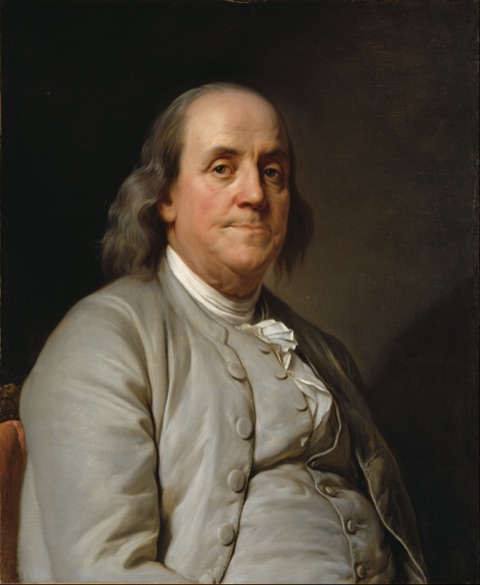
Benjamin Franklin
Benjamin Franklin (1706 to 1790 AD) was born in Boston and made his name as a printer and publisher in Philadelphia. When he wrote this essay in 1751 he had stepped back from running his printing business, his letters on electricity were being published in London, and he was moving into the public affairs of Pennsylvania. He later served as a colonial agent in London, signed the Declaration of Independence, represented the United States in France, and sat in the Constitutional Convention. He died in Philadelphia in 1790.