Luther's sweeping exposition of the Christian faith's core doctrines — the Ten Commandments, the Creed, the Lord's Prayer, and the sacraments — delivered with the rhetorical force and pastoral urgency that made him the most influential theologian of the Reformation.
A free account opens the whole library to read online, on your phone or at your desk. Open a book on one device and it is waiting at the same page on the next. The PDF and EPUB of every book are yours to keep, and audiobooks play in the same app.
250+ modernized editionsNot samples. The whole work, free.
Your place, on every devicePhone, tablet or desktop, same page.
131 audiobooksFrom $4.99 each, or all of them with a $50 gift.
Luther's Larger Catechism was born out of pastoral crisis. During visitations to Saxon parishes in 1528–1529, Luther discovered that many pastors and their congregations were shockingly ignorant of even the most basic elements of the Christian faith. Written as an extended exposition for pastors and educated laypeople, the Larger Catechism takes the five chief parts of Christian doctrine — the Ten Commandments, the Apostles' Creed, the Lord's Prayer, Baptism, and the Lord's Supper — and unpacks each one with the theological depth, rhetorical force, and plain-spoken directness that defined Luther's voice.
The work moves systematically through each section, but it is far more than a dry reference manual. Luther's exposition of the First Commandment alone lays the foundation for the entire catechism, arguing that idolatry is not primarily a matter of bowing to statues but of misplaced trust — whatever the heart clings to and relies on, that is its god. From there he builds a comprehensive vision of the Christian life grounded in faith, prayer, and the proper use of the sacraments, always pressing toward the question of where human confidence ultimately rests.
Nearly five hundred years after its publication, the Larger Catechism remains one of the most powerful works of practical theology ever written. Its penetrating analysis of human nature, its unflinching critique of spiritual complacency, and its relentless insistence that the basics of the faith deserve lifelong study make it as relevant today as when Luther first put pen to paper. This modern translation preserves the vigor and directness of Luther's prose while making his arguments fully accessible to contemporary readers.
Free audiobook preview
Listen to the first 9 minutes
Luther's Larger Catechism · Audiobook · 5 hr 28 min
0:00 / 9:27
Enjoying it? The full audiobook runs 5 hr 28 min. Listen in the Updated Works app on any device.
A Christian, beneficial, and necessary preface, with a faithful, earnest exhortation from Dr. Martin Luther to all Christians, especially all pastors and preachers, to practice the Catechism daily and continue teaching it. The Catechism is a brief summary of the entire Holy Scriptures.
We have substantial reasons for discussing the Catechism so constantly [in sermons] and for both urging and pleading with others to teach it. To our sorrow, we see that many pastors and preachers are very negligent about this. They neglect both their office and this teaching. Some do so because of their supposedly superior learning [giving their attention, as they imagine, to much higher matters]. Others do so out of sheer laziness and concern for their bellies. They approach this work as though they were pastors and preachers only for their bellies’ sake, with nothing to do but [spend and] consume their income as long as they live, as they were accustomed to doing under the papacy.
Everything they need to preach and teach is now abundantly available to them, clearly and readily presented in so many [excellent and] helpful books. These are the true Sermones per se loquentes, Dormi secure, Paratos et Thesauros, as they were called in earlier times. Yet these pastors and preachers are not devout and honest enough to buy these books, or even to look at them or read them when they have them. Alas! They are utterly shameful gluttons and servants of their own bellies. They would be better suited to tending pigs and dogs than to caring for souls and serving as pastors.
Now that they have been freed from the useless and burdensome babbling of the Seven Canonical Hours, oh, if only they would replace it by reading a page or two every morning, noon, and evening! They could read in the Catechism, the prayer book, the New Testament, or elsewhere in the Bible, and pray the Lord’s Prayer for themselves and their parishioners. In return, they would give honor and thanks to the Gospel, which has freed them from so many burdens and troubles. They might also feel a little shame that, like pigs and dogs, they retain nothing more of the Gospel than this lazy, harmful, shameful freedom to indulge the flesh!
For, alas, as things stand, the common people take the Gospel far too lightly, and we accomplish nothing extraordinary even when we work with all diligence. What, then, will we achieve if we are as negligent and lazy as we were under the papacy?
Added to this is the shameful vice and hidden infection of complacency and overfamiliarity. Many regard the Catechism as poor, inferior teaching that they can read through once and immediately know. Then they throw the book into a corner and seem almost ashamed to read it again.
Yes, even among the nobility there are louts and misers who declare that pastors and preachers are no longer needed. We have everything in books, they say, and everyone can easily learn it alone. So they are content to let the parishes deteriorate and become deserted, and to let pastors and preachers suffer plenty of hardship and hunger, just as crazy Germans might be expected to do. For we Germans have such disgraceful people and must put up with them.
But for myself, I say this: I too am a doctor and preacher, as learned and experienced as any of those who are so presumptuous and complacent. Yet I act like a child being taught the Catechism. Every morning, and whenever I have time, I read and recite, word for word, the Ten Commandments, the Creed, the Lord’s Prayer, the Psalms, etc. I must still read and study daily. Even so, I cannot master it as I wish, but must remain a child and student of the Catechism, and I am glad to remain one.
Yet these delicate, finicky fellows would become doctors above all doctors after a single reading, knowing everything and needing nothing. Well, this too is a sure sign that they despise both their office and the people’s souls, yes, even God and his Word. They do not have to fall; they have already fallen all too terribly. They need to become children and start learning their alphabet, which they imagine they outgrew long ago.
Therefore, for God’s sake, I beg these lazy gluttons or presumptuous saints to let themselves be persuaded and to believe that they truly, truly are not as learned or as great doctors as they imagine! They must never presume that they have finished learning this [the parts of the Catechism], or that they know it well enough in every respect, however well they think they know it.
Even if they knew and understood it perfectly, which is impossible in this life, there would still be many benefits and fruits to gain by reading it daily and putting it into practice in thought and speech. The Holy Spirit is present in this reading, repetition, and meditation. He continually gives new and greater light and devotion, so that each day we savor and appreciate it more, as Christ promises: “Where two or three are gathered together in My name, there am I in the midst of them” (Matt 18:20).
Besides, occupying ourselves with God’s Word, speaking about it, and meditating on it is an extremely effective help against the devil, the world, the flesh, and all evil thoughts. Thus Psalm 1 declares those blessed who meditate on God’s Law day and night. Without doubt, no incense or other fumigation you could use against the devil is stronger than occupying yourself with God’s commandments and words, and speaking, singing, or thinking about them. This is indeed the true holy water and holy sign from which he flees and by which he can be driven away.
For this reason alone, you should gladly read, speak, think, and discuss these things, even if you gained no other benefit or fruit than driving away the devil and evil thoughts by doing so. For he cannot hear or endure God’s Word. God’s Word is not like some other foolish chatter, such as the stories about Dietrich of Berne, etc. It is, as St. Paul says, “the power of God” (Rom 1:16). Yes, indeed, it is the power of God, which causes the devil burning pain and strengthens, comforts, and helps us beyond measure:
And why say more? If I were to recount all the benefits and fruits that God’s Word produces, where would I find enough paper and time? The devil is called the master of a thousand arts. But what should we call God’s Word, which drives away this master of a thousand arts and defeats him, with all his arts and power? It must indeed be the master of more than a hundred thousand arts.
Should we carelessly despise such power, benefit, strength, and fruit, especially we who claim to be pastors and preachers? If we do, we should not only be given nothing to eat; we should be driven out, hounded by dogs, and pelted with dung. For we not only need all this every day as we need our daily bread. We must also use it daily against the daily, unrelenting attacks and ambushes of the devil, the master of a thousand arts.
Even if this were not enough to urge us to read the Catechism daily, God’s command alone should compel us sufficiently. In Deuteronomy 6:6ff, he solemnly commands us always to meditate on his instructions while sitting, walking, standing, lying down, and rising. We are to keep them before our eyes and in our hands as a constant mark and sign.
Without doubt, he did not require and command this so solemnly without a purpose. He knows our danger and need, as well as the constant, furious assaults and temptations of devils. Therefore, he wants to warn, equip, and protect us against them, as with good armor against their fiery darts and good medicine against their evil infection and suggestions.
Oh, what crazy, senseless fools we are! We must always live and dwell among such mighty enemies as the devils, yet we despise our weapons and defenses and are too lazy to look at them or think about them!
And what else are these arrogant, presumptuous saints doing when they refuse to read and study the Catechism daily? They are considering themselves much more learned than God himself, with all his saints, angels, [patriarchs], prophets, apostles, and all Christians.
God himself is not ashamed to teach these things daily, knowing nothing better to teach. He keeps teaching the same thing and does not take up anything new or different. All the saints know nothing better or different to learn, and they cannot finish learning this. So are we not the finest fellows of all, imagining that once we have read or heard it, we know everything and have no further need to read and learn?
By that reasoning, we could finish learning in one hour what God himself cannot finish teaching, although he teaches it from the beginning to the end of the world! All the prophets, together with all the saints, have been occupied with learning it. They have always remained students and must continue to be students.
For anyone who knows the Ten Commandments perfectly must necessarily know all the Scriptures. In every situation and case, that person can advise, help, comfort, judge, and decide both spiritual and earthly matters. Such a person is qualified to judge all doctrines, stations in life, spirits, laws, and everything else in the world. And what is the entire Psalter but thoughts and exercises concerning the First Commandment?
Now I know for certain that these lazy gluttons and presumptuous spirits do not understand a single psalm, much less the entire Holy Scriptures. Yet they pretend to know the Catechism and despise it, though it is a concise summary of all the Holy Scriptures.
Therefore, I again implore all Christians, especially pastors and preachers, not to become doctors too soon and imagine that they know everything. For self-estimation, like cloth that has not yet shrunk [and false weights], makes things seem far greater than they prove to be. Instead, they should practice these studies diligently every day and discuss them constantly.
Furthermore, they should guard with all care and diligence against the poisonous infection of such complacency and empty self-estimation. They should steadily keep reading, teaching, learning, pondering, and meditating. They should not stop until they have put it to the test and are sure that they have taught the devil to death and become more learned than God himself and all his saints.
If they show such diligence, then I promise them, and they will see for themselves, what fruit they will gain and what excellent people God will make of them. In time, they themselves will acknowledge that the longer and the more they study the Catechism, the less they know of it and the more they find still to learn. Only then, like people who are hungry and thirsty, will they truly savor what they now cannot stand because they have had so much of it and feel so full. For this purpose, may God grant his grace! Amen.
Short Preface: The Foundations of Christian Teaching
This sermon was planned and undertaken to instruct children and people with little understanding. For this reason, it was called Catechism in Greek from ancient times, meaning instruction for children. It contains what every Christian must know. Anyone who does not know this cannot be counted among Christians or admitted to any Sacrament, just as a tradesperson who does not understand the rules and practices of the trade is dismissed and considered unqualified. Therefore, we must have young people learn the parts of the Catechism, or instruction for children, thoroughly and fluently. They must diligently practice them and stay occupied with them.
Every father of a household therefore has a duty to question and examine his children and servants at least once a week. He must find out what they know or are learning and, if they do not know it, faithfully keep them at it. I well remember the time when one found ignorant older people who knew nothing of these things. Indeed, even now we encounter them every day: they still know nothing, yet they come to Baptism and the Lord’s Supper and make use of everything that belongs to Christians. Those who come to the Lord’s Supper, however, should know more and have a fuller understanding of all Christian doctrine than children and beginning students.
For ordinary people, however, we are satisfied with the three parts that have remained in Christianity from ancient times, though little of their content has been taught and explained correctly. We are satisfied with these until both young and old who are called Christians and wish to be Christians are thoroughly trained in them and familiar with them. They are as follows:
1. The Ten Commandments of God
1. Thou shalt have no other gods before Me.
2. Thou shalt not take the name of the Lord, thy God, in vain [for the Lord will not hold him guiltless that taketh His name in vain].
3. Thou shalt sanctify the holy-day. [Remember the Sabbath-day to keep it holy.]
4. Thou shalt honor thy father and mother [that thou mayest live long upon the earth].
5. Thou shalt not kill.
6. Thou shalt not commit adultery.
7. Thou shalt not steal.
8. Thou shalt not bear false witness against thy neighbor.
9. Thou shalt not covet thy neighbor’s house.
10. Thou shalt not covet thy neighbor’s wife, nor his man-servant, nor his maid-servant, nor his cattle [ox, nor his ass], nor anything that is his.
2. The Chief Articles of Our Faith
1. I believe in God the Father Almighty, Maker of heaven and earth.
2. And in Jesus Christ, His only Son, our Lord; who was conceived by the Holy Ghost, born of the Virgin Mary; suffered under Pontius Pilate, was crucified, dead and buried; He descended into hell; the third day He rose again from the dead; He ascended into heaven, and sits on the right hand of God the Father Almighty; from there He shall come to judge the living and the dead.
3. I believe in the Holy Ghost, the holy Christian Church, the communion of saints, the forgiveness of sins, the resurrection of the body, and the life everlasting. Amen.
3. The Prayer, or “Our Father,” That Christ Taught
Our Father who art in heaven.
1. Hallowed be Thy name.
2. Thy kingdom come.
3. Thy will be done on earth as it is in heaven.
4. Give us this day our daily bread.
5. And forgive us our trespasses as we forgive those who trespass against us.
6. And lead us not into temptation.
7. But deliver us from evil. [For Thine is the kingdom and the power and the glory, forever and ever.] Amen.
These are the most necessary parts, which everyone should first learn to repeat word for word. Our children should become accustomed to reciting them daily when they get up in the morning, sit down to meals, and go to bed at night. Until they recite them, they should receive neither food nor drink. Likewise, every head of a household is obligated to do the same with household servants, both men and women. He must not keep them in his house if they do not know these things and are unwilling to learn them. Someone so ignorant and unruly as to be unwilling to learn these things must not be tolerated.
These three parts contain everything we have in the Scriptures in brief, plain, simple terms. The holy Fathers or apostles, whoever they were, thus gathered into a summary the doctrine, life, wisdom, and skill of Christians, which Christians speak about, discuss, and occupy themselves with.
Once these three parts are understood, a person should also know what to say about our Sacraments, which Christ himself instituted: Baptism and the holy body and blood of Christ. Specifically, a person should know the texts recorded in Matthew 28:19ff and Mark 16:15f, at the close of their Gospels, when Christ said farewell to his disciples and sent them out.
Baptism
“Go ye and teach all nations, baptizing them in the name of the Father, and of the Son, and of the Holy Ghost. He that believeth and is baptized shall be saved; but he that believeth not shall be damned.”
This is enough for a person with little understanding to know from the Scriptures about Baptism. Likewise, concerning the other Sacrament, a person should know the brief, simple wording of Paul’s text (1 Cor 11:23f).
The Sacrament
“Our Lord Jesus Christ, the same night in which He was betrayed, took bread; and when He had given thanks, He brake it, and gave it to His disciples and said, Take, eat; this is My body, which is given for you: this do in remembrance of Me.
“After the same manner also He took the cup, when He had supped, gave thanks, and gave it to them, saying, Drink ye all of it; this cup is the new testament in My blood, which is shed for you for the remission of sins: this do ye, as oft as ye drink it, in remembrance of Me.”
Thus we would have, in all, five parts of the whole of Christian doctrine. These should be continually taught, required [of children], and heard as they are recited word for word. You must not rely on young people learning and retaining these things from the sermon alone. Once they have learned these parts thoroughly, you may also give them some psalms or hymns composed on these parts to supplement and reinforce them. In this way, lead young people into the Scriptures so that they make daily progress in them.
It is not enough, however, for young people simply to understand and recite the words of these parts. They should also be required to attend the preaching, especially during the time devoted to the Catechism. There they can hear it explained and learn to understand what each part contains. They should be able to recite it as they have heard it and give a correct answer when asked, so that the preaching produces benefit and fruit. We take such care to preach the Catechism so often because we want to impress it on our young people. We do this briefly and with the greatest simplicity, rather than in a lofty and subtle way, so that it readily enters their minds and becomes firmly fixed in their memory.
We will now take up the articles mentioned above one by one and, in the plainest way possible, say as much about them as is necessary.
Part 1: The Ten Commandments
1st Commandment: God Alone
“Thou shalt have no other gods before Me.”
That is: You must have [and worship] Me alone as your God. What is the force of this, and how should we understand it? What does it mean to have a god? Or what is God? Answer: A god is that from which we should expect all good and to which we should turn for refuge in every distress. Having a God is nothing other than trusting and believing Him with the [whole] heart. As I have often said, the heart’s confidence and faith alone make both God and an idol. If your faith and trust are right, your god is also true. On the other hand, if your trust is false and wrong, you do not have the true God, because these two belong together: faith and God. Whatever you set your heart on and put your trust in is, I say, really your god.
The purpose of this commandment, then, is to require true faith and trust from the heart, a heart that rests on the only true God and clings to Him alone. It is as though He said: “See to it that you let Me alone be your God, and never seek another.” That is: “Whatever good things you lack, expect them from Me and look to Me for them. Whenever you suffer misfortune and distress, crawl to Me and cling to Me. I, yes, I will give you enough and help you out of every need. Only do not let your heart cling to or rest in anyone or anything else.”
I must explain this a little more plainly so that ordinary examples of the opposite may help people understand and recognize it. Many people think they have God and everything in abundance when they have money and possessions. They trust in these things and boast about them with such firmness and confidence that they disregard everyone else. Look, such a person also has a god, named Mammon, that is, money and possessions. He sets his whole heart on them, and they are the most common idol on earth. Someone who has money and possessions feels secure, happy, and unafraid, as though sitting in the middle of Paradise. On the other hand, someone who has none doubts and loses heart, as though knowing of no God. Very few people remain cheerful and neither grieve nor complain when they do not have Mammon. This [anxiety and desire for money] sticks and clings to our nature right up to the grave.
Likewise, anyone who trusts and boasts in great skill, prudence, power, favor, friendship, and honor also has a god, but not this true and only God. You can see this again in how presumptuous, secure, and proud people are because they have these things, and how discouraged they become when these things no longer exist or are taken away. So I repeat: the chief explanation of this point is that having a god means having something in which the heart trusts entirely.
Also consider what we have practiced and done until now in our blindness under the papacy. If someone had a toothache, he fasted and honored St. Apollonia [subjected his body to suffering by voluntarily fasting in honor of St. Apollonia]. If he feared fire, he chose St. Lawrence as his helper in need. If he dreaded plague, he made a vow to St. Sebastian or St. Roch. There were countless such abominations, in which everyone selected a saint of his own, worshiped him, and called on him for help in distress. Here also belong people such as sorcerers and magicians, whose idolatry is especially gross. They make a covenant with the devil so that he may give them plenty of money or help them in love affairs, preserve their cattle, restore their lost possessions, etc. All these people place their hearts and their trust somewhere other than in the true God. They expect nothing good from Him and do not seek it from Him.
You can therefore easily understand what this commandment requires and how much it requires: a person’s entire heart and all confidence must be placed in God alone, and in no one else. As you can easily see, having God does not mean taking hold of Him with our hands, putting Him in a bag [like money], or locking Him in a chest [like silver vessels]. Taking hold of Him means that the heart grasps Him and clings to Him. Clinging to Him with the heart is nothing other than trusting Him entirely. This is why He wishes to turn us away from everything else outside Himself and draw us to Himself: He is the only eternal good. It is as though He said: “Whatever you have sought from the saints until now, or whatever [things] you have trusted Mammon or anything else to provide, expect it all from Me. Regard Me as the one who will help you and richly pour out all good things upon you.”
Here you have the meaning of the true honor and worship of God, which pleases Him and which He commands under penalty of eternal wrath. The heart must know no other comfort or source of confidence than Him. It must not let itself be torn away from Him, but must risk and disregard everything on earth for His sake. On the other hand, you can easily see and judge how the world practices only false worship and idolatry. No people has ever been so wicked that it did not establish and observe some form of divine worship. Everyone has set up as a special god whatever they looked to for blessings, help, and comfort.
For example, the pagans who trusted in power and dominion raised Jupiter to the position of supreme god. Others, intent on riches, happiness, pleasure, or a life of ease, chose Hercules, Mercury, Venus, or other gods. Pregnant women chose Diana or Lucina, and so on. Everyone made a god of whatever their heart was drawn to. Thus, even in the minds of pagans, having a god means trusting and believing. But their error is that their trust is false and wrong. It is not placed in the only God, apart from whom there truly is no God in heaven or on earth.
The pagans therefore make an idol of their own invented notions and dreams about God, and trust in what is nothing at all. This is how all idolatry works. It does not consist merely in setting up an image and worshiping it. Rather, it lies in the heart, which gapes at something else and seeks help and comfort from creatures, saints, or devils. Such a heart neither cares about God nor expects enough good from Him to believe that He is willing to help. Nor does it believe that whatever good it experiences comes from God.
There is also another false worship and extreme idolatry that we have practiced until now and that is still widespread in the world. All religious orders are founded on it as well. It concerns the conscience alone, which seeks help, comfort, and salvation in its own works. It presumes to wrest heaven from God and counts how many bequests it has made, how often it has fasted, celebrated Mass, etc. It depends on these things and boasts about them, as though unwilling to receive anything from God as a gift. Instead, it wants to earn or merit it for itself in overflowing measure, just as though He had to serve us and were our debtor, and we were His overlords. What is this but reducing God to an idol, indeed, [an image of fig wood or] a worthless god, and raising ourselves up and regarding ourselves as God? But this is a little too subtle and is not for young pupils.
Let beginners be told this, so that they may pay close attention and remember the meaning of this commandment: we must trust in God alone, look to Him, and expect nothing but good from Him. He gives us our bodies, life, food, drink, nourishment, health, protection, peace, and everything we need, both for this life and for eternity. He also preserves us from misfortune and, if any evil comes upon us, delivers and rescues us. Thus, as has been sufficiently said, God alone is the one from whom we receive all good and by whom we are delivered from all evil. This is also why, I think, we Germans have from ancient times derived the name God from the word Good, more elegantly and appropriately than any other language. He is an eternal fountain that gushes forth abundantly with nothing but good, and from which flows everything that is good and is called good.
Even though we also experience much good from other people, whatever we receive by His command or arrangement is received entirely from God. Our parents, all rulers, and everyone else in relation to their neighbors have received God’s command to do us every kind of good. We therefore receive these blessings not from them, but from God through them. Creatures are only the hands, channels, and means through which God gives everything. He gives a mother breasts and milk to offer her child, and grain and every kind of produce from the earth for nourishment. No creature could produce any of these blessings by itself.
No one, therefore, should presume to take or give anything except as God has commanded. In this way it may be acknowledged as God’s gift, and He may be thanked for it, as this commandment requires. For the same reason, we must not reject these means of receiving good gifts through creatures. Nor should we presumptuously seek other ways and means than those God has commanded. That would mean seeking things on our own rather than receiving them from God.
Everyone, then, must see to it that they regard this commandment as great and high above all things, and do not treat it as a joke. Question and examine your heart carefully, and you will discover whether it clings to God alone. If your heart can expect nothing but good from Him, especially in need and distress, and if it also renounces and abandons everything that is not God, then you have the only true God. If, on the contrary, your heart clings to something else and expects more good and help from it than from God, and does not take refuge in Him but flees from Him in adversity, then you have an idol, another god.
To show that God will not allow this commandment to be cast aside, but will enforce it most strictly, He has attached first a terrible threat and then a beautiful, comforting promise. These too must be urged upon young people and impressed on them, so that they take them to heart and retain them:
Explanation of the Appendix to the First Commandment
“For I am the Lord, thy God, strong and jealous, visiting the iniquity of the fathers upon the children unto the third and fourth generation of them that hate Me; and showing mercy unto thousands of them that love Me and keep My commandments.”
Although these words apply to all the commandments, as we will learn later, they are attached to this chief commandment because having the head right is of first importance. Where the head is right, the whole life must be right, and the reverse is also true. Learn from these words how angry God is with those who trust in anything but Him, and how good and gracious He is to those who trust and believe in Him alone with their whole hearts. His anger does not cease until the fourth generation, while His blessing and goodness extend to many thousands. This should keep you from living in careless security and leaving yourself to chance, like people with brutish hearts who think it makes no great difference [how they live]. He is a God who will not leave it unavenged when people turn away from Him. He will not cease to be angry until the fourth generation, even until they are utterly exterminated. He must therefore be feared, not despised.
He has also demonstrated this throughout history, as the Scriptures abundantly show and daily experience still teaches. From the beginning He has utterly rooted out all idolatry and, because of it, both pagans and Jews. Even now He overthrows all false worship, so that everyone who remains in it must finally perish. Proud, powerful, and rich people devoted to the world [Sardanapaluses and Phalarides, who surpass even the Persians in wealth] may now boast defiantly about their Mammon. They may utterly disregard whether God is angry with them or smiles on them, and dare to withstand His wrath. Yet they will not succeed. Before they realize it, they will be wrecked, together with everything they trusted in, just as all the others have perished who thought themselves more secure or powerful.
Precisely because of such stubborn people, God must deal a crushing blow and punish them. Because He overlooks their conduct for a time and lets them rest in security, they imagine that He is either entirely ignorant or cares nothing about these matters. He must punish them so that He cannot forget it even down to their children’s children, and so that everyone may take notice and see that this is no joke to Him. These are the people He means when He says, “Who hate Me”: those who persist in their defiance and pride. Whatever is preached or said to them, they will not listen. When they are rebuked so that they may learn to know themselves and change before punishment begins, they become so furious and foolish that they fully deserve wrath, as we now see daily in bishops and princes.
But as terrible as these threats are, the comfort in the promise is all the more powerful. Those who cling to God alone should be certain that He will show them mercy, that is, pure goodness and blessing. This is not only for themselves, but also for their children and their children’s children, even to the thousandth generation and beyond. If we desire every good thing for this life and for eternity, this should certainly move and urge us to venture our hearts in complete confidence in God. The Supreme Majesty makes such exalted offers and sets before us such heartfelt encouragements and rich promises.
Everyone, therefore, must take this seriously to heart, rather than treat it as though a mere human being had spoken it. For you, the issue is either eternal blessing, happiness, and salvation, or eternal wrath, misery, and woe. What more could you want or desire than His kind promise to be yours with every blessing, and to protect and help you in every need?
But alas, here is where the world fails: it believes none of this and does not regard it as God’s Word. It sees that those who trust in God rather than Mammon suffer anxiety and need, and that the devil opposes and resists them. They have neither money, favor, nor honor, and can barely sustain their lives. Meanwhile, those who serve Mammon have power, favor, honor, possessions, and every comfort in the eyes of the world. For this reason, we must grasp these words as directed against such appearances. We must remember that they do not lie or deceive, but must come true.
Think about it yourself, or ask others, and tell me: what have those people finally gained who devoted all their care and effort to accumulating great possessions and wealth? You will find that they have wasted their toil and labor. Or, even if they amassed great treasures, those treasures have been dispersed and scattered. They themselves never found happiness in their wealth, and afterward it never reached the third generation.
You will find plenty of examples in all histories, and also in the memories of older, experienced people. Only observe them and ponder them.
Saul was a great king, chosen by God, and a godly man. But when he was established on his throne, he let his heart turn away from God and put his trust in his crown and power. He had to perish with everything he had, so that not even one of his children remained.
David, on the other hand, was a poor, despised man, hunted down and chased so that nowhere did he feel his life was safe. Yet he had to survive despite Saul and become king. These words had to stand and come true, since God cannot lie or deceive. Only do not let the devil and the world deceive you with their outward display. It does indeed last for a time, but finally amounts to nothing.
Let us, then, learn the First Commandment well, so that we may see how God will tolerate neither presumption nor trust in anything else. He requires nothing higher of us than heartfelt confidence in Him for everything good. In this way we may go forward rightly and straightforwardly, using all the blessings God gives only as a shoemaker uses his needle, awl, and thread for work and then lays them aside. Or we may use them as a traveler uses an inn, food, and a bed only for the needs of this life. Each person should do this in their own station, according to God’s order, without allowing any of these things to become our lord or idol.
Let this be enough concerning the First Commandment. We have had to explain it at length because it is of chief importance. As already said, where the heart is rightly disposed toward God and this commandment is observed, all the others follow.
2nd Commandment: God’s Name
“Thou shalt not take the name of the Lord, thy God, in vain.”
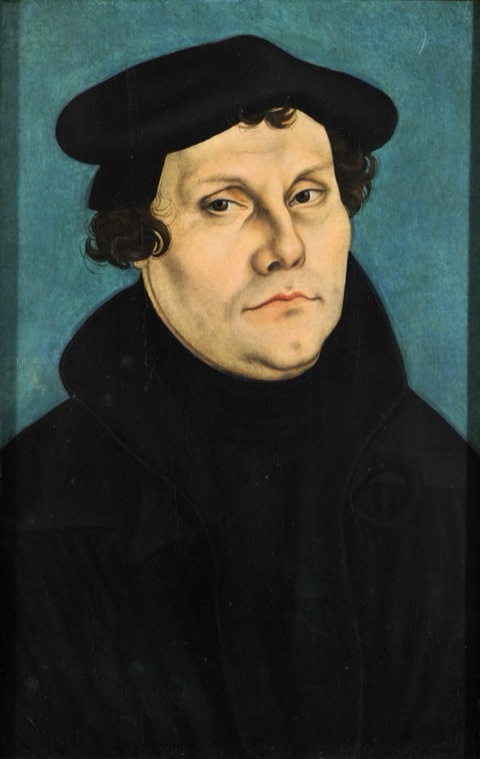
Martin Luther was the Augustinian friar whose Ninety-Five Theses ignited the Protestant Reformation in 1517. A tireless pastor and theologian, he wrote both the Small and Large Catechisms in 1529 to address the shocking biblical illiteracy he encountered among clergy and laypeople during parish visitations across Saxony. His catechisms became foundational teaching documents for Lutheran churches worldwide and remain in active use nearly five centuries later.
“Updated Works has been an incredible blessing to my Christian life and ministry… remarkably faithful to the original authors while making these timeless treasures understandable for modern readers.”