To the Reader
Religion is so much the business of our lives, and worshiping God so much the business of our religion, that anything sincerely intended and likely to promote and assist religious worship cannot, I think, be unwelcome to anyone who wholeheartedly desires the advancement of God’s kingdom among humanity. If our spiritual senses are trained, true devotion, that aspiring flame of godly affection toward God, must appear beautiful and lovable wherever we charitably discern it in others. This remains true even when it takes different forms and outward expressions that may seem unfamiliar to one another. And wherever we feel it in our own hearts, we must find it deeply pleasant and comforting.
Prayer is a principal part of religious worship. The light of nature itself moves us to it, and some of nature’s fundamental laws require it. Pythagoras’s golden verses begin with this precept. Whatever people made a god of, they prayed to: “Deliver me, for thou art my God” (Isa 44:17). Indeed, whatever they prayed to, they made a god of: “Whoever petitions gods makes them gods.” Prayer expresses respect and homage so fully in keeping with everyone’s natural ideas of God that those who live without prayer live without God in the world.
Prayer is the solemn, religious offering of devout acknowledgments and desires to God. It is a sincere expression of holy affections, intended both to give God the glory due to his name and to obtain his promised favors, both through the Mediator. Our English word prayer is too narrow, since it properly means a petition or request. Yet humble adoration of God and thanksgiving to him are as necessary in prayer as any other part of it. The Greek word for prayer, derived from the word for a vow, means a vow directed to God. The Latin word for a vow is also used for prayer. Jonah’s sailors made vows along with their sacrifices. Prayer is meant to move and bind ourselves, not to move or bind God.
Clement of Alexandria, apologizing for the boldness of the expression, calls prayer “conversing with God.” The purpose of his long discussion is to show that his believer lives a life of communion with God and is therefore always praying. Faith is called knowledge, and Clement describes the believer’s companions as those who have “in like manner believed.” Through his prayers, the believer seeks continually to converse with God. “Some,” Clement says, “have their stated hours of prayer, but he prays all his life long.” Scripture describes prayer as our drawing near to God, lifting up our souls to him, and pouring out our hearts before him.
This is the life and soul of prayer. But in our present condition this soul must have a body, and that body must be worthy of the soul and suited to it. There must be some words, at least in the mind, in which this incense ascends as in smoke. This is not so that God may understand us, for he knows our thoughts afar off, but so that we may better understand ourselves.
A golden thread of prayer from the heart must run through the fabric of the whole Christian life. We must frequently address God in brief, spontaneous prayers. Through these we maintain communion with him in the events of providence and in ordinary activities, as well as in ordinances and religious services. Prayer must thus be sprinkled through every duty, and our eyes must be ever towards the Lord.
In mental prayer, thoughts are words. They are the soul’s firstborn, to be consecrated to God. When praying alone, we may find that putting our thoughts into words helps us steady our minds and awaken our devotion. If those thoughts are genuine products of the new nature, one would think that words should not be hard to find: “Words readily follow a subject considered beforehand.” Indeed, if the “groanings” are such “as cannot be uttered,” he “that searcheth the heart” knows them to be “the mind of the Spirit” and will accept them (Rom 8:26-27). He will answer the voice of our breathing (Lam 3:56). Yet because of the weakness of the flesh and our hearts’ tendency to wander and trifle, words often need to come first. We must keep them in mind to direct and awaken devout affections. I hope the help offered here will be useful for that purpose.
When we join others in prayer, with someone speaking to God on our behalf, our minds must attend to that person. We must intelligently and believingly agree with the meaning, purpose, and substance of what is said, while corresponding affections arise within us. Scripture directs us to express this agreement by saying “Amen,” inwardly if not aloud, “at their giving of thanks” (1 Cor 14:16). As far as our participation allows, we may mingle brief, godly prayers of our own with the leader’s addresses, provided they are relevant, so that not even the smallest part of our time in prayer is lost.
But someone who speaks for others in prayer, whether publicly or privately, and exercises the freedom of speech, the holy liberty in prayer allowed to us, must consider more than the movements of his own heart. Many good Christians, we are sure, have found this liberty deeply comforting and beneficial in prayer. The leader should principally consider his own heart, since this gives the prayer its greatest life and spirit, but he must also consider the edification of those who join him. Both the substance and the words of his prayer should serve that purpose. It is chiefly to help in this situation that I have undertaken this work.
That distinguished ornament of the church, the learned Dr. Wilkins, Bishop of Chester, has left us an excellent work much like this in his Discourse Concerning the Gift of Prayer. Some may think that his work makes mine unnecessary. But few serious Christians will complain about an increase in books of devotion. On the one hand, I am sure that those who have this modest effort of mine will still find great benefit in his. On the other, I think that those who have his may find some further help in this one.
It is desirable that our prayers be abundant and full. Our burdens, cares, and needs are many, as are our sins and mercies. The promises are numerous and very rich. Our God gives generously and has told us to open our mouths wide. He will fill them and satisfy them with good things. He does not limit us; why, then, should we restrict and confine our own hearts? Christ had taught his disciples the Lord’s Prayer, yet tells them that hitherto they had asked nothing (John 16:24). That is, they had asked nothing in comparison with what they would ask when the Spirit was poured out to abide with the church forever, and they would see greater things than these. Then, “ask, and ye shall receive, that your joy may be full.” We are encouraged to be specific in prayer and in everything to make our requests known to God. We should likewise be specific in adoring the divine perfections, confessing our sins, and thankfully acknowledging God’s mercies.
At the same time, we cannot cover even a tenth of the particulars suitable for prayer without making the duty burdensome to the flesh, which is weak even where the spirit is willing. We must carefully avoid that extreme. We would also risk encroaching on other religious exercises. It is therefore necessary to expand at one time on what we touch on briefly at another. This storehouse of material for prayer may help remind us of our various concerns to bring before the throne of grace, so that none is entirely forgotten.
To perform this duty fittingly, we must also follow some appropriate method. What we say should not only be good, but should be said in its proper place and time. We must not offer anything confused, irrelevant, or ill-considered to the glorious Majesty of heaven and earth. Then, more than ever, we must take care not to be rash with our mouths or hasty to utter anything before God. We must not say whatever first comes to mind or use repetitions that reveal our spirits’ barrenness and shallowness rather than their fervor. The matters we bring before God are of such immense importance that we must speak with due propriety, choosing, weighing, and arranging our words well.
Just as it is good to be methodical in prayer, it is good to express ourselves in concise, meaningful sentences. The Lord’s Prayer is remarkable for this, as are David’s psalms and many of St. Paul’s prayers in his letters. We must remember that most of those joining us in prayer may lose or misunderstand the meaning if a sentence is long and contains many asides. In this, as in other things, those who are strong should bear the weaknesses of those who are weak. Jacob must lead at a pace the children and flocks can follow.
In developing the various topics of prayer here, I have confined myself almost entirely to Scripture language. I wanted to demonstrate Scripture’s sufficiency to equip us for every good work. Yet I certainly believe it is appropriate, and often necessary, to use expressions in prayer besides those drawn directly from Scripture. I would only advise using the sacred language most often and making it familiar to ourselves and others when dealing with sacred things. Christian people are most accustomed to that language, most moved by it, and most ready to agree with it. Where Scripture is unfolded and explained to people through the ministry of the Word, its language will be most intelligible and its meaning best understood. This is “sound speech that cannot be condemned.” Those able to do so may profitably expand upon the Scriptures they use through elaboration or paraphrase. They should still speak according to that rule and compare spiritual things with spiritual, so that these illuminate one another.
Nor should it be considered a distortion of Scripture to allude to a scriptural phrase and adapt it to a meaning other than its original intention, provided it agrees with the consistent teaching of the faith. This accords with the practice of many theologians, especially the church fathers, and I think various New Testament quotations from the Old Testament warrant it. For example, the words “All my springs are in thee” (Ps 87:7) may very fittingly be applied to God, although the feminine article in the original shows that they refer there to Zion. Nor has it ever been considered an abuse of scriptural language to pray for the blessings of “the upper springs and the nether springs.” The passage from which that expression is borrowed has no reference at all to what we mean by it (Judg 1:15). Yet through common use everyone knows its meaning, and many find its expressiveness pleasing.
Many topics of prayer could undoubtedly be added to those I have gathered here. Many scriptural expressions could also be added under each topic, since I have written down only those that first came to mind. There are also many expressions outside Scripture’s wording that may be comprehensive, forceful, and well suited to awaken devotion. Perhaps those who earnestly desire this excellent gift and wish to excel in it would find it useful to have a copy of this book with blank leaves inserted. They could then add other topics and expressions that are missing here and that they find most suitable.
Although I have recommended a good and generally approved method of prayer, I certainly do not think we should always bind ourselves to it. The method may vary as well as the expression. Thanksgiving may sometimes fittingly precede confession or petition, or our intercessions for others may precede petitions for ourselves, as in the Lord’s Prayer. Sometimes one part of prayer may be developed much more fully than another, or the parts may be fittingly interwoven in a different arrangement. “The art is to conceal the art.”
I do not doubt that some people at times find their hearts wonderfully lifted and enlarged in prayer, far beyond what they experience at other times. Their thoughts are so steady and full, their godly and devout affections so fervent, that pertinent and moving expressions flow with great fluency and variety, in a well-ordered and natural arrangement. At such times, attending to a scheme like this would hinder them and risk restricting and confining them. If the heart is full of good matter, it may make the tongue like “the pen of a ready writer.”
But this rarely happens. Ordinarily, we need to set ourselves a definite method to follow in prayer, so that the service may be performed decently and in order. Even then, we should avoid anything that looks too formal. A person can write straight without having ruled paper.
I have added a few forms of prayer in the last chapter for those who need such help and do not know how to do as well or better without it. I have therefore designed them for families. If anyone thinks them too long, notice that they are divided into many paragraphs, most of which are independent. When brevity is necessary, some paragraphs may therefore be omitted.
But after all, focused attention and close application of the mind, the living exercise of faith and love, and holy desires reaching out toward God are so essential to prayer that, without these sincerely present, the best and most suitable language is only a lifeless image. If we had the tongues of humans and angels, but lacked the heart of humble, earnest Christians in prayer, we would be only sounding brass and a tinkling cymbal. Only the “effectual fervent prayer,” the prayer worked within, laid within the heart, “avails much.” We should therefore seek God’s approval through the integrity of our hearts, whether we pray with or without a precomposed form.
When I had finished the third volume of my expositions of the Bible, which is now being printed, I wanted to take a little time away from that work for this modest effort. I did so before proceeding, as I intend, to the fourth volume, in humble dependence on divine providence and grace. I hope this work may be of some service to the generation of those who seek God, who seek the face of the God of Jacob.
If any good Christians receive help from it in their devotions, I hope they will not deny me one request: that they pray for me. Pray that I may obtain mercy from the Lord to be found among the faithful watchmen on Jerusalem’s walls, who never hold their peace day or night, but devote themselves to the Word and prayer, so that at last I may finish my course with joy.
Chester, March 25, 1710.
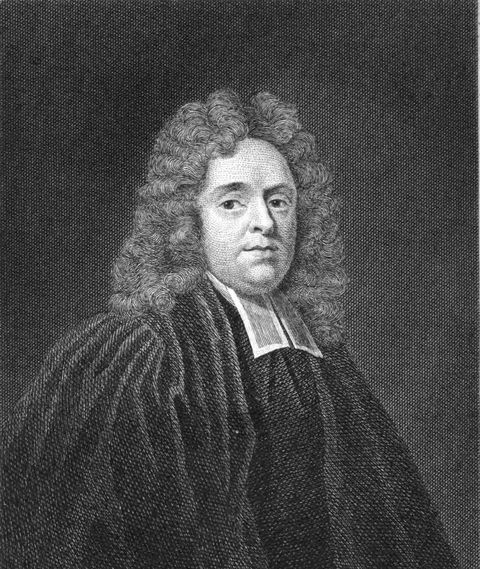
Matthew Henry.
Chapter 1: Addressing and Adoring God
With our spirits settled into a deeply reverent and serious frame, our thoughts gathered in, and everything within us charged in the name of the great God to attend carefully and faithfully to the solemn, awe-inspiring service before us, we must set the Lord before us. With focused attention, an engaged mind, and active, living faith, we must recognize his eye upon us and place ourselves in his special presence. We present ourselves to him as living sacrifices, desiring to be holy and acceptable to him and to offer reasonable service (Rom 12:1). Then we bind these sacrifices with cords to the horns of the altar (Ps 118:27), with thoughts such as these:
Let us now lift our hearts, our eyes, and our hands to God in heaven (Lam 3:41; John 17:1).
Let us stir ourselves to take hold of God (Isa 54:7), to seek his face (Ps 27:8), and to give him the glory due his name (Ps 29:2).
To you, O Lord, we lift our souls (Ps 25:1).
Let us now enter the holiest with humble boldness through the blood of Jesus, by the new and living way he has consecrated for us through the veil (Heb 10:19).
Let us now attend to the Lord without distraction (1 Cor 7:35). When we draw near to him with our mouths and honor him with our lips, let our hearts not be far from him (Matt 15:8).
Let us now worship God, who is a Spirit, in spirit and in truth, for the Father seeks such people to worship him (John 4:23, 24).
Having thus engaged our hearts to approach God (Jer 30:21), we proceed as follows.
1. Address God with Reverence
We must solemnly address the infinitely great and glorious Being with whom we have to do. We should approach with full belief in his presence and with holy awe and reverence for his majesty. We may use expressions such as these:
Holy, holy, holy, Lord God Almighty, who are, and were, and are to come (Rev 4:6).
O you whose name alone is Jehovah, and who are the Most High over all the earth (Ps 83:18).
O God, you are our God; we will seek you early (Ps 63:1). You are our God, and we will praise you; our fathers’ God, and we will exalt you (Exod 15:2).
O you who are the true God, the living God, the one and only living and true God, and the everlasting King (Jer 10:10). The Lord our God is one Lord (Deut 6:4).
In this way we may distinguish ourselves from those who worship false gods.
“The idols of the heathen are silver and gold” (Ps 115:4). They are “vanity and a lie, the work of men’s hands; they that make them are like unto them,” and “so is every one that trusteth in them.” But “the portion of Jacob is not like them, for he is the former of all things, and Israel is the rod of his inheritance, the Lord of hosts is his name” (Jer 10:15, 16); “God over all, blessed for evermore” (Rom 9:5).
“Their rock is not our Rock, even the enemies themselves being judges” (Deut 32:31). For he is the Rock of Ages, the Lord Jehovah, with whom is everlasting strength (Isa 26:4). His name will endure forever, and his remembrance through all generations (Ps 135:13), when “the gods that have not made the heavens and the earth, shall perish from off the earth, and from under those heavens” (Jer 10:11).
2. Adore God’s Nature and Attributes
We must reverently adore God as a Being of surpassing brightness and blessedness, self-existent and self-sufficient, an infinite and eternal Spirit who possesses every perfection in himself. We must give him the glory of his titles and attributes.
O Lord our God, you are very great. You are clothed with honor and majesty, and you cover yourself with light as with a garment (Ps 104:1, 2). Yet, as far as we are concerned, you make darkness your pavilion (Ps 18:11), for we cannot put our words in order because of darkness (Job 37:19).
This is the message we have heard from you, and we attest that it is true: “God is light, and in him is no darkness at all” (1 John 1:5). And “God is love, and they that dwell in love, dwell in God, and God in them” (1 John 4:16).
You are the Father of lights, with whom there is no variation or shadow of turning, and from whom every good and perfect gift proceeds (Jas 1:17).
You are the blessed and only Sovereign, the King of kings and Lord of lords. You alone have immortality, dwelling in light that no one can approach, whom no one has seen or can see (1 Tim 6:15, 16).
We must acknowledge that his existence is unquestionable and beyond dispute.
The heavens declare your glory, O God, and the expanse of heaven displays your handiwork (Ps 19:1). Through the things you have made, your eternal power and Godhead are clearly seen and understood (Rom 1:20). Those who say there is no God are therefore fools without excuse (Ps 14:1). For “verily there is a reward for the righteous, verily there is a God that judgeth in the earth” (Ps 58:11), and in heaven too.
We therefore come to you believing that you exist, and that you are the powerful and generous rewarder of those who diligently seek you (Heb 11:6).
Yet we must acknowledge that his nature is beyond our comprehension.
By searching, we cannot discover God fully; we cannot fathom the Almighty’s perfection (Job 11:7).
“Great is the Lord, and greatly to be praised, and his greatness is unsearchable” (Ps 145:3).
“Who can utter the mighty acts of the Lord, who can show forth all his praise?” (Ps 106:2).
We must also acknowledge that his perfections are matchless and beyond comparison.
Who is a God like you, glorious in holiness, awesome in praises, doing wonders? (Exod 15:11).
“Who in the heaven can be compared unto the Lord? Who among the sons of the mighty can be likened unto the Lord?” O Lord God of hosts, who is a mighty Lord like you, or like your faithfulness that surrounds you? (Ps 89:6, 8).
Among the gods there is none like you, O Lord, nor are there any works like yours. For you are great and do wondrous things; you alone are God (Ps 86:8, 10).
No creature has an arm like God or can thunder with a voice like his (Job 40:9).
We must acknowledge that he is infinitely above us and every other being.
You are God and not a man (Hos 11:9). You do not have eyes of flesh, nor do you see as a human being sees. Your days are not like human days, nor your years like human days (Job 10:4, 5).
As heaven is high above the earth, so your thoughts are above our thoughts, and your ways above our ways (Isa 55:9).
Before you, all nations are like a drop in a bucket or a speck of dust on the scales, and you lift the islands as a very little thing. They are as nothing, and you count them as less than nothing and vanity (Isa 40:15, 17).
In our adoration, we must particularly acknowledge the following attributes.
(1) Eternal and Unchanging
He is an eternal, unchanging God, without beginning of days, end of life, or alteration with the passage of time.
You are the eternal, immortal, invisible King (1 Tim 1:17).
Before the mountains were brought forth, or you had formed the earth and the world, from everlasting to everlasting you are God (Ps 90:2), the same yesterday, today, and forever (Heb 13:8).
Long ago you laid the foundation of the earth, and the heavens are the work of your hands. They will perish, but you will endure. All of them will grow old like a garment; you will change them like clothing, and they will be changed. But you are the same, and your years will have no end (Ps 102:25, 26, 27).
You are God and do not change; that is why we are not consumed (Mal 3:6).
Are you not from everlasting, O Lord our God, our Holy One? (Hab 1:12). You are the everlasting God, the Lord, the Creator of the ends of the earth. You do not faint or grow weary; your understanding cannot be fathomed (Isa 40:28).
(2) Present Everywhere
He is present in every place. No place contains him, and no place excludes him.
You are a God who is near and a God who is far away. No one can hide in secret places where you cannot see, for you fill heaven and earth (Jer 23:23, 24).
You are not far from any one of us (Acts 17:27).
We cannot go anywhere away from your presence or flee from your Spirit. If we ascend into heaven, you are there. If we make our bed in hell, in the depths of the earth, you are there. If we take the wings of the morning and dwell in the farthest parts of the sea, even there your hand will lead us and your right hand will hold us (Ps 139:7, 8, 9, 10), so that we cannot outrun you.
(3) Knowing All Things
He has perfect knowledge of every person and thing. He sees them all, even what is most secret, in one clear, certain, and unerring view.
“All things are naked and open before the eyes of him with whom we have to do,” even “the thoughts and intents of the heart” (Heb 4:12, 13).
Your eyes are everywhere, observing the evil and the good (Prov 15:3). They range throughout the earth so that you may show your strength on behalf of those whose hearts are upright toward you (2 Chr 16:9).
You search the heart and examine its deepest motives, so that you may give everyone according to their ways and the fruit of their deeds (Jer 17:10).
O God, you have searched us and known us. You know when we sit down and when we rise, and you understand our thoughts from afar. You survey our path and our lying down and are acquainted with all our ways. There is not a word on our tongues that you, O Lord, do not know altogether. Such knowledge is too wonderful for us; it is high beyond our reach.
Darkness and light are both alike to you (Ps 139:1, 2, 3, 4, 6, 12).
(4) Unsearchable in Wisdom
His wisdom is unsearchable, and its counsels and designs cannot be fathomed.
Your understanding, O Lord, is infinite, for you count the stars and call them all by name (Ps 147:4, 5).
You are wonderful in counsel and excellent in your work (Isa 28:29), wise in heart and mighty in strength (Job 9:4).
O Lord, how many are your works! In wisdom you have made them all (Ps 104:24), all according to the counsel of your own will (Eph 1:11).
“O the depth of the wisdom and knowledge of God! How unsearchable are his judgments, and his ways past finding out” (Rom 11:33).
(5) Sovereign over All
His sovereignty cannot be contested. He is the owner and absolute Lord of all.
The heavens, even the heavens, are yours, and all their hosts (Ps 115:16). The earth is yours, with all its fullness, the world and those who dwell in it (Ps 24:1). In your hand are the deep places of the earth, and the strength of the hills is yours also. The sea is yours, for you made it, and your hands formed the dry land. All the beasts of the forest are yours, and the cattle on a thousand hills (Ps 50:10). You are therefore a great God and a great King above all gods (Ps 95:3, 4, 5).
In your hand is the life of every living thing and the breath of all humanity (Job 12:10).
Your dominion is everlasting, and your kingdom continues from generation to generation. You do according to your will among the armies of heaven and the inhabitants of the earth. No one can restrain your hand or say to you, “What are you doing?” or “Why are you doing this?” (Dan 2:34, 35).
(6) Irresistible in Power
His power is irresistible, and its workings cannot be controlled.
We know, O God, that you can do everything, and that no thought can be withheld from you (Job 42:2). Power belongs to you (Ps 62:11), and with you nothing is impossible (Luke 1:37).
All power is yours, both in heaven and on earth (Matt 28:18).
You kill and make alive; you wound and heal. No one can deliver anyone out of your hand (Deut 32:39).
What you have promised, you are also able to perform (Rom 4:21).
(7) Perfectly Holy
He is a God of unstained purity and perfect moral uprightness.
You are holy, O you who dwell in the praises of Israel (Ps 22:3). Your name is holy and worthy of reverence (Ps 111:9), and we give thanks at the remembrance of your holiness (Ps 30:4).
Your eyes are too pure to look upon iniquity (Hab 1:13), and evil will not dwell with you (Ps 5:4).
You are the Rock. Your work is perfect, and all your ways are truth and judgment. You are a God of truth, without iniquity (Deut 32:4). You are our Rock, and there is no unrighteousness in you (Ps 92:15).
You are holy in all your works (Ps 145:17), and holiness befits your house, O Lord, forever (Ps 93:5).
(8) Just in His Government
He is just in the administration of his government. He has never wronged any of his creatures and never will.
You are righteous, O God, when we plead with you (Jer 12:1), and you will be justified when you speak and clear when you judge (Ps 51:4).
“Far be it from God that he should do wickedness, and from the Almighty that he should commit iniquity; for the work of a man shall he render unto him” (Job 34:10, 11).
Your righteousness is like the great mountains (Ps 36:6), even when your judgments are a great deep! Though clouds and darkness surround you, judgment and justice are the foundation of your throne (Ps 97:2).
(9) Faithful and Abundant in Goodness
His truth cannot be violated, and the treasures of his goodness cannot be exhausted.
You are good, and your mercy endures forever (Ps 136:1). Your loving-kindness is great toward us (Ps 100:5), and your truth endures to all generations (Ps 117:2).
You have proclaimed your name: “The Lord, the Lord God, merciful and gracious, slow to anger, abundant in goodness and truth, keeping mercy for thousands, forgiving iniquity, transgression and sin” (Exod 34:6, 7). And this name of yours is our strong tower (Prov 18:10).
You are good and do good (Ps 119:68), good to all, and your tender mercy is over all your works (Ps 145:9). But “truly God” is especially “good to Israel, even to them that are of a clean heart” (Ps 73:1).
O that you would cause your goodness to pass before us (Exod 33:19), so that we may taste and see that the Lord is good (Ps 34:8), and that your loving-kindness may always be before our eyes (Ps 26:3).
Finally, we must acknowledge that when we have said everything we can about the glorious perfections of the divine nature, we fall infinitely short of what the subject deserves.
“Lo these are but parts of thy ways, and how little a portion is heard of God!” But “the thunder of his power who can understand?” (Job 26:14).
“Touching the Almighty we cannot find him out, he is excellent in power and in judgment, and in plenty of justice” (Job 37:23); and he is exalted far above all blessing and praise (Neh 9:5).
3. Praise God’s Heavenly Glory
We must give God praise for the splendor and glory in which he is pleased to reveal himself in heaven.
You have established your throne in the heavens (Ps 103:19). It is a throne of glory, high and lifted up, and before you the seraphim cover their faces (Isa 6:1, 2). In compassion toward us, you conceal the face of that throne and spread a cloud over it (Job 26:9).
You make your angels spirits and your ministers a flame of fire (Ps 104:4). Thousands upon thousands of them minister to you, and ten thousand times ten thousand stand before you (Dan 7:10), to do your pleasure. They excel in strength and listen to the voice of your word (Ps 103:20, 21). Through faith, hope, and holy love, we have come into spiritual communion with that innumerable company of angels and the spirits of righteous people made perfect, to the general assembly and church of the firstborn in the heavenly Jerusalem (Heb 12:22, 23).
4. Glorify the Creator and Ruler
We must give him glory as the Creator of the world and the great protector, benefactor, and ruler of the whole creation.
You are worthy, O Lord, to receive blessing, honor, glory, and power, for you have created all things. For your pleasure and your praise they exist and were created (Rev 4:11).
We worship the one who made heaven and earth, the sea and the springs of water (Rev 14:7); who spoke, and it was done; who commanded, and it stood firm (Ps 33:9); who said, “Let there be light,” and “there was light”; “Let there be a firmament,” and “he made the firmament” (Gen 1:3, 6, 7). He made everything very good. They continue to this day according to his ordinance, for all are his servants (Ps 119:91).
The day is yours, and the night is yours also. You have prepared the light and the sun. You have set all the earth’s boundaries and made summer and winter (Ps 74:16, 17).
You uphold all things by the word of your power (Heb 1:3), and in you all things hold together (Col 1:17).
The earth is full of your riches, and so is the great and wide sea (Ps 104:24, 25). The eyes of all look to you, and you give them their food in due season. You open your hand and satisfy the desire of every living thing (Ps 145:15, 16). You preserve people and beasts (Ps 36:6) and give food to all flesh (Ps 136:25).
You, you alone, are Lord. You have made heaven, the heaven of heavens with all their host, the earth and everything in it, the seas and everything in them, and you preserve them all. The host of heaven worships you (Neh 9:6), whose kingdom rules over all (Ps 103:19).
A sparrow does not fall to the ground without you (Matt 10:29).
At first you made man from the dust of the ground and breathed into him the breath of life, and so he became a living soul (Gen 2:7).
From that one blood you have made all nations of humanity to dwell over the whole face of the earth. You have determined their appointed times and the boundaries of their dwelling places (Acts 17:26).
You are the Most High, who rules in the kingdom of men and gives it to whomever you will (Dan 4:25), for everyone’s judgment comes from you (Prov 29:26).
“Hallelujah, the Lord God omnipotent reigns” (Rev 19:6). He does everything according to the counsel of his own will, to the praise of his own glory (Eph 1:11, 12).
5. Honor Father, Son, and Holy Spirit
We must distinctly honor the three Persons in the Godhead: the Father, the Son, and the Holy Spirit. This is the great and sacred name into which we were baptized and in which we assemble for religious worship, in communion with the universal church.
We pay homage to “the three that bear record in heaven, the Father, the Word, and the Holy Ghost,” for “these three are one” (1 John 5:7).
We adore you, O Father, Lord of heaven and earth (Matt 11:25), and the eternal Word, who was in the beginning with God and was God. Through him all things were made, and without him nothing was made that was made. In the fullness of time he became flesh and dwelt among us, revealing his glory, the glory as of the Father’s only begotten Son, full of grace and truth (John 1:1, 2, 3, 14).
Since it is God’s will that everyone honor the Son as they honor the Father (John 5:23), we adore him as the brightness of his Father’s glory and the exact image of his person. In this we join with the angels of God, who were all commanded to worship him (Heb 1:3, 6).
We pay homage to the exalted Redeemer, who is the faithful witness, the first begotten from the dead, and the ruler of the kings of the earth (Rev 1:5). We confess that Jesus Christ is Lord, to the glory of God the Father (Phil 2:11).
We also worship the Holy Spirit, the Comforter, whom the Son has sent from the Father, the Spirit of truth who proceeds from the Father (John 15:26). He is sent to teach us all things and bring all things to our remembrance (John 14:26). He inspired the Scriptures, which “holy men of God” wrote “as they were moved by the Holy Ghost” (2 Pet 1:21).
6. Acknowledge Our Dependence
We must acknowledge our dependence on God and our obligations to him as our Creator, preserver, and benefactor.
You, O God, made us, and not we ourselves. We are therefore not our own but yours, your people and the sheep of your pasture (Ps 100:3). Let us therefore worship, bow down, and kneel before the Lord our Maker (Ps 95:6).