



131 audiobooks, 1,134 hours of narration. Give $50 and every one is yours.
Puritan books
Cover of Gospel Worship

Modern English edition · 1653 AD

Gospel Worship

by Jeremiah Burroughs

What does God-honoring worship look like? Burroughs shows how to approach God with reverence, sincerity, and spiritual understanding—worship that pleases the Father.

Start reading free

One free account opens 250+ books and saves your place on every device. Google sign-in or an email link. No card.

Included with your free account

This book, and 250+ more, free to read

A free account opens the whole library to read online, on your phone or at your desk. Open a book on one device and it is waiting at the same page on the next. The PDF and EPUB of every book are yours to keep, and audiobooks play in the same app.

  • 250+ modernized editions Not samples. The whole work, free.
  • Your place, on every device Phone, tablet or desktop, same page.
  • 131 audiobooks From $4.99 each, or all of them with a $50 gift.
  • PDF and EPUB included Download any book to keep.
Create your free account Google sign-in or an email link. No card.
The in-app reader on a phone, mid-chapter of The Mortification of Sin in modern English
My Library on a phone, with a book to continue reading and the cover grid

About this book

Jeremiah Burroughs' "Gospel Worship" is an exploration of the nature and practice of Christian worship, rooted deeply in Puritan theology. Written in the 17th century, this treatise addresses the essence of worship, emphasizing its foundation in the Gospel and the necessity of a heart-centered approach.

We have updated this timeless classic into modern, updated English so you can understand exactly what Burroughs wrote hundreds of years ago.

Burroughs begins by establishing that true worship is not merely about external rituals or actions, but about an internal, heartfelt response to God's majesty and grace. He argues that worship must be grounded in the Gospel, which acknowledges humanity's dependence on Christ's redemptive work. This foundational perspective shifts the focus from human efforts to divine grace, underscoring that worship is ultimately about glorifying God rather than elevating ourselves.

A lot of the book is dedicated to examining the various elements of worship. Burroughs provides a detailed analysis of preaching, prayer, the sacraments, and singing, offering both practical insights and biblical support for each. He insists that every aspect of worship should be conducted with reverence, sincerity, and a deep sense of the holiness of God. This comprehensive approach ensures that worship is not fragmented but seen as a holistic practice that engages the entire being.

Central to Burroughs' thesis is the role of the heart in worship. He warns against the dangers of hypocrisy and formalism, which he sees as prevalent pitfalls in religious practice. For Burroughs, genuine worship must emanate from a heart transformed by the Gospel, characterized by genuine affection and devotion to God. This emphasis on the heart challenges believers to examine their own attitudes and motivations, striving to align them with God's will and character.

Burroughs also offers practical guidance on how to prepare for worship, how to engage meaningfully during worship, and how to cultivate a lifestyle of worship beyond the confines of the church. He stresses the importance of approaching worship with intentionality, reverence, and joy. His advice is timeless, urging believers to prioritize worship in their daily lives and to see it as a continuous, life-encompassing act.

Chapter 1

Moses then said to Aaron, "This is what the Lord declared, saying, 'I will be sanctified by those who come near me, and before all the people I will be glorified.'" And Aaron held his peace. - Leviticus 10:3

These words represent Moses speaking to his brother Aaron, attempting to soothe and console him during a time of undoubtedly profound distress following the sudden and severe loss he experienced with the deaths of his two sons, Nadab and Abihu. The story unfolds as follows:

After Aaron's sons were ordained into the priesthood, they began their duties by offering incense to God on their very first day. However, they made the mistake of using unauthorized fire, different from what God had specified. As a result, God's wrath was ignited, and both sons were instantly killed in the sanctuary in front of everyone, during a significant ceremony marking the beginning of the priesthood's consecration. Understandably, Aaron was deeply distressed by the sudden death of his two sons. In response, Moses approached him and said, "This is what the Lord declared: 'I will be treated as holy by those who come near me, and before all the people I will be honored.'" Following this, Aaron remained silent.

We learn that there was a time when fire descended from Heaven as an act of Mercy to consume the sacrifices. However, now fire has descended from Heaven as an act of Judgment to consume the sacrificers themselves, specifically Nadab and Abihu. These individuals were the sons of Aaron, a devout man and the High Priest. They were his eldest sons, as Aaron had other sons besides Nadab and Abihu, namely Eleazar and Ithamar, but Nadab and Abihu were the eldest. They were young men, struck down in the prime of their lives.

Their sin involved presenting unauthorized fire, as the text indicates that they offered strange fire, which God had not commanded them to do, as mentioned at the beginning of the chapter.

Did God explicitly prohibit it? Where in the scriptures, from Genesis up to this point, do we find God explicitly stating that only one specific type of fire should be offered, forbidding any other? There is no passage in the Bible that directly states, "You shall offer no other fire but this one." Yet, they were consumed by divine fire for offering what is termed "strange fire."

Some believe that the fire originated from the Altar, yet it is clear that it was not any ordinary fire that consumed Nadab and Abihu at that time. As you will see in the verse following my text, the bodies of Nadab and Abihu were not consumed by the fire, nor were their clothes. They were killed by the fire, yet their clothes remained intact.

He does not come in the usual manner of visiting your relatives. Oh, you must accept this: no, instead, he comes and applies the Word of God, demonstrating how God must be sanctified; through this, he seeks to calm the heart of his brother Aaron. "This is what the Lord has said," Moses declares. He aims to soothe the heart of his brother with the words that God spoke.

Aaron remained silent. It is possible that previously, he had been vocalizing his grief, expressing profound sorrow through his words; but now, he was quiet and had nothing further to say. Through his silence, Aaron acknowledged that, although his children were dear to him, it was appropriate for God to be glorified regardless of what happened to his children. Therefore, Aaron chose to remain silent.

The first point to note is that in worshiping God, we must offer only what He has commanded. Whatever we engage in during the worship of God must be supported by a directive from the word of God.

The second point to note is that in matters of worship, God values even the seemingly minor details. What may appear trivial to us is often of significant importance to God when it comes to worship.

Another point to note is this: No privileges or ranks held by individuals can protect them from God's intervention. Moses, a man of God, was their uncle; Aaron, a significant instrument of God's glory, was their father. They were newly consecrated priests, renowned and highly esteemed by God. Yet, when they dared to disobey God in even a minor matter, God's wrath was swift, resulting in their immediate death.
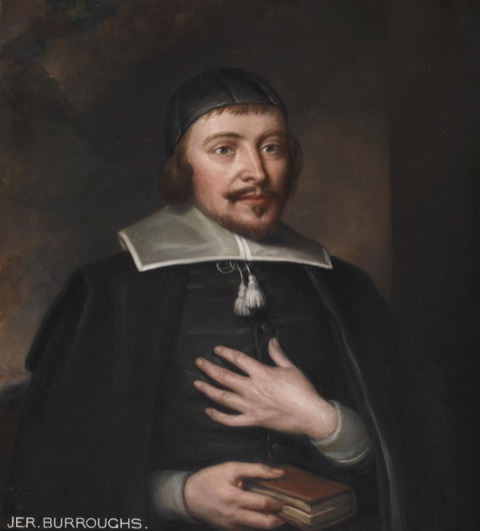
Portrait of Jeremiah Burroughs

About the author

Jeremiah Burroughs

Jeremiah Burroughs was an English Congregationalist minister and one of the leaders among the Dissenting Brethren at the Westminster Assembly. Known for his gentle spirit, irenic temperament, and practical wisdom, he was called "the morning star of Independency" by his contemporaries. Burroughs preached at two of London's largest churches and was beloved for his ability to bring peace to contentious situations. His most famous work, "The Rare Jewel of Christian Contentment," remains a classic of devotional literature, teaching believers how to find peace and satisfaction in God regardless of their circumstances. He died at age 46, mourned by Christians of all persuasions who admired his godly character.

“Updated Works has been an incredible blessing to my Christian life and ministry… remarkably faithful to the original authors while making these timeless treasures understandable for modern readers.”
— Pastor Mike Cleveland




