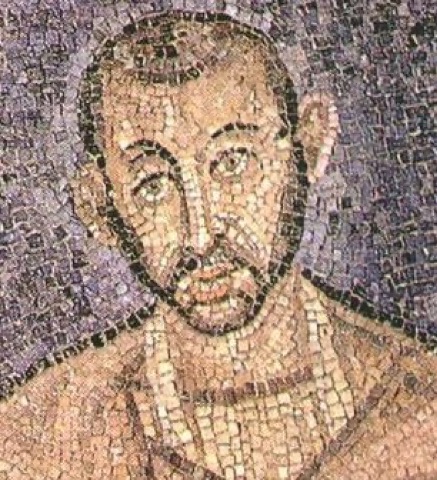
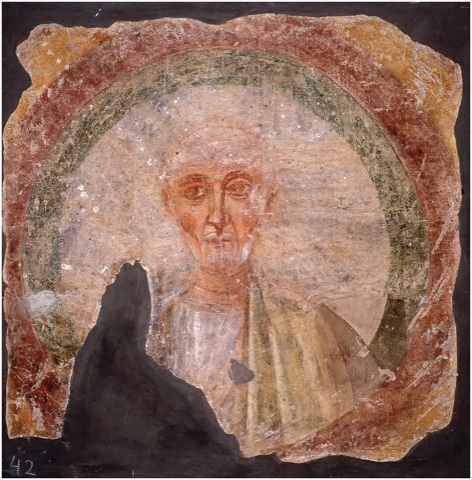
Paulinus of Milan
A deacon and notary of the church of Milan who wrote the Life of Ambrose, the earliest biography of the bishop, and who in 411 AD lodged the formal accusation against Caelestius that opened the public phase of the Pelagian controversy.
Biography
Paulinus of Milan (active around 390 to 425 AD) was a deacon of the church of Milan who served as notary and secretary to bishop Ambrose during the bishop's last years. He is known almost entirely through that connection and through his part in the early Pelagian controversy; the few fixed points in his life come from his own writings and from the records of the North African church.
His most durable work is the Vita Sancti Ambrosii, the Life of Ambrose, written around 422 AD at the request of Augustine of Hippo. Paulinus wrote as a member of Ambrose's household who had watched the bishop at close range, and he supplemented his own recollection with the testimony of others who had known Ambrose, including the bishop's sister Marcellina. The result is the primary narrative source for Ambrose's career, from his election as bishop of Milan in 374 AD to his death on Easter eve in 397 AD, and it set the pattern for later Latin bishops' lives.
Paulinus also entered the doctrinal disputes of his day. He was at Carthage in 411 AD when Caelestius, an associate of Pelagius, sought ordination as a presbyter there; Paulinus presented a written libellus charging Caelestius with a series of erroneous propositions on original sin and grace, and a synod under bishop Aurelius of Carthage condemned him. This was the first formal ecclesiastical action of the controversy. When Pope Zosimus later appeared willing to rehabilitate Caelestius, Paulinus in 417 AD addressed a further libellus to the pope, standing by his original charges and declining to appear before him.
A short exegetical work, De Benedictionibus Patriarcharum, on the blessings that Jacob pronounced over his sons in Genesis, has traditionally been printed among Paulinus's writings, though its attribution to him is uncertain and remains disputed.
Why Paulinus Matters
Paulinus matters first as a witness. Without his Life of Ambrose, much of what is known about one of the leading bishops of the fourth-century Latin West would be lost or reduced to inference. Because he wrote from inside Ambrose's household and within a generation of the events, his account is the foundation on which every later study of Ambrose rests, whatever its limits as a piece of devotional biography.
His libellus against Caelestius at Carthage in 411 AD gives him a second and independent place in the record. The charge he brought turned a set of contested opinions on sin and grace into a formal case before a church court, and the condemnation that followed opened the long dispute over Pelagianism that would occupy Augustine, a succession of African councils, and the bishops of Rome for the next two decades.
Taken together, these writings make Paulinus a marker of how the early fifth-century Latin church recorded its own memory and policed its own teaching. He shows the deacon as archivist and advocate: the man who kept the notes, wrote the life, and filed the complaint.
Complete Works in English
Free to readEvery surviving work, translated in full and free to read, from our Patrologia Latina project.