Jeremiah Burroughs's sermons on Genesis 5:24: how God brings a soul to walk with him, what that walk consists of, its blessings, the signs that mark it, rules for keeping it, and help for times when God seems absent.
A free account opens the whole library to read online, on your phone or at your desk. Open a book on one device and it is waiting at the same page on the next. The PDF and EPUB of every book are yours to keep, and audiobooks play in the same app.
250+ modernized editionsNot samples. The whole work, free.
Your place, on every devicePhone, tablet or desktop, same page.
131 audiobooksFrom $4.99 each, or all of them with a $50 gift.
"Walking with God" is a set of sermons by the Puritan Jeremiah Burroughs on Genesis 5:24, published in 1649 AD after his death. Using Enoch as the pattern, Burroughs explains how God brings a person into friendship with himself, what daily communion with God looks like, how to recognize it, and how to persevere when God feels far away.
“sorry the walk is so short.”
From this edition
How the argument unfolds
01
Enoch the prophet. Burroughs reads the name Methuselah as Enoch’s prophecy of the flood, and notes that Hebrews, following the Septuagint, renders “walked with God” as “he pleased God.”
02
The highest praise. His doctrine: “Walking with God is the great excellence of a godly person and the highest praise that can be given to him.” Outward religion is not the same thing, like a man pacing west on the deck of a ship sailing east.
03
How God begins it. God stops the sinner on the way of death, shows the way of life, makes peace, and draws the soul into friendship, until it walks “between the hands of God the Father and the Son” while the Spirit guides it.
04
What the walk is. Nine marks follow: keeping God in view, living as in his presence, sharing his will and purpose, depending on him, obeying gladly, meeting him in worship, and growing as he reveals himself.
05
Twelve blessings. The walk makes God’s ways easy, brings honor, rest, safety, confidence in prayer, and calm at death. “Even if it did nothing more than make God’s ways easy, that alone would be worth a world.”
06
Applications. Burroughs rebukes believers who have the offer and neglect it, since this walk “would turn our wilderness into a paradise, our gardens into Edens, our houses into churches, and the church into heaven for us.”
07
Signs to test by. Those who walk with God are the same at home as in public, serious yet joyful, glad of time alone, careful to keep “their accounts with God clear” each day, and blameless before others.
08
Rules and dark seasons. Twelve rules include loosening the heart from earthly things, seeking God in every duty, and guarding the thoughts, because “What speech is to people, thoughts are to God.” A final chapter counsels those who feel God has withdrawn.
Key themes
Friendship with God. Burroughs presses the language of intimacy: God “would meet us word for word, promise for promise, embrace for embrace.”
Christ as the way in. Communion rests on reconciliation. God is approached at the mercy seat, in Christ, and even Enoch walked by faith.
Constancy over moments. The test is the steady course of a life, not a stirred heart after a sermon.
Presence and comfort. “God’s withdrawal of comfort is not always a withdrawal of his presence,” so dryness is no proof of abandonment.
The paperback
Prefer it in print? The same book, done right
$11.99 · 6 × 9 inches · Cream paper · Matte cover
Built to last, not printed cheap
Printed at 6 × 9 inches on cream paper with a matte cover, made to survive years of rereading and underlining.
Type you can actually read
Typeset at a comfortable reading size with generous margins and line spacing, so a long chapter is a pleasure rather than an eye test.
Online reading included
Every paperback comes with the full text in your free account, plus the PDF and EPUB, so you can start reading tonight while the book ships.
Your purchase funds the work
Reading online is free. Buying the paperback direct is what pays for the next modernized classic.
“And Enoch walked with God, and he was not, for God took him” (Gen 5:24).
In this chapter we have the genealogy from Adam to Noah. Notice how God moves through it, telling us that Adam lived so long and fathered sons. Then the others lived, fathered sons and daughters, and died. He mentions them only briefly until he comes to Enoch. There God seems to pause. He does not simply follow the account of living, fathering sons and daughters, and dying. He adds, “Enoch walked with God.”
The Holy Spirit spends three verses on Enoch. He tells us how long Enoch lived before he fathered Methuselah, and that Enoch walked with God. In verse 23 he speaks of him again, and in verse 24 he again says that Enoch walked with God. It is as though the Lord were saying, “Oh, my servant Enoch! I must not pass him by. He was an outstandingly holy man in his generation. I must not pass him by without giving him a special testimony.” It is as though God were saying, “Oh, he was the delight of my soul. He walked with me.” Enoch walked with God.
Enoch was a prophet in his time. He had much fellowship with God, and God revealed much of his mind to him. In the Epistle of Jude, the Holy Spirit mentions him again: “Enoch also, the seventh from Adam, prophesied of these, saying,” etc. (Jude 14). Enoch prophesied; he was a prophet. Where do we find Enoch’s prophecy in the whole Book of God? We have the prophecies of Isaiah, Jeremiah, and other prophets, but where is Enoch’s? Here the Holy Spirit says that Enoch prophesied, saying, “Behold the Lord cometh with ten thousand of his Saints,” etc.
The prophecy mentioned here by the Holy Spirit in Jude’s epistle is not fully written out for us. Yet something of Enoch’s prophecy is recorded just a verse or two before my text, in the very name of his son Methuselah. The prophecy of Enoch that the Holy Spirit speaks of in Jude’s epistle is there in his son’s name. Methuselah means, “He dies, and then the sending out,” that is, the flood. He dies, and then the flood comes. That is the meaning of the name Methuselah.
So Enoch prophesied many hundreds of years before the flood came. That prophecy also seems to have reached further, since God’s dealings with people in those times were a pattern of his dealings with people in later times. In due time the Lord would send out a flood to destroy all wicked and ungodly people. He dies, and then the flood is sent out. The flood did come in the very last year of Methuselah’s life.
Notice that Methuselah lived longer than anyone had ever lived since the world began: “All the daies of Methuselah were nine hundred and sixty nine yeers, and then he died.” This may be one reason why his life was prolonged: to fulfill Enoch’s prophecy. Enoch had prophesied that the flood would come when Methuselah died. Because God had work to accomplish and intended to delay the flood for a while, Methuselah had to live so long.
God lengthens or shortens people’s lives according to the work he has to do and the use he has to make of them. But that is enough about Enoch himself, the person spoken of here.
What Walking with God Means
“Enoch walked with God.” Sometimes this expression refers to a particular ministry before the Lord. In 1 Samuel 2:30, we read, “Wherefore the Lord God of Israel saith, I said indeed, That thy house, and the house of thy father should walk before me for ever.” Then in verse 35: “I will raise me up a faithfull Priest that shall do according to that which is in my heart, and in my mind and I will build him a sure house, and he shall WALK before mine anointed for ever.” Here it refers to a particular holy ministry. The expression is sometimes used in that sense.
But here we should understand it more broadly, as walking with God in the ways of righteousness and holiness. Certainly Enoch was a prophet, and he could be said to walk with God in the particular ministry of his prophetic office. Yet the expression here has the same sense as when it is said of his great-grandchild Noah: “These are the generations of Noah, Noah was a just man and perfect in his generation, and Noah walked with God” (Gen 6:9).
No doubt this great-grandchild’s hearing about his forefather’s walk with God was a powerful reason for him to do the same. His walking with God is described as being righteous and perfect with God. The translators of the Septuagint render the expression that appears in your Bibles as “walk with God” by the words “he pleased God.” Notice that when the Holy Spirit mentions Enoch in the New Testament, he follows the Septuagint’s translation.
In Hebrews 11, Enoch is included in the list of believers: “By faith Enoch was translated that he should not see death, and was not found, because God had translated him.” Before his translation, he had this testimony, that he pleased God. The expression rendered in Genesis as “he walked with God” appears in Hebrews as his testimony “that he pleased God.” These come to the same thing: he walked in ways that pleased God and delighted him.
The Chaldean translation renders “he pleased God” as “he walked in the fear of God.” Some interpreters, quoting the Jerusalem Targum, give the words “he served or labored in the truth before the Lord.”
One further detail needs explaining. We are told that Enoch walked with God after he fathered Methuselah. Some think Enoch was wicked before Methuselah’s birth, because there is no mention of his walking with God during those sixty-five years. Enoch lived sixty-five years and fathered Methuselah, and he walked with God after Methuselah’s birth. But saying after is not sufficient grounds for concluding that he did not walk with God before. It may instead emphasize the constancy of his walk with God: he continued steadily in it throughout his life.
I need say no more in explaining this first part of the text, Enoch’s walking with God. The doctrinal point drawn from it is this.
The Honor of Walking with God
Walking with God is the great excellence of a godly person and the highest praise that can be given to him. Or, the highest testimony that can be given of anyone is that he walks with God. Walking with God is a great excellence. Whoever receives this testimony receives the highest testimony that can be given to a person in this world: that he walks with God.
Notice, then, that God mentions Enoch’s walk twice, as though he loved to speak of his poor creatures walking with him. In verse 22, “And Enoch walked with God.” Then in verse 24, “And Enoch walked with God.” Oh, it is as though God were saying, “This indeed is the delight of my soul!”
Notice something similar in the testimony about Noah in Genesis 6:9. Perhaps you have not noticed in reading it what I will point out now: “Noah was a just man, and perfect in his generations, and Noah walked with God.” It does not simply say, “Noah was a just man and walked with God.” Notice that it repeats Noah’s name twice: “Noah was a just man and perfect in his generations, and Noah walked with God.”
It is as though God were saying, “This is the blessed man who lived in a wicked generation. Although that generation was sinful and wicked, he stayed close to God. Noah was just and perfect, and Noah walked with God. Oh, I delight in this Noah! Consider my servant Noah. Noah was like this, and Noah walked with God.” There is great emphasis in repeating his name. There would be no reason to do it merely to complete the sense, which would be complete without it: Noah was a just man and perfect in his generation, and walked with God. The repetition gives Noah special praise: “Noah was a just man and perfect in his generations, and Noah walked with God.”
Oh, it is a person’s excellence to walk with God, and for God himself to acknowledge him and say that he walks with him! People may practice the outward duties of religion and go very far in them, yet remain strangers to God. They may never know what it is to walk with God. Their hearts may take private paths of their own.
The stars are carried around in one direction by the first mover, yet have a hidden motion of their own in the other direction. In the same way, many people seem to move one way in their outward profession, while their hearts secretly move another. All that time they are not walking with God. They pray, read, listen, attend sermons, and make such a great profession of faith that others might think they walk with God. But it is not so.
It is like a ship bound for a particular port. The wind carries the ship and its sails in that direction, yet while the ship goes east, someone may walk westward on its deck. In his outward profession, a person may seem to be carried eastward, while his private paths lead another way, toward his own ends and plans.
Here, however, is a person’s honor: God himself acknowledges him. It is as though God were saying about Enoch, “I am the God who sees and searches everyone’s heart. I observe the ways of my servant Enoch. I see that he walks with me in the secret places of his soul, as well as in his outward profession of godliness. He takes no private paths away from me. He stays close to me and walks with me continually.” Enoch walked with God.
Scripture expresses “walking with God” in several other ways that have the same meaning. One is walking before God. Abraham says, “The Lord before whom I walk” (Gen 24:40). God also told Abraham, “walk before Me, and be upright.” Again, “I will walk before the Lord in the Land of the Living” (Ps 116:9). Hezekiah says, “Remember how I have walked before thee.”
Sometimes the same thing is expressed as walking after the Lord: “Ye shall walk after the Lord” (Deut 13:4). A child follows his father, step after step, yet can still be said to walk with him. Sometimes it is expressed as walking in the name of the Lord: “We will walk in the Name of the Lord our God” (Mic 4:5). A fourth expression is walking in the Spirit of God (Gal 5:16). Here it is walking with God.
Walking before God, walking after God, walking in the name of God, walking in the Spirit of God, or walking with God: they all come to the same thing.
To explain this doctrine, I intend to deal with four things.
First, what it is to walk with God: to describe God’s work in bringing the soul to walk with him, and the soul’s way of walking with God.
Second, the excellence of walking with God: what a blessed thing it is for a Christian to walk with God.
Third, some evidences that a person walks with God.
Fourth, some rules for coming to walk with God: how you may live so that God himself gives this testimony about you, that you walk with him.
These are the four things. We begin with the first: the description of walking with God, God’s work in bringing the soul to walk with him, and the soul’s way of walking with God.
How God Brings Us to Walk with Him
1. God Stops Us in Our Own Way
Everyone by nature wanders away from God. Of all the wicked it is said that “they are estranged from the womb, they go astray as soon as they are born, speaking lyes” (Ps 58:3). Lying is one of the first ways wickedness appears in children. Yet they go astray from the very womb, before they can speak. It is natural for the wicked to wander away from God as soon as they exist.
The way people naturally walk is the way of death. It is the way of their own hearts and their own counsels, the common course of the world, the walk of the flesh. God’s work in bringing the soul to walk with him begins by making it stop in this natural way. When the Lord has left people for a time to follow their nature in the way of death, he is pleased to come to them with a mighty work that brings them to a halt.
They begin to consider, “Where am I? What way am I taking? Where am I going? Does the way I am in look like a way worthy of an immortal soul? Is the way I am walking likely to end well?” The soul stops and begins to think where it is and where it is going. This usually brings fear that its way will end in ruin. It no longer dares to proceed in the way it has been following, however pleasant that way may be, however well it may suit the flesh. “The Lord forbid that I should continue in the way I have been walking!” A stop has been made.
2. God Shows Us the Way of Life
The Lord reveals to the soul what the way of life is. The soul’s stopping is just like what we read about Saul. As he hurried along the way of death, a light shone around him and made him stop, so that he could go no further. Then, as I have said, the Lord reveals the way of life to the soul: “And thine ears shall hear a word behind thee saying, This is the way, walk ye in it” (Isa 30:21).
Oh, how many can describe this from experience! They were walking in the ways of death and eternal misery, congratulating themselves on those ways. But a blessed time came when God caused them to hear a voice, as though behind them, saying, “This is the way; walk in it. You are out of the way, but here is the way of life. If you would not perish eternally, here is the way. Walk in this way.”
The Lord causes a secret voice to be heard in the soul, yet it is a powerful voice. Perhaps you have come to hear the Word and learned what the way of life is, yet your heart has never been turned by it. When God brings the soul to walk with him, he causes it to hear, besides the outward voice of the Word, a voice behind it. Secretly yet powerfully, it says, “Oh, this is the way! You poor soul, wandering from the way of life and going on in the way of eternal death, come in, come in! Here is another way. This is the way; walk in it.” Through that secret voice, the Lord powerfully turns the soul.
3. God Makes Peace with Us
The Lord makes peace between himself and a sinner. He reveals the doctrine of reconciliation. When a sinner’s eyes are first enlightened, and he begins to know himself and to know God, God must certainly appear terrifying to someone who has been walking in the ways of death. “I see that my way is dangerous, and I see that another way is good. But God terrifies me. How can two walk together when they are not at peace?”
“Can two walk together except they be agreed?” the text asks (Amos 3:3). There is a natural hostility between humanity and God. Everyone in the world is by nature an enemy of God. Can two walk together unless they are agreed? You who continue in hostility toward God are surely strangers to this way of walking with him. Can you walk with God before you are agreed?
No soul can receive the testimony that it has walked with God unless it is reconciled to him. God reveals that reconciliation to the soul in some measure before it can walk with him as Enoch did. Certainly this was how Enoch came to walk with God. In the passage already mentioned in Hebrews 11, the Holy Spirit says, “It was by faith” that he did it, and “without faith it’s impossible to please God.” This amounts to saying that without faith it is impossible to walk with God.
The Holy Spirit means the same thing when the apostle says that Enoch walked by faith and that without faith it is impossible to please God. So there must be a work of faith to reconcile the soul, bringing it into agreement with God before it can walk with him. That is the third thing.
4. God Draws Us into Friendship
Even after peace is made, so that God no longer appears as the soul’s enemy, some distance may remain. Peace was made between David and Absalom. David’s anger toward him was appeased, yet for a time he would not see his face. He wanted him kept out of his presence. For a while there was to be no familiar companionship, as between a child and his father.
In the same way, even after peace is made, a further work of God is needed for the soul to walk with him. God must show himself to the soul in his loveliness, fullness of mercy, sweetness, and delightfulness, so that the soul and God may become familiar with one another. It is one thing to know that God is not my enemy and does not intend wrath and misery for me. It is another for the soul to perceive God’s sweet, delightful countenance, his embrace in the arms of mercy, and his willingness to stoop down and deal with us as one friend deals familiarly with another.
This, then, is a fourth work: the Lord is pleased to reveal himself to the soul in the sweetness of his love and delight. “You are not only a soul that will escape condemnation and be eternally saved. You are a soul in whom my soul delights. You are someone I take as my friend, someone I love to deal with in all sweetness and bring into familiarity with myself.” This is what God reveals to the soul to bring it into the walk with him that the Holy Spirit speaks of here concerning Enoch.
5. God Leads Us by His Spirit
The Lord is pleased to send his Holy Spirit to guide the soul to himself and to guide it in walking with him. In Romans 8, it is said, “All that are the sons of God are led by the Spirit of God.” A father walking with his child gives him his hand and leads the child along with him. When someone becomes a child of God, God reaches out his hand and leads him, and so they walk together.
Have you not sometimes seen a father and child walking in a garden? The father holds out his finger, and the child takes hold of it and walks along with him. In just the same way, the Lord gives his Spirit to a soul that has received grace. God and the soul walk together as the soul is led by the Spirit of God.
In Isaiah 35:8-9, you can see what the Lord says about the way of the redeemed: “And an high way shall be there, and a way, and it shall be called the way of holiness, the unclean shall not pass over it, but it shall be for those; the wayfaring men though fools, shall not err therein.” Though they are very weak and foolish, they will not go astray in it. “And no Lyon shall be there, nor any ravenous beast shall go up thereon: it shall not be found there, but the redeemed shall walk there.” That is the privilege of the redeemed.
This way of walking up to the land of Canaan from their captivity serves as a picture of the soul’s walk with the Lord.
6. Christ Brings Us to the Father
God does something further to enable the soul to walk with him: Christ, the Son of God, takes the soul and brings it to God the Father. As the Spirit leads it, so does Jesus Christ. The Lord Jesus Christ brings the soul to the Father so that God and the soul may have familiar fellowship.
“Through him we have an access by one Spirit unto the Father” (Eph 2:18). We have access through him; he leads us by the hand. He brings us to the Father. We have access through Jesus Christ.
It is as though a prince took a traitor who had been reconciled to the prince’s father. The traitor has received his pardon, and the father’s anger toward him has been appeased. The prince comes, takes him by the hand, and says, “Come, I will bring you to my father. I will walk along with you to my father.”
So it is here. No one who has ever been a sinner can walk with God unless Christ walks with him. Christ walks alongside him, and so God continually appears sweet, gracious, and lovely. Why? Because Christ holds him by the hand, if I may put it that way. God the Father holds one of his hands, and Christ holds the other. So the soul takes this blessed walk between the hands of God the Father and the Son, while the Holy Spirit also leads and guides it.
What Walking with God Means
Now consider the soul’s course in this walk with God. Once the soul has been brought to God and enabled to walk with him in this way, how does it walk?
1. Keeping God in View
First, once the soul has come to God, it looks to him in all his ways and sets him before itself. Enoch walked with God. That is, throughout his life Enoch set God before him and kept his eyes on God in all he did.
First, he beheld the infinite beauty in God. Second, God was the fountain of all good to his soul. Third, he recognized that God was infinitely worthy of all honor. These three things keep the soul’s eyes continually on God: “The Lord has infinite excellence and beauty in himself. The Lord is the fountain of all good to me. The Lord is infinitely worthy of all honor and service.” A soul walking with God continually looks to him in this way.
“For thy loving kindness is before mine eyes, and I have walked in thy truth” (Ps 26:3). “O Lord, I see you as beautiful, lovely, and gracious, the fountain of all good. Lord, I have walked in your truth, setting you before me.” Similarly, “I have set the Lord alwaies before me that I might not fall” (Ps 16:8).
A soul that walks with God scarcely looks at anything but God. Even while enjoying created things, its eyes are on him. Like a little child walking with his father and looking up to him, every soul that walks with God keeps its eyes on him. Nothing draws the soul with such loveliness as God himself.
Wicked people, however, do not find God such a lovely object. They see no such excellence in him, so they turn their eyes away and look elsewhere. “They do not set God before them” (Ps 86:14). Those who follow the desires of their own hearts in wicked, sinful ways do not have the Lord in all their thoughts, as Psalm 10 says (Ps 10). This is the first feature of the soul’s walk with God: it looks to God and sees him before it.
2. Living in God’s Presence
Second, the soul behaves as one in God’s presence. “I see myself in God’s presence, and my eyes are on him. Let me then take care that my soul’s conduct suits someone in the presence of such a holy, great, glorious, and blessed God.”
“As of God in the sight of God speak we in Christ,” says the apostle (2 Cor 2:17). Whatever we undertake, we do it as from God, in God’s sight, knowing that we are always before him.
Speaking of Noah’s walk with God, Augustine says, “Noah walked with God, that is, he had God always present before his eyes, walking in such holiness, and so revered God.” This is walking in the fear of God: awareness of God’s presence leads the soul to bring itself into a condition suited to the presence it stands in.
Indeed, this is the walk you will find God’s saints taking all day long. Would you know where to find a saint? You can know his walk: all day long you will find him walking in the fear of the Lord. Scripture says, “Let not thy heart envy sinners: but be thou in the fear of the Lord all the day long” (Prov 23:17).
It does not say, “Do thou fear the Lord all the day long,” but “Be thou in the fear of the Lord all the day long.” A Christian’s walk should be like this from morning to night, a walk in the fear of the Lord. Nothing in this world should draw him out of it. No temptation should call him away. He should remain in the fear of the Lord all day long. This is a Christian’s walk: he strives to behave in a way suited to God’s presence.
3. Making God’s Will Our Rule
Third, the soul walks with God when it takes the same way God takes and does what God does. What is God’s way but the way of holiness and righteousness? The soul makes God’s will its rule: “I will not be governed by my own will or by anything except God’s will. What does God will? I will the same thing.”
Then the soul walks in God’s way, bringing itself into harmony with him and setting the Lord before it as its example. As Scripture says, “Be ye holy as your Heavenly Father is holy.” “I see God’s holy and righteous ways, and as a dear child I strive to follow him, taking the very steps he takes. How does God conduct his affairs? I will strive to conduct mine as he does, so that my life displays a likeness to God himself.” This is walking with God: doing as he does and imitating him. That is the third feature of the soul’s walk with God.
4. Sharing God’s Purpose
Fourth, the soul not only does the same things as God and makes his will its rule; it also has the same ends as God. What end does God pursue in all his ways? Surely, that his blessed name may be magnified and his glory displayed.
“I will pursue the same purpose. This will be the great purpose of my life, the highest end my soul aims at in everything. Everything else will be subordinate to this end: God’s glory and honor. This is what God aims at, and therefore it is what I will aim at.” In this way the soul goes along with God, just as one person may be said to go along with another when both pursue the same purposes.
What a blessed thing this is! We will speak of it later, but merely explaining what it means reveals much of its excellence. As we go on, I beg you to examine your hearts. Does the very mention of these things show that you are strangers to God? Examine yourselves by God’s work in bringing your souls to walk with him. Or examine yourselves by the soul’s course: keeping God in view, behaving as one in his presence, making his will its rule, and pursuing the purpose he pursues.
5. Responding to God’s Dealings
Fifth, walking with God means observing his various dealings in the world and bringing the soul into a condition suited to them. Let me explain. Sometimes God seems to work in one way, sometimes in another. The soul that walks with God notices his different ways and dealings in the world and says, “Let me strive to bring my heart into harmony with them.”
Sometimes the Lord acts in judgment, bringing heavy and dreadful afflictions upon the world, and sometimes even upon his own saints and people. Then let me bring my heart into a condition suited to this. “Oh Lord! we will wait upon thee in the waies of thy judgments,” says the church in Isaiah.
“Are we under God’s judgments, in a time of affliction? Lord, we will bring ourselves into a condition to honor you in that way. We will strive to exercise the graces suited to these dealings of yours. And Lord, are you acting in mercy? We will respond accordingly and strive to draw out and exercise the graces suited to those ways. Are you bringing affliction upon my family, or showing mercy? Lord, I will strive to exercise the graces suited to those ways of yours.” This is walking with God.
When I walk with someone, if he turns one way, I set myself to follow him. If he turns another way, I adjust to go with him there. However varied God’s ways may be, the soul that walks with him responds in a way suited to them. What a great skill and mystery it is to bring ourselves into harmony with God’s various dealings in the world!
Some people can bless and praise God when he shows mercy, and they think this is walking with him. But if God turns his back upon you and takes away your dearest earthly comfort, perhaps your beloved spouse, and so brings affliction, how can you respond to his ways then?
“When God was showing mercy, I exercised joy and thanksgiving and spoke well of his name. But now the Lord brings affliction, I exercise faith in him. I exercise patience. I exercise Christian wisdom to discover what good I can gain from this act of God.” Whatever course God takes, a Christian has different graces to exercise in different circumstances.
The soul does not exercise joy, thanksgiving, and praise of his name only while God leads along a smooth path. Let him take a rugged path of very great affliction, and still the soul brings itself into harmony with his various dealings. This is walking with God.
6. Depending on God
Sixth, walking with God means maintaining a holy dependence upon him in all his ways. A person lives in holy dependence upon God for four things.
1. Direction
First, the soul depends upon God for direction: “Oh lead me in the way of thy truth.” A Christian looks up to God and depends upon him for direction throughout the regular course of life: “O Lord, teach me your way. Lord, lead me in the way of everlasting life. Lord, send out your light and your truth to guide me. You will be my guide even to death.”
The soul dares not take a step beyond where it sees God going before it, so it says, “Lord, lead me. Guide me.” I beg you to examine yourselves as we go on. Can you say that you find this in the course of your lives, that you walk in holy dependence upon God for guidance and direction at every step?
Whatever you undertake, do you walk in holy dependence upon God for direction in your affairs? According to the importance of the matter, whether less or greater, the heart seeks God more earnestly for guidance and direction in it.
People of the world, however, fear that God will lead them into hard paths and troublesome ways. Therefore they hesitate to accept his guidance. This is the way of wicked hearts: they shrink from God’s guidance and direction. But a gracious heart says, “Let God lead me, whatever the way may be.” The wicked are guided by their own thoughts and counsels, by other people’s examples, and by what best suits their own ends. But the way of the saints is this: “Lord, guide me.”
2. Protection
Second, their holy dependence upon God is for protection in what they do. “Lord, I am in the way you have guided me into. I may meet much trouble and affliction, but Lord, protect me. Defend me in this way of yours.”
When a child walking with his father hears a frightening noise, he looks up to his father and depends upon him for protection. So, when a child of God walks in holy dependence upon him for protection in all his ways, this is walking with God.
3. Help
Third, the soul depends upon God for help in everything it undertakes. “Lord, this is the work you call me to. Let me have strength from you for this work. I can do nothing without you, Lord. Let me have your help.”
The wicked, however, rely on human strength as their supporting arm, and therefore a curse is pronounced against them (Jer 17:5). They are strangers to this dependence upon God for help. Now and then, in a passing impulse, they will say that God must help them and that they can do nothing without him. But a holy, gracious disposition that walks in holy dependence upon God for help in every undertaking is far removed from the wicked and ungodly.
4. A Blessing
Fourth, the soul walks in holy dependence upon God for a blessing on all it does: “Walk before me and be upright, I am thine exceeding great reward.” It is as if God said to Abraham, “Walk in dependence upon me. I am your reward. Though you have little encouragement in the world, look up to me for your reward.”
So the soul turns away from people and the world. It pays less attention to the encouragement the world offers and looks up to God: “Lord, I depend upon you for a blessing. However things seem to go, Lord, I look up to you to bring everything to a good outcome.” Here is a soul walking with God.
7. Obeying Freely and Gladly
Seventh, one who walks with God has a willing heart in all the ways of holiness and obedience. He readily undertakes every good work. He is not hauled and pulled to God; he walks with him.
There is a great difference between someone dragged after another, like a prisoner unwilling to go that way, and someone who walks about with you in delight and pleasure. To walk with God, it is not enough to be in the way God wants you to be or to do what God wants you to do. Your hearts must respond freely in obedience. There must be cheerfulness in obedience. You must choose the ways of holiness as the ways best suited to you. This is walking with God.
David says, “I will walk at liberty, for I seek thy precepts” (Ps 119:45). This is a remarkable Scripture. People of the world think they can walk at liberty only by satisfying their desires to the fullest, by walking after their lusts, as Scripture puts it. But David says, “My liberty is this: I seek your precepts.”
A fleshly heart thinks seeking God’s precepts and conforming to them is the greatest bondage in the world: “I must walk according to a rule. That is bondage.” But David says, “I will walk at liberty, for I seek thy precepts.” To regard God’s precepts as the soul’s greatest liberty is excellent evidence of grace in the heart.
“When I am in the ways of sin, I am in bondage, a slave to Satan. But when I seek your precepts, I am at liberty.” A man walking about in the fields is at liberty. So, when the soul walks with God, it is at liberty. When it walks without God, it is in a dungeon, a prison. But when it walks with him, it is at liberty and responds freely in all the ways of obedience.
8. Communion in Worship
Eighth, walking with God consists in the soul’s conversation and communion with him in holy duties. The duties of holy worship are the special walks of the soul with God, and of God with the soul.
The Lord says, “Ye shall do my Judgments, and keep mine Ordinances, to WALK therein, I am the Lord your God” (Lev 18:4). You must walk in God’s ordinances. His ordinances are the walks of a gracious soul, and there the soul meets with him.
There is a remarkable Scripture showing that the soul meets God in his ordinances: “And I will set my tabernacle amongst you, and my soul shall not abhor you” (Lev 26:11-12). That is, he will delight in you. “And I will WALK among you, and will be your God, and ye shall be my people.”
“I will set my Tabernacle amongst you.” What does that mean? “You will enjoy my ordinances and have the duties of my worship, and I will walk among you.” God walks among us when we enjoy his ordinances.
So you see that in Leviticus 18 God says we must walk in his ordinances. The ordinances are the godly person’s walk. In Leviticus 26 the ordinances are God’s walk. They walk the same way, and there God and a gracious heart meet.
The churches that enjoy his ordinances are the candlesticks we read of in Revelation: “In the midst of the seven golden Candlesticks was one like unto the son of man, clothed with a garment down to the feet and gird about the paps with a golden girdle” (Rev 1:13). The Lord Jesus Christ is in the midst of the candlesticks, that is, in the midst of the churches. He is where God’s ordinances are, and if you would walk with him, you must find him there.
You can also see the course of a gracious heart walking with God in this Scripture: “They have seen thy goings O God, even the going of my God, my King,” and where? “in the Sanctuary” (Ps 68:24). If you would walk with someone, you must know where he goes. Notice where he usually walks, and go there.
“They have seen thy going O God, even the goings of my God, my King, in the Sanctuary.” There God goes. If you would meet with God and walk with him, it must be in the sanctuary, in his ordinances.
Speaking of Christ, Scripture says, “That the King is held in the galleries” (Song 7:5). What are these but the ordinances? They are, as it were, the galleries of the great King of heaven and earth. Princes and great men have splendid galleries where they usually walk. Only their chief favorites are allowed to walk about there.
Questions
What is "Walking with God" by Jeremiah Burroughs about?+
It explains the phrase “Enoch walked with God”: how God brings someone into that relationship, what it looks like in daily life and worship, why it is the best life available, how to tell whether you have it, and how to keep it up.
When was "Walking with God" written?+
Burroughs preached it in London before his death in 1646 AD. His friends published it in 1649 AD as part of a volume that also contained his treatise on earthly-mindedness.
How long is "Walking with God"?+
About 26,000 words in nine chapters, roughly a two-hour read.
Is it hard to read?+
The original is spoken seventeenth-century English with numbered heads. This edition keeps every head and illustration in modern prose, while Scripture quotations keep their historical wording.
What does Burroughs say about times when God feels absent?+
He tells the believer to take the sense of loss as a good sign, to fear their own withdrawal more than God’s, and to stay on the path where they once met him: “If God withdraws from you, it is your affliction. If you withdraw from God, it is your sin.”
How does it relate to Burroughs's other books?+
It shares the warm, practical tone of "The Rare Jewel of Christian Contentment." He refers back to his sermons on gospel worship and mentions a planned treatise on walking by faith from 2 Corinthians 5:7.
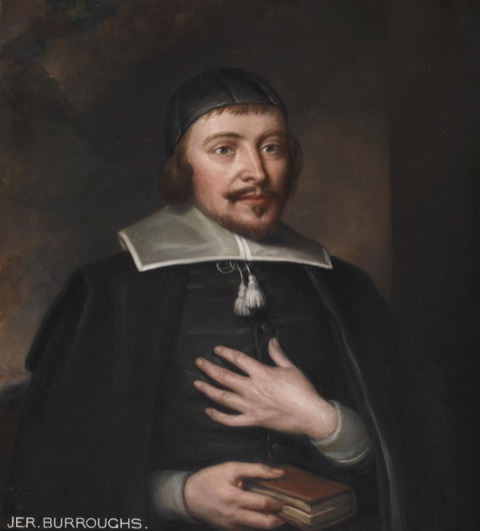
Jeremiah Burroughs was born in 1600 and studied at Emmanuel College, Cambridge, which he left over his scruples about conformity. He served as a lecturer at Bury St Edmunds and then as rector of Tivetshall in Norfolk until Bishop Matthew Wren suspended him in 1636 for refusing to comply with the required ceremonies. Deprived of his living, he went to the Netherlands and joined William Bridge in ministering to the English congregation at Rotterdam. He returned to England in 1641 and became a sought-after London preacher, lecturing at Stepney and at St Giles Cripplegate. At the Westminster Assembly he was one of the five Dissenting Brethren who argued for Congregational church government, yet he pleaded for peace between Independents and Presbyterians in works such as Irenicum. He died in London in November 1646 after a fall from his horse. Most of his books, including The Rare Jewel of Christian Contentment, were published after his death by fellow ministers from his sermon notes.
“Updated Works has been an incredible blessing to my Christian life and ministry… remarkably faithful to the original authors while making these timeless treasures understandable for modern readers.”