One free account opens 250+ books and saves your place on every device. Google sign-in or an email link. No card.
You’re on the list — we’ll email you if this goes to print.
Included with your free account
This book, and 250+ more, free to read
A free account opens the whole library to read online, on your phone or at your desk. Open a book on one device and it is waiting at the same page on the next. The PDF and EPUB of every book are yours to keep, and audiobooks play in the same app.
250+ modernized editionsNot samples. The whole work, free.
Your place, on every devicePhone, tablet or desktop, same page.
131 audiobooksFrom $4.99 each, or all of them with a $50 gift.
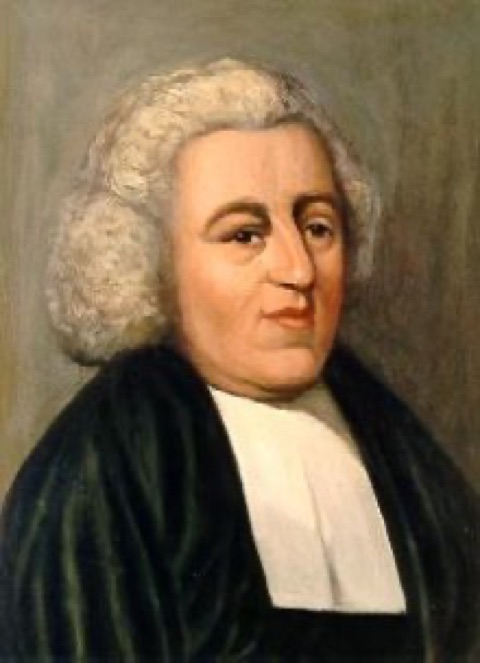
John Newton (1725–1807) lived one of the most dramatic lives of the eighteenth century. A dissolute youth who was press-ganged into the Royal Navy and eventually became captain of slave trading vessels, Newton underwent a gradual spiritual conversion that would transform him into one of England’s most influential Anglican clergymen—and the author of the hymn "Amazing Grace." Yet for years after leaving the sea, he remained silent about the horrors he had witnessed and participated in aboard those ships.
In 1788, decades after his last voyage, Newton broke that silence with Thoughts Upon the African Slave Trade, a pamphlet that served as both public confession and firsthand testimony in support of the growing abolition movement. Writing with the authority of a man who had personally commanded slave ships, Newton offered Parliament and the British public an insider’s account of a commerce he now regarded with horror. The pamphlet was timed to support William Wilberforce’s campaign to end the trade through legislation.
Newton details the devastating toll the trade exacted on British sailors—through disease, violence, and moral degradation—before turning to the even greater horrors inflicted on the enslaved Africans themselves. He describes the corruption of character that the trade produced in everyone it touched, from common sailors to ship captains wielding unchecked power over human cargo. His account of the shackling, confinement, and brutal suppression of uprisings aboard slave ships remains one of the most powerful firsthand testimonies in abolitionist literature.
Newton’s unique authority as a former participant gave his words a weight that purely moral arguments could not match. This modern English edition preserves the full force of his testimony while making the text accessible to contemporary readers. For anyone interested in the history of the Atlantic slave trade, the abolition movement, or the intersection of personal repentance and public advocacy, this remains an essential and deeply moving work.
Introduction
The nature and effects of that unfortunate and shameful branch of commerce, long conducted on the coast of Africa with the sole and openly stated purpose of purchasing fellow human beings to supply our West Indian islands and the American colonies with enslaved people, are now widely understood. So much light has been shed on the subject by many capable writers, and so many respected individuals have already committed to using their full influence to suppress a trade that offends every human instinct, that one can reasonably hope this stain on our national character will soon be erased.
If I attempt, after all that has already been written, to add my small contribution to the public record, it is less because I think my involvement is necessary than because I am convinced that staying silent at such a moment, on such a subject, would itself be a moral failure on my part. Even if my testimony turns out to be neither necessary nor useful, I am perhaps bound in conscience to publicly acknowledge my own shame, a confession which, however sincere, comes far too late to prevent or repair the suffering and harm I once helped to cause.
I hope it will always be a source of humbling reflection for me that I was once an active participant in a trade that now fills me with horror. My reckless passions and foolish choices plunged me, early in life, into a series of difficulties and hardships that eventually drove me to seek refuge among the people of Africa. There, for roughly eighteen months, I was in every practical sense a captive and a slave myself, though no one called me that, and I sank to the lowest depths of human misery. I might not have suffered quite so completely had I lived only among the Africans, but my fate was to live among white men; at that time, several men of my own race and language had settled along that stretch of the Windward Coast lying between Sierra Leone and Cape Mount, with the sole purpose of buying and collecting enslaved people to sell to the ships arriving from Europe.
That coast is a place from which few who venture there, even for a short stay, ever truly return; but God’s good providence, beyond anything I expected and almost against my own wishes, delivered me from those scenes of wickedness and misery. I arrived at Liverpool in May 1748. I soon returned to the place of my captivity as a ship’s mate, and in 1750 I was given command of a vessel, in which capacity I made three voyages to the Windward Coast to trade in enslaved people.
I first saw the Coast of Guinea in 1745 and took my final leave of it in 1754. That departure was not intended to be permanent, but through God’s mercy it proved to be. I had fitted out for a fourth voyage and was on the verge of sailing when a sudden illness stopped me, and I handed the ship over to another captain.
Thus I was unexpectedly released from this disagreeable work. I had found it disagreeable for a long time, but I think I would have left it sooner had I understood, as I do now, that it was unlawful and wrong. At the time, however, I had no such misgivings, and no friend ever raised the question with me. I acted in ignorance, treating it as the path Divine Providence had set before me, and my only concern of conscience was to treat the enslaved people in my care with as much humanity as my own safety would allow.
Nine years of experience and observation would qualify me as a credible witness on this subject, if I could fully trust my memory after an interval of more than thirty-three years. Over such a long stretch of time, the recollection of past scenes and events grows hazy, and I am aware that what I actually witnessed and what I merely heard from others may by now have blended together so gradually and imperceptibly that, in some cases, I may find it difficult, if not impossible, to tell them apart with complete certainty. It is, however, my sincere desire, and therefore my utmost care, to put nothing in writing as something I personally know unless I could, if required, confirm it under oath.
The stretch of African coastline running between the Sierra Leone River (lat. 8°30’ N) and Cape Palmas is commonly known as the Windward Coast, or the Grain Coast. If my memory serves me correctly, it spans roughly one hundred and fifty leagues. On Bence Island in Sierra Leone, there is a fort that once belonged to the old African Company; they also held a fort on an island in the Sherbro River. By the time I first arrived in Africa, however, the first fort had passed into private hands, and of the second, barely the foundations remained visible. No fort or trading post on this coast operates under the authority of our Government, but there were, as I have mentioned, private traders living at Bence Island, at the Bananas, and at the Plantains, and in all likelihood some remain there still. The first of these locations lies about twelve leagues from Sierra Leone to the southeast, and the last about twenty.
Through these traders, commerce is conducted by boat and shallow-draft vessel, reaching thirty or forty leagues northward into several rivers lying within the shoals of the Rio Grande. The northernmost point accessible to larger ships, however, is Sierra Leone, where trade in that area is conducted mainly with white settlers. From Sherbro southward to Cape Palmas, by contrast, it is conducted directly with the native population. Although I have traveled as far as the Gold Coast and beyond, reaching Cape Lopez at roughly one or two degrees south latitude, I make no claim to knowledge of the African trade beyond what I personally witnessed on the Windward Coast during the years I was involved in it.
I’m not qualified to evaluate the African slave trade purely as a political matter, and even if I were, I think such an analysis would be somewhat out of place coming from a minister of the Gospel. That kind of examination belongs more properly to those in civil life. What my role does allow, and perhaps even require me to say, is this: the best human policy is one grounded in a reverent regard for Almighty God, the Supreme Governor of the Earth. Any plan that pursues a nation’s welfare in defiance of His authority and laws, however clever it may appear, will prove fundamentally flawed, and if pursued long enough, ruinous. The righteous Lord loves righteousness, and He has committed Himself to pleading the cause and vindicating the wrongs of the oppressed. It is righteousness that lifts a nation up; wickedness is its present disgrace, and will, sooner or later, unless repentance intervenes, prove its undoing.
What I have said about myself may well apply to the nation as a whole. The slave trade was always unjustifiable, but indifference and self-interest prevented people, for a time, from seeing it clearly. That is no longer the case. The harms and evils connected with this trade have been laid out in recent years with such overwhelming evidence, and are now so widely understood, that I believe there is hardly any objection left to the wishes of thousands, perhaps millions, for its suppression, except on the grounds of political convenience.
Even if I were certain that a major portion of the public revenue depended on the African trade (which, I suspect, is far from true), and even if I had the access and influence to be heard, I would feel compelled to say to the government, to Parliament, and to the nation: “It is not lawful to put it into the treasury, because it is the price of blood” (Matt 27:6).
I think of an intelligent farmer as a good politician in this sense: if he has a large pile of good corn, he won’t mix in a small quantity of damaged grain just to make the pile bigger. He knows that such an addition would ruin the whole lot. God forbid that any supposed profit we might gain from the suffering, agony, and bloodshed of the poor Africans should bring His heavy curse down on everything we might otherwise honorably and comfortably possess.
For the sake of organization, I would like to consider the African trade under two headings: first, its effects on our own people, and second, its impact on the Black Africans, or, as they are more contemptuously called, the Negro slaves, whom we purchase along the coast. These two topics are so deeply intertwined, however, that keeping them neatly separate will not be easy.
1. The Cost in British Lives
The first point I want to raise is surely of political importance, if the lives of our fellow subjects matter at all, and if the rapid loss of sailors deserves the attention of a maritime nation. That loss, in the African trade, is genuinely alarming. I acknowledge that many of these men die on their first voyage, and therefore before they can properly be counted as seasoned sailors, though they would have become sailors had they lived. But the communities around our seaports are constantly drained of men and boys to replace those who die abroad, and even if not all of them are sailors, every one of them is our brother and countryman, a subject of the British Crown.
The people who remain on board ship along the open coast, if they aren’t used to the climate, are vulnerable to a severe inflammatory fever. This fever isn’t usually fatal unless a combination of unlucky circumstances makes it so. Once that danger has passed, they could probably stay as healthy as on most other voyages, provided they could be kept from sleeping in the dew, from prolonged exposure to rain, from drinking too much spirits, and especially from the company of women.
But given the general character of our sailors and the nature of the slave trade, those conditions are about as meaningful as saying that Great Britain would be a happy country, provided all its inhabitants were wise and good. The sailors must be heavily exposed to the elements, especially on the Windward Coast, where much of the cargo is gathered by boats sent out as far as thirty or forty leagues, sometimes not returning for a month. Many vessels arrive on the coast before the rainy season has ended (it runs from roughly May to October), and when trade is slow, ships that arrive during the dry season often have to wait until the rains return before they can complete their purchases. There is simply no way to provide adequate shelter from the weather in an open boat when rain falls without stopping, day and night, for weeks on end.
I have myself spent five or six days at a stretch in such a boat without, as the saying goes, a dry thread on me, whether sleeping or waking. And during the dry season, tornadoes, which is to say violent storms of wind, thunder, and driving rain, are extremely common, though they rarely last long. In practice, the boats almost never return without bringing back some of the crew sick with dangerous fevers or dysentery, caused either by the weather or by unwholesome food such as the raw fruits and palm wine that the local people supply in abundance.
Strong liquors like brandy, rum, or English spirits are not something sailors can usually get in large enough quantities to harm themselves, but they will try when they can, and opportunities do arise, particularly for those working the boats. Since strong liquor is always in high demand on the coast, so much so that you can barely purchase a single enslaved person without it, there is always a supply close at hand. When sailors help themselves from the casks or bottles meant for trade, they simply top them up with water, leaving them looking just as full as before. The Africans who buy the adulterated liquor are cheated, certainly, but the men who do the cheating often end up suffering the worst consequences.
Women, too, take a heavy toll on our sailors’ lives. When ashore, sailors tend to act with their characteristic recklessness, getting themselves into violent disputes with local people over women, and if they aren’t killed outright, they are frequently poisoned. On board ship, some restraint is possible, and in certain vessels it is enforced, but this is far from standard practice. It depends largely on the character and attentiveness of the captain. During my time in the trade, I knew several commanders of African vessels who were prudent, respectable men and who kept proper discipline and order on their ships, but there were far too many of a very different kind. On some ships, perhaps most of them, the freedom allowed in this area was nearly unlimited. Moral conduct was rarely a concern; as long as a man did his share of the ship’s work, he was free to do as he liked in everything else. These excesses, even when they don’t bring on fevers directly, weaken the body’s ability to resist them when they do come, and licentiousness, all too often, ends in death.
There is also the constant risk of slave uprisings to consider. These, I believe, are always being planned, since the enslaved men are rarely reconciled to their confinement and treatment. When uprisings are attempted, they are seldom put down without significant losses, and sometimes they succeed, wiping out an entire ship’s crew at once. Hardly a year goes by without news of one or more such disasters. We also hear, from time to time, of both white crew members and Black captives being destroyed together in an instant when gunpowder ignites and blows up the ship.
How much each of the causes I have listed contributes to the overall toll, I cannot say with precision. What is certain, however, is that a great number of British sailors die in the slave trade. Few ships are blown up or completely destroyed with all hands, but some are. Among the rest, I have known ships that lost half their crew, and some that lost an even greater share. I am not claiming this is always, or even often, the case; but I believe I am being conservative when I estimate that at least one fifth of those who sail from England to the coast of Africa on slave-trading vessels never return. I don’t trust my memory enough to cite precise figures for the number of ships and men employed in the slave trade more than thirty years ago, and I have no reliable information about the state of the trade since then, so I will not attempt any detailed calculations. That said, I do have an opinion on the matter. I think it likely that the total number of sailors departing from all British ports for Africa in any given year, taking Guinea in its broadest sense, from Gorée or the Gambia all the way to the coast of Angola, cannot be fewer than eight thousand. If, averaging across ships and seasons, one fifth of these men die, the annual loss comes to fifteen hundred lives. I believe anyone who has taken the trouble to make more careful inquiries will find my estimate quite modest.
2. The Corruption of Character
There is a second harm that is, or at least should be, considered politically significant: the devastating effect this trade has on the moral character of those who participate in it. There are exceptions, and I would like to think I am one of them. But in general, I know of no way of making money, not even highway robbery, that more directly erodes a person’s moral sense, strips the heart of every gentle and compassionate impulse, and hardens it like steel against all feeling.
Usually, about two-thirds of a slave cargo consists of males. Consider what it means to load a hundred and fifty or two hundred able-bodied men onto a ship: men torn from their homeland, many of whom had never seen the sea, let alone a ship, until shortly before they were forced aboard. They likely felt the same instinctive suspicion toward white men that we feel toward Black men, and many of them arrived convinced they had been purchased to be eaten. Given all of this, no one could reasonably expect them to accept their situation without resistance. It was always assumed, as a matter of course, that they would try to win their freedom if any opportunity arose. Because we dared not trust them, we received them on board from the very beginning as enemies. Before their number even reached ten or fifteen, they were all put in irons, on most ships two by two. And frequently, they were not chained in the way that would allow them to stand or move with the least discomfort, with the right hand and foot of one fastened to the left of the other. Instead, they were shackled across, meaning the hand and foot on the same side of each man, whether right or left, were locked together, so that neither hand nor foot could be moved except with extreme care and the full cooperation of the man beside them. In this condition they had to sit, walk, and sleep for many months, sometimes nine or ten, with no relief or adjustment of any kind unless illness intervened.
At night they were confined below deck. During the day, if the weather permitted, they were brought up on deck, and as each pair was brought up, a chain was threaded through a ring on their irons and locked down to ring-bolts fixed at intervals along the deck. These precautions, and others like them, were considered no more than necessary, particularly because as the number of enslaved people grew, the number of crew available to guard them shrank through sickness, death, or absence in the ship’s boats. At times, fewer than ten men could be mustered to keep watch, day and night, over two hundred captives, while also managing every other demand of running the ship.
That these precautions so often succeed is far more remarkable than the fact that they sometimes fail. A single unguarded hour, or even a single minute, is enough to give the enslaved people the opening they are always waiting for. Any attempt to rise against the ship’s crew triggers immediate and brutal violence; once they are in motion, they fight with the desperation of people who have nothing to lose, and when they don’t succeed, they are rarely subdued without serious harm and bloodshed on both sides.
Sometimes, when an uprising is nearly ready to begin, one of the enslaved people will betray the plan. At that point, necessity and the cold logic of these small but absolute shipboard governments enforce principles that run directly against the nature of justice. The traitor to the cause of liberty is praised, rewarded, and called an honest man. The leaders who conceived and drove the plan forward, if they can be identified, must be treated as criminals and punished severely enough to frighten the rest into submission. The nature and severity of these punishments depend entirely on the captain’s personal will. Some captains are satisfied with moderate punishment, enough to serve as a warning. But unchecked power, driven by revenge and wielded by a heart that long exposure to the suffering of enslaved people has made hard and indifferent to human feeling, is a terrifying thing.
John Newton (1725–1807) was an English Anglican clergyman, former slave trader, and hymn writer best known as the author of "Amazing Grace." After a dissolute youth that included impressment into the Royal Navy and work on slave ships, Newton experienced a gradual spiritual conversion. He captained three slave trading voyages before illness ended his seafaring career. Ordained in 1764, he became one of the most influential evangelical ministers of his era. In 1788, he published his Thoughts Upon the African Slave Trade as a public act of repentance, providing firsthand testimony that bolstered William Wilberforce’s campaign in Parliament. His collaboration with poet William Cowper produced the Olney Hymns, one of the most important collections of English hymns.
After watching John Newton in the Amazing Grace movie recently, I became interested in reading the work he was compiling in the movie. A very interesting read.