Modernized edition · Full text · Free PDF/EPUB
The Work of the Holy Spirit in Modern English
Summary
- Written
- Preface dated Amsterdam, April 10, 1888; American postscript April 21, 1899
- Type
- Reformed doctrinal theology of the work of the Holy Spirit
- Length
- 235,000 words · 16 hours
- Collection
- Reformation
What is The Work of the Holy Spirit about?
The Work of the Holy Spirit is Abraham Kuyper's study of the Spirit's work, signed in Amsterdam in 1888. Kuyper argues that the Spirit works not only in sanctifying believers but in creation, Scripture, the incarnation and the church, and he follows that work through regeneration, faith, love and prayer.
Read the full summary (8 points, quotes, key themes)Show less
How the argument unfolds
- 01
Preface and method. Kuyper treats the work of the Spirit, not his person, and builds on Scripture rather than experience.
- 02
Creation and re-creation. The Spirit perfects what the Father brings forth and the Son arranges, and gives gifts to craftsmen and rulers.
- 03
Scripture and the incarnation. He inspired the Old Testament, prepared Christ's body and filled his human nature from conception to resurrection.
- 04
Pentecost and the church. Once the ascended Christ had a body, the Spirit was poured into it; apostles, New Testament and gifts follow.
- 05
The sinner. The image of God remains in fallen nature, but sin has turned its working against God.
- 06
Regeneration to faith. God implants new life without the sinner's help; calling, conversion, justification and faith follow in order.
- 07
Sanctification. Holy dispositions are implanted, the old man is put to death, and good works spring from grace.
- 08
Love, hardening and prayer. Love is the Spirit's lasting work, hardening its reverse, and prayer its highest expression.
Notable images & quotes
- The city waterworks. Before Pentecost each household caught rain in its own cistern; at Pentecost the reservoir was opened and water ran through the mains to every house.
- The grafted wild vine. A cultivated bud set on a wild trunk turns its sap to good fruit, while the gardener prunes the wild shoots below.
- The two cogwheels. Love that ignores truth takes the short way: “The easiest way to make two mismatched cogwheels fit is to remove the teeth; then their flat faces meet smoothly.”
- The moneychanger. A traveler's banknotes are worthless in a distant village: “From that treasure in Christ, the Holy Spirit draws and imparts to the saints, just as a moneychanger supplies the English traveler with local currency.”
- The untuned harp. The sinner's prayer is discord from strings the Spirit once tuned: “Cursing is a malignant boil, yet it erupts straight from the artery of prayer.”
Key themes
- The whole domain of the Spirit. The Spirit is not confined to sanctifying the elect. He works in nature, history, Scripture, Christ and the church, for the glory of God.
- God's work and man's work. In regeneration the sinner is passive; in conversion and good works he truly acts: “Christ’s work is vicarious; the Holy Spirit’s work is not.”
- Against the Ethical theology. Kuyper opposes the Dutch Ethical school, which made inspiration a degree of illumination and union with Christ a sharing of divine-human nature.
- The organic body. God saves a body, not scattered individuals, so gifts, love and intercession belong to the whole church.
Why read it today
Read it for its scope. Few books follow the Spirit's work from the brooding over the waters to the prayers of the saints.
Read it for its distinctions. Kuyper separates regeneration from conversion, justification from sanctification, and the faculty of faith from its exercise, with plain pictures such as a disgraced merchant on the stock exchange.
Read it for its pastoral purpose. Written for the thinking Christian public, it turns doctrine toward comfort for parents of infants who die, for those afraid of the unpardonable sin, and for saints who see little progress in themselves.
Source edition: Henri De Vries's English translation (1900), with the Author's Preface and all three books in modern English
Reader questions (9)Hide the questions
Questions about The Work of the Holy Spirit
Is there a modern English version of The Work of the Holy Spirit?
Yes. This is The Work of the Holy Spirit by Abraham Kuyper in modern English. The language is modernized and the author's order and argument are kept. The full modernized text is free to read on this page.
Can I read The Work of the Holy Spirit online for free?
Yes. The complete text of this modern English edition is on this page, with no sign-up or paywall.
Is there a free PDF of The Work of the Holy Spirit?
Yes. The PDF and EPUB of this edition are free with an Updated Works account. Sign in with Google or an email link; no card is needed.
What is The Work of the Holy Spirit by Abraham Kuyper about?
It sets out what the Holy Spirit does in creation, in Scripture and the body of Christ, at Pentecost and in the church, and in the believer from regeneration to sanctification, love and prayer.
Why does Kuyper leave out the person of the Holy Spirit?
He says the Spirit's deity is not a subject for debate, since confessors and deniers differ over the source of truth itself, while the Spirit's work is confessed by all but described in sharply different ways.
Why does Kuyper criticize Methodism?
His 1899 postscript says he means not the Methodist churches but a Protestant movement that stressed individual conversion and mechanical methods while neglecting the church, its offices and its confession.
Was the Holy Spirit at work before Pentecost?
Yes. Abraham and David were saved by the same faith as believers today. What was new at Pentecost was the Spirit's entry into the church as one organism.
What does Kuyper teach about speaking in tongues?
He holds that the tongues of Acts and Corinthians were one gift: sounds produced by the Spirit acting on the speaker, not unlearned foreign languages. He counts it among the gifts inactive in his day.
What is the sin against the Holy Spirit?
It is to stand close to the glory revealed in Christ and declare the Spirit at work there to be Satan, as the scribes did. Kuyper writes: “We begin by emphasizing that no child of God ever has committed or ever can commit this sin.”
The Work of the Holy Spirit in Modern English · Full text
Book 1: The Work of the Holy Spirit in the Church as a Whole
Chapter 1
Introduction
1. Careful Treatment Required
“Who hath also given unto us His Holy Spirit” (1 Thess 4:8).
We never feel the need for divine guidance more deeply than when we undertake to teach on the work of the Holy Spirit. The subject is unspeakably tender, for it touches the inmost secrets of God and the deepest mysteries of the soul.
Instinctively we shield the intimacies of family and close friends from intrusive eyes. Nothing wounds a sensitive heart more than the coarse exposure of what was never meant to be unveiled, things beautiful only in the privacy of the home circle. Even greater delicacy befits our approach to the holy mystery of our soul’s intimacy with the living God. Indeed, we can scarcely find words for it, because it reaches a realm far beneath the social life where language takes shape and usage fixes the meaning of words.
Glimpses of this life have been revealed, yet the greater part remains hidden. It resembles the life of him who did not cry out, raise his voice, or make it heard in the street. What has been heard was whispered rather than spoken: a breath of the soul, soft and voiceless, or rather the radiating of the soul’s own blessed warmth. At times a cry or a rapturous shout has broken the stillness. Yet mainly it has been a silent working, a ministry of stern rebuke or sweet comfort carried out by that wondrous person of the Holy Trinity whom we adore with stammering tongues as the Holy Spirit.
Spiritual experience cannot furnish the foundation for our teaching, because such experience rests only on what has taken place in our own soul.
Certainly experience carries value, influence, and a voice in the matter. Yet what guarantees accuracy and faithfulness in interpreting that experience? And how can we distinguish its various sources: what comes from ourselves, what comes from outside us, and what comes from the Holy Spirit? Two searching questions always remain. Is our experience shared by others? And might it not be tainted by what is sinful and spiritually unhealthy within us?
No subject tempts the soul more strongly to draw on its own experience, yet no subject demands more strictly that our sole source of knowledge be the Word given us by the Holy Spirit. After Scripture has spoken, human experience may be heard to attest what our lips confess. It may even offer glimpses into the Spirit’s blessed mysteries, realities so unspeakable that Scripture itself does not describe them. Still, experience can never serve as the ground for instructing others.
The church of Christ certainly possesses a rich store of spiritual expression in hymns and spiritual songs, in sermons of exhortation and comfort, and in sober confessions or outpourings from souls nearly overwhelmed by the floods of persecution and martyrdom. Yet even this treasury cannot be the foundation of our knowledge of the Holy Spirit’s work.
Four reasons make this plain.
First, it is difficult to separate the men and women whose experience we judge pure and healthy from those whose testimony we set aside as strained and unhealthy. Luther spoke often of his experience, and so did Caspar Schwenkfeld, the dangerous fanatic. On what warrant do we approve the words of the great Reformer while warning against those of the Silesian nobleman? Clearly both testimonies cannot be equally true, since Luther condemned as a lie what Schwenkfeld praised as a high spiritual attainment.
Second, the testimony of believers offers only dim outlines of the Holy Spirit’s work. Their voices sound faint, as if coming from an unknown realm. Their broken speech becomes intelligible only when we ourselves, initiated by the Holy Spirit, can interpret it from our own experience. Otherwise we hear without understanding and listen without learning. Only the one who has ears can hear what the Spirit has spoken in secret to these children of God.
Third, even among those Christian heroes whose testimony we gladly receive, some speak clearly, truthfully, and forcefully, while others speak confusedly as though groping in the dark. What accounts for the difference? Closer study shows that the first group drew all their language from the Word of God. The others tried to add something novel that promised greatness, yet turned out to be mere bubbles that quickly burst and left no trace.
Finally, suppose we do find in this treasury of Christian testimony some truth more fully developed, more clearly stated, or more aptly illustrated than in Scripture. Suppose the ore of Sacred Scripture has been melted in the crucible of the church’s mortal anguish and cast into more lasting forms. Even then, we always find in those forms certain fixed types. Spiritual life expresses itself differently among the earnest-souled Lapps and Finns than among the lighthearted French. The rugged Scotsman pours out his overflowing heart differently than the emotional German.
Even more strikingly, a preacher gains strong influence over souls in a particular region, an exhorter captures the hearts of the people, or a mother in Israel shares her words among her neighbors. What do we then discover? Throughout that entire district, we hear no expressions of spiritual life except the ones coined by that preacher, that exhorter, or that mother in Israel. This proves that the very words and forms in which the soul expresses itself are largely borrowed rather than springing fresh from one’s own spiritual consciousness. Therefore they cannot guarantee that the soul has interpreted its experience accurately.
And when giants like Augustine, Thomas, Luther, and Calvin give us something strikingly original, we run into another difficulty in grasping their vigorous testimony. The individuality of these chosen vessels is so pronounced that we cannot fully understand them without careful sifting and testing.
All of this shows that the supply of knowledge about the Spirit’s work, which at a superficial glance seemed ready to gush from the deep wells of Christian experience, actually yields only a few drops. For true knowledge of this subject, we must therefore return to that wondrous Word of God. It lies in the church as a mystery of mysteries, still uncomprehended, seemingly as lifeless as a stone, yet a stone that strikes fire. Who has not seen its flashing sparks? Where is the child of God whose heart has not been kindled by the fire of that Word?
Yet Scripture itself sheds comparatively little light on the work of the Holy Spirit. For proof, notice how much the Old Testament says about the Messiah and how little, by comparison, about the Holy Spirit. Consider that small circle of saints standing in the entryway of the New Testament: Mary, Simeon, Anna, and John. They could take in the whole horizon of Old Testament revelation at a glance. How much they knew of the person of the promised Deliverer, and how little of the Holy Spirit! Even when we include the entire New Testament, how scant is the light on the Spirit’s work compared with the light on the work of Christ!
This is completely natural and could not be otherwise. Christ is the Word made flesh. He bears a visible, clearly defined form in which we recognize our own human shape, one whose outlines match our own being. Christ can be seen and heard. Once human hands could even touch the Word of Life. The Holy Spirit, however, is altogether different. Nothing of him appears in visible form, and he never steps out from the intangible unseen. Hovering, undefined, and incomprehensible, he remains a mystery. He is like the wind! We hear its sound, yet we cannot tell where it comes from or where it is going. No eye can see him, no ear can hear him, and still less can any hand touch him.
To be sure, there have been symbolic signs and appearances: a dove, tongues of fire, the sound of a rushing mighty wind, a breath from the holy lips of Jesus, a laying on of hands, and speaking in foreign tongues. Yet nothing of all this remains. Nothing lingers behind, not even the trace of a footprint. Once the signs vanish, his being remains just as puzzling, mysterious, and distant as ever. For the same reason, almost all divine instruction about the Holy Spirit remains obscure, intelligible only as far as he himself makes it clear to the eye of the favored soul.
We know the same is true of Christ’s work, whose real meaning is grasped only by those whom the Spirit has enlightened to behold the eternal wonders of the cross. Even so, what wonderful fascination even a little child finds in the story of Bethlehem’s manger, the Transfiguration, Gabbatha, and Golgotha! How easily we capture a child’s interest by speaking of the heavenly Father who numbers the hairs on his head, clothes the lilies of the field, and feeds the sparrows on the housetop. Yet can we engage a child’s attention in the same way for the person of the Holy Spirit?
The same holds true for the unregenerate. They are not unwilling to speak of the heavenly Father, and many speak with feeling about the manger and the cross. Yet do they ever speak of the Holy Spirit? They cannot. The subject has no hold on them. The Spirit of God is so holily sensitive that by his very nature he withdraws from the irreverent gaze of the uninitiated.
Christ has revealed himself fully. That was the love and divine compassion of the Son. The Holy Spirit has not done so. His saving faithfulness meets us only in the secret place of his love.
This brings another difficulty. Because the Spirit remains unrevealed in this way, the church has taught and studied his work far less than Christ’s, and has reached far less clarity in discussing it theologically. We might say that since the Spirit gave the Word and illuminated the church, he spoke far more about the Father and the Son than about himself. Not that speaking more of himself would have been selfish, for sinful selfishness is unthinkable in him. Rather, he had to reveal the Father and the Son first before he could lead us into deeper fellowship with himself.
That is why there is so little preaching on this subject, and why textbooks on systematic theology rarely give it a separate treatment. It is why Pentecost, the feast of the Holy Spirit, moves and stirs the churches far less than Christmas or Easter. Unhappily, it is also why many ministers who are otherwise faithful put forward erroneous views on this subject, a fact neither they nor their congregations seem to notice.
A focused discussion of this theme therefore deserves careful attention. It goes without saying that it demands great caution and delicate handling. Our prayer is that this study may display the care and restraint the subject requires, and that our Christian readers may receive our weak efforts with patient, long-suffering love.
2. Two Standpoints
“By the word of the Lord were the heavens made; and all the host of them by the breath of His mouth” (Ps 33:6).
The work of the Holy Spirit that concerns us most closely is the renewing of the elect after the image of God. Yet that is not all. In fact, it borders on selfishness and irreverence to make this work so prominent as to treat it as his only work.
The redeemed are not sanctified apart from Christ, who has become our sanctification. Therefore the Spirit’s work must also embrace the incarnation of the Word and the work of the Messiah. That messianic work, in turn, involved preparatory activity in the patriarchs and prophets of Israel and later activity in the apostles, that is, the foreshadowing of the eternal Word in Scripture. Furthermore, this revelation rests on the nature of humanity and the historical development of the human race. Thus the Holy Spirit is also active in forming the human mind and unfolding the spirit of humanity.
Finally, human life depends on the earth itself, on the influences of sun, moon, and stars, on the forces of nature, and no less on the activity of spiritual beings, whether angels or demons from other realms. Consequently, the Spirit’s work must touch the entire host of heaven and earth.
To avoid a mechanical view of his work, as though it started and stopped at random like piecework in a factory, we must not narrow or restrict it until it encompasses every influence that affects the church’s sanctification. Because the Holy Spirit is God, he is sovereign. He cannot depend on these influences, for he governs them completely. To govern them, he must be able to direct them. Therefore his work must be honored in all the host of heaven, in humanity and its history, in the preparation of Scripture, in the incarnation of the Word, and in the salvation of the elect.
Yet even this is not all. The final salvation of the elect is not the last link in the chain of events. The hour that completes their redemption will also be the hour of reckoning for all creation. The biblical revelation of Christ’s return is not a mere pageant closing this preliminary dispensation. It is the great and notable event, the consummation of everything that came before, the decisive upheaval through which all that exists will receive its due.
On that great and notable day, the elements will be remade amid commotion and awe-inspiring change into a new heaven and a new earth. Out of those burning elements will emerge the true beauty and glory of God’s original purpose. Then every evil, misery, and plague, everything unholy, every demon, and every spirit turned against God will become truly hellish. Everything ungodly will receive its due, namely a world where sin holds absolute sway. For what is hell except a realm in which unholiness works without restraint in body and soul?
Then human personality will recover the unity shattered by death. God will grant his redeemed the fulfillment of that blessed hope confessed on earth amid conflict and affliction in the words, “I believe in the resurrection of the body.”
Then Christ will triumph over every power of Satan, sin, and death, and thus receive his due as the Christ. Then wheat and tares will be separated, the mingling will end, and the hope of God’s people will become sight. The martyr will enter rapture, and his executioner will enter torment. Then too the veil will be lifted from the Jerusalem above. The clouds that kept us from seeing that God was righteous in all his judgments will be scattered. Then the wisdom and glory of all his counsels will be vindicated both by Satan and his own in the pit and by Christ and his redeemed in the city of our God, and the Lord will be glorious in all his works.
Radiating outward from the sanctification of the redeemed, we thus see the Spirit’s work reaching back across past ages to the incarnation, the preparation of Scripture, and the forming of humanity and the universe. Looking forward across coming ages, it reaches to the Lord’s return, the final judgment, and that last cataclysm that will divide heaven from hell forever.
This broader view keeps us from looking at the Spirit’s work merely from the standpoint of the salvation of the redeemed. Our spiritual horizon widens. The chief goal is not simply that the elect be fully saved, but that God be justified in all his works and glorified through judgment. For everyone who acknowledges that “He that believeth not on the Son shall not see life, but the wrath of God abideth on him,” this must be the only true standpoint.
If we hold to this solemn statement without losing our way in the labyrinth of so-called conditional immortality, which actually annihilates the human person, how could we even dream of perfect bliss for the elect while the lost are tormented by the worm that never dies? Is there no love or compassion left in our hearts? Could we imagine ourselves enjoying heaven’s bliss for a single moment while the fire is never quenched and no lighted torch is carried into the outer darkness?
To make the bliss of the elect the ultimate goal of all things while Satan still roars in the bottomless pit destroys the very thought of such bliss. Love aches not only when a human being suffers, but even when an animal is in distress. How much more when an angel gnashes his teeth in torment, an angel once as beautiful and glorious as Satan before his fall! Yet the mere mention of Satan instinctively lifts from our hearts that burden of sympathy, shared pain, and compassion. We sense at once that knowing of Satan’s suffering in the pit makes not the slightest claim on our pity. On the contrary, believing that Satan exists and yet is not in utter misery would wound our deepest sense of justice.
Here lies the heart of the matter. To imagine a soul in blessedness apart from complete union with Christ is unholy madness. No one but Christ is blessed, and no human being can be blessed except the one who is vitally united to Christ, Christ in him and he in Christ. It is equally unholy madness to imagine any human or angel lost in hell unless that being has identified with Satan and become morally one with him. The thought of a soul in hell that is not morally one with Satan is an appalling cruelty from which every noble heart recoils in horror.
Every child of God is furious at Satan. Satan is simply unbearable to him. In his inner being, however unfaithful his sinful nature may still be, there burns a bitter enmity and implacable hatred against Satan. That is why knowing Satan is cast into the bottomless pit satisfies our holiest conscience. To entertain a plea for him in our hearts would be treason against God. Sharp agony may pierce his soul like a dagger over the unspeakable depth of his fall. Yet as Satan, the author of everything demonic and fiendish, the one who bruised the heel of the Son of God, he can never move our hearts to pity.
Why? What is the one deep reason why toward Satan compassion is dead, hatred is right, and love would be blameworthy? Is it not because we can never look at Satan without remembering that he is the adversary of our God, the mortal enemy of our Christ? If it were not for that, we might weep for him. As it is, our allegiance to God tells us that such weeping would be treason against our King.
Only by measuring the goal of all things by what belongs to God can we stand on solid ground here. We see the destiny of both the redeemed and the lost from the true standpoint only when we subordinate both to what is highest, namely the glory of God. Measured by him, we can picture the redeemed enthroned in bliss without any danger of pride, because it was, is, and ever will be by his sovereign grace alone. Measured by him as well, we can think of those united with Satan in joyless misery without wounding the sense of justice in an upright heart. Feeling mercy toward Satan is impossible for anyone who loves God with a deep and everlasting love. And that is the love of the redeemed.
Seen from this far higher standpoint, the work of the Holy Spirit necessarily takes on a different character. We can no longer say that his work is merely the sanctification of the elect with everything leading up to and following it. Instead, we confess that his work is the vindication of the counsel of God with everything that belongs to it, from creation through all the ages, to the coming of the Lord Jesus Christ, and onward through eternity in both heaven and hell.
The contrast between these two viewpoints is easy to see. On the first view, the Holy Spirit’s work is merely subordinate. Unfortunately humanity has fallen and become diseased. Because people are impure, unholy, and subject to death, the Holy Spirit must step in to purify and sanctify them. That implies two things. First, if humanity had never sinned, the Holy Spirit would have had nothing to do. Second, once sanctification is complete, his activity will end. On the true viewpoint, however, the Spirit’s work is continuous and perpetual. It began at creation, even before sin appeared, and it continues throughout eternity.
Someone may object that some time ago I strongly opposed the idea that Christ would have come into the world even if sin had never entered. Yet now I affirm with equal force that the Holy Spirit would have worked in the world and in humanity even if we had remained sinless.
The answer is very simple. Had Christ not appeared as Messiah, he still would have had his own divine sphere of activity as the Son, the second person of the Godhead, since all things hold together through him. By contrast, if the Holy Spirit’s work were limited to sanctifying the redeemed, he would have been completely inactive had sin never entered the world. Since that would amount to denying his deity, it cannot be tolerated for a moment.
By taking this higher standpoint, we apply to the work of the Holy Spirit the foundational principle of the Reformed churches: “That all things must be measured by the glory of God.”
3. The Indwelling and Outgoing Works of God
“And all the host of them by the breath of His mouth” (Ps 33:6).
The thorough, clear-headed theologians of the church’s most flourishing eras distinguished between the indwelling and outgoing works of God.
A similar distinction appears to some extent in nature. A lion stalking his prey differs sharply from a lion resting among his cubs. Look at the blazing eye, the lifted head, the taut muscles, and the panting breath. You can tell that the crouching lion is exerting intense effort. Yet the deed still lies purely in intention. The heat, the ferment, and the nerve-tension are all inside. A terrible act is about to happen, yet it remains held in check until he leaps with a thundering roar upon his unsuspecting victim and sinks his fangs deep into the quivering flesh.
We see the same distinction in a finer form among human beings. When a storm has raged at sea and the fate of the absent fishing boats expected back with the tide hangs in doubt, a fisherman’s awe-stricken wife sits atop the sand dune, watching and waiting in speechless suspense. As she waits, her heart and soul wrestle in prayer. Her nerves are taut, her blood races, and her breathing nearly stops. Yet there is no outward act, only intense inward labor. Then, when the boats return safely and she spots her own, her burdened heart breaks free in a cry of joy.
Or take examples from everyday life. Consider the student, the scholar, the inventor working out a new design, the architect drawing up plans, or the general weighing opportunities. Compare them with the sturdy sailor nimbly climbing a ship’s mast or the blacksmith raising his sledgehammer to strike glowing iron on the anvil with concentrated muscular force. Judging only by appearances, someone would say the blacksmith and sailor are working while the thinkers are idle.
Anyone who looks beneath the surface knows better. Those thinkers perform no visible manual labor, yet they work with brain, nerve, and blood. Because those faculties are far more delicate than hand or foot, their invisible, inward labor is much more exhausting. For all their toil, the blacksmith and sailor look the picture of health, while people of intense mental effort, seemingly idle among their books, grow pale with fatigue as their concentration nearly drains their vitality.
Applying this distinction to the works of the Lord without its human limitations, we see that God’s outgoing works began when he created the heavens and the earth. Before that moment that marks the birth of time, nothing existed except God working within himself. This gives us a twofold operation. The first is outwardly manifest, known to us in God’s acts of creating, upholding, and governing all things. Compared to eternity, these acts seem to have begun only yesterday, for what are thousands of years beside the eternal ages? The second lies behind and beneath the first. It has neither beginning nor end, for it is eternal like God himself. Deeper, richer, and fuller, yet hidden within him and unmanifested, it is what we call indwelling.
Although these two operations can scarcely be separated, since nothing ever appeared outside that was not first completed within, the difference between them is unmistakable and clear. God’s indwelling works belong to eternity; his outgoing works belong to time. The former precede, and the latter follow. The foundation of what becomes visible lies in what remains invisible. The light itself stays hidden; only its radiation appears.
Speaking of God’s indwelling works, Scripture says, “The counsel of the Lord standeth for ever, and the thoughts of His heart to all generations” (Ps 33:11). In God, heart and thought do not exist separately. Rather, his undivided essence thinks, feels, and wills. From this striking passage we learn that God’s being works within himself from all eternity. That answers the oft-repeated, foolish question, “What did God do before he created the universe?” Asking that is as senseless as asking what a thinker did before speaking his thoughts, or what an architect did before building a house!
God’s indwelling works, stretching from everlasting to everlasting, are anything but slight. They surpass his outgoing works in depth and intensity, just as a thinker’s reflection and a sufferer’s anguish surpass their strongest outward expression. “If only I could weep,” says the afflicted person, “how much easier it would be to bear my sorrow!” What are tears except the outward expression of grief, easing the pain and pressure of the heart? Or think of a mother’s child-bearing before delivery. Scripture says of the decree that it has “brought forth” (Zeph 2:2). That shows the visible event is only the outcome of hidden preparation, unseen by the eye yet more real than the outward result, for without it nothing could ever be brought forth.
The distinction drawn by our earlier theologians is therefore well founded, and the difference between God’s indwelling and outgoing works is unmistakable.
Accordingly, God’s indwelling works are the activities of his being without distinction of persons, whereas his outgoing works allow and to some extent require that distinction. For example, the familiar practice of attributing creation to the Father, redemption to the Son, and sanctification to the Holy Spirit applies only to God’s outgoing works. While creation, redemption, and sanctification remain hidden in the thoughts of his heart, his counsel, and his being, it is Father, Son, and Holy Spirit who creates, Father, Son, and Holy Spirit who redeems, and Father, Son, and Holy Spirit who sanctifies, without any division or separation of activity.
Rays of light hidden inside the sun are indivisible and indistinguishable until they shine outward. In the same way, the indwelling activity within God’s being is one and undivided, and his personal glories remain unseen until revealed in his outgoing works. A stream is one until it plunges over a cliff and breaks into countless drops. So too the life of God is one and undivided while hidden within himself, yet when poured out into creation its distinct colors stand revealed. Because the Holy Spirit’s indwelling works are shared in common by all three persons of the Godhead, we will not examine them here, but will focus only on the operations that bear the personal mark of his outgoing works.
By this we do not mean that the personal distinctions of Father, Son, and Holy Spirit did not exist within the divine being, arising only in his outward activities.
The distinction of Father, Son, and Holy Spirit is the divine mark of the eternal Being, his very mode of subsistence, his deepest foundation. To think of him without that distinction would be absurd. Indeed, within the eternal, divine life of Father, Son, and Holy Spirit, each divine person lives, loves, and praises according to his own personal character, so that the Father remains Father toward the Son, the Son remains Son toward the Father, and the Holy Spirit proceeds from both.
We may rightly ask how this harmonizes with our earlier statement that God’s indwelling works belong without distinction of persons to Father, Son, and Holy Spirit as works of the one divine being. The answer lies in carefully distinguishing two kinds of indwelling works in God.
Some operations within the divine being are destined to be revealed in time, while others will remain forever unrevealed. The first kind concerns creation; the second concerns only the inner relations of Father, Son, and Holy Spirit. Consider election and eternal generation. Both are indwelling operations of God, yet they differ sharply. The Father’s eternal generation of the Son can never be unveiled in time, for it remains forever the inner mystery of the Godhead. Election, by contrast, belongs as a decree to God’s indwelling works, yet in the fullness of time it is destined to become manifest in the calling of the elect.
Regarding the permanently indwelling works of God, which do not concern the creature but flow from the mutual relations of the Father, the Son, and the Holy Spirit, we must keep the distinct personal properties of the three persons clearly in view. Yet with those indwelling works destined to appear in time and directed toward the creature, that distinction recedes. Here the rule holds that all indwelling works are activities of the one divine being without distinction of persons.
Take an illustration from home life. Inside a family there are two kinds of activity: one flowing from the internal relationship between parents and children, and another directed outward toward social life. In the first, the distinction between parents and children is never ignored. In the second, where family life is healthy, neither the father nor the children act alone, but the family as a whole. Even so, in the holy, mysterious economy of the divine being, every act of the Father toward the Son and of both toward the Holy Spirit is distinct. Yet in every work aimed outward, it is always the one divine being whose heart’s thoughts embrace all his creatures.
For that reason, the natural person knows nothing more than that he has to do with a God.
Unitarians, who deny the Holy Trinity, have never risen above what the darkened human mind can see on its own. Even among those baptized with water, though not with the Holy Spirit, we often find people who speak of the triune God merely because others do. For themselves, they know only that he is God. That is why a discerning knowledge of the triune God cannot illuminate the soul until the light of redemption shines within and the morning star rises in the human heart. Our Confession puts this well: “All this we know as well from the testimony of Holy Writ as from their operations, and chiefly by those we feel in ourselves” (Article 9).
4. The Work of the Holy Spirit Distinguished
“And the Spirit of God moved upon the face of the waters” (Gen 1:2).
What, in general, distinguishes the work of the Holy Spirit from that of the Father and the Son?
Not every believer needs to know these distinctions in full detail. Saving faith does not depend on intellectual analysis. The decisive question is not whether we can separate the work of the Father from that of the Son and the Holy Spirit, but whether we have experienced their gracious working. The root of the matter, not the name, decides.
Does that mean we should lightly dismiss a clear understanding of sacred things? Should we call it unnecessary and brush off its great themes as mere hair-splitting? Not at all. The human mind investigates every branch of life. Scientists count it an honor to spend their lives studying the tiniest plants and insects, describing every detail and naming every part of a dissected organism. Nobody dismisses their labor as “hair-splitting.” Instead, people honor it as “scientific research.” And rightly so, because without careful distinction there is no insight, and without insight there is no real grasp of the subject. Why, then, call that same desire unprofitable when it turns its gaze not toward the creature, but toward the Lord God our Creator?
Could any object be more worthy of our mind’s best effort than the eternal God? Is it right to demand precision in every other field of knowledge, yet rest content with vague generalities and muddled ideas when it comes to knowing God? Has God not invited us to share in an intelligent knowledge of his being? Has he not given us his Word? And does that Word not shed light on the mysteries of his being, his attributes, his perfections, his virtues, and the manner of his existence?
If we presumed to pry into things too high for us or to uncover what God has kept hidden, reverence would require us to resist such boldness. Yet when we listen to Scripture in godly fear and receive the knowledge of the deep things of God that he freely offers us, no objection can stand. Instead, we would say to those who frown on such study, “You can discern the face of the sky, yet you cannot discern the face of your Father in heaven.”
Asking how the work of the Holy Spirit is distinguished from that of the Father and the Son is therefore both legitimate and necessary.
Sadly, many of God’s children hold confused views on this point. They cannot distinguish the works of the Father, the Son, and the Holy Spirit, and even in prayer they use the divine names interchangeably. Although Scripture explicitly calls the Holy Spirit the Comforter, they look for comfort almost exclusively to the Father or the Son, unable to explain why and in what sense the Holy Spirit is uniquely called Comforter.
The early church already felt the need for clear and exact distinctions here. The great thinkers and Christian philosophers whom God gave the church, especially the Eastern Fathers, devoted much of their finest energy to this question. They saw clearly that unless the church learned to distinguish the works of the Father, the Son, and the Holy Spirit, its confession of the Holy Trinity would become a hollow sound. Driven not by a fondness for subtleties, but by the church’s vital need, they set themselves to study these distinctions. And God allowed heretics to trouble his church so that conflict might awaken its mind and drive it back to search his Word.
We are therefore not pioneers breaking new ground. Only those unfamiliar with the historical treasures of the church could imagine these essays are something novel. Our simple aim is to let the light that shone with such clear, comforting rays across the church for ages stream through our windows once again, strengthening the church from within through deeper knowledge.
We begin with a broad distinction: in every work accomplished jointly by Father, Son, and Holy Spirit, the power to bring forth comes from the Father, the power to arrange comes from the Son, and the power to perfect comes from the Holy Spirit.
In 1 Corinthians 8:6, St. Paul teaches, “There is but one God the Father, of whom are all things, and one Lord Jesus Christ by whom are all things.” Here we have two prepositions: of whom and by whom. In Romans 11:36, he adds a third: “For of Him and through Him and to Him are all things.”
The work described here is threefold: first, the work by which all things originate (of him); second, the work by which all things hold together (through him); and third, the work by which all things reach their final destiny (to him). Building on this clear apostolic distinction, the great church teachers after the fifth century distinguished the works of the three persons of the Trinity in the same way. The work that brings all things into being proceeds from the Father. The work that gives them coherence proceeds from the Son. And the work that leads them to their destiny proceeds from the Holy Spirit.
These clear thinkers taught that this division matches the personal properties of the Trinity. Thus the Father is father. He generates the Son. And the Holy Spirit proceeds from the Father and the Son. Consequently, the distinctive mark of the first person is that he is the source and fountain not only of material creation, but of its very conception, of everything that was, is, and ever will be.
The distinctive mark of the second person lies not in generating, but in being generated. One is a son by being generated. Because all things originate from the Father, nothing can originate from the Son. The source of all things is not in the Son. Yet he does contribute a creative work to what comes into being, for the Holy Spirit proceeds from him as well. The Spirit does not proceed from the Son alone, however, but from the Father and the Son together, and that procession from the Son rests on his shared essence with the Father.
Scripture confirms this when it teaches that the Father created all things by the Son, and that without him nothing was made that was made. To see the difference between “created by” and “created from,” look at Colossians 1:17: “By Him all things consist,” meaning that by him they hold together. Hebrews 1:3 is even clearer, declaring that the Son upholds all things by the Word of his power. As the basic elements of a creature’s existence flow from the Father as the fountain of all, so shaping, combining, and ordering those elements is the proper work of the Son.
If we may reverently compare God’s work to human labor, picture a king deciding to build a palace. That project calls not only for materials, labor, and blueprints, but also for assembling and arranging those materials according to the plans. The king supplies the materials and plans; the master builder constructs the palace. Who, then, built it? Neither the king nor the builder alone. Rather, the builder raises it out of the royal treasury.
That illustrates the relation between the Father and the Son as closely as human analogies can express the divine. In constructing the universe, two distinct operations appear: first, the causative work, which supplies the materials, forces, and design; and second, the constructive work, which uses those forces to shape and order the materials according to the design. Just as the first proceeds from the Father, the second proceeds from the Son. The Father is the royal source of all needed materials and powers, while the Son, as the Builder, constructs all things with them according to God’s counsel.
If the Father and the Son existed independently of one another, such cooperation would be impossible. Yet because the Father generates the Son, and by that generation the Son possesses the entire being of the Father, there is no division of being, and only the distinction of persons remains. All the wisdom and power by which the Son holds everything together is generated in him by the Father. Likewise, the counsel that designed all things is the Father’s own determination of that divine wisdom which he, as Father, generates in the Son. For the Son is forever the radiance of the Father’s glory and the express image of his person (Heb 1:3).
Yet even this does not complete the work of creation. No creature is made merely to exist or to fill some niche in the universe like a statue. Instead, everything was created with a purpose and a destiny, and our creation will be complete only when we become what God designed us to be. That is why Genesis 2:3 says, “God rested from all His work which He had created to make it perfect.” Therefore, to lead the creature to its destiny, to cause it to unfold according to its true nature, and to bring it to perfection is the proper work of the Holy Spirit.
Chapter 2
The Creation
5. The Principle of Life in the Creature
“By His Spirit He hath garnished the heavens; His hand hath formed the crooked serpent” (Job 26:13).
We have seen that the work of the Holy Spirit consists in leading all creation to its destiny, whose final purpose is the glory of God. Yet God’s glory appears in creation in many different degrees and ways. An insect and a star, the mildew on the wall and the cedar on Lebanon, a common laborer and a man like Augustine are all creatures of God. Still, how unlike one another they are, and how varied their ways and degrees of glorifying God!
Let us illustrate the truth that God’s glory is the ultimate end of every creature. Compare the glory of God to that of an earthly king. Nothing in his realm is irrelevant to that glory. The building materials of his palace, its furniture, and even the pavement before its gate either enhance or diminish his royal splendor. Even more, the king is honored by the members of his household, each in his own station, from the master of ceremonies to the prime minister. Yet his highest glory is his own family of sons and daughters. They are born of his own blood, trained by his wisdom, animated by his ideals, and united with him in the plans, purposes, and spirit of his life.
Apply this in all reverence to the court of the King of heaven. Every flower and star enhances his glory, yet the lives of angels and human beings carry far greater weight for his kingdom. Among them, those whom he has placed in positions of authority stand closer to his glory. Nearest of all, however, are the children born of his Spirit and admitted into the secret shelter of his pavilion. We conclude, then, that God’s glory is reflected most brightly in his children. And since no one can be his child unless born of him, we confess that his glory shines most clearly in his elect, that is, in his church.
Even so, his glory is not confined to them. His children belong to the whole human race and live among all nations and peoples, sharing the common lot of humanity. We neither may nor can separate their spiritual life from their national, social, and domestic life. All the differences in national, social, and domestic life are shaped by climate and atmosphere, food and drink, rain and drought, plant and insect. In a word, they are shaped by the whole economy of this material world, including comet and meteor. Clearly, then, all these things affect the final outcome and bear upon the glory of God. When we consider the task of leading creation to its destiny, the entire universe stands before the mind as one mighty whole, organically joined to the church as the shell is to the kernel.
As we trace the accomplishment of this task, a central question arises. How is the fairest, noblest, and holiest part of creation to reach its destiny? Every other part must serve that end. So the question becomes: How will the multitude of the elect reach their final perfection? The answer will show us how the Holy Spirit works upon all other creatures as well.
The answer leaves no room for doubt. God’s children can never reach their glorious end unless God dwells in them as in his temple. God’s own love moves him to live in his children, to love himself through their love for him, and to see the reflection of his glory in the consciousness of his own handiwork. This glorious purpose will be fulfilled only when the elect know as they are known, behold their God face to face, and enjoy the blessedness of the closest communion with the Lord.
All of this can be worked in them only through God’s indwelling in their hearts. Because it is the Third Person of the Holy Trinity who enters the spirits of men and angels, God’s highest purposes are realized when the Holy Spirit makes the human heart his dwelling place. Whoever or whatever we may be by education or station, we cannot reach our highest destiny unless the Holy Spirit dwells in us and works upon the inward organism of our being.
If this highest work had no bearing on anything else, we might say that it consists merely in putting the finishing touch on the creature’s perfection. But that is not the case. Every believer knows there is a deep, intimate connection between his life before and after conversion. Not that the earlier life determines the later, but both the life in sin and the life in the beauty of holiness are conditioned by the same character and disposition, and by similar circumstances and influences. Therefore, to bring about our final perfection, the Holy Spirit must also shape our earlier development, the forming of our character, and the disposition of our whole person.
We must trace this operation in the natural life as well, even though it is less obvious there. Because our personal life is simply one expression of human life in general, the Holy Spirit must also have been active in the creation of humanity, though in a less pronounced degree. Finally, since human disposition is bound up with the host of heaven and earth, his work must touch their formation too, though to a much smaller extent.
Thus the Spirit’s work reaches as far as the influences that help or hinder humanity in reaching its destiny. The measure of his influence matches the degree to which those things affect our perfecting. When a redeemed soul departs this life, everyone recognizes a work of the Holy Spirit. Yet who can trace his work in the movements of the stars? Even so, Scripture teaches not only that we are born again by the power of the Spirit of God, but also that “by the Word of the Lord were the heavens made, and all the host of them by the breath of His mouth.”
Therefore, the Spirit’s work of leading the creature to its destiny includes an influence over all creation from the very beginning. If sin had never entered, we might describe this work in three successive steps: first, impregnating inanimate matter; second, animating the rational soul; and third, taking up his abode in the elect child of God.
But sin entered the world, that is, a power arose to keep humanity and nature from their destiny. The Holy Spirit must therefore oppose sin. His calling is to destroy it and, despite all its resistance, bring the elect children of God and the entire creation to their appointed end. Redemption is not a new work added to the work of the Holy Spirit. It is identical with it. He undertook to bring all things to their destiny either without the disturbance of sin or in spite of it, first by saving the elect, and then by restoring all things in heaven and on earth at the return of the Lord Jesus Christ.
Everything connected with this task, such as the inspiration of Scripture, the preparation of the Body of Christ, and the extraordinary ministration of grace to the church, serves as a connecting link. These links join the beginning to its own predetermined end, so that despite sin’s disruption, the universe’s destiny to glorify God is secured.
We can condense all of this into a single statement. Once sin entered as a factor that must be reckoned with, the Holy Spirit’s work shines most gloriously in gathering and saving the elect. Leading up to that are his operations in the work of redemption and in the order of natural life. The same Spirit who moved upon the waters in the beginning has, in the dispensation of grace, given us Holy Scripture, the Person of Christ, and the Christian church. And it is he who, working in connection with the original creation and through these means of grace, now regenerates and sanctifies us as children of God.
In considering these mighty and sweeping operations, one fact stands first in importance: in each of them, the Spirit brings about only what is invisible and imperceptible. This marks all his works. Behind the visible world lies an invisible, spiritual realm with outer courts and inner chambers. Beneath those inner chambers lie the unfathomable depths of the soul, which the Holy Spirit chooses as the scene of his labors, the temple where he sets up his altar.
Christ’s redemptive work also has both visible and invisible sides. Reconciliation through his blood was visible. The sanctification of his body and the adorning of his human nature with manifold graces were invisible. Whenever Scripture singles out this hidden, inward work, it always attributes it to the Holy Spirit. Gabriel says to Mary, “The Holy Ghost shall come upon thee.” And of Christ it is said that he had “the Spirit without measure.”
In the host of heaven we likewise observe a material, outward, tangible life that we never connect in our thoughts with the Holy Spirit. Yet however faint and subtle it may seem, the visible and tangible always rests upon an invisible background. How intangible are the forces of nature! How full of majesty are the forces of magnetism! Underlying everything is life. Even through an apparently dead tree trunk sighs an imperceptible breath. From the unfathomable depths of all things, an inward, hidden principle works upward and outward. It appears in nature, and far more clearly in human beings and angels. What is this life-giving and animating principle but the Holy Spirit? “Thou sendest forth Thy Spirit, they are created; Thou takest away Thy breath, they die.”
This inward, invisible reality is God’s direct touch. In us and in every creature there is a point where the living God touches us to sustain us, for nothing can exist without being upheld by Almighty God from moment to moment. In the elect, this point is their spiritual life. In the rational creature, it is rational consciousness. In all creatures, rational or not, it is their principle of life. Because the Holy Spirit is the Person of the Holy Trinity whose office it is to effect this direct touch and fellowship with the creature in its inmost being, all three belong to him. It is he who dwells in the hearts of the elect, who animates every rational being, and who sustains the principle of life in every creature.
6. The Host of Heaven and of Earth
“The Spirit of God hath made me” (Job 33:4).
Now that we understand something of the distinctive character of the Holy Spirit’s work, let us examine what that work was, is, and shall be.
The Father brings forth, the Son disposes and arranges, and the Holy Spirit perfects. There is one God and Father, from whom are all things, and one Lord Jesus Christ, through whom are all things. What, then, does Scripture say about the special work the Holy Spirit performed in creation and still performs today?
For the sake of order, we begin with the biblical accounts of creation. God says in Genesis 1:2, “The earth was without form and void, and darkness was upon the face of the deep. And the Spirit of God moved upon the waters.” Look also at Job 26:13: “By His Spirit He hath garnished the heavens; His hand hath formed the crooked serpent.” Look again at Job 33:4: “The Spirit of God hath made me; and the breath of the Almighty hath given me life.”
Consider also Psalm 33:6: “By the Word of the Lord were the heavens made, and all the host of them by the breath of His mouth.” So too Psalm 104:30: “Thou sendest forth Thy Spirit, they are created, and Thou renewest the face of the earth.” And with a different emphasis, Isaiah 40:13 asks, “Who hath directed the Spirit of the Lord, or being His counselor hath taught Him?”
These statements show that the Holy Spirit performed a distinct work of his own in creation.
They also show how closely his activities are bound to those of the Father and the Son. Psalm 33:6 presents them as nearly identical. The first clause reads, “By the Word of the Lord were the heavens made.” The second reads, “And all the host of them by the breath of His mouth.” As everyone knows, parallel clauses in Hebrew poetry express the same thought in different ways. From this passage, then, it appears that the work of the Word and the work of the Spirit are one and the same, with the Spirit adding only what is distinctly his own.
We should notice that scarcely any of these passages call the Holy Spirit by his own name. They do not say the Holy Spirit, but the “Spirit of His mouth,” “His Spirit,” or “the Spirit of the Lord.” Because of this, many argue that these texts do not refer to the Holy Spirit as the Third Person of the Holy Trinity. They claim the passages speak of God simply as One, without personal distinction, and that describing God as creating by his hand, fingers, word, breath, or Spirit is merely a human figure of speech meaning that God himself was at work.
The church has always opposed this interpretation, and rightly so. Even the Old Testament, not merely in a few scattered places but throughout its entire framework, gives unmistakable testimony to the three divine Persons, coequal and of one essence. To be sure, some have denied this through faulty interpretation. When they object, “Our interpretation is just as good as yours,” we answer that Jesus and the apostles are our authorities. The church received its confession directly from their lips.
Second, we deny that “His Spirit” fails to refer to the Holy Spirit, because the New Testament uses similar phrases that unmistakably refer to him. For instance, it says, “God hath sent forth the Spirit of His Son” (Gal 4:6), and “Whom the Lord shall consume by the Spirit of His mouth” (2 Thess 2:8), along with other like expressions.
Third, consider these three passages together: “By the Word of the Lord were the heavens made” (Ps 33:6); “And God said, Let there be light” (Gen 1:3); and “All things were made by Him, and without Him was not anything made that was made” (John 1:3). Put side by side, they leave no doubt that the first clause of Psalm 33:6 refers to the Second Person of the Godhead. Consequently, the second clause of the same verse, “And all their host by the Spirit of His mouth,” must refer to the Third Person.
Finally, to speak of a Spirit of God that is not the Holy Spirit imports a purely Western, human idea into Holy Scripture. We as human beings often speak of a wrong spirit controlling a nation, an army, or a school. By that we mean a certain tendency, inclination, or mood, a spirit proceeding from a person yet distinct from his own being. That way of thinking cannot and may not be applied to God. Speaking of Christ in his humiliation, one may rightly speak of “having the mind of Christ” or “having the spirit of Jesus,” referring to his disposition. But to separate the divine Being from a spirit of that Being is to imagine the Godhead in human terms. The divine consciousness differs completely from ours. In us there is a distinction between our persons and our consciousness. In God such human divisions vanish, and in their place stands the distinction of Father, Son, and Holy Spirit.
We must hold to this same interpretation even where “the breath of His mouth” stands alongside “His Spirit” to explain it. All languages show that our breathing, like the “breathing of the elements” in the wind that blows before God’s face, corresponds to the nature of spirit. Nearly every tongue expresses spirit, breath, and wind by closely related words. Throughout Scripture, blowing or breathing serves as the symbol of imparting spirit. Jesus breathed on his disciples and said, “Receive ye the Holy Ghost” (John 20:22). Thus the breath of his mouth must signify the Holy Spirit.
We should not hastily discard the ancient interpretation of Scripture. Once someone accepts the claim of modern theology that the Old Testament knows nothing of the three divine Persons, references to the Holy Spirit’s work in Genesis, Job, Psalms, or Isaiah become impossible. Naturally, then, supporters of that modern theology deny the Holy Spirit’s presence in all these passages.
If, however, we still confess from deep conviction that the distinction of Father, Son, and Holy Spirit shines clearly in the Old Testament, then we will read these passages on the Spirit of the Lord with care. We will gratefully uphold the traditional interpretation that recognizes the work of the Holy Spirit in at least many of these texts.
Taken together, these passages show five elements of the Spirit’s distinctive work in creation. They are: first, hovering over chaos; second, bringing forth the host of heaven and earth; third, ordering the heavens; fourth, animating the animal creation and calling humanity into existence; and finally, the operation by which every creature exists according to God’s counsel for it.
From this it follows that the material forces of the universe do not originate from the Holy Spirit, nor did he plant the dormant seeds and germs of life inside matter. His special task begins only after matter has been created with the germs of life within it.
The Hebrew text shows that the Spirit’s moving upon the face of the waters resembles a parent bird spreading its wings to hover over its young, cherishing and sheltering them. That image implies that not only did the earth already exist, but the germs of life existed within it as well. By impregnating those germs, the Holy Spirit drew life forth to guide it toward its destiny.
It was not by the Holy Spirit, but by the Word, that the heavens were created. Only when the created heavens were ready to receive their host did the moment arrive for the Holy Spirit’s distinctive work. What “the host of heaven” means is not easy to settle. It may refer to the sun, moon, and stars, or to the host of angels. Perhaps the verse speaks not of the creation of the heavenly bodies, but of their endowment with heavenly glory and celestial fire. In any case, Psalm 33:6 certainly refers not to creating the raw matter of the heavenly host, but to bringing forth their glory.
Just as Genesis 1:2 reveals first the creation of matter and its seeds of life, and then their awakening, so Psalm 33:6 teaches first the forming of the substance and nature of the heavens, and then the bringing forth of their host by the Holy Spirit. Job 26:13 leads to the same conclusion. Here again we see a distinction between the heavens themselves and their ordering, with the ordering presented as the Spirit’s special work. This ordering matches the brooding in Genesis 1:2, through which the formless took shape, hidden life emerged, and created things were led toward their destiny.
Psalm 104:30 and Job 33:4 illuminate the Holy Spirit’s creative work even more clearly. Job tells us that the Holy Spirit had a special part in making man. Psalm 104 tells us he did a similar work in creating animals, birds, and fish. The preceding verses imply that verse 30, “Thou sendest forth Thy Spirit, they are created,” refers not to human beings, but to the great creatures that play in the deep.
Grant that the raw material for man already existed in the dust of the ground, that the pattern of his body largely appeared already in the animal world, and that the idea of humanity and the image after which man would be formed already existed. Even so, Job 33:4 makes clear that man did not come into being without a special act of the Holy Spirit. Likewise, Psalm 104:30 proves that even though the matter for whale and unicorn already existed and their blueprint stood in the divine counsel, a special act of the Holy Spirit was still needed to bring them into being.
This becomes even clearer when we notice that neither passage speaks of the first creation, but of a man and animals formed later. Job is not speaking of Adam and Eve, but of himself: “The Spirit of God hath made me, and the breath of the Almighty hath given me life.” In Psalm 104, David does not mean the sea monsters created at the beginning of time, but those swimming the paths of the sea while he sang that psalm. Since the bodies of living human beings and mammals are not brand-new creations out of nothing, but arise from the flesh, blood, nature, and kind of existing beings, it becomes all the clearer that the Spirit’s hovering over the unformed is a continuing, present act. His creative work was, and is, to draw out the life already hidden in chaos, that is, in the dormant seeds of life.
This agrees completely with what we said at the start about the general character of his work. “To lead to its destiny” means bringing forth hidden life, causing hidden beauty to unfold, and rousing slumbering energies into action.
Only let us guard against picturing this as a sequence of separate stages: first the Father finishing his part, then the Son taking over what the Father left, and finally the Holy Spirit completing what the Son prepared. Such notions are unworthy of God. In the divine works there is distribution, never division. That is why Isaiah declares that the Spirit of the Lord, the Holy Spirit, directed everything that was to come throughout the entire work of creation, from the beginning, indeed from before the beginning.
7. The Creaturely Man
“The Spirit of God hath made me, and the breath of the Almighty hath given me life” (Job 33:4).
The eternal and ever-blessed God comes into vital touch with the creature through an act proceeding neither from the Father nor from the Son, but from the Holy Spirit.
Brought by sovereign grace from death to life, God’s children know this divine fellowship from experience. They know it does not consist in an inward harmony of temper or inclination, but in God’s mysterious touch upon their spiritual being. They also know that neither the Father nor the Son, but the Holy Spirit, has made their hearts his temple. True, Christ comes to us through the Holy Spirit, and through the Son we have fellowship with the Father, just as he promised: “I and the Father will come unto you, and make Our abode with you.” Yet every thoughtful student of Scripture knows that it is distinctively the Holy Spirit who enters his person and touches his innermost being.
The fact that the incarnate Son came into close contact with humanity does not overturn this truth. Christ never entered into a human person. He took upon himself our human nature, uniting himself with it far more closely than the Holy Spirit ever does, yet he did not enter the inward man and his hidden personality. On the contrary, he told his disciples it was to their advantage that he go away, “for if I go not away, the Comforter will not come unto you; but if I depart I will send Him unto you.” Moreover, the Incarnation itself did not happen apart from the Holy Spirit, who overshadowed Mary. Even the blessings Christ imparted to everyone around him flowed largely from the gift of the Holy Spirit, given to him without measure.
Our main point therefore stands firm. Whenever God comes into direct contact with the creature, it is the Holy Spirit who brings that contact about. In the visible world, his work consists in kindling and fanning the spark of life. It is completely natural, then, and in full harmony with the whole sweep of Scripture, that the Spirit of God moves upon the face of the waters and brings forth the host of heaven and earth, ordered, animated, and resplendent.
Alongside this visible creation stands an invisible one. As far as our world is concerned, that invisible creation centers in the human heart. Next, therefore, we must examine how far the Holy Spirit’s work can be traced in the creation of humanity.
We will pass over the animal world here, not because the Holy Spirit had no part in creating animals. We already proved the opposite from Psalm 104:30. Besides, no one can deny the remarkable traits of cleverness, affection, loyalty, and gratitude found in many animals. We would not be foolish enough to call a dog half human on that account. Those higher animal traits are clearly only instinctive foreshadowings, sketches drawn by the Holy Spirit that reach their true destiny in humanity alone. Striking as such qualities may be, no person meets us in an animal. The animal comes from the material world and returns to it. In man alone does something new, invisible, and spiritual appear, giving us solid reason to look for a special work of the Holy Spirit in his creation.
Speaking of himself, that is, of a man, Job declares, “The Spirit of God hath made me, and the breath of the Almighty hath given me life.” The Spirit of God has made me. What I am as a human personality is the work of the Holy Spirit. To him I owe everything human and personal that makes me who I am. Job adds, “The breath of the Almighty hath given me life,” unmistakably echoing the words, “The Lord God breathed into his nostrils the breath of life.”
Like Job, we ought to feel and confess that in Adam you and I were created. When God created Adam, he created us. In Adam’s nature he called forth the very nature in which we live today. Genesis 1-2 is not a story about strangers, but about ourselves. It speaks of the flesh and blood we carry with us, the very human nature in which we sit down to read the Word of God.
Whoever reads his Bible without this personal connection reads it amiss. It leaves him cold and indifferent. It may charm him in childhood, when we are fond of tales and stories, yet it has no grip on him in days of conflict, when he collides with the stern facts and realities of life.
If, however, we train ourselves to see in this record the history of our own flesh and blood, of our own human nature and life, everything changes. When we acknowledge that by human descent we spring from Adam and were therefore in Adam when he was created, we realize that when God formed Adam from the dust, he also formed us. We too were in Paradise, and Adam’s fall was also ours. In short, the opening page of Genesis tells the history not of a stranger, but of our own real selves. The breath of the Almighty gave us life when the Lord formed man from the dust, breathed into his nostrils, and made him a living soul. The root of our life lies in our parents, yet beyond them the tender fiber of that root runs back through the long chain of generations, finding its earliest start when Adam first breathed God’s pure air in Paradise.
Still, although our being had its first beginning in Paradise, our life also has a second beginning. That occurred when each of us was called into existence individually from the human race through conception and birth. Of this too Job testifies: “The Spirit of the Lord hath given me life.”
In the life of sinful humanity there comes a third beginning as well, when God is pleased to convert the wicked. Of this too the soul within us bears witness: “The Spirit of the Lord hath given me life.”
Leaving that new birth aside for now, Job’s testimony shows his clear awareness that he owed his existence as a man, as a person, as a self, to God. That included both his creation in Adam and his personal being.
What, then, does Scripture teach about the creation of humanity? Simply this: the dust of the ground from which Adam was shaped was so worked upon that it became a living soul, meaning a human being. The result was not merely a moving, creeping, eating, drinking, sleeping organism. It was a living soul that came into existence at the exact moment the breath of life entered the dust. God did not first form dust, then place bare human life inside it, and only later add a soul with higher faculties. No, the moment life entered Adam, he was a man, and all his precious gifts were natural endowments.
Sinful man, when born from above, receives gifts that stand above nature. For that reason, the Holy Spirit merely dwells in the regenerated sinner. In heaven, however, it will not be that way. At death, human nature is changed so thoroughly that the impulse to sin vanishes completely. In heaven, therefore, the Holy Spirit will work within human nature itself forever and ever. In our present state of humiliation, the regenerate person’s nature is still the Adamic nature. The great mystery of the Spirit’s work in him is that in and by that broken and corrupt nature, he produces the holy works of God. It is like sunlight shining through our windowpanes, yet in no way identical with the glass.
In Paradise, by contrast, human nature was whole and intact. Everything about Adam was holy. We must reject the dangerous error that the newly created man possessed only an inferior degree of holiness. God made man upright, with nothing crooked in or about him. All his desires, powers, and activities were pure and holy. God delighted in Adam and saw that he was good. Surely nothing more could be desired. In this one respect, however, Adam differed from the child of God by grace: he did not yet possess eternal life. He had to attain it as the reward for holy obedience. Abraham, the father of the faithful, begins in the opposite place. He starts with eternal life, and from that life his holy works flow.
Here, then, is a complete contrast. Adam had to reach eternal life through works. Abraham already holds eternal life, and through it he produces holy works. Consequently, for Adam there was no mere indwelling of the Holy Spirit. No conflict stood between him and the Spirit. The Spirit could pervade him, not simply dwell in him. Sinful human nature pushes the Holy Spirit away, whereas Adam’s nature drew him in, welcomed him freely, and let him inspire his whole being.
Because our faculties and inclinations are damaged, our powers weakened, and the desires of our hearts corrupt, the Holy Spirit must come to us from without. Because Adam’s faculties were whole and his inward life remained completely undisturbed, the Holy Spirit could work directly through the ordinary powers and operations of his nature. For Adam, spiritual life was not a supernatural addition, but a natural good, except for eternal life itself, which he had to earn by keeping the law. Scripture captures this harmony between Adam’s natural life and spiritual powers by linking two phrases together: “to breathe into the breath of life” and “to become a living soul.”
Other passages confirm that this divine “inbreathing” points especially to the work of the Holy Spirit. Jesus breathed on his disciples and said, “Receive ye the Holy Ghost.” He compares the Holy Spirit to the wind. In both biblical languages, Hebrew and Greek, the word for spirit means wind, breathing, or blowing. And just as the church confesses that the Son is eternally generated by the Father, it confesses that the Holy Spirit proceeds from the Father and the Son as by breathing. Put together, then, the statements “And breathed into his nostrils the breath of life,” “The Spirit of God moved on the face of the waters,” and Job’s word, “The Spirit of God hath given me life,” all point to a special work of the Holy Spirit.
Before God breathed the breath of life into lifeless dust, a counsel took place within the divine Being: “Let Us make man in Our image, after Our likeness.” This shows two things.
1. Each divine Person had a distinct part in creating humanity: “Let Us make man.” Earlier in Genesis, God is spoken of in the singular: “He spake,” “He saw.” Now the plural appears: “Let Us make man.” This implies that here, more specially and more clearly than in anything before, we are to distinguish the activities of the three Persons.
2. Humanity was not created empty and only later equipped with higher spiritual faculties and powers. The very act of creation formed man after God’s image, without any later addition to his being. We read, “Let Us create man in Our image and after Our likeness.” This assures us of three truths: by immediate creation man received the stamp of the divine image; each divine Person performed a distinct work in that creation; and man’s creation for his higher destiny came about through the going forth of the breath of God.
On this foundation rests our claim that the Spirit’s creative work made all human powers and gifts into instruments for his own use, linking them vitally and directly to the powers of God. This harmonizes with Scripture’s teaching on the Spirit’s regenerating work, which also, though in a different way, brings God’s power and holiness into direct contact with human faculties.
We reject, therefore, the common claim of Ethical theologians that the Holy Spirit created human personality. That view contradicts the entire teaching of Scripture. What is our personality but the unfolding of God’s plan for us? From eternity God has conceived each of us as distinct from every other person, with our own stamp, life history, calling, and destiny. Each of us must develop and live out that design in order to become a true person. In this way alone does anyone gain genuine character; anything else bearing that name is only pride and self-will.
If our personality flows directly from God’s eternal plan, then both it and everything we share with other creatures cannot originate from the Holy Spirit, but from the Father. Like all other things, it receives its form and arrangement from the Son. The Holy Spirit then acts upon it just as he acts upon every other creature, kindling the spark and imparting the glow of life.
8. Gifts and Talents
“And the Spirit of the Lord came upon him” (Judg 3:10).
We turn now to the Holy Spirit’s work in bestowing gifts, talents, and abilities on artisans and people in public or professional callings. Scripture declares that the special animation and qualification of individuals for tasks God assigns them come from the Holy Spirit.
Building the tabernacle required capable craftsmen: skillful carpenters, goldsmiths, silversmiths, and masters of weaving and embroidery. Who would supply Moses with such workers? The Holy Spirit. We read in Exodus 31:2-5, “I have called by name Bezaleel, the son of Uri, … and I have filled him with the Spirit of God, in wisdom, and in understanding, and in knowledge, and in all manner of workmanship, to devise cunning works, to work in gold, and in silver, and in brass, and in cutting of stones, to set them, and in carving of timber, to work in all manner of workmanship.”
Verse 6 shows that this work of the Holy Spirit extended to others as well: “In the hearts of all that are wise-hearted I have put wisdom, that they may make all that I have commanded them.” To shed the clearest light on the matter, Scripture adds, “Them hath He filled with wisdom of heart, to work all manner of work of the engraver and of the cunning workman, and of the embroiderer in blue and in purple and in scarlet and in fine linen, and of the weaver, even of them that do any work and of those that devise cunning work.”
The Spirit’s activity appears not only in skilled craftsmanship, but also in the higher spheres of human knowledge and leadership. Military genius, legal insight, statesmanship, and the power to inspire crowds with enthusiasm are equally credited to him. Scripture usually expresses this with the words, “And the Spirit of the Lord came upon” a given hero, judge, statesman, or leader of the people. We see this especially during the era of the Judges, when Scripture says the Spirit of the Lord came upon Joshua, Othniel, Barak, Gideon, Samson, Samuel, and others. Of Zerubbabel rebuilding the temple it is likewise declared, “Not by might nor by power, but by My Spirit, saith the Lord.” Even of the pagan king Cyrus we read that Jehovah called him to his work and anointed him with the Spirit of the Lord (Isa 45).
This last example brings another side of the truth into view, namely, the Spirit’s work in equipping people for official functions. Although this work upon and through an office reaches its fullest meaning only in the dispensation of grace, Cyrus’s case proves something deeper. The Holy Spirit has an original work to perform here that does not arise solely from saving grace, but belongs to the very nature of office itself, even though it is clearly seen only in the history of God’s special dealings with his own people.
We see this vividly in the struggle between Saul and David. We have no reason to regard Saul as one of God’s elect. Yet after his anointing, the Holy Spirit comes upon him, stays with him, and works upon him as long as he remains the Lord’s chosen king over his people. The moment he forfeits that favor through willful disobedience, however, the Holy Spirit departs from him and an evil spirit from the Lord torments him. Clearly this work of the Holy Spirit has nothing to do with regeneration. It can operate on a man for a season and then leave him forever, whereas the Spirit’s saving work, even when suspended for a time, can never be utterly lost.
David’s moving prayer, “Take not Thy Holy Spirit from me,” must therefore refer to the gifts that qualified him for the royal office. David had Saul’s dreadful example right before his eyes. He had witnessed what happens to a man when the Holy Spirit leaves him to himself. His heart trembled at the thought of an evil spirit falling upon him and of meeting an end as tragic as Saul’s. Like Judas, Saul dies by suicide.
From the whole sweep of Scripture, we conclude that the Holy Spirit is at work in the mechanical arts and in official callings, indeed in every special talent by which certain people excel in craft or office. Scripture is not merely saying that gifts and talents come from God rather than from human effort, like every other blessing. It teaches that they are specifically the work neither of the Father nor of the Son, but of the Holy Spirit.
The same Trinitarian distinction we saw in creation holds here too. Gifts and talents originate with the Father, are fitted to each personality by the Son, and are kindled in each individual by the Holy Spirit like a spark from above.
Let us distinguish three things: art itself, personal talent to practice it, and the vocation to it.
Art is not a human invention, but God’s creation. Across all nations and ages, people have practiced weaving, embroidery, skillful tailoring, casting and chasing precious metals, cutting and polishing diamonds, and molding iron and brass. In all these lands and eras, without knowing of one another’s efforts, they have applied the same arts to the same materials. Differences exist, of course. Eastern craftsmanship carries a very different stamp from Western work, and French work differs from German. Yet beneath those differences, the effort, the underlying art, the material, and the ideal pursued remain the same. Nor did art reach maturity overnight. Among the nations, forms that began crude and awkward gradually grew pure, refined, and beautiful. Each generation built on the achievements of the last until the various peoples reached a high degree of skill and artistry.
Art, therefore, is not the product of human willpower and invention. Rather, God placed specific possibilities of craftsmanship inside various materials, and by applying skill to them, human beings must draw out what is actually in each material rather than whatever they please.
Two things must work together for this to happen. When God created gold, silver, wood, and iron, he placed latent possibilities within them. At the same time, he created inventive power in the human mind, perseverance in the will, strength in the muscle, keen accuracy in the eye, and delicacy of touch in the fingers, equipping us to draw out what lies hidden in those materials. Because this labor follows the same nature among all nations, advancing steadily along one grand design through successive generations, all artistic skill and practical mastery must be worked in humanity by a higher power and under a higher command. When we view the treasures of an industrial exposition in the light of the revealed Word, their steady growth and shared origin humble human pride. They move us to exclaim, “What is all this art and skill but the unveiling of the possibilities God placed in these materials, and of the powers of mind, eye, and finger he has given to the children of men!”
Consider next personal talent, which is completely distinct from art.
Both the goldsmith in his craft and the judge in his office step into a work of God. Each labors in a divine calling, and all the skill and discernment either one develops come from the treasures of the Lord.
Yet one craftsman differs from another, and one general differs from another. One simply copies the work of the generation before him and hands it down without adding to the craft. He starts as an apprentice and passes that same level of skill on to other apprentices, leaving the art no further along. Another shows something akin to genius. He quickly outstrips his master; he sees, touches, and discovers something new. In his hands the art grows richer. It is granted to him to draw fresh beauty from the treasury of divine artistry and bring it into human craft.
The same holds true in public office and the professions. Thousands of officers trained in our military academies become capable instructors in existing tactics without ever adding anything new to the field. Among those thousands, however, two or three may possess true military genius and, in the event of war, astonish the world with brilliant exploits.
This talent, this individual genius bound so closely to a person’s makeup, is a gift. No earthly power can manufacture it in someone who lacks it. A child is born either with it or without it. If he lacks it, neither education nor strict discipline, not even ambition, can call it forth. Just as saving grace is freely given by the sovereign God, so too is the gift of genius. When God’s people pray, let them not forget to ask the Lord to raise up among them people of talent, leaders of art and public office.
In 1870, when Germany met only victory and France only defeat, it was God’s sovereignty that gave gifted generals to the one and in displeasure withheld them from the other.
Consider finally the vocation.
Those who serve in public office and in the skilled trades hold a high calling. Not everyone has the same aptitude. One person is suited for the sea, another for the plow. One bungles everything in the foundry yet proves a master woodcarver, while another is the exact opposite. This depends on personality, temperament, and inclination. Because the Holy Spirit illuminates each personality, he also assigns every person’s calling to a trade or profession.
The same holds true in the life of nations. The French excel in taste and artistic workmanship, while the English seem made for the sea, our masters in every market of the world. The Holy Spirit even grants artistic skill and talent to a nation at one era and withdraws it at another. Three centuries ago, Holland surpassed all of Europe in weaving, porcelain making, printing, painting, and engraving. How steep the decline was afterward, though progress is now appearing again.
What we see in Israel connects directly to this. The very thirst and capacity for knowledge had caused humanity to fall. The first great surge of artistic skill arose among Cain’s descendants; the Jubals, the Jabals, and the Tubal-Cains were the earliest artists. Yet that entire cultural development, even while drawing on God’s treasures, drifted further and further from him, while God’s own people completely lacked such skill. In Samuel’s day, not a single blacksmith could be found in all the land of Canaan. Therefore, when the Spirit came upon Bezalel and Oholiab, upon Othniel and Samson, and upon Saul and David, it meant far more than the bare imparting of artistic skill and talent. It signaled the restoration of what sin had corrupted and defiled. In this way, the illumination of a Bezalel forms a bridge between the Holy Spirit’s work in material creation and his work in the dispensation of grace.
Chapter 3
Re-Creation
9. Creation and Re-Creation
“Behold, I will pour out My Spirit unto you” (Prov 1:23).
We now approach the special work of the Holy Spirit in re-creation. We have seen that the Holy Spirit took part in creating all things, especially in creating man, and most especially in endowing him with gifts and talents. We have also seen that his creative work extends to sustaining “things,” “man,” and “talents” through God’s providence. In this double series of threefold activity, the Spirit’s work stays closely united with that of the Father and the Son. Every thing, every human being, and every talent springs from the Father, receives its particular structure and nature through the Son, and receives the spark of life from the Holy Spirit.
The old church hymn “Come, Creator Spirit” and the ancient confession of the Holy Spirit as the “Giver of Life” harmonize with this completely. The latter names the Person of the Trinity who imparts the spark of life. The former means, “Seeing that the things that are to live and shall live are ready, come, Holy Spirit, and bring them to life.”
The same profound truth runs through it all. The Father remains outside the creature, and the Son touches the creature from without. By the Holy Spirit, the divine life touches the creature directly in its inmost being.
Let no one misunderstand us to mean that God comes into contact with the creature only when he regenerates his children. That would be false. To the Gentiles at Athens, St. Paul declares, “In Him we live and move and have our being,” and again, “For of His offspring we are.” Leaving aside plants and animals for a moment, there is no life, energy, law, atom, or element on earth that the almighty and omnipresent God does not animate and sustain from moment to moment, causing that energy to act and enforcing that law. Suppose God stopped sustaining and animating that life, those forces, and that law for a single instant. In that very instant they would vanish. The power proceeding from God must therefore touch the creature at the very center of its being, where its entire existence originates. Thus no sun, moon, or star, no matter, plant, or animal, and in a far higher sense no human being, skill, gift, or talent can exist unless God touches and upholds them all.
According to the profound teaching of God’s Word, this act of entering into direct contact with every creature, animate or inanimate, organic or inorganic, rational or irrational, is performed neither by the Father nor by the Son, but by the Holy Spirit.
This places the work of the Holy Spirit in a light very different from the way the church has viewed it for many years. Most people assume his work belongs only to the realm of grace and is restricted to regeneration and sanctification. That impression stems in part from the familiar division of the Apostles’ Creed in the Heidelberg Catechism, Question 24: “How are these articles divided?” The answer reads, “Into three parts: of God the Father and our creation, of God the Son and our redemption, and of God the Holy Spirit and our sanctification.” This narrow impression grew even though Ursinus, one of the catechism’s authors, had already written in his Thesaurus, “All the three Persons create and redeem and sanctify. But in these operations they observe this order: that the Father creates of himself by means of the Son; the Son creates by means of the Father; and the Holy Spirit by means of both.”
As deeper insight into the mystery of the adorable Trinity gradually faded, and pulpit teaching on it became both rare and shallow, the old Sabellian error crept back into the church. People began imagining three successive eras in the work of the divine Persons. First came the era of the Father alone, creating the world and upholding natural life. Next came the era of the Son, once nature grew disordered and fallen humanity needed redemption. Last came the era of the Holy Spirit, regenerating and sanctifying the redeemed on the basis of Christ’s work.
On that view, during childhood, when eating, drinking, and playing filled our days, we dealt only with the Father. Later, when conviction of sin dawned on us, we felt our need of the Son. Only when the life of sanctification began did the Holy Spirit start paying attention to us. By that logic, while the Father worked, the Son and the Spirit stood idle. When the Son took up his work, the Father and the Spirit stood idle. And now that the Holy Spirit alone carries on the work, the Father and the Son are idle. Because such a picture of God is completely untenable, Sabellius, who worked it out philosophically, concluded that Father, Son, and Holy Spirit were after all only one Person. According to him, that single Person first acted in creation as Father, then became the Son to accomplish redemption, and now acts as the Holy Spirit to perfect sanctification.
Unacceptable as Sabellius’s error is, it is still more reverent and God-fearing than the crude shallowness of popular views that restrict the Spirit’s work entirely to the elect and suppose it starts only at their regeneration.
True, sermons on creation mentioned in passing that the Spirit moved over the waters, and catechism classes touched on his coming upon Bezalel and Oholiab. Yet the two were never connected. Hearers were never helped to see what the Author of our regeneration had to do with hovering over the primeval waters. Those stayed isolated facts, while regeneration stood alone as the Holy Spirit’s real work.
Our Reformed theologians always warned against that kind of thinking. It happens whenever we make humanity, rather than God, our starting point in studying divine things. Those theologians always began with God himself. They were never satisfied until they saw the work of the Holy Spirit clearly across all its stages, throughout all ages, and in the heart of every creature. Apart from this, the Holy Spirit could not be God, the true object of their worship. They sensed that shallow views would eventually deny his personality and shrink him into a mere force.
That is why we have spared no effort and left out no detail in setting two clear truths before the church by the grace of God.
1. The work of the Holy Spirit is not confined to the elect and does not begin with their regeneration. It touches every creature, animate and inanimate, and begins its work in the elect at the very moment of their origin.
2. The proper work of the Holy Spirit in every creature consists in giving and sustaining life with respect to his being and talents, and, in its highest sense, with respect to eternal life, which is his salvation.
With this, we have recovered the right vantage point for examining the Holy Spirit’s work in re-creation. Two conclusions now stand out clearly.
1. This work of re-creation does not happen in fallen humanity apart from our original creation. The same Holy Spirit who kindles the spark of eternal life in regeneration has already kindled and sustained the spark of natural life. Likewise, the same Holy Spirit who equips the person born from above with the gifts needed for sanctification and for his calling in the new sphere of life originally endowed him with natural gifts and talents at creation.
From this flows that rich confession of the unity of human life before and after the new birth. That confession cuts off every form of Methodism at its very root and stands as a hallmark of Reformed theology.
2. Clearly the Holy Spirit’s work bears the same essential character in both creation and re-creation. If he awakens life in what the Father and the Son have created, what else does he do in re-creation than awaken life once more in the one called by the Father and redeemed by the Son? Again, if the Spirit’s work is God’s direct touch upon the creature’s being, what is re-creation but the Spirit entering the human heart, making it his temple, and comforting, animating, and sanctifying it?
By following Holy Scripture and the finest theologians, we arrive at a confession that preserves the unity of the Spirit’s work. It joins natural life and spiritual life, the realm of nature and the realm of grace, into one organic whole.
Of course, his work in grace surpasses his work in nature for two reasons.
1. Because his office is to touch the creature’s inward being, the more tender and fitting the contact, the more glorious the work. His work therefore shines with greater beauty in humanity than in animals, and with even richer splendor in the spiritual person than in the natural person. With the spiritual person, the contact is more intimate, the fellowship sweeter, and the union complete.
2. Because creation lies far behind us while re-creation touches us personally every day, God’s Word gives far greater attention to re-creation and claims a larger place for it in our confession. Yet however much the scale and intensity of his operations may vary, the Holy Spirit remains in both creation and re-creation the one almighty Worker of all life and renewal. For that reason he is worthy of all praise and adoration.
10. Organic and Individual
“Where is He that put His Holy Spirit among them?” (Isa 63:11).
The next sphere of the Holy Spirit’s work lies in the realm of grace.
In nature the Spirit of God appears as creating; in grace he appears as re-creating. We call it re-creation because God’s grace does not create something completely unrelated to the old, but plants a new life inside an old and degraded nature.
Yet we must not think that grace merely restores what sin had destroyed. If that were true, a born-again and sanctified child of God would simply stand where Adam stood in Paradise before the fall. Many people picture it exactly that way. In their view, Adam caught a disease in Paradise as the poison of eternal corruption entered his soul and spread through his whole being. Then the Holy Spirit arrives like a physician carrying the medicine of grace to cure him. He pours balm into his wounds, heals his bruises, and renews his youth. On their theory, once a person is born again, healed, and renewed, he stands right back where the first man stood in his state of original uprightness. Once again the terms of the Covenant of Works rest on his shoulders. Once again he must earn eternal life by good works, and once again he might fall like Adam and become the prey of eternal death.
That whole picture is wrong. Grace does not place the ungodly back in a state of rectitude; it justifies him. Those are two very different things. Someone standing in a state of rectitude certainly possesses an original righteousness, yet he can lose it. He can be tested and fail just as Adam failed. He must prove his righteousness, and its inward stability must reveal itself under trial. The person who is righteous today may be unrighteous tomorrow.
When God justifies a sinner, however, he places him in an entirely different state. The righteousness of Christ becomes his. What sort of righteousness is that? Did Jesus stand merely in a state of untested rectitude? Not at all. His righteousness was tested, tried, and sifted. It was tested even by the consuming fire of God’s wrath. That righteousness, transformed from “original rectitude” into “righteousness vindicated,” is imputed to the ungodly.
Therefore, the ungodly person justified by grace has nothing to do with Adam’s state before the fall. Instead, he occupies the position of Jesus after the resurrection. He holds a treasure that can never be lost. He no longer works for wages, because the inheritance is already his. His good works, zeal, love, and praise do not rise out of his own poverty, but flow from the overflowing fullness of the life already won for him. As it is often put, for Adam in Paradise work came first and the Sabbath rest afterward. For the ungodly justified by grace, the Sabbath rest comes first, and then the labor flows out of the strength of that Sabbath. At the beginning, the week ended with the Sabbath. For us, the day of Christ’s resurrection opens the week, and the whole week draws its strength from the power of that resurrection.
The great and glorious work of re-creation therefore has two parts.
1. Removing corruption, healing the breach, death to sin, and atonement for guilt.
2. Reversing the original order, changing our entire legal and spiritual state, and establishing a brand-new order.
This second part matters most, because many teach otherwise. They admit that a newborn child of God is not quite the same as Adam before the fall, yet they place the difference solely in receiving a higher nature. In their view, the state itself stays the same and differs only in degree. That is the popular theory today. This higher-grade nature is called the “divine-human” nature that Christ bears in his Person. Having been strengthened through his Passion and Resurrection, it is now supposedly passed on to the newborn soul, lifting our fallen, degraded nature up to a higher plane of life.
This theory clashes head-on with Scripture. Scripture never describes two similar states differing merely in degree and power. Instead, it describes a condition that is sometimes far weaker in power and degree than Adam’s, yet has been transferred into an entirely different order.
That is why Scripture and the confessions of our fathers place such weight on the doctrine of the covenants. The contrast between the Covenant of Works and the Covenant of Grace reveals the gulf between these two spiritual orders. Those who teach that the new birth merely supplies a higher nature remain trapped under the Covenant of Works. Theirs is the exhausting toil of rolling the stone of Sisyphus up the mountain, even if they push it with the stronger energy of a higher life. The biblical doctrine of grace puts an end to that impossible task of Sisyphus. It lifts the Covenant of Works off our shoulders and lays it upon Christ’s. It opens to us a new order in the Covenant of Grace, where uncertainty, fear, loss, and forfeiture of Christ’s benefits are gone forever. Of this new order Wisdom cries, “and Understanding putteth forth her voice, standing in the top of high places,” declaring that all things are now ready.
The work of re-creation has this distinctive mark: it places the elect immediately at the end of the road. They are not like a traveler still halfway from home, but like someone who has finished the journey. The long, dreary, dangerous road lies completely behind him. Of course, he did not walk that road himself. He could never have reached the goal. His Mediator and Arbiter traveled it for him and in his place. Through mystical union with his Savior, it is as though he had covered the entire distance himself, not as we count it, but as God counts it.
This explains why the Holy Spirit’s work shines more powerfully in re-creation than in creation. What is that road but the path leading from the center of our fallen hearts to the center of the loving heart of God? All true godliness aims to bring humanity into communion with God, guiding us along the road between ourselves and him. Man is the only creature on earth for whom contact with God means conscious fellowship. Because sin’s alienation broke that fellowship, contact and fellowship must be restored completely at the end of the road, at least in terms of our standing and foundational principle.
Since fellowship is the destination and God’s grace places his child there immediately, at least with respect to his standing, a vast gulf separates him from the unregenerate. The unregenerate person stands infinitely far from God, while the believer enjoys the sweetest fellowship with him. Because the Holy Spirit’s inward work accomplishes this, his hand inevitably appears more powerful and glorious in re-creation than in creation.
If we could view the Spirit’s work in re-creation all at once as a completed whole, we would grasp it much more easily. We would also avoid the puzzles we run into when comparing the Old Testament with the New on this subject.
Re-creation brings us what is eternal, finished, perfected, and complete, standing far above the tick of moments, the passing of years, and the shifting of circumstances. Right here lies the difficulty. This eternal work must enter a temporal world and reach a human race still unfolding across time. Consequently, it must make history, growing like a plant that sprouts, blossoms, and bears fruit. That history must include a season of preparation, a season of revelation, and finally a season of filling the earth with streams of grace, salvation, and blessing.
If re-creation concerned irrational creatures rather than human beings, no puzzle would arise. When its course began, however, humanity already populated the earth, and as the centuries passed, the stream of humanity grew ever wider. That raises a vital question: Did the generations who lived during the long period of preparation before Christ, in whom re-creation was finally revealed, share in its blessings?
Scripture answers yes. In the ages before Christ, God’s elect shared fully in the blessings of re-creation. Abel and Enoch, Noah and Abraham, Moses and David, Isaiah and Daniel were all saved by the exact same faith as Peter, Paul, Luther, and Calvin. Although the Covenant of Grace was formally established with Abraham and linked for a time with Israel’s national life, it already existed back in Paradise. Reformed theologians have clearly unfolded this truth: God’s elect in both dispensations entered through the same gate of righteousness and walked the same road of salvation that believers still walk toward the marriage supper of the Lamb.
Yet how could Abraham, living so many centuries before Christ, in whom alone grace and truth were revealed, have his faith credited to him as righteousness, so that he saw the day of Jesus and rejoiced?
This puzzle has baffled many minds concerning the Old and New Dispensations. It leads many to ask in confusion: How could the Holy Spirit perform any saving work in the Old Testament if he was not poured out until Pentecost? The answer lies in the almost unfathomable wisdom of the Spirit’s work. On the one hand, he introduced into human history that already finished and complete eternal salvation, which had to unfold through periods of preparation, revelation, and fruit-bearing. On the other hand, during the preparatory era itself, by wondrous grace he used that very preparation as the means of saving souls even before the Incarnation of the Word.
11. The Church Before and After Christ
“All these having obtained a good report through faith, received not the promise” (Heb 11:39).
Clarity requires us to distinguish two operations of the Holy Spirit in re-creation before Christ’s coming: first, preparing redemption for the whole church, and second, regenerating and sanctifying the saints living at that time.
Suppose there had been no elect people before Christ, so that he had no church until Pentecost. Suppose further that, like Balaam and Saul, the bearers of Old Testament revelation had possessed no personal share in the Messiah. Then clearly the Holy Spirit would have had only one re-creative task before Christ’s coming: preparing the salvation to come. Because God has had a church from the beginning of the world, however, and nearly all the bearers of revelation shared personally in his salvation, the Spirit’s re-creative work had two parts. First, he prepared redemption for the whole church; second, he sanctified and comforted the Old Testament saints.
Yet these two operations did not run separately like two independent waterways. They fell like raindrops into the same river of revelation. They were not even like two differently colored streams merging in one riverbed. Neither held anything for the future church that lacked meaning for the saints of the Old Covenant, nor did Old Covenant believers receive any revelation or command that lacks value for the New Covenant church. The Holy Spirit wove and interlaced this twofold work so tightly that what prepared redemption for us simultaneously served as revelation and the exercise of faith for the Old Testament saints. Conversely, he used their personal lives, struggles, sufferings, and hopes as the very canvas on which he embroidered the revelation of redemption for us.
This does not mean that ancient revelation had no large element whose meaning and purpose differed for them and for us. Before Christ, the entire system of types and shadows carried a binding significance that vanished the moment he came. Continuing it after his coming would amount to denying and rejecting his arrival. A person’s shadow walks ahead of him. The instant he steps into the light, the shadow disappears. Thus the Holy Spirit performed a special work for the saints of old by giving them a temporary ministry of types and shadows.
Because this system overshadowed all of their life, its impact went all the deeper. That shadow rested over Israel’s whole history and was sketched out in all her leaders from Abraham to John the Baptist. It fell across their judicial and political institutions, lay even more heavily on their social and domestic life, and shone in its purest images throughout their worship. Consequently, the Old Testament passages governing this system do not apply to us in the same way they applied to them.
Every feature of it bound them. By contrast, we do not circumcise our boys, but baptize our children. We do not eat the Passover, keep the Feast of Tabernacles, or sacrifice the blood of bulls and heifers, as every thoughtful reader of the Old Testament recognizes. And those in the New Testament dispensation who try to reintroduce Old Testament tithing, or to rebuild the kingdom and judicial system of Old Testament times, take on a hopeless task, as past experience confirms. Their attempts yield poor results, and their whole posture reveals that they do not enjoy the full liberty of the children of God. In fact, all Christians agree on this point, acknowledging that our relationship to the law of Moses differs altogether from that of ancient Israel.
The Ten Commandments alone occasionally spark controversy, especially the Fourth Commandment. Some Christians still refuse to distinguish between what was temporary and ceremonial and what is permanently moral, and they try to put the last day of the week in place of the Lord’s Day. Setting those serious disputes aside, however, we repeat our point: before Christ, the Holy Spirit carried out a special work meant for the saints of that era, a work that has lost its former binding role for us.
Still, we must never discard this work of the Holy Spirit or leave the Old Testament books unread. That attitude has gained ground especially in Germany, where people read the Old Testament even less than the Apocrypha, apart from the Psalms and a few selected passages. On the contrary, even the smallest details of this ministry of shadows carry special significance for the New Testament church. The significance has simply changed.
In the history of the Old Covenant, this ministry testifies to the mighty deeds of God, by which in infinite mercy he delivered us from the power of death and hell. In the personalities of the Old Covenant, it reveals God’s wondrous work of planting and preserving faith despite human depravity and satanic resistance. The ministry of ceremonies in the sanctuary sets before us the portrait of Christ and his glorious redemption down to the finest detail. Finally, the ministry of shadows in Israel’s political, social, and domestic life discloses those divine, eternal, unchanging principles that, freed from their temporary historical forms, ought to guide the political and social life of Christian nations in every age.
Even this does not exhaust the value that the Old Testament system always held, and still holds, for the Christian church. Not only does it sketch the blueprints of God’s spiritual house, it actually played a real part in bringing about our salvation.
1. Amid pagan idolatry, it prepared and preserved a people who, as guardians of the divine oracles, offered Christ at his coming a resting place for the sole of his foot and a base of operations. He could no more have come to Athens or Rome than to China or India. No one in those lands could have understood him or provided the instruments and materials to build the New Covenant church. The salvation dropped like ripe fruit into the lap of the Christian church had grown on a tree deeply rooted in that ministry of shadows. That era’s history therefore remains part of our own, just as our childhood and youth remain ours even after we grow up and put away childish things.
2. Because the record of that ministry and history belongs to the Word of God, knowing it helped bring God’s children out of nature’s darkness into his marvelous light.
Yet the Holy Spirit also worked in the reverse direction. Just as he performed a special work for the saints of old that now carries a different, though equally vital, meaning for us, he also performed a work aimed more directly at the New Testament church. That work likewise held a different yet equally vital meaning for Old Covenant believers. It was the work of prophecy.
As Christ declares, the purpose of prophecy is to foretell coming events so that, once they happen, the church may believe and confess that this was the Lord’s doing. The Old Testament says this often, and the Lord Jesus told his disciples plainly: “And now I have told you, before it come to pass that, when it is come to pass, ye might believe” (John 14:29). Again he said, “Now I tell you before it come to pass, that when it is come to pass ye may believe that I am He” (John 13:19). Even more clearly he added, “But these things have I told you, that when the time shall come, ye may remember that I told you of them.” Compare these words with Isaiah 41:23, Isaiah 42:9, and Isaiah 43:19, and no doubt remains about the design of prophecy.
This does not exhaust prophecy or deny its other aims. Yet its chief and final goal is reached only when, standing on the ground of its fulfillment, the church trusts its God and Savior and praises him for his mighty deeds.
Although prophecy’s center of gravity lies in its fulfillment, that is, in the New Testament church, it was meant equally for the saints who lived when it was spoken. Even apart from prophetic messages addressed strictly to contemporary Israel and prophecies fulfilled in Israel’s national history, the prophecies that boldly outlined Christ bore precious fruit for Old Testament believers. Joined with theophanies, they formed in believers’ minds such a clear, concrete portrait of the Messiah that fellowship with him, which alone is essential to salvation, became possible for them by anticipation, just as it is for us by memory. Nor did that fellowship become possible only near the close of the Old Testament dispensation, in Isaiah and Zechariah. Christ himself testifies that Abraham longed to see his day, saw it, and was glad.
Chapter 4
The Holy Scripture of the Old Testament
12. The Holy Scripture
“All Scripture is given by inspiration of God, and is profitable for doctrine, for reproof, for correction, for instruction in righteousness; that the man of God may be perfect, thoroughly furnished unto all good works” (2 Tim 3:16-17).
Among the divine works of art produced by the Holy Spirit, Sacred Scripture stands first. It may seem unbelievable that the printed pages of a book should outshine his spiritual work in human hearts. Yet we assign Sacred Scripture the highest place without hesitation.
Those who object have never seriously considered what this holy Book is. They have not considered what any book, writing, or language truly is, or what it means to set down an entire world of thought in a collection of Sacred Scripture. We flatly deny that a book, especially one like Sacred Scripture, stands in opposition to a world of divine thought, the current of life, and spiritual experience.
A book is not merely paper printed with ink. It is like a portrait, a collection of lines and features in which we see a person’s likeness. Standing close to the canvas, we see no person at all, only spots and strokes of paint. Step back to the right distance, however, and those strokes vanish, and a human likeness appears. Even then, the portrait does not speak to us if it is the face of a stranger. We may be able to judge the man’s character from it, yet he leaves us unmoved. But let his own child look at it, and instantly the image that left us cold speaks to him with warmth and life. That warmth and life were invisible to us because our hearts lacked what was essential. What speaks to the child does not lie solely in the canvas, but in his memory and imagination. The interplay between the features in the painting and the father’s image in his heart makes the likeness speak.
This comparison explains the mysterious power of Scripture. Guido de Brès spoke of it in his debates with the Baptists: “That which we call Holy Scripture is not paper with black impressions, but that which addresses our spirits by means of those impressions.” Those letters are only tokens of recognition. Those words are like the clicks of a telegraph key, signaling thoughts to our spirits along the pathways of our eyes and ears. And the thoughts signaled in this way are not isolated or disjointed. They belong to a complete system that stands directly opposed to human thought, yet enters its sphere.
Reading Scripture brings into our minds the realm of divine thought, insofar as we need it as sinners to glorify God, love our neighbor, and save our souls. This is no mere collection of beautiful and glittering ideas. It is the reflection of the divine life. In God, life and thought are completely united. There can be no life without thought, and no thought that does not spring from life.
It is not so with us. Falsehood has entered our nature, meaning that we can sever thought from life. Worse still, they always remain severed unless we deliberately restore their former unity. That is the source of our cold abstractions, our speaking without doing, our words without power, and our thoughts without effect. It is why our books so often resemble plants cut off from their roots, withering before they can blossom, much less bear fruit.
This difference between divine and human life gives Scripture its unique character. It also rules out any conflict between its letter and its spirit, such as a false interpretation of 2 Corinthians 3:6 might suggest. If the Word of God were ruled by the falsehood that has crept into our hearts and continues amid our misery to keep word and life divided and opposed, then we would have to retreat to the position of our dissenting brothers, who exalt the inner life above the Word. We have no need to do so, because that opposition and separation do not exist in Scripture. For this very reason it is called Holy Scripture. It was never caught up in the unholy tearing apart of thought and life. Therefore it stands apart from all writings in which a gulf yawns between words and the reality of life. What every other book lacks is present in this Book: perfect harmony between the life reflected in divine thought and the thoughts that the Word brings forth in our minds.
Holy Scripture is like a diamond. In the dark it looks like a piece of glass, but as soon as light strikes it, its brilliance begins to sparkle, and a flash of life greets us. In the same way, the Word of God apart from the divine life is valueless, unworthy even of the name of Sacred Scripture. It exists only in union with that divine life, from which it imparts life-giving thoughts to our minds. It is like the fragrance of a flower bed, which refreshes us only when the flowers and our sense of smell correspond. The illustration of the child and his father’s portrait is therefore exact.
Although the Bible always flashes with thoughts born of the divine life, its effect is not the same in everyone. Taken as a whole, it is the portrait of him who is the brightness of God’s glory and the express image of his person. Every part of it aims either to show us his likeness or to serve as its background.
Notice the difference when a child of God and a stranger look upon that image. This does not mean Scripture has nothing to say to the unregenerate, which is a mistake of Methodism that needs correction. Scripture addresses all people as the King’s Word, and everyone must receive its impression in his own way. Yet while the outsider sees only a strange face that annoys him, contradicts his world, and repels him, the child of God understands and recognizes it. He stands in the holiest sympathy with the life of the world from which that image greets him. Reading what the stranger cannot read, he senses that God is speaking to him and whispering peace to his soul.
Nor is Scripture merely a system of signals that flashes thoughts into the soul. Rather, it is God’s instrument for awakening and increasing spiritual life. It does not do this as if by magic, offering some automatic proof that our experience is genuine, a fanatical notion the church has always opposed and rejected. It works by the Holy Spirit through the use of the Word of God.
He regenerates us by the Word. We will examine how this operation works later on. For now, it is enough to say that the operations of the Word and the Holy Spirit never oppose one another. As St. Paul declares with emphasis, Holy Scripture is prepared by the Spirit of God and given to the church as an instrument to perfect God’s work in us. As he puts it, “That the man of God may be perfect,” meaning someone once of the world, made a man of God by a divine act, and now to be brought to maturity by the Holy Spirit. Thus he is already made complete in Christ through the Word. For this very end, St. Paul declares, Scripture was inspired by God. The Holy Spirit prepared this work of art to lead the newborn believer to this high ideal. To underscore the point, Paul adds, “That he may be thoroughly furnished unto all good works.”
Scripture therefore serves a twofold purpose:
1. It serves as an instrument of the Holy Spirit in his work upon the human heart.
2. It thoroughly qualifies and equips the believer for every good work.
Consequently, the working of Scripture includes not only the awakening of faith, but also the exercise of faith. Far from being a dead letter, unspiritual and mechanically opposed to the spiritual life, it is the very fountain of living water that, once opened, springs up to eternal life.
Therefore, the Spirit’s preparation and preservation of Scripture is not a secondary matter, but stands front and center in the life of the whole church. To put it even more clearly: prophecy, for example, aims first to benefit contemporary generations, and second to form part of Holy Scripture so as to bring comfort to the church of all ages. The second aim is of infinitely greater importance. The primary goal of prophecy was not to benefit people living at that time while yielding fruit for us only indirectly through Scripture. Rather, its primary goal was to yield fruit for the church of all ages through Scripture, while indirectly benefiting the church of old.
13. The Necessity of Scripture
“For whatsoever things were written aforetime were written for our learning, that we through patience and comfort of the Scriptures might have hope” (Rom 15:4).
We cannot emphasize too strongly that the Bible is the handiwork of the Chief Artist, the Holy Spirit, that he gave it to the church, and that in the church he uses it as his instrument.
It is not as though he simply lived in the church across the ages and gave us in Scripture a record of that life, its origin, and its history, making the life the real substance and Scripture a mere byproduct. Rather, Scripture was the goal of all that came before it and the instrument of all that followed.
When the Day of days dawns, the Sacred Volume will undoubtedly pass away. Just as the New Jerusalem will need no sun, moon, or temple because the Lord God will be its light, so there will be no need for Scripture when God’s revelation reaches his elect directly through the unveiled Word. Yet as long as the church remains on earth, with face-to-face communion withheld and our hearts accessible only through the channels of this imperfect existence, Scripture must remain the indispensable instrument by which the Triune God prepares human souls for higher glory.
The reason for this lies in our very personhood. We think, we are self-conscious, and the threefold world around, above, and within us is mirrored in our thoughts. A person whose consciousness is confused, unformed, or deranged cannot act as a full human being. Certainly there are depths in our hearts that the sounding line of our thinking has never reached. Even so, any influence that is to touch us deeply, clearly, and lastingly in our personhood must work through our self-consciousness.
The history of sin proves this. How did sin enter the world? Did Satan pour its poison into the human soul while humanity slept? Not at all. While Eve was fully herself, Satan entered into conversation with her. He worked on her consciousness through words and images. Accepting them, she drank the poison, fell, and dragged her husband down with her. Had God not foretold it in exactly this way? Humanity’s fall was to be marked neither by conscious nor by unconscious emotions, but by the tree of knowledge of good and evil. The knowledge that caused the fall was not merely abstract or intellectual, but vital. Of course the operating cause came from outside, yet it worked upon human consciousness and took the form of knowledge.
As the fall happened, so too must our restoration happen. Redemption must come from outside, act upon our consciousness, and take the form of knowledge. To reach and win us in our personhood, we must be touched at the very spot where sin first wounded us: our proud, haughty self-consciousness. Our consciousness mirrors itself in a world of thought, thoughts expressed in words so tightly interwoven that they form, in effect, one word. For that reason, it was urgently necessary that a new, divine world of thought should speak to our consciousness in a Word, that is, in a Scripture. This is the work of Holy Scripture.
Our inner world of thought is filled with falsehood, and so is the outer world around us. Only one world of thought is completely true, and that is the world of God’s thoughts. We must be brought into that world, and it must be brought into us, together with the life that belongs to it as brightness belongs to light. That is why redemption hinges on faith. To believe is to acknowledge that the entire world of thought within and around us is false, and that God’s world of thought alone is true and enduring, and to accept and confess it as such. In this way it is still the Tree of Knowledge. Yet the fruit we now take and enjoy grows on the inward plant of self-emptying and self-denial. Through it we renounce our entire world of thought, no longer presuming to judge between good and evil on our own, but faithfully repeating what God teaches, like little children sitting forever in his school.
Yet all of this would do us no good if God’s thoughts came to us in unintelligible words, which is exactly what would have happened if the Holy Spirit had used bare words alone. We know how hopeless it is to try to describe the joys of heaven. Every attempt so far has failed, because that bliss surpasses our imagination. Even Scripture’s revelation of heaven uses earthly pictures, such as a Paradise, a Jerusalem, or a wedding feast. Beautiful as those images are, they leave no clear, concrete picture in our minds. We know heaven must be glorious and entrancing, yet forming a concrete conception of it is impossible. Nor can we form clear ideas of how the glorified Son of Man relates to the Trinity, what his sitting at God’s right hand looks like, the life of the redeemed, or their condition when they leave the chambers of death and enter the palace of the great King.
Therefore, if the Holy Spirit had handed down the world of divine thoughts about our salvation directly from heaven in writing, we could never have grasped it clearly. Our understanding of salvation would have remained as vague and figurative as our grasp of heaven. For that reason, these thoughts were not simply written down from above. Instead, they were translated into the life of this world, which gave them form and shape. In that way they came down to us in human language, within the pages of a book. Without this step, no human language could even exist to hold such sacred and glorious realities. St. Paul had heavenly visions, meaning he was freed from the limits of ordinary consciousness and enabled to behold heavenly things. Yet once he returned within those limits, he could not put what he had seen into words. As he said, “They are unspeakable.”
To make the equally unspeakable realities of salvation expressible in human words, it pleased God to bring into this world the very life from which they spring. He accustomed human consciousness to them, drew words for them out of that consciousness, and thus set them plainly before everyone.
God’s thoughts are inseparable from his life. Therefore his life had to enter the world before his thoughts, at least at the beginning; afterward, those thoughts became the vehicle of the life.
We see the same pattern in the creation of Adam. The first man is created; after him, human beings are born. At the start, human life appeared all at once in full stature, and from that life, once introduced, new life would be born. First, new life arose when Eve was formed from Adam’s rib; afterward, through the union of man and woman. So it is here as well. At first, God introduced spiritual life into the world finished and complete by a miracle. Afterward he worked differently, because the thought first introduced as life into this world is now pictured before our eyes. From that point on, the Holy Spirit uses the written fruit of that life to awaken new life.
Redemption, then, could not begin by handing Holy Scripture to the church of the Old Covenant. Such a Scripture could not be produced until its content had been worked out in real life and redemption had been objectively accomplished.
Still, we must not tear the two apart. Redemption was not first finished from start to finish and only then recorded in Scripture. That view would be mechanical and unspiritual, flatly contradicting the nature of Scripture, which is living and life-giving. Instead, Scripture grew spontaneously and gradually out of redemption itself. The promise in Paradise already foreshadowed this. Although redemption precedes the written Scripture, the Word was not idle even in the regeneration of the first human beings. The Holy Spirit began by speaking to them, acting directly upon their consciousness. In Paradise, and throughout the unfolding stream of revelation that followed, a divine Word always precedes the life and serves as life’s instrument, and a divine thought inaugurates redemptive work. When redemption reaches its fulfillment in Christ, he appears first as the Speaker and then as the Worker. The Word who was from the beginning reveals himself to Israel as the Seal of Prophecy, declaring, “This day is this Scripture fulfilled in your ears.”
Thus the work of the Holy Spirit is never purely magical or mechanical. Even during the preparatory period, he always acted through the Word in bringing a soul from death to life. Between then and now, however, there is a marked difference:
1. Then, the Word came to the soul directly through inspiration or through a prophet’s spoken message. Now, both of these have ceased, and in their place stands the Word sealed in Sacred Scripture, interpreted by the Holy Spirit through preaching in the church.
2. Then, the entrance of divine life was confined to Israel, finding expression in words and establishing relationships that sharply separated the servants of the only true God from the life of the wider world. Now, that extraordinary preparatory dispensation is closed. The Israel of God is no longer defined by Abraham’s natural descendants, but by his spiritual children. The stream of the church flows through all nations and peoples, standing no longer outside the world’s life and development, but governing them from within.
3. Although redemption already existed partly in written Scripture during the old dispensation, and the psalmist displays his devotion to it everywhere, Scripture could then be used only to a limited extent and required continual supplementing by direct revelations and prophecies. Now, however, Scripture reveals the whole counsel of God, and nothing may be added to it. Woe to anyone who dares take away from or add to this Book of Life that unveils the world of divine thought!
Despite these differences, one great fact remains: the Holy Spirit solved the problem of bringing the world of divine thoughts to sinners lost in sin, clothing them in human language intelligible to all nations and ages, and using them as the instrument to bring us to life.
None of this is altered by the fact that Holy Scripture displays many seams and uneven places, looking quite different from what we might have expected. The supreme achievement of this masterpiece was to enfold God’s thoughts so deeply within our sinful human life that, out of our own language, they could shape a speech capable of proclaiming the mighty words of God across all ages and to all nations. That masterpiece is finished and lies open before us in Holy Scripture. Instead of losing itself in faultfinding over these apparent flaws, the church of every age has received it with adoration and thanksgiving, guarded it, tasted it, delighted in it, and always trusted that eternal life is found in it.
This does not mean that critical and historical inquiry is forbidden. Pursued for the glory of God, such study is highly commendable. Yet consider the physiologist’s search into the origins of human life: it becomes sinful whenever it grows immodest or endangers unborn life. In the very same way, every criticism of Holy Scripture becomes sinful and guilty when it turns irreverent or tries to destroy the life of God’s Word in the consciousness of the church.
14. The Revelation Behind Old Testament Scripture
“O Lord, … Thou art stronger than I, and hast prevailed” (Jer 20:7).
To understand the Holy Spirit’s work in Scripture, we must distinguish between the preparation for Scripture and the formation that grew out of that preparation. We will examine these two stages separately.
The Holy Spirit prepared for Scripture through the supernatural works by which, from Paradise to Patmos, he laid hold of the sinful life of this world and raised up believing people who formed the developing church.
This will seem utterly foolish if we treat Scripture as a mere paper book, a lifeless object. It makes complete sense, however, once we hear God speaking directly through it to the soul. Severed from the divine life, Scripture is unprofitable, a letter that kills. Yet when we recognize that it radiates God’s love and mercy in a form suited to transform our lives and address our consciousness, we see at once that the supernatural revelation of God’s life must precede that radiation. The unveiling of God’s tender mercies must come before their sparkling reflection in human consciousness. First comes the revelation of the mystery of godliness; then its radiation into Sacred Scripture, and from there into the heart of God’s church. That is the natural and divinely ordained sequence.
For this purpose, the Holy Spirit chose first individuals, then a few families, and finally a whole nation as the sphere of his work. At every stage he began with the Word, always following the Word of Salvation with the Facts of Salvation.
He began this work in Paradise. After the fall, death and condemnation reigned over the first pair, entombing the entire human race in them. If the Spirit had left them to themselves, with the seed of death steadily spreading within them, no star of hope would ever have risen for humanity.
Therefore the Holy Spirit began his work at the very outset of human history. The first seed of the mystery of godliness was implanted already in Adam, and the first mother-word from which Holy Scripture would be born was whispered into his ear.
That word was followed by the deed. God’s word does not return void; it is not an empty sound, but a living power. It is a plowshare turning up the deep subsoil of the soul. Behind the word stands the driving power of the Holy Spirit, making it effective and transforming the whole state of things. We see this in Adam and Eve, especially in Enoch, and in Abel, for “By faith Abel obtained witness that he was righteous.”
After these works in individuals, the Spirit’s work in the family begins, partly in Noah and more especially in Abraham.
The judgment of the flood completely transformed earlier conditions, brought forth a new generation, and perhaps even altered the physical relationship between the earth and its atmosphere. Then, for the first time, the Holy Spirit began to work in the family. Our Ritual of Baptism points emphatically to Noah and his household of eight, a detail that has often been a stumbling block to thoughtless, unspiritual minds. Yet there is no reason to stumble over it. By pointing to Noah in that sacramental prayer, our fathers meant to show that baptism is not merely the baptism of individuals, but of the people of God, that is, of the church and its seed. Because the salvation of families first emerges in the history of Noah and his household after the flood, it was wholly fitting to cite Noah’s family as God’s first revelation of salvation for us and our seed.
Still, the Holy Spirit’s work in Noah’s family was only preliminary. Noah and his sons still belonged to the old world; they formed a bridge across the transition. After Noah, the holy line fades from sight, and from Shem to Terah the Spirit’s work remains hidden. With Terah, however, it breaks forth in the clearest light, for now Abraham sets out not with sons, but alone. The promised son still rested in God’s hand, and Abraham could father him only by faith. Thus God could truly say, “I am the Almighty God,” meaning a God “who quickeneth the dead and calleth the things that are not as though they were.”
Abraham’s family is therefore almost literally the creation of the Holy Spirit’s work, because nothing in his life existed apart from faith. The masterpiece in Abraham’s story is not the portrait of a pious shepherd-king or a virtuous patriarch. It is the wondrous work of the Holy Spirit operating in an old man who again and again “kicks against the pricks” and produces nothing but unbelief from his own heart. Yet the Spirit works in him a steadfast, immovable faith, bringing that faith into direct connection with his family life. Abraham is called “the Father of the Faithful” not merely in the shallow sense that our faith resembles his story. He bears that name because his faith was woven into the very birth of Isaac, whom he received by faith and through whom he was given offspring like the stars of heaven and the sand on the seashore.
From the individual, the Holy Spirit’s work moves into the family, and from there into the nation. In this way Israel comes into being. Israel was not simply one nation among others, but a newly created people, added to the nations, counted among them, yet permanently distinct from all other nations in its origin and purpose. This people too is born of faith. For this purpose, God plunges Israel into death: on Mount Moriah, in Jacob’s flight, in Joseph’s distress, in Moses’s fears, beside the fiery furnaces of Pithom and Ramses, and when Hebrew infants floated on the Nile. Out of that death, faith rescues and delivers them again and again, showing the Holy Spirit carrying forward his glorious work in the birth and rebirth of this coming nation.
Even after the nation is born, it is plunged into death once more: first in the wilderness, then during the era of the Judges, and finally in the Exile. Yet it cannot die, because it carries the hope of the promise in its bosom. No matter how maimed, plagued, and decimated, Israel multiplies again and again. The Lord’s promise never fails, and despite shameful backslidings and apostasy, Israel displays the glory of a people born, living, and dying by faith.
So the work of the Holy Spirit moves through three stages: Abel, Abraham, and Moses; the individual, the family, and the nation. In all three, the Holy Spirit’s work is unmistakable, because everything is accomplished by faith. Is faith not the work of the Holy Spirit? Indeed it is: by faith Abel obtained witness, by faith Abraham received the son of the promise, and by faith Israel passed through the Red Sea.
What, then, is the relationship between life and the word of life across these three stages? Is it what common opinion claims: first life, and then the word emerging from it as an expression of conscious life?
History plainly proves the exact opposite. In Paradise the word precedes and the life follows. To Abraham in Ur of the Chaldees comes first the word: “Get thee out from thy country, and I will bless thee, and in thee shall all the families of the earth be blessed.” With Moses, first comes the word from the burning bush, and then the crossing of the Red Sea. This is the Lord’s appointed order. He speaks first, and then he acts. Better yet, he speaks, and by speaking he gives life. The two are tightly bound together. It is not that the word itself causes life, for the Eternal and Triune God alone is the Cause, Source, and Fountain of life. Rather, the word is the instrument by which he chooses to accomplish his work in our hearts.
We cannot pause here to trace the work of the Father and the Son, which precedes, follows, and interweaves with the work of the Holy Spirit. We mention the miracles only because we discover in them a special twofold work of the Holy Spirit. The working of a miracle belongs primarily to the Father and the Son rather than to the Holy Spirit. Yet whenever it pleased God to use human beings as instruments in performing miracles, it was the Spirit’s special task to qualify them by producing faith in their hearts.
When Moses struck the rock, he did not believe. He imagined that by striking it he could bring water from the rock himself, something God alone can do. To someone who believes, it makes no difference whether he speaks to the rock or strikes it. Neither stick nor tongue can affect it in the least, for the power comes from God alone. That is why Moses’s sin was so grave: he imagined that he was the worker, not God. And that is the very essence of sin among God’s people.
Accordingly, when Moses threw down his staff, when he cursed the Nile, and when Elijah and other men of God performed miracles, they did nothing themselves; they only believed. Through their faith they became interpreters of God’s testimony to those watching, pointing them to God’s works rather than their own. That is why St. Peter exclaimed, “Why look ye so earnestly on us as though by our own power or holiness we had made this man to walk?”
Working this faith in the hearts of those called to perform miracles was the Holy Spirit’s first task. His second was to awaken faith in the hearts of those for whom the miracle was performed. We read of Christ that in Nazareth he could not do many mighty works because of their unbelief, and we hear him say again and again, “Thy faith hath made thee whole.”
A miracle by itself, however, has no power to convince. The unbeliever begins by denying it and tries to explain it away through natural causes. He neither will nor can see God’s hand in it. When the miracle is too undeniable to dismiss, he says, “It is from the devil.” Still he refuses to acknowledge the power of God. Therefore, for a miracle to take effect, the Holy Spirit must also open the eyes of those who witness it so they can recognize God’s power in it. All our reading of miracles in the Bible remains fruitless unless the Holy Spirit opens our eyes. Only then do we see them come alive, hear their testimony, feel their power, and glorify God for his mighty works.
15. Old Testament Revelation in Writing
“Then I said, I will not speak any more in His Name. But His word was in my heart as a burning fire, shut up in my bones: and I was weary with forbearing, but I could not” (Jer 20:9).
Although the miracles performed for Israel and in Israel’s midst created a glorious center of life amid the pagan world, they did not by themselves produce Holy Scripture. Holy Scripture cannot come into being unless God speaks to humanity, and specifically to his people Israel. “God, who at sundry times and in divers manners spake in times past unto the fathers by the prophets, hath in these last days spoken unto us by His Son.”
This divine speaking is not restricted to prophecy. God also spoke to people who were not prophets, such as Eve, Cain, Hagar, and others. Receiving a revelation or a vision does not make someone a prophet unless it comes with a command to deliver that revelation to others. The word nabi, the scriptural term for a prophet, does not designate someone who receives something from God, but someone who brings a message to the people. It is therefore a mistake to confine divine revelation to the prophetic office. In fact, divine revelation reaches the human race as a whole, and prophecy is only one of its special forms. Looking at divine revelation in its broadest scope, Scripture makes clear that God spoke to human beings from Adam to the last of the apostles. From Paradise to Patmos, revelation runs like a golden thread through every part of sacred history.
As a rule, Scripture does not treat this divine speaking as mere metaphor. There are exceptions, of course, such as “God spake to the fish” (Jonah 2:10), or “The heavens declare the glory of God, and day unto day uttereth speech” (Ps 19:1-2). Yet a thousand passages prove against any single exception that the Lord’s ordinary speaking cannot be taken in anything other than a literal sense. We see this in God’s call to Samuel, which the boy mistook for Eli’s voice. We see it in the specific names, numbers, and places mentioned when God speaks. Above all, we see it in the dialogues between God and human beings, as in Abraham’s struggle of faith over the promised seed and in his intercession for Sodom.
Therefore we cannot agree with those who try to persuade us that the Lord did not actually speak, claiming that even when Scripture reads that way, we must not take it literally. They insist that deeper insight reveals this instead: “a certain influence from God affected the inner life of the person addressed. In connection with the person’s particular character and the influences of his past and present, this working gave special clearness to his consciousness, and produced in him such a conviction that, without hesitation, he declared: ‘Since I will as God wills, I know that the Lord has thus spoken to me.’”
We reject this view as deeply pernicious and harmful to the life of the church. We call it false because it dishonors God’s truth, and we refuse to tolerate any theology built on such premises. It destroys the authority of Scripture. Although praised by the Ethical wing, it is profoundly un-ethical because it flatly contradicts the plain truth of the Word of God. No, this divine speaking recorded in Scripture must be understood as real speaking.
What, then, is speaking? Speaking presupposes a person who holds a thought and wishes to transfer it directly to another’s consciousness without using a third party, writing, or gestures. When God speaks to a person, three things are therefore implied:
1. God has a thought that he wills to communicate to that person.
2. He carries out that purpose in a direct way.
3. The person addressed now possesses that divine thought, becoming conscious of the very same idea that a moment before existed only in God.
We can agree with any explanation that does full justice to these three points; we reject every other.
If someone asks whether speech is possible without sound, we answer, “No, not among human beings.” Certainly the Lord can speak, and at times has spoken, through air vibrations. Yet he can also speak to a person without using either sound or the human ear. As human beings, we have access to one another’s consciousness only through our bodily senses. We cannot communicate with our neighbor unless he hears us, sees us, or feels our touch. Someone tragically deprived of these senses cannot receive the slightest message from outside. The Lord our God, however, is not limited in that way. He has access to the human heart and consciousness from within. He can impart to our consciousness whatever he wills directly, without eardrum, auditory nerve, or vibrating air. Even if someone is stone-deaf, God can make him hear by speaking inwardly to his soul.
To do this, however, God must condescend to our limitations, because human consciousness is always shaped by the mental conditions of the world in which it lives. An African, for example, can have no other consciousness than the one shaped by his environment and acquired through his language. When we speak to a foreigner who does not know our tongue, we must adapt to his limitations and address him in his own language. In the same way, to make himself intelligible to us, God must clothe his thoughts in human language and convey them to our consciousness in that form.
To the person addressed, it must therefore seem as though he had been spoken to in the ordinary way. He receives the clear impression of hearing human words that carry divine thoughts into his mind. Consequently, divine speaking is always adapted to the capacities of the person addressed. Because the Lord graciously accommodates himself to each person’s consciousness, his speech takes the form suited to each person’s condition. What a striking contrast there is, for instance, between God’s words to Cain and his words to Ezekiel! This explains how God could mention specific names, dates, and other details, how he could use the dialect of a given period, and how he could play on word derivations when changing names, as with Abraham and Sarah.
This also proves that God’s speaking is not limited to godly, receptive souls who are prepared for revelation. Adam was completely unprepared, hiding himself from God’s presence, and so were Cain and Balaam. Even Jeremiah declared, “I will not speak any more in His Name. But His word was in my heart as a burning fire, shut up in my bones: and I was weary with forbearing, but I could not” (Jer 20:9). God’s omnipotence knows no bounds. The Lord can impart the knowledge of his will to whomever he pleases. Why has he not spoken directly for eighteen centuries? We must not answer, “Because he has lost the power,” but rather, “Because it does not seem good to him.” Having spoken once and brought his Word to our souls in Scripture, he is silent now so that we may honor Scripture.
Still, we should notice that in this divine speaking from Paradise to Patmos there is clear order, unity, and regularity. To this we add three observations:
1. Divine speaking was not restricted to private individuals. When God had a message for the entire people, he spoke through his chosen prophets. The events at Sinai prove that God can speak to a whole nation at once. Yet it did not please him to keep doing so. In fact, he never addressed the nation in that manner again, but established the prophetic office instead. The distinctive mission of the prophetic office is to receive God’s words and communicate them immediately to the people. God tells Abraham what is meant for Abraham alone, whereas to Joel, Amos, and the other prophets he gives messages meant not for themselves, but for others to whom they must deliver them. Alongside this, notice that the prophet does not stand in isolation. He belongs to a community of men among whom his mind was gradually prepared to speak to the people and to receive the divine oracle. Indeed, the distinctive mark of prophecy was the state of ecstasy, which differed sharply from the way God spoke to Moses.
2. These divine revelations are interconnected and together form a single whole. First comes the foundation, then the superstructure, until at last the magnificent palace of divine truth and knowledge stands complete. Revelation as a whole therefore displays a glorious plan into which every individual revelation fits seamlessly.
3. The speaking of the Lord, especially the inward word, is uniquely the work of the Holy Spirit. As we have already seen, his work shines most clearly wherever God enters into the closest contact with the creature. Consciousness is the most intimate part of human being. Therefore, whenever the Lord our God enters human consciousness to communicate his thoughts clothed in human thought and speech, both Scripture and the believer honor and adore the comforting work of the Holy Spirit.
16. Inspiration
“And unto the angel of the church in Sardis write, These things saith He that hath the seven Spirits of God” (Rev 3:1).
We are not speaking here of the New Testament. Nothing has done more to distort and undermine faith in Scripture and the orthodox doctrine of Scripture than the unhistorical, unnatural habit of treating the Old and New Testaments at the same time.
The Old Testament came first. Then came the Word made flesh, and only after that came the Scripture of the New Testament. In studying the work of the Holy Spirit, we must follow that same historical order. Before we examine his work in the incarnation, we must not even bring up the inspiration of the New Testament. Until the incarnation, no Scripture existed other than the Old Testament.
Our question now is this: How are we to trace the work of the Holy Spirit in the construction of that Scripture?
We have already seen how it was prepared. Through wonderful works, God created a new life in this world. To lead people to believe in those works, he spoke to them either directly or indirectly through the prophets. Yet none of that created Sacred Scripture. If nothing further had been done, there would never have been such a Scripture. Events happen and slip into the past, and a spoken word fades away with the passing impression it made on human consciousness.
Human writing is the marvelous gift God bestowed on humanity to preserve what would otherwise have been forgotten and completely lost. Oral tradition distorts the report. Among sinless people that would not happen, but we are sinful. Sin makes lying possible. Sin also causes our lack of earnestness and lies at the root of all forgetfulness, carelessness, and thoughtlessness. Those two factors, lying and carelessness, strip human tradition of its reliability.
For this reason God gave the human race the gift of writing. Whether written on wax, metal, rock, parchment, papyrus, or paper makes no difference. What matters supremely is that God enabled human beings to discover the art of entrusting a thought, a promise, or an event to posterity. By detaching it from the speaker’s person and fixing it to a material surface, they made it endure so others could read it long after his death.
For us as human beings, reading and writing are instruments of fellowship. Fellowship begins with speech, which is essential to it. Yet speech alone confines fellowship within narrow bounds, whereas reading and writing widen its reach, extending it to people far away and to generations not yet born. Through writing, past generations actually live in fellowship with us. Even today we can meet with Moses and David, Isaiah and John, Plato and Cicero, hearing them speak and receiving the thoughts of their minds. Writing is therefore nothing to despise, as some overspiritual people do when they sneer at the written Word. On the contrary, it is something great and glorious, one of the mighty means by which God keeps people and generations in living fellowship and in the practice of love. Its discovery was a wonderful grace, a gift from God that more than doubled humanity’s treasures.
That gift has often been abused, yet even in its rightful uses there is a rising scale of glory. How much more noble does the art of writing appear when Dante, Shakespeare, and Schiller compose their poetry than when a schoolmaster compiles spelling books or a notary public scribbles out a house lease!
Since writing can be used well or abused, serving low ends or lofty ones, the question naturally arises: “What is its highest purpose?” Without the slightest hesitation we answer, “The writing of Holy Scripture.” Just as human speech and language come from the Holy Spirit, so writing too is taught to us by him. Yet while people use this art to record human thoughts, the Holy Spirit uses it to give fixed, enduring form to the thoughts of God. Thus writing has both a human employment and a divine one, and its highest, wholly unique employment is in Holy Scripture.
In fact, no other book sustains fellowship across peoples and generations as Sacred Scripture does. To honor his own work, the Holy Spirit has brought about the worldwide distribution of this book alone, placing people of every station and class in living communication with the earliest generations of the human race.
We must view Holy Scripture from this vantage point, as the Scripture above all others. That is why we hear the divine, oft-repeated command, “Write.” God did not merely speak and act, leaving it up to human whim whether his deeds and the substance of his words were remembered or forgotten. He also commanded that they be set down in writing. Just before the closing unveiling of divine revelation to John on Patmos, the Lord commanded him, “Write to the church” of Ephesus, Pergamum, and the rest. In that command he summed up the purpose of all earlier revelations: they were to be written down in the form of a Scripture, a gift of the Holy Spirit, and deposited in the church, which is for that very reason called the “pillar and ground of the truth.” This does not mean, as a later interpretation claimed, that the truth lies concealed inside the church. Rather, according to the ancient understanding, Holy Scripture was entrusted to the church for safekeeping.
We do not mean, however, that the Holy Spirit issued a separate command, “Write,” for every single chapter and verse, as if the Scripture we possess dropped down page by page. Scripture is unquestionably divinely inspired, a truth distorted and twisted beyond recognition by our Ethical theologians when they take it to mean only that “prophets and apostles were personally animated by the Holy Spirit.” That confuses illumination with revelation, and revelation with inspiration.
“Illumination” is the clearing of spiritual consciousness that the Holy Spirit grants in his own time, to a greater or lesser degree, to every child of God. “Revelation” is an extraordinary, miraculous communication of God’s thoughts given to prophets and apostles. “Inspiration,” wholly distinct from both, is that special, unique operation of the Holy Spirit by which he directed the minds of Scripture’s authors in the act of writing. “All Scripture is given by inspiration of God.” That statement refers neither to ordinary illumination nor to extraordinary revelation, but to a work that stands entirely by itself, which the church has always confessed under the name of Inspiration. Inspiration is therefore the name for that all-embracing work of the Holy Spirit through which he has given the church a complete and infallible Scripture. We call this work all-embracing because it was organic, not mechanical.
The practice of writing goes back to remote antiquity, preceded by the Holy Spirit’s preservation of oral tradition. The Creation account makes this clear. Noted natural scientists such as Agassiz, Dana, Guyot, and others have openly declared that the Creation narrative recorded many centuries ago what no human being could have known on his own, and what geology is only partly uncovering even today. The narrative of Creation is therefore not myth, but history. Those events truly took place as recorded in the opening chapters of Genesis, and the Creator himself must have communicated them to humanity. From Adam until the invention of writing, the memory of that communication must have been accurately preserved. The fact that Genesis contains two Creation accounts proves nothing to the contrary. Creation is viewed from both the natural and the spiritual perspective, so it is entirely fitting that the picture of Creation should be completed in a twofold sketch.
Even if Adam did not receive a specific command to pass it on, the revelation itself impressed powerfully upon him that such knowledge was not meant for him alone, but for all humanity. Recognizing its importance and the duty it laid on them, succeeding generations preserved the memory of God’s wonderful words and deeds, first orally and afterward in writing. In this way a body of documents gradually took shape, which under Egyptian influence the great leaders of Israel assembled into book form. Collected, sifted, compiled, and expanded by Moses, those documents became in his day the beginning of Holy Scripture properly so called.
Whether Moses and those earlier writers were conscious of their inspiration makes no difference. The Holy Spirit guided them, brought to their awareness what they needed to know, sharpened their judgment in choosing documents and records so that they judged rightly, and granted them a heightened maturity of mind that enabled them always to choose the right word.
Although the Holy Spirit spoke directly to human beings, since human speech and language are not human inventions, in writing Scripture he employed human instruments. Yet whether he dictates directly, as in the Revelation of St. John, or governs the writing indirectly, as with historians and evangelists, the outcome is the same. In both form and content, the finished work is exactly what the Holy Spirit intended: an infallible document for the church of God.
Confessing inspiration therefore does not rule out ordinary numbering, collecting of documents, sifting, recording, and the like. It freely acknowledges all these features, which are plainly visible in Scripture. Style, diction, and repetitions all keep their rightful value. What we must insist on is that Scripture as a whole, as finally handed to the church, owes its existence to the Holy Spirit in its content, its selection and arrangement of documents, its structure, and even its very words. That is, the men employed in this labor were so governed and directed by the Spirit, whether consciously or unconsciously, in all their thinking, selecting, sifting, wording, and writing that the finished product handed down to posterity carries the complete guarantee of divine, absolute authority.
The fact that Scripture itself presents numerous difficulties and in many respects does not look like absolute inspiration does not weaken the truth that the Holy Spirit governed and directed all this spiritual labor. Scripture had to be constructed in a way that leaves room for the exercise of faith. It was never meant to win the approval of critical judgment and be accepted on that basis alone, for that would eliminate faith. Faith lays hold of truth directly with the fullness of our whole personhood. To trust the Word, Scripture must seize us not in our critical thought, but in the life of the soul. Believing in Scripture is an act of life that you, O lifeless man, cannot perform unless the Life-Giver, the Holy Spirit, enables you. The very one who caused Holy Scripture to be written must also teach you to read it. Without him, this work of divine art cannot touch you. Therefore we believe two things:
1. The Holy Spirit purposely chose this human construction of Scripture so that we, as human beings, might more readily live in it.
2. These stumbling blocks were placed within it so that we could never grasp its content by mere intellect alone, without the exercise of faith.
Chapter 5
The Incarnation of the Word
17. Like One of Us
“But a body Thou hast prepared Me” (Heb 10:5).
The completion of the Old Testament did not finish the work that the Holy Spirit undertook for the whole church. Scripture is the instrument through which he acts upon the sinner’s consciousness and opens his eyes to the beauty of the divine life, yet it cannot impart that life to the church. Therefore, another work of the Holy Spirit follows it: the preparation of the body of Christ.
Consider the familiar words of Psalm 40:6-7: “Sacrifice and offering Thou didst not desire; mine ears Thou hast pierced; burnt-offering and sin-offering hast Thou not required. Then said I, Lo, I come: in the volume of the book it is written of me.” Paul renders these words: “Sacrifice and offering Thou wouldst not, but a body Thou hast prepared me; in burnt-offerings and sin-offerings Thou hast no pleasure: lo, I come, in the volume of the book it is written of me.”
We will not debate here how the words “Mine ears hast Thou pierced” can also mean “A body Thou hast prepared me.” For our present purpose, it does not matter whether one agrees with Junius: “The ear is a member of the body. By the piercing of the ear, hearing becomes possible, and only by hearing does the body become an instrument of obedience.” Nor does it matter whether one says with another: “As the body of the slave became an instrument of obedience by the piercing of the ear, so did the body of Christ become an instrument of obedience by the conception of the Holy Spirit.” Or finally: “As the Israelite became a servant by having his ear pierced, so has the eternal Son adopted the form of a servant by becoming a partaker of our flesh and blood.”
Paul’s infallible exposition of Psalm 40:6 raises no serious objection to any of these explanations. For our present purpose, it is enough to acknowledge that, according to Hebrews 10:5, the church must confess that there was a preparation of the body of Christ.
Once we grant this and join it with what the Gospel relates about the conception, we cannot deny that preparing the body of the Lord involved a distinctive work of the Holy Spirit. The angel said to Mary, “The Holy Ghost shall come upon thee and the power of the Highest shall overshadow thee; therefore also that holy thing which shall be born of thee shall be called the Son of God” (Luke 1:35). And again: “Joseph, thou son of David, fear not to take unto thee Mary thy wife, for that which is conceived in her is of the Holy Ghost” (Matt 1:20). Apart from their specific meanings, both passages clearly intend to convey that the conception and birth of Jesus are extraordinary. They did not happen by the will of man, but resulted from an operation of the Holy Spirit.
Like all other outgoing works of God, preparing the body of Christ is a divine work common to all three Persons. It is an error to say that the Holy Spirit is the Creator of the body of Jesus, or, as some have put it, “that the Holy Spirit was the Father of Christ according to his human nature.” We must reject such statements because they destroy the confession of the Holy Trinity. That confession cannot stand if any outgoing work of God is portrayed as anything less than common to all three Persons.
We therefore emphasize that not the Holy Spirit alone, but the triune God, prepared the body of the Mediator. The Father and even the Son cooperated in this divine act.
Yet, as we have already seen in creation and providence, each Person’s work within this cooperation bears its own distinctive mark. From the Father, from whom come all things, proceeded the material of Christ’s body, the creation of his human soul and all his gifts and powers, and the whole plan of the incarnation. From the Son, who is the wisdom of the Father disposing and arranging all things in creation, proceeded the holy disposition and arrangement of the incarnation. And just as the correlated acts of the Father and the Son in creation and providence receive animation and perfection through the Holy Spirit, so it is in the incarnation. Here too there is a distinctive act of the Holy Spirit through which the acts of Father and Son reach completion and manifestation. That is why Hebrews 10:5 says of the triune God, “A body Thou hast prepared Me,” while Scripture also declares that what is conceived in Mary is of the Holy Spirit.
This work, however, cannot be explained in an ordinary sense. Someone might object that there is nothing remarkable here, since Job declares in Job 33:4, “The Spirit of the Lord hath given me life,” and of Christ we read that he was born of Mary, having been conceived by the Holy Spirit. Both statements, the objector might argue, cover the same ground, since both connect a child’s birth with an act of the Holy Spirit. With regard to Christ’s birth, we do not deny that ordinary act of the Holy Spirit, which is essential to bringing all life into being, especially human life. Yet we do deny that his conception by the Holy Spirit was that ordinary act. The ancient confession, “I believe in Jesus Christ, his only-begotten Son, our Lord, who was conceived by the Holy Spirit,” points to a divine miracle and a deep mystery, in which the work of the Holy Spirit must be glorified.
Accordingly, a complete analysis of this work is impossible. If we could analyze it completely, it would cease to be a miracle. Therefore, let us look into this matter only with the deepest reverence, and never advance theories contrary to the Word of God. What God has been pleased to reveal, we know. What his Word only hints at, we can discern only in faint outlines. And whatever is proposed outside the Word is merely the effort of a meddlesome spirit or unhallowed curiosity.
In this work of the Holy Spirit, we must distinguish two things:
1. The creation of the human nature of Jesus.
2. His separation from sinners.
On the first point, Scripture teaches that no man could ever claim a paternal connection with Jesus. Joseph appears and acts as Christ’s stepfather, yet Scripture never speaks of any fellowship of life and origin between him and Jesus. Joseph’s neighbors certainly regarded Jesus as the carpenter’s son, but Scripture always treats that assumption as an error.
John declares that the children of God are born not of the will of man, nor of the will of the flesh, but of God. He undoubtedly borrowed this glorious description of our higher birth from the extraordinary act of God that shines forth in the conception and birth of Christ. Mary is called a virgin. Joseph was troubled when he discovered his bride’s condition and intended to leave her secretly, until an angel appeared to him in a dream. In a word, the whole Gospel narrative, along with the unbroken tradition of the church, allows no other confession than that the conception and birth of Christ were of Mary the virgin, and not of Joseph her betrothed husband.
Setting aside the human father, Scripture places the Holy Spirit in the foreground three times as the Author of the conception. Matthew writes in Matthew 1:18, “When Mary had been betrothed to Joseph, before they came together, she was found with child by the Holy Ghost.” He adds in Matthew 1:20, “For that which is conceived in her is of the Holy Ghost.” Finally, Luke writes in Luke 1:35, “The Holy Ghost shall come upon thee and the power of the Highest shall overshadow thee; therefore also that holy thing which shall be born of thee shall be called the Son of God.” We do not give these clear statements their full weight unless we plainly confess that the conception of the germ of a human nature in the virgin’s womb was an act of the Holy Spirit.
It is neither wise nor lawful to probe more deeply into this matter. How human life originates after conception, whether the embryo immediately contains a human person or whether that person is created within it afterward, and similar questions must remain unanswered, perhaps forever. We may put forward theories, but the omnipotent God allows no one to uncover his workings in the hidden laboratories of his creative power. Therefore, everything we may say according to Scripture is summed up in four points:
1. In the conception of Christ, no new being was called into existence as in every other case. Instead, One who had existed from eternity entered into vital union with human nature. Scripture reveals this clearly. Christ existed before the foundation of the world. His goings forth were of old, from the days of eternity. He took upon himself the form of a servant. Even if biologists were to uncover the entire mystery of ordinary human birth, that discovery would reveal nothing about the conception of the Mediator.
2. It was not the conception of a human person, but of a human nature. Whenever a new being is conceived, a human person comes into existence. But when the Person of the Son, who was with the Father from eternity, partook of our flesh and blood, he adopted our human nature into the unity of his Person. Thus he became a true man without the creation of a new person. Scripture makes this plain. In Christ there appears only one ego, who in the same Person is at once the Son of God and the Son of Man.
3. From this it does not follow that a new flesh was created inside Mary, as the Mennonites used to teach. Rather, the fruit in Mary’s womb from which Jesus was born was taken from and nourished with her own blood, the very blood she had received through her parents from fallen Adam.
4. The Mediator born of Mary did not merely partake of our flesh and blood as it existed in Adam and as we have inherited it from Adam. He was born a true man, thinking, willing, and feeling like other human beings, open to all the human emotions and sensations that produce the countless thrills and throbs of human life.
And yet he was separate from sinners. We will take up that truth in the next section.
Let this suffice for the fact of the conception, from which we draw the precious comfort of Question 36 of the Heidelberg Catechism: “That it covers in the sight of God my sin and guilt in which I was conceived and brought forth.”
18. Guiltless and Without Sin
“For such an High Priest became us, who is holy, harmless, undefiled, separate from sinners, and made higher than the heavens” (Heb 7:26).
Throughout the ages, the church has confessed that Christ took real human nature from the virgin Mary, not as it was before the fall, but as it had become by and after the fall. Hebrews 2:14, 17 states this clearly: “Forasmuch as the children are partakers of flesh and blood, He also Himself took part of the same. … Wherefore in all things it behooved Him to be made like unto His brethren, to make reconciliation for the sins of the people.” His sharing in our nature even made him feel Satan’s goad, for the passage continues: “In that He Himself hath suffered, being tempted, He is able to succor them that are tempted.” On the authority of the divine Word, then, we cannot doubt that the Son of God became man in our fallen nature.
Because of Adam’s inherited guilt, our misery is that we can live and act only as partakers of flesh and blood corrupted by the fall. And since we, as children, partake of flesh and blood, he likewise became a partaker of the same. We cannot emphasize too strongly that the Son of God, walking among us, bore the very nature in which we spend our lives. His flesh had the same origin as ours. The blood flowing through his veins was the same as our blood and came to him, as to us, from the same fountain in Adam. We must feel, and dare to confess, that in Gethsemane our Savior agonized in our flesh and blood, and that it was our flesh and blood nailed to the cross. The “blood of reconciliation” is taken from the very blood that thirsts for reconciliation.
With equal assurance, however, bowing to the authority of Scripture, we confess that this intimate union of the Son of God with fallen human nature implies not the slightest participation in our sin and guilt. In the very same epistle where the apostle sets forth Jesus’s fellowship with human flesh and blood so clearly, he bears equally clear testimony to his sinlessness, ruling out every misunderstanding. By virtue of our conception and birth, we are unholy, guilty, and defiled, one with sinners, and therefore burdened with the condemnation of hell. By contrast, the Mediator is conceived and born holy, harmless, undefiled, separate from sinners, made higher than the heavens. With equal emphasis, the apostle declares that sin never entered into his temptations, for though he was tempted in every way just as we are, he remained entirely without sin.
The mystery of the incarnation therefore lies in this apparent contradiction: Christ’s union with our fallen nature is so intimate that it makes him susceptible to its temptations, yet he is completely cut off from all fellowship with its sin. Any confession that weakens or eliminates either of these truths will, when carried to its logical conclusion, degenerate into serious heresy. If we say, “The Mediator was conceived and born in our nature as it was before the fall,” we sever the bond between him and us. And if we allow that he had the slightest personal share in our guilt and sin, we sever his fellowship with the divine nature.
Someone may ask: Does Scripture not teach that the Mediator was made sin, bore the curse for us, and suffered the deepest distress “as a worm and no man”?
We answer: Yes, indeed, without this we could have no redemption. Yet in all of it he acted as our Substitute. His own person was not affected by sin in the slightest degree. Taking our sins upon himself was a high-priestly act, performed vicariously. He was made sin, never a sinner. A sinner is one who is personally affected by sin, and Christ’s person never was. He never had any fellowship with sin except that of love and compassion, bearing it as our High Priest and Substitute. Even when he was exceedingly sorrowful to the point of death, and so sorely tempted that he cried out, “Let this cup pass from Me,” he remained in the center of his personal being completely untouched by sin.
A closer look at how we become partakers of sin will shed further light on this truth.
Each individual sin is not merely of our own making. It is a participation in the common sin, the one mighty sin of the whole human race against which God’s anger is kindled. We do not begin to share in this sin only by an act of will as we grow up. It was already ours in the cradle, in our mother’s womb, indeed even in our conception. “Conceived and born in sin” is the solemn confession that the church of God’s redeemed can never deny.
For this reason, the church has always placed great weight on the doctrine of inherited guilt, as Paul declares it in Romans 5. Our inherited guilt does not spring from inherited sin. On the contrary, we are conceived and born in sin because we stand in inherited guilt. Adam’s guilt is imputed to all who were in his loins. Adam lived and fell as our natural and federal head. Our moral life stands in a root-relation to his moral life. We were in him. He carried us within himself, and his state determined our state. Therefore, by God’s righteous judgment, his guilt was imputed to all his descendants, inasmuch as they would be born successively from his loins by the will of man. By virtue of this inherited guilt, we are conceived in sin and born into participation in sin.
God is our Creator, and from his hands we came forth pure and undefiled. To teach anything else is to make him the Author of individual sin and to destroy the sense of guilt in the soul. Sin, and especially original sin, therefore does not arise from our creation by God’s hand, but from our vital relation with the sinful race. Our person does not originate from our parents. That idea directly contradicts the indivisibility of the spirit, the Word of God, and its confession that God is our Creator, “who has also made me.”
Yet not all creation is of the same kind. There is mediate creation and immediate creation. God created light by immediate creation, but he created grass and herbs mediately, because they spring from the ground. The same distinction holds between the creation of Adam and that of his descendants. Adam’s creation was immediate, not with respect to his body, which was formed from dust, but with respect to his person, the human being called Adam. His descendants, however, come into being by mediate creation, because every conception is made to depend on the will of man.
Thus, while we come from the hand of God pure and undefiled, we at the same time become partakers of the inherited and imputed guilt of Adam. By virtue of that inherited guilt, through our conception and birth, God brings us into fellowship with the sin of the race. How this occurs is an unfathomable mystery. Yet the fact itself stands: we become partakers of the sin of the race through generation, which begins with conception and ends with birth.
Now, with respect to the Person of Christ, everything turns on one question: was Adam’s original guilt also imputed to the man Jesus Christ?
If it were, then like all other human beings, Christ would have been conceived and born in sin by virtue of this original guilt. Wherever imputed original guilt exists, sinful defilement must follow. Conversely, where it does not exist, sinful defilement cannot be present, so he who is called holy and harmless must also be undefiled. Adam’s guilt was not imputed to the man Jesus Christ. If it had been, he too would have been conceived and born in sin. Then he would not have suffered vicariously, but for himself personally, and there could be no blood of reconciliation. If Adam’s original guilt had been imputed to the man Jesus Christ, then by virtue of a sinful conception and birth he would have stood under death and condemnation, and he could have received life only by regeneration. It would then follow that either this Man himself needed a Mediator, or we, like him, could enter into life without a go-between.
That entire notion is completely groundless and must be rejected without qualification. All of Scripture stands against it. Adam’s guilt is imputed to his descendants, but Christ is not a descendant of Adam. He existed before Adam. He was not born passively as we are. Rather, he himself took human flesh upon himself. He does not stand under Adam as his head, but is himself a new Head with others under him, of whom he says, “Behold Me and the children whom Thou hast given Me” (Heb 2:13).
True, Luke 3:23, 38 gives the genealogy of Joseph, ending with the words, “The son of Adam, the son of God,” yet the Evangelist adds emphatically, “as was supposed.” Jesus was not the son of Joseph. In Matthew, his genealogy stops at Abraham. And though Peter says on Pentecost that David knew God would raise up Christ from the fruit of his loins, he adds the qualification, “according to the flesh.” Moreover, once we recognize that the Son did not assume a human person, but human nature, so that his ego is the Person of the Son of God, it necessarily follows that Jesus cannot be a descendant of Adam. Imputing Adam’s guilt to Christ would annihilate the divine Person. Such imputation is completely out of the question. To him nothing is imputed. The sins he bore, he took upon himself voluntarily and vicariously, as our High Priest and Mediator.
19. The Holy Spirit in the Mystery of the Incarnation
“The Word was made flesh and dwelt among us, and we beheld His glory” (John 1:14).
One further question remains on this subject: what was the extraordinary operation of the Holy Spirit that enabled the Son of God to assume our fallen nature without being defiled by sin?
Although we grant that it is unlawful to pry behind the veil where God does not freely open it to us, we may still seek the meaning of the words that express this mystery. That is what we intend to do as we examine this question.
The incarnation of Christ, especially with regard to his sinlessness, is tied to the nature of sin, the character of original sin, the relationship between body and soul, regeneration, and the work of the Holy Spirit in believers. To gain a clear understanding, we must first have a right view of how Christ’s human nature relates to these crucial realities.
Sin is not a spiritual bacillus hiding in the mother’s blood and passing into the veins of the child. Sin is neither material nor tangible. Its nature is moral and spiritual, belonging to the unseen realities whose effects we can observe, even while their true essence escapes direct detection. Against Manicheism and kindred heresies, the church has therefore always confessed that sin is not a physical substance lodged in our flesh and blood. Rather, it consists in the loss of the original righteousness in which Adam and Eve bloomed and prospered in Paradise. Believers do not disagree on this point, for all acknowledge that sin is the loss of original righteousness.
When we trace the next step in the course of sin, however, we encounter a serious disagreement between the Church of Rome and our own churches. Rome teaches that Adam came forth complete from the hand of his Maker even before he was endowed with original righteousness. This implies that human nature is finished without original righteousness, which is merely laid upon him like a robe or an ornament. Just as our present nature is complete without clothing or jewelry, which we need only to appear respectable in the world, so according to Rome human nature was complete and whole in itself without righteousness, which served only as dress and adornment. The Reformed churches have always opposed this view. They maintain that original righteousness is an essential part of human nature. Human nature in Adam was not complete without it. It was not merely added to his nature from outside; rather, Adam was created in possession of it as the direct expression of his life.
If Adam’s nature was already complete before he received original righteousness, it follows that it remained intact even after losing it. In that case, we would describe sin simply as the lack of original righteousness. Historically, this question was framed as follows: is original righteousness a natural or a supernatural good? If natural, then losing it caused human nature to become wholly corrupt. If supernatural, then losing it might strip away the glory and honor of that nature, while leaving human nature itself with nearly all its original power.
Bellarmine argued that unruly desire, disease, inner conflict, and the like naturally belong to human nature, and that original righteousness was a golden bridle laid upon that nature to check and restrain them. Once the golden bridle was lost, disease, desire, conflict, and death broke free from restraint.
Thomas Aquinas, to whom Calvin was greatly indebted and whom the present pope has earnestly commended to his priests, held a sounder view, as his definition of sin shows. If disease, unruly desire, and conflict already existed in man when he came from God’s hand, and only supernatural grace held them back, then sin is merely the loss of original righteousness and thus purely negative. But if original righteousness belongs to human nature itself rather than being supernaturally added to it, then sin is twofold: first, the loss of original righteousness, and second, the ruin and corruption of human nature itself, disorganizing and disjointing it. Thomas Aquinas acknowledges this second aspect in his Summa Theologiae, teaching that sin is not only deprivation and loss, but also a state of corruption. In it we must distinguish both the lack of what ought to be present, namely original righteousness, and the presence of what ought to be absent, namely an abnormal derangement of the parts and powers of the soul.
Our Reformed fathers held much the same view. They judged that sin is not a material substance, but the loss of original righteousness. Yet because original righteousness belongs to sound human nature, losing it did not leave that nature intact. Instead, it damaged, disjointed, and corrupted it.
Take an illustration. A beautiful geranium that adorned a window was killed by frost. Its leaves and blossoms withered, leaving only a mass of mildew and decay. What caused this? Simply the loss of the sun’s light and warmth. Yet that was enough, because light and warmth belong to the plant’s nature and are essential to its life and beauty. Deprived of them, it does not remain what it was. Its nature loses its soundness, giving rise to decay, mildew, and noxious gases that soon destroy it.
So it is with human nature. In Paradise, Adam was like that blooming plant, flourishing in the warmth and brightness of the Lord’s presence. Through sin, he fled from that presence. The result was not merely the loss of light and warmth. Because they were essential to his nature, that nature languished, drooped, and withered. The mildew of corruption spread over it, and a positive process of dissolution began, destined to end only in eternal death.
History and observation confirm even now that the human body has grown weaker since the days of the Reformation, and that certain bad habits sometimes pass from father to child even when the father’s early death rules out transmission by upbringing and example. The difference between Adam, body and soul, before the fall and his descendants after the fall is therefore not merely the absence of the Sun of Righteousness, which by nature no longer shines on them. It is also the damage that this loss has inflicted on human nature in body and soul, leaving both weakened, diseased, corrupted, and thrown out of balance.
This corrupt nature passes from father to child, as the Confession of Faith states in Article 15: “that original sin is a corruption of the whole nature, and a hereditary disease with which infants themselves are infected in their mother’s womb, and which produces in man all sorts of sin, being in him as a root of it.”
Yet we must also consider the relationship between a person and his ego. The disordered condition of our flesh and blood inclines and incites us to sin, an effect observed in the victims of certain terrible diseases. Even so, this could never issue in sin if there were no personal ego consenting to be aroused. Likewise, although the unbalanced powers of the soul darken the understanding, blunt the sensibilities, weaken the will, and stir up unruly passions, even this could not result in sin unless a personal ego were drawn into that working. Sin therefore stamps its own mark upon this corruption only when the personal ego turns away from God and stands condemned before him in that disordered soul and diseased body.
By established law, the unclean brings forth the unclean, and God has made our birth depend on generation by sinful human beings. It therefore follows that by nature we are born in a fourfold condition: first, without original righteousness; second, with an impaired body; third, with a soul out of harmony with itself; and finally, with a personal ego turned away from God.
All of this would have applied to the Person of the Mediator if, like one of us, he had been born a human person by the will of man rather than of God. Because he was not born a human person, however, but took our human nature upon himself and was conceived not by the will of man but by an operation of the Holy Spirit, there could not be in him an ego turned away from God. Nor could the weakness of his human nature ever become, for a single moment, a sinful weakness. To put it concretely: although there was something in that fallen nature to incite him to desire, it never became sinful desire. There is a deep difference between Jesus’s temptations and conflicts and our own. While our ego and our nature desire against God, his holy ego resisted every incitement of his adopted nature and was never overcome.
Hence the proper work of the Holy Spirit consisted in two things:
1. The creation not of a new person, but of a human nature, which the Son assumed into union with his divine nature in one Person.
2. Keeping the divine-human ego of the Mediator, who also possessed spiritual life in his human nature, free from the inward defilement that affects our ego and person by virtue of our birth.
For this reason, regeneration, which affects our person rather than our nature, is out of the question with respect to Christ. What Christ needed instead were the gifts of the Holy Spirit, so that his weakened nature could increasingly serve as his instrument in carrying out his holy purpose. Through those gifts, that weakened nature would finally be transformed, not by regeneration but by resurrection, into a glorious nature stripped of the last trace of weakness and ready to unfold its highest glory.
Chapter 6
The Mediator
20. The Holy Spirit in the Mediator
“Who through the Eternal Spirit offered Himself without spot to God” (Heb 9:14).
The work of the Holy Spirit in the Person of Christ is not exhausted in the incarnation. It also shines forth clearly in the work of the Mediator. We will consider this work in four stages: in the development of his human nature, in his consecration to his office, in his humiliation to death, and in his resurrection, exaltation, and return in glory.
First, the work of the Holy Spirit in the development of the human nature in Jesus.
We have said before, and now repeat, that we consider any attempt to write a “Life of Jesus” either unlawful or a misnomer in its very title. It is a misnomer when a writer claims to produce a biography of Jesus yet simply skips over explaining the psychological facts of his life. It is unlawful when the writer tries to explain those facts out of Jesus’s human nature alone.
There was never a “life of Jesus” in the sense of an ordinary human personal existence. The modern trend of replacing the simple Gospel narratives with biographies of Jesus of Nazareth aims at nothing less than placing the unique Person of the God-man on the same level as the world’s geniuses and great men. It seeks to humanize him, abolish the Messiah in him, and, in a word, secularize him. Against that effort we solemnly protest with all the strength we possess.
The God-human Person of the Lord Jesus did not simply live out a human life. He rendered one mighty act of obedience by humbling himself to death. And out of that humiliation he rose, not by powers developed from his human nature, but by a mighty and extraordinary act of the power of God. Anyone who truly succeeded in writing a life of Christ could do no more than sketch the history of his human nature. The divine nature has no history. It does not pass through a process of time, but remains the same forevermore.
Still, this does not keep us from asking, within our proper limits, how Christ’s human nature developed. Scripture clearly teaches that there was real growth in his human nature. Luke reports that Jesus increased in wisdom and stature, and in favor with God and men. There was thus genuine growth and development in his human nature from the lesser to the greater. That would have been impossible if the divine nature had taken the place of the human ego in the Messiah, for then the majesty of the Godhead would have filled his human nature completely from the start. That was not the case. The Mediator’s human nature was real. In body and soul it existed just as it exists in us, and every inward working of divine life, light, and power could manifest itself only by adapting to the distinctive traits and limitations of human nature.
People who hold the mistaken view that sinless Adam would have developed without the Holy Spirit’s aid naturally assume that Christ’s sinless nature developed in the same way, apart from the Spirit of God. Once we know from Scripture, however, that not only human gifts, powers, and faculties, but also their activity and exercise, come from the work of the Holy Spirit, we see the development of Jesus’s human nature in a very different light.
We then begin to grasp what it means that he received the Holy Spirit without measure. This shows that his human nature also received the Holy Spirit, not merely after he had lived for years without him, but at every moment of his existence according to the measure of his growing capacities. Even at his conception and birth, the Holy Spirit not only separated him from sin, but also endowed his human nature with all the glorious gifts, powers, and faculties that human nature can receive. His human nature received these gifts, powers, and faculties not from the Son by direct impartation from the divine nature, but from the Holy Spirit by impartation to his human nature. This point must be thoroughly understood.
His human nature did not, however, receive these gifts, powers, and faculties in full activity. At first they lay wholly dormant. Just as every infant possesses powers and faculties that remain inactive, some of them for many years, so Christ’s human nature possessed powers and faculties that slumbered for a time. The Holy Spirit imparted these endowments to his human nature without measure (John 3:34). This draws a sharp contrast between others, whom the Holy Spirit endows not without measure, but in a limited degree suited to each person’s calling and destiny, and Christ, in whom there is no such narrow individuality. To him, gifts, powers, and faculties were imparted in such fullness that he could never lack any gift of the Holy Spirit. He lacked nothing and possessed everything, not by virtue of his divine nature, which cannot receive anything because it is eternal fullness itself, but by virtue of his human nature, which the Holy Spirit so gloriously endowed.
Yet that was not all. The Holy Spirit not only adorned Christ’s human nature with these endowments, but also brought them into exercise so that they gradually entered full activity. This unfolded across the successive days and years of his humiliation. Although his heart held the germ of all wisdom, as a one-year-old child, for example, he could not know Scripture through his human understanding. As the eternal Son he knew it, for he himself had given it to his church. Yet his human knowledge had no open access to his divine knowledge.
While his divine knowledge never increased, since it knew all things from eternity, his human knowledge had to learn everything. It possessed nothing of itself. This is the increase in wisdom of which Luke speaks, an increase not in the faculty itself, but in its exercise. Here we catch a glimpse of the depth of his humiliation. He who knew all things by virtue of his divine nature began as man knowing nothing, and everything he knew as a man he acquired by learning it under the influence of the Holy Spirit.
The same holds true for his increase in stature and in favor with God and men. Stature refers to his physical growth and everything in human nature that depends on it. Not created as an adult like Adam, but born a child like each of us, Jesus had to grow and develop physically, not by magic, but in reality. When he lay on Mary’s lap, or looked around his stepfather’s workshop as a boy, he was not merely a child in outward appearance possessing the wisdom of a venerable, gray-haired sage. He was a real child whose impressions, feelings, sensations, and thoughts kept pace with his years. No doubt his development was swift and beautiful, surpassing anything ever seen in other children, so that the aged rabbis in the temple were astonished by a boy only twelve years old. Still, it remained the genuine growth of a child who first lay in his mother’s lap, then learned to walk, and gradually became a boy and a youth until he reached the fullness of manhood.
And just as the Holy Spirit widened the exercise of his powers and faculties with every step of his human growth, so he did with the relationship of that human nature to God and men, for Jesus increased in favor with God and men. Favor concerns the unfolding of the inward life, which may reveal itself in one of two ways, either pleasing or displeasing to God and men. Of Jesus, Scripture tells us that as his human nature developed, such gifts and faculties, dispositions and traits, powers and qualities emerged from his inward life that God’s favor rested upon them, while they refreshed and blessed everyone around him.
Even apart from his Messiahship, Jesus stood throughout all the days of his humiliation under the constant, penetrating operation of the Holy Spirit in his human nature. The Son, who lacked nothing and as God possessed all things in union with the Father and the Holy Spirit, compassionately took on our human nature. Because it is the distinctive character of human nature to draw its gifts, powers, and faculties not from itself but from the Holy Spirit, by whose steady working alone they can be exercised, the Son did not override that character. Even though he was the Son, he did not take the preparation, enriching, and working of his human nature into his own hands, but willingly received them from the hand of the Holy Spirit.
Why, then, did the Holy Spirit descend upon Jesus at his baptism, even though he had received the Spirit without measure at his conception? We can explain that only by keeping in view the difference between the personal and the official life of Jesus.
21. Not Like Us
“Then was Jesus led up of the Spirit into the wilderness” (Matt 4:1).
The view that Christ’s human nature received animating and qualifying impulses directly from his divine nature, though wrong on the whole, still contains an element of truth.
We often distinguish between our ego and our nature. We say, “I have my nature against me,” or “My nature is in my favor,” which implies that our person animates and directs our nature. Applying this to the Person of the Mediator, we must distinguish between his human nature and his Person. His Person existed from eternity; his human nature he assumed in time. And because in the Son the divine Person and the divine nature are intimately one, we must acknowledge that our Lord’s Godhead directly controlled his human nature. This is what God’s children mean when they confess that his Godhead supported his human nature.
Yet it is wrong to suppose that the divine Person performed in his human nature what the Holy Spirit performs in us. That notion would endanger his true and real humanity, and Scripture flatly denies it.
Second, the work of the Holy Spirit in the consecration of Jesus to his office.
We must attend to this point carefully, especially because the church has never sufficiently confessed the Holy Spirit’s influence on the work of Christ. The common impression is that the Spirit’s work begins only after the Mediator finishes his earthly ministry, as though until then the Holy Spirit kept a divine day of rest. Yet Scripture teaches again and again that Christ carried out his mediatorial work under the control and impulse of the Holy Spirit. Let us look at this influence first in his consecration to his office.
Through the spirit of the prophets, Christ had already testified to this by the mouth of Isaiah: “The Spirit of the Lord Jehovah is upon me, because the Lord hath anointed me to preach good tidings unto the meek.” Still, the great event that prophecy alone could not disclose was the descent of the Holy Spirit at the Jordan. Isaiah certainly pointed in part to this event, though chiefly to the anointing in the eternal counsel of peace. Yet when Jesus came up out of the Jordan, the Holy Spirit descended upon him like a dove, and a voice spoke from heaven, “This is My beloved Son.” Then, for the first time, the anointing became actual in history.
Let us add only a few words about the event itself. Christ’s baptism was no empty ceremony. It was the fulfilling of all righteousness, which proves that he went down into the water burdened with our sins. That is why John places the words “Behold the Lamb of God” ahead of the account of his baptism. It is therefore wrong to say that Christ was appointed to his Messianic office only at his baptism. On the contrary, he was anointed from eternity. Accordingly, we must never imagine that he was unaware, even for a moment, of the Messianic task resting on him, according to the measure of his growth. That calling belonged to his holy Person. It was not added later, for it was his before Adam fell.
As his Person gradually grew in stature within his human consciousness, it was always the stature of the Messiah. We see this in his reply at age twelve, when he spoke of his Father’s business that had to occupy him. We see it even more clearly in his commanding words to John the Baptist: “Suffer it to be so now, for thus it becometh us to fulfill all righteousness.”
Even so, it is only at his baptism that Jesus receives the actual consecration to his office. We know this because immediately afterward he entered publicly upon his office as Teacher. We know it also from the event itself and the heavenly voice declaring him to be the Messiah. Above all, we know it from the descent of the Holy Spirit, which can be understood in no other way than as his consecration to his holy office.
What we have already said about the Holy Spirit’s endowment qualifying men for office, as in the cases of Saul, David, and others, applies directly here. Although in his human nature Jesus lived in constant personal fellowship with the Holy Spirit, the official endowment was established only at his baptism. There is, however, one vital difference. In all others, person and office separate at death, whereas in the Messiah the two remain united even in and after death, continuing together until the moment he delivers the kingdom to God the Father, that God may be all in all. Hence John’s telling observation: “I saw the Spirit descending from heaven, and it abode on Him” (John 1:32).
Finally, why did the Person of the Mediator need this remarkable event and the three signs that accompanied it? We answer on three grounds:
1. Christ had to be a true man even in his office, and therefore he had to be installed according to human custom. He entered his public ministry at thirty, was publicly installed, and was anointed with the Holy Spirit.
2. For his human consciousness, this striking revelation from heaven was of the utmost necessity. The conflict of the temptation was to be absolute, that is, indescribable. Therefore, the impression of his consecration had to be indestructible.
3. For the apostles and the church, this event was necessary to distinguish the true Messiah unmistakably from every false messiah and antichrist. That is why John appeals so forcefully to it.
If the work of the Holy Spirit in Christ’s consecration stands out clearly, Scripture sets forth no less clearly that the Spirit’s official influence accompanied the Mediator throughout the entire exercise of his office. We see this immediately after his baptism. Luke reports that Jesus, full of the Holy Spirit, was led by the Spirit into the wilderness, and Matthew adds, “To be tempted of the devil.”
Of Elijah, Ezekiel, and others, Scripture likewise says that the Spirit lifted them up and carried them to another place. That stands in clear connection with what we read here of Jesus, yet with an important difference. While the propelling power came upon the prophets from outside, Jesus, being full of the Holy Spirit, felt its pressure in the very depths of his soul. Still, even though this action worked within his soul, it was not identical with the ordinary impulses of Christ’s human nature. On his own, Jesus would not have gone into the desert. His going there was the result of the Holy Spirit’s leading. Only in this way does the passage receive its full explanation.
That the Spirit’s leading was not limited to this single act appears in Luke 4:14, where Luke records that after the temptation Jesus returned in the power of the Holy Spirit to Galilee and thus began the public ministry of his prophetic office. Scripture clearly intends to stress that the human nature Christ assumed could not accomplish the Messiah’s work without the constant operation and mighty leading of the Holy Spirit. By that power, his human nature was strengthened to serve as the Son of God’s instrument for his wondrous work.
Jesus himself was fully conscious of this and declared it expressly at the start of his ministry. In their synagogue he turned to Isaiah 61:1 and read, “The Spirit of the Lord is upon me, because the Lord hath anointed me.” Then he added, “This day is this Scripture fulfilled in your ears.”
The Holy Spirit sustained Christ’s human nature not only in the temptation and the opening of his ministry, but also in all his mighty deeds. Christ himself testified, “If I cast out devils by the Spirit of God, then the Kingdom of God is come unto you” (Matt 12:28). Furthermore, Paul teaches that the gifts of healing and miracles proceed from the Holy Spirit. Joined with the statement that these powers were at work in Jesus (Mark 6:14), this convinces us that they were the very powers of the Holy Spirit.
Again, Scripture frequently says that Jesus rejoiced in the Spirit or was troubled in the Spirit. Some interpret this as merely rejoicing or being troubled in his own human spirit, yet that is not a complete explanation. When Scripture refers to his own spirit, it says plainly, “And He sighed deeply in His spirit” (Mark 8:12). In the other passages, we take the expressions to point to those deeper, more glorious emotions that human nature can experience only while abiding in the Holy Spirit. Although John says that Jesus groaned in himself (John 11:38), there is no contradiction, especially in Jesus’s case. Because the Holy Spirit always abode in him, the same emotion can be attributed both to him and to the Holy Spirit.
Even apart from those passages and their interpretation, we have said enough to prove that the whole stretch of Christ’s mediatorial work, from his baptism to the upper room, was marked by the operation, influence, and support of the Holy Spirit.
According to the divine counsel, human nature is fitted in creation for the inward working of the Holy Spirit. Without him, it can no more unfold itself than a rosebud can open without the sun’s light and warmth. Just as the ear cannot hear without sound and the eye cannot see without light, so human nature is incomplete without the light and indwelling of the Holy Spirit. When the Son assumed human nature, he took it just as it is: incapable of any holy act without the power of the Holy Spirit. Therefore he was conceived by the Holy Spirit, so that from the beginning his human nature would be richly endowed with powers. The Holy Spirit developed those powers. He consecrated Christ to his office by imparting to his human nature the Messianic gifts by which he still intercedes for us as our High Priest and rules us as our King. And for the same reason, he was guided, impelled, animated, and sustained by the Holy Spirit at every step of his Messianic ministry.
There are three differences between this impartation of the Holy Spirit to Jesus’s human nature and his impartation to us:
1. In our hearts, the Holy Spirit always meets the resistance of evil. Jesus’s heart was free from sin and unrighteousness, so in his human nature the Holy Spirit met no resistance.
2. In our human nature, the Holy Spirit’s operation, influence, support, and guidance are always individual, that is, partial and incomplete. In Jesus’s human nature they were central and complete, leaving no void.
3. In our nature, the Holy Spirit encounters an ego that joins with that nature to oppose God. In Christ’s human nature, however, the Person he encountered shared in the divine nature and was utterly holy. Having taken human nature into union with his Person, the Son actively cooperated with the Holy Spirit.
22. The Holy Spirit in the Passion of Christ
“Who through the Eternal Spirit offered Himself” (Heb 9:14).
Third, let us now trace the work of the Holy Spirit in the suffering, death, resurrection, and exaltation of Christ.
In the Epistle to the Hebrews, the apostle asks, “If the blood of goats and calves and the ashes of the heifer sprinkling the unclean, sanctifieth to the purification of the flesh, how much more shall the blood of Christ purge your conscience from dead works?” He then adds, “Who through the Eternal Spirit offered Himself without spot to God.”
The meaning of these words has been widely debated. Beza and Gomarus took “the Eternal Spirit” to mean Christ’s divine nature. Calvin and most of the Reformers understood it to refer to the Holy Spirit. Many modern expositors, especially those of rationalistic leanings, see in it nothing more than the inward resolve of Christ’s human nature.
With the majority of orthodox interpreters, we follow Calvin. The disagreement between Beza and Calvin is the same issue we met earlier. Did Christ substitute the inward working of the Son for that of the Holy Spirit in his human nature, or did he experience the regular operation of the Holy Spirit? Today many adopt the first view without clearly seeing the difference. They reason: “Are the two natures not united in the Person of Jesus? Why, then, must the Holy Spirit be added to equip his human nature? Could the Son not do that himself?” From this they conclude that because the Mediator is God, his human nature had no need for a work of the Holy Spirit. Yet we must reject that view for two reasons:
1. God created human nature in such a way that without the Holy Spirit it cannot possess any virtue or holiness. Adam’s original righteousness was the work and fruit of the Holy Spirit just as truly as the new life in the regenerate is today. The inward shining of the Holy Spirit is as indispensable to holiness as light shining into the eye is to sight.
2. According to the distinction of the three divine Persons, the work of the Son toward human nature is not the same as the work of the Holy Spirit. The Holy Spirit could not become flesh. Only the Son could do that. The Father has not delivered all things to the Holy Spirit. The Holy Spirit works from the Son, while the Son depends on the Holy Spirit to apply redemption to individual hearts. The Son assumes our nature and thus joins himself to the whole race, whereas the Holy Spirit alone enters individual souls to glorify the Son in God’s children.
Applying these two principles to the Person of Christ, we see that his human nature could not do without the constant inward shining of the Holy Spirit. That is why Scripture declares, “He gave Him the Spirit without measure.” Nor could the Son, in his own divine nature, take the place of the Holy Spirit. Within the divine economy, by virtue of his union with human nature, he continually depended on the Holy Spirit.
If someone asks whether Christ’s Godhead did not support his humanity, we answer: undoubtedly it did, yet never independently of the Holy Spirit. We lose heart because we resist, grieve, and push away the Holy Spirit. Christ always triumphed because his divinity never loosened its hold on the Holy Spirit in his humanity, but embraced him and clung to him with all the love and energy of the Son of God.
Human nature is finite. It is capable of receiving the Holy Spirit so as to become his temple, yet that capacity has limits. Confronted by eternal death, human nature loses its resilience and falls away from fellowship with the Holy Spirit. Consequently, we possess no unlosable good in ourselves, but only as members of Christ’s body. Apart from him, eternal death would overpower us, sever us from the Holy Spirit, and destroy us. All our salvation therefore lies in Christ. He is our anchor cast within the veil.
Christ’s human nature, however, met eternal death head-on and passed through it. It could not be otherwise. Had he passed only through temporal death, eternal death would still remain unconquered.
How, then, could his human nature pass through eternal death without perishing, when it had no Mediator to uphold it? We answer: Christ’s human nature would indeed have been overwhelmed, and the inward shining of the Holy Spirit would have ceased, if his divine nature, the infinite might of his Godhead, had not stood beneath it. That is why the apostle says, “Who through the Eternal Spirit offered Himself,” rather than through the Holy Spirit. The two expressions are not identical. There is a difference between the Holy Spirit, the third Person of the Godhead, apart from me, and the Holy Spirit working within me.
The biblical phrase “He was full of the Holy Ghost” refers not merely to the Person of the Holy Spirit, but also to his work in the human soul. So it is with Christ. There is a clear progression across four expressions: “He was conceived by the Holy Ghost,” “The Holy Ghost descended upon Him,” “Being full of the Holy Spirit,” and “Who offered Himself by the Eternal Spirit.” The last two show that the spirit of Jesus had taken in the Holy Spirit and identified itself with him, in much the same sense as Acts 15:28: “It seemed good to the Holy Ghost and to us.” The title “Eternal Spirit” was chosen to signify that the divine-human Person of Christ entered into a fellowship with the Holy Spirit so indissoluble that even eternal death could not break it.
A closer look at Christ’s sufferings makes this plain.
Christ did not redeem us by his sufferings alone, merely by being spat upon, scourged, crowned with thorns, crucified, and slain. His passion became effectual for our redemption through his love and voluntary obedience. Theologians generally call these his passive and active satisfaction. The first refers to his actual bearing of pain, anguish, and death. The second refers to his zeal for God’s honor and the love, faithfulness, and divine pity through which he became obedient to death, even death on a cross. These two are essentially distinct. Satan, for example, also bears punishment and will bear it forever, yet he lacks all willingness. His unwillingness does not make his punishment any less valid. A murderer on the gallows may curse God and men to his final breath, yet his punishment remains just as valid whether he curses or prays.
Christ’s sufferings therefore contained far more than passive penal satisfaction. No one forced Jesus. As a partaker of the divine nature, he could not be forced. Instead, he offered himself entirely of his own free will: “Lo, I come to do Thy will, O God; in the volume of the book it is written of Me.” With equal willingness, he assumed the prepared body to offer that voluntary sacrifice: “Who being in the form of God thought it no robbery to be equal with God, but made Himself of no reputation; and being found in fashion as a man, He humbled Himself and became obedient unto death, even the death of the cross,” and again, “Who, though He were a Son, yet learned He obedience.” To give the highest proof of this obedience to death, he inwardly consecrated himself to die, as he himself testified: “I sanctify Myself for them.”
This raises a crucial question: did Jesus render this obedience and consecration outside his human nature, or within it so that it manifested itself in his human nature? Undoubtedly within it. The divine nature cannot learn or be tempted, nor could the Son love the Father with anything other than eternal love. In the divine nature there is no more or less. To suggest otherwise is to destroy the divine nature. Saying that “though He were the Son, yet learned He obedience” does not mean that he learned obedience as God. God cannot obey. God rules, governs, and commands, but he never obeys. As King, he can serve us only in the form of a slave, veiling his royal majesty, emptying himself, and standing before us despised among men. “Though He were the Son” therefore means that although in his inward being he is God the Son, he stood before us in such lowliness that nothing betrayed his divinity, so lowly indeed that he even learned obedience.
If, then, the Mediator as man displayed in his human nature such zeal for God and such pity for sinners that he willingly gave himself in self-sacrifice to death, two things are clear. His human nature could never have exercised such consecration without the inward working of the Holy Spirit, and the Holy Spirit could not have brought about that inward working unless the Son willed and desired it. We hear the Messiah’s cry in the words of the psalmist: “I delight to do Thy will, O God.” The Son was willing to empty himself so deeply that his human nature could pass through eternal death, and to that end he let it be filled with all the might of the Spirit of God. Thus the Son offered himself “through the Eternal Spirit that we might serve the living God.”
The work of the Holy Spirit in redemption, therefore, did not begin at Pentecost. The very same Holy Spirit who animates all life in creation, upholds and equips human nature, and carried out the work of revelation in Israel and the prophets also prepared the body of Christ. He adorned his human nature with gracious gifts, brought those gifts into action, installed him in his office, led him into temptation, empowered him to cast out demons, and finally enabled him to finish the eternal work of satisfaction by which our souls are redeemed.
This explains why Beza and Gomarus could not rest fully satisfied with Calvin’s explanation. Calvin spoke of the working of the Holy Spirit apart from the Son’s divinity, and they sensed that something was missing. After all, the Son made himself of no reputation and became obedient. If all of this were solely the work of the Holy Spirit, nothing would remain of the Son’s own work. To avoid that conclusion, they swung to the opposite extreme and claimed that “the Eternal Spirit” referred only to the Son’s divine nature. We cannot accept that interpretation, because Scripture never calls the divine nature “spirit.”
Yet Beza and Gomarus were not wholly wrong. We reconcile these opposing views by noting the distinction between the existence of the Holy Spirit outside us and his working within us as received by our nature and identified with its own working. Because the Son, through his Godhead, enabled his human nature to hold fast to that union in the dreadful conflict with eternal death, the apostle rightly confesses that the Mediator offered his sacrifice through the working of the Eternal Spirit.
23. The Holy Spirit in the Glorified Christ
“Declared to be the Son of God with power, according to the Spirit of holiness, by the resurrection from the dead” (Rom 1:4).
From the preceding studies, we see that the Holy Spirit carried out a real work in Christ’s human nature as he descended the steps of his humiliation to death on the cross.
Now another question arises: did the Holy Spirit also have a work in the steps of Christ’s exaltation to surpassing glory, that is, in his resurrection, ascension, royal dignity, and second coming?
Before answering, let us first examine the character of such a work in his exaltation, for it clearly must differ greatly from his work during Christ’s humiliation. In his humiliation, Christ’s human nature suffered violence. His sufferings clashed not only with his divine nature, but with his human nature as well. Enduring pain, insult, and mockery, being scourged and crucified, goes directly against human nature. The impulse to resist such suffering and shrink from it is entirely natural. Christ’s groaning in Gethsemane was the genuine expression of human feeling. Burdened with God’s curse and wrath against the sin of the human race, his human nature recoiled under the weight. His cry, “Father, let this cup pass from Me,” was the sincere, natural cry of horror that human nature could not hold back.
Nor was this true in Gethsemane alone. Throughout his entire humiliation he experienced the same struggle, though in lesser degree. His self-emptying was not a single loss or bereavement, but a steady growing poorer and poorer, until at last nothing remained to him except a patch of ground where he could weep and a cross where he could die. He surrendered everything heart and flesh hold dear, until, without friend or brother, without a single word of love, amid the mocking laughter of his slanderers, he breathed his last. Truly, he trod the winepress alone.
Because his humiliation was so deep and real, it is no wonder that the Holy Spirit sustained and comforted his human nature so that it would not be overwhelmed. By his gifts of grace, the Holy Spirit characteristically enables human nature, when tempted by sorrow to sin, to stand firm and overcome. He animated Adam before the fall. He comforts and supports all God’s children today. And he did the same in Jesus’s human nature.
What air is to our physical nature, the Holy Spirit is to our spiritual nature. Without air, death overtakes our bodies; without the Holy Spirit, death overtakes our souls. Just as Jesus, though he was the Son, had to die when breath failed him, so in his human nature, though he was the Son, he could not live unless the Holy Spirit dwelt within that nature. Because on the spiritual side of his human nature he was not dead as we are, but was born possessing the life of God, it was impossible for his human nature to be without the Holy Spirit for a single moment.
How different, however, is his state of exaltation! Honor and glory are not contrary to human nature. Rather, they satisfy it. Human nature craves them and longs for them with all its desire. His exaltation therefore produced no inner conflict in the soul of Jesus, and his human nature needed no special support to endure it. That sharpens our question: what, then, could the Holy Spirit do for Christ’s human nature in the state of glory?
With respect to the resurrection, Scripture teaches more than once that it involved a work of the Holy Spirit. Paul writes in Romans 1:4 that Jesus was “declared to be the Son of God, by the Spirit of holiness with power, by the resurrection from the dead.” Peter writes in 1 Peter 3:18 that Christ, “being put to death in the flesh, was quickened by the Spirit.” The context shows clearly that this refers to the resurrection: “For Christ once suffered for our sins, the just for the unjust, that He might bring us to God.” His death points to the crucifixion, and his being made alive, as its opposite, plainly points to his resurrection.
Speaking of our own resurrection in Romans 8:11, Paul sheds light on these somewhat puzzling statements, affirming that “if the Spirit of Him that raised up Jesus from the dead dwell in you, He that raised up Christ from the dead shall also quicken your mortal bodies by His Spirit that dwelleth in you.” This verse teaches three truths about our resurrection:
1. The triune God will raise us up.
2. This will be accomplished by a special work of the Holy Spirit.
3. It will be brought about by the Spirit who dwells in us.
Paul leads us to apply all three points to Christ, since he compares our resurrection with Christ’s not only as a fact, but also in the manner by which it is accomplished. Regarding Christ’s resurrection, we must therefore confess:
1. The triune God raised him from the dead. Peter declared this plainly on the day of Pentecost: “Whom God has raised up, having loosed the pains of death.” Paul echoed it in Ephesians 1:20, speaking of “His mighty power” which he worked in Christ when he raised him from the dead.
2. God the Holy Spirit performed a distinctive work in the resurrection.
3. He carried out this work in Christ from within, dwelling in him: “Which dwelleth in you.”
The nature of this work becomes clear when we recall the Holy Spirit’s role in Adam’s creation and in our birth. Since the Spirit kindles and brings forth all life, especially in human beings, it was he who rekindled the spark quenched by sin and death. He did so in Jesus, and he will do so in us.
The only remaining difficulty lies in the third point: “Which dwelleth in you.” The Holy Spirit’s work in our creation, and thus in the creation of Christ’s human nature, came from outside; in the resurrection, he works from within. People who die without being temples of the Holy Spirit are of course not in view here. Paul speaks exclusively of those whose hearts are his temples. Picturing the Spirit as dwelling within them, Paul calls him the Spirit of holiness, and Peter calls him the “Spirit.” Both indicate a work of the Holy Spirit done not in opposition to the spirit of Jesus, but in full agreement and cooperation with his spirit.
This harmonizes with Christ’s own words that in his resurrection he would not be passive, but active: “I have power to lay down life and I have power to take it again. This commandment I have received of My Father.” Again and again the apostles declare not merely that Jesus was raised from the dead, but that he has risen. He had foretold it in those very terms, and the angels announced, “Behold, He is risen.”
We therefore arrive at this conclusion: the work of the Holy Spirit in Christ’s resurrection differed from his work in Christ’s humiliation and resembled his work in creation. Above all, it was carried out from within by the Spirit who dwelt in him without measure, who stayed with him through his death, and with whose work his own spirit fully concurred.
The work of the Holy Spirit in the exaltation of Christ is not as easy to define. Scripture never mentions it directly in connection with his ascension, his sitting at the Father’s right hand, or his second coming. Its connection with the descent at Pentecost will be treated in its proper place. Light on these questions can be drawn only from Scripture’s scattered statements about the Holy Spirit’s work in human nature generally. According to Scripture, the Holy Spirit belongs to our nature as light belongs to the eye, not only in our sinful condition, but in a sinless state as well. From this we infer that Adam before the fall was not without the Spirit’s inward working, and that in the heavenly Jerusalem our human nature will possess him in a richer, fuller, more glorious measure. For our sanctified nature is a dwelling place of God through the Spirit (Eph 2:22).
If our blessedness in heaven consists in enjoying the pleasures of God, and if it is the Holy Spirit who enters into contact with our innermost being, then in heaven he can never leave us. On that ground we confess that not only the elect, but the glorified Christ as well, who remains a true man in heaven, must continue forever filled with the Holy Spirit. Our churches have always confessed this in the Liturgy: “the same Spirit who dwells in Christ as the Head and in us as his members.”
The very same Holy Spirit worked in our Lord’s conception, attended the unfolding of his human nature, and awakened every gift and power within him. He consecrated him to his Messianic office, equipped him for every conflict and temptation, enabled him to cast out demons, and upheld him through his humiliation, passion, and bitter death. That same Spirit also worked in his resurrection, so that Jesus was justified in the Spirit (1 Tim 3:16), and dwells even now in the glorified human nature of our Redeemer in the heavenly Jerusalem.
In this connection, notice what Jesus said of his body: “Destroy this temple, and in three days I will raise it up.” The temple was God’s dwelling place on Zion, and therefore a symbol of the dwelling place God would establish in our hearts. That saying thus refers not to the indwelling of the Son in our flesh, but to the indwelling of the Holy Spirit in the human nature of Jesus. That is why Paul writes to the Corinthians, “Know ye not that your body is the temple of the Holy Ghost, which is in you?” If the apostle calls our bodies temples of the Holy Spirit, why should we understand the image any differently when applied to Jesus?
If Christ dwelt in our flesh, that is, in our human nature, body and soul, while the Holy Spirit dwells in the temple of our body, then we see how Jesus himself viewed his death and resurrection. He saw them as a dreadful passage of suffering through which he had to enter into glory, yet without being separated from the Holy Spirit for a single moment.
Chapter 7
The Outpouring of the Holy Spirit
24. The Outpouring of the Holy Spirit
“The Holy Spirit was not yet given because that Jesus was not yet glorified” (John 7:39).
We have now come to the most difficult part in our discussion of the work of the Holy Spirit: his outpouring on the tenth day after the ascension.
In treating this subject, we do not aim to spark a new interest in celebrating Pentecost. We consider that almost impossible, because human nature is too unspiritual for it. Instead, we want reverently to offer clearer insight into this event to those in whose hearts the Holy Spirit has already begun his work.
However simple the account in the second chapter of Acts may seem, it is deeply intricate and hard to explain. Anyone who earnestly tries to understand and expound the event will face increasingly serious difficulties the deeper he penetrates into the inner connections of Holy Scripture. For that reason, we do not claim that our exposition will completely solve this mystery. We aim only to fix the sanctified minds of God’s people more earnestly upon it and to convince them that, on the whole, this subject is treated far too superficially.
Four difficulties confront us when we examine this event:
1. How can we explain the fact that, although the Holy Spirit was poured out only at Pentecost, the saints of the old covenant already shared in his gifts?
2. How do we distinguish the outpouring of the Holy Spirit nineteen centuries ago from his entering the soul of an unconverted person today?
3. How could the apostles receive the Holy Spirit only on the tenth day after the ascension? They had already made the good confession, forsaken everything to follow Jesus, and been breathed upon by him with the words, “Receive ye the Holy Ghost.”
4. How are we to explain the mysterious signs that accompanied the outpouring? No angels appear praising God. Instead, a sound is heard like a rushing, mighty wind. The glory of the Lord does not appear. Instead, tongues of fire hover over their heads. There is no visible appearance of God. Instead, they speak in unusual and unfamiliar sounds that are nevertheless understood by those present.
Let us begin with the first difficulty: how to explain that the saints of the old covenant already shared in the Holy Spirit’s gifts even though he was poured out only at Pentecost. Put concretely, how do we reconcile these two passages? “I am with you, saith the Lord of Hosts, and My Spirit remaineth among you, fear ye not” (Hag 2:4-5). Yet John writes, “This spake He of the Holy Spirit which they that believe should receive; for the Holy Spirit was not yet given, because that Jesus was not yet glorified” (John 7:39).
Scripture clearly wants to impress two facts upon us. The Holy Spirit came only on the day of Pentecost, yet the same Spirit had already been working for centuries in the church of the old covenant. Not only does St. John state definitely that the Holy Spirit was not yet given, but the predictions of the prophets, the words of Jesus, and the entire attitude of the apostles show that we must not weaken this fact in the least.
Let us first examine the prophecies. Isaiah, Ezekiel, and Joel bear undeniable witness that this coming of the Spirit was the expectation of the prophets.
Isaiah declares: “The palaces shall be forsaken, the multitudes of the city shall be left … until the Spirit shall be poured upon us from on high; then the wilderness shall be a fruitful field, and the fruitful field shall be counted for a forest; then judgment shall dwell in the wilderness, and righteousness remain in the fruitful field.” This prophecy clearly points to an outpouring of the Holy Spirit that will accomplish a work of salvation on a grand scale. It closes with the promise: “And the work of righteousness shall be peace, and the effect of righteousness, quietness, and assurance forever” (Isa 32:14-17).
In the same way, Ezekiel prophesied: “Then will I sprinkle clean water upon you, and ye shall be clean; a new heart also will I give you, and a new spirit will I put within you; and I will put My Spirit within you, and cause you to walk in My statutes; and ye shall keep My judgments, and do them; and I will save you from all your uncleanness. Not for yourselves will I do this, saith the Lord, be it known unto you” (Ezek 36:25-27, 29, 32). Ezekiel 11:19 gives the prelude to this prophecy: “Thus saith the Lord God, I will give them one heart, and I will give a new Spirit within them; and I will take the stony heart out of their flesh, that they may walk in My statutes.”
Joel uttered his well-known prophecy: “And it shall come to pass afterward that I will pour My Spirit upon all flesh, and your sons and your daughters shall prophesy, your old men shall dream dreams, your young men shall see visions; and also upon thy servants and upon thy handmaidens in those days will I pour out My Spirit” (Joel 2:28-29). According to the authoritative exposition of St. Peter, this prophecy refers directly to the day of Pentecost.
Zechariah adds a beautiful prophecy: “I will pour out the Spirit of grace and of supplication” (Zech 12:10).
True, these prophecies came to Israel during its later period, when the nation’s vigorous spiritual life had already departed. Yet Moses expressed the same thought long before in his prophetic prayer: “Would God that all the Lord’s people were prophets, and that the Lord would put His Spirit upon them” (Num 11:29). Together, these prophecies prove the Old Testament prophetic conviction that the dispensation of the Holy Spirit in those days was exceedingly imperfect. The true dispensation of the Holy Spirit was still waiting to arrive, and only in the days of the Messiah would it come in all its fullness and glory.
Second, our Lord repeatedly placed the stamp of his divine authority on this prophetic conviction. He announced to his disciples that the coming of the Holy Spirit was still future: “I will pray the Father and He shall give you another Comforter, that He may abide with you forever; even the Spirit of truth, whom the world cannot receive, because it seeth Him not, neither knoweth Him, for He dwelleth with you and shall be in you” (John 14:16-17).
He spoke again of this coming: “When the Comforter is come whom I will send from the Father, even the Spirit of truth, which proceedeth from the Father, He shall testify of Me” (John 15:26). He promised, “Behold, I send the promise of the Father upon you, and ye shall be endued with power from on high” (Luke 24:49). He told them plainly: “It is expedient for you that I go away; for if I go not away the Comforter will not come unto you; but if I depart, I will send Him unto you. And when He is come, He will reprove the world of sin, of righteousness, and of judgment” (John 16:7-8). Finally, he commanded them not to leave Jerusalem, but to wait for the promise of the Father, “which, saith He, ye have heard of Me; for John truly baptized with water, but ye shall be baptized with the Holy Ghost not many days hence. And ye shall receive power after that the Holy Ghost is come upon you” (Acts 1:4-5, 8).
Third, the apostles’ own words and actions agree with this teaching of Scripture. They actually waited in Jerusalem without even attempting to preach during the days between the ascension and Pentecost. They explained the miracle of Pentecost as the fulfillment of the prophecies of Joel and Jesus. Seeing something new and extraordinary in it, they show us clearly that in their day anyone standing outside the Pentecost miracle was regarded as knowing nothing of the Holy Spirit. When the disciples at Ephesus were asked, “Have ye received the Holy Ghost?” they answered naively, “We have not so much as heard whether there be any Holy Ghost.”
Therefore, we cannot doubt that Holy Scripture means to teach and convince us that the outpouring of the Holy Spirit at Pentecost was his first true coming into the church.
Yet how can we reconcile this with Old Testament passages like the following? “Yet now be strong, O Zerubbabel, saith the Lord; and be strong, O Joshua, the High Priest … for I am with you … and My Spirit remaineth among you: fear ye not” (Hag 2:4-5). Again, Isaiah asks: “Then He remembered the days of old, Moses, and His people, saying, Where is He that brought them up out of the sea with the Shepherd of His flock? where is He that put His Holy Spirit within them?” (Isa 63:11). David knew that he had received the Holy Spirit, because after his fall he prayed, “Take not Thy Holy Spirit from me” (Ps 51:11). There was a sending forth of the Spirit, for we read, “Thou sendest forth Thy Spirit, and they are created; and Thou renewest the face of the earth” (Ps 104:30).
There even seems to have been an actual descent of the Holy Spirit, for Ezekiel says, “The Spirit of the Lord fell upon me” (Ezek 11:5). Micah testified, “Truly I am full of the power by the Spirit of the Lord” (Mic 3:8). Of John the Baptist it is written that he would be filled with the Holy Spirit from his mother’s womb (Luke 1:15). Even the Lord himself was filled with the Holy Spirit, whom he received without measure. That Spirit came upon him at the Jordan. How, then, could the Spirit be spoken of as still to come? The question grows even more puzzling when we read that on the evening of the resurrection Jesus breathed on his disciples and said, “Receive ye the Holy Ghost” (John 20:22).
We needed to present this full array of testimonies to show our readers the weight of the problem we will try to solve in the next section.
25. The Holy Spirit’s Distinct Work in the New Testament
“By His Spirit which dwelleth in you” (Rom 8:11).
To understand the change inaugurated at Pentecost, we must distinguish between the different ways the Holy Spirit enters into relationship with the creature.
With the whole Christian church, we confess that the Holy Spirit is true and eternal God, and therefore omnipresent. No creature, whether stone or animal, human being or angel, is excluded from his presence.
Speaking of his omniscience and omnipresence, David sings: “Whither shall I go from Thy Spirit, or whither shall I flee from Thy presence? If I ascend up to heaven, Thou art there; if I make my bed in hell, behold, Thou art there. If I take the wings of the morning and dwell in the uttermost parts of the sea, even there shall Thy hand lead me and Thy right hand shall hold me.” These words affirm positively that omnipresence belongs to the Holy Spirit. Neither in heaven nor in hell, neither in the east nor in the west, is there a single spot from which he is excluded.
This simple truth carries tremendous weight for our question. It means we can never say that the Holy Spirit moved from one place to another, that he was among Israel but absent from the nations, or that after Pentecost he became present where he had not been before. All such ideas directly contradict our confession of his omnipresence, eternity, and immutability. The Omnipresent One cannot travel from place to place, because he cannot come to a place where he already is. And to imagine him omnipresent at one time and not at another contradicts his eternal deity. Therefore, we must not read John the Baptist’s testimony, “I saw the Spirit descending from heaven like a dove, and it abode on Him,” or St. Luke’s words, “The Holy Spirit fell on all them which heard the Word,” as if the Holy Spirit arrived at a place where he had not been before. That is impossible.
Yet here is the first distinction that sheds light on the problem. David’s description of omnipresence applies to local presence in space, not to the world of spirits.
We do not know what spirits are, nor what our own spirit is. In the body we can distinguish nerves and blood, bones and muscles, and we know something of how they function in the organism. How a spirit exists, moves, and works, however, we cannot tell. We know only that it exists, moves, and works in a completely different way from the body. When a brother dies, no one opens a door or window to let the soul leave, because we know that neither wall nor ceiling can block its heavenward flight. In prayer we whisper so no one overhears us, yet we believe that the man Jesus Christ hears every word. A thought travels faster than electricity. In short, the limits of the material world seem to vanish in the realm of spirits.
Even the way spirit acts on matter is astonishing. An average adult weighs about one hundred and sixty pounds. It takes three or four men to carry a dead body of that weight to the top of a tall building. Yet while that man was alive, his spirit easily and swiftly carried that weight up and down those stairs. Still, where the spirit takes hold of the body, how it moves it, and where it gets that swiftness remain a complete mystery to us. Nevertheless, this proves that spirit obeys laws wholly different from the laws governing matter.
We emphasize the word law. According to the analogy of faith, laws must govern the spiritual world just as they govern the natural world, even though our limitations keep us from knowing them now. In heaven we will know them, along with all the glories and details of the spiritual world, as clearly as our physicians know the nerves and tissues of the body.
This much we do know: what applies to matter does not automatically apply to spirit. God’s omnipresence extends to all space, but not to every spirit. Because God is omnipresent, it does not follow that he dwells in the spirit of Satan. Clearly, then, the Holy Spirit can be omnipresent without dwelling in every human soul. He can descend without changing location and yet enter a soul he had not occupied before. He could be present among both Israel and the Gentiles, yet reveal himself among Israel and not among the Gentiles.
From this it follows that in the spiritual world he can come where he was not. He came among Israel after not having been among them before. And back then he manifested himself among them less powerfully, and in another way, than on and after the day of Pentecost.
The Holy Spirit acts upon a human being in two ways: from without or from within. The difference resembles the way a physician and a surgeon treat the human body. The physician works through medicines taken inwardly, while the surgeon works through incisions and outward applications. The comparison is admittedly very imperfect, yet it faintly illustrates the twofold operation of the Holy Spirit upon human souls.
At first, we find only an outward bestowal of specific gifts. On Samson he bestows extraordinary physical strength. Oholiab and Bezalel receive artistic skill to build the tabernacle. Joshua is endowed with military genius. These works did not reach the center of the soul. They were not saving, only external. Such operations become more enduring when they take on an official character, as in Saul, although Saul gives us the clearest proof that they remain outward and temporary. They rise higher still when they bear a prophetic stamp, yet Balaam’s example shows that even these do not penetrate to the center of the soul, affecting a person only from the outside.
In the Old Testament, however, there was also an inward operation in believers. Believing Israelites were saved, so they must have received saving grace. And since saving grace is out of the question without an inward work of the Holy Spirit, he must have worked faith in Abraham just as he does in us.
The difference between these two operations is plain. A person acted on outwardly may be enriched with impressive external gifts while remaining as spiritually poor as ever. Conversely, someone who has received the inward gift of regeneration may lack every outward talent that adorns human life.
We therefore have three distinct aspects:
1. The omnipresence of the Holy Spirit in space, which is the same in heaven and in hell, among Israel and among the nations.
2. A spiritual operation of the Holy Spirit according to his sovereign choice, which is not omnipresent. It is active in heaven but not in hell, among Israel but not among the nations.
3. This spiritual operation works either from without, imparting losable gifts, or from within, imparting the unlosable gift of salvation.
So far, we have spoken only of the Holy Spirit’s work upon individuals. That was enough to explain his work in Old Testament times. When we arrive at Pentecost, however, that explanation no longer suffices. For his distinct work on and after that day consists in extending his operation to a company of people organically united.
God did not create humanity as a string of isolated souls, but as a race. Consequently, in Adam the souls of all people are fallen and defiled. In the same way, the new creation in the realm of grace has not produced isolated individuals. It has raised up a new race, a people set apart for God, a holy priesthood. This favored race, this special people, this holy priesthood is likewise organically one, sharing together in the same spiritual blessing.
God’s Word expresses this by teaching that the elect form one body, of which all are members: one a foot, another an eye, another an ear, and so on. That image conveys a vital, organic, and spiritual union among the elect. This union is not merely external, through mutual affection, but runs far deeper through a living communion rooted in their shared spiritual origin. As our Liturgy beautifully expresses it: “For as out of many grains one meal is ground and one bread baked, and out of many berries, being pressed together, one wine flows and mixes itself together, so shall we all, who by a true faith are engrafted into Christ, be altogether one body.”
This spiritual union of the elect did not exist in Israel, nor could it exist in their day. There was a bond of love, to be sure, but not a vital spiritual fellowship springing from one living root. This spiritual union of the elect became possible only through the incarnation of the Son of God. Because the elect are human beings made of body and soul, their fellowship is at least partly a visible body. Only when the perfect Man was given in Christ, who could be the temple of the Holy Spirit in body and soul, could the inflowing and outpouring of the Holy Spirit be established in and through the body thus created.
Yet this did not happen immediately after Christ’s birth, but only after his ascension. His human nature did not unfold its fullest perfection until he ascended and sat down at the right hand of the Father as the glorified Son of God. Only then did the perfect Man stand ready to serve, on the one hand, as the unhindered temple of the Holy Spirit and, on the other, to unite the spirits of the elect into one body. Once his ascension and session at God’s right hand made this a reality, and the elect had thus become one body, it was altogether natural that the indwelling of the Holy Spirit should flow from the Head to the whole body. In that way, the Holy Spirit was poured out into the body of the Lord, his elect, the church.
Everything now becomes plain and clear. It is clear why the Old Testament saints did not receive the promise, so that apart from us they would not be made perfect. They waited for that perfection until the body of Christ was formed, into which they too would be incorporated. It is clear that the delay of the Spirit’s outpouring did not prevent saving grace from working in the individual souls of old covenant believers. It is clear what John meant when he wrote that the Holy Spirit was not yet given because Jesus was not yet glorified. And it is clear how the apostles could be born again long before Pentecost, and receive official gifts on resurrection evening, even though the outpouring of the Holy Spirit into the newly formed body did not occur until Pentecost.
It also becomes clear why Jesus could say, “If I go not away the Comforter will not come unto you,” and again, “But if I go I will send Him unto you.” The Holy Spirit was to flow into Christ’s body from Christ himself, who is its Head. We see as well why he would send the Spirit not from himself, but from the Father. We see why this outpouring of the Spirit into Christ’s body is never repeated and could happen only once. Finally, it is clear why the Holy Spirit is described as standing in the midst of Israel (Isa 63:11), working on the saints from without, whereas in the New Testament he is said to dwell within them.
We arrive, therefore, at four conclusions:
1. The elect must form one body.
2. They were not yet formed into that body during the days of the old covenant, of John the Baptist, or of Christ’s earthly ministry.
3. This body did not come into existence until Christ ascended to heaven and, seated at God’s right hand, gave it its unity, when God appointed him Head over all things for the church (Eph 1:22).
4. As the glorified Head, having formed his spiritual body through the vital union of the elect, Christ poured out his Holy Spirit on the day of Pentecost into the whole body, never again to let him depart from it.
These conclusions contain nothing beyond what the church of all ages has confessed. We see this from what the Reformed churches have always maintained:
1. Our communion with the Holy Spirit depends on our mystical union with the body of which Christ is the Head, which is the foundational truth of the Lord’s Supper.
2. The elect form one body under Christ their Head.
3. This body began to exist when it received its Head, and according to Ephesians 1:22, Christ was given to be the Head after his resurrection and ascension.
26. Israel and the Nations
“Because that on the Gentiles also was poured out the gift of the Holy Ghost” (Acts 10:45).
With Pentecost, one central question arises: since the Holy Spirit imparted saving grace both before and after Pentecost, what difference did that descent of the Holy Spirit actually make?
An illustration makes the difference clear. Rain falls from heaven, and people collect it to quench their thirst. When householders gather it individually in private cisterns, the water comes down separately for each family. In modern city life, however, every house draws from a central city reservoir through mains and water pipes, eliminating the need for pumps and private cisterns. Imagine a city whose residents have drunk for generations from their own private cisterns deciding to build a reservoir to supply every home. Once construction finishes, the water is turned on and rushes through the network of mains and pipes into every house. On that day, people could truly say that the water was poured out into the city. Before, it fell on each person’s roof; now, it streams through an organized system into every home.
Apply this picture to the outpouring of the Holy Spirit, and the difference before and after Pentecost becomes unmistakable. Gentle showers of the Holy Spirit descended upon Israel of old in drops of saving grace, yet in such a way that each believer gathered the heavenly rain for himself, quenching the thirst of each heart separately. So it continued until Christ came. Then came the change. Christ gathered the full stream of the Holy Spirit for us all, in his own person. All the saints are connected to him through the channels of faith. When that connection with his saints was completed after his ascension, and he had received the Holy Spirit from his Father, the final barrier fell away. The full stream of the Holy Spirit rushed through the connecting channels into the heart of every believer.
Formerly there was isolation, every person for himself; now there is organic union of all the members under their one Head. That is the difference between the days before Pentecost and the days after it. The essential fact of Pentecost is that on that day the Holy Spirit entered for the first time into the organic body of the church. Individuals no longer drank each by himself, but all drank together in organic union.
If someone asks where this network of connecting channels uniting us as one body under our Head can be found, we cannot answer. It belongs to the invisible, spiritual realm beyond our observation, which we can represent only through imagery.
Yet that does not make the organic union any less real. God’s Word is its undeniable witness. Organic life appears in nature in two forms: in plants, and in the bodies of humans and animals. Christ uses those very images to depict the spiritual union between himself and his people. He said, “I am the Vine, ye are the branches.” St. Paul speaks of having become one plant with Christ, and he repeatedly uses the image of the body and its members.
There can be no doubt, then, that a mystical union exists between Christ and believers. It operates through an organic connection that unites the Head and the members in a way invisible and incomprehensible to us. Through that organic union, the Holy Spirit was poured out at Pentecost from Christ the Head into us, the members of his body.
If it were possible to build a city’s waterworks in the sky above the city, the chief engineer might rightly say, “When I turn on the water for the first time, I will baptize the city with water.” In a similar sense, Christ may be said to have baptized his church with the Holy Spirit. John the Baptist had declared, “I indeed baptize you with water, but He that cometh after me is mightier than I; He shall baptize you with the Holy Ghost.” Christ himself explained that word as referring to the day of Pentecost (Acts 1:4-5): “And being assembled together with them, He commanded them that they should not depart from Jerusalem, but wait for the promise of the Father, which, saith He, ye have heard of Me. For John truly baptized with water, but ye shall be baptized with the Holy Ghost not many days hence.”
That promise undoubtedly pointed to the Pentecost miracle. This also aligns with the fact that during his earthly ministry Jesus allowed his disciples to continue John’s baptism. Even before the crucifixion, John and Peter, Philip and Zacchaeus, and many others received the Holy Spirit’s saving grace individually, yet none of them was baptized with the Holy Spirit before the day of Pentecost.
Regarding the apostles, then, we must distinguish a threefold giving of the Holy Spirit:
1. The gift of saving grace in regeneration and subsequent illumination (Matt 16:17).
2. Official gifts qualifying them for the apostolic office (John 20:22).
3. The baptism with the Holy Spirit (Acts 1:5, in connection with Acts 2:1 and following).
One more difficulty remains. We often read of outpourings of the Holy Spirit after Pentecost. How does that fit with our explanation? In Acts 10:44-45 we read: “While Peter yet spake these words, the Holy Ghost fell on all who heard the word. And they of the circumcision which believed were astonished, as many as came with Peter, because on the Gentiles also was poured out the gift of the Holy Ghost.” Peter confirms this by asking, “Can any man forbid water that these should not be baptized, which have received the Holy Ghost as well as we?”
Clearly, the outpouring on the house of Cornelius was of the same nature as the one at Pentecost. Moreover, we read of a descent of the Holy Spirit in Samaria (Acts 8) and another in Ephesus (Acts 19:6). In both cases, this descent occurred after the apostles laid hands on the believers, and at Caesarea and Corinth it was followed by speaking in foreign tongues just as in Jerusalem.
Evidently, then, the outpouring of the Holy Spirit was not confined to Pentecost in Jerusalem. It was repeated afterward in a weaker and modified form, yet still in an extraordinary way like Pentecost.
And who would deny that there is an outpouring of the Holy Spirit in the churches today? Without it there can be no regeneration and no salvation. Yet the Pentecost signs are absent. For example, there is no more speaking in tongues. We must therefore distinguish between the ordinary outpouring occurring today and the extraordinary outpourings at Corinth, Caesarea, Samaria, and Jerusalem.
The question stands like this: if on the day of Pentecost the Holy Spirit was poured out once for all and forever, how do we account for these later ordinary and extraordinary outpourings?
Let us return once more to our earlier illustration. Suppose our city consisted of a lower district and an upper district, both meant to draw from the same reservoir. When the waterworks are finished, the lower city receives water first, while the upper city receives it only after the pipes are extended there. Notice two things. First, the distribution of water happened only once, at the formal opening of the waterworks, an event that could not be repeated. Second, turning the water into the upper city, though remarkable, was merely an after-effect of that first event.
This fairly illustrates what happened in the outpouring of the Holy Spirit. The church consisted of two sharply defined parts: the Jewish world and the Gentile world. Yet both were to form one body, one people, one church, living one life in the Holy Spirit. At Pentecost the Spirit is poured out into the body, but at first only to quench the thirst of one part, the Jewish part. The other part remains outside. Then apostles and evangelists go out from Jerusalem and reach the Gentiles. The hour arrives for the stream of the Holy Spirit to pour into the Gentile part of the church, and the whole body is refreshed by the same Spirit. Thus we have an original outpouring in Jerusalem on Pentecost and a supplementary outpouring in Caesarea for the Gentile part of the church. Both share the same nature, yet each bears its own special character.
Alongside these, we also see isolated outpourings of the Holy Spirit accompanied by the laying on of the apostles’ hands, as in the episode involving Simon Magus. We explain these the same way. Just as new connections are made from time to time between individual houses and a city reservoir, new portions of Christ’s body were joined to the church from outside, and the Holy Spirit flowed into them from the body as into new members. Naturally, the apostles served as the instruments here. Receiving into the church people from regions not yet linked to the body, they extended to them through the laying on of hands the fellowship of the Holy Spirit who dwells in that body.
This also explains why newly converted people today receive the Holy Spirit only in the ordinary way. Those converted among us already stand within the covenant. They already belong to the seed of the church and to the body of Christ. No new connection needs to be forged. Instead, the Holy Spirit works within a soul to which he was already related through the body.
In this way, every objection is answered, every detail falls into its proper place, and the boundaries of a subject that had grown vague and confused are drawn sharply once again.
It also follows that praying for another outpouring or baptism of the Holy Spirit is mistaken and empty of real meaning. Such a prayer actually denies the miracle of Pentecost. For he who has already come and abides with us cannot come to us all over again.
27. The Signs of Pentecost
“Signs in the earth beneath” (Acts 2:19).
Let us now consider the signs that accompanied the outpouring of the Holy Spirit: the sound of a rushing, mighty wind, the tongues of fire, and the speaking in other tongues. These make up the fourth difficulty we face in investigating the events of Pentecost (see Section 24). The first two signs precede the outpouring; the third follows it.
These signs are not merely symbolic. Speaking in other tongues, at least, clearly functions as part of the historical event itself. A symbol is meant only to represent, point to, or call attention to something, so you can remove it without changing the reality itself. A symbol is like a signpost along a road: you can take it down without altering the road. If the Pentecost signs had been purely symbolic, the event would have been identical without them. Yet removing the sign of other tongues would have completely altered the course of the history that followed.
This gives us good reason to believe that the first two signs were also constituent parts of the miracle. Neither of them works well as a symbol, which strengthens that conclusion, because a symbol must communicate clearly. A signpost that leaves a traveler guessing which way to turn is no signpost at all. For eighteen centuries, theologians have been unable to settle the meaning of these supposed symbols with any certainty. That makes it hard to believe the apostles or the crowd understood their meaning immediately and uniformly. In fact, what happened proves the opposite. They did not understand the signs. Confounded and perplexed, the crowd asked one another, “What meaneth this?” And when Peter stood up as an apostle, enlightened by the Holy Spirit to interpret the miracle, he made no attempt to assign symbolic meanings to the signs. He simply declared that an event had occurred that fulfilled Joel’s prophecy.
Did Pentecost exhaust Joel’s prophecy? Not at all. The sun did not turn to darkness, nor the moon to blood, and we hear nothing of old men dreaming dreams. Nor could Pentecost exhaust it, because the notable day that fulfills this and so many other prophecies cannot arrive until the Lord returns. What the holy apostle meant was that this event brought the day of the Lord’s return that much closer. The outpouring of the Holy Spirit is one of the great milestones guaranteeing the coming of that great and notable day; without it, that day cannot arrive. Looking back from heaven, Pentecost will appear to us as the last great miracle immediately preceding the day of the Lord. Because that final day will be attended by fearsome signs, just as the preparatory day of Pentecost was, Peter links them together as one, showing that in Joel’s prophecy God points to both events.
If we are certain that the signs attending the Lord’s return (blood, fire, and vapor of smoke) will not be symbolic, but constituent elements of earth’s final chapter, namely its final conflagration, then we can be equally certain that Peter did not view the signs of Pentecost as mere symbols.
Nor can we accept the even less satisfactory view that these signs were meant simply to catch and hold the crowd’s attention.
Sight and hearing are the most effective ways the outer world acts on our consciousness. To startle and excite someone suddenly, you need only set off an explosion or flash a dazzling light. Acting on that principle, some early Methodists fired pistols at their revival meetings, hoping the bang and flash would produce the desired frame of mind. The resulting excitement was supposed to make people more receptive to the work of the Holy Spirit. The Salvation Army conducts similar experiments.
According to this theory, the Pentecost signs served much the same purpose. Some suppose that the disciples sat together in the upper room on Pentecost as unconverted men. To make them receptive to the inflowing Spirit, they had to be startled by noise and fire. It had to feel as though a violent thunderstorm had burst over the city, complete with lightning flashes and thunderclaps. Once the crowd was startled and terrified, the right mood for receiving the Spirit supposedly prevailed, and the outpouring occurred. Such excesses only wound the tender sensibilities of God’s children. It borders on sacrilege to compare the signs of Pentecost to the blast of a pistol.
Only one explanation remains: we must see the Pentecost signs as real, actual constituents of the event, indispensable links in the chain of what took place.
When a ship enters a harbor, we see foaming spray under its bow and hear water slapping against its hull. When a horse gallops down a street, we hear hooves pounding the pavement and see clouds of dust rising. Who would call those sights and sounds symbolic? They belong necessarily to those actions. They are inseparable parts of them and impossible without them.
In the same way, we do not believe the Pentecost signs were symbolic or designed to cause a sensation. Rather, they belonged inseparably to the outpouring of the Holy Spirit and were produced by it. The outpouring could not happen without generating these signs. When a mountain stream plunges down steep cliffs, we must hear the roar of rushing water and see the flying spray. So too, when the Holy Spirit flows down from the mountains of God’s holiness, the sound of a rushing, mighty wind must be heard, glorious brightness must shine, and speaking in other tongues must follow.
That makes our meaning clear. We do not deny that these signs also carried meaning for the crowd. The clatter of a horse’s hooves warns travelers on the road. Likewise, we gladly grant that the signs accomplished a purpose in the perplexity and alarm they stirred in the bystanders’ hearts. What we insist on is this: even if no crowd had been there to feel alarm, the sound of a rushing, mighty wind would still have been heard and the fiery tongues would still have appeared. Just as a horse’s hooves shake the ground even when no traveler is in sight, the Holy Spirit could not descend without that sound and that brightness, even if not a single Jew had been present in all Jerusalem.
The outpouring of the Holy Spirit was real, not merely apparent. Having found his temple in the glorified Head, he necessarily had to descend from heaven and flow down into the body. And that descent from heaven and inflowing into the body could not occur without producing these signs.
We are not permitted to probe more deeply into how this happened. On Horeb, Elijah heard the Lord pass by in a gentle breeze; Isaiah heard the doorposts of the temple shake. This suggests that the approach of the divine majesty stirs a commotion in the physical elements that the human ear perceives. How that happens, we cannot say. We note, however, two things:
1. Spirit can plainly act on matter. Our own spirits act on our bodies every moment and produce sounds through them. Speaking, crying, and singing are simply our spirits acting on currents of air. If our spirit can do that, why not the Spirit of the Lord? Why should we call it mysterious when the Holy Spirit, in his descent, acted upon the elements so that the vibrations reached the ears of those present?
2. When making his covenant with Israel at Sinai, the Lord God spoke in peals of thunder so terrifying that even Moses cried, “I am exceedingly fearful and quaking.” God did not do this with the intention of terrifying the people, but because a holy and angry God cannot speak otherwise to a sinful generation. It should not surprise us, then, that God’s coming to his new covenant people was accompanied by similar signs, not to attract human attention, but because it could not happen any other way.
The same holds true for the tongues of fire. Supernatural manifestations are always accompanied by light and brilliance, especially when the Lord Jehovah or his angel appears. Think, for example, of God making his covenant with Abraham, or the scene at the burning bush. Why should it surprise us that the Spirit’s descent was attended by phenomena like those witnessed by Elijah on Horeb, Moses at the bush, St. Paul on the road to Damascus, and St. John on Patmos? Nor does the fact that divided tongues settled on each disciple argue against this. The Spirit moved to each of them and entered their hearts, leaving a trail of light behind in every approach.
Whether the fire seen on those occasions belonged to a higher realm or resulted from God acting on earthly elements is a question we cannot answer.
Both views have strong arguments in their favor. There is no darkness in heaven, and heavenly light must be of a higher order than ours, brighter even than the sun, as St. Paul described the light on the road to Damascus. It is quite probable, therefore, that in these decisive moments the boundary of heaven overlapped the earth and a higher glory broke into our atmosphere.
On the other hand, the Holy Spirit may have produced this mysterious brightness directly by miracle. That view seems supported by the parallel signs at the giving of the law on Sinai, which did not come from higher spheres but were formed out of earthly elements.
Finally, notice that the outpouring of the Holy Spirit on the house of Cornelius and on the disciples of Apollos was accompanied by speaking in other tongues, but not by the wind or fire. This confirms our view. At Cornelius’s house, it was not a first coming of the Spirit to earth, but a channeling of the Holy Spirit into another part of Christ’s body. Had symbolism been the point, the wind and fire would have been repeated. Because they were not mere symbols, they did not reappear.
28. The Miracle of Tongues
“If any man speak in an unknown tongue … let one interpret. But if there be no interpreter, let him speak to himself, and to God” (1 Cor 14:27-28).
The third sign following the outpouring of the Holy Spirit consisted of extraordinary sounds coming from the apostles’ lips, sounds foreign to Aramaic and never heard from them before.
These sounds struck the crowd in different ways. Some dismissed them as the babbling of drunk men, while others heard the mighty works of God proclaimed. To those hearers, it seemed as though the apostles spoke in their own native languages. To the Parthian it sounded like Parthian; to the Arabian, like Arabic, and so on. St. Peter, meanwhile, declared that this sign belonged to the realm of revelation, fulfilling Joel’s prophecy that all God’s people would share in the working of the Holy Spirit.
How to interpret this remarkable sign has occupied thoughtful minds in every age. Let us offer a solution in the following five observations:
1. This spiritual phenomenon of speaking in extraordinary sounds was not limited to Pentecost or to the second chapter of Acts.
On the contrary, even before his ascension the Lord told his disciples that they would speak with new tongues (Mark 16:17). St. Paul’s letters make clear that this promise did not apply to Pentecost alone. In 1 Corinthians 12:10 we read that spiritual gifts in the apostolic church included tongues, meaning some spoke in various kinds of tongues or sounds. In verse 28 the apostle declares that God appointed this spiritual gift in the church. Notably, in 1 Corinthians 14:1-33 he devotes sustained attention to this extraordinary sign, showing that at the time it was quite common.
We cannot doubt that the gift of tongues St. Paul discusses and the sign St. Luke describes in Acts 2 are substantially the same. First, Christ’s prophecy is general: “They shall speak with new tongues.” Second, both phenomena are said to leave irresistible impressions on unbelievers. Third, both are treated as spiritual gifts. Finally, both bear the exact same name.
Still, there was a very perceptible difference between them. At Pentecost, the miracle of tongues was intelligible to a large crowd of different nationalities, whereas in the apostolic churches only a few people, called interpreters, understood it. Closely linked to this is the fact that at Pentecost the miracle gave the impression of addressing different hearers in different languages at once, building them up. Yet this is not a fundamental difference. Even though the apostolic churches had only a few interpreters, some people still understood the remarkable speech.
There was also a notable difference among the speakers themselves: some understood what they were saying, while others did not. St. Paul instructs them, “Let him that speaketh in an unknown tongue, pray that he may interpret” (1 Cor 14:13). Even without the gift of interpretation, speaking in tongues edified the speaker himself, though it was an edification he did not intellectually understand, the fruit of an unseen working in his soul.
From this we conclude that the miracle of tongues consisted of uttering extraordinary sounds that neither speaker nor hearer could explain from ordinary human knowledge. Sometimes a second grace was added to it: the gift of interpretation. Three outcomes were therefore possible: the speaker alone understood what he said; others understood it and not the speaker; or both speaker and hearers understood it. This understanding could belong to one person or to many.
On this basis, we place all these miracles of tongues in one class, with one clear distinction: at Pentecost the miracle appeared perfect, whereas later on it appeared incomplete. Just as Christ’s miracles of raising the dead show a clear progression of power, from someone just dead (Jairus’s daughter), to someone about to be buried (the young man of Nain), to someone already decomposing (Lazarus), the miracle of tongues also shows a gradation of power, only not increasing, but decreasing. The Holy Spirit’s mightiest work appears first, followed by less intense manifestations. It is the same in our own hearts: first comes the mighty work of regeneration, and afterward less dramatic displays of spiritual power. Thus Pentecost displayed the miracle of tongues in its full perfection, while later churches saw it in weaker measure.
2. There is no evidence that the miracle of tongues consisted of speaking existing human languages without having learned them.
If that had been the case, St. Paul could never have written, “If I pray in an unknown tongue, my spirit prayeth, but my understanding is unfruitful” (1 Cor 14:14). The word “unknown” appears in italics because it is not in the Greek. Moreover, he states that tongues are a sign not for believers, but for unbelievers (1 Cor 14:22). If ordinary foreign languages were meant, understanding them would have nothing to do with faith. It would simply depend on whether someone had studied the language or grown up speaking it.
Finally, the idea that these tongues were unlearned foreign languages is contradicted by St. Paul’s own words: “I thank my God that I speak with tongues more than ye all.” He cannot mean that he had mastered more foreign languages than anyone else, but that he possessed the gift of tongues in greater measure than others. The very next verse proves this: “Yet in the Church I had rather speak five words with my understanding, that I may teach others also, than ten thousand words in an unknown tongue.” Under the other view, he should have said, “I would rather speak in one language that the church understands than in ten or twenty languages the church does not understand.” Yet the apostle says no such thing. He contrasts not many languages with one, but five sounds or words with ten thousand words. It follows that St. Paul’s declaration, “I speak with glottai (languages or sounds) more than ye all,” must refer to a miracle of sounds.
People naturally object that on Pentecost the apostles spoke Arabic, Hebrew, Parthian, and many other languages. Yet that supposed fact is never actually proved. Certainly Acts 2 tells us that Parthians, Elamites, and others received the impression that they were being addressed each in his own tongue. Still, the narrative itself points in the opposite direction. Try the experiment yourself. Have fifteen people, the number of languages listed in Acts 2, speak in fifteen different languages at the exact same moment. The result will not be that everyone hears his own language. Instead, no one will be able to hear anything at all!
Instead, the account in Acts 2 is fully explained if the apostles uttered miraculous sounds that Parthians, Medes, Cretans, and the rest understood directly, giving them the impression that those sounds matched their own mother tongues. When a Dutch child sees a math problem worked out on a blackboard by an English or German child, he naturally assumes a Dutch child wrote it, simply because numerals transcend language barriers. In the same way, the Elamite felt he was hearing Elamite and the Egyptian felt he was addressed in Egyptian when, at Pentecost, they heard miraculous sounds that rose above linguistic divisions and were intelligible to human beings simply as human beings.
Remember that speech is nothing more than creating impressions on a hearer’s soul by means of vibrations in the air. If those exact same impressions are produced without ordinary air vibrations, the effect on the hearer will be the same. Test this with the eye. Watching twinkling stars or dissolving shapes stimulates the retina. Yet you can produce the same visual effect by rubbing your eye with your finger while lying on a couch in a dark room. The same principle applies here. The air vibrations are not the essential thing. What matters is the impression produced in the mind by the speech. Accustomed to receiving those impressions through his native language, the Pamphylian receives the exact same impression in another way and inevitably concludes that he is being addressed in Pamphylian.
3. According to St. Paul’s illuminating testimony, the miracle of tongues meant that the speaker’s vocal organs produced sounds not through the working of his own mind, but through the Holy Spirit acting directly on those organs.
St. Luke writes, “They began to speak with other tongues, as the Spirit gave them utterance” (Acts 2:4). St. Paul proves thoroughly that the person speaking in tongues did not speak with his understanding, that is, from his own conscious thinking, but as the result of a completely different operation. We know this is possible from four familiar realities: delirious people say things outside their own conscious thought; the mentally disturbed utter incoherent speech without sense; demon-possessed people have their vocal organs used by evil spirits; and Balaam’s vocal organs spoke words of blessing over Israel against his will.
We must therefore grant that three things are possible in human beings:
(1) For a time, a person can be deprived of control over his vocal organs.
(2) The use of those organs can be taken over by a spirit that overpowers him.
(3) The Holy Spirit, taking hold of a person’s vocal organs, can bring forth sounds from his lips that are “new” and “other” than the language he ordinarily speaks.
4. In Greek, these sounds are always named by the word glottai, meaning tongues, and by extension language. In the Greek world from which this term comes, glotta (tongue) always stands in sharp contrast to logos (reason).
Human thought is a hidden, invisible, imperceptible process of the mind. Thought has a soul, so to speak, but no body. When thought expresses itself and takes on a body, it becomes a word. Because the tongue is the movable organ of speech, the Greeks said that the tongue gives a body to thought. Hence the contrast between logos, what a person thinks in the mind, and glotta, what he utters with his vocal organs.
Ordinarily, glotta follows logos and works through it. In the miracle of tongues, however, we encounter an extraordinary phenomenon: while logos remained inactive, glotta uttered sounds. Because this phenomenon of sounds arose not from the thinking mind but directly from the tongue, Holy Scripture fittingly calls it a gift of glottai, a gift of tongue or sound phenomena.
5. Finally, to answer the question of how we should understand all this, we offer the following view. Human speech flows from human thought, and in a sinless state human thought is an in-shining of the Holy Spirit. Speech in a sinless state is therefore the fruit of inspiration, an in-breathing of the Holy Spirit.
Had humanity remained sinless, human language would have been the pure, perfect product of the Holy Spirit’s work. He is the Creator of human language, and without sin’s damaging, debasing influence, the bond between the Holy Spirit and our speech would have remained unbroken. Sin, however, shattered that bond. Human language is damaged: damaged by the weakening of our speech organs, by the scattering of tribes and nations, by the unruly passions of the soul, by the darkening of our understanding, and above all by the lie that entered the world. Hence the vast gulf between the pure, genuine human language that should have emerged from the Spirit’s direct work on the human mind and the actual languages that now divide the nations. It is a difference like that between the glorious Adam and the deformed Hottentot.
Yet that gulf is not meant to remain forever. Sin will disappear, and what sin destroyed will be restored. On the day of the Lord, at the wedding feast of the Lamb, all the redeemed will understand one another. How? Through the restoration of that pure, original language on the lips of the redeemed, born from the Holy Spirit’s work on the human mind. Of that great, still-awaited event, the miracle of Pentecost is the seed and the beginning, and therefore it bore its distinctive marks. In the midst of the Babeldom of the nations, on the day of Pentecost, the one pure and mighty human language was revealed, the language all will one day speak and all our brothers and sisters from every nation and tongue will understand.
All this was the work of the Holy Spirit. They spoke as the Holy Spirit gave them utterance. They spoke a heavenly language in praise of God, not the language of angels, but a language lifted above the influence of sin.
Consequently, understanding that language was also a work of the Holy Spirit. At Jerusalem, only those specially worked upon by the Holy Spirit understood it. The rest did not understand it at all. And at Corinth, it was not grasped by the crowd, but only by the person to whom understanding was given by the Holy Spirit.
Chapter 8
The Apostolate
29. The Apostolate
“That ye also may have fellowship with us: and truly our fellowship is with the Father, and with His Son Jesus Christ” (1 John 1:3).
The apostolate bears the character of an extraordinary manifestation, never seen before or after it, in which we discover a distinct work of the Holy Spirit. The apostles were extraordinary ambassadors, different from the prophets and different from the present ministers of the Word. In the history of the church and the world, they occupy a unique position and hold a distinctive significance. For this reason, the apostolate deserves a special discussion.
Moreover, the apostolate belongs to the great things the Holy Spirit has done. Everything Holy Scripture declares about the apostles compels us to explain their persons and mission through a special work of the Holy Spirit. Before his ascension, Jesus repeatedly predicted that they would be his witnesses only after receiving the Holy Spirit in an extraordinary way. Until this promise is fulfilled, they remain in hiding in Jerusalem. When they finally raise the banner of the cross in Jerusalem and to the ends of the earth, they appeal to the power of the Holy Spirit as the secret of their appearance.
The apostolate was holy, and we call them holy apostles. We do not mean that they had attained a higher degree of personal perfection. Rather, they were “holy” in the scriptural sense of being separated and set apart, like the temple and its furnishings, for the service of a holy God.
Through sin, many things have become unholy. Before sin entered the world, everything was holy. That part of creation which became unholy stands in opposition to what remained holy. What remained holy is called heaven, and what was made holy again is called the church. Everything that belongs to the church, to its being and organism, is called holy.
That is why Jesus could say to the disciples who were about to deny him, “Ye are clean through the word which I have spoken unto you.” In the same way, the members of the church and their children are called “sanctified.” In his epistles, St. Paul addresses them as holy and beloved. He does not mean they were sinless, but that God had placed them as called saints in the realm of his holiness, which by his grace he had separated from the realm of sin. In the same way, Scripture is called holy. That does not mean it records only holy things, but that its origin lies not in humanity’s sinful life, but in the holy realm of the life of God.
We confess, therefore, that the apostles of Jesus were set apart for the service of God’s holy kingdom, and that they were qualified for their calling by the power of the Holy Spirit.
When we omit the word “holy,” as many do, we make the apostles common. We begin to view them as ordinary preachers. No doubt we still place them above us in degree, since they were more richly developed, especially through their personal fellowship with Christ, and they remain very dear to us as his witnesses. Yet we still put them on the same level as other teachers and ministers of the church in every age. As a result, we lose the conviction that the apostles are men different in kind from all other men. We lose the realization that a unique and distinctive ministry appeared in them. We also lose the grateful confession that the Lord our God gave us extraordinary grace in these men.
This explains why some ministers, on special occasions such as an installation, departure, or anniversary, apply apostolic statements to themselves. Those statements do not apply to their persons at all. They belong exclusively to the men who occupy a unique and distinctive position in the church of every age and every land. For this reason, we deliberately repeat the title of honor, “holy apostles.” In doing so, we seek to restore honorable recognition to the distinctive significance of the apostolate in our churches.
This distinctive significance of the apostolate appears in Holy Scripture in various ways.
We begin with the prologue of the First Epistle of St. John, where the holy apostle solemnly addresses us out of the fullness of his apostolic awareness. He opens his letter by declaring that the apostles of the Lord occupy an exceptional position regarding the miracle of the incarnation of the Word. He says, “The Word became flesh, and in that incarnate Word, Life was manifested, and that manifested Life was heard, seen, and handled with hands.” By whom? By everyone? No, by the apostles. For he adds emphatically, “That which we have seen and heard declare we unto you, and show you that eternal life which was with the Father and was manifested unto us.”
What was the aim of this declaration? To save souls? Surely that as well, but not in the first place. The first purpose of this apostolic declaration is to bring the members of the church into connection with the apostolate. Clearly and emphatically, John adds, “This we declare unto you, that ye also may have fellowship with us.” Only after this link is closed, and fellowship with the apostolate is an accomplished fact, does he say, “And truly our fellowship is with the Father, and with His Son Jesus Christ.”
The apostle’s reasoning is as clear as glass. Life was manifested in such a way that it could be seen and handled. Those who saw and handled it were the apostles, and they were also commissioned to declare this life to the elect. Through their declaration, the necessary fellowship between the elect and the apostolate is established. Consequently, the elect also come into fellowship with the Father and the Son.
We must not think this applied only to people living at that time. With the Bible in hand, our position against Rome becomes exceedingly weak if we claim that this higher significance of the apostolate applied only to the generation then living, and not in the same measure to us. Indeed, we upon whom the end of the ages has come must maintain vital fellowship with the holy apostolate of our Lord Jesus Christ.
Rome errs by making its bishops the successors of the apostles and teaching that fellowship with the apostolate depends on fellowship with Rome. That error is obvious from the fact that St. John explicitly and emphatically ties apostolic fellowship to men who saw, heard, and handled what was manifested of the Word of Life. No Roman bishop today can make that claim. Moreover, St. John states distinctly that this fellowship with the apostolate must come from the declaration of the Word of Life by the apostles themselves. Because Rome establishes this fellowship not through the preaching of the Word, but through the sacramental sign, it stands in direct opposition to apostolic doctrine.
Still, it does not follow that Rome errs in the fundamental idea that every child of God must have communion with the Father and the Son through the apostolate. On the contrary, that is St. John’s positive claim. The solution to this apparent conflict lies in the fact that the apostles did not only speak, but also wrote. Their declaration of the Word of Life was not limited to the small circle of people who happened to hear them in person. By writing, they put their preaching into concrete and enduring form and sent it out to all lands and nations. In this way, as genuine, ecumenical apostles, they could bring the testimony of the manifested Life to all the elect of God in every land and throughout every age.
Therefore, even now the apostles are preaching the living Christ in the churches. Their persons have departed, but their personal testimony remains. That personal testimony has come as an apostolic document to every soul in every land and in every age. Even today, it is the very instrument in the hand of the Holy Spirit for bringing souls into the fellowship of eternal life.
Someone might object, “Surely their word is still effective in that sense. However, it no longer results in fellowship with the apostles, and through them with Christ. Instead, it points us directly to the Savior of our souls, which is a simpler way.” We oppose this unscriptural notion with all our energy.
Such reasoning ignores the body of Christ and overlooks the great fact of the outpouring of the Holy Spirit. God is not merely saving a few isolated individuals. He is gathering together the body of Christ, and everyone who is called must be incorporated into that body. The King of the church does not now give his Spirit to separate individuals, but exclusively to those incorporated into his body. On Pentecost, the inflowing of the Holy Spirit into this body took place principally in the persons of the apostles. Therefore, no one today can receive any spiritual gift or influence of the Holy Spirit apart from vital connection with the body of the Lord. And that body is unthinkable without the apostles.
In fact, the apostolic Word comes to the soul today as the testimony of what they saw, heard, and handled of the Word of Life. By virtue of this testimony, souls are inwardly worked upon, and they become manifest as they are incorporated into the body of Christ. This fellowship appears as fellowship with the very body led by the apostles, the men in whose persons and among whose associates the Holy Spirit was poured out on the day of Pentecost.
We know that this view, or rather this confession, stands in direct opposition to the outlook of Methodism, which has spread through every class and condition of people. Its deplorable results have become obvious in several ways. Methodism has killed a conscious appreciation of the sacraments. It is cold and indifferent toward church fellowship. It has cultivated an unlimited disregard for doctrinal truth in the church’s confession. While the Lord our God judged it necessary to give us a rich Holy Scripture consisting of sixty-six books, Methodism has boasted that it could write its gospel on a dime.
This error cannot be overcome unless the Word of God becomes our Teacher again and we become its teachable students. Then we will learn five truths:
1. God is not merely rescuing a few isolated individuals from the floods of iniquity, but redeeming a body.
2. All who are to be saved will be incorporated into that body.
3. This body has Christ as its Head and the apostles as its permanent leaders.
4. On Pentecost, the Holy Spirit was poured out into that body.
5. Even now, each of us experiences the gracious operations of the Holy Spirit only through fellowship with this body.
Only when these truths are clear to the soul will we truly understand the glorious prayer of Christ: “Father, I pray not for these alone, but for them also which shall believe on Me through their word.” Taken in the usual sense, this sentence holds not the least comfort for us. In that view, the Lord prayed only for people then living who had the privilege of hearing the apostles in person and were converted through their spoken testimony. We would be left out entirely.
But if we take this petition in the sense explained above, it is as though Christ were saying, “I do not pray for my apostles alone, but also for those who will believe in me through their testimony, now and in all ages, lands, and nations.” Understood this way, his prayer acquires the widest possible scope. It includes a prayer for every child of God called even today, right out of our own households.
This unique significance of the apostolate is deeply embedded in the very heart of the kingdom. When we catch a glimpse of the New Jerusalem in the Revelation of St. John, we see that the city has twelve foundations, and on them are the names of the twelve apostles of the Lamb (Rev 21:14). Their significance is therefore not transient or temporary, but permanent, encompassing the whole church. When the church’s warfare ends and the glory of the New Jerusalem is revealed, even in heavenly bliss the church will rest on the very foundation on which it was built here. Therefore, it will bear, engraved on its twelve foundations, the names of the holy apostles of the Lord.
The apostle Paul regards the apostolate as so glorious and exalted that in his Epistle to the Hebrews he applies the title of Apostle to the Lord Jesus Christ himself: “Wherefore, holy brethren, partakers of the heavenly calling, consider the Apostle and High Priest of our profession, Christ Jesus.” The meaning is perfectly clear. Properly speaking, it is Christ himself who calls and testifies in his church. Yet just as a white ray of light divides into many colors, so Christ imparts himself to his twelve apostles, whom he has appointed as the instruments through whom he has fellowship with his church.
Therefore, the apostles do not stand each by himself. Together they form the apostolate, whose unity is found not in St. Peter nor in St. Paul, but in Christ. If we wish to comprehend the entire apostolate in one person, it must be he in whom the fullness of the twelve dwells: the Apostle and High Priest of our profession, Christ the Lord.
Not until we fully grasp these thoughts and live in them will we be able to understand St. Paul’s epistles and appreciate his spiritual struggle to defend the honor of the apostolate in his divine mission. Especially in his letters to the Corinthians and Galatians, he carries on this struggle bravely and effectively. Yet a Methodist has neither eye nor ear for it. He is more inclined to deplore the apostle’s zeal and say, “If Paul had insisted less on his title and devoted himself more humbly to the conversion of souls, his memory would have been much more precious.” From his standpoint, he is quite right. If the apostolate meant nothing more than being the first teachers and ministers of the church, there would be no reason for St. Paul to waste his strength contending for a meaningless title.
Yet St. Paul’s energetic defense clashes unmistakably with the popular opinions of our time. That fact should move us to reject the notion that Paul must be wrong simply because his contention does not fit our assumptions. Instead, we must recognize that any standpoint we cannot hold without condemning the apostle must be abandoned, and the sooner the better. St. Paul does not have to conform to our opinions; our opinions must be corrected and reshaped according to St. Paul’s.
30. The Apostolic Scriptures
“And I think that I also have the Spirit of God” (1 Cor 7:40).
We have seen that the apostolate carries an extraordinary significance and occupies a unique position. This position is twofold: temporary with reference to founding the first churches, and permanent with regard to the churches of all ages.
The first aspect had to be temporary, because what was accomplished then cannot be repeated. A tree can be planted only once. An organism can be born only once. Likewise, the planting or founding of the church could happen only once. Yet this founding did not come without preparation. On the contrary, God has had a church in the world from the beginning. That church was even a world-church. Yet it went down in idolatry, leaving only a small church among an almost unknown people, the church in Israel. When this particular church was to become a world-church once again, two things were required:
First, the church in Israel had to lay aside its national dress.
Second, the church of Christ had to appear in the midst of the Gentile world, so that the two might become manifest as the one Christian church.
These two tasks nearly exhaust the apostles’ temporary labor. In St. Paul, both were united. No apostle worked more zealously to strip the church of Israel of its Jewish attire, and no one labored more abundantly to plant new churches across the world.
The apostolate, however, had a much broader and higher calling, not only for those early days, but also for the church of every age. The apostles were ordained for a double task: to determine the character of the churches by giving them fixed forms of government, and to secure their purity and permanence by putting the revelation of Christ Jesus into written form.
This becomes clear from the nature of their work, for they did not merely found churches; they also gave them ordinances. St. Paul writes to the Corinthians, “As I have given order to the churches of Galatia, even so do ye” (1 Cor 16:1). The apostles were clearly conscious of possessing power and being clothed with authority. “And so ordain I in all the churches,” says the same apostle (1 Cor 7:17).
This ordaining is not like that of our official church boards, which have authority to make rules. Nor is it like a minister announcing regulations from the pulpit in the name of the consistory. No, the apostles exercised authority by virtue of a power they consciously possessed within themselves, independent of any church or church council.
After giving ordinances regarding marriage, St. Paul writes, “And I think that I also have the Spirit of God.” Their power and authority to command, ordain, and judge in the churches came directly from the Holy Spirit. They did not derive it from the church, from a church council, or even from the apostolate itself. This holds true even for the power to judge. Regarding an incestuous man in the church at Corinth, St. Paul judged that he should be delivered to Satan. He left the carrying out of that sentence to the elders of that church, yet he himself passed the judgment by virtue of his apostolic authority (1 Cor 5:3).
In this connection, it is remarkable that St. Paul was conscious of a twofold current running through his word. First came the current of tradition, concerning what the Lord Jesus had ordained during his earthly ministry. Second came the current of the Holy Spirit, concerning matters to be decided by the apostolate. Thus he writes, “Now concerning virgins, I have no commandment of the Lord; yet I give my judgment as one that hath obtained mercy of the Lord to be faithful” (1 Cor 7:25). Again he says, “Unto the married I command, yet not I, but the Lord, Let not the wife depart from her husband” (1 Cor 7:10). And in verse 12 he says, “But to the rest speak I, not the Lord.”
Many have gotten the impression that St. Paul meant to say, “You must keep what the Lord commanded, but the things I enjoin carry less weight and are not binding.” That view destroys the authority of the apostolic word and must be rejected. The apostle has not the slightest intention of undermining his own authority. After delivering his instruction, he explicitly adds, “And I think that I also have the Spirit of God.” Taken alongside the commandment of the Lord, this can mean nothing less than, “What I have enjoined rests on the very same authority as the Lord’s own words.” That declaration was already contained in his earlier words, “I have received mercy to be faithful,” meaning faithful in his work of regulating the churches.
Through these ordinances and regulations, the apostles did not only give a fixed pattern of life to the churches of their own day. They also carved the channel that would direct the future course of the church’s life. They did this in two ways:
First, partly through the impressions they made on the life of the churches, which were never wholly erased.
Second, partly and even more specifically by leaving us a written picture of that church and sealing the main features of these ordinances in their apostolic epistles.
Both influences, their direct impact on the churches and the influence of the apostolic Scriptures, guarded the church’s true image. Together they ensured that this image would not be lost. Whenever it stood in danger of being lost, it could by the grace of God be fully restored.
This brings us to the second activity through which the apostles acted upon the church of all ages, namely, the legacy of their writings.
Our writings are the richest and most mature products of the mind. Likewise, the mind of the Holy Spirit received its richest, fullest, and most perfect expression when his meaning was placed in written, documentary form. The literary labor of the apostles therefore deserves our careful attention.
When the apostles Peter and Paul preached the gospel, healed the sick, judged the unruly, founded churches, and gave them ordinances, every one of these actions was a great and glorious work. Yet the significance of St. Paul’s work when he wrote, for example, the Epistle to the Romans so far surpassed his preaching and healing that the two cannot even be compared. When he wrote that one little book, which in ordinary pamphlet form would fill no more than three printed sheets, he performed the greatest work of his life. From this little book, the most far-reaching influences have flowed. Through this one little book, St. Paul became a world-historical figure.
We know, of course, that many theologians today reverse this order. They say, “These apostles were deeply spiritual men who lived close to the Lord and entered deeply into the mind of Christ. They labored and preached and occasionally wrote a few letters, some of which have come down to us, yet this letter-writing was of minor significance in their lives.” Against that whole picture we protest with all our might.
No, these men were not simply remarkable personalities for whom a few occasional letters held little importance. On the contrary, their epistolary labor was the most important part of all their lifework. It was small in bulk, yet rich in content. It looked minor on the surface, yet its comprehensive and far-reaching influence gave it far higher significance. Moreover, we cannot treat the apostles as half-wits who knew almost nothing about the church’s future and had no awareness of what they were doing. Therefore, we maintain that when a man like St. Paul finished his Epistle to the Romans, he knew well that this work would occupy a prominent place among his apostolic labors.
Yet even if we granted that the apostle was unaware of this, the fact itself would remain unchanged. Today, the churches he founded eighteen centuries ago have all passed away, and the church of Rome can scarcely be recognized. The people healed or saved by his wonderful power have all crumbled to dust, and not a single memory survives of all his other toil. Yet today, his legacy of letters still governs the church of Christ.
We cannot even imagine what the condition of the church would be without St. Paul’s epistles, if we were to lose the inheritance of the great apostle handed down to us through our fathers. What governs our confession if not the truths he developed? What directs our lives if not the ideals he lifted so high? Speaking of our own church, we can safely say that without the Pauline epistles, its entire form and character would be completely different.
Because this is true, we are fully justified in saying that setting Christian truth into enduring form in the apostolic epistles was the most important of all their labors. Far from calling it a “dead letter,” we confess that in this work their ministry reached its highest peak.
However, the subject of our inquiry is not the apostolate itself, but the distinctive work of the Holy Spirit in the apostolate. So we must now face a serious question: What is the nature of this work?
Our choice lies between the theory of a mechanical process and that of a natural process.
Supporters of the mechanical view say, “Nothing could be simpler than the work of the Holy Spirit in the apostles. They only had to sit down, take pen and ink, and write at his dictation.” Advocates of the natural process state their case like this: “The apostles had entered more deeply into the mind of Christ. They were holier, purer, and more godly than others, and so they were better fitted to serve as instruments of the Holy Spirit, who after all animates every child of God.”
These are the two extremes. On the one hand, the mechanical view treats the work of the Holy Spirit as a foreign element inserted into the life of the church and the apostles. Any schoolboy able to take dictation could have written the Epistle to the Romans just as well as St. Paul. On this theory, the obvious differences in style and presentation between Paul’s epistles and John’s do not spring from their distinct personalities, but from the Holy Spirit deliberately imitating the style and phrasing of his chosen scribe, whether St. Paul or St. John.
The other extreme makes the persons of the apostles account for everything, so that speaking of a work of the Holy Spirit becomes nothing more than repeating a pious phrase. According to this view, personal contact with Christ had an educating effect on his disciples. It left such a deep impression of his life upon them that they understood his Person and aims much better than others. As the most developed minds in the Christian circle of those days, they naturally assumed a certain apostolic authority in their writings.
Alongside these two extremes, we must mention the view of certain friendly theologians who turn this natural process into a supernatural, yet still self-developing, process. They agree with us that there is a work of the Holy Spirit called regeneration, and they acknowledge that the gift of illumination is often added to it.
From this they argue, “Among the regenerate, the Spirit’s work is superficial in some and deeper in others. In the first group, the gift of illumination remains undeveloped; in the second, it shines with great brilliance. The apostles belonged to this latter class, sharing this gift in its highest degree. Because of these two gifts, the work of the Holy Spirit reached great clarity and transparency in them. Whenever they spoke or wrote about the kingdom of God, they almost always struck the right note, chose the right word, and stayed on the right track. That explains the power of their writings and the nearly binding authority of their word.”
Over against all three of these opponents, we present the view of the best theologians of the Christian church. While fully appreciating the effects of regeneration and illumination in the apostles, they maintain that infallible apostolic authority cannot be explained by those gifts alone. The authority of their word is properly recognized only when we unconditionally confess that those operations of grace were simply the means the Holy Spirit used when, through the apostles, he cast his own testimony into written, documentary form for the church of all ages.
31. Apostolic Inspiration
“When He, the Spirit of truth, is come, He will guide you into all truth” (John 16:13).
What is the nature of the Holy Spirit’s work in the inspiration of the apostles?
Setting aside the mechanical and natural theories, which are crude and irreverent, two main views remain: the Ethical and the Reformed.
According to the Ethical view, the inspiration of the apostles differs from the spiritual animation of ordinary believers only in degree, not in kind. Its proponents present the matter as though the incarnation of the Word created a new sphere of life, which they call the “God-human.” Those who have received the life of this higher sphere are called believers, while others are unbelievers. In believers, consciousness is gradually transformed, illuminated, and sanctified. As a result, they see things in a new light; their eyes are opened to see much of the spiritual world that unbelievers cannot see at all.
Yet this result is not identical in every believer. The more favored see more accurately and distinctly than the less favored. And the most outstanding among them, who possess this God-human life in the greatest abundance and look into the things of the kingdom with the greatest clarity and precision, are the men called apostles. Therefore, on this theory, apostolic inspiration and the illumination of believers are the same in principle, differing only in degree.
The Reformed churches cannot accept this view. In their judgment, the very attempt to identify apostolic inspiration with the illumination of believers actually destroys inspiration altogether. They hold that the inspiration of the apostles was wholly unique in nature and kind, completely different from what Scripture calls the illumination of believers. The apostles certainly possessed illumination in its highest degree, and we heartily endorse everything the Ethical theologians say on that point. Yet when all of that has been said, apostolic inspiration has not even been touched. It lies entirely outside illumination; it is not contained within it, but added to it. The church must revere it as an extraordinary, distinctive, and unique work of the Holy Spirit performed exclusively in the holy apostles.
Both sides therefore agree that the apostles were born again and had received illumination in an unusually high degree. The divide is clear. Ethical theorists maintain that this extraordinary illumination includes inspiration. Reformed theology holds that even the highest degree of illumination has nothing to do with inspiration, which was unique in its kind, without equal, given to the apostles alone, and never granted to other believers.
The practical difference between the two views is obvious.
According to the Ethical view, the epistles are the writings of very worthy, godly, and sanctified men, the thoughtful statements of highly enlightened believers. Yet after all that is said, they remain fallible. They may contain ninety percent truth, clearly expressed and accurately defined, yet the possibility remains that the other ten percent is full of errors and mistakes. Even if one or more epistles happened to be infallible, how would that help us, since we could never know which ones? We are left without the slightest certainty. For that very reason, Ethical theologians openly concede that the apostles made mistakes.
The Reformed churches therefore cannot accept this appealing presentation, and the conscience of believers will always protest against it. What we look for in “holy apostles” is precisely this certainty, reliability, and decisiveness. When we read their testimony, we need to rely on it completely. That certainty alone has been the strength of the church in every age. That conviction alone has given her rest. And the church of today senses instinctively that the reliability of the Word that is its Bible is being taken away, because these pleasant-sounding theories strip the apostolic word of its infallibility.
The holy apostles themselves appear in their writings with this very authority, and no other. St. John, the most beloved among the twelve, testifies that the Lord Jesus gave them as apostles a rare promise: “He shall guide you into all truth.” That promise may not be applied to others, but exclusively to the apostles. And again he quotes Jesus: “The Comforter which is the Holy Ghost shall teach you all things, and bring to your remembrance all things whatsoever I have said unto you” (John 14:26). This promise was not intended for all believers, but only for the apostles, securing for them a gift clearly distinct from illumination. In fact, it was simply the permanent endowment of the gift they had received temporarily when they went out on their first mission among Israel: “For it is not you that speak, but the Spirit of your Father which speaketh in you.”
Moreover, the Lord Jesus did not merely promise that the words coming from their mouths would be words of the Holy Spirit. He also granted them such personal power and authority that it would be as though God himself spoke through them. St. Paul testified to this when he wrote to the church at Thessalonica, “For this cause we thank God that ye received it not as the word of men, but, as it is in truth, the Word of God” (1 Thess 2:13).
St. John also tells us that, both before and after the resurrection, the Lord Jesus gave his disciples power to bind on earth so that their word would carry binding force forever: “Whosesoever sins ye remit, they are remitted unto them; and whosesoever sins ye retain, they are retained.” Those words would be terrifying and untenable unless they imply perfect agreement between the minds of the apostles and the mind of God. Christ spoke with the same weight to Peter: “Whatsoever thou shalt bind on earth shall be bound in heaven; and whatsoever thou shalt loose on earth shall be loosed in heaven.”
As we read and ponder these remarkable and weighty words, we must be careful not to fall into the error of Rome. At the same time, in trying to escape Rome, we must not empty the Word of God of its force, which is equally dangerous. The church of Rome applies these words of Jesus to the whole church as an institution, especially applying the word to Peter to all of Peter’s so-called successors in the government of the Roman church. If that were truly the meaning of these words, then Rome would be completely right: the pope would hold the power to bind, and Roman priests would still hold the power to absolve.
Our reason for denying this power to Rome is not that it is impossible for human beings to hold it. It was in fact given to the apostles: Peter was infallible in his official pronouncements, and the apostles could grant absolution. What we deny is that Rome has the slightest authority to transfer Peter’s power to the pope or the apostles’ power to its priests. Neither Matthew 16:19 nor John 20:23 contains the smallest proof for such a claim. Since no one has the right to exercise such extraordinary power without showing the credentials of his mission, we deny Rome’s right to claim it for pope or priest, not because such power is impossible, but because Rome cannot substantiate its claims.
At the same time, in our controversy with Rome, we must not fall into the opposite error of weakening the plain, clear meaning of Christ’s words. That is what the Ethical theologians do. We fail to do justice to these words of Jesus so long as we refuse to recognize an entirely distinctive, unique, and extraordinary work of the Holy Spirit in the apostles.
We dilute the words of Jesus and violate their meaning unless we acknowledge what they actually say. If the apostles were still alive, they would have the power to forgive our sins. If Peter were still alive, he would have the power and authority to issue decrees binding on the whole church. The words are so plain, and the authority was granted in such definite terms, that no one can deny that John could forgive sin and that Peter had power to issue an infallible decree. The Lord said to the disciples, “Whosesoever sins ye remit, they are remitted unto them,” and to Peter, “Whatsoever thou shalt bind on earth shall be bound in heaven.”
While we acknowledge this unique position and extraordinary power of the apostles, we immediately add that this power was granted to them alone and to no one else.
We emphasize this both against Rome and against those who apply Christ’s words, spoken exclusively to his disciples, to ministers and other believers. Neither Rome nor the Ethical theologians have any right to do so unless they can prove that the Lord Jesus gave them that right. They never can. Therefore, whenever we choose texts, proofs, and quotations from Scripture, we must carefully determine not only what was said, but also to whom it was said. When we do this, errors about the apostolate will soon be overcome. Believers will recognize that the apostles occupy a different position from other Christians, that these promises carry an exceptional character, and that we misunderstand the Word of the Lord whenever we confuse inspiration with illumination.
In opposition to these false views, which are Roman Catholic and clerical in principle while also leaning strongly toward rationalism, we uphold the ancient confession of the Christian church. That confession declares that the apostles were Christ’s extraordinary ambassadors. They occupied a unique position in the human race, in the church, and in world history, and they were clothed with extraordinary powers requiring an extraordinary operation of the Holy Spirit.
We certainly do not deny that these men were born again and shared in heavenly illumination, so that the old sinful nature was driven back and the new person was powerfully revealed in them. Yet their personal spiritual condition left them still sinful until the hour of their death. Therefore, their infallible authority could never spring from the fallible condition of their own hearts. Even if they had been less sinful, their hearts still could not have produced such power. Conversely, even if they had fallen more deeply into sin, that would not have blocked the Holy Spirit’s operation in the exercise of their apostolic authority.
It is striking that Peter, who was clothed with the highest authority, fell into grave sin again and again. They were saints because they were hidden in Christ just like other Christians. Yet they were holy apostles not because of their personal spiritual condition. They held that office solely by virtue of their holy calling and the work of the Holy Spirit promised and given to them.
Finally, a question arises: Was there a difference between the Holy Spirit’s work in the prophets and his work in the apostles? We answer yes. Ezekiel’s oracles differ from St. John’s Gospel. The Epistle to the Romans bears witness to a different kind of inspiration than the prophecies of Zechariah. Undoubtedly, the book of Revelation proves that the apostles were also open to inspiration through visions. The book of Acts shows that wonderful signs took place in those days as well, and St. Paul speaks of visions and ecstasies. Even so, the collective treasure handed down to us under the apostles’ names makes clear that New Testament inspiration has a different character from that of the Old Testament.
The primary difference rests in the mighty fact of the outpouring of the Holy Spirit. The prophets were inspired before Pentecost, and the apostles after it. This dividing line is so sharp in the history of their mission that before Pentecost the apostles sit still, while immediately afterward they step out before the world in their full apostolic character.
Because the Holy Spirit came in that outpouring to dwell within the body of Christ, which he had previously been preparing, the difference between Old and New Testament inspiration becomes clear. Old Testament inspiration worked upon the prophets from without, whereas New Testament inspiration worked upon the apostles from within, proceeding from the body of Christ.
For this reason, the prophets often give us the impression of an inspiration standing apart from their personal spiritual life, while apostolic inspiration almost always acts through the life of the soul. That very feature gives the Ethical error its starting point. Certainly the person and his inner condition stand much more in the foreground among the apostles than among the prophets. Yet in both prophet and apostle, inspiration remains that wholly extraordinary work of the Holy Spirit by which, in a way we cannot fathom and of which they themselves were not always conscious, they were kept from the possibility of error.
32. Apostles Today?
“Am I not an apostle? am I not free? have I not seen Jesus Christ our Lord? are ye not my work in the Lord?” (1 Cor 9:1).
We cannot leave the subject of the apostolate without one final look at the circle of its members. It is a closed circle. Every attempt to reopen it tends to erase a defining mark of the new covenant.
Yet the attempt is made again and again. We see it in Rome’s doctrine of apostolic succession. We see it in the Ethical view, which gradually blurs the boundary between the apostles and ordinary believers. And we see it in its boldest and most concrete form among the Irvingites.
The Irvingites claim not only that the Lord gave his church a college of apostles in the beginning, but that he has now called a new body of apostles in his church to prepare his people for his return.
This position, however, cannot be convincingly defended. Neither in the discourses of Christ, nor in the epistles of the apostles, nor in the book of Revelation do we find the slightest hint of such an event. Scripture speaks repeatedly of the end of all things. The New Testament frequently rehearses the events and signs that must precede the Lord’s return, recording them in such detail that some even claim the exact date can be calculated. Yet across all these prophecies, we find not the faintest trace of a later apostolate. In the entire panorama of things to come, there is literally no room for it.
Nor have the results lived up to the expectations of these brethren. Their apostolate has proved a great disappointment. It has accomplished almost nothing, coming and going without leaving a trace. We do not deny that some of these men have done remarkable things, yet four facts must be noted. First, the signs they performed fall far short of those performed by the apostles. Second, a man like Pastor Blumhardt has also performed signs that strongly deserve attention. Third, the Roman Catholic Church sometimes presents signs that are neither feigned nor artificial. Finally, the Lord has warned us in his Word that signs will be performed by people who do not belong to him.
Moreover, we must not forget that the Irvingite apostles completely lack the marks of the apostolate. Those marks were (1) a call directly from the King of the church, and (2) a special qualification by the Holy Spirit that made them infallible in the service of the church. These men lack both marks.
They tell us, to be sure, that their call came through the mouth of prophets. Yet that proves little or nothing, because a call from a prophet is not equal to a call directly from Christ, and besides, the title “prophet” is deeply misleading. In Scripture, the word prophet has a broad range of meaning, appearing in both a limited and a general sense. The limited sense involves receiving revealed knowledge that mere illumination cannot supply. The general sense applies to people speaking in holy ecstasy to the praise of God.
We grant that prophesying in the general sense is an enduring spiritual gift in the church, which is why the sixteenth-century reformers sought to revive this office. If the Irvingites believe that prophetic activity has been revived in their circles, we will not dispute it, although we cannot say that reports of their prophesying have made an overwhelming impression on us. Even if we concede that the gift has been restored, we still ask: What have you gained? There is not the slightest proof that these prophets and prophetesses resemble their predecessors in the Old Testament. The unrevealed will of God has not been revealed to them. If they are prophets at all, their prophesying is simply speaking to the praise of God in a state of spiritual ecstasy.
The futility of appealing to such prophets to prop up a new apostolate is obvious. It is simply trying to support an unsupported apostolate with an equally unsupported prophetism.
Nor should we overlook the fact that these self-styled apostles have failed to carry out their own program. They have exerted no noticeable influence on the course of history. The institutions they founded have in no way surpassed the many other new church organizations seen in this century. They have established no new principle, and their work has displayed no new power. Everything they have done lacks the stamp of a heavenly origin. And nearly all these new apostles have died not like the true twelve on cross or stake, but peacefully in their own beds, surrounded by friends and admirers.
That is not all. The name apostle can be taken in two ways. First, it may be used in the strict sense of someone called directly by Jesus as an ambassador for God. Second, it may be used in a general sense denoting anyone sent by Jesus into his vineyard, since the word apostle means one who is sent. In Acts 14:14, Barnabas is called an apostle, not because he belonged to the circle of the twelve, but simply to show that he was sent out by the Lord as his missionary or ambassador. In Acts 13:1-2, Barnabas is even named before Saul, who is not yet called by his apostolic name. This shows that the Holy Spirit’s call there was only temporary, aimed solely at that special mission.
In this broad sense, the Lord Jesus Christ himself, as the One sent by the Father, the great Missionary who came into this world, the Ambassador of God to his church, is called Apostle: “Wherefore, holy brethren, … consider the Apostle and High Priest of our confession, Christ Jesus” (Heb 3:1).
If the Irvingites had simply called the great reformers of the sixteenth century or prominent church leaders of our own time apostles in this general sense, there would have been no serious objection. But that is not what they mean. They claim that these new apostles stand before the church with a special character, on the same plane as the first apostles, though employed differently. That cannot be conceded. It directly contradicts the apostolic declaration in 1 Corinthians 4:9: “For I think that God hath set us forth as the last apostles, as it were appointed unto death.” How could St. Paul speak of the last apostles if God planned, eighteen centuries later, to send twelve more apostles into the world?
In light of this clear word of the Holy Spirit, we point everyone who comes into contact with the Irvingites to what Scripture says about those who call themselves apostles and are not: “For such men are false apostles, deceitful workers, fashioning themselves into apostles of Christ.” And the Lord Jesus testifies to the church at Ephesus, “I know that thou hast tried them which say they are apostles, and are not.”
The idea that false apostles must be a kind of incarnate devil certainly does not fit the calm, respectable, and venerable men often found in Irvingite circles. Yet once we set aside that absurd caricature, we remember that the false prophets of the Old Testament resembled the true prophets so closely that even God’s own people were sometimes deceived by them. We can then understand why the false apostles of St. John’s day could be detected only through deeper spiritual discernment. In the same way, the self-styled apostles of the nineteenth century, whose outward likeness to the genuine twelve blinds superficial observers, can be exposed only by the touchstone of the Word of God. And that Word declares that the twelve of St. Paul’s day were the last apostles, which settles the question of this claimed apostolate once and for all.
This Irvingite error is therefore not as harmless as it may appear. It is easy to see how it began. The wretched and deplorable condition of the church inevitably gives rise to many sects. We gladly acknowledge that the Irvingites have issued many warnings and well-deserved rebukes to our superficial and divided church. Yet these helpful services never justify doing what the Word of God condemns. Those who let themselves be swept away by their teachings will sooner or later suffer the fatal consequences. Already the outcome is plain. This movement began among us under the pretext of uniting a divided church and gathering the Lord’s people together. Yet it has achieved little more than adding one more sect to the large number already existing, robbing the church of Christ of fine abilities that are now going to waste.
That the apostolate was a closed circle, not a flexible theory, is clear from Acts 1:24-25: “Lord, show of these two, the one whom Thou hast chosen to take the place of this ministry and apostleship.” It appears again in St. Paul’s words, “By whom we have received grace and apostleship” (Rom 1:5), and again, “For the seal of my apostleship are ye in the Lord” (1 Cor 9:2). Finally, we see it in Galatians 2:8: “For He that wrought for Peter unto the apostleship of the circumcision, wrought for me also unto the Gentiles.”
It is evident as well from the fact that the apostles always appear as the twelve, from their special appointment and installation when Jesus breathed on them the official gift of the Holy Spirit, and from the exceptional power and gifts tied to the apostolate. Above all, the apostolate receives its definite, fixed character from its prominent place in the coming kingdom of our Lord Jesus Christ. For Holy Scripture teaches that the apostles will sit on twelve thrones judging the twelve tribes of Israel, and that the New Jerusalem has “twelve foundations upon which are written the twelve names of the apostles of the Lamb.”
In his own person, St. Paul gives us the most convincing proof that the apostolate was a closed college. If it had not been closed, the question of whether he was an apostle could never have sparked controversy. Yet a large part of the church refused to recognize his apostleship. He did not belong to the twelve, and he had not walked with Jesus, so how could he be a witness?
It was against this serious challenge that St. Paul repeatedly raised his voice with such energy and fire. That conflict is the key to understanding his epistles to the Corinthians and Galatians. They glow with holy jealousy for the reality of his apostleship, because he was deeply convinced that he was an apostle just as truly as St. Peter and the others. Not on the basis of personal merit, for in himself he was not worthy to be called an apostle (1 Cor 15:9). Yet the moment his office is attacked, he rises like a lion, because the attack touches the honor of his Master, who appeared to him on the road to Damascus. Christ appeared there not, as is commonly said, to convert him (for conversion is not Christ’s work, but that of the Holy Spirit), but to appoint him an apostle in the very church he was persecuting.
How does adding St. Paul to the twelve fit that fixed number? We are convinced that St. Paul’s name, not Matthias’s, is written on the foundations of the New Jerusalem alongside the others. Likewise, St. Paul, not Matthias, will sit to judge the twelve tribes of Israel. Just as one tribe of Israel was replaced by two, so it was with the apostolate: for Simeon, who fell out, Manasseh and Ephraim were substituted, and Judas was replaced by Matthias and Paul.
We do not mean to imply that the apostles erred in electing Matthias to fill the vacancy left by Judas’s suicide. On the contrary, completing the apostolic number could not wait until St. Paul’s conversion. The vacancy had to be filled at once. Yet we may say that when the disciples chose Matthias, they had too small a view of their Lord’s goodness. They expected a Matthias to replace Judas, and behold, Jesus gave them a Paul.
As for Matthias, Scripture mentions his election and nothing more. To be sure, the church of later ages cannot imagine the apostolate without St. Paul. It has given his person the first place among the apostles and his writings the highest authority among the New Testament Scriptures. Even so, election to the apostolate must have brought Matthias the highest honor. The apostolate stands so high that being joined to it, even temporarily, sheds greater glory on a person’s name than a royal crown.
Chapter 9
New Testament Scripture
33. The New Testament Scriptures
“But these are written that ye might believe that Jesus is the Christ, the Son of God; and that believing ye might have life through His name” (John 20:31).
Having examined the apostolate, we now turn to God’s gift to the church, the New Testament Scripture.
The apostolate placed a new power in the church. Certainly all power resides in heaven, yet God was pleased to let that power descend into the church through organs and instruments, chief among them the apostolate. This organ was a consolation from the Comforter, given to the church after Jesus ascended to heaven and temporarily ceased to govern his church in person. It was a bereaved church, not yet firmly planted and soon to be scattered. To that church the Holy Spirit gave the apostolate as a bond of union, as an organ for self-extension, and as an instrument for its own enrichment with the full knowledge of the life of grace. Commissioned by the King of the church, the apostles were animated by the Holy Spirit. Just as the King works for his church only through the Spirit, so he caused the apostolate to work by the higher powers of the Holy Spirit.
It was never the Lord’s intention for his church to start out in ignorance, wander through countless errors, and only at the end of a long journey reach a clearer grasp of the truth. Instead, he meant it to stand in the light of complete knowledge from the very beginning. That is why he gave it the apostolate, so that from the cradle of its existence the church might receive the full sunshine of grace, and no later development of Christendom would ever surpass that of the apostles.
This is a deeply significant fact.
To be sure, there is real development in the course of history, especially in doctrine, a development that has not yet ended and will continue until the close of the age. The King has placed his church in the midst of conflict and trouble. He has not allowed it to confess his name in a timid and lazy way. Instead, from age to age he has forced it to defend that confession against error, misunderstanding, and hostility. Only through this warfare has the church gradually learned to unfold every part of its glorious inheritance of truth. God will judge heretics. Yet alongside all the harm they have caused, they have done the church the valuable service of jolting it awake from sleeping on top of its gold mines, forcing it to explore them and bring out their hidden treasure.
Consequently, our conscious insight into the truth is deeper than that of earlier centuries. Ever higher! Inquiry into holy things must never cease. Even today the Lord fulfills his promise to every true theologian: “Ask, and it shall be given you; seek, and ye shall find.” The Holy Spirit carries on a special work in developing the church’s conscious grasp of its treasure of truth. Anyone who denies that work leaves the church to petrify and shows himself blind to the word of the Lord.
Yet no matter how great the church’s present and future progress may be, it will never possess one grain of truth more than it had when the apostolate passed away. Later generations could explore the gold mine, yet when the apostles died, the mine itself was already complete. Nothing can be added to it, nor ever will be; it is complete in itself. That is why the great men of God who have stirred the church down through the ages with courageous words have always pointed back to the treasures of the apostles. Without exception, they have told the churches, “Your treasure lies not ahead of you, but behind you, dating from the days of the apostles.”
There was mercy in this, for any other arrangement would have been unmerciful. People living one century or eighteen centuries ago had the same spiritual needs we have, and nothing less than what we possess could have sufficed for them. Their wounds are our wounds, and the balm of Gilead that heals us healed them as well. Therefore, the remedy for souls had to be ready for immediate use. Delay would have been cruel. So it is neither strange nor puzzling, but completely in harmony with God’s mercy, that the entire treasure of saving truth was given to the church right away in the first century.
Accomplishing this was the mission of the apostolate. In this respect, it resembles medical science, which constantly advances in its knowledge of medicinal herbs. Yet however great that progress may be, no new herb has been created. The herbs that exist now have always existed, with the very same healing properties. The only difference is that we know better than our ancestors how to apply them. In the same way, no new remedy for the healing of souls has been created or invented since the days of the apostles. In fact, some of the powers at work then have been lost to us, such as the gift of tongues. The sole difference between the church then and now is that in our analytical and emotionally reflective age, we understand more deeply the link between how the remedy works and how our wounds are healed.
This difference makes us neither richer nor poorer. For the simple peasant, it is enough to take the prescribed medicine, even if he knows nothing of its ingredients or its effects on his blood and nerves. In his world, that need does not arise. By contrast, a thoughtful person who understands cause and effect has no confidence in any medicine unless he understands something of how it works. For him, that knowledge is a real need, and psychologically it is even indispensable.
The same holds true for the church of Christ. Neither the church nor its needs have remained static. Our knowledge has developed in such a way that every age has received an insight suited to its own necessity. Even more, the very ferment of each age has created that specific need, and God has used it to grant a clearer understanding of the truth.
Still, however much clarity and maturity our knowledge of the Lord’s secret has gained across the centuries, the secret itself has remained unchanged. Nothing has been added to it. The mystery of the apostolate is that through the work of its members, the entire secret of the Lord was made known to the church under the infallible authorship of the divine Inspirer, the Holy Spirit.
This is the great achievement of the apostolate: publishing the whole secret of the Lord, enlarging and completing the revelation given in the Old Testament, to John the Baptist, and through Christ. To complete something means adding what was previously lacking, after which nothing more can be added. And that brings us to the second point we wish to emphasize.
Through the apostles, the church received truth that Israel never possessed and that Christ himself had not yet imparted during his earthly ministry. Christ himself declares, “I have yet many things to say unto you, but ye cannot bear them now. Howbeit when He, the Spirit of truth, is come, He will guide you into all truth; for He shall not speak from Himself; but whatsoever He shall hear, that shall He speak; and He will show you things to come. He shall glorify Me; for He shall receive of Mine, and shall show it unto you” (John 16:12-14).
St. Paul spoke just as clearly, saying, “That the mystery which was kept secret since the world began was now made manifest” (Rom 16:25). Again he writes, “To make men see what is the dispensation of the mystery which from all ages was hid in God.” And again, “The mystery which has been hid from ages and from generations, but now is made manifest to his saints” (Col 1:26). Finally, St. John declares that the apostles testify to what their eyes have seen and their hands have handled of the Word of Life, which was with the Father and has now been manifested.
We certainly do not deny that the seed of saving knowledge was given in Paradise, to the patriarchs, and to Israel. Yet Scripture clearly teaches that truth was revealed to the patriarchs that had been unknown in Paradise, to Israel that the patriarchs had not known, and through Jesus that had been hidden from Israel. In the exact same way, truth not yet declared by Jesus was revealed to the church through the holy apostolate.
Objections, however, are raised against this final statement. Many unbelieving writers of our century have repeatedly claimed that Paul, not Jesus, was the true founder of Christianity. Others have often urged us to abandon St. Paul’s orthodox theology and return to the simple teachings of Jesus, especially his Sermon on the Mount.
In truth, the more carefully we study Scripture, the clearer the difference between the Sermon on the Mount and the Epistle to the Romans becomes. They do not contradict each other, of course. Rather, the Epistle to the Romans contains elements of truth, new rays of light, that are not found in the Sermon on the Mount.
If someone objects to the doctrines of the apostles, as the Groninger School does, it is natural for him to elevate the Gospels above the Epistles. That is why many half-believers still welcome the parables and the Sermon on the Mount, yet reject St. Paul’s doctrine of justification. Meanwhile, those who want to break with Christianity altogether tend to treat the Pauline epistles as its true core, only to discard them along with all of Pauline Christianity.
For the church of the living God, which receives both, this unholy tendency serves as a call to keep its eyes open to the difference between the Gospels and the Epistles. We should freely admit that our opponents are right when they call it a marked difference. Yet while our opponents use that difference to attack either the authority of apostolic doctrine or Christendom itself, the church confesses that there is nothing surprising about it. Both belong to the same teaching of Jesus, with this distinction: Christ revealed the first part directly, while he gave the second part to his church indirectly through the apostles.
Of course, if the apostles are viewed as independent men teaching a new doctrine on their own authority, this explanation solves nothing. Yet once we confess that they are holy apostles, that is, organs of the Holy Spirit through whom Jesus himself taught his people from heaven, every objection is answered and not even a shadow of conflict remains.
Jesus simply acted like an earthly father raising his children. A wise father teaches them according to what they are able to understand. If he dies with his task still unfinished, he leaves behind written instructions to be opened after his departure. Jesus, however, died to rise again, and even after his ascension he remained in living contact with his church through the apostolate. What a dying father would write before his death, Jesus had his apostles write under the special direction of the Holy Spirit. In this way, the Scriptures of the New Testament came into being, a New Testament in a sense we can now easily understand.
Christ’s own words confirm the accuracy of this picture, teaching us three things:
First, there were truths declared to the apostles before his departure, and other truths withheld because they could not bear them yet.
Second, Jesus would still declare those withheld truths, doing so through the Holy Spirit.
Third, the Holy Spirit would reveal these truths to them not apart from Jesus, but by taking what belongs to Christ and declaring it to them.
34. The Need for New Testament Scripture
“For I testify unto every man that heareth the words of the prophecy of this book, If any man shall add unto these things, God shall add unto him the plagues that are written in this book” (Rev 22:18).
If the church after Christ’s ascension had been destined to last only a single lifetime and remain confined to the land of the Jews, the holy apostles could have carried out their mission through spoken teaching alone. Because the church was to endure for at least eighteen centuries and spread across the entire world, the apostles were compelled to commit the revelation they had received to writing.
Had they not written, the churches in Africa and Gaul could never have received trustworthy teaching, and oral tradition would have lost its reliability ages ago. Written revelation has therefore been the indispensable means by which the church, throughout its long and ever-expanding history, has been preserved from complete decay and corruption.
From their letters, however, it does not appear that the apostles clearly realized this. Surely they did not expect the church to remain on earth for eighteen centuries. Almost all of their epistles have a local character, written as though meant for specific congregations rather than for the church at large. Yet even though the apostles did not realize it, the Lord Jesus knew it and planned it that way. Thus the letter written specifically for the church in Rome was intended and ordained by him, without Paul’s awareness, to edify the church of every age.
Two things therefore had to be done for the church of the future:
First, the portrait of Christ had to be received from the lips of the apostles and put into writing.
Second, the truths of which Jesus had said, “Ye cannot bear them now, but the Holy Spirit will declare them unto you,” had to be recorded. This is the basic necessity underlying the whole matter. The condition of the churches, their long duration through the centuries, and their worldwide expansion demanded it.
History shows that this provision was indeed made, though not all at once. As long as the church remained a small circle and the memory of Christ stayed fresh and vivid, the apostles’ spoken word was enough. The decree of the Synod of Jerusalem was probably the first written document to come from them. When the churches began to spread across the sea to Corinth and Rome, and northward to Ephesus and Galatia, Paul began substituting written instructions for spoken ones. Gradually this letter-writing expanded, and others followed Paul’s example, perhaps each writing in turn. Alongside these epistles came the accounts of the life, death, and resurrection of Christ, together with the Acts of the Apostles. At last, the King commanded John from heaven to write in a book the extraordinary revelation given to him on Patmos.
The result was a growing body of apostolic and non-apostolic writings, probably far larger than what is contained in the New Testament. Paul’s own letters show that he wrote far more than we now possess. Even if he had not told us so, the fact would still be obvious. It is hard to believe that such able writers as Paul and John would have written barely a dozen letters over the course of their long, eventful lives. They must have written more than that in a single year. The old controversy insisting that no apostolic writings could ever have been lost was utterly foolish and took little account of real life.
What is remarkable is that out of this large mass of literature, a small group of writings was gradually set apart. A few were gathered first; then more were added and arranged in a definite order. It took a long time to reach uniformity and agreement, and some books were not universally recognized until three centuries had passed. Yet despite time and controversy, the sifting went forward. In the end, the church separated this great mass of early literature into two distinct groups: on one side, this ordered collection of twenty-seven books; on the other, all remaining writings of early origin.
At length this sifting and separating came to an end. The Holy Spirit bore witness in the churches that this collection formed a single whole and was truly the Testament of the Lord Jesus to his church. Then the church became conscious that it possessed a second collection of sacred books equal in authority to the first collection given to Israel. It joined the Old and New Testaments together, and together they form Holy Scripture, our Bible, the Word of God.
To the question of how the New Testament Scripture came into being, we answer without hesitation: by the Holy Spirit.
How did he do it? Did he say to Paul or John, “Sit down and write”?
The Gospels and Epistles do not give us that impression. That description certainly fits the Revelation of St. John, but not the other New Testament books. Instead, they read as though written without the slightest thought of serving the church of all ages. Their authors give the impression of writing to particular churches in their own specific moment, perhaps assuming that a hundred years later not a single fragment of their letters would survive. They were certainly conscious of the Holy Spirit’s help in writing the truth, just as they experienced it in speaking. Yet they surely did not know they were composing parts of Holy Scripture.
When St. Paul finished his Epistle to the Romans, it never crossed his mind that in future centuries his letter would carry an authority for millions of God’s children equal to, or even higher than, that of the prophecies of Isaiah and the Psalms of David. Nor could the first readers in the Roman church ever have imagined that eighteen centuries later, the names of their leading members would still be household words across the Christian world.
Yet if St. Paul did not know it, the Holy Spirit certainly did. Just as the Lord often prepares a young woman through her upbringing for a future husband she does not yet know, so the Holy Spirit prepared Paul, John, and Peter for their work. He guided their lives, circumstances, and situations. He caused the very thoughts, reflections, and even words to rise in their hearts that the writing of the New Testament Scripture required.
These portions of Holy Scripture were destined one day to become the treasure of the universal church in every age. That destiny was hidden from the apostles, yet fully clear to the Holy Spirit. As they wrote, he guided their thoughts to guard them from error and lead them into all truth. He knew beforehand what the completed New Testament Scripture ought to be and which parts belonged in it. Just as an architect has his craftsmen prepare the various sections of a building and later fits them into place, so the Holy Spirit prepared the different parts of the New Testament through different workers and afterward united them into a single whole.
For the Lord who prepared these parts through his Holy Spirit is also King of the church. He watched over these writings while they were scattered abroad. He led people to care for them and led believers to put their faith in them. Finally, through those who cared deeply for them, he brought these loose pieces together, so that step by step, according to his royal decree, the New Testament came into being.
For this reason, the New Testament Scripture did not need to consist solely of writings by apostles. Mark and Luke were not apostles, and the claim that they must have written under the supervision of Paul or Peter has neither proof nor weight. What would writing under an apostle’s supervision even add? What gives divine authority to Luke’s writings is not an apostle’s influence, but the fact that Luke wrote under the absolute inspiration of the Holy Spirit.
If we believe in the authority of the New Testament, we must acknowledge that the four Evangelists carry completely equal authority. In terms of contents, Matthew’s Gospel may surpass Luke’s, and John’s may surpass Mark’s, yet their authority is equally unquestionable. The Epistle to the Romans is richer in value than the Epistle to Philemon, yet their authority is identical. As to their persons, John stood above Mark, and Paul above Jude. Because we rely not on the authority of their persons, however, but solely on the authority of the Holy Spirit, those personal differences carry no weight at all.
The question, therefore, is not whether the New Testament writers were apostles, but whether they were inspired by the Holy Spirit. Certainly it pleased the King to tie his testimony to the apostolate, for he said, “Ye are My witnesses.” We know, therefore, that Luke and Mark received their information about Christ from the apostles. Yet our guarantee of the accuracy and reliability of their accounts is not their apostolic source, but the authority of the Holy Spirit. The apostles are the channels through which knowledge of these events flows to us from Christ. Whether that knowledge reaches us through their own pens or through the writings of others makes no difference. The vital question is whether the bearers of the apostolic tradition were infallibly inspired.
Even if a document carried the endorsement of all twelve apostles, that alone would not be conclusive proof of its credibility or divine authority. Although they received the promise that the Holy Spirit would guide them into all truth, that promise did not rule out the possibility of their making mistakes or even speaking untruths in ordinary life. It did not guarantee absolute infallibility at every moment, but only when they acted as the witnesses of Jesus. Knowing that a document came from an apostle’s hand is therefore not enough. We also need to know that it belongs to what the apostle wrote as a witness of Jesus.
Since the divine authority of any writing depends solely on the Holy Spirit rather than on its apostolic authorship, it follows naturally that the Holy Spirit is completely free to have the apostolic testimony recorded either by the apostles themselves or by anyone else. In both cases, the authority of those writings is exactly the same. Personal preferences are beside the point. In terms of form, content, richness, and appeal, we may distinguish between John and Mark, or between Paul and Jude. Yet when it comes to the divine authority before which we must bow, we set all such distinctions aside and ask only one question: Is this or that gospel inspired by the Holy Spirit?
35. The Character of New Testament Scripture
“And these things write we unto you, that your joy may be full” (1 John 1:4).
From the two preceding sections, it is clear that New Testament Scripture was never meant to take the form of a notarized legal document. Had that been the Lord’s intention, he would have given us something entirely different. It would have required a twofold legal proof:
First, proof that the events narrated in the New Testament actually happened as reported.
Second, proof that the revelations received by the apostles were accurately transmitted.
Both certifications would have had to be supplied by witnesses. For example, proving the miracle of the feeding of the five thousand in this legal fashion would require:
1. A sworn statement from a group of people declaring that they were eyewitnesses of the miracle.
2. An official statement from magistrates in the surrounding towns certifying those signatures.
3. A statement from qualified authorities proving that these witnesses were known as honest, trustworthy, unbiased people who were competent to judge. Proper testimony would also be needed to prove that among the five thousand, there were only five loaves and two fish.
4. Proof that the multiplication of the bread actually occurred while Jesus was breaking it.
Faced with a stack of such documents, each properly authenticated and sealed, people who were not overly skeptical might find it possible to believe that the event happened as recorded in the Gospel.
Yet proving this single miracle would take a pile of documents as thick as the entire Gospel of St. Matthew. Even if it were possible to prove every event in the Gospels and Acts this way, we would only have established the historical credibility of those narratives.
And even that would fall far short of what is needed. We would still face the problem of proving that the epistles accurately pass along the revelations the apostles received. Such proof is impossible. It would require eyewitnesses and earwitnesses to those revelations, along with a team of stenographers to transcribe them. If that had been possible, we grant that we would have had, if not mathematical certainty for every phrase, at least solid ground for accepting the general thrust of the epistles.
When the apostles wrote their letters, however, there was no audible voice. Even when a voice was heard, bystanders could not understand it, as happened in Paul’s revelation on the road to Damascus. The same holds for what happened on Patmos. St. John truly heard a voice, yet hearing and understanding the words it spoke required a special spiritual operation that the other people on the island at that same moment did not share.
The truth is that the Holy Spirit’s revelation to the apostles was of such a nature that others could not perceive it. Consequently, proving its authenticity by notarized evidence is impossible. Anyone who demands such proof should understand that the church cannot supply it, either for the historical narratives of the Gospels or for the spiritual contents of the Epistles.
It is clear, then, that every attempt to prove the truth of the New Testament solely through external evidence defeats itself and must end in the total rejection of Scripture’s authority. If a judge today convicted or acquitted a defendant on the basis of the flimsy evidence that satisfies many well-meaning people regarding Scripture, what a storm of outrage it would provoke! The whole catalog of so-called proofs for the credibility of the New Testament writers, arguing that they were competent to judge, willing to testify, unbiased, and so on, actually proves nothing at all.
External proofs like these may be enough for ordinary events, where someone can say, “I believe it really happened, and I have no reason to doubt it. Yet if it turns out tomorrow not to be true, I lose nothing.” How can anyone apply such superficial methods to the extraordinary events reported in Holy Scripture? On the absolute certainty of these events hang my own highest interests and my children’s. If they proved false, for instance the report of Christ’s resurrection, we would suffer the incalculable and irreparable loss of eternal salvation.
That is completely unthinkable. Experience shows that whenever foolish people try to prop up their faith with such proofs, the effort always ends in the loss of all faith. No, that kind of evidence is either too trivial to mention in matters this weighty, or else, if it were worth anything, it cannot be supplied, nor should it be.
Notarized or mathematical proof neither can nor may be furnished, because the very nature and character of Scripture’s contents resist and repel that kind of demonstration.
No one may demand legal proof that the man he loves and honors as his father truly is his father. By the very nature of the case, God has made such proof impossible. The delicacy that ennobles all family life rules out even the appearance of such an investigation. If it were possible, a son armed with legal proof would by that very fact have lost his father and mother. They would no longer be his parents, and his life as a child would lie buried beneath a pile of evidence.
The same principle applies to Holy Scripture. The nature and character of revelation have been so ordered that it permits no notarized proof. The revelation given to the apostles is unthinkable if outsiders could have overheard, recorded, and published it just as well as they did. It was a working of holy energies, never designed to force doubters into a merely outward belief, but simply to accomplish what God sent it to do, paying little heed to the objections of skeptics. It is a work of God that legal or mathematical inquiry cannot fathom. It unfolds in the spiritual realm, where certainty comes not from outward demonstration, but from personal trust of one in another.
Just as faith in one’s father and mother springs not from mathematical proof, but from the touch of love, shared life, and personal trust, so it is here. A life of love unfolded itself. The mercies of God bent down to us in tender compassion. Everyone touched by this divine life felt its power, was drawn up into it, lived in it, and entered into sympathetic fellowship with it. In an imperceptible way that passes understanding, he gained a certainty far higher than any other: the certainty that he stood in the presence of facts, and that those facts were divinely revealed.
That is how faith is born. It is not propped up by scientific proof, for then it would cease to be faith; instead, it lays hold of the reader of Holy Scripture in a completely different way. Scripture exists because of an act of God’s unfathomable mercy, and therefore our acceptance of it must likewise be an act of total self-denial and gratitude. Only a broken and contrite heart, overflowing with thankfulness to God for his wondrous mercy, can throw itself into Scripture as into its very life element and discover there a real assurance that drives out all doubt.
We must therefore distinguish a threefold operation of the Holy Spirit in relation to faith in New Testament Scripture:
First, a divine work granting revelation to the apostles.
Second, a work called inspiration.
Third, a work still active today, creating faith in the Scripture within a heart initially unwilling to believe.
First comes revelation proper.
For example, when St. Paul wrote his great discourse on the resurrection (1 Cor 15), he was not discovering that truth for the first time. He had probably grasped it earlier and already expounded it in his sermons and private letters. Revelation therefore comes before the epistle. It belonged to the things of which Jesus had said, “When the Holy Spirit has come He shall guide you into all truth, and He will show you things to come.” Paul received that revelation in such a way that he had absolute conviction that the Holy Spirit had revealed it to him and that he would see it unfold just so on Judgment Day.
Yet the epistle was not written yet. Writing it required a second act of the Holy Spirit, the act of inspiration.
Without inspiration, knowing that St. Paul had received a revelation would be useless to us. What assurance would we have that he understood it rightly and recorded it faithfully? He might have erred in communicating it, adding to it or leaving something out, and so produced an unreliable report. Therefore inspiration was indispensable, for through it the apostle was kept from error while recording the revelation he had previously received.
Finally, a spiritual bond must be forged to connect the soul and human consciousness with the spiritual realities of God’s infallible Word, producing positive conviction about spiritual things.
The Holy Spirit accomplishes this by implanting faith, together with the various preparations that ordinarily precede the actual breaking forth of belief. The result is inward conviction. This conviction is not produced by pointing us to Josephus or Tacitus, but in a spiritual way. The content of Scripture is brought directly to the soul. The clash between the Word and the soul is deeply felt. The conviction produced in that encounter brings us to see not that Scripture must make room for us, but that we must make room for Scripture.
When we discuss regeneration, we will return to this point more fully. For now, we are satisfied if we have shown that both the existence of New Testament Scripture and our faith in it are not human achievements, but a work in which the Holy Spirit alone must be honored.
Chapter 10
The Church of Christ
36. The Church of Christ
“It is the Spirit that beareth witness, because the Spirit is truth” (1 John 5:6).
We now turn to the work that the Holy Spirit performs in the church of Christ.
Although the Son of God has had a church on earth from the beginning, Scripture distinguishes between its manifestation before and after Christ. Consider an acorn planted in the ground. It already exists, yet it passes through two distinct periods: first germinating and taking root, and then growing upward to form a trunk and branches. It is the same with the church. At first it lay hidden in the soil of Israel, wrapped in the swaddling clothes of Israel’s national life. Only on the day of Pentecost was it openly manifested in the world.
This does not mean that the church was founded only at Pentecost. To say that would deny old covenant revelation, falsify the very idea of the church, and destroy God’s election. We say only that on Pentecost it became the church for the world.
In this church, the Holy Spirit has carried out a deeply comprehensive work.
He did not form the church, however. Its formation is the work of the triune God in the divine decree, or, more specifically, the work of Jesus the King when he bought his people with his own blood.
Indeed, the Spirit of God regenerates the elect, whom he does not find in the world, but already in the church. Any idea that the Holy Spirit gathers the elect out of a lost world and thereby brings them into the church contradicts Scripture’s teaching that the church is an organism. Christ’s church is a body. Just as members grow out of a body rather than being attached to it from the outside, so the seed of the church must be sought within the church, not in the world. The Holy Spirit works only upon what is already sanctified in Christ. That is why our Form for the Administration of Baptism asks, “Do you acknowledge that although our children are conceived and born in sin, and therefore are subject to all miseries, yes, to condemnation itself; yet that they are sanctified in Christ?”
Since regeneration belongs to the Spirit’s work in the individual, and we are now considering his work in the church as a whole as a community, we turn first to his imparting of spiritual gifts, especially those called charismata. Some New Testament passages speak of gifts offered to God, as in “If thou bring thy gift to the altar” (Matt 5:23). Others speak of gifts shared with other people (2 Cor 8:19; Phil 4:17), or of the gift of salvation. Those are not the gifts we are considering here.
In Greek, a gift offered to God is called doron. A gift given to others is commonly called charis, while the gift of grace is usually called dorea. These gifts are therefore distinct from the ones now before us. This distinction stands out most sharply when we compare the gift of the Holy Spirit with spiritual gifts. The Holy Spirit himself is a gift of grace. When he imparts spiritual gifts, however, he adorns us with holy ornaments. The first concerns our salvation, while the second concerns our talents.
When Scripture speaks of our salvation, it calls it a free and gracious gift, usually using the Greek word dorea. Derived from a root meaning to give, this word emphasizes that we had no right to it, neither earning nor buying it, and that it is purely a given good. St. Paul exclaims, “Thanks unto God for His unspeakable gift,” meaning the gift of salvation (2 Cor 9:15). Again he writes, “Much more the grace of God and the gift of grace, which is by one man Jesus Christ, hath abounded unto many,” and “Much more they which receive abundance of grace and the gift of righteousness shall reign in life by one, Jesus Christ” (Rom 5:15, 17). Finally, he declares, “But unto every one of us is given grace according to the measure of the gift of Christ” (Eph 4:7).
We should note that in Romans 5:15-16, Romans 6:23, and Romans 11:29, the Greek text does use the word charisma to refer to salvation. The reason is that those passages highlight not the graciousness of the gift, but its radiant brilliance in contrast with corruption and death: “The wages of sin is death, but the gift of God is eternal life.”
That same word for a gracious gift, dorea, is consistently used for the giving of the Holy Spirit. Scripture declares, “Ye shall receive the gift of the Holy Ghost” (Acts 2:38), and “Because that on the Gentiles also was poured out the gift of the Holy Ghost” (Acts 10:45). We must carefully note that this has nothing to do with our present subject. When St. Paul speaks of faith as the gift of God, he refers to our salvation and God’s saving work in the soul.
The gifts we are examining now are entirely different. They are not given for salvation, but for the glory of God. They are lent to us as ornaments so that we may display their beauty, and as talents to trade with and gain other talents. They are additional operations of grace that cannot replace or confirm the proper work of saving grace, because they serve a completely different purpose. The work of grace is for our own salvation, joy, and upbuilding, whereas the charismata are given to us for others. The first means that we have received the Holy Spirit; the second means that he imparts gifts to us.
Strictly speaking, the charismata are given to the churches, not to individuals. When a ruler selects and trains men to serve as army officers, he obviously does not do so for their personal enjoyment, honor, and self-importance, but for the effectiveness and honor of the army. An earthly ruler can search for men with military talent and train and instruct them, yet he cannot create that talent. If he could, every king would endow his generals with the genius of a Von Moltke, and every admiral would be a De Ruyter.
Jesus, however, is not limited in that way. He is sovereign, and all power in heaven and on earth has been given to him. He can create talents and freely impart them to whomever he wills. Because he knows everything the church needs for its protection and upbuilding, he can fully supply every need. His aim is not merely to gratify or enrich individuals, still less to give to some what he withholds from others. Rather, through the people he endows, he intends to adorn and bless the whole church.
We do not place a lamp on the table to do it a special favor or because it is superior to the chair or the stove. We place it there simply so that it may serve its purpose and light the whole room. Treating the charismata as meant merely to adorn and benefit the person who receives them would be as absurd as saying, “I light the fire to warm not the room, but the stove.” Likewise, envying the charismata given to others in the church would be as foolish as the table being jealous of the stove because the stove gets all the fire.
Therefore, we must view the charismata in terms of household stewardship. The church is a large household with many needs, an institution that must be made effective through many provisions. These gifts are to the church what light and fuel are to a household. They do not exist for their own sake, but for the family, and they are set aside when the days grow long and warm. That applies directly to the charismata, many of which were given to the apostolic church but are no longer needed by the church today.
These charismata undoubtedly carry a more or less official character. God has instituted offices in the church, not mechanically or as something tied to a robe or gown. Such an unspiritual notion is foreign to Scripture. Yet just as there is a division of labor in an army or in the human body, so there is in the church.
Take the human body, for example. It must be protected from injury. Blood must be carried to the muscles and nerves, venous blood must be converted into arterial blood, and the lungs must inhale fresh air. All these tasks are assigned to different members of the body. The eye and ear keep watch, the heart pumps the blood, and the lungs supply oxygen. None of this can be rearranged at will. The lungs cannot keep watch, the eye cannot supply oxygen, and the skin cannot pump blood. This division of labor is neither arbitrary nor a matter of mutual consent or personal preference. It is divinely ordained, and that ordinance must never be ignored. Accordingly, the eye holds the office and gift of watching over the body, the heart of circulating the blood, and the lungs of supplying fresh air.
This applies to the church in every respect. That great body requires many different tasks for the common good. There is need for guidance, prophecy, and courage. Mercy must be shown, the sick must be healed, and many other needs must be met. The Lord has divided this vast shared work among many members. He has given his body, the church, eyes, ears, hands, and feet, and to each of these living members he has assigned a particular task, calling, and office.
To be called to an office, then, simply means to be charged by Jesus the King with a definite task. Suppose you have done some work. Very well, but how did you do it? On your own impulse, or in obedience to the charge of the one who sent you? That makes all the difference. The King may send us in an ordinary way or in an extraordinary way. Zechariah was a priest in the division of Abijah, while his son John became the herald of Christ by extraordinary revelation. The Levite served by right of succession, while the prophet served because God chose him. Yet that makes no difference. Whether we are called in one way or the other, the office remains the same so long as we have the assurance that King Jesus has called and ordained us.
For this reason, our fathers devoutly spoke of an office of all believers. Christ’s church does not consist of a few officials ruling over a mass of idle, unworthy subjects. Every believer has a calling, a task, and a vital charge. Suppose we are convinced that we carry out our task because the King has laid it upon us, not for ourselves and not even merely out of philanthropy, but to serve the church. To that extent our work bears an official character, even though the world denies us that honor.
37. Spiritual Gifts
“But desire earnestly the greater gifts. And a still more excellent way show I unto you” (1 Cor 12:31).
The charismata, or spiritual gifts, are the divinely ordained means and powers by which the King enables his church to fulfill its task on earth.
The church has a calling in the world, and it faces fierce assault not only from earthly powers, but even more from the invisible powers of Satan. It is granted no rest. Denying that Christ has conquered, Satan believes the time remaining to him may still bring victories. Hence his restless rage and fury, his relentless assaults on the ordinances of the church, his constant efforts to divide and corrupt it, and his repeated denial of the authority and kingship of Jesus within it. Although he will never succeed completely, he does succeed to a real degree. Church history in every land bears this out. It shows that a healthy condition in the church is rare and brief, and that in eight out of ten centuries its state is sad and deplorable, bringing shame and grief to God’s people.
Yet even amid this warfare, the church has a calling to fulfill and an appointed task to carry out. At times that task may consist in being sifted like wheat, as in Job’s case, to prove that through the power of Christ’s prayer, faith cannot be destroyed in its heart. Whatever form the task takes, however, the church always needs spiritual power to perform it. That power does not lie within the church itself. The King must supply it.
Every means the King provides for carrying out his work is a charisma, a gift of grace. That explains the inward bond between work, office, and gift.
For this reason St. Paul says, “To each one is given the manifestation of the Spirit to profit withal,” meaning for the common good (1 Cor 12:7). Again, even more clearly, he writes, “Even so ye, forasmuch as ye are zealous of spiritual gifts, seek that ye may excel, to the edifying of the Church” (1 Cor 14:12). This also illuminates the petition, “Thy Kingdom come,” which the Heidelberg Catechism explains in these words: “Rule us so by your Word and Spirit that we may submit ourselves more and more to you; preserve and increase your church; destroy the works of the devil, and all violence that would exalt itself against you, and also all wicked counsels devised against your Holy Word, until the full perfection of the kingdom takes place, in which you will be all in all.”
It is wrong, therefore, to view the life of individual believers too much in isolation, cut off from the life of the church. Believers exist only in union with the body, and it is in that union that they share in the spiritual gifts. In this sense, the Heidelberg Catechism confesses the communion of saints: “First, that all and everyone who believes, being members of Christ, are in common partakers of him and of all his riches and gifts; secondly, that everyone must know it to be his duty readily and cheerfully to employ his gifts for the advantage and salvation of other members.” The parable of the talents teaches the same lesson, for the servant who failed to use his talent for the benefit of others received a terrible judgment. Even a hidden gift must be fanned into flame, as St. Paul instructs, not to boast of it or feed our pride, but because it belongs to the Lord and is meant for the church.
When St. John writes, “Ye have an unction from the Holy One, and ye know all things” (1 John 2:20), and “Ye need not that any man teach you” (1 John 2:27), he does not mean that every individual believer possesses the full anointing and therefore knows all things. If that were true, who would not despair of salvation or hesitate to say, “I have faith”? Besides, how could the statement, “Ye need not that any man teach you,” agree with the same apostle’s testimony that the Holy Spirit equips teachers appointed by Jesus himself? It is not the individual believer, but the whole church as a body that possesses the full anointing of the Holy One and knows all things. The church as a body does not need anyone to come from outside to teach it. United with its Head, who is the radiance of the glory of God and in whom all wisdom dwells, the church already possesses the whole treasure of wisdom and knowledge.
Nor does this apply merely to the church of a single era. It belongs to the church of every age. The church today is the same church that stood in the days of the apostles. The life lived then is the very life that animates it now. The gains of two centuries ago belong to its treasury just as much as those received today. The past is its capital. The glorious revelation given to the first-century church was given through it to the church of all ages, and it remains active still. All the spiritual strength and insight, the inward grace, and the clearer understanding received across the centuries are never lost. They form an accumulated treasure that continues to grow through ever-renewed additions of spiritual gifts.
Whoever recognizes and accepts this truth knows how rich and blessed he truly is. This apostolic outlook leads us to give thanks for our brother’s gift instead of envying it, because his gifts do not impoverish us. Rather, they enrich us. Imagine a single city with twelve ministers of the Word, each gifted in different ways. Left to the natural man, each would envy his brother’s gifts and fear being outshone by another’s talents. It is not so among the Lord’s true servants. They know that they serve one Lord and one flock together, and they bless God for giving them together everything needed to lead and feed his people. In an army, the artilleryman does not envy the cavalryman, because he knows the cavalryman protects him in the hour of danger.
Moreover, this apostolic outlook rules out isolation. It awakens a longing for fellowship with distant brothers and sisters, even when they walk along somewhat diverging paths. With the Bible in hand, it is impossible to restrict Christ’s church to one’s own small circle. His church is everywhere, in every part of the world. Whatever its outward form may be, shifting as it often does and frequently marked by impurity, the gifts bestowed anywhere increase our shared wealth.
This apostolic outlook also refutes the foolish claim that for eighteen centuries the church received no gifts at all, as though each of us had to start over like the early church and take up the Bible alone to draft a brand-new confession. On the contrary, it makes us so deeply aware of the communion of spiritual gifts that we cannot help cherishing the treasure the church has gathered over the centuries. Christ’s church has in fact been richly endowed with spiritual gifts. Today we have at our disposal not only the gifts of the churches in our own city, but also those given to churches elsewhere, together with the historic capital accumulated across eighteen centuries.
The treasure of every local church is therefore threefold. First are the charismata in its own circle. Second are those given to other churches. Finally, there are those received since the days of the apostles.
According to their nature, these spiritual gifts fall into three classes: the official, the extraordinary, and the ordinary.
St. Paul writes, “To one is given through the Spirit the word of wisdom, and to another the word of knowledge, according to the same Spirit, and to another faith by the same Spirit; and to another gifts of healing in the one Spirit; and to another workings of miracles, and to another prophecy; and to another discerning of spirits; and to another divers kinds of tongues; and to another the interpretation of tongues. But all these worketh the one and the same Spirit, dividing to each one severally even as He will” (1 Cor 12:8-11). In the same way, the apostle writes to the church in Rome: “Having then gifts differing according to the grace that is given to us, whether prophecy, let us prophesy according to the proportion of faith; or ministry, let us wait on our ministering; or he that teacheth, on teaching; or he that exhorteth, on exhortation; he that giveth let him do it with simplicity; he that ruleth, with diligence; he that showeth mercy, with cheerfulness” (Rom 12:6-8).
From these passages it is clear that St. Paul gives first place among the charismata to the gifts belonging to the ordinary service of the church through its ministers, elders, and deacons. By prophecy, St. Paul means vibrant preaching in which the preacher feels lifted and inspired by the Holy Spirit. By “teaching,” he means regular catechetical instruction. “Ministry” refers to managing the temporal affairs of the church, while “giving” refers to caring for the poor and the afflicted. “He that ruleth” refers to the officers entrusted with governing the church. These are the ordinary offices covering the care of both the spiritual and the temporal affairs of the church.
Next comes another series of charismata, including tongues, healing, and the discernment of spirits. These non-official gifts fall into two classes: those that strengthen the gifts of saving grace, and those distinct from saving grace.
The first group includes faith and love. Without faith no one can be saved. Faith is therefore the portion of all God’s children, and as such it is not a charisma, but a doron. Yet while all believers have faith, God is free to let it manifest itself more powerfully in one person than in another. Of one degree Scripture says, “Believe on the Lord Jesus Christ, and thou shalt be saved.” Of another it says, “If ye have faith as a grain of mustard-seed, ye shall say unto this mountain, Remove hence to yonder place, and it shall remove.” The first works inwardly, while the second works outwardly. That is why St. Paul speaks not only of ministries and gifts, but also of “workings,” which consist in a more vigorous exercise of the grace a believer already possesses.
When the faith of many grows weak, the Lord often grants extraordinary workings of faith to a few in order to refresh and comfort others. The same holds true for love, which also belongs to every believer, though not in the same effective degree. When the love of many grows cold, the Lord sometimes revives it in a few so intensely that others see it and are stirred to holy jealousy.
Beyond these ordinary charismata, which are simply more energetic expressions of what every believer already possesses in seed form, the Lord has also given his church extraordinary gifts. These operate partly in the spiritual realm and partly in the physical realm. In the physical realm belong the charismata of self-restraint and healing the sick. Christ speaks of the first in Matthew 19:12, calling such people “eunuchs for the sake of the Kingdom.” Likewise, St. Paul declares that for the sake of a weak brother he will abstain from meat, and elsewhere says that he disciplines his body and brings it under control. The charisma of healing refers to the glorious gift of healing the sick, not only those suffering from nervous and psychological ailments who are more responsive to spiritual influences, but also those whose illnesses lie entirely outside the spiritual realm.
Entirely different in character are the extraordinary, purely spiritual charismata. St. Paul lists five of them: wisdom, knowledge, discernment of spirits, tongues, and the interpretation of tongues. These too can be divided into two groups. The first three also appear, though in a different form, outside the kingdom of God, whereas the last two represent an entirely unique phenomenon within the kingdom. Wisdom, knowledge, and discernment of spirits exist even among pagans and are highly admired by those who reject Christ. Yet those natural abilities appear in a very different way within the church.
The charisma of wisdom enables a person, without lengthy investigation, to grasp conditions with great tact and clarity and to offer sound advice. Knowledge is a charisma by which the Holy Spirit grants unusually deep insight into the mysteries of the kingdom. Discernment of spirits is a charisma enabling one to distinguish between genuine spirits raised up by God and those that only falsely claim to be such. As for the charisma of tongues, we have already examined it at length in Section 28.
Several charismata remain active in the church today. These include the gifts belonging to the ministry of the Word, the ordinary charismata of heightened faith and love, and the gifts of wisdom, knowledge, and discernment of spirits. They also include the gift of self-restraint and the healing of those suffering from nervous and psychological illnesses. The remaining gifts are inactive for the present.
38. The Ministry of the Word
“He shall lead you into all truth” (John 16:13).
Let us now consider the second activity of the Holy Spirit in the church, which we prefer to call his caretaking of the Word. In this work we distinguish three parts: the sealing, the interpretation, and the application of the Word.
First, it is the Holy Spirit who seals the Word. This refers to the testimony of the Holy Spirit, of which our fathers spoke. By it they meant the work through which he creates in believers’ hearts a firm, lasting conviction of the divine and absolute authority of the Word of God.
If we may put it this way, the Word is a child of the Holy Spirit. He brought it forth, and we owe it entirely to his distinct activity. He is its Principal Author. It should not seem strange, then, that he exercises a motherly care over the child of his own labor so that it may fulfill its destiny. That destiny is threefold: first, to be believed by the elect; second, to be understood by them; and finally, to be lived by them. These three effects are brought about successively through the sealing, the interpretation, and the application of the Word. The sealing of the Word awakens “faith,” the interpretation imparts “right understanding,” and the application produces the “living” of it.
We speak of the sealing of the Word first, because without faith in its divine authority, it cannot be God’s Word to us.
The question, then, is this: How do we come into living contact and fellowship with Holy Scripture, which lies before us as a mere external object?
We are told that it is the Word of God, yet how does that become our own firm conviction? It can never be gained through scholarly investigation. In fact, we must admit that the more a person probes the Word critically, the more he loses his simple, childlike faith in it. Nor can anyone claim that doubt raised by superficial inquiry will be dispelled by deeper research. Even the profound scrutiny of earnest scholars has produced only one result: a growing number of question marks.
We cannot dissect the contents of Scripture in that way without destroying it for ourselves. If someone wants to examine the inside of an egg, he must not crack it open, because doing so ruins it and leaves it an egg no longer. Instead, he must ask those who know about it. In the same way, we can come to know the truth of Scripture only through sealing and external communication.
Suppose that the final verdict of scholarship will someday confirm the divine authority of Scripture, as we firmly believe it will. What good would that do us in our present spiritual need, since scholarship will not reach that final verdict within our brief lifetime? Even if we were to see it thirty or forty years from now, how would that help me in my distress today? And even if that difficulty could be overcome, another question would remain: Is it not cruel to grant spiritual assurance only to Greek and Hebrew scholars? Do people not see and understand that the proof of Scripture’s divine authority must reach us in a way that the simplest old woman in the poorhouse can grasp just as clearly as I can?
All learned investigation is therefore out of the question as the basis for spiritual conviction. Whoever denies this mistreats souls and introduces an offensive clericalism. Look at what follows from it: the claim that unlearned believers can have no assurance of their own. That is what ministers are for, we are told. They have studied the subject, they ought to know, and ordinary people must simply believe on their authority.
The absurdity of this idea is obvious. First, these learned gentlemen are often the greatest doubters. Second, one minister almost always contradicts what another has laid down as truth. Third, the congregation, treated like a minor, is handed back over to human authority. A yoke is laid upon it that our fathers could not bear, and the fatal mistake is made of trying to prove God’s testimony by human testimony.
If we must wear a yoke, then give us the yoke of Rome ten times sooner than that of the scholars. Although Rome places human beings between us and Scripture, at least they speak with one voice. They all repeat what the pope has settled for them, and his authority rests not on scholarship, but on his claimed spiritual illumination. Consequently, Roman Catholic priests do not contradict one another. Nor is their teaching the whim of defective learning. It is the product of an intellectual maturity Rome reached through its finest minds, joined with the spiritual labor of many centuries.
Of every kind of clericalism, intellectual clericalism is the most unbearable. A believer is constantly silenced with the retort, “You do not know Greek,” or “You cannot read Hebrew.” Yet the child of God senses irresistibly that in matters of eternity, Greek and Hebrew cannot have the final word. That is quite apart from the fact that Professor Cobet might turn to many of these scholars and ask, “Dear sir, do you still know Greek yourself?” As for the shallow grasp of Hebrew in most cases, it is better not to speak of it at all.
No, we will never reach assurance by that path. To make the divine authority of Holy Scripture real to us, we need not a human testimony, but a divine testimony, equally convincing to the simplest believer and the greatest scholar. It must be a testimony that is not cast like pearls before swine, but reserved for those who can gather its noblest fruit, namely, those who are born again.
This testimony does not come from the pope and his priests, nor from theological faculties and their ministers. It comes through the sealing of the Holy Spirit alone. Because it is a divine testimony, it ends all contradiction and silences every doubt. It is the same testimony for everyone, belonging alike to the peasant in the field and the theologian in his study. Finally, it is a testimony received only by those whose eyes have been opened to see spiritually.
Yet this testimony does not work like magic. It does not make the confused mind of unbelief suddenly blurt out, “Surely Scripture is the Word of God!” If it worked that way, the door would be flung open to religious fanatics, and our salvation would once again rest on supposed spiritual insight. No, the testimony of the Holy Spirit works in an altogether different way. First, he brings us into contact with the Word, either through our own reading or through what others tell us. Next, he shows us Scripture’s portrait of the sinner and the salvation that mercifully rescued him, and finally he lets us hear the song of praise on that sinner’s lips.
Once we have seen all this objectively with the eye of the understanding, he works upon our feeling so that we begin to recognize ourselves in that sinner and sense that Scripture’s truth directly concerns us. At last, he lays hold of our will, causing the very power we saw in Scripture to work within us. When the whole person, mind, heart, and will, has experienced the power of the Word, the Spirit adds the overarching gift of assurance, through which Holy Scripture begins to shine with divine splendor before our eyes.
Our experience is like that of someone looking out into the dusk from a brightly lit room. At first, because of the glare inside, he sees nothing at all. When he blows out his lamp and looks out again, however, he gradually makes out shapes and figures, and after a moment he enjoys the soft twilight. Apply this to the Word of God. As long as the light of our own insight flashes through the soul, we look through the window of eternity and see nothing. Everything lies wrapped in cloudy darkness. Yet when we finally bring ourselves to put out that lamp and look again, a divine world gradually emerges out of the gloom. To our amazement, where we first saw nothing at all, we now behold a glorious realm bathed in heavenly light.
In this way God’s elect gain a firm assurance regarding the Word of God that nothing can shake and no scholarship can steal from them. They stand firm as a wall. They are built upon a rock. The winds may howl and the floods beat against them, yet they do not fear. They rest on their indestructible faith, not only as the result of the Holy Spirit’s first work, but because he sustains that conviction continually. Jesus said, “He abideth with you forever,” and that promise refers primarily to this witness concerning the Word of God. Within the believing heart, the Spirit testifies continually, “Do not be afraid; Scripture is the Word of your God.”
Still, this is not the whole of the Holy Spirit’s work regarding the Word. It must also be interpreted.
He alone, as the Inspirer, can give the right interpretation. Even among human beings, each person is the best interpreter of his own words. How much more is that true here, where no human being could ever dare to claim he understands the Spirit’s full and true meaning as well as the Spirit himself, let alone better? Even if the authors of both Testaments rose from the dead to explain their own writings, even that would not give us the full and deep interpretation. They wrote things whose comprehensive meaning they themselves did not grasp. When Moses wrote of the serpent’s seed, for example, he obviously had not begun to fathom all that lay within the “bruising of his heel.”
Only the Holy Spirit, therefore, can interpret Scripture. Yet how does he do it? Does he work after the manner of Rome, through an official translation like the Vulgate, an official explanation of every word and sentence, and an official condemnation of every other view? By no means. That would be very easy, yet utterly unspiritual. Death would cling to it. The vast, boundless ocean of truth would be boxed into the narrow confines of a formula, and the refreshing fragrance of life that always rises from the sacred page would be lost at once.
Of course, the churches must not be left to arbitrary, irresponsible translations of the Word. We deeply value the shared care of the churches in providing an accurate translation in the common language. We even consider it highly desirable for the churches to publish expository marginal notes under the seal of their approval. Yet neither the translation nor the notes may ever replace Scripture itself. Biblical research must always remain free. Whenever spiritual courage is present, let the churches revise their translation and examine whether their expository notes need adjustment. They should not unsettle things every three years, of course. Rather, in every season of vigorous, vibrant spiritual life, the light of the Holy Spirit should be shed in fuller measure on the passages that continually call for greater light.
Thus the Holy Spirit’s work in interpretation is indirect. The means he uses are (1) scholarly study, (2) the ministry of the Word, and (3) the spiritual experience of the church. Through the cooperation of these three factors across the centuries, the Holy Spirit shows which interpretation departs from the truth and which grasps the true meaning of the Word.
Interpretation is followed by application.
Holy Scripture is a wondrous mystery designed to meet the needs and struggles of every age, nation, and saint. In preparing it, the Spirit foreknew all those ages, nations, and saints, and with an eye to their necessities he planned and arranged it just as it now stands before us. Holy Scripture reaches its intended goal only when it is applied to every age, nation, church, and individual so that every saint eventually receives the exact portion reserved for him in Scripture. This work of application therefore belongs to the Holy Spirit alone, because only he knows the precise bearing that Scripture must finally have on each of God’s elect.
As to the manner in which this work is carried out, it is either direct or indirect.
The indirect application comes most commonly through the ministry. That ministry reaches its highest goal when a pastor stands before his congregation and can say, “This is the message of the Word which at this time the Holy Spirit intends for you.” That is a solemn claim indeed, and it is attainable only when a minister lives as deeply in the Word as he does in the church. Beyond this, the Word is also applied through the spoken or written word of a fellow believer, which can at times prove as effective as a long sermon. Quietly reading an exposition of the truth has sometimes stirred a soul more powerfully than an entire service in the house of prayer.
The direct application of the Word takes place when the Holy Spirit works through reading Scripture or recalling remembered passages. At such moments he brings words to mind that move us deeply by their unique power. The world may smile at this, and even fellow believers may claim they know nothing of it. Still, we remain convinced that the special application of that moment was meant for us and not for them, and that deep within our souls the Holy Spirit performed a work uniquely his own.
39. The Government of the Church
“No man can say that Jesus is the Lord, but by the Holy Ghost” (1 Cor 12:3).
The final work of the Holy Spirit in the church concerns government.
The church is a divine institution. It remains the body of Christ even when it appears in a deeply defective form. Think of a friend whose speech is impaired by a stroke of paralysis. Despite that handicap, he is still the same beloved person as before. In the same way, the church whose speech is impaired remains the same holy body of Christ. The visible and invisible church are one.
As we have written elsewhere: “The church of Christ on earth is at once visible and invisible. Just as a human being is at once perceptible and imperceptible without thereby being two beings, so the distinction between the visible and invisible church in no way impairs its unity. It is one and the same church, which according to its spiritual being is hidden in the spiritual world and visible only to the spiritual eye, while according to its visible form it manifests itself outwardly to believers and to the world.
“According to its spiritual and invisible being, the church is one throughout the earth, and one as well with the church in heaven. In the same way it is also a holy church, not only because it is skillfully wrought by God and wholly dependent on his divine influences and workings, but also because the spiritual defilement and indwelling sin of believers do not belong to it, but war against it. According to its visible form, however, it appears only in fragments. Thus it is local, that is, widely distributed, and national churches arise as these local churches form the connections required by their own character and national ties. Wider combinations of churches can only be temporary or exceedingly loose and flexible. And these churches, as outward expressions of the invisible church, are neither one nor holy, for they share in the imperfections of all earthly life and are constantly defiled by the power of sin, which undermines their well-being from within and without.”
We must never present this subject, then, as though Christ cares for and governs only the spiritual, invisible, mystical church while leaving the affairs and oversight of the visible church to human preference. That directly contradicts the Word of God. There is not one visible church and another invisible church. There is a single church, invisible in the spiritual realm and visible in the material world. Just as God cares for both body and soul, so Christ governs the outward affairs of the church just as surely as he nourishes it inwardly by his grace.
Christ is Lord, and not only Lord of the soul. Before he can be Lord of the soul, he must be Lord of the church as a whole.
Notice that preaching the Word and administering the sacraments belong not to the inward order of the church, but to its outward order. Church government exists almost exclusively to keep preaching pure and to guard the sacraments from being profaned. It is therefore unwise to say, “As long as God’s Word is preached in purity and the sacraments are rightly administered, church order matters little.” Remove those two things from church order, and very little of it remains.
The question, then, is whether these means of grace are to be arranged according to our pleasure or according to the will of Jesus. Does he permit us to handle them according to our own notions, or does he rebuke and detest all self-willed religion? If the latter is true, then he himself must direct, govern, and care for his church from heaven.
Yet he does not force our hand in this matter. He has left us the fearful freedom to act against his Word and replace his form of government with our own. That is precisely what misguided Christendom has done time and again. Through unbelief, failing to see the King, it has repeatedly ignored, forgotten, and deposed him. It has set up its own self-willed regime in his church, until at last the very memory of its lawful Sovereign has been lost.
Any local church still mindful of Jesus’s kingship confesses that it bows unconditionally to his royal Word in Scripture. That is why we declare that in the state church of the Netherlands, whose church order not only omits any such confession but places supreme legislative authority solely in human hands, Christ’s kingship is mocked. A pretender has usurped his throne and must be removed, as surely as it is written, “Yet have I set My King upon My holy hill of Zion.”
We must therefore maintain firmly and fearlessly that Jesus is not only King of souls, but also King in his church. It is his absolute prerogative to be the Lawgiver in his church, and any power that challenges that right must be opposed for conscience’ sake.
Someone may ask why the church so easily forgets Christ’s kingship, to the point that many a godly minister has no feel for it at all and often says, “Of course Jesus is King in the realm of truth, yet what does he care about the external church? As a spiritual man, I at least never attend meetings of the official board.” To that question we answer that if Jesus sat on an earthly throne and reigned personally over his church from there, everyone would bow before him. Because he is enthroned in heaven at the Father’s right hand, however, the King is forgotten: out of sight, out of mind. Thus ignorance concerning the work of the Holy Spirit is the root cause. Because Jesus governs his church not directly, but through his Word and Spirit, people lose all reverence for the majesty of his sovereign rule.
The spiritual eye of the believer must therefore be reopened to the Holy Spirit’s work in the churches. The unspiritual person has no eye for it. To him, a consistory, classis, or synod is simply a group of men meeting to conduct business by their own judgment, no different from the directors of a board of trade or any other secular body. One is a shareholder and committee member, helping manage affairs as best he can. To the child of God whose eyes are open to the Spirit’s work, however, these church assemblies look completely different. He recognizes that a consistory is no true consistory, a classis no true classis, and a synod only an empty appearance unless the Holy Spirit presides and decides matters together with its members.
The opening prayer of a consistory, classis, or synod is therefore not like the prayer at a YMCA gathering or a missionary convention, simply asking for light and help. It is something altogether different. It is a petition asking the Holy Spirit to take his place in the midst of the assembly. Without him, no church assembly is complete. Indeed, it cannot properly be held unless he is present. That is why the liturgical prayer at the opening of a consistory contains three elements. First is a petition for the Holy Spirit’s presence and leadership. Second is a confession that the members can do nothing without him. Third is a pleading of the promises given to office-bearers.
The prayer reads: “Since we are now assembled in your holy name, after the example of the apostolic churches, to consult, as our office requires, about the matters that may come before us for the welfare and edification of your churches, we acknowledge ourselves unfit and incapable for this task, since by nature we are unable of ourselves to think any good, much less to put it into practice. Therefore we implore you, O faithful God and Father, to be pleased to be present with your Spirit according to your promise, in the midst of our present assembly, to guide us in all truth.”
At the close of the consistory meeting, the prayer explicitly gives thanks that the Holy Spirit was present in the assembly:
“Moreover, we thank you that you have now been present with your Holy Spirit in the midst of our assembly, directing our decisions according to your will and uniting our hearts in mutual peace and concord. We implore you, O faithful God and Father, graciously to bless our intended labor and effectively to carry out the work you have begun, always gathering to yourself a true church and preserving it in pure doctrine, in the right use of your holy sacraments, and in the diligent exercise of discipline.”
Church government therefore signifies three things:
1. King Jesus institutes the offices and appoints those who hold them.
2. The churches submit unconditionally to the fundamental law of his Word.
3. The Holy Spirit comes into the assembly to direct its deliberations, or, as Walaeus put it, “That the Holy Spirit personally may stand behind the president to preside in every meeting.”
This saying is so rich in meaning that we must seriously ask whether it is not yet plain that merely changing officers accomplishes nothing as long as the organization itself does not conform to the Word of God. The real question is not whether better men come into power, but whether the Holy Spirit presides in the assembly. And that he cannot do unless the Word of God is its sole rule and authority.
Book 2: The Work of the Holy Spirit in the Individual
Chapter 1
Introduction
1. The Person God Works Upon
“Behold, I will pour out My Spirit unto you, I will make known My words unto you” (Prov 1:23).
Our discussion so far has been confined to the Holy Spirit’s work in the church as a whole. Now we turn to his work in individual persons.
There is a real distinction between the church as a whole and its individual members. There is a body of Christ, and there are members that form a part of that body. Because of this distinction, the character of the Holy Spirit’s work in the one necessarily differs from his work in the other.
Born of God’s good pleasure, the church stands complete in his eternal counsel, and his sovereign choice has prepared its entire course. The same God who has numbered the hairs of our heads has also numbered the members of Christ’s body. Just as every natural birth is foreordained, every Christian birth in the church is divinely predestined.
The origin and awakening of eternal life come from above. They arise not from the creature, but from the Creator, rooted in his free and sovereign choice. Nor does this remain a bare choice. It is followed by an equally decisive divine act that enforces and fulfills what he chose.
That is God’s spiritual omnipotence. He is not like a human being who merely experiments. He is the God who never forsakes the work of his hands, but persists irresistibly in accomplishing all his good pleasure. Therefore, his counsel becomes history. The church, outlined in that counsel, must be born, grow, and reach perfection across the ages according to his plan. Because that counsel is indestructible, the gates of hell shall never prevail against the church.
This is the foundation of the saints’ assurance and comfort. They have no other ground of trust. From the truth that God is God, and that his purpose will therefore stand, they draw the unshakable conviction with which they prophesy against everything visible and outward.
In the work of grace, there is no trace of chance or fatalism. God has not merely fixed the final outcome while leaving the path to it undecided. In his counsel, he has prepared every means needed to realize his choice, unfolding paths that no human eye can trace or fathom.
Divine omnipotence adapts itself to the nature of each creature. It makes the cedars of Lebanon grow and the bulls of Bashan increase, yet it feeds and strengthens each according to its own nature. The cedar does not eat grass, and the ox does not burrow into the soil for nourishment.
God’s ordinance requires the tree to draw moisture from the earth through its roots, and the ox to take food through its mouth and turn it into blood. And God honors his own ordinance by placing nourishment in the soil for the tree and grass in the field for the ox.
The same principle governs the kingdom of grace. To man, as a subject of that kingdom and of the moral world belonging to it, God has given a different organism than he gave to the ox, the cedar, the wind, or the stream. The movements of wind and water are purely mechanical: down the steep mountainside, the stream must fall. God acts in a different way upon the ox and the tree, and in still another way upon man. Within the human body, chemical forces operate mechanically, and other forces work like those in the ox and the cedar. Yet beyond these, man possesses moral forces, and God works upon them also according to their nature.
On this ground, our fathers rejected as unworthy of God the fanatical notion that man is a mere stock or block in the work of grace. They rejected it not because it gives too little credit to man, but because it portrays God as denying his own handiwork and ordinance. Having created stone, tree, and ox each distinct from the others, with its own nature, God cannot violate that nature but adapts himself to it. Consequently, all his spiritual operations respect the divinely ordained capacities of man as a spiritual being. It is this very feature that makes the work of grace exceedingly beautiful, glorious, and worthy of all adoration.
Let us not deceive ourselves. We could no longer speak of a glorious work of grace if the almighty God treated man mechanically, like a stock or block. In that case, there would be no mystery for angels to long to look into, only a sheer display of omnipotence breaking something down and creating it anew. To marvel at the work of grace, we must take it as it is revealed. It is a complex, unsearchable work in which God violates nothing, adapts himself to the delicate and varied needs of our spiritual being, and displays his divine omnipotence by triumphing over the endless, towering obstacles that human nature throws in his path.
Even the heart of God thirsts for love. His entire counsel may be summed up in a single thought: that at the end of the ages he may possess a church that understands his love and returns it. Yet love cannot be commanded, nor can it be forced in an unspiritual way. It cannot be poured mechanically into a human heart. To be warm, refreshing, and satisfying, love must be awakened, cultivated, and cherished. Therefore, God does not simply inject an ounce of love into his people’s hearts so that they love him as an automatic result. Instead, he displays love to such a measure that he who was with God in the beginning and was God dies on the cross for sinners in unfathomable love.
All of this would have been unnecessary if man were a stock or block. God would only have had to create love inside his heart, and people would have loved him out of sheer necessity, just as a stove radiates heat once a fire is lit inside it. But the love so warmly portrayed in Scripture is anything but unnecessary when God deals spiritually with spiritual creatures. Seen this way, the cross of Christ is a display of divine love far surpassing every human conception, and for that very reason it exerts an irresistible power over all God’s elect.
What is supremely true and visible in love is equally true of every stage of the work of grace. In it, God never denies himself, nor does he deny the ordinance and design according to which he created man. Here lies its glory: on the one hand, God granted man the strongest means of resistance; on the other, he overcame that resistance in a divine and kingly way through the omnipotence of redeeming grace.
When the apostle testifies, “We pray you in Christ’s stead, as though God did beseech you by us, be ye reconciled to God,” he uncovers a depth in the mystery of love where roles are literally reversed. The holy God pleads with his rebellious creature, who instead ought to be crying out to him for mercy.
Old tales tell of mysterious beings who cast such an irresistible spell over travelers and sailors that they threw themselves willingly, yet against their will, into destruction. In the revelation of divine love, that legend becomes a holy reality in reverse. Here too is an almighty power of attraction, ultimately irresistible to the condemned sinner. Yet as the sinner allows himself to be drawn unwillingly and yet willingly, eternal pity draws him not into destruction, but out of it.
Still, the wondrous workings of love can scarcely be analyzed. Lovers never know who drew whom, nor how love carried out its work amid the struggle of their affections. Love’s very nature is too mysterious to expose all its movements and the order in which they unfold.
This is infinitely truer of the love of God. Every saint knows by experience that in the end it proved irresistible and prevailed. Yet no one can explain how that victory was won. This divine work reaches us from such infinite heights and depths, touches us so mysteriously, and begins amid such utter lack of spiritual light that we can scarcely do more than stammer about it.
Who understands the mystery of natural birth? Who was aware when he was being intricately woven in the depths of the earth? And if our natural birth happened without our awareness, how could we possibly comprehend our spiritual birth? Subjectively, relying on our own experience alone, we know absolutely nothing about it. Everything that has ever been said or can be said about it comes exclusively from Scripture. The Lord has chosen to lift only one corner of the veil covering this mystery, revealing no more than the Holy Spirit judged necessary to sustain our faith, glorify God, and help others in the hour of their spiritual birth.
Therefore, in this series of articles, we will seek only to organize and explain what God has revealed for the spiritual guidance of his children.
Nothing is further from our minds than meddling in things too high for us or prying into mysteries hidden from our sight. Where Scripture stops, we will stop. To difficulties left unexplained, we will not add speculations born of human folly. Yet wherever Scripture unmistakably proclaims Jehovah’s sovereign power in the work of grace, neither human criticism nor mockery will keep us from demanding absolute submission to divine sovereignty and giving glory to his name.
2. The Work of Grace as a Unit
“Because the love of God is shed abroad in our hearts by the Holy Ghost, which is given unto us” (Rom 5:5).
The ultimate goal of all God’s ways is that he may be all in all. He cannot cease working until he has entered the souls of individual people. He thirsts for the creature’s love. In our love for God, he desires to see the excellencies of his own love glorified. And love must spring from a person’s own being, which has its seat in the heart.
The work of grace displayed in God’s eternal counsel can never be praised enough. Revealed to prophets and apostles from Paradise to Patmos, it is transcendently rich and glorious. Prepared in Immanuel, who ascended on high and received gifts for people, yes, even for the rebellious, so that the Lord God might dwell among them, it surpasses the praise of both mortals and angels. Yet its highest glory and majesty shine forth only when it overcomes the rebellious, works within the soul, and causes its light to shine so brightly that others see it and glorify the Father who is in heaven.
For this reason, the outpouring of the Holy Spirit is the crowning event among all the mighty acts of salvation. It reveals subjectively, that is, within individual persons, the grace that had until then been revealed objectively.
Certainly saving grace worked in individuals during the days of the Old Covenant, yet it always carried a preliminary and provisional character. Old Covenant believers “received not the promise, that they without us should not be made perfect.” The dispensation of personal salvation began in its normal, full form only after the work of reconciliation was finished, Immanuel had risen, and the other Comforter had come to enrich the members of Christ’s body from within.
Thus the purpose of the triune God presses steadily toward this glorious fulfillment. Divine compassion cannot rest so long as the saving of the individual soul has not yet begun. Throughout all his preparatory work, God aims persistently at his elect. Not only after the fall, but even before creation, his wisdom rejoiced in his inhabited world, and “His delights were with the sons of men.”
From eternity he foreknows every person in whom his glorious light will one day be kindled. They are no strangers to him, discovered only after ages have passed and then examined to be passed over as unprofitable or worked upon as suitable subjects according to their merits. No, our faithful covenant God never stands as a stranger before any of his creatures. He created them all and ordained how they would be created. They are not first created and then ordained, but ordained and then created.
Even after creation, the creature never stands independent of the Lord. Even before a word is on his tongue, God knows it completely, not by learning what already exists, but by divine foreknowledge of what is to come. Even the chains of cause and effect linking every part of a person’s life lie bare and open before him. Nothing is hidden from his sight. God knows each person far more intimately than that person knows himself.
The waters of salvation descending from the mountaintops of God’s holiness do not flow toward unknown fields. Their channel is already carved. Leaping down the mountainsides, they greet the very acres below that they were sent to water.
Therefore, although clarity requires us to make divisions and subdivisions in the work of grace, no such separations actually exist. The work of grace is a unit. It is one eternal, uninterrupted act proceeding from the womb of eternity and moving without pause toward the revealed glory of God’s children on the great and notable Day of the Lord.
For example, although at the moment of regeneration God calls into being the things that do not exist, along with all they hold as in a seed, we must not imagine that he neglected that soul for twenty or thirty years beforehand. Even that apparent neglect is a divine work. Constrained by his love, he would rather have turned immediately to his chosen yet lost creature to seek and save it. Yet he restrained himself, if we may put it that way, because this very delay, this hiding of his face, works together as a means of grace in the hour of love to make grace effective in that soul.
Thus the salvation of an individual soul is one eternal, uninterrupted, continuous act. Its starting point lies in the eternal decree, and its goal is glorification before the throne. There is nothing formal or mechanical about it. God did not spend eighteen centuries preparing objective grace without performing a single gracious work in individual souls. Nor was salvation prepared merely for hypothetical people whose rescue remained uncertain.
No, the love of God never aims at the unknown. He is perfect, and his way is perfect. Therefore his love always bears the high and holy mark of moving from heart to heart and from person to person, knowing and reading each one with flawless knowledge. Throughout all those ages, God foreknew us if we belong to him. While Cain was being judged, while Noah’s family of eight was safe in the ark, while Abraham was called, and while Moses spoke with Jehovah face to face, he knew us. While the prophets delivered their messages, while John the Baptist appeared in public, while Jesus climbed Calvary, and while John beheld his visions, the steady pressure of his love moved toward us.
He called us before we existed so that we might come into being. Once we came into being, he guided us all our days. Even when we rebelled against him and he turned his face away, he still led us as our true and faithful Shepherd. Surely all things must work together for good to those who love God, including the lives and characters of their ancestors, for they are the called according to his purpose.
Far from being cold and formal, this work is one living act of love, energizing, pouring forth, and shedding itself abroad. Rising from its fountainhead on the highest mountains and crossing many highlands before it can reach you, divine love flows on, forever restless, until it pours itself into your soul. That is why the apostle exults that love has finally reached this blessed goal in himself and in Rome’s beloved church: “Now we have peace with God, because the love of God (moving toward us from eternity) at last has reached us, and is now shed abroad in our heart.”
This does not mean that we now possess a pure love of our own. Rather, it means that the love of God for his elect, having descended from on high and overcome every barrier, has poured itself into the deep riverbed of our regenerated hearts. To this he adds the grace of enabling the soul to understand, drink in, and taste that love. And when, in contrition and humble shame, the soul loses itself in love’s delights and in adoring his eternal compassion, his glory shines all the brighter, and his rejoicing with the children of men is complete.
Yet while the triune God looks forward from before the foundation of the world to the ingathering and glorification of the saints, Scripture clearly reveals that this ingathering and glorification is the work of the Holy Spirit, worthy of all adoration. God’s love is shed abroad in our hearts by the Holy Spirit who is given to us.
Scripture assigns this work of the Spirit a prominent place. It does not exclude the Father and the Son, yet it shows that this personal work is always carried out by the Holy Spirit. Scripture states this so forcefully that the Catechism rightly speaks of three parts in our most holy faith: of God the Father and our creation, of God the Son and our redemption, and then of God the Holy Spirit and our sanctification. This should not surprise us, for four reasons.
First, as we have already seen, in the economy of the triune God, the Holy Spirit is the one who comes into closest contact with the creature and fills him. It is therefore his distinctive work to enter the human heart and proclaim God’s grace in its deepest recesses until a person believes.
Second, he brings every work of the triune God to its completion. He therefore perfects the work of objective grace by saving individual souls, bringing that work to its intended end.
Third, he gives life. He hovers over the waters of chaos and breathes into man the breath of life. In complete harmony with this, the sinner dead in trespasses and sin cannot live unless he is brought to life by the life-giving Spirit, whom the church has always called upon, saying, “Come, Creator Spirit.”
Fourth, he takes what belongs to Christ and glorifies him. The Son does not distribute his own treasures; the Holy Spirit does. Because the entire salvation of the redeemed consists in having their dead and withered hearts united to Christ, the source of salvation, we must praise the Holy Spirit for accomplishing it.
Thus, in divine love’s compelling desire to save chosen yet lost individuals, the work of the Holy Spirit unmistakably holds the most prominent place. Our knowledge of God is incomplete unless we know him as the blessed Trinity: Father, Son, and Holy Spirit. Just as “no man cometh to the Father but by Me,” and “no man knoweth the Father save the Son, and he to whomsoever the Son will reveal Him,” so no one can come to the Son except through the Holy Spirit, and no one can know the Son unless the Holy Spirit reveals him.
None of this implies any separation, even in thought, among the persons of the Godhead. Any such division would destroy our confession of the Trinity and replace it with the false confession of tritheism. No, it is eternally the one same God subsisting in three persons. The truth of our confession shines precisely in acknowledging unity within the Trinity. The Father is never without the Son, nor is the Son ever without the Father. And the Holy Spirit can never come to us or work in us without the Father and the Son working together with him.
3. Why Careful Analysis Is Necessary
“Let us go on unto perfection; not laying again the foundation” (Heb 6:1).
To organize the work of the Holy Spirit in individuals, we must first examine their spiritual condition before conversion.
Misunderstanding on this point breeds error and confusion. It blurs the various operations of the Holy Spirit together so that the same words are used for entirely different realities. This muddles one’s own thinking and leads others astray. The damage shows up most seriously in ministers who speak of these matters only in vague generalities, carelessly avoid precision, and end up repeating the same worn platitudes.
Such preaching makes little or no impression. Its monotone grows tiresome, accustoms the ear to empty repetition, and offers no spark to awaken the inner ear. Because the mind cannot stay idle without paying a price, it seeks relief on its own, often drifting into unbelief far from the work of the Holy Spirit. Words such as “heart,” “mind,” “soul,” “conscience,” and “inward man” get tossed about interchangeably. Listeners hear frequent calls for conversion, regeneration, renewal of life, justification, sanctification, and redemption, yet their ears have never been trained to recognize in each term a specific reality and a distinctive display of the Holy Spirit’s work. In the end, this chaotic preaching makes intelligent conversation about spiritual things impossible, because anyone who has been more thoroughly instructed can no longer be understood.
We protest solemnly against the pious facade that masks the inner emptiness of such preaching. People say: “My simple gospel has no room for these hair-splitting distinctions. They smack of dry scholasticism, with which quibbling minds terrify God’s dear children and place them under the bondage of the letter. No, the gospel of my Lord must stay full of life and spirit for me, so spare me these subtleties.”
No doubt there is a grain of truth in that complaint. By dissecting soul-refreshing truth in a dry, lifeless way, abstract thinkers often rob simple believers of much comfort and joy. They talk about spiritual realities in the hybrid jargon of Latinized English, as though souls could have no share in Christ unless they mastered these awkward terms.
Terrifying weak believers like this betrays pride and self-exaltation. It is a foolish pride too, because such boasted knowledge can be acquired by a mere feat of memory. Turning the Christian faith into an external performance is deeply offensive. It substitutes a glib tongue for genuine piety and intellectual correctness for justification by faith. Piety migrates from the heart to the head, and instead of the Lord Jesus Christ, Aristotle, the master of logic, becomes the savior of souls.
Nothing could be further from our aim than defending such a caricature. We believe our salvation depends entirely on God’s work within us, not on our own explanations. The little child with stammering lips who has been worked upon by the Holy Spirit will enter the kingdom of heaven ahead of these vain scribes. Let no one dare lay the yoke of his own thoughts upon others. Christ’s yoke alone fits the human soul.
Yet the gospel neither excuses shallowness nor approves empty chatter.
Of course, we must recognize real differences among people. We do not expect children to memorize every nerve and muscle in the human body, every disease that can strike it, or the entire contents of the pharmacopoeia. That would only burden little ones, who are happiest when they remain unaware of the intricate organism they carry around.
A physician, however, is another matter. If a doctor is unsure where vital organs are located, ignores details, settles for vague medical generalities, and fails to diagnose a case or prescribe the right remedies, he is promptly dismissed and a more discerning physician is called in. To some degree, we expect basic knowledge from all educated people as well. Well-informed adults ought not to be ignorant of the body’s vital organs and main functions, and mothers and nurses need to know even more.
The same principle holds in the life of the church. The least gifted believers cannot grasp every fine distinction of the spiritual life. Unable to digest solid food, they should be nourished with milk alone. Neither should young children be wearied and dulled by terms far beyond their understanding. Both should be taught according to “the tenor of their way.” Hearing a child speak about spiritual things in technical distinctions jars against healthy spiritual instinct.
It is quite different for the spiritual physician, that is, the minister of the Word. If an unskilled veterinarian gets dismissed, how much more should those who claim to treat and heal souls yet betray their own ignorance of the spiritual life’s conditions and workings? We therefore insist that every minister of the Word become a specialist in this spiritual anatomy and physiology. He must know the various forms of spiritual sickness and always be able to draw the right spiritual remedies from Christ’s fullness.
We expect this same knowledge, though not to the same degree, from every thoughtful man and woman. The doctor or lawyer who smiles at our ignorance of the basics of his profession ought to feel just as ashamed when he reveals his own pitiful ignorance about the condition of his soul. In the spiritual life, every talent ought to bear interest. Every person should develop in balanced proportion. According to the breadth of his vision, the strength of his abilities, and the depth of his insight, he should be able to discern spiritual realities and his own soul’s needs. That such discernment is now found mainly among our plain, God-fearing people rather than among the educated classes is a serious and lamentable sign of the times.
The spiritual knowledge that carries real power and brings healing does not dress itself in foreign jargon. It does not exhaust itself in critical dissection of Scripture or lose itself in philosophical speculation that starves souls by handing them stones instead of bread. Instead, it systematically searches God’s Word and God’s work in human souls, proving that a minister has truly studied the realities in which he serves the church.
Our spiritual leaders, therefore, have much to answer for. Both at the university and in catechism classes, they have replaced this spiritual knowledge with biblical criticism and apologetics. For the past thirty years, this vital understanding has been neglected in both settings. As knowledge vanished, preaching grew monotonous, and a great part of the church perished. People still kept an eye and ear open for the objective work of the Son, while slighting and neglecting the work of the Holy Spirit. As a result, spiritual life has sunk so low that men dare to claim they preach Christ and him crucified while scarcely a third of the fullness of grace in Christ Jesus is even known or honored.
Discussing the Holy Spirit’s work in individuals therefore demands courage. Even at the risk of being labeled “scholastic drivers,” we must leave behind shallow generalities and press on to careful analysis. We must distinguish and examine separately how the Holy Spirit works on the different parts of our being in their various conditions. We must consider this not only in the elect, but also in the non-elect, because those workings are not the same.
Scripture teaches that God makes his sun rise on the evil and the good, and sends rain on the just and the unjust, so that in the realm of nature every good gift coming down from the Father of lights is shared by all. In the kingdom of grace, however, it is not so. The Sun of righteousness often shines upon one soul while leaving another in darkness. Drops of grace often water one heart while others remain completely parched.
Thus, while the Spirit’s work in the elect holds first importance, it does not exhaust his work in individuals. Christ was also appointed for the falling of many in Israel, and even that occurs through the witness of the Holy Spirit. Through him, not only the aroma of life but also the aroma of death reaches the soul, just as the apostle declares concerning those who shared in the gift of the Holy Spirit and yet fell away. We must pay careful attention both to his activity in such people and to their condition when he begins his saving or hardening work.
Naturally, this is not the place for an exhaustive study of humanity’s fallen condition. That would require a separate investigation. Many points that may be treated more fully elsewhere can receive only brief mention here. Still, our purpose will be served if we give the reader a clear enough view of the sinner’s state to follow our discussion of the Holy Spirit’s work upon him.
By a sinner, we mean man as he exists, lives, and moves by nature, that is, apart from grace. In that condition, he is dead in trespasses and sin, alienated from the life of God, wholly depraved, and powerless. As a sinner, he stands guilty and condemned. He is not merely dead; he lies in the very midst of death, sinking ever deeper into it. Unless checked in its course, that death yawns wider and wider beneath him until eternal death stands fully revealed.
This is the foundational thought, the root idea, the governing conception of his state. “By one man sin entered into the world, and death by sin, and so death passed upon all men.” Again, “the wages of sin is death,” and “Sin being finished bringeth forth death.” To be transferred into another state, a person must pass from death into life.
Yet this general reality of death must be analyzed in its various aspects. To do that, we must first determine what man was before this spiritual death, and what he has become because of it.
4. Image and Likeness
“Let Us make man in Our image, after Our likeness” (Gen 1:26).
How glorious is the divine declaration that introduces humanity’s origin and creation: “And God created man after His own image and after His own likeness; after the image of God created He him.”
The meaning of these momentous words was recently discussed by the well-known Viennese scholar, Dr. Edward Böhl. According to him, the text should read that man is created “in,” not “after,” God’s image. In his view, the image is not found in man’s nature or being, but outside him in God. Man was merely set in the radiance of that image. So long as he remained in its light, he would live within that image. Once he stepped out of it, he would fall and retain only his own nature, which remained the same before and after the fall.
When we examine the corruption of human nature, we will weigh this view of the highly esteemed professor from Vienna. Here let us simply state that we reject it, seeing in it a return to Rome’s errors. We cannot accept Dr. Böhl’s merely negative view of sin, which underlies his theory. Furthermore, his position clashes with the Reformed doctrines of the incarnation and sanctification. The safest course, then, is first to explain what the Reformed fathers confessed on this subject, and then to show why this newer representation conflicts with Scripture.
Receiving the creation account as the Holy Spirit’s direct revelation, we affirm its complete trustworthiness in every detail. Those who refuse to receive it that way, or who join many Ethical theologians in rejecting its literal meaning, have no standing in this discussion. If we are serious about interpreting the passage and not merely playing with words, we must be fully convinced that God actually spoke: “Let Us make men after Our image and after Our likeness.” If we deny that and claim these words merely express how some pious person, moved by the Holy Spirit, imagined humanity’s creation, we can build nothing solid upon them. We would have no certainty that the words are divine. We would know only that a devout human writer attributed these thoughts to God and placed them on God’s lips as his own account of human origins.
The infallibility of Sacred Scripture is therefore our starting point. We recognize in Genesis 1:26 a direct testimony of the Holy Spirit, and we believe with full assurance that the Almighty spoke these words before creating man. Held with this conviction, they carry decisive authority. Bowing before that authority, we confess that man was created after God’s likeness and after his image.
Read alongside the rest of the creation account, this declaration shows that the Holy Spirit draws a sharp boundary between humanity’s creation and that of every other creature. All other creatures displayed God’s glory, for he saw that they were good, and all resulted from his counsel, embodying a divine thought. Yet man’s creation was unique, higher, and more glorious, for God declared, “Let Us make men after Our image and after Our likeness.”
The broad meaning of these words, then, is that man differs completely from every other earthly creature. His kind is nobler, richer, and more glorious. Above all, this higher glory consists in a more intimate bond and a closer relation to his Creator.
This truth emerges from the very words image and likeness. In every other creative act, the Lord speaks and it is done; he commands and it stands firm. There is a thought in his counsel, a will to execute it, and an almighty act to bring it into existence, but nothing more. Those beings are created wholly outside and apart from him. Man’s creation is utterly different. Here too, of course, a divine thought proceeds from the eternal counsel and omnipotent power realizes it, yet this new creature is bound directly to the image of God.
In the universal sense of the word, a person’s image is a concentration of his essential features that forms the very impress of his being. Whether rendered in pencil, paint, or photography, whether as a symbol, an idea, or a statue, an image always gathers together the defining traits of a person or thing. An idea is an image that concentrates those features upon the canvas of the mind, just as a statue does in marble or bronze. Whatever the medium or form of expression, the essence of an image is a concentration of an object’s features that brings that object before the mind. We must never lose sight of this fixed and definite meaning. An image may be incomplete, yet as long as we recognize the object in it, even if memory has to fill in what is missing, it remains a genuine image.
This leads to an important observation. The fact that we can recognize someone from a partial sketch proves that we carry a soul-picture of that person, an image photographed through the eye onto the soul. Dwelling in the imagination, this image lets us see the person mentally even when he is absent and we have no portrait before us.
How do we acquire such an image? We do not fabricate it ourselves. The person himself imprints it upon our retina as we look at him, placing it into our soul. In photography, it is neither the photographer nor his camera, but the features of our own face that mysteriously draw our likeness onto the negative plate. In the same way, the one who receives our image is passive, while we who impress it upon his soul are active.
In the deepest sense, therefore, each of us carries his own image in and upon his face, imprinting it onto the human soul or the photographer’s plate. This image consists of the features that, concentrated, produce the distinctive expression revealing one’s individuality. A person casts his own shadow upon a wall after his own image and likeness. Whenever we make the impress of our being appear outwardly, we fashion it after our own image and likeness.
Returning with these groundwork observations to Genesis 1:27, we must distinguish between (1) the divine image after which we were created, and (2) the image that consequently became visible in us. The image after which God made man is one thing; the image fixed in us is quite another. The first is God’s own image serving as the pattern; the second is the image created within us. To prevent confusion, these two must be kept clearly apart. The first necessarily existed before the second, or how could God have created man after it?
Not surprisingly, many have assumed that this original image and likeness refers to Christ, who is called “the Image of the invisible God” and “the express Image of His Substance.” Many have treated this as settled. Yet, alongside our finest ministers and teachers, we judge that view mistaken.
It conflicts with the wording, “Let Us make men after Our image and after Our likeness,” which must mean that the Father is addressing the Son and the Holy Spirit. Some suggest God spoke these words to the angels, but that cannot be right, because humanity was not created in the image of angels. Others claim God addressed himself, rousing himself to carry out his plan and using “We” as a royal plural. Yet that clashes with the singular statement that follows immediately: “And God created man after His image.”
We therefore hold to the time-tested interpretation of the church’s wisest and most godly teachers: in these words, the Father addressed the Son and the Holy Spirit. Then the unity of the three persons comes to expression in the next statement: “And God created man after His image.” Consequently, this image cannot be the Son. How could the Father say to the Son and the Holy Spirit, “Let Us make men after the image of the Son”?
That image must therefore be the concentration of the features of God’s being by which he expresses himself. And since God alone can represent his own being to himself, the image of God means the representation of his being as it eternally exists within the divine consciousness.
We take “image” and “likeness” to be synonyms. We do so not because a distinction could never be invented, but because in verse 27 the word “likeness” is not even mentioned. For this reason, we reject the theory that “image” refers to the soul and “likeness” to the body. Certainly, because of the inseparable union of body and soul, the traits of the divine image must cast a reflection into the body, which is God’s temple. Still, Scripture gives us no ground or hint for constructing such a shaky distinction between image and likeness.
Thus, the image after which we were created is the expression of God’s being as it exists within his own consciousness. This brings us to the next question: What was, or is, in man that made him a creature formed after that image?
5. Original Righteousness
“For in Him we live and move, and have our being: as certain also of your own poets have said, For we are also His offspring” (Acts 17:28).
It is the distinctive mark of the Reformed confession that, more than any other, it humbles the sinner and exalts the sinless man.
Belittling humanity as God created it is unscriptural. As a sinner, fallen and no longer truly what a human being was meant to be, man must be humbled, rebuked, and broken within. Yet humanity as God created it, fulfilling the divine purpose or restored by almighty grace in the elect, deserves the highest praise, because God made man in his own image.
Precisely because he stood so high, he fell so low. Because he was such a noble creature, he became such a detestable sinner. The greatness of what he was explains the dreadfulness of what he became.
People claim that while our modern age properly honors and exalts humanity, Reformed doctrine only degrades it. Yet for all its flattery and applause, this age has never conceived a loftier tribute than Scripture’s simple verdict: “God created man in His own image.” We protest against the boast of our age not because it thinks too much of man, but because it thinks too little, claiming he is glorious even now in his fallen state.
What would you think of someone who strolled through your flower garden after a violent thunderstorm had flattened it and called the snapped, mud-splattered blooms sprawled across ruined beds magnificent? That is exactly what our age is doing. Walking through the garden of this world, blasted and disordered by the storms of sin, it cries out in proud delight: “What glorious creatures humans are! How fair and noble!” Just as the gardener would look at his battered beds and reply, “You call this beautiful? You should have seen it before the storm destroyed it,” so we say to our age: “You call this fallen man glorious? Compared to what he ought to be, he is utterly worthless. He was truly glorious before sin ruined him, shining in all the beauty of the divine image.”
Our doctrine thus lifts original humanity to the highest conceivable glory. Nothing stands higher than the glory of being created after the image of God except the glory of being God himself. The moment man grasps for that higher rank, he casts away all his true glory at once. His detestable sin is precisely his ambition to be like God.
Someone may object that even in Paradise the rule held that God alone is great and the creature is nothing before him. We answer that the one created in the divine image has no loftier ambition than to be a reflection of God, which rules out any thought of standing above or against him. Clearly, then, unfallen man was exceedingly glorious and noble, and for that very reason fallen man is utterly wretched and pitiable.
Has fallen man, then, lost the image of God?
This crucial question shapes our entire view of humanity and demands the closest examination, especially since believers hold sharply opposing opinions on it. Some maintain that after the fall man kept a few remnants of the image; others insist he lost it completely.
To prevent misunderstanding, we must first settle whether being created after the image of God (1) refers only to original righteousness, or (2) also includes man’s nature as clothed with that original righteousness. If the divine image consisted solely in original righteousness, then of course it was completely and absolutely lost, because man lost original righteousness once and for all in the fall. If, however, the image was also stamped upon his being, his nature, and his human existence, then it cannot vanish completely, because no matter how deeply he sinks, fallen man remains man.
Saying this does not mean anything spiritually good survives in fallen humanity. Even the most deeply ruined among the finally lost will still bear evidence that they were created in God’s image. We do not even hesitate to agree with the church fathers that if the angels, including Satan, were originally created in God’s image (which Scripture does not explicitly teach), then even the devil in his deepest malice must still display traces of that image.
We certainly do not mean that fallen man retains any willingness, knowledge, or inclination toward good. Those who preach or write as though “the few remains” mentioned in Article 14 of the Confession of Faith imply such goodness twist its plain meaning. While that article acknowledges that a few remains survive, it immediately declares that “all the light which is in us is changed into darkness.” Earlier it states that “man has become wicked, perverse, and corrupt in all his ways,” and “that he has corrupted his whole nature.”
Those “few remains,” therefore, can never mean that any strength, willingness, or desire for good lingers in man. No, in his fallen nature the sinner stands completely under condemnation. As that same article confesses, there is “no will or understanding conformable to the divine will and understanding, except what Christ has worked in man, which he teaches us when he said, ‘Without Me ye can do nothing.’”
This removes any suspicion that we are searching for lingering goodness inside the sinner. Together with Scripture, we confess: “There is none righteous, no not one. There is none that understandeth, there is none that seeketh after God. They are all gone out of the way, they are together become unprofitable; there is none that doeth good, no, not one.”
How, then, do we reconcile these two truths? How can both stand side by side: on the one hand, the sinner possesses nothing, absolutely nothing good or praiseworthy; on the other hand, this very same sinner still bears features of the image of God?
Consider a few illustrations. Suppose two horses go mad, one an ordinary draft horse and the other a noble Arabian stallion. Which is more dangerous? The stallion, of course. His fine breeding erupts into far more uncontrollable rage and violence. Or imagine two clerks in an office: one a plodding drudge of slow intellect, the other a sharp young man with keen intelligence and piercing insight. Which one could inflict greater damage on his employer? Obviously the gifted one, and every scheme he hatches will display his superior ability working in the wrong direction.
This rule holds everywhere. No enemy of the truth is more dangerous than a religiously educated unbeliever, whose godless fury showcases his superior training and knowledge. Satan is so mighty precisely because he was so exceedingly glorious before his fall. In the same way, man did not shed his original nature when he fell; he kept it. Only its direction was reversed, corrupted, and turned against God.
When the captain of a warship betrays his king during a sea battle and hoists the enemy’s flag, he does not first scuttle or disable his vessel. He keeps it in peak fighting trim, using all its intact weaponry to do the exact opposite of his duty. “The corruption of the best is the worst,” says the ancient proverb. The greater a thing’s excellence, the more dangerous its defection. If an admiral had to choose which ship in his fleet would turn traitor, he would say, “Let it be the weakest, because the betrayal of the strongest is the deadliest.” In every sphere of life, a being’s finest qualities do not vanish when turned backward; instead, they become excellently bad.
This explains humanity’s fall. Before the fall, man possessed a wondrously exquisite organism propelled by holy impulse toward the loftiest goal. Though reversed by the fall, that precious human instrument remained intact. Driven now by an unholy impulse, it aims at a deeply unholy end.
Compare man to a steamship: the fall did not rip out the engine. Just as he once moved forward in righteousness, he now moves in unrighteousness. In fact, as swiftly as he once steamed toward blessedness, he now steams toward ruin, away from God. Keeping the engine made his fall all the more dreadful and his destruction all the more certain. Here, then, the two truths harmonize: man retained the noble capacities of his original design, and yet his ruin is certain unless he is born again.
Within the divine image, therefore, we must carefully distinguish two things.
First, there is the wonderful and intricate organism called human nature.
Second, there is the direction in which it moved, namely toward the holiest goal, because God created man in original righteousness.
Saying that God created man good and in his own image does not mean Adam merely stood in a neutral state of innocence because he had not yet sinned. Nor does it mean he was merely equipped to become holy by gradually climbing toward higher development. Rather, he was created in true righteousness and holiness, words that describe not a stage of growth, but his actual status. That was his original righteousness. Every inclination and movement of his heart was perfect. He lacked nothing. In only one respect did his blessedness differ from that of God’s redeemed children: his good could be lost, whereas theirs cannot.
Of these two elements forming the divine image (first, the intricate inner organism of human being, and second, the original righteousness in which that organism naturally moved), the latter is completely lost, and the former is reversed. Yet the being of the instrument, though terribly marred, remains the same, now operating in the wrong direction, that is, in unrighteousness.
Consequently, the lingering traits and aftereffects of the divine image do not appear in a handful of good deeds left in the sinner, “but in all that he does.” Man could never sin so dreadfully if God had not created him after his own image.
Scripture teaches, therefore, that all have turned aside, that they have altogether become corrupt, and that all fall short of the glory of God. Yet it also declares that even this fallen man is created after God’s image (Gen 9:6) and after his likeness (Jas 3:9).
6. Rome, Socinus, Arminius, and Calvin
“And that ye put on the new man, which after God is created in righteousness and true holiness” (Eph 4:24).
It is no surprise that believers hold differing views on the meaning of the image of God. This doctrine is a crossroads where four different paths diverge. Even the slightest turn at the starting point leads to an altogether different presentation of the truth. Every thoughtful believer must therefore choose deliberately which road he will take.
First, there is the path of Rome, represented by Bellarmine.
Second, there is the path of Arminius and Socinus, walking arm in arm.
Third, there is the path of most Lutherans, led by Melanchthon.
Lastly, there is the path charted by Calvin, that of the Reformed churches.
Rome teaches that original righteousness does not belong to the divine image itself, but was added to human nature as a superadded grace. Following Bellarmine’s exposition, we can trace six steps in this view. First, man is created of two parts, flesh and spirit. Second, the divine image is stamped partly on the flesh, but chiefly on the human spirit as the seat of moral and rational awareness. Third, a conflict naturally exists between flesh and spirit, with the flesh lusting against the spirit. Fourth, man therefore has a natural inclination and desire toward sin, which as mere desire is not yet sin unless he yields to it. Fifth, in his grace and compassion, God granted man original righteousness independently of his nature, as a bridle and safeguard to keep the flesh in check. Sixth, in the fall man willingly cast off this superadded righteousness. As a sinner, he therefore stands once again in his naked nature, which naturally leans toward sin because its desires are disordered.
Roman Catholic theologians will readily grant that this accurately represents their standard doctrine. According to the Catechismus Romanus (the Roman Catechism), Question 38: “God gave to man from the dust of the earth a body, in such a way that he was a partaker of immortality not by virtue of his nature, but by a superadded grace. As to his soul, God formed him in his image and after his likeness, and gave him a free will; moreover, he so tempered his desires that they continually obey the dictates of reason. Besides this, he has poured into him original righteousness, and gave him dominion over all other creatures.” Notice that the word “moreover” points to something added from outside, and therefore not belonging to human nature itself.
The view of Socinus, closely followed by Arminius, is altogether different. As is well known, the Socinians denied the true deity of Christ, teaching that he was born a mere man. Yet (and by this maneuver they misled many Poles and Hungarians) they acknowledged that he had become God and could therefore be worshiped as God after his resurrection. In what sense? Did they mean the divine nature was bestowed on him? Not at all.
In Scripture, civil rulers are sometimes called “gods” because they are clothed with divine majesty to exercise authority. The Socinians applied this to Jesus, claiming that after his resurrection he received from the Father unmatched authority over all creation and was thus fully clothed with divine majesty. If a sinful human magistrate can be called a god, they argued, how much more can Christ be called God simply to signify that he holds divine authority?
To prop up this false view of Christ’s deity, the Socinians twisted the doctrine of the image of God, reducing it to humanity’s dominion over the animals. In their view, that dominion was a kind of elevated majesty containing something divine, and this constituted the image of God. Thus the first Adam, clothed with majesty and rule over a portion of creation, was God’s offspring and made in his image. In the same way, they claimed, Scripture calls the second Adam, Christ, God because he is clothed with majesty and dominion over all creation.
That the Remonstrants adopted this doubly false view is shown beyond doubt by what the moderate Remonstrant scholar Professor Limborch wrote in the early eighteenth century: “This image consisted in the power and exalted position which God gave to man above all creation. By this dominion he shows most clearly the image of God in the earth.” He adds that “in order to exercise this power, he was endowed with glorious talents. But these are only means. Dominion over the animals is the principal thing.”
By that reasoning, the boldest and roughest animal tamer, playing with lions and tigers as though they were house pets, would be the tenderest child of God. We say this in complete seriousness and without any intent to mock, simply to expose the absurdity of the Socinian system.
The Lutheran position, as we will see, occupies middle ground between Roman Catholicism and the Reformed faith.
Its defining feature (easily recognized in Dr. Böhl’s view as well) is that the divine image consists solely in original righteousness. Lutherans do not deny that man, simply as man, displays something beautiful and noble in his nature and being that recalls God’s image. Yet they hold that the real image itself does not reside in human nature or spiritual being, but strictly in the original wisdom and righteousness in which God created him.
Gerhard writes: “The real similarity with God lay in the soul of man, partly in his intelligence, partly in his moral and rational inclinations, which three excellencies together constitute his original righteousness.” And Baier states: “Properly speaking, this image of God consists of some perfections of will, intellect, and feeling which God created together with man, which is the original righteousness.”
From this premise, Lutheran doctrine concludes that the true image of God is now completely lost, leaving the sinner as helpless before the work of grace as a stock or block, like a prisoner bound in chains who cannot even rattle them.
The Reformed, by contrast, have always rejected that conclusion. They have taught that the image of God, being identical with his likeness, did not consist in original righteousness alone, but embraced man’s being and personhood as well. It belonged not only to his state, but also to his being. Original righteousness was therefore no external addition. Rather, man’s being, nature, and state originally stood in the most beautiful harmony and causal relation.
Ursinus explains: “The image of God has reference: (1) to the immaterial substance of the soul with its gifts of knowledge and will; (2) to all in-created knowledge of God and of his will; (3) to the holy and righteous inclination of the will, and moving of the heart, that is, the perfect righteousness; (4) to the bliss, holy peace, and abundance of all enjoyment; and (5) to the dominion over the creatures. In all these our moral nature reflects the image of God, though imperfectly. St. Paul explains the image of God from the true righteousness and holiness, without excluding, however, the wisdom and in-created knowledge of God. He rather presupposes them.”
These four approaches to the divine image set before us four sharply drawn, mutually opposing views.
The Socinian places the image of God entirely outside man and his moral being, locating it in the exercise of something resembling divine authority. The Roman Catholic looks for the divine image within man, yet separates him from the divine ideal, treating original righteousness as a garment draped over him from outside. The Lutheran, like the Socinian, locates the divine image outside human nature itself, confining it to the divine ideal, though regarding that ideal not as alien to man but as suited to him and originally created with his nature, yet distinct from it. Finally, the Reformed believer confesses that man’s entire personality is the impress of God’s image in both being and attributes, to which that ideal perfection known as original righteousness naturally belongs.
Beyond question, the Reformed confession is the purest and richest expression of biblical revelation, and we hold to it with deepest conviction. It insists that God created man in his image, not merely his nature, as Rome holds; not merely his authority, as the Socinians claim; and not merely his righteousness, as the Lutherans teach.
The divine image does not belong merely to one attribute, condition, or quality of humanity, but to the whole person. God created man in his image. Any confession that subtracts from this detracts from Scripture’s positive declaration, the Spirit’s own direct testimony: “Let Us make man in Our image and after Our likeness,” not “Let Us re-form man in Our image.”
Nor does the divine image consist solely in human personality, as the mediation theologians claim in the wake of Fichte. Personality certainly belongs to it, yet it is neither the whole nor even the main element. Human personality defines itself by contrast against our equals, and mere contrast cannot mirror the image of God, for God is one. Personality in that narrow sense is a very weak trace of the divine image. True personality is not contrast, but glorious completeness, as it exists in God. One solitary person is incomplete; three persons in one being is completeness.
We therefore protest against loud, emphatic claims that identify God’s image with our imperfect human personality, because they lead the church away from Scripture. No, man himself is the image of God: his entire being as man, in his spiritual existence, in the essence and nature of his soul, and in the attributes and powers that adorn and express his being. He was not made like a steam locomotive sitting cold without steam as a mere display model, but as a living, active organism exerting real influence and power.
As a created being, man was not incomplete, but whole. He did not stand in a state of becoming, but of being. That is, he was not meant gradually to become righteous; he was righteous. That is his original righteousness. Therefore, God’s creation of man in his image means four things:
1. That man’s being is, in finite form, the impress of the infinite being of God.
2. That his attributes are, in finite form, the impress of God’s attributes.
3. That his state was the impress of God’s blessedness.
4. That the dominion he exercised was the image and impress of God’s dominion and authority.
To this we may add that because the human body is designed for the spirit, it too bears faint reflections of that image.
This is the confession that the Reformed churches must uphold in the pulpit, in catechism classes, and above all in the lecture halls of theology.
7. The Neo-Kohlbruggians
“And Adam lived a hundred and thirty years, and begat a son in his own likeness, and after his image; and called his name Seth” (Gen 5:3).
Many efforts have been made to alter the meaning of the words, “Let Us make man in Our image and after Our likeness,” through a different translation. In particular, some try to make it read “in” instead of “after” our likeness. This new reading is Dr. Böhl’s main support. With this translation, his entire system stands or falls.
According to him, man is not the bearer of the divine image. Instead, by a divine act, man was set in it, just as a plant is set in the sun. As long as the plant stood in the dark, its shape and flowers remained invisible. Carried into the light, its beauty becomes apparent. In the same way, man had no luster until God placed him in the shining glory of his image, and only then did he appear beautiful. Of course, this idea requires the translation: “Let Us create man in Our image.”
Let us explain the difference. In Hebrew, Genesis 1:26 uses two different prepositions. The one standing before “likeness” (k) is invariably used in comparisons. The other, standing before “image,” is mostly used to denote that one thing is found inside another. Therefore, the translation “in our image and after our likeness” appears to have much in its favor. Even so, although we believe this translation is incorrect (for our reasons, see the next section), it does not alter the meaning if rightly interpreted.
What, then, is that right interpretation? Certainly not Dr. Böhl’s. According to him, the newly created man did not stand in the midst of that image, but only in its reflection and radiation. After all, the plant is not set in the sun itself, but in the sun’s rays. No, if Adam stood in the midst of God’s image, then he was wholly encompassed by it.
Let us illustrate. There are wooden figures covered with paper on which a head or bust is printed, colored to imitate marble or bronze. The wood may be said to be in the image, covered by it on every side. Again, a sculptor actually chisels the image he holds in his mind, or sees posing as a model, around the marble until it encloses the whole block. In the same way, we may say that Adam, upon first awakening to consciousness, was enclosed by God’s image. It did not merely fall on him from outside, leaving him only its reflection; rather, its imprint penetrated his whole being.
The soundness of this exegesis appears from Genesis 5:1-3, whose contents, though often overlooked, settle the matter. Here Scripture links Adam’s creation directly with his own begetting of a son after his own likeness. We read: “In the day that God created man, in the likeness of God made He him; male and female created He them; and blessed them, and called their name Adam, in the day when they were created. And Adam lived a hundred and thirty years, and begat a son in his own likeness, after his image; and called his name Seth.”
In both instances, the Hebrew word zelem (image) is used. To give us a clear and accurate understanding of what it means “to be created in the image and after the likeness of God,” Scripture invites us to learn from a child’s resemblance to his father. The father’s likeness lies within the child’s very being and forms part of it. It does not merely shine externally from the father upon the child. Even in the father’s absence, or after his death, that resemblance of features endures.
To beget a child in our image and after our likeness therefore means to bring into existence a being who bears our image and resemblance, even though he is a person distinct from us. From this it must follow that when Scripture says God created Adam in his image and after his likeness, using the very same words “image” (zelem) and “likeness” (demuth), it cannot mean that the divine image merely shone upon him so that he stood and walked in its light. Rather, God created him so that his whole being, person, and state reflected the divine image, because he carried it within himself.
Remarkably, the very prepositions used in Genesis 1:26 reappear in this passage, only in reverse order. If we render the Hebrew preposition b as “in,” just as in Genesis 1:26, the verse reads: “He begat a son in his likeness and after his image.” That is conclusive. It shows how completely unfair it is to deduce a different meaning from the use of different prepositions. Even if we translate b as “in,” reading “in the image of God,” the sense stays the same. In both passages, the image is not a reflection falling upon man and indicating only his state. It also marks his form, encompassing both his state and his being.
Before we proceed, however, let us let Dr. Böhl speak for himself. Since we might possibly have misunderstood him, it is only fair to place his own words before our readers.
We take these citations from his work Von der Incarnation des Göttlichen Wortes (On the Incarnation of the Divine Word). It is a dogmatic, highly important book in which he deals the mediation theologians blows that have filled our hearts with joy, both because God is honored by them and because of the consolation they offer to broken hearts. We have no thought of belittling Dr. Böhl’s labor. We contend only that his presentation of the image of God is not the true one. We point, therefore, to the important and exceedingly clear sentences on pages 28 and 29:
“Now God arranged things so that from the very beginning man came to stand under the influence of what is good, and consequently did what is good. He created him in the image of God, after his likeness (Gen 1:26). What this means becomes truly clear only when we consider the restoration of fallen man (according to Eph 4:24; Col 3:9). Paul looks back to the original state when he speaks of the new man whom we are to put on after putting off the old man. He describes this new man as one created after God in righteousness and holiness of truth. These apostolic expressions paraphrase that very equipment which Moses designates with the words, ‘In the image of God, after his likeness.’ Regeneration is a new creation, ordered according to the pattern of the old, without taking anything from it or adding anything to it. Therefore, the standing in the image of God, in which man existed after the likeness of God, is something that can be taken away from man without abolishing God’s creature itself.
“It is further characteristic of the apostle to portray the movements of the new man under the image of various garments that must be put on (Col 3:12 and following). The ground and occasion of such a transformation is Christ, the Spirit whom Christ sends from the Father, or standing in Christ, or in grace (for example, 2 Cor 5:17; Gal 5:16, 18, 25; Rom 5:2). In exactly the same way, according to Genesis 1:26, the ground of likeness to God is standing in the image of God.”
Those words in italics dispel, alas, all doubt. According to this view, we can conceive of the image of God as having completely disappeared while man still remains man.
Dr. Böhl repeats this plainly on page 29: “If we now think of the creature as having stepped out of that standing, this creature still remains intact.”
This goes so far that Dr. Böhl himself sensed how closely he had returned to the borders of Rome. For that reason, he continues:
“With this qualification, however, that this creature does not retain enough strength, as the Roman Church teaches, to rehabilitate himself again with the help of Christ’s gracious gift. Rather, after the fall, man, specifically his ego along with the highest gifts created in him (see Calvin, Institutes, 2.1.9), has stepped out of his right position and been delivered over to death as his ruler and to the law as his merciless driver.”
Stronger still, Dr. Böhl is so firmly attached to this view that he even says Christ lacked the divine image before his resurrection. See page 45: “Our Lord and Savior stood outside the image of God.” This becomes all the more serious because, as a consequence of this view, passions and desires toward sin are considered sinless in themselves, just as Rome teaches. Thus we read on page 73:
“The fact that man has desires and is driven by passions such as anger, fear, courage, jealousy, joy, love, hate, longing, and pity does not of itself constitute sin. The capacity to feel anger, displeasure, pity, and similar passions is created by God. Without them, there would be no life or movement in man. Therefore, desire and the passions in general are not sin in themselves. They become sin, and are sin in man’s actual condition, because through an intervening commandment and that perverted direction of life which Paul calls a law of sin, the human ego is moved to take a stand toward these passions and desires, that is, to adopt a right or wrong attitude toward them.”
Let each reader judge whether we said too much when we insisted on protesting, in the name of our Reformed confession, against the creeping in of this Platonic view, which was later defended partly by Roman Catholic and partly by Lutheran theologians.
Dr. Böhl is excellent when he shows that original righteousness was not merely a seed waiting to be developed, but that Adam’s righteousness was complete and lacked nothing. Equally excellent is his proof against Rome showing that man, in his bare nature, completely lacks the power for holiness. Yet he errs in presenting the image of God as something without which man still remains man. That places righteousness and holiness mechanically outside of us. The organic bond between that image and our own being, which once existed and ought to exist, is the very truth that must be maintained.
Still, let no one suppose that Dr. Böhl has any leaning toward Rome. If we see clearly, his deviation, psychologically explained, springs from an altogether different motive.
It is well known that Dr. Kohlbrugge contended with a glorious ardor of faith against reestablishing the Covenant of Works within the Covenant of Grace. With force and emphasis, he brought us back to the completely finished work of our Savior, to which nothing can be added. For that reason, this preacher of righteousness had to remind the child of God what he was outside of Christ. Outside of Christ, of course, there is no difference between a child of God and a godless person. All lie in one heap. As the liturgy of the Lord’s Supper so beautifully confesses, “that we seek our life outside of ourselves, in Jesus Christ, and thereby acknowledge that we lie in the midst of death.” And as the Heidelberg Catechism confesses, “that I have grossly transgressed all the commandments of God, and kept none of them, and am still inclined to all evil.”
If we understand him rightly, Dr. Böhl tried to reduce this part of the truth to a dogmatic system. He reasoned it out like this: “If a child of God has his life outside of himself, then Adam, who was a child of God, must also have had his life outside of himself. Therefore, the image of God was not in man, but outside of him.”
Where lies the mistake in this reasoning? It lies here: the child of God remains a sinner until his death and is fully restored only after death. Only then is complete redemption his. In Adam before the fall, however, there was no sin. Adam could never say that in himself he lay in the midst of death.
With all the earnestness of our hearts, we urge everyone who shares with us the treasure of Dr. Kohlbrugge’s preaching to notice this deviation carefully. If the younger Kohlbruggians should be tempted to misunderstand their teacher on this point, the loss would be incalculable, and the breach in the Reformed confession would be lasting. It touches a truth that affects our entire confession of the faith.
8. According to Scripture
“In the day that God created man, in the likeness of God created He him” (Gen 5:1).
In the preceding pages, we showed that the translation “in Our image” actually means “after Our image.” To make something in an image violates language; it is unthinkable and logically untrue. We now proceed to show how the phrase should be translated and give our reasons for it.
We begin by citing several Old Testament passages that use the Hebrew preposition b, the same preposition that stands before “image” in Genesis 1:27. In each of these passages, it cannot be translated “in,” but requires a preposition of comparison such as “like” or “after.”
Isaiah 48:10 reads: “Behold I have refined thee, but not with silver; I have chosen thee in the furnace of affliction.” Here the preposition b stands before “silver,” just as it stands before “image” in Genesis 1:27. Obviously it cannot be translated “in silver,” but “as silver.” Surely the Lord would not cast the Jews into a pot of molten silver. The preposition is one of comparison, just as in 1 Peter 1:7 the refining of Israel is compared to the refining of a noble metal. It may be translated, “I have refined thee, but not according to the nature of silver,” or simply, “as silver.”
Psalm 102 reads: “My days are consumed like smoke, and my bones are burned as an hearth.” In Hebrew, the same preposition b stands before “smoke,” and almost all exegetes translate it “as smoke.”
Again, Psalm 35:2 reads: “Take hold of shield and buckler and stand up for mine help.” To say “Stand up in my help” makes no sense. The thought allows no other translation than “Stand up so that Thou be my help,” or “Stand up as my help,” or, as the Authorized Version renders it, “Stand up for my help.”
We reach the same conclusion in Leviticus 17:11: “The life of the flesh is in the blood, and I have given it to you upon the altar, to make an atonement for your souls; for it is the blood that maketh an atonement for the soul.” Here the same preposition b appears. The Hebrew reads banefesh, which is translated “for the soul.” Rendering it “in the soul” would be absurd, because the blood does not enter in the soul, nor does the atonement take place in the soul, but on the altar. Here again we have a comparison, a substitution. The blood is as the soul; it represents the soul in atonement and takes the soul’s place.
We observe the same usage in Proverbs 3:26, where Solomon’s wisdom wrote: “The Lord shall be thy confidence, and shall keep thy foot from being taken.” The same preposition appears here. The Hebrew text reads bkisleka, literally “for a loin to thee.” Because the loins represent a person’s strength, the word is used metaphorically for the ground of confidence and hope in distress. The sense is therefore crystal clear. Solomon says: “The Lord shall be to thee as a ground of confidence, thy refuge, and thy hope.” If we were to read this as “The Lord shall be in your hope,” one might infer that the Lord was merely one element among others in the hope of the godly. That would be unscriptural and carry a trace of Pelagianism. In Scripture, the Lord alone is the hope of his people. Hence the preposition does not mean “in,” but indicates a comparison.
To add one more example, Exodus 18:4 reads: “The God of my father was my help, and delivered me from the sword of Pharaoh.” Translate that as “The God of my father was in my help,” and how unscriptural and illogical the thought becomes!
From these passages, to which others might be added, two conclusions follow:
1. This preposition cannot always be translated by “in.”
2. Its use as a preposition of comparison, with the sense of “like,” “for,” or “after,” is far from rare.
Armed with this knowledge, let us return to Genesis 1:26. In our view, it now presents no difficulty at all. We have seen the preposition and noun translated “as silver” in Isaiah 48:10, “as smoke” in Psalm 102:3, “as” or “to my help” in Psalm 35:2, “as” or “in the place of my soul” in Leviticus 17:11, and “as” or “to my confidence” in Proverbs 3:26. In the same way, the German Version of the Vienna Hebrew Bible translates Genesis 1:26, “Let Us make men to, or as Our image.” That means, “Let Us make men who shall be Our image on the earth.” Or, more freely, “Let Us make a kind of being who will bear Our image on earth, who will be as Our image on earth, or be to Us on earth for an image.”
Then Genesis 1:27 follows: “And God created man for His image, to be an image of God created He him.”
Of course, it amounts to the exact same thing whether I say, “God created man after His image,” meaning that man became the bearer of his image, or “God created man for an image of Himself.” Both expressions declare in the same way that man was meant to display an image of God. Until then, God’s image was missing from the earth. When God created man, that lack was supplied. That image was man, upon whose very being the Lord God had stamped his own image. We therefore see no real difference between the two translations.
Speaking of an image stamped onto sealing wax by a seal, I can say, “I have stamped the wax after the image of the seal,” referring to the concave image cut into the seal. Or I can say, “The image is stamped on the wax,” referring to the convex image raised on the wax.
We add three remarks.
First, the word “man” in Genesis 1:26 does not refer to one lone individual, but to the whole race. Adam was not merely a single person; he was our forefather and federal head, with the entire human race in his loins. Humanity consists at any given moment of the whole company of those who live or will live in this world, whether many or few. Adam alone was humanity; when Eve was given to him, he and she together were humanity. “Let Us make man in Our image and after Our likeness” is equivalent to saying, “Let Us create humanity, which will bear Our image.”
At the same time, it also refers to the individual as a member of the human family. That is why Adam fathered children in his image and after his own likeness. Yet there is a difference. People possess different gifts, talents, and capacities. Had the race remained sinless, the complete impress of the divine image would have appeared not in individual endowments alone, but in the full manifestation of the race.
For this reason, the Dutch Version uses the plural, even though the Hebrew has the singular “man.” Not Adam alone, but the human genus, humanity itself, was created in the divine image.
Therefore, when the first man fell, the second Adam came in Christ, who as the second federal head contained within himself the whole church of God. In his mediatorial office, Christ appeared as God’s image in Adam’s place. Consequently, every member of the church must be transformed after his image (1 Cor 15:49; Rom 8:29). And the church, representing regenerated humanity, is the fullness of the Lord, for it is called “the fullness of Him that filleth all in all.”
Second, since man was created to be God’s image on earth, he must be willing to remain image and never presume or imagine himself to be the original. Original and image are opposites. God is God, and man is not God, but only the image of God. The very essence of sin, therefore, is man’s refusal to remain an image, a reflection, a shadow, exalting himself instead to be something independent in himself. Conversion depends solely on his willingness to become an image again, that is, to believe. Whoever becomes an image is nothing in himself and displays all that he is in absolute dependence upon him whose image he bears. This is at once man’s highest honor and his most complete dependence.
Finally, God must have his image on the earth. For this purpose he created Adam. After defiling that image beyond recognition, man denies that any divine image exists on earth, and from this image worship arose. Image worship means that man declares, “I will undertake to make an image of God.” That stands in direct opposition to God’s own work. Making an image of himself is God’s holy prerogative, and the creature must never dare attempt it. It is sheer presumption when man, aspiring to be God, refuses to remain his image, defiles that image in himself, and then sets out to represent God in gold or silver.
Image worship is a dreadful sin. God says, “Thou shalt not make unto thee any graven image.” This sin comes from Satan, who always imitates God’s work and refuses to be less than God. When the Great Beast finally appears, the Dragon proclaims, “They that dwell in the earth should make an image of the Beast!” God decreed to make his own image as the object of his eternal delight. Opposing this, Satan defiles that image and fashions an image for himself, not of man, for man is defiled and ruined, but of a beast. In his supreme manifestation, Satan thus passes judgment on himself. God’s Son became a man; Satan’s creation is a beast.
When at last the Beast and its image are overthrown by one who is like a son of man, that overthrow is the Lord’s triumph over his enemies. Then the divine image is restored, never again to be defiled, and Almighty God rejoices forever and ever in his own reflection.
9. The Image of God in Man
“As we have borne the image of the earthy, we shall also bear the image of the heavenly” (1 Cor 15:49).
One more question remains to be discussed: whether the divine image refers to the image of Christ.
This unusual opinion has found many warm defenders in the church from the beginning. It originated with Origen, whose brilliant, fascinating, and seductive heresies unsettled many things in the church, and his error on this point won supporters in both East and West. Even Tertullian and Ambrose endorsed it, along with Basil and Chrysostom, and it took no less a theologian than Augustine to uproot it.
Closely following Augustine, our Reformed theologians have strongly opposed it. Junius, Zanchius, Calvin, Voetius, and Coccejus all condemned it as error. We can safely say that in our Reformed heritage this error never had a place.
During the last century, however, it crept into the church once more. Pantheistic philosophy opened the door to it, and its aftereffects tempted our German and Dutch mediation theologians to return to this ancient error.
The great philosophers who captivated people’s minds at the beginning of this century fell in love with the idea that God became man. They did not teach that the Word became flesh, but that God became man, and in the fatal sense that God is ever becoming, growing into a better and purer God as he becomes more purely human. This destructive system subverts the foundations of the Christian faith and annihilates essential Christianity beneath a Christian guise. It led to the claim that this incarnation became a reality in Christ Jesus, from which they concluded that God would have become man even if man had not sinned.
We have often spoken of the danger of teaching this doctrine. Scripture repudiates it, presenting Christ as a Redeemer from sin and an atonement for sin. Yet a mere passing rebuttal will not stop this evil. This poisonous thread, woven through the warp and woof of the Ethical theology, will not be pulled out of preaching until the conviction takes hold that it is philosophical and pantheistic, leading people away from the simplicity of Scripture.
For the present, however, nothing can be done. Almost all the German manuals now used by our rising ministers feed this error, which explains the widespread assumption that the image in which man was created was the Christ.
And that follows naturally enough. As long as theologians maintain that, even apart from sin, man was destined for Christ and Christ for man, it must follow that the first man was designed for Christ and therefore created after the image of Christ.
For detailed proof that this departs from the truth, we refer theologians to the writings of Augustine, Calvin, and Voetius on this subject. To our lay readers, we offer a brief explanation of why we and all Reformed churches reject this interpretation.
We begin with the many passages of Scripture teaching that the redeemed sinner must be renewed and transformed after the image of Christ.
In 2 Corinthians 3:18 we read: “We all are changed into the same image from glory to glory, even as by the Spirit of the Lord.” In Romans 8:29 we read: “That we are predestinated to be conformed to the image of His Son.” And in 1 Corinthians 15:49: “As we have borne the image of the earthy, we shall also bear the image of the heavenly.” To this same group belong all passages in which the Holy Spirit urges us to conform to the example of Jesus, which must not be reduced to mere outward imitation, but decisively means transformation into his image. Finally, here belong those passages teaching that we must grow into a mature man, “to the stature of the fullness of Christ,” and that “we shall be like Him, for we shall see Him as He is.”
Believers are therefore called to be transformed after Christ’s image, which is the final goal of their redemption. Yet this image is not the Eternal Word, the Second Person of the Trinity, but the Messiah, the Incarnate Word. 1 Corinthians 15:47 supplies undeniable proof. Paul declares there that the first man, Adam, was of the earth, earthy, not merely after the fall, but by creation. He then adds that just as believers have borne the image of the earthy, so they will also bear the image of the heavenly, namely, Christ. This shows plainly that in his original state man did not possess the image of Christ, but will receive it afterward. What Adam received in creation is sharply distinguished from what a redeemed sinner possesses in Christ: it did not belong to Adam’s created nature to be formed after Christ’s image, an image he could receive only by grace after the fall.
The same truth appears in what Paul teaches in 1 Corinthians 11. In verse 3, speaking of ascending degrees of glory, he states that the man is the head of the woman, the head of every man is Christ, and the head of Christ is God. Yet after naming all four, woman, man, Christ, and God, he does not say in verse 7, as one might expect, “The woman is the glory of the man, and the man is the glory of Christ.” Instead, omitting Christ as the intermediate link, he writes: “For the man is the glory of God, and the woman the glory of the man.” If the theory we are examining were true, Paul would have had to write, “The man is the image of Christ.”
Clearly, then, according to Scripture, the image after which we are to be renewed is not the image after which we were created. The two must be kept distinct. The creation image is that of the triune God, whose image penetrated into the being of the race. The renewal image is that of the holy and perfect Man, Christ Jesus, our federal head, who stands as the Example after which every child of God is to be renewed and whom each will at last resemble.
Scripture thus presents two distinct realities: first, the Son as the image of the Father, the Second Person of the Trinity; second, the Mediator as our Example, and therefore the image after which we are to be renewed. Between the two there is almost no connection. When Scripture teaches that the Son of God is the express image of his person and the image of the invisible God, it speaks of the relation between Father and Son within the hidden mystery of the divine being. When it speaks of our calling to be renewed after the image of Christ, however, it points to the Incarnate Word, our Savior, tempted in every way as we are, yet without sin.
Mere similarity of wording should not mislead us into confusing the two. Every attempt to translate Genesis 1:26 as “Let Us make man in or after the image of the Son” creates confusion. On that reading, “Let Us” would have to mean the Father speaking to the Holy Spirit alone, which is impossible. Scripture never places the Father and the Holy Spirit in such a solitary relation. Moreover, that reading would exclude the Son from the crowning act of creation, the creation of man. Yet Scripture declares, “Without Him was not anything made that was made,” and again, “Through Him are created all things in heaven and on earth.”
Therefore, this “Let Us” must be understood in one of two ways: either as a plural of majesty, of which Hebrew contains not a single example in the first person, or as spoken by the triune God, with the three persons addressing one another, or the Father addressing the other two persons. No third option exists.
Suppose the three persons address one another. Even then, the image cannot refer solely to the Son, because the Son, speaking of his own image, could not say “Our image” without including the other persons. Or suppose the Father speaks to the Son and the Holy Spirit. Even then it cannot refer to the image of the Son, since the Son is the image of the Father and not of the Holy Spirit. Viewed from any angle, this interpretation is untenable, contrary to the analogy of Scripture, and inconsistent with the sound exegesis of Genesis 1:26.
To state the matter comprehensively: if the divine image refers to the Christ, it must refer either to the Eternal Son, to the Mediator, or to Christ in the flesh. All three are equally impossible. First, the Son himself is actively engaged in the work of creation. Second, without sin there is no need for a Mediator. Third, Scripture teaches that the Son became flesh after our image, never that in creation we became flesh after his image.
The notion that the divine image refers to Christ’s righteousness and holiness, implying that Adam was created in an external righteousness, confuses two different things. It mixes up the righteousness of Christ that we embrace by faith, which did not yet exist when Adam was created, with the original, eternal righteousness of God the Son. True, David embraced imputed righteousness even though it did not yet exist in his day. Yet David was a sinner, and Adam before the fall was not. Adam was created without sin, so the divine image cannot refer to the mediatorial righteousness of Christ, which is revealed only in relation to sin.
In our present sad condition, we confess unconditionally that even now we lie in the midst of death and have our life outside of ourselves in Christ alone. Yet we add: blessed be God, it shall not always be so! With our last breath we die wholly to sin, and on the resurrection morning we shall be like him. In eternal blessedness, therefore, our life will no longer be outside of us, but in us.
Consequently, to import into Adam before the fall a separation that was caused solely by sin, and that continues in the saint only because of sin, is nothing less than carrying something sinful into creation itself. It nullifies the divine verdict that man was created good.
Therefore, we urge preachers of the truth to return to the old, tried paths on this point, and to teach in lecture hall, pulpit, and catechism class that man was created after the image of the triune God.
10. Adam Not Innocent, but Holy
“Created in righteousness and true holiness” (Eph 4:24).
It stands firm, then, as of old, that “God created man good and after his own image, that is, in true righteousness and holiness, that he might rightly know God his Creator, heartily love him, and live with him in eternal happiness, and glorify and praise him.” Or, as the Confession of Faith puts it: “We believe that God created man out of the dust of the earth, and made him and formed him after his own image and likeness, good, righteous, and holy, capable in all things to will agreeably to the will of God.”
We must oppose every view that diminishes this original righteousness in the slightest.
Adam’s righteousness lacked nothing. The notion that he was holy merely because he had not yet sinned, and that through steady development he could have increased his holiness so as to reach a still holier state had he not fallen, is false. It betrays a serious misunderstanding of the matter.
The difference between man in his original state and man in the state of sin resembles the difference between a healthy child and a sick man. Both must grow in strength. If the child stays just as he is, he is not healthy; health includes growth, increasing strength, and development until maturity is reached. The same holds for the sick man, who cannot remain as he is either. He must either recover or grow worse, and to recover he must gain strength. Up to this point, the two cases look alike.
Here, however, the resemblance ends. Give the sick man full strength all at once, and he becomes well, just as he ought to be. Add the full strength of a grown man to a child, and he becomes unnatural and abnormal. For the present, the child needs nothing more than he has. He lacks nothing at any given moment. To be a normal child in perfect health, he must be just what he is. The sick person, by contrast, lacks a great deal. To become healthy and normal, he must not remain what he is. In terms of health and strength, the child is perfect, while the sick person is deeply imperfect. The child’s condition is good; the sick man’s condition is not good. Accordingly, the child’s healthy growth is something completely different from the sick man’s recovery of health and strength.
This shows how wrong it is to apply the concept of sanctification to Adam before the fall. Sanctification is unthinkable for sinless man. It is foreign to the very idea of a creature whom God calls good.
“Excellent,” someone replies. “Then Adam was born in childlike innocence so that he might gradually reach a higher moral development without sin, which is sanctification after all!”
Certainly not. A believer’s sanctification ends at death, because in death he dies completely to all sin. Sanctification is simply the process that partly or wholly removes sin from a person. Once wholly freed from sin, he is holy, and it is impossible to make him holier than holy. Even on this ground alone, it is absurd to apply sanctification to holy Adam. What need is there to wash what is already clean? Sanctification presupposes unholiness, and Adam was not unholy. Where sin is completely absent, holiness lacks nothing and is complete. Adam possessed the very same complete holiness that the child of God now possesses by faith, and will eventually possess in full reality when through death he has completely died to sin.
Still, God’s children will not stand motionless in heaven. Their joy and glory will increase forever, though not their holiness, which lacks nothing. To be holier than perfectly holy is impossible. Their growth will consist in drinking ever more abundantly from the life of God.
The same holds true for sinless Adam: he could not be sanctified. Sanctification is healing, and a healthy person cannot be healed. Sanctification draws out poison, yet no poison can be drawn from a hand that has never been bitten. The notion of holy, holier, and holiest is absurd. What is broken is not whole, and what is whole is not broken. Sanctification means making whole. Since nothing in Adam was broken, there was nothing in him to be made whole. More whole than whole is unthinkable.
Yet although Adam was holy, he did not stay static or stand still without an aim in life. Consider, for example, the difference between Adam and the redeemed child of God. The believer possesses an unlosable treasure, while Adam’s treasure was losable, for he lost it. That does not mean he was less holy than the saint; the two questions have nothing to do with each other.
Let us illustrate. Take two dishes: one is made of fine cut glass and is therefore breakable, while the other is made of coarse glass and is unbreakable. Is the second dish more whole than the first? Or can the first be made more whole? Of course not. Its wholeness has nothing to do with whether it can break. In the same way, the fact that Adam’s treasure could be lost does not touch the question of his holiness at all. Whether someone is holy or still needs to be made holy does not depend on whether the treasure can be lost, but on whether it has been lost.
How Adam’s holy development would have unfolded, we do not know. We have no right to pry into things God has withheld from us. As sinners, we can no more imagine such sinless development than we can imagine how the heavenly glory of God’s children will unfold.
Keeping strictly to Scripture, we know two things: first, that sinless man would not have died; second, that as the reward for his obedience he would have received eternal life. That is, being perfectly able from moment to moment to do God’s will, he would always have desired and loved to do it, and for this he would have been continually rewarded with larger measures of the life and glory of God.
We may compare the contrast between Adam’s condition and ours to that between a royal child born heir to vast wealth and a child of poverty who must earn everything or have another earn it for him. The royal child lacks nothing, even though he has only toys at his disposal, because his father’s whole estate is already his. As he grows up, he does not become richer, for his estate stays the same; he simply grows more conscious of what he owns. In the same way, Adam’s treasures would never have increased, because all things were already his. Only as his life gradually unfolded would he have entered into a fuller, more conscious enjoyment of his riches.
Original righteousness, therefore, does not refer to Adam’s degree of development or to his condition, but to his state, and that state was perfectly good.
All those unscriptural theories about Adam’s increasing in holiness spring from unscriptural ideas about holiness itself, shaped by the lure of pantheistic heresies.
“Be ye then perfect even as your Father which is in heaven is perfect” does not mean that you, boastful man, puffed up by philosophical madness, must become like God. A creature you will remain even in your highest glory. In that glory, the awareness that you are nothing and God is all will be the source of your most fervent adoration and deepest delight. No, Christ’s word simply means, “Be whole,” even as your Father in heaven is whole and complete. Saying that an earthen vessel must be as whole and sound as a porcelain vase does not mean that it must become like that vase. The one costs only a few cents; the other is bought with gold. It means only that just as the vase is whole as a vase, so the earthen vessel must be whole as an earthen vessel.
Christ’s word therefore means this: there are cracks in your being; your edges are chipped; you are injured and damaged by sin. It must not be so. No fracture may remain in your being, nor may any defect mar your completeness. Look: just as your Father in heaven is unbroken, so you must be wholly sound, unbroken, and perfect. Just as God remained perfect as God, so you must remain whole and complete as man, a creature in the hand of your Creator.
Generally, however, the verse is not understood this way. The prevailing view runs like this: the first step in holiness is conflict with sin. Second, sin grows weak. Third, sin is nearly overcome. Fourth, sin is entirely cast out. Only then does the higher sanctification begin, and the whole ladder is climbed, higher and higher, ever more holy, until holiness reaches the clouds.
Naturally, those who accept such fancies cannot think of Adam except as someone created on a low plane of holiness and summoned to climb to a higher sanctification. Yet if there is only one sanctification, namely dying to sin and making a broken nature whole, then any talk of higher sanctification for Adam is out of the question. Nothing could be added to Adam’s holiness. He would have known his Creator, heartily loved him, and lived with him in eternal happiness to glorify and praise him in ever-deepening consciousness. Yet none of that would have added anything to his righteousness and holiness. To suppose otherwise betrays a failure to understand what holiness is. Love is then confused with holiness, righteousness with life, state with condition, and word with being, and the very foundations are wrenched from their place.
Even worse, souls are severed from Jesus. Whoever fails to understand original righteousness cannot understand how Christ is given to us by God for righteousness, sanctification, and redemption. Such a person certainly desires Jesus. But how? “Jesus finds the sinner sick and perishing by the wayside. He lifts him onto his animal and takes him to the inn, where he pays for his care until he is restored.” Always we meet the same picture, as though even after redemption a believer must still strive for a righteousness and holiness that can be attained only gradually through steady progress.
If that view were right, then Christ would not be our righteousness, sanctification, or redemption. At most, he would be a friend supporting and strengthening us in our efforts to attain righteousness and holiness.
No. If the church is to glory once more in the comforting and blessed confession that in Christ it possesses absolute righteousness, holiness, and redemption right now, it must begin by understanding original righteousness. It must see that Adam cannot love and cannot live in blessed fellowship with God unless he is first perfectly righteous and completely holy.
Chapter 2
The Sinner God Works Upon
11. Sin Not Material
“Sin is lawlessness” (1 John 3:4).
What did sin blunt, corrupt, and destroy in Adam, God’s image-bearer?
We can touch this question only lightly, yet we may not slight it. To understand the Spirit’s work of regenerating and restoring the sinner, we must know the sinner’s condition. The mend must fit the tear. The wall must be rebuilt where the breach was made. The healing balm must suit the nature of the wound. As the disease is, so the cure must be. Stronger still, as the death is, so the resurrection must be. The fall and the rising again are interdependent.
Generalities are useless here. Ministers who try to uncover and expose the man of sin by simply saying that people are wholly lost, dead in trespasses and sin, lack the cutting force that alone can lay open the festering sores of the heart. These serious matters have been treated far too lightly. So we will set aside vague, shallow statements and return to the tried and proven paths of the fathers.
We begin by pointing to one of the chief errors of our time: a revived Manicheism.
It would be fascinating to lay out this sparkling, alluring heresy in condensed form for the church today. Doing so would immediately expose the origin and family likeness of much destructive teaching now brought into the church under a Christian name and by believing men. Since that is impossible here, we will limit ourselves to a few key features.
The mission of divine truth in this world is not to flirt with worldly wisdom, but to expose it as a lie. Divine wisdom makes no compromise with the speculations and delusions of worldly wisdom. Instead, it calls them folly and demands their surrender. In the kingdom of truth, light and darkness are sharp opposites. Therefore, when the church encountered the learning and philosophy of the Gentile world, it entered into direct, open conflict with it.
Compared with Israel, the pagan world was remarkably wise, learned, and scientific. From its scientific heights, it looked down with deep contempt and endless condescension on the foolishness of Christianity. That foolish, ignorant, unlettered Christianity was not merely false in their eyes, it was beneath notice and unworthy of discussion. In Athens, good-natured people met these unthinking men and their absurd babbling with a Homeric smile, while harsher critics mocked them with bitter satire. Neither group ever seriously considered the message, because it struck them as unscientific.
Yet after all, that supposedly stupid Christianity carried the day. It advanced, gained influence, and even won power. At last the great minds and geniuses of the age began to feel drawn to it. After nearly a century of conflict, the hour arrived when the pagan world was compelled to step down from its proud self-conceit and reckon with this ignorant, unlettered, unscientific Christianity. The living preaching of these Nazarenes drowned out the debates of those dry philosophers. Soon the stream of the world’s life bypassed their schools and flowed into the channel of the wonderful, inexplicable Jesus. Before the church was even two centuries old, proud paganism realized that it was mortally wounded and fighting for its life.
Then, under the pretense of honoring Christianity, Satan struck it a vital blow with cunning craftiness, injecting poison into its heart. In the second century, three learned and elaborate systems, Gnosticism, Manicheism, and Neoplatonism, made one massive effort to smother the church in the deadly embrace of their pagan philosophies.
When the cross was planted on Calvary, two empires stood in the pagan world. One lay in the West, centered in Rome and Greece. The other lay in the East, centered in Babylon and Egypt. Both centers, Babylon and Athens, boasted men of rare intellect, wide learning, and deep wisdom. Both were governed by a worldly, pagan philosophy, though each had its own distinct character. From both centers came the attempt to drown Christianity in the waters of philosophy. Neoplatonism attempted this in the West, Manicheism in the East, and Gnosticism in the middle.
Manes was the man who conceived that magnificent, captivating, and seductive system bearing his name. A profound thinker who died around the year 270, he was a brilliant, pious, and serious-minded man who confessed Christ. He even aimed with real zeal to advance the Lord’s kingdom. Yet one thing troubled him deeply: the endless conflict between Christianity and his own science and philosophy. He believed there were points of contact and agreement between the two, and that reconciling them was not impossible.
Bridging that chasm looked beautiful to him. A man could walk into the pagan world, uncover many elements of divine origin in its dazzling philosophies, and then return to Christianity leading serious pagans to the cross of Christ. The deep glory of the Christian faith filled him with enthusiasm, yet he remained nearly blind to the inherent falsehood of pagan philosophy. Because both lay mingled in his own soul, he set out to craft a system that would weave them together into one brilliant whole.
We cannot survey his entire system here, though it shows that Manes thought through every vital question and surveyed all the dimensions of his cosmology with a sweeping eye. All we can do is show how his system led to false ideas of sin.
This error grew out of his mistaken notion that the word “flesh” refers only to the body. Scripture, by contrast, uses the word to refer to sin, signifying the whole human nature that does not love the things above, but the things of the flesh. In this sense, flesh applies even more directly to the soul than to the body. The works of the flesh fall into two classes. One touches the body: sins tied to sexual immorality and lust. The other touches the soul: sins tied to pride, envy, and hatred. In the visible sphere, the flesh completes its portrait in shameless immorality. In the invisible realm, it ends in stiff-necked pride.
Scripture teaches that sin did not originate in the flesh, but in Satan, a being without a body. Coming from him, it crept first into the human soul and then showed itself in the body. It is therefore unscriptural to pit “flesh” against “spirit” as “body” against “soul.” Yet that is precisely what Manes did, and it drives every feature of his system. He taught that sin inheres in matter, in the flesh, in everything tangible and visible. “The soul,” he declared, “is your friend, while the body is your enemy. Successfully resisting the stirrings of blood and appetite will set you free from sin.” In his Eastern environment he witnessed far more carnal sin than spiritual sin. Deceived by this, he shut his eyes to spiritual sin, or else explained it away as a reaction triggered by evil matter.
Still, Manes was thoroughly consistent, as a giant thinker of his caliber had to be. He reached a strange conclusion that became essential to his invented system: Satan was not a fallen angel, nor a spiritual, bodiless being, but matter itself. Hidden inside matter was a power tempting the soul, and that power was Satan. This explains how Manes could offer the church such a bizarre, anti-scriptural doctrine.
Manes’s system bordered on materialism. The materialist claims that thinking is merely the burning of phosphorus in the brain, and that lust, envy, and hatred come from the secretions of certain glands in the body. Virtue and vice, on this view, are simply the results of chemical processes. To make a man better, freer, and nobler, we ought to send him to a chemist’s laboratory rather than to school or church. If a chemist could lift open a man’s skull and put his cells and nerves through the right chemical treatment, vice would be defeated, and virtue and higher wisdom would effectively govern him.
In a similar way, Manes taught that sin dwells in the blood and muscles as an inherent, inseparable power, passed down through them. He even urged people to eat certain herbs as a means of overcoming sin. Certain animals, he taught, and especially certain plants, had absorbed a few redeeming, liberating particles of light from the kingdom of light that opposes evil. By eating those herbs, the blood would absorb those saving particles of light, breaking the power of sin. In effect, the church of Manes was a chemical laboratory where sin was fought with material agents.
All this reveals both the logical consistency of his system and the weakness of those who adopt his false idea of material sin and then try to escape its grip. They cannot escape. Even when they strip away the system’s Eastern trappings as ill-suited to our Western mind, they swallow his whole line of reasoning. In doing so, they distort not only the doctrine of sin, but nearly every other part of Christian doctrine.
Yet it is only in the doctrine of inherited sin that this error becomes so glaring that it cannot escape notice.
Here is how the argument runs. By virtue of his birth, man is a sinner. Therefore every child must inherit sin from his parents. Since an infant in the cradle knows nothing of spiritual sin and has no spiritual development, inherited sin must hide inside his physical being, transmitted through the blood from his parents. That is pure Manicheism, because it turns sin into a power residing in matter and passed down materially.
Speaking of inherited sin, the Confession of the Reformed churches states in Article 15:
“We believe that, through the disobedience of Adam, original sin is extended to all mankind, which is a corruption of the whole nature and a hereditary disease with which infants themselves are infected even in their mother’s womb, and which produces in man all sorts of sin, being in him as its root, and therefore is so vile and abominable in the sight of God that it is sufficient to condemn all mankind. Nor is it by any means abolished or done away by baptism, since sin always issues forth from this woeful source, as water from a fountain. Nevertheless, it is not imputed to the children of God to condemnation, but by his grace and mercy is forgiven them. Not that they should rest complacently in sin, but that a sense of this corruption should make believers often sigh, desiring to be delivered from the body of this death. Therefore we reject the error of the Pelagians, who assert that sin only proceeds from imitation.”
Clearly, then, the Reformed churches positively affirm inherited sin. They confess that the child inherits sin from the parents, and they even call this sin an infection clinging to the unborn child. Yet, and this is the crucial point, they never say that inherited sin is something material or is transmitted materially. The word infection is used metaphorically, and is therefore not a literal description of what they confess. Sin is not a drop of poison passing from father to child like a contagious illness. No, in our confession the transmission of sin remains an unexplained mystery, expressed only in symbolic terms.
That restraint does not satisfy the restless minds of our day. Hence a new school of Manicheans has arisen among us.
Caught in the web of this heresy are those who deny the doctrine of inherited guilt. So too are those who hold false views of the sacraments, claiming that baptism washes at least part of the poison of sin from the soul, or that in the communion of the Holy Supper our sinful flesh absorbs a few particles of Christ’s glorified body. Finally, caught in the same web are those who promote absurd efforts to drive demonic influences out of rooms and vacant lots. All of this is foolish and unscriptural, yet believing men in our own land defend it. O church of Christ, where are you straying?
12. Sin Not a Mere Negation
“I see another law in my members, warring against the law of my mind” (Rom 7:23).
Dr. Böhl’s theory that sin is a mere loss, default, or lack is an error almost as dangerous as Manicheism.
We must not misunderstand this view. It does not deny that the sinner is unholy, nor that he ought to be holy. It asserts two things: first, that there is no holiness in the sinner; and second (and this marks the true character of sin), that there ought to be holiness in him. A stone cannot hear, and a book cannot see, yet neither is deaf or blind. A man who has lost his hearing and sight is both, because hearing and sight belong to his nature as a man. A chair cannot walk, yet it is not lame, because walking is not expected of a chair. A cripple is lame, because walking belongs to his being. A horse is not holy, yet it is not a sinner. Man, however, is a sinner, because he is unholy while holiness belongs to his being. An unholy man is defective and unnatural. Sin, says John, “is unrighteousness,” nonconformity to the law, or literally, lawlessness. Sin therefore appears only in beings subject to the divine, moral law, and consists in nonconformity to that law.
Up to this point, this view sets forth clear, pure truth. Every attempt to give sin a positive, independent existence contradicts Scripture and leads straight to Manicheism, as we can see among the otherwise fervent and conscientious Moravian Brethren.
Scripture denies that sin has a positive character in the sense of possessing independent being. Any independent being is either created or uncreated. If uncreated, it would be eternal, and God alone is eternal. If created, God would have to be its Creator, which is impossible, because he is not the author of sin. For this reason, Scripture does not locate the power of evil in matter, but in Satan. And what is Satan? Not an evil substance, but a being designed for and endowed with holiness, who gave himself over to unholiness, tangled himself hopelessly in it, and became utterly unholy. The biblical doctrine of Satan rules out the false idea that sin is an independent entity. To treat sin as a power, in the sense of a faculty exercised by an independent being, clashes with Scripture.
So far we heartily agree with Dr. Böhl. We gladly acknowledge that on this point he has upheld the time-tested conviction of believers and the clear confession of the church.
From this premise, however, he draws a further inference. Before and after the fall, he argues, Adam remained the same, with only one difference: after the fall he lost the splendor of righteousness in which he had walked until then. As far as his powers and being were concerned, he stayed unchanged. That conclusion we cannot accept. It reduces man to a brightly burning lamp that is suddenly blown out and becomes a dark shell. Or to a fireplace glowing with warmth one moment and cold and dark the next. Or to a piece of iron magnetized by an electric current, which loses its power to attract as soon as the current stops. When the flame went out, the lamp remained unharmed. When the fire died, the hearth remained just what it had been. When the electric current left the iron, it was still ordinary iron.
Dr. Böhl applies this exact picture to humanity. Just as the current runs through iron and magnetizes it, so divine righteousness passed through Adam and made him holy. Just as a lamp shines when lit by a spark, so Adam shone when touched by the spark of righteousness. Just as a hearth glows with fire, so Adam was radiant with the righteousness created in him. Then sin enters. The lamp goes out, the hearth turns cold, and the magnet reverts to bare iron. Man stands stripped of his splendor, dark and powerless to attract, yet otherwise unchanged. Dr. Böhl states plainly that man remained the same before and after the fall.
With this we firmly disagree. As a sinner, man undoubtedly remained man, yet only as the fathers confessed at Dort (Third and Fourth Heads of Doctrine, Article 16): “That man by the fall did not cease to be a creature endowed with understanding and will, nor did sin, which pervaded the whole race of mankind, deprive him of the human nature, but brought upon him depravity and spiritual death.” Dr. Böhl’s claim, “When we think of the creature as having stepped out of that state, this creature remains intact,” directly contradicts this pure confession of the Reformed churches.
No, the creature did not remain intact. Sin injured him so grievously that he became corrupt even to death. While we agree that sin has no real being of its own, we confess just as decisively with our church that its workings are neither merely negative nor purely privative, but unmistakably positive.
Scripture and our finest theologians (Rivet, Walaeus, and Polyander by name, in their Synopsis) teach this so plainly that it is hard to imagine how Dr. Böhl reached any other conclusion. We are therefore inclined to think that on this point he actually agrees with the confession of the orthodox churches, and presents the matter in such an unusual way for the sake of something else and from a very different motive.
To speak frankly, we would trace Dr. Böhl’s reasoning like this. “My teacher, Dr. Kohlbrugge, strenuously opposed those who proudly tell the unconverted, ‘Touch me not, for I am holier than thou.’ He constantly stressed that a child of God, viewed for a single moment outside of Christ, lies in the midst of death just as much as the unconverted. Therefore regeneration does not change a man in the least. Before and after regeneration he is exactly the same, with only one difference: the converted person believes, and by his faith walks in reflected righteousness. If that is true of regeneration, then the reverse must be true of the fall. Before and after the fall, man as such remained the same; the only change was that in the fall he stepped out of the righteousness in which he previously stood.”
We may of course be mistaken, yet we venture to guess that this line of thought tempted Dr. Böhl into his strange view. It even led him to declare, as Rome teaches, that desire in itself is no sin, a claim the Reformed Church has always rejected on the ground of the Tenth Commandment.
In truth, the question of the fall and the question of restoration are one and the same. If restoration does not touch our being, then neither could the fall have touched it. If redemption merely places a sinner in the light of Christ’s righteousness, then the fall can mean nothing more than stepping out of that light. The two belong together. As it was in the fall, so it must be in the restoration. Anyone who thinks consistently will reveal his confession regarding the fall by his confession regarding redemption.
Consequently, if Dr. Kohlbrugge had confessed that restoration leaves our being untouched and merely moves us into a sphere of righteousness, we would have to grant that he also viewed the fall as leaving humanity and human nature intact. That, however, is precisely what we cannot grant. Dr. Kohlbrugge exposed the actual corruption of our nature so powerfully and decisively that we will never believe he thought the fall left our being and nature intact. Nor can we grant that he believed restoration leaves our being unchanged, even though he rightly tied that change to our mystical union with Christ and our dying to sin in death.
Had he actually intended to teach what many of his followers claim he taught, we would call his direction decidedly erroneous. Yet we cannot interpret him apart from the distortions he fought so vigorously. Above all, because his confession of our nature’s corruption was so thorough, we maintain that he did not teach what many of his followers promote in his name.
Our reasoning therefore moves in the exact opposite direction. Dr. Böhl argues in effect: “In his doctrine of redemption, Dr. Kohlbrugge starts from the idea that redemption leaves the sinner essentially unchanged; therefore sin cannot have altered him essentially either.” We answer: “Kohlbrugge’s confession of our nature’s corruption is so complete that he had to confess that in the fall, and therefore also in the restoration, our nature was changed.”
Be that as it may, one thing is certain. According to Scripture and the steady doctrine of our church, sin is essentially and exclusively privative, lacking independent existence, yet in its consequences it is positive and in its workings destructive.
Our nature did not stay unchanged; it became corrupt. And corruption is the exact word that names the fatal, positive effects unleashed by this loss of life and light.
A plant needs light to thrive. Shut out the light, and it does not merely droop; it soon withers, decays, and finally mildews. That is corruption. Cancer and smallpox are not mere absences of health. They exert a positive action that destroys tissues, breeds morbid growths, and corrupts the body. A corpse is not merely a lifeless body, but the seat of decay and dissolution. In the same way, we know from experience that sin is not simply the deprivation of holiness. We feel its fearful energy, corruption, and decay actively destroying us. The strongest proof is that we do not gladly welcome God’s grace when it enters our hearts, but fight it with our whole nature. That struggle would be impossible if deprivation and loss had not bred an active evil that opposes God.
This corruption does not halt until the body breaks down into its basic elements. We do not know what happened to the bodies of Moses, Enoch, and Elijah, and Scripture notes other exceptions as well. Christ did not see corruption, and believers alive at the Lord’s return will escape bodily decay. Everyone else, however, millions upon millions, will sicken, die, and return to dust. Physical illness and death are pictures of soul-corruption that mere words cannot capture.
Scripture and experience alike show that Satan is not simply empty, bereaved, and lacking. He sends out a positive, corrupting energy. In the same way, though to a lesser degree, the human soul has grown corrupt. It is not merely dark instead of light, or cold instead of warm. That loss has produced positive ruin and decay. Cold is simply the loss of heat, yet once it hits the freezing point it inflicts real injury on the body. So it is with sin. In its being, it is loss, deprivation, and nakedness. Yet those losses set off a destructive working in body and soul that grips all of human nature, binding a person in chains of corruption even though he never ceases to be human.
We can reconcile sin’s privative being with its positive working quite simply: by robbing our nature’s ceaseless activity of right direction, sin sends it plunging down the wrong path, where it twists and destroys itself.
13. Sin a Power in Reversed Action
“If ye live after the flesh ye shall die” (Rom 8:13).
Although sin is originally and essentially a loss, a lack, and a deprivation, in its working it is a positive evil and a malignant power.
We see this in the apostolic command not only to put on the new man, but also to put off the old man with his deeds. Commenting on this, the renowned theologian Maccovius aptly remarks: “This could not be enjoined if sin were merely a loss of light and life; for a mere lack ceases as soon as it is supplied.”
If sin were only a lack of righteousness, restoring righteousness would immediately wipe sin away. Putting off the old man, casting off the yoke of sin, and the like would make no sense. Light would simply dispel the soul’s darkness, and health would return at once. Experience proves otherwise. Even after we are enlightened and the Holy Spirit has entered our hearts, a fearful power of evil remains within us. That reality, joined with Scripture’s repeated command not only to receive the righteousness of God by faith, but also to put off, lay aside, and separate from everything evil, proves sin’s positive character and wicked power in both individuals and society, despite its privative essence.
For this reason, the church confesses that our nature has become corrupt, which brings us back to the image of God. Our nature did not vanish or stop being human nature. In its original features and faculties it stayed the same. The divine image was not lost, not even partly lost. It remains stamped on every human being, and will remain even in the place of eternal destruction, simply because no one can shed his nature without being annihilated. Since annihilation is impossible, every person must retain that image as man and in man’s nature. That is why Scripture declares, long after the fall, that the sinner is made in the image of God. Yet when we look at the effects of that image in fallen human nature, the exact opposite holds true. Those effects have completely vanished. The ruins left behind speak at most of the glory and beauty that have perished.
We should no longer confuse these two senses of the divine image. Insofar as it belongs in our nature, it will remain forever; insofar as its effects shape the quality or condition of our nature, it is lost. Human nature can be corrupted, but it cannot be annihilated. It can continue to exist as nature even when its former qualities are gone and replaced by opposite workings.
Our fathers distinguished between our nature’s being and its well-being. In its being it remained unharmed and intact; that is, it is still genuine human nature. In its condition, however, in its attributes, operations, and influences, in its well-being, it is utterly altered and corrupt. A venomous insect sting may destroy a person’s sight, yet the eye itself remains. Human nature is just like that: stripped of its luster, hindered in its normal activity, inwardly sore and foul, yet still human nature.
Still, it is corrupted by sin. True, human beings still possess the power to think, will, and feel, along with many splendid talents, faculties, and even genius at times. None of that alters the corruption of our nature. Its corruption consists in this: the life meant to be devoted to God and animated by him now drives downward toward earthly things. That reversed direction has transformed the entire organism of our being.
If divine righteousness were essential to human existence itself, this could not happen, but it is not. According to Scripture, death is not annihilation. The sinner is dead to God, yet right inside that death his life pulses and surges toward Satan, sin, and the world. If the sinner had no sinful life, Scripture could never say, “Mortify therefore your members which are upon the earth,” because you cannot put to death what is already dead.
Do not let similar words fool us. Human life is indestructible. When the soul acts in harmony with God’s law, Scripture says it lives; when it does not, Scripture calls it dead. This death is the wages of sin. Even so, human nature does not stop working, using its faculties, or exerting influence. That continuing energy is the life of our earthly members: our sinful life, the inward festering of evil within our corrupt nature, which is why it must be put to death. Sin does not stop our nature from breathing, working, and feeding. Rather, it twists those very activities, which ran smoothly and brought blessing under God’s law, so that they go wrong and turn corrupt.
When the mainspring of a watch breaks loose from its pivot, the watch does not stop at once. Unchecked, the spring spins the wheels so violently that it ruins the mechanism. In some ways human nature is like that watch. God endowed it with strength, life, and energy. Governed by his law, it ran smoothly and in harmony with his will. Sin tore away that restraint. The powers and faculties remain, but now they race in the wrong direction and wreck the delicate mechanism.
If that breakdown lasted only a moment before the sinner returned to his original state, it could not build up into a positive evil. Sin, however, has lasted a long time, sixty centuries already. Its deadly influence keeps multiplying its effects: a secondary disease follows the primary, sinful dregs pile up, and festering sores spread. The threads of our nature’s weave pull out of line. Everything wrenches itself out of joint. Because this secondary activity runs on unchecked, its destructive force grows ever more severe.
What causes a deep finger infection? A splinter in the finger slightly blocks circulation. The blood keeps flowing, pushing against the obstruction. Added pressure against the capillary walls creates friction and raises the temperature. Surrounding tissue swells, delicate blood vessels constrict, friction mounts, and the boil begins to throb. Though this starts with nothing more than the body’s normal circulation continuing against an obstacle, it produces real, positive harm. Local congestion sets in, toxic matter inflames healthy tissue, and the whole area turns thoroughly diseased.
Sin runs the same course. Our powers keep operating, only in the wrong direction. That reversal breeds disorder and friction, inflaming our nature toward evil. This sinful inflammation produces unnatural, twisted growths that drive the soul’s tissues into a morbid swelling, which Scripture compares to foul matter. From that unholy swamp, toxic vapors rise steadily through our entire being. The whole inner system falls into disorder. Having bolted from the discipline of God’s law, body and soul turn unruly. Driven by its own momentum, human nature entangles itself more deeply and races ever farther from God. Just as a derailed train destroys itself by its own speed, humanity, once off the track of the divine law, brings about its own ruin through its built-in force and energy. Nothing else is needed. Destruction follows inevitably from the very vitality of our nature.
As a result, the sinner lacks true knowledge. His feelings are twisted, his will is paralyzed, his imagination is polluted, and his desires are impure. All his ways, leanings, and pursuits are instantly evil. They may not look evil to us, yet they are evil because everything falls short of what God requires. God wills that everything meet him at the end of the road, living with him and in him, making his glory the final goal of all things.
This renders sinful, unrighteous, and wicked many things that look lovely and admirable to us. God’s standard, not our taste, decides right and wrong. Anyone who wants to know God’s standard must learn it from his law. That law is our rule and plumb line. Yet whatever a sinner may do or want in order to please God, he refuses to submit to that rule. For example, he may gladly hang his coat on the wall and do it with great grace, just not on the nail God has driven into the wall of our life. Anywhere else, yes, but not there. Thus everything in him becomes evil. His entire nature is corrupt, incapable of any good, inclined to all evil, and indeed prone to hate God and his neighbor. The outward deed may never be born, yet the inclination and desire themselves are sin.
Like Roman Catholic and some Lutheran theologians, Dr. Böhl denies this. He teaches that this desire existed in sinless Adam and even in Christ, never indulged, yet held back with bit and bridle. On this view, God created humanity with the ravenous beast of desire inside the heart while giving him power to keep it caged. Keeping that desire under constant control would then be humanity’s highest excellence.
Scripture teaches no such thing. Nothing indicates that sinless Adam felt any illicit desire for the things he saw. The mere possibility of desire arose only with the prohibition: “Of the tree of knowledge of good and evil thou shalt not eat.” Even then, we see not a trace of such desire in him. That eager gazing at the fruit never appeared until Satan inwardly stirred Eve, not to eat of the fruit, but through it to become like God. That was the first evil desire awakened in the human heart, and that only after Eve’s eyes were opened to see that the tree was good for food and pleasing to the eye.
In his state of righteousness, Adam was filled with peace, harmony, and divine flourishing, without a trace of the anxiety that comes from trying to hold back a dangerous monster. Likewise, in heavenly glory we will not spend eternity struggling to restrain desire, but will enjoy complete freedom from it. No yawning abyss will pull at our bottomless hearts; instead, every depth of our souls will be filled with the love of God.
The commandment “Thou shalt not covet” is absolute. The Lord Jesus was a complete stranger to covetousness. He never desired anything God withheld. Even in Gethsemane’s terrible crisis he had a desire, yet not to receive a new gift, only to keep what was his own: that while bearing the curse he might not be forsaken by his God.
14. Our Guilt
“Wherefore as by one man sin entered into the world, and death by sin; and so death passed upon all men, for that all have sinned” (Rom 5:12).
Sin and guilt belong together, yet we must never confuse them or treat them as synonyms, any more than we confuse sanctification and righteousness. Guilt certainly rests on every sin, and every sin carries guilt, yet the two must stay distinct. There is a difference between a flame and the soot stain it leaves on the wall. Long after the flame dies out, the black mark stays. So it is with sin and guilt. Sin’s red blaze blackens the soul, and long after the sin lies behind us, the dark stain remains on the soul.
Understanding this distinction clearly is vital. Confusing sin and guilt inevitably leads to confusing justification and sanctification, doing grave harm to the seriousness of the Christian life.
If only one person lived on earth, he might sin against himself, yet he could not be in debt to others. Similarly, if modern theology were right and there were no living God, only an abstract idea of the good, a person might sin against that idea and become utterly wicked, yet he could not owe God anything.
Human beings owe God because he lives, exists, never departs, and abides forever, and because moment by moment we must transact business with him. With fellow humans we choose which accounts to open. We owe the firms in town with which we do business, and we never owe the ones we avoid. Many apply that same logic to God, wrongly assuming that if they have no dealings with him, they owe him nothing and have nothing to do with him. To them he does not exist, so how could they possibly stand in his debt?
Yet he does exist. Whether we deal with him is not left to our choice. No, in all our affairs, at all times, and under all circumstances, we must deal with him and do deal with him. No transaction takes place with God left outside. In everything we do, he holds the greatest stake. In all our dealings and ventures, he is the Preferred Creditor and Senior Partner with whom we must settle the final account. We could bury ourselves in the Sahara or sink to the bottom of the ocean, yet our account with him would never close. We can never escape him. Whether we work with head, heart, or hand, we open an account with God. We can deceive human partners and hide part of the ledger from them, but he is omniscient and sees the most secret entries. He notes the smallest fraction and enters it against us. Before we even begin our reckoning, he has already completed it and laid it before us.
When we take this in, we realize what it means to be God’s debtors. At every moment, under every circumstance, and in every transaction, we are bound to render him the entire profit, yet we never do, or at least never in full. Therefore every deed of head, heart, or hand adds another item to our debt, which we withhold from him because we are either unwilling or unable to pay.
If God did not exist, or if we stood in no relation to him, we would be sinners, but not debtors. If a few years ago the floods at Krakatoa had swallowed all of Java, as people feared, would that not have canceled all our debts to Javanese firms? Or suppose the Patriotic Party in China returned to power and the emperor sealed the empire against every nation, making it impossible for an entire lifetime to settle accounts with Chinese firms. Would that not cancel all debts owed to China? In the same way, if God ceased to exist or severed every bond tying us to him, all our debts would vanish instantly. Yet that is impossible. The bond linking us to him cannot be broken. Our debt to him stands. We cannot erase it, and imagining that we can does not change the reality.
God created us for himself, and that very fact establishes our indebtedness to him. If he had made us simply for the amusement of making us, like a boy blowing soap bubbles for entertainment and caring nothing about what became of them, no debt would exist. Instead, he made us for himself, laying on us the absolute duty, in all things, at every moment, and under every circumstance, to place life’s gain on the altar of his name and glory. He does not let us live three days out of ten for him and keep the rest for ourselves. In fact, he does not release us for a single day or a single moment. He requires the entire yield of our existence for his glory, unconditionally, always and forever. He designed and created us for this, and on this basis he claims us. As our Lord and Ruler, he cannot forgo the last farthing of life’s gain. Because we have never paid him that tribute, we stand absolutely in his debt.
What money is among people, love is to God. He says to you, to me, and to everyone: “As you thirst for gold, so I thirst for love. I, your God, want your love, the love of your whole heart. This is my due. This I claim. This debt I cannot cancel. Thou shalt love the Lord thy God with all thy heart, with all thy mind, and with all thy strength.” Because we fail to give him this love, or offer it unholily and fraudulently, we remain his perpetual debtors.
We know this is called the juridical view, and that in these effeminate days people want to escape the binding force of justice. That is why the ethical view is praised to the skies. Yet that whole mood springs straight from a lie. Attacking the juridical view either reduces God to nothing or ignores him altogether. Even without believing in God, a person can dream of an ideal of holiness along ethical lines and wrestle against sin with an inward hunger for purity. Driven by a mere ideal, however, a person leaves no room for right and no debt to God, because you cannot owe an ideal; you can owe only a living person. Once I acknowledge the living God, and recognize that I deal with him always and in everything, I must face his righteous claims that I have violated and that must be satisfied. Therefore the juridical view comes first.
The ethical mindset asks: “I am sick; how can I get well?” The juridical mindset asks: “How can God’s violated right be restored?” The second question therefore holds first place. A Christian must think first of God, not himself. Preaching strikes at the very heart of the Reformed confession whenever the pulpit pursues sanctification without zeal for justification. Dr. Kohlbrugge’s greatest service lay right here: for God’s sake he grieved over this neglect, and with a strong hand stemmed the tide that trampled on God’s right, calling out to churches and individuals alike, “Brothers, justification first.”
Saying, “Oh, if only I were holy, my debt to God would not trouble me much,” sounds very nice, yet it is deeply sinful. Too often God’s children crave holiness the way people of vanity crave wealth, honor, and fame. At bottom, it is still a craving for ourselves, for our own ego, to become in ourselves what we are not. Meanwhile, the Lord God is left out. That is simply Pelagianism arranging its relation to God for its own self-satisfaction. Though gilded over, it is sin against the first and greatest commandment.
Certainly the soul’s deep longing for holiness is good and right, yet only after another question is settled first: “How can I be restored to my right standing before God, whose rights I have violated?” Only when that is our foremost concern do we truly love the Lord our God more than ourselves. Then the prayer for holiness follows naturally, not from a selfish wish to feel spiritually rich, but from a deep longing never again to violate God’s right.
This truth is deep and far-reaching, and many will think it harsh. Still, we dare not hold it back. The unmanly, sickly Christianity paraded today is not the faith of the fathers, the godly of all ages, or the apostles and prophets. The Lord must be First and Highest. His law is dishonored, not honored, when people chase holiness while forgetting God’s right. Even in ordinary life we call it dishonest when a man leaves unpaid debts behind and sails to America just to build a fortune. We would tell him, “Paying your debts honestly is more honorable than merely becoming successful.” The same rule applies here. God’s child does not enter the kingdom crying for success, but coming to balance his accounts with God.
This also clarifies the difference between sin and guilt. Suppose a burglar repents and returns the stolen goods. Does that entitle him to walk free? Surely not. If he falls into the hands of the law, he will be tried, sentenced, and sent to prison to pay the penalty for the violated right. Now apply this to sin. There is a law, and God is its Author. Measured by that law, transgressions of omission and commission are called sin. Yet that is not the whole story. The law is neither a talisman nor the blueprint of a moral ideal, but God’s commandment: “God spake all these words.” God stands behind that law, upholds it, and lays it before us. Therefore measuring our act against the law and naming it sin is not enough; we must also answer for it to the Lawgiver and own it as guilt.
Sin is the nonconformity of an act, person, or state to God’s law. Guilt is the trespass of an act, person, or state against God’s right. Sin creates guilt because God holds a claim on everything we do. If we could somehow act outside God’s realm, our departures from a moral ideal would not produce guilt. Because every human act in every state stands on account with God, every sin produces guilt. Yet the two are not identical. Sin always resides in us and leaves our relation to God out of view; guilt does not reside in us, but always concerns our relation to God. Sin exposes what we are in our rebellion against the moral standard; guilt points to God’s claim on us and our refusal of that claim.
If God were like a human being, this guilt might be bargained down. He is not. His claims are pure gold, utterly righteous, never arbitrary, resting always on a firm, unshakable foundation. Nothing, therefore, can be trimmed from that guilt. By the strictest standard, the entire balance stands forever charged against us.
From this follows punishment. Punishment is simply God’s act of resisting the trespass against his rights. Every such trespass robs God, and if allowed to stand would diminish his deity. That is impossible if he is truly God. Therefore his majesty acts directly against the trespass, and that action is punishment. Sin, guilt, and punishment are inseparable. Only because guilt pursues sin, and punishment prosecutes guilt, can sin exist in God’s universe.
15. Our Unrighteousness
“My Spirit shall not always strive with man” (Gen 6:3).
Before examining the Holy Spirit’s work in restoring the sinner, let us consider an interesting yet widely neglected question: Did Adam enjoy fellowship with the Holy Spirit before the fall?
If the original Adam simply returned in the regenerated believer, then the Holy Spirit would have dwelt in Adam just as he now dwells in God’s children. That is not the case. God’s Word shows three clear differences between the two:
1. Adam’s treasure was losable, whereas that of God’s children is unlosable.
2. Adam still had to obtain eternal life, whereas God’s children already possess it.
3. Adam stood under the Covenant of Works, whereas the regenerated stand under the Covenant of Grace.
These differences are fundamental and point to a difference of status. Adam was not one of the ungodly who are justified; he was sinlessly righteous. Unlike the regenerated, he did not live by an outside righteousness received through faith, but shone with an original righteousness genuinely his own. He lived under the law that declares, “Do this and thou shalt live; if not, thou shalt die.”
Adam therefore had no faith other than what springs from “natural disposition.” He did not live out of a righteousness by faith, but out of an original righteousness. The cloud of witnesses in Hebrews 11 does not start with sinless Adam, but with Abel before his murder.
If every right relationship of the soul were one of faith, original righteousness would have had to include faith. Scripture says otherwise. Paul teaches that faith is a temporary grace that eventually gives way to that higher, more intimate fellowship called “sight.” In Scripture, saving faith is always faith in Christ, not simply as the Son of God, the Second Person of the Trinity, but as Redeemer, Savior, and Surety; in short, faith in Christ and him crucified. Because “Christ and Him crucified” has no place for unfallen humanity, it is wrong to put Adam in the same class as the justified sinner regarding faith. Even in his state of righteousness, Adam did not live in Christ. Christ is solely a sinner’s Savior, not a sphere or element in which humanity lives simply as human. Apart from sin, Scripture knows no Christ. Paul teaches that once all the effects of sin have ended, Christ will hand the kingdom over to the Father, so that God may be all in all.
Adam and the regenerated believer are therefore not the same. The sharpest contrast in their status is this: outside of Christ, the regenerated person lies in the midst of death with no life in himself, just as Paul says, “Yet not I, but Christ who liveth in me, who loved me and gave Himself for me.” Adam, by contrast, possessed a natural righteousness in himself.
The fathers always stressed this point strongly. They taught that Adam’s original righteousness was not an accidental, supernatural gift tacked onto his nature, but was inherent in his nature. It was not someone else’s righteousness credited to him and grasped by faith, but a righteousness naturally his own. Consequently, Adam needed no substitute; he stood on his own in the integrity of his own being. His standing was therefore the exact opposite of what makes up the believer’s glory in faith.
Those who teach otherwise are driven, knowingly or unknowingly, by philosophical motives. The Ethical theory claims: “Strictly speaking, our salvation does not lie in the cross, but in Christ’s Person. Because he was God and man, he is divine-human, and this divine-human nature can be shared. When it is imparted to us, our nature rises to a higher kind, and so we become God’s children.” That view denies the way of faith, rejects the cross, and overturns the whole teaching of Scripture. It is a dreadful error. Its logical conclusion runs: “First, even if sin had never occurred, the Son of God would have become man; second, sinless Adam naturally lived in the God-man.”
Without endorsing those errors, some unwisely teach that sinless Adam lived by the righteousness of Christ. Let them watch where that leads. Scripture permits no theory that blurs the boundary between the Covenant of Works and the Covenant of Grace.
Holding fast, then, to the proven doctrine that Adam’s original righteousness was inherent in his nature and that the divine image was created within him, we face an important question: Was the fellowship of the Holy Spirit that Adam enjoyed the same as the fellowship the newborn soul now possesses?
The answer turns on how we understand original righteousness. Adam’s righteousness was intrinsic. He stood before God just as a human being ought to stand. He lacked nothing except debt. At every moment he gave the Lord everything he owed; how long that lasted makes no difference. One second is long enough to lose your soul forever, and equally long enough to stand right before God. Adam thus possessed a perfect good, because righteousness includes holiness, and both were flawless. The slightest trace of unholiness would have created an instant shortfall in what Adam owed God. The moment unholiness became real, his righteousness was damaged, torn, and shattered. The faintest unholiness wipes out all righteousness at once. Righteousness has no degrees. Whatever is not perfectly straight is crooked. Right and perfectly right mean the exact same thing. Anything less than perfectly right is not right.
The question “How Adam was perfectly good” became clearest in the debate between the Lutherans Flacius Illyricus and Victorinus Strigel. Flacius argued that humanity was originally righteous in its very essence.
How we view sin always shapes how we view goodness, and vice versa. A materialistic mind tends to picture both sin and goodness as physical substances. To such a person, sin looks like an invisible germ, almost detectable under a strong microscope. Virtue, goodness, and holiness likewise appear as tangible, independent things that can be measured and handed out in portions. Nothing could be further from the truth. We may certainly compare spiritual realities to material ones; what else is symbolism? Scripture sets the pattern, likening sin to an open sore, a fire, and the like, and comparing goodness to drops of water quenching thirst and becoming a spring of living water in the soul. Let symbolism keep its honored place. Yet symbolism compares things that are dissimilar, which rules out treating them as identical. Sin is not a physical substance, and neither are virtue and goodness independent substances.
Even so, Flacius Illyricus sensed a real difference here between sin and virtue. Evil has no substance of its own, because it is the lack or absence of goodness. Goodness, however, is not the lack or absence of evil. A lack points to something that ought to be present but is missing. Evil never ought to exist, so goodness can never be defined as the mere absence of evil. With goodness, the question is different: Was goodness added to the soul as an outside, independent substance, so that we could point and say, “Here is the soul, and over there is goodness”? That cannot be. Just as a ray is unthinkable without a source of light, goodness is unthinkable apart from a person from whom it flows.
That realization tempted Flacius Illyricus to teach that Adam was originally essentially righteous. He was mistaken, of course. What he tried to ascribe to humanity belongs to God alone. Goodness is goodness. God is goodness. Goodness is God. In God, being and goodness are identical. No division exists or can exist between them, because God is perfectly good in every respect. The faintest gap between God and goodness is completely unthinkable.
God alone is a simple Being. That does not mean, as Professor Doedes suggests in his critique of the Confession, that there is no distinction of persons in God. It means there is no distinction of essence between God himself and his attributes. With human beings, things are entirely different. We are not simple in that sense, and never can be. On the contrary, our being persists even when all our qualities change or shift. A person can be good and ought to be good, yet even without goodness he remains human. His nature turns corrupt, while his underlying being remains the same.
A person’s being is truthful or deceitful not because his soul has been injected with a physical substance of truth or falsehood, but through a shift in the quality of his being. Inherent goodness does not define our being, but only the manner in which it exists. Just as a joyful or sorrowful expression on a face is not painted on from outside, but rises from inward joy or sorrow, so the soul is good or evil according to the way it stands before God.
Adam received this goodness directly from God. God alone is the overflowing Fountain of all grace. Adam never produced a shred of good on his own that could give him a claim to reward. Eternal life was promised to him not as an earned prize or an innate possession, but solely under the terms of the Covenant of Works. Just as firmly as we refuse to apply the terms of the Covenant of Grace to sinless Adam, as though he lived in Christ, we reject any notion that virtue, holiness, or righteousness flowed from Adam without God working it in him. Denying that would turn sinless Adam into a little fountain of some good, contradicting our confession that God alone is the Fountain of all good.
This brings us to our conclusion: all goodness in Adam was worked by the Holy Spirit, in keeping with the divine order that assigns to the Third Person of the Trinity the inward working within all rational creatures.
Yet this does not mean that before the fall the Holy Spirit dwelt in Adam as in his temple, as he does in a regenerated child of God. In the believer he can only dwell, because fallen human nature is corrupt and unfit to serve as his vehicle. With Adam it was otherwise. His nature was created and designed to be a vehicle for the Holy Spirit’s operations. Adam and the regenerated believer are therefore alike in one respect: in neither is there any goodness except what the Holy Spirit works. They differ in another: the believer can offer only a sinful heart for the Holy Spirit’s indwelling, whereas Adam’s being received his operations without his indwelling, organically and naturally.
16. Our Death
“You who were dead in trespasses and sin” (Eph 2:1).
Next in order comes the study of death.
There is sin, which is straying from and resisting the law. There is guilt, which is withholding from God what is due to him as the Giver and Upholder of that law. There is also punishment, which is the Lawgiver’s act of upholding his law against the lawbreaker. Sacred Scripture calls this punishment “death.”
To understand what death is, we must first ask, “What is life?” In its broadest form, the answer is simple: “A thing lives if it moves from within.” When someone is found on the street leaning completely motionless against a wall, people assume he is dead. If he turns his head or lifts a hand, we know he is alive. Even a movement so faint that only a physician’s practiced fingers can detect it is always the mark of life. Muscles may lie paralyzed and tendons and sinews may stiffen, yet as long as the pulse beats, the heart throbs, and the lungs draw air, life has not gone out. In uncertain cases of drowning, trance, or paralysis, doubt lifts only when movement appears. We may safely say, then, that a body lives when it moves from within.
We cannot say that of a clock, because its mechanism holds no inherent, self-moving power. Winding stores energy in its mainspring, yet once that energy runs down, the clock stops. Life is not an outside force temporarily and mechanically added to a finished frame; it is an energy dwelling within the organism as an organic principle.
Clearly, then, the human body has no life-principle of its own, but draws it from the soul. An arm lies motionless until the soul moves it. Even circulation, breathing, and digestion are sustained by the soul, because the instant the soul departs, every one of those functions halts. A body without a soul is a corpse. Just as physical life rests on the union of body and soul, physical death results from breaking that bond. In the beginning, God shaped the human body from the dust of the ground and breathed into its nostrils the breath of life, making it a living being. Dissolving that bond, which brings death to the body, is likewise an act of God. Death is therefore the removal of that marvelous gift, the bond of life. God withdraws the forfeited blessing, the soul departs into disembodied existence, and the body, left behind as a corpse, is handed over to decay.
Yet that does not complete the process of death. Life and death are dreadful opposites that encompass both body and soul. “Dying thou shalt die” is the divine sentence, and it falls on the entire person, not the body alone. Whatever possesses creaturely life can also die as a creature. Because the soul is a creature, it too can be stripped of its creaturely life.
We readily grant that in another sense the soul is immortal. To avoid confusion, however, we ask the reader to set that fact aside for a moment. We will return to it shortly.
Applying our definition of life to the soul as a living creature, the soul lives only when it moves, acts, and pulses with active energy. Yet its life-principle is no more inherent in itself than the body’s is; it comes from outside. Originally the soul was not self-sustaining. Rather, God placed within it a created life-principle and moving power that he upheld and enabled for work from moment to moment. Here Adam differed from us. In the soul of a regenerated believer there is indeed a life-principle, yet the source of its power lies outside ourselves in Christ. There is indwelling, not interpermeation. The resident and the house remain distinct. For the regenerated person, life comes from outside; its seat does not lie in himself. With Adam it was different. Although the life-principle energizing his soul came from God, it was deposited inside Adam himself.
Drawing gas from the city’s gasworks is one thing; producing it at your own expense in your own plant is quite another. The regenerated child of God receives life directly from Christ, who sits outside of him at the right hand of God, through the channels of faith. Adam, by contrast, held the principle of life within himself from the Fountain of all good. The Holy Spirit had lodged it in his soul and kept it actively working, not as something external, but as inherent in and proper to his own nature.
Since Adam’s life sprang from the union God forged between his soul and the life-principle of the Holy Spirit, Adam’s death followed from God’s act of breaking that union. At that instant his soul became a corpse.
Nor does the matter stop there. When a body dies, it does not vanish, and the process of death does not halt. As a living unit it can no longer function organically, yet its raw elements begin generating terrible, corrupting effects. Left unburied inside a house, the toxic vapors of decay breed deadly fevers and spread death through the household and neighborhood. Even after this breakdown of flesh and blood, which cannot inherit the kingdom of God, the body itself does not cease to exist. It retains the possibility of being brought back to life, refashioned into a more glorious body, and reunited with the soul.
Almost every detail of this applies literally to the soul. When a soul dies, cut off from its life-principle, the Holy Spirit, it turns utterly motionless and unable to perform any good work. Certain traces may linger, like a peaceful loveliness on the face of the dead, yet however attractive they look, they are useless and barren. Just as a dead body is incapable of any living act and bent entirely toward decay, a dead soul is incapable of any good and bent entirely toward evil.
That does not mean a dead soul lacks all activity, any more than a dead body does. Just as a dead body still contains blood, carbon, and lime, a dead soul still retains will, feeling, intellect, and imagination. Those elements of a dead soul churn with even more terrifying force, producing results sometimes dreadful to watch. Yet just as all the chemical activity inside a corpse can never rebuild a living organism, all the activity of a dead soul can never produce one harmonious response before God. Every expression of it is sinful, just as a corpse gives off nothing but foul odors.
Indeed, the parallel goes even further. A corpse can be embalmed, packed with spices, and wrapped up like a mummy. Its decay stays hidden, every unsightly mark carefully masked. In the same way, many people embalm their dead souls, stuff them with fragrant herbs, and wrap them like mummies in a shroud of self-righteousness so that scarcely a hint of inward decay shows through. Yet just as the Egyptians, with all their embalming skill, could never put life back into their dead, these soul-mummies with all their Egyptian arts can never strike a single spark of life inside their dead souls.
A dead soul is not annihilated. It keeps existing, and by divine grace it can be brought back to a new life. In fact, it persists even more powerfully than the body. The body can be broken apart, whereas the soul cannot. Being a single, indivisible unit, it cannot come apart. Soul-death is therefore never followed by soul-dissolution. After death, the poisonous turmoil of the soul’s faculties creates an agonizing strain inside this indivisible spirit: a fierce craving for dissolution, a clash and uproar of elements crying out for harmony and peace, and violent agitation kindling unholy fires, yet no dissolution ever comes. That is why the soul is called immortal, meaning it can neither be divided nor annihilated. It becomes a corpse incapable of breaking down, in which toxic vapors carry on their pestilential work in hell forever.
Yet the soul can also be made alive and animated anew. Dead in trespasses and sin, cut off from its life-principle, its organism motionless, helpless, barren, corrupt, and ruined, it is still a human soul. God, who is merciful and gracious, can restore that broken bond. Broken communion with the Holy Spirit can be reestablished, just like the broken fellowship of body and soul.
And this bringing of the dead soul to life is regeneration.
We close this section with one final observation. The snapping of the bond that brings death is not always sudden. Death from paralysis strikes almost instantly, while death from consumption comes slowly. When Adam sinned, death struck at once. For his body, complete separation from the soul took more than nine hundred years. His soul, however, died instantly and suddenly. The bond with the Holy Spirit snapped, leaving only its fraying threads twitching in feelings of shame.
When we say that soul-death looks less stark in one person than in another, we never mean that one is dead while the other is merely dying. No, both are dead, and the soul of each is a corpse. One, however, is embalmed like a mummy, while the other is visibly decomposing. Or else the clashing, toxic, destructive forces inside one soul have barely begun to stir, whereas in the other they have been fed and inflamed by upbringing and other influences. Such differences between people depend entirely on divine grace.
Decay in a body at the North Pole is held in check; in a body at the equator it races ahead. Dead souls likewise rest in different climates, and that accounts for the differences we see.
Chapter 3
Preparatory Grace
17. What Is It?
“We know that we have passed from death unto life, because we love the brethren. He that loveth not his brother abideth in death” (1 John 3:14).
It hardly needs saying that these studies do not cover the entire work of redemption. In its highest sense, redemption belongs not to the Holy Spirit alone, but to the triune God, whose royal majesty shines and sparkles in it with surpassing glory. It includes not only the Spirit’s work, but even more the work of the Father and the Son. In all three together we behold the triune activity of the tender mercies of the triune God.
These chapters examine only the specific part of that work that displays the operation of the Holy Spirit.
The first issue before us is what people call “preparatory grace.” This question matters immensely. Methodism neglects it, while modern orthodoxy abuses it to make the decisive choice in grace hang once again on human free will.
On the core point, we must affirm that there truly is a preparatory grace, as our older theologians called it. It is not a preparation of grace, but a grace that prepares, and in its preparatory work it is genuine, undoubted, unadulterated grace. Through its soundest interpreters and noblest confessors, the church has always upheld this truth. It could never surrender it as long as God remains eternal, unchanging, and omnipresent. By holding to it, the church must strongly protest the false picture of a God who lets a person be born and live for years unnoticed and independent of him, only to convert that person suddenly at a chosen moment and begin caring for and keeping him from that hour on.
Admittedly, the sinner himself once shared that delusion, thinking that since he cared nothing for God, God must care nothing for him. Even so, the church may never indulge such an ungodly notion, because it belittles God’s perfections, glories, and attributes. Heretics of every stripe and origin have made the soul’s salvation their chief focus while almost always neglecting the knowledge of God. Yet every creed opens with, “I believe in God the Father Almighty, Creator of heaven and earth.” Everything that follows about Christ and redemption depends entirely on understanding that first article rightly. That is why the church has always demanded a pure, accurate knowledge of God in every confession and every part of redemption, counting it her chief duty and privilege to guard that purity. We should never desire even a soul’s salvation at the cost of the slightest harm to the purity of that confession.
With preparatory grace, therefore, our first duty is to ask whether the knowledge of God has been kept pure, or twisted and bent to flatter the sinner. Measured by that standard, God’s care for his elect clearly does not start at some arbitrary hour. It is woven into their entire existence, reaching into their conception and even before their conception, rooted in the mysteries of that redeeming love that declares, “I have loved thee with an everlasting love.” It is therefore unthinkable that God would leave a sinner to himself for years and then suddenly arrest him halfway through life.
No, if God is truly to remain God, with his omnipresent power unlimited, a sinner’s salvation must be an eternal work embracing his whole existence. Its roots lie buried in the unseen foundations of wondrous mercies stretching far behind his conception. A man converted at twenty-five was, throughout his godless years, the object of God’s labor, care, and protection. At his conception and before his birth, God’s hand held him and brought him into the world. Indeed, we must trace the work God has performed for him all the way back into the eternal counsel, long before his conversion.
Confessing election and foreordination is, at its heart, recognizing a grace active long before the hour of conversion. The notion that from eternity God merely wrote down an arbitrary name or figure, waiting centuries to bring it to life, is truly ungodly. No, God’s elect never stood before his eternal eye as bare names or blank figures. Every elect soul is also foreordained to stand before him in full development, the object in Christ of God’s eternal delight.
Christ’s sacrifice on Calvary, which made satisfaction for the elect and justified them through his resurrection, was not carried out apart from them; it embraced them all. The resurrection is a work of divine omnipotence in which God brings back from the dead not Christ without his own, but Christ with his own. Every saint with clear spiritual sight therefore confesses that his heavenly Father is carrying out an eternal work in him. It did not start at conversion; it was forged in eternal counsel, unfolded across the old and new covenants, worked in his own life day by day, and will continue working in him throughout eternity. Even in this broad sense, the church must never fail to confess preparatory grace.
The question narrows, however, when we set aside what precedes birth and focus solely on our sinful years before conversion, the stretch between reaching the age of discretion and the hour when the scales fell from our eyes.
During those years we drifted away from God instead of drawing near him. Sin erupted more violently in some than in others, yet iniquity lived in us all. Whenever the plumb line dropped beside our souls, they proved crooked and out of alignment. Many conclude that during this sinful stretch, preparatory grace is out of the question. “Where sin is,” they argue, “grace cannot be.” On their view, the Lord leaves the sinner alone during those years, returning only when sin’s bitter fruit ripens enough to drive him to faith and repentance. They do not deny God’s gracious election and foreordination, nor his care over the elect at birth. They do, however, deny his preparatory grace during the years of alienation, insisting that grace begins working only when it breaks through at conversion.
There is some truth in that, of course. Scripture does speak of abandoning a sinner to iniquity, when God lets a person walk in his own ways and gives him over to shameful passions to do improper things. Yet far from halting God’s work on such a soul, Scripture’s own phrases, “to give them up” and “to give them over” (Rom 1:24, 28), prove that this drift down sin’s current does not happen outside God’s notice. Many believers have testified that if inward sin had never burst out in its fury, they would never have recognized their deep corruption or cried out to God for mercy.
Remembering their guilt and their dreadful past has moved many saints to labor with strong hands and compassionate hearts to rescue others sinking in the very waters from which they were pulled. Remembering the deep corruption from which they were delivered has served many as the strongest guard against imagined self-righteousness, haughty pride, and the conceit of feeling holier than others. Many depths of reconciliation and grace have been discovered and sounded only by hearts wounded so deeply that no shallow confession of the atoning blood could ever cover their guilt.
How deeply David fell, yet who ever shouted more joyfully from the depths of mercy than he did? Who stamped the church’s pure confession more deeply than Augustine, unmatched among the church fathers, who learned from the abyss of his own guilt and inward brokenness to gaze up at the firmament of God’s eternal mercies? Even from this darkest side of a sinner’s path, no one can claim that God’s grace stood suspended. Here light and shadow are inevitably woven together.
Nor is that all. Even though sin forfeited everything and our sinful ego, however respectable on the outside, tainted every act of life with sin, sin is not the whole of life. Right in the middle of it all, life itself was taking shape and growing. The twenty-five-year-old sinner is very different from the three-year-old child whose ugly temper already displayed his sinful nature. Across those years the child grew into a man. What lay dormant in him gradually unfolded. Influences shaped him. He mastered and expanded knowledge. Talents woke up and matured. Memory and reflection stored up treasures of experience. However twisted by sin, his character settled and certain traits took firm shape. The child became a man, a distinct person living, acting, and thinking differently from everyone else. Throughout it all, the church confesses, the hand of the omnipresent, almighty God was at work. During all those years of resistance, God himself was guiding and directing his creature toward his own purpose.
Sooner or later the Sun of Grace will rise on him. Because so much depends on the condition in which grace finds him, the Lord God himself prepares that condition. On one hand, he graciously holds the person’s character back from developing traits that would later hinder his service in God’s kingdom. On the other hand, he graciously shapes in him the very character and qualities that, after conversion, will fit him for the task God appointed for him.
Clearly, then, God bestows grace on his elect even during their years of alienation. Afterward the believer sees how unmistakably all things worked together for good, not because he planned it that way, but in spite of his sinful intentions, solely because God’s protecting grace was working in, by, and through it all. His path could have turned out completely different. That it went as it did, and not far worse, he owes not to himself, but to higher favor. Looking back over the dark backdrop of his past, a believer at first sees nothing but a night of satanic darkness. Later, better instructed, he spots a faint glimmer of divine love shining through that night.
In fact, a believer’s life passes through three distinct stages of gratitude:
First, right after conversion, when he can think of no other reason for thanks than his newly found grace.
Second, when he learns to give thanks also for the grace of his eternal election, reaching far behind that first experience of grace.
Finally, when the gloom between election and conversion clears away, he thanks God for the preparatory grace that watched over his soul right in the middle of that darkness.
18. What It Is Not
“We are His workmanship” (Eph 2:10).
In the previous section we argued that preparatory grace truly exists. Against the modern deism of the Methodists, the Reformed churches must confess this rich truth in all its length and breadth. Yet no one may twist it to reinstate human free will, as the Pelagians did, as the Arminians did after them, and as the Ethicals do today in a different guise.
The Methodist errs by claiming that God takes no care for the sinner until he suddenly halts him on his sinful road. Yet we dare not tolerate the opposite error either: denying regeneration as a genuinely new starting point in the sinner’s life, which shrinks conversion down to an awakening of dormant and buried energies. There is no gradual slide into life. Conversion is not simply curing a sickness, lifting up what had been held down, or, least of all, stirring up sleeping powers.
By his first birth, God’s child was dead, and only a second birth every bit as real as the first can bring him to life. Ordinarily, the person receiving this favor is not aware of it when it happens. In the nature of things, no one is conscious of his first birth; awareness arrives only with the passing years. The same holds true for regeneration. A person may remain unaware of it until conversion, which might come ten or twenty years later.
The grounds on which the church confesses that a large majority of believers are born again before holy baptism are many indeed. That is why, in baptism, the church addresses believers’ infants as already regenerate.
What, then, do Semi-Pelagians of every age and stripe, along with today’s Ethicals, teach on this point? They demote God’s first act in sinners into a kind of preparatory grace granted not only to the elect, but to every baptized person. They sketch it out in four steps:
First, everyone is conceived and born in sin, and unless God took the first step, everyone would perish.
Second, God grants children born in the Christian church a kind of assisting grace that removes their inability.
Third, every baptized person therefore has the power to choose or reject the offered grace.
Fourth, out of the many who receive preparatory grace, some choose life while others perish.
That confession belongs not to Augustine, but to Pelagius; not to Calvin, but to Castellio; not to Gomarus, but to Arminius; not to the Reformed churches, but to the sects those churches condemned as heretical.
The ungodly lie running through this whole scheme must be rooted out, and our Methodist brothers deserve our fullest support when they fight this false system with holy zeal. If that scheme were true, God’s counsel would lose its certainty and steadfastness. The Mediator’s saving work would become uncertain in its outcome. Passing from death to life would hang at last on our own will. And God’s child would be stripped of all comfort in life and death, since his new life could always be lost.
It does the Ethical theologians no good to confess eternal election, the impossibility of losing grace, and the perseverance of the saints in lovely-sounding terms. As long as they fail to purge their central error, the claim that in baptism God removes the sinner’s inability so that he can choose life on his own, they do not stand on the foundation of the Reformed churches, but squarely against it. Nor can they be counted as children of the Reformed household of faith until they confess plainly, without evasion, that preparatory grace never operates except in people who will surely come to life and never be lost again.
To imagine that this grace can work in someone without saving him to the uttermost breaks with Scripture and turns its back on a vital pillar of the Reformed churches. We do not deny that many people perish after remarkable powers have worked in them. The apostle states this clearly in Hebrews 6: “They may have tasted of the heavenly gift.” Yet between God’s work on them and his work in his elect yawns a great gulf. The operations in the non-elect have nothing in common with saving grace, so neither preparatory grace nor saving grace applies to them at all. Preparatory grace certainly exists, yet solely for the elect, who will definitely come to life and, once made alive, will stay alive forever.
The fatal doctrine of three conditions (the spiritually dead, the spiritually living, and those hovering between life and death) must be abandoned. If that doctrine spreads through our churches, it will surely wreck their spiritual character, just as it ruined the ancient Huguenot churches of France. Life and death are absolute opposites, and a third state between them is unthinkable. Someone barely alive still belongs to the living; someone who just died belongs to the dead. A person who looks dead may be alive, and one who looks alive may be dead. The dividing line is a hair’s breadth, and no middle state exists. The same holds true spiritually. A person lives even if he has received only the seed of life and still wanders unconverted in sinful ways. And a person is dead, even while tasting the heavenly gift, as long as life has not been kindled in his soul. Every other account is false.
Others argue that preparatory grace prepares not for receiving life, but for conversion. That view is just as destructive. It makes salvation rest on conversion rather than regeneration, which would make the salvation of our infants who die in infancy impossible. No, standing beside the graves of our baptized little children, confident of their salvation through the one name given under heaven, we reject the claim that salvation depends on conversion. Instead, we confess that salvation is accomplished by God’s act of creating new life in us, a life that sooner or later reveals itself in conversion.
Preparatory grace always comes before the new life. It therefore ends even before holy baptism in infants who are made alive prior to being baptized. In a narrower sense, then, preparatory grace operates only in those who are made alive later in life, shortly before conversion. Once a sinner has been made alive, he has already received grace, the seed of all grace, and what already exists cannot be prepared.
A third error claims that certain moods and dispositions must first be formed in a sinner before God can make him alive, as though life-giving grace depended on preparatory grace. Here again, the salvation of our deceased infants refutes the idea. No such moods or dispositions existed in them, yet no theologian will claim they are lost, or that they are saved by any name other than the One in whom adults find salvation. No, a sinner needs nothing whatever to predispose him for the planting of new life. Even if he were the most hardened sinner on earth, utterly devoid of every good inclination, God can make him alive at his own appointed time. The omnipotence of divine grace knows no limits.
Planting the new life is not a moral act of God, but a metaphysical one. That is, God does not bring it about by persuading or warning the sinner, but apart from the sinner’s will and awareness. Indeed, even against the sinner’s will, he plants something within him that gives his nature a different quality.
We cannot even adopt the illustration still used by some of our finest theologians, who compare preparatory grace to drying wet wood so a spark can light it more easily. Wet wood refuses to catch fire; it must dry before it can burn. That image fails when applied to grace. The disposition of our souls makes no difference at all. Whatever state a soul is in, almighty grace can set it ablaze. While we do not undervalue good dispositions, we never grant them the power to make the spark catch.
For this reason, the theologians of our churches’ golden era insisted that preparatory grace must never be spoken of carelessly, but kept in strict order: “The grace of God first precedes, then prepares, and finally performs.” That is, grace always comes first, never waiting for anything in us, but beginning its work before anything exists in us. Second, the time before we are made alive is not wasted; during those years grace prepares us for our lifework in the kingdom. Third, at the appointed hour, grace alone makes us alive unaided; grace is the active performer, the real worker.
Preparatory grace must therefore never be treated as a means to prepare us to receive life. Nothing prepares for that new birth. Life is kindled wholly unprepared, drawing nothing from us, solely by God’s working. All that preparatory grace does is this: through it God shapes our lives, orders our path, and guides our growth so that once we are made alive by his sole act, we possess the readiness needed for the work assigned to us in his kingdom.
Our person is like a field waiting for the sower to scatter seed. Picture two fields ready for sowing. One has been plowed, fertilized, harrowed, and cleared of stones; the other lies fallow and neglected. What happens? Does the plowed field sprout wheat on its own? Not at all. Even if the furrows run ever so deep and the soil is ever so rich and smooth, without seed it will never yield a single stalk. Meanwhile, the uncultivated field will still sprout whatever seed falls on it. The origin of the wheat has nothing to do with tilling the soil, because the seed comes from elsewhere. Yet for the wheat’s growth, tilling the field matters immensely. So it is in the spiritual kingdom. Whether great or small, preparatory grace contributes nothing to the origin of life, which springs solely from the “incorruptible seed” sown in the heart. For its development, however, it matters tremendously.
That is why the Reformed churches insist so strongly on carefully training our children. We freely confess that all our training cannot strike the faintest spark of heavenly fire. Yet we know that when God drops that spark into their hearts and kindles new life, a great deal will depend on the condition in which it finds them.
Chapter 4
Regeneration
19. Old and New Terminology
“That which is born of the flesh is flesh” (John 3:6).
Before we examine the work of the Holy Spirit in this important matter, we must first define the use of words.
The word “regeneration” is used in a limited sense and in a more extended sense.
It is used in the limited sense when it refers exclusively to God’s act of bringing us to life, which is the first divine act by which God transfers us from death into life, from the kingdom of darkness into the kingdom of his dear Son. In this sense, regeneration is the starting point. God comes to someone born in iniquity and dead in trespasses and sins, and plants the principle of a new spiritual life in his soul. In this way, he is born again.
This, however, is not how the Confession of Faith uses the term. Article 24 reads: “We believe that this true faith, being worked in man by the hearing of the Word of God and the operation of the Holy Spirit, does regenerate and make him a new man, causing him to live a new life, and freeing him from the bondage of sin.” Here the word “regeneration,” used in its wider sense, denotes the entire change worked by grace in our persons, ending in our dying to sin at death and our being born for heaven. While this was once the usual sense of the word, we are now accustomed to the limited sense, so we adopt it in this discussion.
As for the difference between the two, formerly the work of grace was generally presented as the soul consciously observed it. Today, the work itself is described apart from consciousness.
Of course, a child knows nothing of the origin of his own existence, nor of the first period of his life, from his own observation. If he were to tell his life story from memory alone, he would begin with the time he sat in his high chair and continue until he went out into the world as a man. Once others inform him of what came before, however, he reaches behind his memories and speaks of his parents, his family, the time and place of his birth, how he grew up, and so on. There is quite a difference between those two accounts.
We see the same difference in the subject before us. Formerly, following the method of the Roman Catholic scholastics, it was customary to describe spiritual experience from one’s own recollections. A person had no personal memory of the implanting of the new life and remembered only the great spiritual upheaval that led to faith and repentance. Because of that, it felt natural to date the beginning of the work of grace not from regeneration, but from conviction of sin and faith, moving from there to sanctification and what follows.
Yet this subjective account, more or less incomplete, can no longer satisfy us. It was only to be expected that the advocates of “free will” would abuse it by inferring that the origin and first stirrings of salvation spring from man himself. In their view, a sinner hears the Word and is deeply impressed. Persuaded by its threats and promises, he repents, rises up, and accepts the Savior. Salvation then becomes nothing more than mere moral persuasion, obscuring the glorious origin of the new life.
To resist this repulsive distortion of the truth, Maccovius already abandoned this somewhat precarious method in the days of the Synod of Dort and made regeneration the starting point. He followed this order: “Knowledge of sin, redemption in Christ, regeneration, and only then faith.” This was fully consistent with the development of Reformed doctrine. As soon as the subjective method was set aside, answering the question “What has God done in the soul?” required going back to the first implanting of life.
Then it became clear that God does not begin by leading the sinner to repentance, because repentance must be preceded by conviction of sin. Nor does he begin by bringing the sinner under the hearing of the Word, because that requires an opened ear. Therefore, the first conscious and comparatively cooperative act of man is always preceded by the original act of God, who plants in him the first principle of a new life. Under that act, man is wholly passive and unconscious.
This led to the distinction between the first and second grace. The first denoted God’s work in the sinner, creating a new life without his knowledge. The second denoted the work done in the regenerate person with his full knowledge and consent.
The first grace was naturally called regeneration, though there was not complete unanimity on this point. Some Scottish theologians expressed it this way: “God began the work of grace with the implanting of the faith-faculty, followed by the new grace of the faith-exercise, and of the faith-power.” Yet this is only an apparent difference. Whether I call the first operation of grace the implanting of the “faith-faculty” or the “new principle of life,” both mean the same thing. The work of grace does not begin with faith, repentance, or contrition. These are preceded by God’s act of giving power to the powerless, hearing to the deaf, and life to the dead.
To form an accurate view of the entire work of grace in its different phases, let us trace the following successive stages or milestones:
1. The implanting of the new life-principle, commonly called regeneration in the limited sense, or the implanting of the faith-faculty. God performs this act in people at different ages, and no one can tell exactly when it happens. We know from the case of John the Baptist that it can take place even in the mother’s womb. Moreover, the salvation of infants who die young compels us, along with Voetius and all profound theologians, to believe that this original act may occur very early in life.
2. The keeping of the implanted principle of life, while the sinner still continues in sin so far as his consciousness is concerned. People who received the life-principle early in life are no longer dead, but alive. If they die before actual conversion, they are not lost, but saved. In early life they often show holy inclinations that are sometimes truly marvelous. Yet they have no conscious faith and no awareness of the treasure they possess. The new life is present, though dormant. It is kept not by the recipient, but by the Giver, like seed-grain lying in the ground in winter, like a spark glowing beneath the ashes without yet kindling the wood, or like an underground stream that breaks at last to the surface.
3. The call by the Word and the Spirit, both internal and external. This too is a divine act, ordinarily carried out through the ministry of the church. It addresses not the deaf but the hearing, not the dead but the living, even though they are still slumbering. It proceeds from both the Word and the Spirit because not only the faith-faculty, but faith itself (that is, the power and exercise of that faculty) are gifts of grace. The faith-faculty cannot exercise faith on its own. It helps us no more than the faculty of breathing does when air and the power to breathe are withheld. Thus the preaching of the Word and the inward working of the Holy Spirit are corresponding divine operations. Under the preaching of the Word, the Spirit energizes the faith-faculty, and the call becomes effectual because the sleeper rises.
4. This call of God produces conviction of sin and justification, which are two acts of the same exercise of faith. Here again, God’s work may be viewed either subjectively or objectively. Subjectively, it seems to the believer that conviction of sin and brokenness of heart came first, and that he afterward gained the sense of being justified by faith. Objectively, that is not the case. Realizing his lost condition was already a bold act of faith. With every later act of faith, he becomes more deeply convinced of his misery and draws more abundantly from the fullness that is in Christ, his Surety.
On the question of whether conviction of sin must precede faith, there need be no dispute. Both ways of putting it amount to the same thing. When a person can say for the first time in his life, “I believe,” he is at that very moment completely lost and completely saved, justified in his Lord.
5. This exercise of faith results in conversion. At this stage in the path of grace, the child of God becomes clearly conscious of the implanted life. When someone says and feels, “I believe,” and does not retract it, and God confirms it, faith is immediately followed by conversion. The implanting of the new life precedes the first act of faith, whereas conversion follows it. Conversion does not become a reality as long as the sinner merely sees his lost condition. It takes place when he acts upon this principle, for then the old man begins to die and the new man begins to rise, and these are the two parts of all genuine conversion.
In principle, a person is converted only once, namely, at the moment he yields himself to Immanuel. After that, he converts himself daily, that is, as often as he discovers a conflict between his will and the will of the Holy Spirit. Even this is not human work, but the work of God in him: “Turn Thou me, O Lord, and I shall be turned.”
There is this difference, however. In regeneration and in the first exercise of faith, he was passive, whereas in conversion grace enabled him to be active. A person is converted and converts himself; the one is incomplete without the other.
6. From there, conversion merges into sanctification. This too is a divine act rather than a human one. It is not a growing toward Christ, but an absorbing of his life through the roots of faith. In twelve- or thirteen-year-old children who die soon after conversion, sanctification does not have time to appear outwardly, yet they share in it just as fully as adults. Sanctification has a twofold meaning: first, sanctification as Christ’s finished work, given and imputed to all the elect; and second, sanctification as gradually worked from Christ in converted believers and displayed according to times and circumstances. These are not two sanctifications, but one, just as we speak of the rain that gathers in the clouds above and then falls in drops upon the thirsty fields below.
7. Sanctification is finished and completed in full redemption at the time of death. In the separating of body and soul, divine grace completes our dying to sin. Thus in death a work of grace is performed that brings regeneration to its fullest unfolding. Until that hour, whenever we consider ourselves apart from Christ, we are still lost in ourselves and lying in the midst of death. The moment of death brings all of that to an end. Then faith is turned into sight, sin’s incitement is disarmed, and we are forever beyond its reach.
Lastly comes our glorification on the last day, when inward bliss will shine forth in outward glory. By an act of almighty grace, the soul will be reunited with its glorified body and placed in the heavenly glory that befits a state of perfect blessedness.
All of this shows how the operations of grace are riveted together like the links of a chain. The work of grace must begin with bringing the dead to life. Once implanted, the still-slumbering life must be awakened by the call. Awakened in this way, a person finds himself in a new life; that is, he knows himself justified. Being justified, he lets the new life issue in conversion. Conversion flows into sanctification. Sanctification receives its keystone through the severing of sin in death. And on the last day, glorification completes the work of divine grace in our entire person.
It follows that what comes later is already contained in what goes before. A regenerate infant who dies has died to sin in death just as surely as a gray-haired man of eighty years. The first cannot exist without including the second and the last. Thus the entire work of grace may be pictured as one birth for heaven, one continuous regeneration to be completed on the last day.
There may well be believers who know nothing of these stages. These stages are as indispensable as milestones to a surveyor, yet they must never be used to burden the souls of simple believers. The person who breathes deeply without giving a thought to his lungs is often the healthiest.
As for whether Scripture favors this arrangement over the older one, we point to the words of Jesus: “Except a man be born of water and the Spirit he cannot see the kingdom of God.” From this we conclude that Jesus dates every operation of grace from regeneration. First comes life, and then the activity of life.
20. Its Course
“No man can come unto Me, except the Father draw him” (John 6:44).
From what has gone before, it is clear that preparatory grace differs from person to person. We must distinguish between the many who are regenerated in the first days of life and the few who are born again at a more advanced age.
Of course, we are speaking only of the elect. Saving grace does not operate in the non-elect, so preparatory grace is entirely out of the question for them. With few exceptions, the elect are born in the church. They do not enter the covenant of grace later in life, but belong to it from the very first moment of their existence. They spring from the seed of the church and in turn carry within themselves the seed of the future church. For this reason, the first germ of the new life is most often imparted to the seed of the church (which is always, alas, mixed with much chaff) either before birth or soon after.
The Reformed Church was so firmly settled in this doctrine that she dared to establish it as the prevailing rule. She believed that the seed of the church (not the chaff, of course) received the germ of life even before baptism, and was therefore already genuinely sanctified in Christ. In baptism, then, the child receives the seal not upon something yet to come, but upon something already present. That is why the baptismal liturgy asks parents: “Do you acknowledge that, although your children are conceived and born in sin, and therefore are subject to condemnation itself, yet that they are sanctified in Christ, and therefore as members of his church ought to be baptized?”
In later periods, less steadfast in the faith, people shrank from this doctrine, not knowing what to make of the words “are sanctified.” They interpreted them to mean that, as children of covenant members, infants were merely counted as belonging to the covenant and were entitled to baptism on that basis. Yet the earnest, sound common sense of our people has always felt that this bare “counting in” failed to do justice to the full, rich meaning of the liturgy.
Suppose you asked about the meaning of those words in the baptismal liturgy, “are sanctified,” not from their weaker successors, but from that vigorous generation of heroes who fought the Lord’s battles victoriously against Arminius and his followers. You would find that those godly, learned theologians, such as Gysbrecht Voetius, never hesitated for a moment to break with such halfway explanations. They spoke out plainly, saying: “They are entitled to baptism not because they are counted as members of the covenant, but because as a rule they actually already possess the first grace; and for this reason, and this reason alone, it reads: ‘That our children are sanctified in Christ, and therefore as members of his body ought to be baptized.’”
By this confession, the Reformed Church proved herself in harmony both with God’s Word and with the actual facts. With few exceptions, people who later prove to be regenerate do not begin life with wild outbreaks of sin. Rather, the rule is that children of Christian parents show from early childhood a longing and taste for holy things, warm zeal for the name of God, and inward affections that cannot be traced to an evil nature.
Moreover, this glorious confession gave the right direction to the upbringing of children in our Reformed families, a direction largely preserved to the present day. Our people did not regard their children as shoots of the wild vine that might perhaps be grafted later, with whom little could be done until they were converted in the manner of Methodism. Instead, they lived in the quiet expectation and holy confidence that the child they were training was already grafted, and therefore worthy of the tenderest nursing and care.
We admit that in more recent times, since the Reformed character of our churches has been weakened by the National Church acting as a church for the masses, this gold has grown sadly dim. Yet its original, vital thought was beautiful and energizing. It placed God’s work of regeneration before human effort, gave baptism its rich development, and enabled the work of Christian education to cooperate with God rather than depend on chance.
Accordingly, we recognize four classes among the rising generation in the church:
1. All elect persons regenerated before baptism, in whom the implanted life remains hidden until they are converted at a later age.
2. Elect persons not only regenerated in infancy, but in whom the implanted life appeared early and ripened imperceptibly into conversion.
3. Elect persons born again and converted in later life.
4. The non-elect, or the chaff.
When we examine each of these four classes with particular reference to preparatory grace, we arrive at the following conclusions.
Regarding the elect of the first class, by the very nature of the case there is scarcely any room for preparatory grace in its limited sense. In its direct form, it is unthinkable for an unborn or newborn child. For such children it can only be indirect: God is often pleased to give them parents whose persons and temperaments practice a form of sin less openly hostile to grace than other forms of sin. Not that such parents have anything good from which the child could be grafted. What is born of the flesh is flesh, and nothing clean comes from the unclean; it is always the wild vine waiting for the Lord’s grafting. Rather, preparatory grace appears here in the fact that the child receives from its parents a form of life suited to its heavenly calling.
The same holds true for the elect of the second class. Although we acknowledge that the divine call works upon them in their tender years, it prepares for conversion rather than for regeneration, which it follows. The call is ineffective unless the faculty of hearing has first been implanted. Only someone who has an ear can hear what the Spirit says to the churches and to his own soul. Therefore, in this case too, preparatory grace is scarcely noticeable. Certainly many influences quietly prepare such a person for conversion, yet preparing for conversion differs from preparing for regeneration, and here we are speaking only of the latter.
Properly speaking, preparatory grace in its limited sense applies only to the third class of the elect. It spans their entire life, with all its turns and changes, relationships and connections, heights and depths, events and hardships. Not that any of these could produce the slightest germ of life or the faintest possibility of coming alive. No, the germ of life can never arise from preparatory grace, any more than preparing ten cradles, a dozen laundry baskets, and closets full of expensive baby clothes could ever conjure a single infant into one of those cradles. The spark of life is created solely by an act of the mighty God, independent of every preparation. Yet from birth, God guards that wild vine and restrains the growth of its wild shoots, so that in the hour of his good pleasure, when he grafts the true vine upon it, it may be all that it ought to be.
That concludes our review, for the fourth class will in due time be separated from the wheat and blown away by the winnowing fan in his hand. For them, preparatory grace is out of the question.
From all of this, it is plain that the distinctive work of the Holy Spirit in preparatory grace is scarcely perceptible.
Every aspect of this work presented so far points directly neither to the operation of the Holy Spirit nor to that of the Son, but almost exclusively to that of the Father. The circumstances of a child’s birth, including the inherited traits of his family and especially of his parents, along with the whole course of his life up to the moment of conversion, belong to the realm of divine providence. The appointed place where we live, our generation and family, the shaping of our immediate surroundings, and the influences arranged beforehand to touch our lives all belong to the guidance of God’s providence, which Scripture attributes to the work of the Father. The Lord Jesus said, “No man can come unto Me, except the Father draw him.” Although this drawing of the Father has a higher goal and must be spiritually understood, it indicates generally that determining the circumstances that later shape a person’s direction and course is attributed particularly to the First Person.
We see a work of the Holy Spirit here only insofar as he animates all personal life as the Spirit of Life, and insofar as he cooperates with the Father in that special providence directed toward the elect. Even though we can separate and analyze the work of grace in our minds, we must never forget that the eternal reality does not neatly mirror every division of our analysis.
Thus, in the elect, the work of providence and the work of grace often flow together as one and the same. Our church has sought to express this in her confession of a general providence, which embraces all things and all people, and a special providence, which operates only in the lives of God’s elect. When the workings of providence take on this special character toward elect persons who are not yet regenerate, the Holy Spirit cooperates with the Father and the Son to carry out the counsels of God’s will concerning them.
This closes our discussion of preparatory grace, and we now turn to regeneration proper. One might speak of the grace that flows from regeneration and prepares the way for conversion, yet it would be improper to call that preparatory grace. Everything aimed at awakening the life still slumbering in a regenerate soul belongs not to preparatory grace, but to the “call.” While we would not absolutely condemn using the phrase in that way, neither would we encourage it by our own example.
Let us summarize. Physical life results from the union of body and soul, and dissolving that union is physical death, which will be abolished only when body and soul are reunited. The same is true in the spiritual realm. Spiritual life results from the union between the soul and the life-principle of the Holy Spirit. Sin destroys that union and therefore causes death. This death cannot be overcome until it pleases the Lord to reunite the soul with the Spirit’s life-principle.
Everything preceding this reunion is preparatory grace. What actually brings it about is the first grace, that is, working grace and saving grace, no longer preparatory grace. The moment the Holy Spirit begins his work of effecting this union, preparatory grace comes to an end. Therefore, preparatory grace does not belong to the proper work of the Holy Spirit.
21. Regeneration the Work of God
“The hearing ear, and the seeing eye, the Lord hath even made both of them” (Prov 20:12).
“The hearing ear, and the seeing eye, the Lord hath even made both of them.” This testimony of the Holy Spirit contains the whole mystery of regeneration.
An unregenerate person is deaf and blind, not merely like a lifeless block of wood or stone, but worse. Neither wood nor stone is corrupt or ruined, whereas an unregenerate person is wholly dead and a prey to the most fearful decay.
This firm, uncompromising, absolute confession must be our starting point here, or we will fail to grasp what regeneration requires. That is why every heresy that grants humanity some share, and usually the lion’s share, in the work of redemption has always begun by questioning the nature of sin. “No doubt,” they say, “sin is very bad, a terrible and abominable evil, yet surely some remnant of good remains in man. That noble, virtuous, amiable creature cannot be dead in trespasses and sin. That might describe some scoundrel or criminal behind bars, or robbers and ruthless murderers, but surely it cannot apply to our respectable ladies and gentlemen, our lovely girls, playful boys, and charming children. They are not inclined to hate God and their neighbors, but are ready with all their hearts to love everyone and give God the reverence due to him.”
Away with all ambiguity in this matter! We cannot endorse this fashion of smoothing over unwelcome truths, now so popular among polite society. Our confession is, and will ever remain, that by nature man is dead in trespasses and sin, lying under the curse, ripe for the righteous judgment of God, and steadily ripening for eternal condemnation. Certainly his being as a human is unimpaired, which is why we reject the notion that the sinner is in that respect like a lifeless block of wood or stone. No, as a human being he is unimpaired and his being remains intact. It is his nature that is corrupt, and in that corrupt nature he is dead.
We may compare him to the body of someone who has died of an ordinary illness. Such a body retains every part of the human organism intact. The eye is still there with its muscles, and the ear with its organs of hearing. In an autopsy, the heart, spleen, liver, and kidneys appear completely normal. A corpse can sometimes look so lifelike that one is tempted to say, “He is not dead, but sleeping.” Yet however intact and natural it appears, its nature is corrupted by the corruption of death.
The same is true of the sinner. His being remains whole and intact, containing everything that makes a person human. Yet his nature is corrupt, indeed so corrupt that he is dead. He is not merely apparently dead, but actually dead, dead in every shade of meaning that can be played upon the word “dead.”
Without regeneration, then, the sinner is completely useless spiritually. What good is an ear unless it hears, or an eye unless it sees? Therefore the Holy Spirit testifies: “The hearing ear and the seeing eye, the Lord has made even both of them.” Because deaf ears and blind eyes accomplish nothing in the spiritual world, the church of Christ confesses that every work of saving grace must be preceded by bringing the sinner to life, opening blind eyes, unstopping deaf ears, and, in short, implanting the faculty of faith.
Just as a person sitting in darkness can see the instant his eyes are opened, so we, without moving a hair’s breadth, are translated from the kingdom of darkness into the kingdom of light. Here “translated” does not mean walking somewhere, nor does “to be translated” denote a physical change of place. It means simply that life enters the dead, so that the one who was blind can now see.
This wonderful act of regeneration may be examined in two classes of people: in the infant and in the adult.
The safest course is to examine it in the infant. This is not because the work of grace differs between an infant and an adult, for it is identical in everyone who receives it. Rather, in an adult’s conscious experience, the workings of regeneration are so intertwined with those of conversion that it is hard to tell the two apart.
That difficulty disappears in an unconscious child, such as John, the son of Zechariah and Elizabeth. Such an infant has no conscious reflection to cloud the picture, so the matter stands before us in a pure, unmixed form. Seeing it there enables us to distinguish between regeneration and conversion in an adult as well. Clearly, in an infant who, like John, is still unborn, there can be nothing but pure passivity. The child underwent something, yet did nothing himself. Something was done to him and in him, not by him, and every thought of human cooperation is completely ruled out.
In regeneration, therefore, man is neither worker nor coworker. He is purely the one worked upon, and the sole Worker is God. Precisely because God is the only Worker in regeneration, we must clearly understand that his work does not begin only at regeneration.
No, while the sinner is still dead in trespasses and sins, before God’s work has even begun inside him, he is already chosen and ordained, justified and sanctified, adopted as God’s child, and glorified. That is what filled St. Paul with such ecstasy of joy when he wrote: “For whom He did foreknow, He also did predestinate; and whom He did predestinate, them He also called; and whom He called, them He also justified; and whom He justified, them He also glorified” (Rom 8:29-30).
This is not a chronicle of what happened inside the regenerate, but a joyful summary of what God accomplished for us before we even existed. Our election, foreordination, justification, and glorification all precede the new birth. True, when the hour of love came for regeneration to take place in us, what had already been accomplished outside our consciousness was to be revealed to the consciousness of faith. Yet on God’s side, everything was already ready and prepared. To the divine mind, the dead sinner whom God regenerates is already a beloved, elect, justified, and adopted child. God brings to life only his own dear children.
Of course, God justifies the ungodly and not the righteous, and he calls sinners to repentance rather than righteous people. We must remember, however, that this is spoken from the standpoint of our own consciousness of sin. The person who is still unregenerate does not feel himself to be God’s child or justified. He does not believe in his own election, and often outright denies it. Yet he cannot undo what God has already accomplished on his behalf, namely, that before the supreme court of heaven God declared him righteous and free long before he was declared so before the court of his own conscience. Long before he believed, he was justified before God’s tribunal, in due time to be justified by faith before his own consciousness.
The mystery of election is indeed wonderful and unfathomable, and none of us will ever be able to answer why one person was chosen as a vessel of honor while another was left as a vessel of wrath. Yet in regeneration itself, we do not face that mystery at all. That God regenerates one person and not another follows a fixed and unalterable rule: he comes with regeneration to all the elect, and he passes by the non-elect. Therefore, this act of God is irresistible. No one has the power to say, “I will not be born again,” or to block God’s work, place obstacles in his path, or make it too hard to carry out.
God accomplishes this gracious work in his own way. He perseveres so royally that all creatures combined could not tear a single one of his elect from his hand. If all humans and demons conspired to snatch even a brutal man who belongs to the elect away from his saving power, all their efforts would be utter futility. God would laugh at their commotion as easily as we brush away a spider’s web. A powerful steam drill pierces an iron plate no more silently and effortlessly than God majestically penetrates the heart of whomever he wills and transforms the nature of his chosen.
Isaiah’s words about the starry heavens apply equally to the sky in which God’s elect shine like stars. Of the stars, Isaiah wrote: “Lift up your eyes on high, and behold who hath created these things, that bringeth out their hosts by number; He calleth them all by name, by the greatness of His might, for that He is strong in power; not one faileth.” So too of the elect: “Because of the greatness of His might, and that He is strong in power, not one faileth.” All who are ordained to eternal life are brought to life at the divinely appointed hour.
This also means that regeneration is not a moral work, that is, it is not accomplished through advice or exhortation. Even when taken in its broader sense that includes conversion, as the Canons of Dort occasionally use it, regeneration is not a moral working within the soul.
It is not as though sin were merely a misunderstanding and the sinner’s will remained uncorrupt, needing only instruction and advice to choose rightly. No, advice and admonition are completely out of the question for the unborn son of Zechariah. They are equally out of the question for the thousands of infants of believing parents, of whom Dort rightly confessed that they may be regarded as having died in the Lord, that is, born again, as well as for those regenerated before baptism and converted later in life.
That is why it is so vital to study regeneration (in its limited sense) in an infant rather than in an adult, in whom it necessarily involves conversion.
The following reasoning cannot be disputed:
1. All human beings, infants included, are born dead in trespasses and sins.
2. Many of these infants die before reaching self-consciousness.
3. Of these gathered flowers, the church confesses that many are saved.
4. Because they are dead in sin, they cannot be saved without being born again.
5. Therefore, regeneration genuinely occurs in persons who are not yet self-conscious.
Because these statements are indisputable, we can determine the nature and character of regeneration most accurately by examining it in these still-unconscious persons.
An unborn infant knows nothing of human language. It has no concepts, has never heard the gospel preached, and cannot receive teaching, warning, or exhortation. Moral persuasion is therefore out of the question. This convinces us that regeneration is not a moral act, but a metaphysical act of God, just like the creation of an unborn child’s soul, which occurs independently of the mother. God regenerates a person wholly without his prior knowledge.
What exactly constitutes the act of regeneration cannot be told. Jesus himself says so: “The wind bloweth where it listeth, and thou hearest the sound thereof, but canst not tell whence it cometh and whither it goeth; so is every one that is born of the Spirit.” Therefore, we ought to investigate this mystery with the utmost restraint. Even in the natural world, the mystery of life and its origin lies almost entirely beyond our grasp. The most learned physician is completely ignorant of how a human life first comes into being. Once it exists, he can trace its development, yet of the initial spark that precedes everything else he knows nothing at all. On that point he is just as ignorant as the simplest peasant boy. The mystery cannot be penetrated simply because it lies beyond our observation; we can perceive only that life exists.
This holds with even greater force for the mystery of our second birth. An autopsy can locate an embryo and examine its position, yet spiritually even that is impossible. Later outward signs teach us something, yet even then much remains uncertain and unsettled. By what infallible standard could we measure how much of the old nature mingles with the expressions of the new life? Is there no hypocrisy? Are there no unexplained conditions? Are there no obstacles hindering spiritual growth? Experience cannot settle the question here. Even when pure and simple, experience reveals only the development of life that already exists, never the origin of life before its birth.
The only source of truth on this subject is the Word of God, and in that Word the mystery remains not only unrevealed, but veiled. There are good reasons for this. If we had to produce regeneration ourselves, if we could add to it or take from it, or advance or hinder it, Scripture would surely have given us full instructions about it. Because God has reserved this work entirely to himself, we have no more need to solve this mystery than to solve the mystery of our first creation or the creation of our soul.
22. The Work of Regeneration
“Therefore if any man be in Christ, he is a new creature; old things are passed away; behold all things are become new” (2 Cor 5:17).
In the previous section, we argued, in agreement with the ancient confession of the church, that regeneration is a real act of God in which human beings are completely passive and helpless. Let us now look reverently and more closely at this work, not to pry into things too high for us, but to cut off error and clarify our understanding.
Regeneration is not accomplished sacramentally through holy baptism, as though baptism relieved the sinner’s inability and offered him another chance to choose for or against God, as the Ethicals maintain.
Nor is it merely correcting the intellect, or simply shifting our inclinations and desires so that an unwilling heart becomes willing to obey God’s holy will.
Neither is it a change of the ego itself. Nor, as many claim, does it leave the ego untouched and the personality unchanged, merely placing the evil ego within the light and reflection of Christ’s righteousness.
These last two errors must be refuted and rejected just as firmly as the first two.
In regeneration, a person does not receive a different ego. That is, our human being is neither replaced nor altered. Before and after regeneration, it is the same ego, the same person, the same human being. Although sin has terribly corrupted humanity, man’s being remained intact. Nothing essential is missing. Every constituent part that distinguishes a human being from all other creatures is still present in the sinner. It was not his being, but his nature, that became totally corrupt.
Nature and being are not the same thing. Think of a steam engine: its being is the engine itself, with its cylinders, pipes, wheels, and screws, whereas its nature is the action that shows itself the moment steam enters the cylinder. Applied to a human being, being is what makes him human, while nature is what reveals the character of his being and activity.
If sin had destroyed man’s being, he would no longer be human, and regeneration would be impossible. Because his being, his ego, and his person remained intact, and deep corruption struck only his nature, regeneration (the restoration of his nature) is possible. That restoration is brought about by the new birth. Let us hold fast to this truth: in regeneration we do not receive a new being, ego, or person, but our nature is reborn.
The clearest and most satisfying illustration of how regeneration works comes from the intricate art of grafting. Successfully grafting a budding shoot of a cultivated grape onto a wild vine produces a good plant growing on a wild trunk. The same holds for all fruit trees and flowering plants: the cultivated can be grafted onto the wild. Left to themselves, wild stocks will never yield anything good. The wild pear and the wild rose remain stunted and sparing in fruit and blossom. Yet let a gardener graft a fine-flavored pear onto the wild pear, or a lovely double tea rose onto the wild rose, and the first will yield luscious fruit while the second blooms with magnificent flowers.
This miracle of grafting has always amazed thoughtful people, and truly it is a marvel. The trunk receiving the graft is thoroughly wild. With its wild roots it draws up sap and drives it into wild cells. Yet that tiny graft holds the remarkable power to transform the sap and vital forces into something good, enabling that wild trunk to bear noble fruit and rich blossoms.
Admittedly, the wild trunk fiercely resists the renewal of its nature by sending out wild shoots below the graft. If those shoots succeed, the wild nature reasserts itself forcefully and keeps the sap from flowing through the bud. Yet by pruning back those wild shoots, the gardener forces the sap into the bud with splendid results. Gradually subduing the wild trunk, the graft extends its influence almost down to the roots, until we nearly forget that the tree was ever wild.
This clearly pictures regeneration, so far as this divine mystery can be represented outwardly. In regeneration, something is implanted in a person that he lacks by nature. The fall did not merely move him out of the sphere of divine righteousness, to which regeneration then brings him back. Rather, regeneration works a radical change within the human person himself, creating a difference between the regenerate and the unregenerate so deep that it finally leads to direct opposites.
To claim that there is no difference between the regenerate and the unregenerate is equivalent to denying the work of the Holy Spirit. Ordinarily, however, no difference is visible at first, any more than it is in a newly grafted tree. Twins lie side by side in the same cradle, one regenerated and the other not, yet we cannot spot the slightest difference between them. The regenerate twin may even have a worse temper than the other. They look completely alike, both springing from the same wild stock. Neither dissecting knife nor microscope could detect the smallest distinction, because what God has worked in the favored child is wholly spiritual and invisible, known to God alone.
We must confess this truth plainly and emphatically against those who claim that the seed of regeneration is something physical or material. That error stands on the same ground as the Manichean heresy regarding sin. Manicheism turns sin into a microbe, while this error turns the seed of regeneration into a tangible germ of life and holiness. This distorts the truth, and it is an error against which Dr. Böhl, among others, has earnestly protested.
The seed of regeneration is intangible, invisible, and purely spiritual. It does not create two men inside one being. Before and after regeneration, there is only one being, one ego, one personality. There are not an old man and a new man side by side, but one man: the old man before regeneration, and the new man after it, created in God’s likeness in perfect righteousness and holiness. For what is born of God cannot sin; his seed remains in him. “Old things are passed away, behold, all things are become new.”
Still, the nature of that ego or personality is genuinely transformed, in such a way that while the person puts on the new nature in principle, he continues to work through the old nature. The grafted tree is not two trees, but one. Before grafting it was a wild rose; afterward it is a cultivated rose. Yet the new nature must still draw its sap through the old nature, for apart from the graft, the trunk remains wild.
Therefore, both before and after regeneration, we lie in the midst of death the moment we view ourselves apart from the divine seed. Yet in trying to avoid one false extreme, we must be careful not to fall into another. We rightly reject the Siamese twinship of an old man and a new man and uphold the unity of the ego before and after regeneration. Even so, we must not begin teaching that regeneration leaves our person unchanged, as though it did not touch the sinner himself but merely transferred him into the sphere of an external righteousness. No, Scripture speaks of a new creature, another birth, a person changed and renewed. That cannot be reconciled with the idea that the sinner himself remains unchanged.
If we ask what it is inside the bud that holds the power to transform the wild trunk, even the best-informed botanist cannot point to a specific fiber or fluid carrying that power. He knows only that each bud has its own nature and possesses the potency to produce another branch or tree of the same kind through its own formative power.
The same applies to the work of regeneration. At the center of our being, ego, and personality rules our nature, disposition, and mode of existence, stamping its imprint, form, character, and spiritual quality upon all that we are, do, and say. By nature, that all-controlling center is sinful and wicked. Even in its fairest expressions, it remains unrighteous. Consequently, willingly or unwillingly, we stamp unrighteousness upon our being, our work, and our speech.
According to our age and growth, this sinful nature of the ego chisels out of the marble of our being an evil and sinful person, shaped after the image already present in the nature from which it springs. In regeneration, God performs a marvelous act at this controlling center of our being, transforming that nature and formative force into something entirely new. From then on, our being, our work, and our speech are governed by a different commandment, law of life, and rule. This new formative force chisels another person within us, new and holy, a child of God created in righteousness.
Yet this transformation is not finished all at once. A tree grafted in March may remain inactive throughout that entire month, because its nature has not yet begun to stir. One thing, however, is certain: the moment any activity begins, it will follow the new, ingrafted nature.
So it is in regeneration. The new, ingrafted life may lie dormant for a season, like a grain of wheat in the soil, yet when it begins to act, it will act according to the nature of that new life. Regeneration thus implants the life-germ of the new man, containing him in all his completeness, and from it he will emerge as surely as the wheat contained in a seed grows out of it.
To help us picture this mystery, the greatest theologian of the Reformed churches has outlined the divine plan in regeneration in the following five stages:
1. In his own mind, God conceives the new man.
2. He shapes this new man to fit a particular person, thus creating the new man.
3. He brings the germ of this new man into the center of our being.
4. In that center, he effects the union between our ego and this germinating life.
5. In that vital germ, God sustains the formative power that he will cause to come forth at his appointed time, through which our ego will manifest itself as a new man.
23. Regeneration and Faith
“Being born again, not of corruptible seed, but of incorruptible, by the Word of God, which liveth and abideth forever” (1 Pet 1:23).
There is a possible objection to what has been said above about regeneration. God’s Word, and therefore our confessions of faith, clearly offers a modified account of these things. Superficially considered, that account seems to condemn ours. Focusing not on children but on adults, it may be stated this way. Among a circle of unconverted people, God causes the Word to be preached by his ambassadors of the cross. Through this preaching, the call reaches them. If there are elect persons among them for whom it is now the time of love, God accompanies the outward call with the inward call. Consequently, they turn from their ways of sin to the way of life. In this way they are begotten of God.
St. Peter presents the matter in this light when he says, “Being born again, not of corruptible seed, but of incorruptible, by the Word of God, which liveth and abideth forever.” St. Paul speaks the same way when he declares, “That faith is by the hearing, and the hearing by the Word of God” (Rom 10:17). This also harmonizes fully with what St. Paul writes about holy baptism, which he calls the washing of “regeneration.” For in those days, Jew and Gentile alike were baptized in the name of the Lord Jesus immediately after their conversion through the preaching of the apostles.
For this reason, our fathers confessed in the Belgic Confession, article 24: “We believe that this true faith, being worked in man by the hearing of the Word of God and the operation of the Holy Spirit, does regenerate and make him a new man.” The Heidelberg Catechism teaches the same in question 65: “Such faith proceeds from the Holy Spirit, who works faith in our hearts by the preaching of the gospel, and confirms it by the use of the sacraments.”
The Canons of Dort state the same truth in the Third and Fourth Heads of Doctrine, article 17: “As the almighty operation of God, by which he prolongs and supports this our natural life, does not exclude, but requires the use of means by which God of his infinite mercy and goodness has chosen to exert his influence; so also the before-mentioned supernatural operation of God, by which we are regenerated, in no way excludes or subverts the use of the gospel, which the most wise God has ordained to be the seed of regeneration and food of the soul.”
The same article continues: “Therefore, as the apostles and the teachers who succeeded them piously instructed the people concerning this grace of God, to his glory and the abasement of all pride, and in the meantime, however, did not neglect to keep them by the sacred precepts of the gospel in the exercise of the Word, the sacraments, and discipline; so even to this day, be it far from either instructors or instructed to presume to test God in the church, by separating what he of his good pleasure has most intimately joined together. For grace is conferred by means of admonitions; and the more readily we perform our duty, the more eminent usually is this blessing of God working in us, and the more directly is his work advanced.”
Now, to remove every suspicion that we argue against this representation, we declare openly and definitely that we give it our wholehearted assent.
We only ask the reader to consider one vital point. In this presentation, both Scripture and the confessions of faith always point to a mysterious background. Behind it hides a wonderful work of God, an inscrutable mystery without which all of this comes to nothing.
The Canons of Dort describe this mysterious, inscrutable, and wonderful background most thoroughly and beautifully in article 12 of the Third and Fourth Heads of Doctrine: “And this is the regeneration so highly celebrated in Scripture and called a new creation; a resurrection from the dead, a making alive, which God works in us without our aid. But this is in no way effected merely by the external preaching of the gospel, by moral persuasion, or such a mode of operation that, after God has performed his part, it still remains in the power of man to be regenerated or not, to be converted or to continue unconverted; but it is evidently a supernatural work, most powerful and at the same time most delightful, astonishing, mysterious, and ineffable; not inferior in efficacy to creation or the resurrection from the dead, as the Scripture inspired by the Author of this work declares; so that all in whose hearts God works in this marvelous manner are certainly, infallibly, and effectually regenerated, and do actually believe.”
The article concludes: “Upon this, the will thus renewed is not only actuated and influenced by God, but in consequence of this influence becomes itself active. Therefore, also, man is himself rightly said to believe and repent, by virtue of that grace received.”
Article 11 speaks with equal clarity: “But when God accomplishes his good pleasure in the elect, or works in them true conversion, he not only causes the gospel to be externally preached to them, and powerfully illuminates their minds by his Holy Spirit, that they may rightly understand and discern the things of the Spirit of God; but by the efficacy of the same regenerating Spirit, he pervades the inmost recesses of the man; he opens the closed and softens the hardened heart, and circumcises that which was uncircumcised; infuses new qualities into the will, which, though previously dead, he makes alive; from being evil, disobedient, and refractory, he renders it good, obedient, and pliable; actuates and strengthens it, that like a good tree it may bring forth the fruits of good actions.”
The Heidelberg Catechism points to this same reality in question 8: “Unless we are regenerated by the Spirit of God.” The Belgic Confession testifies to it as well in article 22: “We believe that to attain the true knowledge of this great mystery, the Holy Spirit kindles in our hearts an upright faith, which embraces Jesus Christ with all his merits.”
This mysterious background, which our fathers at Dort called “his pervading the inmost recesses of man by the efficacy of the regenerating Spirit,” is clearly the same thing we call “the divine operation that penetrates the center of our being to implant the germ of the new life.”
What is this mysterious working? According to the universal testimony grounded in Scripture, it is an operation of the Holy Spirit in our innermost being.
From this arises a crucial question: Does this regenerating act precede, accompany, or follow the hearing of the Word? We must understand this question clearly, because it holds the key to resolving this seeming disagreement.
We answer that the Holy Spirit may perform this work in the sinner’s heart before, during, or after the preaching of the Word. The inward call may accompany the outward call, or it may follow it. Yet what precedes the inward call, namely, the opening of the deaf ear so that the call can be heard, does not depend on the preaching of the Word. Therefore, it may precede the preaching.
Careful distinction on this point is of the highest importance.
If I use the word “regeneration” for the whole conscious work of grace from conversion until death, without considering its mysterious background, then I may and must say with the Belgic Confession, article 24: “that this faith, being worked in man by the hearing of the Word and the operation of the Holy Spirit, does regenerate him and make him a new man.”
On the other hand, I may distinguish within this work of grace according to the meaning of the sacraments. God gave us the sacrament of holy baptism for the origin of the new life, and the sacrament of the Lord’s Supper for its support. Viewed that way, regeneration ends immediately after a person is born again, and everything that follows is called “sanctification.”
We can also distinguish once more between what the Holy Spirit has worked in us consciously and what he has worked unconsciously. In that sense, regeneration denotes what was worked in us unconsciously, while conversion is the term we apply to the awakening of this implanted life in our consciousness.
God’s work of grace therefore moves through three successive stages:
1. Regeneration in its first stage, when the Lord plants the new life in the dead heart.
2. Regeneration in its second stage, when the newborn person comes to conversion.
3. Regeneration in its third stage, when conversion merges into sanctification.
In each of these three stages, God performs a wonderful and mysterious work in our inward being. From God come being made alive, conversion, and sanctification, and in each of them God is the worker. Yet there is an essential difference among them. In making us alive, he works alone, finding and leaving us inactive. In conversion, he finds us inactive, but makes us active. In sanctification, he works in us in such a way that we work ourselves through him.
Describing this still more precisely, we say that in the first stage of regeneration, when God makes the dead heart alive, he works without means. In the second stage, conversion, he employs means, namely, the preaching of the Word. In the third stage, sanctification, he uses means together with ourselves, whom he also uses as means.
To summarize the foregoing, there is one great act of God that re-creates the corrupt sinner into a new person. That comprehensive act is regeneration, and it contains three parts: being made alive, conversion, and sanctification.
For the public ministry of the Word, it is preferable to focus on the last two, conversion and sanctification, because the Word is the appointed means to bring them about. The first stage, the initial giving of life, is better suited for private meditation. In that stage we are passive and God alone is active, and in it the majesty of his divine operation shines most brightly.
There is therefore no conflict or contradiction here. When we speak, following the Confession in article 17, only of conversion and sanctification, we do not deny that the unstopping of the deaf ear precedes the hearing of the Word. Conversely, when we look deeper into the work that comes before conversion, “in which God works in us without our aid” (Canons of Dort, article 12), we do not deny that conversion and sanctification follow the opening of the deaf ear. Rather, we confess it, and we confess that in the full sense regeneration is completed only at the sinner’s death.
Do not suppose that we set these two views against each other. In writing a biography of Napoleon, it would be enough simply to mention his birth. Yet a writer might also describe in detail the events that took place before his birth. The same is true here. I may speak only of the two later parts of regeneration, conversion and sanctification, or I may also include what precedes conversion and speak of the initial giving of life. That implies no antagonism, only a difference in precision. It is more thorough to speak of three stages in regeneration: being made alive, conversion, and sanctification. Yet it is customary and more practical to speak only of the last two.
Our present purpose, however, calls for greater completeness. The aim of this book is not to preach the Word, but to uncover the foundations of the truth. We must do this to stop people from building crooked walls upon the foundation stone, as the Ethicals, Rationalists, and Supernaturalists have done.
Thorough treatment requires asking not only, “How and what does the sinner who has been made alive hear?” It also requires asking, “Who has given him hearing ears?”
We must insist on this all the more because our children must not be ignored in this matter. At Dort in 1618, our children were taken into account, and we may not neglect that pleasant duty.
Here lies a real danger. To speak about little children without considering the first stage of regeneration, namely, God’s initial act of making them alive, leads to confusion and perplexity with no way out.
Consider the problem. If salvation depends on faith, and faith depends on hearing the Word, then our infants who die must be lost, because they cannot hear the Word. To escape this fearful thought, people often say that children are saved by virtue of their parents’ faith. That misunderstanding has greatly confused our whole conception of baptism and made our baptismal form deeply perplexing.
As soon as we distinguish being made alive, as a stage of regeneration, from conversion and sanctification, the light breaks in. Making the soul alive is an unaided act of God within us, independent of the Word, and often separated from the second stage, conversion, by an interval of many days. Nothing prevents God from performing this work even in an infant, and the apparent conflict dissolves into beautiful harmony. Moreover, the moment I treat my still unconverted children as not yet regenerate, their upbringing must drift toward a questionable Methodism. What is the use of calling them to God if I assume and believe, “This ear cannot yet hear”?
Turning to the question of “faith,” we are now fully ready to apply the same distinction. We only need to distinguish among three things: the organ or faculty of faith, the power to exercise faith, and the working of faith. The first of these, the faculty of faith, is implanted in the first stage of regeneration, when God makes the heart alive. The power of faith is imparted in the second stage, in conversion. The working of faith is brought forth in the third stage, in sanctification. Therefore, even if active faith is worked only through the hearing of the Word, the preaching of the Word does not create the faculty of faith.
Look at what our fathers confessed at Dort in the Third and Fourth Heads of Doctrine, article 14: “He who works in man both to will and to do produces both the will to believe and the act of believing also.”
To put it even more sharply: when the Word is preached, I know it. When I hear it and believe it, I know where this working of faith comes from. But the implanting of the faculty of faith is an altogether different matter. Of that work, the Lord Jesus says, “Thou hearest the sound thereof, but canst not tell whence it cometh, and whither it goeth.” As it is with the wind, so it is with the regeneration of a human soul.
24. Implanting in Christ
“Having become one plant with Him” (Rom 6:5).
Having discussed regeneration as God’s act worked in a lost, wicked, and guilty sinner, we now turn to a more sacred and delicate question. How does this divine act affect our relation to Christ?
We consider this point even more important than the first. Every view of regeneration that fails to do full justice to the “mystical union with Christ” is contrary to Scripture, destroys brotherly love, and breeds spiritual pride.
The holy apostle declares, “I live, yet not I, but Christ liveth in me, and the life which I now live in the flesh, I live by the faith of the Son of God.” St. Paul is not saying in these words that he received another ego. On the contrary, he says emphatically that in his own ego, which remained his, it is no longer he who lives, but Christ. The idea that a saint can have life outside of mystical union with Immanuel is purely a fiction of the imagination. The regenerate can live no life except one that consists in union with Christ. Let us maintain this firmly and strongly.
The scriptural expressions “one plant with Him” (at least if the words “with Him” belong to the original text) and “branches of the Vine” must be taken in their fullest significance. They are metaphors altogether different from the ones we invent. We are limited to metaphors that express our meaning by analogy. Our figures cannot be pressed all the way, nor can they express the very essence of a thing; that is why comparison requires a third term connecting the two sides. The figures used by the Holy Spirit, however, express a real conformity, a unity of thought divinely stamped upon both the spiritual and the visible world. Therefore Jesus could say, “I am the true Vine,” meaning, “Every other vine is only a figure. I, and I alone, am the true, real Vine.”
Because the Lord Jesus is exceedingly restrained and precise in his figurative speech, he does not say that a branch is grafted into the vine. He avoids that image simply because it does not happen in nature, that is, in God’s creation. In John 15, Jesus does not even touch on how a person becomes a branch. That is the Father’s work: My Father is the husbandman. In John 15:6 he speaks only of a person who, not abiding in him, withers and will be burned.
Even Romans 6:5 does not speak of coming to Jesus, and Romans 11:17-25 touches on it only in part. The first passage calls it becoming one plant with him, but it does not explain “how,” and “grafting” is never even mentioned. The second passage speaks of broken olive branches, of wild olive branches grafted onto a good olive tree, and finally of broken branches restored to the original olive. Yet as we will soon prove, it makes no reference whatsoever to the implanting of individuals in Christ.
Even then, the figure applies only in part. In Romans 11, St. Paul, with his characteristic boldness of speech and style, reverses God’s order in nature for the sake of comparison. In reality, the cultivated shoot is grafted onto the wild trunk, but here Paul depicts the wild shoot grafted onto the good trunk. It is a bold stroke and deeply instructive for us, because it makes us see clearly and distinctly the general implanting in Christ. Yet that is as far as it goes.
Notice carefully that the figure must not be pressed too far. It is a mistake to apply it to the regeneration of an individual sinner. A person once implanted in Christ can never be severed from him: “No man can pluck them out of My hand,” and “Whom He has justified, them He also glorified.”
Yet this passage speaks of branches that were broken off and later grafted in again. If this referred to specific individuals, then the Jews who rejected the Lord during St. Paul’s lifetime would have been regenerate people who fell away and then returned before they died.
If that had been St. Paul’s meaning, later history would have disproved his words, and he would have contradicted the entire thrust of his own teaching. He plainly means something else. The tribes of Israel, who stood in the covenant of grace, had lost their place in it through their own fault. Yet even outside the covenant, they would be preserved through the coming ages, and in the course of history the way would be opened for them to be brought back into the covenant of grace. This proves that Romans 11:17-25 does not teach the regeneration of individual persons. Nor does the good olive tree represent Christ, for whoever is implanted in Christ can never be severed from him, and whoever is severed from him never belonged to him. Do we not believe in the perseverance of the saints?
Someone may object that John 15 speaks of branches cast forth from the vine. To this we give two answers. First, it does not remove the difficulty that the unbelieving Jews of St. Paul’s day were never grafted back in. Second, with Calvin we hold that when Jesus spoke of branches cast forth, he referred to people who, like Judas, only seemed to be implanted. Otherwise his own word, “No man can pluck them out of My hand,” could not stand for a moment.
We arrive, then, at this conclusion: neither John 15 nor Romans 11 refers to personal regeneration in its strict sense. Meanwhile, Romans 6, which speaks of becoming one plant, does not introduce the idea of grafting at all, nor does it drop the slightest hint about how this “becoming one plant” is brought about.
It hardly needs to be added that many exegetes consider the translation “One plant with Him” inaccurate and omit the italicized words. We offer no verdict on that translation here, yet the debate makes it even clearer that Romans 6 says nothing about the manner in which our union with Christ is accomplished.
In fact, Scripture never applies the image of grafting to regeneration. Romans 11 deals with the restoration of a people and nation to the covenant of grace. Romans 6 speaks simply of a most intimate union. John 15 never alludes to a wild branch becoming good by being planted in Christ. These figures set forth our union with Christ, but they teach nothing about how that union is effected. Scripture is completely silent on that point, and because we have no other source of knowledge, human inventions are utterly useless. Even Christian experience sheds no light on it. Experience can never teach what Scripture has not already taught. Moreover, we can easily recognize union with Christ where it already exists, but we cannot perceive it where it does not exist or where it is just taking shape.
All the same, this union with Christ must be emphasized with all our strength. The theologians who present divine truth most purely lay the greatest weight on this doctrine. Although Calvin may have been the most rigorous of the Reformers, not one of them spoke of this mystical union, this spiritual union with Christ, so incessantly, so tenderly, and with such holy fire as he did. Like Calvin, so did all the Reformed theologians, from Beza to Comrie and from Zanchius to Kohlbrugge. “Without Christ, nothing; by this mystical union with Christ, everything,” was their motto. Even today, a preacher’s worth must be measured strictly by the prominence he gives to mystical union with Immanuel in his proclamation of the truth.
Kohlbrugge’s strong words have always been the glorious confession of our churches: “One may be born again, one may be a child of God, one may be a sincere believer, yet without this mystical union with Christ he is nothing in himself, nothing but a lost and wicked sinner.” In fact, our form for the administration of the Lord’s Supper expresses the same truth so well: “Considering that we seek our life outside of ourselves in Jesus Christ, we acknowledge that we lie in the midst of death.”
Yet it is wrong on this basis to teach, as some of our younger ministers are reported to teach, that regeneration accomplishes nothing in us and that the entire work is performed completely outside of us. That teaching dishonors the work of the Holy Spirit. Some have even gone so far as to say, “We do not even need to be converted, for even that has been done for us vicariously by the Lord Jesus Christ.” To claim that there is no difference between a regenerate person and an unregenerate person contradicts Scripture and denies the work of the Holy Spirit. We therefore oppose this notion with all our strength. There is indeed a difference. The one has entered into union with Christ, and the other has not. On this union everything depends; it makes a difference between people as great as that between heaven and hell.
On the other hand, no one may say, “A regenerate person, even without union with Christ, is different from or better than an unbeliever.” That tears apart what God has joined together. Outside of Christ, in anyone born of a woman, there is nothing but darkness, corruption, and death.
We therefore firmly uphold the unbreakable oneness of these two truths: “There is no regeneration without establishing mystical union with Christ,” and again, “There is no mystical union with Immanuel except in the regenerate.” These two may never be separated. Along the whole road from the first act of regeneration to completed sanctification, we must not lose sight of the mystical union for a single moment.
The Ethical theologians will probably agree with everything we have said so far. Yet in our deepest conviction, they have thoroughly corrupted and misunderstood this precious article of faith. Certainly they speak strongly of union with Christ. They even tell us that they stress it more than we do, claiming that it does not matter whether a person is sound on Scripture as long as he is united with Christ. On their view, there is no longer any need for creeds, confessions, articles of faith, or even faith in Scripture.
A prominent Ethical professor at the University of Utrecht openly declared, “Although I should lose the entire Scripture, yes, even though the truth of not one of the Gospel narratives could be verified, I would not be in the least affected, for I would still possess union with Christ; and having that, what more can a man desire?” This sounds so pious, and taken in the abstract is so true, that many consciences feel compelled to agree with it, without the faintest suspicion of the apostasy from the faith of our fathers hidden inside it.
If someone asked us whether we do not believe that the soul united with Jesus possesses everything anyone could desire, we would almost refuse to answer, because he knows better. Truly, favored soul, having that, you need nothing more. Depart in peace, triply blessed by God.
Yet precisely because mystical union with the Son of God is so weighty and precious an article of faith, we want every person to treat it with utmost seriousness. Each one must examine whether the union he claims to possess is genuinely the mystical union with the Lord Jesus Christ that Scripture promises to the children of God, and that they have enjoyed across the ages.
25. Not a Divine-Human Nature
“I in them, and they in Me” (John 17:23).
Of all matters of faith, the union of believers with the Mediator is the most tender. It is invisible, beyond the reach of the senses, and unfathomable. It escapes all inward sight and refuses to be dissected or objectified by any representation. In the fullest sense of the word it is mystical, a mystical union, as Calvin, following the early church, called it.
Yet however mysterious it may be, no one is free to interpret it according to his own ideas. In fact, we need great vigilance so that under the pious appearance of this mystical love, harmful contraband is not smuggled into the divine sanctuary. We have therefore raised our voice against the false views of earlier mystical sects and of the Ethical theorists of our own day.
Let us first explain what the Ethical school teaches on this point.
Their belief starts from the contrast between God and man. God is the Creator, and man is a creature. God is infinite, and man is finite. God dwells in eternity, while man lives in time. God is holy, and man is unholy, and so on. As long as these contrasts remain, they teach, there can be no unity, no reconciliation, and no harmony. Pantheistic philosophy used to speak of three stages through which life must pass: first proposition (thesis), then contrast (antithesis), and finally reconciliation or combination (synthesis). In the same way, the Ethicals teach that between God and man there are these three: thesis, antithesis, and synthesis.
First, there is God. He is the thesis, the proposition. Standing over against this thesis in God is the antithesis, the contrast, which appears in man. Then this thesis and antithesis find their reconciliation, their synthesis, in the Mediator, who is at once finite and infinite, burdened with our guilt and holy, temporal and eternal.
Not long ago, we quoted this sentence from Professor Gunning’s little book The Mediator between God and Man (page 28): “Jesus Christ is the Mediator equally between the Jews and the Gentiles; and also between all things that need reconciliation and mediation; as between God and man, spirit and body, heaven and earth, time and eternity.”
This statement contains the fundamental error of Ethical theology. It tampers with the boundaries God has set. It erases them and makes all contrasts finally disappear. By doing so, without even intending to, it becomes an instrument for spreading the pantheism of the philosophical schools. People who do not understand this system can still fall deeply in love with it, because this pantheistic ferment lies deep in our sinful hearts. The waters of pantheism taste sweet, and their religious flavor is uniquely pleasant. Spiritual intoxication hides in this cup, and once drunk on it, the soul loses its appetite for the sober clarity of the divine Word. To escape the spell of these pantheistic charms, a person has to be jolted awake by bitter experience. Once awakened, the soul is alarmed at the fearful danger to which this siren had exposed it.
No! The contrast between God and man must not cease. The contrast between heaven and earth may not be placed on the same level as the division between Jew and Gentile. The contrast between the infinite and the finite must not be erased by the Mediator, and time and eternity must not be merged into one. What must be accomplished is a reconciliation for the sinner. That is all, and nothing more. “To bring about reconciliation” is the work assigned to the Mediator, and that alone. This reconciliation is not between time and eternity or between the finite and the infinite, but exclusively between a sinful creature and a holy Creator. It is a reconciliation that could never have happened if humanity had not fallen, made necessary solely by the fall. It is not essential to the being of Christ, but contingent, arising from something independent of his being.
True godliness does not consist in removing the divinely appointed boundaries and contrasts, but in a deep reverence for them. On that foundation, the creature, distinguished from the Creator, must never feel one with him in being, but utterly distinct from him. Clearly, then, this error of the Ethicals strikes at the very essence of godliness.
The early church uncovered this same principle in Origen and later in Eutyches. Our fathers in the last century recognized it in the Herrnhuters and sharply opposed it. Only because we lack knowledge and discernment have these Ethical doctrines spread so rapidly here, in Germany, in Switzerland, and even in Scotland, with their pantheistic drift going undetected.
How does this evil affect their Christology? It alters it so deeply that it becomes altogether different from the Christology of the Reformed churches. They may tell us, “We disagree in our views of Scripture, but we agree in our confession of Christ,” yet that claim is completely untrue. Their Christ is not the Christ of the Reformed churches.
The Christ whom the Reformed Church confesses, in agreement with Scripture and the orthodox church of all ages, is the Son of God, eternal partaker of the divine nature. In time, in addition to his divine nature, he assumed human nature, uniting these two natures in the unity of one person. Yet he unites them in such a way that each nature remains distinct, neither blending with the other nor transferring the attributes of one to the other. Two natures are thus joined most intimately in the unity of one person, yet to the very end, and even now in heaven, they remain two natures, each with its own distinctive properties. As the Athanasian Creed says in article 35, “He is one not by conversion of the Godhead into flesh, but by taking of the manhood into God.” Article 36 adds, “He is one not by mixture of substance, but by unity of person.”
In the same way, we confess in article 19 of the Belgic Confession: “We believe that by this conception the person of the Son is inseparably united and connected with the human nature; so that there are not two Sons of God, nor two persons, but two natures united in one single person; yet each nature retains its own distinct properties. As then the divine nature has always remained uncreated, without beginning of days or end of life, filling heaven and earth; so also has the human nature not lost its properties, but remained a creature, having beginning of days, being a finite nature, and retaining all the properties of a real body.”
The article continues: “And though he has by his resurrection given immortality to the same, nevertheless he has not changed the reality of his human nature; since our salvation and resurrection also depend on the reality of his body. But these two natures were so closely united in one person that they were not separated even by his death.”
The orthodox church has always defended this clear confession against the Eutychians and Monothelites, and our Reformed churches in particular have maintained it against the Lutherans and the mystics. Yet the Ethical view opposes it at every point. The late Professor Chantepie de la Saussaye stated explicitly in his inaugural address that it was impossible to maintain the old formulation upheld by our Confession, and that his confession of the Mediator was different. The Ethical school therefore departs from the old paths not only in its view of Scripture, but also in its confession of the person of the Redeemer. It teaches what the Reformed churches have always denied, and it denies what the Reformed churches have always upheld against churches less sound in their doctrine.
Shaped by Schleiermacher’s upbringing among the Moravian brethren, his pantheistic development, and Lutheran dogmatics, the Ethicals preach a Christ who is not the Christ to whom the orthodox church of all ages has bowed the knee. He is not the Christ whose confession has always been kept uncorrupted by Reformed theologians, and especially by our own Dutch theologians. Their conclusions come down to four points:
1. The incarnation of the Son of God would have taken place even if Adam had not sinned.
2. He is Mediator not only between the sinner and the holy God, but also between the finite and the infinite.
3. The two natures blend together and impart their attributes to each other to such a degree that from him, who is both God and man, emerges something divine-human.
4. This divine-human nature is also imparted to believers.
You can spot this error immediately in the use of the word divine-human. We do not condemn the word in every case. When it refers not to the natures but to the person, its use is legitimate, because in the one person the two natures are inseparably united. Still, in our day it is better to be wary of the word. Divine-human currently carries a pantheistic sense, implying that the contrast between God and humanity did not exist in Jesus, and that in him the antithesis between the divine and the human disappeared.
That idea is completely contrary to Scripture, and carried to its logical conclusion it ends in pure theosophy. Its actual result is a blending of the two natures: a divine nature in God, a human nature in humanity, and a divine-human nature in the Mediator. On that view, even if humanity had never fallen, the Mediator would still have appeared in a divine-human nature.
This is a truly abhorrent doctrine. It puts another and altogether different figure in place of the Savior from our sins. The boundaries between Creator and creature vanish, and the divine-human nature of Christ is actually elevated above the divine nature itself. For in his divine-human nature, the Mediator would possess something the divine nature lacks, namely, its reconciliation with the human.
This reveals how much further the Ethicals have departed from the pure confession of the Lord Jesus Christ than most people realize. According to them, there is in the person of the Mediator a new nature, a third nature, a higher nature called “human-divine.” Union with Christ consists (not subjectively, but objectively) in the Lord Jesus Christ pouring this new, third, higher kind of nature, this divine-human nature, into us. The regenerate, then, are those who have received this new, third, higher kind of nature. This has no connection with sin and would have appeared even without sin. The reconciliation of sinners is merely an addition that does not touch the root of the matter.
The real and central point, in their view, is that the Mediator between the “finite and the infinite” (to use Professor Gunning’s very words) imparts to us, who possess the lower human nature, this new, third, higher, divine-human nature.
They do not claim that human nature is removed so that the divine-human nature can replace it. Not at all. According to the Ethical theologians, human nature was originally intended and destined to be ennobled, refined, and exalted in this way. Just as a plant cutting, under the influence of the sun, develops and in time produces choice flowers, so human nature develops and unfolds under the influence of the Sun of Righteousness into this higher nature.
The only reason this must happen by means of regeneration is on account of sin. If there had been no fall in Paradise and no sin after the fall, there would have been no regeneration. Our lower nature would simply have passed spontaneously into that higher, divine-human nature. In Ethical circles, this is the foundation of that much-praised mystical union with Christ.
In their view, the invisible church is the circle of people into whom this higher and nobler tincture of life has been instilled, while others not so favored remain outside. That explains their low regard for visible churches. After all, does not this divine-human tincture of life define the circle all by itself? It also explains their preference for the “unconscious.” Conscious confession and the expression of thought do not matter; the main thing is to be endowed with this new, higher, more refined, divine-human nature.
This also accounts for their generally lofty bearing toward people who do not share their views. They belong to a kind of spiritual aristocracy. They are of nobler descent, familiar with more refined forms, living a higher life, from which they look down with pitying eyes on those who do not share their dreams of this higher life-tincture.
Let it suffice here to say that the Reformed churches cannot endorse this view of the mystical union, but must decisively reject it.
26. The Mystical Union with Immanuel
“Christ in you the hope of glory” (Col 1:27).
The union of believers with Christ their Head is not brought about by instilling a divine-human life-tincture into the soul. There is no divine-human life. There is a most holy Person who unites in himself the divine and the human life, while both natures remain unmixed and unblended, each retaining its own properties. Because there is no divine-human life in Jesus, he cannot instill it into us.
We wholeheartedly acknowledge that there is a certain conformity and likeness between the divine nature and the human nature, because humanity was created in the image of God. That is why St. Peter could say, “That we become partakers of the divine nature” (2 Pet 1:4). Yet according to all sound expositors, this means only that the sinner receives the attributes of goodness and holiness, qualities he originally possessed in his own nature in common with the divine nature, but lost through sin.
Compared with the nature of material things, of animals, and of demons, there is indeed a real conformity and likeness between the divine and human natures. Yet this must never be taken to erase the boundary between the divine nature and the human. Let this glorious word of St. Peter no longer be misused to justify a philosophical system that has nothing in common with the sobriety and simplicity of Holy Scripture.
What St. Peter calls becoming “partakers of the divine nature” is called elsewhere becoming children of God. Yet although Christ is the Son of God and we are called the children of God, that does not place Christ’s Sonship and our sonship on the same plane or make them of the same nature. We are only adopted children, having another descent, whereas he is the actual and eternal Son. He is essentially the eternal Son, possessing the divine nature, which he unites with human nature in the unity of his person. We are simply restored to the likeness of the divine nature that we lost through sin.
Therefore, just as “to be adopted as a child” and “to be the Son forever” stand in contrast, so do “to have the divine nature in himself” and “to be only partakers of the divine nature.”
A friend who shares a bereaved mother’s mourning is not bereaved himself, yet through love and pity he becomes a partaker of her mourning. In the same way, by accepting these great and precious promises, believers become partakers of the divine nature, even though in themselves they are wholly without that nature. To be a partaker does not mean possessing something in yourself as your own. It means a partial sharing in what belongs not to you, but to another.
This glorious apostolic word should therefore no longer be used in a pantheistic sense. We may not claim to be the essential children of God, but must humbly confess that through Christ we are his adopted children. In the same way, we may not claim that by faith we become in ourselves bearers of the divine nature. We must be content to confess that through the fellowship of love, God makes us partakers of the vital emotions of the divine nature, as far as our human capacities can experience them.
This brings us back to the mystical union with Christ. Although it is a great and impenetrable mystery, it must be defined clearly enough to keep us from falling into error. Let us state its vital points and so express our confession concerning it.
1. The first point is that the Lord Jesus does not require us to be purified and sanctified before we can be united to his person.
Jesus is a Savior not of the righteous, but of sinners. For this very reason he took on our human nature. He did not do so as the Anabaptist teaches, by receiving from heaven a newly created body like Adam’s body in Paradise, but by sharing, like little children, in our flesh and blood. The same holds true of his union with believers. He does not wait until they are pure and holy before spiritually betrothing himself to them. Instead, he betroths himself to them so that they may become pure and holy.
He is the rich Bridegroom, and the soul is the poverty-stricken bride. Dressed in the shining robes of his righteousness, he comes and finds her dark, unsightly, and in her native defilement. He does not say, “Make yourself clean, wise, and rich, and then as a rich bride I will betroth you to myself.” Instead, he says, “I take you just as you are. Even in your blood, I say to you, Live. Though you are poor, by betrothing you I will make you a partaker of myself and of my treasure. Yet a treasure of your own you will never possess.”
This point must be established firmly. The Lord Jesus unites to himself not the righteous, but sinners. He marries not the pure and spotless, but the polluted and unclean.
When the holy apostle Paul speaks of a bride whom he will present without spot or wrinkle, he is referring to something altogether different. He is not speaking of Christ’s betrothal to the individual believer, but of the marriage of the Lord Jesus to his church as a whole. As long as the church remains on earth, separated from him, she is his betrothed bride. Then, in the fullness of time, when the separation ends, he will bring her into the rich and complete communion of united life in glory.
2. The second point to which we call attention is the time when this union begins.
To say that this mystical union is the result of faith alone is only partly true. Scripture teaches very clearly that we were already in the Lord Jesus when he died on Calvary and when he rose from the dead, that we ascended with him into heaven, and that for eighteen centuries we have been seated with him at the right hand of God. We must therefore distinguish carefully among the five stages in which our union with Immanuel unfolds.
The first of these five stages lies in the decree of God. From the very moment the Father gave us to the Son, we were genuinely his own. A relationship was established between him and us, not weak and fragile, but so deep and comprehensive that every later relationship with Immanuel springs from this fundamental root-relation alone.
The second stage is in the incarnation. By taking on our flesh and entering our nature, Christ made that preexisting, essential relationship actual. The bond of union passed from the divine will, that is, from the decree, into actual existence. Christ in the flesh carries all believers in the loins of his grace, just as Adam carried all the children of humanity in the loins of his flesh. Therefore, not figuratively or metaphorically, but in the truest sense, Scripture teaches that when Jesus died and rose, we died and rose with him and in him.
The third stage begins when we ourselves appear, not in our physical birth, but in our regeneration. It begins when the Lord God starts to work supernaturally in our souls, when in love’s hour Eternal Love conceives the child of God within us. Until then, the mystical union was hidden in the decree and in the Mediator. In and through regeneration, the actual person appears with whom the Lord Jesus will establish it. Yet this is not regeneration first and then something new afterward called union with Christ. At the very moment regeneration is accomplished, that union becomes an internally accomplished fact.
This third stage must be carefully distinguished from the fourth, which begins not with being made alive, but with the first conscious exercise of faith. Although the faculty of faith was implanted in regeneration, it may remain inactive for a long time. Only when the Holy Spirit causes it to act, producing genuine faith and conversion in us, is union with Christ established subjectively.
This union is not the later fruit of a higher level of holiness; it coincides with the first exercise of faith. A faith that does not live in Christ is not faith at all, but its counterfeit. Genuine faith is worked in us by the Holy Spirit, and everything he imparts to us he draws from Christ. There may be an outward or merely professed faith without union with Christ, but never a real faith. It is therefore an assured fact that the soul’s very first sigh, in its first exercise of faith, springs from the wonderful union of the soul with its Surety.
We do not deny, however, that there is a gradual growth in conscious awareness, vivid feeling, and free enjoyment of this union. A child possesses his mother from the first moment of his existence, yet his felt enjoyment of her love awakens gradually and deepens with the years, until he fully understands what a treasure God has given him in his mother. In the same way, our awareness and enjoyment of what we have in our Savior grow gradually clearer and deeper, until a moment arrives when we fully realize how rich God has made us in Jesus. Many are led by this to think that their union with Christ began at that moment. That is only how it appears. Although they became fully conscious of their treasure in Christ then, the union itself already existed, even subjectively, from the moment of their first cry of faith.
This brings us to the fifth and last stage, namely, death. Though we do not see him, we rejoice in him with joy inexpressible and full of glory, yet much more remains to be desired. Our union with him does not reach its fullest unfolding until every lack is supplied and we see him as he is. In that blissful vision we will be like him, for then he will give us all that he has. Faith therefore makes us partakers first of himself and then of all his gifts, as the Heidelberg Catechism clearly teaches.
3. The third point to which we call attention is the nature of this union with Immanuel.
It has a nature unique to itself. It may be compared to other unions, but it can never be fully explained by them. Wonderful is the bond between body and soul. More wonderful still is the sacramental bond of holy baptism and the Lord’s Supper. Equally wonderful is the living union between a mother and the child nourished by her blood, like that of the vine and its growing branches. Wonderful too is the bond of marriage, and far more wonderful is our union with the Holy Spirit through his indwelling. Yet our union with Immanuel is distinct from all of these.
It is an invisible and intangible union. The ear cannot detect it, and it escapes every investigation. Yet it is a very real union and communion through which the life of the Lord Jesus directly affects and governs us. Just as an unborn child lives on its mother’s blood, whose heartbeat lies outside the child, so we live on the life of Christ, whose heartbeat lies not in our own soul, but outside of us, in heaven above, in Christ Jesus.
4. In the fourth place, although our union with Christ coincides with our covenant-relation to him as the Head, it is not identical with it. We share many bonds of fellowship with Christ. There is a fellowship of feeling and inclination, of love and attachment. We are disciples of the Prophet, his blood-bought possession, subjects of the King, and members of the covenant of grace of which he is the Head. Yet instead of absorbing the “mystical union,” all of these are based on it. Without this real bond, all the others would be merely imaginary. Therefore, while we know, feel, and confess how glorious it is to be safely hidden in our covenant Head, it is sweeter, more precious, and more delightful to live in the mystical fellowship of Love.
Chapter 5
Calling and Repentance
27. The Calling of the Regenerate
“Whom He did predestinate, them He also called” (Rom 8:30).
To hear, the sinner who is deaf by nature must receive hearing ears. “He that hath ears let him hear what the Spirit saith unto the churches.”
By nature, however, the sinner does not belong to these favored ones. We see this in daily experience. Of two clerks in the same office, one obeys the call and the other rejects it, not because he despises it, but because he does not hear God’s call in it. God’s life-giving act therefore comes before the sinner’s hearing, making him able to hear the Word.
Being brought to life, receiving the implanted faculty of faith, and being united to Christ look like three separate acts, yet in reality they are one. Together they make up (objectively) what is called first grace. In the working of this grace, the sinner is completely passive and inert. He is the subject of an action that involves not the slightest effort, yielding, or even non-resistance on his part.
In fact, because the sinner is dead in trespasses and sins, under this first grace he is like a soulless, motionless body, with all the passive properties of a corpse. This truth cannot be stated too strongly or emphatically. It is an absolute passivity. Every effort or inclination to claim for the sinner even the tiniest cooperation in this first grace destroys the gospel, severs the artery of the Christian confession, and is not only heretical, but anti-scriptural in the highest sense.
Here stands the signpost where the roads divide. Here those who hold the purified, that is, the Reformed confession part company with their opponents.
Having stated this truth forcibly and clearly, we must state with equal emphasis what follows. In all subsequent operations of grace (so-called second grace), the wonderful act of first grace brings this absolute passivity to an end. In all subsequent grace, therefore, the sinner cooperates to some extent.
In first grace, the sinner is completely like a corpse. Yet we must never confuse the sinner’s initial passivity with his subsequent cooperation. Scripture teaches a passivity that cannot be exaggerated and must be left intact. At the same time, there is a passivity that is false, unscriptural, and sinful. The difference between the two is not that the first involves partial cooperation while the second involves none at all. Such half-measures never inspire churches or the souls within them with energy and enthusiasm. No, the difference between healthy and sickly passivity is simply this: healthy passivity, which is absolute and unlimited, belongs to first grace, where it is indispensable, while sickly passivity clings to second grace, where it does not belong.
Let us gain a clear grasp of this truth, which is actually very simple. The elect but unregenerate sinner can do nothing, so the work to be done in him must be done by another. That is first grace. Once it is accomplished, however, he is no longer passive, because something has been placed within him that will cooperate with God in the second work of grace.
This does not mean that the elect, regenerate sinner can now do anything without God, or that if God stopped working in him, conversion and sanctification would follow on their own. Both of those ideas are thoroughly untrue, un-Reformed, and unchristian, because they take away from the work of the Holy Spirit in the elect. No, all spiritual good is of grace to the very end: grace not only in regeneration, but at every step along the way of life. From beginning to end and throughout eternity, the Holy Spirit is the Worker of regeneration and conversion, of justification and every part of sanctification, of glorification, and of all the blessedness of the redeemed. Nothing may be subtracted from this.
Yet while the Holy Spirit is the sole Worker in first grace, in all subsequent operations of grace the regenerate person always cooperates with him. Therefore it is not true, as some claim, that the regenerate person is just as passive as the unregenerate. That view only diminishes the Holy Spirit’s work in first grace. Nor is it true that from this point on the regenerate person becomes the main worker, merely assisted by the Holy Spirit, for that equally diminishes the Spirit’s work in second grace.
Both errors must be opposed and rejected. On the one hand, some say that the regenerate person, considered apart from Christ, still lies in the midst of death. Yet even if he is considered apart from Christ a thousand times over, he still remains in him, for once he is in Christ’s hand, no one can pluck him out of it. On the other hand, although the regenerate person is constantly urged to be active and diligent, even though the horse does the pulling, it is not the horse but the driver who drives the carriage.
Reserving this last point until we treat sanctification, we now turn to calling. Nothing sheds more light on the Reformed churches’ confession concerning second grace than this part of the work of grace.
After the elect sinner is born again, that is, brought to life, endowed with the faculty of faith, and united with Jesus, the next work of grace in him is calling. Scripture speaks of it often and with great emphasis: “But as He which has called you is holy, so be ye holy in all manner of conversation.” “Who hath called you out of darkness into His marvelous light.” “The God of all grace who hath called us unto His eternal glory.” “Whereunto He called you by our Gospel, to the obtaining of the glory of our Lord Jesus Christ.” “Who hath called you unto His Kingdom and Glory.” “I beseech you to walk worthy of the calling wherewith ye were called.” And, to mention no more, “Give diligence to make your calling and election sure; for if ye do these things ye shall never fall.”
In Sacred Scripture, calling, like regeneration, has both a broader sense and a narrower one.
In the broader sense, it means being called to eternal glory. Thus it includes everything that precedes that goal: calling to repentance, to faith, to sanctification, to the performance of duty, to glory, to the eternal kingdom, and so on.
We are not speaking of that broader sense now. Here we intend to examine calling in its narrower sense, which refers exclusively to the calling by which we are called from darkness into light, that is, the call to repentance.
Many place this call to repentance on the same level as the “drawing” of which Jesus speaks: “No man can come unto Me except the Father draw him.” We also find this language in some of Paul’s words: “Who hath drawn us from the power of darkness,” and “That He might draw us from this present evil world according to the will of God and our Father.” To me, however, equating the two seems less accurate. Someone who must be drawn appears unwilling, whereas someone who is called must be able to come. The first implies that the sinner is still passive and therefore points to the working of first grace. The second addresses the sinner himself, counts him able to come, and therefore belongs to second grace.
This “calling” is a summons. It is not merely calling someone over to tell him something, but a call that carries the command to come. Or it is an earnest plea, as when Paul pleads, “As though God did beseech you, be ye reconciled to God,” or as Proverbs says, “My son, give Me thine heart.”
God sends this call out through the preachers of the Word. He does not send it through the independent preaching of unaccountable individuals, but through those whom he himself sends out, specially endowed men whose calling is not their own, but his. They are ministers of the Word and royal ambassadors who demand our heart, life, and person in the name of the King of Kings. Yet their value and honor depend solely on their divine mission and commission.
Just as the value of an echo depends on accurately returning the word it received, so their value, honor, and significance depend solely on how faithfully they call as an echo of the Word of God. The one who calls faithfully holds the highest office conceivable on earth, for he calls kings and emperors and stands above them. But the one who calls falsely, or fails to call at all, is like clanging brass. As a minister of the Word he is worthless and without honor. True to the pure Word, he is everything; without it, he is nothing. Such is the responsibility of the preacher.
We must keep this clearly in view so that Arminianism does not creep into the holy office. The preacher must be only an instrument of the Holy Spirit, and even the sermon must be the product of the Holy Spirit. To imagine that a preacher has the slightest authority, honor, or official significance apart from the Word makes the office Arminian. Then the pastor, not the Holy Spirit, becomes the worker. He labors with all his might, while the Holy Spirit is reduced to the minister’s assistant. To guard against that error, our Reformed churches have always purged themselves of the leaven of clericalism.
Through this office the call goes out from the pulpit, in the catechetical class, in the family, in print, and through personal exhortation. Still, it does not always reach every sinner directly through the office. On a ship at sea, God may use a godly captain to call sinners to repentance. In a hospital without pastoral care, the Lord may use a devout man or woman both to nurse the sick and to call their souls to repentance. In a village where a minister in name only neglects his duty, the Lord God may be pleased to draw souls to life through printed sermons and books, even through a newspaper, or through personal exhortation.
Even in all these cases, however, the authority to call rests in the divine embassy of the ministry of the Word. For the instruments of the call, whether people or printed books, came out of that office. The people were themselves called through the office and simply passed on the divine message, while the printed books put on paper what is otherwise heard in the sanctuary.
This calling of the Holy Spirit goes out in and through the preaching of the Word. It summons the regenerated sinner to arise from death and let Christ shine on him. It is not a calling of people who are still unregenerate, simply because they have no hearing ear.
It is true that the preaching of a missionary or minister of the Word also addresses others, yet this does not conflict with what we have just said. First, there is also an outward call to the unregenerate, leaving them without excuse and showing that they have no hearing ears. Second, because the minister of the Word does not know whether a person is born again or not, he may make no distinction.
As a rule, every baptized person should be reckoned among the regenerated (though not always converted). Therefore the preacher must call every baptized person to repentance as though he were born again. Yet let no one make the mistake of applying to every individual in the church a rule that applies only to the church as a whole. That would be either the height of thoughtlessness or a complete misunderstanding of the reality of God’s grace.
28. The Coming of the Called
“That the purpose of God according to election might stand, not of works, but of Him that calleth” (Rom 9:11).
The question now is whether the elect cooperate in the call.
We answer yes. In the fullest sense of the word, a call is not truly a call unless the one called can hear it and hears it so clearly that it moves him, makes him rise, and leads him to obey God. For the sake of clarity, therefore, our fathers distinguished between the ordinary call and the effectual call.
God’s call does not go out to the elect alone. The Lord Jesus said, “Many are called, few are chosen.” And the outcome shows that multitudes die unconverted, even though they were called by the outward, ordinary call.
Nor should this outward call be treated lightly or dismissed as unimportant, for through it the judgment of many will be all the heavier on the day of judgment: “If the mighty works which have been done in you had been done in Tyre and Sidon, they would have repented long ago in sackcloth and ashes. Therefore it shall be more tolerable for Tyre and Sidon than for you.” “And the servant which knew the Lord’s will and did not according to His will shall be beaten with many stripes.” Moreover, the effect of this outward call sometimes reaches much deeper than people usually suppose, bringing a person at times to the very threshold of real conversion.
The unregenerate are not so numb to the truth that it never touches them. The decisive words of Hebrews 6, speaking of the seemingly converted who have even tasted the heavenly gift, prove the opposite. Peter speaks of pigs that were washed and then returned to wallowing in the mud. A person can be persuaded to become almost a Christian. If not for selling his possessions, the rich young ruler would have been won for Christ. Thus the effect of the ordinary call is by no means as weak and meager as is commonly assumed. In the parable of the sower, only the fourth group of hearers belongs to the elect, for they alone bear fruit. Still, two of the remaining groups show considerable growth. One of them even produces tall stalks and heads of grain, only there is no fruit.
For this reason, those who walk in the company of God’s people should earnestly examine their own hearts to see whether their following of the Word comes from seed sown in “good ground.” Oh, there can be so much illumination and even delight, only to be choked out because it lacks the genuine seed of life.
All such unregenerate people lack saving grace. They hear only with their carnal understanding. They receive the Word, yet only within the field of their unsanctified imagination. They allow it to work on their natural conscience, and it plays merely across the waves of their natural emotions. They may even be moved to tears and passionately love whatever stirs them so deeply. Indeed, they often perform many truly praiseworthy good works. They may even give their possessions to the poor and surrender their bodies to be burned. Everyone therefore assumes their salvation is settled. Yet the holy apostle shatters their hope completely: “Though you speak with the tongues of men and of angels, though you understand all mystery, though you give all your goods to feed the poor, and though you give your body to be burned, and have not love, it profiteth you nothing.”
To be God’s child rather than clanging brass, what is required is not deep insight into divine mysteries, an excited imagination, a troubled conscience, or waves of feeling. All of these can be experienced without any real covenant grace. What is needed is true, deep love operating in the heart, illuminating and bringing all these things to life.
Adam’s sin consisted in banishing all love of God from his heart. Because it is impossible to remain neutral or indifferent toward God, the moment Adam stopped loving God, he began to hate him. That hatred of God now lies at the bottom of the heart of every child of Adam. Conversion therefore means getting rid of that hatred and receiving love in its place. Whoever can say from the heart, “I love the Lord,” is truly right with God. What more could he desire!
As long as there is no love for God, however, there is nothing. Mere willingness to do something for God, even to make great sacrifices and to be very devout and generous, is at its deepest root nothing but contempt for God unless it springs from the right motive. However polished the veneer, all such seemingly good works are inwardly cankered, eaten through by sin, and decayed. Love alone gives the sacrifice its true savor. That is why the holy apostle declares so sternly and sharply, “Though you give your body to be burned, and have not love, it profiteth you nothing.”
Doing good works to be saved, to put God in one’s debt, or to make one’s piety lofty and conspicuous grows out of the old root and is at best a semblance of love. Cherishing true love for God means being constrained by love to surrender one’s self, with all that it is and has, and to let God be God again. The ordinary, general, outward call never produces that effect. It is incapable of doing so.
We therefore leave the ordinary call and return to the call that is particular, wonderful, inward, and effectual, addressing itself not to all, but exclusively to the elect.
Scripture describes this call as “heavenly” (Heb 3:1), as “holy” (2 Tim 1:9), as “being without repentance” (Rom 11:29), as “according to God’s purpose” (Rom 8:28), and as “from above in Christ Jesus our Lord” (Phil 3:14). It does not have its starting point in preaching. The one who calls through it is God, not the minister. This call goes out through two agencies, one coming to the person from outside and the other from within. Both agencies are effectual. As soon as their workings meet and unite in the center of the sinner’s being, the call has achieved its purpose and the sinner has come to repentance.
Therefore we deny that the regenerate person, upon hearing the preached Word, will come on his own. That is not how we understand cooperation. If the inward call alone were enough, why can a regenerate person sometimes hear preaching without rising, remaining unrepentant and refusing to let Christ shine on him? Instead, we confess that the calling of the regenerate is twofold: from outside through the preached Word, and from within through the urging and conviction of the Holy Spirit.
Accordingly, the Holy Spirit’s work in calling is twofold.
His first work is coming with the Word, the very Word inspired, prepared, committed to writing, and preserved by him who is God the Holy Spirit. He brings that Word to sinners through preachers whom he himself has endowed with gifts, energy, and spiritual insight. And so wonderfully does he direct that preaching through the channel of the ministerial office and the historical development of the church’s confession that at last it reaches the sinner in the exact form and character needed to move and win him.
Here we see a deeply mysterious leading of the Holy Spirit. Later a preacher may learn that during his sermon in a certain church at a certain hour, a regenerate person was converted. Yet the preacher had made no special preparation for that person. Often he did not even know the individual, much less his spiritual condition. Still, without the preacher realizing it, the Holy Spirit guided his thoughts and shaped his words. Perhaps the preacher even glanced at the man in just such a way that his message, joined to the Spirit’s inward working, became for that hearer the real, direct Word of God. People often say, “That was preached straight at me.” And indeed it was. Only understand that it was not the minister who aimed at you, for he was not even thinking of you. It was the Holy Spirit himself. He was the one thinking of you. He was the one who prepared it all for you. He himself was the one working within you.
Ministers of the Word must therefore take the greatest care never to boast in the slightest over conversions that happen under their ministry. When a fisherman finally hauls in a net bursting with fish after days of failure, does the net have any reason to boast? Did it not come up empty again and again, and then nearly tear apart from the weight of the catch?
Claiming that conversions prove a preacher’s effectiveness goes against Scripture. Two ministers may labor side by side, one deeply grounded in doctrine and the other lightly equipped, yet the first sees no conversions in his church while the second is richly blessed. In this matter the Lord God is and remains the sovereign Lord. He passes by the heavily armed champions in Saul’s army and uses David, with scarcely any weapons at all, to slay the giant Goliath. A preacher’s sole task is to consider how he may minister the Word in obedience to his Lord, leaving the results with God. And when the Lord God grants conversions under his ministry and Satan whispers, “What a remarkable preacher you are, to be given the power to convert so many people!” he must reply, “Get thee behind me, Satan,” and give the glory to the Holy Spirit alone.
Yet the Holy Spirit does not merely bring the Word to the regenerate person at the right moment and focal point of his life. He adds a second work, by which the preached Word actually enters the very center of the person’s heart and life.
Through this second care, the Spirit enlightens the person’s natural understanding and strengthens his natural ability and imagination so that he grasps the general drift of the preached Word and thoroughly understands its contents.
Even this is not enough, however, for false believers can possess as much. The seed of the Word grows that far even in rocky soil and among thorns. To this, therefore, is added the illumination of the understanding. This wonderful gift enables the person not only to grasp the general meaning of the preached Word, but also to perceive and realize that this Word comes to him directly from God. He sees that it strikes and condemns his very being, causing him to penetrate into the Word’s hidden essence and feel the sharp sting that brings conviction.
Finally, the Holy Spirit presses this conviction, which would otherwise fade quickly, so persistently and severely that at last the sting pierces the thick skin like the keen edge of a lancet and lays open the festering sore. This is a marvelous operation in the one who is called. General understanding sets the truth before him. Illumination reveals what it truly contains. And conviction places the sharp two-edged sword straight against his heart. At that point he naturally wants to shrink back from the sword, letting it glance harmlessly off his soul rather than pierce through. Yet the Holy Spirit, working in full power, keeps pressing that sword of conviction, driving it so forcefully into the soul that at last it cuts through and does its work.
Even this does not finish the calling. Once the Holy Spirit has done all this, he begins working on the will. He does not bend it by brute force, like a blacksmith hammering an iron rod, but makes a stiff and unyielding will pliable and tender from within. He could not do this in an unregenerate person. Having already laid the foundation in regeneration for all these later works in the soul, however, he now builds on it.
Or, to use another picture, he draws the sprouts out of the seed planted in the soil. They do not shoot up on their own. He draws them forth from the seed. A kernel of wheat locked in a desk drawer remains just what it is, but once the sun warms it in the earth, that heat makes it sprout. So it is here. The living seed can do nothing on its own. It simply stays as it is. Yet when the Holy Spirit lets the nurturing rays of the Sun of Righteousness shine upon it, it germinates, and he draws from it the blade, the ear, and the full grain in the ear.
Thus the yielding of the will comes from a tenderness, emotion, and affection springing out of the implanted seed of life. Through them a will that was once rigid becomes pliable, and what once leaned to the left is drawn to the right. By this final act, conviction with all it carries enters the will, resulting in the surrender of self and the giving of glory to God.
In this way love enters the soul: tender, genuine, mysterious love, whose ecstasy vibrates in our hearts for the rest of our lives.
This completes our exposition of the divine work of calling. It belongs to the elect alone. It is irresistible, and no one can hinder it. Without it, no sinner has ever passed from the bitterness of hatred to the sweetness of love. When calling and regeneration happen at the same time, they seem to be one, and to our consciousness they are, yet in reality they are distinct. Regeneration takes place independently of the will and understanding, worked in us without our aid or cooperation. In calling, by contrast, the will and understanding begin to act, so that we hear with both the outward and inward ear and, with an inclined will, become willing to step out into the light.
29. The Conversion of All Who Come
“Turn Thou me and I shall be turned” (Jer 31:18).
The elect sinner, born again and effectually called, converts himself. Remaining unconverted is impossible. He inclines his ear, turns his face to the blessed God, and is converted in the fullest sense of the word.
In conversion, the saved sinner’s cooperation takes on a clearly defined, visible character. In regeneration there was none. In calling it began. In conversion proper it becomes an accomplished fact. When the Holy Spirit regenerates a person, it is an Ephphatha, that is, he opens the ear. When he effectually calls him, he speaks into that opened ear, which cooperates by receiving the sound and listening. When the Holy Spirit actually converts the person, however, the human act merges with the act of the Holy Spirit. Thus Scripture says, “Let the wicked forsake his way, and let him return unto the Lord, and He will have mercy upon him,” and in another place, “The law of the Lord is perfect, converting the soul.”
Remarkably, Sacred Scripture refers to conversion almost one hundred and forty times as a human act, and only six times as an act of the Holy Spirit. Again and again it commands: “Repent and turn to the Lord your God.” “Turn, O backsliding children, saith the Lord” (Jer 3:14). “Sinners shall return unto Thee” (Ps 51:13). “Repent and do thy first works” (Rev 2:5).
By contrast, Scripture speaks of conversion as an act of the Holy Spirit only in these six places: in Psalm 19:7, “The law of the Lord is perfect, converting the soul,” and in Jeremiah 31:18, “Turn Thou me and I shall be turned.” It appears in Acts 11:18, “That God also to the Gentiles granted repentance unto life,” and in Romans 2:4, “That the goodness of God leadeth thee to repentance.” Finally, we read it in 2 Timothy 2:25, “If God peradventure will give them repentance,” and in Hebrews 6:6, “That it is impossible to renew such (as fall away) to repentance.”
We should weigh this fact carefully. When Scripture presents conversion as the Spirit’s act only six times and as a human act one hundred and forty times, preaching ought to reflect the same proportion. Preachers therefore seriously err when they almost always treat conversion passively and in the abstract, lacking the courage and boldness to tell their hearers that it is their duty to convert themselves to God. That approach looks very pious, yet it goes against Scripture.
Still, it is completely understandable that someone hesitates to say, “You must convert yourself,” as long as regeneration and conversion are confused. Under that confusion, saying “You must convert yourself” appears to ignore God’s sovereignty and suggest that a dead sinner can still do something on his own. That is why preachers who refuse to compromise God’s sovereignty or soften the sinner’s spiritual deadness are afraid “to speak to deaf ears.” They pray for their hearers’ conversion, yet they dare not demand it of them in the name of the Lord.
Nothing may ever be taken away from either divine sovereignty or the sinner’s deadness. Any demand for conversion that tends in that direction is Pelagianism and must be rejected. Once the teaching of the Reformed Church on this point is clearly understood, however, the whole difficulty vanishes.
We should also note that when Scripture speaks of conversion, it does not always mean saving conversion. Every genuine work of salvation is shadowed along its path by a phantom. Alongside saving faith walks temporary faith. Alongside the effectual call walks the ordinary call. And alongside saving conversion walks ordinary conversion.
In its saving sense, conversion happens only once in a person’s life and can never be repeated. Having passed from death to life, he is alive and will never return to death. Perdition is not a river spanned by many bridges. The believer, tossed between endless hopes and fears, does not cross one bridge to life only to wander back over another to the shores of death. No, there is only one bridge, and it can be crossed only once. Whoever has crossed it is kept by the power of God from turning back. Even if all powers combined to drag him back, God is stronger than them all, and no one will pluck him out of his hand.
We state this as clearly and forcibly as possible because souls are often led astray right here. Nowadays people repeatedly say, “Your conversion is not a single moment, but a lifelong act that repeats itself constantly, and woe to anyone who fails for a single day to be converted anew.” That is completely wrong. Language should not be muddled this way. A child grows for twenty years after being born before reaching maturity, yet he is born only once. Neither conception nor pregnancy before birth, nor growth after it, is called “birth.”
Here too we must respect the fixed boundaries. Something does precede conversion, yet it is called not “conversion,” but “regeneration” and “calling.” Likewise, something follows “conversion,” yet it is called “sanctification.” Following Scripture’s example, the word “conversion” can certainly also be applied to the return of a converted but backslidden child of God. In that case, however, it refers not to the saving act of conversion, but to the continuation of a work already begun, a return not from death, but from a temporary straying.
To distinguish accurately here, we must observe the fourfold use of the word conversion in Scripture.
1. In its widest scope, “conversion” means turning away from wickedness and adopting moral conduct. In this sense Scripture says of the Ninevites that God saw their works, that they turned from their evil ways. That does not mean, however, that all those Ninevites belonged to the elect or that every one of them was saved.
2. In its narrow sense, “conversion” means saving conversion, as in Isaiah 55:7: “Let the wicked forsake his way, and the unrighteous man his thoughts, and let him return unto the Lord, and He will have mercy upon him, and to our God, for He will abundantly pardon.”
3. Again, “conversion” means applying the principles of conversion to every area of life even after it has become a reality in our hearts. A converted person may go on indulging bad habits and ungodly practices for a long time, until gradually his eyes open to the evil and he repents and forsakes one sin after another. Thus we read in Ezekiel 18:30, “Repent and turn yourselves from all your transgressions.”
4. Finally, “conversion” means the return of converted believers to their first love after a season of coldness and spiritual weakness, as in “Remember, therefore, from whence thou art fallen, and repent and do thy first works” (Rev 2:5).
In our present discussion, however, we are speaking of saving conversion, about which we make two observations.
First, it is not a spontaneous act of the regenerate person. Without the Holy Spirit, conversion would never follow regeneration. Even when called, the sinner could not come on his own. Therefore it is vital to acknowledge the Holy Spirit and honor his work as the first cause of conversion, just as much as of regeneration and calling. No one can pray as he ought unless the Holy Spirit prays in him with groans that cannot be uttered. In the same way, no regenerated and called person can convert himself as he ought unless the Holy Spirit begins and continues the work in him.
The work of redemption is not like a plant that grows on its own. No, if the believer is a temple of God, the Holy Spirit dwells within him. That indwelling means that everything the believer accomplishes is worked in him in communion with the Holy Spirit, prompted and energized by him. The implanted life is not an isolated seed left to take root in the soul without the Holy Spirit and the Mediator. Rather, moment by moment it is carried, kept, refreshed with dew, and nurtured out of Christ by the Holy Spirit. Just as human beings cannot speak without air and without providence sustaining the organs of breathing and speech, so a regenerated person cannot live, speak, and act out of the new life unless he is supported, prompted, and energized by the Holy Spirit.
Therefore, when the Holy Spirit calls that person and he turns himself, not the slightest element of that act of the will occurs without the Holy Spirit’s support, prompting, and energizing power.
Second, this saving conversion is also the conscious, voluntary choice and act of the person who has been born again and called. Although the air and the impulse to speak must come from outside, and God’s providence must sustain my organs of speech, still it is I who speak. In an even deeper sense, the Holy Spirit in conversion works upon the wheels and springs of the person’s regenerated personality so that all his operations pass through the human self.
Many of the Spirit’s operations do not touch the conscious self, as in Balaam’s case. Not so in conversion. Here the Holy Spirit works only through us. Whatever he wills, he brings into our will. He carries out all his actions through the living organism of our being.
That is why a person must be commanded, “Convert yourself.” A teacher tells a pupil to speak, even while knowing the child cannot do so apart from God’s providence. In the new life, the self depends on the Holy Spirit who dwells and works within it. Yet at the moment of conversion, the person knows nothing of that indwelling, nor that he is born again, so talking to him about it would be pointless. He must simply be told, “Convert yourself.” If the Spirit’s power accompanies that word, he will convert himself. If not, he will remain unconverted. Yet even though he converts himself, he will never boast, “I have done this myself.” Instead, he bows down in gratitude and glorifies the divine work by which he was converted.
In these two marks we see the proof of genuine conversion: first, when summoned, the person converts himself, and then he gratefully gives the glory to the Holy Spirit alone. Not that we fear anyone’s neglect could block a person’s conversion. Throughout the work of God’s grace, his almighty power sweeps aside every obstacle, so that all opposition melts like wax and every mountain of pride flees from his presence. Neither laziness nor neglect can ever keep an elect person from passing from death to life at the appointed hour.
Yet there remains a responsibility for the preacher, the pastor, parents, and guardians. To be free of another person’s blood, we must tell every person that conversion is his urgent duty. And to stand blameless before God, once he is converted, we must give thanks to God, who alone accomplished it in and through his creature.
Chapter 6
Justification
30. Justification
“Being justified freely by His grace, through the redemption that is in Christ Jesus” (Rom 3:24).
The Heidelberg Catechism teaches that true conversion consists of two parts: the dying of the old self and the rising again of the new. Notice that second phrase. The Catechism does not say that the new life originates in conversion, but that it arises in conversion. What arises must already exist. Otherwise, how could it arise? This agrees with our teaching that regeneration precedes conversion, and that through effectual calling God’s newborn child is brought to conversion.
Now we turn to a subject that belongs to the same reality and runs parallel with it, yet moves along an entirely different line: justification.
In Sacred Scripture, justification holds the most prominent place and is set forth as of supreme importance for the sinner: “For all have sinned, and come short of the glory of God; being justified freely by His grace, through the redemption that is in Christ Jesus” (Rom 3:23-24). “Therefore, being justified by faith, we have peace with God through our Lord Jesus Christ” (Rom 5:1). “Who was delivered for our offenses and raised again for our justification” (Rom 4:25). And “Who of God is made unto us wisdom and righteousness and sanctification and redemption” (1 Cor 1:30).
Not only does Scripture emphasize this truth so strongly, it was also the very heart of the Reformation, which boldly and clearly set the doctrine of “justification by faith” against the “meritorious works of Rome.” In those days, “justification by faith” was the watchword of the heroes of faith, with Martin Luther at the forefront.
When in our own century a self-wrought sanctification once again put itself forward as the real power of redemption, Kohlbrugge earned no small merit. Although less comprehensive than the Reformers, he pressed this issue of justification with piercing earnestness upon the conscience of Christendom. That may have been unnecessary for churches that remained truly Reformed, yet it was remarkably timely for circles where the garland of truth had been loosely woven and the sense of justice had grown weak, partly in our own country, and especially beyond our borders. In Switzerland and Bohemia, there are groups of people who heard for the first time about the necessity of justification by faith through Kohlbrugge’s labors.
By God’s grace, our own people did not stray so far. Where the Ethicals largely surrendered this doctrine on principle, Reformed believers opposed them and still oppose them, warning them with all possible energy and persistence never to merge justification into sanctification.
To the question of how justification differs from “regeneration” on the one hand, and from “calling and conversion” on the other, we answer that justification centers on the idea of right.
Right governs the relationship between two persons. Where only one person exists, there is no right, simply because there are no relationships to govern. By right, then, we mean either one human being’s claim upon another, or God’s claim upon humanity. It is in this second sense that we use the word here.
The Lord is our Lawgiver, our Judge, and our King. Thus he is completely sovereign: as Lawgiver he determines what is right, as Judge he evaluates our being and our deeds, and as King he dispenses rewards and punishments. This clarifies the difference between justification and regeneration. The new birth, calling, and conversion deal with our being as sinners or as regenerate people. Justification deals with the relationship we stand in before God, whether as sinners or as those born again.
Apart from the question of right, a sinner may be viewed as a sick person infected and poisoned with disease. After being born again, he recovers, the infection disappears, the decay stops, and he thrives again. Yet all of that concerns his person alone: what his condition is and what his prospects are. It does not touch the question of right.
The question of right arises the moment I see in the sinner a creature who does not belong to himself, but belongs to another.
Everything turns on this distinction. If the human being is my main focus, so that I care only about his improvement and rescue from misery, then Almighty God becomes a mere Physician in the whole affair: called in to lend a hand, paid his fee, and thanked on his way out the door. The question of right never enters the picture. As long as the sinner becomes holier, all is well. Of course, if he becomes perfect, all the better.
Once we clearly grasp that human beings belong not to themselves, however, but to another, the entire matter takes on a completely different look. Then a person cannot be or do whatever he pleases. Another has already determined what he must be and what he must do. If he is or acts otherwise, he stands guilty as a lawbreaker: guilty because he rebelled, guilty because he transgressed.
Therefore, when I believe in God’s sovereignty, the sinner appears in an altogether different light. As someone infected and fatally ill, he calls for pity and gentle care. Yet viewed as one who belongs to God, stands under God, and has robbed God, that very same sinner becomes a guilty transgressor.
We can see this to some degree even with animals. When I lasso a wild horse on the American prairies to break it in, it never crosses my mind to punish it for being wild. A runaway horse bolting through city streets, however, must be punished. It is unruly, it threw its rider, and it refused to be guided so it could go its own way. It therefore deserves punishment.
How much more true this is of human beings! When I meet a person in his wild rush of sin, I know he is a rebel who snapped the reins, threw his rider, and now charges headlong in mad revolt. Such a sinner must not only be healed, but punished. He does not need medical care alone. Above all else, he needs juridical treatment.
Quite apart from his spiritual disease, a sinner has done evil. There is no virtue in him. He has violated the right and deserves punishment. Imagine for a moment that sin had never damaged his nature, never corrupted him, and left him wholly intact as a human being. Then he would have needed no regeneration, no healing, no rising again, and no sanctification. Even so, he would still have stood under the penalty of justice.
Man’s case before God must therefore be viewed juridically. Do not shrink from that word, brother. Instead, insist that it be spoken with the strongest possible emphasis. We must emphasize it all the more forcefully because for so many years it has been ridiculed. Churches have been led to believe that this “juridical” side of the matter was unimportant, a way of speaking unworthy of God, and that the main thing was simply to produce fruit worthy of repentance.
What a flattering doctrine, gradually pushed out into the world from the philosopher’s study! It claims that morality swallows up right and stands far above it. It portrays “right” as a crude concept suited to less civilized eras and unsophisticated minds, irrelevant to our idealistic age and to the lofty progress of humanity and individuals. Indeed, it insists that right is even objectionable in some ways and should never intrude into the high, holy, tender relationship between God and humanity.
The fruit of this poisonous philosophy is that across Europe the sense of right is dying of a slow wasting disease. Among Asian nations this sense of right retains more vitality than among us. Might once again trumps right. Right has become the right of the strongest. And the wealthy classes, who in their spiritual slackness first protested against the “juridical” in theology, now discover to their horror that certain classes in society are steadily losing respect for the “juridical” in matters of property. Even where houses, land, wealth, and fields are concerned, this new worldview treats the “juridical” as a lower, less noble idea.
What bitter irony! You who recklessly began mocking the “juridical” in relation to God now reap your punishment as the lower classes begin mocking the “juridical” in relation to your money and possessions. Worse still, when a woman in Paris was recently tried for shooting and killing a man in a courtroom, not only did the jury acquit her, but the crowd hailed her as a heroine. There too, other motives were prized more highly, and the “juridical” question counted for nothing.
In the name of God and of the right he has ordained, we therefore urgently appeal to every minister of the Word and every person in his station to work with clear awareness and vigor to halt this breakdown of right by every means at their disposal. Above all, let them solemnly and effectively restore the juridical dimension of the sinner’s relationship to God to its proper, central place. When that happens, we will once again feel the jolt that tightens the soul’s slack muscles and wakes us from our stupor. Every person, and especially every member of the church, must recognize anew his juridical relationship to God now and forever: that he is not merely a man or woman, but a creature belonging to God, completely under God’s authority, and guilty and punishable whenever he fails to act according to God’s will.
Once this is clear, it becomes obvious that regeneration, calling, and conversion, yes, even thorough reformation and sanctification, cannot be enough. Glorious as they are, freeing you from sin’s stain and pollution and helping you break the law far less often, they still do not touch your juridical standing before God.
Suppose a mutinous battalion lands in desperate straits, and the general, hearing of it, rescues them at the cost of ten loyal soldiers killed and twenty wounded, brings them back, and feeds them. Do you imagine the matter ends there? Can you not see that the battalion is still liable to punishment by decimation?
In the same way, humanity mutinied against God, plunged into disaster, and nearly perished in misery. When the Lord God sent help to rescue the rebel and called him back, and he returned, could that settle everything? Can you not clearly see that he still faces severe punishment? Consider a burglar who robs and murders, breaks his leg while fleeing, is taken to the hospital for treatment, and walks out permanently crippled, unable ever to commit that crime again. Would the judge set him free, saying, “He is cured now and will never do it again”? No, he will be tried, convicted, and imprisoned. So it is with us. Just because our sins and transgressions have wounded us, made us wretched, and left us needing a doctor’s care, is our guilt erased?
Why, then, are such subversive ideas spread among the people? Why, under the guise of love, do people promote a sentimental Christianity about the “dear Jesus,” saying “we are so sick,” “the Physician is passing by,” and “oh, how wonderful it is to enjoy fellowship with that holy Mediator”?
Are our people really blind to the fact that this entire picture stands squarely opposed to Sacred Scripture, and opposed to everything that has ever energized Christ’s church and made it strong? Do they not sense that such a feeble, spongy Christianity is clay far too soft for shaping heroes in the kingdom of God? And can they not see that far fewer people are drawn to this “dear Jesus” today than were once drawn to the Mediator of the right, who with his precious blood has fully satisfied for all our sins?
Perhaps some answer, “That is exactly what we teach: reconciliation in his blood, redemption through his death! Everything is paid for us! Just come listen to our preaching and sing our hymns!” To the brothers who speak like this, we plead with you to pause and think seriously for a moment. Our objection is not that you deny reconciliation through his blood. Rather, by staying silent about God’s right and our state of condemnation, and by resting content whenever people “just come to Jesus,” you let the consciousness of guilt erode. You make genuine repentance impossible. You replace brokenness of heart with a vague dissatisfaction with oneself. And so you weaken the very capacity to feel, understand, and grasp what reconciliation through the blood of the cross really means.
It is entirely possible to bring about a reconciliation without ever touching the question of right. Through some misunderstanding, two friends grow estranged, drift apart, and become hostile toward each other. Later they reconcile. Neither one has to be shown that he violated the other’s rights. Perhaps no violation was ever intended. Even if some right was breached, it seems wiser not to dredge up the past, but to drape it in the cloak of love and look only ahead. When such a reconciliation succeeds, it is deeply moving, and it may have cost both the reconciled friends and the peacemaker great struggle, sacrifice, prayers, and tears. Yet for all that, it never touches the question of right.
This is how these brothers appear to preach reconciliation. True, they preach it with real warmth and passion. Yet here is our complaint: they view and present humanity’s alienation from God as an enmity born of whispers, misunderstandings, and misguided feelings, rather than a violation of the right. As a result, their preaching of reconciliation through the blood of the cross no longer strikes the deep chord of right within human souls. Instead, it sounds like the patching up of two friends who fell out in an unfortunate hour.
31. Our Status
“And he believed in the Lord: and he counted it to him for righteousness” (Gen 15:6).
The question of right governs a person’s status. As long as the law has not proven a man guilty, convicted him, and sentenced him, his legal status is that of a free, law-abiding citizen. The moment his guilt is proven in court and the jury convicts him, however, he moves into the status of a bound lawbreaker.
The same holds true in our relationship to God. Our status before God is either that of the righteous or that of the unrighteous. In the first case, we are not condemned or we have been cleared of condemnation. Anyone still under condemnation stands in the status of the unrighteous.
Notice this crucial point: a person’s status does not depend on what he is, but on the ruling of the proper authority regarding him. It depends not on what he actually is, but on what he is counted to be.
Suppose an office clerk is falsely suspected of embezzlement and charged in court. He pleads not guilty, yet the suspicions seem convincing and the judge condemns him. Even though he never embezzled and is actually innocent, he is now counted guilty. Because a person does not decide his own status, which only his sovereign or judge can determine for him, this innocent clerk holds the status of a lawbreaker from the moment of his conviction.
The exact opposite can happen as well. Lacking decisive evidence, a judge may acquit a dishonest clerk. Though guilty and truly a criminal, that clerk keeps the status of an honest, law-abiding citizen. He is dishonorable, yet he is counted honorable. Thus a person’s status rests not on what he actually is, but on what he is counted to be.
The reason is simple: a person’s status refers not to his inward being, but solely to the manner in which he is to be treated. Trying to assign his own status would be useless, because his fellow citizens would never accept it. He might declare a hundred times, “I am an honorable citizen,” and no one would pay him any mind. Yet if the judge declares him honorable and anyone dares call him dishonorable, there is authority ready to defend his status against his accusers. A person’s own declaration can never secure him a legal status. He may imagine or claim a status of righteousness, yet it has no standing. It is no status at all.
This explains why, in our own good land, a person’s legal status as a citizen is determined not by himself, but solely by the king, acting either as sovereign or as judge. The king is judge because every verdict is pronounced in his name. Even though the judiciary holds a real measure of independence from the executive, in every sentence it is still the king’s court that passes judgment. Thus a person’s status depends exclusively on the king’s decision.
Now, the king has ruled once and for all that every citizen never convicted of a crime is counted honorable. Not because all citizens actually are honorable, but because they are to be counted as such. As long as a man has never been sentenced, he passes as honorable, even if he is not. The moment he is sentenced, he is treated as dishonorable, even if he is completely upright. Thus his status is determined by his king, and in that status he is reckoned not by what he is, but by what his king counts him to be. Even apart from the courts, the king determines a person’s standing in society not by what he is, but by what the king counts him to be.
A person’s legal sex is determined not by his physical condition, but by what the registrar of vital statistics has entered in the official register. If a girl were mistakenly registered as a boy and therefore counted as a boy, she would be called up for military service at the proper age unless the error were corrected and she were counted as what she actually is. A child may be a supposed child, not the real child, of the wealthy nobleman under whose name it is registered. Still, whose child it actually is makes no difference to the law. The state will uphold all its inheritance rights because it passes as that nobleman’s child and is counted as his legitimate heir.
The rule in society, then, is that a person’s status is determined not by his actual condition and not by his own claim, but by the sovereign under whom he lives. That sovereign has the authority, by his decree, either to assign a person the status that matches his condition or to place him in a status where he does not naturally belong, yet to which he is legally counted to belong.
This happens even when mistakes are out of the question. When a king dies leaving a pregnant widow, a prince or princess is counted to exist before the child is even born. Likewise, while a child is still a nursing infant, it can be counted the owner of vast estates, even if those estates are completely lost before the child is old enough to hear of them. In many situations, standing and condition differ entirely without anyone’s fault or error, simply because a person can hold a status into which he has not yet grown.
The king alone can determine his own status. If he chooses tomorrow to travel incognito as a count or a baron, he will be spared the usual royal honors.
We have dwelt on this point at some length because the Ethicals and the Mystics have badly broken our poor people of the habit of reckoning with this counting of God. The word of Scripture, “Abraham believed, and it was counted to him for righteousness,” is no longer understood, or else it is twisted to refer to the merit of faith, which is Arminian doctrine.
Yet the Holy Spirit speaks often of this counting of God: “I am counted with them that go down into the pit.” “The Lord shall count them when He writeth up the peoples.” “And it was counted unto Phineas for righteousness unto all generations, forevermore.” In the same way, Scripture says of Jesus that “He was counted with the transgressors,” and of Judas that “he was counted with the eleven.” It says of the uncircumcision that keeps the law that “it shall be counted unto him for circumcision,” and of Abraham that “his faith was counted unto him for righteousness.” It says of the one “that worketh not, but believeth on Him that justifieth the ungodly” that “his faith is counted unto him for righteousness,” and of the children of the promise that “they are counted for the seed.”
Precisely this counting strikes the children of the present age as so baffling and troubling. They refuse to hear of it. Just as Rome once severed the tendon of the gospel by merging justification into sanctification, mixing and equating the two, so people today will listen to nothing but an Ethical justification, which is really just a form of sanctification. God’s counting counts for nothing. Nobody heeds it. Nobody grants it any worth or significance. The only thing that matters is what a person is. The sole measure of value is the worth of our personality.
We oppose this view with all our might. It is a complete denial of justification. At its root, such a denial is mutiny and rebellion against God, a refusal to submit to the authority of one’s lawful Sovereign.
All those who consider themselves saved because they feel holy emotions, or because they believe themselves less sinful and claim to be making progress in sanctification, differ in many ways, yet they share one common error. They insist on being counted according to their own declaration rather than according to what God counts them to be. Instead of leaving to their sovereign King, whose dependent creatures they are, the honor of determining their status, they climb onto the judge’s bench to determine it themselves by their own progress in good works.
Not only that, they also undermine the redemption that is in Christ Jesus and the reality of the guilt for which he made satisfaction. Anyone who insists that God must count a person according to what he is, rather than according to what God wills to count him, can never understand how the Lord Jesus could bear our sins and become a “curse” and “sin” for us. He is forced to reinterpret Christ’s sin-bearing as some kind of physical or ethical fellowship, looking for reconciliation not at the cross of Jesus, but at his manger, as many actually do today.
Just as they make the Mediator’s real bearing of our guilt unthinkable, they also make inherited guilt impossible. Certainly, they admit, there is an inherited stain, understood in a Manichean sense, but no original guilt. After all, how could a dead man’s guilt be counted to us? Clearly, then, this reckless, brazen denial of God’s right does not merely unhinge justification. It strips the entire structure of salvation of its foundation.
Why does this happen? Is the human mind incapable of grasping the idea of being counted as something we are not? Our examples from everyday society prove that people understand and accept that principle daily in ordinary affairs. The real root of this unbelief is that human beings refuse to rest in God’s verdict about them, seeking rest instead in their own estimate of themselves. They treat their own self-assessment as a safer shield than God’s judgment. Rather than living by faith with the Reformers, they try to live by what they find inside themselves.
From this path people must turn back. It leads straight back to Rome. It abandons justification by faith. It severs the artery of grace. Far more than in the political sphere, this sacred principle must hold sway in the kingdom of heaven: to our sovereign King and Judge alone belongs the prerogative to determine our state of righteousness or unrighteousness solely by his decree.
The sovereignty held by an earthly king is only borrowed, derived, and conferred upon him. The sovereignty of the Lord our God is the very source and fountainhead of all authority and all binding force.
If it belongs to the very essence of sovereignty that the ruler’s decision alone fixes the status of his subjects, then this authority unmistakably belongs originally, absolutely, and supremely to our God. Whomever he judges guilty is guilty and must be treated as guilty; whomever he declares righteous is righteous and must be treated as righteous.
Before entering Gethsemane, Jesus our King declared to his disciples, “Now are ye clean through the word which I have spoken unto you.” That remains his declaration today, and it will stand forever. Our status, our place, and our eternal destiny depend not on what we are, nor on what others see in us, nor on what we imagine or presume ourselves to be. They depend solely on what God thinks of us, what he counts us to be, and what he, the Almighty and Just Judge, declares us to be.
When he declares us righteous, thinks us righteous, and counts us righteous, by that very act we become his children who will not lie, and the inheritance of the righteous is ours, even while we still lie in the midst of sin. In the very same way, when he pronounces us guilty in Adam and counts us subject to condemnation in Adam, we are guilty, fallen, and condemned, even if we find nothing in our hearts but sweet, childlike innocence.
Only in this light can we understand and interpret how the Lord Jesus was numbered with the transgressors, though he was holy; how he was made sin, though he was living Righteousness; and how he was declared a curse in our place, though he was Immanuel. In the days of his flesh he was numbered with transgressors and sinners. He was placed in their status and treated accordingly. Standing in that status, the weight of God’s wrath fell upon him, and his Father forsook him and handed him over to the bitterest death. Only in his resurrection was he restored to the status of the righteous, and thus he was raised for our justification.
Oh, how deep this truth runs! When the Lord God is once again accorded his sovereign prerogative to determine a person’s status, every mystery of Scripture falls into its proper place. When that prerogative is denied, the entire way of salvation is distorted.
Finally, someone may object: “An earthly sovereign can make mistakes, whereas God cannot. Therefore God must assign every person a status that matches his works.” To this we reply: “That would be true if God’s omnipotent grace were not irresistible.” Because it is irresistible, God does not reckon you according to what you are. Rather, you become what God reckons you to be.
32. Justification from Eternity
“The righteousness which is of God by faith” (Phil 3:9).
It has now become clear that the question of deepest concern to us is not whether we are more or less holy, but whether our status is that of the righteous or the unrighteous. And that status is determined not by what we happen to be at any given moment, but by God as our Sovereign and Judge.
At Adam’s creation, God placed us in the state of original righteousness without any prior merit on our part. After the fall, by that same sovereign prerogative, he placed us as Adam’s descendants in the state of unrighteousness, imputing Adam’s guilt to each of us personally. In the very same way, he now justifies the ungodly: without any prior merit on the sinner’s part, he places him in the state of righteousness by his own holy, inviolable prerogative.
At creation, God did not first wait to see whether humanity would cultivate holiness so that he could declare us righteous on that basis. Instead, he declared humanity originally righteous before we could even show a desire for holiness. After the fall, he did not wait to see whether sin would break out in our lives before assigning us to the state of the unrighteous. Before our birth, before personal sin was even possible, he declared us guilty. In the exact same way, God does not wait to see signs of conversion in a sinner before restoring him to honor as a righteous person. He declares the ungodly righteous before the sinner has had the slightest chance to perform a single good work.
A sharp line therefore divides our sanctification from our justification. Sanctification deals with the quality of our inner being, depends on our faith, and cannot take place outside of us. Justification, by contrast, takes place outside of us, regardless of what we are, and depends solely on the decision of God, our Judge and Sovereign. Consequently, justification precedes sanctification, and sanctification flows from it as a necessary result. God does not justify us because we are growing holier. Rather, because he has justified us, we grow in holiness. “Being now justified by His blood, we shall be saved from wrath through Him.”
There should never be the slightest doubt about this. Every attempt to reverse this fixed scriptural order must be firmly resisted. This glorious confession, proclaimed with such power to human souls during the Reformation, must remain a priceless jewel, handed down intact to our children as a sacred inheritance. Until we actually enter the New Jerusalem, our comfort must never rest on our sanctification, but solely on our justification. No matter how far our sanctification might advance, as long as we are not justified we remain in our sin and are lost. Conversely, if a justified sinner dies the very instant his justification is sealed to his soul, he may shout for joy, for in spite of hell and Satan, his salvation is secure.
We can catch a faint glimpse of this truth’s deep meaning in our earthly affairs. To trade on the floor of the stock exchange, a merchant must be an honorable citizen. If he is convicted of a crime, whether justly or unjustly, he is expelled from the exchange, even if he is ten times more honest than others whose crooked dealings have never been exposed. How can this disgraced merchant ever be restored to his former standing? By conducting honest business in the future? Impossible! As long as he is counted dishonorable, he is barred from the trading floor. He cannot prove his honesty through any transaction on the exchange or in the marketplace. To start over, he must first be declared an honorable man. Only then, and not a moment sooner, can he go back into business.
Call that conducting of business sanctification, and call that declaration of honor justification, and the picture becomes clear. Just as the disgraced merchant cannot do business while he remains under disgrace, and must first be declared honorable before he can begin anew, so a sinner cannot perform any good work while he is still counted lost. He must first be declared righteous by his God so that he can carry on the honorable business of sanctification.
To show that justification takes place completely apart from our merit, our doing or not doing, and our actual condition, consider the royal prerogative of granting pardon and full reinstatement. Even though judicial rulings in our land are issued in the king’s name, they are not handed down by the king personally, so a tension between the king and the courts is conceivable. The courts might declare a person guilty and dishonorable whom the king did not wish to be treated that way.
To safeguard the majesty of the crown in such cases, almost every monarch retains the prerogative of pardon and reinstatement. Narrowly limited though that right may be today, it still embodies the lofty principle that the king’s decision, not our actual condition, settles our fate. A king can either grant a pardon, remitting the penalty and releasing the guilty person from the consequences of his crime, or go further still and grant full reinstatement, restoring the condemned person to the standing of someone who had never been found guilty at all.
That exalted royal prerogative, of which earthly monarchs retain only a faint shadow because of sin, is the inviolable right in which God delights, for he himself is the Source and all-embracing Ideal of all majesty. Not you, but he decides what his creature shall be. By the word of his mouth, he sovereignly appoints the status in which you stand, whether of righteousness or of unrighteousness.
From this it also follows that a sinner’s justification does not need to wait until he is converted, until he reaches awareness, or even until he is born. That would be impossible if justification depended on something inside him, for then he could not be justified before he existed and had done something. Yet if justification is tied to nothing inside him, that entire restriction disappears, and the Lord our God is sovereignly free to pronounce this justification whenever he pleases.
Sacred Scripture therefore reveals justification as an eternal act of God, an act not bound to any single moment in human existence. That is why the child of God, seeking to fathom the glorious, joyful reality of his justification, does not feel confined to the hour of his conversion, but senses that this blessedness streams to him from the eternal depths of the hidden life of God.
We should therefore confess openly and without qualification that justification does not happen when we first become aware of it. On the contrary, our justification was settled from eternity before the holy judgment seat of our God.
Undoubtedly there comes a moment in life when justification is published to our consciousness for the first time, yet we must carefully distinguish justification itself from its publication. Our given name was chosen and bestowed on us long before we consciously knew it as our name. Although a moment came when that name became a living reality to us and sounded clearly in the ear of our awareness for the first time, no one is foolish enough to think that he actually received his name only then.
It is the same here. A specific moment arrives when justification becomes a living reality to our consciousness, yet to become a living reality it must have existed beforehand. It does not spring from our consciousness. It is mirrored in our consciousness, and therefore must already possess its own reality and standing. Even an elect infant who dies in the cradle is declared righteous, though conscious knowledge of that justification never entered its mind. Likewise, elect sinners converted with their dying breath, like the thief on the cross, can scarcely be conscious of their justification, yet they enter eternal life solely on the basis of it.
Consider an analogy from everyday life. Suppose a man who was condemned while absent in a foreign country receives a pardon through the intercession of his friends, entirely without his knowledge. Does that pardon take effect long afterward when the good news finally reaches him, or the moment the king signs it? Obviously the moment the king signs it. In just the same way, the justification of God’s children takes effect not on the day it is first published to their consciousness, but the moment God declares them righteous from his holy judgment seat.
Yet we must not overlook the fact that this publication in the person’s own consciousness must necessarily follow, and this brings us back to the special work of the Holy Spirit. In God’s court of judgment it is more particularly the Father who justifies the ungodly, and in preparing salvation it is more particularly the Son who achieves justification through his incarnation and resurrection. In a narrower sense, then, it is particularly the Holy Spirit who reveals this justification to the elect personally and enables them to embrace it as their own. Through this work of the Holy Spirit, the elect gain the blessed knowledge of their justification, which only then becomes a living reality to them.
That is why Scripture affirms with equal force two positive yet seemingly opposing truths: (1) on the one hand, God has justified us before his own judgment seat from eternity; and (2) on the other hand, only in conversion are we justified by faith.
For this same reason, faith itself is the fruit and effect of our justification, while it is equally true that, for our own experience, justification begins to exist only through our faith.
33. The Certainty of Our Justification
“Being justified freely by His grace, through the redemption that is in Christ Jesus” (Rom 3:24).
The preceding illustrations shed unexpected light on the truth that God justifies the ungodly, not someone who is already righteous in himself, and on Christ’s word, “Now are ye clean through the word which I have spoken unto you.” They show that God does not assign our status based on what we are. Rather, by the status he assigns us, he determines what we shall become. The Reformed confession, which always begins from God’s working rather than humanity’s, shines out again as clear, eloquent, and transparent. The divine Word, so often reduced to a mere announcement of what God finds in us, becomes once more the decree of his creative power. He found an ungodly man and said, “Be righteous,” and behold, he became righteous. “I said to thee in thy blood, Live.”
In this way, every part of redemption falls into its proper sequence.
As long as the false, narrow notion prevailed that a person is justified after conversion on the basis of his visible holiness, justification could not precede sanctification, but had to follow it. Under that view, a person first becomes holy and is then declared righteous as a reward or recognition of his holiness. Sanctification comes first and justification second. Such a justification is worthless, for what is the point of declaring that a ball is round?
Scripture refuses to acknowledge any after-the-fact justification. In Scripture, justification is always the starting point, from which everything else springs and follows. “Christ was made unto us wisdom and righteousness,” and only then “sanctification and redemption.” “Therefore being justified by faith, we have peace with God through our Lord Jesus Christ, by whom we also have access.” “Being justified freely by His grace, through the redemption that is in Christ Jesus.” And again, “Whom He called, them He also justified; and whom He justified, them He also glorified.”
For this reason, the Reformation made justification by faith the starting point for the conscience, courageously and vigorously opposing Rome’s justification by good works, for putting sanctification first had its very root in that justification by good works.
Christ’s church cannot veer from this straight line of the Reformation without alienating and cutting itself off from its Head and Fountain of life, inflicting a mortal wound on itself. Movements like the Ethicals and the Methodists, which chip away at this truth, sever faith from its root. If our churches long to grow strong in doctrine and bold in witness once more, they must not sleep lazily on the bare shell of the doctrine, but embrace it wholeheartedly, for it sets forth this pivotal truth with unmatched clarity and power. Only the person who courageously dares to accept the justification of the ungodly truly shares in salvation. Only he can confess wholeheartedly and without reserve a redemption that is sovereign, unmerited, and free in every part and operation.
One final question remains to be answered: How can the justification of the ungodly be reconciled with God’s omniscience and holiness?
We must admit that in one respect our whole comparison seems to break down. An objection must be raised: “Your argument is cleverly constructed, yet it fails the test. Whenever an earthly sovereign assigns a person a status different from what he actually is, the ruler acts out of ignorance, mistake, or arbitrariness. Because none of those can ever be attributed to God, your illustrations cannot apply to him.”
The objector presses further: “An earthly judge sometimes condemns the innocent and acquits the guilty, giving the one the status of the other and the reverse, only because the judge is a fallible human being. If he were infallible and could weigh guilt and innocence with complete precision, such a wrong could never occur. Without sin, that judge could never act arbitrarily; he would always act according to right and decide for the right because it is right. The Lord God is a Judge who searches the heart and mind, knows all our ways, and is incapable of failure, error, or ignorance. It is therefore unthinkable, impossible, and contrary to God’s very being that the just Judge could ever pronounce a verdict that did not match the actual condition of the person before him.”
Without the slightest hesitation, we accept this criticism. It is well taken. The kind of error that registers a boy as a girl, mistakes a peasant’s child for a nobleman’s, or judges a law-abiding citizen as a criminal and the reverse is completely impossible with God. Therefore, when God justifies the ungodly, just as an earthly judge declares a dishonorable man honorable, those two acts may look similar on the surface, yet at bottom they are utterly different and must never be explained in the same way.
Still, the validity of that objection does not ruin the comparison. Scripture itself frequently compares human actions, which are inevitably tainted by sin, to the actions of God. When the unjust judge, worn down by the widow’s tears and persistence, finally said, “I will avenge her, lest she come at last and break my head,” the Lord Jesus did not hesitate for a moment to apply that act, unholy motive and all, to the Lord God: “And shall not God avenge His own elect, who cry night and day unto Him?”
It could not be otherwise. Because every human action, even the finest deed of the holiest saint, is stained by sin, we would either be unable to compare any human deed with God’s ways at all, or else we must set aside the sinful motive and apply to God only the point of comparison.
Jesus obviously did not mean that God eventually answers his elect “lest they come and break His head.” Passing over the judge’s motive, he simply highlighted the fact that persistent prayer is finally heard. In the same way, we compared the judge’s wrong verdict declaring the guilty innocent with God’s infallible verdict justifying the ungodly, because even though the motives differ completely, they share the same point of comparison.
Moreover, human error does not enter at all into the granting of pardon and full reinstatement. That exercise of royal sovereignty is indeed a direct type of the sovereignty of the Lord our God.
Even so, this does not settle the whole issue. Even after granting that the unholy motive of error cannot be ascribed to God, we must still ask: What is God’s motive, and how can justifying the ungodly harmonize with his divine nature?
We answer by pointing to the beautiful reply of the Heidelberg Catechism in question 60: “How are you righteous before God? Only by a true faith in Jesus Christ; so that, though my conscience accuses me that I have grossly transgressed all the commandments of God, and kept none of them, and am still inclined to all evil, yet God, without any merit of mine, but only of mere grace, grants and imputes to me the perfect satisfaction, righteousness, and holiness of Christ, even as if I had never had nor committed any sin: yes, as if I had fully accomplished all that obedience which Christ has accomplished for me, inasmuch as I embrace such benefit with a believing heart.”
The Lord God does not justify the ungodly because he delights in legal fictions, or enjoys a shocking paradox of calling someone righteous who is actually wicked. Rather, that verdict runs alongside another fact: this ungodly person really is righteous. And the reason this ungodly person, who in himself is and remains wicked, at the same time is and remains righteous is that God brings this poor, miserable, lost sinner into partnership with an infinitely wealthy Mediator whose treasures are inexhaustible. Through this partnership all his debts are paid in full, and all those riches flow to him. Though in himself he remains utterly impoverished, he is simultaneously immeasurably rich in his Partner.
That is why everything hinges on faith in the Lord Jesus Christ, for faith is the bond of this partnership. Where there is no such faith, there can be no partnership with the wealthy Jesus, and you remain in your sin. Where faith is present, however, the partnership is established and real. You no longer conduct business on your own account, but in partnership with him who blots out all your debt and makes you heir to all his wealth.
How are we to understand this? Does the person of Christ take us into partnership first, so that God, no longer needing to reckon with our poverty because he can count on Christ’s wealth, then declares us good and righteous? No, brothers, and again, no! It is not like that, and it must never be presented that way, for then there would be no justification on God’s part at all.
Suppose you hold a bill against a man who went bankrupt, yet he has just been taken in as partner by a wealthy banker who paid off all his debts. Is there the slightest mercy or generosity on your part when you endorse that man’s check? Refusing to do so would flatly contradict solid, undeniable facts.
No, the Lord God does not operate that way. Christ does not cancel the debt and win riches for us apart from God. Nor does the ungodly sinner enter through faith into partnership with the wealthy Jesus independently of the Father, leaving God to hear about the arrangement afterward and justify someone who had already become a believer. That would rob God of all honor and strip his grace of all praise. The one justified would not be an ungodly sinner at all, but someone who was already a believer.
The matter unfolds in an entirely different way. First of all, the Lord God, without partiality and therefore without regard to faith in the person, chose a portion of the ungodly to eternal life by his sovereign power, acting not as Judge, but as Sovereign. Yet because he is Judge as well as Sovereign, and therefore incapable of violating right, the One who chose them, the Triune God, also created and supplied everything needed for salvation. Thus these elect persons, at the appointed time and by the proper means, receive and experience all that will ultimately reveal that every act of God was majesty and every decision of his was just.
Out of this flows the entire ordering of the covenant of grace: within the covenant of grace, the appointment of the Mediator; within the Mediator, all satisfaction, righteousness, and holiness; and of that satisfaction, righteousness, and holiness, first the imputation and after that the gift.
God therefore truly declares the ungodly person righteous before he believes, so that he may believe, and not after he believes. This justifying verdict is God’s creative act, in which Christ’s satisfaction, righteousness, and holiness are already lodged, and from which their imputation and bestowal upon the ungodly flow. Consequently, this act of justification contains not the slightest mistake or untruth. He alone is declared righteous who, though ungodly in himself, by that very declaration is and becomes righteous in Christ.
Only in this way can we fully grasp the doctrine of justification in all its richness and glory. Without this deeper understanding, justification shrinks to a mere pardon of past sin, after which, relieved of our burden, we set out with fresh energy to work for God. That is nothing other than pure, fatal Arminianism.
With this deeper insight, however, a person acknowledges and confesses, “Such a pardon of sin does not help me, for I know:
“1. That I will again be defiled with sin every day;
“2. That I will carry a sinful heart within me until the day I die;
“3. That until then, I will never be able to keep the whole law;
“4. That, since I am already condemned and sentenced, I cannot do business in the kingdom of God as an honorable person.”
The answer of justification, as Scripture reveals it and our church confesses it, meets all four of these points completely. It welcomes you not as a saint draped in self-assumed holiness, but as one who confesses, “My conscience accuses me that I have grossly transgressed all the commandments of God, and have kept none of them, and that I am still inclined to all evil.” Yet you are not cast out. Justification tells you that you cannot rely on any merit of your own, but must rest on grace alone. Therefore it begins by placing you in the ranks of the law-abiding, among those declared good and righteous, “even as if you had never had nor committed any sin.”
As the ground of godliness, it does not demand that you keep the law yourself, but imputes and imparts to you Christ’s fulfillment of the law, counting you as if you had fully accomplished all the obedience Christ accomplished for you. Erasing the difference between your past and future sins, it imputes and grants to you not only Christ’s satisfaction and holiness, but even his original righteousness. Thus you stand before God once more righteous and honorable, as though the entire history of your sin had been nothing but a dream.
Yet do not miss the closing words of the Catechism: “Inasmuch as I embrace such benefit with a believing heart.” And that “believing heart” and that “embracing”: that is the very work of the Holy Spirit.
Chapter 7
Faith
34. Faith in General
“Through faith; and that not of yourselves, it is the gift of God” (Eph 2:8).
When the judicial act of the Triune God, justification, is announced to the conscience, faith begins to act and expresses itself in works. This brings us to the work of the Holy Spirit in imparting faith.
We are saved through faith, and that faith does not come from ourselves. It is the gift of God. More specifically, it is a gift of the Triune God through a special operation of the Holy Spirit: “No man can say that Jesus is the Lord but by the Holy Ghost” (1 Cor 12:3). Paul calls the Holy Spirit the Spirit of faith (2 Cor 4:13). And in Galatians 5:22, he names faith as the fruit of the Holy Spirit.
In salvation, nearly everything depends on faith, so a sound conception of faith is essential. Error has always aimed to poison the very being of faith and thereby destroy weak souls along with the church itself. Ministers therefore have an urgent duty to instruct the churches in the being and nature of faith. Through accurate definitions, they must expose prevailing errors and restore the joy of a clear, well-grounded consciousness of faith.
For years, people have listened to the poorest and vaguest theories of faith. Every minister has had his own theory and definition, or worse, no definition at all. They have felt in a general way what faith is and described it eloquently. Yet those brilliant, metaphorical, and often flowery descriptions have more often obscured than illuminated, and they have failed to instruct. Because the definition of faith was left to the inspiration of the moment, a minister often unknowingly offered his people on one Sunday the exact opposite of what he had eloquently proclaimed the week before.
This should not be so. The church must grow in knowledge too, and what sufficed for the apostolic church is not enough today. Ideas about faith were confused then, and the earliest Christian writings show that the various questions surrounding faith had not yet been resolved.
That is not true of the apostolic writings themselves. Their inspiration is proved by the fact that they give a clear, definite answer to nearly all these questions. After the apostles passed away, however, the church did not yet grasp the full depth of their teaching. A childlike confusion of ideas marked the church of the first centuries, until the Lord allowed various heretical forms of faith to arise. Compelled to confront those errors with genuine faith, the church had to emerge from its confusion and arrive at clearer distinctions and concepts.
From that struggle arose the many debates, questions, and distinctions concerning the being and exercise of faith. Through earnest controversy, the true nature of faith became more sharply defined and clearly separated from its counterfeits and imitations. Today every path, good and bad alike, carries its own clear signpost so that no one needs to turn down the wrong road in ignorance. That clarity is the fruit of a long conflict waged with great patience and ability.
Ignorance has certainly caused much misunderstanding. Yet a guide who neglects to examine the roads before leading travelers is unworthy of his title. A minister of the Word is a spiritual guide, appointed by the Lord Jesus to lead pilgrims bound for the heavenly Jerusalem through the high Alps of faith. Up there, the ordinary lines of communication from earthly life have ceased, and the journey runs from one mountain plateau to the next.
A guide is therefore inexcusable if he merely guesses at the location of the heavenly city and advises his pilgrims to try whatever trail seems to point that way. By virtue of his office, he must make it his chief business to know the shortest, safest, and surest road, and then tell them plainly that this road, and no other, is the way. In earlier times, when the various paths had not yet been explored, there was some merit in testing them all. Now that their misleading character is well known, it is unpardonable to try them again.
Easygoing people sometimes say, “Above all, let us keep our simplicity. What is the use of all these wearisome distinctions in our Christian faith?” We would ask them whether, facing surgery, they would prefer a surgeon who in his simplicity simply cuts without caring where or how. Or in sickness, would they trust a pharmacist who mixes a remedy from his jars and bottles without checking the labels on the drugs? Or on a sea voyage, would they board a vessel whose captain is wary of charts and instruments and steers his ship in sweet simplicity, trusting merely to his luck?
They must answer that in such cases they demand professionals who know the smallest details of their craft. Then we ask them, in the name of the Lord and in view of their accountability to him, how they can proceed so “simply,” that is, so carelessly and thoughtlessly, when spiritual disease is at stake or when sailing across the unfathomable waters of life. They act as though careful discernment did not matter in these things.
We therefore refuse to be swayed by that sickly talk about simplicity in faith or by the irreverent outcry against so-called dogmatism. Instead, we will diligently set forth the being of faith, so that by uprooting error we may point out the only safe and reliable path.
As our starting point, let it be clearly understood that there is a sharp distinction between saving faith and what people in various spheres of life call “faith in general.”
When an inner compulsion drives Columbus to fix his restless gaze across the western ocean toward a world he expects to find with near-absolute certainty, we call that faith. Yet saving faith has nothing to do with this instinctive drive in Columbus’s mind. A preacher who uses this and similar examples as anything more than a faint analogy does not clarify the subject. He obscures it and leads the church in the wrong direction.
Sometimes we see among our children one whose mind is continually absorbed by an unconscious aim or idea that gives him no rest. Years later, it may turn out to be the guiding purpose of his life. This is the compulsion of an inward law belonging to his nature, the mysterious, constraining force of a ruling idea governing his person and course.
People driven in this way overcome every obstacle. No matter what opposes them, they draw steadily closer to that unconscious goal until, carried by this irresistible impulse, they reach what they have aimed at for so long. This too is often called faith, yet it shares little more than the name with the faith we are discussing. Such natural faith arouses, exalts, and glorifies human energy, whereas saving faith casts down all human greatness.
The same holds true for so-called faith in one’s ideas. A person is young and enthusiastic. He dreams vivid dreams of a golden age of happiness and envisions bright ideals of righteousness and glory. That lovely world of his imagination seems to comfort him for the disappointments of this matter-of-fact world.
If this present world were the only reality, and if it had to stay as it is forever, it would break his young heart and quench his enthusiasm before its time. Grown old while still young, he would join either the pessimists who perish in despair or the conservatives who find relief by silencing the higher demands of conscience. Fortunately, their number is small. Out of this painful experience, many discover a world of ideals. That is, they find the courage to condemn this sinful, misery-filled world and to prophesy the coming of a better and happier one.
Sadly, youthful presumption chasing its ideals often imagines that the older generation is to blame for every evil. “If my fathers had only seen and planned things as I do now, our progress would have been far greater.” Those fathers did not see it that way, so they went wrong, and our ideals remain unrealized. Yet hope remains: a young generation that sees clearly will soon be heard, great changes will follow, much of the present misery will vanish, and our ideal world will come to life.
Unvarnished experience gives a cruel reply. The son acts just as foolishly as his father did before him, and the ideal world never arrives. He cries aloud, but people will not listen. They refuse to be rescued from their misery, and the old sorrow rolls on forever.
At that point, the company of idealists divides. Some give up the struggle, call their dreams illusions, and accept the inevitable, swelling the broad stream of souls trampled down to the same flat level. A few nobler souls refuse to bow to this debased and ignoble wretchedness. Choosing instead to hurl themselves against the granite wall with the cry, “Come what may,” they cling to their ideals. These people, whom we cannot love and appreciate enough, are said to believe. Yet even this faith has nothing in common with saving faith. Calling them the same thing is mere confusion of language, yoking together things that are completely unlike.
Finally, the same is true of a far lower kind of faith: the lighthearted expression of cheerfulness, or a lucky guess that happens to come true. There are sunny, cheerful souls whom adversity never seems to cast down or break. No matter how hard they are pressed, their happy spirits keep enough resilience to let the mainspring of their inner life bounce back into full motion.
Such people always look on their surroundings with an encouraging, hopeful eye. They know nothing of gloomy forebodings or dark, melancholy fears. Worry does not rob them of sleep, and nervous restlessness does not send their blood racing to the heart. They are not indifferent, only not easily shaken. Things may turn against them and clouds may darken their sky, yet behind the clouds they still see the sun shining, and they predict with a cheerful smile that light will soon break through the darkness. For this reason, people say they have faith in others and in the course of events.
When this disposition is not too shallow, it deserves appreciation. With millions of gloomy souls, life in this country would be unbearable. We have good reason to be grateful that our national character, otherwise so phlegmatic, still produces sons and daughters in whose hearts this cheerful faith burns brightly.
Sometimes their predictions actually come true. Everyone thought the little vessel would sink, and sure enough, it reached the harbor safely. Their cheerful confidence even proved to be one of the causes of its safe arrival. Then these prophets ask you, “Did we not tell you so? Were you not far too gloomy? Do you not see that everything turned out well?”
Yet even this faith shares nothing but the name with saving faith. We must pay special attention to this, because in Christian institutions and enterprises we often meet men and women buoyed by this spirit of cheerfulness and unquestioning confidence. By that hopeful spirit, they steer many a Christian vessel safely into harbor when it might otherwise have gone under.
Still, this spiritual cheerfulness, which in a Christian may be a fruit of genuine faith, is by no means genuine faith itself. When people exclaim, “Now do you see what faith can do?” they are once again confusing saving faith with this general faith, which is sometimes found even among pagans.
35. Faith and Knowledge
“He that believeth in the Son hath everlasting life; and he that believeth not the Son shall not see life” (John 3:36).
In discussing saving faith, faith in general gives us no help at all. To understand what “faith” truly is, we must look in an entirely different direction and answer this question: “Among all nations, what is the universal root idea and original meaning of faith?”
Here we immediately encounter a remarkable fact. Among all peoples and in every age, the word faith sometimes denotes something uncertain and at other times something very certain.
Someone may say, “I believe the clock struck three, but I am not sure,” or “I believe his initials are H. T., though I am not certain,” or “I believe you can buy a ticket straight through to St. Petersburg, but you had better check first.” In each of these sentences, which can be translated literally into any cultivated language, “to believe” means a mere guess, something short of real knowledge, a confession of uncertainty.
Yet when I say, “I believe in the forgiveness of sin,” or “I believe in the immortality of the soul,” or “I believe in the unquestionable integrity of that statesman,” the verb “to believe” implies neither doubt nor uncertainty. Instead, it expresses the strongest conviction about those realities.
It follows that every definition of the being of faith is wrong if it cannot explain how one single root idea produces two diametrically opposite uses of the same word.
There is only one solution to this puzzle, namely, the difference in the nature of the things about which we seek certainty. For one class of things, the highest certainty is reached through faith; for another class, it is not.
This difference springs from the fact that there are things visible and things invisible. Certainty about visible things is reached through knowledge, not faith, whereas certainty about invisible things is reached exclusively through faith. When someone says “I believe” instead of “I know” about visible things, he sounds uncertain. When he says “I believe” about invisible things, he conveys certainty.
We should note here that “visible” and “invisible” must not be taken too narrowly. As in Scripture, visible things include everything that the senses can perceive, while invisible things are those that cannot be perceived by the senses.
For that reason, everything belonging to a person’s hidden life must ultimately rest on faith. A person’s outward deeds belong to the visible realm, and our senses can give us certainty about them. Yet certainty about his inner self, his thoughts, his affections and their sincerity, his character and trustworthiness, and everything that belongs to his hidden life can be reached by faith alone.
If we wished to go deeper into this subject, we would argue that all certainty, even about visible things, always rests on faith alone. We could set out the proof in three steps. When you say you saw a man in the water and heard him cry for help, your knowledge rests, first, on your belief that you were wide awake rather than dreaming, and that you really saw the event rather than imagining it. It rests, second, on your firm belief that because you saw and heard something, a real object outside you must have caused that sight and sound. It rests, third, on your conviction that when you look at something, such as the form of a man, your senses give you a true impression of that form.
Following this line of thought, we could demonstrate that in the end all certainty, concerning visible things no less than invisible ones, rests not on sense perception, but on faith. My ego cannot gain any knowledge of things outside myself without a bond of faith uniting me to them. I must always believe in my own identity (that I am myself), in the clarity of my consciousness, in the reliability of my senses, in the reality of the external world, or in the axioms from which I reason.
We can therefore state without the slightest exaggeration that no one can ever say, “I know this or that,” without it being possible to prove that, in a deeper sense and on closer analysis, the certainty of his knowledge depends on faith alone.
Yet we prefer not to dwell on that deeper philosophical analysis here, because it tends to confuse rather than clarify the nature of faith. We must remember that in Sacred Scripture the Holy Spirit always uses words as they function in ordinary daily speech. Otherwise, the children of the kingdom could not understand them.
In everyday life, people do not draw that philosophical distinction. In the example just given, a person simply says, “I know there is a man in the water, because I saw his head and heard him cry out.” On the other hand, in everyday speech we also say, “If you do not believe me, I cannot talk with you.” That shows that where a person is concerned, faith is the only way to reach certainty.
Keeping this in view, we can state the matter clearly as follows. The Lord God created human beings to gain knowledge of two worlds: the world of visible things and the world of invisible things. Yet he designed us to gain knowledge of each world in its own special, distinctive way. We come to know the world of visible things through the senses, which are instruments made to bring our mind into contact with the external world. The senses, however, tell us nothing about the invisible world. For that realm, we need altogether different organs.
We have no names for these other organs as we do for the five senses. Still, we know that from the invisible world we receive impressions, sensations, and emotions. We know very well that these differ from one another in duration, depth, and force, and that some strike us as real while others strike us as unreal.
In short, the invisible world acts upon us just as truly as the visible world does, not through the five senses, but through unnamable organs. Its influence reaches the soul, the consciousness, and the innermost ego. That working leaves impressions on the soul, stirs sensations in the consciousness, and awakens emotions in the inner ego.
Yet this happens in such a way that there is always room to ask, “Are these impressions real? Can I trust these sensations? Does an actual reality correspond to these sensations, impressions, and emotions?” To that final question, faith alone can answer “yes.” It answers in the very same way that the question of whether I can trust my own consciousness, my senses, and my foundational axioms receives its “yes” solely and exclusively through faith.
To gain certainty about invisible realities such as love, faithfulness, righteousness, holiness, and the mystical body of the Lord, in short, about everything belonging to the mystery of personal life in my fellow human beings, in Immanuel, and in the Lord our God, faith is the proper and only divinely appointed way. It is not something inferior to knowledge. It stands equal to knowledge, yet far more certain, for it is the source from which all knowledge draws its certainty.
Someone may object that Sacred Scripture declares that faith will one day be turned into sight. We answer that this “sight” has nothing in common with physical sight through the senses. God sees and knows all things, yet he possesses no bodily senses. His sight is an immediate act of penetration by his Spirit into the essence and inner makeup of all things.
Something of this immediate wisdom and knowledge was granted to Adam in Paradise, though by sin he lost that glorious feature of the image of God. Scripture promises that this glorious gift will be restored to God’s children in the kingdom of glory, and in far richer measure than in Paradise.
While we still live here as pilgrims, however, possessing neither our glorified bodies nor the full glory of our inward state, our contact with the invisible world is not yet sight. Our mind still lacks the power to penetrate directly into invisible realities, so we remain dependent on the impressions and sensations they produce within us. We can therefore have no certainty about those impressions and sensations except through direct faith.
Even now, living together as pilgrims, we believe in one another’s love, good faith, and honesty of character. We believe in God the Father, in our Savior, and in the Holy Spirit. We believe in the Holy Catholic Church, in the forgiveness of sin, in the resurrection of the body, and in life everlasting. And we do not believe all these things with a secret afterthought that we would really rather know them than believe them. That would be just as absurd as saying at an organ concert, “Really, I would prefer to see this.”
Music cannot be seen, any more than invisible realities can be perceived by the bodily senses. Just as the sense of hearing is the only proper means for hearing and enjoying music, so faith is the distinctive and only means by which we gain certainty in our contact with the unseen, invisible world.
Once this is clearly understood, it is easy to see why faith regarding visible things is far inferior to knowledge. Visible things are meant to be observed carefully and accurately through the senses. Imperfect observation leaves our knowledge uncertain, so in the visible realm, no knowledge should be counted reliable except what the senses verify.
In many minor matters, however, exact knowledge is unnecessary, such as the precise difference in height between two steeples. In those cases we use the word “believe” and say, “I believe this steeple is taller than that one.”
Likewise, visible things leave their image on our memory, and over the years that image grows dim. When I meet a man I have seen before and recognize him clearly, I say, “This is Mr. B.” When I am unsure, I say, “I believe this is Mr. B.” Here we seem to be dealing with a visible object, because a man is standing right in front of us. Yet the remembered image by which I recognize him belongs to the inward contents of memory, and that accounts for the difference in speech.
We therefore arrive at this twofold conclusion:
1. In the deepest sense, all certainty concerning both visible and invisible things depends on faith.
2. In ordinary speech, certainty concerning visible things is reached through the senses, whereas certainty concerning invisible things, especially those belonging to personality, is reached by believing.
For this reason, Brakel’s attempt to interpret the verb to believe from Hebrew and Greek idioms as meaning to trust, rather than a means of obtaining certainty, was a failure. These core meanings are identical across all languages, because they spring directly from the organic structure of the human mind, whose fundamental features are the same among all nations. Confidence is the immediate result of faith, not faith itself.
“To believe” refers first of all to the certainty or uncertainty of the consciousness regarding something. Where there is no certainty, I do not believe; when I am consciously certain, I believe.
Suppose a man introduces himself to me as a person of integrity. The first question is whether I believe him. If I am not certain that he is a man of integrity, I do not believe him. Once I do believe him, confidence follows immediately, and it becomes impossible not to trust him. To believe that he is what he claims to be and yet not trust him is simply impossible.
Thus “to believe” always keeps its primary meaning of “assuring the consciousness.” Saving faith requires me “to be certain that Christ is to me what he reveals and offers himself to be in Sacred Scripture.”
36. Brakel and Comrie
“If in anything ye be otherwise minded, God shall reveal even this unto you” (Phil 3:15).
We now direct our readers’ attention to the two theological lines drawn most sharply in the last century by Brakel and Comrie respectively. We do not deny that, of the two, Comrie was the more accurate.
We do not say this to wound the friends of Brakel, for in doing so we would wound ourselves. The name of “Father Brakel” remains precious to us. We honor his courageous stand against church tyranny and gladly acknowledge our debt to his excellent writings. Yet none of this makes him infallible, nor does it change the fact that on the nature of faith Comrie judged more accurately than he did.
To do justice to both men, we will quote their own arguments and then show that Comrie, though he did not always see every point rightly either, was more strictly scriptural, and therefore more strictly Reformed, than Brakel.
In his chapter on faith in Rational Religion, Brakel writes:
“The question is: What is the essential, fundamental act of faith? Is it the assent of the mind to the gospel and its promises, or is it the trusting of the heart in Christ for justification, sanctification, and redemption? Before we answer this question, we wish to say:
“First, that by ‘trusting’ we do not understand a Christian’s assurance and confidence that he is in Christ and a partaker of Christ and of all his promises, nor his peace and rest in Christ, for that is a fruit of faith which some have more than others. Rather, by trusting we understand the act of the soul by which a man yields himself to Christ and accepts him, entrusting him with body and soul, just as one man entrusts his money to another, or as one entrusts himself to and leans on the strong shoulders of the man who carries him across a stream.
“Second, that such trust necessarily requires a previous knowledge of evangelical truth and assent to its credibility; and that, after this, faith exercises itself on and by its promises.
“We now answer the question already stated as follows: True, saving faith is not the act of the mind assenting to evangelical truth, but the trusting of the heart to be saved by Christ on the ground of his voluntary offering of himself to sinners and of the promises made to those who trust in him. And we say also that faith has its seat, not in the understanding, but in the will; not being the assent to the truth, it cannot be in the understanding, and since it is trust, it must have its seat in the will.
“The truth of what we have said is evident:
“First, from the name itself. What we call ‘to believe,’ Scripture calls ‘to trust,’ ‘to confide,’ ‘to entrust.’ Speaking of divine things revealed to us in the Word alone, we must not be confined to our own language, for this would cause many to fall into error; rather, we should adapt our speech and understanding to the nature and character of the original Hebrew and Greek. For in our language ‘to believe’ means to accept promises and the narrative of events on the strength of another man’s word; but according to the force of the original languages, the Greek and Hebrew words are translated not only ‘to believe,’ but ‘to trust,’ ‘to entrust,’ ‘to lean upon.’ They are used not to denote the nature of trust, but to denote yielding oneself to Christ in trust, relying on him.
“Secondly, the Scripture ascribes the act of faith to the heart: ‘With the heart man believeth unto righteousness’ (Rom 10:10); ‘If thou believest with all thine heart, thou mayest. And he said, I believe that Jesus Christ is the Son of God’ (Acts 8:37). Trusting and believing are both acts of the heart, the will. If it is said that the heart refers also to the understanding, we answer, very rarely, and even then it refers not to the understanding alone, but also to the will, or to the soul with all its workings.
“Thirdly, if the act of faith did consist in the assent of the mind to the truth, it would be possible to have saving faith without accepting Christ, without trusting him; and you may know and acknowledge Christ as the Savior as long as you please, but what union and communion with Christ does that afford? To accept Christ and to trust and lean on him would be only an effect of faith, but an effect does not complete the being of a thing which is complete before the effect; and saving faith would not differ from historical faith, but be the same in its nature. For historical faith is also the assent of the mind to the truth of the gospel, and even the devils and the unconverted have this faith.
“If it is said that the knowledge of the one is spiritual and that of the other is not, we answer: (1) While it is true that the knowledge of the converted is different from that of the unconverted, yet the matter remains the same. Their historical knowledge, if assented to, is historical faith in the one as well as in the other. (2) The Scripture never makes the spirituality of historical knowledge the distinctive feature of saving faith. (3) This is certain, that the knowledge of faith of an unconverted person is not spiritual. And from faith itself one can never ascertain whether he truly believes; this he can learn only from the fruits, and that would be altogether wrong.
“Fourthly, saving faith believes in God, in Christ, and does not stop at the Word, but through the Word reaches the Person of Christ and trusts in him. ‘Neither do I pray for these alone, but for them also who shall believe on Me, through their word’ (John 17:20). This alone gives faith its point, nature, and perfection; therefore Scripture says that saving faith is to believe in God, in Christ: ‘Believe on the Lord Jesus Christ and thou shalt be saved’ (Acts 16:31). To believe in Christ is faith itself and not the fruit of faith, which it must be if faith is mere knowledge and assent.
“Fifthly, it is faith itself that unites the soul to Christ, appropriates the promises, satisfies the conscience, gives access to the throne of grace, and gives boldness to call him Father (Eph 3:17; John 3:36; Rom 5:1; Eph 3:12). But mere assent to the truth cannot do any of these things. You may assent as long as you please, but that will never make a single promise your own; it will not unite the soul to Christ, nor will it give boldness to call ‘Abba, Father.’ Hence mere assent is not saving faith.
“It may be said that it is the work of the assenting mind to accept Christ and to trust in him, and so the above-mentioned results flow from the assent of the truth. But I answer: (1) Mere assent as such cannot have such results, but they are its fruits; the assent must first work acceptance and trust in Christ, hence it is the form of faith, and not its nature. Moreover, Scripture ascribes all these things to faith itself, not to its fruits. (2) The same may be said of the knowledge of the mysteries of the gospel, that it has the same effect, that this also unites to Christ, appropriates the promises, and so forth; but since this would be absurd, it is also absurd to say that mere assent works these things. And therefore it is certain that saving faith is not assent, but trust.
“Sixthly, the opposite of saving faith is not the rejection of the truth of the gospel, but failure to trust in Christ. ‘He that believeth on the Son’ is contrasted with ‘He that obeyeth not the Son’ (John 3:36, Dutch translation); ‘Let not your heart be troubled … believe also in me’ (John 14:1); ‘Where is thy faith?’ (Luke 8:25). In the last text, faith is contrasted with fear. Hence true faith is not assent, but trust.”
Brakel’s distinctive mark is that he views faith not as an inherent habit, but as an outgoing act of the heart. Along with this, he locates the organ and seat of faith chiefly in the will rather than in the understanding.
Comrie, on the other hand, taught that faith is the implanted and inherent habit whose central feature is being persuaded. In his Explanation of the Heidelberg Catechism, we read:
“The question, ‘What is true faith?’ is very important, deserving most careful consideration; for only those who have true faith can be saved. For although in faith itself there is no inherent saving power, God has established such a connection between salvation and the imparted faith that without the latter no person, young or old, can be saved. Children as well as adults must by it be incorporated into Christ, for there is no salvation in any other.
“This question is terribly twisted and distorted by those who always speak of faith as an act or acts. Reading the definition of faith (Heidelberg Catechism, Question 21), they say that this describes, not the nature and character of faith, but its perfection and highest degree. We will see how the Reformers have defined faith as an instrument according to the true foundation of the divine Word, in harmony with the doctrine of free grace and in its relation to justification, and not according to the principle of works of the semi-Pelagians, as many now do.
“They also say that the authors of the twenty-first question did not describe the true faith of which the preceding answer had briefly spoken, showing that those only can be saved who are engrafted into Christ and receive all his benefits by a true faith, but that they described the works of faith. But how is it possible that the authors of the Catechism could forget what they had just stated as the essential condition of salvation for every person, and speak of a high and perfect degree of faith, which is not attained by every one of the redeemed, if we take the words of the Catechism in their actual sense?
“No, beloved, the question refers to the same faith of which we have been speaking, the faith essential to all, children as well as adults. That is, it refers to the imparted faith, which we have defined as an imparted faculty and habit, worked in the elect by the Holy Spirit with re-creating and irresistible power when they are incorporated into Christ. By it they receive all the impressions which God the Holy Spirit imparts to them through the Word (regarding children in a manner unknown to us), and by it they are active according to the nature and contents of the Word, whose objects are revealed to their souls.
“Hence the reality or sincerity of the imparted faith does not depend upon the acts of faith, but the sincerity of these acts depends upon the reality and sincerity of the faculty or habit from which they spring; so that, although no acts spring from it, as in deceased elect children, yet they possess the true faith, from which acts would have sprung if they had been able to employ their rational faculties.
“Moreover, the imparted faith develops all its powers, not in an instant, but gradually; and although one act does not appear as strongly pronounced as another, this is no sign of insincerity, but it is the sign that such act or acts are not apparent. For example, the sense of taste can be perfect although one has never tasted sweetness, and to form an idea of sweetness is then impossible; yet when sweetness is tasted, the idea is not produced by a new faculty to taste sweetness, but by a new object, which stirs the faculty and produces the idea which was not possessed before.
“The same is true of the inwrought faith; with reference to the habit of faith, it is imparted and perfected by the supernatural operation of the Holy Spirit in a moment, but it does not act until the soul becomes conscious of it. And this is why some people, who by reason of the bondage of fear of death all their lifetime were never assured of their state in Christ, could still be saved. However, we do not dwell upon this point; we wish only to say that the answer describes the real nature and character of imparted faith as a faculty, by which we receive the knowledge of all that God has revealed to us in his Word, and as a confidence that Christ and his grace are freely given to us by God.
“Hence it is evident:
“First, that faith consists in a conviction or persuasion. This is the genus of faith. Faith, whether human or divine, is impossible without a conviction of the mind of the reality of the matter which is believed. When this is lacking, there is no faith, but only a guess, a fancy, or a supposition.
“Secondly, that this conviction or persuasion is the product or act, not of faith as such, but of the testimony which is so convincing and persuading that its truth cannot be doubted. This is the nature of all persuasion; the soul in order to be persuaded does not act, but merely receives the proofs of the matter in question, and becomes so deeply convinced that it is no longer at liberty either to reject or accept that conviction, but must yield itself with greatest willingness to the truth.
“Thirdly, that according to the degree of clearness with which the divine testimony, as with an argument, impresses the imparted faith concerning the matters of our lost condition and the way of salvation, the conviction of the truth or of the contents of the testimony shall be more or less firm and persuasive.
“Lastly, that as faith is worked by a testimony, so it is also made active by a testimony of God’s Word, rendered by an operation of the Holy Spirit. Being therefore in the adult the daughter of the Word, it is also from beginning to end subject to the Word, obeying and in all things following it. For among the Reformed this is an established rule: through the operation of the Holy Spirit we first receive a faculty, from which subsequent activities proceed. This imparted faculty does not work of its own energy unless it is acted upon (being enabled, we act) by the Word and the omnipotent power of the Holy Spirit accompanying that Word, in which and by which that power enters and penetrates the soul as its instrument and organ, to rouse the soul to activity and to flow into that activity.
“Concerning faith itself, it should be remembered:
“First, that nearly all the old and private confessions of various martyrs, since the year 1527, have thus understood the imparted faith, as our Heidelberg theologians describe it, in the answer of the twentieth question in general, and in that of the twenty-first more particularly.
“Secondly, we must call your Christian attention to the acts which flow from the imparted faith. Theologians entertain different opinions regarding the number of these acts of faith, and which is the proper act of faith. Just a word regarding both. In regard to the number, the celebrated Witsius mentions nine: three preceding, three proper, and three that follow. We do not object; every man is free to express himself as he pleases. Yet we prefer the ancient method which holds that faith consists of three things: knowledge, assent, and confidence. We have no doubt that all that God’s Word teaches regarding faith can easily be arranged under each of these three acts.
“Concerning the proper act of faith, which is called the formal act of faith, the following opinions are held: (1) that it is the assent; (2) that it is the coming to Christ; (3) the accepting of Christ; (4) a certain confidence in Christ; and lastly, that it is love. The discussions of the theologians on this point are violent, and many tracts are written by the various parties either to establish their own opinions or to refute those of others.
“Beloved, we judge that we could let this matter pass without noticing it, were it not for the fact that this definition may favor the semi-Pelagians in this respect, who hold that faith is an act, and that it receives its formal being by an act: ‘the form gives existence to the matter.’ And seeing that some begin to deviate, we say: That no act or acts can give faith its form or being. For this would imply that the imparted faith which the Holy Spirit works in the elect is an unformed faith, lacking that which is essential to its being. And this is absurd, since by this implied ‘formal act’ there is ascribed to us more than to the Holy Spirit; indeed, a great deal more, inasmuch as the form is more excellent than the material. According to this supposition, he imparts to us only the material of faith, without its form; and by our act or acts we give form to that formless faith.”
Our main goal in quoting both men was to let the student hear the contrast straight from their own lips. Anyone who listens closely will see that Amesius’s slight departure from Calvin and Beza already leans too far toward the subjective in Brakel. The objective character of saving grace is fully safeguarded only along the line of Augustine, Thomas, Calvin, Zanchius, Voetius, and Comrie.
Brakel was right to oppose the petrified dogmatism of his day, yet when he turned that protest into a system, he pushed too far. In the very same way, Kohlbrugge was right when, confronting his own contemporaries, he upheld the objective side as firmly as possible, whereas his followers go astray when they turn his once-necessary protest into a rigid system.
Following the line of Augustine, Calvin, Voetius, and Comrie is the safest path.
37. Faith in the Sacred Scriptures
“With the heart man believeth unto righteousness, and with the mouth confession is made unto salvation” (Rom 10:10).
Calvin says beautifully and comprehensively that the object of saving faith is none other than the Mediator, always clothed in the garments of Sacred Scripture. This truth must be accepted without qualification. Saving faith is therefore possible only in sinful human beings, and only as long as they remain sinful.
To imagine that saving faith already existed in Paradise overturns the true order of things. In a sense, there was no need for salvation in Paradise, because pure and undisturbed blessedness prevailed. For the growth of that blessedness into even greater glory, the appointed instrument was not faith, but works. Faith belongs to the “Covenant of Grace” and to that covenant alone.
For the same reason, we must never say that Jesus had saving faith. Jesus was not a sinner, so he could not possess “that assured confidence that not only to others, but to him also, was given the righteousness of the Mediator.” We need only place the name of Jesus beside the Heidelberg Catechism’s clear, transparent definition of saving faith to see how foolish it is for the Ethical theologians to interpret the words “Jesus, the Author and Finisher of our faith” as though he exercised saving faith just like any other child of God.
Likewise, saving faith is unthinkable in heaven. Faith is saving, and the person who is finally saved has reached the goal of faith. He no longer walks by faith, but by sight. Let it therefore be firmly established that saving faith belongs only to the sinner, and that Christ clothed in the garments of Sacred Scripture is its sole object.
We must therefore carefully distinguish two things: faith in the testimony about a person, and faith in that person himself.
Let us illustrate this. A ship is ready to sail, but it lacks a captain. Two men apply to the shipowner, and both carry excellent letters of recommendation signed by reputable, trustworthy people. The shipowner is completely convinced of the truth of those testimonials. Yet despite that testimony, he hires one man and dismisses the other.
In talking with both candidates, the owner discovers that the first man is very agreeable and will readily let the owner give the orders. As captain, he would have almost nothing to say. The second man, a genuine sailor, demands absolute command of the ship and refuses to take responsibility on any other terms. Because the shipowner loves giving orders, he chooses the meek, compliant captain and sends the blunt sailor away. As a result, the tame commander follows orders and loses the ship on its very first voyage, while a rival ship commanded by that seasoned sailor returns home laden with a rich cargo.
Here we see two kinds of faith. First, there is faith or unbelief in the testimony presented. Second, there is faith or unbelief in the person to whom that testimony points.
In our illustration, the first kind of faith was complete. The testimonials were accepted as genuine, and the shipowner trusted the signatures without hesitation. Yet that did not mean he was ready to entrust his property to either captain. That required a second faith: not merely faith in what those papers said, but faith that those qualifications would prove true in commanding his ship.
So he sized up both men. Discovering that one left no room for his own self-assertion, he naturally hired the other, who flattered his ego. Driven by egotism, he failed to place that second faith in the right man. His neighbor, less self-centered, kept the real goal in view, put his faith in the bold seaman, and reaped extraordinary profits. Both shipowners had unconditional faith in the testimonials. Yet the one who denied himself also had faith in the capable captain, while the one who refused to deny himself did not.
Now apply this to our relationship with Christ. That ship is our soul, tossing on the waves and in need of a pilot. The voyage is long, and we ask, “Who can guide it safely?”
Then a testimony is laid before us about One who is wonderfully skilled in bringing souls safely to their desired harbor. That testimony is Sacred Scripture. Across all its pages, it offers one unbroken, divine testimony to the matchless excellence of the Christ who leads souls into the safe haven.
With this testimony before us, we must decide whether to accept it or reject it. Rejecting it ends the matter, and Jesus will never become the Guide of our soul. If we accept it and say, “We believe all that is written,” we can move forward. That confession includes (1) faith in the genuineness of the testimony, (2) faith in the God who gave it, and (3) faith in the truth of its contents.
Yet this is not saving faith. It is only faith in the testimony. Believing that this testimony will prove true in our own case and in our own lives is something altogether different. That depends not on the testimony, but on whether we will submit ourselves to him of whom it speaks.
Although this Captain pilots souls safely across deep waters, he does not pilot everyone. They must be able and willing to submit to him on his own terms. The unwilling are left behind, and when they try to steer themselves, they perish miserably.
We must therefore submit. That demands laying aside all self-conceit and casting out self completely. As long as self stands in the way, we refuse him as our spiritual Guide and do not believe in his power. Once self is cast out, the ego is silenced, and the soul surrenders itself to him, the second faith awakens. Falling to our knees, we cry, “My Lord and my God!”
Our Catechism expresses this beautifully and comprehensively: “That true faith consists of two things: first, a certain knowledge by which I hold for truth all that God has revealed to us in his Word; and also an assured confidence, which is a firm and steadfast confidence, which the Holy Spirit works by the gospel in my heart: that not only to others, but to me also, remission of sin, everlasting righteousness, and salvation are freely given by God, merely of grace, only for the sake of Christ’s merits.”
When we examine more closely what these two elements share, we find that it is not simply that one is knowledge and the other confidence. Rather, both consist in being persuaded.
When the testimony is first placed before the natural man, he is inclined to reject it and raises many objections. “Is it genuine? Was it not corrupted by various alterations? Can I rely on the truth of its contents?” For a long time he keeps up his resistance, saying, “No one can ever convince me. I believe a great deal, but not that impossible Scripture.”
Yet the Holy Spirit continues his work. He shows the man that he is wrong. Even while the man keeps resisting, the truth becomes like a fire in his bones until further opposition is impossible, and he confesses that God is true and his testimony is genuine.
Even this, however, is not enough. He still lacks the second faith: whether this salvation applies to him personally. He begins by denying it. “It does not mean me,” he says. “Jesus does not save a man like me.”
Here the Holy Spirit meets him again. He brings him back to the Word and holds the portrait of the saved sinner before him until he recognizes himself in it. Even though he still protests, “It cannot be true; I am only deceiving myself,” the Holy Spirit persists in persuading him. At last, thoroughly convinced, he lays hold of Christ for himself and confesses, “Blessed be God, that saved sinner am I.”
Thus it is not first knowledge and then confidence. Both are an inward persuasion worked by the Holy Spirit. The person thus persuaded believes. Persuaded that the divine testimony concerning the Guide of souls is true, he believes everything revealed in Scripture. Persuaded also that he himself is the saved sinner described in Scripture, he believes in Christ as his Surety.
Therefore, the distinctive feature of faith in both stages is being persuaded. Saving faith is a persuasion, worked by the Holy Spirit, that Scripture is a true testimony concerning the salvation of souls, and that this salvation includes my own soul.
Is the Heidelberg Catechism wrong, then, to speak of knowledge and confidence? Not at all. Notice, however, that it speaks not of the origin of faith, but of its fruit and exercise once faith is already established. Being persuaded that Scripture is true and believing God’s testimony concerning Christ, we immediately possess certain and undoubted knowledge of these things. And being persuaded that this salvation includes my soul, I possess through that persuasion a firm, assured confidence that the treasure of Christ’s redemption is mine as well.
Faith therefore moves through three stages: (1) knowledge of the testimony, (2) certainty of the things revealed, and (3) persuasion that this concerns me personally. Older theologians called these knowledge, assent, and confidence. We are willing to adopt those terms, provided they are used carefully.
By the first term, we must understand nothing more than acquiring knowledge independently of faith. The Heidelberg Catechism omits this stage as not belonging to faith proper and names only assent and confidence. For the “certain knowledge” of which it speaks is not what the scholastics place first as knowledge, but what they call assent. Knowledge is not the emphatic word; certainty is. What belongs to true faith is not mere knowledge, but the certainty of that knowledge.
That is why earlier theologians separated knowledge and assent and treated them distinctly. We must remember that unconverted people do not understand Scripture and cannot truly read its testimony. Unless they are born of water and the Spirit, they cannot see the kingdom of God, for the natural person does not understand spiritual things.
We therefore state emphatically that the knowledge preceding faith, to which faith must give assent, already requires the illumination of the Holy Spirit. Only in that light can anyone see the glory of Scripture and grasp its beauty. Without it, Scripture remains a stumbling block. Yet that illumination is not part of faith itself; it is part of the Spirit’s work that makes faith possible.
A truth or a person is not faith, but the object of faith. Faith itself is being persuaded, when all resistance has ended and the soul has attained undoubted assurance. How absurd it is, then, to speak of faith cut loose from Scripture, or aimed at anything other than Christ, or to call faith a universal longing of the soul crying out for salvation to quench its thirst. All such notions rob faith of its true character.
When I say, “I believe,” I mean that this or that stands before me as an undoubted fact. To believe, a person must be assured, convinced, persuaded. Otherwise there can be no faith. And the fruit of being persuaded is rich knowledge, glorious confidence, and access to the Lord.
Notice, however, that so far we have spoken of faith only as it shows itself above the ground. That is not enough. We still need to examine the root and the fibers of faith within the soul, the very faculty that enables the soul to believe. We will turn to that in the next section.
38. The Faculty of Faith
“As many as are led by the Spirit of God, they are the sons of God” (Rom 8:14).
Saving faith must always be understood as a disposition of a person’s spiritual being. Through it, a person can become assured that the Christ according to Scripture, the only Savior, is his Savior.
We speak purposely of a “disposition” by which a person can become assured. Water lies in the pipes even when it is not running at the moment, and gas waits in the lines even when it is not burning. In the same way, by virtue of regeneration, faith is present as a disposition in a person’s spiritual being, even when he does not yet believe or is not actively believing. If a house is connected to the city’s waterworks, water can run there, though it does not always run, nor does the gas always burn. Yet the fact that water can flow and gas can burn in your house is what sets your home apart from your neighbor’s house, which has no such connection.
A similar difference separates the regenerate from the unregenerate, that is, the one united to Jesus from the one not united to him. The difference is not that the regenerate person always exercises faith, but simply that he can believe. The unregenerate person cannot believe. He has willfully destroyed the precious, divine gift by which he could have joined himself to the life of God. God gave him eyes to see, yet he deliberately blinded himself. Therefore, he does not see Jesus, and the living Christ does not exist for him.
It is otherwise with the regenerate child of God. True, he too is a sinner who willfully blinded himself. Yet an operation has been performed upon him, restoring his sight so that he can now see. This is the implanted faculty of faith. It touches our consciousness directly, and our consciousness clearly reflects our whole being. As soon as the truth that Christ is the only Savior and my Savior enters my consciousness as an undoubted, firmly established, and fundamental reality, fitting it and joining itself to it, I believe.
This truth, however, does not fit the consciousness of the natural person. He may occasionally insert it through a temporary or historical faith, but only as a foreign object. His nature immediately reacts against it, just as blood and tissue react against a sliver in a finger. For that reason, temporary faith can never save anyone. On the contrary, it harms him, because it causes his soul to fester.
Human consciousness as it exists by nature and the Christ according to Scripture stand in direct opposition at the root. One excludes the other. What naturally suits and fits the consciousness of the unregenerate person is the persistent denial of Christ. His natural consciousness reflects his sinful existence. Because an unconverted sinner always asserts himself, considers himself savable, and intends to save himself, he cannot tolerate Christ. Christ is unthinkable to him, so he cannot acknowledge him. He insists he has no need of Christ. He believes he can save himself with Jesus, or just as well as Jesus, or by following the example of Jesus. Therefore, this Jesus is by no means the only Savior to him.
If the Christ according to Scripture fits a person’s consciousness, then that consciousness must have been changed from its natural state. Because consciousness is the reflection and representation of his being and everything in it, making room for Christ (not as a favor to him, but out of absolute personal necessity) requires that his being first be changed. Hence a twofold change takes place.
First comes the new birth, which changes the orientation of his inward being.
Second comes the change affecting his consciousness, introducing the disposition to accept Christ. Because this disposition is the organ of consciousness through which he can accept Christ, it is the faculty of faith.
The fathers rightly observed that this disposition also imparts itself to the will. Indeed, it cannot be otherwise. The will is like a gearwheel turning the arms of a windmill. In sinless Adam, that wheel sat squarely on its shaft, turning just as easily to the right as to the left, meaning it moved as freely toward God as toward Satan. In the sinner, however, the wheel has slipped partly off its shaft, so that it can turn only to the left. When he wants to sin, he can. In that direction the shaft runs clear, and he has full power to sin. Yet the wheel cannot turn the other way. It may budge a little with great effort and loud squeaking, but never enough to grind corn. The working of his will can never produce any saving good. He cannot drive the wheel of his life with the energy of his will toward God.
Even after a person is inwardly changed and the faculty of faith has entered his consciousness, it remains useless as long as a powerless will breaks into his consciousness to drive out Christian assurance. Therefore, God must work upon the will so that it serves the renewed consciousness. For this reason, the disposition of faith is imparted not only to the consciousness, but also to the will, fitting it to receive the Christ of Scripture. The saint’s will is once again enabled to move freely toward God. Only when the ego is turned and the will is renewed can the new disposition enter our consciousness, assuring us that the Christ according to Scripture is the only Christ and our own Christ.
The faculty of faith is therefore something complex. It cannot stand apart from consciousness and knowledge, because it requires both a change in human being and the liberation of the will to move toward God. Consequently, this faculty does not sprout automatically from the newly implanted life, nor is it independent of it. As a disposition, it can enter us only after regeneration, and even then God must give it to us by his grace.
Naturally, the person in whom the faculty of faith begins to work believes in Scripture, in Christ, and in his own salvation. Without it, he keeps raising objections to the very end against Scripture, Christ, and his own salvation. He may come close to being convinced, yet he will never be fully convinced. That produces temporary faith, historical faith, or faith in ideals, but never saving faith.
Once a person receives this disposition, however, can he believe immediately and without interruption? Certainly not, any more than a healthy infant can read, write, or reason logically. When that child can do those things at sixteen, it is not because he received new faculties after birth, but because the faculties born within him have developed. In the same way, a newborn child of God possesses the faculty to believe, yet immediate, active believing does not follow at once. Something more is needed. Just as a child cannot learn and grow without teachers and a fitting environment, the faculty of faith cannot be exercised without the Holy Spirit’s guidance in connection with the contents of Scripture.
How this happened in infants who died young we cannot say. That is not because the Holy Spirit cannot work in them as well as in adults, but because they do not know Scripture. Still, since the Scriptures testify solely of Christ, the Spirit may well have a way to bring the child who cannot yet think into living connection with Christ, just as he provided Scripture for thinking adults.
In either case, the faculty of faith cannot produce anything on its own. The Holy Spirit must stimulate and develop it through training and exercise, so that we gradually learn to believe. This training continues until the end of life, because until we die, the working of faith grows in strength, maturity, and glory.
Nor is that all. A person may possess a fully developed and well-exercised faculty of faith, yet it does not follow that he always believes. On the contrary, active faith can be interrupted for a season. Therefore, faith should not be called the breath of the soul, because a person who stops breathing dies. Rather, the faculty of faith resembles a tree’s capacity to blossom and bear fruit, appearing dead in one season and covered with blossoms in the next. My possession of the faculty of thought is not proved by uninterrupted thinking, since I do not think while asleep, but by my thinking when I must think. The same is true of the faculty of faith, which stands alongside our faculties of thinking, speaking, and the like.
In all such faculties, we distinguish three things: (1) the faculty itself, (2) its necessary development, and (3) its actual exercise when sufficiently stimulated. Accordingly, we observe three works of the Spirit: first, implanting the faculty of faith; second, qualifying that faculty for exercise; and third, stimulating and calling forth the act of believing whenever it pleases him.
No one possesses the faculty of faith unless the Holy Spirit has endowed him with it. No one is enabled by this faculty to believe unless the Holy Spirit has also qualified it. And no one puts that qualification to use in actual believing unless the Holy Spirit has worked it in him.
Life has its ups and downs, as we see even in human love. You may have a child whom you love dearly. Yet in the routine of daily life you do not always feel that love, and at times you even blame yourself for feeling cold and lacking warm affection for the child. Let someone hurt him, however, or let him fall ill, or worse, let his life hang in danger, and your slumbering love wakes at once. That love did not enter you from outside. It lived deep within your soul all along, only sleeping until the sharp sting of sorrow roused it.
The same holds true for faith. For days and weeks we may reproach ourselves for the faithless state of our heart, when the soul feels dry and dead, as though no bond of love existed between us and our Savior. Suddenly, the Lord reveals himself to us, or distress overwhelms us, or the weight of life seizes us. At once that seemingly dead faith awakens, and we feel the bond of Jesus’s love with fresh power.
More than this, moved by love, you constantly do things for your dear child without stopping to say, “I am doing this or that for him because I love him so much.” So it is with faith. Saving faith is a disposition whose activity we do not always notice, yet like our other faculties it keeps working quietly beneath our notice. Thus we often exercise faith without being explicitly conscious of doing so. We prepare ourselves especially to think or speak when a special occasion demands it. In the same way, we act from faith with deliberate, conscious resolve when special circumstances require us to stand up boldly as witnesses or make a weighty decision.
Here, then, is our comfort. The saving power of faith does not depend on some special act of believing, nor on less conscious acts, nor even on an acquired skill in believing. It rests solely on the fact that the germ of faith has been planted in the soul. Therefore, a child can possess saving faith even without ever performing a single act of faith. And we remain saved even when the act of faith slumbers for a season. Once endowed with saving faith, a person is saved and blessed. When the act of faith appears in due time, it does not save him to a higher degree. It simply gives evidence that, through the infinite mercy of God, the germ of faith has been planted in him.
39. Defective Learning
“He that believeth on Him shall not be confounded” (1 Pet 2:6).
St. Paul declares that faith is the gift of God (Eph 2:8). His words, “And that not of yourselves, it is the gift of God,” refer to the word “faith.”
A new generation of young expositors confidently insists that these words refer instead to “by grace are ye saved.” Most of them clearly know nothing of the history of this text’s interpretation. They know only that the pronoun “that” in the clause “and that not of yourselves” is neuter in Greek. Without looking any further, they consider it settled that a neuter pronoun cannot refer to “faith,” which is feminine in Greek.
Let us warn our readers against the thoughtless chatter of shallow classroom learning. Remember that our interpretation is, and always has been, the one accepted almost without exception, while the opposing view is held by only a handful of later expositors. Nearly all the church fathers and almost all theologians renowned for Greek scholarship judged that the words “it is the gift of God” refer to faith.
1. This was the ancient traditional interpretation of the churches in which St. Paul himself had labored.
2. It was the interpretation of native Greek speakers who were thoroughly familiar with the distinctive Greek construction.
3. It was the interpretation of the Latin church fathers, who remained in close contact with the Greek world.
4. It was the interpretation of scholars such as Erasmus, Grotius, and others, who were peerless philologists. Their judgment is all the more striking because personally they leaned toward viewing faith as a human work.
5. It was the interpretation of Beza, Zanchius, Piscator, Voetius, Heidegger, and even of Wolf, Bengel, Estius, Michaelis, Rosenmüller, Flatt, Meier, Baumgarten-Crusius, and others, who have upheld the original tradition down to the present day.
Finally, there is Calvin, even though some claim he favored the other view. Had Calvin abandoned the original interpretation, he would have given a reason for doing so, since he knew it well. This makes it likely that he never meant to discuss the question. That he actually held to the traditional interpretation is clear from his own words in his Antidote Against the Decrees of the Council of Trent (1547 edition, page 190): “Faith is not of man, but of God.”
Even educated Reformed laypeople know this, if only from reading the magnificent commentary on Ephesians by Petrus Dinant, a Rotterdam minister who flourished in the late seventeenth century. He published it in 1710, and demand was so great that it was reissued in 1726 and remains widely sought even today. We quote from it (volume 1, page 451): “‘And that not of yourselves, it is the gift of God.’ The word ‘that,’ touto, refers either to the preceding ‘being saved,’ or to ‘faith.’ It cannot refer to the former, since St. Paul has already stated that salvation is a gift of God. Hence it must refer to faith. True, the Greek touto is neuter, while pistis, faith, is feminine. Yet Greek scholars know that the demonstrative pronoun may align just as well with the following doron, gift, which is neuter, as with the preceding pistis, which is feminine, according to the rule of Greek grammar governing this point. Hence ‘that,’ namely, ‘faith, is not of yourselves, it is the gift of God.’”
Perhaps recent discoveries have overturned this ancient interpretation. If the modern expositors at Utrecht, Groningen, and Leiden, who make a pet project of this novel view, will show us that new discovery, we will give them an attentive hearing. Yet they fail to produce one. Instead they declare, “The matter is settled, and so plain that even a beginner in Greek can see it.” By speaking that way, they condemn themselves. Minds incomparably greater than theirs, such as Erasmus and Hugo Grotius, certainly knew at least the rudiments of Greek. Indeed, we dare say that all the Greek learning housed in the minds of our exegetes at those universities would not half fill the cup that Erasmus and Grotius filled to the brim. Therefore, we stand firmly by the traditional interpretation.
The breezy confidence with which these young expositors make their claims should not surprise us. The reason is easy to trace. Nearly all of them were trained at universities whose professors of New Testament exegesis try to alienate students from the traditional reading of Scripture by tossing out startling observations. For example, students learned at home that “the gift of God” in Ephesians 2:8 refers to faith, though they had never examined the Greek text. The professor then points out, quite accurately, that the text does not read the feminine haute, but the neuter touto, and adds, “Gentlemen, you can see for yourselves that this cannot refer to faith.” Unfamiliar with the wider question, his inexperienced listeners assume nothing more can be said. Had their training in Greek been deeper and broader, they would have been able to judge independently.
Armed with this conviction, they enter the ministry. Whenever an ordinary church member repeats the old interpretation, they delight in parading the fruit of their university training. The layperson is made to feel that he knows no Greek, that the Greek text clearly reads the other way, and that he therefore has no right to hold to an outdated view.
When the Heraut occasionally ventures to repeat the old, well-tested view, these young scholars cannot help thinking, “The Heraut is not acting in good faith. Its editor knows perfectly well that the text reads touto and that pistis is feminine.” Of course the Heraut knows this very well, just as well as Erasmus and Grotius knew it. Knowing a little more Greek than those elementary rudiments, however, it takes the liberty, in the good company of the scholars named above, of holding an opinion different from that of the Utrecht graduates.
No doubt every person has the right to form his own judgment and to reject the traditional interpretation. Besides, Philippians 1:29 states explicitly that faith is a gift of God. What we protest against is the shallowness and naivete of men who pose as scholars in their ignorance. They act as though even a beginner in Greek, if he is an honest man, could not hold the opposing view for a single moment. That is inexcusable in anyone who presumes to sit in judgment on someone who knows what he is talking about, as the postscript to this section will show.
The reader will kindly bear with us for treating this point at some length, because a major principle is at stake. Our universities reject our confession of faith. They may still grant that God is the author of salvation, yet they treat faith as a middle link produced by the union of the soul’s own breathing with the inward working of the Holy Spirit. That explains their obvious fondness for this novel interpretation and their energetic, persistent effort to popularize it.
The same pattern appears in many other areas. Because young scholars have little opportunity for independent, original research, what they were taught at Utrecht becomes their sole source of knowledge. It takes such deep root in mind and heart that the student cannot imagine things could be otherwise. Because the arguments were presented so crisply and repeatedly, convincing evidence for any opposing view seems completely impossible.
Consequently, our young theologians, sincere and loyal to their convictions, declare from the pulpit and in private conversation that no doubt can remain on various doctrinal points, and that everyone must admit the older expositors were plainly wrong. This explains the sharp opposition to many settled truths even among our best ministers. It comes not from a love of controversy, but from sincere convictions that forbid them to take any other course, at least until they are better informed.
This must not remain so. There is no true seriousness in such a posture. It is unworthy of a trained scholar and unworthy of a minister. We need independent research and careful investigation. These Utrecht novelties ought to be taken with a large grain of salt. Indeed, we may safely suspect that whenever the scholarship of the Utrecht faculty contradicts the scholarship of the whole church, it is the faculty’s learning that must be questioned.
Our young men will thus be driven back to original research. More than that, they will be forced to buy books. The libraries of nearly all our young theologians hold little besides German works produced by the mediation theology. Such collections are deeply one-sided, out of step with our nation, foreign to our church, and at odds with our history. That lack must be supplied first.
We hope the day will soon arrive when every minister in our Reformed churches owns at least a few solid, better works. Once the opportunity opens for fairer and sounder study, the rising generation of ministers should resume their studies. Like others before them, they will discover through their own experience that the work of study and research, which bears rich fruit for the church of God, is not finished, but has really only just begun. Then a more earnest and better-trained generation will treat the views we have set forth with greater appreciation. Even more importantly, they will examine the nature of faith with deeper care.
It is of vital importance that we stop confusing the exercise of faith with the faculty of faith, and that we acknowledge the faculty may be present without its exercise. Otherwise we depart completely from the line of Scripture and of the Reformed churches. We would make salvation depend on the exercise of faith, that is, on the act of accepting Christ and all his benefits. Since that act is an act not of God, but of man, we would drift unnoticed into the waters of Arminianism.
Everything therefore hangs on rightly understanding Ephesians 2:8. Faith in this fundamental sense is not the act of believing, but the possession of faith itself, even faith in the germ. Whoever possesses that germ or faculty of faith, and who in God’s time will also exercise it, is saved, and saved by grace, because God’s gift has been imparted to him.
Earlier theologians spoke of faith’s being and well-being, yet they were making a different distinction that must not be confused with the one we have been discussing. In one believer, the plant of faith may appear more vigorous, ripening more fully into branch, twig, leaf, blossom, and fruit. That displays the well-being of faith. In the same believer, faith may also pass through all four seasons of the year: a spring when it grows, a summer when it blossoms, an autumn when it fades, and a winter when it slumbers. That is the shift from the well-being of faith to its bare being. Yet just as a tree remains a tree in winter and retains the being of a tree even when it has lost its well-being, so faith can remain living faith within us even while temporarily stripped of leaf and blossom.
For the comfort of troubled souls, our fathers always pointed out, as we do too, that salvation does not depend on the well-being of faith, as long as the soul possesses the being of faith. Following our fathers’ example, however, we add that a tree is not truly alive in winter unless it presses on toward spring, when it will bud again. Likewise, the being of faith proves its presence in the soul only by pressing forward toward its well-being.
Postscript
It is necessary to establish two things regarding the shallowness we are protesting.
First, pairing a neuter pronoun with a feminine noun as its antecedent is not a blunder, but excellent Greek.
Second, the church had solid reasons why, until now, she understood the words “and that not of yourselves” to refer to faith.
On the first point, we are not appealing to some late Hellenistic exception, but to an ordinary rule found in every standard Greek syntax, a rule every exegete ought to know.
Among others, Kühner stated this rule in his Ausführliche Grammatik der griechischen Sprache (Comprehensive Grammar of the Greek Language, volume 2, part 1, page 54, Hanover, 1870): “A neuter demonstrative pronoun is especially often used to refer to a preceding masculine or feminine noun, when the concept it expresses is taken quite generally as a mere thing or entity, or even as a whole thought.”
The examples Kühner cites deal a deathblow to the Utrecht interpretation. Consider these from Plato and Xenophon:
Plato, Protagoras, 357c: “We agree that nothing is stronger than knowledge (episteme, feminine), but that this (touto, neuter) always prevails, wherever it is present, over pleasure and all other things.”
Plato, Meno, 73c: “Since, then, the same virtue (arete, feminine) belongs to all, try to state and recall what Gorgias says it (auto, neuter) is.”
Xenophon, Hiero, 9.9: “If commerce (emporia, feminine) benefits a city at all, then honoring the one who does this (touto, neuter) most would also gather more merchants.”
To these we add three more from Plato and a fourth from Demosthenes:
Plato, Protagoras, 352b: “How do you regard knowledge (episteme, feminine)? Does this (touto, neuter) also seem to you as it does to most people, or otherwise?”
Plato, Phaedo, 61a: “I supposed … that the dream was urging me in the same way to do what I was already doing, to practice music (mousike, feminine), since philosophy is the greatest music, and I was practicing this (touto, neuter).”
Plato, Theaetetus, 145d: “And it is by wisdom (sophia, feminine), I suppose, that the wise are wise?” “Yes.” “Now does this (touto, neuter) differ at all from knowledge?”
Demosthenes, Against Aphobus, 11: “For I, men of the jury, knowing that my contest concerns the testimony (martyria, feminine) written in the document, and understanding that you will cast your vote concerning this (toutou, neuter), thought it necessary,” and so on.
For now, we leave the discussion of the second point for another time.
Clearly, these citations overturn the pseudo-learning of this defective scholarship. They prove that the words “And that not of yourselves, it is the gift of God,” using the very neuter pronoun, can in the purest Greek refer to faith. All this clamor over the difference in gender is therefore completely baseless, and it leaves a very poor impression of the scholarship of those who raised the objection.
Furthermore, we must show not only that the ancient reading of Ephesians 2:8 may be right, but that it cannot be anything else but right.
The passage reads: “For by grace are ye saved through faith, and that not of yourselves, it is the gift of God; not of works, lest any man should boast. For we are His workmanship.” The main thought is the mighty truth that God is the active cause of our salvation. St. Paul states this in the strongest, clearest terms by saying, in effect, “You are saved from grace, through grace, and by grace.” If the words “And that not of yourselves, it is the gift of God” referred to salvation by grace, we would have a dragging sentence clogged with redundant clauses, saying the same thing three times: “You have received it by grace, not of yourselves, it is the gift of God.” That might pass if Paul had written, “You are saved by grace, and therefore not of yourselves.” Yet he does not write that. He simply writes, “and that not of yourselves.” The conjunction “and” stands in the way.
Even if it read, “Ye are saved by grace, not of yourselves, it is God’s work,” it would read more smoothly. First stating, “Ye are saved by grace,” and then adding nothing new by repeating, “and that not of yourselves,” is awkward and halting. It becomes even more awkward when the ninth and tenth verses repeat the idea a fourth and fifth time: “not of works; we are His workmanship.”
While that reading is stiff, forced, labored, and repetitive, adopting the interpretation of the church’s ancient expositors makes the passage smooth and vigorous at once. Then it reads: “You are saved by pure grace, by means of faith. (Not as though, through this means of faith, the grace of your salvation were partly not of grace; no, certainly not, for even that faith is not of yourselves, it is the gift of God.) And therefore you are saved through faith, not of works, lest any man should boast, for we are His workmanship.”
True, this creates a parenthesis, yet that is thoroughly Pauline. St. Paul hears an objection rising and refutes it on the spot, again and again, even without spelling out the contrast explicitly.
40. Faith in the Saved Sinner Alone
“And they believed in the Scripture” (John 2:22).
Faith is not the activity of a faculty inherent in natural humanity. It is not a sixth sense added to our five senses, nor a new function of the soul, nor an old faculty that was dormant and has now woken up. Rather, it is a disposition, a mode of action, implanted by the Holy Spirit in the consciousness and will of a regenerate person, enabling him to accept Christ.
From this it follows that this disposition cannot be implanted in a sinless person, and that it vanishes as soon as the sinner ceases to be a sinner. The saint believes until death, and no longer. More precisely, faith disappears the moment he enters heaven, because there he no longer lives by faith, but by sight.
The importance of this distinction is clear. The Ethical theologians deny that faith is a specially implanted disposition. Treating it instead as a sense or organ that was dormant and is now awakened, they cannot accept our view. Appealing to 1 Corinthians 13:13, they insist that faith is permanent. In their scheme, no absolute dividing line separates the sinner from the sinless, and they do not believe the Holy Spirit introduces an extraordinary provision into the sinner’s spiritual being in order to save him. That is why they try so persistently to convince us that Adam believed before the fall, and that even Jesus, the Captain and Finisher of our faith, walked by faith.
Yet the apostle’s words directly contradict this entire view: “We walk by faith, and not by sight” (2 Cor 5:7). He says again, “Now I know in part, but then shall I know even as also I am known” (1 Cor 13:12), linking this to the earlier verse: “When that which is perfect is come, then that which is in part shall be done away” (1 Cor 13:10). Our Lord’s own words oppose it just as clearly when he declares that we shall see God once we are pure in heart (Matt 5:8).
Starting from this ground, we know with certainty that faith, in the sense of saving faith, is not permanent. It did not exist in Paradise, and it can be found only in a lost sinner. To be endowed with saving faith, a person must be a sinner, just as pain relief can be given only to someone in pain.
“Very well,” say the Ethicals, “we grant that. Yet when a physician helps an asthmatic breathe better by having him inhale fresh air, it does not follow that a healthy person does not breathe. On the contrary, a healthy person breathes deeply and strongly, and the physician’s goal is simply to assist the normal function of breathing. The same is true of faith. Granted, the Holy Spirit can give faith only to the sinner, yet a healthy saint, like Adam before the fall and Christ himself, most certainly believed, because faith is simply the breath of the soul. In Adam and Christ that breathing was spontaneous, while in sinners like us it is disrupted. So we need healing help. Once our souls freely inhale the breath of faith again, however, we have only regained what Adam and Jesus possessed before us.”
This we flatly oppose. Saving faith is not the ordinary breath of the soul, first disrupted and then restored. No, it is a specific remedy for one lost in sin. It is an extraordinary provision granted to him because he became a sinner, kept as long as he continues a sinner, and withdrawn the moment he ceases from sin. Only when that provision is no longer needed, and the soul, wholly restored and completely redeemed from sin, can breathe freely toward God without the aid of faith, does it regain that natural, spontaneous communion with the Eternal that needs no intermediary aid, the communion enjoyed by holy Adam and by Jesus.
Faith is like a pair of eyeglasses. Glasses are not only useless to healthy eyes, they actually harm them, whereas they are immensely helpful to diseased or weak eyes. As long as eyes are impaired, glasses are indispensable. Before they were impaired, glasses were useless (Adam before the fall). Eyes that were never impaired never needed them (Jesus). Once eyes are completely healed, glasses are laid aside (the redeemed in heaven).
Next comes the connection between faith and Sacred Scripture, and here the error of the Ethicals stands out unmistakably. Their claim that sinless Adam and Christ exercised faith, and that the redeemed in heaven still believe, leads directly away from Scripture. Sinless Adam had no Scripture in Paradise. Christ on his throne has no Scripture. In death, the redeemed part with their Bibles forever. Logically, therefore, the faith imagined by the Ethicals is possible without Scripture and is not necessarily oriented to Scripture. In their view, believing is the soul’s breathing, little more than another name for prayer. Indeed, had there been no sin, there would have been no Scripture. If faith is merely the restoration of a soul-function disrupted by sin, then faith can exist without Scripture.
This theory has far-reaching consequences. Its proponents believe that even among the pagans the Lord had his elect, though they never heard of Scripture. The pagans of classical antiquity become a kind of unbaptized Christians, marching into the kingdom of heaven behind their patriarch Plato. Even though modern rationalists reject Scripture, they seem such lovely and devoted people that faith cannot be denied them. Reasoning along these lines, the Ethicals arrive at two conclusions:
1. Not the confession, but the motive of the heart is the main thing.
2. Though people claim to have uncovered intentional frauds in Scripture and reject it on that account, they remain “brethren beloved.”
The logic is consistent. Therefore, ministers loyal to the Word should be careful how they speak about the being of faith, so that they do not feed the very evil they wish to restrain. All that vague, flowery talk about faith as the breath of the soul, or as the soul’s sweet trust of love, leans straight toward the Ethical error. Here stands a sharp dividing line. Do you acknowledge it, or do you deny it?
The Ethicals deny it. In their view, no fixed boundary separates God and humanity, only a transition between the finite and the infinite in the God-man. No absolute separation divides the elect from the lost, only a gradual transition in the notion of universal redemption. No absolute gulf stands between sin and holiness, only a kind of compromise in the sanctification of the saints. No absolute line divides life before death from life after death, only a bridge across the chasm in the ongoing state of believing. No clear boundary separates the Bible from human books, only a kinship found in the legends of Scripture. Finally, no decisive break divides the state without faith from the state of faith, only a gradual crossing from one into the other through preparatory workings.
The practical result of this false position is belief in a medium between believers and unbelievers, namely, a third state for troubled souls. Call it philosophy if you like, yet it is an earthborn philosophy. In its pantheistic obstinacy, it refuses to admit the absolute contrast between Creator and creature, boldly turning Scripture’s ministry of reconciliation into an essential system, that is, the blending of one being into another.
Scripture stands squarely against this: “And God divided the light from the darkness”; “And God divided the waters from the dry land”; “And God divided the day from the night.” Consequently, all who recognize the absolute separation between faith and unbelief must take their stand directly against the Ethicals. That explains the root of our conflict in the church.
Those who deny these contrasts and erase divinely ordained boundaries must be irenical, meaning they must insist that no breach can ever be permitted in the church. The fatal motto of their pantheistic tendency is, “No breaches, but bridges.” Our position therefore opposes theirs across the entire front of ecclesiastical and theological life, with clear, stern, and thorough consistency. It is particular grace or Christ for all. It is only two states or three. It is direct regeneration or universal preparatory workings. It is a church never to be divided or a church loyal to the Word of God. It is a God-man or a Mediator between God and man. It is a Scripture wholly inspired or one filled with enlightened human opinions. And regarding faith, it is a disposition expressly planted in the sinner or the mere restoration of a soul-function. Opposition runs all along the line.
From this, the relationship between Scripture and faith becomes easy to see. Both exist for the sinner’s sake because of sin, and in order to remove sin. Neither stands without the other; both belong together. Without Scripture, faith is aimless gazing. Without faith, Scripture is a closed book.
Experience confirms this. People endowed with the faculty of faith who remain ignorant of Scripture, or who are poorly taught, make no headway. Once properly instructed, they come alive and grow strong. Conversely, for people who have known Scripture from childhood yet lack faith, the Bible remains a closed book, and the Word cannot enter them. When both Scripture and saving faith bless a soul, however, the glory of the Holy Spirit shines forth. For he is the one who first granted the particular grace of Scripture, and then granted the particular grace of faith.
This is also why mere arguments for the truth of Scripture accomplish nothing by themselves. A person endowed with faith will gradually embrace Scripture. A person without it will never embrace Scripture, even if flooded with apologetics. Certainly it is our duty to help seeking souls, to clarify or remove difficulties, and sometimes even to silence a mocker. Yet giving an unbeliever faith in Scripture lies completely beyond human power.
Faith and Scripture belong together. The Holy Spirit designed each for the other. Scripture is fashioned to be received by the sinner endowed with faith, and faith is the disposition that completely reconciles our consciousness to Scripture. Therefore, the testimony of the Holy Spirit must not be understood in the rationalistic or Ethical sense, as an operation upon some universal human disposition. It is a real testimony of the Holy Spirit, who dwells in our consciousness and lets us experience the fitness of Scripture to faith, like the fitness of the eye to color.
41. Testimonies
“Without faith it is impossible to please God” (Heb 11:6).
To guard against wandering into error, faith is directed not to a Christ of the imagination, but to “the Christ in the garments of the Sacred Scripture,” as Calvin puts it.
We must therefore distinguish between (1) faith as a faculty implanted in the soul without our awareness, (2) faith as a power by which this implanted faculty begins to act, and (3) faith as a result. With this faith we (1) hold Sacred Scripture to be true, (2) take refuge in Christ, and (3) are firmly assured of our salvation in inseparable love for Immanuel.
Finally, we must add that all of this is the work of the Holy Spirit alone. He (1) gave us the Holy Scriptures, (2) implanted the faculty of faith, (3) caused that faculty to act, and (4) brought faith to expression in actual believing. Through this, he (5) bore witness to our souls concerning Sacred Scripture, (6) enabled us to receive Immanuel with all his treasures, and finally led us to find in the love of Immanuel the pledge of our salvation.
Completely different from this is historical faith, which Brakel briefly describes as follows: “Historical faith is thus called because it knows the history, the narrative, and the description of the matters of faith in the Word, acknowledges them to be the truth, and then leaves them alone as matters that concern it no more than the histories of the world; for one cannot use them in his business, nor does it create any emotion in the soul, not even enough to cause a man to make a confession: ‘Thou believest that there is one God; thou doest well, the devils also believe and tremble’ (Jas 2:19). ‘King Agrippa, believest thou the prophets? I know that thou believest’ (Acts 26:27).”
Next comes temporary faith, which Brakel describes in these words: “Temporary faith is a knowledge of and a consent to the truths of the gospel, acknowledging them as the truth. It causes some natural flutterings in the affections and passions of the soul, a confession of these truths in the church, and an external walk in conformity with that confession, but without a real union with Christ for justification, sanctification, and redemption: ‘But he that received the seed into stony places, the same is he that heareth the Word, and anon with joy receiveth it; yet, hath he not root in himself, but dureth for a while; for when tribulation or persecution ariseth because of the Word, by and by he is offended’ (Matt 13:20-21).
“‘For it is impossible for those who were once enlightened, and have tasted of the heavenly gift, and were made partakers of the Holy Ghost, and have tasted the good Word of God, and the powers of the world to come, if they shall fall away, to renew them again unto repentance’ (Heb 6:4-6). ‘For if, after they have escaped the pollution of the world through the knowledge of the Lord Jesus Christ, they are again entangled therein, and overcome, the latter end is worse with them than the beginning’ (2 Pet 2:20).”
There is also a faith of miracles, which Brakel describes like this: “The faith of miracles is being inwardly persuaded, by an inward working of God, that this or that work will be performed, in a supernatural manner, upon our word or command, in ourselves or in others. Yet the ability to perform miracles is not of man, but of God, by his almighty power, in answer to faith: ‘If ye have faith as a grain of mustard-seed, ye shall say unto this mountain, Remove hence to yonder place, and it shall remove; and nothing shall be impossible unto you’ (Matt 17:20). ‘And though I have all faith, so that I could remove mountains’ (1 Cor 13:2). ‘The same heard Paul speak: who steadfastly beholding him, and perceiving that he had faith to be healed, said with a loud voice, Stand upright on thy feet. And he leaped and walked’ (Acts 14:9-10). This faith was found especially in the days of Christ and of the apostles, for the confirmation of the truth of the Gospel.”
These three kinds of faith resemble saving faith in some respects, yet they lack its being. Least of all is the faith to perform miracles, which even Judas possessed. Faith that removes mountains is not justifying faith. Historical faith comes a step nearer, unless, through laziness and indifference, it merely echoes the words of others without accepting their truth, opening the door to Pharisaism. Temporary faith comes nearest of all. It is indeed worked by the Holy Spirit and offers a taste of heavenly gifts, yet it has no root in itself. It is like a bouquet of cut flowers that adorns a person’s breast for a day, yet, cut off from its root, is not a living plant within him.
Finally, we might speak of faith in its most general sense. This is the absence of all hesitation, doubt, or barrier to receiving within ourselves the immediate, direct working of God’s holy majesty and the majesty of his truth, so deeply that we spontaneously believe the Word and Being of God to be the ground and foundation of all things. In this general sense St. Paul says, “Without faith it is impossible to please God,” and in this most general sense faith also belonged to the Lord Jesus Christ. Yet this is not saving faith, because it has nothing to do with salvation.
Saving faith embraces Christ. How could such Christ-embracing faith dwell in Immanuel himself?
Rather than spend our strength proving something so clear, we place before our readers Comrie’s beautiful exposition of the saving knowledge of faith, in which he speaks in this penetrating manner:
“We will briefly enumerate the objects of this knowledge of faith.
“First, this knowledge is a divine light of the Holy Spirit, through the Word, by which I become acquainted, to some extent, with the contents of the Gospel of salvation, which until now was to me a sealed book. Although I understood it after the letter and in its connections, I could not apply it to myself to direct and support my soul in the great distress, conflict, and anguish that the knowledge of God and of myself had brought upon me. Now, however, it became plain and knowable to me. Now I learn by the inward shining of the Holy Spirit the contents of the Gospel, so that I can deal and commune with it. And so I draw from these breasts of consolation the pure, rational, and unadulterated milk of the everlasting Word of God.
“Truly, souls that are really humbled by imparted faith derive no benefit from their own notions and opinions of the truth of the Gospel. On the contrary, those notions tend to fill them with dismay, because all their great knowledge is of no use to them whatever. I have known men of excellent letter-knowledge who, by reason of their natural understanding of the truth, in their legal fear almost cried out in the words of devils: ‘Thou comest to torment us before our time.’ Only remember Spira and others. I believe that the letter-knowledge of the Gospel, despised here, shall be a hell in hell. For it often happens that this understanding of the letter, which is only an assent to the truth by itself, when neglected causes the soul to think, ‘This is not for me, but for others.’ God knows how many a poor soul sinks away in this depth, and is kept there by others who speak boastingly.
“However, when the Holy Spirit causes the divine Gospel to shine into the dark prison of the soul, illuminating the eyes of inwrought faith with a heavenly and divine light, the soul receives the Gospel as good news, and as a word of instruction, encouragement, and direction. It is led by it, step by step, like a child learning from its ABCs to spell and read. Now it cries, ‘Behold, I see a way appear!’ And then, ‘Great sinners have been saved; surely there must be hope for me!’
“In the distance the gates of the City of Refuge are seen wide open, and Jesus is waiting behind those walls; yes, his glory is seen shining through the gates. In this way, through the heavenly light that pours in upon inwrought faith, the soul obtains knowledge of the secret of the Lord in Christ, who is revealed to her. How often this knowledge causes the soul to go out in holy desires, we need not tell. Many seem to reach the highest degree in a single step or bound, yet like noble exotic plants, true faith grows slowly, step by step, out of preceding depths of humiliation, until it is perfected in actual work and exercise.
“Second, this knowledge is a divine light of the Holy Spirit in, from, and through the Gospel, by which I know Christ, who is its Alpha and Omega, as the glorious, precious, excellent, and soul-rejoicing Pearl and Treasure hid in this field. Even if I knew all things, yet did not know Jesus by the light of the Spirit, my soul would be a shop full of miseries, a sepulcher appearing beautiful outside, but inside full of dead men’s bones. And this knowledge of Christ, imparted to the soul by the inward shining of divine light through the Gospel, can never of itself give any light to the soul unless it is accompanied by the immediate inward working and illumination of the Holy Spirit. For it is not the letter that works effectually in the soul, but the direct working of the Holy Spirit by means of the letter.
“And now you may ask, ‘In what respect must I know Jesus?’ We will confine ourselves to the following matters. This knowledge of faith, whose object is Christ in the Gospel, is a knowledge by which I know, through the divine light of the Holy Spirit, my absolute need of Christ. I see that I owe ten thousand talents and have not a farthing to pay, and that I must have a surety to pay my debts. I see that I am a lost sinner in need of a Savior. I see that I am dead and impotent in myself, and that I need him who is able to make me alive and save me. I see that before God I cannot stand, and that I need him as a go-between. I see that I go astray, and that he must seek after me.
“Oh! the more this necessity of Christ presses upon me from this true knowledge of faith, the more earnest, intense, heart-melting, and persevering are the outgoings of my soul from inwrought faith, and the greater is the conflict attending them. Many do not appreciate them because they do not have them. Yet, being the effects of the Holy Spirit and the results of inwrought faith, they are pleasing to God, to whom they are directed. For he will regard the prayer of the destitute, and will not despise their prayer (Ps 102:17).
“Third, it is through this knowledge that I, by the light of the Spirit, know Jesus in the Gospel, as adapted in every respect to my need. It is the very conviction of a thing’s fitness that persuades the affections to choose it above every other, making a person resolute and persevering despite every obstacle, never abandoning the determination to secure the thing or person chosen for this fitness to his need. You can see it in the matter of marriage.
“A young man may judge it absolutely necessary for him to marry. Yet, though convinced of this necessity, he gropes in the dark. Today he is fully determined, and tomorrow he is not. Now he wants this woman, and the next day another. As soon as he meets a person whom he considers adapted to him in every respect, however, he is fully resolved. This fitness is the arrow that penetrates his soul and turns the scale of his unsettled affections in favor of the congenial object. Hence nothing can draw him away from her as long as he considers her adapted to himself. If need be, he will work for her like a slave twice seven years, and that time will seem to him only so many days because of the hope of calling her his own in the end.
“And this can easily be applied to the spiritual realm. It shows that although someone may be convinced of his need of Christ as his Savior, as long as he does not see and know him by faith as wonderfully adapted to his person in particular, his affections are not drawn to him. From this it follows that many, in ordinary soul-trouble, act so undecidedly: today they desire Christ, and tomorrow they do not; this moment they wish to be converted, and the next they do not.
“This is why many who were once touched by Christ’s fitness to their need, and therefore sought after him for a season, turn back again and ask for him no more. They simply do not consider him so adapted to their need as to bear for his sake the heat of the day and the cold of the night, or to sacrifice everything to possess him. And this proves that they never knew his real fitness, that they never saw it with the eye of faith; otherwise the seed of God would have remained in them.
“When the divine light of the Holy Spirit in the Gospel illuminates my soul, however, and I receive this knowledge of faith from Jesus, oh! then I see in him such fitness as a Surety, a Mediator, a Prophet, Priest, and King that my soul is touched so deeply that I judge it impossible to live another happy hour unless this Jesus becomes my Jesus. My affections are inclined, taken up, directed, and settled upon this object. My resolution is so great, so determined, and so immovable that even if it required the loss of life and property, of father and mother, sister, brother, wife, and child, right eye or right hand, yes, even if I were condemned to die at the stake, I would count all this lightly and suffer it with joy, to have this wonderfully fit Savior as my Savior and my Jesus.
“Oh! my friends, examine your hearts, for from the very nature of the case, anything less than this will not suffice. If you possess this, you will joyfully part with all your sins, and bid an eternal and joyful farewell to your most cherished lusts and bosom passions. It will make you count all your righteousnesses, which you esteemed a gain, nothing but loss, rejecting them as unprofitable refuse for the excellence of the knowledge of Christ. It will make you accept joyfully the plundering of your goods. It will make you count it an honor, with the apostle, to be scourged for Christ’s sake.
“It will make you say, ‘Though I have not yet found him, and am only seeking after him whom my soul loves, and although I dare not say, My Beloved is mine and I am his, yet if I were to labor for him twice seven years, and spend them in groaning and weeping, in tears and supplications, I would count them only as so many days, if only at last I might find him to be my own.’ God himself must fix your mind upon these things; these results are the infallible signs of the inward root of the matter.
“Fourth, this knowledge of faith is a divine light of the Holy Spirit by which I know Christ in the Gospel in all his sufficient fullness. By this I see not only that he is well disposed toward poor sinners such as myself, but this divine light also teaches me that Christ can save to the uttermost. For a man might be favorably disposed toward another to assist him in his misery, yet lack the power and the means to do so, so that the best he could do might be to pity the wretch and say, ‘I pity your misery, but I cannot help you.’ Though my sins are as scarlet and crimson, heavier than the mountains, and greater in number than the hairs of my head and the sands of the seashore, there is such abundance of satisfaction and merits in his satisfaction, by virtue of his person, that even if I had the sins of the human race, compared to the satisfaction of Christ (which by virtue of his person has infinite value), they would be as a drop to a bucket and as small dust in the balance.
“And this convinces my soul that my sin, instead of being an obstacle, rather adds to the glory of redemption, since sovereign grace was pleased to make me an everlasting monument of infinite compassion.
“Formerly, I always confessed my sin reluctantly. It was wrung from my lips against my will only because anguish drove me to it, for I always thought, ‘The more I confess my sin, the farther I will be from salvation and the nearer I will approach eternal condemnation.’ Fool that I was, I disguised my guilt. Yet since I know that Jesus is so all-sufficient, now I cry out, much more with my heart than with my lips, ‘Though I were a blasphemer and a persecutor and all that is wicked, this is a faithful saying, and worthy of all acceptation, that Jesus Christ has come into the world to save sinners, of whom I am chief.’ And if need be, I am ready to sign this with my blood, to the glory of sovereign grace. In this way every believer, if he stands in this attitude, will feel inclined to testify with me.
“Fifth, it is this knowledge by which I know, in the light of the Holy Spirit shining into my soul through the Gospel, Jesus Christ, as the most willing and most ready Savior, who not only has the power to save and to reconcile my soul to God, but who is also exceedingly willing to save me. ‘My God, what is it that has brought about such a change in my soul? I am speechless and ashamed, Lord Jesus, to stand before you, because of the wrong I have done you and the hard thoughts I entertained concerning you, O precious Jesus! I thought that you were unwilling and I was willing. I thought the fault lay with you and not with me. I thought I was a willing sinner and that you had to be entreated with much crying and praying and tears to make of you, unwilling Jesus, a willing Christ, and I could not believe the fault lay with me.’
“This opposition or controversy often lasts a long time between the sincere soul and Christ, and never ends until by divine light one sees the willingness of Jesus. However, it must not be supposed that there was no faith in the soul during that time. Rather, although there was faith, there was no exercise of faith in relation to this matter. When this appears, the soul says, ‘With great shame and confusion of soul I now see your willingness. You have given me the evidence of your willingness by your coming into the world, by your suffering of the penalty, by your invitation to me, and by the perseverance of your work upon my heart.’
“I recall my former unbelieving words, spoken from the deep unbelief of my heart, and I cry out, ‘You are a willing Christ and I was an unwilling sinner. My God, now I feel that you are too mighty for me. You have persuaded me, and now in this day of your power I will not and cannot hesitate any longer, but with my hand I write it down that I will be the Lord’s.’
“The believing knowledge of the willingness of Jesus, in the light of the Holy Spirit through the Gospel, makes me see my former unwillingness. As soon as this light arises in the soul, the will is immediately bent and submissive. Those who say that Jesus is willing, yet that I remain unwilling, speak from mere theory; they lack the knowledge of faith and have not discovered this truth. For just as the shadow follows the body, and the effect follows the cause, so the believing knowledge of Christ’s willingness toward me is immediately followed by my willingness toward him, with complete abandonment of myself to him: ‘Thy people shall be willing in the day of Thy power’ (Ps 110:3).
“Lastly, by this knowledge through the promise of the Gospel, and by the light of the Holy Spirit, I learn to know the person of the Mediator in his personal glory, being so near to him that I can deal with him. I say ‘in the promise of the Gospel’ to show the difference between a vision of ecstasy like Stephen’s and the conceited knowledge of which heretics speak outside of and against the Word. The Word is the only mirror in which Christ can be seen and known by saving faith. In it I see him in his personal glory with the eye of faith, as near as I have ever seen any object with the bodily eye.
“For this inwrought faith, with the light of the Holy Spirit shining upon it, brings the person himself in substantial form to the soul, so that she falls in love with him and is so captivated by him that she exclaims, ‘My Beloved is white and ruddy, the chiefest among ten thousand. For His love is stronger than death; jealousy is more cruel than the grave; the coals thereof are coals of fire, flames of the Lord. Many waters cannot quench that love; if a man would give all the substance of his house for love, it would be utterly contemned’ (Song 5:10; Song 8:6-7).
“My beloved, faith embraces not only the words and letters of the Gospel, but Christ himself in them. Faith converses not with the letter alone, but with Christ in the letter. Faith has two foundations, the Word and the Substance. It does not build upon the Word alone, which is the letter of the Gospel, but also upon the Substance in the Word, namely, Jesus Christ (1 Cor 3:11). The Gospel is a mirror, yet if Christ does not appear before the mirror, he cannot be seen. When he presents himself, it is not the mirror that is the end of faith, but the Image seen in the mirror. It is wisdom rightly to discern this.”
Is this not beautifully said? May the Lord our God grant to many of us this rich and pure delight.
Book 3: Sanctification, Love, and Prayer
Chapter 1
Sanctification
1. Sanctification
“Of Him ye are in Christ Jesus, who of God is made unto us wisdom, and righteousness, and sanctification, and redemption” (1 Cor 1:30).
Sanctification is one of the most glorious gifts that the Mediator bestows on the saint through the covenant of grace. It covers a believer’s entire mental, spiritual, and physical nature. We should therefore understand it thoroughly and learn how to obtain it. Every believer, whatever the measure of his faith, should know clearly where he stands toward it, because false views of sanctification will surely lead us astray from the living Christ.
It is foolish to imagine that although present-day heresies have corrupted the doctrines of Christ, sin, and regeneration, sanctification is too simple to be touched. Yet even ministers fall into this sad delusion. Men of genuine spiritual fervor, they firmly oppose heresies on those other doctrines in their catechism classes, preaching, and writings, recognizing them as fundamental errors. Yet somehow they never realize that the doctrine of sanctification can be endangered, and they fail to put the church on guard.
To them, such danger seems impossible. In fact, they scarcely want sanctification treated as a dogma at all. “On the contrary,” they say, “the beauty of sanctification is that it is life, completely independent of the mysteries of a dogma. In the life of sanctification believers may be faulted for neglect, careless living, or slow progress, in short, for faulty doing and working. After all, what is sanctification but self-improvement and daily growth in holiness? They can never be faulted for faulty confessing or wrong doctrinal views, because sanctification is not doctrine, but life.”
In this way they have stripped sanctification of the value and dignity of a dogma or doctrine. They have made it almost synonymous with moral self-improvement, turning it into the common property of everyone who tries to lead an earnest and pious life.
From there, the idea naturally grew that many people of unsound doctrine might lead more spiritual lives than orthodox believers. Supporters even reinforced this supposed fact with Jesus’s word that tax collectors and prostitutes enter the kingdom of God ahead of us. Congregations often came away with the impression that rationalism itself might produce better results than orthodox belief sometimes does. As a result, this so-called sanctification weakened faith and treated purity of doctrine as immaterial, until at last it grew hostile toward the mysteries of truth. That was the natural result of confusing self-improvement with sanctification and pitting life against doctrine like gold against tinsel.
The spread of these false ideas of sanctification has not benefited Christianity in these provinces. Instead, just as in the days before the Reformation, it has led the people astray from pure doctrine.
Rome once suffered from the same evil and suffers from it still. Not that Rome surrendered or even slighted its doctrine. Rather, even in the flourishing days of its hierarchy, the need for moral reformation was felt so strongly that it produced a one-sided insistence on sanctification. Its favorite motto was “Good works.” Good works mattered most: not words, but power; not confession, but earnestness and readiness to do good, not merely in secret, but openly where people could see it! This went so far that Rome eventually stopped treating good works as the fruit of conversion and began treating them as a primary and meritorious cause of salvation. Thus Rome undermined the mystery of faith through a false preaching of sanctification.
Today, the cry “Not doctrine, but life” unintentionally drives people, as if by iron necessity, first to underestimate doctrine, then to disapprove of it, and finally to pronounce it harmful, indeed even dangerous. In the same way, the cry for good works led Rome gradually to divorce the mystery of the forgiveness of sin from the cross of Calvary, not in its official confession, but in the conscience of its members.
For clearer insight and safer practice, we must return to the definite teaching that sanctification is a doctrine. It is an integral part of the confession, a mystery just as truly as the doctrine of reconciliation, and therefore a dogma. In fact, when we treat sanctification, we enter the very heart of the confession, the dogma that shines with brilliance in the doctrine of sanctification.
Of course we must not divorce sanctification from life. No child of God denies that doctrine applies to life, for there is no truth whose working is not felt in the believer’s life. To him every doctrine is alive with power: a live coal, a radiating fire, a lamp always burning, a well of living water springing up to eternal life. The content of every doctrine and every mystery is a reality in the living God or in his creature. It is the confession of a condition, a power, a working, and a Person who truly exists, lives, and acts. The blood of atonement does not mean those particular drops that flowed from the cross and vanished into the inhospitable ground of Calvary. It means a treasure in the living Christ, ceaselessly active in heaven, by which he enriches his children on earth, a treasure whose glorious power they know and experience.
This is true of every mystery, as our confession of the Holy Trinity shows. Speaking of that deepest and most incomprehensible dogma, it declares: “That God’s children know this as well from the testimonies of Holy Writ as from the operations of the divine Persons, and chiefly by those we feel in ourselves” (Article 9).
The same holds for the doctrine of sanctification as for every other doctrine. No more than the other dogmas is it the confession of a lifeless abstraction. Rather, it is the confession of an awe-inspiring power that lives and works effectually in us. Therefore sanctification must be preached once again as a doctrine. It must be confessed, examined, and studied as a doctrine, followed by fitting application just as in the preaching of any other doctrine. Then godliness, spiritual life, and good works will follow as the fruit. Yet to reach that result, we need a clear exposition of the source and animating power of sanctification.
When a fire fails to burn on a cold morning and the family shivers, it is foolish to say, “Since the fire is not burning, remove it and get warm without it.” To keep from freezing requires more fire. We must remove not the fire, but whatever kept it from burning.
This applies directly to sanctification. Everywhere there is bitter complaint about the coldness that has settled over the church, and only the mighty working of sanctification can save her. Yet the remedies people propose often show poor judgment.
Formerly the church confessed pure doctrine, staying close to the source of vital warmth given to us in God’s Word. The powers and workings stored up in the Mediator for the church radiated in glorious activity. Then the church flourished and faith celebrated its greatest triumphs. Outside, the cold was severe, and the world lay perishing in its burial shrouds. Inside, truth filled the church with light and warmth, and the sacred fire of pure doctrine glowed and sparkled.
Then the light grew dim and the fire went out, leaving the church of God dark and cold. Half frozen and stiff, the saints felt deeply what they had lost and knew their need for light and warmth. Yet now, instead of urging them to light the lamp of truth and rekindle the fire of the confession so their souls may be revived and comforted, many tell them, “Dear brothers, there is no salvation in dogma or confession. They are utterly useless. All that remains is to kindle light and warmth in your souls without them.” By this counsel the church is threatened with death and ruin.
In quiet assurance of God’s blessing, we move in the opposite direction. We urge our brothers to fill the lamp of the divine mysteries with oil and heap fresh fuel on the fire of the confession. Then light and warmth will return, and the church will be saved. That will happen provided (and this scarcely needs emphasizing) that the doctrine is truly confessed. To confess is not merely to say, “There is a warm, comforting fire in the house,” and then remain outside in the cold. It is to draw near and receive its comfort and benefit for others as well as for ourselves.
The cry “Not dogma, but life” is folly and unbelief. Let us oppose the shallow, unsound teaching of our day. Doctrine should faithfully express the mystery, and the mystery should stand clearly before our spiritual eyes, illuminating the soul as it radiates from the living Christ according to the plan of salvation. Instead of turning people away from doctrine, we should help them see how little they understand it and how carelessly they have trifled with it rather than truly confessing it. They must see that their souls’ welfare demands earnest study of the truth, so that genuine confession may deepen and enrich their spiritual life. And let us never suppose that the fruit of life must still be imported from somewhere else. Rightly confessed, the doctrine becomes its own instrument to display its power in us.
This is how sanctification should be treated.
2. Sanctification Is a Mystery
“Let us cleanse ourselves from all filthiness of flesh and spirit, perfecting holiness in the fear of God” (2 Cor 7:1).
Sanctification belongs to the mysteries of faith. Therefore it can be confessed only as a dogma.
By this statement we intend to cut off at once every view that reduces sanctification to human effort aimed at making oneself holy or holier.
Undoubtedly, every person has the duty to become more holy. God has condemned all unholiness as an accursed thing, and inferior holiness cannot stand before him. Every person who is only partially holy is bound to forsake all unholiness, relinquish all lesser holiness, and let perfect holiness dwell and shine in him immediately. The command, “Be ye holy as I am holy,” may never be weakened. The laxity of current morality requires that God’s absolute right to demand absolute holiness from every person be pressed continually upon the conscience, bound as a memorial upon the heart, and proclaimed to all with no uncertain sound.
Throughout the vast realms of heaven where God gathers his redeemed, all unholiness is shut out, and absolute holiness is the unfailing mark of every inhabitant. As it is in heaven, so it ought to be on earth. God, the sovereign Ruler of all the kingdoms of this world, has strictly forbidden the slightest unholiness in heart, home, or any other place on earth under penalty of death. Indeed, no unholiness of any name or form exists on earth except in defiance of his express will.
We must therefore grant that his revealed will and command require all this unholiness to cease immediately and give way at once to what is holy and good. His eyes are too pure to look upon iniquity.
We must equally grant that every person has the duty to remove unholiness and promote what is holy. The one who caused the wound must heal it. The one who destroyed must restore what was destroyed. The one who desecrated what is holy must reconsecrate it. No one who still has a living sense of justice will dispute this.
In its deepest sense, the obligation to resanctify this world’s life rests upon Satan. He injected into our veins the poison that breeds the diseases of our souls. He kindled the spark that set human nature ablaze with sinful passions. The fact that Satan is hopelessly lost and condemned does not cancel God’s eternal right. Even Satan himself, by that right, ought to repent immediately and stand before God as holy as he was in the beginning. Furthermore, the human world he corrupted was never his. It belonged to God. He should never have touched it. Therefore he remains obligated not only to cease his unholy work in it, but also to reconsecrate completely what he has so bitterly and maliciously profaned.
That Satan neither will nor can do this justifies his dreadful judgment, yet it does not annul God’s right and never will. If humanity had fallen victim to Satan unwillingly in Paradise, the duty to resanctify this world’s life would have rested on Satan alone, not on us. But humanity fell willingly. Sin owes its existence not only to the fatherhood of Satan, but also to the motherhood of the human soul. Consequently, we ourselves share the guilt, stand under the sentence of death, and are obligated to restore what we have ruined.
God created man holy, with the power to remain holy, and holy also by virtue of the ongoing growth of the life implanted in him. Yet man ruined God’s work in his own heart and soiled the undefiled garment of holiness. By doing so, he violated justice. Had he belonged to himself, and had God left him free to do with himself as he pleased, no right would have been violated. But God did not give man to himself. He retained him as his own property. The hand that ruined and desecrated man destroyed God’s property and trespassed on the divine right of sovereignty, indeed on God’s very right of ownership. Man thereby became liable (1) to the penalty for this trespass and (2) to the duty of restoring the ruined property to its original state.
Hence arises the undeniable, positive obligation of self-sanctification. This obligation rests neither on God nor on the Mediator, but on humanity and Satan. On the lips of the unconverted, who stand outside the covenant of grace, the prayer “Lord, sanctify me” is completely out of place. Willfully to destroy God’s property and then bring the ruined object back to him demanding that he heal and restore it violates justice and turns his ordinances upside down. No, outside the mysteries of the covenant of grace, under the demands of bare justice, we have no right to pray, “Lord, sanctify us.” Rather, God presses his righteous claim: “Sanctify yourself.”
“Sanctify yourself” does not mean that a person should fulfill the law. Keeping the law and sanctification are two entirely different things. Let the sinner first be sanctified, and then he will also fulfill the law. First sanctification, then fulfillment of the law.
Think of a harp with broken strings. A harp is made to produce music through the harmonious vibration of its strings, yet producing music is not the same as repairing the harp. First the broken strings must be replaced and tuned. Only then can the player strike melodious chords. The human heart is like that harp. God created it pure so that we might keep his law, which an impure heart cannot do. Because it has been profaned and made unholy, it must first be sanctified. Then it will be able to fulfill the law.
For clarity, notice two acknowledged facts.
First, if humanity had never been defiled by sin, the thought of sanctifying oneself would never have crossed anyone’s mind, yet the law would have been fulfilled without interruption. This proves that sanctification and fulfillment of the law are two entirely different things.
Second, sanctification continues only until a believer dies and enters heaven. There he is holy, so there is no sanctification in heaven. Yet the sole occupation of the saints in heaven is doing what is good. Sanctification is therefore a distinct matter of its own. It does not consist in performing good works, but must be an accomplished reality before a single truly good work can be done.
Because man profaned himself, God calls him to resanctify himself. Thus the claim of sanctification contains not even a shadow of mystery. It does not belong to the mysteries of faith and is therefore no dogma. It is simply the plainest, most natural verdict of God’s right echoing in the conscience. The very fact that we speak of unholiness implies our conviction that we ought to be holy.
Is there any contradiction, then, when we say, first, that sanctification itself is a mystery and can be confessed only as a dogma, and second, that the demand for sanctification has nothing to do with dogma?
Not in the least. The sinners whom God commands to sanctify themselves are, both individually and collectively, wholly unable to meet that demand. Up to a point they can draw back from open sin and worldliness, and many have done so. Many unconverted people have performed praiseworthy deeds. Often whole lives have been reformed and the tone of daily living lifted by mere moral resolve, without a trace of genuine conversion. Because people assumed sanctification meant doing less evil and more good from improved motives, they imagined that unholy people, though unable to meet God’s demand perfectly, could still satisfy it in part. Yet all such moral reform has nothing in common with sanctification and can be achieved completely without it. With all his self-improvement, the sinner cannot produce the least bit of true sanctification. Tell him a thousand times to sanctify himself, and he remains both unwilling and unable.
This raises the decisive question: How, then, is sanctification to be accomplished? No human sage has ever answered that question. Only God has answered it in his Word. Therefore not the demand, but the means, of sanctification is beyond our comprehension and mysterious. For this reason the character of sanctification must be upheld as a mystery.
Why do people deny that sanctification is a mystery, that is, the content of a dogma? Because they assume it is of human origin, that humanity is not totally unable, and that sanctification is merely the improvement of character and conduct. That denial amounts to (1) lowering holiness to a human standard and (2) opposing sanctification as a work of God. This is a grave matter. We must become clearly aware once more that the holiness without which no one will see the Lord is never attained by leaving off a few sins and forming the habit of doing a few good deeds.
The demand for sanctification belongs to the covenant of works; sanctification itself belongs to the covenant of grace. This makes the contrast unmistakably clear. Not that the covenant of works originally commanded man to sanctify himself, for it was given to holy human beings and had no need for sanctification. God gave the covenant of grace to unholy people. The only link between the demand for sanctification and the covenant of works is that the covenant of works relentlessly pursues fallen humanity with this demand and with the terror of Horeb. Unholiness shatters the foundation of the covenant of works and makes keeping its terms impossible. An absolute contradiction therefore stands between that covenant and the sinner’s personal life. One must give way to the other, for they cannot stand together.
In this painful conflict we are often tempted to ask whether God is unjust in demanding the impossible through his law, and to shift the blame onto him by asking whether he did not make us this way. The Arminian within our own hearts tries to escape this dilemma either by denying that there ever was a covenant of works or by substituting law-keeping for sanctification.
Our goal, especially with this doctrine, is therefore to break free from this harmful confusion and reach clear understanding and pure expression. Preaching must not add to the chaos, but lead people into light and clarity. Instead of sweetly cradling ourselves upon the Word, we must strive earnestly to understand it. In city and country churches alike, the Word must be preached persistently and with ever-increasing purity until, convicted of their personal unholiness, people realize that only absolute sanctification, not mere self-improvement, can restore to God his right. Only then, feeling their utter helplessness, will they turn to God with broken hearts to receive the Mystery of Sanctification from the treasures of the covenant of grace.
3. Sanctification and Justification
“Yield your members servants to righteousness unto sanctification” (Rom 6:19).
Sanctification must remain sanctification. It may not be arbitrarily stripped of its meaning or traded for something else. It must always mean making holy what is unholy or less holy.
We must be careful not to confuse sanctification with justification, a common error among careless readers of Scripture. That is why a thorough grasp of the difference is so vital. When this distinction is ignored, preaching becomes muddled and breeds one-sidedness, and active, thoughtful minds inevitably turn their one-sidedness into a system.
What, then, is the difference? According to our older theologians, it is fourfold:
1. Justification works for man; sanctification works in man.
2. Justification removes the guilt; sanctification removes the stain.
3. Justification imputes to us an external righteousness; sanctification works an inherent righteousness within us as our own.
4. Justification is completed at once; sanctification increases gradually and therefore remains imperfect in this life.
In substance this answer is sound, yet it is not sufficient to meet present-day error. It remains too shallow, external, and incomplete. It focuses heavily on righteous-making and holy-making, while failing to examine righteousness and holiness themselves. Yet a true grasp of both concepts is indispensable if we are to understand justification and sanctification clearly.
Let us examine these foundational ideas first in God himself. We notice immediately that the words “Our God is righteous” affect us differently from the words “Holy, holy, holy is the Lord!”
The cry of holiness fills us with the sense that the name of Jehovah is infinitely exalted above the low plane of our impure, sinful existence. We sense a gulf between him and us that widens with his transcendent holiness, casting us back upon ourselves as unclean creatures while his being blazes in unapproachable light. If the angels cover their faces with their wings as they extol his holiness, how much more ought we sinful mortals to contemplate it with covered faces and godly fear! The word, “The Lord is of purer eyes than to behold evil,” impresses upon us God’s unspeakable sensitivity, a sensitivity so keen that the faintest hint of sin or impurity arouses in him an antipathy that cannot bear the sight of it.
Yet here guilt is not the issue. In the presence of divine holiness we do not feel guilty. Instead, we are overwhelmed by the awareness of our utter uncleanness and corruption. Even among human beings we are not always satisfied with ourselves, for a brother’s warmer zeal and love can put us to shame. Still, that feeling falls short of self-loathing. In the presence of God’s holiness, however, we instantly feel our spiritual uncleanness with Isaiah and long for a live coal from the altar to cleanse our lips. The phrase “self-loathing” is not too strong to describe what we feel as we fall prostrate before the holiness of the Lord Jehovah.
This establishes the contrast at once. In its highest aspect, divine holiness does not strike us with fear of punishment or the anguish of owing a debt we cannot pay. Instead, it fills us with dissatisfaction with ourselves, abhorrence of our uncleanness, and contempt for our own righteous deeds, which are like filthy rags. It makes us feel not our guilt, but our sin; not our condemnation, but our hopeless wickedness. It does not crush us under the penalty of the law, but causes our own impurity to consume us. Rather than overwhelming us with a legal verdict, it exposes our unholiness and inward corruption.
Divine righteousness affects us in an altogether different way. It does not impress me with the transcendence of God’s exalted covenant name, as his holiness does. Instead, in God’s hand it presses down on me, pursues me, gives me no rest, seizes me, and breaks me to pieces under its weight. God’s holiness makes the soul thirst for holiness and grieve when his majesty withdraws. His righteousness, by contrast, confronts the sinful soul, which does not desire it but struggles to escape from it.
At times it appears otherwise, yet only in appearance. Godly people under both the old and new covenants often appeal to God’s righteousness: “Shall not the Judge of all the earth do right?” This divine upholding of what is right is the strength, hope, and comfort of his oppressed people. That is why in the closing article of their Confession our fathers cry out for the day of judgment, when as the righteous Judge he will destroy all his enemies and ours. Yet the difference is only apparent. In those moments divine justice is aimed at others rather than at us, though its effect is identical. God’s people pray and hope that his righteousness will pursue those enemies and deal with them as they deserve.
Thus God’s righteousness impresses upon us, first, his authority over us. It teaches us that not we, but he must determine what is right and what we ought to be. All our resistance is futile, because his power will enforce what is right, and we must bear the consequences of that righteousness.
Yet it is not merely the power of right that impresses us, nor simply the realization that we are seized and judged. Much more, we know that we are seized and judged righteously. There is nothing arbitrary in this. On the contrary, we sense inwardly that God’s might is right, and therefore he has every right and necessity to overpower us.
Divine righteousness therefore evokes the creature’s acknowledgment: “The right to determine what is right is not mine, but his.” More than that, our souls know deeply that God’s verdicts are not merely right and good, but absolutely righteous and superlatively good.
In this way divine righteousness brings us face to face with a direct exercise of divine sovereignty. Every earthly sovereignty is only a faint reflection of the divine, yet it is clear enough to display its basic traits. A sovereign is regarded as wise enough to see how things ought to be, qualified to decree that they shall be so, and powerful enough to put down anyone who dares defy him. This applies to the King of kings as well, or rather, it applies not to him also, but to him alone. He alone is the Wisdom who chooses with absolute certainty and sees how every creature must be ordered to reach its best. He alone is the holy Qualified One with authority to decree how all things must be. And he is the alone-Mighty who condemns and destroys whatever dares to be otherwise.
Here the deepest line of the contrast comes into full view. God’s holiness relates to his being; God’s righteousness relates to his sovereignty. In other words, his righteousness concerns his relation and position toward the creature, while his holiness points to his own inward being.
4. Sanctification and Justification (Continued)
“He that is holy, let him be holy still” (Rev 22:11).
Because divine righteousness refers to divine sovereignty, in one sense it does not come into view until God enters into relationship with creatures. God was glorious in holiness from all eternity, for creating humanity did not alter his being. Yet his righteousness could not be displayed before creation, because right presupposes at least two beings standing in a legal relationship.
An exile alone on an uninhabited island cannot be righteous or act righteously. He cannot even form the idea of a legal relationship while no other person is present whose rights he must respect or who could violate his own. As soon as other people arrive, a legal relationship automatically arises between them. While he remains alone, however, he may be holy or unholy, yet he cannot properly be called righteous or unrighteous. In a similar way, we may say that before creation God was holy, but he could not display his righteousness simply because no creatures existed in a legal relationship toward him. Immediately upon creation, however, the display of righteousness became possible.
Still, this illustration applies to God only up to a point. Essentially God is not solitary, but triune in persons, so a mutual relationship exists eternally among the Father, the Son, and the Holy Spirit. Because that relationship is the highest, tenderest, and most intimate possible, it contains from eternity the fullest expression of righteousness. Even with reference to creatures, divine righteousness did not first come into existence after creation. It already finds perfect expression in his eternal counsel. That counsel not only defines every possible legal relationship between Creator and creatures and among creatures themselves, but also establishes the means by which that relationship must be restored whenever it is broken or disturbed.
God’s righteousness is therefore as eternal as his being. Yet to state the difference between holiness and righteousness clearly, we may say that while his holiness shone gloriously from eternity, his righteousness is displayed and exercised only in time, that is, once creatures began to exist. It did not originate then, but it became visible then. Whatever else may be said, the basic distinction stands: God is holy even when considered solely in himself, whereas his righteousness begins to radiate when he is considered in relation to his creatures.
God is holy by essence. Before the slightest impurity ever existed, there was in him a living energy repelling every foreign intrusion into his being. Yet only as Sovereign could he establish right, uphold violated right, and execute justice upon the violator.
In its core features, this same distinction holds for us as human beings. In us too, righteousness is entirely distinct from holiness. Righteousness refers exclusively to our relationship to and standing before God, other people, and angels, whereas holiness refers not to a relationship, but to the quality of our inner being. We speak of righteousness only in connection with our relationship to God or our fellow human beings. Noah is called a righteous man “in his generation,” which describes not his inner essence, but his relation to those around him.
Righteousness implies right, which is unthinkable apart from two persons and the authority of one of them, or of a third, to define that right. Human righteousness before God therefore has a twofold aspect:
First, it entails acknowledging God’s sovereign authority to determine our relationship to him and to other people.
Second, it entails revering the divine laws and ordinances established for our service to God.
Someone may strictly observe some of these ordinances not out of reverence, but simply because he feels forced to approve of them. In certain outward respects he gives God his due, yet his standing is wrong. He fails to honor God as his sovereign Ruler, to acknowledge God as God, and to bow before his majesty.
Conversely, someone may profess reverence for divine authority in the abstract while continually robbing God of his right in daily practice.
Consequently, original righteousness, which concerns our creaturely standing before God, and derived righteousness, which concerns honoring God’s ordinances in action, are two distinct things. Both are righteousness, that is, occupying the place God has ordained. The first, however, refers to our personal standing in the position God determines; the second refers to conforming our thoughts, words, and deeds to his divine requirements.
There is no need to speak separately about righteousness toward other people. Whatever we do toward our neighbor is righteous or unrighteous depending on whether it conforms to God’s ordinance. Every offense against a neighbor becomes sin only because it violates the righteousness of God.
In brief, human righteousness consists of two parts:
First, that a person’s status is what God has determined.
Second, that his thoughts, words, and deeds conform to the divine ordinances.
From this it follows that our righteousness need not be the product of our own soul’s labor. The original righteousness of Adam and Eve lacked nothing, even though they had done nothing personally to produce it. They simply stood in the right position before God, a position not self-assumed, but divinely appointed. In the same way, once right has been violated, it can be restored independently of the offender by a third party. The decisive question is not how the right relationship was restored, but whether it once again agrees with God’s sovereign will.
Someone who frees a debtor from prison by paying his debts restores him to a right relationship with his creditors, even though the prisoner himself did not pay a single cent. Because righteousness concerns mutual relationships, right is satisfied the moment the broken relationship is repaired and the lost standing recovered. How that restoration occurred makes no difference to the validity of the standing.
This gives us deeper insight into the profound meaning of the cross. It also explains why our righteousness can neither increase nor decrease, even though it does not itself change our inner character.
The soul’s holiness is an entirely different matter. Holiness touches directly the quality of person and character. As our older theologians rightly put it, “Justification acts for man; sanctification inheres in man.”
The ungodly person is justified the very moment he believes. Before sanctification has even begun to work in him, he knows that he stands completely right before God. He is not merely starting to become right, partly right today, slightly more right tomorrow, and fully right upon entering heaven. He is completely right now, from this moment on, and forever. He is set right not only for the present and all eternity, but also for the past. He is assured that he stands before God in flawless right, as though he had never been wrong and could never be wrong again.
Thus the consciousness of being justified is instantaneous, complete at once, and incapable of increase or decrease. This is possible only because this righteousness has nothing to do with the believer’s inner being, but refers solely to the legal standing in which he has been placed. That standing was wretched and utterly unrighteous, yet another, outside himself, restored it and made it everything it ought to be. Therefore he stands right without any reference to his personal condition. That is the profound meaning of the confession that the person God justifies is always an ungodly person.
Not so with human holiness. Holiness touches the person himself and cannot be accomplished outside his inward being.
5. A Holy Garment of One’s Own Weaving
“I dwell in the high and holy places” (Isa 57:15).
Holiness inheres in a person’s being.
There is, of course, an external holiness, such as that of the Levitical order, effected by washing or sprinkling with sacrificial blood. There is also an official holiness denoting separation for divine service, in which sense prophets and apostles are called holy, and church members are addressed as holy and beloved. Neither of these, however, is the sanctification we are now examining.
Sanctification as a gift of grace concerns personal holiness. Just as divine holiness is God’s exaltation above all impurity and his fierce recoil from every defilement, so human holiness is the inner disposition by which a person spontaneously loves purity and hates what is unclean. Winning a victory over temptation after a long, agonizing struggle in which our feet nearly slipped is not itself holiness.
Holiness signifies a settled disposition, an inherent quality, or, to put it another way, a tint and tone taken on by the soul, so that the evil stirrings of the heart and the wicked whisperings of Satan fill us with genuine horror. A musically trained ear is pained by a jarring dissonance vibrating along its shuddering auditory nerve, whereas an untrained ear never notices the offense against purity of tone. Such is the difference between the sanctified and the unsanctified. Whatever moral dissonances ring through the world leave the ungodly unmoved, and they may even applaud the music. Those same dissonances distress the saint, whose soul delights in the harmony of holy concord.
This holy or unholy disposition spans our entire inner life. It inheres in our mind, conscience, understanding, will, feelings, and inclinations. Evil and impure speech brings pleasure or pain to every one of them.
Yet even this is not the final mark distinguishing the holy from the unholy. Something further is required. Do not many unregenerate people recoil from much that is evil and take delight in much that is good? Sympathy for the good deserves the name of holiness only when it carries this essential trait: it wills the good for God’s sake alone.
God alone is holy. No true holiness exists except what flows down from him, the Fountain of all good and therefore of all holiness. Mere human holiness is a counterfeit, an assault on God’s honor as the sole Fountain of all good. It is the creature’s attempt to make himself equal with God, and as such it is sin at its core. No, human holiness must be a divinely implanted disposition moving our entire being to love what God loves, not from our own taste, but for his name’s sake.
Designed after the divine image, Adam and Eve possessed this holiness, making discord between them and their Maker impossible. Their holiness was not merely in seed, but complete, because everything within them beat in perfect accord with God. The redeemed in heaven are also holy. In death they are severed completely from the inward root of sin, so their whole being stands in full, warm sympathy with divine holiness, whose every feature draws them in delight.
The sinner, however, has lost this holiness. His misery is that every movement of his being naturally collides with the will of God, whose holiness repels rather than attracts him. Even regeneration by itself does not sanctify his inclinations and disposition, nor can it germinate the holy disposition on its own. Sanctification requires an additional and distinctive work of the Holy Spirit, by which the disposition of the regenerated and converted sinner is brought gradually into harmony with the divine will. That work is the gracious gift of sanctification.
This does not mean that someone who dies immediately after conversion enters heaven unsanctified. That would be a deeply comfortless doctrine and would unintentionally foster antinomianism. Every child of God enters heaven completely sanctified, not in this life, but after it.
Scripture does teach that there are differences among the spirits of the redeemed in heaven. They are not as identical as two drops of water. In the parable of the talents, Christ clearly teaches a difference in the distribution of rewards. Anyone who denies this robs himself of the clear promise that “the Father who seeth in secret shall reward openly.” The heavenly state we preach is not modeled on the egalitarianism of the French Revolution. In the assembly of righteous people made perfect, we will never rise to the rank of apostle or prophet, and likely not even to that of martyr. Even so, there is no saint in heaven whose sanctification is incomplete. In that respect all are equal.
Yet there will still be room for growth. The complete sanctification of my person, body and soul, does not mean my holy disposition is instantly in actual contact with all the fullness of divine holiness. On the contrary, as I advance from glory to glory, I will find in the infinite depths of God’s being an eternal object of richest delight in ever-increasing measure. In this way the redeemed in heaven resemble Adam and Eve in Paradise, who, though perfectly holy, were destined to enter ever more deeply into the life of divine love through endless growth.
We must therefore understand clearly that at the moment they enter heaven, the sanctification of the redeemed lacks nothing. Still, their sanctification will reach its fullest completion when, raised from the grave in the glory of the resurrection body, they enter the kingdom of glory after the day of judgment. Until that hour they remain separated from the body, resting in peace as they await the coming of the Lord.
Because sanctification embraces both body and soul, a thorough treatment requires noticing this point. Not that the intermediate state is sinful, like some kind of purgatory, for Scripture clearly teaches that in death we are separated from the body. That the body remains impure in the dust until the day of glorification does not mar the holy condition of the departed saint. Freed from the body, he is no longer affected by it. And when, on the notable day of the Lord, his body is restored to him, it will be perfectly holy, pure, and glorified.
Everything that belongs to Jesus enters heaven perfectly holy. The slightest defect would betray remaining inward sin, destroying both the glorious confession that death is a dying to all sin and Scripture’s clear declaration that nothing unclean will ever enter the gates of the city. The unalterable rule of sanctification is therefore that every redeemed soul entering heaven is perfectly sanctified.
This applies to the infant regenerated in the cradle and carried straight from there to the grave, for whom conscious practice of holiness was impossible. It applies to every converted believer who dies suddenly. And it applies to the person hardened all his life who repents before God in his dying hour and departs as one redeemed by the Lord.
Defenders of the common Arminian view regard this picture as impossible. They hold that sanctification is the product of the believer’s own exertion, discipline, and struggle. In their view, it resembles a fine linen garment, lovely and desirable, yet one that each person must weave for himself. The task begins right after conversion. The loom is set up, and the believer starts weaving. He keeps at his spiritual labor with few pauses as the linen slowly grows beneath his hands and takes shape. Provided he is not cut down early in life, he expects to finish the garment before the hour of his death.
The pulpit must oppose this theory, which comes not from the books of Arminius, but from the wicked human heart. It is not only deeply comfortless, it is also wicked.
It is comfortless: if this view were true, all our precious little ones who died in the cradle would be lost, because they could not place a single stitch in this garment of glory. It is comfortless because any saint who fell behind in his weaving, or was taken away in the prime of life before finishing half of it, would surely perish. And it is no less comfortless for the person converted on his deathbed, whose repentance would be useless because it came too late to weave this garment of sanctification.
It is also wicked: on this view Christ is no sufficient Savior. He may secure our justification and unlock the gates of Paradise, yet he leaves the weaving of our wedding garments to us, without even ensuring that we have enough time to finish them. Yes, it is truly wicked, because it makes weaving the fine linen our work and sanctification human achievement, so that God is no longer the sole Author of our salvation. Grace ceases to be grace, and human works are back on their feet.
Careless Ethical theologians who undermine the very foundation of holy things in this way should consider the ruin they bring upon Christ’s church. Our fathers never believed this doctrine and always resisted it. “There is no gospel in it,” they declared. It is a mutilation of the covenant of grace, laying back upon God’s saints the dread and distress of the covenant of works.
6. Christ Our Sanctification
“Christ Jesus who of God is made unto us … sanctification” (1 Cor 1:30).
The redeemed soul possesses all things in Christ. He is a complete Savior who lacks nothing. Having him, we are saved to the uttermost; without him, we are utterly lost and undone.
We must uphold this truth earnestly, especially regarding sanctification, and repeat with growing clarity that God has given Christ to us not only for wisdom and righteousness, but also for sanctification.
Scripture states plainly that Christ is our righteousness and sanctification, and this translation is completely accurate. The Greek does not read dikaiosis, which means justification, but dikaiosune, which never refers to the act of making righteous, only to the condition of being righteous, that is, righteousness. Likewise, it does not read hagios or hagiosune, which would refer to holiness itself, but distinctly hagiasmos, which points to the act of making holy. We must never blur what the apostle distinguished so carefully.
Paul and the Corinthian church are already believers. They are already justified in Christ once for all, because Christ has become righteousness to them. With sanctification, however, the case is different. “Even the holiest men have only small beginnings of this obedience, which constrain them to live not only according to some, but according to all the commandments of God” (Heidelberg Catechism, Question 114). The work has only begun. Compared with their former lives, a holier love and spirit now live within them, yet they are by no means wholly sanctified. They remain under the care of the Spirit, their Sanctifier, becoming more and more conformed to the image of God (Question 115). Thus there are degrees of progress in holiness. In recent converts sanctification has advanced only a little, while in others it has made glorious progress. So within the church there are holy, holier, and holiest believers (Question 114).
Because the justification of the ungodly is finished at once, whereas the sanctification of the regenerate moves forward slowly and gradually, Paul writes to the Corinthians with exact precision. To him and to them, Christ is no longer righteous-making, but righteousness. Conversely, he has not yet become their holiness, but is still their holy-making.
Once we see this clearly, confusion becomes impossible. Had the apostle meant to list in the abstract everything a lost sinner receives in Christ, he would have written, “Wise-making, righteous-making, and holy-making,” because a lost sinner still walks in folly and has not yet been made righteous. Instead, Paul describes his own lived experience. Like a rising star, God’s wisdom has dawned in his dark soul. For Christ’s sake he has received pardon and satisfaction, so he already stands perfectly righteous before God. Now he is being made holy and being redeemed. Even his redemption is not yet finished, for here too the Greek apolutrosis denotes a continued work of freeing him from inward and outward misery.
The Heidelberg Catechism (Question 60) describes the soul’s righteous standing before God in this striking way:
Question: How are you righteous before God?Answer: Only by a true faith in Jesus Christ: so that, though my conscience accuses me that I have grossly transgressed all the commands of God, and kept none of them, and am still inclined to all evil, yet God, without any merit of mine, but only of mere grace, grants and imputes to me the perfect satisfaction, righteousness, and holiness of Christ; even so as if I never had had, nor committed any sin; yes, as if I had fully accomplished all that obedience which Christ has accomplished for me, inasmuch as I embrace such benefit with a believing heart.
Because this answer includes holiness within righteousness, less thoughtful readers have concluded that sanctification and justification are the same thing. This very question was debated at the Synod of Dort and settled by inserting the following clause into Article 22 of the Confession: “Jesus Christ imputing to us all his merits, and so many holy works, which he has done for us and in our place, is our Righteousness.”
What, then, does justification include? Not the sanctification of our persons, but the sum total of the holy works we owe God under the law. Question 60 calls this “our holiness.”
We see the difference between the two clearly in Adam and Eve in Paradise. They were created personally holy, with nothing unholy in them, yet they had not yet fulfilled the law. They possessed no record of holy works and had acquired no treasury of obedience. A person can be personally holy without a single grain of accomplished or acquired holiness. Conversely, someone may have a perfectly fulfilled law credited to him without possessing the least personal holiness. Christ in the manger was perfectly holy, yet he had not yet fulfilled the law and therefore did not yet possess an acquired obedience to present in our place. In the hour of justification, however, the child of God receives (1) full remission of punishment on the ground of Christ’s atonement and (2) full remission of his debt on the ground of Christ’s satisfaction. That satisfaction is nothing less than a perfect fulfillment of the law, a complete presentation of all good works, and therefore a perfect display of holiness. Between Question 60 and Questions 114 and 115, then, there is not the slightest conflict.
Sanctification and holiness are two different things. In Question 60, holiness refers not to personal dispositions and desires, but to the sum total of all the holy works required by the law. Sanctification, by contrast, refers not to any legal performance, but solely to the work of creating holy dispositions in the heart.
If someone asks, “Is Christ your holiness just as much as he is your righteousness, and in the same sense?” we answer: Yes, indeed, bless the Lord! He is my complete holiness before God just as truly as he is my perfect righteousness. The one is every bit as absolute and certain as the other. Performing all the holy works required of every person under the covenant of works is a vicarious act of Christ in the fullest sense. We therefore confess that the holy works Christ performed for us are just as truly an imputed holiness as our right standing before God is an imputed righteousness. Nothing can be added to it. It is whole, perfect, and complete in every respect.
And what has already been done for us in our place is never demanded of us a second time. That would be morally absurd. Under the covenant of works, neither the law nor the Lawgiver has any further claim against us. It is a finished work. The penalty has been suffered, and the holiness demanded by the law has been presented. We stand perfectly righteous before God and in our own conscience as we receive this unspeakable gift with a believing heart.
Yet all of that is distinct from our sanctification. After imputed righteousness and imputed holy works, our sanctification comes next in order.
From sin proceed guilt, penalty, and stain, and we must be delivered from all three: from penalty by Christ’s atonement, from guilt by his satisfaction, and from stain by sanctification. Even after God has rescued us from everlasting doom, we remain unholy, lying trampled in our unclean blood. Adam’s inherent holy disposition and desire have not yet been restored to us. The stain of sin is still there. We delight in God’s law in our inner being, yet we still encounter sin constantly in the sin-stain of body and soul. God wills that this condition shall not remain. In place of the stain of sin, he will form a holy disposition. He resolves to renew us inwardly and conform us to the image of his dear Son, that is, to sanctify us.
Only now does he begin to make us personally holy. As his children, we are as dear to him as the apple of his eye, and he has engraved our names on the palms of his hands. We ignore objects of little value, yet we polish a precious jewel. We throw away an old rag, yet we carefully remove a stain from a costly silk gown. The homemaker adorns her beloved home, and the gardener pulls weeds from his garden beds. In the same way, moved by love, God wills that his child, body and soul, be made bright and clean until every trace of sin’s stain is gone.
This is the work of sanctification. It aims exclusively at our personal sanctification, restoring to us the holiness Adam possessed before he had ever performed a single holy work.
In Adam, personal holiness came first, and the holiness of fulfilling the law came afterward. For God’s child, the latter, imputed to him for Christ’s sake, comes first, and personal holiness follows. Just as Adam was created holy, so the regenerated believer is made holy.
The personal sanctification of the regenerated and converted sinner begins after faith comes to life. It continues, with more or less interruption, throughout his earthly days. It reaches completion for the soul at death and for the body at the coming of the Lord. And because Christ accomplishes this work through the Holy Spirit, Scripture confesses that Christ is not only our Righteousness, but also our Sanctification.
7. The Application of Sanctification
“Whom He did foreknow, He also did predestinate to be conformed to the image of His Son, that He might be the first-born among many brethren” (Rom 8:29).
In his own time and with irresistible grace, God transfers his elect from death to life. He gives them faith and the awareness of being justified in Christ, and through conversion he sets their feet on the path of life. Thus they are free from guilt, and there is no condemnation for them. Neither hell nor the devil can prevail against them. Hence the apostle’s shout of triumph: “Who shall lay anything to the charge of God’s elect? It is God that justifieth. Who is he that condemneth? It is Christ that died, yea, rather that is risen again, who is even at the right hand of God, who also maketh intercession for us.”
God’s child holds formal proof of his justification not only in the Word, but also in Christ himself, who continually presents his sacrifice before the throne. Whether the believer consciously enjoys this assurance at a given moment does not change the reality. In sleep, in the delirium of fever, or when deprived of reason by physical illness, he remains God’s child. Independent of feelings, experiences, and frames of mind, yes, even if he has never wept a tear of repentance, he possesses this treasure in every circumstance. Even people with severe intellectual disabilities may possess it. Why should God have no children among them? Under normal conditions, of course, conscious faith is the rule, yet salvation does not rest on the soul’s felt experience. When you walk in the sun, your shadow appears beside you, yet your existence does not depend on your shadow.
We must stress that sanctification is not human effort and striving added to supplement Christ’s work. Rather, it is the further grace of supernaturally creating a holy disposition within the saint.
Sin spreads pollution, which means no sin occurs without giving birth to more sin. Sin breeds sin, spreads sin, and is always the mother of sin. If this sin-begetting cycle were never broken in our hearts, sin’s chain would stretch on link after link, producing nothing but sin.
That, however, is not God’s purpose. God wills that people see our good works and glorify our Father in heaven. For that reason he has prepared good works for us to walk in. Yet if sin’s stain operated in us without interruption, we could never walk in them. Not one of us could ever perform a single good work. Light would never shine from the children of light, and no one would have reason to glorify the Father in heaven.
Good works performed inside us by the Holy Spirit independently of us could not provide that reason either. His works are always holy, so there is nothing surprising in that. But when he causes holy works to flow from us in such a way that they are genuinely our own, then people have reason to give praise (Matt 5:16). They will ask in wonder, “Who accomplished this in them?” and look upward to glorify the Father. At that point the dreadful chain of sin called “stain” is broken. The law that sin must breed sin, cultivating a sinful disposition, gives way to another law that gradually implants a holy disposition.
This holy disposition cannot spring from human nature, nor even from regeneration alone. A starving child cannot grow, and a child of God cannot advance in sanctification if left to himself. Although sanctification is organically linked to the implanted new life, it cannot sprout and grow without constant showers of grace. It is therefore the free gift of the Father of lights.
The indwelling Spirit is the true Worker. He accomplishes sanctification in all the saints, not partly, but completely, either throughout life and at death, or in the hour of death alone. The latter applies to elect children, to those with severe intellectual disabilities or mental illness, and to those converted on their deathbed. In all others, he carries it out throughout their earthly lives and completes it in the hour of their departure.
Yet his working differs from person to person. In some believers the Holy Spirit begins sanctification in childhood; in others, only in maturity. In some it moves forward almost without interruption; in others it is slowed by fierce struggle or backsliding. In every case, however, he acts according to his sovereign good pleasure. Sanctification is an artistic embroidery worked into the soul, and he ensures that it will be finished at the appointed moment of our entrance into the New Jerusalem. Still, the manner and pace of its progress depend solely on his pleasure and purpose.
First, sanctification is bound intimately to Christ as part of the covenant grace he guarantees to us as our Surety. It is not merely his work, but a grace inherent in his Person, so closely identified with him that the apostle exclaims, “Who of God is made unto us wisdom, righteousness, and sanctification!” It belongs to our mystical union with him: he lives vitally in us, and we live vitally in him. He is the Vine and we are the branches: “It is not I that live, but Christ liveth in me.” He is the Head and we are the members. Every one of these images expresses the living union between the believer and the Mediator. An unborn child may be said to breathe through the mother’s breath, and the mother to breathe in the child. Something similar holds here, though the comparison only illustrates the mystery without exhausting it.
Consequently, God’s child can never truly exist apart from Christ. Not that he is always aware of this union. He often feels as though Christ were far away, and deceived by that feeling, he wanders so far that the bond seems wholly broken. In reality it is not, for Christ never lets go, yet to the believer it feels severed. There lies the root of his trouble. In that wandering state, nothing is left to him except his sinful nature, while all his treasury of grace remains with Jesus. For this reason our liturgy says, “Outside of Christ we lie in the midst of death.” When, like Dinah, we leave the patriarchal tent to take the road to Shechem, we go at our own risk and cost, carrying only Adam’s inheritance, namely, a dead soul and a corrupt nature. To imagine then that we possess anything in ourselves acceptable to God is tantamount to denying Immanuel. With Kohlbrugge we say, “Considered outside of Christ, the converted and the unconverted are exactly alike.”
Yet even when we forsake him, he never forsakes us. Between the converted believer in his deepest fall and the unconverted person, this immeasurable difference remains: the soul of the believer is inseparably bound to Jesus, while the soul of the unconverted is not.
Second, the believer’s sanctification is unthinkable without Christ, because the Holy Spirit’s work of implanting a holy disposition aims at this: “that we become more and more conformable to the image of God until we arrive at the perfection proposed to us in a life to come” (Heidelberg Catechism, Question 115). And is that not the image of Christ?
To be sanctified, then, means to have Christ take stature within us. It is not a scattered collection of vague signs of holiness, but an organic whole of pure desire and inclination stamped upon the soul, embracing every faculty of the human spirit and character. Its growth therefore cannot be measured or tallied like ten degrees this year and fifteen the next. It is the reflection of Christ’s form upon the mirrored surface of the soul, dim in outline at first, then gradually growing clearer until a discerning eye recognizes the likeness of Jesus. Even in the most mature saint, however, it is never more than a daguerreotype. Immanuel’s perfect image will shine forth in us only in and through death.
This holy disposition is a “perfect man,” that is, a living form embracing the saint’s whole personality, an expression of Christ’s complete image covering our entire human being.
How foolish, then, to speak of sanctification as the result of human effort! When a person steps away, does not his shadow vanish with him? How then could Christ’s image, form, or shadow linger in us if our wandering separated the soul from him? Brightness fades the moment the light departs, and no mirror can hold a shadow once its object is gone. That is why Immanuel is our sanctification in the fullest sense of the word. His form reflecting itself in the soul and the soul retaining that reflection make up the entire work of sanctification.
Finally, someone may ask: “How can sanctification implant a lasting holy disposition if it depends on the reflection of Jesus’s form in the soul, when denial or temporary apostasy separates us from him?” We answer with a question of our own: Can an inherent disposition not exist and endure even while it is not actively exercised? A person may possess the disposition, or habit, of speaking fluent English without speaking a word of it for an entire year. In the same way, the disposition or habit of holy desire clings to the soul even when a flood of unholiness buries it for a season. The soul knows this well through the inward struggle of conscience. If Jesus could ever lose his hold on us, yes, then the holy disposition could not endure. Because even in his deepest fall the believer’s soul remains unconsciously held in Christ’s hand, the objection carries no weight.
8. Sanctification in Fellowship with Immanuel
“But now have ye your fruit unto sanctification, and the end everlasting life” (Rom 6:22).
The third reason our sanctification is in Christ is that he has obtained it, that it flows from him, and that he guarantees it.
Once your mind is thoroughly freed from the false idea that sanctification is your own handiwork, and once you hold fast to the clear doctrine that it is a gift of grace, this third reason will appeal to you. If sanctification is a gift and a favor, a question naturally arises: What for? Is it a reward for the labor of your soul? Is it the fruit of your prayer, or an encouragement along the way? Is it because of your loveliness, piety, or goodness? Is it for anything in you? There must be a motive. It is inconceivable that God would bestow the precious, enduring gift of sanctification on people who resist it with both hands and mar its beauty with rough fingers. What, then, moved the Lord God to favor you? You answer, “His unfathomable good pleasure, which is the deepest ground of all our salvation.” Very well, yet the divine counsel does not work like magic. Everything that proceeds from that counsel runs its appointed course and reveals the links that hold it together.
So we must ask the question: “Who obtained the gracious gift of sanctification for you?” And the answer is clear: “Our Redeemer. Sanctification is the fruit of the cross.”
There is no division of labor in the work of redemption. Christ did not obtain only our righteousness on the cross and leave it to us to win our sanctification through struggle and self-denial. Rather, one person labors and the others enter into his rest. He has trodden the winepress alone, and of the people there was none with him.
God has ordained that our sanctification flow directly from Christ. The Holy Spirit is the Worker, yet whatever he imparts to us he takes from Christ. “He shall receive of Mine; and He shall glorify Me.” This is no empty phrase, but sober reality.
What a redeemed soul needs is a human holiness. A human being must be sanctified, not an angel. An angel cannot be sanctified. Once fallen, an angel is lost forever. Created and fallen like Adam, an angel cannot be restored like Adam. Knowing nothing of redemption, angels long to look into it. So when God brings an innumerable company of human beings and angels to eternal life despite sin, he accomplishes this by sanctifying the elect among unholy humanity. The elect angels need no sanctification, for they never became unholy. Sanctification therefore applies exclusively to humanity. It imparts a holiness made possible and ordained only for human beings, creating a disposition that bears a human form and character, suited to the distinctive needs of the human heart.
The Holy Spirit finds this holy disposition in its required form neither in the Father nor in himself, but in Immanuel. As both the Son of God and the Son of man, Immanuel possesses holiness in that distinctive human form.
Christ also guarantees this gracious gift to us. Because justification is an accomplished fact at once, it requires no such guarantee. Sanctification, however, is gradual.
Without that guarantee, we would be filled with doubt and uncertainty. We would doubt our own sanctification, seeing how small its beginning is and how slow its progress. We would also doubt the sanctification of infants who die young and of people converted late in life. Such doubts would fill us with fear and rob us of the comfort of Christ’s finished work.
Christ says, “Come unto Me, all ye that labor and are heavy-laden, and I will give you rest.” Yet experience teaches that remaining inward unholiness causes constant unrest for many believers. They know that in Christ they are righteous, yet they find no comfort, for God says in his Word, “Be ye holy as I am holy.” If Scripture only said, “Act holily,” Christ’s merits might seem to suffice. Instead it says, “Be holy,” and that requires inherent holy dispositions. Even if it read, “Become holy,” their gradual approach toward the ideal might inspire hope. But it commands inexorably, “Be holy,” and that fills their wounded souls with fear.
Not that every believer is troubled on this account. Sadly, many scarcely ever give the matter a thought, and the vast majority never think of it at all. As long as reconciliation and satisfaction, including finished good works, are preached to them, they feel completely at rest. Their fleshly nature is quite satisfied with that. Yet there are others, more thoughtful and with tenderer consciences, who refuse the “wide gate and the broad way” opened before them. They believe the word: “Strait is the gate and narrow the way.” To them the command reads, “Be holy,” and their conscience can find no rest or comfort until they are reconciled with that word.
That is why we insist that it is not enough that Christ has obtained sanctification and that the Holy Spirit imparts it. Christ must also guarantee it to us, not just once, but forever, so that whenever we appear before the Holy One we may be truly holy in Christ.
And this is the blessed comfort of the Word: that Christ himself is our sanctification. Just as fallen Adam’s descendants carry the fearful certainty that their nature is wholly unclean, so in the risen Christ his redeemed have the glorious guarantee that in him they will be completely holy.
This is the mystery of the Vine and the branches, and of that profound word: “Now are ye clean through the word which I have spoken unto you.” As our Surety, Christ gives us a threefold assurance:
1. Once the holy disposition is created in us, even though it may be temporarily overwhelmed by sin, it can never be lost.
2. Christ’s own form, of which there is now only a small beginning in us, will attain full perfection before we enter the New Jerusalem.
3. As our Surety, he appears before the Father on our behalf, having deposited in the treasury of his merits everything we still lack, in our name.
In this knowledge, the troubled soul finds rest.
Let us take care that the precious vessel in which God presents this grace to us remains intact, for nothing less will suffice for the sinner.
At the same time, we must carefully avoid the opposite extreme. Under the claim that Christ is our sanctification, some deny the work of the Holy Spirit within the soul. Those who hold this view admit that Christ is our sanctification, that the Holy Spirit works in us, and that good works follow. Yet they claim that our own person remains just as wicked and unprofitable as before. On their view, whether someone is regenerate or unregenerate, believing or unbelieving, makes no real difference in the person. The only difference is that, independently of our own person and against our will, the Holy Spirit makes us walk unconsciously in the way of life.
This pernicious teaching directly contradicts Romans 7 and the Confession of the Reformed churches. The apostle does not say that his desires and inclinations are still wholly wicked while the Holy Spirit performs good works through him independently of him. Instead, he grieves that while his desire agrees with God’s will and wills the good, evil is still present with him. In the same way, the Heidelberg Catechism teaches that humanity is inclined to all evil as long as we are not born again, but no longer after that. For the coming to life of the new man consists in a “sincere joy of heart in God, through Christ, and with love and delight to live according to the will of God” (Question 90).
The soul of the unconverted is not disposed in this way. The difference between the two is so great that the gulf between heaven and hell yawns between them.
It will therefore profit our readers to place before them once more what the Reformed theologians of the churches of Switzerland, Germany, England, and the Netherlands confessed on this point in 1619.
They confessed: “That the Holy Spirit pervades the inmost recesses of the man; he opens the closed and softens the hardened heart, and circumcises that which was uncircumcised; infuses new qualities into the will, which, though formerly dead, he makes alive; from being evil, disobedient, and refractory, he renders it good, obedient, and pliable; actuates and strengthens it, that, like a good tree, it may bring forth the fruits of good actions” (Third and Fourth Heads of Doctrine, Article 11).
According to the unanimous confession of the Reformed churches, this glorious work is carried out in the following manner: “That the Lord does not take away the will and its properties, nor does violence to it; but spiritually makes alive, heals, corrects, and at the same time sweetly and powerfully bends it; that where carnal rebellion and resistance formerly prevailed, a ready and sincere spiritual obedience begins to reign; in which the true and spiritual restoration and freedom of our will consist” (Third and Fourth Heads of Doctrine, Article 16).
9. Implanted Dispositions
“Perfecting holiness in the fear of the Lord” (2 Cor 7:1).
To deny that the Holy Spirit creates new dispositions in the will amounts to a return to Roman error, even though Rome argues the matter in a different way.
Rome denies the total corruption of the will by sin, denying that its disposition is wholly evil. Because the sinner’s will is not wholly useless on that view, two conclusions follow: first, the regenerate person does not need a new disposition implanted, and second, in this respect there is no difference between the regenerate and the unregenerate. Those who introduce this and similar teachings into the Reformed churches should consider that they undermine one of the foundations of the Reformation and, however unintentionally, lead us back to Rome.
The central question in this controversy is whether a human being is something or nothing.
If a human being is absolutely nothing, as some foolishly proclaim, then God cannot work in him, for God cannot work in nothing. In nothing, nothing can be made. In nothing, nothing can be implanted. To nothing, nothing can cling. Nothing cannot serve as a channel for anything. If a person is nothing, there can be neither sin nor justification, for the sin of nothing is nothing, and nothing is no sin. Nothing cannot be born again, converted, or made to share the glory of the children of God. And if there is no sin, there is no need of a Savior to atone for sin, for to atone for nothing is no atonement. Then there is no point in discussing sanctification at all. This proves that the claim that a human being is nothing cannot be taken in an absolute sense. Because a human being is a being, he must be something. Indeed, those who insist that they are nothing prove by their own actions that they consider themselves far from nothing.
Put the statement differently, however: “Man is nothing before God,” and it becomes immediately clear. Then every true Christian agrees with it unconditionally. He mourns only that it is so hard to become nothing before God. Together with all the saints, he prays that he may more sincerely deny himself, die to himself, and know himself as nothing before God. Measured against God, a human being has no worth. Every attempt to be something before God is ridiculous folly. Every pulpit ought to cast down every mountain of pride as with trumpet blasts, humbling humanity before God. Then, sensing himself to be a mere drop in the bucket, indeed less than nothing, a person may find rest in adoring the divine Majesty.
Before God no human being is anything, not even the regenerate person. Yet in God’s hand, by his ordinance, and in his estimation, a human being is so great that “God crowns him with glory and honor,” loves him as his child, makes him an heir of heavenly bliss, and invites him to spend eternity with him.
These two truths must never be confused. Our absolute nothingness before God must never be applied to a human being as an instrument in God’s hand. And our mighty significance as God’s instrument must never make us the slightest something before God as a being.
In this way we oppose both pantheistic Mysticism and deadly Pelagianism.
The essential error of Pelagianism is that it gives humanity as such a certain standing before God. It refuses to acknowledge that even the most learned and excellent person, whose breath is in his nostrils (“Yea, wherein is he to be esteemed?”), is less than nothing before God. False Mysticism, on the other hand, is that destructive tendency of the human mind that, in every age and among all nations, denies human significance even as God’s instrument for the sake of being nothing before God. Its writings repeat endlessly that before God we are nothing, that we disappear and lose ourselves in God, and that God absorbs us. This idea of absorption is pushed so far that nothing remains to which sin or guilt can be ascribed. As a result, the sense of responsibility and the concept of imputability are lost. Carried away by the fascination of being nothing, Christian men have sung hymns and preached sermons that would sound thoroughly acceptable to the Buddhists of India, yet lie entirely outside the pale of Christianity.
As God’s instrument, a human being is significant indeed. When God created humanity from nothing, he created not nothing, but something. That something was so important that all creatures made before him pointed toward him. In Paradise, humanity alone bore the divine image. Dominion over all the earth was given to him, and he is even to judge the angels. “The Son assumed the nature, not of angels, but of man.”
To claim that this makes a human being merely a mirror reflecting the divine nature is the vain effort of this sickly mysticism to reconcile human significance with its own pantheistic theories. Scripture does not teach that God merely reflects something in us, but that he imparts it to us. The love of God is shed abroad in our hearts by the Holy Spirit. The Lord makes us his temple and enters it. A divine seed is placed in the soul. Pure water is sprinkled upon us. Scripture uses many such images to warn us against the false theory that denies an inherent disposition in the soul and reduces a person to a mere looking glass. The branch is not a reflection of the vine. It grows out of the trunk, bearing leaf and cluster. A child is not a mere mirror of the father, but a living being with real qualities. An enemy is not someone who merely fails to reflect accurately, but a being endowed with real existence.
To reduce a human being, even as God’s instrument, to a mere mirror denies sin in principle, destroys the sense of responsibility, and turns real life into the fancies of a dream.
On this point Scripture teaches that before God we are nothing, that only through God are we something, and that all inherent and acquired goodness flows solely from the Fountain of all good. Following in the footsteps of the Reformed fathers, we must hold fast to this doctrine. Yet denying humanity’s real and distinctive being contradicts both Scripture and the Confession.
Once we escape the chaos of false mysticism and return to purified, ordained truth, sanctification no longer poses this difficulty. Of course, if God’s child were only a polished mirror, then those who deny an inherent holy disposition would be right, and such a disposition would be out of the question. As a mirror, a person is lifeless, and everything visible in him is merely a faint, passing reflection of God’s image. Yet if a human being, as God’s instrument, possesses a being of his own kind, it follows naturally that alongside being, God also gave him qualities. A being without qualities is unthinkable. Qualities exist in every sphere of life. In the physical world we eat, drink, walk, and sleep, and in the intellectual world we think, judge, and decide. In matters of taste we judge things to be beautiful, ugly, or neutral, and in the moral world our desires are righteous or unrighteous, noble or base, good or evil.
These qualities differ from person to person. One person loves food that another abhors. One person’s judgment is dull, while another’s is sharp. One calls handsome what another calls unsightly, and calls good what another considers evil. There must therefore be a difference in people’s underlying condition, arising from their respective temperaments, education, occupations, and the like. Some people share these differences in common. People of one group see nothing sinful in cursing and even seem to enjoy it, while those of another abhor it and protest against it. This proves there must be an underlying difference between the two groups, for without a different cause there can be no different effect. That difference, which leads some people to enjoy cursing and others to abhor it, is called the disposition of a person’s character.
This disposition may be holy or unholy, but never morally neutral. Because it is corrupt and unholy in unregenerate human nature, it cannot become holy in the regenerate unless God creates it in them. That which is born of the flesh is flesh. All our running and racing, toiling and slaving, can never create a holy disposition within us. God alone can do that. Just as he has the power in regeneration to change the root of life, so in sanctification he can change the disposition of the affections. He could have done this at once, just as in regeneration, making our nature instantly perfect in all its dispositions. Yet he who gives no account of any of his matters has not been pleased to do so.
Certainly he delivers his child immediately from the bondage of sin. As a rule, however, the sanctification of a believer’s dispositions is gradual, except in the case of elect infants who die young and people converted on their deathbed. In everyone else, the implanting of holy dispositions advances step by step, sometimes even with temporary relapse. Without this growth in Christ there can be no sanctification. And if a soul falls short of sanctification, what ground does it have to boast in its election?
10. Perfect in Parts, Imperfect in Degrees
“And the very God of peace sanctify you wholly; and I pray God your whole spirit and soul and body be preserved blameless unto the coming of our Lord Jesus Christ” (1 Thess 5:23).
The scriptural doctrine that sanctification is a gradual process perfected only in death must be maintained clearly and soberly. We must uphold it, first, against the Perfectionist, who claims that saints may be “wholly sanctified” in this life, and second, against those who deny that God implants inherent holy dispositions in his children.
Notice, therefore, that Sacred Scripture distinguishes between sanctification that is imperfect in degrees and sanctification that is perfect in parts. A healthy newborn infant, though tiny, is a complete human being. Of course the child must grow, yet it already has every part of the human body. Its mental faculties cannot yet be tested, but its bodily members are visibly perfect and complete. Its head may have no hair, and various members may still be undeveloped, yet none of that impairs its completeness. In small beginnings, all the essential parts and members are already present. For this reason, the child is called perfect in parts.
Yet the child is not perfect in degrees, meaning it has not yet reached full growth. It must grow and develop in every respect, and that growth proceeds slowly and imperceptibly. A garment that fits snugly at night is never too small by morning. A single night’s growth cannot be noticed. Still, we grow and increase, and until the hour of death the body changes constantly. Moreover, both this growth and the later decline of old age affect all the parts equally. A child’s arm never grows while the leg stands still, nor does the neck expand while the head stays tiny. This gradual increase comes from the expanding force of an inherent principle of life that pervades every member and every part.
This applies with even greater force to God’s children in the second birth, for in the divine kingdom there are no deformities. Every child of God comes from the Creator’s hand as a complete creation. This perfection lies in the parts: believers possess everything that essentially belongs to the new life. Every member is inwardly animated and shaped from a single living principle by the Holy Spirit, so that every part responds spontaneously to it. In sanctification, therefore, holy desires and inclinations must spring from that inner principle of life in the parts and pervade every member.
In this sense, sanctification is a perfect work. It is not outwardly complete yet, but it is complete on God’s part because he causes the sanctifying principle to reach every member. He does not sanctify the will first and the understanding later, or the soul first and then the body. Instead, his work embraces the entire new man at once.
At the same time, sanctification is imperfect in the degree of its development. After God has worked in us for ten years, our holy desire should be much stronger than it was at the beginning. That is the fruit of growth, of gradual increase that advances almost imperceptibly despite many ups and downs. Thus there are stages in this work: ascending from less to more with respect to the new man, and descending from more to less in the dying of the old. In both directions there is a gradual change, moving ever farther from Satan and ever nearer to God.
“Perfect in parts, imperfect in degrees,” our godly fathers used to say, illustrating the second birth by comparing it with the first. In doing so, they simply followed Scripture, which places the perfection of God’s gift alongside the imperfection of our gradual growth. The Heidelberg Catechism puts it this way: “Even the holiest men, while in this life, have only small beginnings of this obedience; yet so that with a sincere resolution they begin to live not only according to some, but to all, the commandments of God” (Question 114). St. Paul declares that “Christ has given some pastors and some teachers, for the perfecting of saints, for the work of the ministry, for the edifying of the body of Christ; till we all come in the unity of the faith and of the knowledge of the Son of God, unto a perfect man, unto the measure of the stature of the fullness of Christ” (Eph 4:11-13). In 2 Corinthians 10:15, he hopes his sphere among them will be enlarged when their faith is increased.
To the Colossians he writes, “That ye might walk worthy of the Lord, unto all pleasing, being fruitful in every good work, and increasing in the knowledge of God” (Col 1:10). To the Thessalonians he says, “Your faith groweth exceedingly, and the charity of every one of you all toward each other aboundeth” (2 Thess 1:3). The psalmist sings that “the righteous shall flourish as a palm-tree,” and St. Paul urges Timothy, his son in Christ, “Give thyself wholly to these things, that thy perfecting may appear to all” (1 Tim 4:15). Out of his own experience, the apostle testifies, “Not as though I had already attained, but I follow after if that I may apprehend.” And writing to the Corinthians, he paints a portrait of the fruit of sanctification: “But we all are changed unto the same image from glory to glory, even as by the Spirit of the Lord.”
Still, we must avoid the common mistake of applying to sanctification what Scripture teaches about “children” and the “perfect.” That causes confusion. When speaking of different classes of believers, Scripture clearly recognizes different degrees of maturity. This stands out most clearly in St. John’s first epistle (1 John 2:12-14), where he addresses believers as “young men” and as “fathers.” He evidently refers to their spiritual age, placing the fathers above the young men as more mature in spiritual experience.
In Hebrews 5:13-14, St. Paul distinguishes between the “perfect,” who eat solid food, and the “babes,” who depend on milk. To the Corinthians he writes, “Brethren, I could not speak unto you as unto spiritual, but as unto carnal,” meaning people who cannot yet handle solid food and must still be fed with milk (1 Cor 3:1-2). That these words relate to sanctification is plain from what follows: “For ye are yet carnal, whereas there is among you envying and strife” (1 Cor 3:3). Speaking of himself, he testifies, “When I was a child I understood as a child; but when I became a man I put away childish things” (1 Cor 13:11). He exhorts the Ephesians, “Be no more children tossed to and fro with every wind of doctrine” (Eph 4:14). And among the Philippians he distinguishes between the perfect and the not yet perfect, saying, “Let us, therefore, as many as be perfect, be thus minded” (Phil 3:15).
Clearly, then, the apostle distinguished two classes of believers: those in a mature, normal condition, and those still in a preliminary stage. Scripture calls the first group “perfect,” “adults,” and “men and fathers,” to whom solid food belongs. It calls the second group “babes” and “young men,” who still take milk.
Now a vital question arises: Is the transition from that preliminary stage to maturity the same thing as the gradual increase of sanctification? Most people say yes, yet Scripture says no, for reasons as clear as daylight. We find convincing proof in Philippians 3:12-15. In verse 12, St. Paul declares, “I am not yet perfect.” Immediately afterward, in verse 15 and in the very same context, he places himself just as plainly among the perfect. Indeed, he even sets himself forth as their example.
When St. Paul, writing under the direct leading of the Holy Spirit, declares in the same breath that he is not yet perfect and that he is perfect, even the model of the perfect, the word “perfect” obviously cannot carry the same meaning in both places. In one verse it must mean something different from what it means in the other.
Those who believe in gradual sanctification should not appeal to this and similar passages to support their doctrine. Misapplying Scripture in that way simply feeds grist to the Perfectionists’ mill. They can reply with good reason, “The apostles clearly knew of saints who were ‘wholly sanctified,’ just like us.”
What, then, is the difference?
A child and a man are not the same. The man is physically full-grown, while the child is not. Yet once a person reaches manhood, he enters a new process of becoming nobler, more refined, and inwardly stronger. An oak tree keeps growing until it reaches its full height, a process that spans many years. Yet that does not end its development. On the contrary, the oak does not begin to acquire its iron-like hardness until it is full-grown. Likewise, a child is sent to school to train his abilities. After passing through successive schools and graduating from the highest, he receives a diploma declaring that his education is finished and that he is ready to enter his life’s career. His education is complete as far as school is concerned. Yet that does not mean he has nothing left to learn. Quite the opposite: only now are his eyes opened to see reality as it truly is. His schooling is finished, and yet he is only beginning to learn.
The same holds true for those whom Scripture calls “perfect.” A new convert should first go to school, rather than being immediately put to work converting others as a mature believer, as is the practice of Methodism. He is only a newborn, says the apostle, drinking milk. You cannot expect a newborn baby to serve as midwife or nurse at the spiritual birth of other babies.
Many Sunday schools make the grave mistake of expecting nursing lambs to do the work of full-grown ewes, while neglecting to nourish newborn believers with spiritual knowledge and discipline. And the senseless notion, now gaining more and more ground, that a young man who has shown the slightest stirring of spiritual life should immediately be promoted to the rank of a mature Christian brings ruin upon the church. That is why so few inquire deeply after the truth or seek to enrich themselves with spiritual knowledge. That is why spiritual life often seems to consist only of frantic running and racing until, spiritually exhausted and impoverished, people collapse in bitter disappointment. It produces unhealthy, spiritually consumptive Christians, tall and thin, with glittering eyes and feverish cheeks, yet lacking sturdy strength and a vigorous pulse. Naturally, such believers cannot withstand a whirlwind of strange teachings without being swept away by every wind of doctrine.
Therefore we repeat: a newborn believer must first be fed with milk, and then sent to school, not to teach, but to learn. Ministers of the Word in the pulpit, parents at home, and teachers in our Christian schools should examine themselves carefully. Do they truly understand the art of feeding babes with milk? Is the bread in their teaching too heavy? Have they forgotten that there are nursing lambs in the flock?
Of course, the day will come when the young believer can digest solid food. Knowledge will accumulate, and in time his basic schooling will be complete. Then it would be exceedingly foolish not to press on toward maturity, withholding solid food and continuing to feed every member of the church alike on milk. That approach will soon empty a church. Believers who have grown spiritual teeth cannot survive on a diet of milk. Preaching that endlessly lays the first foundations kills both preacher and people.
There comes a time, then, in a believer’s life when this initial stage of growth is finished, and believers who have come of age take their place among the mature and “perfect.” In that sense we hear the apostle say, “I do not belong to the infants in their mother’s lap, nor to the children at school, but to the adults and the mature whose schooling is finished. Yet, brothers, do not imagine that I am already inwardly perfect, for I have not yet attained, but I follow after, if that I may apprehend that for which also I am apprehended of Christ Jesus.”
We observe the same twofold pattern in plants and animals, in natural birth and in spiritual birth. First comes growth until full stature is reached. Only then does the true development begin, which in God’s children is the unfolding of the holy disposition within their own person.
11. The Pietist and the Perfectionist
“He chastens us for our profit, that we might be partakers of His holiness” (Heb 12:10).
Sanctification is a gracious work of God by which, in a supernatural way, he gradually strips the inclinations and dispositions of the regenerate of sin and clothes them with holiness.
Here we encounter a serious objection that deserves careful attention. To a superficial observer, the lived experience of God’s children appears to contradict this gift of sanctification completely. One believer cries out, “Can it really be that for more than ten years I have been the subject of a divine work stripping my desires and inclinations of sin and clothing them with holiness? If that is the gospel, then I do not belong to the Lord’s redeemed! In myself I see scarcely any progress. I only know that my first love has grown cold and that my inward corruption is appalling. Others may dream of progress, but I find in myself almost nothing but backsliding. No gain, only loss: that is the sad sum of my account. My only hope is Immanuel, my Surety.”
While a broken heart pours out its grief in this way, others warn us against fostering spiritual pride. They argue, “We must not encourage spiritual pride in God’s children, because by nature they already lean toward it. What feeds spiritual pride more than the conceit of an ever-advancing holiness? Is not holiness the highest and most glorious attainment? Is it not our all-encompassing prayer to be made partakers of his holiness? Would you really let believers imagine that, because they were converted years ago, they have already attained a considerable measure of this divine perfection? Would you give older Christians license to look down on their younger brothers and sisters? Holiness loves to be noticed, so you end up tempting them to put their good works on display. What is that but cultivating the spirit of Pharisaism?”
We must not rest until this objection from a sensitive conscience is completely resolved.
Not that we can ever escape all danger of Pharisaism. Trying to do so would silence every call to holy living. Light without shadows is impossible. Shadows vanish only in pitch darkness. In the days of the ancient Pharisees, Jerusalem was a God-fearing city compared with Rome and Athens. Pharisaism was never bolder than in the days of Jesus. History likewise shows that the danger of Pharisaism has always been least in the Roman Catholic churches and greatest in the Reformed churches, and strongest among the Reformed wherever God’s name is most highly exalted. Godliness cannot exist without casting the shadow of Pharisaism. The brighter the light and glory of godliness, the darker the shadow of Pharisaism beside it. To escape Pharisaism completely, one would have to descend into the lowest cesspools of society, where nothing restrains human passions.
This is only natural. Pharisaism is not an ordinary corruption, but the mildew that grows on the noblest fruit earth has ever known: godliness. Circles free from Pharisaism also lack the highest good, so how could it decay there? Conversely, the circles where this danger is greatest are the very circles where the highest good is known and honored.
Setting aside aimless skirmishing with the phantom of Pharisaism, however, the conscientious concern raised above has our warmest sympathy. If sanctification truly affected the soul in a way that incited pride, it could not be genuine sanctification, for of all forms of unholiness pride is the most abominable. Remember David’s sweet and sincere prayer: “Keep back thy servant also from presumptuous sins; let them not have dominion over me; then shall I be upright and shall be innocent from the great transgressions.” The very core of grace is bound up so tightly with becoming a little child, and its gift rests so firmly on a humble disposition, that whatever fuels spiritual pride cannot be a gift of grace.
Yet we are confident that the doctrine of sanctification presented in these pages from Holy Scripture has nothing in common with that caricature. Since sin entered Paradise through the first satanic incitement to pride, and since all spiritual and sensual unholiness still sprouts from that poisonous root, the very first effect of the implanted holy disposition must be to humble pride and tear down that stronghold. At the same time, it must awaken a humble, meek, and childlike spirit.
The idea that sanctification merely fills the believer with horror at gross outward sins without first shattering self-conceit is unscriptural and rejected by the Reformed churches. Scripture teaches that the Holy Spirit never applies sanctification to a believer without attacking all his sins at once. As the Heidelberg Catechism says, it produces “a sincere resolution to live not only according to some, but to all the commandments of God.”
Of all sins, pride is the most accursed, because in every form it breaks the first commandment. Real, divinely worked sanctification is therefore inconceivable unless it first destroys pride and creates a humble, quiet, self-distrusting, childlike disposition.
That resolves the whole difficulty. Anyone who fears that gradual sanctification will produce pride and self-conceit is confusing its human counterfeit with the real work of God. He should aim that objection at the hypocrite, not at us.
Admittedly, a faulty understanding of what Scripture calls “flesh” can encourage that confusion. If “flesh” meant only sensual inclinations and bodily appetites, and if sanctification consisted almost entirely of fighting those sins, then sanctification understood that way could easily be accompanied by growing spiritual pride. In Scripture, however, sinful “flesh” denotes the whole person, body and soul, encompassing spiritual sins as well as sensual ones. Sanctification therefore targets both our spiritual and our sensual inclinations at once, striking first of all at our bent toward pride.
In the preceding section we observed that sanctification involves a descent as well as an ascent. Whenever the Lord raises us up, we also go down. There is no rising of the new man without the death of the old, and any teaching on sanctification that fails to do full justice to both is unscriptural.
We therefore reject the claims of the Pietist and the Perfectionist, who maintain that they have nothing left to do with the old man, that nothing remains in them to be put to death, and that all they need is to speed up the growth of the new man. We equally reject the opposite error, which acknowledges the dying of the old man but denies the rising of the new and denies that the soul receives all that it lacks.
According to our Catechism, every true and lasting conversion must show itself in these two parts in equal measure: a mortification of the old man and a rising of the new.
When asked, “What is the mortification of the old man?” the Heidelberg Catechism replies, “A gradual decrease,” explaining: “It is a sincere sorrow of heart that we have provoked God by our sins; and more and more to hate and flee from them.” It describes the quickening of the new man just as positively: “It is a sincere joy of heart in God through Christ, and with love and delight to live according to the will of God in all good works.” The answer to Question 115 repeats this declaration. It describes mortification as “that all our lifetime we may learn more and more to know our sinful nature,” and speaks of the quickening of the new man as “becoming more and more conformable to the image of God.”
There are thus two parts, or rather two aspects of one and the same reality: (1) the breaking down of the old man, and (2) a growing conformity to the divine image.
To mortify and to quicken, to kill and to make alive, more and more: according to the confession of our fathers, this is the work of the Triune God in sanctification.
Sin is not merely the “lack of righteousness.” The moment righteousness, goodness, and wisdom vanish, unrighteousness, evil, and folly rush into their place. Just as God implanted the first three in humanity, sin does not merely rob us of them, but installs the other three in their place. In Adam, sin not only killed the man of God, it also brought to life the man of sin. Sanctification must therefore accomplish the exact reverse in us. It must put to death what sin brought to life, and bring to life what sin put to death.
Once this rule is clearly grasped, confusion disappears. Our view of sanctification always mirrors our view of sin. Those who treat sin as a mere poison while denying the loss of original righteousness become Pietists. They neglect the putting to death of the old man and busy themselves endlessly with adorning the new. Conversely, those who treat sin only as the loss of original righteousness while denying its positive evil effects lean toward Antinomianism. They reduce sanctification to an imagined emancipation from the old man while rejecting the rising of the new.
Naturally, this brings us to the doctrine of the old man and the new.
The picture of the believer’s soul as an arena where the old man and the new fight hand-to-hand is wrong and has not a single solid text to support it. We reject both of the following distortions. First, we reject the Antinomian, who says, “My believing ego is the new man in Christ Jesus. I am not responsible for the old man, my personal sinful ego, so let him sin as much as he pleases.” Second, we reject the Pietist, who treats the believer as still the old man, partly renovated, and labors continually to remodel him. Neither of these views belongs in Christ’s church.
Scripture does not teach that the old man is sanctified by being transformed into the new. Rather, it teaches that the old man must be put to death until nothing of him remains. Nor does Scripture teach that regeneration renews only a small portion of the old man while the rest is gradually patched up. Rather, it teaches that an entirely new man is implanted.
This truth is vital for understanding these holy matters rightly. Sin produced an old man in us, the body of sin: not merely a fragment, but a whole man with everything belonging to him, body and soul. That old man must die. The Pietist, with all his pious efforts, can never galvanize a single muscle in that corpse. The old man is wholly unprofitable and must perish under his just condemnation.
In the same way, God graciously creates in us a new creature who is likewise a complete man. We must never regard the new man as the gradual repair of the old. The two share nothing in common except the common ground of the same personality. The new man does not grow out of the old, but replaces him. Existing at first only in seed form, he may lie buried in the newly regenerate believer, yet he will arise, and then God’s work will shine in glory. God is his Author, Creator, and Father. Not the old man, but the new man cries out, “Abba, Father!”
Our ego, however, stands in relation both to the dying old man and to the rising new man. In a non-elect person, the ego is identical with the old man. The two are one and the same. In the consummation of heavenly glory, the ego of God’s children will be identical with the new man.
During our earthly life, however, that final state has not yet arrived. In an unregenerate elect person, the new man exists apart from him, hidden in Christ, while he remains wedded to his old man. In regeneration and conversion, God dissolves that unholy marriage and unites the believer’s ego to the new man. Even so, the believer is not yet rid of the old man. Before God and the law, from the vantage point of eternity, he may already be viewed that way, yet not yet in actual, lived experience.
Here lies the root of the conflict within and without. Not every evil bond is broken at once, nor is every holy bond knit together at once. Through mystical union with Christ, God’s child truly possesses the entire new man, even if he were to die tomorrow, yet he does not yet enjoy it in full. Wedded to the new man before God, he must still die to the old man through a painful process, while by divine grace the new man is raised up within him. That is his sanctification: the dying of the old and the rising of the new, through which God increases and we decrease. What a blessed manifestation of faith!
12. The Old Man and the New
“That we being dead unto sin should live unto righteousness” (1 Pet 2:24).
The psalmist sings, “They go from strength to strength, every one of them in Zion appeareth before God.” We must hold fast to this glorious testimony, even though our own experience often seems to contradict it. Not experience, but Scripture, teaches us divine truth. It is not that God’s actual working in our hearts could ever differ from the witness of Sacred Scripture. Rather, our experience frequently interprets our true spiritual condition incorrectly.
Our self-knowledge is very small. The plumb line of our self-awareness barely reaches beneath the surface, while God’s holy eye penetrates the waters of the soul to the very bottom. We remain unaware of much that happens within our soul, and what we do perceive often appears to our consciousness quite differently from what it truly is. If our self-knowledge were perfect, the witness of our spiritual experience would be as reliable as Scripture. Since it is not, not even among God’s children, spiritual experience, helpful though it may be, must never weaken the Word of God. Even when we feel an ever-growing weakness in ourselves, Scripture’s testimony still stands firm: “They go from strength to strength.”
Who, then, goes from strength to strength? Certainly not the old man. We cannot claim that regeneration starts a steady improvement in the old man, enabling him to make such commendable progress that with divine help he will probably succeed in the end. Not at all. Scripture teaches that the old man is dead, sentenced to die forever. He is incorrigible and cannot be restored, saved, or reconciled. He is hopelessly lost. Instead of gradually recovering himself, he must be crucified, slain, and buried. Far from expecting anything good from him, our glory is to die to him and be rid of him.
Neither does the new man go from strength to strength. He is not assembled piece by piece until he can finally stand on his own two feet. Because we are to live forever in this new creature, he must be a real man born in us. As such, he can neither increase nor decrease. He simply slumbers in the seed and must arise.
Rather, my person, standing in Christ by faith, must go from strength to strength. That person was originally born in the old man, born in trespasses and sin, a child of wrath by nature. He could never have stepped out of the old man or escaped him on his own. That lay wholly beyond his power. He was so completely identified with the old man that the old man was his very ego. He knew no other life or existence.
In regeneration, however, a decisive change occurred. By that divine act, our person is in principle detached from his former ego in the old man. The root has been notched, and through the steady force of storm and gravity, the severed parts pull farther and farther apart. Our person is no longer identified with the old man, but stands against him. Even when the old man manages to entice us back into sin, even in the moment of yielding, we do not do what we will, but what we hate. Listen to St. Paul’s words: “The good which I would I do not, but the evil which I would not that I do. Now, if I do that I would not, it is no more I that do it, but sin that dwelleth in me.”
Therefore, after regeneration, God’s child must never be identified with the old man, for that contradicts the plain teaching of the Word. He is the old man no longer. He wages war against him. As God’s child, he has become the new man, not partially, but wholly. “Old things are passed away, behold all things are become new.” In this, and in nothing less, lies his ground for glorying. His person has passed from death to life. He has been transferred from the kingdom of darkness into the kingdom of God’s dear Son. So completely is he identified with the new man that, while still walking in this world, he is already seated with Christ in heaven, where his citizenship belongs and where his life is hidden with Christ in God.
If the psalmist’s words refer neither to the old man nor to the new, to whom do they refer? Scripture answers: to believers, to their person, their ego, which has been detached from the old man, opposes him, and is identified with the new. They go from strength to strength. Admittedly, using the word “ego” in both senses can feel confusing, yet St. Paul does the very same thing. He speaks of “I” and “not I”: “I live, yet not I, but Christ liveth in me.” The same person who fell in Adam and received from Adam the old man with whom he was once identified has now been changed, transferred, and raised with Christ. From Christ he received a new man, and with that new man he becomes more and more identified. Thus he goes from strength to strength.
Immediately after regeneration, this identification of our person with the new man is still very faint. We remain bound to the old man by almost every fiber of our being, so much so that he still seems to be our very self. Yet through the working of the Holy Spirit, we gradually die to the old man while the new man is brought to life in us more and more. Because both the dying of the old man and the gradual rising of the new benefit our person, the Holy Spirit testifies of his own work that we, God’s children, go from strength to strength until every one of us appears before God in Zion. That promise speaks not only of our growing into the new man, but just as much of our gradual deliverance from the dying old man. Both belong to one and the same divine work, and therefore both give us an increase of strength.
Let us consider first the dying of the old man as it relates to sanctification.
This dying does not refer to our own activity, the kind mentioned in the baptismal liturgy: “That we manfully fight and overcome sin and the devil and all his dominion.” On the contrary, it refers to the fruit of the cross of Christ. To the question, “What further benefit do we receive from the sacrifice and death of Christ on the cross?” the Reformed Church answers, “That by its power our old man is crucified and buried with him, so that the corrupt inclinations of the flesh may no longer reign in us” (Heidelberg Catechism, Question 43). The dying of the old man is therefore not the fruit of our labor. Christ accomplishes it in us by the power of his cross through the Holy Spirit.
To bring this about, the Holy Spirit turns our personal affections, inclinations, and dispositions away from the old man, to whom they had previously been passionately attached, so that we now begin to hate him.
A friendship can die. We may once have been close to someone whom we later discovered to have a wicked character. When that happens, not only is the friendship severed, our affection dies as well. We regret our former closeness, and the more deceitful and malicious he proves to be, the more heartily we despise him. The same holds true in our relationship with the old man. Once we were deeply intimate with him. We shared his will, his sympathies, and his affections. We lived a single life with him. We felt bound to him by the tenderest ties and could not be happy outside his company. Then a change came. We acquired a new taste. We became acquainted with another and better man, the new man in Christ Jesus, and grew deeply intimate with him. That noble fellowship revealed to us the utter baseness and corruption of the old man. Our love for him died, and we began to hate him heartily.
True, our former bond still throws us into frequent contact with him. On those occasions he often entices us with his cunning, yet not to our delight. Yielding only half-willingly, our souls protest, and the moment the sin is committed we are filled with self-loathing and contrition.
This reversal of our affections is not our work, but the work of the Holy Spirit. We do not deny that he often uses us as instruments or prompts us to exert ourselves. Yet the actual changing of our inclinations is not our doing, but the direct operation of God the Holy Spirit.
How he accomplishes this we can understand only in part. At its core it is a mystery, just as much as regeneration. Because the Holy Spirit is God, he has direct access to our heart. He lays bare our personality, knows the nature of our affections, and knows how their direction can be reversed. Our inability to fathom this mystery does not weaken our faith in it in the least.
Because the dying of the old man comes not from our good works, but from the implanting of a disposition and inclination that recoils from the old man, our own effort is entirely out of the question. Our own heart is inaccessible to us. We hold no power over our inward person and lack the means to create a new inclination within ourselves. Whenever we deny this, we deceive ourselves. God the Creator alone can do it, and when he does, he is irresistible. Once hatred for the old man enters the soul, it becomes a power that simply overwhelms us. Even when he entices us, we cannot help hating him.
Romans 7 is deeply instructive here. St. Paul says, “I delight in the law of God after the inward man,” meaning in his inward affections. Another law certainly operates in his members, taking him captive to the law of sin. Yet he has not the slightest love or sympathy for that law. With the law of his mind he wages war against it.
Any other view contradicts this clear testimony spoken by the greatest of the apostles under the seal of the Holy Spirit. Whoever believes embraces the Son, and he cannot help receiving impressions and coming under influences that radically transform his affections and inclinations. A believer is inwardly transformed. All his former dealings with the old man (pride, hardness of heart, deceit, and thirst for revenge) now fill him with horror. What used to be the pride of life and the lust of the eyes to him now becomes sheer vexation of spirit, as he sees how shameful and abominable it truly is.
Thus he dies gradually to the old man until, in the hour of death, he is completely delivered. God’s child remains the old man’s gravedigger until the hour of his own departure.
Even before that final hour, he dies to the old man so completely that at last he loses all confidence in him. He becomes thoroughly convinced that the old man is without excuse: an abominable wretch, a reprobate, and a deceiver capable of every evil. And when he occasionally laughs with scornful mirth at the old man’s pride and practices, he does not boast in his own work or in his fellow human beings, but glories solely in the gracious work of his God.
13. The Work of God in Our Work
“And the very God of peace sanctify you wholly; and I pray God your whole spirit and soul and body be preserved blameless unto the coming of the Lord Jesus Christ” (1 Thess 5:23).
We must clearly understand the difference between sanctification and good works.
Many people confuse the two. They think sanctification simply means living an honorable, virtuous life. Because that amounts to doing good works, they reduce sanctification, without which no one will see God, to an earnest and diligent effort to do good.
That reasoning is false. We should no more confuse sanctification with good works than we confuse the grape with the vine, lightning with thunder, or birth with conception. Sanctification is the kernel from which the blade and full ear of good works spring, yet that does not make the kernel identical to the blade. The kernel lies hidden in the soil and fastens itself inwardly to the furrow by its fibers. The blade shoots upward from the ground visibly and externally. In the same way, sanctification is the implanting of the living seed, the disposition, and the inclination that will produce the blossom and fruit of a good work.
Sanctification is God’s work in us. Through it he imparts a holy disposition to our members, inwardly filling us with delight in his law and repugnance toward sin. Good works, by contrast, are acts of man that spring from this holy disposition. Sanctification is therefore the source of good works, the lamp that shines with their light, and the capital of which they are the interest.
Let us repeat this clearly. “Sanctification” is a work of God; “good works” are works of human beings. “Sanctification” operates internally; “good works” are external. “Sanctification” puts something into us; “good works” draw something out of us. “Sanctification” drives the root down into the soil; doing “good works” brings the fruit out from the fruitful tree. Confusing the two leads God’s people astray.
The Pietist says, “Sanctification is our work. We cannot stress it strongly enough, for it is our best effort to be godly.” The Mystic insists, “We cannot do good works and must not urge them, for we are powerless. God alone works them in us independently of us.”
Of course, both are equally wrong and unscriptural. By reducing sanctification to good works, the Pietist takes sanctification out of God’s hand and lays it on human shoulders that can never perform it. By letting good works take the place of sanctification, the Mystic excuses us from the task God has laid on us and claims that God will perform it instead. Both errors must be resisted.
Both sanctification and good works deserve their proper place. Ministers of the Word, and through them the people of God, should understand that sanctification is an act of God that he performs in us, while God has commanded us to do good works to the glory of his name. This has a twofold effect.
1. God’s people will acknowledge their complete inability to gain a holy disposition except as a gift of free grace, and they will earnestly pray for this grace.
2. They will pray that his elect, in whom this work has already been accomplished, may display it in God-glorifying works: “Chosen in Christ Jesus, that we should be holy and without blame before Him in love” (Eph 1:4).
Although this distinction is very clear, two things can cause confusion.
First, holiness can be attributed to good works themselves. A person can be holy and also do holy works. The Confession speaks of the “many holy works which Christ has done for us and in our place” (Article 22). Holiness can therefore be both external and internal.
The following passages refer not to sanctification, but to good works: “Seeing that all these things shall be dissolved, what manner of persons ought ye to be in all holy conversation?” (2 Pet 3:11). “As He which hath called you is holy, so be you holy in all manner of conversation” (1 Pet 1:15). “That we being delivered out of the hands of our enemies, may serve Him without fear, in holiness and righteousness all the days of our life” (Luke 1:75).
The word “holy” is thus used for both our inward disposition and its result, the outward life. We can say of both the spring and its water that they contain iron, of both the tree and its fruit that they are good, and of both the candle and its light that they are bright. Because holiness belongs to both the inward disposition and the outward life, people sometimes take sanctification to mean the sanctification of our life. That easily leads to the assumption that an outwardly blameless life is the same thing as sanctification. If that were true, sanctification would be only a duty imposed, not a gift imparted. We must therefore note carefully that the sanctification of the mind, affections, and dispositions is not our work, but God’s, while the holy life that springs from it is ours.
Second, confusion also arises from the many Scripture passages that exhort and encourage us to sanctify, purify, and perfect our lives. They even call us “to perfect our holiness” (2 Cor 7:1), to “yield ourselves as servants to holiness” (Rom 6:19), to be “unblamable in holiness” (1 Thess 3:13), and similar duties.
We must not weaken these passages as the Mystics do. They claim these texts do not mean that we should yield our members, but that God himself will make sure they are yielded. Such tricks lead people to trifle with the Word. They abuse Scripture in order to smuggle human theories in under the cover of divine authority. Preachers who hold back from exhortation for fear of placing responsibility on people, and who dull the edge of God’s commandments by turning them into promises, take a heavy responsibility upon themselves.
We know that no one has ever done a single good work without God, who worked in him both to will and to do. We wholeheartedly agree with the Confession, “That we are beholden to God for our good works and not God to us” (Article 24). We also rejoice with the holy apostle, “That God has before ordained the good works that we should walk therein.” Yet none of this releases us from the duty of exhorting our brothers and sisters.
God is pleased to use human beings as instruments, and to spur them to activity through their own ability and responsibility. A cavalryman on the battlefield knows well how much he depends on the faithful service of his horse. He also knows the animal cannot run unless God gives it strength. Being a godly man, he prays before mounting that the Lord will enable his horse to carry him to victory. Once mounted, however, he uses spur and knee, rein and voice, putting forth all his strength to make the horse do its work.
The same holds true in sanctification. Unless the breath of the Lord blows through the garden of the soul, not a single leaf can stir. The Lord alone carries out the work from beginning to end. Yet he performs it in part through means, and the chosen instrument is often the believer himself, who cooperates with God. Scripture has this human instrumentality in view when it admonishes us to do good works in connection with sanctification.
In nature, God provides the seed, the forces within the soil, the rain, and the sunshine to bring earth’s fruit to maturity. At the same time, he uses the farmer to bring his work to completion. So it is in sanctification. God causes it to work effectually, yet he employs the human instrument to cooperate with him, just as a saw works together with the one who handles it.
We must never take this to mean that God has made himself utterly dependent on the human instrument in sanctification. That is impossible. By nature, human beings can certainly mar sanctification, but never further it. By nature we hate and oppose it. Moreover, we are completely unable to draw anything out of our corrupt nature that contributes to growth in sanctification. Our instrumental cooperation must never be twisted to credit humanity with power for good or to obscure the work of God.
Careful distinction is essential here. The one who implants the holy disposition is the Lord. The combined effort of every instrument on earth could not implant a single feature of the holy mind, any more than all a carpenter’s tools together could carve the molding of one panel. The painter works upon the canvas, yet his palette, brush, and paintbox, left to themselves, could never draw a single figure. The sculptor shapes the statue, yet his chisel, mallet, and stand cannot by themselves chip a single flake from the rough marble. Engraving the features of holiness upon a sinner is a work artistic in the highest sense and unspeakably divine. The Artist who executes it is the Lord, whom Paul calls the Artist and Architect of the city that has foundations. That the Lord chooses to use instruments in parts of this work gives those instruments no independent value, much less any power to accomplish anything apart from the Artist. He is the only Worker.
As the Artist, however, he uses three distinct instruments: the Word, his providential dealings, and the regenerate person himself.
1. The Word is a vital power in the church that pierces even to the dividing of joints and marrow. As such, it is a divinely ordained instrument for making impressions on a person, and through those impressions holy inclinations are implanted in the heart.
2. Life’s experiences also leave impressions upon us that are more or less lasting, and God uses these as well to form holy dispositions.
3. The third instrument is the power of habit. Repeated sinful acts embolden the sinner and form sinful habits. In this way he cooperates in making himself a greater sinner. In a similar sense, the saint cooperates in his own salvation by allowing his holy disposition to shine outward in good works. Frequently doing good forms a habit, and habit gradually becomes second nature. God uses this mighty force of habit to train us in holiness. In this way God can even make one saint an instrument in the sanctification of another.
An architect designs a palace that brings him fame as a master artist. The contractor, an important figure in his own sphere, erects the building, yet his name is scarcely mentioned. All the praise belongs to the architect alone. In sanctification, it is not the Word by itself that is effective, but the Word wielded by the Holy Spirit. Nor is it life’s experience alone, but that experience employed by the Holy Artist. Nor is it the regenerate person who serves as foreman, but the glorious Triune God in whose service he labors.
14. The Person Sanctified
“The putting off of the body of the sins of the flesh” (Col 2:11).
Sanctification embraces the whole human being, body and soul, with all the parts, members, and functions belonging to each. It embraces the believer’s person and all of his person. That is why sanctification advances from the hour of regeneration throughout all of life and reaches completion only in and through death.
Paul prays for the church in Thessalonica: “The God of peace sanctify you wholly, and may your whole spirit and soul and body be preserved blameless unto the coming of our Lord Jesus Christ.” Sanctification is essentially a single, unified work, simply because our person is not pieced together from loose parts, but is organically one in all its parts.
A sinner’s holiness or unholiness encompasses his entire being. He is a sinner not only in his body, but in his soul, and even more deeply there. In his soul, he is unholy not only in his will, but also in his understanding, and even more so there. Memory, imagination, and everything that belongs to him as a human being are radically defiled, desecrated, and corrupted by sin. He lies in the midst of death. Even in a small child, every part is affected. Without the least effort a child picks up a street song, while memorizing a single stanza of a psalm seems nearly impossible.
If sanctification addresses the inherited stain just as justification addresses inherited guilt, then sanctification must extend as far as the inherited stain reaches. Since our entire person is permeated by the poison of that stain, it must be covered far more abundantly by sanctification.
Sin brings disturbance, derangement, discord, and warfare into home and heart. It is never fully overcome until holy peace replaces it. That is why Paul calls the God of sanctification the God of peace. So he prays for the church that the God of peace would sanctify them wholly, or literally, “to the full end,” so that the goal of sanctification may be accomplished in them perfectly.
This is not the place to debate the view held by many that 1 Thessalonians 5:23 teaches trichotomy, the threefold division of human nature. Let us simply note that the text does not read holomorous (“in all your parts”), followed by a list of those parts as spirit, soul, and body. Instead, it reads holoteleis, which points not to the parts, but to the final end, telos. Moreover, in passages that contrast the spiritual person with the natural person (that is, the person of spirit with the person of soul, as in 1 Corinthians 2:14-15), the word pneuma (“spirit”) refers to the new life-principle. Scripture could never say of that principle that it must be preserved blameless, for this pneuma is sinless by nature. Calvin explains “spirit” and “soul” as referring to our rational and moral existence as beings endowed with reason and will, both of which are modes of the soul’s existence.
The starting point of this grace, however, lies not in the body, but in the soul. Sin began in the soul rather than the body, so putting sin to death must also begin in the soul.
First of all, sanctification targets the consciousness and its faculties of knowing, contemplating, reflecting, and judging. Sanctification proceeds not from the will, but from the consciousness. To sanctify is to conform us to the will of God. That requires, in the first place, that his good, acceptable, and perfect will become a living reality to our consciousness, conviction, and conscience. Things we do not know do not move us. Ignorance of the divine will is sin, and it must be overcome first.
Yet how does this happen? By memorizing facts? By learning the Catechism by rote? Not at all. The sanctification of consciousness consists in God’s act of writing his law in our hearts. True, a few traces of that law remain written in the sinner’s heart, as the apostle says when he writes that Gentiles who do not have the law are a law to themselves. At most, however, that is only the stirring of a higher principle inside a sinful person, and it cannot sustain itself. The nihilist and the communist of our day show how far the human heart can lose its grasp of the most basic principles of right and righteousness.
When Scripture promises that the Lord will write his law in their hearts, and that no one will teach his neighbor anymore, saying, “Know the Lord, for all shall know him from the least unto the greatest,” it holds out something entirely different and far more glorious. This comes not through outward study, but through inward grasp; not through an exercise of memory, but through the renewing of the mind. As Paul writes, “Be not conformed to this world, but be ye transformed by the renewing of your mind, that ye may prove what is that good and acceptable and perfect will of God.”
Ezekiel prophesied this renewing of the mind when he declared, “A new heart also will I give you, and a new spirit will I put within you.” Earlier instruction may serve as a means to this end, yet the teaching the human spirit receives in sanctification is not human, but divine. That is why Scripture says, “They are taught of the Lord”; “Every man, therefore, that hath heard and learned of the Father cometh unto Me”; and “I will put My law into their minds, and will write it in their hearts.”
The books of Moses emphasize that the tablets of the law were not written by Moses, Oholiab, or Bezalel, but directly by God’s own finger. From the very nature of the case, then, Scripture intends this writing on the tablets of the heart to be understood not as human work, but as the direct work of God. God sanctifies human consciousness in a divine, unfathomable, and irresistible way. He does not do so apart from the Word, for that Word itself is divine, and the preaching of the Word is divinely ordained and instituted. Yet the Word and its preaching can only set the truth before our consciousness. It is the Holy Spirit who makes the heart understand it, speaks it home to the consciousness, produces conviction, moves the consciousness to agree, and makes us feel the pressing weight of what is written on the heart.
The sanctification of consciousness therefore involves more than receiving new information or being impressed with living thoughts. It also equips human reason to exercise entirely different functions. The natural person does not understand the things of the Spirit of God. The spiritual person, whose consciousness is regenerated, sanctified, and enlightened, discerns all things. Such a person, says Paul, has the mind of Christ.
Even so, the sanctification of consciousness does not complete the sanctification of our person. Although the will depends completely on consciousness, the will itself is corrupted by sin. It did not lose its ability to function. Just as the sinner’s judgment still judges and his feelings still feel, so his will is still able to will. What it lost is the ability to reach out in every direction. Our calamity is that by nature we cannot will what God wills.
That stiffness and hardness blocking the will’s free movement must be removed. Scripture calls this taking away the heart of stone and giving a heart of flesh that is no longer hard and unfeeling. Sin had bound the will by bending it toward evil, stripping it of the power to turn in the opposite direction, toward God. Now the gracious gift of sanctification relieves that bent toward hell and gives the will power to incline toward God.
Previously, our knowledge and conviction of what ought to be accomplished nothing. They left our will as powerless as a chained wheel, unable to turn in the right direction. Once consciousness not only gained a clearer insight into what ought to be and assented to it, but the will was also inclined by right choice to choose the good, God’s work reached its goal, accomplished its purpose, and transformed the whole person.
In this way we also regain mastery over our passions. Every human being has passions and impulses that sin has made unruly and uncontrollable. In fact, the sinner is their plaything, tossed about as they please. Unconverted people do sometimes manage to curb and muzzle one passion, yet always by becoming more hopelessly enslaved to another. Reckless living is conquered only by the fever of greed, sensuality by nurturing hidden pride, and anger by nursing a thirst for revenge. Chemosh is driven out only to make room for Molech. The north wind is conjured away only to be followed by a blast from the east.
The saint’s passions are governed in a completely different way. Sanctification turns them in a new direction. He still feels their whip and spur, yet to him they feel like the violence of a foreign power. That is why Paul declares, “It is no more I that do it, but sin that dwelleth in me.” No passion can overtake the believer that he cannot master and bring under control in the power of God.
Sanctification embraces, in the second place, the body. Both sin and holiness affect the body, not because the body is the seat of sin (that is Manichean heresy), but in the sense in which Scripture declares touching a corpse defiling. The body is the soul’s instrument. Its members can be put to holy or unholy uses and can offer either cooperation or resistance. Everyone knows that a surge of blood inflames an ugly temper and provokes anger, that frazzled nerves breed impatience, and that great physical vigor tempts a person toward recklessness. Countless links bind the workings of body and soul together. As the Holy Spirit brings our bodily members under the reign of the new life, sanctification genuinely reaches the life of the body. That is clear from the fact that the body is called the temple of the Holy Spirit. Paul calls this “the putting off of the body of sin of the flesh” (Col 2:11), and again he says, “Let not sin reign in your mortal body, that ye should obey the lusts thereof” (Rom 6:12).
The old nature therefore remains just as bad and grows even worse. At the same time, however, it gradually weakens and dies to its evil desires. Meanwhile the new nature not only remains holy and intact, but gradually gains mastery over us and enables us to present our bodies as a living sacrifice, holy and pleasing to God, which is our reasonable service (Rom 12:1).
All of this is wrought by the Holy Spirit who dwells in our hearts, the Comforter, Guide, and Teacher of the desolate. Christ is far from us in heaven, seated at the right hand of God. The Holy Spirit, however, has been poured out. He dwells in the church on earth and abides with us as our Comforter.
We should never imagine, then, that we are a full-rigged, well-provisioned ship that can sail swiftly on its own, without a pilot, into the harbor of rest. Without wind and tide we cannot move our vessel at all. The saint’s heart is a Bethel. Waking from blessed dreams, he is always surprised to discover that God is in this place and he did not know it. When called to speak, act, or fight, we step forward as if we were doing it all ourselves, scarcely noticing that Another is working in us both to will and to do. Yet the moment we finish the task well and in harmony with God’s will, as people of faith we fall on our faces before him and cry, “Lord, the work was yours.”
All of this cuts squarely against the old nature. Before a task begins, the old man is fearful and uneasy. The moment it is finished, he swells with boasting, and the incense of human praise smells sweet in his nostrils. God’s child acts differently. He works simply and spontaneously, offering the sacrifice of his labor while hoping against hope, exerting to the full the talent God gave him. Once the work is done, he marvels at how he ever accomplished it, and he finds the only answer in the truth that One worked powerfully in and through him.
15. Good Works
“For we are His workmanship, created in Christ Jesus unto good works, which God hath before ordained that we should walk in them” (Eph 2:10).
Good works are the ripe fruit of the tree God has planted in sanctification.
In the saint there is life. From that life actions proceed, and those actions are either good or evil. Good works are therefore not tacked on to sanctification for show. They belong to it. Any study of sanctification remains incomplete without considering good works.
Whatever a person may be, works always flow from him. Because works are never neutral, but either conform to God’s law or violate it, every person’s deeds are either good or evil: either actual sins or good works. Every living thing has its own active energy. Without activity, there is no life. Strictly speaking, life in the saint does not originate in sanctification, yet sanctification gives that life its tone, color, and character.
Suppose different fruit trees are planted in a single garden where all conditions are identical: the same soil, the same fertilizer, and the same care. Clearly the active power that makes the trees grow comes from the soil, for if you planted them in an attic they would not grow at all. Yet the reason one tree yields peaches and another yields grapes lies not in the soil, but in the trees themselves. We must therefore distinguish the working itself from the shade, tone, character, and distinctive quality that the working takes on. The very same wind that draws sweet music from an Aeolian harp produces mournful wails when it blows through a broken windowpane. The operation is one, yet the results differ. In a meadow, poisonous wolf’s-milk grows right beside tender clover. Both lift their heads from the same soil and drink in the same air, sunlight, and rain. Although the vital energy is identical, the difference in the seeds produces different plants and opposite effects.
The same holds true in the garden of the soul, where human life operates in full vigor. That single human life produces a shameful act today and a heroic act tomorrow. There is one active working, yet its colors vary: white or black, dark or light.
We find that in the garden of the soul, all spontaneous growth is a growth of weeds, whereas the seed God has planted yields precious fruit. Here the effects of sanctification stand out clearly. It causes sweet water to flow from a bitter spring. It gives every operation its own quality and character, directing it toward what is good. In this way good works flow from a person who is lost in himself.
At its root, of course, this seemingly single working is twofold. One stream springs from the old nature, and the other from the new. One rises from the natural, and the other from the supernatural. Because we already examined this distinction at length in the chapter on regeneration, we consider it here simply from the unity of the person.
We wholeheartedly agree with the Confession: “That a regenerated person has in him a twofold life: the one temporal and corporeal, that which he has from the first birth and is common to all men; the other spiritual and heavenly, which is given him in the second birth, and which is unique to God’s elect” (Article 35). Yet this does not destroy the unity of the person. Nor does it alter the fact that the actions of both the old life and the new are my actions.
If I split my person apart and consider the natural and the supernatural separately, sanctification disappears altogether. The corrupt life of my old nature is never sanctified. It is crucified, dead, and buried. Meanwhile, my heavenly, spiritual, regenerated life cannot be sanctified, because it was never sinful and never can be. In sanctification, therefore, we must view life from the standpoint of the unity and indivisibility of the person. The person who was once wedded to the corrupt nature, and is now wedded to the new man, was evil before and is now to become good. For that reason his life must receive a holy desire, inclination, and disposition. Only then can it produce good works.
A work is good when it conforms to the divine law.
1. The first point is that God alone holds the right to determine what is good and what is evil.
Human beings can gain this discernment too, but only by being taught by God. The moment anyone presumes to decide for himself the boundary between good and evil, he violates the divine majesty and God’s inalienable right to be God. Neither one person, nor many people, nor all humans and angels combined may do this. It is not theirs to decide. It is the eternal prerogative of the Almighty Creator of heaven and earth. He alone defines good and evil for every creature, for time and for eternity.
What he demands of each life is the law of that life, governing everything that belongs to it under every circumstance. In that law all divine ordinances are gathered up. Although its foundational principles are briefly summarized in the Ten Commandments, God’s law rises from those ten trunks in broad, dense boughs and branches. In its fullness it forms one vast roof of leaves overshadowing the entire human family in all its diversity.
Here, then, there is not the slightest room for compromise. God’s will and law are absolute. They rule over everything, bind every domain, and can never be repealed. In the delicate mechanism of a watch, a wheel may be allowed a thousandth of a millimeter of play for variation, yet in God’s law such leeway is unthinkable. God’s law allows not even a hair’s breadth of deviation, nor the tiniest fraction of it.
A good work therefore does not mean a deed that is merely not evil. It does not mean a work containing some good, or a passable effort, or a deed with plainly good intentions. A good work is nothing less and nothing other than a good work. It is not good unless it is completely good, conforming equally in all its parts to God’s will and law. A peach is not half pear and half grape. It is entirely a peach. In the same way, a good work is not merely passable or partly well-intentioned, but wholly in line with what God has declared good for that work.
It is easy to see that unless sanctification equipped us to perform such a work, we could never accomplish it. A peach tree, through its rising sap, naturally gives its fruit the flavor of a peach, and a grapevine gives its fruit the flavor of a grape. In the same way, the distinctive quality of a soul sanctified in principle is to impart to its fruit the flavor of the law. Sanctification does not merely awaken a vague longing for something higher. It gives the soul such a disposition, tone, shade, flavor, and character that it yields to God’s law, and the law stamps its imprint upon the soul. The soul’s aspiration is no longer a misty ideal. It takes positive delight in all God’s commandments, desiring and loving them. Because sanctification grafts the law into the soul, the actions that follow can conform to the law.
We say “can,” because God’s child knows from sad experience that it can also be otherwise. Many summers come and go without yielding from his branches any noticeable harvest for the glory of God.
2. This brings us to the second point. A good work must be of faith.
Sanctification itself is not of faith. It has nothing to do with faith, because God himself works it directly. What could faith possibly accomplish there?
With good works, however, the case is different, for they must be our good works. We are and ought to be passive in every other respect, yet not in our work. Work is the end of passivity. Working and being passive are opposites. Imagining a work that is passive, or actively passive, is like imagining a square circle, white ink, or dry water. That is why the Heidelberg Catechism rightly asks, “Why must we still do good works?”
There can be no good work, therefore, unless we perform it ourselves. Any claim that we do not perform good works, and that the Holy Spirit instead performs them in us and in our place, subverts the gospel and twists Scripture.
Christ’s work is vicarious; the Holy Spirit’s work is not. He works in us, not in our place. However extensive his work in us may be, so long as it is done independently of us, it can never be counted as our own. Christ died and rose from the dead for us and apart from us. The Holy Spirit, however, cannot draw fruit from the tree unless our own self performs the work.
Yet, and this must be stressed, our own self cannot perform it unless “the work is wrought in us with power.” The higher inward life does not operate automatically like sap rising naturally in a vine. The working of the holy life is different. Even after a holy disposition has been implanted, God’s child produces no good fruit on his own. However well furnished and well equipped he may be, left to himself he produces nothing, not a single good work, however small.
Even the most skillful diamond cutter, supplied with the finest tools, cannot produce the tiniest diamond rose unless the owner of the workshop gives him the raw diamond, the steam power for his tools, and even the gaslight shining on his hands. In the same way, the finest among God’s children, however well equipped their souls may be, cannot produce a single good work unless the Proprietor of the holy workshop supplies the material, the power, and the light.
The substance and entire form of every good work come not from us, therefore, but from the Holy Spirit. When it is finished, we owe thanks to God, not God to us. In everyone who performs a good work, he works both to will and to do.
Yet once the Holy Spirit has supplied everything needed, one thing still remains: that the saint actually do it and make the work his own. That is the wondrous act of faith.
There is not a single good work that God has not prepared beforehand for us to walk in. That is why it is not accomplished until we walk in it. The Lord says through Ezekiel, “I will cause you to walk in my statutes,” yet the Lord does not make us walk in them until we actually step out and walk. We are neither carried nor wheeled along those paths. That would have no worth before God’s majesty, and it would show no divine artistry. Even we can push a lame man in his carriage. The art of making him walk, indeed even leap like a deer, is beyond human skill and worthy of God alone. We must never let a sickly mysticism take this from him and rob God of his glory.
Many claim that the Lord carries his children imperceptibly into good paths and that this constitutes their good works. To speak like that is to despise holy things. No one must touch the honor of our God. We may not rest until the pure doctrine shines brightly from the lampstand again: God’s power shines forth in making the lame man to walk, to run, and to leap like a deer.
This is the act of faith. It is that wondrous act of the soul casting itself into the deep, completely unable to see, yet certain it will fall into the everlasting arms of mercy. Faith in this sense means agreeing with God’s will, accepting the good work God has prepared for us as our own, and making what God gives truly ours.
Picture an awkward schoolboy who must give a speech before a strange audience. The task is daunting, and he does not even know where to start. All his own attempts fail. Then his father calls him over and says, “If you memorize this short speech I have written and recite it without missing a word, it will go well.” The boy obeys. Nothing in it comes from himself. It is all his father’s work. He simply trusts that what his father prepared is good. With that confidence he steps before the audience, delivers his father’s words, and succeeds. Yet writing the speech did not complete the task. It could not be completed until the boy played his part. When God prepares a good work for us, the matter is not finished until we do what God has prepared.
Coming home, the boy does not proudly demand a reward. Instead, he embraces his father in gratitude for his love and faithfulness. When God’s children succeed, they are deeply thankful for their Father’s gracious help and acknowledge that they owe everything to him. If he is pleased to give them a reward, it is not because they earned it. If merit were the standard, the children would owe everything to the Father! Any reward he gives is purely a gift of love to strengthen their faith for the road ahead.
16. Self-Denial
“If any man will come after Me, let him deny himself, and take up his cross, and follow Me” (Matt 16:24).
Good works are no more the saint’s sanctification than drops of water are the fountain. Yet they leap like crystal drops from the fountain of sanctification. Works are good not simply because the believer intends them to be good, but because they conform to God’s law and spring from true faith. Even so, the intention matters deeply. The church has always taught that no work can be called good unless it is aimed to the glory of God.
This is the vital truth that must animate and direct everything: only to the glory of God. Any other motive turns a good work into evil. Even the attempt to do good works is impossible without “to God alone be the glory.”
That is why so many well-meaning efforts at supposed sanctification become sinful. Anyone who applies himself earnestly and diligently to good works simply to reach a holier rank and become a holier person has lost his reward. His goal is not God, but himself. Every genuine good work humbles us, and true sanctification breaks down and casts out self. This misguided quest for sanctification, however, breeds self-exaltation and spiritual pride.
To imagine that self-sanctification honors God and exalts his glory is self-deception. God’s honor and majesty are so holy and exalted that his glory must be our direct aim. Working directly for self-sanctification and only indirectly for his honor is unworthy of his holiness.
The Lord God alone must be the goal and purpose of all things. Justice must dwell in the land not merely to preserve order, but to banish iniquity from before the Lord’s face. The missionary cause must be supported not merely to convert souls, but to summon the nations to appear in Zion before God. Prayer must be offered not merely to obtain blessings that God gives even without prayer, but because every creature, morning and evening, must lie in the dust crying, “Holy, holy, holy is the Lord!” filling the whole earth with his glory. For the same reason, every creature must do good works, and all God’s children can do good works, not so that they may become a little holier, but so that the glory of holiness may shine to the praise of our God.
3. This third point must therefore never be left out. Even if our works match God’s law and spring from faith, they cannot please him unless they aim at his glory. It does no good to bend the bow with all your strength and fit it with the finest bowstring if the arrow on the string is not pointed in the right direction.
The doctrine of good works thus touches the most delicate and sensitive of our inward movements: self-denial.
Superficial minds, poor in grace and godliness, rarely mention self-denial, and when they do they misunderstand it. They think it means making room for others, taking the lowest place in an argument, giving up pleasure or profit for a higher cause, or caring for others instead of oneself. Surely that is precious fruit, deeply to be desired. If it appeared more richly among God’s children, we would thank him for it. Sadly, even among the most earnest believers there is such spiritual leanness, so much selfishness, ambition, anger, and trust in creatures, that any glimpse of a nobler impulse feels deeply refreshing.
The real question before us, however, is whether making room for others and practicing such self-sacrifice deserve the name self-denial. The answer must be an emphatic “No!” The saint’s self-denial relates not to people, but to God. For that reason it is supremely high and holy, difficult, and almost impossible.
Certainly God’s child loves his heavenly Father, though not with an unwavering love. Despite his love, he can at times be thoroughly unlovely. Yet when the question echoes through his soul, “Simon Bar-Jonah, lovest thou Me?” and self-reproach tempts him to whisper, “No, Lord,” the answer flashes up from the depths of his heart against every doubt: “Yes, Lord, Thou knowest that I love Thee.”
Nothing, then, would seem more natural than finding joy in denying himself for God’s sake. And in fact that is true. He spends his happiest hours in sincere self-denial, for then he is never alone, but always with Jesus, whom he follows. In those moments he feels the holiness and surpassing glory of the call: “If any man will come after Me, let him deny himself, take up his cross, and follow Me.”
Yet even while the sweetness of his former self-denials is still fresh in memory, he shrinks back when called to a new act of the same kind and finds it almost impossible. Self-denial reaches so far. Its depths cannot be sounded. Even when the plumb line has run out to its full length, such a yawning abyss remains below that the bottom is never reached. It applies not to a few things, but to everything.
It embraces our entire life and existence, with all that is in us, of us, and around us: our whole environment, reputation, position, influence, and possessions. It reaches every bond of blood and affection uniting us to wife and children, parents and brothers, friends and companions. It includes our entire past, present, and future, along with all our gifts, talents, and endowments, and every branch and extension of our outward and inward life. It claims the rich life of the soul, the tenderest feelings of our holier impulses, our conflicts and struggles, and our faith, hope, and love. Indeed, it even encompasses our inheritance in the Son, our place in the mansions above, and the crown the righteous Judge will one day give us. Across that whole span of life, we must deny ourselves before God.
To use an illustration, in all our life and existence we are like a full-grown fruit tree, planted in rich soil, broadly rooted, and crowned with sweeping branches and a glorious roof of leaves. That tree spreads its roots wide and deep in the earth and lifts its boughs high and broad into the air. In just the same way, we are deeply rooted in an existence built on money, reputation, property, and family heritage, as well as faith, hope, love, and the promises of God. To that entire tree, from deepest root to highest bough, to that whole self standing full of might and majesty before our consciousness and in our life, the ax must be laid. Of all of it, the self-denying soul must say, “God is all, and I am nothing.”
Many people say, “That is right, and that is exactly what I think,” and they say it far too lightly. When these difficult and lofty words roll off the lips again and again as hollow sounds, they strike a jarring note to an earnest, sensitive soul. When we grasp the reality of what this means, we discover that denying our entire existence and being lies almost beyond our reach. Self can shrink so small that we truly believe it is gone and denied, while all the while it stands behind our back grinning with satanic glee.
A big, bloated self is not hard to deny. That is how the unconverted person stands before God, not the saint. That gross form of self has been stripped away from the believer and no longer drives his desires. Far more dangerous is a self that has shrunk, reduced, partly unclothed, and hidden behind pious feelings and piles of good works. What more is left to be denied? Hardly anything remains. He no longer seeks the world or his own honor. His only goal is the glory of God. At least, so he thinks. Yet he is mistaken. Self is still there, like a tightly coiled spring held down for a moment only to snap back with gathered force. What looked like self-denial was really nothing more than self taking care of its own. Worst of all, self is dangerously cunning. The human heart is “deceitful above all things and desperately wicked; who can know it?”
When we feel drawn toward sin, self leaps out of hiding and strains with all its might to make us sin. When the Holy Spirit woos and constrains us, weaning us from sin, self slinks into a corner and hides, tricking us into imagining it no longer exists. Then deluded piety asks with obvious satisfaction whether the denial of self is not finally complete.
Here is how the true saint stands apart. While the self-deluded person rests content with that spiritual trickery, the true saint does not. He uncovers the trick. He reproaches himself, drags self out of hiding, and scolds and curses that wicked foe that always crowds between him and his God. Groaning, he pleads, “Almighty, merciful, and gracious God, have mercy upon me.”
Self-denial is not an outward deed, but an inward turning of our being. A steamship is turned by its rudder, which swings at the turn of a small wheel. In the same way, within our being sits a rudder, or whatever we choose to call it, governed by a small wheel. As we turn our whole vessel leeward or windward, we deny either self or God. At the deepest level we always deny one or the other. When things stand right with us, we deny self; in every other case, we deny God. The inward wheel that steers the entire vessel of our ego is our intention. The rudder does not determine the ship’s rigging, cargo, or crew, but its direction, the destination of the voyage, and its final harbor. So whenever we see our vessel drifting away from God, we swing the rudder back and force it to turn toward God.
Look closely at the rigging and the cargo. The rigging may be magnificent: brilliant talent, a sharp mind, and a rich measure of grace. The cargo may be priceless: a storehouse of knowledge, moral strength, consecrated love, and tender, adoring piety. Yet even with magnificent rigging and priceless cargo, we can still steer our ship away from God and aim it at self. True self-denial exists only when, setting aside rigging and cargo alike, a person steers his vessel straight toward the glory of God.
Intention is everything, yet this very intention can bitterly deceive us. That small wheel of our intentions is so remarkably sensitive that the slightest brush of a finger can reverse its course. That is why we are so quick to convince ourselves of the goodness and beauty of our motives.
How urgently, then, we need deep, accurate, intimate knowledge of self! Yet who possesses it? Because the Holy Spirit continually refines and chastens our self-knowledge with his light, it is only natural that today we imagine ourselves far along in self-denial, only to discover next week how badly mistaken we were.
Consider what self-denial truly demands. It means seeking our highest good and eternal salvation not in any creature, but in God. It means using every spiritual and material gift not for ourselves, but for his glory, and counting all perishable things as nothing beside the eternal. It means refusing to be our own lord and entering God’s service as his servant. It means holding no cherished possession, whether money, treasure, or even our own children, as truly ours, but knowing ourselves to be the Lord’s appointed stewards. It means laying aside anxious care, renouncing every reliance on human beings, capital, fixed income, or any other creature, and trusting solely in the faithful God. It means resting at peace with our lot and with God’s will. Finally, it means turning all our intentions and emotions away from ourselves and fixing them upon the Beloved and Glorious One. Is this not far-reaching? And can our own progress in it ever satisfy us?
Yet nothing less than such self-denial is required to make our deeds truly good works in which the angels can rejoice.
In this way, what the Holy Spirit took from Christ to give to us leads us straight back to our Surety. Clearly, none of our good works can ever be complete by that standard, for our self-denial is never perfect. That explains the sorrowful confession that “our best works are ever polluted before God,” and the prayer that even our good works may be cleansed.
It has to be this way. God has ordained that his children must never leave Christ. If they ever attained perfection here, they would lose sight of their Surety. Instead, the awareness that even their finest effort is stained drives them back to Christ for atonement and cleansing in his blood. Self-denial is a fruit of the atonement made perfect only by the atonement. Through this growing and ripening of spiritual fruit, God uses our thoughts, words, and deeds as instruments of sanctification.
Does not the frequent practice of self-denial, together with the fruit of righteousness it yields under the Spirit’s gracious working, form holy habits in the soul? Does it not shift the heart’s natural bent away from Satan and toward God? When the Holy Spirit turns those holy habits, that bent of the heart toward holiness, into a lasting disposition, we become fellow workers with God in our own sanctification. It is not as though he did one share and we did another. Rather, he uses our own work as a chisel to sculpt our soul.
For this reason, faithful ministers of the Word must persuade, urge, and constrain believers to abound always in the work of the Lord. Sanctification must be preached as with the blast of the loudest trumpet. Christ’s church urgently needs it. The word proclaiming that God is a God who justifies the ungodly must never be severed from that other word: “Be ye holy, for I am holy.” The workings of the Word and of the Holy Spirit flow together. Every young disciple of Christ must therefore not merely confess his name while living according to the desires of his own heart, but flee from worldly lusts to walk in holiness and sincerity before the Lord.
Ministers of the Word must take great care never to hide the majesty of the Lord Jehovah behind the cross of Christ. What a fearful responsibility it would be if our preaching of the cross of Christ, instead of smothering sin, ended up quenching holy living!
Chapter 2
Love
17. Natural Love
“And hope maketh not ashamed; because the love of God is shed abroad in our hearts by the Holy Ghost which is given unto us” (Rom 5:5).
Sanctification does not exhaust the work of the Holy Spirit. It is an extraordinary work, made necessary by humanity’s fall into sin. Love, which we will now consider, is his deepest and most proper work. He would have performed it even if sin had never been heard of. He will continue it after death. He already works it now in the angels, and he will continue it in us forever in the mansions of the Father’s house. Across the path of life-giving love inevitably falls the dark shadow of that terrible work of judgment and hardening that the Holy Spirit performs in the lost. We will close this study with a sketch of the unpardonable sin against the Holy Spirit.
Our subject is not love in general, but Love. The difference is clear. Love signifies the only pure, true, divine Love. By love in general, we mean every expression of kindness, attachment, mutual affection, and devotion in which reflections of the glory of Eternal Love appear.
Love in this general sense is also found in the animal world. Sometimes it is so strong that it puts us to shame and rebukes our conscience. The tenderness of a mother hen is proverbial. The very hen that normally runs away at the distant approach of a dog or cat will fly at the ugliest cat or fiercest bulldog when she has chicks to defend. Every mother bird defends her eggs at the cost of her life. Although neither cat nor dog has the least regard for the mother love of a hen or duck, both show the same fierce love for their own young. Even the most bloodthirsty animals, such as tigers and hyenas, are never more enraged than when a hunter comes too close to their cubs.
Of course, love in this sense has no moral value, yet it is not valueless. Christ made the mother hen’s love a type of his own love for his people and for Jerusalem. And when our young boys grow furious at seeing a male rabbit kill his young while the female fights for them, there is a pure voice of praise in their boyish hearts for the superior love of that little mother. Still, the praise for this love, which is merely instinctive, created within them, and irresistible, belongs not to the mother hen or mother lion, but to the One who created it in them.
When we turn from instinctive love to the human world, we are surprised to find something closely resembling it. A frivolous young woman, seemingly devoid of all devotion, becomes a wife and mother, and suddenly she seems initiated into the mysteries of love. Her infant becomes the sole object of her thoughts. She suffers for the child without complaint, and cradles and cherishes it. If a vicious dog were to attack her baby, this otherwise timid young woman would fight the beast like a heroine.
Yet with all these similarities, there is a difference. Love in that human mother is weaker than in the animal. She can leave her child in the care of others for hours, while the brooding mother bird scarcely leaves the nest at all. The human mother has affection for other members of the family, while the bird drives away with shrieks everyone who dares approach her nest. In short, the animal’s maternal love is more absolute, and in that respect it surpasses the love of the young mother. Yet when the chicks are half grown, the hen forgets and forsakes them. By contrast, the love of most human mothers for their tender infants gradually takes on a nobler character, rising from instinctive love to spiritual love. A mother’s true power lies in the fact that she prays for her child.
Evidently, then, we must distinguish two kinds of love here. One is a lower form springing from the blood, which the mother shares with the bird, though it is less constant. The other is a superior love of a different kind, lacking in the hen, by which humanity far surpasses the animal.
This lower form comes from the blood. It is not wholly instinctive as in the dove, yet it is nearly so, that is, independent of the mother’s moral development. We see this in young women of low moral development who, upon becoming mothers, fall almost desperately in love with their babies, while in others who stand much higher morally, maternal affection is far more measured. This shows that the irresistible passion of maternal love lacks a higher motive. Like an animal’s love, it springs from nature. When we see and enjoy that sight, we recognize that the glory belongs not to the woman, but to God, whose handiwork we marvel at in the inclinations of his creatures.
Alongside this instinctive love, we find something higher in a mother, and not merely in a few, but in all. We say this even though there are unnatural mothers who seem almost entirely devoid of this higher love. We must remember that the human soul holds much that has been suppressed after once being active. In dehumanized women, when they are even partly reclaimed, this nobler trait often reappears. Indeed, even amid sin and shame, momentary sparks of a higher love still break through in the lives of such mothers, lighting up their moral darkness like a flash of lightning.
This higher level of maternal love has a completely different character. The sight of a sweet and lovely baby may support it, but it cannot account for it or produce it. It comes from a higher source. Its clearest sign is a mother carrying her child to holy baptism. Much of that may be done out of custom or love of display, yet at its heart it is a declaration that a human child is greater than a young bird or an animal’s cub. Even when the French Revolution temporarily abolished holy baptism, it replaced it with a kind of political baptism. The young mother feels compelled to see in her child something greater than mere “clods of infant flesh.”
In many mothers, this higher love has become almost imperceptible, sinking so low that some have even dragged their children into paths of sin. Yet in nobler natures, and under more favorable circumstances, this refreshing parental love has the power to foster the moral strength of future generations. Looking at the difference between father and mother helps us trace this lower and higher love even in their finer shades. Naturally, instinctive love is not as strong in the father as in the mother, so the love that carries the moral character of duty and calling stands out more clearly in the father.
Yet even where this wonderful blend of instinctive and moral love shines most beautifully in husband and wife, in parental love, in responsive filial love, and in the connecting bond of fraternal love, it remains something else. It is still a form of love that can exist completely apart from any conscious love for God. In fact, it often expresses itself powerfully among outspoken unbelievers.
The same holds true for that freer expression of love that grows independently of blood ties. It often blooms in beautiful forms between friends, kindred minds, comrades in a shared struggle, and leaders and those they lead. Indeed, it can rise from visible things to embrace invisible ones, unfolding in the finest forms of love for art and science, for king and country, for a nation and its history, and for inherited rights and privileges. In short, it embraces everything that fills the human heart with noble feelings of consecration and sacrifice.
Whatever its wealth and sparkling beauty may be, however, in itself it stands apart from the Love of the Eternal. Hardened criminals have endured cruel tortures on the rack with astonishing constancy rather than betray their accomplices. Communists dying on the barricades of Paris in defense of the most blasphemous barbarism displayed a heroism much like that of our own heroes at Waterloo and Dogger Bank. Profane and reckless soldiers have hurled themselves against the enemy with rare contempt for death. In all such displays of love, blood heated by passion on the one hand, and impure motives on the other, can play their part and strip it almost entirely of any divine character.
Even in its highest human expressions, such as pity for the suffering and mercy toward the fallen and perishing, love may still lack the spark of holy Love. There are natural people who simply cannot bear the sight of suffering. Heartbreaking scenes of sorrow and mourning move them so deeply that they must show pity. Offering sympathy is a natural necessity for them, and they count easing another’s sorrow a joy rather than a sacrifice.
Yet even this highest form, which comes closest to divine mercy, often has no connection with Eternal Love. It may arise from instinct, from temperament, from the pull of a noble example, or from the desire for the fame almost always won by works of mercy. The love of Christ is missing. It is not the pulse of God’s Love vibrating through these deeds. There is much human love here that deserves appreciation. Yet the Love of which St. John declares that God is Love appears only when the Holy Spirit enters the soul and teaches it to glory “in the love of God which is shed abroad in our hearts by the Holy Spirit which is given us.”
18. Love in the Triune Being of God
“God is Love” (1 John 4:8).
Between natural love, even in its highest forms, and Holy Love, there is a wide chasm. We had to emphasize this so that our readers would not mistake the nature of Love. Many people say that God is Love, yet they measure his Love by human love. They study what love is and how it acts in others and in themselves, and then they assume they are qualified to conclude that this human love, merely perfected, is the Love of God. Of course they are wrong. Essential Love must be studied as it is in God himself and as he has revealed it in his Word. The faint gleams of the creature’s feeble love must be viewed only as sparks from the fire of divine Love.
Our God is the most generous fountain of all good. Since love is the highest good, God must be the most generous fountain of all Love. Every earthly love of whatever name, however faint or feeble, flows from that fountain. The Creator alone can plant in his creatures the irresistible love of instinct, in which we see a display of his glory. For the same purpose, he created a strong creaturely attachment, not wholly instinctive yet to some degree unconsciously active, including a mother’s love for her baby, love at first sight, brotherly love, and the like. Higher still is the love of moral kinship, by which he has suited spirit to spirit for kindred fellowship and mutual affection. In all three of these forms we find something of God’s Love, yet they still belong to creation and providence. They in no way share in the treasure of the divine life.
Love on earth takes on that higher character only when it becomes self-giving, self-denying, and self-sacrificing, when the object of love does not attract at all, but only repels. A devoted nurse caring for a plague-stricken stranger finds nothing in him to draw her, but rather the opposite. Still she stays and perseveres, not merely from a sense of duty, but drawn by the sufferer’s misery and desolation. That is truly the fruit of a higher love flowing from the fountain of Eternal Love. Such a nurse displays devotion to what is unseen and a grasp of spiritual realities.
God has certainly structured our nervous system so that suffering causes us distress and the sight of pain affects us painfully, prompting us out of mere human fellow feeling to bring immediate relief. Even so, that higher form of love usually rises beyond our lower nervous reactions to an expression that is impossible without an inward work of grace.
This prepares the way for the highest love of all, a love directed not merely to unseen things, but to the Unseen One, drawing the soul toward him with an irresistible pull. Only then is Love itself reached.
The Word declares that God is Love, and the Spirit’s testimony answers in every believing heart: “Amen! Not in us, but in you, O Eternal One. You are Love. There is no love that does not spring from you!” This is a mystery that neither humans nor angels can fathom. Who has ever captured its perfection in words? Who does not sense that it is a harmony marvelously beautiful, blessed, and divine, which the confused ear of the creature can never fully take in?
We confess it and drink in its sweetness and loveliness. Our hearts are blessed and cherished by it. Yet once the joy is tasted and the cup is taken from our lips, we know no more about the essence of Love than a baby who has just known love at his mother’s breast. We cannot describe or analyze it. We cannot fathom or penetrate its hidden essence. It takes hold of us, pervades us, and refreshes us. Yet like the wind, whose origin and destination we cannot trace, so are the wonderful drawings of God’s Love in our best moments.
This Love is neither created nor conceived. It is as eternal as God himself. Love was never outside of him, waiting to come to him from elsewhere, nor was he without it for a single moment in all eternity. Without bearing deep, eternal Love within himself, indeed without being Love, he could not be our God.
Superficial minds, however, picture the Love of God only as forgiving sin, as too kind to allow suffering, and too peaceable to permit conflict. Scripture teaches something very different. The Love of God is a holy Love, intolerant of evil. For its own sake, it causes the sinner to suffer so that he may turn away from his false joys. It was this very Love that spoke in Paradise, immediately after the breach of sin, saying, “I will put enmity!”
God’s children have drawn deeper and richer views of divine Love from Scripture because they confess a Triune God: Father, Son, and Holy Spirit, one God in three Persons. The Father generates; the Son is generated; and the Holy Spirit proceeds from both Father and Son. The life of Love by which these three mutually love one another is the Eternal Being himself. This alone is the true and real life of Love. All of Scripture teaches that nothing is more precious and glorious than the Love of the Father for the Son, of the Son for the Father, and of the Holy Spirit for both.
This Love has no human name, and no human tongue can express it. No creature may look inquisitively into its eternal depths. It is the great and impenetrable mystery. We listen to its music and adore it, yet after its glory has passed through our soul, our lips still cannot adequately describe a single feature of it. God may loosen our tongue to shout and sing the praise of eternal Love, yet our intellect remains powerless before it.
Before God created heaven and earth with all their inhabitants, the eternal Love of Father, Son, and Holy Spirit shone with unseen splendor within the divine Being. Love does not exist for the world’s sake, but for God’s sake. When the world came into being, Love remained unchanged. If every creature were to vanish, it would remain just as rich and glorious as ever. Love exists and acts within the Eternal Being entirely apart from the creature. Its shining upon creation is only a faint reflection of what it truly is.
Love is not God, but God is Love. He is wholly sufficient in himself to love absolutely and forever. He has no need of the creature. The exercise of his Love did not begin when he made a creature to love; rather, it flows and springs eternally within the Love-life of the Triune God. God is Love. Its perfection, divine beauty, true dimensions, and holiness are not found in humanity, not even in the best of God’s children. They shine in their fullness only around the throne of God.
This unity between Love and the confession of the Trinity is our starting point. From it we ground Love independently in God, completely independent of the creature or anything creaturely. We do not mean by this to turn the Trinity into a philosophical deduction from the idea of essential love. That is not permitted. If God had not revealed this mystery in his Word, we would be completely ignorant of it. Yet Scripture sets the Triune Being before us as the Object of our adoration, and on almost every page it exalts the mutual Love of Father, Son, and Holy Spirit as an Eternal Love. Because of this revelation, we know and plainly see that this holy Love must never be imagined except as springing from the mutual love of the divine Persons.
Through the mystery of the Trinity, therefore, the Love that is in God and is God holds its own independent existence, apart from the creature and independent of human thoughts and feelings. It rises like a sun, with its own fire and rays, outside of us, in God, in whom it rests and from whom it shines forth.
In this way we root out every attempt to compare God’s Love with ours. The false blending comes to an end. On principle we resist that reversal by which arrogant humanity has fashioned a so-called God of love in its own image and silenced all true adoration. In this way the soul returns to the blessed confession that God is Love. Then the way of divine mercy and pity opens, so that the brightness of that Sun may shine in a human way, that is, finitely and imperfectly, into the human heart, to the praise of God.
19. The Manifestation of Holy Love
“And we have known and believed the love that God hath to us” (1 John 4:16).
The question now before us is this: how is the majestic divine work of making us partakers of true love accomplished? We answer that it is:
1. Prepared by the Father in creation.
2. Made possible by the Son in redemption.
3. Effectually accomplished by the Holy Spirit in sanctification.
First, there is a work of the Father, which the Heidelberg Catechism titles “Of God the Father and our Creation.” It follows St. Paul, who wrote, “But to us there is but one God the Father, of whom are all things” (1 Cor 8:6). By saying this, we do not deny that God the Father also works in redemption and sanctification, for all the outward works of God belong to all three Persons. We simply mean that when we trace things to their origin, we cannot stop at the Holy Spirit, because he proceeds from the Father and the Son, nor at the Son, because he is generated by the Father. We must trace back to the Father, who neither proceeds from another nor is generated.
In this biblical sense, we say that the work of making humanity partakers of Love is prepared by the Father in creation.
Every exercise of love, both in humans and in animals, has its foundation in creation. In animals, God created instinctive love directly. In humanity, he created love by making all people of one blood, by ordaining husband and wife to be each other’s partners, and by placing in our very blood that wonderful attraction of one person to another.
Moreover, he implanted in human consciousness the sense of love. An animal loves without knowing that it loves. A human being, by contrast, not only feels the impulse of love, but also sees that impulse reflected in the mirror of his soul, where he beholds the beauty of love. In this way he learns to cherish love and to rise to the act of loving with full awareness.
Finally, by his providence, which is simply the ongoing effect of creation, the Father ordains that people meet and come into contact with one another, so that this sense of love may become active. Whether it is a poor sufferer whose distress stirs my compassion, a bold character who wins my admiration, or a pure and lovely soul who draws me irresistibly, it is always God the Father who appoints these meetings. Through his providential leadings, he makes the kindling of love possible.
Next, in the second place, comes the work of the Son, who became flesh to reveal to us the fullness of divine Love in the flesh. This is the manifestation of Love in the redemptive work.
This is completely different from what the Father did in creation. In creation, divine love was foreshadowed, its concept was implanted, and its imperfect exercise was made possible, yet divine Love itself was not revealed. It is revealed in the coming of the Son: “For God so loved the world that He gave His only-begotten Son, that whosoever believeth on Him might not perish, but have everlasting life,” and again, “Herein is love, not that we loved God, but that He loved us, and gave us His Son to be a propitiation for our sins.” This is the “Peace on earth, good will toward men” that the angels sang in the fields of Bethlehem. This is the mystery that the angels long to look into.
Here again we notice two things.
First, there is the Love with which God loved the world, proved by the fact that he did not spare his own Son, but delivered him up for us all.
Second, there is the love of Christ for the Father, whose work he finished, and for us, whom he saved.
The second is of supreme importance to us. In Christ, whom we honor as God manifested in the flesh, divine Love becomes visible. In him it appeared and shone with surpassing brightness. For the first time, and once for all, the reality of divine Love appeared to humanity in him: “That which we have heard, which we have seen with our eyes, which we have looked upon and our hands have handled, declare we unto you.” What they declared was always the glory of that eternal Love that had captivated and filled their whole souls.
Until then, humanity had walked only in Love’s shadow. In Immanuel, Love itself appeared in the flesh and in human form. It was not merely a ray or reflection of Love, nor an inborn trait, feeling, or inclination. It was the fresh, irresistible tide of Love’s own constraining power pouring from the depths of his divine heart. It was this Love in Immanuel’s heart that brought heaven down to earth, and by his ascension lifted our world to the halls of eternal light. Europe had felt nothing of it, America had never dreamed of a Savior, Africa had not heard the news, and his feet touched only a small corner of Asia. Even so, it was the heart of Immanuel that bound every continent and the whole world, indeed the entire universe around it, to divine mercy.
That Love shone forth as love for an enemy. Humanity had become the enemy of God: “There is none that doeth good, no not one.” The creature hated God. The hostility was absolute and terrible. Nothing in us attracted God; everything in us repelled him. Yet precisely when all was enmity and repulsion, the Love of God was made manifest in that Christ died for us while we were still enemies.
Love among people and animals rests on mutual attraction, sympathy, and inclination. Even the compassion that relieves a sufferer feels that pull. Here, however, is a love that finds no attraction anywhere, only repulsion everywhere. In this very fact sparkles the sovereign freedom of divine Love. It loves because it chooses to love, and by loving it saves the object of its love.
Because this Love reached its greatest intensity on Calvary, its symbol is and forever will be the cross. The cross is the most fearful display of human hostility. By that very contrast, the beauty and splendor of divine Love shine most brightly there: Love that suffers and bears everything, Love that dies willingly, and in that death heralds the dawn of a still more glorious future.
Yet even the work of the Son does not complete the task of impressing God’s Love upon the human heart. Therefore, just as creation is followed by the incarnation, so the incarnation is followed by Pentecost. It is God the Holy Spirit who accomplishes this third work by descending into the human heart.
“It is expedient for you that I go away; for if I go not away, the Comforter will not come unto you.” These words imply that the Holy Spirit would give the disciples an even higher good than the Son could give them. He does not do this independently of the Son. Scripture teaches emphatically that the Spirit neither will nor can do anything apart from the Son, and that he receives from the Son only to give to us. Still, the difference remains: although Jesus suffers, dies, and rises again for us, the actual inward work in human souls awaits the gracious operation of the Holy Spirit. As St. Paul writes to the Romans, “the Love of God is shed abroad in our hearts by the Holy Ghost.”
This is the proper work of the Holy Spirit, and it will remain his forever. When no sin remains to be atoned for and no unholiness remains to be sanctified, when all the elect exult before the throne, the Holy Spirit will still perform this divine work of keeping the Love of God actively dwelling in their hearts. How he does this we cannot explain. Yet we understand this much: the Holy Spirit, being the same in all, unites all souls in blessed fellowship. When spiritual life is worked at the same moment in your soul, in mine, and in the souls of others, a mutual bond of Love must follow. All people and things are grounded in the Father, and the souls of the redeemed are united in the Son, yet personally entering each soul to make it his temple and dwelling place is the distinct work of the Holy Spirit.
It is therefore the same Spirit who as God enters the heart of every redeemed person, and as God carries out and perfects his work irresistibly in every heart. Different circumstances and many sins have caused disagreements among those in whom the same Holy Spirit works, so that at times they have held sharply opposing views. Even so, the reality of their inward union remains. Through the working and indwelling of the Holy Spirit in their hearts, that union is real and unbreakable.
This union may not always show on the surface, yet inwardly it is all the more real and glorious. Moreover, the Holy Spirit is continually at work removing every outward barrier. If that is not completely accomplished before we die, we need not fear. In death the scales will fall from our eyes, and Love will conquer. Compared with eternity, our life on earth is only a moment.
We cannot deny, then, that the bond of union, the intertwining and interlacing that binds God’s children together in the divine fire of Love, is a real fact brought about by the indwelling of the very same Spirit. Dwelling in every heart, he directs them all toward one goal. Consecrating every soul to be his tabernacle, because he is God and therefore Love, he causes the Love of God to be poured into every heart in, through, and with himself. Imagine him banished from their souls, and the Love of God would vanish from their hearts. On the other hand, even if every grace seems hidden and dormant, and outward appearances seem to contradict inward grace, as long as we are sure that the Holy Spirit dwells in our hearts, we may rest assured that the Love of God dwells in us too.
Furthermore, the Holy Spirit is not a Stranger in our hearts. He penetrates our deepest being and brings each of us a gift, a word, and a consolation uniquely suited to our individual need. Naturally, this is a richly varied work. Despite all its variety, however, it is not a piecemeal work without inner connection. It is the carrying out of the Father’s plan in harmony with his eternal counsel. However delicate this work may be, it always aims at that pure and perfect harmony prepared in God’s counsel not only for each redeemed believer, but for the entire house of God and the body of Christ in all its proportions.
As the selfsame Spirit, he not only works in all and unites all, but because he proceeds from the Father and the Son, he also arranges and coordinates his work in one soul with his work in another. The result must be the interlacing and welding together of the souls of the saints. When one Worker labors in all according to the same glorious plan, every dividing wall must fall. Love must prevail, and all its sweet and blessed power must be felt. It is not something that springs from ourselves or belongs to us, but a Love even foreign to us, coming from God to penetrate and refresh the soul. It is not the mere dream of fanatics, but a divine power that masters and overcomes us. It is not an abstract idea that merely charms us, but the Holy Spirit himself, whom we feel and recognize in the soul as Love: a warm, full, blessed outpouring of Love that is stronger than death and that many waters cannot quench.
20. The Holy Spirit, the Love That Dwells in the Heart
“It is like the precious ointment upon the head, that ran down upon the beard, even Aaron’s beard; that went down to the skirts of his garments” (Ps 133:2).
The fact that love can shine within a person does not ensure that he possesses true and real Love, unless God, according to his eternal counsel, is pleased to enter into personal fellowship with him. As long as a person knows God only from afar and not up close, God remains a stranger to him. He may marvel at God’s Love, catch a faint sense of it, be pleasantly moved by it, and even rejoice to see others drink from its fountain, yet never come a step closer to it himself. In God’s hand, he may even serve as a means of pointing others toward it without ever knowing it through personal experience.
True Love is one with God and inseparable from him. Its brightness may shine even in an animal, yet Love itself cannot enter a heart unless God comes first. God’s elect have the royal privilege of calling this gift their own. All their wealth and treasure consist in having received from the hand of their Lord this gold refined in the fire.
This does not mean that this love wholly possesses them at once and becomes the sole impulse of all their actions. We learn from St. Paul that even while the Love of God is poured into our hearts by the Holy Spirit, much evil may still be found among us. That is why we are urged to practice patience and self-denial. Yet like faith, Love may lie hidden in seed form with nothing visible on the surface, and still swell in the warm soil, sprout, and send down roots into the ground. Therefore, however imperfect and incomplete its expression may be, Love itself dwells in our hearts, and we know it from our own experience.
Which of God’s children does not remember blessed moments when this Love fell on the soul like gentle dewdrops on a thirsty leaf, filling him with a joy never known before? That blessed experience was heavenly and supernatural. The soul truly felt the everlasting arms underneath and confessed that God is good and is essentially Love. In a sense, the divine Majesty nearly consumed the soul, yet at the same time lifted and glorified it. The soul knew it was surrounded by Love, raised above the low plain of emptiness, and, more blessed still, given power to embrace God with the arms of its own love. True, such moments do not last. The evening star of hope gives way again and again to the dawn of ordinary everyday life. Yet through that experience we have seen the heavens opened, witnessed the sign of Eternal Love descending, and heard the music of its voice saying, “Behold your God.”
These two things must therefore always go together: (1) Love poured into our hearts by the Holy Spirit, and (2) the glad news that our God has come to us. In truth, they are one and the same. As we have seen earlier, when the Eternal One comes to dwell with us, it is neither the Father nor the Son directly, but the Holy Spirit whose office is to enter the human spirit and establish the most intimate bond between us and God.
The Father and the Son also come to dwell with us, and the Son is even pictured standing at the door and knocking to be admitted. Yet both the Father and the Son do this through the Holy Spirit. These three are One. The Holy Spirit is in creation, but only through his essential union with the Father and the Son. He also shares in redemption, bound to the good pleasure of the Father and the incarnation of the Son. In the same way, both the Father and the Son dwell in the saints, but only through the Holy Spirit.
If the Holy Spirit’s witnessing were only momentary, if he came merely to stay for a night, the blessed work of Love could never be accomplished. And if he had to leave saints in one part of the world in order to visit others elsewhere, it would be out of the question altogether. Yet he is God, wholly unlimited. In my private room he abides with me just as truly as he abides with thousands across the whole earth at the very same moment. He dwells not only with the saints below, but in a higher sense in all the redeemed who have already arrived in the heavenly Jerusalem. Just as the sun shines brightly into your room while radiating light and warmth over millions in distant lands, so the Holy Spirit’s work is never local or confined. He is divinely omnipresent in both you and me, even though neither of us has seen the other’s face or heard the other’s name.
The Holy Spirit does not dwell in our hearts the way we live in a house, separate from it, walking through it, and soon leaving it behind. Rather, he so lives within us and clings to us that even if we were cast into the hottest crucible, he and we could never be separated. The fiercest fire could not dissolve that union. Even our body is called the temple of the Holy Spirit. Although at death he may leave the body at least in part, only to raise it again in greater glory at the resurrection, he never departs from our inner person. In that sense, he abides with us forever.
When we are overwhelmed by guilt and shame, we may cry out with David, “Take not Thy Holy Spirit from me!” Yet his indwelling in our souls can never be destroyed. An ancient pagan temple was remarkable because visitors came and went, and generation after generation brought sacrifices to the altar, while the same idol stood immovable and steadfast behind that altar for ages. Notice that St. Paul wrote about the temple of the Holy Spirit not to the people of Jerusalem, but to the Corinthians. Clearly he drew his image from the idol-temple in their own city rather than from the temple in Jerusalem. He meant that just as the image of Diana remained permanently in the temple at Corinth without ever being moved, so the Holy Spirit dwells permanently and steadfastly in the souls of God’s called people.
David says of Love, “It is like the precious ointment upon the head, that ran down upon the beard, that went down to the skirts of his garments” (Ps 133:2). To us, who are unfamiliar with perfumed oils, that image may not seem very appealing at first. Yet remember that the oil used to anoint the high priest was fragrant and volatile. Once the precious flask was opened, its aroma filled the entire house. Keep that in mind, and you will see the beauty of the picture. When the golden oil was poured on the high priest’s head and ran down his flowing robe, its pervasive fragrance could still be smelled the next morning in the trailing hem of his garment.
The high priest in his robes of office pictures the church of the living God, and his head pictures Christ. The anointing oil represents the Holy Spirit. Poured out upon the head of Christ, he flows down from him upon everyone who belongs to his glorious mystical body, reaching so far down that even the least esteemed, who are like the hem of his garment, are permeated by the very same precious ointment.
This beautiful image illustrates the unity that the selfsame Holy Spirit produces as the fruit of Love. Across all ages, among all nations, and in every tongue and language, he enters the hearts of God’s elect, abides with them, and plants himself within them, never to leave. Dwelling and working in them all, not arbitrarily, but according to the arrangement of the members in the body of Christ under their glorious Head, he establishes the most blessed fellowship between the Head and the members. He enters every heart, penetrates to its deepest layer, and unites the whole assembly of the elect into one glorious, harmonious whole in perfect Love, now and forever.
This mighty fact, that the selfsame Holy Spirit dwells and works in all, is not merely a prophecy of Love. It proves that Love already exists, and that every disturbing flaw is only the dust still coating the diamond or the dross hiding the gleam of the gold. God the Holy Spirit lives, exists, and knows himself to be One in all God’s children. Although each believer experiences this in his own way and expresses it in his own tongue, it is One and the Same Spirit who comforts and works in them all.
Therefore, the Holy Spirit who dwells in us loves his own work in others. The Holy Spirit in one believer cannot deny himself in another. From this it follows that the indwelling of the same Spirit in all does more than guarantee a real and substantial unity for both the present and the future, whether visible or invisible. The very fact itself causes the Love of God to be poured into the hearts of the saints, because the Holy Spirit must always love himself.
If he merely hovered over the surface of the soul’s life, this would not amount to much. Yet no layer in the soul lies so deep that he does not reach it. The fountain he has opened within us springs from the very place where the first pulses, deepest motives, and earliest stirrings of the new person begin. On the surface we may still cling to some other love. Yet when that love deceives and disappoints us, and with contrite hearts we realize that no creature can be trusted, we find at the very bottom of our soul the same old, faithful, blessed, and divine Love by which the Holy Spirit comforts us and teaches us to comfort others. Even in times of cold indifference, when all may seem lost, we need not despair. As soon as the foundations of the soul are laid bare, the presence of that eternal Love shines forth. Deep underneath, in our hidden, mystical life, lies the foundation of all love in the presence of the Holy Spirit.
God is Love, and through the Holy Spirit Love dwells in all God’s children. United under their glorious Head in one body, they are one: one by the same new birth, the same life, and the same Love. If it were possible to sweep away all earthly rubbish and pollution at once, we would see the sparkle of that Love in all and among all, beautiful and glorious.
21. The Love of the Holy Spirit in Us
“O Jerusalem, Jerusalem, … how often would I have gathered thy children together, even as a hen gathereth her chickens under her wings, and ye would not” (Matt 23:37).
Scripture teaches not only that the Holy Spirit dwells in us, and Love with him, but also that he sheds abroad that Love in our hearts.
This shedding abroad does not refer to the arrival of the Holy Spirit’s Person, for a person cannot be poured out. He comes, takes possession, and dwells in us. What is poured out, by contrast, must consist of countless parts or particles. The verb “to pour out” (or “to shed abroad”) is used primarily for water, grain, or fruit, that is, liquids or solids made up of like particles passing from one vessel into another. In Scripture, the verb is also used metaphorically. Hannah said, “I have poured out my soul before the Lord.” The psalmist urged, “Pour out your heart before Him.” Isaiah wrote, “They poured out a prayer before Him.” In every case, “to pour out” means that the heart is so brimming with complaints, cares, griefs, or distresses that it can no longer hold them in, and so empties them before God or others in groans and prayers.
Applied to God, Scripture says that he poured out the fierceness of his anger upon his enemies, and again that “He shall pour out the Spirit of prayer and supplication.” In the first passage, the image comes from a hailstorm that overtakes a traveler and beats him to the ground. In the same way, the blows of divine wrath fall like hail on the heads of God’s enemies and lay them low. In the second, the image means that God’s people will be moved to prayer with overwhelming power.
In this latter sense, Scripture often uses the verb for the coming of the Holy Spirit. Both prophets and apostles declare that the Lord will pour out his Spirit upon all, and at last we read that the Holy Spirit was poured out. Even here, the primary meaning of the word must be kept. By the outpouring of the Holy Spirit, we mean the flowing down into our hearts, or into the church, of a multitude of powers of the same kind that fill the emptiness of the soul.
Someone may raise an objection here, and it deserves careful thought. Do we not contradict our earlier claim that the Holy Spirit, the Third Person of the Trinity, personally takes possession of the heart and dwells there? Now we seem to be saying that it is not the Person who comes in, but rather a working, an element, a power that is poured out. Yet instead of contradicting each other, these two truths are really one. Taken together, they give us a sharper insight, which is exactly what we need. When I carry a lighted lamp into a dark room, I enter as the light-bearer, while at the same instant the light is poured out across the room. We must not confuse the two. I am not poured out; the light is. I walk into the room, while the light is carried into it. That is precisely what the Holy Spirit does. When he enters the heart, the brightness of his Person is poured out within it.
In such expressions, the name of the Holy Spirit is admittedly used in a slightly modified sense, yet we speak the exact same way about light. When someone approaches carrying a lamp, we say, “Here comes the light,” even though we know a person is carrying it. At dawn we say, “The sun is rising,” though it would be more precise to say, “The light of the sun is rising.” In the same way, Scripture uses the name of the Holy Spirit in a twofold sense: first, for the Third Person of the Trinity; and second, for the heavenly brightness and blessed activity he brings with him.
Far from being imprecise, this twofold usage is actually far truer of the Holy Spirit than of a lamp or the sun. There is a real distinction between a lamp and the light it gives off, and between the vast body of the sun and its rays. With the Holy Spirit, however, no such separation exists. There is no difference between himself and his operations. We draw a distinction to aid our thinking, yet in reality none exists. Wherever the Holy Spirit is, there he works; and wherever he works, there is the Holy Spirit. They are one and the same. The one cannot even be imagined apart from the other.
Using the metaphor “to pour out” carries a real advantage. It teaches us that the Holy Spirit’s dwelling in the assembly of the elect is neither idle nor reluctantly aloof from their persons. He cannot come among them without pouring himself out within them. Dwelling in the elect, he does not slumber or keep an endless Sabbath, shutting himself up idly in their hearts. Rather, as the divine Worker, he moves from within to fill each person, pouring the stream of his divine brightness into every corner.
We must not imagine, however, that every believer is instantly flooded and permeated with that light. On the contrary, the Holy Spirit finds him full of every kind of evil and treachery. Iniquities lie piled up on every side, and terrible sins well up from below. The awareness of bitter spiritual misery weighs on him. Worse still, his heart is cut up by many walls and partitions. Even the brightest light cannot penetrate the whole interior at once, and for the present, by far the greater part remains in deep darkness.
It follows that once the Holy Spirit has entered a person’s heart, his work is not finished; it has only just begun. It is a task so difficult that only the power of the Holy Spirit can carry it through. His method is not to force a person with sheer divine power as though he were a stock or block. Instead, by the power of love and compassion, he moves and energizes the impulses of our feeble will until it feels his touch, bends toward him, and finally consents to become the temple of the Holy Spirit.
Once firmly established, he gradually brings the most hidden impulses and intentions of the believer’s personality under the sway of his Love so that Love may prevail. To accomplish this, he uses two means together: the external means of the preached Word, which enters our consciousness and lays hold of us, and the internal work of blessing that Word and making it effective. This work unfolds differently in every person. In one believer it advances with astonishing speed. In another, progress is painfully slow, checked by stubborn resistance that in some rare cases is overcome only with the dying breath. Scarcely two people experience this gracious work in the exact same way.
We cannot deny that the Holy Spirit often encounters stiff opposition from the believer. It does not spring from hatred, for the believer is no longer an enemy. Rather, it arises because he is commanded to turn from sin, to give up his idols, his sinful affections, and the many things that seem indispensable to his joy and life. Resistance flares especially when, pointing to the cross, the Holy Spirit demands sacrifices, sends afflictions, and lets disgrace fall upon him. At such times, that opposition can grow so fierce and painful that an onlooker would almost say, “He is no longer a child of God.”
Yet the Holy Spirit bears all this resistance with infinite pity, overcoming it and casting it out with eternal mercy. Anyone who truly knows his own heart remembers how many years it took to surrender some stubborn stronghold. He recalls how he kept avoiding the issue, fought against it restlessly, and finally tried to settle the matter by striking a kind of working truce between himself and the Holy Spirit. Yet the Holy Spirit would not stop and gave him no peace. Again and again came that familiar knock, that familiar voice calling inside his heart. After years of holding out, he could do nothing but yield at last. It burned like fire in his bones, and he cried out, “Thou, Lord, art stronger than I; Thou hast prevailed.”
In this way the Holy Spirit breaks down every dividing wall, pouring his light into all the heart’s empty rooms. Step by step he opens every door, gaining entry into the soul’s most secret chambers, even down to the hidden vaults beneath the foundation of our being. At last, either before death or in death, the outpouring of his brightness fills our entire personality, and the whole heart becomes his temple.
He accomplishes this task solely through Love. The Holy Spirit allows himself to be grieved, provoked, and insulted, yet he never gives up. He never grows tired of repeating the same truth to an ear that was once deaf. In our past or present there is no sin, however base, for which he does not comfort us and grant us pardon. He brings healing balm for every inward wound and always has a timely word for the weary. It is a Love that constantly humbles us with shame, yet at the same time lifts us up, never despairs, and never slacks in its devotion.
This is not merely a general Love for humanity, but in the most intimate sense a personal Love for the individual. It is not only Love for the redeemed as a great crowd, but an individual Love, uniquely tinted to match the distinctive character of our being. It is not merely a broad compassion for all who suffer, like a nurse’s pity for the patients in her ward. It is a Love tailored so closely that it could not fit anyone else, being for me personally exactly what it must be and could never be otherwise.
That explains his divine patience in winning you. Someone might say, “Surely there are thousands of others he could win and shape with far less trouble.” That is beside the point. With all the depth of his divine Love, he sought you personally. This is Love in the richest, purest, and tenderest sense of the word.
The Holy Spirit wins by loving us, by proving his Love, and by breathing Love, while his victory carries Love into our hearts. Let him enter your soul, and he will bring Love with him, gently imparting it to your heart and desires. We do not surrender because superior force crushes us. Drawn by Love, we are so deeply moved that we cannot resist it.
This is the glorious, divine, and beautiful art of which the Holy Spirit is the master Artist. He alone understands it, along with those whom he has taught. Every other love is only a faint shadow or pale imitation. Only when the Holy Spirit has prevailed through Love can true Love enter our hearts, and only then do we, who were once sinful and selfish, learn to treasure Love.
22. Love and the Comforter
“By the Holy Ghost, by love unfeigned” (2 Cor 6:6).
The question now is this: in what sense is the pouring out of Love a continual, never-finished work?
Here we speak of Love in its highest and purest sense. We are not talking about the kind of love that gives away its goods to the poor or hands its body over to be burned. St. Paul says a person may do all of those things and still be nothing more than clanging brass, utterly lacking the least spark of true, real Love.
In 2 Corinthians 6:6, the apostle lists the springs of his zeal for Christ’s cause. Remarkably, he places three of them in this exact order: “By goodness, by the Holy Ghost, by love unfeigned.” Goodness refers to general benevolence and readiness to sacrifice, of which we find many examples among worldly people that put us to shame. Next come the stirring and life-giving influences of the Holy Spirit. Finally comes unfeigned Love, which is true, real, and divine Love.
In his hymn to eternal Love, the apostle gives us an exquisite portrait of this “Love unfeigned,” a song that will never stop moving the hearts of God’s saints on earth as long as a taste for heavenly melodies remains in them:
“Love suffereth long and is kind; Love envieth not; Love vaunteth not itself, is not puffed up, doth not behave itself unseemly, seeketh not her own; is not easily provoked; thinketh no evil; rejoiceth not in iniquity, but rejoiceth in the truth; beareth all things, believeth all things, hopeth all things, endureth all things. Love never faileth. … For now we see in a mirror, darkly; but then face to face; now I know in part, but then I shall know even as also I am known. And now abideth faith, hope, and love, these three; but the greatest of these is Love.”
This passage shows us how the Holy Spirit performs his work of Love. The apostle says this is what the fruit of his work must look like in our hearts. If that is the glorious fruit of his labor, and a tree is known by its fruit, may we not rightly conclude that this is also a description of his own work of Love?
The sole means the Holy Spirit uses to pour the Love of God into our hearts is Love itself. By loving us, he teaches us to love. By applying love to us and pouring love out upon us, he implants love within us. It is the Holy Spirit’s own Love that makes the pouring out of love in our hearts possible. Just as Love ought to appear in our lives according to 1 Corinthians 13, so the Holy Spirit has worked it in our hearts.
With endless patience and tender kindness, he sought to win us. He was never envious of the love we gave to the Father and the Son, but rejoiced in it. His Love never made a spectacle of us by leading us into unendurable trials. It never struck us as self-seeking, but always as ministering love. It constantly adapted itself to the needs and condition of our hearts. However deeply we grieved it, it was never provoked to anger. It never misread or suspected us, but continually lifted us to fresh hope. It took no pleasure in sin so as to excuse it, but rejoiced whenever truth prevailed in us. When we strayed and did wrong, it covered the wrong while whispering in our ear that it still believed and hoped all good things for us. Therefore it endured all our evil, all our unloveliness, and all our stubbornness. It did not fail us like a lamp flickering out in the dark. The Love of the Holy Spirit never fails.
While we enjoy its sweetness and tenderness here, it also promises that only in the life to come will it show the fullness of its brightness and glory, for on earth we know it only in part. Its full joy will appear only when, no longer looking through a dim mirror at passing appearances, we behold eternal realities. Whatever else may pass away, Love, being the highest, richest, and therefore the greatest of all our spiritual blessings, will abide forever.
In this light we begin to understand something of Comfort. Christ calls the Holy Spirit the “Comforter,” saying, “I will send you another Comforter, and He will abide with you forever.”
This does not refer to our “only comfort in life and death,” which consists in “that I am not my own, but belong to my faithful Savior Jesus Christ” (Heidelberg Catechism, Question 1). Christ does not speak merely of comfort, but of the Comforter. He does not point to a thing, an event, or a fact, such as the ransom paid on Calvary, but to a Person who comes to us personally to comfort us. Overwhelmed by sorrow and distress, we have not lost our comfort, because nothing can happen to us apart from our heavenly Father’s will. Yet we may have lost the Comforter.
It is one thing to sit beside my sick child’s bed and remind myself that even this affliction may serve God’s glory and the child’s blessing. It is quite another when a faithful parent enters the room and, seeing my tears, wipes them away. Reading my grief, he seeks to lift it from my heart. With the warmth of his love, he holds me in the coldness of my desolation. Resting my head against his chest, he looks into my eyes with hope, smooths my brow, and with holy earnestness points me to heaven, renewing my trust in my heavenly Father.
Comfort is a stored-up treasure from which I can draw. It is like Christ’s sacrifice, in which all my comfort lies, because on Calvary he opened a fountain for sin and uncleanness for the whole house of Israel. A comforter, however, is a person. When I cannot walk to the fountain or even see it, he goes for me, fills his pitcher, and holds the cool drops to my parched lips. When Ishmael lay dying of thirst, his mother’s comfort was right nearby in the cleft of the rock where water was gushing out, yet with comfort so close he still might have died. Only when the angel of the Lord appeared and showed her the water had Hagar found her Comforter.
Such is the Holy Spirit. As long as Jesus walked the earth, he was the Comforter of his disciples. He lifted them when they stumbled. When fear and doubt left them discouraged and distressed, he stood by them as their faithful Savior and Comforter. Yet he himself went uncomforted. In Gethsemane, deeply sorrowful even to death, he asked them for comfort, and they could not give it. They were powerless; they slept and could not keep watch with him for one hour. So he wrestled alone, uncomforted and comfortless, until an angel came and did what sinners could not do, comforting the Savior in his agony.
As Jesus prepared to leave the earth, he knew how desolate his disciples would feel. They were weak, helpless, broken reeds. Just as a slender vine clings to an oak, they clung to their Lord. Now that the tree was about to be taken away, leaving the vines sprawled in a tangled heap on the ground, they needed to be comforted like one comforted by his mother. Were they now to be left as orphans when the One who had comforted them more tenderly than any mother went away? Jesus answered, “No, I will not leave you orphans, I will send you another Comforter, that He may abide with you forever.”
Now the deep meaning of Christ’s promise that the Holy Spirit is our Comforter opens clearly before us. To comfort us, he must naturally be with us in person. True comfort can be given only through love. It means lifting a cross that is too heavy from our shoulders, continually whispering loving words, gathering our tears, listening patiently to the complaints of our pain, sympathizing with our suffering, sharing the weight of our distress, and identifying himself with us in our sorrow. Of course, even a gift can bring some relief, and a letter from a distant land can send a ray of hope into a troubled soul. Yet to comfort us so deeply that the burden drops from our shoulders, and our soul revives, loves, and looks forward to joy once more, can come only from a living person who arrives with the key to our heart and warms us with his own soul.
Because no one else can always remain with us, enter fully into our sorrows, understand us completely, and comfort us with infinite love, the Holy Spirit is the Comforter. He abides with us forever. He enters the deep places of every soul and hears every beat of the heart. He can relieve us of all our cares, take every trouble upon himself, and lift us out of our comfortless state through his tender, loving words and sweet fellowship.
This glorious work of the Holy Spirit deserves our closest attention.
Do not compare it to the work of a sculptor chiseling a statue out of marble. Compare it instead to a godly mother who studies her children’s characters with sacrificial love. She watches over their souls when they give it no thought themselves. She nurses them in sickness, prays with them and for them so they may learn to pray for themselves, and bends a listening ear to their small sorrows. Through it all, she pours out the energy of her soul in warnings and encouragements, now gently correcting and now embracing them, all to draw their souls to God.
Even that, however, falls far short of a real comparison. All the sacrifices of the godliest mother, and all the comfort she pours out on her children, are nothing compared with the rich, divine comfort of the Holy Spirit.
Oh, that Comforter, the Holy Spirit, who never stops caring for God’s children, who takes up the weaving of their soul-garments again with fresh energy even when their willfulness has snapped the threads! Nothing on earth can properly be compared to it. Human life may offer a type here and there, yet no full-sized image exists to measure this divine comfort. It is wholly unique, wholly divine, and the standard by which all other comfort is measured. The comfort we give to others has value and meaning only when it shines with a spark of this divine comfort.
The Song of Songs paints a portrait of Immanuel’s tender love for his church: he is the Bridegroom calling for his bride, and she is the bride longing with love for her God-given Bridegroom. That is something quite different. It is not the love of comforting, but the love of the tenderest, most intimate communion and mutual belonging. Neither is happy without the other. Both are destined for each other, united by divine ordinance, and wretched by that very ordinance unless each possesses the other.
The Holy Spirit’s work of comforting is not like that. The communion of Christ and his church lasts for time and eternity, whereas the comforting work of the Holy Spirit will end, not his work of love, but his work of comforting. Comfort can be given only as long as someone remains uncomforted and distressed. As long as Israel must pray for deliverance from sin, as long as tears fall, and as long as bitter sorrow and distress endure, the Holy Spirit will be our Comforter.
Yet when sin is finished and misery is gone, when death is abolished, the last sorrow endured, and the last tear wiped away, what will remain for the Holy Spirit to comfort? How could there still be any need for a Comforter?
To the question of why the Lord said, “I will send you another Comforter, that He may abide with you forever,” I answer with another question. Does it honor a child to cry for his mother’s comfort while he hurts, and then forget her the moment his sorrow passes? Surely not. That would deny the very nature of love. Anyone who has truly been comforted feels such deep gratitude, devotion, and attachment to his comforter that he cannot stay silent. Having tasted the comfort, he now craves the sweetness of love itself.
The same holds true with the Holy Spirit. When he has comforted us through our final distress and lifted us out of sorrow forever, we will not say, “O Holy Spirit, now you may depart in peace.” Instead, we will be compelled to cry out, “Oh, refresh and enrich us now with your Love forever!”
It would not be so if sin still lived in us, for sin makes people so ungrateful and self-sufficient that once they have enjoyed the comfort, they can forget the Comforter. Among the redeemed in glory, however, there is no ingratitude. Out of a deep inward compulsion, we will love and praise the One who has comforted us so divinely with his captivating love.
A Comforter who would walk away after comforting us could never be the Comforter of God’s children. That is why Jesus assured his disciples, “I will not leave you comfortless. I will send you another Comforter, that He may abide with you forever.”
23. The Greatest of These Is Love
“The greatest of these is Love” (1 Cor 13:13).
No one states more pithily than Paul that the shedding abroad of love and the glowing of its fire through the heart is the eternal work of the Holy Spirit. He does so in the closing verse of his hymn of love. Faith, hope, and love are God’s most precious gifts, yet love far surpasses the others in value. Compared with all heavenly gifts, faith, hope, and love stand highest, and of these three love is the greatest. All spiritual gifts are precious, and the apostle longs for them with holy jealousy, especially the gift of prophesying. Yet among all the paths for obtaining spiritual gifts, he knows a still more excellent way, namely, the royal road of love.
We know that some deny us the right to interpret the thirteenth verse in this way, but their objection carries little weight. Claiming that faith and hope will abide forever in the heavenly life just like love contradicts the general teaching of Scripture, and especially Paul’s own line of reasoning. In his letter to the Corinthians, he contrasts faith with sight, saying, “We walk by faith, not by sight.” He therefore cannot mean that faith will still continue once it has been turned into sight. If faith is the evidence of things not seen, how can it continue when we see face to face? How could anyone maintain that Paul presents faith as an eternal gift when, in the twelfth verse, he says, “Then we shall know even as we are known”?
Paul makes the same point about hope. “For we are saved by hope,” he writes, and then adds, “Hope which is seen is no hope, for what a man seeth why doth he yet hope for?” (Rom 8:24). For this reason, faith and hope cannot be presented as abiding, enduring elements of our spiritual treasure. Neither faith nor hope belongs to the inheritance bequeathed to us by testament. They are springs of spiritual life and joy to us now because we do not yet possess the inheritance. Once the inheritance is ours, however, why would we still care about the will? As proof and pledge that the inheritance cannot be lost, the will is very precious to us. Yet when the inheritance is placed into our hands, the will becomes mere waste paper, and only the inheritance has value.
Even Dr. Beets and Dr. Van Oosterzee, although they choose to walk in paths somewhat different from those of the fathers, fully concede this point. Their beautiful comments on the last verse of 1 Corinthians 13 make this plain. Dr. Beets writes:
“Without apparent cause, at the end of a digression upon the excellency of love, the apostle mentions faith and hope before love. It is evident that, while thinking of the latter, he cannot overlook the former. May we not infer from this that faith and hope are just as essential to the Christian as love? A Christian without love! It is indeed a contradiction of terms. The apostle says: ‘He that hath not love is nothing.’ How could he be a Christian? Ah, what deception, what hypocrisy, what horrible sin to disguise a life without love, a loveless heart under the Christian name! But what do you think of a Christian without hope? Is not this just as absurd and just as offensive? What! Life and immortality brought to light by Jesus Christ; he the Resurrection and the Life, having the words of eternal life; his gospel the glad tidings of the forgiveness of sin, of reconciliation to God, of an opened heaven of bliss; and still it is thought possible that amid present suffering and sorrow a Christian can live without the delightful prospect and expectation of such a glorious future! Without hope! Is this not a fatal feature in the apostle’s sad picture of the blind heathen? Is it not the same as to be without Christ? Without God? Surely without Christ no man can know this hope, and no one who knows Christ can be without it.
“And again, can one be a Christian without faith in God, who ‘so loved the world that He gave His only-begotten Son, that whosoever believeth on Him should not perish, but have everlasting life’? Without faith in Christ who has said, ‘Let not your heart be troubled; ye believe in God, believe also in Me’? Without faith in that faithful and true word of the divine promise which centers in the fact that Jesus Christ has come into the world to save sinners? A Christian without faith (I do not say power of faith by which he can remove mountains, but without faith which is the evidence of things not seen)? Reader, if perhaps you are such a Christian, what is your Christianity? What profit is it to you? With what right, with what conscience, with what purpose do you persist in claiming the name of a Christian? A Christian without faith is one without hope; and as such he is a mortal, a sinner without comfort in life and death.
“Perhaps someone will answer: ‘Even as such my Christianity may be a great deal to me, and serve me the highest and best purpose, if it only cause me to go on to love. Even though I had faith so that I could move mountains, and had not love, I would be nothing. Only through love one is something, is much, is all. Having love, I have enough; and having love, I cannot be altogether without hope.’ These three being equally indispensable, they are equally inseparable from the Christian. No Christian without faith, without hope, without love. No Christian hope nor Christian love without Christian faith. And, on the other hand, no Christian faith without Christian hope; nor Christian faith without Christian love. Faith, hope, love, these three originate the one in the other; sustain each other; these three are one. They become one more and more; they strengthen, purify, regenerate each other. Love is not first, nor hope, but faith. However, faith is impossible, even for a moment, without hope and love.
“But among these three, that are indispensable to the Christian and absolutely so to each other, love is the greatest and most excellent of all:
“First, because of its importance to the Christian. Faith is the inward salvation, and hope the newborn happiness of a fallen man; but love is the growing perfection of restored man.
“Second, because of its relation to God. Of faith and hope God is the Object and Example. To believe in God is to cast oneself in the arms of God; to hope is to rest upon his heart; but to love is to bear his image. His own Being is love. To love is divine. God is Love, and he that abideth in love abideth in him and he in him.
“Third, love is greatest by its working. Of the deeply rooted tree of faith, it is the fruit which glorifies God and the shadow which diffuses a blessing. By love all that believe are one; by it they strengthen, serve, and bear each other. ‘Love edifieth.’ It builds up the Body of the Lord; it spreads his Church among a sinful race, and carries on the labor of his love. For love’s sake his Church, his Cross, his Person find grace and honor in the sight of unbelievers. It shames unbelief and silences mockery.
“Fourth, love is greatest by reason of its endurance. Love never faileth. When time is merged in eternity, prophecy shall be silent. When the redeemed of all nations shall join in the song of the Lamb, tongues shall cease; and knowledge which is in part shall vanish away when that which is perfect is come. And when all is sight there shall be no more room for faith; and where shall hope be when all shall be fulfilled?
“Lastly, love never faileth. When this corruptible shall have put on incorruption, and this mortal shall have put on immortality; when it shall be revealed to us what we shall be; when bowed down in adoration we shall see him as he is, in whom, though not seeing him, yet believing, we rejoice with joy unspeakable and full of glory, then shall our whole being, all our faith and hope, be only love. Then love, purified of her last stain and having attained to her highest truth, shall forever be in us the inexhaustible source of happiness and inexhaustible power of God-glorifying activity. Only then shall we realize perfectly, that is forever, what it means to love, and also how little they have known of love who, denying the love of God in Christ, counted the exercise of holy love consistent with the persevering in blasphemous unbelief.”
And Dr. Van Oosterzee has written with no less animation:
“They are noble companions even when we consider each by herself: Faith, not merely a certain confidence of the soul in the reality of things invisible, and in the certainty of the revelation of God in Christ Jesus, but that saving faith which builds upon the Person and work of the Redeemer; which enters into closest communion with him; Hope of the perfect fulfillment of all the promises of God which are yea and amen in Christ Jesus; and Love which unites the believer, not only with God and Christ, but with all his brethren and sisters in the Lord, and with the whole race which in heaven and earth is named after God.
“Lovely picture: at the right, Faith embracing the saving Cross; at the left, Hope leaning upon the infallible anchor; and in the midst, Love holding in her hand the burning heart, her daily sacrifice consecrated to the God of Love. And yet, although in representation they may be separated, in reality they cannot be, being companions inseparable, not only from every Christian, but also from one another. For what is faith without hope and love? A cold conviction of the understanding, but without life-giving power in heart, and without ripened fruit in life. Without hope, faith could not once see heaven; but even if it could enter heaven without love, it would lose its highest felicity. And what is hope without faith and love? At the most a vain delusion, followed by a painful awakening; a fragrant blossom soon to wither without once bearing fruit. And finally, what is love without hope and faith? Perhaps the welling up of the natural feeling; but by no means a spiritual, vital principle. If love does not believe, it must die; and if it does not hope as well as love, it must be a source of measureless suffering.
“To separate one of these three sisters from the others is to write the death-sentence of the one, and to destroy the beauty of the others. Inseparably united, however, they deserve to be called companions in the fullest sense of the word. Faith is much, hope is more, and love is most. Faith unites us with God; hope lifts us up to God; but love makes us conformable to God, for God is Love. Faith is the child of humility, hope the offspring of persecution, but love the fruit of faith and hope together. By faith and hope we do in a certain sense seek ourselves; love alone makes us forget ourselves, working for the salvation of others. Faith kneels down in the inner room, and hope, in holy ecstasy, sees the heavens opened; but love sends us from there back into the world to impart the treasure of comfort there received to others. Yes, of love, not of faith and hope, can it be said that it never faileth. Faith is turned into sight and hope into enjoyment, for what a man seeth why doth he yet hope for? But even before the throne of God, love remains as young as when for the first time it was born in the heart. Even there the bond of perfection is at once the condition and the pledge of an infinite increase in holiness and blessedness; and, therefore, it is the greatest forever, both here and there, even though its name has merely third place. To the Christian here these three are constant companions; whatever may change and vanish away, they can abide, for they are the unchangeable mark of every believer. They must abide, or our entire Christianity becomes a form without life. They will abide, for they are so sublimely divine and so truly human. Faith may have to wrestle with darkness, hope with doubt, love with resistance; but where Christ truly lives in the heart, they must abide forever.”
Of course, these passages contain expressions for which those two theologians alone are responsible. Our point is simply that both men strongly felt how love’s superiority in rank and quality stands out above all in this fact: while faith and hope will finally cease, love abides forever.
Certainly, faith and hope do not cease in the same sense that other spiritual gifts cease. The word “temporal” has a twofold meaning. Temporal describes the worm that dies and leaves nothing behind. Temporal also describes the caterpillar that must die as a worm, only to rise again in beauty as a butterfly. The same is true of faith and hope when compared with spiritual gifts such as speaking in tongues and healing the sick. Those gifts will fail altogether. They will completely disappear and vanish away, as Paul says in 1 Corinthians 13:8. The ceasing of faith and hope must not be taken in that sense. They cease only to rise again in the fuller, richer, and more beautiful form of sight and enjoyment.
Love, however, knows no such metamorphosis. It not only abides forever, but it abides forever unchanged. Because all other gifts perish or change while love alone is eternal, we see the never-ending work of the Holy Spirit shining brilliantly in the hearts of believers. In our meditation on love, we grasp his proper work in all its depths, all the way down to the root.
24. Love in the Blessed Ones
“That God may be all in all” (1 Cor 15:28).
Sanctification and the shedding abroad of love are not the same thing. Before the fall, Adam could not have been the subject of a single act of sanctification, because he was already holy. Yet love could still have been poured out in his heart ever more richly, fully, and abundantly, and that would have been the work of the Holy Spirit.
Only the unholy need sanctification. To suppose that love is exhausted once it conquers selfishness is a great mistake. Of course, selfishness is utterly incompatible with love. Yet love is neither the mere absence of selfishness, as in Adam, nor merely its rebuke and blood-bought victory in the saint. In fact, love truly begins to unfold and develop only after the last traces of selfishness have been completely erased.
The same is true of health. Health is not merely the throwing off of disease and its subtle poison. If it were, only people recovering from illness could be called healthy, and real, vigorous health as a way of life would be out of the question. On the contrary, health exists independently of sickness, precedes it, and drives it out when sickness invades the body, for fighting disease is one of its essential operations. After its battle with sickness, health continues more richly and exuberantly than before, as though no illness had ever occurred, developing new powers and offering ever fresh and glorious enjoyments. In the same way, love precedes selfishness. When selfishness appeared, love immediately moved to drive it out. Yet once love succeeds, its work is not finished. As though nothing had happened, it goes right on living its life of love.
Victory over an invading enemy does not bring a nation’s existence to an end. Instead, the nation’s growth and prosperity quietly and gratefully continue. Satan invaded Paradise, love’s dwelling place, and opposed love with all his evil powers of selfishness. Love then had to fight, not because conflict belonged to its nature, but in self-defense. Indeed, love cannot stop fighting until all selfishness is brought under complete control. Yet when love’s rule is secure, it does not sink into everlasting sleep. With strong impulse and holy vigor, it continues unfolding its holy and restful life.
This battle is not fought separately in each heart. Because Satan is the author and inspirer of all selfishness, selfishness in one heart is bound up with selfishness in every other. To some extent, selfishness is even organized. Therefore, victory over individual selfishness is not enough as long as selfishness continues in others. The selfishness of one inevitably affects another, and love cannot yet celebrate its full triumph.
It is true that in death God cuts all sin away from our hearts, so that for us personally selfishness is cast out. Anyone who awakes in eternity with selfishness still in his heart is on the way to hell. Yet even though God graciously draws the last threads of selfishness from the hearts of his elect at death, their warfare against selfishness is not yet over. Even from heaven Christ wages war until the hour when, as the true Michael, he and all his angels deliver the final blow against Satan and his unholy demons. If immediately after death the elect enjoy the communion of love with Immanuel, then of course they join him in his conflict against Satan and fight alongside him day and night. No saint can watch his Savior fight and remain neutral. On the contrary, the love of God is so deep, stirring, and captivating that he cannot help entering the conflict.
How the redeemed in heaven take part in that conflict we do not know. Yet in times of war, when husbands, fathers, and sons go out to meet the enemy, wives, mothers, and daughters stay home and never see the battlefield, and still they share in the conflict. They take part in their hearts and prayers, and through their letters of love that inspire the men in the field. They provide for the soldiers’ needs with their own hands, nurse the wounded and dying, and honor both the returning heroes and those who fell in battle. Even on earth, someone can be engaged in the fight without moving a foot, wielding no weapon other than love. This answers in some measure how the redeemed in heaven share in Michael’s warfare against Satan: through the great love in their hearts. And in anticipation, they already enjoy the fulfillment of the promise that they will sit with Immanuel on his throne.
Yet this state is only provisional. It will end at the dawn of that great day when the cry rings out from heaven, “It is done,” just as once the cry was heard from Calvary, “It is finished!” Then the last enemy will be destroyed, and all things will be subject to Christ. With all selfishness and unholiness ended, and all opposition to love vanquished, God’s children will enter an eternal, undisturbed existence in which love reaches its zenith. This is what Scripture means when it says, “That God shall be all in all.”
Looking at the words “God all in all” alongside the Spirit’s work of pouring out God’s love in the hearts of the saints sheds fresh light on the subject. By his indwelling, the Holy Spirit sheds God’s love abroad in their hearts and makes it flow like rivers of water across the fields of their spiritual life. If cultivating love is his most proper work, then this phrase “God all in all” is immediately flooded with light. It means nothing more and nothing less than that the Holy Spirit, having entered the last of the elect, will dwell in the hearts of all the saints. He will pervade the entire body of Christ so completely that selfishness will not only be cast out and the battle against it ended, but selfishness will not even be remembered, nor will anyone fear its possible return.
Certainly, “God all in all” also bears upon Satan and the lost, since they will remain forever under the anger of the Almighty and be consumed by his wrath. Yet in its proper and full significance, it refers only to the elect. In them alone he takes up his abode personally. In them alone he became something. In them alone he gradually became more and more. In them alone he became all. “In all,” referring to the number of the elect, signifies that love’s triumph will be complete in them not individually, but collectively as the body of Christ.
Even then, the work of the Holy Spirit is not over. From that point on, it continues forevermore. Only then will heavenly joy truly begin to unfold in a wholly divine way, and the Rose of Love will open its radiant beauty without the slightest hindrance. Consider the sun rising from the womb of the morning like a bridegroom coming out of his chamber. Its golden rays wrestle with the dark clouds of the departing night until, having scattered them all, it stands as a magnificent conqueror in the deep blue of a cloudless sky. Its splendor does not fade once the last vapors vanish. Instead, it only then begins to shine in fuller brightness and power.
The same is true of the Sun of Love. He first fights and wrestles to overcome the resistance of the dark clouds and vapors of selfishness. Only gradually, after what has seemed an endless conflict, does he succeed in scattering them and driving them away before the splendor of his brightness. Yet when the victory is won and the Sun of Love stands at last in dazzling glory in a cloudless sky, then and only then does he begin to display his perfect beauty and radiate his blessed, nourishing rays.
After the day of judgment, the Holy Spirit can not stop feeding, cultivating, and strengthening the love of God in the elect. If he were to withdraw from them for even a moment, they would cease to be God’s children, and the body of Christ would lose the bond uniting it to its sacred Head.
God’s elect do not exist without the indwelling of the Holy Spirit. Everything we are comes not from ourselves, but from that rich Dweller in our hearts. We, his poor host, have nothing and cannot produce even a single grain of love from our own treasury. Instead, our rich Guest works within us out of all his wealth. Or rather, he works not out of his own, but out of the riches of Christ’s cross-merits, spending them with lavish hands upon the poor owner of the house and making him unspeakably rich.
Yet he does not do this by giving the saint an independent stock of capital to spend apart from the Holy Spirit. On the contrary, from moment to moment the Holy Spirit holds in his own hand the lamp that radiates love’s brightness inside the heart. Therefore, if the Holy Spirit ever stopped working in the saints after the judgment, or departed from their hearts, all their life, light, and love would be extinguished at once. They are what they are by his indwelling, and love can celebrate its triumph only as his influence pervades their whole personality. What is this but that “God is all in all”? For through the Holy Spirit, the Father and the Son themselves come to dwell in them.
Because of the many obstacles that now block love’s light and brightness from filling them, this indwelling remains very imperfect. Even in heaven it is still hindered to some degree by the ongoing conflict of Christ and his people against Satan. After the judgment, however, when all internal hindrances and external conflicts are ended forever, the Holy Spirit’s work will penetrate from center to circumference and gloriously unfold the inward beauty of the body of Christ.
25. The Communion of Saints
“There is one body and one Spirit; even as ye are called in one hope of your calling” (Eph 4:4).
Classifying love among the works of the Holy Spirit is not a modern invention. Giving love such a prominent place in this discussion may be new, yet the doctrine itself is as old as the Apostles’ Creed, which confesses, “I believe in the Holy Spirit; in the Holy, Catholic, Christian Church, in the communion of saints.”
What is the communion of saints, after all, if not love in its noblest and richest manifestation? And how is it presented here except as the very fruit of the Holy Spirit? The work of the Father is confessed first, and that of the Son in the Incarnation second. When the church comes to the work of the Holy Spirit, it confesses that his distinctive work lies not in creation and not in the Incarnation, but in the communion of saints, which among human beings is love’s tenderest and most glorious expression.
“Communion of saints” means the rule of love, not among the selfish, the half-hearted, or untried beginners, but among the initiated children of God whose life comes from God. Its foretaste is enjoyed on earth, while its full enjoyment is found only in heaven. It is a sweet and blessed communion because it is unmixed with sin and flows solely from holy impressions. It does not spring naturally from the human heart. Instead, it is shed abroad from above when a sinner becomes a saint, growing warmer and more tender as the new person matures within him. This communion is found among saints not by accident, but because it is born from the very fact that they are saints, rooted in their sainthood, and derived from him who sanctified them to be saints. It is therefore a love that death cannot destroy. Stronger than death, it will endure unquenched forever, as long as there are saints.
This shows that the church fathers thoroughly grasped the magnificent truth that the Spirit’s real, characteristic, and perpetual work is the shedding abroad of love. They also expressed it with beauty and artistry. To them, the Holy Spirit was not a remote, mystical Person in the Godhead to whom they merely looked up in wonder. He was God the Holy Spirit working with almighty power within them and around them. That is why they followed the confession of the Holy Spirit with the confession of his creation, namely, the Holy, Catholic, Christian Church, which is the body of Christ. They then followed that with the confession of the communion of saints, which the Holy Spirit produces within the church.
The church and the communion of saints are two distinct things. The church began and existed before there was the slightest sign of that communion. The church endures and continues even in hard times when the communion of saints suffers loss. Think of a newborn child who is not yet conscious of his relation to his family. He is alive, yet he feels no conscious attachment, inclination, love, or bond of union toward the household. Love certainly acts upon him and cares for him, but it does not yet live in him and through him. Consequently, there is no mutual communion between him and the other family members. The same is true of the church. She can exist, live, and grow before any conscious communion of saints appears. For the same reason, the communion of saints can weaken, seem to disappear, and even turn into bitterness.
Thus the church and the communion of saints are two distinct realities. First comes the church, which is the body, and then comes the communion of saints, which is its support and nourishment.
That is why the creed does not say, “I see or taste,” but, “I believe the communion of saints.” The communion of saints belongs to things unseen and not yet fully known. On earth it is part of the substance of faith, and in the New Jerusalem it will turn into a rich and blessed experience. Notice that this article of faith does not speak of a communion of a few saints belonging to the same small circle, but of “the communion of saints.” We must never shrink this rich and sweeping confession down to a narrow idea. Fellowship among a handful of believers is nothing rare on earth. Hardly a place exists where a few of God’s dear children do not live together in sweet fellowship. Yet such a small circle is by no means the body of Christ. In fact, that sweet fellowship becomes harmful if it makes us forget that true communion must embrace all God’s saints on earth: those of the present, the past, and the future.
To someone living in an obscure village, faith in the communion of saints brings the awareness that he belongs to an exceedingly wealthy, vast, holy, and elect family. Rather than ever growing estranged from it, he will be drawn ever more closely into it. It is the sacred knowledge that all the saints of the Old and New Covenants, all the heroes and heroines of faith, the whole cloud of witnesses along with apostles, prophets, martyrs, and the redeemed in heaven, are not strangers to him. Together with him they belong to the same body, not in name only, but in reality, as will one day be gloriously revealed.
It is also a precious comfort to the lonely heart to know that to the ends of the earth, among all nations and peoples, in every city and village, God has his own whom he has called and gathered to eternal life. I share the same life with them, hold the same hope and calling, and sustain with them, however imperceptibly, the tenderest and holiest communion. Even more, it gives us this firm assurance: suppose the earth came suddenly to an end, and only those were saved who possessed an eternal principle with power to bloom forever. Even then, all God’s saints would emerge as one holy family, a sacred circle in which even the least of his servants would shine like precious gems.
We must therefore stop belittling this glorious communion by confining it to our own small and often shallow circle. Of course, there is no objection when friends living in the same town meet together in the Lord, understand one another, build one another up through the Word, and speak of their small gathering in connection with the communion of saints. Wherever believers dwell together in love and worship, the communion of saints indeed breaks through the clouds and grants them a glimpse of its brightness and glory. Yet while such unity is connected to the communion of saints, flows from it, and offers a foretaste of what it will one day be, it remains only a tiny part and faint reflection of the full reality.
In such a small circle, however devout and holy, hearts easily turn inward and exclusive. Compared with the vast worldwide company of believers, it can only be a tiny group, and that inevitably gives it something private and closed. The communion of saints is the exact opposite: not exclusive, but inclusive. It is not an idea that closes the door and shuts the windows. Instead, it throws doors and windows wide open, walks across the four corners of the earth, searches the ages of the past, and looks forward into the ages to come.
The communion of saints opens its arms as wide as possible. O my God, how can I encompass and embrace all the dear children whom you have regenerated throughout the ages and still regenerate, the redeemed both in heaven and on earth! A few from earlier generations leave their books open on our table, so that we can pray with Calvin, glory with Augustine in a sin-pardoning God, lose ourselves with Owen in contemplating the excellencies of Christ, or walk with Comrie in the paths of divine righteousness. Yet what are these few who still speak compared with the thousands who are silent? Each of them was divinely gifted and adorned in his own way, and one day in heaven they will shine with crowns as our brothers and sisters now and forevermore.
The communion of saints cries out, “Lengthen thy cords and strengthen thy stakes.” It is communion not with hundreds, but with thousands; not with ten thousand, but with millions. It is a multitude no one can count, like drops of water in the crystal sea before the throne of God.
And this communion of saints will be real. It will not be limited as in this earthly life, where even people living in the same city meet at most ten times a year. It will be an actual sharing of the same life: eating together at the same table, drinking from the same cup, thinking the same thoughts, thrilled by the same joy, and adoring the same unfathomable mercies of our God.
In Europe today, our fellowship with thousands is already far fuller and richer than our fathers ever knew. Means of communication have wonderfully improved and multiplied. The telegraph and the telephone allow people to communicate without being confined by place or distance, something earlier generations never dreamed of. It never entered their minds that in fifteen minutes a believer in America could exchange thoughts with a brother in Europe. To them, this worldwide communion of saints was an unsolved riddle. To us, the veil is partly lifted. We actually see something of it: the exchange of thoughts in the finest detail, unbounded by distance, crossing oceans, and uniting continents. Yet what are the telegraph and the telephone compared with the powers of the age to come? We still grope in the dark, wondering how it will be when distance exists no longer, when material aids are unnecessary, and when God’s children, active in every part of heaven, enjoy full, rich, and intimate communion, one in Immanuel and all sharing the same love.
Why is the communion of saints an article of the creed for the church on earth? There are three reasons: because in the invisible world it is even now a reality, because it is implied in the nature of the case, and because it is already active in seed form.
1. It exists already in the invisible world, for there is a triumphant church above. Millions upon millions have fallen asleep in their Lord and entered the halls of eternal light. True, the full glory of the kingdom has not yet been revealed to them, since it waits until after the day of judgment, and the absence of the glorified body still diminishes the fullness of their communion. Yet even now the departed saints and martyrs live in such heavenly joy that the psalmist’s words, “Behold, how good and how pleasant it is for brethren to dwell together in unity,” apply only to that heavenly company.
2. Although it is not found on earth in that perfected form, it is implied and truly exists in the nature of the case, and therefore it must be an object of faith. We confess our belief in the Holy Spirit, who does not live apart from the church. He has descended into the church and into every member of Christ, dwelling and working in them and seeking to bring that reality into their personal awareness.
The heart of Christian self-denial is letting the Holy Spirit work in us more and more while we remain only his fellow workers. Therefore, the activity of faith leads inevitably to one result: in all God’s saints there is only one Worker. He works in you, in me, and in all who love the appearing of the Lord Jesus Christ. Everyone becomes conscious of this truth, and its effect must be the deepest harmony of life, one growth springing from the same root, and a powerful mutual attraction among all the members. The work done in every soul converges in the one Holy Spirit. It may not yet be visible on the surface, yet beneath the surface all these waters must flow together into the communion of saints.
3. Experience confirms this truth, for we clearly discern its seed on earth. To some extent it appears in our own close circle, in reading old books, and in singing old hymns. It also appears when we hear how God’s work prospers or suffers in other places, other countries, and other nations. Whatever the outward differences, we notice that the same language of love is spoken at the ends of the earth. Everywhere among humanity we find the same humbling and raising up of the sinner, one blessed, divine communion to which people testify in every human tongue.
Indeed, few of God’s children have never once had their spiritual horizon widened. In such moments, they hear as it were the Song of the Lamb rising from the ends of the earth as countless multitudes cry out, “We also glory in the love that is eternal, merciful, and divine; we also are pilgrims to Zion, the City of the Living God.” This is faith in action, breaking free from present limits and glorying in the boundless communion of God’s saints, both those who still bear the cross and those who already wear the crown.
26. The Communion of Goods
“If we walk in the light, we have fellowship one with another” (1 John 1:7).
The communion of saints belongs to the light. In heaven alone, within the halls of eternal light, will it shine with undimmed brightness. Even on earth, its delights are known only to the extent that the saints walk in the light.
This communion of saints is a holy confederacy, a bond of shareholders in the same sacred enterprise, and a partnership of all God’s children. It is an essential union for enjoying a common good, a firm not of earth but of heaven, in which every member holds an equal share. That share does not come from their own wealth, but was bequeathed on their behalf by Another.
Do not think that this image sounds too secular. Even the Lord Jesus compared the kingdom of heaven to a merchant and to someone who found a treasure hidden in a field. Our Catechism likewise explains the communion of saints as the possession of a common good, stating that it includes two things:
1. Being partakers of Christ and of all his riches and gifts.
2. Being obligated to use these gifts for the advantage and salvation of the other members.
Originally, the communion of saints was understood in the absolute sense of including a communion of earthly possessions. That produced the remarkable phenomenon in Jerusalem of having all things in common. Believers sold their possessions and placed the proceeds into a common treasury managed by the apostles. From that treasury both the poor and those who had formerly been rich were supported, so that there were neither rich nor poor, but equality.
Opposite opinions have been held about this sharing of goods. Some have taken it to mean that all Christians ought to renounce private property and live like monks as members of a single household. Others have dismissed it as an excess of Christian fanaticism. Both extremes are untenable.
Scripture shows that this generous and zealous attempt to escape the plague of poverty did not merely fail to benefit a few, but brought severe hardship upon the entire church. Again and again in his letters, Paul speaks of the impoverished saints in Jerusalem, who were continually in need of a collection and in danger of starvation. In other places that did not practice a community of goods, there was a surplus, while in Jerusalem, where property had been divided on a large scale, the people suffered need. This proves convincingly that abolishing private property, or sharing all goods in common, is not the way God ordained to overcome poverty or achieve higher mutual prosperity. Later efforts by various groups in Rome to realize a similar ideal on a smaller, more careful scale met with similar failure, and the secular schemes of Proudhon and others ended in equally miserable results.
Yet it is just as wrong to think that this failure gives us license to condemn the early church in Jerusalem for what it did. Doing so would contradict our respect for apostolic authority. The apostles took part in this arrangement and assisted the church by receiving the money for distribution. Tearing the apostles’ seal from this heroic act of the Jerusalem church is simply impossible. We must be careful never to condemn what the apostles endorsed with their own signature.
Judged by its results, this sharing of goods and the hardship that followed actually bore precious fruit. Partly, it kept the Jerusalem church from relapsing into worldliness and attachment to houses and lands. Even more powerfully, this very impoverishment became the means by which a split was prevented between the churches of Palestine and those of the Gentile world. The distress in Jerusalem humbled the rising pride of the Jewish heart, while the joy of giving softened hearts in Corinth and Macedonia. Paul, traveling to Jerusalem with European treasure in his hands, held the silver cord that bound together and soon united the troubled churches.
Beyond these good outcomes, however, this sharing of property embodied something even greater and more sacred that belonged uniquely to the first Christian congregation. International communication was meant to develop gradually, and translating God’s Word into the languages of the world for the universal preaching of the gospel would take many centuries. Even today that work is not yet universal. Only in heaven, after the judgment, will the anthem rise to the Blessed Trinity from all peoples and tongues. Yet while that day still waited and the New Testament church was just beginning to appear, God chose on Pentecost, through the miracle of tongues, to let everyone hear the glorious message from the apostles’ lips in his own language.
The same holds true for the communion of goods. This too will one day become a reality. Heaven’s outward, visible goods will belong to the mutual enjoyment of all the redeemed. Because of sin and our present limitations, that is impossible now. In Paradise, private possession was out of the question. Neither Adam nor Eve owned anything that did not belong to the other; the entire garden was theirs, and its possession was mutual. Division began only after the breach of sin, and it will last as long as that breach remains. On Pentecost, the miracle of tongues was the prophecy, manifestation, and initial realization of what will become a glorious, universal reality before the Throne of the Lamb. In the same way, the communion of goods was the prophecy, manifestation, and initial realization of the shared external gifts we will enjoy in heavenly glory.
Scripture teaches not only the immortality of the soul, but also the resurrection of the body. We therefore must not imagine the glory of the New Jerusalem as merely spiritual and invisible. Heaven is real, and in that heaven Christ sits on the throne in the body the Father prepared for him. The Father’s house is no fiction, but a real city with many rooms. When glory arrives after the great and notable day of the Lord, the joy of God’s children will include not only spiritual delight, but also the enjoyment of outward, visible glory and beauty. Just as Eden held external goods suited to humanity’s bodily life, so heaven will hold external goods suited to us when we walk in our glorified bodies. Because body and soul will work together in perfect, indissoluble harmony, the communion of saints must have two sides: a communion of spiritual good, and a communion of outward, visible glory.
Because this twofold nature of the communion of saints had to be displayed in perfect unity in the Jerusalem church, communion in the breaking of bread was accompanied by an equally intimate sharing of material goods. That division of property held the prophecy of this future communion, a glorious prophecy that carries a threefold exhortation for the Christian church in every age.
The first exhortation is what Paul calls “to possess as not possessing.” It calls us to hold the world loosely and live out the conviction that we are only stewards of the Lord Jesus Christ, who alone owns all personal property and real estate. The choice is always between Jehovah and Mammon. Not Baal, Chemosh, or Molech, but Mammon is the idolatrous power through which Satan opposes the glory of Jehovah, especially among commercial nations. Many people who are otherwise not unspiritual can scarcely tear themselves away from the altar of Mammon. Visible things exert such strong attraction and lodge so firmly in the impressionable heart.
Compared with earthly treasures, heavenly treasures often feel accidental and uncertain to us. Possessing as though not possessing is a bitter cross for our flesh. For that very reason, at the dawn of the New Covenant dispensation, the early church in Jerusalem shone in her communion of goods. Set against the dark backdrop of Ananias and Sapphira’s half-heartedness, it displayed the Holy Spirit’s power to loosen God’s children in Jerusalem at once from their earthly possessions. Of course it did not last, because the spiritual forces of Paradise were lacking to sustain it. Yet it revealed a majestic act of the Holy Spirit and proclaimed a majestic sermon: “Do not lay up for yourselves treasures on earth,” “but let your treasure be in heaven.”
The second exhortation is that the poor be remembered. The Jerusalem believers did not simply sell their possessions; they distributed them among the poor. Out of that divine display of love sprang the fair flower of mercy, native to the church of Christ. Some may say it was merely the result of excitement. Remember, however, that unless impressions are stamped deeply on our sinful hearts, they quickly fade. Viewed in that light, we must admit that no other event could have left such a lasting imprint of mercy on the church for every age to come as this general sharing of goods, driven by the surging waves of love and the wonderful work of the Holy Spirit.
Through this communion of goods, it became the indestructible character of Christ’s church to show mercy, share with the poor, abound in works of kindness, and display God’s mercy to the world. This does not mean the church should be reduced to a charitable society; anyone who proposes that cuts off her life at the root. Mercy in the church of Christ is the fruit of the cross, and where the cross is missing, mercy withers. Yet it is the Holy Spirit’s delight to produce love, show love, cultivate love, and see love glorified. Because human life and church life have both a spiritual and a material side, the Holy Spirit presses on with his work so steadily and mightily that even earth’s gold and silver submit to him and serve him. The communion of goods in Jerusalem was thus the impressive inauguration of the ministry of mercy for the entire church of Christ. It was nothing less than the Holy Spirit’s power penetrating into material life.
Finally, the third exhortation rings out in the unceasing cry, “Behold, He cometh.” Those believers in Jerusalem nineteen centuries ago would never have sold and divided their possessions so freely if the expectation of the Lord’s return in judgment had not gripped them with overwhelming force. They undoubtedly expected his return within their own lifetime, not after many days, but soon. Because that expectation lowered the value of their property, they resolved to sell and distribute it far more readily than their covetous hearts otherwise could have done.
Even though there was something overstrained in their expectation that later centuries corrected, this “Maranatha” of the apostolic church remains a priceless testimony. It calls the church of every age to fix its eyes on him who will come on the clouds. With bread and cup we remember his death until he comes. All the apostles point us toward the future, and when the Book of Testaments closes in the Revelation of John, it leaves us standing on a mountaintop where the only view ahead is the glory of Christ’s return.
If we push that return far from our thoughts or ignore it altogether, we cannot possibly unite our lives with the life of Immanuel. The Holy Spirit works the eternal work of love, yet this work is never separated from the love of the Son. The treasure the Holy Spirit distributes lies in Immanuel. Christ is the blessed Head of this holy communion in which he gathers all God’s elect. Therefore, our eyes must never turn away from Christ; we must always look to him and never stop waiting for him.
This love produced by the Holy Spirit is the Bride’s love for her Bridegroom. Thus the communion of saints reaches its completion in the heart’s most intimate fellowship with the Redeemer of souls.
27. The Communion of Gifts
“Now the end of the commandment is charity out of a pure heart, and of a good conscience, and of faith unfeigned” (1 Tim 1:5).
The communion of goods in Jerusalem was a symbol. It foreshadowed the communion of spiritual goods that formed the real treasure of Jerusalem’s saints. Other residents of the city owned houses, fields, furniture, gold, and silver just as the saints did, and perhaps in greater abundance. Yet the saints were about to receive riches that neither Jew, Roman, nor Greek possessed, namely, a treasure in heaven. They were holy not in themselves, but through him who had said, “Now are ye clean through the words which I have spoken unto you.” The Lord had indeed ascended to heaven, yet only “to receive gifts for men; yea, for the rebellious also, that the Lord God might dwell among them.” And this treasure was Christ himself.
Writing about the offering being collected in Macedonia, Achaia, and Corinth for the saints in Jerusalem, the apostle urges the Corinthian church to thank God for a gift infinitely greater than the gold being sent to Jerusalem. It is in that context that he uses the captivating expression, “unspeakable gift,” referring to what we received in the surrender of God’s dear Son.
This creates a mutual possession. Jesus has us, and we have him. He possesses the saints, and they possess him. That he possesses them is their only comfort in life and death. Yet that they also possess him as their heart’s own treasure is the source of all their wealth and abundance. The Catechism therefore rightly confesses that the communion of saints consists first of all in being partakers of him, and then of his gifts.
The gift never comes without the Person, outside the Person, or ahead of the Person. The saint partakes first of Christ, and every other blessing flows from that sacred partnership. Just as the Head possesses the Body and the Body possesses the Head, this too is a mutual possession. Head and Body belong to each other, even though the Head has this superiority over the Body: it commands at will, while the Body must follow wherever the Head leads. “To follow the Lamb wherever He goeth” is the distinctive mark of this mutual relationship.
With that essential distinction kept in place, however, the possession is absolute. The saints belong to Jesus both because the Father has given and brought them to him and because he bought them, not with gold or silver, but with his own precious blood. Conversely, he belongs to his saints not because they earned him by their own labor, but as a gift of free grace. The Triune God ordained the Mediator for his people, to whom he gave and brought him, and the Mediator, having come in the flesh, has given himself to his people.
Every child of God knows from personal experience that Christ is his entire treasure. When Mary Magdalene cries out, “They have taken away my Lord,” she has lost the whole wealth of her soul. The saints stand firm in faith and enjoy peace only when, insofar as, and as long as they possess Immanuel. He is their One and All. The moment they find him, all their poverty turns into wealth. Without him they are blind and naked; with him, poverty and misery give way to riches and abundance. With him they are seated in heaven. And when they leave this life, their eternal hope and destiny depend on one thing alone: whether they possess him as the Savior of their souls, glorious and altogether lovely.
Here, then, is the heart of the matter: the great treasure of the saints in Jerusalem was their Lord. That encompassed everything. Every other treasure was theirs only through him. To possess him was to possess all that he had obtained for them: justification and sanctification, all the power given to him by the Father to assist and protect them, all wisdom and light, and all the gifts of grace he received from the Father to distribute among his people.
Yet they could not draw on this partnership by themselves, because their treasure lay beyond their reach, not on earth but in heaven. In actual experience they remained poor and perplexed, rich for the future yet needy and helpless in the present.
An illustration makes this clear. Imagine an English millionaire, well supplied with banknotes, stranded in an African village and reduced to begging. The local people know nothing of his wealth and do not understand the value of banknotes, so they refuse to sell him anything except for their own currency. Despite all his fortune, he is poor and destitute in that distant place. In the same way, as pilgrims and strangers on earth, the saints would remain spiritually poor and needy if there were no Comforter, no Go-between, who could supply all their needs out of that heavenly treasure throughout every day of their pilgrimage.
That Go-between is the Holy Spirit. Of himself he has nothing. By himself he could never save a sinner. He never took on the flesh and blood of children to dwell among us; he never suffered, died, and rose again on our behalf. All he can do is pray for us with groans too deep for words, and come in divine love to dwell with us. Yet everything the Holy Spirit does not possess in himself belongs to Christ, who in our flesh, rich in the merits of his cross, lives with the Father on our behalf.
From that treasure in Christ, the Holy Spirit draws and imparts to the saints, just as a moneychanger supplies the English traveler with local currency. He does not merely hand them spiritual gold and silver as it lies in Christ’s treasury. He converts it into the exact forms their present needs and struggles require. This is the especially comforting feature of the Holy Spirit’s work. He does not scatter heaven’s treasure indiscriminately, but brings it home to each of us in a form tailored to our condition and capacity. He does not give solid food to infants or milk to adults, but provides for every spiritual patient according to the nature of his ailment. Better than the patient himself, he understands the root of the weakness, and as the divine Physician he matches the remedy to it.
Both for the saints in Jerusalem and for believers today, Christ must be a common possession. Just as those early believers held their material property in common (and as we too should hold ours in a higher sense through works of mercy), both they and we hold our spiritual treasure as a common possession in the same Immanuel, who enriches us all. Because the saints cannot rightly divide that treasure on their own, the Holy Spirit divides it for them. He takes each member’s portion as it lies in Christ, marked with his name and specially adapted to his particular need, and distributes it carefully without mistake, so that every saint receives his own. While each person thus partakes of Christ and his gifts, the one Christ with all his treasure remains common to all.
In a child we can glimpse the love nurtured by a shared possession. Affection between parents may have grown cold, yet as long as both can say of their little one, “She is mine,” and “mine” can become “ours,” there is hope that their former love may return. Despite their differences, both share the one child, who belongs to both with all her love and sweetness.
This applies in a far higher sense to Christ. In the church there are many saints, and each one says, “Immanuel is my Bridegroom.” Yet that personal testimony rises at last into the common anthem of praise: “Immanuel is our Lord.” Every saint finds in Christ something specially fitted to himself, yet all possess the one Lord and all his treasure. Here lies the very power of love that watches over all in blessing. Love may grow cold and in an evil hour turn bitter, yet only temporarily; love must return. Just as husband and wife feel their bond renewed in the richness of their shared child, so the saints, reflecting on their shared possession of Immanuel, feel themselves bound together by love’s overwhelming power.
“One baptism, one faith, one Lord, one Jesus for every heart,” “one Immanuel whom all call precious.” In this alone lies love’s power to preserve unity and, after temporary separation, to reunite all the saints of God.
And just as the communion of goods in Jerusalem symbolized the saints’ shared possession of Immanuel, it also symbolized their personal obligation to hold their gifts in common, willingly and diligently using them for the highest good of the other members.
The Lord imparts “gifts,” “ministrations,” and “operations,” as Paul calls them (1 Cor 12:4-6). Paul adds that all these gifts come from the same Spirit, these ministrations from the same Lord, and these operations from the same God who works all in all. He then shows that it is every believer’s duty to use these gifts, ministrations, and operations not selfishly for personal glory, but for the Body of the Lord, which is his church.
By this mark God’s true children are best known, and by it they best recognize themselves in the gracious work taking place within them. Whenever the Holy Spirit grants talents and gifts, the tempter whispers in our ear that it will serve us best to use them for our own glory. He urges us to shine with their brilliance and make a name for ourselves among people, assuming that blessing will follow as a matter of course. Alas, many listen to those whispers and defraud the household of faith of their individual gifts. They fail to learn the lesson of the beehive, which teaches that one can refine honey without eating it oneself.
Yet we must not judge too harshly. This temptation is far harder than many care to admit, especially for ministers of the Word. People deeply admire your sermon, praise you for it, talk about it, and carry you on their shoulders. Intoxicated by that miserable burning of incense before you even realize it, you stop asking whether Jesus is pleased or whether there is genuine spiritual gain for the glory of his name. Instead, almost your only questions become: Did the people like it? How did it affect them? After a ten-year ministry shaped by such evil whispers, the outcome can scarcely be anything other than a buried talent, a desecrated office, suspended spiritual work, and a minister of the Word reduced to a minister of his own glory.
The same evil appears among the laity. There is a lack of tenderness, love, and consecration, and all too often an abuse of spiritual gifts to feed an ambitious heart. Oh, how terribly weak and sinful we are! Surely every talent would be buried and every good gift spoiled if there were no Holy Spirit watching against this evil with superior, divine power. When conscience awakens in the church and talents and gifts are freed once more from the yoke of selfish ambition, we recognize that this is not our work, but the Holy Spirit’s. Then we do our duty. Then the communion of saints revives. Then believers stand ready once again with every gift and talent to serve the Lord and their brothers and sisters. Yet the power that worked this miracle of love was never ours; it belonged to the Holy Spirit.
28. The Suffering of Love
“Greater love hath no man than this, that a man lay down his life for his friend” (John 15:13).
Love suffers because the spirit of the world opposes the Spirit of God. The spirit of the world is unholy, while the Spirit of God is holy. He is holy not merely because he opposes the world’s spirit, but because he is the absolute Author of all holiness, being God himself. That is the root of the conflict.
There is not a single point along the whole line of the world’s life that does not resist the Holy Spirit whenever he touches it. When the world tempts us while the Holy Spirit moves within us, a clash erupts in the conscience. As soon as one family member breathes a worldly spirit and another testifies against it in the Spirit of holiness, trouble and strife enter the home. Whenever a worldly tendency meets a current from the divine Spirit in state, school, church, or society, conflict breaks out in one or all of them.
These two spirits oppose each other and cannot be reconciled. Compromise is impossible. Either the worldly spirit eventually closes our hearts against the Holy Spirit, and we are lost, or after long conflict the Holy Spirit conquers the spirit of the world. Then the prince of this world finds nothing in us, and our names are written in the gate of the New Jerusalem.
And this causes love to suffer. As love grows in our hearts through the Holy Spirit’s increasing work, it inevitably clashes with everything belonging to the world’s spirit that tries to hold its ground in the soul.
We can see this clearly enough in raising little children. Indulgence is the easiest method of upbringing, though not the best. An indulgent mother does not truly love her children; she sacrifices them to her own weakness. She finds it easier not to oppose their wrongdoing, avoiding tears, pushback, and ill will. When they call her “darling mother,” it sounds like sweet music to her ears. So she never looks displeased, and rather than deny them anything, she anticipates their wishes. In truth, she loves not them, but herself. Her goal is not their real good, nor doing God’s will for them and for herself, but sparing herself unpleasantness and securing the children’s affection for herself.
It is very different for a mother who loves her children with the love poured out by the Holy Spirit. Moved by his love and viewing them in his light, she seeks their eternal good. To her, each child is a patient who needs bitter medicine she dares not withhold. Her aim is not to gratify the child’s whim, but to secure his highest good in the way of life. And this brings conflict. While the indulgent mother is always pleased with her children and eager to hear others praise them, the godly mother is often torn between hope and fear, asking, “What will the end be?”
Even worse, the time will come when her child, failing to understand her love, will resist her. He will think her kind only when she indulges him, repaying her devotion with angry looks, harsh words, and willful disobedience. His manner toward her will grow strained. Thinking her jealous of his pleasures, he will turn away from her love with a rebellious heart, even while before God she knows she seeks only his highest and holiest good.
There is another portrait of suffering love. No one has ever risen among humanity with greater love than Christ. In no human heart did love ever shine with brighter light or glow with hotter flame. He received the Holy Spirit without measure. The Spirit rested upon him and filled him with the tenderest love, a love that permeated his soul and softened his heart. His love knew the secret of embracing all that was human in the truest intimacy, while at the same time breathing a love that fell like a blessing on every individual. He gave himself to the whole human race, yet he opened his heart to an old, blind Jew at the gate of Jericho. Such is the infinite, rich, and almost omnipotent power of his love. It encompasses eternity, yet no outcast, however degraded, lies too low for its compassion.
And what welcome did the world prepare for him? Did it offer him love, honor, and admiration? Did it treasure his holy love and kindle its own heart at his flame? On the contrary, the world was offended by it, could not endure it, and treated it as mortal hatred, because he denied the world its sinful joys and pleasures. He did not smile when it was full of laughter. When it begged for his applause, he offered only rebuke. He kept the Jerusalem aristocrat from resting content as a Pharisee, and the worldly man from remaining a Sadducee. His entire presence was a living protest against the world’s regime.
So the world opposed him, treated his love as hatred, and repaid it with contempt. Of course, if he had only wept when it mourned, or danced when it played the flute for him in the marketplace, the world would have built him a throne. Because he loved it with a holy love and refused to yield to its pleading, it beat him, embittered his life, and covered him with shame and mockery. When he kept right on loving and warning it, the world pronounced its “Anathema,” and planting the cross on Calvary was only a matter of time.
What the world did to Jesus, it has done to all his followers. Whoever yields is tolerated. Whoever makes room for the world’s spirit has incense burned in his honor. Whoever compromises with it can count on praise and glory. Yet whoever refuses to compromise, loving the world with a holy love, will sooner or later face its wrath. God’s people in every place and nation have always sung, “Many are the afflictions of the righteous.” Every age has its history of martyrs. And the finest eras of human history, when the Holy Spirit exerted his mightiest power, are the very times when the noblest and godliest saints suffered the cruelest tortures and endured the greatest wrongs.
The reason for love’s suffering lies in its origin. Because the Holy Spirit radiates its warmth in the heart and keeps its fire burning moment by moment, the unholy hate and reject it.
Love can bear all things, yet it cannot tolerate all things. It endures suffering precisely because it refuses to tolerate the spirit of the world. The cry for “mildness” and “moderation” never tempts love to quench the hatred with which it has entered the fight against unholiness. For real love is also real hatred. Someone who loves weakly or falsely cannot hate with vigor. Yet if ardent, living love rules in your heart, hatred rules alongside it. Whoever loves beauty hates ugliness. Whoever loves harmony hates discord. In the same way, whoever has fallen in love with holiness has received through the Holy Spirit an equally fierce hatred for all unholiness. Love for Jesus cannot exist without hatred for Satan. Indeed, the surest measure of love for God in our hearts is the depth of our contempt for sin.
Whoever loves the world hates God and has made God his enemy. As the Catechism rightly states, “By nature we are prone to hate God and our neighbor.” Scripture likewise declares, “The carnal mind is enmity against God.” By contrast, the person whose soul overflows with the love of God hates the unholy spirit of the world both within and around him, and fights against it until the hour of his death. David testified, “Do I not hate them, O Lord, that hate Thee? I hate them with perfect hatred” (Ps 139:21-22). That testimony is simply the reverse side of the stamp of love. Among all those born of the will of man, no one has ever been able to say truly, “Lord, I hate them with perfect hatred.” Yet there was One in whose heart this hatred was deep and genuine, the One who alone could say that he loved God with all his heart, soul, mind, and strength.
This double reality is therefore unmistakable. Both love and hatred have degrees. In proportion as the heart beats strongly or faintly, that is, in proportion as the spirit of this world or the Holy Spirit dwells in us and moves us to fuller expression, to that same degree love or hatred rises within us. And in exact proportion to that degree will be our present measure of conflict, sorrow, and suffering.
“Through suffering to glory” holds true above all for love. Being love, it cannot remain neutral or unfeeling. And while its contact with people brings it deep suffering, that suffering is intensified by the conflict in its own bosom.
For this pure, holy love loves itself, though only in a holy sense. Although it cannot cleanse its heart all at once from every trace of unholiness and impurity, it wages constant war against them and pulls away from them. In that struggle, it is often convicted of its own lack of love and faithfulness, and of having grieved divine love, so it sorrows deeply. Often it feels so humbled in the presence of Jesus that it scarcely dares look up to him. It feels humbled before his cross, acutely aware of its inability to sacrifice itself. It feels humbled before its own loved ones, whom it ought to bless yet so often wounds. Above all, it feels humbled before the Holy Spirit, who tenderly sought to stir it into action and whom it so often silenced through lack of courage and willpower.
This deeply grieves the saint, who searches in vain for proof of his adoption in the love of his own fickle heart. If this love came from human strength, it would eventually die out. Yet it does not. It comes from the Holy Spirit, poured out and continually fanned into flame by him. Therefore it is never extinguished. No matter how close it comes to dying, he revives it, and burning brightly once more, it steps back into the fight.
History bears witness to this truth. There were times when the early church was nearly wiped out, and when the Waldensians were nearly blotted from the face of the earth. There were times when our own forefathers consecrated and laid down their lives on this blood-drenched soil rather than deny the Lord their God. Among those martyrs were men and women who thought it impossible that they could ever give their lives for Christ. They often told themselves, “When my turn comes, I will surely fail.” Yet when the hour arrived, the Holy Spirit so graciously and extraordinarily steeled their souls that the lame instantly leaped like a deer, and those who thought they could never part with their goods laid down their lives for his name’s sake. Then it became unmistakably clear that the love of Christ in a child of God is an eternal love. Born of his sacrifice, it is stronger than death, and fearless even in the face of torture and martyrdom.
29. Love in the Old Covenant
“A new commandment I give unto you, that ye love one another” (John 13:34).
In thinking about the Holy Spirit’s work of pouring out the love of God in our hearts, a natural question arises: what did Christ mean when he said, “A new commandment I give unto you”? How can he call this basic duty, “To love one another,” a new commandment?
This poses no problem for people who hold the mistaken view that during his earthly ministry Christ introduced a brand-new, superior religion to replace Israel’s outdated faith. They claim that the ancient religious ideas of the Jews were crude, defective, and primitive, falling even below pagan morality. Within Israel, they say, it was an eye for an eye and a tooth for a tooth. Toward their enemies, Israel nursed vindictive hatred, sang imprecatory psalms, and crowned it all with the bloodthirsty wish to dash their enemies’ innocent babies against the stones.
According to this view, Jesus rose up among that rude and barbarous people to proclaim a higher, nobler religion. They imagine him saying, “Ye have heard it was said of old time, ‘An eye for an eye, a tooth for a tooth!’ but I say: ‘Resist him not that is evil.’ Ye have heard that it was said, ‘Thou shalt hate thine enemy’; but I say unto you: ‘Love your enemies.’ And whatever shortsighted Moses may have taught ancient Israel, I, Jesus, give you a new commandment, that ye love one another.”
Taken that way, the words “new commandment” raise no difficulty. “New” stands for the Christian religion, set over against the “old,” which stands for the Mosaic law. Yet however plausible this picture may sound, it is thoroughly false and flatly contradicted by the facts.
In Matthew 5:17-20, Christ introduces the entire subject by showing that he is not pitting his gospel as a higher moral code against an outdated, inferior Mosaic code. Instead, his aim is to refute the false interpretations of Moses taught by the liberal rabbinical schools, restoring the Mosaic law to its legitimate position. He declares, “Think not that I am come to destroy the law, but to fulfill.” He does not mean fulfilling it merely in a vague, general way, as though some useful kernel inside the law needed only to be stripped of its outer shell in order to develop. He means fulfilling it down to its very jot or tittle. As he adds, “For whosoever shall do and teach them shall be called great in the Kingdom of heaven.” Verse 20 makes clear that he opposes not the righteousness of Moses, but the false interpretation of it by the liberal rabbis.
Right after that introduction, Jesus continues, “Ye have heard that it was said to them of old time, Thou shalt love thy neighbor and hate thy enemy.” Have you ever found that command in the Old Testament? Certainly not. On the contrary, in Proverbs 25:21 we read, “If thine enemy be hungry, give him bread to eat; and if he be thirsty, give him water to drink.” And in Exodus 23:4-5, Israel was instructed, “If thou meet thine enemy’s ox or ass going astray, thou shalt surely bring it back to him again. If thou see the ass of him that hateth thee lying under his burden, and wouldest forbear to help him, thou shalt surely help with him.”
It is therefore unfair to claim that the Old Testament teaches a low and unholy morality, when it commands the very opposite. The words Jesus rejected are not found in the Old Testament at all, but in the writings of the liberal rabbis. We say “liberal,” because many rabbis never endorsed that interpretation. Anyone who puts on the lips of Jesus an accusation against the Old Testament that can rightly be brought only against the liberal rabbis actually lowers himself.
Without going into all the details of Matthew 5:21 and the verses that follow, there is a second reason why “new commandment” cannot be read as contrasting a Christian law of love with a Mosaic law of hatred. If Matthew 5:43, “Ye have heard that it has been said, Thou shalt love thy neighbor and hate thine enemy,” had been Moses’s old commandment, Jesus could have set this new commandment against it: “But I say unto you, Love thy neighbor and thine enemy.” That would have made sense. Yet he speaks of the “new commandment” not in this passage, but in John 13:34.
In that passage he is speaking not of love for an enemy, but of neighborly and brotherly love. He has just washed the disciples’ feet. No enemy is present; he is among friends. And he does not say, “Moses gave you the old commandment to love one another, but I say, Love even your enemy, and this is my new commandment.” Instead he says, “A new commandment I give unto you, that you love one another,” meaning within their own circle.
Clearly, then, the whole idea that the new commandment of love opposes a Mosaic commandment of hatred cannot stand for a moment. Beyond that, the divine law given at Sinai can be nothing less than a perfect law, and Jesus, who is himself its Author, cannot contradict himself.
To guard against drawing any such destructive conclusion from the words “a new commandment,” St. John declares emphatically, “And now I beseech thee, lady, not as though I wrote a new commandment unto thee, but that which we have had from the beginning, that we love one another” (2 John 5). To shut the door on that error even more tightly, he calls the very same commandment both old and new, depending on the angle from which it is viewed: “Brethren, I write no new commandment unto you, but an old commandment, which ye had from the beginning. The old commandment is the word which ye have heard from the beginning. Again a new commandment I write unto you, which thing is true in Him and in you; because the darkness is past and the true light now shineth.”
The way is now clear to understand this new commandment rightly, especially in relation to our subject.
Jesus and the disciples have entered the inner sanctuary of his passion. Golgotha looms ahead. The painful dispute over the foot-washing and the dismissal of the traitor are finished. In these solemn moments, Jesus speaks of his departure, of the coming of the Holy Spirit, and of the new relationship God’s people will have from then on with the Messiah. From Paradise to the Lord’s return, there is only one salvation for all the elect, only one path they all walk, and only one gate through which all must pass. The entire work of redemption flows from one unchangeable counsel. That is the unity of the Old and New Covenants.
Yet even as we fully affirm this unity, we must not overlook the fact that under different dispensations and circumstances, believers stand in different relationships to their Lord. Seeing the atonement foreshadowed in the promises of ceremonial sacrifice is one thing; looking upon it as finished on Calvary is quite another. That difference creates a new relationship. The same holds true for living before or after the Incarnation. Walking beside Jesus on earth places believers in a different position than knowing him in heaven. Our departed loved ones and those who will be alive at the Lord’s return stand in different circumstances too, because those still living will not die, but will be changed in a moment when what is mortal is swallowed up by life.
The theme of Christ’s discourse before entering Gethsemane was this change of the mutual position and relation. He strongly emphasizes the new reality of the Holy Spirit coming to be their Comforter. He himself will leave, yet their treasure will become even richer and more glorious. So they have no reason to fear. They will receive the Holy Spirit, whom he will send them from the Father.
This does not mean the Holy Spirit had never worked for and in Israel’s saints before. Without him, faith and salvation would have been impossible. In fact, his work in human souls is as old as the line of the elect, going all the way back to Paradise. Under the Old Covenant, however, his operation came to believers from outside. Now, freed from the national bounds of Israel, the body of the church itself becomes the bearer of the Holy Spirit, who descends upon it, dwells in it, and works upon its members from within.
This is the new thing. This is Pentecost. This makes all the difference between the dispensation before Christ’s Resurrection and the one after it. This is his promise to and for his disciples, and for all his saints.
It is in this setting that Christ gives the new commandment to love one another. The very same love Moses commanded was now to shape them in a new way, because his departure would bring them into a new relationship. We often see something similar when children in the same family are suddenly orphaned. They sense a deeper bond with one another than they had ever felt before, and at their parents’ grave they pledge each other a new love. Standing beside the open grave and looking into one another’s eyes, they suddenly feel a depth of emotion never known before, the awakening of a new bond. It is the old love, yet also a new love, carrying a new understanding, a new motive, and a new devotion.
So it was here. While they were with Jesus, the disciples loved one another, yet they never grasped the closeness and unique depth of their bond. When Jesus suddenly left them, they grasped the truth of his new commandment, and their love grew consciously deeper and more intimate, truly a new love.
This new love is the fruit of the Holy Spirit dwelling in the church. The difference is like carrying water with heavy effort from a distant spring versus having a stream from that spring flow right past your own door. From it you can drink deeply, feel your spirits lifted by its fresh, invigorating scent, and plunge in for a refreshing bath. The Holy Spirit brings glorious blessings to God’s children under the New Covenant. They do not drink by scant measure, but from a full, overflowing cup. They delight in the fullness of eternal love. And the one who creates this blessedness is the Holy Spirit, the Comforter whom Jesus has sent from the Father.
30. Organically One
“From whom the whole body, fitly joined together and compacted, maketh increase unto the edifying of itself in love” (Eph 4:16).
The newness of holy love lies in the church. When we look at the withered condition of the church in almost every age, we almost hesitate to say so. Yet in principle we uphold this truth in all its fullness and power.
The church of Christ on earth is like a medieval recluse. These recluses were honorable men and women who, during the Middle Ages, walled themselves into tiny stone cells built beneath the street, just high enough for a person to stand upright. Once the recluse went down into the cell, a grating was sealed overhead, and there he lived out his lonely, comfortless life in voluntary isolation. Passersby could see very little of him. Through the grating, only the dim outline of a dark figure appeared. It held not the slightest attraction. Nothing about it hinted at the noble, vigorous stature hidden inside that cell, much less the extraordinary strength embodied in that recluse or the hours and days spent in inward struggle.
That is a vivid picture of the church of Christ on earth. It is shut in and cannot show itself for what it is. Only a faint outline of its true form appears, almost always unattractive and unimpressive. Unless someone discovers its spiritual wealth and nobility by another way, he would never guess that this is the church destined to decide the fate of heaven and earth.
Yet that is the truth. The Father loves the Son. The body of the Son is the church. Therefore no one can be saved unless he is united to his body, the church.
It certainly stretches the imagination to believe that this muddy shell of the visible church holds such a priceless pearl, yet those initiated into faith believe it. They know that in this way the church resembles its glorious Head during the days of his flesh, of whom it was said, “When we shall see Him there is no beauty that we should desire Him. He is despised and rejected of men; we hid, as it were, our faces from Him; He was despised and we esteemed Him not.” When Herod’s soldiers mocked and shamefully mistreated him, and when stripped and dying on the cross he moaned, “I thirst,” no one except those who looked beneath the surface could have imagined that this man was the Lord of Glory. Yet that is who he proved to be. “He received beauty for ashes, the oil of joy for mourning, the garment of praise for the spirit of heaviness.”
The same can be said of the church while she remains on earth. When we look at her, there is no beauty that we should desire her. She is despised and rejected, and everyone, as it were, hides his face from her. Even so, she is the Lamb’s Bride-elect. Concealed within her is the holy church that will one day be presented to the heavenly Bridegroom without spot or wrinkle. For that reason, holy love must celebrate its triumph in the church.
The newness of the commandment, “Love one another,” lies in the fact that love, now freed from the bounds of Jewish national identity, can operate with full power in the church. People may object a thousand times that love is nowhere a greater stranger than in the church, and that strife, division, backbiting, and devouring one another have always seemed the order of the day. Yet that sad reality does not overturn our positive claim.
In the first place, we should remember that strife and division look fiercest among those who are most closely bound together. Quarrels between brothers and sisters cut deeper than quarrels between strangers. Cain and Abel stood too close to each other. For the same reason, conflicts between husband and wife leave such deep and painful scars. Their mutual love will not let them brush the disagreement aside. The very intimacy of the bond makes the rift so grave.
Secondly, we must not forget that even in the church, strife and division make the loudest noise, while unseen love quietly goes on its way. Among those truly initiated into the church, there has always been a communion of soul without equal anywhere else. It is a devotion and opening of hearts impossible outside the Christian life, a brotherly love so sweet that it surpasses every other love.
And finally, for the present time these discords must continue, so that on the last day the beauty and symmetry of the structure may shine to highest advantage. While a palace is under construction, you look in vain for symmetry. Your eye meets only uneven proportions and jarring contrasts. It cannot be otherwise. Disorder is unavoidable until the building is finished. Only then will the pure, perfect symmetry of the whole appear and draw admiration. To demand that finished symmetry while construction is still underway would make the final beauty impossible. It would bring loss, not gain, and ruin the work. Complete harmony between finished and unfinished sections is out of the question until the entire structure stands complete. Until then, perfect harmony belongs to faith, not sight. That is why the believer cannot say, “I see,” but confesses, “I believe in the Holy, Catholic, Christian Church.”
There is another separating force in the church that resists love, namely, the truth. We see this in the apostle’s warning against sentimental love: “That we be no more children, but, doing the truth in love, we grow up in all things unto Him who is the Head, even Christ” (Eph 4:15).
What does it mean for truth to oppose love? Do not both flow from the same source?
Love is union. It joins and binds together separated parts that belong together. Now, that can be done in two ways. The easiest way to make two mismatched cogwheels fit is to remove the teeth; then their flat faces meet smoothly. A far harder way is to file each tooth to the required size.
Let us apply this to love. Making the wheels match by grinding off the teeth certainly looks like a work of love. Now the wheels fit flush against each other and seem to be one piece. Yet the truth has been lost. The wheels are no longer cogwheels, because the very teeth that made them so are gone. Fitting them together by filing every tooth to the right size demands inexhaustible patience, yet it preserves the truth. The wheels remain true cogwheels, even though love, the meshing of the wheels, comes slowly, not until the very last tooth is filed to its proper shape.
The love that ought to rule among God’s people is not the thrill of a dreamy, mystical feeling that erases individuality. Rather, it is a uniting and knitting together of the elect so that each reaches the full measure of individual growth appointed for him in God’s counsel. In that completion, the glory of belonging to the same body appears and is tasted in the blessed awareness of the tenderest, most intimate union.
This is what Ephesians 4:16 teaches: “From which the whole body fitly framed together, and compacted by that which every joint supplieth, according to the effectual working in the measure of every part, maketh increase of the body unto the edifying of itself in love.” First, the apostle does full justice to God’s ordinance and honors the divine ordering in the “joining together,” the “compacting,” and the “joints of supply.” Then, along that clearly marked path, he returns with the words “unto the edifying of itself in love” to the deep mystery of this holy intimacy.
It is easy to cultivate love while ignoring truth. That takes neither struggle nor effort. We simply smooth down every rough edge and rub out every wrinkle until nothing remains to resist love. Yet in doing so we brush aside the Lord’s ordering, make his ordinance void, and let his truth stumble in the street.
By contrast, suppose you honor the truth along with God’s counsel and ordering. Suppose you do not quibble with the divine ordinance and arrangement, and refuse to plane, file, and flatten everything down. Instead, you seek a union of spirits that truly forms a whole, where the teeth of the wheels firmly clasp one another. Then cultivating love faces far more obstacles and demands infinitely greater care and labor. Yet in the end it wins the glorious prize of attaining love without sacrificing divine truth.
To state it even more broadly, God himself is the greatest obstacle to that fast-grown, immature love. If God did not exist, two serious-minded people could easily be brought to agree. They would be free to arrange matters as they pleased, following their own choice. Because God exists, however, things must be ordered according to his choice. In any covenant of love between two people, God is always the Third. He demands that he and his name never be sacrificed to their mutual affection. That is the source of all the friction, difficulty, and distress of spirit.
Among God’s people, love in every form remains subject to the first and greatest commandment: God first and last. It is never lawful to nurse an affection that pushes his love aside. In their love for one another, believers may not ignore God, act as though he did not exist, or treat his name and truth as minor details while making their mutual affection supreme.
No, the wisdom from above is first pure, and then peaceable. Mutual love among believers cannot flourish unless they acknowledge God, confess his name, lift up his truth as their shield and buckler, praise his excellencies, and revere his counsel, especially regarding their own person and destiny. Christian love, new and unfailing, born here to live forever, can sparkle only where the Lord’s name shines in his truth, and where that truth is experienced and confessed as the power sustaining and animating souls. Such love does not live in sentimentality, coaxing tones, or sinful indulgence. It lives in being united and knit together by the Holy Spirit according to God’s eternal foreordination.
At this point, the work of the Holy Spirit returns to the eternal counsel of the Lord Jehovah. From that counsel it flows. Every life has its starting point in that counsel, and every completed development must return to it, driven by its own inward impulse. Any development that opposes that counsel, no matter how fair the names it claims for itself, is moving in the wrong direction and must either reverse course or run headlong into eternal death. Whatever is to gain stability, endurance, and eternal, inexhaustible fullness must spring from that counsel and, in the end, faithfully reflect its fullness.
In that counsel, the parts do not lie loose side by side, but are appointed to form one rich, spiritual whole. Therefore the Holy Spirit fitly joins these parts, that is, the elect children of God, uniting and knitting them together according to that counsel. Only when this work is complete will the full beauty of love shine forth. Then the church of Christ will gleam in the presence of the Lord as the bearer of that love. And only then will the Holy Spirit, the Spirit of Truth, have finished his greatest work: the cultivation of love.
31. The Hardening Operation of Love
“Being grieved for the hardness of their heart” (Mark 3:5).
Love can also work in reverse. When it does not cherish, lift up, and enrich, it consumes and destroys. This is a mystery human minds cannot fathom. It belongs to the unsearchable depths of the divine Being, about which we have no desire to know more than God has revealed. Yet our inability to fathom it does not change the fact.
No creature can step outside God’s control. No person can claim he has nothing to do with God, or that he or any other creature exists independently of him. God upholds, bears, and carries every creature from moment to moment, supplying its life, strength, and every faculty. Not even Satan is self-existent. If God chose to withdraw existence from him, Satan would cease to be. Satan, all his demons, and all flesh live, move, and have their being in God. That apostolic statement does not refer to intimate fellowship with the secret of the Lord; it is simply a clear, sober statement of every creature’s fundamental relationship to the Creator. Sinner or saint, angel in heaven or demon in hell, even plant or animal, every single one lives, moves, and exists in God.
To pull oneself free from God is therefore utterly impossible. Psalm 139 is not merely a portrait of divine omnipresence. Far more deeply, in a holy sense, it is a confession rising from the very root of human existence that a creature is completely unable to escape God’s active control. The agony of the lost in hell consists in this very reality: with unholy, wicked hearts, they remain subject to God’s active control. The cry that once broke from moaning lips, “Let me alone before I go hence” (Job 10:20-21), expresses that inescapable control of God, which sweeps over the ungodly like a devastating flood. If God would only leave them alone, there would be no hell and no torment. The unquenchable fire would go out, and the worm would die. Yet he does not leave them alone. He keeps his hold on them. That is what causes eternal pain and overwhelms them with everlasting destruction and condemnation.
People sometimes imagine that God’s material dealings extend to every person, good and evil alike, while his spiritual dealings are limited to the elect. That is a mistake. True, his sun rises on the evil and the good, and his rain falls on the just and the unjust, yet the same holds true spiritually. The difference is this: while both the righteous and the wicked benefit from earthly rain and sunshine, the rays of the Sun of Righteousness and the rain of grace bring blessing to the elect and destruction to the lost.
We see a clear illustration of this in the sun’s rays in nature. In March they melt the snow, warming and fertilizing the earth; in August they bake the field hard and scorch its crop. This happens because the field stands too close to the sun in summer, whereas in spring it occupies the right position in relation to the sun. The same applies to the Sun of Righteousness. Standing in the right posture toward that Sun, a person receives its nurturing, life-giving warmth. Yet if he abandons that posture through pride and reaches for loftier heights, he immediately discovers that the Sun of Righteousness can no longer bless him, and must instead consume him with divine fire.
Scripture teaches this fearful truth in many ways and through varied images. St. Paul writes that the very same gospel is to one an aroma of life leading to life, and to another an aroma of death leading to death. Speaking of the holy Infant, Simeon prophesies that he is appointed for the fall and rising again of many in Israel. The prophet declares that to the saints the Messiah will be a rock of defense, while to those who forsake their God he will be an offense and a stone of stumbling. Branches appear to grow on the same vine, yet some are thrown into the fire while others blossom and bear abundant fruit. One potter works with one lump of clay, yet from that same lump he forms both a vessel for honor and a vessel for dishonor. In both cases, it is the very same power at work.
Scripture introduces this work leading to death and destruction with the somber phrase “hardening of heart,” especially when that hardening comes from resisting eternal love.
Not every destructive effect of God’s work on a sinner, however, is yet a hardening of heart. First comes a mere “giving up” or “letting alone.” Next follows the darker stage of “darkening.” Only after that comes the deadly operation in its strict and proper sense: “hardening of heart” in its worst and most terrifying degree.
The mildest yet dreadful form of this ruin occurs when, as the apostle testifies, the Lord gives the unrepentant sinner over to a depraved mind: “Wherefore God gave them up to uncleanness; who changed the truth of God into a lie, and worshiped and served the creature more than the Creator” (Rom 1:24-25). Again he writes in verse 26, “For this cause God gave them up unto vile affections.” And for the third time in verse 28, “And as they did not like to retain God in their knowledge, God gave them over to a reprobate mind, to do things that are not convenient, being filled with all unrighteousness.”
This “giving up” is closely tied to the “darkening” St. Paul mentions in the same passage in verse 21: “They became vain in their imaginations, and their foolish heart was darkened.” In Romans 11:8, he describes the same condition in Isaiah’s words: “God hath given them the spirit of slumber, eyes that they should not see, ears that they should not hear.” Thus “darkening” and “the spirit of slumber” form the gradual bridge between “being given over to a reprobate mind” and “hardening of heart” in its strict sense.
When a sinner is given over to a reprobate mind, the Lord lets him have the desire of his heart. God had opened another path for him, yet the sinful heart’s cravings and bent pulled in the opposite direction. At first, divine love watches over him and keeps him from indulging those desires. If his heart were right, he would thank God for that restraint. Instead, he resents this loving intervention of his heavenly Father and looks for ways to obtain what God has withheld.
A painful tension results: on one side stands the sinner, bent on carrying out his evil desires; on the other stands God, temporarily blocking him by withholding the opportunity. Yet when the sinner persists in his evil course and sears his conscience, God finally withdraws his loving restraint. The tension snaps. God lets the sinner have his way. Given over to a reprobate mind, the sinner revels in satisfying his unholy passions, and instead of weeping in repentance before the holy God, he celebrates his victory.
Even from this dreadful state, return is still possible. The first rush of triumph gives way to a sharp, painful sense of disappointment. He has won his way, yet the victory leaves him empty. First, every sinful indulgence alarms the conscience, filling the soul with misery. Second, unholy pleasure is always exhausting and hollow; it never delivers what it promised and never turns out to be what it first appeared. In moments like these, salvation is still within reach. Better impulses may awaken and help the sinner see that God is right and loves him far better than he loves himself. Acknowledging that God is right, he may stop defending himself. Then the gates of salvation stand open, and he may not be far from the heavenly kingdom.
Yet if he pushes past that disappointment, he plunges immediately into a deeper abyss. He reads his emptiness backward, telling himself he feels disappointed not because he has drunk too deeply from the cup of sin, but because he has not drunk deeply enough. He admits his disappointment, yet imagines that bolder sin will cure it.
That is the turning point. Once that fearful thought takes root and a demonic craving rises in his heart to plunge deeply and deliberately into sin’s pleasures, he is lost. Now “the vain imagination and darkening of a foolish heart” joins “being given over to a reprobate mind.” The spirit of slumber takes hold of him. He can no longer see the true cause of his emptiness and frustration. Sin intoxicates him more and more, and the deeper he indulges, the blinder he grows to the consequences. Things lose their true shape, and mere appearances take the place of reality. He has eyes, yet not for what is real and true; he has ears, yet not for the voice of the eternal Speaker. So he rushes headlong from one sin to the next, dissatisfied with sin yet thirsting for more. As St. Paul writes, he even grows eager to watch others sin.
On the path of salvation, it is “grace for grace”; on the path of sin, it is sin upon sin. Standing still is impossible. The road slopes downward.
So God lets the sinner go. He intoxicates him so that he fails to see the cliff yawning right ahead of him. That opens the door to hardening. Every attempt to reach such a person with saving grace becomes like casting pearls before swine. Then Immanuel must hide his love, so that seeing he does not see, and hearing he does not understand.
32. The Love That Withers
“Therefore hath He mercy on whom He will have mercy, and whom He will He hardeneth” (Rom 9:18).
The idea of hardening is so terrifying that the human heart, with all its unsanctified pity and natural religion, recoils from it as a horrible thought. Natural compassion cannot bear the idea that a fellow human being, driven toward evil by such hardening, should ruin himself forever. And natural religion cannot picture a God who, instead of persuading his creature toward goodness, abandons him and pushes him toward sin. This entire teaching of hardening clashes so openly and irreconcilably with every instinct of the human heart that it could never have been invented by the human mind.
When we first heard about this hardening of heart as children, we could not accept it. Our whole nature rose up against it. Later, when we heard about the mysterious imprecatory psalms and an inescapable eternal doom alongside this doctrine, our human nature rebelled with such fierce power that we would rather have set aside our confession for a time than force ourselves to embrace so dreadful an idea. That is why skeptics are right when they say that, to attack the consistency of Scripture, they do not even need to challenge its miracles, because its teaching on hardening and cursing offends the heart far more deeply than miracles offend human reason.
Opposition to Sacred Scripture therefore always attacks from two fronts at once. On one side stand coldly intellectual minds offended by Scripture’s supposed absurdities and impossibilities. On the other stand emotional people whose feelings are constantly wounded by Holy Writ. Any attempt at compromise satisfies no one. Saying, “To me Scripture is God’s own precious Word, yet when I come to the ‘imprecatory Psalms’ and ‘hardening of heart,’ I simply shut my eyes and hold my tongue,” is not a real position at all. It is pure self-contradiction.
Even so, the vast majority of Christians lose themselves in this unfortunate half-heartedness. Those with Arminian leanings do so deliberately. They willfully prop up their Dagon of free will every single time the testimony of the Ark of the Covenant knocks him flat. They are a strange people. When a doubter rejects the deity of Christ, they rush forward with their Bibles to prove from this text, that passage, and these recorded facts that Christ must be the Son of God and therefore God himself. Yet when someone proves to them from the very same Bible, using equally clear texts, passages, and facts regarding salvation, that God himself at times works a hardening of heart, their protests never end and they refuse to bow to the Word. They seem blind to how unreasonable and dishonest this behavior is. Deciding arbitrarily which parts of Scripture are true and which are spurious only exposes inward disloyalty and a culpable lack of conviction.
Either Scripture decides what is true, or I decide. If Scripture decides, then I must accept what it teaches both about the deity of the Lord Jesus and about the hardening of the heart. If I decide according to my own ideas, then I set myself up as judge over Scripture, and by the very nature of the case, its authority as a divine and absolute testimony loses all hold on me.
We need not pause over those who willfully reject the doctrine of hardening, since they have departed from Scripture and from divine truth. Instead, let us examine those who deny it in practice, partly by ignoring it and partly by refusing to let it shape their confession of the divine Being. They repeat the biblical statements on this doctrine faithfully and accurately. If pressed, they are ready to defend it rather than surrender it to human sensitivity. On this point, their orthodoxy is beyond reproach. Whatever Scripture teaches, they teach, hardening included.
Yet they only recite it. They do not know what to do with it. It leaves them cold, and they feel no real connection to it. They never forget to list it in their doctrinal inventory, yet they never actually work with it. That is the grave flaw in their position, because it is inconsistent. Anyone who handles holy things honestly and sincerely must face the fact that accepting or rejecting this doctrine necessarily reshapes his view of the divine Being. Our natural heart’s view of God automatically rules out hardening. Consequently, the God of Scripture who brings about hardening, and from whom this act cannot be separated, does not match our heart’s picture of him and demands that we adopt a different one.
That is precisely the problem with these doubters in practice. They preserve the doctrine like a museum piece in their books, yet never apply it. Partly this happens because they never weigh how fearful the truth really is, and so they speak of it without feeling. Partly, and this deserves special attention, it happens because they never consider how an earnest confession of this doctrine must transform their conception of God.
This last point matters most of all. To our natural heart, it makes little difference who or what God truly and essentially is, as long as he loves us no matter what we are and always repairs whatever we destroy. Under that view, God himself counts for nothing. Humanity is the main thing, and the supreme goal of divine love is to bring every person sooner or later into perfect bliss, regardless of his conduct, even if he kicks against the goads until his final breath.
Such a God would suit us to perfection: a God without character, who counts for nothing in matters great or small, and whose unbalanced love renders him numb to every insult we throw at him. No matter how wicked a person may be, no matter how insolent toward the Holy One, this kind and indulgent Father will find some way to bring him to eternal bliss, if not in this life, then in the life to come. By that logic, the more God decreases, the more his love increases. His love reaches perfection and surpasses all bounds only when he reduces himself to nothing and completely effaces himself.
This picture of God arises through a very natural process. For human beings, love means self-denial and self-sacrifice. We are naturally self-centered, so love cannot truly rule within and around us unless we first deny ourselves, count ourselves nothing, and focus on our neighbor’s needs. Human love requires setting ourselves aside more and more, making the well-being and salvation of others our sole purpose. Because love works that way in us, we imagine it must work the same way in God. Without realizing it, we project our human idea of love onto God, until we suppose that God’s love rises higher and higher the more universal his grace becomes.
Suppose one person claims that no sinner is too wicked or shameful for divine love eventually to welcome into perfect bliss, while another replies, “You are right, though I would make Judas and those like him an exception.” The first speaker sounds far more convincing. Only the one who includes even Judas among the blessed seems to hold a truly worthy view of God’s love. The slightest hesitation appears to belittle that love, and the degree of that belittling is measured by how many one counts among the saved and how many among the lost.
The real issue at stake is the Being of God. If we apply our human concept of love to God, then everyone must be saved, and God has no right to be anything in his own right over against the creature. Yet if we confess that God is the Source of all beings, to whom a creaturely notion of love cannot be applied without making him cease to be the Supreme Being, then the entire objection collapses. Once we see that, we set aside our own notions about this mystery, recognizing that they can only lead us astray. We also distrust what others claim, knowing that their hearts can teach us no more on this matter than our own. By the very nature of the case, we realize that God alone can give us light on this subject.
We face a clear choice. Either we deny that any revelation concerning divine love exists, which leaves us unable to affirm or deny anything about it, or we confess that Scripture gives us that revelation, in which case we must accept as true everything Scripture teaches on the subject.
We do not deny feeling the jarring force of this doctrine, and we openly admit that it clashes completely with our creaturely idea of love. Neither skeptic nor Arminian needs to remind us of that; we are far too human, free, and candid to pretend otherwise. Yet we flatly deny our own heart and feelings any right to decide this question, or even to have a vote in it. We insist instead that both we and our opponents must bow unreservedly to everything God has revealed in his Word on this matter.
While the human heart protests that God cannot harden anyone’s heart, Scripture confronts us, whether we like it or not, with the solemn testimony: “And whom He will He hardens.” Let us believe it with reverence, even if it is with inward trembling of soul.
33. Hardening in Sacred Scripture
“He hath hardened their heart” (John 12:40).
Scripture teaches positively that hardening, along with the “darkening of their foolish heart,” is a divine and intentional act.
This is plainly evident from God’s charge to Moses concerning the king of Egypt: “Thou shalt speak all that I command thee; and I will harden Pharaoh’s heart, and multiply My signs and wonders in the land of Egypt. But Pharaoh shall not harken unto you, and I will lay My hand upon Egypt, and the Egyptians shall know that I am the Lord” (Exod 7:3-5). Earlier, the Lord had told Moses, “When thou goest to return unto Egypt, see that thou do all those wonders before Pharaoh, which I have put in thine hand; but I will make his heart stubborn, that he shall not let the people go” (Exod 4:21).
The chief figure in Scripture through whom this solemn truth receives its clearest revelation is Pharaoh. Why it falls on him we cannot tell. Instead of looking down on him from the heights of our own imagined piety, we should remember the word of the apostle: “And whom He will He hardens.”
Yet the subject of this terrible judgment of hardening is not Pharaoh as a private individual. It is the king himself: the mighty prince and sovereign, the ruler and despot who, in the majesty of his crown and scepter, represented the supremacy of the first great world empire over the nations of the earth.
In those days Egypt held the position later attained by Nineveh, Babylon, Macedonia, and Rome. It embodied all the luster and glory that a natural, sinful, God-rejecting world could create. In the cities of Upper and Lower Egypt, men reveled in the refined pleasures of life. Gold poured into Egypt from all the surrounding countries. Its rulers built great cities and strong fortresses, sphinxes, and mountain-like pyramids. Cities of the dead were hewn out of rock, and magnificent sarcophagi were chiseled from exquisitely beautiful marble. In short, the world’s proudest and most majestic creations of that era stood along the shores of the Nile. The Pharaoh of Egypt was the mightiest man on earth.
As such, he became the subject of hardening. Paul views the conflict between Jehovah and Pharaoh in this very light. That is clear from his quotation of Exodus 9:16, where it is stated in the strongest and plainest language: “For I will at this time send all My plagues upon thine heart, and upon thy servants, and upon thy people; that thou mayest know that there is none like Me in all the earth. And in very deed for this cause have I raised thee up, for to show in thee My power; and that My name may be declared throughout all the earth” (Exod 9:14, 16; Rom 9:17).
These words make no sense if they refer only to the private life of the individual Pharaoh. No private person ever possessed such power. Understood as speaking of Pharaoh the great world ruler, however, they take on an entirely different aspect. He did not create that power, nor did it spring up in a single day. Rather, it developed gradually under God’s own direction. Four centuries before Moses, God had already spoken to Abraham of this mighty Egypt and foretold the conflict his power would bring upon it. Many dynasties of absolute monarchs succeeded one another. When Pharaoh’s dynasty ascended the throne, the centralized government of the empire was completely vested in his person.
In his unfathomable counsel, the Lord had evidently led the godless world of that age to concentrate all its wisdom, power, intellect, and refinement within Egypt’s narrow borders. God himself had raised up Egypt. He himself had raised up its great dynasties. Finally, he raised up Pharaoh, who, wholly absorbed in Egypt’s luxury, power, and worldly majesty, embodied everything the world could set in one man, and therefore a man of sin, against the majesty of God.
This haughty monarch locked Israel in the bonds of death, and with them the Hope of the fathers, the preparation of Messiah after the flesh, and the church of God in its patriarchal state. He should have honored and blessed this people, yet he treated them cruelly. The sciences of those days flourished in Egypt. Historical events were chiseled in hieroglyphs on stone and displayed on obelisks and sarcophagi for the public to read. Egypt could not plead ignorance as an excuse. At the royal court, Joseph was still remembered as the benefactor who had saved the land from famine, and the Egyptians could not have forgotten their solemn promises to the Hebrews. Even so, Pharaoh tyrannized over the people and even tried to stop their increase by ordering the slaughter of all male infants.
Therefore Pharaoh, by enslaving Israel, represents the evil world power that held the Christ in bondage. That is why God said, “I have called My Son out of Egypt.” With Israel, he called the Messiah out of Egypt. That fearful conflict was for Messiah and against Pharaoh.
This sheds light on the puzzling words, “For this cause have I raised thee up.” Having lost its support by departing from God, the world could display its sinful power only through a world empire and through individual monarchs. Such a display did not happen by chance. It was a logical necessity, divinely intended so that divine power might triumph over it. For that reason Scripture repeatedly states, “But the Lord hardened Pharaoh’s heart” (Exod 10:20); “And I will harden Pharaoh’s heart, that he shall follow after them, and I will be honored upon Pharaoh and upon his host, that the Egyptians may know that I am the Lord” (Exod 14:4); and “And the Lord hardened the heart of Pharaoh, and he pursued after the children of Israel” (Exod 14:8). Later the hardening fell upon all Egypt: “And I, behold, I will make stubborn the hearts of the Egyptians, and I will get Me honor upon Pharaoh and upon all his host” (Exod 14:17).
Throughout this whole terrible history, the coming hardening is first announced, then carried out, and finally recorded as accomplished in Pharaoh. Notice this point in particular: every announcement of divine hardening is followed by a statement, from the subjective standpoint, that Pharaoh himself hardened his heart. “And Pharaoh’s heart was stubborn” (Exod 7:13). Again: “And the magicians of Egypt did so with their enchantments, and Pharaoh’s heart was hardened” (Exod 7:22). And again: “And Pharaoh’s heart was stubborn, neither would he let the children of Israel go” (Exod 9:35). For this reason Paul writes, “Is there unrighteousness with God? God forbid. For He saith to Moses, I will have compassion on whom I will have compassion. So then it is not of him that willeth, nor of him that runneth, but of God that showeth mercy. For the Scripture saith unto Pharaoh, Even for this same purpose have I raised thee up, that I might show My power in thee” (Rom 9:14-17).
Although Pharaoh is the most conspicuous figure in this regard, hardening is not confined to him alone. Of Sihon, the feared despot of Heshbon, it is written, “The Lord thy God hardened his spirit and made his heart obstinate, that He might deliver him into thine hand, as appeareth this day.” Of the allied kings of northern Palestine who declared war against Joshua under Jabin, king of Hazor, it is written, “For it was of the Lord to harden their hearts, that they should come against Israel in battle” (Josh 11:20).
It is said that Satan tempted David to number the people (1 Chr 21:1). Yet from 2 Samuel 24:1 it is evident that Satan did not act without divine direction and obeyed only reluctantly.
The prophet mournfully asks, “O Lord, why hast Thou made us to err from Thy ways and hardened our hearts from Thy fear?” (Isa 63:17). That touching complaint echoes the solemn prophecy of his commissioning: “Go and tell this people, Hear ye indeed but understand not, and see ye indeed but perceive not. Make the heart of this people fat and make their ears heavy, and shut their eyes; lest they see with their eyes and hear with their ears, and understand with their hearts, and convert and be healed” (Isa 6:9-10).
Some object that this belongs to Old Testament theology and that such harshness is foreign to the Christian church, where Christ has established the reign of love. To that we reply that the church is as old as Paradise, that the same divine Speaker addresses us in both covenants, and that Christ and his apostles reveal the very same hardening. In Matthew 13:14, Mark 4:12, and Luke 8:10, Christ dwells extensively on this fact. He even states it as a guide for conduct, in the exact words of Isaiah’s inaugural prophecy: sometimes God causes the Word to come to a person in such a way that, hearing, he does not hear, but hardens his heart. Paul addressed the same words to the Romans (Acts 28:26; Rom 11:8). We have already noted his phrases, “To give over to a reprobate mind,” and the darkening of the heart, which produce the same effect as hardening.
Remarkably, the New Testament presents hardening especially in a passive form. It appears not as an act of the people themselves, but as a calamity that has fallen upon them as a terrible consequence of their sins. Romans 11:25 reads, “For I would not, brethren, that ye should be ignorant of this mystery, that a hardening in part is happened to Israel.” 2 Corinthians 3:14 says, “But their minds were hardened,” and Romans 11:7 adds, “And the rest were hardened.” So also Mark 6:52 says, “Their heart was hardened”; Acts 19:9 notes, “But divers were hardened”; and finally Hebrews 3:13 warns, “But exhort one another while it is called today; lest any of you be hardened through the deceitfulness of sin.”
With these passages before us, it is impossible to deny that Scripture reveals God as the author of hardening. Anyone who claims that the God he worships cannot harden a human heart ought to recognize that he does not worship the God of Scripture.
Another extreme appears in the objection that if hardening is a divine work, then warning and admonition are empty and useless. Yet the same Scripture that declares, “And whom He will He hardeneth,” also commands, “But exhort one another while it is called today, lest any of you be hardened.” We submit to both statements, bringing every thought captive to the obedience of the Word.
34. Temporary Hardening
“Lord, why hast Thou hardened our heart?” (Isa 63:17).
No one can deny that there is a hardening of heart that culminates in the sin against the Holy Spirit. When dealing with spiritual realities, we must reckon with it, for it is one of the most fearful instruments of divine wrath. Whether we say that Satan, David himself, or the Lord tempted the king amounts to the same thing. The cause always lies in human sin. In each of these three cases, the destructive force by which sin poisons and ruins the soul cannot be separated from the government of God.
In studying this subject, however, we should remember for our own comfort that hardening is not essentially and invariably absolute or irreparable. We must distinguish between a temporary and a permanent hardening. Permanent hardening is absolute, whereas temporary hardening passes away and dissolves into saving faith.
When Isaiah cries, “Lord, why hast Thou hardened our heart?” he speaks for people who are now in glory before the throne. Besides, the question itself, the sorrow it expresses, and the longing for God it reveals are enough to assure us that Isaiah was no Pharaoh. When Israel is urged, “Harden not your hearts as in the provocation” (Ps 95:8), that exhortation proves the hardening in view was not meant to last forever. Likewise, the hardening that Paul says came “in part” to Israel was not absolute, as the very words “in part” show.
We must not confuse temporary hardening with permanent hardening. Confusing them drives the guilty sinner into spiritual despair and stirs up the despairing thought of Cain in his heart. That danger calls for our most earnest and watchful care. Satan, the enemy of souls, thoroughly understands every weakness of the human heart. On that score he knows more than the best-informed human beings. He knows whether to attack a person from the front or from behind, whether to ruin him with threats or flattery, whether to terrify him with despair or ensnare him with false promises of peace. That is why he delights again and again in making someone either trifle with his soul’s deadly danger or believe that he is hopelessly lost and beyond redemption.
How many souls has Satan terrified with the sin against the Holy Spirit! They were souls who never even thought of committing such a thing. On the contrary, they held a tender regard for the Holy Spirit’s honor in the hope of their salvation. Yet Satan decoyed them into the fearful belief that they were utterly cast away and had committed the unpardonable sin. Of course, had such souls lived closer to the Word, searched it more earnestly, and followed the church’s guidance in interpreting this dark mystery, they would not have fallen into that snare. As it was, Satan whispered the lie into their ear, nearly suffocating their spiritual life and keeping them languishing, sometimes for years, in the mortal dread of being lost forever. Their spiritual night grew so dark that it seemed no ray of light would ever break through.
The same holds true of hardening. Even with this dreadful spiritual reality, Satan plays his cruel game of robbing God’s children of their spiritual peace. Of course, this never happens without their own fault. Every spiritual distress the saints suffer is the necessary result of their transgressions, whether public or private. Yet the one who sowed that poisonous seed in the soil fertilized by sin was none other than the tempter of souls. He slipped up quietly beside them and suggested that their painful condition was worse than being merely “forsaken,” that these were sure signs of hardening that would only grow worse, and that the flower of hope had therefore withered and every expectation was cut off.
The soul must be fortified against this danger by drawing a clear, firm line between temporary and permanent hardening. Temporary hardening comes to every child of God. Not one believer who has grown old in the way fails to remember a time when he felt God’s love drawing him away from some sin or unbelief. Yet that drawing seemed only to provoke him to resist love all the more, close his ears to it, and embrace the evil with greater energy.
He did not intend to persist in sin forever. He only wanted to buy a little more time to enjoy sinful pleasures while holding off divine love. We tell ourselves, “Just once more, and then we will stop resisting.” In reality, while trifling with God’s love, we assume it is strong enough to endure this small rebellion. That can bring on a temporary hardening, sometimes a very serious one. It shows itself in this painful realization: the believer who fully meant to break with his sin next time finds, to his dismay, that his brief indulgence has cost him the power to resist.
This is God’s righteous recompense. The love that the disobedient saint resisted for the sake of sin has been insulted and refuses to be trifled with. Although he never expected it, his stubborn resistance to that first love strengthened the power of sin, dulled his soul’s tender sensitivity, and made his heart callous. What began as a mere sliver in the flesh turned into a malignant boil. An evil power grew imperceptibly and unexpectedly. He fights against it, but in vain. After repeated falls, he gives up the struggle and gradually sinks into a state of hardening so grievous that he can no longer find the faintest trace of divine love in his heart.
Still, this hardening is only partial, because it concerns only some particular matter. That is what sets it apart from permanent hardening. Apart from that one area, the believer can still burn with love and zeal for his God, open his heart to the gracious powers of eternal life, and even enjoy blessed communion with the Lord. Yet those mercies slowly fade. The malignant abscess spreads its fever from one part to another. The blood in the soul’s veins stays in restless tension. To this partial hardening is added a broader sense of forsakenness, making his communion with God rarer and less refreshing. There may be an occasional drop of oil, yet never a full, fresh anointing. As a result, he feels poor, dry, and dead. He walks about with a sentence of condemnation in his conscience. Even so, in the midst of his anguish, his soul groans to God.
And the Lord hears that groan. There may be no spoken prayer, and the Holy Spirit may have withdrawn too far to enable the soul to pour itself out in supplications. Yet as long as there is a smoking flax and a bruised reed trying in vain to lift itself, as long as there is a sense of shame and an inward groan to God for deliverance, the Lord bends his ear, full of compassion. The hour draws near when the Sun of Righteousness will scatter the clouds and melt the hardness of that heart. The love once resisted returns with irresistible power to gladden the soul. The crust of ice begins to thaw. A blessed affection unknown for years stirs once more. The dry eye fills with tears, and the rigid knee and stiff neck bend in prayer. God’s mercy and patience cause fresh oil to flow again. With a humility never known before, the soul believes, praises, and adores once more the grace of the Lord Jesus Christ and the rich mercy of his God.
Though a real hardening, it resembles the freeze that settles over streams and fields in winter, when yellow leaves drop from the trees, the sun’s rays slant low, and the waters congeal. That winter does not last forever. Spring is coming soon. When the grass turns green again and the birds sing in the woods, nature seems revived from its winter sleep into a richer, more glorious life. Such is the temporary hardening of God’s called ones: a winter followed by spring, until the eternal morning dawns in the realms of everlasting light.
Permanent, eternal hardening is nothing like that. It calls to mind the polar world of perpetual snow and ice, where what freezes never thaws. There nature lies wrapped in somber burial shrouds, never to be uncovered until the Lord comes on the clouds and the whole world melts with fervent heat.
Even amid that eternal snow and ice, a solitary ray may briefly pierce the gloom. Icicles may drip, and ice fields may split apart. Yet the heart of that frozen world remains untouched, its ancient foundations unmoved. One iceberg may break loose from the rest, but it stays an iceberg. It cannot thaw out; it is eternally hardened, even in nature.
That world of ice is the fearful image of the Sihons and Pharaohs, and of everyone permanently hardened and given over to God’s judgment. The love of God has been sinned against forever. Every movement of life only adds to the heart’s callousness, until every feeling, grasp, and sensitivity toward spiritual realities has completely vanished. If any life and growth remain, they are the life and growth of mildew that poisons and of a parasite that destroys. So terrifying is this hardening that the person himself is utterly unaware of it. In his temporary hardening, the child of God will weep at last. The permanently hardened person marches on with boisterous laughter to meet his doom.
Lord God, have mercy on us! God’s judgment of hardening is such a dreadful thing!
35. The Hardening of Nations
“The election hath obtained it, and the rest were hardened” (Rom 11:7).
Paul’s words at the head of this section are strikingly impressive, and their content is deeply rich and instructive. They state plainly that hardening is not exceptional or occasional, but universal. It touches everyone who comes into contact with divine love and is not saved by it.
That last qualification is essential, because we cannot say of heathen peoples that they are hardened. Only those who live under the covenant of grace can be hardened. True, the heathen develop a reprobate mind, and their hearts are darkened. Walking in their own ways, they are driven onward irresistibly, because the course of sin cannot be halted. Yet that is not the proper sense of hardening as Scripture presents it.
Heathen nations and individuals may still come into direct contact with the Lord and his Anointed. Pharaoh and Sihon did so through their dealings with Israel. Today the Turks and the peoples of India and China are in touch with Christian nations and missionaries. Of course, we do not mean that mere casual contact with a Christian nation or a missionary renders a Muslim or heathen nation responsible. That is impossible. When the Turks in Epirus encounter hordes who call themselves Christians, yet are completely devoid of the Spirit of Christ and surpass even the bashi-bazouks in savagery, no ray from the cross falls upon the crescent through that meeting. Likewise, if a single missionary settles in an obscure corner of a heathen land, opens a small school, and speaks about Scripture with a handful of people in a way that betrays his ignorance of human nature, that does not make the nation responsible. The people know nothing of it; their national life remains wholly untouched.
Christian nations, their governments, their churches, and their missionaries might well ask whether playing at missions in this way increases their own accountability rather than that of heathen peoples. How weighty are our responsibilities, especially toward heathen and Muslim nations! By God’s good pleasure, Christian nations possess moral and material superiority. England alone is fully capable of controlling China, Japan, all of India, and Turkey besides. There is not the slightest prospect that heathen nations will, for a long time to come, match the nations of Christendom. In their own native jungles they may hold their ground, yet as soon as they step onto the open field they are defeated. We may harass the Acehnese, yet it never crosses our minds that they will land troops on our shores.
Whether this state of affairs will last is another question. As Christian nations drift back toward Judaism and from there toward paganism, they may very well lose their material superiority as well. Signs already suggest that China may one day seriously trouble Christian nations, and in India our hold is no longer as undisturbed as it once was. We should not forget the ancient moral greatness and global supremacy of heathen empires; that order was reversed only fifteen centuries ago. All the more reason for Christian nations to remember that they owe their power and glory solely to the name of Christ, and that they answer to God for fulfilling their duty toward these nations. God requires us to bring them into contact with Christ, and they themselves have a right to it.
That contact must be comprehensive. It should be visible in the European and American settlers living in those lands, in the laws and institutions we establish there, in the writings and knowledge we bring them, and above all in our preaching of Christ among them. Now compare these modest requirements with the shameful behavior reported of people calling themselves Christians in those lands: their immoralities, their cruelties, their greed, and their corruption of whole peoples through unjust laws and wicked practices, such as the opium trade. Clearly, instead of causing the hardening of heathen nations, we have greatly enlarged our own debt and guilt toward them.
Admittedly, some nations have labored among the heathen with great success. A few small heathen peoples, through contact with upright Christian leaders, governors, and missionaries, may truly be said to have encountered Christ. If they refused to receive him, that encounter must indeed become the cause of their hardening. Yet those are exceptions, and we members of the Reformed churches cannot boast that our share in transforming the heathen world has been very large.
With those exceptions noted, we restrict hardening to people who live in Christian lands and have long stood under the influence of the gospel. The same held true of Israel under the Old Covenant. The church now spread among the nations was then hidden in Israel. Hardening rarely occurred among the heathen and was normally confined to the Jews. When Paul says that the elect obtained it while the rest were hardened (Rom 11:7), he clearly speaks of Israel alone, as the context confirms: “Israel hath not obtained that which he seeketh for; but the election hath obtained it, and the rest were hardened.” Then follows a description of this hardening drawn from Isaiah 29:10: “The Lord hath poured out upon them a spirit of deep sleep; eyes that they should not see, and ears that they should not hear.”
Accordingly, the hardening now manifesting itself as a new work is confined to the Christian church. The hardening still resting on Israel is an after-effect of the ancient judgment, not something new. By rejecting Christ before Gabbatha, on Calvary, and at Pentecost, they brought it on themselves and cannot be freed from it except by a gift of new grace. In discussing present hardening, therefore, that ancient case does not come into view.
As a rule, the hardening visible in our own day and in our own circles stays within the Christian church and follows in the track of holy baptism.
Here we must distinguish between personal hardening and collective hardening. A sad but well-known fact illustrates collective hardening. In many districts, both here and elsewhere, true views of holy marriage have been corrupted, not just recently, but for generations. We see it whenever couples enter marital relations in sin before the marriage is solemnized, making the wedding “obligatory,” as people say. That is a collective hardening against God’s blessing on holy wedlock. It is a shared social sin that infects not only the individual, but an entire generation and community. Similarly, every trade and business has its customary sins without which, people claim, no one can succeed in business. “Every man is a thief in his own store,” and with sinful jokes like that the matter is brushed aside. Every new clerk is properly initiated. Anyone who does not learn the tricks is dismissed as incompetent, and whoever refuses to play along is accused of spoiling the game.
In this sense, collective hardening has settled over many countries and churches like a spirit of slumber. Compare the churches of Scotland and Spain, and you will be convinced at once. Both confess the name of the same Lord Jesus Christ, read the same gospel, and in part sing the same psalms. Hardly a single mystery of faith confessed in Scotland is absent from Spain’s confession. Both nations administer the same baptism and nourish believers with the same Lord’s Supper. Yet for all this similarity, what an immeasurable gulf separates their church life!
We do not deny that the churches of Scotland have many shortcomings and flaws. We readily grant that Spain’s church may contain an occasional tender glow of love, while northern Britain can show something cold and chilling. Setting that aside, however, what clear, positive spiritual consciousness lives in Scotland, and what a heavy veil shrouds the face of Christ’s church in Spain! Spain still holds the confession of saving truth, yet it lies deeply buried beneath countless human institutions. The luster of holy, divine things has grown dim and faint. We do not deny the work of divine grace in the Spanish church. Rather, we gladly acknowledge that Christ is preached even beneath that veil and that his elect are being gathered to eternal life. For the rest, however, what dullness of soul, what hardening of spirit! Clearly, in that magnificent country, an evil power weighs upon people’s spirits, and they wrestle against it in vain.
Though less striking and on a smaller scale, the same collective hardening appears everywhere. In the Scottish Highlands the church is much purer than in the Lowlands. In Norway’s Lutheran church, spiritual life is far tenderer than in Saxony. In the Canton of Vaud it is much more vigorous than in Bern. In our own country, who does not grieve over Drenthe compared with Zeeland? Who does not know that the rural districts of South Holland are far more spiritually responsive than those of North Holland? Who fails to notice the difference between the sandy and clay regions in Friesland and Gelderland? Yet if we enjoy deeper insight and richer spiritual life through more favorable surroundings and upbringing, we have no room to boast. Planted in such dry soil, we would probably have grown up just as stunted and barren.
Measuring each person’s guilt in this collective hardening is not our business; the Lord is the Judge of all the earth. Our business is to oppose this hardening wherever we meet it with the leaven of the Word, and to pray without ceasing for deliverance from this spiritual plague. Again and again, hardening that weighed on villages, cities, and entire nations has been lifted through the boldness of a single preacher of righteousness. At times it proves incurable, as in Sodom and Gomorrah, which were doomed to destruction while Nineveh could still repent. Yet that is the exception. Ordinarily, even the most hardened nations wake from their spiritual sleep as soon as a preacher of repentance summons them to return to God.
Altogether different is personal hardening. In greater or lesser measure, it falls upon all who live under the gospel’s influence without being brought to life by it, people baptized with water and not with the Holy Spirit. Of this personal hardening the apostle testifies, “The election hath obtained it, but the rest were hardened.”
36. Apostolic Love
“He hath blinded their eyes and hardened their hearts” (John 12:40).
It is remarkable that hardening in its most dreadful form finds its spokesman neither in Jeremiah, the stern preacher of repentance, nor in Paul, the logical confessor and witness of divine sovereignty, but in John, the apostle of love. John knows people whom he calls “children of the devil,” who stand as the exact opposite of the children of God.
Jesus had entered the holy city amid the hosannas of enthusiastic crowds. All Jerusalem seemed to pour out to hail him. Even the visiting Greeks asked to see him. It was an hour of triumph and glory. Yet amid all this popular applause, Jesus knows he is the “Man of Sorrows.” He tells his disciples he is like the grain of wheat that, “except it fall into the ground and die, abideth alone, but if it die it bringeth forth much fruit.” Then he cried out, “Now is My soul troubled. And what shall I say? Father, save Me from this hour; but for this cause came I unto this hour. Father, glorify Thy name.” Immediately a voice spoke from heaven: “I have both glorified it and will glorify it again.” The crowd around him “thought that it had thundered, and others said that an angel had spoken to Him.” It was one of the most solemn and impressive signs ever to attend the preaching of the Word, an event like Carmel, a direct answer from heaven.
While that impression still lingered, Jesus kept speaking to the crowd: “While ye have the light believe in the light, that ye may be the children of the light.” What was their answer? Another hosanna, like the one heard when Jesus raised Lazarus from the dead, which some had spoken in sincerity? Far from it. Instead of promising to raise up an earthly kingdom and break Roman bondage, Jesus pressed upon them the claims of faith. At once they resisted him, and the malice in their eyes betrayed the absence of peace in their hearts. The same Nazarene whom they had hailed moments before with waving palms they were now ready to bury under a shower of stones. Seeing this, Jesus departed and hid himself from them. Left alone on that public square in Jerusalem, the multitude had rejected the King they should have adored. A voice had thundered from heaven, and they had plugged their ears.
Deluded people! You do not know whom you have rejected, nor that your rejection today must lead to his crucifixion tomorrow. You rejected him, and with him you rejected yourselves forever. For this is what John, the witness of peace and love, writes of them under the direct inspiration of the Holy Spirit: “Though He had done so many miracles before them, yet they believed not on Him, that the saying of Esaias the prophet might be fulfilled, which he spake, Lord, who hath believed our report? and to whom is the arm of the Lord revealed? Therefore they could not believe, because Esaias said again, He hath blinded their eyes and hardened their hearts; that they should not see with their eyes, nor understand with their heart, and be converted, and I should heal them.”
“They could not believe.” No verdict could be sharper, more direct, or more terrifying! Who can hear those words without an aching heart? Who does not tremble when the holy apostle declares that such are the ordinances of the kingdom? Who does not bow his head before such blinding mysteries? Oh, how we might wish to blot these words out of the gospel! Yet we dare not. Painfully as they pierce us, and urgently as we must warn one another never to speak of these fearful mysteries except with a loving, grieving heart, they cannot be removed from the gospel. Without them, even John’s Gospel would no longer be whole, rich, and complete. Scripture must never be stripped of its strength.
It was Jesus who exposed these wretchedly sinful men of Jerusalem as hardened and stiff-necked. This happens not to people in Rome or Athens, but to residents of the Jewish capital. Strikingly, at the very moment Greeks came naively to Philip asking for Jesus, these children of Abraham stood revealed as hardened in heart. Such people had lived in Jericho, Bethany, and Jerusalem twenty years earlier. Yet the apostle declares that this somber prophecy of completed hardening reached its full measure only in those who then led public opinion in Jerusalem, men hardened by contact not with John the Baptist, but with Jesus.
Contact with Jesus is so decisive that it fixes the entire future course of a person’s life and being forever. No one is greater or more glorious than Jesus. Whoever is not saved by Jesus cannot be saved at all. Whoever sees no light in Jesus must wander in darkness forever. He is the touchstone. Tested by him, the soul stands laid bare.
From this narrative, and from everything Scripture teaches on the subject, one sobering truth stands painfully clear. Our highest glory, Christian assurance, and the most dreadful misery a soul can imagine, the hardening of a human being, stand side by side in direct causal connection. A rock of offense, a fall and rising again for many in Israel, a sign spoken against, an aroma of life yet also an odor of death: we marvel how the very One who saves the soul can also bring its deadly corruption to light!
Yet it is a fact, and God’s Word leaves no room for doubt. Still more astonishing, this fearful effect of becoming an odor of death flows from Christ in one of the most glorious hours of his life, when he shines in the fullness of his majesty. The hour had come when, like a grain of mustard seed, he must fall into the ground. The Galileans saw their Lord. The Greeks asked for him. Heaven’s voice still echoed in their ears. With tender entreaty he called them to repentance. In that very moment, human enmity bared its deadly hatred against him and by its base resistance forced him to hide himself. Then their hardening of heart came into full view.
No one can escape this decisive encounter. Everyone must be drawn to Christ. Whoever comes to him must see more and more of his greatness and holiness and grow more intimately acquainted with him. Through that very entry into the inner sanctuary, the lost soul lays bare its true inner state and shows whether the veil will ever be torn away.
We must never draw the false conclusion from this that it is safer not to bring our children to Jesus. That choice is not ours to make. The Lord of Hosts himself commands us, “Suffer the little children to come unto Me.” What this deep mystery should teach us is not to throw holy things to dogs or make an ostentatious display of divine truth. We do not judge others; rather, we let their zeal in spreading the gospel rebuke our own lukewarmness. Still, we must remind them that they are handling fire. Certainly nothing less than the sharp two-edged sword of the Spirit can reach the inward seat of corruption. Yet handled carelessly, it can wound a vital organ. In a spirit of love, therefore, we must always urge our brothers and sisters never to preach the solemn gospel thoughtlessly or casually, but always with deep caution and holy earnestness. Preaching the gospel is an extraordinarily delicate task.
If someone asks how hardening actually takes place, we simply reply that every attempt to be wise beyond what is written must be resisted. Aware of our limits, we prefer to keep watch so that our own souls do not fall under this terrible judgment, rather than lose ourselves in a futile attempt to dissect what we can grasp only within the unity of a holy mystery.
Yet this much we may say: in nature God offers us many illustrations showing that the very same power, at its highest intensity, can produce opposite results. Without rain, fields parch and crops wither; yet the same rain that makes grain flourish in one field rots the harvest in a poorly drained one. The same sun that warms the soil and ripens the grain on one acre bakes the earth hard and scorches the crop on another. The same food that nourishes and strengthens the healthy weighs down the weak and endangers the sick. Knowledge is glorious, and humanity longs to drink at its spring; yet what appalling corruption follows from one-sided use or a distorted estimate of its worth! Holy and tender is the bond between husband and wife, and between mother and child; yet has any passion brought more pollution and desecration into human life than this very desire for marriage and longing for motherhood?
A universal law holds true: when the highest good fails to achieve its end, its action reverses and brings destruction, defilement, and often hopeless ruin far worse than anything lesser could cause. Knowing this, is it surprising that the same law operates in the highest realm of all, namely, the love of God?
Hardening is simply divine love turned in the opposite direction. It cherishes, or it consumes. It draws to heaven, or it blights in hell.
37. The Sin Against the Holy Spirit
“The blasphemy against the Holy Ghost shall not be forgiven unto men” (Matt 12:31).
Although God’s love always causes hardening of heart when it fails to reach its saving goal, at times it produces a still more terrible result: it can lead to the sin against the Holy Spirit.
The consequences of this sin are crushing and dreadful. Christ’s words about it are startling and piercing, plunging the guilty soul into everlasting despair:
“He that is not with Me is against Me; and he that gathereth not with Me scattereth abroad. Wherefore I say unto you, All manner of sin and blasphemy shall be forgiven unto men; but the blasphemy against the Holy Ghost shall not be forgiven unto men. And whosoever speaketh a word against the Son of man, it shall be forgiven him; but whosoever speaketh against the Holy Ghost, it shall not be forgiven him, neither in this world, neither in the world to come” (Matt 12:30-32).
Mark states it even more starkly: “Verily I say unto you, All sins shall be forgiven unto the sons of men, and blasphemies wherewith soever they shall blaspheme. But he that shall blaspheme against the Holy Ghost hath never forgiveness, but is guilty of an eternal sin” (Mark 3:28-29).
John writes of it as well: “If any man see his brother sin a sin which is not unto death, he shall ask, and He shall give him life for him that sins not unto death. There is a sin unto death; I do not say that he shall pray for it. All unrighteousness is sin, and there is a sin not unto death. We know that whosoever is born of God sinneth not; but he that is begotten of God keepeth himself, and that wicked one toucheth him not” (1 John 5:16-18).
And Paul writes, “For it is impossible for those who were once enlightened, and have tasted of the heavenly gift, and were made partakers of the Holy Ghost, and have tasted the good Word of God, and the powers of the age to come, if they shall fall away, to renew them again unto repentance; seeing they crucify unto themselves the Son of God afresh, and put Him to an open shame. For the earth which drinketh in the rain that cometh oft upon it, and bringeth forth herbs meet for them by whom it is dressed, receiveth blessing from God; but that which beareth thorns and briers is rejected, and is nigh unto cursing; whose end is to be burned” (Heb 6:4-8). Such cutting words would overwhelm the soul if he had not immediately added, “But, beloved, we are persuaded better things of you, and things that accompany salvation, though we thus speak. For God is not unrighteous to forget your work and labor of love, which ye have showed toward His name” (Heb 6:9-10).
Those comforting words, however, do not lessen the dead earnestness of his tenth chapter: “For if we sin willfully after that we have received the knowledge of the truth, there remaineth no more sacrifice for sins, but a certain fearful looking for of judgment and fiery indignation, which shall devour the adversaries. He that despised Moses’ law died without mercy under two or three witnesses. Of how much sorer punishment, suppose ye, shall he be thought worthy who hath trodden under foot the Son of God, and hath counted the blood of the covenant, wherewith he was sanctified, an unclean thing, and hath done despite unto the Spirit of grace? For we know Him that saith, Vengeance belongeth unto Me, I will recompense, saith the Lord. And again, The Lord shall judge His people. It is a fearful thing to fall into the hands of the living God” (Heb 10:26-31).
Much more could be added. Of Esau it is written that he could find no place of repentance. Peter and Jude, full of holy indignation, write of those who “have gone the way of Cain,” who “ran greedily after the error of Balaam,” and who “perished in the gainsaying of Korach.” Yet those passages do not refer directly to the sin against the Holy Spirit. Enough has been cited to convince every reader that we address this fearful sin not on our own authority, but on the authority of the Holy Spirit.
We begin by emphasizing that no child of God ever has committed or ever can commit this sin. We must state this plainly to keep many souls from needless anguish. Unspeakable dread echoes in these words of Jesus: “All manner of sin shall be forgiven unto men, but the blasphemy against the Holy Spirit shall not be forgiven; neither in the present world, neither in the world to come.” For that sin there is no intercession either in heaven or on earth. Praying for it is even condemned and forbidden as unholy. We well understand how afflicted souls, tempest-tossed and uncomforted, especially when burdened by a weary mind and frayed nerves, can grow so morbid as to ask, “Have I committed that sin? If so, what use are prayers and tears? Then I am lost, hopelessly and forever.”
Such cruel spiritual torment must not be tolerated. It stems from faulty religious instruction and even more from preaching that, culpably ignorant of the soul’s deep paths, chatters about many things yet rarely addresses the solemn realities of eternity. We must repeat to these troubled souls, clearly and unmistakably, that no child of God ever can commit this sin. It does not belong to a broken and contrite heart. It festers only in a proud spirit that defies the Lord and his holy ordinances.
True, the apostle says that those guilty of this sin “were once enlightened,” “have tasted of the heavenly gift,” “were made partakers of the Holy Ghost,” and “have tasted the good Word of God and the powers of the age to come.” Yet Scripture never says they had a broken and a contrite heart. On the contrary, they set their minds on lofty things. They lean on their exalted experiences and boast of some special favor the Lord has recently shown them. They give no evidence that they ever beat their breast, fell as dead before the divine Majesty, or experienced God as a consuming fire.
Remarkably, the very people who remind us of Scripture’s warning, “Let him that thinketh he standeth take heed lest he fall,” never fear eternal ruin. Meanwhile, those least likely to sin against the Holy Spirit often live in fear and trembling that they might fall into it. Physicians in mental asylums know these cases well.
There is only one remedy for such afflicted souls: feed them with Scripture before affliction strikes. Naturally, anyone who broods and mutters over his sin apart from the Word cannot escape being haunted by the Cain-like thought of a sin too great to be forgiven, and in the end may lose his mind. Yet whoever lives close to the Word is safe and cannot be afflicted in that way.
Scripture gives a clear, transparent explanation of the sin against the Holy Spirit. The scribes who had come down from Jerusalem were witnessing glorious works and hearing heavenly words, because Jesus stood right in their midst. While tasting those heavenly gifts with their own eyes and ears, they dared to say, “He hath Beelzebub, the prince of the devils.” Jesus answered that blasphemous claim at once by declaring that they had committed the sin against the Holy Spirit, “because they said He had an unclean spirit.”
Among fair-minded people, therefore, there can be no dispute about what this sin is. Only those can commit the sin against the Holy Spirit who behold the beauty and majesty of the Lord, turn the light into darkness, and declare that the highest glory of the Son of God’s love belongs to Satan and his demons. The afflicted souls we mentioned earlier know their own inability to grasp holy things and are painfully aware of the sinful thoughts arising in their hearts. Yet despite those suggestions, they earnestly long to be assured of their Savior’s love. For them, therefore, it is impossible ever to become the guilty victims of despair.
Undeniably, horrible thoughts against the Holy One do sometimes surface in the hearts of believers. The stagnant pool of iniquity beneath our hearts, with its poisonous fumes, remains until death. While we read Scripture, pray, or meditate on holy things, sudden suggestions may flash through the mind, startling us like a wasp’s poisoned sting. We long to tear them out of head and heart, recoiling as though struck by lightning with the cry, “O God, deliver me!” Yet those flashes have nothing to do with the sin against the Holy Spirit. We do not identify with them or cherish them; we fling them off like a viper. They pass through us, yet they are not of us. Rather, they rise from our sinful nature, unwedded to our will and utterly repugnant to it.
We must therefore be careful not to drift from Scripture and estrange our souls from God’s love. Nothing would please Satan more. He loves wielding the sin against the Holy Spirit to torment fragile souls, and their anguish delights him. They must not be left to brood over this terrifying warning. The gospel is indeed dead serious, yet at the same time it is the gospel of all consolation, and no one may ever rob it of that character.
Staying close to the Word, we add that ordinary wanderers from God do not commit the sin against the Holy Spirit, because they have seen nothing of the powers and glories of the age to come (Heb 6). Two elements are required for this sin, and they belong inseparably together:
First, close contact with the glory revealed in Christ or in his people.
Second, not merely contempt for that glory, but the declaration that the Spirit who reveals himself in that glory, the Holy Spirit himself, is a manifestation of Satan.
A person may sin against the Son and not be lost forever. There is hope of pardon on the day of judgment even for the men who crucified him. Yet whoever desecrates, despises, and slanders the Spirit who speaks in Christ, in his Word, and in his work, treating him as though he were the spirit of Satan, is lost in eternal darkness. This is a willful, intentionally malicious sin. It reveals systematic opposition to God. Such a sinner cannot be saved, because he has outraged the Spirit of all grace. He has destroyed the last remaining trace in a sinner, the taste for grace, and with it the very possibility of receiving grace.
Jesus spoke this word with a clear divine purpose: to put souls on guard. He warns the souls of the saints, so that they do not treat God’s Word coldly, carelessly, or indifferently. He warns false shepherds and deceivers of the people who, while ministering amid the holy mysteries of the cross, speak contemptuously of “blood theology” and blaspheme the supreme display of divine love as an unrighteous abomination. And he warns all who have abandoned the way, who once knew the truth and now reject it, and who in their conceit mock their still-believing brothers and sisters as ignorant fanatics. Heavy indeed will their judgment be. Nineveh did not resist the prophet and was exalted above Capernaum and Bethsaida!
From this, Christian love draws a twofold exhortation:
First, to professing believers: do not through ignorance or presumption tempt others to fall into this sin.
Second, to erring brothers and sisters: never claim that skepticism is the path to truth. That very skepticism is the fatal gate through which a sinner enters upon the dreadful sin against the Holy Spirit.
38. Christ or Satan
“But the greatest of these is Love” (1 Cor 13:13).
Fearful as Scripture’s revelation of hardening may be, it is the only price at which the Almighty offers humanity the blessed promise of love’s infinite wealth.
Light without shadow is unthinkable. The purer and brighter the light, the darker and sharper the shadows become. In the same way, faith is unthinkable without the counterweight of doubt, hope without the painful tension of despair, and the highest joy of love without the sharpest sting of hatred. If that holds true among human beings, how much more powerfully must it appear when God pours out his love through the Holy Spirit?
Even among human beings, love always loses in depth what it gains in breadth. That is why multitudes of people are spoken well of by everyone and criticized by no one; though no hatred pursues them, neither are they loved with deep passion. Others cannot be met with indifference at all. They awaken ardent devotion in some and fierce hatred in others. How tender was the love of Timothy and Philemon for Paul, yet how relentlessly did the Jewish teachers persecute him! How warm was the attachment of the German Reformers to Martin Luther, yet how bitter the fury of the Roman hierarchy against him! How deep and loyal was our Christian people’s love for Groen van Prinsterer, the noble champion of our Christian cause, yet how fierce the hatred and bitterness with which the men of neutrality hounded him all his life! The court circles of St. Petersburg virtually worship the Russian Czar, while every nihilist loathes him as a devil in the flesh.
This holds true in every country and every age. As soon as love takes root in the soil of principles, it divides the closest friends and meets its opposite pole in the most terrifying hatred. Love sparked merely by pleasant manners, resting on nothing deeper than mutual goodwill, born of an agreeable temperament, and sustained by favors, flattery, or self-interest never provokes such hatred. Once love takes on a nobler and holier character, however, everything changes. When you love someone not for his looks, charm, winning ways, or polished manners, but despite his unyielding nature, stern demands, and rough edges, simply because he carries a conviction, embodies a principle, and pleads powerfully for a high ideal, then hatred will not wait a year. It trails right in love’s wake and rages as violently as love’s devotion burns warmly and vibrantly.
Nowhere did this appear more plainly than in the person of Christ. His contemporaries deserve a fair hearing. Apart from those to whom it had been specially revealed, no one saw in the Rabbi of Nazareth the Son of God, the Hope of the Fathers, and the Promised Messiah. The crowds hailed him simply as a hero of conviction, a preacher of righteousness, someone burning with zeal for high and holy principles.
What does the story of his life show? At the first encounter, captivated by his holy gaze, moved by his eloquent speech, and won over by his words of love, people pay him homage and join the crowd’s hosannas. Yet that shallow acquaintance soon gives way to a shift in attitude and loyalty. In some it matures into living faith and wholehearted surrender to his person; in others it hardens into a hatred that grows fiercer by the day.
Jesus troubled no one. No bitter word ever crossed his lips. He blessed thousands and harmed no one. He even drew little children to himself and kissed their smiling faces. Yet from his very first appearance in Nazareth, evil passions began to rage against him. No one could name a single wrong he had done. They simply could not stand him. He irritated them. He was an eyesore to them, and he had to go. As long as he walked the earth, they thought, Palestine would know no peace.
That explains the mob’s repeated attempts to stone and kill him. It explains the foul slanders they hurled at him, claiming that he was “beside himself,” that he “had a devil and was mad,” that he “stirred up the people,” and that he was a “glutton” and a “winebibber.” When none of that worked, and Jesus kept winning deeper love from the faithful few as the number of Johns and Marys grew, his enemies decided harsher measures were needed. Hatred turned into persecution. Respectable women of Jerusalem cried, “His blood be upon us and upon our children.” Thirsting for his blood, the mob roared, “Crucify Him!” That storm of unholy fury did not subside until they watched him dying on the cross. Thus beside the cross stood John and Mary, whose love for Jesus has never been surpassed, right next to Jerusalem’s leaders, who dared to mock and defy him even in his dying agony while nearly choking on their own rage.
Had Jesus never come and openly testified of the Father, Jerusalem’s dignified gentlemen would never have sunk into such base, dishonorable passions. His public ministry in Jerusalem and Judea was the very spark that set those passions ablaze. Without him, the rabbis would never have committed so heinous a sin. Had Jesus never come down from heaven, the earth would never have witnessed hatred so vile, bitter, and violent.
Why, then, did he not stay away? Why did he come to earth at all? He knew what hatred his coming would stir up. He knew that indirectly he would cause Iscariot to become a Judas, a child of the devil. He knew he would become the fall and rising again of many, a stone of stumbling, a sign spoken against. He knew that contact with him would turn thousands into transgressors and lead some even to commit the sin against the Holy Spirit. He knew all of this, because he suffered everything according to God’s definite counsel and foreknowledge. Still, he came. He spoke. He carried out his solemn mission on earth, becoming a Savior to thousands of souls and a rock of offense to thousands of others.
Why was he not held back from coming, so that all this terrible evil might have been prevented? For the sake of Love, O children of the kingdom!
For love is greatest. Love holds the highest right. Full, rich, divine love could not be poured out into human hearts at any lesser cost. A smaller love would have stirred a milder hatred. Had this love never appeared at all, that hatred would have remained completely dormant. This love alone provoked it. Inflamed by love’s perfection, hatred erupted into demonic malice. The instant love reveals its radiant face, hatred belches out its lurid flames. Without this dreadful outbreak of unholiness, holiness cannot exist in a sinful world.
This brings us back to the Holy Spirit. The character and force of any kind of love depend on the holy or unholy spirit dwelling within it. Earthly love can never reach its highest power unless the Holy Spirit dwells in it and kindles its sacred spark in the human heart. Because he gives life to all creation, he also brings the life of love alive. Then love truly begins to live, receives a soul, and pulses with vitality. The Father’s promise is fulfilled in the church and in our hearts, and love is poured out by the Holy Spirit.
Thus love’s full, penetrating work arrived only at Pentecost. Then the dividing walls around Israel broke down, and the river of its life carved a channel wide and deep enough for every people and nation. Tongues as of fire appeared, and believers spoke in the languages of every nation. They held all things in common. One shared purpose bound them together. The melody of psalms of praise filled every gathering that called on the name of the Lord.
Yet, alas, alongside the light of love fell the dark shadow of hatred, which breeds stubbornness, ends in hardening, and adds to itself death through the sin against the Holy Spirit.
That is indeed a fearful thing. Yet if you could persuade the Father of Lights to extinguish the pure light of love, would you say, “Lord, quench it”? Would you dare pray that the outpouring of this love might cease from the earth?
So it is that amid divisions, quarrels, and discord, amid the roar of hatred and the clamor of profanity and blasphemy, the work of redemption marches on. The Holy Spirit continues to fulfill the counsel of God. Thus the King reigns in majesty. Souls are converted, and the rebellious are comforted. Deeds of self-denial and noble consecration multiply. Pity shines and mercy gleams. Hidden from human eyes, perfect love cherishes the soul chilled by its own guilt and imparts to this earth a foretaste of the sweetness and blessedness of its own holy being.
All this will continue until the church militant finishes its final battle. Then the end will come, and the sign of the Son of Man will appear in the clouds. Only then will the consummation of glory arrive, when every work of the profane spirit is destroyed and the work of the Holy Spirit is brought to completion. It will be completed in the unveiling of glory, in the wiping away of many tears, and in the removal of every hindrance. It will be completed in beholding what eyes have never seen, hearing what ears have never heard, and entering the ecstasy of what has never entered the human heart. Above all, it will be completed in the perfect revelation of love in its holiest and purest splendor, in unbroken communion with the Lord our God.
Chapter 3
Prayer
39. The Essence of Prayer
“Praying always with all prayer and supplication in the Spirit, and watching thereunto with all perseverance and supplication for all saints” (Eph 6:18).
In the last place, we consider the work of the Holy Spirit in prayer.
Scripture shows more clearly than has often been emphasized that the holy act of prayer displays the Holy Spirit working both in us and with us. This appears plainly in the apostle’s words: “Likewise the Spirit helpeth also our infirmities: for we know not what we should pray for as we ought; but the Spirit Himself maketh intercession for us with groanings which cannot be uttered. And He that knoweth the heart, knoweth what is the mind of the Spirit, because He maketh intercession for the saints according to the will of God” (Rom 8:26-27). Christ expresses this with equal clarity when he teaches the Samaritan woman that “God is a Spirit, and the true worshipers worship the Father in spirit and in truth,” for, as he adds, “the Father seeketh such to worship Him.” In much the same sense, Paul writes to the Ephesians: “Praying always with all prayer and supplication in the Spirit, and watching thereunto with all perseverance and supplication for all saints.”
Israel already possessed the ancient promise given to Zechariah: “And I will pour upon the house of David, and upon the inhabitants of Jerusalem, the Spirit of grace and of supplication” (Zech 12:10). That promise was fulfilled when the apostle could testify of Christ: “For through Him we both have access by one Spirit unto the Father” (Eph 2:18). In the “Abba, Father” of our prayers, the Holy Spirit bears witness with our spirits that we are children of God (Rom 8:15-16). In her longing for the Bridegroom’s return, not only the Bride, but the Spirit and the Bride pray, “Come, Lord Jesus, come quickly.”
On closer examination, prayer cannot be separated from this spiritual rule: we must pray “not as though we had received the spirit of the world, but the Spirit of God, that we might know the things that are freely given us of God.” We then offer that prayer “not with the words which man’s wisdom teacheth, but which the Holy Ghost teacheth, comparing spiritual things with spiritual” (1 Cor 2:12-13).
There can be no doubt, then, that even in our prayers we must acknowledge and honor a work of the Holy Spirit. Giving special attention to this tender subject may bear rich fruit in our own prayer life. We do not intend here to treat the entire doctrine of prayer, which belongs to an exposition of the Heidelberg Catechism on this point. Rather, we wish simply to highlight the significance of the Holy Spirit’s work for the prayers of the saint.
First, we must trace the silver thread that, by the very nature of the case, binds the essence of our prayer to the work of the Holy Spirit.
Not all prayer is alike. A wide difference separates the high-priestly prayer of the Lord Jesus from the prayer of the Holy Spirit with groanings that cannot be uttered. The prayers of the saints on earth differ from those of the saints in heaven, both those who rejoice before the throne and those who cry out from under the altar. Even among the saints on earth, prayers vary with the spiritual conditions from which they rise. There are the prayers of the Bride, that is, of all the saints on earth as one body. There are the prayers of local assemblies of believers, the petitions of circles of brethren where two or three are gathered in Jesus’ name, and the cries of individual believers poured out in the solitude of a private room. And different at the very root from all these prayers of the saints are the prayers of the still unconverted, whether regenerate or not, who cry out to a God they neither know nor cease to oppose.
The question is whether the Holy Spirit is active in only one of these kinds of prayer or in all of them. Does he touch our prayers only in those rare moments of exalted spiritual life when we enjoy intimate communion with God? Does he work only in the prayers of the saint, excluding those of the unconverted? Or is he active in all prayer and supplication, whether from saint or sinner?
Before answering this question, we must define prayer accurately. Prayer may be taken in a limited sense as a religious act requesting something from God. In that sense, it is simply the expression of a desire rising from a conscious lack, emptiness, or need that we ask God to supply. It is an appeal to divine power and providence: in poverty to be enriched, in danger to be protected, and in temptation to be kept standing.
Prayer may also be taken in a wider sense that includes thanksgiving. In the Reformed church, the Service of Prayer always includes the Service of Thanksgiving. The Heidelberg Catechism treats prayer in this way, calling it the chief part of thankfulness (Question 116). Indeed, we can scarcely imagine prayer in the higher sense ascending to the throne of grace without thanksgiving.
Moreover, prayer also includes praise and every outpouring of the soul. Prayer without praise and thanksgiving is no prayer at all. In the petitions of the saints, prayer and adoration belong together. Weighed down by a flood of thoughts, the soul may have no specific request, thanksgiving, or hymn of praise, yet still feel compelled to pour those thoughts out before the Lord.
When Moses pours out his prayer in Psalm 90, we see all four elements. First, there is supplication: “Lord, how long! and let it repent Thee concerning Thy servants.” Second, there is thanksgiving: “Lord, Thou hast been our dwelling-place in all generations.” Third, there is praise: “Before the mountains were brought forth, or ever Thou hadst formed the earth and the world, even from everlasting to everlasting Thou art God.” And fourth, there is an outpouring of the thoughts filling his soul: “We are consumed by Thine anger, and by Thy wrath are we troubled.” Stronger still, he adds: “The days of our years are threescore years and ten, and if by reason of strength they be fourscore years, yet is their strength labor and sorrow, for it is soon cut off and we fly away.”
We find the same four elements in Christ’s high-priestly prayer. First, there is supplication: “And now, O Father, glorify Thou Me with Thine own self, with the glory which I had with Thee before the world was,” and again, “Holy Father, keep through Thine own name those whom Thou hast given Me, that they may be one as We are.” Second, there is thanksgiving: “Thou hast given Me power over all flesh, that I should give eternal life to as many as Thou hast given Me.” Third, there is praise: “O righteous Father, the world hath not known Thee, but I have known Thee, and these have known that Thou hast sent Me.” Fourth, there is a rich outpouring of the soul that is neither petition, praise, nor thanksgiving: “All Mine are Thine, and Thine are Mine”; “I have glorified Thee on the earth; I have finished the work which Thou gavest Me to do”; “For their sakes I sanctify Myself, that they also might be sanctified through the truth.”
We have not given confession of guilt and sin a separate category because it belongs within supplication, leading to it and serving as its driving motive. Likewise, confessing the soul’s lost condition and natural liability to condemnation necessarily leads to the pouring out of the soul.
Speaking comprehensively, then, we understand prayer to be every religious act by which we take it upon ourselves to speak directly to the Eternal Being.
The only difficulty arises with the hymn of praise. In many psalms, singers speak directly to God in praise, which might seem to blur the distinction between prayer and the hymn of praise.
There are four levels in the hymn of praise. It may sing God’s praise before one’s own soul, before the ears of the brethren, before the world and the demons, or finally, before the Lord God himself.
When the flame of holy joy burns freely in a saint’s heart, even if he is alone or in chains in a dungeon, he feels compelled, for his own satisfaction as it were, to sing a psalm aloud to God’s praise. So David sang: “I love the Lord because He hath heard my voice and my supplication.” The hymn of praise is different when the saint sings with and for fellow believers in their assembly. Then they sing, “Blessed is the people that know the joyful sound; they shall walk in the light of Thy countenance,” or address God’s people directly: “O ye seed of Abraham, His servant, ye children of Jacob His chosen, He is the Lord our God, His judgments are in all the earth.” Different again is the hymn of triumph, which the church sings as though before the world and the demons: “Thou art the glory of our strength; and in Thy favor our horn shall be exalted; for the Lord is our defense; the Holy One of Israel is our King.”
Yet the hymn of praise rises highest when it addresses the Eternal One directly, when the saint thinks neither of himself, nor of fellow believers, nor of the demons, but of the Lord God alone. This is praise in its most solemn form. When we sing the opening lines of Psalm 51, we feel the difference at once:
After Thy loving-kindness, Lord, have mercy upon me,
For Thy compassion great blot out all my iniquity.
We feel the same difference in Psalm 130:
Lord, from the depths to Thee I cried,
My voice, Lord, do Thou hear;
Unto my supplication’s voice
Give an attentive ear.
Here praying and singing actually become one. To pray aloud together, the church must sing, though more for the sake of supplication than of singing.
40. Prayer and Consciousness
“Call upon Me in the day of trouble; I will deliver thee, and thou shalt glorify Me” (Ps 50:15).
The form of prayer does not change its essential character. Prayer may be a silent groan in thought or a sigh that relieves an oppressed soul. It may be a single cry, a stream of words, or an extended invocation of the Eternal One. It may even pass into speech or song. Yet as long as the soul, conscious that God lives and hears its cry, addresses him directly as though standing in his immediate presence, the true character of prayer remains intact. Still, we must distinguish these different forms of prayer if we are to uncover the Holy Spirit’s work at the very root of prayer.
The one who prays is you, your ego, neither your body alone nor your soul alone, but your person. Both body and soul are indeed engaged in prayer, yet in such a way that your person, your ego, your very self pours out the soul, becomes conscious of prayer within the soul, and gives it utterance through the body.
This becomes clear when we examine the body’s role in prayer, for no one can deny that the body plays a real part. Shared prayer is simply impossible without the body, since it requires a voice in one person to utter the prayer and hearing ears in others. Beyond that, wordless prayer rarely satisfies the soul. Purely mental prayer is inevitably incomplete, because earnest, fervent prayer compels us to put it into words. Prayer may reach depths that defy expression, yet even then we feel the lack. That is why it brings us such deep comfort to know that the Holy Spirit prays for us with groanings that cannot be uttered.
When the soul is calm and composed, silent mental meditation can be sweet and blessed. Yet the moment the waters of the soul rise in a broader swell, we feel irresistibly compelled to speak our prayer aloud. Even in the solitude of a private room, silent prayer breaks into an audible and sometimes loud cry for God’s mercy. Even Christ in Gethsemane did not pray in silent meditation or unuttered groans, but with strong words that still seem to ring in our ears.
The body affects our prayer in other ways as well.
In the first place, we feel a natural desire to draw the whole body into the act of prayer. We kneel when we humble ourselves before God’s majesty. We close our eyes to shut out the world’s distractions. We lift our hands as we invoke his grace. The agonized wrestler in prayer falls prostrate on the ground. We uncover our heads as a mark of reverence. In the assembly of the saints, men rise to their feet, just as they would if the King of glory walked in.
In the second place, bodily conditions often exert a strong influence on prayer. A crushing headache, muscular or nerve pain, or congestive disorders that stir up excessive agitation often block not the inward sigh, but the full outpouring of prayer. Everyone knows how drowsiness deadens warm, earnest prayer. Conversely, vigorous health, a clear head, and a calm mind are unusually conducive to prayer. For this very reason, Scripture and the example of the fathers point to fasting as a help to the saints in this spiritual exercise.
Finally, bodily distress before any distress of soul has often unsealed mute lips before God. Families who were strangers to prayer have learned to pray during serious illness. Threatened by fire or flood, lips accustomed to cursing have cried aloud for help. Driven by war, famine, and plague, godless cities have appointed days of prayer with the same zeal they once gave to days of celebration.
The body’s role in prayer is therefore very great. In fact, it is so great that whenever abnormal conditions render the bond between body and soul inactive, prayer stops as well. Yet mere bodily exercise is not prayer, only lip service. Imitating the outward posture, rolling pious sounds off the tongue, and speaking words to the Eternal One without conscious intent in the soul give us the form of prayer, never its power.
Still, there is more to consider. To trace the Holy Spirit’s work in prayer, we must dig deeper. According to the common view, which is partly right, prayer is impossible without an act of memory recalling our sins and God’s mercies. It requires an act of mind choosing words to adore the divine perfections, and an act of consciousness setting our needs before God. It requires an act of love enabling us to enter into the needs of our nation, church, community, relatives, children, and friends. Finally, it requires meditation on the foundations of prayer, recalling God’s promises, the experiences of the fathers, and the state of the kingdom.
All these are operations of the brain, the organ of the thinking mind. As soon as abnormal conditions disturb the brain, consciousness grows dim and thinking stops or becomes confused. Without the brain, therefore, there is no thinking. Without thinking, there are no thoughts. Without thoughts, nothing is stored in memory. And without meditation, which grows out of thinking and memory, there can be no prayer in the proper sense. Clearly, then, prayer depends on bodily functions far more than people usually suppose.
Yet we must guard against pushing this too far and imagining that the root of prayer lies in the brain, that is, in a physical organ. It does not. Our own experience in prayer confirms Scripture’s teaching that its root is in the heart. Just as the wellsprings of life flow from the heart, so do the wellsprings of prayer. Unless the heart moves us to pray, all our cries are empty. People with brilliant minds and cold hearts have never been people of prayer. Conversely, among those of modest intellect but large, warm hearts, we find many souls mighty in prayer.
Even this is not the whole story, for the heart itself is a bodily organ. Depending on whether blood pulses through the heart with strong or feeble force, the soul’s vital expression is either vigorous and overflowing or weak and weary. Prayer reflects this too, becoming either warm and vibrant or cold and formal. When the physical heart is weak and ailing, a person’s prayer life generally loses some of its freshness and vigor.
We are human beings, not disembodied spirits. Unlike the angels, we cannot exist without a body. God created us body and soul, and the body belongs to our being essentially and forever. Consequently, a vital expression of our life such as prayer must depend on both soul and body, and in a far stronger sense than we ordinarily realize.
At the same time, we must stress that prayer’s dependence on the body is not absolute. If it were, neither the angels nor the Holy Spirit could pray. Our prayer depends on consciousness; when consciousness ceases, prayer ceases. Because we are human beings composed of body and soul, ordinary human consciousness is tied to the body. Yet this dependence cannot be absolute, because the Eternal Being, whose divine consciousness is dimly mirrored in ours, has no body. “God is Spirit.” The same holds for the spirit world, whose members possess consciousness without bodies, and for the three Persons of the Trinity, especially the Holy Spirit.
This raises the question whether human beings lose consciousness when death separates them from the body. To this we answer yes. Our human consciousness, as we possess it in this earthly life, is lost in death, to be restored in the resurrection in a form stronger, purer, and holier. Paul says, “We” (that is, our human consciousness) “now know in part, but then we” (the same human consciousness) “shall know face to face, even as we are known.”
It does not follow, however, that the soul lacks all self-consciousness in the intermediate state. Scripture teaches the exact opposite. Naturally, we depend on Scripture alone for this knowledge. The dead cannot tell us anything about their state after death. No one except God, who ordained the conditions of life in the intermediate state, can reveal what those conditions are. And he has revealed that immediately after death the redeemed are with Jesus. Paul says, “I have a desire to depart and to be with Christ.” Because a friend’s presence cannot give us joy unless we are conscious of it, the souls of the saints in the intermediate state must possess a different kind of consciousness, distinct from our present one, yet sufficient to perceive and enjoy Christ’s presence. For this reason, the fathers rejected every view of death as a soul-sleep, as though our persons slept from death until the resurrection in complete oblivion to the glorious things of God, even while they never denied the intermediate state in which soul and body are separated.
It is therefore possible for the soul to be conscious in a higher sense, without the aid of the body, apart from heart and brain. This higher consciousness enables us to know the glorious things of God and the presence of the Lord Jesus Christ.
How that higher consciousness operates remains a deep mystery, and Scripture never reveals how it works. Because every mental picture we can form comes through the brain, we cannot form the faintest idea of that higher consciousness. Its existence is revealed, and nothing more.
Yet one point is settled, and it is central to our inquiry. In that temporary consciousness through which we will function in the intermediate state, the very same person becomes self-conscious who is now conscious through heart and brain. Even after death, our own person will be the bearer of that consciousness, and through it I will know myself. It cannot be otherwise, for consciousness cannot exist on its own without a person, and it cannot belong to another person. My own person will bear that consciousness, and so I will be able to enjoy the presence of Jesus.
From this we draw an important conclusion. So far as the form of ordinary consciousness is concerned, it depends on the body, yet essentially it does not. Essentially, consciousness continues even when sleep clouds our thoughts, insanity alienates me from myself, or a fainting spell makes me lose awareness. It continues even when death temporarily separates me from my body. Therefore, the root and seat of consciousness must be sought in the soul, while heart and brain are only the vehicles and conductors that our person uses to express that consciousness in ideas and thoughts.
Since prayer is speaking to the Eternal One, that is, standing consciously before him, the root of prayer has its seat in our person and in our spiritual being. Though bound to the body, its germ rests in our personal ego, insofar as that ego is aware of the divine Persons and of the bond uniting it to them, and allows that bond to act.
We therefore arrive at this final conclusion: the possibility of prayer has its deepest ground in our being created in the image of God. Not only does our self-consciousness spring from that creation, since God is eternally self-conscious, but from it also springs the mighty reality that I, as a human being, can be conscious of the Eternal One and of the intimate bond uniting me to him. Consciousness of this bond shows itself in prayer the moment we address God. Hence we must look for the Holy Spirit’s work in prayer within his work in humanity’s creation. As we saw in our earlier study, it was God the Holy Spirit who awakened human consciousness at creation, implanting and sustaining within it the awareness of God’s existence and of the bond uniting humanity to him. Clearly, then, prayer as a reality in human spiritual life rests directly on the Holy Spirit’s work in human creation.
41. Prayer in the Unconverted
“When Thou saidst, Seek ye My face, my heart said unto Thee, Thy face, Lord, will I seek” (Ps 27:8).
The faculty of prayer is not something we acquire later in life. It is created in us, woven into the root of our being and inseparable from our nature.
Yet this fact stands alongside another: the vast majority of people do not pray. A person can possess a faculty that stays dormant for an entire lifetime. A Malay has the same natural capacity to study modern languages as we do, yet never uses it. During sleep we keep our faculties of sight and hearing, though they lie inactive. A strong man may possess great physical power yet never lift a finger against a small rascal tormenting him. In the same way, a faculty can remain completely undeveloped and dormant for a lifetime, or partly developed yet suppressed.
So it is with the faculty of prayer. Among the fourteen hundred million people on earth, scarcely two hundred million appear unacquainted with prayer, however defective their form of prayer may be. Of the non-praying masses, who live almost exclusively in Europe, half still remember a time when they prayed in some fashion. Many who have lost even that habit still breathe an occasional prayer. And a great number wish they could pray; among non-praying people, these are undoubtedly the noblest.
We therefore hold to our starting point: we owe the faculty of prayer to our creation. God created human beings disposed to pray. Otherwise, prayer could never be among our endowments. We were created for prayer; if we were not, we could never have tasted its sweetness.
Why is this a distinctive work of the Holy Spirit in our creation? We answer: prayer is the drawing and pressing of the impressed image toward its Original, the Triune God. Bearing that impressed image is the marvelous honor bestowed on humanity. Though marred by sin (and may God grant that regeneration restore it in you), the original features of that image remain the original features of our humanity. Without that image, we would cease to be human.
Because our inward being owes its origin to the imprint of that Original Image, it pulls toward him naturally, urgently, and persistently. It cannot live without him. At the same time, the Original Image of the Eternal One draws the impressed image in humanity back to himself, and this is the ultimate, constraining power behind all prayer. Yet to rise to the dignity of prayer, this drawing toward God cannot be merely mechanical, like the involuntary pull of water toward the deep or an opening rosebud turning toward the light. Water does not know where it flows, and the rosebud is unconscious of the sunshine governing it. That nearly irresistible pull deserves the name of prayer only when we know it is prayer, when we perceive it, and when, knowing to whom it draws us, we make it our own conscious, cooperating act.
Prayer, then, does not originate in the human will. The Triune God is the one who stirs the soul to pray and draws us, not we ourselves. That is why the psalmist says, “When Thou saidst, Seek ye My face, my heart said unto Thee, Thy face, Lord, will I seek.” How does this first impulse from God reach us? Not outwardly like the wind, but inwardly in the heart. Knowing that it does not proceed from me but comes to me, I know it must come from the Holy Spirit working within me. Are not all internal impulses proceeding from the Eternal One the proper work of the Holy Spirit? We can have no fellowship with the Son except through the Holy Spirit, and none with the Father except through the Son to whom the Holy Spirit has brought us.
Here, however, we are not yet speaking of the state of regeneration. So far we have considered humanity in its original state, apart from restoration. In that original state, prayer is not the cry of an independent creature searching for an unknown God in hopes of getting acquainted with him. On the contrary, all prayer presupposes an inward awareness of God’s eternal being and the realization that, having been created in his image, a human being belongs to him and consciously draws toward that original Image. We might call it a spiritual magnetism operating unceasingly since creation. Yet it differs from physical magnetism in two ways: (1) human beings are conscious of it, and (2) it is a mutual attraction.
That second point deserves special emphasis. In magnetic attraction, the magnet is active and the iron is passive. In prayer, it is not so. Prayer rests on mutual attraction. As long as the pull comes from God’s side alone, there is no prayer. Prayer begins when our being starts pulling toward God, when we feel the urge, if it were possible, to draw God to ourselves: “Come, Lord, how long! Lord, do not delay! Come quickly!”
This is the power of love finding its most glorious expression in prayer. Prayer is the fairest flower growing on the stem of holy love. Love works in God for humanity because of the image in which he created us. And love works in humanity for God because of the Image after which we were created. In truth, every trouble from which we beg deliverance is simply the soul’s conscious need for God’s power and faithfulness. Love reaches out to meet love, so that in quiet whispers the heart prays not for rescue from trouble, but to possess him for whose love alone it yearns.
On a lower level, prayer takes a lower form, and sin has dragged it down so low and made it so selfish that what should be the breath of love has become an egoistic cry. Here, though, we are considering prayer as it was originally, before sin tainted it. Just as the true heir of heaven longs for his heavenly home not for crown, palm, and golden harp, but for God alone, so pure and undefiled prayer is a longing not for God’s gifts, but for God himself. As the Shulamite calls for her bridegroom, the praying soul, consumed by love’s desire, prays and thirsts to possess its Maker and to be possessed by him.
Because the Third Person of the Godhead makes this communion between God and the soul possible, producing and sustaining it within us, prayer clearly belongs to the proper domain of the Holy Spirit. Only from this vantage point can we grasp prayer in its deepest meaning.
Now the other question confronts us: what is the work of the Holy Spirit in our prayer after we became sinners?
For even sinners pray. We see it across the pagan world, which still offers petitions and supplications however degraded its forms of prayer may be. We see it in how easily a small child learns to pray at a mother’s knee. We see it in the many people estranged from prayer who drop to their knees in sudden disaster; though they cannot pray, they assume the posture of prayer and would gladly give half their kingdom just to be able to pray. Finally, we see it in the thousands and tens of thousands who, convinced they cannot pray for themselves, cry out to others, “Pray for us!”
A sinner cannot offer prayer in the higher, holier sense. Everything in him is sinful, even his prayer. Through sin he has turned the created order upside down: instead of existing for God, he expects God to exist for him. Hardened in selfishness, he treats the God of heaven and earth as little more than a physician for every illness and a provider for every need, a marvelous being ever ready at his first cry to supply every necessity out of his fullness.
Such egoism clings inseparably to every sinner’s prayer. The prayer of the redeemed saint runs: “Our Father, who art in heaven, hallowed be Thy name, Thy Kingdom come, Thy will be done on earth as it is in heaven. For Thine is the Kingdom, and the Power, and the Glory forever. Amen.” The converted sinner puts the petitions for God’s name, his kingdom, and his will first; only then does he add requests for bread, forgiveness, and protection from sin. The unconverted sinner, however, has no grasp of praying for God’s name, kingdom, and will. He prays only for bread. He may ask for forgiveness too, yet only so that bread, comfort, and rescue from trouble will not be withheld from him.
It is therefore impossible to rate the sinner’s prayer too low. Nothing exposes the depth of our fall more starkly than the sin of this degraded, counterfeit prayer. All such prayer defies and provokes God and his eternal love. In this sense, the sinner’s prayer contains nothing of the Holy Spirit’s work. It springs entirely from a sinful heart’s egoism and has no value whatsoever, quite the opposite.
Yet here is the crucial point. Even though our hands have thrown the harp out of tune so that it yields nothing but discord, the master craftsman remains just as great, for he designed, built, and tuned the instrument to produce the purest notes and fairest music. The human heart is just like that harp. Sin did not rip out the strings, or the heart could not produce even a discordant note. Rather, sin threw the strings out of tune, so its notes now grate harshly on the ear. Still, those very strings bear witness to the original Master, because his original handiwork is why they still make sound at all. As long as the strings merely hang loose on a harp, it can be repaired. Once they are completely broken and gone, it is no longer a harp, only a useless piece of wood. Every sinner’s prayer is a discord clashing with the beautiful harmony of God’s eternal love, yet those very discords prove that the Holy Spirit originally strung the human heart.
Had the Holy Spirit never done that work in the heart, there would be no harp at all, and the heart could not sound even a jarring note. That it does proves strings exist that were once perfectly tuned. Prayer in the sinner is therefore unthinkable apart from the work of the Holy Spirit.
Nor is that all. Not only does the possibility of discordant prayer depend on him, but the discord itself is the twisted action of a power created, sustained, and energized by the Holy Spirit. To put this in the starkest terms, all cursing and blasphemy are the inverted working of a power from the Holy Spirit. Blasphemers and profane people commit their terrible sin precisely because they sense that Almighty God lives and that his power is terrifying. Cursing and blasphemy are hellish tones vibrating from the very same harp of prayer that the Holy Spirit built into the soul. An animal can not curse. Had the Holy Spirit not strung the human soul with the strings of prayer, no curse could ever have crossed human lips. Cursing is a malignant boil, yet it erupts straight from the artery of prayer. Think carefully: even Satan has no power originating from himself. Every ounce of strength he uses in his blasphemous, insane rage against God is a God-given power perverted by Satan.
Even a sinner’s prayer is a display of power. Some impulse and prompting, however weak, must move him to pray, and that requires conscious strength and an act of will. The sinner does not create those powers himself; the Holy Spirit does. The sinner only misuses and corrupts them.
When an unpracticed hand strikes harp strings and produces discord, that hand does not create the sounds. The harsh notes come from the tones already present in the vibrating strings. So it is with the sinner’s prayer. He could not utter his sinful prayer if no tone of prayer lay in the strings of his heart. That he can pray at all he owes to the Holy Spirit, who placed the notes of prayer in his heart, even though, sadly, the sinner brings them out only as discord.
In this connection, we must not overlook ordinary grace in its occasional preparatory work. The sinner is still on earth, not yet in hell. Two great differences separate earth from hell. First, preventive grace operates on earth, bridling sin’s power and keeping it from erupting in full fury. Sin on earth is like a chained bulldog or a muzzled hyena. Second, God loves this world and holds thoughts of peace toward it. He does not abandon the work of his hands. By sovereign grace he provides a redemption that saves the organism of the world and the human race, preserving the tree itself while useless shoots and dry leaves are gathered to be cast into hell.
With this goal in view, ordinary or general grace preserves the powers of original creation, develops them to a degree, and plows the field in which the seed of eternal life will later be planted. This ordinary grace never saves anyone, any more than plowing a field can make wheat sprout where no seed has been sown. Yet this plowing of ordinary grace still holds real importance for the future growth of the seed of eternal life.
Within this general grace, the grace of prayer holds an important place. Without general grace muzzling sin and plowing the field, sinners could no more pray than Satan can; like him, they would curse God without ceasing. As it is, humanity still prays and has prayed for ages. Through prayer, even when inherited from tradition, people have sometimes risen above the sinful egoism of their hearts. Yet such prayer never grew from the root of sin, nor from some pocket of goodness preserved alongside sin in the inner chamber of the heart. It was solely the gracious work of the Holy Spirit.
We see evidence of this grace’s deep inward working in the lofty devotions that still echo from ancient traditional prayers of India, Egypt, and Greece. We see it too in pulpit prayers offered by unconverted ministers whose petitions often deeply stir and touch the soul.
None of the glory for this belongs to the sinner, nor does it lessen in the least the absolute depth of human depravity. Rather, it shows that the Lord God did not abandon sinners completely to their sin. Even apart from regeneration, and for the glory of his name, he caused general grace to intervene and frequently brighten the life of prayer.
When peoples still familiar with these sacred traditions and gracious workings later heard of Christ crucified and his saving power, it became clear that the prayers placed on sinners’ lips apart from their own merit had prepared a road and opened a gate for the King of glory to enter. The same holds in individual lives. Many believers testify that long before they knew saving grace, God’s grace not only held them back from violent outbreaks of sin, but also worked within them through the tradition of prayer, producing blessed fruit whose meaning they understood only long afterward.
Whenever these operations of general grace touch the life of prayer, they are the work of the Holy Spirit. The same Spirit who strung the harp of prayer in the soul at creation keeps the tone of prayer vibrating even within our selfish cries. In a far more glorious way, he sometimes sweeps across the soul as across an Aeolian harp, touching its strings with the breath of his mouth and drawing forth lovely, captivating melodies of prayer and supplication.
42. The Prayer of the Regenerated
“Likewise the Spirit helpeth our infirmities; for we know not what we should pray for as we ought: but the Spirit itself maketh intercession for us with groanings which cannot be uttered” (Rom 8:26).
Next comes the question: what is the work of the Holy Spirit in the prayer of the regenerated?
Here we must distinguish (1) the saint’s own prayer and (2) the Holy Spirit’s prayer on the saint’s behalf.
We will consider the second first, because Paul gives us the clearest revelation about it: “Likewise the Spirit helpeth our infirmities; for we know not what we should pray for as we ought; but the Spirit itself maketh intercession for us with groanings that cannot be uttered” (Rom 8:26). To understand this verse rightly, notice two key points.
In the first place, the apostle is speaking of a prayer or groaning that rises not from the regenerated believer himself, but from another on his behalf. It is not merely a prayer, but an intercession made by the Holy Spirit for him.
Earlier expositors judged with Calvin that the Spirit’s intercession meant an inward working by which we ourselves groaned within ourselves. That view, however, is mistaken, because verse 23 already states what Calvin thought verse 26 was saying. In verse 23, Paul speaks of groanings that come from us, produced in us by the Holy Spirit. Verse 26 cannot simply repeat that point, for the word “likewise” introduces something new, though similar to what came before. Moreover, the verb applied here to the Holy Spirit is the same verb used in verse 34, signifying the intercession of Christ. Likewise, the verb translated “help” implies that the helper is not only in us, but also works with us and for us. Verse 27 points to the same conclusion. First, it speaks of the mind of the Spirit, not the human mind. Second, it says this intercession is literally “according to God,” not merely “to God,” meaning according to the will of God, which can be said only of the Holy Spirit.
We do not deny that in some cases such groaning could use human vocal organs, as in speaking in tongues. We maintain only that unutterable groaning does not require those organs. Quite the opposite.
In the second place, we must distinguish between the intercession of the Holy Spirit and the intercession of Jesus Christ the Righteous.
Christ intercedes for us in heaven; the Holy Spirit intercedes for us on earth. Christ our holy Head, absent from us, intercedes outside us. The Holy Spirit our Comforter intercedes in our own heart, which he has chosen as his temple.
These two intercessions differ not only in place, but also in nature. The glorified Christ intercedes in heaven for his elect and redeemed people to obtain for them the fruit of his sacrifice: “If any man sin, we have an Advocate with the Father, Jesus Christ the Righteous” (1 John 2:1). The purpose of the Holy Spirit’s petitions, by contrast, is to lay bare all the deep, hidden needs of the saints before the eye of the Triune God.
In Christ, God and humanity are united because, being in the form of God, he took human nature to himself. His prayer is therefore the prayer of the Son of God united with human nature. He prays as Head of the new humanity, as King of his people, and as the one who seals the covenant of the New Testament in his blood. In a comparable way, there is to some extent a union between God and humanity when the Holy Spirit prays for the saints. By dwelling in their hearts, he has formed an enduring, deeply intimate union with them. Through that union he steps into their place, praying for them and in their stead.
Both Christ and the Spirit intercede, yet each in a different manner. In his priestly role as head of the household, a father prays for his family not because its members cannot pray similarly themselves, but because his calling as head requires him to represent them before God. All of them pray, yet he as head prays for them all. In just that way, Christ’s calling as Head of the body is to pray for the body. Even if the members’ prayers were perfect, his prayer would still be needed. Every member must pray, and he must pray for them all.
A mother’s prayer for her dying child is altogether different. Only five or six years old, the little one can scarcely pray for himself. He has no grasp of what is happening to him or of what he needs. So his mother kneels beside him and prays for him, “helping his infirmities, for he knoweth not what to pray for as he ought.” Were he twenty years older, she would not need to do this; he would understand his condition and pray for himself. This is how the Holy Spirit’s intercession works. If the saint were already what he ought to be and could pray as he ought, this intercession would be unnecessary. Because he remains imperfect, beset by weaknesses, and unsure what to pray for, the Holy Spirit helps his weaknesses and prays for him.
Christ intercedes for the body because he is its Head; even if every member offered perfect, mature prayers, he would still intercede with the Father on their behalf. The Holy Spirit, however, intercedes because the saints’ prayers are imperfect, immature, and insufficient. His prayer is complementary and necessary precisely because the saint cannot yet pray as he ought, and it therefore decreases as the saint learns to pray more and more rightly.
The Holy Spirit’s intercession fits the saint’s condition as described in Romans 7. Certainly God could have regenerated sinners in a way that freed them instantly and completely from sin and every lingering effect of their old nature. Yet he ordained otherwise. Regeneration does not produce that kind of instant perfection. It transforms a believer’s state before God immediately and completely, yet it does not place him immediately in a condition of flawless holiness. Instead, after regeneration two realities persist side by side: on one hand, “I delight in the law of God after the inward man,” and on the other, “I see another law in my members, warring against the law of my mind.” Hence the cry, “O wretched man that I am, who shall deliver me from the body of this death?”
The Holy Spirit’s intercession answers this exact condition. If regeneration made us perfectly holy, free of weakness, and fully aware of what to pray for, we would not need this intercession. Since we are not yet perfected, the Holy Spirit steps in to help our weaknesses, praying in us and for us as though it were our own prayer.
This last point must be underlined. The Holy Spirit prays for people called saints, and we must maintain that every regenerated believer is a saint despite his weaknesses. He is a saint not for what he is in himself, but because of Christ’s word, “Thou art Mine.” Yet those two realities, (1) being a saint and (2) remaining unholy in oneself, cannot be left unreconciled. Scripture therefore teaches that even while we lie in the midst of death, we are holy in Christ; we possess a holiness not in ourselves, but outside ourselves in Christ Jesus. “Our Life is hid with Christ in God.”
The same truth applies to our prayers. We are saints not merely in name, but in reality. Therefore the prayers rising from our hearts to the mercy seat must be holy prayers. They are the sweet incense of the prayers of the saints. Unable to kindle that incense ourselves, we have the Holy Spirit helping our weaknesses and praying to God from our hearts on our behalf. We are not even conscious of it. He prays for us and in us with groanings that cannot be uttered. That does not mean he makes us utter groans we cannot explain. Rather, he groans in us with inward affections and movements that may comfort us, yet have nothing to do with the sighing of our lungs. Verse 27 makes this clear when Paul declares that the one who searches the heart knows the mind of the Spirit.
Beyond the Holy Spirit’s intercession on our behalf, his Person is also at work in our own prayers.
The balance between these two works shifts with our spiritual condition. A child regenerated in the cradle who dies before conscious conversion cannot pray for himself, so the Holy Spirit prays for him and in him with unutterable groanings. Had that child lived and been converted later, first there would have been the Holy Spirit’s prayer alone, and after conversion his own prayers would join it. Even after conversion, a believer may grow indifferent and fall into temporary backsliding so that his own praying stops entirely, yet the Holy Spirit’s prayer within him never fails.
Depending on the measure of a believer’s spiritual growth, his progress in prayer will be slow or rapid. The Holy Spirit prays in us as long as and insofar as we cannot pray for ourselves. At the same time, he teaches us to pray so that his solitary intercession gradually becomes unnecessary. Still, whenever unseen temptations threaten us, or whenever we are caught in assaults and struggles we cannot comprehend, the Holy Spirit immediately renews his intercession and cries out to God for us.
We must not take this to mean that the Holy Spirit teaches us to pray so that he can later withdraw from our prayers altogether. Quite the opposite: every prayer of the saint must be offered in communion with the Holy Spirit. To grow more earnest in prayer, we must cultivate deeper communion with him. The more we pray alone and out of ourselves, the more our prayer degenerates into a sinful prayer and ceases to be the prayer of a child of God. That is why Jude urges us to pray in the Spirit.
There is simply this difference: when the Holy Spirit prays for us, he prays independently of us, though within our own heart. Once we have learned to pray, the Holy Spirit remains the true Petitioner, yet now he prays with us and through us, crying out to God from our own lips. Just as a mother first prays for her child without his knowing it, and then teaches him to pray so that in time she can pray with him, so the Holy Spirit works in us. He begins by praying for us; next he teaches us to pray; and once we make some progress in the school of prayer, he begins to pray with us, not only in us, but through us. He is the Spirit of adoption by whom we cry, “Abba, Father,” while at that very moment bearing witness with our spirits that we are children of God.
For this reason, the Lord told the Samaritan woman, “The hour cometh and now is when the true worshipers shall worship the Father in Spirit and in truth.” Adding “in truth” pointed to Israel’s symbolic ceremonial worship. Canaan was a type of heaven, Jerusalem of the inner sanctuary, and Zion of God’s throne. The bloody sacrifices of ram and heifer pointed to the forgiveness of sin, and the altar of incense symbolized the prayers of the saints. All of it was genuinely typological, yet it was not the truth itself. Jerusalem was not the actual sanctuary of the Lord Jehovah, nor was Zion the true mercy seat. The reality behind all those symbols existed and still exists in the heaven of heavens. Truth and grace came through Jesus Christ, just as symbol and shadow had come through the law of Moses.
Once Christ came, the saints’ prayers were to be freed from Jerusalem. That is why Jesus told the woman in effect, “Jerusalem and Gerizim are out of the question. They belong to the dispensation of shadows, and that dispensation ended with my coming into the world. From now on, there will be no more worship in shadows, but worship of the Father in reality and truth.” This also explains the other phrase, “in Spirit.” As long as God’s people lived under the ministry of shadows, they leaned on external props to support their prayers. Because worship was now to be in truth, it required the inward support provided by the Comforter, the Holy Spirit.
A saint is a saint because he has received the Holy Spirit, who has made his home with him and inwardly wedded himself to the soul. Every vital expression coming from the believer apart from the indwelling Spirit is foreign to his sonship and is sin. Only insofar as the indwelling Spirit moves and directs him are his thoughts, words, and deeds truly the expressions of God’s child within him.
If this is true of his whole life, how much more is it true of his life of prayer? Even after conversion, he often prays on his own apart from the Holy Spirit, yet that is the prayer not of God’s child, but of the old sinner. When communion with the Holy Spirit is active in his heart, supplying both the impulse and the living warmth of his prayer, then it is truly the prayer of a child of God, because the Holy Spirit worked it in him.
That is why Zechariah joins the Spirit of grace and the Spirit of supplication together. The very same Spirit enters our hearts, unlocks God’s grace to us, enriches us with that grace, teaches us to perceive it, and at the same time makes our thirst for that grace break forth in prayer. Prayer is the cry for grace, and it cannot be uttered until the Holy Spirit sets before our spiritual eyes the riches of grace in Christ Jesus. Conversely, the Holy Spirit cannot make those riches of grace sparkle before the soul’s eye without awakening thirst and longing for that grace, compelling us to pray.
To state this more comprehensively, the saint’s prayer requires three things:
First, an insight into the riches of eternal redemption.
Second, vivid impressions of his spiritual deadness and distress.
Finally, an earnest longing for living fellowship with the unsearchable treasures of divine grace.
How can the holy presence of the Lord Jehovah be revealed to him in peace unless the Holy Spirit enters his heart? How can he have a vivid sense of his spiritual distress unless the Holy Spirit reveals it to him? And out of that distress, how could he ever dare cry out to God in the fellowship of love unless the Holy Spirit creates boldness and confidence in his soul?
43. Prayer for and with Each Other
“Confess your faults one to another and pray one for another, that ye may be healed. The effectual, fervent prayer of a righteous man availeth much” (Jas 5:16).
Let our final section sound once more the keynote of love that governed the chapter preceding prayer. Anyone who speaks of the Spirit’s work in prayer while leaving out the intercession of the saints betrays a poor grasp of the Spirit of all grace.
Praying for others differs greatly from praying for ourselves. Praying for ourselves is certainly lawful; God even commands us “in everything by prayer and supplication with thanksgiving to make our requests known unto God.” Yet self-focused prayer can still harbor refined egoism, even when followed by thanksgiving. Therefore intercession is joined to prayer so that love’s breath may gently yet decisively quench our lingering egoism and lift us to the still holier prayer for our heavenly King and his kingdom.
Christ prays for us, and the Bride must also pray for her heavenly Bridegroom. David’s prayer for Solomon reaches past Solomon to the Messiah: “Give the King Thy judgments, O God” (Ps 72:1). The same thought appears in Psalm 20 and Psalm 61. We do not pray for Christ’s own Person, since he is already glorified, but for the coming of his kingdom, the spread of his name to the ends of the earth, and the gathering in of his elect.
In the Lord’s Prayer, this holiest petition stands at the very forefront. When we pray, “Hallowed be Thy name, Thy Kingdom come, Thy will be done,” we are moved not by self-love or even love for others, but by love for him who is in heaven. Certainly we recognize how desirable that prayer’s fulfillment is for others and for ourselves, yet love for God stands in the foreground. This summary of prayer matches the summary of the law: “Thou shalt love the Lord thy God.” That is the first and great commandment. Next comes, “Thou shalt love thy neighbor as thyself.” So it is in prayer: first we pray for God’s cause, which is the first and great petition, and then we pray for our neighbor as for ourselves. Our prayer tests how we stand toward the first and great commandment.
What, then, is the Holy Spirit’s work in the prayer of intercession?
For clarity, we must distinguish a twofold intercession: (1) prayer for things belonging to the body of Christ, and (2) prayer for things that, as far as we can perceive and judge, do not belong to that body.
Praying for kings and for all in authority does not directly concern the body of Christ. Neither does praying for our enemies, our hometown, our nation, our army and navy, an abundant harvest, deliverance from plague, or trade and commerce. All these belong to natural life and concern people, saint and sinner alike, in their relation to created life rather than to the kingdom of grace.
Our prayer does concern the body of Christ, however, when we pray for the Lord’s return or for a fresh anointing upon God’s ministers so that they are clothed with salvation. It concerns Christ’s body when we pray for the advance of missions, a baptism of the Holy Spirit, strength in spiritual conflict, forgiveness of sin, the salvation of loved ones, and the effectual conversion of the church’s baptized children. The first kind of intercession belongs to the realm of nature, while the second belongs to the kingdom of grace. In each realm, therefore, we must look for the bond of fellowship from which intercession springs.
Every prayer of intercession presupposes fellowship with those for whom we pray. It is a fellowship that draws us into their distress and makes us long for their relief, so that another’s sorrow burdens us and another’s joy moves us to give thanks. Where that vital fellowship and the love springing from it are absent, or temporarily dormant, we may offer a formal intercession of words, yet real intercession from the heart is impossible.
In the realm of nature, this fellowship rests naturally on the fact that we are created of one blood. Humanity is one. The nations form a single organic whole, a mighty tree trunk crowned with foliage: nations and peoples are its branches, successive generations its boughs, and each of us a fluttering leaf. Because we belong together and draw life from the same root of human nature, one flesh and one blood from Adam to the last-born child clothe every skeleton and flow through every human vein. From this springs the longing for universal goodwill, the conviction that nothing human is foreign to us, and the call to love our enemy and pray for him, since he too is flesh of our flesh and bone of our bones.
If humanity were merely grains in a heap of sand, each grain might send up its own sigh, yet mutual intercession would be impossible. Because we are leaves on the same tree of life, beyond each leaf’s private sigh there is also prayer for one another, a shared groaning of the whole human race: “the whole creation groaneth.”
In the kingdom of grace, however, the fellowship of love is far stronger, firmer, and more intimate. Here too stands an organic whole: the body of Christ under him as Head. It is not one converted individual standing beside another, linked merely by outward sympathy. No, it is a multitude of branches springing from the same root of Jesse and growing from one vine, all organically one. We are redeemed by the same ransom of his blood, chosen in one act of election, born again by the same regeneration, drawn near by the same faith, breaking one bread and drinking from one cup.
Notice carefully that this unity is doubly strong, because it does not stand apart from natural fellowship but is added to it. Those who become members of Christ’s body share with us both Adam’s single blood by creation and Christ’s single blood by redemption. Here lies a double root of fellowship. They are flesh of our flesh and bone of our bones. More than that, they are born from one decree, sealed by one baptism, joined in one body, included in one promise, and destined to share the same inheritance with us.
Out of this double fellowship of life grows the love that binds God’s children together, above all in their prayers of intercession, a union that also shines forth in their mutual prayer. Vital fellowship does not grow out of our love for God’s people; rather, our love grows out of the shared life of grace common to all his saints. Whatever does not grow from one root and share one life cannot reach love in the higher sense. Praying for one another is born of loving one another, and the love uniting us rises from the single root of life into which we were grafted by grace, on top of the root in which we were planted through Adam at creation.
This places the Holy Spirit’s work in intercessory prayer in the clearest light.
In the realm of nature, our vital power comes from the Father, our human kinship through the Son, and our awareness of that kinship from the Holy Spirit. Thus, in ordinary displays of goodwill such as helping those in distress, everyday kindness, and the desire for human community, the Holy Spirit keeps alive in us the sense of our human kinship. Sin has dreadfully marred that awareness, yet the Holy Spirit has not abandoned his work. When a man sees a stranger’s child drowning and leaps into the water to save the child without sparing a thought for his own life, we must honor the constraining power of the Holy Spirit in that heroic act of humanity.
Far clearer still is the Holy Spirit’s work in intercession within the realm of grace. Here too, in the fellowship of Christ’s body, our redemption proceeds from the Father, we are united in the Son, and the Holy Spirit gives us the perception and consciousness of this unity and holy fellowship. Simply being chosen by the Father and redeemed by the Son does not by itself move us to love. It is the Holy Spirit who opens our minds and hearts to this wondrous gift of grace, shows us the beauty of being joined to Christ’s body, and kindles in us the spark of love for Christ and his people. When this twofold work of the Holy Spirit operates effectually in us, it draws our hearts toward all who share our human kinship and far more strongly toward God’s people through our kinship in the Son. Then the love awakens within us of which the apostle says that it is poured out in our hearts by the Holy Spirit.
Even this is not the whole of the Spirit’s work. Love can be tender without impelling someone to pray. Universal human goodwill proves that. A person may rush into a burning building to rescue another from the flames while remaining a complete stranger to praying for others. On the other hand, some people constantly talk about praying for others, broadening the phylacteries of their own intercession and forever asking others, “Pray for me.” Yet in an hour of peril, those same people would calmly let us drown or perish in the fire. They also guard their wallets closely so that mercy will not ask them to help us with their money.
Clearly, then, a connecting link must join love to the prayer born of love. The moment love begins to pray, it joins hands with faith, and through that union prayer becomes active. Love alone is not yet prayer, nor is bare intercession proof of love. Genuine intercession happens only when love, united with faith, moves us to carry the one we love before the throne of grace.
Let us therefore be careful in our intercessory prayers, especially when the person we pray for is present. At such times there is a real danger that our prayer on his behalf will become a way of showing him how much we admire and love him, rather than a plea asking God to bless him. Methodism has often stumbled here, and many a prayer has been profaned by such insincere intercession.
This reveals the Holy Spirit’s further work in intercession. He does not merely awaken general faith in us or fan the flame of brotherly love; he also joins faith and love in holy wedlock and directs them together toward the brother for whom we must pray. This is what Paul aimed for when he desired a fellowship of the saints not only in God’s gift, but also in thanksgiving, not merely for our own sake, but “that the abounding grace might through the thanksgiving of many redound to the glory of God” (2 Cor 4:15).
Think of a drawing room lined with crystal mirrors. The chandelier’s light is reflected not only by each mirror on its own, but from mirror to mirror in an endless interplay of light. So it is with intercession and thanksgiving in the body of Christ. In this hall of glory, Christ is the Light reflected in the mirror of every soul. Yet it is not enough for each soul-mirror simply to receive the light and reflect it back in thanksgiving. From mirror to mirror, the Son’s glory must flash back and forth until there is a never-ending sparkle of growing radiance, and everything is bathed in the overflowing splendor in which the Son glorifies himself.
This brings us to mutual prayer.
Mutual prayer is the richest form of intercession, because its worth is deepened by the awareness that it is mutual. In ordinary intercession, one person prays for another without knowing whether the other is praying for him. In mutual prayer, “I” becomes “we,” as in the Lord’s Prayer. No longer does one believer wrestle before the throne of grace, but all together, giving living expression to the unity and fellowship of Christ’s body. They cry out from one distress, bless God for the same grace, plead the same promise, and look ahead to the same glory. They approach the same Father in the name of the one Mediator, leaning on the same atoning blood.
Here the Holy Spirit’s work reaches its highest glory. He joins faith and love not in one heart alone, but in many. He opens the hearts and knits together the souls of the saints. He gathers them in the audience chamber of the Lord God as one people, a multitude of believers whose spiritual kinship mirrors the unity of Christ’s body.
For that very reason, nothing is harder than mutual prayer. Praying in a private room is easy; praying for others is not hard. Praying with one another, however, demands an exalted spiritual tone, a pure love, and a clear grasp of the body’s unity that, sadly, large assemblies of believers rarely attain in this sinful life. And the leader, if he is truly to be the people’s mouthpiece, faces a demanding task and must himself possess a thoroughly spiritual frame of mind.
Surely if the Holy Spirit left us to ourselves, every impulse of faith, love, and prayer would soon be paralyzed. Yet blessed be God, he knows our weakness and looks with divine pity on our painful helplessness. He is and remains the Comforter, and his work never ceases. When we slept with no oil in our lamps, he watched over our souls. When our love failed, he loved us still. When our faith grew dull and weak and prayer fell silent on our lips, he prayed for us with groanings that cannot be uttered.
This is his continual work. He is the divine Bearer of every higher thought and holier consciousness among humanity. As the Spirit of the Father and the Son, he displays all the Mediator’s riches to the Bride and makes her eager to possess them. He brings the treasures of the Word to life with the spark of his holy fire, carrying them home to the consciousness of the inward person.
Blessed is the person who has tasted the work of the Holy Spirit in personal experience. Blessed is the church that in its ministry has experienced the inward working of the Spirit of grace and supplication. Blessed is the one whom the Holy Spirit’s love moves to open his heart in thanks, praise, and adoration, not only to the Father who chose and called him from eternity, and to the Son who bought and redeemed him, but also to the Third Person of the Holy Trinity, who kindled the light within him and keeps it burning amid inward darkness. To him, therefore, with the Father and the Son, belongs forever the sacrifice of love and devotion from the whole church of God.
Finis
Keep this book
Free PDF/EPUB
It stays free to read here. Choose how you would like to take it with you.
One free account opens 600+ books and saves your place on every device. Google sign-in or an email link. No card.
Theme
Typeface
Size
Save your place
A free account remembers where you stopped, on your phone or at your desk, and adds the PDF/EPUB to your library.
Create a free accountAlready have one? Log in
Readers like you keep these books free
Every edition takes real work to modernize and record. One gift funds the next classic, with no subscription.
Supporters receive
All 153 audiobooks, now and future
The whole ebook library as one download
Support the work Copied words
Take the whole book with you
Your passage is on your clipboard. If you want the full text to quote, print or read offline, the PDF/EPUB is free with an account.
Get the free PDF/EPUBGoogle sign-in or an email link. No card.
You are reading The Work of the Holy Spirit, free
Readers like you keep these books free
Every edition takes real work to modernize and record. One gift funds the next classic. No subscription.
- All 153 audiobooks, now and future
- The whole ebook library as one download
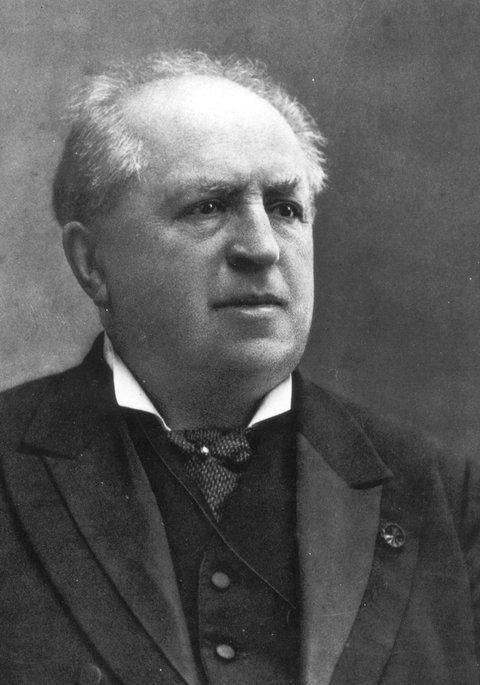
About the author
Abraham Kuyper
Abraham Kuyper (1837 to 1920 AD) was born in Maassluis, the son of a minister of the Dutch Reformed Church, and took his doctorate in theology at Leiden in 1862. Pastorates at Beesd, Utrecht and Amsterdam moved him toward the older Reformed theology. He took over the weekly De Heraut in 1871, founded the daily De Standaard in 1872, entered the Second Chamber in 1874, founded the Anti-Revolutionary Party in 1879 and opened the Free University of Amsterdam in 1880. In 1886 he led the Doleantie out of the national church. He signed the preface to this book in Amsterdam in 1888, gave the Stone Lectures at Princeton in 1898, was Prime Minister from 1901 to 1905, and died in The Hague in 1920.