Modernized edition · Full text · Free PDF/EPUB
The Water of Life in Modern English
Summary
- Published
- London, 1688 AD, printed for Nathanael Ponder
- Type
- Verse-by-verse pastoral exposition of Revelation 22:1
- Length
- 20,000 words · 1 hour
- Collection
- Puritan
- Topics
- SpiritConversionAssurance
What is The Water of Life about?
The Water of Life is John Bunyan's 1688 exposition of Revelation 22:1, published the year he died. Unpacking the vision of a pure, crystal-clear river flowing from the throne of God and of the Lamb, Bunyan portrays the Holy Spirit and gospel grace as an inexhaustible, healing stream offered freely to guilty and thirsty sinners.
Read the full summary (6 points, quotes, key themes)Show less
Printed in London in 1688 by Nathanael Ponder, the same bookseller who published The Pilgrim's Progress, The Water of Life was one of John Bunyan's final works before his death later that year. In his playful preface, Bunyan compares his little book to a printed 'handbill' handed out by seventeenth-century sellers of medicinal spa waters and tonics, advertising a remedy that actually cures the soul's deepest sickness and costs nothing at all.
Instead of surveying wide stretches of Scripture, Bunyan takes a single verse, Revelation 22:1, and turns every word like a gem in the light: the water, its life-giving power, its river-like abundance, its royal source at the throne of God and the Lamb, and its crystal purity. For anyone weighed down by guilt or nagging doubts that God's mercy might run dry, Bunyan's earthy metaphors and warm urgency speak directly and clearly.
How Bunyan opens Revelation 22:1
- 01
Bunyan's handbill for a free remedy. Opening like a seventeenth-century advertisement for healing waters, Bunyan invites readers to take his book as a guide to the real spring: “if you like, you may call this book Bunyan’s Handbill for His Master’s Water of Life.” Warning against spiritual quacks who adulterate the gospel, he gives one simple prescription for taking this grace: “drink it by itself” straight from God's throne.
- 02
The water of life as the Spirit of grace. Bunyan argues from John 4, John 7, and the prophets that the 'water of life' signifies the Spirit and grace of the gospel. He lists six ways water mirrors grace (washing, quenching thirst, cooling wrath, and making barren ground fruitful) and four reasons it is called 'life,' pointing to sin's ruin: “there is one disease that nothing will, can, or shall cure but a dram from this bottle, a draught of this cordial, this water of life.”
- 03
A deep, broad river for anxious thirst. Why does John see a river rather than a cup or a small well? Bunyan answers that a river is deep, wide, always running fresh, and impossible to drain, speaking directly to frightened consciences because “The man who thirsts with spiritual thirst fears nothing more than that there is not enough to quench his thirst.” Unlike stagnant ponds, this living stream washes away the worst defilement without losing its power.
- 04
Flowing from the throne of God and the Lamb. Tracing the river to its headspring, Bunyan emphasizes both divine majesty and Christ's atoning sacrifice. Because the stream issues from the throne of God and of the Lamb, “grace comes to us not only by way of mercy and compassion, but by way of justice and fairness.” He walks through eight qualities of a throne (such as authority, glory, wisdom, faithfulness, justice, and mercy) to show that grace reigns supreme.
- 05
Pure and clear as crystal without mixture. Bunyan examines the water's clarity to separate genuine gospel grace from human additions and legalistic confusion. Unlike earthly wine, honey, or gold, grace never harms anyone who takes their fill of it; it arrives “clear without the human inventions and muddy conceptions of unsanctified and uninstructed judgments,” letting believers look straight through the stream to see redemption resting on Christ alone.
- 06
Six applications: drink, dwell, and test teaching. Closing with six appeals, Bunyan urges thirsty sinners to drink freely without improving themselves first, calls believers to live beside the stream, and uses clarity to test doctrines. He reminds Christians that spiritual fruit needs constant watering: “But yours are garden things, and so choice things, and they will not thrive without much water; no, not without the water of God’s river.”
Notable images & quotes
- Fish and frogs in the stream. Exposing half-hearted religion that tries to combine grace with cherished sin, Bunyan observes that “The frog can live in the water, but not in the water only.”
- The river that washes away a dead dog. Assuring guilt-ridden sinners that their past cannot overwhelm or pollute God's mercy, Bunyan writes plainly: “A river will take away the very stink of a dead dog.”
- Better than the philosopher's stone. Comparing alchemists' fabled gold-making stone with God's sovereign mercy, Bunyan asks: “People talk of the philosopher’s stone, and how, if someone had it, it would turn everything into gold. Oh, but can it turn everything into grace?”
- Stones and dunghills under the rain. Warning churchgoers who hear gospel preaching for years without changing, Bunyan laments that “they receive it as stones receive showers, or as dunghills receive the rain.”
Key themes
- Inexhaustible abundance for fearful sinners. Bunyan writes with keen sympathy for people who believe God's promises are rich for others yet somehow too small for their own sins. By lingering on the scale of a deep, overflowing river, he answers inward scarcity with overwhelming divine supply.
- Grace rooted in both justice and mercy. Because the river proceeds from the throne of God and of the Lamb, Bunyan insists that mercy never bypasses righteousness. Christ's redeeming blood satisfies divine justice so completely that grace flows legally and securely from heaven's highest court.
- Pure grace that heals rather than corrupts. Answering fears that free grace makes people reckless, Bunyan argues that pure grace contains no poison and causes no moral harm. People who abuse grace do so because they are empty of it, whereas those who genuinely drink it grow humble and watchful.
- Constant dependence like a watered garden. Conversion is not a single sip that leaves believers self-sufficient. Bunyan compares Christian virtues to delicate garden plants that wither in dry soil unless Christians continually abide by the river of the Spirit and Word.
Why read it today
If you only know Bunyan as an allegorist, The Water of Life reveals his gift as a tender, plain-spoken pastor speaking straight to anxious consciences. Summaries capture his outline of Revelation 22:1, yet the real force of the book lives in his homely, surprising comparisons (spa-town quacks, stale ponds, frogs versus fish, and garden plants dying away from the river), all aimed at people who suspect God's grace might not stretch far enough to cover them.
At just over 20,000 words, you can finish the entire book in a single quiet evening or spread its six sections across a week of morning readings. Read the short preface first to catch Bunyan's lively tone, linger over the chapters on the river and the throne if you struggle with assurance, and keep a notebook handy for his closing applications.
Source edition: Modernized from George Offor's The Works of John Bunyan (1855)
Reader questions (9)Hide the questions
Questions about The Water of Life
Is there a modern English version of The Water of Life?
Yes. This is The Water of Life by John Bunyan in modern English. The language is modernized and the author's order and argument are kept. The full modernized text is free to read on this page.
Can I read The Water of Life online for free?
Yes. The complete text of this modern English edition is on this page, with no sign-up or paywall.
Is there a free PDF of The Water of Life?
Yes. The PDF and EPUB of this edition are free with an Updated Works account. Sign in with Google or an email link; no card is needed.
What is The Water of Life by John Bunyan about?
It is a short, warm pastoral exposition of a single verse, Revelation 22:1, published in 1688. Bunyan interprets the crystal-clear river flowing from the throne of God and the Lamb as the Holy Spirit and gospel grace, unpacking its healing power, vast supply, divine authority, and purity to invite thirsty sinners to drink freely.
Why did Bunyan call the book a 'handbill'?
In seventeenth-century England, merchants who sold medicinal spa waters or herbal cures distributed printed flyers called handbills listing the ailments their remedies healed. Bunyan playfully borrows that format in his preface to advertise God's free grace, urging readers to skip spiritual quacks and go straight to Christ's throne.
How does Bunyan interpret the 'throne of God and of the Lamb'?
Bunyan identifies the throne of grace with the humanity of Christ, in whom God dwells and through whom mercy reaches guilty people. Because the river flows from a royal throne, the seat of authority, wisdom, justice, and mercy, refusing this grace means rejecting heaven's highest court, while receiving it rests on unshakable authority.
How long is The Water of Life, and is it a good introduction to Bunyan?
At about 20,400 words, roughly an hour of unhurried reading, it is one of Bunyan's most approachable non-allegorical works. Readers who know him only from The Pilgrim's Progress will recognize the same vivid, everyday imagery of rivers, fishing, gardens, and market towns, now put to direct pastoral exposition.
Does Bunyan think preaching free grace makes people morally careless?
No. In his section on the river's purity, Bunyan insists that true grace never makes anyone proud, lazy, or reckless with duty. He compares earthly luxuries like honey or wine, which harm you if overindulged, with God's grace, which only strengthens holiness the more deeply a believer drinks it.
What does Bunyan mean by telling readers to 'drink it by itself'?
Bunyan warns readers not to dilute God's free grace by mixing it with human merit, superstitious ceremonies, or self-righteous bargaining. Just as crystal-clear water loses its purity when stirred with mud, the gospel brings genuine peace and healing only when received cleanly on Christ's terms alone.
The Water of Life in Modern English · Full text
To the Reader
Courteous reader,
I have now presented you with something of a discourse on the water of life and its virtues. So, if you like, you may call this book Bunyan’s Handbill for His Master’s Water of Life. True, I have not set out at length the excellent nature and quality of this water, nor can that be done by the pen or tongue of men or angels. Yet this much I have said, and in saying it I have said the truth: whoever drinks of this water will find it to be a well of water in him; and not only that, but a well springing up in him to everlasting life, whatever his disease may be.
Men who sell remedies print handbills to convince their readers, and in them they give the public an account of the people cured and the diseases removed by the liquors and preparations they have made for that purpose. In the same way I could give you accounts of numberless numbers who have not only been made to live, but to live forever, by drinking this water, this pure water of life. I could do it, I say, were it not already done to my hand by an infallible pen, that is, by Holy Writ. Many of them, indeed, have been removed from here, and they live where no one can speak with them as yet. But a great many of them still remain here, and still make their home among men.
Only, if you want to drink it, drink it by itself. And so that you are not deceived by what is counterfeit, know that the true water is as it comes from the hand of our Lord, without mixture, pure and clear as crystal. I know there are many quacks in the world, and every one of them claims to have this water to sell. But my advice is that you go directly to the throne yourself (Heb 4:16), or, as you are bidden, “come to the waters” (Isa 55:1). There you will be sure to get what is right and good, and what will certainly make you well, whatever your disease, or trouble, or pain, or malady may be. As for the price, don’t worry about that; it is cheap enough. This is to be had without money or price. “I will give,” says God and the Lamb, “unto him that is athirst, of the fountain of the water of life freely” (Rev 21:6). So he says again, “Whosoever will, let him take the water of life freely” (Rev 22:17). So you have no grounds for holding back because of your poverty. No, it is for the poor that it is prepared and set open; it is to the poor that it is offered; the poor and needy may have it free of cost (Isa 41:17-18).
But do not slight it because it is offered to you on terms so full and so free. For you are sick, and sick unto death, if you do not drink of it; and there is nothing but this that can heal you and make you well. Farewell. May the Lord be your physician!
So prays your friend,
John Bunyan
The Text Opened, and the Water of Life as the Spirit of Grace
And he showed me a pure river of water of life, clear as crystal, proceeding out of the throne of God and of the Lamb (Rev 22:1).
These words are part of the description of the New Jerusalem that one of the seven angels gave to John. This was one of the angels who had the seven vials full of the seven last plagues (Rev 21:9). The New Jerusalem is the state of that gospel church which will exist in the latter days. That is why John says, “And he showed me”: he, the angel, showed it to me.
In the text we have these things to consider. First, the matter, the subject matter of the text, and that is the water of life: “He showed me the water of life.” Second, we also have here the quantity of this water that was shown to him, and that is presented under the idea of a river: “He showed me a river of water of life.” Third, he also shows him the head, or wellspring, from which this river of water of life proceeds, and that is “the throne of God and of the Lamb”: “He showed me a river of water of life, proceeding out of the throne of God, and of the Lamb.” Fourth, we also have here the nature and quality of this water. It is pure; it is clear as crystal: “And he showed me a pure river of water of life, clear as crystal, proceeding out of the throne of God and of the Lamb.”
We will begin with the first of these, that is, with the matter, the subject matter of the text, which is the water of life. These words, water of life, are a metaphor. They are words by which something most excellent is presented to us and enlarged before our eyes, and that thing is the Spirit of grace, the Spirit and grace of God. And the words water of life are the most fitting words to present it to us by. For what is more free than water, and what is more beneficial and more desirable than life? Therefore, I say, it is compared to the water of life, or called the water of life: “He showed me the water of life.”
That it is the Spirit of grace, or the Spirit and grace of God, that is meant here, consider two things. First, the Spirit of grace is compared to water in other places. Second, it is also called the Spirit of life, just as it is presented to us here: “He showed me the water of life.”
First. The Spirit of grace is compared to water. “Whosoever,” says the Lamb, “drinketh of the water that I shall give him, shall never thirst; but the water that I shall give him shall be in him a well of water springing up into everlasting life” (John 4:14). What can be meant by water here but the Spirit of grace? This poor harlot, the woman of Samaria, lacked it, although she did not know that she lacked it, nor how excellent it was. And this water is said here to be the kind that will spring up, in those who have it, like a well into everlasting life.
Again: “In the last day, that great day of the feast, Jesus stood and cried, saying, If any man thirst, let him come unto me and drink.” But drink what? Why, his rivers of living waters. But what are they? Why, John answers: “This spake he of the Spirit, which they that believe on him should receive” (John 7:37-39).
Yes, the prophets and servants of God in the Old Testament took this water of life to be the Spirit of grace that would be poured out on the church in the latter days. That is why Isaiah calls water God’s Spirit and blessing, and Zechariah calls it the Spirit of grace. “I will pour water upon him that is thirsty, and floods upon the dry ground: I will pour my Spirit upon thy seed, and my blessing upon thine offspring” (Isa 44:3). And Zechariah says, “I will pour upon the house of David, and upon the inhabitants of Jerusalem, the spirit of grace and of supplication … and they shall mourn …” (Zech 12:10). Look: in all these places the Spirit of grace is meant, and for our better understanding it is compared to water, to a well of water, to springs of water, and to floods of water.
Second. It is also called the Spirit of life, either more indirectly or more openly.
More indirectly, where it is called “living water,” “that living water,” and “water springing up into everlasting life” (John 4:10-11, 14; John 7:38).
Then, more openly or expressly, it is called “the Spirit of life”: “And after three days and an half, the Spirit of life from God entered into them, and they stood upon their feet” (Rev 11:11).
From this, therefore, I conclude that by these terms, water of life, is meant the Spirit of grace, or the Spirit and grace of the gospel. And these terms are the most fitting ones by which to set forth the Spirit and grace of the gospel. For:
1. By this term water, something opposed to sin is presented to us. Sin is compared to water, to deadly waters, and man is said to drink it like someone drinking water. “How much more abominable and filthy is man, which drinketh iniquity like water?” (Job 15:16). So then, when grace and the Spirit of grace are compared to water, it is to show what an antidote grace is against sin. It is, if I may call it so, a counterpoison to sin. It is the only thing by whose power sin can be forgiven, vanquished, and overcome.
2. By this term water, you also have presented to you something opposed to the curse that is due to sin. The curse is compared to water, and the remedy is compared to water. Let the curse come into the bowels of the damned like water, says the psalmist (Ps 109:18). The grace of God also, as you see, is compared to water. The curse is burning; water is cooling. The curse burns with hellfire; cooling comes by the grace of the holy gospel. But those who outstay the day of grace will not obtain, to cool their tongues, so much of this water as will hang on the tip of one’s finger (Luke 16:24-25).
3. Water is also of a spreading nature, and so is sin; so for this reason too sin may be compared to water. It overspreads the whole man and infects every member; it covers everything, as water does. For this reason grace may also be compared to water, because it is of a spreading nature and can, if God wills, cover the face of the whole earth, and the whole of body and soul.
4. Sin is of a fouling, defiling nature, and grace is of a washing, cleansing nature. Therefore grace, and the Spirit of grace, is compared to water. “I will,” says God, “sprinkle clean water upon you” (that is, my Spirit, Ezek 36:27), “and ye shall be clean: from all your filthiness, and from all your idols, will I cleanse you” (Ezek 36:25).
5. Water, the element of water, naturally runs down to low places and stays there, in valleys and places that lie lowest. And the grace of God and the Spirit of grace are of that nature too. The hills and lofty mountains do not have the rivers running over their tops; no, though the rivers may run “among them.” But they run among the valleys. And “God resisteth the proud, and giveth grace unto the humble” (Jas 4:6; 1 Pet 5:5), “to the lowly” (Prov 3:34).
6. The grace of God is compared to water because it is what causes fruitfulness. Water causes fruitfulness, and lack of water is the cause of barrenness. And this is the reason the whole world is so empty of fruit toward God: so few of the children of men have the Spirit of grace in their hearts.
But as there is a great and special meaning in this term water, so there is in this term life: water of life. “He showed me the water of life.” So when the word life is added to this word water, it is, in general, to show what excellent power and working there is in this water. It is water of life, or water that has health and life in it. And this term shows us four things.
1. It shows us that the world of graceless men is dead, dead in trespasses and sins (John 5:21, 25; Eph 2:1; Col 2:13). Dead, that is, without life and movement toward God in the way of the testament of his Son.
2. It also shows us that there is nothing in the world, or in the doctrine of the world, the law, that can make them live. Life is only in this water; death is in all other things. The law, I say, is the thing that would give life to the world, if anything in the whole world could. Yet the law kills and condemns, and it was added so that the offense might abound. Therefore there is no life either in the world or in the doctrine of the world. It is only in this water, in this grace of God, which is here called the water of life, God’s own cordial.
3. It is also called the water of life to show that by the grace of God men may live, however dead their sins have made them. When God will say to a sinner, “live,” then though he is dead in his sins, “he shall live.” “When thou wast in thy blood, I said unto thee, Live; yea, when thou wast in thy blood, I said, Live” (Ezek 16:6). And again, “The dead shall hear the voice of the Son of God; and they that hear shall live” (John 5:25). That is, when he speaks words of grace and mixes those words with the Spirit and grace of the gospel, then men will live. For words accompanied in this way, and only such words, are spirit and life. “The words that I speak unto you,” says Christ, “they are spirit, and they are life” (John 6:63).
4. This grace of God is presented to us here under the term water of life to show that some are sick of a disease that nothing can cure but this. There are many diseases in the world, and there are also remedies for those diseases. But there is one disease that nothing will, can, or shall cure but a dram from this bottle, a draught of this cordial, this water of life. The invitation hints at this: “let him take the water of life freely” (Rev 22:17). And again, “I will give unto him that is athirst of the fountain of the water of life freely” (Rev 21:6). This is spoken to the sick, to those who are sick of the disease that only Christ, as a physician (Mark 2:17), can cure with his water of life. But few are sick of this disease; few know what it is to be made sick of this disease. Nothing can make a man sick of this disease but the law and sin, and nothing can cure it but the grace of God by the gospel, called here the water of life.
A River: The Abundance of Grace
We come now to discuss the second thing the text presents to us, and that is, the quantity there is of this water of life. It is a river: “He showed me a river of water of life” (Rev 22:1). Waters that are cordial, waters that have in them a power to give life to those who lack it and to maintain life where it already is, are rare and scarce. They are found only in hidden places and in small quantities. But here you see there is abundance, a great deal, a river, a river of water of life. In handling this point I will show you, first, what a river of water of life this is; and second, I will then draw some inferences from it.
1. What a River This Is
1. It is a deep river. It is a river that is not shallow but deep, with an “O the depth!” (Rom 11:33). “I will make their waters deep, saith God” (Ezek 32:14). And again, they “have drunk of the deep waters” (Ezek 34:18). A river of water of life is much, but a deep river is more. Why, soul-sick sinner, sin-sick sinner, you who are sick of that disease which nothing can cure but a draught from this river of the water of life, here is a river for you, a deep river for you! Those who are first coming to God by Christ for life want to know nothing so much as whether there is grace enough in him to save them. But for their comfort, here is abundance, abundance of grace, a river, a deep river of the water of life, for them to drink from.
2. As this river is deep, so it is wide and broad (Eph 3:18; Job 11:9). So as you are to know its depth, that is, that it is deep, you are also to know its breadth, that is, that it is broad. It is broader than the sea, a river that cannot be passed over (Ezek 47:5). No one ever yet went from one side of this river to the other when the waters had truly risen. And now they have risen; even now they proceed out of the throne of God and of the Lamb too. That is why this grace is called “the unsearchable riches of Christ” (Eph 3:8). Sinner, sick sinner, what do you say to this? Would you wade? Would you swim? Here you may swim. It is deep, yet you can wade it at the first entrance. And when you think you have gone through and through it, turn again and try once more, and you will find it deeper than hell, and a river that cannot be passed over. If you can swim, here you may roll up and down as the fish do in the sea. Nor do you need to fear drowning in this river. It will bear you up and carry you over the highest hills, as Noah’s waters carried the ark. But,
3. As this river of water of life is deep and wide, so it is a river that is full of water. A river may be deep and not full. A river may be broad and not deep. Yes, but here is a river that is deep and broad, and full too. “Thou waterest it: thou greatly enrichest it with the river of God, which is full of water” (Ps 65:9). It is full of grace and truth. Fill the water pots, says Christ, up to the brim. The wicked shall have the waters of a full cup, and a river full of the water of life is provided for those who truly desire it.
4. As this river is deep, broad and full, so it still abounds with water. The waters, says the prophet, “were risen” (Ezek 47:5). So the Holy Spirit says that God causes the waters to flow (Ps 147:18). And again, “And it shall come to pass in that day” (the day of the gospel) “that the mountains shall drop down new wine, and the hills shall flow with milk, and all the rivers of Judah shall flow with waters, and a fountain shall come forth of the house of the Lord, and shall water the valley of Shittim” (Joel 3:18). When a river overflows, it has more water than its banks can hold. It has water indeed! “Behold, he smote the rock, that the waters gushed out, and the streams overflowed” (Ps 78:20). This river of water of life, which these waters also signify, is a river that abounds, and that overflows its banks in an infinite and unspeakable manner. So much for the river, that is, for what a river of water of life it is. It is a river deep, broad, full, and abounding with this water, with this Spirit and grace of the gospel.
2. Inferences from the Word River
Now I shall go on to draw some inferences from it, that is, from this term, a river: a river of water of life.
1. A river, then, is water that is common, common in its streams, though not so at its head. This river proceeds out of the throne, and so, as to its source, it is special. It is also called the water of life, and as such it is special. But as it is a river it is common, of common use and for the common good. That is why the grace of God is called “the common salvation” (Jude 3), because by the word there is no restraint, no refusal, no forbidding of anyone who is willing to receive it. “And whosoever will, let him take the water of life freely” (Rev 22:17). What could more fully declare how common a thing is? Yes, at its very head this river is called an “open fountain,” a fountain opened to the house of David and to the inhabitants of Jerusalem (Zech 13:1). And David, or Judah, and Jerusalem take in every soul that would drink of the water of life, or living water. And that is why this river is said to “go down into the desert, and go into the sea,” where all kinds of fish are (Ezek 47:8). By the sea is meant the world, and by the fish, the people; and there this river of water of life shall run. But,
2. Though a river is common in its streams, yet a river, as it passes through a country or province, will choose its own way. It will run in the valleys and in the plains, not over steeples and hills. It will also take its own windings and circuits. It will go about and reach here and there, and by the turnings of its course it will miss whatever places and people it pleases. Yet it is still common, in that it lies open; it is common for all the beasts of the field. So we must put a difference between a thing’s being common and its being near. A thing may be common and yet be far enough away from you. The waters of Epsom and Tunbridge, and Bath, may be common, but they are still a great way off from some who need them. The same may be said of this river. It is common in its streams, but it runs its own circuit and keeps its own watercourses. “He sendeth the springs into the valleys, which run among the hills” (Ps 104:10). Indeed, he opens his river in high places, in his throne and the Lamb’s, but still the waters run in the midst of the valleys, to water the humble and the lowly. That is why those who thirst and would drink are told to come down to the waters: “Ho, every one that thirsteth, come ye to the waters, and he that hath no money, come ye, buy …” (Isa 55:1). And again, “If any man thirst, let him come unto me, and drink” (John 7:37). The waters are common, but you must come to them, to them where they are, or you will be none the better for them. “Come ye to the waters.”
3. This water of life is called a river to show you what a store supplies it. All rivers have the sea for their source: “All the rivers run into the sea; yet the sea is not full; unto the place from whence the rivers come, thither they return again” (Eccl 1:7). And so this river of water of life is said to proceed out of the throne, as out of the place where it breaks out; but its source is the sea, the ocean of grace, which is an infinite Deity. “Thou wilt cast all their sins into the depths of the sea” (Mic 7:19), into the depth of the sea of your grace. When rivers are in full flow, their gliding streams carry away a great deal of the filth that is brought into them from every part of the countries they run through. They carry it away into the sea, where it is swallowed up forever. And oh, the filth that is cast into this river of God! And oh, how many dirty sinners are washed white in it! For by its continual gliding away, it carries that filth into the midst of the sea.
A river will take away the very stink of a dead dog. Nor does all the dirt and sewage that is thrown into rivers make those who can use them afraid to do so. All who need them still go to the river in spite of it. But how much more power is there in this sweet river of grace, which is designed, yes, opened on purpose, to wash away sin and uncleanness, to carry away all our filth, and still to keep its power!
4. It is called a river to show that it yields a continual supply, as I may call it, of new and fresh grace. Rivers continually yield fresh and new water. For though the channel or watercourse the water runs in is the same, the waters themselves are always new. The water that only a minute ago stood in this or that part of the river is now gone, and new and fresh water has come in its place. And so it is with the river of God, which is full of water. It continually yields fresh supplies, fresh and new supplies of grace, to those who have business in those waters. And this is why, when sin is pardoned, it seems as if it were carried away. Those waters, with their continual streams, have carried away the sinner’s filth from before his face. It is not so with ponds, pools and cisterns. They will grow foul and stink if they are not often emptied and filled again with fresh water. We must therefore put a difference between the grace that dwells in us and this river of water of life. We are only like ponds, pools and cisterns, which can hold only a little, and which will soon stink, even though the grace of God is in us, if we are not often emptied from vessel to vessel (Jer 48:11) and filled with fresh grace from this river. But the river is always sweet. All the filth that is washed out of the world cannot make it stink or infect it. Its water runs with a continual gliding stream, and so carries away everything offensive, as I said, into the depth of the sea.
5. The grace of God is called a river to show that it is suited only to those who are able to live in it. Water is what every creature desires, yet it is not an element in which every creature can live. Who would not want the benefit of grace, of a throne of grace? But who can live by grace? None, except those whose temper and constitution are suited to grace. So, as the grace of God is compared to a river, those who live by grace are compared to fish. For as water is the element in which the fish lives, so grace is the life of the saint. “And there shall be a very great multitude of fish, because these waters shall come thither: for they shall be healed; and every thing shall live whither the river cometh” (Ezek 47:9). Are you a fish, O man? Are you a fish? Can you live in the water? Can you live always in the water, and nowhere else? Is grace your proper element? The fish dies if it is taken out of the water, unless it is put back in time. The saint dies if he is not in this river. Take him out of this river, and nothing can make him live. Let him have water, water of life enough, and nothing can make him die.
I know there are some creatures besides fish that can manage to live in the water, but the water is not their proper element, their only proper element. The frog can live in the water, but not in the water only. The otter can live in the water, but not in the water only. Give some people grace and the world, grace and sin; let them use their lusts for pleasure and grace to remove their guilt, and they will get along pretty well, as we say. They will scramble on to the end in a profession of faith. But hold them to grace only, confine their life to grace, put them into the river and let them have nothing but river, and they die. The word and way and nature of grace are to them like light bread, and their souls can do nothing but loathe it, for they are not suited and tempered for that element. It is fish, not frogs, that can live in the river as in their only proper element. So the grace of God, and the Spirit of grace, is compared to a river to show that none can live by it but those whose souls and spirits are suited and fitted for it.
6. The grace of God, and the Spirit of grace, is called or compared to a river to answer those insatiable desires, and to wash away those mountainous doubts, that come upon those who truly thirst for that drink. The man who thirsts with spiritual thirst fears nothing more than that there is not enough to quench his thirst. All the promises, and all that God’s ministers say to such a man, seem like thimbles instead of bowls. I mean, so long as his thirst and his doubts walk hand in hand together. “There is not enough in this promise,” he says; “I do not find enough in that promise to quench the drought of my thirsting soul.” He who thirsts rightly finds that nothing but God can quench his thirst. “My soul thirsteth for God, for the living God” (Ps 42:2; Ps 63:1; Ps 143:6). Well, what shall be done for this man? Will his God humor him and answer his desires? Mark what follows: “When the poor and needy seek water, and there is none” (and they can find none, when all the promises seem to be dry, and like clouds that return after the rain), “and their tongue faileth for thirst, I, the Lord, will hear them.” Yes, but Lord, what will you do to quench their thirst? “I will open rivers,” he says, “in high places, and fountains in the midst of the valleys. I will make the wilderness a pool of water, and the dry land springs of water” (Isa 41:17-18). Look! Here are rivers and fountains, a pool and springs, and all to quench the thirst of those who thirst for God.
So, as I said, such provision for the thirsty shows both their fears of running short and the craving appetite of their souls after God. Right spiritual thirst cannot be satisfied without abundance of grace. And “they shall be abundantly satisfied with the fatness of thy house; and thou shalt make them drink of the river of thy pleasures” (Ps 36:8).
7. The grace of God is compared to a river to show how great the family of God is. He has a family, a great family, and therefore it is no small thing that must be provided for them. When Israel went out of Egypt and grew thirsty on the way, God provided a river for them; he made it gush out of the rock (Ps 78:20). For, alas, what less than a river could quench the thirst of more than six hundred thousand men, besides women and children?
I say, what less than a river could do it? When the people craved meat, Moses said, “Shall the flocks and the herds be slain for them, to suffice them? or shall all the fish of the sea be gathered together for them, to suffice them?” (Num 11:22). Even so, nothing less than a river could sustain and suffice that great people. Now his people in gospel days are not to be diminished but increased. And if they needed a river then, surely they need a sea now. But the river is deep and broad and full, and it abounds, or rises, with water; so it will suffice.
8. The grace of God is compared to a river perhaps to show how low it stands in the esteem of the rich and the full. The destitute, indeed, embrace the rock instead of a shelter, and the poor and needy seek water. But those who can drink wine in bowls, who can comfort themselves with what they think are better things, do not come to this river to drink. They never say they will die if they do not drink of this water. It is, therefore, for the poor and needy. God will lead them to his “living fountains of waters,” and will “wipe away all tears from their eyes” (Rev 7:17). And so I pass from the second particular and come to the third, and that is, to show the head and spring from which this river proceeds, or springs.
The Source of the River: The Throne of God and of the Lamb
Rivers have their heads, the places where they rise and from which they spring. And so, accordingly, we read that this river has a head; for he says, “He showed me a pure river of water of life, clear as crystal, proceeding out of the throne of God and of the Lamb” (Rev 22:1).
God is to be taken here for the whole Godhead, Father, Son, and Spirit, because grace proceeds from them all. The grace of the Father, the grace of the Son, and the grace of the Spirit are all included here. So, just as the Father is called “the God of grace” (1 Pet 5:10), the Son is said to be full of grace, grace to be passed on to others (John 1:14-16), and the Holy Spirit is called “the Spirit of grace” (Heb 10:29). By this, then, we see where grace comes from. If all the world were gracious, but God were not gracious, what would man be the better for it? If the Father, or the Son, or the Holy Spirit were gracious, but they were not all gracious, what good would it do? But as it is, God is gracious, the three persons in the Godhead are gracious, and so long as that is true, those who seek grace are provided for. For from them proceeds a river, or grace like a flowing stream. Indeed, the origin of grace to sinners is the good will of God. No one can imagine how loving God is to sinful man. A little of it is seen, but those who see the most see only a little.
But there is added, “and of the Lamb.” The Lamb is Jesus as sacrificed, Jesus as man, and as suffering. That is why, at the first vision of the throne, the Lamb is set before us as slain: “And I beheld, and lo, in the midst of the throne and of the four beasts, and in the midst of the elders, stood a Lamb as it had been slain” (Rev 5:6). So by this word Lamb we are to understand who it is, or by what means it is, that grace now runs from the throne of God like a river to the world. It is because of the Lamb, or through the Lamb. We are “justified freely by the grace of God through the redemption that is in Christ Jesus, whom God hath set forth to be a propitiation, through faith in his blood” (Rom 3:24-25). And again, “We have redemption through his blood,” even “the forgiveness of sins, according to the riches of God’s grace” (Eph 1:7).
Nor does the Lamb of God, by becoming the means, through his death, of conveying grace to us, darken the nature or glory of grace at all. Rather, he sets it off all the more. For where can grace or love appear more than in his laying down his life for us? I am speaking now of the grace of the Son. And where could the nature and glory of the Father’s grace appear more than in his giving his Son to death for us, so that grace might be bestowed on the world by way of justice as well as mercy? So, as he says here that the river of water of life proceeds from God, he adds “the Lamb” as well. He does this because he would not have us forget, while we are entangled and overcome with this river of God’s pleasure, what it cost the Lamb of God for this grace to come to us.
For this is the riches of grace and of wisdom: that grace comes to us not only by way of mercy and compassion, but by way of justice and fairness. And that could happen by no other means than by redeeming blood. That redeeming blood did not come from us, nor yet through our planning or advice. So whatever it is to the Lamb, to us it is still all of grace. Yes, grace is all the higher, the greater, and the richer, the more it cost the Father and the Lamb that we might enjoy it. When a man not only intends a purse of gold for me, but risks his life to bring it to me, this is grace indeed. But alas! What are a thousand such comparisons, which fall so short, to the unsearchable love of Christ?
The Lamb, then, is the one from whom, by whom, or through whom the grace of God comes to us. It proceeds from the throne of God and of the Lamb. And it now proceeds from him as a giver: from him not only as a means of conveying it, but as one who has power to give grace. He has this power as he is the Son of Man. For as the Son of Man he is the Lamb, and as he is the Lamb, grace comes from him. “The Son of man hath power on earth to forgive sins” (Matt 9:6). And he had that power before he had actually paid God the price of our redemption. How much more, then, does he have it now? That is why Paul, in his prayer for grace and peace for the saints, makes his request to both God and the Lamb: “Grace be to you, from God our Father, and from the Lord Jesus Christ” (Eph 1:2; 1 Cor 1:3; 2 Cor 1:2; Gal 1:3).
“Proceeding out of the throne.” In former times this river of water is said to come from under the threshold of the house of the Lord (Ezek 47:1). And again it is said that they “shall go out from Jerusalem,” that is, still from the church or house of God (Zech 14:8). That they are said to come out from under the threshold may be meant to suggest that they ran only low in former times, compared with how they run now. This might also be signified by their being said to have “issued out,” for what issues out usually comes forth only slowly. The prophet also says that the first time he went through the waters, they were only up to the ankles (Ezek 47:3-4). But what is ankle-deep compared with what follows after? It is also said to come out from Jerusalem, where, as I understand it, there were no great rivers. This suggests that as long as the first priesthood, the first temple, and the type were in their splendor, only the shadow of heavenly things was in use. And grace then ran only slowly, and would not run much faster, because Jesus was not yet glorified. For the Spirit and the abundance of grace were to be given not before but after his ascension.
So now that Jesus has ascended, now that he is glorified, grace proceeds from the throne, not from the threshold of the house. “He showed me a pure river of water of life, clear as crystal, proceeding out of the throne of God, and of the Lamb.”
The Throne. This is what the mercy seat was a type of (Exod 25:17), what is called the throne of grace (Heb 4:16). And it is called the throne of grace for this very reason: it is the place from which, or out of which, this river of water of life proceeds, this overflowing grace of God. Now someone may ask, What is the throne of grace? I answer that it is the humanity of Christ. He is the throne; he is the Jacob in whom God sits. And he shall be for a glorious throne to his Father’s house (Isa 22:22-23; Rev 3:7). The fullness of the Godhead dwells in him bodily, and God was in Christ reconciling the world to himself. Grace cannot come to men except by Christ, nor can God rest, as regards our salvation, anywhere but in him. But because I have spoken of this more particularly on the text “Let us therefore come boldly unto the throne of grace,” I will say no more about it here.
Only, it seems to me a glorious title that the Holy Spirit has given to the humanity of Christ when he calls it the throne of God. And it seems to me that he gives it the highest honor when he says that out of it proceeds a pure river of water of life. So we will speak a little to this word, the throne, the throne of God.
1. A throne is the seat of majesty and greatness. It is not for things of inferior quality to ascend or take up a throne. Now then, since this river of water of life proceeds from the throne, it suggests that there is great majesty in grace and mercy; for grace, as it proceeds, has a voice from the throne. And indeed, there is nothing in heaven or earth that can so awe the heart as the grace of God (Hos 3:5). It is that which makes a man fear; it is that which makes a man tremble; it is that which makes a man bow and bend and break to pieces (Jer 33:9). Nothing has such majesty and commanding greatness in and over the hearts of the sons of men as the grace of God has. So, I say, when he says that this river of grace proceeds out of the throne of God, it is to show us what majesty, what commanding greatness, there is in grace. “The love of Christ constraineth us” (2 Cor 5:14).
When Moses went up the mount the first time to receive the law, he greatly feared and quaked. Why? Because of the fire and smoke, the thick darkness and thunder, and the rest. But when he went up there the second time, “he made haste and bowed his head toward the earth, and worshipped.” But why? Because it had first been proclaimed that “the Lord was merciful and gracious, long-suffering, and abundant in goodness and truth; keeping mercy for thousands, forgiving iniquity, and transgression, and sin” (Exod 34:6-9).
There is nothing that masters the heart like grace, and nothing that so binds it to sincere and genuine obedience. “Examine me, O Lord,” said David, “and prove me; try my reins and my heart. For thy loving kindness is before mine eyes: and I have walked in thy truth” (Ps 26:2-3). Therefore he says again, O Lord our God, “how excellent is thy loving kindness” in all the earth! And that loving kindness is marvelous, for it has such majesty and such excellent glory in it as to command the heart and subdue sin. And therefore grace has been given the title of sovereignty, or of one who reigns. The throne is called “the throne of grace” (Heb 4:16), the throne on which it sits and reigns, as well as the throne from which it proceeds: “Grace reigns through righteousness unto eternal life by Jesus Christ our Lord” (Rom 5:21).
2. As a throne is the seat of majesty and greatness, and so can awe, so it is also the seat of authority and lawmaking power, and so will awe. This is confirmed by what was said just now: “grace reigns.” So it is expected that those who hear the word of God’s grace should submit to it, and that at their peril. “He that believes not shall be damned” (Mark 16:16) is a word of power, of law, and of authority, and whoever despises it will find it so. Grace proceeds from the throne, from the throne of God and of the Lamb. So, sinner, a necessity is laid on you here: one of the two must be your lot. Either you must accept God’s grace and be content to be saved freely by it, in spite of all your undeserving and unworthiness, or else you must be damned for your rebellion and for your rejecting of this grace. So consider with yourself, and think what is best to be done. Is it better that you submit to the grace and mercy of God, and accept grace to reign for you, in you, and over you, than that you run the risk of eternal damnation because you would not be saved by grace?
Consider this, I say, for grace is now in authority. It reigns and proceeds from the throne. Now you know it is dangerous to oppose, reject, despise, or disown those in authority. Better to speak against twenty others than against one who is in authority. If “the wrath of a king is as messengers of death” (Prov 16:14), if the wrath of the king “is as the roaring of a lion” (Prov 19:12), what is the wrath of God? And you know how it will provoke, how hot it will make wrath, when someone despises grace, refuses pardon, and is unwilling to be saved from the guilt and punishment due for treason in the king’s way, especially since the king’s way is also the best way. But to accept grace, especially when it is free grace, grace that reigns, grace from the throne, how sweet that is! “His favor is as dew upon the grass” (Prov 19:12).
This, therefore, calls for your most serious and sober thoughts. You are in a tight place. Will you flee before Moses, or with David fall into the hands of the Lord? Will you go to hell for sin, or to life by grace? One of the two, as was said before, must be your lot. For grace is king, is on the throne, and will allow no other way to glory. In it and by it you must stand, if you have any hope, or can at all “rejoice in hope of the glory of God” (Rom 5:2).
3. As the throne is the seat of majesty and authority, so it is the highest seat of authority. There is no one above the throne; there is no appeal from the throne. There are lower courts of justice, and there are under-governors, and they may perhaps sometimes be at fault. So in some cases an appeal from them may be lawful or permitted; but from the throne no one can appeal. Now grace is on the throne, reigns on the throne, and proceeds from the throne. A man may appeal from the law to the throne, from Moses to Christ, from him who spoke on earth to him who speaks from heaven. But from heaven to earth, from Christ to Moses, no one can appeal. Moses himself has forbidden it. For “Moses truly said unto the fathers, A prophet shall the Lord your God raise up unto you of your brethren, like unto me; him shall ye hear in all things whatsoever he shall say unto you. And it shall come to pass, that every soul, which will not hear that prophet, shall be destroyed from among the people” (Acts 3:22-23).
See here: this new prophet judges in the highest court. He is master of grace, the throne by which grace reigns. And even Moses admits that an appeal may be made from himself to this prophet; yes, he allows that men may flee from himself to this prophet for refuge. But there must be no appeal from him. You must hear him or die. How shall we escape “if we turn away from him that speaketh from heaven” (Heb 12:25)?
This, therefore, is to be duly weighed and deeply considered by us. It is not a saint, nor a minister, nor a prophet, nor an angel that speaks, for all these are only servants, only inferiors. No, it is a voice from the throne, from authority, from the highest authority; it is the Lord from heaven. This grace proceeds from the throne, and therefore men must stand or fall by what comes from there. He who does not come here to drink will die of thirst. He who refuses this water now will not have hereafter so much as will hang on the tip of his finger, even if it would save his soul. “How shall we escape, if we neglect so great salvation?” (Heb 2:3).
Apostates, therefore, will find griping pangs and burning coals from this, for they have turned themselves away from this throne and from the grace that proceeds from it. Nor will anything they plead for themselves do them any good. They have fallen from grace, and what can help them? Christ has become of no effect to such people, to whoever is (that is, seeks to be) justified by the law; they “are fallen from grace” (Gal 5:4).
4. The throne is the seat of glory: “When the Son of man shall come in his glory, and all the holy angels with him, then shall he sit upon the throne of his glory” (Matt 25:31). And if the throne of judgment is the seat of glory, much more is the throne of grace. We will venture, then, to say that the throne of grace is the throne of God’s glory, as the throne of judgment will be the throne of Christ’s glory, and that grace proceeds from his throne so that both it and he might have glory, glory by way of mercy.
(1) That grace might have glory. Therefore he has designed that grace shall be effectual in, and to, the salvation of some, even “to the praise of the glory of his grace, wherein he hath made us accepted in his Beloved” (Eph 1:6). He has designed, not the glory of man’s works, but the glory of his own grace. And therefore he has put man’s works, as far as justification before God is concerned, under his feet, and counts them as filthy rags. But he has set his grace up above. He has made it a king, given it authority to reign, provided a throne for it, and called that throne the throne of grace. From there it also proceeds, to its own praise and glory, in and by the effectual salvation of those who receive it, and do not receive it in vain.
(2) As grace is exalted and made to proceed out of the throne to its own praise, to its own glory, so it is also exalted in this way and made to flow to us like a river so that we should be the praise of the glory of him who has exalted it. We who receive it, and submit to the throne from which it proceeds, have by this “obtained an inheritance, being predestinated according to the purpose of him who worketh all things after the counsel of his own will, that we should be to the praise of his glory” (Eph 1:11-12). So this throne is a throne of glory: “A glorious high throne, from the beginning is the place of our sanctuary” (Jer 17:12). Now what follows from this, but that those who accept this grace give glory to God, to his grace, and to the word of his grace? Such people, I say, “glorify God for his mercy” (Rom 15:9). “They glorify God for your professed subjection to the gospel of Christ” (2 Cor 9:13), which is the gospel, or good tidings, “of the grace of God” (Acts 20:24). With Abraham they believe and give glory to God (Rom 4:20). And with the Gentiles they glorify the word of the Lord (Acts 13:48).
But to slight grace, to insult the Spirit of grace, to prefer our own works to the detriment of grace, what is that but to show contempt for God? To show him contempt when he is on the throne, when he is on the throne of his glory? I say, it is to spit in his face, even at the very time when he commands you to bow before him, to submit to him, and to glorify the grace of his glory that proceeds from the throne of his glory. If men in old times were damned because they did not glorify him as God, shall not those be more than damned, if more than damned can be, who do not glorify him for his grace? And to be sure, none glorify him for his grace but those who embrace it and submit themselves to it.
Talkers of grace are only mockers of God, only flatterers of God. Those who only talk highly of grace, and do not submit themselves to it, are just like those who praise a fool, or flatter him in his own conceits. God has exalted grace. He has set it on the throne, and so made it a king, and given it authority to reign. And you go by, and hear of it, but will not submit yourself to it, neither your soul nor your life. Why, what is this but to flatter God with your lips, and to lie to him with your tongue? What is this but to count him less wise than yourself, while he seeks glory by the very thing by which you will not glorify him, while he displays his grace before you in the world from the throne, and you, as you go by, give it a nod and call it a fine thing, but follow what leads away from it? Tremble, tremble, you sinners who have despised the riches of his goodness! The day is coming when you will behold, and wonder, and perish, if grace does not prevail with you to be content to be saved by it, to the praise of its glory and to the glory of him who has set it on the throne (Acts 13:38-41).
5. The throne is the seat of wisdom. That is why the one who sits on this throne, the throne of God, is called “the Ancient of Days” (Dan 7:9): infinite in wisdom, whose garments were white as snow, and the hair of his head like pure wool. By “Ancient of Days,” and by its being said that the hair of his head is like pure wool, his wisdom is set forth to us.
Therefore, when we read that a river of grace proceeds out of the throne, when we read that it proceeds out of the throne of God, it is as much as to say this: the wise God, who knows all ways perfectly, judges in his wisdom that to save people by grace is the best, safest and surest way. “Therefore it is of faith, that it might be by grace, to the end the promise might be sure to all the seed” (Rom 4:16). And again, forgiveness is “according to the riches of his grace, wherein he hath abounded toward us in all wisdom and prudence” (Eph 1:7-8).
So to set grace on the throne, to let grace proceed out of the throne like a river, is counted by the wise God, the only wise God, the best way and the safest way. It is the way that best suits the condition of a sinful man, and the way that tends most to the utter disappointment of the devil, and death, and hell. Grace can justify freely, when it will, whom it will, from what it will. Grace can go on pardoning, favoring and saving: from falls, in falls, out of falls. Grace can comfort, relieve and help those who have hurt themselves. And grace can bring the unworthy to glory. The law cannot do this; man cannot do this; angels cannot do this; God cannot do this, except by the riches of his grace, through the redemption that is in Jesus Christ.
Therefore, since God has set grace on the throne and ordered that it should proceed from this throne to the world; yes, since he has made it king, and granted to it, and to it alone, the authority and sovereignty of saving souls, he has magnified before the sons of men not only his love but also his wisdom and his prudence. This, then, is his great device (2 Sam 14:14), the masterpiece of all his witty inventions (Prov 8:11-12). And therefore it is said, as was hinted before, that in this matter he has proceeded toward us in all wisdom and prudence.
So then, whoever comes to this water and drinks of it glorifies God for his wisdom and praises God for his wisdom. Such a person says that God alone is wise, and, bowing his head, says again, “To God only wise, be glory both now and for ever. Amen.” But whoever despises this grace confronts the highest wisdom, even wisdom on the throne. He says to himself, “I am wiser than Daniel, wiser than the judgment of God. I could have found a safer way to heaven myself; and if I had been on God’s council, I would have told him so.” All this, horrible blasphemy as it is, comes naturally from the one who does not like grace to be king on the throne and to proceed out of the throne to the world. But “shall he that contendeth with the Almighty instruct him? he that reproveth God, let him answer it” (Job 40:2).
Scripture says that this very doctrine is foolishness to the Greeks, to the wise, and that the preaching of it is a foolish thing to them. But even then, when the end of all things has come, and when these wise ones have fooled themselves into hell by their wisdom, it will appear that this “foolishness of God is wiser than men, and the weakness of God is stronger than men” (1 Cor 1:21-25).
Because Christ Jesus was lowly in the world, some trample on him; but he is a glorious throne to his Father’s house. For since his humiliation was the lowest of all, now he is exalted to be the throne of God; yes, he is made the fountain from which grace continually flows like the rivers and comes down to us like a mighty stream.
So I will conclude this with both comfort and caution. With comfort, because of the security of those who have truly submitted themselves to grace: “sin shall not have dominion over you; for ye are not under the law, but under grace” (Rom 6:14). And let it be a caution to those who despise it. Take care: it is a dangerous thing to affront the wisdom of God. Now here is the wisdom of God, even wisdom on the throne. It pleased God, for the glory of his wisdom, to make this the way, that is, to set up grace to reign. I have often thought, and sometimes said, that if God will be pleased with any way, surely he will be pleased with his own. Now this is the way of his own devising, the fruit and effect of his own wisdom. So, sinner, please him; please him in that in which he is well pleased. Come to the waters, throw yourself into them, and do not be afraid of drowning. Leave it to God to make them carry you into his paradise, so that you may see his throne.
6. The throne is the seat of faithfulness, the place where engagements and promises are performed. “When I shall receive the congregation,” says Christ, “I will judge uprightly” (Ps 75:2), that is, faithfully. And now he has received it, and is made head over all things to it (Eph 1:22-23). For this reason he is on the throne, yes, he is the throne, from which proceeds all this grace that flows and glides like a river from heaven into the world. This river, then, is nothing else but the fulfilling of promises, the faithful fulfilling of promises. “If I go not away, the Comforter will not come unto you; but if I depart, I will send him unto you” (John 16:7). “This is that which was spoken by the prophet Joel; And it shall come to pass in the last days, saith God, I will pour out of my Spirit upon all flesh…” (Acts 2:16-18).
Now this river is the Spirit, the Spirit and grace of God, which was promised by the Father and the Son; and now it comes running from the throne of God and of the Lamb. For “being by the right hand of God exalted, and having received of the Father the promise of the Holy Ghost, he hath shed forth this which ye now see and hear” (Acts 2:33).
See, then, how mindful, how careful, how faithful our Father and the Lamb of God are! Not exaltation, nor glory, nor a crown, nor a kingdom, nor a throne will make him neglect his poor ones on earth. Yes, it is precisely because he is exalted and on the throne that such a river, with its golden streams, proceeds from the throne to come to us. And it will yet rise far higher than the swellings of the Jordan ever did. True, it does not run as high now as in former days, because of the curse of God on Antichrist, through whose means the land of God’s people is full of briers and thorns (Isa 32:13-17). But when the tide is at its lowest, it is nearest the rising. This river will rise, and in a little while it will no longer be so low as only ankle-deep; it will be up to the knees, up to the loins, and a broad river to swim in (Ezek 47). For “there the glorious Lord will be unto us a place of broad rivers and streams” (Isa 33:21). “And there shall be no more curse” in the church, “but the throne of God and of the Lamb shall be in it, and his servants shall serve him” without disturbance (Rev 22:3-6).
“These sayings are faithful and true,” and in faithfulness they will be performed to the church from the throne of God and of the Lamb. Faithfulness in the one who rules is what makes Zion rejoice, because by it the promises yield milk and honey. For now the faithful God, who keeps covenant, performs for his church what he told her he would. Therefore our rivers will run, and our brooks will yield honey and butter (Job 20:17).
Let this teach all God’s people to expect, to look and to wait for good things from the throne. But oh, what a throne this is, out of which good comes like a river! Who would not be its subject? Who would not worship before it?
7. But a throne is “the seat of justice.” “Justice and judgment are the habitation of thy throne” (Ps 89:14). And it is also from justice that this river of grace flows to us: justice to Christ, and justice to those who are found in him (Rom 3:24). God declares that he can justly justify and justly forgive (1 John 1:9). Now, if he can justly justify and justly forgive, then he can give grace and cause it to proceed to us, yes, to flow after us like a river.
The river that gushed out of the rock in the wilderness ran after the people there, wherever they wandered in it. They drank of the rock that followed them (1 Cor 10:4). The rock was not moved out of its place, but the stream followed them wherever they went. “He opened the rock and the waters gushed out; they ran in the dry places like a river” (Ps 105:41). This rock, says Paul, was Christ, that is, figuratively; and this throne is Christ really. And the water gushing out of the rock and following them in the wilderness was to show how, when Christ became a throne, grace and goodness would follow us from there in the wilderness for as long as we remain here. Therefore David, considering this, said, “Surely goodness and mercy shall follow me all the days of my life, and I will dwell in the house of the Lord for ever” (Ps 23:6).
But where must this come from? The text says, from the throne; from the throne, the seat of justice. For from there, because of what he has found in Christ for us, he lets out to us rivers of his pleasures in a way of righteousness and justice. And their source is that great and wide sea of mercy that flows in his infinite heart beyond all thought.
Everything has been paid for, both for us and for grace (John 7:39). We are bought with a price (1 Cor 6:20). He has obtained eternal redemption for us (Heb 9:12). Yes, and as we are made his and heaven is made ours in this way, so this river of grace has also been obtained by him for us (John 7:38). Therefore everything comes to us in a way of justice and righteousness. That is why we are said to obtain “faith through the righteousness of God” (2 Pet 1:1), that is, through the justice of God and of Jesus our Lord. Notice: here is the justice of God and the justice of Jesus our Lord. We have our faith from the justice of God because of the righteousness of Jesus our Lord; that is, Jesus answered the demands of justice with works of justice. And therefore grace reigns in a way of justice and comes to us like a river, as is signified by its being said to come to us out of the throne.
Again, grace is said “to reign through righteousness unto eternal life” (Rom 5:21). Through what righteousness? The righteousness, or justice, of God by Jesus Christ our Lord. By Jesus Christ, or for his sake. For, as I said, for his sake we are forgiven, and for his sake we have all things pertaining to life and godliness. And these all things come to us through, or down, the stream of this river in a way of justice; and therefore it is said to come from the throne.
8. This throne is the seat of grace and mercy, and therefore it is called the mercy seat and the throne of grace. This throne turns everything into grace, everything into mercy. This throne makes all things work together for good. It is said of Saul’s sons that after they were hanged they were not buried until water dropped on them out of heaven (2 Sam 21:10, 14). And it may be said of us that nothing is allowed to come near us until it has been washed in that water that proceeds from the throne of grace. So afflictions flow from grace (Ps 119:67); persecutions flow from grace; poverty, sickness, yes, death itself, is now made ours by the grace of God through Christ (1 Cor 3:22; Rev 3:19; Heb 12:5-7).
O grace! O happy church of God! Everything that happens to you is turned into grace for Christ’s sake. People talk of the philosopher’s stone, and how, if someone had it, it would turn everything into gold. Oh, but can it turn everything into grace? Can it make all things work together for good? No, no. Nothing has this quality, this virtue, this excellence, or whatever I should call it, except the grace that reigns on the throne of grace, the river that proceeds from the throne of God. This, this turns majesty, authority, the highest authority, glory, wisdom, faithfulness, justice and everything into grace.
Here is a throne! May God let us see it! John had the honor of seeing it, and of seeing the streams proceeding from it. O sweet sight! O heart-ravishing sight! “He showed me a pure river of water of life proceeding out of the throne of God” (Rev 22:1).
Indeed, as was hinted before, in the days of the reign of Antichrist there are not those visions of this throne, nor of the river that proceeds from it. Now he holds back the face of his throne and spreads a cloud over it. But we have its preserving, saving benefits, as all the saints also have, in the most cloudy and dark day. And since we can see so little, we must believe the more, and by believing give glory to God. We must also labor for a clearer Scripture knowledge of this throne. For the holy Word of God is the telescope through which we may behold, and the magnifying glass that will cause us to behold, “with open face, the glory of the Lord” (2 Cor 3:18).
But it seems to me that I have still said nothing of this throne, which is in fact none other than the spotless and glorified humanity of the Son of God. This throne is the Lord Jesus; this grace comes from the Divine Majesty as dwelling bodily in the Lord Jesus. Therefore let us fall down before the throne, cast our crowns at the foot of the throne, and give thanks to him who sits on the throne, and to the Lamb, forever and ever. Oh, how highly Jesus should be esteemed!
The throne of a king is a royal seat. It is said of Solomon’s that “there was not the like made in any kingdom” (1 Kgs 10:20). But of this throne it may be said that there is nothing like it in heaven and earth. At the setting up of this throne, the angels flocked around it, and the beasts and the elders gathered together to see it (Rev 4). When this throne was set in heaven, there was silence; the whole heavenly host had no leisure to talk, for they were overcome with sight and wonder. When this throne was set in heaven, what talk there was! It was like the music of the trumpet. “And behold,” says John, “a door was opened in heaven; and the first voice which I heard was, as it were, of a trumpet talking with me, which said, Come up hither, and I will show thee things which must be hereafter. And immediately I was in the Spirit, and behold a throne was set in heaven, and one sat upon the throne” (Rev 4:1-2).
This throne was Jesus Christ exalted, set, that is, lifted up: not as on the cross, to the contempt and scorn of his person, but, as I said, to the wonder of the four beasts, and the elders, and all the angels in heaven. “A throne was set in heaven, and one sat upon the throne”; that is, God. And this signifies his desired rest forever, for to sit is to rest, and Christ is his rest forever. Was it not, then, well worth seeing? Yes, it would have been, I say, even if John had taken the trouble to go up there on his hands and knees, to see the Lord Jesus as a throne set in heaven, and the glory of God resting and abiding on him, and giving out by him all things, not only his Word but all his dispensations and providences, to the end of the world; and among the rest this blessed thing, even “a pure river of water of life, clear as crystal.”
Pure and Clear as Crystal: The Nature of the Water
But I leave this and go on to the fourth and last thing, namely, the nature and quality of this water. It is said to be pure and clear, pure and clear as crystal: “And he showed me a pure river of water of life, clear as crystal” (Rev 22:1).
I know that there is a twofold quality in a thing: one with respect to its nature, and the other with respect to its operation. The first of these is inherent. It remains in the thing simply as it is, and so, for the most part, it is of no use. The other is put forth when it meets with fit matter on which it may freely work. Take, for instance, the cordial called “water of life,” the very metaphor used here. It has a quality inherent in it; but keep it stopped up in a bottle, and anyone who likes may faint for all that. But apply it, apply it fitly, and to those who need it, and then you may see its quality by its operation. This water, or river of grace, is called, I say, the water of life, and so, consequently, it has a most blessed inherent quality. But its operation is seen by its working, and it works only when it is administered and received for the ends for which it is administered. For then it revives where life is, and gives life where there is none. We have already spoken of this in general. In this place, therefore, we will speak a few words about it more particularly, though briefly.
The Working of the Water
First. This water of life, then, is the very groundwork of life in us, though not the groundwork of life for us. The groundwork of life for us is the passion and merits of Christ. This is what grace is given to us for the sake of, as the text intimates: it proceeds from the throne of God, and that throne is Christ. Christ, then, having obtained grace for us, must necessarily come before that grace he has obtained, as to his merit. Besides, it is clear that the Spirit and grace come from God through him. Therefore, as grace is communicated to us, it is the fruit of his merit and purchase.
But, I say, in us grace is the groundwork of life. For though we may be said to live beforehand, virtually, in the person of Christ before God, yet we are dead in ourselves, and must remain so until the Spirit is poured upon us from on high. For the Spirit is life, and its graces are life; and when that is infused by God from the throne, then we live, and not until then. And this is why it is called, as before, living water, the water of life springing up in us to everlasting life. The Spirit, then, and the graces of the Spirit, which are the river spoken of here, are that, and that only, which can cause us to live; for that is life to the soul as the soul is life to the body. All men, therefore, as was said before, though elect, though purchased by the blood of Christ, are dead, and must be dead, until the Spirit of life from God and his throne enters into them, until they drink it in with vehement thirst, as the parched ground drinks in the rain.
Now when this living water is received, it takes up its seat in the heart, and from there it spreads itself to awaken all the powers of the soul. For as in the first creation the Spirit of God moved upon the face of the waters in order to bring that creation into the excellent form and harmony we now see with our eyes, so the new creation, that is, the making of us new to God, is done by the overspreading of the same Spirit as well. For the Spirit, if I may put it this way, sits and broods upon the powers of the soul as the hen does on cold eggs, until they grow warm and receive life. The Spirit, then, warms us, and brings the dead and benumbed soul (for that is what it is before conversion) to a godly sense and understanding of states, of states both natural and spiritual. And this is the beginning of the work of the Spirit, by which the soul is made capable of understanding what God is, and what it is itself.
And this drinking in of the Spirit is more like the ground drinking in the rain than like a rational soul drinking because it senses its need.
The Spirit also furnishes the soul with such things as are proper for it, to make it live the life that the Word of God calls for. It implants light, repentance, faith, fear, love, desires after God, hope, sincerity, and whatever else is necessary to make the man a saint. These things, I say, are the fruits and effects of this Spirit, which, as a river of water of life, proceeds out of the throne of God and of the Lamb. This is why the Spirit is called the Spirit of faith (2 Cor 4:13), the Spirit of love (Gal 5:22), and the Spirit of a sound mind (2 Tim 1:7). For the Spirit is the root and origin of all these things, by his operations in and upon the face of the soul.
But again, as this living water, this Spirit and its grace, does all this, so it also maintains these things once they are planted in the soul, by continually watering them there. This is why he says, “I will water it every moment” (Isa 27:3). Water it: his vineyard, the soul of the church, the graces of the church, and so the soul and graces of every godly man.
And it sometimes happens that some of the things with which the Holy Spirit has beautified the soul languish until they are, if not quite dead, yet “ready to die” (Rev 3:2). Therefore he not only refreshes and waters our souls but renews their face, either by quickening to life what remains, or by supplying us with what is new, for our godly perseverance and everlasting life. Thus: “Thou visitest the earth, and waterest it; thou greatly enrichest it with the river of God” (Ps 65:9).
For this must be remembered: as the plant that is set out, or the seed that is sown, needs watering with continual showers from the mountains, so our graces, implanted in us by the Spirit of grace, must also be watered by the rain of heaven. “Thou waterest the ridges thereof abundantly: thou settlest the furrows thereof: thou makest it soft with showers: thou blessest the springing thereof” (Ps 65:10). This is why he says that our graces shall grow. But how? “I will be as the dew unto Israel: he shall grow as the lily, and cast forth his roots as Lebanon. His branches shall spread, and his beauty shall be as the olive tree, and his smell as Lebanon. They that dwell under his shadow shall return; they shall revive as the corn, and grow as the vine: the scent thereof shall be as the wine of Lebanon” (Hos 14:5-7). Or, as he says in another place, “The Lord shall guide thee continually, and satisfy thy soul in drought, and make fat thy bones: and thou shalt be like a watered garden, and like a spring of water, whose waters fail not” (Isa 58:11).
There is, besides this, another blessing that comes to us by this living water, and that is the blessing of communion. All the warmth we have in our communion is the warmth of the Spirit. When a company of saints is gathered together in the name of Christ to perform any spiritual exercise, and their souls are edified, warmed, and made glad in it, it is because this water, this river of water of life, has run in some of its streams into that assembly (Jer 31:12-13). Then Christians are like those who drink wine in bowls, merry and glad, because they have drunk into the Spirit and had their souls refreshed with its sweet breezes and strong wine. This is the feast Isaiah speaks of when he says, “In this mountain shall the Lord of hosts make unto all people a feast of fat things, a feast of wines on the lees, of fat things full of marrow, of wines on the lees well refined” (Isa 25:6). In another place this is called “the communion of the Holy Ghost” (2 Cor 13:14).
Now he warms spirits, unites spirits, enlightens spirits. He revives, cherishes, quickens, and strengthens graces. He renews assurances, brings old comforts to mind, weakens lusts, emboldens and raises up a spirit of faith, of love, of hope, of prayer. And he makes the Word a blessing, spiritual conversation a blessing, meditation a blessing, and duty very delightful to the soul. Without this water of life, communion is weak, flat, cold, dead, fruitless, lifeless; nothing is seen, felt, heard, or understood in a spiritual and heart-quickening way. Then ordinances are burdensome, sins strong, faith weak, hearts hard, and the faces of our souls dry, like the dry and parched ground.
This drink also revives us when we are tempted, when sick, when persecuted, when in the dark, and when we faint for thirst. The life of religion is this water of life. Where it runs, where it is received, and where things are done in this spirit, there all things are well: the church thriving, the soul thriving, graces thriving, and all is well. And I thought it fitting to give this hint about this precious water of life, that is, with reference to its operative quality.
Its Other Qualities
Second. I come next to speak of it with respect to the other descriptions John gives of it. He says it is, first, pure; second, clear; third, clear by comparison: “And he showed me a pure river of water of life, clear as crystal.”
1. You read here that this water of life is pure, that is, alone, without mixture; for that is how the word pure is sometimes to be understood. So it says, “pure olive oil” (Exod 27:20); “pure frankincense” (Exod 30:34); “pure gold” (Exod 25:11, 17); “pure blood of the grape” (Deut 32:14); and the like. So then, when he says, “he showed me a pure river of water of life,” it is as if he had said that he showed me a river of water that was all living, all life, and had nothing in it but life. There was no death, or deadness, or flatness in it; or, as he says a little after, “and there shall be no more curse” (Rev 22:3). A pure river! There is not so much as a grudge, or a scrap of an upbraiding word, to be found in it. There is nothing in it but heart, nothing but love, nothing but grace, nothing but life. “The gifts and calling of God are without repentance” (Rom 11:29).
2. Pure is sometimes set against show or appearance, as where he says, “the stars are not pure” (Job 25:5); that is, not as free from any mixture of darkness as they seem to be. So again: “If thou wert pure and upright” (Job 8:6); that is, as you seem to be, or as you would have us believe you are.
Now take pure in this sense here, and the meaning is that it is grace without deceit, without guile. Its show and its substance are the same; it has nothing but substance in it. It is indeed what it seems to be in bulk: it is a river in show, and a river in deed. In appearance it comes from God and from his throne, and in reality it comes from his very heart.
The great fear of the tempted is that there is not so much grace in God, and that he is not so free with it, as some scriptures seem to imply. But this word pure is aimed against such objections and objectors, to destroy their doubts and relieve their souls. There is no fraud, no guile, no fable in the business. For though God is pleased to present his grace to us under the picture of a river, it is not to delude our imaginations by it. It is to give us some small illustration of the exceeding riches of his grace, which outstrips the biggest rivers in quantity as far as the mightiest mountain outstrips the smallest ant’s egg or atom in the world.
3. But again, this word pure is set against what is hurtful and destructive: “I am pure from the blood of all men” (Acts 20:26), that is, I have hurt nobody. “The wisdom that is from above is first pure” (Jas 3:17): it is not hurtful. Do you count them pure with the wicked balances (Mic 6:11)? How can that be, since they are hurtful?
Now take pure in this sense here, and it intimates that the grace of God, and the doctrine of grace, is not a hurtful thing. It is not like wine of an intoxicating nature. If a man is filled with it, it will do him no harm (Eph 5:18). The best of the things of this world are hurtful in some way. Honey is hurtful (Prov 25:16, 27). Wine is hurtful (Prov 20:1). Silver and gold are hurtful (1 Tim 6:10); but grace is not hurtful. No man ever yet came to harm by enjoying the grace of God and having his fill of it. There is no fear of excess or of surfeiting here. Grace makes no man proud, no man wanton, no man haughty, no man careless or negligent of the duty that lies upon him, whether from God or man. No, grace keeps a man low in his own eyes: humble, self-denying, penitent, watchful, with a relish for good things, and charitable. And it makes him kindly affectioned toward the brethren, and compassionate and courteous to all men.
True, there are men in the world who abuse the grace of God, as some are said to turn it into wantonness and into lasciviousness (Jude 4). But this is not because grace has any such tendency, or because it works any such effect. It is because such men are themselves empty of grace, and have only done what death and hell have done with wisdom: they have “heard the fame thereof with their ears” (Job 28:22). It is a dangerous thing for a man to have the notions of grace while his heart is empty of the spirit and holy principles of grace, for such a man can do nothing else but abuse the grace of God. Alas, what can be expected of the man who has nothing in him to teach him how to manage the knowledge of grace he has, except his flesh, his lusts, and his lustful passions? Can these teach him to manage his knowledge well? Will they not rather put him up to all kinds of tricks, evasions, and irreligious inferences and conclusions, such as will serve to cherish sin? What Judas did with Christ, a graceless man will do with grace: he will make it a stalking horse for his fleshly and vile designs, and rather than fail, he will betray both it and the profession of it to the greatest enemies it has in the world.
And here I may say that though grace is pure, and not hurtful at all, yet one who is altogether carnal, sinful, and graceless, and who meddles with the doctrine of it, will unavoidably bring himself into the deepest ruin by it, through the force of his lusts that tamper with it. An unwary man may destroy himself by the best of things, not because such things have any tendency to destroy, but because of the abuse and misuse of them. Some know the way of life, the water of life, only by a knowledge that is bare and speculative. It would have been better for such people not to have known it than to know it and turn from what they know, than to know it and make that knowledge serve their lusts (2 Pet 2:20-22).
Some receive the rain of God and the droppings of his clouds, because they continually sit under the means of his grace. But alas, they receive it as stones receive showers, or as dunghills receive the rain. Either they remain hard stones still, or else they return nothing to heaven for his mercy but, as the dunghills do, a cloud of stinking fumes. These are the ones who drink in the rain that often comes upon them, and who, instead of bringing forth plants fit for those who tend the ground, bring forth briers and thorns. And these are the ones who are near to cursing, whose end is to be burned (Heb 6:7-8).
By this word pure I sometimes understand the chief good, the highest good. There are many things that may be called good, but none of them are good as grace is good. “All things indeed are pure” (Rom 14:20); that is, all creatures in themselves are good (Gen 1:31) and serviceable to man, but they are not as good as grace. “There is a generation that are pure,” that is, good in their own eyes (Prov 30:12). There are good men, good consciences, good works, good days, good angels, and so on; but none so good as grace, for it is grace that has made them so. Grace, this water of life, is therefore good, superlatively good, good in the highest degree, because it makes all things good and keeps them good. And whatever this water of life does not wash is filth, and given over to the curse, as the prophet intimates where he says, “But the miry places thereof, and the marshes thereof, shall not be healed; they shall be given to salt” (Ezek 47:11).
But who understands this? Who believes it? Its goodness is kept close from the fowls of the air. Men, most men, are ignorant of its goodness, and they do not care to inquire after the enjoyment of this pure, this good water of life. The reason is that though it is good in itself, good in the highest degree, and what makes all things good, yet it is not the kind of good that suits a carnal appetite. There is good, and there is suitable good. Now suitable good is of two sorts: either spiritual or temporal. What is spiritual is desired only by those who are spiritual, for temporal good will satisfy a carnal mind. Now grace is a spiritual good; this river of grace is the very goodness of spiritual good. It is the original life of all the grace in our souls.
No wonder, then, if it is so little valued by those who are carnally minded. Hay will serve a horse, and mire will serve a sow; so the things of this life suit the men of this world best, for their appetite is gross and carnal, and they have no taste for the things of the Spirit of God. “The natural man receiveth not the things of the Spirit of God,” that is, the things of this river of God; “for they are foolishness unto him: neither can he know them, because they are spiritually discerned” (1 Cor 2:14). This is the river of oil that the prophet speaks of, the river of spirit. Were it a river of gold and silver, there would be fine fishing on its banks! But it is a river that runs “like oil, saith the Lord God” (Ezek 32:14). This rock pours us out “rivers of oil” (Job 29:6); “fresh oil” (Ps 92:10); “soft oil” (Ps 55:21); “the oil of joy” (Isa 61:3), “the oil of gladness” (Ps 45:7), oil to anoint the head with (Eccl 9:8), oil to make the face shine (Ps 104:15), oil by which you will be made able to honor both God and man in some good measure, as is fitting for you (Judg 9:9).
I might have enlarged on this head and shown you many more particulars in which this term pure might serve to set forth the excellence of this water of life even better. But I will go no further with it, and will come to what remains.
The Clearness of the Water of Life
As this river of water of life is said to be pure, so it is said to be clear: “He showed me a pure river of water of life, clear.” This term also has its own particular meaning, and therefore it ought to be heeded.
1. Clear is set in opposition to dark. So some are said to be “clear as the sun” (Song 6:10). And again, “the light shall not be clear nor dark” (Zech 14:6). In both these places, clear is to be taken for light: daylight, sunlight. For indeed, it is never day or sunshine with the soul until the streams of this river of water of life come gliding to our doors, into our houses, into our hearts. That is why the beginning of conversion is called illumination (Heb 10:32). Yes, the coming of this river of water of life to us is called the dayspring from on high, through the tender mercy of our God (Luke 1:78). It is also called the dawning of the day (2 Pet 1:19). And that, again, is why those people to whom this river of water of life does not come are said to be dark, to be darkness: “Ye were sometimes darkness, but now are ye light in the Lord” (Eph 5:8).
So this water is like Jonathan’s honey (1 Sam 14:27): it has the power to open the eyes, to make those who sit in darkness see a great light (Matt 4:16), the light of the knowledge of the glory of God in the face of Jesus Christ. “God, who commanded the light to shine out of darkness, hath shined in our hearts to give the light” (it is the Spirit who enlightens and gives the light) “of the knowledge of the glory of God in the face of Jesus Christ” (2 Cor 4:6). This river casts beams wherever it goes, like the beams of the sun. It shines; it casts out rays of glory on those who drink of it. The streams of this grace were what overtook Saul when he was going to Damascus; it was the waters of this flood that surrounded him. And if you will believe him, he says this light from heaven was a great light, a light above the brightness of the sun, a light that by its glory made all the things in the world dark to him (Acts 9:3; Acts 22:6; Acts 26:13).
2. Clear is set in opposition to what is not pleasing. For to be clear is to be pleasant. That is why it is said, “Truly the light is sweet, and a pleasant thing it is for the eyes to behold the sun” (Eccl 11:7). I read of rivers that looked as red as blood and stank like the blood of a dead man (Exod 7:19-20; 2 Kgs 3:22-23), but this is no such river. I read of rivers whose streams are like streams of brimstone, fiery streams, streams of burning pitch (Isa 30:27-33; Dan 7:9-11; Isa 34:9), but this is none of them. “There is a river” besides all these, clear and pleasant, “the streams whereof shall make glad the city of God” (Ps 46:4).
Here are the waters that the doves love to sit by, because in the clearness of these streams they can see their pretty selves, as in a mirror (Song 5:12).
These are the streams where the doves wash their eyes, and by which they refresh themselves and take great contentment. These streams serve, as I said, in place of a mirror; their clearness gives us an opportunity to see our own features. In fair waters a man may see the body of the sun, and of the moon, and of the stars, and the very body of heaven. In the same way, the one who stands on the bank of this river and washes his eyes with this water may see the Son of God, the stars of God, the glory of God, and the dwelling place that God has prepared for his people. And are these not pleasant sights? Is this not excellent water? Does this river not have pleasant streams?
3. Clear is set in opposition to dirty water and muddiness. I read of some waters that are fouled with the feet of beasts and with the feet of men, yes, and deep waters too. Indeed, God says to some, you “have drunk of the deep waters,” and have fouled “the residue with your feet”; and again, “As for my flock, they eat that which ye have trodden with your feet, and they drink that which ye have fouled with your feet” (Ezek 34:18-19). These waters are doctrines contained in the text, muddied and dirtied by the false glosses and slovenly opinions of erroneous judgments, which the poor sheep have been made to drink. And truly, this is plain enough from the very color and hue of those poor souls. For though the truth of God was in them, the very stain of tradition and superstition could also be seen in their scales. For as the fish of the river take on, by living there, the changing colors of the waters, so those who profess religion come to look like whatever doctrine they hear and drink. If their doctrines are muddy, their notions are muddy. If their doctrines are bloody, their notions and tempers are bloody. But if their doctrines are clear, so are their notions, for their doctrine has given them a clear understanding of things.
Now, here we have a river of water of life that is clear: clear without dirt and mud, clear without the human inventions and muddy conceptions of unsanctified and uninstructed judgments. Yes, here you have a river whose streams lie open to everyone in the church, so that they have no need of those foul instruments of conveyance that tend to make water stink when they receive it to carry it to those who need it.
4. By clear we sometimes understand purging: that a thing has purged itself, or has been purged, of the soils and imputations of evil with which it has at times been charged. “Then thou shalt be clear from this my oath”; or, “How shall we clear ourselves?” (Gen 24:8-14; Gen 44:16). Something of this sense may be in the text. For if men are not afraid to charge God with folly, as is implied in the words “that thou mightest be clear when thou judgest” (Ps 51:4), do you think they will be afraid to impute evil to his Word, and grace, and Spirit? No, truly; they are bold enough at this work. More than that, even from the foundation of the world, men have cast slanders on the blessed grace of the gospel and imputed base things to it.
But I will not look so far back. Paul was one of the pipes through which God conveyed this grace to the world. And what was he counted for doing so, but “a pestilent fellow, and a mover of sedition … throughout the world” (Acts 24:5-6)? But see, no imputation can stick to the grace of God, or not stick for long. For that grace, like honey, will purge itself of whatever filth is put on it, and of all the bad imputations of evil men. Springs and rivers are of a self-purging quality. Now, here we have to do with a river, a river of water of life; but it is a river more slandered than Naaman the Syrian ever slandered the waters of Israel when he preferred Abana and Pharpar, rivers of Damascus, above them (2 Kgs 5:10-12). But look now: at last, when all the world has done what it can, and cast on it all the reproaches and slanders it is able to, it is a river pure and clear. It has purged itself before kings. It has purged itself before princes and judges, and all the Naamans in the world. It is still a river, a river of water of life, a river of water of life clear.
5. By clear we sometimes understand purity made manifest, or innocence and goodness made known: “In all things ye have approved yourselves to be clear in this matter” (2 Cor 7:11). That is, you have made it evident, you stand on your own vindication, and you are willing to be searched and sounded to the bottom by any who wish to undertake that work. In the same way, this river of water of life, both in the fountain and in its streams, offers itself to the consideration and conscience of all men. To this end, how often God, the head of this river, the one out of whose throne it proceeds, calls on men to charge him, if they can, with any evil or wrongdoing toward them, either by his presence or by his doctrine! So he says, “Put me in remembrance; let us plead together; declare thou,” if you can, “that thou mayest be justified,” and I condemned (Isa 43:26). So again: “What iniquity have your fathers found in me, that they are gone far from me, and have walked after vanity, and are become vain?” (Jer 2:5). So Christ says: “Which of you convinceth me of sin?” (John 8:46). And, “If I have spoken evil, bear witness of the evil” (John 18:23). So Paul says: we “have renounced the hidden things of dishonesty, not walking in craftiness, nor handling the Word of God deceitfully; but by manifestation of the truth commending ourselves to every man’s conscience in the sight of God” (2 Cor 4:2). All these sayings are to be applied chiefly to doctrine. And so they are, as it were, an offer to anyone, if they can, to find a speck, or a spot, or a wrinkle, or any such thing in this river of water of life.
Some men flee from it as from a bear, and some are afraid to drink of it for fear it should be poison to them. Others, again, dare not take it because it is not mixed and, as they imagine, poor souls, seasoned and made palatable with a little of what is called the wisdom of this world. So one shudders, another shrinks, and another will have none of God. Meanwhile, whoever is pleased to look into this river will find it harmless and clear. Yes, it offers itself to the consciences of all men, for them to test whether it is not the only chief good, the only necessary waters, the only profitable thing, for the health of the soul, of all the things in the world, and as clear of mischief as the sun is of spots.
Clear as Crystal
As John saw this river pure and clear, so he saw it clear enough to be set beside a comparison: clear to the best of comparisons, clear as crystal. Crystal is a very clear stone, as clear as the clearest glass, if not clearer. One may see far into it, yes, right through it. It is without the spots, and streaks, and smudges that are in other precious stones. So when he says that this river is clear as crystal, it is as if God were saying, “Look, sinners, look to the bottom of these crystal streams of mine.”
I have heard of some seas that are so pure and clear that a man may see to the bottom, though they may be forty feet deep. I know this river of water of life is a deep river. But though it is said to be deep, it is not said that we can see no bottom. Indeed, as to its width, it is said to be such that it cannot be crossed. But I say, it is nowhere said that we cannot see to the bottom. No, the comparison implies that a man with good eyes may see to the bottom. It is clear, as clear as crystal. So then, let us look down a little to the bottom, and see through these crystal streams what lies at the bottom of it all.
1. The bottom of it all, then, is “that we might be saved” (John 5:34). “These things I say,” says Christ, “that ye might be saved”; and again, “I am come that you might have life, and that you might have it more abundantly” (John 10:10). This is the bottom of this great river of water of life, and of its proceeding from the throne of God and of the Lamb: it is that we might be saved; it is that we might live. What a good bottom is here! What a sound bottom is here! But few deep rivers have a good bottom. Mud lies at the bottom of most waters in the world. Even the sea itself, when it is stirred up, casts up mire and dirt, and so do the hearts of sinners. But the bottom of this grace of God, and of its Spirit and Word, is that we might be saved, and so it is a very good bottom.
2. As the bottom of it all is “that we may be saved,” so it is that we may be saved by grace, and this is a bottom sounder still. Our salvation might have been laid on a more difficult bottom than this. It might have been laid on our works. God might have laid it there and still have been just. Or he might have left us to lay it where we wanted; and then, you may be sure, we would have laid it there, and so would have made nothing but a muddy bottom to walk on toward life. But now, this river of water of life has a better bottom. The water of life is as clear as crystal: look down to the bottom and see, we are “justified freely by his grace” (Rom 3:24). “By grace ye are saved”: there is the bottom (Eph 2:5, 8).
Now grace, as I have shown you, is a firm bottom to stand on; it is of grace, so that life might be sure (Rom 4:16). Surely David was not here, or surely this was not the river he spoke of when he said, “I sink in deep mire, where there is no standing: I am come into deep waters, where the floods overflow me. Deliver me out of the mire, and let me not sink” (Ps 69:2, 14). I say, you can be sure this could not be the river. No, David had at that time straggled out of the way and tumbled into some pit, or into some muddy and dirty hole. For as for this river, it has a good bottom, a bottom of salvation by grace, and a man has no need to cry out, when he is here, that he is sinking, or that he is in danger of being drowned in mud or mire.
3. The bottom of it all is, as I said, that we might be saved, saved by grace; and I will add, “through the redemption that is in Christ.” This is better and better still. We read that when Israel came over the Jordan, the feet of the priests who carried the ark stood on firm ground in the bottom, and that they set up great stones as a memorial of it (Josh 3:17; Josh 4:1-3). But did the Jordan have as good a bottom as this most blessed river of water of life has? Or were the stones that Israel took out of it like this “tried stone,” this “sure foundation” (Isa 28:16)? Oh, the throne! This river comes out of the throne, and we are saved by grace through the redemption that is in him. We read that there is a city that has foundations (Heb 11:10). Grace is one, Christ another, and the truth of all the prophets and apostles, as to their true doctrine, another, and so on. And again, all these are the very bottom of this goodly river of the water of life (Eph 2:19-20).
4. There is another thing to be seen at the bottom of this holy river, and that is the glory of God. We are saved, saved by grace, saved by grace through the redemption that is in Christ, to the praise and glory of God. And what a good bottom is here! Grace will not fail, Christ has been sufficiently tried, and God will not lose his glory. Therefore those who drink of this river will doubtless be saved; that is, those who drink of it out of a spiritual appetite for it. And that is enough for the explanation of the text.
The Application: Drink, Dwell by the River, and Give Thanks
I now come to make some use of the whole. You know that our discourse at this time has been of the water of life: of its quantity, its headspring, and its quality. And I have shown you that its nature is excellent, its quantity abundant, its headspring glorious, and its quality singularly good.
1. Let this, then, in the first place, be a provocation to us to be more free in making use of this water. There are many nowadays who are busy inventing waters to drink for the health of the body. To lure those who are ill into buying, they will praise their waters beyond their worth. Yes, and if their waters help one person in a hundred, they make out as if they could cure everyone. Well, here you have the great Physician himself with his water, and he calls it the water of life, water of life for the soul. This water is a proven remedy. It has been proved times without number; it never fails except where it is not taken (Acts 26:18; Isa 5:4-5). There is no disease it cannot take on. It cures blindness, deadness, deafness, and dumbness. It makes “the lips of those that are asleep to speak” (Song 7:9). This is the true holy water; all other is counterfeit. It will drive away devils and spirits; it will cure enchantments and witchcrafts; it will heal the mad and the lunatic (Gal 3:1-3; Mark 16:17-18). It will cure the most desperate melancholy. It will dissolve doubts and mistrusts, even when they have grown as hard as stone in the heart (Ezek 36:26).
It will make you speak well (Col 4:6). It will give you a white soul, and that is better than having a white skin (Ezek 36:25-26). It will make you taste well; it will make you lose your relish for all harmful foods (Isa 30:22). It will give you a good appetite for what is good; it will remove obstructions in the stomach and liver. It will make what you receive of God’s bread turn to good nourishment and make good blood. In a word, it preserves life (John 4:14). Those who take this water will live longer than old Methuselah did, and yet he lived a great while (Gen 5:27).
So let me continue my exhortation to you. Be more free in making use of this water. It is the most wholesome water in the world. You may take it at the third, sixth, ninth, or eleventh hour, but to take it in the morning of your life is best (Matt 20:3-6). For then diseases have not gained so strong a hold as they have when they are of long standing, and so they will be removed far more easily. Besides, those who do this will receive endless life, and the comfort of it early; and that, you know, is life twice over to a person (Eccl 11:1-4).
This water purges gently, and yet more effectively than any other. True, where the bad humors are tougher and more stubborn, it will show itself stronger in its working, for no disease can be too hard for it. It will, as we say, throw the house out of the windows. But it will rid us of the plague of those most deadly infections that would otherwise be sure to make us sleep in death and bring us, with the multitude, down to hell. Yet it will do no harm. It only breaks our sleep of complacency and brings us to a quicker sense of the plague of our heart and flesh. It will, as I said before, stir up the appetite, but make us long only for what is wholesome. If anyone asks why I allegorize like this, I answer that the text leads me to it.
2. Next, then, I advise that you get yourself a dwelling place by these waters. “The beloved of the Lord shall dwell in safety by him, and the Lord shall cover him all the day long” (Deut 33:12). If you ask where that dwelling is, I answer: in the city of God, in and among the tabernacles of the Most High. This river comes from the throne to water the city of God, and to that end it is said to run “in the midst of the street of it” (Rev 22:2). If you will inquire, inquire; return, come. “The seed also of his servants shall inherit it, and they that love his name shall dwell therein” (Ps 69:36). Get yourself a dwelling in Jerusalem, in the midst of Jerusalem, and then you will be settled by this river.
In old times the ancients had their homes by the rivers. Yes, we read of Aroer, which stood on the brink of the river Arnon (Josh 13:9). Balaam also had his dwelling in his city Pethor, “by the river of the land of the children of his people” (Num 22:5). Oh, a riverside is the pleasantest dwelling in the world, and of all rivers, the river of the water of life is the best! Those who dwell there “shall not hunger nor thirst; neither shall the heat nor sun smite them: for he that hath mercy on them shall lead them, even by the springs of water shall he guide them” (Isa 49:10). Trees planted by the rivers, which spread out their roots by the rivers, are the flourishing trees; they bring forth their fruit in their season (Ps 1:3; Jer 17:8). And the promise is that those who take up their dwellings by this river of water of life will be as fruitful as such trees.
If you are a Christian, you have more than an ordinary call and reason to stay by these waters. Your things will not grow except by these waters. Weeds, and the excellencies of most men, we may find in the barren wilderness; they grow under every hedge. But yours are garden things, and so choice things, and they will not thrive without much water; no, not without the water of God’s river. Dwell here, therefore, so that your soul may be like a watered garden (Jer 31:12; Isa 12:1-3). And when you see how those who are loath to die make provision at Tunbridge, Epsom, Bath, and other places, and what houses they get so that they may have their dwellings by those waters, then consider your own spiritual disease, and how nothing can cure you but this blessed water of life. Be full of desire, too, to have a dwelling place in Jerusalem, so that you may always be near these waters. Be often watering your plants with these waters as well; I mean the blessed graces of God in your soul. Then you will grow, and keep your greenness, and prove yourself to be a disciple indeed. And in this is God, your Father, glorified, that you bear much fruit (John 15:8).
3. My third word is, bless God for providing such waters for man. These alone can make us live. All others come out of the Dead Sea, and they kill; there is no living water but this. I say, show that you accept it with thanksgiving. If we are not to receive our bread and cheese except with thanksgiving, how we should bless God for this unspeakable gift (2 Cor 9:15)! This is soul life: life against sin, life from sin, life against the curse, life from the curse, life beyond hell, beyond deserving, beyond thought, beyond desires. It is life that is pleasing, life that is profitable, life everlasting.
O my brothers, bless God, who does good and gives us such rain, filling our hearts with food and gladness! When Moses wanted to win the heart of Israel, and set about raising their spirits to thankfulness, he used to tell them that the land they were going to was a land that God cared for, and that was watered with the dew of heaven. Yes, “a land of brooks of water, of fountains and depths that spring out of valleys and hills; a land that flowed with milk and honey, which is the glory of all lands” (Deut 8:7; Exod 3:8; Exod 13:5; Lev 20:24; Num 14:8). But even so, in his description he makes no mention of a river of water of life, a river whose streams make glad the city of God.
This river is the running out of God’s heart, the outpouring of his very inmost compassion, for God is the living God. This is his heart and soul: “Yea, I will rejoice over them to do them good, and I will plant them in this land assuredly, with my whole heart, and with my whole soul” (Jer 32:41). I say, if God’s heart and soul ever appeared, they showed themselves in his giving this water of life, and the throne from which it proceeds. So there is every reason in the world that, in receiving it, your heart and soul should run out and flow after him in thanksgiving. See how David words it in Ps 103:1-5, and do likewise.
4. By the characteristics given of this water of life, you are equipped to judge, when a notion, a doctrine, or an opinion comes to your ears, whether it is right, good, and wholesome, or not. This river is pure; it is clear; it is pure and clear as crystal. Is the doctrine offered to you like that? Or is it muddy, and mixed with the doctrines of men? Look, man, and see whether the foot of the worshipers of Bel has been there, and whether the waters have been fouled by it. Water that is fouled is not the water of life, or at least not the water of life in its clearness. So if you find it is not right, go up higher to the springhead, for always, the nearer the spring, the purer and clearer the water. Fetch your doctrine from afar, then, if you cannot have it good nearer at hand (Job 36:3). Your life is at stake. Counterfeits of anything are dangerous; everyone who knows of them is afraid of them. But a counterfeit here is the most dangerous, the most destructive of all. Therefore take heed how you hear, and what you hear. For, as I said before about the fish, it will be seen by your color what waters you swim in. Therefore look well to yourselves.
5. Does this water of life run like a river, like a broad, full, and deep river? Then let no one, however many his transgressions, be afraid at all; there is enough to save his soul, and to spare. Nothing has been more common with many than to doubt the grace of God, and of all things in the world, that is the most unbecoming in a sinner. To break the law is a deed foul enough; but to question whether the grace of God is sufficient to save from it is worse than sin, if anything can be worse. Therefore, despairing soul (for it is to you I speak), give up your mistrusts, cast off your slavish fears, and hang your misgivings about this on the hedge. Believe that you have invitation enough to come: a river is before your face. And as for your lack of goodness and works, do not let that daunt you in the least. This is a river of water of life, streams of grace and mercy. There is, as I said, enough in it to help you, for grace brings to the soul all that it lacks. You therefore have nothing to do (I mean as to curing your soul of its doubts, and fears, and despairing thoughts) but to drink and live forever.
6. But what is all this to the dead world, to those who love to be dead? They toss their vanities about as boys toss their shuttlecocks in the air, until their foot slips and they themselves go down into the pit.
Let this suffice for this time.
Finis
Keep this book
Free PDF/EPUB · paperback
It stays free to read here. Choose how you would like to take it with you.
One free account opens 550+ books and saves your place on every device. Google sign-in or an email link. No card.
Printed to order. Shipping is calculated at checkout.
Theme
Typeface
Size
Save your place
A free account remembers where you stopped, on your phone or at your desk, and adds the PDF/EPUB to your library.
Create a free accountAlready have one? Log in
Readers like you keep these books free
Every edition takes real work to modernize and record. One gift funds the next classic, with no subscription.
Supporters receive
All 153 audiobooks, now and future
The whole ebook library as one download
Support the work Copied words
Take the whole book with you
Your passage is on your clipboard. If you want the full text to quote, print or read offline, the PDF/EPUB is free with an account.
Get the free PDF/EPUBGoogle sign-in or an email link. No card.

You are reading The Water of Life, free
Readers like you keep these books free
Every edition takes real work to modernize and record. One gift funds the next classic. No subscription.
- All 153 audiobooks, now and future
- The whole ebook library as one download
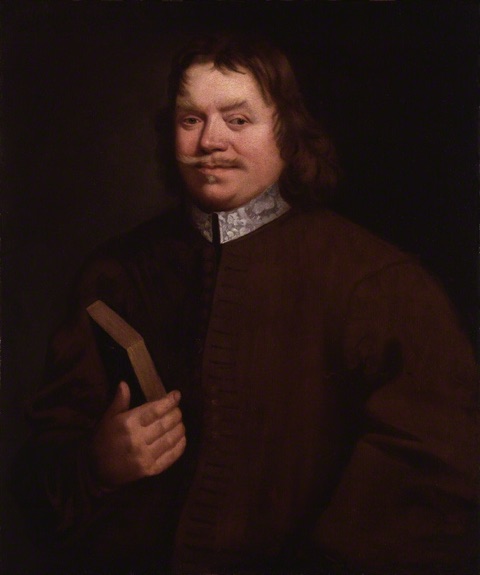
About the author
John Bunyan
John Bunyan (1628 to 1688 AD) was a tinker's son from Elstow, near Bedford, who spent twelve years in Bedford jail from 1660 and later served as pastor of the Bedford congregation. The Water of Life was printed in 1688 for Nathanael Ponder, the London bookseller who had published The Pilgrim's Progress, in the same year Bunyan died in London.