Full text in modern English · Free PDF/EPUB
A Relation of My Imprisonment
Want the file? The PDF/EPUB is free with an account.
Summary
- Author
- John Bunyan (1628 to 1688 AD), English Puritan preacher and author of The Pilgrim's Progress
- Written
- In Bedford jail, covering November 1660 to spring 1662; the sermon dates from August 1688
- Source edition
- Bunyan's Relation with his dying sayings, two treatises from his papers and his last sermon, each complete
- Type
- Prison narrative, maxims, short treatises and a sermon
- Length
- 19,000 words · 1 hours
What is A Relation of My Imprisonment about?
A Relation of My Imprisonment is John Bunyan's first-person account of his arrest in November 1660 for preaching, his hearings before the Bedford justices, and his wife's pleas to the judges. He argues that he cannot promise to stop preaching. The volume adds his dying sayings, two short treatises on the Trinity and the law, and his last sermon.
Read the full summary (9 points, key themes)Show less
How the argument unfolds
- 01
The arrest at Samsell. Warned of a warrant on 12 November 1660, Bunyan chose to stay and hold the meeting rather than discourage new believers by running. Justice Wingate and Mr. Foster offered release if he would promise to call the people together no more, and he refused.
- 02
The examination before the justices. Indicted for avoiding the parish church and holding conventicles, he argued against the Common Prayer Book and for preaching by gift. Justice Keelin sentenced him to three months in prison, then banishment, and hanging if he returned.
- 03
The talk with the clerk of the peace. In April 1661 Mr. Cobb urged him to submit and meet only privately with neighbors. Bunyan answered that if he may do good to one, he may do good to many, and that where he cannot obey a law he will suffer its penalty.
- 04
His wife before the judges. At the August 1661 assizes his wife pleaded with Judge Hale and Judge Twisdon in the Swan Chamber. Hale was gentle but told her she must apply to the King, sue out a pardon, or get a writ of error.
- 05
The assizes of 1662. His name was put in the calendar so he could appear before the judge, but the clerk of the peace blotted out the charge and kept him from being heard.
- 06
Dying Sayings. Short maxims on sin, affliction, repentance, prayer, the Lord's Day, the world, suffering, death, heaven and hell, including questions to ask the soul before prayer and a plan for each morning and night.
- 07
Of the Trinity and a Christian. Counsel for a young or shaken believer troubled by the doctrine of three persons in one God: keep close to the Word, take it whole, and bring reasoning captive to Christ.
- 08
Of the Law and a Christian. The law was given twice at Sinai, first in terror and then with God's mercy proclaimed. The believer is freed from the first as a covenant and keeps the law as a rule under grace.
- 09
The last sermon. On John 1:13, those who receive Christ are born of God, not of descent or natural will. Bunyan draws marks of the new birth from a newborn child and urges his hearers to live as God's children.
Key themes
- A gift must be used. Bunyan holds that a man who has received a gift for building others up sins if he buries it, and he will not trade it for liberty: “I dared not leave off the work that God had called me to.”
- Prayer by the Spirit. Against the Common Prayer Book he argues that prayer is the heart poured out to God, and in the Dying Sayings he puts it plainly: “Prayer will make a man stop sinning, or sin will entice a man to stop praying.”
- Obeying and suffering. He submits to the King and all righteous laws, but where conscience forbids active obedience he takes the penalty, as Paul and Christ did under rulers whose authority they owned.
- Suffering in the right manner. “It is not every suffering that makes a martyr, but suffering for the Word of God in the right manner.” His own account shows him blessing God for peace in jail rather than railing at his judges.
Reader questions (9)Hide the questions
Questions about A Relation of My Imprisonment
Can I read A Relation of My Imprisonment online for free?
Yes. The complete text of this modern English edition is on this page, with no sign-up or paywall.
Is there a free PDF of A Relation of My Imprisonment?
Yes. The PDF and EPUB of this edition are free with an Updated Works account. Sign in with Google or an email link; no card is needed.
What is A Relation of My Imprisonment?
It is John Bunyan's own record of his arrest in November 1660 for preaching at a meeting near Harlington in Bedfordshire, his hearings before the justices, a jailhouse talk with the clerk of the peace, and his wife's appeals to the judges in 1661. It ends with the 1662 assizes, where he was kept from appearing.
Why was John Bunyan imprisoned?
He was charged with staying away from the parish church and with upholding unlawful meetings. He was offered release more than once if he would promise to stop preaching or calling people together, and he refused, saying he would preach again the day he was let out.
How long was Bunyan in prison?
This account covers only his first year and a half, from November 1660 to spring 1662. In all he stayed in Bedford jail for about twelve years, until 1672, refusing the condition of release each time it was offered.
Who was the woman who pleaded for Bunyan before the judges?
She was his second wife, Elizabeth, though the account does not name her. She tells Judge Hale she is stepmother to four small children, one of them blind, and that she lost a child after the shock of his arrest. Bunyan says he took her account from her own mouth.
Is this the same book as Grace Abounding?
No. Grace Abounding to the Chief of Sinners is Bunyan's spiritual autobiography, the story of his conversion and call to preach. The Relation is a separate, narrower record of his arrest and the legal proceedings that followed, told largely as dialogue.
What else is in this volume?
After the Relation come Bunyan's Dying Sayings, short maxims under heads such as sin, prayer and heaven; two short treatises from his papers, Of the Trinity and a Christian and Of the Law and a Christian; and his last sermon, on John 1:13, preached in London in August 1688.
How long is the book?
About 19,000 words. The Relation is roughly two thirds of the volume, and the sayings, treatises and sermon make up the rest. Most readers can finish it in two or three sittings.
A Relation of My Imprisonment · Full text
A Relation of My Imprisonment
By the good hand of my God, I had for five or six years together freely preached the blessed gospel of our Lord Jesus Christ without any interruption. Through his blessed grace I had also seen some encouragement, by his blessing on the work. Then the devil, that old enemy of man’s salvation, took his opportunity to inflame the hearts of his servants against me, so that at last a justice’s warrant was laid out for me, and I was taken and committed to prison. This is how it happened.
On the twelfth of this present month, November 1660, some of the friends in the county asked me to come and teach at Samsell, near Harlington, in Bedfordshire. I promised them that, if the Lord permitted, I would be with them at that time. The justice, whose name is Mr. Francis Wingate, heard of it. At once he issued his warrant to take me and bring me before him, and in the meantime to keep a very strong watch around the house where the meeting was to be held, as if we who were to meet together in that place intended to do some dreadful business, to the ruin of the county. But alas, when the constable came in, he found us only with our Bibles in our hands, ready to speak and hear the Word of God. We were just about to begin our worship. In fact, we had already begun with prayer for God’s blessing on our opportunity, intending to preach the Word of the Lord to those who were there. But the constable’s coming in prevented us, so that I was taken and forced to leave the room.
Yet if I had been minded to play the coward, I could have escaped and kept out of his hands. For when I came to my friend’s house, there was whispering that I would be taken that day, because there was a warrant out for me. When my friend heard this, being somewhat timid, he wondered whether we had better hold our meeting or not, and whether it might not be better for me to leave, in case they took me, brought me before the justice, and after that sent me to prison. He knew better than I did what spirit they were of, since he lived near them. I said to him, “No, by no means. I will not stir, nor will I have the meeting dismissed for this. Come, cheer up; let us not be daunted. Our cause is good; we need not be ashamed of it. To preach God’s Word is so good a work that we shall be well rewarded if we suffer for it,” or words to that effect. But as for my friend, I think he was more afraid for me than for himself.
After this I walked out into the field. As I thought the matter over seriously, this came into my mind: I had shown myself hearty and courageous in my preaching, and had, blessed be grace, made it my business to encourage others. So, I thought, if I now run and make an escape, it will leave a very bad smell in the county. For what will my weak and newly converted fellow believers think of it, except that I was not as strong in deed as I was in word? I also feared that if I ran now that there was a warrant out for me, I might by doing so make them afraid to stand firm when nothing but big words were spoken to them. Besides, I thought, seeing that God in his mercy had chosen me to go with the forlorn hope in this county, that is, to be the first to be opposed for the gospel, if I fled it might discourage the whole body that might follow after. And further, I thought the world would take my cowardice as an occasion to blaspheme the gospel, and to have some ground for suspecting worse of me and my profession than I deserved.
When I had considered these things and others, I came back into the house fully resolved to keep the meeting and not to go away. I could have been gone about an hour before the officer arrested me, but I would not. I was resolved to see the worst of what they could say or do to me, for, blessed be the Lord, I knew of no evil that I had said or done. And so, as I said, I began the meeting. But when the constable came in with his warrant to take me, I could not go on.
Before I went away, however, I spoke a few words of counsel and encouragement to the people. I told them that they could see we had been prevented from using our opportunity to speak and hear the Word of God, and were likely to suffer for it. I urged them not to be discouraged, for it was a mercy to suffer on so good an account. We might have been arrested as thieves or murderers, or for some other wickedness; but blessed be God, it was not so. We suffer as Christians for doing good, and we had better be the persecuted than the persecutors, and so on. But the constable and the justice’s man who were waiting on us would not rest until they had me away and we had left the house.
Because the justice was not at home that day, a friend of mine pledged to bring me to the constable the next morning. Otherwise the constable would have had to set a watch over me or secure me some other way, my crime was so great. So the next morning we went to the constable, and then to the justice.
He asked the constable what we had been doing, where we had met together, and what we had with us. I suppose he meant whether we were armed or not. But when the constable told him that only a few of us had met together to preach and hear the Word, and that there was no sign of anything else, he hardly knew what to say. Yet because he had sent for me, he ventured to put a few questions to me, to this effect: What was I doing there? And why did I not content myself with following my trade? For it was against the law, he said, for such as I to be allowed to do as I did.
Bunyan. I answered that the purpose of my coming there, and to other places, was to instruct and counsel people to forsake their sins and take hold of Christ, so that they would not perish miserably. And I said I could do both without any confusion: that is, follow my trade and preach the Word as well.
At these words he flew into a temper, by all appearances, for he said that he would break the neck of our meetings.
Bunyan. I said, “It may be so.” Then he told me to find sureties to be bound for me, or else he would send me to the jail.
My sureties were ready, so I called them in. When the bond for my appearance had been drawn up, he told them that they were bound to keep me from preaching, and that if I did preach, their bonds would be forfeited. I answered that in that case I would break them, for I would not stop speaking the Word of God: that is, counseling, comforting, exhorting and teaching the people among whom I came. I thought this was a work that had no harm in it, but rather deserved praise more than blame.
Wingate. At this he told me that if they would not be bound in that way, my committal order must be made out, and I must be sent to the jail to lie there until the quarter sessions.
While my committal order was being written, the justice withdrew. In came an old enemy of the truth, Dr. Lindale, who as soon as he came in began taunting me with many abusive names.
Bunyan. I answered him that I had not come there to talk with him, but with the justice. At this he supposed that I had nothing to say for myself, and he crowed as if he had won the day. He charged and condemned me for meddling with something for which I could show no warrant, and asked me whether I had taken the oaths. If I had not, he said, it would be a pity if I were not sent to prison, and so on.
I told him that if I chose, I could answer any sober question he might put to me. Then he pressed me again, with a great deal of confidence that he would win, to prove how it was lawful for me to preach.
At last, so that he would see I could answer him if I wanted to, I quoted him that verse in Peter which says, “As every man hath received the gift, even so let him minister the same…” (1 Pet 4:10).
Lindale. “Aye,” he said, “to whom is that spoken?”
Bunyan. “To whom?” I said. “Why, to every man who has received a gift from God. Notice what the apostle says: ‘As every man that hath received a gift from God…’ And again, ‘You may all prophesy one by one’ (1 Cor 14:31).” At this the man was brought up a little short and went at a gentler pace. But not wanting to lose the day, he started again and said:
Lindale. “Indeed, I do remember that I have read of one Alexander, a coppersmith, who did much to oppose and disturb the apostles.” He was aiming at me, it seems, because I was a tinker.
Bunyan. I answered that I also had read of very many priests and Pharisees who had their hands in the blood of our Lord Jesus Christ.
Lindale. “Aye,” he said, “and you are one of those scribes and Pharisees, for you make long prayers for a pretense, to devour widows’ houses.”
Bunyan. I answered that if he had got no more by preaching and praying than I had, he would not be as rich as he now was. But that scripture came into my mind, “Answer not a fool according to his folly” (Prov 26:4), so I was as sparing of my words as I could be without harm to the truth.
By this time my committal order had been made out, and I was handed over to the constable to be taken to the jail in Bedford.
But as I was going, two of my brothers in the faith met me on the way and asked the constable to wait. They supposed that they could prevail with the justice, through the favor of a supposed friend, to let me go free. So we waited while they went to the justice. After much discussion with him, it came to this: if I would come back to him and say certain words to him, I would be released. When they told me this, I said that if the words were such as could be said with a good conscience, I would say them; otherwise I would not.
So at their urging I went back again, though I did not believe I would be set free. I feared their spirit was too full of opposition to the truth to let me go unless I would, in one thing or another, dishonor my God and wound my conscience. So as I went, I lifted up my heart to God for light and strength to keep me from doing anything that might dishonor him, or wrong my own soul, or grieve or discourage anyone who was inclining after the Lord Jesus Christ.
Well, when I came to the justice again, there was Mr. Foster of Bedford. He came out of another room and saw me by the light of the candle, for it was dark night when I arrived. He said to me, “Who is there? John Bunyan?” with such seeming affection, as if he would have leaped on my neck and kissed me. This made me rather wonder that such a man as he, with whom I had so little acquaintance, and who besides had always been a close opposer of the ways of God, should carry himself so full of love toward me. But afterward, when I saw what he did, it made me remember those sayings, “Their tongues are smoother than oil, but their words are drawn swords” (Ps 55:21), and again, “Beware of men…” (Matt 10:17).
When I had answered him that, blessed be God, I was well, he said, “What is the occasion of your being here?” or something to that purpose. I answered that I had been at a meeting of people a little way off, intending to speak a word of exhortation to them, but the justice, hearing of it, I said, had been pleased to send his warrant to fetch me before him, and so on.
Foster. “So I understand,” he said. “But, well, if you will promise to call the people together no more, you shall have your liberty to go home. My brother is very unwilling to send you to prison, if you will only be ruled.”
Bunyan. “Sir,” I said, “please tell me, what do you mean by calling the people together? My only business among them when they have come together is to exhort them to look after the salvation of their souls, so that they may be saved.”
Foster. He said, “We must not enter into explanation or dispute now. But if you will say that you will call the people together no more, you may have your liberty. If not, you must be sent away to prison.”
Bunyan. “Sir,” I said, “I will not force or compel any man to hear me. But even so, if I come into any place where people have met together, I would, to the best of my skill and wisdom, exhort and counsel them to seek out the Lord Jesus Christ for the salvation of their souls.”
Foster. He said that this was none of my work; I must follow my trade. If I would only give up preaching and follow my trade, I would have the justice’s favor and be released at once.
Bunyan. I told him that I could follow my trade and do that too, namely, preach the Word, and that I looked on it as my duty to do both as I had opportunity.
Foster. He said that holding any such meetings was against the law, and therefore he wanted me to give it up and say that I would call the people together no more.
Bunyan. I told him that I dared not make any further promise, for my conscience would not allow me to do it. And again, I looked on it as my duty to do as much good as I could, not only in my trade, but also by sharing with all people, wherever I came, the best knowledge I had in the Word.
Foster. He told me that I was nearer the papists than anyone, and that he would prove it to me immediately.
Bunyan. I asked him, “In what way?”
Foster. He said, “In that you understand the Scriptures literally.”
Bunyan. I told him that those scriptures that were meant to be understood literally, we understood that way; but those that were meant to be understood otherwise, we tried to understand otherwise.
Foster. He said, “Which of the Scriptures do you understand literally?”
Bunyan. I said this one: “He that believeth shall be saved” (Mark 16:16). This was to be understood just as it is spoken: whoever believes in Christ shall, according to the plain and simple words of the text, be saved.
Foster. He said that I was ignorant and did not understand the Scriptures. “For how,” he said, “can you understand them when you do not know the original Greek?”
Bunyan. I answered him that if it was his opinion that none could understand the Scriptures except those who had the original Greek and so on, then only a very few of the poorest sort would be saved, and that is harsh. Yet the Scripture says that God hides these things from the wise and prudent, that is, from the learned of the world, and reveals them to babes and sucklings.
Foster. He said that none heard me but a company of foolish people.
Bunyan. I told him that the wise as well as the foolish do hear me. And again, those whom the world most commonly counts foolish are the wisest before God. I also said that God had rejected the wise and mighty and noble, and chosen the foolish and the base.
Foster. He told me that I made people neglect their work, and that God had commanded people to work six days and serve him on the seventh.
Bunyan. I told him that it was the duty of people, both rich and poor, to look after their souls on those days as well as their bodies, and that God would have his people “exhort one another daily, while it is called today” (Heb 3:13).
Foster. He said again that none but a company of poor, simple, ignorant people came to hear me.
Bunyan. I told him that the foolish and ignorant had the most need of teaching and instruction, and therefore it would be profitable for me to go on in that work.
Foster. “Well,” he said, “to conclude: will you promise that you will not call the people together any more? Then you may be released and go home.”
Bunyan. I told him that I dared say no more than I had said, for I dared not leave off the work that God had called me to.
So he withdrew from me. Then several of the justice’s servants came to me and told me that I was standing too much on a fine point. Their master, they said, was willing to let me go; and if I would only say that I would call the people together no more, I might have my liberty, and so on.
Bunyan. I told them that there were more ways than one in which a man might be said to call the people together. For instance, suppose a man gets up in the marketplace and reads a book there, or something like that. Even if he does not say to the people, “Sirs, come here and listen,” yet if they come to him because he is reading, he may be said, by his very reading, to call them together, because they would not have been there to hear if he had not been there to read. And seeing that this might be called calling the people together, I dared not say I would not call them together; for then, by the same argument, my preaching might be said to call them together.
Wingate and Foster. Then the justice and Mr. Foster came to me again. We had a little more discussion about preaching, but because the course of it has gone out of my mind, I pass over it. When they saw that I had made up my mind and would not be moved or persuaded, Mr. Foster, the man who at first had expressed so much love to me, told the justice that in that case he must send me away to prison. He added that the justice would also do well to bring charges against all those who had been the cause of my coming among them to meetings. So we parted.
And truly, as I was going out of the doors, I could hardly keep from telling them that I carried the peace of God along with me. But I held my peace, and, blessed be the Lord, went away to prison with God’s comfort in my poor soul.
After I had lain in the jail five or six days, my fellow believers again looked for a way to get me out on bail, for my committal order said that I should lie there until I could find sureties. They went to a justice at Elstow, one Mr. Crumpton, to ask him to take bond for my appearance at the quarter sessions. At first he told them he would. But afterward he began to hesitate over the business, and wanted first to see my committal order. It ran to this effect: that I went about to various conventicles in this county, to the great disparagement of the government of the Church of England, and so on. When he had seen it, he said that there might be something more against me than was stated in my committal order, and that he was only a young man, and therefore he dared not do it.
My jailer told me this. I was not at all daunted by it, but rather glad, and I saw plainly that the Lord had heard me. For before I went down to the justice, I had begged God that if I might do more good by being at liberty than in prison, then I might be set at liberty; but if not, his will be done. For I had some hope that my imprisonment might be an awakening to the saints in the county, and so I could not well tell which to choose. I only committed the matter to God in that way. And truly, when I returned, I met my God sweetly in the prison again, comforting me and assuring me that it was his will and mind that I should be there.
When I came back to prison, as I was thinking over the justice’s flimsy answer, this word dropped into my heart with some life: “For he knew that for envy they had delivered him” (Matt 27:18).
So I have briefly set out the manner and occasion of my being in prison, where I lie waiting on the good will of God, to do with me as he pleases. I know that not one hair of my head can fall to the ground without the will of my Father who is in heaven. However great the rage and malice of men may be, they can do no more and go no further than God permits them. And when they have done their worst, “We know that all things work together for good to them that love God” (Rom 8:28). Farewell.
My Examination Before Justices Keelin, Chester, Blundale, Beecher, and Snagg
After I had lain in prison more than seven weeks, the quarter sessions were to be held in Bedford for the county, and I was to be brought before them. When my jailer had set me before those justices, a bill of indictment was brought against me. Its substance was as follows: “That John Bunyan, of the town of Bedford, laborer, being a person of such and such conditions, he has, since such a time, devilishly and perniciously abstained from coming to church to hear divine service, and is a common upholder of several unlawful meetings and conventicles, to the great disturbance and distraction of the good subjects of this kingdom, contrary to the laws of our sovereign lord the King.”
The Clerk. When this had been read, the clerk of the sessions said to me, “What do you say to this?”
Bunyan. I said that as to the first part of it, I commonly attended the church of God, and was also, by grace, a member with the people over whom Christ is the Head.
Keelin. “But,” said Justice Keelin, who was the judge in that court, “do you come to church? You know what I mean: to the parish church, to hear divine service?”
Bunyan. I answered, “No, I do not.”
Keelin. He asked me why.
Bunyan. I said, “Because I do not find it commanded in the Word of God.”
Keelin. He said, “We are commanded to pray.”
Bunyan. I said, “But not by the Common Prayer Book.”
Keelin. He said, “How then?”
Bunyan. I said, “With the Spirit. As the apostle says, ‘I will pray with the Spirit, and with the understanding’ (1 Cor 14:15).”
Keelin. He said, “We may pray with the Spirit, and with the understanding, and with the Common Prayer Book also.”
Bunyan. I said that the prayers in the Common Prayer Book were made by other men, and not by the stirrings of the Holy Spirit within our hearts. And as I said, the apostle says he will pray with the Spirit and with the understanding, not with the Spirit and the Common Prayer Book.
Another Justice. “What do you count as prayer? Do you think it is saying a few words over in front of a group of people, or among them?”
Bunyan. I said no, not so, for men might have many elegant or excellent words and yet not pray at all. But when a man prays, he does, through a sense of those things that he needs, which sense is begotten by the Spirit, pour out his heart before God through Christ, even though his words are not as many or as excellent as other men’s are.
The Justices. They said that was true.
Bunyan. I said, This might be done without the Common Prayer Book.
Another. One of them said (I think it was Justice Blundale, or Justice Snagg), How are we to know that you do not write out your prayers first, and then read them to the people afterward? He said this with a laugh.
Bunyan. I said, It is not our practice to take a pen and paper, write a few words on it, and then go and read it over to a company of people.
But how are we to know that? he said.
Bunyan. Sir, it is not our custom at all, I said.
Keelin. But, said Justice Keelin, it is lawful to use the Common Prayer and other forms like it, for Christ taught his disciples to pray, as John also taught his disciples. And further, he said, can one man not teach another to pray? “Faith comes by hearing” (Rom 10:17); and one man may convince another of sin. Therefore prayers made by men and read over are good for teaching men to pray and helping them to do it.
While he was speaking these words, God brought to my mind that word in Romans 8:26. I say God brought it, for I had not been thinking of it before. But as he was speaking, it came so freshly into my mind, and was set so plainly before me, that it was as if the Scripture had said, Take me, take me.
Bunyan. So when he had finished speaking, I said, Sir, the Scripture says that it is “the Spirit that helpeth our infirmities; for we know not what we should pray for as we ought: but the Spirit itself maketh intercession for us, with [sighs and] groanings which cannot be uttered.” Notice, I said, it does not say that the Common Prayer Book teaches us how to pray, but the Spirit. And it is “the Spirit that helpeth our infirmities,” says the apostle; he does not say it is the Common Prayer Book.
And as for the Lord’s Prayer, although it is an easy thing to say “Our Father…” with the mouth, yet there are very few who can say the first two words of that prayer in the Spirit. That is, very few can call God their Father as those who know what it is to be born again, and who have experienced that they are begotten of the Spirit of God. If they cannot do this, it is all just babbling, and so on.
Keelin. Justice Keelin said that this was true.
Bunyan. And I say further, as to your saying that one man may convince another of sin, that faith comes by hearing, and that one man may tell another how he should pray, and so on: I say that men may tell each other of their sins, but it is the Spirit who must convince them.
And though it is said that “faith comes by hearing,” yet it is the Spirit who works faith in the heart through hearing, or else people are not profited by hearing (Heb 4:2).
And though one man may tell another how he should pray, yet, as I said before, he cannot pray, or make his condition known to God, unless the Spirit helps him. The Common Prayer Book cannot do this. It is the Spirit who shows us our sins, and the Spirit who shows us a Savior (John 16:8-14). And it is the Spirit who stirs up desires in our hearts to come to God for the things we need (Matt 11:27), even sighing out our souls to him for them with “groans which cannot be uttered.” I said other things to the same effect. At this they were stumped.
Keelin. But, says Justice Keelin, what do you have against the Common Prayer Book?
Bunyan. I said, Sir, if you will hear me, I will set out my reasons against it.
Keelin. He said I should have liberty to do so. But first, he said, let me give you a warning: be careful not to speak irreverently of the Common Prayer Book, for if you do, you will bring great harm on yourself.
Bunyan. So I went on, and said, My first reason is that it is not commanded in the Word of God, and therefore I cannot use it.
Another. One of them said, Where do you find it commanded in the Scripture that you should go to Elstow or Bedford? And yet it is lawful to go to either of them, is it not?
Bunyan. I said, To go to Elstow or Bedford is a civil matter, and of no great importance, though it is not commanded. And yet God’s Word allows me to go about my calling, and so, if my calling lies there, to go there, and so on. But praying is a great part of the divine worship of God, and therefore it ought to be done according to the rule of God’s Word.
Another. One of them said, He will do harm; let him say no more.
Keelin. Justice Keelin said, No, no, never fear him. We are more firmly established than that; he can do no harm. We know the Common Prayer Book has been in use ever since the apostles’ time, and it is lawful for it to be used in the church.
Bunyan. I said, Show me the place in the epistles where the Common Prayer Book is written, or one text of Scripture that commands me to read it, and I will use it. But even so, I said, those who have a mind to use it have their liberty. That is, I would not keep them from it. But for our part, we can pray to God without it. Blessed be his name.
At that, one of them said, Who is your God? Beelzebub? Besides this, they often said that I was possessed with the spirit of delusion and of the devil. I passed over all these sayings; the Lord forgive them! And I said further, Blessed be the Lord for it, we are encouraged to meet together, and to pray, and to exhort one another, for we have had the comforting presence of God among us. Forever blessed be his holy name!
Keelin. Justice Keelin called this peddlers’ jargon, saying that I must give up my canting. The Lord open his eyes!
Bunyan. I said that we ought to “exhort one another daily, while it is called today…” (Heb 3:13).
Keelin. Justice Keelin said that I ought not to preach, and asked me where I got my authority, with other words like these.
Bunyan. I said that I would prove that it was lawful for me, and for people like me, to preach the Word of God.
Keelin. He said to me, By what scripture?
I said, By that in 1 Peter 4:10, and by Acts 18, along with other scriptures, which he would not let me mention. Instead he said, Hold on, not so many. Which is the first?
Bunyan. I said, This one: “As every man hath received the gift, even so minister the same one to another, as good stewards of the manifold grace of God. If any man speak, let him speak as the oracles of God…”
Keelin. He said, Let me open that scripture up to you a little. “As every man hath received the gift”: that is, he said, as every man has received a trade, so let him follow it. If any man has received a gift for tinkering, as you have, let him follow his tinkering. And so let other men follow their trades, and the minister his calling, and so on.
Bunyan. No, sir, I said, it is perfectly clear that the apostle is speaking here of preaching the Word. If you only compare the two verses together, the next verse explains what this gift is, saying, “If any man speak, let him speak as the oracles of God.” So it is plain that in this place the Holy Spirit is not exhorting us to civil callings so much as to the exercise of those gifts we have received from God. I would have gone on, but he would not allow me.
Keelin. He said we might do it in our families, but not otherwise.
Bunyan. I said, If it was lawful to do good to some, it was lawful to do good to more. If it was a good duty to exhort our families, it is good to exhort others. But if they held it to be a sin to meet together to seek the face of God and to exhort one another to follow Christ, I would go on sinning, for that is what we should do.
Keelin. He said that he was not well enough versed in Scripture to dispute, or words to that effect. And he said, moreover, that they could not wait on me any longer. But he said to me, Then you confess the indictment, do you not? Now, and not until now, I saw that I had been indicted.
Bunyan. I said, This much I confess: we have had many meetings together, both to pray to God and to exhort one another, and we have had the sweet, comforting presence of the Lord among us for our encouragement; blessed be his name for it. I confessed myself guilty in no other way.
Keelin. Then, he said, hear your sentence. You must be taken back to prison, and lie there for the next three months. And at the end of three months, if you do not submit to go to church to hear divine service, and give up your preaching, you must be banished from the realm. And if, after the day that will be appointed for you to be gone, you are found in this realm, and so on, or are found to have come back again without special license from the King, and so on, you must hang by the neck for it, I tell you plainly. And with that he told my jailer to take me away.
Bunyan. I told him that on this matter my mind was made up: if I were out of prison today, I would preach the gospel again tomorrow, by the help of God.
Another. Someone made me some answer to this, but my jailer was pulling me away to be gone, so I could not tell what he said.
So I left them. And I can truly say, and I bless the Lord Jesus Christ for it, that my heart was sweetly refreshed during my examination, and also afterward, as I went back to prison. So I found Christ’s words to be more than empty trifles, where he says, “I will give you a mouth and wisdom, which all your adversaries shall not be able to gainsay nor resist” (Luke 21:15); and also that no man can take his peace from us.
So I have given you the substance of my examination. The Lord make these things profitable to all who read or hear them. Farewell.
My Discourse with the Clerk of the Peace
When I had lain in prison another twelve weeks, and did not yet know what they intended to do with me, Mr. Cobb came to me on the third of April, 1661. As he told me, he had been sent by the justices to admonish me, according to the terms of the law under which I was in prison, and he demanded that I submit to the Church of England, and so on. Our conversation went as follows.
Cobb. When he had come into the house, he sent for me to come out of my room. When I had come to him, he said, Neighbor Bunyan, how are you?
Bunyan. Very well, thank you, sir, I said, blessed be the Lord.
Cobb. He says, I have come to tell you that it is desired that you submit yourself to the laws of the land. Otherwise at the next sessions it will go worse with you, even to the point of being sent away out of the nation, or something worse than that.
Bunyan. I said that I did desire to conduct myself in the world as befits both a man and a Christian.
Cobb. But, he says, you must submit to the laws of the land, and give up those meetings you have been in the habit of holding, for the statute law is directly against them. And I have been sent to you by the justices to tell you that they intend to enforce the law against you if you do not submit.
Bunyan. I said, Sir, I believe that the law under which I am now in prison does not reach or condemn either me or the meetings I attend. That law was made against those who intended to do evil in their meetings, making the exercise of religion their pretense to cover their wickedness. It does not forbid the private meetings of those who plainly and simply make it their only aim to worship the Lord and to exhort one another to edification. My aim in meeting with others is simply to do as much good as I can, by exhortation and counsel, according to that small measure of light which God has given me, and not to disturb the peace of the nation.
Cobb. Everyone will say the same, he said. You see what glorious pretenses they put forward in the recent uprising in London, and yet in fact they intended nothing less than the ruin of the kingdom and commonwealth.
Bunyan. I abhor that conduct of theirs, I said. Yet it does not follow that, because they did so, all others will do so too. I look on it as my duty to behave myself under the King’s government as befits both a man and a Christian. And if an occasion were offered me, I would willingly show my loyalty to my sovereign, both by word and deed.
Cobb. Well, he said, I do not claim to be a man who can dispute. But this I say, truly, Neighbor Bunyan: I would have you consider this matter seriously, and submit yourself. You may have your liberty to exhort your neighbor in private conversation, so long as you do not call together an assembly of people. And truly, you may do much good to the church of Christ if you would go this way. This you may do, and the law will not deprive you of it. It is your private meetings that the law is against.
Bunyan. Sir, I said, if I may do good to one person by my conversation, why may I not do good to two? And if to two, why not to four, and so to eight, and so on?
Cobb. Yes, he says, and to a hundred, I’ll warrant.
Bunyan. Yes, sir, I said. I think I should not be forbidden to do as much good as I can.
Cobb. But, he says, you may only pretend to do good, and in fact do harm, all the same, by leading the people astray. You are therefore denied meeting with so many together, lest you should do harm.
Bunyan. And yet, I said, you say the law permits me to talk with my neighbor. Surely there is no law that permits me to lead anyone astray. Therefore, if I may by law talk with one person, surely it is to do him good. And if by talking I may do good to one, surely by the same law I may do good to many.
Cobb. The law, he says, expressly forbids your private meetings; therefore they are not to be tolerated.
Bunyan. I told him that I would not think so uncharitably of that Parliament in the thirty-fifth year of Elizabeth, or of the Queen herself, as to think that by that law they intended to oppress any of God’s ordinances, or to hinder anyone in the way of God. Men may twist the law and turn it against the way of God. But take the law in itself, and it fights only against those who aim at mischief in their hearts and meetings, making religion merely their cloak, color or pretense. For these are the words of the statute: “If any meetings, under color or pretense of religion…”
Cobb. Very good. Therefore the King, seeing that pretenses are common in and among people, so that they make religion their pretense only, forbids such private meetings, as the law did before him, and tolerates only public ones. You may meet in public.
Bunyan. Sir, I said, let me answer you with a comparison. Suppose that thieves usually came out at a certain corner of a wood to do mischief. Must a law therefore be made that everyone who comes out there shall be killed? May not honest men come out from there as well as thieves? It is just so in this case. I do think there may be many who may plot the destruction of the commonwealth. But it does not follow from this that all private meetings are unlawful. Let those who break the law be punished. And if at any time I myself should do anything in my conduct that does not become a man and a Christian, let me bear the punishment.
And as for your saying that I may meet in public, if I were allowed to, I would gladly do it. Only let me have meetings enough in public, and I will care the less about having them in private. I do not meet in private because I am afraid to hold meetings in public. I bless the Lord that my heart has come to this point: if any man can lay anything to my charge on this matter, either in doctrine or in practice, that can be proved to be error or heresy, I am willing to disown it, even in the very marketplace. But if it is the truth, then I will stand by it to the last drop of my blood. And, sir, I said, you ought to commend me for doing so. To err and to be a heretic are two different things. I am no heretic, because I will not stubbornly defend any one thing that is contrary to the Word. Prove anything I hold to be an error, and I will recant it.
Cobb. But, Goodman Bunyan, he said, it seems to me that you need not insist so strictly on this one thing, of having meetings in such public assemblies. Can you not submit, and still do as much good as you can in a neighborly way, without having such meetings?
Bunyan. Truly, sir, I said, I have no desire to commend myself, but rather to think lowly of myself. Yet even when I most despise myself, I take notice of that small measure of light which God has given me, and also that the people of the Lord, by their own account, are edified by it. Besides, when I see that the Lord, through grace, has in some measure blessed my labor, I dare not do anything but exercise that gift which God has given me for the good of the people. And I said further that I would willingly speak in public, if I might.
Cobb. He said that I might come to the public assemblies and hear. What if you do not preach? You may hear. Do not think yourself so well enlightened, and so far above others in the gift you have received, that you cannot hear other men preach. Or words to that effect.
Bunyan. I told him that I was as willing to be taught as to give instruction, and I looked on it as my duty to do both. For, I said, a man who is a teacher may himself also learn from another who teaches, as the apostle says: “Ye may all prophesy, one by one, that all may learn” (1 Cor 14:31). That is, every man who has received a gift from God may give it out, so that others may be comforted; and when he has done so, he may hear and learn, and be comforted himself by others.
Cobb. But, he said, what if you were to hold back for a while and sit still, until you see further how things will go?
Bunyan. Sir, I said, Wycliffe says that anyone who gives up preaching and hearing the Word of God for fear of being excommunicated by men is already excommunicated by God, and on the day of judgment will be counted a traitor to Christ.
Cobb. Yes, he said, those who do not hear will indeed be counted so. So you, then, should hear.
Bunyan. But, sir, I said, he says that whoever gives up either preaching or hearing, and so on. That is, if a man has received a gift for building others up, it is his sin if he does not lay it out in exhortation and counsel, according to the measure of his gift, just as it is his sin to spend his time entirely in hearing others preach.
Cobb. But, he said, how are we to know that you have received a gift?
Bunyan. I said, Let anyone hear and search, and test the doctrine by the Bible.
Cobb. But will you be willing, he said, for two impartial persons to decide the case, and will you stand by their judgment?
Bunyan. I said, Are they infallible?
Cobb. He said, No.
Bunyan. Then, I said, it is possible that my judgment may be as good as theirs. But even so, I will pass over both, and in this matter be judged by the Scriptures. I am sure they are infallible and cannot err.
Cobb. But, he said, who is to judge between you? For you take the Scriptures one way, and they another.
Bunyan. I said, The Scripture should, and it does so by comparing one scripture with another; for Scripture will open itself if it is rightly compared. For instance, if people understand the word mediator in different ways, and you want to know the truth of it, the Scriptures open it. They tell us that a mediator must take up the business between two parties, and that “a mediator is not a mediator of one, but God is one” (Gal 3:20), and “there is one mediator between God and men, [even] the man Christ Jesus” (1 Tim 2:5). In the same way, the Scripture calls Christ a complete, or perfect, or able high priest. That is opened by his being called man and also God. And by the same things his blood is shown to be fully effective. So too, on the matter of meeting together and such things, the Scripture sufficiently opens itself and shows its meaning.
Cobb. But are you willing, he said, to stand by the judgment of the church?
Bunyan. Yes, sir, I said, to what the church of God approves; the church’s judgment is best expressed in Scripture.
We had a good deal more conversation, which I cannot remember well, about the laws of the nation and submission to government. On this I told him that I regarded myself as bound in conscience to live according to all righteous laws, whether there was a king or not. And if I did anything contrary to them, I held it my duty to bear patiently the penalty that the law provided against such offenders. I said many more words to the same effect. I said, moreover, that to cut off every occasion for anyone to suspect that my doctrine in private was not harmless, I would gladly take the trouble to give anyone the notes of all my sermons. For I sincerely desire to live quietly in my country and to submit to the present authority.
Cobb. Well, Neighbor Bunyan, he said, but I would really urge you to consider these things seriously between now and the quarter sessions, and to submit yourself. You may do a great deal of good if you stay on in the land. But alas, what benefit will it be to your friends, or what good can you do them, if you are sent away beyond the seas into Spain, or Constantinople, or some other remote part of the world? Please, let yourself be guided.
Jailer. Indeed, sir, I hope he will let himself be guided.
Bunyan. I shall desire, I said, to conduct myself in the nation in all godliness and honesty, as long as I am in it. And if I must be dealt with as you say, I hope God will help me to bear whatever they lay on me. I know of no evil I have done in this matter to deserve such treatment. I speak as in the presence of God.
Cobb. You know, he said, that the Scripture says, “the powers that be are ordained of God” (Rom 13:1).
Bunyan. I said, Yes, and that I was to submit to the king as supreme, and also to the governors, as to those who are sent by him.
Cobb. Well then, he said, the King commands you not to hold any private meetings. Because it is against his law, and he is ordained by God, you should not hold any.
Bunyan. I told him that Paul acknowledged the powers of his day to be from God, and yet for all that he was often in prison under them. And also, though Jesus Christ told Pilate that he had no power against him except from God, yet he died under that same Pilate. And yet, I said, I hope you will not say that either Paul or Christ denied the authority of magistrates, and so sinned against God by slighting his ordinance. Sir, I said, the law has provided two ways of obeying. The one is to do actively what I believe in my conscience I am bound to do. And where I cannot obey actively, there I am willing to lie down and suffer whatever they do to me.
At this he sat still and said no more. When he had done, I thanked him for his civil and gentle conversation with me, and so we parted.
Oh, that we might meet in heaven!
Farewell. John Bunyan.
My Wife Before the Judges
Here follows a conversation between my wife and the judges, with others, concerning my release at the assizes that followed. I took it from her own mouth.
After I had received this sentence of banishment or hanging from them, and after the earlier warning about what the justices had determined if I did not recant, the time drew near when I was to have abjured the realm, or fared worse, as Mr. Cobb told me. Just then came the time for the King to be crowned. Now at the coronation of kings a number of prisoners are usually released by virtue of the coronation, and I should have had my share in that privilege too. But they regarded me as a convicted person, and so, unless I sued out a pardon, as they called it, I could have no benefit from it. Even so, the coronation proclamation gave liberty to sue out pardons from the day the King was crowned until the same day a year later. So, though they would not let me out of prison, as they let out thousands, yet they could not touch me as far as carrying out their sentence was concerned, because of the liberty offered for suing out pardons. So I stayed in prison until the next assizes, which are called the Midsummer assizes, held that year in August 1661.
Now at those assizes, because I would leave no possible lawful means untried, I had my wife present a petition to the judges three times, asking that I might be heard and that they would take my case into impartial consideration.
The first time my wife went, she presented it to Judge Hale, who received it from her hand very mildly. He told her that he would do her and me the best good he could, but he feared, he said, that he could do none. The next day, in case they should forget me in the press of business, we threw another petition into the coach to Judge Twisdon. When he had seen it, he snapped at her and angrily told her that I was a convicted person and could not be released unless I would promise to preach no more, and so on.
Well, after this she presented yet another to Judge Hale as he sat on the bench, and he seemed willing to give her a hearing. But Justice Chester, who was present, stepped up and said that I had been convicted in the court, and that I was a hot-spirited fellow, or words to that effect. At this Judge Hale set the matter aside and would not deal with it.
But still my wife, encouraged by the high sheriff, ventured once more into their presence, as the poor widow did with the unjust judge, to try what she could do with them for my liberty before they left the town. The place where she went to them was the Swan Chamber, where the two judges and many justices and gentry of the county were gathered together. Coming into the room with an abashed face and a trembling heart, she began her errand to them in this way:
Woman. My Lord (addressing herself to Judge Hale), I make bold to come to your Lordship once again, to know what may be done about my husband.
Judge Hale. He said to her, Woman, I told you before that I could do you no good, because they have taken what your husband said at the sessions as a conviction. And unless something is done to undo that, I can do you no good.
Woman. My Lord, she said, he is kept in prison unlawfully. They shut him up before there was any proclamation against the meetings. The indictment is also false. Besides, they never asked him whether he was guilty or not, and he did not confess the indictment.
One of the Justices. Then one of the justices standing by, whom she did not know, said, My Lord, he was lawfully convicted.
Woman. That is false, she said. For when they said to him, “Do you confess the indictment?” all he said was that he had been at several meetings where there was both preaching of the Word and prayer, and that they had God’s presence among them.
Judge Twisdon. At this Judge Twisdon answered very angrily, saying, “What! You think we can do whatever we please. Your husband is a breaker of the peace, and is convicted by the law…” Upon this Judge Hale called for the Statute Book.
Woman. But, my Lord, she said, he was not lawfully convicted.
Justice Chester. Then Justice Chester said, “My Lord, he was lawfully convicted.”
Woman. That is false, she said. It was only a word of conversation that they took for a conviction, as you heard before.
Justice Chester. “But it is recorded, woman, it is recorded,” said Justice Chester, as if it must necessarily be true because it was recorded. With these words he often tried to stop her mouth, having no other argument to convince her but “It is recorded, it is recorded.”
Woman. My Lord, she said, a while ago I was in London to see if I could obtain my husband’s liberty. There I spoke with my Lord Barkwood, one of the House of Lords, and delivered a petition to him. He took it from me and presented it to some of the other members of the House of Lords for my husband’s release. When they had seen it, they said that they could not release him, but had committed his release to the judges at the next assizes. This he told me. And now I come to you to see if anything may be done in this business, and you give neither release nor relief.
To this they gave her no answer, but acted as if they had not heard her.
Justice Chester. Only Justice Chester kept coming back to this: “He is convicted,” and, “It is recorded.”
Woman. If it is, it is false, she said.
Justice Chester. My Lord, said Justice Chester, he is a pestilent fellow. There is not another fellow like him in the county.
Judge Twisdon. What, will your husband give up preaching? If he will do that, then send for him.
Woman. My Lord, she said, he dares not give up preaching as long as he can speak.
Judge Twisdon. See here, why should we talk any more about such a fellow? Must he do whatever he pleases? He is a breaker of the peace.
Woman. She told him again that her husband wanted to live peaceably and to follow his trade, so that his family might be provided for. And she said moreover, My Lord, I have four small children who cannot help themselves, one of whom is blind, and we have nothing to live on but the charity of good people.
Judge Hale. “Have you four children?” said Judge Hale. “You are but a young woman to have four children.”
Woman. My Lord, she said, I am only their stepmother, having not yet been married to him a full two years. In fact, I was with child when my husband was first arrested. But being young and unused to such things, she said, I was so dismayed at the news that I went into labor, and continued so for eight days. Then I was delivered, but my child died.
Judge Hale. At this he looked at the matter very soberly and said, “Alas, poor woman!”
Judge Twisdon. But Judge Twisdon told her that she was using her poverty as a cloak. And he said, moreover, that he understood I was better maintained by running up and down preaching than by following my trade.
Judge Hale. What is his trade? said Judge Hale.
Answer. Then some of the company standing by said, “A tinker, my Lord.”
Woman. Yes, she said, and because he is a tinker and a poor man, he is despised and cannot get justice.
Judge Hale. Then Judge Hale answered very mildly, saying, “I tell you, woman, since it is so, that they have taken what your husband said as a conviction, you must either apply to the King, or sue out his pardon, or get a writ of error.”
Justice Chester. But when Justice Chester heard him give her this counsel, and especially, as she supposed, because he spoke of a writ of error, he grew heated and seemed very much offended, saying, “My Lord, he will preach and do whatever he pleases.”
Woman. He preaches nothing but the Word of God, she said.
Judge Twisdon. He preach the Word of God! said Twisdon. (And as he said it, she thought he would have struck her.) He runs up and down and does harm.
Woman. No, my Lord, she said, it is not so. God has acknowledged him and done much good by him.
Judge Twisdon. God! he said. His doctrine is the doctrine of the devil.
Woman. My Lord, she said, when the righteous Judge appears, it will be known that his doctrine is not the doctrine of the devil.
Judge Twisdon. My Lord, he said to Judge Hale, pay no attention to her, but send her away.
Judge Hale. Then Judge Hale said, “I am sorry, woman, that I can do you no good. You must do one of the three things I mentioned: either apply to the King, or sue out his pardon, or get a writ of error. But a writ of error will be cheapest.”
Woman. At this Chester again seemed to be in a temper, and took off his hat and, as she thought, scratched his head in anger. But I saw, she said, that there was no prevailing on them to send for my husband, though I often asked them to send for him so that he might speak for himself. I told them that he could give them better satisfaction than I could in what they asked of him, and said several other things that I have now forgotten. Only this I remember: though I was somewhat timid when I first entered the room, yet before I came out I could not help breaking into tears. It was not so much because they were so hard-hearted against me and my husband, but because I thought what a sad account such poor creatures will have to give at the coming of the Lord, when they will have to answer there for everything whatsoever they have done in the body, whether it is good or whether it is bad.
So, as I left them, the Statute Book was brought; but of what they said about it I know nothing at all, and I heard no more from them.
How the Enemies of God’s Truth Dealt with Me at the Assizes of 1662
I shall pass over what happened between these two assizes: how my jailer allowed me somewhat more liberty than at first, and how I followed my usual course of preaching, taking every opportunity put into my hand to visit the people of God. I exhorted them to be steadfast in the faith of Jesus Christ, and to take care not to touch the Common Prayer and such things, but to mind the Word of God. For it gives direction to Christians in every point, and is able to make the man of God perfect in all things through faith in Jesus Christ, and thoroughly to furnish him to all good works (2 Tim 3:17). I pass over, too, how, having, as I say, somewhat more liberty, I went to see Christians in London. When my enemies heard of this, they were so angry that they nearly had my jailer turned out of his post, threatening to indict him and to do whatever they could against him. They also charged me with going there to plot, stir up division and raise insurrection, which, God knows, was a slander. After this my liberty was more restricted than it had been before, so that I was not allowed even to look out of the door.
Well, when the next sessions came, which was about the 10th of the eleventh month, I expected to be dealt with very severely. But they passed me by and would not call me, so I rested until the assizes, which were held on the 19th of the first month following. When they came, because I wanted to come before the judge, I asked my jailer to put my name into the calendar among the felons. I also gained the favor of the judge and the high sheriff, who promised that I should be called. So I thought that what I had done might have succeeded in obtaining my desire. But it was all in vain.
For when the assizes came, though my name was in the calendar, and though both the judge and the sheriff had promised that I should appear before them, yet the justices and the clerk of the peace so worked things around that I was put off all the same and was not allowed to appear. And although, as I say, I do not know all their dealings with me, yet this I know: the clerk of the peace showed himself to be one of my greatest opponents.
For first he came to my jailer and told him that I must not go down before the judge, and therefore must not be put into the calendar. My jailer told him that my name was in already. He told him to take me out again. My jailer told him that he could not, for he had given the judge a calendar with my name in it, and the sheriff another. At this he was very much displeased, and asked to see the calendar that was still in my jailer’s hand. When my jailer had given it to him, he looked at it and said it was a false calendar. He also took the calendar and blotted out the charge against me as my jailer had written it. What that charge was I cannot tell, because it was so blotted out. And he himself put in words to this effect: “That John Bunyan was committed to prison, being lawfully convicted for upholding unlawful meetings and conventicles…”
But even so, for all this, he feared that what he had done would not serve unless he added to it. So he first ran to the clerk of the assizes, then to the justices. And afterward, because he would leave no means untried to hinder me, he came again to my jailer and told him that if I went down before the judge and was released, he would make him pay my fees, which, he said, were owed to him. He further told him that he would complain of him at the next quarter sessions for making false calendars, though my jailer himself, as I afterward learned, had put in the charge against me far worse than it really was. And so I was hindered and prevented at that time also from appearing before the judge, and left in prison.
Farewell. John Bunyan.
Dying Sayings
Of Sin
Sin is the great block and bar to our happiness. It brings every misery on us, both here and hereafter. Take away sin and nothing can hurt us, for death, temporal, spiritual and eternal, is the wages of it.
Sin, and people because of their sin, are the object of the wrath of God. How dreadful, then, must the case be of anyone who goes on in sin! For who can bear or grapple with the wrath of God?
No sin against God can be little, because it is against the great God of heaven and earth. But if the sinner can find a little God, it may be easy to find little sins.
Sin turns all God’s grace into wantonness. It is a dare to his justice, a violation of his mercy, a jeer at his patience, a slight on his power, and contempt of his love.
Take care not to give yourself liberty to commit even one sin, for that will lead you to another, until by a bad habit it becomes natural to you.
To begin a sin is to lay a foundation for continuing in it. Continuing is the mother of habit, and shamelessness is at last its offspring.
The death of Christ gives us the best discovery of ourselves, showing what condition we were in, since nothing could help us but that. It also gives the clearest discovery of the dreadful nature of our sins. For if sin is so dreadful a thing that it wrung the heart of the Son of God, how will a poor, wretched sinner be able to bear it?
Of Affliction
Nothing can make affliction so unbearable as the load of sin. So if you want to be fitted for afflictions, be sure to get the burden of your sins laid aside, and then whatever afflictions you may meet with will be very easy for you.
If you can hear and bear the rod of affliction that God lays on you, remember this lesson: you are beaten so that you may be better.
The Lord uses his flail of tribulation to separate the chaff from the wheat.
The school of the cross is the school of light. It exposes the world’s vanity, baseness, and wickedness, and lets us see more of God’s mind. Out of dark affliction comes a spiritual light.
In times of affliction we commonly meet with the sweetest experiences of the love of God.
If we heartily renounced the pleasures of this world, we would be very little troubled by our afflictions. What makes an afflicted state so unbearable to many is that they are too much addicted to the pleasures of this life, and so they cannot endure whatever separates them from those pleasures.
Of Repentance and Coming to Christ
The purpose of affliction is to uncover sin and so to bring us to a Savior. Let us therefore return to him with the prodigal, and we will find ease and rest.
A truly repenting sinner, though once as bad as the worst of men, may by grace become as good as the best.
To have a true sense of sin is to sorrow for displeasing God: to be grieved that he is displeased by us more than that he is displeased with us.
Your intentions to repent, together with your neglect of that soul-saving duty, will rise up in judgment against you.
Repentance carries a divine eloquence with it, and persuades Christ to forgive multitudes of sins committed against him.
Do not say to yourself, “Tomorrow I will repent,” for it is your duty to do it daily.
The gospel of grace and salvation is the most dangerous of all doctrines if graceless people receive it in word only, if it does not come with a felt need of a Savior and bring them to him. For those who have only the notion of it are of all people the most miserable. Because they know more than the heathen, this alone will be their final portion: they will be beaten with greater stripes.
Of Prayer
Before you begin to pray, ask your soul these questions:
1. O my soul, for what purpose have you withdrawn into this place? Have you not come to speak with the Lord in prayer? Is he present? Will he hear you? Is he merciful? Will he help you? Is your business a slight thing? Is it not about the welfare of your soul? What words will you use to move him to compassion?
To make your preparation complete, consider that you are only dust and ashes, and he is the great God and Father of our Lord Jesus Christ, who clothes himself with light as with a garment; that you are a vile sinner, and he a holy God; that you are only a poor crawling worm, and he the almighty Creator.
In all your prayers, do not forget to thank the Lord for his mercies.
When you pray, it is better to let your heart be without words than your words without a heart.
Prayer will make a man stop sinning, or sin will entice a man to stop praying.
The spirit of prayer is more precious than treasures of gold and silver.
Pray often, for prayer is a shield to the soul, a sacrifice to God, and a scourge to Satan.
Of the Lord’s Day, Sermons, and Weekdays
Take special care to keep the Lord’s Day holy, for as you keep it, so it will go with you all the week long.
Make the Lord’s Day the market day for your soul. Let the whole day be spent in prayer, in repeating what you have heard, or in meditation. Lay aside the business of the rest of the week. Let the sermon you have heard be turned into prayer. Will God allow you six days, and will you not spare him one?
In church, be careful to serve God, for you are under his eyes, and not man’s.
You may hear sermons often, and do well to practice what you hear. But you must not expect to be told from a pulpit everything you ought to do. Be diligent in searching the Scriptures and reading good books. What you hear may be forgotten, but what you read may be better retained.
Do not forsake the public worship of God, or God may forsake you, not only in public but in private.
On weekdays, when you get up in the morning, consider: 1. You must die. 2. You may die that very minute. 3. What will become of your soul? Pray often. At night consider: 1. What sins you have committed. 2. How often you have prayed. 3. What your mind has been set on. 4. What your dealings have been. 5. What your conduct has been. 6. If you call to mind the errors of the day, do not sleep without confessing them to God and hoping for pardon. In this way, every morning and evening, settle your accounts with Almighty God, and your reckoning will be the less at last.
Of the Love of the World
Nothing hinders a soul from coming to Christ more than a vain love of the world. And until a soul is freed from it, it can never have a true love for God.
What are the honors and riches of this world, compared with the glories of a crown of life?
Do not love the world, for the love of the world is a moth in a Christian’s life.
To despise the world is the way to enjoy heaven; and blessed are those who delight to talk with God in prayer.
What folly can be greater than to labor for the food that perishes, and neglect the food of eternal life?
At parting time either God or the world must be neglected, for that is the time of trial.
To seek yourself in this world is to be lost, and to be humble is to be exalted.
The pleasure-lover who delights in the dainties of this world little thinks that those very created things will one day bear witness against him.
Of Suffering
It is not every suffering that makes a martyr, but suffering for the Word of God in the right manner. That is, not only for righteousness, but for righteousness’ sake; not only for truth, but out of love for truth; not only for God’s Word, but according to it: namely, in the holy, humble, meek manner that the Word of God requires.
It is a rare thing to suffer rightly, and to have my spirit in suffering set only against God’s enemy, sin: sin in doctrine, sin in worship, sin in life, and sin in conduct.
Neither the devil nor the people of the world can kill your righteousness, or your love for it, except by your own hand. Nor can they separate it from you without your own act. And whoever truly suffers for its sake, or out of the love he bears it, will not be tempted to exchange it for the goodwill of all the world.
I have often thought that the best Christians are found in the worst times. And I have thought, too, that one reason we are no better is that God purges us no more. Noah and Lot: who were as holy as they in the time of their afflictions? And yet who were as idle as they in the time of their prosperity?
Of Death and Judgment
As the devil labors by every means to keep out other good things, so he labors, as much as lies in him, to keep out of the heart all thoughts of passing from this life into another world. For he knows that if he can only keep people from serious thoughts of death, he will more easily keep them in their sins.
Nothing will make us more earnest in working out our salvation than frequent meditation on our mortality. Nothing has greater power to take our hearts off vanities and to stir up in us desires after holiness.
O sinner, what a condition you will fall into when you leave this world! If you depart unconverted, you had better have been smothered the first hour you were born. You had better have been torn limb from limb. You had better have been made a dog, a toad, a serpent, than to die unconverted. And you will find this true if you do not repent.
A man would be counted a fool to slight a judge before whom his whole estate is to be tried. The trial we face before God is of far greater importance. It concerns our eternal happiness or misery. And yet do we dare to affront him?
The only way for us to escape that terrible judgment is to pass sentence of condemnation on ourselves often here.
When the sound of the trumpet is heard that will summon the dead to appear before the judgment seat of God, the righteous will hurry out of their graves with joy to meet their Redeemer in the clouds. Others will call to the hills and mountains to fall on them, to hide them from the sight of their Judge. Let us therefore, while there is time, examine ourselves closely as to which of the two we will be.
Of the Joys of Heaven
There is no good in this life that is not mixed with some evil. Honors perplex, riches disquiet, and pleasures ruin health. But in heaven we will find blessings in their purity, without any ingredient to embitter them, and with everything to sweeten them.
Oh, who is able to conceive the inexpressible, inconceivable joys that are there? None but those who have tasted them.
Lord, help us to set such a value on them here that, to prepare ourselves for them, we may be willing to part with all those deluding pleasures here.
How the heavens will echo with joy when the Bride, the Lamb’s wife, comes to dwell with her husband forever!
Christ is the desire of nations, the joy of angels, the delight of the Father. What comfort, then, must fill the soul that possesses him for all eternity?
Oh, what shouts of joy there will be when all the children of God meet together, without fear of being disturbed by the antichristian brood of Cain!
Is there not a time coming when the godly may ask the wicked what profit they have in their pleasure, what comfort in their greatness, and what fruit in all their labor?
If you want to be better satisfied about what the beatific vision means, my request is that you live a holy life, and go and see.
Of the Torments of Hell
Heaven and salvation are not more surely promised to the godly than hell and damnation are threatened to the wicked, and will be carried out on them.
Once a man is damned, he may say goodbye to all pleasures.
Oh, who knows the power of God’s wrath? None but the damned.
Sinners’ companions are the devil and his angels, tormented in everlasting fire under a curse.
Hell would be a kind of paradise if it were no worse than the worst of this world.
As different as grief is from joy, as torment from rest, as terror from peace, so different is the state of sinners from that of saints in the world to come.
Of the Trinity and of the Law
Of the Trinity and a Christian
How a young or shaken Christian should conduct himself under the weighty thoughts of the doctrine of the Trinity, or plurality of persons in the eternal Godhead.
The reason I say a young or shaken Christian is this. Some who are not young, but of long standing, may not only be assaulted with violent temptations concerning gospel principles, but may a second time become a child, a babe, a shallow man in the things of God. This happens especially when by backsliding he has provoked God to leave him, or when some new, unexpected objection, too heavy for his present strength, falls upon his spirit. By this means great shakings of mind commonly attend such a soul in the weightiest matters of faith, and the matter I have supposed in the question above is one of them. So, passing over other things, I will come directly to that, and briefly propose some helps to a soul in such a case.
The First Preparation
First, then, be sure you keep close to the Word of God. For that is the revelation of the mind and will of God, both as to the truth of what is in himself or in his ways, and also as to what he requires and expects of you, whether concerning faith in what he has revealed or obedience to it. Now, so that you may do this better, I will give you these brief directions.
1. Let yourself be persuaded, by the authority of the Word, that the Scripture is indeed the Word of God, the Scriptures of truth, the words of the Holy One; and that therefore they must every one be true, pure, and forever settled in heaven.
2. Conclude, then, from that doctrine, that the God whose words they are is able to make a reconciliation, and a most sweet and harmonious agreement, among all the sayings in them, however obscure, crossing, dark and contradictory they seem to you. To understand all mysteries, to have all knowledge, to be able to comprehend with all saints, is a great work. It is enough to crush the spirit, and to stretch the strings of the most capacious and widened soul that breathes on this side of glory, even if such souls are exceedingly enlarged by revelation. Paul, when he was caught up to heaven, saw things that it was unlawful, because impossible, for a man to utter. And Christ says to the reasoning Pharisee, “If I have told you earthly things, and ye believe not, how shall ye believe, if I tell you of heavenly things?” (John 3:12). It is great wickedness, and insufferable arrogance too, to come to the Word of God already imagining that whatever you read must either be understood by you or else fall to the ground by itself as a senseless error. But God is wiser than man. Therefore fear him, and tremble at his Word, and keep saying, with a godly suspicion of your own weakness, “What I do not see, teach me; you alone are the wise God. But as for me, ‘I was as a beast before thee’” (Ps 73:22).
3. Take heed of taking only a part of the Word, lest you go away with the truth mangled in pieces. For instance, where you read, “The LORD our God is one Lord” (Deut 6:4), take heed that you do not conclude from it, “Then there are not three persons in the Godhead.” Or when you read of the Father, the Son and the Holy Spirit, take heed of concluding that there must therefore either be three Gods, or else that Jesus Christ and the Holy Spirit are not true God, but the Father only. So, to help you here, observe the following.
The Second Preparation
1. The Christian religion requires belief concerning every doctrine contained in the Word: belief, I say, according to the true sense of every sentence that the Holy Spirit has revealed for asserting, maintaining or vindicating that same truth.
2. And this is why a Christian is not called a doer, a reasoner, an objector or a perverse disputer, but a believer. “Be thou an example to the believer” (1 Tim 4:12). “And believers were the more added to the Lord” (Acts 5:14).
3. Know again, then, that if the Word says and expresses that this or that is so and so concerning the matter in hand, you are bound and obliged, by the name, the profession and the truth to which you have joined yourself, to assent to it, confess it and acknowledge it, even when your carnal reason will not stoop to it. “Righteous art thou, O Lord,” says Jeremiah, “yet let me talk with thee: Wherefore doth the way of the wicked prosper?” (Jer 12:1). Notice that he first acknowledges that God’s way with the wicked is just and right, even at a time when he still could not see the reason for God’s actings and dealings toward them. The same reasoning holds good in our present case.
This is why the apostle teaches that the spiritual armor of Christians should be much exercised against those high-towering and self-exalting imaginations that exalt themselves within our own hearts against the knowledge of God, so that every thought, or carnal reasoning, may be not only taken but brought captive into obedience to Christ. That is, it must be made to stoop to the Word of God, and to give way and place to the doctrine contained in it, however crosswise our thoughts and the Word lie to each other.
And it is worth noticing that he teaches here that they exalt themselves against the knowledge of God. This cannot be understood to mean that our carnal or natural reason exalts itself against an eternal deity, simply considered. For nature itself gathers, from the very things that are made, even his eternal power and Godhead. It must be, then, that they exalt themselves against God as he is revealed in this particular way in the Word: that is, against the knowledge of one God consisting of three persons, Father, Son and Spirit. For this is the doctrine of the Scriptures of truth. And therefore it is worth noticing that these thoughts must be brought captive and made subject in particular to the Lord Jesus Christ, as to the second person in the Godhead. For the Father is always acknowledged by all who profess even the least religion; but the Son is that stumbling stone and rock of offense against which thousands dash themselves to pieces. And yet in him are hidden all the treasures of wisdom and knowledge, and in him dwells the fullness of the Godhead bodily.
Of the Law and a Christian
The law was given twice upon Mount Sinai, but the appearance of the Lord when he gave it the second time was wonderfully different from his appearance when he first delivered it to Israel (Exod 19; Exod 34).
1. When he gave it the first time, he caused his terror and severity to appear before Moses, to the shaking of his soul and the dismay of Israel (Exod 19:16; Heb 12:18-20). But when he gave it the second time, he caused all his goodness to pass before Moses, to the comfort of his conscience and the bowing of his heart (Exod 34:8).
2. When he gave it the first time, it was with thunderings and lightnings, with blackness and darkness, with flame and smoke, and a tearing sound of the trumpet (Exod 19:16-18). But when he gave it the second time, it was with a proclamation of his name: merciful, gracious, long-suffering, and abundant in goodness and truth, keeping mercy for thousands, forgiving iniquity, transgressions and sins (Exod 34:6-7).
3. When he gave it the first time, Moses was called to go up to receive it through the fire, which made him exceedingly fear and quake (Exod 19:18; Heb 12:21). But when he went to receive it the second time, he was placed in a cleft of the rock (Exod 33:22).
4. From all this I gather the following. As to the substance of the law, whether given the first time or the second, it binds the unbeliever under the pains of eternal damnation if he does not close with Christ by faith. Yet as to the manner of its giving at these two times, I think the first giving more especially intends its force as a covenant of works, with no regard at all to the Lord Jesus. The second giving does not, at least in the manner of its being given, regard it as such a covenant, but rather as a rule or directory for those who are already found in the cleft of the rock, Christ. For the saint himself, though he is without law to God as the law is considered the first or old covenant, is still not without law to him as considered under grace: he is “not without law to God, but under the law to Christ” (1 Cor 9:21).
5. It is sad, then, for the unbeliever, because he stands only and wholly under the law as it is given in fire, in smoke, in blackness and darkness, and in thunder, all of which threaten him with eternal ruin if he does not fulfill its utmost tittle. Yet the believer stands toward the law under no such consideration, nor is he to hear or regard it in that way at all. For he is now removed from there to the blessed mountain of Zion, to grace and the forgiveness of sins (Heb 12). He is now, I say, by faith in the Lord Jesus, shrouded under so perfect and blessed a righteousness that this thundering law of Mount Sinai cannot find the least fault or shortfall in it, but rather approves and allows it whenever and wherever it finds it. This is called the righteousness of God without the law, and it is also said to be witnessed by both the law and the prophets: even the righteousness of God which is by faith in Jesus Christ, “unto all and upon all them that believe, for there is no difference” (Rom 3:22).
6. So whenever you who believe in Jesus hear the law in its thundering and lightning fits, as if it would burn up heaven and earth, then say, “I am freed from this law; these thunderings have nothing to do with my soul. No, even this law, while it thunders and roars like this, both allows and approves of my righteousness.” I know that Hagar would sometimes be domineering and high, even in Sarah’s house and against her. But she is not to be allowed to do this, no, not even though Sarah herself is barren. Therefore treat it just as Sarah treated her, and drive her out of your house. My meaning is this. When this law with its thundering threatenings tries to lay hold of your conscience, shut it out with a promise of grace. Cry, “The inn is taken already; the Lord Jesus is lodged here, and there is no room here for the law. Indeed, if it will be content to be my instructor, and so lovingly leave off judging me, I will be content. I will keep it in my sight, and I will also delight in it. But otherwise, since I am now made upright without it, and that with the very righteousness this law speaks well of and approves, I may not, will not, cannot, dare not make it my savior and judge, nor allow it to set up its government in my conscience. For by doing so I fall from grace, and Christ Jesus profits me nothing” (Gal 5:1-5).
7. This, then, is how the soul that is married to him who is raised up from the dead both may and ought to deal with this law of God. Yes, it greatly dishonors its Lord and refuses its gospel privileges if at any time it does otherwise, whatever it sees or feels. The law has power over the wife as long as her husband lives; but if her husband is dead, she is freed from that law, so that she is no adulteress though she is married to another man (Rom 7:1-3). Indeed, as long as you are alive to sin, and to your own righteousness which is of the law, so long you have them for your husbands, and they must reign over you. But once they have become dead to you, as they most certainly will when you close with the Lord Jesus Christ, then, I say, your former husbands have nothing more to do with you; you are freed from their law. Suppose a woman is cast into prison for a debt of hundreds of pounds, and after this she marries. Yes, even though she is still in the jailer’s hands, on the same day that she is joined to her husband her whole debt becomes his. Yes, and the very law that arrested and imprisoned this woman just as freely tells her, “Go.” She is freed from that, says Paul, and so says the law of this land.
The sum, then, of what has been said is this. The Christian now has nothing to do with the law as it thunders and burns on Sinai, or as it binds the conscience to wrath and to the displeasure of God for sin; for from the law appearing in this way he is freed by faith in Christ. Yet he is to have regard for it, and to count it holy, just and good (Rom 7:12). And so that he may do this, whenever he sees or regards it he is always to remember that the One who gives it to us is “merciful, and gracious, long-suffering, and abundant in goodness and truth” (Exod 34:6).
Bunyan’s Last Sermon
Which were born, not of blood, nor of the will of the flesh, nor of the will of man, but of God (John 1:13).
These words depend on what goes before them, so for the right understanding of the text I must direct you to those words. You have it like this: “He came unto his own, and his own received him not; but as many as received him, to them gave he power to become the sons of God, even to them that believe on his name: which were born, not of blood, nor of the will of the flesh … but of God” (John 1:11-13).
In the words before the text you have two things. First, some of his own rejecting him when he offered himself to them. Second, others of his own receiving him and making him welcome. Those who reject him, he also passes by; but those who receive him, he gives power to become the sons of God.
Now, so that no one should look on this as good luck or fortune, he says that they “were born, not of blood, nor of the will of the flesh, nor of the will of man, but of God.” Those who did not receive him were born only of flesh and blood. But those who receive him have God for their Father; they receive the doctrine of Christ with a vehement desire.
First, I will show you what he means by blood. Those who believe are born to it, as an heir is born to an inheritance. They are born of God: not of flesh, nor of the will of man, but of God. Not of blood means not by generation. It means not born to the kingdom of heaven by the flesh, not because I am the son of a godly man or woman. That is what is meant by blood, as where it says he “hath made of one blood all nations” (Acts 17:26). But when he says here, “not of blood,” he rejects all the fleshly privileges they used to boast of. They boasted that they were Abraham’s seed. No, no, he says, it is not of blood. Do not think to say that you have Abraham as your father. If you are to go to the kingdom of heaven, you must be born of God.
Second, “Nor of the will of the flesh.” What must we understand by that?
The phrase can be taken for those vehement inclinations in man toward all manner of looseness, toward fulfilling the desires of the flesh. But it must not be understood that way here; men are not made the children of God by fulfilling their lustful desires. Here it must be understood in the best sense. In carnal men there is not only a will to be vile, but also a will to be saved, a will to go to heaven. But that will not do it. It will not give a man any privilege in the things of the kingdom of God. Natural desires after the things of another world are no argument to prove that a man will go to heaven whenever he dies.
I am not a free-willer; I abhor it. Yet there is no man so wicked that he does not desire, at some time or other, to be saved. At some time or other he will read, or perhaps pray, but this will not do. “It is not of him that willeth, nor of him that runneth, but of God that sheweth mercy” (Rom 9:16). There is willing and running, and yet to no purpose. Israel, which followed after the law of righteousness, has not obtained it (Rom 9:31). I do not take the apostle here to deny that a virtuous course of life is the way to heaven. He means that a man without grace, though he has natural gifts, will not obtain the privilege of going to heaven and being a son of God.
Though a man without grace may have a will to be saved, he cannot have that will in God’s way. Nature cannot know anything but the things of nature. No man knows the things of God except by the Spirit of God, and unless the Spirit of God is in you, it will leave you on this side of the gates of heaven. “Not of blood, nor of the will of the flesh, nor of the will of man, but of God.”
Perhaps some of you have a will, a desire, that your Ishmael may be saved. Know this: it will not save your child. If it were up to our will, I would have you all go to heaven. How many there are in the world who pray for their children, and cry for them, and are ready to die for them! And this will not do. God’s will is the rule of all; it is only through Jesus Christ: “which were born, not of flesh, nor of the will of man, but of God.”
Now I come to the doctrine.
Men who believe in Jesus Christ, to the effectual receiving of Jesus Christ, are born to it. He does not say they shall be born to it, but that they are born to it: born of God, to God and the things of God, before they receive God to eternal salvation. “Except a man be born again, he cannot see the kingdom of God” (John 3:3). Unless a man is born of God, he cannot see it. Whatever you take the kingdom of God to be, he cannot see it before he is begotten of God. Suppose it is the gospel: he cannot see it before he is brought into a state of regeneration. Believing is the consequence of the new birth: “not of blood, nor of the will of man, but of God.”
First, I will give you a clear description of it with a comparison or two. A child, before it is born into the world, is in the dark dungeon of its mother’s womb. So a child of God, before he is born again, is in the dark dungeon of sin and sees nothing of the kingdom of God. That is why it is called a new birth. The same soul loves one way in its carnal condition and another way when it is born again.
Second, as it is compared to a birth, like a child coming from its mother’s womb, so it is also compared to a man being raised out of the grave. To be born again is to be raised out of the grave of sin: “Awake, thou that sleepest, and arise from the dead, and Christ shall give thee light” (Eph 5:14). To be raised from the grave of sin is to be begotten and born. There is a famous instance of this in Christ: he is “the first begotten of the dead” (Rev 1:5). He is the firstborn from the dead, and our regeneration alludes to that. That is, if you are born again by seeking those things that are above, then there is a likeness between Christ’s resurrection and the new birth. To be born, to be restored out of this dark world, to be translated out of the kingdom of this dark world into the kingdom of his dear Son, and to be made to live a new life: this is to be born again. And as the one who is delivered from the mother’s womb comes out by the mother’s help, so the one who is born of God is born by the Spirit of God.
I must give you a few consequences of a new birth.
(1) A child, you know, is bound to cry as soon as it comes into the world; for if there is no noise, people say it is dead. You who are born of God, you Christians: if you are not criers, there is no spiritual life in you. If you are born of God, you are crying ones. As soon as he has raised you out of the dark dungeon of sin, you cannot help crying to God, What must I do to be saved? As soon as ever God had touched the jailer, he cried out, “Men and brethren, what must I do to be saved?” (Acts 16:30). Oh, how many prayerless professors of religion there are in London who never pray! Coffeehouses will not let you pray, your trades will not let you pray, mirrors will not let you pray; but if you were born of God, you would.
(2) It is not only natural for a child to cry; it must also crave the breast. It cannot live without the breast. That is why Peter makes this the true test of a newborn babe: the newborn babe desires the sincere milk of the Word, so that he may grow by it (1 Pet 2:2). If you are born of God, make it plain by desiring the breast of God. Do you long for the milk of the promises? A man lives one way when he is in the world, and another way when he is brought to Jesus Christ. They shall suck and be satisfied (Isa 66). If you are born again, there is no satisfaction until you get the milk of God’s Word into your souls, to “suck and be satisfied with the breasts of her consolation” (Isa 66:11).
Oh, what is a promise to a carnal man? A whorehouse, perhaps, is sweeter to him. But if you are born again, you cannot live without the milk of God’s Word. What is a woman’s breast to a horse? But what is it to a child? There is its comfort night and day; there is its succor night and day. Oh, how unwilling children are to have it taken from them! A carnal man says that minding heavenly things is mere vanity; but to a child of God, there is his comfort.
(3) If a newly born child does not have other comforts to keep it warm than it had in its mother’s womb, it dies. Something must be gotten to protect it. So Christ had swaddling clothes prepared for him. In the same way, those who are born again must have some promise of Christ to keep them alive. Those who are in a carnal state warm themselves with other things; but those who are born again cannot live without some promise of Christ to keep them alive, as he did for the poor infant in Ezekiel 16:8, whom he covered with embroidered gold.
When women are with child, what fine things they will prepare for their child! Oh, but what fine things Christ has prepared to wrap up all who are born again! Oh, what wrappings of gold Christ has prepared for all who are born again! Women will dress their children so that everyone may see how fine they are. So he says in Ezekiel: “I decked thee also with ornaments, and I put bracelets upon thine hands, and a chain on thy neck; and I put a jewel on thy forehead, and earrings in thine ears, and a beautiful crown upon thine head” (Ezek 16:11-12). And he says, “Thou didst prosper into a kingdom” (Ezek 16:13). All this sets out nothing in the world but the righteousness of Christ and the graces of the Spirit. Without these a newborn babe cannot live; they must have the golden righteousness of Christ.
(4) When a child is in its mother’s lap, the mother takes great delight in having for it whatever will comfort it. So it is with God’s children: they will be kept on his knee. “They shall suck and be satisfied with the breasts of her consolations” (Isa 66:11). And again: “As one whom his mother comforteth, so will I comfort you” (Isa 66:13). There is a likeness in these things that nobody knows of except those who are born again.
(5) There is usually some likeness between the father and the child; perhaps the child looks like its father. So those who are born again have a new likeness: they have the image of Jesus Christ (Gal 4). Everyone who is born of God has something of the features of heaven on him. Men usually love most those children who are most like them; so does God love his children, and that is why they are called the children of God. But others do not look like him, and that is why they are called Sodomites. Christ describes the children of the devil by their features: the children of the devil will do his works, and all works of unrighteousness are the devil’s works. If you are earthly, you have borne the image of the earthly; if heavenly, you have borne the image of the heavenly.
(6) When a man has a child, he trains him up to his own liking, and the children learn the customs of their father’s house. So it is with those who are born of God: they have learned the customs of the true church of God. There they learn to cry “My Father” and “My God.” They are brought up in God’s house, and they learn the method and order of God’s house for regulating their lives in this world.
(7) It is natural for children to depend on their father for what they need. If they need a pair of shoes, they go and tell him; if they need bread, they go and tell him. So should the children of God do. Do you need spiritual bread? Go and tell God about it. Do you need strength of grace? Ask God for it. Do you need strength against Satan’s temptations? Go and tell God about it. When the devil tempts you, run home and tell your heavenly Father. Go and pour out your complaints to God; this is natural to children. If anyone wrongs them, they go and tell their father. So do those who are born of God: when they meet with temptations, they go and tell God about them.
The first application is this: make a strict inquiry whether you are born of God or not. Examine yourselves by the things I laid down before about a child of nature and a child of grace. Have you been brought out of the dark dungeon of this world into Christ? Have you learned to cry “My Father” (Jer 3:4)? “And I said, Thou shalt call me, My Father” (Jer 3:19). All God’s children are criers. Can you not be quiet without a bellyful of the milk of God’s Word? Can you not be satisfied without peace with God? I beg you, consider it, and be serious with yourselves. If you do not have these marks, you will fall short of the kingdom of God. You will never have a share there; there is no intruding. They will say, “Lord, Lord, open to us”; and he will say, “I know you not” (Matt 25:11-12). No child of God, no heavenly inheritance. We sometimes give something to those who are not our children, but we do not give them our lands. Oh, do not flatter yourselves with a portion among the sons unless you live like sons.
When we see a king’s son play with a beggar, it is unbecoming. So if you are the King’s children, live like the King’s children. If you are risen with Christ, set your affections on things above, and not on things below. When you come together, talk about what your Father has promised you. You should all love your Father’s will, and be content and pleased with the trials you meet with in the world. If you are the children of God, live together lovingly. If the world quarrels with you, it does not matter; but it is sad if you quarrel among yourselves. If this is found among you, it is a sign of bad upbringing; it is not according to the rules you have in the Word of God. Do you see a soul that has the image of God in him? Love him, love him. Say, “This man and I must go to heaven one day.” Serve one another, do good for one another; and if anyone wrongs you, pray to God to set it right for you, and love the brotherhood.
Lastly, if you are the children of God, learn this lesson: gird up the loins of your mind, as obedient children, not fashioning yourselves according to your former way of life, but “be ye holy in all manner of conversation” (1 Pet 1:13-15). Consider that the holy God is your Father, and let this oblige you to live like the children of God, so that you may look your Father in the face with comfort in the day to come.
Finis
Keep this book
Free PDF/EPUB
It stays free to read here. Choose how you would like to take it with you.
One free account opens 400+ books and saves your place on every device. Google sign-in or an email link. No card.
Theme
Typeface
Size
Save your place
A free account remembers where you stopped, on your phone or at your desk, and adds the PDF/EPUB to your library.
Create a free accountAlready have one? Log in
Readers like you keep these books free
Every edition takes months to modernize and record. One gift funds the next classic, with no subscription.
Supporters receive
All 153 audiobooks, now and future
The whole ebook library as one download
Support the work Copied words
Take the whole book with you
Your passage is on your clipboard. If you want the full text to quote, print or read offline, the PDF/EPUB is free with an account.
Get the free PDF/EPUBGoogle sign-in or an email link. No card.
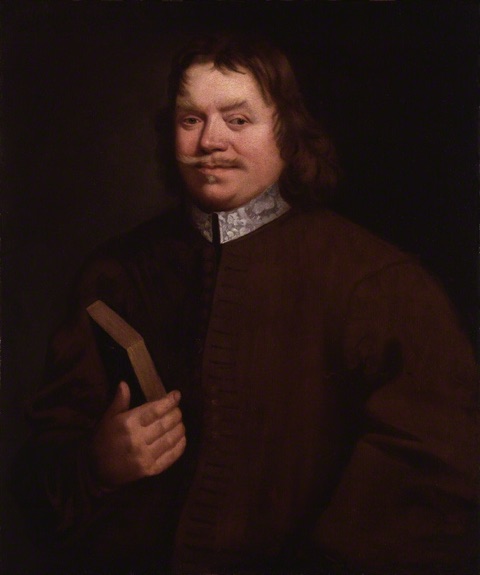
About the author
John Bunyan
John Bunyan (1628 to 1688 AD) was born at Elstow, near Bedford, and worked as a tinker, a mender of pots and pans, the trade his accusers throw at him again and again in this book. After his conversion he joined the separatist congregation at Bedford and began preaching in the mid-1650s. When the monarchy was restored, the old laws against unlicensed meetings were enforced, and his arrest in November 1660 is the event the Relation records. He refused every offer of release that required him to stop preaching, and stayed in Bedford jail for about twelve years, until 1672. There he wrote Grace Abounding and other works, and The Pilgrim's Progress followed in 1678. He later became pastor of the Bedford congregation. In August 1688 he preached the sermon that closes this volume in London, and he died there later that month.