Modernized edition · Full text · Free PDF/EPUB
A Christian Directory: Volume 7 in Modern English
Want the file? The PDF/EPUB is free with an account.
Summary
- Author
- Richard Baxter (1615 to 1691 AD), Puritan minister of Kidderminster
- Published
- 1673 AD, as A Christian Directory: Or, A Sum of Practical Theology, and Cases of Conscience
- This volume
- The seventh of seven: the concluding chapters of Part 4, Christian Politics
- Contents
- Sixteen chapters from Contracts and Trade to Self-Judging, then A Moral Prognostication, The Reformed Liturgy and an appendix of litany and praise
- Length
- 148,000 words · 10 hours
What is A Christian Directory: Volume 7 about?
A Christian Directory: Volume 7 completes Part 4, Christian Politics, of Richard Baxter's 1673 manual of practical theology. It answers cases of conscience on contracts, lending, oppression, waste, lawsuits, slander, judging others, love of neighbors and enemies, charity, restitution, pardon and self-examination, and closes with his Moral Prognostication and Reformed Liturgy.
Read the full summary (7 points, key themes)Show less
How the argument unfolds
- 01
Contracts and Trade. Golden-rule cases on bargains, prices, debts, interest, wagers and lost goods, with directions for merchants living among unbelievers.
- 02
Oppression, Prodigality and Lawsuits. Landlords, spendthrifts and litigants are judged by stewardship and love; going to law comes only after arbitration fails.
- 03
Backbiting, Rash Judging and Trusts. When one may speak of another's faults, how to judge a profession of faith, and when a confidence must be broken.
- 04
Selfishness and Love. The tenth commandment forbids selfishness; love of neighbors, believers, friends and enemies is proportioned to goodness.
- 05
Works of Charity. The most useful works of charity in Baxter's day and the order in which needs come first.
- 06
Confession, Restitution, Pardon and Self-Judging. Repairing wrongs to others, the terms on which God forgives, and how to test one's own state without bias or fear.
- 07
Prognostication and Liturgy. A forecast of church division and a hoped-for age of unity, followed by orders for worship, sacraments and discipline.
Key themes
- The golden rule in the marketplace. Custom, shrewdness and the letter of the law never excuse profiting from another's ignorance or need.
- Stewardship of wealth. All a Christian owns is God's; luxury robs the poor and the church, while thrift for the sake of giving is a duty.
- Love against faction. Party spirit and censoriousness are the chief enemies of Christian love, among sectarians and established clergy alike.
- Concord on essentials. The churches can unite only on what all Christians have always held, without new oaths or subscriptions.
Reader questions (9)Hide the questions
Questions about A Christian Directory: Volume 7
Is there a modern English version of A Christian Directory: Volume 7?
Yes. This is A Christian Directory: Volume 7 by Richard Baxter in modern English. The language is modernized and the author's order and argument are kept. The full modernized text is free to read on this page.
Can I read A Christian Directory: Volume 7 online for free?
Yes. The complete text of this modern English edition is on this page, with no sign-up or paywall.
Is there a free PDF of A Christian Directory: Volume 7?
Yes. The PDF and EPUB of this edition are free with an Updated Works account. Sign in with Google or an email link; no card is needed.
What is A Christian Directory: Volume 7 by Richard Baxter about?
It applies the law of love to life among neighbors: trade, debt, rents, spending, lawsuits, speech and judgment of others, charity, restitution and God's pardon. It ends with self-examination, a forecast for the churches and a reformed liturgy.
How does this volume relate to the rest of A Christian Directory?
It is the last of seven volumes and finishes Part 4, Christian Politics. Baxter often refers back to earlier chapters, such as those on lying, gluttony, marriage and forgiving enemies.
Did Baxter think lending at interest was a sin?
Not always. Interest that feeds orphans or the poor from a rich borrower's gains is lawful and charitable; interest taken from the needy or forced from a ruined debtor is sin.
How much did Baxter think Christians should give?
He calls a tenth of gross income a reasonable rule for most people, set aside each Lord's Day, and far too little for the rich or in times of famine, war or persecution.
May a minister keep secret a crime confessed to him?
He must reveal planned crimes and treason and never promise unconditional secrecy, but where no one else is endangered, Baxter judges that a penitent's confessed crime may be kept secret.
When was A Moral Prognostication written?
It was “Written by Richard Baxter in 1661, when by the king’s commission we negotiated in vain for church concord.” It was set aside to avoid offense and published many years later as a warning to posterity.
A Christian Directory: Volume 7 in Modern English · Full text
Part 4: Christian Politics (Concluded)
Chapter 19
Contracts and Trade
Section 1: General Directions Against Unjust Bargaining and Contracts
Besides the final directions in Chapter 18, take these as more closely suited to this subject.
Direction 1. Make sure the two great principles of justice are deeply rooted in your heart and have become second nature to you. These are genuine love for your neighbor and denial of yourself. Both are summed up in one command: love your neighbor as yourself. When they rule your heart, you will be freed from the urge toward injury and fraud. You will also be freed from the power of the temptations that draw people into those sins. Such sins will go against your settled inclination, and you will be more eager to help your neighbor than to gain at his expense.
Direction 2. Yet do not rest in having these settled habits alone. Call them into action whenever you bargain with others. Let a faithful conscience act like a town crier proclaiming God’s law to you: “Now remember love and self-denial, and do as you would have others do to you.” Alexander Severus deeply valued this saying: “Do not do to another what you do not want done to yourself.” He made it his motto and had it written and engraved on his doors and buildings. According to Lampridius, he had learned it from Christians or Jews. What a crime and shame it is, then, for Christ’s own professed disciples neither to learn nor to love it! Whenever you bargain with anyone, press this question home to your own heart: “How would I want to be treated if I were in his place?”
Direction 3. When the tempter draws you to think only of your own advantage and gain, remember how much more you will lose by sin than your gain could ever amount to. Achan, Gehazi, Ahab, Judas, and others like them did not foresee the end. Had they seen the sheer size of their loss, it would have curbed their covetous desires. Believe God’s word from the bottom of your heart that you will lose eternal things if you sinfully gain temporal things. Then you will not rush into a bargain that wins the world and loses your soul.
Direction 4. Understand your neighbor’s situation rightly, and reflect on his needs and interests. You think about what you need yourself. Do you consider whether the person you deal with has needs just as great as yours? Think about what his goods cost him, or how hard the workman’s labor is. Consider the house rent he must pay and the family he must support. Ask whether he can manage all that on the terms you want from him. Also, do not believe every common report about his wealth or the price of his goods. Rumor in such matters is often false.
Direction 5. Put the public good above your own private advantage. It is never lawful to take up or maintain an oppressive monopoly or trade that enriches you at the expense of the commonwealth or of many others.
Direction 6. Therefore, pay special attention to the laws of the country where you live, both regarding your trade itself and the price of what you buy or sell. The law is made for the public benefit, which must come before any private person’s gain. When the law directly or indirectly sets rates for labor or goods, you must ordinarily observe them. Otherwise you commit two sins at once: injury and disobedience.
Direction 7. Give special respect as well to common valuation and the market price. Though it is not always our sole rule, it must ordinarily form a major part of it and carry great weight.
Direction 8. Do not let unwise thinking make you appear more covetous than you really are. Some unwise people cannot manage their buying and selling without endless words over a penny or a trifle. That makes others think them covetous, when the real problem is simply a lack of good sense. We must avoid the appearance of evil. I know people who will gladly give a pound to charity on the spot. Yet those same people spend so many words arguing over a penny in a bargain that they are severely judged and misunderstood. If you see reason to break off a deal over a penny or a small matter, do it graciously in fewer words and walk away. Do not tempt the seller to multiply words by doing so yourself.
Direction 9. Have no more bargaining with others, especially with fault-finding people, than you truly must. Much dealing usually brings much misunderstanding, offense, criticism, and complaint.
Direction 10. In doubtful cases, when you are unsure what is lawful, choose the course safest for the future peace of your conscience. Do this even when it goes against your own advantage and may cost you what is rightfully yours.
Section 2: Cases of Conscience About Justice in Contracts
Question 1. Must I always do as I would have others do to me, or does this rule have exceptions?
Answer. The rule intends nothing more than that your proper self-denial and love for others be rightly practiced in all your dealings.
1. It assumes that your own will and desires are honest and just, governed by God’s law. A sinful will may never be made the rule for your own actions or anyone else’s. A man who wants someone else to get him drunk may not therefore get another person drunk. A man who wants to abuse another man’s wife may not therefore wish another man to lust after or abuse his own wife. Someone who refuses to be taught, corrected, or reformed may not therefore withhold instruction or correction from others. Nor may someone who wants to kill himself therefore kill another. Rather, whoever wants no wrongful harm done to himself must do none to others. Whoever wants others to do him good must be just as willing to do good to them.
2. It assumes that the application must vary according to your different stations and roles. A parent who rightly wants his child to obey him is not therefore bound to obey his child. A ruler is not bound to obey his subjects. Nor is a master bound to do all the work for his servants that he expects them to do for him. Instead, you must treat another person as you would rightly want him to treat you if you were in his place and he were in yours. Under those conditions, it stands as a true rule of righteousness.
Question 2. Is a son bound by a contract that his parents or guardians made for him during his infancy?
Answer. He is bound to some things, and not to others. An infant can be placed under obligation by another person on four grounds. First, he belongs to his parents, or to a master to whom he is in absolute servitude. Second, he is under his parents’ government. Third, he is indebted to his parents for benefits received. Fourth, he is an expectant, capable of enjoying future benefits on conditions he must fulfill.
1. No parent or lord holds absolute ownership over any rational creature, yet parents do have a qualified ownership for specific purposes. That parental ownership gradually diminishes as the son grows up to the full use of reason and gains greater ownership of himself. A parent may therefore bind his son only as far as that ownership extends, and only to acts of that kind. In those matters, the parent’s will is counted as the son’s will. For instance, if a parent sells his son into servitude, the son is bound to such service as one human being may rightly require of another.
2. As ruler over his child, a parent may contract with a third party and promise that the child will perform certain acts. These must be acts the parent has authority to command and enforce, such as reading, hearing God’s word, or working as he is able. This power lasts no longer than the child remains under the parent’s governance. While he does, obedience requires him to fulfill their contracts by obeying their commands.
3. Having received his very life and upkeep from his parents, a child remains indebted to them in gratitude as his benefactors for as long as he lives. That debt runs so deep that some have questioned whether a child can ever repay it. Indeed, as to the full value of the benefit, he can repay it only by advancing their salvation. Many a child has been the instrument of a parent’s conversion. To the extent that a son stands in this debt to his parents, he is bound to carry out what they impose on him by contract with a third party. Suppose his parents can be freed from captivity only by binding the son to pay a large sum or to serve for their release. Even if they never gave him any money, he is bound to pay the sum if he can earn it, or to perform the service. He has received something far greater from them: his very being.
4. Parents are at once qualified owners, rulers, and benefactors to their child. Acting in all three roles together, they may bind him conditionally to a third party who is willing to benefit him. They may obligate him to meet certain conditions so that he can enjoy particular benefits. A guardian or any suitable friend acting on his behalf may bind him in the same way. For example, they may take out a lease in his name binding him to pay a rent or perform a service so that he may enjoy a greater benefit. In the same way, parents bind their children under civil government to the laws of the society or kingdom so that they may have the protection and benefits of subjects.
In these cases the child has no ground to complain of injury, because he is bound for his own good. On this basis a parent cannot bind him to his harm. If the child chooses to give up the benefit, he may free himself from the obligation whenever he wishes. He may refuse to stand by the agreement if he dislikes it. If he surrenders the lease, he is released from the rent and the service.
From all this you can see that no one can bind another person against God or against his salvation. A parent cannot bind a child to sin. He cannot bind him to stop hearing or reading God’s word, praying, or doing anything necessary for salvation. Nor can a parent bind a child to sit under a heretical pastor, or to marry an unbelieving or wicked wife, and the like.
Here you can also see the grounds on which God has appointed parents to bind their children in the covenant of baptism. Through it they obligate them to be God’s servants and to live in holiness all their days.
It is likewise clear that no parent can bind a child to misery, or to any condition worse than having no existence at all.
Moreover, when parents claim, as they usually do, to bind their children as benefactors for the children’s good, the obligation must be interpreted in that light. The child is then bound to nothing that truly harms him.
Indeed, all the ownership and authority of parents cannot empower them to bind a child to his own hurt, except for some greater good. That greater good may be for the parents themselves, the commonwealth, or others, or at least what the parents judge to be a greater good. Suppose they err through ignorance or self-interest and bind the child to a greater loss for a smaller gain of their own, such as paying two hundred pounds to save them from paying one hundred pounds. I leave it undecided whether their wrong and sin excuse the child from being bound beyond the proportion of the benefit involved.
Question 3. What if the parents disagree, and one wants to bind the child while the other does not?
Answer.
1. If the parents are acting simply as owners for their own legitimate interest, either parent may bind the child to a just degree. Each holds a separate right of ownership.
2. If it is an act of parental government, such as binding the child to perform a particular service at their command during his minority, the rule differs. The father may bind him even against the mother’s consent, because he is the chief ruler. The mother may not bind him against the father’s will, though she may do so without his consent.
Question 4. Is a person bound by a contract he made in ignorance or through a mistake about the matter?
Answer. I have already answered this regarding marriage in Part 3, Chapter 1. Here I add three distinctions. First, we must distinguish between culpable and blameless error. Second, we must distinguish between a mistake about the main substance of the contract and one about minor details or circumstances. Third, we must distinguish between cases where the law of the land or the common good intervenes and cases where it does not.
1. If your mistake was your own fault, you are not completely freed from the obligation. If it stemmed from gross fault through negligence or vice, you are not freed at all. On the other hand, suppose it was the sort of ordinary human frailty almost everyone is prone to, so that only a person of extraordinary virtue or diligence could have avoided it. Then fairness calls for a proportional reduction or release from the obligation. As far as you were obliged to understand the matter, that far you are bound by the contract. This holds especially when another person suffers a loss because of your error.
2. A blameless mistake about incidental circumstances or smaller parts will not release you from an obligation in the main substance of the contract. A blameless mistake about the essentials, however, will release you.
3. An exception arises when the law of the land or the common good overrules the case, for then that factor can still bind you. In many situations rulers judge it necessary to tie the legal force of a contract strictly to the outward words, documents, or actions. They do this to keep deceitful people from escaping their obligations with false claims of misunderstanding. Otherwise nothing would give security to anyone making a contract. In such cases private advantage must give way to the law and the public good.
4. Natural limitations must be grouped with faults for the purpose of creating an obligation, even though they are not moral vices, as long as the person is capable of contracting. Suppose you have an unusual weakness of memory or are ignorant of the business you are handling. Another person who did nothing wrong to take advantage of you must not suffer loss because of your weakness. When someone enters the marketplace or contracts with another person who knows nothing of his handicap, he is presumed to understand what he is doing unless the contrary is plain. You should not meddle in affairs you do not understand. If you do, you must be content to bear the loss of your own weakness.
5. Even so, when another person has profited from such a bargain, the laws of equity and charity may oblige him to give up his profit rather than take advantage of your weakness. He may hold you to the bargain only far enough to protect himself from loss. The sole exception is when your condition makes you an object of his charity rather than of strict justice in exchange alone.
Question 5. Is a drunken man, a man carried away by violent passion, or a man suffering from melancholy bound by a contract made in that state?
Answer. Remember again that we are speaking only of contracts involving profit or worldly interests, not marriage or agreements of another kind. As the question applies to a person in drunkenness or overwhelming passion, it is answered by the previous rule on culpable error. As it applies to a person in melancholy, it is answered by the previous rule on natural limitations. If the melancholy is so severe that it leaves him incapable of bargaining, however, his case is different. He must then be regarded like someone who lacks the use of reason, or one who is delirious or out of his mind.
Question 6. May another person hold a man to a bad bargain, or keep the money he gave or gambled away while drunk or in a fit of passion, when he regrets it upon sobering up?
Answer. Ordinarily, the other party may collect the money from the loser or from the one who threw it away like that, but he may not keep it for himself. If the loser is poor, he should give it to the man’s wife or children, whom the man is robbing by his sin. If not, he should either hand it over to the magistrate or the overseer of the poor, or give it to the poor himself.
The reason for this judgment is clear. The loser has parted with his ownership and has no further claim to the money. Yet the winner can acquire no rightful claim from another person’s crime. One may acquire a right from an injury done to oneself, as far as restitution requires, but never from a crime alone. The man’s loss must be treated like a fine or penalty, and disposed of just as fines imposed on swearers and drunkards are. By his voluntary bargain, the loser has simply put the other party in the magistrate’s place. He has authorized him in ordinary cases to devote the gain to the poor or the public good.
Question 7. Am I bound by words or documents that ordinarily express a covenant if I had no intention of making a covenant or binding myself when I spoke or wrote them?
Answer. Two cases must be distinguished. In the first, you spoke or wrote those words intending to make another person believe you meant to covenant. Or at least you acted with such culpable carelessness that he was bound or justified in taking you that way. In the second case, you used the words in a way that made it clear enough you intended no covenant or self-obligation.
In the first case you do bind yourself, as stated earlier. Another person must not suffer loss, nor may you profit or avoid loss, through your own fraud or gross negligence. In the second case you are not bound. An intention to bind oneself is the internal cause that creates an obligation. Expressing that intention is the external cause without which no obligation can arise. If you merely read a bond aloud, repeat its words in telling a story, or recite them as a joke, no obligation follows. Suppose a legal clerk writes out a form of obligation naming himself, simply as a handwriting copy for a boy or a legal sample for a student. That creates no obligation in conscience and makes him debtor to no one. The same principle settles questions about the intention of the one who baptizes, the one baptized, or the parent.
Question 8. May an honest man promise money to a robber to save his life, a larger sum, or more valuable goods?
Answer. Yes, in a case of necessity, when his life or estate cannot be preserved in any better way. On the same ground, taxes may be paid to an armed enemy or to a plundering soldier, provided doing so causes no other harm greater than the good preserved. Anyone may give up a smaller good to save a greater one. Such an act is no more truly voluntary or blameworthy than throwing cargo into the sea to save the ship and the lives on board.
Question 9. May I give money to a judge, justice, or court officer to get him to do me justice, keep him from wronging me, or help me avoid persecution?
Answer. If your cause is unjust, you may not give anything to secure injustice against another person. You may not speak a single word for it or even wish for it. I take that as already settled. Neither may you give money even to obtain justice when the law of the land forbids it and when doing so will cause more incidental harm to others than good to you. That happens when it hardens officials in bribery and trains them to expect bribes from others. Apart from cases where such greater incidental harm makes it wrong, however, it is as lawful as paying a thief not to kill you. When you cannot obtain your right by other means, you may part with a smaller good to secure a greater one.
Question 10. If I make such an agreement, may the other party lawfully accept the money from me?
Answer. No, because we are assuming it is unlawful on his part.
Question 11. If I am forced by necessity to promise money to a robber, judge, or officer, am I bound to pay it once the danger is over?
Answer. You have given up your own ownership by your agreement and therefore must not keep the money. Yet the offender can gain no rightful title through his sin. For this reason some say that in strict justice you are not bound to give it to him, but rather to hand it to the magistrate for the poor. Even then, prudence may give you other reasons based on the consequences to pay the man himself, though strict justice does not require it. He might otherwise take revenge and do you greater harm, or some other greater evil might follow that you may lawfully prevent with money.
Many others hold that you are bound to deliver the money to the thief or officer himself. Handing it over is lawful, they argue, even though he has no just title to it. Moreover, this was your meaning and the plain sense of your words in making the agreement. If paying it were unlawful, promising to pay could not be lawful either, or else your promise would be a lie.
Those on the first side answer with a comparison. Just as a person released from a promise by the one to whom he made it is not considered untruthful for not performing it, the same holds with the thief or officer here. Because he has no rightful claim, he stands toward you like someone who has surrendered his claim. That reply does show that withholding the promised money is not strict injustice. Yet it fails to clear you of falsehood. Making such a promise with no intent to keep it is still a lie, and so is making it with intent to keep it and then breaking it when you are able to pay. A Jesuit, of course, will tell you that you may speak the words of a promise to a thief or persecuting magistrate with equivocation or mental reservation. (On this, see more in the chapters on lying, vows, and perjury.)
My own judgment is that your promise must be made sincerely. According to its genuine intent, you must offer the money to the thief or officer, unless the magistrate forbids you or some weightier reason opposes it that you did not foresee when you made the promise. The offender himself, however, is unquestionably bound not to accept the money.
The same verdict applies to all contracts and promises made to people who coerce us by unjust force. We stand under an obligation to truthfulness, though not to them in strict justice. They hold no rightful claim and may not lawfully accept the payment or service promised. If the public good unexpectedly conflicts with fulfilling it, we must not fulfill it. Much the same applies to conquerors and to those who upon conquest become their vassals or subjects on unrighteous terms. Always remember, however, that if an agreement is not merely a covenant with man but a vow to God making him a party to it, the case changes and we remain bound.
Question 12. May I promise a thief or bribe-taker to conceal his crime? And am I bound to keep such a promise?
Answer. This is a promise to leave undone what would otherwise be a duty. Ordinarily it is a duty to expose a thief or bribe-taker so that he may be punished. Yet positive duties do not bind at every single moment. No act, especially an outward act, is a duty at all times. Therefore exposing an offender’s crime is not always a duty either. If it is not always a duty, it ceases to be a duty whenever it conflicts with a greater benefit or weightier duty. When two goods compete, the greater must be preferred.
Accordingly, consider the likely outcome. If you see in fair probability that concealing the offender will do more harm to the commonwealth or to people’s souls than saving your life is likely to do good, you may not promise to conceal him. If you sinfully do promise it, you may not keep that promise. On the other hand, if preserving your life is likely to achieve a greater good than refusing to conceal him, such a promise is no sin, because exposing him is not then your duty. Judging this rightly is very difficult. When what you save by such a promise is less than your life, it often turns out to be a smaller good than exposing the crime.
Someone will object here: “If I refuse to promise concealment to a robber, I must conceal him anyway, because once he kills me I cannot expose him. And I must conceal the bribe-taker, because until I promise secrecy I cannot prove him guilty. Besides, a man who promises to refrain from one particular good action while he lives still preserves his life for every other good work. If he dies, he will do neither that good work nor any other.”
This case is not so easily settled. If Daniel dies, he can neither pray nor do any good on earth. If he lives, he could do much other good even if he never prayed again. Yet Daniel could not lawfully promise to stop praying in order to save his life.
I think we must draw two distinctions. First, distinguish between duties essential to the outward practice of Christianity, or of constant and indispensable necessity, and duties that are changeable and belong only to certain persons, times, and places. Second, weigh the differing consequences of leaving them undone. Ordinarily, a person may promise to forgo a particular changeable duty or role to save his life. He might promise not to read a certain commentary, speak with a certain minister, or serve as a magistrate or minister. Two conditions apply: we must not have previously bound ourselves never to leave our calling until death, and the good expected from our forbearance must outweigh the evil in a wise person’s judgment.
No one, however, may promise to omit a duty that God has made necessary throughout life. We may never promise not to love, fear, or trust God, nor to stop worshiping, calling upon, or praising him. We may never promise not to do good in general to people’s souls or bodies. Nor may I promise not to preach or pray while remaining a minister of Christ, or not to govern at all while holding the office of a governor. All of those contradict prior and greater promises or duties. Nor may you omit even the smallest duty to save your life at a time when your death is likely to do more good than your life would do without that one duty. Apply these principles to the case at hand.
Question 13. If another person deceives me into making a promise or covenant that hurts me, am I bound to keep it once I discover the deceit?
Answer. Yes, in two cases:
1. When the law of the land or other considerations for the public good require it.
2. When you were significantly and avoidably at fault through negligence, carelessness, or otherwise contributing to your own deception.
Otherwise, to the degree and in the respects in which he deceived you, you are not bound.
Question 14. If neither contracting party understands the other, is it a valid covenant? And if so, whose meaning must prevail?
Answer. If they fail to understand each other on the essentials of the contract, it is no contract in conscience. The sole exception is where civil laws attach an obligation to the outward act alone for the sake of public safety. If they misunderstand each other only on minor details and are equally at fault or equally innocent, they must reach a new agreement on those points. If only one party is guilty of causing the misunderstanding, he must bear the loss if the other insists on it.
Question 15. Am I bound to stand by bargains that my friend, trustee, or servant makes on my behalf when they turn out greatly to my harm or loss?
Answer. Yes, in two cases:
1. When they did not exceed the limits of the authority or trust you gave them.
2. Even if they did exceed it, when your past practice of trusting and employing them, or some other sign, gave the other party solid reason to assume you had authorized them to do what they did. Because the other party was misled through your fault, you are at least bound to see that he suffers no loss through you. You are not bound to make him a gainer, however, unless you genuinely signaled that you authorized the contract.
If it was purely your friend’s or servant’s mistake with no fault on your part, it does not bind you to a third party. How far you may be bound to pardon that mistake in your friend or servant, and how far you must protect them from loss, is a separate question. That must be settled by weighing all the other obligations between you and them.
Question 16. If I say I will give a certain person this or that, am I thereby bound to do it?
Answer. It is one thing to state your present mind and intention without giving up your freedom to change it. It is quite another to intend to bind yourself to do what you mention. Such an obligation may be intended toward another person or toward God alone. It may also be intended either in the transfer and use of the thing, or simply in truthfulness, the moral duty of keeping your word.
Suppose by saying “I will do it” or “I will give it” you meant only that this is your current wish, plan, and intention. Even if you added a confident belief that your mind will not change, that binds you no further than you are bound to stay in that mind. A person’s confident plans may lawfully be changed for sufficient reason. On the other hand, you may have intended to transfer ownership to another, grant him an immediate right, or bind yourself to him for the future by that promise. Or you may have meant to bind yourself to God through an unqualified assertion, accepting the guilt of lying if you fail to perform it, or to dedicate the thing to God by those words as a vow. In any of those cases, you are bound to follow through, assuming nothing else forbids it.
Question 17. Does an inward promise of the mind, never spoken aloud, bind a person?
Answer. In a vow to God, yes. And if you intend it as an assertion binding you as a matter of truthfulness, it obliges you so that you must not lie. It is not a contract, however, and it gives no human being any title to what you only thought silently.
Question 18. May I promise something that is intrinsically unlawful without intending to keep it, in order to save my life from a thief or persecutor?
Answer. No, because it is a lie whenever the tongue disagrees with the heart. Those who believe a lie is no sin when it harms no one might justify this if their premise held up. I have already refuted that view in Part 1, in the chapter against lying.
Question 19. Can something that is otherwise unlawful become a duty because I promised to do it?
Answer. I answered this earlier in Part 1, in the chapter on perjury and vows. What is intrinsically unlawful remains unlawful despite any vow or promise. Some hold the same view even about what was unlawful beforehand only through incidental circumstances. For example, it is not inherently unlawful to throw away a cup of wine or a piece of silver, since there can be sufficient reason to do so. Yet it is unlawful to do so for no good reason. Suppose I contract with someone to do it; am I bound by that contract?
Many say no. They argue that the act is unlawful even if only incidentally, and a contract cannot make it lawful. I think rather that I am bound in such a case, though my obligation does not clear me entirely of sin. Before I promised or vowed it, throwing away even a farthing without reason was a sin. Making a groundless promise to do so was also a sin. Yet once promised, there may be reason to perform it. If I have entangled myself so that I must sin either way, I must choose the lesser sin, because that is then my duty. Of course, I ought to have avoided both while I still could.
When a great and harmful sin is involved, I may be bound to break my agreement rather than commit it. It is harder to say that about every minor incidental wrong, for three reasons.
1. The promise or covenant is now an additional factor placed on the scales, and it may outweigh a lighter incidental wrong on the other side. I grant, however, that the great difficulty lies in judging which factor truly weighs more.
2. Suppose a magistrate commands me to do something slightly wrong only by incidental circumstance, such as wasting an hour, giving away a penny pointlessly, or speaking a word that would otherwise be idle. I think I must do it. In that case it ceases to be pointless because it expresses my obedience; otherwise obedience would be far too narrowly restricted. By the same logic, my own contract can make it my duty, because I am as capable of binding myself as a magistrate is.
3. Breaking a covenant, and committing perjury, is genuinely a greater sin than speaking an idle word. My mistake does not stop it from being a sin. It simply entangles me in a necessity of sinning whichever course I take.
Question 20. Suppose someone makes a contract to assist another’s sin for pay. This might be a corrupt judge, lawyer, officer, or clerk advancing injustice, a harborer assisting a thief, or a procurer or prostitute taking the wages of fornication. May he collect the payment after the sin is committed, supposing he has repented of it?
Answer. The offender who promised the payment has parted with his title to the money. You may therefore take it from him, and indeed ought to do so unless he will dispose of it properly himself. At the same time, you must confess the sin and urge him to repent as well. You may not keep any of that money as your own, however, because no one can gain true ownership through wickedness. Instead, give it to the injured party to whom you owe restitution, or else to the magistrate or the poor, as the particular case requires.
Question 21. If I make a contract, bargain, or promise privately between the two of us, without legal formality or witnesses, does it bind me to perform it?
Answer. Yes, in the court of conscience, provided the matter is lawful. Suppose, however, the matter is unlawful before God and is the sort of thing civil law alone would hold you to or enforce if it had been witnessed. Then you may rightly avoid the reach of civil law through the lack of legal forms and witnesses.
Question 22. May I buy an office in a court of justice for money?
Answer. Some offices you may buy, where the law permits it and it does not lead to injustice. Other offices you may not. Lawyers can explain the difference better than I can, and working through every instance would be tedious.
Question 23. May a person buy a post of public magistracy or judicial office for money?
Answer. Never when your own honor or private advantage is your aim. The common good is the true end of government. For a faithful governor, office is a post of heavy labor and suffering that demands deep self-denial and patience. Those who purchase it as a place of honor, profit, or pleasure either do not know what they are taking on or have worldly motives. Otherwise they would sooner pay to buy their freedom and stay out of it.
Suppose, however, a king, judge, or other magistrate sees that a wicked man far less fit to govern is likely to be installed if he is passed over. In that case he may lawfully purchase the people’s deliverance at a very high price. When sovereign authority is in such danger, he may even do so by a lawful war, which costs far more than money. Even then, he must guard his heart closely. He must not pretend to seek the common good while really aiming at his own advantage and honor. He must also weigh the likely consequences and consult the laws of the land. If the law strictly forbids buying a judicial office, it must be obeyed, and harmful effects can make the act sinful as well.
Question 24. May a person sell a church benefice, a rectory, or holy orders?
Answer. If the benefice is originally your own gift, it lies in your power at the outset to give part or all of it, and to reserve certain deductions from it or not. Once it has genuinely been given to the church, however, and you hold only the patronage or right to select the minister, selling it for any private advantage of your own is sacrilege.
Whether you may draw something from a wealthier benefice to support a poorer church depends partly on the law of the land and partly on the likely consequences. If the law strictly forbids it, on the ground that unlawful contracts cannot be prevented unless some lawful ones are restricted too, the law must be obeyed for the common good. Likewise, if a lawful contract is likely to produce the greater harm of encouraging unlawful ones, such examples must be avoided even when the law does not forbid them. Selling holy orders, meaning the office of the ministry or the act of ordination, is unmistakable simony. Clerks may still rightly be paid, however, for drawing up legal documents.
Question 25. May a man pay money for ordination or a church benefice when they cannot be obtained any other way?
Answer. This is answered in Question 23.
1. If the law strictly forbids it for the public safety, you may not.
2. If your chief aim is your own advantage, ease, or honor, you may not.
Suppose, however, you are free from all such evils. If the issue is solely whether you may pay money to enter the post yourself to keep out a heretic, a wolf, or an unqualified man who might ruin the people’s souls, I do not see why it might not rightly be done.
Question 26. May I pay money to officers, servants, or assistants for their help in forwarding the matter?
Answer. You may pay them for writing documents or performing other routine clerical services connected with incidental details. You may never pay them, directly or indirectly, to advance a simoniacal contract. What you may not pay to the principal party, you may not pay to his agents or anyone else for the same purpose.
Question 27. May I give or do anything afterward out of gratitude to the patron, bishop, or others, or to their relatives and retainers?
Answer. Not when the expectation of that gratitude was a secret or open condition of the appointment or ordination, and you believe you would not have received it otherwise. Promised gratitude is simply another kind of contract. Nor may you show gratitude in any scandalous manner that looks like simony. Apart from that, you may certainly show prudent gratitude for this or any other kindness.
Question 28. May a bishop or pastor accept money for sermons, sacraments, or other ministerial duties?
Answer. Not as payment for the things themselves. He must never sell God’s word, the sacraments, or any other holy thing. Yet those who serve at the altar may live by the altar. The elders who rule well are worthy of double honor, and the mouth of the ox that treads out the grain should not be muzzled. Ministers may receive proper support while performing God’s service, so that they are free to devote themselves to their proper work.
Question 29. May one person release another from a promise made to him?
Answer. Yes, if it is nothing more than a promise to that person, because anyone may give up his own right. The case changes, however, if it is also a vow to God, or if you intended to bind yourself in truthfulness under the guilt of lying should you act otherwise. No human being can release you from those obligations.
Question 30. What if the contract was sealed with an oath? May the other party still release me?
Answer. Yes, if the oath only tied you to keep your promise and was not a vow to God that made him a party by dedicating something to him. When the oath simply serves the promise, the person who releases you from the promise releases you as well from the oath that bound you to keep it faithfully.
Question 31. Am I bound by a promise when the cause or reason behind it turns out to be a mistake?
Answer. If by “cause” you mean only the external reasons that motivated you, you may remain bound even after discovering your mistake. Only insofar as the other party was culpably responsible for the mistake, as explained earlier, is he bound to make amends to you. If by “cause” you mean the formal basis that constitutes the contract itself, then the mistake may in some cases void the contract, as I have already discussed at length.
Question 32. What if an unforeseen event afterward makes the contract far more harmful to me than could have been anticipated?
Answer. In some contracts it is assumed or explicitly stated that the parties agree to take the risk, and then they remain bound. In other contracts it is reasonably understood that the parties intend to be free if so drastic a change occurs. Giving examples of both kinds, however, would take too long.
Question 33. What if something happens unexpectedly that makes keeping the contract harmful to a third person? Surely I cannot be bound to injure someone else.
Answer. If the contract is of the second kind mentioned in the previous answer, you may be freed on that ground. Suppose it is of the first kind, where you were understood to take the risk and guarantee the other party against all other claims. Then either you truly had authority to make the bargain or you did not. If you did not, the third person may defend his right against the other party. If you did have authority, you must compensate the third person as best you can. Indeed, if you made the agreement without authority, you are bound to protect the other contracting party from loss, unless he knew your authority was doubtful and chose to take the risk.
Question 34. What if something happens that makes performing the contract a sin?
Answer. You must not do it. Still, you must compensate the other party for every loss you caused, unless he explicitly or implicitly agreed to take that risk as well.
Question 35. Am I still bound if the other party breaks his agreement with me?
Answer. Some covenants establish ongoing relationships, such as those between husband and wife, pastor and flock, or rulers and subjects. Others transfer title to goods, and I am speaking only of those here. In such contracts, certain conditions are essential to the agreement. If the other party breaks them first, you are freed from your obligation. Other conditions are not essential, but only required for a particular further benefit; failing to meet them forfeits only that benefit. Still others are simply subsequent duties entrusted to the other person’s honesty. A failure in those does not release you, and they are called conditions only in a loose sense.
Question 36. May I contract to do something that I foresee will likely become impossible or sinful before the time comes, even though it is not so right now?
Answer. With everyone you must deal truthfully, and with honest contractors you must deal openly. With thieves, murderers, and persecutors, however, you are not always bound to deal openly.
With that established, your agreement takes one of two forms. Either it is unconditional, saying, “I will do this whether it is lawful or not, possible or impossible,” which is both sin and folly. Or else it is conditional, saying, “I will do this if it remains lawful and possible.” That condition, or rather exception, is always implied even when unstated, unless the opposite is explicitly said. Such an agreement is therefore lawful with a robber, to whom you are not bound to speak openly, because it merely conceals from him an outcome you foresee.
For example, suppose you have news that a ship has been lost at sea or is likely to be captured by pirates, while the robber expects it to arrive safely in harbor soon. You may promise to surrender yourself as his prisoner when that ship comes home. Or suppose you know someone is mortally ill and will die before next week. You might promise to marry or serve that person two months from now, since “if he or she is still alive” is implied. With equal contractors, however, this is unlawful. To them you owe not only truthfulness but justice, as the following cases will show more clearly.
Section 3: Special Cases About Justice in Buying and Selling
Question 1. Am I bound to aim for the person I deal with to gain from the bargain as well as myself?
Answer. Yes, if you are equally in need or in a similar position. If he is very poor and you are rich, you must blend charity with justice and aim for the bargain to benefit him more than you, assuming he is someone to whom you genuinely owe charity. On the other hand, if you are poor and he is rich, you may willingly be the only gainer yourself, provided you do not covet what is his or wish him wronged. When he is able to deal generously, you may willingly accept his charity or kindness.
Question 2. May I desire or accept more than my labor or goods are worth if I can get it?
Answer.
1. Not by deceit, persuading another person that they are worth more than they really are.
2. Not by extortion, exploiting people’s ignorance, mistake, or urgent need (more on this shortly).
3. Not from anyone poorer than yourself, or from anyone who intends only an equal bargain.
4. You may accept it when dealing with wealthy people who understand what they are doing. Out of generosity, they do not mind a small difference and want another person to profit by them. In that case it is lawful to take whatever they choose to give you.
Question 3. May I ask more in the market than my goods are truly worth?
Answer. You may in the case just mentioned, when selling to wealthy buyers who want to show generosity and let you profit. Even then, the honest approach is to say, “It is worth only this much, but if you are willing to give this much more because I need it, I will take it thankfully.”
Some also point to places where common custom is to ask more than an item’s worth, and customers will not buy unless you come down from your opening price. They argue you may lawfully ask more there, because otherwise you cannot trade with such people. My judgment on this point is fourfold.
1. Ordinarily it is better to ask no more than a fair profit. The drawbacks of doing otherwise outweigh any on the other side. Someone who hears you ask an unfair price has good reason to think you would take an unfair price if you could get it, and therefore that you are unjust.
2. That fair profit does not always sit at one exact, indivisible figure. A person supporting a family by his trade may lawfully take a moderate, proportional profit, even though taking less would still earn him something. Always staying strictly fixed at a single price is not practical. A seller who may lawfully take two or three shillings or more on the pound from the rich may see good reason to sell for less to someone poorer. Still, never ask more than it is reasonable to take.
3. Once you have firmly stated, “I will take no less,” it is not right to go back on your word.
4. You may run into fools or proud gallants who will not deal with you unless you ask a high price. When they have paid you more than the item is worth, fairness requires that you tell them so and offer back the excess. As for buyers who expect you to cut deeply from your asking price, that is an inconvenience worth bearing. Once your reputation is better known, it will turn steadily to your advantage.
Question 4. How should the worth of goods be determined?
Answer.
1. When the law sets a price on something, as it does on bread and drink among us, that rate must be observed.
2. When you go to the market, the market price carries great weight.
3. In an equal contract with someone who is not in need, you may value your goods by what they cost you or what they are worth to you. You may do this even above the common price, since the buyer is free to take them or leave them.
4. If what you have to sell is unusually desirable or worth more to one specific person than to you or anyone else, you must not take undue advantage of his convenience or desire. Be glad instead that you can accommodate him on fair, equal, and honest terms.
5. If your goods have a hidden value that the market takes no notice of, as often happens with a horse, you may lawfully take according to that true worth if you can get it. Still, those who claim a thing is worth whatever anyone will pay for it follow a false rule.
Question 5. Is it lawful to make an item look better than it is by trimming, polishing, or displaying its best side, or to hide the faults of what I am selling?
Answer.
1. It is lawful to clean, polish, trim, or present your goods so that they appear as they truly are, but not to make them look better than they are. The only exception is a rare case where you deal with some whimsical fool. He will not buy the item or pay its true worth unless it is dressed up to look somewhat better than it is. To that extent you may humor his fancy simply to receive what your goods are truly worth. Doing so to get more than the item’s worth by deception, however, is a sin. Putting a false sheen on goods carries such a clear appearance of deceit that you should avoid it to prevent scandal.
2. The same rule governs hiding faults. You must not deceive your neighbor, but do as you would have others do to you. Therefore you must not hide any fault that the buyer wants or needs to know about. The only possible exception is when you deal with someone who would blow that fault far out of proportion and cheat you on the price if he knew of it. Even that exception does not hold unless you must sell and he must buy, for two reasons.
(1) You have no right to take another person’s money against his will, even when the sum is no more than the item is worth.
(2) It will cause scandal once the buyer discovers the fault.
Question 6. What if a fault was hidden from me when I bought an item, or the seller deceived and took unfair advantage of me so that I paid more than its worth? May I not recover my loss by doing to another what was done to me?
Answer. No, no more than you may pick another person’s pocket because someone picked yours. You must do as you would be done by, not as you have been done by. What you may do in dealing with the very man who deceived you is a harder question, but you certainly may not wrong an honest person just because you were wronged by a rogue.
Objection. In the market, everyone takes it for granted that each person will get as much as he can, and that “let the buyer beware” is the only protection. So everyone relies on his own shrewdness rather than the seller’s honesty, and chooses to take that risk.
Answer. That is not true among Christians, nor even among unbelievers who profess truthfulness or ordinary honesty. If you walk into a gang of pickpockets where the open understanding is, “Watch your purse and I will watch mine, and let whoever can grab the most take it!” then indeed you have no reason to trust anyone. No tradesman or buyer, however, openly declares that he does not expect to be trusted, or says, “I will lie to you and cheat you if I can.”
Such total distrust may have its place among thieves and pirates. Among sober people in civil society and everyday dealings, however, reason and charity require us to expect some degree of truth and honesty. We must not assume everyone is a liar and cheat just to give ourselves an excuse to act the same way. Of course we do not trust people unconditionally as saints. We trust them with a measure of caution as fallible and flawed human beings, relying on our own carefulness more than their words when we do not know them to be very upright. Yet we have no right to turn the marketplace into a den of pure deceit. We must not make it a place where everyone says, “Do not trust me, and I will not trust you; let us all treat one another as cheats and liars and grab whatever we can!” Such attitudes show no trace of charity or honest intent.
Question 7. What if I foresee coming abundance and lower prices during a shortage, while the buyer does not, as when I know ships are arriving loaded with that commodity and will bring the price down? Am I bound to tell the buyer and spoil my own profit?
Answer. In some cases you are not bound to tell them. That may hold when trading with enemies, with wealthy buyers who do not care about such differences, or with people expected to know the news as well as you do. In ordinary, equal trade, however, when you have reason to think the buyer does not know and would not pay so high a price if he did, you are bound to tell him. You must love your neighbor as yourself, do as you would have others do to you, and not take advantage of his ignorance.
Question 8. If I foresee a shortage, may I hold onto my goods until then?
Answer. Yes, unless doing so harms the commonwealth, as when holding back your stock causes the shortage and bringing it to market would help prevent it.
Question 9. May a person use many words in buying and selling?
Answer. You must use no more words than are true, fair, and useful. Still, more words are needed with talkative and hard-to-satisfy people than with others.
Question 10. May I buy as cheaply as I can, or pay less than an item is worth?
Answer. If an item is worth more to you than the market price because of your own need, you are not bound to pay above the market price. If it is worth less to you than the market price, you are not bound to pay more than it is worth for your own use. You must never desire or try, however, to obtain another person’s goods or labor for less than it is worth in both respects: in common valuation and in its worth to you.
Question 11. May I take advantage of another person’s necessity to buy for less than an item’s worth, or to sell for more? For example, suppose a poor man urgently needs cash for his goods and must sell them for half their worth, while I have no need of them. Am I bound to pay him their full worth when I do not need them, and when paying him anything at all is a great kindness in his tight spot? Similarly, when I have no wish to sell my horse, yet another person’s necessity makes him willing to pay more than the horse is worth, may I not accept it?
Answer. For the first case, you must distinguish between an act of justice and an act of charity. You must also distinguish between your need for an item and its worth to you.
1. Even if you do not need a poor man’s goods, both justice and charity apply if you buy them. You must pay him as much as they are worth to you, though not necessarily full market price. In fact, you ought to buy them from him in his necessity. Paying what they are worth to you causes you no loss, and you should help another whenever it does not hurt you. By their worth to you, I mean an amount that leaves you even. Take food or drink, for instance. You may have no present need, yet you will likely need them soon. If you did not buy these, you would have to buy as much of something else. In strict justice, you may protect yourself from loss, but you may not profit by buying from the poor in their necessity.
2. If you buy a durable item for less than its value, take it only as a pledge. Give the seller freedom to redeem it if he can, so he may later get a better price from someone else.
3. Toward the poor in such necessity, you must practice charity as well as justice. Therefore, if you can lend them money to spare them the loss of underselling, you should do it. I count a person able only if he has money that no greater service to God requires. If you cannot help him yourself, try to get others to relieve him, provided you can do so without causing a greater harm.
The second case has already been answered above. You may never charge more than an item is worth because of another person’s necessity. Nor may you charge more in any case where you could not have done so without that necessity.
Question 12. May I take advantage of another person’s ignorance or mistake in bargaining?
Answer. Never to get more than your goods are worth, nor to buy his goods for less than their value. You may not even use it to obtain the true worth against his will or in a scandalous way. Suppose, however, your sole aim is to receive fair value for your own goods from a willing buyer. If correcting his ignorance on some point would offend him, you may use his ignorance to that extent for a lawful end. This follows what I explained earlier about concealing faults.
Question 13. May I hurry to get ahead of someone else to secure a good bargain that he wants?
Answer. Yes, provided you do not act out of greed or harm someone poorer than yourself. You should rather help supply your neighbor’s greater needs. Otherwise, speed and diligence in your calling are no fault, nor is thwarting a greedy person’s desires. You are not bound to let everyone have whatever he wants.
Question 14. May I buy an item out from under another person, or hire a servant whom someone else is negotiating with? May I call a customer away from another seller to buy from me?
Answer. In some cases you may not do this, and in some you may. You may not do it out of greedy covetousness, nor to injure the poor. You may not do it once the other party has gone so far in the bargain that it cannot be honestly broken. Doing so wrongs the third party and tempts the other to sin. Nor may you disturb the proper civil order that should prevail among fair-minded people in trade. Local custom in the region or market also matters greatly. Where such a practice carries a bad name and is viewed as unjust, the danger of scandal should make you avoid it.
Yet in some cases it is lawful, and in some it is a necessary duty. It is lawful when none of the reasons just mentioned, or any like them, stand against it. It is a duty when charity toward the poor or oppressed requires it. Suppose a poor man is forced to sell his land, his horse, his grain, or his goods, and a greedy oppressor offers less than they are worth. The poor man must accept if he gets no better offer. Meanwhile, the oppressor claims it is unjust for anyone to step into his bargain or bid before he finishes. In that case, it may be your duty to offer the poor man the true worth of his goods and rescue him from the oppressor.
Again, suppose a greedy man offers a servant or laborer less than his work is worth. He may accuse you if you interrupt his bargain to offer the servant more. Even so, it may be your duty to help the servant find a better master. Likewise, suppose a customer is about to be cheated by an unscrupulous tradesman into paying far above value. Charity may oblige you to offer him the goods at a fairer price. In short, acting out of greed for your own gain is a sin. Acting where there is no scandal or injury, or out of charity for another’s good, is lawful and sometimes a duty.
Question 15. May I disparage another seller’s goods to draw a buyer to my own?
Answer. This case is already answered in the previous question.
1. You may never make any false criticism.
2. You may not even make a true criticism out of greed or in a scandalous way.
3. You may, however, rescue another person from a cheater by exposing the deceit to him in charity.
Question 16. What should I do in doubtful cases, when I am uncertain whether a transaction is just or not?
Answer. Baseless, tormenting, anxious scruples that halt a person in the path of duty must not be indulged. In reasonable doubts, however, first use your utmost diligence to reach a clear resolution, as far as the matter requires. If you still remain in doubt, take the safer course. Choose to avoid sin rather than avoid loss, and keep your conscience at peace.
Question 17. What if the buyer loses the item between the agreement and payment? For instance, suppose he buys your horse and it dies before payment or right afterward. What should the seller do to relieve him?
Answer. If the loss happened through the seller’s fault, or through a concealed defect in the horse, he must make full restitution. If it happened purely by accident, strict justice gives the buyer nothing. So if the buyer is wealthy enough to bear the loss without real hardship, bare justice requires no compensation. The same holds where common custom always places the risk on the buyer.
Yet where custom views some reduction as a duty, the seller should grant it. The same is true if the buyer is so poor that the loss severely pinches him. Common humanity teaches good people to share the loss. All godly people temper justice with charity in their dealings, because they must treat others as they would wish to be treated.
Question 18. Suppose an item bought and sold proves afterward to be worth much more than either party realized, as often happens with ambergris and jewels. Is the buyer bound to pay the seller more than the agreed price?
Answer. Yes, if the seller undersold it simply out of ignorance and lack of expertise in that business. For instance, an uninformed countryman may sell a jewel or ambergris without knowing what it is. In that case, the buyer should give him a reasonable additional payment.
If it was the seller’s own trade, however, he is presumed to have adequate skill. If it is also taken for granted beforehand that both buyer and seller will abide by the bargain however it turns out, and that the seller would have knocked nothing off the price if the item had proved worth less than he charged, then the buyer may keep his gain. This is even clearer if the buyer took on a substantial risk to obtain it, as merchants commonly do.
Question 19. What if the legal title to something sold proves defective, though the defect was unknown before?
Answer. The seller must make proportional restitution if he knew the title was bad or missed it through gross negligence and failed to share all the uncertainty and risk he knew. The same applies if the seller, rather than the buyer, was in any way at fault for the buyer being misled. It also applies whenever law or contract binds the seller to guarantee the title. No restitution is owed, however, if their explicit or implied agreement put the risk on the buyer, and the seller faithfully disclosed everything doubtful.
Question 20. What if a change in government or laws overturns the title almost as soon as it is sold, as often happens with public offices and estates? Who must bear the loss?
Answer. This case is very close to Question 17. We assume the seller would have lost the property himself had he kept it a little longer, and neither party foresaw the change. Thus the seller holds all his money more for his good fortune than for the land or office, which the buyer no longer has. Unless the buyer is rich enough not to feel the loss, charity and humanity will lead the seller to share it. The only other exception is a buyer who foresaw the possibility of such changes and expressly agreed to assume every risk.
The same applies to London, now consumed by fire, where thousands of lawsuits are likely to arise between landlords and tenants. God’s providence, permitting the burning zeal of some Roman Catholics, has stripped people of the houses they rented or leased. Humanity and charity therefore require the rich to bear the greater share of the loss. They must not exact rents or rebuilding costs from the poor, whatever the letter of the law says. No law could be expected to foresee such calamities. Love your neighbors as yourselves, do as you would be done by, and do not oppress your poor brothers. By these three rules, you will settle a multitude of doubts and difficulties that only the uncharitable fail to understand.
Section 4: Cases of Conscience About Lending and Borrowing
Question 1. May a poor person borrow money when he knows he cannot repay it and has no sound reason to think he will be able to pay later?
Answer. No, unless he tells the lender honestly about his state and the lender agrees to take the risk. Otherwise it is sheer theft covered by the pretense of borrowing. The borrower asks for what the other would never lend without expecting repayment. Taking another person’s money or goods against his will is robbery.
Objection. But I am in great necessity.
Answer. Begging in necessity is lawful. Stealing or cheating is not, even if you call it borrowing.
Objection. But it is shameful to beg.
Answer. The sin of thievish borrowing is worse than shame.
Objection. But no one will give to me if I beg.
Answer. If people give you only enough to stay alive for now, you must accept it, even if it is less than you wish. The poorest beggar’s life is better than a thief’s.
Objection. But I hope God may enable me to pay later.
Answer. If you have no reasonable way to prove the soundness of that hope to another, you are merely using faith and hope as a cloak for theft and deceit.
Objection. God has promised that those who fear him will lack no good thing, so I hope I may be able to repay it.
Answer. If you lack nothing, why are you borrowing? If begging supplies enough to keep you alive, God keeps all his promises to you. He keeps them even if you die in a famine. For he promises only what is best, and for all you know, beggary or death may be best. God no more breaks his promise to his servants who die in famine than to those who die in plagues or wars. Do not make God the patron of sin, nor turn your faith into a cover for distrust. If you truly trust God, use no sinful means. If you do not trust him, pleading his promise is hypocrisy.
Question 2. May a tradesman run a business on borrowed money when his success, and thus his repayment, is completely uncertain?
Answer. Some trades offer such highly probable, near-certain gain that borrowing money to run them is justified, since there is no reasonable risk of default. Some tradesmen also hold personal estates large enough to repay all they borrow. Otherwise, when repayment is genuinely risky, conscience binds the borrower to tell the lender the full hazard. He must not take the money against the lender’s will. Failing to disclose the risk means living in constant deceit and theft. Even if he happens to repay it later, that does not excuse his sin.
Question 3. If a borrower is utterly unable to pay and goes bankrupt while he still has some assets, may he keep back something for food or clothing?
Answer. No, unless it is to start again with the hope of repaying his debts. Everything he holds belongs to other people. He may not take even bread for his mouth out of what is theirs without their consent.
Question 4. Suppose a man bound himself to his wife’s family at marriage to settle a fixed sum on her or her children. If that obligation preceded his debts, may he secure that sum for them without wronging his creditors?
Answer. The law of the land must largely settle this dispute. If ownership was actually transferred to the wife or children beforehand, the property is theirs and cannot be taken. If it was transferred afterward by a deed of gift to defraud creditors, that deed is invalid until the debts are paid.
If it was only a legal obligation and not an actual transfer of ownership, the law must decide who gets paid first. It must also decide whether the wife is presumed to share the risk of gain or loss with her husband. Laws vary from country to country, some granting wives greater property rights than others. Still, those laws must be conscientiously obeyed in each place as the rule of ownership. Above all, make sure there is no fraudulent intent in the arrangement.
Question 5. May a tradesman keep back something to restart his business if his creditors agree to settle for a fixed portion of the debt?
Answer. Yes, if he honestly discloses his whole estate and they freely allow him a share, whether out of charity or in hope of future payment. That course is entirely lawful. If he hides part of his estate and leads them to believe the rest is all he has, however, he obtains their settlement and consent by theft.
Question 6. May a borrower lawfully miss his promised payment date in a case of necessity?
Answer. True necessity knows no law; no one is bound to do what is naturally impossible. Still, if he could have foreseen that necessity, or the doubtfulness of paying on time, it was sinful to promise unconditionally. He should have added a qualifier such as “if I am able” and warned the lender of the uncertainty. Either way, when the due date arrives, he must go to his creditor and explain his necessity. He should ask for more time and strive to pay as soon as he can. If he cannot pay in money, he must offer whatever satisfaction he can through his labor or any other lawful means.
Question 7. May I borrow from one person to pay another so I can meet my payment date with the first?
Answer. Yes, provided you do not deal fraudulently with the second lender. You must either be able to repay him or tell him honestly about your condition.
Question 8. Suppose I have no likelihood of paying the last creditor. May I borrow from one person to pay another and live on borrowed money, or must I rather stay in the first person’s debt?
Answer. If you tell your creditors the full truth about your state, you may do what works best. Suppose the first creditor is able and prefers to trust you longer rather than have you borrow elsewhere to pay him. Then stay his debtor until you can pay without borrowing. If he is poor or unwilling to wait, and another able lender is willing to take the risk, it is better to borrow from the second to pay the first.
If all of them are equally unwilling to take any risk with you, however, you must stay in the first person’s debt. Wronging another lender would only add another sin. In fact, you cannot lawfully borrow in that case at all. We assume the second person would refuse to lend if he knew your condition, and you must never hide it from him.
Objection. Revealing my full state to another person may ruin me.
Answer. You may not live by cheating and theft to prevent your ruin. What else is it to take another’s money against his will by hiding facts that would keep him from lending?
Objection. What if I tell him plainly that I will certainly repay him by borrowing from someone else, though I cannot pay from my own resources and am unlikely to pay the last lender?
Answer. If you honestly lay open your situation this way to everyone you borrow from, you may take the loan if they still agree to lend. You then have their consent. Each lender is presumed willing to run the risk of being the final creditor.
Question 9. May I lend money on pledges, pawns, or mortgages for security?
Answer. Yes, provided you do not take from a poor person any pledge needed for his livelihood and support. Never take the bed he sleeps on, the clothes he wears, or the tools he works with. Never practice cruelty under the pretense of mercy.
Question 10. May I claim the forfeiture and keep a pledge or mortgage according to the written terms?
Answer. When merchants and wealthy people make a commercial bargain rather than mere security for a loan, that is another case. Suppose they agree like this: “Take this jewel or this land for your money, and it shall be yours if I do not repay you by such a day. I accept the risk, and if I do not pay, assume it is for my own advantage rather than out of inability.” In that case, it is lawful to claim the forfeiture and keep the item.
If it is strictly a pledge to secure a loan, however, its sole purpose is to guarantee repayment. You may not exploit a missed payment date to take from another what is not truly yours. Justice allows you to keep only the sum of your loan, returning any surplus to the debtor. Mercy goes even further. It requires you to forgive the debt rather than keep a pledge he cannot spare without ruin and misery, such as his food, clothing, tools, or house, unless you are in as great necessity as he is.
Question 11. May I take the bond or promise of a third person as security for my money?
Answer. Yes, if that third person is able and willing to be responsible, since you have his consent. Yet be very careful never to accept someone who lacks the means to pay, from whom mercy would forbid you to collect if the main debtor defaults. The only exception is taking his guarantee merely as a deterrent, while resolving never to collect from him. You must also tell guarantors plainly that you will require payment from them if the debtor fails to pay, and verify that they are truly willing. If they secretly assume you will never collect from them, or would resent being sued, do not accept their guarantee unless you plan not to pursue it except in real necessity.
Question 12. Is it lawful to lend at usury, interest, or increase?
Answer. So many full treatises have been written on this dispute that my few words here cannot satisfy a studious reader. I will set aside all quarrels over the word usury. What people commonly mean by it, and what we mean here, is receiving any additional gain as one’s due for money lent. Several secondary questions arise: whether we may contract for it or bind the debtor to pay it; whether we may take it after his profit as a share of his gain or before; and whether we must share his loss if he loses. All these depend on the main question: may a lender take any gain, commonly called interest, as his due for money lent?
My judgment is as follows. First, some such gain or usury is lawful and commendable. Second, some such gain or usury is unlawful and a heinous sin. I will first give my reasons for the first proposition.
First: Some Usury Is Lawful and Commendable
If all usury is forbidden, it must be forbidden either by the law of nature or by some positive law of supernatural revelation. If by supernatural revelation, it is either by a law of Moses or by a law of Christ. If by the law of nature, it must violate piety toward God, or else justice or charity toward people. Whatever breaks none of these laws is not unlawful. Yet some usury violates none of them; therefore, some usury is not unlawful.
I will first set down concrete examples of such usury, and then prove my point.
Suppose a parcel of land is for sale for a thousand pounds. It brings in forty pounds a year and carries timber worth a thousand pounds. We have known such properties. John N. is ready to buy it, but he has a poor neighbor, T. S., who has no money yet eagerly desires the bargain. Loving his neighbor as himself and wishing him to prosper, John N. lends him the thousand pounds at interest for one year. T. S. buys the land, sells the timber for a thousand pounds, repays the loan within the year, and ends up owning all the land for almost nothing. The gift is the same as if John N. had bought the land and freely given it to him after a year or two.
Objection. Here you assume the seller was wronged by selling his land for almost nothing.
Answer.
1. That has nothing to do with our present issue; it is a separate case altogether.
2. Many situations allow such a sale without wronging any seller. A ruler, a government, or a generous nobleman may sell land cheaply on purpose to enrich subjects, or after a war, as happened recently in Ireland. So the real question is simple. May John N. give T. S. eight hundred or a thousand pounds’ worth of land while taking one year’s rent from the land, or one year’s interest on the money, which comes to the same sum?
Take another example. A wealthy merchant trading to the East Indies has five thousand pounds to invest in goods for his voyage. After investing four thousand five hundred pounds, he charitably lends the other five hundred pounds to one of his servants. The servant invests it in merchandise that will be worth two thousand pounds on its return. The merchant even offers to cover the shipping risk with his own cargo, asking only six percent interest. Taking thirty pounds in interest here is really giving his servant one thousand four hundred and seventy pounds. It is no different from deducting thirty pounds from a free gift.
Take a third example. Certain orphans own nothing except a sum of money whose lawful interest will supply them with bread and plain clothing. Their guardian cannot buy land for them. If he supports them by spending the principal, it will soon run out and he will be held accountable. A rich neighbor runs ironworks, such as furnaces or forges, or lead works, or a similar trade. He steadily doubles his invested capital, or at least earns twenty to forty percent. The guardian dares not lend the money to a poor man for fear he might go bankrupt and never repay it, so he lends it to this rich neighbor. If the rich man gets the money without interest, the poor orphans freely give him twenty or forty pounds a year for every hundred pounds of their capital. If the guardian takes interest, the rich man simply shares with the poor orphans a part of his steady gain.
Take a fourth example. In a city or town with a flourishing cloth or silk trade, a fund is left by will for the poor. It is entrusted to the wealthiest citizens to invest in trade and pay the interest to the poor. Another fund is left to help young beginners who lack capital to start in business. They receive it on condition that they give a third of their profits to the poor and return the principal after seven years. Should the poor go without this income from their money and let the rich keep all the profit, or may they lawfully take it?
Now I prove that such usury is not forbidden by God.
1. It is not forbidden to us by the law of Moses.
(1) Moses’s law never forbade it.
[1] Usury is expressly forbidden as an act of mercilessness, and therefore forbidden only toward the poor and toward fellow Israelites (Exodus 22:25; Leviticus 25:36–37). Even where the poor are not named, the poor are meant. In that country, people did not maintain lending capital for commercial trade, but ordinarily lent only to the needy. At the very least, the context of the various texts shows what Scripture forbids. It forbids taking interest when lending to the needy, not when lending to finance profitable trades.
[2] Usury was expressly allowed toward foreigners (Deuteronomy 23:19–20). Nothing unjust or uncharitable could be done to them, though the same level of charity was not required toward them as toward fellow Israelites. Moreover, foreign merchants brought far more foreign goods into the land than Jewish merchants did. Thus the prohibition in the law itself applies only to lending to the poor. The prophets state it without that limit because they are merely rebuking the sin. They assume the meaning of the law they apply is already known, and almost all lending among the Jews was charitable lending to the needy.
(2) Even if Moses’s law alone had forbidden it, that law would not bind Christians today. The law of Moses, simply as Mosaic law, is no longer in force. Much of its content belongs to the law of nature, of course. As Mosaic law, however, it applied specifically to Jews and proselytes, or at least never extended to Gentile Christians. This is plain in Scripture (2 Corinthians 3:7; Galatians 3:19, 24; Galatians 5:3; Ephesians 2:15; 1 Timothy 1:7; Hebrews 7:12, 16, 19).
Mosaic law as such never bound other nations, only proselytes who joined the Jewish people. Nor was the whole world required to become proselytes and adopt their laws. Still less do those laws bind us who serve Christ, so long after that commonwealth was dissolved. Whatever in them belongs to the law of nature, to a positive law of Christ, or to a nation’s civil law binds us on those grounds, never merely as Mosaic law. Even so, the Mosaic law greatly helps us understand the law of nature in many specific cases that are otherwise hard to discern.
2. No positive law of Christ forbids all usury. As for Luke 6:32, 35, it clearly has nothing to do with this case. Christ does not say, “Lend, looking for no gain or increase,” but “looking for nothing again.” The context shows that he means one of two things. Either he means, as if to say, “Do not lend only to those who will lend back to you when you are in need, but also to the poor from whom you can never hope to borrow.” Or he means, “Do not lend only to those who can repay you and where your principal is safe, but also to the needy where your money is at risk. Even though they will pay if they can, you have little or no hope that they will ever be able to repay. Lend in a spirit willing to make it a gift if the borrower never repays.” No other text in the New Testament can even be cited against usury.
3. The law of nature does not forbid all usury, as becomes clear when we examine its parts. The law of nature forbids only three kinds of sins: sins against piety toward God, sins against our own welfare, and sins against our neighbor’s good. Sins against our neighbor are either against justice or against charity. Every natural sin falls under one of these headings.
(1) Usury is not naturally evil as a sin against piety toward God.
(2) Nor is it naturally evil as a sin against ourselves and our own welfare. I need not prove these first two points, because neither reason nor any reasonable person makes such a charge. Those who think usury is absolutely unlawful say it offends God indirectly, as every breach of his law does. That, however, proves nothing about its nature.
(3) Therefore, the entire dispute comes down to one question: is all usury against justice or charity toward our neighbor? Justice requires me to give him what is his own. Charity requires me in certain cases to give him more than his own, as one who loves him as myself. Something not against justice may still be against charity, and something against charity is not always against strict justice. Yet a true act of charity is never against justice, because whoever gives his neighbor more than his own gives him his own and more. Some usury violates both justice and charity. Some violates charity though not strict justice. Some violates neither justice nor charity. If I prove it is charitable, nothing more need be said.
All the examples given earlier are undeniably charitable. Whatever preserves the lives and comfort of the poor and orphans, or enriches my neighbor, is an act of charity. Beyond all doubt, some usury does just that, as we have shown. Where the opposite course would be cruel, taking interest is not against charity, but serves it. For the rich to deny the poor and orphans a share of the gain earned with their own money is oppression and cruelty. It is cruel to let a beggar starve when we should feed and clothe him out of our own goods. How much worse is it to let the poor and orphans starve rather than give them the increase of their own money, or at least part of it!
Those who say the money could just as well be invested elsewhere speak without experience. For most people that is plainly false, even if a few find such opportunities. At any rate, it does nothing for the very many people who have no other way to invest their funds.
Even when taking interest is not an act of charity, it may still not violate charity in two cases.
[1] It does not violate charity when the lender is poor and the borrower is rich. In fact, lending freely may be a sin in that case: “He that oppresseth the poor to increase his riches, and he that gives to the rich, shall surely come to want” (Proverbs 22:16). Lending money interest-free to the rich, who then invest it to grow wealthier, is giving to the rich.
[2] It does not violate charity when the lender is not bound to that act of charity, even though the borrower is poorer than he is. This happens in a hundred situations, all summed up in one general rule: when the lender must spend that same money on a greater, better work. Suppose a man worth twenty pounds a year owes money to a man worth a thousand pounds a year. At that very moment, a hundred or a thousand destitute people may be on the verge of perishing. The rich man is far more bound to help them than the man with twenty pounds a year. There may also be works of piety, such as founding a school or advancing the preaching of the gospel, that are just as urgent.
Even the richest person cannot do all the good that needs doing or relieve every person in want. He must leave much undone even if he gave away everything he owns. All other things being equal, it is a sin to give to someone who can get by without it while passing over a hundred people in far deeper distress. Whoever practices charity through his interest, or does nothing against charity and justice, certainly does not sin by taking it. Every Scripture against usury condemns it specifically as a cruel or uncharitable thing.
Objection. Sometimes a law must forbid something otherwise good when permitting it would encourage others to a greater evil, such as ordinary usury. Once such a law exists, it must be obeyed.
Answer. That is true in principle, because such cases do exist. Yet it is unproved and untrue here.
1. There is no such law.
2. There is no reason or need for such a law. God can forbid unjust or uncharitable interest without banning what is charitable and just. He does the same when he forbids unjust or uncharitable buying and selling without condemning what is good and just, or forbids gluttony, drunkenness, idleness, and pride without banning eating, drinking, clothing, or wealth. He can easily tell people from whom and in what cases to take interest, and when not to.
Anyone wanting to see all other objections answered and the whole subject handled fully can read the many treatises published on both sides.
Second: When Usury Is Unlawful and Sinful
That an evil kind of usury exists, I know no one who doubts, so I need not stop to prove it.
Question. When is usury sinful?
Answer. As I said before, whenever it violates either justice or charity.
1. When it resembles fraudulent bargaining, using a show of consent and legal form to deceive or oppress, taking from another what is not truly ours but his.
2. When you lend for interest where charity obligates you to lend freely. Just so, it is a sin to lend expecting repayment when charity obligates you to give outright.
3. When you uncharitably demand what your brother is utterly unable to pay and use cruelty to get it, whether interest or principal.
4. When you deny the borrower a fair share of the profit matching his labor, risk, or poverty, choosing to live at ease off his work merely because the money is yours.
5. When the borrower suffers losses and you rigidly demand your full due without reducing or forgiving the debt, whether interest or principal, as humanity and charity require. In short, usury is sinful whenever you act selfishly and fail to treat your neighbor as you could reasonably wish to be treated in his place.
Question. When am I obligated to practice this charity by not taking interest?
Answer. As I said before, two rules apply.
1. Whenever you have no more urgent, necessary, and worthwhile work on which to spend the money you would receive.
2. Even if another work might be better in itself, such as relieving many poorer and godlier people, you must still hold back if collecting from the debtor would utterly ruin him. You must not reduce him to a state as miserable as any single person you plan to relieve. Unless that other person is someone on whom the public good greatly depends, it is safer to leave him unrelieved than to extort your due from a ruined debtor to give away. What you cannot collect without a scandalous show of cruelty is not truly yours to give in terms of actual possession until you can rightfully obtain it. Therefore, God will not expect you to give it to another.
In all this, I assume the same rule that governs giving alms. You must put other people’s lives ahead of your own conveniences and comforts. Never say, “I cannot spare it,” when your real needs can spare it though your pleasures cannot. Observe that same standard and proportion when taking interest from those to whom you owe charity.
Notice also that all this reveals only a difference of degree between taking interest and taking the principal. Whenever the same charitable reason calls for forgiveness, you are just as bound to forgive the principal as the interest.
There is this practical difference, however. Many people of modest means can afford to lend freely to a poorer neighbor for a short time when they cannot afford to give the money away. Prudence may also lead us to lend freely for a time to one person in a sudden crisis, while another is a better recipient for an outright gift.
Question 13. Is lending a duty? If so, must I lend to everyone who asks me, or to whom?
Answer. Lending is a duty when we have the means, our brother’s need calls for it, and sound prudence shows we have no better, conflicting use for the money. Wealthy people should therefore ordinarily both lend and give as prudence directs. Yet there is also an imprudent and therefore sinful kind of lending.
1. It is sinful to lend what belongs to another when you have no authority to lend it.
2. It is sinful to lend what you will have to demand back when you can easily foresee the borrower is unlikely to pay. Lend nothing unless you either have strong grounds to expect repayment or are willing to turn it into a gift if he cannot or will not pay. At the very least, be sure that suing for it will not cause scandalous and worse harm than not lending. Very often, demanding repayment and suing a debtor stirs up his hatred and turns him into your enemy. Your imprudent charity destroys his love. If you are obligated to help him in such a case, give him what you can spare outright rather than lend what you cannot spare and must sue to recover. When charity never walks without prudence, and prudence never walks without charity, you will easily see when to lend and how much.
Question 14. Is it lawful to borrow at interest in necessity when the lender demands it unjustly or mercilessly?
Answer. Not if the consequences, such as encouraging sin or causing other harm, are likely to hurt more than the money helps. Otherwise, it is lawful when it truly benefits you. Likewise, it is lawful to accept part of your wages or part of the worth of your goods when you cannot get the whole. In the same way, you may buy back your rights from an enemy or your life from a robber, as noted earlier. A person may lawfully purchase his own benefit from an unrighteous man.
Question 15. Does contracting for a fixed amount of interest make usury unlawful in a case where it could lawfully be taken from a willing borrower without a contract?
Answer. Yes, if the contract settles an uncertain outcome without sufficient reason. Suppose you agree that whether the borrower gains or loses, and whether he grows poor or rich, you will still take a fixed sum. That means you will take it whether it proves merciful or merciless. Yet if it proved merciless, you could not lawfully take it even without a contract, though freely offered. No contract may bind a debtor to anything against justice or charity. Nor may any contract unconditionally demand what could prove uncharitable, unless a silent condition or exception for such hardship is implied.
Otherwise, I see nothing in Scripture or reason showing that a contract alters the case or forbids securing interest that is neither unjust nor merciless. A contract may be a bond of equity, though never of iniquity. Where the borrower’s gain is certain, a fixed rate of interest may be set. Where his gain is uncertain, a conditional contract may be made. Indeed, in commercial trade where poverty does not forbid such bargains, it is lawful to sell a larger uncertain profit for a smaller certain gain and make the contract unconditional. William Ames shows this on the same question in Cases of Conscience.
We must avoid all oppression and mercilessness, and treat others as we would judiciously wish to be treated. Yet it is also harmful to corrupt religion and fill the world with baseless scruples by calling something a sin when it is not. Theologians who live in large cities amid commerce are usually better judges of this case than those who live secluded lives in the country without practical experience.
Section 5: Cases of Conscience About Wagers and Gaming Contracts
Question 1. Is it lawful to lay wagers on the strength or certainty of our opinions or claims in conversation, such as saying, “I will bet you so much that I am right”?
Answer. Yes, if three conditions all concur.
1. The true purpose of the wager must be to penalize whoever makes a rash and false claim, not to feed the other person’s greed.
2. The sum must be no larger than can be demanded and paid without breaching Christian love or causing excessive harm to the loser, out of proportion to his error.
3. Both parties must truly be willing to accept the loss if they prove wrong, and must honestly appear so to each other beforehand.
Question 2. Is it lawful to lay wagers on horseraces, dogs, hawks, bear-baitings, or other contests depending on the activity of beast or man?
Answer. Yes, subject to the last two conditions just given, plus a third: the contest itself must not be unlawful. It must involve no cruelty to animals and no danger to human life, which can happen in fencing, running, wrestling, and similar sports if done carelessly. Nor may it waste an undue amount of time, which is the most common evil in such pastimes.
Question 3. May I lawfully pay money to watch spectacles such as bear-baitings, stage plays, masques, exhibitions, puppet shows, or feats of skill by people or animals?
Answer.
1. Many exhibitions are desirable and worthwhile, such as unusual creatures, curiosities of nature, ingenious machines, and feats of skill. Paying a fair price to see them is lawful. Looking through one of Galileo’s telescopes, for instance, is worth a good deal of money to a studious person.
2. When the performance itself is unlawful, however, it is ordinarily unlawful to attend as a spectator, whether for money or for free. All the stage plays I have ever seen or received reliable reports about are odiously evil. Still, it is quite possible that a comedy or tragedy might be lawfully performed with abundant safeguards. I say “ordinarily,” because some people might attend innocently: someone compelled to be there, someone going to observe their evils in order to suppress them, or someone attending once to learn the truth about them. That does not excuse those who attend voluntarily and with approval.
3. Even a recreation lawful in itself becomes unlawful for vain people who go to feed a worldly imagination and corrupt inclination. When they delight more in vanity than in godliness, and the show wastes their time, corrupts their minds, draws them away from good, or hinders duty, it is unlawful for them.
Question 4. Is it lawful to play cards or dice for money, or to take part in any lottery?
Answer. The chief doubt is whether these games are lawful at all. Many learned theologians argue against them, and many argue for them. Even those who defend them lay down so many required conditions to make them lawful that I have scarcely ever seen all those conditions met together. Still, if the games themselves are proved lawful, the question of wagering on them is settled by the next answer.
Question 5. May I play lawn bowls, race, shoot, or engage in similar personal contests for money?
Answer. Yes, under three conditions.
1. You must not make the game itself sinful through any surrounding fault.
2. Your wager must be made for sport rather than out of greed, striving to get another person’s money while giving nothing for it.
3. No more may be staked than fits the sport, and the loser must pay cheerfully and willingly.
Question 6. If the loser who claimed he was willing turns angry and unwilling when it comes time to pay, may I take the money or sue for it against his will?
Answer. No, not in ordinary cases, because you may not turn a pastime into greed or a breach of Christian love. However, if the sport itself cost you actual expenses, you may justly collect your costs when prudence does not forbid it.
Section 6: Cases of Conscience About Losing and Finding
Question 1. If I find money or anything else that has been lost, am I bound to search for the owner even if he does not seek me out? How far must I go to find him?
Answer. You are bound to use whatever reasonable means the case requires so the true owner may have his property again. Anyone who dares keep another person’s money merely because he found it would likely steal if he could do so just as secretly. Finding gives you no ownership if the owner can be found. Treat others as you would wish to be treated, and your conscience will be clear. If local inquiry is not enough, you must take further steps. Have it announced by the crier in the market, proclaimed in church, listed in the weekly newspapers, or publicized in any promising way that does not impose unreasonable cost or labor.
Question 2. May I claim anything for finding it as my rightful due?
Answer. You may ask enough to cover any labor or expense you incurred in keeping it safe or searching for the owner. You may demand nothing more as your due, though you may accept a modest reward if he freely gives it.
Question 3. May I wish to find money or something else along my way, or be glad when I find it?
Answer. First, you should not want your neighbor to lose it, and you should feel sorry that he has lost it. Assuming it is already lost, however, you may moderately wish to find it rather than someone else. Do not wish this out of a greedy desire for gain, but so you can faithfully please the owner by returning it, or dispose of it rightly if he cannot be found. Even then, you should be sorrier that it was lost than glad that you found it, except for the owner’s sake.
Question 4. If no owner can be found, may I keep the item and use it as my own?
Answer. The laws of the land usually regulate ownership claims in such cases. Where the law awards it to the lord of the manor, it is his and you must give it to him. Where the law assigns it to no one else, it belongs to the finder, and taking possession gives him ownership. Even then, he must judge rightly before God. If he is poor, he should view God’s providence as ordering it for his own support. If he is rich, he should see that God sent it to him only as a steward, to give it to the poor.
Question 5. If several people are present when I find something, may I keep it all for myself, or conceal it from them if I can?
Answer. If the law settles the case, you must obey the law. If it does not, you may conceal it if you can. You then become the sole finder and may take it as your own if no owner is found. If you cannot conceal it at the time of finding, however, those who see it with you are partly finders too. Even then, the largest share may rightly belong to the one who first takes hold of it.
Question 6. If I entrust money or goods to my neighbor or servant, or someone entrusts them to me, who must bear the loss if they are lost?
Answer. Here again, the law of the land governing property rights must be carefully respected. Above all, the true understanding between the parties must be clear. If their explicit or implied intent beforehand was that one party would bear the loss in a given situation, strict justice follows that intent.
Therefore, if a professional carrier who undertakes to deliver goods safely loses them, the loss is his. Likewise, if someone borrows an item on the explicit or implied condition that he bears the risk and loses it, the loss falls on him. Suppose, however, a friend who does you the favor of carrying it loses it, having undertaken nothing more than to lend his help. Then the loss must be yours. This holds even if his negligence or drunkenness caused the loss, because you chose him and trusted him as he was.
Now consider a servant or hired worker who undertakes to serve you in the matter without any separate agreement and loses the goods. Here the law or custom of the country stands in place of a contract. If law or custom lays the loss on him, he is presumed to have consented to that risk by becoming your servant. If it lays the loss on you, you are presumed to have hired him on those terms. If law and custom leave the point undecided, you may make your servant pay only a proportionate penalty for his fault, and no more as compensation for your loss, unless he agreed to repay losses caused by his fault. Finally, after considering what strict justice requires, also consider what charity and mercy require, so the poor are never oppressed.
Section 7: Directions to Merchants, Trading Agents, Chaplains, and Travelers Living Among Unbelievers
Question 1. Is it lawful to expose oneself or one’s servants, especially young, spiritually ungrounded apprentices, to the temptations of an unbelieving or Roman Catholic country simply to gain wealth, as merchants do?
Answer. This cannot be answered accurately without distinguishing four things: the countries people leave, the places they go to, the spiritual character of the people going, and the reasons for their going.
1. Some countries people leave are just as bad as the ones they go to. They may be torn by war, when it is better to be away, or suffering persecution, or filled with greater temptations than they will meet abroad. Other homelands, by contrast, are like a paradise compared with the places they visit. They abound in godliness, spiritual helps for heaven, peace, and opportunities to serve God and the public good.
2. Some destination countries offer spiritual helps just as good as home. If not from the nation’s own religion, they come from Christians living there or from companions traveling with them. At the very least, there may be no strong temptation to change their faith or fall into vice. The people there may be civil and moderate, or else so dull, ignorant, and vicious that their ways turn men’s hearts against them. Other countries, however, carry severe temptations. Subtle seducers corrupt the mind, strong lures draw people into vice, or harsh cruelties tempt them to deny the truth, making it very hard to keep one’s integrity.
3. Some who go abroad are knowledgeable, well-grounded Christians. They can learn wisely from others’ errors, sins, bad examples, or arguments, and perhaps even do much good among them. Others are young, raw, and inexperienced. Their minds lack the proofs and reasons needed to hold fast their faith against a clever opponent. Their hearts also lack the love of truth and firm resolve essential for safety, making them very likely to be corrupted.
4. Some are sent by their rulers as agents or ambassadors on missions necessary for the public good. Some are sent by societies on business essential to their goals. Others go because of extreme poverty and necessity, having no other way to live at home, or in obedience to parents and masters who command them. Still others go to escape the miseries of war, sharp persecution at home, the heavier temptations of a corrupt or misleading age, or severe temptations within their own families. Others, however, go on a mere whim or out of sheer greed, without any real need.
By these four distinctions, judicious and impartial people can resolve the case.
First, on the affirmative side:
1. It is lawful for ambassadors sent by rulers and governments to go among unbelievers, because the public good must be safeguarded.
2. It is lawful for the agents of legitimate societies or trading companies to go, all other things being equal and the persons being capable. Trade must be promoted, since it serves the common good of all nations.
3. It is not only lawful, but one of the noblest works in the world, for qualified people to go aiming to convert the poor unbelievers and pagans where they travel. Therefore, preachers of the gospel should not be reluctant to seize every opportunity, serving as chaplains to ambassadors, foreign trading posts, and the like, to enter such service.
4. It is lawful for a son or servant whose obligations include such service to go in obedience to a superior’s command. God’s special protection may be trusted in the path of obedience.
5. It is lawful for someone in debt to go if he has reasonable hope of paying his debts that way and no other. He is a defrauder if he withholds other people’s money when a lawful way to repay it is open.
6. It is lawful for a properly qualified person to go in extreme poverty so he can support himself in the world. Poverty may count as extreme for someone born and educated in noble circumstances when it would not count as poverty for someone raised in beggary.
7. It is lawful for a well-qualified person who desires wealth to serve God and do good to travel for trade, even if he is in no poverty or necessity himself. We may rightly desire and seek God’s blessing on a lawful trade. Whoever should do all the good he can may use lawful means to become able to do it. Other people’s needs should matter to us as much as our own, so we may work to become able to relieve them.
8. During a civil war when a person cannot tell which side to take, it may be better for some people to live abroad, even among unbelievers.
9. Little should discourage someone whose business leads him into a country better than his own, or so grossly dull as to pose small temptation, provided he also has the fellowship of faithful Christians with whom he can openly worship God and converse privately for spiritual growth.
10. In urgent cases, a person may go for a time where he has no access to public church worship, provided he still has private means and opportunities for holy living.
11. Leaving one’s own country is lawful for lesser reasons during a time of widespread debauchery, when temptations at home exceed those abroad. The same holds true during a persecution that may lawfully be avoided.
12. A mature, settled Christian may go abroad more safely, and therefore more lawfully, on smaller urgencies than a young, immature, lustful, fanciful, and unsettled beginner may.
Second, on the negative side:
1. No one may lawfully pursue riches or trade, abroad or at home, chiefly out of love for wealth. Nor may anyone do so simply to raise himself and his family to abundance, prosperity, or status. Yet all this may be desired when it serves as a means to God’s service, his honor, and the public good, and is desired chiefly as such a means.
2. It is unlawful to go abroad, especially into unbelieving or popish countries, without justifiable business. Its benefit must be great enough to outweigh all the losses and dangers of the move.
3. The dangers and losses of the soul must be valued far above those of the body and estate. No merely material advantage can outweigh them.
4. It is usually less dangerous to go among Turks and heathens, whose religion holds no persuasive power to seduce Christians, than among Socinians or papists. Their errors and sins are cunningly and learnedly promoted and defended.
5. Merchants and others may not lawfully send raw, unsettled youths into countries where their souls will likely be seriously endangered, simply for trade and love of money. This holds whether the peril comes from losing needed teaching and church helps, or from facing the place’s dangerous temptations. Their souls are worth far more than money.
6. Neither master nor servant may lawfully risk his own soul in such a case. This applies wherever he is free and acts without necessity merely for material gain.
7. We may not go where we cannot publicly worship God unless necessity requires it or some greater good clearly calls us there.
8. The more of these hindrances combine, the greater the sin. It is sheer willful self-destruction when unequipped, unsettled youths, or others like them, leave a land like this merely out of whim, fancy, or greed. Here they enjoy both public and private helps for their salvation. Yet of their own accord they go among papists, unbelievers, or heathens, where talk and bad example will likely endanger them. No great good can offset such a hazard, and no real necessity drives them. There they cannot publicly worship God or openly confess the truth, and they lack even one godly private companion to help preserve and save them.
Question 2. May a merchant or ambassador leave his wife to live abroad?
Answer. We must distinguish four things here. First, distinguish what is forced by necessity from what is voluntary. Second, distinguish what is done with the wife’s consent from what is done without it. Third, distinguish a wife who can bear such absence from one who cannot. Fourth, distinguish a short stay from a long or ongoing one.
1. The command of the king, or public necessity, may make such absence lawful. The only exception would be a case so rare that we need not imagine or stop to describe it. Determining a conflict between public authority or interest and family ties is a very delicate matter when the two cannot be reconciled. Yet here it seems to me that the ruler and the public good may direct a man contrary to his wife’s wishes and interest. This holds even if it risks the loss of her chastity, her reason, or her life, and even though the marriage bond makes husband and wife one flesh.
(1) The king and the public interest may require a man to risk his own life, and therefore his wife’s as well. In wartime, he may be sent to sea or overseas, leaving his wife as Uriah did and risking himself. Who ever thought that no married man could go to foreign wars without his wife’s consent?
(2) Because the whole is nobler than the part, a man who marries binds himself to his wife only on the assumption that he remains a member of the commonwealth. To the commonwealth he is still more deeply bound than to her.
2. A man may leave his wife temporarily for travel or trade to benefit his family. To do so lawfully, both must mutually agree on sound grounds that it is likely to do them good.
3. He may not leave her, either with or without her consent, when the harm likely to follow outweighs the gain. I will say no more here. The rest may be gathered from the cases on duties to wives, where many similar questions are addressed.
Question 3. Is it lawful for young gentlemen to travel in other kingdoms as part of their education?
Answer. The many distinctions laid down in answer to the first question apply here as well. Since the answer is largely the same, those points need not be repeated.
1. Travel is lawful for those forced out of their own country by persecution, poverty, or any other compelling necessity.
2. It is lawful for those commanded by their parents, except in the excluded cases noted earlier, which I will not stop to repeat.
3. It is more lawful when they travel to countries as good as or better than their own, where they are likely to gain more good than they could have gained at home.
4. It is more lawful for someone prudent and firmly settled in religion, sobriety, and temperance against the temptations he will meet. It is far less lawful for someone unequipped to resist the temptations of the place where he goes.
5. It is more lawful for someone traveling in sober, wise, and godly company, or under a wise and faithful tutor and overseer. It is far less lawful to leave young, unsettled people to themselves.
6. In a word, travel is lawful when there is a reasonable probability not only that they will gain more good than harm (for that alone does not make it lawful), but also that they will gain more good than they could probably have attained in any other way.
The Dangers of Ordinary Foreign Travel
Yet I regard the all-too-common practice of sending young English gentlemen abroad as a grave hazard, if not an outright betrayal to utter ruin. Often it turns them into future plagues on their own country and instruments of public calamity.
1. First, they are usually sent into countries far worse and more dangerous than their own, where the temptations are stronger than they can handle. In some places they are tempted to sensuality, and in others to popery or unbelief. In some lands they learn to drink wine instead of beer. Moving from lighter wines to stronger ones, even if they do not become outright drunkards, they develop a craving for wine and strong drink. That appetite proves to be (as Clement of Alexandria calls gluttony and tippling) a throat-madness and a belly-devil that keeps them in the sin of gluttony all their days.
In other countries they learn the art of gluttony, pampering their bellies in elaborate, costly, outlandish ways. They learn to dress in novel, fantastical fashions and make a full-time business of adorning themselves. They parade with proud and brazen fancies and desires just to look attractive in other people’s eyes. In some lands they learn to waste their precious hours on stage plays, empty spectacles, ceremonies, court attendances, and social visits. Thus they reduce their lives to the level of death. They live to less use and benefit to the world than the horses that carry them.
In most countries they learn to mock godliness as the quirk of a few gloomy fools, thinking themselves too clever to believe God, obey him, or be saved. At the very least, they grow cold and indifferent toward holy affections and practices. They see papists and Protestants, Lutherans and Calvinists, holding opposing views and reproaching and condemning one another. This cools their zeal for all religion, which begins to look like mere uncertainty and strife.
They also see how the wise and holy are mocked in one country as bigots and Huguenots, while Protestants live as drunkards and worldlings in another. They see how few people in the world have any real sense and relish of sound, practical religion and a truly holy, heavenly life. Seldom are they fortunate enough to keep company with those few. This first accustoms them to neglect holiness, and then draws them into a low, indifferent view of it until they think it unnecessary for salvation. They refuse to believe that as few people will be saved as they find to be holy in the world. Soon they dismiss holiness as mere whim and a disturber of the peace.
Their temptation grows even sharper because the worldly aims that sent them abroad force them into the worst places and company. They must frequent royal courts and the glittering circles of high society. After all, they must observe the fashions of the great so they can talk about them when they return home. They must tour the plague houses of pomp, lust, idleness, gluttony, drunkenness, pride, atheism, irreligion, and impiety. Then they can boast of their acquaintance with the grandeur and style of the suburbs of hell. In this way they make the road to damnation look charming and honorable both to others and to themselves.
Yet the greatest danger lies in corrupting their minds through contact with deceivers, whether unbelievers or crafty Jesuits and friars. Since such men are trained specifically to deceive, how easily they silence raw and unequipped novices! They manage it even when all five senses must be held captive by the doctrine of transubstantiation. Once silenced, the youths must yield. At the very least, these deceivers hold plenty of deceptive tales about the antiquity, universality, infallibility, and unity of their church. Together with countless lies about Luther, Calvin, Zwingli, and other Reformers, these turn the youths’ hearts and win them over. Even worse, so they may serve the Roman cause more effectively, they are instructed for a time to conceal their defection. They are taught to serve Roman pride and faction under a Protestant disguise and name.
This danger peaks when they visit Rome. There they behold its grandeur and ancient monuments and feel drawn by its splendor and polite courtesies. They are persuaded that every report of its inquisitions and cruelties is false. All of this deepens the spell cast over inexperienced youths.
2. Throughout all this time, most of them also lay aside all serious study and steady employment. They make idleness and socializing with the idle or with tempters their daily occupation. What becomes of a mind accustomed for even six or twelve months to idleness, empty spectacles, and pleasant companionship with idle, self-indulgent people? Anyone who knows the world or human nature can easily guess.
3. They also travel at serious risk to their health and lives. Some catch fevers and die from the change of climate and drink. Others fall into tavern brawls or quarrels over prostitutes and are murdered. A few stand so steadfast against every temptation of the papists that it is judged useful to the Roman cause to poison them or have them killed under the pretext of a quarrel. Others ruin their health through drinking wine, leaving their lives miserable to the end. Many even have their brains so inflamed by it that they go mad.
4. Above all, this danger springs from the condition of the travelers themselves. Those sent abroad are ordinarily unformed lads between eighteen and twenty-four years old, the very age when the devil holds his greatest advantage. By nature they are then prone to the very vices that ruin most young men, even when you take the greatest possible care of them. (As Bishop Hall observes in Quo Vadis, travel removes light weariness and restlessness of mind. It cannot cure diseases that have struck too deeply for any outward remedy to reach.)
(1) Their lust is then at its highest and most untamed pitch.
(2) Their appetites for pleasing foods and drinks are then at their strongest.
(3) Their playful cravings for sports and amusements are then at their peak.
(4) Ignorant and brazen pride begins to stir in them then.
(5) Everything vile and empty tends to look admirable to them. It seems wonderful because it is new to eyes that have never seen such things before. It also carries the false prestige of worldly people whose pomp, and therefore whose judgment, they want to imitate.
(6) At that age they are deeply inclined to assume that all their own impressions are right. They feel supremely confident in their own notions and wise in their own eyes. Because their youthful intellect is then at its liveliest and most impressionable, every idea feels clear and certain simply because it moves them so strongly.
(7) Above all, they still lack almost all the solid wisdom, settled holiness, and broad experience needed to make good use of their travels and resist these temptations. Alas, how few of them can hold their own against a Jesuit or keep their faith against deceivers! Look at the vices, ambition, worldly schemes, pomp, filthiness, and worldliness of the Roman clergy, along with the atheism, unbelief, prostitution, and profanity of papists. If those very evils did not act as a warning and antidote to protect men’s minds from their lures, how few would return uninfected!
The Jesuits know they can never remove this stumbling block. Therefore too many of them have thought it best to corrupt those they want to convert first. They reconcile them to stage plays, drunkenness, and prostitution so that distaste for these sins will not block their reconciliation with the kingdom of Rome. Indeed, they hope that an apparent need for a priest’s pardon will make submitting to Rome seem necessary.
These young travelers are just as unequipped to resist the temptations of sensuality, lust, and pomp as they are to resist popery. They are treacherously sent into a plague house at the very moment they are most susceptible to infection. Many come home drunkards, gluttons, gamblers, idlers, spendthrifts, proud, unbelieving, irreligious, or papists. If they do not, little thanks go to the faithless parents who fulfill their baptismal vows by sending them to Satan’s schools and university for their education.
Suppose instead they were kept to proper studies under godly oversight at home until they gained sound religious knowledge. Suppose they waited until they were rooted in holiness, loved a pious, sober life, and held a settled hatred of intemperance and all sin. Suppose they first imprinted a clear map of the world’s places, peoples, and affairs on their minds through study and good instruction. Then necessary travel would be far safer. They would be able to learn wisdom from other people’s folly, virtue from their vice, and piety from their impiety, whereas novices are inclined to imitate those very evils.
5. Meanwhile, losing all the spiritual helps they should enjoy at home contributes greatly to their ruin. They often travel into countries where they have no lawful public worship of God, or none they can understand. Even when they do, it is usually cold preaching and dull praying, when they need the very best and even that is scarcely enough. They rarely find godly friends to build them up and enliven them in private fellowship as they have, or might have, at home. Seldom do they enter well-ordered, religious households.
Human nature is so prone to infection from temptation, and so averse to holiness, that all spiritual means are scarcely enough. Even in the best families, folly, sensuality, and a distaste for godliness often spring up. They spread like unsown weeds overrunning a garden where only good seed was planted at great cost and labor. What then besides sin and misery can be expected from youths banished by their own parents from their native land? They are not even sent into a barren wilderness, but into the plague-ridden, infected countries of the world.
I would ask the parents who defend this crime and cruelty as a kindness: Are you no wiser or better yourselves than the company into which you send your children? Can you not teach and educate them better, or set them better examples, than they are likely to find abroad? Can you give them no better work to make good use of their time? If not, why do you not repent of your shame and misery and reform yourselves? If you can, why will you betray your children? And if you cannot, are there no schools, no learned and godly men, and no religious families and companions at home? Surely you could place them there to far greater advantage than exposing them to the tempter. Undoubtedly there are, and at far lower cost. (As Erasmus remarks, the company of the wise imparts prudence, not mountains or seas.)
6. Nor is it the smallest part of the guilt and danger that they are sent abroad without proper oversight and guidance. Parents who merely hire some sober or honest servant to attend them, or find them a sober companion, think they have done well enough. In reality, the youths need a minister or tutor of great learning, piety, prudence, and experience whom they will respect and obey, someone who can oversee them and answer any subtle deceiver who tries to seduce them. Yet the expense of such a guide is counted too high for the safety of their own children, even though the parents themselves put them in need of one.
I know that worldly minds will resent all this. They will raise plenty of objections and invent reasons to make betraying their children’s souls, and breaking their baptismal vows, look like a duty. They say, “All this is just your strictness. They must gain experience and know the world, or else they will be contemptible creatures of the dark, mere owls! Whenever they go, there will be temptations, and they face temptations at home too. No other time of life is so suitable or can be spared. We must trust God with them wherever they are. Those who mean to turn out badly will do so anywhere, and many who stay home turn out just as badly.” Thus the old saying holds true: whom Jupiter means to destroy, he first drives mad. Sadly, both the poor children and the commonwealth must suffer for such parents’ senseless folly. Solomon spoke truly: “The rich man is wise in his own conceit” (Proverbs 28:11).
What must be refuted here is not reason at all, but pride, worldliness, and the disease of wealth. Therefore I will not dignify these excuses with a point-by-point answer. I will only tell such parents this: If all company is alike, send your sons to Bedlam or to a brothel. If all spiritual means are alike, let them become Janissaries and be raised where Christ is scorned. If you think they need few helps and little watching, it seems you never gave them more.
It is a pity you ever had children before learning what human nature is, how deeply it is corrupted, and how much is needed for its recovery. It is a pity you dedicated them to God in baptism before you truly believed Christ and understood what you were doing. You pledged them to renounce the world, the flesh, and the devil under a crucified Christ. Yet all the while you intended like hypocrites to train them in the school and service of the world, the flesh, and the devil, and in contempt for Christ’s cross and a holy life that puts sin to death.
If all ages are alike and novices equal experienced men, let students govern their teachers! Let boys sit as members of Parliament and judges, and let them be your guides at home! If knowing courtly manners and worldly customs, and winning a reputation for knowing them, is worth risking their souls, then renounce God and pledge yourselves to Mammon. Do not be such paltry hypocrites as to profess that you believe the Scriptures and uphold your baptismal vows. Do not pretend to place your hope in a crucified Christ and your happiness in God’s favor and the life to come. If gospel preaching and other religious helps are unnecessary for your unsettled children, do not play the hypocrite by going to church as if you thought them necessary for yourselves.
In a word, I say as Elijah said to the Israelites, “Why halt ye between two opinions? If God be God, follow him.” If the world is God, and if pride, sensuality, and worldly applause are your happiness, then follow the world. Make it your children’s portion. Do you not see proportionately more wise, learned, holy, and useful people among us in church and state who were never sent to be educated among papists and profane men than among those who were?
Directions for Those Who Go Abroad
I will now proceed to the directions necessary for those who must or will go abroad, whether as merchants, commercial agents, or travelers.
Direction 1. Be sure you do not go without a clear warrant from God. Taking all things together, impartial, experienced, and wise men must judge it highly probable that you will gain or do more good abroad than you were likely to do at home. If you go sinfully without a call or warrant, you put yourself outside God’s protection as far as lies in your power; that is, you forfeit it. Then whatever affliction strikes you will arm your accusing conscience and double the blow.
Direction 2. Send with your traveling children a pious, prudent tutor or overseer of the kind described above. Place your children or apprentices in the best company you possibly can.
Direction 3. Make travel the final stage of their education, once they are settled in knowledge, sound doctrine, and godliness. Let them first gain all the acquaintance with the state of the world that reading, maps, and informed conversation can give them. Do not send them while they are young, raw, and incapable of defending themselves or making good use of what they see.
Those prepared in this way will feel no great craving or whim to wander and waste their time without necessity. They will already know that there is nothing significantly better to see abroad than at home. In every country, houses are houses, cities are cities, trees are trees, beasts are beasts, and men are men. Everywhere, fools are fools, wise men are wise, learned men are learned, sin is sin, and virtue is virtue. All these things are the same abroad as at home. A grave is a grave everywhere, and whichever way you go, you are traveling toward it. Happy is the person who spends his brief time so as to serve God best and prepare best for the state of immortality.
Direction 4. Sometimes experience of a child’s or apprentice’s youthful lust, pride, vicious folly, or unsettled and dangerous condition plainly shows that he is unfit for travel. In that case, do not risk sending him, either for the worldly polish of education or for your own financial gain. Souls bought with the blood of Christ are far too precious to be sold so cheaply. This applies above all to parents and masters, who are doubly bound to love them, guide them on the road to heaven, and give an account for them.
Direction 5. Choose for your children’s travel those countries that are soundest in doctrine and best in example, where they may gain more good than harm. Do not needlessly expose them to the places and company of greatest danger, especially among Jesuits and friars, subtle heretics, or enemies of Christ.
Direction 6. Study before you go what specific temptations you are likely to meet. Study specific safeguards against every one of them, just as you would not enter a plague-ridden place without an antidote. Getting a mind truly prepared for travel is no small task.
Direction 7. Carry with you the books best suited both to protect and to build you up. To guard against popery, take Drelincourt’s and Mr. Poole’s small manuals. For this purpose my Key for Catholics, Safe Religion, and Sheet against Popery may also be useful, and Dr. Challoner’s Credo Ecclesiam Catholicam is brief and very strong. To guard against unbelief, take Vander Meulin in Latin and Grotius, and in English my Reasons of the Christian Religion may serve well. For daily Christian living, take the Bible, The Practice of Piety, Mr. Scudder’s Daily Walk, Mr. Reyner’s Directions, and Dr. Ames’s Cases of Conscience.
Direction 8. Seek the acquaintance of the most capable Reformed ministers in the places where you travel, and converse with them frequently for your edification and defense. In every country you visit, the wisest and best people are the ones who will profit you, if anyone will.
Direction 9. Establish a regular course of study if you are a traveler, just as you would at home, or a regular course of work if you are in trade. Do not turn aimless wandering and gazing at novelties into your trade and occupation. Instead, redeem your time as diligently as you would in the most settled life. Time is precious wherever you are. Diligence everywhere is what produces growth, for place and company will never do it without your own labor. A university will not make a lazy person wise, nor will a foreign land supply a sensual fool with wisdom. As the poet says, those who race across the sea change their sky, not their soul. More effort is required to make you wise or bring you to heaven than taking long journeys or seeing many peoples.
Direction 10. Avoid temptations. If you acquaint yourself with the tempers, sinful opinions, and fashions of the times and places where you live, do so only as the Spartans brought out their children to look at a drunkard, in order to hate the sin. Look at them, therefore, but do not taste them, just as you would treat poison or loathsome things. Seeing folly and sin once or twice is enough. If you look at it often, familiarity will dull your disgust and go far toward reconciling you to it.
Direction 11. Set yourself to do all the good you can for the wretched people in the places you visit. Equip yourself with the books and arguments mentioned above not only to protect yourself, but also to persuade poor unbelievers and papists. Pity their souls as one who truly believes there is a life to come, where happiness and misery will reveal the difference between the godly and the wicked.
This applies especially to merchants and commercial agents who live continually among poor, ignorant Christians (Armenians, Greeks, and papists) who will listen to them. It applies as well to those living among heathens in Hindustan and elsewhere, and among Muslims, especially the Persians, who allow freedom of discussion. Above all, it applies to the chaplains of the various embassies and trading posts. What an opportunity they have to sow the seeds of Christianity among heathen nations and make Christ known to unbelieving peoples wherever they go! What heavy guilt will rest on those who neglect it, and how the tireless zeal of the Jesuits will rise up in judgment to condemn them!
Direction 12. The more you are deprived of God’s public worship, the more diligent you must be in private means. Give yourself to reading Scripture and good books, to secret prayer and meditation, and to making the most of even one godly friend who accompanies you. Let these compensate for your loss and take the place of public ordinances. Among unbelievers, papists, ignorant Greeks, or profane people, it will be a great comfort to read sound, holy, spiritual books and converse with one godly friend. It will comfort you to meditate on the sweet and glorious truths set before us from earth and heaven, delighting in God’s praises and pouring out your petitions before him.
Direction 13. To do your work well, make sure your motives are right. Do not go abroad to indulge a wandering imagination, a proud and vain mind, or a greedy desire for wealth or status. Go purposely and primarily to serve God abroad, and to return better able to serve him at home with your mind, experience, and wealth. If you go sincerely for this purpose, and not for the love of money, you may expect greater comfort. (As Cicero says, all foreign travel is obscure and paltry for those whose diligence could shine in their own country.)
Direction 14. Stay abroad no longer than your lawful purposes and work require. When you come home, let it be obvious that you looked at sin only to hate it. Let others see that observing the errors and evils of the world has deepened your love for sound doctrine, spiritual worship, and holy, sober, righteous living. Let it show that you have returned more resolved and better equipped for a godly, exemplary, and fruitful life.
I will add one more warning for parents who send their sons abroad to keep them from marrying too early, so that they do not claim part of the family estate too soon. Prudence can find far better remedies than this. Keep them in modest circumstances, away from excess, idleness, and bad company, which a wise, self-denying, diligent father can do though another cannot. Keep them occupied with as much combined study and practical business as they can well manage. When they do need to marry, let it be done with prudent, careful choice. Learn to live somewhat more modestly yourselves so you can spare what your son needs. That course would be far better than the hazardous one we have examined.
Chapter 20
Against Oppression
Section 1: Motives and Directions Against Oppression
Oppression is the injuring of those beneath us who cannot resist or right themselves. It happens when people use power to trample down what is right. Yet not everything the poor or lower classes call oppression actually is oppression. Like everyone else, they can be biased in their own cause. There can be injustice in the expectations of the poor, just as there can be in the actions of the rich.
Some people think they are oppressed when they are justly punished for their crimes. Others claim they are oppressed when they cannot get their own way, satisfy unjust desires, or injure those in authority over them. Many of the poor call everything they suffer from anyone above them oppression, as if a rich person’s doing it were enough to prove it an injury. (As Sallust observes in his Jugurthine War, in every dispute the wealthier person, even when he suffers the wrong, still seems to commit it because he holds the greater power.) Even so, oppression remains a very common and heinous sin.
There are as many ways to oppress others as there are advantages held by people of power over them. The principal forms are these.
1. The most common and heinous kind of oppression is the malicious cruelty of the ungodly against those who refuse to be as careless about God and salvation as they are. They target anyone who will not adopt their religious opinions, grow as bold in sin, or neglect their own soul as they do. Such faithful people are hated, reproached, slandered, abused, and persecuted in one way or another almost everywhere in the world. I have already spoken about this kind of oppression.
2. A second kind is the oppression of subjects by their rulers. This happens through unrighteous laws, cruel enforcement, or unjust levies and exactions. Rulers lay greater taxes, tributes, or burdens of servitude on the people than the common good requires and than they can reasonably bear. In this way Pharaoh oppressed the Israelites until their groans brought God’s vengeance down on him. Yet I deliberately refrain from dealing with the sins of magistrates.
3. Soldiers are also far too often guilty of the most inhuman and barbarous oppressions. They plunder poor rural people, domineer over them, and rob them of the fruit of their hard labor. They seize the very bread meant to support those families and take whatever they can lay hands on as their own. Apart from a rare few who are a wonder in the world, this sort of men is usually so brutal and inhuman that they will neither read nor heed any counsel I could give them. (No one describes them better than Erasmus.)
4. I have already said enough about the oppression of servants by their masters. Among us, where servants are free to leave for better masters, this is not the most common kind of oppression. Rather, servants are more often negligent and unfaithful because they know they are free, except in the case of apprentices.
5. It is all too common for the rich everywhere to domineer insolently over the poor. They force them to obey their will and serve their interests, whether right or wrong. As a result, it is rare to find a poor person who dares to displease the rich, even in a matter where God and conscience require it. If a rich man wrongs the poor, they dare not seek justice in the courts. He will wear them down through the advantage of his connections and wealth. He will either win the case no matter how unjust it is, or drag out the lawsuit until he ruins them and forces them to submit to his oppressive will.
6. Above all, unmerciful landlords are the common and harsh oppressors of country people. If a few wealthy men can scrape together enough money to buy up all the land in a district, they assume they may do whatever they please with their own property. They lease it to their tenants on such harsh terms that the tenants become little better than their servants, and in fact live a far more troubled life than servants do. After working hard all year, they can barely scrape together enough to pay their landlord’s rent.
Their needs are so pressing that they have no leisure to pray morning or evening in their families, or to read the Scriptures or any good book. They scarcely have room in their thoughts for holy things. Their minds are so distracted by pressing needs and anxieties that even on the Lord’s Day, or during prayer, they can hardly keep their thoughts focused on the sacred work before them. Even people with the freest minds struggle to keep their thoughts serious and orderly in meditation or in worshiping God.
How much harder must it be for a poor, oppressed tenant whose body is exhausted from grueling labor and whose mind is torn by constant worries over paying rent and finding food and clothing for his family! How unfit is such a troubled, discontented person to live in thankfulness to God and in joyful praise! Many of the luxury-loving great ones of the world treat their tenants and servants like beasts. They act as if those people were created solely to toil for them, and as if fulfilling those great ones’ will and living on their favor were their highest happiness.
Direction 1. The main way to overcome this sin is to understand how great it truly is. The flesh persuades worldly people to judge oppression by their own selfish interest rather than by the interest of others or by the true principles of love and fairness. In that way, they justify themselves in their oppression. Consider the following truths.
1. Oppression is a sin not only against Christian love and self-denial, but against humanity itself. We are all made of the same earth and have souls of the same kind. All mankind shares as close a kinship as an identity of species, like one sheep, one dove, or one angel with another. We are like separate drops of the same water or separate sparks of the same fire, which naturally tend to unite with one another.
It is an inhuman thing for one brother to oppress another. It is equally unnatural for one member of a body to set up a private interest of its own and force all the rest to serve it, no matter how painfully. It is just as inhuman among those who are children of the same Creator. How much worse is it for those who consider themselves members of the same Redeemer, and brothers in Christ by grace and new birth, to oppress one another! As Malachi 2:10 asks, “Have we not all one Father? Hath not one God created us? Why do we deal treacherously every man against his brother, by profaning the covenant of our fathers?” We must not lie to one another because we are members one of another (Ephesians 4:25), and all the members must have the same care for one another (1 Corinthians 12:25). Surely, then, they must not oppress one another.
2. An oppressor is an antichrist and an antigod. He stands opposed to God, who delights to do good and whose generosity sustains the entire world. God is kind even to his enemies, making his sun rise and his rain fall on the just and on the unjust. Even when he afflicts, he does so as it were unwillingly, not delighting to grieve the children of men (Psalm 145; Matthew 5; Lamentations 3).
An oppressor is also opposed to Jesus Christ. Christ gave himself as a ransom for his enemies and became a curse to redeem them from the curse. He humbled himself in his incarnation to take on human nature, and in his passion submitted to the cross and the suffering they deserved. Though he was rich and Lord of all, he made himself poor so that by his poverty we might become rich. He endured the cross, despised the shame, and made himself of no reputation. He counted it his honor and joy to be the Savior of souls, even of the poor and despised of the world. Yet oppressors live as if they were made to afflict the righteous and rob them of God’s mercies. They act as if they existed to build crosses for others to carry and to trample their brothers as stepping-stones for their own advancement. The Holy Spirit is the Comforter of the righteous and faithful, while these men live as if it were their calling to strip people of their comfort.
3. Indeed, an oppressor is not merely the devil’s agent, but his very image. It is the devil who is the destroyer and devourer, making it his business to ruin people and plunge them into misery and distress. He is the great oppressor of the world. Yet even in this, the devil falls short of the malice of human devils in two ways.
(1) The devil does not work by brute force and violence, but by deceit. He harms no one until he has gained that person’s own consent to sin. Our oppressors, however, do it by their brutish force and power.
(2) The devil destroys human beings, who are neither his brothers nor of his own kind. Human oppressors, by contrast, never hesitate to violate those very bonds.
4. Oppression serves the devil powerfully in damning souls as well as afflicting bodies. Not just a few, but millions are ruined by it. As I showed earlier, it consumes people’s minds and time so completely just to scrape out a bare living that they have neither mind nor time left for better things. They are so troubled about many things that the one thing needful is pushed aside. The labors of many worthy, gifted pastors are frustrated by oppressors.
I say nothing here of other persecutors, or of the far greater part of the world where the tyranny of pagan unbelievers and Muslim rulers keeps out the gospel and the means of life. Look right at home. If we urge a servant to read the Scriptures, call upon God, and think about his eternal state, he tells us he has no time except when his exhausted body must rest. If we urge heads of households to instruct and catechize their children and servants, pray with them, and read the Scriptures and good books to them, they tell us the same thing. They say they have no time except when they should be sleeping, and on the Lord’s Day their worn-out bodies and anxious minds are unfit to focus on such spiritual work.
Necessity then quiets their conscience in ignorance and neglect of heavenly things. It makes them assume religion belongs only to gentlemen and rich people who have leisure. In truth, the rich are alienated even further from religion by prosperity than the poor are by poverty. Thus oppression destroys religion and ruins people’s souls as well as their livelihoods.
5. Oppression also endangers people’s souls, the public peace, and the safety of rulers by tempting the poor multitude into discontent, sedition, and rebellion. Every person naturally loves himself above others. The poor, just like the rich and the rulers, have their own self-interest that governs them. They will hardly honor, love, or think well of those who make them suffer. It is almost as natural for someone under oppression to grow discontented and complain as it is for a person with a fever to complain of sickness, heat, and thirst.
No kingdom on earth is so holy and blessed that all or most of its subjects are mature, extraordinary saints who will gladly be ruined and still love and honor those who ruin them. People must therefore be taken as they are. If “oppression maketh wise men mad” (Ecclesiastes 7:7), how much more will it drive the multitude mad, who are far from wisdom! Misery makes people desperate when they think their condition can scarcely get any worse. How many kingdoms have been set ablaze in this way, just as wooden wheels catch fire when one part rubs too hard and too long against another! Even if a ruler is completely good and blameless, the cruelty of nobles and wealthy men can produce the exact same disaster. In those upheavals, the peace of the kingdom and the lives and souls of the rebellious are sacrificed to the lusts of oppressors.
Direction 2. Consider with trembling how oppression turns the groans and cries of the poor into appeals to the God of vengeance against their oppressors. Woe to the man who has the tears and prayers of oppressed innocents sounding the alarm for God’s avenging justice to awake for their relief! “And shall not God avenge his own elect, which cry day and night to him, though he bear long with them? I tell you, that he will avenge them speedily” (Luke 18:7–8). “The Lord will be a refuge to the oppressed” (Psalm 9:9). He acts “to judge the fatherless and the oppressed, that the man of the earth may no more oppress” (Psalm 10:18). “The Lord executeth righteousness and judgment for all that are oppressed” (Psalm 103:6; Psalm 146:7).
Indeed, God is doubly bound to take vengeance on oppressors, and he has threatened a special judgment against them above most other sinners. First, it is an act of mercy and relief to the oppressed. The very thing that stands as a threat of vengeance to the oppressor is a promise of God’s favor to the sufferers. Second, it is an act of his avenging justice against those who so grievously break his laws. The oppressor certainly has his season of power. During that time, the oppressed seem forsaken and ignored by God, as if he did not hear their cries. Yet his patience endures the tyranny of the proud, and his wisdom tests the endurance of the sufferers, only until the appointed time. Then how swiftly and terribly vengeance overtakes the oppressors and turns them into warnings for all who come after them!
In the hour of the wicked and the power of darkness, Christ himself was oppressed and afflicted (Isaiah 53:7), and “in his humiliation his judgment was taken away” (Acts 8). Yet how quickly did destroying vengeance overtake those bloody zealots! How grievous is the ruin under which they lie to this very day, the very ruin they thought to escape by that murder! In Ecclesiastes 4:1, Solomon says he “considered all the oppressions that are under the sun, and behold the tears of such as were oppressed, and they had no comforter; and on the side of the oppressors there was power, but they had no comforter.” That sight led him to praise the dead and the unborn. Yet whoever goes with David into the sanctuary and sees the final end of oppressors will perceive them set in slippery places and plunging to destruction in a moment (Psalm 37; Psalm 73).
The Israelites in Egypt seemed to groan and cry in vain for a long time. Yet when the appointed hour of their deliverance arrived, God declared, “I have surely seen the affliction of my people, and have heard their cry by reason of their task-masters; for I know their sorrows: and I am come down to deliver them. … Behold, the cry of the children of Israel is come up unto me, and I have also seen the oppression wherewith the Egyptians oppress them” (Exodus 3:7–9). As Deuteronomy 26:6–7 records, “The Egyptians evil entreated us, and laid upon us hard bondage, and when we cried to the Lord God of our fathers, the Lord heard our voice, and looked on our affliction, and our labor, and our oppression.” See also Psalm 107:39–42.
Likewise Psalm 12:5, 7 declares, “For the oppression of the poor, for the sighing of the needy, now will I arise, saith the Lord; I will set him in safety from him that puffeth at him (or would ensnare him). Thou shalt keep them, O Lord, thou shalt preserve them from this generation forever.” “Trust not therefore in oppression” (Psalm 62:10). God is the avenger, and his plagues will repay the injuries done to the oppressed.
Direction 3. Remember what a hateful name oppressors usually leave behind them on earth. No class of people is remembered by future generations with greater hatred and contempt. The shared interest of mankind leads them to this verdict and can predict it, just as surely as the justice of God does. The power of proud oppressors may make people afraid to say to their faces what they truly think, yet those beyond their reach will pour out the bitterness of their souls against them.
Once death has tied their cruel hands, or some judgment of God has cast them down and knocked out their teeth, how freely the distressed will vent their grief! History will not be afraid to hand down their ugly portrait to posterity, just as they deserve. It seems to me that even pride itself ought to help banish oppression from the world. What an honorable name belongs to a Trajan, a Titus, an Antonine, or an Alexander Severus! And what a loathsome name belongs to a Nero, a Caligula, a Commodus, a D’Alva, and others like them! Most proud people crave praise and want a glorious name to outlive them after death. Yet they take the very course that makes their memory detestable. That is how much sin contradicts and defeats the sinner’s own hopes.
Direction 4. Do not remain strangers to the condition or complaints of those beneath you. Many princes and nobles suffer a great tragedy. They are surrounded by attendants who keep all the laments of their subjects and tenants from reaching their ears, or who dismiss them merely as the grumblings of restless, discontented people. As a result, superiors know no more about their dependents’ condition, or about the reproach falling on themselves, than their attendants choose to tell them. Their condition is pitiable, yet the condition of those under them is even more so. After all, it is the rulers’ own willful choice that imprisons their judgment behind such informers. It is their own inexcusable negligence that keeps them from seeking truer information.
A good landlord will stay well acquainted with the humblest of his tenants. He will encourage them to speak freely about their complaints and will work to find out who is in poverty or distress and how it came about. Once he has heard everything, he can judge whether the cause is his own harshness or his tenants’ fault. Proud, self-seeking people, however, look down on such humble interaction. If their stewards merely tell them that the tenants have a good bargain and are just grumbling, wasteful, lazy people, they believe it without any further inquiry. In negligent ignorance, they go on oppressing the poor.
Direction 5. Put to death your own lusts and sinful extravagance, which make you think you need so much that you are tempted to get it by oppressing others. Learn well how little is truly necessary, how little well-trained nature is satisfied with, and what a privilege it is to need very little. Pride and fastidious luxury are a bottomless gulf. Their daily fuss looks to them like a basic necessity. So much abundance must be poured into superfluous amusements, buildings, ornaments, furniture, coaches and trappings, attendants, lavish meals, social visits, finery, and a world of “need-nots.” People disguise them under pleasant names like elegance, cleanliness, neatness, convenience, pleasure, usefulness, honor, courtesy, good taste, and the like.
Fleshly craving, pride, and fastidious luxury devour so much that hundreds of the poor must be oppressed to feed them. Many a landlord has scores or hundreds of tenants toiling daily with their whole families to supply his fleshly desires, yet finds at the year’s end that it is barely enough. That greedy devourer always has room for more. Meanwhile, one of his poor tenants could support his entire family comfortably on what his landlord spends on a single suit of clothes, one proud banquet, one horse, or one pack of hounds. I am not urging the highest ranks to flatten their dress and expenses to match the lowest. Yet put pride, extravagant fussiness, and gluttony to death, and you will feel far less pressure to oppress the poor or feed your cravings with the sweat and groans of the afflicted.
Direction 6. Do not be the sole judge of your own actions in a disputed matter. If anyone complains of you, listen to the judgment of wise and impartial people. It is far too easy to misjudge when self-interest is involved.
Direction 7. Love your poor brothers as yourself, and delight in their well-being as if it were your own. Then you will never oppress them willingly. If you ever do so out of ignorance, you will feel it quickly and stop as soon as they make a just complaint. After all, you quickly feel it when you hurt yourself, and you need no long sermon to make you stop.
Section 2: Cases of Conscience About Oppression, Especially of Tenants
Question 1. Is it lawful for a person of modest means, who must get the maximum return from the property, to buy tenanted land from a generous landlord who gives his tenants a much better bargain than the buyer can afford to continue?
Answer. First, we must make five distinctions:
1. Between a seller who understands all of this, and one who does not.
2. Between a tenant who has a half-title to an easier rent by custom, and one who does not.
3. Between a tenant who consents, and one who does not consent.
4. Between buying the land when a generous landlord would otherwise have bought it, and buying it when a worse one would have bought it.
5. Between a case that causes public scandal, and one that does not.
Accordingly, I answer in three points:
1. If the landlord who sells the land expects the buyer to treat the tenants as well as he has done, and prices the sale accordingly, it is ordinarily unrighteous to do otherwise.
2. In many districts, the custom is never to evict a tenant or raise his rent, so that many generations have held the same land at the same rent. Although this gives no strict legal title, it creates a half-title in common estimation. In such a case, it is scandalous, infamous, injurious, and therefore unlawful to buy the land intending to raise the rent and then do so.
3. If a better landlord would otherwise buy the land and treat the tenant better than you can, it is not ordinarily lawful for you to buy it. Notice that I either state or imply the word “ordinarily” in most of my answers. Exceptions can arise against almost every such rule in extraordinary circumstances, more than even the largest volume could list.
On the other hand, there is no injury if all four of the following conditions hold together, or if the fifth holds by itself:
1. The seller himself chooses to withdraw his generosity from his tenants by selling the land at high rates, assuming the buyer will raise the rent.
2. The tenant has no claim in equity to his low-rented land, either by custom or on any other ground.
3. Just as harsh a landlord would buy it if you did not.
4. The purchase causes no real public scandal.
5. Or, by itself, the tenant freely consents to your buying the land on these terms.
Yet the usual practice is for a greedy person with money to pay no attention to what the tenant loses by the purchase. He buys the land and raises the rent as he pleases, which is nothing less than oppression.
Question 2. May a landlord not charge as much for his land as it is worth?
Answer. First, distinguish two things:
1. Sometimes no one can claim an equitable right to hold the land at a lower rent, and sometimes someone can, as noted above, through custom, long possession, or other grounds.
2. Sometimes the tenant is someone to whom you are obligated to show mercy, and sometimes he is someone to whom only strict commutative justice is owed.
Accordingly, I answer:
1. If the tenant is an old tenant who, by custom or any other ground, can claim an equitable right to his former favorable rate, you may not raise the rent to the full market worth.
2. If he is someone to whom you owe mercy as well as justice, you may not demand the full market worth.
3. The common situation in England is that landlords belong to the nobility or gentry, while tenants are poor people who have nothing except what they earn by hard labor from the land they farm. In this situation, some reduction below full market value is such a necessary mercy that it may fairly be called justice. Keep in mind that by “full worth,” I mean the highest rent you could charge a stranger who expects nothing but strict justice, as people buy and sell goods in a marketplace.
However, you may lawfully raise the rent to its full worth if two conditions are met:
1. You are dealing with a tenant who is as rich as or richer than yourself, or who neither needs your mercy nor is a fitting object of it.
2. No one can claim an equitable right by custom to hold the land on lower terms, so raising it causes neither injury to another nor just scandal.
Sometimes a poor person rents out a house or land to a rich person, and in that case this moral difficulty does not even arise.
Question 3. May a landlord raise his rents even if he does not charge the full market worth?
Answer. He may do so when there is just reason for it and no valid reason against it. There is just reason in four cases:
1. When the land was previously rented far below its value.
2. When the land has been proportionately improved in value.
3. When an abundance of money makes a larger sum effectively worth no more than a smaller sum used to be.
4. When population growth or some other circumstance makes land more expensive than before.
Even then, three conditions must hold, along with the rule of mercy:
1. No contract gives the tenant an equitable right to his lower rate.
2. No custom gives him that right.
3. No past service or merit gives him that right.
In addition, mercy itself must not forbid the increase.
Question 4. How far below full market worth must a landlord lease his land so that he is not an oppressor or unmerciful to his tenants?
Answer. No single fixed proportion can be laid down. Much depends on the tenant’s financial ability, his merit, the time and place, and other circumstances. As noted earlier, some tenants are so wealthy that you are not bound to lower the rent at all. Others are so wicked that you owe them nothing beyond strict justice and common humanity. Certain years, like this past one when a longer drought than anyone alive had ever known burned up the grass, leave a tenant unable to pay his rent. In some regions money is so scarce that a small reduction means far more than it would elsewhere.
Ordinarily, however, common tenants in England should have enough reduced from the full market rent to live comfortably on the land. They should be able to pursue their labor with a cheerful mind, have freedom to serve God in their families, and attend to the matters of their salvation. They must not be driven into such grinding toil, anxiety, and pinching poverty that they live more like slaves than free people. That makes their lives miserable and leaves them unfit to worship God in their homes and duly attend to eternal things.
Question 5. What if a landlord is in debt or in some present need of money? May he then raise the rent on lands that were under-rented before?
Answer. Sometimes pride merely pretends to be in need when there is none, such as wanting to give extravagant dowries for daughters, build grand estates, and the like. That is no valid excuse for oppression. Yet if a landlord truly falls into need, he may withdraw whatever his tenants held purely as a free gift of his generosity, since he is no longer able to give it. He may not, however, withdraw what they hold by an equitable title of custom or by a legal title of contract. Even then, if he brought that poverty on himself by his own fault, it remains his sin in its cause, though given that situation, raising the rent itself is lawful.
Still, not every debt owed by a rich man who has other ways to pay it counts as true necessity here. And if a present debt creates only a temporary need, it is better to meet it with immediate funds through a one-time lease renewal fee or similar means. You should not lay a permanent burden on the tenants long after the emergency has passed.
Question 6. What if there are many honest people in far greater need than my tenants, perhaps even preachers of the gospel, and I have no way to relieve them unless I raise my rents? Am I not obligated to give to the godliest and poorest rather than to others?
Answer. Yes, if this were purely a question of giving. Yet when you must take from one person to give to another, more must be weighed. Therefore, in at least two cases you may not raise your tenants’ rents to relieve anyone, no matter how good or poor:
1. When the tenant has an equitable claim to hold your land at the easier rent.
2. When the scandal of apparent injustice or cruelty is likely to harm the cause of religion and people’s souls more than the extra relief to the poor would do good. A prudent person can reasonably judge this by weighing the likely consequences.
However, suppose the issue is not merely preserving comforts, but saving people’s lives in an immediate famine. Then nature itself teaches you to take what is truly your own, whether from your tenants, your servants, or your own table, to rescue people in such extreme distress. Nature will likewise lead everyone to recognize it as your duty rather than scandalous oppression. Yet sometimes you cannot relieve the ordinary needs of the poor without a scandalous rent increase that will do more harm than your charity would do good. In that case, God does not call you to give such charity. You are to be regarded as unable to give it.
Question 7. May I raise a tenant’s rent or evict him from his house as a kind of penalty because he is a wicked person?
Answer. A bad person has a right to his own property just as a good person does. Therefore, if he has either a legal or an equitable title, you may not do it. Nor may you do it if the scandal is likely to cause more harm than the good you intend can outweigh. Otherwise, if he is a wicked, dissolute, incorrigible person who refuses to change after proper warning, you may either raise his rent or turn him out. In fact, you ought to do so, so that you do not end up fostering wickedness.
Under the law of Moses, parents were required to accuse their own son before the judges in such a case and say, “This our son is stubborn and rebellious; he will not obey our voice; he is a glutton and a drunkard; and all the men of the city must stone him till he die, to put away evil from among them” (Deuteronomy 21:18–21). Surely, then, a wicked tenant should not be spared so far as to be encouraged in his sin by your generosity. It is the magistrate’s job to punish him through public justice. It is your job, as a wise benefactor, to withhold your voluntary favors from him.
I consider it one of the great sins of our age that this is not done. It would be one of the noblest ways imaginable to reform the nation and make it flourish. If landlords would correct or evict their wicked, incorrigible tenants in this way, it would accomplish far more than the magistrate can. Common people are most effectively governed through their material interest, just as we train dogs and horses more through their bellies than through force. They will most readily obey those on whom they see their gain or loss depending. If landlords cared enough for their tenants’ souls to discipline them this way for their wickedness, they would become the greatest benefactors and reformers of the land. Yet alas, who will reform the landlords first? And when can we hope to see many or most great men become like that?
Question 8. May someone “take a house over another’s head,” as people say, or lease the land another tenant occupies before that tenant is turned out of possession?
Answer. You may never do this out of a greedy desire to grow rich, or by coveting what belongs to another. You may not do it while the current tenant is wronged by it. Nor may you do it when the act is likely to be so scandalous that it harms people’s souls more than it benefits your livelihood. Suppose you step in offering a higher rent than the tenant can afford, or more than the landlord has just cause to ask, just to outbid him and force the property out of his hands. That is pure covetous oppression.
In other situations, however, it is lawful to lease a house or land currently held by another tenant:
1. When the tenant willingly leaves it and consents.
2. When he is unwillingly but justly evicted, and a new tenant must be arranged before the time he is to vacate.
3. Even when he is unjustly evicted, provided the incoming tenant had no hand in the wrong, does not advance the injury by taking the property, and does not scandalously endorse injustice. When a rented holding becomes vacant, even through an injustice, it does not follow that no one may ever live in it again. Yet if the title still belongs to the one turned out, you may not lease it from someone else, for you would then be occupying another person’s home.
Consider what would happen if it became a rigid rule that no one may ever take a house over another person’s head, as country people would have it. Every landlord’s house and land would have to sit empty indefinitely to please every quarrelsome or unjust occupant. Anyone with no title, or anyone willing to act dishonestly, could then wrong the true owner whenever he pleased.
Question 9. May a rich man evict his tenants in order to fold their rented holdings into his own private estate, and thus join house to house and land to land?
Answer. In two cases he may not:
1. If he wrongs the evicted tenant by taking away what the tenant has a right to without his satisfaction and consent.
2. If it genuinely harms the commonwealth through depopulation and by weakening the nation’s strength.
Otherwise it is lawful, and when done in moderation by a godly person it can even be very beneficial in two ways:
1. It can keep the region from falling into poverty through an excessive number of poor families overburdening the land.
2. It enables him to employ more servants. Among them, he can maintain better order and more godly discipline in his own household, making it like a church, than can usually be expected in impoverished families. His servants will live a far better life, for both soul and body, than if they married and struggled with families on tiny rented plots of their own.
In a region that needs more inhabitants, however, the case is different.
Question 10. May one person be a tenant of multiple properties?
Answer. Yes, provided it does not lead to two evils:
1. Wronging any other person.
2. Causing depopulation or blocking others from making a living while one person monopolizes more than is necessary or proper. In those cases, it is unlawful.
Question 11. May one person hold several trades or callings?
Answer. Not when he does so out of a greedy desire to grow rich, keeping his poor neighbors from making a living in those same trades while he tries to corner all the profit for himself. Nor is it lawful when the callings conflict with one another, or when he cannot manage one properly without sinfully neglecting the other. Otherwise, it is just as lawful to have two trades as one.
Question 12. Is it lawful for one person to keep shops in several market towns?
Answer. The same answer applies as to the previous question.
Chapter 21
Prodigality and Waste
Worldly self-interest and sensuality dominate most of mankind. They govern how people judge both duty and sin. As a result, people easily recognize wastefulness and prodigality as faults when they lead to shame, poverty, or an obvious loss of personal pleasure and advantage. In other cases, however, they rarely acknowledge wastefulness as a sin at all. Everyone who benefits from a spendthrift’s extravagance calls it a virtue. Scarcely any sin receives such common praise, which inevitably spreads the habit and hardens sinners against repentance. Indeed, if greed, selfishness, or poverty did not restrain wastefulness in more people than true conscience does, it would pass for the most praiseworthy quality of all. People would judge it most deserving of present applause and future happiness. To direct you against this sin, therefore, I must first show you what it is and then explain why it is so deeply evil. The first task is best done by defining the sin, listing its forms, and examining each one in turn.
Direction 1: Understand Frugality and Wastefulness
Truly understand what necessary frugality and sinful wastefulness are.
Necessary frugality, or prudent sparing, is an act of faithfulness, obedience, and gratitude. Through it we use our entire estate faithfully for our chief Owner, obediently to our chief Ruler, and gratefully to our chief Benefactor. In doing so, we refuse to waste it in any other way.
We hold our estates under God as Owner, Ruler, and Benefactor. We must therefore devote them to him and use them for him in each of those relations. Christian frugality cannot be defined merely as avoiding active waste. Idleness itself, and failing to use what we have rightly, is real wastefulness.
Wastefulness, or prodigality, is a sin of unfaithfulness, disobedience, and ingratitude. Through action or neglect, we misspend or waste part of our estate to the injury of God, our absolute Lord, Ruler, and Benefactor. That is, we spend it apart from and contrary to his purpose, his command, his pleasure and glory, and our ultimate end.
These are the true definitions of the duty of frugality and the sin of wastefulness.
Instance 1. One form of sinful wastefulness is pampering the appetite through excess, fussiness, or extravagance in food and drink. I have already spoken of this in Part 1, Chapter 8.
Question 1. Must all people eat and drink alike, or when does our diet become wasteful and excessive?
Answer. This question is answered in Part 4, Section 1 of the chapter on gluttony mentioned above. First, distinguish between people’s different physical constitutions, strength, and appetites. Second, distinguish between the restraint of poverty and the restraint of God’s law. On that basis, the case is resolved as follows.
1. Those who are not in want may make whatever differences in quantity or quality their health, strength, and real benefit genuinely require.
2. Poverty often deprives the poor of what would truly serve their health, strength, and well-being. Yet those who have enough are not required to imitate others’ hardships, unless special reasons call for it.
3. Still, all people are bound to avoid real excess in kind or manner, as well as picky luxury. We must spend nothing needlessly on our appetites, and certainly nothing we are called to use in a better way. Understand this answer, and it will be enough for you.
Instance 2. Another form of prodigality is spending on needless, costly visits and hospitality.
Question 2. What expense on visits and hosting guests is unlawful and wasteful?
Answer. Every expense is unlawful when it springs from a sinful motive, such as pride or flattering the rich. It is likewise unlawful when it aims at a wrong goal, such as maintaining worldly, unprofitable ties and social connections. It is also sinful whenever it is excessive in degree. I know you will reply that knowing when expense becomes excessive is the real difficulty. It is not beside the point to say it is excessive when it goes beyond the proportion of your estate. It is also excessive when it outstrips the ordinary custom of people in your station, or clearly encourages gluttony and excess in others. Still, those answers do not give an exact solution. I add, therefore, that an expense is excessive whenever you spend money this way that you are called to spend in another way.
Objection. This leaves the question just as difficult as before.
Answer. Weigh every circumstance carefully and look at what is reasonably likely to happen. Whenever another use of your money would accomplish a greater good, and spending it here causes that greater good to be neglected, you had a call to spend it otherwise. In that case, this expense is sinful.
Objection. Is it not doubtful whether a person is always bound to choose the greater of two goods?
Answer. Speaking of goods that lie within our choice, that is no more doubtful than whether good is the proper object of the will. If God is worthy to be chosen because he is good, then the greatest good is most worthy to be chosen.
Objection. Even so, this creates an insurmountable difficulty. How can a person tell in every action and expense which path is most likely to achieve the greatest good? This throws conscience into endless perplexity, and we will never be sure we are not sinning. Whenever I give to a poor person or do some good, someone poorer might have needed it more. For all I know, there was a greater good I should have done instead.
Answer. Consider three points in reply.
1. The opposite view excuses almost every kind of wickedness and ruins most good works for ourselves and others. Suppose someone could lawfully choose a known lesser good over a greater one, justifying himself because the lesser is still a real good. Then he could feed his horse when he ought to save the life of his child or neighbor, put out a city fire, or defend his king. He could refuse to serve his king and country and claim he was plowing or sowing at the time. He could prefer sacrifice over mercy, neglect his soul to care for his body, or plow on the Lord’s Day while neglecting all worship of God. A lesser duty ceases to be a duty and becomes a sin when a greater duty demands attention. Therefore, when two goods come before our choice at the same time, we must choose the greater or else we sin.
2. You expect your steward to proportion expenses to the real needs of your estate. You do not want him to pay more for an item than it is worth. Neither do you want him spending your money on minor conveniences while leaving your major affairs unprovided for. Likewise, you expect a servant with many tasks in a day to have enough skill to know which comes first. He must not leave the chief work undone while spending his time on the smallest. In the same way, God requires his servants to become skillful in his service. We must learn to compare our duties and discern which one comes first in each season. If Christianity required no wisdom and skill, it would fall below ordinary human trades and callings.
3. Still, once you have done your best and genuinely tried to serve God faithfully with your best skill and diligence, you need not turn this into anxious scruples, confusion, and torment. God accepts you, pardons your weaknesses, and rewards your faithfulness. What if it follows that you cannot be sure there has been no sinful omission of a better way? Is that conclusion so strange or unbearable? As long as it is a pardoned failing, it ought not to rob you of the comfort of your obedience. Is it news to you that we are all imperfect, and imperfect in every good we do, even with a blameworthy, sinful imperfection? You have never loved God once in your life without sinful imperfection in your love. Yet nothing in you is more acceptable to him than your love.
Should we think a case of conscience poorly resolved unless we can prove we have no sinful imperfection in our duty? Suppose your servant lacks perfect judgment about what to prioritize in buying, selling, or daily work. You would not allow him to neglect the greater task knowingly or carelessly. Neither would you want him to sit down whining that he does not know what to choose. Instead, you would want him to learn as much skill as he can. Then you would want him to carry out his work willingly and cheerfully with his best care and diligence. That is what you will most readily accept.
This stands, then, as the truest and most exact solution to this case and many others like it. Whoever spends money hosting the wealthy when that money should relieve poor, distressed families on the brink of ruin spends it sinfully. If you cannot see this in God’s cause, imagine it were the king’s, and you will see it at once. Suppose you have only twenty pounds to spend, and your tax or subsidy comes to that exact sum. If you spend that money hosting a noble friend, will the king accept that as an excuse? Will you not be told that the king had to be paid first? Remember him, then, who will one day ask, “Have you fed, or clothed, or visited me?” (Matthew 25). You are not the absolute owner of anything. You are God’s steward and must spend what you hold as he appoints. If you leave the poor languishing in need while spending heavily to host the rich without necessity or a greater good, you will answer as an unfaithful servant.
On the other hand, a person of high rank may sometimes do more good through timely, wise, gracious, and respectful hospitality toward equals or superiors than by giving that sum to the poor. By avoiding the displeasure of people in power, he may save more than he spends. He may preserve his influence. If he is faithful, he may use that standing to serve God and his country far more than if he had distributed that amount in charity. When hospitality is truly a necessary means to a greater good, it becomes a duty. To omit it then and give that money to the poor would actually be a sin.
Objection. If this rule holds, a person could only ever do one kind of good. Once he discovered the greatest good, he could do nothing else.
Answer. A person must always do the greatest good, yet the same action is not the greatest good at every moment. Out of season and out of measure, a good thing can turn into an evil. Praying in its proper season is better than plowing, and plowing in its proper season is better than praying. It will do more good, because God will more readily accept and bless it.
Objection. It seems wisest, then, to divide my expenses according to the custom of others in my station. I would allot some to the poor, some to necessary costs, and some to proper civility.
Answer. There is no question that there must be a fair distribution, since God has assigned you several duties that require expense. The real question is what proportion belongs to each. God has made many duties constantly necessary: supporting your own body and your children, paying taxes to the king, helping the poor, and supporting the work of the church. All of these must be wisely proportioned. Hospitality, recreation, and similar expenses we will consider next are not constant duties. They may be good at one time and sinful at another.
The proper measure for such expenses must be guided solely by the rule already laid down: namely, the degree of good likely to follow. At times, the practice of others in your station may indicate what level of expense suits a lawful goal. At other times, the disorderly customs of others will show you what to avoid. Only true prudence, free from worldly bias, can settle this doubt. It must carefully compare the good outcomes reasonably likely to follow. Having explained this principle thoroughly here, I will refer back to it in answering many of the questions that follow.
Instance 3. Another form of sinful waste is spending on unnecessary, lavish buildings.
Question 3. When is it prodigality to put up grand buildings?
Answer. It is not prodigality when buildings serve the public good, either for practical use or for fitting civic ornament and honor, provided no greater good is neglected. I am not speaking, therefore, of churches, hospitals, public exchanges, or town halls. Nor is it prodigality when a building fits a person’s station, upholds the honor of civil authority, or meets genuine need. It becomes prodigality and sin when a person builds to display his wealth, or rather his pride, and to gratify a worldly, unreasonable whim. It is sinful when he spends more on building than his estate and higher duties can bear. Most precisely, it is sinful when he spends on construction what a greater service requires at that time.
Question 4. Let us ask here, once for all, about spending for pleasure. In diet, building, recreation, and similar matters, is it lawful to spend something for our delight as well as for our bare necessities?
Answer. People commonly state the question this way, but it is poorly framed. It seems to imply that no delights are necessary, setting things in opposition that often coincide. I therefore make two distinctions.
1. Concerning necessity: some things are necessary to our very existence, some to our happiness, and some only to smaller benefits.
2. Concerning delight: some delight is sinful, because it gratifies a sinful inclination or temper. Some delight is completely unnecessary and useless. Other delight is genuinely necessary, whether for our greater or our lesser good.
From these distinctions comes the true solution.
(1) The sinful delight of a proud, greedy, lustful, or self-indulgent mind must neither be bought nor enjoyed.
(2) A delight that is wholly needless and unprofitable is sinful to buy at any cost. Even a single farthing, a morsel of bread, or one minute of time is too much, because whatever buys it is thrown away.
(3) Some delight promotes bodily health and cheerful readiness of mind, fitting us for our calling and for God’s service. Provided it rests on nothing forbidden and costs no more than it is worth, we may both enjoy and purchase it.
(4) Delight in houses, sports, or any created thing can easily turn harmful. To the extent that it tends to corrupt our minds, draw us into love for this present world, and turn our hearts away from heaven, we must resist and put it to death, or else sanctify it and turn it to a better end.
(5) In the tools and aids of our duty to God, moderate natural delight usually helps the duty greatly and can grow into spiritual delight. Examples include delight in many books, in a preacher’s delivery, in the melody of psalms, in one’s study and its conveniences, or in a quiet walk for meditation. Likewise, enjoying our food and recreations makes them far better suited to support health and fulfill their purpose. That holds true so long as the pleasure is neither corrupt, excessive, nor turned to evil ends.
Instance 4. Another form of prodigality is spending on needless, costly recreations.
Question 5. Is all money spent on recreation unlawful?
Answer. No. Yet all other things being equal, we should choose the least expensive recreation and avoid every needless cost. Nor should we spend anything on recreation that, with all circumstances duly considered, could be put to better use. I have already addressed this earlier.
Instance 5. Another form of prodigality is overly expensive clothing.
Question 6. What counts as prodigality in spending on clothing?
Answer. It is not prodigality to wear what properly distinguishes superiors from inferiors, or what maintains the common people’s respect for civil magistrates. Rather, it is prodigality in three cases.
1. All expense that serves only pride, vain fussiness, sensual lust, or a desire to appear more attractive than others.
2. All expense that costs more than the benefit or purpose is worth.
3. All expense that uses money better devoted to more important ends.
We must choose the least expensive clothing that is warm, decent, and best suited to proper ends. In style and cost, we should stay closer to those below our station than to those above it.
Instance 6. Prodigality also shows itself heavily in money spent on needless pomp, displays of greatness, and extravagant niceties. Examples include keeping a huge retinue of attendants, dressing them in flashy finery, maintaining many horses, and buying costly furnishings and equipment.
Question 7. When should a costly retinue and showy furnishings be counted as prodigality?
Answer. Not when they are genuinely necessary to uphold the honor of civil office and support the government of the commonwealth. Nor are they wasteful when they serve as a proper means to a lawful goal that justifies the expense. They are prodigality when they spring from pride and feed it, or when they exceed the proportion of a person’s estate. Above all, they are sinful when they consume money that better and more urgent needs demand. It is a hateful and monstrous crime to waste hundreds or thousands of pounds a year on vain pomp, fruitless luxuries, and things we do not need. Meanwhile, the public needs of church and state suffer from want, and thousands of poor families all around us are tormented with anxiety and pinched by poverty.
Instance 7. Another form of prodigality is what many call “keeping a good house.” By this they mean maintaining unnecessary abundance and wasting food, drink, and other provisions.
Question 8. When is lavish household keeping to be counted as prodigality?
Answer. Not when it is a well-ordered work of charity to feed the poor, relieve the distressed, or welcome strangers. Nor is it prodigality when it offers the necessary hospitality to equals and superiors already described. It becomes prodigality when genuine relief for the poor is neglected, and perhaps poor tenants are squeezed and oppressed, just to preserve the reputation and grandeur of abundance and win praise as lavish hosts. The entire large estates of many wealthy and prominent people drain away down this channel. So much is devoured by it that almost every good work is starved.
Instance 8. Another act of prodigality is playing cards, dice, and other forms of gambling. While people try to win what belongs to someone else, they lose and waste their own.
Instance 9. Another act of prodigality is giving overly large portions and inheritances to children. It is a sinful waste of our Master’s wealth to lay it out differently from how he directs. In doing so, we serve our pride and self-interest through our children instead of serving him.
Question 9. When are the portions we leave to our children wasteful or too large?
Answer. Not when you provide for their comfortable living according to your estate, giving them a fair share consistent with fulfilling your other duties. It becomes sinful when people treat everything they can gather as barely enough for their children. Their whole life’s business is to live in fullness as long as they can, and then hand over to their descendants what they can no longer keep. It is sinful when this bottomless pit of self-pampering, and providing the same luxury for children, swallows almost everything you accumulate. Meanwhile, the poor and other urgent causes are brushed aside with a tiny pittance. In short, it is sinful whenever you fail to keep a just balance between providing for your children and meeting the other duties God requires of you.
Hear Scripture on this folly: “Their inward thought is, that their houses shall be perpetuated, and their dwelling-places to generations: they call their lands after their own names. … This their way is their folly; yet their posterity approve their sayings” (Psalm 49:7–9, 11, 13). Again: “Behold, these are the ungodly who prosper in the world, they increase in riches” (Psalm 73:12). And again: “They have their portion in this life: … they are full of children (or their children are full), and they leave the rest of their substance to their babes” (Psalm 17:14).
Suppose a parent has an heir or other children who are remarkably wise, godly, and generous. If they are likely to be more charitable and useful to good causes than anyone else he could trust, he should not only leave them enough for themselves. He should also equip them as fully as he can to do good, for they will prove more faithful trustees than strangers. On the other hand, a parent whose children are merely ordinary and untrustworthy should do all the good he can during his own lifetime. Whatever good he wants done after his death, he should entrust to more reliable hands, leaving his children only a proper livelihood. What of parents who have debauched, wicked, ungodly children, the kind God commanded Israel to have put to death (Deuteronomy 21)? They should leave them no more than their daily bread, if anything at all from what is theirs to dispose of freely.
Instance 10. Carelessness in many small expenses or losses, simply because they are little things, is also sinful prodigality. So is letting anything useful be thrown away.
Question 10. How far is it a duty to be frugal in small matters, and when is the opposite a sin?
Answer. We must not overvalue anything, great or small, nor save out of greed. Neither should we economize in an unwise way that makes us look petty and worldly when we are not. Nor should we drive overly hard, calculating bargains with others when every penny we gain comes out of the pocket of someone who needs it more. Still, we must make sure that nothing useful is lost through fullness, carelessness, or contempt. Even the smallest thing belongs to God’s gifts and talents. It is given not to be thrown away, but to be used as he directs. Nothing good is so small that someone does not need it or that some good use cannot be made of it.
Even Christ, after feeding thousands by a miracle, commanded his disciples to “gather up the broken bread or fragments, that nothing be lost” (John 6:12). That command plainly proves that not even the richest person alive is exempt from frugality. Even the greatest prince sins if he wastes anything good. Yet this thrift must never come from sordid greed, but from obedience to God and a desire to bless others. A person who gives generously to the poor out of his abundance deserves praise. Far more praiseworthy, however, is the person who acts as a careful manager for the poor just as worldly people do for themselves. He works and saves frugally, denying all needless extras to himself and those around him. He does this so he may have all the more to give to godly and charitable causes.
Instance 11. Idleness and neglect in our callings are also sinful wastefulness and prodigality. Sometimes the pride of high birth makes people think themselves too fine to work or manage their household affairs. Other times laziness makes them think an active life too hard for their comfort. Scripture says, “He that is slothful in his work, is brother to him that is a great waster” (Proverbs 18:9). Such drones consume what others work for, while gathering nothing themselves.
Question 11. Is everyone bound to work in a calling?
Answer. This was answered earlier in its proper place, in Part 1. Everyone who is able, rich or poor, must live in some useful course of effort or labor.
Question 12. Is it a duty to desire and strive to earn, prosper, and grow rich through our work, when Solomon says, “Labor not to be rich” (Proverbs 23:4)?
Answer. It is a sin to desire riches the way worldly and sensual people do, to fund and nourish fleshly lusts and pride. Yet it is no sin, and in fact a duty, to work for honest gain and provision. We should not work merely to stay busy, stopping at the bare act of labor itself, for honest provision is the proper goal of work. For that reason, it is our duty to choose a more profitable calling over another so that we can do good and relieve the poor. As Paul commands, “Let him labor, working with his hands the thing that is good, that he may have to give to him that needeth” (Ephesians 4:28).
Question 13. Can a person be wasteful in giving to the church?
Answer. Yes. It is wasteful if he gives out of blind zeal to support useless pomp or superstition. It is also wasteful if he gives away what ought to be used or given for another duty. Still, few people in our day are in much danger of this sin.
Question 14. Can a person be wasteful in giving to the poor?
Answer. Yes. It is wasteful when someone gives blindly in a way that encourages idleness in roving beggars. It is also wrong when he gives with a false notion of earning merit from God, as though by equal exchange in commutative justice. Finally, it is wasteful when he gives to the poor what belongs to other obligations, such as public taxes, supporting his children, or advancing the gospel, and the like. Yet few people need to be held back from this sin.
Question 15. May a wealthy person spend anything on otherwise lawful pomp, conveniences, or pleasures when multitudes of poor families are in extreme want? Consider our own time, when the flames that consumed London have left many thousands in distress.
Answer. Without doubt, everyone should spare as much as possible to relieve others. We should give up not only all needless expenses, but also expenses that serve only conveniences and comforts we can do without. That holds whenever giving them up causes less harm than the suffering our money would relieve. To save the lives of people in desperate need, we must give up anything our own lives can spare. To relieve them in deep poverty, we must cut back far more than our mere luxuries. Spending anything on pride and lust is a double sin at a time like this, when Lazarus lies needy at our doors. Study Luke 16 closely. Notice that the rich man’s sin and ruin lay in wearing purple and fine silk and feasting lavishly every day while Lazarus went hungry. Reflecting on that would make some self-indulgent people wiser than they are.
Still, we must admit one rare exception. A few individuals, such as kings and magistrates, may be of such great value and service to the commonwealth, and some others of so little, that maintaining the honor and support of the former may be more necessary than saving the lives of the latter. Be careful, however, that pride or cruelty does not teach you to misunderstand this point or twist it to your own advantage.
There are various other forms of prodigality and sinful waste that I will pass over, because few people are involved in them. My aim is not to say everything that could be said, but everything that is needed. Among these are needless spending on music, medicines, and books (which Seneca ably rebukes). Others include unnecessary gifts to servants given purely out of proud display to win praise, and many similar habits. Above all, there are unlawful wars, the greatest sinful waster in all the world. As for money spent on debauchery and gross wickedness, such as sexual immorality, revenge, sinful lawsuits, and the like, I pass over them here.
Direction 2: Weigh the Gravity of Wastefulness
Understand clearly what makes the sin of prodigality so deeply serious:
1. It wastes what does not belong to us. It robs God of the use and service owed to him through the faithful management of his gifts. They are his, not ours, and must be used solely according to his will.
2. It robs the poor of what the common Lord of the world has assigned to them in his law. They will bring their case in heaven against the wasteful person.
3. It is an inhumane vice to squander on pleasure, pride, and needless things what so many suffering people desperately need.
4. It harms the commonwealth, which is weakened by spendthrifts. Even greedy people, provided they are not oppressors, are far better members of civil society than the wasteful.
5. It fuels a life of other vices and wickedness. It spends God’s gifts to feed the very lusts he hates.
6. It usually pulls many other people into useless trades and labors simply to serve the appetites of sensual spendthrifts.
7. Finally, it stores up a grim reckoning for these wretched souls. They must one day stand before the judgment bar of God and answer for how they used every gift and talent he gave them. Keep all these aggravating factors firmly in mind.
Direction 3: Put to Death Greedy Desire and Fleshly Lust
Carefully put to death that greedy imagination and those fleshly lusts, for they are the wasteful sin and the devouring gulf. Put out the fire, and you will spare all this fuel. Cure the fever or the dropsy, and you will spare both your drink and your life. A greedy appetite and a diseased imagination are never satisfied. They keep demanding until they have wasted both your peace of conscience and your estate, bringing you to the ruin of brutish sinners.
Wisdom, duty, and true benefit are content with little, but lust is insatiable. The self-indulgent brute says, “I must have my drinks, my lusts, my pleasure.” Meanwhile, empty souls care nothing for great and solid realities. Their pampered, depraved imagination keeps roaming after one vanity after another, crying like children for everything they see someone else possess. Even the most needless, burdensome things look essential to them. They cry, “I must have this, and I must have that. There is no living without it.” In truth, nothing needs those things except a diseased mind. What that mind far more urgently needs is healing through grace and genuine self-denial. Subdue pride, sensuality, and unchecked fancy, and you can escape prodigality.
Direction 4: Remember Your Coming Account
Keep the nearness of your final reckoning in view, and ask your conscience which expenses will please you most when you look back on them. At death and judgment, will it comfort you to find entries like these on your ledger? Item, so much spent on needless finery to dress up this body that is now turning to dust. Item, so much on proud feasts for important people. Item, so much on cards, dice, and stage plays. So much on hounds and needless amusements, and the like. Or will it comfort you far more to find a different record? So much spent to advance the preaching of the gospel. So much to place poor children in apprenticeships or in school. So much to relieve distressed families, and similar deeds of mercy. Read Matthew 25 carefully, and think deeply about your account.
Direction 5: Keep and Review an Account of Your Expenses
Keep a written record of your expenses and review it carefully before a fast or the Lord’s Supper. Ask your conscience how it judges those spending choices. Even better, ask a godly, wise friend whether your proportions are acceptable before God and will bring you comfort in your final hour of need. If you are truly willing to be cured, means like these will not fail.
Chapter 22
Lawsuits and Judgment
Section 1: Cases of Conscience on Lawsuits
Question 1. In what cases is it lawful to go to law with others?
Answer. Going to law is lawful in the following cases:
1. In necessary self-defense, when the plaintiff forces you into court.
2. When you are entrusted with the care of orphans or others whom you cannot defend and right in any other way.
3. When your children, the church, or the poor, whom you ought to help, are likely to suffer unless you recover from unjust people the resources God has entrusted to you for them. This assumes those people refuse fair arbitration and every other reasonable way to avoid a lawsuit.
4. When your own necessity compels you to seek what is rightfully yours, and you cannot obtain it by easier means.
5. When holding back will do more harm than good by encouraging dishonest people in their injustice.
6. Whenever your cause is just, and neither mercy, peace, nor the duty to avoid scandal forbids it. In short, when a lawsuit is likely to do more good than harm, it is a lawful course.
On the other hand, it is unlawful to go to law in these cases:
1. When you neglect fair arbitration, patience, and other needed means to avoid it.
2. When your cause is unjust.
3. When you oppress the poor by it.
4. When you act out of covetousness, revenge, or pride.
5. When the scandal or harm to your brother is likely to do greater damage than righting yourself will do good. In such a case, you must not willingly go to law.
Question 2. May I sue a poor man for a debt or trespass?
Answer. Consider these four rules:
1. If he is so poor that he cannot pay you or provide satisfaction, the lawsuit is pointless and amounts only to cruelty.
2. If he has no means to pay except what would strip him of food, clothing, and the necessities of life or basic comfort, you may not sue him. The only exceptions are when you must meet necessities of your own that are just as urgent, or when you act in trust for orphans and have no authority to forgive the debt. Even on their behalf, no cruelty may be used.
3. If waiting patiently is likely to make him more able to pay through his diligence or other means, you should hold back if possible.
4. If he is reasonably able to pay yet refuses through dishonesty and injustice, and you have better uses for that money, you may turn to the law to recover what is yours. This still assumes no scandal forbids it.
Question 3. May I sue a guarantor who had no personal stake in the loan?
Answer. If his poverty does not make it an act of cruelty, and scandal does not forbid it, you may. He willingly gave his consent that you could collect the debt from him if the principal debtor failed to pay. To become a guarantor is to agree to those very terms, and it is no wrong to receive a man’s money by his own consent and agreement.
He knew that you would not have lent the money except on those terms. You also had good reason to assume that anyone who undertook to pay another man’s debt had sufficient grounds for doing so, whether through a personal relationship or counter-security. Still, just as you must show mercy to the principal debtor in his poverty, you must show the same mercy to the guarantor.
Question 4. May I sue for interest on a loan as well as for the principal?
Answer. This depends on the rules for interest and usury already settled earlier. Where interest may not be lawfully taken, it may not be sued for either. Nor may you sue for it when the scandal of doing so will cause more harm than the money will do good. In all other cases, it may be sued for on the same terms as the rent of land.
Question 5. May lawsuits be used to disable or humble an insolent, wicked man?
Answer. You may never take up an unjust cause against him, even for such a good purpose. Yet if you already have a just cause against him that you would not otherwise have pursued, you may use it to restrain him from doing harm. This is lawful when it is genuinely a likely means to that end, and when neither scandal nor other circumstances forbid it.
Question 6. May a rich man use his friends and wealth in a just cause to wear down or overwhelm a poor man who has a bad cause?
Answer. Never by bribery or any wicked means, because his methods must be just as well as his cause. However, if the opponent is a stubborn scoundrel bent on harming others, it is lawful to seek the support of a righteous judge or magistrate against him. It is also lawful to humble him through the length and expense of the suit when that is the fittest means. Even then, no unjust action may be used, and scandal must not forbid it.
Still, let no proud or cruel person imagine that this gives them license to use wealth, influence, and drawn-out lawsuits to oppress the innocent and force their own unrighteous will.
Question 7. May someone use standard legal forms in lawsuits (such as declarations, answers, or similar filings) that are blatant untruths if taken literally?
Answer. The purpose of words is to express the mind, and common usage is their interpreter. When well-known public usage has assigned words a different meaning from their literal sense, they must be understood in that public sense. Whether they may be used depends on whether that accepted public meaning is true or false.
Question 8. May a guilty person plead not guilty or deny the charge?
Answer. Here again, common usage interprets the words. If common usage makes the public sense of those words a lie, you may not use them.
However, courtroom usage may take that denial to mean nothing more than, “Let my accuser prove it; I am not bound to accuse myself,” or, “In court, I am not guilty until it is proved.” Where that is the accepted sense, it is lawful to plead not guilty and deny the charge. The exceptions are cases in which you are bound to make an open confession, or where the scandal of denial would do more harm than good.
Question 9. Is a person ever bound to accuse himself and seek justice against himself?
Answer. Observe these four distinctions:
1. In many cases a person is bound to punish himself. When the law against swearing, cursing, or similar offenses assigns a fine to the poor as the penalty, the offender ought to pay that money himself. The same applies whenever self-punishment is a necessary remedy for himself, or whenever the public good requires it. For example, suppose a magistrate commits an offense that no one else will punish, or serves as the judge in his own case. He should punish himself as far as needed to restrain sin and uphold the honor of the laws. I have heard of a justice of the peace who swore twenty oaths and paid his twenty shillings for it.
2. Under a specific divine judgment that searches out his particular sin, a man may be bound to surrender himself as a sacrifice to justice to stop the judgment, as Jonah and Achan did.
3. A man may be bound to confess his guilt and hand himself over to justice to save an innocent person who is falsely accused and condemned for his crime.
4. In ordinary cases, however, a person is not bound to act as his own public accuser or executioner.
Question 10. May a witness voluntarily speak a truth that he knows will advance an unrighteous cause and be used to oppress the innocent?
Answer. He may not do so as an accomplice to that wicked purpose. Nor may he do it when he knows it will produce such a result, even if he is threatened or commanded. The only exception is when some weightier circumstance outweighs it, such as preventing a greater harm to others than it will bring upon the oppressed person, and similar cases.
Question 11. May a witness conceal part of the truth?
Answer. Not when he swears to tell the whole truth. Nor may he conceal it when a good cause is likely to suffer or a bad cause is likely to advance through his silence. Nor may he hide it when he is under any other obligation to reveal the whole.
Question 12. Must a judge and jury proceed according to the evidence and proof presented in court when they know the witness is lying and the truth contradicts the testimony, yet they cannot prove it?
Answer. Distinguish between the negative and the positive side of a verdict or sentence. On the negative side, they must follow the evidence and testimony unless the law of the land allows them to act on their private knowledge. For example, they must not sentence a thief or murderer to punishment based on secret, unproved knowledge. They must not transfer money or land from another person to the true owner without sufficient evidence and proof. In such cases they must refrain from doing justice, because they are neither called nor legally authorized to do so.
On the positive side, however, they may never commit injustice on the strength of any evidence or witness against their own knowledge of the truth. They may not, on known false testimony, strip a man of his land or money, or condemn the innocent. In such a situation they must step away from the office. The judge must leave the bench, and the jury must protest that they will not take part or deliver any verdict, whatever the consequences. God and the law of nature forbid them to do injustice.
Objection. It is the law that does it, not we.
Answer. It is both the law and you. The law cannot justify your active part in any unrighteous sentence. The case is plain and beyond dispute.
Section 2: Directions on Lawsuits, Witnessing, and Judgment
Direction 1. The first cure for all these sins is to know their inherent evil. Good thoughts about sin are its life and strength. Once a sin is truly known, it will be hated, and once it is hated, it is already well on the way to being cured.
1. The evil of contentious and unjust lawsuits.
(1) Contentious lawsuits expose the power of selfishness in the sinner, revealing how excessively he values his own self-interest.
(2) They reveal an excessive love of the world, showing how greatly people overvalue the earthly things they fight over.
(3) They expose a lack of love for one’s neighbors, showing how little regard people have for another’s welfare compared to their own.
(4) They show how little such people care for the public good, which depends on the harmony and love of neighbors.
(5) Contentious suits are powerful instruments of the devil to destroy Christian love on both sides. They stir up mutual hostility and anger, dragging people into an ongoing course of sin through further uncharitableness and injuries in heart, word, and deed.
(6) Poor people are robbed by them of their necessary livelihood, and their innocent families are plunged into distress.
(7) Unscrupulous lawyers and court officers, who make their living off the sins of the people, are supported, encouraged, and kept in business by them.
(8) Laws and courts of justice, which were established to right wrongs, are twisted into tools to do people wrong.
(9) The offender reveals how little sense he has of the authority or love of God, and how little grasp of our Redeemer’s grace. Anyone who finds it so hard to forgive another shows how far he is from having been forgiven himself through the blood of Christ.
2. The evil of false witness.
(1) Through false witness the innocent are injured, and robbery and murder are committed under the pretense of truth and justice.
(2) The name of God is horribly abused through the crying sin of perjury, which we have already discussed.
(3) The presence and justice of God are despised when sinners dare, in his sight and hearing, to appeal to his tribunal while swearing to a lie.
(4) The sinner actually begs for or consents to divine vengeance. He calls down God’s curse upon himself, practically asking God to plague or damn him if he lies.
(5) Satan, the prince of malice and injustice and the father of lies, murder, and oppression, is gratified and greatly served by it.
(6) God himself is openly wronged, for he is the Father and defender of the innocent. Every righteous person’s cause is more the cause of God than of man.
(7) False witnesses overthrow all government, abuse the laws, and destroy every person’s security for reputation, estate, or life. As a result, human society becomes undesirable and unsafe. What good can law, right, innocence, or an honest judge do for anyone when false witnesses band together against him? What security does the most innocent or worthy person have for his good name, liberty, property, or life if false witnesses conspire to defame or destroy him?
How, then, could people bear to live and deal with one another? Either the innocent would have to flee to a wilderness and escape the sight of humanity as we flee from lions and tigers, or peace itself would become worse than war. In war a man can at least fight for his life, but against false witnesses he has no defense. Yet God is the avenger of the innocent. Above most other sins, he rarely allows perjury to go unpunished even in this present world, and often begins their hell on earth for such perjured instruments of the devil.
3. The evil of unrighteous judgments.
(1) An unrighteous judge condemns the cause of God himself, because every righteous cause belongs to God.
(2) Even more, he condemns Christ himself in his members. Whatever he does to one of the least of those whom Christ calls his brothers, he does to Christ himself (Matthew 25). It is a damning sin merely to fail to relieve the innocent and imprisoned in their distress when we have the power to help. What must it be, then, to oppress them and condemn them unjustly?
(3) It turns the very remedy into a double misery, stripping away the only help left to oppressed innocence. What other defense does innocence have besides law and justice? When their very refuge turns against them and crushes them, where can the righteous flee?
(4) It subverts laws and government, twisting them to destroy the very goals they were appointed to serve.
(5) In doing so, it turns human society into a state of misery, like the plundering of open war.
(6) It is a deliberate, calculated sin, not something committed in a sudden burst of anger. It is carried out in the very place and in the very form reserved for acts of the greatest carefulness, as if the judge were declaring, “After full inquiry, evidence, and deliberation, I condemn this person and his cause.”
(7) All of this is done as if in the name of God and by his own commission, by one who claims to be his officer and minister (Romans 13:3–6). For the judgment is the Lord’s (2 Chronicles 19:5–8, 10). What terrible wickedness it is to blaspheme God in this way and portray him like Satan, as an enemy to truth, righteousness, his servants, and himself! It is as though the judge said, “God has sent me to condemn this cause and this person.” If false prophets sin so grievously when they misrepresent the Lord and claim, “He has sent us to speak this,” when it is false, the sin of false judges cannot be much less.
(8) It is a sin against the fullest and most frequent prohibitions of God. Read Exodus 23:1–3 and the verses that follow, along with Leviticus, Deuteronomy 1:16–17, Deuteronomy 16:18, Isaiah 1:17, 20, 23, Deuteronomy 24:17, and Deuteronomy 27:19: “Cursed be he that perverteth the judgment of the stranger, the fatherless, and widow, and all the people shall say Amen.”
See also Ezra 7:26; Psalm 33:5; Psalm 37:28; Psalm 72:2; Psalm 94:15; Psalm 106:3, 30; Proverbs 17:27; Proverbs 19:28; Proverbs 20:8; Proverbs 29:4; Proverbs 31:5; Ecclesiastes 5:8; Isaiah 5:7; Isaiah 10:2; Isaiah 56:1–2; Isaiah 59:14–15; Jeremiah 5:1; Jeremiah 7:5; Jeremiah 9:24; Ezekiel 18:8; Ezekiel 45:9; Hosea 12:6; Amos 5:7, 15, 24; Amos 6:12; Micah 3:9; Zechariah 7:9; Zechariah 8:16; Genesis 18:19; and Proverbs 21:3, 7, 15. I do not quote the words to avoid lengthiness. Hardly any sin is condemned so often and so fiercely by God.
(9) False judges drive the poor to appeal directly to God against them, and the cries of the afflicted will not be forgotten (Luke 18:5–8).
(10) They call down God’s judgment on themselves and place the matter directly into his hands. How can a man expect anything other than a judgment of damnation from the righteous God when he has deliberately condemned Christ himself in his cause and servants, and sat in judgment to condemn the innocent? Remember Psalm 9:7–9: “The Lord hath prepared his throne for judgment, and he shall judge the world in righteousness; he shall minister judgment to the people in uprightness; he will be a refuge for the oppressed.”
So also Psalm 37:6: “He will bring forth thy righteousness as the light, and thy judgment as the noon-day.” Again, Psalm 89:14: “Justice and judgment are the habitation of his throne.” And Psalm 103:6: “The Lord executeth righteousness and judgment for all that are oppressed” (see also Psalm 146:7). In a word, an unjust judge passes sentence against his own soul. Having unrighteously condemned others, he calls on God to condemn him righteously. Of all people, he cannot stand in the judgment or endure the righteous sentence of Christ.
Direction 2. Once you clearly understand the greatness of this sin, search out and overcome its roots and causes in yourself, especially selfishness, covetousness, and hot temper. A selfish person does not care what others suffer as long as his own goals and interests are served. A covetous person will quarrel with and injure his neighbor whenever his own advantage calls for it. He loves his money so much that it persuades him to sin against God and throw away his own soul, much more to hurt and wrong his neighbor.
A proud and quick-tempered person is so thirsty for revenge, and so eager to make others bow to him, that he does not care what it costs to achieve it. Overcome these inward vices, and you will easily refrain from the outward sins.
Direction 3. Love your neighbor as yourself. That is the universal remedy against every injurious and uncharitable undertaking.
Direction 4. Keep a tender conscience that refuses to take sin lightly. It is those whose consciences are seared by unbelief or a settled pattern of sinning who dare to scheme with Judas or Gehazi for dishonest gain. They dare to oppress the poor and innocent without feeling or fear, even while throwing themselves upon the vengeance of God.
Direction 5. Remember the day when all these cases must be heard again, when the righteous God will set everything straight and vindicate the cause of the oppressed. Consider what a terrifying appearance that person will make at the bar of heaven who falsely accused or condemned the just in human courts. What a dreadful indictment, accusation, conviction, and sentence he must expect! If merely hearing about righteousness and the judgment to come made Felix tremble, surely only unbelief or the plague of a numbed heart keeps contentious people, perverters of justice, false witnesses, and unjust judges from trembling.
Direction 6. Remember the presence of the God who must be your final Judge. He sees all your pride and covetousness, as well as all your secret plots for revenge. He knows every detail of your deceits and injuries, for you commit them right before his open eyes.
Direction 7. Never enter a lawsuit until you have offered fair arbitration by impartial people, or used every possible means of love to prevent it. Lawsuits are not the first remedy, but the last. Try every other option before turning to them.
Direction 8. When you genuinely must go to law, settle your mind in sincere love toward the person you must contend with. Watch over your heart with healthy suspicion and the strictest care, so that secret resentment gains no foothold through the dispute. Go to your neighbor and work to fill his heart with love as well, softening his spirit. Do not use the courts of justice as soldiers use weapons, trying to inflict the worst possible damage on an enemy. Instead, use them as loving friends use friendly arbitration, resolving contentedly to abide by the judge’s decision without any alienation of mind or cooling of brotherly love.
Direction 9. Do not be overly confident of the justice of your own cause. Seek counsel from wise, godly, and impartial people. Hear everything that can be said, weigh the matter patiently, and treat others as you would have them treat you.
Direction 10. Notice what terrors of conscience commonly haunt awakened sinners, especially on their deathbeds, for sins like false witnessing, false judging, oppressing, and injuring the innocent, even more than for most other sins.
Chapter 23
Backbiting and Slander
Section 1: Cases of Conscience on Backbiting and Evil-Speaking
Question 1. May I not speak evil of what is evil, and describe everyone truthfully as he really is?
Answer. You must never tell a known falsehood about anyone under the pretense of charity or speaking well. Yet you are not to broadcast every negative truth about every person. Exposing the faults of the king or your parents, however true those faults may be, is a sin against the fifth commandment, “Honor thy father and mother.” In the same way, when you expose your neighbor’s faults without a proper call, you sin against his reputation and offend in many other ways.
Question 2. If I say nothing against the sins of others out of concern for their reputation, is that not sinful silence and a way of consenting to or encouraging their sins?
Answer. Silence is sinful when you have a call to speak. If you hold back from lovingly admonishing an offender privately between the two of you, when you have both opportunity and just cause, then silence is indeed a sin. Silencing backbiting, however, is no sin. If you were guilty of every person’s sin that you did not talk about behind his back, your entire conversation would be nothing but backbiting.
Question 3. May I not repeat what honest, religious, credible people report?
Answer. Not without both sufficient evidence and a sufficient call. You must not judge an action by the person who does it, but judge the person by the action. Nor may you imitate anyone in doing wrong. If a good man mistreats you, would you want everyone else to follow his example and mistreat you even more?
Question 4. May I believe a bad report coming from an honest, credible person?
Answer. First consider whether you should even listen to it or get involved in it. If it is a matter that does not concern you, you should not form a judgment on it at all, neither believing it nor disbelieving it.
Even if it is something you are called to judge, you must not immediately believe every honest person’s word. First find out whether he saw it and knows it firsthand, or only heard it secondhand, and examine his evidence and proof. Check whether he is biased by self-interest, anger, or a disagreement of opinion, or tied to a rival faction where the interests of his party or cause tempt him. Ask whether he is in the habit of spreading hasty reports and uncharitable remarks. Look closely at what corroborating testimony exists, what is said on the other side, and especially what the accused person says in his own defense.
If it is such a grievous crime in a public court to pass sentence before both sides are heard and to condemn a person before he can speak for himself, it cannot be right in private judgment either. Would you want everything spoken about you by any honest person to be believed without question? Besides, how uncertain we are of other people’s real honesty, that we should think ill of others on that basis alone!
Question 5. May I not speak evil of those who are enemies to God, religion, and godliness, who openly persecute them, or who are enemies to the king or the church?
Answer. On every fitting occasion you may speak against the sin itself. You may also speak against the people involved when you have a just call, but never merely at your own whim.
Question 6. What if someone’s reputation and standing lend support to a bad cause, and exposing his disgrace would prevent him from doing harm?
Answer. You may not tell lies even about the devil, nor wrong the worst person alive, even under the pretense of doing good. God does not need malice, slander, or injustice to advance his glory. It is a bad cause that cannot stand without such weapons.
Even when the facts are true, you must still have a legitimate call to speak them. You must also report them fairly, without unfair exaggerations or hiding the better facts that help others understand the person and situation accurately. There is a proper time and manner to make public the crimes and deserved disgrace of a person whose false reputation harms the truth. Yet I must add that a great deal of wickedness and slander is committed under this plausible excuse, and there is hardly a more common cloak for the most inhuman lies and slanders.
Question 7. May I not lawfully write or tell a true account of criminal and dishonorable acts? Otherwise, no one could write an honest history of human crimes for future generations.
Answer. When you have a just call to do so, you may, though never merely at your own pleasure. Historians may also take much greater liberty to tell the truth about the dead than you may about the living, though no falsehood may be spoken about either. While princes and magistrates are alive, their honor is needed for good government and must often be protected by concealing their faults. In a similar way, the reputation of ordinary people is needed for a life of love, peace, and healthy society.
Once people are dead, however, they no longer hold a right to an honor that must be maintained by suppressing the truth to the harm of future generations. Posterity normally has a right to historical truth, so that good examples may inspire imitation and bad examples may warn people against sin. God will have the name of the wicked rot, and he has seen fit to record the faults of Noah, Lot, David, Solomon, Peter, and others. Even so, nothing unprofitable to future generations should be recorded about the dead, even if it is true. Men’s faults must not be needlessly aired, and still less may the dead be slandered or abused.
Question 8. What if someone has been admonished many times in vain? May his faults not be mentioned behind his back?
Answer. I grant that such a person, once the case is proved and he is openly and stubbornly unrepentant, has forfeited far more of his reputation than others. No one can save the reputation of a man who throws it away himself.
Yet this does not apply to everyone who commits a sin after being admonished, but only to those who remain unrepentant in some deadly or ruling sin. Some people stumble repeatedly on a small, disputed point because they lack the discernment to see the truth. Others struggle with daily weaknesses, as even the best people do, which they condemn in themselves and long to be freed from. And even the sins of the most unrepentant person must not be bandied about by anyone at whim, but spoken of only when there is just cause.
Question 9. What if it is someone I cannot speak to face to face?
Answer. Leave him alone until you have a just cause to speak about him.
Question 10. When does a person have a just cause and call to expose another’s faults?
Answer. First, negatively, you do not have a just call in these cases:
1. Not to fill up time with idle chatter or casual table talk.
2. Not to back up anyone, however good he may be, who is backbiting others. Not even if he claims to do it to make the sin seem more hateful or to express godly sorrow over other people’s sins.
3. Not whenever self-interest, anger, factional loyalty, or the company you are in seems to call for it.
Affirmatively, however, you have a just call in the following cases:
1. When you can speak to the offender face to face in love and privacy, in the right manner and circumstances most likely to help him change.
2. When, after proper private admonition, you bring two or three others, and after that tell the church, in a case that requires it.
3. When you have sufficient cause to report him to the magistrate.
4. When the magistrate or the pastors of the church reprove or punish him.
5. When speaking is necessary to protect someone else. For instance, suppose I see my friend in danger of marrying a wicked person, hiring a dishonest servant, or doing business with someone likely to cheat him. Or suppose he is falling in with swindlers, or going to hear and associate with a dangerous heretic or deceiver. I must expose the faults of those threatening him as far as his safety and my love require.
6. When treason or a conspiracy against the king or commonwealth is involved, where my silence would injure the king or bring damage or danger to the kingdom.
7. When the offender himself forces me to speak by justifying himself.
8. When his reputation is built on injuring others and slandering the just, so that defending him amounts to condemning the innocent. In that case we may indirectly expose him by vindicating the innocent. In a dispute between two people, if we cannot defend the one who is right without bringing dishonor on the wrongdoer, there is no remedy; the wrongdoer must bear his blame.
9. When a person’s notorious wickedness has already made him a public warning and cause for grief, so that his crimes cannot be hidden and he has forfeited his good name. Then we must warn others by his fall, as with an excommunicated person, a criminal at the gallows, and similar cases.
10. When we have good reason to give a simple account of public facts, such as the sentence of a judge, the punishment of offenders, and the like.
11. When the crime is so heinous that all good people are obliged to join in making it detestable, just as Phinehas was obliged to execute judgment. This includes open rebellion, treason, blasphemy, atheism, idolatry, murder, perjury, and great cruelties such as the French massacre, the far greater Irish massacre, the murder of kings, the Gunpowder Plot, the burning of London, and similar atrocities. Notorious crimes should never pass through people’s mouths or ears except with rightful detestation.
12. When someone’s false reputation seduces souls and is used by him or others to dishonor God and injure the church, the state, or other people. Though we may never use unjust means to ruin his name, we may tell the truth as far as justice, mercy, or godliness requires.
Question 11. What if I hear flatterers applauding wicked people, speaking well of them, minimizing their crimes, and praising them for doing evil?
Answer. On every proper occasion you must speak against the sin itself. When that is enough, you need not bring up the sinner, even if others applaud him and you know their praise is false. You are not obliged to contradict every falsehood you hear. Still, if any of the twelve cases listed above gives you a call to speak, you may contradict the false report. For example, you should do so to protect listeners from a snare when people praise a traitor or a wicked person in order to draw someone else into his ways.
Question 12. Are we bound to reprove every backbiter in an age like ours, when even honest people feel little conviction about it and think it their duty to broadcast others’ faults?
Answer. Above all, yes, so that you may check the flood of this widespread sin. Ordinarily, whenever we can do so without causing greater harm, we should rebuke the tongue that reports evil about others behind their backs without good cause. Our silence only encourages them in their sin.
Section 2: Directions Against Backbiting, Slandering, and Evil-Speaking
Direction 1. Keep the life of brotherly love strong. Love your neighbor as yourself.
Direction 2. Watch closely so that self-interest and anger do not overpower you. Where they rule, the tongue is set on fire by hell and sets on fire the whole course of nature (James 3). Selfishness and anger will not only move you to speak evil. They will also lead you to justify it, imagine you are doing right, and grow angry with anyone who refuses to listen to you and believe you.
Direction 3. Above all, do not entangle yourself in any faction, religious or secular. I do not mean you should avoid imitating the best Christians and enjoying close fellowship with them. I mean you must hate unlawful divisions and party alliances. Sometimes error, lack of love, or worldly self-interest breaks a local church into pieces. One says he belongs to Paul, another to Apollos, and another to Cephas; one sides with this party, and another with that. In such times, beware of taking up any party’s cause where it works against the good of the whole.
It would be hard to believe, had sad experience not proved it, how routinely and grievously almost every sect of Christians sins against one another in this respect. It is shocking how far the interest of their sect, which they mistake for the interest of Christ, pushes crowds of even zealous people to misrepresent, slander, backbite, and reproach everyone who opposes their opinions and party. Even worse, how easily they move beyond insults to bloody persecution! Whoever thinks he serves God by killing Christ or his disciples will certainly think he serves God by slandering them. He will call Christ a deceiver, demon-possessed, a blasphemer, and an enemy to Caesar. He will call Christ’s disciples troublemakers and stirrers of sedition, treating them as the filth and refuse of the world.
Think of the zeal that murdered and destroyed hundreds of thousands of the Waldenses and Albigenses, thirty or forty thousand in one French massacre, and two hundred thousand in one Irish massacre. Think of the zeal that lit the Marian bonfires in England, laid the gunpowder mine, burned the city of London, and maintains the Inquisition. That same zeal will certainly consider it a service to the church (meaning its own sect) to write the most hateful lies and slanders against Luther, Zwingli, Calvin, Beza, and any other faithful servants of the Lord.
The writings of not just one, but many sects are packed with horrible, shameless lies against their chief opponents. Because of this, I continually warn future generations to demand solid evidence before believing harsh claims from any partisan historian or theologian against his rivals. Only people of remarkable conscience, fairness, truthfulness, and impartiality deserve belief when they give a bad report of others, unless the facts are publicly undeniable or backed by strong proof independent of the speaker’s word. A partisan, factious zeal that burns hotter for a sect or party than for common Christianity and the universal church is always an abusive, lying, slandering zeal. It is vividly described in James 3 as “earthly, sensual, and devilish,” producing “envy, strife, and confusion, and every evil work.”
Direction 4. Take careful note of how widespread the sin of backbiting is, so that you will fear falling into a trap that so few escape. I will not even speak of how common it is among high and low, rich and poor, in court and in the countryside. Even among people who claim the greatest zeal and strictness in religion, how few treat it as a matter of conscience! Notice in every gathering you enter how freely people voice whatever they think about everyone else, and even repeat rumors they dare not claim to believe. Notice how often recounting other people’s faults and talking about what this person or that person is, did, or said becomes routine chatter to pass the hour! If it happens to be true, they think they have not sinned; indeed, they feel blameless even if they merely heard it was true.
For my own part, I must admit that because my conscience has led me into the habit of rebuking such backbiters, I am routinely criticized for it. People call me argumentative, or accuse me of defending sin and siding with wicked people, simply because I try to stop this common vice of evil-speaking and backbiting when people have no call to speak.
Yet I must also thankfully confess that among all the sins in the world, nothing has taught me to hate and fear selfishness, pride, and backbiting more than observing how common they are even among seemingly godly people. Nothing has impressed their hatefulness so deeply on my mind, or turned my heart against them above all other sins so strongly, as this lamentable experience of how widely they prevail in the world, not only among the ungodly, but among the more religious as well.
Direction 5. Do not treat a speaker’s honesty as sufficient reason to listen to or believe a bad report about others. It is heartbreaking to see how far otherwise honest people too often stray in this matter. Be cautious of evil-speakers and do not be overly credulous of them. Love thinks no evil, nor does it rush hastily to believe it. Liars are far more accustomed to speaking evil than people of truth and integrity are. You do no wrong even to the best person when you decline to believe his backbiting without solid evidence.
Direction 6. Rebuke backbiters, and do not encourage them by listening to their tales. As Proverbs 25:23 says, “The north wind driveth away rain, so doth an angry countenance a backbiting tongue.” They may consider themselves religious people and feel offended at being turned away with a displeased look. Yet God himself, who loves his servants far better than we do, is even more offended by their sin, and what offends him must offend us. We must not harm their souls, displease God, and bring the guilt of their sins upon ourselves merely out of fear of displeasing them. Tell them how much God hates backbiting, and advise them that if they know of any wrong done by others, they should go to them privately and speak to them in a way that leads to repentance.
Direction 7. Make it your habit to mention the good you see in others, unless the timing is ill-chosen and would appear to encourage their sin. God’s gifts in every person deserve recognition, and we have far more freedom to mention people’s virtues than their vices. Of course, when a bad person is praised in order to run down the good, or to dignify some wicked cause or deed against truth and godliness, we must not join in such malicious praise. Otherwise, we should commend whatever is genuinely praiseworthy in everyone. This habit brings a double benefit against backbiting: it trains your own tongue in the opposite direction, and it rebukes the evil tongues of others while giving them an example of more charitable speech.
Direction 8. Understand clearly for yourself, and speak often to others about, the sinfulness of evil-speaking and backbiting. Show them the Scriptures that condemn it and the inherent wickedness within it, as set out below.
Direction 9. Make it a matter of conscience to reprove and exhort sinners fairly to their faces. Go and speak to them privately and lovingly. That will produce far better results, bring you greater comfort, and cure the sin of backbiting.
Section 3: The Evil of Backbiting and Evil-Speaking
1. God forbids it alongside heinous, damning sins and makes it the identifying trait of a thoroughly wicked person. Conversely, avoiding it is named as a mark of those whom God accepts and saves. In Romans 1:29–30, it is listed as a sign of a reprobate mind alongside murder and hatred of God, namely, “full of envy, debate, deceit, malignity, whisperers, backbiters.” In Psalm 15:1, 3, Scripture asks and answers, “Lord, who shall abide in thy tabernacle? who shall dwell in thy holy hill? He that backbiteth not with his tongue, nor doeth evil to his neighbor, nor taketh up a reproach against his neighbor.”
When Paul describes those he must sharply rebuke and discipline, he sketches the exact portrait of factious Christians in our own day (2 Corinthians 12:20): “For I fear lest when I come, I shall not find you such as I would, and that I shall be found unto you such as ye would not: lest there be debates, envyings, wraths, strifes, backbitings, whisperings, swellings, tumults.” And Ephesians 4:31–32 commands, “Let all bitterness, and wrath, and anger, and clamor, and evil-speaking be put away from you, with all malice, and be kind one to another, and tender-hearted …”
2. It is a sin that pleases Satan and serves his malice against our neighbor. Satan is malicious toward everyone, and speaking evil and doing harm are works that match his wicked nature. Should a Christian make his tongue the tool of the accuser of the brothers, doing Satan’s work against one another?
3. It reveals a lack of Christian love. Love does not speak evil or expose people’s faults without cause, but covers weaknesses. Much less will love lie, slander others, and carry around uncertain rumors against them. Backbiting violates the rule to treat others as you want to be treated, and Christ himself has often told us how essential love is to true Christianity.
4. It directly undermines the listeners’ love, and therefore destroys their souls. If a backbiter truly understood himself, he would admit that his real goal is to make you hate the person he speaks against, or at least cool your love toward him. Speaking good of someone presents him as lovable, because loveliness and goodness are one and the same. Speaking evil of someone presents him as hateful or unlovely, because hatefulness, unloveliness, and evil are also one.
The natural way to win love is not to beg for it by saying, “Please love this person or this thing,” but to display the goodness of the person or thing, which naturally draws love. In the same way, the natural way to stir up hatred is not to beg people to hate someone, but to describe how bad he is, which naturally produces hatred in anyone who believes it. Therefore, speaking evil of someone does even more than saying to your listeners, “Please hate this person, or love him less.” And as the apostle John repeatedly declares, killing love is killing and destroying people’s souls.
5. It also tends to destroy the love, and therefore the soul, of the very person you speak against. When word reaches him, as one way or another it likely will, of the evil you reported behind his back, it tempts him to hate you and makes him worse.
6. It is a great troublemaker and peace-breaker wherever it is practiced, setting people against one another. Once someone hears that another person spoke evil of him in such-and-such a place, bitter resentments, retellings, taking sides, and lasting malice follow, just as the devil planned.
7. People who make a habit of speaking evil of others behind their backs are ten to one going to speak falsehoods without even knowing it. Rumor is far too often a liar, and those who carry its messages become liars too. How do you know that what you are repeating is true? Only because a credible person said it? How did that person know it was true? Could he not have accepted it secondhand just as you did, or trusted someone who is not truly credible? How often do faction, self-interest, anger, or gullibility make a person untrustworthy on one subject, even when he is reliable in other matters where he faces no such temptation! If you do not know a report to be true, or lack sufficient evidence to prove it, you are in effect guilty of lying and slandering. That holds even if the report later turns out to be true, because for all you knew it might have been a lie.
8. It is gross injustice to talk about someone’s faults before you have heard him speak for himself. I know backbiters commonly say, “Oh, we heard it from people we are certain would not lie.” Yet any judge is foolish and unjust who passes hasty, final judgment after hearing only one side. He forgets how often a person, once allowed to speak for himself, blows away the most confident and convincing accusations and shows the whole matter in a completely different light. You do not know what another person has to say until you have heard him.
9. Backbiting teaches others to backbite. Your example invites them to do the same. Sins that become common are easily swallowed and rarely repented of, because people suppose their commonness justifies or excuses the fault.
10. It encourages ungodly people in the hateful sin of backbiting and slandering the most godly, righteous believers. It is routine in the devil’s household to make Christ’s most faithful servants their dinner-table gossip, the target of their insults and scorn, and the song of drunkards. What floods of lies circulate among such malicious people against the most innocent believers, lies that would all collapse in shame if the accused had first been allowed to speak for themselves! Such slanders and lies are the devil’s favorite weapon to keep ungodly people from loving godliness, and so from repentance and salvation. Professing Christians who backbite only encourage them in this. With the measure they use, it will be measured back to them, and those who are spoken evil of will assume they have every right to pay the backbiters back in kind.
11. This sin commonly crowds out genuine, helpful reproof and exhortation. Those who say the most behind people’s backs usually say the least to the sinner’s face in any way that seeks his salvation. They will not go to him lovingly in private, bring his sin home to his conscience, and urge him to repent. Instead, any excuse will do to avoid that duty, so they can substitute the sin of backbiting for it. All of it springs from selfish self-protection: they fear people will be offended if they speak to their faces, so they whisper against them behind their backs.
12. At the very least, it is idle talk and a waste of your time. How are your listeners any better off for hearing about other people’s misdeeds? And you know well that it does not benefit the person you talk about in the least. A wise, friendly admonition might have done him real good. To neglect that duty and chatter unprofitably about his faults behind his back only compounds the sin of your lack of love. Not content with refusing to help a person caught in sin, you go further and injure him as well.
Chapter 24
Against Rash Judging
Section 1: Cases of Conscience on Judging Others
Question 1. Am I not bound to judge everyone truly, just as he is?
Answer.
1. There are many people whom you are not bound to meddle with or pass any judgment on at all.
2. There are many whose faults are secret while their virtues are open. You cannot judge such people as they truly are, because you have no proof or evidence to enable you. You cannot see what lies hidden in the heart or what is done in darkness.
3. You neither ought to believe an evident, known untruth about any person under the pretense of love, nor can you.
Question. Does not Christian love bind me to judge people better than they are?
Answer. Love binds you to three things:
1. Observe the best in others rather than the worst.
2. As I said, judge no one’s faults without a call.
3. Do not judge what is not evident and lies out of sight.
Consequently, love binds you to judge some people better than they are, though not directly.
Objection. Then a person is bound to err and believe an untruth.
Answer. No. You are not bound to believe it is certainly true that such a person is better than he is, because you have no evidence of its certain truth. Rather, you are bound to believe it probable and likely to be true, by an opinion or fallible human trust. That is not a falsehood. Whatever has the stronger probable evidence, with more for it than against it, is likely and probable to you.
The immediate proposition you are to believe is this: “There is more evidence before me showing it likely that this person is sincere than the opposite.” Consequently, you believe this and do not believe the opposite, because the opposite lacks evidence. Still, you are not to treat it as certain that the opposite has no hidden reality.
Question 2. How far may I judge ill of someone by outward appearances, such as facial expression, gestures, and other uncertain yet suspicious signs?
Answer. Some signs are not even probable, only slightly suspicious, and people are very commonly mistaken by them. Some will judge a person at first glance by his face. Others will judge a studious, serious person (a lawyer, a judge, or a theologian) to be morose or proud simply because he uses few words and is not full of polite compliments. Or they judge him because he lacks patience to waste precious hours listening to an empty vessel ring, an ignorant, self-conceited person talking foolishly. Such censures are simply the fruit of poor judgment, unrighteousness, and rash haste.
Other signs make it probable to a wise and charitable person that someone is bad (for example, proud, covetous, or a hypocrite). If alongside these there are equally strong signs making the opposite probable, we must incline toward the better rather than the worse. If not, we may fear the worst about that person, yet we may not conclude it as a certainty. Therefore, we may not act on such uncertainties in public censures, nor venture to spread them abroad. We may use them only for proper caution, pity, prayer, and effort toward that person’s recovery and help.
Question 3. How far may I censure someone on the report of others?
Answer. Only according to the degree of the reporters’ credibility and the evidence of their account. Weigh these not merely by themselves, but against everything to be heard on the other side. Otherwise, you are partial and unjust.
Question 4. Does not the fifth commandment oblige me, out of honor to parents and rulers, to judge them better than their lives show them to be?
Answer. You must honor them to a higher degree than others, and therefore be more afraid of dishonoring them. You must not sit in judgment on them or believe any harm about them that evidence does not compel you to believe. Yet you are not to judge any sin as smaller because it is theirs. You must never judge contrary to evidence, call evil good, remain willfully blind, or flatter anyone in sin.
Question 5. Whom must we judge to be sincere and sanctified Christians?
Answer.
1. Judge as sincere and sanctified all who profess to be such, whom you cannot disprove.
2. Just as there are various degrees of evidence and probability, there must be various degrees in your good opinion of others. Of some who give you the highest probability, you may hold the strongest confidence short of certainty. Of others you may have less, and of some you may feel much more fear than hope.
3. Even so, in matters of church rights and public communion, your fears do not allow you to treat them as non-Christians. Their profession of faith and repentance is certain. As long as your fears of their hypocrisy or unsoundness remain uncertain, those fears must not prevail to deprive another of his right.
Question 6. Is not my error my sin, if I turn out to be mistaken and take someone for a sincere Christian who is not?
Answer. If you judged it to be certain, your judgment and error were your sin. But if you only judged him to be someone who professes Christianity, and on that account someone with whom you were bound to hold church communion as if he were sincere because you could not prove the contrary, that was no error. And if you erred for lack of sufficient evidence to know the truth, that error is not a sin in itself.
Question 7. Whom must I judge to be a visible member of the church, with whom I am thus bound to hold communion?
Answer.
1. If you are the pastor of the church, you are appointed to judge at a person’s admission by baptism or afterward. In that role, you must judge as a visible member everyone who makes a credible profession of true Christianity, meaning his present consent to the sacramental covenant. A profession is credible when it is:
(1) Understood by the one who makes it.
(2) Deliberate.
(3) Voluntary.
(4) Seemingly serious.
(5) Not disproved by valid evidence to the contrary.
These are the true measures of church communion. Next to God, every person is the judge of his own heart, and God would have each person be the chooser or refuser of his own mercies.
2. If you are only a private member of the church, you must judge as a visible member anyone whom the pastor has received by baptism and has not cast out again by excommunication, unless the contrary is notorious. Even then, for the sake of order, you are often obliged to treat him as a visible member until he is properly put out.
Question 8. Whom must I judge to be a true worshiper of God, and whom not?
Answer. Judge him to be a true worshiper who professes true Christianity and joins in true worship with a Christian church, or privately when hindered. He acknowledges the true God in all his essential attributes, hears his word, prays to him for all things necessary to salvation, and praises him accordingly. He never gives the worship proper to God to any creature. He does all this as a sinner redeemed by Jesus Christ, trusting in his merits, sacrifice, and intercession, and giving his office to no other.
He is a false worshiper who denies any essential attribute of God or any essential part of Christ’s office, or gives these to another. He is likewise a false worshiper if he refuses God’s word, or excludes from his prayers anything essential to Christianity or absolutely necessary to salvation.
In a partial sense, however, regarding lesser parts, circumstances, or degrees, every person on earth is a false worshiper. That is, everyone offers God a worship that is in some way faulty and imperfect, and has some sin in his worshiping of God. And sin is something God does not require, but forbids even in the smallest degree.
Question 9. Which must I judge to be a true church of Christ, and which a false church?
Answer. The universal church is only one: the whole society of Christians united to Christ, their only Head. This cannot be a false church. If any set up a usurper as universal head and thus make another polity and church, that is a false church formally, or in its polity. Yet some members of this false church or polity may still, as Christians, be members of the true church of Christ. Thus the Roman church, insofar as it is papal, is a false universal church, having the polity of a usurper; yet as Christians, its members may belong to the true universal church of Christ.
As for a particular church, which is only part of the universal church, we must distinguish two senses. Viewed merely as an ungoverned community, a true church is any genuine part of the universal church prepared for a pastor, though currently without one. Yet only a body of professing Christians joined under a true pastor is a true governed church. They unite for communion in professing true Christianity, for the true worship of God, and for orderly living in mutual help and salvation.
Question 10. Whom must we judge to be true prophets and pastors of the church?
Answer. A true prophet is one sent by God who speaks truth by immediate supernatural revelation or inspiration. A false prophet is one who either falsely claims to have divine revelations or inspiration, or prophesies falsehood as from God.
A true pastor in God’s judgment is one who has three marks:
1. He is competently qualified with abilities for the office.
2. He is competently disposed toward it, with willingness, a desire for success, and right aims in undertaking and discharging it.
3. He has a just admission, through true ordination by pastors and the consent of the flock.
In the church’s judgment, a man is to be accounted a true pastor when the church judges him to have all these qualifications and therefore admits him into possession of the office. He remains so until his unfitness is notoriously or publicly and sufficiently proved, or until he is removed or rendered incapable.
Section 2: Directions to Cure Sinful Censoriousness
Direction 1. Do not meddle at all in judging others without a call. Know first whether it is any of your work. If not, tremble at those words of your Judge in Matthew 7:1–5: “Judge not, that ye be not judged; for with what judgment ye judge, you shall be judged …” Hear also Romans 14:4: “Who art thou that judgest another man’s servant? To his own master he standeth or falleth.” And in Romans 14:10, 13: “But why dost thou judge thy brother? or why dost thou set at nought thy brother? We shall all stand before the judgment-seat of Christ … Every one of us shall give account of himself to God. Let us not therefore judge one another any more.”
Listen as well to 1 Corinthians 4:3–5: “But with me it is a very small thing that I should be judged of you, or of man’s judgment … Therefore judge nothing before the time till the Lord come, who both will bring to light the hidden things of darkness, and will make manifest the counsels of the hearts …” And Colossians 2:16: “Let no man judge you in meat or in drink, or in respect of any holy day, or of the new moon, or sabbath.”
Question. When do I have a call to judge another?
Answer. You may take the answer from Question 10 in Chapter 23, Section 1:
1. When your office and station require it, as a magistrate, pastor, parent, master, tutor, and the like.
2. When the safety of the church or your neighbor requires it.
3. When the sinner’s own good requires it, so that you may seek his repentance and reformation.
4. When your own preservation, welfare, or any other duty requires it.
Direction 2. Maintain a humble sense of your own faults, and that will make you compassionate toward others. The person who is truly vile in his own eyes is least inclined to vilify others. The one who judges himself with the greatest penitent severity is least inclined to be censorious toward his brother.
Pride is the common cause of censoriousness. The one who says with the Pharisee, “I fast twice a week, and pay tithes of all that I have, I am no adulterer …” will also say, “I am not as other men, nor as this publican.” Meanwhile, the true penitent finds so much of his own to condemn that he strikes his own breast and says, “God be merciful to me a sinner.” The prouder, more self-conceited sort of Christians are always the most censorious toward their neighbors.
Direction 3. Spend much time at home searching, watching, and amending your own heart. You will then find so much to do with yourself that you will have neither the inclination nor the leisure to censure others. By contrast, the superficial hypocrite, whose religion lies in externals and who knows nothing of his own heart or heaven, is so little occupied in the true work of a Christian that he has plenty of leisure for the work of a censorious Pharisee.
Direction 4. Labor for a deep, experiential insight into the nature of religion and of every duty. No people are so censorious as the ignorant who do not know what they are talking about, whereas experienced believers know the difficulties and other reasons that calm the mind. In ordinary business, no one will find fault with a craftsman’s work sooner than idle talkers who understand it least.
So it commonly is in matters of religion. Women and young men who have never looked into the great mysteries of theology, who have only recently turned from a sinful life, and who know neither the difficult points of religion nor their own ignorance of them, are the usual proud censurers of brothers much wiser than themselves. They censure everyone who is more moderate and peaceable, more devoted to unity, and more averse to sects and separations than they are. Study harder, and wait until you grow into the experience of the aged; then you will be less censorious and more peaceable.
Direction 5. Do not think yourself a fit judge of what you do not understand. Do not proudly assume that, with your brief and lazy studies, you are more likely to grasp the difficulties of religion than those who have spent their lives searching them out in reading, meditation, and prayer. Do not let pride make you abuse the Holy Spirit by claiming he has given you more wisdom in a short time, with meager means and diligence, than wiser people have gained through the holy industry of their lives.
Do not say that God can give more to you in a year than to others in twenty. It is a poor argument to prove that God has done something merely because he can do it. He can make you an angel, yet that will not prove you are one. Prove your wisdom before you claim it, and do not overvalue it. Hebrews 5:11–12 shows that it is God’s ordinary way to give people wisdom according to their time and means, unless their own negligence deprives them of his blessing.
Direction 6. Strive to keep Christian love alive and vigorous. Love is not censorious, but inclines us to judge the best until evidence compels us otherwise. Censoriousness is vermin that crawls in the carcass of Christian love once its life is gone.
Direction 7. Value all of God’s graces in his servants. Then you will see something to love them for where hypocrites can see nothing. Do not make too light of small degrees of grace, and your censure will not overlook them.
Direction 8. Remember the tenderness of Christ. He does not condemn the weak, cast infants out of his family, or turn the diseased out of his hospital. Instead, he deals with them with the gracious gentleness that befits a tender-hearted Savior. He will not break the bruised reed; he carries his lambs in his arms and gently leads those with young. He lifts up the wounded man when the priest and Levite pass him by. Do you not need the tenderness of Christ yourself as much as others do? Are you not afraid that he might find greater faults in you than you find in others, and condemn you as you condemn them?
Direction 9. Let a sense of the world’s common corruption and the imperfection of the godly moderate your specific censures. As Seneca says, to censure a man for what is common to all people is, in a way, to censure him for being a human being, which does not befit someone who is human himself. Do you not know the frailty of the best and the common depravity of human nature? How few there are who do not need generous allowance, or else they will never pass as full weight on the scales!
Elijah was a man subject to passions. Jonah was given to peevishness. Job had his impatience. Paul says even of the teachers of the early church, “They all (that were with him) seek their own, and not the things of Jesus Christ.” What blots are charged against almost all the churches and almost all the holy persons mentioned throughout Scripture! Learn from Paul a better lesson than censoriousness in Galatians 6:1: “Brethren, if a man be overtaken in a fault, ye which are spiritual restore such an one in the spirit of meekness; considering thyself, lest thou also be tempted. Bear ye one another’s burdens, and so fulfill the law of Christ. Let every man prove his own work, and then he shall have rejoicing in himself alone …”
Direction 10. Remember that judgment is God’s prerogative, beyond what we are called to do in performing some duty of office, private Christian love, or self-preservation. Remember that the Judge is at the door, and that judging unmercifully makes us liable to judgment without mercy. Foresight of that approaching universal judgment, which will pass sentence on us and on all people, will do much to cure us of rash censoriousness.
Direction 11. Read through and observe all the directions in the previous chapter against evil-speaking and backbiting, so that I need not repeat them here. In particular, observe these five points:
1. Avoid the snare of selfishness and self-interest. Most people judge others mainly by their own self-interest. To them, the good person is the one who is good to them, takes their side, loves and honors them, and satisfies their desires. This is the common false judgment of the corrupted, selfish world, which vilifies and hates the best people because they seem unsuitable to them and their worldly self-interest. Guard against that selfish way of judging toward anyone you have had a falling out with, for the odds are two to one that you will wrong him through selfishness.
2. Avoid passion, which blinds judgment.
3. Avoid faction, which makes you judge everyone according to how they agree or disagree with your opinions, side, and party.
4. Avoid believing censures too hastily, and rebuke them.
5. Let every person speak for himself before you censure him, if it is possible and the case is not already notorious.
Direction 12. Keep constantly on your mind a just and deep sense of the malignancy of rash censuring. Nothing has greater weight in putting any sin to death than the convictions about it that remain on the mind. If religious people felt the ugliness of censoriousness as keenly as they do swearing, drunkenness, fornication, and similar sins, they would avoid it just as carefully. Therefore, I will show you the malignancy of this sin.
Section 3: The Evil of Sinful Censoriousness
1. It is a usurpation of God’s prerogative as the Judge of all the world. It is stepping up into his judgment seat and taking over his work, as if you said, “I will be God as to this action.” If the one who usurps the office of Christ as universal monarch and head of the church is called the antichrist, you can imagine what a person does who sets himself in God’s place, even in a single point.
2. Those who do not usurp God’s part in judging still ordinarily usurp the part of the magistrate or pastors of the church. When mistaken, censorious Christians refuse to come to the sacrament of communion because many people are there whom they judge ungodly, what are they doing but usurping the office of the church’s pastors? To those pastors the keys are committed for admission and exclusion, making them the appointed judges of that case. The duty of private members is simply to admonish the offender privately first, then before witnesses, to tell the church if he does not repent, and humbly to remind the pastors of their duty if they neglect it. Once this is done, they have discharged their part. They must no more excommunicate people themselves than they must hang thieves when the magistrate neglects to hang them.
3. Censoriousness signals the absence or decay of love. That lack inclines people to think evil, judge the worst, magnify weaknesses, and overlook or minimize any good in others. Where there is the least love, there is the least grace.
4. It also reveals a great lack of self-knowledge and of the heart-work that occupies the sincerest Christians. It exposes a lack of Christian humility and awareness of your own weaknesses and badness, together with a strong dominance of pride and self-conceit. If you knew how ignorant you are, you would not be so dogmatic in judging. If you knew how bad you are, you would not be so eager to condemn your neighbors. Here, then, we see the combined effect of much self-estrangement, hypocrisy, and pride.
Have you ever carefully considered Christ’s mind when he addressed those who accused the adulterous woman in John 8:7? He said, “He that is without sin among you, let him first cast a stone at her.” Certainly adultery was a heinous crime punishable by death, and Christ was no patron of sexual impurity. Yet he knew he was speaking to a hypocritical sort of people who were busy judging others rather than themselves.
Have you studied his words against rash censurers in Matthew 7:3–4? “And why beholdest thou the mote in thy brother’s eye, but considerest not the beam that is in thine own eye? Or how wilt thou say to thy brother, Let me pull out the mote out of thine eye; and behold a beam is in thine own eye? Thou hypocrite! first cast out the beam out of thine own eye, and then shalt thou see clearly to cast out the mote which is in thy brother’s eye.” I know well that impenitent sinners habitually twist all these words of Christ against anyone who would bring them to repentance. They count everyone a rash censurer who tries to make them see their unsanctified hearts and lives. Yet their abuse of Scripture does not justify our passing over it with neglect. Christ did not speak those words for nothing; his disciples must study them.
5. Censoriousness is injustice, because censurers would not want to be censured the same way themselves. You will say, “Yes, I would, if I were as bad and deserved it.” Yet even if you do not have that same fault, do you have no other? Are you willing to have it magnified and to be rashly judged in this way? You are not doing as you would be done by. Worse still, censurers are commonly guilty of false judgment. Because they take things hastily on trust and do not stop to hear people speak for themselves or inquire thoroughly into the case, they frequently condemn the innocent. They call good evil, treat light as darkness, and take away the righteousness of the righteous from him, though God has cursed such people with a woe.
6. False censuring is the proper work of the devil, the accuser of the brothers, “who accuseth them before God, day and night” (Revelation 12:10). Christians ought neither to bear his image nor to do his work.
7. Censoriousness is contrary to the nature and office of Jesus Christ. He came to pardon sin, cover the weaknesses of his servants, cast their sins behind his back and into the depths of the sea, and bury them in his grave. The censurer’s work is to rake them up, make them seem more numerous and greater than they are, and drag them into the open light.
8. Censoriousness causes uncharitableness and sinful separations in the censurers themselves. Once they have imagined their brothers to be worse than they are, they feel bound to reproach them, cut off communion with them, and avoid them as too bad for the company of people like themselves. Or, having usurped the pastor’s work in judging, they begin the execution through sinful separation.
9. Censoriousness is an infectious sin that easily catches on with younger, prouder Christians and sets them to vilifying others. Through this small gap enter every kind of uncharitableness, backbiting, reviling, church division, and sect, and all too often rebellious and bloody wars at last.
10. Censoriousness is a severe temptation to those who are censured. It tempts them either to despise their censurers and go too far in the opposite direction, or else to comply with the censurers’ errors and sinful whims, straining their own consciences to keep pace with the censorious.
Here I must leave it on record for posterity as a warning. Next to gross impiety, the great and tragic actions, upheavals, and calamities of this age have arisen from this sin of censoriousness, producing these two opposite effects and dividing people into two opposing parties. Younger religious people, the more ignorant, and many women, having more zeal than judgment, placed too much of their religion in sharp opposition to all ceremonies, formalities, and opinions they thought unlawful. On that account they leaned strongly toward schism and unjust separations. They censured such things as antichristian, and those who used them as superstitious compromisers. No one’s learning, piety, wisdom, or tireless labor in the ministry could save him from these sharp, reproachful censures.
As a result, one party did not have enough humility and patience to endure being judged like this. Nor did they have enough love and tenderness for such peevish Christians to bear with them in pity, as parents bear with stubborn infants. Because these censurers professed holiness and zeal, holiness and zeal themselves were brought under suspicion for their sake. They were looked upon as intolerable people, unsuited to fit into any building, incapable of submitting to Christian government, and therefore deserving to be treated accordingly.
Another group grew deeply weary of the profaneness and ungodliness of the common crowd, and saw very few who were judiciously religious. Because of this, they thought it their duty to love and cherish the zeal and piety of these weak, censorious believers. They resolved to bear patiently with their obstinacy until maturity and experience cured them. So far, they were right. Yet they thought they could do them no good once they lost their influence with them, and they were also too impatient of their censure. As a result, some of them appeared (to please them) to share their opinions more than they actually did. Even more refrained from rebuking their petulance and silently allowed them to go on. Especially when they drifted into the sects of Antinomians, Anabaptists, and Separatists, these leaders dared not rebuke them as they deserved, afraid of driving them out of the hive into one of those recent swarms.
Thus censoriousness in the ignorant and self-conceited drove one party to treat them as enemies, while silencing or drawing on another party to follow those who led the charge in irregular, violent actions. Meanwhile, wise and sober moderators were disregarded. In the noise of these tumults and contentions, they could not be heard. Only the painful suffering of each side forced them to honor these wise men, whom they despised or abused again whenever they rose to power. This is the true summary of all the tragedies in Britain in this age.
Section 4: Directions for Those Rashly Censured
Direction 1. Remember, when you are injured by censures, that God is now testing your humility, love, and patience. Be especially diligent to exercise and preserve these three graces:
1. Be careful that pride does not make you disdainful toward the censurer. A humble person can bear contempt; harsh censures hurt people only insofar as they are proud.
2. Be careful that weakness does not add to your impatience and join with pride. Can you not bear greater things than these? Impatience will expose flaws in you that will bring far more censure, and it will show you to be as weak in one respect as your censurers are in another.
3. Be careful that their fault does not lead you to overlook or undervalue the serious godliness present in many of the censorious. Do not immediately judge them to be hypocrites or schismatics, cool your love toward them, or incline to handle them more roughly than the tenderness of Christ allows.
Remember that it has been this way in every age. The church has always had peevish children within as well as persecuting enemies without. Paul in Romans 14 gives you a mirror of our own times, and gives them the counsel that I am passing on from him to you. Those weak in knowledge were censorious and judged the strong; those strong in knowledge were weak in love and despised the weak. It is just as it is today: one party says, “These are superstitious, antichristian people,” and the other replies, “What flighty schismatics are these!” Yet Paul rebukes them both: one sort for censuring, and the other for despising them.
Direction 2. Be careful that, while impatient under their censures, you do not fall into the same sin yourself. Do they censure you for differing from them in certain forms or ceremonies? Be careful not to over-censure them for their censoriousness. If you censure as hypocrites those who censure you as superstitious, you condemn yourself while condemning them. Why would censuring too far not prove you a hypocrite as well, if it proves them so?
Direction 3. Remember that Christ bears with their weakness, though he is wronged by it more than you are and is more opposed to it. He does not give up his claim to them for their stubbornness, nor cease his love. He does not turn every infant out of his family who cries and quarrels, nor every patient out of his hospital who complains and groans. We must imitate our Lord, loving where he loves, pitying where he pities, and being merciful as our heavenly Father is merciful.
Direction 4. Remember how lovely even the least degree of grace is, even when clouded and blotted with weaknesses. It is the divine nature, the image of God, and the seed of glory. An infant has the noble nature of a human being and, in all his weakness, is far more honorable than the best of animals. Indeed, it is a capital crime to kill an infant, though not a beast. In the same way, the most infirm and difficult true Christian is more honorable and lovely than the most splendid unbeliever. Bear with them in love and honor for the image and cause of Christ.
Direction 5. Remember that you were once weak in grace yourself. Unless a fortunate upbringing under peaceable guides prevented it, the odds are two to one that you were once censorious yourself. Bear with others, then, as you bear with crying children, because you were once a child yourself. Not that the sin is any better, but you should be more compassionate.
Direction 6. Remember that your own strength and sound judgment are such a great mercy that you should bear more easily with a censorious tongue. The rich and noble can put up with the envious, remembering how fortunate it is to have the worth or happiness others envy. You put up with fools gladly, since you yourselves are wise. If you are in the right, let losers talk.
Direction 7. Remember that we will soon be together in heaven, where they will retract their censures, and you will easily forgive them and love them perfectly. Will not the prospect of such a meeting cause you to bear with them, forgive them, and love them now?
Direction 8. Remember how small a matter it is for your own true welfare to be judged by people, and that you stand or fall before the judgment of the Lord (1 Corinthians 4:3–4). How are you any better or worse for the thoughts or words of a human being, when your salvation or damnation rests on God’s judgment? It betrays too much hypocrisy to crave human esteem and approval too much, to be too deeply troubled by human disapproval and censure, and not to be satisfied with the approval of God. Read what is written against man-pleasing in Part 1.
Direction 9. Turn other people’s censures to your own spiritual growth. If good people censure you, do not be too quick to conclude that you are innocent and justify yourself. Instead, be suspicious of yourself in case they turn out to be right, and examine yourself with double diligence.
If you find that you are clear on the point for which you are censured, suspect and examine yourself in case some other sin has provoked God to test you through these censures. Even if you find no other notable fault, let it make you all the more watchful as a safeguard, knowing that the eyes of God and people are on you. It may be God’s warning to take care for the time to come. If human censures bring you to repentance or to a more careful life, they will prove so great a benefit to you that you will bear them all the more easily.
Chapter 25
Trusts and Secrets
Section 1: Cases of Conscience About Trusts and Secrets
Question 1. In what sense are we forbidden to put our trust in human beings, and in what way may we rightly trust them?
Answer.
1. You must not trust any human being beyond human limits or beyond what belongs to people to do. Never expect from a creature what God alone can accomplish.
2. You must not trust a wicked, unfaithful person to do what only a good and faithful person can be relied on to do.
3. Because even the best people are imperfect and fallible, you must not trust them as completely as if they were flawless and unerring. Since we live in a fallen world, we must walk through it with a measure of caution toward everyone, even though Cicero thought such reserve conflicted with the laws of friendship.
Ignorant, dishonest, and deceitful people deserve the greatest distrust. As Bucholtzer told a friend who was about to enter royal court life, “I commend to you the faith of devils: believe and tremble.” Whoever deals with diabolical people must trust them no further than is due to the children of the father of lies.
Still, we must trust people as human beings, according to the remnants of truthfulness left in fallen nature. We should trust them as far as reason shows solid grounds in their skill, fidelity, honesty, or clear personal stake. On that basis we may entrust our very lives to a surgeon, a physician, or a ship’s pilot. The more skillful and faithful a person is, the more he may rightly be trusted.
Question 2. Whom should a person choose for a matter of trust?
Answer. Choose according to the nature of the task: someone who has wisdom, skill, and reliability rooted in conscience, honesty, friendship, or his own clear personal stake in the outcome.
Question 3. In what cases may I entrust a secret to someone else?
Answer. You may do so when there is a real need for him to know it, or when a prudent person can see clear evidence that sharing it is more likely to do good than harm.
Question 4. What if someone entrusts a matter to me under a charge of secrecy, and I say nothing and make no explicit promise? Am I still bound to keep the secret?
Answer. If you have reason to believe that he took your silence for consent, and would not otherwise have confided in you, then fidelity as well as friendship binds you to secrecy. The only exception is when dealing with robbers or similar wrongdoers with whom we are not obligated to deal openly or on equal terms.
Question 5. What if something is a secret, yet I am under neither a charge nor a promise regarding it?
Answer. In that case you must act according to the laws of love and friendship. Do not reveal anything that will injure another person unless a greater obligation requires it.
Question 6. What if the secret works against the king, the state, or the common good?
Answer. You are bound to reveal it as far as the safety of the king, the state, or the common good requires, even if you swore an oath to the contrary.
Question 7. What if the secret harms only the welfare of some private third party?
Answer. You must try to prevent the wrong from being done to him. You may reveal the matter, dissuade the offender, or use whatever other means prudence shows to be most fitting. In this way you exercise love toward the one without wronging the other.
Question 8. What if someone in debt secretly entrusts his estate to me for himself or his children in order to defraud his creditors?
Answer. You ought never to accept such a trust. If you have already taken it, you must not keep it, but return it to the person who entrusted it to you.
In fact, you should also disclose the fraud so that the creditors may receive justice. Two exceptions apply. You need not disclose it if the creditor is such a vicious or oppressive person that you are not bound to show him that act of love. Nor should you disclose it if doing so would bring greater harm than righting the creditor could outweigh, especially when disclosure would injure the public good.
Question 9. What if a lawbreaker entrusts his estate or his own person to me to shield him from legal punishment?
Answer. If he is being prosecuted through a just legal process, and the common good requires his punishment, the case must be decided like the previous one. You must neither accept nor keep such a trust.
Suppose, however, that his repentance gives you solid reason to believe sparing him will serve the common good more than punishing him would. Suppose too that if the magistrate knew the whole truth, he ought to spare or pardon him. In that case you may shelter his person or estate. Just be sure you never use a lie, any other sinful means, or methods that will cause more harm than good.
Question 10. What if a friend entrusts his estate to me to hide it from heavy royal taxes or tributes? May I hold such a trust or not?
Answer. No, if the taxes are just and lawful, levied to support the ruler or preserve the commonwealth. However, if they are imposed by a usurper who holds no rightful authority, or collected without or beyond lawful authority to oppress the people, you may conceal your friend’s estate or your own by lawful means.
Question 11. What if someone who is suffering for religion entrusts his person or his estate to my care?
Answer. You must remain faithful to your trust in three cases:
1. When he is suffering for true religion and a righteous cause.
2. When he is falsely accused of offenses concerning religion.
3. When he is indeed at fault, yet the penalty planned against him is wildly out of proportion to his offense and unjust.
In all three cases, you must save him only by lawful means, and only when doing so is not likely to bring greater harm than good to the cause of religion or the commonwealth.
Question 12. What if a papist or other person in error entrusts me, while I share his views, to raise his children in that way after his death, and I later come to see the error? Must I carry out that trust or not?
Answer. No, for two reasons:
1. No trust can ever bind you to do harm.
2. Doing so would violate your friend’s primary intention, which was his children’s genuine good. You may fairly assume that if he had seen his error, he would have charged you to act accordingly. You are therefore bound to honor his deeper intention and sincerely seek his children’s true welfare.
Question 13. What if someone to whom a friend entrusted his children later becomes a papist or a heretic, and therefore thinks error is truth? What must he do?
Answer. He is bound to return to the truth and act accordingly.
Objection. One person says this is truth and another says that, and this man sincerely thinks he is right.
Answer. Of two contrary claims, only one can be true. People’s thinking themselves right does not make them right, and God will not alter his laws because people misunderstand or break them. Therefore, what God still binds such a person to do is return to the truth.
If he believes to be true what is actually false, he is obligated to think otherwise. If you object that he cannot, that claim is either untrue or it is his own fault that he cannot. Even those who cannot change their judgment immediately can still do so indirectly through the diligent use of right means.
Question 14. What if I foresee that accepting a trust may endanger my estate or harm me in some other way, yet a dying or living friend asks me to take it?
Answer. You must use careful prudence to discern how far the law of Christianity or friendship obliges you to suffer loss for his sake. Weigh your obligations to the person, and consider whether the good done by granting his request or the harm done to yourself is likely to be greater and of wider public consequence. Consider also whether pleasing him would injure your own children or other dependents. After weighing these factors together, let prudence decide the case.
Question 15. What if the trust later turns out to be far more harmful to me than I foresaw?
Answer. If your own carelessness kept you from foreseeing the danger, you must bear the proportionate cost of that fault. Otherwise, weigh your own harm against the harm the orphans would suffer if you laid down the trust. Ask whether they can be cared for in another way. Ask also whether you have solid reason to believe their parent, if he were alive and knew the danger, would still expect you to carry out the trust or would release you from it.
Suppose the trust involves severe, unexpected dangers from which you have good reason to think the parent would excuse you if he were living. Then you fulfill your trust by avoiding those dangers and doing what his will would have been had he known the facts. Otherwise, you must keep your promise even though it brings you loss and suffering.
Question 16. What if the trust was laid on me solely by a friend’s wish and will, without my ever accepting it or promising to carry it out?
Answer. You must do as you would want others to do for you, and follow what the common good and the laws of love and friendship require. Weigh the character of the person, your obligations to him, and especially the resulting good and evil on both sides, and let that comparison settle the case.
Question 17. What if the orphan’s surviving relatives are closer to him in blood than I am, and they criticize and slander me as harming the orphan? May I not step aside from the trust and hand it over to them?
Answer. Here again, first weigh the degree of your suffering against the degree of the orphan’s good. Then ask your conscience whether you truly believe the parent who entrusted the child to you would release you if he were alive and knew the situation.
If he would release you, then even if you gave a promise, neither his request nor your promise can be taken to mean that you must endure such suffering. On the other hand, if you cannot honestly believe that he would release you if he were alive, then if you promised, you must keep your word. If you made no promise, you are not bound to go further than the law of love requires.
Question 18. What should a minister of Christ do if a penitent person privately confesses some grave or capital crime to him, such as adultery, theft, robbery, or murder? Must he keep it secret or not?
Answer.
1. If someone confesses an intention to commit a future sin, it is unlawful to aid the crime or give it room by keeping silent. The minister must disclose as much as is necessary to prevent wrong to another or the person’s sin, especially if the crime is treason against the king or kingdom, or anything against the common good.
2. Sometimes punishing the offender is clearly necessary for the good of others, especially to vindicate the king or nation and protect people from danger at the hands of the offender or anyone else. In such cases it is a duty to disclose a confessed past crime. The offender must be brought to justice rather than letting his escape injure the innocent.
3. When restitution is owed to an injured person, you must not hinder that restitution by keeping silent. Instead, you must secure it as far as lies in your power whenever it can be done.
4. It is unlawful to promise absolute, unconditional secrecy to any penitent. Before he confesses, tell him plainly, “If your crime is such that revealing it is necessary to protect or right the king, the country, your neighbor, or my own safety, I will not conceal it.” Then people will know how far they may confide in you.
5. Yet in some rare cases, such as protecting our parents, king, or country, it may be a duty to promise and keep silence when the only likely harm is the risk or loss of our own lives, liberties, or estates. The same holds if the only likely harm is some private loss to another person that I cannot prevent without causing a far greater evil.
6. If a minister, unaware of the law and his own danger, has rashly promised secrecy and now feels unsure, he should lay the matter hypothetically before an honest, capable lawyer. Let him ask what the law requires of a pastor in such a situation, and what danger he faces if he keeps silence, so that he may judge the case more wisely.
7. A minister who made no promise of secrecy, either implied or explicit, may, other things being equal, expose the offender to shame or punishment rather than fall under the same penalty himself for concealing the crime.
8. One who rashly promised unconditional secrecy must weigh the penitent’s danger against his own. He must ask whose suffering is more likely to harm the public good, all things considered, and avoid the greater public injury first.
9. If a minister finds it his duty to reveal the crime in order to save himself, he should still give the penitent advance notice so that he may flee and escape. The only exception is the one already mentioned, where the welfare of the king, the nation, or others demands his punishment.
10. Sometimes there is no such need for the offender’s punishment to protect or right others, and keeping silence poses no grave danger to the minister himself. In that case I believe the crime should be kept secret, even if it is a capital offense. My reasons are these:
(1) Although every person is bound to do his best to prevent sin, not every person is bound to bring offenders to legal punishment. One who holds no office as a magistrate and has no special calling to prosecute may in many cases have no duty to do so.
(2) It is widely agreed that in most cases a capital offender is not bound to turn himself in for execution. You could never have known his crime except through his voluntary confession, spoken to you solely on your promise of silence. That confession seems to place you under no greater obligation to bring him to punishment than he lies under himself.
(3) Christ’s words and example in dismissing the woman caught in adultery show that a private person who is not a magistrate is not always bound to prosecute a capital offender. Sometimes the sinner’s repentance and life may rightly be preferred.
(4) The lawful pardons granted by magistrates prove the same point.
(5) Otherwise no sinner could ever enjoy the help of a spiritual counselor to unburden a troubled conscience. If it were always a duty to expose a major crime for a heavy punishment, why not a lesser offense for a lighter punishment as well? And who would ever confess his sins if confession meant handing himself over to the courts?
11. In countries where the law allows pastors to keep secret all crimes freely confessed by penitents, it rests with the pastor’s judgment to conceal everything he discerns may be kept silent without greater injury to others, the king, or the commonwealth.
12. Hearing of another person’s offenses through public rumor, especially many years after the fact, does not bind the hearer to prosecute the offender. Still, a publicly known crime stands in greater need of punishment than an unknown crime disclosed in private confession, so that impunity does not embolden others to copy it.
Section 2: Directions About Trusts and Secrets
Direction 1. Do not be hasty in accepting secrets or any other trusts. First consider what obligations they place upon you and what difficulties may arise in carrying them out. Look ahead to every consequence as far as you can before you take on the charge, so that you do not walk into traps through sheer thoughtlessness and lay up trouble and regret for yourself.
Direction 2. Choose with great care the people to whom you commit either trusts or secrets. Make sure they are trustworthy in wisdom, ability, and faithfulness.
Direction 3. Do not be too quick to entrust your own secrets to another person, for three reasons:
1. You can never be certain of anyone’s silence, even where you feel most confident.
2. You put yourself too much under pressure to please someone who could harm you by disclosing your secret, and you live in fear that carelessness, unfaithfulness, or some accident might bring it out.
3. You lay a heavy burden of care and vigilance upon your friend. As Martin of Braga wisely noted, tell no one what you want kept silent; if you cannot govern your own tongue, how can you expect silence from another?
Direction 4. Be faithful to the friend who confides in you. Remember that betrayal of a friend is a crime against humanity and all human society, as well as against Christianity. It brands the guilty person in everyone’s eyes as a hateful, untrustworthy outcast.
Direction 5. Do not grow overly intimate with too many people or place deep confidence in a crowd. Whoever has too many close confidants will soon start spilling one friend’s secrets to another.
Direction 6. Hate greed and selfish ambition. Otherwise a bribe or the promise of advancement will tempt you into treachery. There is no trusting a selfish, worldly person.
Direction 7. Remember that God is the avenger of treachery, and he will punish it severely. Remember too that even the people who enjoy and profit from your betrayal secretly despise and loathe you for it, because they would never want to be treated that way themselves.
Direction 8. At the same time, never suppose that friendship or loyalty binds you to betray God, the king, the commonwealth, or another person, or to commit any sin whatsoever.
Chapter 26
Against Selfishness
Our Savior summed up the two tables of the law in two comprehensive commands: “Thou shalt love the Lord thy God with all thy heart, and soul, and might,” and “Thou shalt love thy neighbor as thyself.” In the Ten Commandments, the first of these gives the true meaning of the first commandment. It stands at the head because it is the foundation of all obedience. The second gives the true meaning of the tenth commandment. It stands at the end because it sums up all remaining duties to our neighbor and injuries against him beyond the specific commands. It also states the root principle of all our duty or sin toward others.
Interpreters have offered various views of the tenth commandment. Some say it forbids inward cravings and sinful thoughts of the heart. Yet all the other commandments do that as well in their true spiritual meaning, since none of them forbids outward acts alone or lacks depth. Others say it forbids coveting and commands contentment with our lot, yet the eighth commandment already teaches that. Both views capture part of the truth.
The plain truth, as far as I can understand it, is that the sin forbidden here is selfishness as the opposite of loving others, and the duty commanded is to love our neighbors. As I said, it sums up the second table: “Thou shalt love thy neighbor as thyself.” A captain leads the front ranks, and a lieutenant brings up the rear. In the same way, “Thou shalt love God above all” stands as the first commandment, and “Thou shalt love thy neighbor as thyself” stands as the last, for the very reason just explained. In the following directions, therefore, I will address both sides of the tenth commandment.
Direction 1. The first remedy against selfishness is to understand clearly the true nature and malignancy of this sin. Because people lack this understanding, selfishness usually reigns with little suspicion, sorrow, or resistance. Let me briefly lay it open.
1. Selfishness is the root positive sin of the soul, containing every other sin in seed and cause. The corruption of human nature, our root sin, has two sides: a positive side and a negative side. The positive side is selfishness, the disordered love of our fleshly self. The negative side is ungodliness, the absence of love for God.
Humanity’s fall was turning away from God to self. Regeneration is turning back from self to God, awakening love for God (which includes faith and obedience) and putting self-love to death. Selfishness is therefore all positive sin wrapped in one, just as the lack of love for God is all negative sin wrapped in one. Likewise, self-denial and love for God virtually sum up every duty, since true love for people is contained within love for God. Grasp this truth, and you will understand what original and actual sin are, and what grace and duty are.
2. Because of this, selfishness is the source of every sin in the world, both positive and negative, and virtually breaks every one of God’s commandments. Even the lack of love for God springs from disordered self-love, just as dropsy wastes the rest of the body while swelling the belly.
Selfishness alone breaks the fifth commandment, driving rulers to oppress and persecute their subjects and subjects to become seditious and rebellious, while breeding all the bitterness, quarrels, and misery that poison human relationships. Selfishness alone sparks the cursed wars of the earth, the devastation of nations by plundering and burning, and the murders (civil, military, and religious) that cry out to heaven for vengeance. It fuels all reviling, fighting, envy, and malice, along with schisms and the proud overvaluing of one’s own intellect and opinions. It drives pastors to wrangle over who will be greatest and who will impose his own will through proud usurpation, tyranny, and domination.
Selfishness built and upholds the papacy, caused the breach between the Western and Eastern churches, and produced all the cruelty, lies, and treachery committed in that cause. Selfishness troubles families, towns, churches, and kingdoms; it shatters vows and bonds of friendship and fills the world with uproar, strife, and grief.
Selfishness breeds all greed, pride, ambition, luxury, and pleasure-seeking, all gluttony and drunkenness, sexual immorality and debauchery, time-wasting and heart-corrupting amusements, and all the wild excesses of sensual living. It drives the scramble for honors and promotions, every fraud in buying and selling, theft and robbery, bribery and simony, unjust lawsuits, perjury, false witness, corrupt judging, oppression, and revenge. In a single word, it causes every uncharitable and unjust deed on earth. That is the true nature of fleshly selfishness, and it is no better than this.
3. Selfishness corrupts every faculty of the soul. It ruins the mind through conceit and pride. It ruins the will and affections through self-love and all the selfish passions that trail behind it: selfish desires, anger, sorrow, discontent, jealousy, fear, recklessness, and the like. It corrupts all the lower powers and the entire way of life through self-seeking and every evil just named.
4. Selfishness is the most common sin in the world. Every person is now born with it and carries it to some degree, so every person has reason to fear it.
5. Selfishness is the hardest sin in the world to conquer. In every unconverted person it reigns supreme, for nothing short of God’s sanctifying Spirit can defeat it. Even among thousands who look deeply zealous in religion and strictly self-disciplined in every other area, selfishness still breaks out in lamentable ways. Even in many sincere believers it remains so strong that it brings the greatest disgrace upon Christ’s church, tempting many toward unbelief or making them wonder whether true sanctification exists in the world at all.
Look at people who seemed the most self-denying saints. Simply cross them in their self-interest, their opinion, or their will, or seem to slight them or hold them in low regard. What swelling resentment, bitterness, harsh judging, and proud impatience erupt, if not outright schisms and divisions! God has better servants than that, yet far too many who look to themselves and others like the very best are no better. How deeply, then, should every Christian hate and guard against this universal evil!
Direction 2. Reflect often on how lovely a creature humanity would be, and how blessed the world and every society would become, if selfishness were overcome. There would be no pride, no greed, no sensuality, no tyranny or oppression of the poor, and no malice, cruelty, or persecution. There would be no church divisions, no scandals, and nothing to disgrace religion or block the saving spread of the gospel. Fraud, treachery, cheating, abuse, lying, deceit, and neglect of duty would vanish. In a word, there would be no injustice or lack of love anywhere on earth.
Direction 3. Judge good and evil by sober reason rather than unreasoning impulse. Ask yourself often whether there is not a far nobler goal than your own selfish interest: namely, the public good of many, and the pleasing and glorifying of God. Ask too whether every lesser good or evil should not be measured primarily by those highest ends. Mere sense pulls people toward selfishness and narrow private schemes, while sound reason leads us to prefer the common good and whatever stands higher than self-interest.
Direction 4. Nothing can conquer selfishness except turning back, through converting grace, to genuine love for God and for people for his sake. Seek the Spirit of sanctification through earnest prayer. Make sure you rightly understand what a state of grace truly is: it is nothing less than love for God and love for neighbor. Love is the fulfilling of the law, and therefore love is the holiness of the soul. Give your whole focus to practicing and growing in love, and selfishness will die as love comes alive.
Direction 5. Make the self-denying example and teachings of your Savior your constant study. His life and doctrine form the most vivid portrait of self-denial ever given to the world. Learn Christ, and you will learn self-denial. He had no sinful selfishness to put to death, yet he denied his own innocent natural self astonishingly for his Father’s will and our salvation. No other book or teacher on earth can teach us this lesson as perfectly as he does.
Follow him from the manger, or rather from the womb, to the cross and the grave. Watch him in his poverty and scorn, enduring the hostility and ingratitude of sinners and making himself of no reputation. Watch him arrested, accused, condemned, crowned with thorns, mocked in purple with a reed in his hand, scourged, led out to execution, carrying his cross, and hung between thieves. See him abandoned by his own disciples, by all the world, and in part by him who is more than all the world.
Think about why all this was done, for whom he did it, and what lesson he meant to teach us by it. Consider why he made denying ourselves, taking up our cross, and following him one half of the terms of salvation and so central a part of the Christian faith. He declared that no one else can be his disciple (Luke 14:26, 31, 33). If a crucified Christ were more of our daily study, and if we made learning and following his holy example our true religion, self-denial would be far better known and practiced. Christianity would then appear as it truly is, rather than as it is misunderstood, watered down, and abused in the world. Because I wrote a Treatise of Self-Denial long ago, I will add nothing further here.
Chapter 27
Loving Our Neighbor
Section 1: Cases of Conscience About Loving Our Neighbor
Question 1. In what sense must I love my neighbor as myself? Does this mean in the kind of love, in the degree of love, or only in the reality of love?
Answer. The true meaning of the command is that you must love your neighbor according to his real worth, free from the distortion and hindrance of selfishness and partiality. Just as you must love yourself according to the degree of goodness in you and no more, so you must impartially love your neighbor according to the degree of goodness in him. The command therefore extends to the reality, the kind, and the degree of love, assuming that in both cases love is measured by the goodness of its object. To grasp this clearly, however, we must first understand the true nature of love.
Question 2. What is the true nature of love, both toward myself and toward my neighbor?
Answer. Love is simply the foundational movement of the will toward its proper object, which we call affectionate delight or pleased approval. Its object is goodness itself, good simply as good. It springs from a fitness between the object and the will, just as physical appetite springs from the fitness between a craving and food.
Because goodness takes different forms and stands in different relations to us, our love responds accordingly. Thus love, though one single thing in its core act and nature, receives different names depending on its object. Directed toward something simply good in itself, it follows the mind’s judgment and is called sheer affectionate delight or clinging approval. Directed toward a good not yet possessed, absent or distant yet attainable, it is called desire, or desiring love. When expected, it is called hope, or hoping love, which joins desire with expectation. Directed toward a good close at hand and attained, it is called enjoyment or delighting love. Directed toward a good that must be reached by using means, it is called seeking love, since it moves us to use those means. Directed toward a good that has been lost, it becomes, by circumstance, mourning love. Yet in its essential act, love itself remains one and the same.
When love looks toward someone who lacks something needed for his perfection and desires to supply that need, it is called a love of benevolence, named from its wish to do good to the one who is loved. We exercise a love of the same nature toward God, who needs nothing, when we rejoice in the perfection and blessedness he already possesses, even though it cannot strictly be given the same name. Because goodness is the true object of love, it is also the true measure of love. God, being infinitely and originally good, is therefore the supreme and sole object of our absolute, total love. Whoever sees no goodness in any being except what profits himself or some other creature neither knows God nor loves God as God, and has no love at all except selfish, idolatrous love. From this you may understand the nature of love.
Question 3. May no one ever be loved beyond the measure of his goodness? How then did God love us before we existed, or while we were his enemies? How must we love the wicked, and how must an ungodly person love himself?
Answer. If goodness alone, as goodness, is the object of love, then certainly no one should be loved except in proportion to his goodness. To clear up the difficulty, however, we must make three distinctions. First, distinguish between mere natural, sensory love (or instinct) and rational love. Second, distinguish between love itself and the outward effects of love. Third, distinguish between natural goodness in an object and moral goodness. With those distinctions in mind, I answer further:
1. Every person has a natural, sensory love for himself and his own pleasure and comfort, along with an instinctive aversion to death, pain, and sorrow, just as every animal does. God planted this instinct in us to preserve the creature. It does not fall directly under moral commands or prohibitions because it is not free but involuntary, just as no one is commanded or forbidden to feel hungry, thirsty, or tired.
That sensory instinct is not what Scripture means when it commands us to love our neighbor as ourselves. I am not commanded to feel hunger or thirst for my neighbor, or to crave food and drink for him through physical appetite. Nor am I commanded to feel his pain and pleasure in my own nerves, or to share the same bodily recoil from death and longing for life for him as for myself. Rather, the love commanded here is rational love: the deliberate choice of the will joined with fitting affection, the act of our highest faculty, which falls under God’s law. Sensory love does not wait for an assessment of goodness in its object, just as animals love their young without weighing their excellence. Rational love, by contrast, is proportioned to the perceived goodness of what is loved.
2. Natural, physical goodness can exist in someone who has no moral goodness, and that natural goodness includes a capacity for moral goodness. Both kinds of goodness are worthy of love according to their nature and degree.
3. Doing good to someone (beneficence) is sometimes the fruit of love, and sometimes simply the fruit of wisdom regarding that person paired with love for someone or something else; it is never love itself. Goodwill (benevolence) is usually an act of love, and doing good is usually its fruit, yet not always. I can benefit someone without loving him at all, for my own ends or for another person’s sake. Likewise, a person may be obligated to do greater practical good for someone where he is not obligated to feel greater love.
Now let me apply these principles to your specific questions:
1. Before we had any being, God did not strictly love us in actual existence (unless one speaks of our coexistence in eternity, since we had no actual existence yet), but only as known in his eternal mind. That was simply loving the idea within himself. Yet he purposed to create us, to make us lovely, and to do us good, and thus he held toward us what is called a love of benevolence. Properly speaking, this was not yet love toward us as existing beings, but love toward himself and toward the idea in his eternal mind, together with a purpose to make us good and lovely. What is not lovely cannot be an object of love; humanity was not yet actually lovely when it did not exist, so it was not an object of love except as known in God’s mind.
The same holds true of God’s loving us while we were his enemies. He genuinely loved us with affectionate delight as far as our created natural goodness made us lovely. As morally lovely, he did not love us yet except as known in his foreknowledge. Still, he purposed to make us morally lovely and gave us his mercies to that end, thus loving us with a love of benevolence. That means simply that out of affectionate delight in himself and in us as his good creation, he purposed to make us morally good and blessed. As for the related question of whether love begins anew in God, I have fully answered that elsewhere.
2. In the same way, we must love a wicked person with a love of benevolence. Properly understood, this means loving him for his natural human worth and his capacity for moral goodness and blessedness, and on that basis (and above all out of love for God) desiring his eternal happiness.
3. As for loving ourselves, setting aside the sensory self-love already noted (which regards self merely as self, not as good), even a wicked person may rationally love himself according to his natural goodness as a human being. That nature holds the capacity for moral goodness, for becoming holy and useful to God and good people, and for finding joy in the full enjoyment of God. Beyond such goodness (which alone makes anything worthy of love), no one may rationally love himself or anyone else with the true core act of love, which is affectionate delight. Still, he may wish good to himself or another beyond the goodness now present in them; indeed, he wishes them good not because they already have goodness, but because they lack it.
Some writers define loving simply as willing good to someone so that it may go well with him, that is, desiring another’s welfare. Yet this can happen without any true core act of love at all. I may desire my horse’s health without any proper love for the horse, purely for my own use.
When God wills from eternity to create Paul, convert him, and save him for his welfare, we call that a love of benevolence. Strictly speaking, however, it is a will to make Paul good and lovely. (Yet if anyone is resolved to call mere benevolence by the name of love, I will not argue over a word.) God himself is the original and ultimate end of that eternal purpose. Before Paul exists, God alone is what God loves, since nothing else exists to be loved until the moment Paul comes into being and is actually lovely. Paul as known in God’s mind is not yet Paul himself. Still, no new reality arises in God when Paul is created, only a new relation and name, along with new effects in the creature. I have treated that point elsewhere.
Question 4. Must I love everyone as much as myself in degree, or only some people?
Answer. You must love everyone as impartially as you love yourself, in proportion to his goodness, and you must wish everyone as well as you wish yourself. However, you must not love anyone with as much affectionate delight as yourself when he neither has nor seems to have as much loveliness, that is, as much goodness and as much of God, as yourself.
Question 5. Must I love anyone more than myself?
Answer. Yes, you must love everyone who is and appears better than yourself more than you love yourself. Your sensory love for another cannot equal your sensory love for yourself, and your practical care must ordinarily go first to yourself, since God has ordered it so in nature and in his laws. Your goodwill toward yourself and toward others must be equal. Yet your rational esteem and affectionate delight, along with the honor and praise that attend them, must be greater toward everyone who is better than you. Whatever is best is most worthy of love, because it has the most of God in it.
Question 6. Does it follow, then, that I must love another man’s wife and children more than my own when they are genuinely better people?
Answer. Yes, without question, as far as that rational, evaluative love is concerned. Yet there is also a love for one’s own wife and children that is partly natural and sensory, which you are not bound to give to others. Even rationally, your own family is more lovable to you in your special bond and relationship, even though others may be more lovable in other ways.
Moreover, even when you value and rationally love someone else more, your outward expressions of love must not be the same. Outward actions must follow your God-given relationships according to God’s command. You may not live with, embrace, or provide for another man’s family as you do your own, even if you rationally esteem them higher. Both the common good and God’s command require this order in how love is expressed.
Question 7. Who is the neighbor whom I must love as myself?
Answer. Not devils or condemned souls, who stand under final justice beyond mercy and belong to no society with us. Every human being still in this life, as a member of God’s kingdom in this same world, must be loved as I love my natural self. Every spiritual believer, as a member of the same kingdom of Christ, must be loved as I love my spiritual self. Every spiritual person as such must be loved above my natural self as such, and no merely natural person as such may be loved as much as my spiritual self as such. Thus no person on earth is shut out from your love, which must be as impartial toward all as toward yourself, yet always proportioned to their goodness.
Question 8. Are not Antichrist and those who sin against the Holy Spirit excluded from our love, our prayers, and our efforts for their good?
Answer. Those who agree with Zanchi in thinking Muhammad was Antichrist may draw that conclusion about him, since he is dead and gone from our earthly fellowship. Those who take the papacy to be Antichrist, as most Protestants do, cannot draw that conclusion about individual popes. There is only one Antichrist in that sense, namely one papal office, even though a hundred popes have sat in that seat. Each individual pope is still in this life, under mercy, and capable of being recovered from that condition. Each one must therefore be loved and prayed for accordingly.
As for those who blaspheme the Holy Spirit, that is a sin one human being cannot ordinarily know for certain in another. It therefore cannot mark anyone out as unfit for our love, our prayers, and our efforts for his good.
Question 9. May we not hate the enemies of God? How then must we love them as ourselves?
Answer. We may and must hate sin in every person. Where sin reigns supreme, just as God is said to hate the sinner for his sin, so must we, and yet we must still love him as ourselves. After all, you must hate sin in yourself as much as or more than in anyone else. If you are wicked, you must hate yourself as wicked. Even if you are godly, you must in a qualified sense, to the degree that you remain sinful, abhor, loathe, and hate yourself as such. At the same time, you must love yourself according to all the natural and moral goodness in you, and desire and seek every good for yourself that you can. You must hate and love others in exactly the same way: love them and hate them impartially, just as you must do with yourself.
Question 10. May I sometimes wish harm to another person more than to myself?
Answer. You may wish someone a harm that serves as a means to his own good or to the good of others, though you must never wish him final ruin and misery. You may wish a friend an emetic or bloodletting for his cure. You may wish him some affliction when it is needed and likely to humble him, do him good, or restrain him from hurting others. On the same grounds, and for the public good, you may desire legal justice to be carried out upon him, even to death, yet always with a desire for the saving of his soul.
You may also wish yourself whatever corrective suffering is necessary for your own good. Still, you are not to wish the same legal penalties on yourself, for two reasons:
1. You have something else to desire and do first, namely to repent and prevent the penalty.
2. You are not ordinarily bound to execute judgment upon yourself.
It is far more in your power to repent yourself, and by humble confession and amendment to make such penalties unnecessary, than it is to bring another person to repentance. I may add that you may conditionally wish temporal destruction upon God’s enemies in this life, though you may not wish it unconditionally. That is, you must desire first that they repent, and second that they be restrained from harming others; only if neither of those can be achieved may you wish that they be cut off.
Section 2: Directions for Loving Our Neighbor as Ourselves
Direction 1. Guard against selfishness and greed, the two great enemies of love. I have already spoken of these more fully above.
Direction 2. Quarrel with no one, or if you do, be reconciled quickly, for hot passions and strife extinguish love.
Direction 3. Love God sincerely, and you will easily love your neighbor. You will see God’s image on him and God’s claim upon him. You will also feel all of God’s commands and mercies drawing you to love him, as we read in 1 John 3:11, 23 and 1 John 4:7, 12, 20, 21.
Direction 4. To this end, make Christ your continual study. He is the full revelation of God’s love, the living pattern of love, and the finest teacher of love the world has ever known. His incarnation, life, and sufferings, his gospel and covenant, and his intercession and preparations for our heavenly joy are all mighty demonstrations of humble, self-lowering, matchless love. Study both God’s love to us in Christ and Christ’s love to humanity, and you will have the surest guide and strongest spur to love.
Direction 5. Notice all the good that exists in every person. Reflect on the natural goodness of humanity in him, the goodness of every truth he confesses, and all the moral good that appears in his heart and life. Never let carelessness or prejudice make you overlook it or treat it lightly. Goodness is the only magnet of love, and if you overlook the good in people, you cannot love them.
Direction 6. Hate and beware of a fault-finding spirit that magnifies people’s flaws, belittles their virtues, and makes them appear worse than they truly are. That spirit grows out of a lack of love, and it destroys whatever little love remains.
Direction 7. Beware of superstition and a mistaken judgment that places religion where God never placed it. Once that error teaches you to invent duties and sins out of your own whims, it will quickly teach you to love or hate people according to whether they agree with or cross your private notions. Thus many a papist does not love anyone who refuses subjection to the Roman monarch and all his foolish ceremonies. Many an Anabaptist does not love those who oppose his view of rebaptizing. One person does not love those who favor liturgies, set forms of worship, and church music, while many do not love those who oppose them. The same happens with many other matters, of which I will say more later.
Direction 8. Stay away from fault-finding backbiters and proud people who despise their fellow believers. Do not listen to those who baselessly run others down, exaggerate their faults, and minimize their virtues. Such proud, haughty people, whether religious or irreligious, are simply Satan’s messengers through whom he urges you to hate your neighbor or cool your love toward him. Sitting to hear them speak evil of others is nothing less than going to hear a sermon against love, and with hearts like ours, such a sermon can take hold before we realize it.
Direction 9. Keep the reasons and incentives for love continually before your mind. I will set those before you next.
Section 3: Motives for Loving Our Neighbor
Motive 1. Reflect deeply on God’s image in humanity and his claim upon them. Even the worst person is God’s creature and bears his natural image, though not his moral image. You should love the workmanship for the Maker’s sake. Human nature carries something of God far above the animals. It is intelligent, capable of knowing him, loving him, and serving him, and a person may yet be brought to do all of that better than you can. Never undervalue the noble nature of humanity, or overlook what belongs to God in people and the claim he holds upon them.
Motive 2. Reflect deeply on God’s own love for humanity. He hates their sins far more than any of us do. Yet he loves his workmanship in them: “And maketh his sun to shine and his rain to fall on the evil and on the good, on the just and on the unjust” (Matthew 5:45). What should stir us up to love more strongly than becoming like God?
Motive 3. Think often of Christ’s love for humanity, even for his enemies. Could you ever find a nobler example, a stronger incentive, or a surer guide?
Motive 4. Remember our shared nature with all people. Kinship breeds and sustains love. Even birds and beasts love their own kind, and human beings should far more deeply love one another as members of the same human race.
Motive 5. Love is the spring of doing good to others. It moves people to active kindness, and everyone calls a person good who is ready to do good.
Motive 6. Love is the bond that holds every society together: families, cities, kingdoms, and churches. Without love, people become enemies forced together, growing all the more harmful and destructive to one another the closer they live. Once love dies, the soul of society is gone.
Motive 7. Consider why you rationally love yourself and why you want others to love you. You will soon see that the very same reasons carry equal force in calling you to love others.
Motive 8. Think how much duty is summed up and fulfilled in love, and how much sin it prevents and avoids! If love is the fulfilling of the law, then to the degree you have it, it keeps you from every breach of the law. As far as love rules you, you will neither dishonor superiors, oppress inferiors, nor injure equals. You will neither covet what belongs to your neighbor nor envy, hate, slander, backbite, or unfairly judge him. You will never rob or defraud him, nor hold back any duty or kindness you owe him.
Motive 9. Consider how deeply love pleases God. Think about why he makes it so large a share of all your duty, and why the gospel praises it so highly, commands it so strictly, and condemns the lack of it so terribly. Consider too how fitting a duty love is for you, who are bound by so much love from God! Meditate deeply on these truths, and they will not fail to move your heart.
Motive 10. Consider also that loving your neighbor serves your own true welfare as well as being your great duty.
1. It is the health and uprightness of your own heart.
2. It pleases the God on whom alone you depend.
3. It is a condition of receiving the saving benefits of his love.
4. It is a lovely virtue that makes you attractive to all sensible people. Everyone loves a loving spirit and dislikes those who hate and injure their neighbors. Love wins love, while hurtfulness breeds hatred.
5. It is a sweet, joyful duty, for all true love is by its very nature woven with delight and gladness.
6. It promotes a peaceful, quiet life. How many quarrels and troubles love prevents! What peace and joy it brings to families, neighborhoods, and every community, and what bitter bickering breaks out wherever it is absent! Love turns all your neighbors and relatives into a comfort and delight, whereas without love they would become a burden and a grief.
7. Love makes every other person’s happiness and comforts your own. If you love others as yourself, their wealth, health, honors, estates, and kingdoms, and even more, their knowledge, learning, grace, and joy, become in part like your own. It works just as the joys of a spouse, children, and dearest friends become ours, and just as our love for Christ and the blessed angels and saints in heaven makes their happiness partly ours.
What a noble, easy, and honest way this is to make the whole world your own, drawing delight and benefit from everything in heaven and on earth that neither distance nor the malice of enemies can ever take from you! If those you truly love have it, you have it. Why then complain that you have no more health, wealth, or honor, or that others are promoted ahead of you? Love your neighbor as yourself, and you will find comfort in his health, wealth, and advancement, saying, “The ones I love as myself have it, so it is like my own.”
When you look at your neighbor’s houses, pastures, grain, and cattle, love will make them as pleasant and glad a sight to you as if they belonged to you. Why else do you rejoice in your children’s inheritance and estates as though they were yours? The greedy person says, “Oh, how glad I would be if this house, this land, and this grain were mine!” Love moves you to say, “It is all to me as though it were mine.” What a sure, inexpensive way to make the entire world your own!
Oh, what a mercy God pours into his servants’ souls on the day he sanctifies them with sincere love! How much he gives us in that single grace! And oh, what a world of blessings and comforts the ungodly, the malicious, the selfish, and the fault-finding throw away when they cast off or quench love for their neighbors! What heaps of misery they bring down on themselves!
In this one summary truth we can see how directly religion and obedience to God serve our own joy and happiness. How easy a path it would be if a sinful heart did not make it hard! We see too what a plague sin is to the sinner, and what a bitter punishment it brings upon itself. From this you can judge where all quarrels, divisions, contentions, and temptations to cool our love are leading, and who suffers the greater loss when love for our neighbor dies. Backbiters and fault-finders who speak evil of others come to us as our worst enemies and thieves. They aim to rob us of our richest jewel and greatest comfort in this world, and that is exactly how we should treat them.
Chapter 28
Loving the Godly
Section 1: Cases of Conscience About Loving the Godly
I have already answered whom we must regard as godly in Chapter 24, Section 1, Question 5.
Question 1. How can we love the godly when no one can know with certainty who is sincerely godly?
Answer. Our love is not God’s love, which is guided by infallibility. It is human love, guided by a person’s dim and fallible discernment. We can see the fruits of piety and charity in their lives with certainty. As for the saving reality of the grace that is, or ought to be, the root of those fruits, we must judge it by the probability those signs reveal. We should love people accordingly.
Question 2. Must we love people as godly if they can give no clear account of their conversion, including its time, manner, or evidence?
Answer. We must take no one as godly who shows no credible evidence of true conversion, meaning true faith and repentance. Yet many truly godly people, through a natural weakness of understanding or speech, cannot clearly explain what conversion is. Neither can they describe how it was worked in them. Still less can they pinpoint the exact time or sermon when it first began. Few of the best Christians can do that, especially those who had a godly upbringing and were worked upon in childhood.
Suppose the covenant of grace is wisely explained to them at their own level. If they deliberately, soberly, and voluntarily profess their present assent and consent to it, they give you credible evidence of true conversion. You must accept that evidence until you have sufficient proof to the contrary. No one but a converted person can truly repent and believe in God the Creator, Redeemer, and Sanctifier, according to the baptismal covenant.
Question 3. What if someone is so ignorant that he cannot tell what faith, repentance, redemption, sanctification, or the covenant of grace is?
Answer. If you have sufficient evidence that he truly does not understand the essentials of the sacramental covenant at all, you may conclude that he is not truly godly. No one can consent to what he does not know. Where there is ignorance, there is no consent. If you have no evidence of such knowledge, you have no evidence of his godliness and must suspend judgment.
Still, many people understand the essentials of the covenant even though they cannot explain them to someone else. When a person struggles greatly to express himself, his mind must be drawn out through questions. His yes or no will reveal what he understands and consents to. You would not refuse to do this for a speaker of another language. Nor would you refuse it for someone who cannot speak yet understands you and can reply only by broken words or signs. A very poor education can make many phrases of Scripture and religious language as foreign to people in their native tongue as Greek or Latin, even when they understand the substance.
A wise teacher, using well-framed questions without trickery or empty formality, can discern what a person understands even from a simple yes or no. An indiscreet, unskillful person, however, turns his own lack of skill and charity into an excuse for contemptuously trampling on people as honest as himself. Suppose a person’s desires and efforts aim at what is good, and he is willing to be taught and to use the appointed means. Then it takes very gross and well-proved ignorance to overturn his profession of faith. If he has a sound grasp of what it means to believe in God the Father, Son, and Holy Spirit, the Creator, Redeemer, and Sanctifier, he understands everything absolutely necessary for salvation. Sometimes his yes or no is enough to show that he understands it.
Question 4. Must I regard visible members of the church as truly godly simply because they are members?
Answer. Yes, unless you have specific, sufficient proof of their hypocrisy. Certainly no adult enters sincerely into the baptismal covenant unless he is sincerely a repentant believer. That covenant grants actual pardon and adoption to everyone who enters it sincerely. Consenting to it, which is repentance and faith, is the very condition of receiving those benefits right away. That is why ancient writers regularly affirmed that all who were baptized were regenerated, justified, and adopted.
Whether an adult is truly fit for baptism is for the baptizing pastor to judge. Before baptizing him, the pastor must see credible signs of true faith and repentance. Those signs are simply an informed, voluntary, sober profession of consent to the baptismal covenant. Once he is baptized and professes to stand by the covenant he made, every church member without sufficient proof to the contrary must judge him to be a godly person. If he is sincere in what he did and still professes, he is certainly godly. As for whether he is sincere, he himself is the primary and proper discerner when laying claim to baptism. The pastor is obliged not to refuse him unless he can disprove him, and the pastor judges his actual admission. Therefore, the people need only know whether he is baptized and stands by his baptism. On that basis they must take him as sincere, unless open and undeniable evidence to the contrary disproves him.
These are the true terms not only of church communion, but also of love for the godly. Some good people find this hard to accept. They see how few baptized people seem seriously religious, so they conclude that a visible church member as such should not be regarded as sincere or believed in his profession. They think we do not owe him the special love due to the godly, but only a common love owed to professing Christians regardless of sincerity. Yet that view will not stand. A profession of faith is not required apart from its truth or falsehood. Its credibility is the very reason it is required. Nor may anyone profess a faith or covenant consent lower than what is sincere and saving in order to be received as a church member.
Those of the opposite opinion worry that this principle will make pastors overly strict in judging whose profession is credible, and will thus encourage separation among the people. Yet God has provided an adequate remedy against that fear. He has made every person the revealer of his own heart. He has also bound us by the law of nature and of Scripture to accept every sober, informed, voluntary profession as credible, unless we can disprove it or prove the person to be a liar, treacherous, and untrustworthy.
A generous spirit of charity draws them toward that opposing view, out of fear that those whose profession of Christianity is unconvincing would all be shut out of the visible church. Yet it is only a shadow of charity to bring catechumens into the church, like placing schoolboys from the lowest class among those studying Greek, while denying all special Christian love to visible church members as such. It is false charity to suppose we need not count any of them sincere, justified, or in God’s favor simply to avoid excluding those who are not. I have written extensively on this subject in a separate treatise.
Question 5. Must we regard all visible church members equally as godly and love them all the same?
Answer. No. There are as many degrees of credit due to their profession as there are degrees of credibility in it. Some display their sincerity through such full, excellent evidence in a holy life that we are nearly certain they are sincere. Others make a profession so ignorantly and coldly, and stain it with so many false opinions and vices, that our fear for them may outweigh our hope. About such people we can say only that we have not lost all hope of their sincerity. Because we cannot prove the contrary, we must still treat them as godly people. Yet we must also warn them of their danger, having much reason to fear the worst.
There may also be many openly wicked people in some churches, due to pastors failing to exercise discipline. For the sake of order, we must assemble with them. Yet we must not play the hypocrite with them or with our own consciences by treating them as godly when the opposite is blatantly obvious. Neither should we admit them into our close fellowship. The pastor holds the keys of the church, but we hold the keys of our own houses and hearts.
Question 6. Must we love all who seem truly godly equally, both the strong and the weak?
Answer. No. Whoever loves people for their holiness will love them according to the degree of their holiness, as far as he can discern it.
Question 7. Should we love someone more who has great grace and holiness, yet little usefulness for lack of gifts, or someone who has less grace and remarkable, useful gifts?
Answer. Both must be loved according to the different kinds of goodness they possess. The person with the most grace is better in himself, and therefore must be loved most for his own sake. Yet as an instrument for converting souls and honoring God through the good of others, the person with the most remarkable gifts must be loved most. The first is loved more in and for his own goodness. The second is loved more for the sake of something else, as a means to what is loved more than either of them.
Question 8. Must we love someone as a godly person if he lives in any great or mortal sin?
Answer. Everyone must be loved as he truly is. If by a mortal sin you mean a sin incompatible with the love of God and a state of grace, then there is no real question. The question contradicts itself. If, however, you mean some particular act of sin, and you are asking whether that act is mortal, meaning incompatible with true grace, then the specific act and its circumstances must be weighed before answering.
Murder is one of the most heinous sins. Yet one person may commit it out of deliberate, settled malice, another in a sudden burst of passion, and another through sheer oversight, carelessness, and negligence. One person may steal presumptuously, and another simply to save his own life or the lives of his children. Such cases do not equally prove a person to be spiritually dead and without true grace.
Which sins are mortal, incompatible with the life of grace, and which are not, I have already addressed elsewhere. That question does not belong here. I will say only this: any sin, whether great or small in its outward act or matter, that unmistakably rules out a settled devotion of the soul to God in surrender, obedience, and love is mortal. It is a mark of spiritual death. So is any sin incompatible with settled repentance and a prevailing hatred of sin as sin, and of a disobedient, unholy heart and life. Therefore, any sin left unrepented of once it is known, and once the sinner has time and opportunity to reflect, falls under this rule. In such a case, a settled habit of repentance will produce the act of repenting.
Question 9. Should an excommunicated person be loved as godly or not?
Answer. You must distinguish two things: first, the kind of excommunication; second, the position of the person judging.
1. Regarding excommunication, one kind does not pronounce on the sinner’s spiritual state. It only suspends him from church communion as presently unfit for it. Another kind excludes the sinner in a settled, standing way from his church relationship as a habitually impenitent, obstinate person.
2. Regarding the person judging, some have no opportunity to examine the case themselves. They are strangers, or have no calling to investigate, so they must rely on the pastor’s judgment. Others have the opportunity to know the person and the case, and whether the excommunication is just or not.
Applying these distinctions:
1. Suppose someone knows by open notoriety or solid proof that a person has been justly excommunicated with the second kind of excommunication. He neither may nor can love that person as a godly man.
2. Suppose someone knows by open notoriety or solid proof that a person has been unjustly excommunicated. He must not withhold the esteem and love due to a godly person. Still, for the sake of order, he may sometimes be obliged to refrain from outward church communion with him.
3. Those who know nothing of the case themselves must follow the judgment of the pastor, who is the lawful judge. Yet they must still treat that judgment as human, fallible, and not final.
Question 10. Can an unsanctified hypocrite genuinely love a godly person?
Answer. Undoubtedly he can love the person himself on some other ground. He may love him as a relative, friend, or benefactor, or because he is clever, learned, attractive, and so on.
Question 11. Can an unsanctified hypocrite love a godly person because he is godly?
Answer. He can love a godly person at least in the same way he can love God. An unholy person cannot love God in all his perfections in relation to himself. He cannot love a God who is completely holy and just in his government, forbidding all sin and condemning the ungodly. His love for his sins is incompatible with that love.
Yet he can love God as supremely great, wise, and good in general. He can love him as the Maker and Benefactor of the world and of the sinner himself, and even in general as his Governor. Thus he may genuinely imagine that he loves God as God, because he loves him for his essential attributes. Strictly speaking, however, he does not, because he leaves out one or more of those essential attributes. Someone who loves a human being as rational, but not as a free moral agent, does not love a human being as such. In the same way, a heretic is no Christian because he denies some essential part of Christianity.
So it is with loving godly people. An ungodly person may believe that they are better than others and love them for it. Yet he cannot love them insofar as godliness consents to God’s holiness and justice, which would restrain him from his cherished sins and condemn him for them. As long as they are simply godly by themselves, with no bearing on him and his sins, he may love them.
Question 12. Can an ungodly person love a godly person for trying to make him godly and convert him?
Answer. He may love him as a better person than others. He may wish in general to be as good himself, and love him because the godly person wishes him well. Yet he cannot bring himself, or rather is unwilling, to forsake his sins and live in holiness. Therefore, anyone who urgently presses him to do so is not welcome to him.
Question 13. Does any ungodly person love the godly more than he loves others?
Answer. To the degree that he loves them as godly, he may love them more than those who are not. Many a wicked father loves a religious child more than his other children. He thinks wisdom and godliness are good things and is glad to see his children turn out well, as long as they do not irritate him with troublesome rebukes. Another person’s godliness costs a wicked person little or nothing. He can admire it without giving up his own sins.
Question 14. Does every sincere Christian love all the godly with a special love, even those who oppose his opinions or whom he believes have greatly wronged him?
Answer.
1. Every true Christian loves a godly person as such. Therefore, he loves all godly people whom he recognizes as godly.
2. No godly person lives habitually and impenitently in such malice or hostility that he refuses to see the godliness of a dissenter or opponent once there is sufficient evidence of it.
3. Poor upbringing, bad company, and lack of opportunity may still keep a true Christian from recognizing another’s godliness, and thus from loving him as a godly person.
4. Under temptation, error, party spirit, and passion may prevail for a time so far as to distort his judgment and make him misjudge a godly person as ungodly. Yet once he has the opportunity to reflect and come to himself, he will repent of it.
Question 15. What kind of love for the godly proves a person’s sincerity, and is never attained by a hypocrite or an unregenerate person?
Answer. It has four essential elements:
1. He loves God best, and loves God’s servants for God’s sake.
2. He loves godliness itself and the person as godly. Therefore, he eagerly desires to be godly himself, loving godliness for himself as well as in others.
3. He loves not just one part, but all the essential parts of godliness. That means complete surrender to God our Owner, complete obedience to God our Ruler, and supreme gratitude and love to God our Benefactor and our End.
4. He loves godliness and godly people above his fleshly, worldly interests, his honor, wealth, and pleasure. Therefore, he will part with these in works of charity whenever he understands that God requires it.
Taken together, these four elements make up the love that proves your sincerity, and no hypocrite achieves it. Hypocrites either love the godly merely as benefactors out of self-love, or love them as godly at a safe distance without wanting to become like them or loving godliness to make themselves godly. Or they love them for some parts of godliness and not for all. Or they love them only in subordination to their love of the world. Theirs is the dry, barren love James rejects in James 2, a love that will not bear any real cost to feed, clothe, visit, or relieve them.
Section 2: Directions for Loving the Children of God
Direction 1. First gain the love of God, and you cannot help but love his children. Set your heart to that first, and study the directions for it in Part 1. God must be loved first as God before the godly can be loved as godly. Though the effect may sometimes be more visible than the cause, strengthen the cause and the effect will follow.
Direction 2. Have Christ dwell in your hearts by faith (Ephesians 3:17), and then you will love his members for his sake. Study the love of God in Christ, and believe all the benefits of his love and sufferings. That will act as the bellows to continually fan your love for your Redeemer and for all who resemble him and are loved by him.
Direction 3. Cherish the promptings of God’s Spirit within you. He is a Spirit of love, and the very same Spirit dwells in all the saints. The more you have of the Spirit, the more unity and love you will have for all who are truly spiritual. Any decline in your own holiness carries with it a decline in your love for the holy.
Direction 4. Focus on their graces more than their weaknesses. You cannot love them unless you notice the goodness that makes them lovable. Overlooking and minimizing the good in others reveals your lack of love for goodness itself. When you lack love for goodness, it is no wonder you lack love for good people.
Direction 5. Do not tempt or provoke them to sin. Doing so only stirs up the worse part in them and makes it more visible. That hides their loveliness and hinders your own love. Some mistreat them, provoke their passions, oppress wise people to see if they can drive them mad, or pile on burdens and persecutions to test whether any impatience remains in them. They are like the rider who kept spurring his horse and then sold it for being skittish and restless. They are like the gentleman who insisted on courting a beautiful lady just after she had taken a purge and an emetic, and then despised her as unpleasant and repulsive.
Direction 6. Stir up their graces, and spend much time with them in the exercise of grace. If Aristotle or Socrates, Demosthenes or Cicero stood silently beside you in a crowd, you would see no difference between them and a fool or an ordinary mind. Once they open their lips and pour out streams of wisdom and eloquence, however, you quickly see how far they surpass the ordinary world. Then you admire, love, and honor them.
In the same way, when you interact with godly people only in trade or ordinary business, you will see nothing beyond their blamelessness and honesty. Join with them in spiritual conversation or prayer, or watch them in good works, and you will see that the Spirit of Christ is in them. Listen to their holy words and prayers, where they express their souls’ longings after God, their heavenly desires, hopes, and joys, and their love for piety, charity, and justice. Watch the fruits of those graces in their lives. Then you will recognize that they are far more than ordinary people.
Direction 7. Look ahead to the perfection of their graces while seeing their beginnings. No one loves the seed or bare stalk of plants and trees that bear the finest flowers and fruits unless he sees in the seed the flower or fruit it will become. No one rightly values an egg unless he knows what bird will hatch from it. Aristotle and Cicero were no more lovable as infants than anyone else, except to someone who could foresee what men they would grow to be. Think often of heaven and of what a saint will be in glory, shining like the stars and equal to the angels. Then you will quickly see reason to love them.
Direction 8. Think often of the everlasting union and sweet harmony you will share with them in heaven forever. How perfectly you will love one another in the love of God! How joyfully you will unite in loving and praising your Creator and Redeemer! Look ahead to that state in faith, meditate on it often, and keep your citizenship in heaven. The more you do so, the more you will love your fellow soldiers and travelers with whom you must live in blessedness forever.
Section 3: Motives and Meditations for Loving the Godly
Motive 1. Consider the relationship all regenerate people have to God. They are not merely his creatures, but his adopted children. Are those who stand so close to God not honorable and worthy of love?
Motive 2. Think of their close relationship to Jesus Christ. They are members of his body, his brothers and sisters, the purchase of his sufferings, and joint heirs of everlasting life (Romans 8:16–17; Ephesians 5:26–27).
Motive 3. Think of the excellence of the Spirit and holy nature within them. Regeneration has made them partakers of the divine nature and endowed them with the Spirit of Christ. Through the imperishable seed, it has made them new creatures with a holy and heavenly mind and life, renewing them after the image of God. Besides God himself, what could be more lovable than his image?
Motive 4. Think of the precious price paid for their redemption. If you measure the worth of things by the price paid for them, assuming the buyer is wise, how highly must you value them!
Motive 5. Remember how dearly they are loved by God, their Creator and Redeemer. Read and observe God’s tender language toward them and his tender dealings with them. He calls them his children, his beloved, even his dearly beloved, his jewels, and the apple of his eye (Deuteronomy 33:12; Psalm 60:5; Psalm 127:2; Colossians 3:12; Jeremiah 12:7; Malachi 3:17; Zechariah 2:8; Deuteronomy 32:10). Christ calls the least of them his brothers (Matthew 25). Judge his love for them by his incarnation, life, and sufferings! Judge it by that single heart-melting message after his resurrection: “Go to my brethren and say unto them, I ascend to my Father and your Father, to my God and your God” (John 20:17). Should we not dearly love those whom God loves so dearly?
Motive 6. They are our brothers and sisters, born of the same Father and Spirit, from the same holy seed, the word of God. They share the same nature and disposition. This shared nature and close relationship create a harmony that naturally produces love.
Motive 7. They are our companions in labor and tribulation, in duty and suffering. They are our fellow soldiers and travelers. With them alone can we share sweet, holy fellowship and a heavenly way of life, while worldly people have no taste for the things of God.
Motive 8. Consider how useful their graces make them for pleasing God and doing good to others. They are God’s workmanship, created for good works (Ephesians 2:10). Grace equips them to love and praise their Maker and Redeemer, obey his laws, and honor him by their deeds as shining lights in a dark generation. They are blessings to the places where God has planted them. They pray for sinners, exhort them, set good examples, call them away from their sins, and lovingly draw them toward conversion and salvation. For their sakes God treats others better where they live; ten righteous people could have saved Sodom. They deserve our love, then, for the service they render.
Motive 9. All their graces will soon be perfected, and all their weaknesses will be gone. They are already pardoned and justified by Christ. Every remaining spot and wrinkle will soon be removed (Ephesians 5:26–27), and they will be presented spotless to God. Those who will be so perfect then are worthy of love now.
Motive 10. They will see the glory of God and live forever in his presence. They will spend eternity in his perfect love and praise, and we will be their companions in it. Those destined to sing hallelujahs to God in perfect friendship and harmony, as one unified, blessed choir, should live in deep affection along the way.
Section 4: Hindrances and Enemies of Christian Love
Enemy 1. The first enemy of Christian love is an unregenerate, fleshly mind: “for the carnal mind is enmity to God, and neither is nor can be subject to his law” (Romans 8:7). Consequently, it is hostile to holiness and to those who are seriously holy. A Christian’s true excellence is seen only by faith, believing what God says about believers, and by spiritual discernment of their spiritual worth. Yet the “natural man discerneth not the things of the Spirit, but they are as foolishness to him, because they must be spiritually discerned” (1 Corinthians 2:14). There must be a likeness of nature before true love can exist. Whoever would love the godly as holy must first love holiness himself.
Enemy 2. Another enemy of Christian love is selfishness, or excessive self-love. It keeps people from loving anyone heartily except insofar as that person serves, loves, or honors them. Everything is measured strictly by their own selfish interests. If a godly person refuses to flatter them and cater to their proud or greedy whims, they cannot love him.
A selfish person magnifies every weakness that crosses his interest, every mistake that conflicts with his opinion, and every small injury done to him. At once he cries out, “Oh, what wicked, unconscionable people these are! What hypocrites they are! Is this their religion? Is this justice or charity?” Such people weigh every virtue and vice primarily by their own goals and advantage. They can think better of a common fornicator, swearer, atheist, or unbeliever who loves, honors, and serves them than of the most holy, upright servant of God. It is enough that the godly person thinks little of them, stands in their way, or seems to cross their interests. In a selfish person’s eyes, it counts for nothing that someone loves God and all the godly if he appears to hurt or oppose that selfish person. A fleshly self-lover can love no one except himself and for himself. He treats faults committed against himself, rather than sins committed against God, as the marks of a detestable person.
Enemy 3. Christian love is often weakened and spoiled when some fleshly vice takes hold and turns it into a fleshly kind of love. People who first loved someone for his godliness turn that affection into a selfish love aimed at gaining honor, favor, or personal benefit. Young people of opposite sexes begin by loving each other for their piety. Through indiscreet, careless, sinful familiarities, however, they are drawn before they realize it into a fleshly, infatuated, sinful love. They imagine their holy love has grown stronger than before. In reality it is stifled, consumed, and fading, like natural bodily warmth overtaken by a burning fever, conquered and changed into something else entirely.
Enemy 4. Hot temper and impatience are great enemies of Christian love. They stir up offensive words and behavior and then cannot endure them in return. They find grounds for displeasure and offense everywhere. Continually they throw water on this sacred fire, either inventing or hunting out faults in everyone.
Enemy 5. Self-ignorance and partiality are major enemies of love. They lead people to overlook their own corruptions and excuse in themselves the very faults they treat as heinous crimes in others. They do not know how flawed they themselves are, or how much they need the patience of others. As a result, they lack the compassion that bears with human weakness.
Enemy 6. A fault-finding spirit is an enemy of brotherly love, as noted earlier. A censorious person will tell you how dearly he loves all the godly, yet he acknowledges so few people as godly that hardly anyone benefits from his love. His sinful temper blinds his mind so he cannot see another’s godliness. He will love them for their sincerity once he can see it, but that will not happen until he has better eyes. Timon claimed to be a great lover of wisdom, yet he hated all mankind because he thought no one was wise.
Enemy 7. Faction, party spirit, and taking sides in religion are among the greatest enemies of Christian love. They breed a fault-finding spirit. They make people so overvalue their chosen opinions and their party’s advantage that they can scarcely see any good in those who disagree with them. Meanwhile, they quickly spot or invent faults in those who oppose them.
Enemy 8. Associating with malicious, wicked, or censorious people greatly hinders love for the godly. Suppose someone hears them slandered every day and painted as fanatical, seditious, conceited, temperamental hypocrites. He will easily view them as hateful, and will hardly see them as lovable unless he draws closer and learns to know them better than a liar’s report allows.
Enemy 9. Unrealistically high expectations are great enemies of love. Some people expect saints on earth to be like saints in heaven, completely free of weakness. Others expect greater natural ability, learning, cleverness, or eloquence than ordinary people possess. Still others, driven by selfishness, greed, or pride, expect lavish respect, deference, admiration, gifts, or personal advantage from fellow believers. Sin and error create these unreasonable expectations, and Christians’ imperfect graces fail to meet them. Disappointed, such people look down on good believers and brand them hypocrites, no better than anyone else, simply because they are not what they expected.
Enemy 10. Placing a person’s goodness in lesser matters where it does not truly lie is another common enemy of love. Someone too worldly to know what spiritual excellence really is, preferring common talents over grace, will never be satisfied with ordinary upright Christians. Some attach huge importance to flattery, polished manners, and refined bearing. Yet many holy people are so absorbed in the great matters of God and their salvation, and so far removed from the company of flatterers, that they have neither the time, inclination, skill, nor desire for such trifles.
Others place so much weight on particular opinions, ceremonies, or forms of church government and worship that they cannot think well of anyone who disagrees with them. Yet good people on earth are imperfect and will always differ in opinion over such matters. By their own opinionated spirit, these people commit themselves to standing permanently against a large share of Christ’s most sincere servants. One person cannot think well of anyone outside his church party or style of government and worship. Another cannot think well of anyone outside his.
One person cannot think well of anyone who does not pray from his prayer book, turn, bow, and look in his exact manner, dress, and posture, or use all the ceremonies he favors. Or at least, if weakness causes an awkward tone or gesture, clumsy and poorly chosen expressions, needless repetitions, or an unpolished style (all of which we wish every good person were free from), he cannot think well of him. Another cannot think well of anyone who favors pomp and force in church government, or ceremonies, set forms, and books in prayer, and prescribed words in worshiping God. Placing religion where it does not belong leads too many people to settle for a mistaken religion themselves. It makes them dislike everyone who differs from them, and inevitably destroys Christian love between one group of Christians and another.
Enemy 11. Pride is a deadly extinguisher of love. A proud person is so conceitedly wise in his own eyes that he can shamelessly brand everyone who disagrees with him as ignorant, erroneous, schismatic, heretical, or whatever label the mood or advantage of the times hands him. He is so righteous in his own eyes that he measures everyone else’s goodness and godliness by their agreement with him or submission to his will. He is so great in his own eyes that he thinks only he and his allies are fit to make laws for others, govern their beliefs, and direct the worship of God. In his mind, no one is fit to speak publicly to God except in words he puts in their mouths.
He can think well of no one who refuses to obey him, like the pope of Rome, who declares that no one on earth has church communion with him unless subject to him. A humble Christian feels that he and the gospel enjoy great, unusual prosperity in the world when they simply have liberty. Proud people, however, think religion is ruined and they themselves are persecuted whenever they cannot impose their will on their brothers. They resent it whenever their brothers insist on remaining merely brothers instead of obeying them. They can think well of subjects and give them orders, but they can neither love nor tolerate equals.
Enemy 12. Finally, counterfeits of Christian love deceive multitudes and keep them from real love. They might be brought to genuine love if they did not already imagine they possessed it when they do not.
Section 5: Counterfeits of Christian Love
Counterfeit 1. It is only counterfeit love for Christians when you love them merely because they belong to the established religion of your country, the same one you claim for yourself. In just that way, one Muslim loves another.
Counterfeit 2. It is counterfeit to love only a single sect or party of Christians, treating it as the only true church or group. True love loves a Christian as a Christian, and thus loves all true Christians whom you can recognize as such.
Counterfeit 3. It is counterfeit to love only those Christians who are your relatives or family, or who have been benefactors to you in some way.
Counterfeit 4. It is counterfeit to love Christians only for their easy companionship, kind and affectionate ways, and polite, obliging conduct in society.
Counterfeit 5. It is counterfeit to love them only because they are well-educated, sharp-minded, or gifted speakers in preaching, prayer, or conversation.
Counterfeit 6. It is counterfeit to love them only because popular opinion praises them, fame magnifies them, and everyone speaks well of them. In that way many wicked people love saints who are dead while hating those who live among them.
Counterfeit 7. It is counterfeit to love them only for being godly quietly at a distance, so long as they do not disturb you with their godliness. Meanwhile, you refuse to love those who rebuke you and try to draw you to become just as godly.
Counterfeit 8. It is counterfeit to love them only because they suffer alongside you in the same cause. A profane person captured by the Turks may love his fellow captives who refuse to renounce Christ. Likewise, someone suffering for a bad cause or a mistaken sect may love those who suffer with him above all others.
Counterfeit 9. It is counterfeit to love them only for holding strict, sound opinions when you cannot bear to live accordingly. Many people love the light who cannot endure its heat and motion. Many admire an orthodox person of sound judgment who opposes loose and profane living in his convictions. They dislike the folly of the reckless, yet in practice they still prefer a loose life.
Counterfeit 10. It is counterfeit to love them for only some parts of godliness while refusing to tolerate some other essential part, as explained earlier.
Counterfeit 11. It is counterfeit to love them only in a passing warm mood, as Saul wept and professed love for his son David, without any settled, constant love.
Counterfeit 12. Finally, it is counterfeit to love godly people a little while loving the world and fleshly interests more. Such people love them only in ways that cost nothing. They wish them fed without feeding them, wish them clothed without clothing them, and wish them out of prison without daring to visit them for fear of suffering themselves. “He that hath this world’s goods, and seeth his brother have need, and shutteth up the bowels of his compassion from him, how dwelleth the love of God in him?” (1 John 3:17). Surely if love for his brother were in him, the love of God would be in him. No one truly loves his brother if he will love him only on cheap terms and cannot give and suffer for his love. All of these are deceiving counterfeits of love for the children of God.
Section 6: Cases and Directions for Intimate, Special Friends
Question 1. Is it lawful to have an earnest desire to be loved by others, especially by one particular person above all others?
Answer. Some desires for others’ love are lawful, and others are unlawful.
1. Such a desire is lawful in two cases:
(1) It is lawful when we desire others’ love as their duty, which God himself binds them to fulfill. In that sense it belongs to their integrity, serves their own good, and pleases God. Parents should want their children to love them and one another, because it is their duty and without it they are unnatural and wicked. Husband and wife may rightly desire each other to fulfill the duty of love God commands, and so may everyone else.
(2) It is also lawful to desire others’ love for our own sakes, provided three conditions are met:
[1] We desire it with a calm, sober spirit that is not overly eager, demanding, or insistent, and does not overvalue human affection.
[2] We desire it in proportion to our actual worth. We must not want to be thought greater, wiser, or better than we really are, or want to be loved mistakenly through an exaggerated estimate.
[3] We desire it more for the good ends it serves than for the sake of being admired and loved in ourselves. First, we want to receive the spiritual strengthening and help that love moves a friend to give. Second, we want to do our friends the good that love prepares them to receive. Third, we want to honor and please God, who delights in the true love and harmony of his children.
2. The unlawful desire for others’ love, however, is far more common, and it is a more malignant sin than people usually realize. This desire becomes sinful when it violates the rules just stated:
(1) When we desire others’ love too eagerly.
(2) When we desire it selfishly and proudly, to be elevated in others’ eyes rather than to gain or give spiritual good. In that case, we seek our own honor more than the honor of God.
(3) When we want to be thought greater, wiser, or better than we are. We crave an exaggerated affection and do not want truth and usefulness to limit the love we seek.
(4) When a mistaken, fanciful, fleshly, or lustful attraction to some particular person makes us crave that person’s love above everyone else’s, simply because he or she is higher in status, richer, more attractive, and so on.
This eager craving to be loved too much carries three serious evils:
1. It is the very sin of pride, which God has declared he deeply detests. Pride consists in overvaluing ourselves for greatness, wisdom, or goodness, and wanting others to overvalue us too. Whoever wants to be loved too much wants to be valued too highly.
2. It is self-idolatry. When we want to be loved as better than we are, we rob God of the love people owe to him, who can never be loved too much. We eagerly set ourselves up as petty deities before the world, drawing people’s eyes and hearts to ourselves. We ought to be jealous for God’s rights and honor, so that neither we nor any creature steals what belongs to him. Instead, this proud temper drives people to enthrone themselves in others’ esteem. They have no scruple about how excessively good or wise others take them to be, or how high they are lifted up in others’ hearts.
3. It harms and ensnares the minds of others, tempting them into false opinions of us and disordered affections toward us. That becomes their sin and can bring them into many troubles. It is quite common to do greater harm to a valued friend by ensnaring him in an excessive attachment than we ever did or could do to an enemy by hating him.
Question 2. Is it lawful, fitting, or desirable to cultivate that extraordinary affection for one person called special friendship, having an intimate, dearly loved friend whom we love far above everyone else?
Answer. Intimate, special friendship has been praised so warmly by all kinds of people, and so much of human happiness has been placed in it, that it is not fitting for me to speak against it. Yet I think it right to explain the cautions and limits under which it must be received, showing how far it is good and where it becomes sinful. There are dangers here to avoid that neither Cicero nor his Scipio and Laelius ever knew.
1. Consider first what is lawful:
(1) It is lawful to choose one well-qualified person, best suited for the role, and make him the chief companion of our lives. We may make him our closest counselor and comforter, confining our special intimacy and fellowship to him above all others.
(2) It is also lawful to love him not only according to his personal worth, but also according to his special suitability to us. We may desire his happiness accordingly. Because of his closeness and presence, we may express our love to him more frequently and warmly than to some better people who are farther away.
The reasons for such an intimate friendship are five:
(1) No one is self-sufficient, so nature itself teaches us to desire a helper. There is an astonishing variety of temperaments and circumstances, with great differences and mismatches even among good and wise people. Someone who fits us better than all the rest may therefore rightly be preferred on that account.
(2) Not many people can stay close enough to serve as our regular helpers. A wiser person at a distance or out of reach may be less useful to us than someone of lesser stature who is right at hand.
(3) The very practice of friendly love and kindness toward another person is pleasant. So is having someone to whom we can safely confide our secrets. Such a friend shares our burdens, confirms our right judgments, and cures us of wrong ones.
(4) It is no small benefit of a close, present friend that he can take the place of the whole world for us, sparing us from ordinary, unprofitable company. Human beings are social creatures who shrink from total solitude. Among the general crowd, however, we meet so much evil and so little genuine wisdom or goodness that we are tempted to think we are best off when we have the least to do with mankind. A well-chosen friend gives us the usefulness of many companions without those ordinary burdens and traps.
(5) A major benefit of a faithful friend is the help he gives us toward true self-knowledge. He watches over us and faithfully tells us of sins, dangers, and duties we cannot easily spot on our own, and that other people will not honestly point out to us.
2. Yet it is rare to choose and handle this kind of friendship rightly, and many evils must be carefully avoided. I will list the specific instances shortly in the directions, so I pass them by here.
Question 3. Is it fitting to have more than one such intimate friend?
Answer.
1. Usually one alone is best, for four reasons:
(1) Love spread too thinly is often weak, whereas focused love is stronger.
(2) Secrets are rarely safe in the hands of many.
(3) Truly suitable people are rare.
(4) Even if two or three people suit you well, they may not suit one another. The troubles caused by their clashes will fall back on you. Their falling-out may end in exposing your secrets or causing some even greater harm.
2. Sometimes, however, two or three such friends may be better than one alone:
(1) When all of them live nearby and are of proven suitability and faithfulness.
(2) When all of them suit and deeply care for one another as well.
(3) When a person lives by turns in several places and his friends cannot move with him. He may have one friend in one place and another in another, so that several friends serve as one constant companion.
(4) When having several friends adds more to our help, counsel, and comfort than to our danger, harm, or trouble. In all these cases, several are better than one.
Question 4. Is it proper for a man who has a godly wife to take another intimate friend? Is anyone else as fit to be a close friend as the husband and wife who are one flesh?
Answer. When a wife possesses the understanding, virtue, and trustworthiness suited for this kind of friendship, no one else is nearly as fit, because of their closeness and shared interests. I say the same of a husband toward a wife. Yet such fitness for this role rarely occurs, especially in the wife. In that case, it is lawful and proper to choose a friend who truly is fit, and to entrust him with secrets we do not entrust to a wife. Secrets must not be committed to the untrustworthy, nor wise counsel expected from the unwise, however close the tie. The great writers on special friendship argue that no woman is fit for it, but only men. That conclusion, however, is far too unjust to women.
Question 5. Does it agree with the nature of true friendship to love our friend not only for himself, but also for our own benefit? Should he or I be the chief end of my love and friendship?
Answer.
1. In our love for God, the one we love is also our chief and ultimate end, and we must love him more for himself than for ourselves. Even here, however, it is lawful to seek our own good in proper subordination to him.
2. Our love for the commonwealth should likewise be greater than our love for ourselves, so we may not love it primarily for our own sake.
3. If our intimate friend is clearly better than we are, and more useful to God and the common good, we should love him above ourselves too. In that case, we must not love him primarily for our own sake.
4. Where goodness and usefulness are equal, however, we are not bound to love even our closest friend more than ourselves. We may love him at least as much for our own sake as for his. If we are genuinely and clearly better and more useful, we may love him primarily for ourselves, and ourselves above him. Still, we must always love God and the public good above both ourselves and our friend. We must love both ourselves and him in reference to God, who is the beginning and end of all things.
Question 6. Is it contrary to the nature of true friendship to keep any secret from an intimate friend, to harbor any suspicion about him, or to think it possible that he might prove unfaithful and forsake us?
Answer. Cicero and the ancient teachers of friendship say that all of this conflicts with true friendship. Indeed, it conflicts with perfect friendship. Yet it is equally true that perfect friendship cannot and must not exist among imperfect people. Human nature is so deeply corrupted that even the best people are unfit for perfect friendship. Certainly few people in the world, if any, are fit to know every secret of our hearts.
Besides, we ourselves are flawed enough that if all our secret thoughts were laid bare to one another, it could seriously cool our friendship and mutual love. Humanity is undeniably corrupt, and even good people are only partially cured of their corruption. Selfishness, instability, and changeableness remain in the very best. It is never a duty to judge people falsely; on the contrary, we must judge them as they really are. Therefore, we may soberly recognize that even our closest friend could someday reveal our secrets, and that our most steadfast friend could possibly turn into our enemy. Treating something possible, and even more than barely possible, as possible wrongs no one.
Question 7. Is it lawful to change an intimate friend and prefer a new one whom we recognize to be more worthy than an old one?
Answer. All other things being equal, an old friend should be preferred to a new one and should not be cast aside without just cause and necessity. Even so, we may certainly prefer the newer friend in two cases:
1. If an old friend proves unfaithful or markedly unfit.
2. If we meet someone else who is far more capable, suitable, and worthy.
We may value, love, and relate to people as they truly are in goodness, worth, and usefulness.
Question 8. What love is owed to a minister who was the instrument of our conversion? Can such a person be loved too much?
Answer.
1. Special love is owed to such a minister, as the hand through which God reached out his priceless mercies to us. Ingratitude and proud, sectarian contempt toward those who have been our fathers in Christ are no small sins.
2. Yet another minister who never directly helped us, if he is far wiser, better, and more useful to the church, must be loved more than the one through whom we were converted. We must love people more for the sake of God, his image, and his service than for our own sake.
3. Very often, emotional women and young people, when newly converted, assume they can never value, honor, and love too much the minister who converted them. They imagine that all such affection is holy and from God. In fact, that very love may be from God in its core principle, motives, and goals, and yet contain heavy mixtures of emotional weakness and sinful excess. In the end, that excess can cause them great distress.
Some who have been converted by the writings of a minister a hundred or a thousand miles away feel they must go see the author. Some insist on leaving their lawful homes and callings to live under his ministry, and even in his own house if possible. Some have feelings so intense that it becomes a torment to them when they cannot live near the person they are so attached to. Others, carried away by that attachment, are ready to follow the minister they admire into any error. All of this makes the love sinful through its mixture of emotional weakness, even though it is pious at its core.
Question 9. Why should we restrain our love for an intimate friend, contrary to Cicero’s teaching? What sin or danger lies in loving him too much?
Answer. All seven of the following evils lie in it:
1. It is an error of both judgment and will to suppose anyone is better than he actually is, and perhaps better than any creature on earth is, and to love him on that false basis.
2. It is an irrational act, unworthy of a rational creature, to love anyone beyond what reason allows and beyond the true grounds of well-ordered love.
3. It is usually the fruit of sinful selfishness. Excessive love springs from some selfish root: a strong notion that the person deeply loves us, some great kindness he has shown us, our own need of him and his apparent usefulness to us, and the like. Otherwise, our love would rest purely on lovable worth and would match the nature and degree of that worth.
4. It very often absorbs people’s minds so completely that it hinders their love for God and their desire and delight in holy things. When Satan, perhaps under religious pretexts, turns our affections too intensely toward a human being, he pulls them away from higher and better things. Our weak human mind can hardly fix earnestly on one object without drifting away from others. Nor can it easily love two things or two people fervently at once unless one stands in pure subordination to the other. Yet we rarely love any person fervently in pure subordination to God, because if we did, we would love God even more fervently.
5. It often makes people poor members of the church and commonwealth. It narrows down to a single overvalued person the love that should flow outward to many. The common good, which should be loved above any single individual, is neglected right alongside God himself. That is why wives, children, and intimate friends become gulfs that swallow up the estates of most wealthy people. As a result, they do very little good for the public welfare, which ought to come first.
6. Excessive friendship entangles us in more obligations than we can well fulfill without neglecting our duty to God, the commonwealth, and our own souls. Every special acquaintance brings some special duty with it, and an intimate friend expects a great deal. You must give him much of your time for conversation on every occasion. He also expects you to be friendly and helpful to him in many ways, just as he is or would be to you.
Alas, frail human beings can do only so much. Our time is short, our strength is small, and our resources and abilities are narrow and limited. When friendship is not moderated and wisely managed, the time you spend with your intimate friend may be stolen from God and the public good, to whom you owed it first. This is especially true if you are a magistrate, minister, physician, schoolmaster, or someone else in public service. Of course, if you have a sober, prudent friend who asks only for your spare hours and actually assists you in your public calling, you are blessed in such a friend. That, however, is not the excess of love I am reproving.
7. Excessive friendship prepares the way for disappointments, and even for excessive sorrow. Experience will usually teach you that your best friends are uncertain, imperfect people who will not live up to your expectations. Some of them may even fail you so badly that they treat you lightly and turn into your adversaries. I have seen the bonds of extraordinary affection broken in many ways. One person has been overcome by the flesh, becoming a drunkard and sensual, and thus unfit for close friendship, even though he once seemed remarkably upright and zealous. Another has adopted peculiar religious notions and joined a faction where his bosom friend could not follow him. He then thought it his duty to view his old friend with coldness, contempt, or pity. He treated him as spiritually dim and immature, if not an outright enemy of the truth, simply because he refused to embrace all his mistaken notions.
Another is suddenly lifted up by promotion, status, and success. Drawn into loftier matters and higher company, he thinks it quite generous to give his old friend an embrace for old times’ sake, rather than continuing their former closeness. Another has moved to a new place and new company. Once his old friend is out of sight and their daily fellowship ends, he gradually grows indifferent. Another chose his friend poorly in inexperienced youth, or when wise and good people were scarce, supposing him far better than he was. Later he met many people of far greater wisdom, piety, and faithfulness, whom reason therefore required him to prefer. All of these routinely dissolve the bonds of intimate, special friendship.
And if your love stays as intense as ever, its excess is likely to become your excessive sorrow.
(1) You will grieve all the more over every hardship your friend suffers, such as sickness, losses, troubles, and the like. Because so many afflictions attend human life, your burden is likely to grow heavy.
(2) Whenever he moves away, his absence will trouble you all the more.
(3) Every clash and falling-out will hurt you more deeply, especially his suspicions, discontents, and outbursts of temper, which you cannot control.
(4) If he dies before you, his death will grieve you all the more. Your own death will also feel all the more unwelcome because you must part with him.
These and many other sharp afflictions are the usual fruit of overly strong attachments. It is not uncommon for the best of God’s servants to admit that they have suffered ten times more from friends who loved them too much than from all the enemies they ever had in the world.
Some readers are torn over this question: is a general friendship with all people according to their worth more desirable than a close intimacy with one person? To them I will begin with a candid confession of my own experience, whatever criticism it may bring me. When I was first awakened to spiritual and eternal realities, I felt a strong, eager drive to love those I considered the most earnest saints. I was especially drawn to that deep intimacy with one person that we call friendship. Through it I received extraordinary benefit, and it became a special mercy to my soul. Yet in more than one or two of the ways described above, the tight bond of extraordinary friendship was loosened. My excessive esteem for my closest friends was proven wrong.
Since then, I have learned to love all people according to their real worth. I now extend my love more broadly and without partiality, acknowledging all the good in everyone, while still showing double love and honor to those who are remarkably wise and good. I have learned to value people more for their public usefulness than for their private compatibility with me. Still, I value the steady fellowship of one or a few well-suited friends above a noisy, public life. I make an exception only when God is publicly worshiped, or when public service calls me to set aside private quiet. Although I distinguish between one person and another more carefully than ever, I no longer do so on the slight, flimsy grounds of my inexperienced credulity. Nor do I expect to find anyone free from the flaws, stains, and failings of weak, imperfect, changeable human nature.
Question 10. What qualifications should guide us in choosing a special bosom friend?
Answer.
1. He must be sincere and single-hearted, not given to pretense or anything forced in his manner. He should be straightforward and open-hearted with you, not inclined to secretive, deceitful, or guarded behavior.
2. He must have a compatible temperament and disposition. I do not mean he must share all your own weaknesses, but he should not have a clashing or opposite disposition. Suppose one person loves plain clothing and a frugal diet and lifestyle, while the other is given to fussy extravagance, showiness, and waste. Suppose one prefers few words and the other many, or one is committed to hard work while the other loves idleness and frequent interruptions. Or suppose one caters to people’s whims while the other disregards human criticism in the path of clear duty. Such mismatches make people unfit for this kind of bosom friendship.
3. He must not be a slave to any vice. Whatever makes him false to God and leads him to betray his own soul can also make him false to people and lead him to betray his friend.
4. He must not be a selfish person, corruptly and partially devoted to himself and his own worldly goals and advantage. Such a person has no true love for others. The moment you seem to stand in the way of his advantage, pleasure, wealth, or honor, he will forsake you, just as he does with God himself.
5. He must be humble and not noticeably proud. Pride will make him quarrelsome, disdainful, impatient, and completely unsuited to a humble person.
6. He must be thoroughly and resolutely godly. You will scarcely find a solid center anywhere outside of God. Nor can he fulfill all the purposes of friendship unless he loves God, loves holy things, and lives a godly life. You cannot expect someone who is false to God, and who will sell his share in God for the pleasure or profit of sin, to remain truly faithful to you for long.
7. He must be sound in judgment regarding religion. He should not have an error-prone, heretical mind, nor be ignorant of the great and noble truths you ought to discuss often. Rather, he should surpass you in solid understanding, sound judgment, and a discerning mind. That way he can teach you what you do not know, instead of corrupting you with false opinions of his own.
8. He must not be divisive or bound up in any sectarian faction. Otherwise, he will remain true to you only as long as his faction’s agenda allows. If you refuse to follow him in his peculiar notions and eccentricities, he will withdraw his love and despise you. Even if he does not, he may endanger your steadfastness through the temptation of his affection.
9. He must have no other deeply intimate friend, unless that friend is just as intimate with you as with him. Otherwise, he will keep your confidence and stay trustworthy only as far as his other friend’s wishes and advantage allow.
10. He must be prudent in managing practical affairs, especially those connected with your fellowship. Otherwise, his lack of discretion in speech or action will keep your friendship from lasting intact for long.
11. He must not be given to talkativeness, but must be able to keep your secrets. Otherwise, he will be too untrustworthy to fulfill the true role of a friend.
12. He must have zeal and energy in religion and in all good works. Otherwise, instead of warming your heart, spurring you on to love and good works, and performing the chief duties of friendship, he will cool and hinder you on your way.
13. He must not be given to fickleness, instability, and constant change. Otherwise, you can expect no stability in his friendship.
14. He must not differ greatly from you in wealth, poverty, or social standing. If he is much richer, he will be drawn into higher company and circles than yours, and will think you better suited to be his servant than his friend. If he is much poorer than you, he will be tempted to value your friendship for his own material advantage, leaving you constantly unsure whether he is sincere.
15. He must be someone likely to live with you or near you. That way you can regularly benefit from his fellowship, counsel, example, and other acts of friendship.
16. He must not be very covetous, nor a lover of wealth or advancement. Such a person will remain loyal to you only as long as his mammon allows.
17. He must not be irritable, hot-tempered, and impatient. Instead, he must be able to bear with your weaknesses and also endure much from others for your sake in exercising his friendship.
18. He must hold you in high enough esteem, and have a love for you so genuine and strong, that it will move him and hold him steady in all these duties.
19. He must also be public-spirited and a lover of good works. Then he will urge you on to doing good rather than encouraging you in an idle, self-indulgent, and fruitless life. He should also be skilled in the work of your calling, able to critique your work, improve it, guide you in it, and talk it over with you. It is best for you if he excels you in this, so he can add something to you (though then you will not offer the same to him, and the friendship will be unequal).
20. Finally, there must be some suitability in age and sex. Young people lack the experience needed for bosom friendship with the elderly, even though older people may still delight in teaching them and doing them good. Likewise, the young find it hard to adjust to all the seriousness of the aged. Nor should such a friend be of the opposite sex, except in marriage. They may certainly help one another as Christians and maintain a respectful friendship at a distance. Still, they are utterly unfit for this bosom intimacy because of incompatibility, temptation, and scandal.
Directions for the Right Use of Special Bosom Friendship
Direction 1. Do not commit yourself to anyone as a bosom friend without strong evidence and proof that he meets all the qualifications above. From this you can see that such friendship is not an ordinary path of duty or benefit, but a very rare case. It is hard to find even one person in many thousands who possesses all these qualities. Even when you do, if you do not possess those same qualities toward him, you will be unfit for his friendship, however fit he may be for yours. Where in an entire generation will you find two people matched in all these respects?
Therefore, our ordinary duty is to love everyone according to their worth. We should make the best use we can of each person’s grace and gifts, especially those nearest to us, without showing partiality through an extraordinary attachment to one person above all the rest. Young people usually choose rashly, picking someone who later proves completely unfit for the role of such a friend, or at least no better than many others. Ten to one, later experience will acquaint them with many people who are far wiser, better, and more suited to their love. Hasty affections produce blind partiality, draw people into sin and sorrow, and often end in painful breakups. Do not rush into this kind of friendship.
Direction 2. When you choose a friend, he must be someone you have no reason to distrust. Still, bear in mind that he could become estranged from you and even turn into your enemy. Groundless suspicions contradict friendship on your part, and if there is real cause for suspicion, it is inconsistent with friendship on his part. Yet no friendship should blind you to the fact that human beings are corrupt and changeable creatures. This is especially clear in an age like ours, when personal changes, political shifts, and religious changes have alienated so many seeming friends. Therefore love them, relate to them, and trust them, yet only as mortal people who might disappoint every expectation, expose all your secrets, betray you, and even become your enemies. Do not suspect it, yet recognize it as possible.
Direction 3. Be open with your proven friend and share your secrets with him. Still, withhold any secret whose knowledge would harm him, or whose later disclosure would cause intolerable injury to yourself, to the honor of religion, to the public good, or to anyone else. If you are needlessly guarded, you are neither acting like a friend nor making full use of your friend for your own good. On the other hand, if you disclose everything without exception, you may harm both your friend and yourself in many ways. A day you never expected may come when his weakness, anger, self-interest, or estrangement troubles you by laying everything open before the world.
Direction 4. Use as little pretense or formality with your friend as possible. Let all your fellowship with him flow from an open heart, so he can see that you both trust him and deal with him in plain sincerity. Once hypocrisy and forced pretense are discovered, they breed lasting distrust and suspicion. If you have a weakness that you think needs such a cover, the cover-up will do far more damage than simply letting him know your weakness.
Direction 5. Always remain faithful to your friend in helping cure all his faults, and never turn friendship into flattery. Let everything be done in love, yet with friendly candor and pointed admonition. One of the greatest benefits of close friendship is that what an enemy says behind our backs, a friend will tell us plainly to our faces. Watching over one another daily, and serving as a mirror to show each other our faces and faults, is a tremendous blessing of true friendship. “Two are better than one, because they have a good reward for their labor. For if they fall, the one will lift up his fellow: but woe to him that is alone when he falleth, for he hath not another to help him up” (Ecclesiastes 4:9–11). It is a flatterer, not a friend, who tries to please you by hiding or excusing your sin.
Direction 6. Abhor selfishness as the greatest enemy of true friendship. Treat your friend as yourself, and his interests as your own. If we must love our neighbor as ourselves, how much more our dearest bosom friends!
Direction 7. Recognize what is finest and most useful in your friend, and put it to good use. Much good is wasted by a lifeless companion. Such a person will neither tap the vessel to draw out what is ready for use, nor sustain good conversation with thoughtful questions and answers, but smothers everything in barren silence. A dull, silent listener will eventually weary and silence the speaker.
Direction 8. Resolve to bear with one another’s weaknesses. Do not hold unrealistically high expectations of each other. Expect human frailties rather than flawlessness and perfection, so that when failings occur, you will not be caught off guard and disappointed. Patience is essential in all human relationships.
Direction 9. Yet do not let friendship blind you into defending or excusing the faults of your dearest friend. That is sinful partiality. It brings great dishonor to God and amounts to betrayal against your friend’s soul and safety.
Direction 10. Be on guard so that love, esteem, or respect for your friend does not draw you into accepting his errors or imitating him in any sinful way. True friendship never requires putting people ahead of the truth of Christ. Nor does it mean catching any heretical, divisive, or sensual infection from a friend and perishing along with him. No true friend would ever want you to do so.
Direction 11. Never speak against your friend to a third person, and never expose his shameful weaknesses to someone else. Just as no one can serve two masters, no one can well please two rival friends. Whispering one friend’s failings to another leads straight to the breakup of your friendship.
Direction 12. Do not imagine that love justifies a biased, mistaken estimate of your friend. You may judge him best suited for close intimacy with you. Yet you must not judge him better than all other people unless you have clear evidence supporting that judgment.
Direction 13. Do not let love for your friend make you love everyone else, or anyone else, less than they deserve. Never let friendship make you narrow-hearted or confine your love to a single person. Give everyone their due in your esteem and daily conduct. Exercise as wide a love and kindness as you possibly can, especially toward communities, churches, the commonwealth, and the whole world. Any friendship that robs others of your love is sinful, especially when it robs those to whom far more is owed than to your friend.
Direction 14. Practice your friendship in holiness and doing good. Kindle in each other the love of God and goodness, and spur one another on to a heavenly way of life. The more of God and heaven there is in your friendship, the holier, safer, sweeter, and more lasting it will prove. It will not wither when an everlasting subject supplies the fuel that sustains it. If your friendship does not help you grow in holiness and move toward heaven, it is worth nothing. “If two lie together, then they have heat; but how can one be warm alone?” (Ecclesiastes 4:11). Make sure your friendship does not sink into ordinary worldly affection or evaporate in barren talk, replacing prayer, heavenly conversation, and faithful watchfulness and correction.
Direction 15. Prepare each other for suffering and death. Dwell together in the house of mourning, where you can remember your closer, everlasting friendship. Do not live only in the house of mirth, as though your job were to help each other forget your final end.
Chapter 29
Loving Your Enemies
Most of what belongs to this subject has already been covered in Chapter 9 on forgiving enemies, so I refer the reader there.
Section 1: Cases on Loving and Doing Good to Enemies
Question 1. Whom must I consider an enemy and love under that name?
Answer.
1. Not everyone who is angry with you, uses harsh words against you, belittles you, speaks against you, or wrongs you. An enemy is the person who hates you and deliberately seeks or desires your destruction or harm for its own sake.
2. No one should be treated as an enemy unless he shows himself to be one, or you have solid proof of it.
3. Still, if you have reasonable grounds for suspicion, you may act more cautiously for your own protection. That way, if he turns out to be your enemy, his schemes will not catch you unprepared.
Question 2. With what kind of love must we love an enemy, and on what grounds?
Answer.
1. Primarily with a love of delight for all the good that is in him, whether natural or moral. He must be loved as a human being for the goodness of his nature. His understanding and virtues must be acknowledged as freely and loved as fully as if he were no enemy of ours. Enmity must never blind or twist our judgment of him, keeping us from seeing all that is admirable in him. Nor must it corrupt our hearts and keep us from loving both that goodness and the person himself.
2. Secondarily, we must love him with a love of benevolence, desiring for him all the happiness we desire for ourselves and working toward it as our opportunities allow.
Question 3. Must I desire that God pardon and save him while he does not repent of the wrong he does me, since an impenitent person is incapable of pardon?
Answer.
1. You must desire at the same time that God will grant him both repentance and forgiveness.
2. If he remains unrepentant in a life of ungodliness, or in a known, willful sin, he is indeed incapable of God’s pardon and salvation in that condition. Yet suppose you do not know him to be ungodly, and only misunderstanding, anger, or some personal offense or falling-out has made him your enemy. If you are not sure that his hostility is so dominant as to rule out all true love, you must still pray for his pardon and salvation even if he does not specifically repent. The same holds if he thinks you are a bad person and opposes you for that reason.
Question 4. What if he is my enemy on account of religion, and therefore an enemy to God?
Answer.
1. Far too many people harbor bitter enmity toward one another over different religious opinions and factions. Driven by a misguided zeal for godliness, they still must not be counted as enemies of God. What acts of hostility have various factions of zealous Christians committed against one another in our age!
2. If you know them to be genuine enemies of God and godliness, you must hate their sin, love their humanity and everything good in them, and desire their repentance, well-being, and salvation.
Question 5. What must I do for an enemy’s good when my kindness is likely only to embolden, encourage, and enable him to hurt me or others?
Answer.
1. Ordinarily, kindness tends to convict and melt an enemy and keep him from doing harm.
2. Choose forms of kindness that are most likely to draw an enemy to respond with kindness, without giving him the power or opportunity to do harm if he proves implacable. You can show him kindness without putting a sword in his hand. Prudence will guide how you help him, depending on the circumstances.
Question 6. May I not defend myself against an enemy and hurt him in self-defense? And may I not wish him as much harm as I am permitted to do him?
Answer. When you can protect yourself through gentle words, flight, or some bearable loss without resisting him to his harm, you should choose that path instead and “resist not evil” (Matthew 5:39). When you cannot do so, you must defend yourself with as little harm to your enemy as possible. And if you cannot save yourself from a smaller injury without inflicting a greater one on him, you should rather endure the smaller injury.
Objection. But if I hurt him in self-defense, it is his own fault.
Answer. It may be his fault, and yet yours as well. You owe your enemy love, not justice alone.
Objection. But if I run away from him, or refuse to resist him, it will bring dishonor on me, and I have a right to defend my honor as well as my life.
Answer. Such objections and arguments (the very reasoning the Jesuits use against Jesus) belong more on the lips of an atheist than of a Christian. It is pride that places so high a value on human approval, even the approval of wicked and foolish people, as to plead honor as an excuse for lovelessness. The voice of pride is the voice of the devil, directly opposed to him “who made himself of no reputation” (Philippians 2:7–8). Christ submitted to be dressed in mocking robes, led out in scorn like a fool, bowed to in derision, beaten, spit upon, and crucified. He calls us to learn from him to be meek and lowly, to deny ourselves, and to take up the cross (meaning shameful suffering) if we want to be his disciples (Matthew 11:28–29; Luke 14:30–33).
For every Christian, the highest honor is to be like Jesus Christ and to excel in love. Lacking love for an enemy is a far greater dishonor than fleeing from him or refusing to resist him. Anyone who teaches otherwise, making sin honorable and portraying obedience and imitation of Christ as shameful, preaches up pride, preaches down love, and preaches for the devil against Jesus Christ. Such a person should call himself neither a Jesuit nor a Christian.
Even more, suppose the person trying to hurt or kill you is of greater worth and usefulness to the public good. In that case, you should rather suffer at his hands or be killed by him than inflict equal harm or kill him in self-defense. That would apply, for instance, if the king of another nation who holds no authority over you assaulted you (for with your own king there is no question). It applies equally to anyone else whose death would be a greater loss than yours. The public good outweighs your private good.
Nor does it always follow that you may wish someone as much harm as you may inflict on him. In defending yourself, you may sometimes blamelessly cause more harm than you wished to cause. You must never wish your enemies harm for its own sake, but only as a necessary means of good, such as preserving him, yourself, or others.
Question 7. Must kings and nations love their enemies? If so, how can war be lawful?
Answer. Kings and nations are just as bound by this duty as private individuals, and must therefore obey the same law of love as everyone else. Consequently, they must never wage war unnecessarily. Nor may they fight for any cause, however just in itself, when the benefits of the war are unlikely to outweigh the combined harm it will bring to both friends and foes. A lawful offensive war is much like a true general council. Under certain assumptions such a thing may be possible, yet whether the world has ever seen one, or whether those conditions will ever actually arise, is another question.
Section 2: Motives to Love and Do Good to Enemies
Motive 1. God loves his enemies and does them good, and he is our highest example. “But I say unto you, Love your enemies, bless them that curse you, do good to them that hate you, and pray for them which despitefully use you, and persecute you; that ye may be the children of your Father which is in heaven: for he maketh his sun to rise on the evil and on the good, and sendeth rain on the just and on the unjust” (Matthew 5:44–45).
Motive 2. Jesus Christ became incarnate to set us a pattern, especially of this virtue. He sought the salvation of his enemies and went about doing good among them. He died for his enemies, prayed for them even during his suffering on the cross, and wept over them when he foresaw their ruin. When he was reviled, he did not revile in return. This is the pattern we must imitate.
Motive 3. God loved even us when we were his enemies, or else what would have become of us? Christ died even for us as enemies, to reconcile us to God by his death (Romans 5:9–10). Therefore we are especially bound to this duty.
Motive 4. To be God’s enemies is to be wicked and unlovely. In us, God could see nothing attractive except our human nature, the poor remnants of virtue still in it, and our capacity to be made better by his grace. Yet even then he loved us. To be an enemy to you or me, however, is not in itself to be ungodly or wicked. It is only hostility against a vile, unworthy worm, and therefore a smaller fault.
Motive 5. We do more against ourselves than any enemy or devil does, and yet we love ourselves. Why then should we not love another who does less against us?
Motive 6. Everything that is of God and good must be loved, and there may be much of God, and much natural and moral good, in some of our enemies.
Motive 7. Loving an enemy reveals an impartial mind that loves purely for God’s sake and for the sake of goodness. The opposite reveals a selfish mind that loves only for its own sake.
Motive 8. If you love only those who love you, you do no more than the worst person in the world can do. Christians must do more than others (Matthew 5:47), or else they must expect no more than others.
Motive 9. Loving and doing good to enemies is the way to win and save them. If any spark of true humanity remains in them, they will love you once they perceive that you genuinely love them. A person can hardly keep hating someone he sees sincerely loves him. And when he sees the fruit of true religion in you, it will draw him to love religion for your sake.
Motive 10. If he remains implacable, your love will place you in a right standing for God to stand by you and judge you according to your innocence. These two effects together capture the meaning of “heaping coals of fire on his head.” If he is not implacable, you will melt and win him. If he is implacable, you will engage God in your cause, who knows best when and how to avenge.
Section 3: Directions for Loving and Doing Good to Enemies
Direction 1. Make no one your enemy, so far as you can avoid it. You may claim to love him once he becomes your enemy, yet you have already acted against love by making him your enemy and depriving him of his own love for you. If his love is his finest possession, then whoever robs him of it, however blameworthy your enemy may be himself, has acted like the worst of enemies. It is a thousand times greater harm and loss to him to lose his own love for others than to lose another’s love for him. Therefore, making him hate you hurts him even more than hating him does.
Direction 2. Do not count people as your enemies who are not, and do not believe anyone is your enemy until compelling evidence forces you to conclude it. Guard against harsh, suspicious, and groundless judgments, taking precautions only defensively as far as needed to protect yourself or others from possible harm.
Direction 3. Do not be eager or inquisitive to know what people think or say about you, unless some special case of duty or safety requires it. If they speak well of you, it is a temptation to pride; if they speak ill of you, it may cool your love and breed hostility. “Also take no heed to all words that are spoken, lest thou hear thy servant curse thee: for ofttimes also thy own heart knoweth, that thou thyself likewise hast cursed” (or spoken evil of) “others” (Ecclesiastes 7:21). It is strange to see how human folly delights in its own temptations.
Direction 4. Frown away those flatterers and gossips who would exaggerate other people’s enmity toward you or their wrongs against you. They think to please you by needlessly telling you of injuries done to you. While they seem to show themselves enemies to your enemies, they are in fact acting as enemies to you, because in destroying your love they are working toward your ruin. “If a whisperer separate chief friends” (Proverbs 16:28), how much more easily can he cool your love for enemies? Treat him therefore as he deserves.
Direction 5. Study, search, and listen for all the good that is in your enemies. Nothing will be the object of your love except some good you discern in them. Do not listen to those who would minimize and hide the good that is in them.
Direction 6. Consider often how capable your enemy, and even God’s enemy, is of becoming better. For all you know, God may make him far better than yourself! Remember Paul’s case. When such a person is converted, think ahead to how repentant and humble, how thankful and holy, how useful and serviceable he may become. Love him as someone capable of becoming so lovely to God and people.
Direction 7. Do not hide your love for your enemies, and do not rest satisfied simply knowing in your own mind that you love them. Show it to them by every just and prudent means. Otherwise, you are so unloving as to leave them in their hostility without doing your part to heal it. If you could relieve their hunger and nakedness and refused to do so, how could you truly say you love them? And if you can help free them from malice and hatred and refuse to do so, can you think that is anything but worse? If they knew you sincerely loved them as you claim, the odds are two to one that they would soften their hostility.
Direction 8. Do not be needlessly distant toward your enemies, but be as friendly and approachable with them as you well can. Distance and coldness nourish suspicion, false reports, and hostility, whereas kind, warm fellowship has a wonderful power to reconcile.
Direction 9. Above all enemies, abhor that pride of heart that scorns to stoop to others for the sake of love and peace. It is devilish language to say, “Shall I stoop or bow down to such a fellow? I scorn to be so base.” Humility must teach you to give way to the pride and anger of others, to confess when you have wronged them, and to ask their forgiveness. Even when they have wronged you, you must not refuse to be the first to reach out and seek reconciliation. I know this rule has exceptions. When the enemies of religion or of ourselves are so malicious and hardened that they will only mock our humility, or in other cases where submission is likely to do more harm than good, it is lawful to withdraw from their malice.
Direction 10. In any case, let the enmity remain on their side alone. Watch your own heart with double care, knowing what your temptation is, and make sure you love them whether they will love you or not.
Direction 11. Do all the good for them that you lawfully can, for acts of kindness melt and reconcile. Keep at it even when ingratitude discourages you.
Direction 12. Do them good first in the things they are most able to value and enjoy, which are ordinarily their physical and material needs. If it is not in your power to meet those needs yourself, encourage others to do so if there is a need. Then they will be prepared for greater blessings.
Direction 13. Do not stop, however, at your enemy’s physical well-being and at reconciling him to yourself, or your whole effort will look like a selfish strategy. Labor to reconcile him to God and save his soul, and then it will be clear that love for God and for him is what moved you.
Direction 14. Still, remember that you are not bound to love an enemy as a close friend, but as a person of the character and qualities he actually has. Nor must you love a wicked person who is an enemy to godliness as though he were a godly person, but only as one who is capable of becoming godly. This command to love our enemies was never meant to erase all distinctions in how we love people.
Chapter 30
Works of Charity
Section 1: Cases of Conscience About Works of Charity
Question 1. What are the grounds, reasons, and motives for charitable works?
Answer.
1. Doing good makes us most like God. He is the universal Father and Benefactor of the world. All good is in him or comes from him. Whoever is best and does the most good is most like him.
2. Doing good is therefore an honorable calling. It is more honorable to be the best person in the land than to be the greatest. Greatness is honorable only because it gives the ability to do good. Wisdom is honorable because it gives the skill to do good. Goodness is the goal that makes both honorable, and without it they are nothing. Power or skill to do harm earns no praise.
3. Doing good makes us pleasing and lovely to God. It makes us like him, and it fulfills his will. God can love nothing except himself and his own excellencies or image shining in his works. He loves his creatures insofar as his attributes appear and are glorified in them.
4. Good works are profitable to other people (Titus 3:8). Our brothers and sisters benefit from them. The bodies of the poor are relieved, and souls are saved through them.
5. In doing good to others, we do good to ourselves. We are living members of Christ’s body. Through love and fellowship, we share their joys as well as their pains. Just as the hand sustains itself by feeding and strengthening the stomach, so a loving Christian sustains himself through good works.
6. Every good nature finds a deep delight in doing good. It is the happiest life in all the world. A magistrate, preacher, schoolmaster, tutor, physician, judge, or lawyer has true pleasure in proportion to how much good his life and labors accomplish. I know that a clear conscience from honest effort gives solid comfort even when a willing person sees no success. Well-doing can still be sweet even when it fails to help others. Yet success brings a doubled and multiplied joy. It is hard enough for an honest, unsuccessful person (such as a preacher or physician) to keep enough peace to bear the grief of failure. Seeing our honest labors prosper, and watching many become better for them, is the happiest life anyone can hope for on earth.
7. Good works give reassuring evidence that faith is sincere and that the heart is not playing the hypocrite before God. By contrast, a faith that will not produce works of charity is dead and powerless. It is only the shell or corpse of faith, and God will not accept it (James 2).
8. We ourselves have received so much from God that our duty to help others is doubled. Both obedience and gratitude require it.
9. We are not self-sufficient. We need others just as they need us. Since we expect to receive from them, we must do good to them in return. Suppose the eye refuses to see for the body, the hand refuses to work for it, and the feet refuse to walk for it. The body will then cut off their nourishment, and they will receive as they give.
10. Good works bring great honor to religion and therefore to God. They strongly promote the conviction, conversion, and salvation of others, because most people judge a teaching by its fruits. As Christ says, “Let your light so shine before men, that they may see your good works, and glorify your Father which is in heaven” (Matthew 5:16).
11. Consider how richly good works are commanded and commended in God’s word. Christ himself gave us the pattern of his own life. From his first moral act to his last, his life was nothing but doing good and bearing evil. He made love the fulfilling of the law. He made works of love the genuine fruit of Christianity and an acceptable sacrifice to God.
Scripture repeats this charge everywhere. “As we have opportunity let us do good to all men, especially to them of the household of faith” (Galatians 6:10). “To do good and communicate forget not; for with such sacrifices God is well pleased” (Hebrews 13:16). “This is a faithful saying, and these things I will that thou constantly affirm, that they which have believed in God might be careful to maintain good works: these things are good and profitable to men” (Titus 3:8). “For we are his workmanship, created in Christ Jesus to good works, which God hath before ordained that we should walk in them” (Ephesians 2:10). Christ gave himself “to purify to himself a peculiar people, zealous of good works” (Titus 2:14).
Paul also reminds us, “That so laboring ye ought to support the weak, and to remember the words of the Lord Jesus, how he said, It is more blessed to give than to receive” (Acts 20:35). Again, he writes, “Let him that stole steal no more, but rather let him labor, working with his hands the thing that is good, that he may have to give to him that needeth” (Ephesians 4:28). You see that even poor laborers are not exempt from the command to help others. In fact, this duty reached so far that the early church sold all their possessions and held all things in common. They did not do this to teach economic leveling or condemn private property. Instead, they showed every generation after them that Christian love should use all it has to relieve fellow believers as readily as itself.
12. Consider that God will judge us in a special way on the last day according to our works, and especially our works of charity. Christ showed this deliberately and plainly in Matthew 25. Many other passages of Scripture teach the same truth. These are the motives for works of love.
Question 2. What is a good work, such as God has promised to reward?
Answer.
1. The act itself must be lawful and not a sin.
2. It must tend toward a good result, for the benefit of others and the honor of God.
3. It must have a right goal: the pleasing and glory of God, and the good of ourselves and others.
4. It must spring from a right inward principle, namely, love for God and love for people for his sake.
5. It must be pure and unmixed. If any sin is mixed with it, it is tainted and needs pardon. If sin dominates it, it becomes unacceptable to God from that person and turns into sin itself.
6. It must be timely. Otherwise it may at times be tainted with sin, or even become evil in itself and no good work at all.
7. It must be comparatively good, not merely good in isolation. We must never choose a lesser good in place of a greater one, or use it to put off a higher duty. That would be like stopping to pray when we should be putting out a fire or saving someone’s life.
8. It must be done to a fitting degree. Some measure of earnestness is needed for a work to be morally good at all, and a higher measure belongs to its excellence. God must be loved and worshiped as God, and heaven sought as heaven. Human souls and lives must be deeply prized and earnestly protected. Sluggish well-doing sometimes undoes the good it tries to do.
9. It must be done in reliance on the merits of Christ. We must present it to God through his hands, since he is our Mediator and Intercessor with the Father.
Question 3. What works of charity should someone choose in these times who wants to use his Master’s talents for the happiest account?
Answer. People differ so widely in their abilities and opportunities that what is best for one person is impossible for another. Still, I will name some works that are most beneficial to mankind in themselves. Every person can then choose the best within his reach.
1. The highest work of charity is advancing the conversion of the unbelieving and unreached parts of the world. Princes and people of power and wealth could contribute greatly to this if they were willing, especially where they trade and send ambassadors. They could send the finest scholars alongside their ambassadors to learn the languages and serve as opportunities open. Or they could found a college to train students specifically for that mission. There they could support native speakers brought from unbelieving nations, such as two or three Persians, Indians from Hindustan, Tartars, Chinese, Siamese, and others. Those natives could then teach students their home languages.
Until the Christian world is blessed with such rulers, private volunteers of lower station and smaller means can still do much. Mr. Wheelock did this in translating the New Testament. Mr. Pococke did it too, at the initiative and cost of the honorable Mr. Robert Boyle, translating Hugo Grotius’s On the Truth of the Christian Religion into Arabic and sending it to Hindustan and Persia. Think also of the remarkable labor good Mr. John Eliot and a few helpers have given for over twenty years in New England. With a printing press funded from England, he has now translated and printed the entire Scriptures in their native American language, along with a catechism and Call to the Unconverted.
2. Working to restore the Christian churches to their original purity and unity, according to each person’s opportunity, is a most noble work. Many obstacles make this task seem nearly hopeless today. We face the ignorance and wickedness of many, the unforgiving and bloody spirit of the worldly, proud, and domineering faction, and the excessive estrangement of others from them. Even so, we must not abandon it as truly hopeless. Wise and courageous efforts have achieved great things before. Rulers could do very much toward this if they were both wise and willing. Who knows whether an age may yet come that is so blessed? I would gladly outline the means and method, but this is neither the right place nor the right time.
3. Establishing a learned, capable, holy, and united ministry throughout a kingdom, and restoring primitive church discipline through it, is another great work. Rulers could advance it greatly if their hearts were set on it and they pursued no rival ambitions against it. Yet these pages are unlikely ever to reach the eyes of princes, except by way of accusation. We must therefore focus on the works open to private citizens.
4. It is a very good work to secure and support a worthy minister in one of the most ignorant parishes in these kingdoms. Alas, how many such parishes there are where skillful preaching of the gospel is now lacking! It is likewise a good work to fund an assistant in crowded parishes where one minister cannot handle the labor, or to advance this ministry by other lawful means.
5. It is a very good work to establish free schools in populous and poorly educated regions, especially in Wales. Through them, everyone may learn to read and some may be prepared for the universities.
6. It is an excellent work to seek out some of the sharpest minds among the poorer students in country schools, who would otherwise waste away without training. Support them in studying for the ministry. Place them under a capable, godly tutor at the university, or with a country minister who is well qualified and has free time for the task.
7. It is an excellent work to give Bibles, catechisms, and plain, godly books suited to poor, uninstructed people. Even better is leaving a permanent endowment for this purpose, naming the books and appointing trustworthy trustees. Each year, the income could supply a different parish. In a short time, that gift would become a wide blessing across many regions.
8. It is a very good work to apprentice poor children to honest, godly masters. There they receive a double blessing: a Christian upbringing for their souls, and an honest livelihood for their bodies.
9. It will surely please God to relieve the needs of some of those hundreds of faithful ministers of Christ, or their poor children, who are now silenced and left without income. Many have nothing at all to support themselves and their destitute families except what charity sends them. Yet these are the very men who used to practice charity toward the bodies and souls of others. Read Matthew 25 and Galatians 6:5–8.
10. Those do a good work who donate sums of money or annual income to be lent for five, six, or seven years to young tradesmen just starting out, on good security. Choose reliable trustees who can pick the most deserving candidates. If the gift is an annual income, the fund will keep growing. Then, if any borrower goes bankrupt, the loss can easily be absorbed.
11. Landlords could do a very good work by using their influence with their tenants to promote both their temporal comfort and their salvation. They could offer a partial reduction on rent day to encourage tenants to learn catechisms, read Scripture and good books in their homes, and report their progress to their pastor. Whether the law allows landlords to bind them to such terms in their leases, I cannot say.
12. Finally, the immediate work of charity for every person is to relieve the most needy people close at hand. Find out which poor families are in greatest distress and help them as you can. Stir up the wealthy to do what you cannot do yourself, and plead on behalf of others. Always use physical relief to advance the good of their souls, backing up every gift with spiritual counsel and care.
Question 4. In what order should works of charity be done? Whom should we put first when we cannot help everyone?
Answer.
1. The most public works must come before private ones.
2. All other things being equal, works for the soul must come before works for the body. Yet in timing, bodily help must often come first to prepare the way for spiritual help.
3. All other things being equal, the greatest needs must be met before smaller ones. Saving another person’s life must come before your own less essential comforts.
4. All other things being equal, your own needs and those of your family must be met before strangers. This holds even before some people you ought to love more highly. In matters of provision and support, God has given you a closer charge over yourself and your household than over others.
5. Nature also obliges you to prefer your own relatives before strangers, when other reasons are equal.
6. All other things being equal, a godly person must be preferred before an ungodly one.
7. Yet charity likely to benefit both soul and body should be preferred. For that reason, an ungodly person should often be helped first when a greater good is likely to follow.
8. All other things being equal, a friend is to be preferred before an enemy. Yet that does not hold when helping an enemy is likely to produce a greater good.
Many other rules could be added. I have already laid them out in Part 1, in the chapter where I discuss good works, and I refer you there.
Question 5. Should I give during my lifetime, or at my death?
Answer. Give in whichever way is likely to do the most good, though no one should delay needlessly. Doing both is best.
Question 6. Should a person devote or set aside a fixed part of daily income for charity?
Question 7. What proportion is a person bound to give to the poor?
Answer. I have already answered these two questions in a published letter to Mr. Thomas Gouge. Because that book is not in many hands, I will include the letter here as it was printed.
A Letter to Thomas Gouge on Proportionate Giving
Most dear and deeply honored brother,
Even the philosopher taught me to honor you. He said, “He is most like God who needs the fewest things for himself and does the most good to others.” Christ himself tells us that universal love, reaching even to those who hate and persecute us, makes us like our heavenly Father as his children (Matthew 5:44–46, 48). Hating and harming one’s neighbors is the mark of the devil’s children (John 8:44). Loving and doing good is the mark of the children of God. Notice that no one writes so richly and movingly of love (both Christ’s love for us and ours for him) as the blessed disciple whom Jesus specially loved. Both John 13:14–17 and 1 John show this clearly.
It has often delighted me to hear how dearly you were loved by that remarkably large and crowded parish where you lately preached. They loved you for your extraordinary charity to their souls and bodies. It delights me too that you still make it your work and calling to stir others up to love and good works (Hebrews 10:24). Many who are considered good Christians treat such works as rare novelties or pastimes, doing only a little now and then on the side. Meanwhile, Satan’s ministers are busy provoking others to hatred and harm.
Your labor is so dear to me that it would add greatly to my joy if I could contribute anything to help you.
You ask for my judgment on what proportion most people should devote to charitable uses. Specifically, you ask whether a tenth of their income is ordinarily a fitting share.
Lazy and impatient readers want such questions answered in a single word. Yet I do not usually answer them without careful distinctions. Real situations differ so widely that distinctions are necessary. Without them, we either mislead people or leave the matter just as dark and unsettled as we found it.
1. Setting Apart a Regular Proportion
Before answering your question directly, let me state one thing first. I strongly approve of the practice you urge: regularly setting aside as much as we ought to give, treating it as devoted and consecrated to God. There seems to me a clear divine pointer for the timing in 1 Corinthians 16:1–2, confirmed by the early church: “That upon the first day of the week, every one lay by him in store, as God had prospered him.”
Using the Lord’s Day regularly for this alongside other holy duties will do much to cure pharisaical Sabbath-keeping. It will teach hypocrites what this means: “I will have mercy and not sacrifice” (Matthew 9:13; Matthew 12:7). It will show that works of charity are a fragrant offering, a sacrifice acceptable and well-pleasing to God. Out of the riches of his glory in Christ, God will supply every need of those who bear such fruit to abound to their account (Philippians 4:17–19). Provided we avoid ensnaring vows or rash pledges to unnecessary rules, regularly setting apart a fixed proportion for pious and charitable uses brings three clear advantages:
1. Our giving becomes deliberate and wise. We study a proper proportion beforehand and plan accordingly. Those who give only on impulse, when some need suddenly catches their eye, give at random. They never examine their accounts to see whether their gift fits their income and duty.
2. A regular habit makes charity much wider in reach. Even when needy people are not right in front of them, steady givers will search them out. They will look for the poor if the poor do not come to them, because they have money on hand already devoted to God. By contrast, those who only give when a sudden sight pulls it from them will give only to beggars. They pass by many just as needy whom they never see, relieving only the few they happen to meet.
3. It also makes charity steadier, turning it into a Christian’s obedient daily calling. Occasional charity is practiced rarely and inconsistently. Consider a comparison. Keeping the Lord’s Day (a fixed portion of time) protects the holy use of our time far better than serving God only now and then without a set day. Regular preaching likewise far surpasses occasional exhortations. In the same way, a steady habit of wise giving searches out needs, overcomes temptations, and fulfills our duty with far greater integrity and fruit. We easily see that occasional prayer cannot fulfill the duty of prayer like a regular, steady habit does. Why would we not see the same about occasional giving, if only we realized that giving according to our ability is just as sure and great a duty as praying? Now I turn to your question about the proportion of our gifts.
2. Determining What Proportion to Give
First, we must distinguish between five different situations:
1. Between those who have no more than will meet the genuine necessities of themselves and their families, and those who have more.
2. Between those who hold a capital sum that yields no steady increase, and those who earn more income through their labor but have little savings.
3. Between those whose income is likely to remain steady, and those whose income is uncertain, sometimes larger and sometimes smaller.
4. Between those who have many children or close relatives whom nature lays upon them to support, and those who have few or no children (or already have adequate provision for them) and few needy relatives they are specially bound to help.
5. Between those who live in times and places where the poor are in desperate need or great works of piety are underway, and those who live where the poor are not in severe distress and no major opportunity for piety or charity appears.
With these distinctions in mind, I answer as follows:
1. Every truly sanctified Christian has devoted himself and everything he owns to God. All of it must be used in obedience to God’s will and for his glory (1 Corinthians 6:19–20; 1 Corinthians 10:31; Luke 14:33). The question, then, is not whether a tenth of our estate should serve God in one way or another as he directs. It is beyond dispute that everything belongs to him. We are only his stewards, and we must give an account of our stewardship and of all we have received (Matthew 25). The only question is what proportion of our giving to others pleases God most.
2. Suppose a Christian is sincerely resolved to spend everything he has or will have as God directs and for his glory, as closely as he can discern it. His next step is to search out God’s will in the ordinary course of giving. He must ask where God has already given a specific command tying him to one definite use. He must also ask where God has given only a general rule, leaving him to discern his duty through that rule, the needs before him, and providence. In this inquiry he will find five duties plainly prescribed by God:
(1) First, God has prescribed in nature the necessary preservation of his own life.
(2) Second, the necessary support of his children and household.
(3) Third, the necessary support of gospel preachers, for the worship of God and the salvation of souls (1 Corinthians 9; Philippians 4:10–11, 14, 17–18; Luke 10:7; 1 Timothy 5:17–18).
(4) Fourth, the necessary support of the commonwealth and paying taxes to governing authorities. They are God’s ministers to us for good, attending continually to this very work (Romans 13:4, 6).
(5) Fifth, saving the lives of those within our sight or reach who are in plain danger of starving or perishing (1 John 3:17; Luke 10:33).
Thus far, God has specifically prescribed how he wants us to use our resources in an ordinary course of life. In many other matters, he leaves us to more general principles.
3. Next, to know which good work to prefer, we must consider which works contribute most to our highest goals. We must ask which ones honor God most and accomplish the greatest good. Here we find that, all other things being equal:
(1) People’s souls are to be valued and aimed at above their bodies. Yet in timing, the body must often be cared for first. If the body is allowed to perish, helping the soul is beyond our power.
(2) In the same way, the church is valued ultimately above the commonwealth. Yet the commonwealth must be served first in timing when its survival is necessary for the church’s support and welfare. Otherwise, the church will perish with the commonwealth.
(3) The good of many is to be preferred before the good of a few, and the public good valued above private good (Romans 9:3).
(4) A lasting good is greater than a brief and passing one.
Keeping our chief goal (the greatest good) foremost in every work is vital. Even where God has prescribed how we spend our money, that rule governs our ordinary course. If an extraordinary case arises where another path brings greater glory to God and greater common good, that path must take precedence. Every means must be judged by its end and chosen for its sake.
For example, suppose the welfare of church and commonwealth, or the salvation of many souls, competes with providing materially for our children or families. The higher good must come first. This is easily proved with even stronger reason, because that higher good comes before our own welfare, even our own lives. A loyal subject will lose his life to save his king. A faithful soldier will die to save his general or the army. An ordinary, less useful church member should be content to die, if necessary, to save the life of a deeply useful pastor. If a poor, ordinary Christian were forced to choose whether Paul or he would starve, his highest end would command him to put the apostle before himself. In extraordinary cases, therefore, our ultimate end and the greatest good must guide us.
4. I may ordinarily put my own life before another’s, yet I must never put my mere delight or health before another person’s life. Parents must provide for their own children’s lives before the lives of others. Even so, the life of a poor neighbor, all other things being equal, must come before your children’s inheritances and before meeting their lesser, bearable needs. As long as poor people around you need food to survive, your children’s inheritances or finest clothes must be neglected rather than letting the poor perish. How else can I claim to love my neighbor as myself if I make so vast a difference between myself and him?
5. Even the food, clothing, and other necessities a Christian uses himself must be used for God, and never for his selfish flesh at all. Do not treat them as your own property to enjoy at your whim. Treat them as part of your Master’s goods, all to be used solely in his service. Think of a steward handing out each servant’s share and taking his own as well. He does not take it as though it were primarily his own, but as one servant on the same account as the rest. When I devote all I have to God, I never exempt my own share, not even my food and clothing. In fact, I aim even more directly to serve God with that portion than with the rest, because it lies more in my power and carries more of my personal duty. The same holds for what we give to our children and other family members.
6. Therefore, when God’s service and cause depend more on you or your children using his talents than on others using them, you are bound to retain more for yourself and your children. You do this for God’s sake, not your own. It is a foolish notion that a person must always give everything to others rather than to himself or his children, even when those others would likely serve God less well with it.
Suppose a man like Mr. John Eliot in New England, who devotes himself to converting the Indians, had wealth while neighboring ministers doing no such work were poor. A person who knows God has given him both the heart and the opportunity to serve God more fruitfully with his wealth than another would is not bound to hand it over to a less faithful steward. Suppose you have a son who preaches the gospel and is more capable and useful than other ministers in equal need. You then have a double duty to support your own son first: both as your son and as a more useful servant of God. Likewise, if other believers are bound to support you for the work and cause of the gospel, you are not bound to give away your own support and disable yourself from your work. The only exception is when a greater work or the immediate, life-threatening necessity of others requires it.
7. Ordinarily it is unwise, unsafe, and therefore unlawful to tie yourself permanently to one single channel for using your wealth for God. Do not vow to give exclusively to ministers, or only to the poor, or only to schools. God may bring changes that make one work necessary in a given year that was not necessary before, shifting your duty. We cannot dictate to God which channel he must appoint for us in the future when using his talents. His word commands us to choose the greatest good, and his providence must show us which good is greatest.
8. A person who has no more than is needed to keep himself and his family alive is not bound to give to others, except in some extraordinary case that calls him to prefer a greater, more public good. Likewise, someone who has no more than is needed for the comfortable support of himself and his family is not bound to relieve those whose needs are no greater than his own. Moreover, a person’s need is not measured merely by what he owns, but by the calling he must sustain. A magistrate, or someone engaged in major public work, may genuinely need as many hundreds of pounds a year as a private citizen needs single pounds.
9. Those who have many children to provide for, or poor relatives whom nature lays upon them, cannot proportionately give as much to other poor people as those who have few or none. People without such dependents are bound to give everything beyond their personal necessities to public, pious, or charitable works, because God is not calling for it in any other way.
10. Pampering the flesh is a sin in the rich just as much as in the poor. The rich, therefore, are not merely bound to give away what the flesh can spare once all its unruly cravings are satisfied. They must deny themselves, put the flesh to death, and act as thrifty managers for God. They should deliberately cut back unnecessary expenses and live diligently and frugally so they have more for doing good.
Even the largest gifts lose much of their value in God’s eyes when they are merely the leftovers of the flesh, given out of surplus, costing us nothing. Christ settled this point directly when he compared the rich men’s gifts with the widow’s two mites: “Of a truth I say unto you, that this poor widow hath cast in more than they all: for all these have of their abundance cast in unto the offerings of God; but she of her penury hath cast in all the living that she had” (Luke 21:1–4). That means all the reserve she had on hand, even though she needed it herself.
How much self-denial and putting the flesh to death appear in our charity, and how much it costs our own flesh to give, weighs heavily with God. Those who think they are excused from helping others as long as they still have any use for the money themselves (when it is not strictly necessary for life) offer a sacrifice of little value in God’s sight. What, then, shall we say of those who will not give even out of their abundance, from what they could spare without feeling any pinch?
11. The first and main thing for anyone who wants to give as God desires is to gain a truly charitable heart. Such a heart contains seven elements:
(1) Seeing God in his needy creatures, and in his cause or work that needs our help.
(2) Being deeply moved by his abundant love to us in Christ, who gave us pardon and eternal life, so that thankful hearts stir us to do good to others.
(3) Giving ultimately as to Christ himself, who counts whatever is done for his cause and servants as done to him (Matthew 25:40).
(4) Conquering the cursed sin of selfishness, which makes people care little for anyone but themselves.
(5) Loving our neighbors as ourselves, and loving most where there is the most of God and goodness rather than according to self-interest. As members of the same body, we should treat our brothers’ and sisters’ needs and sufferings as our own. Then we will be as eager to help them as we are to help ourselves.
(6) Recognizing the emptiness of worldly riches, refusing to be earthly-minded, and valuing the cause of God and the good of our souls above all the treasures of the world.
(7) Sincerely believing the promises of God, who has pledged to provide for us and reward us forever in glory with himself.
If these seven qualities are formed in the heart, good works will follow in abundance. Make the tree good, and the fruit will be good. When the heart lacks the root and life that produce them, the mind will refuse to believe that so much is required. The will itself will always hold back, delaying good deeds and giving stingily and hypocritically, with reluctance and distrust.
No wonder good works are so rare. Doing them sincerely and eagerly as our daily business requires the whole soul to be renewed by faith, love, self-denial, the putting to death of sin, and a heavenly hope and mind. Good works are the fruit of the new creation, which is, sadly, far too rare in the world: “For we are his workmanship, created in Christ Jesus unto good works, which God hath before ordained that we should walk in them” (Ephesians 2:10). Our first and greatest labor, therefore, should be to make sure we have such a heart. Then, if we have the means to do good, that heart will surely do it.
Such a heart will discern the right time and measure best, just as a healthy appetite guides a person’s eating. It counts doing good a mercy and a joy, knowing that the giver is truly the greatest receiver. What the poor receive from us is only a little money or alms. What we receive is God’s acceptance, favor, and reward, which is in “this life a hundred-fold” (in value), “and in the world to come eternal life” (Matthew 19:29).
Even if we have little or nothing to give, God accepts such a heart as though we had given everything we longed to give. If your heart would give thousands if you had it, God credits those thousands to your account by your desire. Your two mites will outweigh all the spare gifts of sensual worldlings: “For if there be first a willing mind, it is accepted according to that a man hath, and not according to that he hath not” (2 Corinthians 8:12). Yet God does not count that a willing mind which only says, “I would give if it cost me nothing, or if I were sure I would never run short.” A willing mind says, “I will serve God as well as I can with my estate while I have it, deny my flesh so I have more for doing good, and trust God for my provision and reward.” Where there is a readiness to will, there will also be a performance out of what you have (2 Corinthians 8:11).
12. A holy, self-denying, charitable heart, guided by wisdom, is the best judge of the proper proportion we should give. Once that willing readiness is present, wisdom will discern the fittest recipients, the fittest time, and the fittest measure, matching the means to the end. When a person’s heart is set on doing good, it is not hard to see how much should go to ourselves, our families, the poor, and religious causes. If he is wise himself, he carries a constant counselor within him, alongside God’s general rule and guiding providence. If he lacks enough wisdom to guide himself, he will seek direction from the wisdom of others.
13. A truly willing heart will not fall far short in the broad work of doing good, but will find ways to serve God with its estate. If it comes short in some particular detail, that will be a comparatively small fault, arising from a lack of skill rather than a lack of willingness. The will is the chief seat of all moral good and evil. There is no more virtue than there is will, and no more sin or vice than there is will. The person who does not know how much to give because he is unwilling to give it, and therefore unwilling to learn, is a miser and sinfully ignorant. But if we misjudge the proportion without lacking a willing mind, it is a very pardonable mistake.
14. Your proportion of one tenth is too much for some people and far too little for others. Yet for most people, I think it is as reasonable a specific proportion as one person can fittingly prescribe for another, with three clarifications:
(1) Someone with a sizable capital stock that yields no current increase must give proportionately from his stock. Someone with little or no savings, living only on daily industry and labor, may well be bound to give less than the other.
(2) When you advise giving a tenth, you do not mean a tenth after deducting all family provisions. Far more than a tenth (if not all that remains) must be given after necessities are supplied. Rather, you mean a tenth of gross increase without prior deduction. Therefore, when basic family necessities cannot spare a tenth, a tenth may be too much, or else even recipients of charity would all have to be givers. Conversely, when family necessities leave room to spare far more than a tenth, a tenth is not enough.
(3) Where the church, the state, and the poor must all be supported by voluntary giving, a tenth of our income is far too little for anyone with much to spare for all those needs together.
This is clear because tithes alone were not considered enough even under the Mosaic law for God’s public worship. Alongside tithes, there were firstfruits, offerings, and many kinds of sacrifices. At the same time, the poor still had to be supported by generous gifts beyond the tithes. We do not read of much given to support rulers and magistrates before Israel asked for a king, yet we read of much afterward. Even before that, the costs of wars and public works fell upon everyone.
In most parts of our country, the public ministry is supported by church lands and tithes, which are not gifts from the people at all. Whoever sold or leased them their land took for granted that tithes had to be paid from it. Buyers and tenants therefore paid a tenth less in purchase price, fees, or rent than they otherwise would have. As a result, I reckon that most people give little or nothing of their own to the minister. They are all the better able to give more to the needy and to other charitable causes. Where minister, poor, and everything else depend on the people’s voluntary contributions, a tenth is too little for the whole work. Yet for many people, giving a full tenth to the poor alone, on top of supporting ministry and state, may be more than they can afford.
Even among pagan nations, tithes were widely given for sacrifices, priests, and religious or public civil works, in addition to all private charity to the poor. Diogenes Laertius records a letter from Pisistratus, the tyrant of Athens, to Solon. Pisistratus argued that Solon had nothing against him before God or man except taking the crown. Claiming he upheld Solon’s laws better than popular government could, he gave this example: “Every one of the Athenians sets apart a tenth of their produce, not to be spent for our private use, but to pay for public sacrifices and common benefits, and to cover expenses whenever war comes against us.” Plautus likewise speaks of paying a tenth to Hercules.
Just as pagan peoples gave tithes jointly for religious and civic uses, the early Christian emperors apparently settled tithes on the bishops for the poor as well as for the clergy, worship, and church furnishings. Tithes were divided among all these purposes, and the bishop served as guardian of the poor. Church lands and farms given to the church were used the same way. Church canons required clergy to handle tithes “not as their own property, but as offerings presented to the Lord.” Emperor Justinian ordered bishops “not to claim for themselves what has been left to the churches, but to spend it on the necessary uses of the church.” Jerome writes to Damasus, “Whatever the clergy possess belongs to the poor, and their houses ought to be open to all. They must be diligent in welcoming strangers and guests. Above all, they must take care to supply from the tithes and offerings whatever support they can to religious communities and shelters for travelers and the needy.”
Even then, paying tithes did not excuse the people from further charity to the poor. Augustine writes, “Whoever seeks a reward for himself, or desires to obtain the pardon of his sins, let him give a tenth, and let him also strive to give alms to the poor out of the remaining nine parts.” In our day, there is even less reason for tithes to excuse people from charity. Tithes now go more exclusively to the clergy, and as I said earlier, the people do not pay them out of their own pocket.
Consider how tithing was practiced before the law by Abraham and Jacob, established under the law for the Jews, widely observed among the Gentiles, and finally adopted by Christ’s church. That history leads a thoughtful person to see a parallel. There remains a divine guideline for one day in seven as a necessary portion of time ordinarily consecrated to God, beyond what we can spare from our other days. In the same way, there seems to be a divine guideline for a tenth of our income or increase to be ordinarily consecrated to God, beyond what can be spared from the rest. Whether legal tithes that are not your own and cost you nothing should be counted by private citizens as part of the tenth they themselves ought to give, I leave to your judgment.
Among Augustine’s works we find an opinion that the fallen angels made up a tenth of the angels. According to this view, redeemed humanity is to become the tenth order among the angels, filling the place the demons fell from while nine orders stand above us. Seeing a basis for tithing in this, he writes, “This is the Lord’s most just rule: if you do not give him a tenth, you will be reduced to the tenth, that is, you will be joined with the demons, who are the tenth part of the angels.” I do not know where he got that opinion. Still, ordinarily devoting a tenth to God seems to rest on more than mere human custom.
15. In times of extraordinary need in the church, the state, or among the poor, our giving must rise to extraordinary generosity. Perhaps an enemy is ready to invade the land, or some great work of God (such as converting unbelieving nations) calls for it. Perhaps severe persecution and distress strike pastors, or famine, plague, or war brings extreme suffering upon the poor. In such cases, a tenth will not be enough from those who have more to give. That is why in such a season, the early Christians sold their possessions and laid the price at the apostles’ feet.
In short, assume an honest, charitable heart as the root and fountain, with wisdom discerning our duty. The apostle’s general rule can then greatly satisfy a Christian about the proportion: “Let every one of you lay by him in store, as God hath prospered him” (1 Corinthians 16:2), and “according to that a man hath” (2 Corinthians 8:12). Even so, there are many hints that ordinarily a tenth at least is fitting.
3. Giving in Life or at Death
Having now addressed the question of what proportion to give, I will say a little about whether a person should give most during his lifetime or at his death.
Answer.
1. It is certain that the best work is the one likely to do the most good.
2. Yet to make it best for us, we must do it with the most self-denying, holy, and charitable mind.
3. All other things being equal, doing a good work now is better than delaying it.
4. Some people do good only when they die, simply because they can keep their wealth no longer and parting with it costs them nothing. They hope this gift will stand in for true repentance and godliness. That is mere self-deception. It will do nothing to save their souls, no matter how much good it does for others.
5. Suppose someone sinfully neglected doing good during his lifetime, yet gives at his death out of genuine repentance and conversion. God accepts it then, though the sin of his delay must be deeply lamented.
6. Suppose someone delays giving until death, not from selfishness, reluctance, or unwillingness, but so the work may be better and do more good. He does better than if he had rushed into a smaller good. Imagine a man who wants to endow a free school permanently, but his present funds are not enough. If he waits until death so the invested money grows enough for his goal, he does a greater good with greater self-denial, for two reasons:
(1) He takes none of the money’s increase for himself.
(2) He receives none of the praise or thanks for the work during his lifetime.
Similarly, suppose a childless man owns only enough land to support himself, and intends to leave it all to charity when he dies. His delay deserves no blame, because he could not give it sooner. Provided he leaves it out of love for God and good works rather than vainglory, it is truly acceptable in the end. We must not undervalue all charitable works done at death, nor think God rejects them. Sometimes they turn out to be far greater and better works, though anyone who can do the same during his lifetime ought to do so.
4. Spiritual Impediments to Works of Charity
Even though I have spent all these words answering these questions, I am convinced that very few people are kept from doing good by doubts or puzzles that stall their judgment. They are held back by the power of sin and the lack of grace, which leave unwillingness and reluctance in their hearts. If we knew how to remove the obstacles in people’s wills, we would accomplish far more than by resolving every case of conscience their minds claim to struggle with. I will name the real obstacles in your path. They are far harder to remove than any of these questions, yet they must be overcome before people will live like true Christians, “rich in good works.”
1. Most people are so sensual and selfish that their own flesh is an insatiable gulf swallowing everything. They have little or nothing left over for good causes. It is cheaper to support a whole family of temperate, sober people than one indulgent person who has a whole litter of vices and cravings to maintain. So much a year seems necessary to feed their pride with needless extravagance and finery. So much goes to sensual sports and amusements. So much goes to please their throats and appetites, laying up a store of fevers, dropsy, coughs, wasting illnesses, and a hundred other diseases born of gluttony, drunkenness, and excess. Still more goes to fund their idleness and many other vices.
When such a person must also fund the pride, idleness, gluttony, and amusements of a wife, children, and whole household, even thousands of pounds a year may prove too little. Many a conquering army has been maintained more cheaply than the army (or at least the garrison) of lusts that occupies some households. All their luxury passes for family honor. They boast in wearing the uniform of the devil, the world, and the flesh, the very masters they once renounced when they claimed to glory only in the cross of Christ. They even take care in raising their children that this inherited “honor” is never cut off from their line. No wonder God’s share is tiny from such people. The flesh demands so much that God must wait on the whim of his enemies and take only their scraps.
I hope the innocent nobility and gentry of England will not be offended if I speak plainly to the guilty. When I look ahead to their day of accounting, I consider them the most miserable people on earth. They rob God. They rob the king of what should cover the costs of government. They rob the church, the poor, and their own souls of all the benefits of good works, all to feed their devouring flesh. It is terrifying to foresee the horror with which they will hand in their ledger. Instead of sums spent feeding and clothing the poor, advancing the gospel, and saving souls, their record will show so much spent on vain luxuries and pride, so much on costly sports and pleasures, and so much on flesh-pleasing indulgence and excess.
Their recent trick of escaping the fear of this reckoning by convincing themselves there will be no judgment day will prove a brief and pitiful refuge. When that day overtakes them without warning, their unbelief and their pleasures will die together, handing them over to endless horror and despair.
I have often heard it called the disgrace of France that a third of the revenues of so rich a kingdom goes to support superstition. Yet I would be glad to be proved wrong if there are not many kingdoms (indeed, most of them) where half their wealth goes to the flesh, and thus to the devil. Judge for yourself which is more shameful: giving half your estate to the devil in sensuality, or devoting a third of it too ignorantly to God! If people spent no more on the flesh than genuine need requires, they would have far more for God’s service and their own souls. You cannot live on an annual income that would support twice as many frugal, temperate, hardworking people. The reason is simple: your flesh insists on being indulged, and you are strangers to Christian self-denial and putting the flesh to death.
Diogenes Laertius tells us that Crates of Thebes placed all his money with a banker under these orders. If his sons turned out to be fools, every bit of it was to be paid to them. If they turned out to be philosophers, it was to be given to the poor, because philosophers can live on very little and therefore need little. In the same way, if we could make people truly self-denying Christians, they would need so little for themselves that they would have far more to give to others and use for good.
2. People do not seriously believe God’s promises. They do not truly believe he will repay them in this life (with better things) a hundredfold, and in the world to come with eternal life (Matthew 19:29). They do not believe that by receiving a prophet or righteous person, they may receive a prophet’s or righteous person’s reward (Matthew 10:41). Nor do they believe that even a cup of cold water (when you have nothing better) given to one of Christ’s little ones in the name of a disciple will not lose its reward (Matthew 10:42). They do not believe that heaven will pay for everything, or that there is a life to come in which God will make sure they are no losers.
They think nothing is certain except what they hold in their hands. So they lay up treasure on earth and trust their estates rather than God. Suppose they genuinely believed there is another life, and that judgment will follow the very terms in Matthew 25. Then they would labor eagerly to lay up treasure in heaven (Matthew 6:20). They would “make themselves friends of the mammon of unrighteousness” and study how to be rich in good works. They would send their wealth ahead to heaven and “lay up a good foundation against the time to come, that they may lay hold upon eternal life.” Then they would be “ready to distribute, and willing to communicate” (1 Timothy 6:17–19; Luke 16:9).
They would then see how deeply indebted they are to God. He not only honors them by making them his stewards, but rewards them for handing out his own provisions to his children as though they had given what was theirs. They would realize that givers are the true receivers. Giving is the surest way to grow rich, since in exchange for passing things sincerely given, they receive everlasting riches. They would see that whoever hoards his wealth loses it, while whoever loses it for Christ saves it and stores it in heaven. They would grasp that it is more blessed to give than to receive. They would work hard themselves so they have the means to support the weak and give to the needy. Read Acts 20:35, Ephesians 4:28, Proverbs 31:20, and similar passages.
They would never grow weary of doing good if they believed that “in due season, they shall reap if they faint not.” Instead, “as they have opportunity,” they would “do good to all men; but especially to them that are of the household of faith” (Galatians 6:9–10). They would never “forget to do good, and communicate,” knowing that “with such sacrifices God is well pleased” (Hebrews 13:16). A genuine belief in the reward would make people compete to see who could do the most good.
3. Another great hindrance is the lack of love for God and our neighbors, for Christ and his disciples. If people loved Christ, they would not deal so stingily with his disciples. He has already told them that he counts everything done to the least of them (whom he calls his brothers) as done to himself (Matthew 25; Matthew 10:39–40).
If people truly loved their neighbors as themselves, I leave you to judge in what proportion and spirit they would relieve them! Judge whether they would still find money to spend on dice and cards, gluttonous feasts, plays, games, pomp, and pride, while so many around them live in pinching poverty.
The destruction of charity, or Christian love, is the reason works of charity are destroyed. Who can expect that the seed of the serpent, which harbors enmity against the holy seed, should generously relieve them? Or who can expect that the fleshly mind, which is enmity against God, should be ready to do good to God’s spiritual and holy servants (Genesis 3:15; Romans 8:6–8)? Or who can expect a selfish person to care much for anyone besides himself and his own?
Love is turned into mutual hatred over our partial interests and opinions. We become like men in war, who think the bravest and most deserving soldier is the one who has killed the most. People harbor bitter, hateful thoughts toward one another and set out to make each other odious. They work to ruin others so that they themselves may stand more securely, imagining that destroying them is good service to God. When that happens, who can look for the fruits of love from damnable uncharitableness and hatred? Who can expect the devil’s tree to bear holy fruit to God?
4. Love is spoken well of by everyone, even its deadly enemies. Yet to keep people from seeing their own wickedness and misery (and is it not astonishing that they do not see it?), the devil has taught them to play the hypocrite. He leads them to invent a religion that costs them nothing, stripped of true Christian love and good works, so they have something to quiet and cheat their consciences. One man drops an insignificant gift now and then. Another oppresses, hates, and destroys, and also slanders and condemns his victims so he will not seem to hate and ruin them without cause. When they have finished, they wipe their mouths with a few hypocritical prayers or fine words, and imagine they are good Christians whom God will never call to account.
One person thinks God will save him because he belongs to this church, and another because he belongs to that church. One expects to be saved because he holds this religious opinion and belongs to this party, and another because he belongs to that one. One thinks he is religious because he says his prayers one way, and another because he prays a different way. Thus dead hypocrites persuade themselves that God will save them for mocking and flattering him with deceitful lips. Their hearts were never made alive by the powerful love of God to love his servants, their neighbors, and their enemies. All the while, they lack the love of God, which is the root of all good. Instead, they are possessed by the love of money, which is the root of all evil (1 Timothy 6:10), and are “lovers of pleasures more than of God” (2 Timothy 3:4).
They readily join in the cheap, outward actions of religion. Yet when they hear far less than, “One thing thou yet wantest: sell all that thou hast and distribute to the poor, and thou shalt have a treasure in heaven,” they grow very sorrowful, because they are very rich (Luke 18:22–23). Just as their love toward others is fruitless (James 2), so is their religion for themselves. For “pure religion and undefiled before God, is to visit the fatherless and widows in their adversity, and to keep yourselves unspotted from the world” (James 1:27). Consider 1 John 2:15 and 1 John 3:17: “Whoso hath this world’s goods, and seeth his brother have need, and shutteth up his bowels of compassion from him, how dwelleth the love of God in him?” Three passages describe the condition of sensual, uncharitable gentlemen.
(1) In Luke 16, there is “a rich man clothed in purple and silk” (for as Dr. Hammond notes, that is the better translation) who “fared sumptuously every day.” You know his end.
(2) In Ezekiel 16:49, “Sodom’s sin was pride, fullness of bread, and abundance of idleness, neither did she strengthen the hand of the poor and needy.”
(3) In James 5:1–7, “Go to now, ye rich men, weep and howl for the miseries that shall come upon you. … Ye have lived in pleasure on earth, and been wanton; ye have nourished your hearts, as in” (or for) “the day of slaughter. … Ye have condemned and killed the just, and he doth not resist you. …”
Remember Proverbs 21:13: “Whoso stoppeth his ears at the cry of the poor, he also shall cry himself and shall not be heard.” Remember also James 2:13: “He shall have judgment without mercy that showed no mercy, and mercy rejoiceth against judgment.” Indeed, even in this life we often observe the truth of Proverbs 11:24: “There is that scattereth, and yet increaseth, and there is that withholdeth more than is meet, but it tendeth to poverty.”
Section 2: Directions for Works of Charity
Direction 1. Love God, and be renewed into his image. Then doing good will become natural to you, and his love will be a fountain of good works within you.
Direction 2. Love your neighbors. Then it will be as easy for you to do them all the good you can as it is to do good to yourselves, your children, or your dearest friends.
Direction 3. Learn self-denial, so that selfishness does not make you live only for yourself and act as Satan’s law of nature within you, forbidding you to do good to others.
Direction 4. Put to death the flesh and the vices of sensuality. Pride and lavish vanity, gluttony and drunkenness, are bottomless gulfs that swallow everything and leave almost nothing for the poor. No matter how many poor families lack bread and clothing, the proud person must first have another silk gown or new ornaments to keep up with the foremost in the latest fashion. This house must first be built more handsomely, these rooms must first be furnished more elegantly, and these children must first wear finer clothes. No matter how miserably Lazarus lies at the door, the sensualist must be clothed in purple and silk and feast sumptuously every day (Luke 16).
The glutton must have whatever dish and cup please his appetite, and he must keep a full table to entertain companions who have no need. These insatiable vices are like swine and dogs that devour all the children’s bread. Even empty amusements and gambling receive more voluntary spending than the church or the poor. Once you kill your greedy vices, a little will meet your needs. Then you will have the means to relieve the needy and do what will serve you far better on your day of reckoning.
Direction 5. Do not let selfishness turn your children into the excessive objects of your charity and provision, absorbing what ought to be used elsewhere. Carnal and worldly people want to perpetuate their vice. When they can live no longer themselves, they seem half alive in their descendants. What they can no longer keep, they think is best stored up for their children, to feed them just as full and make them as sensual and unhappy as themselves.
Fair and moderate provision will not satisfy them. Their children’s inheritances must be as large as they can scrape together, and nearly their whole estate goes solely for themselves and their own. This destructive vice ruins good works as much as almost any sin in the world. God has declared that a man is worse than an unbeliever if he does not provide for his own family. Yet that same God will judge many thousands to fall far short of true Christians, and of what anyone who will be saved must be, because they make their families swallow up everything that should be spent on other works of charity.
Direction 6. Treat doing good as the chief outward part of your religion. Make it the trade and business of your life, not something done only in passing. As James 1:27 declares, “Pure religion and undefiled before God and the Father is this, to visit the fatherless and widows in their affliction, and to keep himself unspotted from the world.” If we are “created for good works” (Ephesians 2:10), “redeemed and purified to be zealous of good works” (Titus 2:14), and must be judged according to such works (Matthew 25), then surely our foremost daily care and diligence should be to do them with all our hearts and abilities.
Just as we keep a daily record of our own and our servants’ work in our earthly callings, we should keep a much closer account of how we employ our Master’s talents in his service. A pagan prince could cry out with grief, “Alas, I have lost a day!” whenever a day passed in which he had done no one any good. How much more should a Christian, who has been better taught to know the comforts and rewards of doing good!
Direction 7. Do not give only out of your surplus, after the flesh has been stuffed with everything it wants. Instead, work hard in your calling, practice thrift, avoid unnecessary expenses, and deny the cravings of ease, luxury, pride, and fastidious extravagance, so that you may have more to do good with. Thriftiness for works of charity is a great and necessary duty, even though greedy thriftiness for the love of riches is a great sin.
A man who wastes half of his master’s goods through laziness or excess, and then is charitable with the other half, will give a poor account of his stewardship. Much worse is the one who first stuffs the fleshly desires of himself, his family, and his attendants, and then throws the poor only the scraps of luxury, whatever his fleshly lusts can spare. God expects a costlier, hardworking, and thrifty charity from his faithful stewards.
Direction 8. Never delay a good work that you have the present ability and opportunity to perform. Delay reveals unwillingness or neglect. Love and zeal are active and prompt, while delay frequently ruins good intentions. The people you plan to help may die, or you yourself may die, or your ability and opportunity may vanish. What can be done today may be impossible tomorrow.
The devil is not ignorant of your good intentions, and he will do everything in his power to bring them to nothing. The more time you give him, the better you equip him to hinder you. You can hardly foresee how many obstacles he may throw in your path, making impossible what you once could have done with ease. As Proverbs 3:28 warns, “Say not to thy neighbor, Go and come again, and tomorrow I will give, when thou hast it by thee.” And Proverbs 27:1 adds, “Boast not thyself of tomorrow, for thou knowest not what a day may bring forth.”
Direction 9. Do not distrust God’s providence for your own provision. An unbelieving man insists on being a god to himself and trusting only himself for what he needs, because in truth he cannot trust God. Yet you will discover that all your labor and care are vain, or worse than vain, without God’s blessing. Do not say distrustfully, “What will I have for myself when I am old?” I am not urging you to make no provision or to give everything away. Still, I must tell you that it is utter folly to put off a present duty out of distrust in God or the assumption that you will live to old age.
The man who said the night before, “I have enough laid up for many years,” soon heard, “Thou fool, this night shall thy soul be required of thee; and whose then shall the things be which thou hast provided?” (Luke 12:20). Instead, obey Ecclesiastes 9:10: “Whatsoever thy hand findeth to do, do it with thy might: for there is no work, nor device, nor knowledge, nor wisdom in the grave whither thou goest.” Do you not think there are a hundred thousand people whose estates are now consumed in the flames of London who wish all of it had been given to pious or charitable uses?
Only believe from the bottom of your heart that “he that hath pity on the poor, lendeth to the Lord, and that which he layeth out he will pay him again” (Proverbs 19:17). Believe also our Lord’s words: “He that receiveth you, receiveth me, and he that receiveth me, receiveth him that sent me: he that receiveth a prophet in the name of a prophet, shall receive a prophet’s reward; and he that receiveth a righteous man, in the name of a righteous man, shall receive a righteous man’s reward: and whosoever shall give to drink to one of these little ones, a cup of cold water only” (that is, when he has nothing better) “in the name of a disciple, verily I say unto you, he shall in no wise lose his reward” (Matthew 10:40–42). Believe this, I say, and you will hurry to give while you can, so that your opportunity does not slip past you.
Direction 10. What you cannot do yourself, stir up others who are more able to do: “Provoke one another to love and to good works” (Hebrews 10:24). Modesty does not forbid you to beg for others as much as for yourself. Some people only lack information to move them to good works. Others who are reluctant may be persuaded to give in order to avoid the shame of uncharitableness. Even though such giving does little good to their own souls, it may still help others. In this way, you may receive the reward while another pays the cost, as long as the charity is yours.
Direction 11. Listen to no doctrine that is an enemy to charity or good works, nor to any that teaches you to trust in them for more than their proper place. Whoever attributes to his own works what belongs to Christ alone turns them into a heinous sin. Yet whoever fails to attribute to them all that Christ himself attributes to them is a sinner as well. Whatever ignorant people may chatter about, the time is coming when neither Christ without our charity, nor our charity without Christ (our charity being only in subordination to him), will ever comfort or save our souls.
Chapter 31
Confessing to Others
Section 1: Cases on Confessing Sins and Injuries to Others
Question 1. In what cases is it a duty to confess wrongs to those we have wronged?
Answer. Confession is required in the following situations:
1. When you have committed a real injury and cannot make restitution, you must ask forgiveness, and you cannot properly do that without confessing the wrong.
2. When you have wronged someone by a lie or false witness, or in any way where he cannot be cleared and set right until you confess the truth.
3. When you have injured a person’s honor or reputation, where the natural remedy is to speak the opposite and confess the wrong.
4. When confession is necessary to cure a vengeful spirit in the person you wronged, or to preserve his love, enabling him to love and forgive you.
5. Therefore, all known wrongs against another person must be confessed, except when confession is impossible or likely to produce a worse evil than the good it would achieve. Because everyone tends to cool in love toward those who injure them, everyone needs this remedy. And we must do our part to be forgiven by all whom we have wronged.
Question 2. What reasons excuse us from confessing wrongs to others?
Answer. We are excused in these cases:
1. When full compensation can be made without confession, and neither forgiveness from the injured person nor any of the reasons listed above requires it.
2. When the wrong is secret and unknown to the injured party, and confessing it would only trouble his mind and do him more harm than good.
3. When the injured person is so unforgiving and cruel that he would use the confession to ruin the penitent offender or bring a harsher penalty on him than he deserves.
4. When confession would harm a third person involved in the matter, or expose that person to oppression and undeserved suffering.
5. When it would bring dishonor on religion and expose it to scorn because of the penitent confessor’s fault.
6. When it would stir up bitter quarrels, breed division, or otherwise harm the commonwealth or government.
7. In general, it is not a duty to confess our sin to someone we have wronged when, all things considered, truly wise judgment concludes it is likely to do more harm than good. Confession is appointed as a means of doing good, not of causing evil.
Question 3. If I have had a secret thought or intention to wrong another person, am I bound to confess it even though I never carried it out?
Answer. Distinguish three aspects of the case:
1. You are not bound to confess it to the person you intended to wrong as an act of justice to repair an injury, nor to seek his forgiveness. You did him no actual wrong, and secret thoughts do not fall under his judgment, so they do not require his pardon.
2. It is, however, a sin against God, and you must confess it to him.
3. Incidentally, for the sake of a good end, you should confess it to others when doing so is necessary to warn them, deepen their hatred of sin, increase their watchfulness, humble yourself, prevent a relapse, or quiet your own conscience. In short, confess it when it is likely to do more good than harm.
Question 4. To whom and in what cases must I confess my sins against God to other people, and when should I not?
Answer. Cases of confession belonging to church discipline are addressed in the second part of this work, so I will pass over them here. Briefly and in general, however, you must weigh the benefits and the drawbacks side by side and decide accordingly. The reasons that may move you to confess your sins to another person are these:
1. When another person sinned with you, or persuaded and drew you into it, and needs to be brought to repentance with you.
2. When your conscience has tried every other proper means for peace or comfort in vain, cannot obtain it, and has reasonable hope that another’s counsel may bring relief.
3. When you need advice to settle your conscience about whether an act is sinful, how serious it is, or what you must do in seeking forgiveness.
4. When you need counsel to guard against the sin in the future and put its habit to death.
The drawbacks and dangers that may accompany confession are these:
1. You cannot be certain of another person’s secrecy. His mind may change, his judgment may weaken, he may fall out with you, or some pressing necessity may compel him to disclose what you told him.
2. You must foresee whether the resulting shame or loss will make you regret confessing.
3. You must consider how much others may suffer because of it.
4. You must weigh how far it may bring dishonor on religion.
When everything on both sides has been weighed, the stronger reasons must prevail.
Section 2: Directions on Confessing Sin to Others
Direction 1. Do nothing that you would be unwilling to confess, or that would greatly trouble you if your confession became public. Prevention is the easiest path, and foresight of the consequences should keep a wise person always on guard.
Direction 2. When you have sinned or wronged someone, weigh the consequences on both sides carefully before you confess. That way you will neither do what you later wish undone nor refuse your duty without cause, and you will be better prepared to endure foreseen difficulties when they cannot be avoided.
Direction 3. When a well-informed conscience tells you that confession is your duty, do not let selfish concerns hold you back. Do it, whatever it costs you. Be faithful to your conscience, and do not deliberately put off your duty. To live in the neglect of a known duty is to live in a known sin. That will give you reason to question your sincerity and bring far more terrible consequences to your soul than the difficulties of confession could ever have caused.
Direction 4. See that your repentance is deep, wholehearted, and free from hypocritical exceptions and reservations. Halfhearted, hollow repentance will never carry you through hard and costly duties. Sincere repentance, however, breaks through every barrier. It makes you so angry with yourself and your sin that you become as ready to take shame on yourself in an honest revenge as an angry man is to bring shame on his enemy.
We are rarely overly tender about the reputation of someone we have fallen out with, and repentance is a falling out with ourselves. We can endure sharp remedies once we feel the pain and see the mortal danger of the disease, and repentance is just such a clear perception of our pain and danger. We do not tenderly shelter a mortal enemy, but expose him to open shame; and repentance makes us hate sin as our mortal enemy. It is a lack of repentance that makes people so unwilling to make a proper confession.
Direction 5. Beware of pride, which makes people so protective of their reputation that they will risk their souls to save their honor. People call it bashfulness and claim they cannot confess out of shame. In truth, it is pride that makes them so ashamed to be known by people as offenders while they fear far less the eye and judgment of the Almighty. Shamelessness is the mark of a hardened sinner, yet anyone who uses shame as an excuse against his duty is foolishly proud. He ought to be far more ashamed of neglecting his duty and remaining unrepentant in his sin. A humble person can carry out a humbling, self-abasing duty.
Direction 6. Understand the true purposes of confessing sin, and use confession accordingly. Confess with hatred for sin, declaring yourself its relentless enemy. Confess to repair the wrong you have done to others and the dishonor you have brought on the Christian religion. Confess to warn your hearers to beware of sin and temptation by learning from your fall; it is worth all your shame if your confession saves even one sinner from sin. Finally, confess to place a stronger obligation on yourself for the future, to avoid the sin and live more carefully, for it is a double shame to fall back into sin after such humbling confessions.
Chapter 32
Making Restitution
Section 1: Cases of Conscience on Satisfaction and Restitution
Question 1. When must proper restitution be made, when must satisfaction be made, and what is each?
Answer. Proper restitution is the return of the very same thing that was withheld or taken away. Satisfaction is the payment of an equivalent, something not originally owed in itself, as compensation or reparation for loss, damage, or injury, giving something of equal value or use to the receiver. Primarily, the thing itself is owed, so restitution comes first whenever it is possible. Only when restitution is unavoidably prevented or forbidden by some valid restraint is satisfaction due instead. While exact restitution remains possible, we cannot pay off the creditor or owner with an equivalent without his consent, though with his consent we may do so at any time.
To the further question of what counts as due satisfaction, I answer as follows. When exact restitution is possible, yet the one who owes it asks the owner to accept something else in compensation, due satisfaction is whatever amount both parties agree upon. If it is above the item’s value, it was still given voluntarily when the payer could have chosen otherwise. If it is below the value, it was still accepted voluntarily when the receiver could have chosen otherwise.
When exact restitution cannot be made, however, or cannot be made without greater harm to the payer than the value of the item, then due satisfaction is whatever is of equal value and use to the receiver. If the receiver refuses to be satisfied with that, he is unjust. As far as the value of the item and the payer’s debt are concerned, it is full satisfaction. Unless some other circumstance requires more, the payer is not bound to give more, because he is obliged to discharge a debt, not to satisfy another’s unrighteous will.
Here, though, you must distinguish between satisfaction in commutative justice (for a debt or private injury) and satisfaction in distributive, governing justice (for a fault or crime). The measure of commutative satisfaction is whatever compensates the owner’s loss, judging not merely by what the item would be worth to someone else, but by what it was worth to him. The measure of governing satisfaction, on the other hand, is whatever serves the ends of government in place of actual obedience, repairing the public harm the crime has caused or preventing the harm it would cause.
This explains why the law of Moses commanded a thief to restore fourfold. That restitution combined both kinds of satisfaction, meeting both commutative and distributive justice. The portion that repaired the owner’s loss satisfied the owner for his private injury. All the rest satisfied God and the commonwealth for the public injury caused by the crime and the breaking of the law. Some writers offer other explanations, but this is the plain and certain truth.
Question 2. How far is restitution or satisfaction necessary?
Answer. It is necessary to the same degree that acts of obedience to God and justice to others are necessary. A person who truly repents of sin against God may be saved without outward acts of obedience if death cuts him off immediately after repenting, before he has any opportunity to obey. Thus the inward readiness to obey is absolutely necessary, and the outward act of obedience is necessary if there is opportunity.
So it is here. The inward willingness and true resolution to restore is always necessary for genuine justice and repentance, as well as necessary by God’s command. And the outward act of restitution primarily, and of satisfaction secondarily, is necessary whenever there is time and ability. I say it is always necessary as a commanded duty, and necessary as a means and condition of pardon and salvation, insofar as these are required acts of true repentance and obedience, just as other duties are. A true penitent may in a moment of temptation omit prayer or church fellowship, yet he always has an abiding inclination toward them that will bring him back when he has opportunity to come to himself. In the same way, a true penitent may fail in a work of charity or mercy, yet he will not abandon such works. The very same principle holds in the case of restitution and satisfaction.
Question 3. Who is bound to make restitution or satisfaction?
Answer. Two main classes of people are bound to make it:
1. Everyone who possesses and holds onto what truly belongs to another person, without having acquired a rightful title to it himself, must make restitution. Even so, if he came by it lawfully (such as by finding, buying, or similar means), he is responsible only on the terms already explained under those headings. If he came by it unlawfully, however, he must restore it along with all damages. The cases of borrowers and finders have been resolved earlier. Anyone who keeps a borrowed item past the agreed date must return it with compensation for any damage. Anyone who loses a borrowed item must make satisfaction, except where the contract, common custom, or the nature of the item excuses him.
2. Anyone who wrongs another by force, fraud, negligence, or any injustice is bound to make fair compensation, weighing both the degree of guilt and the size of the loss together, since neither should be considered alone. If a servant neglects his master’s business and it turns out that no loss follows, he must confess his fault, but he does not have to pay for a loss that might have happened and did not. Again, a servant may bring an enormous loss on his master through some small, ordinary carelessness, the kind even the best servants commit. For example, he may fall asleep and burn down the house, or cause an hour’s delay that seemed minor yet ruined a major piece of business. In that case, he owes both confession and reparation, yet not to repay the entire loss, only in proportion to his fault.
By contrast, anyone who takes another’s property or causes harm through oppression, robbery, slander, false witness, or any such unrighteous means is bound to make fuller satisfaction. Likewise, all who share in the injury as accessories are bound to make satisfaction. These include:
(1) Those who instruct or command another person to do it.
(2) Those who issue a commission or authorize another to do it.
(3) Those who advise, urge, or persuade another to do it.
(4) Those who cause it by giving their consent.
(5) Those who knowingly and willingly cooperate and assist in the injury.
(6) Those who fail to stop it when they could have and were obligated to do so.
(7) Those who make the act their own by approving or consenting to it afterward.
(8) Those who refuse to disclose it afterward so the injured party can recover his own, when they are obligated to reveal it.
A secret inward consent, however, that did nothing to promote the injury obligates no one to restitution, only to repentance, because it wronged no human being, though it was a sin against God.
Question 4. To whom must restitution or satisfaction be made?
Answer. Follow this order:
1. To the true owner, if he is alive, can be found, and it can be done.
2. If that is impossible, then to his heirs, who are the rightful possessors of what was his.
3. If that also is impossible, then to God himself, that is, to the poor or to pious uses. The current holder is not the true owner of the goods. Where no other owner can be found, he must release them to the service of the highest and principal Owner, in whatever way best aligns with his will and honor (1 Samuel 12:3; Nehemiah 5:11; Numbers 5:8; Luke 19:8).
Question 5. What restitution should someone make who has dishonored his rulers or parents?
Answer. He is bound to do everything he can to repair their honor by suitable means, confess his fault, and ask their forgiveness.
Question 6. How must satisfaction be made for slanders, lies, and defaming others?
Answer. By confessing the sin and retracting what was said. This must be done not only as openly as the words were first spoken, but as widely as others have carried them since, and as far as repairing your neighbor’s good name requires, if you are able.
Question 7. What reparation must those make who have tempted others to sin and harmed their souls?
Answer. They owe a twofold reparation:
1. They must do everything in their power to win those people back from sin and do good to their souls. They must go to them, confess and grieve over the sin, warn them of its evil and danger, and strive persistently to bring them to repentance.
2. They must make reparation to the Lord of souls by doing all the good they can to others, so that they may help more people than they have harmed.
Question 8. What reparation can or must be made for murder or manslaughter?
Answer. Murder inflicts a sixfold harm:
1. God is deprived of the life of his servant.
2. The victim is deprived of his life.
3. The king is deprived of a subject.
4. The commonwealth is deprived of a member.
5. The victim’s friends and relatives are deprived of a loved one.
6. They may also suffer financial loss in their estates.
The offender cannot fully repair all these harms, yet he must do everything that can be done:
1. From God he can only beg pardon, on the ground of Christ’s atoning sacrifice, proving true repentance in the ways that follow.
2. To the murdered person no reparation can be made.
3. To the king and commonwealth, if they sentence him to death, he must patiently yield up his life without complaining. He must not consider it too high a price to become a warning to others so they will not sin as he did.
4. To grieving friends no true reparation can be made, yet he must ask their forgiveness.
5. The financial losses of heirs, relatives, and creditors must be repaired from the offender’s estate as far as he is able.
Question 9. Is a murderer bound to turn himself in to face death before he is caught?
Answer. Yes, in some cases:
1. When it is necessary to save an innocent person who is falsely accused of the crime.
2. When the public good of the commonwealth requires it.
Otherwise he is not bound to do so, because an offender may lawfully accept mercy, and nature teaches him to desire his own preservation. Yet if you ask when the public good of the commonwealth requires it, I think it happens far more often than people act on it. Just as the common good requires that murderers be put to death when caught, it also requires that they not easily and frequently escape by hiding or fleeing, which would embolden others to commit murder. When few escape, the law deters people much more effectively.
If a murderer’s conscience moves him in true repentance to come forward voluntarily, confess his sin, surrender himself to justice, and warn others to avoid his crime, I cannot say he has done anything more than his duty. Indeed, I think this is ordinarily a duty, and that the public good of the commonwealth ordinarily requires it, though some cases may be exceptions. Enforcing the laws against murder is vital for protecting human life. Self-preservation alone cannot justify robbing the commonwealth of such a necessary safeguard for many lives, merely to save one man who has forfeited all right to his own life. If helping other murderers evade justice is a sin, I do not see why doing the same for oneself is not ordinarily a sin as well. Only if a truly penitent person has solid reason to believe he can serve the commonwealth better by living than by dying may he conceal his crime or flee; otherwise, he may not.
Question 10. Is a murderer bound to execute himself if the magistrate does not execute him after his confession?
Answer. No. The magistrate is the appointed judge of the public interest and of what is needed to repair it, and he has authority in certain cases to grant pardon. Although a murderer may not ordinarily try to defeat God’s laws and the commonwealth, he may lawfully accept mercy when it is offered to him.
Question 11. What satisfaction must a fornicator or adulterer make?
Answer. Lost chastity cannot be restored, nor ruined honor repaired. Nevertheless, four duties remain:
1. If the sin was committed by mutual consent, you must earnestly and persistently urge the person you sinned with to repent; you must also confess the sin and ask forgiveness for tempting them into it.
2. Wherever it can be done without causing a greater evil than the good it would bring, unmarried fornicators ought to marry (Exodus 22:16).
3. Where marriage is not possible, the man must put the woman in as good a position for her outward livelihood as she would have had if he had not corrupted her. He must do this by providing a proportionate dowry (Exodus 22:17), and the wrong done to her parents must also be compensated (Deuteronomy 22:28–29).
4. The child’s support must also be provided for by the offender.
More specifically, responsibility falls according to how the sin occurred:
(1) If the man drew the woman into the sin by deceit or persuasion, he is bound to all the obligations listed above.
(2) If they sinned with mutual eagerness and consent, they must share the burden together, yet the man must bear the greater share, since he is supposed to be the stronger and wiser one to have resisted temptation.
(3) If the woman pressed the man into it, she must bear the greater share. Even then, he remains responsible to her parents and others for their damages, and partly to the woman herself, because he was the stronger party and should have stood firmer. The legal maxim that no wrong is done to a willing party has its exceptions.
Question 12. In what cases is a person excused from restitution and satisfaction?
Answer. A person is excused in four cases:
1. Someone who is completely unable cannot make restitution or satisfaction.
2. Someone who has been equally harmed by the very person to whom he owes restitution is excused in real equity and conscience, provided that outward public order and civil law do not require it. Although it may still be a sin (of which he must repent) that he equally injured the other, it calls for confession rather than restitution or satisfaction, unless he can also expect satisfaction from the other. Thus if you owe a man a hundred pounds, and he owes you the same amount and refuses to pay you, you are not bound to pay him, unless public order and the law of the land require it.
3. If the debt or injury is forgiven, the person is released from it.
4. If nature or common custom gives a person good reason to believe that no restitution or satisfaction is expected, or that the injury is forgiven even without being mentioned, he is excused. For example, children or friends may take some trifle that they can reasonably assume a parent’s or friend’s kindness will overlook, even though taking it is not justifiable.
Question 13. What if exact restitution will cost the restorer far more than the thing is worth?
Answer. He is obligated to make equivalent satisfaction instead of exact restitution.
Question 14. What if confessing the fault would expose me to the injured person so that he would use it to bring disgrace or ruin on me?
Answer. In that case, you may conceal your identity and send him satisfaction through another hand. You may even conceal the wrong itself and arrange for satisfaction to reach him as a gift or through some other form of payment.
Section 2: Directions on Restitution and Satisfaction
Direction 1. Foresee the hardship of restitution and prevent it beforehand. Beware of covetousness, which would pull you into such a snare. What a tangled predicament some people are in, who have wronged others so deeply that everything they own will barely make fair satisfaction!
Think especially of public oppressors who injure whole nations, countries, or communities, and of unjust judges who may do more wrong in a single day or week than their entire estates are worth. Consider unjust lawyers who argue against a righteous cause, false witnesses who help carry out the wrong, and unjust juries or others like them. Think too of oppressive landlords, soldiers who seize people’s property by violence, and deceitful merchants who make their living by fraud. What a miserable condition all these people are in!
Direction 2. Do nothing doubtful if you can avoid it, so that it does not drag you into the burden of restitution. Consider, for example, any questionable practice of lending at interest or other gain. Suppose you later become convinced that it was unlawful, even though you thought it lawful when you took it. Once you are bound to make restitution, what a trap you will be in when all that interest has to be repaid! The same holds true in other cases.
Direction 3. When you are genuinely bound to make restitution or satisfaction, do not shrink from the cost or suffering, no matter how great it is. Be determined to deal faithfully with God and your conscience. Otherwise you will leave a thorn in your heart that will sting and fester until it is pulled out. The peace of a clear conscience will be well worth the expense of your costliest restitution.
Direction 4. If you cannot make restitution during your lifetime, leave it in your will as a debt on your estate, and never treat it as your own.
Direction 5. If you have no other way to make satisfaction, offer your labor as a servant to the person you owe, at least if your service can compensate him.
Direction 6. If you are unable to satisfy the debt even in that way, ask your friends for help, so that charity may enable you to pay what you owe.
Direction 7. Finally, if you have no means at all of making satisfaction, confess the wrong, ask forgiveness, and cast yourself on the mercy of the person you have injured.
Chapter 33
Obtaining God’s Pardon
Section 1: Cases of Conscience About Obtaining Pardon
Question 1. Is pardon available for every sin without exception, or not?
Answer. Let us answer this first on the negative side, and then on the positive side.
1. No pardon is procured or offered for the final failure to meet the conditions of pardon. That is, there is no pardon for final impenitence, unbelief, and ungodliness.
2. There is no pardon for any sin without the conditions of pardon, namely, true faith and repentance, which together are our conversion from sin to God.
3. If there is any sin that certainly excludes true repentance to the very end, it excludes pardon as well. This is commonly understood to be the case with blasphemy against the Holy Spirit, of which I have written at length in my Treatise Against Infidelity.
On the positive side, however, two truths stand firm.
1. Every sin, except the final failure to meet the conditions of pardon, is already conditionally pardoned in the gospel. That is, it is pardoned if the sinner will repent and believe. No sin is excluded from pardon for penitent believers.
2. Every sin is actually pardoned to a truly penitent believer.
Question 2. What if a person repeatedly commits the same heinous sin? May he be pardoned?
Answer. As long as he repeatedly commits it, since it is a mortal sin, he does not truly repent of it. While he remains impenitent, he remains unpardoned. Yet if he becomes truly penitent, with his heart habitually and actually turned away from the sin, it will be forgiven him, though not until he forsakes it in this way.
Question 3. Is the day of grace and pardon ever past in this life?
Answer. The day of grace and pardon for the penitent is never past in this life. (Some speak far too ignorantly and dangerously about the day of grace being past in this life.) There is no day or hour in which a truly penitent person is unpardoned. Nor is there any day or hour in which an impenitent person is not conditionally pardoned, meaning he will be pardoned if he truly repents and believes in Christ.
As for the day of true repentance, it is not past for the impenitent, because it has never yet arrived. They have never truly repented. Still, there does come a time for some provoking, forsaken sinners when God, who was accustomed to calling them to repentance through outward preaching and inward promptings, calls and moves them in that way no more. Instead, he leaves them more quietly in the blindness and hardness of their hearts.
Question 4. May we be certain of the pardon of sin in this life?
Answer. Yes. Everyone who understands the covenant of grace may be certain of pardon to the exact degree that he is certain of the sincerity of his faith and repentance, and no further. If a person could not be sure of that, the comforting promises of pardon would in a sense be in vain. Besides, we could not know how to believe and repent if we could not tell when we truly do so.
Question 5. Can any human being pardon sins against God, and if so, how far?
Answer. Pardon is the remitting of a punishment. Therefore, to the extent that human beings have authority to punish sins against God, to that same extent they may pardon them, that is, remit that punishment. (Whether they act rightly in doing so is another question.)
1. Civil magistrates must execute bodily penalties upon subjects for many sins against God, and they may pardon those penalties accordingly. Likewise, the pastors of the church, who serve as its guides in public church communion, may remove offenders from that communion and absolve them when they repent. Whether rightly or wrongly, they may remit the penalty that they have authority to inflict.
2. Pastors of the church may also, as God’s officers, declare the conditional general pardon contained in the covenant of grace, applying it specifically to the sinner to comfort his mind. It is as if the pastor says, “Having examined your repentance, I declare to you as a minister of Christ that if it is as you describe, without pretense or mistake, your repentance is sincere and your sin is pardoned.”
3. On the same terms, a pastor may act as the minister or messenger of Christ to deliver this same conditional pardon from the covenant of grace, sealed by the sacraments of baptism and the Lord’s Supper. This is an act of formal investiture. It is as if he says, “As the minister of Christ, I hereby seal and deliver to you in his name the pardon of all your sins through his blood, assuming your professed faith and repentance are sincere; otherwise this act is void and has no such effect.”
Yet this pastoral act is limited in two ways.
(1) It is only a conditional pardon, even when applied to a particular person.
(2) It is only a ministerial act of delivery or investiture. It is neither the direct act of the giver himself nor the original grant of title.
Consequently, it is not at all proper to say that the minister pardons you. Rather, we should say that the minister brings and delivers the pardon to you and seals it in his Master’s name, or that Christ pardons you and sends the pardon by his minister. It would be just as improper to say that the king’s messenger pardons a traitor merely because he delivers a pardon from the king. Even if we agree on this meaning, so that the remaining dispute is merely over the wording, it is still no small matter. Misused words tend to mislead people’s minds. Anyone who says, “I forgive your sins,” teaches the people to regard him as a god, whatever he means privately. Blasphemous words are not sufficiently excused by claiming that you do not intend a blasphemous meaning.
In summary, a pastor may act in three ways.
(1) He may declare Christ’s pardon.
(2) He may seal and deliver it conditionally in Christ’s name. He cannot, however, pardon the inward punishments of this life or the eternal punishments of the life to come.
(3) He may pardon the penalties of excommunication, since he is the one who must administer them.
Question 6. Does God forgive sin before it is committed, or justify the sinner from it beforehand?
Answer. No, certainly not. It is a contradiction to forgive what does not exist, or to remit a penalty that is not yet due. God will indeed justify a person beforehand, not by Christ’s righteousness, but by the person’s own innocence to that extent, insofar as he is not a sinner. Whoever has not committed a sin needs no pardon for it, nor any righteousness besides his own innocence, to clear him against the false charge of doing what he never did.
It is true that God prepares the sacrifice and remedy beforehand in his foresight of sin. He has also enacted a universal act of pardon beforehand, which becomes an actual pardon to anyone who penitently accepts it. Moreover, God has purposed in himself to pardon all whom he will pardon, so that beforehand he has a decreed resolve not to punish them. None of this, however, is proper pardon or the justification of a sinner in the gospel sense, as we will show further.
Question 7. Is an elect person pardoned and justified before faith and repentance?
Answer. Leaving aside the case of infants, which depends on the faith of others, the previous answer resolves this question as well.
Question 8. Is pardon or justification perfect before death?
Answer. We must distinguish the substance of the matter from the wording.
1. As to the substance of the matter, three points are clear.
(1) The pardon you have this year does not extend to the sins you will commit next year or next hour. There must be a renewed act of pardon for renewed sins. This does not require a new gospel, a new covenant, or a new act of amnesty. Rather, the same gospel covenant morally performs a new act of pardon according to the Redeemer’s mind and will.
(2) The pardon we possess now is only constitutive, establishing our legal standing. With respect to the formal sentence of justification, it is only virtual. The actual sentence of the Judge is a fuller, perfecting act. Even if some think that God now pronounces us righteous before the angels in a heavenly court, the pronouncement at the final judgment will still be a fuller, perfecting act.
(3) Our present executive pardon, which stands opposite to actual punishment, is not complete until the day of judgment. All punishment is not finally removed until the last enemy, death, is overcome and the body is raised from the earth.
2. As to the dispute over the wording, whether it is proper to call our present justification or pardon perfect, that is easily settled from what has just been said about the substance.
Question 9. Is our pardon perfect with respect to all past sins?
Answer. Here again we must make a careful distinction.
1. With respect to the number of past sins pardoned, it is complete, for every single one of them is pardoned.
2. With respect to the kind of act and its full effect, it is not yet complete, for three reasons.
(1) All punishment has not yet been removed.
(2) The final absolving sentence is still to come.
(3) Our present pardon is conditional with respect to its continuance. By the terms of the covenant, even the pardon of all past sins would cease if the sinner’s faith and repentance ceased. I am not speaking here about the actual outcome, or whether any true believer ever falls away. I am speaking of the terms of the covenant itself, which serve to keep believers from falling away. Clearly, a pardon that still requires much to be performed as the condition of its continuance is not as complete as it will be once all those conditions are fulfilled.
Question 10. May pardon or justification be reversed or lost?
Answer. Let us answer this in three parts.
1. Whether God will ultimately permit his true servants to fall so far as to lose their justification is a debated question that I have addressed in a more suitable place.
2. So far as the sinner’s own strength is concerned, it is, alas, all too easy to fall away and lose justification.
3. As for the terms of the covenant, it continues both its promise and its warning conditionally. Treating the sinner as capable of falling, it threatens damnation to those who are now justified if they fail to persevere and instead apostatize (Colossians 1:23; Romans 11:22; John 15:9).
Question 11. Must I believe the pardon of my own sins with divine faith? And is that the meaning of that article in the creed, “I believe the pardon of my sins”?
Answer. We must distinguish what belongs directly to divine faith from what we conclude by self-examination.
1. I must believe with divine faith that Christ has purchased and enacted a universal conditional pardon, which therefore extends to my sins as well as to other people’s. I must also believe that he commands his ministers to offer me this pardon, and through it to offer me the actual pardon of all my sins, to be mine if I truly repent and believe, and that if I do so, my sins are actually pardoned. Accordingly, I am bound to believe in Christ and receive him as my Savior for the pardon of my sins. That, however, is the full meaning of the creed and of Scripture, and all that belongs to divine faith.
2. That I am actually pardoned is not a direct article of divine faith. It rests on the premise that I first truly believe, and Scripture does not tell me whether I personally believe or not. Strictly speaking, I must first believe in Christ for pardon. Next, in a broader sense, I must believe that I am pardoned. That is, I must draw that conclusion by an act of reason, with one premise grounded in divine faith and the other grounded in inward self-knowledge.
Question 12. May a person trust in his own faith or repentance for pardon and justification in any sense?
Answer. Words must be chosen with an eye to how hearers understand them, and dangerous expressions must be avoided so that they do not deceive people. As to the substance of the matter, however, two rules apply.
1. You must never trust your faith or repentance to do what belongs to God, to Christ, or to the gospel, nor expect more from them than the specific part Christ has assigned them.
2. You must trust your faith and repentance for what is truly their own part. If you did not trust them for that at all, you would either have to despair or trust presumptuously in you know not what. Christ will not stand in place of faith or repentance for you.
Question 13. What are the distinct causes and conditions of pardon?
Answer. They are six in number.
1. God the Father is the principal efficient cause, giving us Christ and granting pardon with him and through him.
2. The person of Christ, through his sacrifice and merits, is the meritorious cause.
3. The gospel covenant or promise is the instrumental cause, that is, God’s pardoning act or grant.
4. Repentance is the indispensable condition directly for the sake of the ultimate end, with respect to God, to whom we must turn.
5. Faith in Christ is the indispensable condition directly for the sake of the principal means, with respect to the Mediator, whom we receive through faith.
6. The Holy Spirit works these conditions in us.
Section 2: Directions for Obtaining Pardon from God
Direction 1. Understand clearly the office of Jesus Christ as our Redeemer, what he has already done for sinners, and what he further undertakes to do. If you do not understand Christ’s office and work, you will either remain ignorant of your true remedy or deceive yourself with a presumptuous trust that he will do what contradicts his office and will.
Direction 2. Understand clearly the terms of the covenant of grace. That is where you learn what Christ will give, to whom he gives it, and on what terms.
Direction 3. Understand clearly the nature of true faith and repentance. Otherwise you can neither know how to obtain pardon nor judge whether you have it.
Direction 4. Surrender yourselves unreservedly to Christ in all his offices as Mediator: Priest, Prophet, and King. Do not expect to be justified by a single act or fragment of Christianity, by trusting in Christ merely as a sacrifice for sin. To be a true believer and to be a true Christian are one and the same thing, and this is the faith in Christ that is the condition of justification and salvation. Study the baptismal covenant, for believing in God the Father, Son, and Holy Spirit as intended there is the true faith that is the condition of our pardon.
Direction 5. Make sure your repentance includes a desire to be perfectly holy and free from every sin, along with a firm resolve against all known and willful sinning. In particular, be resolved that you would not commit the same sins again even if you faced the same temptations. This assumes we are not speaking of those lingering infirmities that even godly people struggle with, though you must sincerely desire to forsake those as well.
Direction 6. Pray earnestly and believingly for pardon through Christ. Pray both for the continuance of your past pardon and for renewed pardon for renewed sins. Prayer is God’s appointed means, and it is included in faith and repentance, which are the summary conditions of pardon.
Direction 7. Set everything right between yourself and your neighbors. Forgive others, be reconciled to them, confess the wrongs you have done them, and make restitution and satisfaction. All of this is included in your repentance and is expressly made a condition of your pardon.
Direction 8. Do not despise the sacramental delivery of pardon by the ministers of Christ, for this belongs to the full investiture and possession of the benefit. Neither despise the spiritual consolation of a skillful, faithful pastor, nor public absolution following public repentance, if you should ever stand in need of such a remedy.
Direction 9. Sin no more. I mean, break off with firm resolve every willful sin of which you repent. Repentings, intentions, and promises of a new and holy life that produce no real change will never prove the pardon of your sins. Instead, they show your repentance to be deceitful.
Direction 10. Apply yourselves faithfully to every holy means that God has appointed for overcoming your sins, and commit yourselves to the life of holiness, righteousness, love, and sobriety that opposes them. Otherwise your repentance is fraudulent and insufficient. These means, and nothing less than all of them, must be used by anyone who would be sure of God’s pardon.
Whoever thinks all this too much must seek pardon somewhere else than from the mercy of God or the grace of Christ. God’s pardon cannot be obtained on any terms other than those God himself has appointed. Whoever insists on inventing new conditions of his own must pardon himself on those terms if he can, for God will not be bound by the laws of sinners.
Chapter 34
Self-Judging
Section 1: Cases of Conscience About Self-Judging
Because I have already said so much on this subject in the third part of my Saints’ Rest, in my Treatise of Self-Acquaintance, in my Directions for Peace of Conscience, and earlier in this book, I will treat it more briefly here.
Question 1. What are the uses and reasons for self-judging that should move us to practice it?
Answer. In the three treatises just mentioned, I have explained them at length. In a word, without self-judging we remain strangers to ourselves. We can have no well-grounded comfort, no true repentance and humbling of heart, no proper estimate of Christ and grace, and no faithful attention to the promptings of God’s Spirit. We can make no right application of the promises or warnings of Scripture; indeed, we will twist them all to our own destruction.
Without self-judging, we also have no true understanding of God’s providence in prosperity or adversity, and no right grasp of our duty. A person who does not know himself can know neither God nor anything else rightly, nor do anything rightly. He cannot live reasonably, honestly, safely, or comfortably, nor can he suffer or die with solid peace.
Question 2. What should uneducated people do when their natural capacity cannot reach so high a task as examining and judging themselves in such profound matters?
Answer. Two principles answer this concern.
1. No one has sufficient reason and mental ability to love God, hate sin, live a holy life, and believe in Christ without also having sufficient reason and ability, through proper means, to know whether he truly does these things or not.
2. Whoever cannot attain full assurance must rest content with the lower degrees of comfort, which I will discuss in the directions below.
Question 3. How far may a weak Christian rely on the judgment of others, whether his pastor or discerning acquaintances, regarding his justification and sincerity?
Answer. We must keep both the limits and the true value of another’s judgment in view.
1. No human being’s judgment about another person’s sincerity may be treated as infallible. Nor may you lean on it so heavily that you neglect your own thorough self-examination. When it comes to the actual facts, what you have done and what is in your heart, no one can know them as well as you do yourself.
2. Nevertheless, a faithful friend or pastor can help you greatly in three ways: by judging whether the acts of grace you describe are the kind to which God promises salvation, by guiding you in your self-judging, and by forming a reasoned estimate of your sincerity from your words and life. Such help can give you strong support, relieve you from excessive doubts and fears, and show you that your sincerity is very probable.
This is especially true under certain conditions. You must be sure that you tell him nothing but the truth about yourself. He must be someone who knows you and your manner of life, and who has observed you under temptation. He must be skilled in the things of God and conscience, genuinely discerning, experienced, and faithful, and unbiased by self-interest or personal partiality. Above all, his judgment carries weight when he is not alone in it, but the general body of discerning people who know you share the same view. In that case, you may draw much comfort from his judgment of your justification, even though it cannot give you strict certainty and must not be relied on absolutely.
Section 2: Directions for Judging Our Actions
Direction 1. Make watchfulness over your heart and life your continual work. Never grow careless or neglectful of yourself, but keep your heart with all diligence. Just as an unfaithful servant will deceive you if you check on him only now and then, so will a deceitful heart. Keep it continually under your eye.
Objection. Then I would have to neglect my calling and do nothing else.
Answer. It need not hinder your calling at all. Every worker following his trade and labor steadily takes care to do everything right. Every traveler watches his step so he does not fall, and everyone eating takes care not to poison or choke himself. None of this hinders what they are doing; it furthers it. It is the same for a Christian with his heart. Vigilant watchfulness must never be laid aside, whatever you are doing.
Direction 2. Live in the light as much as possible. By that I mean live under a discerning, faithful pastor and among wise, exemplary Christians. They will continually remind you of what you ought to be and do. Your errors will be readily exposed, and in the light you are far less likely to be deceived.
Direction 3. Do not discourage those who would admonish or reprove you, and do not dismiss their opinion of you. Do not even brush off the angry insults of an enemy. In anger, and much more in faithfulness, others may tell you something that deeply concerns you to hear and weigh, and it may shed real light on your self-examination.
Direction 4. If you have so great a blessing, ask a faithful close friend to watch over you and tell you plainly everything he sees amiss in you. Do not act so hypocritically as to invite this in general terms, and then grow angry when he fulfills his trust, discouraging him by your pride and impatience.
Direction 5. Put yourself in another person’s place and be impartial. When you can so easily see the faults of others, ask yourself whether your own faults would not be just as visible if you were as quick to notice and magnify them. Surely no faults concern you more than your own, nor should any be more hateful and grievous to you, and indeed none are if you are truly penitent.
Direction 6. Understand your natural temperament and inclinations. Suspect the sins to which you are naturally most prone, and keep your strictest watch there.
Direction 7. Understand what temptations your position, calling, relationships, and companions expose you to most, and be most on guard against yourself in those areas.
Direction 8. Observe yourself closely in the hour of temptation. That is when hidden vices come to light that previously lay concealed and unknown.
Direction 9. Watch yourself most carefully for the most common and dangerous sins. Be especially alert to unbelief, lack of love for God, and a secret preference for earthly hopes over the hopes of the life to come. Watch also against selfishness, pride, and the sensual indulgence of fleshly appetite and imagination. These are the most common, deep-rooted, mortal, and soul-destroying sins.
Direction 10. Set aside specific times to call yourself to a special, strict account.
1. At the end of every week, as you prepare for the Lord’s Day.
2. As you prepare for the sacrament of Christ’s body and blood.
3. Before a day of solemn humbling before God.
4. In a time of sickness or other affliction.
5. Indeed, review the actions of each day every night.
Whoever makes a habit of calling his conscience seriously to account is most likely to keep his accounts in order and be ready to present them to Christ.
Direction 11. Never make light of any sin you uncover in self-examination. Humble yourself for it before the Lord, and feel its weight according to its true seriousness, both in its guilt and in what evil it reveals in you.
Direction 12. Let the goal of all self-examination be the renewed exercise of faith, thankfulness, and fresh resolve for better obedience going forward. In this way you will see more of your need for a Savior and the value of him, thankfully magnify the grace that abounds where sin abounded, and walk more watchfully and holily in the days ahead.
Section 3: Directions for Judging Our Spiritual State
These directions address self-judging regarding our spiritual condition, so that we may know whether we are in a regenerate and justified state or not.
Direction 1. If you want to judge the state of your soul without being deceived, do not come to the examination with an overconfident bias or preconceived notion about your condition, whether favorable or unfavorable. Whoever is already so prejudiced that he decides his verdict before the trial only uses the trial to confirm his own preconceived notion.
Direction 2. Do not allow self-love, partiality, or pride on one side, or fear on the other, to twist your judgment during the trial and keep you from seeing the truth. Some people cannot see the clearest proofs of their unsanctified hearts because self-love will not allow them to believe anything bad or painful about themselves. They will believe whatever is flattering and pleasant, no matter how plainly false it is. They act as if a thief could escape the gallows by a strong conviction that he is an honest man, or as if thinking oneself learned would make a person learned.
Others, out of timidity, cannot believe anything good or comforting about themselves. They are like a man standing atop a steeple who knows he is standing firm and safe, yet trembles when he looks down and can scarcely trust his own understanding. You may silence every objection of an overly fearful mind, and it will still doubt and tremble.
Direction 3. Do not ambush yourself suddenly and unprepared with the question of whether you are justified or not. Approach it as the most serious business of your life. A great and difficult question requires a carefully studied answer, not a hasty and rash one.
If someone met you in the street and demanded a vast, detailed financial reckoning on the spot, you would ask him to wait until you could review your records and take time to add everything up. Set aside an appointed time for this inquiry, free from distracting thoughts. Do not expect it to be settled easily or quickly on the first attempt, but pursue it with sober, careful reflection and patient persistence until the work is done.
Direction 4. Understand the terms of the covenant of grace, for that is the law by which you must judge your spiritual state. If you misunderstand that law, you will reach the wrong verdict. Anyone ignorant of the law is unfit to serve as a judge.
Direction 5. Do not misunderstand the nature of true faith in Christ. Those who think faith means believing that they are already pardoned and certain of salvation either presume and believe it falsely, or fall into despair because they cannot believe it. Those who think faith is a leaning on Christ that always calms the mind conclude they have no faith whenever they lack such calm. And those who think faith is merely resting on the blood of Christ for pardon settle for something that is not true faith at all.
By contrast, whoever knows that faith in Christ is nothing other than Christianity itself, or wholehearted consent to the Christian covenant, can recognize that he truly consents even when he feels much timidity and distress. He also avoids settling for a counterfeit faith.
Direction 6. Remember in your self-judging that the will is the person. What you truly will to be, that you are in the sight of the covenant of grace.
Direction 7. Remember also, however, that your endeavors must prove the sincerity of your desires. Idle wishes are not the decisive acts of the will.
Direction 8. Your actual victories must likewise prove the sincerity of your endeavors. Striving against sin that ends in yielding to it rather than in victory is no proof of an upright heart.
Direction 9. Observe what you are in the day of testing, for at other times it is far easier to be deceived. Record what you discover about yourself then, for what a person is under trial is what he truly is.
Direction 10. Test yourself above all on the great point of forsaking everything for Christ and for the hope of the full enjoyment of God in glory. Establish once and for all whether God or created things hold greater sway over you, and whether heaven or earth is dearer to you, more highly valued, and practically preferred. Once you know that, you can judge your spiritual state with certainty.
Direction 11. Remember that during melancholy or weakness of mind, you are unfit to reckon such weighty accounts. At those times you must rely on the memory of earlier discoveries and on the judgment of discerning counselors. Wait patiently for a clearer season before expecting to see bright evidence of your state within yourself.
Direction 12. Neither forget your past discoveries of grace nor rest entirely on them without renewing your self-examination. Those who have once found sincerity, yet think they should draw no comfort from past evidence the next time doubts arise, rob themselves of a major support for their peace. On the other hand, those who rely solely on old discoveries of their good state act on unsafe, careless principles. They will find that such lazy, reckless habits will not hold up.
Direction 13. Do not judge yourself by what is rare and unusual in you, but by the steady bent and drift of your heart and life. A bad person may seem good in an occasional good mood, and a good person may seem bad in some unusual fall. Judging a bad person by his best hours, or a good person by his worst, is the sure way to be deceived about both.
Direction 14. Do not look one-sidedly at either the good or the evil in you, but weigh both impartially as they truly are. If you look only at the good in yourself and ignore the bad, or search exclusively for your faults and overlook your graces, neither method will bring you to true self-knowledge.
Direction 15. Do not fix your eyes so exclusively on what you ought to be, or on what others are, that you lose sight of what you actually are. Some stare so intently at the glory of the full perfection they lack that their present grace looks like nothing at all, like a candle to someone who has been gazing at the sun. Others look so intently at the debauchery of the worst sinners that they mistake their own lesser wickedness for holiness.
Direction 16. Do not allow your mind to wander in confusion when you take up so weighty a task. Hold your thoughts steadily to the matter in hand, and press forward until you reach a clear conclusion and some settled satisfaction.
Direction 17. If you cannot accomplish this by solitary meditation, seek the help of a capable friend or pastor and work through it in conversation with him. Conversation keeps your thoughts focused on the task. Your pastor can guide your thinking, show you the right order to follow, correct your errors, and strengthen you with his judgment of your case.
Direction 18. If no such help is available nearby, write down the signs by which you judge favorably or unfavorably of yourself, and send them to a discerning minister for his judgment and counsel.
Direction 19. Do not expect your assurance to be perfect in this life. Until every grace is perfected, assurance cannot be perfected either. Unreasonable expectations, when disappointed, cause needless distress.
Direction 20. Distinguish between knowing that you are justified and feeling the comfort of it. Many believers can see and be convinced that they are sincere, yet feel little comfort from it. This may happen through a sorrowful or disordered condition of mind or body, an unreadiness for joy, or mistaken expectations of sudden, ecstatic impressions.
Direction 21. Put grace into active exercise whenever you want to see it, for idle habits go unnoticed. Believe and repent until you feel that you truly believe and repent, and love God until you feel that you love him.
Direction 22. Labor to increase your grace if you want to be sure of it. A small measure of grace is hard to discern, whereas strong, abundant degrees of grace easily show themselves.
Direction 23. Write down the solid discoveries you make about your spiritual state after your best inquiry, so they may serve you well in future times of need. While this record does not excuse you from examining yourself again, it will prove deeply useful when doubts return later.
Direction 24. What you cannot finish in one sitting, take up again and again until you have completed it. A matter of such vast consequence must never be abandoned out of weariness or discouragement. Blessed is the person who, in the course of his whole life, attains assurance of life everlasting.
Direction 25. Let all your discoveries move you forward to further duty. If you find any reason for doubt, let it spur you to diligent effort in removing it. If you find genuine sincerity, turn it into joyful thanksgiving to your Regenerator. Never stop at the mere discovery of your present state, as though you had nothing more to do.
Direction 26. Do not draw darker conclusions than warranted if you discover that your condition is bad. Remember that even if you find yourself unjustified, it does not follow that you must remain so. You are not diagnosing an incurable disease or hopeless misery. You have a sufficient remedy right at hand, brought to your very door, begging for your acceptance, freely offered and urgently pressed upon you.
Therefore, if you discover that you are unregenerate, thank God for showing you your condition, because if you had not seen it, you would have perished in it. Yield yourself at once to God in Jesus Christ, and then you may boldly form a better judgment of yourself. You are called to examine and judge yourself not for despair, but for recovery.
Indeed, even if you find the question too hard to settle, whether you have been sincere up to now or not, leave that puzzle behind. Resolve right now to give yourself to God through Christ, set your hopes on the life to come, and turn away from this deceitful world and the flesh. Then your case will be plain from this point on. If you doubt your past repentance, repent now, and put it beyond doubt from this time forward.
Direction 27. When you cannot at present reach full assurance, do not undervalue a solid probability or hope of your sincerity. Hold fast as well to universal grace, which is the foundation of your special grace and comfort. By this I mean three great truths.
1. The infinite goodness of God and his mercy toward humanity.
2. The sufficiency of Jesus Christ our Mediator.
3. The universal gift of pardon and salvation, conditionally offered to all people in the gospel.
Remember that the gospel is good news even to the unconverted. Rejoice in this universal mercy offered to you, and rejoice that you are not shut up in despair like the devils. Rejoice far more if you have any solid probability that you are truly penitent and justified by faith. Let this support you until you can see more clearly.
Direction 28. Spend far more time doing your duty than examining your spiritual state. Ask less often, “How shall I know that I will be saved?” and more often, “What shall I do to be saved?” Study the duty of this day of your visitation, and throw yourself into it with all your might. Seek first the things that are above, put your fleshly lusts to death, devote yourself to a holy, heavenly life, and do all the good you can in the world. Seek after God as he is revealed in and through our Redeemer. By living in this way, four great blessings follow.
1. Grace itself will become more noticeable and clearly discernible.
2. Conscience will accuse and condemn you less, and will more easily believe that God is reconciled to you.
3. You may be sure that such labor will never be in vain, and in doing good you may safely entrust your soul to God.
4. Even those who cannot examine their spiritual state by logical argument to their full satisfaction can gain by felt experience the comfort that others reach by step-by-step reasoning.
The very practice of loving God and neighbor, and of living with a heavenly mind and holy conduct, carries a felt pleasure within itself and delights the one engaged in it. Consider how a person takes comfort in his learning or wisdom. One way is to inspect his own learning and wisdom and deduce his own blessedness from them. Another way is to exercise that learning and wisdom by reading and meditating on excellent books, and by discovering hidden wonders in the arts and sciences. That active use delights him far more than a mere general conclusion that he is learned.
Think of the delight felt by the inventors of the sea chart, the magnetic compass, printing, and firearms in their discoveries! Think of the pleasure Galileo felt with his telescopes, discovering the uneven terrain and shadowed parts of the moon, the Medicean planets, the companions of Saturn, the phases of Venus, the stars of the Milky Way, and similar wonders!
In the very same way, a serious, holy person finds deeper felt pleasures in the active exercise of faith, love, and holiness, through prayer, meditation, and communion with God and the heavenly hosts, than the mere discerning of sincerity could ever provide. Therefore, while it is a great and vital duty to examine ourselves, judge ourselves before God judges us, and stay closely acquainted with our own hearts and affairs, the daily practice of a heavenly life must be our chief business and delight. Whoever is faithful in both will know by experience the excellences of Christianity and holiness. Even while traveling on earth, he will enjoy both a view of heaven and a foretaste of everlasting rest and joy.
Preface to A Moral Prognostication
First, what shall befall the churches on earth until their harmony is restored through the recovery of their original purity, simplicity, and love.
Second, how that restoration is likely to come about, if ever, and what shall befall them from that time to the end in that golden age of love.
Written by Richard Baxter in 1661, when by the king’s commission we negotiated in vain for church concord.
Now published not to instruct the proud who scorn to learn, nor to make those wise who refuse to be made wise, but to instruct the sons of love and peace in their duties and expectations.
Published also to tell posterity that the things which befall them were foretold, and that the evil might have been prevented and blessed peace on earth attained, if people had only been willing and had not shut their eyes and hardened their hearts against the beams of light and love.
To the Reader
Reader,
Many years have passed since this prognostication was written in 1661, except for the final thirteen lines. It was set aside at the time so that it would not offend the guilty. The author now believes, however, that its value as a warning may outweigh the trouble of human displeasure. At the very least, it may serve posterity, if not the present age, to which he is now saying farewell. Its underlying assumptions are beyond dispute:
1. “The thing that hath been, is that which shall be; and that which is done is that which shall be done: and there is no new thing under the sun” (Ecclesiastes 1:9).
2. The same causes, acting under the same circumstances, will produce the same effects in equally receptive subjects.
3. Action follows being. As creatures are by nature, so they act, except where they are overpowered.
4. Desire, both sensory and rational, is the spring of human action. Whatever people love, they will desire and pursue.
5. Therefore, people’s guiding interests will steer the affairs of the world. Whoever best understands every person’s guiding concern will be the best moral forecaster, insofar as human beings cause events.
6. The guiding concern of true believers is to please God and secure the happiness of their own souls and the souls of others. The seeming and prized concern of unbelievers is earthly life, pleasure, and prosperity. Because these interests clash, they will drive believers and unbelievers in opposite directions.
7. Opposites, when brought close together in conflict, will trouble each other and seek each other’s ruin or weakening.
8. The senses and experience of all people in every age are to be trusted regarding their proper objects.
9. Active, powerful, and numerous people will always enjoy an advantage in winning notice and success over those who are modest, obscure, and few.
10. Yet human beings will still be human beings, and rational nature will retain some friendly inclination toward the truth.
11. Those who are ignorant, misled by passion, and swept down the current by malicious or factious leaders may still come to their senses. When affliction, experience, and sober reflection have had time to work, they may repent and undo some of the harm they have done.
12. Just as human senses remain what they are even after faith has done its best, so faith remains faith even after the flesh and the senses have done their worst.
13. People who fix their hearts on a heavenly, everlasting inheritance will not bend with the times. They will not be reshaped by the wills or cruelties of worldly people.
14. When everyone has worn themselves out with schemes and commotions, moderation and peace must become the settled condition.
15. When all worldly wisdom has done its utmost and human efforts are carried high by great expectations, God will still be God. He will overthrow what he refuses to allow and overrule all things to accomplish his most blessed will. Amen.
On these assumptions the following prognostications are built. I must warn you not to mistake them for historical narratives. Instead, I urge you to know what has been and what is, if you would know what will be. Above all, make sure of everlasting rest with Christ when the time comes to leave a sinful, restless world.
A Moral Prognostication
What must be expected in the churches of Christendom until the golden age returns, or until the time of true reformation and unity.
1. Human beings will continue to be born in infancy and complete ignorance, without any actual knowledge.
2. Worse still, they are born with a nature prone to laziness, distracting pleasures, and absorbing worldly business. Beyond that, they carry an aversion to the very principles needed for holiness and heavenly wisdom. The sinful mind will remain hostile to God, refusing to set itself on the things of the Spirit or submit to God’s law (Romans 8:5–8).
3. Sound learning and wisdom in matters as high as salvation will never be gained without hard study, earnest prayer, and humble submission to instruction. All of this must be patiently sustained over a long time, or rather performed willingly and with delight.
4. Sometimes the seeds of wisdom are not born in us through a capable and receptive mind. Instead, a natural dullness blocks the way. In such cases, even time and labor will never bring a person to great heights of understanding without a miracle.
5. Even those who possess both natural ability and an industrious spirit still need sound, capable, and diligent teachers. At the very least, they must escape the hands of deceivers and biased, factious guides.
6. Few people are born with strong natural abilities, and far fewer with unusual sharpness of mind. Few are willing to endure the labor and patience that acquiring wisdom demands. Few enjoy the blessing of sound and diligent teachers. Fewest of all enjoy all three together.
7. Therefore, there will be very few truly wise people in the world. Ignorance will be common, and wisdom will be rare.
8. Consequently, error and false opinions will also be common. Unless people never think about things they do not understand, or refuse to judge them either way, they are bound to err whenever they judge in ignorance. Yet matters of the highest importance are set before people as true or false, to be believed or rejected. Even the most ignorant mind then rushes to pass judgment. It views them by whatever dim light it stands in and judges them by its own bias. Ignorance and error will therefore always go hand in hand.
9. Anyone who errs believes he is right and does not think he is mistaken. To err in judgment while knowing that you are erring is a contradiction and impossible. In words and actions, of course, a person may err and know that he is doing wrong.
10. A person who lacks knowledge and falls into error does not see the evidence of truth that should persuade him and that persuades others. As a result, he cannot see that someone else is actually right or perceives more than he does.
11. This blindness deepens because every person is a stranger to another’s mind and soul, having no direct view inside them. No one can directly inspect another person’s knowledge or see the compelling grounds of his judgment.
12. No one is turned away from his errors by reasons he does not know. Meanwhile, pride, self-love, and the bias they breed incline all people to overvalue their own minds. They grow overly confident in every notion they hold and overly rigid in defending every mistake. Pride and selfishness are the firstborn of Satan and the root of all active evil in the human soul. Naturally, then, a person is far prouder of what honors human nature, namely understanding and goodness, than of qualities shared with animals, such as strength, beauty, or fine clothing.
That is why pride of intellect and supposed goodness often thrives even when drab clothing shows that childish pride in outward finery is dead. This pride makes it exceedingly hard for the most ignorant and mistaken people to see their own ignorance and error. They can scarcely bring themselves even to suspect their own judgment.
13. Whoever sees only a few things sees little to make him doubt. He never sees the difficulties that ought to curb his confidence and stubbornness in his own way.
14. Whoever sees many things clearly knows much. This is especially true when he sees them in their proper order and relation to one another, leaving out no essential part needed to explain the rest.
15. By contrast, a person who sees many things in a disorderly, confused way, outside their proper method, omitting essential parts and lacking well-digested knowledge, knows much yet errs much. He may make a great stir among ignorant people and pass for a brilliant scholar. Still, he possesses little of the inward delight, power, or true benefit of knowledge.
16. Whoever sees many things dimly, confusedly, and outside their true order cannot harmonize truths with one another. He is like a boy fumbling with an iron ring puzzle, or like a man whose clock or watch lies in pieces he cannot put back together. Such a person is naturally inclined to become a skeptic.
17. Skeptics of this sort are very different from humble Christians, and they often think as highly of their own intellect as anyone else. They blame their uncertainty on the supposed obscurity of the subject rather than on themselves. The only exception is when they sink into brutishness or Sadduceeism. Then they declare the human mind incapable of true knowledge, blaming human nature itself, which means blaming the Creator.
18. Few people know enough even to see the real difficulty of things, which might make them cautious or skeptical. Far fewer know enough to resolve those doubts and difficulties. Therefore, as Bishop Jewel said of faithful pastors, I do not say there will be few cardinals, few bishops, few doctors, few deans, few Jesuits, or few friars. There will be plenty of those. Yet there will be very few wise, discerning theologians and pastors, even in the best and most favored countries.
19. A person who is ignorant or mistaken does not know when another person is right while he himself is wrong. Therefore, even if he begins to suspect or abandon his own judgment, he does not know whose judgment to respect and follow. He is rarely fortunate enough to choose the best teacher for himself.
20. In this darkness, he either aligns himself in a worldly spirit with the highest and most honored figures in society, where he gains the greatest earthly advantages. Or else he follows the popular reputation of his own time and country. Otherwise, he falls in with the majority vote of whichever party his mind most admires, or attaches himself to some individual who holds the strongest personal sway over him.
21. If any of these guides happen to be right, he will be right in substance and may look like an orthodox, peaceable, and admirable person. Where they are wrong, however, he rests content with the reputation of being right. He settles for the good opinion of those who agree with him, as they flatter and applaud one another in the dark.
22. When wise people are few, they can only be in a few places. They will therefore be absent from most of the people, high and low alike, who need instruction. Besides, their love of study inclines them, like Jerome, to live a more retired life than those who know far less.
23. This stubborn confidence in a mistaken mind belongs not only to the flocks but also to their teachers. In fact, it is usually even more deeply entrenched in teachers than in others. They assume that the reputation of learning and wisdom belongs by right to their position, calling, title, and university standing, no matter how empty they really are. They count it a double disgrace, as indeed it is, for a teacher to be thought ignorant. They also view any exposure of their ignorance as an injury to their office and to the people’s souls, whose respect prepares them to profit from their ministry. For that reason, they chafe far more impatiently when their ignorance is uncovered than ordinary people do.
24. Mere honesty and godliness are not enough to preserve ministers or people from this ignorance, poor judgment, and error. Even among truly godly ministers, discerning men have always been few. Few are fit to search out a difficult truth, defend it against a subtle opponent, or behold the whole system of theological truths in its proper order, harmony, and beauty.
25. Moral theology holds countless difficulties, no less than scholastic theology. Moral good and evil usually depend on the weight of surrounding circumstances, since actions taken merely as physical deeds are neither good nor evil in themselves. A true casuist must weigh many competing circumstances and discern which ones carry the decisive weight. That requires both a sharp mind and a broad, capacious, far-seeing judgment. Nothing less makes a person a true resolver of cases of conscience, and thus a wise pastor who will not lead people into error.
26. Few teachers possess both the natural capacity for precision and the willingness and patience for long, demanding study. Even among those who do, many are hindered from the studies they would otherwise pursue by the daily care of souls and the needs of their families. This is especially true in times of persecution, when their public support is stripped away. Then they must live with their families on the charity of people who may be just as poor and persecuted as themselves.
27. Few people reach much precision of judgment without a great deal of writing, whether for themselves or for others. Study that must be carefully arranged and set down by the pen usually becomes, in the end, the most thorough kind of study. As Lord Bacon says, “Much reading makes a man full; much conference makes a man ready; and much writing makes a man exact.” Few people are like John Cameron, possessing clear judgment while hating to write. Yet comparatively few theologians have the leisure and opportunity to write much.
28. Those who err in theology believe their falsehoods to be God’s truth. Thus they honor what God hates by clothing it in the claim of his authority and name.
29. Because of this, they will stir up their own zeal and the zeal of others to defend those falsehoods as if fighting for God, convinced that they are doing God service.
30. Meanwhile, their own concern for position, honor, and personal goals will secretly creep in without their noticing it, inflaming their zeal against anyone who opposes them.
31. Such people are usually numerous, while wise people are few. They will therefore expect sheer numbers to give their opinions priority. Anyone who contradicts them will be branded proud or heretical. They will work to tarnish their critics’ names as conceited, opinionated troublemakers.
32. Consequently, far too many godly ministers will vigorously oppose many truths of God that they do not understand and have gotten wrong. In doing so, they will advance Satan’s work in the world and spark factions and quarrels in the churches. Far too many are “proud, knowing nothing” (in those very points where they think themselves most orthodox), “but doting about questions and strifes of words, whereof cometh envy, strife, railing, evil surmisings, perverse disputings of men of corrupt minds” (in this matter) “and destitute of the truth” (1 Timothy 6:4–5).
33. Whenever many good people mistakenly rise up against a truth made known by someone wiser than themselves, worldly and malicious people will gladly step in. Already hostile to the truth for many reasons, they will reinforce them and join the opposition.
34. Those most likely to win disciples and bring people around to their view are not the wisest people at a distance. They are whoever lives closest to the people and stays constantly among them. It is a tremendous advantage to speak daily and confidently to ignorant souls when no one is present to answer back and expose the folly.
35. That advantage grows even stronger if those same speakers can secure a high place in the people’s esteem as well as physical closeness. Then they can persuade them that they are the best or wisest guides.
36. Therefore, Jesuitical, worldly clergymen will always gather around the powerful and work their way into the circles of nobles. They will continually slander wise and good people to make them look hateful. Meanwhile, they will present themselves as admirable and win their way through deceitful appearances.
37. They will also do everything in their power to have all wise and good people who threaten their ambitions banished from the courts of princes and nobles. They fear that the very presence of such people would refute their slanders. Such men are like “burning and shining lights” that carry their own testimony wherever they go. Worldly clergy will also try to bring them under public disgrace, censure, and suffering so that their names become infamous and detested throughout the world.
38. Meanwhile, heretical pastors will play a lower game. They will creep into the homes of gullible people whom ignorance and troublers of souls have already prepared to receive their heresies.
39. Between these two kinds of corrupt pastors, the worldly and the heretical, stands a crowd of weak, mistaken, though sincere teachers. The soundest and most worthy pastors will be few by comparison. As a result, the vast majority of people, high and low, will live under the influence of erring guides and are likely to become an erring people themselves.
40. To the degree that people are worldly-minded, their own selfish concerns will govern them. Both the worldly and the heretical clergy are ruled by selfish concerns, though not in the same outward form. Even more honest, mistaken ministers are swayed far too much by their own interests. That is why Paul was neither overpraising Timothy nor wronging other pastors when he wrote plainly, “For I have no man like-minded, who will naturally care for your state. For all seek their own, not the things which are Jesus Christ’s” (Philippians 2:20–21). He also warned, “Of your ownselves shall men arise, and speak perverse things, to draw away disciples after them” (Acts 20:30). That was apart from the fierce wolves that would not spare the flocks.
41. The chief goal of the worldly clergy will be to please the powerful of the world. They seek high offices, wealth, honor, dominion over their fellow ministers, and their own way. The goal of heretics will be to gather crowds who share their opinions and admire them. The goal of upright ministers will be to please God, spread the gospel, build up the church, and save souls. Even upright ministers, however, still have secondary concerns for food, clothing, family support, and necessary good standing. All too often, they value those secondary concerns too highly.
42. Therefore, the chief business of the worldly clergy will be to please and flatter earthly rulers. Through subtle maneuvers and well-placed friends, they will work themselves into favor. At the same time, they will use mockery and slander to push out everyone who stands in the way of their ambitions.
43. The chief business of heretics will be to worm their way into the affections of easily led people. They will present themselves as special messengers of truth and righteousness. They will claim superior knowledge or holiness beyond that of Christ’s faithful ministers.
44. Meanwhile, the work of faithful ministers will be to save people’s souls. Yet they will pursue it with varying degrees of self-denial or selfishness, depending on their varying degrees of wisdom and holiness.
45. Many great and devoutly inclined rulers, like Constantine, will assume that elevating the clergy into worldly power and wealth honors God and the Christian religion. They will also think that lavish generosity befits royal greatness.
46. Because such wealth and prestige cannot possibly be given to everyone, it inevitably creates sharp inequality and sets some ministers up as lords over the rest.
47. Furthermore, the unavoidable weaknesses, tempers, and divisions among the clergy will convince rulers that civil government alone is not enough. They will conclude that some members of the clergy must be empowered to govern the rest and keep them in order, obedience, and peace.
48. Ambition and greed will quickly abuse this generosity of rulers. Whenever church offices carry rewards far beyond a modest, encouraging livelihood, they become a rich bait for proud and worldly desires. As long as that remains true, the proudest and most worldly people within reach of those prizes will chase after them, both on their own and through their friends.
49. Self-denying, humble, heavenly-minded people will either never seek such promotions or never pursue them eagerly. Their appetite for them is far smaller, and their inward restraints are far stronger.
50. Consequently, those who have the sharpest appetite for church grandeur and high office, and who chase them most aggressively, are the ones most likely to obtain them.
51. Lovers of wealth and honor are therefore always most likely to become the lords among the clergy. The only exceptions are those remarkably blessed seasons when wise and godly rulers intervene. Then they seek out worthy people who do not chase power and turn away these greedy climbers.
52. The greatest lovers of worldly wealth and honor are the worst of people (1 John 2:15; James 4:4).
53. Therefore, apart from those rare happy seasons just mentioned, the worst people, or at least very corrupt worldly people, will usually hold the richest and most powerful posts among the clergy.
54. Such carnal minds are hostile to God and cannot submit to his law, for friendship with the world is enmity with God. These worldly men will treat their honor and wealth as their supreme stake. They will set themselves to defend it against anyone who seems to threaten it.
55. Humility, putting sin to death, despising worldly pomp, forsaking all, taking up the cross, and similar truths lie at the very heart of Christian teaching and practice. Worldly clergy may still preach these truths in a formal way. Even so, their hearts and ambitions stand directly against them.
56. Such people will frame church rules and canons to match their own ambitions and inclinations.
57. They will also judge both ministers and laypeople by the measure of their own ambitions and temperament. By that standard they will decide who is sound and who is mistaken, who is upright and who is bad. They will decide who deserves favor and who deserves every slander that can be invented against him.
58. By contrast, humble, self-denying ministers and Christians earnestly serve a crucified Christ and place their hope and inheritance in the world to come. They possess a holy spirit directly opposite to this worldly, carnal mind. Their preaching will have a different flavor, and the whole direction of their lives will follow a different path.
59. Most of the best Christians in the churches will clearly sense the difference between the worldly and the heavenly manner of preaching and living. They will love and honor the heavenly far above the worldly. Their renewed nature harmonizes with spiritual realities and gives them a taste for them.
60. Conversely, the worst of vicious and worldly people will find the spiritual manner of preaching and living distasteful, and they will side with the worldly clergy against it.
61. The worldly clergy are hypocrites in true Christianity and godliness, like Judas who loved the moneybag more than Christ. They will therefore craft a religion for themselves made of the mere corpse and lifeless image of true religion. It will consist of fixed words, outward actions, formalities, and regulations. Many of these, if not all, may be good enough in themselves, yet the living power of godliness they cannot bear.
62. This hollow image of religion, this corpse of godliness, they will decorate with extra flowers gathered from their own gardens, some tolerable and some corrupting. They want something that both their own consciences and the watching world may mistake for honorable religion. Otherwise, plain ungodliness would frighten their conscience within and disgrace them before the world without.
63. This dressed-up image of religion will suit their worldly hearers for the very same purposes, and so it will become the shared bond that unites them.
64. More heavenly-minded ministers and Christians will dislike whatever weeds are mixed among those flowers. Even more, they will recoil from the grim face of spiritual deadness in such a religion.
65. These clashing dispositions and practices will inevitably draw both sides into opposition. The worldly, hypocritical clergy will feel inward resentment against ministers and Christians who think little of them. They will treat it as vital to their own survival to bring them down. Hostility can rarely stay inactive for long, and Cain will always be angry when Abel’s sacrifice is accepted above his own.
66. Better ministers will be tempted by anger to speak too disrespectfully of the others. Meanwhile, the rash and younger sort, along with heretical hypocrites who attach themselves to them, will go much further. They will treat it as godly zeal to denounce them before the people in the very words Christ used against the scribes and Pharisees.
67. At this point, bitterness on both sides will deepen more and more. The powerful, worldly clergy will decide it serves their survival to invent new requirements that they know the others cannot accept, simply to drive them out.
68. Whether those demands involve oaths, subscriptions, words, or actions that they believe violate God’s word, the spiritual and upright clergy and people will refuse to comply. They resolve to obey God rather than human beings.
69. Seeing this, the worldly side will seize its opportunity. They will brand them as disobedient, stubborn, proud, schismatic, and opinionated disturbers of public peace and order. They will call them “pestilent fellows, and movers of sedition among the people,” who will let nothing stay quiet but “turn the world upside down” (Acts 24:5–6). Then they will work to inflict on them the punishments that people truly guilty of such crimes deserve.
70. Silencing these suffering, dissenting ministers will leave many church pulpits vacant. The ruling clergy will then be forced to fill them with men who share their own spirit and stay loyal to their cause, no matter how empty and unworthy those replacements may be.
71. The sting of suffering will make many otherwise sober ministers grow too impatient. They will give their tongues license to tear down the honor of the clergy who afflict them, speaking more harshly than befits people of humility, love, and patience.
72. When people who most treasure their faithful ministers are deprived of their ministry by the prohibitions of the other clergy and afflicted alongside them, an unruly, unwarranted, heated zeal will flare up inside them. It will taint even their prayers, leading them to utter unseemly words and pray for the downfall of a clergy they view as enemies of God and godliness. They see men who dare forbid Christ’s ministers to preach his gospel and commit blatant sacrilege by setting aside people and gifts solemnly consecrated to God. To speak gently or charitably about such men, they think, is mere lukewarm neutrality between God and the devil.
73. Once they regard them as enemies of religion and of themselves, younger and rasher ministers, and even more the people, will grow suspicious of everything their oppressors endorse. They will turn not only against their faults, but also against harmless practices and even praiseworthy customs they use. Out of sheer reaction, they will slide into a new superstition of their own, inventing sins in worship that God never forbade and duties God never required. Some will even abandon sound old doctrines simply because their oppressors hold them. Driven by opinion and passion together, they will adopt novel, unsound teachings and interpretations of Scripture just to get as far away as possible from people they think so badly of.
74. Meanwhile, those ordinary people with little depth of religion who are not bound by that shared interest to the afflicting clergy still respect the character of the afflicted ministers. Seeing firsthand the rawness and very different lives of many who now occupy their places, they will pity the sufferers, feel wronged themselves, and think harshly of those responsible for it all.
75. In response, the powerful clergy will multiply their accusations against the opposing party. From pulpits and in print, they will broadcast their opponents’ ignorance, quarrelsomeness, unruliness, and instability. They will expose their false notions and whims about worship, portraying them as an intolerable sort of people.
76. By this stage, the devil will have finished the deepest part of his work. He will have destroyed much of their Christian love for one another and made each side view the other as unlovely and hateful. One side sees persecuting enemies of godliness, hypocrites, and Pharisees. The other sees peevish, seditious, turbulent, unruly sectarians. From those assumptions, all their later descriptions, feelings, and dealings with each other will follow.
77. Through this mutual hostility and opposition, both sides will grow in anger and somewhat in numbers. The worldly, afflicting clergy will produce not merely people alienated from them, but outright fanatics and sectarians who flee into opposite extremes. Once bees are driven to dislike the old hive, they rarely gather into a single new one. Instead, they break up into several swarms and hives. The hotter a person’s zeal against the oppressing party, the farther he will run from them. Some will become separatists, some Anabaptists, some Antinomians, some Seekers, some Quakers, and some they hardly know what themselves.
78. Women, apprentices, and newcomers to Christianity who have more passion than judgment will in great numbers race far past even their own afflicted teachers. They will desert those teachers if they refuse to outrun their own judgment in rejecting the oppressors.
79. Many hypocrites with no sound religion, driven only by ignorance, pride, and lack of love, will push in among them during these discontents. Others will spring up in the briar patches of heated passion. They will introduce new doctrines and new forms of worship, setting themselves up as preachers and heads of sects. Through them, the way of truth will be spoken evil of.
80. Seeing this chaos, many unstable people will dread and loathe such a fickle crowd and turn into Roman Catholics. They will listen to those who claim there is no true unity or stability except at Rome. They will be told that everyone not anchored to the papal head must turn unstable in the end. In this way, those who flee too far from the Book of Common Prayer will drive people to the Mass. The oppressors will manufacture sectarians, and the sectarians will manufacture Roman Catholics.
81. Instead of exercising fatherly care over the flocks, harsh clergy will drive the people into passion, spiritual unrest, and uncharitable hostility. By those very measures, they will also become the main cause of multiplied heresies and sects. Yet they will neither humble themselves nor repent of their sin. Instead, they will harden their hearts and justify every harsh measure by pointing to the instability and misconduct of the very sectarians they created.
82. When they publicize those faults to justify their own harshness, they will persuade thousands to approve their policies. They will convince them that such turbulent people can never be labeled or treated too severely. Those thousands will thus become partners in their guilt.
83. All of this will alienate the dissenters even further. Many will magnify the fault of ministers who conform to the imposed terms and obey them. Because of a few oppressors, they will condemn many worthy conforming ministers who never consented to the persecution and heartily wish things were otherwise.
84. The younger, less discreet, and more heated among them will constantly denounce such conforming ministers. They will call them unprincipled time-servers who will do anything for worldly gain. They will accuse them as hypocrites who, for selfish ends, side with the corrupters and oppressors of the godly.
85. Those harsh judgments and insults will provoke conforming ministers who have not mastered their passions or conquered their pride. They will come to think just as badly of their critics as the oppressors do. Soon they will join them in exposing every outrage, pushing for harsher punishments, and broadcasting the folly and turbulence of their opponents with bitterness and bias.
86. Through speeches, sermons, and writings like these, crowds of dissolute people will be hardened in sin against all religion. They notice that the very party under attack is the strictest reprover of their lewdness, fornication, drinking, gambling, extravagance, and ungodliness. They quickly conclude that what such a discredited, unstable group says does not matter, and that those critics are really worse themselves.
87. Each opposing party will paint the other as hypocrites. The passionate sufferers will call the oppressors hypocrites and Pharisees who possess no true religion, only a formal display of outward ceremonies and words. They will accuse them of tithing mint and cumin and washing the outside while seething inside with persecuting cruelty. They will call them wolves in sheep’s clothing who love the highest seats, grand titles, and ceremonial phylacteries. They will charge them with opposing the preaching of Christ’s gospel and grabbing church revenues for themselves. Under the pretense of long liturgies, they say, these men devour not only homes but the peace and lives of others, devouring living saints while keeping holy days and building monuments for dead ones whom their fathers murdered.
On the other side, the powerful clergy will call the sufferers hypocrites and work hard to prove that the profile of the Pharisees fits them instead. They will claim that their show of religious strictness, along with their long prayers and sermons, is merely a cloak hiding disobedience, greed, and secret sins. Their hearts inside, they will insist, are just as corrupt as anyone else’s, and their devotional fervor is only hypocritical whining and pious cant. They will argue that these sufferers are worse than less religious people, because they are more disruptive, more disobedient, and guilty of adding hypocrisy to their sin.
88. Meanwhile, ignorant people, worldlings, drunkards, and ungodly despisers of holiness and heaven are everywhere confronted most sharply in their sins by this stricter group. Hearing them branded as hypocrites from pulpit and press, they will gladly join forces with the accusers. Together they form a single party crying down the “precise” hypocrites, usually inventing a mocking nickname as a shared mark of disgrace. Then they live all the more comfortably in their sins. They assume they will be saved just as easily as the strictest people, who put on more outward show with no more sincerity, only more hypocrisy, than themselves.
89. Seeing the ungodly and their conforming oppressors united in this way as one party against them, the suffering party will grow even harsher toward the opposing clergy. They will view them as blatantly profane and the leading enemies of godliness in the world. They will look on them as captains in the devil’s army, leading the most ungodly against serious religion for their own worldly ends.
90. At the same time, young and unaligned people in every country belong to neither side and remain strangers to serious religion and these disputes. Naturally, they will judge the cause by the people involved. On one side they see many high-ranking, promoted clergy alongside the more pleasure-loving sort of people. On the other side they see many people of strict lives who also suffer for their faith, mocked with some label for strictness. Naturally, they will conclude that the sufferers are on the better side. Step by step, the title of “the godly” will become almost reserved for that party, while the labels profane and persecutors will stick to the other.
91. Throughout all this, nonconforming ministers will respond differently according to their differing degrees of discernment, experience, and self-denial.
Some will assume the people’s heated passions are needed to curb the fierceness of the oppressors, even though they actually inflame it. They will therefore leave those passions unchecked, though without actively encouraging them.
Some of the younger, less discerning, hotheaded sort will urge the people on. They will convince them that all fellowship with any conforming minister or parish church is unlawful, and that their forms of worship are sinful and antichristian. Anyone who communes or gathers with them, they will claim, is a time-server and a betrayer of truth and purity.
The wise, experienced, most patient, and self-denying ministers will abstain from everything truly sinful. As far as choice and opportunity permit, they will join with the churches that worship God most faithfully according to his word and will. Yet they will not raise loud complaints or busy themselves winning converts to their views on debatable matters. They will not unchurch and condemn every church that contains something they consider sinful. Nor will they renounce fellowship with every imperfect church, or else they would have to renounce fellowship with every church in the world and teach everyone else to renounce theirs. Instead, they will occasionally commune with more flawed churches to show they do not unchurch them, provided they are not forced into any sin. Normally they will prefer the purest, yet they will regularly join with more flawed churches when no better option is available or when the public good requires it.
They will never place the advantage of their nonconforming party above the cause of Christianity or the public good. They will defend lesser truths without neglecting or weakening the greater truths on which all Christians agree. They will guard their own innocence without stirring up others’ passions or creating factions and divisions. They dislike the pride, worldliness, and wrongs of others against God and godliness. Yet they will not speak evil of rulers or plant disrespectful, harmful thoughts in the people’s minds toward their kings or anyone in authority. Instead, they will work to calm the people’s passions and rebuke harsh, overly sharp language. They will uphold all due love toward those who make them suffer, especially loyalty to their kings and rulers and peaceable conduct toward their countries.
They will teach the people to distinguish between the cruel ringleaders who direct the campaign and all the rest who have no hand in it. At the very least, they will urge them never to separate from everyone else for the sake of a few. They may even go as far as Martin of Tours (as recorded by Sulpicius Severus), refusing all fellowship with Ithacius, Idacius, and the councils of bishops who prosecuted the Priscillianists to the disgrace of godliness itself. Even then, they will not for their sake avoid all others who never consented. Nor will they echo Gildas by saying of all bad ministers that anyone who calls them ministers or pastors rather than traitors is no extraordinary Christian.
They will urge the people to distinguish good from evil, avoid extremes, and refuse to reject everything their oppressors hold or practice. They will warn them not to label lawful practices as sin or antichristianity. Passion must never blind their judgment into superstitiously inventing new sins and duties just to oppose their adversaries. They will plead with them not to disgrace their own understanding and the truth through error, faction, slander, or misconduct. They must not run into sects or tear apart Christ’s house and kingdom while claiming to be his zealous servants. Instead, they will call the people to patience, moderation, and peace, and to “speak evil of no man.” They must never avenge themselves in word or deed, much less resist the authority God has set over them. They will urge them to imitate their Savior, suffer quietly, refuse to revile when reviled, love their enemies, and bless those who curse them.
92. The more sober sort of people will listen to these counsels and do much to calm the rest. Yet the heretical element, aided by their own passions, will provoke many novices and undiscerning people to dismiss this wise course and counsel as lukewarmness, worldly compromise with sin, and limping between two opinions. They will even call it partnering in the guilt of persecutors and bitter enemies of godliness. Whoever joins with the parish churches in their worship, they will insist, encourages sin and commits false worship.
93. Next, they will slander the moderate nonconforming ministers just described as people without zeal, neither flesh nor fish. They may even accuse them of trying to save their own skin, dodge suffering, and betray the truth. When those ministers confront them about their unsound principles and heated passions, they will accuse them of speaking bitterly against the godly and joining the persecutors in reproaching them.
94. They will also spread many false reports and slanders against them among themselves. This happens partly because passion strips away Christian love and tenderness of conscience. It happens partly because a partisan creed and factional religion always attract more followers and a quicker zeal than true holiness. They also believe ordinary social trust requires them to credit reports repeated by people regarded as good. Finally, they assume upholding their cause (which they take to be God’s) demands destroying the credit and reputation of those who oppose it.
95. Still, most honest nonconforming ministers will dislike the headstrong rashness of novices and sectarians and will approve those moderate principles. Yet their opportunities and willingness to voice that approval will vary widely. Some will speak out freely, regardless of what anyone thinks. Others who face impatient hearers will decide it is no duty to attempt what will not be endured, reasoning that doing whatever good they can is better than doing none. Still others see that the worldly clergy forbid them to preach the gospel of salvation. They conclude they have no duty to uphold their oppressors’ reputation or influence, provided they themselves stay clear of the people’s extremes and passions.
Some have wives and children and nothing left but the people’s charity for food and clothing. Stripped of all public support by their oppressors, they are still relentlessly pursued. They will judge it no duty of theirs to beg bread from door to door, or force their families onto parish relief by losing the affection of the only people who can help them. Necessity and preserving their families’ lives and health, they will reason, excuse their silence when they do not defend those trying to destroy them against the people’s excessive opposition. That excuses them, they think, far better than their oppressors’ ban would excuse silence if they neglected to preach the Christian faith. Still others are already hated and hunted by one side. If they lose the affection of the other side too, they reason, they will have no one left to minister to or help. They would merely hand displeased hearers over to passionate leaders who will push them into far more dangerous extremes against the peace of Christian communities.
Yet the wisest and most resolute ministers do not rely on popular favor or financial support, or else stand completely above all worldly self-interest. They will act wisely, moderately, and yet resolutely. They will do nothing to offend sober and wise people, nor will they despise the souls of the weakest or most indiscreet. Instead, using solid principles, they will labor to build them on firm ground and handle them with the tenderness nurses show to crying children. Even so, they will never indulge their sin under the pretext of helping their souls, nor become guilty of their blood through silence. They will not even wink at dangerous extremes that seem to serve some immediate emergency or short-term purpose, when those extremes threaten future ruin to the churches and disgrace to the Christian cause.
Therefore, they resolve never to neglect the duties of love toward the bitterest of their persecutors. They do this all the more because it proves in the end to be genuine love for the church and for the souls of hot-tempered believers, whose Christian love they are working to keep alive. Staying silent about sin violates their trust and office. They refuse that worldly cleverness which would do evil so that good may come of it. They will not hesitate to correct uncharitable, divisive, or extreme principles in the people for fear of losing opportunities to do them good. Nor will they shrink from disowning unlawful schisms and separations for fear of encouraging malicious critics who pin that label on lawful practices. They will do God’s work with prudence rather than destructive rashness, yet with faithfulness and self-denial.
They will lay everything at Christ’s feet. That includes their standing in the favor of superiors, along with their peace, safety, liberty, estates, and lives, all exposed to malicious cruelty among the Cains of this world. It also includes the good opinion, praise, and favor of religious people and even fellow pastors. They will look more to the welfare of the whole church than of a narrow party, and more to future generations than to the present hour. They know that in the long run, only truth will remain standing once both malicious violence and sectarian passion have run out of breath.
In simplicity and godly sincerity, therefore, they will conduct their lives in the world, not in fleshly cleverness or selfish, blinding passions and factions. Let everyone treat them, judge them, or label them however they please; they will not be false to God or to their consciences. Since their office is to guide and teach the people, they will not be governed by the approval of the most censorious, ignorant, or proud. They will lead them as faithful teachers until deserted and disabled. Meanwhile, the sober, seasoned, wise, and experienced will always stand by them and leave the unstable, sectarian path behind.
96. In the heat of these extremes, the most peaceable and sober members of both the conformists and the nonconformists will stand highest in the esteem of serious, sober people. At the same time, they will find themselves in the tightest bind with both extremes.
97. Godly, peaceable conformists will earn the love of sober people through their holy teaching and lives. Yet sectarians will despise them because they conform, while proud, persecuting clergy will suspect them of leaning toward the dissenters and strengthening them. That suspicion arises because, in every parish, these ministers love and honor godly nonconformists far more than the irreligious, ignorant, worldly, dead-hearted crowd or the malicious enemies of godliness.
98. Viewed in this way as the chief supporters of the nonconformists, these conformists will live under constant suspicion and rebuke. New terms of conformity may even be invented and imposed on them, specifically chosen because their consciences are known to oppose them. The aim will be to force them too into nonconformity, on the ground that secret enemies are more dangerous than open foes.
99. Harassed like this, these conformists will feel anger stirring within themselves as well. Stung by injustice, they will be tempted to think more harshly of their oppressors than before. Part of them will turn into outright nonconformists. The rest will live in quiet resentment until an opportunity arises to show it. Of all people, these are the ones most likely to thwart and weaken the worldly, persecuting clergy.
100. Moderate nonconformists who understand what they do and why, and who seek to reconcile all dissenters, will likewise be loved and honored by sober, serious, experienced Christians. Yet both extremes will turn against them. The sectarians will repeat, as before, that they are lukewarm, worldly, selfish compromisers. The proud, imposing clergy will accuse them of leading the people into these extremes and then complain that they cannot control them. Until they conform themselves, these clergy will argue, their moderation only strengthens the nonconformists and keeps up a reputation for sobriety among them. In fact, they will claim, the closer these moderates come to conformity, the more dangerous they are, since they are better positioned to undermine it. Thus moderates and reconcilers become like a wedge squeezed from both sides in the split of church divisions. Neither side likes them, because they refuse to surrender to the factional passions or self-interest of either.
101. Amid all these extremes and divisions, only those will keep their integrity who are:
(1) Wise.
(2) Humble and self-denying.
(3) Loving toward others and governed by a spirit of love.
(4) Content to take God’s favor and heaven alone as their hope and inheritance, whatever becomes of them in this world.
By contrast, both the worldly persecuting party and the sectarian party will be shaped by these opposite principles:
(1) Ignorance and error.
(2) Pride in their own intellect, each person thinking everyone intolerable who does not share his mind and way.
(3) Lack of love, malice, or failure to love others as themselves.
(4) Overvaluing their worldly comforts, honors, and estates.
102. Consequently, the instruments of a foolish shepherd will keep being used to scatter the flocks even more widely. Because no one can debate against them as effectively as moderate ministers, those moderates will be viewed as their most dangerous adversaries. When moderates are eager to heal these wounds, the violent and domineering will not permit it. Instead, they will pour oil on the very flames that moderate people are trying to quench. As if blindfolding and scourging Christ all over again, they will keep inflicting painful wounds on the people. Then they will blame moderate ministers for the people’s discontent and order them to bring the people back to peace and conformity.
Those ministers may fail to persuade the people to love and honor men who keep lashing them with scorpions. When they do, the scourgers will blame the ministers and claim it is entirely their fault that the people do not love those who wound them. Those who cry out loudest for peace will neither tolerate it nor allow peacemakers to do anything that could achieve it. They refuse to keep the spur out of the people’s sides while expecting others, spurred even more sharply, to hold the reins. At the very same time, they snatch the reins out of their hands and forbid them to hold them by forbidding them to preach the gospel. Their expectations come down to this: “Do not carry out the office of pastors or preach the gospel of peace and piety anymore. Yet without preaching to the people, make sure you teach them all to love and honor us while we silence you and afflict them. Otherwise, we will count you intolerable, seditious schismatics and treat you as such.”
103. In some kingdoms or countries, rulers will be told that the people will never obey lordly pastors until their most capable or moderate ministers are kept away from them. Banishment, imprisonment, or confinement will be recommended, and accordingly, that is what will be done.
104. Once the ministers who restrained the people’s passions are banished or removed, the people will make preachers out of themselves, choosing guides tailored to their own liking.
105. Where Roman Catholics or heretics are excluded by law, they will secretly do everything they can to make the sufferings of dissenting Protestants as severe as possible. They hope that sheer desperation will compel dissenters, even against their own will, to cry out for liberty until they secure a general toleration for everyone, opening the door for Roman Catholics and heretics as well as for themselves.
106. “Surely oppression will make wise men mad” (Ecclesiastes 7:7).
107. Madmen will speak madly and act madly.
108. Those who speak and act madly will be judged fit only for Bedlam and chains.
109. When ministers are banished or removed, the people are left to their passions and self-appointed guides. Hot-tempered women, youths, and unsettled novices will then rush into indefensible words and deeds. They will treat any means as lawful that seem to promise deliverance, even when God forbids them.
110. The seditions and offenses of a few will be blamed on the innocent.
111. Because of such offenses, the sword will be drawn against them in some kingdoms, and the blood of many will be shed.
112. At that stage, proud clergy have deprived misguided, passionate young people of the moderating ministry they needed. Those young people are then likely enough to conclude that rebellion and resistance to authority are lawful means of self-preservation. To justify themselves, they will appeal to the law of nature and necessity.
113. Suppose any sober, wise, experienced pastors remain among them to restrain them from unlawful courses and urge them to suffer patiently. They will be viewed as compromising betrayers of religion and of the people’s lives. People will accuse them of wanting them to surrender their throats tamely to slaughter.
As a parenthetical note, I will give a few historical examples of this prediction.
(1) The great Lord Du Plessis, one of the finest noblemen ever known in history, opposed holding an assembly of the French churches against the king’s prohibition. The assembly rejected him as someone complying with the royal court, arguing that the king had earlier promised or granted them that assembly. Yet rejecting his counsel cost the blood of many thousands of Protestants and the loss of all their garrisons and strongholds. It also brought about the weak condition of the Protestant cause there that we see to this day.
(2) The great theologian Peter du Moulin also opposed the actions of the people of La Rochelle against the king’s prohibitions, as did several leading Protestant nobles. Yet his own side rejected him and paid for it with the blood of thousands and their own ruin.
(3) I recently read of a king of France who heard that Protestants were writing verses and lampoons against the Roman Catholic Mass and processions. He therefore passed a strict law forbidding them. When they dared not break that law directly, their reckless zeal drove them to make mocking pictures of the Mass priests and processions. Moderate ministers tried to dissuade them, only to be called time-servers and lukewarm. Exasperated by this, the king shut down the Protestant churches and stripped away their liberties, costing many thousands of lives. The real question was whether God had commanded such jeers, mockeries, and caricatures at so steep a price as the uprooting of churches, religion, and human lives.
(4) The great John Cameron, one of the most discerning theologians in the world, was in Montauban when the city stood armed against the king, a stronghold formerly considered impregnable. He opposed their resistance and urged them to submit. People of his own faith cursed him as a traitor, and one of the soldiers threatened to run him through. In a burst of Scottish passion, he unbuttoned his doublet and cried, “Strike, wretch, or do your worst.” In the heat of the crisis, while trying to move his belongings out of the city, he fell into a fever and died. The city was taken, followed by the rest of the strongholds across the kingdom. This brought a great collapse upon all the Protestants and the loss of many thousands of lives.
114. Wherever the devil can push divisions to violent extremes, the results are not hard to foresee. My predictions will go no further than giving this warning. If both sides follow the path I have described, they are preparing for escalating fury and extremes, and finally for either repentance or ruinous calamities.
115. Worldly, discontented statesmen and politicians will step in on both sides to fan the flames, stir up feuds for their own ends, and lead discontented crowds to their ruin.
116. Even in countries where these conflicts never erupt into such outward upheaval, a war will be bred and kept alive in people’s hearts. Neighbor will stand against neighbor like the Guelphs and Ghibellines.
117. When kingdoms are weakened like this by internal unrest, foreign enemies grow bolder in their hopes and plots. They assume the suffering party will be slow to defend itself, thinking its condition could hardly grow worse. That is the very hope the Turks hold in Hungary.
118. Such weakening brings severe injury, grief, and danger to Christian kings and states. Their kingdoms and commonwealths are undermined, and the heartfelt love and support of their subjects become loose and uncertain.
119. It will also be a continual vexation to wise and peaceable rulers to govern such divided, discontented people. By contrast, ruling a united, loving, harmonious, peaceful people will be their delight and joy.
120. A worldly, greedy, proud, domineering, malicious, lazy clergy will, in most Christian nations, prove the great plague of the world, troublers of rulers, and dividers of churches. For the sake of their prestige and their own will, they will not allow sober, peaceable, godly ministers or people to serve God quietly and live in peace. Meanwhile, the impatient, self-conceited, sectarian spirit ignites like gunpowder at such wrongs. It becomes the secondary divider of churches and destroyer of Christian love and peace. Through mutual hostility and abuse, both sides drive each other so far into hatred and opposition that they simply drive each other mad. Then, like madmen, they run and quarrel while sober people stand by in pity, unable to help either side or preserve their own peace or the public peace.
121. The grand aim of the worldly clergy in most kingdoms will be to win rulers to their side and borrow their sword against critics. They have no confidence in the power of the keys, secretly despising them in their hearts as leaden, ineffective weapons. Yet all the while, they boast that the glory of their order is that the power of the keys belongs to them.
122. Whenever rulers put down disorders with the sword, those same clergy will take the credit for themselves and claim that their order kept up such good order in the churches. After putting rulers to all that trouble, they claim the praise for themselves.
123. Finally, the devil will step in and do his utmost to convince both rulers and people that all this confusion is caused by the Christian religion and the strict principles of the sacred Scriptures. His aim is to make people cast off all religion and regard Christianity as contrary to their natural and civil welfare.
124. Everywhere, the papists will persuade people high and low that all these troubles come from meddling so much with the Scriptures and busying common people with religion. They will blame it on leaving every person to judge truth and duty with discernment instead of trusting implicitly in the judgment of their church. In this way they would tempt princes to surrender half of their government tamely (that is, all matters of religion) to the pope. At the same time, they would persuade the people to hand over their reason and humanity to him. Thus a distant ruler may govern everything across the world through his missionaries and agents, who must live off the plunder. Then he knows he will hold both swords and become the universal king.
125. To this end, they will strive to make some rulers as bad as they want them to be, so they will do their work. They will also make the rest look worse than they are, giving themselves a plausible pretext for their treasons and usurpations. That was the case with all the writers who pleaded for Pope Gregory VII against the German emperors. Gregory seized that advantage to establish the cardinals’ power of election. In a council at Rome, he also declared the pope above the emperor, with power to depose him. Something just as bad was done in the general council at the Lateran under Innocent III (Canons 2 and 3).
126. Concerning princes, I will give you no predictions except Christ’s own: that it will “be as hard for a rich man to enter into heaven, as for a camel to go through a needle’s eye.” From this you can tell what sort of men the rich will be in most countries of the world.
127. The rich will indeed be the rulers of the world, and it is fitting that they should be. I do not mean that men should rule simply because they are rich. Rather, those who rule should be rich, so they are not exposed to contempt through common dress and station.
128. Yet God will raise up some wise and good princes and magistrates. They will keep the cause of truth and justice from sinking into barbarism and devilish wickedness.
129. Even where princes and magistrates are bad, they will seldom do as much harm as good, or prove very cruel, unless worldly and corrupt clergy urge and stir them on. Their own reason, self-interest, and experience will lead them, through humane governance, to seek the people’s love and peace. Those same motives lead them to seek their kingdom’s unity and strength. Bloody persecutions (such as those of the Waldensians, recently in Piedmont, and in France, Ireland, under Queen Mary, and elsewhere) are ordinarily the result of clerical self-interest and zeal.
130. The devil’s grand design throughout the world will be to corrupt the two great ordinances of God, magistracy and ministry. He seeks to turn them both against Christ, who gives them their authority. The most notorious examples of his success are the Turkish empire and the papal kingdom, which they call the catholic church. In On the Kingdom of God, Campanella labors to prove, using all the prophecies cited by the millenarians, or Fifth Monarchy men, that this papal kingdom is the true universal kingdom of Christ, in which Christ, through his vicar the pope, will reign over all the kings and kingdoms of the earth.
A Prognostication of the Golden Age of Reformation and Unity
1. Part of our prayer is, “Thy will be done on earth, as it is in heaven.” Furthermore, “we look for a new heaven, and a new earth, wherein dwelleth righteousness.” Because of this, I hope those people are mistaken who think the earth will keep growing more and more like hell until the general conflagration turns it into hell and makes it the proper home of the damned. Yet in case this should prove true, I will place my chief hopes in heaven. I remember who said, “Sell all, and follow me, and thou shalt have treasure in heaven” (and not on earth). Still, supposing the world will ever reach full reformation and harmony (of which I am uncertain, though I do not despair of it), I proceed to my predictions of how it will come about.
2. God will stir up some blessed king or governor in some country of Christendom, endowed with wisdom and thoughtfulness. This ruler will discern the true nature of godliness and Christianity, along with the necessity and excellence of serious religion. He will see what corrupts and hinders it in the world. He will place his honor and happiness in pleasing God, doing good, and attaining everlasting joy. To these high and glorious ends he will subordinate all worldly considerations. He will know that wisdom, godliness, and justice leave the most precious name on earth and prepare for the most glorious reward in heaven. Compared to these, all fleshly pomp and pleasure is mere dross and dung, worthy of nothing but contempt.
3. This prince will have a discerning mind to tell wise men from foolish ones, and good men from bad. Among the ministers of Christ, he will distinguish the judicious, spiritual, heavenly, sober, charitable, and peaceable sort from self-seeking, worldly men. Such worldly men make a mere trade of the ministry. They strive not so much for heaven and the people’s salvation as for worldly honors, power, and wealth. He will discern how these men trouble the churches and the world, cause divisions, and stir up violence for their own worldly advantage and ends.
4. He will take counsel neither from worldly men nor from true fanatics and divisive persons. Instead, he will listen to learned, godly, self-denying, sober, and peaceable theologians, together with his grave and respected senators, judges, and counselors. These are men who know what is reasonable and just. They understand what belongs to the public good as well as to the true welfare of the church and of human souls.
5. As far as possible, he will know the men he must employ and evaluate through personal acquaintance and observation. He will not rely on the biased reports of adversaries behind their backs. In this way he will neither be deceived in his instruments nor disappointed by them.
6. He will call together wise, peacemaking men and give them the strictest charge to work at reconciling and uniting the several parties. They will narrow those differences as much as possible and state them more accurately than passionate men do. They will also persuade everyone to love, peace, and all necessary concessions and forbearance. His own prudent oversight and authority (like Constantine’s at Nicaea) will smooth the path to success.
7. He and his people will inquire what terms of concord are fitting not merely for one corner or country, but for the entire Christian world. Once he has found those terms, he and his kingdom may serve as a pattern to all Christendom. They will become the spring and leaven of universal harmony among all Christians.
8. Therefore, he will look to the catholic rule of Vincent of Lérins: what has been received by all, everywhere, and always.
(1) What all Christians agree on as Christians, in the essentials of their religion.
(2) What all Christians agreed on in the apostles’ time, which was the era of greatest light, love, and purity.
(3) What all Christians, in all kingdoms of the world from that time to this day, have agreed on and still agree on as their religion, amid all their other differences.
He will see that there is no hope of uniting a disagreeing world (at least for many ages) by changing everyone’s judgment and bringing them all in disputed matters to the mind of one party. Nor can they be united on terms they do not truly agree on. Rather, their concord must rest on what they truly share in common, leaving the extras and additions of each party out of the agreement.
9. The peacemakers will then find that the Christian religion is contained in three forms.
(1) In the sacramental covenant with God the Father, Son, and Holy Spirit, as the briefest formula.
(2) In the Creed, the Lord’s Prayer, and the Ten Commandments, as the larger form summarizing matters of faith, will (or desire), and practice.
(3) In the canon of Scripture received by all the churches, as the largest form or container.
They will see that anyone who knowingly enters the sacramental covenant with God the Father, Son, and Holy Spirit has always been recognized as a visible Christian. That is why baptism was called our christening. The baptized were accepted as Christians before they knew the controversies of this church or that. Likewise, a competent, explicit understanding of the Creed, the Lord’s Prayer, and the Ten Commandments has always counted as a sufficient grasp of the sacramental covenant, and more. Suppose someone implicitly receives the commonly accepted canonical Scriptures as God’s word (even if he understands no more than what follows). If he also explicitly understands and receives the Creed, the Lord’s Prayer, and the Ten Commandments, and consents to the sacramental covenant, he has always been counted a Christian and must still be counted one. On these terms, therefore, the peacemakers will resolve to pursue the union of the churches.
10. Consequently, they will trim off and cast away, as the greatest enemy to unity, all those unnecessary controversies and doubtful matters that Christians (and even theologians) have never agreed on. Such disputes have never been the fruitful means or terms of any widespread concord. Instead, long experience has proved them the main causes of scruples, quarrels, divisions, and woeful consequences in the churches. Once again they will say, “It seemeth good to the Holy Ghost, and to us, to lay upon you no greater burden than these necessary things” (Acts 15:28).
All Christians will in general receive the canonical Scriptures as God’s word, and more specifically the Creed, the Lord’s Prayer, and the Ten Commandments as the summary of essentials. With competent understanding, they will profess their consent to the sacramental covenant, vowing and devoting themselves in it to God. This will be the sole credential required of them for visible church communion.
A higher level of understanding of these same principles and rules will indeed be required of teachers than of the flock. Ordainers will examine their knowledge along with their speaking ability and ministerial readiness. Yet the teachers themselves will ordinarily face no other subscriptions, professions, or oaths (besides civil allegiance) than giving assent and consent to the essentials just named, and promising ministerial faithfulness in their calling. All councils (whether called general or provincial), canons, decretals, articles, formulas, rubrics, and the like will be kept for their proper use. They will no longer be used for ensnaring and divisive subscriptions, professions, or oaths, or turned into engines to tear the churches apart.
11. Once all these extras and footballs of contention are cleared away, the power of the keys, or pastoral government, will be better understood and exercised. Primitive discipline will be restored, as it existed before Cyril of Alexandria took up the sword and pride swelled bishops into a secular rank and style of rule. Church government will then focus on seeing that people are properly brought into the sacramental covenant and learn the Creed, the Lord’s Prayer, and the Ten Commandments. It will also see that they are instructed in God’s word and live together in sobriety, righteousness, and godliness.
Pastors will leave secular matters to magistrates and no longer be troubled or corrupted by using any coercive force. Their governance will be a fatherly, authoritative exercise of instruction and love, and nothing more. It will resemble that of a tutor to his pupils, a physician in his hospital, or a philosopher in his school (assuming a divine commission and rule). The church itself will serve as all their courts (presupposing the magistrates’ own courts). The people will be the witnesses, and the local sitting pastors will be the judges, without lay chancellors, surrogates, commissaries, or court officials excommunicating and absolving anyone.
With all the fuel for contention removed, these church courts will have a simple task. They will verify that the people have learned and understood their catechisms, consented to God’s covenant, and shared in his worship with the church. When anyone is accused of wicked living contrary to sobriety, righteousness, and godliness, they will examine whether the charges are well proved. If so, they will urge the offender to repent and convince him of his sin with plain Scripture arguments. With tears or fatherly tenderness and love, they will seek to melt him into remorse and bring him to confess and forsake the sin. If this fails at first, they will try again and again and pray for his repentance.
Only when no other remedy remains will they openly declare such a person unfit for church communion. They will require the church to avoid fellowship with him and require him not to intrude into their communion. By a ministerial declaration of God’s displeasure against the impenitent, they will bind him over to answer at God’s own bar as one under his wrath until he repents. Assuming private warnings have already been given, this will be the utmost pastoral power used. Even this will be exercised only in the congregation where the sinner held communion, never at a distance or in other churches or parts of the world where the pastor has no charge. Nor will it be carried out irregularly or at random to the harm of the flock, but under the rules and safeguards set out below.
12. The primitive church structure will be restored. Wherever there are enough Christians, no church will be too small. Yet none will be so large in numbers or distance that it ceases to be one true local church. By a local church I mean a society of Christians united as pastor and people for personal fellowship and mutual help in God’s public worship and holy living. That includes as many as can share this personal communion, if not all at once, yet by turns, as often as it is fitting for them to meet with the church (since everyone in a household usually cannot attend at once).
Thus the mark of a church described by Ignatius will be restored: to every church belongs one altar and one bishop, with his fellow presbyters and deacons. There will no longer be a hundred, six hundred, or a thousand altars under one bishop of the first order within a single primary, particular church. Local churches will no longer be stripped of church status for lack of true bishops. Their pastors will no longer be degraded into a new class of preaching ministers stripped of pastoral governance. True church discipline will no longer be made impossible by expecting one bishop alone to exercise it over hundreds of congregations, each of which provides full work for a resident bishop.
Nor will the bishop’s office be treated as less sacred than preaching and administering the sacraments, as though a lay delegate or anyone who is not truly a bishop could perform it. Instead, the people will know those who are “over them in the Lord, which labor among them, and admonish them; and shall esteem them very highly in love for their work’s sake; and shall be at peace among themselves” (1 Thessalonians 5:12–13). Every church that can obtain one will have such bishops as Dr. Hammond describes in his Annotations. They cared for a single church, preached, baptized, catechized, visited the sick, looked after the poor, and administered the Lord’s Supper. They also personally guided the congregation in public worship and privately instructed and watched over the whole flock.
13. Most churches will be large enough to need many faithful presbyters or pastors, and some will be blessed enough to obtain them. Several practical questions will remain open to their own choice and freedom. They may decide whether those ministers live together in a single collegiate household or live married and in separate homes. They may also decide whether one chief pastor or bishop presides with a veto power, or whether all share equally in harmonious guidance of the flock. Pastors, people, and magistrates may settle and adjust these arrangements by mutual consent as their circumstances and needs require. On one side, such arrangements will not be denounced as antichristian or hateful tyranny. On the other, they will not be made essential to church communion or peace, so long as the true pastoral or episcopal office is exercised in every particular church.
14. Neither magistrates nor other bishops will compose the bishop’s or pastor’s sermons and prayers for him. They will leave it as part of the speaker’s office to word his own sermons and prayers. He may choose a set form or no set form, the same words or varied ones, as the occasion calls for. Yet he will remain accountable (as noted below) for all abuses and misconduct in office. He will not be allowed to corrupt God’s worship with confusion, harmful errors, or angry and perverse speech. Instead, he will be helped and guided to carry out his office in the most edifying way, with whatever aids his personal weaknesses require. And where set forms are used, no one will quarrel with them as unlawful.
15. None of the people will have the high privileges of church communion and the sacraments forced upon them against their will. That would make no more sense than ministerially absolving an impenitent and unwilling person from the guilt of sin. Every administration of a sacrament, whether baptism or the body and blood of Christ, is as full an act of ministerial absolution as any pastor can perform. What a pastor does for an individual upon repentance after a fall, he does for the whole church at the Lord’s Supper.
Christ makes consent the condition of pardon and covenant blessings, and no non-consenter has any right to them. Therefore, professed consent is necessary for conferring or investing someone with the sacraments. People who are merely pressured by the obvious threat of fines or jails are not to be counted as voluntary consenters by the church. After all, the Lord of the church counts no one a true consenter who would not forsake everything, and endure fines and jails, rather than lose the benefits of mystical and visible church communion.
The magistrate, therefore, will wisely and moderately bring all the people to hear what is necessary for their good. Yet he will not use penalties to force the unwilling to receive absolution or share in the special privileges of church communion. If baptized people later refuse church communion, they grievously punish themselves. If it proves fitting to declare them excommunicated, that will be a solemn penalty, fully sufficient for its proper purpose.
16. The magistrate will not imprison, harm, confiscate property from, banish, or otherwise punish any subject simply because that person is excommunicated. That would be punishing a man’s body because his soul is already punished. Nor will he listen to unbelieving clergymen who exalt the power of the keys as their office, yet turn around and scorn it as an empty shadow that accomplishes nothing without the magistrate’s force. Instead, the magistrate will hear and judge a case himself before punishing, refusing to be degraded into the clergy’s executioner before trying the cause. Otherwise, the pride and passions of clergymen might turn him into an instrument of their vices and revenge.
In fact, a judge who sees someone already punished in one court is slower to punish him in another for the same offense. In the same way, a magistrate who sees a man excommunicated for his fault will rather delay civil force to see what effect excommunication produces. Joining the sword against the excommunicated as such corrupts Christ’s ordinance and hides its true fruit. No one can tell whether church discipline achieved anything at all, or whether everything came from fear of the sword.
Truly, a faithful minister who sees a sinner come to confess only to avoid rotting in jail and facing ruin will be reluctant to accept that man as a genuine penitent. Forcing pastors to absolve or give the sacrament to everyone who would rather take it than go to jail and be ruined sets up new terms of church communion. Christ will give men little thanks for such terms. Church communion is a privilege reserved for willing believers and true penitents. Still, the magistrate may punish men with fines or other penalties for the same offenses that brought excommunication, once he has tried and judged them in his own court. He will punish them not simply as excommunicated persons, but according to the nature of the crime.
17. Schools of learning and academies will not train youth in idleness, luxury, or hypocritical formality. Instead, learned and godly tutors will train them in scholarship, sobriety, and piety. From there, students will not leap hastily into the pastoral office.
18. No one under thirty years of age (the age at which Christ himself began his public ministry) will take on a pastoral charge, except in cases of sheer necessity for the church. No exception will be made even on the claim of extraordinary readiness. Until that age, candidates will serve as learners, catechists, schoolmasters, or probationers. Nor will they meddle in the pulpit with controversial topics that threaten to disturb the church.
19. Magistrates will command all ministers, and neighboring pastors will advise them, to avoid all unnecessary controversies in the pulpit. Instead, they will teach the people the core truths already named: the covenant of grace, the Creed, the Lord’s Prayer, the Ten Commandments, and the duties of faith, love, repentance, and obedience. They will reserve subtle and overly intricate speculations for academic halls and theological writings. Thus Christian people will be raised in the primitive, plain simplicity of doctrine and religion. Their minds will not be overheated and racked by newly coined phrases and subtleties. Such novelties only inflame them with a proud, quarrelsome, wrangling disease while leaving them without true understanding in the end.
When the people’s ordinary task is to hear only catechism doctrine and plain, old Christianity, and to speak of nothing else, two great blessings will follow.
(1) The time they used to waste in empty bickering and wars of words will be spent nurturing faith, repentance, love, and obedience.
(2) Religion will become a simpler thing and therefore far more widespread, just as affordable food and clothing are within everyone’s reach. Ministers may then hope to bring the bulk of their people to saving, practical godliness.
By contrast, the fine-spun religion of innovators and wranglers who boast of new light and superior knowledge dwindles into a cobweb with no use, life, or power. It remains confined to a few who have the leisure to learn new jargon, feeding only the pride and showiness of ignorant people. It convinces them that they alone are the religious ones, while all who cannot speak their language are profane and unfit for communion. Yet the plain, primitive religion of the apostles, stripped of the frills and whims that dreamers have since added, works far differently. It makes people humble, holy, heavenly, obedient, meek, and patient, and spares them the waste of a great deal of time.
20. The financial support of ministers will not be so poor as to discourage parents from dedicating their children to the office. Neither will it hinder ministers from giving complete devotion to their proper work through distracting needs and worries, nor wholly disable them from works of charity. On the other hand, it will not be so rich that it serves as a strong bait drawing proud, greedy, worldly-minded men to push into the ministry for fleshly ends. It will be enough that poverty does not add to the weight of their calling, yet not so much that those who enter the ministry have no need for self-denial. Between the two, the burden of ministerial labor and its accompanying sufferings will appear to flesh and blood to outweigh the worldly reward. It is vital for the church that all ministers be self-denying men. Valuing things spiritually, they must be able to practice humility, putting sin to death, and detachment from the world as well as preach them.
21. There will be a threefold lock on the door of the ministry.
(1) The ordainers will judge whether candidates are fit to be ministers in general.
(2) The members of a particular church will judge whether they are fit to be pastors of that congregation, to the extent that no one will become their pastor without their consent.
(3) The magistrate himself will judge whether they are fit for his approval, financial support, and protection.
Thus all three will separately examine and approve each pastor. Yet only the first two will be regarded as essential to the office itself. The third applies only to the officer’s support, encouragement, or defense. Although this may occasionally cause disagreements and temporary delays, securing a faithful ministry and the other good results will ordinarily far outweigh such inconveniences.
22. No single church will exercise government over another church. The secular distinctions of metropolitans, patriarchs, and similar ranks grew up within one empire for secular reasons and on secular grounds, and they will all cease. No distinctions will be made necessary among churches that Christ has not made necessary. Christian princes will take warning from the Greek and Latin churches, and from all the calamities and ruins brought upon the Christian world by bishops fighting over who should be the greatest. Christ settled that controversy long ago (Luke 22).
23. Just as Christians share personal Christian fellowship within their own particular churches, so churches will maintain a communion of churches through necessary correspondence and associations. They will not give a majority vote of bishops in synods governing authority over the minority. Rather, through counsel and harmony they will help and strengthen one another and guard the common cause of Christianity. A member of one church will be received by the rest. Conversely, someone excluded from one church will not be received by the rest unless he has been wronged. Thus there will not be one political church, but a communion of churches.
24. The means of this communion will be these:
(1) Messengers.
(2) Letters and certificates of communion.
(3) Synods.
25. For a small group of neighboring churches, these synods will be regular and standing meetings. Ministers will put them to good use in four ways:
(1) To guide and counsel one another in doubtful matters, especially regarding church discipline.
(2) To build one another up through discussion, prayer, and theological debate.
(3) To train younger ministers under the grave advice and counsel of the older ones.
(4) To preserve harmony among themselves and among the churches under their care.
If, however, these synods grow domineering, tyrannical, heretical, or quarrelsome, the magistrate will stop their regular standing meetings. In this way they will neither be treated as strictly necessary nor used to disturb church or state. All provincial, national, and larger councils will be held only with the magistrate’s consent.
26. Anyone who believes he has been wrongfully excommunicated in one church will have a threefold remedy:
(1) He may have his case heard by the associated pastors of neighboring churches. They act not as rulers over the bishop or pastor of that particular church, but as counselors whose judgment carries weight toward harmony in lawful matters.
(2) He may be admitted by another church, if it becomes clear that he was wronged.
(3) He may appeal to the magistrate, as the guardian of justice and order in all societies.
27. The magistrate will appoint some of the most serious, wise, godly, and moderate ministers to hold a general oversight over many churches. Their work will be to see that the churches are well taught and orderly and that pastors and people do their duty. These visitors will therefore visit them often and instruct and encourage younger ministers. Backed by the magistrate’s approval as well as their own seniority and ability, they will rebuke lazy or faulty ministers and urge them to diligence and faithfulness. Yet they will use no outward force of the sword. Nor will they excommunicate anyone on their own authority or outside the regular process described above.
28. Except in cases of necessity, all ordinations will take place in one of three settings. They will be performed either in the assembly of associated pastors with their president, or in the vacant church by some of them appointed by the rest, or by the general visitor just mentioned together with a sufficient number of assistants. Even so, ordination to the ministry in general will not be treated as the exact same thing as assigning a man to this or that specific church. It is no more the same than licensing a physician is the same as assigning him to a particular hospital.
29. A list will be drawn up of the chief truths not expressly stated in the Creed, the Lord’s Prayer, or the Ten Commandments. As the articles of confession of the associated churches of the nation, this list will serve three purposes:
(1) To assure all foreign churches, against any accusation, that these churches are orthodox.
(2) To examine the knowledge of candidates admitted to the ministry. It will not require mandatory subscription, except perhaps as a general acknowledgment that the doctrine is sound without claiming that nothing in the document has any flaw.
(3) To serve as a rule of restraint in preaching, so that no minister is allowed, after warning, to preach publicly against any doctrine contained in it.
30. All usurped ecclesiastical power of bishops, presbyteries, and councils will be cast out, namely whatever used coercion, imitated secular courts, or bound magistrates to enforce their decrees. All pastors will likewise be restrained from acting as bishops outside their own charge. Then the magistrate himself will exercise all coercive church governance. He will no longer place the sword directly or indirectly in the hands of the clergy. They have long used it so disastrously to disturb the Christian world and shed so much innocent blood.
Wherever possible, every sizable parish will have a church justice or magistrate who attends in person. He will hear for himself how ministers preach and conduct themselves among their people. All ministers and churches will be accountable to the magistrate for every abuse and case of misconduct in office.
If any minister preaches or prays seditiously, abusively, factiously, or railingly against tolerable dissenters, destroying Christian love and unity, he must answer for it. The same holds if he preaches heresy that endangers people’s souls, exercises tyranny over the congregation, or lives a wicked life. It also holds if he neglects his duties of teaching, worship, or discipline, or otherwise grossly misbehaves. He will be accountable both to the associated pastors and visitor (or archbishop), as stated above, and to the magistrate, who will rebuke and correct him according to the seriousness of his offense. It will then become clear that the magistrate is fully sufficient for all coercive church governance. There is no need for any of the clerical usurpations that prop up the Roman and other tyrannical systems.
31. The question of who will judge heresy, schism, or church sins will be settled in this way:
(1) The bishops or pastors of particular churches will judge who is to be denied communion in their own churches as heretics, schismatics, or the like.
(2) The associated churches, in their synods or through other correspondence, will judge who is to be commonly denied communion across all their churches. They will also judge which pastors and churches will receive the right hand of fellowship and which will not.
(3) The magistrate alone will judge who is to be punished for heresy, schism, or similar offenses with fines or any outward corporal penalty. None of them will encroach on another’s right.
32. After proper warning, the magistrate will silence any preacher who so grossly misbehaves in doctrine, worship, or conduct that he becomes a plague to the churches and clearly does more harm than good. As for worthy and able ministers who commit some offense, they will be punished like other subjects. Yet their penalties must not punish innocent people’s souls through silencing or restraint, nor hinder the preaching of the gospel of salvation. In the same way, if bakers, brewers, butchers, or carpenters carry out their trade destructively (poisoning bread, beer, or meat), they must be barred from the trade. For other offenses, however, they should be punished in ways that do not leave the public without bread, beer, meat, or houses because of their faults.
33. If heretics (such as Arians, Socinians, and the like) try to slip into the ministry, no new forms of subscription will be invented to keep them out. Given their corrupt consciences, new subscriptions would likely fail anyway, while reopening the door to old church tyrannies and divisions. An uncertain evil must not be weakly resisted by introducing a certain, greater mischief. As long as a man keeps his error to himself, he is no heretic as far as the church is concerned, since what does not appear is treated as not existing. Once he spreads his heresy, he is accountable by all the means stated above. The magistrate may punish him for his offense, and the churches may mark him as outside their communion. That is the regular way to correct crimes, namely through judgment and enforcement. We should not pass new rules and laws as fast as people break the old ones, as though laws could ever be framed that no one could break.
34. The magistrate will approve or tolerate no sin or error so far as he can cure it by just remedies that will not do more harm than good. Yet he will reluctantly tolerate many bearable errors and faults because he cannot remedy them without causing greater harm. Even so, three principles will hold:
(1) Only the sound and harmonious ministry will receive his approval and financial support.
(2) Smaller errors and disorders will best be cured by gentle rebukes, withdrawal of approval, and denial of support. Alongside these will stand the disgrace cast upon them by the judgment and dissent of all the united, harmonious ministers and churches. Together, these will accomplish far more and better results than harsh cruelties that only provoke resentment.
(3) The spreading of destructive principles will be restrained more severely.
Yet while people may be restrained from spreading destructive falsehoods, they cannot be forced to believe the truth (we are not so fortunate). Nor shall they be forced to lie and claim they believe it when they do not.
35. Once all causes of quarrels, division, and cruel treatment of one another are cut off and gone, bitterness and vengeful thoughts will die out. Love will revive in every heart, and unity and peace will follow of their own accord. If any heretical or quarrelsome sect arises, the hearts of all united believers will turn so strongly against it that desertion and shame will quickly put an end to it.
36. Then the hearts of the people will cling closely to their pastors. They will no longer face the hard trial of trying to love bishops who injure them, or trying to love them from inside jail cells. Instead, when they feel their pastors’ love for their souls in their labors and kindness, loving them will be as natural as loving their dearest and closest friends. Love will then open the people’s ears to their teachers’ doctrine, and it will do them lasting good. The lives and labors of faithful ministers will become sweet and light when the love, unity, and faithfulness of the people encourage them every day.
Oh, how good and how joyful it will be for pastors and people to live together in love and unity! It will remind us not only of Aaron’s perfume, but of the Spirit of love that dwelt in our Redeemer. He promised that this Spirit would be his seal and mark upon all his true disciples. Indeed, it will remind us of the heavenly society and the life of perfect love.
37. Neighbors will then exercise their Christian love to help the ignorant around them. They will be free from suspicion of spreading heresies, stirring sedition, or trespassing on the pastor’s office. When neighbors gather, they will not regard praying together, holy conversation, singing God’s praise, reading good books, reviewing their teachers’ sermons, or counseling one another as a bad or dangerous practice. Rather, ignorant believers who cannot spend the Lord’s Day in holy exercises at home (because they cannot read or remember much) will join the families of more knowledgeable neighbors who can help them. They will meet just as believers gathered for prayer in Acts 12:12, and just as neighboring families joined in eating the Passover with any household too small to eat it alone. Love and unity will put an end to such jealousies.
All of this will take place under the guidance and oversight of their pastors, never in hostility or opposition to them or to the united church assemblies. Oh, what help and comfort this will bring to faithful pastors, when the entire burden does not rest on them alone! Everyone will put a hand to the work of building in his proper place. Those who talk together all week will reinforce what the pastor teaches them less frequently in public.
38. Younger ministers, who are now raised in Vulcan’s forge, will then be trained under serious and peaceable men. There, principles of unity and peacemaking will form the very foundations of their education.
39. Younger people in the churches will no longer be tempted into bitter heats against those who afflict them, nor drawn into quarrelsome sects over controversies. Instead, they will be nourished on the milk of peaceable principles and educated in the love of love itself. Through common habit, the names of sects, church divisions, and proud claims will become as disgraceful as the names of swearing, drunkenness, and sexual immorality are now.
40. And oh, how dear, how lovely, and how honorable their rulers will be to such a people, especially that blessed prince who first carries out this work! How heartily they will pray for them, plead for them, and fight for them! How freely they will contribute everything in their power to support them! How impatient they will be with any word spoken to dishonor them! How blessed the people will be under such a prince, and how sweet and light will be the life of the prince who governs such a people!
Grant, O Lord, that this great honor and comfort may fall into the hands of the king of England before all others in the world! Kings will then see what is truly in their own best interest, their honor, and their greatest happiness on earth. It is to be wise, godly, and righteous rulers over a wise, godly, just, and united people. Such subjects love their rulers so deeply that they always wish they could serve them even better than they are able.
41. Seeing this lovely harmony and all its blessed fruits, ignorant, common, and uncultivated people will admire religion and fall in love with it. Multitudes of those being saved will be added daily to the seriously religious, and the house of Christ will be filled with guests.
42. As a result, the scandalous and wicked lives of ordinary Protestants will be largely cured. The number of blatantly wicked people will shrink, and crimes will fall under common disgrace. In addition, magistrates will punish them, so that gross sin will become a rarity.
43. Books of plain doctrine and holy living, along with the peacemaking treatises of reconcilers, will then be most valued and used. Today, turbulent, discontented, and partisan people dislike them. Great piles of controversial writings on church government, liturgies, ceremonies, and many other topics will be forgotten and set aside as useless. For the swords will be beaten into plowshares and pruning hooks.
44. The happy example of the blessed prince and nation that first begins and completes this work will become famous throughout all the Protestant churches. It will kindle an eager desire to imitate it and provide a clear guide along the way, greatly hastening a matching reformation everywhere. The renowned happiness of that prince in the reformation and harmony of his subjects will stir other Protestant princes and states to long earnestly for the same blessing. Consider how quickly the invention of printing and of guns spread printed books and guns across a world that had never possessed them before. In the same way, those who see one kingdom’s happiness accomplished, and see how it was done, will have enough before their eyes both to stir their desires and to guide their efforts in bringing it about.
45. Reformed and united within themselves, the Protestant kingdoms and states will burn with an earnest desire for the good of all other churches and of the whole world. Theologians once held assemblies called general councils for the union of those churches. In like manner, these princes will hold assemblies through their representatives to maintain correspondence and advance the common good of the world through united counsel and strength. Then no enemy will be able to stand long before them. Subjects who love and serve them zealously at home will zealously risk their lives for them abroad whenever there is cause.
46. The excellent and successful governance of the churches by magistrates within their own realms will completely put to shame all the usurping claims of the pope and general councils. It will also shame their mongrel ecclesiastical courts and the whole train of schemes and offices by which they manage their rule over the world. The world, and princes especially, will plainly see how deeply those usurpations abused them. They will recognize that there is no need for a pope, a cardinal, or any of those offices and decrees. All of these are merely inventions of carnal politics designed to maintain an earthly kingdom under the name of the catholic church.
Furthermore, the purity and unity of the reformed churches, where ordinary people have more religion and harmony than their monasteries, will dazzle the eyes of papal princes, states, and peoples. Once they see something better, and especially the happiness of reformed princes, they will abandon the usurper who held them captive through fraud. They will claim their own freedom and happiness, and thus the Roman church-kingdom will fall.
47. Seeing the unity and glory of Christendom, deluded Muslims will experience a great change. Previously, the wicked lives and divisions of Christians kept them away from Christ, convincing them that we were far worse than they. Now they will come to admire and honor the Christian name and to fear the power of Christian princes. Part of them will turn to Christ. As for the rest, God’s power will easily break the Turkish power through Christian strength. Thus the Eastern churches will be delivered and reformed, and Muslims will come into the faith of Christ.
48. The poor, scattered Jews too, seeing the glory and harmony of Christians, will be convinced that Christ is indeed the true Messiah. Upon their conversion, perhaps some of them will be resettled in their own land by Christian powers, though not under their ancient separate status, civil polity, and law.
49. Then Christian zeal will press forward to the conversion of the poor, idolatrous heathen world. Part of them will yield to reason and faith, and the rest will be subdued by just victories. Thus the kingdoms of the world will become the kingdoms of the Lord and of his Christ, and the gospel will be preached throughout the whole world.
50. Finally, when the kingdom of grace is perfected and has run its course, the kingdom of glory will appear at the glorious appearing of Christ our King. The dead will rise, and those who have overcome will reign with Christ and sit with him on his throne, just as he overcame and sat down with the Father on his throne. Amen. Even so, come, Lord Jesus.
“Neither pray I for these alone, but for them also, which shall believe on me through their word; that they all may be one, as thou, Father, art in me, and I in thee; that they also may be one in us, that the world may believe that thou hast sent me. And the glory which thou gavest me, I have given them, that they may be one, even as we are one. I in them, and thou in me; that they may be made perfect in one; and that the world may know that thou hast sent me, and hast loved them, as thou hast loved me. Father, I will that they also whom thou hast given me, be with me where I am, that they may behold my glory which thou hast given me” (John 17:20–24).
Objection. If this world ever became so happy, would it not grow more attractive, become a greater snare to our affections, and make us willing to stay away from heaven?
Answer. No loveliness or pleasantness steals the heart from God or keeps it from heaven except what hides the glory and goodness of God and heaven from our minds, or corrupts and diverts our will and affections through some conflict or opposition to him. The spiritual excellence of a reformed, harmonious church on earth will do the opposite. It will picture heaven far more clearly to our minds and give our hearts such a sweet foretaste of it that, above all else, it will awaken our longing for that fuller glory and call us powerfully to a heavenly mind and life. Firstfruits and a pledge make us long for the harvest and full possession. Even now, those who live in the most heavenly company and enjoy the best spiritual helps usually have far more heavenly minds and lives than those who, surrounded by tempting and distracting company, never enjoy such heavenly rays of light.
Corollary
All Roman dreams of church union stem from ignorance of the true nature and welfare of the church and of the true, necessary terms of union.
The same holds for all the schemes of moderating papists who speak of a universal political church with a single visible constitutive or governing head, whether monarchical (the pope), aristocratic, or democratic (the patriarchs or a general council). They speak of universal laws for this church made by such a universal head, in addition to the universal laws of Christ. They falsely claim that councils called “general” within one empire, summoned or ruled by a single emperor within his own dominions, were universal for all catholic churches on earth. They claim that these councils were infallible, though they so often erred and contradicted one another. They embroil the world in the endless, unsolvable controversy over which councils were truly general, how many we must accept and obey (whether only four, six, or eight), and up to what century.
They also try to persuade the Christian world that whatever variety of canons, customs, church laws, or ceremonies is allowed among them must rest on the authority of this same pope or council, or both. To this foreign power, kings and bishops must all submit. From it they must receive their Christianity, and by it all their reformations must be judged. They insist that no one may be recognized as catholic, and no churches tolerated, unless they maintain this factious union under such a usurping head, whether personal or collective. Rather than endure wiser and better societies, as Tertullian says, “they would make a desolation and call it peace.” Like a worldly clergy whose church and kingdom belong solely to this world, they would banish from it everything with any kinship to heaven (except a lifeless image). They allow no one to live in this world among them except themselves.
I say all of this arises from three roots.
1. It comes from ignorance of the true nature of the Christian religion, the church’s structure, and the terms of unity and concord. I have recently explained these in a book titled The True and Only Terms of the Concord of All the Churches.
2. It comes from contention over ambiguous words and self-conceit in the controversies ignorantly raised from them. I have sought to end these disputes in a book called Catholic Theology.
3. It comes from corrupt passions and partiality. I have sought to heal these in a book called The Cure of Church Divisions.
All of these were written long after the preceding prognostication.
The Reformed Liturgy
Ordinary Public Worship on the Lord’s Day
When the congregation is reverently settled, let the minister first ask for God’s help and acceptance of the worship to be offered, in these or similar words:
Eternal, incomprehensible, and invisible God, infinite in power, wisdom, and goodness, you dwell in unapproachable light. Thousands upon thousands minister to you, and ten thousand times ten thousand stand before you. Yet you also dwell with the humble and contrite and take pleasure in your people. You have opened for us a new and living way so that we may enter the Most Holy Place with boldness through the blood of Jesus. You have invited us to seek you while you may be found. We come to you at your call and worship at your footstool. Look upon us in your tender mercies, and do not despise us, unworthy though we are. You are greatly to be feared in the assembly of the saints and held in reverence by all who surround you. Put your fear into our hearts so that we may serve you with reverence. Sanctify us so that you may be treated as holy by us when we draw near to you.
Give us the Spirit of grace and supplication to help our weaknesses, so that our prayers may be faithful, fervent, and effective. Let the desire of our souls be toward you. Help us draw near to you with our hearts, not merely with our lips, and worship you, who are Spirit, in spirit and in truth. Let your word be spoken and heard by us as the very word of God. Give us attentive, hearing ears and open, believing, understanding hearts. Keep us from refusing your calls, disregarding your merciful outstretched hand, or ignoring your counsels and reproofs. Make us more ready to listen than to offer the sacrifice of fools.
Put your laws into our hearts and write them on our minds, and let us all be taught by God. Let your word be living and powerful to us, discerning the thoughts and intentions of the heart. Make it mighty to tear down strongholds, casting down imaginations, false reasonings, and every proud obstacle raised against the knowledge of God. Bring every thought captive to the obedience of Christ. Let us magnify you with thanksgiving and triumph in your praise. Let us rejoice in your salvation and glory in your holy name. Open our lips, O Lord, and let our mouths declare your praise. May the words of our mouths and the meditation of our hearts be acceptable in your sight, through Jesus Christ our Lord and only Savior. Amen.
Or in this way, when brevity is necessary:
O eternal, almighty, and most gracious God, heaven is your throne and earth is your footstool, and holy and awesome is your name. You are praised by the heavenly hosts and in the congregation of your saints on earth. You will be honored as holy by all who draw near to you. We are sinful and unworthy dust, yet at your invitation we come boldly through our blessed Mediator to present ourselves and our prayers before you.
Receive us graciously and help us by your Spirit. Let your fear rest upon us. Let your word come to us in power and be received in love, with attentive, reverent, and obedient minds. Make it to us an aroma of life leading to life. Make us fervent in prayer and joyful in your praise, enabling us to serve you today without distraction. Grant that we may find a single day in your courts better than a thousand elsewhere, and know how good it is for us to draw near to God, through Jesus Christ our Lord and Savior. Amen.
Next, let the minister read one of the creeds, saying:
We are gathered here in the profession of this Christian faith.
“I believe in God the Father,” and so on.
“I believe in one God,” and so on.
And sometimes the Athanasian Creed.
The Ten Commandments:
“God spoke these words, and said,” and so on.
To properly instruct and move the people toward a penitent, believing confession, some of the following passages may be read:
“God created man in his image” (Gen 1:27).
“By one man sin entered into the world, and death by sin; and so death passed upon all men, for that all have sinned” (Rom 5:12).
“For all have sinned, and come short of the glory of God” (Rom 3:23).
“God so loved the world, that he gave his only begotten Son, that whosoever believeth in him should not perish, but have everlasting life” (John 3:16).
“He that believeth on him shall not be condemned: but he that believeth not is condemned already, because he hath not believed in the name of the only begotten Son of God” (John 3:18).
“And this is the condemnation, that light is come into the world, and men loved darkness rather than light, because their deeds were evil” (John 3:19).
“For every one that doth evil hateth the light, neither cometh to the light, lest his deeds should be reproved” (John 3:20).
“Christ hath redeemed us from the curse of the law, being made a curse for us” (Gal 3:13).
“Except a man be born of water and of the Spirit, he cannot enter into the kingdom of God” (John 3:5).
“That which is born of the flesh is flesh; and that which is born of the Spirit is spirit” (John 3:6).
“Verily I say unto you, Except ye be converted, and become as little children, ye shall not enter into the kingdom of heaven” (Matt 18:3).
“Say unto them, As I live, saith the Lord God, I have no pleasure in the death of the wicked; but that the wicked turn from his way and live: turn ye, turn ye from your evil ways; for why will ye die, O house of Israel?” (Ezek 33:11).
“I say unto you, there is joy in the presence of the angels of God over a sinner that repenteth” (Luke 15:10).
“I will arise and go to my father, and say unto him, Father, I have sinned against heaven, and before thee, and am no more worthy to be called thy son” (Luke 15:18–19).
Confession of Sin and Prayer for Pardon and Sanctification
O most holy, righteous, and gracious God, you hate all workers of iniquity and have appointed death as the wages of sin. Yet for the glory of your mercy, you sent your Son to be the Savior of the world. You have promised forgiveness of sin through his blood to all who believe in him and turn to you in true repentance, declaring that whoever confesses and forsakes his sin shall receive mercy. We confess that we are vile and miserable sinners, conceived in sin, by nature children of wrath, and transgressors from the womb. All of us like sheep have gone astray, and each of us has turned to his own way.
You made us, and not we ourselves. You bought us with a price, so we are not our own. We should therefore have given ourselves wholly to you and glorified you with our souls and bodies as belonging to you. Whatever we did should have been done to your glory and to please you by obeying your will. Instead, we have displeased and dishonored you. We have turned away from you, exalting, seeking, and pleasing ourselves. You are the King of all the world, and your laws are holy, just, and good. Yet we have denied you our rightful subjection and obedience. We have been unruly and self-willed, setting our minds on the things of the flesh and making provision for its desires.
We have wavered at your word through unbelief and have not placed our full trust and hope in you. We have feared man, who is mere dust and can only kill the body, rather than you, who can destroy both soul and body in hell. You are infinitely good and are love itself. Yet we have not wholly taken you as our portion, nor loved you with all our heart, soul, and strength, nor made you our full desire and delight. Instead, we have excessively loved ourselves, the world, and the things of the world. We have lived by sight when we should have lived by faith. We have worried and labored for food that perishes, when we should have labored for the one thing needful and for what endures to everlasting life.
We have been lazy servants, yielding to temptations, ashamed of our duty, and wasting our precious time. We should have been fervent in spirit, serving the Lord, clinging to you with full resolve, making the most of our time, and working diligently to make our calling and election sure. We have not drawn near to you with proper holiness and reverence, nor rightly used your holy name, your worship, and your day. We have dishonored and disobeyed our superiors and neglected our inferiors. We have failed to love our neighbors as ourselves and to do to others as we would have them do to us. Instead, we have sought our own advantage at the expense of their welfare. We have not borne with others or forgiven them, nor loved our enemies as we ought, nor pursued peace, nor sought to do good to all as we had opportunity.
We have sinned secretly and openly, in thought, word, and deed. We have sinned ignorantly and presumptuously, in sudden passion and by deliberate choice. We have sinned against your commands, promises, and warnings, against your mercies and your judgments, under your patience and in your sight, and against our own consciences, resolutions, and covenants. While we were hurrying toward death and judgment, for which we should have prepared throughout our lives, you demonstrated your wonderful love for us by giving your Son to die for sinners and to reconcile us to you while we were still your enemies. Once everything was made ready, you sent your messengers to invite us in, preaching the good news of salvation and freely offering us pardon and life in Jesus Christ. Yet we made light of it and neglected so great a salvation. We offered excuses or delayed too long, undervaluing our Redeemer, his blood and merits, his offered grace, and his endless glory. We rejected his holy teaching and example, and we resisted his Spirit, his ministers, and his word.
We have sinned, O Lord, against you and against our own souls, and we are not worthy to be called your children. We have deserved everlasting wrath. Shame belongs to us, but mercy and forgiveness belong to you. Have mercy on us, O God, according to the abundance of your mercies. Heal our souls that have sinned against you, and do not enter into judgment with your servants. Hide your face from our sins, and blot out all our iniquities. Do not cast us away from your presence, nor avenge on us the breach of your covenant. Wash us in the blood of the Lamb of God, who takes away the sin of the world. Accept us in your beloved Son, who became a curse for us and was wounded for our transgressions so that we might be healed by his stripes.
Turn us back, O God of our salvation, and cause your face to shine on us. Grant us repentance leading to life, and make us loathe ourselves for all the evils we have committed. Give us that broken, contrite spirit which you will not despise. Create in us a clean heart, O God, and renew a right spirit within us. Take away our old, stony heart, and give us a new and tender heart. Give us the Spirit of your Son; be our God, and let us be your people. Enlighten our minds to know the wonderful things of your law, the vast dimensions of your love in Christ, the mysteries of your kingdom, and the riches of the glory of your inheritance in the saints. Enable us to approve what is excellent, escape the snares of the devil, and hate every false way.
Pour out your love into our hearts by your Holy Spirit, and cause us so to love you that nothing can separate us from your love. Put the fear of you into our hearts so that we may never depart from you. Lead us to seek first your kingdom and its righteousness. As those who have been raised with Christ, move us to seek the things that are above, to store up treasure in heaven, and to set our hearts and our way of life there. Put our earthly inclinations and desires to death. Crucify the world to us, and us to the world, by the cross of Christ. Help us to live by faith and fix our eyes on the things that are unseen. Teach us to use the world without overusing it, since its present form is passing away, striving to enter through the narrow gate and running so as to win the prize.
Let us no longer live the rest of our time for human desires, but for the will of God, striving in everything to please you and be accepted by you. Keep us from seeking our own wills, and make us seek the will of him who called us. Yes, let us delight to do your will, O God. Let our delight be in your law, and let us meditate on it day and night. Enable us to renounce ungodliness and worldly desires, and to live self-controlled, upright, and godly lives in this present age. As obedient children, keep us from conforming to the former desires of our ignorance. Just as he who called us is holy, make us holy in all our conduct.
Cause us to love one another with a pure heart, bearing with one another and forgiving one another if anyone has a complaint against another, just as Christ forgave us. Give us the wisdom that is first pure and then peaceable. In our eyes let a vile person be despised, but let us honor those who fear the Lord. Enable us to walk carefully without giving offense and to be zealous for good works. Teach us to love our enemies, never to give way to wrath, and to possess our souls in patience. Help us to deny ourselves, take up our cross, and follow Christ, considering reproach for his sake greater wealth than the treasures of the world, so that having suffered with him, we may also be glorified with him.
Though we must face temptation, help us to overcome and remain faithful to the point of death. Then grant that we may receive the crown of life, through the merits and intercession of Christ Jesus our Lord and only Savior. In his comprehensive words we sum up our requests, saying as he has taught us, “Our Father which art in heaven, hallowed be thy name. Thy kingdom come,” and so on (Ps 5:5; Rom 6:23; Eph 1:6, 12; John 4:42; Rom 3:25; Eph 1:5; Luke 24:47; Acts 5:37; Prov 28:13; Rev 3:17; Ps 51:5; Eph 2:3; Isa 48:8; Isa 53:6; Ps 100:3; 1 Cor 6:20; 2 Cor 8:5; 1 Cor 10:31; 1 Cor 7:32; 1 Thess 4:1; 1 John 3:22; Rom 2:23; 1 Chr 21:7; Phil 2:21; Luke 18:14; Rom 15:1; Ps 47:7; Rom 7:12; Dan 9:9, 10; Titus 1:7, 10; Rom 8:5; Rom 13:14; Rom 4:20; Ps 78:7, 22; Isa 51:7, 8; Luke 12:4, 5; Ps 100:5; 1 John 4:16; Ps 16:5; Matt 22:37; Ps 37:4; 1 John 2:15; 2 Cor 5:7; John 6:27; Luke 10:21, 22; Matt 25:26; Rom 12:11; Eph 6:11, 13, 14; Mark 8:38; 2 Tim 1:8; Eph 5:15; Rom 12:1, 19; Acts 11:23; 2 Pet 1:10; Luke 1:71; Heb 12:28; Ps 111:9; 2 Tim 2:19; Phil 3:3; Ps 29:2; Rev 1:10; Rom 13:7; Titus 3:1; Eph 6; Matt 22:39; Matt 7:12; 1 Cor 10:24; Eph 4:2, 32; Matt 5:44; Heb 12:14; Gal 6:10; Ps 19:12, 13; Rom 2:4; Ps 51:4; Rom 2:15; Ps 78:32, 37, 42; Luke 12:35, 36, 40; Rom 5:6, 8, 10; Luke 14:17; Luke 8:1; Acts 13:26; Rev 22:17; 1 John 5:11, 12; Matt 22:5; Heb 2:3; Ps 119:60; John 12:40; Heb 12:25; Acts 7:51; 2 Tim 3:8; Luke 15:18; Num 16:38; Rom 1:18; Eph 5:6; Dan 9:7, 8; Ps 51:1; Ps 41:1; Ps 143:2; Ps 51:9, 11; Lev 26:25; Rev 1:5; John 1:29; Eph 1:6; Matt 12:18; Gal 3:13; Isa 53:5; Ps 85:4; Ps 67:1; Acts 11:18; Ezek 20:43; Ps 51:17; Ezek 36:26; Gal 4:6; 2 Cor 6:16; Jer 13:13; Ezek 11:20; Ps 119:18; Eph 3:18; Matt 13:11; Eph 1:18; Rom 2:18; 2 Tim 2:26; Ps 119:104; Rom 5:5; Rom 8:35, 39; Jer 32:40; Matt 6:3; Col 3:1; Matt 6:20, 21; Phil 3:20; Col 3:5; Gal 6:14; Rom 1:17; Heb 11:1; 1 Cor 4; 1 Pet 3:11; Luke 13:14; 1 Cor 9:24; 1 Pet 4:2; Col 1:10; 2 Cor 5:9; John 6:38; Ps 40:8; Ps 1:2; Titus 2:12; 1 Pet 1:14, 15; 1 Pet 1:22; Eph 4:2, 32; Jas 5:17; Ps 15:4; Eph 5:15; Phil 1:10; Titus 2:14; Matt 5:44; Rom 12:19; Luke 21:19; Mark 8:34; Heb 11:26; Rom 8:17; Rev 2:10, 11).
Or in this way, when brevity is necessary:
O most great, most just, and gracious God, you are too pure to look on iniquity, and you condemn the ungodly, the impenitent, and unbelievers. Yet you have promised mercy through Jesus Christ to all who repent and believe in him. We confess that we were conceived in sin, are by nature children of wrath, and have all sinned and fallen short of the glory of God. In our baptism you brought us into the bond of the holy covenant. Yet we did not remember our Creator in the days of our youth with the reverence, love, and obedience we owed you. We did not please and glorify you in all things, nor walk with you by faith in a heavenly way of life, nor serve you fervently with all our strength. Instead, we fulfilled the desires of the flesh and of the sinful mind.
We have neglected and abused your holy worship, your holy name, and your holy day. We have dishonored our superiors and neglected our inferiors. We have dealt unjustly and uncharitably with our neighbors, neither loving them as ourselves nor doing to others as we would have them do to us. We have not sought first your kingdom and righteousness, nor been content with our daily bread. Instead, we have been anxious and troubled about many things, neglecting the one thing necessary. You revealed your wonderful love to us in Christ and offered us pardon and salvation in him. Yet we made light of it, neglected so great a salvation, resisted your Spirit, word, and ministers, and did not turn at your reproof.
We have run into temptations, and the sin we should have hated we have committed in your sight, both secretly and openly, ignorantly and carelessly, rashly and presumptuously. We have sinned against your commands, your promises, and your warnings, and against your mercies and your judgments. Our transgressions are multiplied before you, and our sins testify against us. If you treat us as we deserve, you will cast us out from your presence into hell, where the worm never dies and the fire is not quenched. Yet our hope rests in your mercy, your Son, and your promise. Have mercy on us, most merciful Father. Be reconciled to us, and let the blood of Jesus Christ cleanse us from all our sins. Take us as your children, and give us the Spirit of your Son.
Sanctify us completely, pour out your love into our hearts, and cause us to love you with all our hearts. Make your face shine on your servants. Save us from our sins and from the wrath to come. Make us a treasured people of your own, zealous for good works, so that we may please you and declare your praise. Help us to make the most of our time and give all diligence to make our calling and election sure.
Provide what we need for your service, and keep us from sinful discontent and anxious cares. Since all these things must be dissolved, let us consider what kind of people we ought to be in all holy conduct and godliness. Help us to watch against temptations, and to resist and overcome the flesh, the devil, and the world. Delivered from the hand of all our enemies, let us serve you without fear, in holiness and righteousness before you all the days of our lives. Guide us by your counsel, and afterward receive us into your glory, through Jesus Christ our only Savior (Hab 1:13; Jude 1:15; Luke 13:3; Mark 16:16; Ps 51:5; Eph 2:3; Rom 3:22; Ezek 20:37; Matt 28:19; Eccl 12:1; Deut 11:1; Col 1:10; 1 Cor 10:31; Gen 5:22; 2 Cor 5:7; Phil 3:20; Rom 12:11; Deut 6:5; Eph 2:3; Rom 8:7; Exod 20:4, 7, 8, 11, 12; 2 Pet 2:9; Rom 13:8, 9; Matt 7:12; Mark 6:33; 1 Tim 6:8; Luke 10:41, 42; Rom 5:8; Luke 24:47; Rom 3:25; Matt 22:4, 5; Heb 2:3; Acts 7:51; Prov 1:23; Jas 4:7; 1 Pet 5:9; Ps 51:4; Ps 19:12, 13; Isa 59:12; Ps 103:10; Ps 50:11; Mark 9:44; Ps 52:8; Eph 1:12, 13; Ps 71:5; Ps 78:7; Ps 119:81; Ps 51:1; 2 Cor 5:18; 2 Cor 1:19; John 1:7; Gal 4:6; 1 Thess 5:23; Rom 5:5; Deut 30:6; Ps 31:16; Matt 1:21; 1 Thess 1:10; Titus 2:14; Col 1:10; 1 Pet 2:3; Eph 5:16; 2 Pet 1:10; Matt 6:11; 1 Tim 6:4; Heb 13:5; Matt 6:25; 2 Pet 3:11; Matt 26:41; Jas 4:6; Gal 5:17; 1 John 5:4, 5; Rev 2:17; 2 Pet 2:10; Luke 1:17; Ps 73:24). Amen.
Here use the Lord’s Prayer as before.
To strengthen faith and lift up the penitent, some of these sentences of the gospel may be read here.
Hear what the Lord says for the absolution and comfort of penitent believers.
“The Lord your God is gracious and merciful, and will not turn away his face from you, if ye return unto him” (2 Chr 30:9).
“If any man sin, we have an advocate with the Father, Jesus Christ the righteous: and he is the propitiation for our sins: and not for ours only, but also for the sins of the whole world” (1 John 2:1, 2).
“Be it known unto you, men and brethren, that through this man is preached to you the forgiveness of sins: and by him all that believe are justified from all things, from which they could not be justified by the law of Moses” (Acts 13:38, 39).
“Where sin abounded, grace did much more abound: that as sin reigned unto death, even so might grace reign through righteousness unto eternal life, through Jesus Christ our Lord” (Rom 5:20, 21).
“If we walk in the light, as he is in the light, we have fellowship one with another, and the blood of Jesus Christ his Son cleanseth us from all sin. If we say that we have no sin, we deceive ourselves, and the truth is not in us. If we confess our sin, he is faithful and just to forgive us our sin, and to cleanse us from all unrighteousness” (1 John 1:7, 8, 9).
“Come unto me, all ye that labor and are heavy laden, and I will give you rest. Take my yoke upon you, and learn of me; for I am meek and lowly in heart: and ye shall find rest unto your souls. For my yoke is easy, and my burden is light” (Matt 11:28–30).
“Whosoever will, let him take of the water of life freely” (Rev 22:17).
“All that the Father hath given me shall come to me; and him that cometh to me I will in nowise cast out” (John 6:37).
“I will be merciful to their unrighteousness, and their sins and iniquities I will remember no more” (Heb 8:12).
Hear also what you must be and do from now on, if you would be saved.
“Now if any man have not the Spirit of Christ, he is none of his” (Rom 8:9).
“If any man be in Christ, he is a new creature: old things are passed away; behold, all things are become new” (2 Cor 5:17).
“There is no condemnation to them that are in Christ Jesus, who walk not after the flesh, but after the Spirit. For they that are after the flesh do mind the things of the flesh; but they that are after the Spirit the things of the Spirit” (Rom 8:1, 5).
“For to be carnally-minded is death, but to be spiritually-minded is life and peace” (Rom 8:6).
“For the carnal mind is enmity against God: for it is not subject to the law of God, neither indeed can be” (Rom 8:7).
“So then they that are in the flesh cannot please God” (Rom 8:8).
“For if ye live after the flesh, ye shall die: but if through the Spirit ye mortify the deeds of the body, ye shall live” (Rom 8:13).
“Now the works of the flesh are manifest, which are these; Adultery, fornication, uncleanness, lasciviousness, idolatry, witchcraft, hatred, variance, emulations, wrath, strife, seditions, heresies, envyings, murders, drunkenness, revelings, and such like: of the which I tell you before, as I have told you in time past, that they which do such things shall not inherit the kingdom of God” (Gal 5:19–21).
“But the fruit of the Spirit is love, joy, peace, long-suffering, gentleness, goodness, faith, meekness, temperance: against such there is no law. And they that are Christ’s have crucified the flesh with the affections and lusts” (Gal 5:22–24).
“Let us walk honestly, as in the day; not in rioting and drunkenness, not in chambering and wantonness, not in strife and envying. But put ye on the Lord Jesus Christ, and make no provision for the flesh, to fulfill the lusts thereof” (Rom 13:13, 14).
“Love not the world, neither the things that are in the world. If any man love the world, the love of the Father is not in him. For all that is in the world, the lust of the flesh, the lust of the eye, and the pride of life, is not of the Father, but is of the world” (1 John 2:15, 16).
“Enter ye in at the strait gate: for wide is the gate, and broad is the way, that leadeth to destruction, and many there be that go in thereat: because strait is the gate, and narrow is the path, that leadeth unto life, and few there be that find it” (Matt 7:13, 14).
“For the grace of God that bringeth salvation hath appeared unto all men, teaching us that, denying ungodliness and worldly lusts, we should live soberly, and righteously, and godly, in this present world; looking for the blessed hope, and the glorious appearing of the great God and our Savior Jesus Christ; who gave himself for us, that he might redeem us from all iniquity, and purify to himself a peculiar people, zealous of good works” (Titus 2:11–14).
“Blessed is the man that walketh not in the counsel of the ungodly, nor standeth in the way of sinners, nor sitteth in the seat of the scornful. But his delight is in the law of the Lord; and in his law doth he meditate day and night” (Ps 1:1, 2).
“The ungodly shall not stand in the judgment, nor sinners in the congregation of the righteous” (Ps 1:5).
“Wherefore we receiving a kingdom which cannot be moved, let us have grace, whereby we may serve God acceptably with reverence and godly fear: for our God is a consuming fire” (Heb 12:28, 29).
“Seeing then that these things shall be dissolved, what manner of persons ought ye to be, in all holy conversation and godliness, looking for and hasting to the coming of the day of God?” (2 Pet 3:11, 12).
“Therefore, my beloved brethren, be ye steadfast, unmovable, always abounding in the work of the Lord, for as much as ye know that your labor is not in vain in the Lord” (1 Cor 15:58).
Then Psalm 95, Psalm 100, or Psalm 84 may be said.
Next shall be read the Psalms appointed in order for the day. After that, a chapter of the Old Testament shall be read, whichever the minister finds most fitting, or with the liberty expressed in the admonition before the Second Book of Homilies (Luke 4:16–18).
After this, a psalm may be sung, or the Te Deum said. Then a chapter of the New Testament shall be read, followed by the Prayer for the King and Magistrates. After that, Psalm 67, Psalm 98, or some other psalm may be sung or said, or the Benedictus or Magnificat. The same order is to be observed at Evening Worship, if time allows (Acts 13:27; Acts 1:2).
Immediately after the psalm, the minister shall pray from the pulpit with reverence, prudence, and fervor, according to the state and needs of the church, especially of those present, and according to the subject he is about to preach on. After prayer, he shall preach on a text of holy Scripture, suiting his message to the needs of his hearers and his manner of delivery to their condition and benefit. He must always speak from faith and holy experience in himself, with plainness and clarity, with reverence and seriousness, and with convincing evidence and authority. He should preach with prudence, caution, faithfulness, and impartiality, with tender love and melting compassion, with fervent zeal and earnest pleading, and with frequency and unwearied patience, waiting on God for the fruit of his labor.
After the sermon, the minister shall pray for a blessing on the word of instruction and exhortation that was delivered. In his prayers, either before or after the sermon, he shall ordinarily pray for the conversion of heathens, Jews, and other unbelievers, and for the overthrow of idolatry, unbelief, Islam, heresy, papal tyranny and superstition, schism, and ungodly irreverence. He shall pray for the free advance of the gospel, the increase of faith and godliness, the honoring of God’s name, the expansion of Christ’s kingdom, and the obedience of his saints throughout all nations of the earth. He shall pray especially for these nations. He shall pray for the king’s majesty and the rest of the royal family, for the lords of his majesty’s council, and for the judges and other magistrates of the land. He shall also pray for the pastors of the church and for all congregations entrusted to their care and oversight.
He must always take care that no mixture of imprudent or disorderly expressions, private discontent, or sinful passion turns either prayer or preaching into sin. Neither may any irreverent, disobedient, seditious, or factious hints creep in, since such things corrupt rather than edify the minds of the people. Ordinarily in church assemblies, especially on the Lord’s Day, a considerable portion of public worship must consist of thanksgiving and praise to God, especially for Jesus Christ and his benefits. That day is purposely set apart for the joyful commemoration of the blessed work of man’s redemption. Still, it remains within the minister’s discretion to shorten some parts of worship when he sees it necessary to spend more time on another (Neh 8:4, 6; Neh 9:2–6, 10, 38; Acts 12:12; 1 Tim 4:5; Acts 1:14; Acts 16:13, 16; 1 Tim 2:8; 1 Cor 14:15–16; Luke 4:16, 18; Neh 8:8; Acts 20:7, 9; 2 Tim 4:1, 2; Acts 4:20; 2 Cor 4:13; John 16:20; 1 Cor 2:7, 13; Matt 7:29; Titus 2:15; Matt 21:45; Mark 12:12, 13, 17; Eph 6:19, 20; Jude 1:22–23; Acts 18:25; 2 Tim 2:24, 25; 1 Tim 5:17; Acts 20:36; Ps 2; Rev 11:15; 1 Tim 2:1–3; 2 Thess 2:1, 2; 2 Thess 2:8; 1 Thess 2:16; Rev 18:19; Matt 6:9; Matt 9:37, 38; 1 Tim 2:3; Eph 6:19; 1 Thess 5; John 17:20; 1 Sam 12:23; 2 Cor 4:5; Phil 1:15, 16; Jas 3:1, 15–17; Luke 9:55; 1 Cor 14:26; 2 Cor 10:8; Ps 92:1; Rev 1:10; Acts 20:7; Col 3:16, 17; Ps 118; 1 Cor 4:1, 2; 1 Tim 3:5; 1 Tim 3:15; 2 Tim 2:2, 15; Acts 20:7, 9).
When the sermon and prayer are ended, let the minister dismiss the congregation with a benediction, in these or similar words:
“Blessed are they that hear the word of God, and keep it” (Luke 11:28).
“The Lord bless you, and keep you: the Lord make his face to shine upon you, and be gracious unto you: the Lord lift up his countenance upon you, and give you peace” (Num 6:24–26).
“The grace of our Lord Jesus Christ, and the love of God the Father, and the communion of the Holy Ghost, be with you all. Amen” (2 Cor 13:14).
Unless Communion in the sacrament of the Lord’s Supper is to be celebrated, or some further worship is to be performed; in that case, the minister may delay the benediction until the end.
Because the prayers of the church, when time allows, should be as full as the rule of Scripture and our needs require, let the following General Prayer be used whenever the minister finds it fitting, instead of the Litany and Collects.
Also added here are a Thanksgiving for Christ and his benefits and a Hymn, to be used at the minister’s discretion either after the sermon, at Communion, or on other days.
A Prayer for the King, the Royal Family, and Magistrates
Almighty God, by whom kings reign and princes decree justice, you rule over all the kingdoms of men and give them to whomever you will. By your special providence you have set over us your servant Charles, our king. Crown him with your blessings, and satisfy him with your goodness. Save him by your right hand, and defend him against all who rise up against him. Prolong his life in peace and righteousness. Grant him the spirit of wisdom and counsel, the spirit of holiness, and the fear of the Lord, so that he may know how to govern this great people over whom you have placed him. Do not let your law depart from his mind or mouth, but let him meditate on it day and night.
Make him like an angel of God to discern between good and evil, so that in his eyes a vile person is despised while he honors those who fear the Lord. Let his eyes rest on the faithful of the land, so that they may dwell with him and those who walk in integrity may serve him. Remove the wicked from his presence, so that his throne may be established in righteousness, and grant that under him we may lead a quiet and peaceable life in all godliness and dignity. When he has finished his course on earth, grant that he may inherit a crown of righteousness and reign with Christ forever. Bless the Queen Mother, the illustrious Prince James, Duke of York, and the rest of the royal family. Fill them with your Holy Spirit, enrich them with your heavenly grace, and make them blessings in their generation.
Endow the lords of his majesty’s council, all the nobility, the judges, and all the magistrates of the land with wisdom from above. Enable them to rule in your fear, judge with righteous judgment, and take care in what they do, knowing they judge not for man but for the Lord, so that justice may roll down like water and righteousness like a mighty stream. Grant that all his majesty’s subjects may rightly submit to him and obey him, not only to avoid punishment, but for the sake of conscience. Let all his kingdoms become the kingdoms of the Lord and of his Son Christ, so that God may dwell among us. Then it may be said of them, “The Lord bless thee, O habitation of Justice, and mountain of Holiness.” For yours, O Father, with the Son and the Holy Spirit, is the kingdom, the power, and the glory forever (Prov 8:15; Dan 4:32; Heb 2:9; Ps 65:11; Ps 90:14; Ps 65:4; Ps 60:5; Ps 80:13; Ps 59:1; Ps 61:6; Isa 45:13; Matt 3:3; Isa 59:8; Isa 11:2; 1 Kgs 1:3, 7, 9; Josh 1:8; Zech 12:8; 2 Sam 14:17; Ps 15:4; Ps 101:6; Prov 25:5; 1 Tim 2:2; 2 Tim 4:7, 8; Rev 21:5; Zech 8:13; Isa 60:15; Jas 3:17; 2 Sam 23:3; John 7:27; 2 Chr 19:6; Amos 5:24; Rom 13:1–3; Rev 11:16; Ps 68:28; Jer 31:23; Matt 6:13). Amen.
The General Prayer
O most holy, blessed, and glorious Trinity, Father, Son, and Holy Spirit, three Persons and one God, our Creator, Redeemer, and Sanctifier, our Lord, our Governor, and our Father, hear us and have mercy on us, miserable sinners.
O Lord our Savior, God and man, you took on our nature and by your sufferings, death, and burial became a ransom to take away the sins of the world. Raised from the dead, ascended, and glorified, you are made head over all things for the church, which you gather, justify, sanctify, rule, and preserve, and which at your coming you will raise and judge to endless glory. We implore you to hear us, miserable sinners. Make our calling and election sure to us, along with our sincere faith and repentance, so that being justified and made children of God, we may have peace with him as our reconciled God and Father (Matt 28:19; 1 John 5:7; 1 Cor 8:4, 6; 1 Tim 1:17; Mal 2:10; Heb 1:2, 3, 5, 8; 1 Pet 2:8; Ps 22:28; 1 Cor 12:4–6; Ps 103:19; Acts 7:59; Heb 2:9, 14; 1 Cor 15:4; 1 Tim 3:6; John 1:29; Eph 1:20, 22; Rom 8:24, 30, 33; Eph 5:1; 1 Thess 4:16, 17; 2 Pet 1:10; 2 Tim 1:5; Rom 5:1, 2, 10; 2 Cor 6:18; Gal 4:6).
Let your Holy Spirit sanctify us and dwell in us. Cause us to deny ourselves and give ourselves entirely to you, since we are not our own, but yours.
Since the world was created for your glory, let your name be glorified throughout the earth. Let self-love, pride, and vainglory be destroyed. Cause us to love you, fear you, and trust in you with all our hearts, and to live for you (1 Pet 1:2; Rom 8:11; Mark 8:34–35; 2 Cor 8:5; 1 Cor 6:19, 20; Rev 4:11; John 12:28; Matt 5:16; Ps 22:23, 27, 28; 2 Tim 3:2; Matt 7:22; Gal 5:26; Gal 2:19).
Let all the earth submit to you as their King. Let the kingdoms of the world become the kingdoms of the Lord and of his Christ. Convert atheists, idolaters, Muslims, Jews, and all other unbelievers and ungodly people. Send out fit laborers into the harvest, and let the gospel be preached throughout the whole world. Preserve and bless them in your work. Sustain in patience, and deliver in due time, the churches that are oppressed by idolaters, unbelievers, Muslims, or other enemies, or by Roman papal usurpations (Ps 2; Ps 47:7; Rev 11:15; 2 Tim 2:26; Acts 26:18; Rom 11:25; Matt 9:38; Matt 24:14; 2 Thess 3:1, 2; Rev 2:3, 19; Rev 3:10; Luke 18:7; Rev 18; Rev 19).
Unite all Christians in Jesus Christ, the true and only universal Head, in the true Christian and universal faith and love. Cast out heresies and corruptions, and heal divisions. Let the strong welcome the weak and bear their weaknesses. Restrain the spirit of pride and cruelty, and let nothing be done out of rivalry or vainglory (Eph 4:3, 5, 13, 15, 16; Titus 3:10; 2 Cor 2:17; 1 Cor 1:10; Rom 14:1; Rom 15:1; 3 John 1:9; Rom 1:31; Luke 9:55; Ps 77:10; Phil 2:3).
Keep us from atheism, idolatry, and rebellion against you. Keep us from unbelief, ungodliness, and sensuality, and from complacency, presumption, and despair. Let us delight to please you, and make your word the rule of our faith and lives. Enable us to love it, understand it, and meditate on it day and night (Ps 14; Eph 2:3, 12; 2 Tim 3:2–4; 1 Cor 6:9; 2 Thess 2:10; Rom 8:24; Ps 40:8; Ps 1:2; Isa 8:20; Ps 119:97, 27).
Keep us from corrupting or neglecting your worship, and from taking your holy name in vain. Guard us from blasphemy, perjury, profane swearing, lying, and contempt for your ordinances. Keep us from false, unworthy, and irreverent thoughts and words about God or holy things, and from neglecting or profaning your holy day (Matt 15:9; Exod 20:4, 7, 8; Mark 7:21, 22; Jas 5:12; Eccl 5:1, 6; Ezek 22:26; Neh 13:17; Rev 1:10).
Put it into the hearts of the kings and rulers of the world to submit to Christ and rule for him as protectors of his church. Save them from temptations that would drown them in sensuality, or break them on Christ as a rock of offense by turning them against his holy teaching, his ways, and his servants (Prov 21:1; Ps 2:10–12; Isa 49:23; 2 Chr 19:6; Rom 1:11; 1 Tim 6:9; Matt 21:44; John 11:48; Ps 2:2–4).
Have mercy on your servant Charles, our king. Protect his person, and enlighten and sanctify him by your Spirit, so that above all else he may seek your honor, the increase of faith, and holy obedience to your laws. Enable him to govern us as your servant, appointed by you to be a terror to evildoers and a praise to those who do good, so that under him we may live a quiet and peaceable life in all godliness and dignity (1 Tim 2:2; Ps 59:1; 2 Chr 1:10; 2 Chr 29:3; 2 Chr 15:12, 13; Rom 13:3, 4; 1 Pet 2:14; 1 Tim 2:2).
Have mercy on the entire royal family, the lords of the council, all the nobility, the judges, and the other magistrates of these lands. Let them fear you and be examples of piety and self-control, hating injustice, greed, and pride, and defending the innocent. In their eyes let a vile person be despised, but let them honor those who fear the Lord (Ps 72:1; Prov 8:16; Exod 18:21; Job 29; Isa 1:17, 23; Ps 15:4).
Let every soul submit to the governing authorities and not resist them. Let all obey the king and everyone in authority, not only to avoid punishment, but for the sake of conscience (Rom 13:1, 2, 5; 1 Tim 2:2; 1 Pet 2:13).
Give all the churches able, holy, and faithful pastors who will soundly and diligently preach your word and guide their flocks in the ways of holiness and peace. Let them oversee and shepherd their people not under compulsion, but willingly, and not for dishonest gain, but with an eager spirit. Let them not lord it over your heritage, but serve all and act as examples to the flock. Then, when the Chief Shepherd appears, they will receive the crown of glory (2 Cor 3:6; Jer 3:15; 2 Tim 4:2; Eph 4:11, 13; Jas 3:17; Ezek 34; 1 Pet 5:1–4; Matt 20:25, 26, 27).
Let the people recognize those who are over them in the Lord and who labor among them, preaching the word of God to them. Let them hold them in the highest esteem in love because of their work, count them worthy of double honor, and obey them in the Lord (Heb 13:7, 17; 1 Thess 5:12, 13; 1 Tim 5:17).
Let parents raise their children in holy nurture, so that they may remember their Creator in the days of their youth, and let children love, honor, and obey their parents. Let husbands love their wives and guide them in knowledge and holiness, and let wives love and obey their husbands. Let masters rule their servants in your fear, and let servants obey their masters in the Lord (Eph 6:1; Eccl 12:1; Exod 20:12; Eph 6:1, 2; Eph 5:25, 22; 1 Pet 3:7; Col 4:1; Col 3:22–24).
Keep us from murder and violence, and from harmful, angry words and actions (1 John 3:15; Luke 3:14; 2 Cor 7:2; Prov 29:22; Matt 5:22).
Keep us from sexual immorality and all impurity, from debauchery and lewdness, from lustful thoughts, obscene speech, and all unchaste behavior (Matt 5:27, 28; 1 Cor 6:9; Rom 13:13; Eph 5:3, 4, 12).
Keep us from stealing or wronging our neighbor in his property, and from perverting justice. Guard us from false witness and deceit, and from slander, gossip, uncharitable judgment, or any other harm to our neighbors’ reputation (Eph 4:28; 1 Thess 4:6; Ps 82:2; Prov 19:5; Prov 10:18; Ps 15:3; Matt 7:12).
Keep us from coveting anything that belongs to our neighbor. Help us to love our neighbors as ourselves and to do to others as we would have them do to us (Exod 20:17; Matt 22:39; Matt 7:12; Matt 25:40).
Cause us to love Christ in his members with a pure and fervent love, to love our enemies, and to do good to all as we are able, especially to the household of faith (1 Pet 1:22).
Give us the daily sustenance and provision necessary for your service, along with contentment in it. Bless our labor and the fruits of the earth in their season, and send the temperate weather needed for them. Deliver us and all your servants from any sickness, poverty, or other distress that might prematurely pull us away from your service. Keep us from gluttony and drunkenness, laziness, dishonest gain, and making provision for the flesh to satisfy its desires (Matt 5:44; Gal 6:10; Luke 11:3; 1 Tim 6:8; Deut 28:3, 4; Ps 112; Ps 128; Deut 11:14; Phil 2:27; Rom 13:13, 14; Rom 12:11; Mark 8:36).
When we sin, restore us through true repentance and faith in Christ. Make us loathe ourselves for our transgressions. Forgive them all, accept us in your well-beloved Son, save us from the curse and punishment they deserve, and teach us to forgive others from the heart. Convert our enemies, persecutors, and slanderers, and forgive them (1 John 2:1, 2; Gal 6:1; Jas 5:19, 20; Ezek 6:9; Eph 1:6, 7; Heb 7:25; Matt 6:12, 14, 15; Matt 5:44; Luke 23:34; Matt 26:41).
Cause us to watch against temptations and to resist and overcome the flesh, the devil, and the world. Never let any attraction of pleasure, profit, or honor draw us away from you into sin. Enable us to suffer patiently with Christ so that we may also reign with him (Jas 4:7; 1 John 2:13; 1 John 5:4; Rom 8:13; Gal 5:17; 1 John 2:16, 17; 2 Tim 2:18; Rom 8:17).
Deliver us and all your people from the hostility and rage of Satan and all his wicked instruments, and preserve us safely for your heavenly kingdom (1 Pet 5:8; Ps 140:1–3; 2 Tim 4:18).
For you alone are the universal King, and all power in heaven and on earth is yours. From you, through you, and to you are all things, and the glory shall be yours forever (1 Tim 1:17; Matt 6:13; Rom 11:36). Amen.
Concerning the Psalms for Public Use
We desire that instead of the imperfect metrical version of the Psalms now in use, Mr. William Barton’s version, along with the version examined and approved by the Church of Scotland and used there (since these are the best we have seen), may be adopted and refined by skilled hands. We hope both may be permitted, for welcome variety, to be printed together in separate columns or pages and used publicly, at least until a better version than either of them is produced.
A Thanksgiving for Christ and His Gracious Benefits
Most glorious God, accept through your beloved Son, even from the hands of sinners, the thanksgiving that your unspeakable love and mercies, as well as your command, bind us to offer to you. You are the Father of mercies and the God of all comfort, full of compassion, gracious, patient, abounding in goodness and truth, keeping mercy for thousands, and forgiving iniquity, transgression, and sin. For your glory you created us in your own image. You made us a little lower than the angels, crowned us with glory and honor, gave us dominion over the works of your hands, and placed all these things under our feet.
When we forsook you, broke your covenant, rebelled against you, corrupted ourselves, and turned our glory into shame, you did not abandon us to death or cast us into utter despair. Instead, you so loved this sinful world that you gave your Son to be our Savior. He did not take on the nature of angels, but of man; the Word became flesh and dwelt among us. This is the unsearchable mystery of love into which angels long to look. He was tempted so that he might help those who are tempted, and he conquered the tempter who had conquered us. Though he was Lord of all, he became poor to make us rich. He committed no sin, but fulfilled all righteousness to save us from our unrighteousness.
He made himself of no reputation, enduring reviling, scorn, and spitting. He endured the cross and despised its shame to cover our shame and bring us to glory. You laid on him the iniquity of us all. He was bruised and wounded for our transgressions so that we might be healed by his stripes. He gave himself as a ransom for us, died for our sins, and rose again for our justification. We thank you for his death that saves us from death, for his bearing the curse to redeem us from the curse, and for his life that opened to us the way to life. You have made him Head over all things for the church, given the nations to him as his inheritance, bestowed on him a name above every name, and committed all power and judgment to him.
We thank you for the new and better covenant, for your great and precious promises, and for giving us eternal life in Christ. We thank you that we have the clear and sure revelation of your will in the holy Scriptures, and that you build your church on the foundation of the apostles and prophets, with Jesus Christ himself as the chief cornerstone. We thank you that you have entrusted to your ministers the message of reconciliation, so that as ambassadors speaking in Christ’s place, they may urge us to be reconciled to you. We thank you that through them you have opened our eyes and turned us from darkness to light, and from the power of Satan to God.
We were once foolish, disobedient, deceived, enslaved to various passions and pleasures, and held captive by Satan to do his will. Yet your mercy saved us through the washing of regeneration and renewal of the Holy Spirit. You might justly have left us to the blindness of our minds and the hardness of our hearts, to seared consciences past all feeling, and to our own hearts’ desires, to walk in our own counsels and practice every kind of impurity with greediness. We so often refused to come to Christ to have life and would not have him reign over us. Yet your patience waited for us in our sin, and all day long you held out your hands to a disobedient and obstinate people. When we turned away from you, you called after us to turn and live. You drew us to your Son and opened our hearts to heed your call.
You loved us first and were found by those who did not seek you. You have pardoned our great and many transgressions, justified us by faith in Christ, and granted us repentance leading to life. You have adopted us as your children and joint heirs with Christ, made us his members, and given us his Spirit. We are no longer strangers, but fellow citizens with the saints and members of your household. Blessed be the God and Father of our Lord Jesus Christ! In his abundant mercy he has caused us to be born again to a living hope through the resurrection of Jesus Christ from the dead. He has brought us into an inheritance that is imperishable, undefiled, and unfading, kept in heaven for us.
You guard us by your mighty power through faith for a salvation ready to be revealed at last, even though for a little while, when necessary, we must grieve under various trials. You have promised that all things will work together for our good. In all our hardships you grant us access to the throne of grace, inviting us to call on you in the day of trouble and promising to deliver us so that we may glorify you. Everywhere we have freedom to lift up holy hands to you, especially in the house of prayer and in the assembly of the saints. You have heard the voice of our pleas whenever we have cried out to you; great is your mercy toward us. O Lord, you have delivered our souls from the lowest hell. You have sent forth your mercy and truth from heaven and saved us from the reproach of the enemy who would swallow us up.
You are our hiding place. In the shelter of your presence you preserve us from trouble, from human pride, and from the strife of tongues, surrounding us with songs of deliverance. Love the Lord, all you his saints, for the Lord preserves the faithful and fully repays the proud. He does not deal with us according to our sins; his anger lasts only a moment, but in his favor is life. In wrath he remembers mercy. All your paths, O Lord, are mercy and truth to those who keep your covenant. We enter your house through the abundance of your mercy. Give thanks to the Lord, for he is good, for his mercy endures forever. Glory in his holy name, and let the hearts of those who seek him rejoice.
Blessed are the people who know the joyful sound; they shall walk, O Lord, in the light of your countenance. In your name they shall rejoice all day long, and in your righteousness and favor they shall be exalted. Blessed are those who dwell in your house; they will continually praise you. Satisfy us early with your mercy, so that we may rejoice and be glad in you all our days. Guide us by your counsel, and afterward receive us into your glory, where with all the blessed host of heaven we may behold, marvel at, and perfectly and joyfully praise you, our most glorious Creator, Redeemer, and Sanctifier, forever and ever (Ps 119:108; Eph 1:6; Ps 116:17; 2 Cor 9:15; Ps 107:22; 2 Cor 1:3; Ps 86:15; Exod 33:6, 7; Isa 43:7; Rev 4:11; Gen 1:27; Ps 8:5, 6; Deut 31:16; Deut 32:5; Hos 4:7; Ps 6:10; Hos 13:4; Gen 4:4; John 3:16; Heb 2:16; John 1:14; Eph 3:8; 1 Tim 3:16; 1 Pet 1:12; Heb 2:18; Matt 4:10; 2 Cor 8:9; 1 Pet 2:22; Matt 4:10; 1 John 1:9; Phil 2:7; Heb 12:2; Rev 3:18; Ps 32:1; 1 Pet 2:23; Heb 2:10; Isa 53:5, 6; 1 Tim 1:6; 1 Cor 15:3; Heb 2:14; Gal 3:13; Matt 11:28; Rev 22:14; Eph 1:22; Ps 2:8; Phil 2:9; Matt 28:19; John 5:22; Heb 8:6; 2 Pet 1:4; 1 John 5:11; 2 Pet 1:19; Ps 119:130; Eph 2:20; 2 Cor 5:19, 20; Acts 26:17, 18; Titus 3:3–6; 2 Tim 2:25; Eph 4:18; John 12:40; 1 Tim 4:2; Ps 81:11, 12; John 5:4; Luke 19:27; 1 Pet 3:20; Rom 10:21; Heb 12:25; Ezek 33:11; Prov 1:22, 23; John 6:44; Acts 16:14; 1 John 4:19; Rom 10:20; Amos 5:12; Rom 5:1; Acts 11:18; Rom 8:14–17; Eph 5:30; Gal 4:6; Eph 2:19; 1 Pet 1:3–6; Rom 8:28; Eph 3:12; Heb 4:16; Ps 50:15; 1 Tim 2:8; Matt 11:13; Ps 89:7; Ps 28:6; Ps 31:22; Ps 86:13; Ps 57:3; Ps 31:20; Ps 32:7; Ps 31:23; Ps 103:10; Ps 30:5; Hab 3:2; Ps 32:6; Ps 25:10; Ps 5:7; Ps 107:1; Ps 105:3; Ps 89:15, 16; Ps 84:4; Ps 90:14; Ps 73:24; John 17:24; Rev 22:4). Amen.
The Hymn
Part 1
“Bless the Lord, O my soul: and all that is within me, bless his holy name. Bless the Lord, O my soul, and forget not all his benefits: who forgiveth all thine iniquities, and healeth all thy diseases; who redeemed thy life from destruction, and crowneth thee with loving-kindness and tender mercies. As far as the east is from the west, so far hath he removed our transgressions from us. Behold, what love the Father hath bestowed on us, that we should be called the sons of God. Because thy loving-kindness is better than life, my lips shall praise thee. Thus will I bless thee while I live; I will lift up my hands in thy name.”
“My soul shall be satisfied as with marrow and fatness, and my mouth shall praise thee with joyful lips. Whom have I in heaven but thee? and there is none on earth that I desire besides thee. My flesh and my heart faileth, but God is the strength of my heart, and my portion forever. For, lo, all that are far from thee shall perish; but it is good for me to draw near to God. I am continually with thee: thou hast holden me by my right hand. In the multitude of my thoughts within me, thy comforts delight my soul. Thou shalt guide me with thy counsel, and afterward receive me to glory” (Ps 103:1–4, 12; 1 John 3:1; Ps 63:3, 4; Ps 73:25–27, 23; Ps 94:19; Ps 73:24).
Part 2
“How excellent is thy loving-kindness, O God! therefore do the sons of men put their trust under the shadow of thy wings. They shall be abundantly satisfied with the fatness of thy house; and thou shalt make them drink of the rivers of thy pleasures: for with thee is the fountain of life. In thy light we shall see light. Therefore my heart is glad, and my glory rejoiceth. My flesh also shall rest in hope. Thou wilt show me the path of life. In thy presence is fullness of joy, and at thy right hand are pleasures forevermore. Surely goodness and mercy shall follow me all the days of my life; and I shall dwell in the house of the Lord forever. O continue thy loving-kindness to them that know thee, and thy righteousness to the upright in heart. To the end that my glory may sing praise unto thee, and not be silent. O Lord my God, I give thanks to thee forever” (Ps 36:7–9; Ps 16:9, 11; Ps 23:6; Ps 36:10; Ps 30:12).
Part 3
“Glory to God in the highest: on earth peace, good will toward men. Praise ye the Lord: sing to the Lord a new song; his praise is in the congregation of saints. For the Lord taketh pleasure in his people; he will beautify the meek with salvation. Let the saints be joyful in glory. Let the high praises of God be in their mouths. All thy works praise thee, O Lord, and thy saints shall bless thee. They shall speak of the glory of thy kingdom, and talk of thy power; to make known to the sons of men thy mighty acts, and the glorious majesty of thy kingdom. Thy kingdom is an everlasting kingdom, and thy dominion is through all generations.”
The elders and saints around your throne do not rest day or night, saying, “Holy, holy, holy, Lord God Almighty, which was, and is, and is to come. Thou art worthy, O Lord, to receive glory, and honor, and power; for thou hast created all things, and for thy pleasure they are and were created.” They sing to you the song of Moses and of the Lamb, saying, “Great and marvelous are thy works, Lord God Almighty; just and true are thy ways, thou King of saints. Who shall not fear thee, O Lord, and glorify thy name; for thou only art holy: for all nations shall come and worship before thee, for thy judgments are made manifest. Worthy is the Lamb that was slain, to receive power, and riches, and wisdom, and strength, and honor, and glory. For thou hast redeemed us to God by thy blood, and made us kings and priests to God” (Luke 2:14; Ps 149:1, 4–6; Ps 145:10–13; Rev 4:8, 11; Rev 15:3, 4; Rev 5:12; Rev 5:9–10).
Part 4
“Oh that men would praise the Lord for his goodness, and for his wonderful works to the children of men! Let them sacrifice the sacrifices of thanksgiving, and declare his works with rejoicing. Sing unto the Lord, bless his name; show forth his salvation from day to day. Worship the Lord in the beauty of holiness: fear before him, all the earth. Let the heavens rejoice, and the earth be glad before the Lord; for he cometh, for he cometh to judge the earth. With righteousness shall he judge the world, and the people with equity.”
“Bless the Lord, ye his angels, that excel in strength, that do his commandments, hearkening to the voice of his word. Bless ye the Lord, all ye his hosts, ye ministers of his that do his pleasure. Bless the Lord, all his works in all places of his dominions. Bless the Lord, O my soul. My mouth shall speak the praises of the Lord; and let all flesh bless his holy name forever and ever. Let every thing that hath breath praise the Lord. Praise ye the Lord” (Ps 107:8, 21, 22; Ps 96:2; Ps 29:2; Ps 96:9, 11, 13; Ps 103:20–22; Ps 145:21; Ps 150:6).
The Order of Celebrating the Sacrament of the Body and Blood of Christ
This explanation of the nature, use, and benefits of this sacrament, or one like it, may be used at the minister’s discretion whenever he sees it necessary for instructing the communicants.
So that you may discern the Lord’s body and understand the nature, use, and benefits of this sacrament, you must know that God created man in his own image to know, love, and serve his Maker. Yet man fell under the guilt of sin and condemnation, and lost his holy fitness for the work for which he was created. Upon this, the wonderful love and wisdom of God provided a remedy for us in our Redeemer. God did this so that he would not lose the glory of his creation, and so that he might pardon and save us on terms that upheld the honor of his justice and fulfilled the ends of his law and government. In this way he acted to restore us to his love and service, revealing himself to the world in the greatest displays of goodness, love, and mercy.
By the greatest miracle of gracious stooping, he first promised and then gave his only Son, the Eternal Word, to take human nature into personal union with his deity. Thus, being both God and man, he could be a fit Mediator between God and man to restore us and reconcile us to himself. In this way Jesus Christ, conceived by the Holy Spirit and born of the Virgin Mary, became the Second Adam, the Physician and Savior of ruined sinners, and the Captain of our salvation. He became the glorious King and Head of all who are sanctified and saved.
He revealed the holiness, goodness, and love of God through the perfect holiness, goodness, and love of his blessed person, teaching, and way of life. He also revealed them by suffering all the afflictions of this life for us, and at last the cursed death of the cross as a sacrifice and ransom in our place. To make all this effective for our restoration, he established a new and better covenant for us and preached it himself. In it he undertakes the pardon, justification, and sanctification of all who by sincere faith receive him as their Savior, repent of their sins, and consent to be sanctified by his word and Spirit. By that same word and Spirit he also invites and draws people to himself and grants them to believe.
Into this blessed, pardoning, saving covenant we are first solemnly entered by baptism. When Christ was about to leave the world, he was ready to offer himself as a sacrifice for us, to intercede and exercise the fullness of his kingly power as the church’s Head, and by his grace to draw people to himself and prepare them for his glory. At that time, he himself instituted this sacrament of his body and blood at his Last Supper. He ordained it to be a continual representation and remembrance of his death, and in it of his own and his Father’s love, until he comes again. He also appointed his ministers, through the preaching of the gospel and the administration of these sacraments, to serve as his outward agents, while his Spirit works inwardly to impart his grace effectively.
The Lord’s Supper, then, is a holy sacrament instituted by Christ. In it, bread and wine are first made sacramentally, or representatively, the body and blood of Christ through consecration. They are then used by breaking and pouring out to represent and commemorate the sacrifice of Christ’s body and blood, once offered to God on the cross for sin.
They are given in Christ’s name to the church to signify and solemnize both the renewal of his holy covenant with them and his giving of himself to them to atone for their sins by his sacrifice, sanctify them further by his Spirit, and confirm their right to everlasting life. They are received, eaten, and drunk by the church to profess that they willingly receive Christ himself for these ends, namely their justification, sanctification, and glorification. In doing so, they signify and solemnize the renewal of their covenant with him, along with their holy communion with him and with one another.
Because this sacrament solemnizes the renewal of a mutual covenant, we do not only commemorate Christ’s sacrifice and receive him with his saving benefits. We also offer and present ourselves to him as his redeemed, sanctified people, to be a living, acceptable sacrifice, living thankfully and obediently to his praise.
Before receiving this holy sacrament, we must examine ourselves and come prepared. While receiving it, we must exercise holy affections suited to the occasion. After receiving it, we must reflect on it, striving to revive those same affections and to keep the covenant we renewed there.
The holy qualifications to be prepared beforehand, exercised in receiving, and maintained afterward are these:
1. A true belief in the articles of the Christian faith concerning the Father, Son, and Holy Spirit, and concerning the person, offices, works, sufferings, and benefits of Christ.
2. A clear sense of our sinful and ruined condition in ourselves and of our need of Christ, leading us humbly to loathe ourselves for our transgressions, along with a sense of our present weaknesses that need strengthening and our sins that need forgiving.
3. A true longing for Christ for pardon, spiritual nourishment, and salvation.
4. A thankful awareness of the wonderful love of God shown in our redemption and in the present offers of Christ and life.
5. The exercise of holy love and joy in the awareness of this unspeakable love. (If these two are not felt before we come, we must still strive to exercise them during and after the sacrament.)
6. Love for one another and forgiveness of wrongs done against us, together with a desire for the communion of the saints.
7. The yielding of ourselves in covenant to God, with a firm resolve for renewed obedience.
8. A patient hope for the coming of Christ himself and of his everlasting kingdom, where we will be perfectly united in him and glorified with him.
Only those who truly repent, believe, and sincerely consent to the terms of the covenant are to be invited to the Lord’s table and to come (though all are not to be invited in this way to believe and repent, and so to come). Pastors, however, are to admit those who come when they have the use of reason to understand what they are doing and examine themselves. They must also have made a personal profession of faith, repentance, and obedience, and be church members not justly removed from its present communion for heresy or scandalous sin.
The benefit of the sacrament is not to be judged only by present experience and feeling, but by faith. Because God has appointed us to use it and has promised his blessing, we may and must believe that he will make good on his promise. Whatever we feel at the moment, we can trust that we do not sincerely wait on him in vain.
The Exhortation
Dear brothers and sisters, you are invited here by the Lord’s command to be guests at this holy table, to receive the greatest mercy and perform the greatest duty. On Christ’s part, everything is made ready. The feast is prepared for you, even for you who by sin have deserved to be cast out of the Lord’s presence, and who have so often neglected and abused mercy. It is a feast of the body and blood of Christ, free to you, yet costly to him.
You were lost and on your way to being lost forever when, by the greatest miracle of gracious, stooping love, he sought and saved you. You were dead in sin, condemned by the law, and enslaved to Satan. Nothing was lacking except the final stroke of justice to send you into endless misery, when our dear Redeemer pitied you in your blood and shed his own blood to wash and heal you. He who was offended suffered so that the offender would not suffer. He cried out on the cross, “My God, my God, why hast thou forsaken me?” so that we who deserved it would not be forsaken forever. He died so that we might live.
Oh, how would the mercy of redemption have moved you if you had first lain for a year, a month, or even a single day in hell! If you had seen your dying Lord, or seen the damned in their misery, how do you think you would have valued the salvation now revealed and offered to you? See Christ dying here in this holy representation. Behold the sacrificed Lamb of God, who takes away the sins of the world. It is his will to be frequently set before your eyes in this way as crucified. Oh, how we should be covered with shame and loathe ourselves, who have both caused the death of Christ by our sin and sinned against his death! And how we should all be filled with joy, who have such mysteries of mercy opened and so great a salvation freely offered to us!
Hate sin, and love this Savior. Take care that you do not come here without a desire to be more holy, or with an intent to go on in willful sin. Do not be deceived; God is not mocked. Yet if you heartily repent and consent to the covenant, come and welcome! We have a commission from Christ himself to tell you that you are welcome. Let no trembling, contrite soul hold back who is willing to be Christ’s on his covenant terms, but believe that Christ is far more willing to be yours. He was willing first, and for that reason he died for you, made the covenant of grace, sent messengers to invite and earnestly urge you to consent, waited for you so long, and gave you your repentance, your willingness, and your desire.
Do not question his willingness, then, if you are willing. It is Satan and unbelief that would make you question it, to the injury of both Christ and yourself. Draw near, observe, believe, and marvel at the riches of his love and grace, for he himself has invited you to see and taste so that you may wonder. You are sinners, yet he invites you to receive a renewed, sealed pardon for your sins and to receive more of his Spirit to overcome them. See here his broken body and his blood, the proofs of his willingness. In this way he has sealed the covenant that pardons all your sins and assures you of your reconciliation with God, your adoption, and your right to everlasting blessedness.
Do not withhold your consent, but give yourselves wholeheartedly to Christ, and then have no doubt that your scarlet, crimson sins will be made as white as wool or snow. Do not plead the number or greatness of your sins against his grace. No sin is too great for him to pardon in penitent believers. Great sins will bring great glory to his blood and grace. Strive, then, for a deeper hatred of your sins, greater love for such a God, and greater gratitude to such a Savior. Sincerely say, “I am willing, Lord, to be wholly yours.” Then take Christ, pardon, and life in faith, as given to you by his own appointment in the sealed covenant.
Remember also that he is coming. He is coming with thousands of his mighty angels to execute judgment on the ungodly, but to be glorified in his saints and marveled at among all who believe. Then we will have greater things than these. Then you will see every promise fulfilled that is now sealed to you and on which he leads you to trust. Revive your love for one another now, forgive those who have wronged you, and delight in the communion of the saints. Then you will be welcomed into the church triumphant, where with perfected saints you will rejoice perfectly, loving and praising the Lord forever. Receive a crucified Christ here represented now, and be content to take up your cross and follow him. Then you will reign with a glorified Christ in the blessed sight and full enjoyment of the God to whom you are now reconciled through Christ. Let faith and love be active in these truths while you are at this holy table.
Then the minister shall use this prayer or one like it:
Most holy God, we are like stubble before you, the consuming fire. How can we stand before your holiness? We are a sinful people laden with iniquity. We have turned backward and provoked the Holy One of Israel. When we were lost, your Son sought and saved us. When we were dead in sin, you made us alive. You saw us polluted in our blood and said to us, “Live.” In that time of love, you covered our nakedness and entered into a covenant with us, and we became your own. You delivered us from the power of darkness and brought us into the kingdom of your dear Son. Through his blood, you granted us forgiveness of sin.
Yet we have been grievous rebels who have forgotten the covenant of the Lord our God. We were bound to love you with all our hearts, hate iniquity, serve you diligently, and thankfully declare your praise. Instead, we have departed from you. We have corrupted ourselves through self-love and love for the world and the things in the world. We have indulged the desires of the flesh, which we should have crucified. We have neglected our duty to you, our duty to our neighbor, and the necessary care of our own salvation. We have been unprofitable servants who hid your talents and dishonored you, whom we should have pleased and glorified in all things.
We have been careless in hearing and reading your holy word. We have neglected meditating on it and speaking of it with others, as well as public and private prayer and thanksgiving. We have failed to prepare properly for this holy sacrament by examining ourselves and repenting of our sins. We have failed to stir up our hearts to receive your grace with faith and gratitude, and to love and rejoice in our communion with you and with one another. We have not rightly discerned the Lord’s body. Instead, we have profaned your holy name and ordinance as though the table of the Lord were beneath contempt. Even after you spoke peace to us, we turned back again to folly.
We have deserved, O Lord, to be cast out of your presence and forsaken as we have forsaken you. We have deserved to hear to our utter shame, “Depart from me, I do not know you, you workers of iniquity.” You might justly tell us that you have no pleasure in us and will accept no offering from our hand. Yet with you there is abundant mercy. Our advocate, Jesus Christ the righteous, is the atoning sacrifice for our sins. He bore them in his body on the cross and offered himself for them, putting them away by the sacrifice of himself. Have mercy upon us, wash us in his blood, and clothe us with his righteousness. Take away our iniquities, and do not let them be our ruin. Forgive them and remember them no more.
O you who take no delight in the death of sinners, heal our backsliding, love us freely, and assure our souls that you are our salvation. You will never cast out those who come to you. Receive us graciously to the feast you have prepared for us. Make us hunger and thirst for Christ and his righteousness so that we may be satisfied. Let his flesh and blood be true food and drink to us. Let his Spirit be within us a spring of living water welling up to eternal life. Grant us to know your love in Christ, which surpasses knowledge. Though we have not seen him, let us love him. Though we do not see him now, let us believe in him and rejoice with an inexpressible and glorious joy.
Though we are unworthy of the crumbs that fall from your table, feed us with the bread of life. Speak and seal peace to our sinful, wounded souls. Soften our hearts that have been hardened by the deceitfulness of sin. Put to death the deeds of the flesh, and strengthen us with power in our inner being, so that we may live and glorify your grace, through Jesus Christ our only Savior. Amen.
Here let the bread be brought to the minister, received by him, and placed upon the table, followed by the wine in the same manner. (If they have already been placed there, let him proceed nonetheless.) Let him bless them, praying in these or similar words:
Almighty God, you are the Creator and the Lord of all things. You are the Sovereign Majesty whom we have offended, yet you are our most loving and merciful Father. You have given your Son to reconcile us to yourself. With his most precious blood, he has ratified the new testament and the covenant of grace. He has also instituted this holy sacrament to be celebrated in remembrance of him until his coming. Sanctify these created gifts of bread and wine, which according to your institution and command we set apart for this holy use, so that they may be sacramentally the body and blood of your Son Jesus Christ. Amen.
Then (or immediately before this prayer) let the minister read the words of institution, saying:
Hear what the apostle Paul says: “For I have received of the Lord, that which also I deliver unto you, That the Lord Jesus, the same night in which he was betrayed, took bread; and when he had given thanks, he brake it, and said, Take, eat, this is my body which is broken for you: this do in remembrance of me. After the same manner also he took the cup, when he had supped, saying, This cup is the new testament in my blood: this do ye, as oft as ye drink it, in remembrance of me; for as often as ye eat this bread, and drink this cup, ye do show the Lord’s death till he come” (1 Cor 11:23–26).
Then let the minister say:
This bread and wine have been set apart and consecrated to this holy use by God’s appointment. They are now no ordinary bread and wine, but sacramentally the body and blood of Christ.
Then let him pray as follows:
Most merciful Savior, you have loved us even to death and suffered for our sins, the righteous for the unrighteous. You have also instituted this holy sacrament to be observed in remembrance of you until your coming. By your intercession with the Father and through the sacrifice of your body and blood, we plead with you to pardon our sins. Grant us your life-giving Spirit, without whom the flesh profits us nothing. Reconcile us to the Father, and nourish us as members of your body to everlasting life. Amen.
Then let the minister take the bread and break it in the sight of the people, saying:
The body of Christ was broken for us and offered once for all to sanctify us. Behold the sacrificed Lamb of God, who takes away the sins of the world.
In the same manner, let him take the cup and pour out the wine in the sight of the congregation, saying:
We were redeemed with the precious blood of Christ, as of a lamb without blemish and without spot.
Then let him pray as follows:
Most Holy Spirit, you proceed from the Father and the Son. By you Christ was conceived, the prophets and apostles were inspired, and the ministers of Christ are equipped and called. You dwell and work in all the members of Christ. You sanctify them into the image and for the service of their Head, and comfort them so that they may declare his praise. Illuminate us so that by faith we may see him who is represented to us here. Soften our hearts and humble us for our sins.
Sanctify us and give us spiritual life, so that we may relish this spiritual food and feed upon it for our nourishment and growth in grace. Pour out the love of God into our hearts and draw them out in love toward him. Fill us with thankfulness, holy joy, and love for one another. Comfort us by bearing witness that we are the children of God. Strengthen us for renewed obedience. Be the pledge of our inheritance, and seal us for everlasting life. Amen.
Then let the minister deliver the consecrated and broken bread to the communicants, first taking and eating it himself as one of them, after saying:
Take and eat. This is the body of Christ, which is broken for you. Do this in remembrance of him.
In the same manner, he shall deliver the cup to them, first drinking from it himself, after saying:
This cup is the new testament in Christ’s blood (or, Christ’s blood of the new testament), which is shed for you for the forgiveness of sins. Drink from it, all of you, in remembrance of him.
The minister may decide whether to consecrate the bread and wine together and immediately break the bread and pour out the wine, or to consecrate and pour out the wine after the communicants have eaten the bread. If he chooses the second way, he must use the preceding prayers and expressions twice accordingly. It is also left to his discretion whether to speak any words at the breaking of the bread and pouring out of the wine. If he chooses to pray only once for the consecration, commemoration, and delivery, let him pray in the following words, or to this effect:
Almighty God, you are the Creator and the Lord of all. You are the Sovereign Majesty whom we have offended, and you are our merciful Father. You have given us your Son to reconcile us to yourself. With his most precious blood, he has ratified the new testament and covenant of grace, and he has instituted this holy sacrament to be celebrated as a memorial of him until his coming. Sanctify these created gifts of bread and wine, which according to your will we set apart for this holy use, so that they may be sacramentally the body and blood of your Son Jesus Christ. Through his sacrifice and intercession, grant us the pardon of all our sins. Be reconciled to us, and nourish us by the body and blood of Christ to everlasting life.
To that end, give us your life-giving Spirit to show to our believing souls the Christ who is represented here to our senses. Let him soften our hearts, humble us for our sins, and enable us to feed upon Christ by faith. Let him pour out your love into our hearts and draw them forward in love to you. Let him fill us with holy joy, thankfulness, and fervent love for one another. Let him comfort us by bearing witness that we are your children, and strengthen us for renewed obedience. Let him be the pledge of our inheritance and seal us for everlasting life, through Jesus Christ our Lord and Savior. Amen.
The minister may also decide how to deliver the bread and wine at the table. He may deliver them only in general so that each person takes and receives them individually, or deliver them in general to those seated together on each bench, or place them into every person’s hand. The same discretion applies to when the collection for the poor is taken. Furthermore, let none of the people be forced to sit, stand, or kneel in the act of receiving if their conscience is against it.
When the participation is ended, let the minister pray as follows, or to this effect:
Most glorious God, how wonderful are your power and wisdom, your holiness and justice, and your love and mercy! They shine forth in this work of our redemption through the incarnation, life, death, resurrection, intercession, and reign of your Son. No power or wisdom in heaven or on earth could have delivered us except yours. The angels long to look into this mystery. The heavenly host celebrates it with praise, saying, “Glory be to God in the highest; on earth peace, goodwill toward men” (Luke 2:14). The whole creation shall proclaim your praises. Blessing, honor, glory, and power belong to him who sits upon the throne, and to the Lamb forever and ever.
Worthy is the Lamb who was slain to receive power, honor, and glory. He has redeemed us to God by his blood and made us kings and priests to our God. Where sin abounded, grace has abounded much more. Have you truly forgiven us so great a debt by so precious a ransom? Will you truly grant us to reign with Christ in glory, to see your face, to love you, and to be loved by you forever? Yes, Lord, you have forgiven us and you will glorify us, for you who have promised are faithful. With the blood of your Son, with this sacrament, and with your Spirit, you have sealed these precious promises to us.
Shall we not love you, who have loved us so? Shall we not love your servants and forgive our neighbors their small debts? After all this, shall we forsake you again and deal falsely with your covenant? God forbid! Set our minds on things above, where Christ sits at your right hand. Let us no longer set our hearts on earthly things. Instead, let our citizenship be in heaven, from where we eagerly wait for our Savior to come and transform us into the likeness of his glory. Teach us to do your will, O God, and to follow him who is the source of eternal salvation to all who obey him.
Direct our steps by your word, and let no iniquity have dominion over us. From now on, let us not live for ourselves, but for him who died for us and rose again. Let us take no part in the unfruitful works of darkness, but instead expose them. Let our light shine before others so that they may glorify you. Let us conduct ourselves in the world with simplicity and godly sincerity, not in worldly wisdom. Oh, that our ways were steadfastly directed to keep your statutes!
Satan will seek once more to sift us, and he prowls like a roaring lion looking for someone to devour. Strengthen us to stand against his schemes, and soon crush him under our feet. Accept us, O Lord, as we surrender ourselves to you as your own. With our thanks and praise, we present ourselves as a living sacrifice, acceptable through Christ and useful for your honor. Having been set free from sin and made your servants, let us bear fruit leading to holiness, and in the end receive everlasting life, through Jesus Christ our Lord and Savior. Amen.
Next, add this or a similar exhortation, if there is time:
Dear brothers and sisters, we have feasted here with the Son of God at his table upon his flesh and blood, in preparation for the feast of endless glory. You have seen pictured here what sin deserves, what Christ suffered, and what wonderful love the God of infinite goodness has shown to us. You have shared communion with the saints. You have renewed your covenant of faith and thankful obedience to Christ, and you have received his renewed covenant of pardon, grace, and glory. Carry from this place a deep, living awareness of these great and excellent realities in your hearts. You did not come merely to receive the mercy of an hour, but to receive what may spring up into endless joy. You did not come merely to perform the duty of an hour, but to promise what you must live out as long as you remain on earth.
Remember daily what pledges of love you have received here, especially when temptations to unbelief and sinful despondency assault you. Remember daily what bonds God and your own consent have laid upon you. Keep them in mind whenever the flesh, the devil, or the world would draw your hearts away from God and set temptations to sin before you. If you are repentant believers, you are now forgiven and washed in the blood of Christ. Go on your way and sin no more. Never sin willfully again, and strive against your sins of weakness. Wallow no longer in the mire, and do not return to your vomit. Since you have such promises, let the surpassing love of Christ compel you to cleanse yourselves from every defilement of body and spirit, perfecting holiness in the fear of God. As a chosen race, a royal priesthood, a holy nation, and a people belonging to God, be zealous for good works and declare the praises of him who has called you.
Next, sing part of the metrical hymn, or another fitting psalm of praise (such as Psalm 23, Psalm 116, Psalm 103, or Psalm 100). Conclude with this or a similar blessing:
Now may the God of peace, who brought back from the dead our Lord Jesus Christ, that great Shepherd of the sheep, through the blood of the everlasting covenant, equip you in every good work to do his will. May he work in you what is well-pleasing in his sight, through Jesus Christ, to whom be glory forever and ever. Amen.
The Celebration of the Sacrament of Baptism
Let no minister whose conscience is unsatisfied be forced against his judgment to baptize the child of open atheists, idolaters, or unbelievers, or of parents who are unbaptized themselves. The same applies to parents who do not competently understand the essentials of Christianity (what it means to be a Christian) and the essentials of baptism. It also applies to those who have never personally owned their baptismal covenant since their own baptism through a credible profession of faith and obedience, received and approved by some pastor of the church, as required before confirmation and in His Majesty’s Declaration.
Nor should a minister be forced to baptize the child of parents who are justly excommunicated or who live in any notorious, scandalous sin. The same holds if they have recently committed such a sin (for instance, if the child was conceived in adultery or fornication) and, being justly convicted of it, refuse to confess it penitently and promise reformation. However, if either parent is duly qualified and presents the child for baptism, the child is to be received. Another person may also present the child on their behalf if the parent cannot be there.
Even if both natural parents are unbelievers, excommunicated, or otherwise unqualified, others may become adoptive parents and legal guardians of the child. If they undertake to raise the child in the faith of Christ and the fear of God and present the child for baptism, let it be done by a minister whose judgment approves it. Still, let no minister be forced to do so against his judgment. Let the parents or guardians come to the minister at a convenient time during the week before to inform him when they intend to present their child. There they should give an account of their qualifications and receive his further pastoral help to understand more fully the purpose and benefits of the sacrament and their own duty. The font should be placed for the greatest convenience of both minister and people. When the child or children are presented there, the minister may begin with the following address, or something similar, directed to the parent or parents presenting the child.
To perform this service to God with understanding, you must know that God created humanity in his own image to love and serve him. Yet our first parents willfully corrupted themselves by sin. They became children of death and captives of Satan, who overcame them by his temptation. Just as sin entered the world through one man, and death through sin, so death spread to all because all have sinned and fallen short of the glory of God. We are conceived in sin and are by nature children of wrath, for who can bring a clean thing out of an unclean? By the offense of one, judgment came upon all people to condemnation.
Yet the infinite wisdom and love of the Father sent his Son to be the Savior of the world. The Word became flesh, lived on earth, and overcame the devil and the world. He fulfilled all righteousness, suffered for our sins on the cross, rose again, and reigns in glory. He will come again to judge the world in righteousness. In him God has established and offered to the world a covenant of grace. Within it he grants the pardon of sin to all true repentant believers, along with the right to become children of God and heirs of heaven. This covenant is also extended to the children of the faithful, granting them the benefits suited to their age. When parents dedicate them to God and enter them into the covenant, God in Christ will be their God and number them among his people.
This covenant is solemnly entered through baptism. Baptism is a holy sacrament instituted by Christ, in which a person professing the Christian faith (or the infant of such a believer) is baptized in water into the name of the Father, Son, and Holy Spirit. This signifies and solemnizes the holy covenant. In this covenant, the repentant believer yields himself to God the Father, Son, and Holy Spirit, or the believer’s child is yielded up by the parent. From this time forward (or from the time he reaches natural capacity), he is bound to believe in, love, and fear this blessed Trinity against the flesh, the devil, and the world, especially on the ground of redemption. He is thus solemnly admitted as a visible member of Christ and his church, a child of God, and an heir of heaven.
How great is the mercy, and how great is the duty now before you! Is it a small mercy for this child to be accepted into the covenant of God and washed from original sin in the blood of Christ, as signified and sealed by this sacramental washing in water? Is it a small thing for him to be accepted as a member of Christ and his church? There Christ graciously grants his protection, provision, the means and Spirit of grace, and renewed forgiveness of sin upon repentance. What a blessing it is for you to witness this happiness for your child!
Your duty is, first, to make sure that you remain steadfast in the faith and covenant of Christ. In that way, you will not perish yourself, and your child will truly be the child of a believer. Then you are to dedicate your child to God in faith and gratitude, entering him into the covenant in which you stand. You must also understand that your faith, consent, and dedication suffice for your children only until they come of age themselves. When they do, they must own their baptismal covenant, personally renew it, consent to it, and yield themselves to God, or else Christ will not own them. Therefore, as they grow up, you must teach them the doctrine of the gospel and the covenant made today, raising them in the fear of the Lord. When they become repentant believers themselves, they must present themselves to the pastors of the church to be approved and received into the communion of adult believers.
If the parents are already well instructed in the nature of baptism and time requires brevity, the minister may omit the first part of this address and begin with the description of baptism, or after it. If the congregation needs reassurance concerning the duty of baptizing infants, the minister may address that here. Otherwise, let the questions follow immediately.
The minister shall then speak to the parent, and the parent shall answer as follows:
The promises are made to the faithful and their children, and no one will sincerely dedicate his child to a God in whom he does not believe himself. I therefore require you to make a profession of your own faith.
Question: Do you believe in God the Father Almighty, and so on?
Answer: All this I sincerely believe.
Question: Do you repent of your sins, renounce the flesh, the devil, and the world, and consent to the covenant of grace? Do you give yourself up to God the Father, Son, and Holy Spirit as your Creator and reconciled Father, your Redeemer, and your Sanctifier?
Answer: I do.
Or rather, if the parent is able to state his own faith:
Question: Do you remain steadfast in the covenant you made in your own baptism?
Answer: Repenting of my sins, I renounce the flesh, the devil, and the world. I give myself up to God the Father, Son, and Holy Spirit, my Creator and reconciled Father, my Redeemer, and my Sanctifier.
Question: Do you present and dedicate this child to God, to be baptized into this faith and solemnly bound in this covenant to God the Father, Son, and Holy Spirit against the flesh, the devil, and the world?
Answer: It is my desire (or, I present and dedicate him for this purpose).
Question: Do you solemnly promise here that if God spares this child to you until he is capable of instruction, you will faithfully endeavor to acquaint him with the covenant into which you have entered him today? Will you instruct and urge him to keep it if he hopes to receive its blessings or escape the curses and wrath of God? That is, will you teach him to renounce the flesh, the world, and the devil and not live after them, and to believe in this one God in three Persons, the Father, Son, and Holy Spirit, his Creator, Redeemer, and Sanctifier? Will you teach him to surrender himself to God as his absolute Owner, obey him as his supreme Governor, and love him as his most gracious Father, hoping to enjoy him as his highest happiness in endless glory?
Answer: I will faithfully endeavor to do so.
Question: To that end, will you faithfully endeavor to have him learn the articles of the Christian faith, the Lord’s Prayer, and the Ten Commandments, read or hear the Holy Scriptures, and attend the public preaching of God’s word? Will you endeavor, by your own teaching, example, and restraint, to keep him from wickedness and train him up in a holy life?
Answer: I will faithfully endeavor to do so, by the help of God.
Then let the minister pray as follows, or to this effect:
O most merciful Father, through the first Adam sin entered the world, and death through sin, so that we are all by nature children of wrath. Yet you have given your only Son to be the seed of the woman, the Savior of the world, and the Captain of our salvation. You sent him to put away sin by the sacrifice of himself, wash us in his blood, reconcile us to you, renew us by the Holy Spirit, and crush Satan under our feet. In him you have established the covenant of grace, which you extend to the faithful and their children. You have appointed this holy sacrament of baptism for our solemn entrance into the bonds of the covenant and our establishment in its blessings.
We dedicate and offer this child to you to be received into your covenant and church. We plead with you to accept him as a member of your Son. Wash him in his blood from the guilt of sin, just as his body is washed by this water. Be reconciled to him and adopt him as your child. Renew him into the image of your Son, and make him a fellow citizen with the saints and a member of your household. Protect him and provide for him as your own. Finally, preserve him for your heavenly kingdom, through Jesus Christ our Lord and Savior. Amen.
Then the minister shall ask the parent for the name of the child to be baptized. Naming him, the minister shall either dip him under the water or pour water upon his face if he cannot be safely or conveniently dipped. He shall speak these words without alteration:
I baptize you in the name of the Father, and of the Son, and of the Holy Spirit.
And he shall declare:
This child is now received by Christ’s appointment into his church and solemnly entered into the holy covenant. If he lives to the age of reason, he is bound to rise with Christ to newness of life, as one buried with him in baptism. He is bound to bear his cross, confess Christ crucified, and fight faithfully under his banner against the flesh, the devil, and the world. He must remain Christ’s faithful soldier and servant until death, so that he may receive the crown of life.
Then he shall give thanks and pray:
We thank you, most merciful Father, that when we had broken the law and stood condemned by it, you gave us a Savior and life in him. We thank you that you have extended your covenant of grace to believers and their children, and have now received this child into your covenant and church as a member of Christ through this sacrament of regeneration. We ask you to let him grow up in holiness. When he reaches the years of discretion, let your Spirit reveal to him the mysteries of the gospel and the riches of your love in Jesus Christ. Cause him to renew and keep the covenant he has entered today, surrendering himself and all that he has completely to you, his Lord. Let him submit to and obey you as his Governor, and love you as his Father with all his heart, soul, and strength. Let him cling to you and delight in you as the portion of his soul, longing and hoping to enjoy you in everlasting glory.
Save him from the desires and enticements of the flesh, the temptations of the devil, and the world’s baits of pleasure, profit, and honor. Guard him from all the corruptions of his own heart and from all the harmful violence of his enemies. Keep him in fellowship with the saints and in the love and use of your word and worship. Let him deny himself, take up his cross, and follow Christ, the Captain of his salvation. May he remain faithful until death and then receive the crown of life, through Jesus Christ our Savior.
Then deliver this or a similar exhortation to the parents:
You have devoted this child to God and bound him in covenant to God. Therefore, you must be thankful for so great a mercy shown to your child. You must also be faithful in fulfilling what you have promised on your part. Instruct and raise this child in the faith and fear of God, so that he may own and keep the covenant made today and receive every blessing God has promised. Hear what God has laid upon you as your duty: “Fathers, provoke not your children to wrath; but bring them up in the nurture and admonition of the Lord” (Eph 6:4). “Train up a child in the way he should go, and when he is old he will not depart from it” (Prov 22:6). “The rod and reproof give wisdom; but a child left to himself bringeth his mother to shame” (Prov 29:15).
“Thou shalt love the Lord thy God with all thy heart, and with all thy soul, and with all thy might: and these words which I command thee this day, shall be in thy heart; and thou shalt teach them diligently unto thy children, and thou shalt talk of them when thou sittest in the house, and when thou walkest by the way, and when thou liest down, and when thou risest up” (Deut 6:5–7). Joshua says, “As for me and my house, we will serve the Lord” (Josh 24:15). And Paul says of Timothy, “From a child thou hast known the holy Scriptures, which are able to make thee wise unto salvation, through faith which is in Christ Jesus” (2 Tim 3:15).
Then speak to the people as follows, or to this effect:
Beloved, you have heard what great dignity we were raised to in our baptism, and what great duty binds us all. Search and examine yourselves to see whether you have kept or broken the covenant you made, and whether you have lived in a manner worthy of your calling. Perhaps some of you are atheists, unbelievers, or ungodly. Perhaps you do not love God above all, you neglect Christ and his salvation, and you remain unsanctified, living according to the flesh, the devil, and the world that you renounced here. If so, as you love your own souls, grieve over your treacherous covenant-breaking with God.
Do not trust in the water of baptism alone. If you are not “born again of the Spirit also, you cannot enter into the kingdom of God” (John 3:5). Baptism will not save you if you do not have the pledge of a good conscience toward God. “If any man have not the Spirit of Christ, the same is none of his” (Rom 8:9). Still less will those wretches be saved who hate sanctification and despise and mock a holy life, even though by baptism they were bound to the Holy Spirit the Sanctifier. Can you imagine being saved by a covenant you do not keep? Oh, no! Your treachery only worsens your sin and misery. “When thou vowest a vow to God, defer not to pay it, for he hath no pleasure in fools: pay that which thou hast vowed: better it is that thou shouldest not vow, than that thou shouldest vow and not pay” (Eccl 5:4–5).
Bless the Lord that the covenant offered to you is one of such rich grace. Upon true repentance and conversion, even your covenant-breaking will be forgiven. Therefore, humble yourselves in repentance before the Lord, cast yourselves in faith upon Christ, and yield to the teaching and sanctifying work of the Holy Spirit. Recognize the day of your visitation while there is still time. Forsake the flesh, the devil, and the world. Turn to God with all your hearts and give yourselves wholly to your Creator, Redeemer, and Sanctifier, and he will have mercy on you and abundantly pardon you. Yet if you continue to live according to the flesh, you will die. If you go on neglecting this great salvation, no sacrifice for sins remains, only a fearful expectation of judgment and a raging fire that will consume the adversaries.
Let no children be baptized privately, nor let any minister be forced to baptize them anywhere outside the public assembly, except for some special, weighty reason. When there is occasion to baptize an adult, let the minister adapt his words accordingly.
Catechizing and Admission to the Lord’s Supper
No one who has reached the years of discretion can be saved without personally believing and yielding himself in covenant to God the Father, Son, and Holy Spirit. Therefore, ministers must do their part just as parents must do theirs. Ministers must catechize the ignorant and labor diligently to help them learn the pattern of sound words, including the Lord’s Prayer, the Ten Commandments, and a brief yet thorough and sound catechism. They must also help them understand the meaning of these truths and engage their hearts in loving God and rendering holy obedience to his laws.
To this end, let the minister publicly examine those who have not yet been admitted to the Lord’s Supper. He may do this every Lord’s Day before evening prayers, at another convenient hour, or on another day of the week as often as he can. Let him check how well they have learned and understood the Creed, the Ten Commandments, the Lord’s Prayer, and the catechism, helping them grasp their meaning through questions and explanations. Let members of the various families of the parish attend in their turn when called by the minister for this catechizing.
The minister should also visit their homes or, better yet, appoint these people in turns at a set time and place (in the church or another suitable location) to come to him for personal instruction. There he can speak privately with those who are unfit for public catechizing or unwilling to undergo it. With humble, prudent, earnest teaching and encouragement, let him acquaint them with the substance of Christian faith and duty. Let him help them make their calling and election sure, prepare them for death and judgment, urge them to love and good works, and warn them so that they are not hardened by the deceitfulness of sin. Yet whether in public or private, let him not meddle with irrelevancies or waste time on minor matters or private opinions. He must not pry into things unfit or unnecessary to disclose, nor interfere in affairs outside his ministerial calling. Instead, let him help them learn, understand, and practice the Christian religion set forth in the catechism.
The Catechism
See the Rubric for Catechism and Confirmation in the Book of Common Prayer, as well as His Majesty’s Declaration concerning ecclesiastical affairs.
Let no minister admit anyone to the sacrament of the Lord’s Supper until that person has reached the years of discretion and understands the meaning of his baptismal covenant. He must openly ratify and confirm it before the church with his own mouth and consent. He must also promise that, by the grace of God, he will continually endeavor to observe and keep faithfully what he has assented to by his own confession. Thus instructed in the Christian religion, he must openly make a credible profession of his own faith and promise obedience to the will of God.
A profession is credible when it is made with understanding, seriousness, voluntariness, and deliberation, and is not nullified by contradiction in word or deed. A profession is not credible when it is made ignorantly, flippantly, under compulsion, or rashly, or when it is contradicted by speech or conduct. Where someone has forfeited his credibility through unfaithfulness, changed practice must come first to make his words believable again. It is not private individuals alone, but the pastors of the church who must approve this profession. Before anyone is admitted to the Lord’s Supper, he must give a sound account of his knowledge, faith, and consistent Christian conduct to the pastors of his congregation. Alternatively, he must produce a certificate showing that he was approved or admitted to the Lord’s Supper in another congregation of which he was a member, by a recognized minister upon the same kind of approved profession.
If the candidate is able and willing, let him give this full account of his knowledge, faith, and obedience before the whole congregation. If shyness or an inability to speak in public keeps him from doing so, let him make the same profession privately to the minister. He can then own it before the assembly when the minister declares it and asks whether he affirms it. Yet apart from some extraordinary natural impairment or inability to speak aloud, let him at least openly recite the Creed and profess his consent to the covenant with God the Father, Son, and Holy Spirit.
Let the minister of every parish keep a double register. One book should record the names of all who are baptized there. The other should record the names of all who are approved upon this credible profession and admitted to the number of communicants, or who bring a certificate of regular approval from elsewhere.
If confirmation continues to be practiced, let His Majesty’s Declaration be observed. It requires that confirmation be rightly and solemnly performed with the information and consent of the local minister.
Let no minister be compelled to admit anyone to the Lord’s Supper who has been secretly and irregularly approved.
Those who prove to be scandalous offenders after such approval must not be permitted by the minister to partake of the Lord’s table. They must remain excluded until they have openly declared that they have truly repented and reformed their former wicked lives.
The Celebration of Matrimony
Before any two people are married, the minister must announce their intention to marry on three separate Lord’s Days in the congregation or congregations where each most commonly resides. Before proceeding to solemnize the marriage, the minister who is to join them must have adequate proof of this public announcement. The consent of their parents must also be clearly established first.
At the ceremony, the minister shall explain to them, either by a sermon or another exhortation, the divine institution, purposes, and use of marriage, along with the marital duties they must faithfully perform toward each other. He shall then ask whether it is their desire and intention to be joined together in the bond of the marriage covenant. If they answer yes, he shall say to them:
I require and charge you, as you will answer at the fearful day of judgment, when the secrets of all hearts will be disclosed: if either of you knows any impediment, whether by prior contract or otherwise, why you may not lawfully be joined together in marriage, disclose it now and do not proceed.
If no impediment is disclosed by them or by others, he shall proceed to pray.
If the couple is young, the minister may say in the prayer below, “Bless them with children, and let them be devoted to you,” and continue as follows:
Most merciful Father, you have ordained marriage for mutual help, for the increase of humanity through legitimate children, for the growth of the church with a holy offspring, and for the prevention of sexual impurity. Bless your own ordinance to these two people. As they enter this state of marriage in your fear, let them devote themselves wholly to you and remain faithful to each other in all marital affection and duty. (And if you bless them with children, let those children be devoted to you, accepted as your own, blessed with your grace, and raised in your fear.)
Subdue every corruption that would make their lives unholy or unhappy. Deliver them from temptations to ungodliness, worldliness, restlessness, discontent, or alienation from one another, and from any unfaithfulness to you or to each other. Make them fitting helpers to one another in the fear of God and in the lawful management of their earthly affairs. Let them never hinder one another, but rather spur each other on to love and good works. Foreseeing the day when death will separate them, let them spend their days in holy preparation. May they live together here as heirs of life who will rejoice at the great marriage day of the Lamb, and live forever with Christ and all the holy angels and saints in the presence of your glory. Amen.
If the woman is under the care of parents or guardians, once one of them (or someone appointed by them) has given her in marriage, the man shall take the woman’s right hand with his right hand and say:
I, A., take you, B., to be my married wife. I promise and covenant in the presence of God and before this congregation to be a loving and faithful husband to you until God separates us by death.
Then the woman shall take the man’s right hand with her right hand and say:
I, B., take you, A., to be my married husband. I promise and covenant in the presence of God and before this congregation to be a loving, obedient, and faithful wife to you until God separates us by death.
Then let the minister say:
Since these two persons, A. and B., have been lawfully married according to God’s ordinance, I pronounce them husband and wife. Those whom God has joined together, let no one separate.
Next, he may read the duties of husbands and wives from Ephesians 5:22–33, Colossians 3:18–19, and 1 Peter 3. Psalm 128 or another fitting psalm may also be read or sung. Let the minister then exhort them to their respective duties and pray:
Most merciful Father, let your blessings rest upon these two who are now joined in lawful marriage. Sanctify them and their conduct, along with their family, possessions, and affairs, for your glory. Furnish them with love for you and for one another, and with meekness, patience, and contentment. Let them not live according to the flesh, but according to the Spirit, so that from the Spirit they may reap everlasting life, through Jesus Christ our Lord and Savior. Amen.
Then let him conclude with a benediction:
May God Almighty, the Creator, Redeemer, and Sanctifier, bless you in your souls and bodies, your families and affairs, and preserve you for his heavenly kingdom. Amen.
The Visitation of the Sick and Their Communion
Visiting the sick is a private pastoral duty rather than part of the public liturgy of the church, and the spiritual and bodily conditions of the sick vary widely. Because ministers must be able to adapt their exhortations and prayers to each sick person’s condition, the words of those exhortations and prayers should be left to their prudence.
The need of the sick is so urgent, and the opportunity so timely and valuable, that ministers must never carelessly neglect them. Instead, they should instruct them in love and tenderness according to their particular spiritual state. They should work for the conversion of the ungodly, the strengthening of the weak, and the comfort of those who need consolation. Ministers should guide them in making good spiritual use of their afflictions. They should help them feel the evil of sin, the neglect and failures of their lives, and the emptiness of the world, alongside their need for a Savior, the sufficiency of Christ, and the certainty and excellence of everlasting glory.
They should urge the sick to repent, trust in Christ, and set their minds on things above. If the sick are repentant believers, ministers should encourage them to hope with joyful assurance for the kingdom God has promised to those who love him. They should lead them to commit their souls to their Redeemer and rest quietly in the will, love, and promises of God. The sick should resolve, if God restores them to health, to make the most of their time and live the rest of their lives for his glory. If their appointed time has come, they should be willing to depart and be with Christ. They must also be urged to forgive those who have wronged them, seek reconciliation with anyone with whom they have been at odds, and arrange a pious, just, and charitable settlement of their worldly estates.
The Order for the Burial of the Dead
It agrees with both nature and religion that the burial of Christians be conducted solemnly and decently. Questions often arise about whether a corpse to be buried in the churchyard should first be carried into the church. People also ask whether the burial should take place before, after, or in the middle of the sermon, Scripture reading, or prayer, and whether any prayer should be offered at the graveside for the living. Let no Christians judge one another uncharitably over these matters. Let no people cling to groundless customs that arouse suspicion, grieve their minister, and offend their fellow believers. Let no minister who has conscientious scruples about satisfying ungrounded desires in such things be forced to act against his conscience. And if ministers do observe any of these customs or ceremonies, let them have liberty to speak plainly against doctrinal error and teach the people better whenever they suspect that people want those customs out of error.
Whether the minister walks with the company bringing the body from the house, or meets and receives them at the burial place, is left to his own discretion. While he is with them, however, let him speak gravely about human mortality and the practical truths and duties that follow from it. According to his discretion, he may speak at the grave, at the reading desk, or from the pulpit by way of a sermon. At least if requested, let him instruct and exhort the people concerning death, the life to come, and the preparation they need. The sight of mortality and the season of mourning naturally dispose people to give such instruction a sober, thoughtful reception. He may read passages of Scripture that remind them of death, the resurrection, and eternal life, such as 1 Corinthians 15 (or from verse 10 to the end), Job 1:21, Job 19:25–27, John 11:25–26, and John 5:28–29. His prayer should be suited to the occasion.
Whenever rain, snow, or cold weather makes it unhealthy for the minister or the people to stand outdoors, let the reading, exhortation, and prayers be held inside the church.
Days of Humiliation, Thanksgiving, and Anniversary Festivals
Severe afflictions sometimes rest upon the church, or upon a particular part or member of it, or grievous sins are committed among them. At such times, it is fitting that we humble ourselves publicly before the Lord through fasting and prayer to turn away his displeasure. On such occasions, it is the pastor’s duty to confess his own sins and the sins of the people with repentance and tenderness of heart. Through his teaching and exhortation, he should strive earnestly to bring the people to see and feel their sin and what it justly deserves. He should lead them to a firm resolve for better obedience in the future, and plead persistently with God in prayer for pardon and renewed grace.
When the church receives great and extraordinary mercies, it should assemble as soon as opportunity allows for public thanksgiving to God. The minister should stir the people to a deep, living awareness of the greatness of those mercies and lead them to celebrate joyfully the praises of God, their author. On such days it is entirely fitting to express our joy through feasting and outward expressions of gladness, provided they are used moderately, spiritually, and without giving offense, not to indulge sensual appetites. We must also remember to relieve the poor in their need, a duty we must never forget on days of humiliation and at other times as well. Because the occasions for days of humiliation and thanksgiving vary too widely to be well served by fixed forms, the minister should tailor his duties to each specific occasion.
It is neither unlawful nor unfitting to observe annual festival commemorations of great and notable mercies granted to the church or the nation, whose memory ought to be passed down to future generations. Nor is it wrong to give due honor to those who served as God’s instruments in them. Nevertheless, the church-appointed festivals currently observed are widely abused, and many sober, godly ministers and laypeople remain unconvinced that it is lawful to celebrate them as religious holy days. Therefore, let the abuses be curbed. Let no one who remains unconvinced be forced to observe those days in public worship, provided they refrain from all offensive behavior concerning them.
Prayer and Thanksgiving for Individual Church Members
In addition to the petitions offered in the general prayer for all who suffer, individual members may be specifically commended to God in the church’s public prayers whenever they request it. This is fitting for people facing dangerous illness or other severe afflictions of body or mind, as well as for women nearing childbirth. All believers form one body and must have equal care for one another, suffering together when one suffers and rejoicing together when one is honored. Moreover, the earnest, fervent prayer of the righteous, especially of the whole congregation, accomplishes much with God.
Illnesses, distresses, and sorrows of mind are too varied for any set forms to fit them all, and every minister should be able to adapt his prayers to the varied needs of his people. Therefore, we desire that it be left to his discretion to pray for such individuals according to their particular cases before or after the sermon. Except in sudden emergencies, however, we ask that they send their written requests to him the night before. That way, he may review their cases and mention publicly only those requests, and in such words, as he prudently judges appropriate for the ears of the assembly.
For the more common cases of people in sickness, danger, and distress, and those who have been delivered from them, the following prayers, or others like them, may be used.
A Prayer for a Sick Person with Hope of Recovery
Most merciful Father, although our sin finds us out and we are justly afflicted for our transgressions, we are not consumed in your wrath. You punish us far less than our iniquities deserve. Though you bring grief, you will still show compassion according to the abundance of your steadfast love, for you do not willingly afflict or grieve the children of men. You revive the spirit of the humble and the heart of the contrite. You will not contend forever, nor will you always remain angry, for the spirit would grow faint before you, even the soul that you have made.
Look down in tender mercy on the affliction of this your servant. O Lord, do not rebuke him in your wrath or discipline him in your fierce displeasure. All his longing is before you, and his groaning is not hidden from you. Have mercy on him, O Lord, for he is weak; heal him, O Lord, for his bones and his soul are deeply troubled. In death there is no remembrance of you; in the grave, who will give you thanks? Remember that we are only flesh, a passing wind that does not return. Will you break a windblown leaf? Will you pursue dry stubble? Do not remember the sins of his youth or his transgressions. Look upon his affliction and his pain, and forgive all his sins.
Though the cords of death surround him, yet if it is for your glory and his good, restore him and let him live to praise your name. Rebuke his sickness, and guide him to remedies that you will bless. In his day of trouble we call upon you; deliver him and let him glorify you. In any case, reveal to him any sin that offends you. Let him examine and test his ways, confess and turn from his iniquity, and find that it was good for him to be afflicted. Let this be the fruit of his trial, to purge and take away his sin, so that being disciplined by the Lord he may not be condemned with the world. Although discipline does not seem pleasant at the time, but painful, let it yield afterward the peaceful fruit of righteousness to this your servant who is trained by it.
In the meantime, O Lord, be his portion, for you are good to the soul who seeks you and waits for you. Let him bear your yoke patiently and quietly, hoping and waiting in stillness for your salvation. Help him remember that you will not cast off forever. Your anger lasts only a moment, while your favor lasts a lifetime; weeping may stay for the night, yet joy comes in the morning. Remind him that you discipline the one you love and chasten every child you accept, and that if he endures discipline, you are treating him as a child. If he is restored, let him devote himself entirely to your glory. When you have taken off his sackcloth and mourning and clothed him with gladness, may he speak your praise and give you thanks.
If he carries the sentence of death within himself, let it teach him to trust in you, who raise the dead. Let him know that just as you raised the Lord Jesus, you will also raise him by Jesus. Therefore, do not let his hope fail. Though his outer self is wasting away, let his inner self be renewed day by day. Let him live by faith and fix his eyes on what is unseen, even on the surpassing, eternal weight of glory. Let him be found in Christ, not having a righteousness of his own, but the righteousness that comes from God through faith. Restrain the tempter, and deliver your servant from sinful fear of death through Christ, who by his death destroyed the devil who held the power of death. Let him find that death has lost its sting, and triumph over it by faith in him through whom we are more than conquerors.
By faith and love, let his soul ascend even now to Christ, who went to his Father and our Father, to his God and our God. Christ has gone to prepare a place for us, and he has promised that where he is, his servants will be also, so that they may behold the glory you have given him. Magnify yourself in his body, whether by life or by death. Bring him safely into your glorious presence, where there is fullness of joy and pleasures forevermore, through Jesus Christ our Life and Righteousness. Amen.
A Prayer for a Woman Near Childbirth
Most merciful Father, you justly sentenced woman, who was first in transgression, to great and multiplied sorrow, and especially to bring forth children in pain. Yet you grant preservation and relief for the continuation of the human race. Be merciful to this your servant, and stay near her as her present help in this urgent time of need. Though she endures pain in labor, give her strength to bring forth her child. Once she is delivered, let her remember the anguish no more for the joy that a child has been born into the world. Bless her in the fruit of her womb. When she has been safely delivered, let her return heartfelt thanks to you and devote both her child and the rest of her life to your service, through Jesus Christ our Savior. Amen.
A Thanksgiving for Recovery from Dangerous Sickness
We thank you, O most gracious God, that you heard us when we cried out to you for your servant in his weakness and distress. You did not turn away our prayer or withhold your mercy from him. We cried to you, and you delivered and healed him. You brought him back from the grave and kept him alive so that he would not go down to the pit. You have forgiven his iniquity and healed his diseases. You have redeemed his life from destruction and crowned him with steadfast love and tender mercies. You have not cut off the remainder of his years, but have relented from the calamity. His life has not been cut short; you have renewed his youth. You have allowed him to look again upon the people of this world and to see the goodness of the Lord in the land of the living.
Day and night your hand was heavy upon him, yet you turned away your wrath and forgave the guilt of his sin. For this reason, every godly person will pray to you in a time of trouble. You are a hiding place who preserves us from distress. When our flesh and our heart fail, you are the strength of our heart and our portion forever. Truly, Lord, you are good to your Israel, to those who are pure in heart. Many are the afflictions of the righteous, but you deliver them out of them all. Though they are afflicted all day long and disciplined every morning, they are still continually with you, and you hold them by your right hand. You are a present help in trouble when all human help is vain.
Let your servant love you because you have heard his voice and his plea. Let him offer to you the sacrifice of thanksgiving, fulfill his vows to the Most High, lift up the cup of salvation, and call upon you all his days. Let him be wholly devoted to your praise, glorifying you in soul and body as one who belongs to you. In due time, let him depart in peace into your glory, through Jesus Christ our Life and Righteousness. Amen.
A Thanksgiving for Safe Delivery in Childbirth
We return thanks to you, most gracious God, that you have heard our prayers for this servant of yours. You have been her help in her time of need. You have delivered her from her fears and sorrows. Death and life are in your power. You kill and you make alive. You bring down to the grave, and you bring up. You make the barren woman keep house and become a joyful mother of children.
We thank you that you have let your servant see the fruit of her womb. You have brought her back to your holy assembly to walk with the multitude to your house and worship you with the voice of joy and praise. May she enter your gates with thanksgiving and your courts with praise. May we all give thanks to you on her behalf and speak well of your name. You are good to all, O Lord, and your tender mercies are over all your works. You preserve those who love you and raise up those who are bowed down. You fulfill the desire of those who fear you. You also hear their cry and save them.
Command your blessing still upon your servant and her offspring. Do not let her forget you and your mercies. Instead, let her devote the life you have given her to your service. Let her raise her offspring, as a holy seed, in the discipline and instruction of the Lord. You have said that your curse is on the house of the wicked, while you bless the home of the righteous. Let her and her household serve you. Let “Holiness to the Lord” be written upon everything with which you bless her, and let her make you her refuge and dwelling place.
Give her the adornment of a gentle and quiet spirit, which is of great value in your sight. Do not let her love the world or set her mind on earthly things. Rather, let her use the world without abusing it, since the time is short and the present form of this world is passing away. Restore her soul and lead her in the paths of righteousness. Even though she must walk through the valley of the shadow of death, let her fear no evil. Let your goodness and mercy follow her all the days of her life. Let her dwell forever in your glorious presence, through Jesus Christ our Lord and Savior. Amen.
If the child has died, those passages implying that the child lives must be omitted. If the woman is someone the church has reason to judge ungodly, the thanksgiving, if any is used, must be put in words more suited to her condition.
Pastoral Discipline, Confession, Absolution, and Exclusion
The Book of Common Prayer states that the recital of the curses is used in place of the godly discipline of the early church until it can be restored again, which is greatly to be desired. That discipline consists in bringing notorious sinners to open repentance. His Majesty’s Declaration concerning ecclesiastical affairs directs that all public diligence be used to instruct and reform scandalous offenders. The minister must not permit them to partake of the Lord’s table until they have openly declared that they have truly repented and amended their former wicked lives. Even so, room must be left for proper appeals to higher authorities.
The law of Christ commands: “If thy brother trespass against thee, go and tell him his faults between him and thee alone: if he shall hear thee, thou hast gained thy brother, but if he will not hear thee, then take with thee one or two more, that in the mouth of two or three witnesses, every word may be established; and if he shall neglect to hear them, tell it unto the church; but if he shall neglect to hear the church, let him be unto thee as a heathen man, or as a publican.”
It is the office of the pastors of individual congregations not only to teach the people in general and guide them in public worship, but also to oversee them and watch over each member of their flock individually. They must guard them from errors, heresies, divisions, and other sins. They must defend the truth, refute opponents and deceivers, instruct the ignorant, rouse the negligent, encourage the despondent, and comfort the afflicted. They must also strengthen the weak, rebuke and admonish the disorderly and scandalous, and direct everyone according to their needs in matters of salvation. In such needs, the people should regularly turn to them, as Christ’s officers, for guidance and the resolution of doubts. They should seek their help in making their salvation sure, and in testing, maintaining, or restoring peace of conscience and spiritual comfort.
If any member of the church is a scandalous sinner, and the offense is either notorious or fully proved, let the pastor admonish him. The pastor should set before the offender the particular command of God he has broken and the supreme authority of God he despises. The pastor must also show him the promises and mercies he tramples underfoot, and the curse and dreadful condemnation he brings upon himself.
This must be done with great compassion and tender love for the offender’s soul. It calls for dignity and reverent, earnest urgency, as is fitting for men employed on God’s behalf to save a soul. Yet it also requires judgment and careful prudence. Pastors must not treat as sin what is no sin, nor treat ordinary human frailty as a gross and scandalous sin. They must not address a superior with the same lack of deference as an inferior. They must not make public what should remain concealed, nor reprove before others what should be addressed privately. They must not speak unreasonably to those who, through drink or passion, are incapable of benefiting from it. Nor, on the other extreme, may they sin through timidity, the fear of man, lukewarmness, negligence, or glossing over serious offenses.
Prudence also requires pastors to be careful not to over-meddle. They must hold back wherever the magistrate’s honor or affairs, the church’s unity or peace, the reputation of others, or the good of their ministry requires forbearance.
Once these cautions are observed, if the scandalous offender remains unrepentant or unreformed after proper warnings and patience, let the pastor rebuke him publicly in the congregation when he is present. In this way the church may clearly disown the crime, and others may see the foulness and danger of the sin. Yet this too must be done with the same love and prudence mentioned above.
If the offender obstinately refuses to attend, the pastor may lay the crime open before the congregation. Whether he is present or absent, if he remains unrepentant and the case allows such delay, it is fitting for the pastor to pray publicly for his conviction and repentance, so that he may be saved. The pastor may do this for one, two, three, or more days, as the nature of the case and prudence direct.
If the church celebrates the Lord’s Supper while these efforts for his recovery are underway, after the crime has been proved, let the pastor require him to abstain. He must not permit him to partake of the Lord’s table.
If the offender still remains unrepentant, let the pastor openly declare him unfit for the communion of the church. He must require him to abstain from it and require the church to avoid communion with him. He must also bind him by pronouncing God’s solemn warnings against the unrepentant.
Before this step is taken, however, no necessary consultation with other pastors or agreement of the church may be neglected. Afterward, proper room must be left for appeals. Ministers must also consent to give an account when they are accused of mismanagement.
If, on the other hand, the sinner repents after private admonition, and the offense does not require public confession, let the minister privately apply the promises of the gospel for his comfort. Let him do this with careful prudence suited to the offender’s condition.
If he does not repent until after public admonition, or if the scandal is so great and notorious that a public confession is necessary, the pastor must appoint a suitable time for him to confess his sin before the congregation. With remorse of conscience and true contrition, let him heartily lament his sin and clear the honor of the Christian profession he has stained. Let him ask for the church’s prayers to God for pardon and reconciliation through Christ. Let him also request ministerial absolution and restoration to the communion of the church. Finally, let him declare his resolve to sin so no more, but to live in new obedience to God, asking for their prayers for strengthening and preserving grace.
Only a credible profession of repentance is to be accepted by the church.
The cautions given earlier must be carefully observed in such confessions. They must not harm the magistrate, the church, or the reputation of others. Neither may they endanger the offender’s life, property, or liberty. They should not expose him to any more shame than is needed to show his repentance, clear his profession, right anyone he has wronged, and uphold the honor and preservation of the church.
When he has made a credible profession of repentance, it is the pastor’s duty to declare ministerially that he is pardoned by Christ, though in conditional terms (if his repentance is sincere). The pastor must also absolve him from the censure of exclusion from church communion (if he was under such a censure before he repented), declare him fit for communion, and encourage him to come. He must require the church to welcome him into their communion with gladness. They are not to reproach him for his fall, but to rejoice in his recovery and seek his strengthening and preservation for the future. Accordingly, it is the pastor’s duty to admit him to communion, and the church’s duty to share loving communion with him. All of this the penitent person must receive in faith, love, and joy.
Yet some people forfeit the credibility of their words through notorious treachery or repeated covenant-breaking. Others have continued so long in the sin they confess that there is no proof they have forsaken it. In such cases, the church must have evidence of actual reformation before accepting their professions and promises as credible. Even here, however, people and offenses differ so greatly that much must be left to the prudence of the pastors present who know the persons and the circumstances. In carrying out all these steps, the following forms may be used and adapted as different cases require.
A Form of Public Admonition to the Unrepentant
The sin may be named and its full seriousness set forth when appropriate.
A. B., you have been convicted of a gross and scandalous sin. You have been admonished and urged to repent. Neither the promises of mercy to the penitent nor the warnings of God against the unrepentant have been kept from you. Out of compassion for your soul and a desire for your salvation, we have waited in hope of your repentance. Yet we must say with grief that you have disappointed us so far.
We are certain from the word of God that you must repent if you are ever to be pardoned. Unless you repent, you will perish everlastingly. Our next duty for your recovery is to confront you publicly with this truth and still offer you mercy from the Lord here. Oh, do not blame us if, knowing the terrors of the Lord, we persuade you in this way! We are reluctant to leave you in Satan’s power or to see you cast out into destruction. We also cannot bear for your blood to be required at our hands because we failed to do our duty to prevent it.
Know this, therefore: it is the God of heaven and earth, the great, jealous, and fearsome God, whose laws you have broken and whose authority you despise. You reject the rule of him who is coming with ten thousands of his saints to execute judgment on all and to convict all the ungodly of their ungodly deeds and speeches. He has told us that “evil shall not dwell with him.” “The foolish shall not stand in his sight.” “He hateth all workers of iniquity.” “The ungodly shall not stand in judgment, nor sinners in the congregation of the righteous.” God has not given his laws in vain. “Though the wicked contemn God, and say in their hearts he will not require it,” “yet their damnation slumbereth not, they are reserved to the day of judgment, to be punished.” “And he seeth that their day is coming.”
If human rulers cut off the lives of those who break their laws, will God allow himself to be defied by the pride and stubbornness of sinners? He will not! You shall know that he will not, for he does not threaten in jest. “Who hath hardened himself against him, and hath prospered?” “Are you not as chaff and stubble? and is not our God a consuming fire?” “If briers and thorns be set against him in battle, will he not go through them, and burn them up together?” “Can your heart endure, or your hands be strong, in the day when God shall deal with you? It is the Lord that hath spoken it, and he will do it.”
What will you do when you must endure the pains of hell from God, if you can scarcely bear to be warned of them openly and plainly now? If we stayed silent and betrayed you just to please you, do you think the God of heaven will fear or flatter you to please a worm? “Do you provoke the Lord to jealousy? are you stronger than he?” O man, for your soul’s sake, do not let Satan deceive your mind or sin make a fool of you! Must you not die? Does not judgment follow, when every secret will be laid open and God will no longer plead with you to confess? “Behold, the Judge standeth at the door.”
Will sin seem as light a matter to you then as it does now? Will you deny it then, or stand by all the arguments and excuses you now use to minimize or cover it? Will you defend it as your friend and stay angry at ministers and reprovers as your enemies? Or will you not mourn at last, with weeping and gnashing of teeth, and say, “How have I hated instruction, and my heart despised reproof; and have not obeyed the voice of my teachers, nor inclined mine ear to them that instructed me!” “Oh that you were wise, that you understood this, and that you would consider your latter end!”
Believe God’s wrath before you feel it. Be convinced by the word and servants of the Lord before you are shattered by the dreadfulness of his majesty. There is still hope, though soon there will be none if you neglect it. Still, “if you confess and forsake your sins, you shall have mercy; but if you cover them, you shall not prosper. And if, being oft reproved, you harden your neck, you shall suddenly be destroyed, and that without remedy.” “Be not deceived, God is not mocked. Whatsoever you sow, that shall you also reap.”
O man, you do not know what it is to face an offended and avenging God! You do not know what it is to hear Christ say, “Depart from me, ye workers of iniquity; I never knew you: depart from me, ye wicked, into everlasting fire.” You do not know what it is to be shut out of heaven and locked under utter despair. You do not know what it is to look back in hell upon this stubborn refusal to repent and this rejection of the mercy that would have saved you, and there to have conscience tell you forever what you have done. If you knew what this is, could you think that repentant confession and forsaking your sin is too hard a condition to prevent so miserable a state? Oh, no! You do not know what a plight you are casting your immortal soul into. May the Lord grant you repentance, so that you never know it by experience.
Preventing this is our whole purpose with you. We take no delight in displeasing or shaming you. God has told us that “if any do err from the truth, and one convert him, let him know, that he which converteth a sinner from the error of his way, shall save a soul from death, and shall hide a multitude of sins.” Therefore, by the command and in the name of Jesus Christ, I charge and urge you to confess your sins without further delay. Deeply mourn over them, beg pardon for them, and resolve and promise by God’s help to do so no more. Bless God that you have an advocate with the Father, Jesus Christ the righteous. His blood will cleanse you from your sins if you repentantly confess them, and mercy may still be had on such easy terms.
Think of your sin and misery, the dishonor done to God, and the wrong you have done to others. Think of how your repentant confession and amendment can help repair all these wrongs. If you had any sense of these things, you would cast yourself into the dust in shame and grief before the Lord and before the church. “Today, therefore, if you will hear his voice, harden not your heart, lest God forsake you, and give you over unto your own heart’s lust, to walk in your own counsels, and resolve in his wrath, you shall never enter into his rest.” If you refuse, God and this congregation will be witnesses that you were warned, and your blood will be on your own head. Yet if in repentant confession you flee to Christ, loathe yourself for your iniquities, and heartily forsake them, I have authority to promise you free forgiveness. Your iniquity will not be your ruin.
A Form of Confession Before the Congregation
When the pastor judges it necessary, the sin must be named and its full seriousness set forth immediately after the opening sentence.
I confess before God and this congregation that I have greatly sinned. I have offended and dishonored God, and I have wronged the church and the souls of others. I have deserved to be forsaken by the Lord and cast out of his presence and the communion of saints into despair and misery without remedy in hell. I am no longer worthy to be called your son, or to have a name or place among your servants. I here declare my iniquity and am sorry for my sins. They have gone over my head like a heavy burden. They are too heavy for me, and they take hold of me. I am ashamed and unworthy to look up toward heaven. Yet my hope is in the blood and grace of Christ, who made his life a sacrifice for sin and came to seek and save the lost. His grace abounds where sin has abounded. Lord, be merciful to me, a sinner.
I humbly beg the congregation to pray earnestly that God will wash me thoroughly from my iniquity and cleanse me from my sins. Pray that he will forgive them, blot them out, hide his face from them, and remember them no more. Pray that he will not cast me away from his presence, nor forsake me as I have forsaken him, nor deal with me as I deserve. Instead, pray that he will create in me a clean heart, renew a right spirit within me, and grant me the joy of his salvation.
I beg pardon of the church and of everyone I have wronged. I resolve by the grace of God to do so no more, but to walk more watchfully as before the Lord. I also urge all who are ungodly never to think the worse of the Lord’s laws, ways, or servants because of my wrongdoing. If I had been ruled by God and by his servants, I would never have done what I did. Nothing in true religion favors sin. Nothing is so opposed to it as God and his holy laws, which I should have obeyed.
Rather, let everyone take warning from me and avoid temptations. Do not live carelessly. Do not listen to the urges or reasonings of the flesh, and do not trust your own weak and sinful hearts. Live instead in godly fear and watchfulness. Keep the flesh under control, stay close to God, and listen to the faithful counsel of his servants. I earnestly ask your prayers to God that his grace may strengthen me, so that I may sin like this no more and nothing worse may happen to me.
A Form of Prayer for an Unrepentant Sinner After Public Admonition
Most gracious God, according to your command we have warned this sinner. We have told him of your warnings and foretold your certain, terrible judgments, so that he might flee from the wrath to come. Yet, alas, we see no sign that he repents or relents. Instead, he hardens his heart against reproof, as if he could contend with you and overcome your power. Oh, let us prevail with you for grace, so that we may prevail with him for repentant confession and reformation! Oh, pity a miserable sinner, who is all the more miserable because he does not take his misery to heart or pity himself! Save him from the gall of bitterness and from the chains of his iniquity. Give him repentance that leads to life, so that he may recover himself from the snare of the devil, having been taken captive by him to do his will.
Do not give him over to a blind mind, a seared conscience, or a callous heart. Do not leave him to walk in his own counsels and after his own lusts. Do not let him go on despising the riches of your goodness, forbearance, and patience. Do not let him store up wrath with a hardened, unrepentant heart for the day of wrath and the revelation of your righteous judgment. On that day you will repay every person according to his deeds. Upon those who are contentious and do not obey the truth, but obey unrighteousness, you will pour out indignation and wrath, tribulation and anguish upon every human soul who does evil. Make him certain that God’s judgment rightly falls on those who do such things. Do not let him imagine he can escape your judgment in his impenitence.
Do not allow him, when he hears the warnings of your word, to congratulate himself in his heart and say, “I will have peace, even though I walk in the imaginations of my heart and add sin to sin.” Otherwise your anger and jealousy will smoke against him, and you will not spare him, but will blot out his name from under heaven, let all your curses rest upon him, and single him out for ruin, even for the worm that does not die and the fire that is not quenched. Oh, save him from his sins, from his impenitence, and from the pride and stubbornness of his heart! Save him from the everlasting flames and from your wrath, which he is in all the greater danger of because he neither feels nor fears his danger. Make him see how hard it is to kick against the goads and how dreadful it is to strive against his Maker.
Lay him at your footstool in sackcloth and ashes, in tears and lamentation, crying out, “Woe to me, for I have sinned!” Let him humble his soul in true contrition and loathe himself. Let him beg for your pardoning and healing grace, and seek the prayers and communion of your church. Let him resolve to sin willfully no more, but to live before you in uprightness and obedience all his days.
Oh, let us prevail with you for the conversion of this unrepentant sinner, so that his soul may be saved from death and his sins covered and pardoned. May the one who is lost be found, and the one who is dead come alive again. Then the angels of heaven and we, your unworthy servants here on earth, will rejoice at his repentance. Let us see him restored by your grace, so that we may joyfully welcome him into our communion. May you receive him at last into your heavenly kingdom, and may Satan be robbed of his prey. We ask this for your mercy’s sake, through Jesus Christ our Lord and only Savior. Amen.
A Form of Rejection from Church Communion
Jesus Christ, the King and Lawgiver of the church, has commanded that if a brother sins against us, we must go and tell him his fault between him and us alone. If he will not listen to us, we must then take one or two others with us, so that every word may be established by the testimony of two or three witnesses. If he refuses to listen to them, we must tell it to the church. If he refuses to listen even to the church, he is to be to us like a heathen and a tax collector. Christ has also commanded that we keep no company with anyone called a brother who is sexually immoral, greedy, an idolater, a reviler, a drunkard, or an extortioner, not even to eat with such a person. He commands us to withdraw from every brother who walks disorderly, to take note of him, and to have no company with him, so that he may be ashamed.
According to these laws of Christ, we have admonished this offending brother, who has greatly sinned against God and has grieved and injured the church. We have earnestly prayed and patiently waited for his repentance, yet we have not prevailed. After all this, he continues unrepentant and will not be persuaded to confess and forsake his sin. Therefore, according to these laws of Christ, we declare him unfit for the communion of the church and reject him from it. We require him to abstain from it, and we require you to avoid him. We leave him bound to the judgment of the Lord, unless true repentance prevents it.
A Form of Absolution and Reception of the Penitent
If the person was not previously rejected from communion, omit the words releasing the bonds and receiving him again into the communion of the church.
You have greatly sinned against the Lord, against his church, and against your own soul. Yet since you humble yourself before him and repentantly flee to Christ for mercy, resolving to do so no more, hear now the glad tidings of salvation that I am commanded to declare to you.
“If any man sin, we have an advocate with the Father, Jesus Christ the righteous, and he is the propitiation for our sins.” “If we confess our sins, he is faithful to forgive us our sins, and to cleanse us from all unrighteousness.” “Seek the Lord while he may be found; call upon him while he is near. Let the wicked forsake his way, and the unrighteous man his thoughts, and let him return unto the Lord, and he will have mercy upon him, and to our God, for he will abundantly pardon.” “He that covereth his sins shall not prosper; but whoso confesseth and forsaketh them shall have mercy.” “Brethren, if a man be overtaken in a fault, restore such a one in the spirit of meekness, considering thyself lest thou also be tempted.”
According to this word of grace, I release the bonds laid upon you here and receive you again into the communion of the church. I also require this congregation to receive you, not to reproach you for your sin, but to rejoice in your recovery. And I declare to you the pardon of all your sins in the blood of Christ, if your repentance is sincere.
I exhort and charge you to accept this great, unspeakable mercy in faith and thankfulness. Watch more carefully in the time to come, avoid temptations, subdue the flesh, and accept reproofs. Take care that you do not return to your vomit, or wallow again in the mire after you have been washed. Instead, obey the Spirit and stay close to God in the means he has given for your preservation.
A Form of Thanksgiving or Prayer for the Restored Penitent
If the penitent was not previously rejected from communion, omit the words about returning him to the communion of the church.
O most merciful Father, we thank you that you have brought us under so gracious a covenant. You not only pardon the sins of our unregenerate state, but also, upon our repentant confession and return, cleanse us from all our unrighteousness and pardon our falls by the blood of Christ. You restore our souls, lead us again in the paths of righteousness, and command your servants to welcome us. We thank you that you have restored this servant of yours in this way, giving him repentance and forgiveness of sin, and returning him to the communion of your church.
We earnestly ask you to comfort him with a believing assurance of your forgiveness and reconciliation through Jesus Christ. Restore to him the joy of your salvation, and uphold him with your willing Spirit. Establish, strengthen, and settle him, so that with full purpose of heart he may cling to you. Now that you have spoken peace to him, do not let him turn back again to folly. Since he names the name of Christ, let him depart from iniquity and never again dishonor you, your church, your truth, or his holy profession. Deliver him from temptation.
Let him watch and stand fast, and sin no more, so that nothing worse may happen to him. Do not let him receive this grace in vain, turn it into a license for sin, or continue in sin that grace may abound. Instead, let his old self be crucified with Christ and the body of sin be destroyed, so that from now on he may no longer serve sin. Let him remember what fruit he gained from the things of which he is now ashamed, and that the end and wages of sin is death.
Let us all take warning from the falls of others. May we not be proud, but fear; and let anyone who thinks he stands take care not to fall. Let us watch and pray so that we do not enter into temptation, remembering that the flesh is weak and our adversary the devil prowls around seeking someone to devour. Let none of us hate our brother in our hearts, but surely rebuke our neighbor and not allow sin to remain on him. Confirm us to the end, so that we may be blameless in the day of our Lord Jesus Christ. To him, with you, O Father, and your Holy Spirit, be the kingdom, and the power, and the glory forever. Amen.
Appendix: Litany and Praise
A Larger Litany, or General Prayer
To be used at discretion.
O most holy, blessed, and glorious Trinity, Father, Son, and Holy Spirit, three Persons and one God, you are infinite in power, wisdom, and goodness. You are our Creator, Redeemer, and Sanctifier; our Owner, Governor, and Father. Hear our prayers, and have mercy upon us, miserable sinners.
O Lord our Savior, you underwent incarnation, birth, obedience, fasting, temptation, poverty, and reproach. You endured agony and bloody sweat, scourging, abandonment, crucifixion, death, and burial, all to take away the sins of the world. Now risen, ascended, and glorified, you are the great Priest, Prophet, and King of your universal church. For your church you make intercession, gathering, teaching, and guiding her by your Spirit, word, and ministers; you justify her and will glorify her with yourself. You will come again to raise the dead and judge the world in righteousness. We plead with you to hear us, miserable sinners, and do not cast us out as we come to you. Make our calling and election sure, along with our sincere faith and repentance, so that being justified and made children of God, we may have peace with him as our reconciled God and Father (Matt 28:19; 1 John 5:7; 1 Cor 8:4, 6; 1 Tim 1:17; Ps 139:7–9; Ps 14:7, 4; Isa 40:17; Neh 9; Rev 4:8; Rev 15; Ezek 18:4; Ps 47:7; Ps 119:68; Ps 147:9; Mal 2:10; Deut 32:6; Luke 11:2; Acts 7:59, 60; Heb 2:11; Phil 2:7–9; Luke 2:51; Matt 4:1, 2; 2 Cor 8:9; Matt 12:24; Luke 22:44; Matt 27:26, 28, 30; Mark 14:50; Mark 15:34; 1 Cor 15:3, 4; John 1:29; Heb 1:3; Heb 2:9; Heb 3:1; Heb 4:14; Acts 3:22, 23; Heb 7:25; John 12:32; Matt 28:19, 20; 1 Cor 12; Eph 4; Eph 5:26, 27; John 17:4; 1 Thess 4:14–16; John 5:22; Acts 17:31; John 6:37; 2 Pet 1:10; 1 Tim 1:5; Acts 5:31; John 1:12; Rom 5:10; 2 Cor 6:18).
Let our hearts be right with you, our God, and steadfast in your covenant. Cause us to deny ourselves and give ourselves entirely to you, our Creator, Redeemer, and Sanctifier, since we are not our own, but yours (Ps 78:37; Mark 8:34; 1 Cor 8:6; 1 Cor 6:19, 20).
Let your Holy Spirit dwell in us and sanctify us completely, so that we may be new creatures and holy as you are holy. Let your Spirit be in us the Spirit of adoption and prayer, and the seal and down payment of our glorious inheritance. Let us know that we are yours, and that you abide in us, by the Spirit you have given us (Rom 8:9; 1 Thess 5:23; 2 Cor 5:17; 1 Pet 1:16; Rom 8:15; Zech 12:10; Eph 1:13, 14; 1 John 3:24).
As your name, O Lord, is holy, and your glory covers the heavens, so let the earth be filled with your praises. Let our souls forever magnify you, O Lord, and let our tongues extol you. Let us speak of the glorious honor of your majesty, your greatness, your power, and your glorious kingdom. Let us proclaim your wisdom, holiness, truth, and righteousness, along with your goodness, your mercy, and your wondrous works. Let all flesh bless your holy name (Luke 1:49; Hab 3:3; Luke 1:46; Ps 66:17; Ps 145:5–8, 11, 12, 21).
Let the desire of our souls be toward your name. Cause us to love you with all our hearts, to fear you, to trust in you, and to delight in you. Let us be satisfied in you as our portion, and whatever we do, let us do it to your glory (Isa 26:8; Deut 11:22; Deut 10:12, 20, 21; Ps 4:5; Ps 63:5; 1 Cor 10:31).
Keep us from excessive self-love, from pride, vain ambition, and self-seeking, and from dishonoring you, your word, or your service in the world (2 Tim 3:2, 4; Phil 2:3, 21; Rom 2:23, 24; Matt 5:16).
Let the world acknowledge you as the universal King. Give your Son the nations for his inheritance and the ends of the earth for his possession. Let the kingdoms of the world become his kingdoms. Convert the atheistic, idolatrous, unbelieving, Muslim, and ungodly nations of the earth. Bring them to Christ, so that every knee may bow to him and every tongue confess him King of kings and Lord of lords, to the glory of God the Father (Ps 47:2, 7; Ps 2:8, 12; Rev 11:15; 1 Tim 2:1, 4; John 11:52; John 12:32; Phil 2:10, 11).
Let the word of your kingdom and salvation be preached to all the world, running unhindered and being glorified. By the power of your Spirit, convert many to Christ, and let him be your salvation to the ends of the earth. Send out more laborers into the harvest, which is great, and equip them for so great a work. Deliver them from unreasonable and wicked people who, to fill up the measure of their sins, forbid them to speak to the people so that they might be saved (Matt 24:14; 2 Thess 3:1; Dan 12:3; Isa 49:6; Matt 9:38; Eph 6:19; 2 Thess 3:2; 1 Thess 2:16).
Deliver the churches that are oppressed by idolaters, Muslims, or other unbelievers and enemies. Give all your servants wisdom, patience, and innocence. Then, suffering as Christians and not as evildoers, they will not be ashamed, but will glorify you. Let them wait for your salvation, entrusting the keeping of their souls to you in hope of a reward in heaven (Luke 18:7; Matt 10:16; Luke 21:19; 1 Pet 2:15; 1 Pet 3:14, 17; 1 Pet 4:15, 16, 19; Mic 7:7; Matt 5:11, 12).
Deliver the church from Roman papal usurpations and corruptions. Dispel the deceits of heresy and false worship by the light of your prevailing truth. Unite all Christians in Christ Jesus, the true and only universal Head. By the true universal Christian faith and love, let them grow up in him and keep the unity of the Spirit in the bond of peace. Let the strong receive and bear the weaknesses of the weak. Heal the divisions among believers. Let nothing be done out of rivalry or vain ambition, but in humility let each regard others as better than himself. Let everyone know that we are Christ’s disciples by our fervent love for one another (Ps 119:134; Matt 15:9, 13; Rev 12; Rev 19:3; 3 John 1:9–10; Luke 22:25, 26; 2 Pet 2; Jude 1; 2 Tim 3:9; Eph 4:15, 16; Eph 4:3, 5; Rom 14:1; Rom 15:1; Jer 32:39; 1 Cor 1:10; Phil 2:3; John 13:35; Eph 5:2).
Let us be heartily and completely your subjects, believing that you are just and the rewarder of those who diligently seek you. Keep us from atheism, idolatry, and disobedience; from unbelief, ungodliness, and sensuality; and from careless complacency, presumption, and despair (Rom 3:26; Heb 11:6; Eph 2:2, 3; 2 Thess 2:12; Rom 8:13; Ps 19:13; Rom 8:24).
Let us strive to please you in all things. Let your law be written in our hearts, and let us delight to do your will. Let our faith and lives be governed by your word, which is able to make us wise for salvation. Let us love it, search it, understand it, and meditate on it day and night (Col 1:10; Heb 8:10; Ps 40:8; Isa 8:20; Acts 20:32; 2 Tim 3:15; 2 Thess 2:10; John 5:39; Luke 24:45; Ps 1:2).
Let us not please ourselves or others against you, nor be led by the wisdom or desires of the world and the flesh. Keep us from paying attention to lying vanities, and from offending you through carelessness, rashness, or presumption (Rom 15:1, 2; Gal 1:10; 1 Cor 3:19; 2 Cor 1:12; Rom 8:13; Jonah 2:8; Ps 19:11–13).
Since all nations must be judged by you, let them be ruled by your laws. Let them not nullify your laws by human traditions, nor worship you in vain by teaching human commandments as doctrine. Rather, whatever you command, let them take care to obey, adding nothing to it and taking nothing away from it (Rom 2:16; Mic 4:2; Matt 15:3, 6, 9, 11; Deut 31).
Let us not take your holy name in vain, but use it in truth and reverence. Keep us from all blasphemy, perjury, and profane swearing, and from lying before the God of truth. Guard us from contempt and forgetfulness of your presence, from false, unworthy, and irreverent thoughts or words about God and holy things, and from neglecting or abusing your holy word and worship (Exod 20:7; Ps 89:7; Jer 4:2; Matt 15:19; Jas 5:12; Rev 22:12; Jer 5:22; Acts 5:3; Acts 8:20; Mal 1:6, 7, 12; Mal 2:2, 7–9).
Help us to keep your day holy in remembrance of the blessed work of our redemption. Enable us to attend you reverently in public worship, receive your word obediently, and call upon your name fervently. Let us delight in thanksgiving and joyful praises to your holiness in the fellowship of your saints. Help us see carefully that our households, and all within our gates, serve you and do not profane your holy day (Rev 1:10; Acts 20:7; 1 Cor 16:2; Isa 58:13; Heb 10:25; 1 Cor 14; Acts 2:42, 46; Ps 98; Ps 119:1; Josh 24:15; Exod 20:10).
Have mercy on the kings and rulers of the earth, so that they may escape the temptations of worldly greatness, honors, and prosperity. Those temptations would enslave them to the flesh, draw their hearts away from you, your laws, and your ways, and turn them against you and your servants. Since they are your ministers and civil authority is your ordinance, sanctify and incline them to be foster fathers to your church, to uphold your cause, and to rule for you (1 Tim 2:2; Ps 2; Jer 5:5, 6; Luke 18:21, 25; 1 Cor 1:26; Luke 21:12; John 7:48; Ezra 4:12; Rom 13:2, 4; Isa 49:23; 2 Chr 19:6).
Especially have mercy on your servant Charles, our king. Enlighten and sanctify him by your Holy Spirit, so that above all things he may seek your glory and the growth of faith and obedience to your laws. Enable him to rule us as your minister for good, not as a terror to good works, but to evil. Under him, grant that we may lead a quiet and peaceable life in all godliness and dignity (Lam 4:20; 1 Kgs 3:9, 11; Ps 51:10; 1 Sam 10:9; 2 Kgs 18:3, 4, 6; Rom 13:4, 5; 1 Tim 2:2).
Have mercy upon all the royal family, the lords of the council, and all the nobility, judges, and magistrates of these lands. Cause them to fear you and to excel in sobriety, righteousness, and godliness. Enable them to protect the innocent and be a terror to the wicked, hating injustice, greed, and pride (Ps 72:1; Prov 8:16; Exod 18:17; Job 29; Isa 1:17, 23; Luke 1:51–53).
Let every person be subject to the governing authorities and not resist. Let all obey the king and everyone in authority under him, not only because of wrath, but for the sake of conscience, knowing that they rule by you and for you (Rom 13:1, 6; 1 Pet 2:13; 1 Tim 2:2).
Give all the churches capable, holy, and faithful pastors. Cause them to preach diligently and rightly handle the word of truth, feeding your people with knowledge and leading them in the way of faith, love, holiness, and peace. Help them watch over their people’s souls as those who must give an account. Let them oversee and guide the flock not under compulsion, but willingly, and not for dishonest gain, but eagerly. Let them never lord it over your heritage, but act as servants of all and examples to the flock. Then, when the Chief Pastor appears, they will receive a crown of glory (2 Cor 3:6; 1 Tim 5:17; 2 Tim 2:15; Jer 3:15; 2 Tim 4:2; 2 Tim 2:22; 2 Tim 1:13; Heb 13:17; 1 Pet 5:1–4).
Let congregations recognize those who govern them and are over them in the Lord, who labor among them by preaching the word of God. Let them listen with submission and obedience, hold them in the highest esteem in love for their work’s sake, and consider them worthy of double honor (1 Thess 5:11; Heb 13:17; 1 Tim 5:17).
Let parents bring up their children in the discipline and instruction of the Lord, diligently teaching them your word. Let them speak of it when they are in their house and when they walk along the road, when they lie down and when they rise. In this way their children may know their Creator, Redeemer, and Sanctifier in the days of their youth. Cause children to listen to, love, honor, and obey their parents, so that they may receive the blessing of your special promise to them (Eph 6:4; Deut 6:6, 7; Eccl 12:1; Eph 6:1–3).
Let husbands love their wives and wisely guide them in knowledge and holiness. Let wives love, honor, and obey their husbands as suitable helpers to them (Eph 5:25, 22; 1 Pet 3:1, 7; Gen 2:22).
Let masters govern their servants in holiness and mercy, remembering that they have a Master in heaven. Let servants obey with reverence, sincerity of heart, and willingness, serving their masters as serving the Lord and expecting their reward from him (Eph 6:9, 5).
Keep us from murder, violence, and every harm to our neighbor’s life or health, as well as from malice, cursing, reviling, and rash anger. Let us not repay evil with evil, but bear patiently with one another and not give way to wrath (1 John 3:15; Luke 3:14; 2 Cor 7:2; Matt 5:22, 39; Rom 12:17).
Keep us from adultery, sexual immorality, and all impurity, along with their occasions and appearances. Let us take care, as is fitting for saints, that such things are not immodestly spoken of among us, and that no corrupt speech comes out of our mouths. Keep us from promiscuity and sensuality, from lustful thoughts, and from all immodest dress, behavior, looks, and actions (Eph 4:2; Rom 12:19; Matt 5:27, 28; 1 Cor 6:9; Rom 13:13; 1 Thess 5:22; Eph 5:3; Eph 4:29; 1 Pet 3:2, 3; Job 31:1).
Keep us from theft and oppression, and from wronging our neighbor in any way in his property and estate (Eph 4:28; Ps 62:10; Ps 73:8; 1 Thess 4:6).
Keep us from bearing false witness, lying, and deceiving, and from slander, malicious gossip, and unjust, uncharitable criticism or reproach. Guard us from every perversion of justice, from harming our neighbor’s reputation, and from any consent to or desire for such wrongs (Prov 19:5; Prov 12:17; Prov 10:10; Matt 7:1, 2; Ps 15:3; Ps 82:2; Lev 19:17; Prov 23).
Keep us from envy, and from coveting anything that belongs to our neighbor to his harm. Keep us from seeking our own advantage or grasping for ourselves at the expense of his welfare. Instead, let us love our neighbors as ourselves and do to others as we would have them do to us (Gal 5:21, 26; Exod 20:17; Phil 2:21; Matt 22:39; Matt 7:12).
Teach us to love Christ and his holy image in his members with a deep and special love. Teach us to love our enemies, to pray for those who hate and persecute us, and to do good to all as we are able, especially to those of the household of faith (Matt 25:40; 1 Pet 1:22; Matt 5:44–46; Gal 6:10).
Cause us to submit patiently to all the providential dealings of your will and wait for the outcome you intend. Teach us to love the displays of your holiness and justice, even when they are painful to the flesh. Keep us from impatient grumbling, discontent, and arrogant arguing against your will (Ps 39:9; Matt 26:30; Acts 21:14; Jas 5:7, 8, 11; 2 Kgs 20:19; Mal 3:13, 14).
Give us our daily bread, the necessary sustenance and provision for your service, and let us use it for you rather than to indulge the flesh. Let us depend on you and trust you for it in the lawful use of means. Bless our labors, give us the fruits of the earth in season, and grant temperate weather suited to produce them (Luke 11:3; Deut 28:4–5; Rom 13:14; Luke 12:20; Eph 5:16; John 9:4).
Deliver us and all your servants from poverty, distress, grief, and sickness that would unduly pull us away from your service, and from untimely death. Teach us to value and make the best use of our time, and to work while it is day (Deut 28:6, 8; Phil 2:27; Ps 102:24; Luke 12:20; Eph 5:16; John 9:4).
Keep us from gluttony, drunkenness, and all lack of self-control, as well as from sloth, idleness, and excessive desires for pleasure or abundance. Having food and clothing, let us be content with them (Rom 13:13; 1 Cor 9:25; 1 Tim 5:6, 13; Eph 4:28; Prov 21:17; Prov 23:4; 1 Tim 6:8, 9).
Out of your abundant mercy, through the sacrifice and merits of your Son according to your promise, forgive all our sins and save us from your deserved wrath and condemnation. Remember not, O Lord, our offenses, nor the offenses of our forefathers. Though our iniquities testify against us, spare us and save us for your mercy’s sake. Oh, do not let our sin deprive us of your Spirit, of access to you, or of communion with you. Do not let it rob us of your favor or comfort, of the light of your countenance, or of everlasting life (Ps 51:1; 1 John 2:1–2; Heb 8:12; Dan 9:6, 16; Jer 14:7; Ps 31:16; Ps 51:11, 12, 19; Rom 8:1).
Cause us to forgive from our hearts the injuries done against us, just as we expect to be forgiven the greatest debt by you. Keep us from all vengeful desires and attempts. Convert and pardon our enemies, slanderers, oppressors, persecutors, and all others who have wronged us (Matt 6:12, 14, 15; Rom 12:19; Luke 6:27–29; Acts 7:60).
Keep us from rushing into temptation, and do not allow the tempter, through subtlety or persistence, to corrupt our judgment, wills, affections, or conduct. Cause us to keep a diligent and constant watch over our thoughts and hearts, our senses and appetites, and our words and actions. As faithful soldiers, under the leadership and strength of the Captain of our salvation, wearing the whole armor of God, let us resist and overcome the world, the devil, and the flesh to the end (Matt 26:41; Jas 4:7; Prov 4:23; Job 31:1; Matt 12:36; Heb 2:10; 2 Tim 2:3; 1 John 2:13; 1 John 5:4; Rom 8:13; 2 Tim 2:8).
Save us from the temptations of both prosperity and adversity. Do not let us be drawn away from you into sin by the pleasures, profits, or honors of the world. Strengthen us for suffering, and do not let us forsake you or fall in a time of trial. Help us to deny ourselves, take up our cross, and follow Christ, considering the sufferings of this present time not worth comparing with the glory to be revealed (Prov 30:8, 9; 1 John 2:15, 16; Rom 8:17; Matt 13:21, 22; Matt 16:24; Rom 8:18).
Deliver us from the hostility and rage of Satan and his instruments. Do not surrender your servants, their souls or bodies, their peace or liberties, or their property or reputations, to their malicious wills. Instead, save us and preserve us for your heavenly kingdom (Matt 6:13; Rom 16:20; Ps 140:1–3; Ps 31:8; Ps 17:2, 12; 2 Tim 4:18).
We ask all this of you, O Lord, for you are the universal King, holy and just, to whom it belongs to judge the world in righteousness and save your people. All power is yours to execute wrath upon your enemies and to deliver and glorify your flock, and no one can resist you. From you, and through you, and to you are all things, and the glory shall be yours forever (1 Tim 1:17; Ps 145:17; Acts 17:31; Ps 72:4, 13; Jude 1:14–15; 2 Thess 1:10; Ps 62:1; Ps 147:5; Job 9:4; Rom 11:36). Amen.
The Church’s Praise for Our Redemption
To be used at discretion.
Our souls magnify you, O Lord, and our spirits rejoice in God our Savior, who remembered us in our low and lost condition, for his mercy endures forever. Through one man sin entered the world, and death through sin. We did not keep the covenant of God and refused to walk in his law. All have sinned and fallen short of the glory of God, and judgment came upon all people to condemnation. Yet blessed be the Lord God of Israel, who has visited and redeemed his people. He has raised up a mighty salvation for us in the house of his servant David, just as he spoke by the mouth of his holy prophets from of old (Luke 1:46; Ps 136:23; Rom 5:12; Ps 78:10; Rom 3:23; Rom 5:18; Luke 1:68–70).
A virgin has conceived and given birth. The Holy Spirit came upon her, and the power of the Most High overshadowed her; therefore the Holy One born of her is called the Son of God. His name is called Jesus, for he saves his people from their sins. To us a Savior is born, who is Christ the Lord. He is the image of the invisible God, the firstborn of all creation. For by him all things were created in heaven and on earth, visible and invisible, whether thrones or dominions, rulers or authorities. All things were created by him and for him; he is before all things, and in him all things hold together (Isa 7:14; Luke 1:35; Matt 1:21; Luke 2:11; Col 1:15–17).
He is the power of God and the wisdom of God, the true Light that enlightens everyone coming into the world. The Word became flesh and dwelt among us, and people beheld his glory, glory as of the only begotten of the Father, full of grace and truth. It pleased the Father that all fullness should dwell in him. When the fullness of time had come, God sent his Son, born of a woman, born under the law, to redeem those who were under the law. This is the beloved Son, in whom the Father is well pleased (1 Cor 1:24; John 1:9, 14; Col 1:19; Gal 4:4; Matt 17:5).
Such a High Priest was fitting for us, holy, innocent, undefiled, separated from sinners. He committed no sin, nor was any deceit found in his mouth. When he was reviled, he did not revile in return, leaving us an example. He himself bore our sins in his own body on the tree, for God laid on him the iniquity of us all, and by his wounds we are healed. When we were still powerless, at the right time Christ died for the ungodly, the righteous for the unrighteous. In this the love of God was made manifest toward us, that God sent his only begotten Son into the world so that we might live through him (Heb 7:26; 1 Pet 2:22, 23, 24; Isa 53:5, 6; 1 Pet 3:18; 1 John 4:9).
Since the children shared in flesh and blood, he himself likewise partook of the same, so that through death he might destroy the one who held the power of death, that is, the devil. In doing so, he delivered those who through fear of death were subject to lifelong slavery. Having disarmed the rulers and authorities, he made a public spectacle of them, triumphing over them in his cross. He was buried and rose again the third day according to the Scriptures. God raised him up, freeing him from the pangs of death, because it was impossible for death to hold him. He has abolished death and brought life and immortality to light through the gospel. O death, where is your sting? O grave, where is your victory? (Heb 2:14, 15; Col 2:15; 1 Cor 15:4; Acts 2:24; 2 Tim 1:10; 1 Cor 15:55)
All authority has been given to him in heaven and on earth. When he ascended on high, he led captivity captive and gave gifts to people. He gave some to be apostles, some prophets, some evangelists, and some pastors and teachers. He appointed them for the perfecting of the saints, for the work of ministry, and for the building up of the body of Christ. This continues until we all reach the unity of the faith and of the knowledge of the Son of God, growing into a mature person. He is seated at God’s right hand in the heavenly realms, far above all rule and authority, power and dominion, and above every name that is named, not only in this age but also in the one to come. God has placed all things under his feet and appointed him Head over all things for the church, which is his body, the fullness of him who fills all in all (Matt 28:18; Eph 4:8–13; Eph 1:20–23).
Beyond dispute, great is the mystery of godliness: God was manifested in the flesh, vindicated in the Spirit, seen by angels, preached among the nations, believed on in the world, and taken up into glory. This is the testimony, that God has given us eternal life, and this life is in his Son. Whoever has the Son has life; whoever does not have the Son does not have life. He was in the world, and the world was made through him, yet the world did not know him. He came to his own, and his own did not receive him. This is the condemnation: light has come into the world, and people loved darkness rather than light because their deeds were evil. Yet to all who receive him, to those who believe in his name, he gives the right to become children of God (1 Tim 3:16; 1 John 5:11; John 1:10, 11; John 3:19; John 1:12).
There is therefore now no condemnation for those who are in Christ Jesus, who do not walk according to the flesh, but according to the Spirit. He forgives our iniquities and will remember our sins no more. Who will bring any charge against God’s elect? It is God who justifies. Who is there to condemn? It is Christ who died, and even more, who has risen again, who is at the right hand of God, and who also intercedes for us. He gave himself for us to redeem us from all iniquity and to purify for himself a treasured people of his own, zealous for good works. Anyone who does not have the Spirit of Christ does not belong to him. Everyone who names the name of Christ must depart from iniquity. If we cherish iniquity in our hearts, God will not hear our prayers (Rom 8:1; Ps 103:3; Heb 8:12; Rom 8:33, 34; Titus 2:14; Rom 8:9; 2 Tim 2:19; Ps 66:18).
Yet we have been washed, sanctified, and justified in the name of the Lord Jesus and by the Spirit of our God. Not by works of righteousness that we have done, but according to his mercy he saved us, through the washing of rebirth and renewal by the Holy Spirit. Having been justified by faith, we have peace with God through our Lord Jesus Christ. Through him we also have access by faith into this grace in which we stand, and we rejoice in the hope of the glory of God. This hope does not disappoint, because the love of God has been poured out into our hearts through the Holy Spirit who has been given to us. If while we were enemies we were reconciled to God through the death of his Son, how much more, having been reconciled, shall we be saved by his life! He who did not spare his own Son, but gave him up for us all, how will he not also, along with him, freely give us all things? (1 Cor 6:11; Titus 3:5; Rom 5:1, 2, 5, 10; Rom 8:32)
He who has gone to prepare a place for us will come again and take us to himself, so that where he is, we may be also. It is his will that those whom the Father has given him be with him where he is, to behold the glory given to him. Because he lives, we shall live also, for we have died, and our life is hidden with Christ in God. When Christ, who is our life, appears, then we also will appear with him in glory, when he comes to be glorified in his saints and marveled at in all who believe. Then people will distinguish between the righteous and the wicked, between those who serve God and those who do not serve him. Then the righteous will shine like the sun in the kingdom of their Father (John 14:2, 3; John 17:24; John 14:19; Col 3:4; 2 Thess 1:10; Mal 3:18; Matt 13:43).
Whoever overcomes will inherit all things and will enter into the joy of his Lord. He will be made a pillar in the temple of God and will go out no more. Christ will grant him to sit with him on his throne, just as Christ overcame and sat down with his Father on his throne. He will rejoice over us with joy, and he will rest in his love (Rev 21:7; Matt 25:21; Rev 3:12, 21; Zeph 3:17).
Then we shall dwell in the holy city, the new Jerusalem, prepared as a bride adorned for her husband. There the dwelling place of God will be with humanity, and he will live with them; they will be his people, and God himself will be with them as their God. He will wipe away every tear from their eyes, and there will be no more death, sorrow, crying, or pain, for the former things have passed away. The city needs neither sun nor moon to shine in it, for the glory of God gives it light, and the Lamb is its lamp. The throne of God and of the Lamb will be in it, and his servants will serve him and see his face. He is the blessed and only Sovereign, the King of kings and Lord of lords. From him, through him, and to him are all things, to whom be glory forever (Rev 21:2–4, 23; Rev 22:3, 4; 1 Tim 6:15; Rom 11:36). Amen.
Finis
Keep this book
Free PDF/EPUB
It stays free to read here. Choose how you would like to take it with you.
One free account opens 400+ books and saves your place on every device. Google sign-in or an email link. No card.
Theme
Typeface
Size
Save your place
A free account remembers where you stopped, on your phone or at your desk, and adds the PDF/EPUB to your library.
Create a free accountAlready have one? Log in
Readers like you keep these books free
Every edition takes real work to modernize and record. One gift funds the next classic, with no subscription.
Supporters receive
All 153 audiobooks, now and future
The whole ebook library as one download
Support the work Copied words
Take the whole book with you
Your passage is on your clipboard. If you want the full text to quote, print or read offline, the PDF/EPUB is free with an account.
Get the free PDF/EPUBGoogle sign-in or an email link. No card.

You are reading Christian Directory, Vol. 7, free
Readers like you keep these books free
Every edition takes real work to modernize and record. One gift funds the next classic. No subscription.
- All 153 audiobooks, now and future
- The whole ebook library as one download
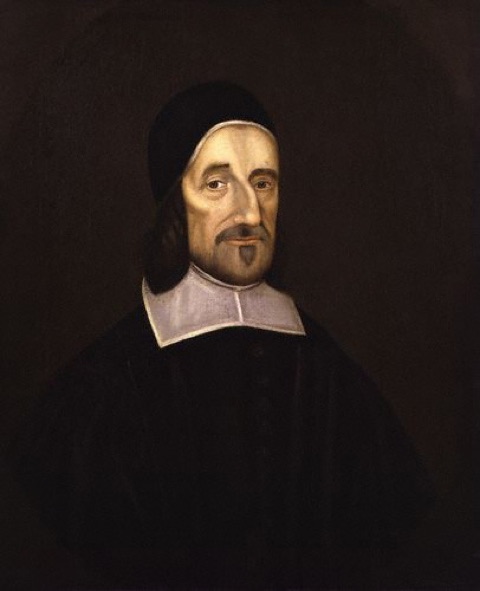
About the author
Richard Baxter
Richard Baxter (1615 to 1691 AD) was born in Rowton, Shropshire, and was largely self-educated. Ordained in 1638, he became minister at Kidderminster in 1641 and served for a time as a chaplain in the Parliamentary army. He worked throughout his life for common ground among Presbyterians, Independents and moderate Episcopalians, and in 1661 he took part in the negotiations under the king's commission for church concord that he recalls in this volume. Ejected by the Act of Uniformity in 1662, he lived in London, writing and preaching when he could. In 1685 he was tried before Judge Jeffreys and imprisoned. His books include The Saints' Everlasting Rest, The Reformed Pastor and A Call to the Unconverted. He died in London in 1691.